Selected works on the Tonkin Campaign/Sino-French War
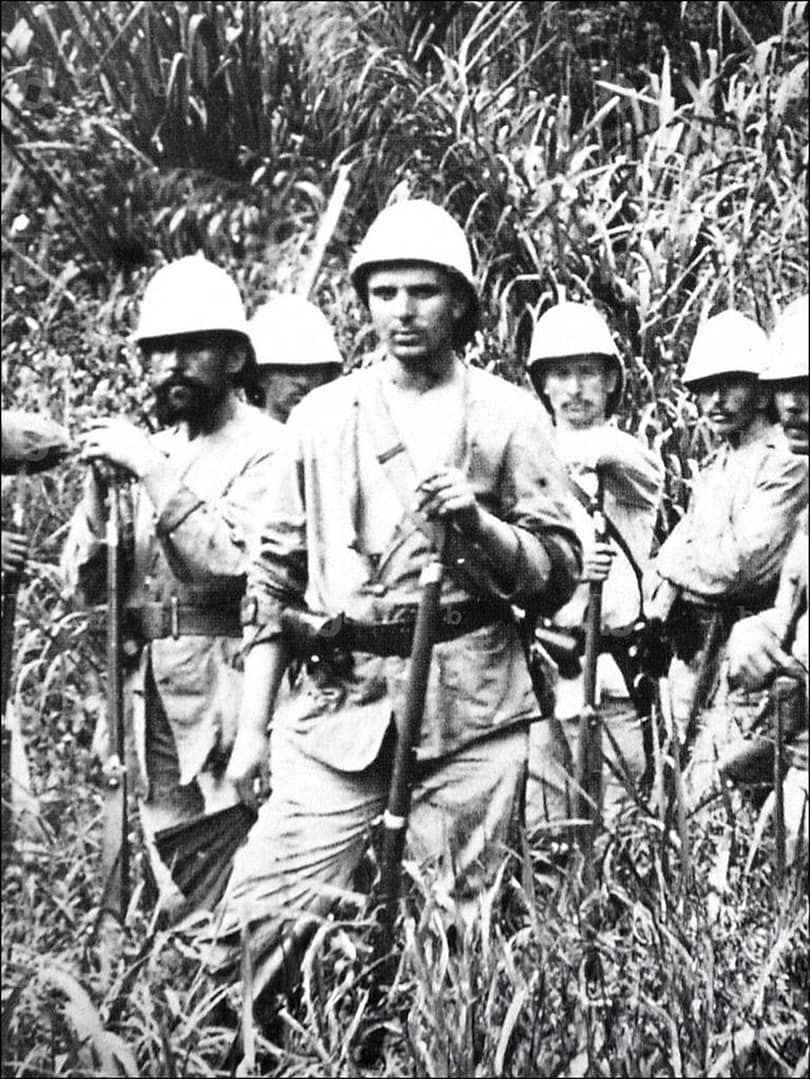
Tracing the origins of French colonial warfare in Vietnam through its most insightful sources
The Tonkin Campaign (1883–1886) is an underappreciated case study (in the English speaking world) of modern colonial warfare, bridging traditional expeditionary tactics and the brutal realities of sustained imperial conflict. Its literature offers a rare window into the early intersection of European military doctrine and Southeast Asian terrain — rivers, dense mangrove coastlines, mountain passes, and paddy-field lowlands — long before the mass counter-insurgency struggles of the mid-20th century. The works collected here highlight how geography, politics and nascent colonial strategy combined to shape the early years of French intervention in Vietnam.
At the centre of this scholarship are the memoirs and dispatches of French officers who fought or commanded during the campaign — often the earliest Western witness accounts of Tonkin’s terrain and warfare. Memoirs by officers such as Jean Lecomte, Henri Tomazi, Dick de Lonlay and Édouard Hocquard provide firsthand descriptions of riverine operations, amphibious landings, small-unit combat, and the unpredictable resistance posed by indigenous forces. These accounts, though coloured by colonial perspective, remain indispensable for understanding how early French forces contended with logistical constraints and unfamiliar ground.
Complementing those personal accounts are analytical and historical studies by modern scholars. Works by Stephen Platt, Martin Windrow, Douglas Porch and others examine the political motives, economic pressures, and strategic miscalculations behind French colonial expansion — giving context to why and how Tonkin was targeted. Later French-Vietnamese scholarship, reflected in studies by Trần Văn Đối, Nguyễn Đức Thành, and Phạm Văn Sơn, brings into focus the Vietnamese experience: native resistance, regional power balances, and the resilience of local communities challenged by foreign intervention.
Reading these works together reveals the unstable foundations of colonial rule and the tactical and moral hazards that accompanied early modern imperialism. For the committed reader or battlefield historian, they provide essential insight into the origins of French operations in Southeast Asia — and how those early engagements set a pattern that would re-emerge decades later.
The books listed here are not only valuable for understanding the Tonkin Campaign itself but also provide critical background for contrasting later conflicts, such as the First and Second Indochina Wars. They enable a deeper comprehension of colonial strategy, adaptation to terrain, and the interplay of politics, culture, and military force from the very beginning of French Indochina.
The Amazon links on the Reading Room pages are powered by AAWP

Reading
The reference collection below includes the key books and references I have used in preparing for and undertaking studies of the battlefields of the Tonkin Campaign.
Primary sources
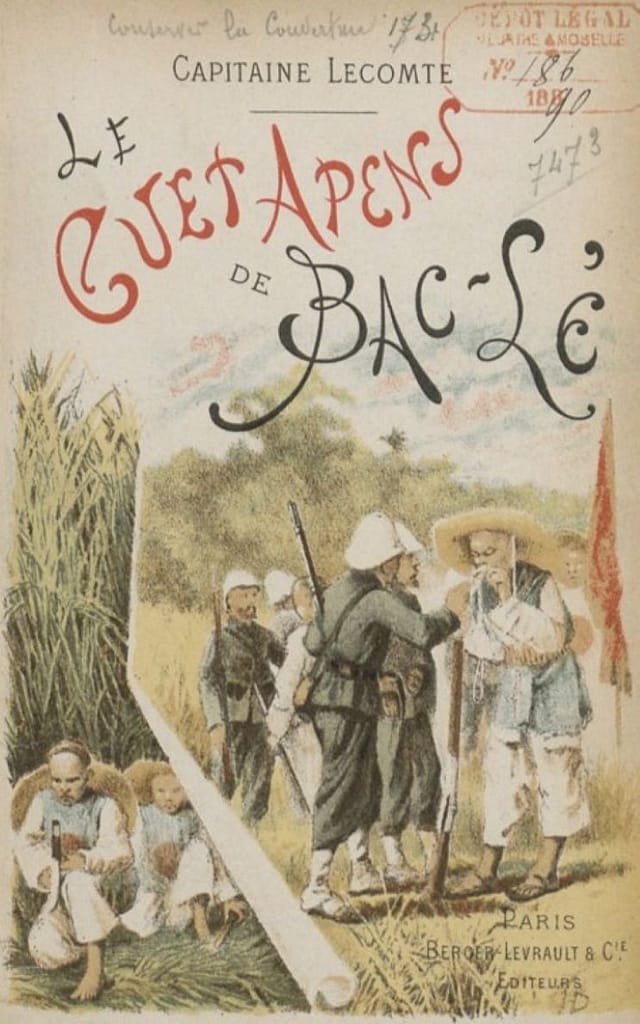
Jean Lecomte, Guet-apens de Bac-Lé (Payot, 1886). Out of print – available via Bibliothèque nationale de France.
- The definitive first-person account of the Bac Le Ambush
- Lecomte was a reconnaissance/survey officer with distinct eye for terrain
- Detailed perspectives on organisations, tactics, decision making
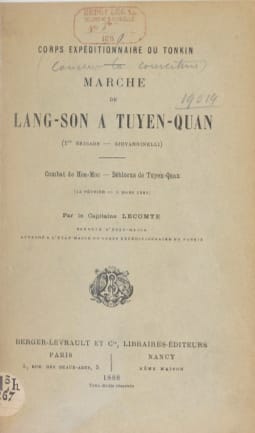
Jean Lecomte, Marche de Lang-Son A Tuyen Quan (Berger Levrault, 1888). Out of print – available via Bibliothèque nationale de France.
- The definitive account of the Colonel Giovanninelli and the 1st Brigade on their epic march from Lang Son to the relief of Tuyen Quang
- Lecomte was a reconnaissance/survey officer with distinct eye for terrain
- Comprehensive account of the Battle of Hoa Moc on 2-March 1885
Henri Thomazi, La Conquête L’Indochine (Payot, 1934). Out of print – available via Bibliothèque nationale de France.
- Comprehensive history of the French involvement in Indochina, from the earliest missionaries in the 17th Century
Secondary sources


Soldiers and equipment


Authored by Mick Prictor, a retired military officer with 40 years’ service, and a military historian specialising in terrain-focused analysis of tactics, doctrine, and command decision-making in land warfare. His work draws on extensive battlefield fieldwork—more than 280 sites worldwide—and one of the world’s largest private collections of historic military arms, uniforms, and equipment. About me
FAQ – Tonkin Campaign
Strong introductory works include Martin Windrow’s studies on the Foreign Legion, and Stephen Platt’s work on the Sino-French War. These books provide extensive narrative context on France’s colonial campaigns.
Memoirs and reports by French officers such as Jean Locomte, Dick Delonlay, Admiral Courbet, and Henri Thomazi offer firsthand descriptions of riverine operations, amphibious landings and early engagements. Although written from a colonial perspective, they remain essential primary sources.
Modern scholarship highlights a mix of strategic ambition, economic motives, geopolitical competition and domestic politics within France. Historians increasingly emphasise the Vietnamese perspective, local power structures and the resistance movements that shaped the campaign’s progress.
The campaign introduced many of the operational challenges that would recur throughout the First and Second Indochina Wars: difficult riverine terrain, fragmented intelligence, political–military friction, and the resilience of local resistance. Early French experiences foreshadowed later failures and adaptations.
Primary accounts are detailed but often partisan. Modern historians cross-reference French military records, diplomatic correspondence, Vietnamese historical studies and later analyses to produce balanced interpretations. Combining these sources provides the most accurate picture of the campaign.
Subscribe to Battlefield Travels and receive a free E-Book Battlefield Guide
Unlock expert battlefield analysis, campaign reconstructions, and historical insights drawn from firsthand exploration and primary sources.
🗺️ You’ll receive:
🎖️ Exclusive historical insights you won’t find elsewhere
📘 A free eBook: 10 Tips for Exploring Historic Battlefields
📰 New battlefield studies straight to your inbox as they are published

⚔️ Go deeper — Members get exclusive access to the Deep Research Collection, Field Notes, and monthly Research Dispatches. Try membership free for 7 days, cancel anytime. From $9/month.