Skip to content
Home » Blucher

Blucher

Reconstructing French Revolutionary & Napoleonic War battlefields through terrain analysis, primary sources and on-site research
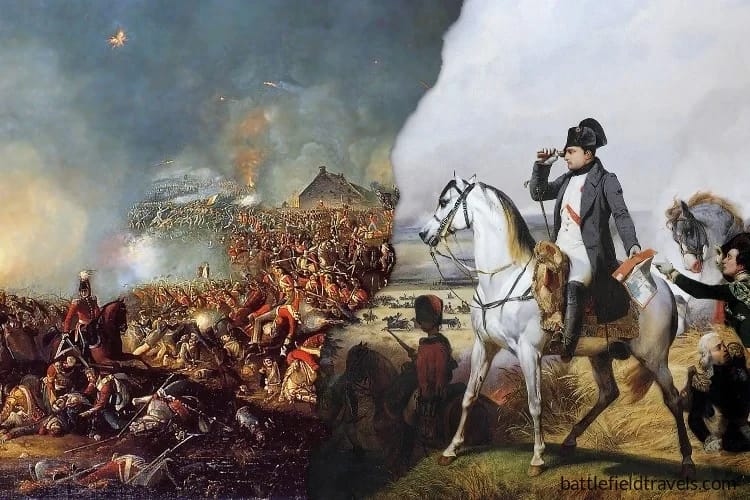
The Battle of Wagram by French artist Horace Vernet, 1836

Walking the battlefields of the French Revolutionary Wars and Napoleonic Wars (1792–1815)

Origins of the wars

The French Revolutionary Wars (1792-1802), and the Napoleonic Wars (1803-1815) that followed immediately afterwards, were the culmination of the upheaval unleashed by the French Revolution, fought across Europe between Revolutionary and Napoleonic France and successive coalitions of Britain, Austria, Prussia, and Russia. These campaigns reshaped the political map of Europe and marked a decisive shift in the scale and conduct of warfare. Mass conscription, rapid manoeuvre, and the concentration of force allowed armies to operate with a tempo and reach not previously seen, culminating in a series of battles that remain central to the study of military history.

Campaigns and battles

From the plains of Austerlitz and Wagram to the ridges of Waterloo and the brutal campaigns of the Peninsular War, the conflict was fought across a wide range of terrain. These battlefields reveal how commanders interpreted ground, deployed their forces, and sought to gain advantage through movement, timing, and positioning. Many of the decisive moments in these campaigns were shaped not by grand strategy alone, but by how terrain was read and exploited at the point of contact.

The Napoleonic Wars also generated a lasting intellectual legacy. The experience of mass warfare and decisive battle prompted a generation of soldiers and thinkers to reflect on the nature of war itself. The works of Clausewitz and Jomini, along with the reforms of Scharnhorst and Gneisenau, emerged directly from this period and continue to influence military thought today.

Battle studies and field notes

This section brings together battlefield studies, terrain analysis, and related field notes from across the Napoleonic campaigns. Each study combines historical narrative with on-the-ground observation, examining how terrain, command decisions, and tactical execution interacted to shape the outcome of battle.


Battle Studies in the French Revolutionary and Napoleonic Wars

Below are all current BattlefieldTravels studies for the French Revolutionary and Napoleonic Wars, covering key battles, campaign phases and associated sites. New studies are added as further battlefields are walked and analysed.

  • 📝🔒 Field Note: Waterloo, Belgium, 18 June 1815

    📝🔒 Field Note: Waterloo, Belgium, 18 June 1815

    October 2024. Waterloo, Belgium. I have been here before, but this visit was far more comprehensive. Standing on the Mont-Saint-Jean ridge, the key feature is the reverse slope. From the French side, you don’t see much of Wellington’s position. The crest blocks your view, and everything behind it disappears. That’s where the bulk of the…

    Read the full battle study…


FAQ: French Revolutionary & Napoleonic Wars

Which battles best represent the Napoleonic Wars?

Key battles include Austerlitz (1805), Jena-Auerstedt (1806), Wagram (1809), Borodino (1812), and Waterloo (1815). Each illustrates different aspects of Napoleonic warfare, from operational manoeuvre and decisive battle to attrition and coalition pressure.

How did Napoleon achieve early success in his campaigns?

Napoleon combined speed of movement, concentration of force, and flexible corps organisation to defeat opponents in detail. His ability to read the battlefield and exploit terrain at critical moments allowed him to achieve local superiority even when outnumbered strategically.

Why did coalition armies eventually defeat Napoleon?

Over time, coalition forces adapted. They improved coordination, logistics, and command structures, and learned to avoid decisive defeat while applying sustained pressure. The scale of the war, combined with campaigns such as Russia in 1812, gradually eroded French strength.

Why is terrain so important in Napoleonic battles?

Terrain shaped deployment, movement, and timing. Reverse slopes, ridgelines, villages, and roads influenced how armies fought and how commanders made decisions. Many decisive moments occurred at a very local level, where small terrain features determined visibility, protection, and the ability to manoeuvre.


Subscribe to Battlefield Travels and receive a free E-Book Battlefield Guide

Unlock expert battlefield analysis, campaign reconstructions, and historical insights drawn from firsthand exploration and primary sources.

🗺️ You’ll receive:

🎖️ Exclusive historical insights you won’t find elsewhere

📘 A free eBook: 10 Tips for Exploring Historic Battlefields

📰 New battlefield studies straight to your inbox as they are published


Knotel_-_The_storming_of_La_Haye_Sainte

📝🔒 Field Note: Waterloo, Belgium, 18 June 1815

October 2024. Waterloo, Belgium. I have been here before, but this visit was far more comprehensive. Standing on the Mont-Saint-Jean ridge, the key feature is the reverse slope. From the French side, you don’t see much of Wellington’s position. The crest blocks your view, and everything behind it disappears. That’s where the bulk of the British infantry was positioned, out of sight and largely protected from artillery.

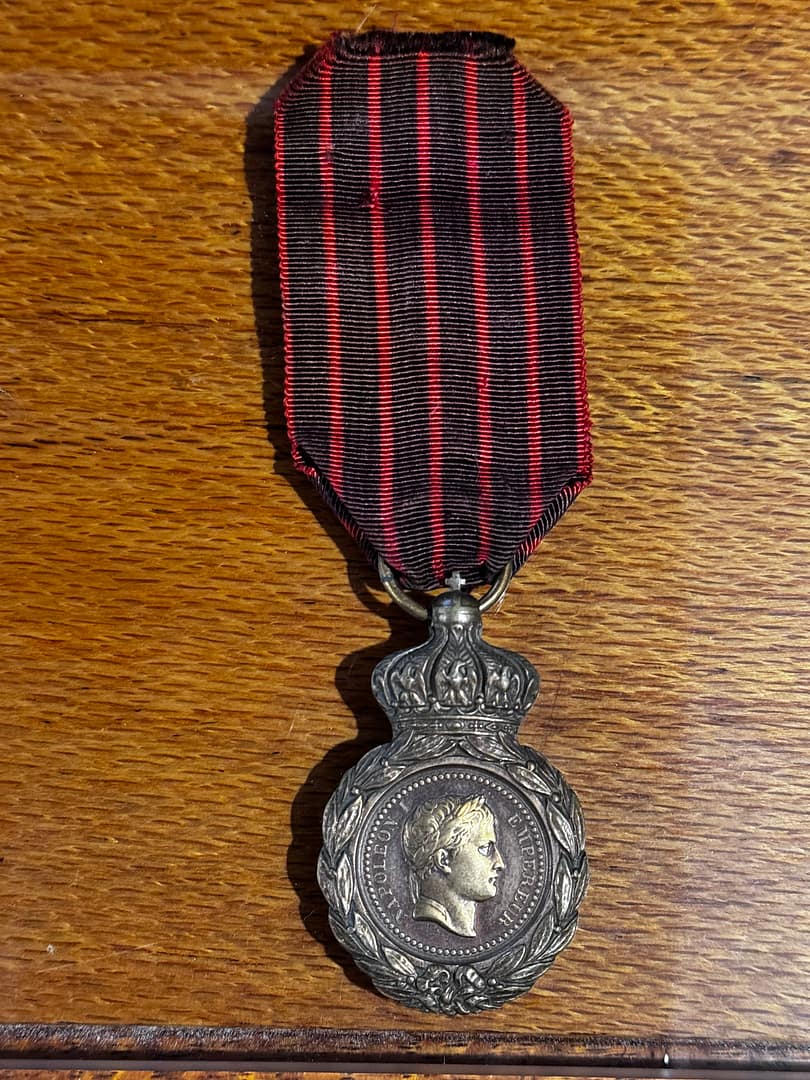
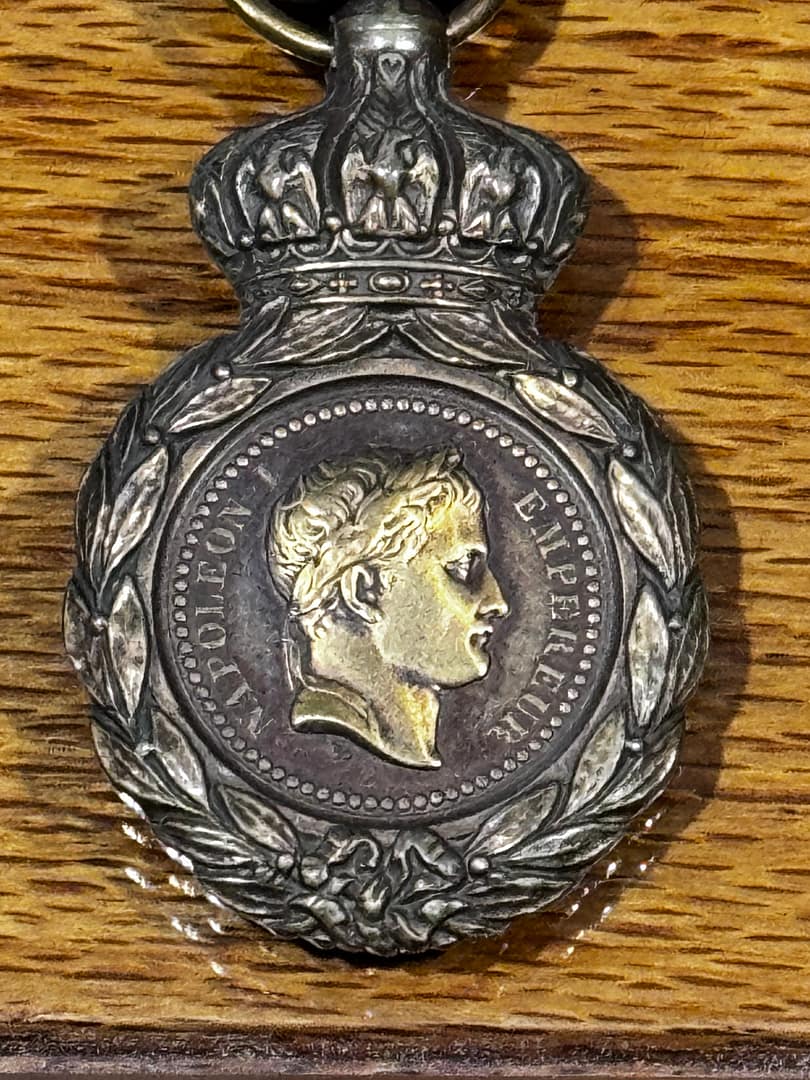
St Helena Medal issued to veterans of Napoleon’s wars by Emperor Napoleon III

The Napoleonic Wars

The Napoleonic Wars (1803–1815) reshaped Europe through a series of large-scale campaigns fought across the continent, from the Atlantic coast to Russia and the eastern Mediterranean. Building on the gains of the French Revolution, Napoleon Bonaparte created a modern, centralised state and fielded highly organised armies capable of rapid manoeuvre, decisive concentration of force, and sustained operational campaigning. Opposing coalitions—Britain, Austria, Prussia, Russia, and a succession of allied states—sought to contain French expansion and restore the European balance of power.

The conflict produced some of the most studied battles in military history: Austerlitz, Jena, Wagram, Borodino, Leipzig, and Waterloo. It also accelerated developments in logistics, corps organisation, artillery employment, and staff work. By the time of Napoleon’s final defeat in 1815, Europe had been fundamentally altered, with new borders, new political settlements, and a generation of officers shaped by continuous war.

The Napoleonic Wars (1803–1815) reshaped Europe through a series of large-scale campaigns fought across the continent, from the Atlantic coast to Russia and the eastern Mediterranean. Napoleon Bonaparte fielded armies organised into self-contained corps capable of independent manoeuvre, rapid concentration, and coordinated artillery support. This operational system allowed French forces to outpace and outmanoeuvre older linear armies that relied on rigid command structures and slower mobilisation.

Napoleonic weapons and tactics

Victories at Ulm (1805), Austerlitz (1805), and Jena–Auerstädt (1806) demonstrated the effectiveness of this approach. French formations advanced with flexible skirmish screens, integrated divisional artillery, and aggressive use of column manoeuvre to achieve local superiority. Opposing Austrian and Prussian forces, still structured around eighteenth-century models, struggled to respond to the tempo and decentralised execution of French operations.
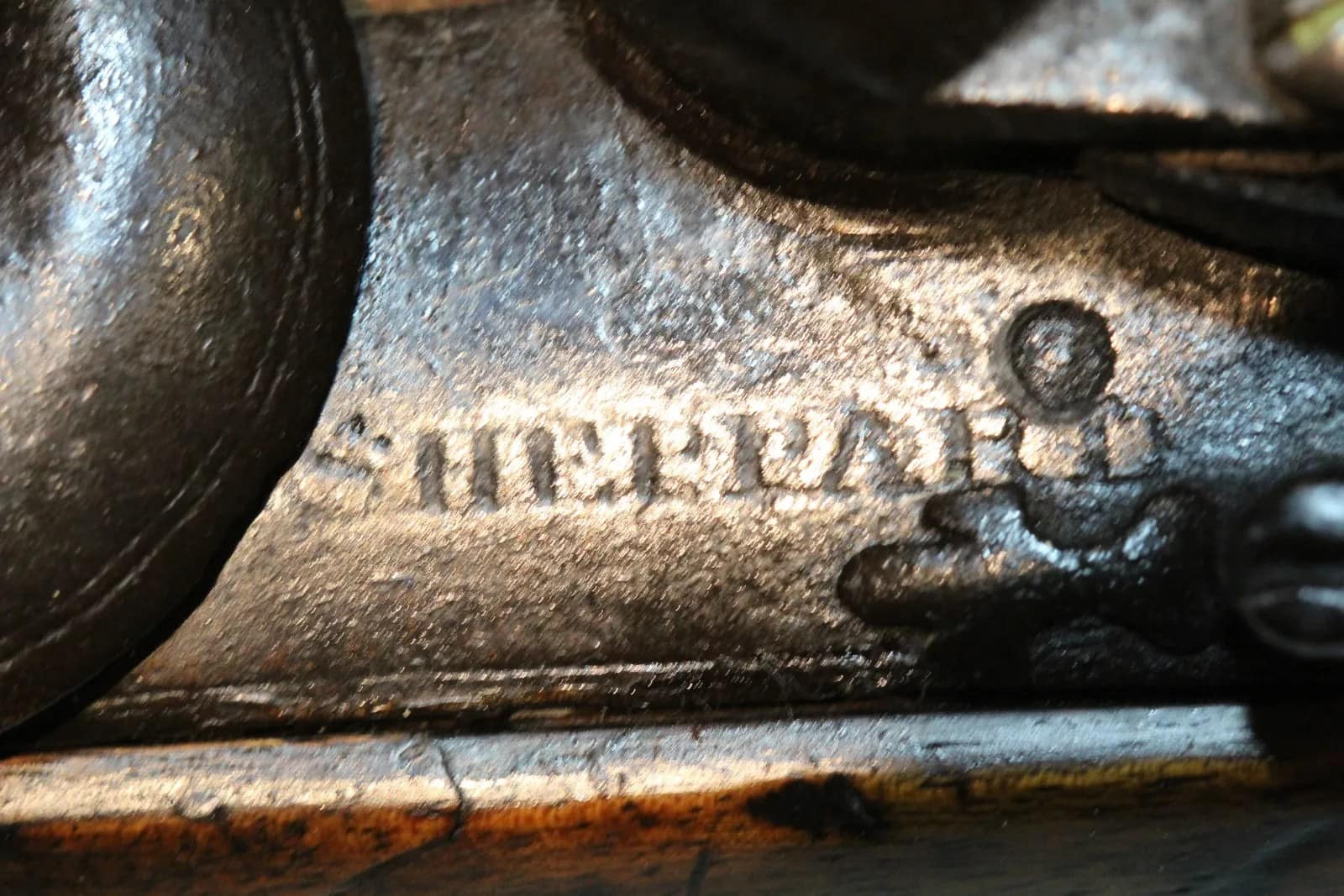
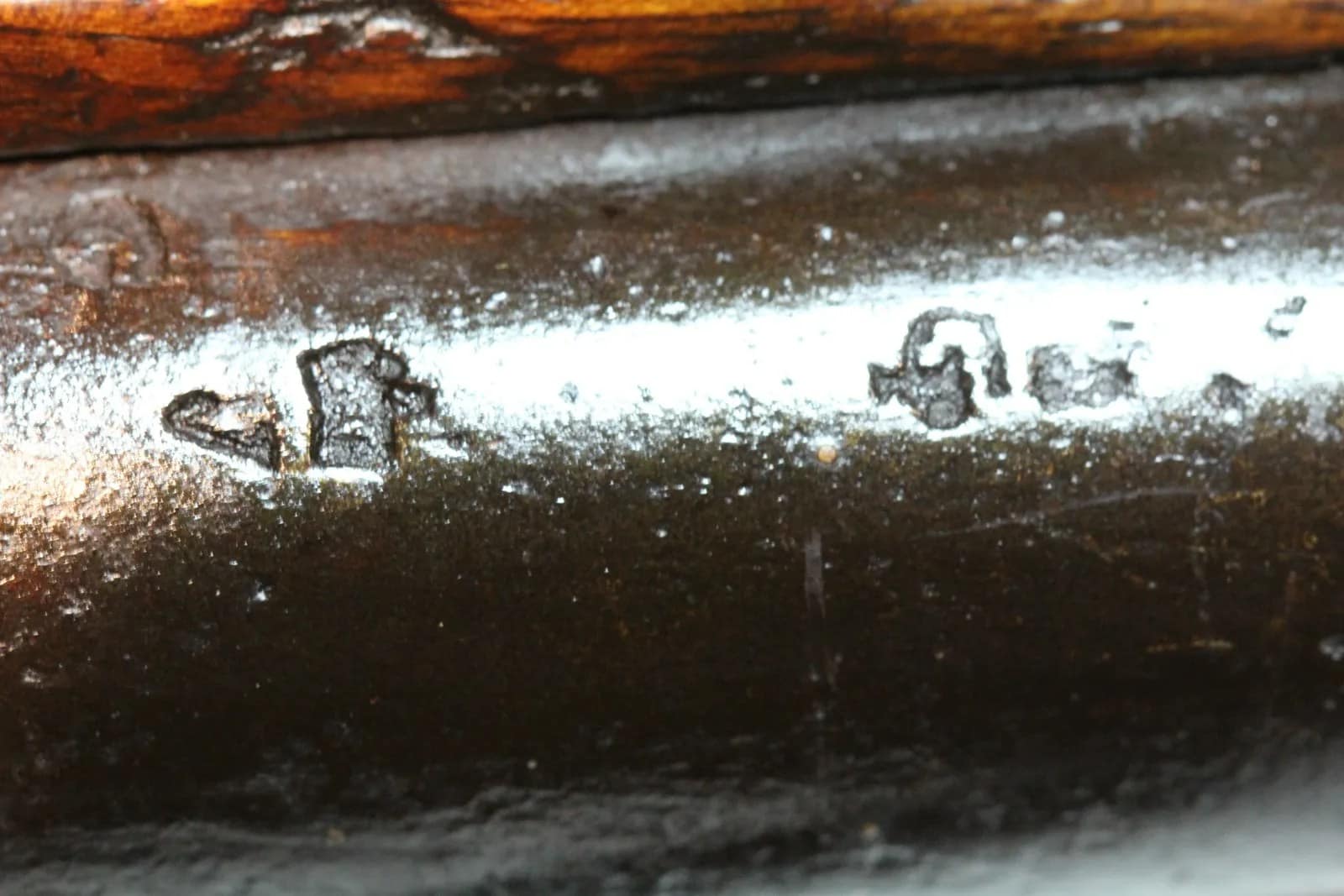
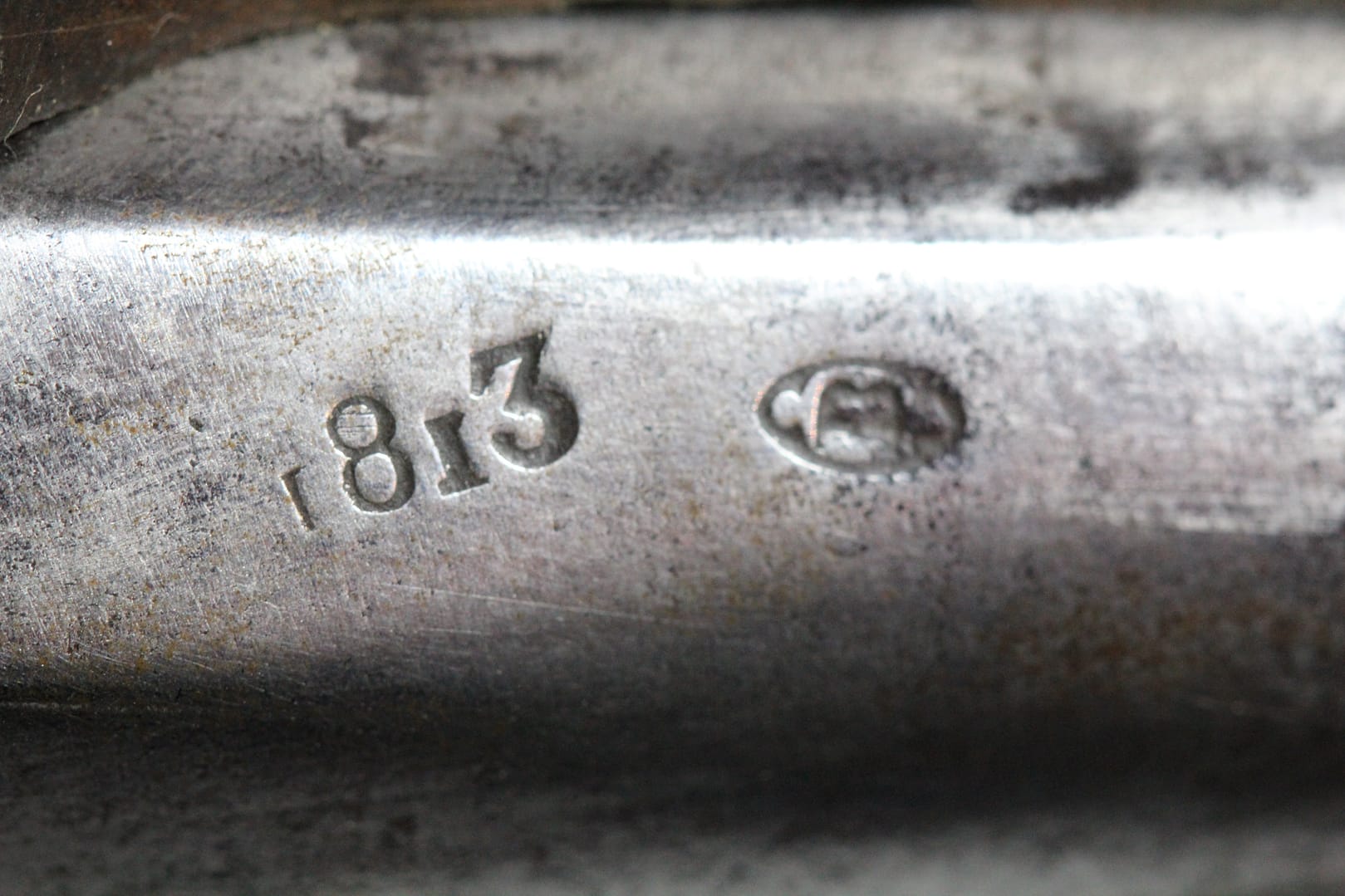
Weapons standardisation underpinned this system. Muskets such as the Model 1777 AN IX and AN XIII patterns, cavalry carbines, pistols, and edged weapons were produced in large numbers through state-controlled armouries at Charleville, Tulle, Mutzig, and other manufactories. Durability, interchangeability, and simplified production allowed sustained campaigning across multiple theatres. The technically advanced AN IX musket became the for armies across Europe.

By 1815, Europe had been politically reordered. Just as importantly, warfare had evolved: corps organisation, artillery massing, cavalry shock action, and national mobilisation became defining features of nineteenth-century conflict.

👉 For historical context and battlefield studies, see →Napoleonic Wars Conflict Page (coming soon)

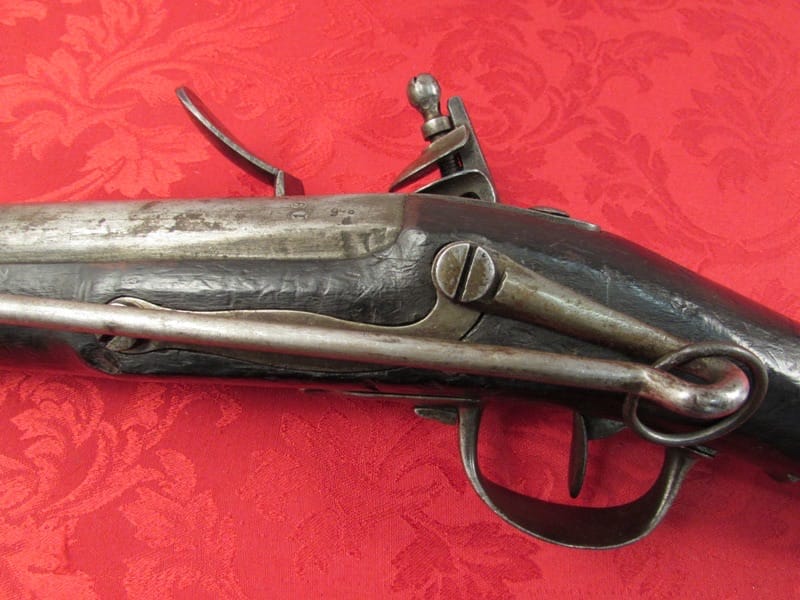
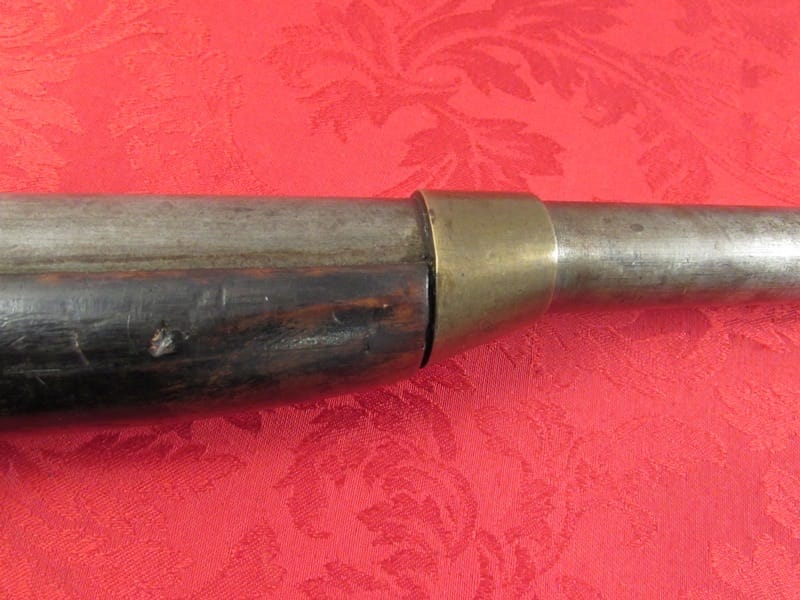
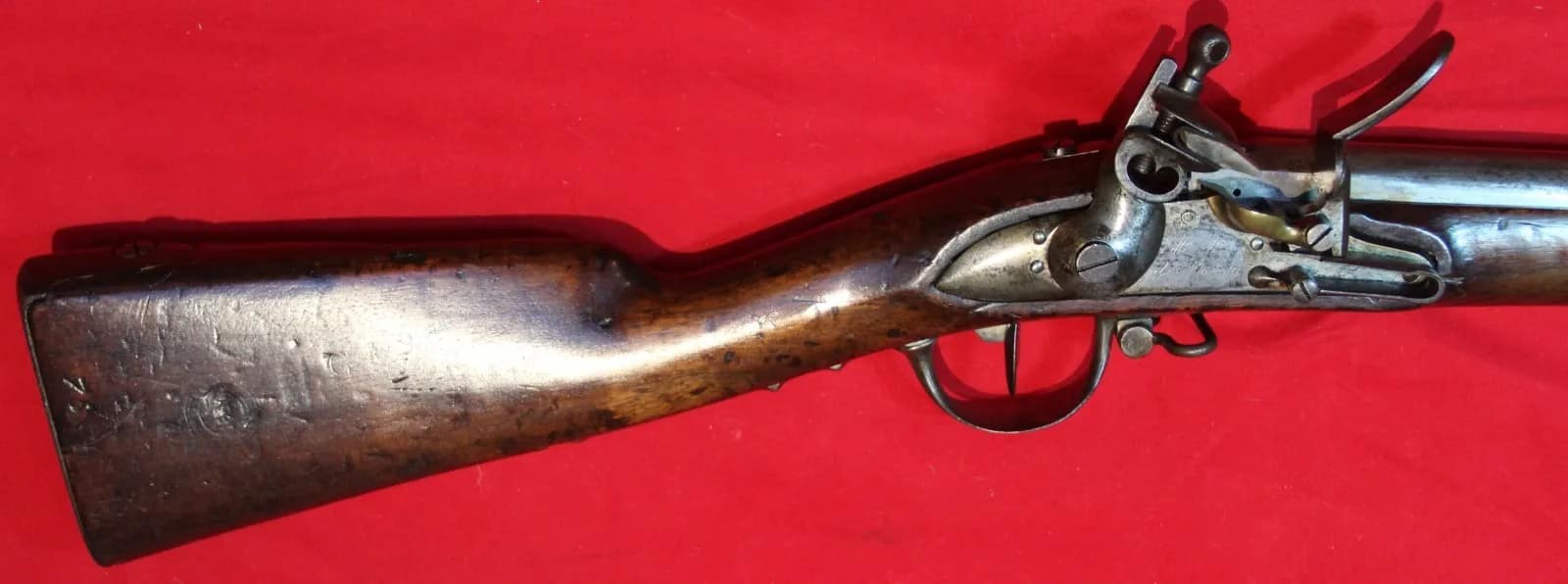
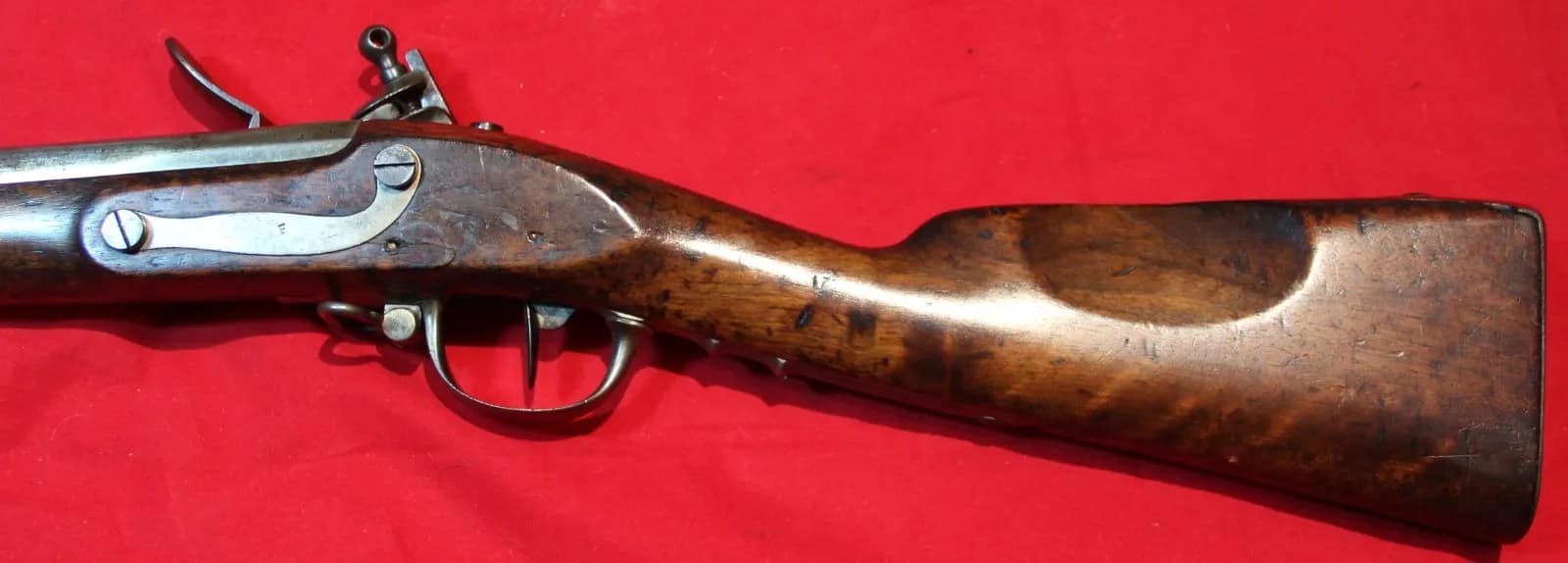
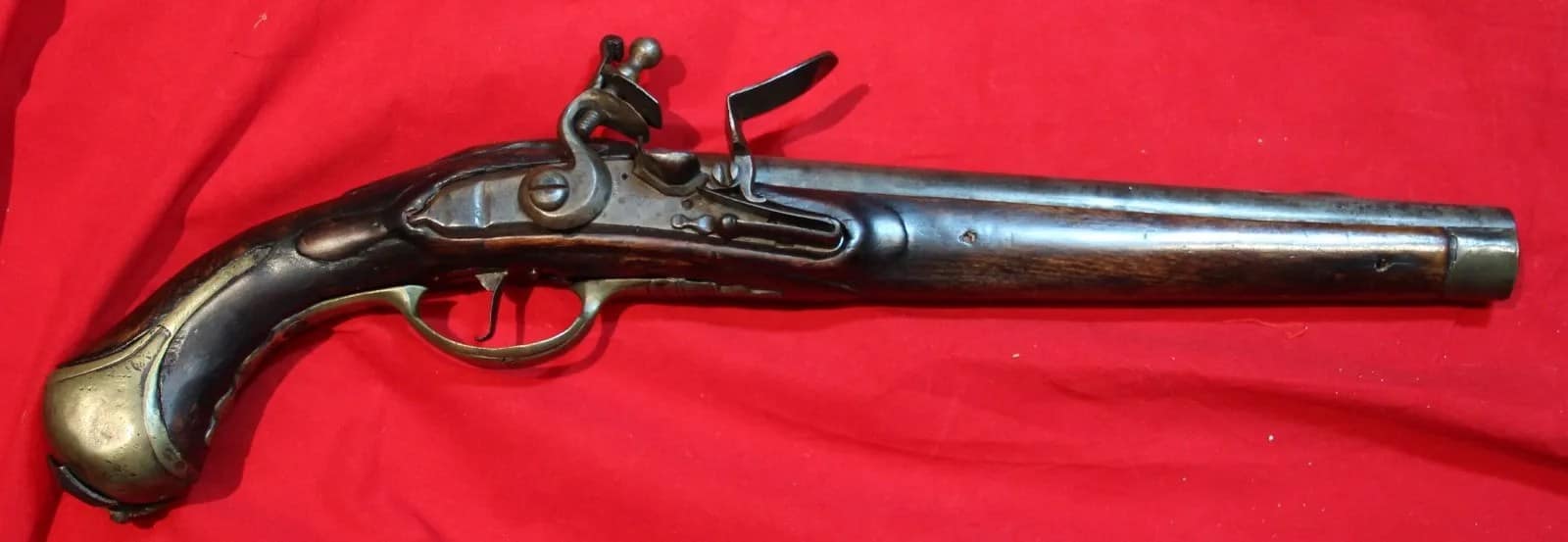
All artefacts shown are from my personal collection and photographed firsthand.


British Long Arms of the Napoleonic Wars


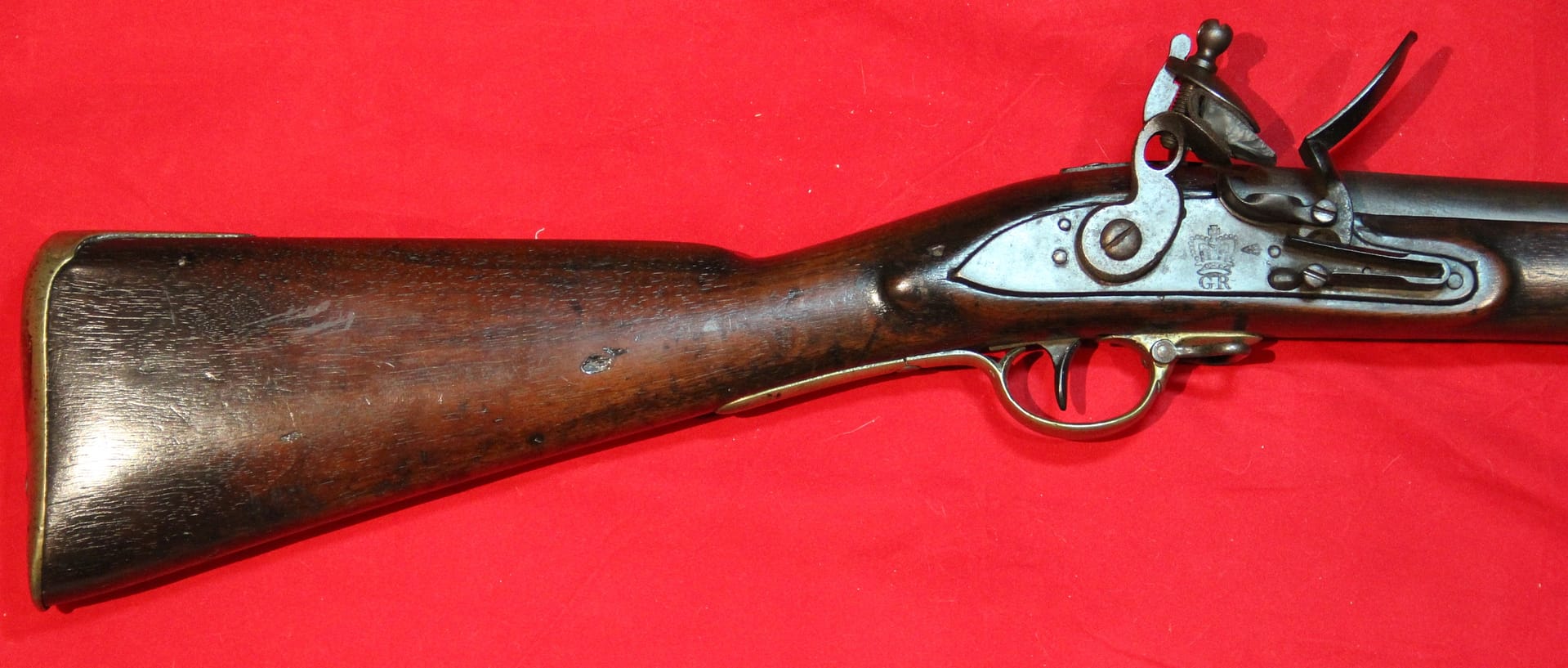
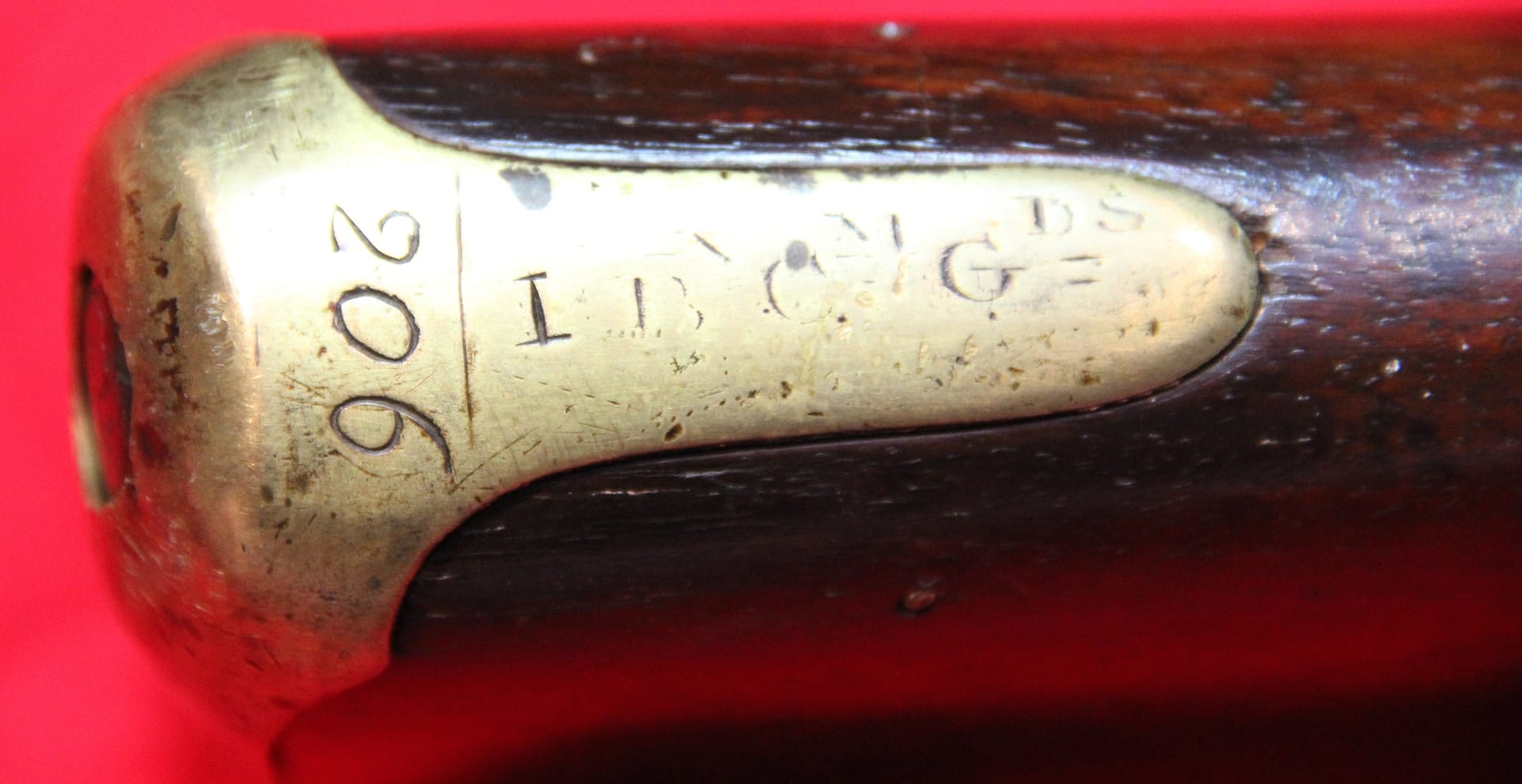
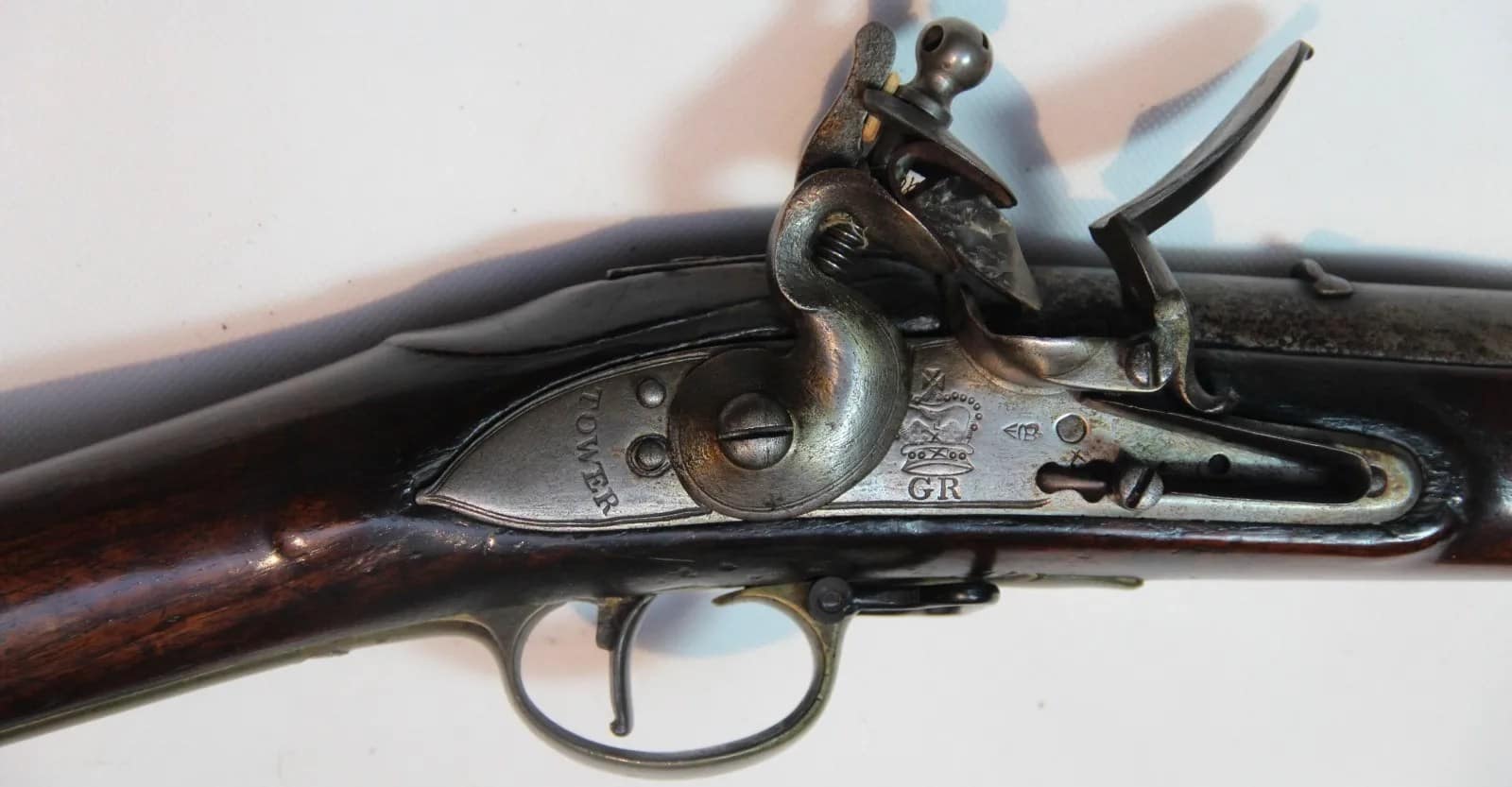
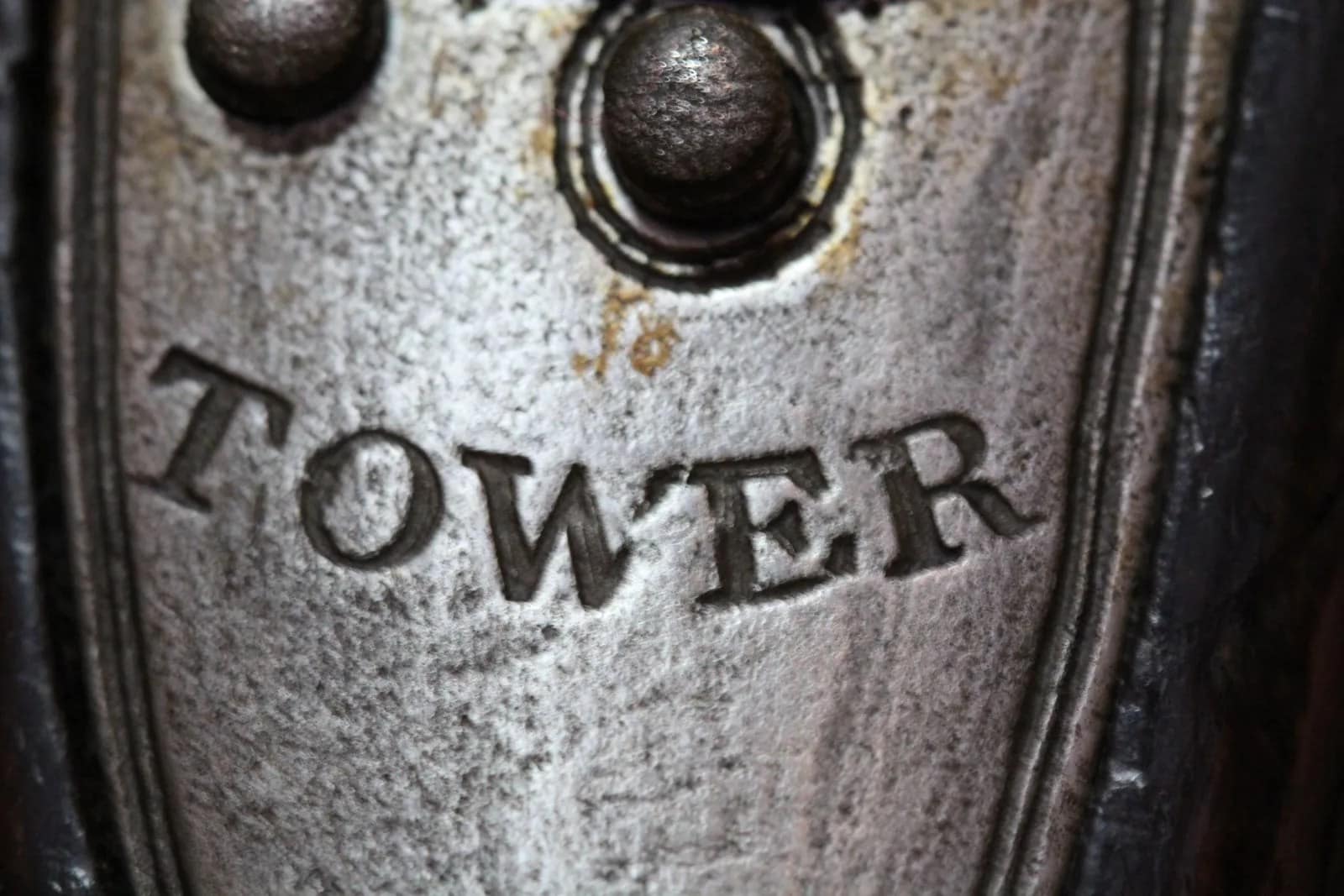
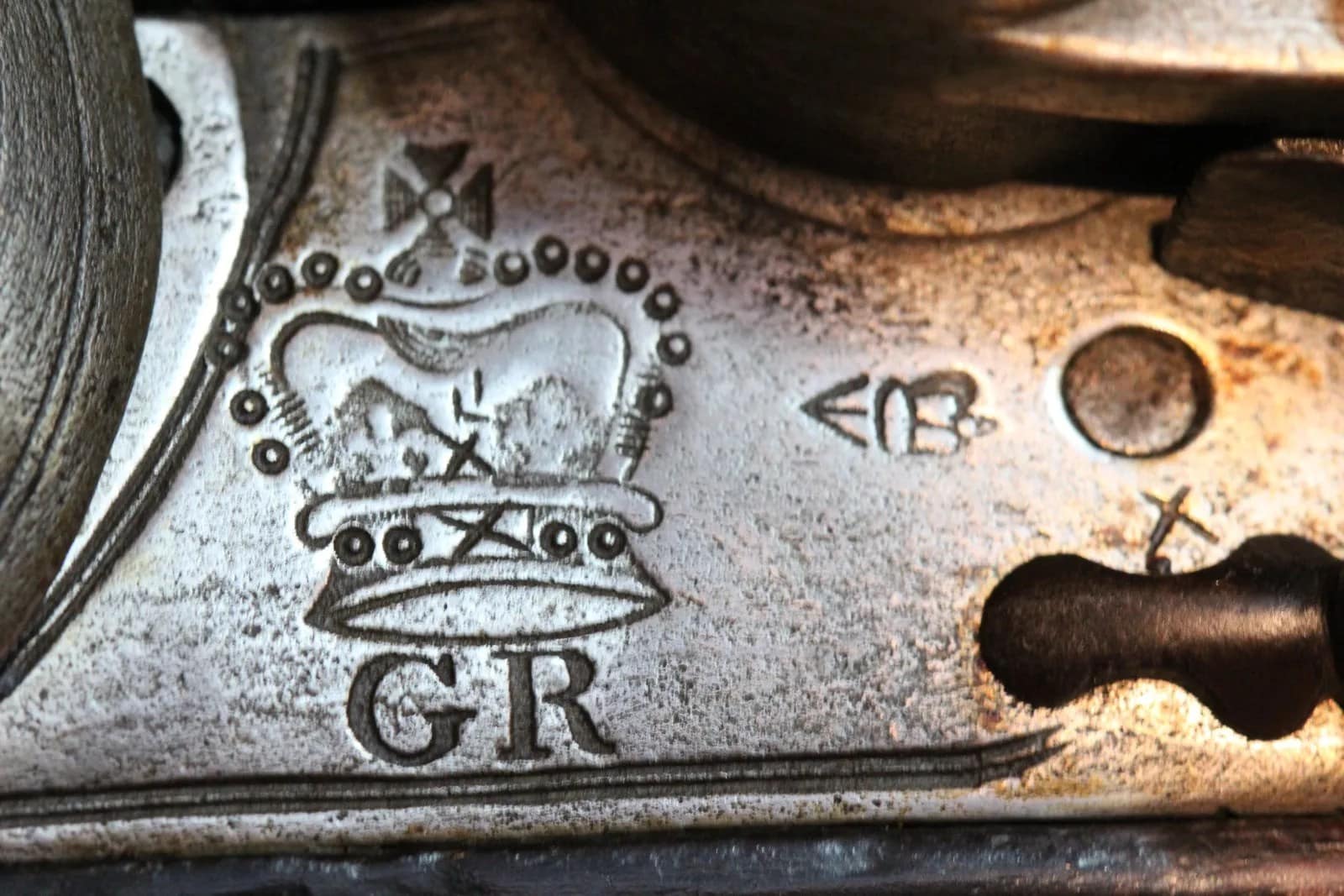
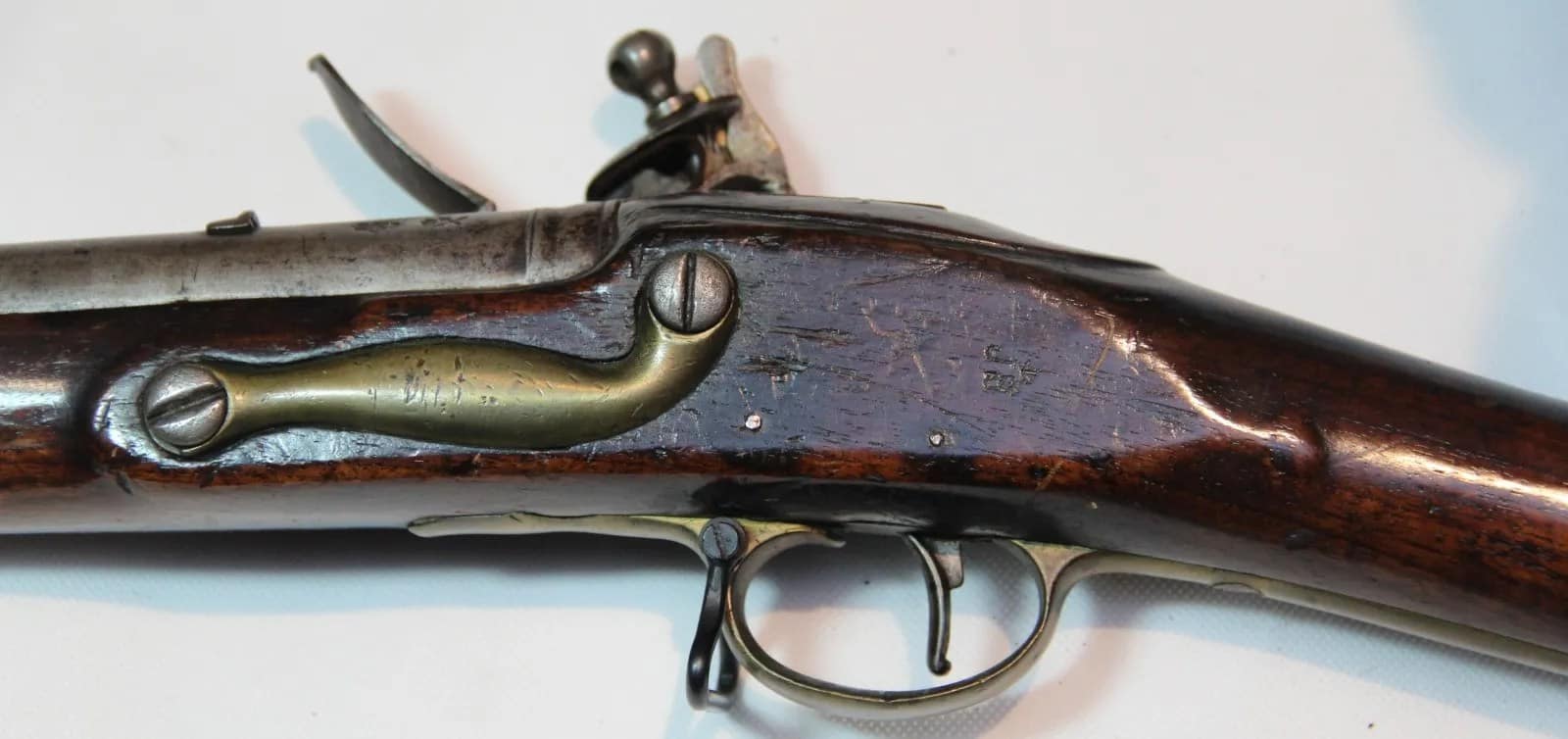
British New Land Pattern Musket. Marked to 1st Battalion Coldstream Guards. From my personal collection

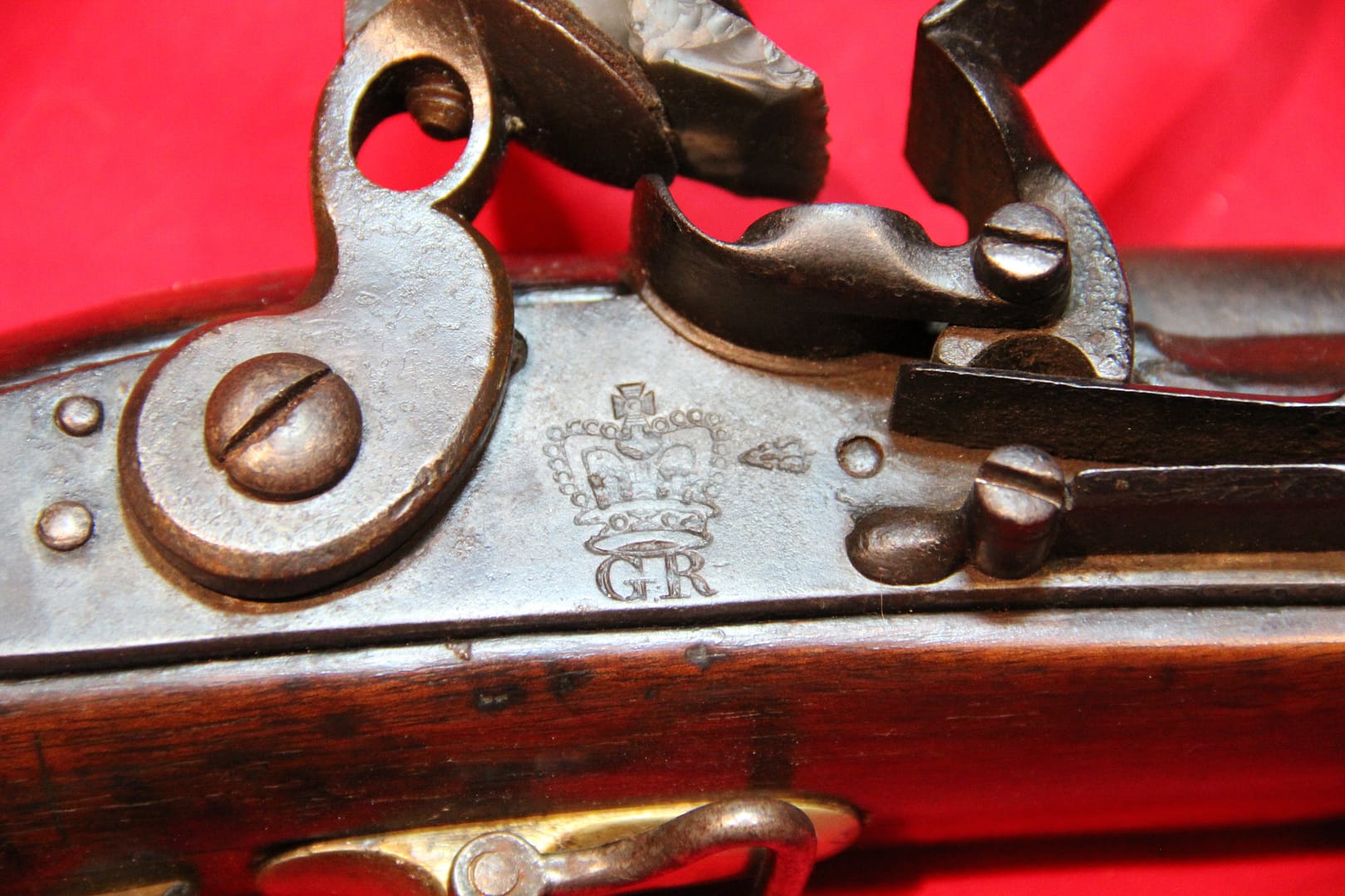
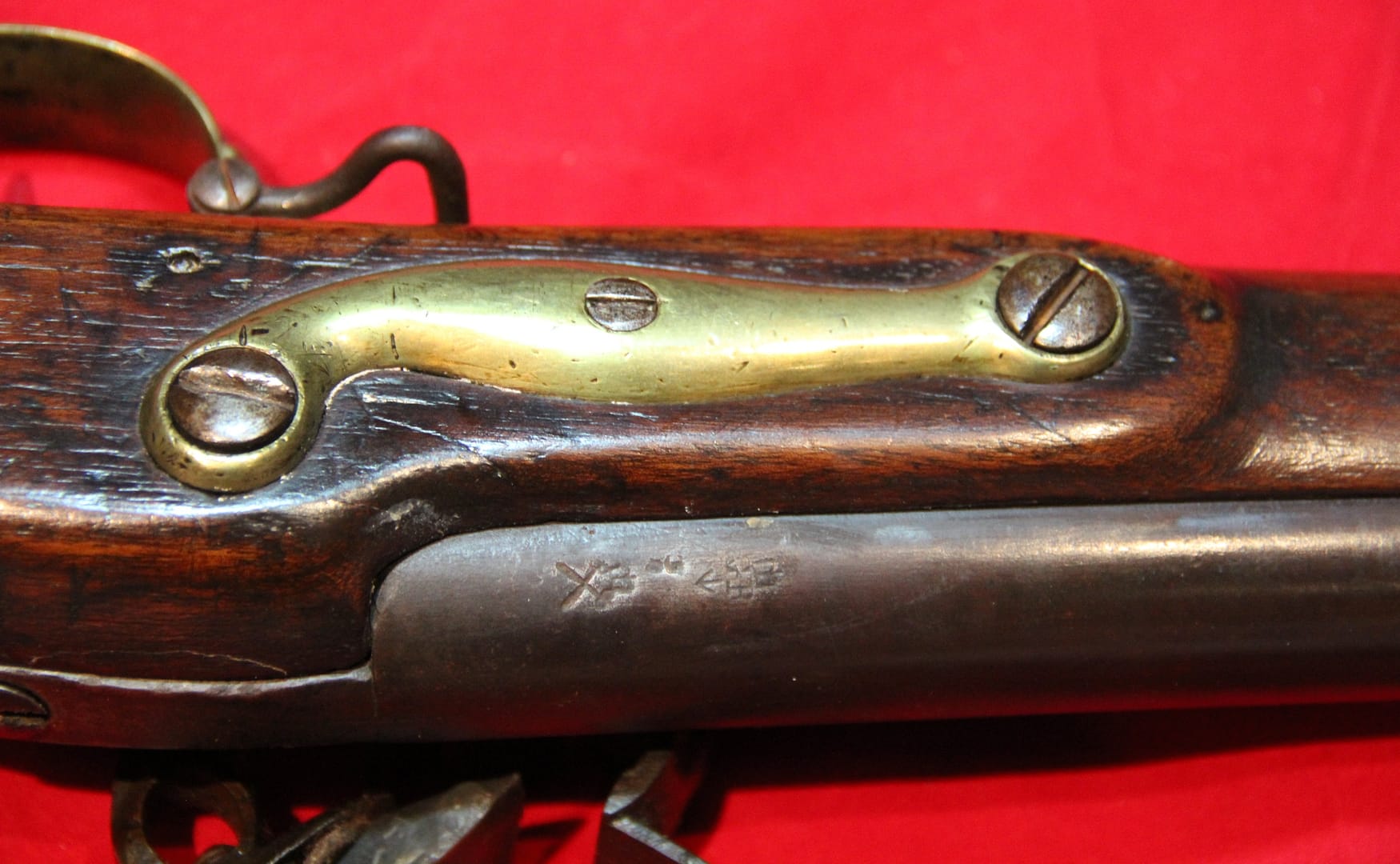
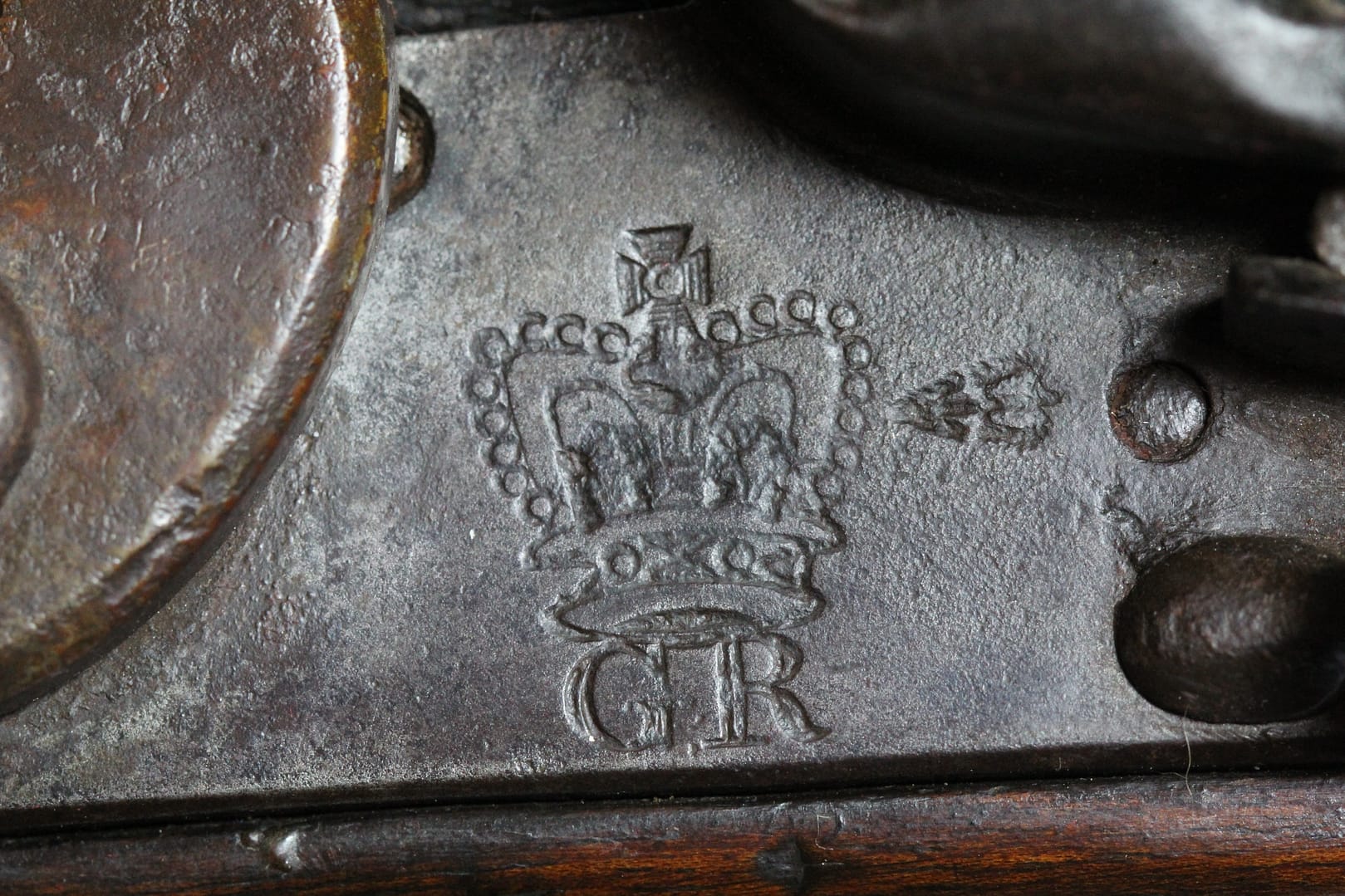
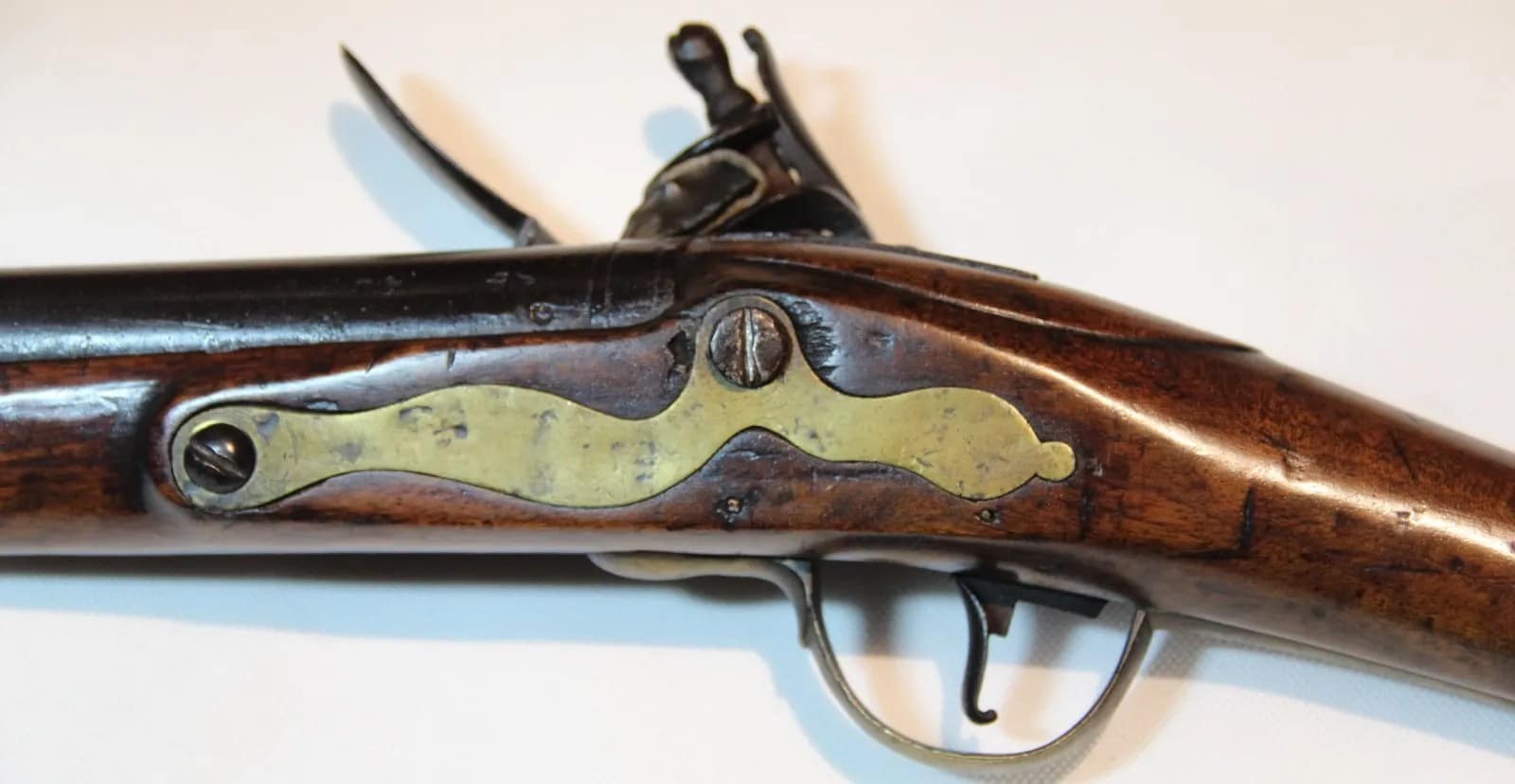
This New Land Pattern musket, marked to the 1st Battalion Coldstream Guards, represents the principal British infantry arm of the late Napoleonic Wars. Introduced from 1802, the New Land was a .75-calibre flintlock with simplified furniture and a heavy 39-inch barrel, offering rugged reliability under sustained campaign use. Carried by the Coldstream Guards at Copenhagen, the Peninsula, and Waterloo, regiment-marked examples are scarce. This musket reflects the elite infantry who formed part of Wellington’s famed Household Brigade on campaign.


British India Pattern ‘Brown Bess’, c.1800, early pattern with swan-neck cock. From my personal collection

The British India Pattern “Brown Bess” musket emerged in the late eighteenth century as a simplified and economical variant of earlier Long and Short Land patterns. Based on the design widely used by the East India Company, it featured reduced furniture, a shorter 39″ barrel, and streamlined construction for mass production. This early example retains the distinctive swan-neck cock characteristic of transitional lock forms. Chambered in .75 calibre and smoothbore, it was the standard infantry arm during the Napoleonic Wars, reflecting Britain’s emphasis on durability, interchangeability, and large-scale wartime manufacture.


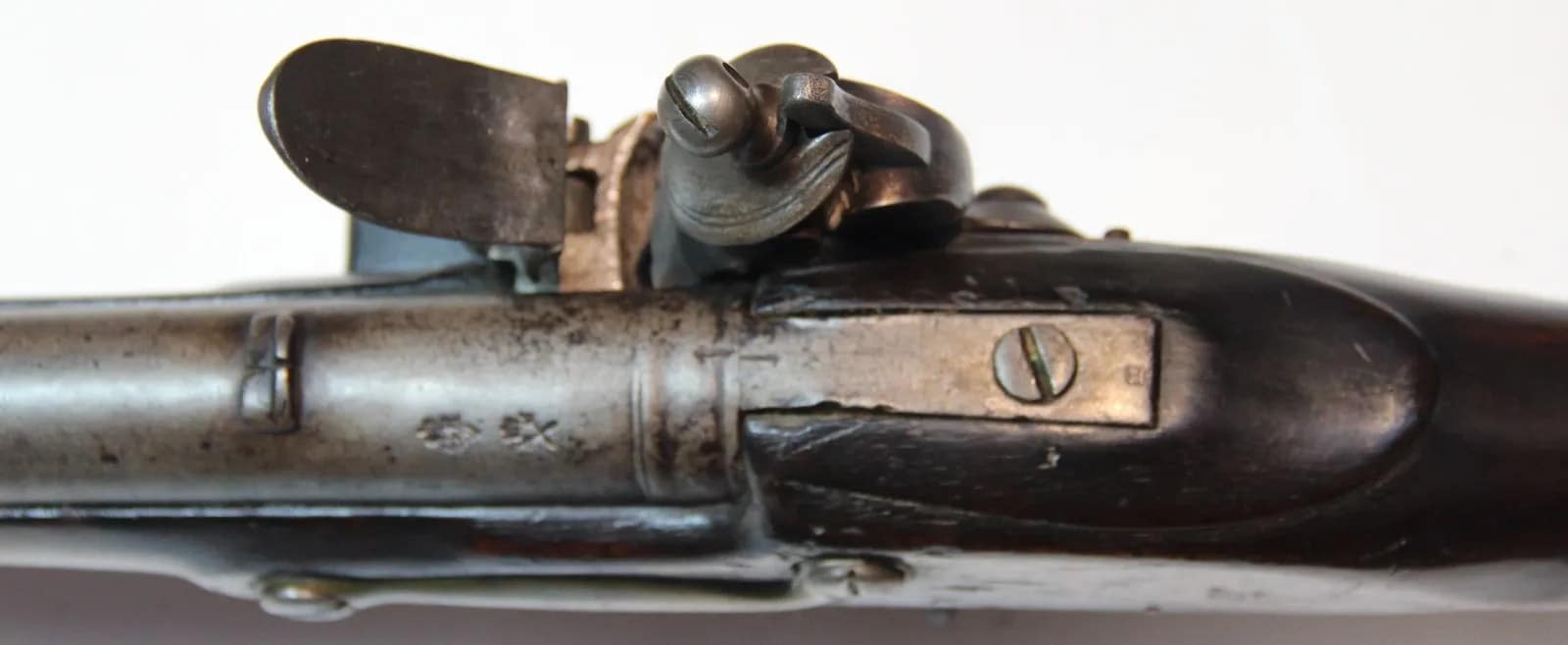
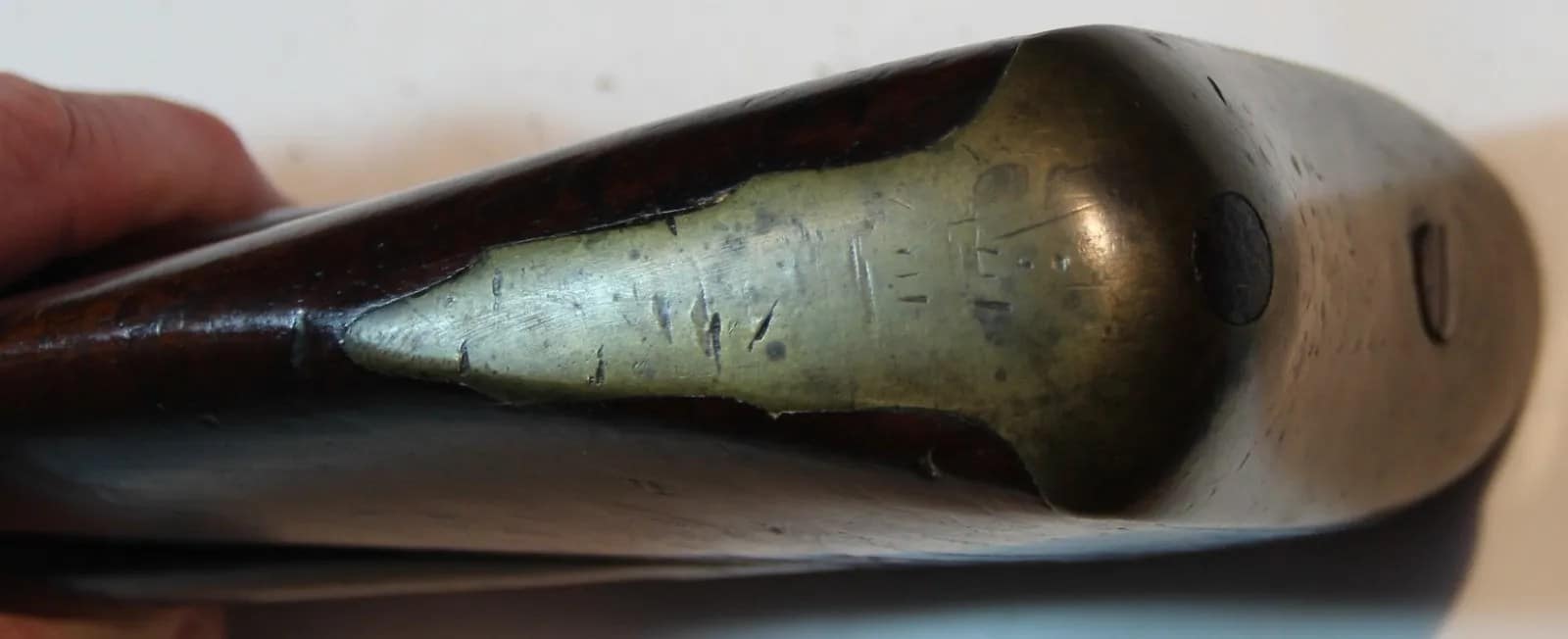
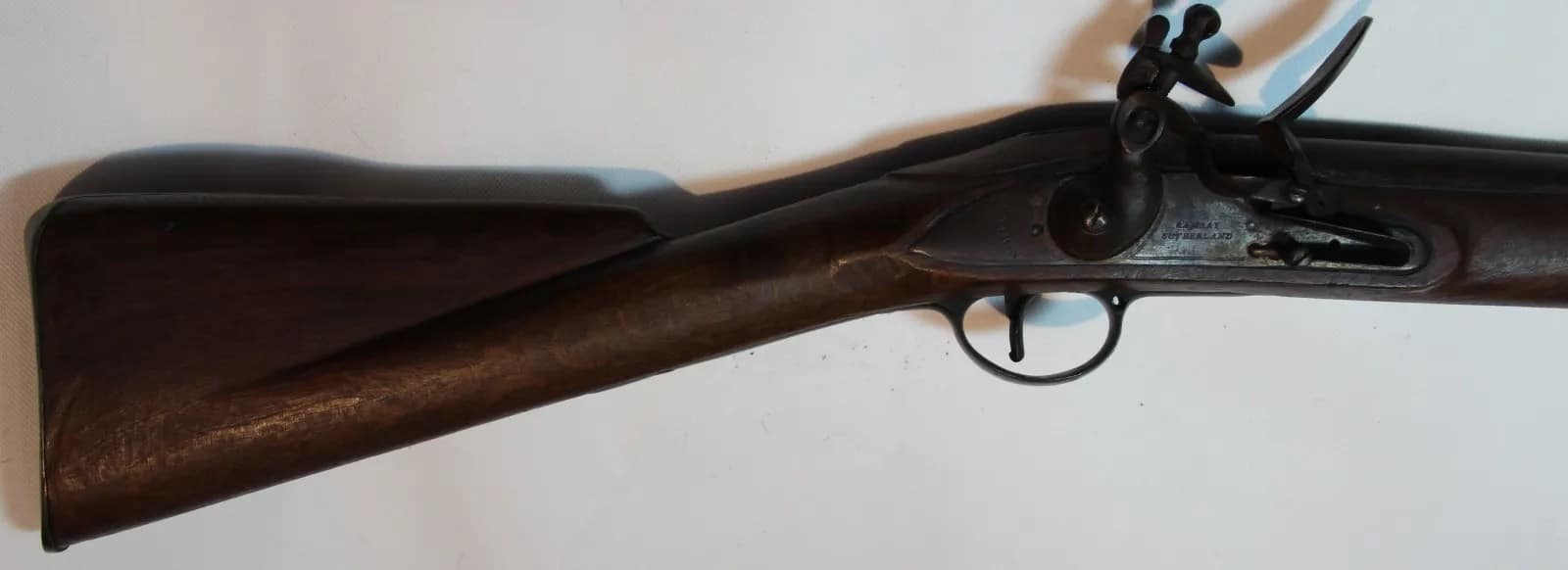
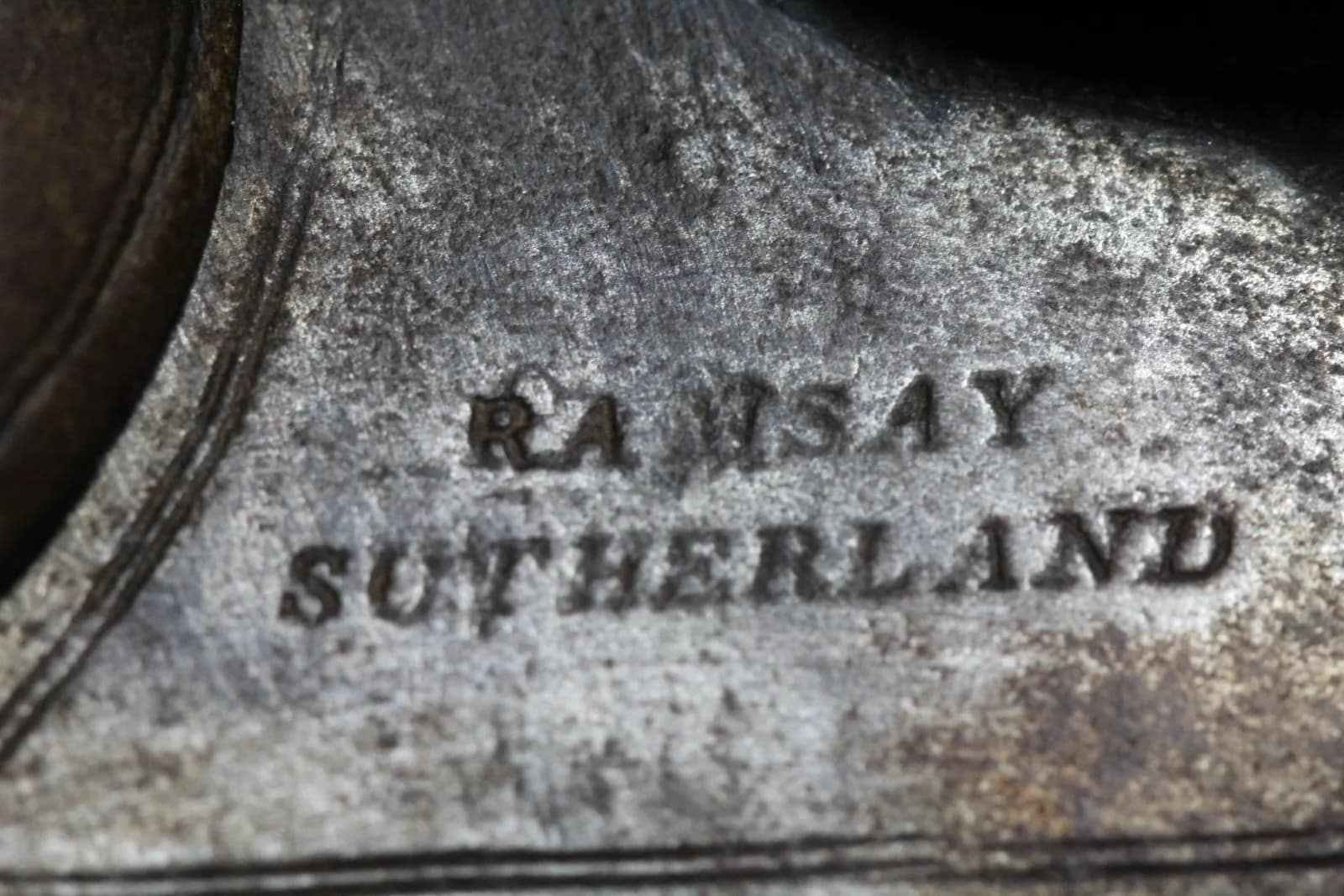
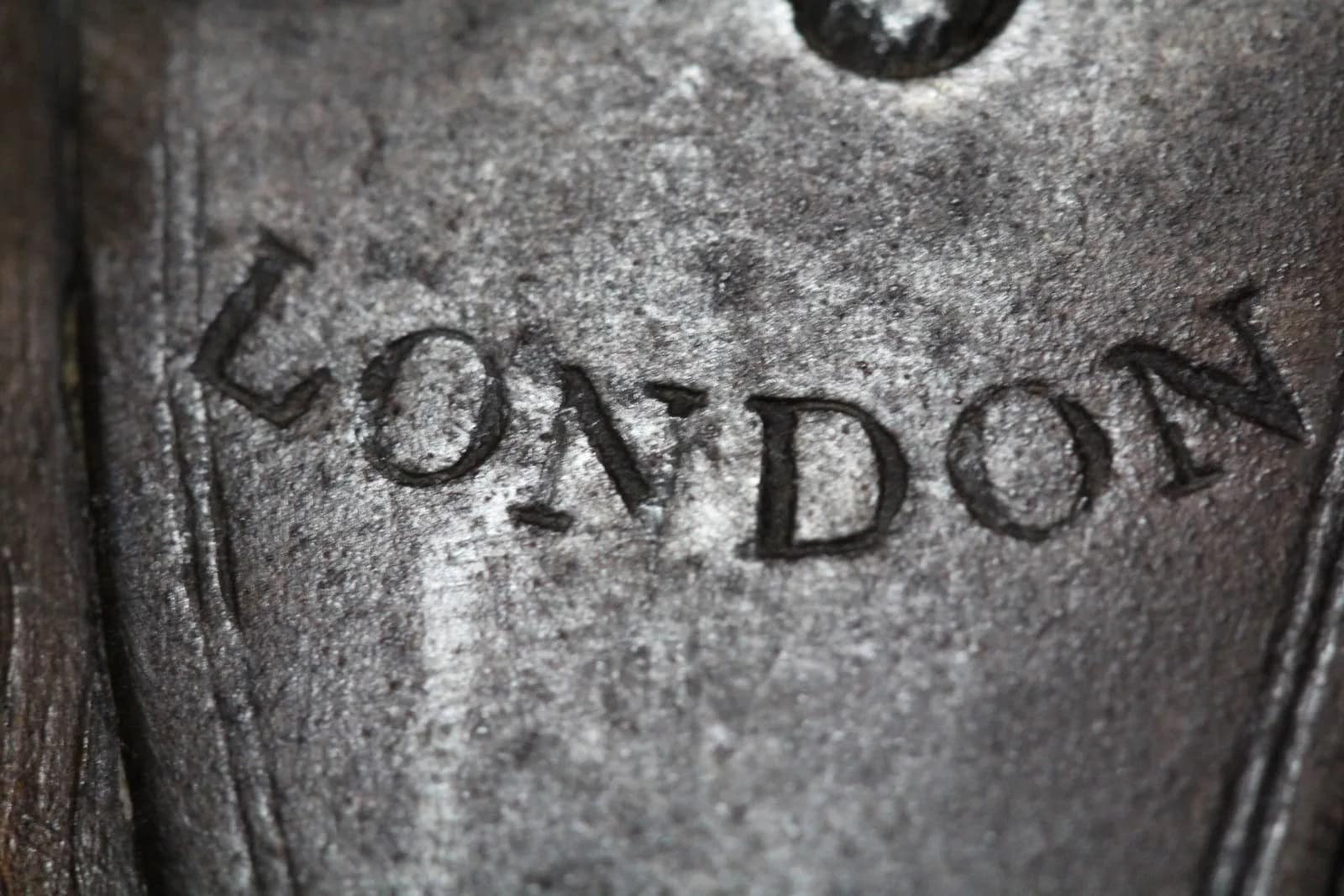
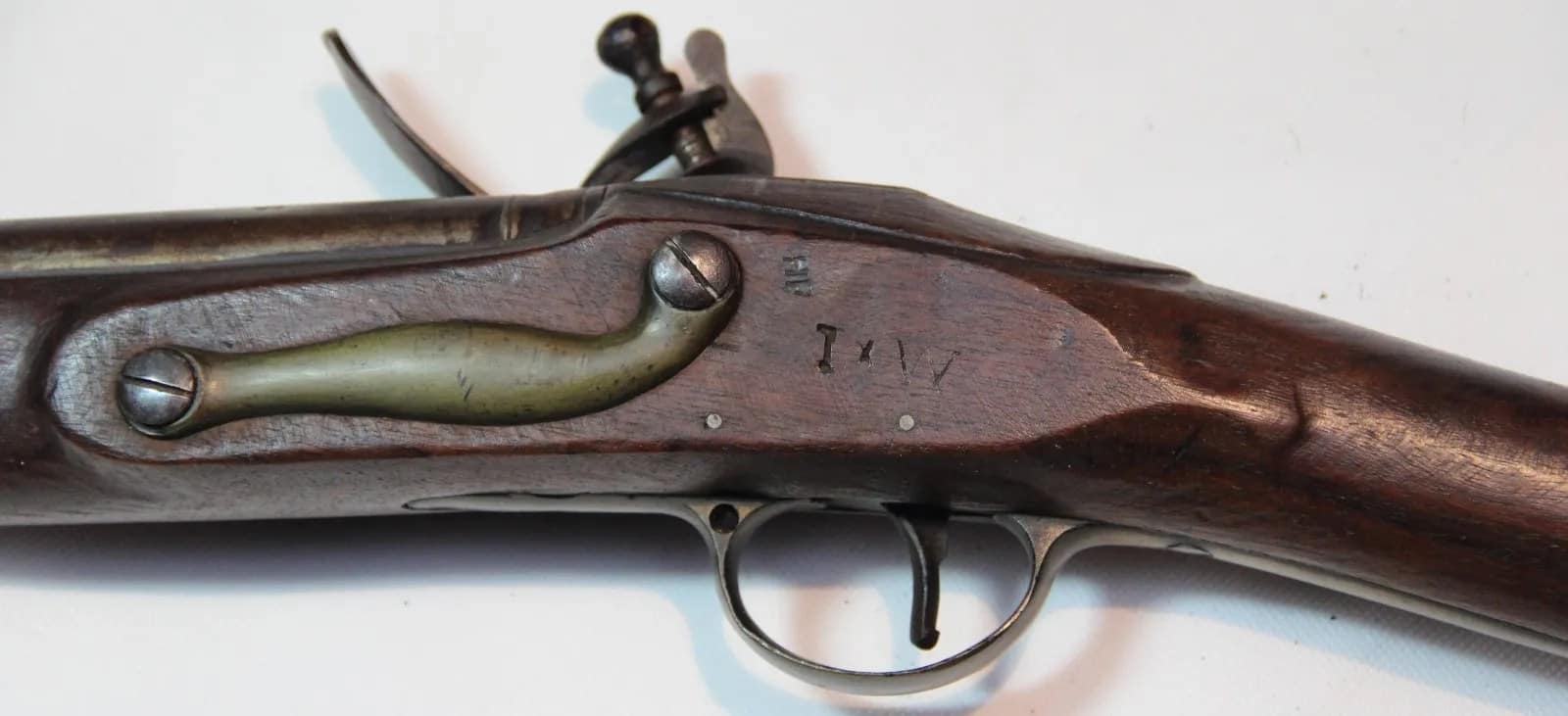
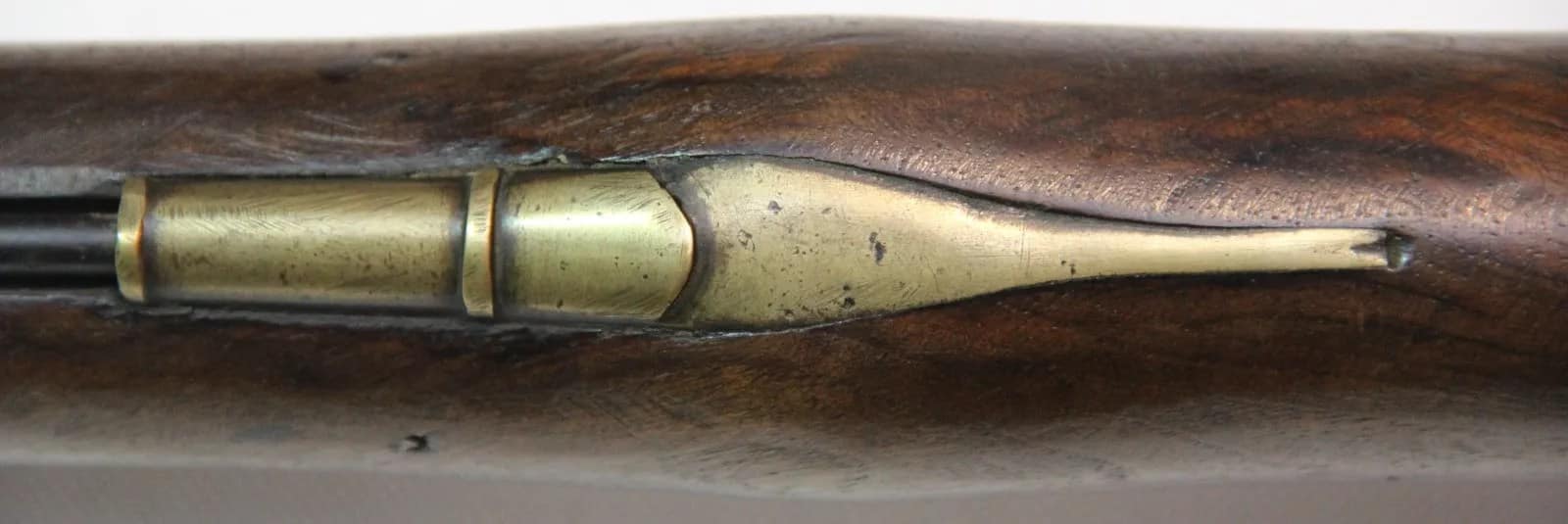
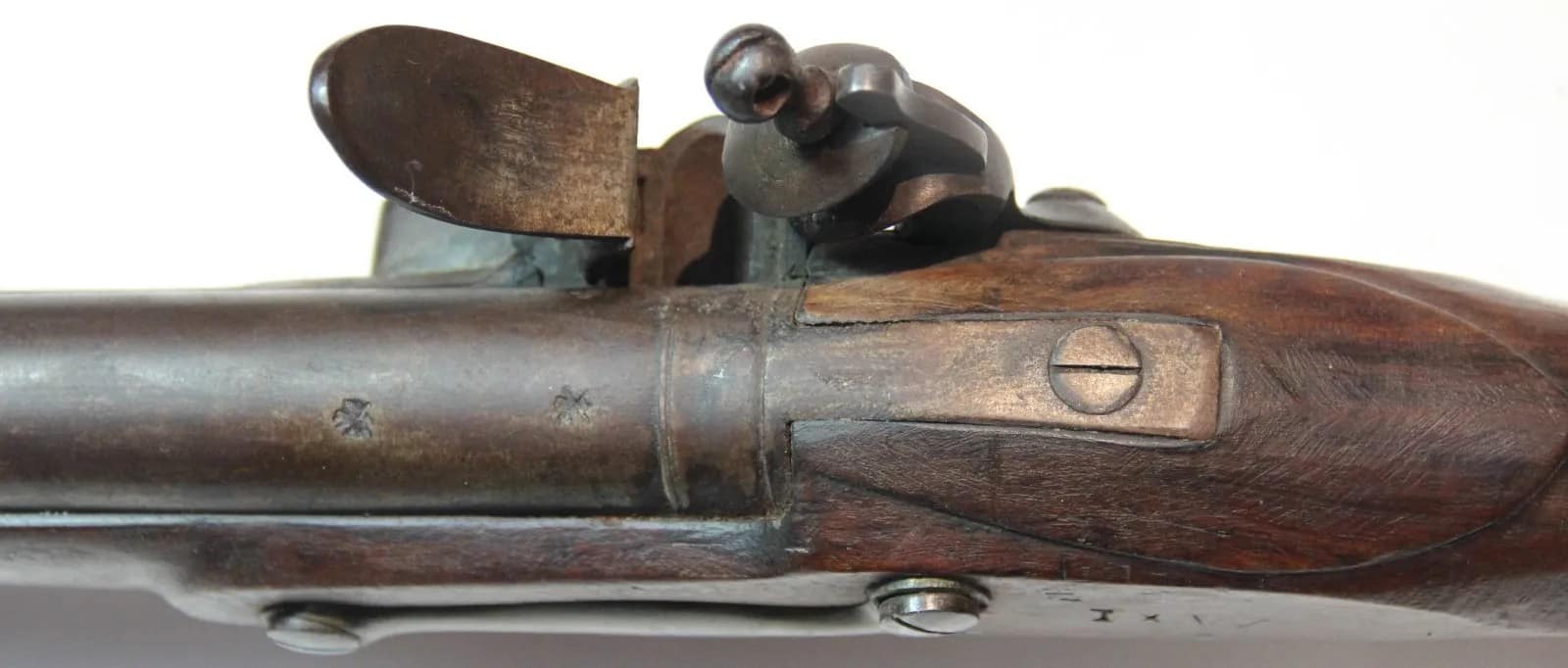
British India Pattern ‘Brown Bess’, contractor RAMSEY SUTHERLAND, LONDON. Post-1809 swan neck cock. From my personal collection

This British India Pattern “Brown Bess” musket was manufactured in London by the contractor Ramsey Sutherland during the Napoleonic War period. It represents the later post-1809 type, identifiable by its ring-neck cock replacing the earlier swan-neck form. Produced under intense wartime demand, these muskets often display comparatively crude finishing, simplified shaping, and visible tool marks. Chambered in .75 calibre and smoothbore, the India Pattern became Britain’s principal infantry arm during the Peninsular War and the later campaigns against Napoleonic France, prioritising output and durability over refinement.


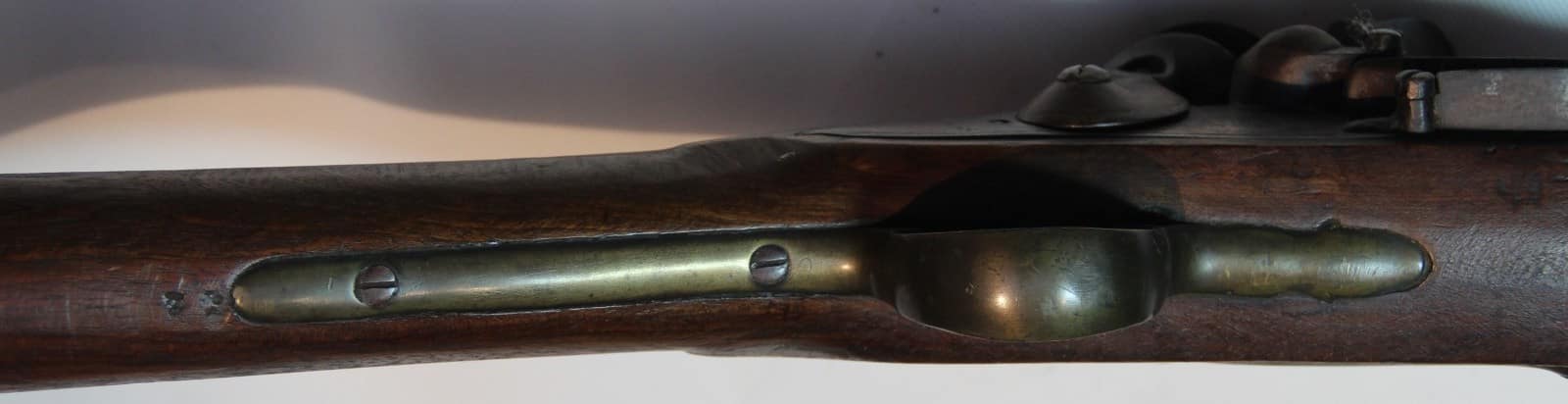
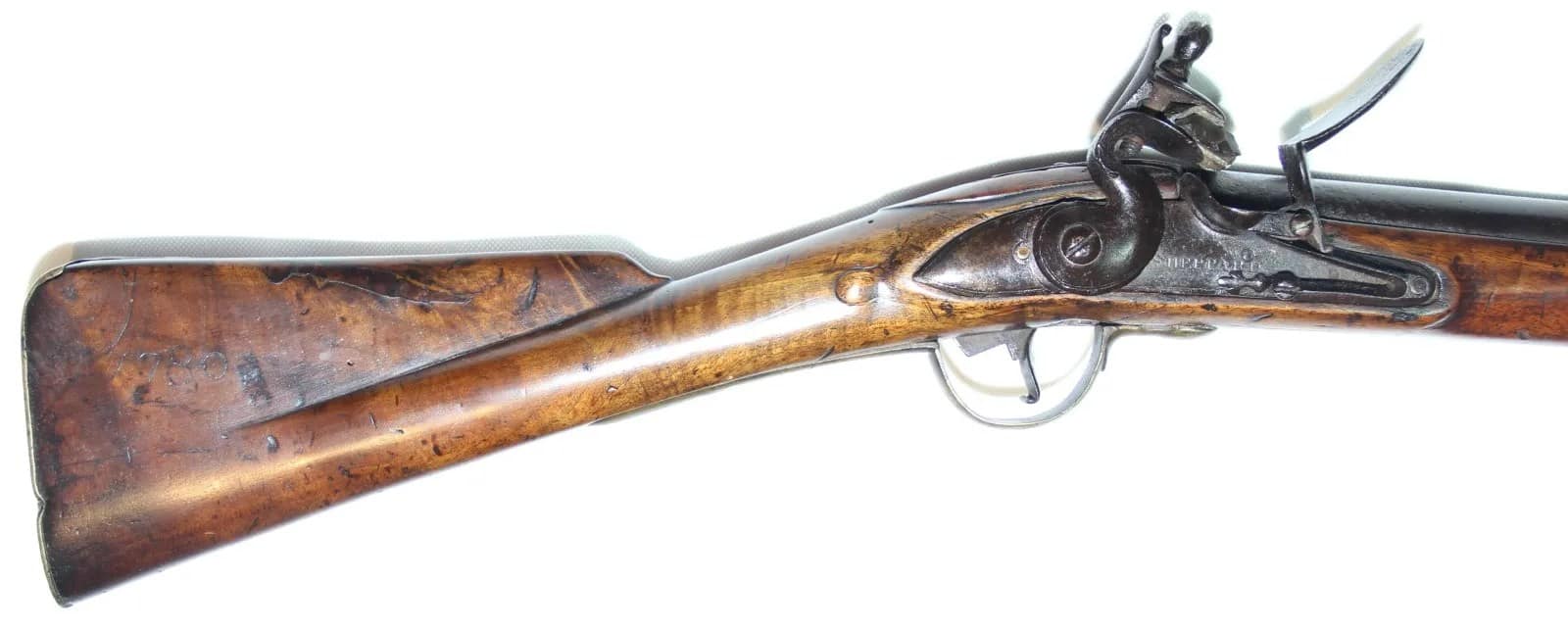
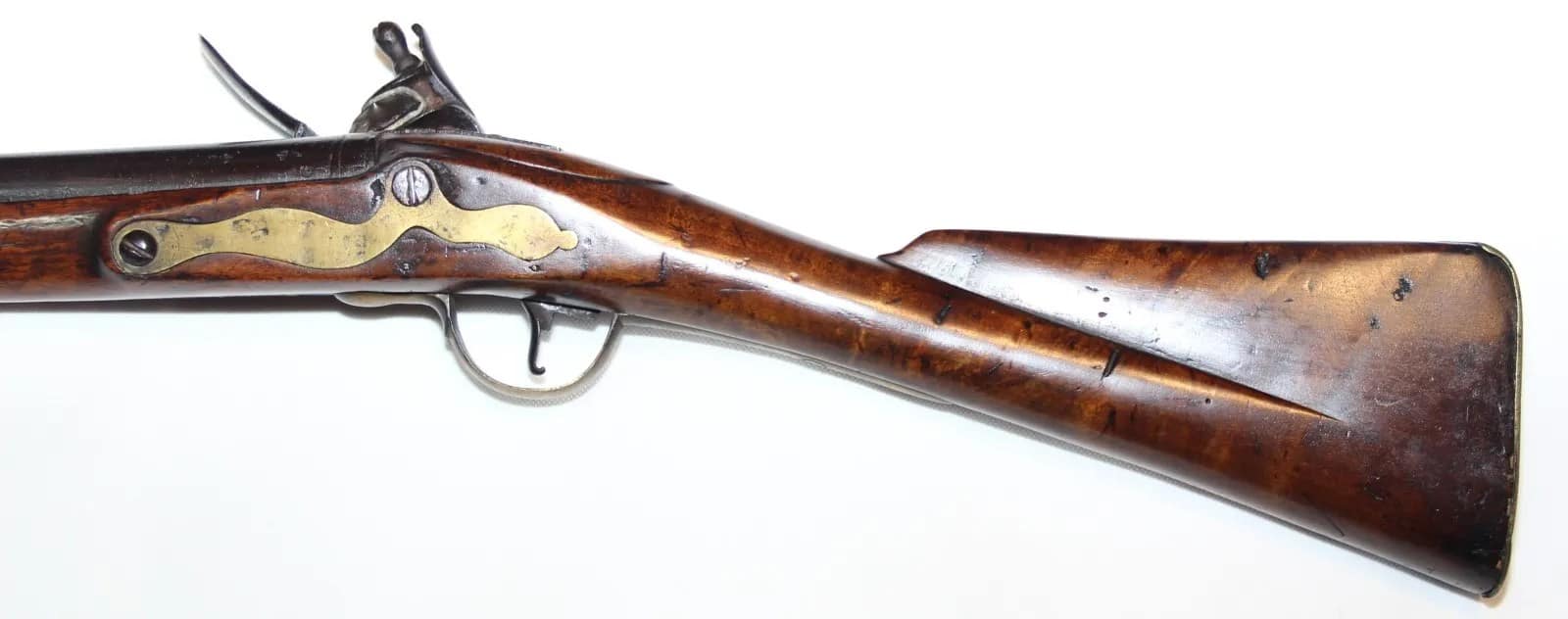
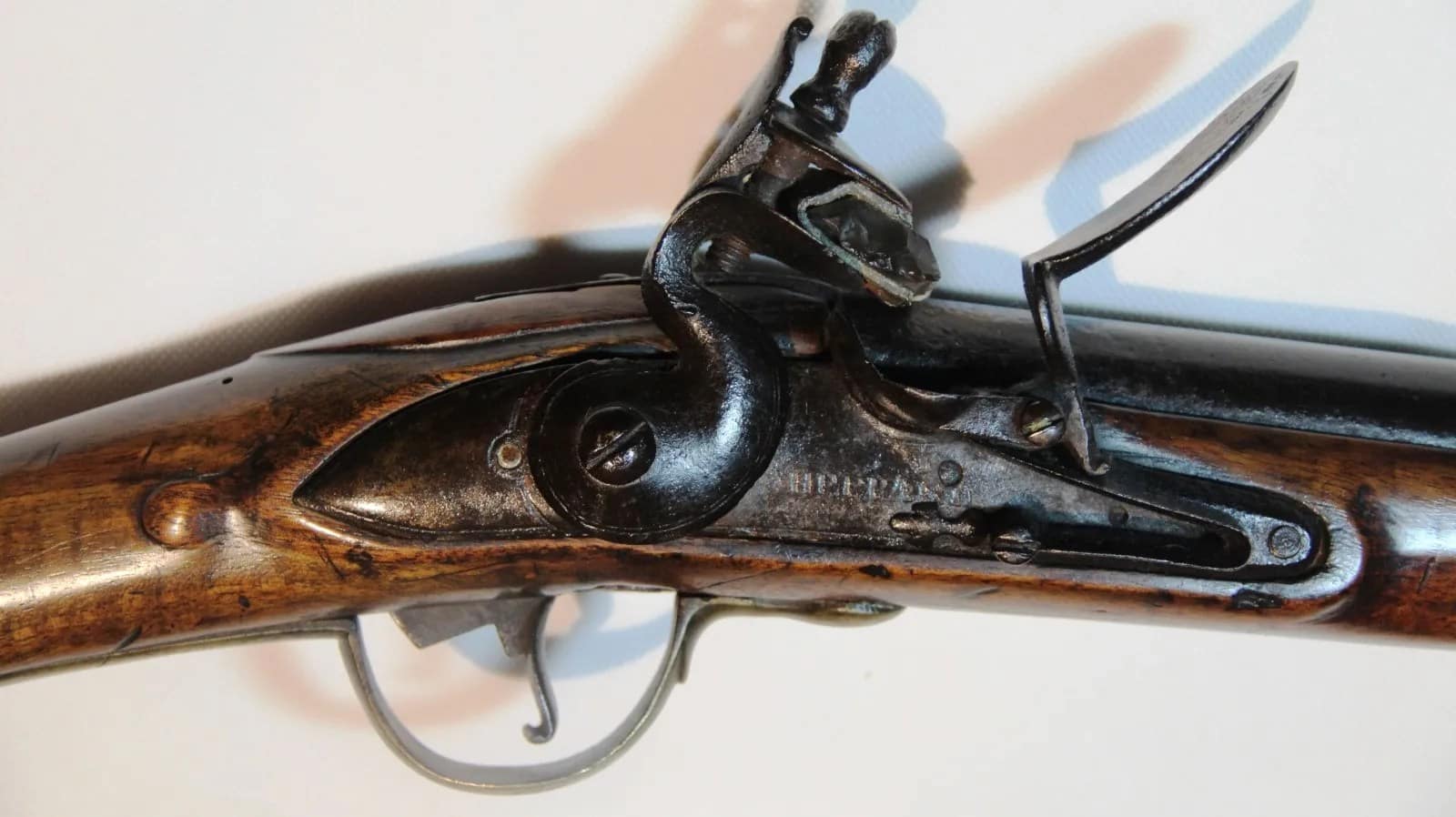
1780 English Sea Service Musket (Lockplate Marked SHEPPARD). From my personal collection.

This English Sea Service flintlock musket, dating to circa 1780 and bearing a lockplate marked “Sheppard,” represents the standard naval shoulder arm of the late 18th century. Typically of .75 calibre, Sea Service muskets featured simplified construction with robust furniture and, in some cases, blackened barrels to resist corrosion in maritime environments. Designed for use aboard Royal Navy vessels and by naval landing parties, they prioritised durability and ease of maintenance over refinement. Muskets of this type saw widespread service during the American Revolutionary War and the wars of the late 18th century, reflecting the practical demands of naval warfare.


British Pistols of the Napoleonic Wars


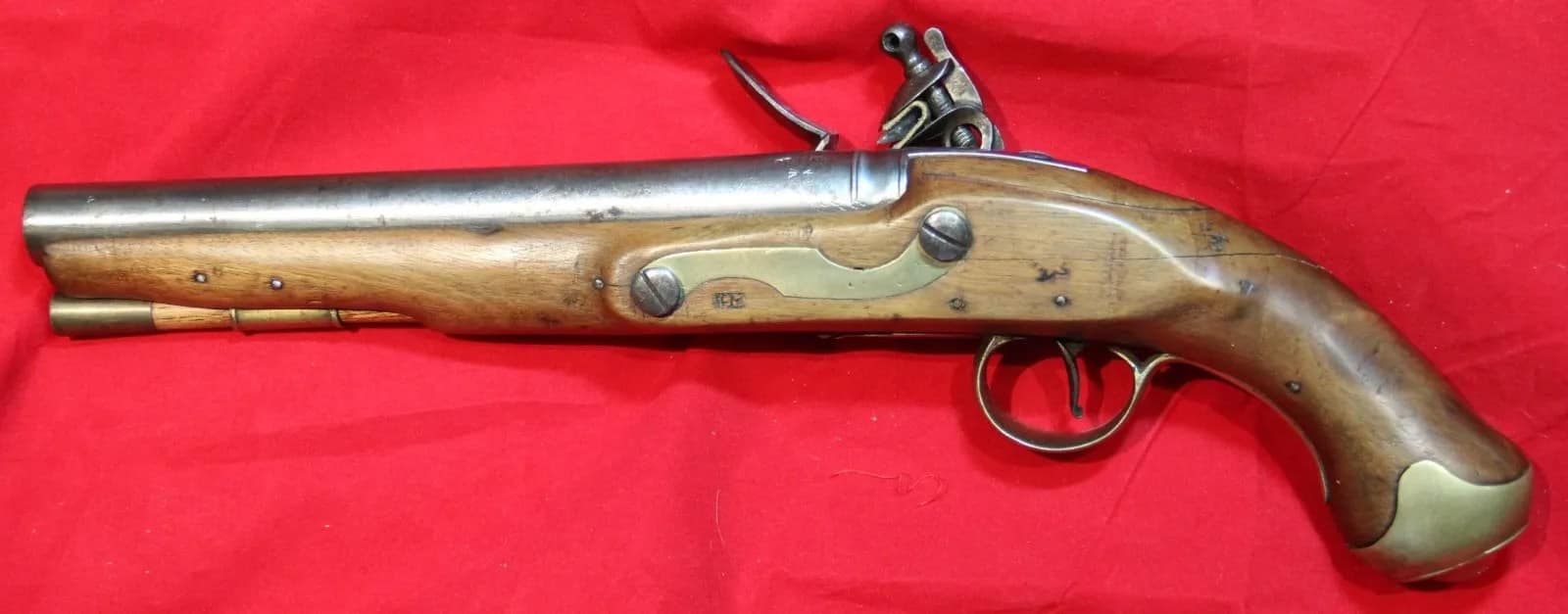
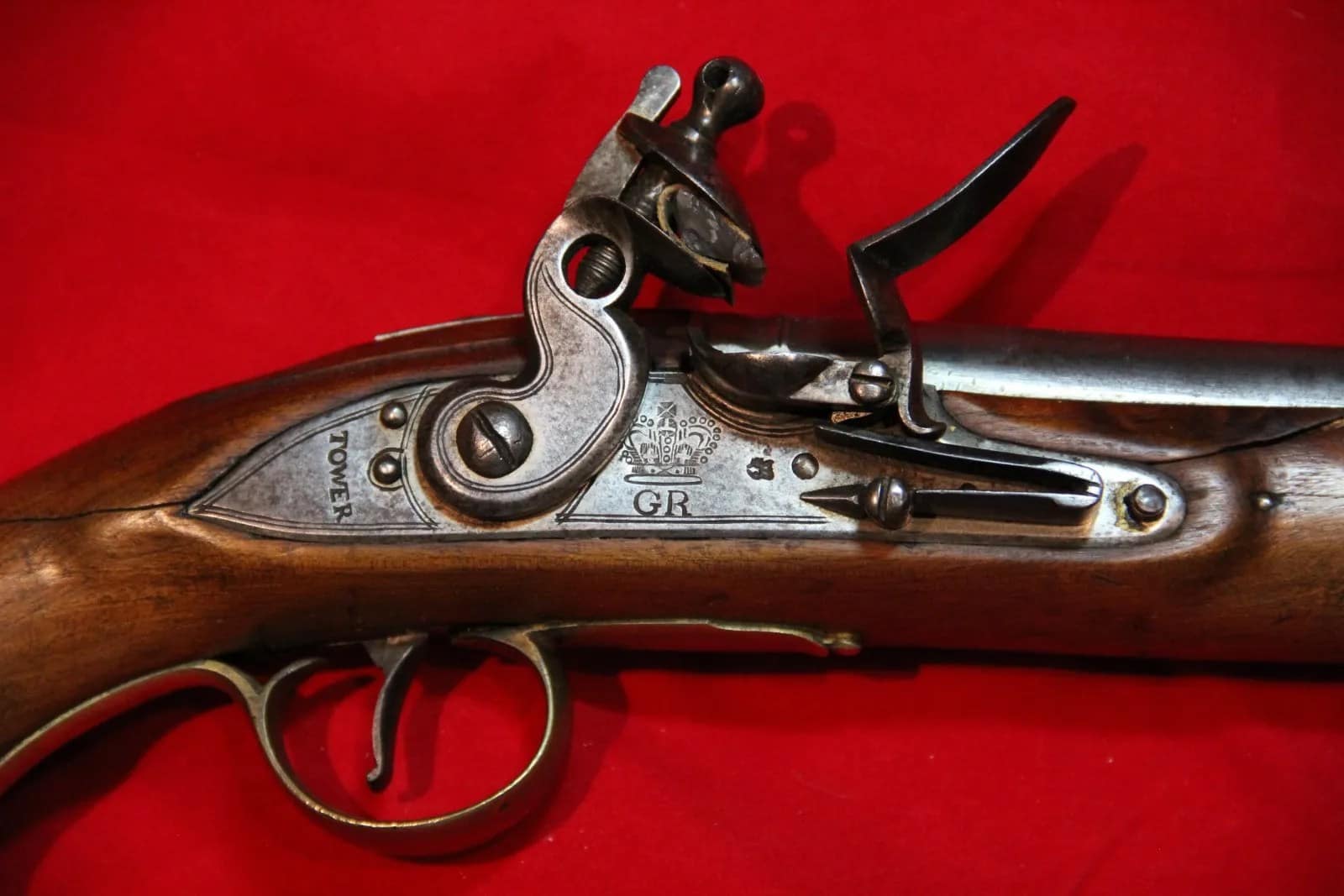
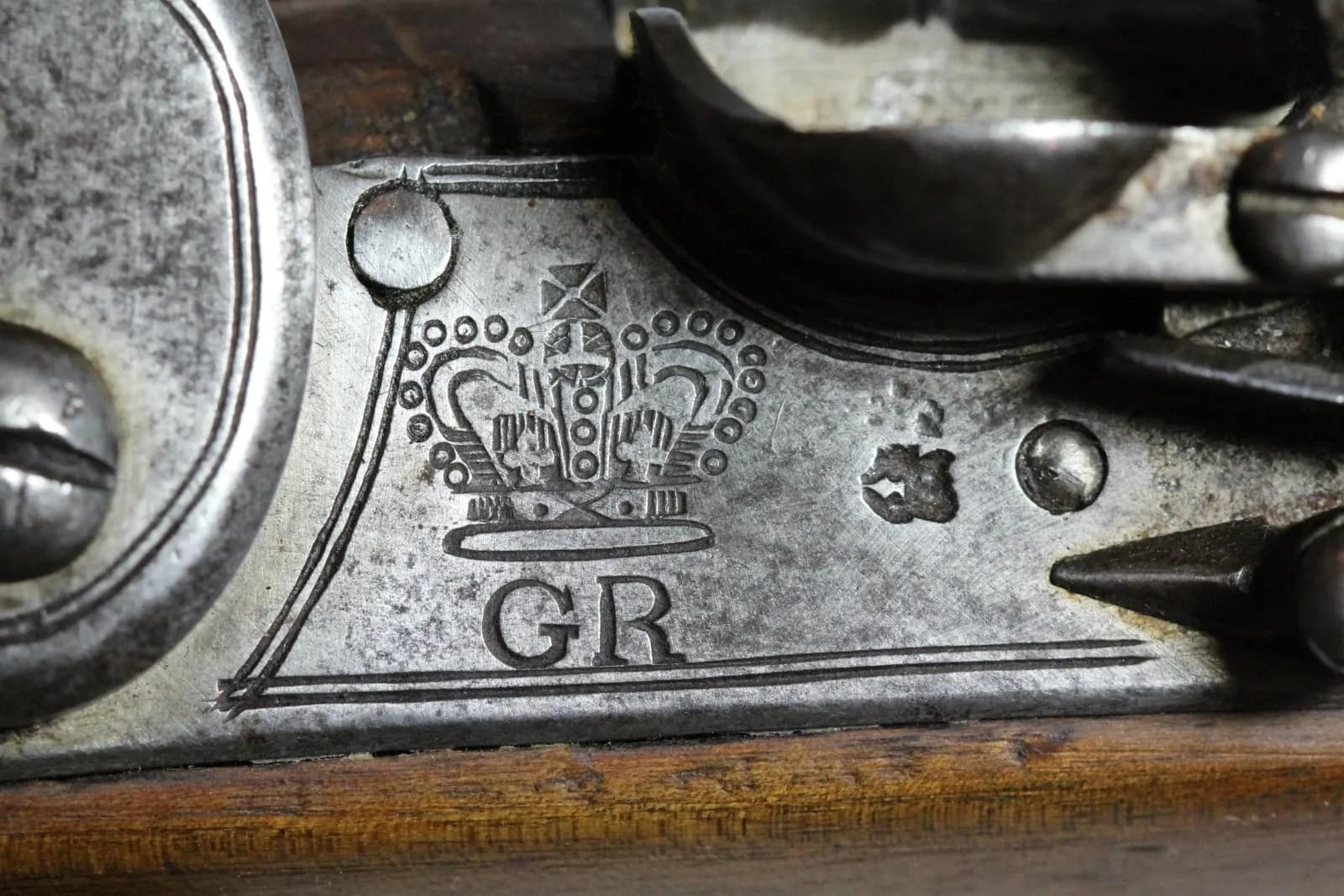
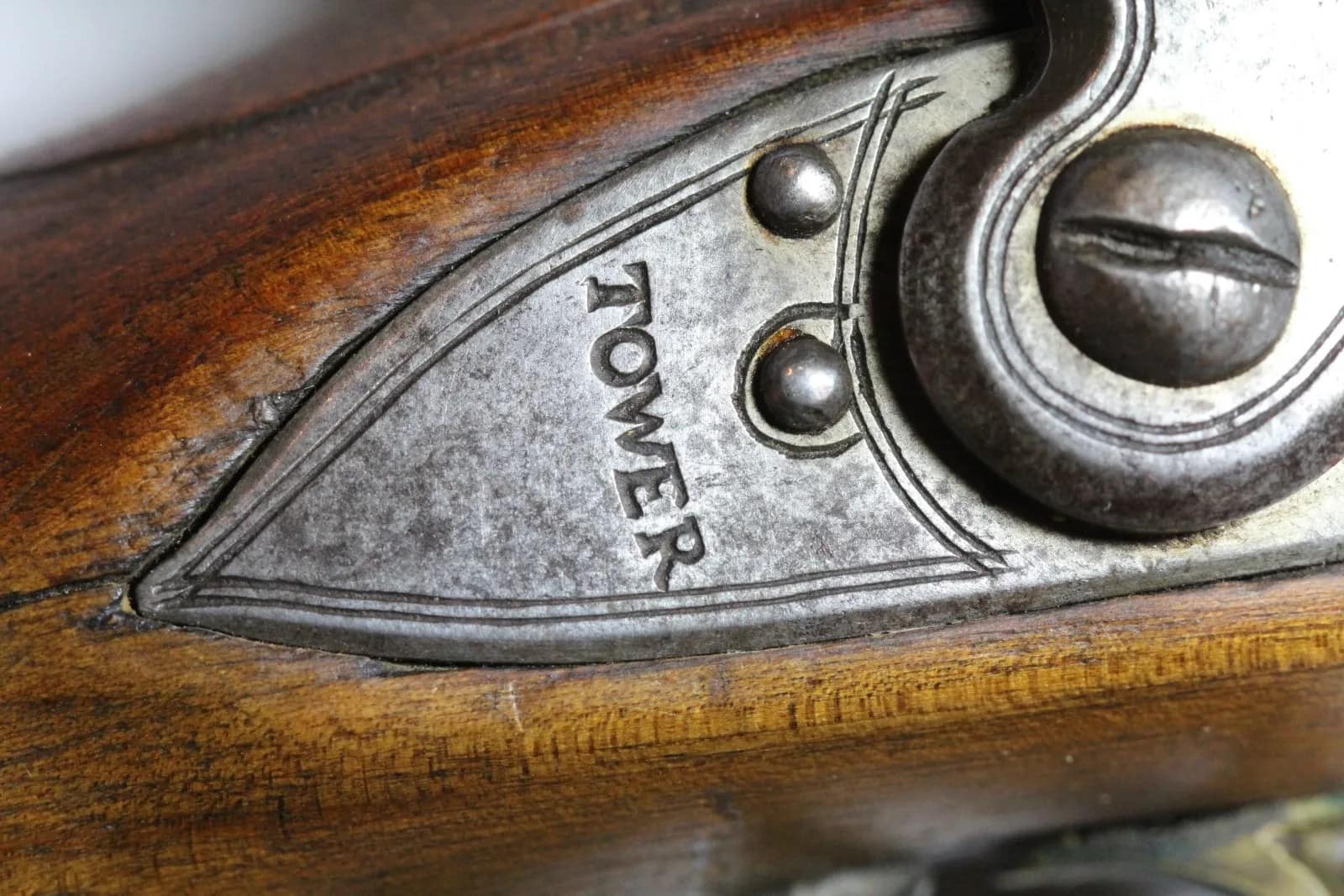
British New Land Pattern pistol, from my personal collection

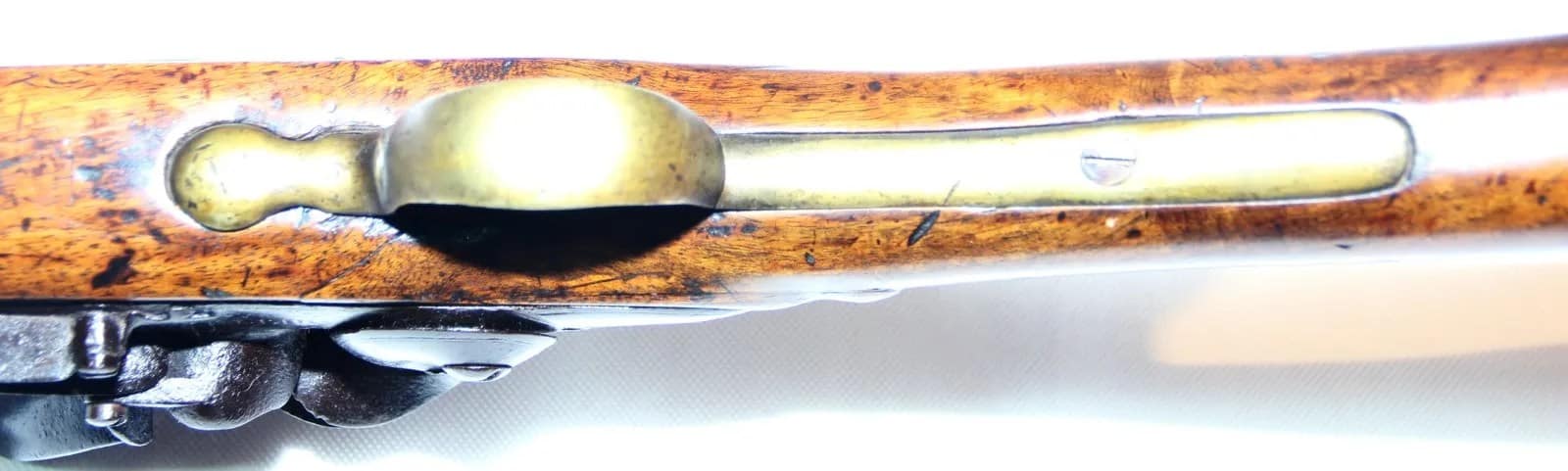
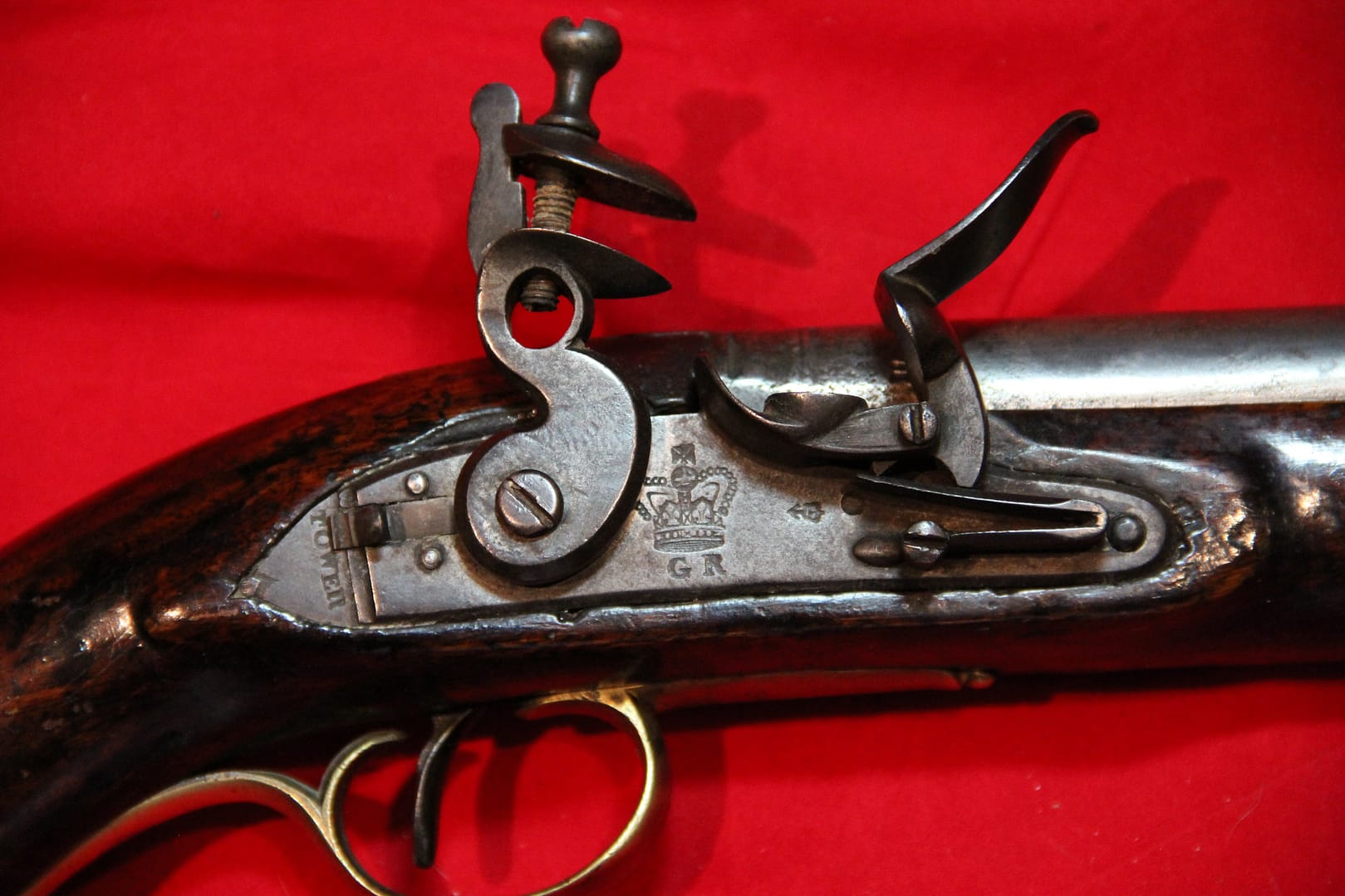
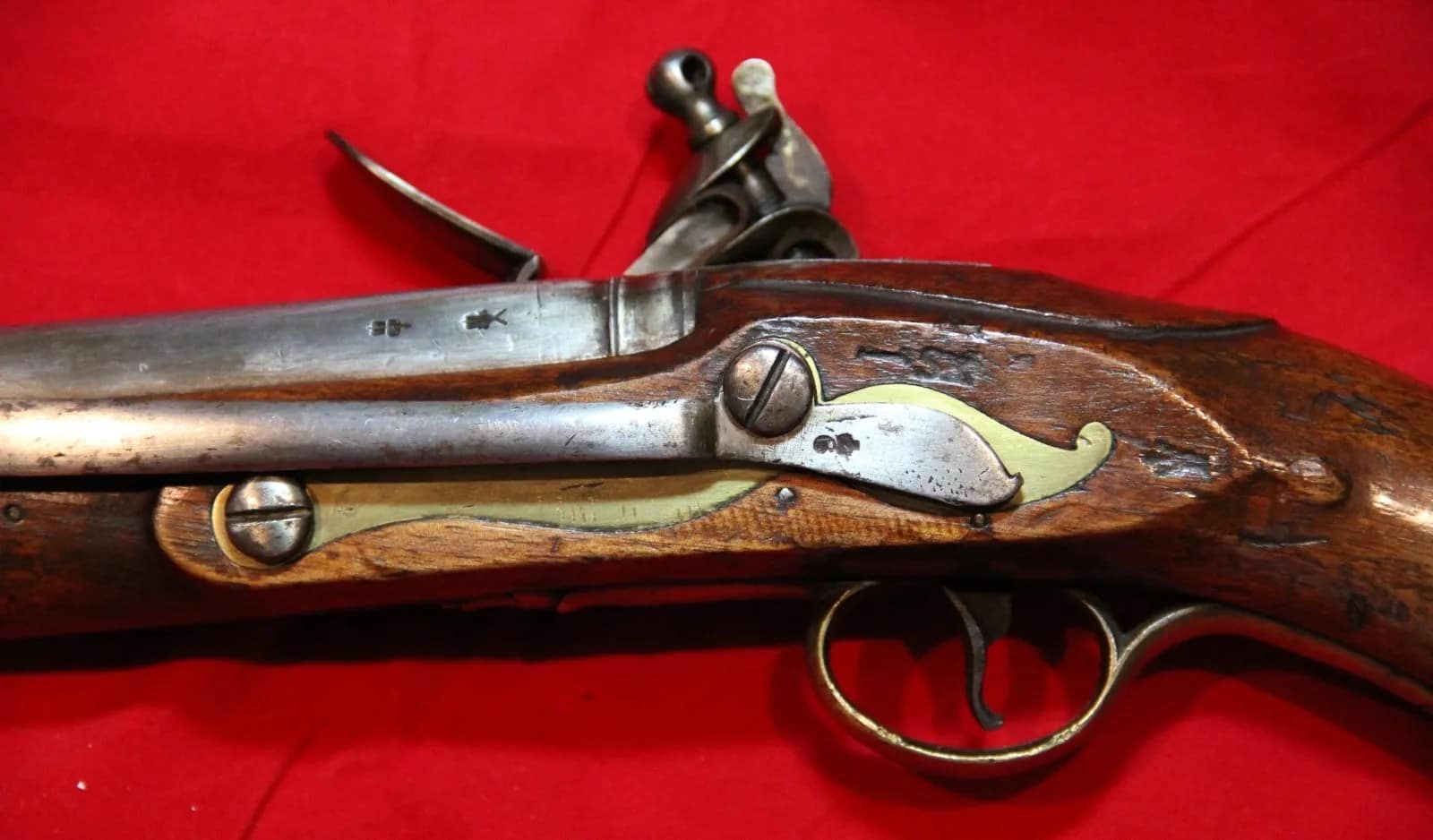
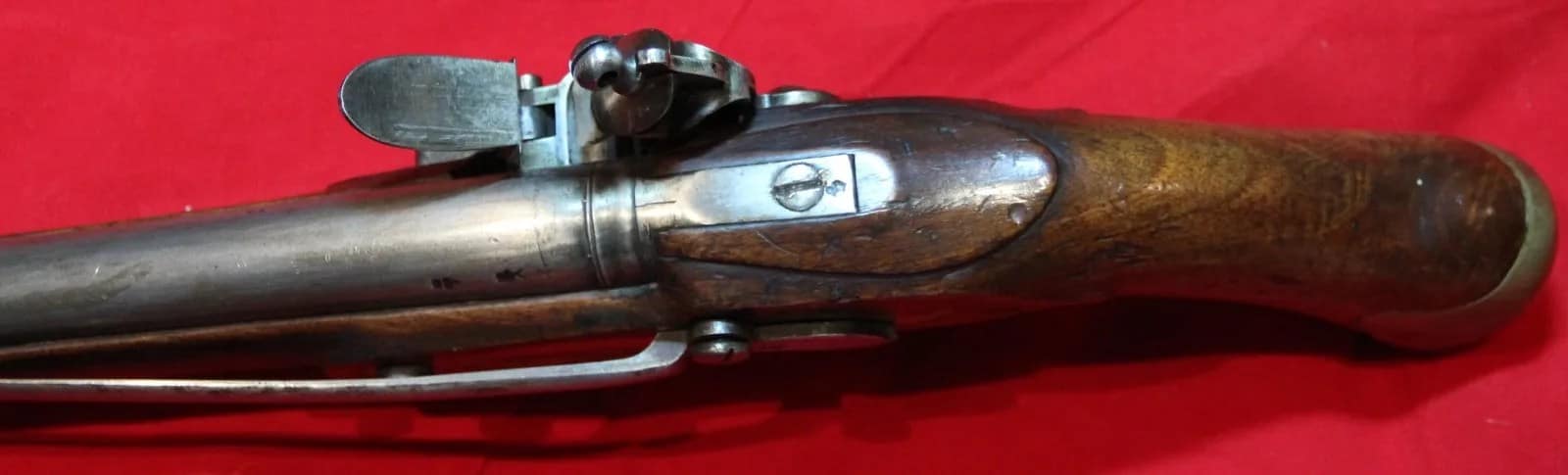
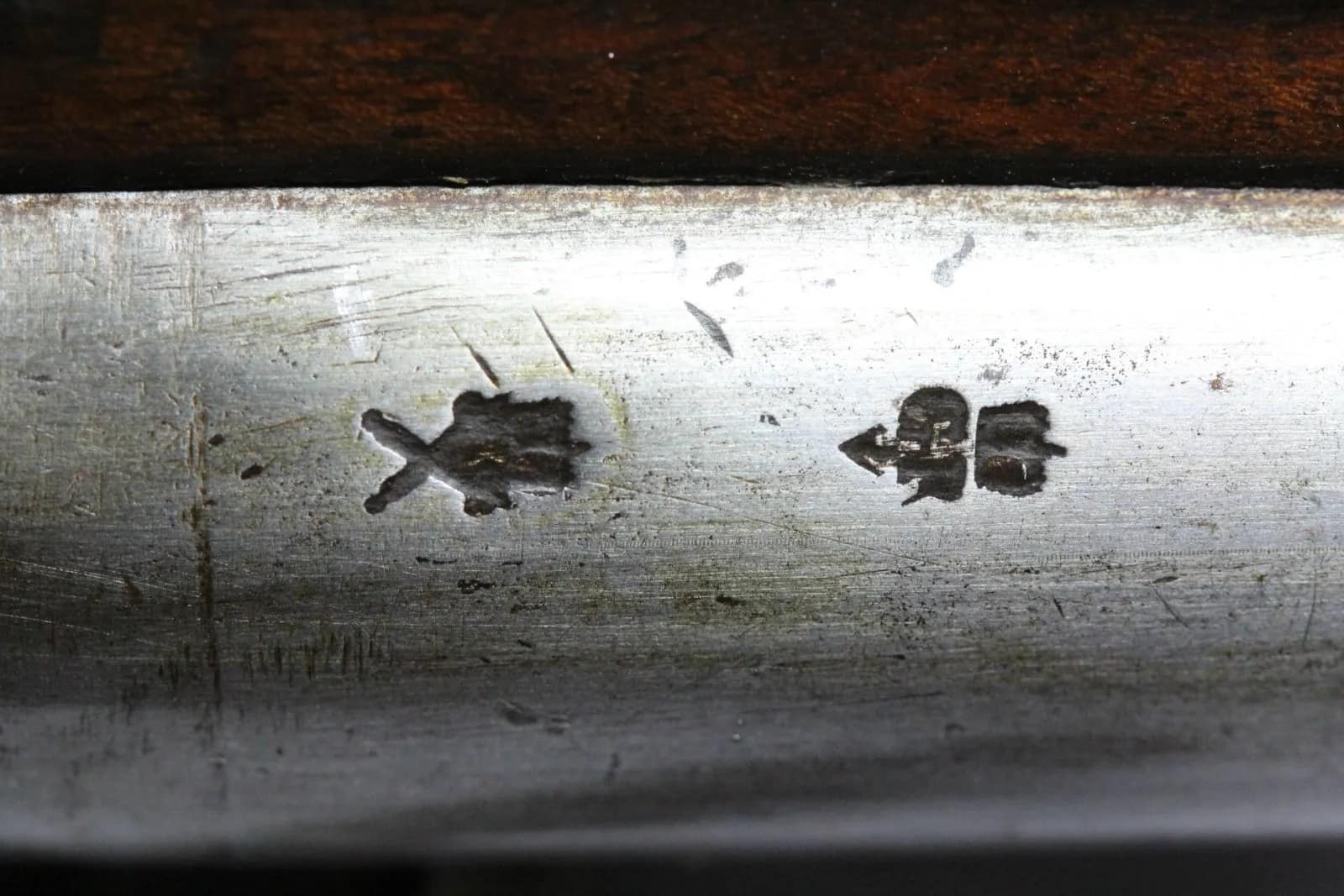
The British New Land Pattern pistol was the standard flintlock sidearm issued to cavalry, artillery drivers, and selected infantry units from 1802 onward. A large-bore .65-calibre weapon with walnut stock, flat-bevelled lock, and brass furniture, it was designed for close-range mounted combat and as a general-service utility pistol. Its robust, simplified construction reflected the Board of Ordnance’s move toward standardisation across land-service firearms in the early 19th century.


British Pattern 1796 Light Dragoon Pistol, from my personal collection

The British Pattern 1796 Light Dragoon pistol was introduced to equip cavalry regiments during the French Revolutionary and Napoleonic Wars. A single-shot, smoothbore flintlock of .65 calibre, it featured brass furniture, a flat lockplate, and a robust walnut stock designed for mounted service. Issued in pairs and carried in saddle holsters, it complemented sabre use during shock action. Manufactured by Board of Ordnance contractors, the pattern prioritised durability and simplicity. The 1796 pistol saw service in the Peninsular War and at Waterloo, reflecting Britain’s cavalry doctrine of close-range mounted engagement.


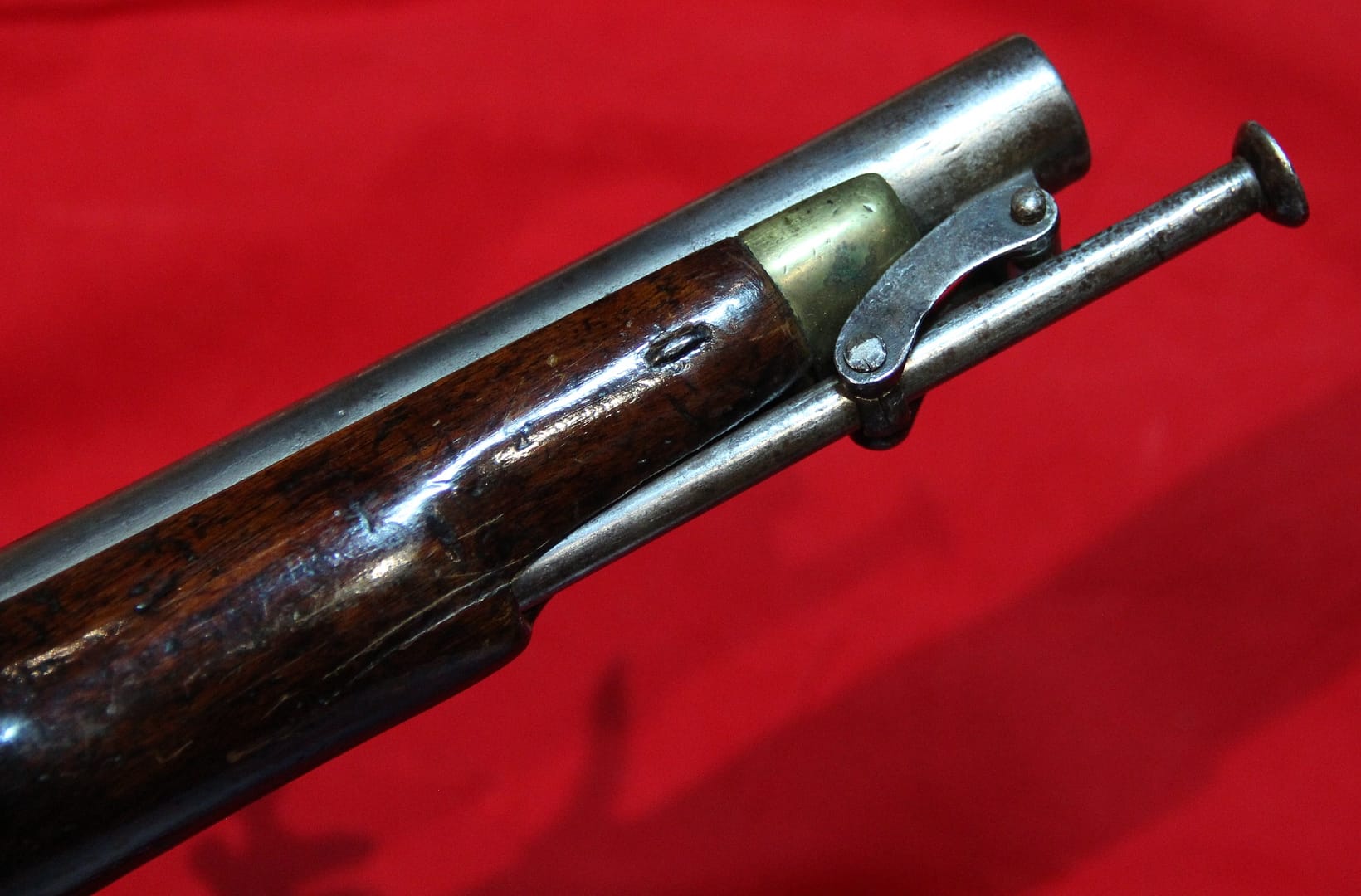
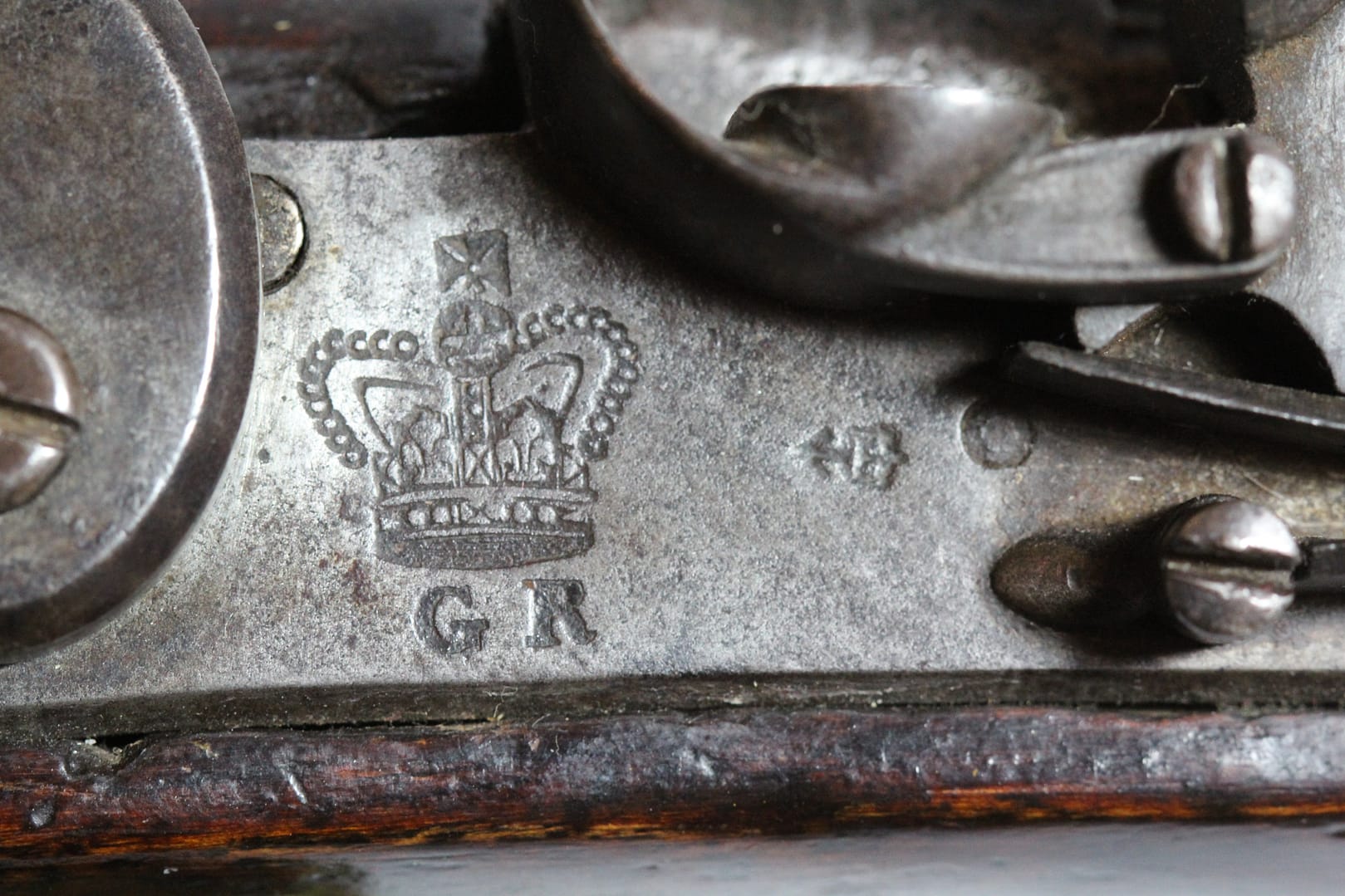
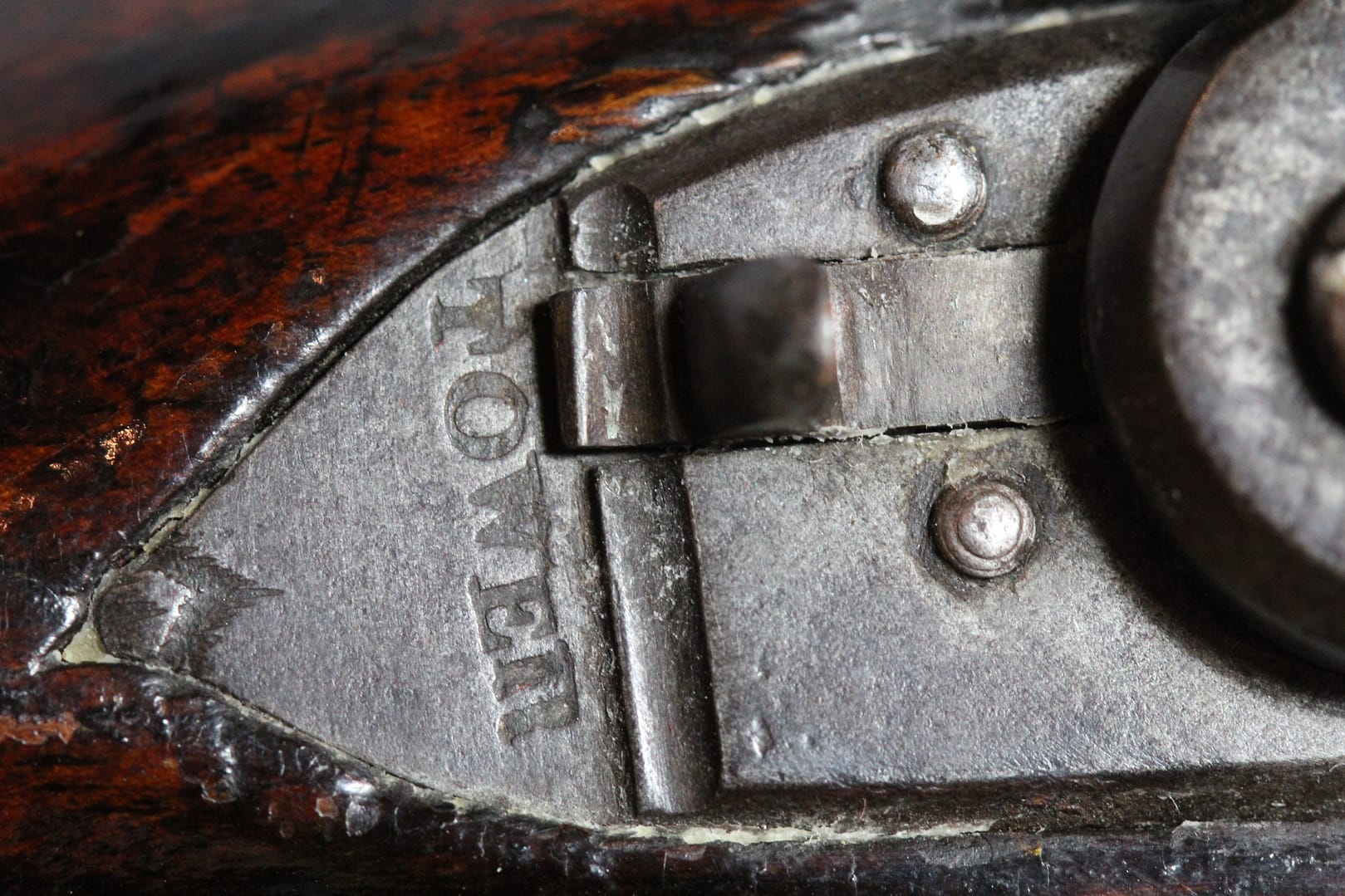
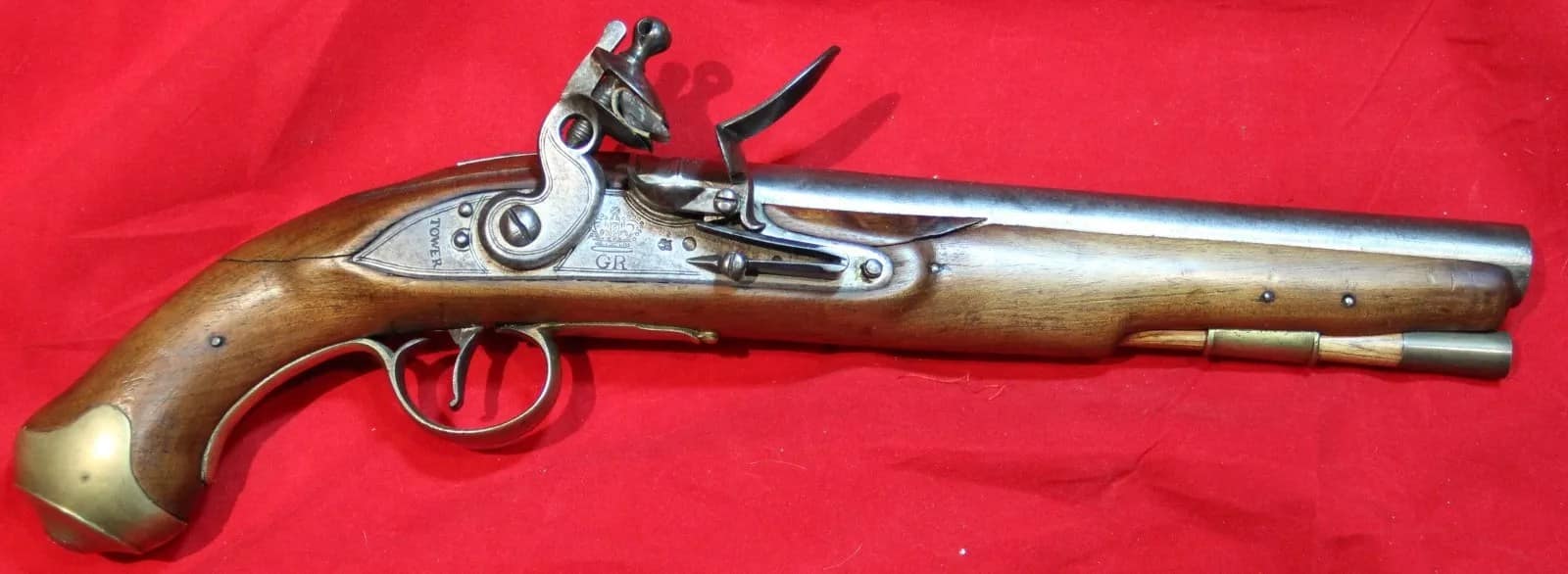
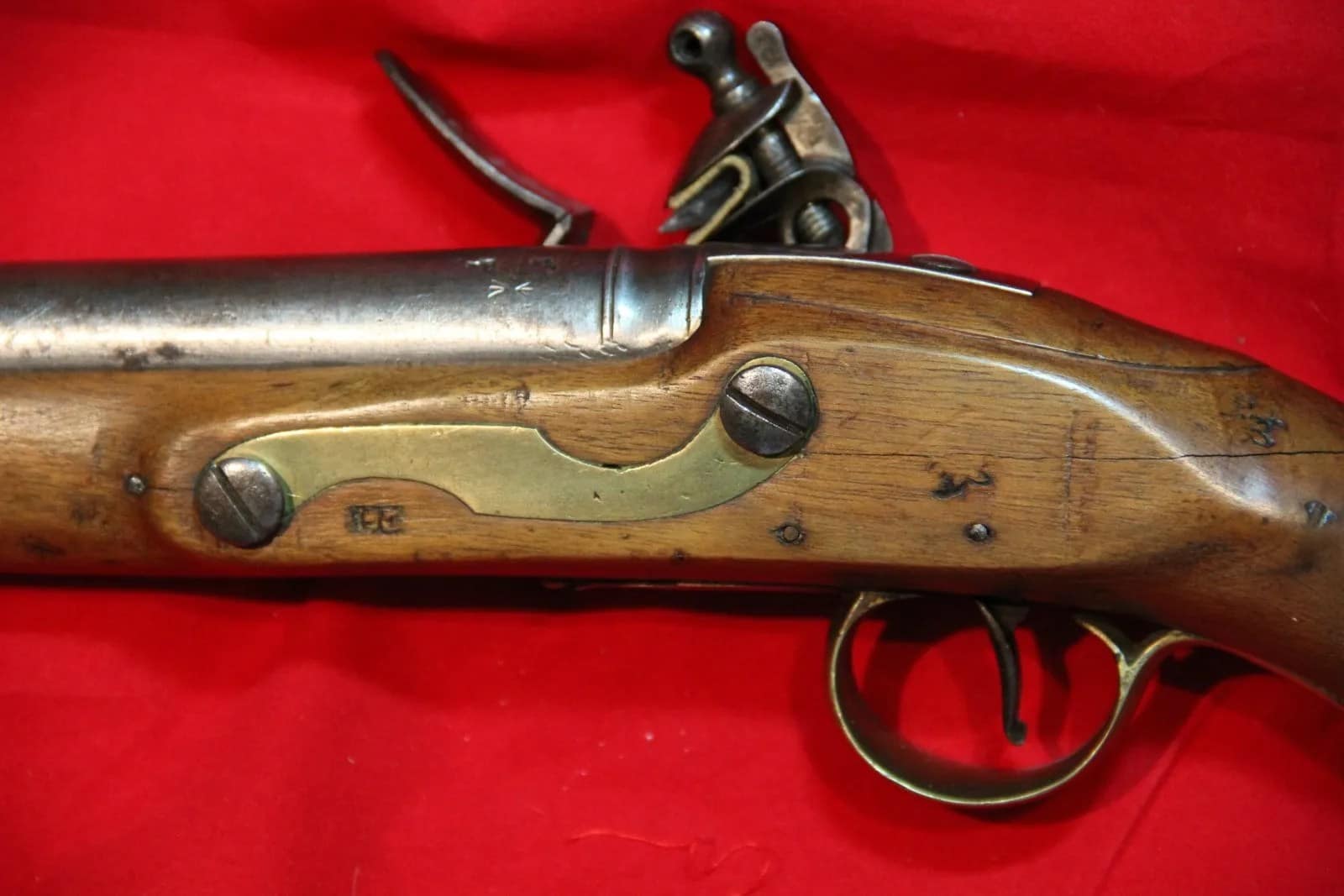
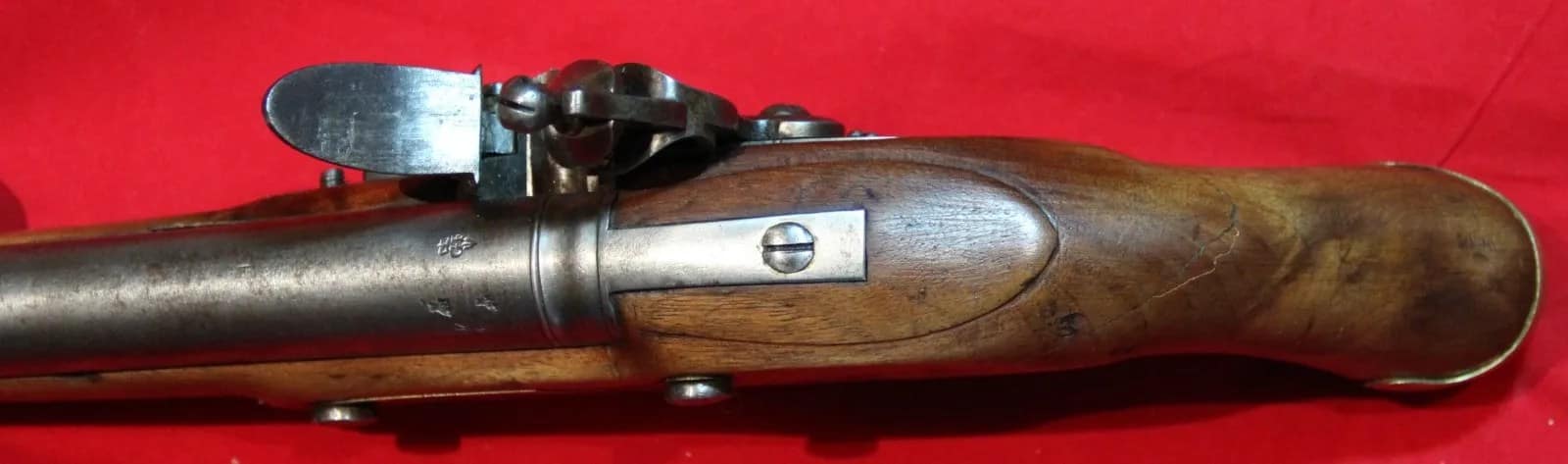
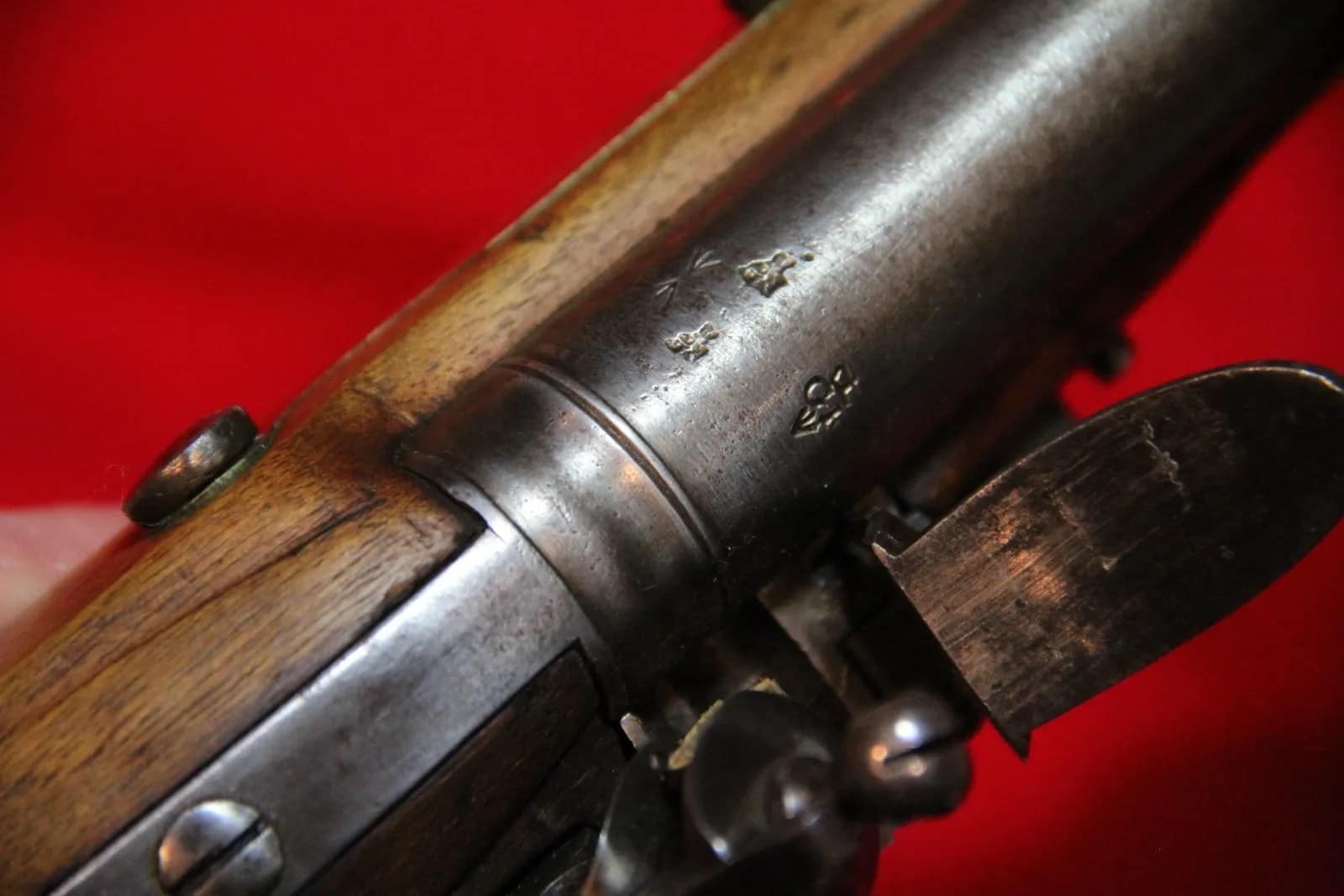
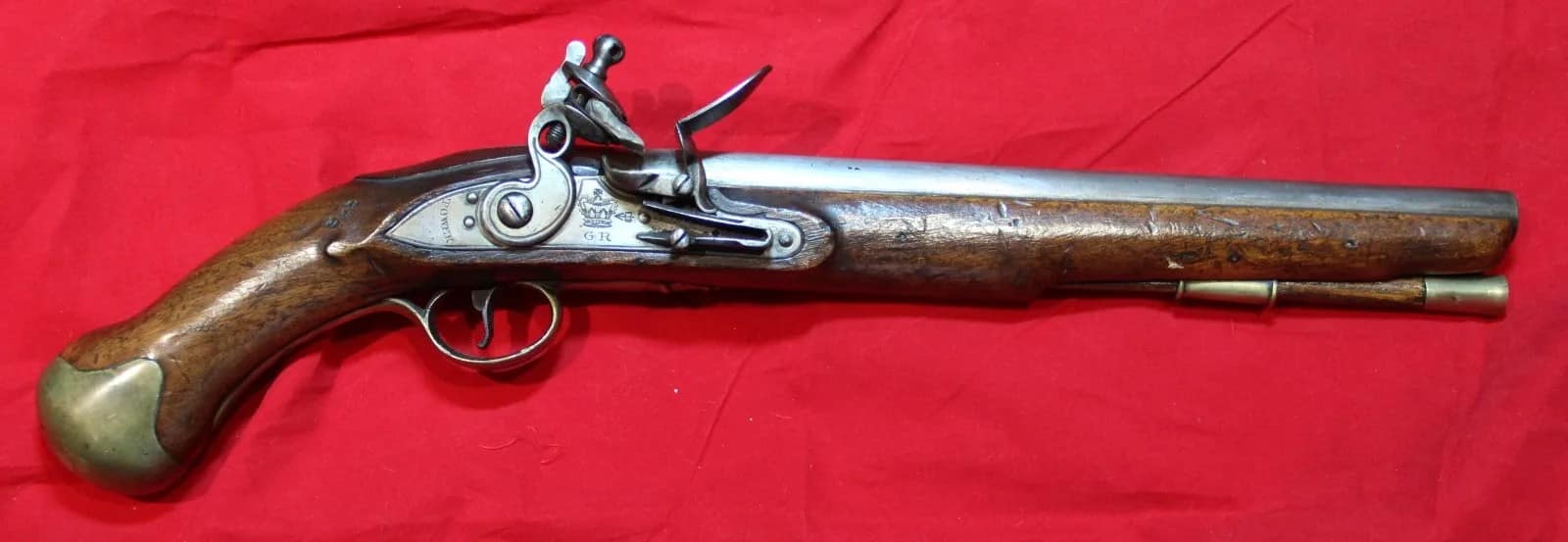
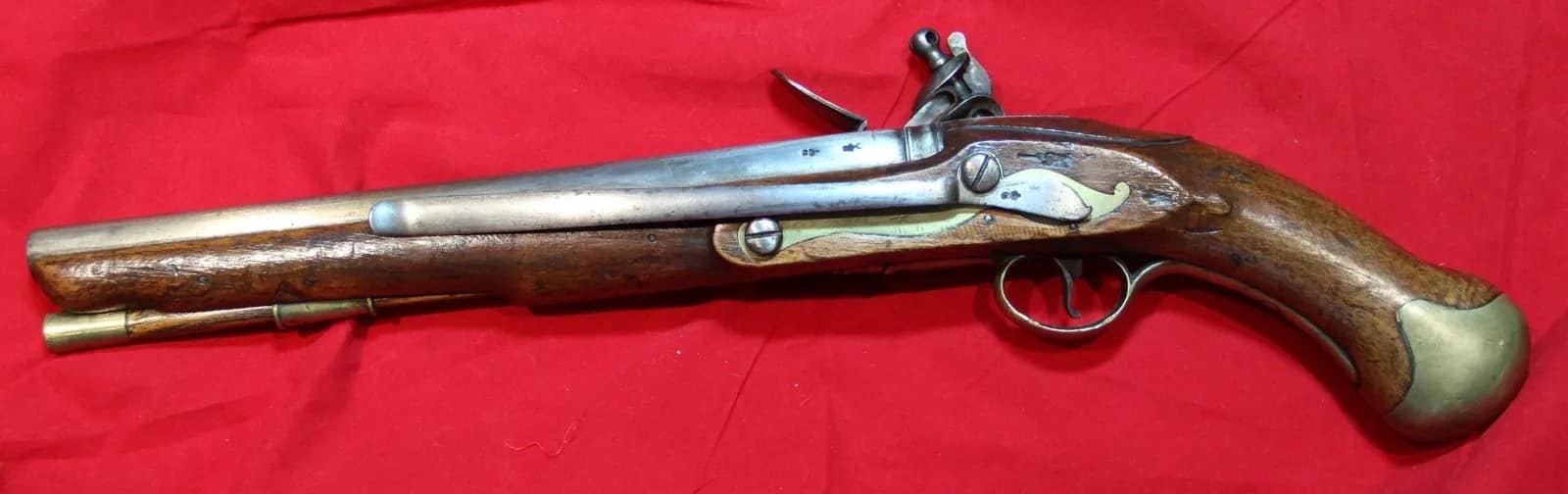
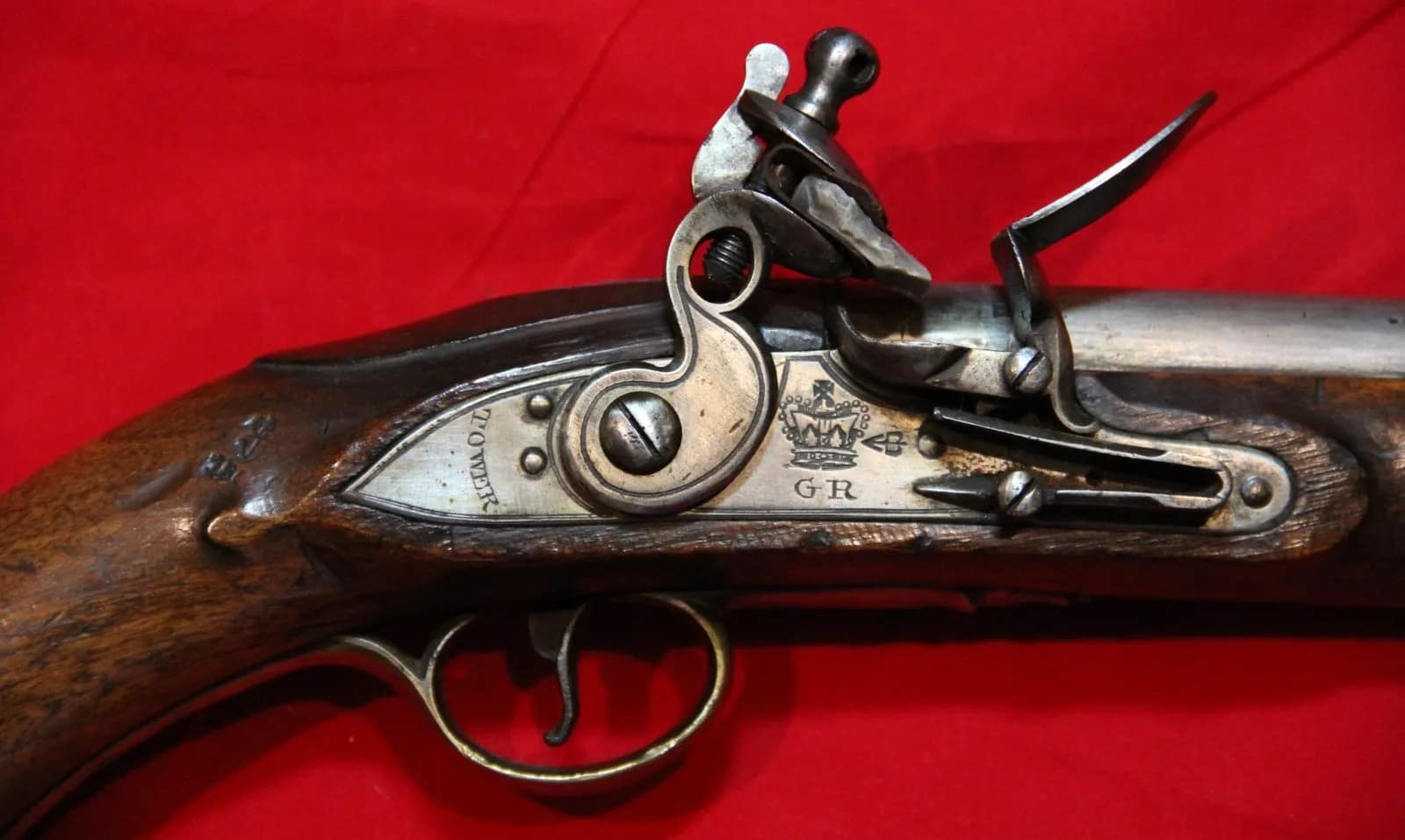
British Pattern 1796 Sea Service Pistol, from my personal collection

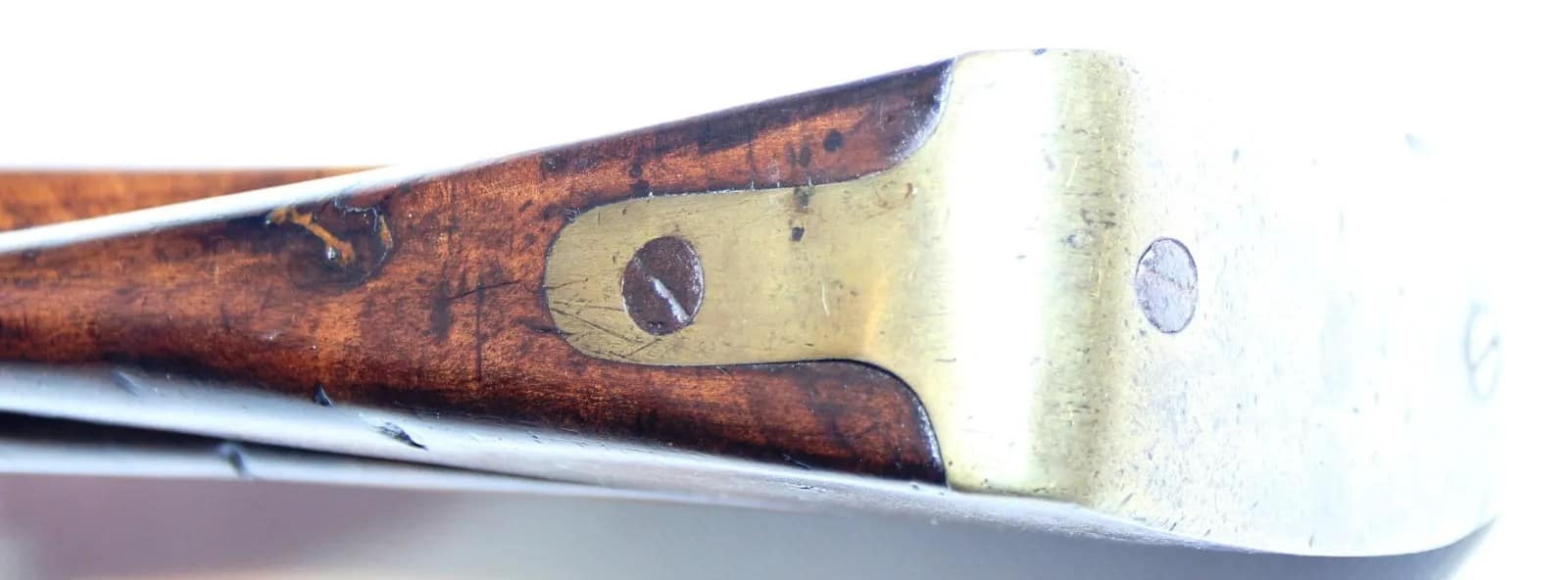
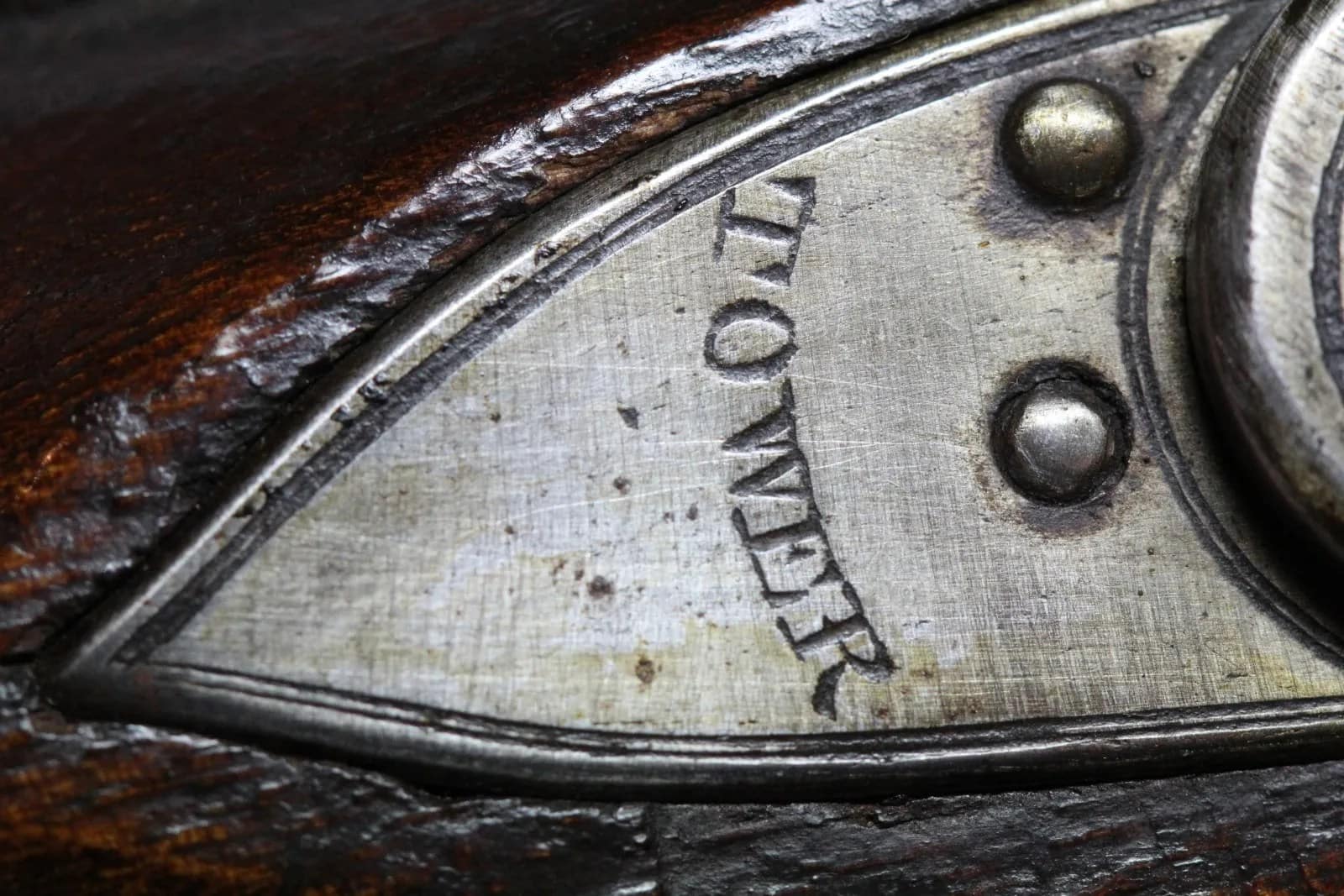
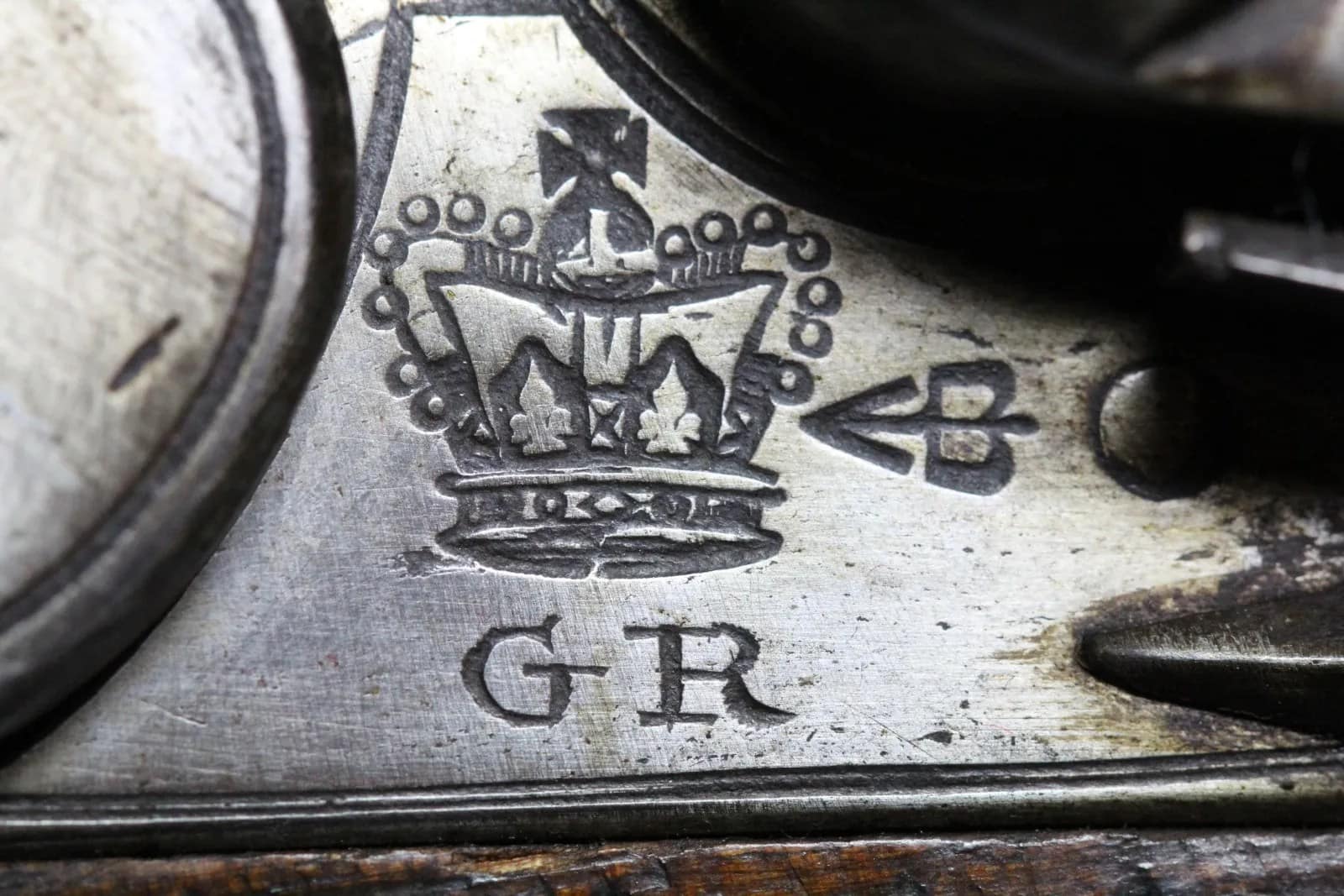
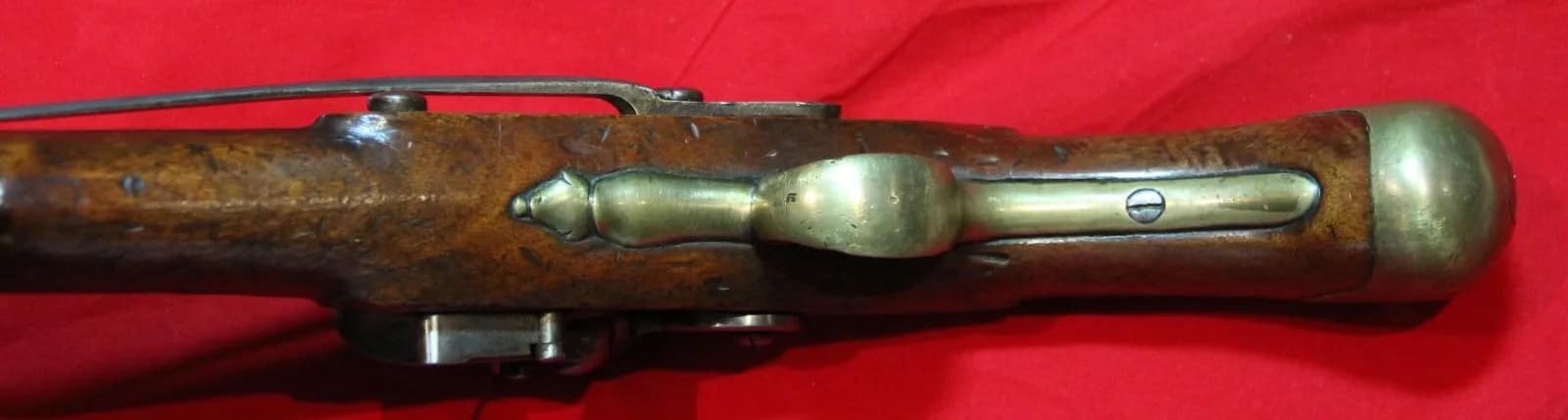
The British Pattern 1796 Sea Service pistol was issued to the Royal Navy during the French Revolutionary and Napoleonic Wars. A single-shot, smoothbore flintlock of approximately .56 calibre. The 1796 patern was evolved from the earlier 1718 pattern. It featured a heavy barrel, brass furniture, and a distinctive flat butt cap suited to close-quarters fighting aboard ship. Designed for durability in maritime conditions, it was carried by sailors and Royal Marines during boarding actions and ship defence. Manufactured by Board of Ordnance contractors, the pattern reflects naval requirements for robust, compact firearms capable of reliable operation in harsh sea environments.


British Edged Weapons of the Napoleonic Wars


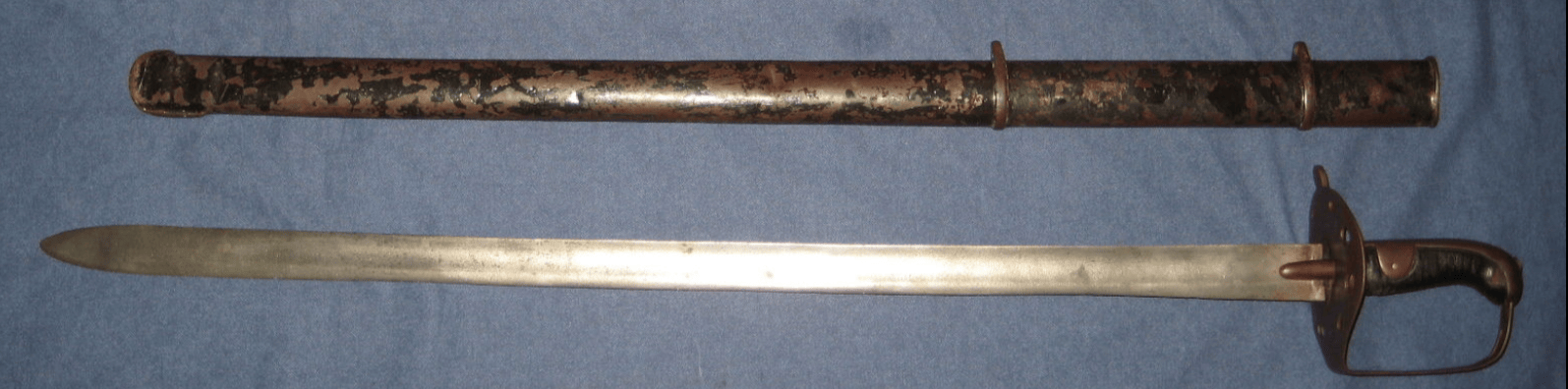
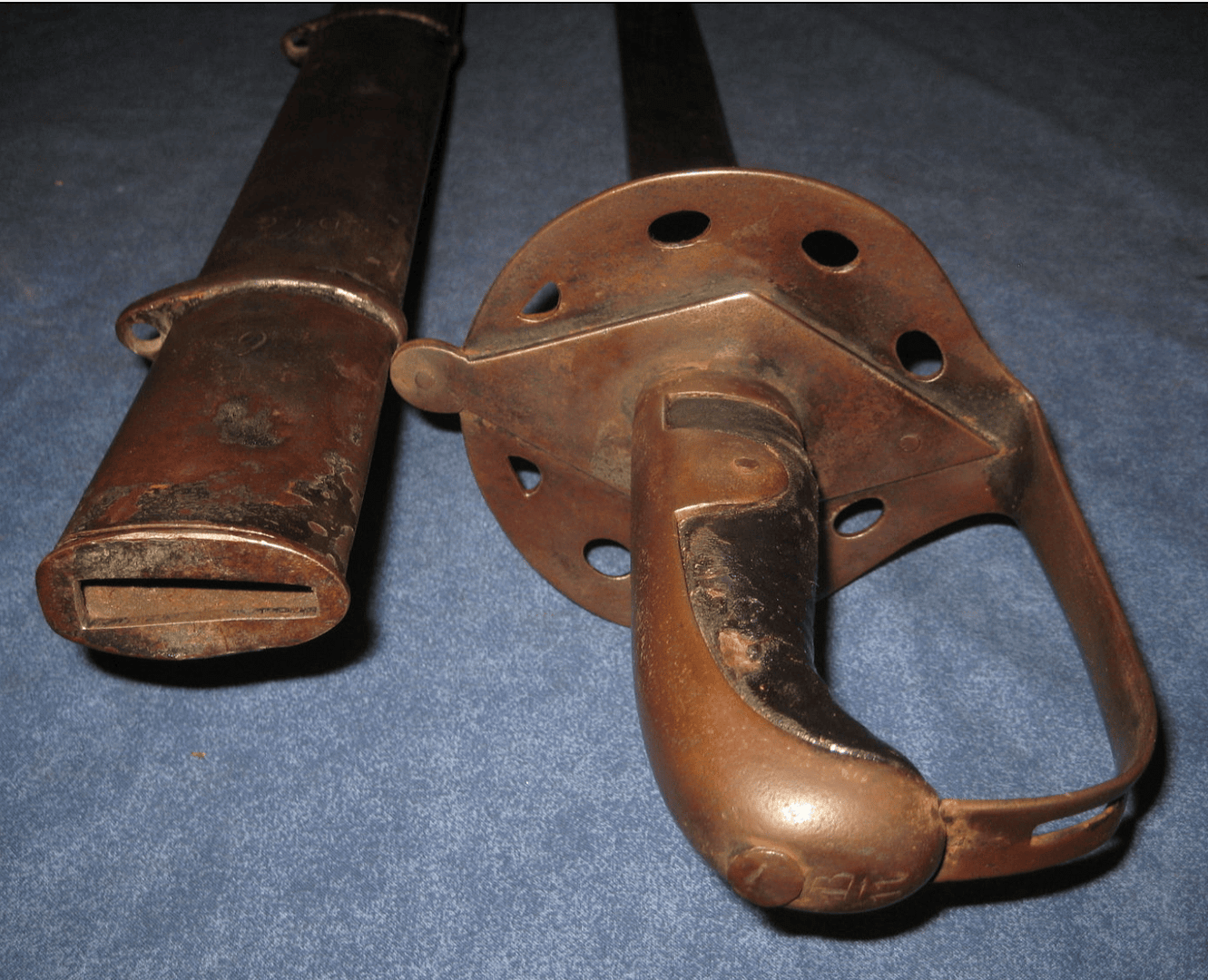
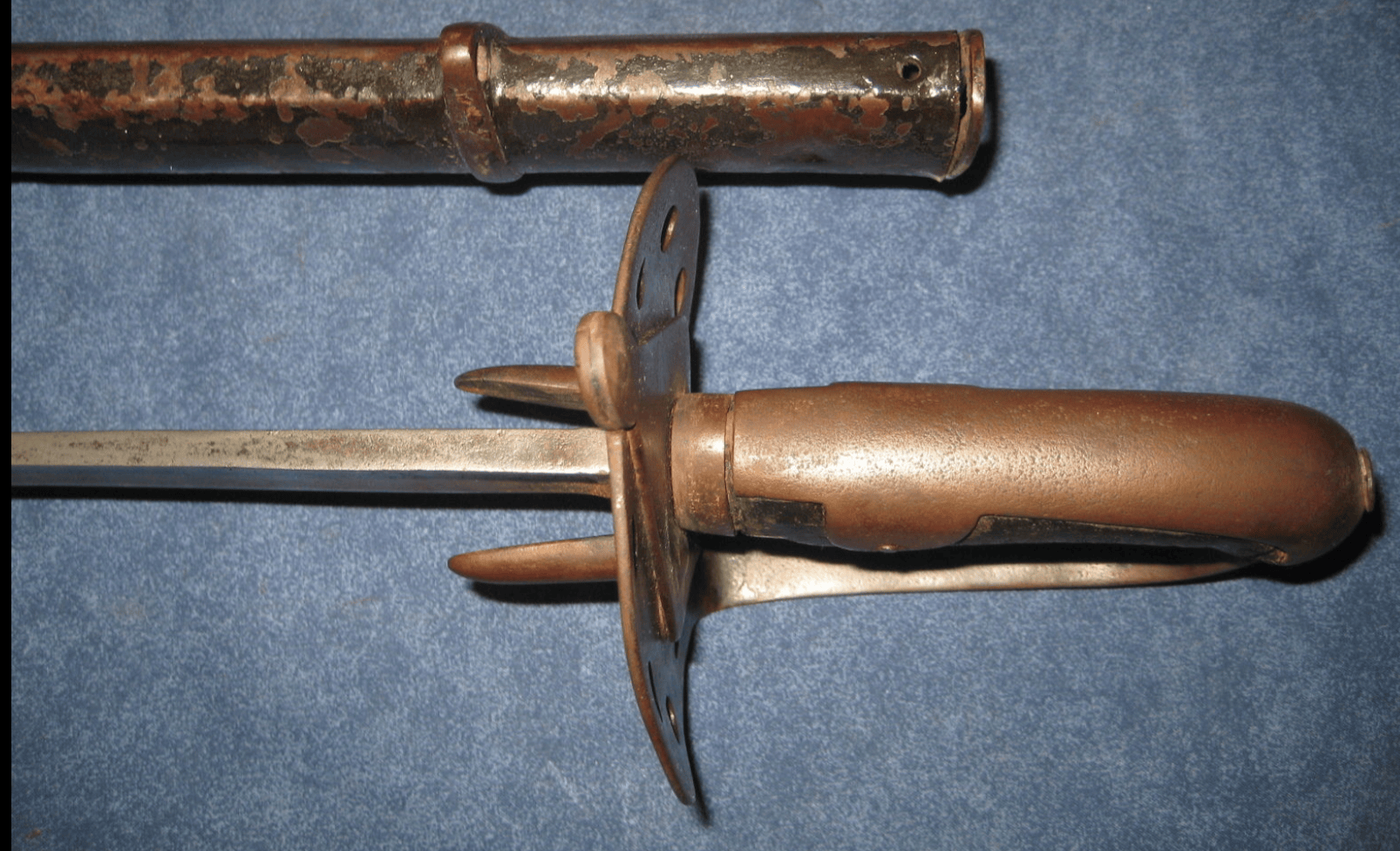
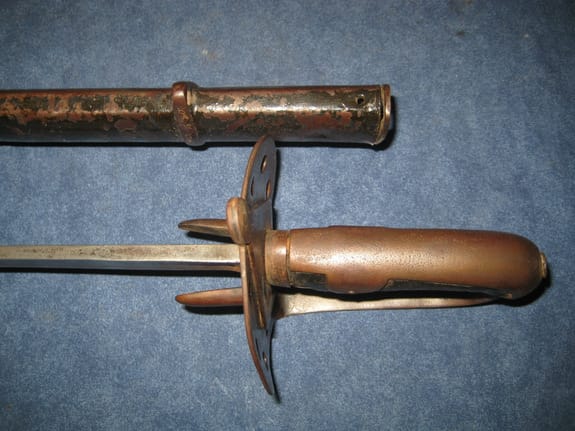
British Pattern 1796 Heavy Cavalry Sword. From my personal collection.

This Pattern 1796 heavy cavalry sword is marked “B / 11” to B Squadron, rack number 11, with the scabbard marked “7DG” for the 7th Dragoon Guards (Princess Royal’s Own), and “E / 6” to E Squadron. The straight, broad single-fullered blade and massive iron bowl guard were designed for the shock charges of British heavy cavalry. Used at Salamanca, Vittoria, and Waterloo, the 1796 heavy cavalry sword was renowned for its cutting power and battlefield durability.

British Pattern 1796 Heavy Cavalry Sword. Hilt marked ‘B’ over ’11’ B Squadron, Rack number 11. Scabbard marked ‘7DG’ 7th Dragoon Guards (Princess Own) ‘E’ over ‘6’ E Squadron, Rack number 6


British Pattern 1796 British Light Cavalry Sword. From my personal collection.

The British Pattern 1796 Light Cavalry sword was introduced during the French Revolutionary Wars and became the standard sabre of British light cavalry in the Napoleonic period. Designed by John Le Marchant, it featured a pronounced curved blade optimised for cutting from horseback. The stirrup-hilt guard and broad blade reflected contemporary emphasis on shock action and slashing attacks. Widely issued to light dragoons and hussars, the 1796 pattern saw extensive service in the Peninsular War and at Waterloo. Its aggressive blade profile influenced later European cavalry sabre designs.


French Long arms of the Napoleonic Wars


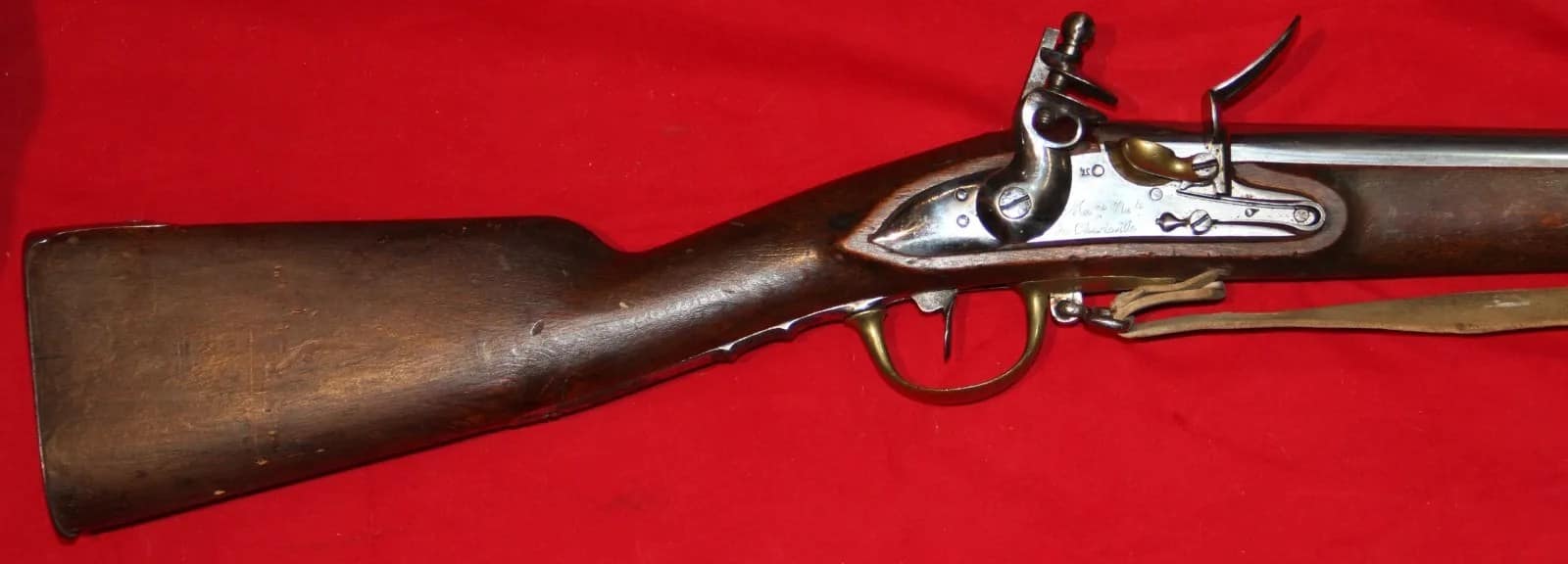
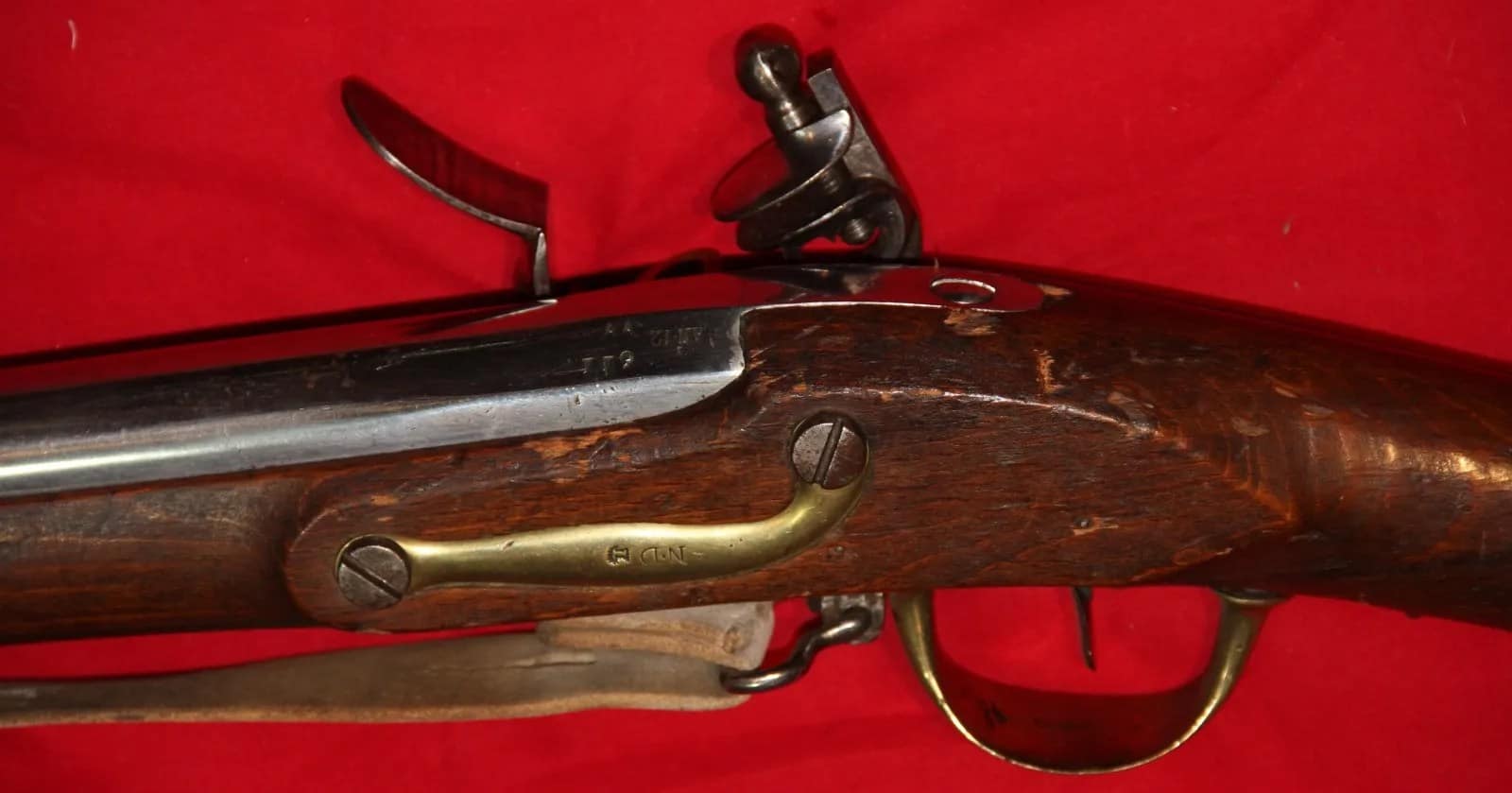
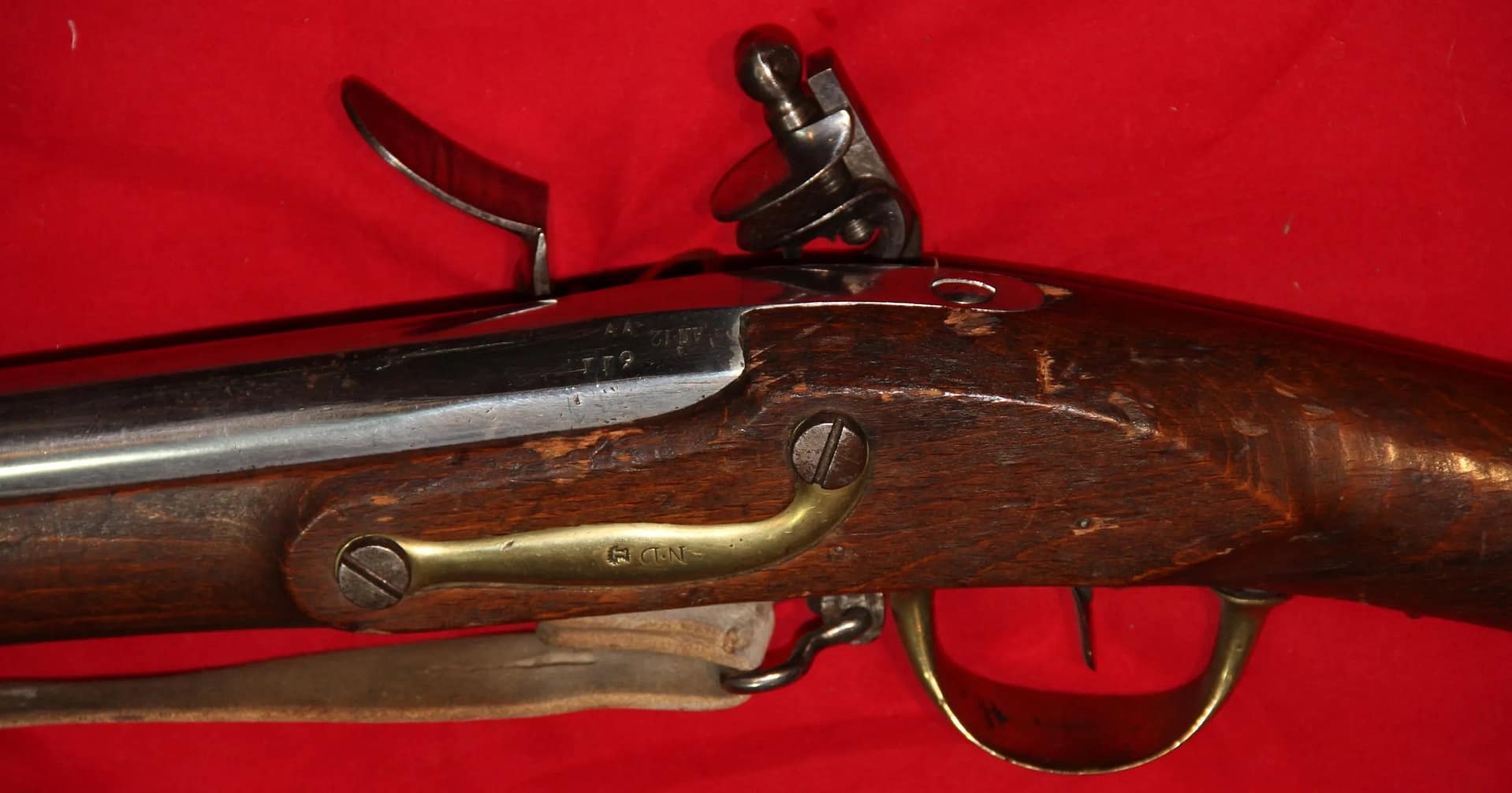
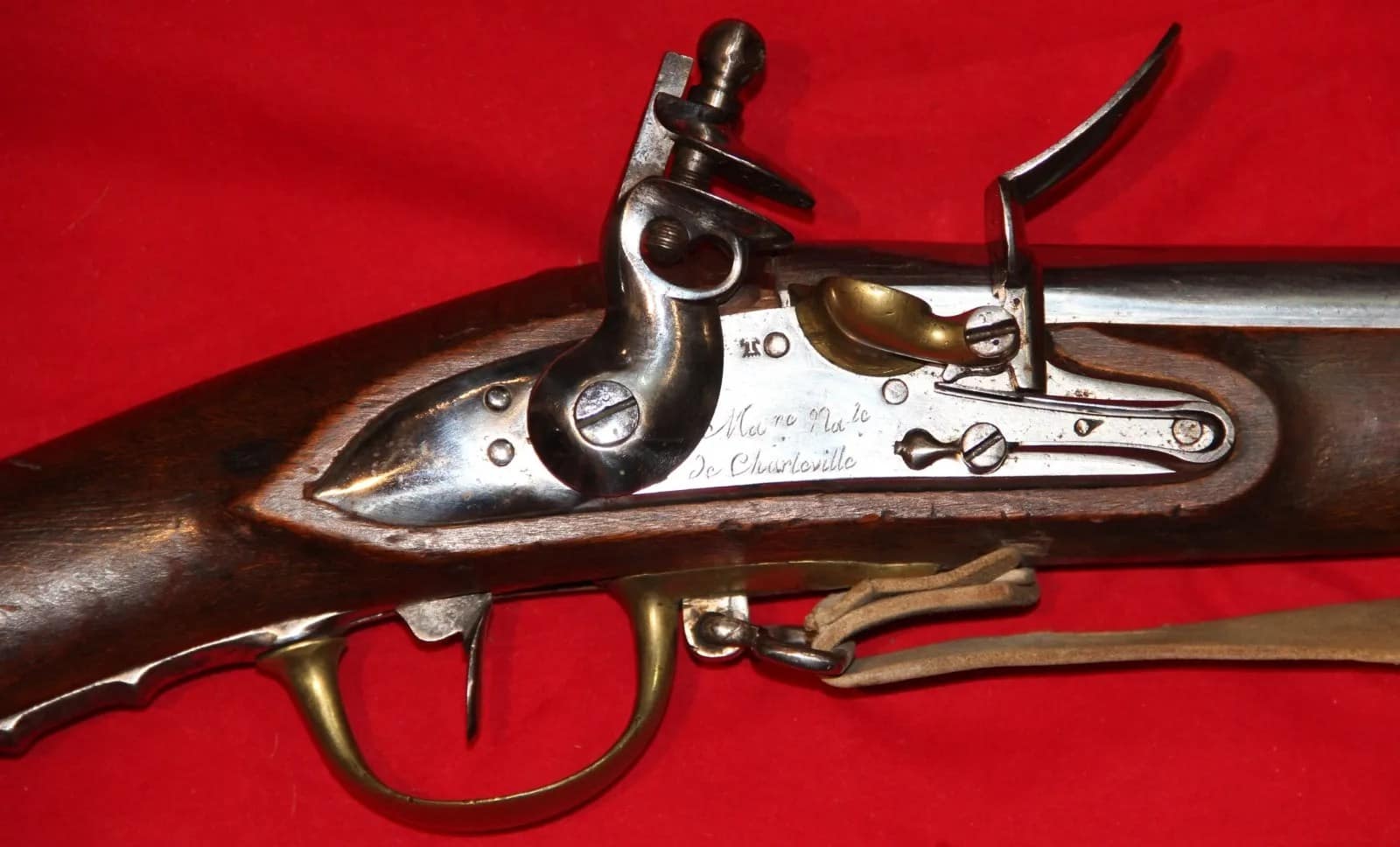
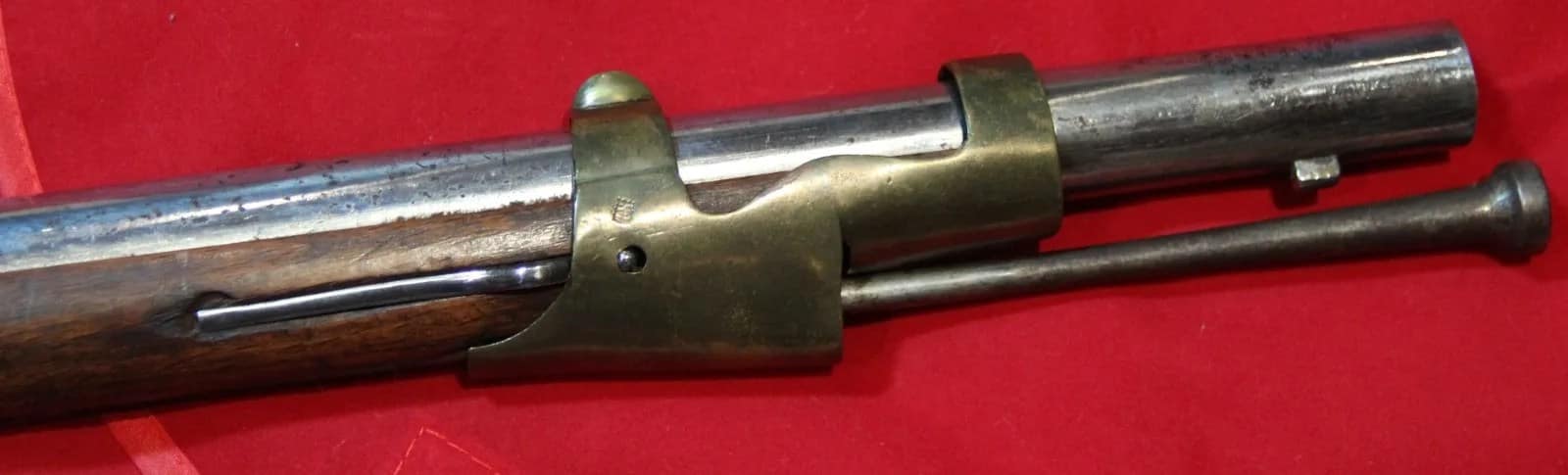
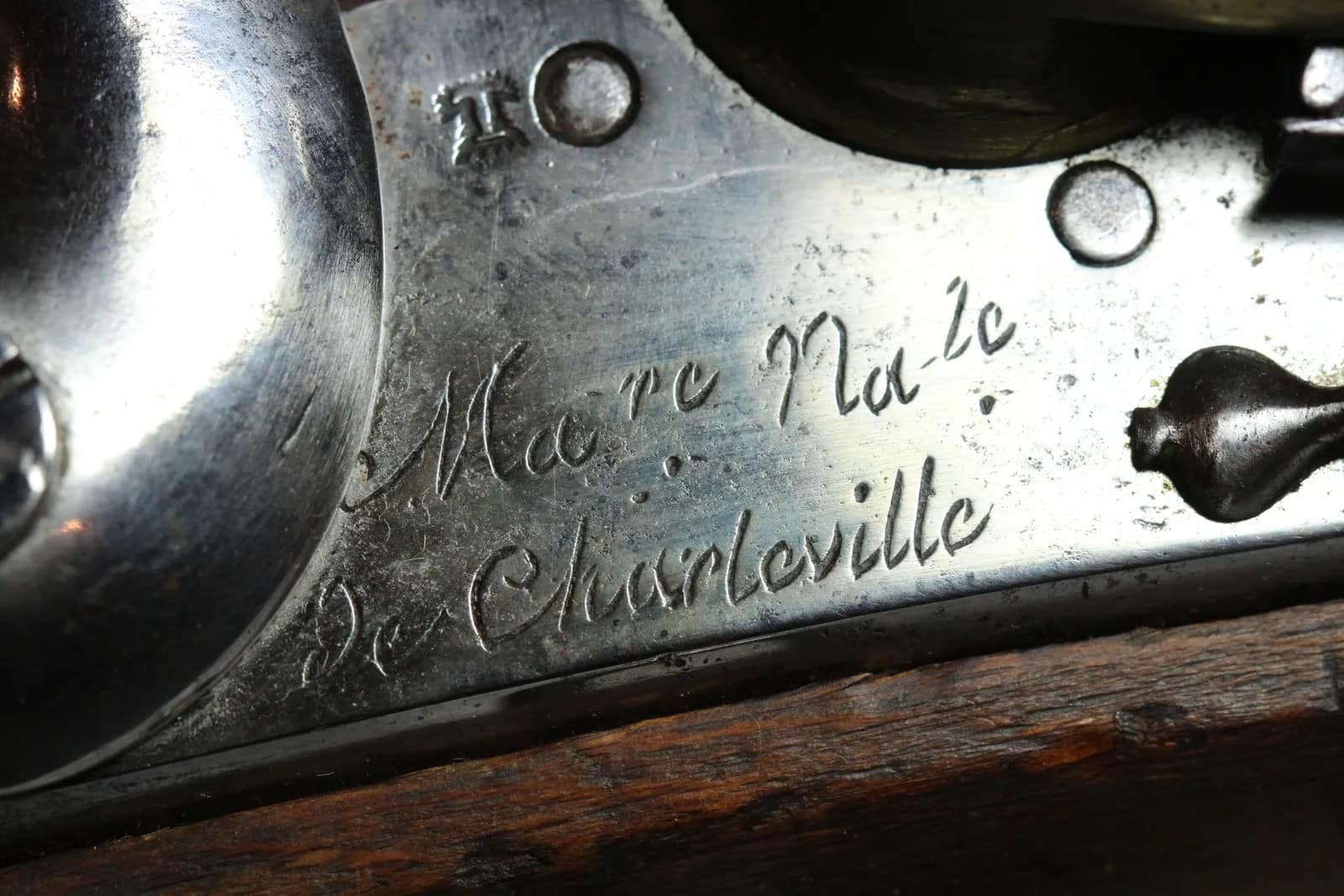
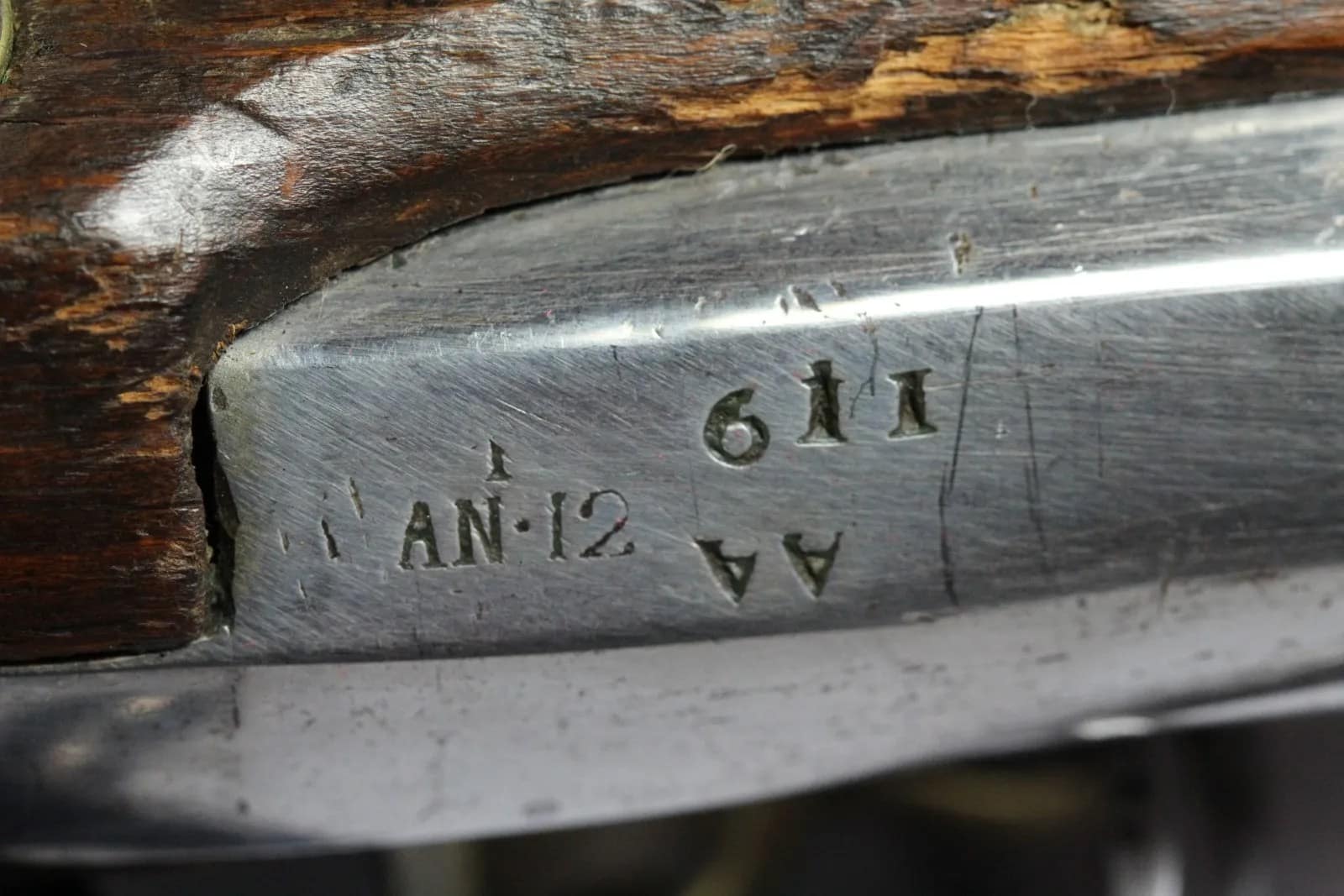
French Model 1777 AN XII Dragoon Musket, Manufactured at Charleville Imperial Armoury. From my personal collection

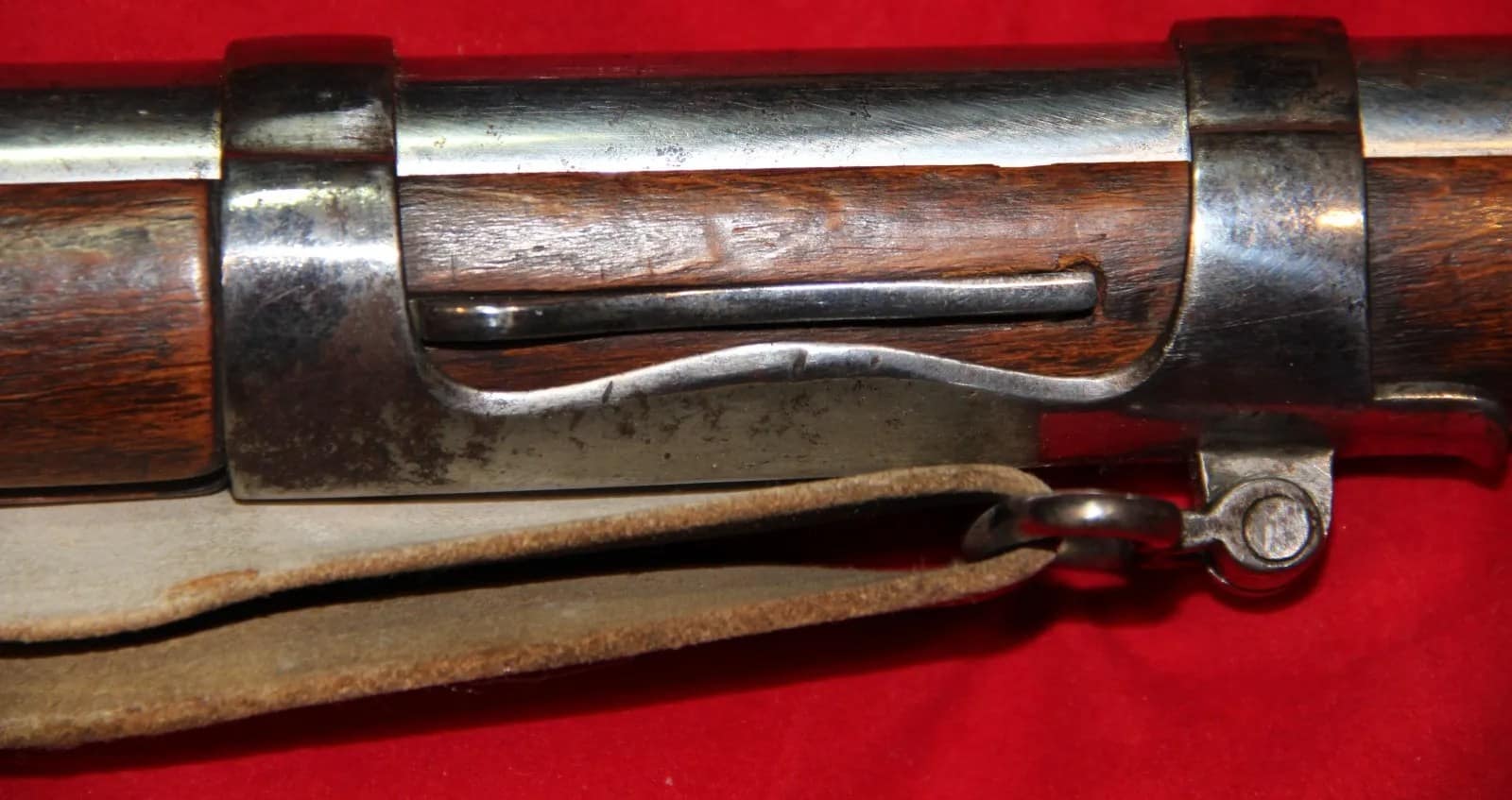
The French Model 1777 AN XII Dragoon Musket was a shortened variant of the standard infantry arm, adapted for mounted troops during the Napoleonic period. Produced at the Charleville Imperial Armoury, it incorporated the AN XII modifications of 1803–1804, including strengthened double centre band, brass fittings, and and revised lock details. Chambered in approximately .69 calibre and smoothbore, it balanced firepower with reduced length for cavalry use. Issued to dragoons and mounted units, it reflects French efforts to standardise weapons under the Imperial system while tailoring patterns to specific battlefield roles.


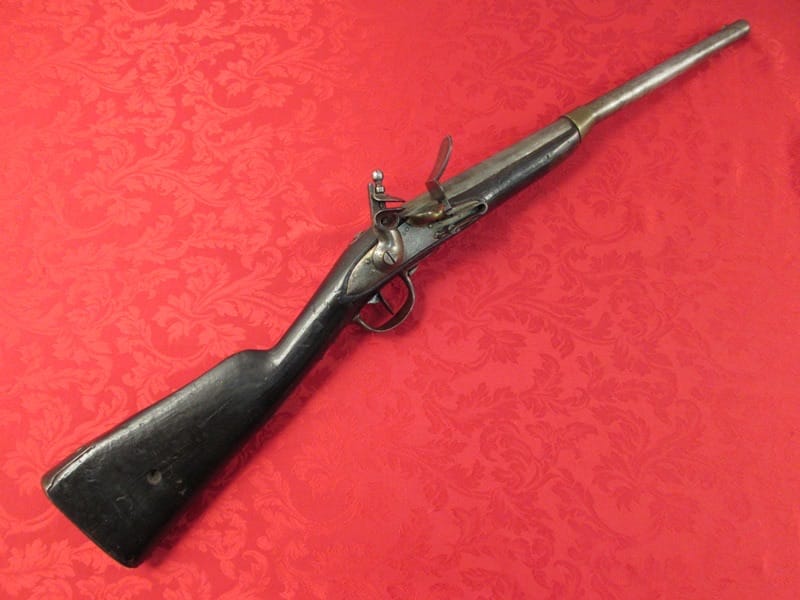
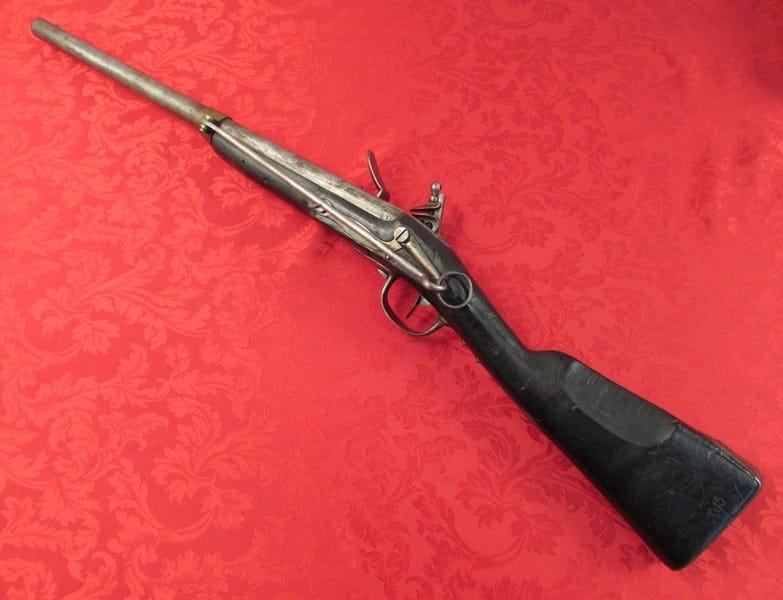
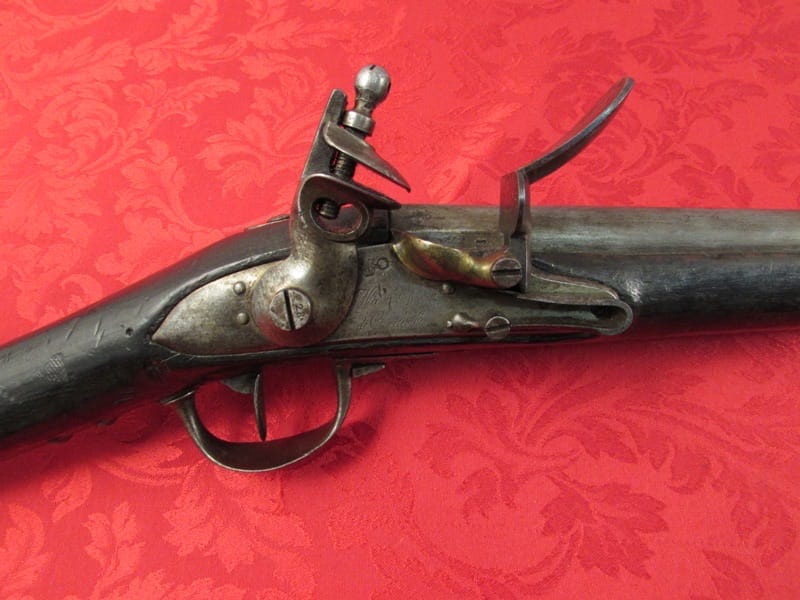
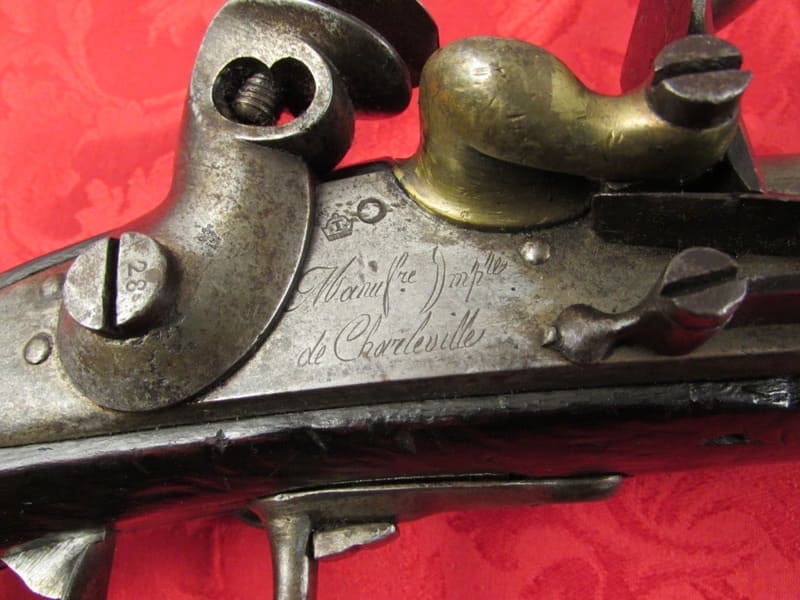
French AN IX Cavalry Carbine, Manufactured at Charleville Armoury. From my personal collection

The French AN IX Cavalry Carbine was adopted in Year IX (1800–1801) of the Revolutionary calendar to equip mounted troops of the French Army. Manufactured at the Charleville Armoury, it was a shortened flintlock arm designed for ease of handling on horseback. Chambered in approximately .69 calibre and smoothbore, it featured brass furniture and a side-mounted sling bar for attachment to a carbine hook. Issued to light cavalry and mounted specialists, the AN IX reflects the standardised weapons system developed during the Consulate and retained into the Napoleonic campaigns.


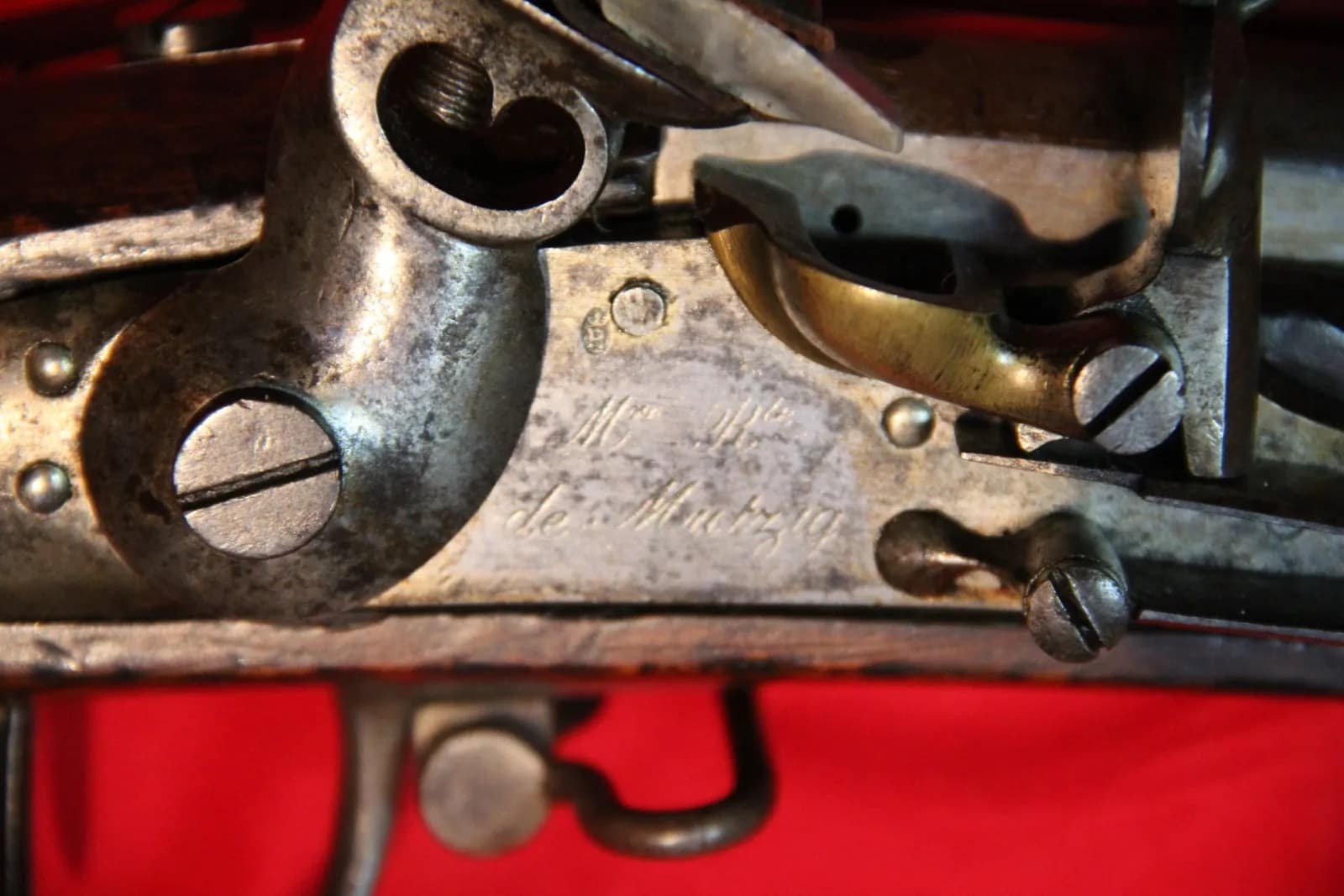
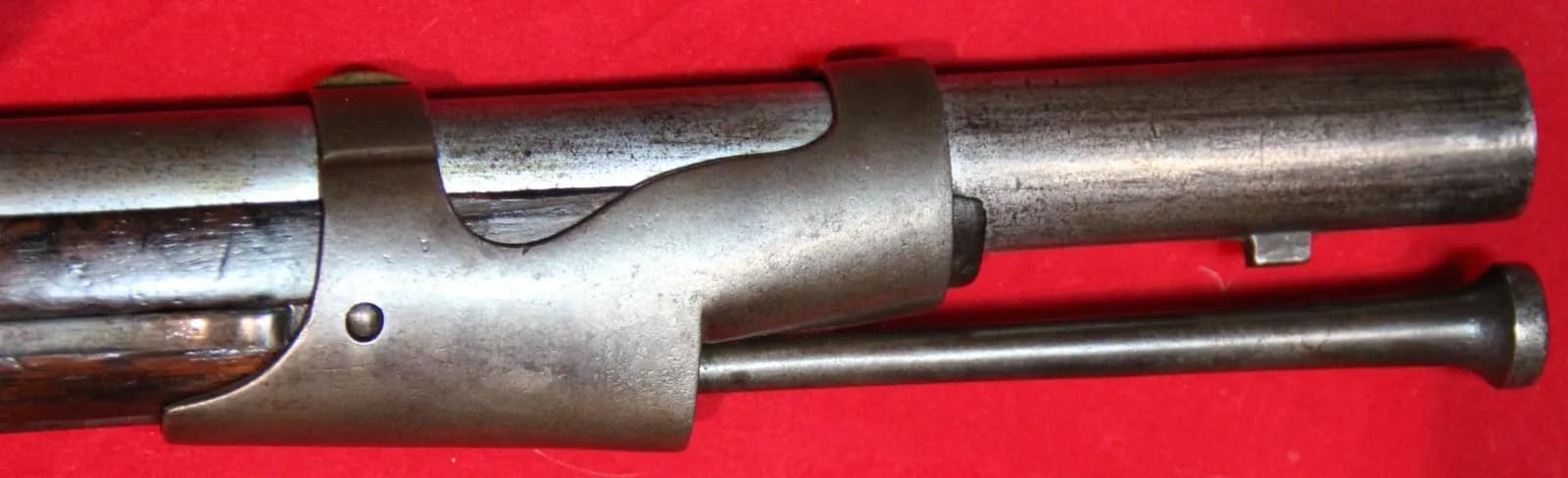
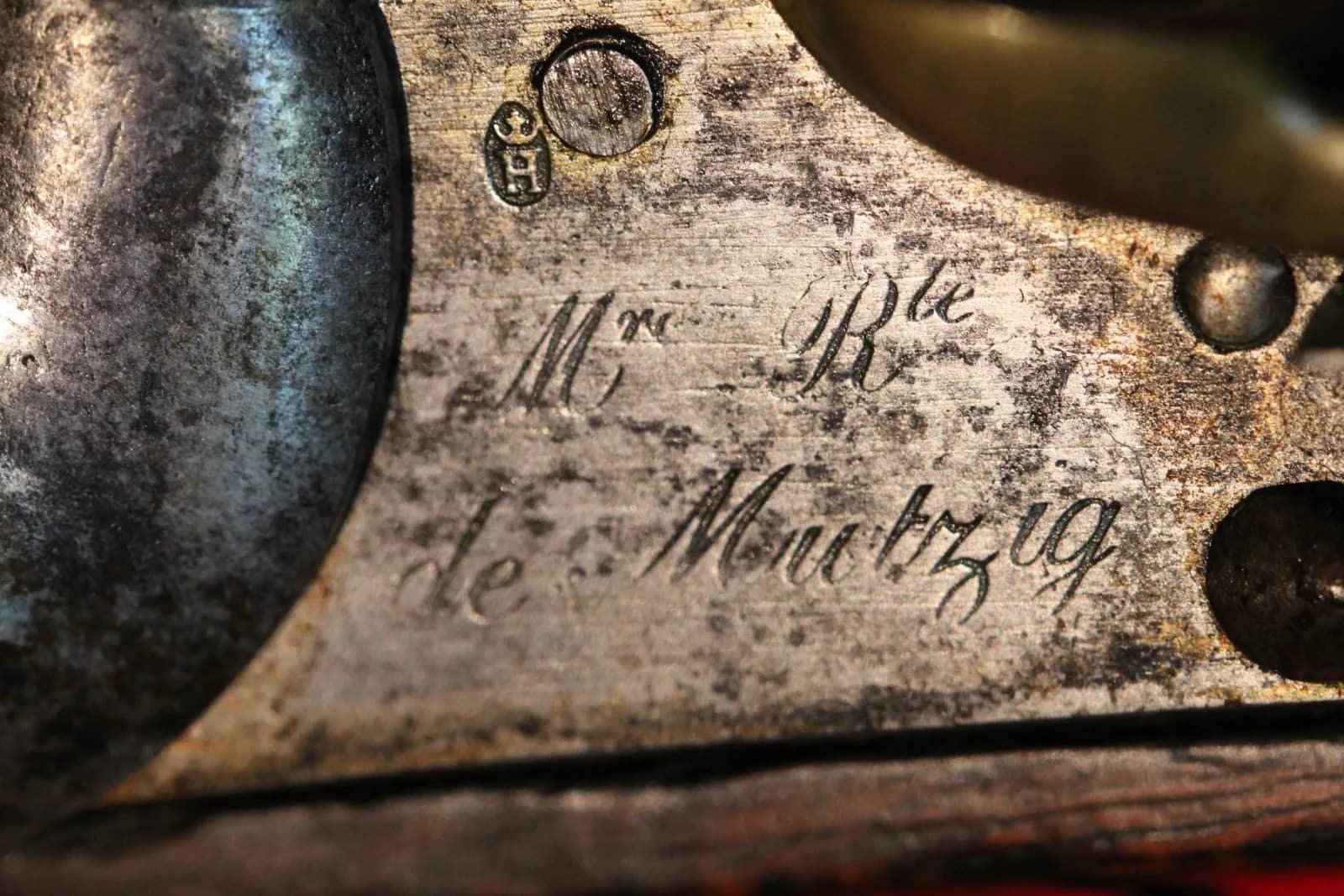
French Mle 1777 AN IX Voltigeur Fusil, Manufactured at Mutzig Royal Armoury. From my personal collection

The French Mle 1777 AN IX Voltigeur fusil was a lighter variant of the standard infantry musket, intended for voltigeur companies operating as skirmishers within line regiments. This example was manufactured at the Mutzig Royal Armoury during the Bourbon Restoration, reflecting continued production of Revolutionary and Imperial patterns after 1815. Chambered in approximately .69 calibre and smoothbore, it incorporated AN IX modifications to the lock and fittings. Shorter and lighter than the line infantry model, the voltigeur fusil supported skirmisher tactics and flexible manoeuvre within French infantry doctrine of the early nineteenth century.


French pistols of the Napoleonic Wars


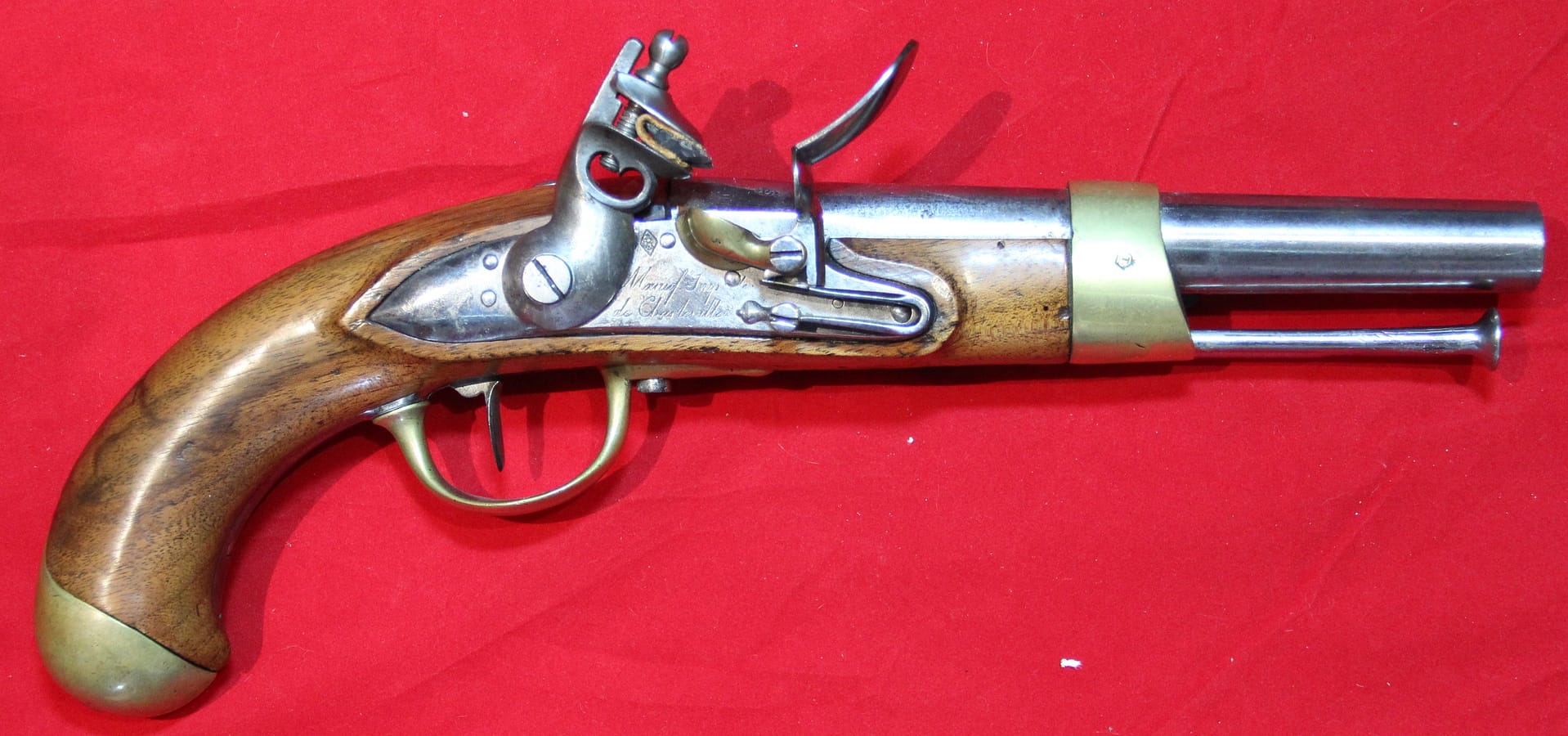
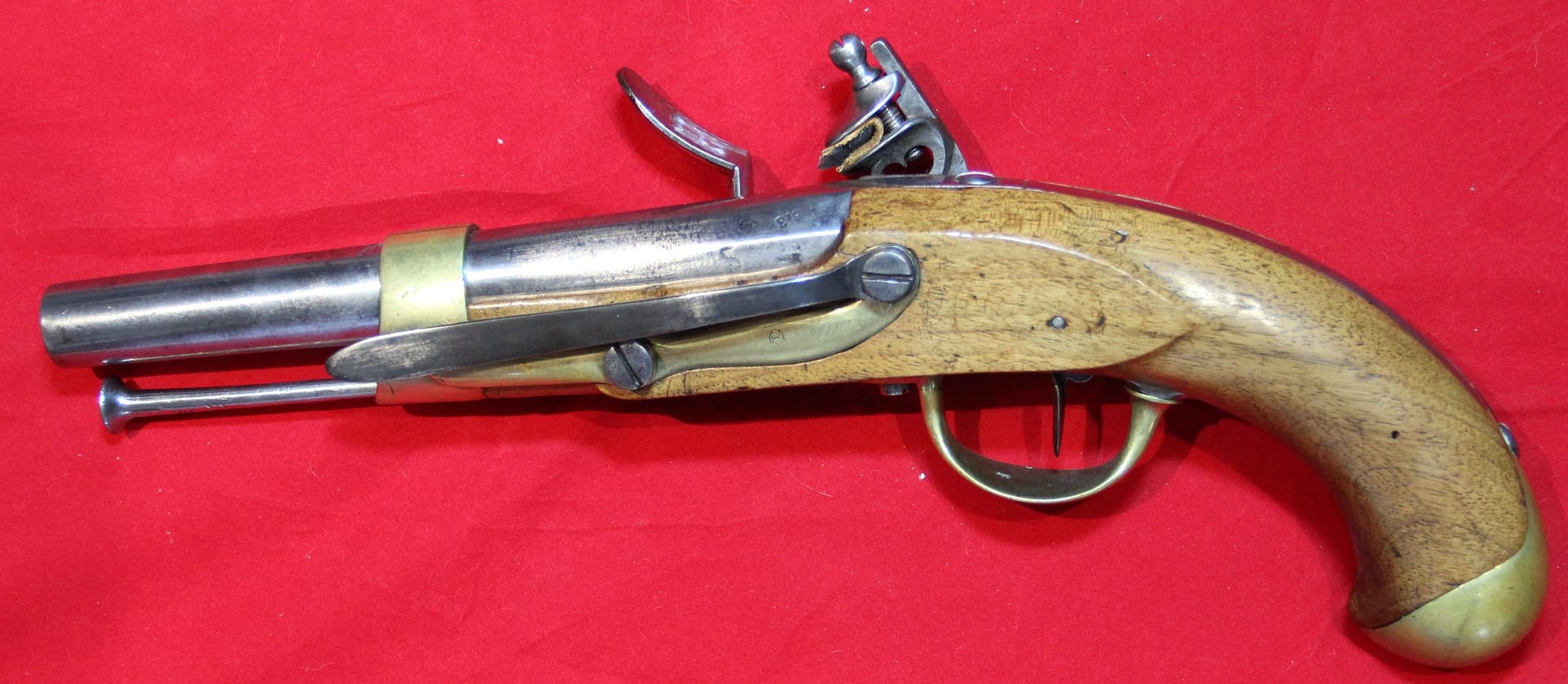
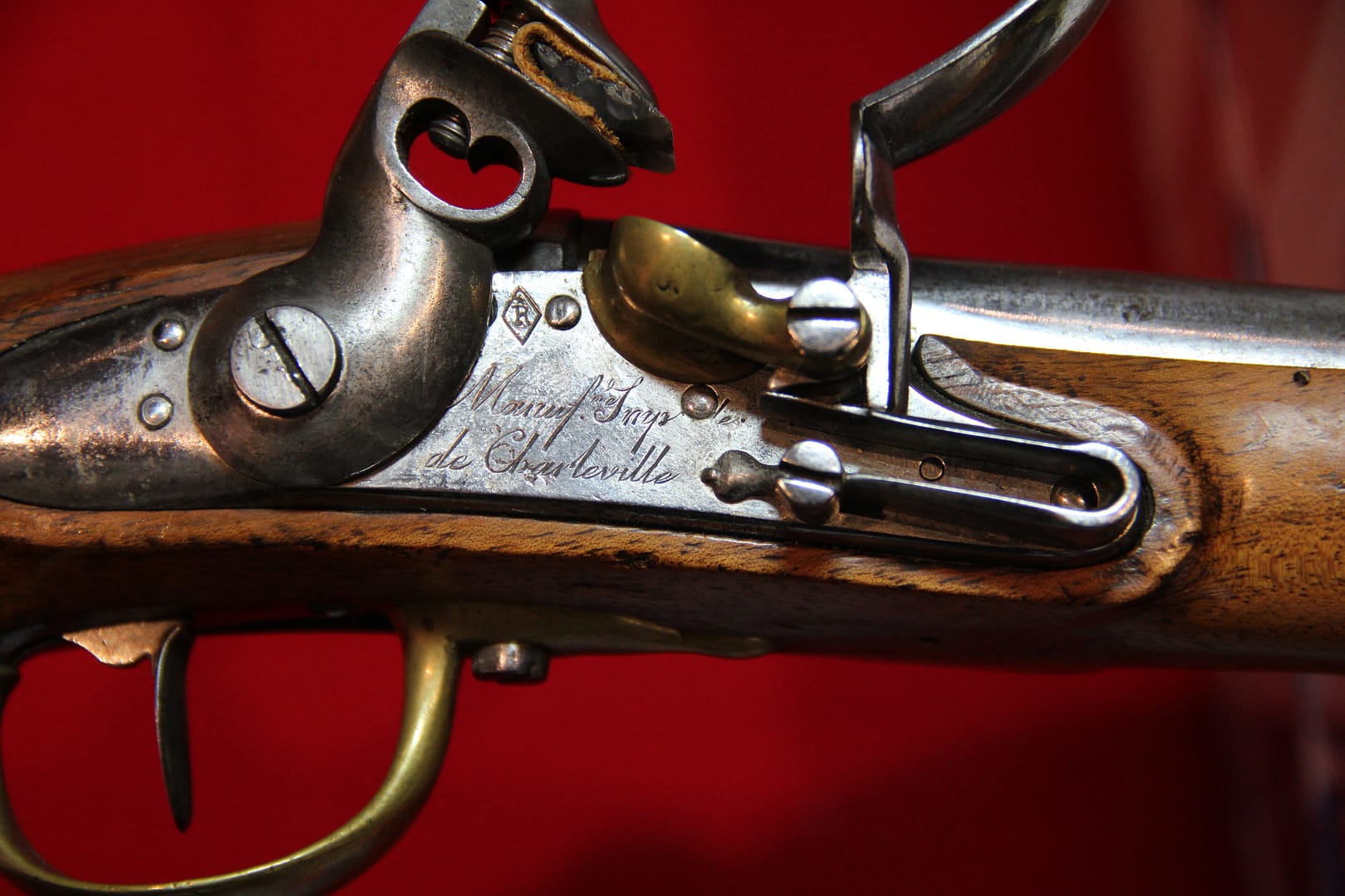
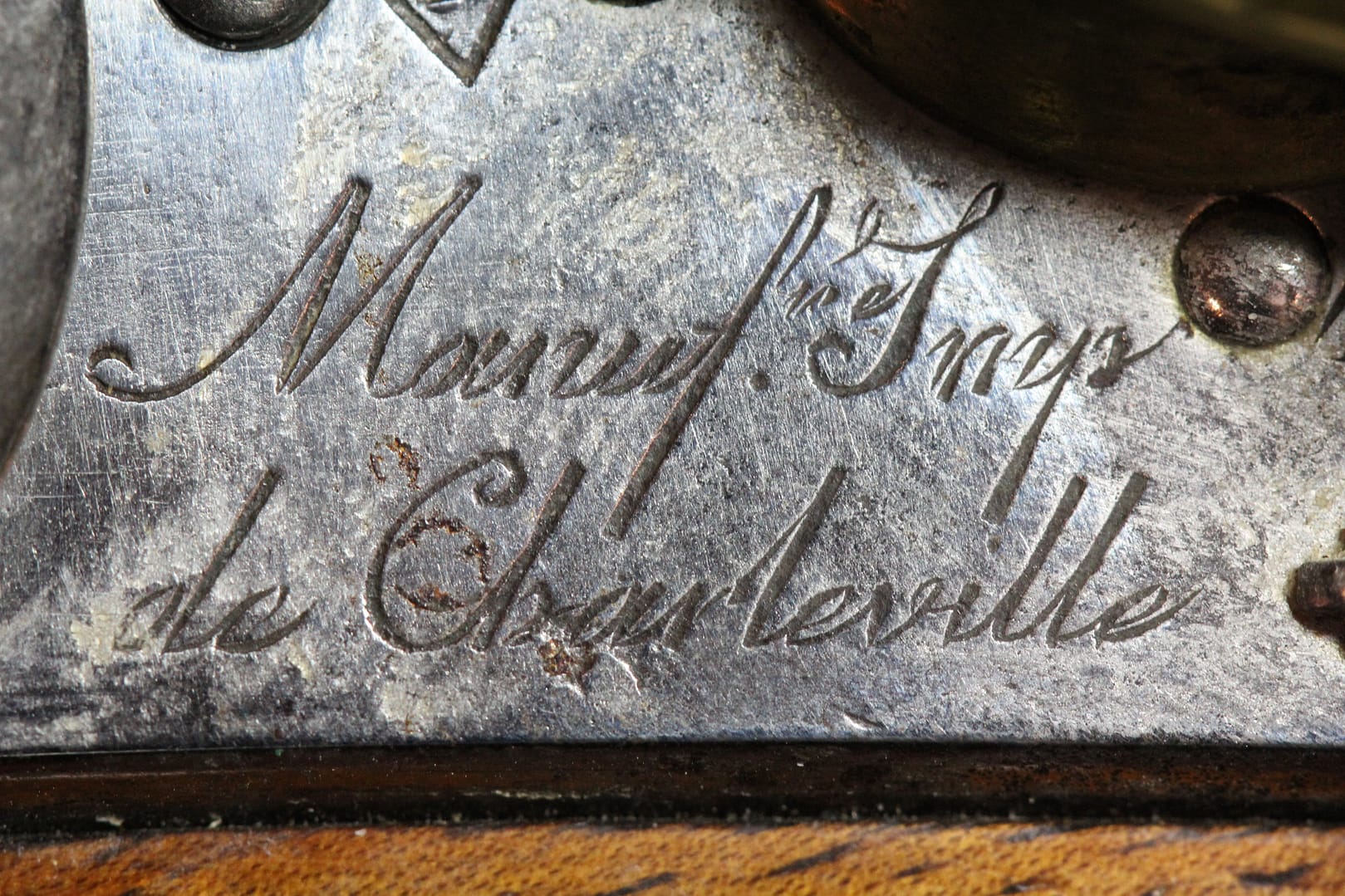
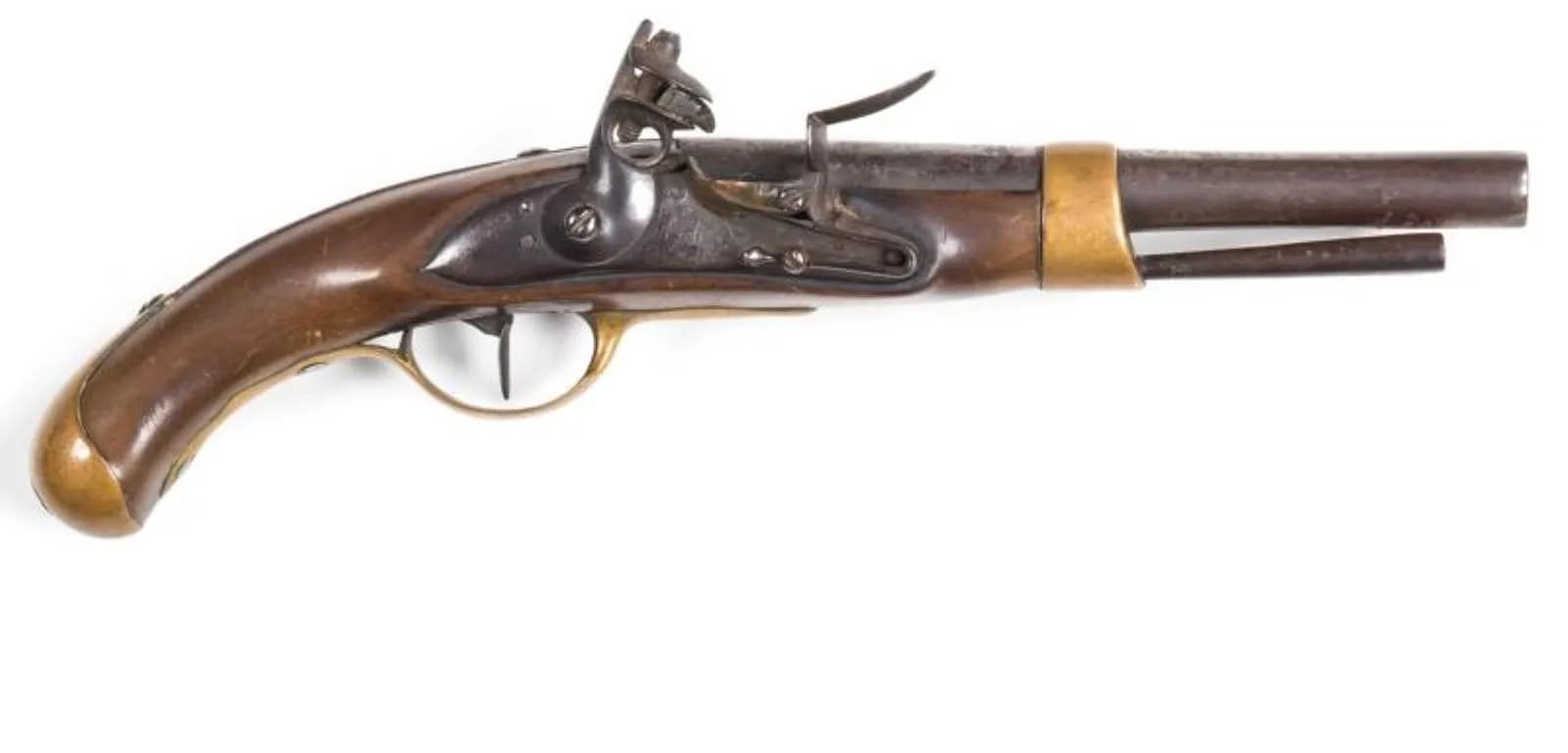
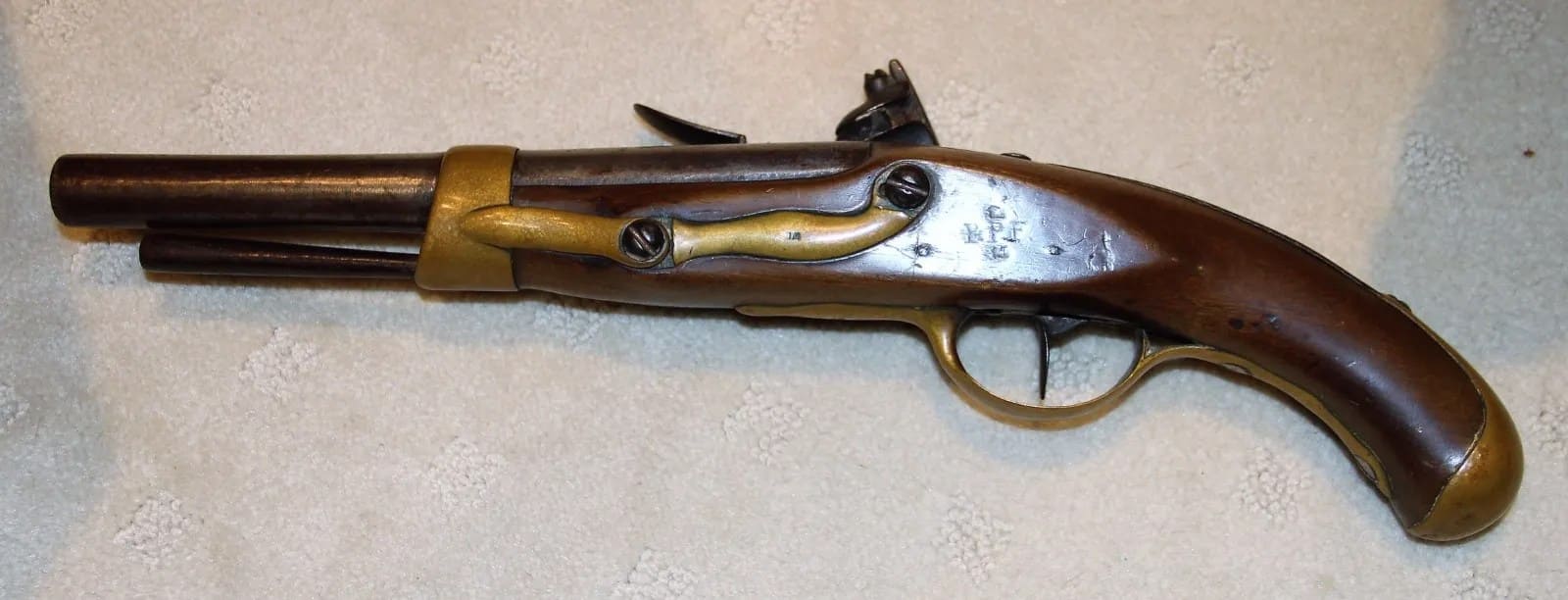
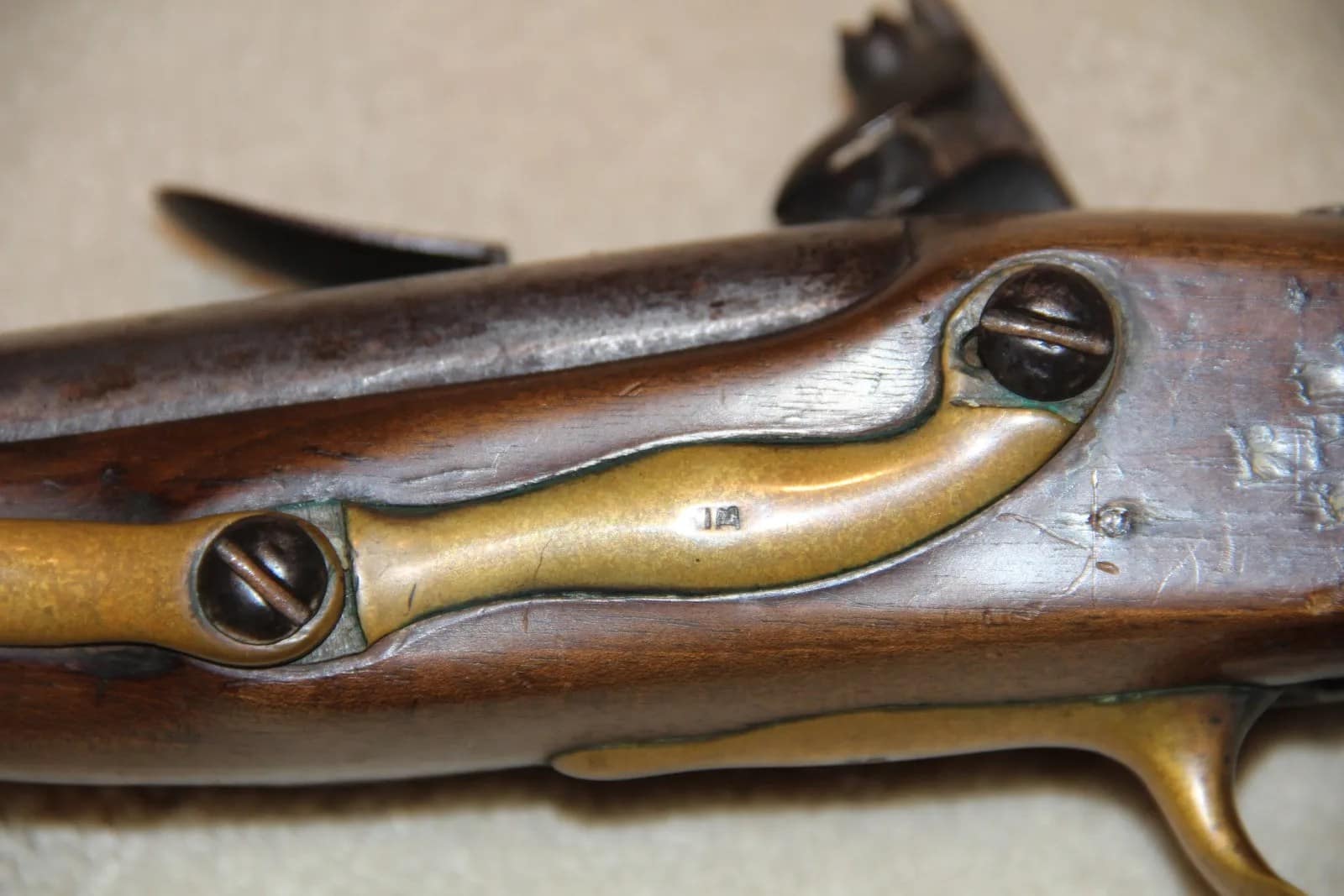
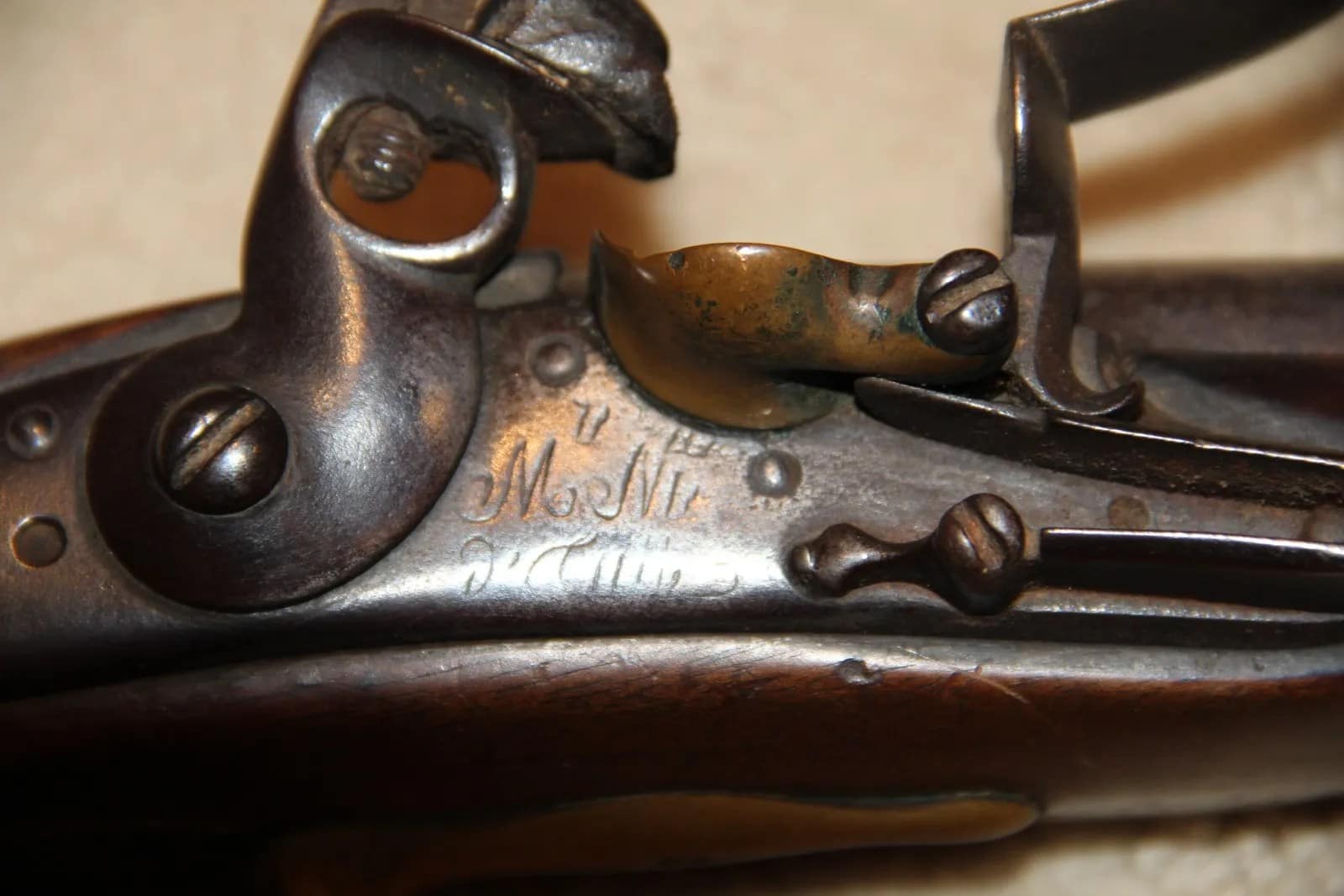
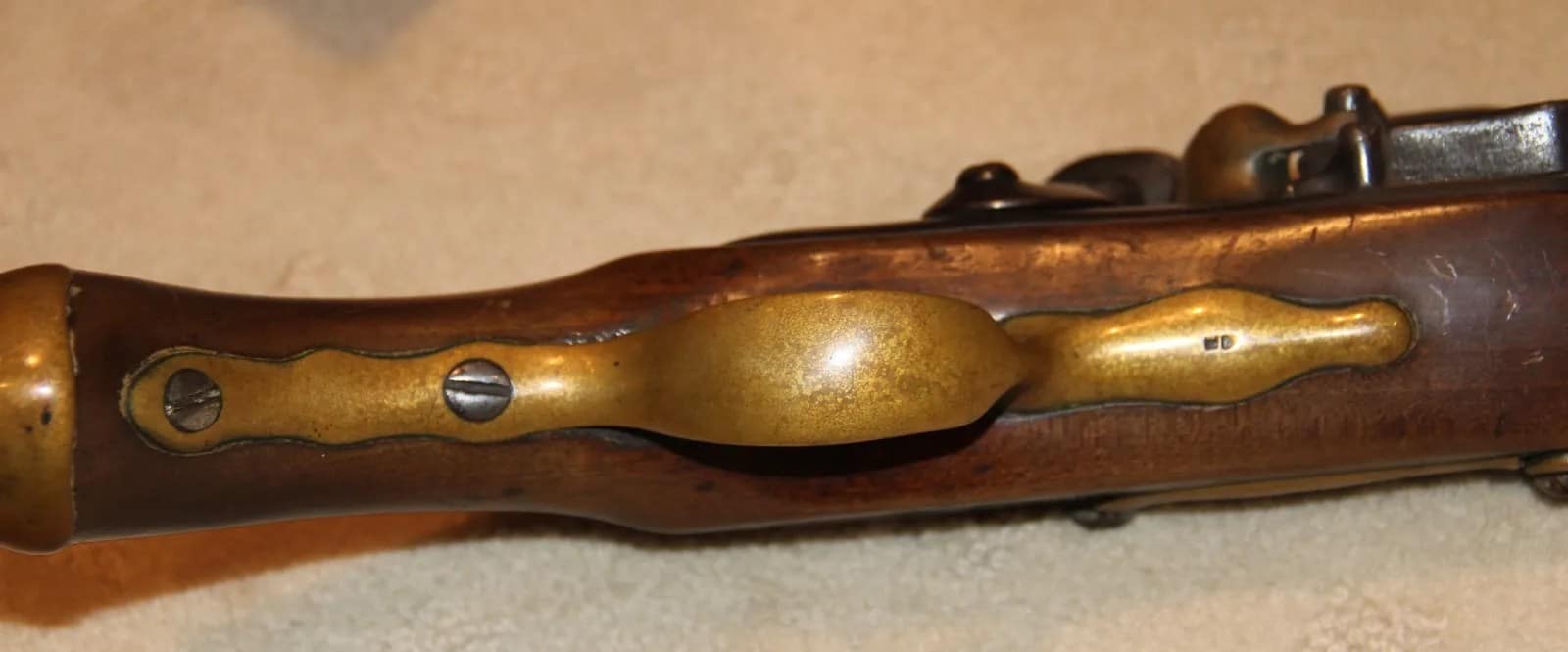
French AN XIII cavalry pistol, from my personal collection.

The French AN XIII cavalry pistol was adopted in Year XIII (1804–1805) and became the standard sidearm of French mounted troops during the Napoleonic Wars. This example, manufactured at the Imperial Armoury at Charleville and dated 1813, reflects wartime production during the later campaigns of the Empire. A single-shot, smoothbore flintlock of approximately .69 calibre, it featured brass furniture and a robust walnut stock suited to mounted service. Issued in pairs and carried in saddle holsters, the AN XIII pistol supported close-range combat during cavalry charges and battlefield pursuit.


French 1786 Marine Pistol, from my personal collection.

The French Model 1786 Marine pistol was designed for naval service in the late Ancien Régime and continued in use through the Revolutionary period. Manufactured at the Royal Armoury at Tulle, it was a single-shot, smoothbore flintlock of approximately .69 calibre. The pattern featured brass furniture and a robust stock suited to maritime conditions. Issued to sailors and marines, it was intended for close-quarters combat during boarding actions and ship defence. The 1786 Marine pistol reflects French naval standardisation efforts on the eve of the Revolutionary Wars.


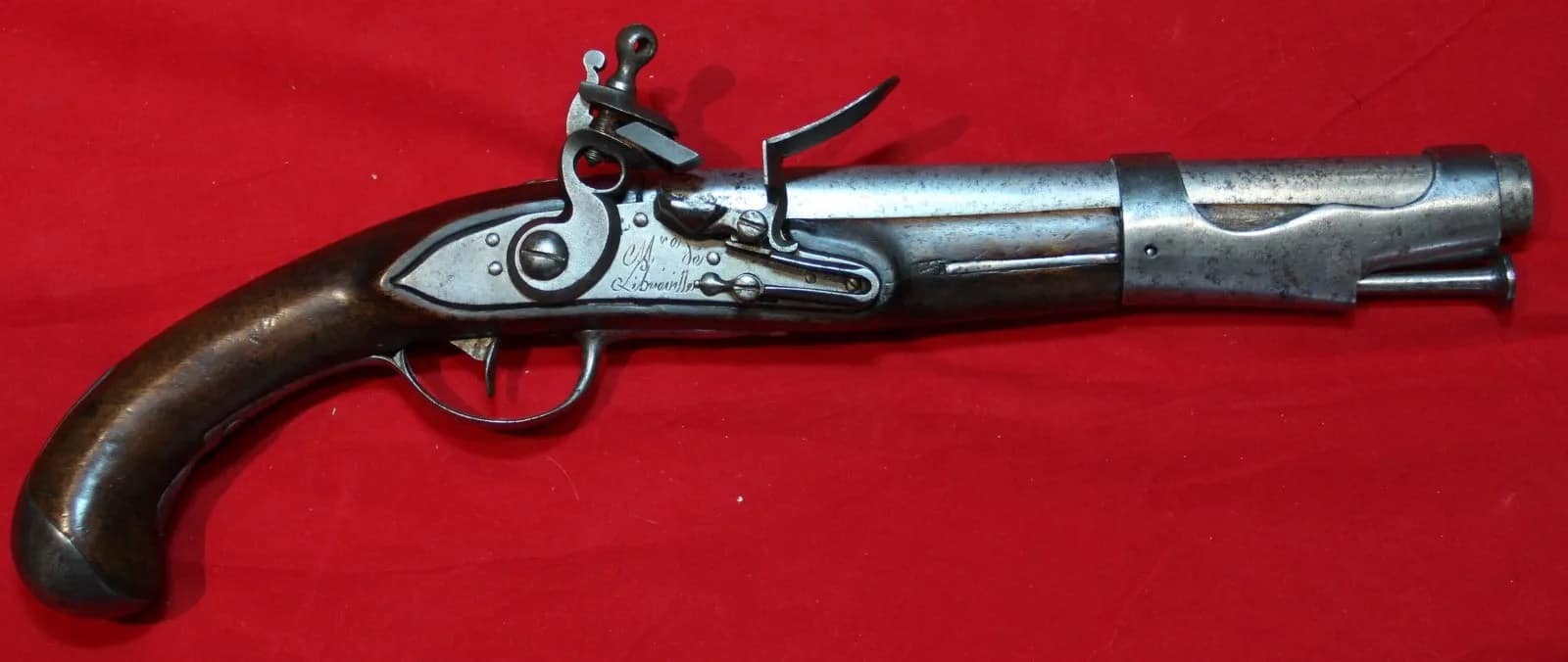
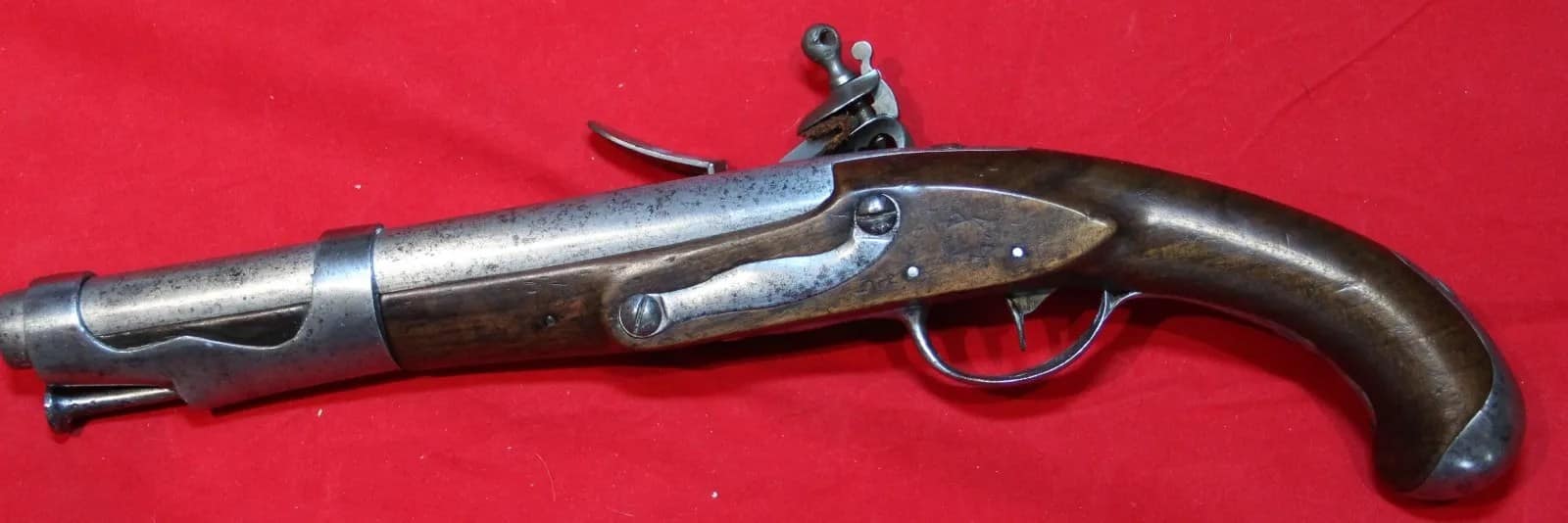
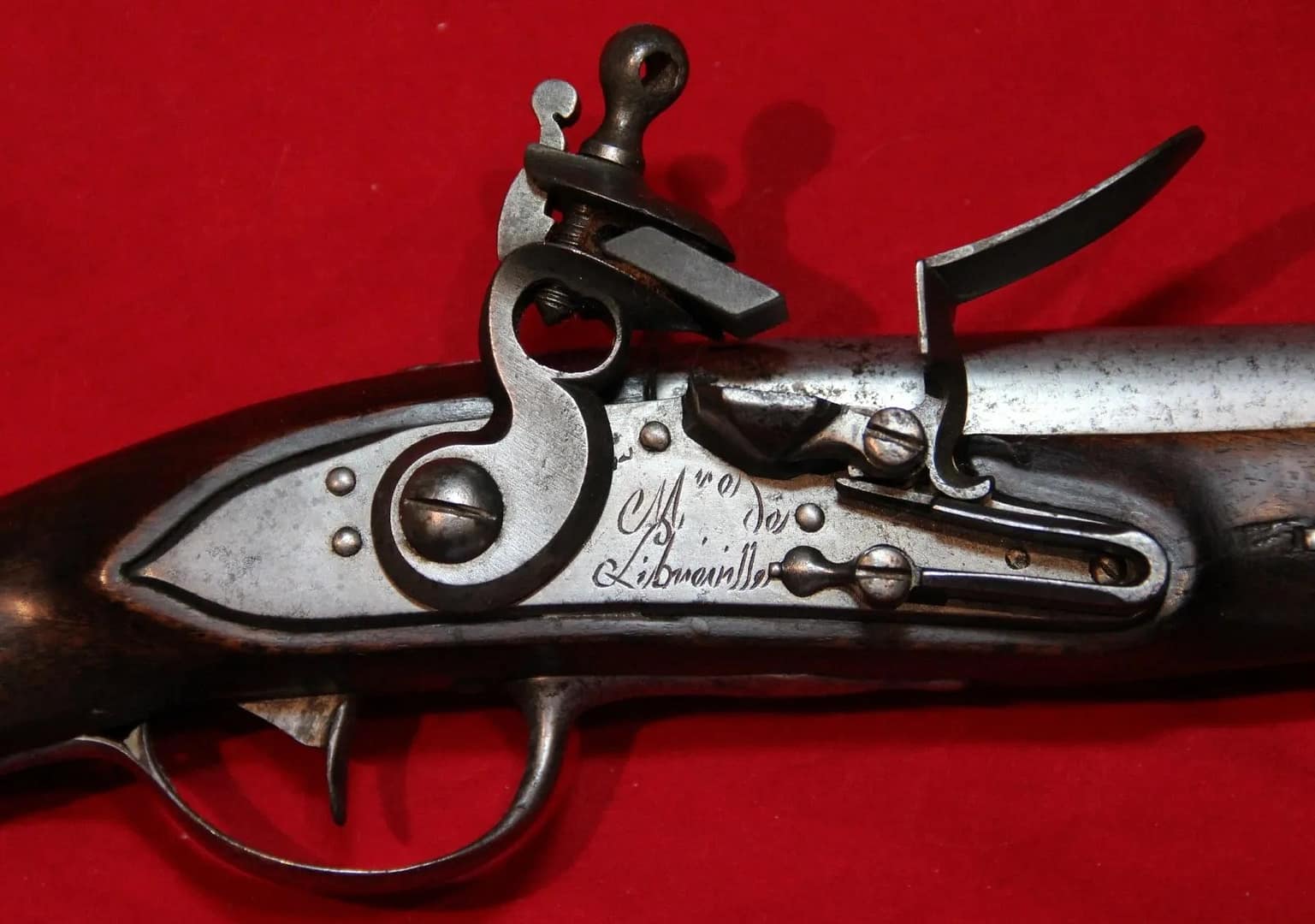
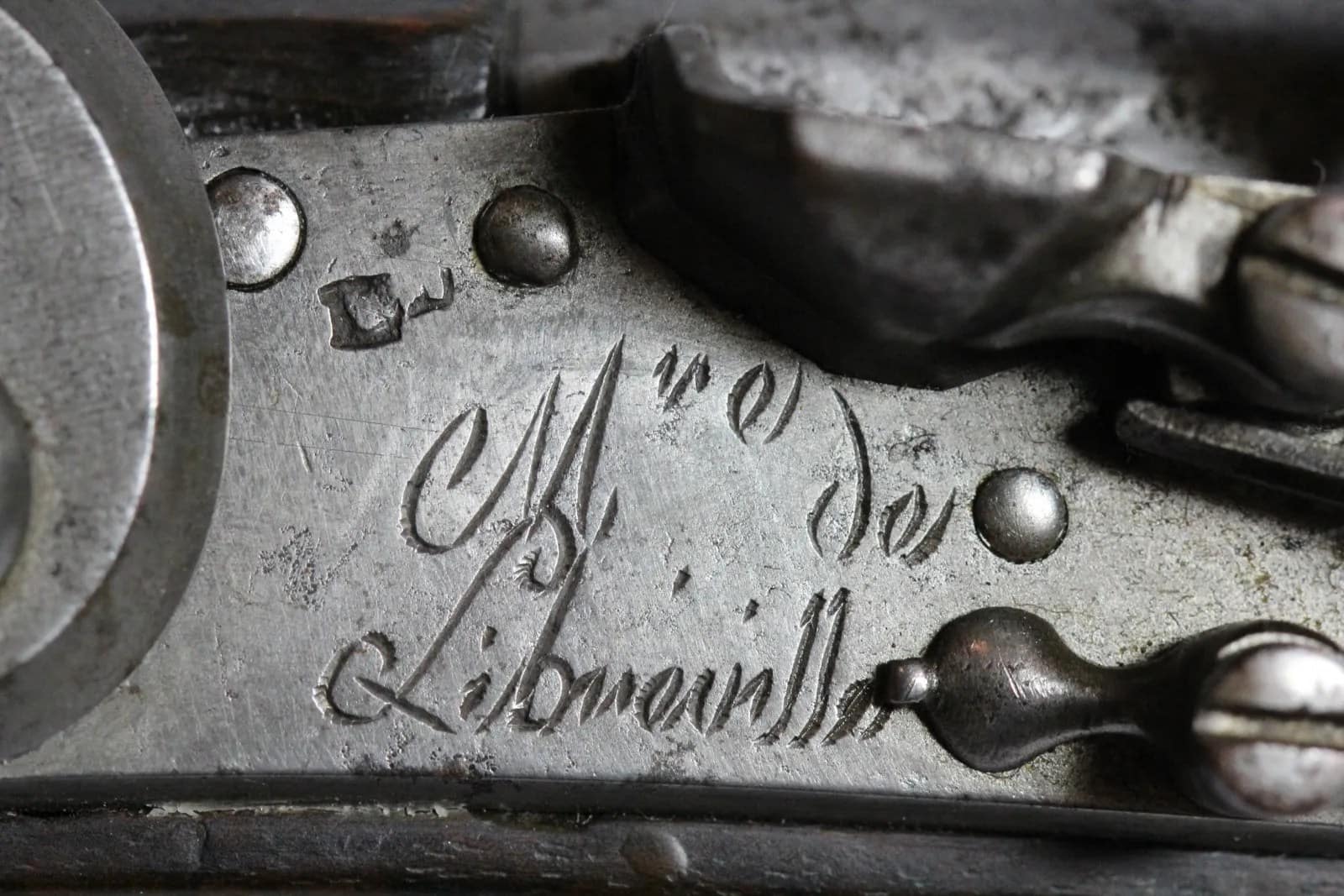
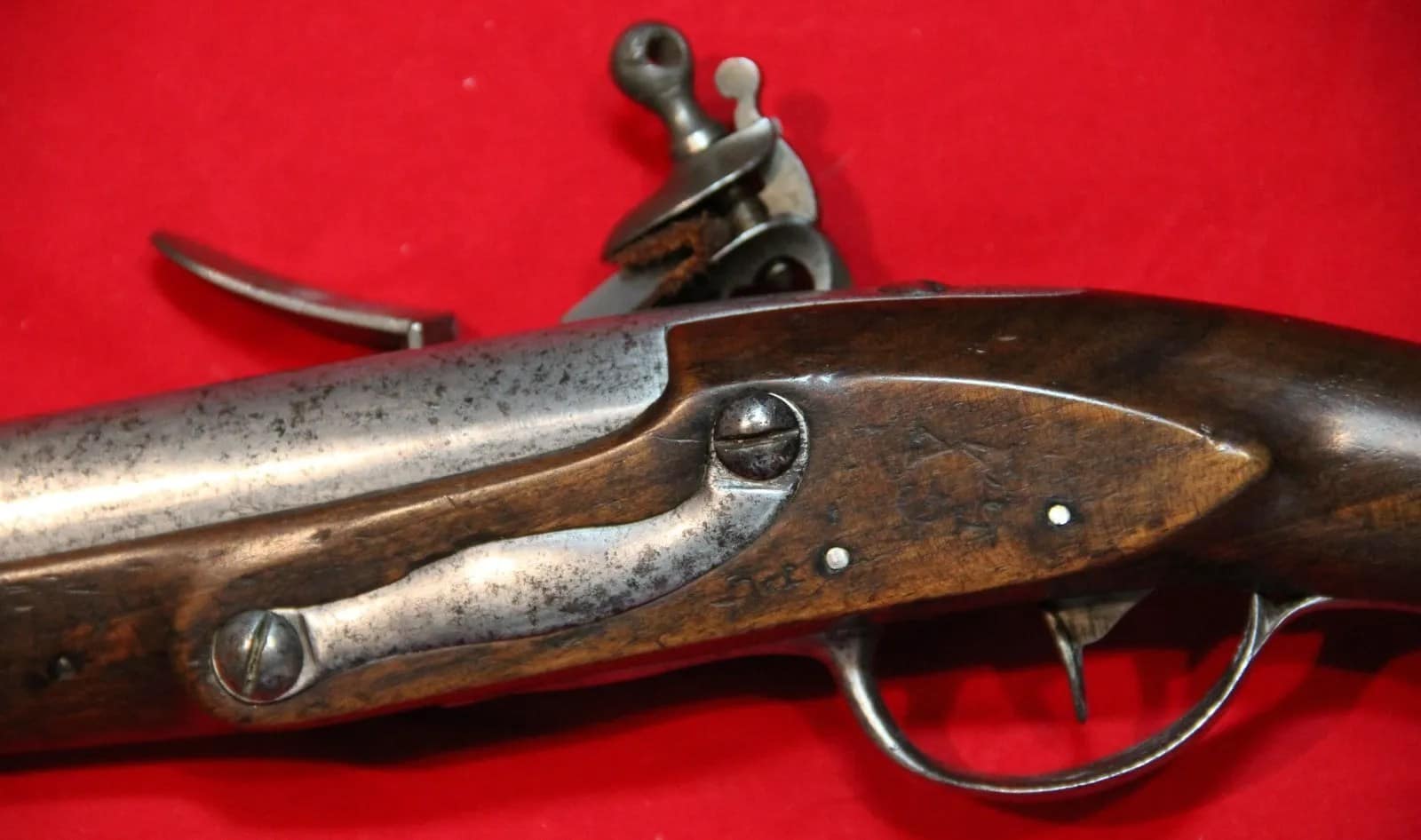
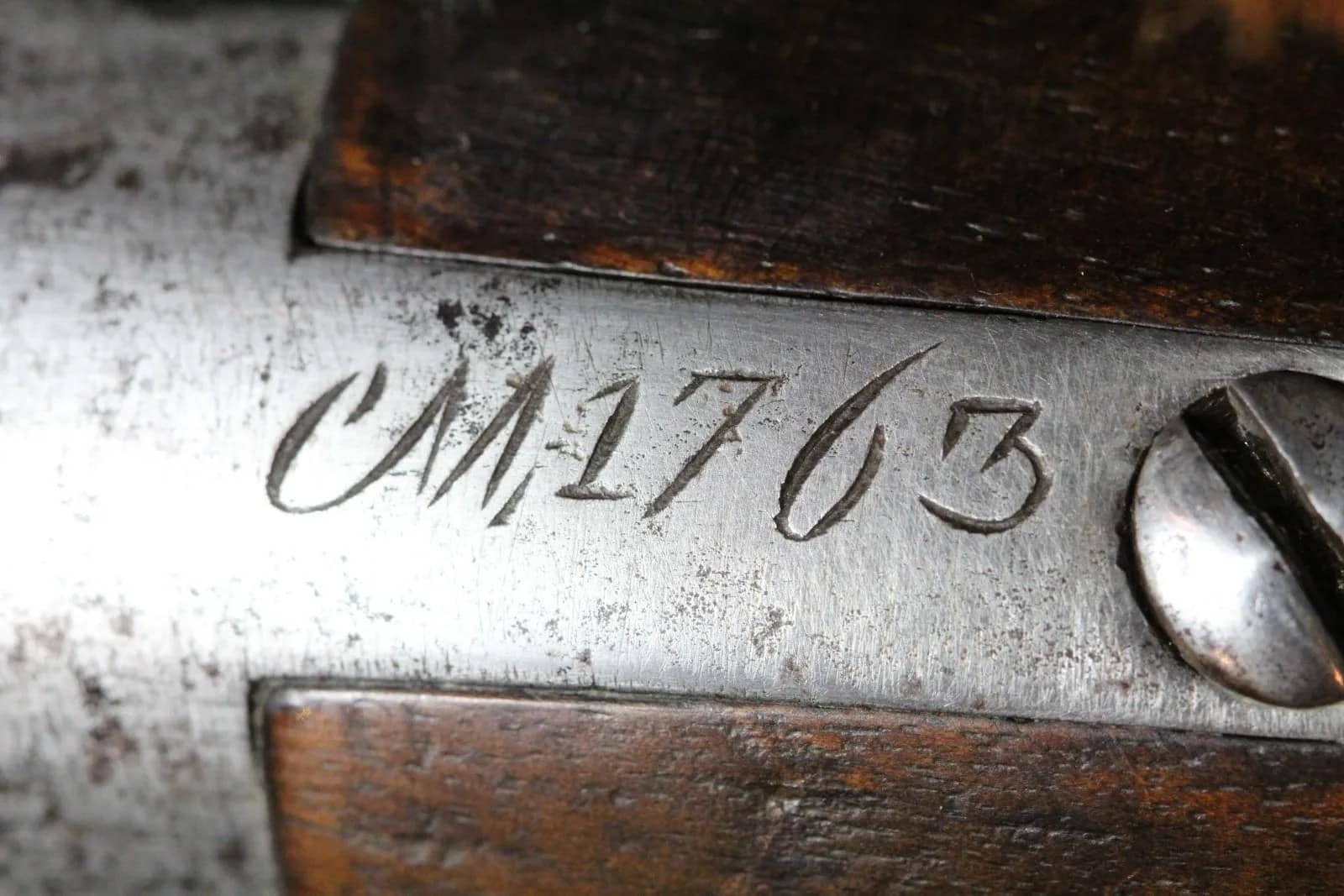
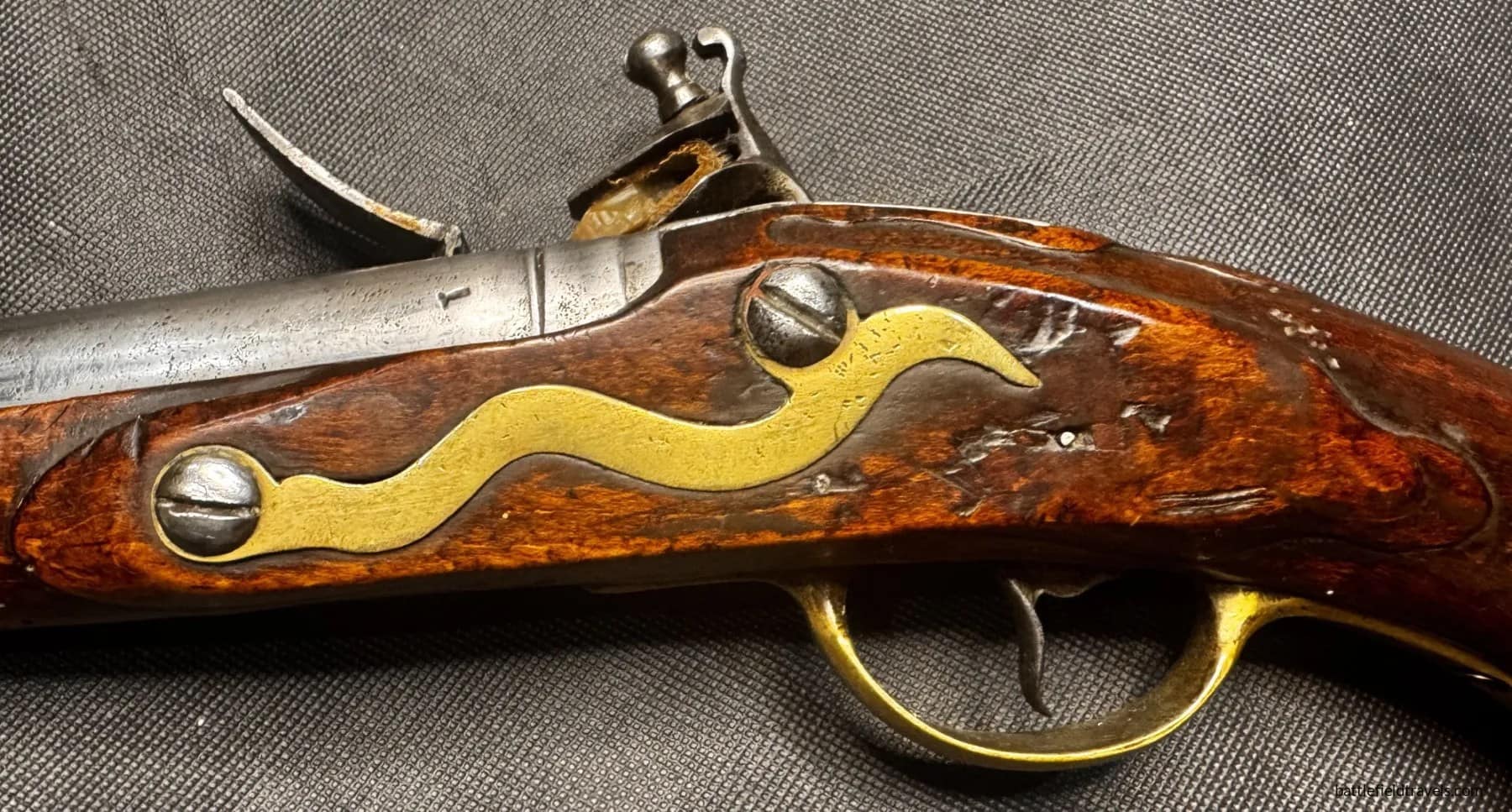
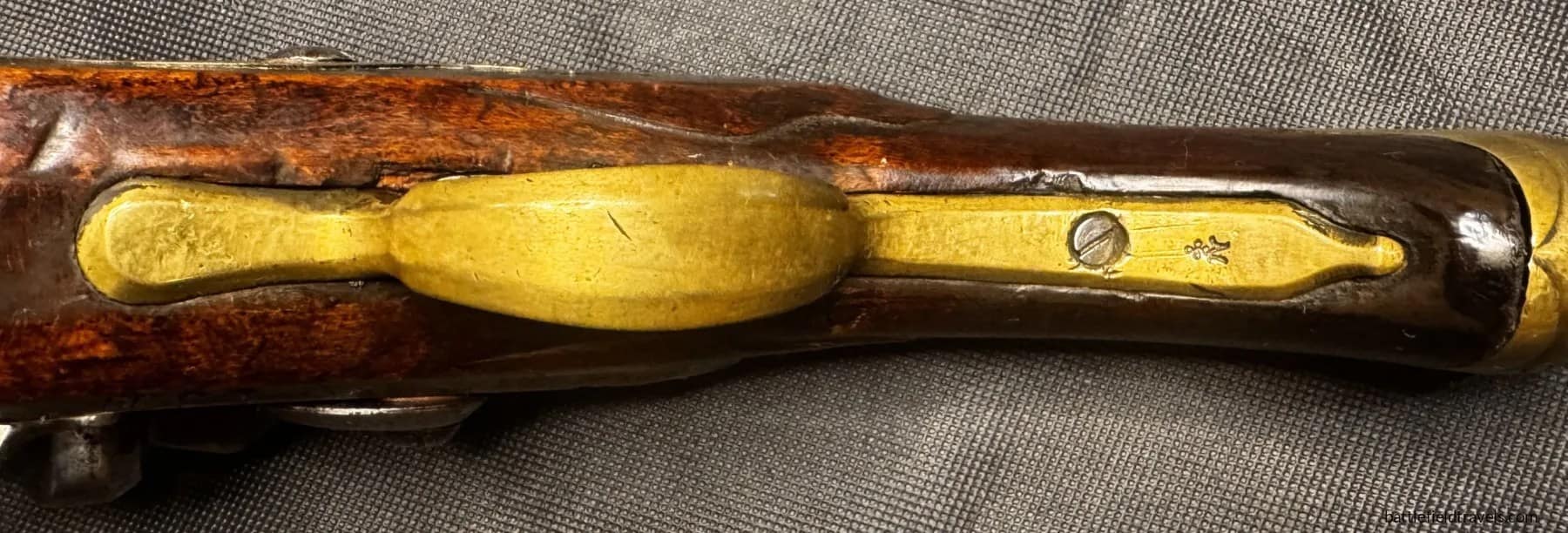
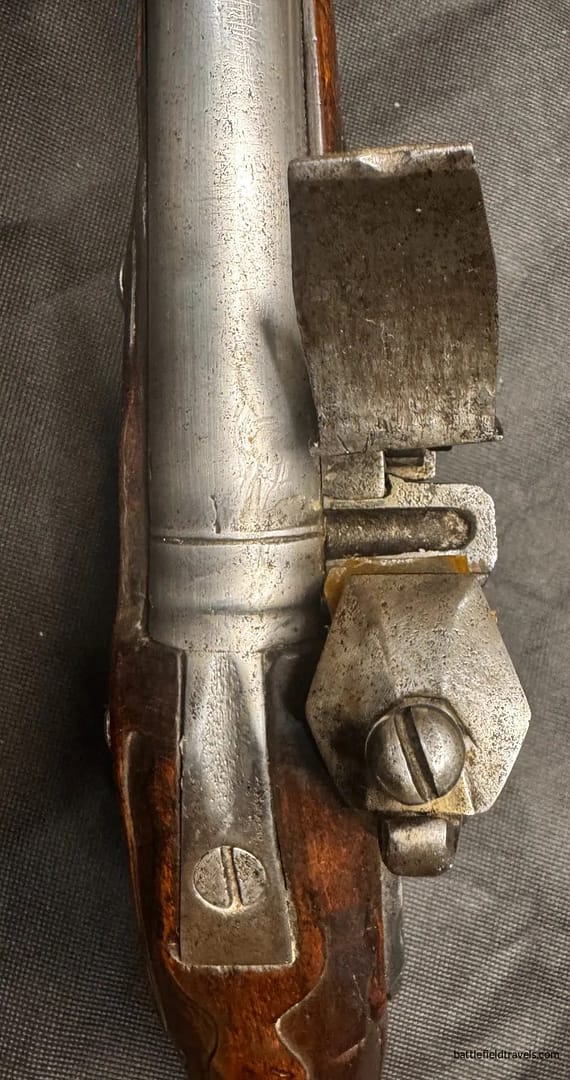
1763 French Mod Libreville c. 1792-96, from my personal collection.

This French Model 1763 pistol was produced between approximately 1792 and 1796 at the former Charleville manufactory, temporarily renamed Libreville during the Revolution. Disruption to skilled labour meant that production of the more complex Model 1777 could not be sustained. The armoury therefore reverted to the simpler 1763 pattern, using iron fittings to expedite manufacture. Chambered in approximately .69 calibre and smoothbore, it armed early Revolutionary forces. After 1796, the facility resumed production under the restored Charleville designation, later becoming an Imperial manufactory under Napoleon.


French Edged Weapons of the Napoleonic Wars


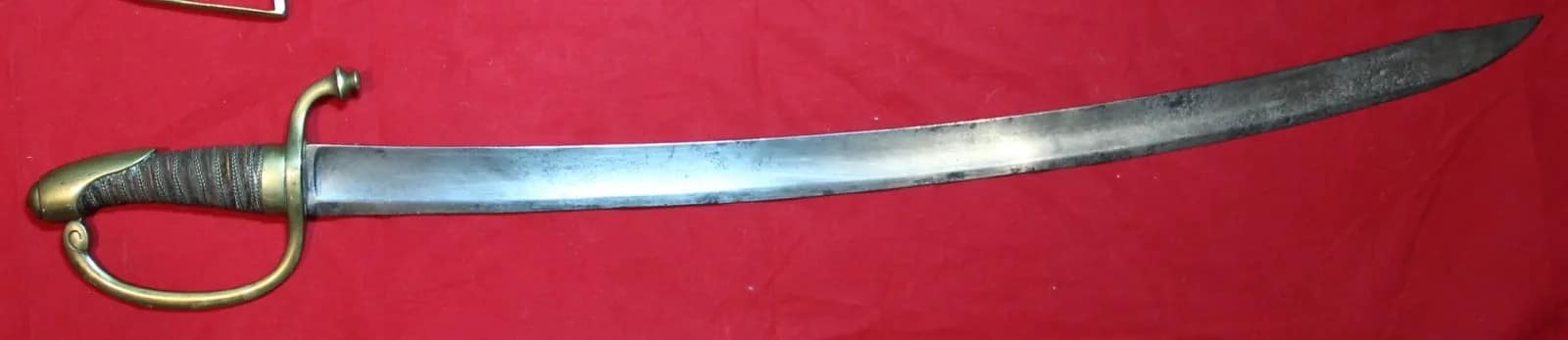
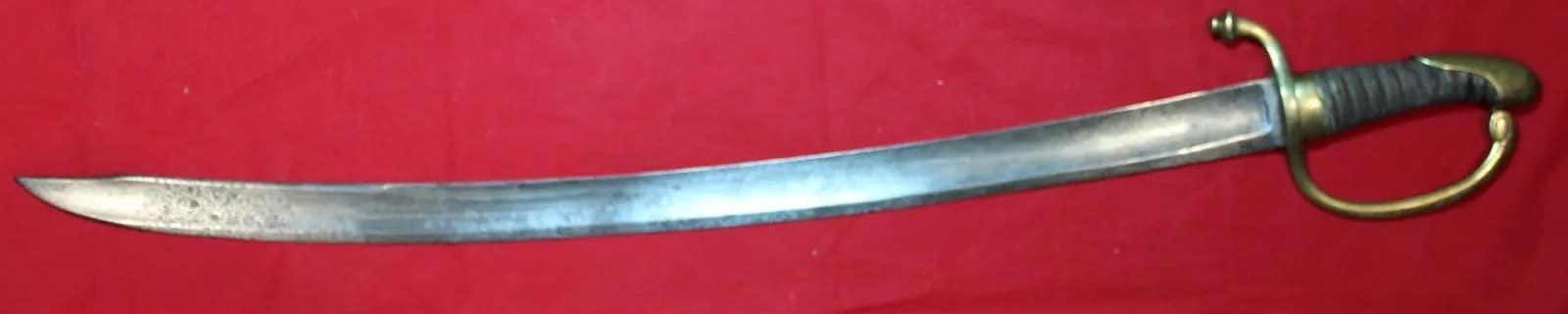
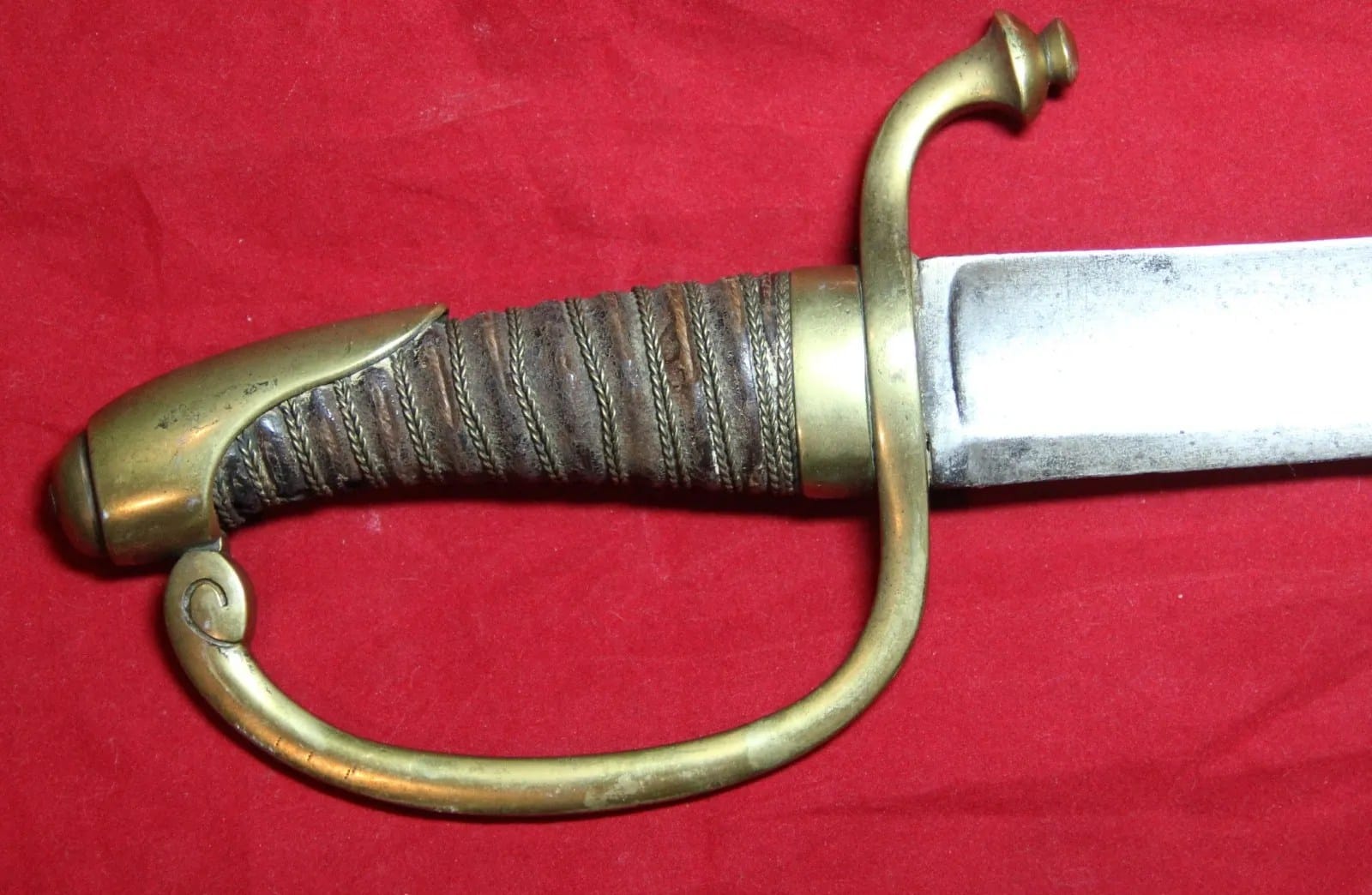
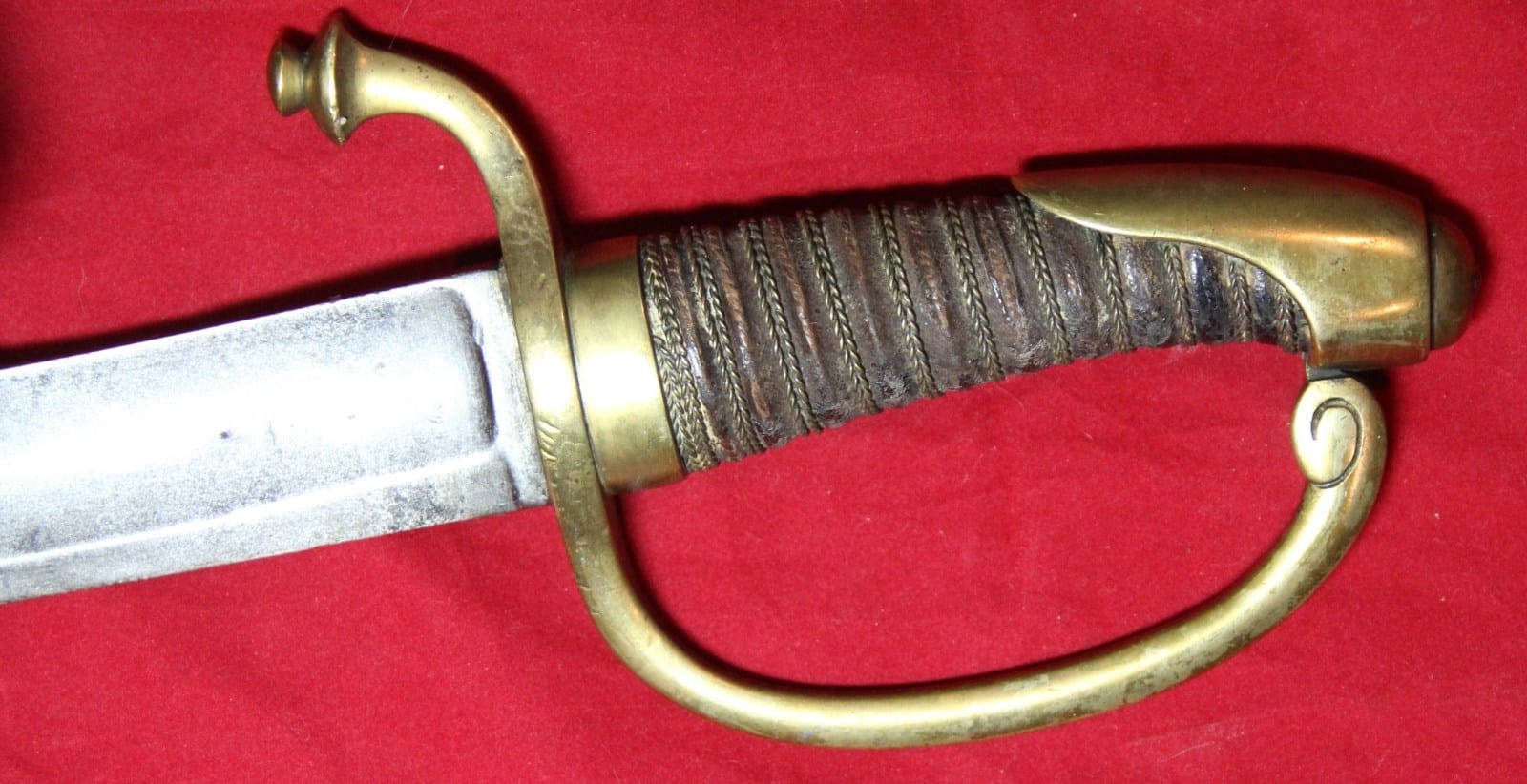
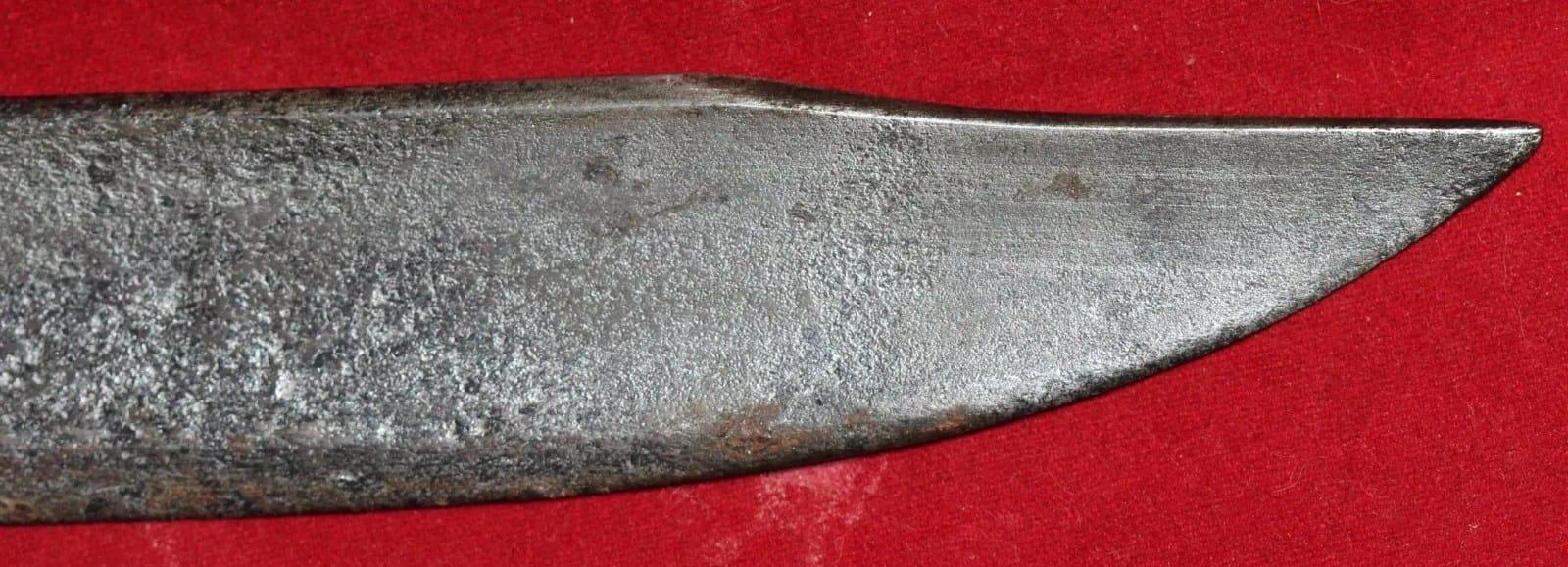
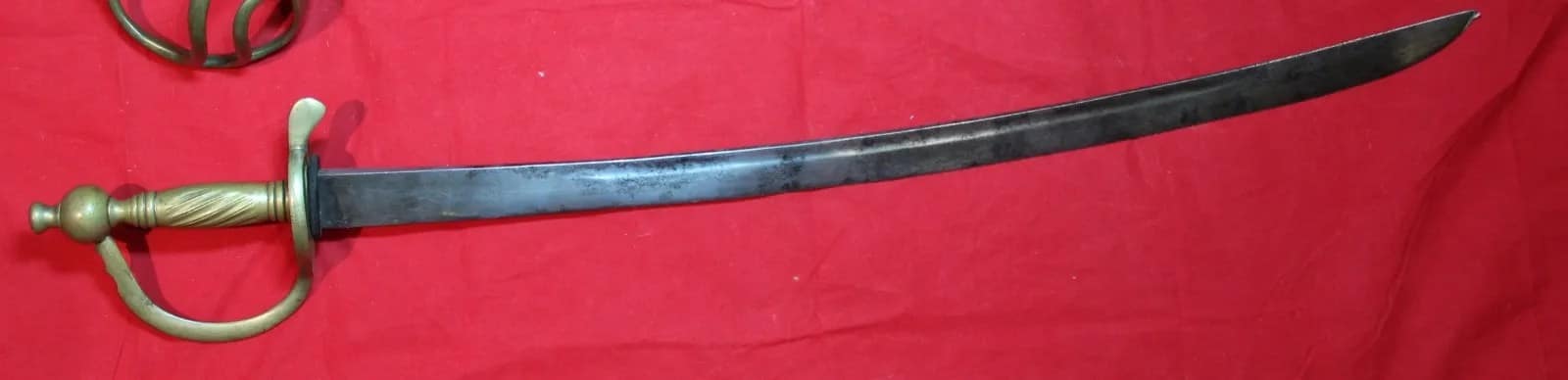
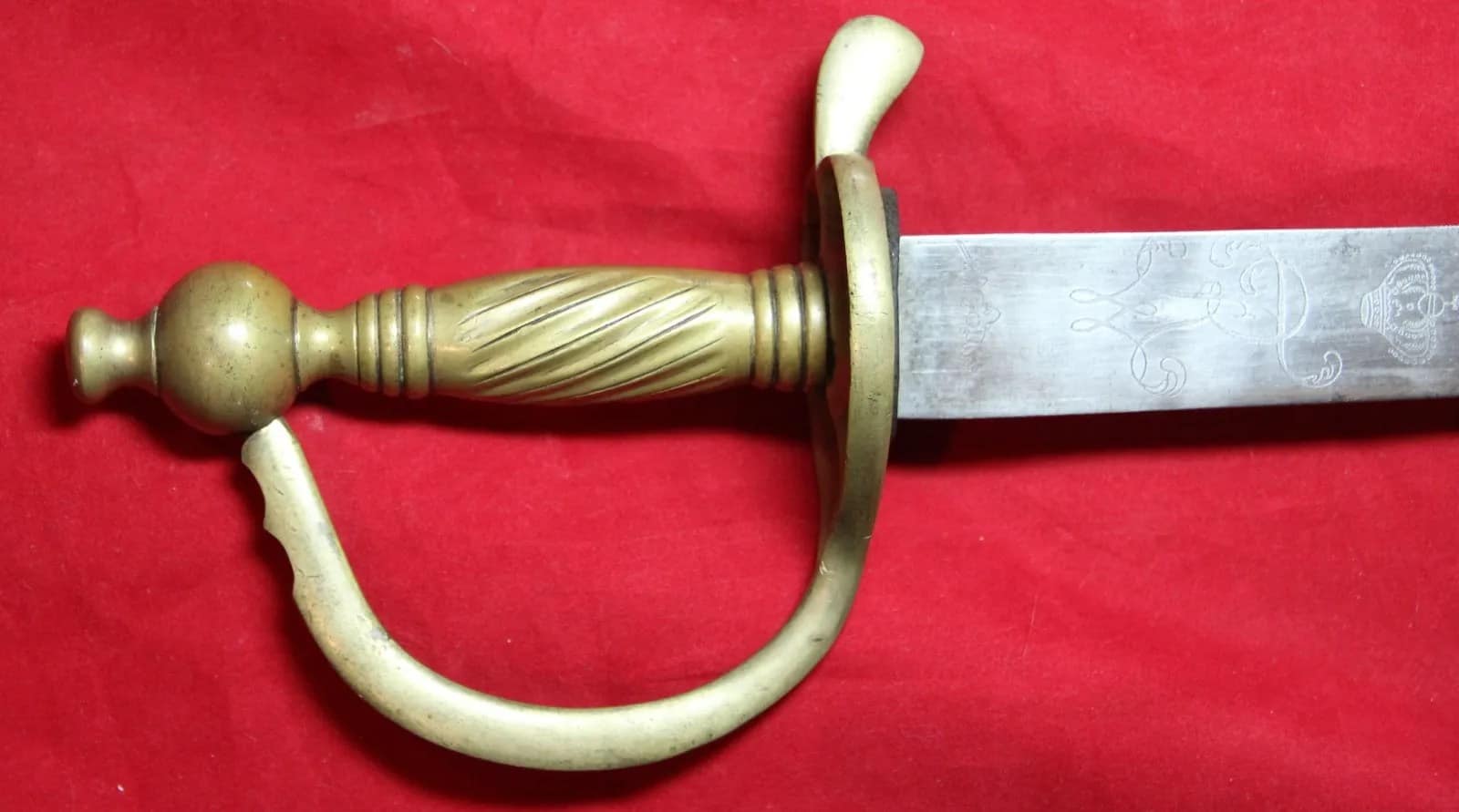
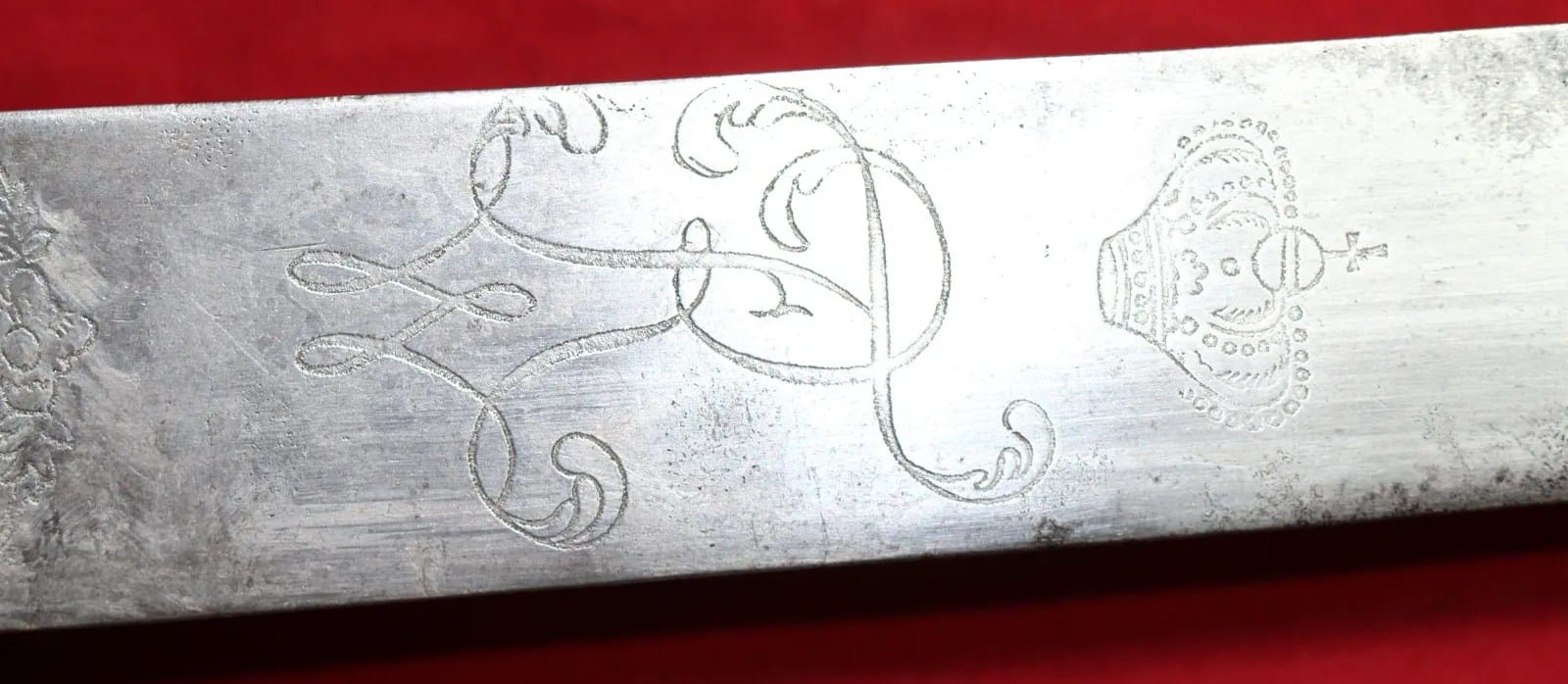
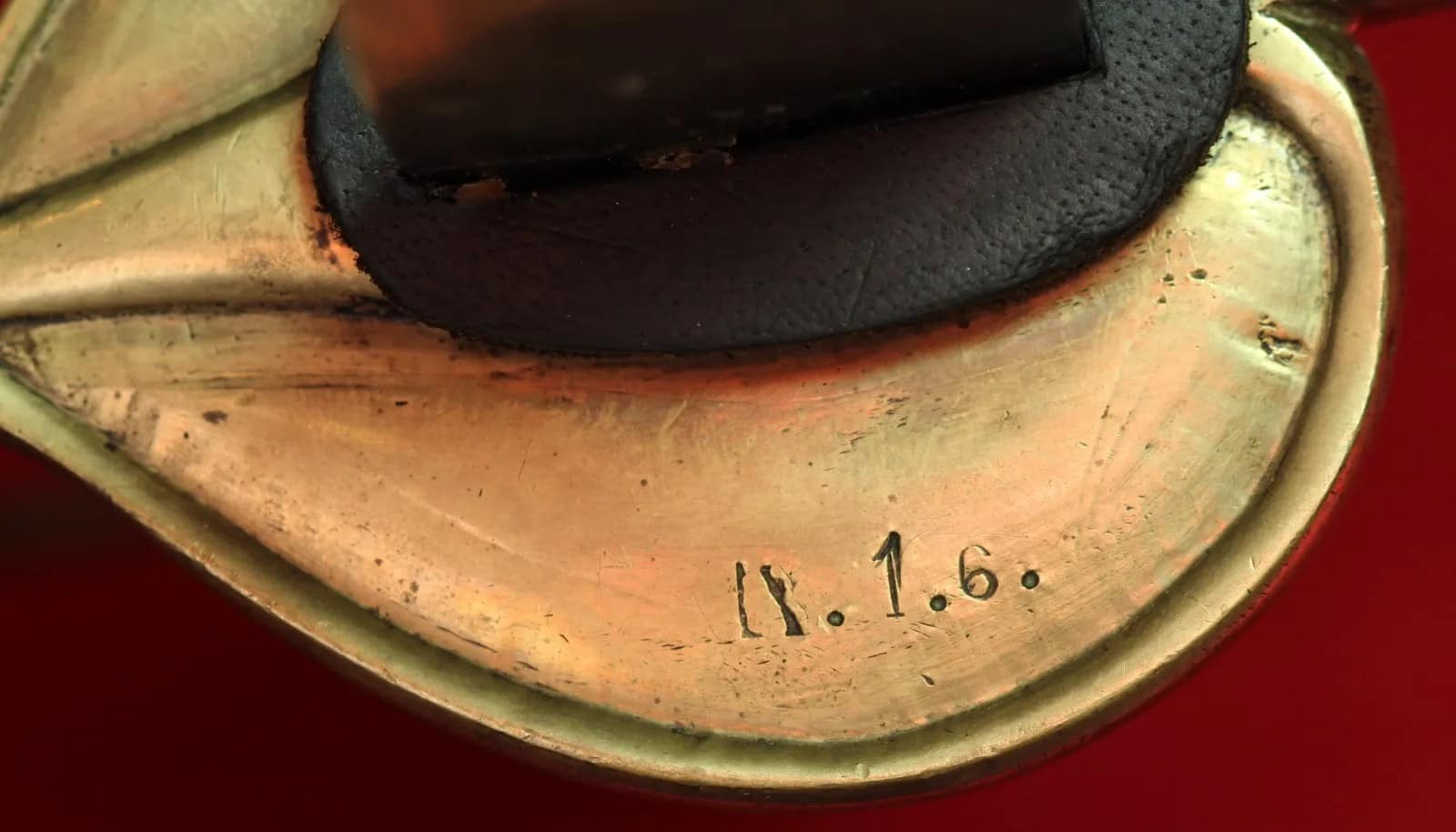
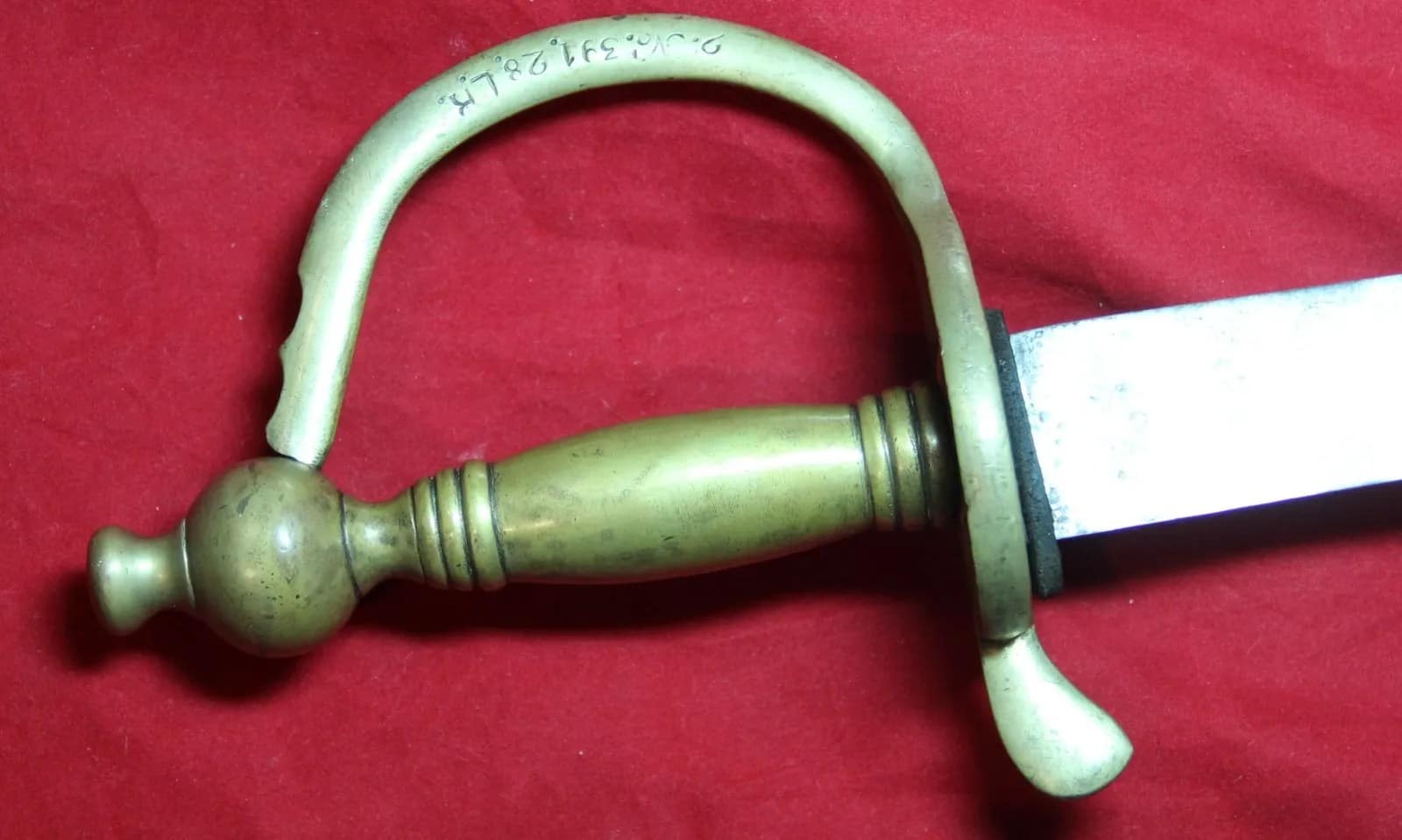
1800 French Imperial Guard Hanger. From my personal collection.

This c.1800 French Imperial Guard hanger was a short infantry sidearm associated with elite formations of Napoleon’s Guard. It featured a curved blade and brass hilt suited to close combat and camp duties. Unlike full-length sabres issued to cavalry, the hanger was intended for wear on foot, providing a practical cutting weapon for officers, NCOs, and selected troops. Carried during the Consulate and early Empire, it reflects the prestige and distinct equipment of the Guard, whose material culture often differed in detail from that of line infantry units.


French Accoutrements of the Napoleonic Wars


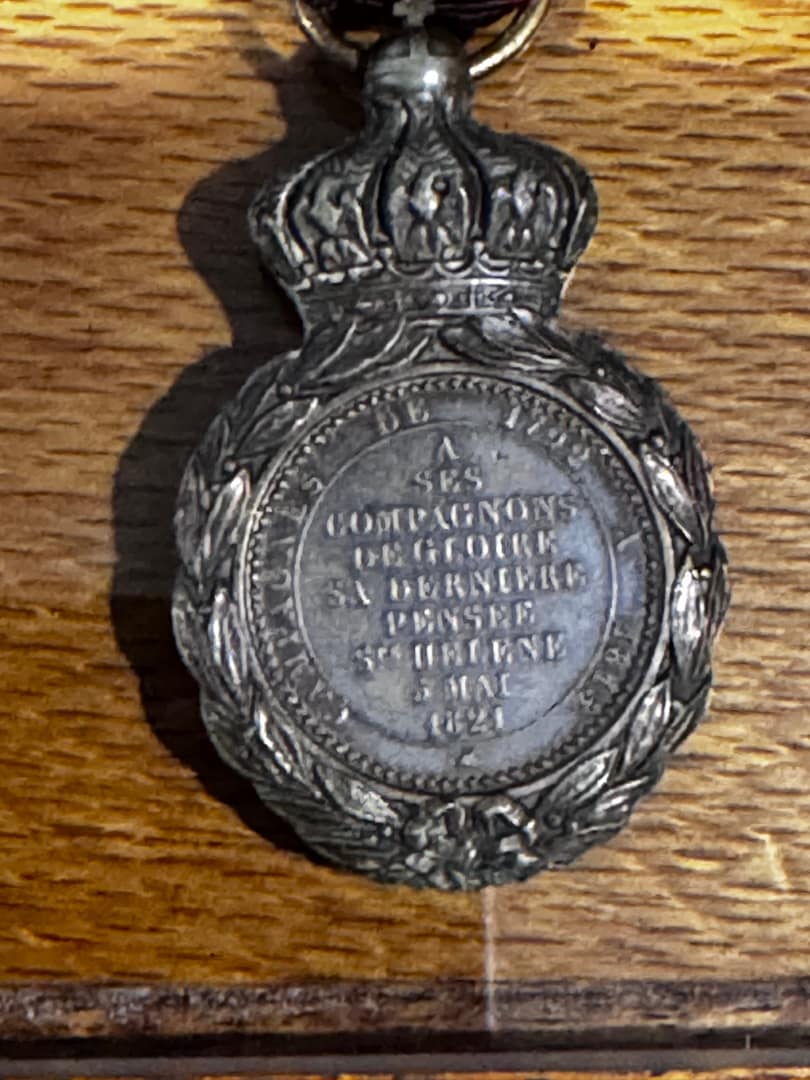
The Saint Helena Medal, from my personal collection.

The Saint Helena Medal (Médaille de Sainte-Hélène) was instituted in 1857 by Napoleon III to honour the surviving soldiers and sailors who served under Napoleon I between 1792 and 1815. Awarded to more than 400,000 veterans across France and Europe, it commemorated service in the Revolutionary and Imperial campaigns—from Italy and Egypt to Austerlitz, Trafalgar, and Waterloo. The medal’s laurel-wreathed effigy of Napoleon and its green ribbon with red stripes symbolised fidelity to the Empire long after its fall.


Austrian pistols of the Napoleonic Wars


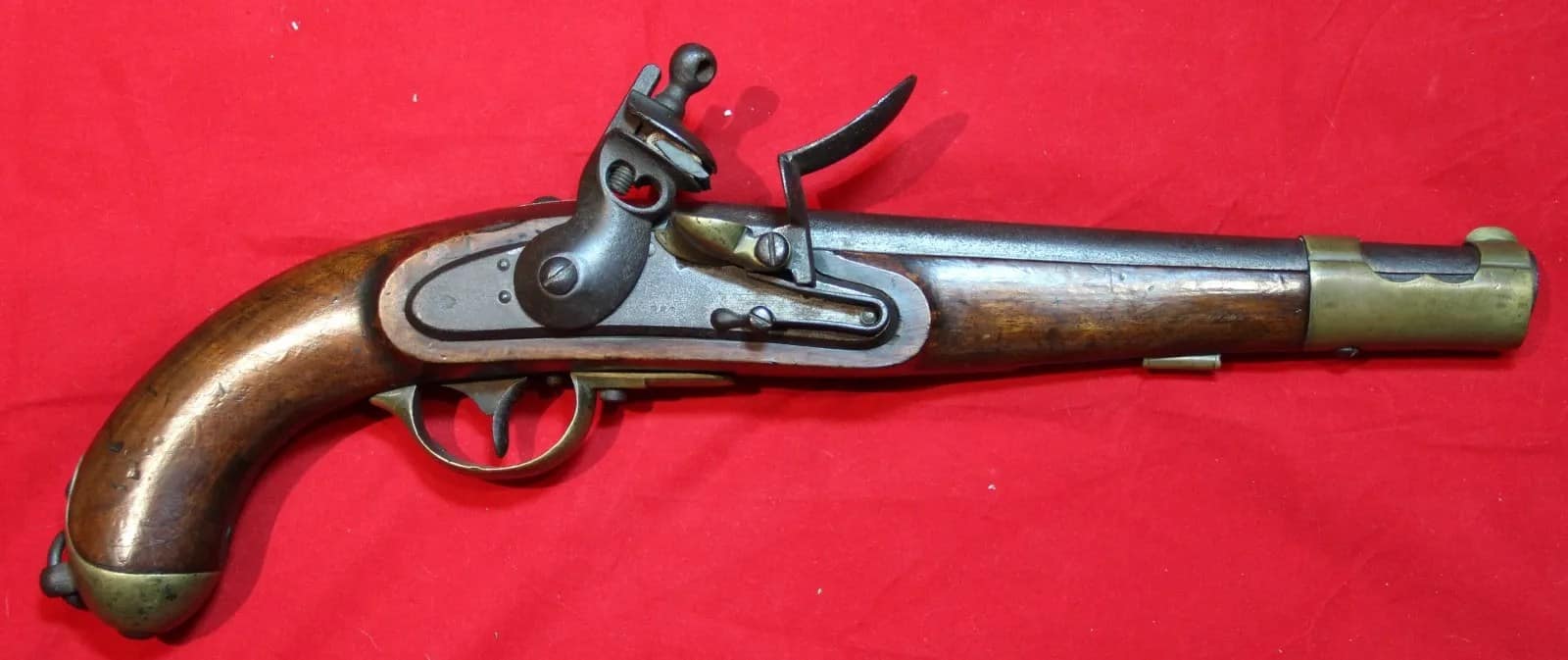
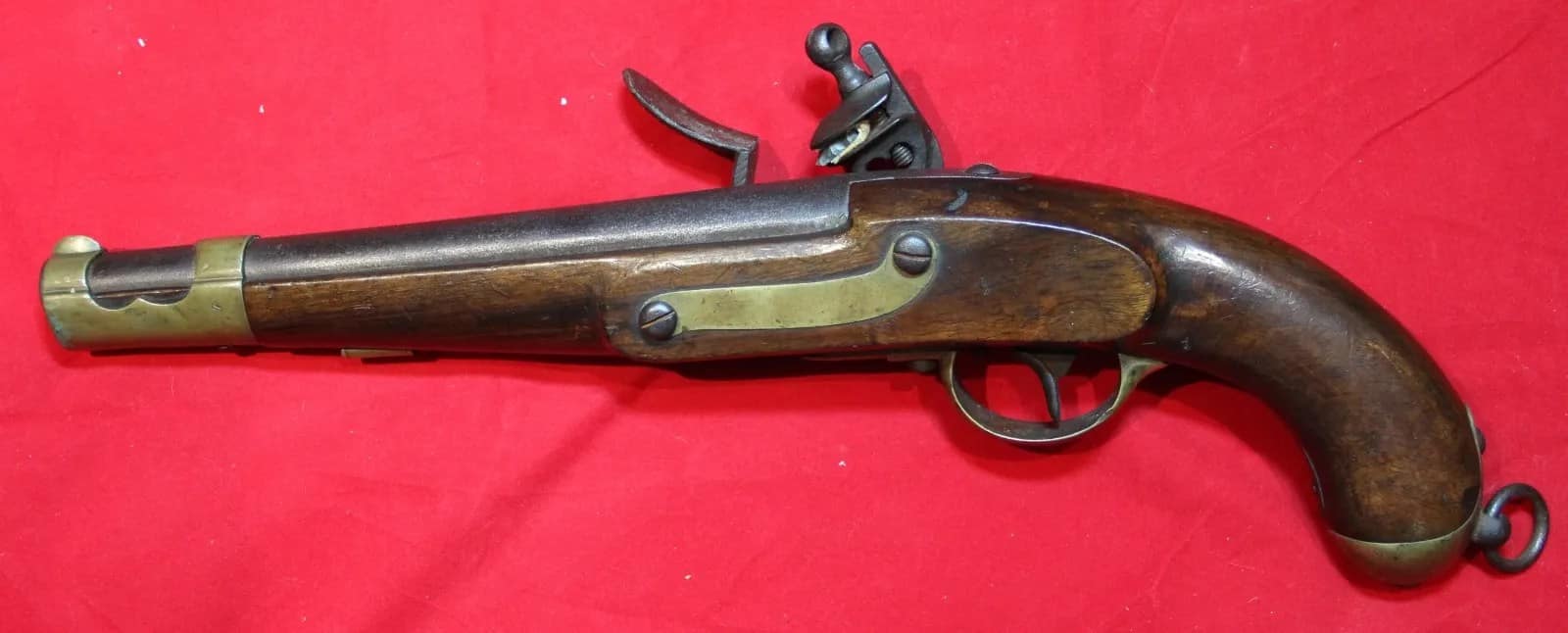
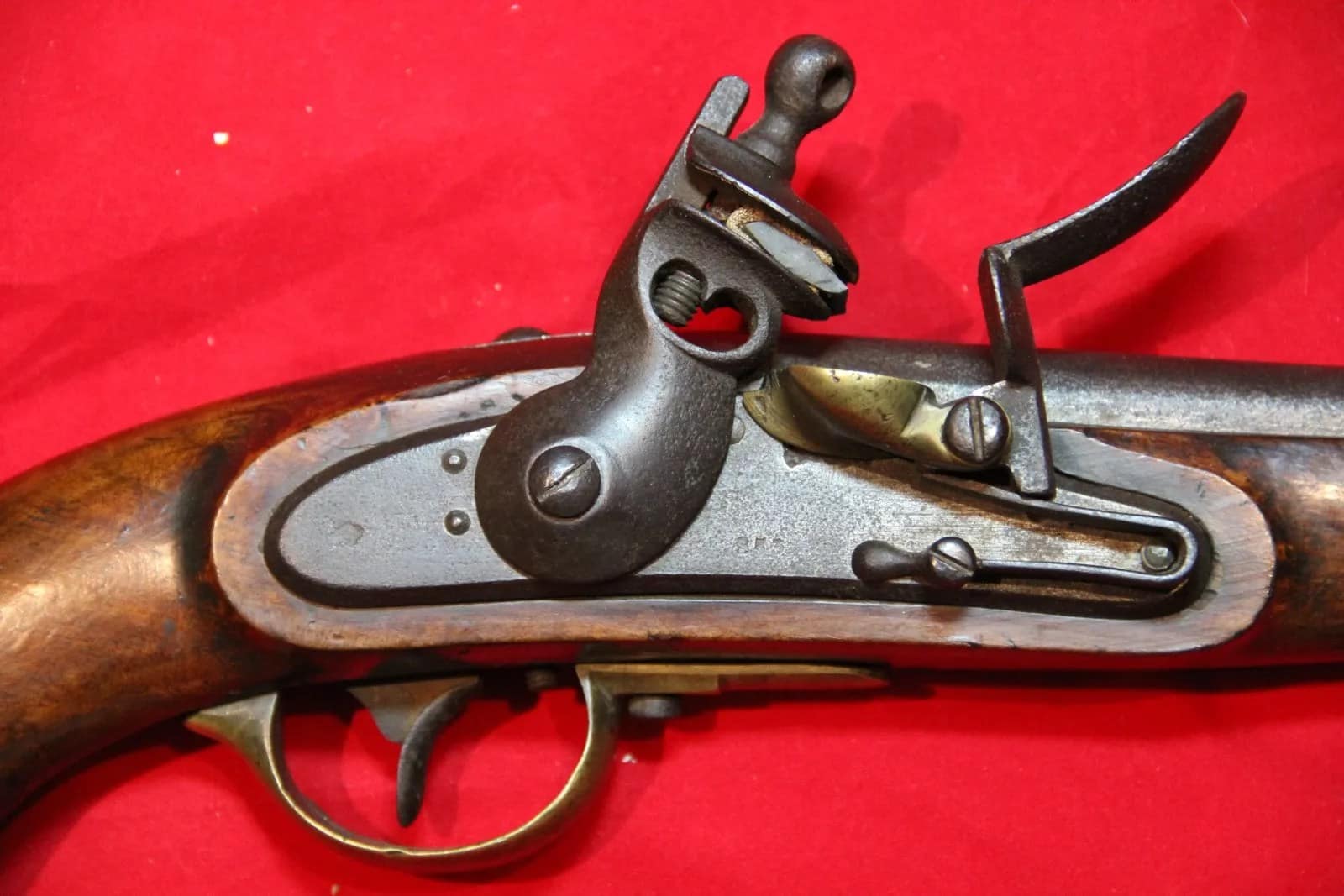
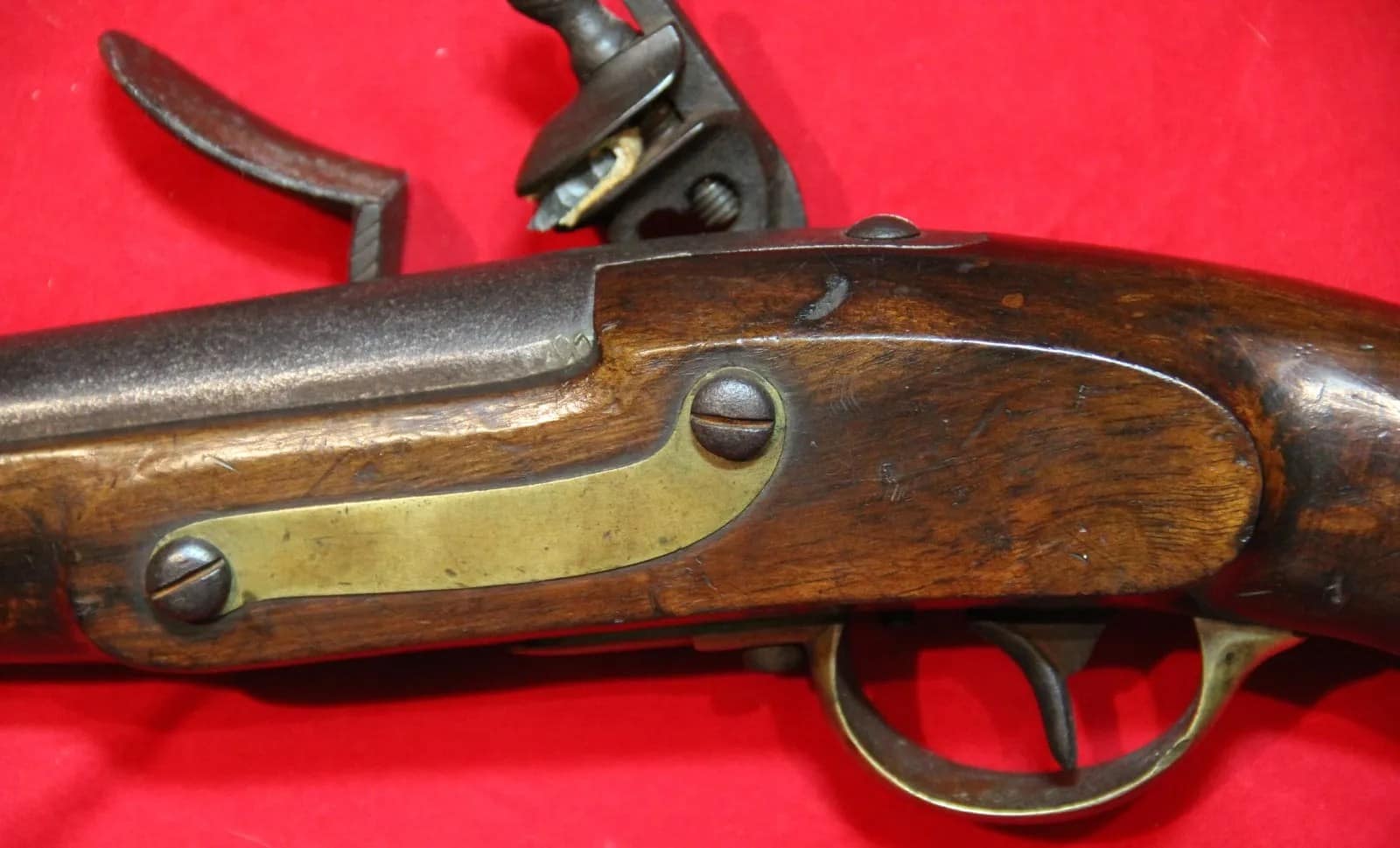
Austrian Model 1798 Cavalry Pistol, from my personal collection.

The Austrian Model 1798 Cavalry Pistol was introduced during the wars against Revolutionary and Napoleonic France to equip mounted troops of the Habsburg Army. A single-shot, smoothbore flintlock of approximately .69 calibre, it featured brass furniture and a sturdy walnut stock designed for field durability. Issued in pairs and carried in saddle holsters, it supported close-range engagement during cavalry charges and pursuit. Manufactured within the Austrian state armoury system, the 1798 pattern reflects efforts to standardise mounted sidearms during a period of sustained continental warfare.


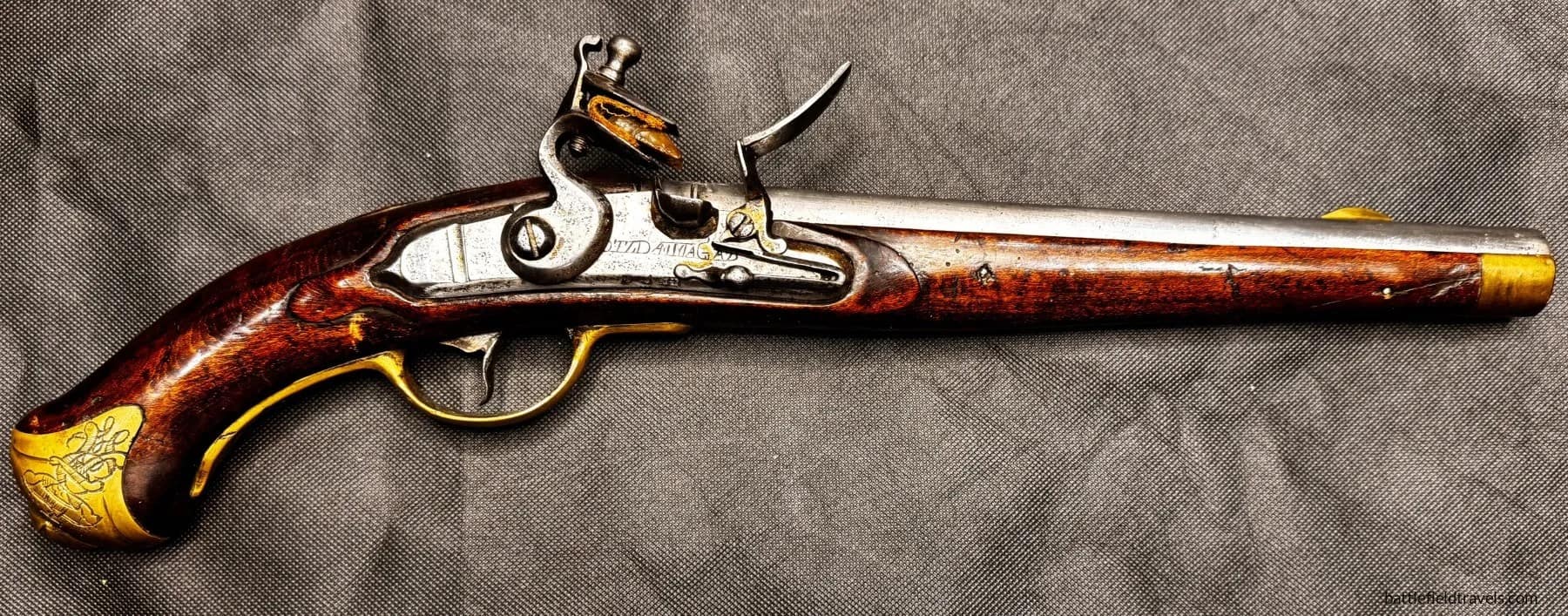
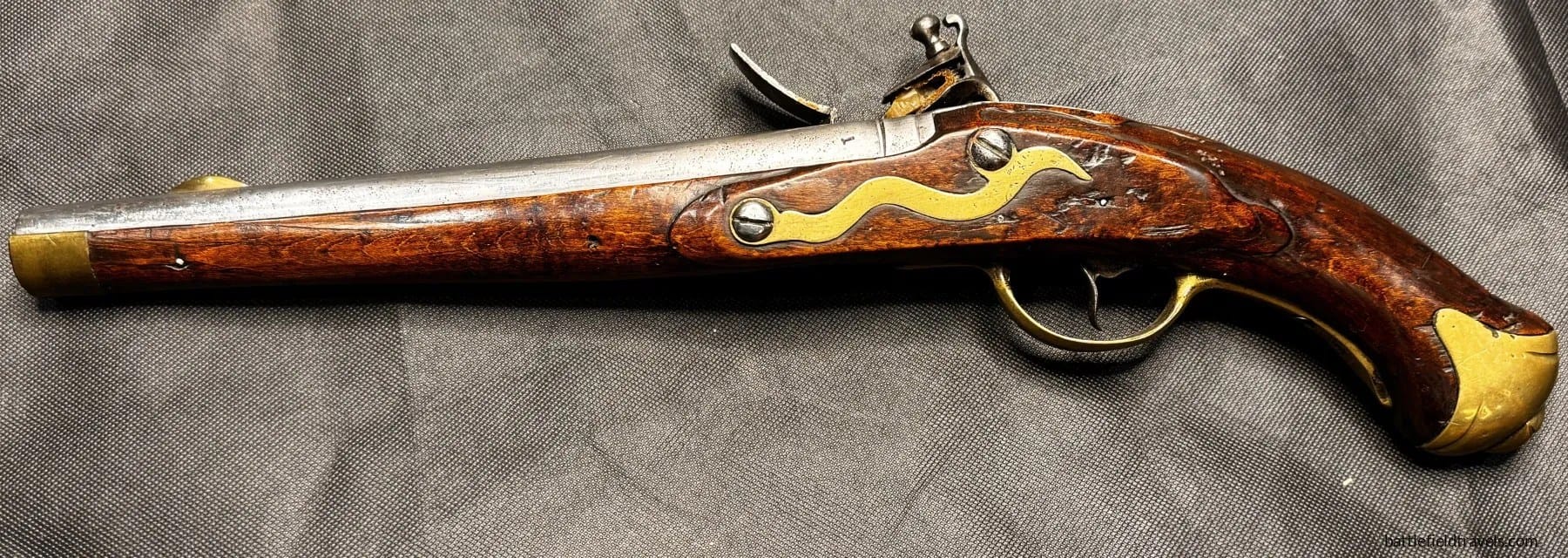
Prussian pistols of the Napoleonic Wars


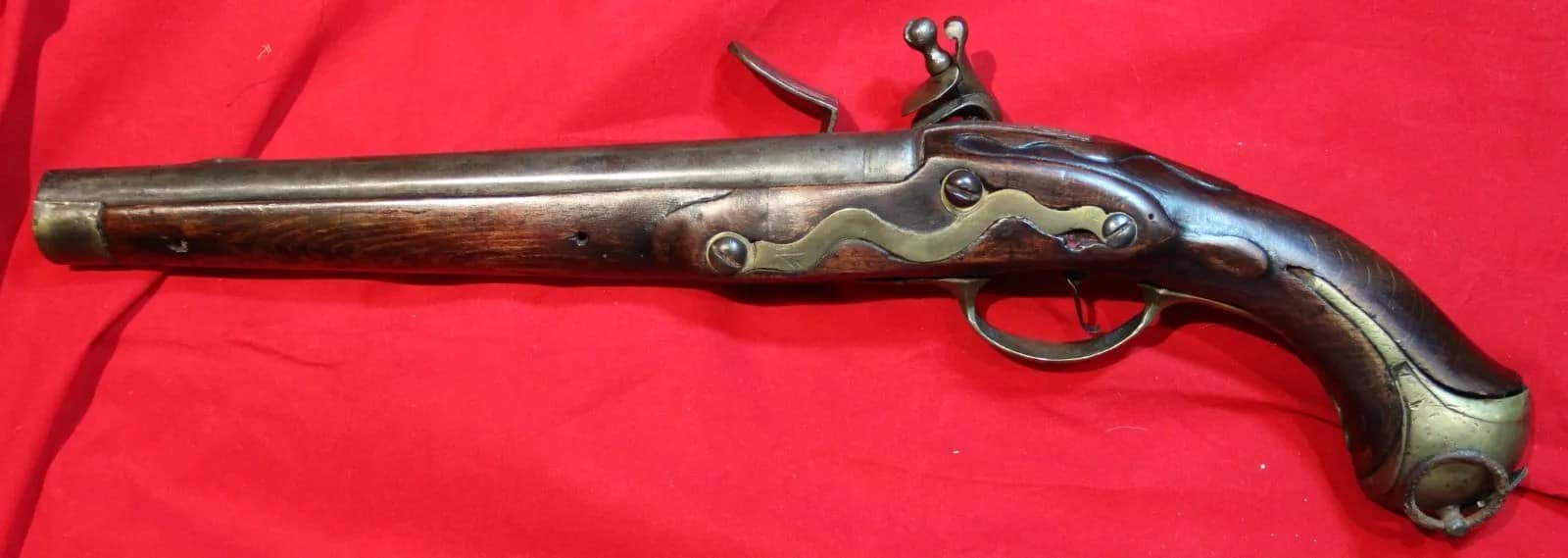
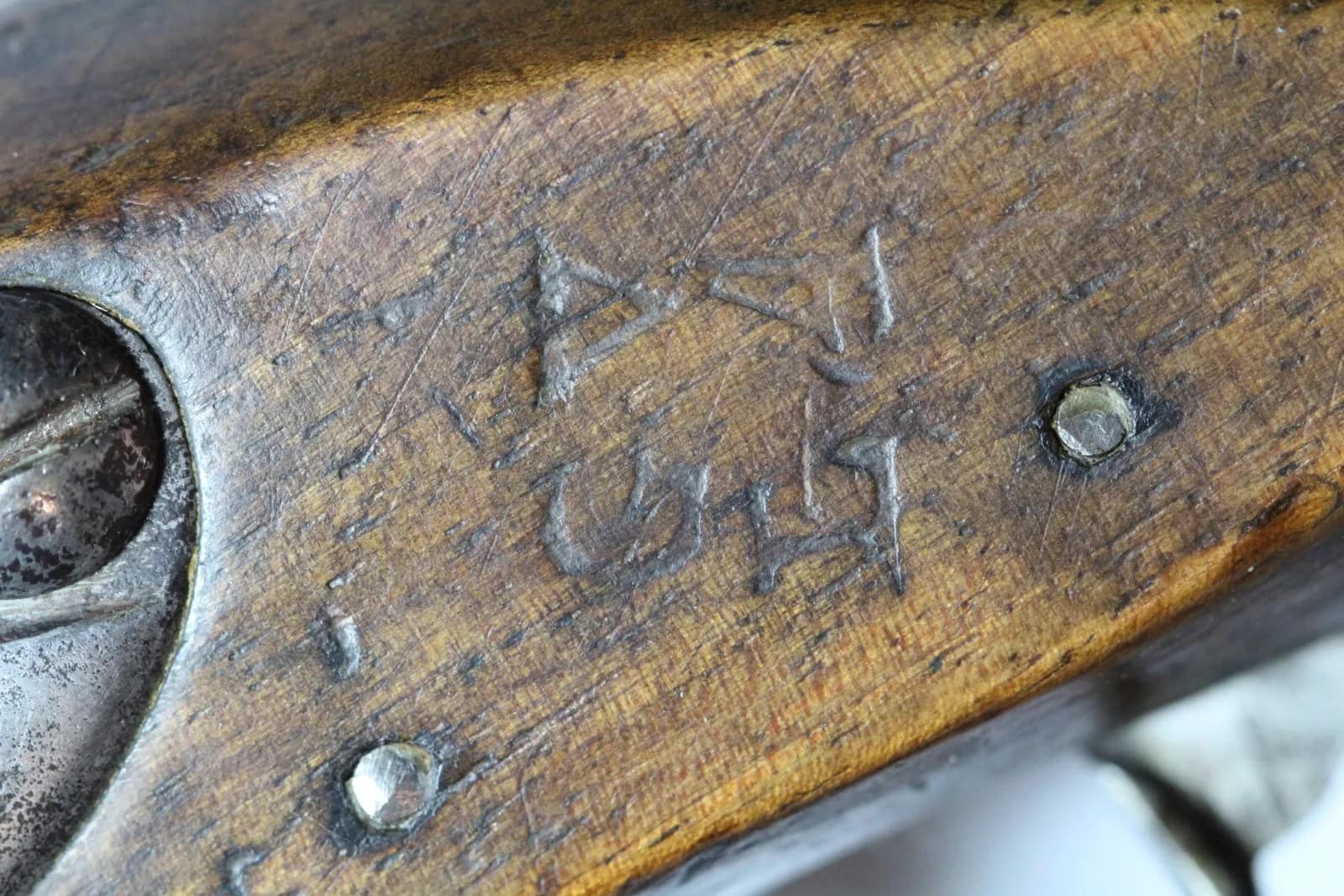
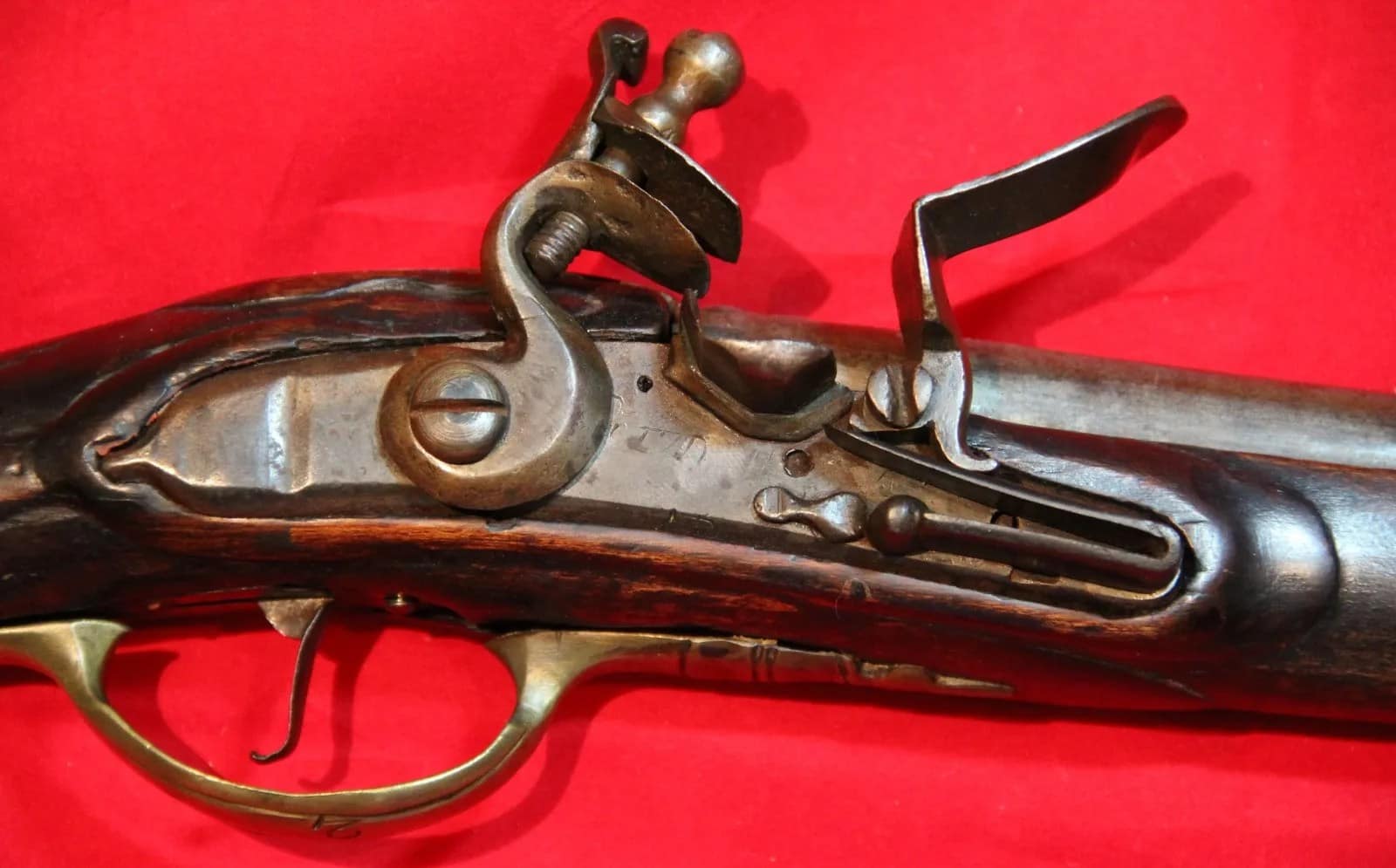
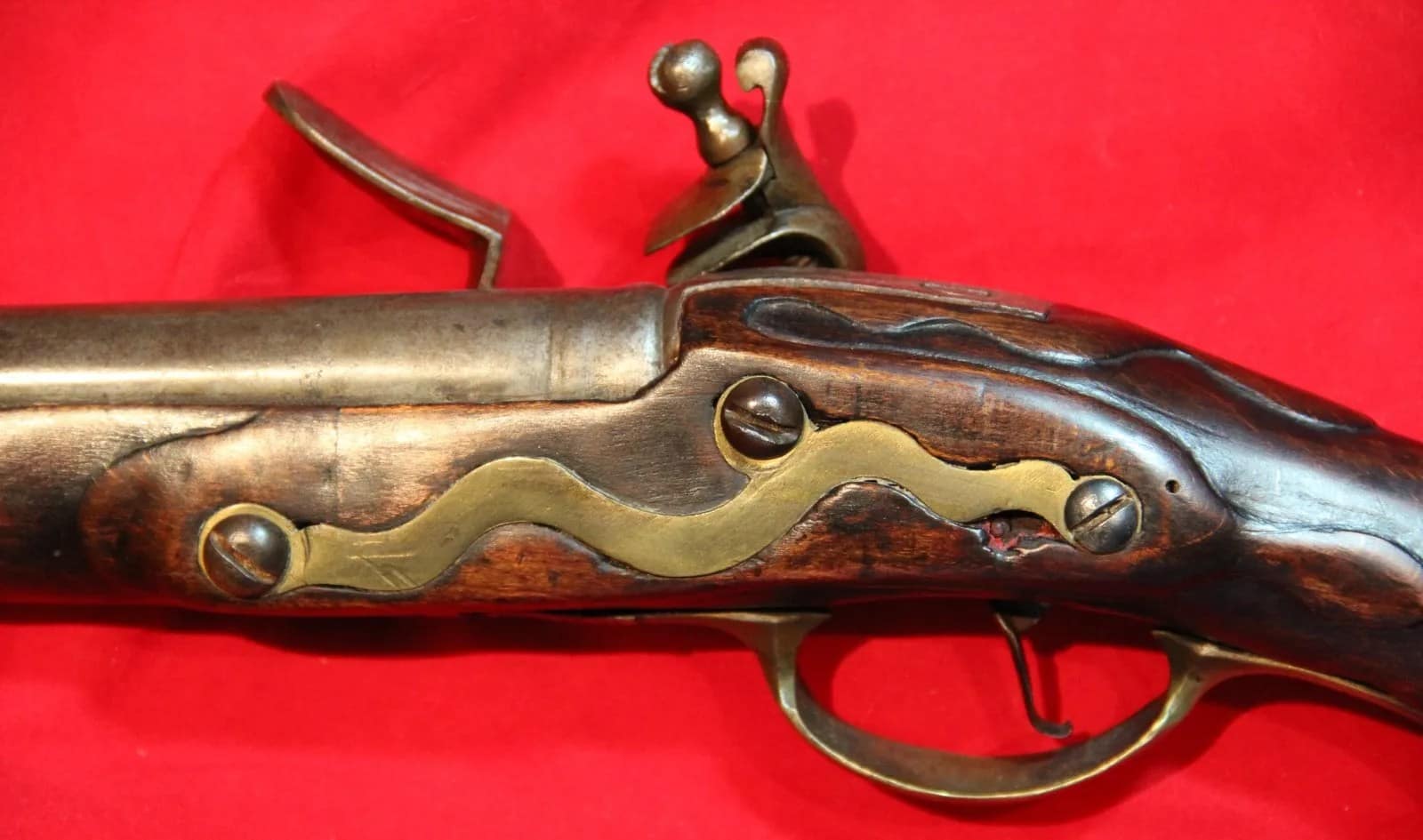
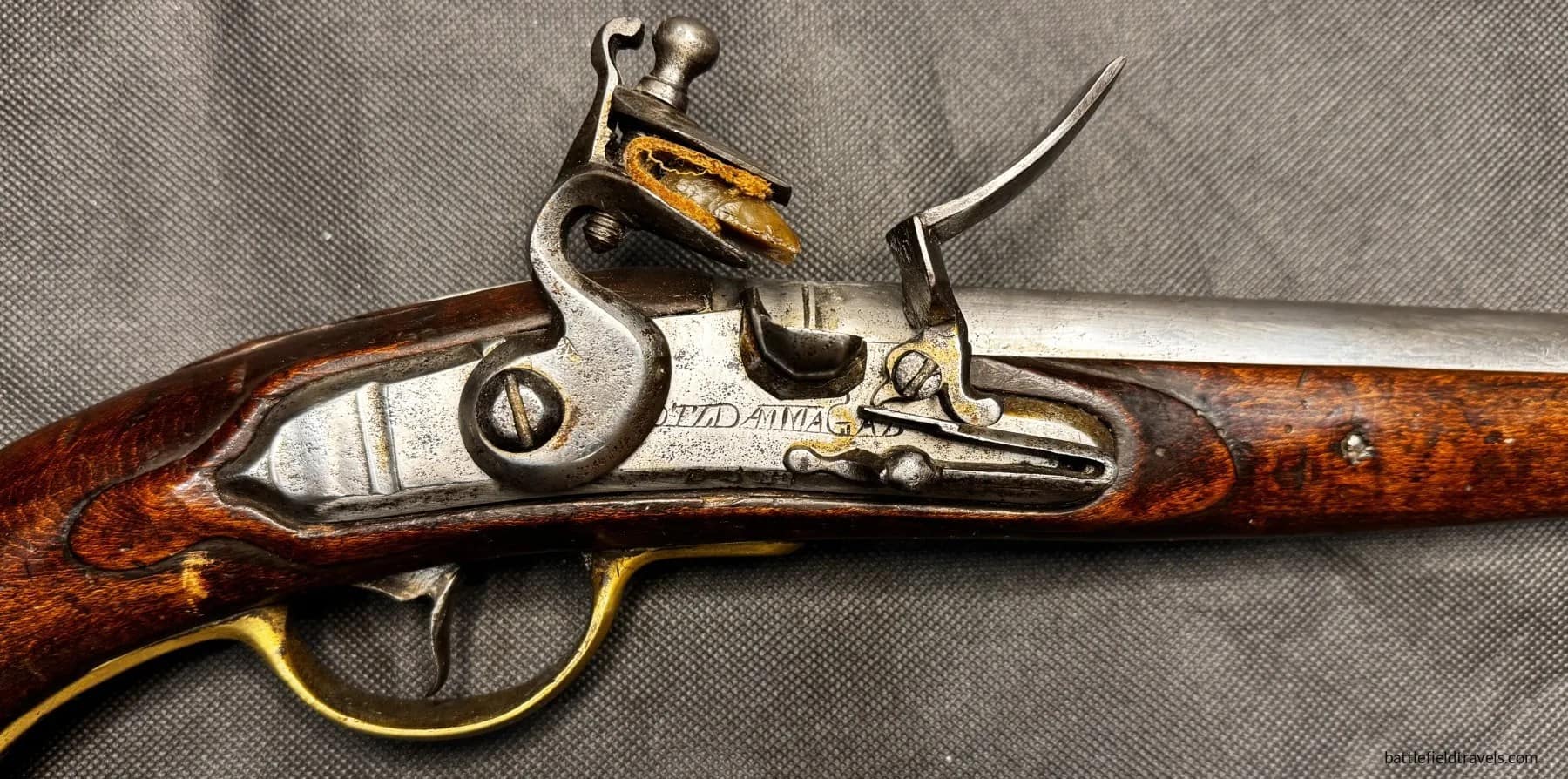
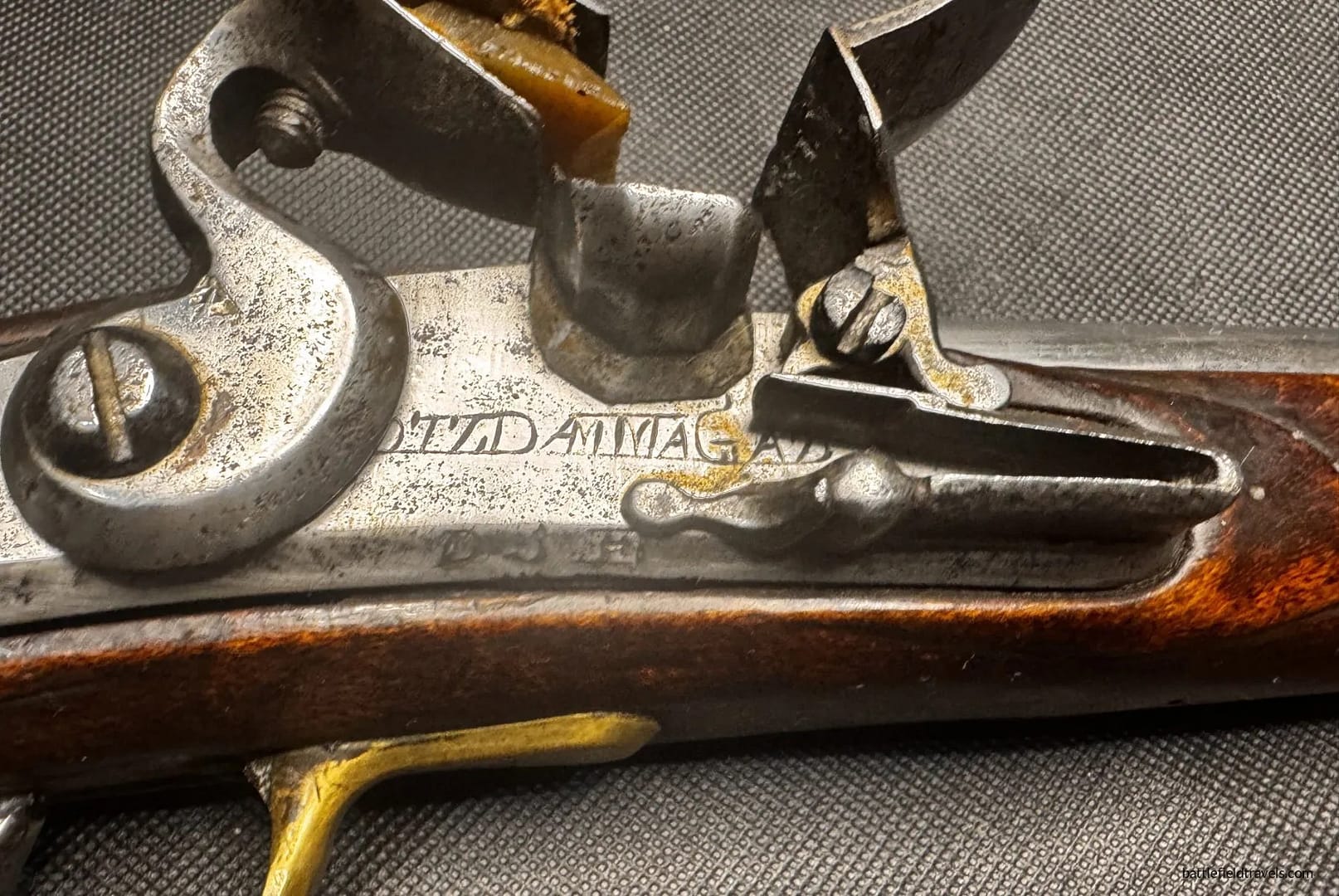
Prussian Model 1789 Cavalry Pistol, from my personal collection.

The Prussian Model 1789 Cavalry Pistol was adopted on the eve of the Revolutionary Wars to equip mounted regiments of the Prussian Army. The 1789 Model was an evolved and shortened version of the 1742 pattern. Many earlier 1742 pattern pistols were modernised into the 1789 configuration. This one started life as the earlier 1742 and was modified by shortening the barrel. However, it retained the early style triggerguard and sideplate, and the S&D (Splittgerber and Daum)  inspector initials on the underside of the lockplate. The pattern remained in service through the early campaigns against Napoleonic France, reflecting Prussian efforts to maintain standardised cavalry armament during a period of operational reform and sustained conflict.


Prussian Model 1789 Cavalry Pistol, from my personal collection.

The Prussian Model 1789 Cavalry Pistol was adopted on the eve of the Revolutionary Wars to equip mounted regiments of the Prussian Army. The 1789 Model was an evolved and shortened version of the 1742 pattern. A single-shot, smoothbore flintlock of approximately .69 calibre, it featured brass furniture and a robust walnut stock suited to mounted service. Issued in pairs and carried in saddle holsters, it complemented sabre use during shock action. The pattern remained in service through the early campaigns against Napoleonic France, reflecting Prussian efforts to maintain standardised cavalry armament during a period of operational reform and sustained conflict.


Prussian edged weapons of the Napoleonic Wars


Prussian M 1715 modified to 1786 Hanger, from my personal collection.

This Prussian M1715 hanger, modified in 1786, reflects the long service life of edged weapons within the Prussian Army. Originally an early eighteenth-century pattern, it was updated late in the century to meet revised regulations while retaining core structural elements. The hilt bears the royal monogram “FWR” (Fridericus Wilhelmus Rex), identifying association with Frederick William of Prussia. Short and practical, the hanger was intended for infantry and NCO use as a secondary sidearm. Its modification illustrates Prussian practice of refurbishing existing stocks rather than complete replacement during peacetime economies.


Swedish Long arms of the Napoleonic Wars


Model 1815 Swedish Norrtälje Flintlock Musket, from my personal collection.

The Swedish Model 1815 flintlock musket, manufactured at the Norrtälje Gevärsfaktori (arsenal) represents the standard infantry firearm of the Swedish Army during the early nineteenth century. A smoothbore muzzle-loading weapon of large calibre, it reflects the mature form of flintlock military technology that dominated European battlefields during the Napoleonic era. Designed for volley fire and fitted with a socket bayonet, the musket emphasised reliability and simplicity of manufacture. Swedish forces maintained a conservative approach to small arms during this period, and the Model 1815 illustrates the continuity of flintlock systems just prior to the widespread adoption of percussion ignition across European armies.


Napoleonic Wars weapons FAQ

What were the Napoleonic Wars?

The Napoleonic Wars were a series of major European conflicts fought between 1803 and 1815. They involved Napoleonic France against successive coalitions led by Britain, Austria, Prussia, Russia, and other states. The wars extended across continental Europe, the Iberian Peninsula, the Mediterranean, and overseas theatres. They concluded with Napoleon’s defeat in 1815 and the political settlement at the Congress of Vienna.

How did Napoleon defeat older European armies?

Napoleon employed corps organisation, allowing independent manoeuvre with centralised operational intent. At Battle of Ulm, Battle of Austerlitz, and Battle of Jena-Auerstadt, French forces achieved rapid concentration against dispersed enemy formations. Flexible use of column movement, skirmish screens, and massed artillery enabled local superiority. Opposing armies, structured around eighteenth-century linear systems, struggled to match tempo and coordination.

What weapons were used during the Napoleonic Wars?

Infantry were primarily armed with smoothbore flintlock muskets of approximately .69–.75 calibre. French forces used patterns such as the Model 1777 AN IX, while Britain fielded the India Pattern “Brown Bess.” Cavalry carried sabres, carbines, and pistols. Artillery, particularly 6- and 12-pounder field guns, played an increasingly decisive role through concentrated fire.

Why was artillery so important?

French doctrine emphasised the rapid concentration of guns to create local fire superiority. Divisional and corps artillery could be massed to disrupt enemy formations prior to infantry assault. Improvements in mobility, standardised calibres, and trained gun crews enhanced operational flexibility. Artillery preparation often determined the success of attacks against formed infantry.

What role did cavalry play?

Cavalry performed reconnaissance, screening, pursuit, and shock action. Heavy cavalry charged to exploit disrupted infantry, while light cavalry conducted reconnaissance and interdiction. Cavalry pistols and carbines were secondary to edged weapons, with sabres remaining the principal mounted combat arm.

How large were Napoleonic armies?

Field armies frequently exceeded 100,000 personnel. The French Grande Armée in 1805–1807 deployed multiple corps operating along separate axes before concentrating for battle. Coalition armies grew in scale as mobilisation systems improved. Sustaining these forces required extensive logistical networks and magazine systems.

What ended the Napoleonic Wars?

After defeats in Russia (1812) and at Battle of Leipzig, Napoleon was forced to abdicate in 1814. He returned in 1815 for the Hundred Days but was decisively defeated at the Battle of Waterloo. The subsequent Congress of Vienna restructured European borders and sought to restore strategic balance among the great powers.

Why are the Napoleonic Wars still studied today?

The wars established enduring models of corps organisation, operational manoeuvre, artillery integration, and national mobilisation. They marked the transition from eighteenth-century dynastic warfare to mass industrial-era conflict. Many nineteenth-century military systems were directly shaped by Napoleonic experience.


Subscribe to Battlefield Travels and receive a free E-Book Battlefield Guide

Unlock expert battlefield analysis, campaign reconstructions, and historical insights drawn from firsthand exploration and primary sources.

🗺️ You’ll receive:

🎖️ Exclusive historical insights you won’t find elsewhere

📘 A free eBook: 10 Tips for Exploring Historic Battlefields

📰 New battlefield studies straight to your inbox as they are published