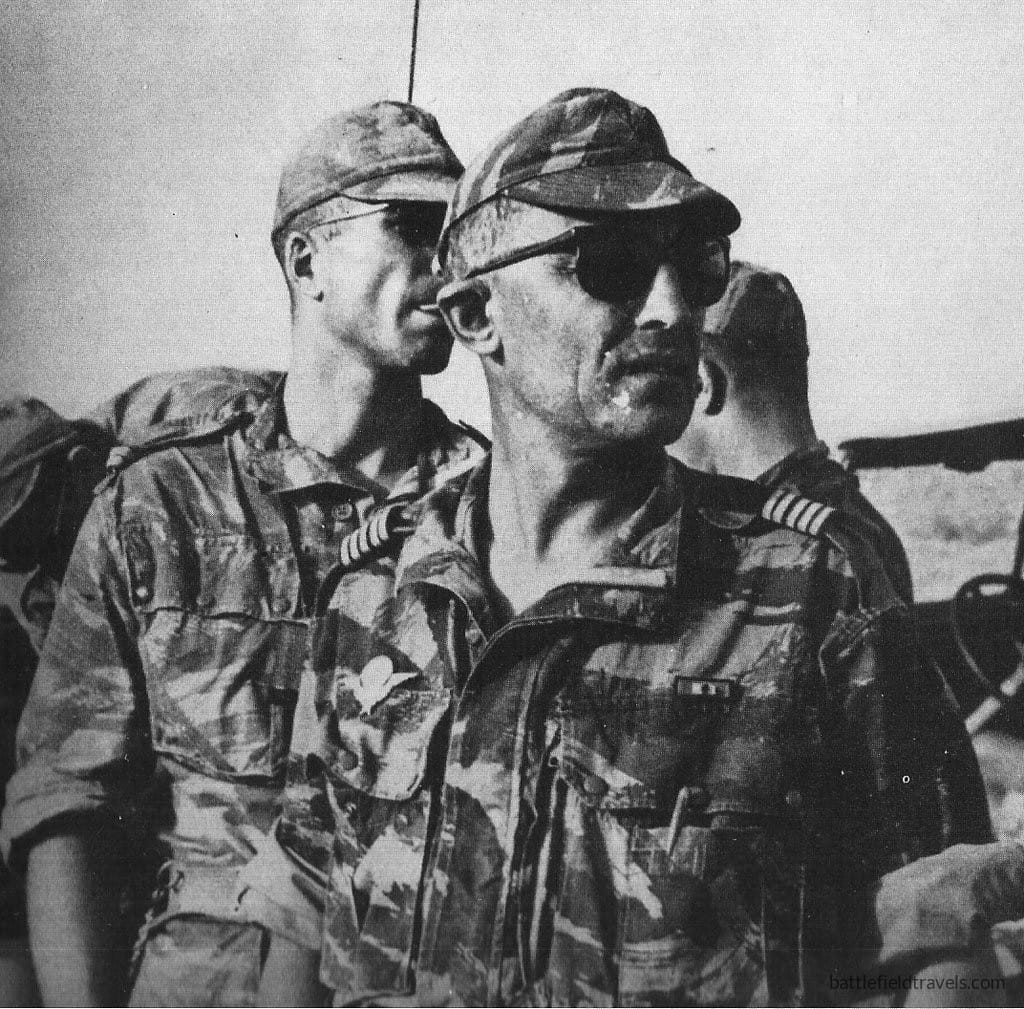
Overview of the Algerian War
The Algerian War (1954–1962) was the decisive and violent struggle that ended more than a century of French rule in Algeria. Fought between French forces and the FLN (Front de Libération Nationale), the conflict combined guerrilla warfare, terrorism, counter-insurgency operations, and political confrontation. What began with the FLN’s coordinated attacks on 1 November 1954 escalated into a nationwide war, with rural guerilla units operating from the Aurès, Kabylie, and Constantinois while urban networks waged a campaign of bombings, assassinations, and strikes.
France deployed conscripts, colonial troops, and elite formations including the Foreign Legion, parachute regiments, and specialised counter-insurgency units. Major operations such as the Battle of Algiers (1957), the Morice Line campaign, and offensives in the Atlas Mountains demonstrated the tactical effectiveness of French forces. Still, they failed to break the FLN’s political momentum. The war became increasingly divisive within France, contributing to the collapse of the Fourth Republic and the return of Charles de Gaulle.
The Evian Accords of March 1962 brought an end to hostilities, granting Algerian independence and triggering a mass exodus of European settlers and loyalist Muslim auxiliaries. The conflict left deep political, social, and military legacies in both France and Algeria.
Related Battle Studies, Museum Pieces & Reading Resources


Headgear and uniforms
French Algerian War grouping, LT Roquefeuil, 13e Régiment de Dragons Parachutistes. From my personal collection.
TAP 47/56 camouflage uniform, TAP 47/56 green smock and trousers, Dress uniform, Kepi, kit bag, US M1951 cold weather cap, Red beret, Khaki cotton beret


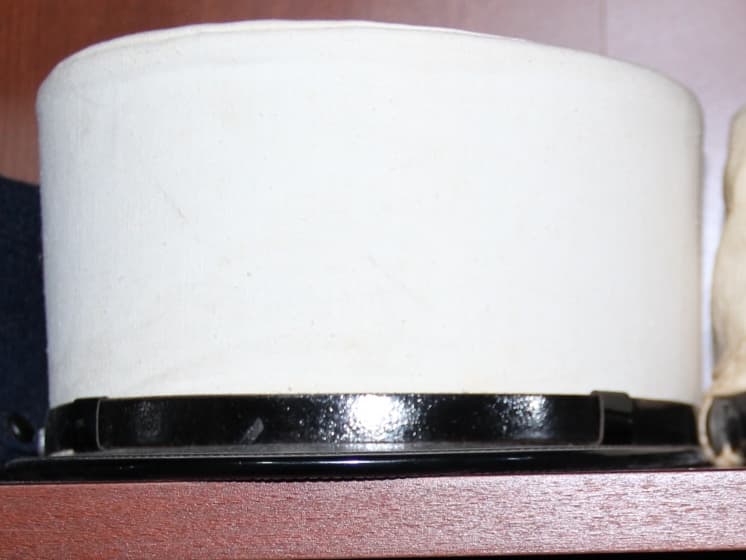
Foreign Legion Kepi, enlisted soldier, Algerian War era. From my personal collection.
The kepi blanc is the defining symbol of the French Foreign Legion, issued to legionnaires upon completion of basic training. Constructed from white cotton with a stiffened crown, leather chinstrap and legion grenade buttons, it served as a dress and garrison cap for Legion units deployed in Algeria. During the war, the kepi blanc was typically worn behind the lines, with field caps or helmets used in operations. Its distinctive appearance reflects the Legion’s unique identity, traditions, and multinational character during counter-insurgency campaigns.
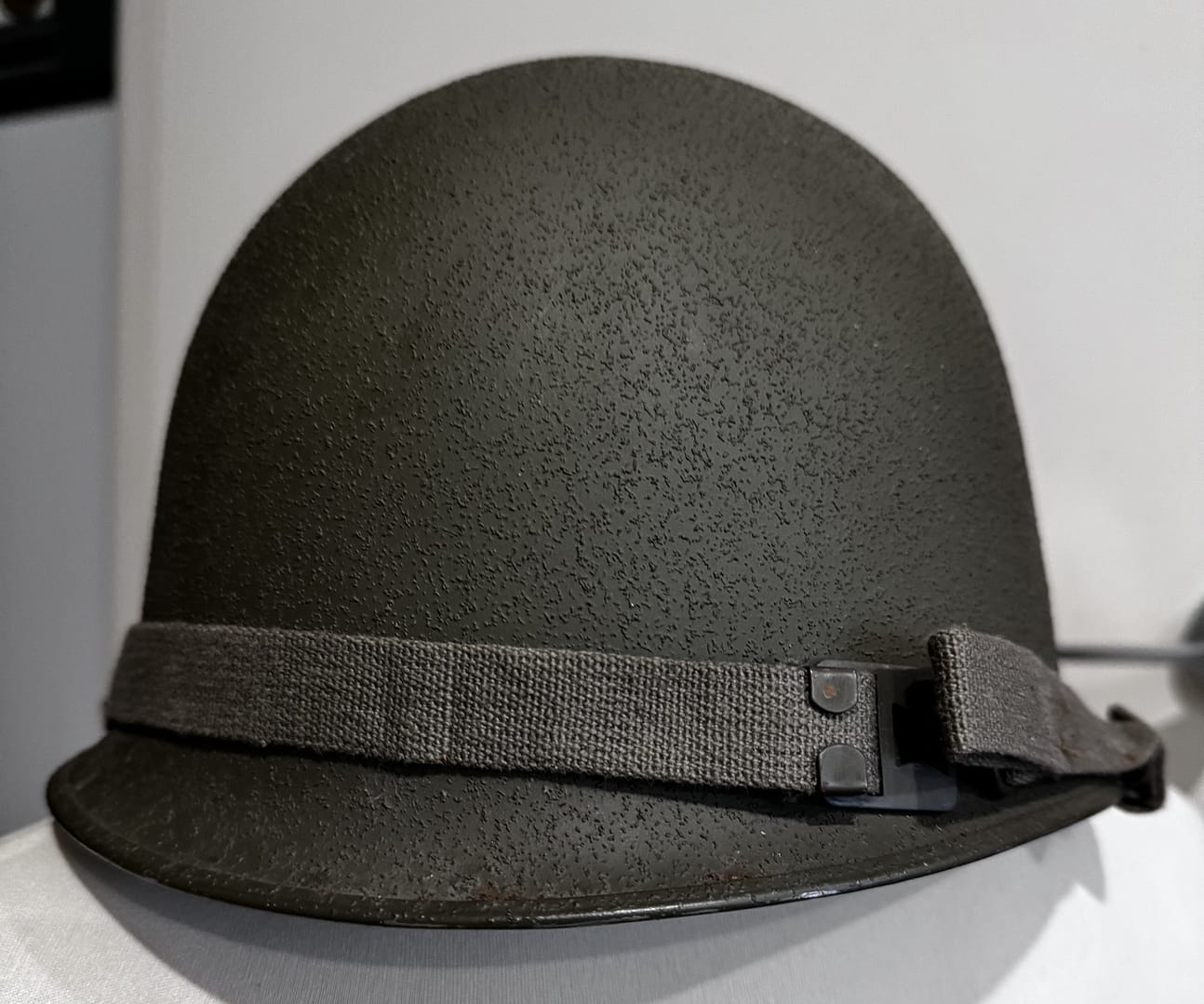
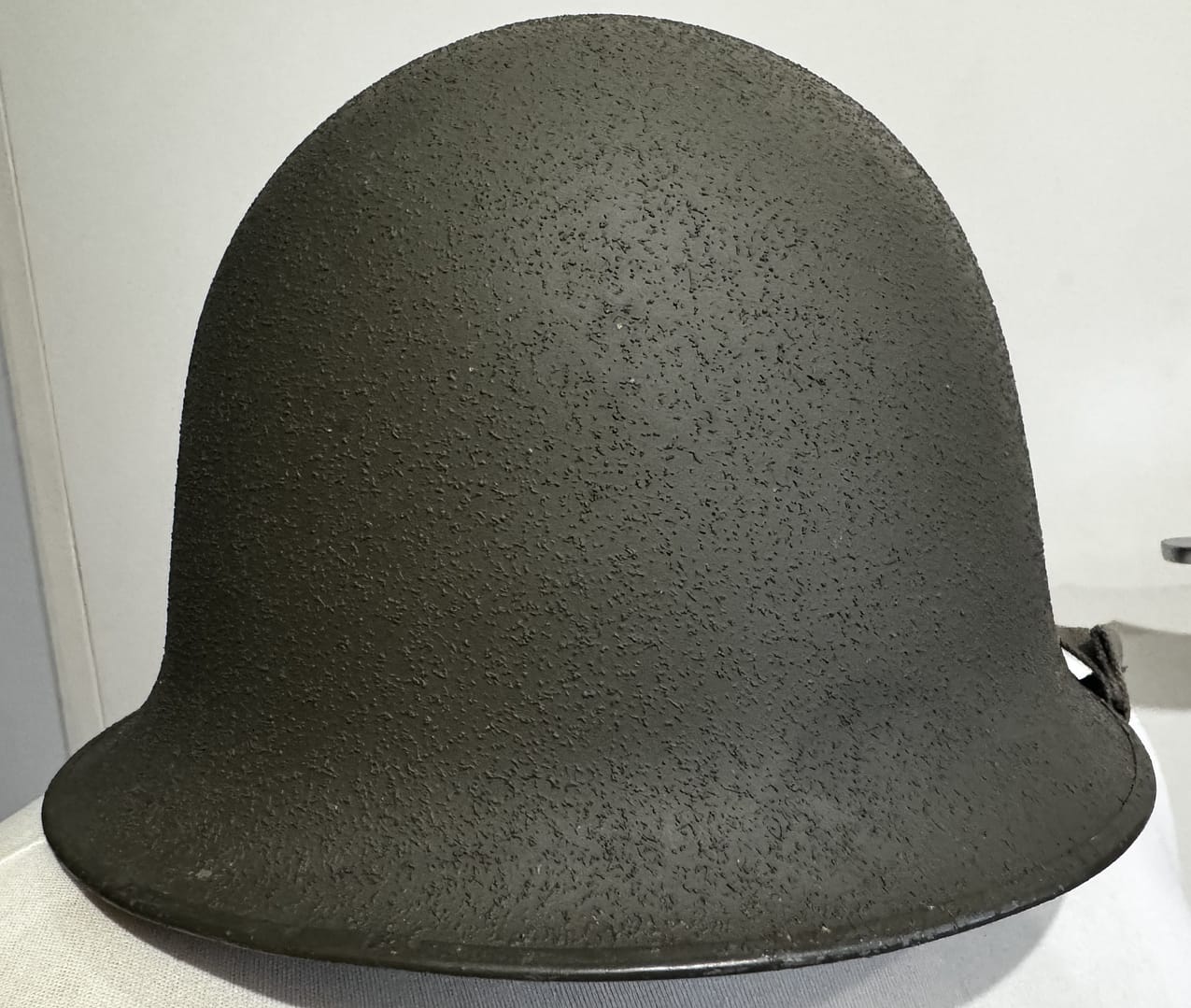
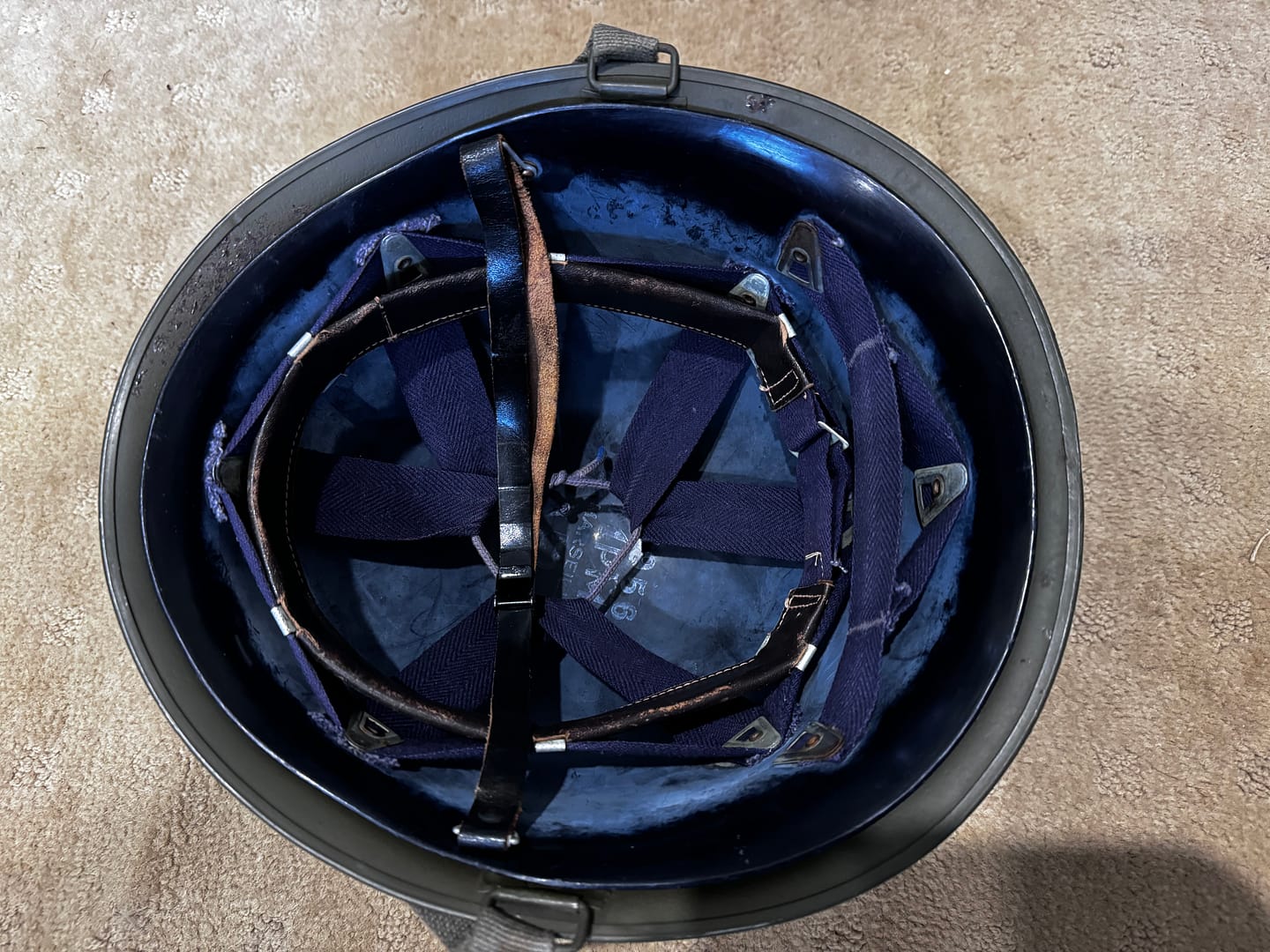
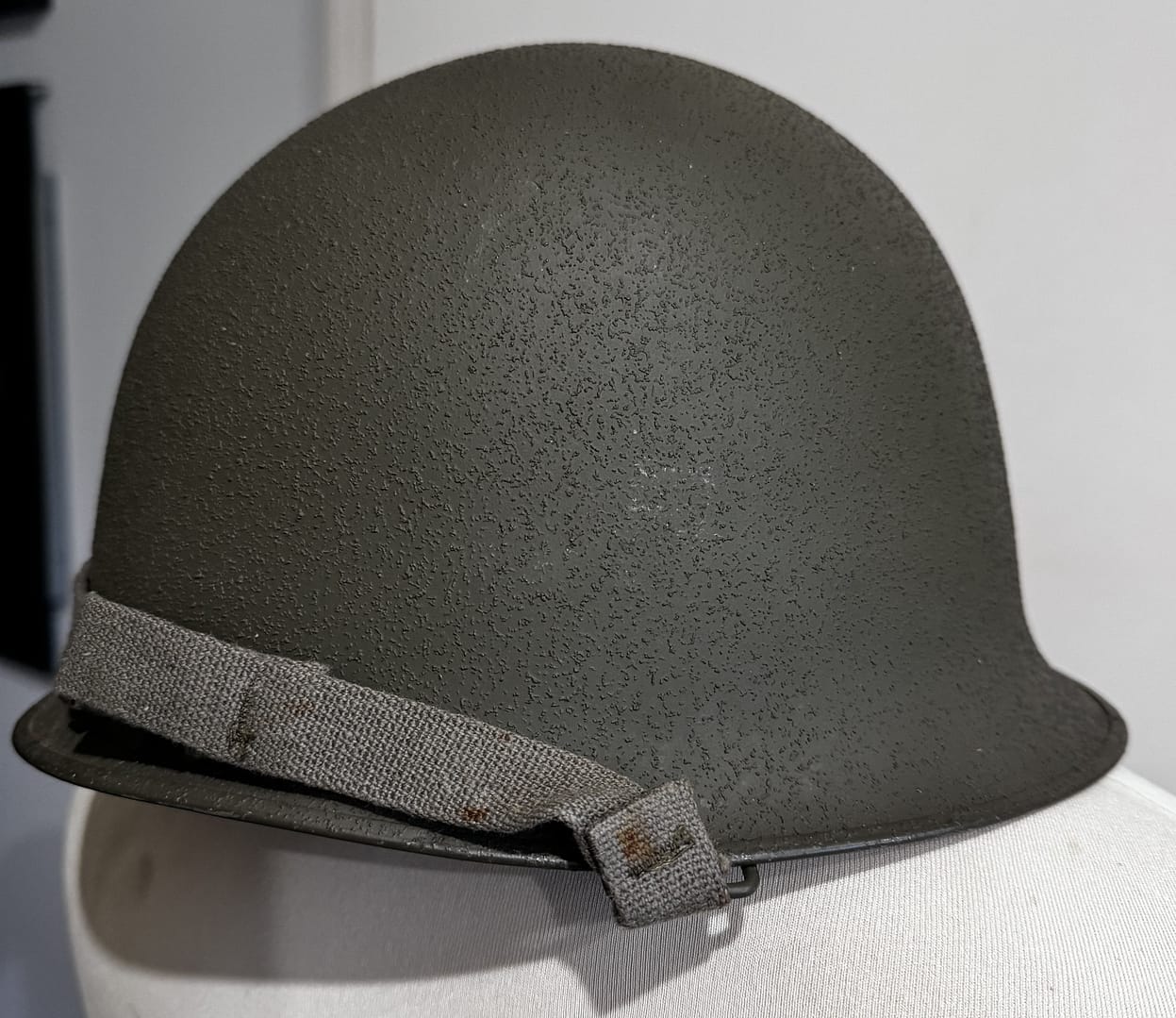
French Model 1951 Combat Helmet. Korea/AlgeriaFrom my personal collection.
The French Model 1951 helmet, based closely on the U.S. M1 pattern, was adopted after WW2 and issued to French forces serving in Korea (1950–1953) as part of the UN contingent. Featuring a double-shell system with a steel outer shell and composite liner, it offered improved comfort and ballistic protection. The M51 later equipped airborne, Foreign Legion, and colonial units in Algeria. Its dual service in Korea and North Africa makes it one of France’s most recognisable post-war combat helmets.
🧭 From Weapons to Battlefield Use
This page shows weapons and equipment of the Algerian War. All items are from my personal collection.
But what images and data don’t show is how these weapons were actually used on the ground—how weapon characteristics, tactics, innovation, terrain, and movement shaped their effectiveness in battle.
👉 That layer—how firepower, tactics, and terrain interact in real engagements—is explored in:
⚔️ Indochina War Battlefield Studies ◊ 💡Tactical Innovations ◊ 📝Field Notes
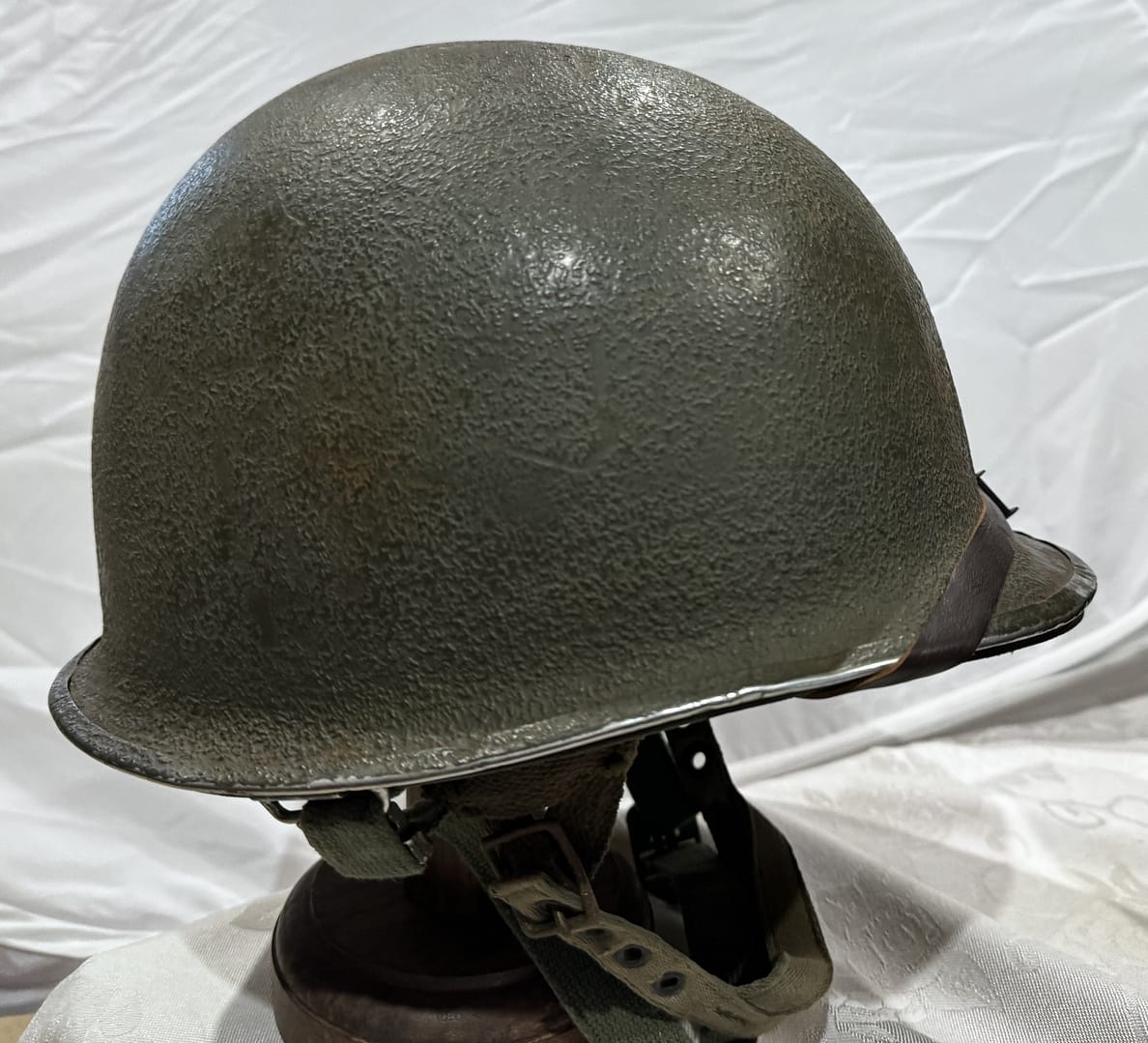
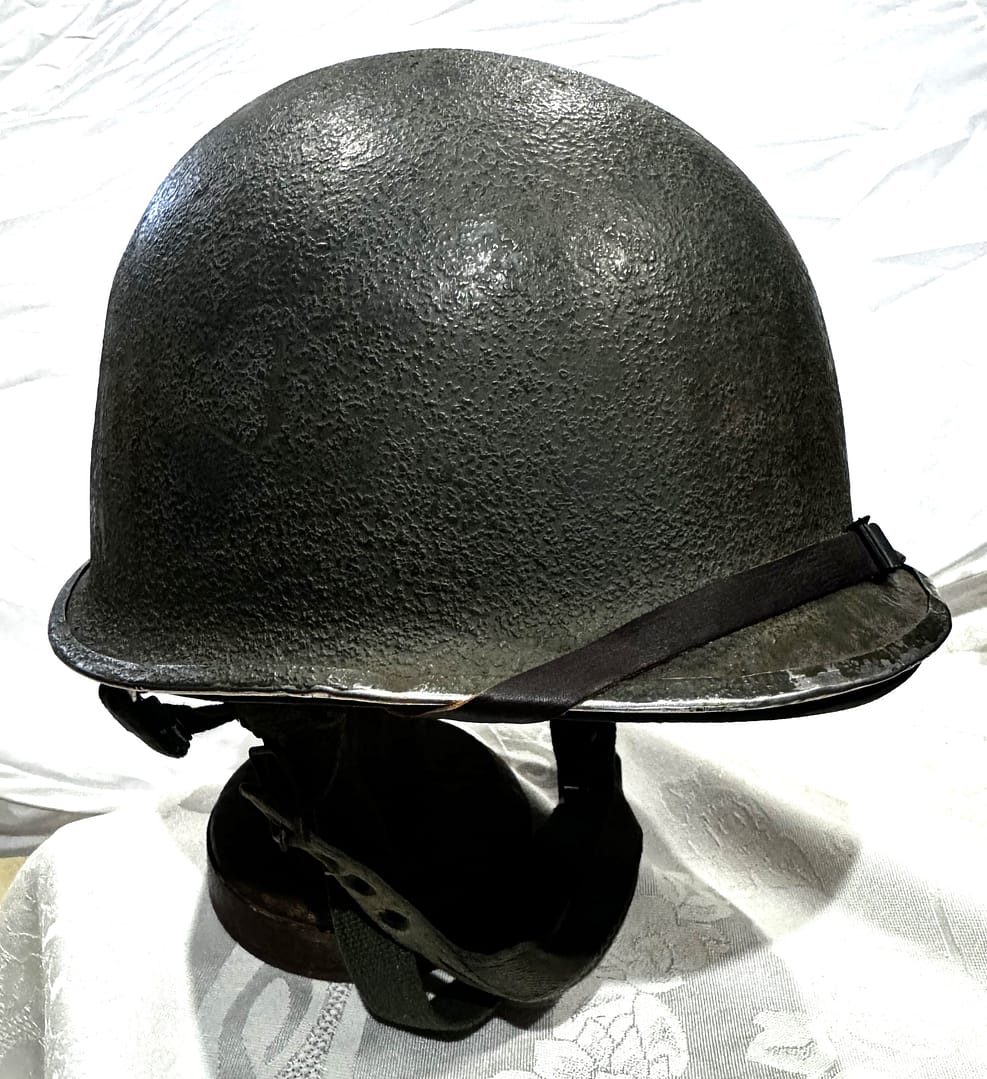
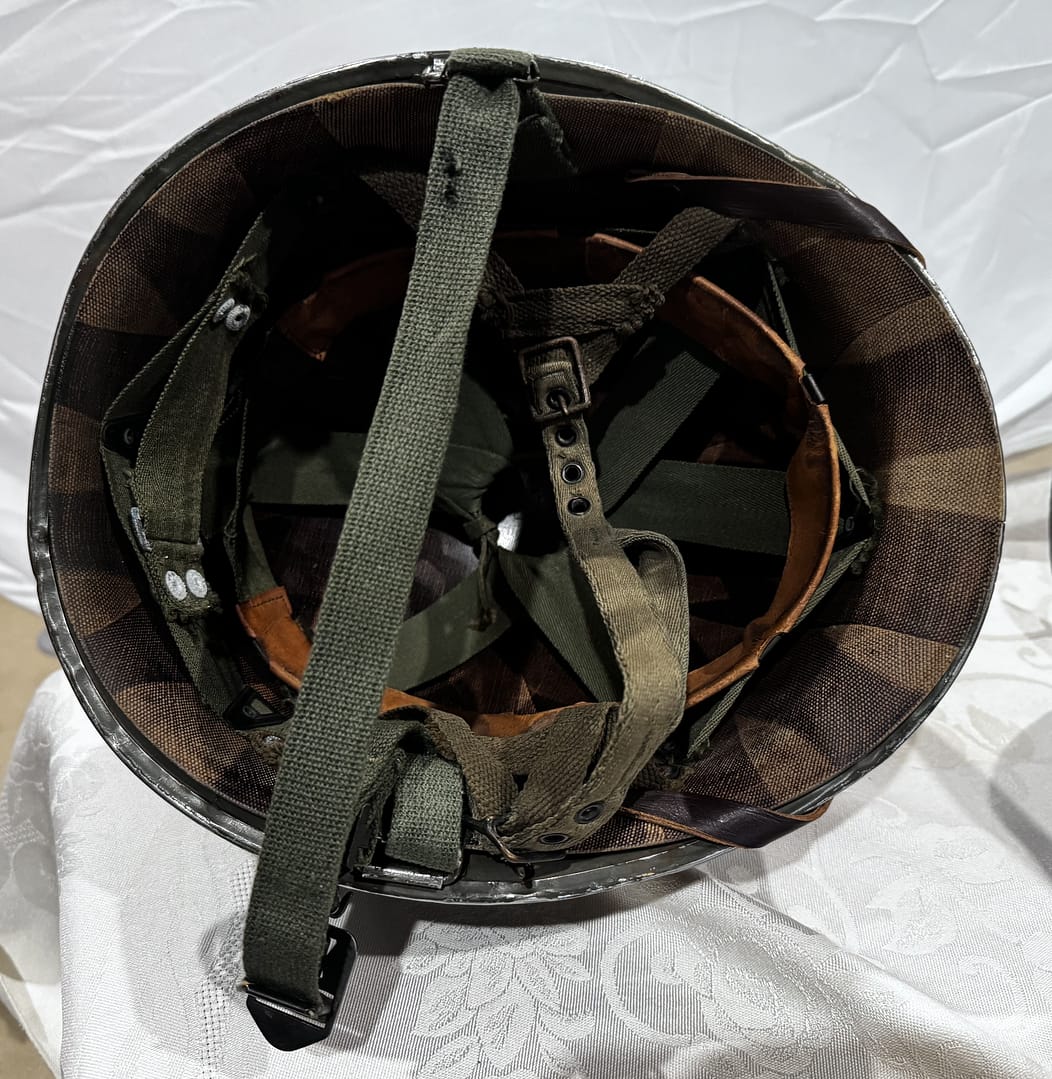
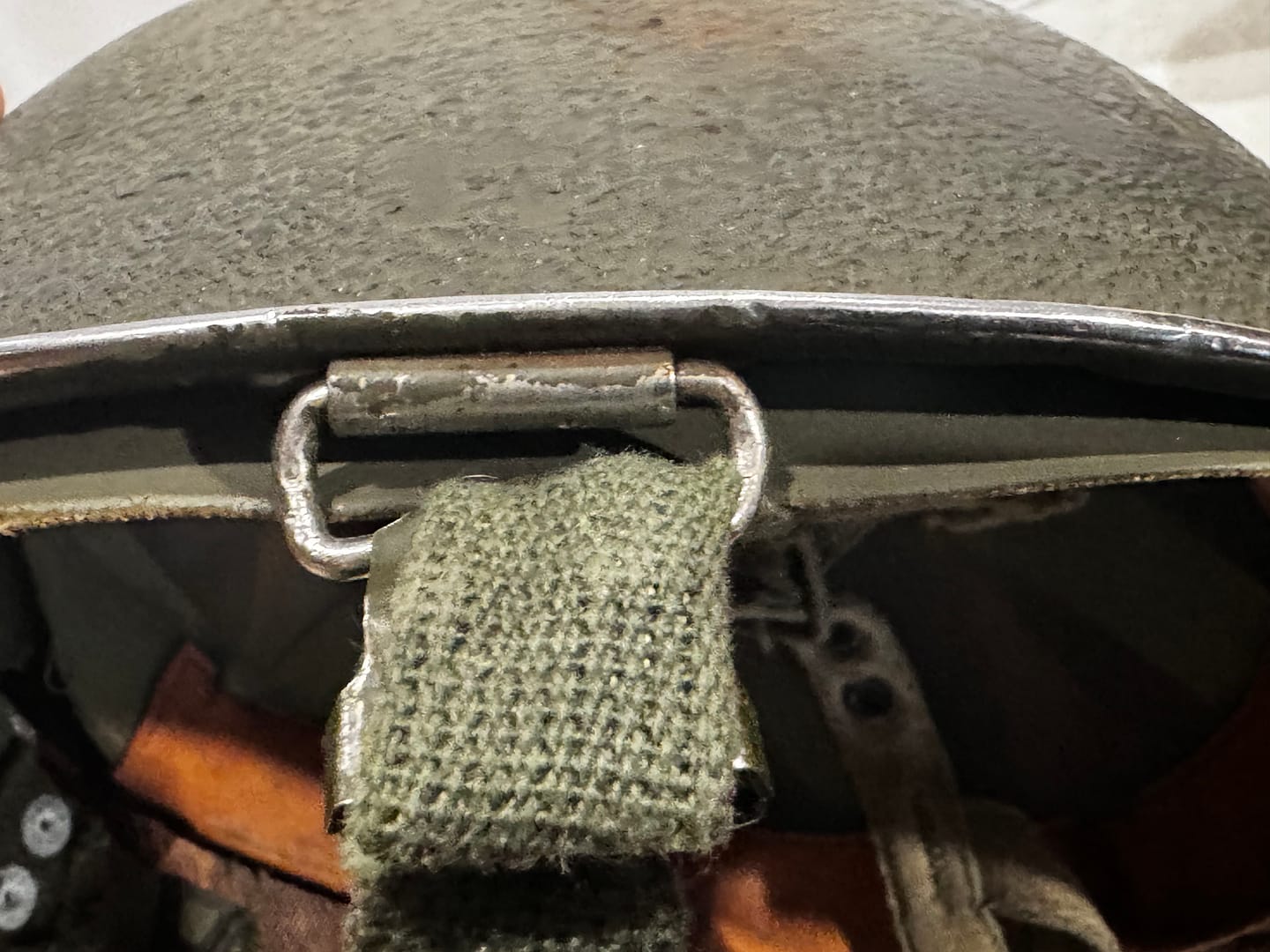
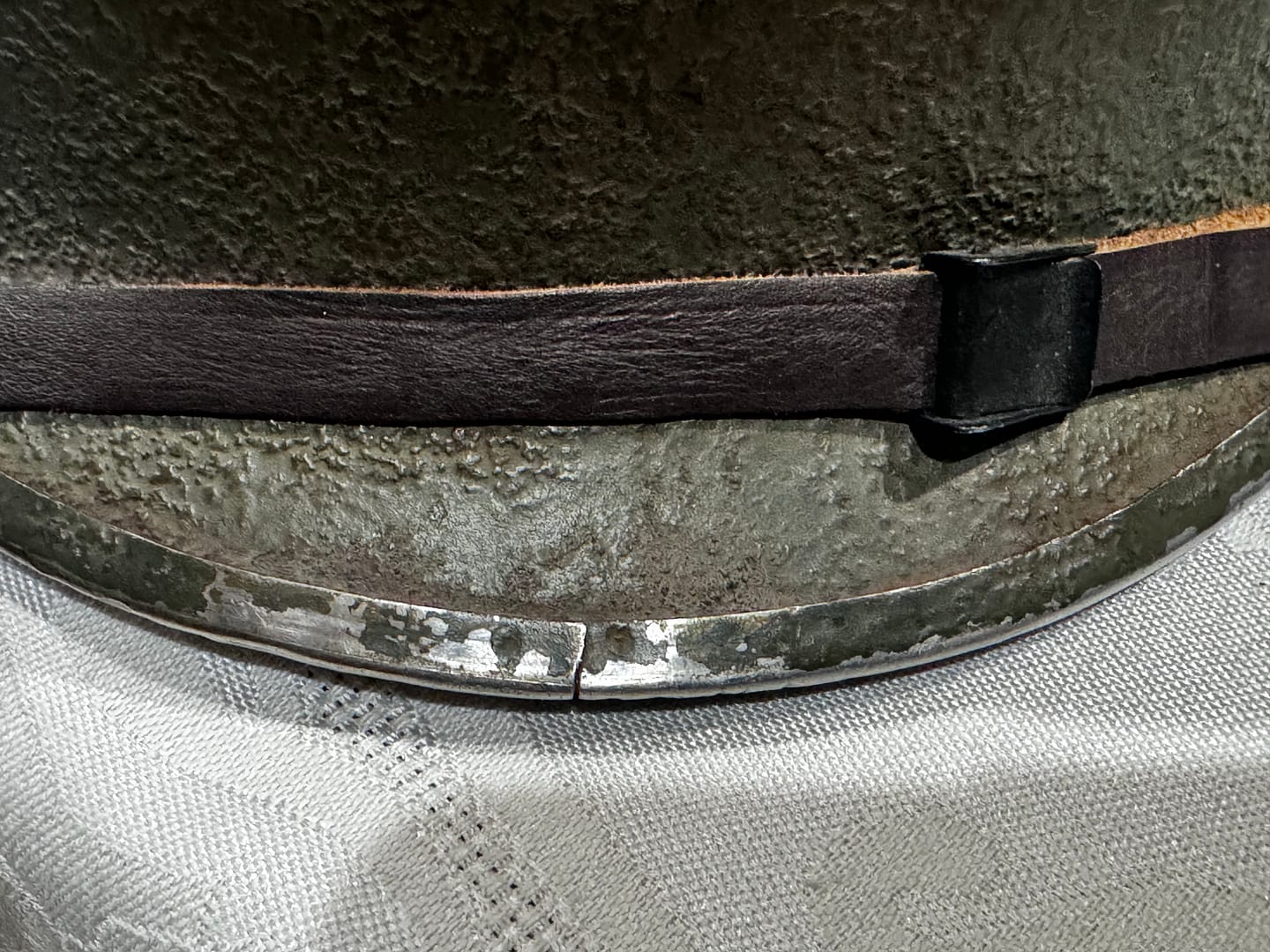
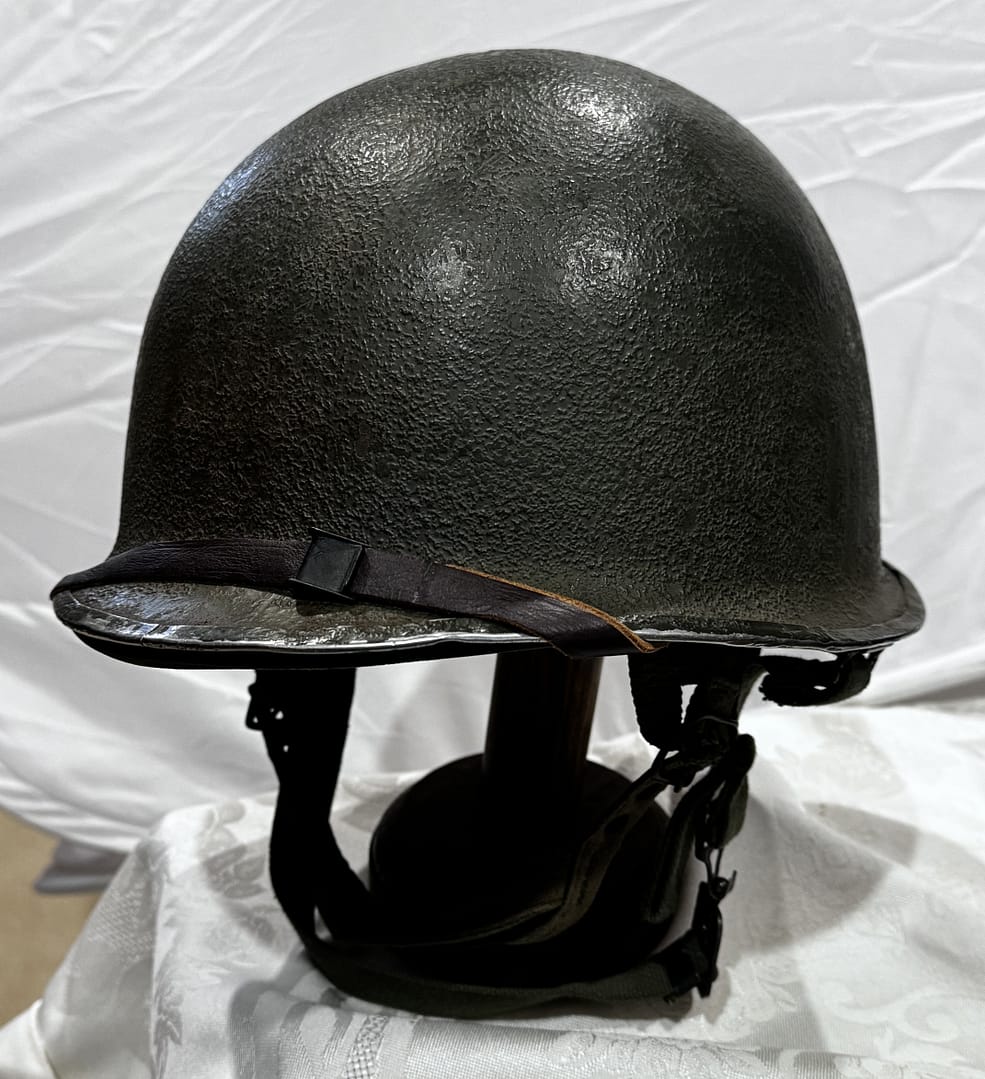
US MC1 Paratrooper Helmet. Front seam, Swivel Bail. Late WW2, Korea, Indochina, Algeria. From my personal collection.
This airborne-pattern M1 helmet features the early front-seam rim and later swivel-bail chinstrap loops adopted from 1943. Used by U.S. airborne and specialist infantry units during the Korean War, the helmet provided improved ballistic protection and a stable platform for winter covers, camouflage nets, and cold-weather liners. It was worn in operations from the Naktong Bulge to the Chosin Reservoir and throughout the fluid manoeuvre phase of 1950–51, remaining a standard U.S. helmet well into the 1960s.
French Algerian War grouping, Andre Pirrard, 3rd Regiment Colonial Paratroopers. From my personal collection.
TAP/56 camouflage uniform and ‘Bigeard’ lizard cap, medla certificate. This grouping relates to André Pirrard, a paratrooper of the elite 3e RPC, one of the most active airborne units of the Algerian War under Colonel Marcel Bigeard. It includes:
- TAP 56 Camouflage Uniform. A late-war airborne pattern featuring lizard camouflage (tenue léopard), reinforced seams, and multiple cargo pockets designed for mountain and urban counter-insurgency operations.
- “Bigeard” Lizard Cap. The iconic short-brimmed field cap introduced by General Bigeard, ideal for reconnaissance and close-quarter engagements.
- Medals and Award Certificates. Documenting Pirrard’s operational deployments, airborne qualifications, and service in major 3e RPC operations in the Aurès, Kabylie, and Algiers sectors.
This grouping exemplifies the equipment, uniforms, and decorated service of France’s most famous parachute regiment during the Algerian War.


Found this useful? Buy me a coffee — it helps fund future battlefield research


Authored by Mick Prictor, a retired military officer with 40 years’ service, and a military historian specialising in terrain-focused analysis of tactics, doctrine, and command decision-making in land warfare. His work draws on extensive battlefield fieldwork—more than 280 sites worldwide—and one of the world’s largest private collections of historic military arms, uniforms, and equipment. About me
Subscribe to Battlefield Travels and receive a free E-Book Battlefield Guide
Unlock expert battlefield analysis, campaign reconstructions, and historical insights drawn from firsthand exploration and primary sources.
🗺️ You’ll receive:
🎖️ Exclusive historical insights you won’t find elsewhere
📘 A free eBook: 10 Tips for Exploring Historic Battlefields
📰 New battlefield studies straight to your inbox as they are published

⚔️ Go deeper — Members get exclusive access to the Deep Research Collection, Field Notes, and monthly Research Dispatches. Try membership free for 7 days, cancel anytime. From $9/month.