Reconstructing Anglo-Dutch Wars battlefields through terrain analysis, primary sources and on-site research

Exploring the battlefields of the Anglo-Dutch Wars (1652-1674)
The Anglo–Dutch Wars were a series of naval and colonial conflicts fought for control of sea lanes, trade routes and maritime influence during the 17th century. These wars unfolded across the English Channel, the North Sea, the Caribbean and the global trading posts of two expanding naval powers. The landscapes (and seascapes) of these battles ranged from narrow coastal approaches to wide ocean expanses, shaping the tactical possibilities available to both fleets.
The wars were driven by commercial rivalry between England and the Dutch Republic — two nations whose economies relied on shipping, merchant fleets and global trade. Naval innovation accelerated rapidly during this period: line-of-battle tactics matured, artillery integration improved, and purpose-built warships became central instruments of national power.
The Battle of Carlisle Bay (1665) anchors this collection, representing the wider Caribbean theatre of the First Anglo–Dutch War. Colonial ports like Barbados, Antigua and Curaçao became strategic prizes in a struggle where wind, tide, anchorage depth and coastal geography played as decisive a role as gunnery or seamanship. Colonial convoys, privateers and local militias further shaped the operational picture, adding complexity to an already global conflict.
This collection examines these engagements through the lens of terrain — or in this case, maritime geography — showing how harbours, reefs, currents and prevailing winds dictated the course of naval operations. Future studies may expand to include coastal battles in Europe and other pivotal encounters across the Caribbean and Atlantic.
Battle Studies in the Anglo-Dutch Wars
Below are all current BattlefieldTravels studies for the Anglo-Dutch Wars, covering key battles, campaign phases and associated sites. New studies are added as further battlefields are walked and analysed.
-
⚔️ Battle of Carlisle Bay, Barbados,
30 April 1665
The Battle of Carlisle Bay, on 29 April 1665, was a clash between a Dutch naval fleet led by Michiel de Ruyter and the British coastal defenses around Bridgetown Barbados. The battle was one of the opening clashes of the Second Anglo-Dutch War, as these two powerful maritime states sought to dominate trade routes. Although…

Tactical Innovations
Over thousands of years of warfare, armies have sought ways to gain advantage on the battlefield. Sometimes the solution was a new weapon. Sometimes it was a radical new method. Often it was a combination of both. From the disciplined ranks of the Greek phalanx to pike-and-shot warfare to the interlocking machine-gun fire plans of the twentieth century, tactical innovations have repeatedly reshaped how battles are fought.
-
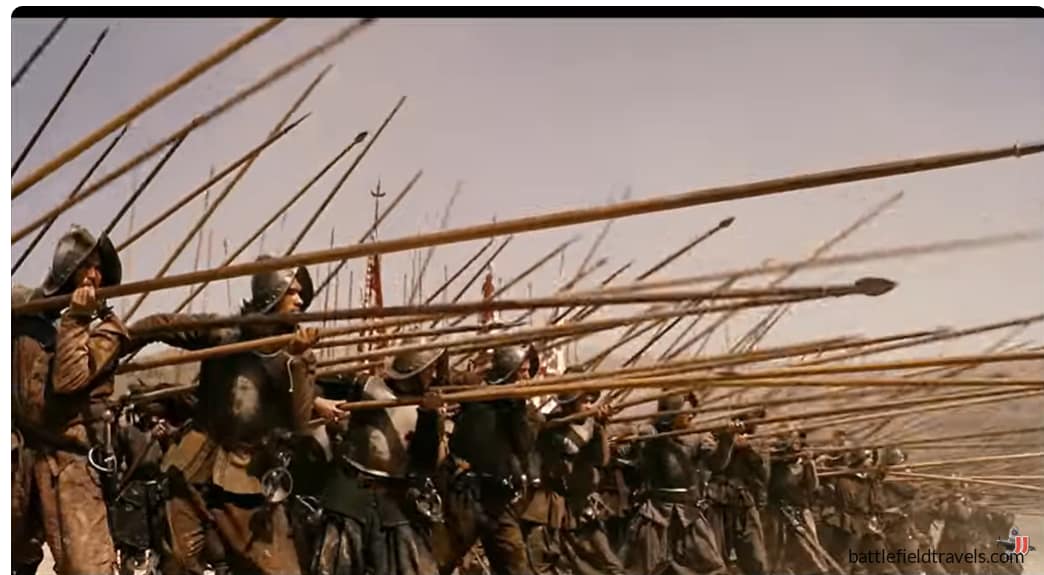
💡 Tactical Innovations: Pike and Shot Warfare

The widespread adoption of firearms by European armies created a new tactical dilemma. The previously invulnerable pike formations were now extremely vulnerable to gunpowder weapons, while the musketeers remained vulnerable to enemy cavalry. What was needed was a combined-arms system in which the relative advantages of the musket, pike, cavalry, and artillery could cover each…

Authored by Mick Prictor, a retired military officer with 40 years’ service, and a military historian specialising in terrain-focused analysis of tactics, doctrine, and command decision-making in land warfare. His work draws on extensive battlefield fieldwork—more than 280 sites worldwide—and one of the world’s largest private collections of historic military arms, uniforms, and equipment. About me
⚔️ Go deeper — Members get exclusive access to the Deep Research Collection, Field Notes, and monthly Research Dispatches. Try membership free for 7 days, cancel anytime. From $9/month.
Explore Related Themes
Armies: Royal Navy • Dutch Navy
Commanders: Michel de Ruyter
Methods: Fortress Warfare • Siege Warfare • Pike & Shot
Environments: Riverine • Naval Warfare
Further Study: Anglo-Dutch Wars Reading List
Commercial rivalry, maritime competition and competing visions of global trade dominance drove the conflicts.
Carlisle Bay is the only Anglo-Dutch War battlefield I have visited so far, because it was a battle between shore batteries and a Dutch fleet. It’s a representative colonial battle from the First Anglo–Dutch War and highlights the importance of harbour and coastal geography.
Possible future studies may include North Sea or Channel actions, depending on travel and research opportunities.
Subscribe to Battlefield Travels and receive a free E-Book Battlefield Guide
Unlock expert battlefield analysis, campaign reconstructions, and historical insights drawn from firsthand exploration and primary sources.
🗺️ You’ll receive:
🎖️ Exclusive historical insights you won’t find elsewhere
📘 A free eBook: 10 Tips for Exploring Historic Battlefields
📰 New battlefield studies straight to your inbox as they are published

⚔️ Go deeper — Members get exclusive access to the Deep Research Collection, Field Notes, and monthly Research Dispatches. Try membership free for 7 days, cancel anytime. From $9/month.
