Skip to content
Home » English Army

English Army

Jeanne d'Arc at the Tourelles, Lenepveu

📝🔒 Field Note: Siege of Orléans, France, May 1429 —battle for the Tourelles

October 2024, Orléans, south side of the Loire River. I am exploring the Hundred Years War battle locations around the city of Orléans. On this site on 7 May 1429, a French Army led by Count John Dunois, ‘The Bastard of Orléans’, and Captain La Hire, and inspired by Jeanne d’Arc, a 17-year old French peasant girl from Domremy, defeated a strong English force defending the ‘Tourelles’ fortress on the southern bank of the Loire River. The Tourelles controlled access across the Pont bridge into the French-held city of Orleans.

Battle of Ramillies 1706

📝🔒 Field Note: Battle of Ramillies, Belgium, 23 May 1706

November 2025, Ramillies, Belgium. I am exploring the battlefield of Ramillies. Here on 23 May 1706, an Allied Army under John Churchill, the Duke of Marlborough, defeated a French army under Marshall Villeroi. The ground here is open, gently rolling country, cut by small streams and defined by long field boundaries—terrain that enables movement and the ability to shift forces across the battlefield.

Reconstructing War of the League of Cambrai battlefields through terrain analysis, primary sources and on-site research

War of the League of Cambrai 1508-1516. Aftermath of the Battle of Marignano. Drawing by Urs Graf 1521

Walking the battlefields of the War of the League of Cambrai (1508-1616)

The War of the League of Cambrai was a major early 16th-century conflict shaped by shifting alliances among Europe’s great powers. The main participants in the war were France, the Holy Roman Empire, the Papal States, and the Republic of Venice; they were joined at various times by nearly every significant power in Western Europe, including Spain, England, the Duchy of Milan, the Republic of Florence, the Duchy of Ferrara, and the Swiss. As alliances fractured and reformed, the war expanded into a broader struggle for influence across Italy, France, the Alps and the Scottish borderlands.

This turbulent period forms the backdrop for battles such as Flodden Field (1513) — the anchor study in this collection. Although fought on the Anglo–Scottish frontier, Flodden was deeply connected to the diplomatic and military currents of the League of Cambrai and the wider Italian Wars. Henry VIII’s campaigns in France and the shifting loyalties of Scotland drew northern Britain into the storm of continental politics.

The terrain at Flodden exemplifies many of the tactical challenges of the period: steep ridges, boggy ground, limited visibility and uneven approaches that hampered the inflexible Scottish pike formations and shaped the English counterattack. Across Europe, battles of the Italian Wars similarly centred on fortified towns, river crossings, and the dynamic interplay between evolving artillery, infantry pike blocks and early gunpowder weapons.

This landing page explores these conflicts through a terrain-focused lens, showing how geography and military innovation interacted during a pivotal era in European warfare.


Battle Studies in the War of the League of Cambrai

Below are all current BattlefieldTravels studies for the Thirty Years War, covering key battles, campaign phases and associated sites. New studies are added as further battlefields are walked and analysed.

  • ⚔️ Battle of Flodden Field, Scotland,
    9 September 1513

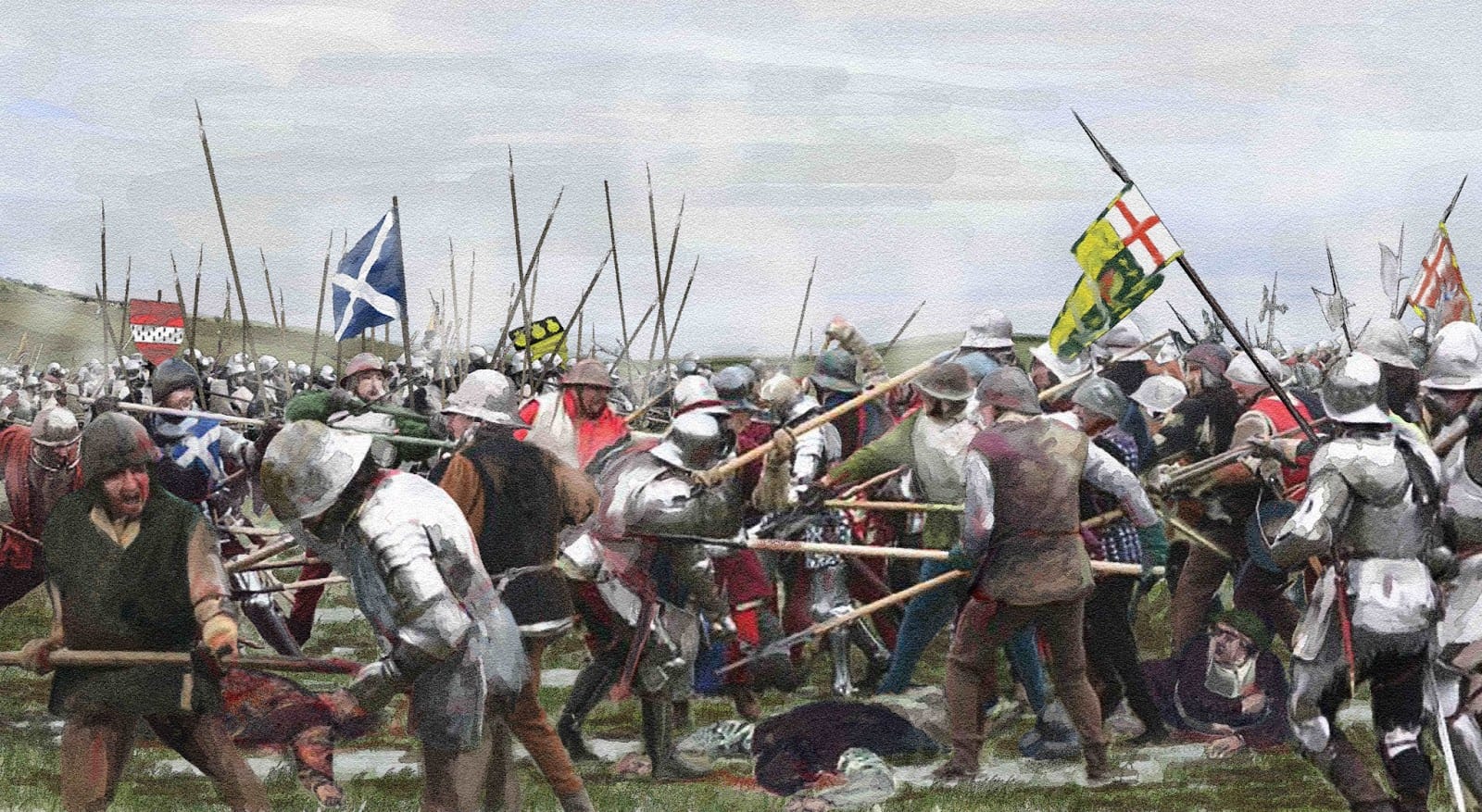
    ⚔️ Battle of Flodden Field, Scotland, 9 September 1513

    The Battle of Flodden Field, fought on 9 September 1513, was a major engagement between the Kingdom of England and the Kingdom of Scotland, and one of the bloodiest battles in British history. The engagement was part of the larger War of the League of Cambrai, which involved several European powers, including France, England, and…

    Read the full battle study


Tactical Innovations

Over thousands of years of warfare, armies have sought ways to gain advantage on the battlefield. Sometimes the solution was a new weapon. Sometimes it was a radical new method. Often it was a combination of both. From the disciplined ranks of the Greek phalanx to pike-and-shot warfare to the interlocking machine-gun fire plans of the twentieth century, tactical innovations have repeatedly reshaped how battles are fought.


  • 💡 Tactical Innovations: Pike and Shot Warfare

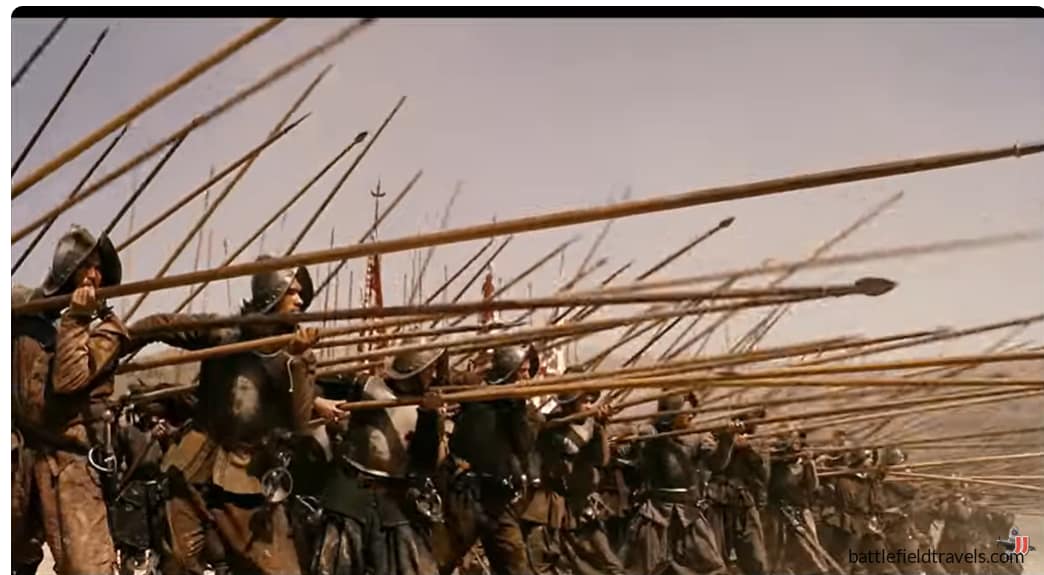
    💡 Tactical Innovations: Pike and Shot Warfare

    The widespread adoption of firearms by European armies created a new tactical dilemma. The previously invulnerable pike formations were now extremely vulnerable to gunpowder weapons, while the musketeers remained vulnerable to enemy cavalry. What was needed was a combined-arms system in which the relative advantages of the musket, pike, cavalry, and artillery could cover each…

    Read the full Field Note….


What was the League of Cambrai?

A shifting alliance originally formed to weaken Venice, involving France, the Papacy and the Holy Roman Empire, later sparking wider conflicts.

Why is Flodden Field part of this period?

The battle occurred during Henry VIII’s involvement in the Italian Wars and reflects the broader political instability of the League era.

Was the Scottish King James IV killed during this battle?

Yes, King James IV and much of the Scottish nobility were killed during the battle, leaving Scotland in turmoil for decades.

Will more early 16th-century studies be added?

Possibly. Future articles may cover Italian War battles visited on future European research trips.


Subscribe to Battlefield Travels and receive a free E-Book Battlefield Guide

Unlock expert battlefield analysis, campaign reconstructions, and historical insights drawn from firsthand exploration and primary sources.

🗺️ You’ll receive:

🎖️ Exclusive historical insights you won’t find elsewhere

📘 A free eBook: 10 Tips for Exploring Historic Battlefields

📰 New battlefield studies straight to your inbox as they are published


Selected works on the War of the League of Cambrai

War of the League of Cambrai

Overview of the War of the League of Cambrai

The War of the League of Cambrai (1508–1516) was a dynastic conflict at the height of the Italian Wars, pitting major European powers against one another for dominance in northern Italy. Initially, Pope Julius II forged the League of Cambrai—a rare alignment of France, the Papacy, the Holy Roman Empire, and Spain—to break the Republic of Venice’s influence on the mainland. Early French successes, notably at Agnadello (1509), forced Venice from much of Lombardy, but the alliance soon unravelled as Julius II redirected his policy toward resisting French expansion. The result was a sequence of realignments, from the Holy League against France to subsequent Franco-Imperial and Franco-English hostilities, each phase marked by rapid campaigns, sieges, and battles such as Ravenna (1512) and Marignano (1515), and the Battle of Flodden (1513). By the end of the war, France under Francis I had regained a dominant position in northern Italy, but no power achieved lasting supremacy. The conflict exemplified the diplomacy, manoeuvre, and military innovation characteristic of the early 16th century.


Reading

The reference collection below includes the key books and references I have used in preparing for and undertaking studies of battlefields of the War of the League of Cambrai.

The War of the League of Cambrai

Sale
Fatal Rivalry: Flodden, 1513: Henry VIII and James IV and the Decisive Battle for Renaissance Britain
In Fatal Rivalry, George Goodwin, the best-selling author of Fatal Colours, captures the vibrant Renaissance splendor of the royal courts of England and Scotland, with their unprecedented wealth, innovation, and artistic expression. He shows how the wily Henry VII, far from the miser king of tradition, spent vast sums to secure his throne and elevate the monarchy to a new standard of magnificence among the courts of Europe. He demonstrates how James IV competed with the elder Henry, even claiming that Arthurian legend supported a separate Scottish identity. Such rivalry served as a substitute for war―until Henry VIII’s belligerence forced the real thing. As England and Scotland scheme toward their biggest-ever battle, Goodwin deploys a fascinating and treacherous cast of characters: maneuvering ministers, cynical foreign allies, conspiring cardinals, and contrasting queens in Katherine of Aragon and Margaret Tudor. Finally, at Flodden on September 9, 1513, King James seems poised for the crushing victory that will confirm him as Scotland’s greatest king and―if an old military foe proves unable to stop him―put all of Britain in his grasp. Five hundred years after this decisive battle, Fatal Rivalry combines original sources and modern scholarship to re-create the royal drama, the military might, and the world in transition that created this bitter conflict. 8 pages of color; 8 pages black-and-white illustrations
Flodden 1513: Scotland’s greatest defeat (Campaign, 168)
Osprey’s examination of the Battle of Flodden, in which the Scottish and English armies clashed on 9 September 1513. The Scots were superior in terms of artillery and well-trained in the new Renaissance tactics, whereas the English deployed more traditional methods. Historically, this battle is well-known as the last in which the longbow played a role and the first in which artillery had a considerable effect. Recognized as the greatest Scottish defeat in history, it resulted in the death of Scotland’s king. It plunged the country into mourning and extinguished Scotland’s threat to Henry VIII’s reign for the next three decades. This book examines battle, the different tactics of the opposing armies and the personalities of the commanders.


Subscribe to Battlefield Travels and receive a free E-Book Battlefield Guide

Unlock expert battlefield analysis, campaign reconstructions, and historical insights drawn from firsthand exploration and primary sources.

🗺️ You’ll receive:

🎖️ Exclusive historical insights you won’t find elsewhere

📘 A free eBook: 10 Tips for Exploring Historic Battlefields

📰 New battlefield studies straight to your inbox as they are published


title slide

⚔️ Battle of Patay, France,
18 June 1429

In the English-speaking world, the Battle of Agincourt in October 1415 is legendary. But there was a lesser-known battle a few years later where the outcome was reversed. A combat-experienced French army, inspired by Jeanne d’Arc, the Maid of Orleans, launched a lightning campaign that overwhelmed multiple English strongholds before wiping out an entire English army in open combat at the Battle of Patay on 18 June 1429. Mark Twain even wrote about this battle!

Medieval depiction of the Battle of Agincourt

⚔️ Battle of Agincourt, France,
25 October 1415

The Battle of Agincourt is one of the most famous battles in history. A small English force is trapped by a much larger French force but prevails against the odds. Shakespeare wrote about it and Hollywood continues to make movies about it. The battle reinforced the legend of the sturdy English longbowmen, equipped with the famous longbow, wreaking havoc on waves of heavily armoured French cavalry. So many of the French nobles were killed at Agincourt, it took years to recover.

The Killing Fields- Battle of Flodden Field, 9 September 1513

⚔️ Battle of Flodden Field, Scotland,
9 September 1513

The Battle of Flodden Field, fought on 9 September 1513, was a major engagement between the Kingdom of England and the Kingdom of Scotland, and one of the bloodiest battles in British history. The engagement was part of the larger War of the League of Cambrai, which involved several European powers, including France, England, and Scotland.