Envelopment seeks to defeat an enemy by attacking its flanks or rear. An envelopment may be on a single axis to pin an enemy force against a natural feature such as a river, or may be a double envelopment on multiple flanks. This tag collects engagements where manoeuvre, deception, and timing allowed one force to impose operational or tactical collapse.
The Battle of Hòa Mộc Was the fiercest and most costly battle of the Sino-French War. The battle was fought just a few kilometres south of besieged Tuyên Quang, as Colonel Laurent Giovanninelli’s 3,400 man force made a 300 km forced march to relive the siege, and cleared the final Black Flag position between themselves and the Tuyên Quang defenders.
In the autumn of 1947, the French Far East Expeditionary Corps launched Operation LÉA, one of the most audacious operations of the Indochina War. The operation aimed to strike deep into the Việt Bắc, the mountainous sanctuary of northern Tonkin, with the explicit objective of capturing Hồ Chí Minh, dismantling the enemy’s political and military command structure, and collapsing the insurgency at its source.
The Battle of Fontenoy, fought on 11 May 1745, was a major battle during the War of the Austrian Succession. A French army of ~50,000 under Marshal Maurice de Saxe against a coalition force of ~50,000 British, Dutch, Hanoverian, and Austrian troops led by the Duke of Cumberland. The result was a decisive French victory!.
Reconstructing the Roman Republic and Roman Empire era battlefields through terrain analysis, primary sources and on-site research
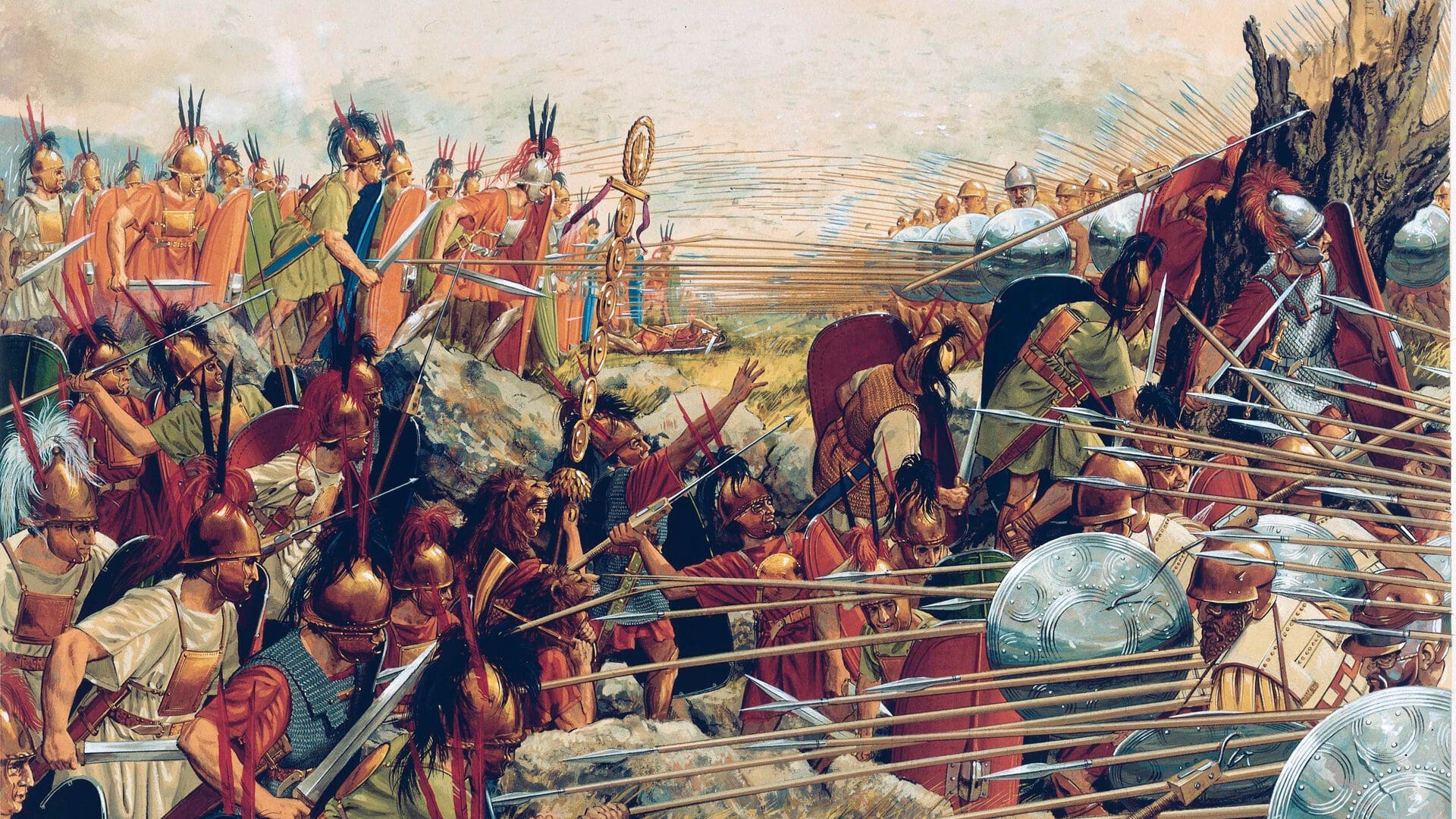
Battle of Pydna, 22 June 168 BC, Third Macedonian War, Watercolour by Peter Connolly
Walking the battlefields of Roman-era conflicts
The wars of the Roman Republic and Empire unfolded across an exceptionally diverse geographic and cultural landscape. Roman armies fought in dense Germanic forests, across the open plains of Gaul, among the fortified hilltop oppida of central Europe, and along long defensive frontiers stretching from Britain to the Danube and the Euphrates. Each theatre presented Rome with distinct operational challenges, and battlefield outcomes were often shaped as much by terrain and movement corridors as by leadership, doctrine or numbers.
The West
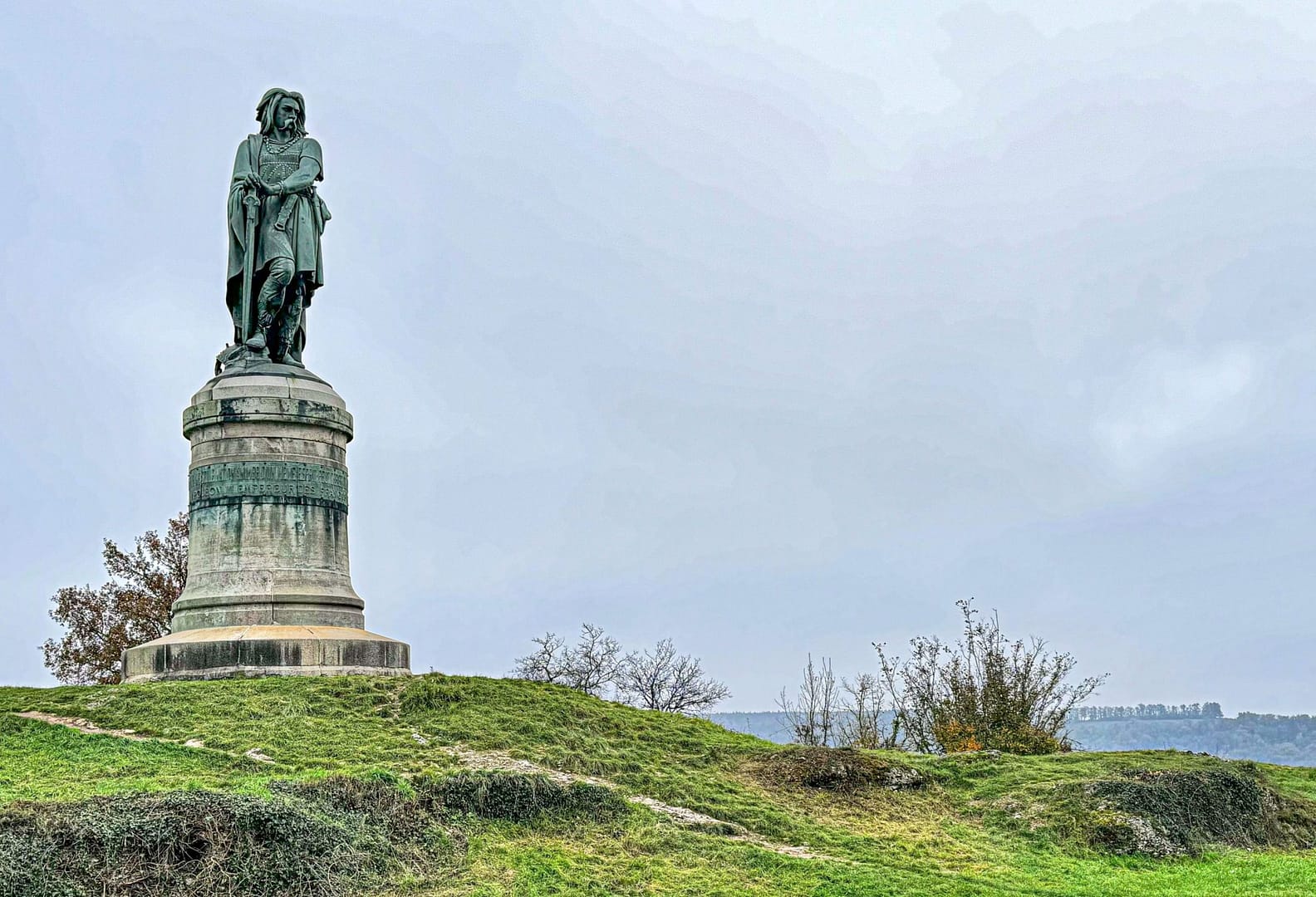
In the west, the Gallic campaigns of Julius Caesar demonstrated how rivers, valleys, oppida and tribal fortifications dictated manoeuvre, logistics and siege warfare. At Alesia, the dramatic double-ring fortifications and dominating high ground created a battle defined by engineering, observation and strict control of approach routes. Further south and east, the clash on the Catalaunian Plains presented a wholly different problem-set: an open, rolling landscape where wide visibility, cavalry manoeuvre and coordinated infantry deployment determined the ebb and flow of one of the late Empire’s most consequential engagements.
Germania
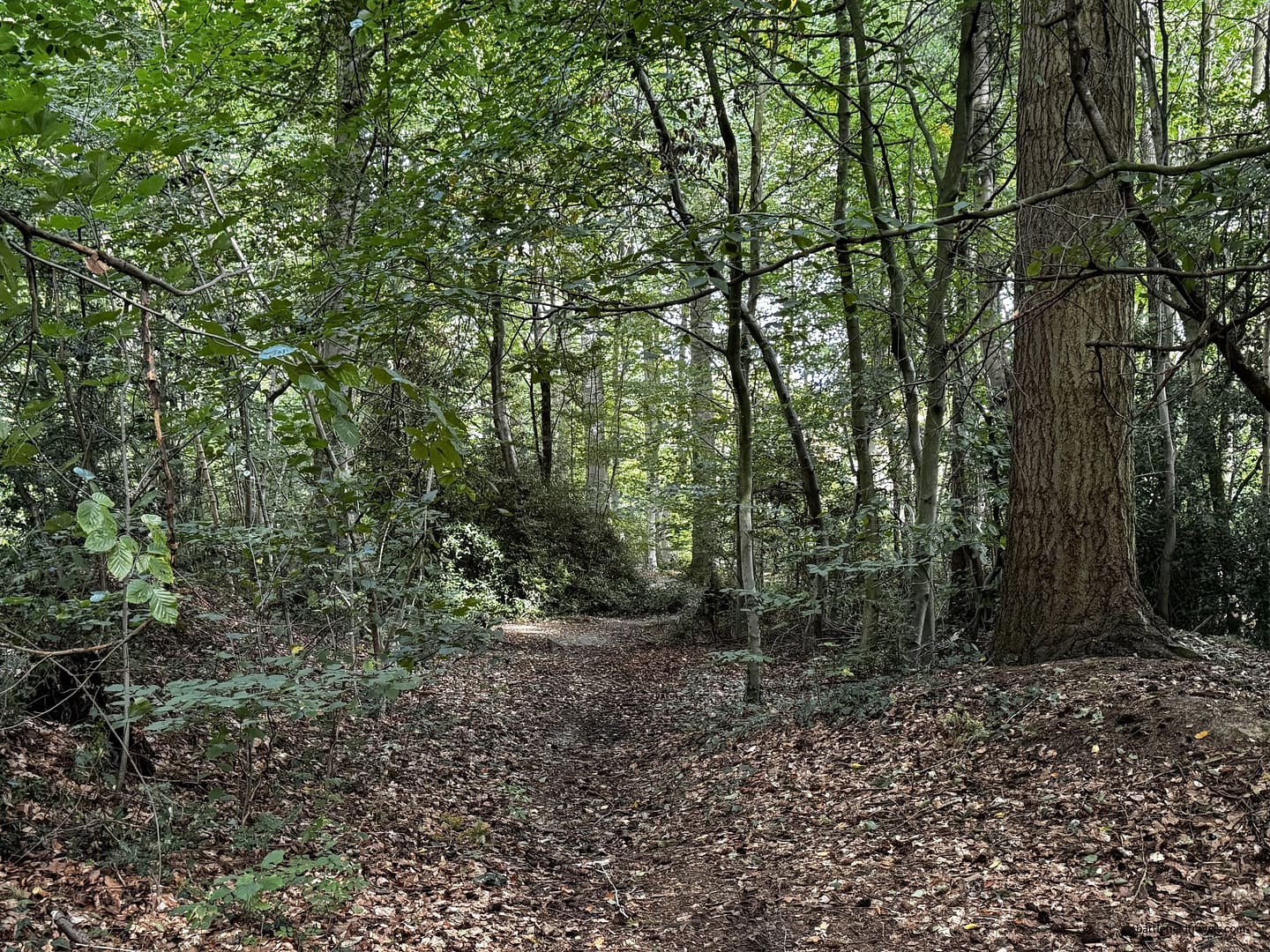
North of the Alps, the forested valleys and marshlands of Germania posed the most severe environmental tests to Roman arms. The catastrophic ambush in the Teutoburg Wald exposed the vulnerabilities of Roman column movement in confined wooded terrain, where narrow tracks, sodden lowlands and broken visibility allowed Germanic forces to dictate every phase of the battle. Teutoburg revealed the limits of Roman tactical doctrine when forced into terrain fundamentally unsuited to its strengths.
The East and South
In the east, Rome and, later, the Eastern Roman Empire confronted powerful adversaries across a vast frontier — from the Parthians and Sassanids to the waves of Goths, Huns, and other migrating peoples displaced by pressures further east. These conflicts often unfolded in mixed terrain: fortified cities, river basins, arid steppes and open plains where mobility and frontier logistics were decisive.
To the south, Rome battled the Carthaginians, Numidians and Egyptians, fighting across deserts, rough uplands, cultivated plains and littoral seas. These campaigns underscored Rome’s reliance on adaptability: shifting between infantry-dominated warfare, naval operations and complex coalition or proxy conflicts.
This collection of Roman battlefield studies examines these campaigns through a terrain-focused, ground-truth lens — combining archaeological evidence, ancient sources, period reconstructions and detailed modern field reconnaissance to explain not only what occurred on these battlefields, but why events unfolded the way they did across the diverse landscapes of the Roman world.
Roman Era Battlefield Studies
In-depth battlefield analyses based on terrain, primary sources, and on-the-ground exploration.
The siege of Alesia in 52 BC was the culmination of Julius Caesar’s conquest of Gaul and his battle against the Gallic leader Vercingetorix. Caesar wrote about it in his book ‘Battles for Gaul’ as part of his self-promotion effort. Vercingetorix and Alesia are the basis for René Goscinny’s ‘Asterix and Obelisk’ cartoons. The siege…
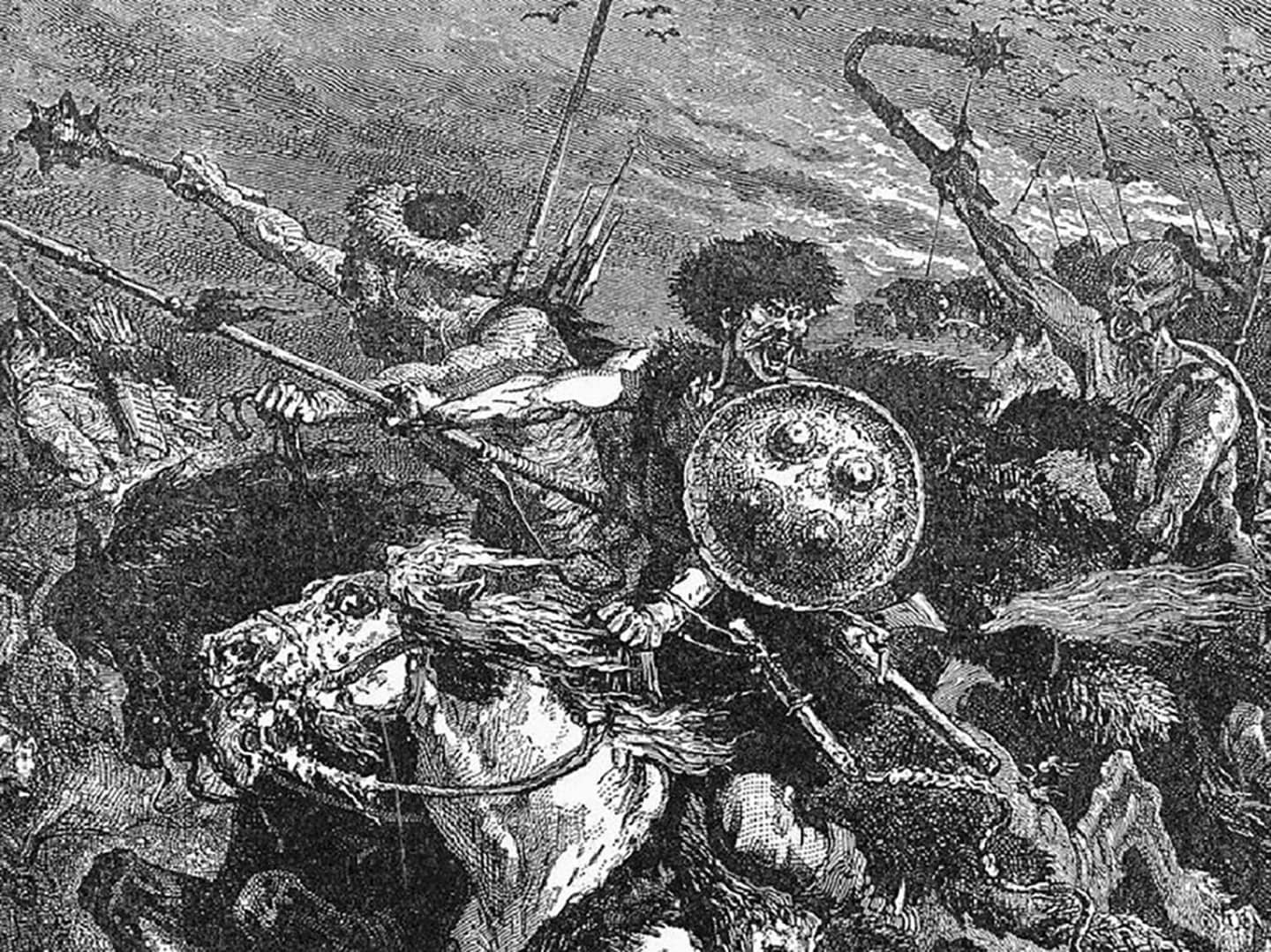
The 451 AD Battle of the Catalaunian Fields (also known as the Battle of Chalons or the Battle of Maurica), between a Romano-Visigothic force and Hunnic-Gothic coalition led by Attila the Hun, was one of the decisive battles in history, and the last major victory for the western Roman Empire before it succumbed to barbarian…
October 2025, Kalkriese, Germany. I am exploring the ancient battlefield of Teutoberg Forest, accompanied by Stefan, the Chief Archaeologist at the site. In AD 9, Roman General Varus led a punitive expedition of three veteran Legions into the area of Teutoberg Forest. Arminius led the Roman Legions to a location near present-day Kalkriese. Here, the…
Authored by Mick Prictor, a retired military officer with 40 years’ service, and a military historian specialising in terrain-focused analysis of tactics, doctrine, and command decision-making in land warfare. His work draws on extensive battlefield fieldwork—more than 280 sites worldwide—and one of the world’s largest private collections of historic military arms, uniforms, and equipment. About me
⚔️ Go deeper — Members get exclusive access to the Deep Research Collection, Field Notes, and monthly Research Dispatches. Try membership free for 7 days, cancel anytime. From $9/month.
What makes these Roman battlefield studies unique?
Each study uses terrain analysis, archaeological evidence and on-site field reconnaissance to explain how ground, movement corridors and visibility shaped Roman tactics and battle outcomes.
Which Roman battles are included in this collection?
Currently Alesia and the Catalaunian Plains are published, with Teutoburg Forest and additional Roman frontier studies forthcoming.
Why is terrain so important in understanding Roman warfare?
Roman doctrine, formations and column movement were highly sensitive to terrain. Forests, rivers, hillforts, open plains and narrow valleys often dictated whether legions could deploy effectively — or were forced into disadvantageous fights.
Do these studies cover both Republican and Imperial conflicts?
Yes. The collection examines battles from the late Republic through the Imperial period, including campaigns in Gaul, Germania and along Rome’s eastern and southern frontiers.
Are these Roman battlefields still visitable today?
Many sites retain key terrain features, including Alesia, the Catalaunian Plains and the Teutoburg Forest, allowing modern visitors to walk the ground and understand the landscapes of ancient conflict.
Subscribe to Battlefield Travels and receive a free E-Book Battlefield Guide
Unlock expert battlefield analysis, campaign reconstructions, and historical insights drawn from firsthand exploration and primary sources.
🗺️ You’ll receive:
🎖️ Exclusive historical insights you won’t find elsewhere
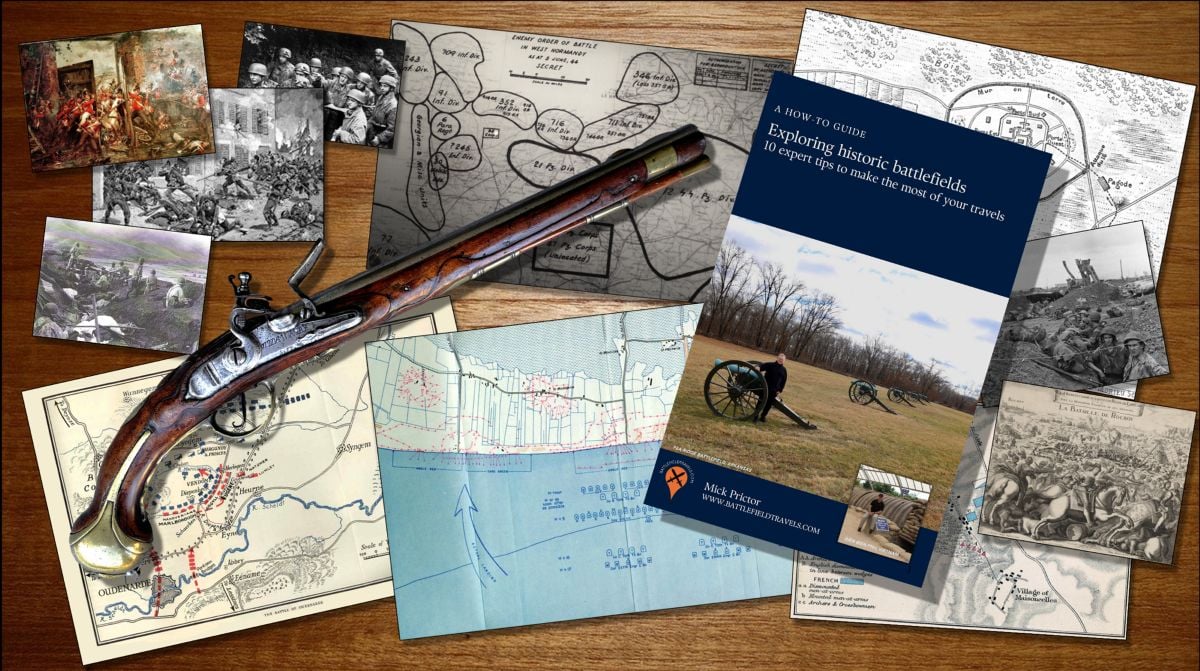
📘 A free eBook: 10 Tips for Exploring Historic Battlefields
📰 New battlefield studies straight to your inbox as they are published
Claim Your Free Battlefield Travel Guide
Get your free e-book, exclusive tips, and updates on new battlefield studies.
Thank you!
You have successfully joined our subscriber list.
⚔️ Go deeper — Members get exclusive access to the Deep Research Collection, Field Notes, and monthly Research Dispatches. Try membership free for 7 days, cancel anytime. From $9/month.
From November 1884 to March 1885, 630 French troops of the Foreign Legion, Marines and Tonkinese Riflemen, held the citadel of Tuyên Quang against a force of 15,000 Chinese and Black Flag Army troops. Their endurance, and Colonel Giovanninelli’s epic relief march, made the siege one of the Foreign Legion’s most legendary battles.
The Battle of Phủ Thông Hoá was a small but significant milestone in the French Indochina War. For the French Foreign Legion, it was yet another heroic but costly defence of an isolated outpost against overwhelming odds. The battle entered Legion folklore alongside legendary stands like Camerone and Bir Hakeim. Although the Legion retained control of the post, it was abandoned a few months later as part of a broader strategic withdrawal.
For the Viet Minh, however, Phủ Thông Hoá held even greater significance. It marked the first time they had attempted a coordinated assault on a fortified French position.
The Battle of Route Coloniale No. 4 (Cao Bang Ridge Disaster) was one of the worst military defeats in the history of colonial wars, with a French force of ~6,000 troops destroyed. The battle took place along a 137km section of RC4 between Lang Son in the south and Cao Bang in the north. The French attempted to evacuate the Cao Bang garrison with support from a relief column. Both forces were destroyed in the jungle-covered mountains around Dong Khé.
In June 1884, a French column under Lieutenant Colonel Alphonse Dugenne, comprised of about 465 French troops and 284 Tonkinese auxiliaries, with a supply column of local ‘coolies’ and baggage mules, was attacked by a much larger Chinese regular force near Bắc Lệ, on the road from Phu-Lang-Thuong to Lang Son. The attack was the catalyst for the Sino-French war of 1884-85 that saw French forces of the Tonkin Expeditionary Corps engaged in combat with Chinese forces across northern Vietnam, mainland China, and Formosa (now Taiwan).
The Battle of Bushy Run, fought on August 5-6, 1763, was a major engagement during Pontiac’s War, a widespread Native American uprising against British postwar policies in the Great Lakes region following the French and Indian War. The war was named after Pontiac, an Ottawa chief who led a coalition of tribes dissatisfied with British policies and expansion into their territories.
Kerak Castle, in present-day Jordan, is one of the best-preserved castles in the Levant. Ruled by Raynald de Châtillon, the castle played a crucial role in the late 12th century as a strategic outpost of the Crusader Kingdom of Outremer. Kerak was subjected to three major sieges in 1183, 1184, and 1187-88, as part of Saladin’s campaign to eliminate the Crusader presence in the Levant.