There is perhaps no military organisation more surrounded by mystique and legend than the French Foreign Legion. For almost 200 years, the Legion has accepted volunteers from across the world and fought in campaigns from Algeria and Mexico to Madagascar, Indochina and France itself.
Test your knowledge with 20 questions randomly selected from a 60-question bank, spanning the history of the Legion from its founding in 1831 to the modern era.
Think you know your military history?
Put your knowledge to the test with BattlefieldTravels’ military history quizzes — challenging questions drawn from the battles, commanders, armies and terrain explored across this site.
Test Your Military History Knowledge
BattlefieldTravels military history quizzes cover battles, commanders, armies, weapons, strategy and battlefield terrain across more than 2,000 years of warfare.
Back in the day when I was a young infantry soldier, I would routinely create quizzes for the other guys when we had some downtime in the jungle. Decades later, many of those same questions have found their way into this BattlefieldTravels quiz page!
These are not simple trivia quizzes. Questions draw on the research behind the battle studies, fieldwork and military history explored across the site. Many answers also link directly to the relevant BattlefieldTravels article, so the quizzes are another way to explore the research behind the questions.
Each attempt draws a random selection of questions from a much larger bank, with both the questions and answers shuffled. More than 500 questions are already in the collection, with more being added.
Score 60% to pass — and expect a challenge.
Military History Quizzes
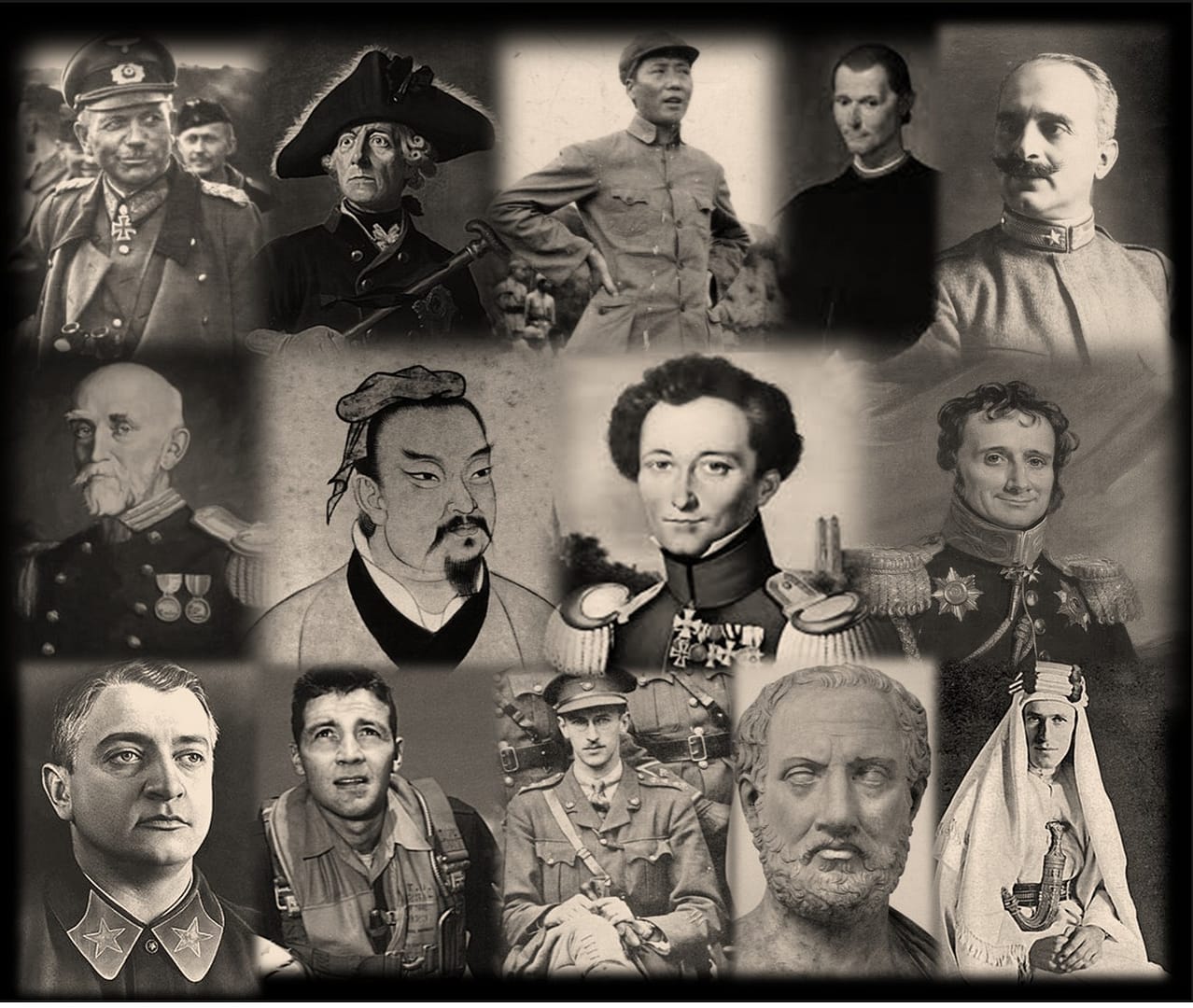
❓Military Thinkers, Theorists & Innovators Quiz. Test your knowledge!
Every student of military history knows Clausewitz and Sun Tzu, but how deep does your knowledge really go? For thousands of years, soldiers and theorists have wrestled with the nature of war — how armies should fight, and how technology, politics and society reshape the battlefield.
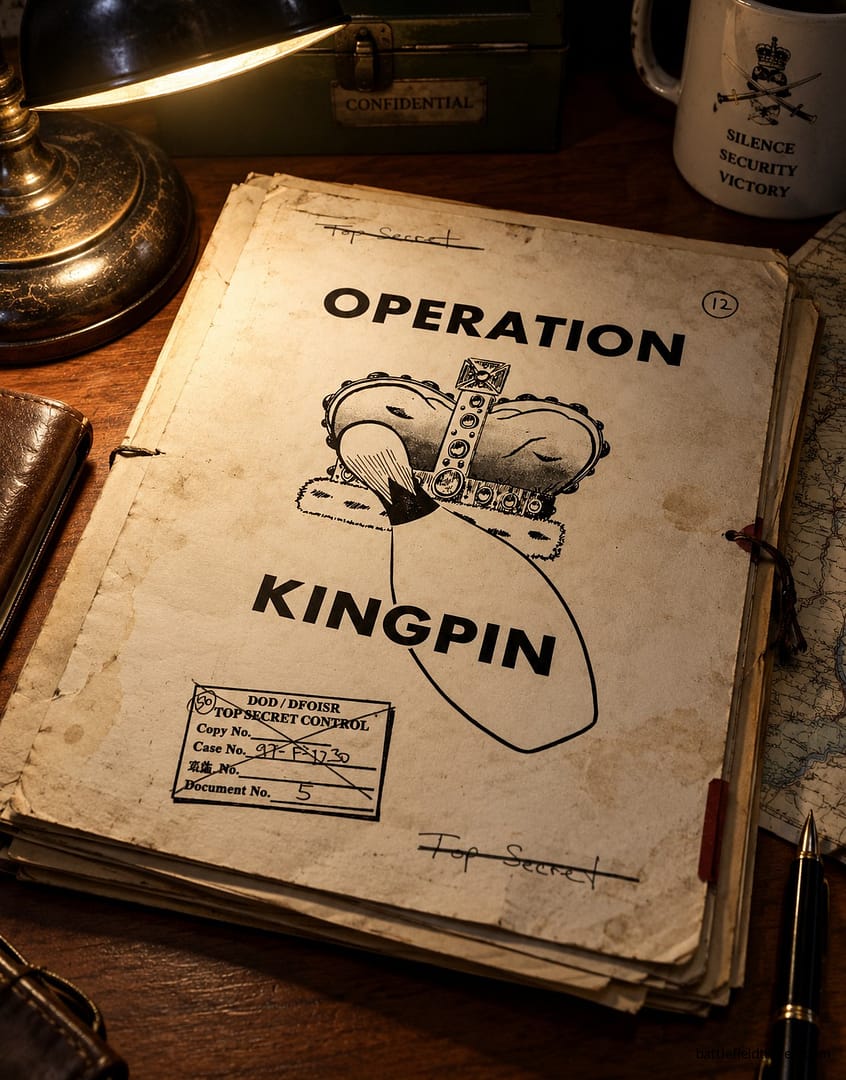
❓Test Your Knowledge of Military Operation Codenames
From OVERLORD and BAGRATION to JAYWICK, and GOTHIC SERPENT, military history is filled with memorable, and sometimes mysterious, operational codenames. Test your knowledge with 20 questions, spanning conflicts around the world.
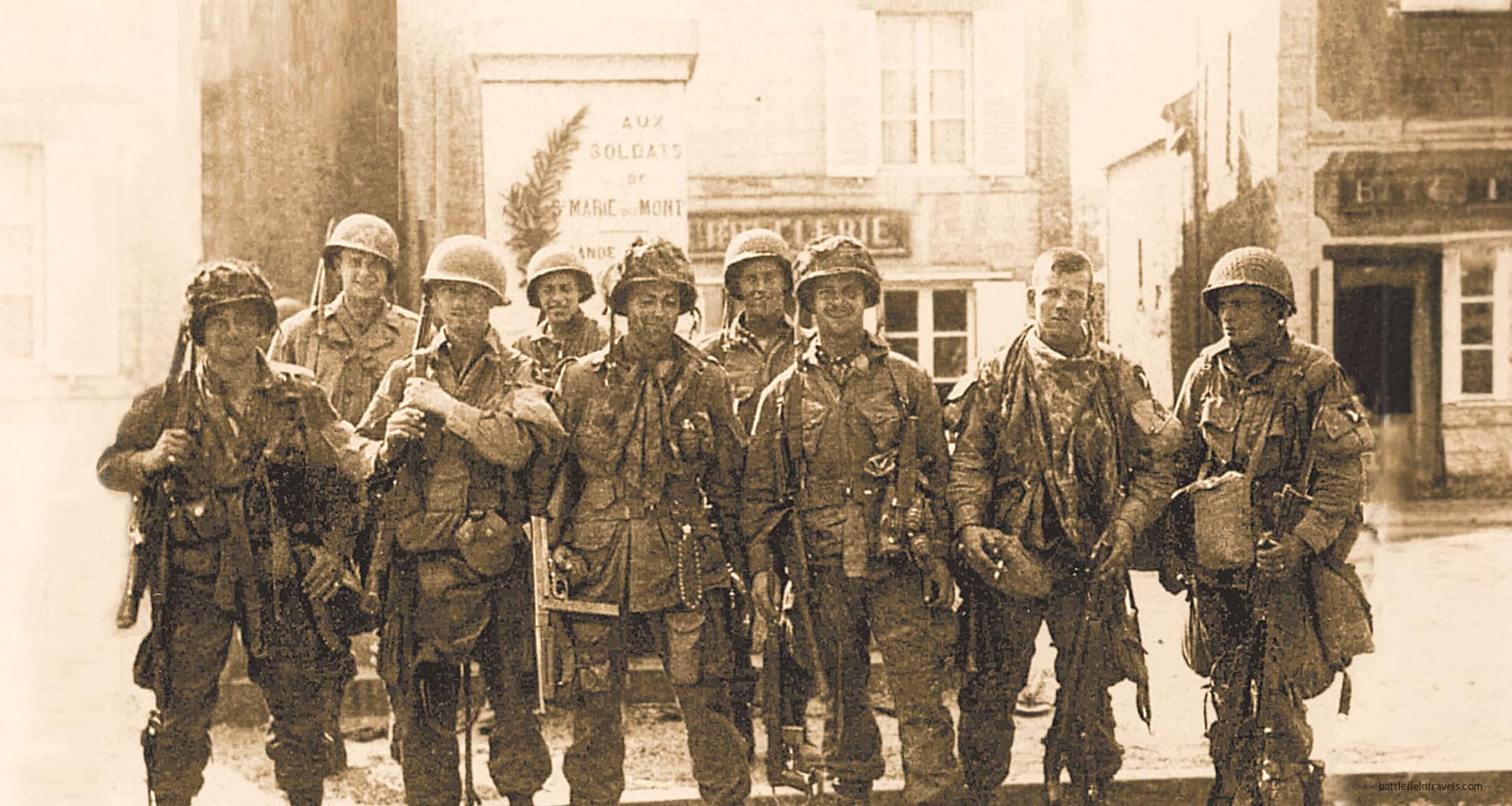
❓Easy Company Quiz. Test your ‘Band of Brothers’ knowledge!
Easy Company, 506th Parachute Infantry Regiment, fought from Normandy to the Netherlands, Bastogne and the final advance into Germany and Austria. Test your knowledge with 20 questions covering the men, battles, commanders and campaigns of the real Easy Company.
The Guadalcanal Campaign centred on the airfield. The Japanese started building it in May 1942, the Americans seized it in August, and the Japanese spent six months trying to take it back. Test your knowledge with 20 questions covering the naval and land battles of the campaign?
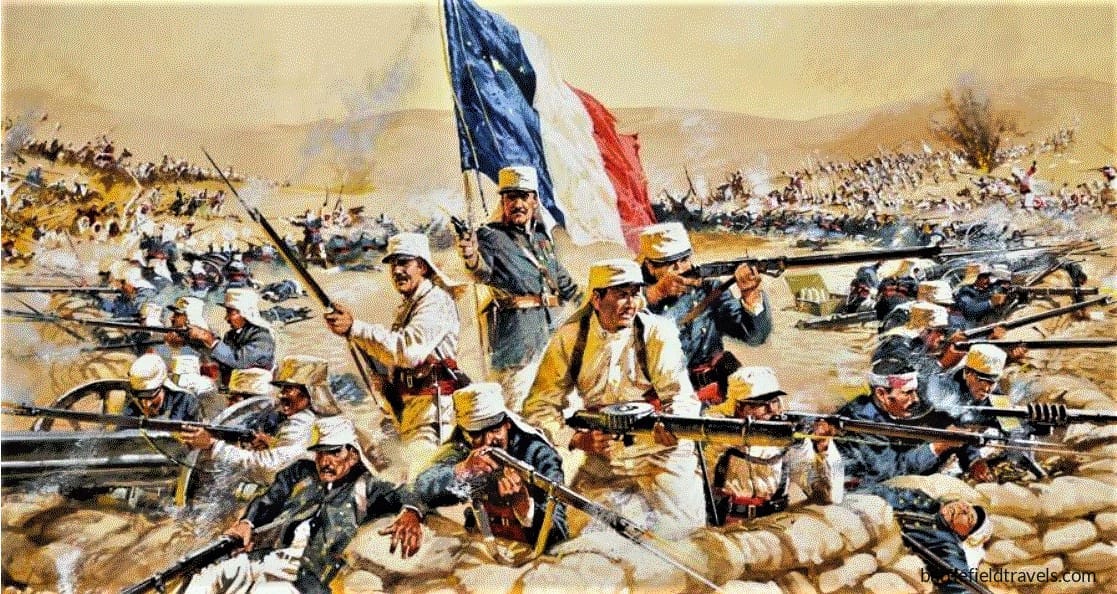
❓French Foreign Legion Quiz: Test your knowledge of Legion history!
For almost 200 years, the Legion has fought in campaigns from Algeria and Mexico to Madagascar, Indochina and France itself. Test your knowledge with 20 questions, spanning the history of the Legion from its founding in 1831 to the modern era.
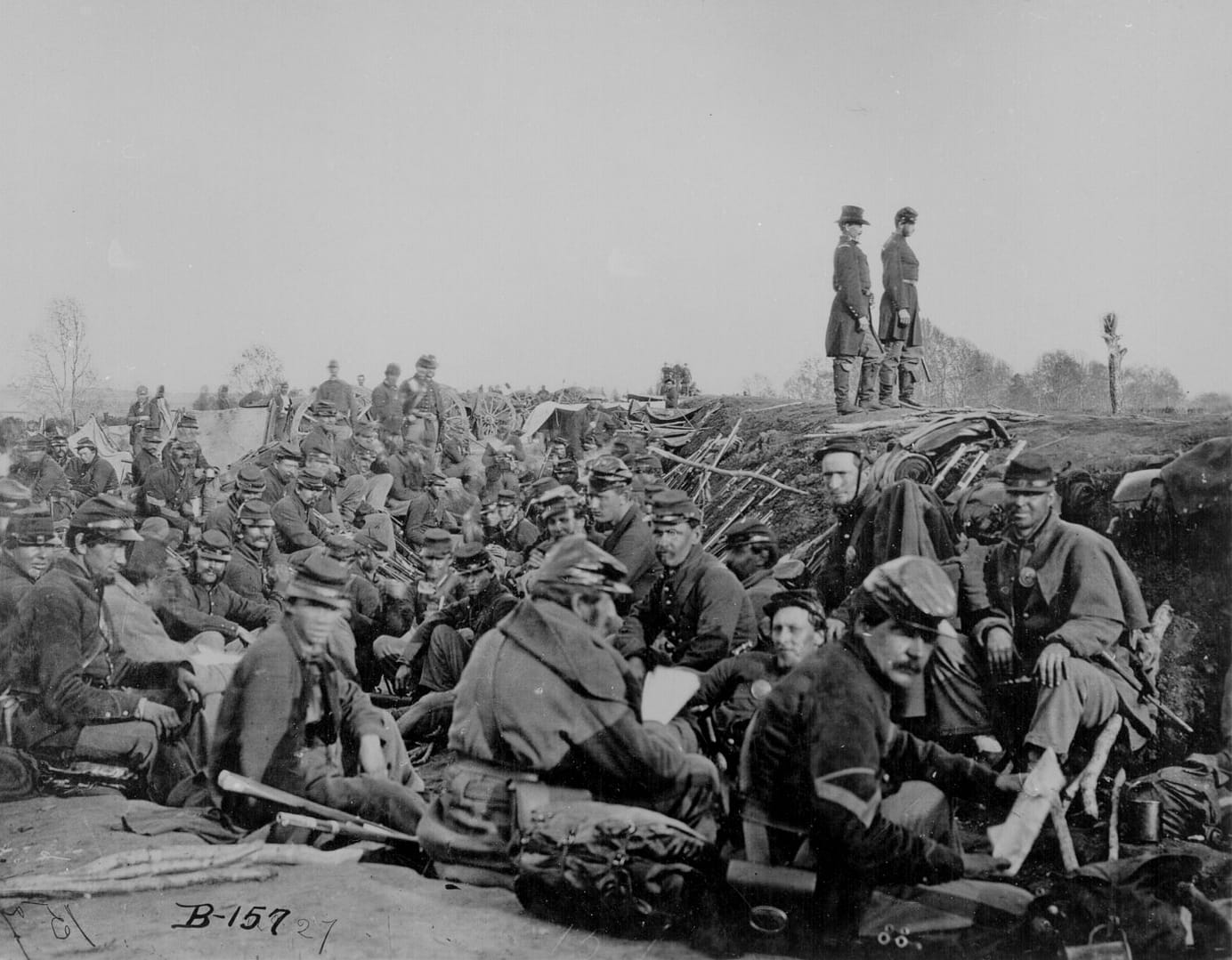
The American Civil War divided the nation, and killed more Americans than any other war in history. Test your knowledge with 20 questions drawn from a bank of 96, spanning all theatres of the war, leaders, battles, and weapons.
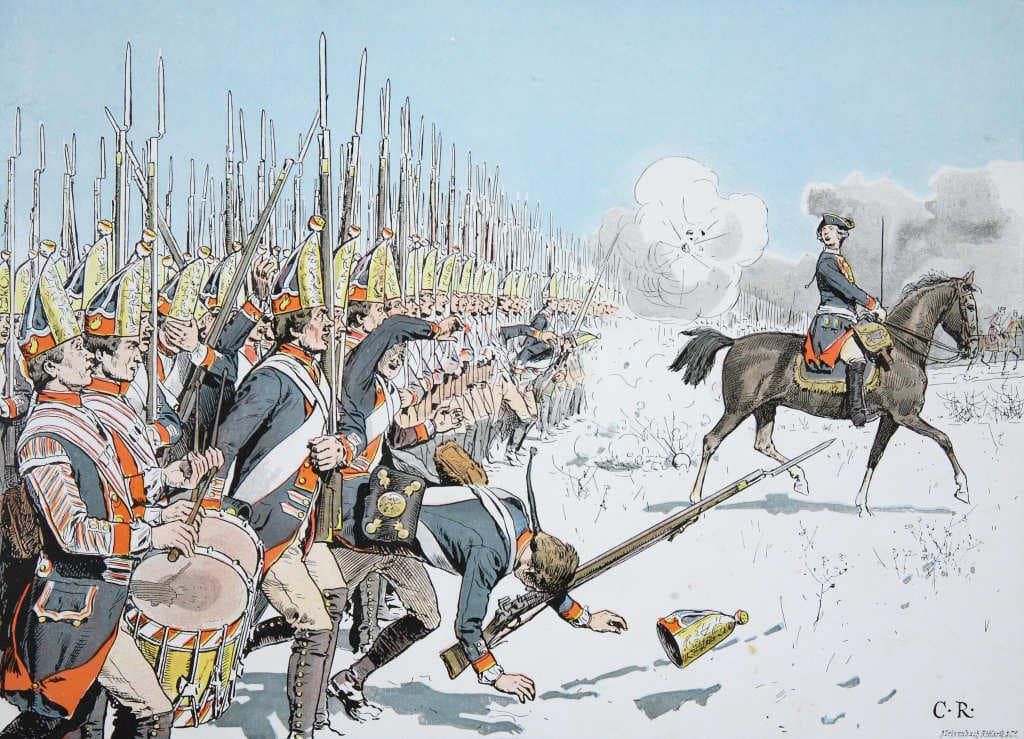
Forty questions spanning the Seven Years’ War and French and Indian War — from Frederick the Great and the struggle for Silesia to Quebec, India, Havana and Manila. Test yourself, challenge your students, or use it as a classroom resource.
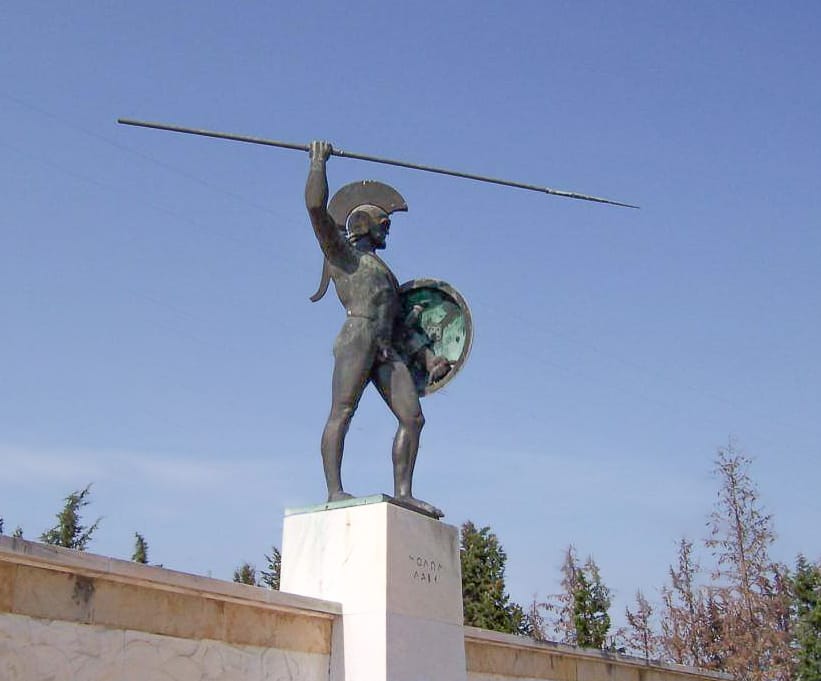
20 questions testing your knowledge of Leonidas, Xerxes, the Greek and Persian forces, commanders, terrain and the three-day battle. Score 60% to pass — but expect a challenge!
❓D-Day Quiz: Test your knowledge of the D-Day landings
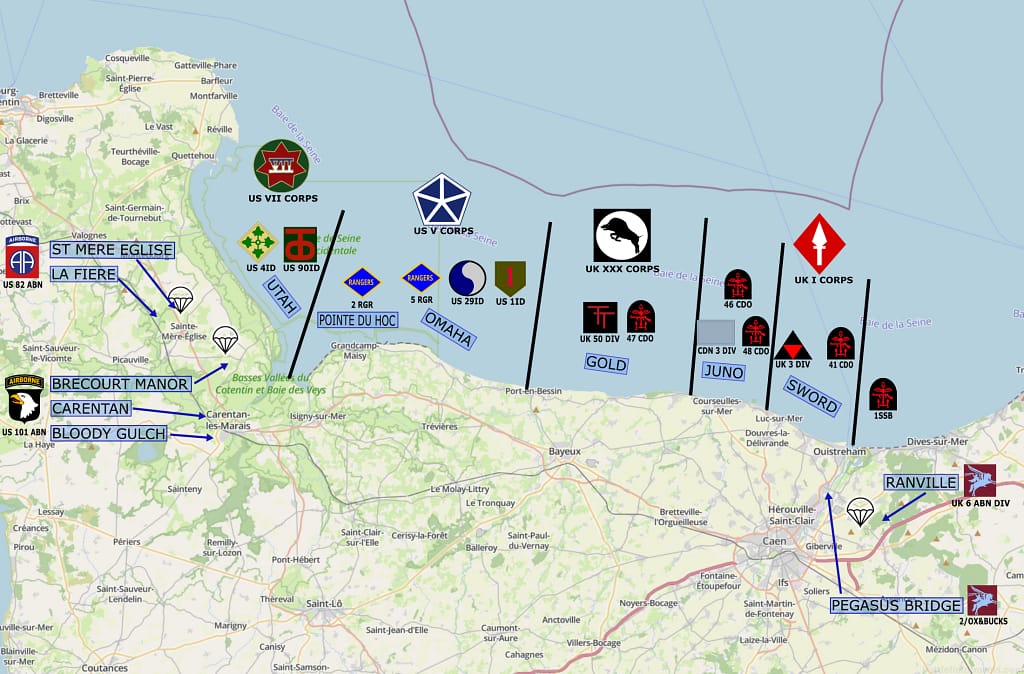
20 questions testing your knowledge of the D-Day landings including the US and British airborne operations, and all five invasion beaches. Score 60% to pass — but expect a challenge!
Enjoyed the challenge? Stay connected with BattlefieldTravels for new battlefield studies, field research and more military history quizzes.
Subscribe to Battlefield Travels and receive a free E-Book Battlefield Guide
Unlock expert battlefield analysis, campaign reconstructions, and historical insights drawn from firsthand exploration and primary sources.
🗺️ You’ll receive:
🎖️ Exclusive historical insights you won’t find elsewhere
📘 A free eBook: 10 Tips for Exploring Historic Battlefields
📰 New battlefield studies straight to your inbox as they are published
Claim Your Free Battlefield Travel Guide
Get your free e-book, exclusive tips, and updates on new battlefield studies.
Thank you!
You have successfully joined our subscriber list.
⚔️ Go deeper — Members get exclusive access to the Deep Research Collection, Field Notes, and monthly Research Dispatches. Try membership free for 7 days, cancel anytime. From $9/month.
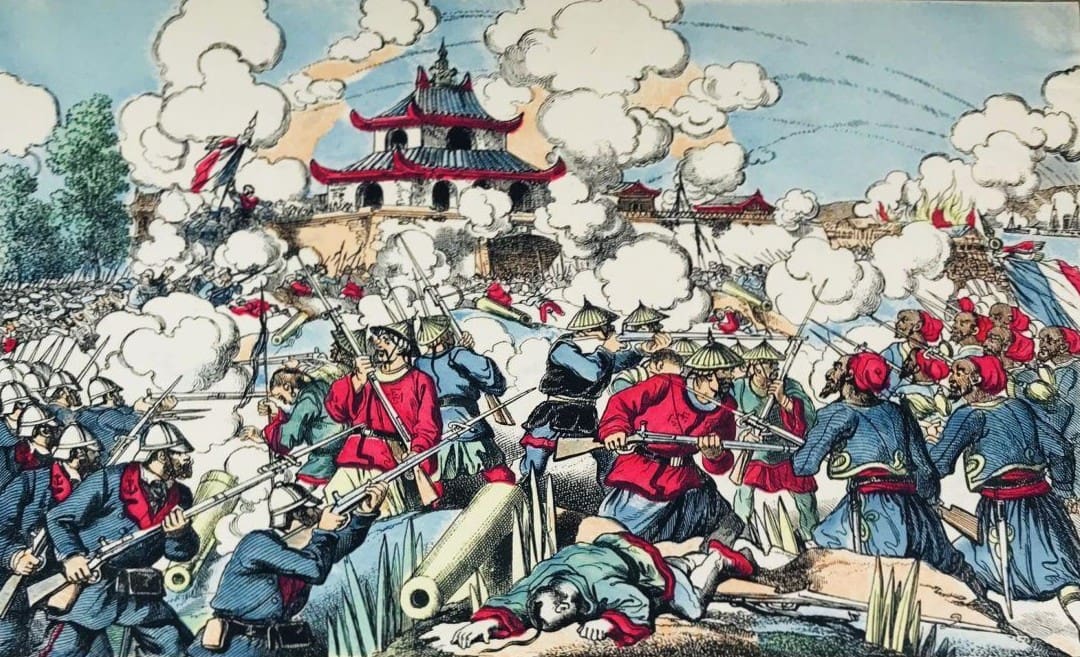
The Battle of Hòa Mộc Was the fiercest and most costly battle of the Sino-French War. The battle was fought just a few kilometres south of besieged Tuyên Quang, as Colonel Laurent Giovanninelli’s 3,400 man force made a 300 km forced march to relive the siege, and cleared the final Black Flag position between themselves and the Tuyên Quang defenders.
In the autumn of 1947, the French Far East Expeditionary Corps launched Operation LÉA, one of the most audacious operations of the Indochina War. The operation aimed to strike deep into the Việt Bắc, the mountainous sanctuary of northern Tonkin, with the explicit objective of capturing Hồ Chí Minh, dismantling the enemy’s political and military command structure, and collapsing the insurgency at its source.
Firsthand battlefield analysis of campaigns and battles involving the French Foreign Legion
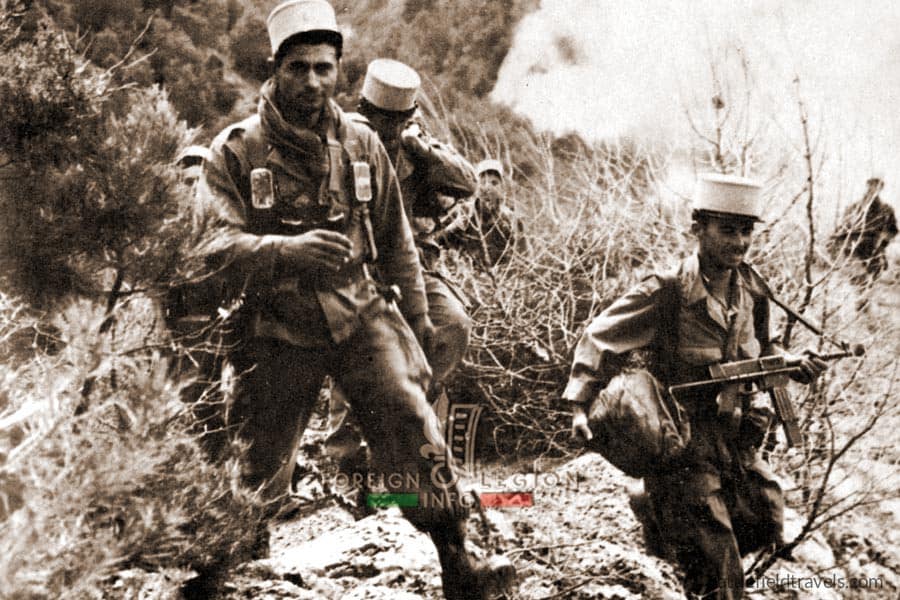
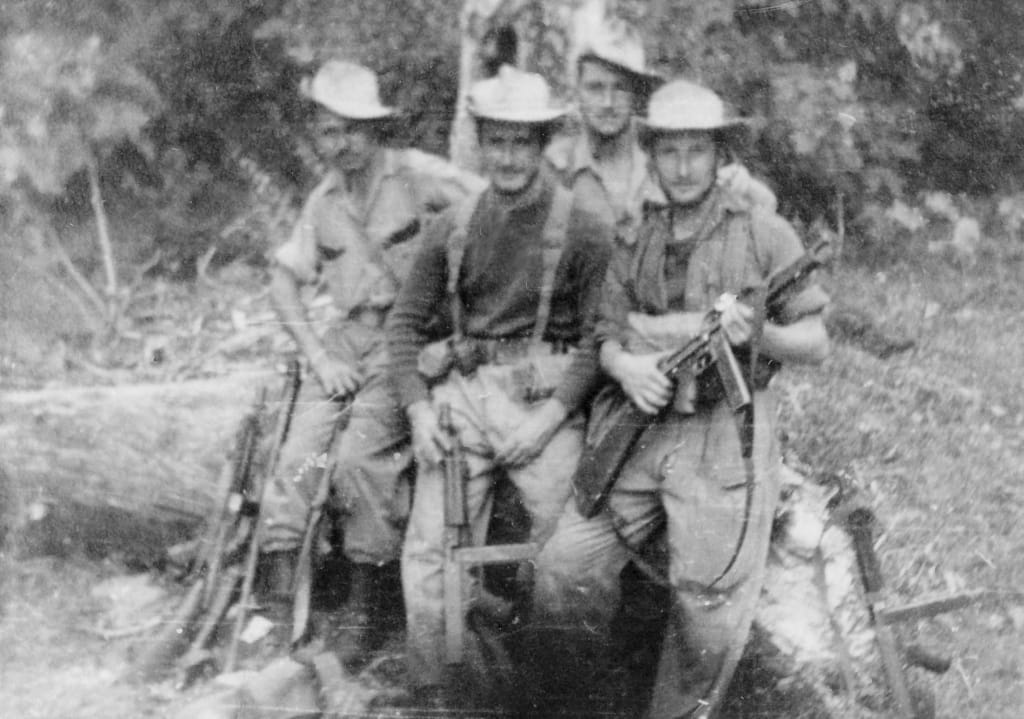
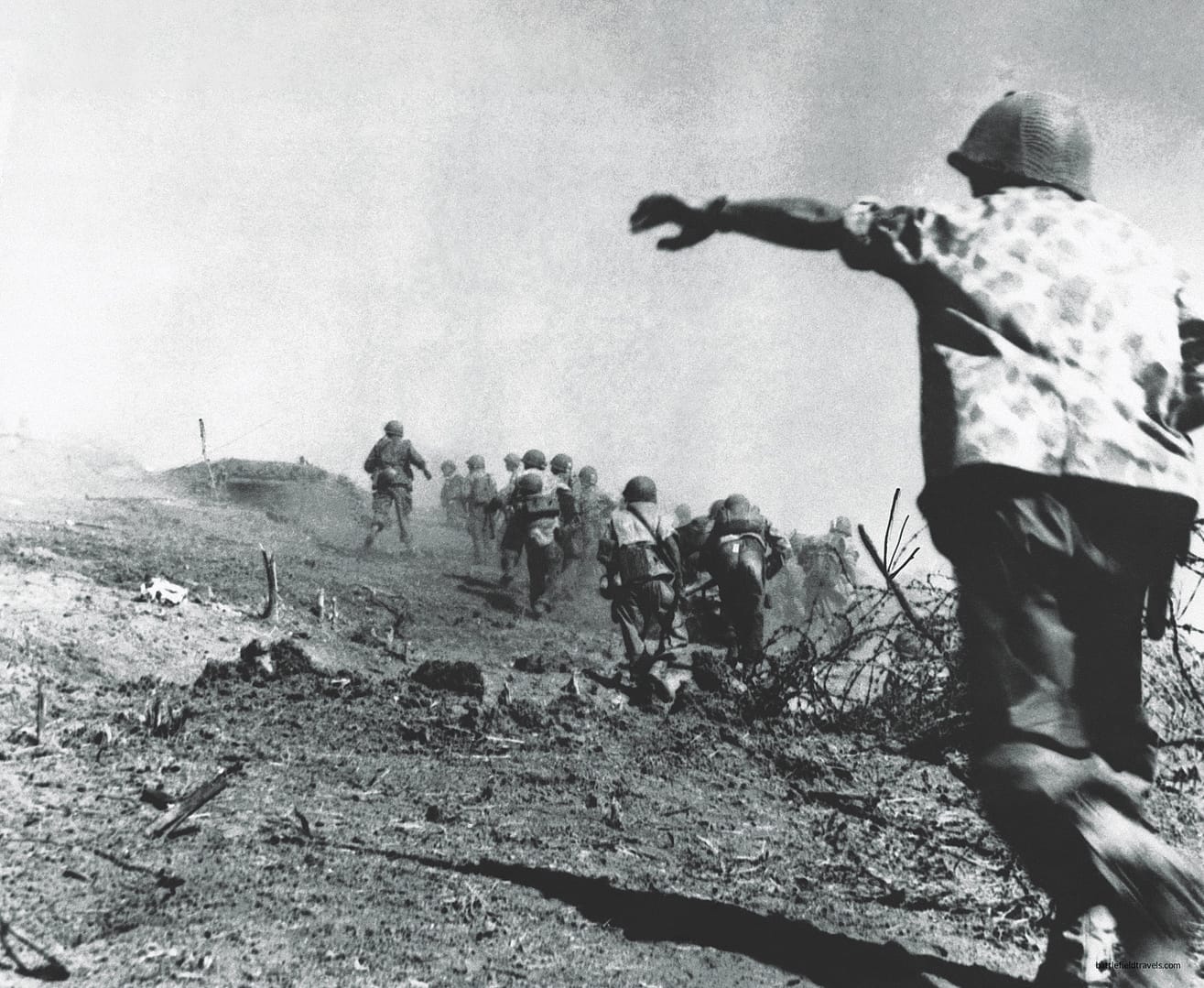
Legionnaires of the 5th Foreign Infantry Regiment in Algeria, circa 1958
Walking the battlefields and campaigns of the French Foreign Legion (1831 – present)
Founded in 1831 as a professional, expeditionary arm of the French Army, the French Foreign Legion quickly became synonymous with hard marching, difficult terrain, and operations far beyond metropolitan France. Its first campaigns in Algeria and the Carlist Wars (1833-40) in Spain established the Legion’s reputation for discipline and staying power under fire—a reputation reinforced in Crimea (1853-56), in Italy (1859), and during the brutal fighting in Mexico (1861-67), where the stand at Camerone became the Legion’s defining legend.
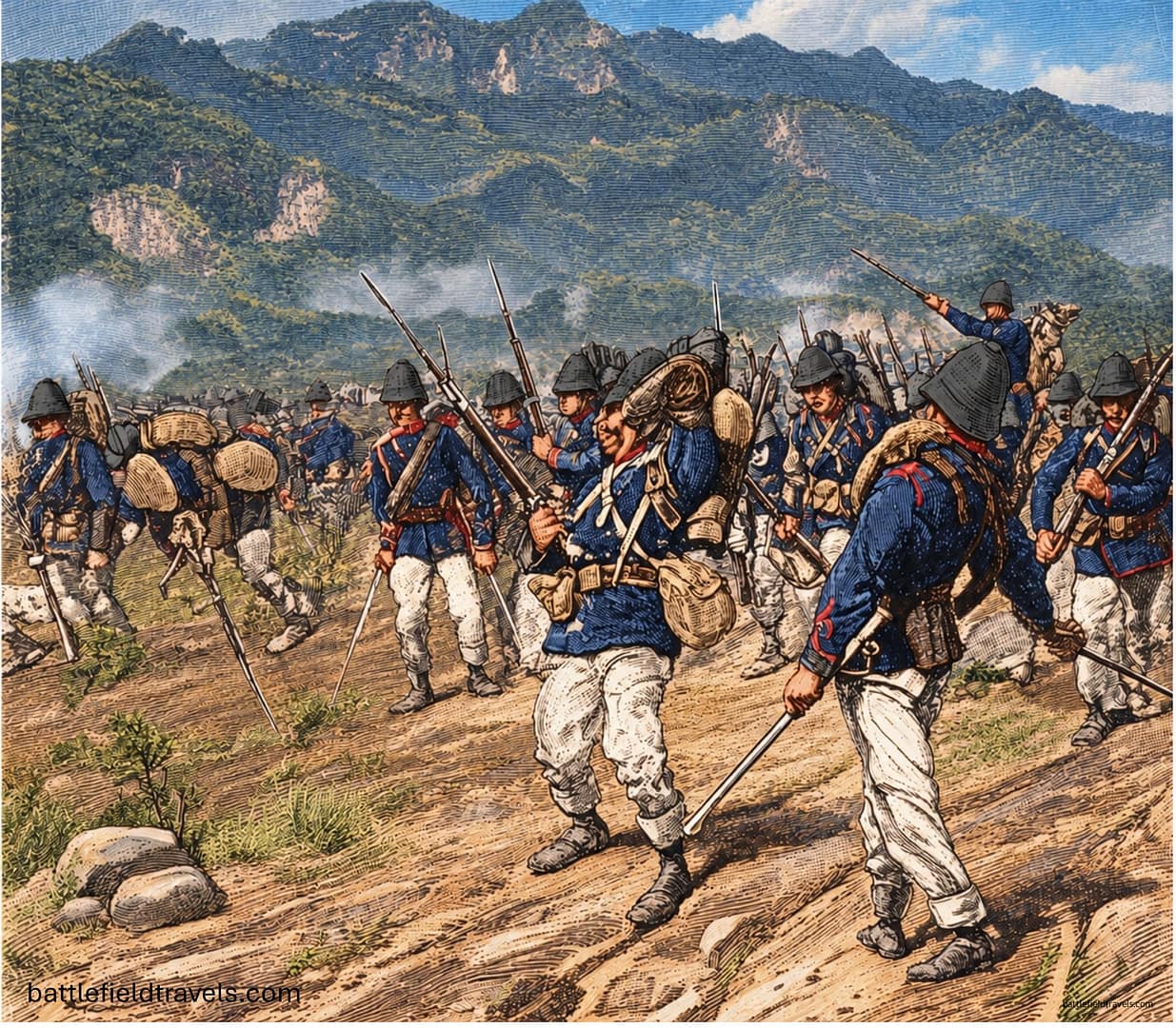
Through the late nineteenth century, Legion battalions fought across the French colonial world: in the mountains and river valleys of Tonkin (1883-1886) against the Black Flag Army; in the Dahomey (1892-94) and Madagascar (1894-95) expeditions; and across North Africa as France extended its control over the Sahara and Morocco. These campaigns demanded small-unit initiative, austere logistics, and the ability to fight in harsh, often unmapped terrain.
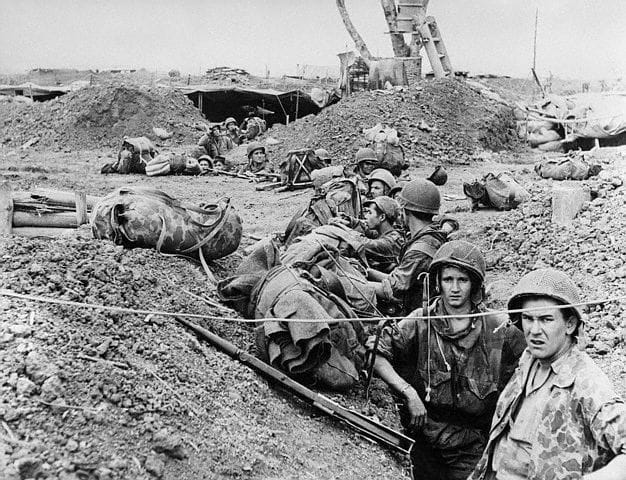
In 1914–18, the March Regiment of the Legion suffered heavy casualties on the Western Front, and its interwar years were spent policing remote outposts from Syria to the Atlas Mountains. The Indochina War (1946–1954) saw the Legion return to Southeast Asia, fighting in the rice paddies, jungles, and high valleys of Việt Bắc, culminating in the defining battle of Dien Bien Phu. The Algerian War (1954–62) kept the Legion engaged in counter-insurgency, mountain warfare, and border operations until independence.
Today the Legion remains a high-readiness, deployable force—active in Africa, the Middle East, and global French operations—still defined by cohesion, endurance, and a culture forged in nearly two centuries of campaigning.
Methodology
BattlefieldTravels analyses campaigns and battles through firsthand terrain-focused fieldwork, period maps, and detailed studies of how the campaigns unfolded. I have walked the ground at Sơn Tây, Bắc Lệ, Hòa Mộc, Tuyen Quang, Lạng Sơn, Đồng Đăng, Route Coloniale 4,Phu Tong Hoa, Nghia Lo, Tu Le, Dien Bien Phu, Na San, Hoa Binh, and many other Legion battle sites.
🏛️Weapons & Equipment: Foreign Legion
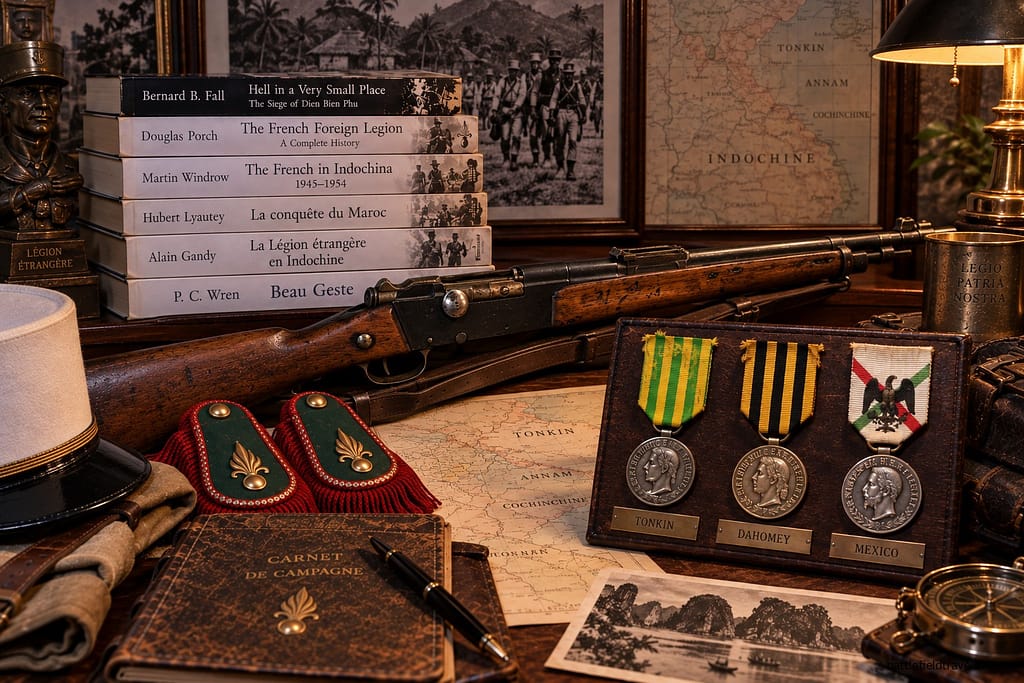
Explore original French Foreign Legion weapons, uiforms and equipment, from my personal collection
From the kepi Blanc to the M1877 Capote and TAP 47/52 camouflage, plus medals from the French colonial campaigns.
A curated reading list covering Campaigns of the Foreign Legion . The reading list currently focuses on Tonkin Campaign and Indochina War but will continue to grow as I publish new studies and draw upon new resources.
For almost 200 years, the Legion has fought in campaigns from Algeria and Mexico to Madagascar, Indochina and France itself. Test your knowledge with 20 questions , spanning the history of the Legion from its founding in 1831 to the modern era.
The Battle of Hòa Mộc Was the fiercest and most costly battle of the Sino-French War. The battle was fought just a few kilometres south of besieged Tuyên Quang, as Colonel Laurent Giovanninelli’s 3,400 man force made a 300 km forced march to relive the siege, and cleared the final Black Flag position between themselves…
In the autumn of 1947, the French Far East Expeditionary Corps launched Operation LÉA, one of the most audacious operations of the Indochina War. The operation aimed to strike deep into the Việt Bắc, the mountainous sanctuary of northern Tonkin, with the explicit objective of capturing Hồ Chí Minh, dismantling the enemy’s political and military…
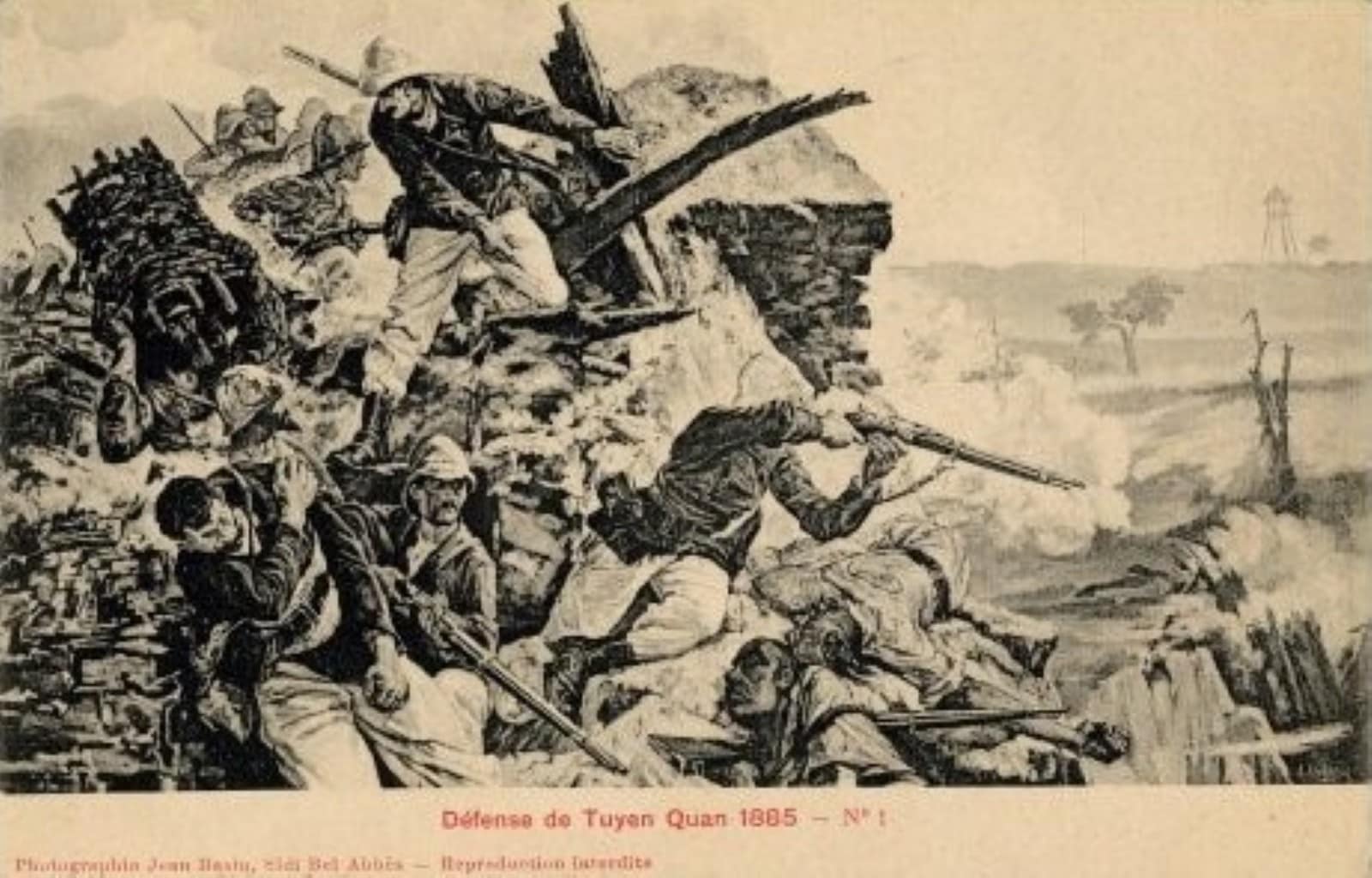
From November 1884 to March 1885, 630 French troops of the Foreign Legion, Marines and Tonkinese Riflemen, held the citadel of Tuyên Quang against a force of 15,000 Chinese and Black Flag Army troops. Their endurance, and Colonel Giovanninelli’s epic relief march, made the siege one of the Foreign Legion’s most legendary battles.
The Battle of Phủ Thông Hoá was a small but significant milestone in the French Indochina War. For the French Foreign Legion, it was yet another heroic but costly defence of an isolated outpost against overwhelming odds. The battle entered Legion folklore alongside legendary stands like Camerone and Bir Hakeim. Although the Legion retained control…
The Battle of Route Coloniale No. 4 (Cao Bang Ridge Disaster) was one of the worst military defeats in the history of colonial wars, with a French force of ~6,000 troops destroyed. The battle took place along a 137km section of RC4 between Lang Son in the south and Cao Bang in the north. The…
Operation HIRONDELLE, 17 July 1953. The French High Command in Indo-China, acting on time-sensitive intelligence, deployed 2000 paratroopers more than 100km behind enemy lines, destroyed a major Viet Minh logistic hub, then deployed another parachute battalion, a mechanised brigade, and a Naval task force to get them out again. All in the space of 72…
In June 1884, a French column under Lieutenant Colonel Alphonse Dugenne, comprised of about 465 French troops and 284 Tonkinese auxiliaries, with a supply column of local ‘coolies’ and baggage mules, was attacked by a much larger Chinese regular force near Bắc Lệ, on the road from Phu-Lang-Thuong to Lang Son. The attack was the…
The Son Tay Campaign in December 1883 was part of a series of escalatory conflicts between Chinese and French colonial forces in Tonkin (northern Vietnam) over teh period 1873-1885. For the French, the main protagonist was Liu Yongfu’s Black Flag Army, although Chinese regular forces played an increasing role as the conflict developed. Vietnamese forces…
It is difficult to understand the French decision in November 1953 to insert a divisional-sized force into the remote highlands of northern Vietnam. Although the force comprised only about 5% of the French expeditionary forces in Indo-China, it was the best 5%, and ultimately included most of the available parachute battalions from the strategic reserve.
April 2025. Ba Khe, near the village of Cát Thịnh, Yên Bái Province, Vietnam. I am exploring the old Route Coloniale 13 west of Yen Bai, retracing the ground fought over during the October 1951 battle for Nghĩa Lộ. This is steep, broken country. The road winds through narrow valleys, overlooked by sharply rising hills,…
April 2025. Nà Sản, Vietnam. Our next stop was at the old fortified ‘hedgehog’ of Nà Sản, just east of Son La. The French and Viet Minh fought a massive battle here in late 1952, the outcome of which convinced the French that holding a remote airbase and using superior French firepower to defeat enemy…
Authored by Mick Prictor, a retired military officer with 40 years’ service, and a military historian specialising in terrain-focused analysis of tactics, doctrine, and command decision-making in land warfare. His work draws on extensive battlefield fieldwork—more than 280 sites worldwide—and one of the world’s largest private collections of historic military arms, uniforms, and equipment. About me
⚔️ Go deeper — Members get exclusive access to the Deep Research Collection, Field Notes, and monthly Research Dispatches. Try membership free for 7 days, cancel anytime. From $9/month.
Selected Legion items from my personal collections
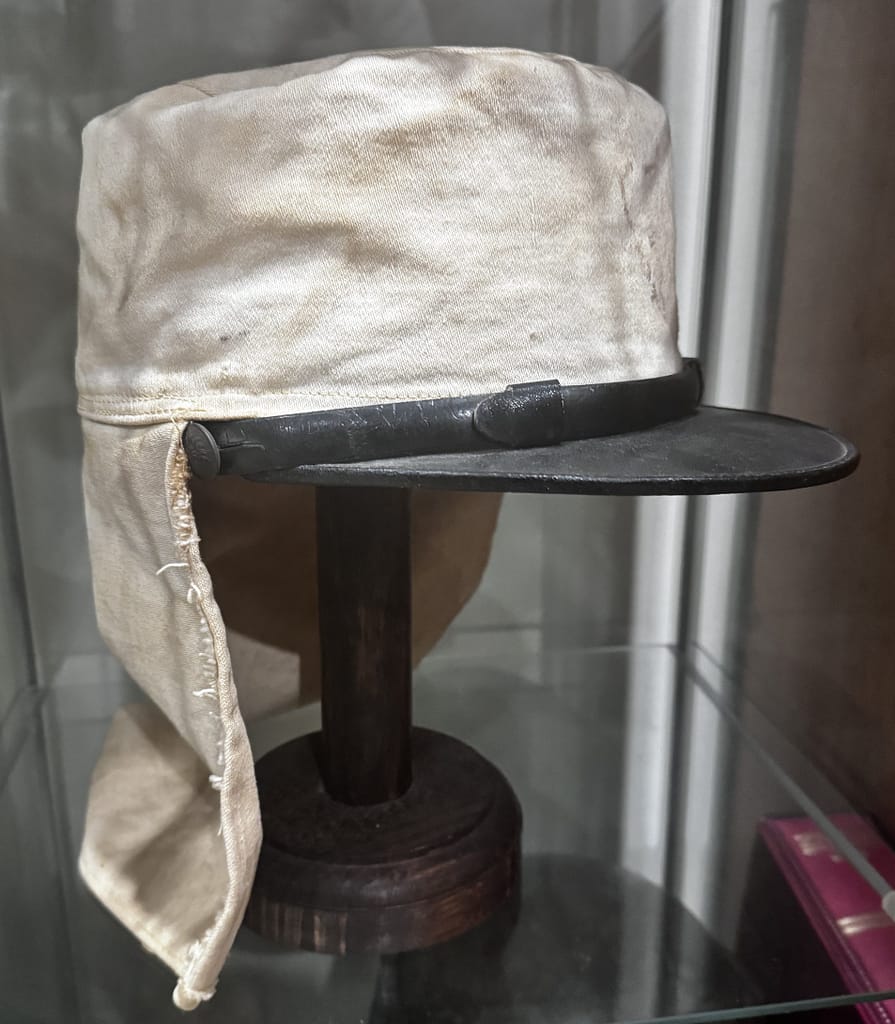
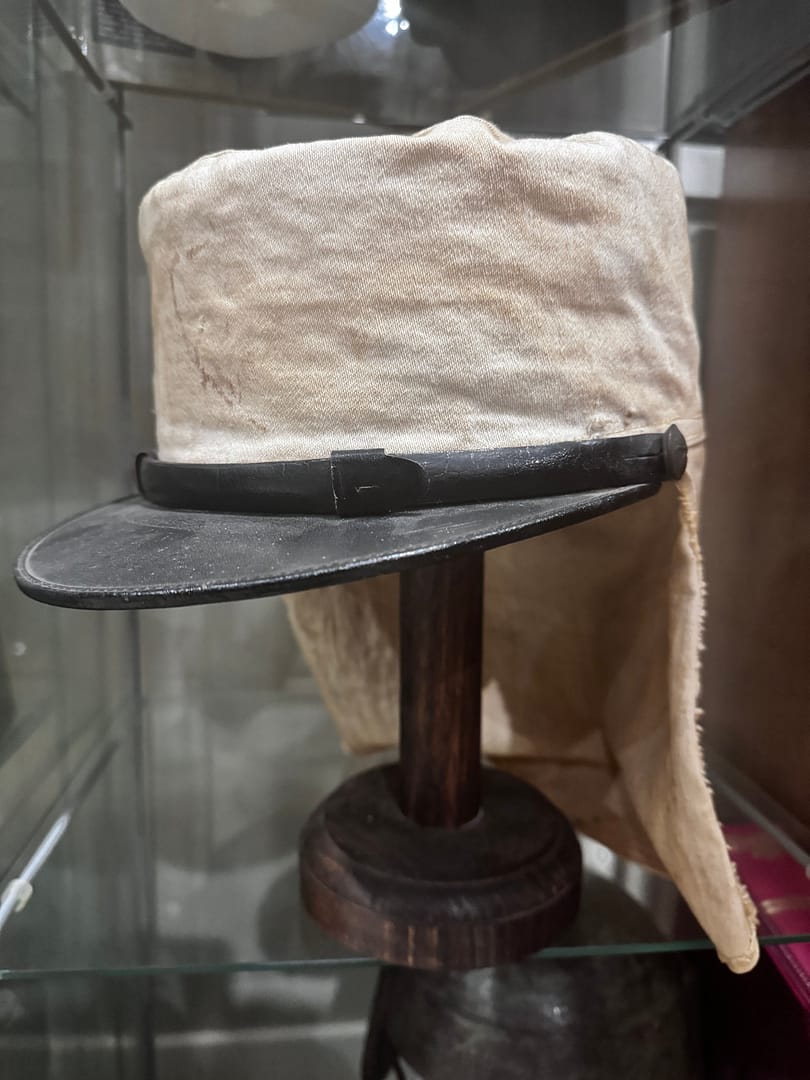
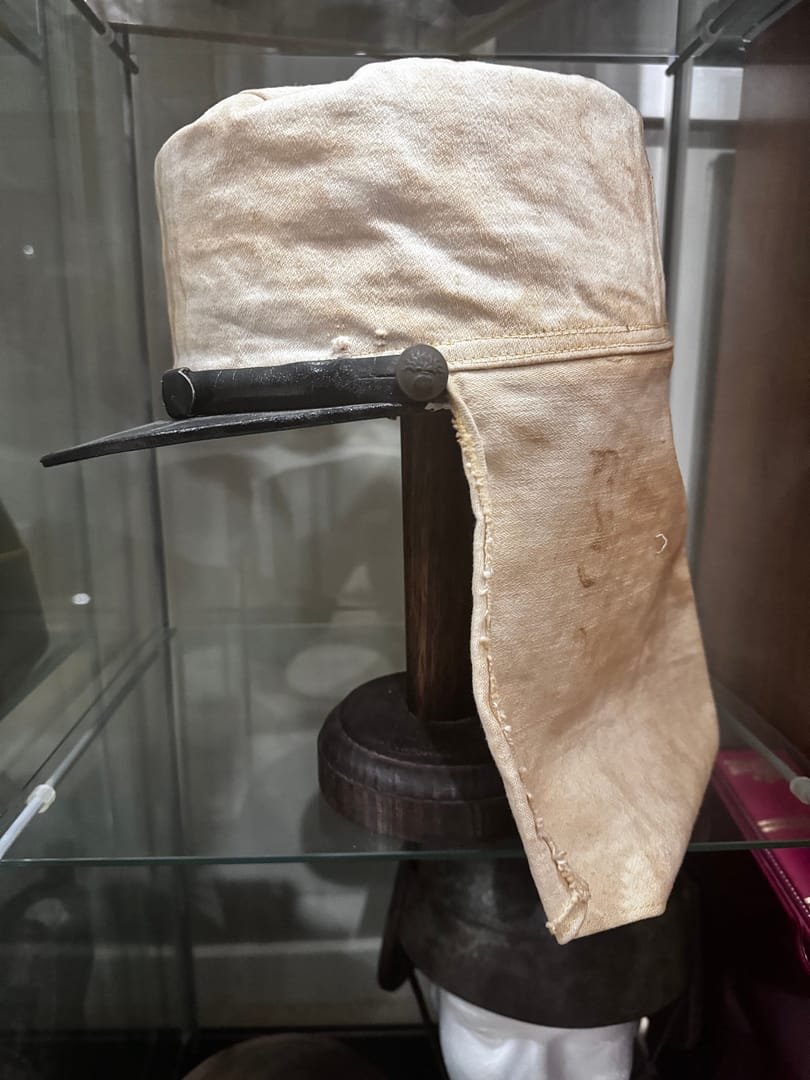
French Foreign Legion Kepi Moutarde and white cover, from my personal collection.
The iconic kepi moutarde (mustard-coloured Foreign Legion kepi) with removable white sun cover was standard wear during France’s North African campaigns of the 1920s, including the violent Rif War in Morocco. The mustard wool body and red piping identify the Legion’s pre-WWII colour scheme, while the white cover provided solar protection during desert operations. Hard-used Legion kepis from this period are rare: they were field-worn in extreme conditions and often replaced in service. This example reflects the Legion’s harsh interwar expeditionary deployments.
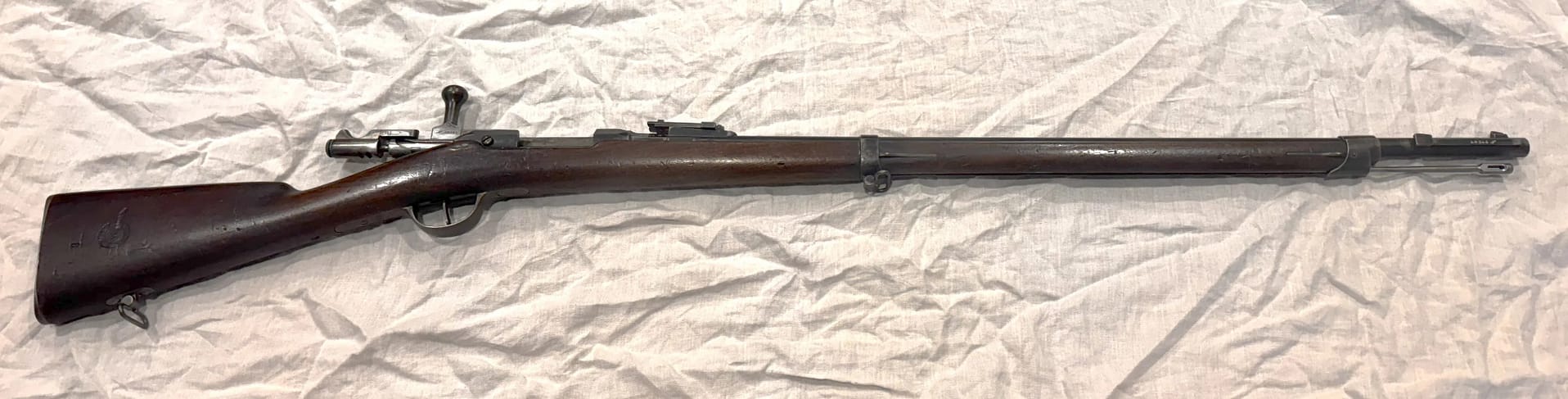
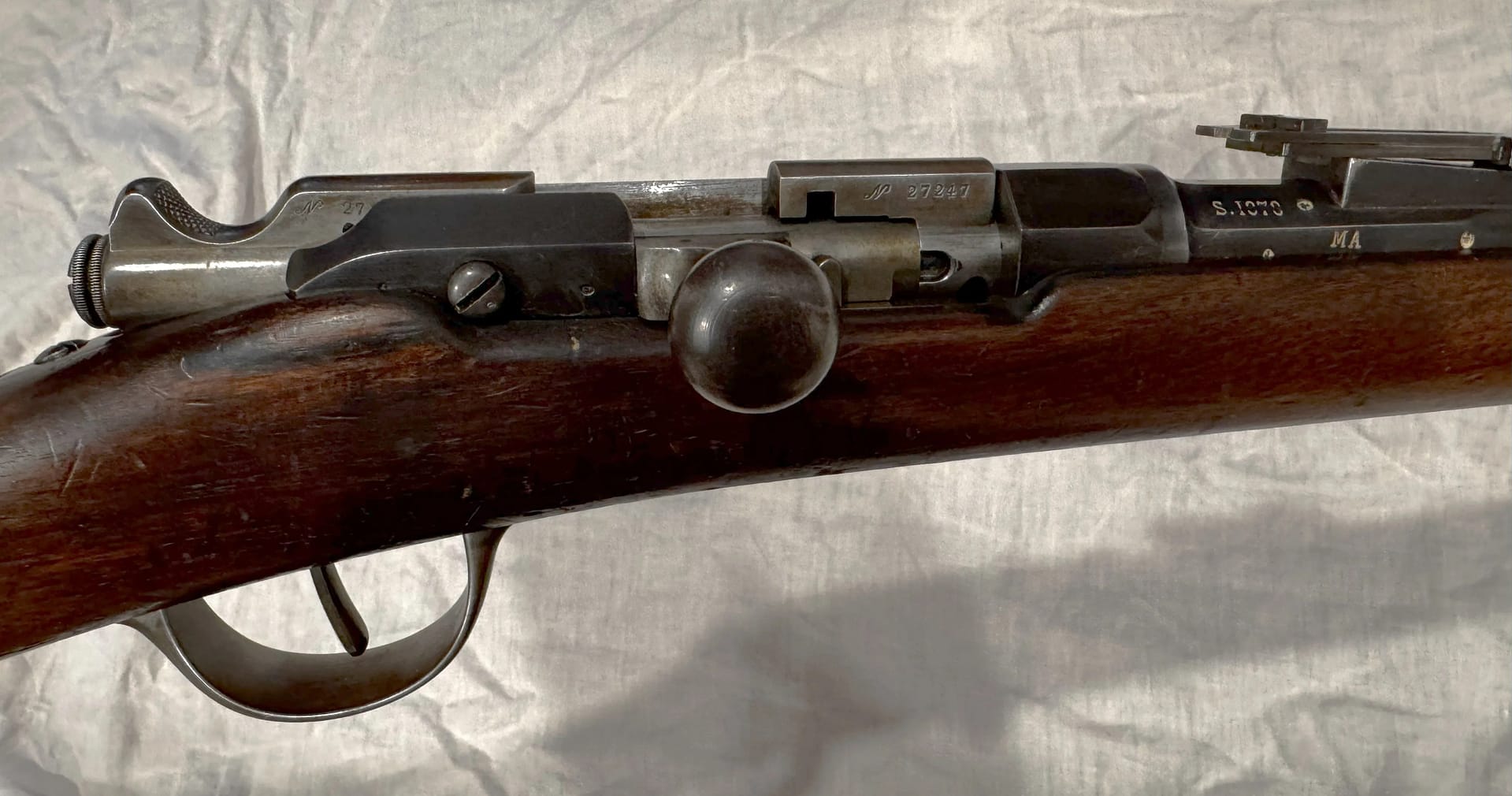
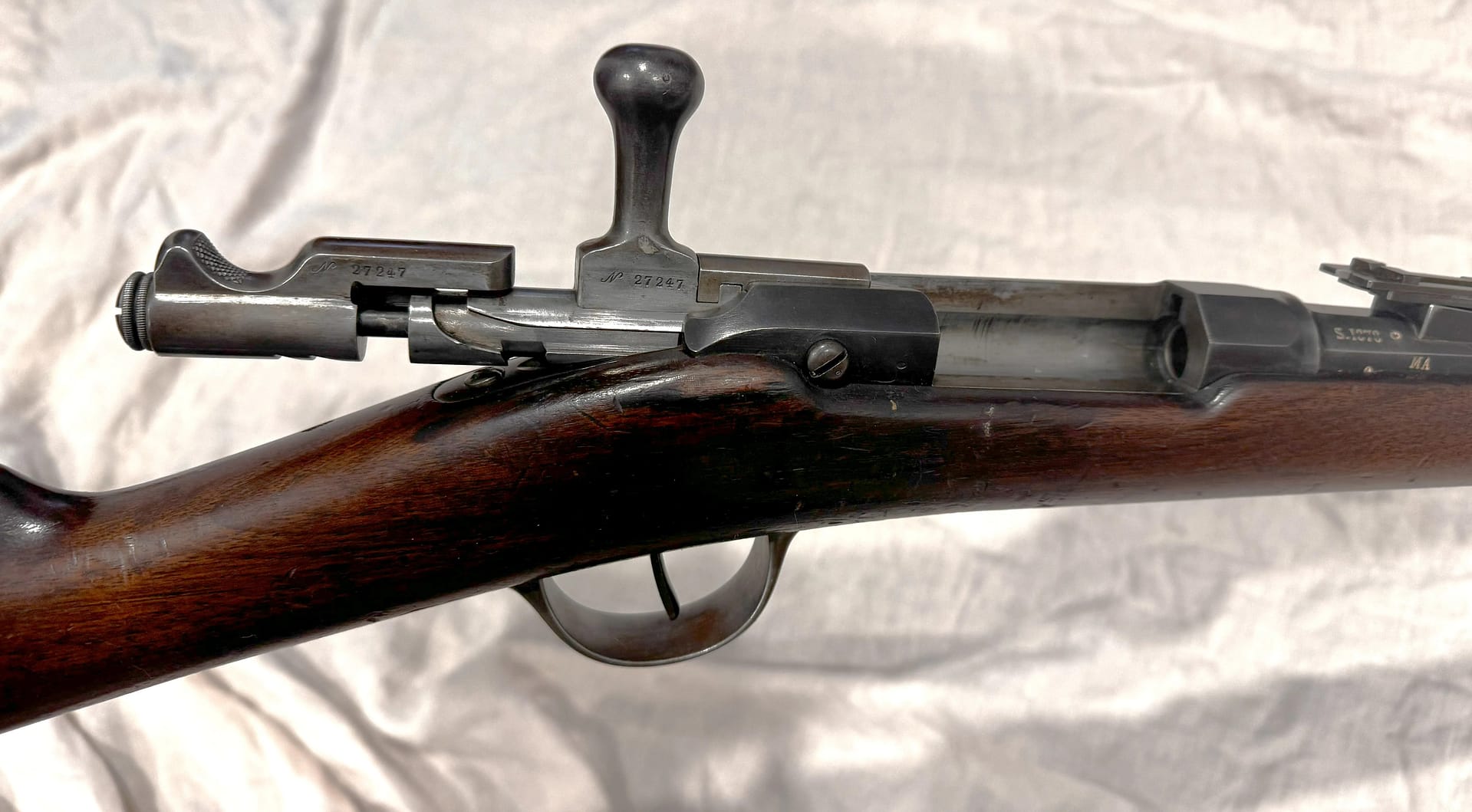
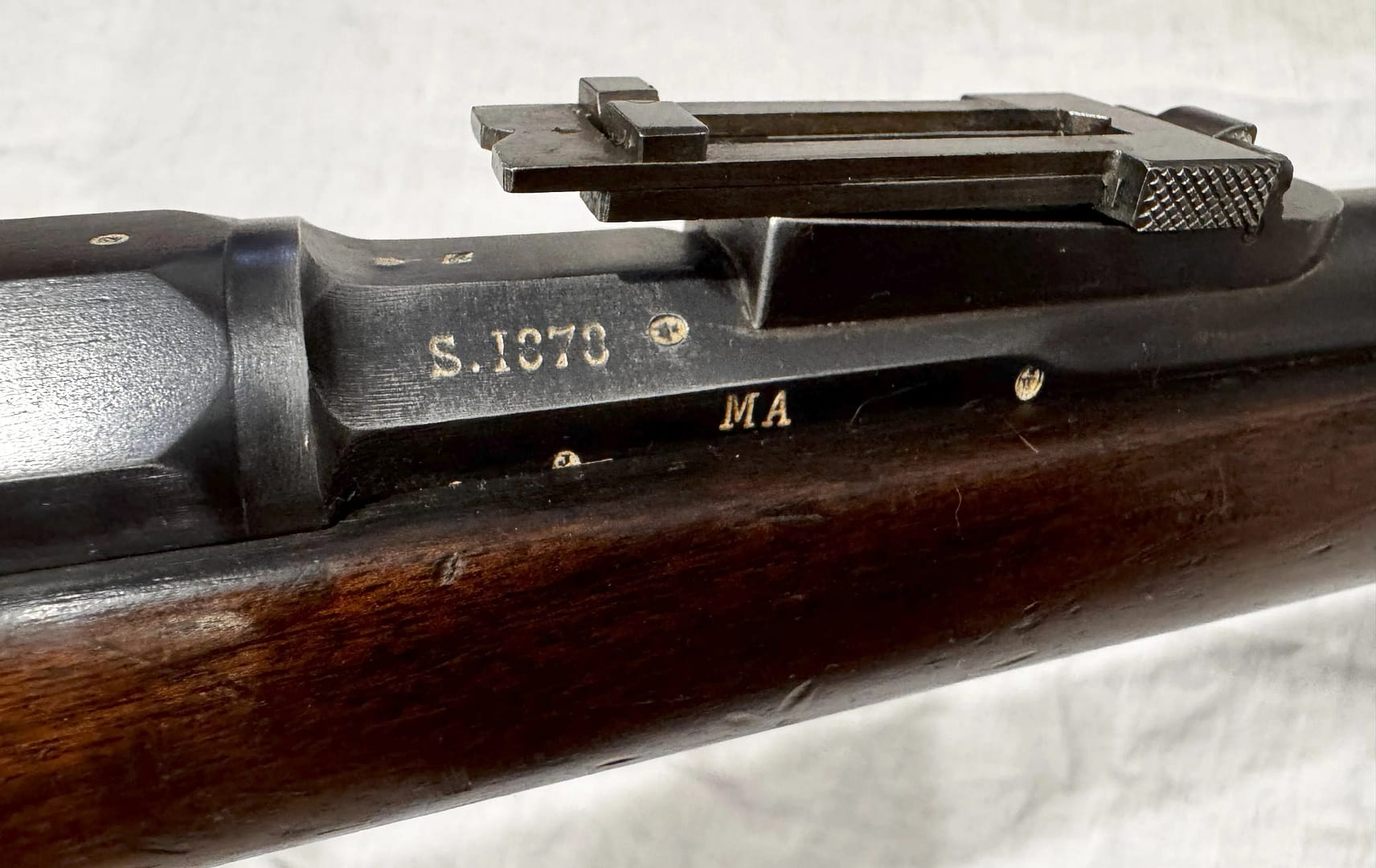
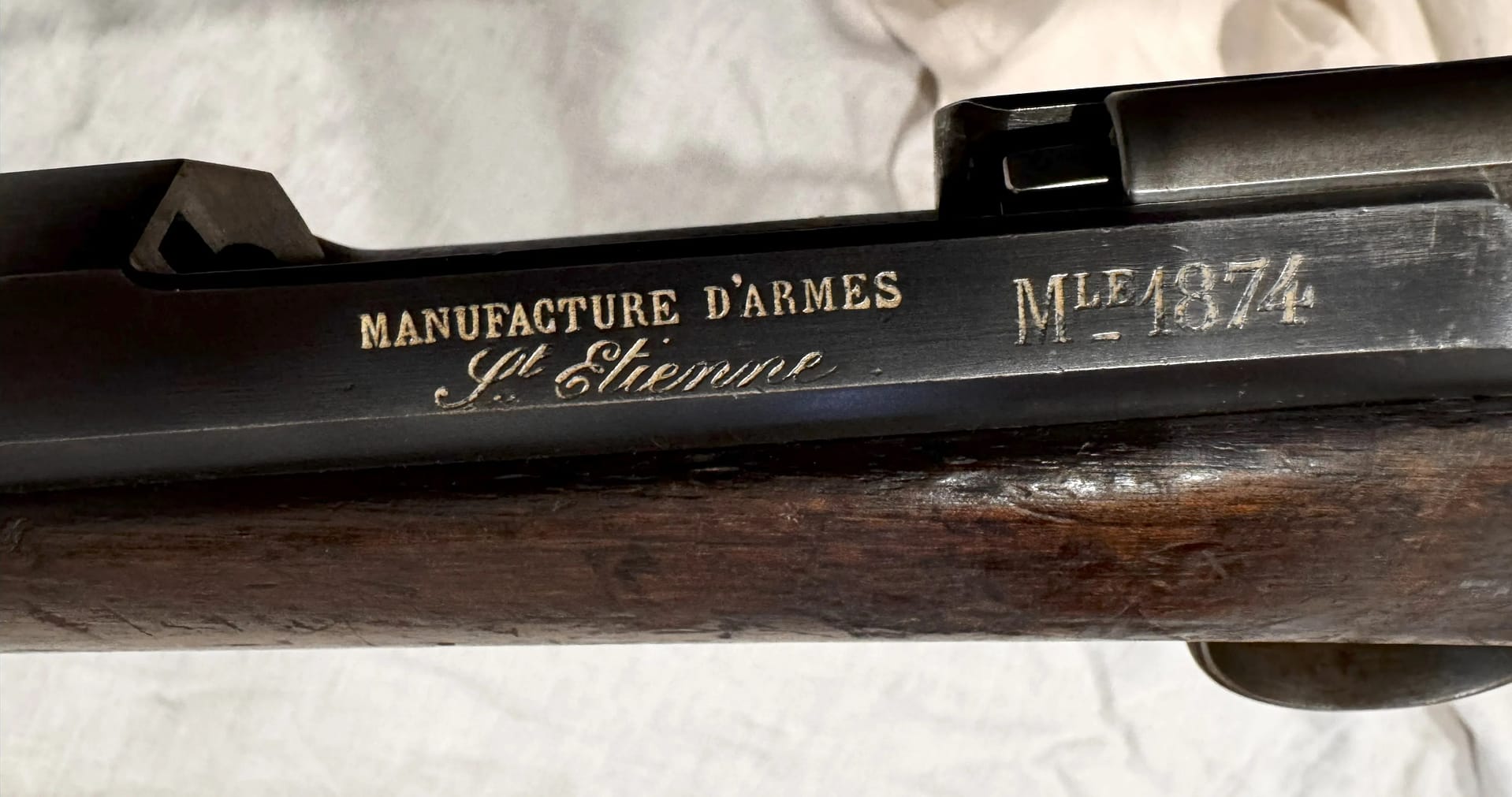
Model 1874 Fusil Gras, 11 x 59mmR, from my personal collection.
The French Model 1874 Gras was the first purpose-built metallic-cartridge infantry rifle adopted by France, chambered for the powerful 11×59mmR Gras round. Developed from the Chassepot bolt-action system, it replaced the paper-cartridge mechanism with a strengthened bolt, extractor, and all-steel receiver. Issued widely across metropolitan, colonial, and Foreign Legion units, it served in North Africa, Indochina, and the early phases of the Great War with second-line and Territorial troops. Robust, accurate, and simple to maintain, the Gras became one of France’s most widely distributed 19th-century rifles.
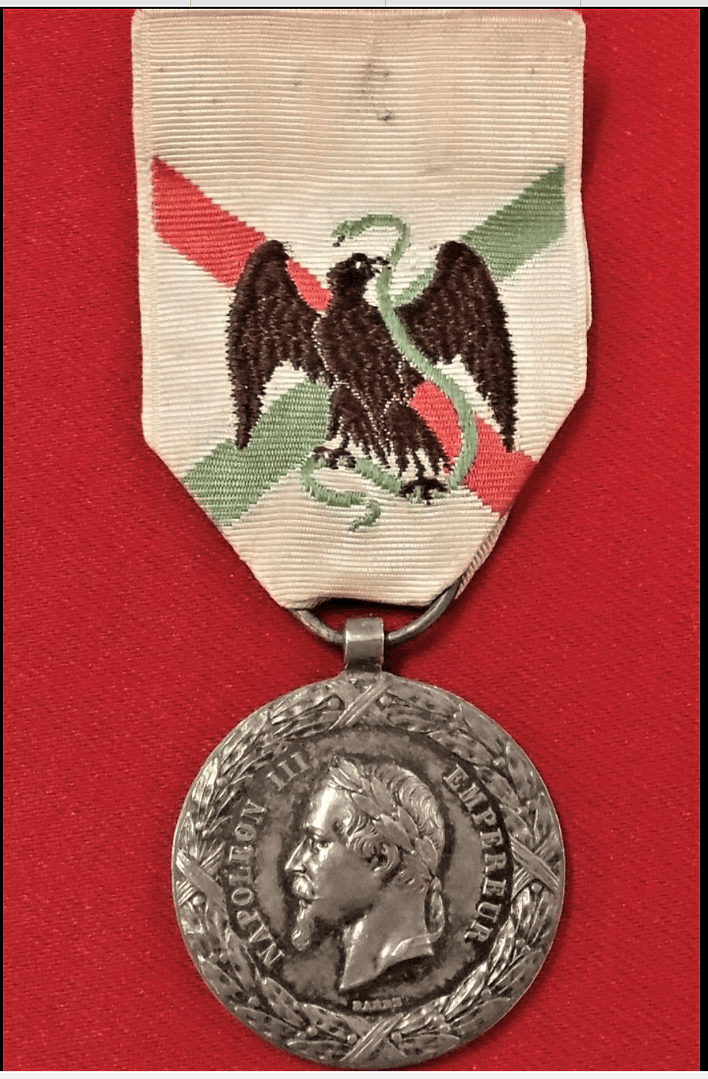
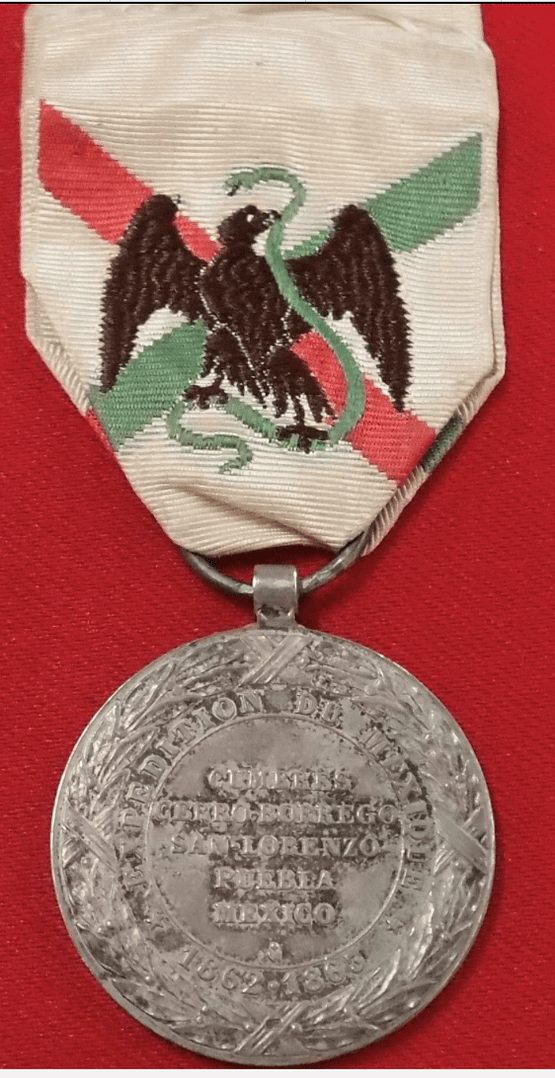
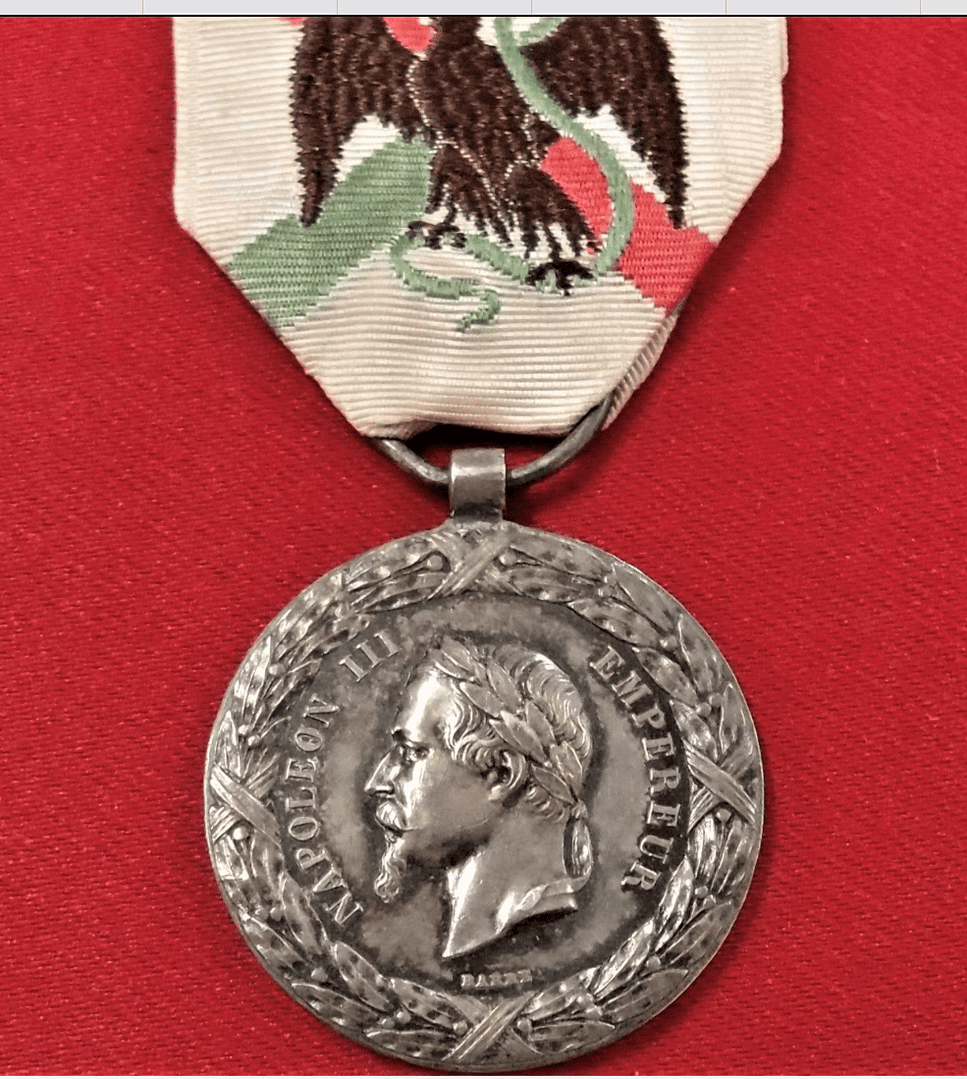
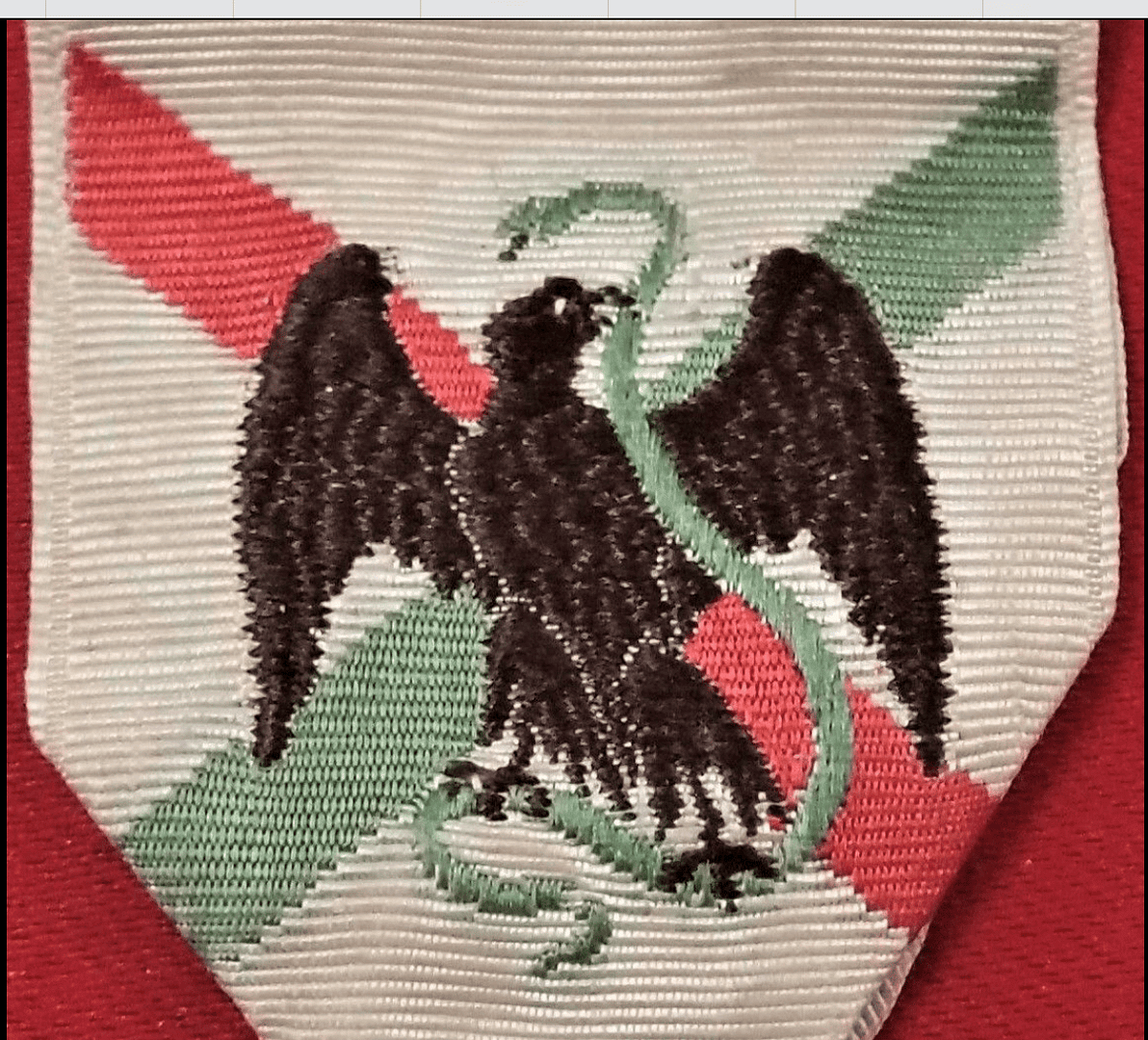
French Campaign medal for the 1863-1867 Mexican Intervention, from my collection
The medal was instituted by Imperial decree on 29 August 1863 to be awarded to participants in the French Expeditionary Corps whose purpose was to create a French-dominated empire in Mexico under Archduke Maximilian of Austria. Battle of Camerone. The Médaille de la Campagne du Mexique commemorates French service during the Mexican Intervention, where expeditionary troops attempted to install Emperor Maximilian I. Awarded to Foreign Legion, Marine Infantry, cavalry, and line units, the medal marks actions at Puebla, Mexico City, and numerous hard-fought guerrilla engagements. Service in Mexico was notoriously harsh, marked by disease, ambush warfare, and extreme climate. The medal remains strongly associated with the Legion’s legendary stand at Camerone (30 April 1863).
This battle study nests within the broader analytical framework explored in the Research Hub, where operational methods, operating environments, armies, commanders, and weapons are examined across conflicts and eras. The links below connect related studies across the wider body of battlefield analysis on the BattlefieldTravels site.
The Legion was established on 10 March 1831 by King Louis-Philippe as a professional, permanent corps intended for overseas service. Its initial deployments were in Algeria, where it began developing its reputation for cohesion, long marches, and fighting in harsh terrain.
What early conflicts shaped the Legion’s identity?
Key formative campaigns included the Carlist Wars in Spain (1835–1839), operations in Algeria, the Crimean War, the Italian campaign of 1859, and the Mexico Expedition—where the stand at Camerone (1863) became the Legion’s defining legend.
Where did the Legion fight in the colonial era?
The Legion served across the French empire: in Tonkin against the Black Flag Army, in Dahomey and Madagascar, and throughout North Africa and Morocco. These campaigns demanded small-unit leadership, rapid movement, and the ability to fight in mountains, jungles, and deserts.
What role did the Legion play in the First World War?
Foreign volunteers and Legion battalions fought on the Western Front, suffering heavy casualties in trench warfare and the major offensives of 1914–1918. Many later Legion legends were born from this period.
What did the Legion do in the Indochina War?
Legion regiments fought in Tonkin, Annam, and Cochinchina from 1946 to 1954. Major engagements include Route Coloniale 4 (1950), the Red River Delta battles, the That Khê–Đông Khê corridor, and Dien Bien Phu, where the Legion’s 1er BEP and 2e BEP were destroyed and re-formed.
Was the Legion involved in the Algerian War?
Yes. From 1954 to 1962, the Legion fought in counter-insurgency operations, mountain warfare in the Aurès and Kabylia regions, sector security, and border control along the Morice Line.
What does the Legion do today?
Modern Legion units remain elite contributors to French operations worldwide, particularly in Africa and the Middle East. They specialise in rapid deployment, desert and jungle warfare, and stabilisation operations.
Can anyone join the French Foreign Legion?
Almost anyone may enlist, but selection is strict. Recruits sign under a new identity initially, undergo intensive training at Castelnaudary, and must commit to disciplined service in demanding field conditions.
Why is Camerone so important in Legion history?
The 1863 stand of 65 Legionnaires against several hundred Mexican troops became the Legion’s symbolic foundation—embodying sacrifice, cohesion, and obeying orders to the last round.
Subscribe to Battlefield Travels and receive a free E-Book Battlefield Guide
Unlock expert battlefield analysis, campaign reconstructions, and historical insights drawn from firsthand exploration and primary sources.
🗺️ You’ll receive:
🎖️ Exclusive historical insights you won’t find elsewhere
📘 A free eBook: 10 Tips for Exploring Historic Battlefields
📰 New battlefield studies straight to your inbox as they are published
Claim Your Free Battlefield Travel Guide
Get your free e-book, exclusive tips, and updates on new battlefield studies.
Thank you!
You have successfully joined our subscriber list.
⚔️ Go deeper — Members get exclusive access to the Deep Research Collection, Field Notes, and monthly Research Dispatches. Try membership free for 7 days, cancel anytime. From $9/month.
Reconstructing the Tonkin Campaign battlefields through terrain analysis, primary sources and on-site research
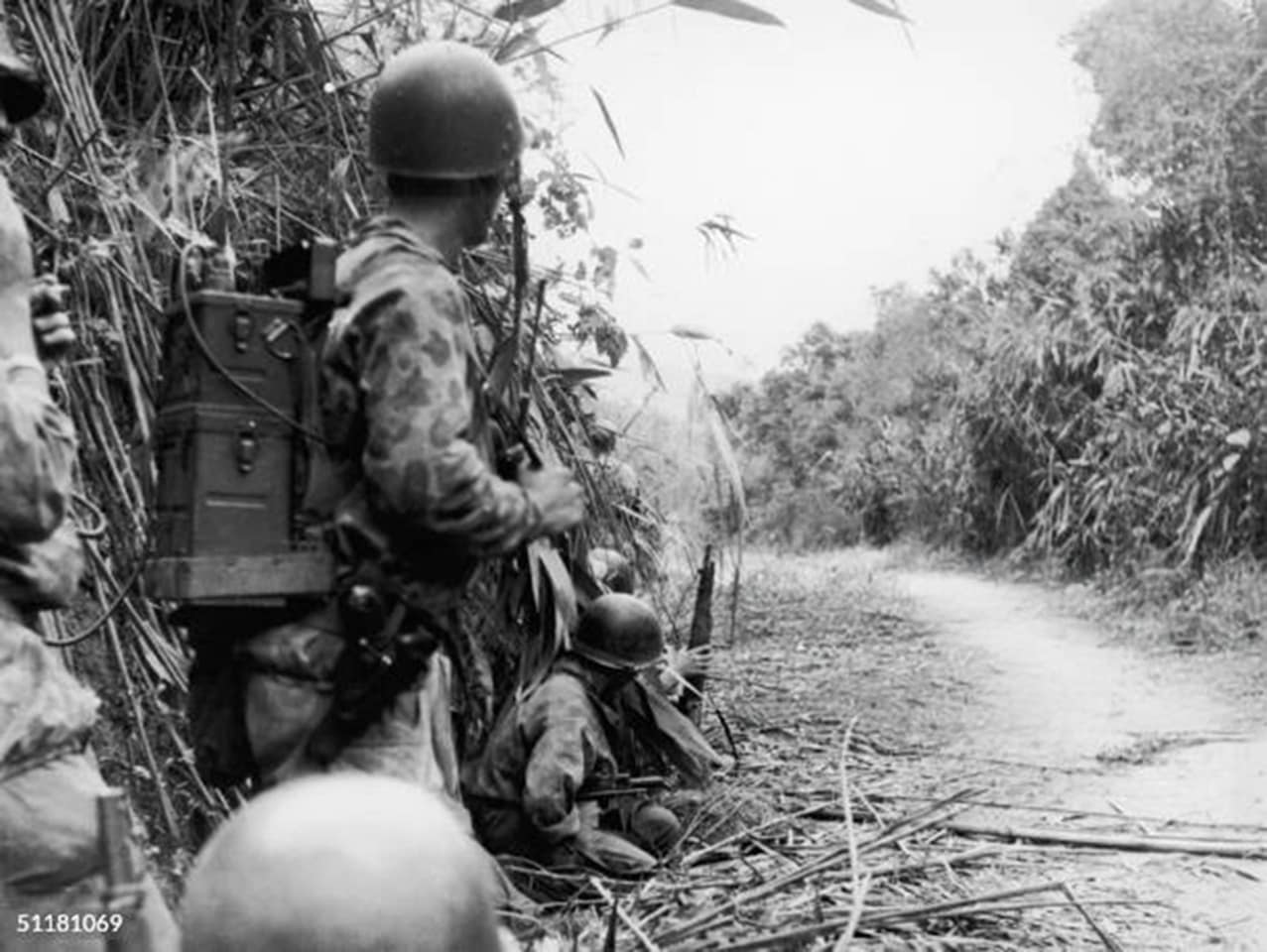
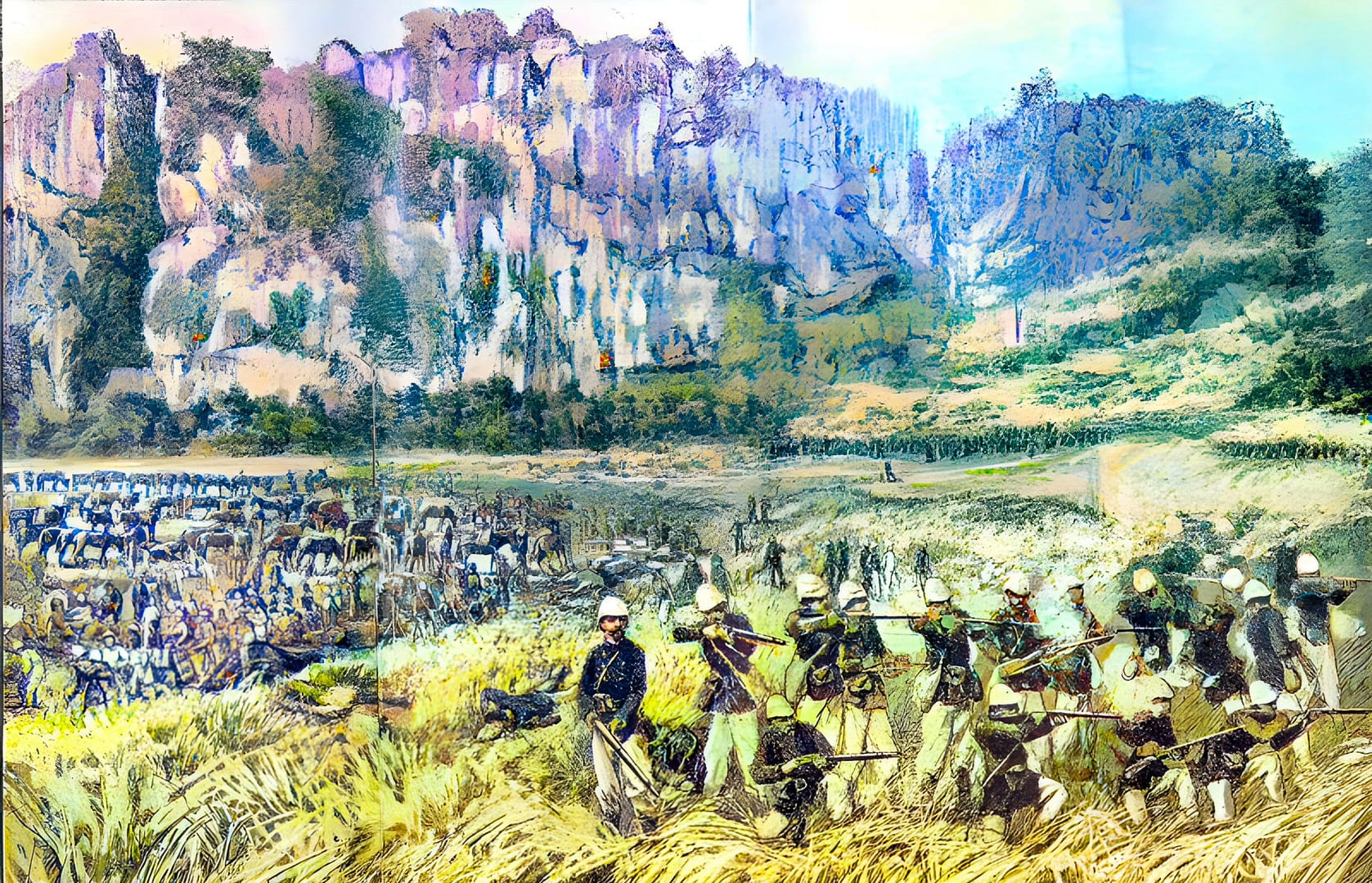
The Giovanninelli Column halts beside the Claire River during the 300km relief march from Lang Son to Tuyen Quang, February/March 1885.
Walking the battlefields of the Tonkin Campaign and Sino-French War
The Tonkin Campaign was the dramatic opening phase of France’s conquest of northern Vietnam, fought across the Red River Delta, the upland valleys of the Thái and Nùng peoples, and the rugged borderlands near Lạng Sơn and Cao Bằng. What began as a limited intervention to secure French commercial interests quickly escalated into a multi-year struggle involving regular French troops, colonial units, naval fusiliers, Foreign Legion companies, Tonkinese auxiliaries, the Black Flag Army, and the Qing dynasty’s southern frontier forces.
Early operations and the push into the Delta
After the seizure of Hanoi in 1882 and the battles at Gia Cuc (March 1883) and Paper Bridge (May 1883), France sought to break the power of Liu Yongfu’s Black Flag Army. Actions at Phủ Hoài (August 1883) and Sơn Tây (December 1883) showed how difficult this would be. Dense villages, paddy fields, dikes, canals and fortified hamlets created a defensive landscape in which the Black Flags fought with determination and deep local knowledge. The siege and assault on Sơn Tây marked one of the hardest battles of the early campaign. Ominously, these actions increasingly drew in regular Chinese forces from the Guangxi and Yunnan Armies.
The Lạng Sơn campaign and clashes with China
The Ambush at Bac Le in June 1884 breached the treaty between France and China, leading to a major escalation. A French garrison was besieged by Black Flag and Yunnan Army forces at Tuyen Quang, while the bulk of French forces advanced on Lạng Sơn to secure the border region. The Siege of Tuyen Quang was lifted after Colonel Laurent Giovanninelli’s 1st Brigade conducted a 300km march and fought a brutal battle at Hoa Moc, just south of Tuyen Quang. The campaign saw French troops advancing through jungle-clad ridges and steep passes toward the border fortress at Đồng Đăng. While the capture of Lạng Sơn strengthened French control of the frontier, defeats and miscommunication during the retreat from Lạng Sơn triggered the political crisis known as the Tonkin Affair.
Methodology
BattlefieldTravels analyses the Tonkin Campaign through firsthand terrain-focused fieldwork, period maps, Qing and French archival sources, and detailed study of the campaign’s operational routes—including Sơn Tây, Bắc Lệ, Hòa Mộc, Lạng Sơn, Đồng Đăng and the Red River corridor. The emphasis is on understanding how terrain, command culture, firepower, fortifications and local forces shaped this pivotal colonial war.
Battle Studies in the Tonkin Campaign
Below are all current BattlefieldTravels studies for the Tonkin Campaign, covering key battles, campaign phases and associated sites. New studies are added as further battlefields are walked and analysed.
The Battle of Hòa Mộc Was the fiercest and most costly battle of the Sino-French War. The battle was fought just a few kilometres south of besieged Tuyên Quang, as Colonel Laurent Giovanninelli’s 3,400 man force made a 300 km forced march to relive the siege, and cleared the final Black Flag position between themselves…
From November 1884 to March 1885, 630 French troops of the Foreign Legion, Marines and Tonkinese Riflemen, held the citadel of Tuyên Quang against a force of 15,000 Chinese and Black Flag Army troops. Their endurance, and Colonel Giovanninelli’s epic relief march, made the siege one of the Foreign Legion’s most legendary battles.
In June 1884, a French column under Lieutenant Colonel Alphonse Dugenne, comprised of about 465 French troops and 284 Tonkinese auxiliaries, with a supply column of local ‘coolies’ and baggage mules, was attacked by a much larger Chinese regular force near Bắc Lệ, on the road from Phu-Lang-Thuong to Lang Son. The attack was the…
The Son Tay Campaign in December 1883 was part of a series of escalatory conflicts between Chinese and French colonial forces in Tonkin (northern Vietnam) over teh period 1873-1885. For the French, the main protagonist was Liu Yongfu’s Black Flag Army, although Chinese regular forces played an increasing role as the conflict developed. Vietnamese forces…
Authored by Mick Prictor, a retired military officer with 40 years’ service, and a military historian specialising in terrain-focused analysis of tactics, doctrine, and command decision-making in land warfare. His work draws on extensive battlefield fieldwork—more than 280 sites worldwide—and one of the world’s largest private collections of historic military arms, uniforms, and equipment. About me
⚔️ Go deeper — Members get exclusive access to the Deep Research Collection, Field Notes, and monthly Research Dispatches. Try membership free for 7 days, cancel anytime. From $9/month.
The Tonkin Campaign was France’s military conquest of northern Vietnam, involving battles against the Black Flag Army, Vietnamese forces and, later, the Qing dynasty’s southern frontier troops.
Why were the Black Flags so effective?
Many were experienced in combat from the Taiping War, and they exploited dense delta terrain—villages, hedgerows, canals, dikes and fortified hamlets—combined with strong local support and a talent for ambush and defensive warfare.
What were the key battles of the campaign?
Major actions include Phủ Hoài, Palan, Sơn Tây, Bắc Ninh, Bắc Lệ, Hòa Mộc, Lạng Sơn and Đồng Đăng.
How did China become involved?
Qing troops covertly supported the Black Flags and later entered the war openly, leading to pitched battles along the frontier during 1884–85.
How does BattlefieldTravels analyse Tonkin Campaign battlefields?
Through GIS terrain modelling, period French and Qing maps, on-site reconnaissance and comparative study of French, Vietnamese and Chinese primary sources.
Subscribe to Battlefield Travels and receive a free E-Book Battlefield Guide
Unlock expert battlefield analysis, campaign reconstructions, and historical insights drawn from firsthand exploration and primary sources.
🗺️ You’ll receive:
🎖️ Exclusive historical insights you won’t find elsewhere
📘 A free eBook: 10 Tips for Exploring Historic Battlefields
📰 New battlefield studies straight to your inbox as they are published
Claim Your Free Battlefield Travel Guide
Get your free e-book, exclusive tips, and updates on new battlefield studies.
Thank you!
You have successfully joined our subscriber list.
⚔️ Go deeper — Members get exclusive access to the Deep Research Collection, Field Notes, and monthly Research Dispatches. Try membership free for 7 days, cancel anytime. From $9/month.
Reconstructing French Indochina War battlefields through terrain analysis, primary sources and on-site research
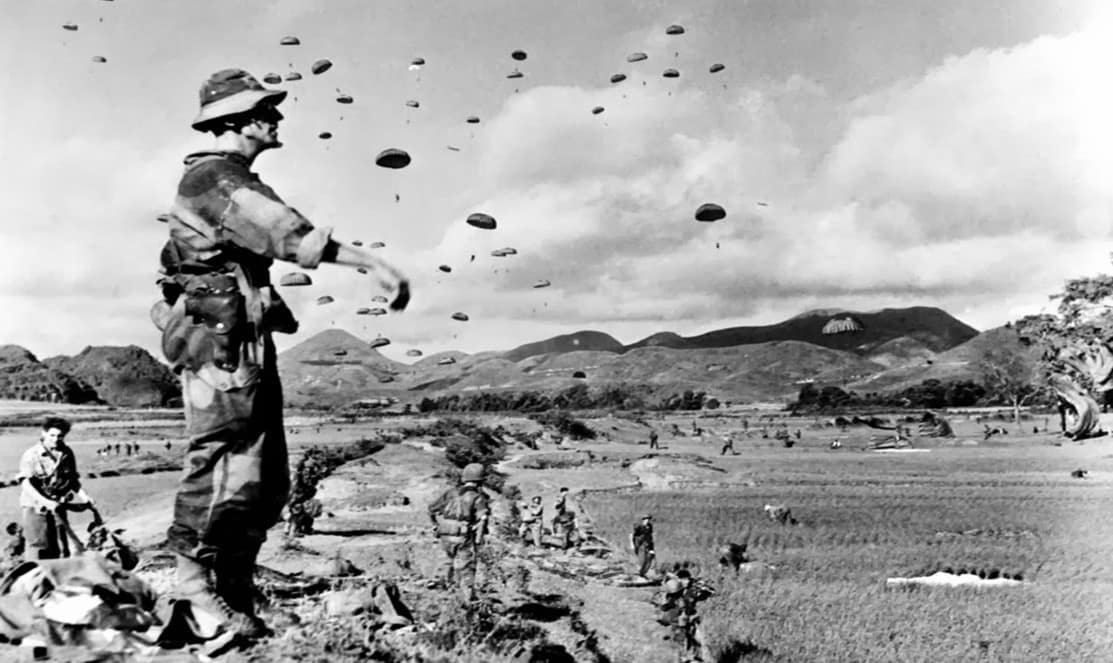
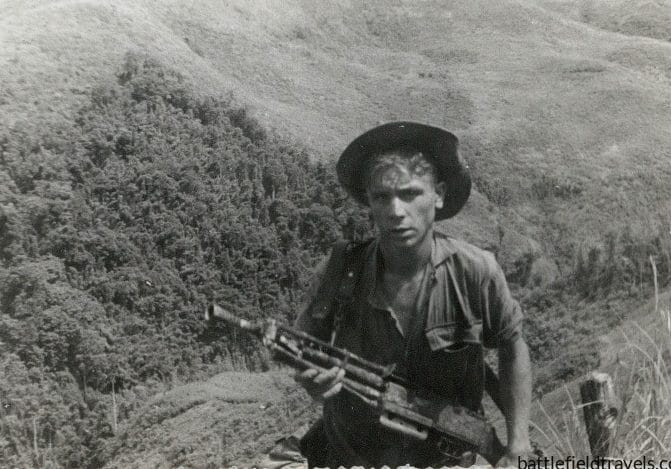
Major Marcel Bigeard’s 6th Colonial Parachute Battalion overlooking the drop zone at Tu Le, October 1952
Walking the battlefields of the French Indochina War (1946–1954)
The French Indochina War was an eight-year conflict fought across the mountains, jungles, deltas and colonial road networks of Vietnam, Laos and Cambodia. At its heart was a struggle between the expeditionary French CEFEO forces—operating from fixed bases, airborne groupings and vulnerable lines of communication—and the Viet Minh, who combined political mobilisation with an increasingly capable and unified field army.
Pattern of conflict
In the early years, the French relied on mobile columns, fortified outposts and riverine units to impose control across Tonkin and the northern highlands. In October 1947, the French attempted an audacious three=pronged decapitation strike directly into the Viet Bac (Viet Minh heartland) in Operation LEA. Engagements such as Phu Tong Hoa (1948) illustrate the limits of these methods. When isolated posts were attacked at night, on broken terrain, or along single-axis approach routes, French units often found themselves outmanoeuvred by numerically superior Viet Minh forces that had better access to intelligence and understood every ridge, track, and stream.
The turning point came with the RC4 campaign (1950), where the evacuation of Cao Bang and the loss of Dong Khê triggered a cascading defeat along Route Coloniale 4. The battles in the That Khê–Dong Khê corridor showcased the decisive influence of terrain, infiltration tactics and French command-and-control failures. The destruction of the Bayard column marked the collapse of France’s northern frontier strategy.
In the later phase of the war, the French sought to regain the initiative through airborne bases and “hedgehog” strongpoints. This culminated in Dien Bien Phu (1954), where Giáp transformed a remote valley into a siege battlefield, employing artillery, logistics networks and trench systems on an unprecedented scale.
Methodology
BattlefieldTravels examines these campaigns through on-site reconnaissance, GIS terrain modelling, archival maps and operational-level analysis—revealing how terrain, doctrine, logistics and command culture shaped the outcome of France’s final colonial war.
French Indochina War Battlefield Studies
In-depth battlefield analyses based on terrain, primary sources, and on-the-ground exploration.
In the autumn of 1947, the French Far East Expeditionary Corps launched Operation LÉA, one of the most audacious operations of the Indochina War. The operation aimed to strike deep into the Việt Bắc, the mountainous sanctuary of northern Tonkin, with the explicit objective of capturing Hồ Chí Minh, dismantling the enemy’s political and military…
The Battle of Phủ Thông Hoá was a small but significant milestone in the French Indochina War. For the French Foreign Legion, it was yet another heroic but costly defence of an isolated outpost against overwhelming odds. The battle entered Legion folklore alongside legendary stands like Camerone and Bir Hakeim. Although the Legion retained control…
The Battle of Route Coloniale No. 4 (Cao Bang Ridge Disaster) was one of the worst military defeats in the history of colonial wars, with a French force of ~6,000 troops destroyed. The battle took place along a 137km section of RC4 between Lang Son in the south and Cao Bang in the north. The…
Operation HIRONDELLE, 17 July 1953. The French High Command in Indo-China, acting on time-sensitive intelligence, deployed 2000 paratroopers more than 100km behind enemy lines, destroyed a major Viet Minh logistic hub, then deployed another parachute battalion, a mechanised brigade, and a Naval task force to get them out again. All in the space of 72…
It is difficult to understand the French decision in November 1953 to insert a divisional-sized force into the remote highlands of northern Vietnam. Although the force comprised only about 5% of the French expeditionary forces in Indo-China, it was the best 5%, and ultimately included most of the available parachute battalions from the strategic reserve.
April 2025. Ba Khe, near the village of Cát Thịnh, Yên Bái Province, Vietnam. I am exploring the old Route Coloniale 13 west of Yen Bai, retracing the ground fought over during the October 1951 battle for Nghĩa Lộ. This is steep, broken country. The road winds through narrow valleys, overlooked by sharply rising hills,…
April 2025. Nà Sản, Vietnam. Our next stop was at the old fortified ‘hedgehog’ of Nà Sản, just east of Son La. The French and Viet Minh fought a massive battle here in late 1952, the outcome of which convinced the French that holding a remote airbase and using superior French firepower to defeat enemy…
April 2025. Tu Lê Valley, Yên Bái Province, Vietnam. I am exploring the site of Major Marcel Bigeard and 6e Bataillon Colonial de Parachutistes (6e BPC) epic stand and fighting withdrawal from Tu Lê in October 1952. In my personal collection, I have a 6e BPC paratroopers beret, so I brought it back here to…
Authored by Mick Prictor, a retired military officer with 40 years’ service, and a military historian specialising in terrain-focused analysis of tactics, doctrine, and command decision-making in land warfare. His work draws on extensive battlefield fieldwork—more than 280 sites worldwide—and one of the world’s largest private collections of historic military arms, uniforms, and equipment. About me
⚔️ Go deeper — Members get exclusive access to the Deep Research Collection, Field Notes, and monthly Research Dispatches. Try membership free for 7 days, cancel anytime. From $9/month.
The French Indochina War (1946–1954) was France’s attempt to reassert control over Vietnam, Laos and Cambodia after the Second World War. It evolved from a counterinsurgency campaign into a full-scale war against the Viet Minh, who combined political mobilisation with increasingly capable conventional forces.
What were the most significant campaigns of the war?
Key campaigns include Phu Tong Hoa (1948), the RC4 border battles and the collapse around Dong Khê and That Khê (1950), the Hoa Binh and Na San operations (1951–52), and the climactic siege at Dien Bien Phu in 1954.
Why was RC4 such a decisive turning point?
RC4 exposed the fragility of France’s far-flung posts and vulnerable road networks. The destruction of the Bayard column, combined with Viet Minh control of the high ground and infiltration routes, forced a rethink of the entire northern frontier strategy.
How did the Viet Minh defeat French forces at Dien Bien Phu?
General Giáp built an enormous logistics system, moved artillery into concealed firing positions and encircled the French strongpoints with trench networks. Superior terrain adaptation, artillery placement and manpower ultimately overwhelmed the garrison.
How does BattlefieldTravels analyse Indochina War battlefields?
Through on-site reconnaissance, GIS terrain modelling, archival French and Viet Minh sources, and detailed operational analysis—tracking how terrain, doctrine, logistics and command culture shaped each engagement.
Subscribe to Battlefield Travels and receive a free E-Book Battlefield Guide
Unlock expert battlefield analysis, campaign reconstructions, and historical insights drawn from firsthand exploration and primary sources.
🗺️ You’ll receive:
🎖️ Exclusive historical insights you won’t find elsewhere
📘 A free eBook: 10 Tips for Exploring Historic Battlefields
📰 New battlefield studies straight to your inbox as they are published
Claim Your Free Battlefield Travel Guide
Get your free e-book, exclusive tips, and updates on new battlefield studies.
Thank you!
You have successfully joined our subscriber list.
⚔️ Go deeper — Members get exclusive access to the Deep Research Collection, Field Notes, and monthly Research Dispatches. Try membership free for 7 days, cancel anytime. From $9/month.
From November 1884 to March 1885, 630 French troops of the Foreign Legion, Marines and Tonkinese Riflemen, held the citadel of Tuyên Quang against a force of 15,000 Chinese and Black Flag Army troops. Their endurance, and Colonel Giovanninelli’s epic relief march, made the siege one of the Foreign Legion’s most legendary battles.
The Battle of Phủ Thông Hoá was a small but significant milestone in the French Indochina War. For the French Foreign Legion, it was yet another heroic but costly defence of an isolated outpost against overwhelming odds. The battle entered Legion folklore alongside legendary stands like Camerone and Bir Hakeim. Although the Legion retained control of the post, it was abandoned a few months later as part of a broader strategic withdrawal.
For the Viet Minh, however, Phủ Thông Hoá held even greater significance. It marked the first time they had attempted a coordinated assault on a fortified French position.
The Battle of Route Coloniale No. 4 (Cao Bang Ridge Disaster) was one of the worst military defeats in the history of colonial wars, with a French force of ~6,000 troops destroyed. The battle took place along a 137km section of RC4 between Lang Son in the south and Cao Bang in the north. The French attempted to evacuate the Cao Bang garrison with support from a relief column. Both forces were destroyed in the jungle-covered mountains around Dong Khé.