Skip to content
Home » French Army

French Army

Covering centuries of European and colonial conflict, this tag brings together battle studies and references involving the French Army, its evolving doctrine, and its campaigns from early modern Europe to Indochina.

Reconstructing the D-Day landings and subsequent Normandy Campaign through terrain analysis, primary sources and on-site fieldwork
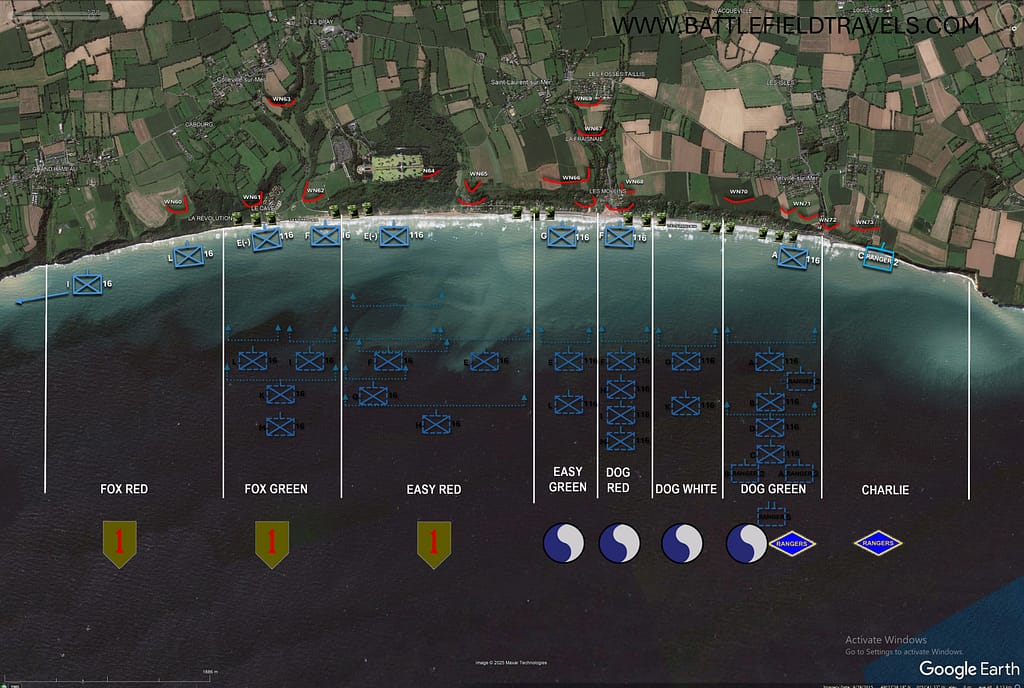
Omaha Beach, 1st Landing wave - 0635 hours
Omaha Beach, 1st Landing wave – 0635 hours
EXPLORE: BATTLES | WEAPONS & EQUIPMENT | READING | QUIZ

Key facts

🗺️ D-Day & the Normandy Landings, 6 June 1944
⚔️ Conflict: World War Two – Western Front
🪖 Major Allied forces: US First Army; British Second Army; US 82nd and 101st Airborne Divisions; British 6th Airborne Division
🪖 Major German forces: German Seventh Army; 84th Army Corps; 716th Infantry Division, 352nd Infantry Division and 21st Panzer Division
⭐ Principal Allied commanders: Dwight D. Eisenhower; Bernard Montgomery; Omar Bradley; Miles Dempsey
⭐ Principal German commanders: Gerd von Rundstedt; Erwin Rommel; Friedrich Dollmann
🎯 Strategic objective: Establish an Allied lodgement in Normandy for the liberation of north-west Europe
📌 Outcome: Allied victory; five beachheads established and airborne flanks secured, opening the Battle of Normandy.


🧭🥾 Walking the D-Day battlefields

Some aspects of the Normandy battlefields only become apparent when you walk the ground. The enormous distance across the exposed beaches at low tide, the surprisingly shallow folds and depressions that offered troops a way off Omaha Beach, and the importance of slightly raised roads across the flooded ground behind Utah are difficult to appreciate from maps and photographs alone.

I have spent many days exploring these battlefields: walking the beaches and exits, following the flooded lowlands and causeways, tracing airborne drop zones and glider landing grounds, climbing the bluffs above Omaha, and following the hedgerows, sunken lanes and narrow roads through which troops had to move inland. I have also stood where photographers stood on D-Day and in its immediate aftermath, capturing hundreds of ‘Then and Now’ images that help relate the surviving landscape to the events of 1944.

The invasion is often presented as five beaches and two airborne landings, but on the ground these were interconnected terrain problems. Beach exits determined where troops and vehicles could move inland; bridges and causeways became key terrain; villages controlled road networks; and apparently minor fields, hedgerows and folds in the ground shaped individual actions. At Pegasus Bridge, La Fière, Brecourt Manor and Omaha Beach, small pieces of terrain assumed importance far beyond their physical size.

This campaign study brings those pieces together. It follows the landings from the first gliders at Pegasus Bridge through the airborne operations, the five assault beaches and the fighting to consolidate the lodgement, linking the wider invasion plan to the individual battlefields I have explored on the ground.
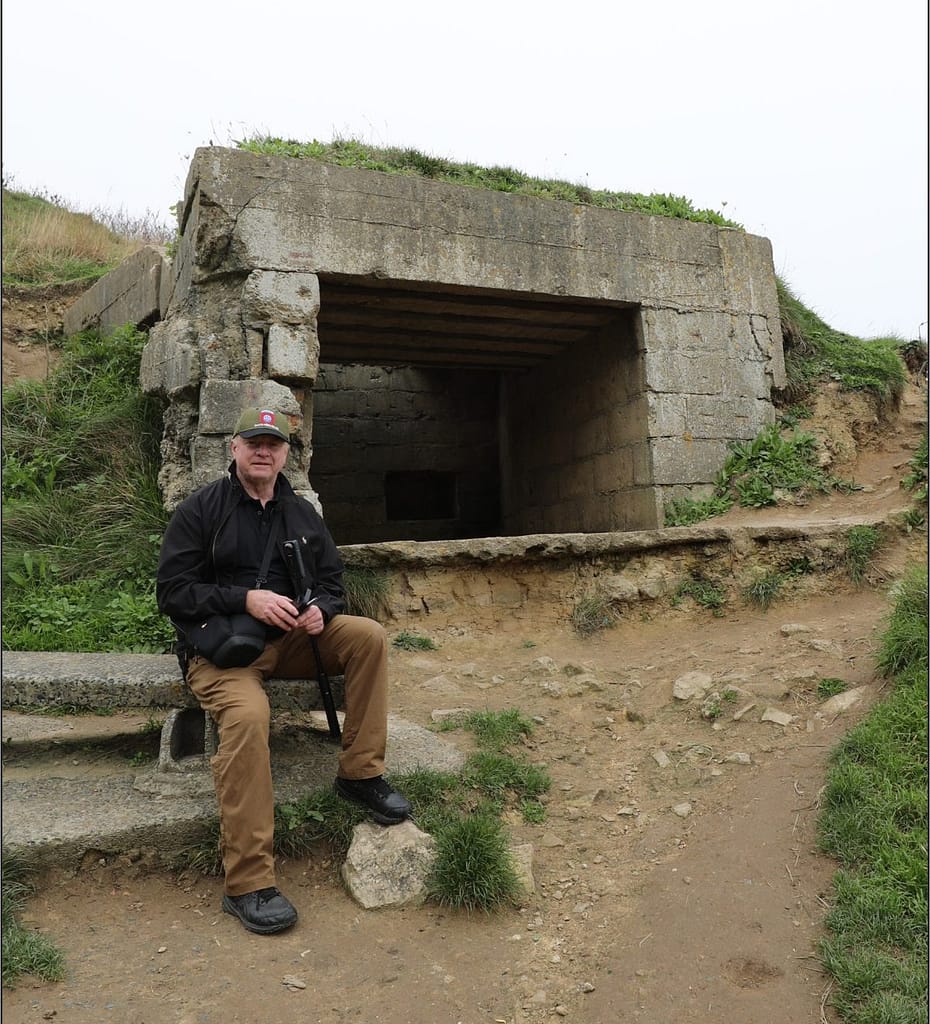
Omaha Beach WN73 Bunker
Bunker WN73, Vierville Draw, Omaha Beach

Normandy, 1944: Campaign Overview

Strategic Context: Operation Overlord

By the spring of 1944, the Western Allies had assembled the forces required to return to northwest Europe. Operation Overlord was intended to establish a secure lodgement in Normandy from which Allied armies could build up their strength, capture the ports and communications needed to sustain the campaign, and ultimately advance into Germany. Normandy offered suitable landing beaches within range of Allied air power and was less heavily defended than the Pas-de-Calais. An elaborate deception plan reinforced German expectations that the main invasion would fall farther north.

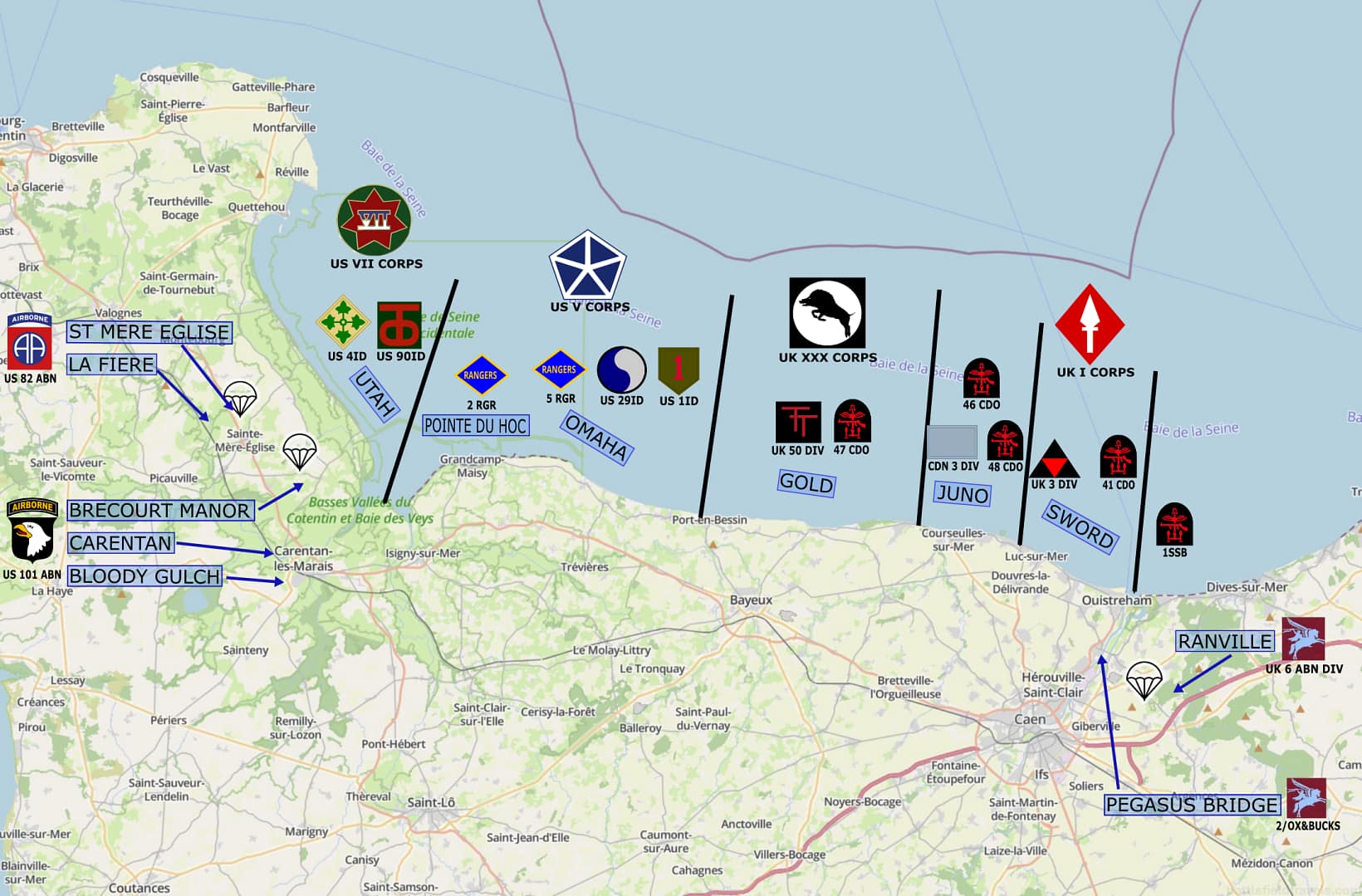
The invasion plan combined five amphibious assault beaches with airborne landings on both flanks. American forces would land at Utah Beach and Omaha Beach in the west, with the US 82nd and 101st Airborne Divisions securing the Cotentin approaches behind Utah. British and Canadian forces would land at Gold, Juno and Sword Beaches, while the British 6th Airborne Division protected the eastern flank beyond the Orne River. Naval gunfire, tactical air power and airborne operations were intended to isolate the battlefield and prevent German forces from destroying the lodgement before Allied strength could be built ashore.

Terrain was fundamental to the plan. Flooded lowlands restricted movement behind Utah; steep bluffs dominated Omaha; fortified coastal positions covered the beach exits. Rivers, canals, villages, ridgelines and the dense Norman bocage channelled movement inland. Beyond the enormous challenges of getting tens of thousands of troops and their equipment ashore, the Allies had to seize the terrain that would allow the five beachheads to survive and eventually become a single lodgement.

Pegasus Bridge: The first assault

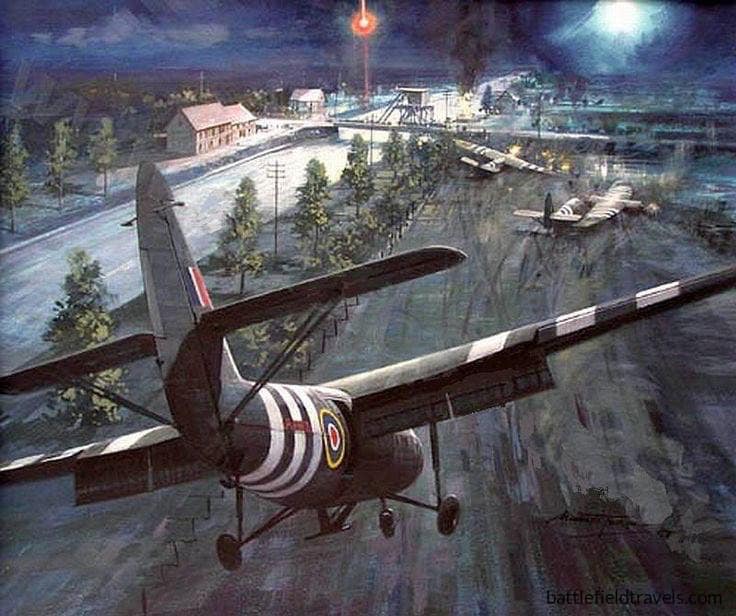
Ground combat began shortly after midnight on 6 June. At the eastern extremity of the invasion beaches, six Horsa gliders carried Major John Howard’s coup-de-main force on a silent approach to seize the two bridges spanning the Caen Canal and Orne River. Both crossings had to be captured intact. Their destruction would impede the advance from Sword Beach, while losing them to a German counterattack could expose the invasion’s eastern flank.

The Pegasus Bridge coup de main achieved extraordinary tactical surprise. Howard’s leading gliders landed within metres of the Caen Canal bridge, allowing the airborne troops to overwhelm the defenders before they could fire their demolition charges. The Orne River bridge was also secured. The problem then shifted from seizure. Howard’s small force had to hold the crossings until reinforced by the remainder of 6th Airborne Division and, eventually, heavier forces advancing inland from Sword Beach.
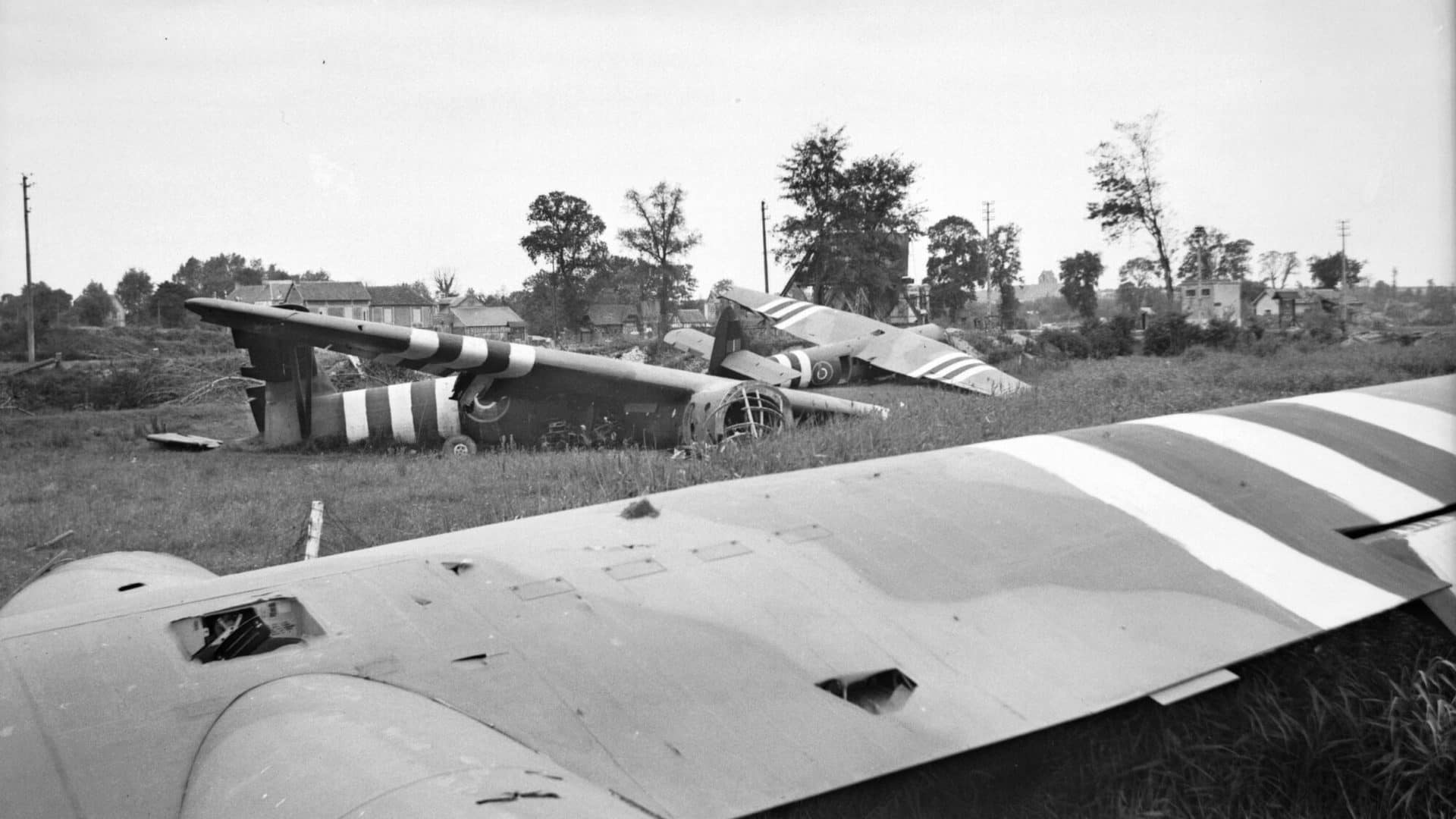
Pegasus Bridge, view over all Glider No. 2, Glider No. 1 and the Benouville Bridge visible in the background.

Ranville and Merville: Securing the eastern flank

East of the Orne, the remainder of the British 6th Airborne Division landed by parachute and glider across a scattered series of drop and landing zones. Its tasks included destroying bridges over the River Dives, securing the high ground around Ranville and preventing German forces east of the Orne from interfering with the invasion beaches.

One of the most difficult objectives was neutralising the German coastal battery at Merville, whose guns were believed capable of firing on Sword Beach. Lieutenant Colonel Terence Otway’s 9th Parachute Battalion attacked despite severe dispersal during the airborne drop and the loss of much of its specialist equipment. The wider 6th Airborne Division operations at Ranville and Merville established a defensive bridgehead east of the Orne that would become the Allied invasion’s exposed eastern flank.

The British airborne operation therefore accomplished more than the spectacular seizure of Pegasus Bridge. It created a barrier between the invasion beaches and German forces approaching from the east, while preserving the crossings through which the airborne bridgehead could be reinforced.
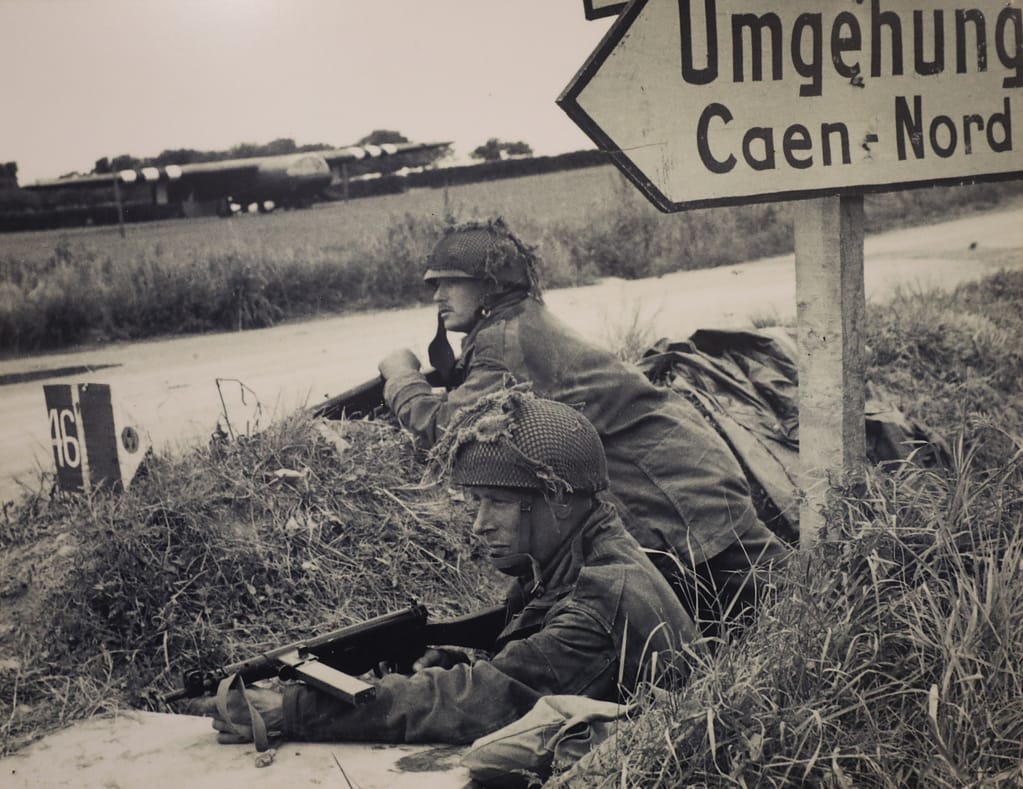
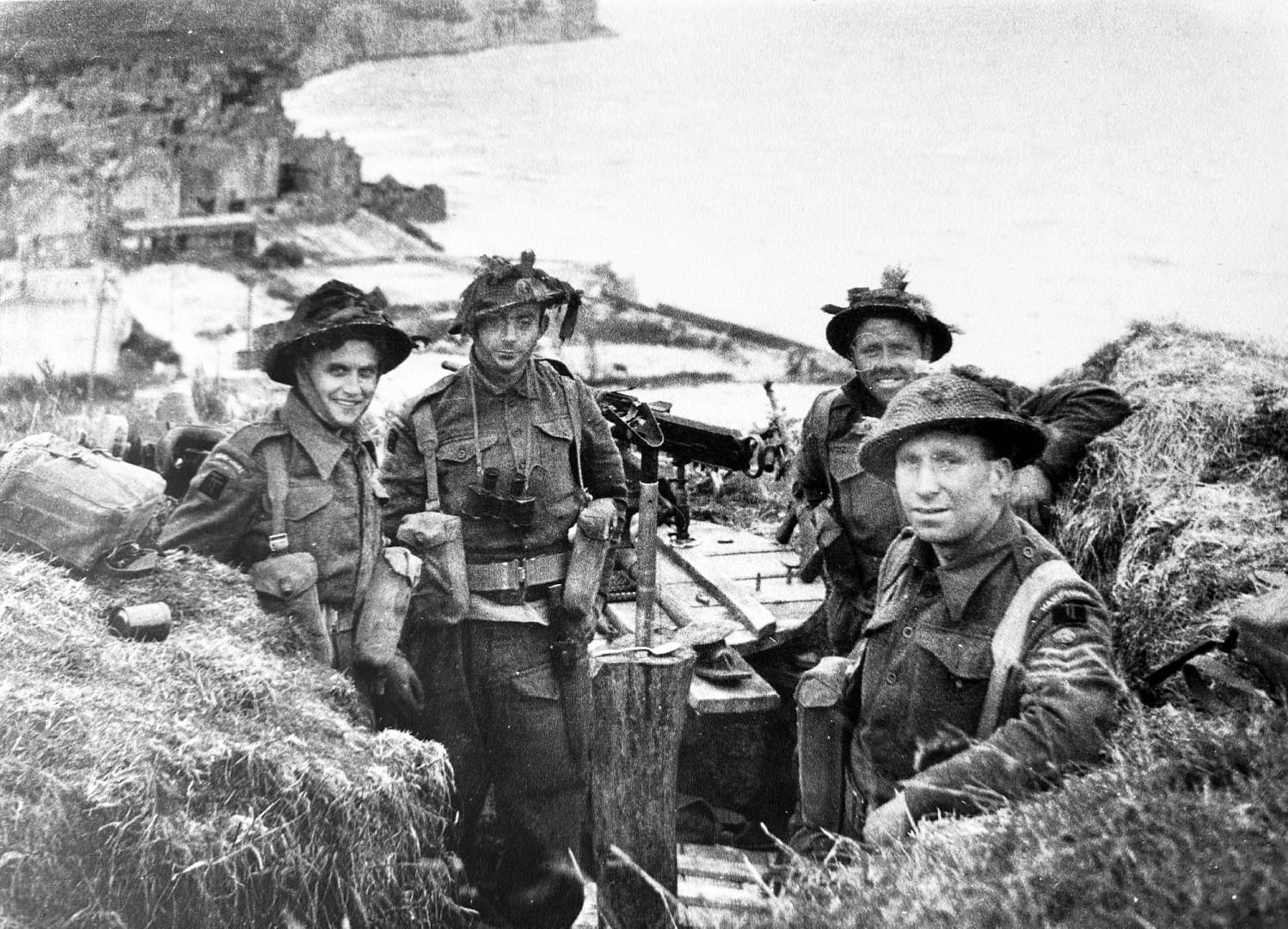
6th Airborne DIvision troops defending Ranville
6th Airborne Division troops defending Ranville

The American airborne operations: Securing the western flank

101st Airborne Division – Mission ALBANY

At the western end of the invasion area, the US 82nd and 101st Airborne Divisions descended into a very different landscape. German forces had deliberately flooded large areas behind Utah Beach, which meant villages and a small number of raised roads and causeways acquired disproportionate tactical importance. Scattered drops fragmented many airborne units, but also placed American paratroopers across the German rear areas.

The 101st Airborne Division was tasked principally with securing the four western exits from Utah Beach and disrupting German movement toward the invasion area. Paratroopers rallied in improvised groups and fought through the villages and hedgerows behind the coast. Near Sainte-Marie-du-Mont, Lieutenant Richard Winters led a small force from Easy Company, 506th Parachute Infantry Regiment, in the assault on the German battery at Brecourt Manor, eliminating guns that could fire toward the Utah Beach exits.

The fighting behind Utah Beach also marked the beginning of Easy Company’s combat experience in Normandy. From the scattered airborne landings and the assault at Brecourt Manor, the company’s route continued through Carentan and Bloody Gulch. The Easy Company battles in Normandy form part of a wider battlefield series following the company from D-Day through the Netherlands, Bastogne and the final advance into Germany and Austria.
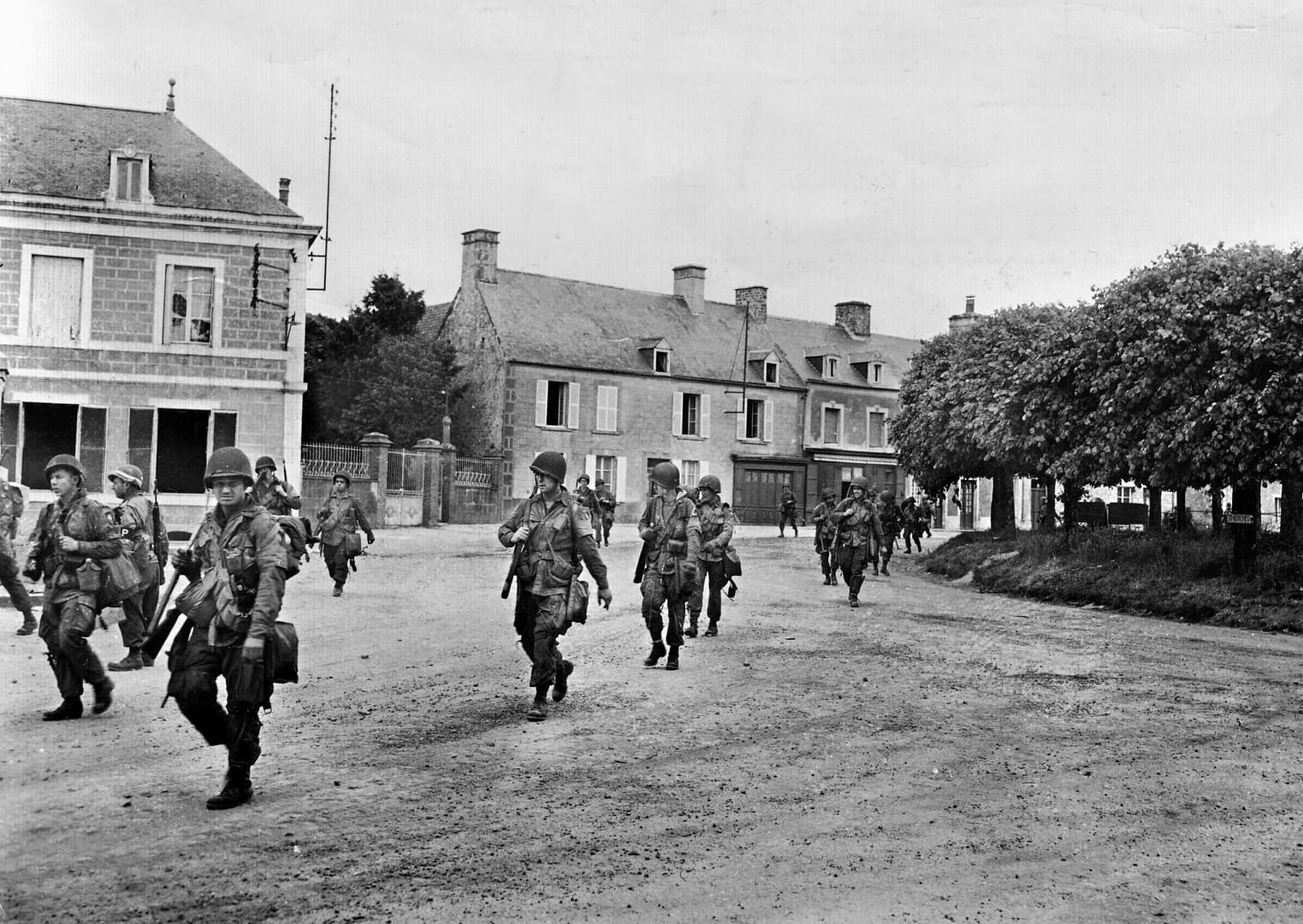
101st Airborne Division paratroopers passing through St-Marie-du-Mont, June 1944

82nd Airborne Division – Mission BOSTON

Farther north, the 82nd Airborne Division fought to secure the approaches around Sainte-Mère-Église, one of the critical road centres behind the invasion beaches. To its west, the battle for La Fière Causeway developed into a prolonged struggle for one of the few routes across the flooded Merderet valley. Here, a seemingly minor bridge and narrow raised causeway became key terrain because the surrounding inundations channelled all movement onto very few routes.

The American airborne landings were therefore inseparable from the Utah operation. By occupying road junctions, causeways and beach exits, disrupting German communications and forcing German units to fight inland, the paratroopers helped prevent a coordinated response against the troops coming ashore.
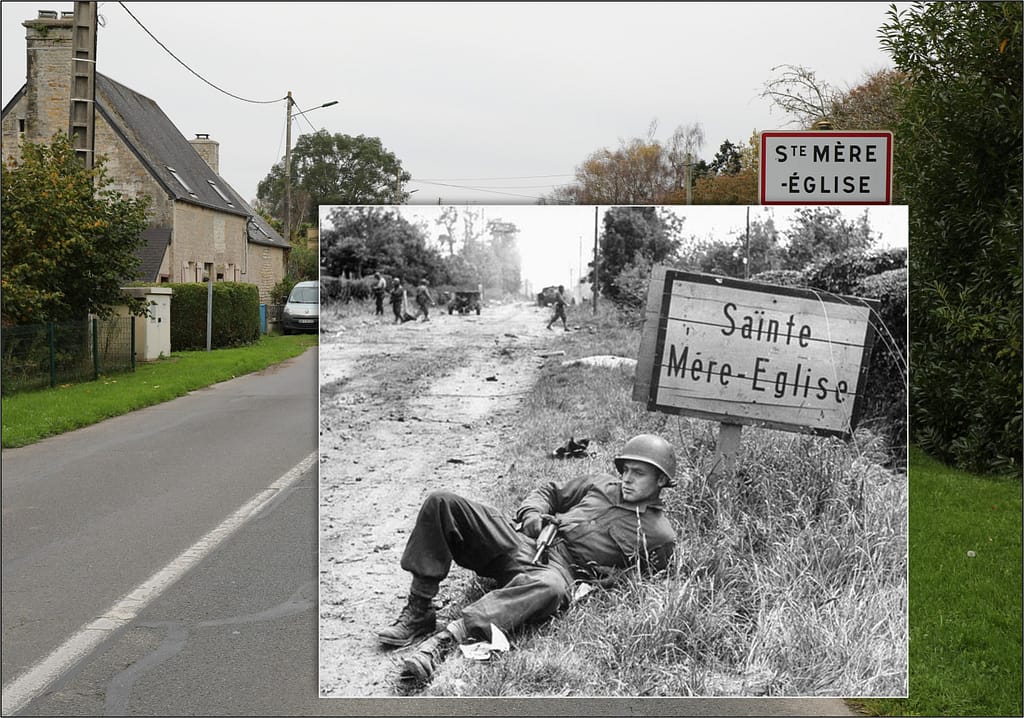
Then and now - 1944 and 2024. An American paratrooper on the southern entry into Sainte-Mere Eglise
Then and now – 1944 and 2024. An American paratrooper on the southern entry into Sainte-Mere Eglise

The success of the landings on 6 June did not immediately create a continuous Allied foothold. Utah and Omaha remained separated, and the road and rail centre of Carentan stood astride the communications connecting the two American beachheads. Capturing it became essential to consolidating the western lodgement.

Elements of the 101st Airborne Division advanced toward the town through flooded country and along exposed causeways before engaging the German defenders on its approaches and within the town itself. The Battle for Carentan continued the airborne role beyond its original D-Day missions and helped establish the physical connection between the Utah and Omaha sectors.

The German response did not end with the loss of Carentan. Counterattacking forces struck the American positions southwest of the town, producing the confused and violent Battle of Bloody Gulch. By this stage the character of the campaign was already changing. The immediate struggle to land on the Normandy coast was giving way to a battle to hold and expand the lodgement through hedgerows, sunken roads, villages and enclosed fields.
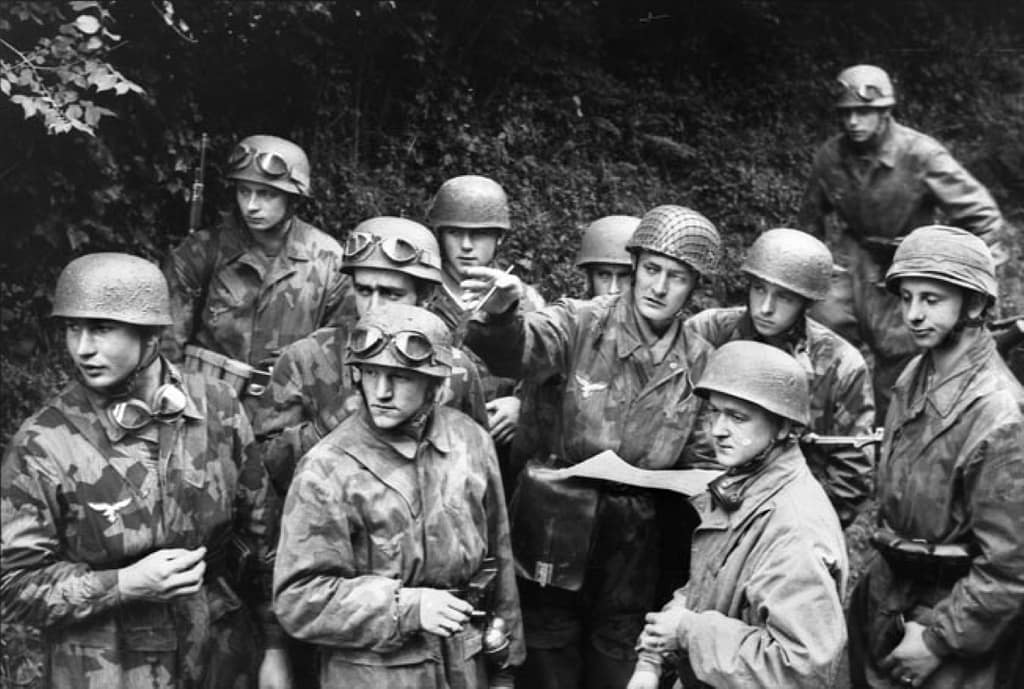
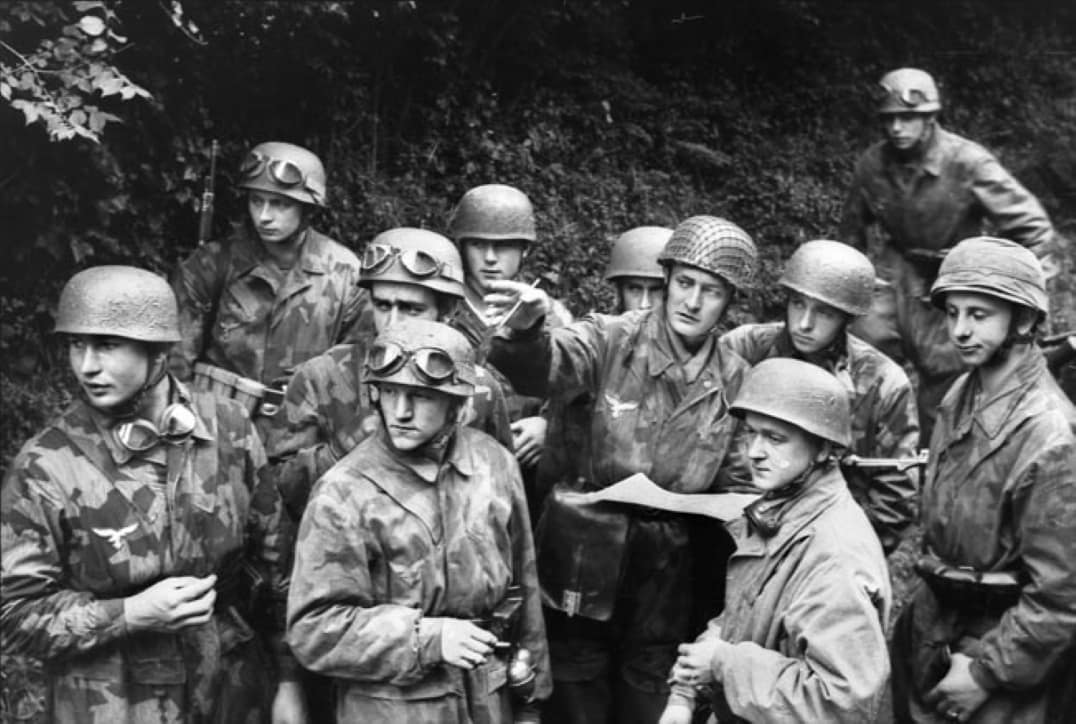
German Paratroopers from Fallschirmjäger-Regiment 6 at Carentan

Utah Beach

The westernmost amphibious landing took place on the Cotentin Peninsula. The US 4th Infantry Division came ashore at Utah Beach after currents and navigational errors carried the initial assault south of the intended landing area. The displacement proved advantageous. Resistance was lighter than at the planned landing site, and Brigadier General Theodore Roosevelt Jr famously chose to continue the operation from where the troops had landed rather than attempt to shift the assault north.

Success at Utah, however, depended on getting troops and vehicles off the coast. Flooding had transformed much of the hinterland into an obstacle, concentrating movement onto a handful of causeways. The beach landings and airborne operations therefore formed parts of a single tactical problem. As the 4th Infantry Division pushed inland, contact with elements of the 101st Airborne Division helped open the routes through the inundated ground and secure the beachhead.
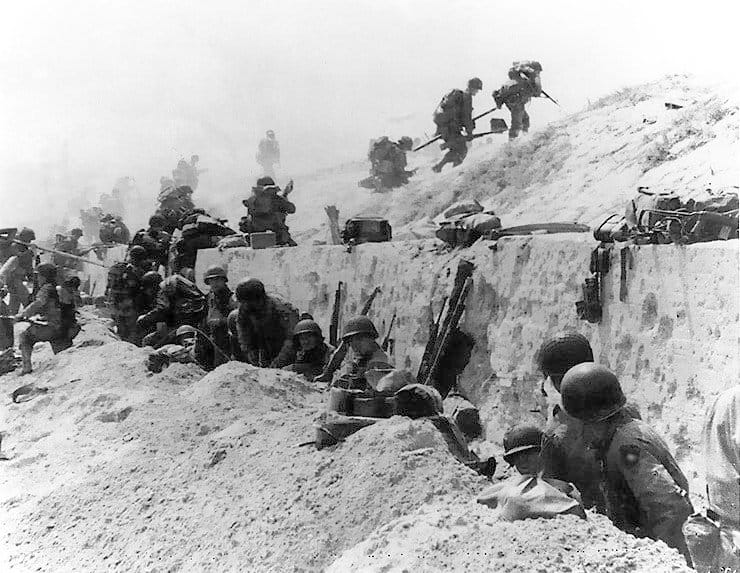
Troops of the US 4th Division move out over the seawall on Utah Beach

Pointe du Hoc

Between Utah and Omaha, cliffs dominated the coast at Pointe du Hoc. Allied intelligence identified the position as a German coastal battery capable of threatening the invasion fleet and landing beaches. Lieutenant Colonel James Rudder’s 2nd Ranger Battalion was assigned the task to neutralise the guns.

The Ranger assault on Pointe du Hoc required troops to land beneath the cliffs, scale them under fire and seize the fortified position above. The Rangers discovered that the main guns had been removed from their prepared emplacements, but patrols subsequently located and disabled them inland. Isolated on the headland, the Rangers then fought to hold their position while awaiting relief from forces advancing from Omaha.
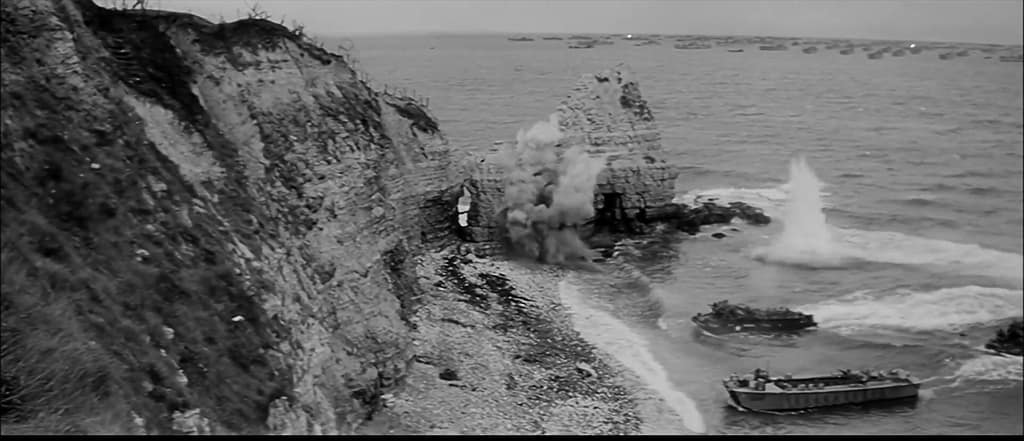
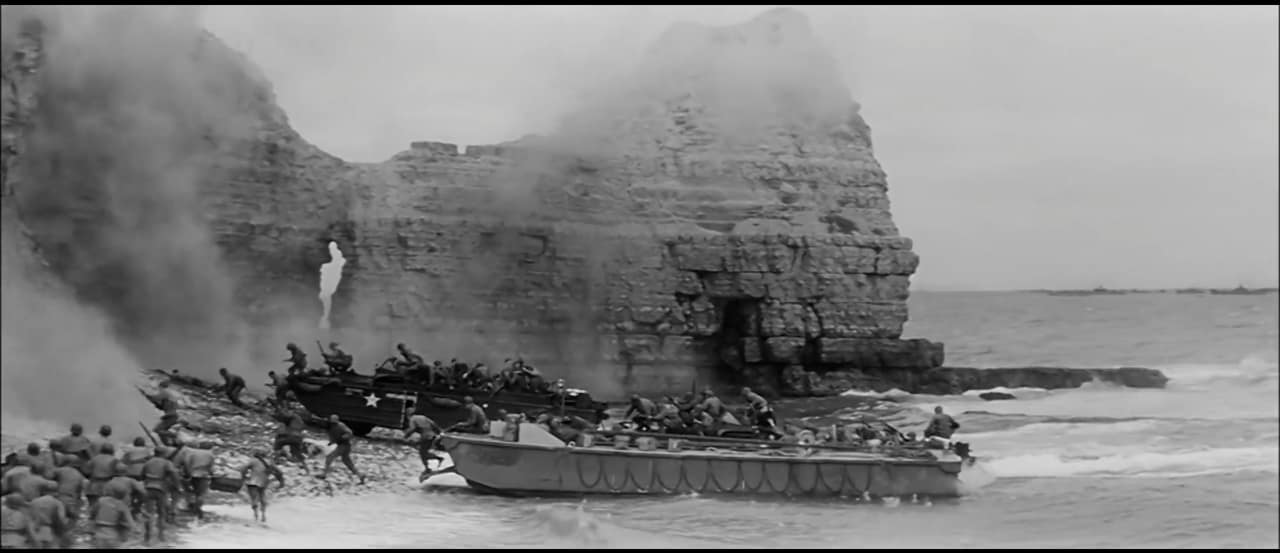
Screenshot from 'The Longest Day' shot onsite at Pointe du Hoc
Screenshot from ‘The Longest Day’ assault on Pointe du Hoc, actually shot onsite at Pointe du Hoc

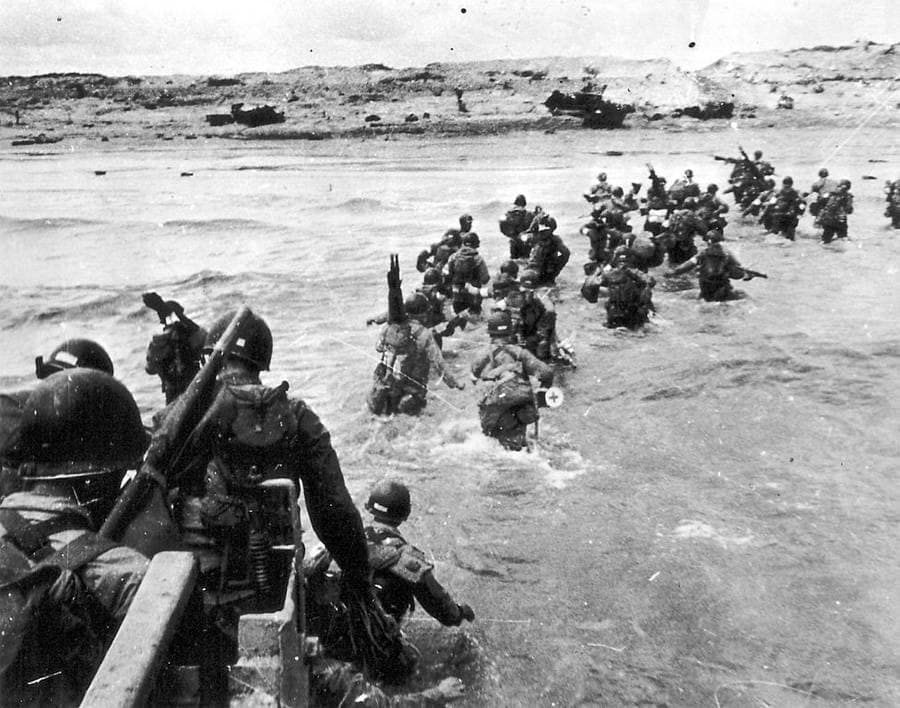
Omaha Beach

At Omaha Beach, the US 1st and 29th Infantry Divisions encountered the most formidable resistance of any of the five Allied landing beaches. The terrain magnified the problem. A broad tidal flat and exposed beach lay beneath steep bluffs, while movement inland was channelled through five beach exits covered by German strongpoints, obstacles, mines and interlocking fire.

The initial Omaha Beach landings suffered heavy casualties. Amphibious tanks were lost, units became intermixed, engineers struggled to clear beach obstacles and German fire disrupted attempts to move through the planned exits. For a time, the assault appeared dangerously close to failure.

The breakthrough came not through the smooth execution of the original plan but through local initiative. Small groups of infantry, engineers and Rangers worked their way across and above the bluffs, infiltrating between German positions and attacking strongpoints from their flanks and rear. By the end of 6 June the Omaha lodgement remained shallow and vulnerable, but American troops had broken through the coastal defences. The cost made Omaha the bloodiest of the five D-Day beaches and demonstrated how profoundly local terrain could disrupt even the most carefully prepared operational plan.

Robert F. Sargent's famous photo of Easy Company, 16th Infantry Regiment landing at FOX GREEN Sector, Omaha Beach on D-Day. Aerial shot from the same location in November 2024.
Robert F. Sargent’s famous photo of Easy Company, 16th Infantry Regiment landing at FOX GREEN Sector, Omaha Beach on D-Day. Aerial shot from the same location in November 2024.

Gold Beach

East of Omaha, the British 50th (Northumbrian) Infantry Division landed at Gold Beach. Its objectives included securing the coast between the American and Canadian sectors, capturing Arromanches and pushing inland toward Bayeux while cutting the important Caen–Bayeux road.

German strongpoints and coastal defences caused delays at several locations, but British forces penetrated inland and made substantial progress during the day. The capture of Arromanches was particularly important because the site had been selected for one of the artificial Mulberry harbours that would sustain the Allied build-up before major French ports could be secured.
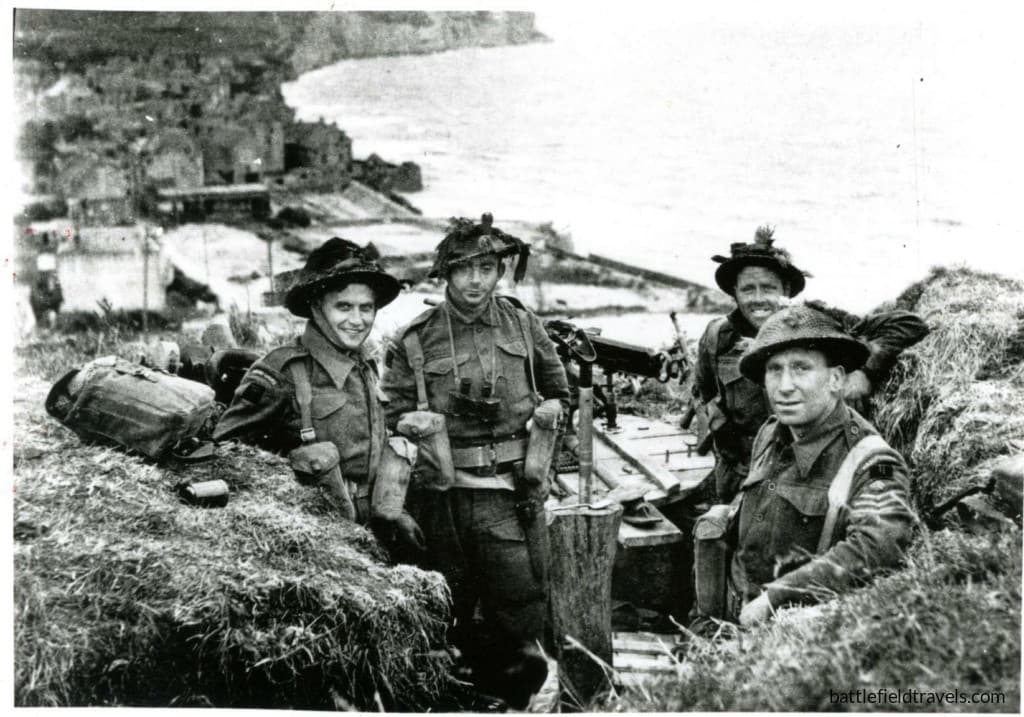
British soldiers of 1st Battalion, the Hampshire Regiment securing the high ground east of Arromanches. Arromanches visible in the background.

Juno Beach

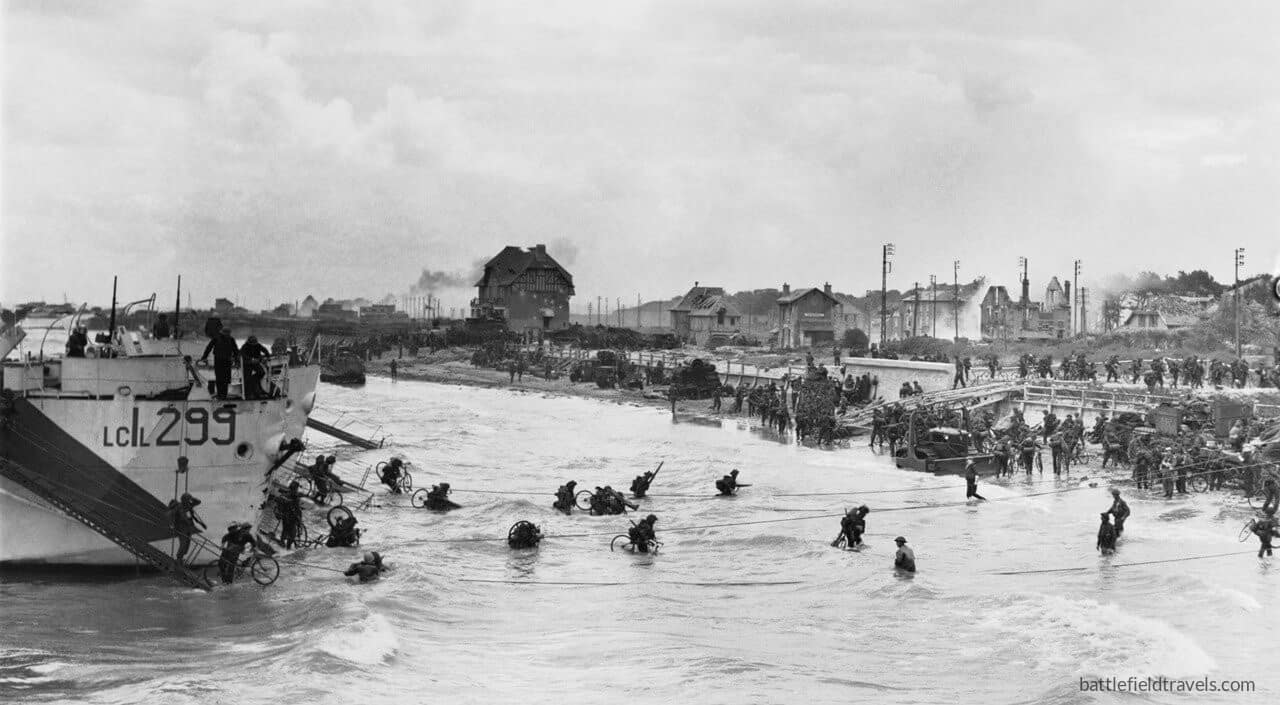
The Canadian 3rd Infantry Division assaulted Juno Beach between the British landings at Gold and Sword. Rough seas, offshore obstacles and fortified coastal villages complicated the assault, and several Canadian units suffered heavily while breaking through the beach defences.

Once inland, however, Canadian forces advanced farther than many of the other seaborne formations on D-Day. Their objectives included securing the Caen–Bayeux road and linking the British and Canadian beachheads. Although not all planned objectives were reached and gaps remained between Allied formations, the Canadians had established a substantial lodgement by the end of the day.
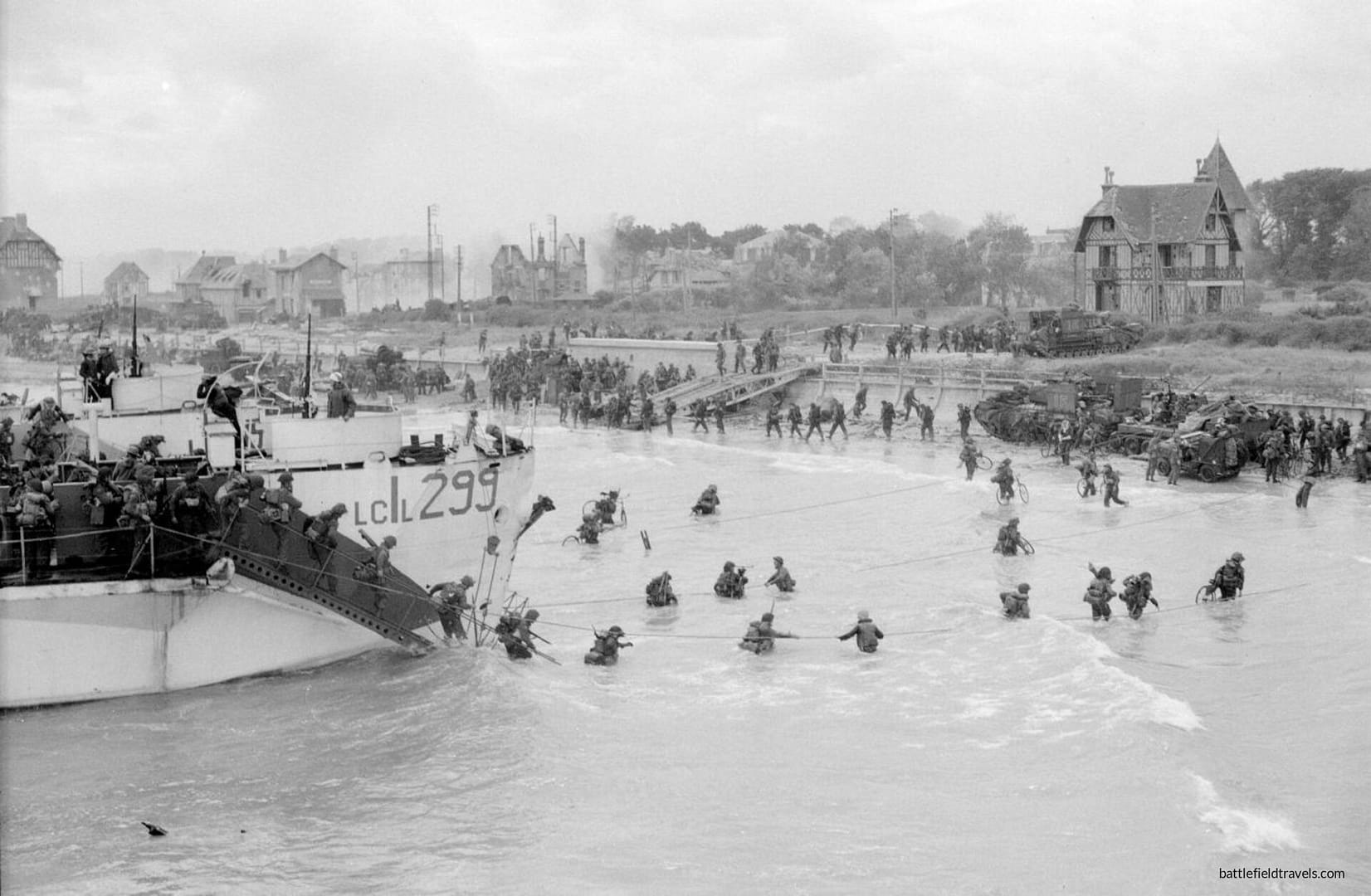
Juno Beach. Canadian 9th Brigade second wave landing at Bernieres-sur-Mer. Canada House visible in the background.

Sword Beach

At the eastern end of the amphibious assault, the British 3rd Infantry Division landed at Sword Beach. Its objectives extended well beyond clearing the immediate coastal defences. British forces were to advance toward Caen and, crucially, link with the 6th Airborne Division holding the bridges and defensive positions east of the Orne.

The link with the airborne troops was achieved, and was symbolised by the arrival of commandos under Brigadier Lord Lovat at Pegasus Bridge. Caen, however, remained in German hands. The failure to capture the city on D-Day helped shape the fighting that followed, as German armoured formations concentrated against the eastern side of the Allied lodgement.
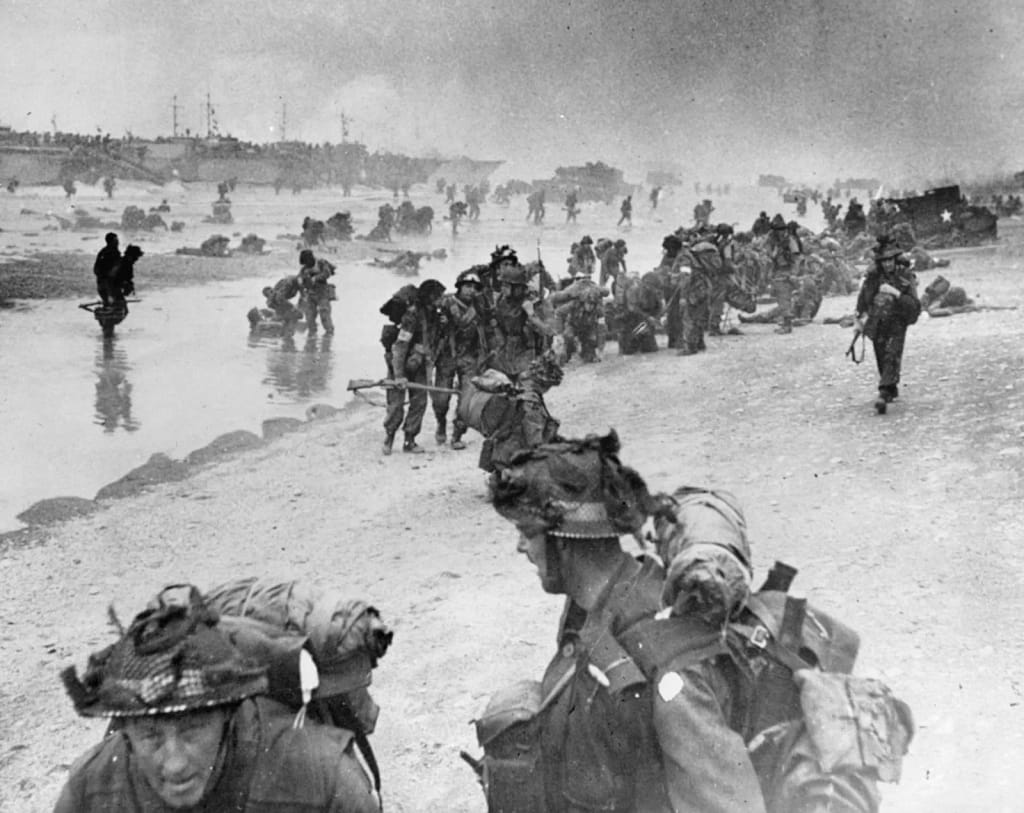
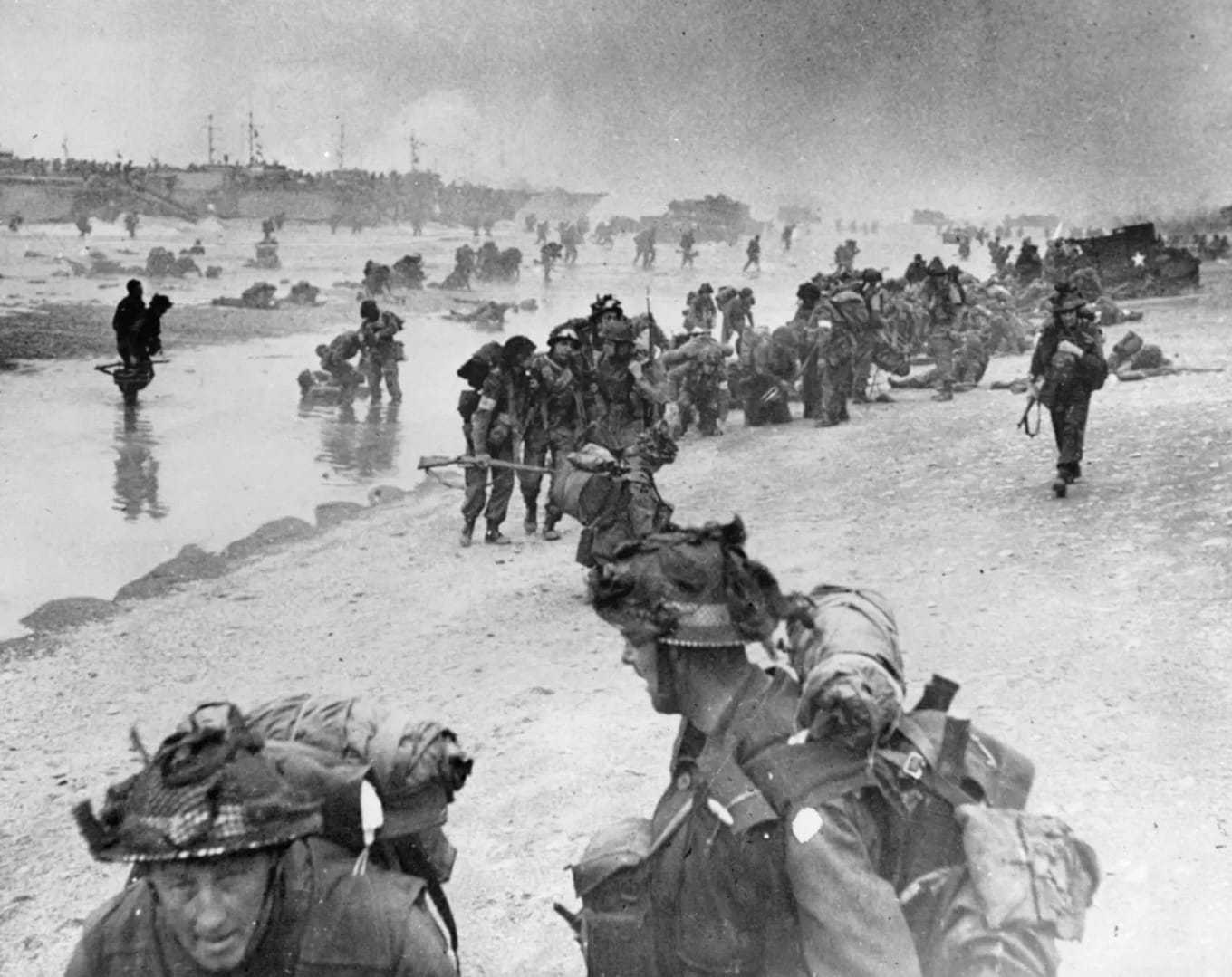
British soldiers landing on Sword Beach, D-Day, 6 June 1944

By the end of D-Day

By nightfall on 6 June, Allied forces had established themselves along the Normandy coast, but the five assault sectors had not yet become the secure, continuous lodgement envisaged in the invasion plan. The fighting around Carentan, the Cotentin Peninsula and Caen would continue, while the bocage increasingly imposed its own tactical demands. D-Day had succeeded, but the Battle of Normandy had only just begun.


🏛️Weapons & Equipment: World War Two
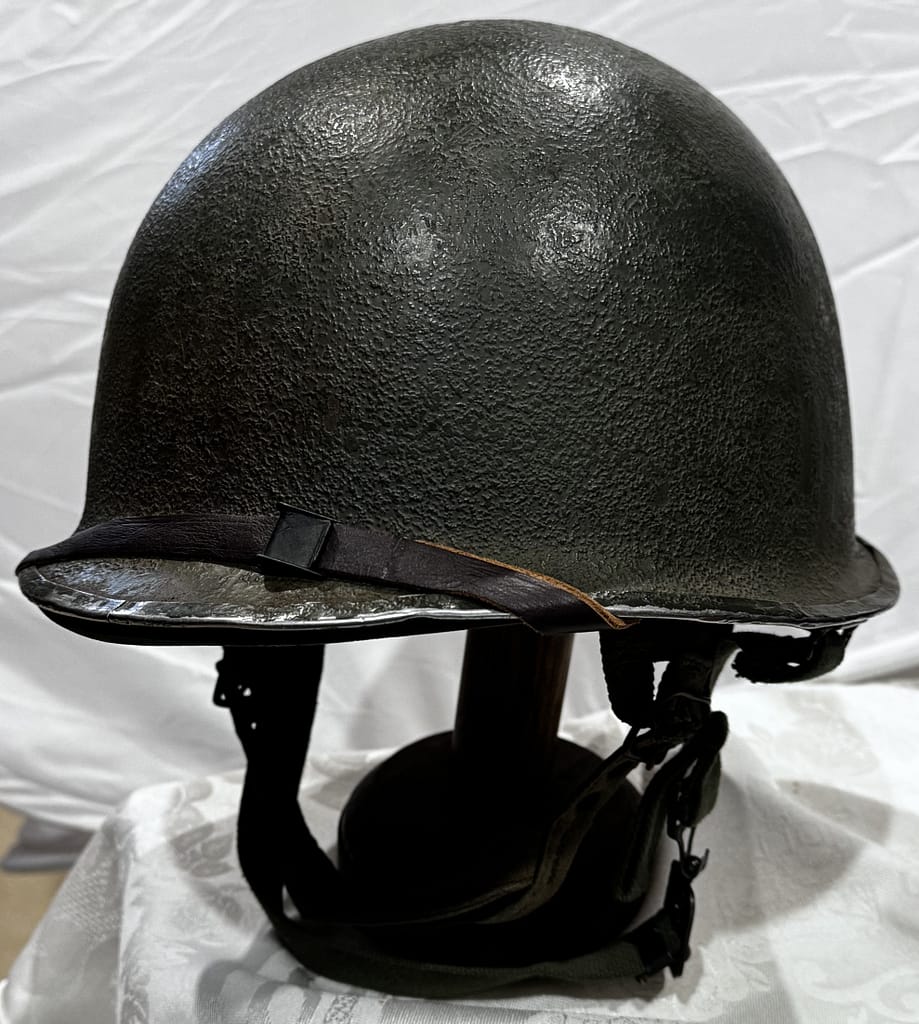
Helmet-US-MC1-front-seam-swivel-bail-06

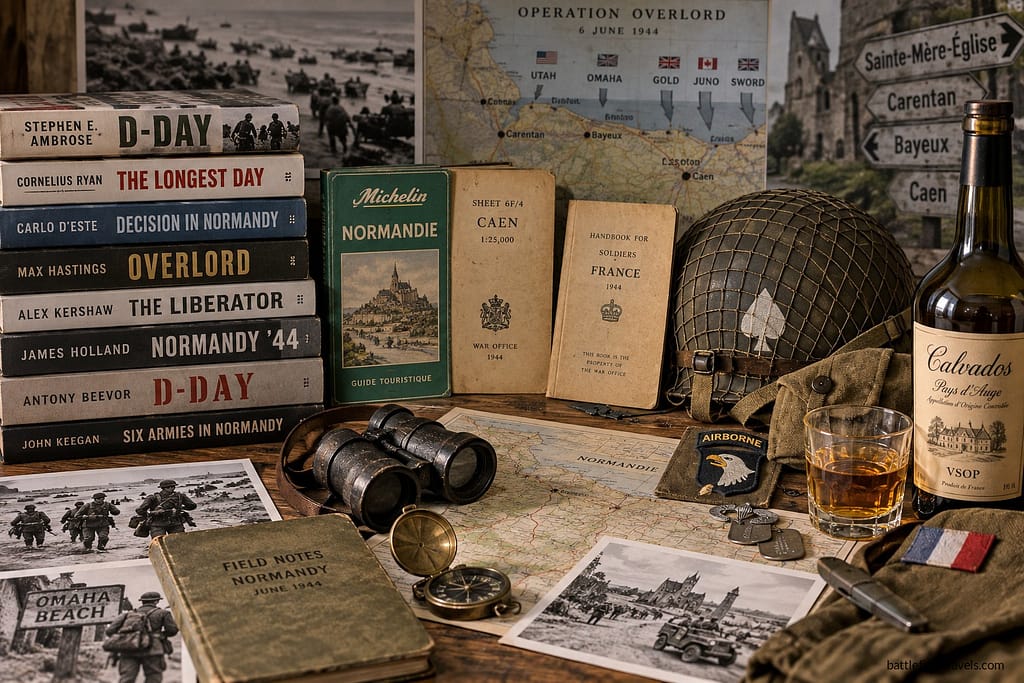
Explore original weapons and equipment from the Second World War, drawn from my personal collection.

Uniforms, helmets, headgear, weapons, equipment from Australia, Britain, United States, Soviet Union, Germany, Japan, Italy, Romania, — personally handled, photographed and examined by me.


A curated reading list covering the Second World War across all theatres. Explore campaign histories, battlefield studies, biographies, primary accounts and contemporary military writings used in the research behind Battlefield Travels. The list will continue to grow as I publish new studies and draw upon new resources.


❓D-Day and Normandy Campaign Quiz. Test your knowledge!
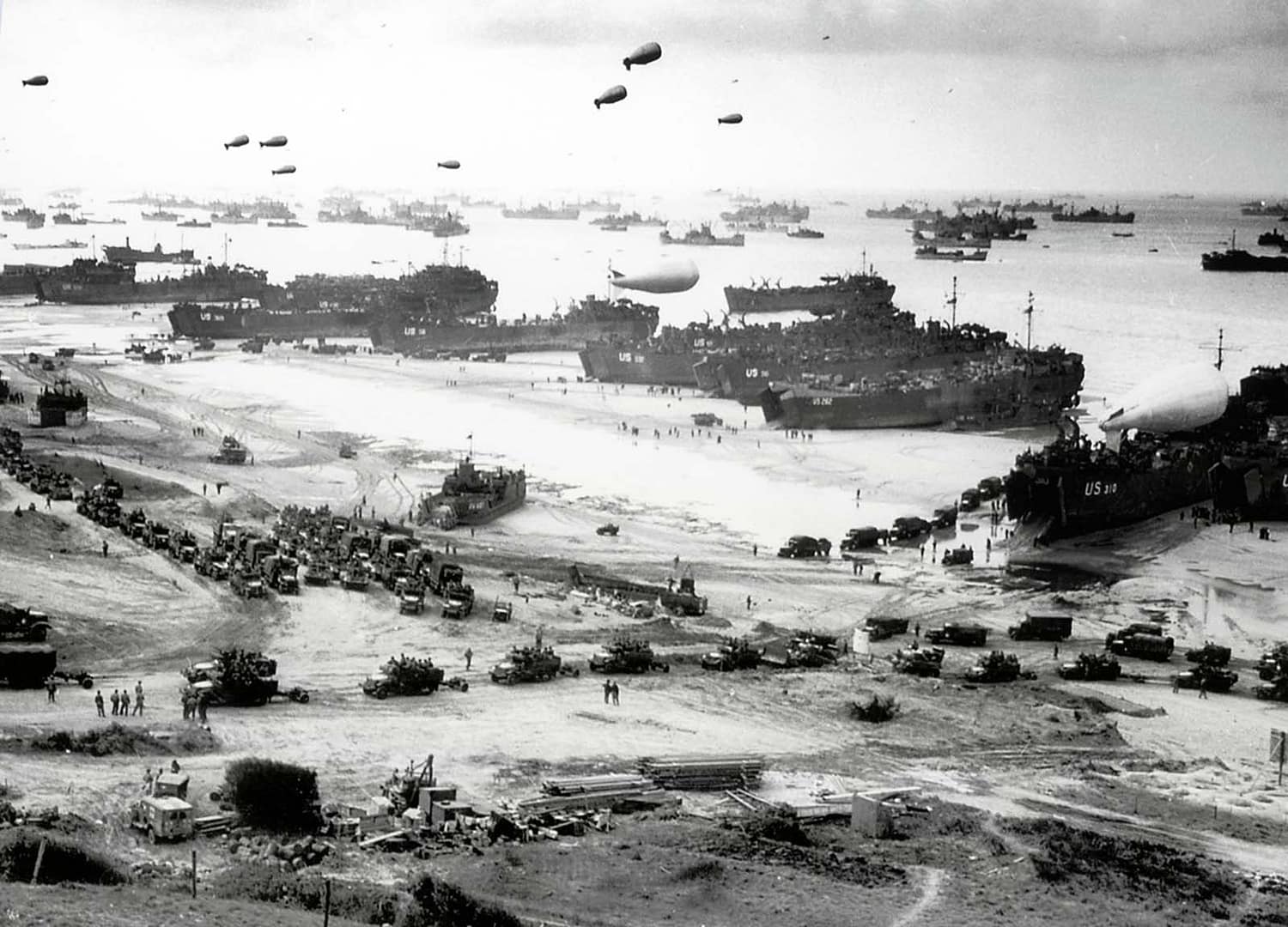
View from Fox Red colossal scale

20 questions generated out of a bank of 60. Testing your knowledge of the D-Day landings including the US and British airborne operations, and all five invasion beaches. Score 60% to pass — but expect a challenge!


D-Day and Normandy Campaign Battle Studies

In-depth battlefield analyses based on terrain, primary sources, and on-the-ground exploration.


What was D-Day and when did the Normandy landings take place?

D-Day was 6 June 1944, when Allied forces launched Operation Overlord with airborne and amphibious landings in Normandy, France. American troops landed at Utah and Omaha Beaches, British forces at Gold and Sword, and Canadians at Juno, while British and American airborne divisions landed behind the beaches to secure bridges, causeways, road junctions and other key objectives.

What were the five D-Day landing beaches?

The five Allied landing beaches were Utah, Omaha, Gold, Juno and Sword, extending along roughly 80 kilometres of the Normandy coast. American forces assaulted Utah and Omaha, British forces Gold and Sword, and Canadian forces Juno. Each beach presented different terrain, German defences and tactical problems, from the bluffs and draws overlooking Omaha to the flooded ground behind Utah.

Why was terrain so important during the Normandy landings?

Terrain influenced almost every stage of the fighting. Cliffs, beach exits, flooded fields, causeways, rivers, villages and the Norman bocage restricted movement and frequently channelled troops into predictable routes. At La Fière, for example, control of a narrow causeway across flooded ground became critical, while at Omaha the few draws leading through the coastal bluffs strongly influenced the battle to get off the beach.

Did the Battle of Normandy end on D-Day?

No. D-Day was the opening day of the Normandy campaign, not its conclusion. After establishing the beachheads, Allied forces still had to link them together, secure ports and key towns, and expand the lodgement against determined German resistance. Fighting continued through the summer, including the battles around Caen, Operation Cobra and the Falaise Pocket, before the German position in Normandy collapsed in August 1944.


Subscribe to Battlefield Travels and receive a free E-Book Battlefield Guide

Unlock expert battlefield analysis, campaign reconstructions, and historical insights drawn from firsthand exploration and primary sources.

🗺️ You’ll receive:

🎖️ Exclusive historical insights you won’t find elsewhere

📘 A free eBook: 10 Tips for Exploring Historic Battlefields

📰 New battlefield studies straight to your inbox as they are published


Marines of the Mahias Battalion assault the formidable Black Flag defences at Hòa Mộc, 2 March 1885

⚔️🔒Battle of Hòa Mộc, Tonkin, 2-3 March 1885

The Battle of Hòa Mộc Was the fiercest and most costly battle of the Sino-French War. The battle was fought just a few kilometres south of besieged Tuyên Quang, as Colonel Laurent Giovanninelli’s 3,400 man force made a 300 km forced march to relive the siege, and cleared the final Black Flag position between themselves and the Tuyên Quang defenders.

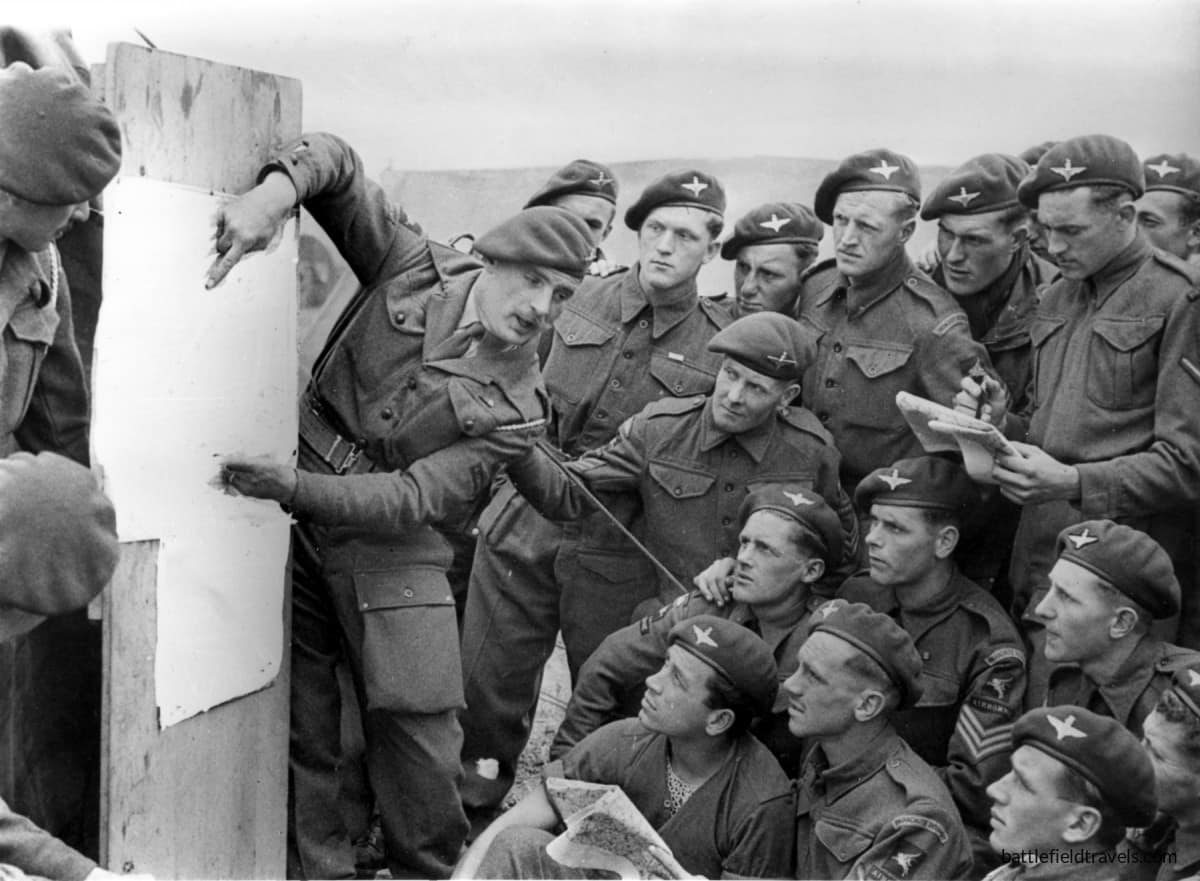
22nd Independent Parachute Company pathfinders receive their D-Day briefing from Lieutenant Robert Midwood. They would jump first, marking the drop zones for 6th Airborne Division's follow-on assault.

⚔️ D-Day: Ranville, Merville Battery and 6th Airborne Division, 6 June 1944

British 6th Airborne Division’s role on D-Day was multi-faceted. In the opening minutes, glider-borne troops would seize the bridges over the Caen Canal and the River Orne. Soon afterwards, paratroopers would neutralise Merville Battery. Others would destroy key bridges over the Dives and prepare for German counterattacks. The mission was audacious, high risk, and critical to the success of the D-Day landings

2 BEP paratrooper at Nghia Lo, near Hill 405

📝🔒 Field Note: Battle of Nghĩa Lộ, Tonkin, Sep-Oct 1951 – the hilltop positions at Ba Khe

April 2025. Ba Khe, near the village of Cát Thịnh, Yên Bái Province, Vietnam. I am exploring the old Route Coloniale 13 west of Yen Bai, retracing the ground fought over during the October 1951 battle for Nghĩa Lộ. This is steep, broken country. The road winds through narrow valleys, overlooked by sharply rising hills, with restricted movement corridors and very little room to manoeuvre once committed.

Jeanne d'Arc at the Tourelles, Lenepveu

📝🔒 Field Note: Siege of Orléans, France, May 1429 —battle for the Tourelles

October 2024, Orléans, south side of the Loire River. I am exploring the Hundred Years War battle locations around the city of Orléans. On this site on 7 May 1429, a French Army led by Count John Dunois, ‘The Bastard of Orléans’, and Captain La Hire, and inspired by Jeanne d’Arc, a 17-year old French peasant girl from Domremy, defeated a strong English force defending the ‘Tourelles’ fortress on the southern bank of the Loire River. The Tourelles controlled access across the Pont bridge into the French-held city of Orleans.

Selected works on the War of the Spanish Succession

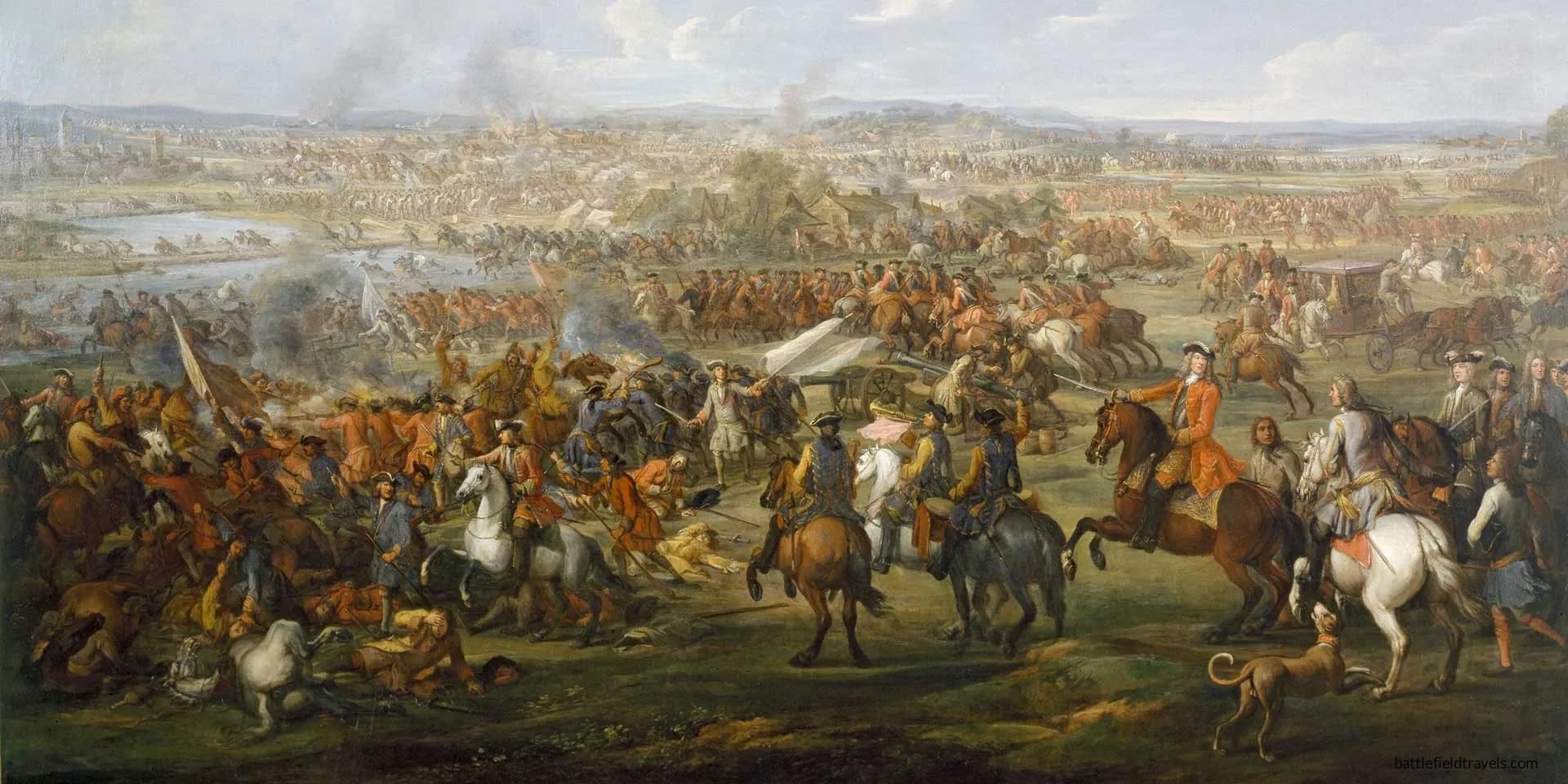
The Battle of Blenheim, 1704. Painting by John Wootton, circa 1743.
The Battle of Blenheim, 1704. Painting by John Wootton, circa 1743

Overview of the War of the Spanish Succession

The War of the Spanish Succession was one of the defining conflicts of early modern Europe, fought over the inheritance of the Spanish Empire following the death of Charles II in 1700.

At its core, the war was a struggle over the balance of power. The possibility that the Bourbon monarchy might unite France and Spain under a single dynasty posed a strategic threat to the rest of Europe. In response, a Grand Alliance—led by Britain, the Dutch Republic, and the Holy Roman Empire—formed to resist French expansion.

The war’s decisive campaigns were fought in the Low Countries, where Allied armies under John Churchill, 1st Duke of Marlborough, and Prince Eugene of Savoy confronted French forces in a series of highly mobile, tactically complex operations.

War of the Spanish Succession literature

Early writing on the war was dominated by grand narrative and biography, most notably the monumental account of John Churchill, 1st Duke of Marlborough, produced by Winston Churchill. These works emphasised leadership, character, and sweeping campaign narratives, presenting the war through the lens of great commanders and decisive battles. While rich in detail and narrative power, they often reflected the perspectives and assumptions of their time, placing less emphasis on structural factors such as coalition dynamics or operational constraints.

Later 20th-century scholarship began to place the conflict within a broader strategic and political context, examining the war as part of the longer struggle for the European balance of power. Historians increasingly focused on the interaction between diplomacy, finance, and military operations, moving beyond purely battlefield-driven accounts. This shift also brought greater attention to the complexity of coalition warfare, where Allied success depended not only on battlefield performance but on the coordination of multinational forces with differing priorities and capabilities.

Underexplored aspects

Despite these developments, the War of the Spanish Succession remains comparatively under-explored in one key respect: the interaction between terrain, perception, and decision-making at the point of contact. Many accounts describe what happened on the battlefield, but fewer examine how commanders read the ground, identify opportunities, and translate those observations into action under pressure.


Reading

The reference collection below includes the key books and references I have used in preparing for and undertaking battlefield studies all over the world.

War of the Spanish Succession in Europe

Marlborough: His Life And Times (Vol. 3)
In the first volume of this ambitious and stunningly written biography, Sir Winston S. Churchill discusses the early career and stratospheric rise of his illustrious, seventeenth century ancestor. John Churchill, the Duke of Marlborough, may have been eclipsed in history by his more well-known descendant, but in his time, Marlborough was considered one of England’s foremost military and political leaders. This first installment pays particular attention to personal details of Marlborough’s life, and the important role several women played in his success—including his sister, his wife, the Duchess of Cleveland, and Queen Anne herself.
War of the Spanish Succession: A History from Beginning to End (History of Spain)
The War of the Spanish Succession, which occurred between 1701 and 1714, was fought over who would succeed the childless King Charles II to the throne of Spain. During the early modern era, European countries were almost constantly at war, vying for land, resources, power, and wealth. The succession of the Spanish throne—and everything that came with it—had much of all of those things up for grabs; therefore all of Europe had much to gain, or lose, from the new Spanish ruler. By the end of the war, conflict in Europe was hardly over, but a new, dominant power had emerged.
The War of the Spanish Succession 1701–1714
The War of the Spanish Succession, fought between 1701 and 1714 to decide who should inherit the Spanish throne, was a conflict on an unprecedented scale, stretching across most of western Europe, the high seas and the Americas. Yet this major subject is not well known and is little understood. That is why the publication of James Falkner’s absorbing new study is so timely and important. In a clear and perceptive narrative he describes and analyses the complex political manoeuvres and a series of military campaigns which also involved the threat posed by Ottoman Turks in the east and Sweden and Russia in the north. Fighting took place not just in Europe but in the Americas and Canada, and on the high seas.
Sale
Queen Anne’s War: The Second Contest for North America, 1702–1713
Told from the halls of power in North America and Europe, and through the eyes of the men and women who found themselves embroiled in this brutal realignment of colonial interests, Queen Anne’s War recreates the world of early North American expansion at the ground level, providing riveting accounts of the battles across settlements and wilderness as well as the motives, conditions, triumphs, and failures of the Europeans and their respective Native American allies. Based on extensive primary source research and command of English, French, and Spanish sources, the narrative not only describes the economic and geopolitical ramifications of the war that reshaped North America, but intriguingly reveals the sense of independence emerging in the colonies, from Puritan New England to plantation South Carolina, at the close of the war.
Marlborough’s Campaigns & Battles: In the Netherlands, Germany & France during the War of Spanish Succession, 1702-11
First making its appearance, more or less unofficially, in support of the Dutch in their heroic efforts to free themselves from the Spanish yoke, Great Britain had then aided France in her conflict with Spain and had been finally drawn into the long and deadly struggle waged by William III. to protect the United Provinces from the aggression of Louis XIV. This was the stage upon which the great Duke of Marlborough led his army from victory to victory during the hard-fought campaigns of the War of the Spanish Succession. The names of those battles, – Blenheim, Ramillies, Oudenarde and Malplaquet -contested during this period, became iconic and adorn the flags of famous regiments. They made a national hero of the commander of those soldiers and cemented his reputation as one of the most accomplished generals in his nation’s history. Maycock’s readable and excellent work, written from an academic military perspective is enhanced by Belloc’s brilliant analysis of Blenheim taken from his ‘Battles’ series.

Marlborough’s War Machine 1702-1711
Blenheim, Ramilles , Oudenarde, Malplaquet – much has been written about the brilliant victories of the Duke of Marlborough’s Anglo-Dutch army over the armies of Louis XIV of France during the War of the Spanish Succession. Less attention has been focused on the men and the military organization that made these achievements possible – the soldiers, the commanders, the army structure and administration, the logistics, engineering, weapons and finance. That is why James Falkner’s penetrating account of the composition and operation of Marlborough’s army is of such value. His clear analysis gives a fascinating insight into Marlborough’s war machine and into the conduct of war in Europe 300 years ago.
Blenheim 1704: The Duke of Marlborough’s masterpiece (Campaign, 141)
Osprey’s study of the Blenheim campaign, Britiain’s defining battle of the War of the Spanish Succession (1701–1714). Combining one of history’s most audacious strategic manoeuvres with perhaps the greatest military victory ever won by a British commander, the Blenheim campaign is rightly considered the pinnacle of the career of John Churchill, Duke of Marlborough. On 13 August 1704, Marlborough and Prince Eugene of Savoy faced a Franco-Bavarian army threatening to knock Austria out of the War of the Spanish Succession. In a hard-fought battle Marlborough won a resounding victory, capturing Marshal Tallard and over 14,000 men. In this book John Tincey describes how Marlborough’s victory crushed his enemies, shattered the myth of French invincibility and laid the foundations for two centuries of British world dominance.


Frequently asked questions

Why is the War of the Spanish Succession less studied than later conflicts?

The war sits between more heavily studied periods, such as the wars of Louis XIV and the Napoleonic Wars, and lacks the national narratives that drive interest in later conflicts. As a result, it has attracted fewer popular histories, even though it was a major European war involving coalition warfare, global theatres, and significant battlefield developments.

What are the main themes in the literature on the war?

The literature has evolved from early biographical and narrative accounts—focused on commanders such as Marlborough—to broader studies of strategy, diplomacy, and coalition warfare. More recent work examines operational coordination, command structures, and the limits of control in early modern armies, although detailed analysis of terrain and battlefield perception remains limited.

What gaps still exist in the historiography of the war?

While campaign narratives and strategic studies are well covered, there is less emphasis on how battles were experienced and interpreted at ground level. In particular, the interaction between terrain, decision-making, and real-time command judgement is often underdeveloped, leaving scope for further battlefield-focused analysis.

Subscribe to Battlefield Travels and receive a free E-Book Battlefield Guide

Unlock expert battlefield analysis, campaign reconstructions, and historical insights drawn from firsthand exploration and primary sources.

🗺️ You’ll receive:

🎖️ Exclusive historical insights you won’t find elsewhere

📘 A free eBook: 10 Tips for Exploring Historic Battlefields

📰 New battlefield studies straight to your inbox as they are published


Reconstructing the War of the Spanish Succession battlefields through terrain analysis, primary sources and on-site research

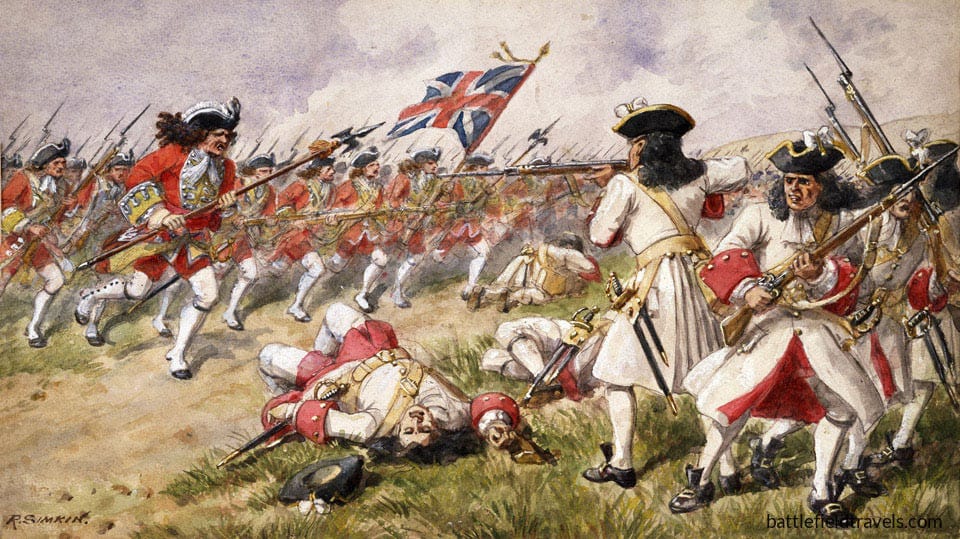
16th-Foot-at-the-Battle-of-Ramillies-by-Richard-Simkin
16th Foot at the Battle of Ramillies (1706) by Richard Simkin

Walking the battlefields of the War of the Spanish Succession, 1701–1714

Origins: Dynastic crisis and the balance of power

The War of the Spanish Succession emerged from one of the most consequential succession crises in European history. The death of the childless Spanish king Charles II in 1700 triggered a struggle over the inheritance of the vast Spanish Empire, which extended across Europe and the Americas.

At stake was not simply who would wear the Spanish crown, but whether the Bourbon monarchy of France could unite the resources of both kingdoms under a single dynasty. Such an outcome threatened to overturn the European balance of power.

In response, a Grand Alliance formed—led by Britain, the Dutch Republic, and the Holy Roman Empire—to resist French expansion and prevent strategic domination of Western Europe.

Western Europe: The Decisive Theatre

The war’s decisive campaigning unfolded in the Low Countries, where French forces confronted Allied armies under commanders such as the Duke of Marlborough and Prince Eugene of Savoy.

At Ramillies, Marlborough exploited terrain and timing to unhinge the French line. At Oudenaarde, rapid manoeuvre and aggressive engagement disrupted French deployment before it could stabilise. Malplaquet, by contrast, demonstrated the deadly resilience of prepared defensive positions, where Allied victory came at enormous cost.

Coalition Warfare

Allied armies combined British, Dutch, Austrian, and German contingents, each with differing priorities, command structures, and operational constraints. The ability of commanders such as Marlborough to coordinate these forces, to align movement, timing, and intent, was as decisive as battlefield execution.

French command, by contrast, often struggled with rigidity, slower decision cycles, and an inability to adapt once engaged.

A Global War

Although the principal campaigns took place in Europe, the conflict extended far beyond it. Fighting spread to Spain and the Mediterranean, the German states, Italy, and North America, where it formed part of Queen Anne’s War. This wider struggle reflected the increasingly global nature of European power competition in the early 18th Century.


War of the Spanish Succession – Field Notes

Short-form observations, terrain insights, and working interpretations from the field. Some posts require access.


  • 📝🔒 Field Note: Battle of Ramillies, Belgium, 23 May 1706

    📝🔒 Field Note: Battle of Ramillies, Belgium, 23 May 1706

    November 2025, Ramillies, Belgium. I am exploring the battlefield of Ramillies. Here on 23 May 1706, an Allied Army under John Churchill, the Duke of Marlborough, defeated a French army under Marshall Villeroi. The ground here is open, gently rolling country, cut by small streams and defined by long field boundaries—terrain that enables movement and…

    Read the full Field Note…..


FAQ – War of the Spanish Succession

What was the War of the Spanish Succession?

The War of the Spanish Succession (1701–1714) was a major European conflict triggered by a dispute over who would inherit the Spanish Empire after the death of Charles II. It became a wider struggle over the balance of power, with France supporting a Bourbon claimant and a Grand Alliance of Britain, the Dutch Republic, and the Holy Roman Empire opposing French expansion.

Why was the War of the Spanish Succession important?

The war reshaped the balance of power in Europe and prevented the unification of the French and Spanish crowns. It also marked the rise of Britain as a major military and financial power, and demonstrated the growing importance of coalition warfare, operational coordination, and battlefield decision-making.

Which battles defined the War of the Spanish Succession?

Key battles include Ramillies (1706), Oudenaarde (1708), and Malplaquet (1709), fought primarily in the Low Countries. These engagements highlight the interaction between terrain, timing, and command decisions, and are among the most studied battles of early 18th-century warfare.

Who were the main commanders in the war?

The most prominent Allied commanders were the Duke of Marlborough and Prince Eugene of Savoy, who coordinated multinational forces across multiple campaigns. French armies were led by commanders such as Marshal Villars and the Duke of Vendôme, whose performance varied depending on terrain, timing, and strategic context.

Where were the main campaigns fought?

The principal theatre was the Low Countries (modern Belgium), but fighting also took place in Spain, Italy, the German states, and overseas. In North America, the conflict formed part of Queen Anne’s War, reflecting the global nature of early 18th-century rivalry.


Subscribe to Battlefield Travels and receive a free E-Book Battlefield Guide

Unlock expert battlefield analysis, campaign reconstructions, and historical insights drawn from firsthand exploration and primary sources.

🗺️ You’ll receive:

🎖️ Exclusive historical insights you won’t find elsewhere

📘 A free eBook: 10 Tips for Exploring Historic Battlefields

📰 New battlefield studies straight to your inbox as they are published


Ils ne passeront pas' (They shall not pass)

📝🔒Field Note: Battle for Verdun, France, Feb – Dec 1916

November 2024. Verdun, northeastern France. This is my second time exploring the battlefields of Verdun. The first impression is the massive scale of the fortification complex. Large and small forts with interlocking and mutually supporting fields of fire cover several hundred square kilometres. The ground is still broken by overlapping shell craters, stretching in all directions. Even after more than a century, the terrain remains uneven, cratered, and difficult to walk on. It is not a single battlefield, but a vast zone of destruction.

Reconstructing French Revolutionary & Napoleonic War battlefields through terrain analysis, primary sources and on-site research

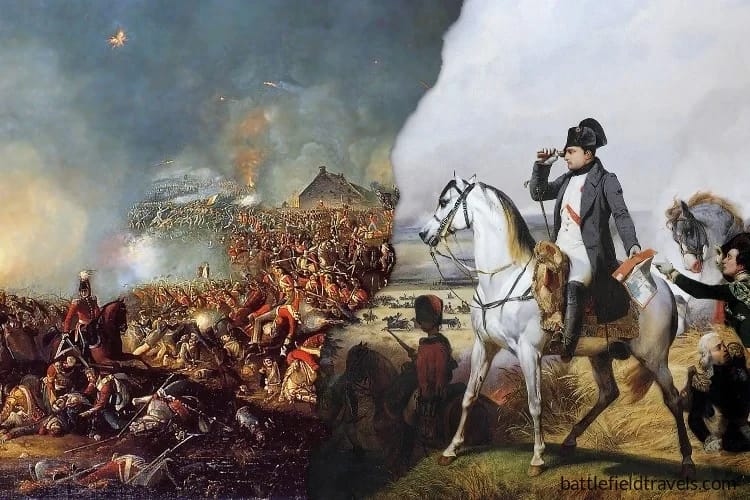
The Battle of Wagram by French artist Horace Vernet, 1836

Walking the battlefields of the French Revolutionary Wars and Napoleonic Wars (1792–1815)

Origins of the wars

The French Revolutionary Wars (1792-1802), and the Napoleonic Wars (1803-1815) that followed immediately afterwards, were the culmination of the upheaval unleashed by the French Revolution, fought across Europe between Revolutionary and Napoleonic France and successive coalitions of Britain, Austria, Prussia, and Russia. These campaigns reshaped the political map of Europe and marked a decisive shift in the scale and conduct of warfare. Mass conscription, rapid manoeuvre, and the concentration of force allowed armies to operate with a tempo and reach not previously seen, culminating in a series of battles that remain central to the study of military history.

Campaigns and battles

From the plains of Austerlitz and Wagram to the ridges of Waterloo and the brutal campaigns of the Peninsular War, the conflict was fought across a wide range of terrain. These battlefields reveal how commanders interpreted ground, deployed their forces, and sought to gain advantage through movement, timing, and positioning. Many of the decisive moments in these campaigns were shaped not by grand strategy alone, but by how terrain was read and exploited at the point of contact.

The Napoleonic Wars also generated a lasting intellectual legacy. The experience of mass warfare and decisive battle prompted a generation of soldiers and thinkers to reflect on the nature of war itself. The works of Clausewitz and Jomini, along with the reforms of Scharnhorst and Gneisenau, emerged directly from this period and continue to influence military thought today.

Battle studies and field notes

This section brings together battlefield studies, terrain analysis, and related field notes from across the Napoleonic campaigns. Each study combines historical narrative with on-the-ground observation, examining how terrain, command decisions, and tactical execution interacted to shape the outcome of battle.


Battle Studies in the French Revolutionary and Napoleonic Wars

Below are all current BattlefieldTravels studies for the French Revolutionary and Napoleonic Wars, covering key battles, campaign phases and associated sites. New studies are added as further battlefields are walked and analysed.

  • 📝🔒 Field Note: Waterloo, Belgium, 18 June 1815

    📝🔒 Field Note: Waterloo, Belgium, 18 June 1815

    October 2024. Waterloo, Belgium. I have been here before, but this visit was far more comprehensive. Standing on the Mont-Saint-Jean ridge, the key feature is the reverse slope. From the French side, you don’t see much of Wellington’s position. The crest blocks your view, and everything behind it disappears. That’s where the bulk of the…

    Read the full battle study…


FAQ: French Revolutionary & Napoleonic Wars

Which battles best represent the Napoleonic Wars?

Key battles include Austerlitz (1805), Jena-Auerstedt (1806), Wagram (1809), Borodino (1812), and Waterloo (1815). Each illustrates different aspects of Napoleonic warfare, from operational manoeuvre and decisive battle to attrition and coalition pressure.

How did Napoleon achieve early success in his campaigns?

Napoleon combined speed of movement, concentration of force, and flexible corps organisation to defeat opponents in detail. His ability to read the battlefield and exploit terrain at critical moments allowed him to achieve local superiority even when outnumbered strategically.

Why did coalition armies eventually defeat Napoleon?

Over time, coalition forces adapted. They improved coordination, logistics, and command structures, and learned to avoid decisive defeat while applying sustained pressure. The scale of the war, combined with campaigns such as Russia in 1812, gradually eroded French strength.

Why is terrain so important in Napoleonic battles?

Terrain shaped deployment, movement, and timing. Reverse slopes, ridgelines, villages, and roads influenced how armies fought and how commanders made decisions. Many decisive moments occurred at a very local level, where small terrain features determined visibility, protection, and the ability to manoeuvre.


Subscribe to Battlefield Travels and receive a free E-Book Battlefield Guide

Unlock expert battlefield analysis, campaign reconstructions, and historical insights drawn from firsthand exploration and primary sources.

🗺️ You’ll receive:

🎖️ Exclusive historical insights you won’t find elsewhere

📘 A free eBook: 10 Tips for Exploring Historic Battlefields

📰 New battlefield studies straight to your inbox as they are published


Selected works on the Napoleonic Wars

Battle of Waterloo, 18 June 1815 - the assault on La Haye Sainte @Knotel
Battle of Waterloo, 18 June 1815 – the assault on La Haye Sainte @Knotel

Overview of the Napoleonic Wars

The Napoleonic Wars (1803–1815) were the culmination of the upheaval unleashed by the French Revolution, pitting Napoleonic France against successive coalitions of European powers including Britain, Austria, Prussia, and Russia. Fought across a vast geographical arc—from the Iberian Peninsula to Central Europe, and from the Baltic to the plains of Russia—the wars combined mass conscription, sweeping manoeuvre, and increasingly sophisticated operational art.

Napoleon’s campaigns demonstrated the power of concentration, speed, and decisive battle, while his opponents gradually adapted, developing the coalition structures, logistics, and operational methods needed to defeat him.

Literary coverage

The literature of the Napoleonic Wars reflects both the scale of the conflict and the enduring fascination with its personalities and campaigns. Early accounts were often memoir-driven, written by participants such as officers and soldiers who sought to explain or justify their actions. These remain valuable for their immediacy and insight into command decisions, though they require careful reading.

Nineteenth- and early-twentieth-century historians then began to construct more formal campaign narratives, often focused on Napoleon himself, sometimes at the expense of his opponents. More recent scholarship has considerably broadened the perspective, examining coalition strategy, logistics, national military systems, and the experiences of ordinary soldiers. There is now a strong tradition of detailed operational and tactical studies, supported by maps, orders of battle, and increasingly critical use of primary sources.

An indirect outcome of the Napoleonic Wars was a sustained period of reflection on the nature and conduct of war itself. The scale, tempo, and political character of the conflict forced soldiers and statesmen to reconsider how wars were fought, organised, and understood. This gave rise to a parallel intellectual tradition, most notably in the works of Carl von Clausewitz and Baron Antoine Jomini, who sought to distil the lessons of the period into enduring principles. At the same time, reformers such as Scharnhorst and Gneisenau translated battlefield experience into institutional change, reshaping military organisation, education, and command systems. Together, these thinkers and practitioners ensured that the legacy of the Napoleonic Wars extended well beyond the battlefield, influencing military thought and practice throughout the nineteenth century and beyond.

The works in this reading list reflect that range—from classic memoirs and campaign histories to modern analytical studies. Together, they provide multiple lenses on the same campaigns: the decisions made at headquarters, the movement of armies across Europe, and the realities of combat on the ground


Reading

The reference collection below includes the key books and references I have used in preparing for and undertaking studies of the battlefields of the Napoleonic Wars

Napoleonic Wars

Sale
The Campaigns of Napoleon
The Campaigns of Napoleon is a masterful analysis and insightful critique of Napoleon’s art of war as he himself developed and perfected it in the major military campaigns of his career.
Sale
Napoleon: A Biography
This acclaimed biography of one history’s great figures—called “monumental” (Library Journal), “brilliant” (Times, London) and “a rounded and persuasive portrait” (New York Times)—is now available in a new edition. Napoleon Bonaparte’s character and achievements have always divided critics and commentators. In this compelling biography, Frank McLynn has drawn on exhaustive research and the most recent scholarship to throw a brilliant light on this most paradoxical of men—as military leader, lover, and emperor.
End of the Old Order: Napoleon and Europe, 1801–1805 (v)
The End of the Old Order is the first volume in a new and comprehensive four-volume study of Napoleon and Europe. Each volume in the series will surprise readers with a dramatically different tapestry of early nineteenth-century personalities and events and will revise fundamentally our ages-old understanding of the wars that created modern Europe.
An Illustrated Encyclopedia: Uniforms of the Napoleonic Wars: An unrivalled reference to the insignia, appearance and experience of the fighting men of the period (Military Uniforms)
The book’s main focus is the soldiers who fought the historic battles of the day, and the uniforms they wore. It was in this age of war that military uniforms flourished, with an astonishing array of flamboyance, colour and intricate detail. The cut and colour of uniforms were used for identification from afar by the generals directing battles from strategic viewpoints, but at this point in time were also given an extraordinary level of detail in facings, laces and buttons, which carried never-ending intricate differences to denote regiment, rank or division. With over 550 specially commissioned and expert colour artworks, each regiment is vividly portrayed here in all their glory. All the major nations involved in the conflict, France, Britain, Austria, Prussia and Russia, are covered in detail, and there is a section on the uniforms and contributions of the smaller forces, including those from America, Spain, Italy and Saxony

Waterloo

Sale
Waterloo: The History of Four Days, Three Armies, and Three Battles
From the New York Times bestselling author and master of martial fiction comes the definitive, illustrated history of one of the greatest battles ever fought—a riveting nonfiction chronicle published to commemorate the 200th anniversary of Napoleon’s last stand. On June 18, 1815 the armies of France, Britain and Prussia descended upon a quiet valley south of Brussels. In the previous three days, the French army had beaten the Prussians at Ligny and fought the British to a standstill at Quatre-Bras. The Allies were in retreat. The little village north of where they turned to fight the French army was called Waterloo. The blood-soaked battle to which it gave its name would become a landmark in European history. In his first work of nonfiction, Bernard Cornwell combines his storytelling skills with a meticulously researched history to give a riveting chronicle of every dramatic moment, from Napoleon’s daring escape from Elba to the smoke and gore of the three battlefields and their aftermath.
Sale
The Face of Battle: A Study of Agincourt, Waterloo, and the Somme
The Face of Battle is military history from the battlefield: a look at the direct experience of individuals at the “point of maximum danger.” Without the myth-making elements of rhetoric and xenophobia, and breaking away from the stylized format of battle descriptions, John Keegan has written what is probably the definitive model for military historians. And in his scrupulous reassessment of three battles representative of three different time periods, he manages to convey what the experience of combat meant for the participants, whether they were facing the arrow cloud at the battle of Agincourt, the musket balls at Waterloo, or the steel rain of the Somme.
Sale
Waterloo: June 18, 1815: The Battle for Modern Europe (Making History, 1)
With precision and elegance, Andrew Roberts lucidly sets the political, strategic, and historical scene before offering a breathtaking account of each successive stage of the battle. He also draws on a recently discovered document from 1854 that casts new light on just how the battle was lost. It is a confession from a French officer that helps to explain why the French cavalry charged when it did — unsupported by infantry or artillery, and headlong at well-defended British squares. It shows that accident rather than design may have led to the debacle that lost Napoleon the battle, the campaign, and the war. Authoritative and engrossing, Waterloo is a brilliant portrait of a legendary turning point in modern history, after which the balance of world power, the legend of Napoleon, and the art of war were never the same.

Austerlitz

Sale
Austerlitz 1805: The fate of empires (Campaign, 101)
This all-new volume chronicles the events that climaxed on the field of Austerlitz in one of the most famous battles of the Napoleonic Wars (1799-1815). Not only was it the first campaign that Napoleon waged as Emperor of France, but also the first great test for his Grande Armée. The Emperor himself regarded it as his greatest victory and it undoubtedly won him a mastery of Europe that would remain unbroken for almost a decade. Most accounts of the campaign have until now been based almost exclusively on French sources, but following extensive research in the Austrian archives Ian Castle is now able to provide a far more balanced account of Austerlitz. On June 18, 1815 the armies of France, Britain and Prussia descended upon a quiet valley south of Brussels. In the previous three days, the French army had beaten the Prussians at Ligny and fought the British to a standstill at Quatre-Bras. The Allies were in retreat. The little village north of where they turned to fight the French army was called Waterloo. The blood-soaked battle to which it gave its name would become a landmark in European history. In his first work of nonfiction, Bernard Cornwell combines his storytelling skills with a meticulously researched history to give a riveting chronicle of every dramatic moment, from Napoleon’s daring escape from Elba to the smoke and gore of the three battlefields and their aftermath.
Sale
1805 Austerlitz: Napoleon and the Destruction of the Third Coalition
Sometimes called The Battle of Three Emperors, Napoleon’s victory against the combined forces of Russia and Austria brought a decisive end to The War of the Third Coalition. The magnitude of the French achievement against a larger army was met by sheer amazement and delirium in Paris, where just days earlier the nation had been teetering on the brink of financial collapse. In 1805: Austerlitz, historian Robert Goetz demonstrates how Napoleon and his Grande Armée of 1805 defeated a formidable professional army that had fought the French armies on equal terms five years earlier. Goetz analyses the planning of the opposing forces and details the course of the battle hour by hour, describing the fierce see-saw battle around Sokolnitz, the epic struggle for the Pratzen Heights, the dramatic engagement between the legendary Lannes and Bagration in the north, and the widely misunderstood clash of Napoleon’s Imperial Guard and Alexander’s Imperial Leib-Guard. Goetz’s detailed and balanced assessment of the battle exposes many myths that have been perpetuated and even embellished in other accounts.
Sale
Napoleon’s Greatest Triumph: The Battle of Austerlitz
IN AUGUST 1805, Napoleon abandoned his plans for the invasion of Britain and diverted his army to the Danube Valley to confront Austrian and Russian forces in a bid for control of central Europe. The campaign culminated with the Battle of Austerlitz, regarded by many as Napoleon’s greatest triumph, whose far-reaching effects paved the way for French hegemony on the Continent for the next decade. In this concise volume, acclaimed military historian Gregory Fremont-Barnes uses detailed profiles to explore the leaders, tactics and weaponry of the clashing French, Austrian and Russian forces.
Napoleon and Austerlitz: The Glory Years 1805-1807 (Armies of the Napoleonic Wars Research Series)
A highly detailed combat study of Napoleon’s 1805 Ulm-Austerlitz campaigns, this book is based on exhaustive use of French archival research. Sweeping battle narrative, coupled with new, detailed maps and orders of battle make Napoleon and Austerlitz a must.

Invasion of Russia

Sale
With Napoleon in Russia: General Armand De Caulaincourt, Duke of Vicenza (Dover Military History, Weapons, Armor)
Born into a noble family with a strong military tradition, Armand de Caulaincourt had been Napoleon’s Ambassador to Russia; Minister for Foreign Affairs; political advisor; and during the disastrous Russian campaign, his personal aide. In this unique document—the first English translation of the original French manuscript—the French statesman presents a comprehensive picture of the supreme crisis of Napoleon’s career, with graphic accounts of the French army’s advance into Russia, the occupation of Moscow, and the horrors of retreat. “By far the most important addition to Napoleonic documentation published in modern times.”—The London Times
Sale
The Battle of Borodino: Napoleon Against Kutuzov (Campaign Chronicles)
On 7 September 1812 at Borodino, 75 miles west of Moscow, the armies of the Russian and French empires clashed in one of the climactic battles of the Napoleonic Wars. This horrific – and controversial – contest has fascinated historians ever since. The survival of the Russian army after Borodino was a key factor in Napoleon’s eventual defeat and the utter destruction of the French army of 1812. In this thought-provoking new study, Napoleonic historian Alexander Mikaberidze reconsiders the 1812 campaign and retells the terrible story of the Borodino battle as it was seen from the Russian point of view. His original and painstakingly researched investigation of this critical episode in Napoleon’s invasion of Russia provides the reader with a fresh perspective on the battle and a broader understanding of the underlying reasons for the eventual Russian triumph.
Sale
In the Legions of Napoleon: The Memoirs of a Polish Officer in Spain and Russia 1808-1813 (Napoleonic Library)
From 1808 to 1812 he was caught up in Napoleon’s attempt to subjugate Spain, fighting in battles, sieges – including the siege of Saragossa – and hunting and being hunted by merciless bands of guerrillas. In 1812 his unit took part in the crossing of the Niemen and the epic retreat from Moscow. In his extraordinary memoirs Brandt describes in great detail the actions in which he fought, the type of officers and men with whim he served, and the grueling campaigns in which they participated. He also gives fascinating insight into the minds of his comrades and superiors. This book is a must for every Napoleonic historian, enthusiast, and anyone who likes a good story of high adventure.

Peninsula War

Peninsular War: A New History by Charles Esdaile (2003-10-28)
“Drawing on first-hand accounts of the conflict, Esdaile paints an indelible picture of the cruelties of Napoleonic warfare. His vigorous writing, comprehensive analysis and even-handed judgments make this an indispensable treatment of one of the watersheds of European history.” —Publishers Weekly At the end of the eighteenth century, Spain remained one of the world’s most powerful empires. Thanks to a long period of enlightened absolutism, Portugal, too, was prosperous. But by 1808, everything had changed. Portugal was under occupation and ravaged by famine, disease, economic problems and political instability. Spain had imploded and worse was to come. For the next six years, the Iberian Peninsula, for three centuries a byword for religious and military aggression, became itself the helpless victim of others, suffering perhaps over a million deaths while troops from all over Europe tore it to pieces.
Wellington in the Peninsula 1808-1814 (Napoleonic Library)
The author of Wellington at Waterloo delivers an in-depth history of the military commander’s tactics and strategy in the Peninsular War. After gaining strategic and tactical experience in Colonial India, Arthur Wellesley went to battle against French forces in the Peninsular War. With his decisive victories there, he ascended to the peerage of the United Kingdom as the 1st Duke of Wellington. Inthis volume, historian Jac Weller delivers a complete account of Wellington’s career on the Iberian Peninsula, covering all the battles in which he took part. Talavera, The battles of Busaco, Salamanca and Vitoria are among the famous conflicts Weller brings to life in the lively chronicle, combining meticulous research with extensive visits to the historic battlefields.

Italian Campaign

Sale
Napoleon’s 1796 Italian Campaign
Carl von Clausewitz (1780–1831) is best known for his masterpiece of military theory On War, yet that work formed only the first three of ten volumes of his published writings. The others, historical analyses of the wars that roiled Europe from 1789 through 1815, informed and shaped Clausewitz’s military thought, so they offer invaluable insight into his dialectical, often difficult theoretical masterwork. Among these historical works, perhaps the most important is Napoleon’s 1796 Italian Campaign, which covers a crucial period in the French Revolutionary Wars. During this campaign the young, largely unknown Corsican, in his first command, led the French Army to triumph over the superior forces of the Austrian and Sardinian Armies.
Marengo 1800: Napoleon’s day of fate (Campaign, 70)
Osprey’s study of the campaign at Marengo in 1800 during the Napoleonic Wars (1799-1815). Having returned from Egypt and seized power as First Consul, Napoleon led the Army of the Reserve against the Austrian Army besieging Genoa. After a period of skirmishing and manoeuvring, Melas, the Austrian commander, launched a surprise attack on the morning of 14 June. The attack initially drove the French back to Marengo village and, despite committing the Consular Guard, by 3pm the French were retreating. Believing he had won, the wounded Melas left the field to his Chief-of-Staff, Zach. The timely arrival of Desaix’s Division led by Kellerman’s cavalry and the 9e Légère threw the Austrians into confusion, turned the battle in Napoleon’s favour, thus securing his position as First Consul. It could have been very different.
Sale
Napoleon’s Campaigns in Italy (Men-at-Arms Book 257)
The French Revolution had resulted in major changes in the military system, conscription created a national army and new tactics and initiatives allowed an officer of such promise as Napoleon to rise quickly through the ranks. By 1796 he was the general commanding the French in Italy and at the conclusion of fourteen months campaigning he was the decisive military personality of his age. Philip Haythornthwaite examines Napoleon’s campaigns in Italy, and the uniforms of his soldiers are illustrated in eight colour plates by Richard Hook.

War Theorists inspired by Napoleon

War theory - Clausewitz

On War by Carl von Clausewitz 

Clausewitz’s unfinished masterpiece remains the cornerstone of modern strategic thought. Drawing on his experience in the Napoleonic Wars, Clausewitz explored the nature of war as a political instrument, shaped by uncertainty, friction, moral forces, and the reciprocal interaction between opposing wills. Far from a simple manual, On War is a philosophical examination of how war is used as an instrument of policy and why wars unfold as they do.

Clausewitz underpins almost every aspect of BattlefieldTravels methodology: analysing command friction on RC4, the fog of war at Spion Kop, moral forces at Patay, or decisive engagement dynamics at Leuthen. His emphasis on war as a continuation of policy aligns directly with your strategic-context sections, while his insights on uncertainty inform your terrain-based interpretations of decision-making.

War theory - Jomini

The Art of War by Baron de Antoine Henri Jomini

Baron Antoine-Henri Jomini was the most influential military theorist of the 19th century, shaping the education, operational thinking, and campaign planning of an entire generation of commanders. Drawing on his service under both Napoleon and Tsar Alexander I, Jomini sought to distil the “science” of warfare into clear, prescriptive rules. Summary of the Art of War outlines his central ideas: lines of operation, bases, decisive points, interior lines, the importance of concentration, and the strategic offensive supported by tactical defensive advantage. Jomini wrote with the confidence of someone convinced that warfare followed predictable, almost geometric principles.

His ideas dominated the West Point curriculum throughout the 19th century, ensuring that American Civil War commanders — Grant, Lee, McClellan, Sherman, Jackson, Longstreet — absorbed a Jominian worldview. Concepts such as selecting a decisive point, operating on interior lines, and ensuring concentration at the critical moment permeate their campaigns, for better or worse.

Beyond the United States, Jomini shaped the strategic thought of Prussia, Austria, Russia, France, and even influenced early Meiji Japan. His belief that victory flowed from the correct application of universal principles made him particularly attractive to states seeking to systematise professional military education.


📚 Further Reading

This battle study nests within the broader analytical framework explored in the Research Hub, where operational methods, operating environments, armies, commanders, and weapons are examined across conflicts and eras. The links below connect related studies across the wider body of battlefield analysis on the BattlefieldTravels site.

⚔️ Explore all battle studies from the Revolutionary and Napoleonic Wars (1792-1815)

🏛️Explore the museum of Napoleonic Wars weapons and equipment

The book list for this conflict includes the finest campaign studies, memoirs, and operational analyses available on the Indochina War, in both French and English, selected specifically to complement this battlefield study.

📚French Revolutionary Wars and Napoleonic Wars – Recommended Reading

🗞️ For updates on new battlefield studies and research insights, you can subscribe to the Newsletter.


FAQ – Napoleonic Wars Reading Room

What are the best starting points for studying the Napoleonic Wars?

A good starting point is a clear campaign overview or general history that explains the sequence of wars and major turning points. From there, readers can move into more detailed studies of specific campaigns such as Austerlitz, the Peninsular War, or the 1812 invasion of Russia.

Are memoirs from the Napoleonic Wars reliable?

Memoirs are invaluable for their immediacy and insight into battlefield experience and command decisions. However, many were written years later and can reflect personal bias or selective memory. They are best read alongside modern analytical works and other primary sources.

Do these books focus only on Napoleon?

No. While Napoleon is central, modern scholarship places increasing emphasis on his opponents, coalition warfare, and the broader systems that sustained the conflict. This includes the roles of Wellington, Blücher, and the Austrian and Russian armies.

How important is terrain in understanding these campaigns?

Terrain is critical. Many of the decisive moments in the Napoleonic Wars—deployment, manoeuvre, and the timing of attacks—are shaped by ground features that are not always obvious on maps. Studying terrain alongside the narrative provides a much deeper understanding of how battles were fought and won.


Subscribe to Battlefield Travels and receive a free E-Book Battlefield Guide

Unlock expert battlefield analysis, campaign reconstructions, and historical insights drawn from firsthand exploration and primary sources.

🗺️ You’ll receive:

🎖️ Exclusive historical insights you won’t find elsewhere

📘 A free eBook: 10 Tips for Exploring Historic Battlefields

📰 New battlefield studies straight to your inbox as they are published