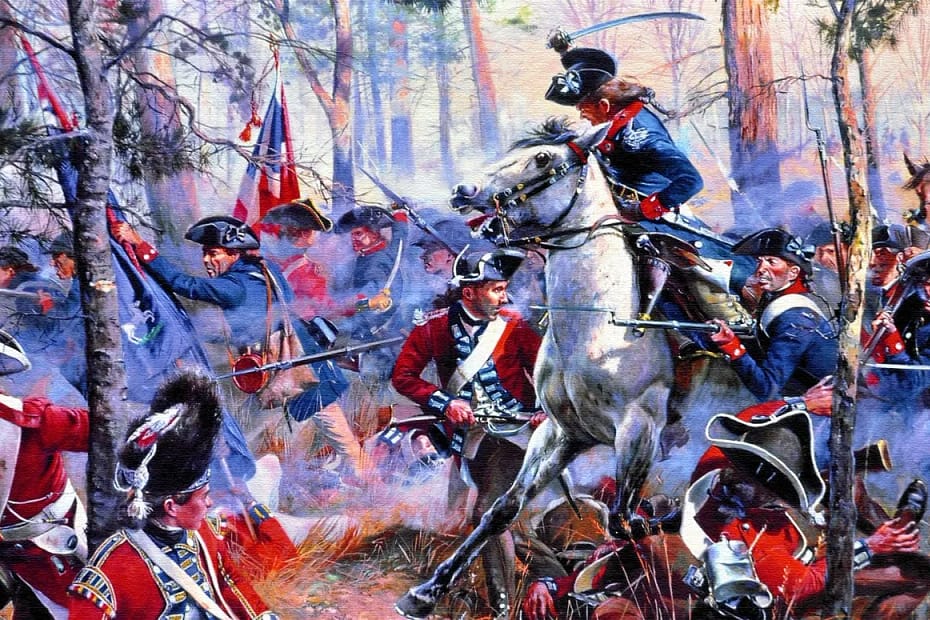
Reconstructing American Revolutionary War battlefields through terrain analysis, primary sources and on-site research
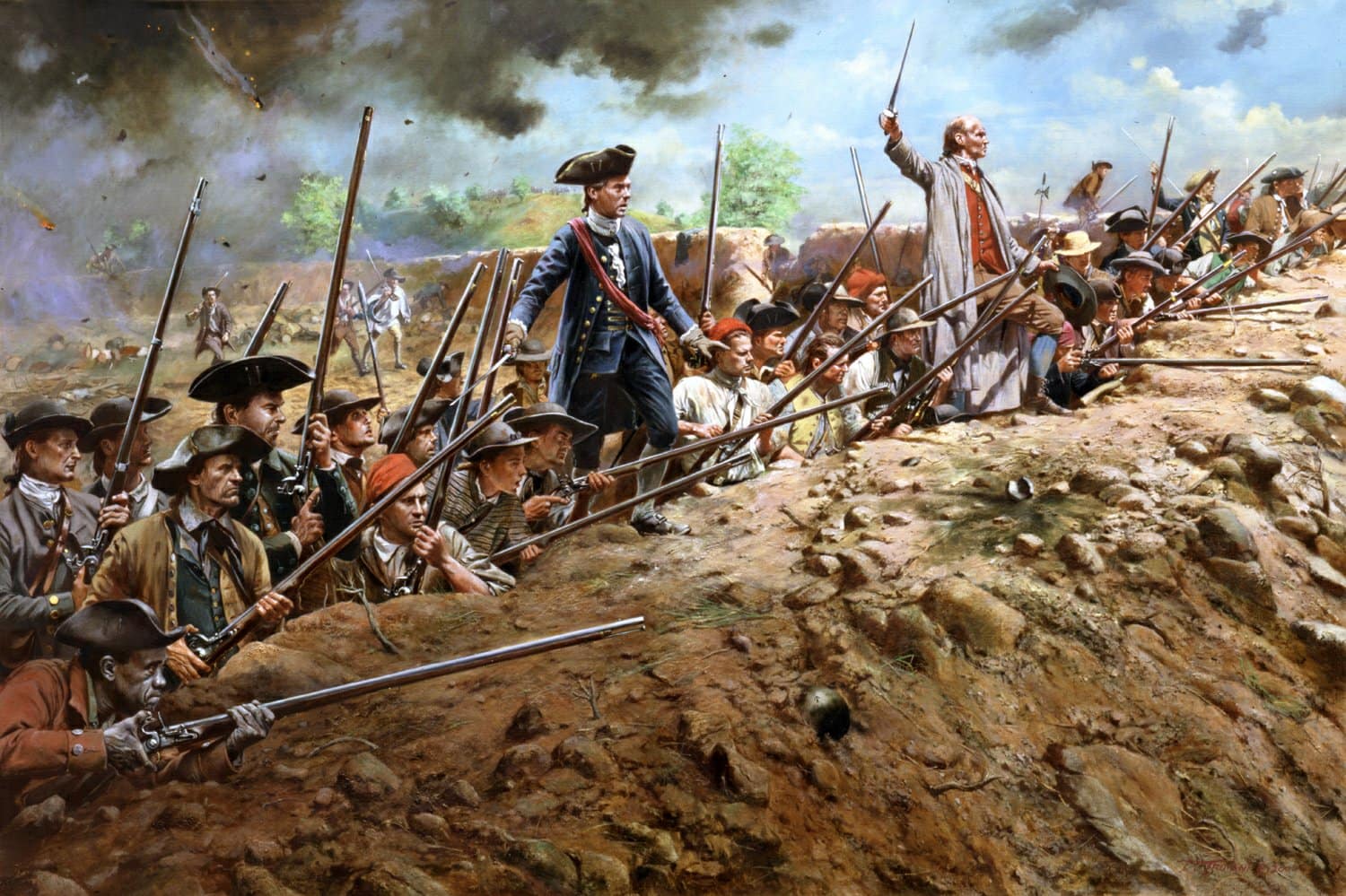
Walking the battlefields of the American Revolutionary War
The American Revolutionary War (1775–1783) was a continental conflict fought across forests, rivers, mountains, and fortified towns from New England to the Deep South. At its core was the struggle between the British Empire—one of the most experienced military and naval powers of the eighteenth century—and a coalition of Continental Army regulars, state militias, and local volunteers seeking political independence and control of their own territory.
The war opened in New England, where the geography of Boston and its surrounding hills, swamps, and townships shaped the early campaigns. British attempts to project force inland were constrained by narrow roads, local resistance, and an increasingly hostile population. Operations then shifted to New York and New Jersey, where river lines, winter marches, and the contest for key ports produced a highly mobile series of engagements.
In 1777, the focus turned to the interior, where control of the Hudson and Lake Champlain corridors culminated in the decisive American victory at Saratoga; a turning point in the war. Further south, a brutal war of rapid manoeuvre and partisan action unfolded across the Carolinas and Georgia—terrain that favoured local knowledge, and dispersed action. The entry of France, and later Spain and the Dutch Republic, transformed the strategic calculus, ultimately enabling the Franco-American siege of Yorktown in 1781 and the collapse of British field operations.
Methodology for battlefield analysis
This page brings together BattlefieldTravels’ studies, maps, artefacts, and reading resources related to the Revolutionary War, with future battlefield studies added as research progresses. Each battlefield study blends on-site photography, annotated maps, 3D terrain visualisations and a wide range of primary and secondary sources, providing not just a narrative of each action but a clear understanding of why events unfolded the way they did. I have walked dozens of Revolutionary battlefields all over North America. They will be added here as the studies are completed.
Battle Studies in the American Revolutionary War
Below are all current BattlefieldTravels studies for the American Revolutionary War, covering key battles, campaign phases and associated sites. New studies are added as further battlefields are walked and analysed.
-
⚔️ Battle of Cowpens, South Carolina,
17 January 1781
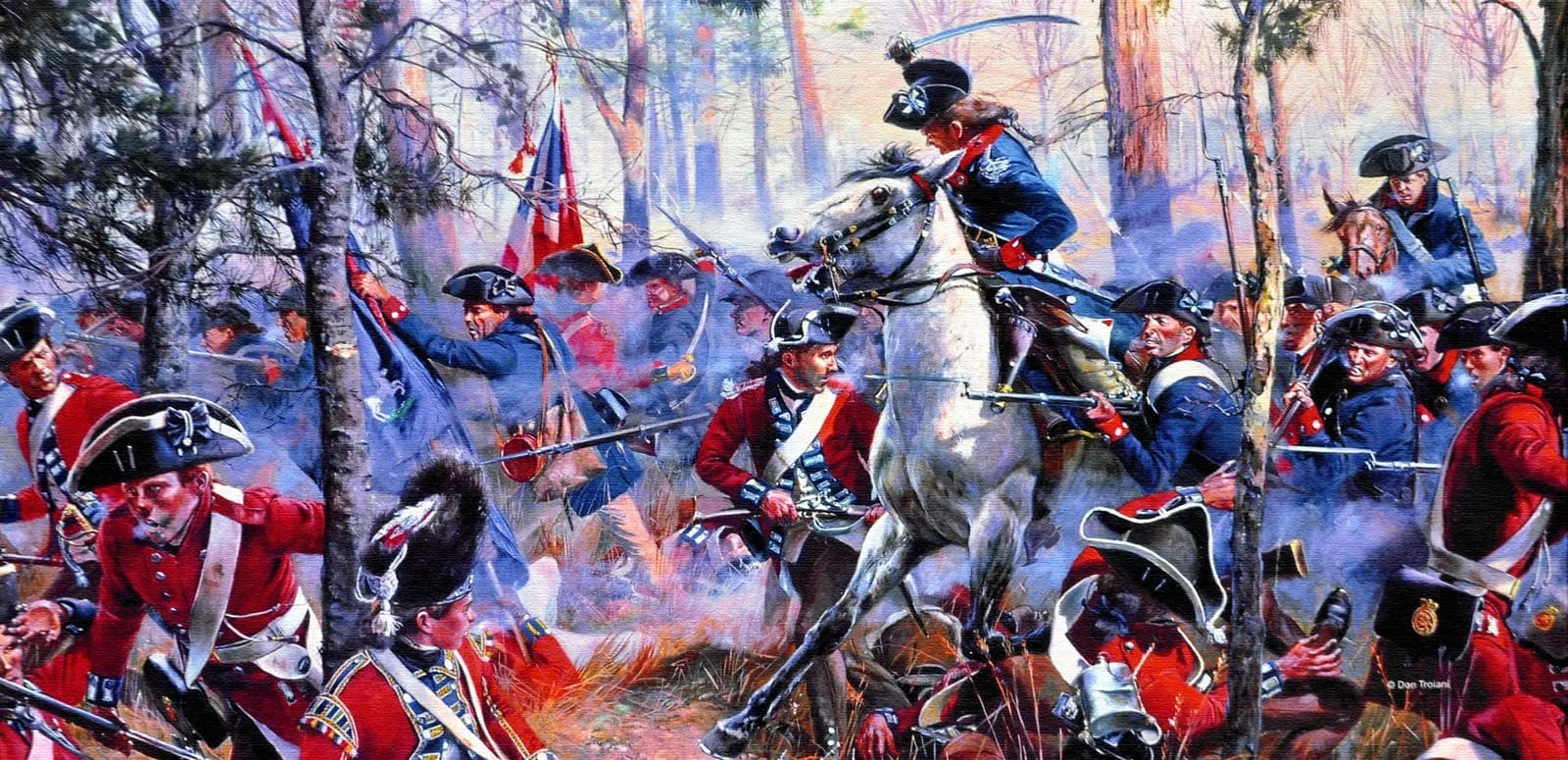
The Battle of Cowpens, South Carolina, was a relatively small engagement in the American Revolutionary War, but had outsized impact on the trajectory of the war. The American commander, Brigadier-General Dan Morgan, also employed tactical innovations that were adopted for future campaigns.
-
⚔️ Battle of Kings Mountain, SC,
7 October 1780
The Battle of King’s Mountain, although relatively small scale, provides some fascinating insights into how the American Revolution developed in the south. By 1780, with British forces under pressure in the north, the British commander in the Americas, Sir Henry Clinton, decided to take the war to the southern states; partly to spread the American…
-
⚔️ Battle of Trenton, New Jersey,
26 December 1776
The Battle of Trenton on 26 December 1776 was a much-needed victory for General George Washington and the Continental Army. After being driven out of New York and New Jersey during the 1776 campaign, the surprise attack and victory at Trenton was a great boost for the Patriot cause.


Authored by Mick Prictor, a retired military officer with 40 years’ service, and a military historian specialising in terrain-focused analysis of tactics, doctrine, and command decision-making in land warfare. His work draws on extensive battlefield fieldwork—more than 280 sites worldwide—and one of the world’s largest private collections of historic military arms, uniforms, and equipment. About me
⚔️ Go deeper — Members get exclusive access to the Deep Research Collection, Field Notes, and monthly Research Dispatches. Try membership free for 7 days, cancel anytime. From $9/month.
Explore Related Themes
Armies: Continental Army • British Army • French Army• Hessian soldiers
Commanders: George Washington • Lord Cornwallis • Maquis de Montcalm
Methods: Oblique Order • Envelopment • Siege
Environments: Forest Warfare • Mountain Warfare
Further Study: American Revolutionary War Reading List
The American Revolutionary War was a conflict fought from 1775 to 1783 between Great Britain and the thirteen American colonies seeking political independence. It unfolded across multiple theatres, from New England to the Deep South, and involved both large-scale battles and decentralized militia warfare.
Major campaigns included the New England fighting around Boston, the New York and New Jersey operations, the Northern Campaign culminating at Saratoga, the Southern Campaign in the Carolinas and Georgia, and the Franco-American siege of Yorktown in 1781.
French military and naval intervention after 1778 transformed the strategic balance. French funds, troops, and naval superiority played a decisive role in the Yorktown campaign, forcing Britain to negotiate an end to the war.
Combatants included British regulars, Hessian auxiliaries, the Continental Army, state militias, Loyalists, Indigenous allies, and French land and naval forces. Each operated with different levels of training, equipment, and regional knowledge.
Key engagements include Lexington and Concord, Bunker Hill, Long Island, Trenton and Princeton, Saratoga, Monmouth, Cowpens, Guilford Courthouse, and Yorktown. These battles shaped the strategic trajectory of the war and remain central to modern battlefield studies.
Subscribe to Battlefield Travels and receive a free E-Book Battlefield Guide
Unlock expert battlefield analysis, campaign reconstructions, and historical insights drawn from firsthand exploration and primary sources.
🗺️ You’ll receive:
🎖️ Exclusive historical insights you won’t find elsewhere
📘 A free eBook: 10 Tips for Exploring Historic Battlefields
📰 New battlefield studies straight to your inbox as they are published

⚔️ Go deeper — Members get exclusive access to the Deep Research Collection, Field Notes, and monthly Research Dispatches. Try membership free for 7 days, cancel anytime. From $9/month.