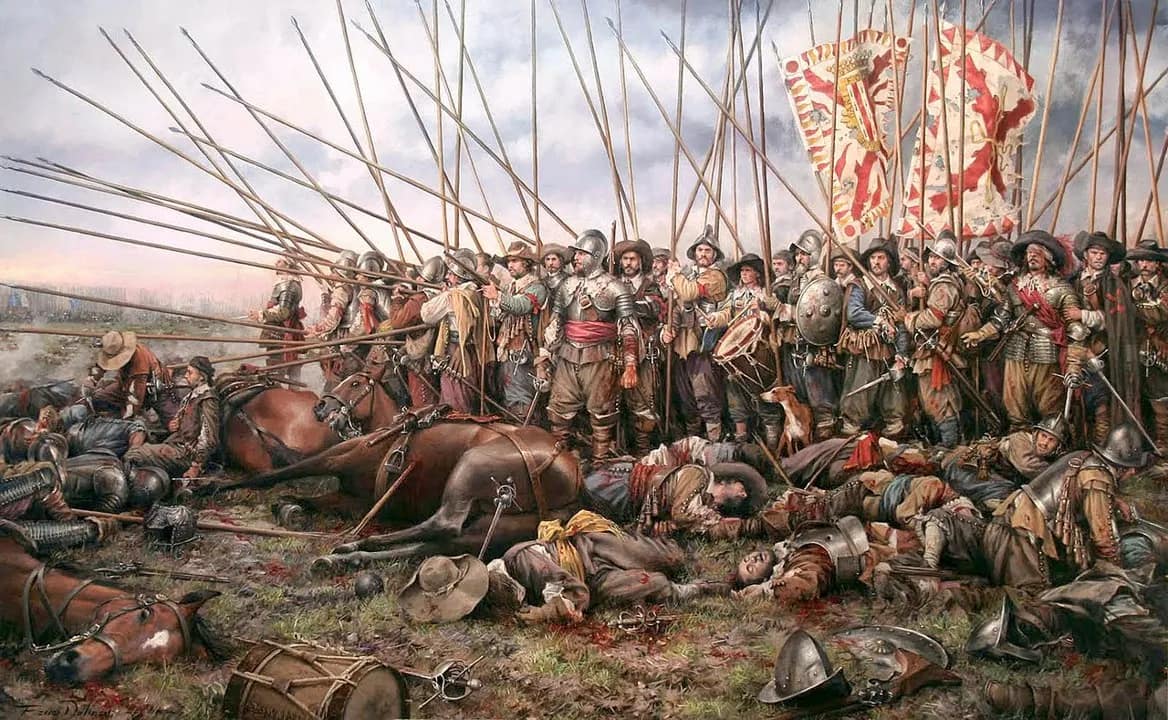
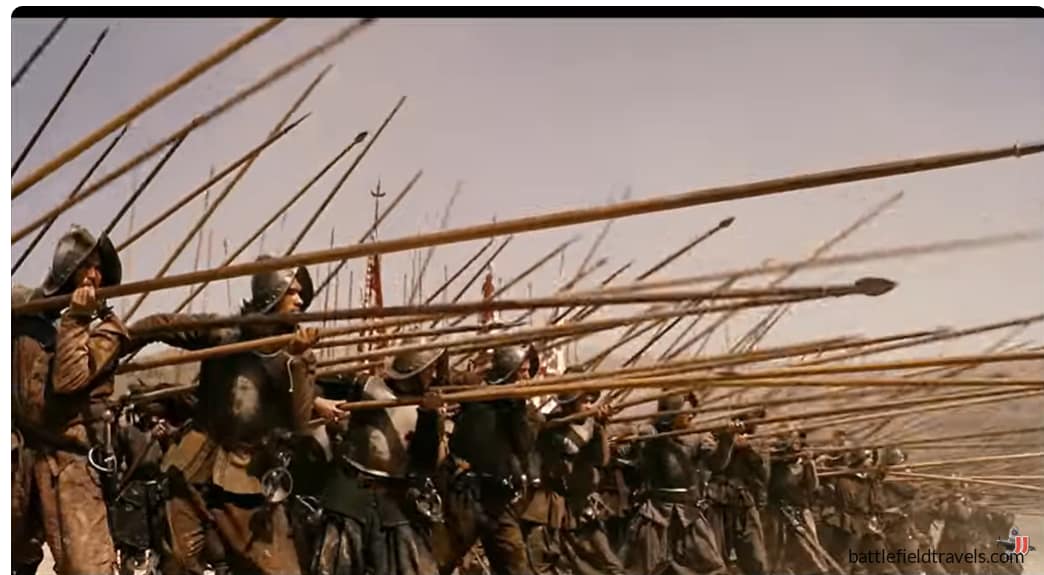
The widespread adoption of firearms by European armies created a new tactical dilemma. The previously invulnerable pike formations were now extremely vulnerable to gunpowder weapons, while the musketeers remained vulnerable to enemy cavalry. What was needed was a combined-arms system in which the relative advantages of the musket, pike, cavalry, and artillery could cover each other’s vulnerabilities.
Reconstructing Thirty Years War battlefields through terrain analysis, primary sources and on-site research
Thirty Years War, 1618-1648. Armies on the march in Italy
Walking the battlefields of the Thirty Years War (1618-1648)
The Thirty Years War was one of the most destructive conflicts in European history, fought across the fragmented political and religious landscape of the Holy Roman Empire. From the rolling plains of Bohemia to the wooded hills of Saxony and the fortified towns of the Rhineland, each theatre imposed its own demands on the armies that marched through it. The war evolved from a local Bohemian revolt into a vast continental struggle involving Imperial, Spanish, Swedish, French, Dutch and numerous German princely armies.
Early campaigns such as the Battle of White Mountain revealed the importance of dominating high ground, road networks and approaches to fortified cities. As the conflict widened, Swedish reforms under Gustavus Adolphus brought new emphasis on mobile firepower, coordinated infantry–cavalry action and efficient battlefield deployment — innovations tested on landscapes like the fields of Breitenfeld and the fog-shrouded approaches to Lützen.
Fortified cities, river crossings and key road junctions became strategic prizes in a war where supply demands and a devastated countryside constrained movement. Armies often manoeuvred for weeks to force or avoid battle. When engagements did occur, they were shaped by hedgerows, marshes, villages and subtle contours that still remain visible on the ground today.
The Battle of Rocroi (1643) — the anchor study for this collection — marked a turning point late in the conflict. Fought at the edges of the war’s timeline, Rocroi exemplified the maturing of early modern line tactics, the resilience of tercios under pressure, and the decisive impact of disciplined cavalry action on open rolling terrain.
This battlefield collection explores how terrain, logistics, fortifications and early modern doctrine interacted across three decades of conflict — revealing how the landscape shaped some of Europe’s most consequential battles.
Battle Studies in the Thirty Years War
Below are all current BattlefieldTravels studies for the Thirty Years War, covering key battles, campaign phases and associated sites. New studies are added as further battlefields are walked and analysed.
Next stop in our battlefield explorations was the incredible 16th-Century bastion fortress of Rocroi. Here, in May 1643, two of the superpowers of the 17th century – Spain and France – clashed in the plain south of the fortress. The battle marked the end of the dominance of the Spanish ‘Tercio’ tactics that had dominated…
Over thousands of years of warfare, armies have sought ways to gain advantage on the battlefield. Sometimes the solution was a new weapon. Sometimes it was a radical new method. Often it was a combination of both. From the disciplined ranks of the Greek phalanx to pike-and-shot warfare to the interlocking machine-gun fire plans of the twentieth century, tactical innovations have repeatedly reshaped how battles are fought.
The widespread adoption of firearms by European armies created a new tactical dilemma. The previously invulnerable pike formations were now extremely vulnerable to gunpowder weapons, while the musketeers remained vulnerable to enemy cavalry. What was needed was a combined-arms system in which the relative advantages of the musket, pike, cavalry, and artillery could cover each…
Authored by Mick Prictor, a retired military officer with 40 years’ service, and a military historian specialising in terrain-focused analysis of tactics, doctrine, and command decision-making in land warfare. His work draws on extensive battlefield fieldwork—more than 280 sites worldwide—and one of the world’s largest private collections of historic military arms, uniforms, and equipment. About me
⚔️ Go deeper — Members get exclusive access to the Deep Research Collection, Field Notes, and monthly Research Dispatches. Try membership free for 7 days, cancel anytime. From $9/month.
Why was terrain so important in the Thirty Years War?
Armies were limited by supply lines and road networks, and battles often hinged on control of villages, hills, marshes and river crossings.
Why begin with Rocroi?
Rocroi is a major battle from the war’s final phase and demonstrates mature early modern tactics and terrain-driven manoeuvre.
Will more Thirty Years War studies be added?
Yes. Future studies may include Lützen, Breitenfeld, Nördlingen and White Mountain.
Subscribe to Battlefield Travels and receive a free E-Book Battlefield Guide
Unlock expert battlefield analysis, campaign reconstructions, and historical insights drawn from firsthand exploration and primary sources.
🗺️ You’ll receive:
🎖️ Exclusive historical insights you won’t find elsewhere
📘 A free eBook: 10 Tips for Exploring Historic Battlefields
📰 New battlefield studies straight to your inbox as they are published
Claim Your Free Battlefield Travel Guide
Get your free e-book, exclusive tips, and updates on new battlefield studies.
Thank you!
You have successfully joined our subscriber list.
⚔️ Go deeper — Members get exclusive access to the Deep Research Collection, Field Notes, and monthly Research Dispatches. Try membership free for 7 days, cancel anytime. From $9/month.