Skip to content
Home » Jacobite Rising

Jacobite Rising

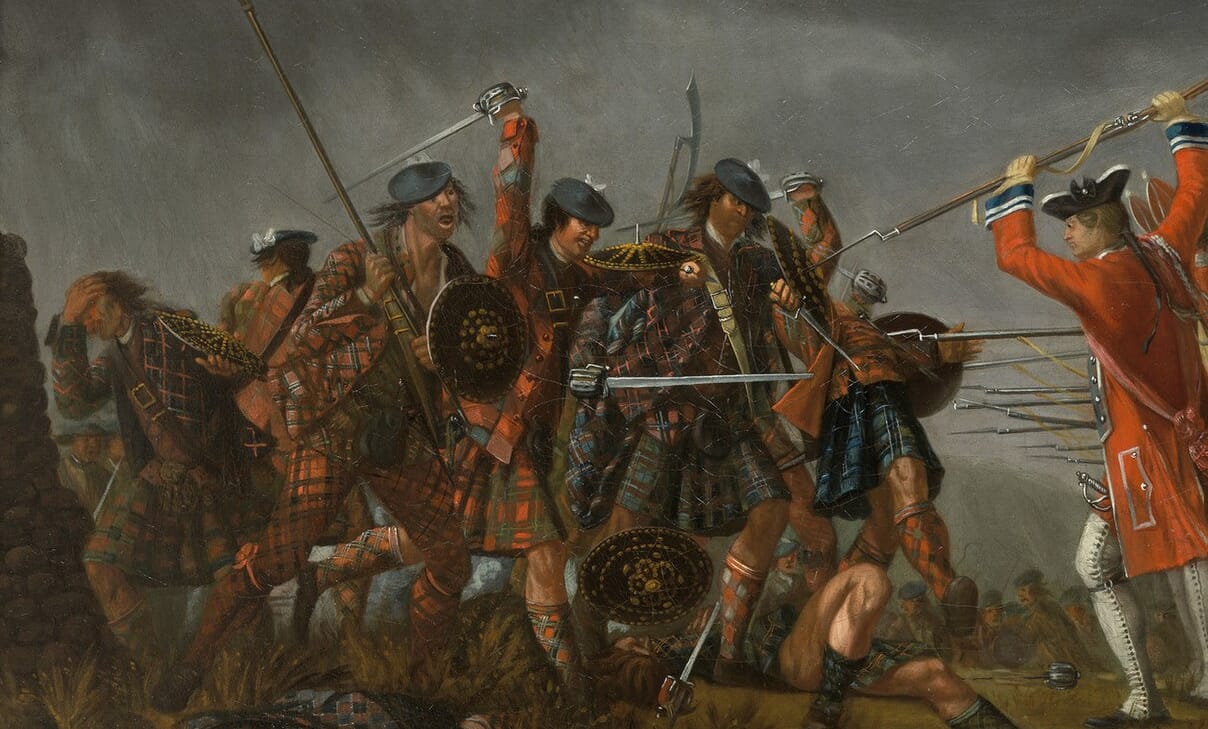
Highlanders at Culloden, Painting by David Morier

💡The Culloden Bayonet Drill: How Cumberland’s army broke the Highland charge

How a minor change to the government army’s bayonet drill defeated the Highlander’s battle tactics— and why the critics who dismissed it were asking the wrong question. The weight of evidence establishes beyond reasonable doubt that Cumberland’s army trained in and used a new bayonet drill at Culloden, and that the drill was directed personally by Cumberland in the Aberdeen training period. None of the documentary evidence describes the precise mechanics of the drill explicitly.

Reconstructing Jacobite Rising battlefields through terrain analysis, primary sources and on-site research

Battle of Prestonpans, 21 September 1745, Andrew Hillhouse

Walking the battlefields of the Jacobite Rising (1745-1746)

The Jacobite Rising of 1745–46 was a fast-moving campaign fought across the Highlands, Lowlands and central belt of Scotland, culminating in the last pitched battle on British soil. Led by Charles Edward Stuart ‘Bonnie Prince Charlie’, the Jacobite army moved rapidly through some of the most challenging terrain in the British Isles — mountain passes, narrow glens, heather moors, boggy flats and the defensive perimeters of major towns and fortresses.

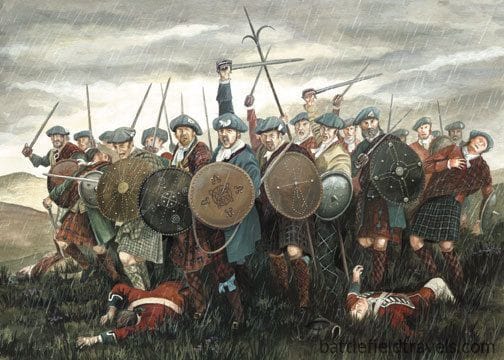
Terrain repeatedly shaped the campaign’s outcomes. At Glenfinnan, the raising of the Jacobite standard occurred at the head of a strategic glen that controlled movement across the West Highlands. The victory at Prestonpans unfolded on a small, compartmentalised coastal plain where the Jacobites exploited local tracks and marsh edges to launch a surprise flank attack. And at Culloden Moor — a bleak, uneven plateau studded with walls, drainage lines and gorse patches — the Jacobite charge was blunted by ground that favoured disciplined musketry, artillery, cohesive line formations, and a new bayonet drill designed to defeat the highland charge.

This landing page brings together battlefield studies from the 1745–46 Rising, combining modern field reconnaissance, period maps, eyewitness accounts and terrain analysis. By walking the ground at Prestonpans, Culloden, Edinburgh and Glenfinnan, these studies reveal not just what happened, but why commanders made the decisions they did, and how landscape, weather and movement corridors shaped each phase of the campaign.

Together, they provide a clear, evidence-based perspective on one of the most dramatic and consequential uprisings in British history.


Battle Studies in the Jacobite Rising

Below are all current BattlefieldTravels studies for the Jacobite Rising, covering key battles, campaign phases and associated sites. New studies are added as further battlefields are walked and analysed.

  • ⚔️ Battle of Culloden, Scotland,
    16 April 1746

    ⚔️ Battle of Culloden, Scotland, 16 April 1746

    The Battle of Culloden, fought on 16 April 1746, was the final and decisive confrontation of the Jacobite Rising of 1745. The rebellion was the last serious attempt by the Jacobites to restore the Stuart monarchy to the British throne. Led by Charles Edward Stuart ‘Bonnie Prince Charlie’, the Jacobite forces aimed to overthrow the…

    Read the full battle study


  • ⚔️ Battle of Prestonpans, Scotland,
    21 September 1745

    ⚔️ Battle of Prestonpans, Scotland, 21 September 1745

    Bonnie Prince Charlie landed at Glenfinnan, Scotland in July 1745, aiming to reclaim the British throne for his father, James Francis Edward Stuart. Gathering support from the Highland clans, he advanced towards Edinburgh, capturing the city on 17 September. British General Sir John Cope, who had been gathering government forces in response to the Jacobite…

    Read the full battle study


Tactical Innovations

Over thousands of years of warfare, armies have sought ways to gain advantage on the battlefield. Sometimes the solution was a new weapon. Sometimes it was a radical new method. Often it was a combination of both. From the disciplined ranks of the Greek phalanx to pike-and-shot warfare to the interlocking machine-gun fire plans of the twentieth century, tactical innovations have repeatedly reshaped how battles are fought.


Which Jacobite Rising battles are included here?

Prestonpans and Culloden are currently published, with studies of Edinburgh and Glenfinnan available as site analyses or future additions.

What makes these Jacobite studies unique?

Each is based on terrain analysis, period maps and on-site fieldwork to explain how ground and movement shaped the campaign.

Can these battlefields and sites be visited today?

Yes. Prestonpans, Culloden, Edinburgh and Glenfinnan are all accessible and retain key terrain features visible to visitors.

Does the page cover the wider 1745 campaign?

Yes. The studies place each battle and site within the wider operational movements across Scotland and into northern England.


Subscribe to Battlefield Travels and receive a free E-Book Battlefield Guide

Unlock expert battlefield analysis, campaign reconstructions, and historical insights drawn from firsthand exploration and primary sources.

🗺️ You’ll receive:

🎖️ Exclusive historical insights you won’t find elsewhere

📘 A free eBook: 10 Tips for Exploring Historic Battlefields

📰 New battlefield studies straight to your inbox as they are published


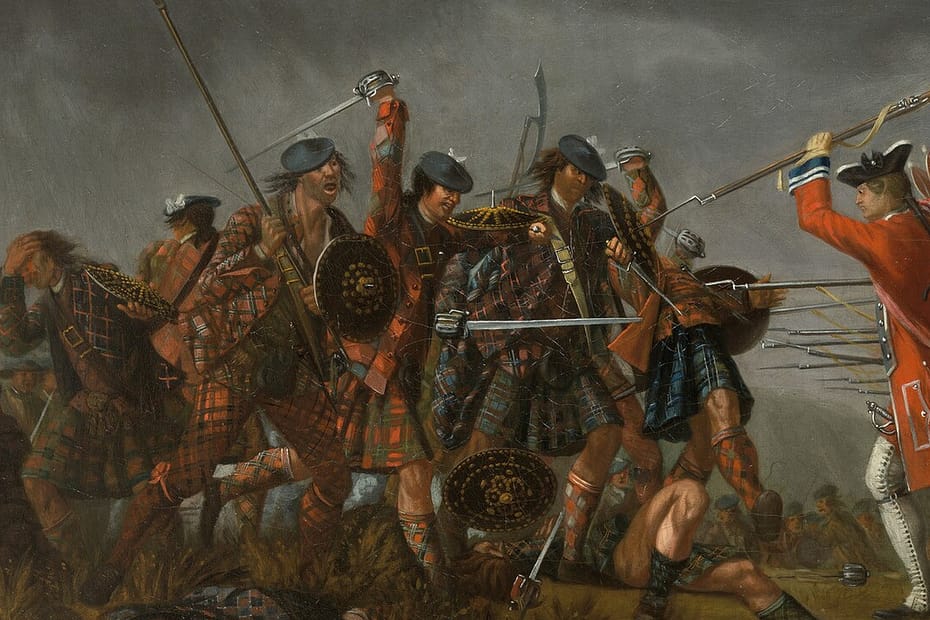
An Incident in the Rebellion of 1745, an oil on canvas, painting by David Morier 

⚔️ Battle of Culloden, Scotland,
16 April 1746

The Battle of Culloden, fought on 16 April 1746, was the final and decisive confrontation of the Jacobite Rising of 1745. The rebellion was the last serious attempt by the Jacobites to restore the Stuart monarchy to the British throne. Led by Charles Edward Stuart ‘Bonnie Prince Charlie’, the Jacobite forces aimed to overthrow the Hanoverian King George II and reinstate the Stuart line.

⚔️ Battle of Prestonpans, Scotland, 21 September 1745

⚔️ Battle of Prestonpans, Scotland,
21 September 1745

Bonnie Prince Charlie landed at Glenfinnan, Scotland in July 1745, aiming to reclaim the British throne for his father, James Francis Edward Stuart. Gathering support from the Highland clans, he advanced towards Edinburgh, capturing the city on 17 September. British General Sir John Cope, who had been gathering government forces in response to the Jacobite threat, marched his army from Aberdeen to intercept the rebels, culminating in the confrontation at Prestonpans, a small town east of Edinburgh. Prestonpans was the first major battle of the ‘45 Jacobite rebellion.

Selected works on the Jacobite Rising

Jacobite rising - The Battle of Culloden, 16 April 1746
Jacobite rising – The Battle of Culloden, 16 April 1746

Overview of the Jacobite Rising, 1745-46

The Jacobite Rising of 1745 was the final attempt to restore the exiled Stuart dynasty to the British throne. Launched during the War of the Austrian Succession, it reflected both dynastic ambition and lingering Highland loyalty to the House of Stuart. Prince Charles Edward Stuart — “Bonnie Prince Charlie” — landed in the Hebrides in July 1745 with a handful of supporters and quickly gathered a Highland army under Lord George Murray.

The Jacobites seized Edinburgh and defeated Sir John Cope’s government forces at Prestonpans, securing control of much of Scotland. In November, the army advanced south into England, reaching as far as Derby, but the lack of widespread English support and the threat of converging Hanoverian forces forced a withdrawal. Pursued north, the Jacobites fought a series of rearguard actions before their final stand at Culloden on 16 April 1746. The government army under the Duke of Cumberland, disciplined and heavily supported by artillery, destroyed the Jacobite force in less than an hour.

Culloden marked the end of two centuries of dynastic conflict in Britain. The aftermath brought harsh repression, the abolition of the clan system, and the disarmament of the Highlands. Militarily, the rising demonstrated the contrast between irregular clan warfare and the professional army of the Enlightenment era — a clash between tradition and modernity that marked the close of the Stuart cause.


Reading

The reference collection below includes the key books and references I have used in preparing for and undertaking studies of the Jacobite Rising battlefields.


Jacobite Rising

Culloden Moor 1746: The death of the Jacobite cause (Campaign, 106)
Osprey’s study of the most important battle of the Jacobite Risings (1688-1746). The final demise of Jacobitism amid the slaughter of the Highland clans on a cold and damp Culloden Moor in April 1746 is undoubtedly one of the most famous battles in British military history. It has also been, until recently, one of the least understood from both a military and political perspective. In this modern and highly detailed account, this book combines a thorough understanding of 18th century tactics, an intimate knowledge of the battlefield itself and a scandalously underused archive of contemporary material from both sides to provide a detailed, accurate and dramatic account of this controversial battle.
The ’45: Bonnie Prince Charlie: Bonnie Prince Charlie and the Untold Story of the Jacobite Rising
Could the Stuart dynasty have been restored to the throne in 1745? Written by the world’s greatest authority on 18th century warfare, this fast-paced and exciting narrative will completely revise popular opinion about “Bonnie Prince” Charlie, the Duke of Cumberland (“the Butcher”), and the other major players in this historical drama. Christopher Duffy’s original research, from all available archives, reveals evidence of a wider plot against the Hanoverians and more support for the risings in Scotland, than had been suspected before. Filled with numerous maps and a comprehensive guide to the key sites, it provides an eye-opening perspective.
CULLODEN
The National Trust for Scotland published a color booklet depicting the history of the Battle of Culloden-fought on April 16, 1746, it was the last great battle on British soil. Profusely illustrated. 36pp.
Sale
CULLODEN:GREAT BATTLES CLOTH
The battle of Culloden lasted less than an hour. The forces involved on both sides were small, even by the standards of the day. And it is arguable that the ultimate fate of the 1745 Jacobite uprising had in fact been sealed ever since the Jacobite retreat from Derby several months before. But for all this, Culloden is a battle with great significance in British history. It was the last pitched battle on the soil of the British Isles to be fought with regular troops on both sides. It came to stand for the final defeat of the Jacobite cause. And it was the last domestic contestation of the Act of Union of 1707, the resolution of which propelled Great Britain to be the dominant world power for the next 150 years. If the battle itself was short, its aftermath was brutal – with the depredations of the Duke of Cumberland followed by a campaign to suppress the clan system and the Highland way of life. And its afterlife in the centuries since has been a fascinating one, pitting British Whig triumphalism against a growing romantic memorialization of the Jacobite cause.
The Jacobite Rebellions 1689–1745 (Men-at-Arms, 118)
Between the first Jacobite rising in 1689 and the final collapse of the cause in 1746, the hopes of the House of Stuart were centred chiefly on Scotland. It is often wrongly assumed that the Jacobite rebellions were a contest between England and Scotland. In fact many Lowland Scots share the feelings of the English, and had cause to hate and fear their fellow countrymen in the Highlands. Thus it was to the Highland clans that the Jacobites looked to for their most reliable manpower. In this book Michael Barthorp details the events of the Jacobite rebellions, and the organisation and uniforms of the forces of both sides.
The Battle of Prestonpans 1745
This is the first history of the Jacobite battle fought on September 21, 1745 between the forces of the Hanoverian regime and Prince Charles Edward Stuart, better known as “Bonnie Prince Charles.” Lieutenant-General Sir John Cope, the leader of the English army, has been ridiculed, in song and in history books, for losing the Battle of Prestonpans€”the first major battle of the 1745 Jacobite Rising. His defeat led to the invasion of England, in which the Jacobites almost drove King George II from the throne. But was Cope really to blame? The Jacobite Risings occurred after Parliament ousted King James Stuart in 1688 and installed a new dynasty. Stuart loyalists, many of them based in Scotland, took up arms repeatedly in futile attempts to restore James’ descendants. The 1745 Rising, led by Bonnie Prince Charlie, was the last. Martin Margulies traces Scottish history up to “the ’45”, describes the sharply contrasting weapons and tactics of the opposing armies, and follows


FAQ – Jacobite Rising (1745-46) Reading Room

How were the books in this Jacobite Risings reading list selected?

This reading list is curated to prioritise works that examine the Jacobite risings through military operations, command decision-making, terrain, and force employment. Emphasis is placed on studies grounded in primary sources and critical historiography rather than romantic or purely political interpretations.

Does this reading list focus only on the 1745–46 rising and Culloden?

No. While the 1745–46 campaign is central, the list also includes works addressing earlier risings, regional operations, logistics, and the evolving military capabilities of both Jacobite and government forces.

How important was terrain in the Jacobite risings?

Terrain was decisive. Highlands, glens, river crossings, road networks, and limited infrastructure shaped movement, supply, and tactical options. Jacobite forces frequently exploited local terrain knowledge, while government forces increasingly sought to control terrain through roads, forts, and disciplined deployment.

Are these books suitable for readers new to the Jacobite risings?

The list includes a mix of accessible overviews and more specialised operational studies. Readers new to the subject may wish to begin with general histories before progressing to detailed campaign and battle analyses.

Is this intended to be a complete bibliography of the Jacobite risings?

No. This is a selective reading list intended to guide serious study rather than provide exhaustive coverage. Additional works may be added as new scholarship and archival research continue to develop.


Subscribe to Battlefield Travels and receive a free E-Book Battlefield Guide

Unlock expert battlefield analysis, campaign reconstructions, and historical insights drawn from firsthand exploration and primary sources.

🗺️ You’ll receive:

🎖️ Exclusive historical insights you won’t find elsewhere

📘 A free eBook: 10 Tips for Exploring Historic Battlefields

📰 New battlefield studies straight to your inbox as they are published