Skip to content
Home » Kerak

Kerak

Reconstructing battlefields of the Crusades through terrain analysis, primary sources and on-site research
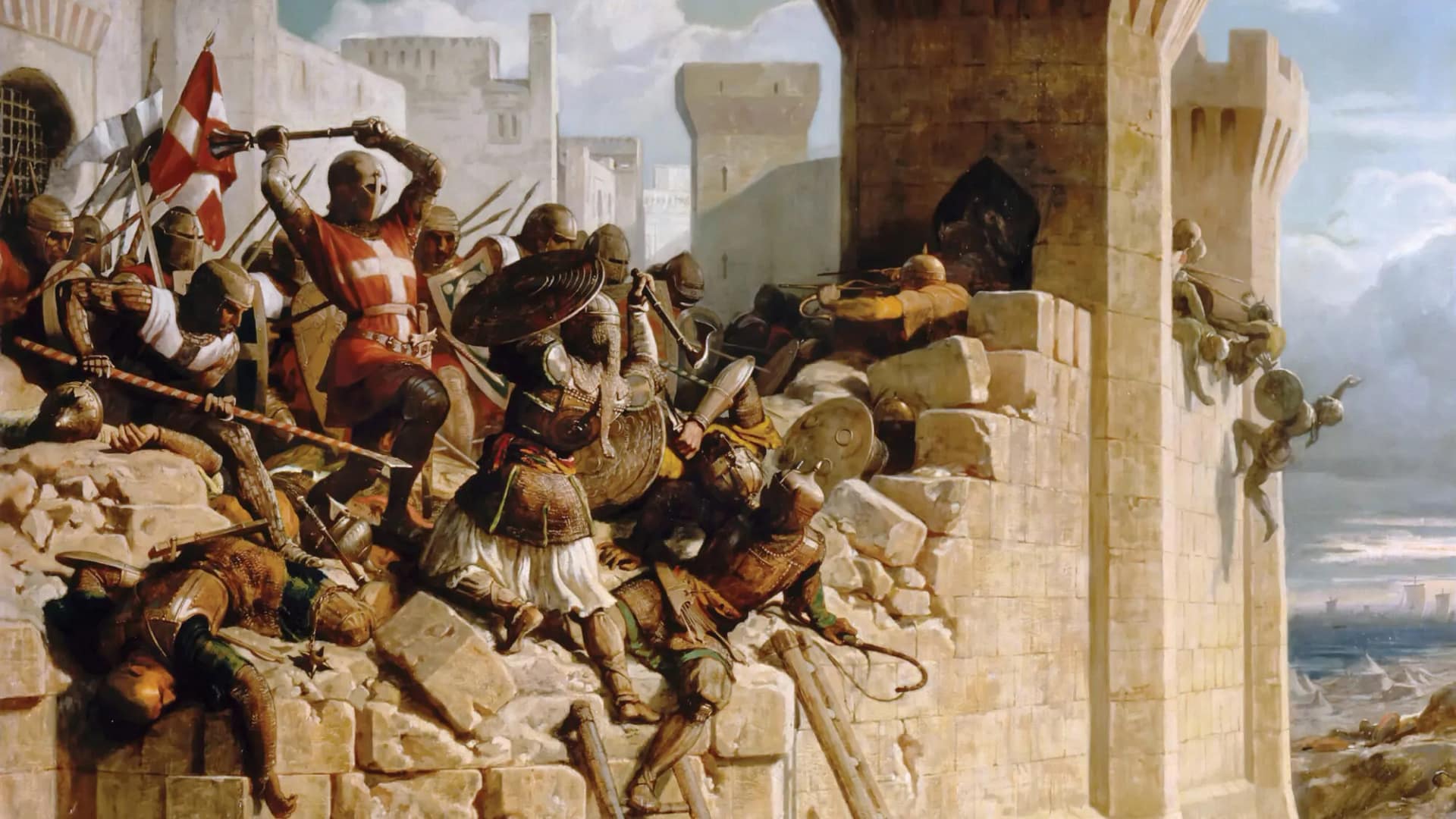
Guillaume de Clermont defending the walls at the Siege of Acre, 1291. Artist Dominique Papety

Walking the battlefields of the Crusades

Origins of the Crusades

The Crusades were a series of campaigns over nearly two centuries that pitted the Christian kingdoms of Europe against the Islamic empires of the East. The period was dominated by sieges and shifting alliances that drew warriors, pilgrims, monarchs and empires into one of the most enduring military struggles of the medieval world. Fought from Anatolia and the Levant to Egypt, North Africa and the Baltic, these conflicts unfolded across deserts, fortified cities, mountain passes, fertile plains and caravan routes that shaped every operational decision.

The origins of the conflict can be traced to the Battle of Manzikert in 1071, where a Seljuk Turk army destroyed the Byzantine army. After Manzikert, the Byzantine frontiers in Asia Minor were severely weakened, and the Seljuk Turks occupied Jerusalem. In response, the Byzantine Emperor appealed for help against the advancing Turks, and Pope Urban II called for a Crusade to recapture the Holy Land, particularly Jerusalem, from Muslim control.

1st to 3rd Crusades

The First Crusade (1096–1099) set the pattern for the many crusades that followed. European leaders gathered volunteer armies for the long marches across Anatolia. Major cities were besieged, and battles were fought for control of roads and river crossings. The captures of Antioch and Jerusalem were achieved only through determined siegecraft, internal factional struggles and timely reinforcements, establishing Crusader states that were permanently vulnerable to geography and distance.

At the Battle of Hattin in 1187, Saladin lured the Crusader Army to its destruction, leaving the already vulnerable Crusader states almost defenceless. Jerusalem fell to the Saracens, and despite a powerful Third Crusade led by Richard I of England and Phillip of France, Jerusalem was not retaken. Commanders such as Saladin and Richard the Lionheart clashed at battles where terrain dictated tempo: Richard’s coastal march to Acre, the fighting withdrawal at Arsuf and the defence of strongpoints such as Kerak Castle, where the fortress’s towering spur and multi-layered fortifications allowed a small garrison to withstand repeated assaults.

Later Crusades

The later Crusades shifted the theatre repeatedly: a Byzantine–Crusader clash during the Fourth Crusade, Egypt as the objective during the Fifth and Seventh Crusades, and the increasingly desperate defence of the remaining Crusader strongholds along the Levantine coast. Cities such as Acre, Montfort, Krak des Chevaliers and Jerusalem became focal points of siege warfare and counter-siege innovation, culminating in the fall of Acre in 1291 and the end of the Crusader period in the Levant.

This collection of battlefield studies examines these campaigns through medieval chronicles, archaeological remains, fortress architecture and on-ground reconnaissance — explaining how strategy, leadership and terrain shaped one of history’s most complex and iconic periods of warfare.


Battle Studies in the Crusade period

Below are all current BattlefieldTravels studies for the Crusades, covering key battles, campaign phases and associated sites. New studies are added as further battlefields are walked and analysed.

  • ⚔️ The Crusades: Kerak Castle under siege,
    1183-1188

    ⚔️ The Crusades: Kerak Castle under siege, 1183-1188

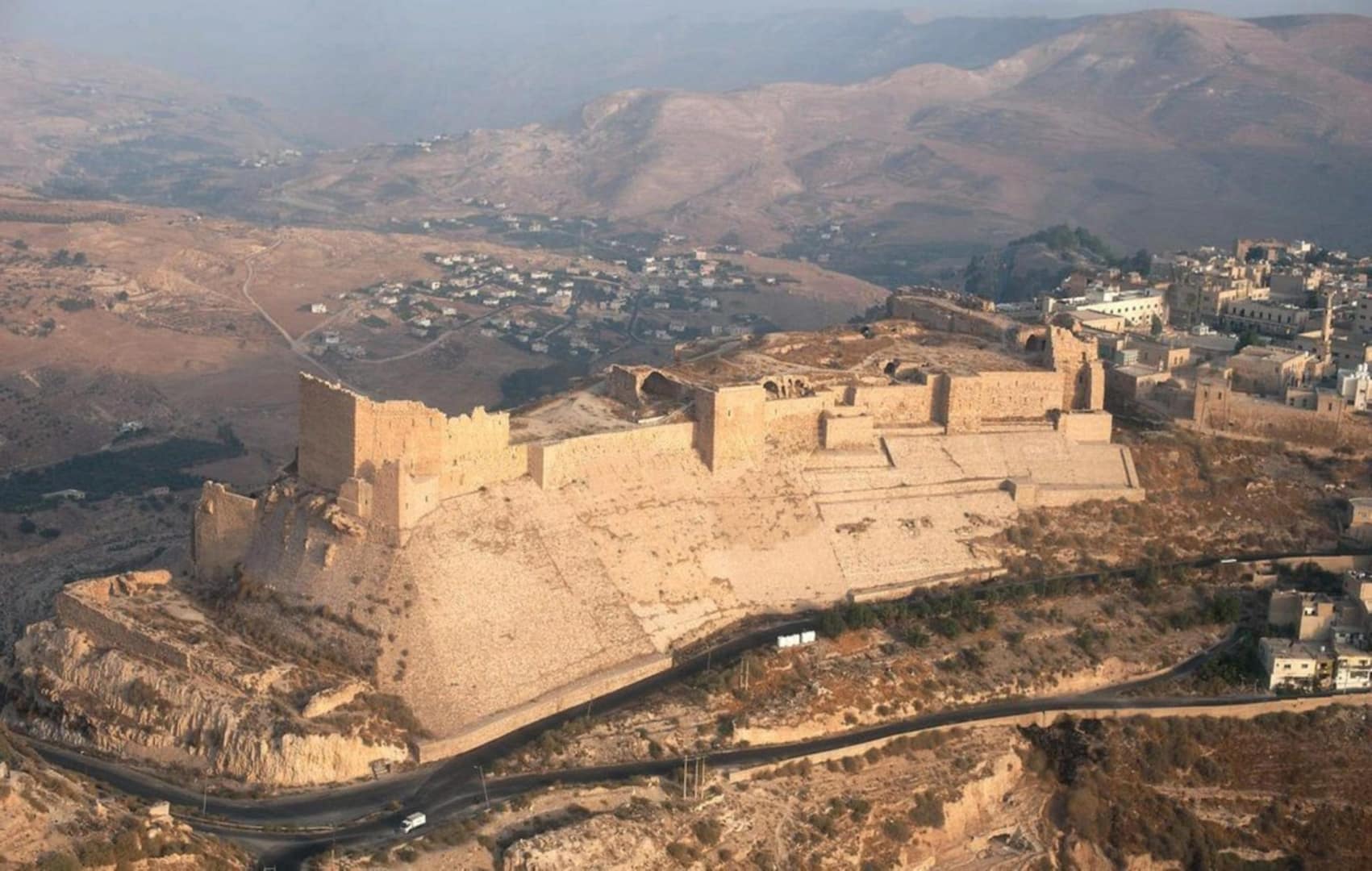
    Kerak Castle, in present-day Jordan, is one of the best-preserved castles in the Levant. Ruled by Raynald de Châtillon, the castle played a crucial role in the late 12th century as a strategic outpost of the Crusader Kingdom of Outremer. Kerak was subjected to three major sieges in 1183, 1184, and 1187-88, as part of…
    Read the full battle study


What periods of the Crusades are covered in this collection?

The landing page spans the full sequence from the First Crusade (1096–1099) to the fall of Acre in 1291, including major Levantine, Anatolian and Egyptian campaigns.

Which battlefields and strongholds are included or planned?

Published studies include Kerak Castle, with future coverage planned for key sieges and battles such as Antioch, Jerusalem, Hattin, Arsuf, Acre and the fortified castles of the Crusader states.

Why were castles so important during the Crusades?

Fortified positions such as Kerak, Krak des Chevaliers and Montfort dominated roads, water sources and regional trade routes, allowing small garrisons to hold strategic terrain against larger armies.

Can these Crusader sites still be visited today?

Yes. Many castles and battlefield landscapes in Jordan, Israel, Lebanon and Turkey preserve significant medieval structures and terrain continuity, allowing modern visitors to understand the ground as it was fought over.


Subscribe to Battlefield Travels and receive a free E-Book Battlefield Guide

Unlock expert battlefield analysis, campaign reconstructions, and historical insights drawn from firsthand exploration and primary sources.

🗺️ You’ll receive:

🎖️ Exclusive historical insights you won’t find elsewhere

📘 A free eBook: 10 Tips for Exploring Historic Battlefields

📰 New battlefield studies straight to your inbox as they are published


Selected works on Medieval Warfare

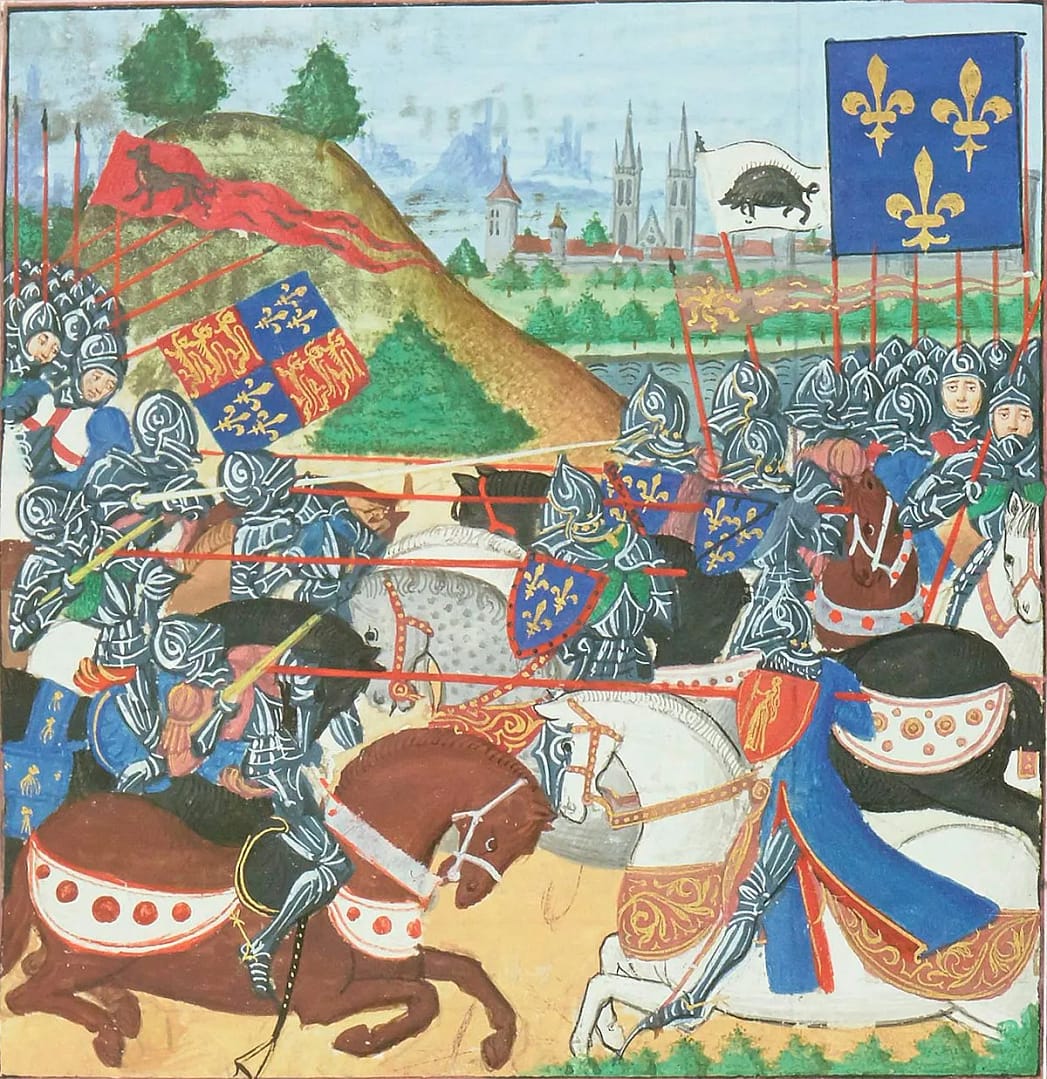
Medieval warfare - English and French forces clash at Patay, 18 June 1429.
Medieval warfare – English and French forces clash at Patay, 18 June 1429.

Understanding a thousand years of conflict through the historians who shaped the field

The study of medieval warfare spans more than a millennium of military, social and technological change, and its literature reflects the diversity and complexity of that evolution. Rather than a single historical arc, scholars have approached the medieval conflicts through multiple lenses: feudal obligation, chivalric culture, technological innovation, religious motivation, and the gradual emergence of centralised states. The result is a rich body of work that helps modern readers move beyond stereotypes of knights and castles to understand how and why medieval armies actually fought.

Much of the foundational scholarship centres on the structure of feudal military service, the development of the knightly class, and the shifting balance between cavalry, infantry and missile troops. Authors such as R. C. Smail, Hans Delbrück, and Charles Oman helped frame early academic debates, analysing the limitations of feudal levies and the tactical patterns visible from Hastings to the Crusades. More recent historians — including John France, Matthew Bennett, Christopher Gravett and David Nicolle — have brought sharper focus to campaign logistics, siegecraft, and the influence of terrain on medieval operations.

For the later Middle Ages, works by Jonathan Sumption, Anne Curry, Bertrand Schnerb, and Kelly DeVries offer detailed examinations of the Hundred Years’ War, exploring everything from longbow tactics at Crécy and Agincourt to the political and social factors behind shifting battlefield fortunes. Their studies also show how professionalism, paid armies and gunpowder warfare began to eclipse older feudal structures. On the eastern frontiers, the military histories of the Byzantine Empire and the Mongol conquests — illuminated by scholars such as John Haldon and Timothy May — reveal very different tactical systems and strategic cultures.

Together, these authors present a layered picture of medieval warfare: a world where faith, feudalism, technology, and emerging state power shaped how campaigns were fought and remembered. The Reading Room selections gathered here provide entry points into that vast scholarship, helping readers understand not just the battles themselves, but the historians and interpretations that define our modern understanding of the medieval battlefield.


Reading

The reference collection below includes the key books and references I have used in preparing for and undertaking studies of medieval battlefields.


Hundred Years War

Agincourt: The King; the Campaign; the Battle
In this landmark study of Agincourt, prize-winning author Juliet Barker draws upon a huge range of sources, published and unpublished, English and French, to give a compelling account of a battle upon which so many legends have been built. But she also looks behind the action on the field to paint a portrait of the age. A mad king, murderous dukes, scheming bishops, knightly heroes, surgeons, heralds, spies and pirates- the story of Agincourt has them all.
Sale
1415 Agincourt: A New History
a night fell in Picardy on Thursday 24 October 1415, Henry V and his English troops, worn down by their long march in search of a crossing of the Somme, can only have dreamt that the battle of the next day would be remembered as one of the most momentous victories ever won. Six hundred years down the line, the battle of Agincourt still rings through the centuries. In this stupendous victory English and Welsh archers who formed the bulk of Henry’s army prevailed against large numbers of French men-at-arms and cavalry. This startling and revisionist history recreates the campaign and battle from the perspectives of the English. Acclaimed as one of the best battle accounts ever published, Anne Curry has updated her classic work in honour of the 600th anniversary of Agincourt.
Personal Recollections Of Joan Of Arc – Volume 2: By Mark Twain – Illustrated
Personal Recollections of Joan of Arc, by the Sieur Louis de Conte is an 1896 novel by Mark Twain that recounts the life of Joan of Arc. It is Twain’s last completed novel, published when he was 61 years old.The novel is presented as a translation of memoirs by Louis de Conte, a fictionalized version of Joan of Arc’s page, Louis de Contes. The novel is divided into 3 sections according to Joan of Arc’s development: a youth in Domrémy, a commander of the army of Charles VII of France, and a defendant at trial in Rouen.Originally, the novel was published as a serialization in Harper’s Magazine beginning in April 1895. Twain, aware of his reputation as a comic, asked that each installment appear anonymously so that readers will treat the piece seriously. Regardless, his authorship soon became known, and the book edition published by Harper and Brothers in May 1896 credited Mark Twain.
French Armies of the Hundred Years War : 1328-1429 (Men-At-Arms Series, 337)
The fourteenth and fifteenth centuries were a time of great upheaval for medieval France. In 1328 the Capetian line came to an end. This was the trigger for the Hundred Years War (1337-1453) as successive English kings attempted to uphold their claim to the French throne. Catastrophic defeats at Crécy and Poitiers shook the French kingdom to its core. A period of respite followed under Bertrand du Guesclin, but an even more devastating assault was to follow, under the warrior-king par excellence Henry V, and the French disintegration continued until 1429. This book details how the French began a recovery, partly triggered by the young visionary Joan of Arc, that would end with them as the major European military power.
Orleans 1429: France Turns the Tide (Praeger Illustrated Military History)
In 1415 King Henry V of England invaded France and won an overwhelming victory at the Battle of Agincourt. Following his victory, the English conquered a large part of northern France, and by 1429 were besieging the city of Orleans. In this darkest hour, France’s fortunes were transformed by the inspirational leadership of a young woman, Jeanne d’Arc (Joan of Arc). Within four months the French had broken the siege and won a great victory at the battle of Patay over the previously invincible English.

The Crusades

The Crusades: The Authoritative History of the War for the Holy Land
A one-volume history of the Crusades to the Holy Land – telling this fascinating and bloody story from both Christian and Muslim perspectives for the first time.
Saladin
Saladin remains one of the most iconic figures of his age. As the man who united the Arabs and saved Islam from Christian crusaders in the 12th century, he is the Islamic world’s preeminent hero. Ruthless in defence of his faith, brilliant in leadership, he also possessed qualities that won admiration from his Christian foes. He knew the limits of violence, showing such tolerance and generosity that many Europeans, appalled at the brutality of their own people, saw him as the exemplar of their own knightly ideals. But Saladin is far more than a historical hero. Builder, literary patron and theologian, he is a man for all times, and a symbol of hope for an Arab world once again divided. Centuries after his death, in cities from Damascus to Cairo and beyond, to the Arabian Peninsula and the Gulf, Saladin continues to be an immensely potent symbol of religious and military resistance to the West. He is central to Arab memories, sensibilities and the ideal of a unified Islamic state.
God’s War: A New History of the Crusades
God’s War offers a sweeping new vision of one of history’s most astounding events: the Crusades. From 1096 to 1500, European Christians fought to recreate the Middle East, Muslim Spain, and the pagan Baltic in the image of their God. The Crusades are perhaps both the most familiar and most misunderstood phenomena of the medieval world, and here Christopher Tyerman seeks to recreate, from the ground up, the centuries of violence committed as an act of religious devotion. The result is a stunning reinterpretation of the Crusades, revealed as both bloody political acts and a manifestation of a growing Christian communal identity. Tyerman uncovers a system of belief bound by aggression, paranoia, and wishful thinking, and a culture founded on war as an expression of worship, social discipline, and Christian charity.


Frequently asked questions

What are the best introductory books on medieval warfare?

Excellent entry points include works by Matthew Bennett, John France, and Christopher Gravett. These authors provide clear explanations of feudal military structures, tactical systems, and the evolution of arms and armour, making them ideal for readers new to the subject.

How reliable are medieval sources for studying warfare?

Medieval sources vary widely in reliability. Chronicles often blend fact, interpretation, and political messaging. Archaeology, manuscript illustrations, administrative records, and modern battlefield analysis help historians validate or challenge these accounts. Most modern scholarship cross-references multiple types of evidence.

Why do historians disagree about medieval tactics and troop effectiveness?

Surviving records are fragmentary, and chroniclers rarely offer precise tactical detail. As a result, historians must interpret formations, weapon effects, and battlefield behaviour from limited evidence. This creates space for differing models of how knights, archers, infantry and crossbowmen actually fought.

What role did technology play in changing medieval warfare?

Technological changes such as the stirrup, improved armour, the crossbow, the longbow, and early gunpowder weapons reshaped battlefield roles over time. Historians debate their relative impact, but most agree that combined-arms tactics and increasingly professional forces emerged from these innovations.

How do modern historians study medieval battles?

Today’s researchers combine traditional textual analysis with archaeology, GIS mapping, landscape study, experimental archaeology, and comparative tactical modelling. This interdisciplinary approach has transformed our understanding of battles such as Hastings, Crécy, and Agincourt.


Subscribe to Battlefield Travels and receive a free E-Book Battlefield Guide

Unlock expert battlefield analysis, campaign reconstructions, and historical insights drawn from firsthand exploration and primary sources.

🗺️ You’ll receive:

🎖️ Exclusive historical insights you won’t find elsewhere

📘 A free eBook: 10 Tips for Exploring Historic Battlefields

📰 New battlefield studies straight to your inbox as they are published


Aerial view of Kerak castle in Al-Karak, Jordan. Photo credit to r/castles reddit

⚔️ The Crusades: Kerak Castle under siege,
1183-1188

Kerak Castle, in present-day Jordan, is one of the best-preserved castles in the Levant. Ruled by Raynald de Châtillon, the castle played a crucial role in the late 12th century as a strategic outpost of the Crusader Kingdom of Outremer. Kerak was subjected to three major sieges in 1183, 1184, and 1187-88, as part of Saladin’s campaign to eliminate the Crusader presence in the Levant.