Skip to content
Home » Lorenz

Lorenz

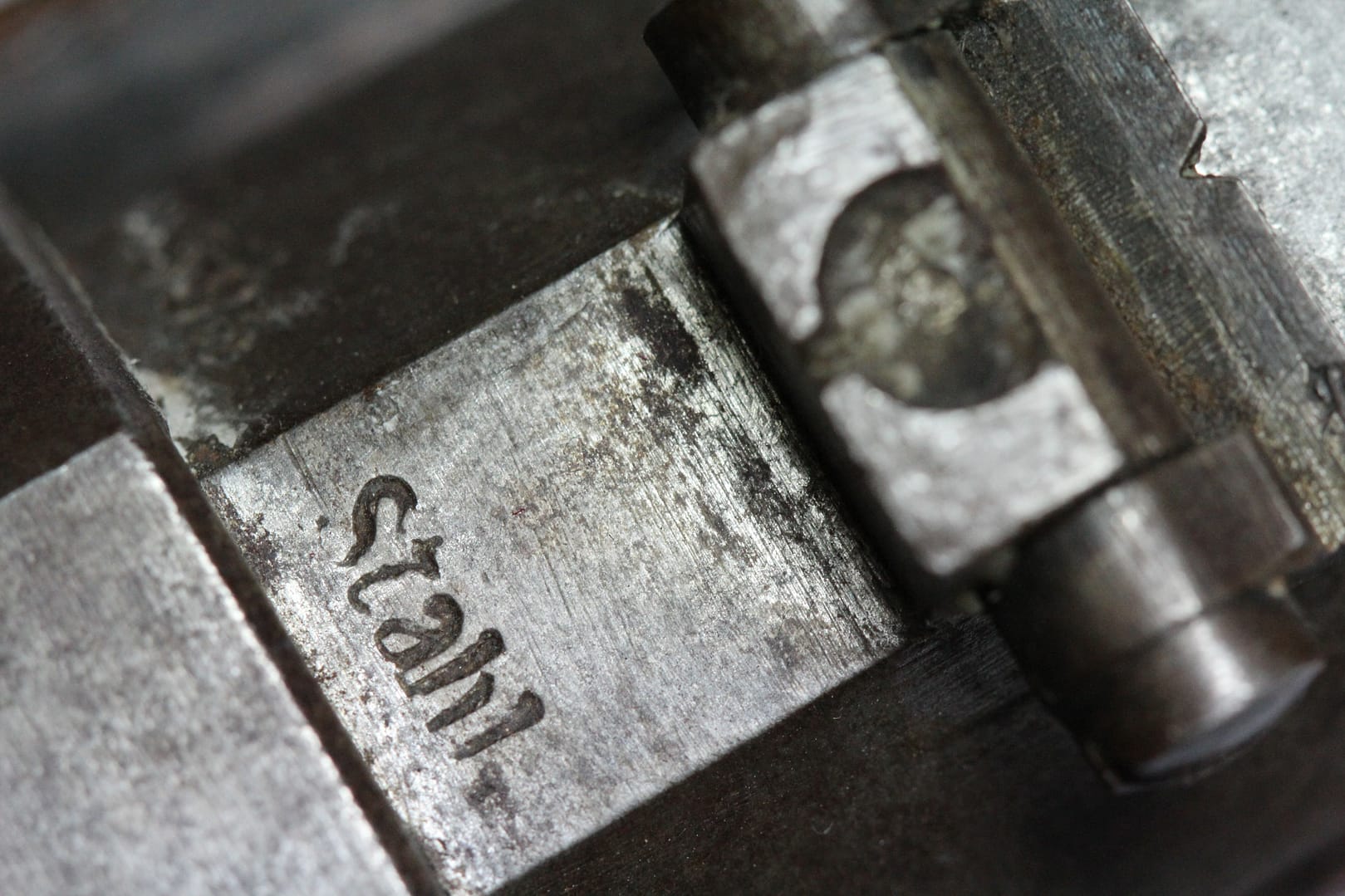
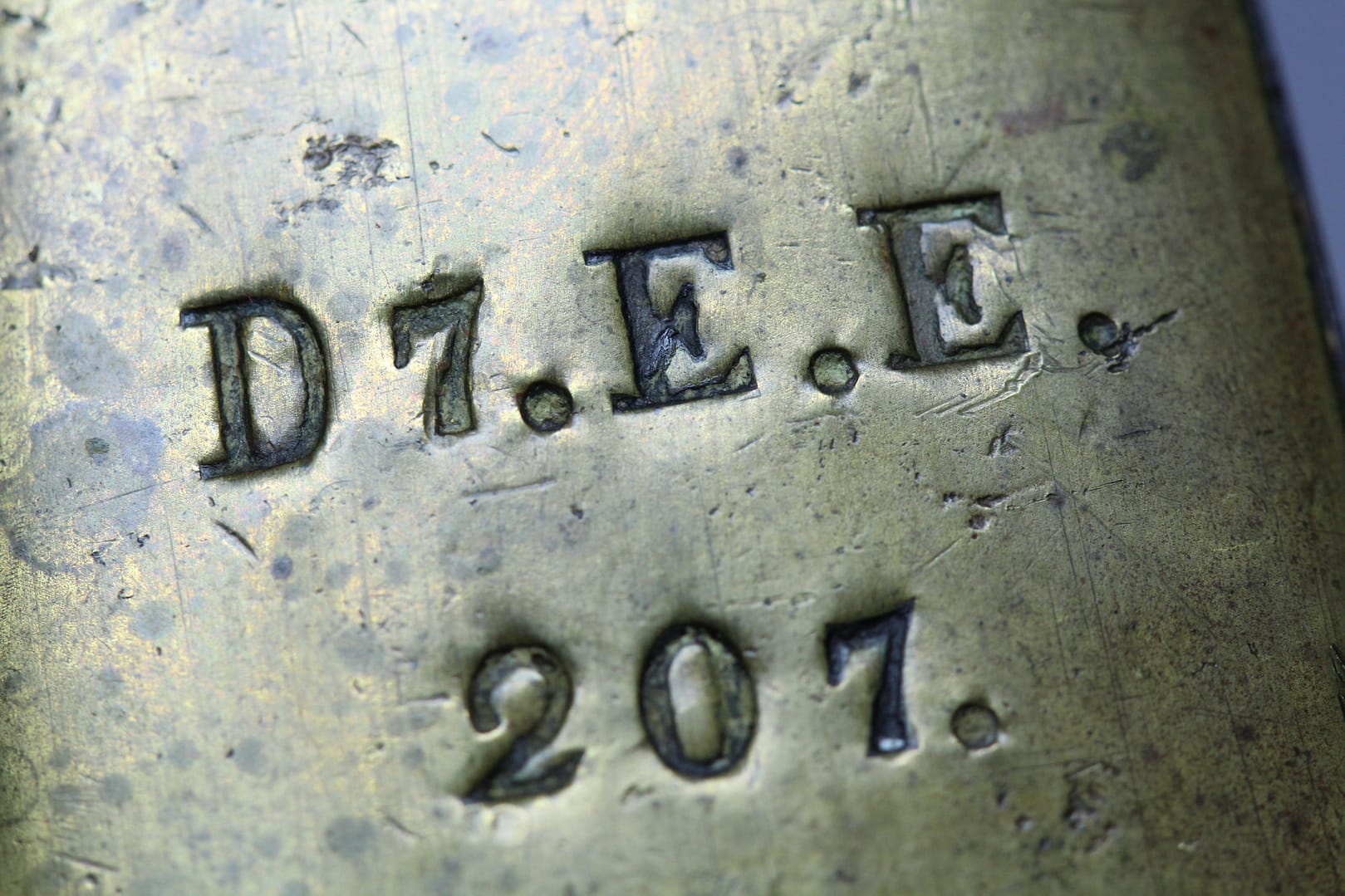
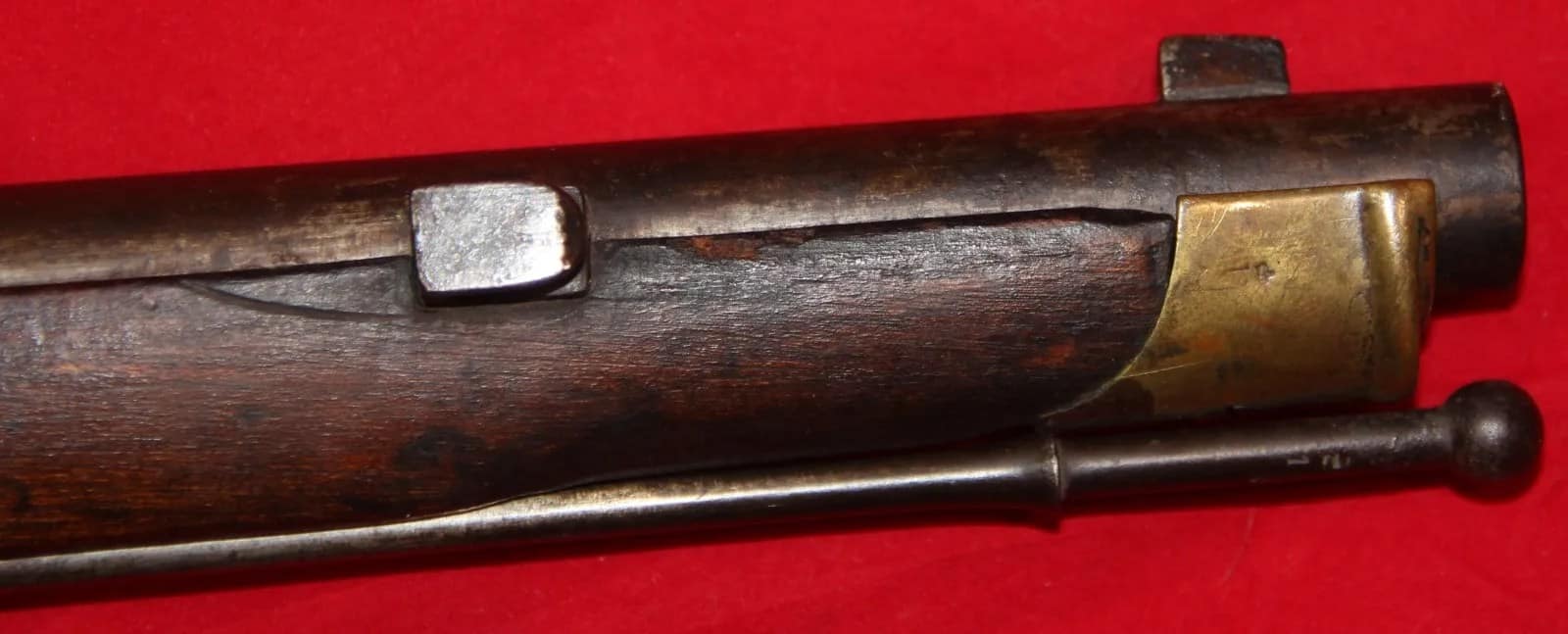
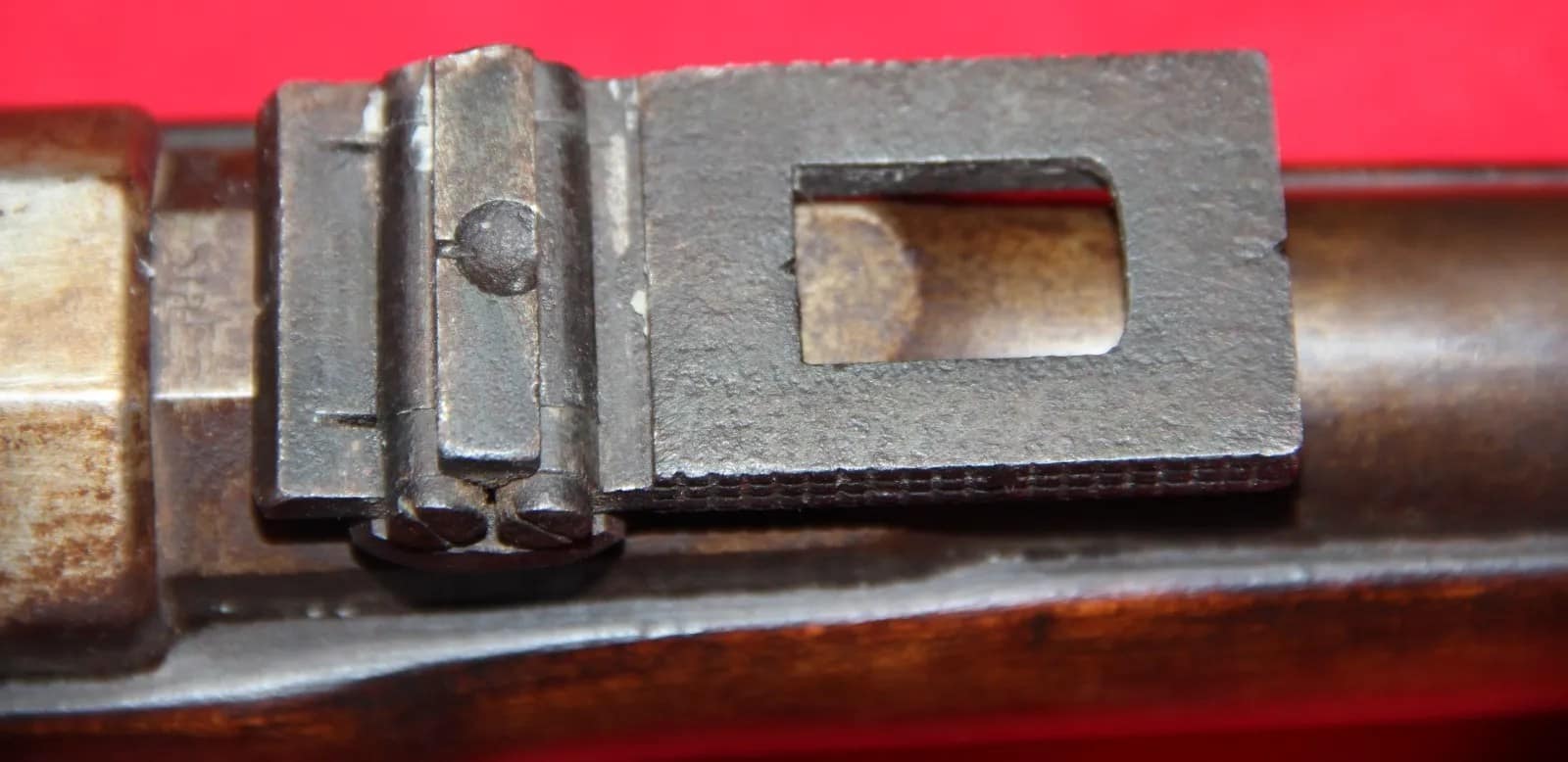
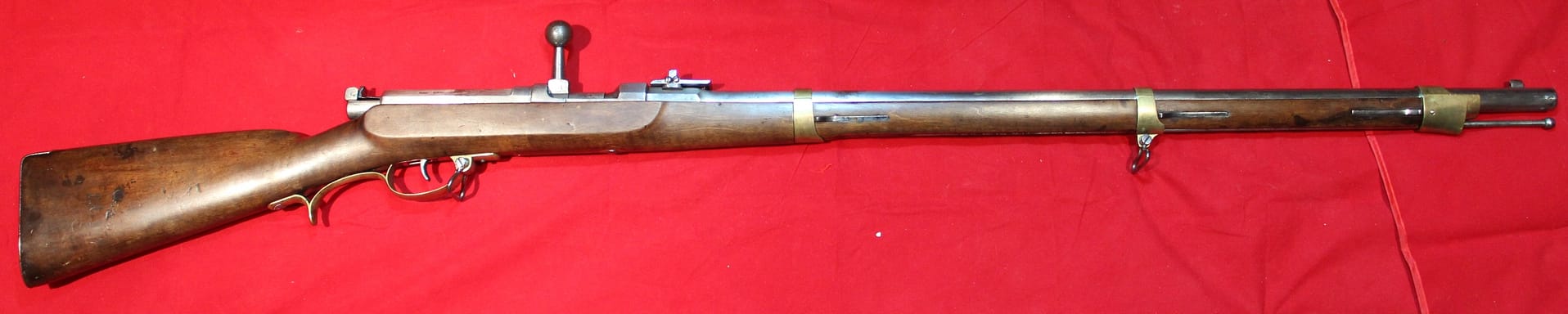
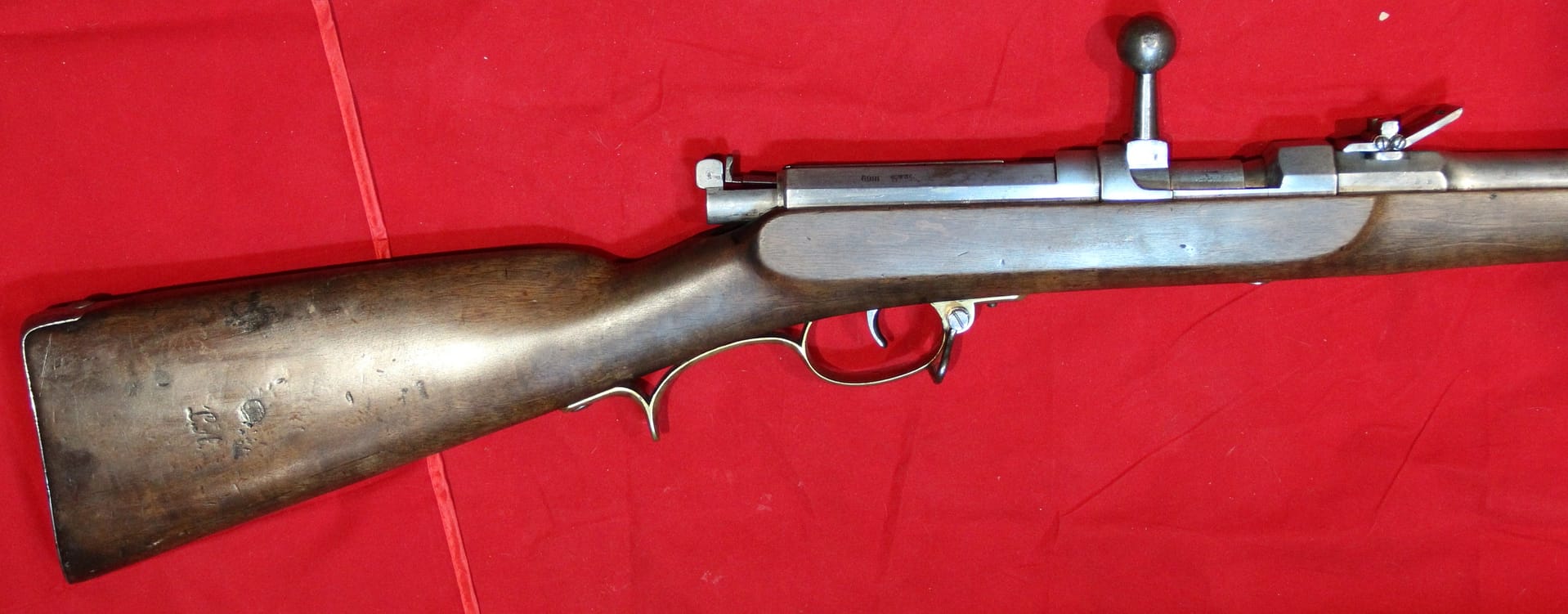
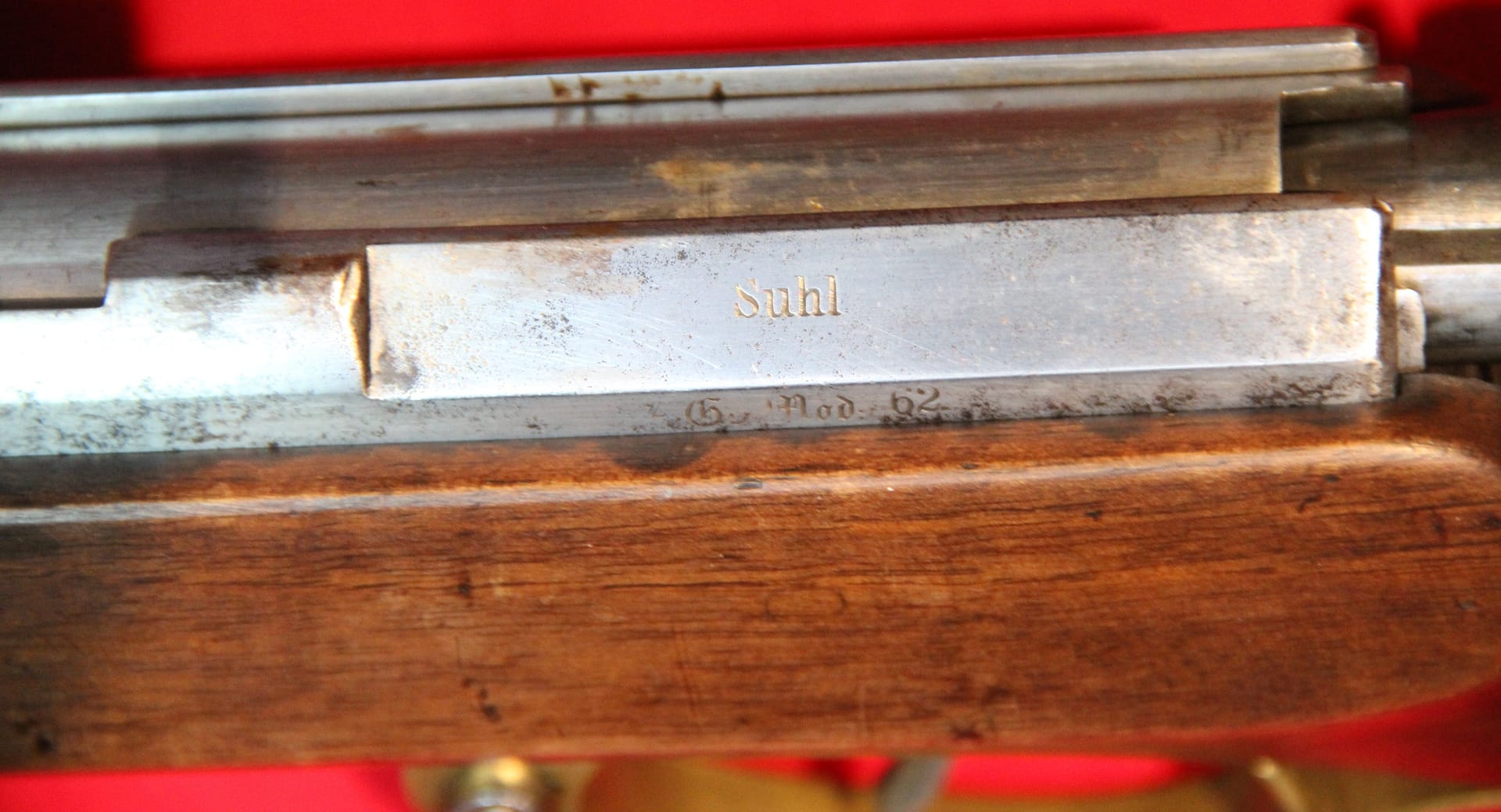
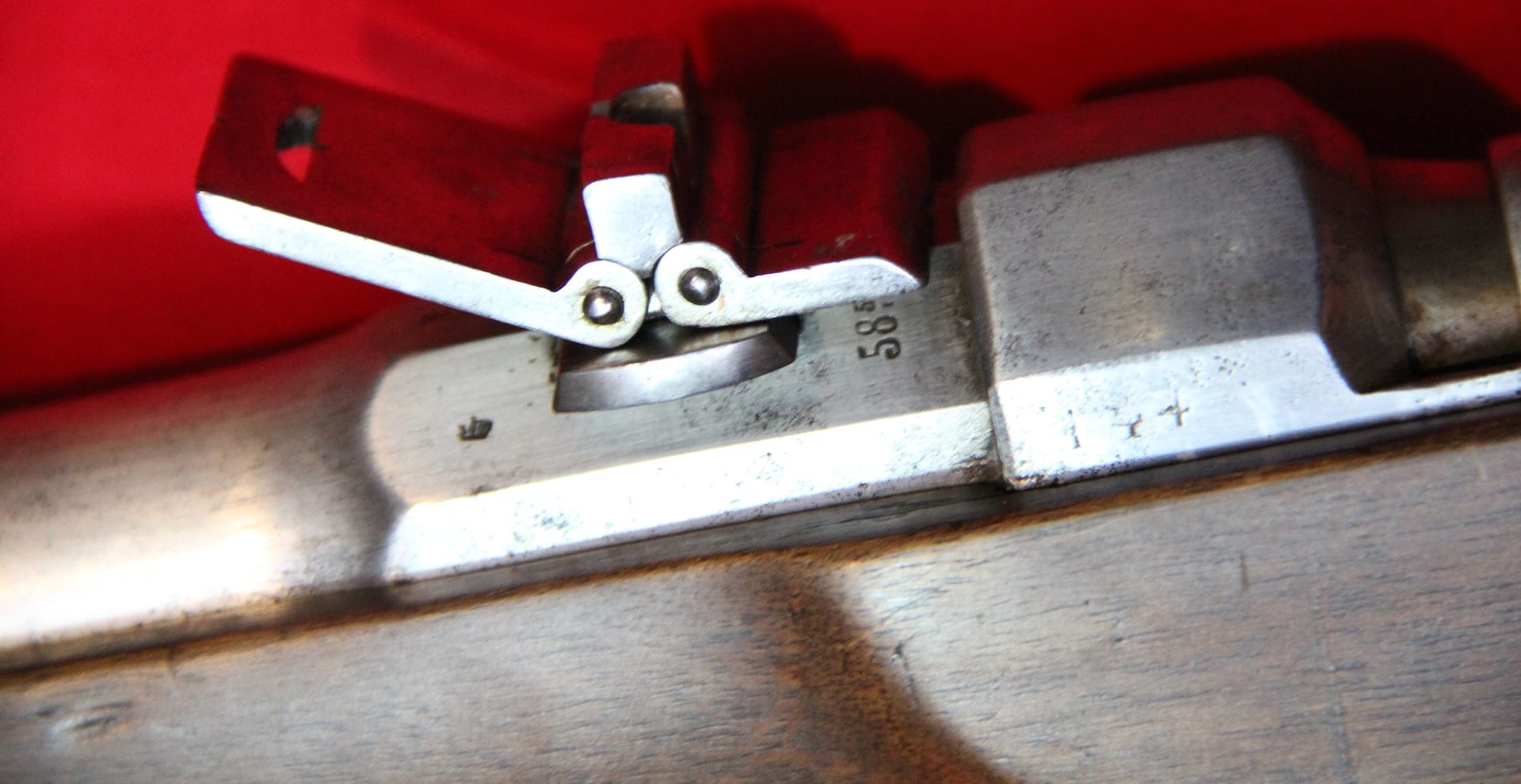
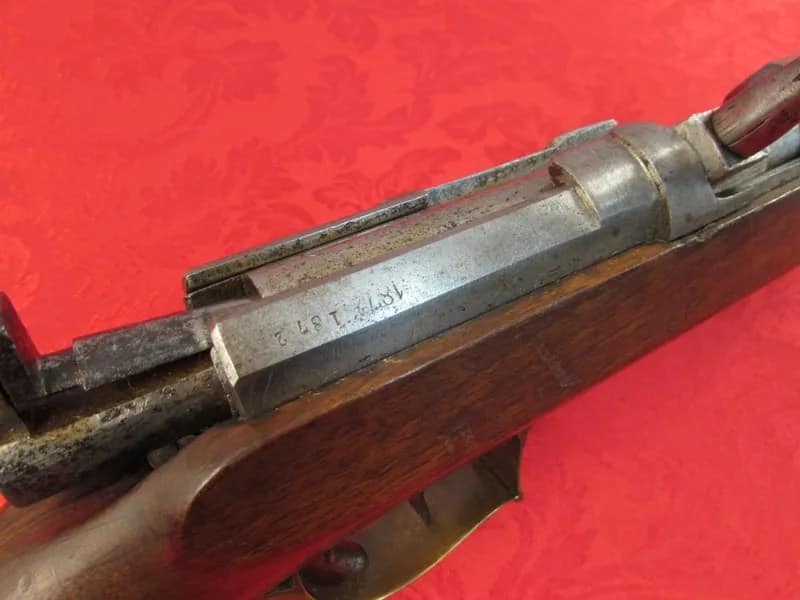
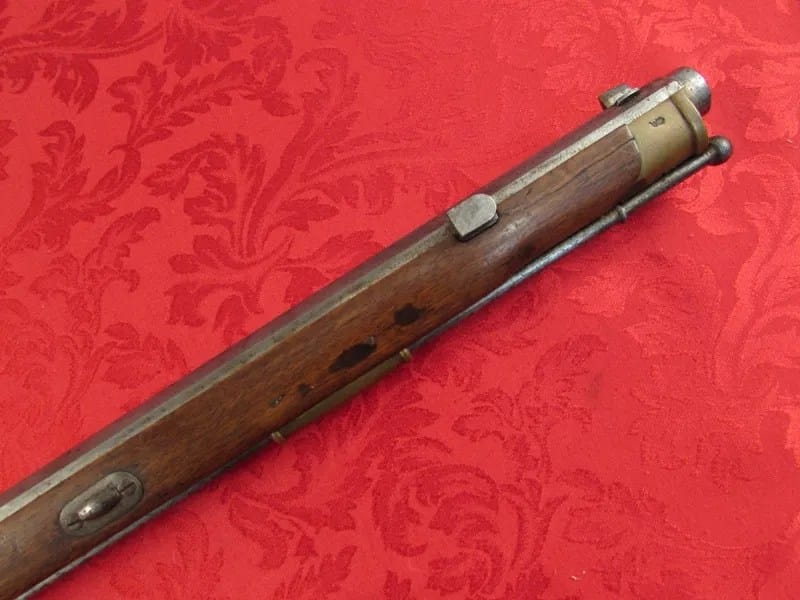
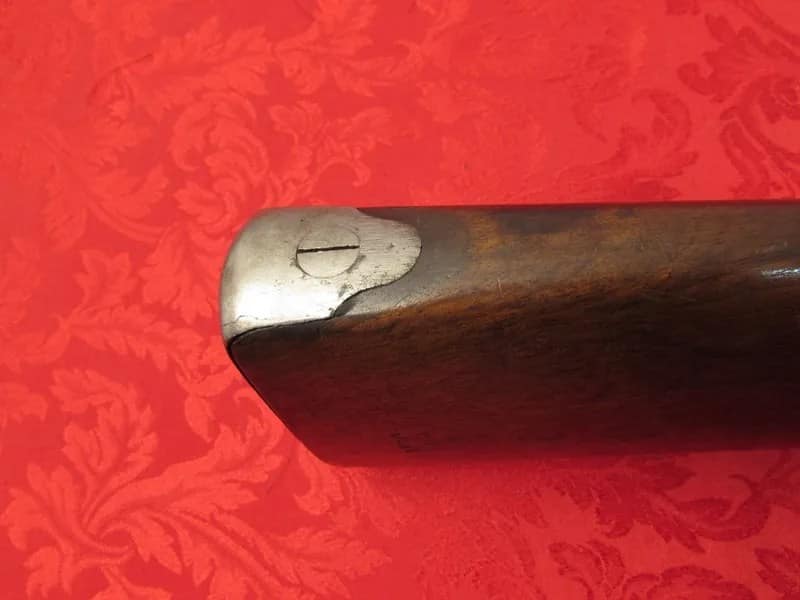
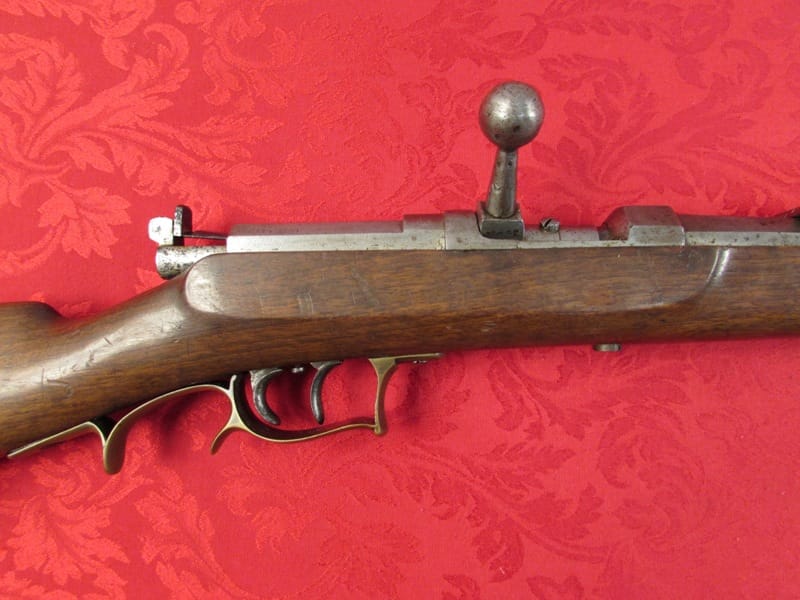
The 1854 Lorenz rifle armed Austrian forces and was widely used by both sides in the American Civil War. Its differing qualities—depending on production—affected accuracy and battlefield reliability.

Selected works on the Austro-Prussian War
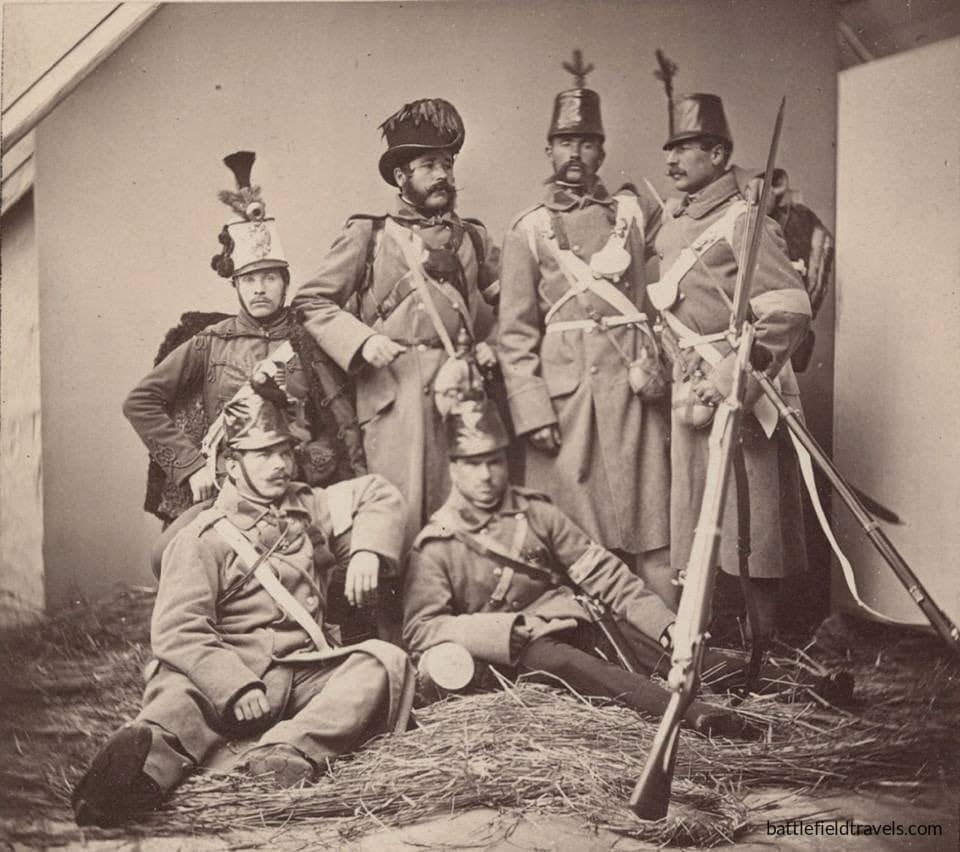
Austrian troops before the battle of Königgrätz. Five infantrymen of the line, one jager (wearing the Tyrolean jager hat), and one hussar (wearing the pelise). Their Model 1854 Lorenz rifle-muskets are stacked beside them.

Overview of the Austro-Prussian War

The Austro-Prussian War of 1866 — known in Germany as the Deutscher Krieg (German War) and in much of the English-speaking world as the Seven Weeks War — was one of the most consequential and least-studied conflicts of the nineteenth century. In seven weeks of campaigning, Prussia shattered Austria’s position as the dominant German-speaking power, expelled her from the German Confederation, and laid the foundations for the unified German Empire proclaimed five years later. The war’s brevity disguised its revolutionary significance: it was the first major conflict in which breech-loading rifles were used at scale by a major European army, and the first systematic test of what would become known as Auftragstaktik — Prussian mission command doctrine.

Chief of the Prussian General Staff since 1857, Helmuth von Moltke the Elder had transformed that institution into the most professional military planning body in the world. His campaign design concentrated three separate Prussian armies — the Elbe Army, First Army, and Second Army — converging on Bohemia through mountain passes that the Austrians had believed would delay any Prussian advance long enough to allow them to concentrate. Moltke’s railways delivered his forces faster than Austrian calculations had allowed. By the time Feldzeugmeister Ludwig von Benedek, commanding the Austrian Army of the North, recognised the scale of what was approaching, his options had already narrowed to a defensive battle at Königgrätz or a fighting withdrawal that his army’s condition made impossible.

Outcomes of the war

The political consequences were immediate and lasting. The Peace of Prague expelled Austria from German affairs permanently, dissolved the German Confederation, and allowed Prussia to annex Hanover, Nassau, Hesse-Kassel, and Frankfurt. The North German Confederation that followed was Prussia’s instrument, and its constitution was the template for the German Empire of 1871. Austria, reoriented away from Germany, reached the Ausgleich compromise with Hungary in 1867 to create the Austro-Hungarian dual monarchy. The war’s shadow fell across European politics for the next half-century.

The Literature

The Austro-Prussian War has attracted less English-language scholarship than either the Napoleonic Wars or the Franco-Prussian War of 1870, which is unfortunate given its significance. The core literature divides between operational histories, biographical studies, and the narrower but increasingly rich literature on weapons and tactical doctrine.

Geoffrey Wawro’s The Austro-Prussian War: Austria’s War with Prussia and Italy in 1866 (Cambridge University Press, 1996) remains the essential starting point for any serious study. Wawro draws extensively on Austrian and Prussian archival sources and is particularly strong on the institutional failures of the Austrian army — the logistics, the command culture, the tactical doctrine — that made defeat inevitable before the first shot was fired. His treatment of the Italian front, often neglected in English-language accounts, is unusually thorough.

Quintin Barry’s Road to Königgrätz: Helmuth von Moltke and the Austro-Prussian War 1866 (Helion, 2010) provides the clearest single-volume operational narrative in English. Barry’s approach is methodical rather than analytical — he is at his best tracing the movements of corps and divisions across the Bohemian theatre — and the book serves well as a campaign companion for anyone visiting the battlefields.

Gordon Craig’s The Battle of Königgrätz (Lippincott, 1964), though now sixty years old, has never been surpassed as a single-battle study. Craig writes with unusual clarity about both the operational context and the human experience of the fighting, and his analysis of why the Austrian command system failed under pressure remains sharp.


Reading

The reference collection below includes the key books and references I have used in preparing for and undertaking Franco-Prussian War battlefield studies.

Austro-Prussian War

Sale
The Austro-Prussian War: Austria’s War with Prussia and Italy in 1866
Geoffrey Wawro describes Prussia’s successful invasion of Habsburg Bohemia, and the wretched collapse of the Austrian army in July 1866. Blending military and social history, he describes the panic that overtook Austria’s regiments in each clash with the Prussians. He reveals the blundering of the Austrian commandant who fumbled away key strategic advantages and ultimately lost a war–crucial to the fortunes of the Habsburg Monarchy–that most European pundits had predicted they would win.
The Road to Königgrätz: Helmuth von Moltke and the Austro-Prussian War 1866
This book follows Moltke’s part in the course of the campaign at the end of which his name had become a household word. It traces his rise to the position of Chief of the General Staff, against the background of the political situation of Prussia in the middle of the 19th Century, and the way in which he developed the functions of the General Staff. Moltke’s contribution to the allied campaign of Prussia and Austria against Denmark in 1864 was an important part of his own development, before the inevitable war between the successful allies in 1866. As the book shows, for that war Moltke prepared his plans in the minutest detail. The triumphant success of his strategy in Bohemia was supplemented by the boldness of his campaign in western Germany, in which a small Prussian army overcame a huge numerical disadvantage. By the end of the Seven Weeks’ War Moltke had made Prussia the strongest military power in Europe. The Campaign of 1866 in Bohemia is covered in great detail, including the most extensive coverage of the Battle of Königgrätz yet published in English.
Sale
The Battle of Königgrätz: Prussia’s Victory over Austria, 1866
The battle for the city of Königgrätz—now called Hradec Králové, located in the Czech Republic—was the largest of its time, with nearly half a million troops involved. It was also the first battle where the outcome was directly determined by the availability of new technologies, including the railroad, telegraph, cast steel rifled cannon, and breech-loading rifle. It also marked a lesson in the fallacy of dependence on technology at the expense of sound strategy. In this full account, distinguished historian Gordon A. Craig discusses the state of political affairs surrounding the battle, the personalities involved, the weaponry, and the tactics in order to recreate the battlefield in all its complexity.
Railroads and Rifles: Soldiers, Technology, and the Unification of Germany
Railroads and Rifles is a lucid and deeply researched account of the interaction of three key factors in the unification of Germany – the growth of the railways and their relationship with war, and the development of the breech-loading rifle and Krupp’s rifled cannon. When this book first appeared almost forty years ago, a gulf had developed between the study of war making in its operational contexts, and war’s wider aspects. Social, economic, cultural, political issues were the themes of a “new military history” that at times excluded combat as a matter of principle. Railroads and Rifles was intended to reassert the synergies between war at its sharp end and war as it impacted the societies that armed forces reflected and represented. The ideas it introduces, the questions it raises, remain vital in a new century.
Sale
The Battle for the Swiepwald: Austria’s Fatal Blunder at Koniggratz, The Climactic Battle of the Austro-Prussian War, 3 July 1866 (From Musket to Maxim 1815-1914)
The battle of Königgrätz was the largest battle ever fought in western Europe until 1914 and its political consequences were no less epic – the demise of Austria as a European Great Power, the loss of her historic pre-eminence among the German nations, and the final, incontestable rise of Prussia. Whether Austria could have prevailed at Königgrätz on 3 July 1866 and salvaged her Great Power status is debatable, what is not, is the part the struggle for the Swiepwald played in her ultimate defeat. The insubordination of two Austrian Corps Commanders, and the decision to engage in their epic struggle for control of the Swiepwald forest, would leave 12,000 men dead or wounded within its shattered environs, and the Austrian right flank wide open to the Crown Prince of Prussia’s advancing Second Army. This meticulous translation of Heidrich’s brilliant monograph takes us through the fighting, hour by hour and foot by bloody foot, in a narrative unsurpassed for detail or accuracy.
The Austro-Prussian War in Bohemia, 1866: Otherwise Known as The Seven Weeks’ War or Needle-Gun War
Useful and reliable primer that was designed for use of Staff College students sitting exams in 1908, and as such gives a clear analytical account of this mid-19th century conflict. The Seven Weeks’ War was the first war between two major continental powers in seven years, and used many of the same technologies as the American Civil War. The Prussian Army used von Dreyse’s breech-loading needle gun, which could be rapidly loaded while the soldier was seeking cover on the ground, whereas the Austrian muzzleloading rifles could only be loaded slowly, and generally from a standing position. Superior Prussian organisation and élan decided the battle against Austrian numerical superiority, the victory was near total, with Austrian battle deaths nearly seven times the Prussian figure.


FAQ – Austro-Prussian War (1866) Reading Room

How were the books in this Austro-Prussian War reading list selected?

This reading list is curated to prioritise works that examine the war through operational analysis, command decision-making, terrain, doctrine, and mobilisation. Emphasis is placed on studies grounded in primary sources that explain how the opposing armies planned, manoeuvred, and fought in practice.

Does this reading list focus only on major battles such as Koniggratz?

While major engagements are represented, the list also includes works that address manoeuvre, rail-based mobilisation, staff planning, and the cumulative effects of terrain and logistics on operations across the campaign.

How important was terrain in the Austro-Prussian War?

Terrain played a significant role in shaping movement, deployment, and combat. Rivers, ridgelines, villages, and road networks influenced both tactical engagements and operational tempo, often interacting closely with emerging artillery and infantry firepower.

Are these books suitable for readers new to the Austro-Prussian War?

I recommend starting with Geoffrey Wawro’s book. The list includes a mix of accessible overviews and more specialised operational studies. Readers new to the conflict may wish to begin with the general histories before progressing to detailed analyses of specific battles or command systems.

Is this intended to be a complete bibliography of the Austro-Prussian War?

No. This is a selective reading list intended to guide serious study rather than provide exhaustive coverage. Additional works may be added as scholarship and archival research continue to evolve.


Subscribe to Battlefield Travels and receive a free E-Book Battlefield Guide

Unlock expert battlefield analysis, campaign reconstructions, and historical insights drawn from firsthand exploration and primary sources.

🗺️ You’ll receive:

🎖️ Exclusive historical insights you won’t find elsewhere

📘 A free eBook: 10 Tips for Exploring Historic Battlefields

📰 New battlefield studies straight to your inbox as they are published


Reconstructing Austro-Prussian War battlefields through terrain analysis, primary sources and on-site research

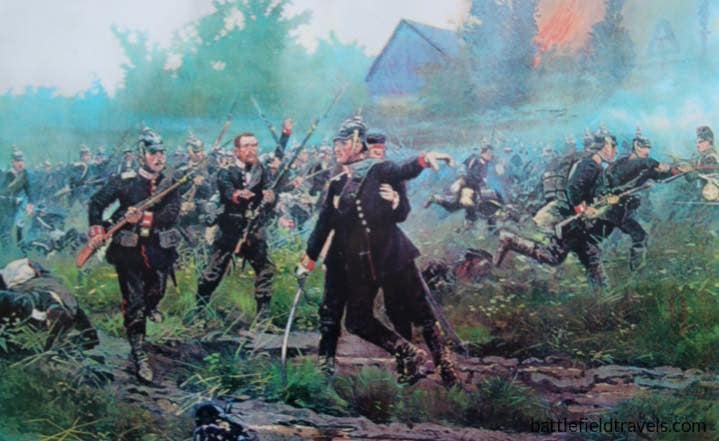
The Gordon Brigade 27th and 67th Infantry Regiments defend the Sviep wood near Cishkoves

Walking the battlefields of the Austro-Prussian War 1866

Causes of the war

The Austro-Prussian War was a short, decisive campaign that reshaped the political map of Central Europe. Fought over just six weeks, it resolved the long-standing contest between Austria and Prussia for leadership of the German states.

The war was not simply a clash of armies, but a test of competing systems. Prussia brought to the field a modern General Staff, efficient mobilisation based on railways, and a flexible command philosophy that allowed subordinate commanders to act within intent. Austria fielded a large, experienced army with strong artillery and a long military tradition, but struggled to match Prussia’s speed of concentration and coordination.

The Seven-Week War

The campaign unfolded across Bohemia, where multiple Prussian armies advanced on converging axes against Austrian forces under Field Marshal Ludwig von Benedek. Early engagements such as Trautenau and Jičín revealed both the strengths and limitations of each side. Austrian forces could fight effectively and inflict heavy losses, but found it increasingly difficult to maintain coherence against Prussian operational tempo.

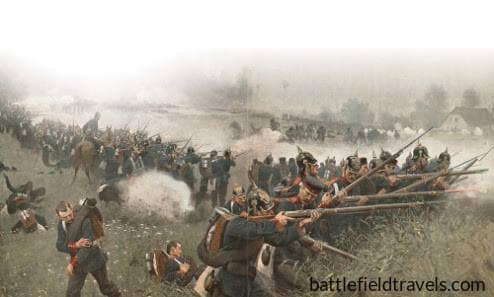
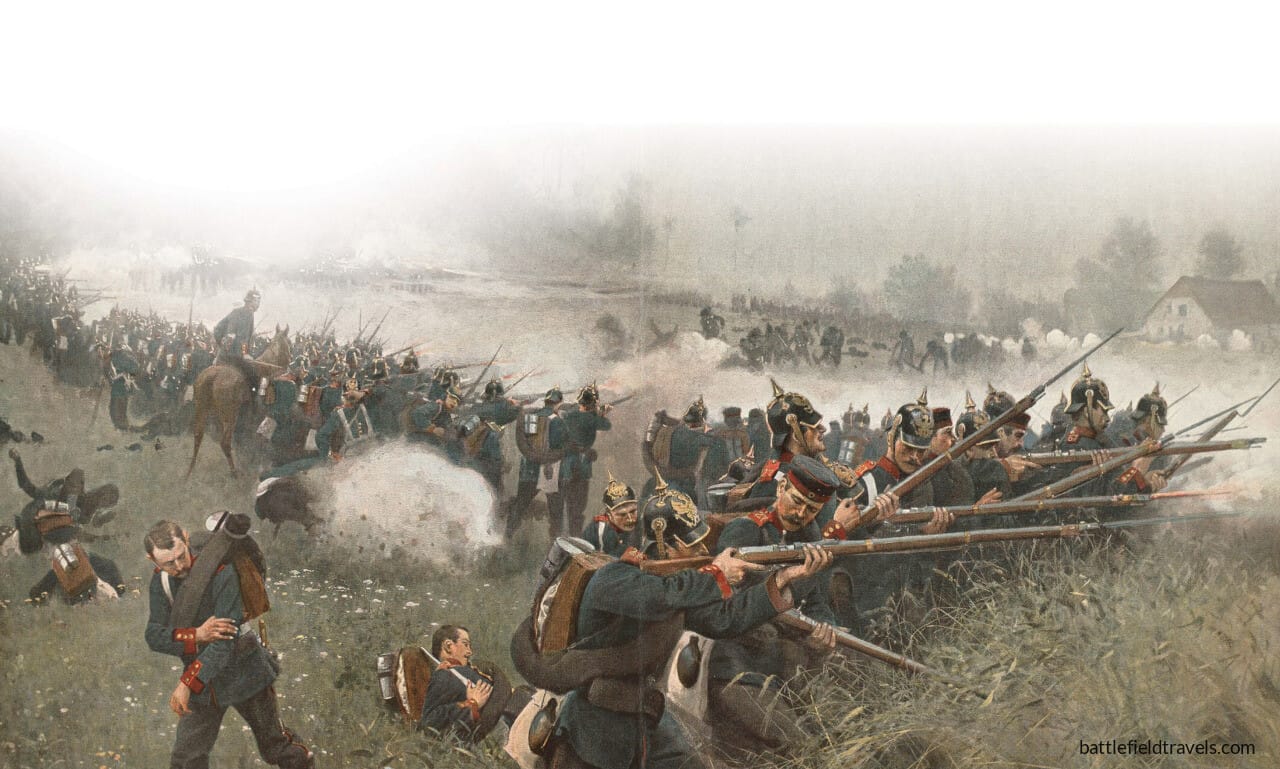
The war culminated in the Battle of Königgrätz (3 July 1866), one of the largest battles of the 19th century. Here, the Prussians combined pressure from multiple directions, using coordinated movement and flexible command and the breech-loading Dreyse needle gun to break the Austrian position. The arrival of the Prussian Second Army on the Austrian flank proved decisive, turning a contested battle into a general defeat.

The battlefields today

For the battlefield visitor, the Austro-Prussian War offers a landscape defined by scale and subtlety. Broad agricultural ground, shallow rises, villages, and wooded areas such as the Svíb Forest combine to shape movement and visibility across an enormous battlefield. These are not dramatic landscapes, but they reward close observation. The decisive features are often small, local, and easily overlooked.

The conflict also marks a transition point in warfare. Linear tactics, massed artillery, and traditional formations met emerging systems of command, mobility, and firepower. The result was not an immediate revolution, but a clear indication of the direction in which European warfare was moving.


Field Notes: Austro-Prussian War

Below are all current BattlefieldTravels studies for the Austro-Prussian War, covering key battles, campaign phases and associated sites. New studies are added as further battlefields are walked and analysed.


Tactical Innovations: Austro-Prussian War

Below are all current BattlefieldTravels tactical innovations for the Austro-Prussian War, covering technology, tactics and warfighting philosophies that fundamentally changed warfare. New studies are added as further battlefields are walked and analysed.


What caused the Austro-Prussian War?

The war of 1866 was the decisive clash in the struggle for supremacy over the German states — a rivalry between Austria and Prussia that had simmered since the Frankfurt Parliament of 1848. The immediate trigger was a dispute over the administration of Schleswig-Holstein, seized jointly from Denmark in 1864, but the deeper cause was Bismarck’s calculated determination to exclude Austria from German affairs and establish Prussian dominance over a unified German state.

How did terrain shape the major battles of the Austro-Prussian War?

The campaign unfolded across the rolling farmland, river crossings, and wooded ridgelines of Bohemia — modern Czech Republic. The Prussian ability to concentrate three armies rapidly through mountain passes and converge on the Austrian position before it could be reinforced made terrain management a decisive factor. At Königgrätz the Bistritz stream and the Svib Forest anchored the Austrian left and centre, while the Prussian Guard’s advance through the Maslowed forest on the Austrian right flank proved catastrophic for Austrian fortunes.

Why were Prussian forces so effective?

Prussian success in 1866 rested on three decisive advantages — the needle gun, staff work, and command philosophy. The Dreyse needle gun allowed Prussian infantry to fire prone and at a rate of fire Austrian muzzle-loaders could not match. Moltke’s staff system enabled three separate armies to converge on a single point with unprecedented coordination. And a command culture that encouraged initiative at every level — Auftragstaktik in its early form — allowed Prussian commanders to exploit opportunities faster than Austrian headquarters could respond.
What was the significance of the Battle of Königgrätz?

Königgrätz — fought on 3 July 1866 — was one of the most consequential battles of the nineteenth century. The destruction of the Austrian Army of the North in a single day ended Austrian influence over German affairs, paved the way for the North German Confederation, and set the conditions for the Franco-Prussian War four years later. It demonstrated that modern staff work, rapid concentration, and superior infantry firepower could defeat a numerically comparable enemy in a single decisive engagement.

Was the war really decided in just seven weeks?

Yes — which is why it is sometimes called the Seven Weeks War. From the Prussian invasion of Bohemia on 15 June 1866 to the armistice of 22 July, the campaign lasted 38 days of active operations. The speed of Prussian mobilisation, concentration, and decisive battle left Austria no time to recover or bring its full resources to bear. The brevity of the campaign shocked European observers and fundamentally changed how continental armies thought about war.

What happened to Austria after the war?

The Peace of Prague excluded Austria from the new German political order and ceded Venetia to Italy. Internally, defeat accelerated the constitutional crisis that produced the Ausgleich of 1867 — the compromise that transformed the Austrian Empire into the Austro-Hungarian dual monarchy. Austria turned away from German affairs and towards the Balkans, setting in motion the geopolitical shifts that eventually led to 1914.

Will more Austro-Prussian War battlefield studies be added?

Yes. Field research has covered the major engagements of the Bohemian campaign including Königgrätz, Jičín, Trautenau, and Nachod. Additional studies covering the Italian theatre and the secondary German campaign — where Prussian allies fought Austrian-aligned states including Bavaria, Hanover, and Saxony — will be added as research progresses.


Subscribe to Battlefield Travels and receive a free E-Book Battlefield Guide

Unlock expert battlefield analysis, campaign reconstructions, and historical insights drawn from firsthand exploration and primary sources.

🗺️ You’ll receive:

🎖️ Exclusive historical insights you won’t find elsewhere

📘 A free eBook: 10 Tips for Exploring Historic Battlefields

📰 New battlefield studies straight to your inbox as they are published


Village-of-Rozberice-plaque-commemorates-of-Lieutenant-Anton-Prince-zu-Hohenzollern-of-the-Prussian-First-Guards-Regiment

📝🔒Field Note: Battle of Königgrätz, Czech Republic, 3 July 1866 — the fight for Chlum

June 2017. Chlum Village, just outside modern Hradec Králové, Czech Republic. I visited Chlum during my exploration of the Königgrätz battlefield in 2015 and again in 2017. I explored Sadowa, Rozběřice, Chlum, the Svíb Forest, and the southern sector around Nechanice. The modern battlefield is quiet, agricultural, and deceptively open. It takes some effort to reconstruct the scale of what happened here.

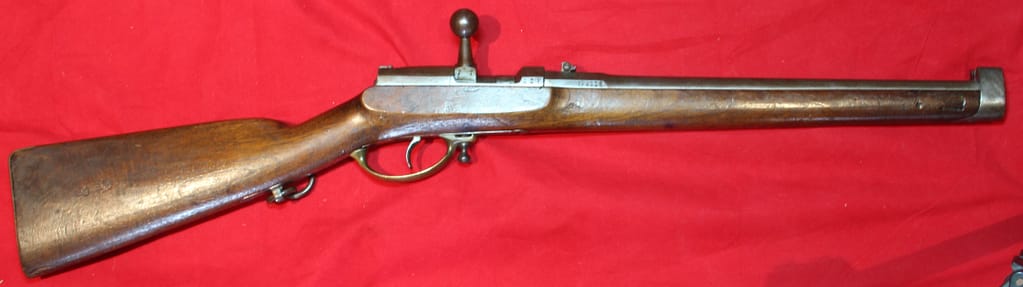
Model 1857 Dreyse Husarenkarabiner. From my collection

Overview of the Austro-Prussian War

The Austro-Prussian War of 1866 was a short but decisive conflict that reshaped the political and military balance of Central Europe. Prussia, guided by Otto von Bismarck and supported by Italy, sought to exclude Austria from German affairs and establish dominance among the German states. The campaign highlighted profound differences in organisation, command systems, and military technology that would influence warfare across Europe.

Operations unfolded rapidly in Bohemia, where Helmuth von Moltke’s Prussian armies manoeuvred on converging axes to defeat Austrian and Saxon forces in a series of engagements culminating in the decisive Battle of Königgrätz (Sadowa) on 3 July 1866. A secondary theatre developed on the Austro-Italian frontier, where Austrian forces achieved tactical success but could not alter the strategic outcome. The peace settlement removed Austria from the German Confederation and paved the way for Prussian leadership and eventual German unification.

Weapons and Military Technology

The war is often remembered as a demonstration of the growing impact of industrial-era military systems. Prussian infantry were equipped with the Dreyse needle-gun, a bolt-action breech-loader that allowed soldiers to fire more rapidly and reload while prone, encouraging new tactical approaches and increasing battlefield firepower. Austrian infantry, armed largely with muzzle-loading Model 1854 Lorenz rifle-muskets, retained strong offensive doctrine but faced challenges against higher rates of fire. My tactical innovations article covers this clash: The needle-gun revolution: Breech-loaders, Auftragstaktik, and the demise of the Storm Column

Artillery also reflected a period of transition. Both sides fielded rifled guns, but improvements in organisation, command coordination, and logistics proved as important as technical differences. The conflict demonstrated how mobilisation systems, railways, staff planning, and modern small arms together could deliver decisive operational results.

The artefacts below illustrate the weapons and equipment carried by soldiers on both sides during this pivotal campaign, from needle-fire rifles to percussion arms and cavalry equipment. All items are part of my personal collection and photographed firsthand.

👉 For historical context and battlefield studies, see → Austro-Prussian War Conflict Page


Prussian Weapons of the Austro-Prussian War


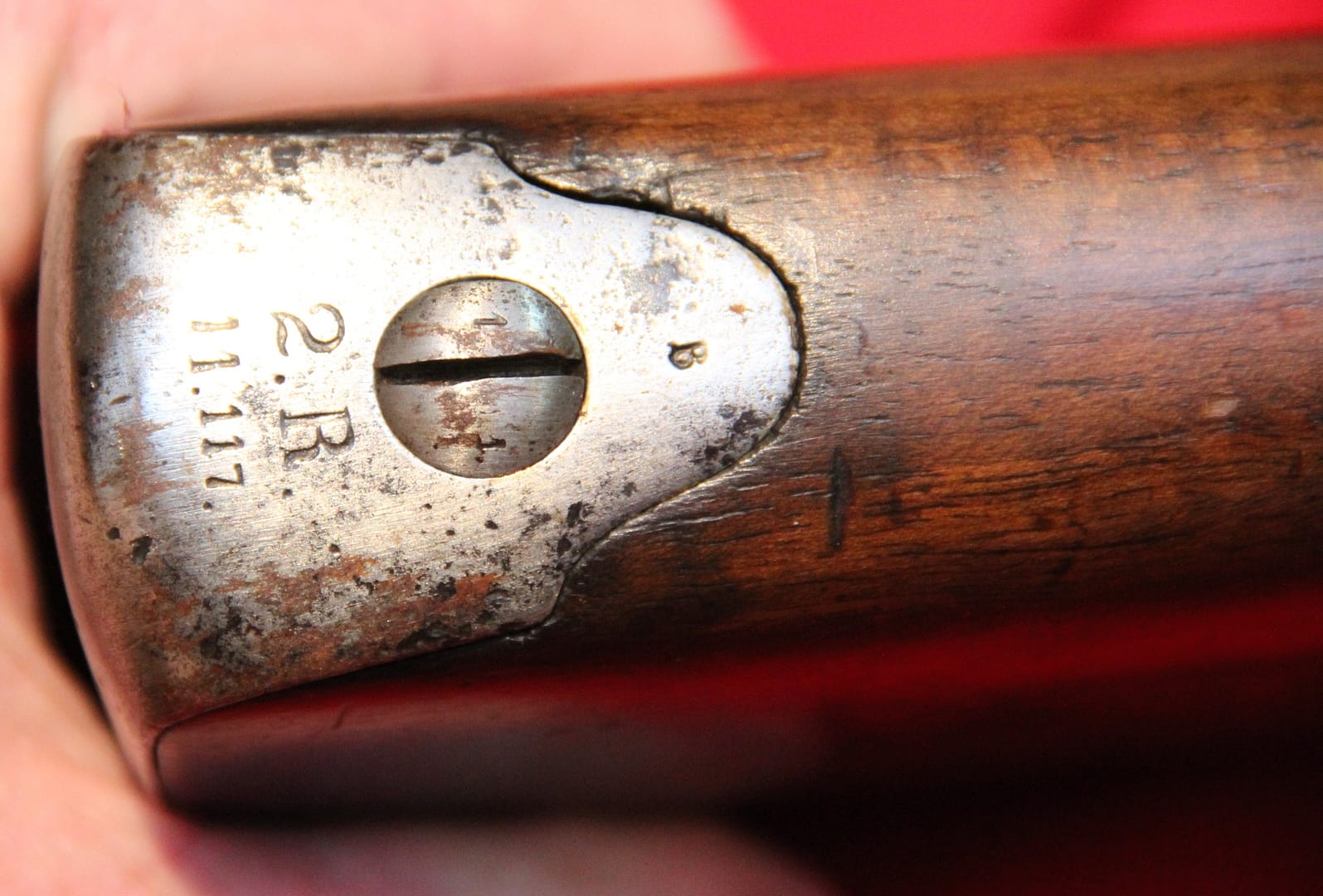
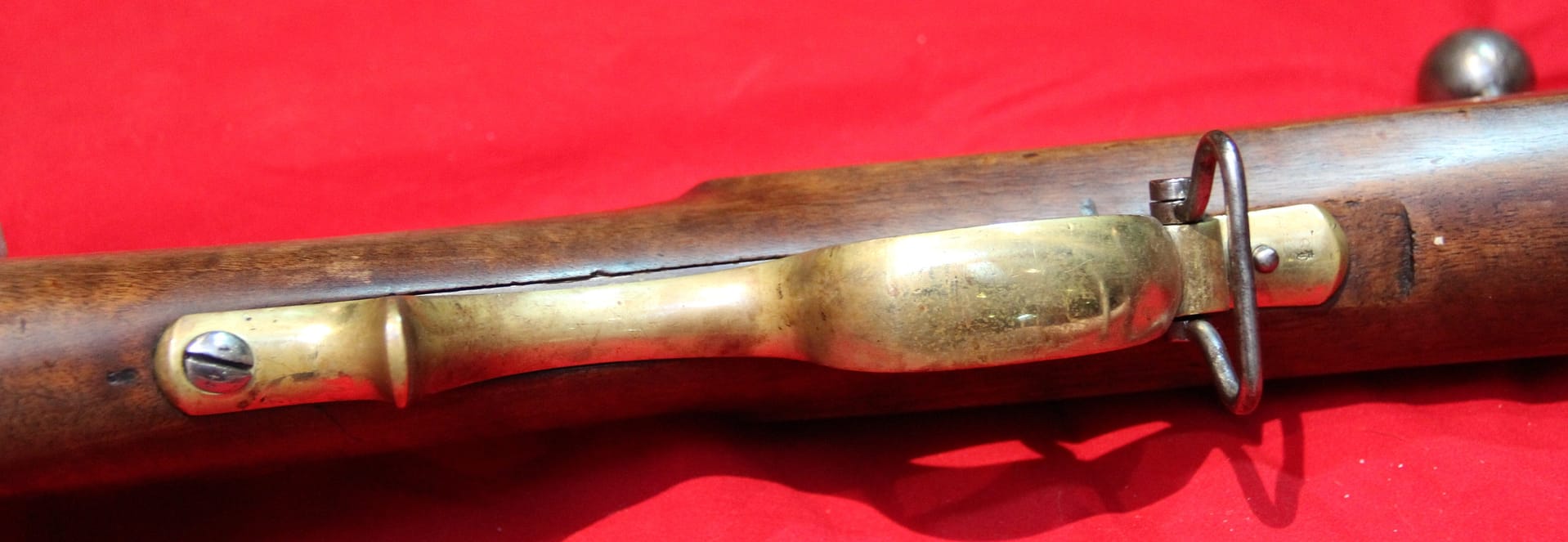
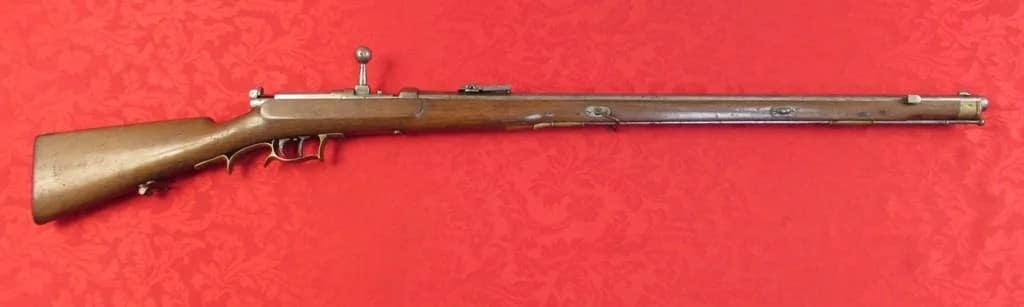
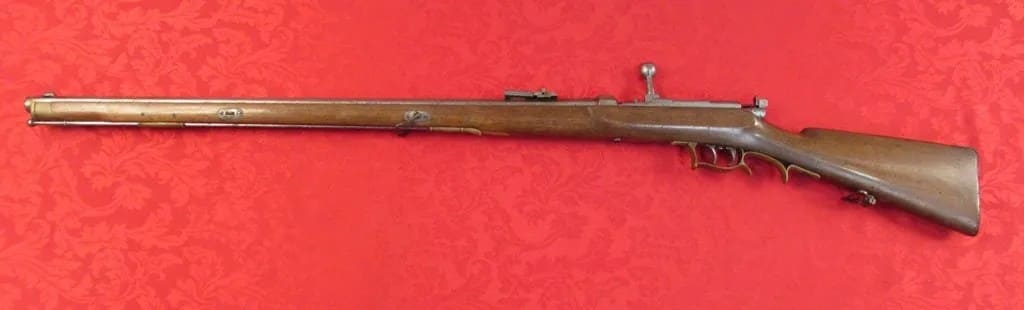
Model 1841 Dreyse Zundnadelgewher, needle-ignition rifle, 15.4mm caliber. From my personal collection.

The Model 1841 Dreyse needle rifle was the first successful bolt-action breechloader adopted by a major European army. Its paper cartridge and simple breech-loading mechanism allowed soldiers to load and fire while prone, dramatically increasing battlefield survivability.

In the hands of a trained soldier, the Dreyse coculd be fired ~five times per minute, even from behind cover, or lying or kneeling. By comparison, a typical muzzle-loading rifle-musket could be fired ~twice per minute, and teh firer had to be standing.

Although gas leakage reduced muzzle velocity and the needle required frequent replacement, its high rate of fire and ease of use provided a decisive advantage at Königgrätz in 1866. The Dreyse transformed Prussian infantry tactics and reshaped European small-arms development for decades.

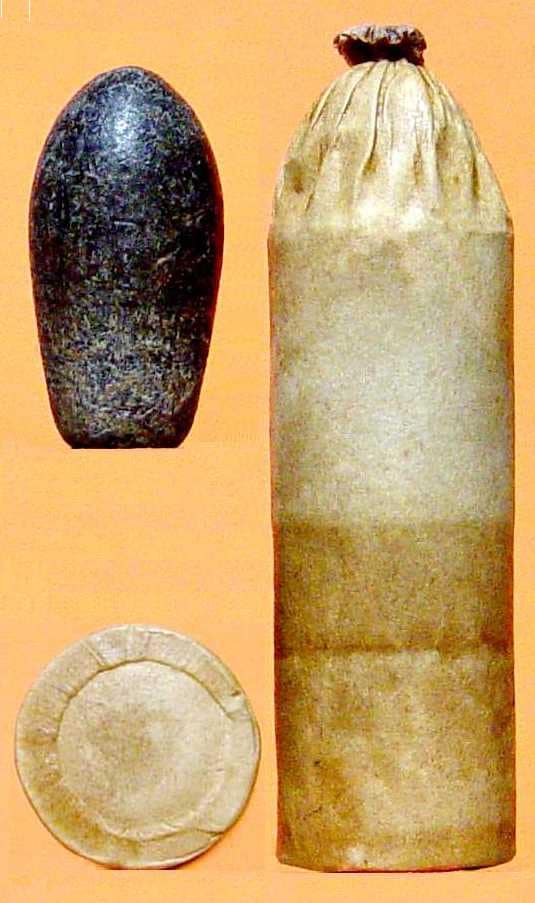
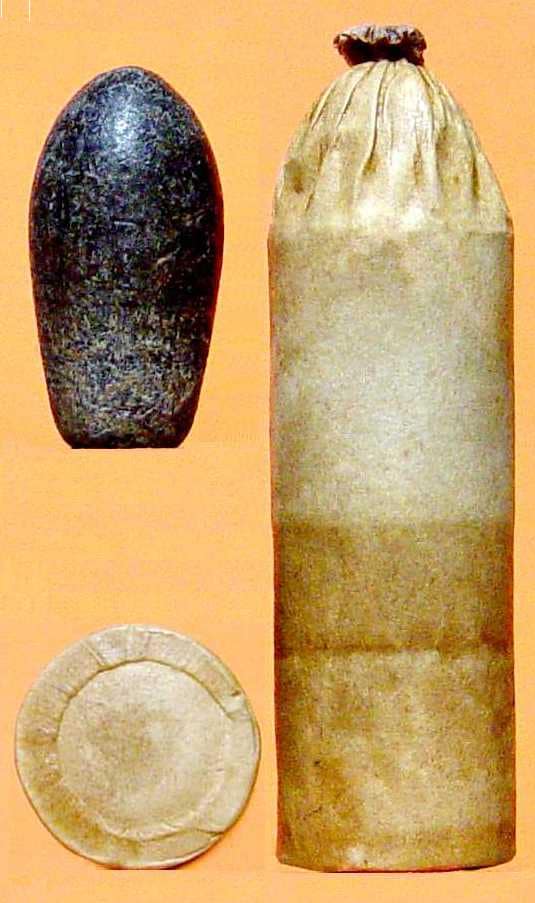
Dreyse cartridge
Dreyse cartridge

Weapon data

Caliber: 15.4mm
Cartridge: M1847 – 478 grain ovoid lead projectile in a papier-mache sabot with embedded primer, 75 grains of black powder, wrapped in a paper cartridge.
Action: Simple bolt action, locked by camming action against breech. Camming seals bolt face against conical breech
Rifling: Concentric 4-groove, .78mm deep and 6mm wide, right hand twist
Muzzle velocity: 295 metres per second
Maximum effective range (volley fire): 600 metres
Length: 1425mm
Barrel length: 907mm
Weight: 4.975KG
Sights: Visier 1847, Combined block and two leaf sight with battle sight for 200 metres, small leaf for 300 metres, and large leaf for 500 metres


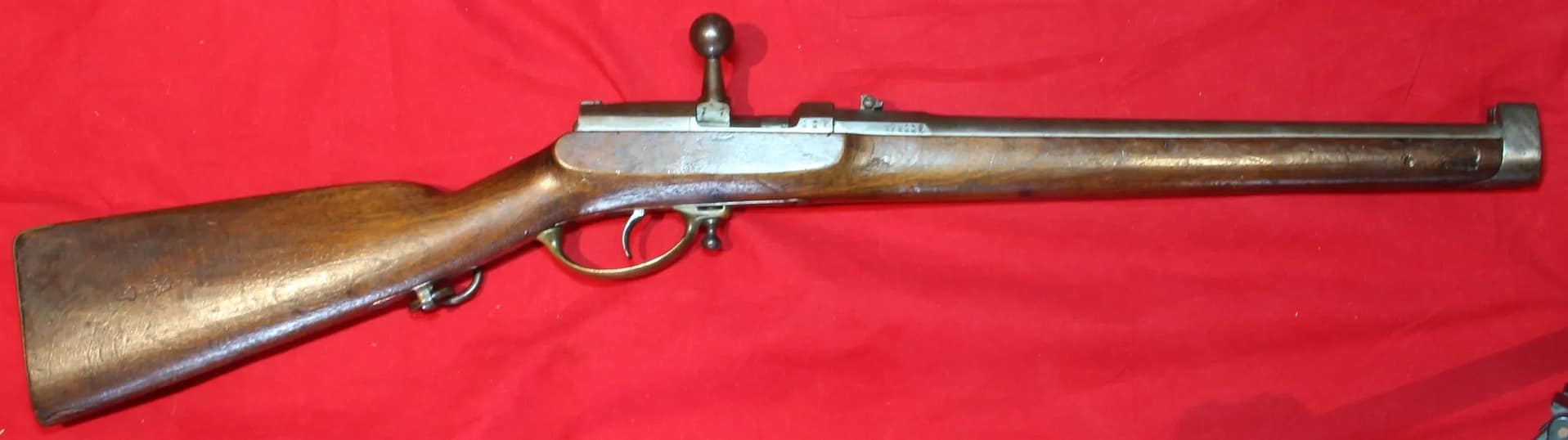
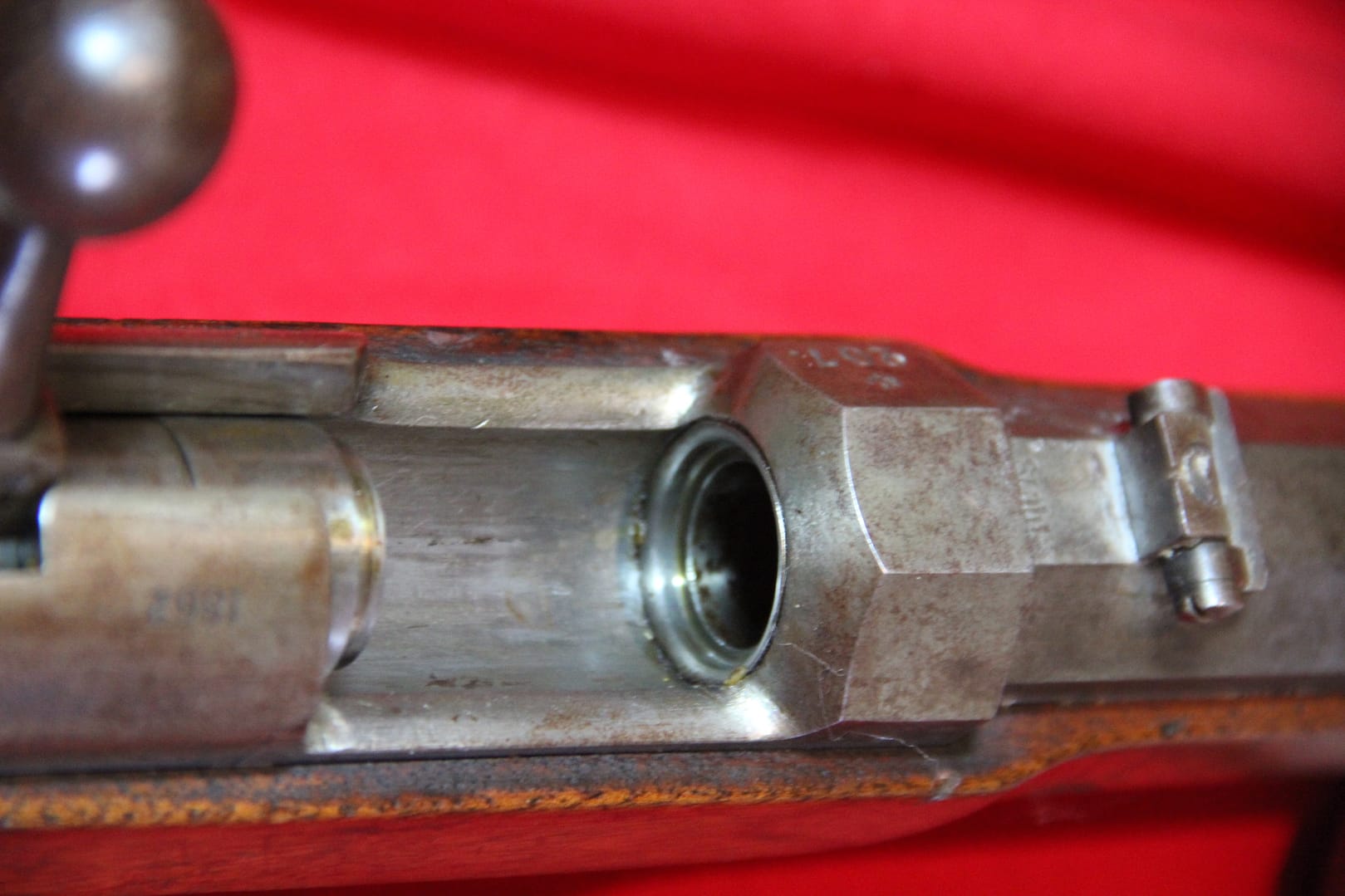
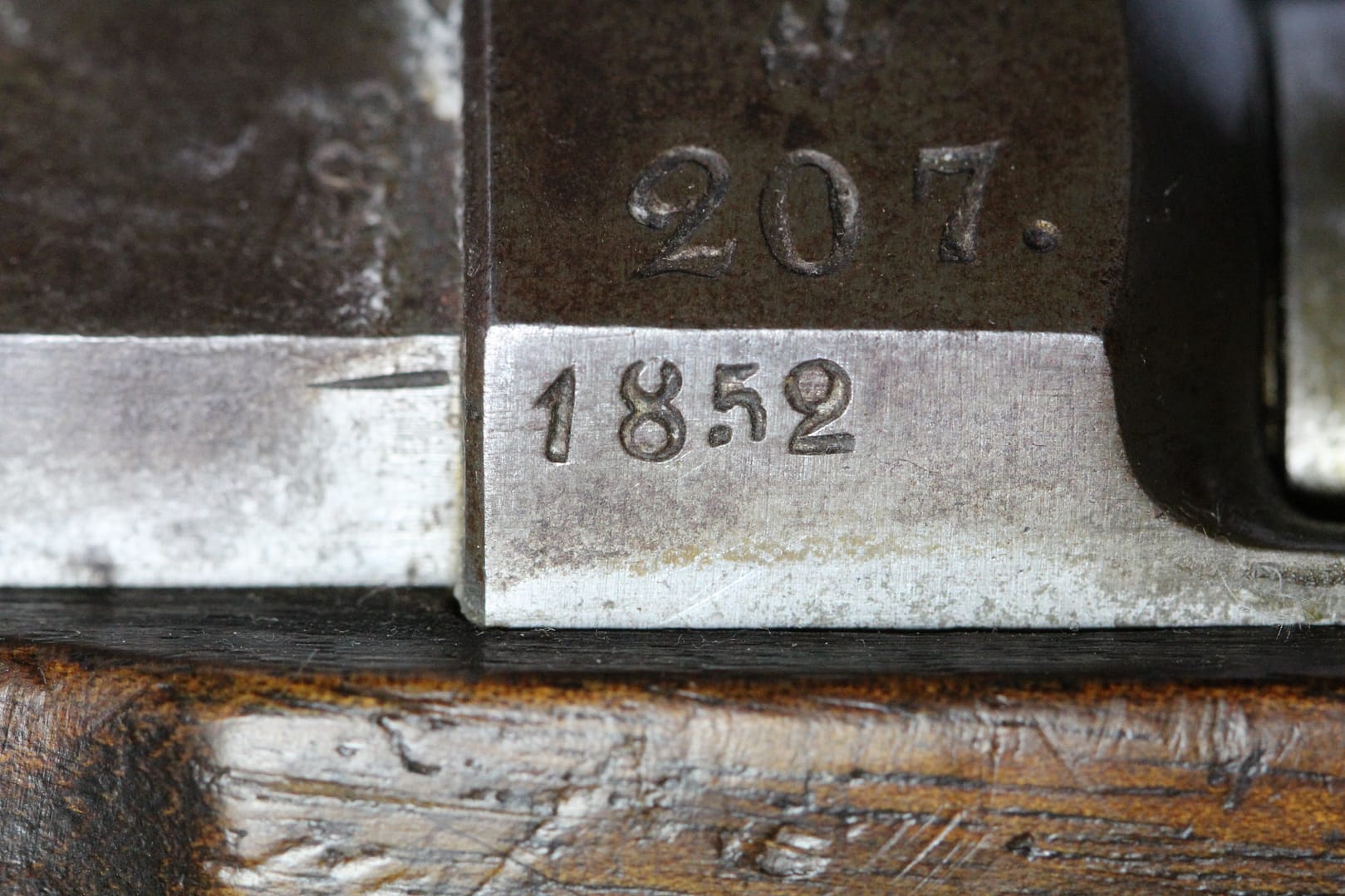
Prussian Model 1857 Dreyse Husarenkarabiner Needle Carbine. From my personal collection.

The Model 1857 Husarenkarabiner was a short, light breech loading carbine issued to Prussian hussar regiments. Designed for mounted use, it featured a compact barrel, simple rear sight, and sturdy stock suitable for cavalry service. Though effective at close range, the carbine had limited accuracy and rate of fire compared with infantry rifles. During the 1866 campaign, cavalry armed with the 1857 carbine relied on mobility and reconnaissance rather than firepower, supplementing the needle-rifle infantry that delivered Prussia’s decisive battlefield advantage.

Weapon data

Caliber: 15.4mm
Cartridge: Karabiner Patrone – 478 grain ovoid lead projectile in a papier-mache sabot with embedded primer, 55 grains of black powder, wrapped in a paper cartridge.
Action: Simple bolt action, locked by camming action against breech. Camming seals conical bolt face against breech
Rifling: Concentric 4-groove, .78mm deep and 6mm wide, right hand twist
Muzzle velocity: 225 metres per second
Maximum effective range (volley fire): ~400 metres
Length: 805mm
Barrel length: 382mm
Weight: 2.875KG
Sights: Two leaf position rear sight with battle sight for 200 metres, small leaf for 300 metres


Prussian Dreyse Model 1860 Zündnadel Füsiliergewehr (Needle-Fire Rifle). From my personal collection.

The Dreyse Model 1860 Füsilier rifle was a bolt-action needle-fire infantry arm chambered in approximately 15.4 mm, manufactured at Prussian state arsenals including Spandau. It fired a paper cartridge ignited by a long firing needle striking an internal primer within the cartridge. Intended for fusilier and line infantry units, the rifle represented a refinement of earlier Dreyse patterns, with improved fittings and handling. Widely issued to Prussian forces, it saw extensive service during the Austro-Prussian War (1866) and the Franco-Prussian War (1870–71), contributing to the tactical advantages of Prussian infantry firepower in this period.

Weapon data

Caliber: 15.4mm
Cartridge: M1855 – 478 grain ovoid lead projectile in a papier-mache sabot with embedded primer, 75 grains of black powder, wrapped in a paper cartridge.
Action: Simple bolt action, locked by camming action against breech. Camming seals bolt face against conical breech
Rifling: Concentric 4-groove, .78mm deep and 6mm wide, right hand twist
Muzzle velocity: 295 metres per second
Maximum effective range (volley fire): 600 metres
Length: 1300mm
Barrel length: 785mm
Weight: 4.975KG
Sights: Combined block and two leaf sight with battle sight for 350 metres, small leaf for 450 metres, and large leaf for 800 metres


Model 1862 Dreyse Zundnadelgewehr (Needle-Ignition Rifle). From my personal collection.

The Prussian Model 1862 Dreyse Zundnadelgewehr was an improved variant of the original 1841 Dreyse needle rifle, featuring a strengthened bolt, modified lockwork, and refinements to the paper cartridge system. It offered marginally better gas sealing and durability but retained the needle-ignition principle. Issued widely during the Austro-Prussian and Franco-Prussian Wars, it remained in service until replaced by the M1871 Mauser. Despite its limitations in muzzle velocity and gas leakage, the M1862’s high rate of fire continued to influence Prussian infantry tactics.

Weapon data

Caliber: 15.4mm
Cartridge: M1855 – 478 grain ovoid lead projectile in a papier-mache sabot with embedded primer, 75 grains of black powder, wrapped in a paper cartridge.
Action: Simple bolt action, locked by camming action against breech. Camming seals bolt face against conical breech
Rifling: Concentric 4-groove, .78mm deep and 6mm wide, right hand twist, 1 turn in 732mm
Muzzle velocity: 295 metres per second
Maximum effective range (volley fire): 600 metres
Length: 1360mm
Barrel length: 841mm
Weight: 4.75KG
Sights: Combined block and two leaf sight with battle sight for 350 metres, small leaf for 450 metres, and large leaf for 800 metres


Prussian Dreyse Model 1865 Zündnadel-Jägerbüchse (Needle-Fire Rifle). Beck transformation. From my personal collection.


The Dreyse Model 1865 Jägerbüchse was a bolt-action needle-fire rifle chambered in approximately 15.4 mm, manufactured at Prussian state arsenals including Spandau. Designed as a specialist rifle for Jäger and light infantry units, it fired a paper cartridge ignited by a long firing needle striking an internal primer. It was fitted with a double-set trigger for fine shooting. Compared to earlier Dreyse infantry rifles, it featured refinements in construction and handling suited to skirmishing troops. Issued in limited numbers, it saw service during the Austro-Prussian War (1866) and the Franco-Prussian War (1870–71), representing the evolution of Prussian needle-fire technology prior to the adoption of metallic cartridge rifles.

After observing the development of the French Chassepot with its small bore and flat trajectory, the Prussians commenced a modification program to improve the Dreyse performance. Commencing in May 1870, using a system designed by Ludwig Beck, Dreyse rifles were modified with a more tightly sealed bolt head, and an improved rear sight. The new bolt head and a lighter projectile increased muzzle velocity from 295 to 340 metres per second, still well short of the Chassepot’s 435 metres per second.

This Dreyse Model 1865 Zündnadel-Jägerbüchse is fitted with the Beck improvement.

Weapon data

Caliber: 15.4mm
Cartridge:
– M1855 – 478 grain ovoid lead projectile in a papier-mache sabot with embedded primer, 75 grains of black powder, wrapped in a paper cartridge.
– Beck Patrone – 325 grain ovoid lead projectile in a papier-mache sabot with embedded primer, 75 grains of black powder, wrapped in a paper cartridge.
Action: Simple bolt action, locked by camming action against breech. Camming seals bolt face against conical breech
Rifling: Concentric 4-groove, .78mm deep and 6mm wide, right hand twist, 1 turn in 732mm
Muzzle velocity: 340 metres per second
Maximum effective range (volley fire): 600 metres
Length: 1230mm
Barrel length: 768mm
Weight: 4.375KG
Sights:
– (original M1865): Combined block and four leaf sight with battle sight for 300 metres and leaves for 400, 500, 600, 700, and 800/900 metres
– (Beck transformation): Combined block and two leaf sight with battle sight for 200 metres , small leaf for 300 metres, large sliding leaf graduated to 1200 metres.


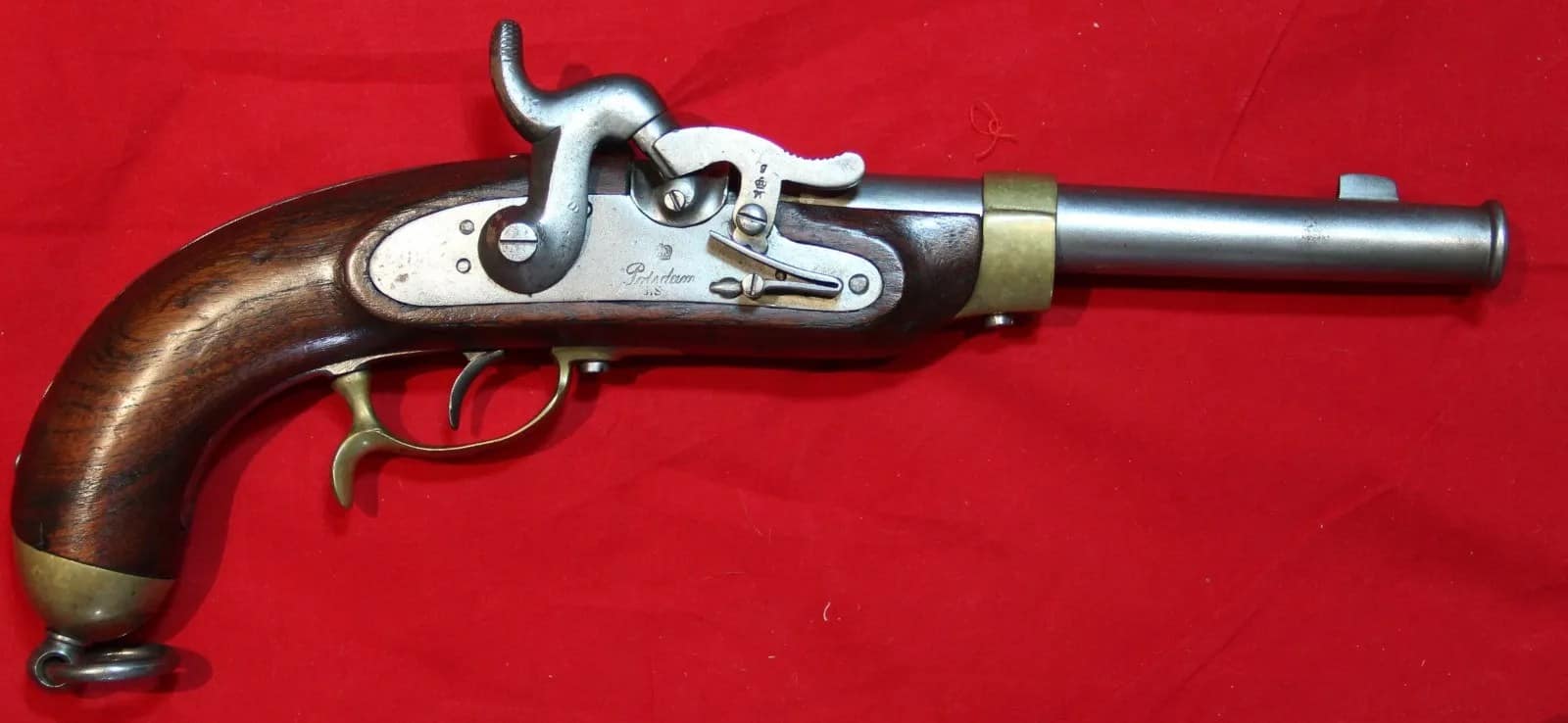
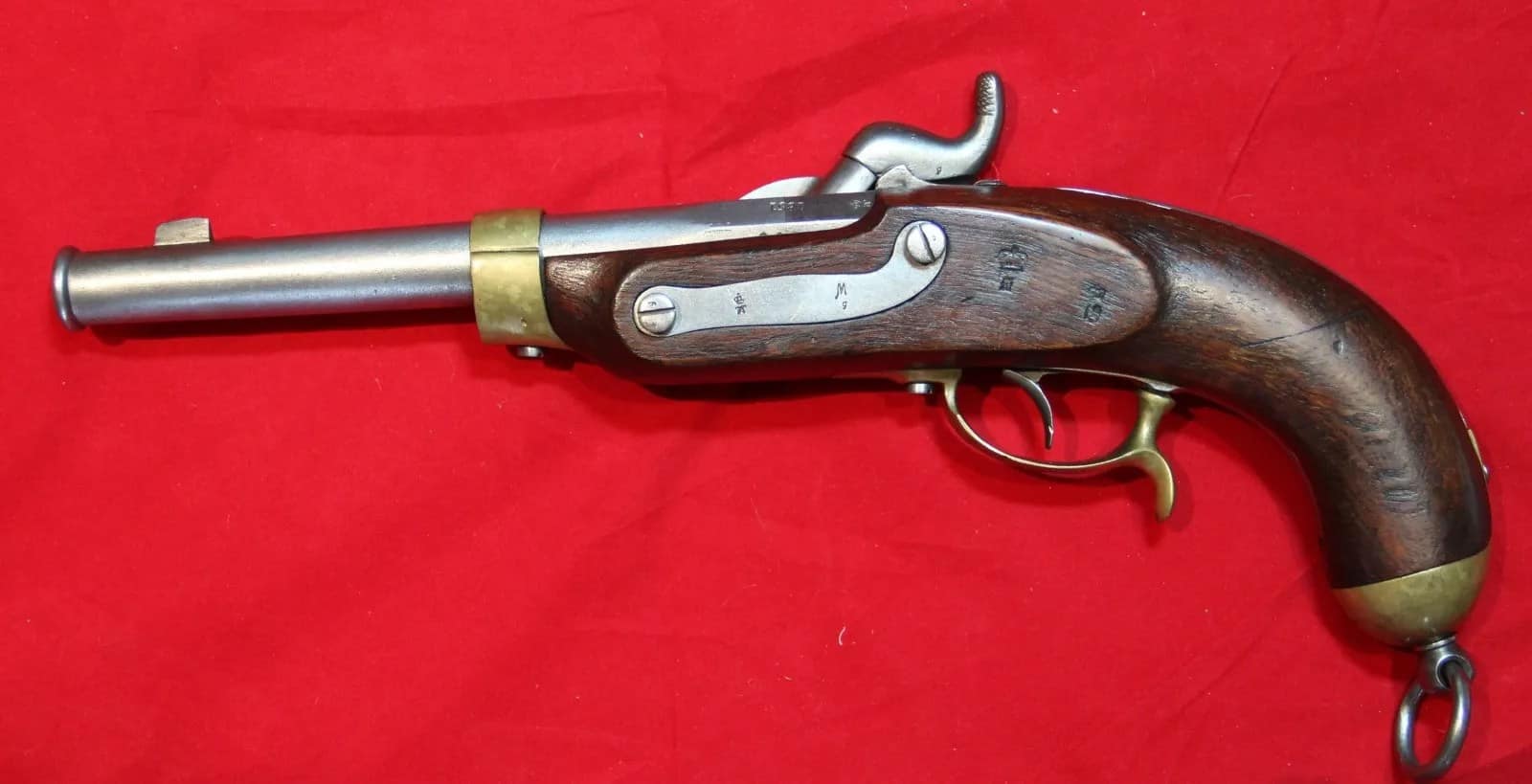
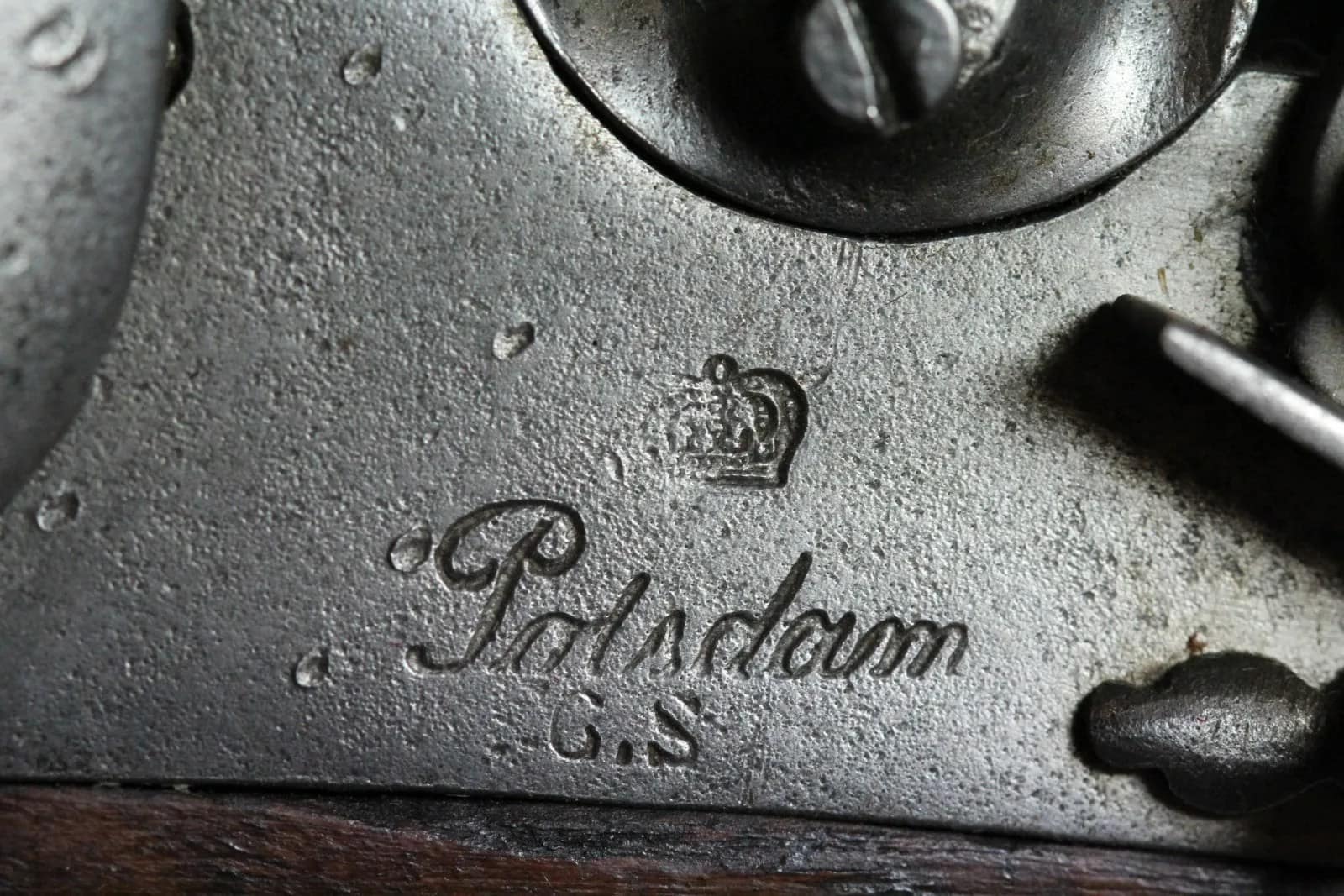
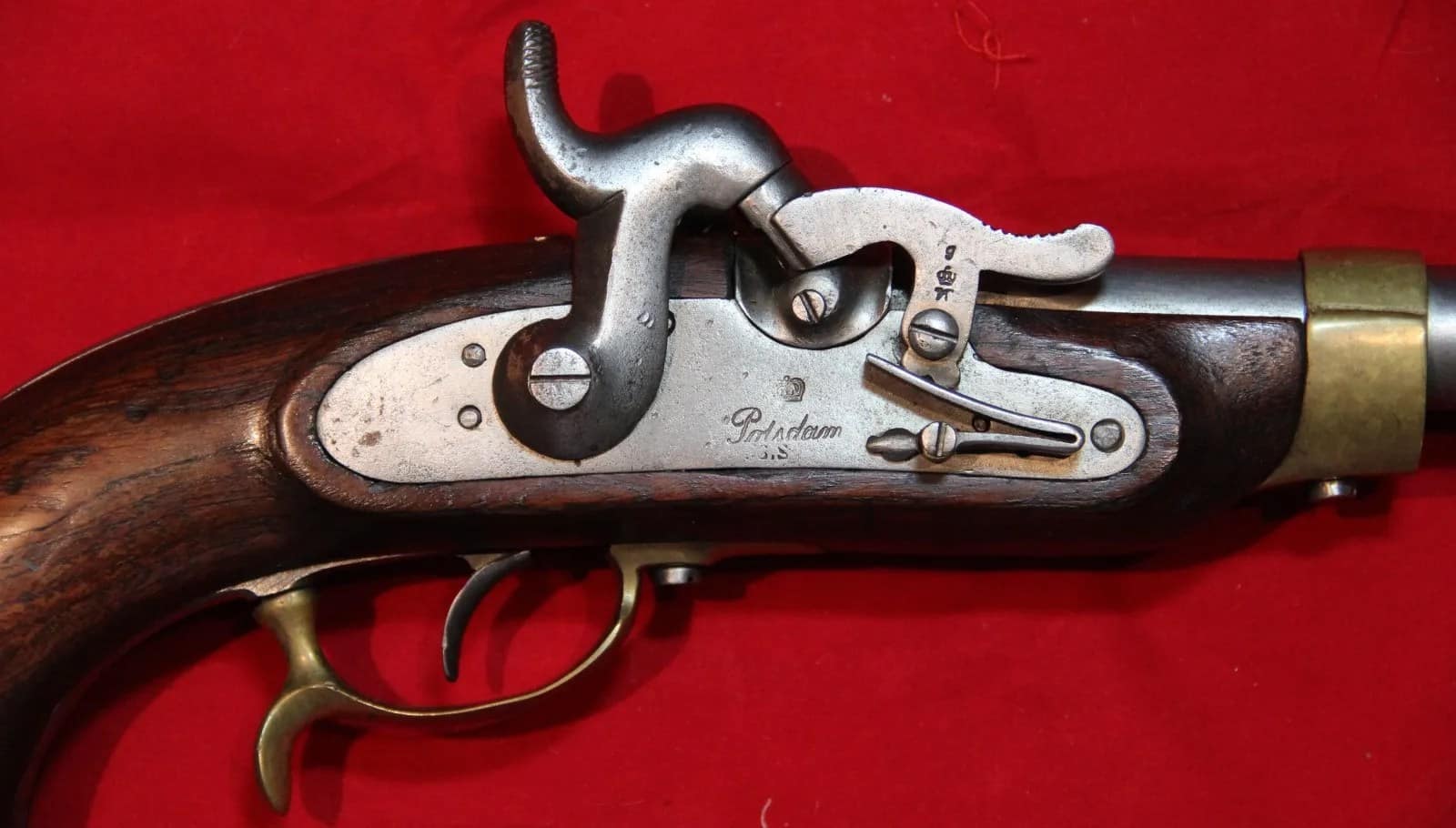
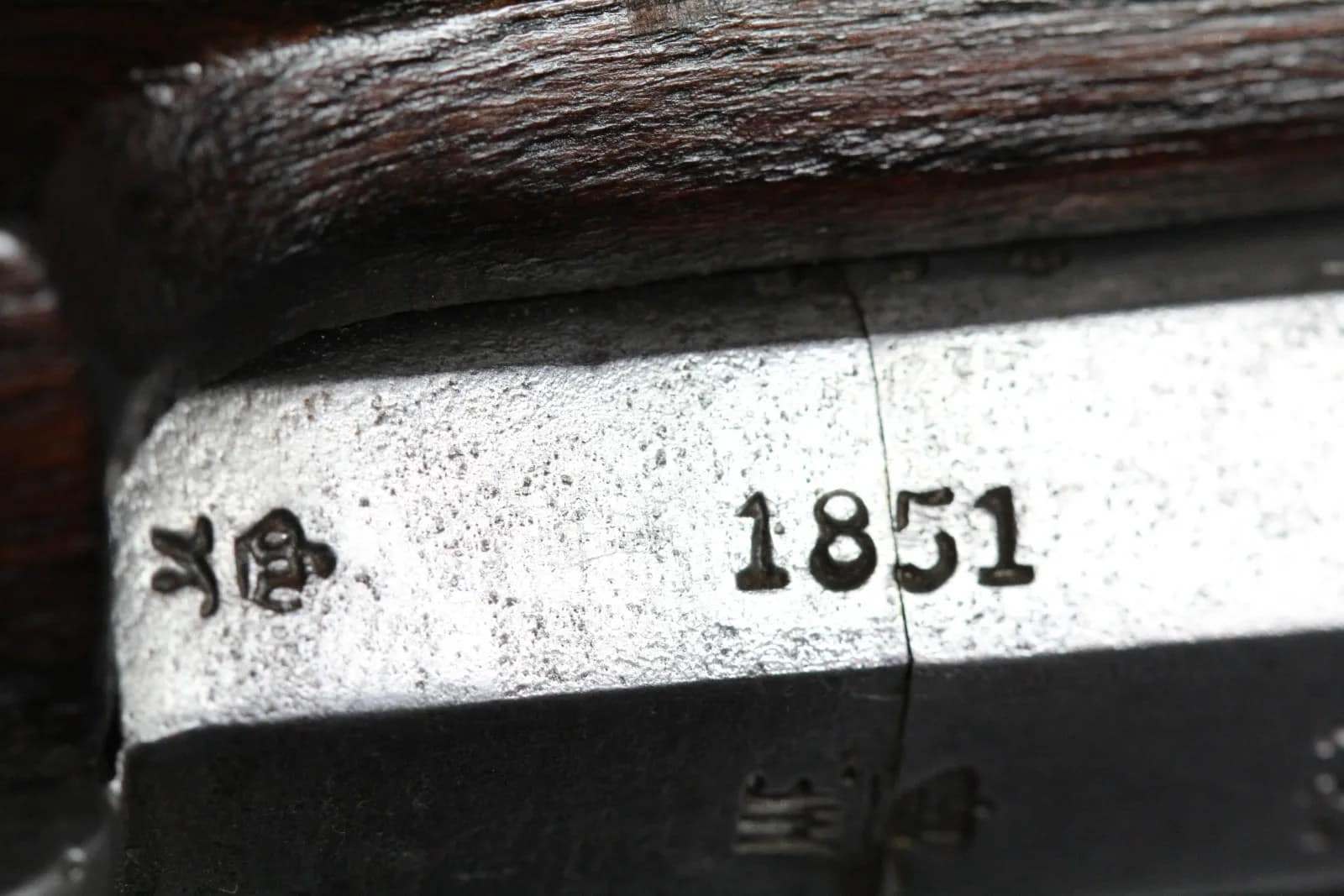
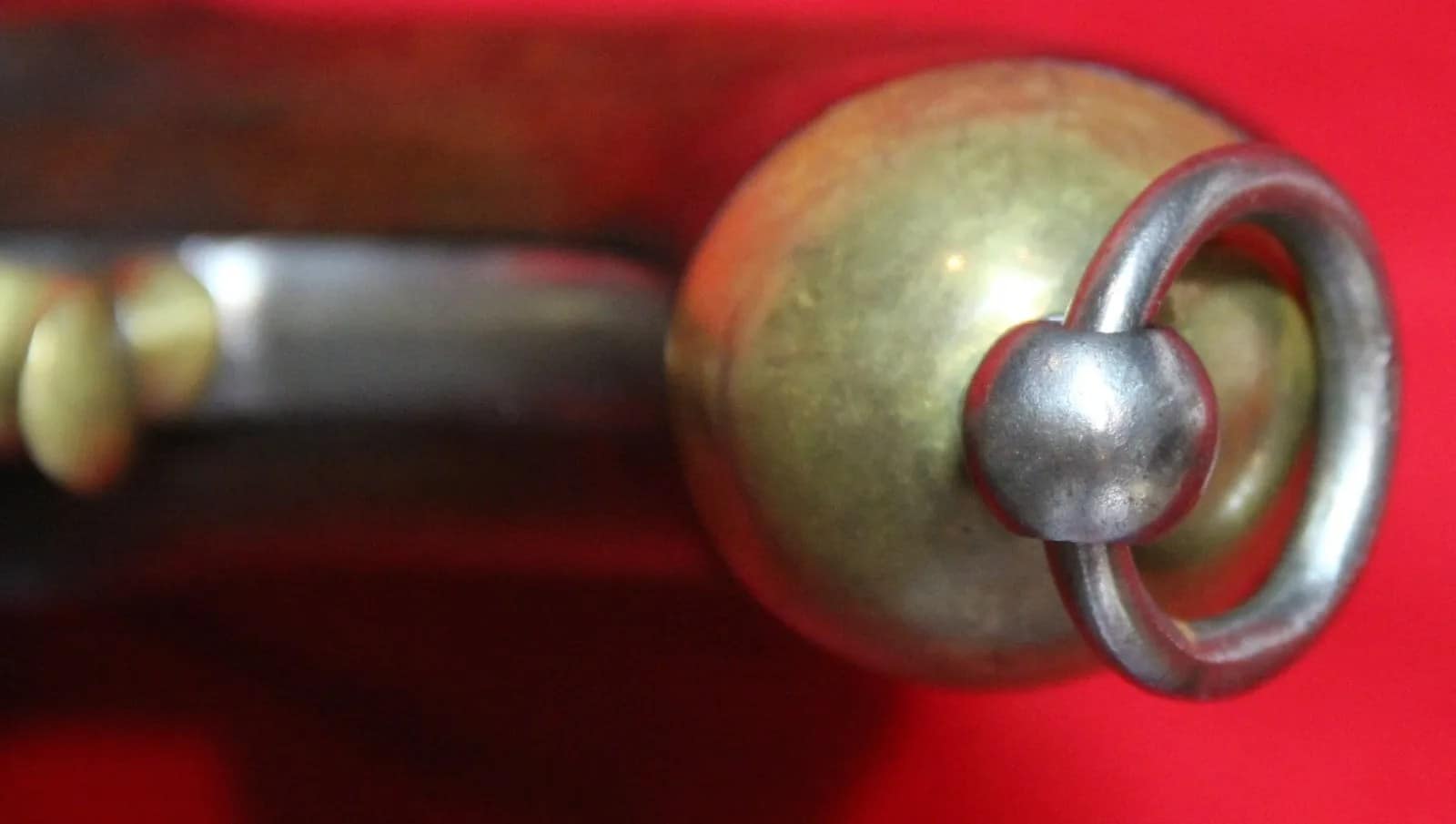
Prussian Model 1850 Cavalry Pistol. From my personal collection.

The Prussian Model 1851 cavalry pistol was a single-shot, percussion muzzle-loading sidearm of approximately 15mm calibre, manufactured at state arsenals including Potsdam and Spandau. Designed for mounted troops, it fired a round ball and represented the standard cavalry pistol of the mid-19th century before the widespread adoption of revolvers. Issued to Prussian cavalry units, it saw service during the Austro-Prussian War (1866) and the Franco-Prussian War (1870–71), though by this period it was increasingly considered obsolete compared to more modern repeating handguns.

Weapon data

Caliber: 15mm
Cartridge: .69″ ball projectile.
Action: Muzzle loading, percussion lock, separately primed
Rifling: Smoothbore.
Muzzle velocity: ~120 metres per second
Maximum effective range (volley fire): 100 metres
Length: 15″ (375mm)
Barrel length: 8.75″ (220mm)
Weight: 2KG
Sights: fixed front sight


Austrian Weapons of the Austro-Prussian War


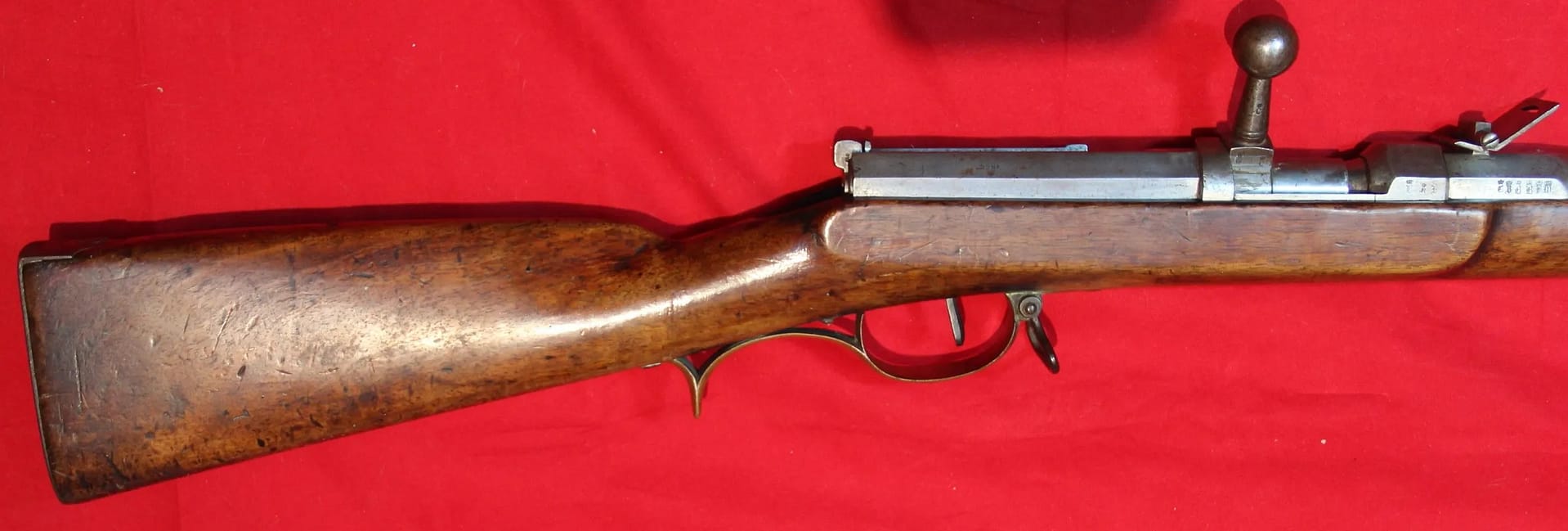
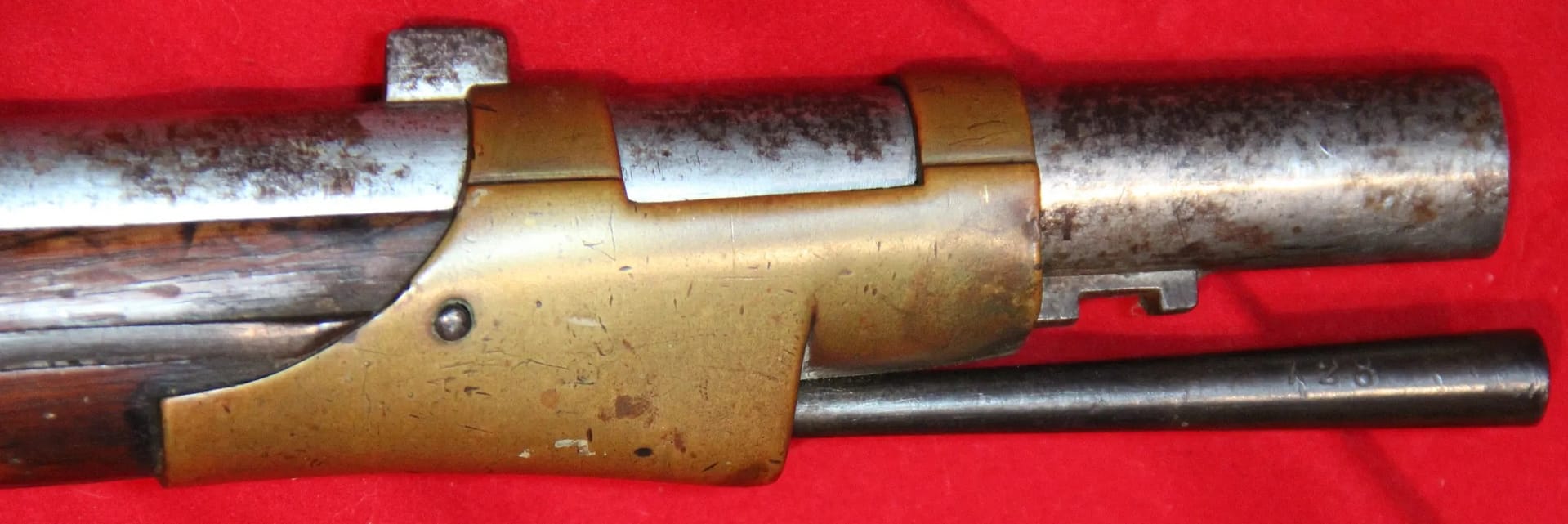
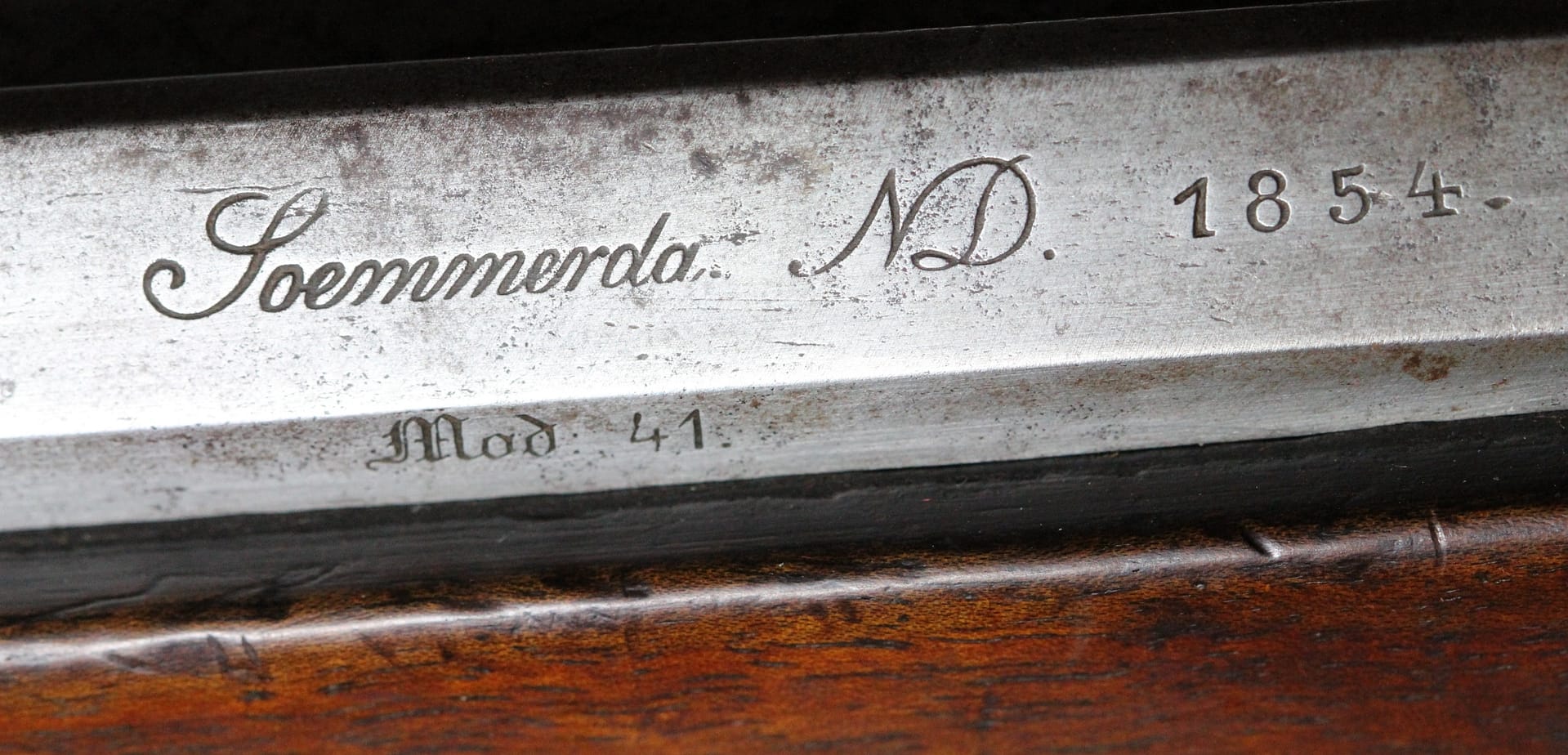
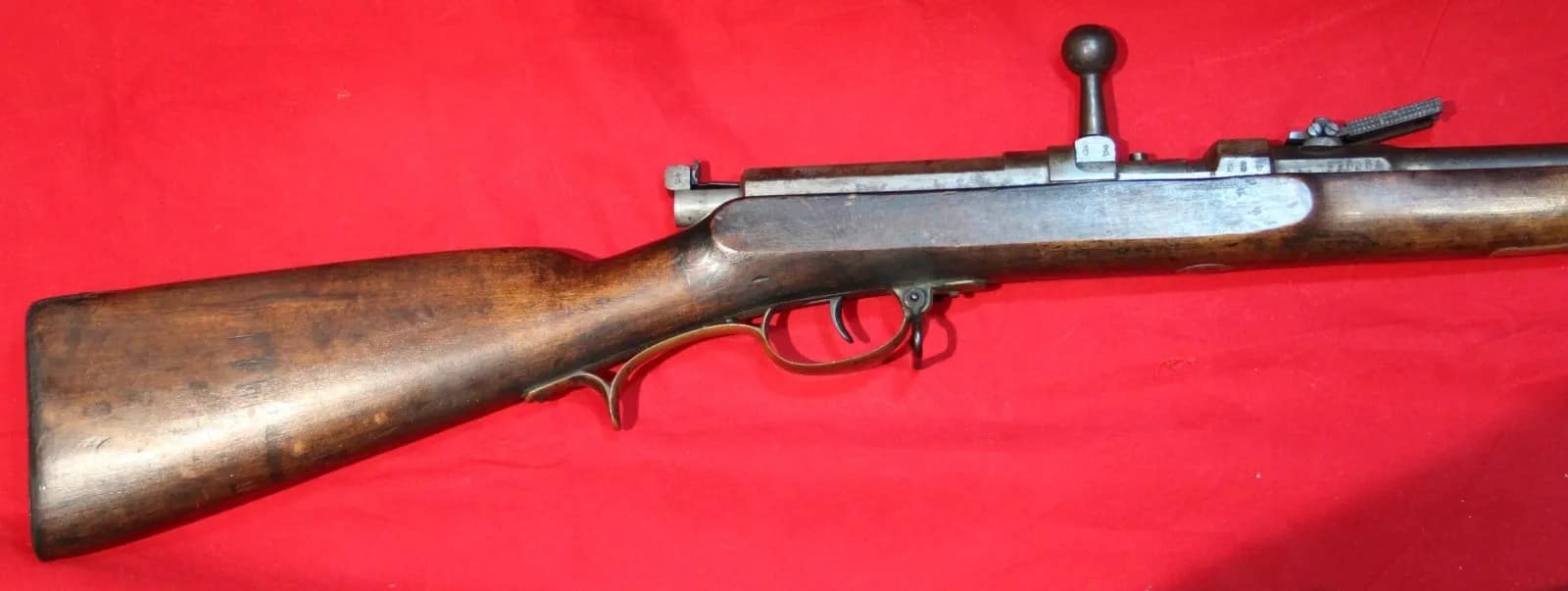
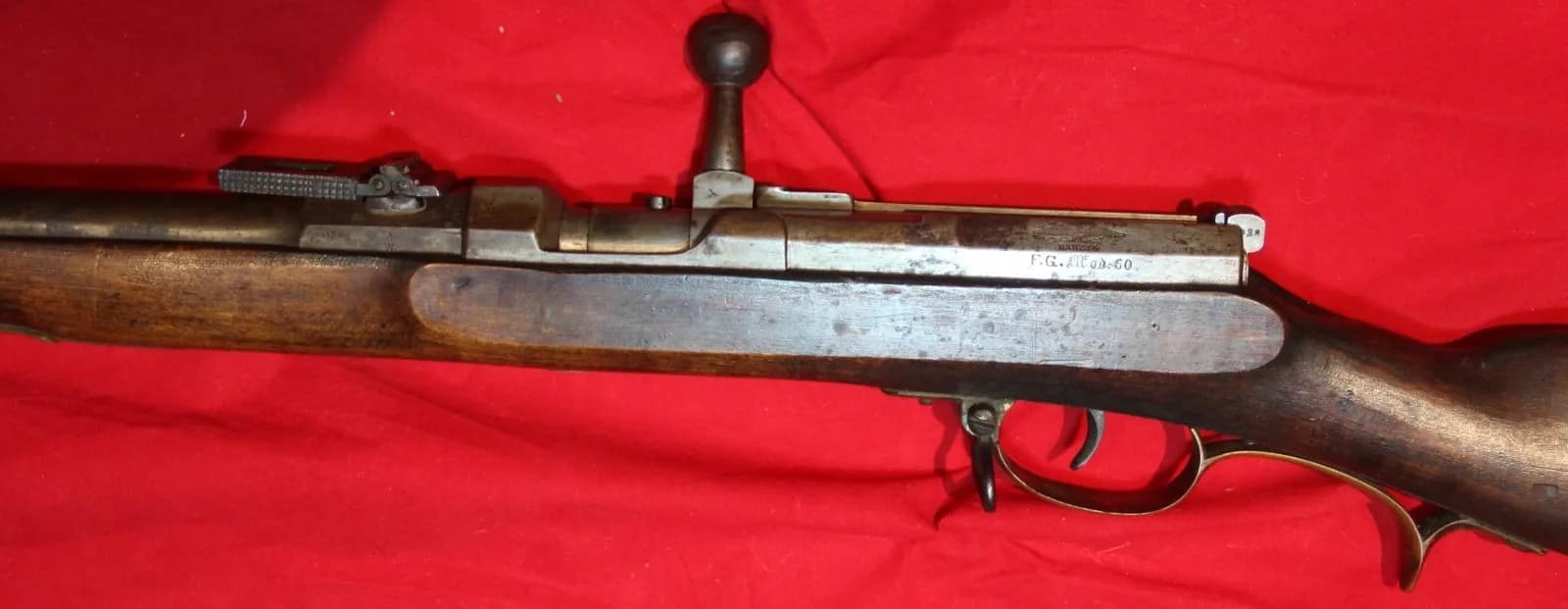
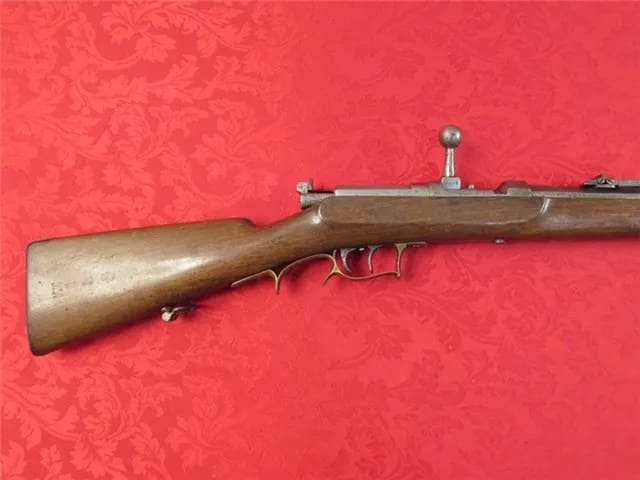
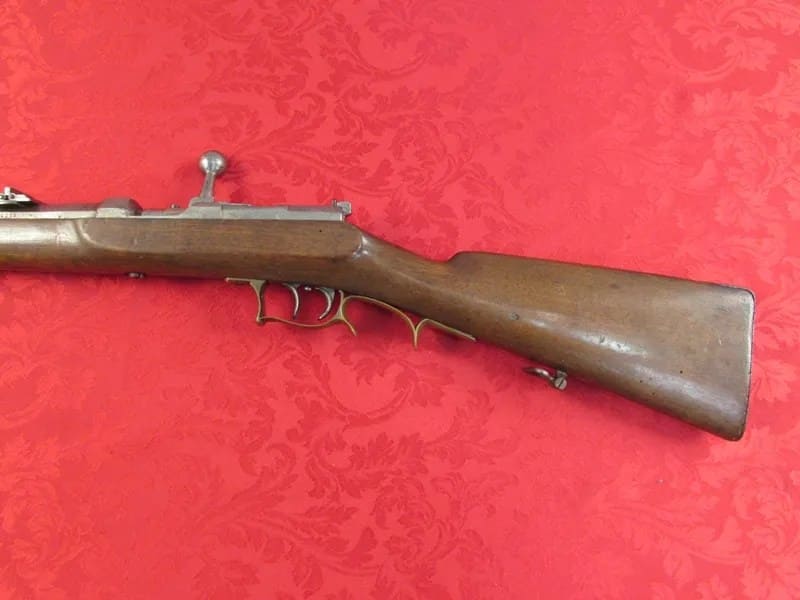
Austrian Model 1854 ‘Lorenz’ Percussion Musket, 0.54″ caliber. From my personal collection.

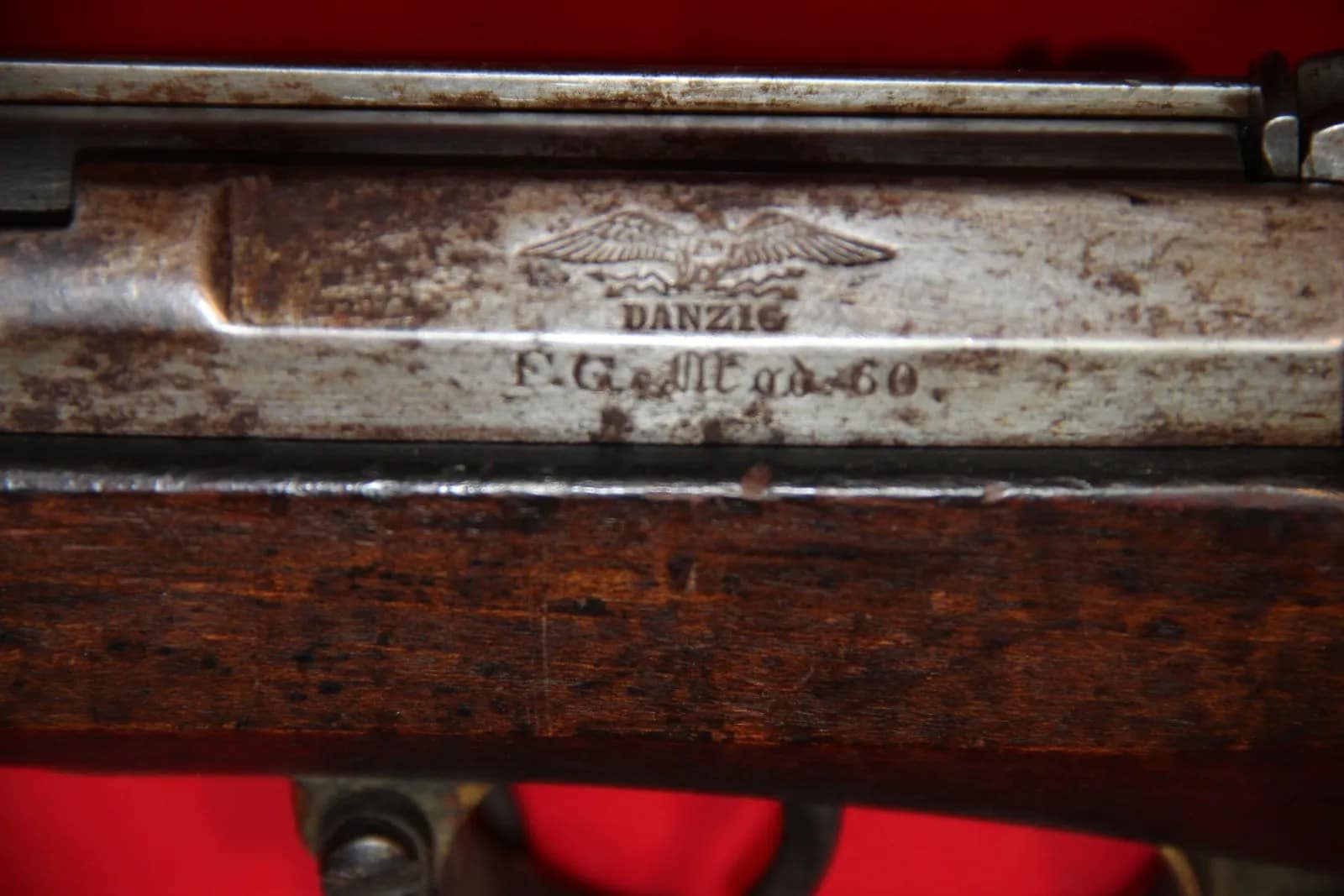
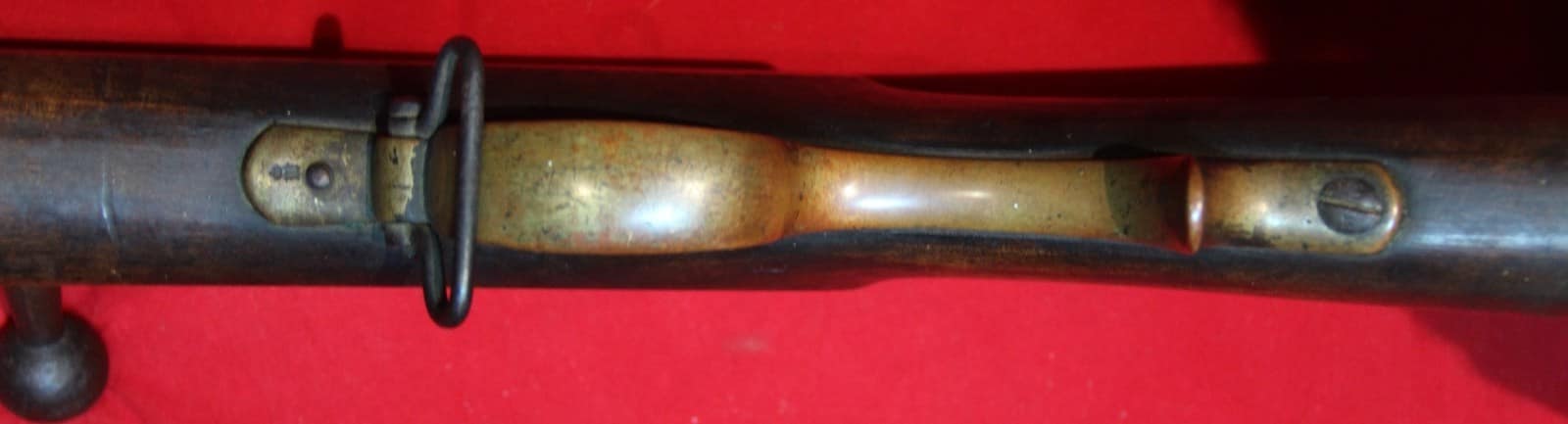
The Austrian Model 1854 Lorenz was a .54-calibre percussion rifle-musket widely issued during the 1859 and 1866 campaigns. Built with a distinctive lockplate and robust stock furniture, it offered good accuracy but variable quality due to decentralised production. The Lorenz was Austria’s principal infantry weapon during the Austro-Prussian War, where the Prussian Dreyse needle rifle outclassed its slower-loading and rifled-musket design. Large numbers were later sold abroad, including to both Union and Confederate forces in the American Civil War.


Austro-Prussian War Headgear


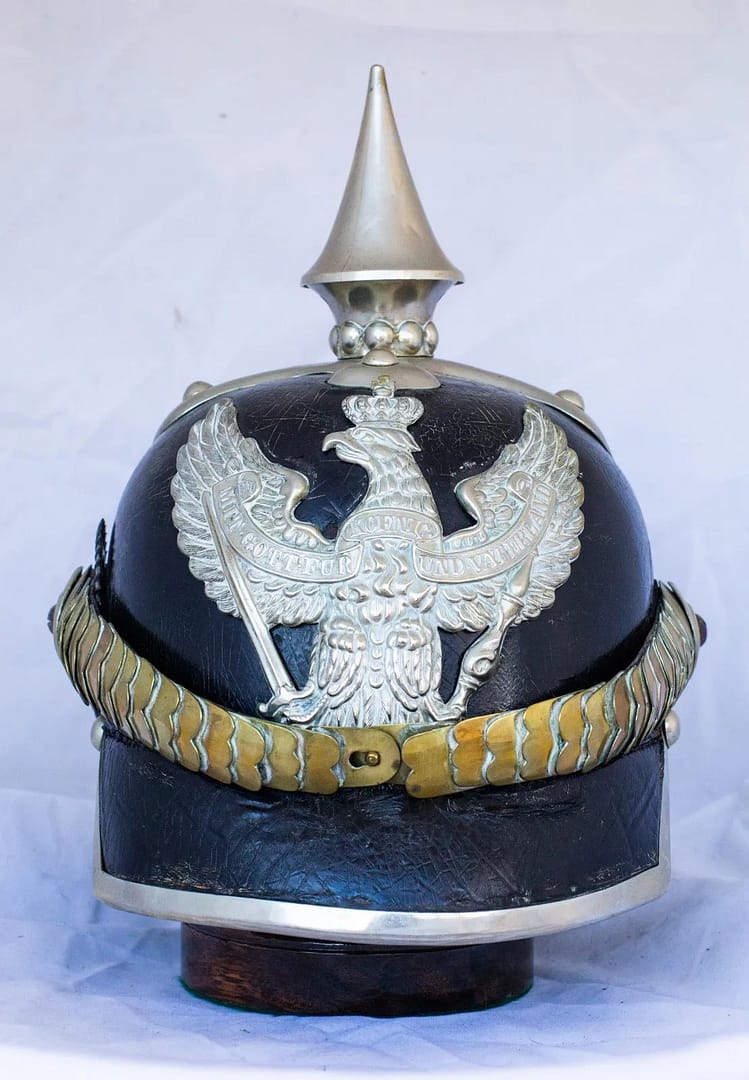
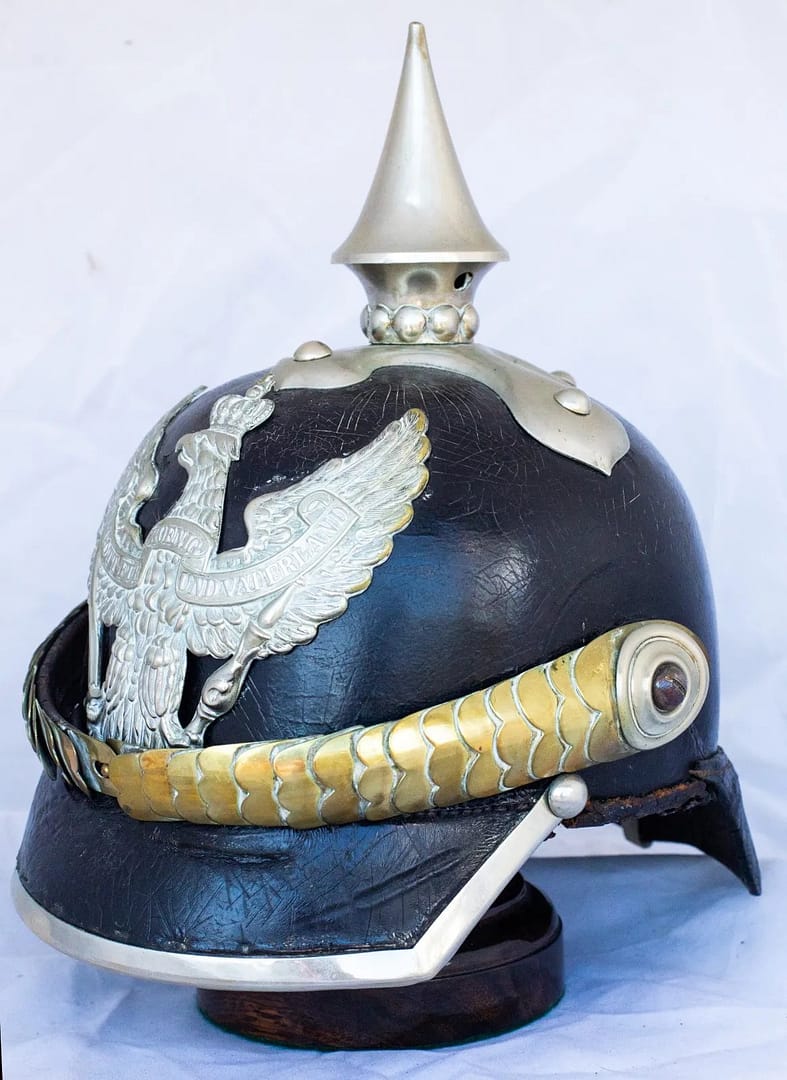
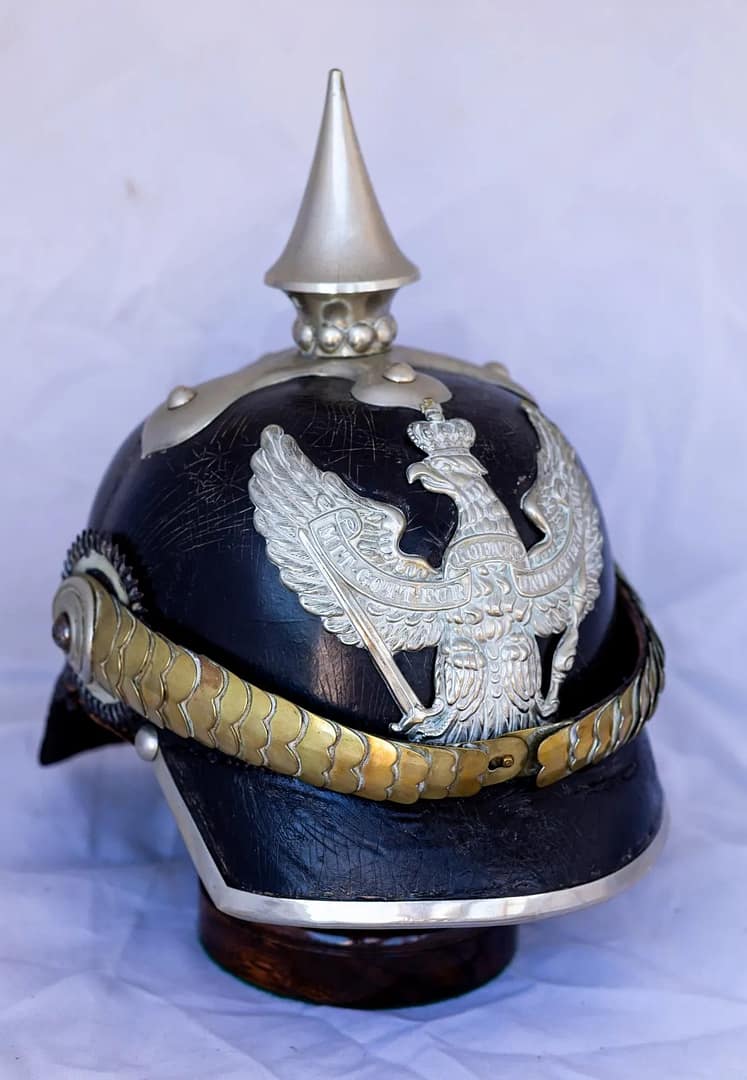
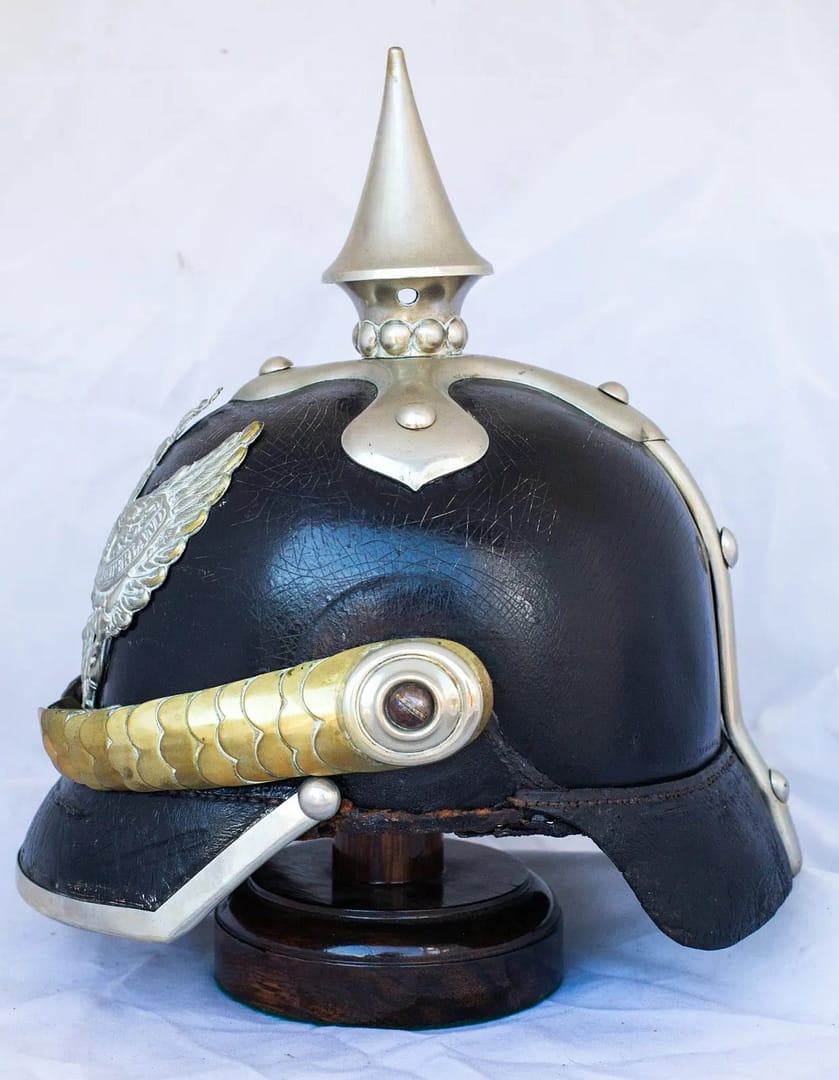
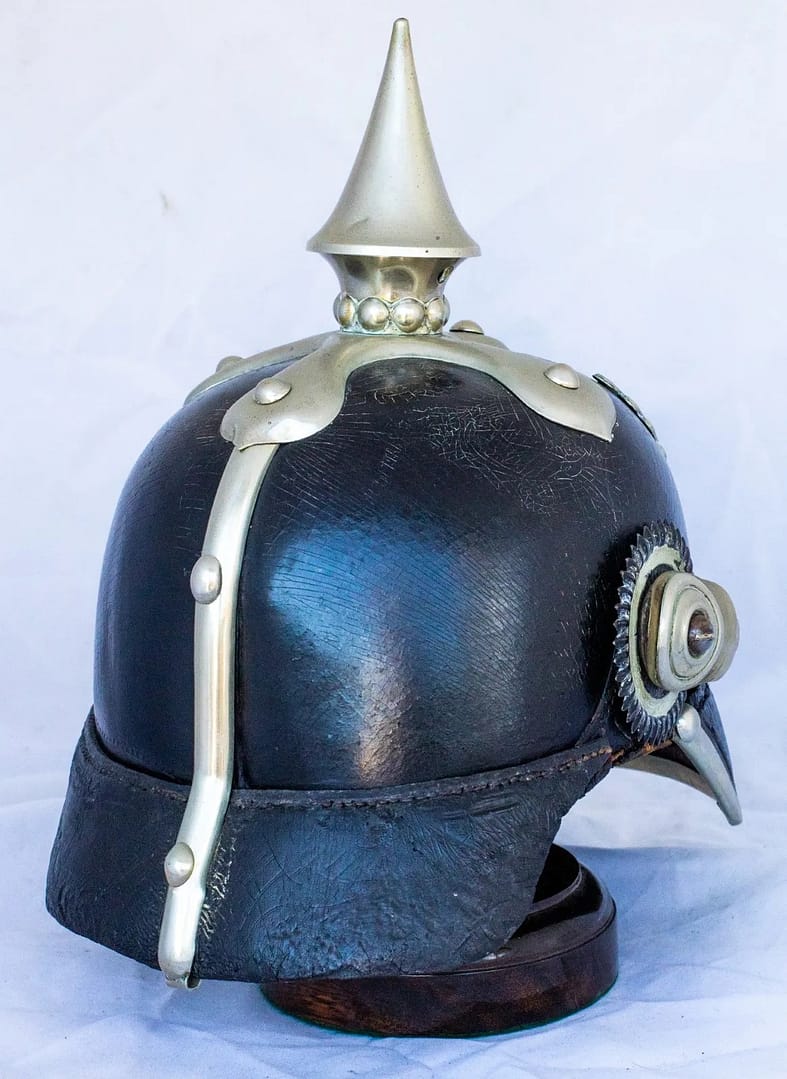
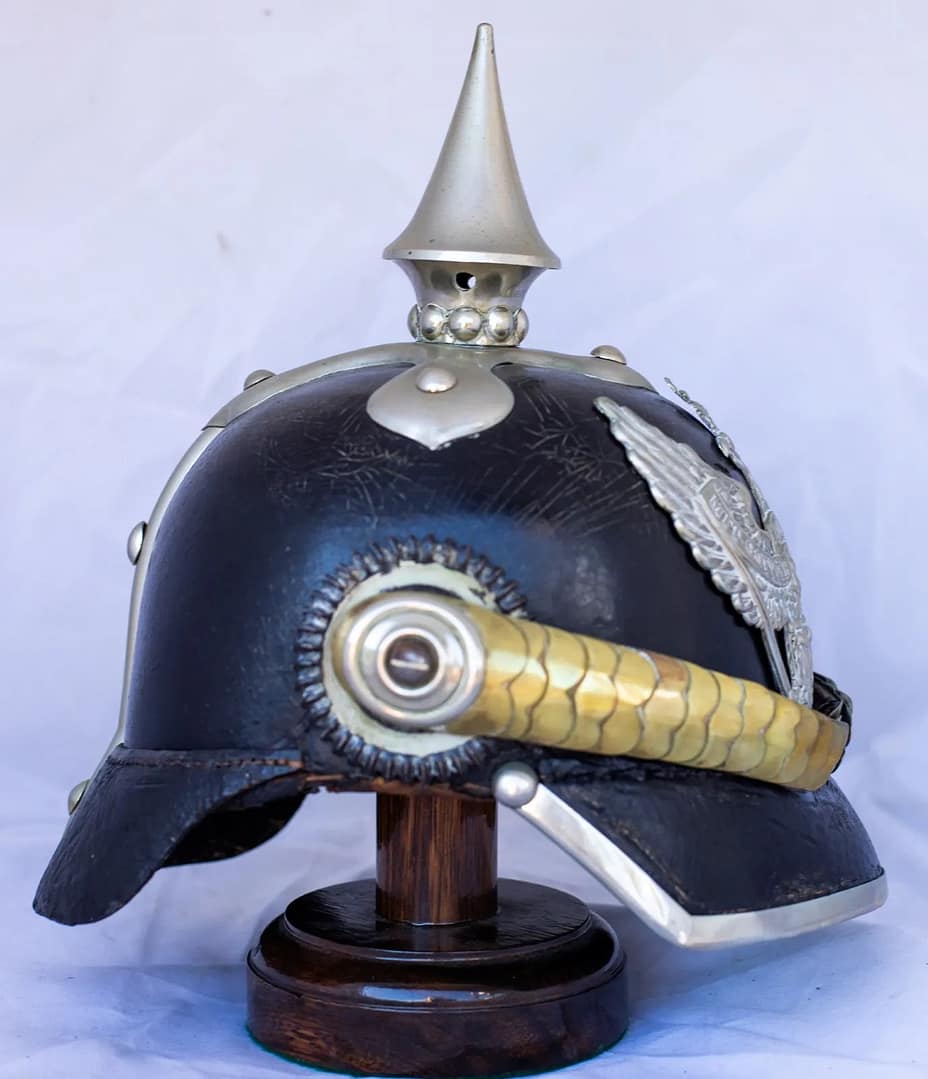
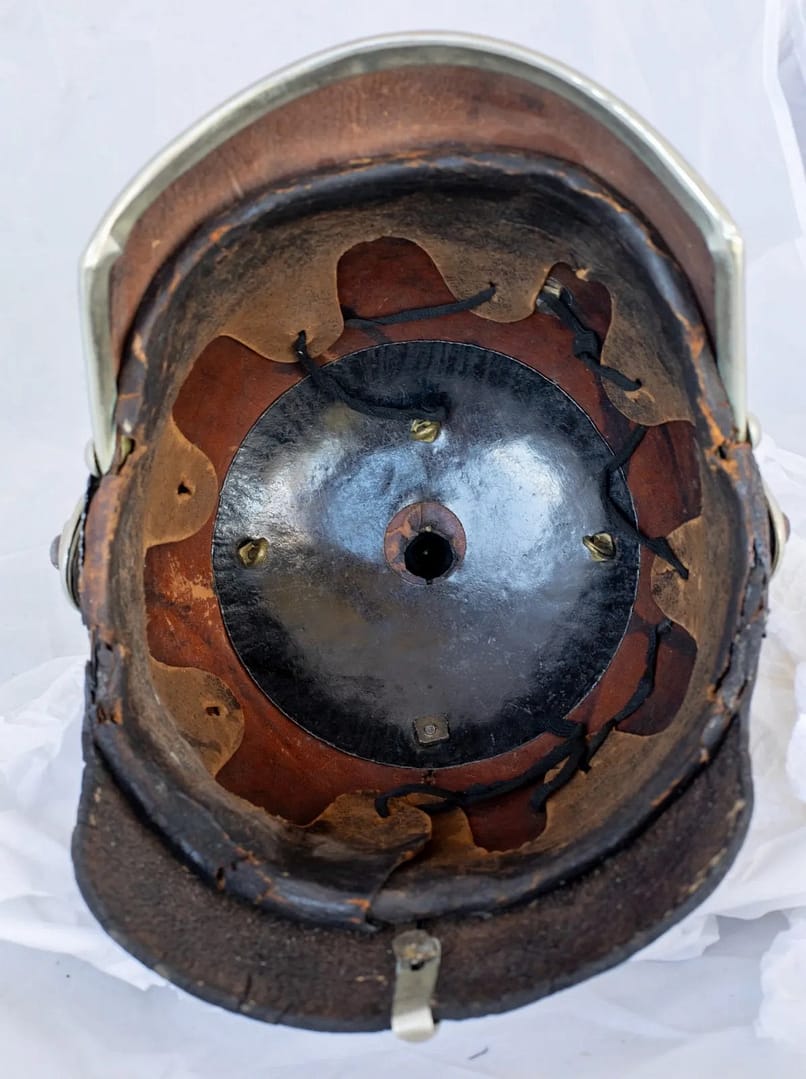
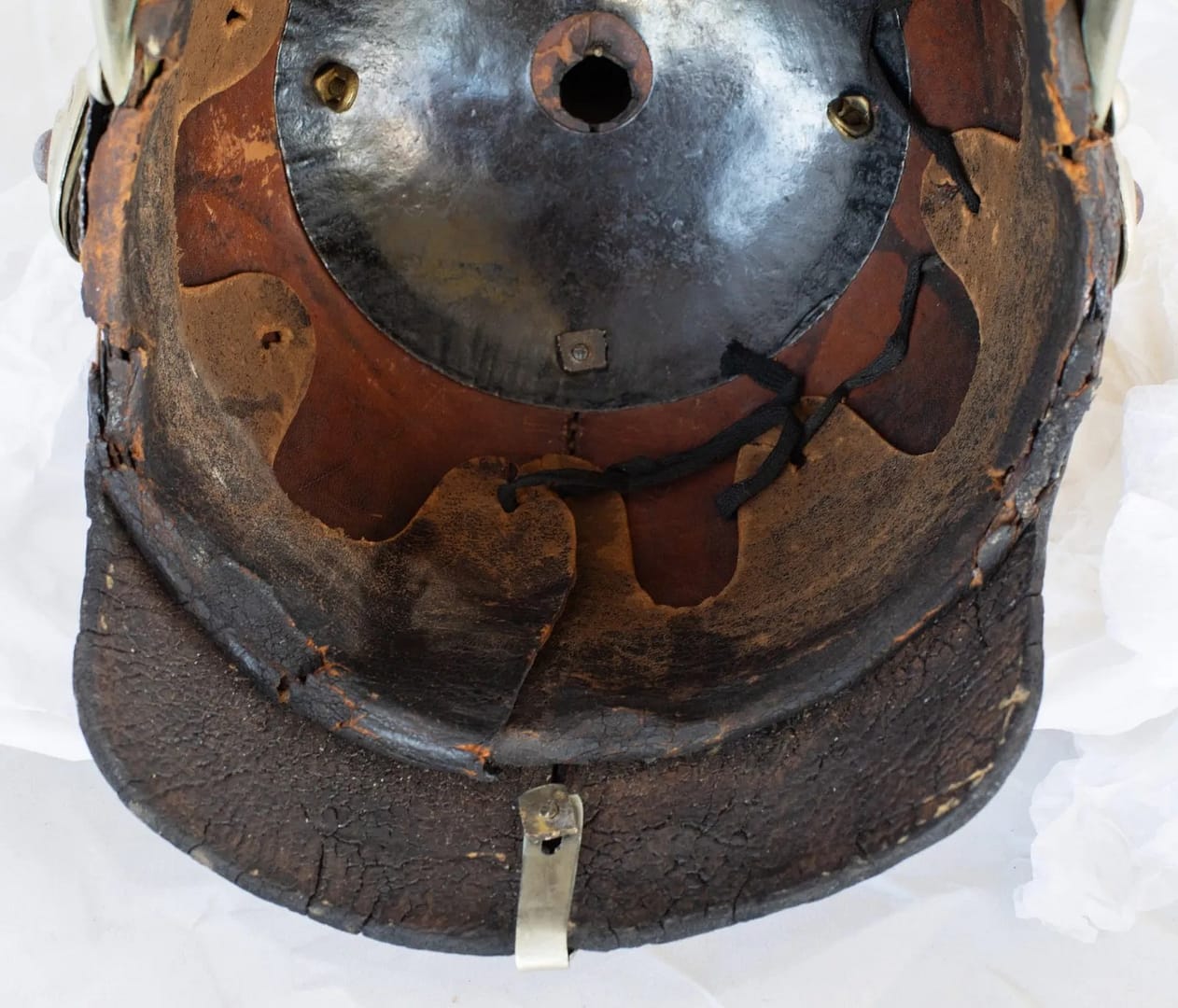
M1860 Dragoner pickelhaube. From my personal collection.

The M1860 Dragoner Pickelhaube was issued to Prussian dragoon regiments during the mid-nineteenth century and reflects the evolution of cavalry headgear in the post-Napoleonic era. Constructed of boiled leather with silvered brass fittings and a prominent spike, it combined limited protective function with regimental distinction. The helmet bore the Prussian eagle plate and appropriate state cockades, identifying branch and allegiance. Worn during the wars of German unification, including 1866 and 1870–71, the M1860 pattern illustrates the transition from traditional cavalry shakos to the spiked helmet that became synonymous with the Imperial German Army.


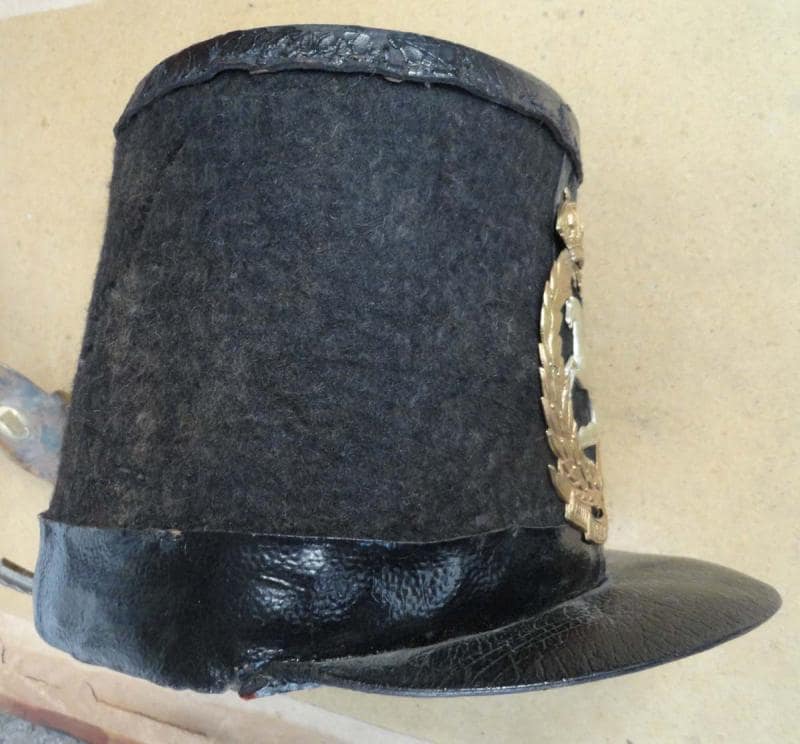
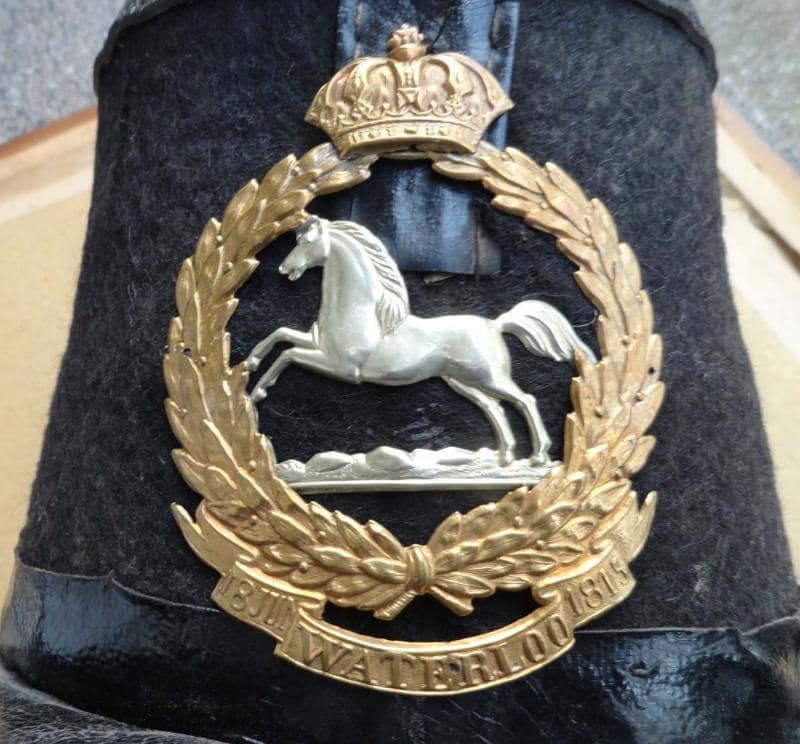
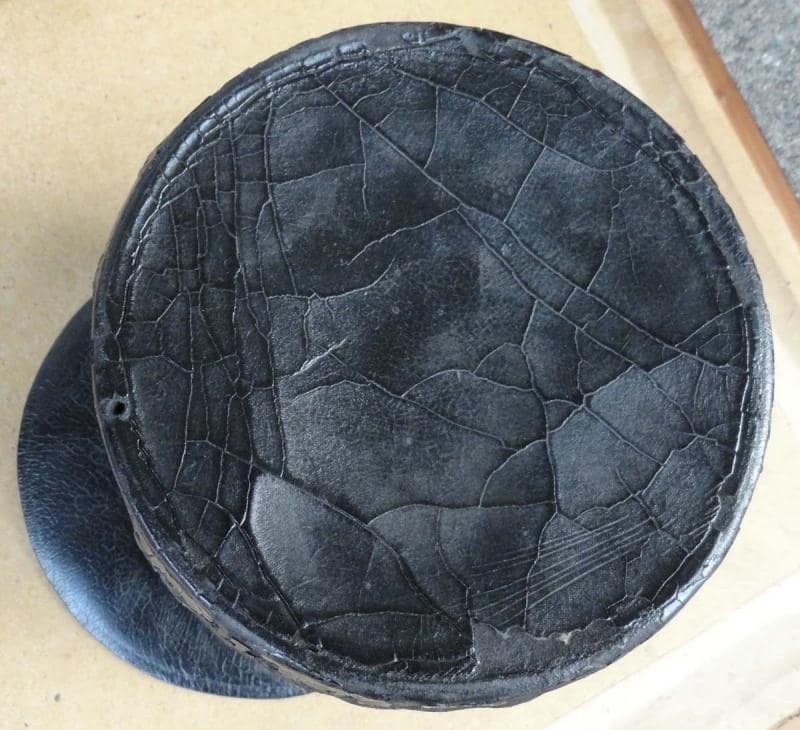
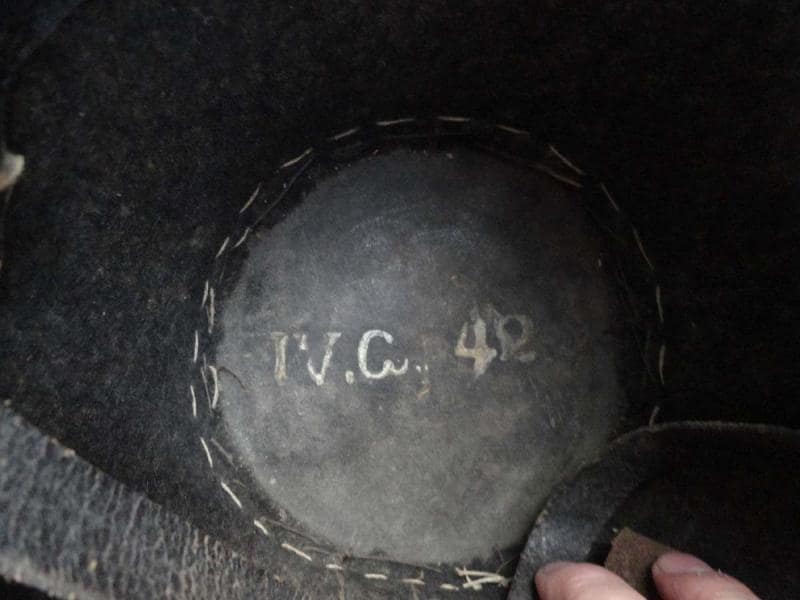
M1860 Hanoverian Tschako. White horse of Hanover. Langensalza.

The Model 1860 Hanoverian tschako was a tall, leather-covered infantry shako bearing the distinctive white horse of Hanover, a symbol derived from the House of Welf. The helmet’s lacquered finish, front plate, and coloured cockade reflected mid-19th-century German military fashion. Worn by Hanoverian troops during the Austro-Prussian War, it was part of the last field uniform of the kingdom before its annexation by Prussia following the 1866 campaign and the defeat at Langensalza.


Bavarian, Saxon and Prussian helmets of the Franco-Prussian War. From my personal collection.

The Prussian pickelhaube was a hardened leather helmet with a brass spike and front plate displaying the Prussian eagle. Worn by infantry, artillery, and support branches, the pickelhaube became a symbol of Prussian military discipline and state power. Though elegant and distinctive, it offered limited ballistic protection and was eventually replaced by the steel stahlhelm during the First World War.

The Bavarian Raupenhelm (“caterpillar helmet”) was a leather infantry helmet with a distinctive black wool crest running from front to rear. Used by line infantry and light infantry units until the late 1860s, it reflected South German uniform traditions that pre-dated Prussian influence. The helmet offered minimal protection but strong visual identity, particularly during the 1866 and early 1870 campaigns. After Bavarian integration into the German Empire, the Raupenhelm was gradually replaced by the Prussian-style pickelhaube.


Accoutrements


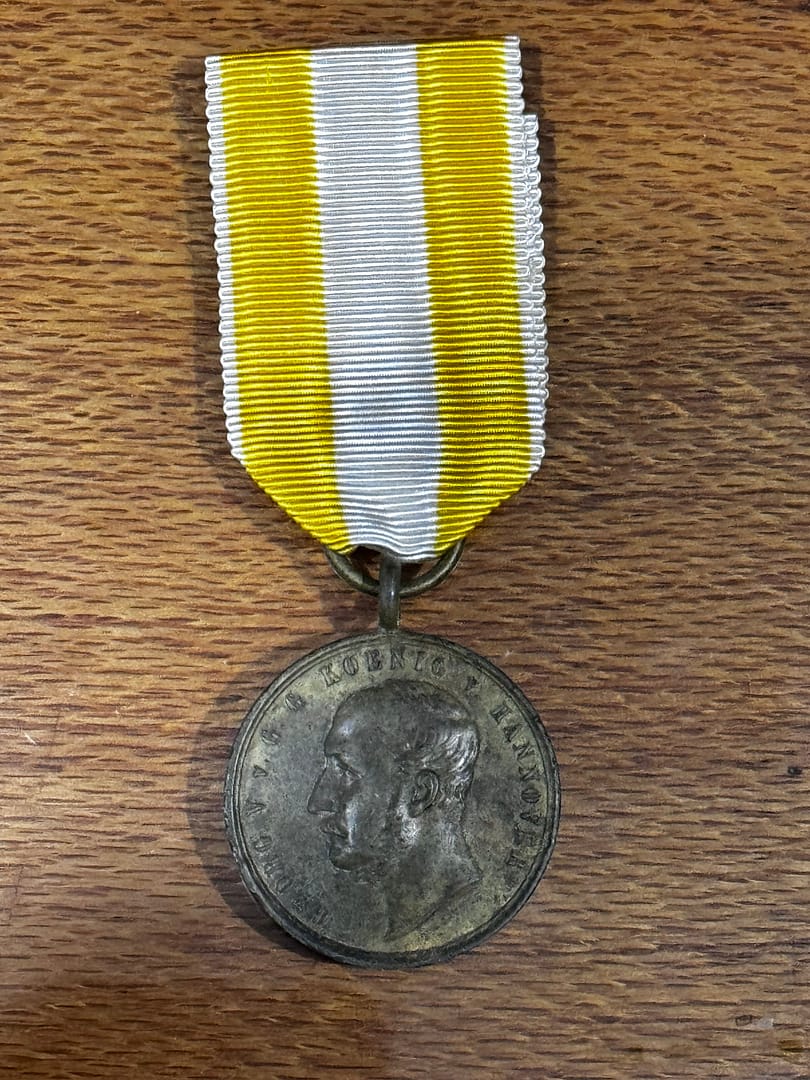
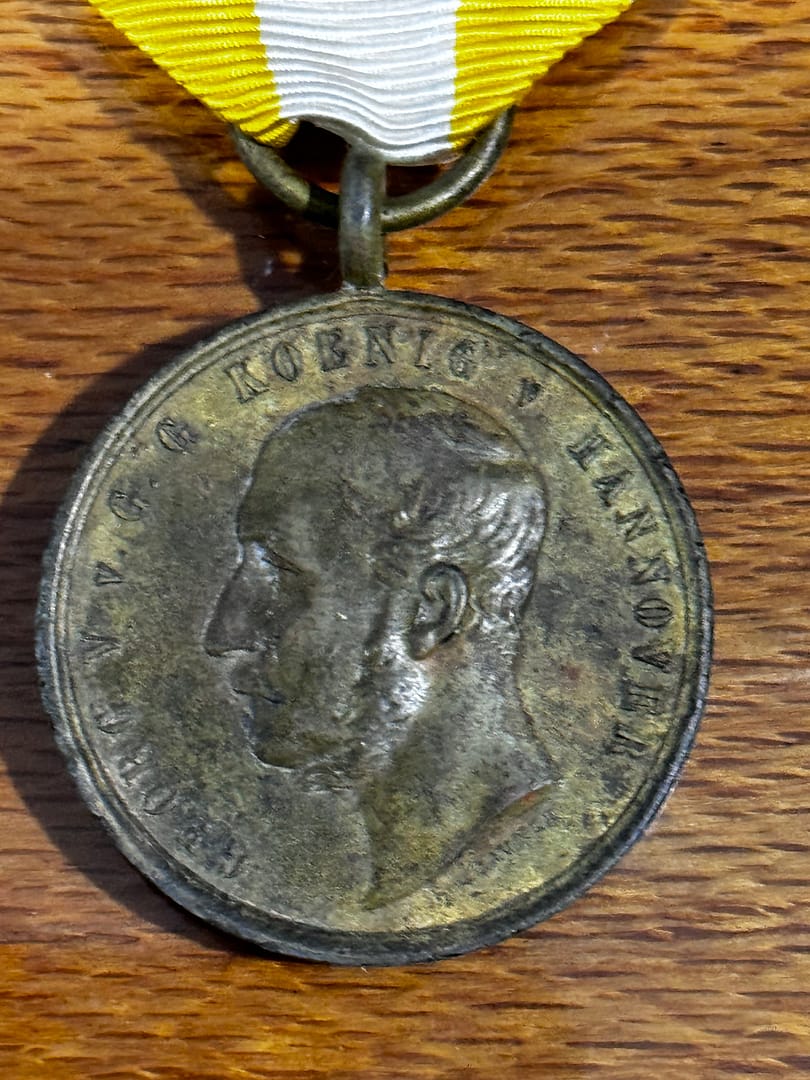
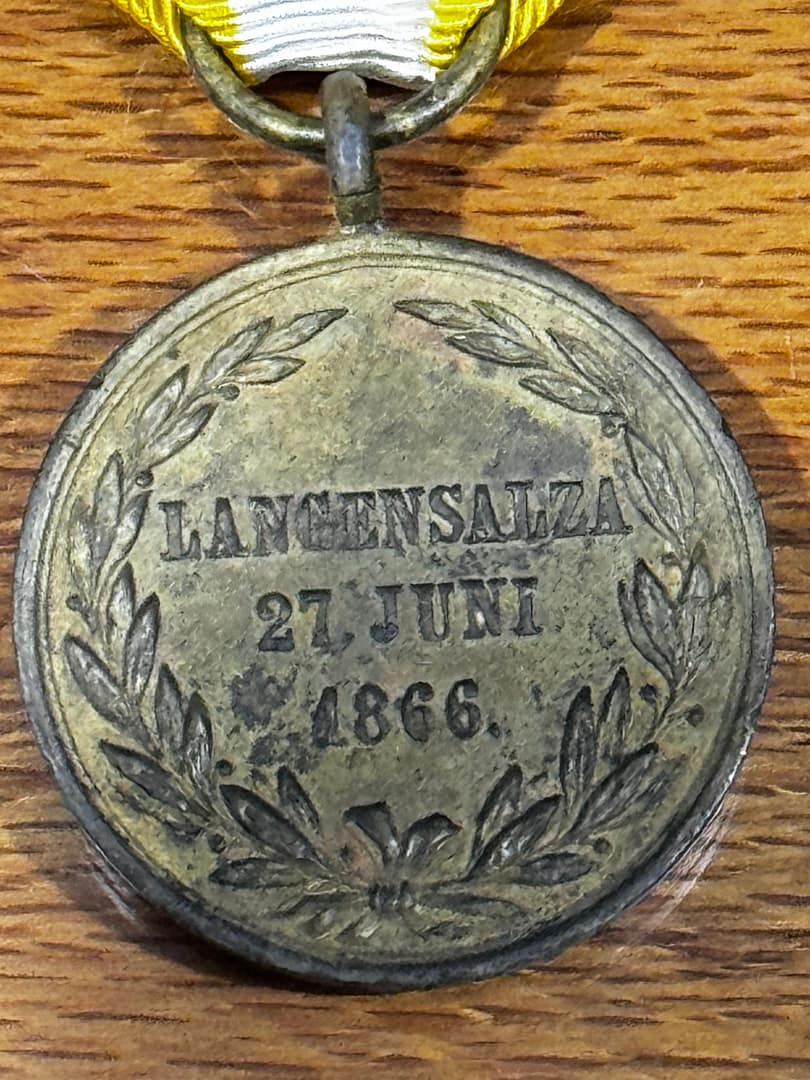
Hanoverian Medal for Battle of Langensalza

Struck to commemorate Hanover’s stand against Prussia on 27 June 1866, the Langensalza Medal was awarded to officers and men who fought in the battle. The silver and bronze versions bore the crowned portrait of King George V on the obverse and an inscription honouring loyal service on the reverse. Although Hanover won a tactical victory at Langensalza, the army was forced to surrender shortly afterwards due to encirclement. The medal became a poignant symbol of the kingdom’s final independent campaign and later served as a regimental remembrance item.


What weapons were used during the Austro-Prussian War?

The war was fought during a transitional period in military technology. Prussian infantry were equipped with the Dreyse needle-gun, a bolt-action breech-loading rifle, while Austrian infantry primarily carried the Lorenz muzzle-loading rifle-musket. Both sides also fielded rifled artillery and cavalry armed with carbines, sabres, and pistols typical of mid-nineteenth-century European armies.

Why was the Dreyse needle-gun important?

The Dreyse needle-gun allowed Prussian soldiers to fire more rapidly than muzzle-loading rifles and to reload while lying down. This increased battlefield firepower and encouraged more flexible infantry tactics. Its effectiveness was particularly evident at the Battle of Königgrätz, where Prussian infantry fire contributed significantly to the outcome.

Was the Austrian Lorenz rifle inferior to the Dreyse?

The Lorenz rifle was accurate and well-made but was slower to load because it was a muzzle-loader. And it had to be loaded standing up. Austrian doctrine emphasised aggressive attack and shock action, but higher rates of Prussian fire made such advances costly. The difference illustrates how tactics and doctrine can matter as much as technology.

What role did artillery play in the war?

Artillery was an important component of both armies. Rifled guns provided improved range and accuracy compared to earlier smoothbores. Prussian success reflected not only technical capability but also effective coordination, command, and concentration of fire at decisive points.

Did cavalry still play a role in 1866?

Yes. Cavalry was used for reconnaissance, screening, and exploitation. While less decisive than in earlier wars, mounted troops remained essential for operational mobility and battlefield communication. Cavalry units were typically equipped with sabres, pistols, and carbines.

Why is the Battle of Königgrätz considered decisive?

The Battle of Königgrätz (Sadowa) on 3 July 1866 saw Prussian armies defeat the main Austrian field force through coordinated manoeuvre and superior operational planning. Up to that point, the Battle of Königgrätz was teh largest battle in history, with more than 250,000 soldiers engaged, almost twice as many as at Gettysburg three years earlier. The battle effectively ended Austrian resistance and confirmed Prussian dominance within the German states.

Was the war mainly decided by technology?

Technology played a major role, particularly the Dreyse rifle and improved mobilisation systems, but organisation, command structure, and operational planning were equally important. The war showed how modern warfare depended on the integration of technology with effective leadership.

Are the artefacts shown on this page original items?

All artefacts shown are from my personal collection and photographed firsthand. They represent original weapons and equipment used by soldiers during the Austro-Prussian War.


Subscribe to Battlefield Travels and receive a free E-Book Battlefield Guide

Unlock expert battlefield analysis, campaign reconstructions, and historical insights drawn from firsthand exploration and primary sources.

🗺️ You’ll receive:

🎖️ Exclusive historical insights you won’t find elsewhere

📘 A free eBook: 10 Tips for Exploring Historic Battlefields

📰 New battlefield studies straight to your inbox as they are published