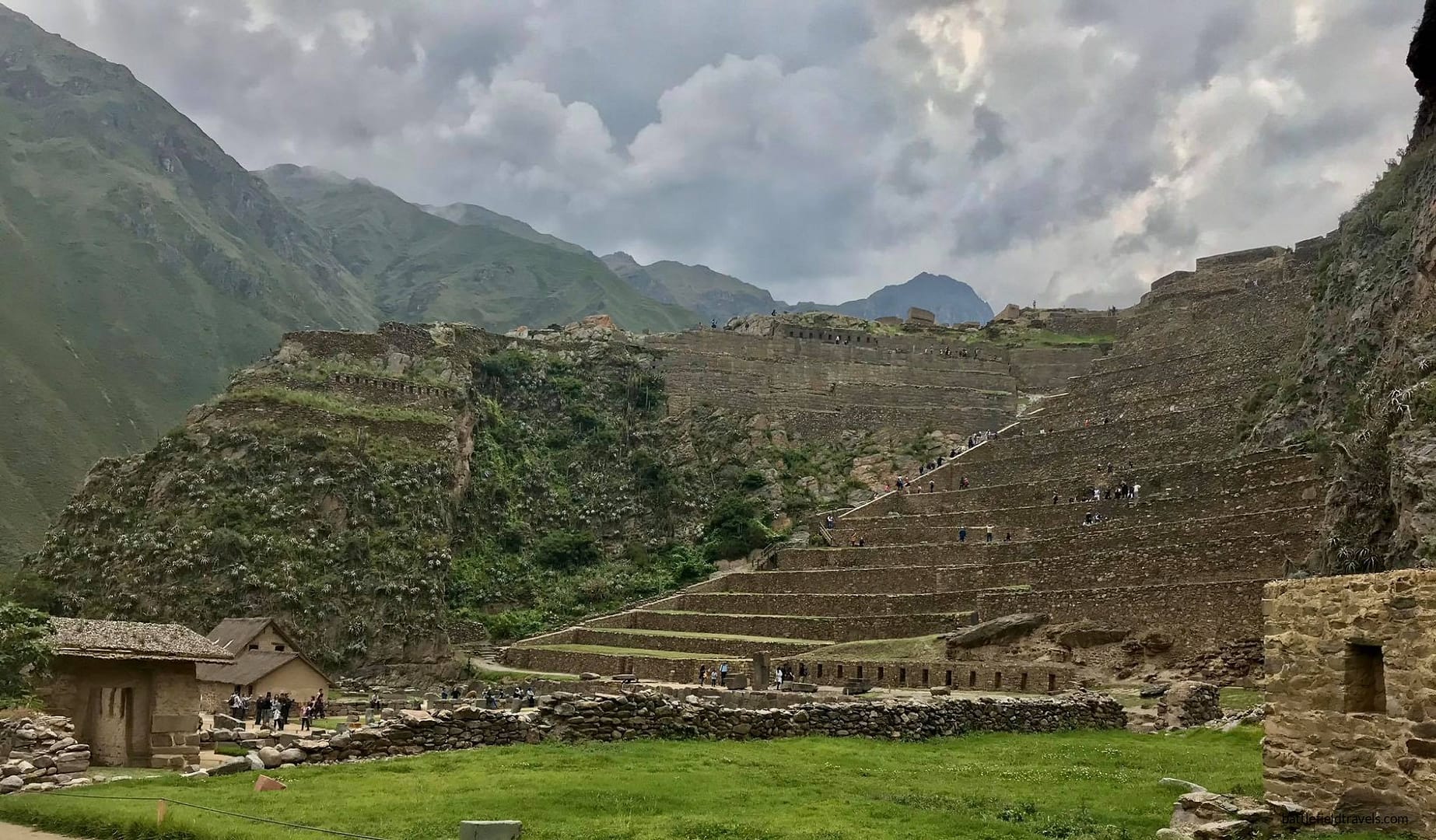
February 2020, Ollantaytambo, Sacred Valley, Peru. I am exploring the site of a 1537 battle between Manco Inca’s indigenous forces and the Spanish Conquistadors under Hernando Pizarro. Part of the Spanish conquest of the New World.
Reconstructing Thirty Years War battlefields through terrain analysis, primary sources and on-site research
Thirty Years War, 1618-1648. Armies on the march in Italy
Walking the battlefields of the Thirty Years War (1618-1648)
The Thirty Years War was one of the most destructive conflicts in European history, fought across the fragmented political and religious landscape of the Holy Roman Empire. From the rolling plains of Bohemia to the wooded hills of Saxony and the fortified towns of the Rhineland, each theatre imposed its own demands on the armies that marched through it. The war evolved from a local Bohemian revolt into a vast continental struggle involving Imperial, Spanish, Swedish, French, Dutch and numerous German princely armies.
Early campaigns such as the Battle of White Mountain revealed the importance of dominating high ground, road networks and approaches to fortified cities. As the conflict widened, Swedish reforms under Gustavus Adolphus brought new emphasis on mobile firepower, coordinated infantry–cavalry action and efficient battlefield deployment — innovations tested on landscapes like the fields of Breitenfeld and the fog-shrouded approaches to Lützen.
Fortified cities, river crossings and key road junctions became strategic prizes in a war where supply demands and a devastated countryside constrained movement. Armies often manoeuvred for weeks to force or avoid battle. When engagements did occur, they were shaped by hedgerows, marshes, villages and subtle contours that still remain visible on the ground today.
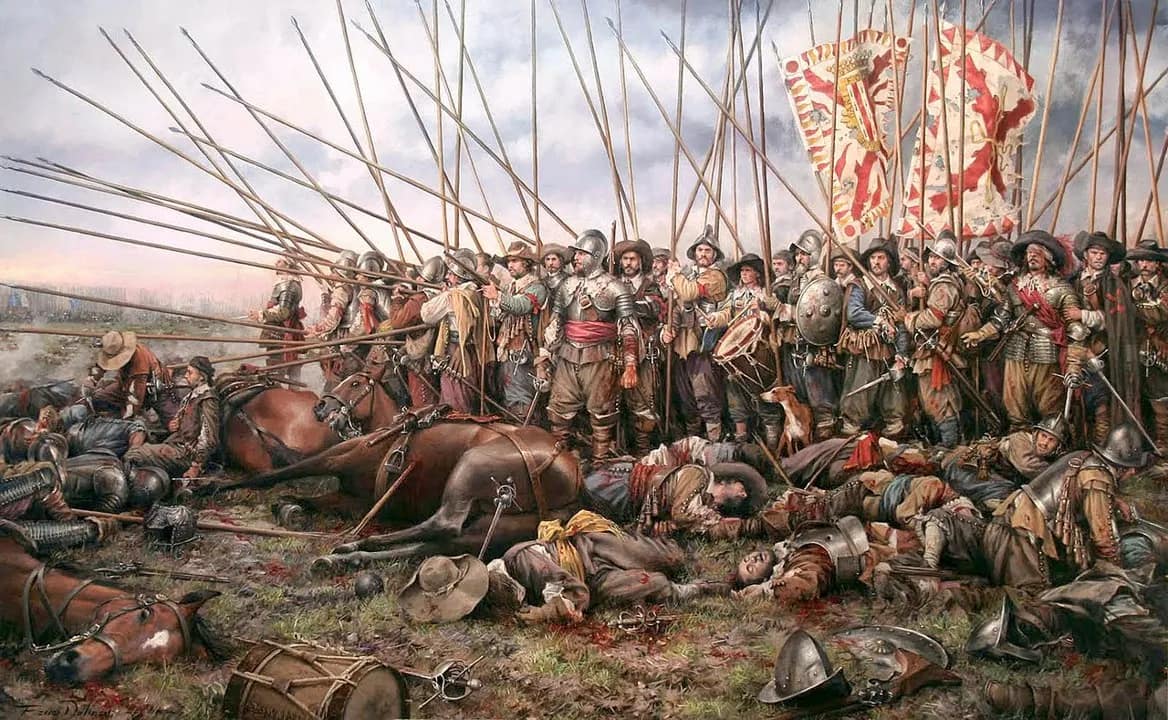
The Battle of Rocroi (1643) — the anchor study for this collection — marked a turning point late in the conflict. Fought at the edges of the war’s timeline, Rocroi exemplified the maturing of early modern line tactics, the resilience of tercios under pressure, and the decisive impact of disciplined cavalry action on open rolling terrain.
This battlefield collection explores how terrain, logistics, fortifications and early modern doctrine interacted across three decades of conflict — revealing how the landscape shaped some of Europe’s most consequential battles.
Battle Studies in the Thirty Years War
Below are all current BattlefieldTravels studies for the Thirty Years War, covering key battles, campaign phases and associated sites. New studies are added as further battlefields are walked and analysed.
Next stop in our battlefield explorations was the incredible 16th-Century bastion fortress of Rocroi. Here, in May 1643, two of the superpowers of the 17th century – Spain and France – clashed in the plain south of the fortress. The battle marked the end of the dominance of the Spanish ‘Tercio’ tactics that had dominated…
Over thousands of years of warfare, armies have sought ways to gain advantage on the battlefield. Sometimes the solution was a new weapon. Sometimes it was a radical new method. Often it was a combination of both. From the disciplined ranks of the Greek phalanx to pike-and-shot warfare to the interlocking machine-gun fire plans of the twentieth century, tactical innovations have repeatedly reshaped how battles are fought.
The widespread adoption of firearms by European armies created a new tactical dilemma. The previously invulnerable pike formations were now extremely vulnerable to gunpowder weapons, while the musketeers remained vulnerable to enemy cavalry. What was needed was a combined-arms system in which the relative advantages of the musket, pike, cavalry, and artillery could cover each…
Authored by Mick Prictor, a retired military officer with 40 years’ service, and a military historian specialising in terrain-focused analysis of tactics, doctrine, and command decision-making in land warfare. His work draws on extensive battlefield fieldwork—more than 280 sites worldwide—and one of the world’s largest private collections of historic military arms, uniforms, and equipment. About me
⚔️ Go deeper — Members get exclusive access to the Deep Research Collection, Field Notes, and monthly Research Dispatches. Try membership free for 7 days, cancel anytime. From $9/month.
Why was terrain so important in the Thirty Years War?
Armies were limited by supply lines and road networks, and battles often hinged on control of villages, hills, marshes and river crossings.
Why begin with Rocroi?
Rocroi is a major battle from the war’s final phase and demonstrates mature early modern tactics and terrain-driven manoeuvre.
Will more Thirty Years War studies be added?
Yes. Future studies may include Lützen, Breitenfeld, Nördlingen and White Mountain.
Subscribe to Battlefield Travels and receive a free E-Book Battlefield Guide
Unlock expert battlefield analysis, campaign reconstructions, and historical insights drawn from firsthand exploration and primary sources.
🗺️ You’ll receive:
🎖️ Exclusive historical insights you won’t find elsewhere
📘 A free eBook: 10 Tips for Exploring Historic Battlefields
📰 New battlefield studies straight to your inbox as they are published
Claim Your Free Battlefield Travel Guide
Get your free e-book, exclusive tips, and updates on new battlefield studies.
Thank you!
You have successfully joined our subscriber list.
⚔️ Go deeper — Members get exclusive access to the Deep Research Collection, Field Notes, and monthly Research Dispatches. Try membership free for 7 days, cancel anytime. From $9/month.
Reconstructing the battlefields of the Spanish conquest of the New World through terrain analysis, primary sources and on-site research
Spanish conquest of the New World. The Capture of Atahualpa in Cajamarca (Battle of Cajamarca) 1532, by Juan Lepiani.
Walking the battlefields of the Spanish Conquest of the New World
The Spanish conquest of the New World was not a single campaign, but a series of dramatic encounters, alliances, rebellions and military expeditions that unfolded across the Caribbean, Mexico, Central America and the Andes. Between the late 15th and mid-16th centuries, Spanish conquistadors, Indigenous allies, rival polities and powerful empires fought across forests, high plains, volcanic valleys and some of the world’s most extreme mountain landscapes. The resulting conflicts reshaped entire civilisations, while leaving behind battlefields — from the Valley of Mexico to the Peruvian Andes — whose terrain still reveals much about how these campaigns were fought.
Mesoamerica – Aztec Empire and Mayans
In Mesoamerica, the encounter between Hernán Cortés and the Aztec Empire set the tone for conquest warfare: shifting alliances, internal rivalries, and the decisive influence of geography and urban fortification. The march on Tenochtitlan was shaped by lake systems, causeways and densely built cityscapes that produced sieges, street fighting and amphibious operations unlike anything encountered in Europe.
Peru – the Inca Empire
Further south, the campaigns against the Inca Empire were fought across some of the most formidable terrain in the world. The Andes offered high-altitude strongholds, narrow defiles, steep agricultural terraces and road systems that favoured defence and rapid movement by local forces. Battles and sieges — including the Siege of Cusco, where Spanish and Indigenous allies held the city against overwhelming Inca counterattacks, and the defence of Ollantaytambo, where Inca forces under Manco Inca used terraces, fields, stone fortresses and diverted river waters to halt the Spanish — reveal how terrain and Indigenous tactical adaptation shaped every phase of the conflict.
Final campaigns
The final campaigns of the conquest pushed deep into remote valleys, jungle fringes and isolated highland enclaves as the last Inca resistance under Vilcabamba shifted to guerrilla warfare, ambushes and fortified refuges. By the 1570s, Spanish rule had extended across the former Inca heartlands, but resistance, cultural survival and Indigenous agency continued in complex forms.
This collection of battlefield studies examines these campaigns through archaeological evidence, Indigenous accounts, Spanish chronicles and modern field reconnaissance — revealing not only what happened during the conquest, but how the landscapes of the New World shaped the encounter between empires.
Spanish Conquest of the New World – Battlefield Studies
In-depth battlefield analyses based on terrain, primary sources, and on-the-ground exploration.
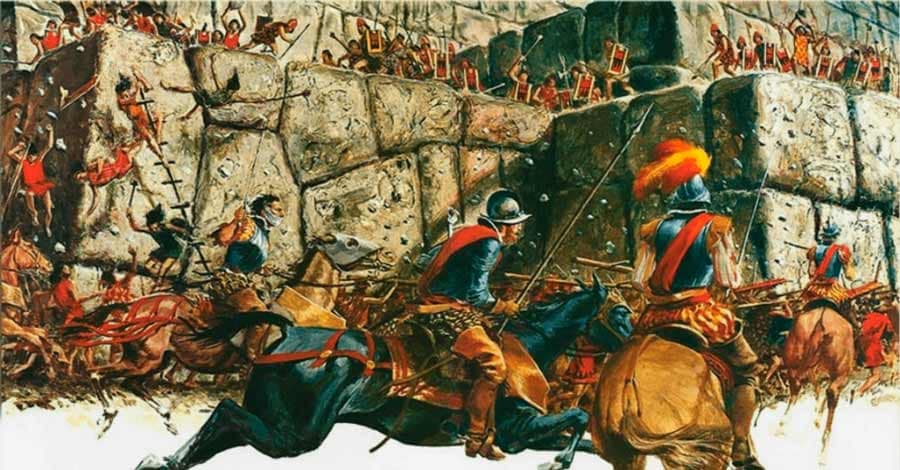
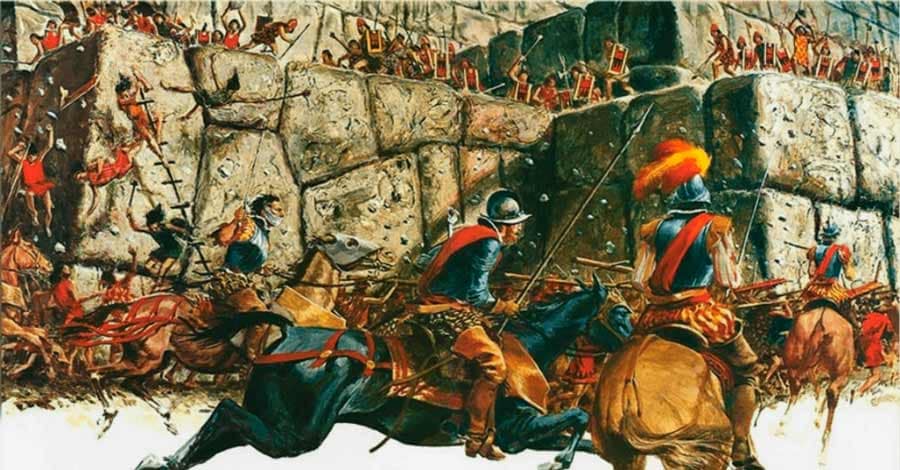
The Battle of Sacsayhuamán was a significant milestone in the Spanish conquest of the Inca Empire. While the Inca warriors demonstrated bravery and tenacity, they were unable to overcome the superior weaponry and tactics of the Spanish conquistadors. The Spanish victory at Sacsayhuamán ended the Inca attempt to reclaim Cusco.
February 2020, Ollantaytambo, Sacred Valley, Peru. I am exploring the site of a 1537 battle between Manco Inca’s indigenous forces and the Spanish Conquistadors under Hernando Pizarro. Part of the Spanish conquest of the New World.
Over thousands of years of warfare, armies have sought ways to gain advantage on the battlefield. Sometimes the solution was a new weapon. Sometimes it was a radical new method. Often it was a combination of both. From the disciplined ranks of the Greek phalanx to pike-and-shot warfare to the interlocking machine-gun fire plans of the twentieth century, tactical innovations have repeatedly reshaped how battles are fought.
The widespread adoption of firearms by European armies created a new tactical dilemma. The previously invulnerable pike formations were now extremely vulnerable to gunpowder weapons, while the musketeers remained vulnerable to enemy cavalry. What was needed was a combined-arms system in which the relative advantages of the musket, pike, cavalry, and artillery could cover each…
Authored by Mick Prictor, a retired military officer with 40 years’ service, and a military historian specialising in terrain-focused analysis of tactics, doctrine, and command decision-making in land warfare. His work draws on extensive battlefield fieldwork—more than 280 sites worldwide—and one of the world’s largest private collections of historic military arms, uniforms, and equipment. About me
⚔️ Go deeper — Members get exclusive access to the Deep Research Collection, Field Notes, and monthly Research Dispatches. Try membership free for 7 days, cancel anytime. From $9/month.
What periods and regions are covered in the Spanish Conquest collection?
The collection spans campaigns in Mesoamerica and the Andes between 1492 and 1572, including Aztec, Maya and Inca conflicts.
Which battlefields are included or planned?
Published studies include the Siege of Cusco, with forthcoming articles on Ollantaytambo and other key engagements across the Inca heartlands and the wider conquest.
Why is terrain so important in understanding the Spanish Conquest?
Battles were fought across extreme landscapes — high mountains, narrow valleys, fortified terraced sites and vast urban centres — all of which shaped tactics, movement and the outcomes of sieges and engagements.
How do Indigenous sources inform these studies?
Accounts from Inca, Aztec and other Indigenous peoples provide essential perspectives on alliances, resistance strategies and local knowledge of terrain.
Can these historic sites still be visited today?
Yes. Many — including Cusco, Ollantaytambo and other Andean fortresses — retain significant archaeological features and landscape continuity.
Subscribe to Battlefield Travels and receive a free E-Book Battlefield Guide
Unlock expert battlefield analysis, campaign reconstructions, and historical insights drawn from firsthand exploration and primary sources.
🗺️ You’ll receive:
🎖️ Exclusive historical insights you won’t find elsewhere
📘 A free eBook: 10 Tips for Exploring Historic Battlefields
📰 New battlefield studies straight to your inbox as they are published
Claim Your Free Battlefield Travel Guide
Get your free e-book, exclusive tips, and updates on new battlefield studies.
Thank you!
You have successfully joined our subscriber list.
⚔️ Go deeper — Members get exclusive access to the Deep Research Collection, Field Notes, and monthly Research Dispatches. Try membership free for 7 days, cancel anytime. From $9/month.
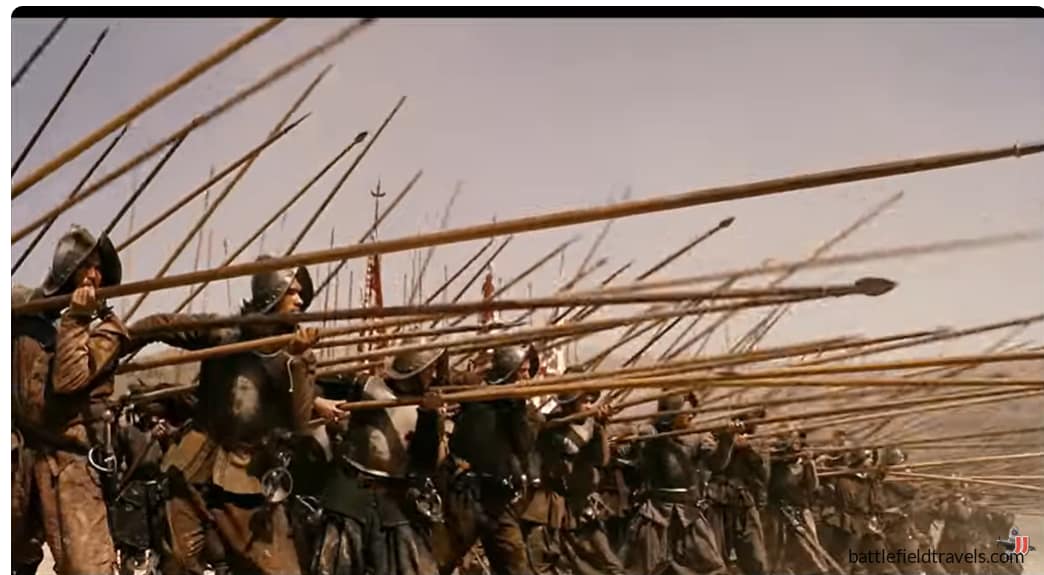
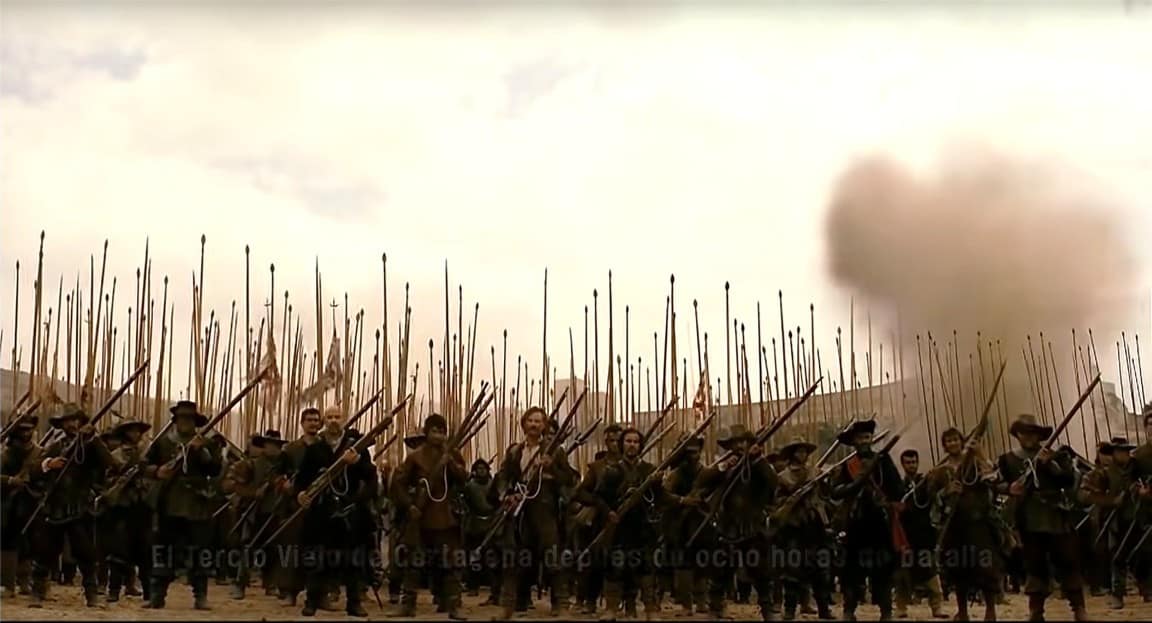
Thirty Years War – The Battle of Rocroi, 19 May 1643. Scene from the 2006 movie ‘Alatriste’
Understanding Europe’s defining early-modern conflict through its historians
The Thirty Years’ War has attracted some of the richest and most contested scholarship in early-modern military history. Because the conflict spans religion, politics, dynastic ambition, state formation, and military revolution, no single narrative can fully capture its complexity. Instead, historians have approached the war through multiple lenses — confessional conflict, geopolitical rivalry, fiscal-military pressures, and the evolution of tactics and command — creating a diverse literature that rewards careful reading.
Modern understanding of the war owes much to the work of historians such as Geoffrey Parker, Peter Wilson, C. V. Wedgwood, and Günther Franz. Wedgwood’s The Thirty Years War remains a highly readable classic, notable for its narrative sweep and human focus. Parker’s contributions, especially on the “military revolution” thesis, explore how gunpowder, fortifications, logistics and state capacity shaped the conflict’s campaigns. Peter Wilson’s Europe’s Tragedy stands today as the most comprehensive single-volume study, synthesising political, social, and operational perspectives across the entire war.
Specialist works deepen this picture. Studies of Gustavus Adolphus and the Swedish army—by scholars such as Michael Roberts and William Guthrie—highlight reforms in drill, firepower, linear tactics, and combined arms. Others focus on the Imperial and Catholic League systems, exploring how commanders like Tilly and Wallenstein balanced recruitment, finance, and manoeuvre in a fragmented political landscape. Research into the socioeconomic impact of the war, including depopulation, famine and the burdens of billeting, has reshaped understanding of how early-modern armies operated and endured.
For readers exploring the battles themselves, the Thirty Years’ War offers fertile ground for comparing doctrine, organisation and the influence of terrain—from the wooded ridges at Lützen to the fortified towns of the Rhineland and the open manoeuvre spaces of northern Germany. The literature gathered here provides both entry points and advanced studies, helping readers engage with one of Europe’s most transformative and devastating conflicts.
The Amazon links on the Reading Room pages are powered by AAWP
Reading
The reference collection below includes the key books and references I have used in preparing for and undertaking studies of battlefields of the Thirty Years War.
A deadly continental struggle, the Thirty Years War devastated seventeenth-century Europe, killing nearly a quarter of all Germans and laying waste to towns and countryside alike. Peter Wilson offers the first new history in a generation of a horrifying conflict that transformed the map of the modern world.When defiant Bohemians tossed the Habsburg emperor’s envoys from the castle windows in Prague in 1618, the Holy Roman Empire struck back with a vengeance. Bohemia was ravaged by mercenary troops in the first battle of a conflagration that would engulf Europe from Spain to Sweden. The sweeping narrative encompasses dramatic events and unforgettable individuals—the sack of Magdeburg; the Dutch revolt; the Swedish militant king Gustavus Adolphus; the imperial generals, opportunistic Wallenstein and pious Tilly; and crafty diplomat Cardinal Richelieu. In a major reassessment, Wilson argues that religion was not the catalyst, but one element in a lethal stew of political, social, and dynastic forces that fed the conflict.By war’s end a recognizably modern Europe had been created, but at what price? The Thirty Years War condemned the Germans to two centuries of internal division and international impotence and became a benchmark of brutality for centuries. As late as the 1960s, Germans placed it ahead of both world wars and the Black Death as their country’s greatest disaster.An understanding of the Thirty Years War is essential to comprehending modern European history. Wilson’s masterful book will stand as the definitive account of this epic conflict.
The conflict, personal rivalry and contrast in personality, generalship and command, between the two iconic commanders in the Thirty Years War, King Gustavus Adolphus of Sweden for the Protestant powers, and Albrecht von Wallenstein, Duke of Friedland. More than just commanders at the tactical level they were statesmen, military organizers and strategists on a continental scale. Both commanders represented the 17th-century ‘military revolution in action’. The writing is vivid, graphic and detailed, without overloading, and readers can feel ‘involved’ in the action, from strategic planning to battlefield tactics, and even the melee. Both generals are titanic figures come, and their respective deaths – Gustavus heroically in battle and Wallenstein, murdered with the Emperor’s compliance – were dramatic highpoints in the long war. This is no hagiography, and the author analyses the contrasting reputations of two of the greatest military figures in modern history and analyses mistakes as well their triumphs.
Fought on 19 May 1643 between the French army of the Duc d’Enghien and the Spanish army under Francisco de Melo, Rocroi is probably one of the most controversial battles in the long period of conflict between the kingdoms of France and Spain. The numerous sources, be they official accounts, memoirs, or correspondence, most often contradict each other.
The principal controversy of this battle, far from being anecdotal, concerns the French right flank, placed under the direct command of Louis II de Bourbon, the Duc d’Enghien. The version generally accepted by historians of French sources affirms that the cavalry of Gassion overthrew and quickly pushed back the first Spanish companies, eventually defeating them. However, Spanish sources, defended by historians beyond the Pyrenees, contend that the cavalry of the Duc d’Albuquerque, opposing that of Gassion and Enghien, broke through the squadrons and two infantry regiments of the French advanced guard on two occasions! Thus, there exist today two battles of Rocroi: the one found in Spanish works and the one found in numerous French works.
Authored by Mick Prictor, a retired military officer with 40 years’ service, and a military historian specialising in terrain-focused analysis of tactics, doctrine, and command decision-making in land warfare. His work draws on extensive battlefield fieldwork—more than 280 sites worldwide—and one of the world’s largest private collections of historic military arms, uniforms, and equipment. About me
What are the best introductory books on the Thirty Years’ War?
Excellent entry points include C. V. Wedgwood’s classic The Thirty Years War and Peter Wilson’s comprehensive Europe’s Tragedy. Both provide broad context, clear campaigning narratives and strong overviews of the political and religious dynamics.
Which modern historians offer the most authoritative analysis?
Which modern historians offer the most authoritative analysis?
Why do historians disagree about the causes of the Thirty Years’ War?
Interpretations differ because the war intersects religion, dynastic rivalry, territorial ambition and the balance of power in early-modern Europe. Historians place varying emphasis on these factors, resulting in differing explanations for why the conflict escalated and endured.
How did Gustavus Adolphus influence military development?
Gustavus Adolphus introduced reforms in drill, firepower, linear tactics and combined arms that gave Sweden temporary battlefield superiority. Historians debate the extent of his innovations, but most agree that his approach accelerated changes in early-modern warfare.
How reliable are contemporary sources for studying the Thirty Years’ War?
Many contemporary accounts are partisan or limited in scope. Modern historians cross-reference chronicles with administrative records, correspondence, archaeological evidence and logistical data to produce more accurate interpretations of campaigns and command decisions.
Subscribe to Battlefield Travels and receive a free E-Book Battlefield Guide
Unlock expert battlefield analysis, campaign reconstructions, and historical insights drawn from firsthand exploration and primary sources.
🗺️ You’ll receive:
🎖️ Exclusive historical insights you won’t find elsewhere
📘 A free eBook: 10 Tips for Exploring Historic Battlefields
📰 New battlefield studies straight to your inbox as they are published
Claim Your Free Battlefield Travel Guide
Get your free e-book, exclusive tips, and updates on new battlefield studies.
Thank you!
You have successfully joined our subscriber list.
⚔️ Go deeper — Members get exclusive access to the Deep Research Collection, Field Notes, and monthly Research Dispatches. Try membership free for 7 days, cancel anytime. From $9/month.
Selected works on the Spanish Conquest of the New World
The Spanish Conquest of the New World – The Famous Thirteen by Juan Lepiani 1536
Overview of the Spanish Conquest of the New World
The Spanish Conquest of the New World was one of history’s most rapid and transformative military campaigns. Following Columbus’s first voyage in 1492, successive expeditions under conquistadors such as Hernán Cortés and Francisco Pizarro extended Spanish authority across the Caribbean, Mexico, and South America. Driven by a fusion of royal ambition, personal enrichment, and religious zeal, the conquistadors combined Renaissance military organisation, seafaring skill, and firearms with indigenous alliances and ruthless opportunism.
In 1519, Cortés landed in Mexico with fewer than six hundred men, forging a coalition of discontented tribes to overthrow the Aztec Empire at Tenochtitlán by 1521. Pizarro’s capture of the Inca ruler Atahualpa at Cajamarca in 1532 and his defeat of Manco Inca’s rebellion repeated the pattern on an even grander scale. Steel weapons, horses, and cannon provided tactical advantage, but disease, political division, and calculated diplomacy were equally decisive.
By the 1570s, Spanish rule extended from northern Mexico to Chile, supported by a colonial bureaucracy and missionary infrastructure. The conquests redefined global power, transferring vast wealth to Europe and initiating centuries of demographic and cultural change. Yet they also generated enduring debate over the morality of empire and the destruction of indigenous civilisations. The Spanish Conquest remains a study in audacity, logistics, and asymmetric warfare at the dawn of the modern world.
The Amazon links on the Reading Room pages are powered by AAWP
Reading
The reference collection below includes the key books and references I have used in preparing for and undertaking studies of battlefields in the New World.
For the Incas, death didn’t exist; it simply took the dead to a different plane of life. So, the mummies of their emperors were treated as people; they were given food and drink and even visited each other ceremoniously. They also owned country estates, which generated enough profits to keep them in the style to which they were accustomed.
This might sound like a curiosity, but this form of ancestor worship was central to the Inca culture and to the history of the Inca Empire, which stretched from Ecuador and Colombia in the north to Chile in the south.
Everyone has seen pictures of one of the Incas’ greatest achievements: the mountain-top wonder of Machu Picchu. But Inca history has always been told by the Spanish colonizers who conquered them since the Inca had no formal writing. Now, archaeology is giving us more information on how the Inca really lived, helping us differentiate real history from myth and propaganda.
In this book, you will discover how the Inca created an expansive empire in just a century and why that civilization crumbled so fast once the Spanish arrived.
You’ll also discover the following:
How the Inca civilization developed out of a number of preceding cultures in the Andes and Peruvian coast;
How quickly the Incas were able to expand and why they needed to;
How the empire was administered and how runners were able to take messages from one end of it to the other with remarkable speed;
The amazing Inca infrastructure program, which included building roads through mountain ranges and across raging rivers;
Why Inca cuisine included tasty guinea pigs and llama jerky;
Why there were never more than a few thousand actual Inca in the Inca Empire;
The religion and beliefs of the Inca and how they developed over time to support the empire’s mission;
How just a couple of hundred Spanish adventurers managed to conquer and subdue the Inca Empire;
How much Inca culture is left in Peru and Bolivia today;
And so much more!
Scroll up and click the “add to cart” button to learn more about the fascinating Inca Empire!
A special illustrated edition of Hiram Bingham’s classic work captures all the magnificence and mystery of the amazing archeological sites he uncovered. Early in the 20th century, Bingham ventured into the wild and then unknown country of the Eastern Peruvian Andes–and in 1911 came upon the fabulous Inca city that made him famous: Machu Picchu. In the space of one short season he went on to discover two more lost cities, including Vitcos, where the last Incan Emperor was assassinated.
In 1532, the fifty-four-year-old Spanish conquistador Francisco Pizarro led a force of 167 men, including his four brothers, to the shores of Peru. Unbeknownst to the Spaniards, the Inca rulers of Peru had just fought a bloody civil war in which the emperor Atahualpa had defeated his brother Huascar. Pizarro and his men soon clashed with Atahualpa and a huge force of Inca warriors at the Battle of Cajamarca. Despite being outnumbered by more than two hundred to one, the Spaniards prevailed—due largely to their horses, their steel armor and swords, and their tactic of surprise. They captured and imprisoned Atahualpa. Although the Inca emperor paid an enormous ransom in gold, the Spaniards executed him anyway. The following year, the Spaniards seized the Inca capital of Cuzco, completing their conquest of the largest native empire the New World has ever known. Peru was now a Spanish colony, and the conquistadors were wealthy beyond their wildest dreams.
Authored by Mick Prictor, a retired military officer with 40 years’ service, and a military historian specialising in terrain-focused analysis of tactics, doctrine, and command decision-making in land warfare. His work draws on extensive battlefield fieldwork—more than 280 sites worldwide—and one of the world’s largest private collections of historic military arms, uniforms, and equipment. About me
How were the books in this Spanish Conquest of the New World reading list selected?
This reading list is curated to prioritise works that examine the Spanish conquests through primary sources, operational realities, and decision-making under unfamiliar conditions. Emphasis is placed on studies that address terrain, logistics, indigenous political structures, weapons, and command relationships, rather than purely triumphalist or legend-driven narratives.
Does this reading list focus only on famous figures such as Cortés and Pizarro?
While key commanders inevitably feature, the list also includes works that explore broader Spanish expeditionary methods, indigenous responses, coalition warfare, and the structural factors—terrain, disease, logistics, and local alliances—that shaped outcomes beyond individual leadership.
How important was terrain to the Spanish conquests?
Terrain was a decisive factor. Dense jungles, mountain passes, causeways, lakeside cities, and river systems shaped movement, communication, and combat. Many Spanish successes and failures can only be understood by examining how commanders interpreted and exploited unfamiliar terrain, often with indigenous guides and allies.
Are these books suitable for readers new to the subject?
The list includes a mix of accessible overviews and more specialised academic studies. Readers new to the topic may wish to begin with the general works before moving on to campaign- or region-specific titles.
Is this intended to be a complete bibliography of the Spanish conquests?
No. This is a selective reading list intended to guide serious study rather than provide exhaustive coverage. Additional works may be added as research perspectives evolve and new scholarship emerges.
Subscribe to Battlefield Travels and receive a free E-Book Battlefield Guide
Unlock expert battlefield analysis, campaign reconstructions, and historical insights drawn from firsthand exploration and primary sources.
🗺️ You’ll receive:
🎖️ Exclusive historical insights you won’t find elsewhere
📘 A free eBook: 10 Tips for Exploring Historic Battlefields
📰 New battlefield studies straight to your inbox as they are published
Claim Your Free Battlefield Travel Guide
Get your free e-book, exclusive tips, and updates on new battlefield studies.
Thank you!
You have successfully joined our subscriber list.
⚔️ Go deeper — Members get exclusive access to the Deep Research Collection, Field Notes, and monthly Research Dispatches. Try membership free for 7 days, cancel anytime. From $9/month.
The Battle of Sacsayhuamán was a significant milestone in the Spanish conquest of the Inca Empire. While the Inca warriors demonstrated bravery and tenacity, they were unable to overcome the superior weaponry and tactics of the Spanish conquistadors. The Spanish victory at Sacsayhuamán ended the Inca attempt to reclaim Cusco.
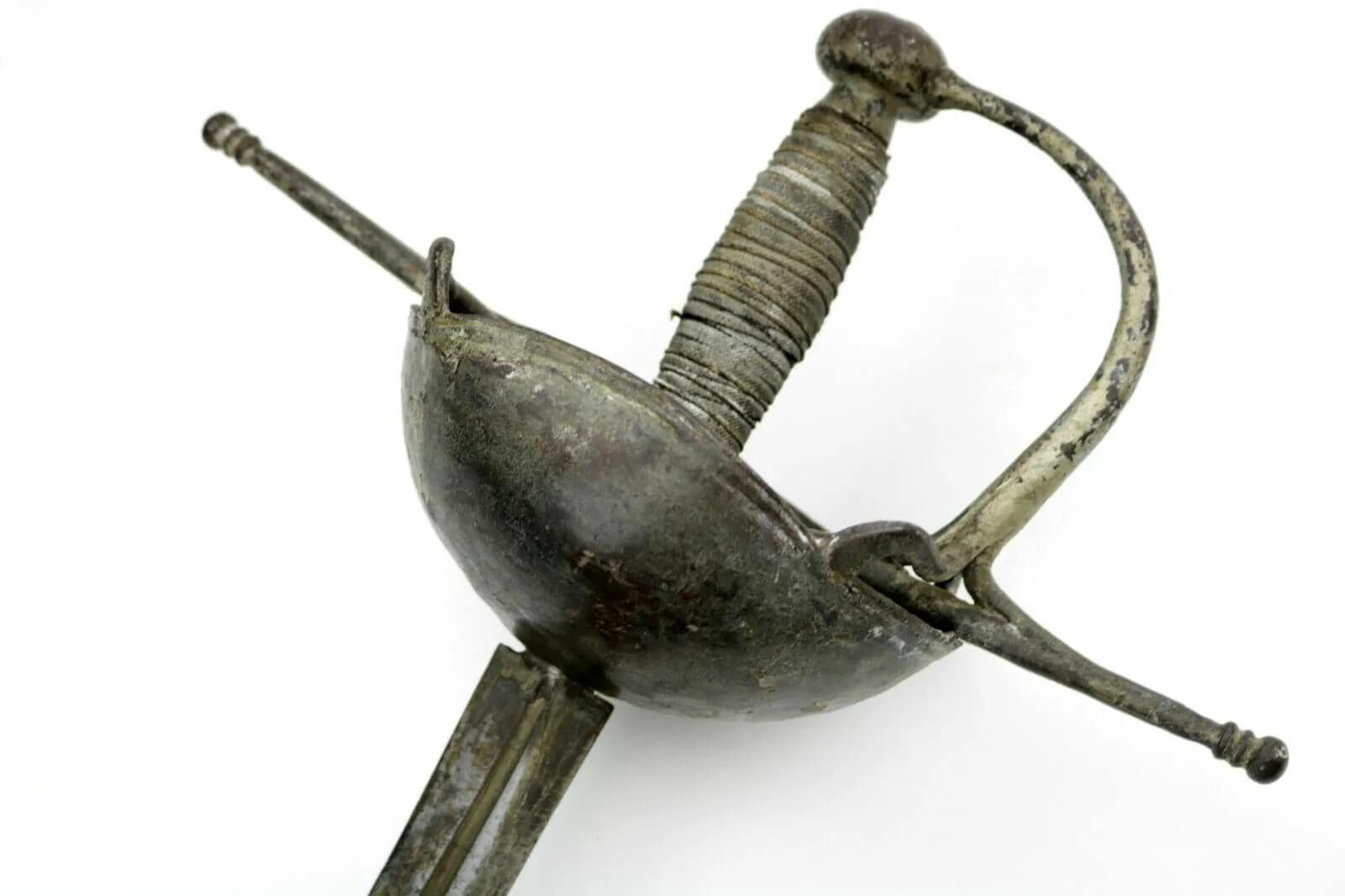
c. 1600 Spanish Bilbao Cup Hilt Rapier sword
Spanish conquest of the New World
The Spanish Conquest of the New World was one of history’s most rapid and transformative military campaigns. Following Columbus’s first voyage in 1492, successive expeditions under conquistadors such as Hernán Cortés and Francisco Pizarro extended Spanish authority across the Caribbean, Mexico, and South America. Driven by a fusion of royal ambition, personal enrichment, and religious zeal, the conquistadors combined Renaissance military organisation, seafaring skill, and firearms with indigenous alliances and ruthless opportunism.
In 1519, Cortés landed in Mexico with fewer than six hundred men, forging a coalition of discontented tribes to overthrow the Aztec Empire at Tenochtitlán by 1521. Pizarro’s capture of the Inca ruler Atahualpa at Cajamarca in 1532 and conquest of Peru repeated the pattern on an even grander scale. Steel weapons, horses, and cannon provided tactical advantage, but disease, political division, and calculated diplomacy were equally decisive.
By the 1570s, Spanish rule extended from northern Mexico to Chile, supported by a colonial bureaucracy and missionary infrastructure. The conquests redefined global power, transferring vast wealth to Europe and initiating centuries of demographic and cultural change. Yet they also generated enduring debate over the morality of empire and the destruction of indigenous civilisations. The Spanish Conquest remains a study in audacity, logistics, and asymmetric warfare at the dawn of the modern world.
Related Battle Studies, Museum Pieces & Reading Resources
c1600 Spanish Bilbao Cup-Hilt Rapier, from my personal collection.
This Spanish Bilbao cup-hilt rapier, dating to around 1600, represents one of the most refined thrusting swords of the late Renaissance. The deep, hemispherical guard—developed in the Basque port of Bilbao—offered excellent hand protection while allowing quick changes of line in rapier fencing. Typically fitted with a long, narrow blade optimised for thrusting, the Bilbao type became widely used in Spain and across its European and colonial territories. Its elegant balance and protective cup made it a favoured weapon among soldiers, officers, and gentlemen during the transition from medieval cut-and-thrust swords to early modern civilian duelling arms.
🧭 From Weapons to Battlefield Use
This page shows weapons and equipment of the Spanish Conquest. All items are from my personal collection.
But what images and data don’t show is how these weapons were actually used on the ground—how weapon characteristics, tactics, innovation, terrain, and movement shaped their effectiveness in battle.
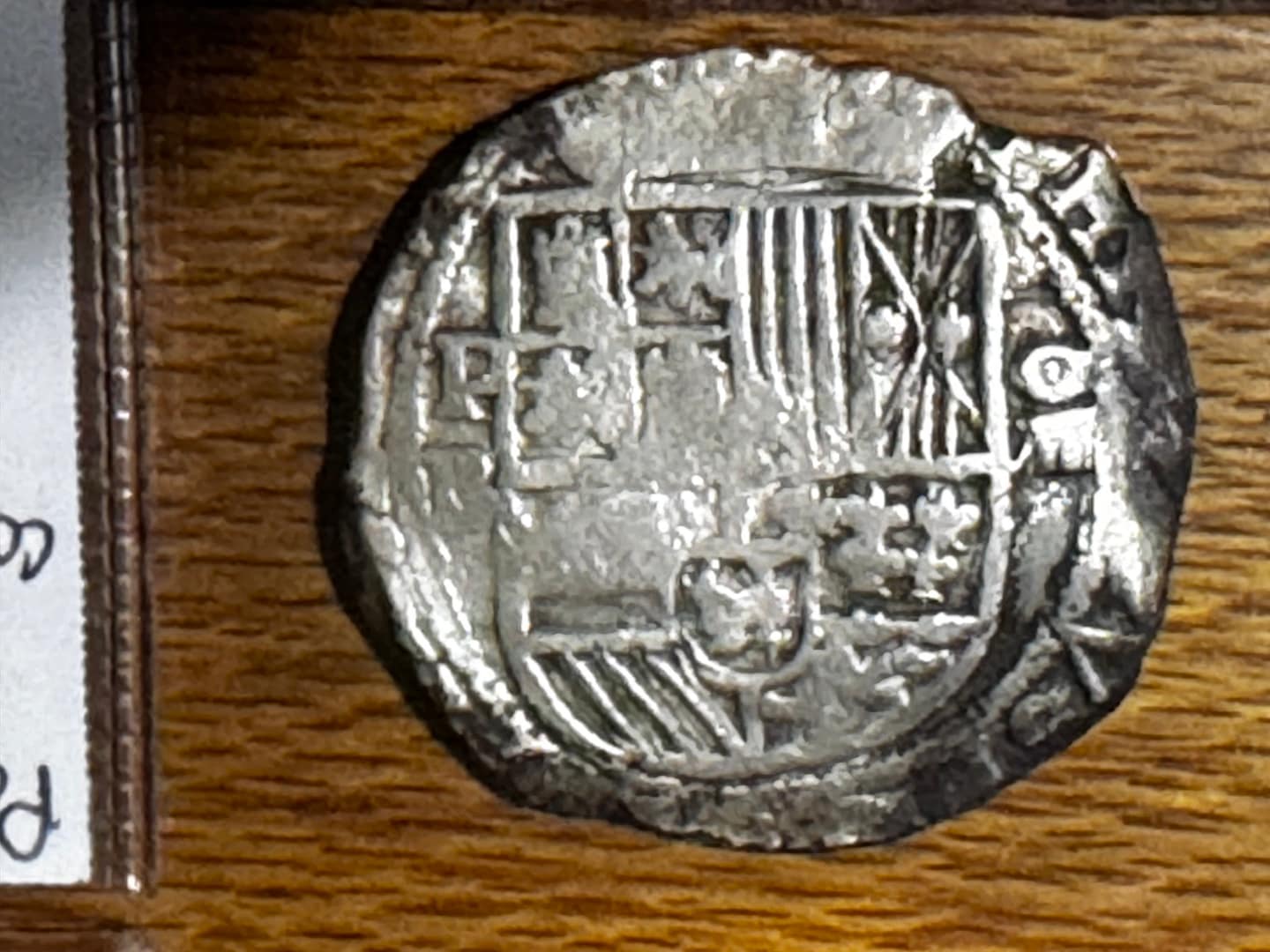
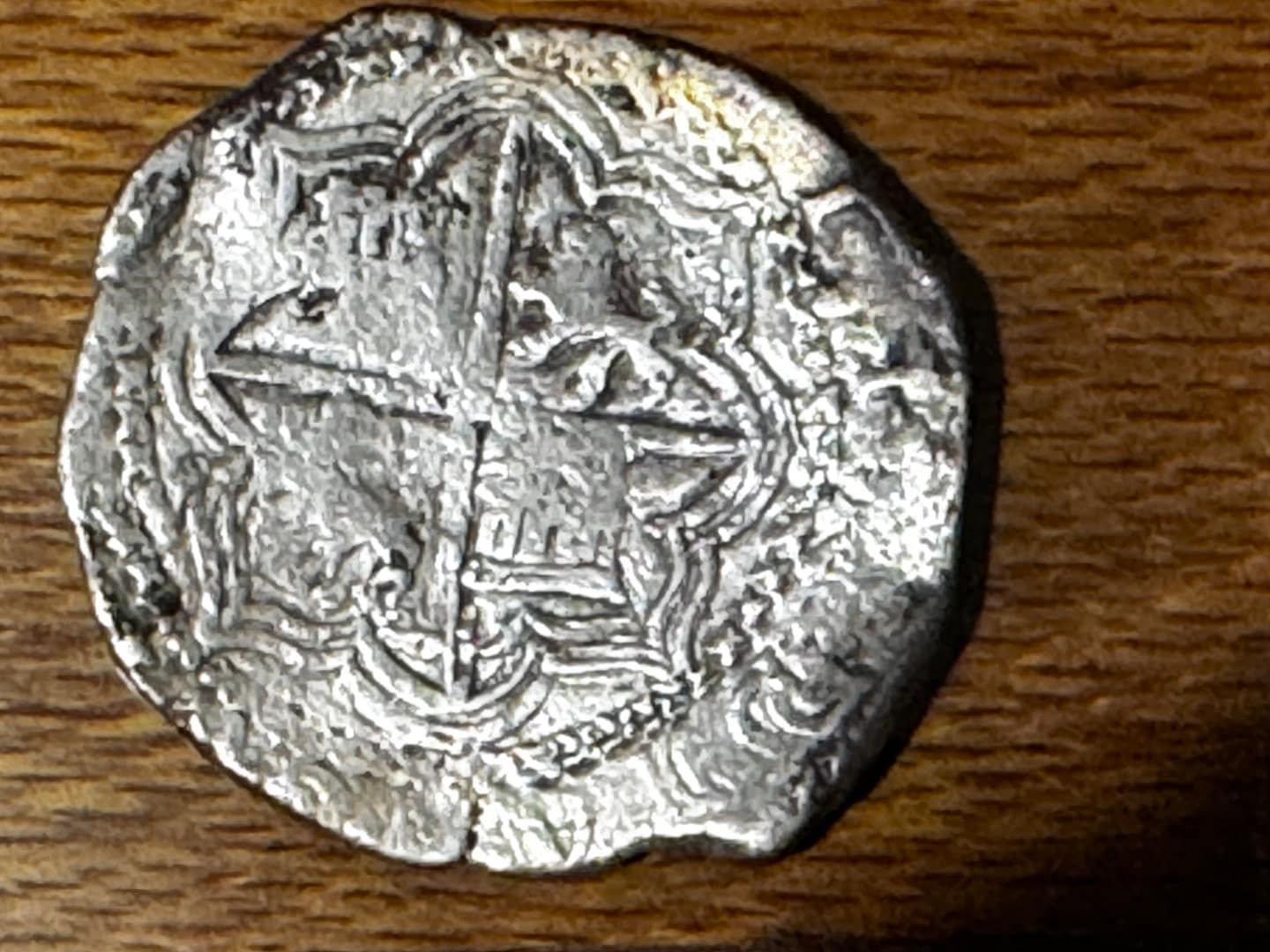
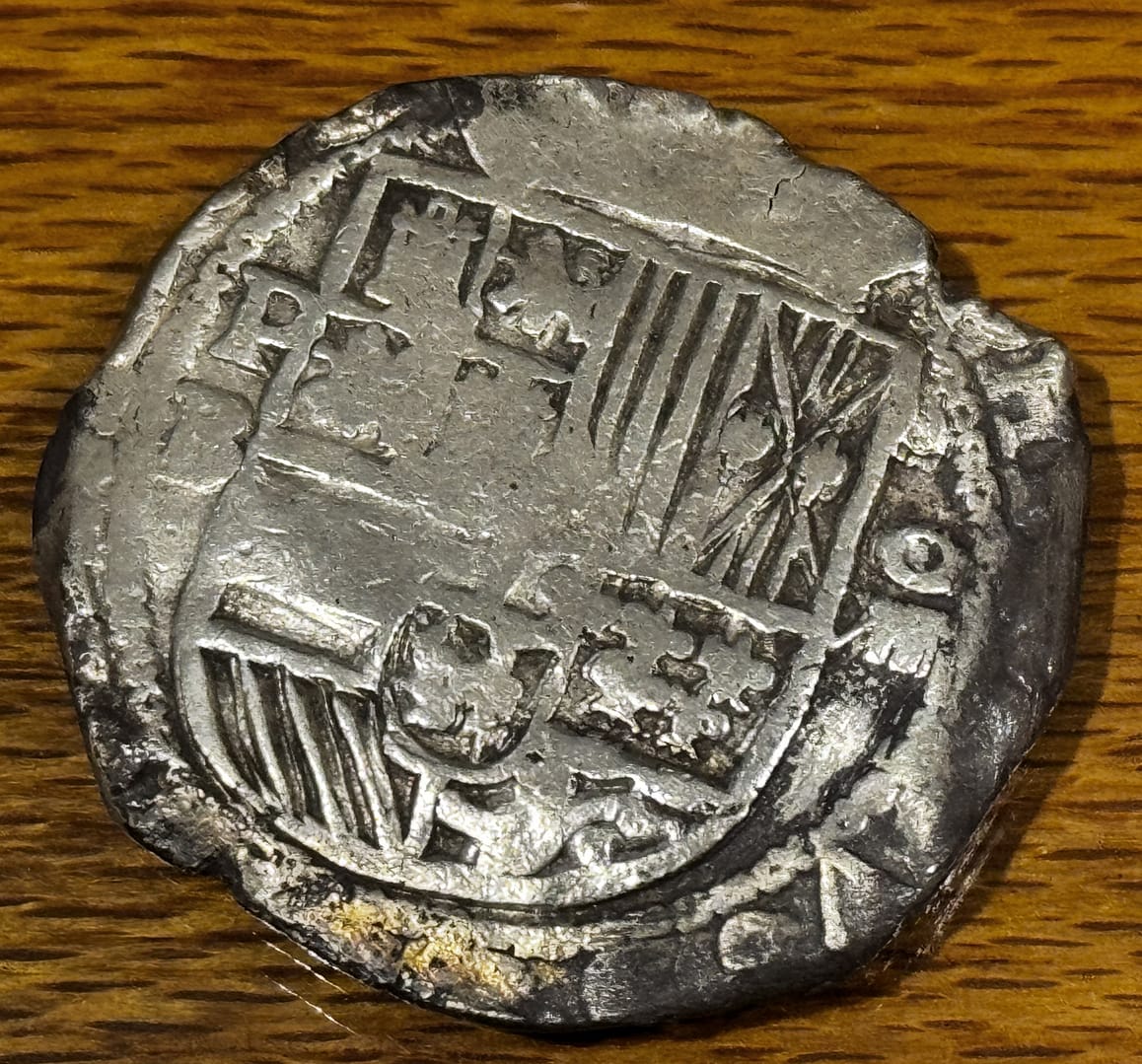
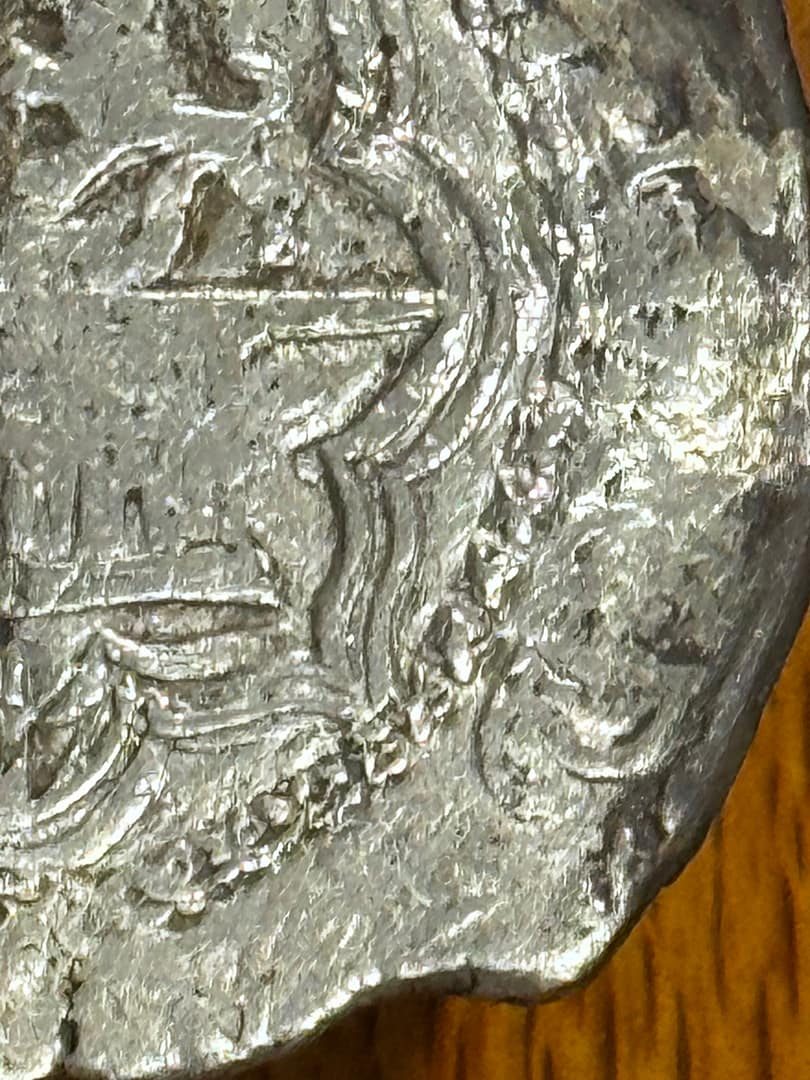
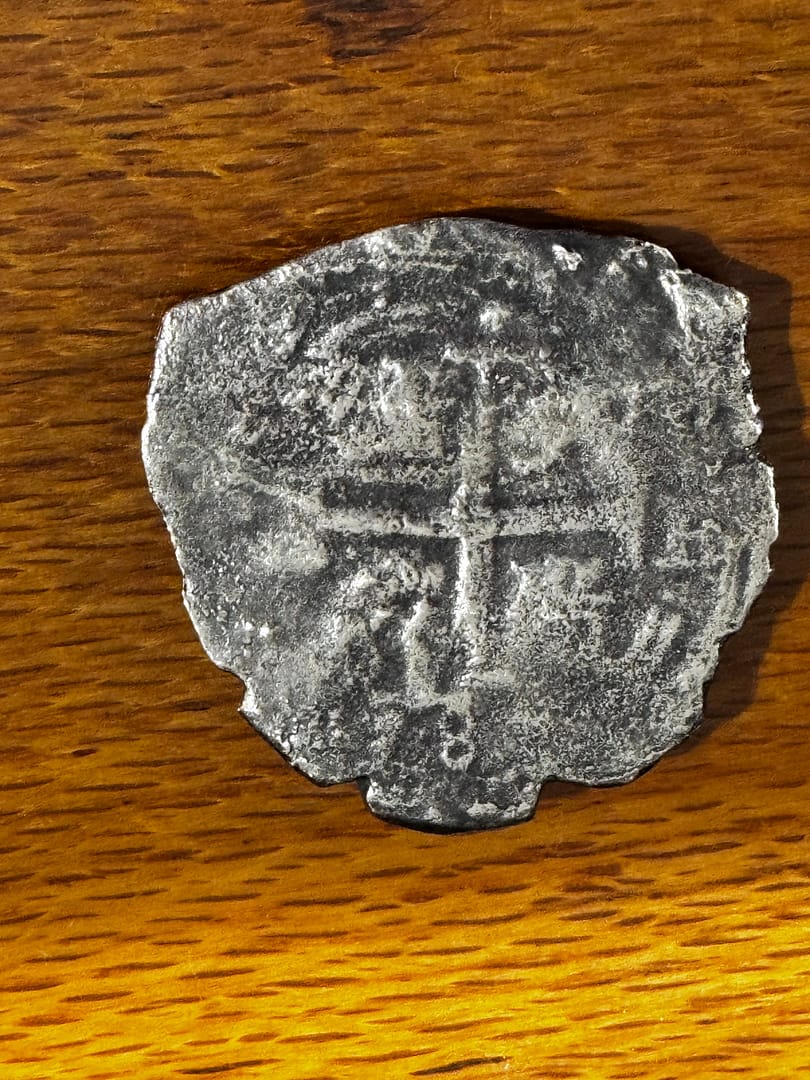
Spanish Colonial 8-Reale Cob ‘Piece-of-Eight’, Philip II, 1574-79, Potosi mint, Bolivia, from my personal collection
This 8-reale cob was struck at the Potosí mint between 1574 and 1579 under King Philip II of Spain. Produced from silver mined in the Cerro Rico, Potosí cobs were hammer-struck, irregularly shaped coins intended for high-value trade across the Spanish Empire. The obverse typically bears a simplified Habsburg shield, while the reverse shows a cross with quadrants representing the kingdoms of Castile and León. These early cobs circulated widely in Europe, the Americas, and Asia, forming a cornerstone of global commerce in the late 16th century.
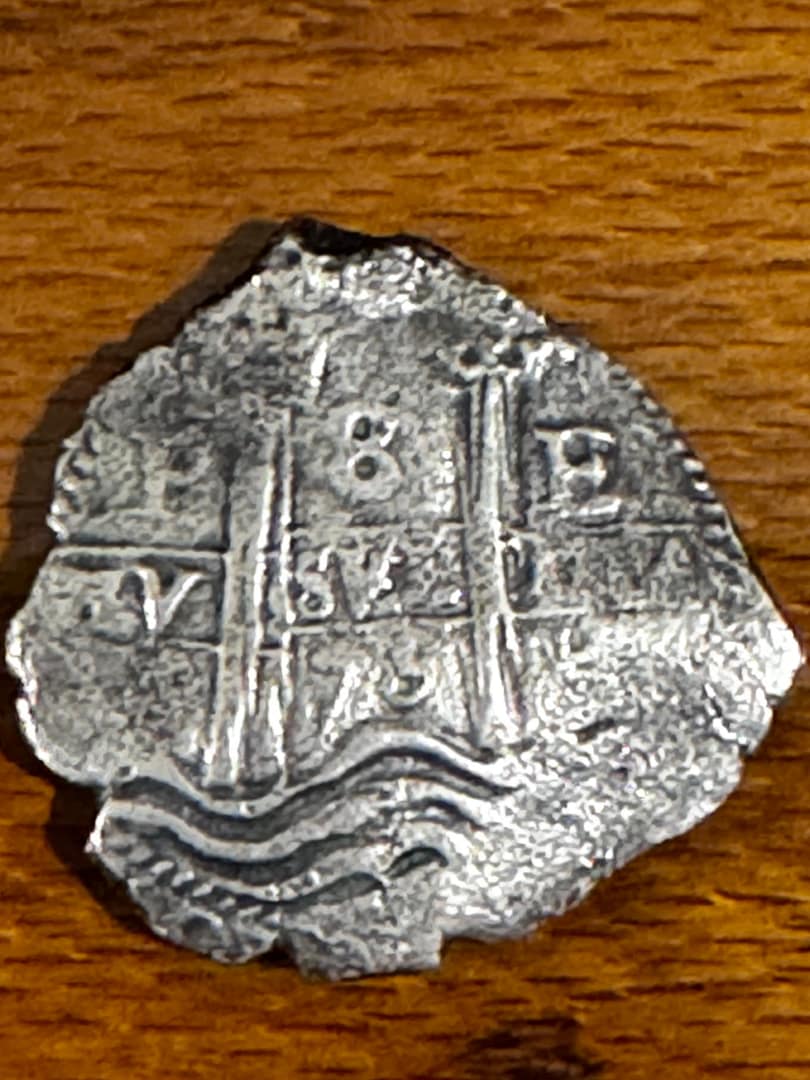
Spanish Colonial 8-Reale Cob ‘Piece-of-Eight’, 1679, Charles II, Potosi mint, Bolivia, from my personal collection.
This 8-reale cob was minted in 1679 at Potosí during the reign of Charles II, the last Habsburg king of Spain. Unlike modern machine-struck coins, cobs were cut from planchets and hammered by hand, resulting in their characteristic crude, asymmetrical form. The obverse displays the crowned Habsburg shield, while the reverse features a Jerusalem-style cross with mint marks and assayers’ initials. By the late 17th century, Potosí cobs served as an international currency, circulating in the Caribbean, North America, Europe, and particularly the Manila galleon trade linking Spanish America and Asia.
Found this useful? Buy me a coffee — it helps fund future battlefield research
Authored by Mick Prictor, a retired military officer with 40 years’ service, and a military historian specialising in terrain-focused analysis of tactics, doctrine, and command decision-making in land warfare. His work draws on extensive battlefield fieldwork—more than 280 sites worldwide—and one of the world’s largest private collections of historic military arms, uniforms, and equipment. About me
Subscribe to Battlefield Travels and receive a free E-Book Battlefield Guide
Unlock expert battlefield analysis, campaign reconstructions, and historical insights drawn from firsthand exploration and primary sources.
🗺️ You’ll receive:
🎖️ Exclusive historical insights you won’t find elsewhere
📘 A free eBook: 10 Tips for Exploring Historic Battlefields
📰 New battlefield studies straight to your inbox as they are published
Claim Your Free Battlefield Travel Guide
Get your free e-book, exclusive tips, and updates on new battlefield studies.
Thank you!
You have successfully joined our subscriber list.
⚔️ Go deeper — Members get exclusive access to the Deep Research Collection, Field Notes, and monthly Research Dispatches. Try membership free for 7 days, cancel anytime. From $9/month.