Overview of the conflict
The Franco-Prussian War was the decisive conflict that unified Germany and ended the French Second Empire. German Chancellor Otto von Bismarck’s manipulation of the Ems Dispatch in July 1870 provoked Napoleon III into declaring war on Prussia, and the campaign quickly exposed stark contrasts between the two military systems. Prussian-led armies under Moltke the Elder mobilised rapidly according to detailed General Staff plans, and enabled by a efficient railway system. By comparison, French mobilisation in 1870 was hampered by an incomplete reserve system, chaotic rail planning, and administrative confusion, resulting in delayed concentration and partially assembled field armies.
German forces advanced into Alsace and Lorraine in August, winning early victories on the frontier at Wissembourg, Spicheren, and Wörth. Marshal Bazaine’s army fell back to Metz where, despite desperate battles at Mars-la-Tour and Gravelotte, it was encircled. MacMahon’s attempt to relieve Bazaine ended in a decisive defeat at Sedan on 1 September, despite a brave stand by the Marines at Bazeilles. The capture of Emperor Napoleon III at Sedan led to the proclamation of the Third Republic, but the strategic situation could not be recovered. Paris was besieged through the winter, and the Treaty of Frankfurt in May 1871 confirmed German victory and the annexation of Alsace-Lorraine.
Small arms technology
The Franco-Prussian War of 1870-71 took place at a time of rapid technological development in firearms. The American Civil War, with both sides armed with minie-ball firing, muzzle-loading rifle-muskets, had ended only five years earlier. A variety of breech-loading and repeating weapons were introduced during the war, but they tended to be cavalry weapons or were concentrated in single regiments. Muzzle-loaders were the standard infantry weapon.
The Austro-Prussian War of 1866 had pitted an Austrian army armed with muzzle-loading rifle-muskets against a Prussian army armed with breech-loading Dreyse needle-rifles and trained in fluid tactics enabled by their breech-loaders. When Prussian and Austrian forces clashed at Jicin, Tratenau and Koniggratz, the Prussian infantry dominated with a loss exchange of around 5:1. The French learned from this conflict and rapidly introduced their own breech-loading rifle. My tactical innovations article covers this clash: The needle-gun revolution: Breech-loaders, Auftragstaktik, and the demise of the Storm Column
French forces were equipped with the Model 1866 Chassepot rifle, a bolt-action needle-fire weapon with superior range and velocity compared to the Prussian Dreyse rifle, allowing French infantry to engage effectively at ranges up to 1200 metres. Prussian infantry remained armed with the Dreyse needle-gun, one of the first practical bolt-action military rifles, but now effectively obsolete. The Bavarian Army, although mostly equipped with the obsolete Podewils conversion, also fielded the M1869 ‘Blitzgewehr’ Werder rifle, probably the best infantry small arm of the war.
Artillery and Mitrailleuse
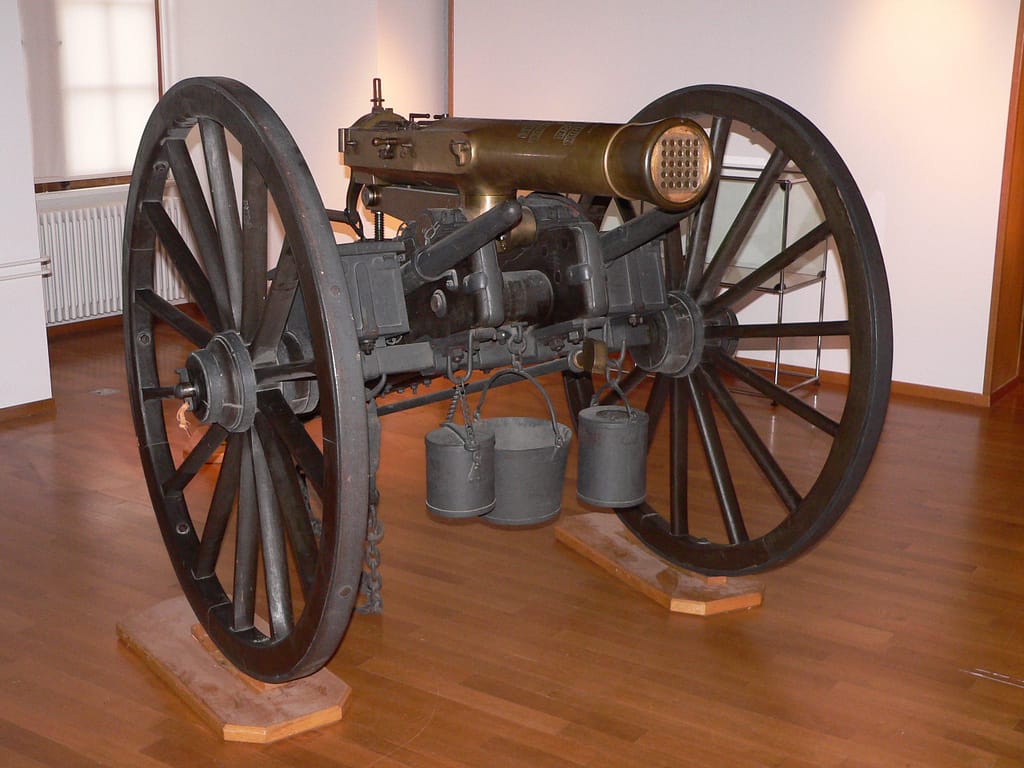
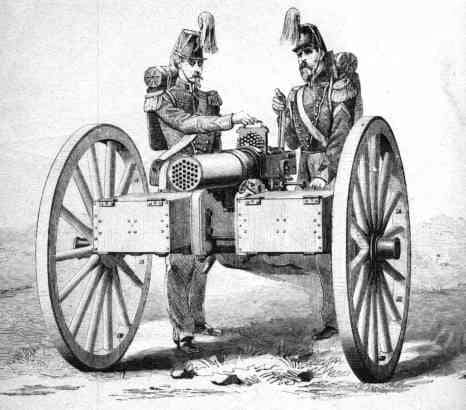
The technological balance shifted decisively in artillery. Prussian forces deployed steel breech-loading Krupp guns, which offered superior range, accuracy, and rate of fire compared to many French muzzle-loading pieces. France also introduced the Reffye mitrailleuse, one of the earliest rapid-fire weapons used in major warfare, capable of firing volleys at high rates, though its tactical employment proved uneven.
Together, these weapons illustrate a transitional battlefield where industrial production, mechanical innovation, and organisational effectiveness were beginning to shape modern warfare.
Franco-Prussian War technology spotlight

The Reffye Mitrailleuse was early form of machine gun. The French version was based on 25 x 13mm rifled barrels. The Mitrailleuse was loaded using pre-filled plates, and fired with a crank handle. Its maximum rate of fire was around 200-250 rounds per minute. The Mitrailleuse was extremely powerful and accurate, and the heavy 13mm projectiles would group tightly at 2,000+ metres to devastating effect. Unfortunately, the Prussian artillery was better and would specifically target the Mitrailleuse batteries.
👉 For historical context and battlefield studies, see → Franco-Prussian War Conflict Page
All artefacts shown are from my personal collection and photographed firsthand.
Related Battle Studies, Museum Pieces & Reading Resources
 🏛️ Anglo-Zulu War (1879) Weapons and Equipment
 🏛️ American Revolutionary War (1775–1783) Weapons and Equipment
 🏛️ Second Anglo-Afghan War (1879) Weapons and Equipment
 🏛️ Seven Years War (1756-1763 ) Weapons and Equipment
 ⚔️🔒Battle of Mars-la-Tour, France, 16 August 1870
 🏛️ War of the Austrian Succession (1740-48) Weapons and Equipment
Prussian Weapons of the Franco-Prussian War
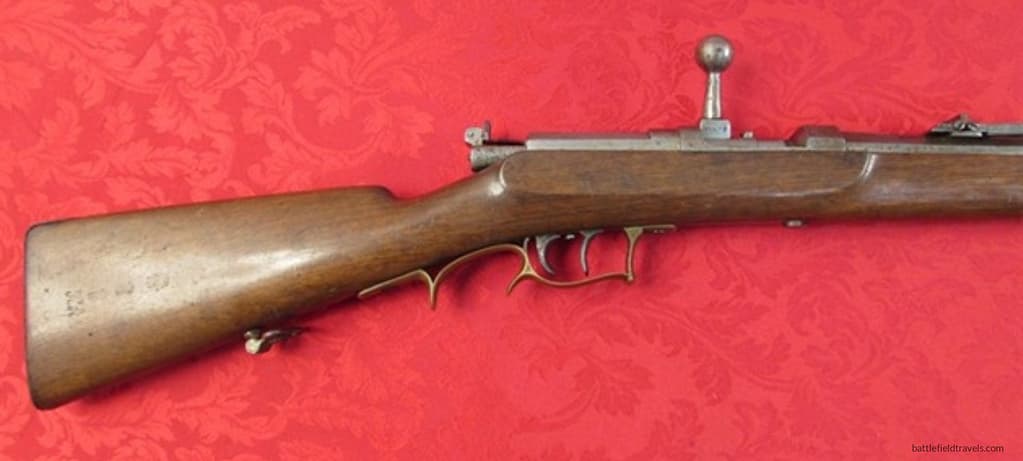
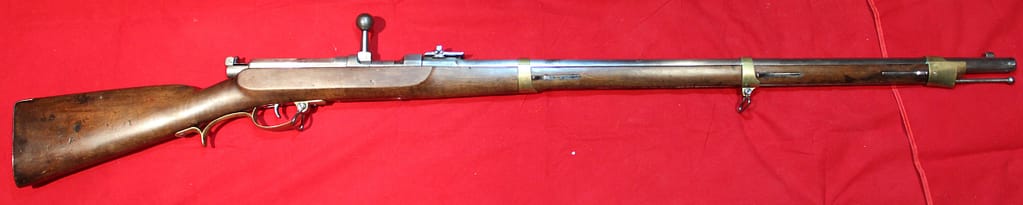
Model 1841 Dreyse Zundnadelgewher, needle-ignition rifle, 15.4mm caliber. From my personal collection.
The Model 1841 Dreyse needle rifle was the first successful bolt-action breechloader adopted by a major European army. Its paper cartridge and simple breech-loading mechanism allowed soldiers to load and fire while prone, dramatically increasing battlefield survivability.
In the hands of a trained soldier, the Dreyse coculd be fired ~five times per minute, even from behind cover, or lying or kneeling. By comparison, a typical muzzle-loading rifle-musket could be fired ~twice per minute, and teh firer had to be standing.
Although gas leakage reduced muzzle velocity and the needle required frequent replacement, its high rate of fire and ease of use provided a decisive advantage at Königgrätz in 1866. The Dreyse transformed Prussian infantry tactics and reshaped European small-arms development for decades.
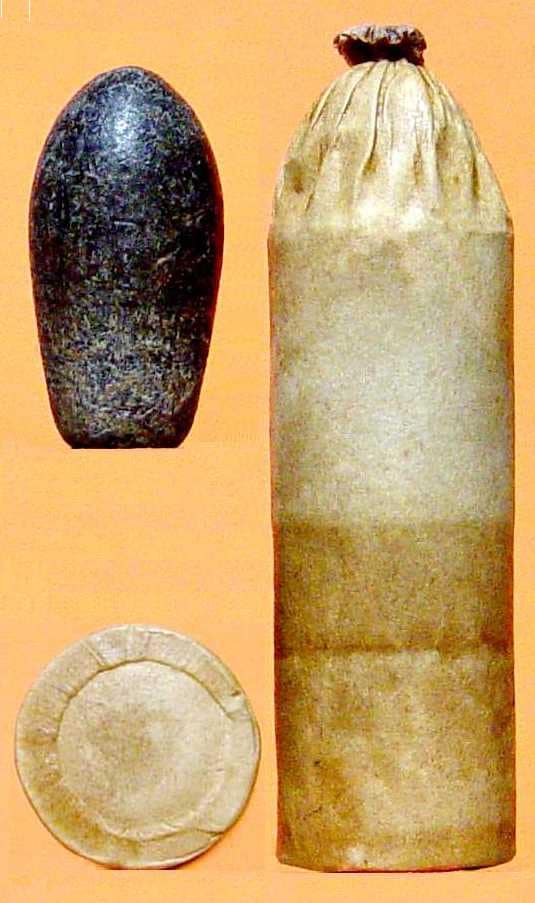
Weapon data
Caliber: 15.4mm
Cartridge: M1847 – 478 grain ovoid lead projectile in a papier-mache sabot with embedded primer, 75 grains of black powder, wrapped in a paper cartridge.
Action: Simple bolt action, locked by camming action against breech. Camming seals bolt face against conical breech
Rifling: Concentric 4-groove, .78mm deep and 6mm wide, right hand twist
Muzzle velocity: 295 metres per second
Maximum effective range (volley fire): 600 metres
Length: 1425mm
Barrel length: 907mm
Weight: 4.975KG
Sights: Visier 1847, Combined block and two leaf sight with battle sight for 200 metres, small leaf for 300 metres, and large leaf for 500 metres


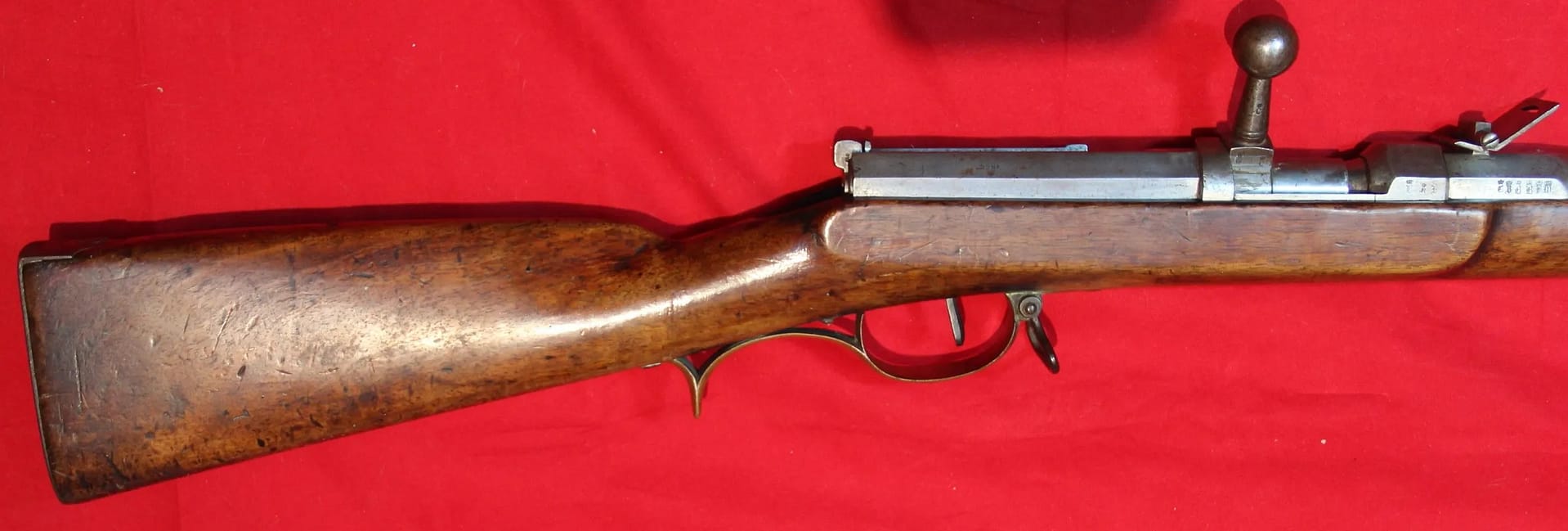
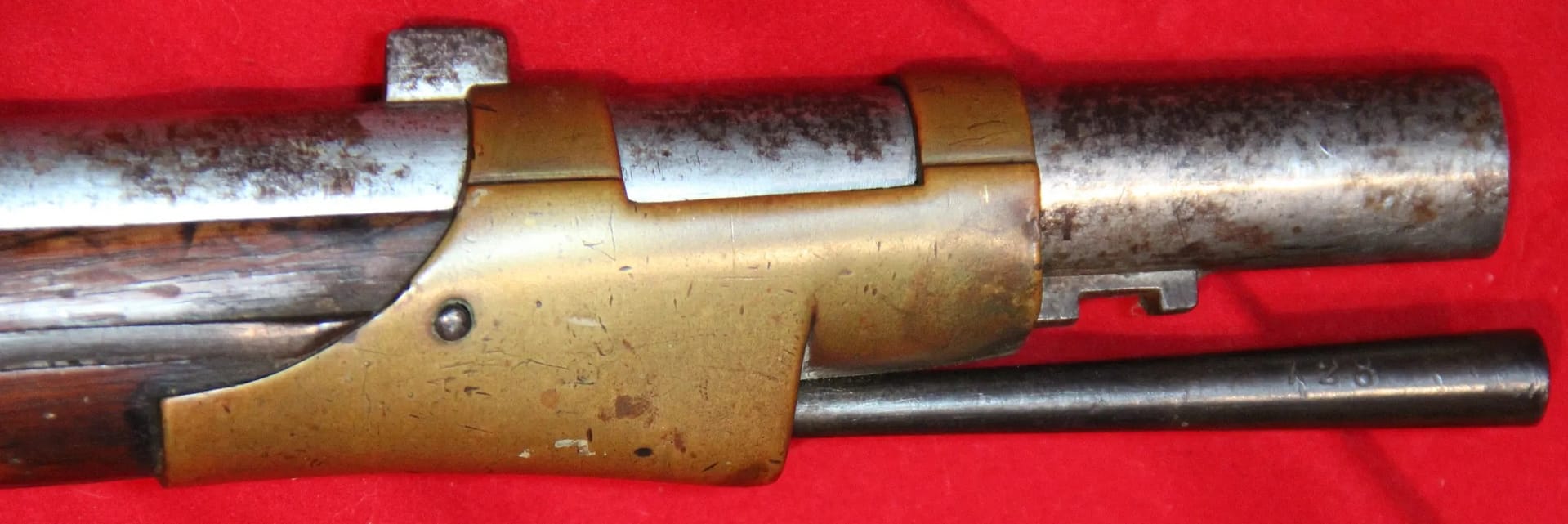
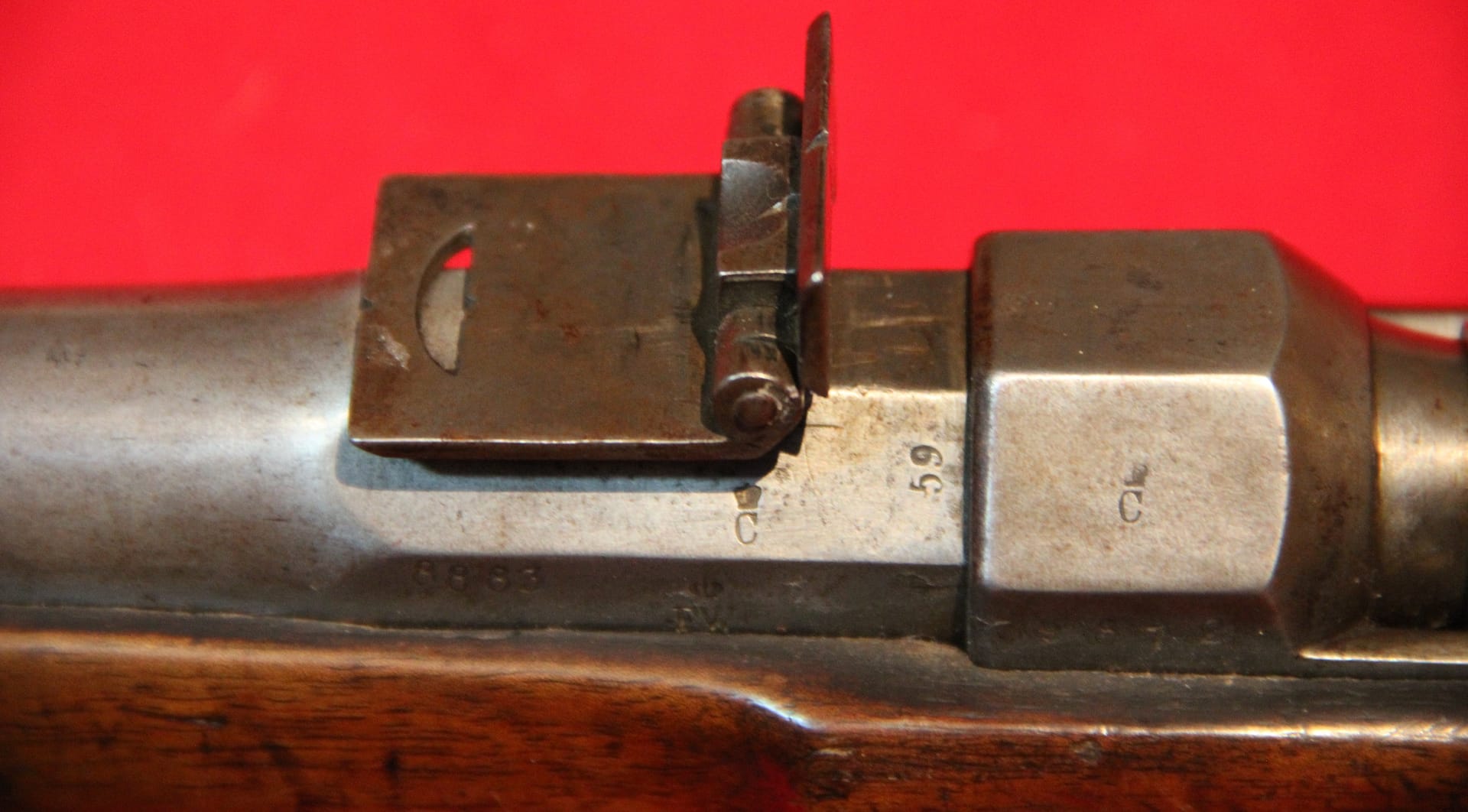
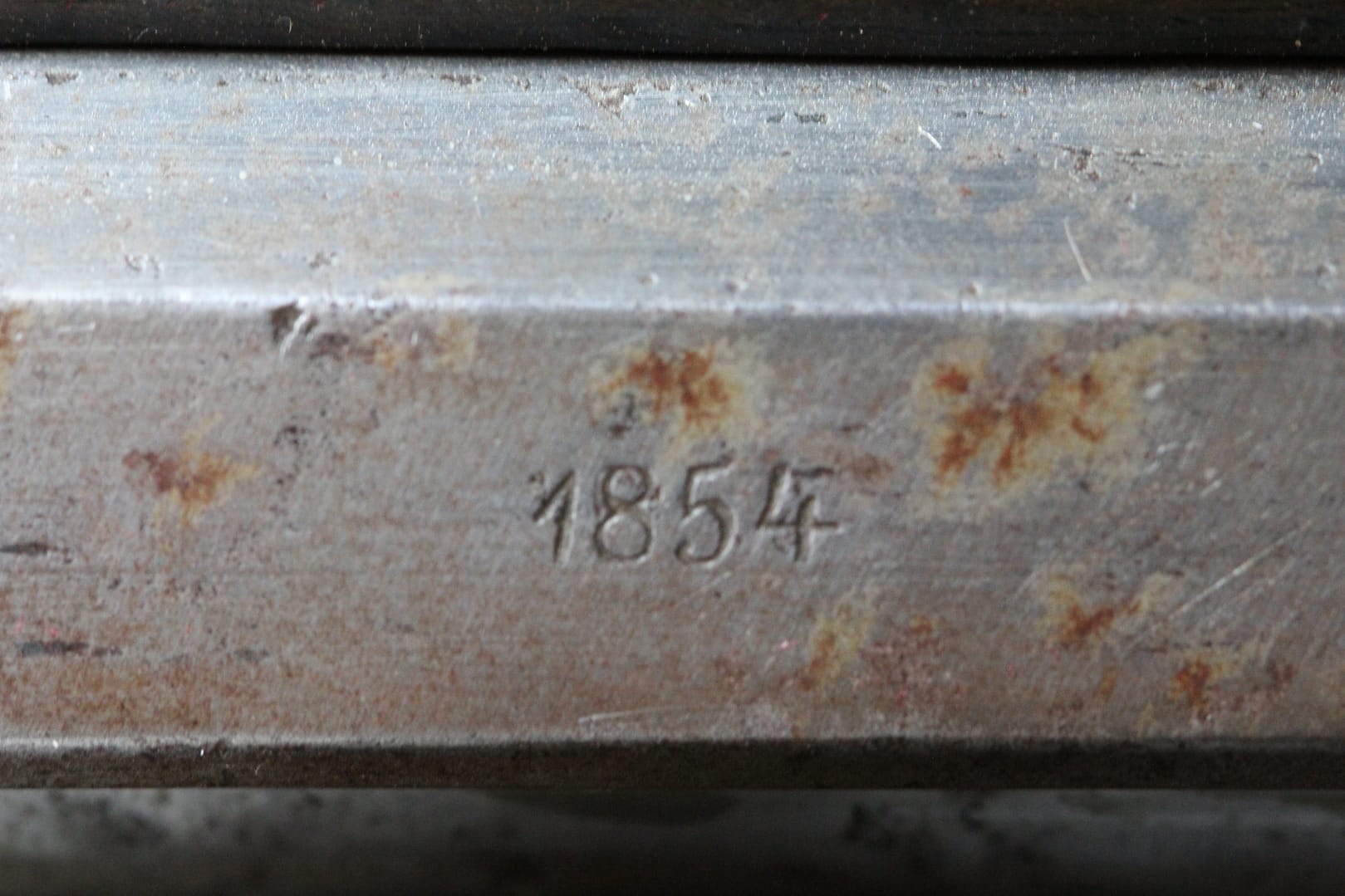
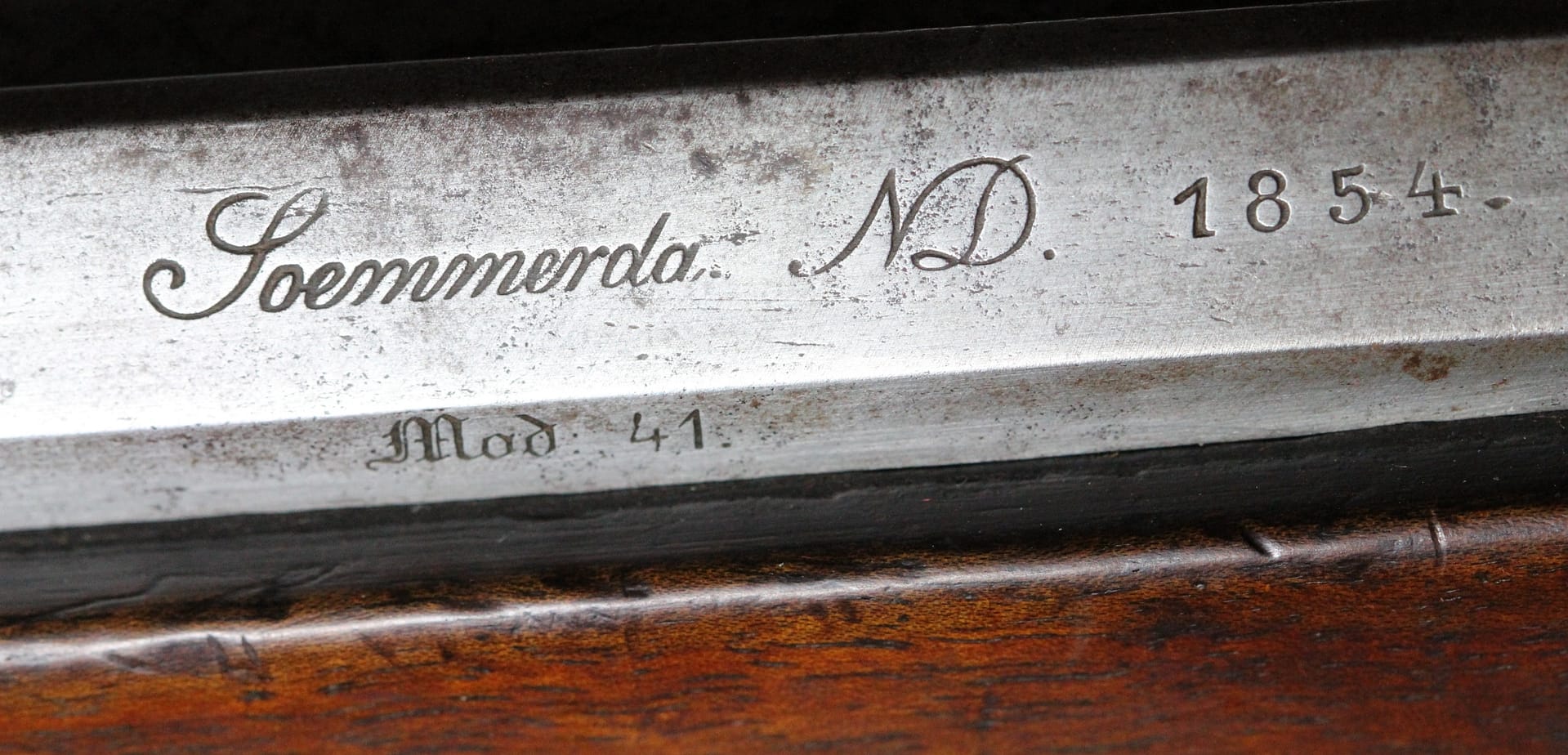
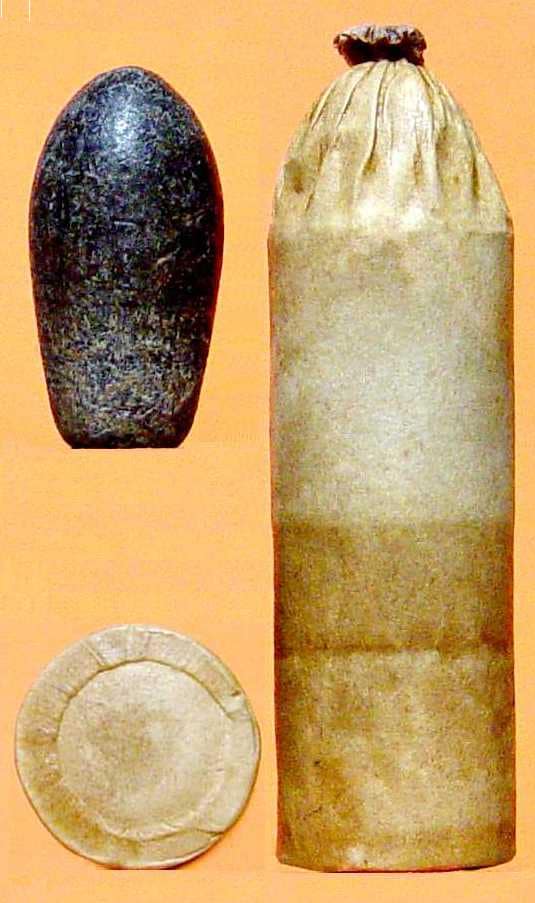
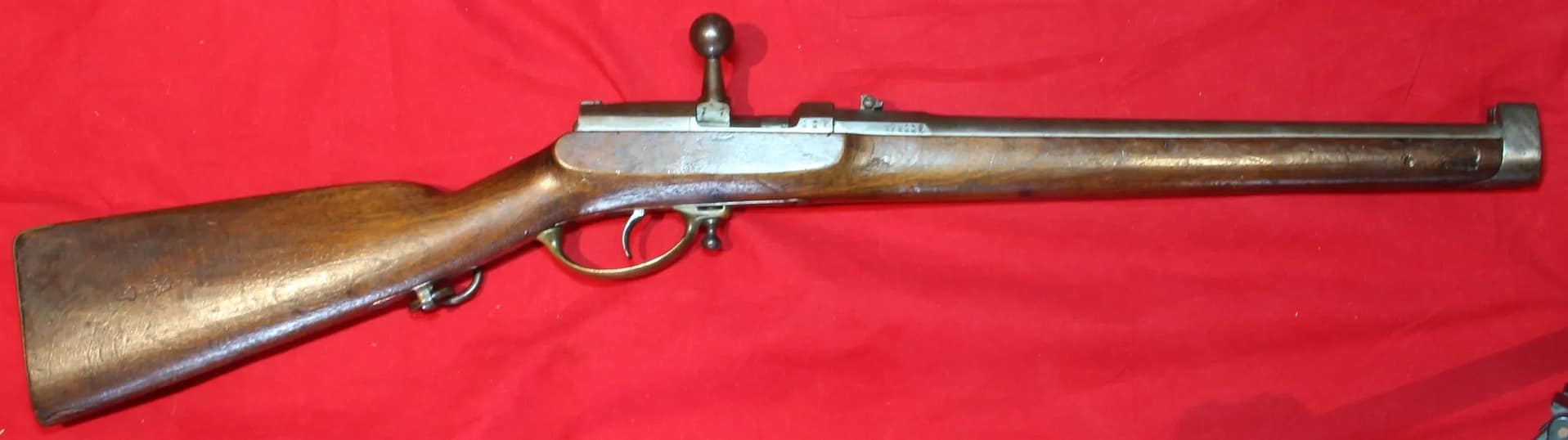
Prussian Model 1857 Dreyse Husarenkarabiner Needle Carbine. From my personal collection.
The Model 1857 Husarenkarabiner was a short, light breech loading carbine issued to Prussian hussar regiments. Designed for mounted use, it featured a compact barrel, simple rear sight, and sturdy stock suitable for cavalry service. Though effective at close range, the carbine had limited accuracy and rate of fire compared with infantry rifles. During the 1866 campaign, cavalry armed with the 1857 carbine relied on mobility and reconnaissance rather than firepower, supplementing the needle-rifle infantry that delivered Prussia’s decisive battlefield advantage.
Weapon data
Caliber: 15.4mm
Cartridge: Karabiner Patrone – 478 grain ovoid lead projectile in a papier-mache sabot with embedded primer, 55 grains of black powder, wrapped in a paper cartridge.
Action: Simple bolt action, locked by camming action against breech. Camming seals conical bolt face against breech
Rifling: Concentric 4-groove, .78mm deep and 6mm wide, right hand twist
Muzzle velocity: 225 metres per second
Maximum effective range (volley fire): ~400 metres
Length: 805mm
Barrel length: 382mm
Weight: 2.875KG
Sights: Two leaf position rear sight with battle sight for 200 metres, small leaf for 300 metres
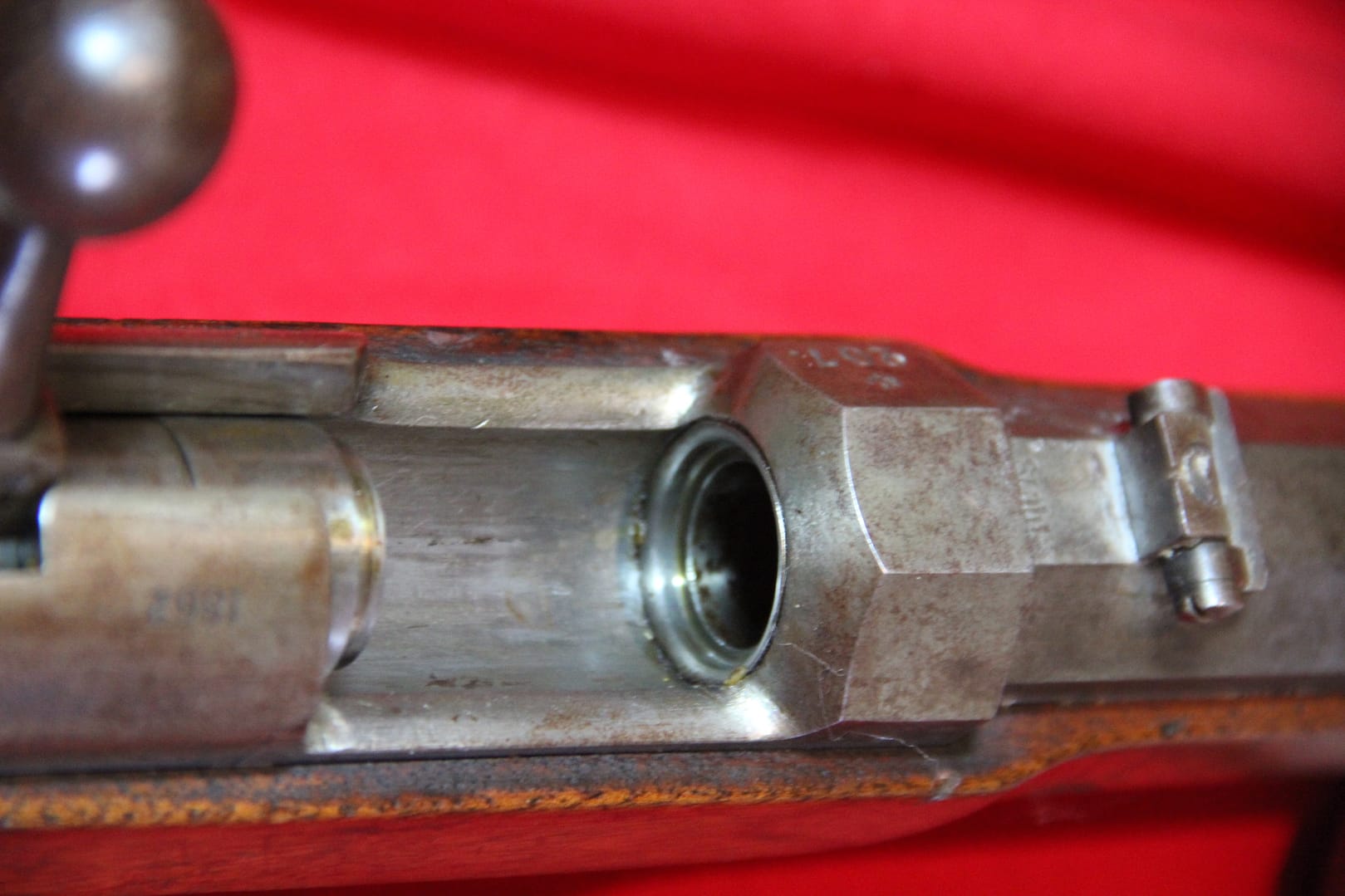
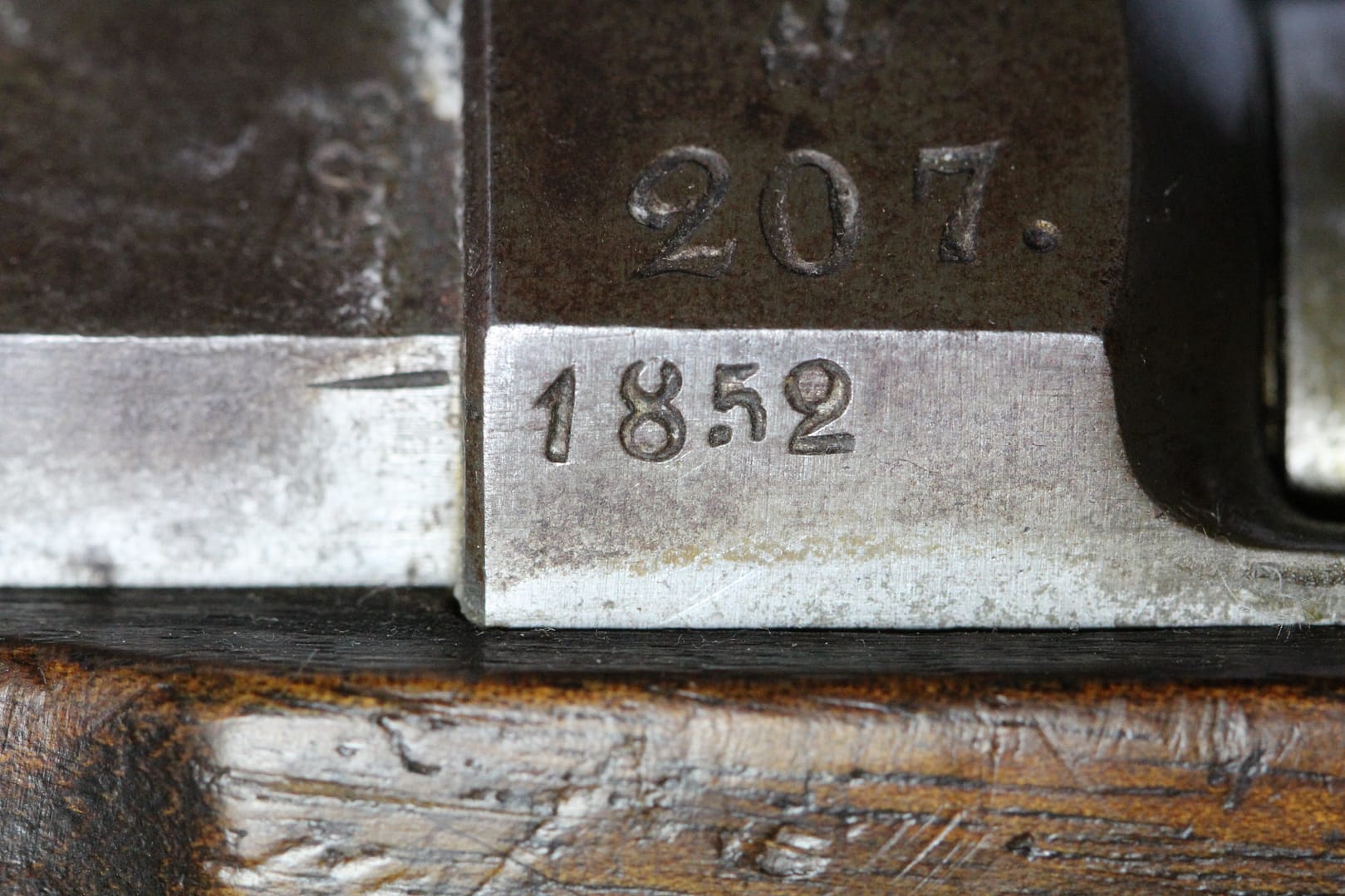
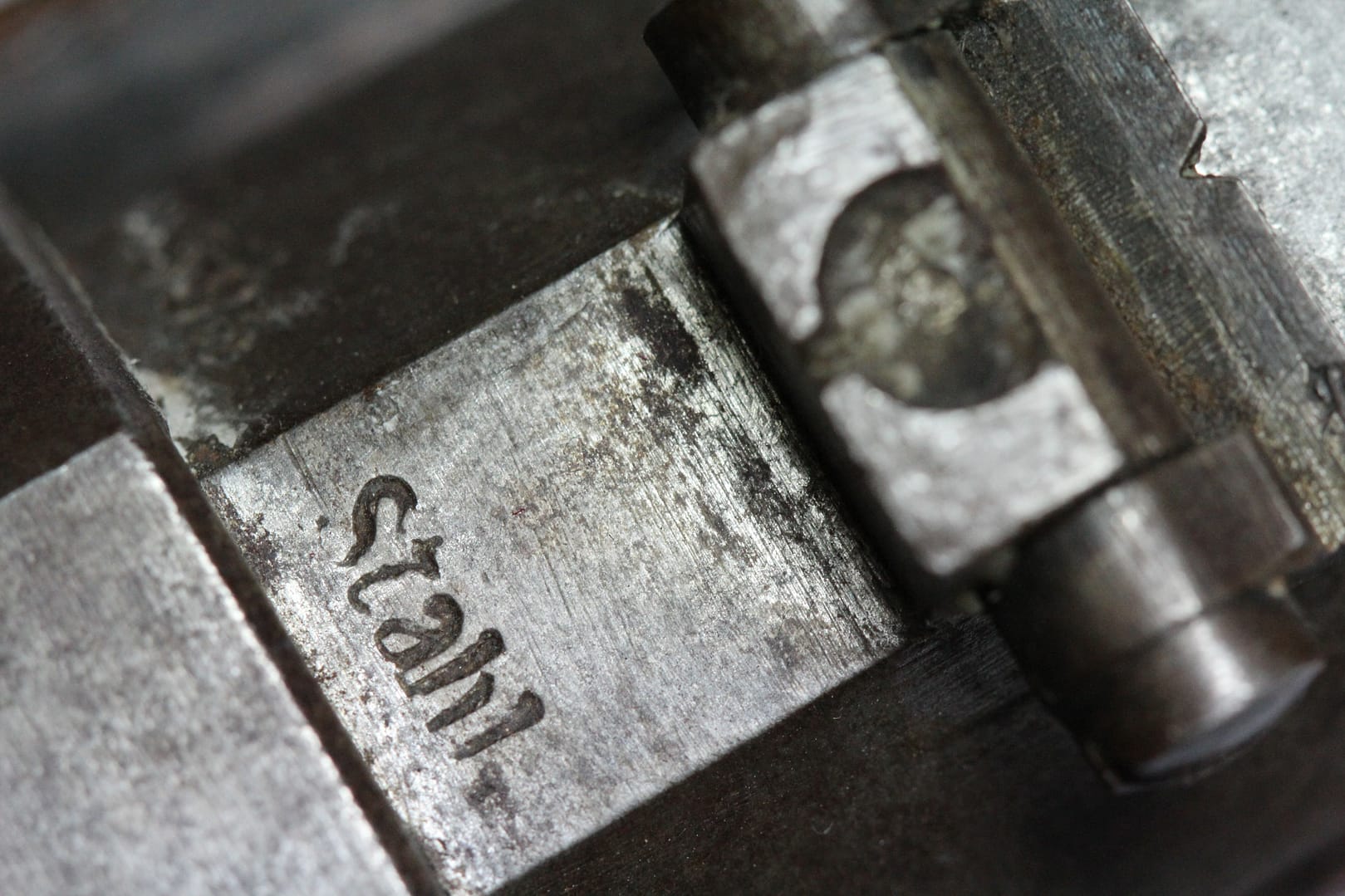
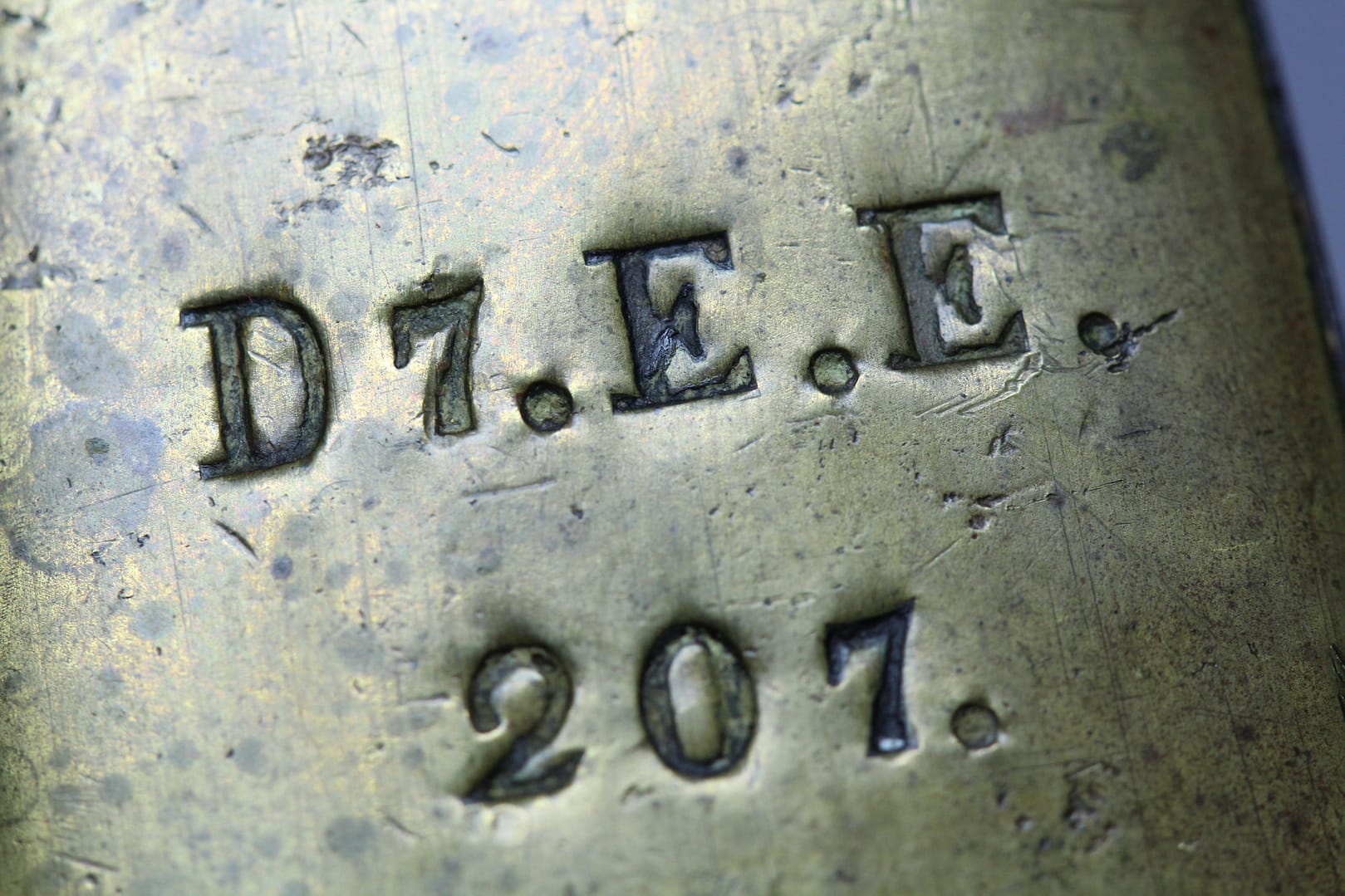
Prussian Dreyse Model 1860 Zündnadel Füsiliergewehr (Needle-Fire Rifle). From my personal collection.
The Dreyse Model 1860 Füsilier rifle was a bolt-action needle-fire infantry arm chambered in approximately 15.4 mm, manufactured at Prussian state arsenals including Spandau. It fired a paper cartridge ignited by a long firing needle striking an internal primer within the cartridge. Intended for fusilier and line infantry units, the rifle represented a refinement of earlier Dreyse patterns, with improved fittings and handling. Widely issued to Prussian forces, it saw extensive service during the Austro-Prussian War (1866) and the Franco-Prussian War (1870–71), contributing to the tactical advantages of Prussian infantry firepower in this period.
Weapon data
Caliber: 15.4mm
Cartridge: M1855 – 478 grain ovoid lead projectile in a papier-mache sabot with embedded primer, 75 grains of black powder, wrapped in a paper cartridge.
Action: Simple bolt action, locked by camming action against breech. Camming seals bolt face against conical breech
Rifling: Concentric 4-groove, .78mm deep and 6mm wide, right hand twist
Muzzle velocity: 295 metres per second
Maximum effective range (volley fire): 600 metres
Length: 1300mm
Barrel length: 785mm
Weight: 4.975KG
Sights: Combined block and two leaf sight with battle sight for 350 metres, small leaf for 450 metres, and large leaf for 800 metres


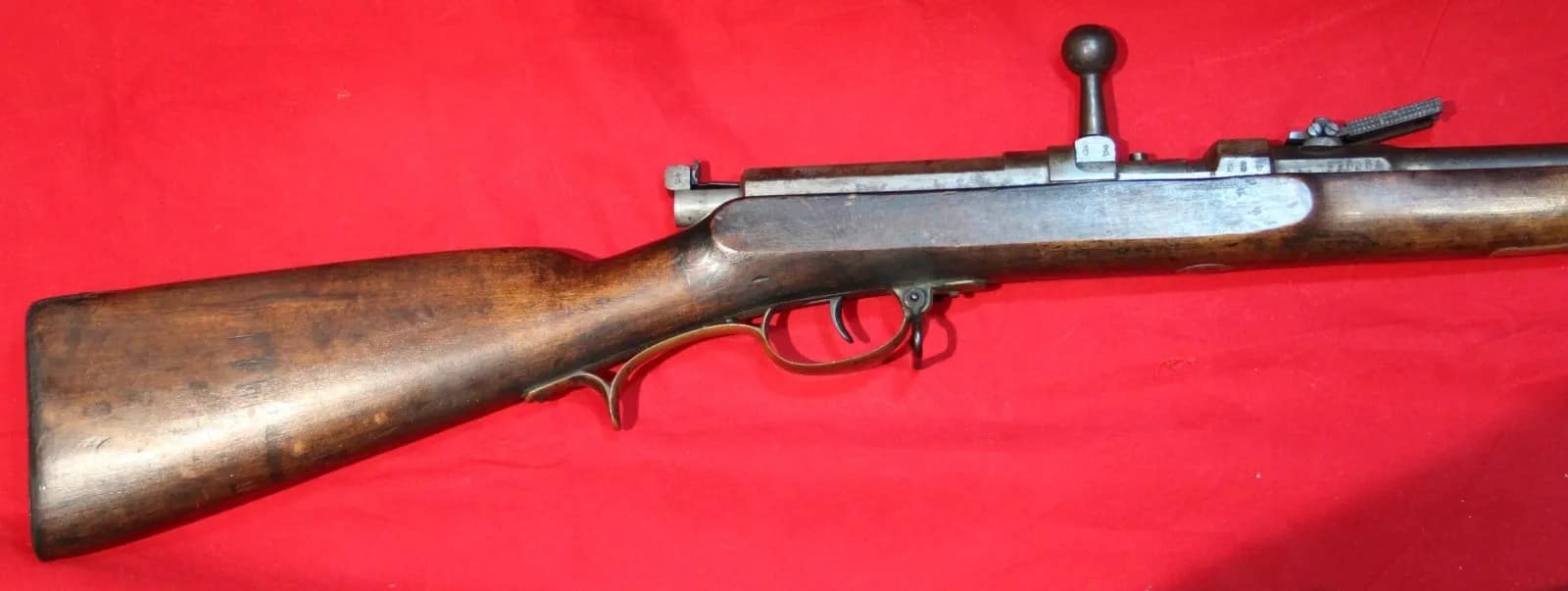
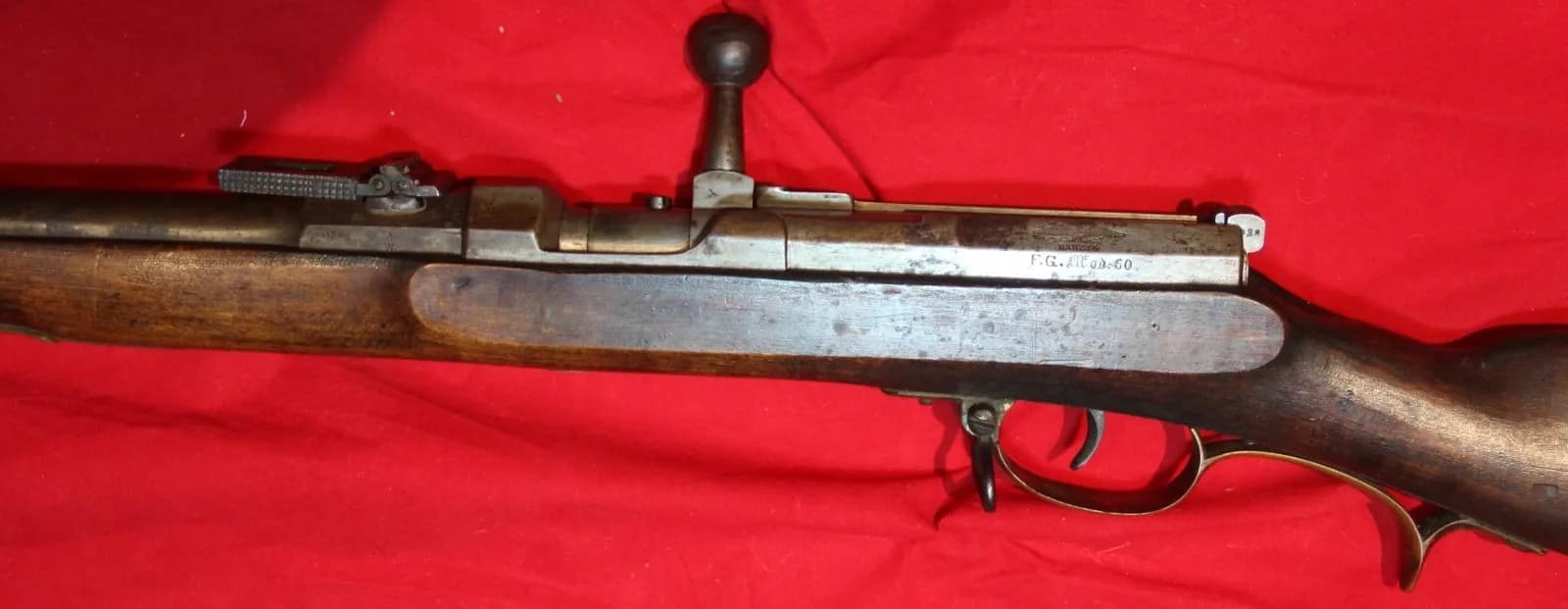
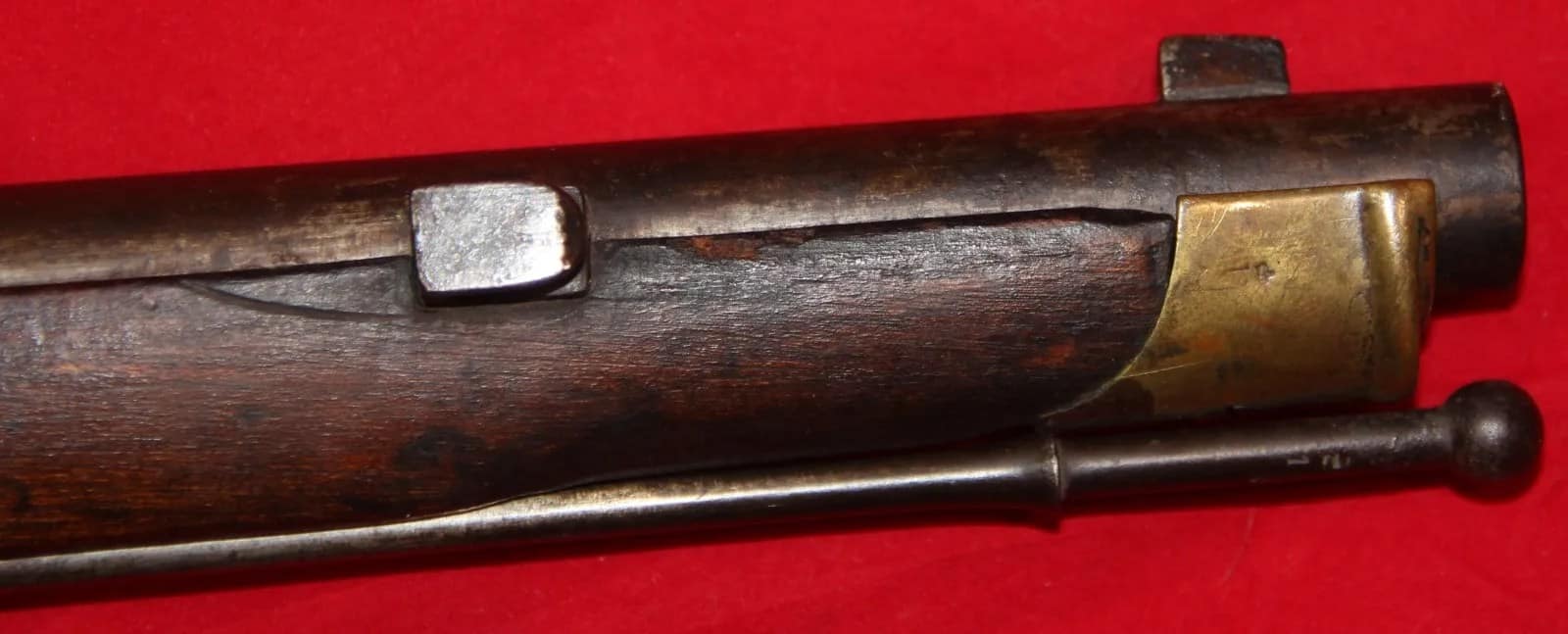
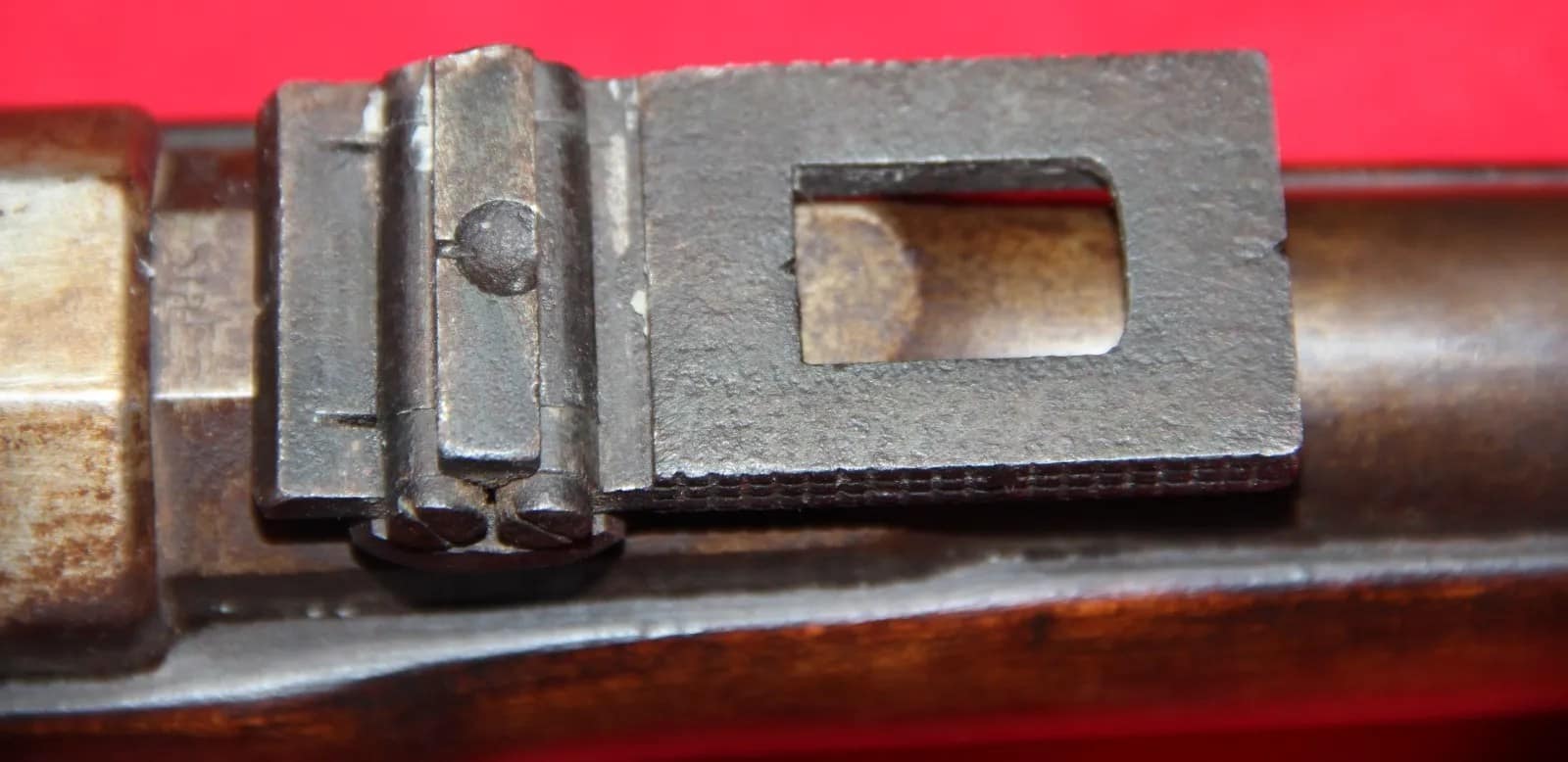
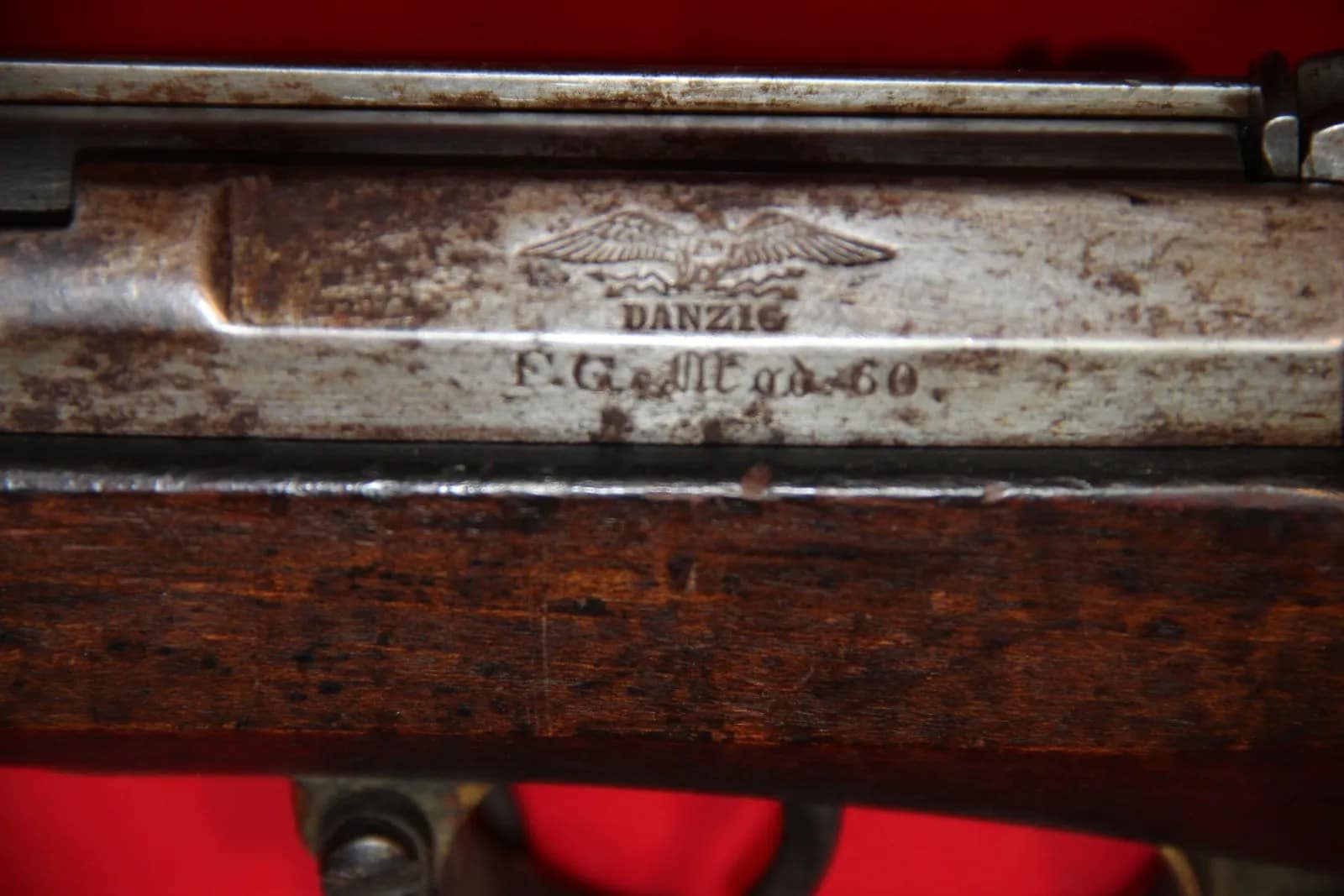
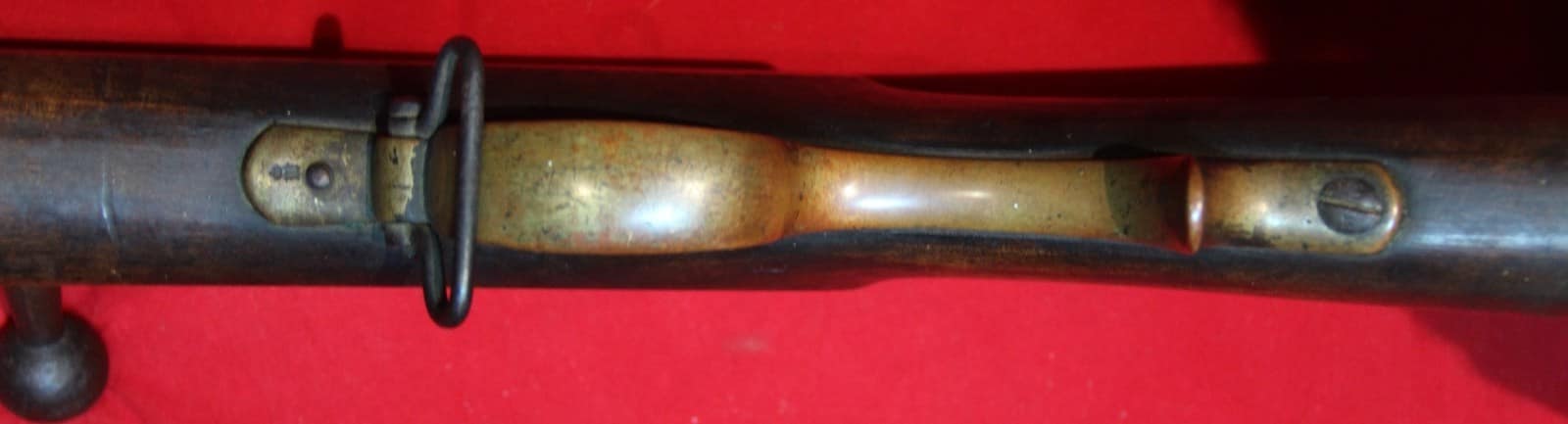
Model 1862 Dreyse Zundnadelgewehr (Needle-Ignition Rifle). From my personal collection.
The Prussian Model 1862 Dreyse Zundnadelgewehr was an improved variant of the original 1841 Dreyse needle rifle, featuring a strengthened bolt, modified lockwork, and refinements to the paper cartridge system. It offered marginally better gas sealing and durability but retained the needle-ignition principle. Issued widely during the Austro-Prussian and Franco-Prussian Wars, it remained in service until replaced by the M1871 Mauser. Despite its limitations in muzzle velocity and gas leakage, the M1862’s high rate of fire continued to influence Prussian infantry tactics.
Weapon data
Caliber: 15.4mm
Cartridge: M1855 – 478 grain ovoid lead projectile in a papier-mache sabot with embedded primer, 75 grains of black powder, wrapped in a paper cartridge.
Action: Simple bolt action, locked by camming action against breech. Camming seals bolt face against conical breech
Rifling: Concentric 4-groove, .78mm deep and 6mm wide, right hand twist, 1 turn in 732mm
Muzzle velocity: 295 metres per second
Maximum effective range (volley fire): 600 metres
Length: 1360mm
Barrel length: 841mm
Weight: 4.75KG
Sights: Combined block and two leaf sight with battle sight for 350 metres, small leaf for 450 metres, and large leaf for 800 metres
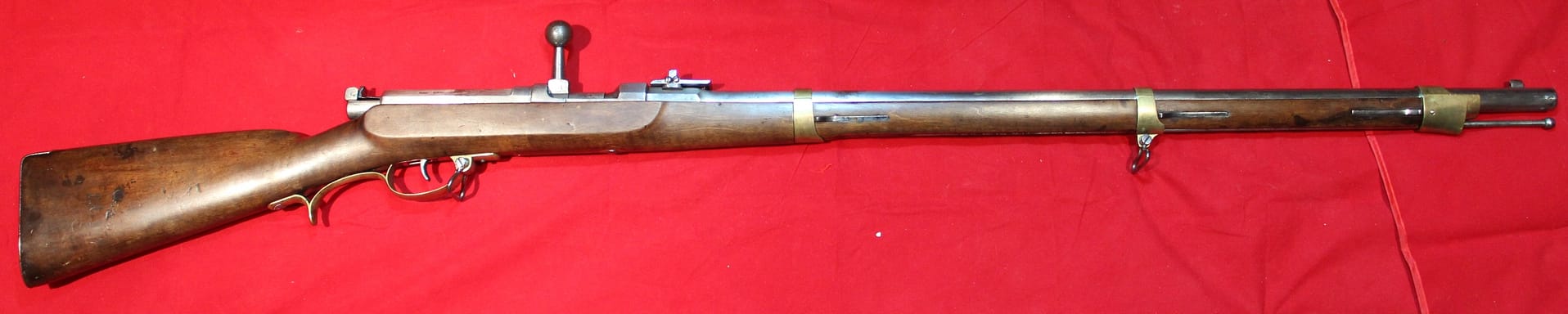

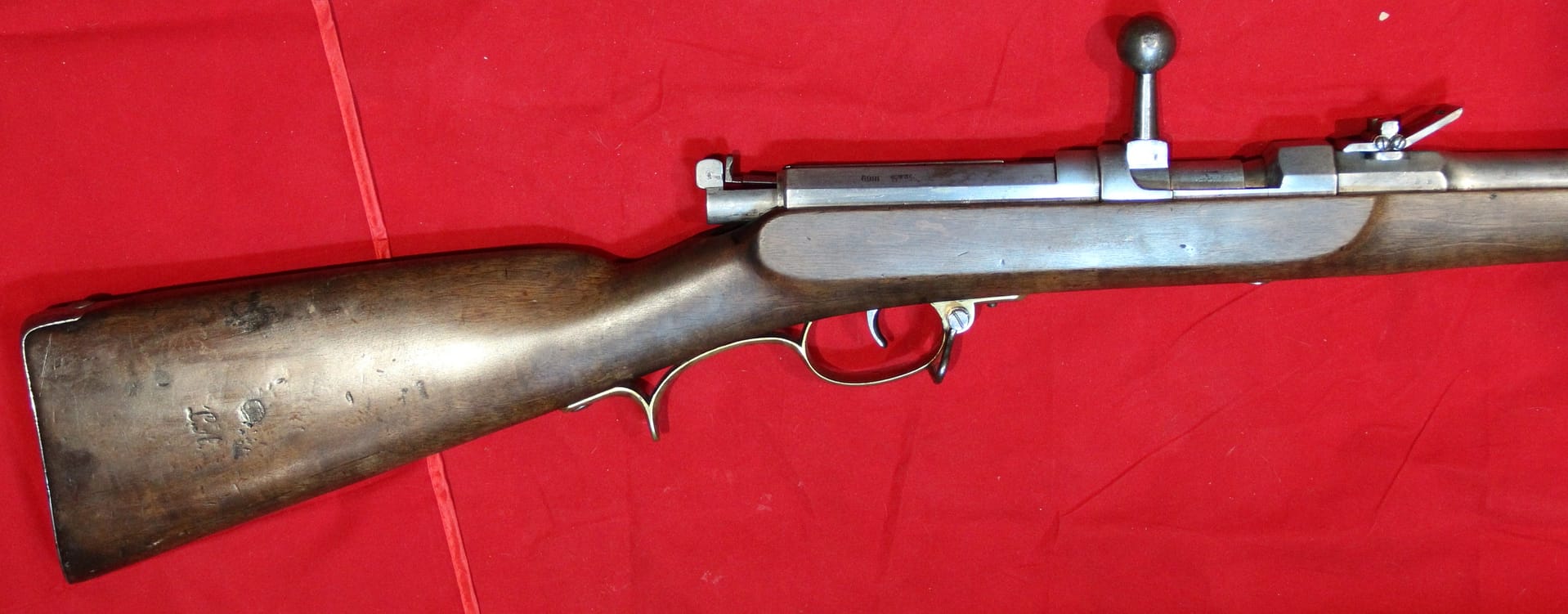
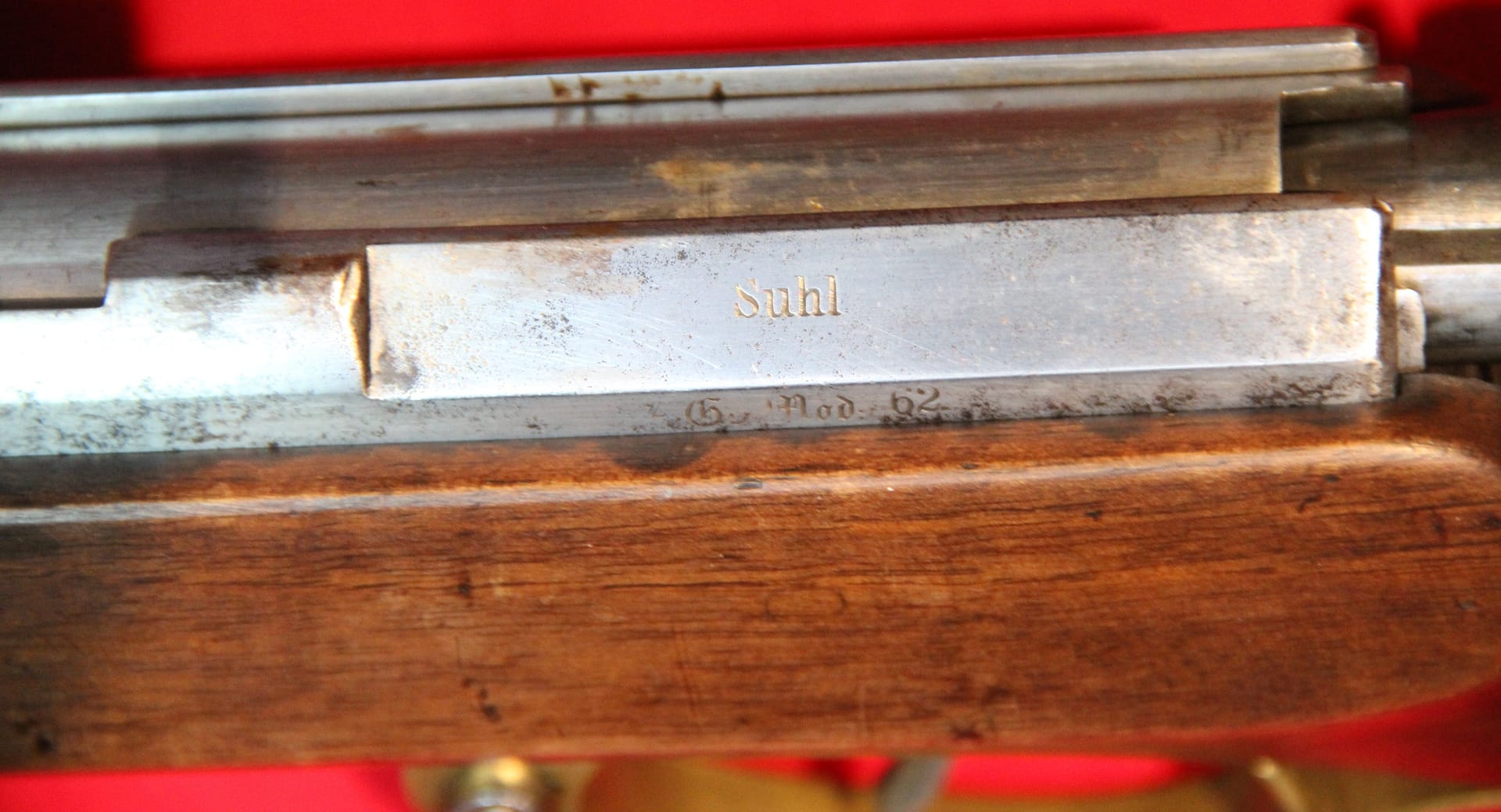
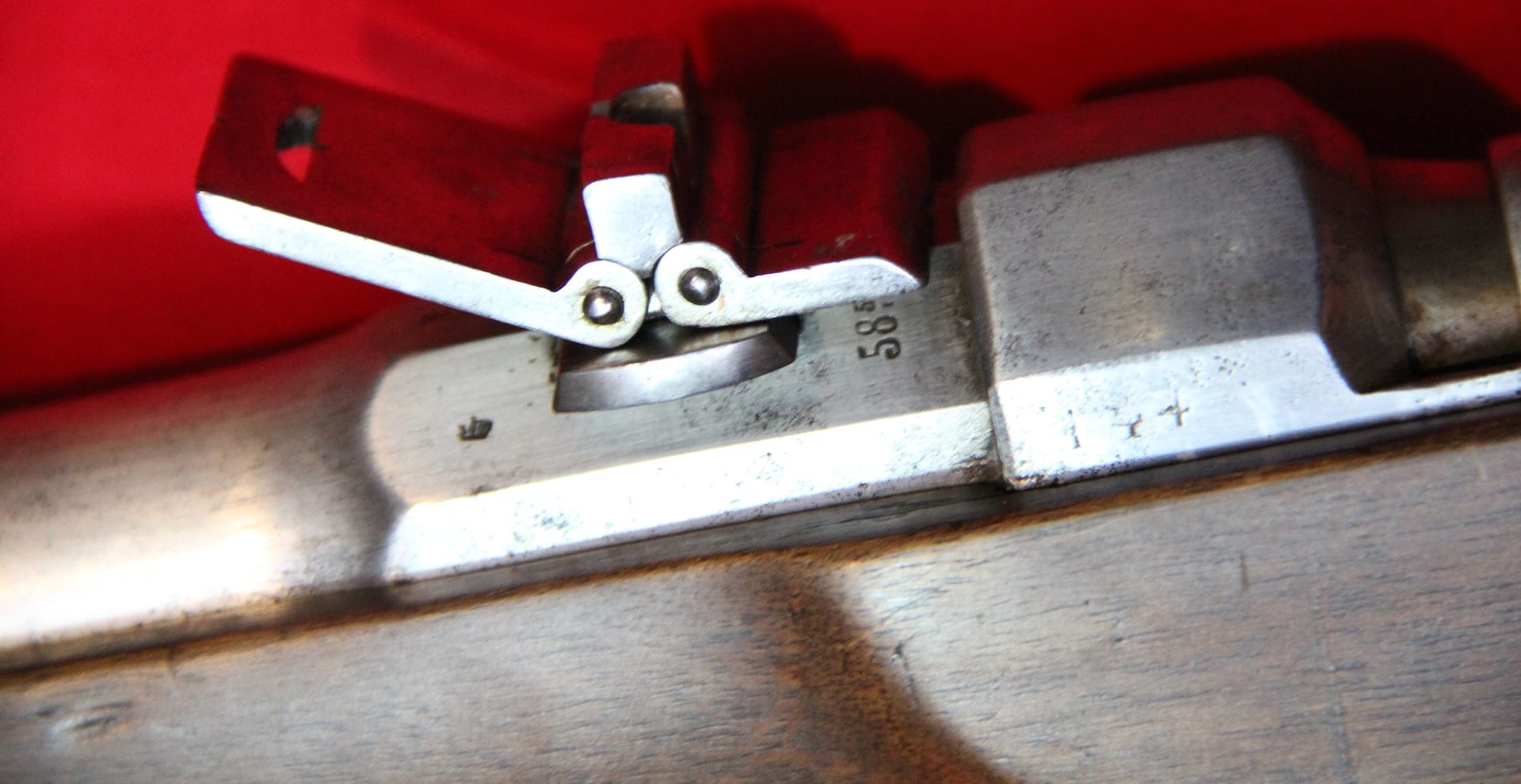
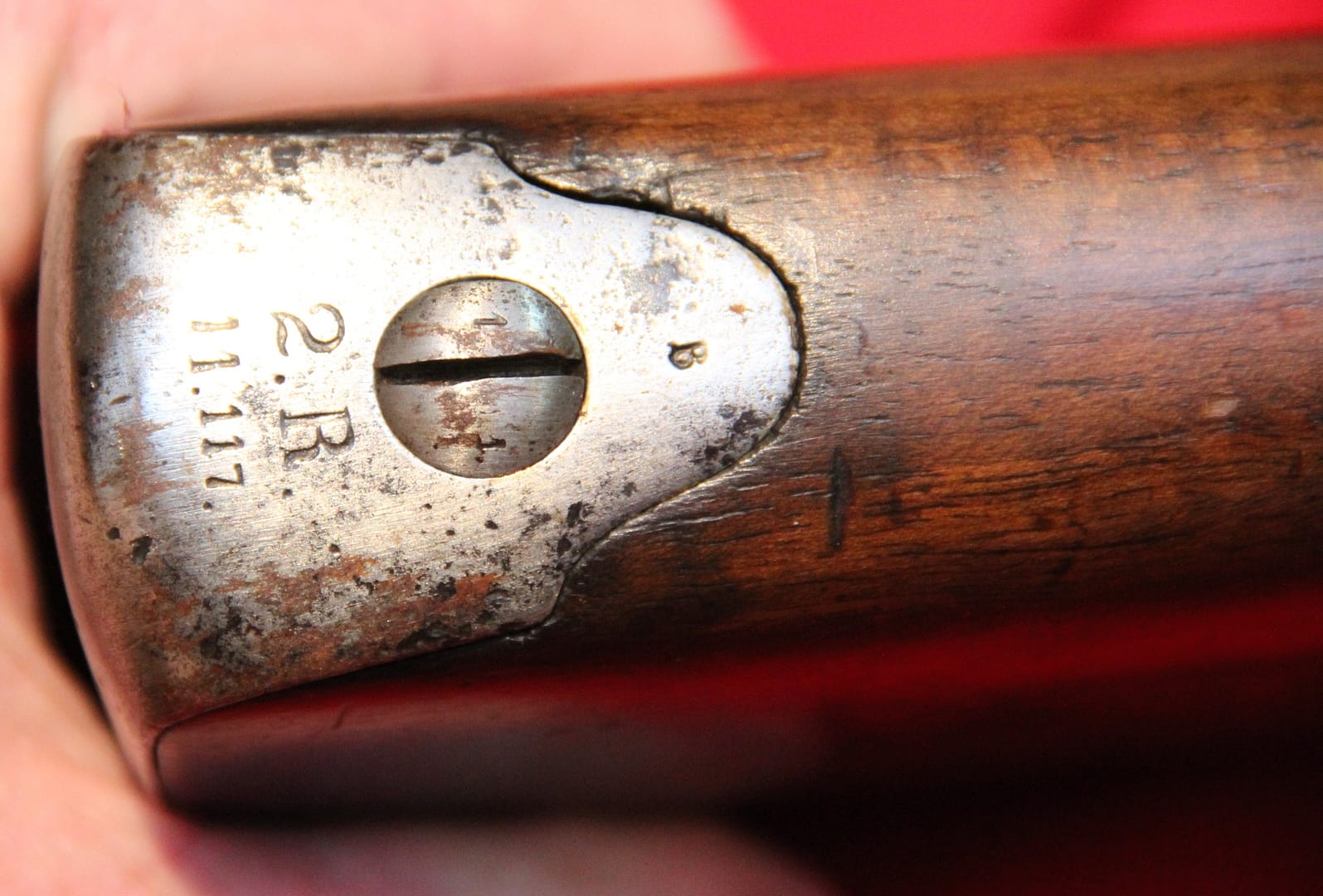
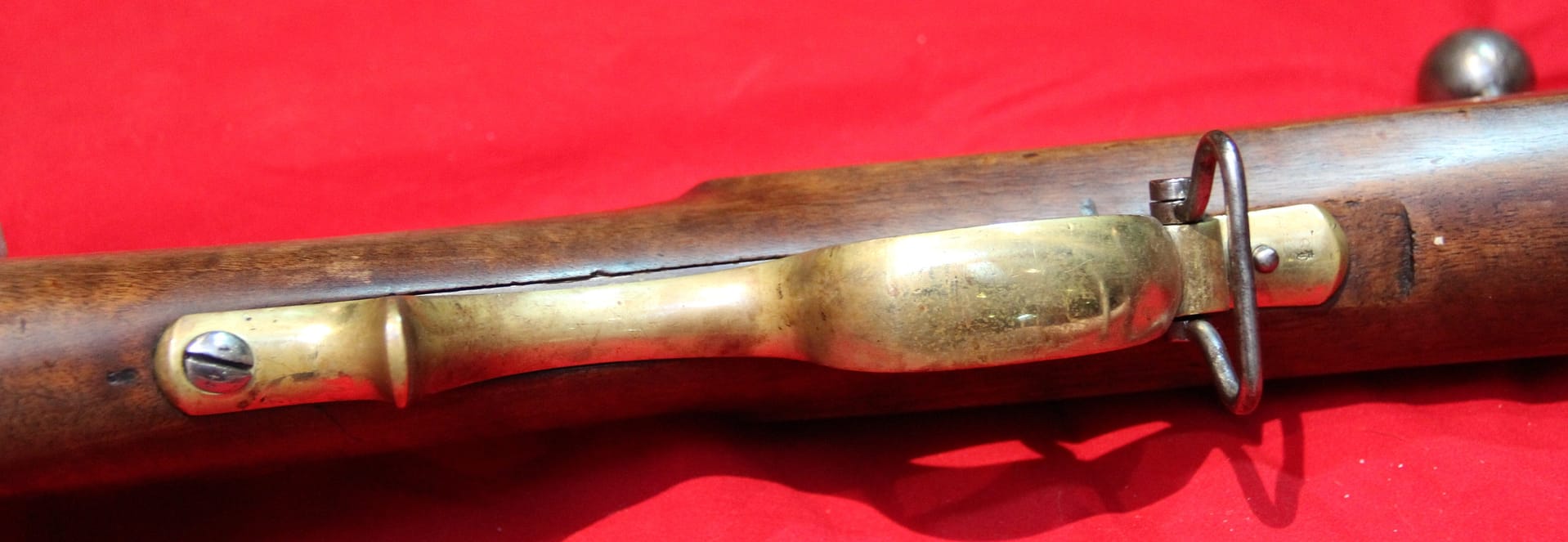
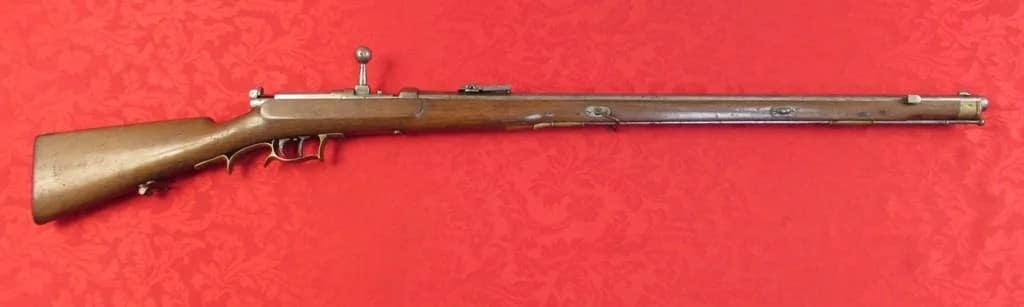
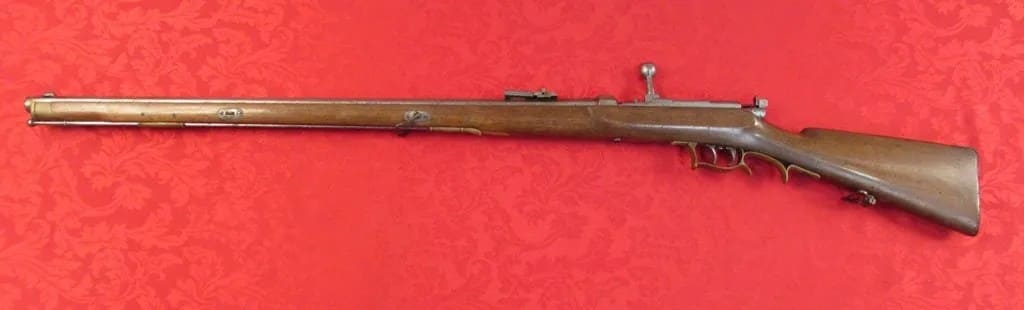
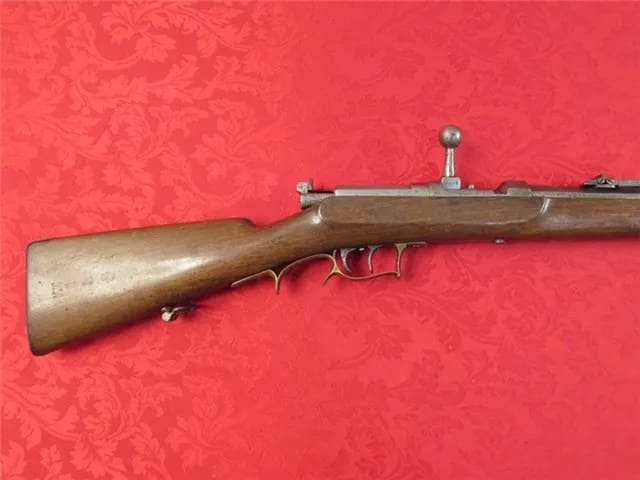
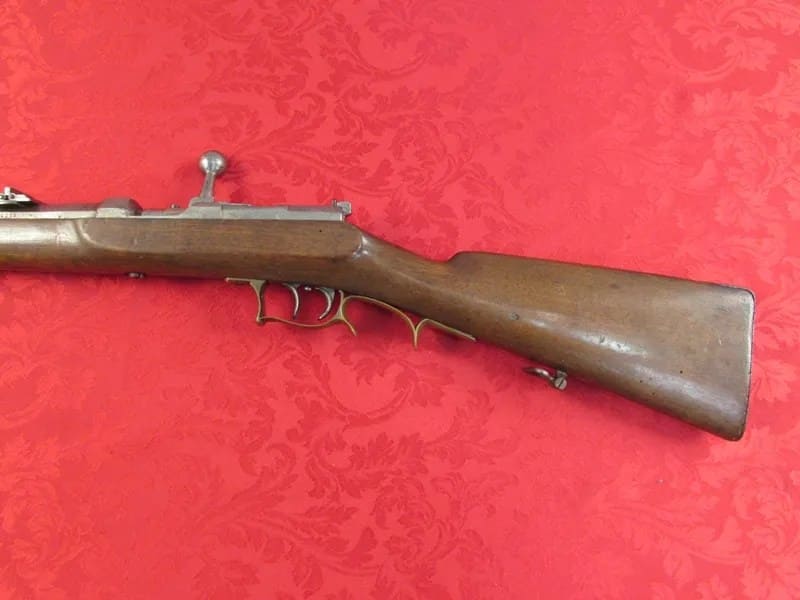
Prussian Dreyse Model 1865 Zündnadel-Jägerbüchse (Needle-Fire Rifle). Beck transformation. From my personal collection.
The Dreyse Model 1865 Jägerbüchse was a bolt-action needle-fire rifle chambered in approximately 15.4 mm, manufactured at Prussian state arsenals including Spandau. Designed as a specialist rifle for Jäger and light infantry units, it fired a paper cartridge ignited by a long firing needle striking an internal primer. It was fitted with a double-set trigger for fine shooting. Compared to earlier Dreyse infantry rifles, it featured refinements in construction and handling suited to skirmishing troops. Issued in limited numbers, it saw service during the Austro-Prussian War (1866) and the Franco-Prussian War (1870–71), representing the evolution of Prussian needle-fire technology prior to the adoption of metallic cartridge rifles.
After observing the development of the French Chassepot with its small bore and flat trajectory, the Prussians commenced a modification program to improve the Dreyse performance. Commencing in May 1870, using a system designed by Ludwig Beck, Dreyse rifles were modified with a more tightly sealed bolt head, and an improved rear sight. The new bolt head and a lighter projectile increased muzzle velocity from 295 to 340 metres per second, still well short of the Chassepot’s 435 metres per second.
This Dreyse Model 1865 Zündnadel-Jägerbüchse is fitted with the Beck improvement.
Weapon data
Caliber: 15.4mm
Cartridge:
– M1855 – 478 grain ovoid lead projectile in a papier-mache sabot with embedded primer, 75 grains of black powder, wrapped in a paper cartridge.
– Beck Patrone – 325 grain ovoid lead projectile in a papier-mache sabot with embedded primer, 75 grains of black powder, wrapped in a paper cartridge.
Action: Simple bolt action, locked by camming action against breech. Camming seals bolt face against conical breech
Rifling: Concentric 4-groove, .78mm deep and 6mm wide, right hand twist, 1 turn in 732mm
Muzzle velocity: 340 metres per second
Maximum effective range (volley fire): 600 metres
Length: 1230mm
Barrel length: 768mm
Weight: 4.375KG
Sights:
– (original M1865): Combined block and four leaf sight with battle sight for 300 metres and leaves for 400, 500, 600, 700, and 800/900 metres
– (Beck transformation): Combined block and two leaf sight with battle sight for 200 metres , small leaf for 300 metres, large sliding leaf graduated to 1200 metres.
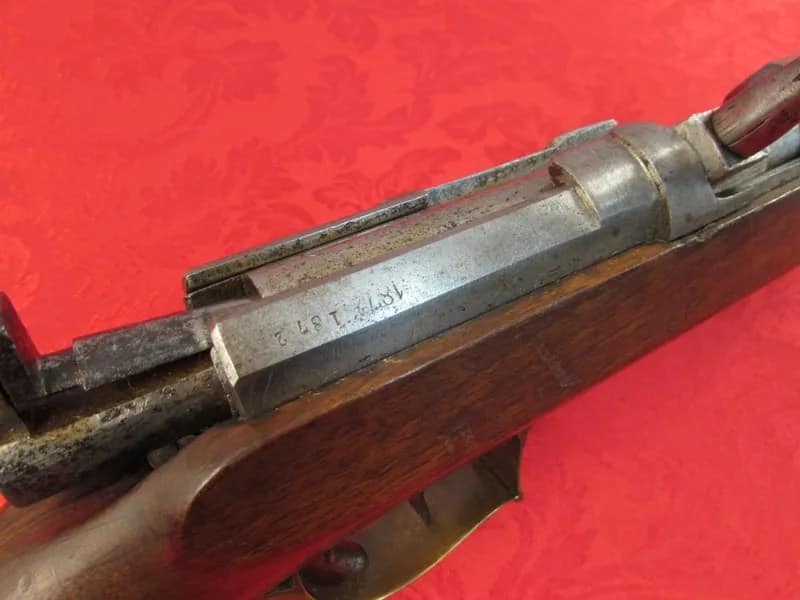
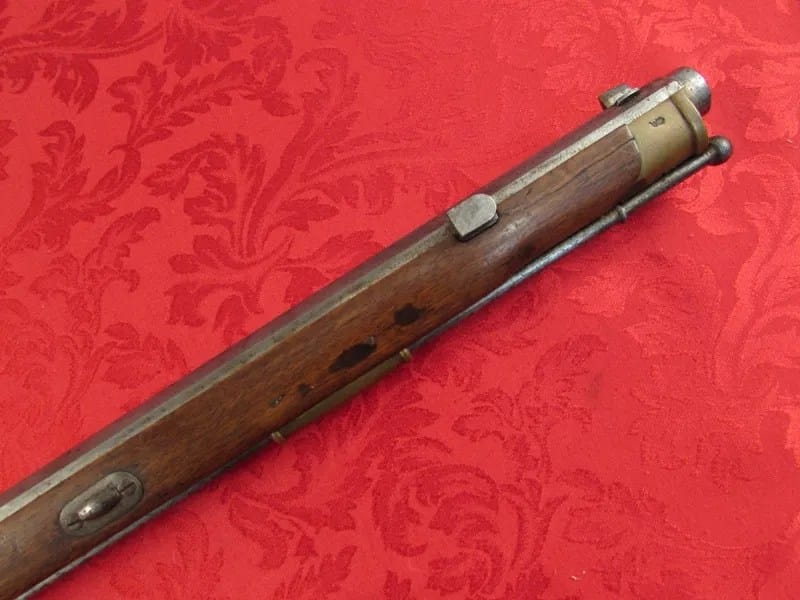
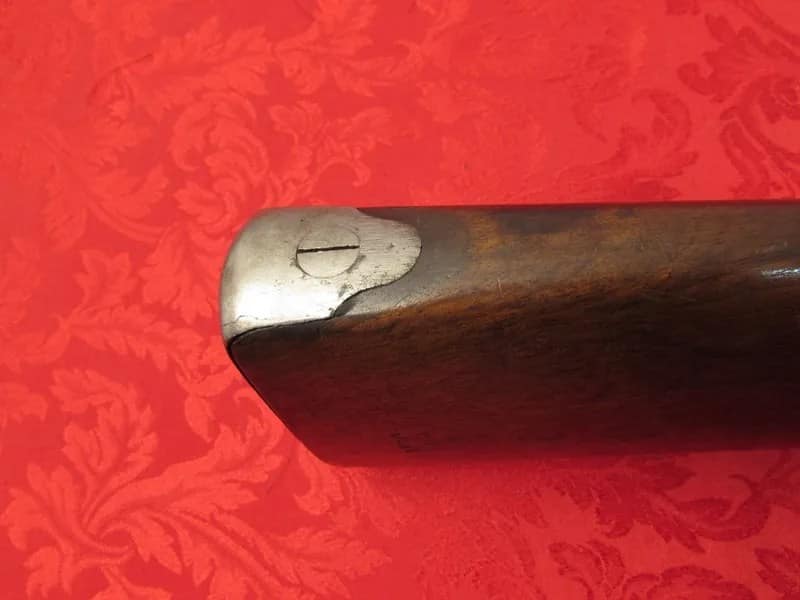
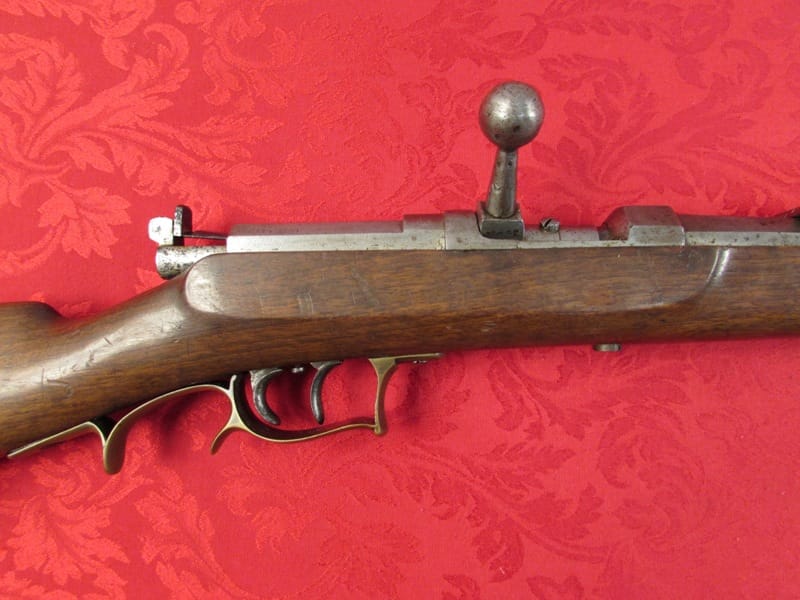
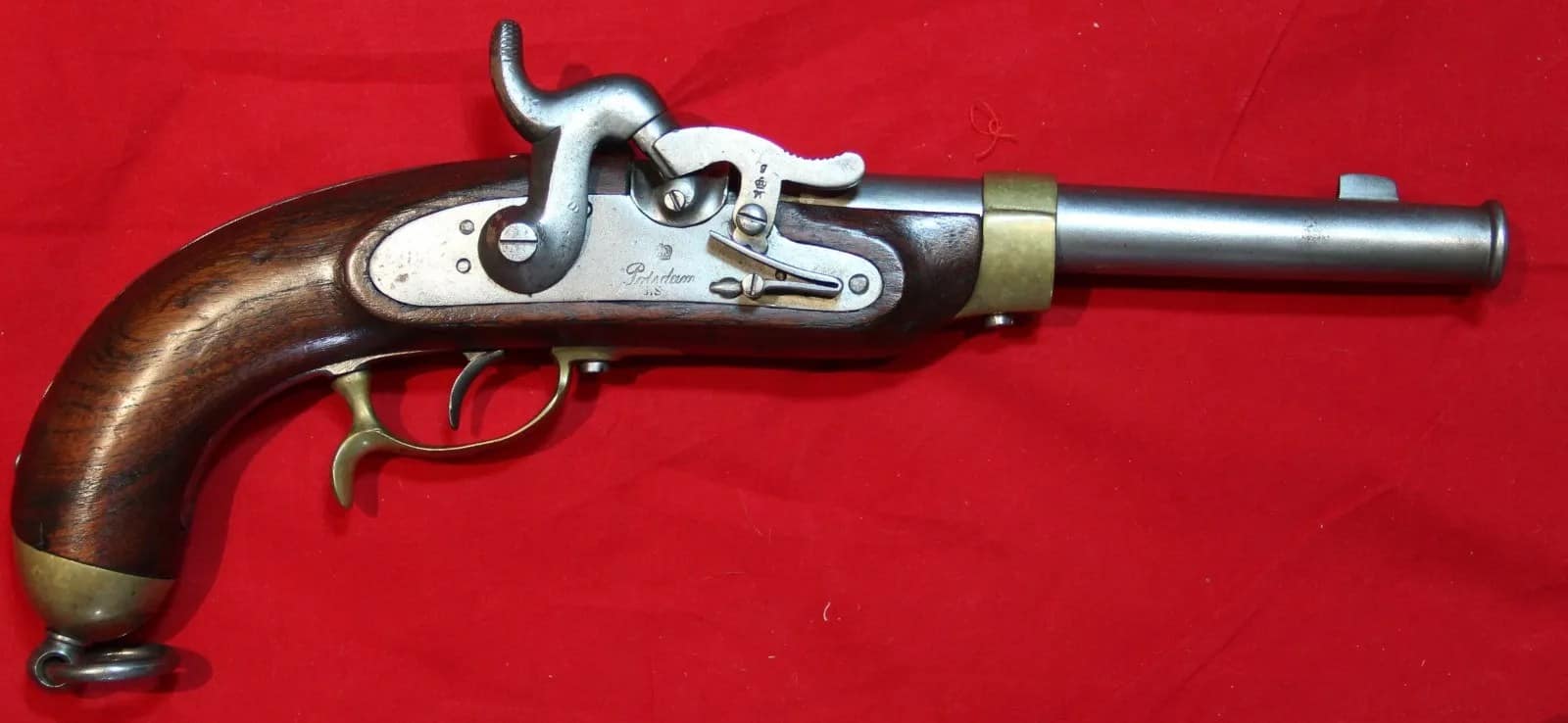
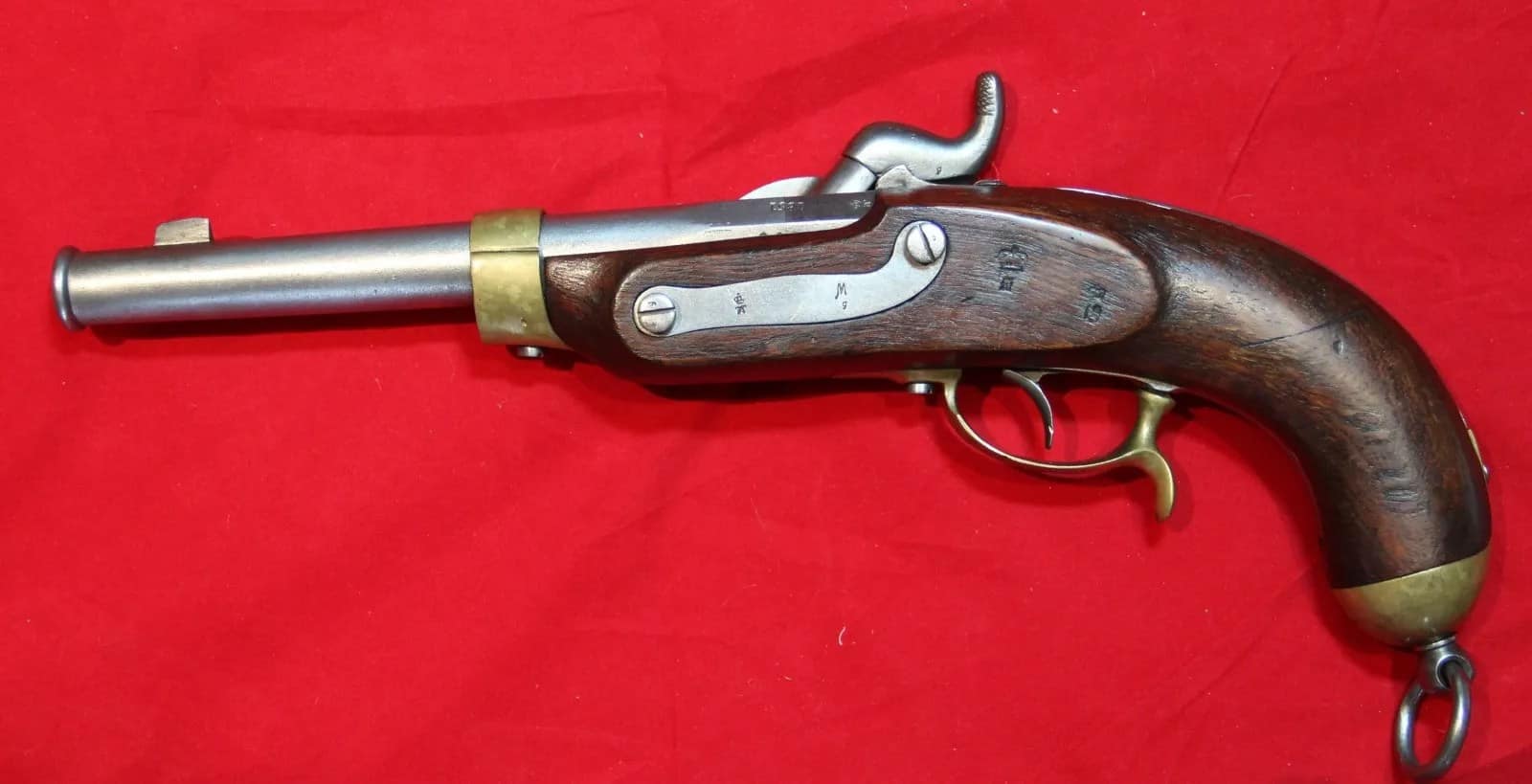
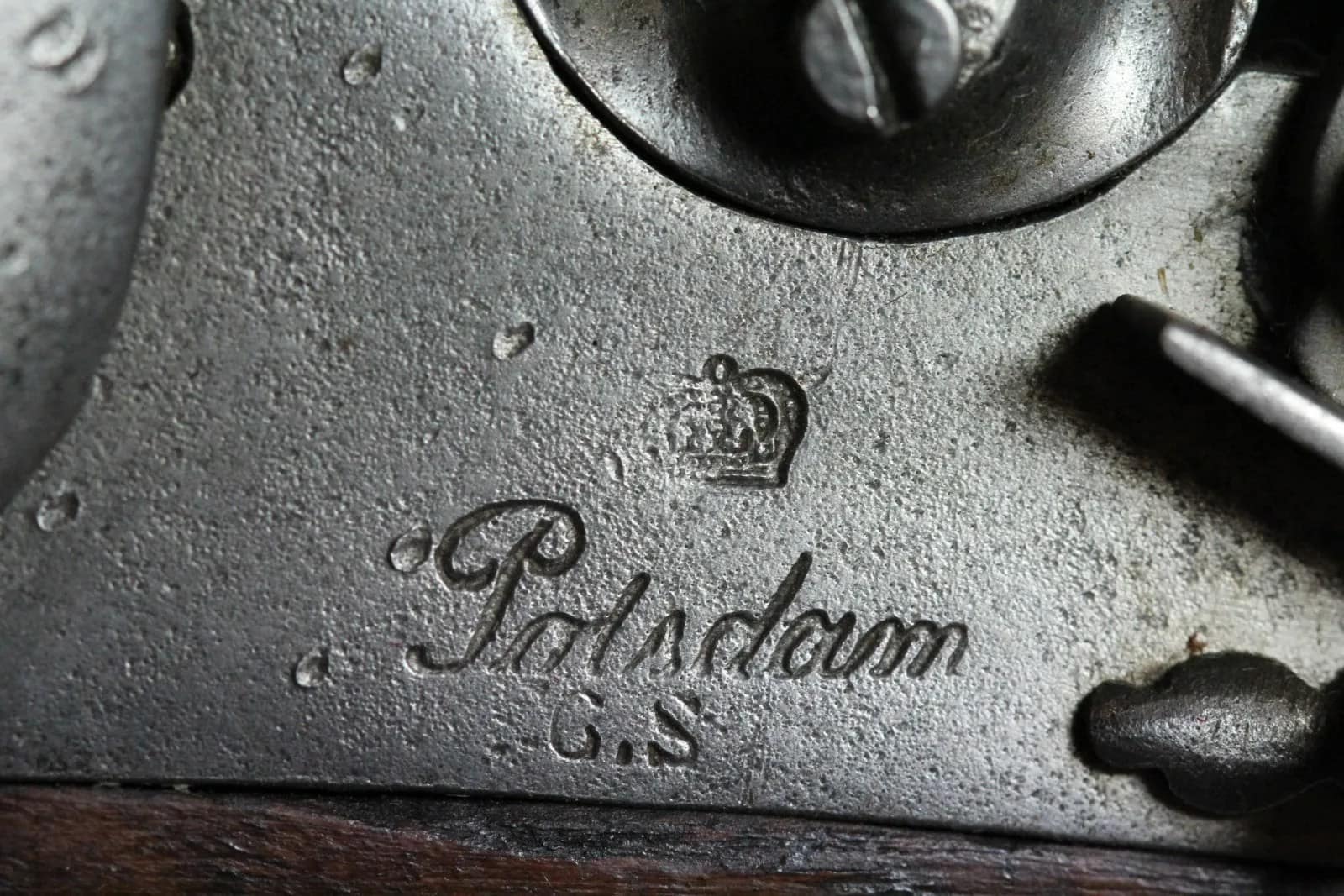
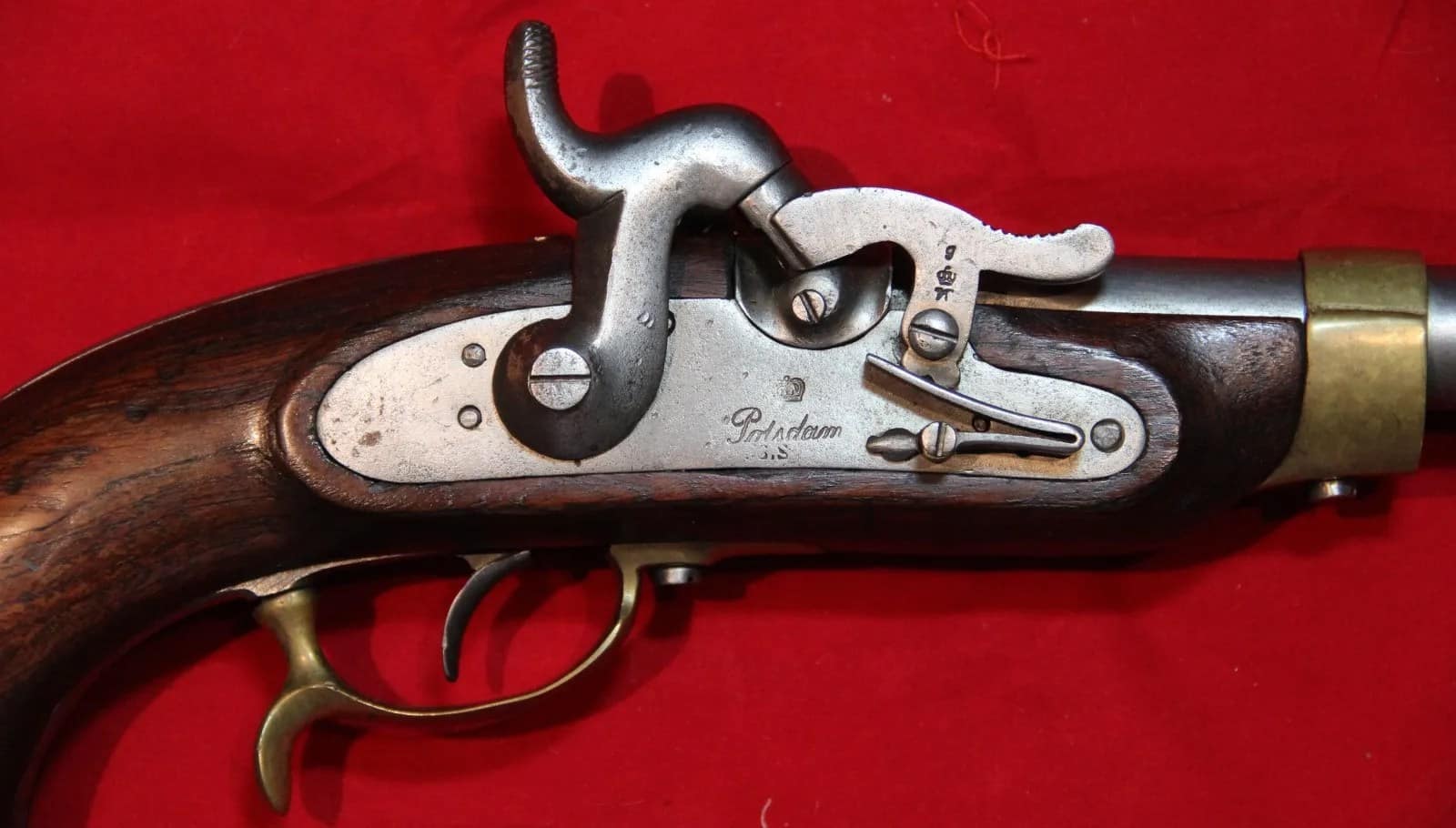
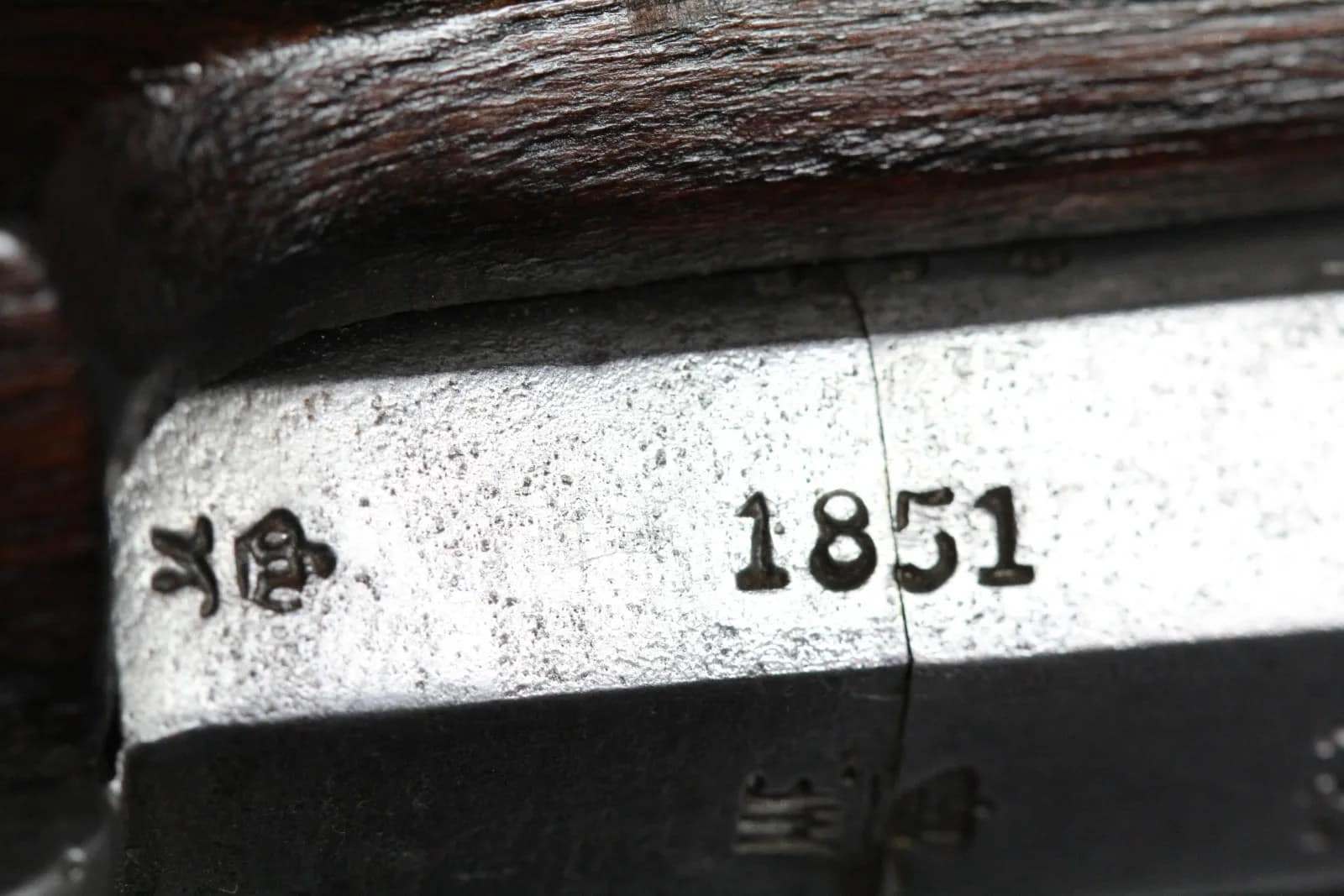
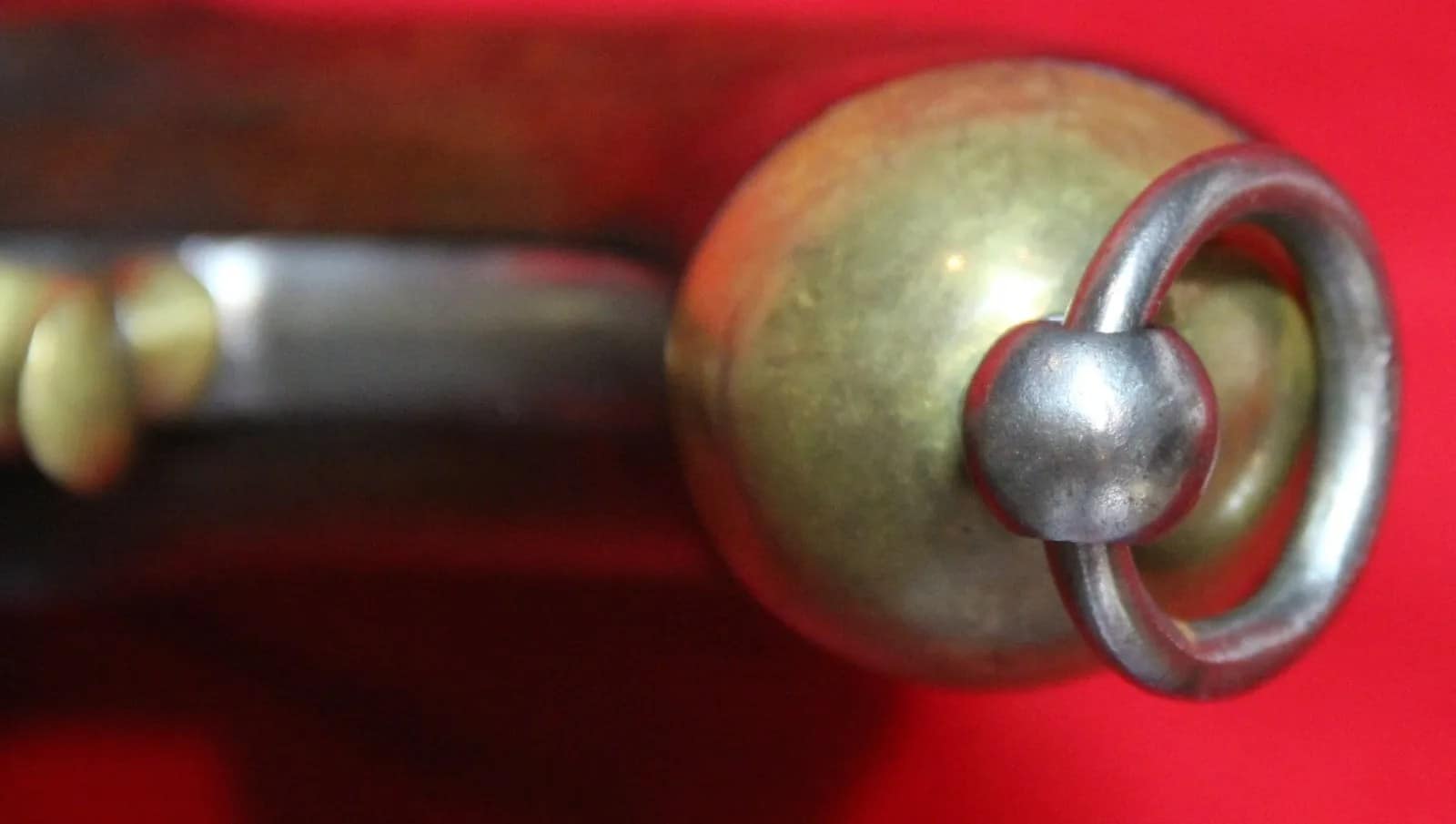
Prussian Model 1850 Cavalry Pistol. From my personal collection.
The Prussian Model 1851 cavalry pistol was a single-shot, percussion muzzle-loading sidearm of approximately 15mm calibre, manufactured at state arsenals including Potsdam and Spandau. Designed for mounted troops, it fired a round ball and represented the standard cavalry pistol of the mid-19th century before the widespread adoption of revolvers. Issued to Prussian cavalry units, it saw service during the Austro-Prussian War (1866) and the Franco-Prussian War (1870–71), though by this period it was increasingly considered obsolete compared to more modern repeating handguns.
Weapon data
Caliber: 15mm
Cartridge: .69″ ball projectile.
Action: Muzzle loading, percussion lock, separately primed
Rifling: Smoothbore.
Muzzle velocity: ~120 metres per second
Maximum effective range (volley fire): 100 metres
Length: 15″ (375mm)
Barrel length: 8.75″ (220mm)
Weight: 2KG
Sights: fixed front sight
Bavarian Weapons of the Franco-Prussian War
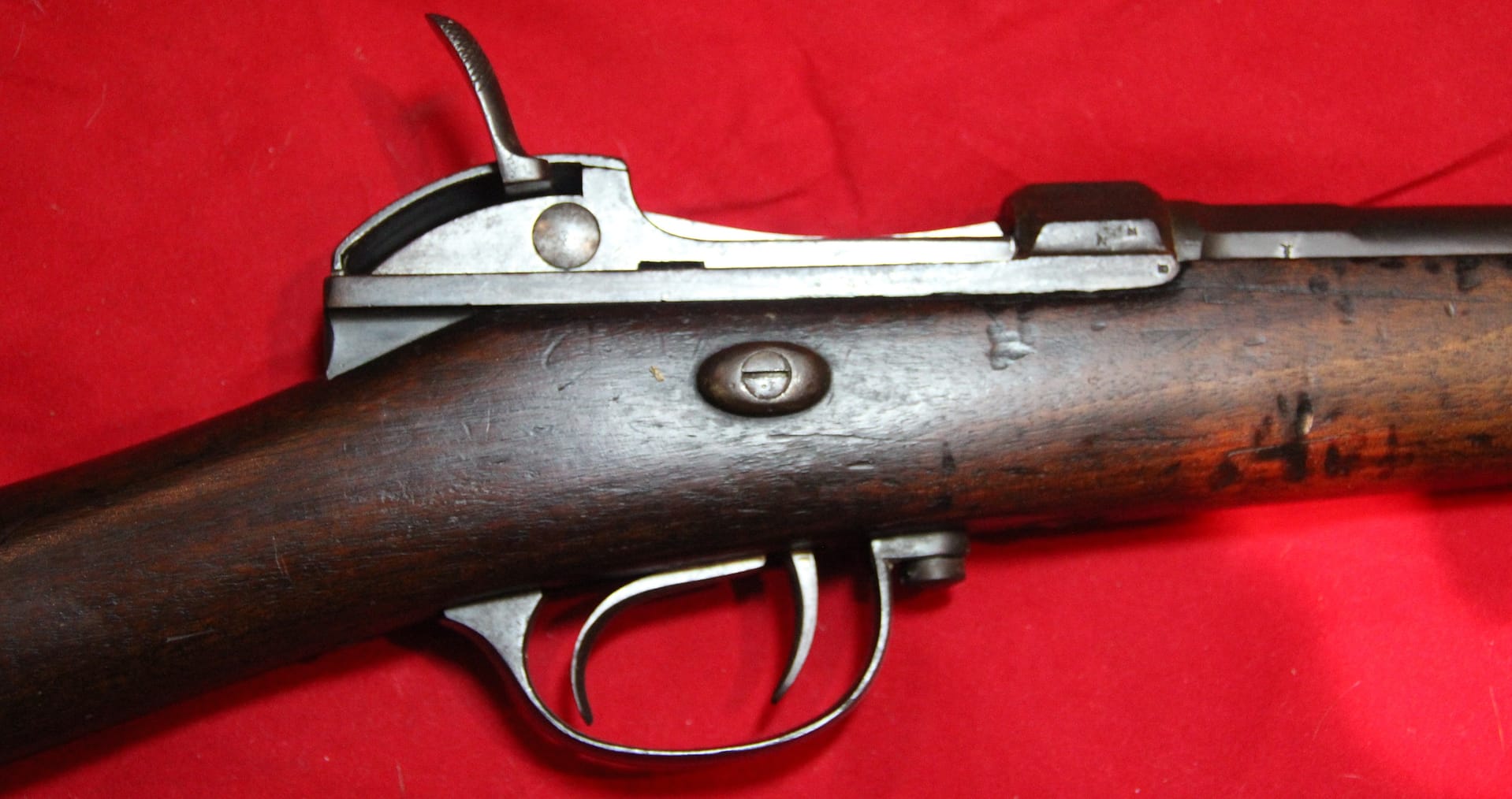
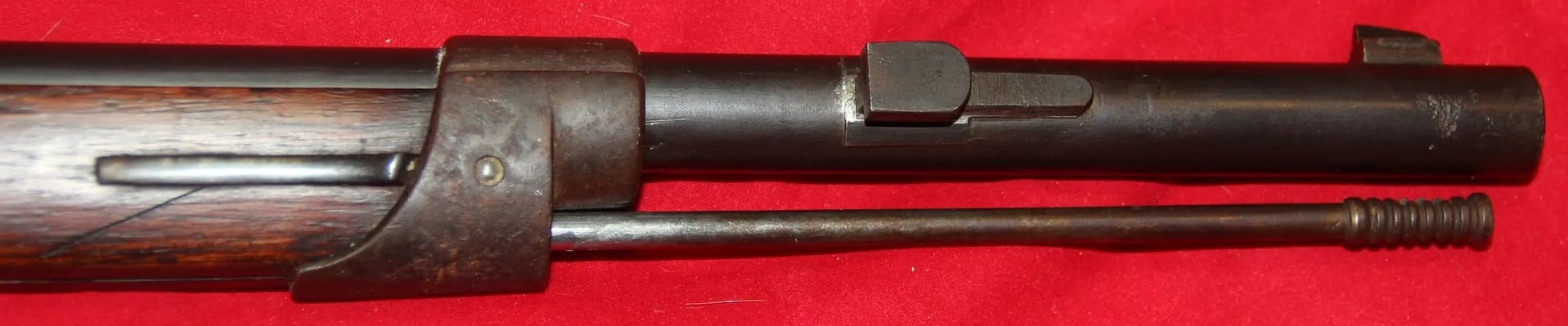
Bavarian Model 1869 Werder ‘Blitzgewehr'(Lightning Rifle). From my personal collection.
The Bavarian Model 1869 Werder rifle, nicknamed the Blitzgewehr (“Lightning Rifle”), was a single-shot, metallic-cartridge breechloader firing an 11mm round. Its robust falling-block action permitted rapid, reliable fire and represented a major technological step beyond needle-rifle systems. Although issued only to Bavarian troops, it saw successful service during the Franco-Prussian War of 1870–71. The Werder’s strength and accuracy made it highly regarded, though its weight and complex mechanism limited wider adoption within the unified German Empire.
Weapon data
Caliber: 11mm x 50R
Cartridge: 11mm x 50R self contained and primed brass rimmed cartridge. 386 grain projectile over 66 grains of black powder
Action: Falling block similar to Peabody or Martini. Opened by pressing front trigger forward. Closed by cocking hammer.
Rifling: Concentric 4-groove, right hand twist
Muzzle velocity: 445 metres per second
Maximum effective range (volley fire): 600 metres
Length: 1315mm
Barrel length: 890mm
Weight: 4.4KG
Sights:
– Werder leaf sight, graduated to 1,400 Schritt (paces).
– Aptiertes modification: M1871 Mauser rear sight initially graduated from 100 to 1,400 m (110 to 1,530 yds) , then extended to 1,600 m (110 to 1,745 yds)


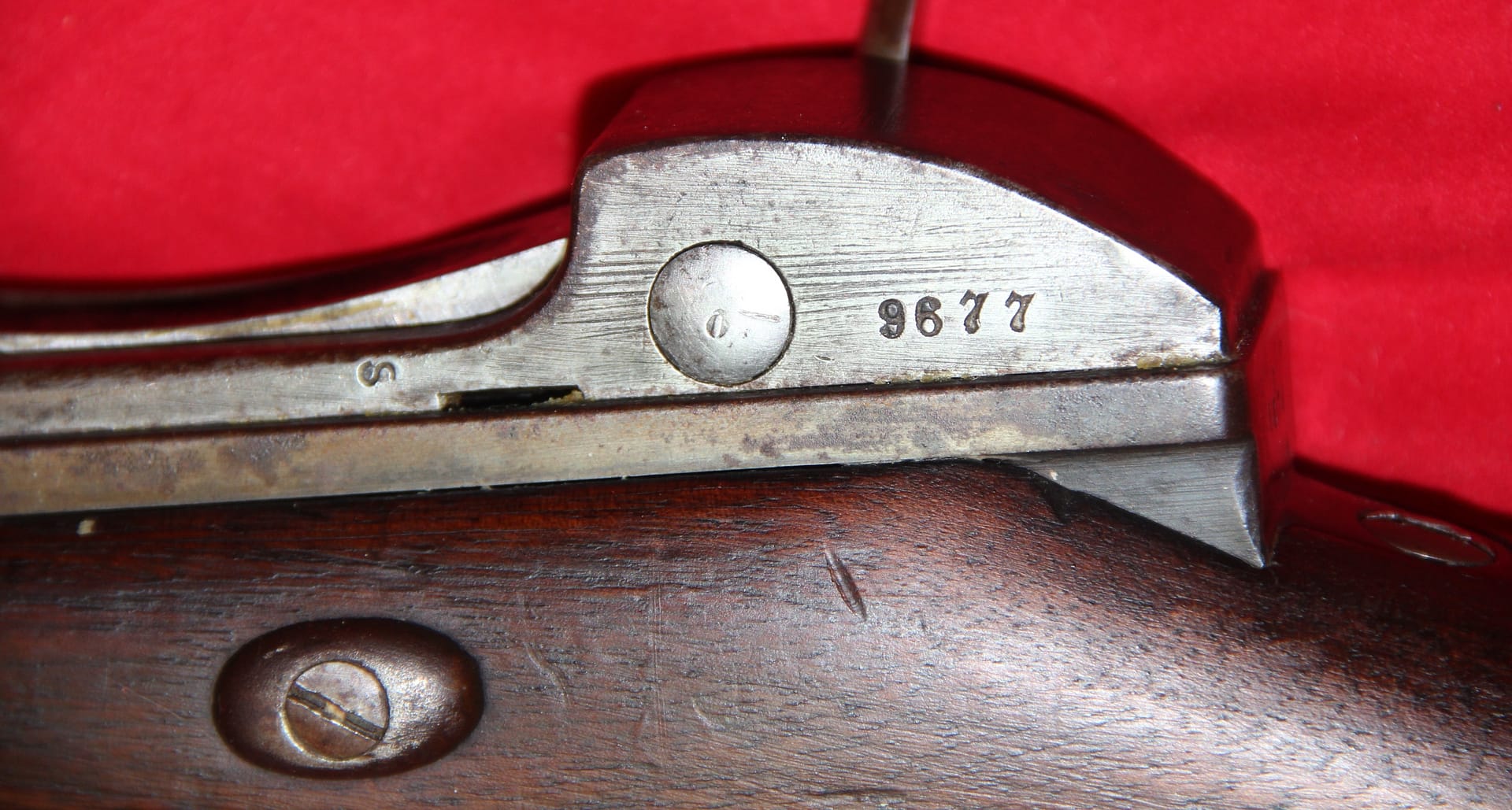
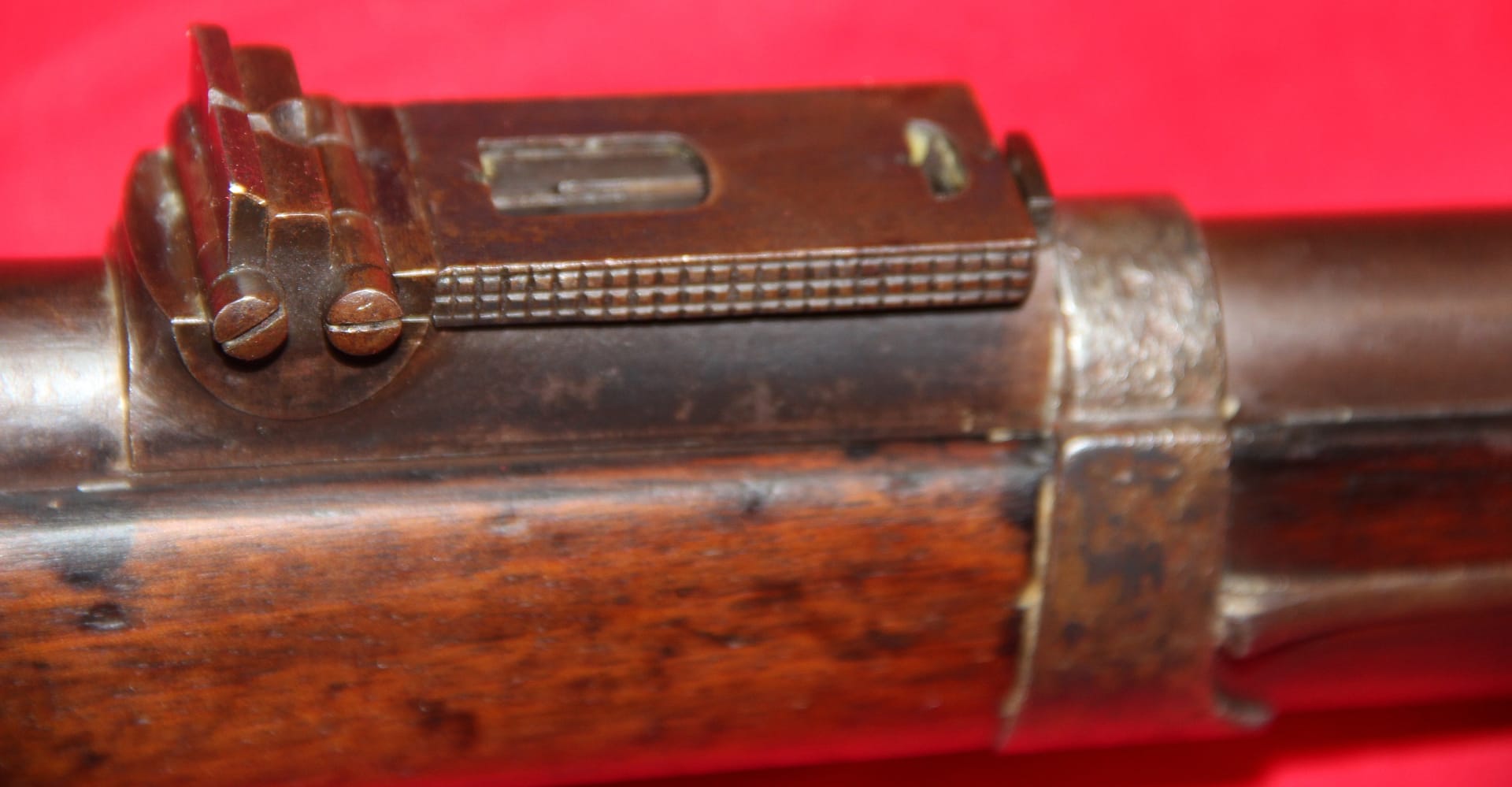
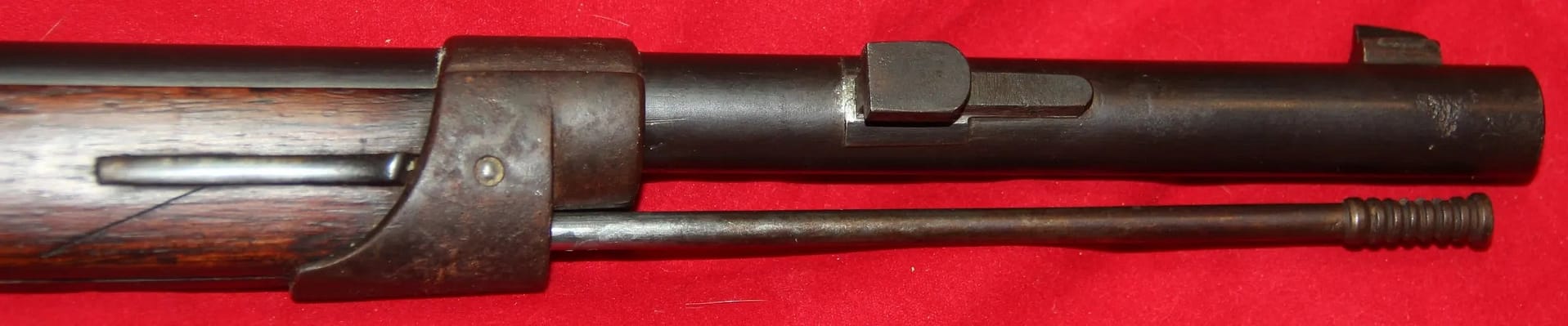
Bavarian Podewils M/58–67 Breech-Loading Rifle. From my personal collection.
The Podewils M/58–67 was a conversion of the Bavarian Model 1858 percussion rifle-musket to a breech-loading system using a hinged breech mechanism and metallic cartridge. Retaining a calibre of approximately 13.9 mm (.54), the conversion was undertaken to modernise existing stocks as European armies rapidly adopted breech-loading infantry arms. Manufactured and converted at Bavarian state arsenals, the rifle saw service with Bavarian troops during the Franco-Prussian War (1870–71). Although an improvement over muzzle-loading arms, it was quickly superseded by purpose-built breech-loaders such as the Werder rifle, reflecting the rapid pace of firearms development in this period.
Weapon data
Caliber: 13.9mm
Cartridge: . 426 grain projectile over 70 grains of black powder. Combustible paper cartridge, speparately primed.
Action: Bolt action with interrupted thread. Separately primed with a percussion cap on nipple.
Rifling: Concentric 4-groove, right hand twist
Muzzle velocity: 445 metres per second
Maximum effective range (volley fire): 600 metres
Length: 1300mm
Barrel length: 900mm
Weight: 4.6KG
Sights:


🧭 From Weapons to Battlefield Use
This page shows weapons and equipment of the Franco-Prussian War. All items are from my personal collection.
But what images and data don’t show is how these weapons were actually used on the ground—how weapon characteristics, tactics, innovation, terrain, and movement shaped their effectiveness in battle.
👉 That layer—how firepower, tactics, and terrain interact in real engagements—is explored in:
⚔️Battlefield Studies ◊ 💡Tactical Innovations ◊ 📝Field Notes
French Weapons of the Franco-Prussian War
French Model 1866 Chassepot needle-rifle, 1st Type. From my personal collection.
The French Model 1866 Chassepot rifle was a bolt-action, paper-cartridge breechloader firing an 11mm round at high velocity. With excellent accuracy and range, it outperformed the Prussian Dreyse in almost every ballistic category. However, fragile cartridges and gas-leakage remained issues. At battles such as Wissembourg and Gravelotte, the Chassepot inflicted severe casualties at long distances, shaping early engagements of the Franco-Prussian War. It remained in service until replaced by the metallic-cartridge Gras rifle in 1874.
In collecting communites there is an urban legend that the Prussians ground away the French arsenal markings on captured Chassepots. This is not correct. 1st pattern, early production Chassepots like this one (1867), did not have the arsenal markings on the left side of the receiver. Captured Chassepots (the Prussians captured more than one million) retain their arsenal markings – I have two of them.
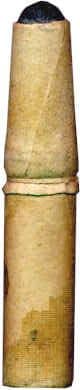
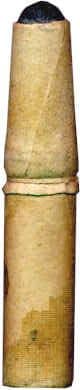
At right – Chassepot cartridge
Weapon data
Caliber: 11.43mm (0.45″)
Cartridge: 386 grain projectile over 86 grains of black powder. Self-contained combustible paper cartridge, Primer in base of cartridge.
Action: Bolt action with compressible rubber obturator behind bolt head, compresses for sealing breech.
Rifling: Concentric 4-groove, right hand twist, 1 turn in 550mm
Muzzle velocity: 435 metres per second
Maximum effective range (volley fire): 600 metres
Length: 1300mm
Barrel length: 825mm
Weight: 4.1KG
Sights: ramp leaf sight graduated from 200 to 1200 metres in 100 metre increments


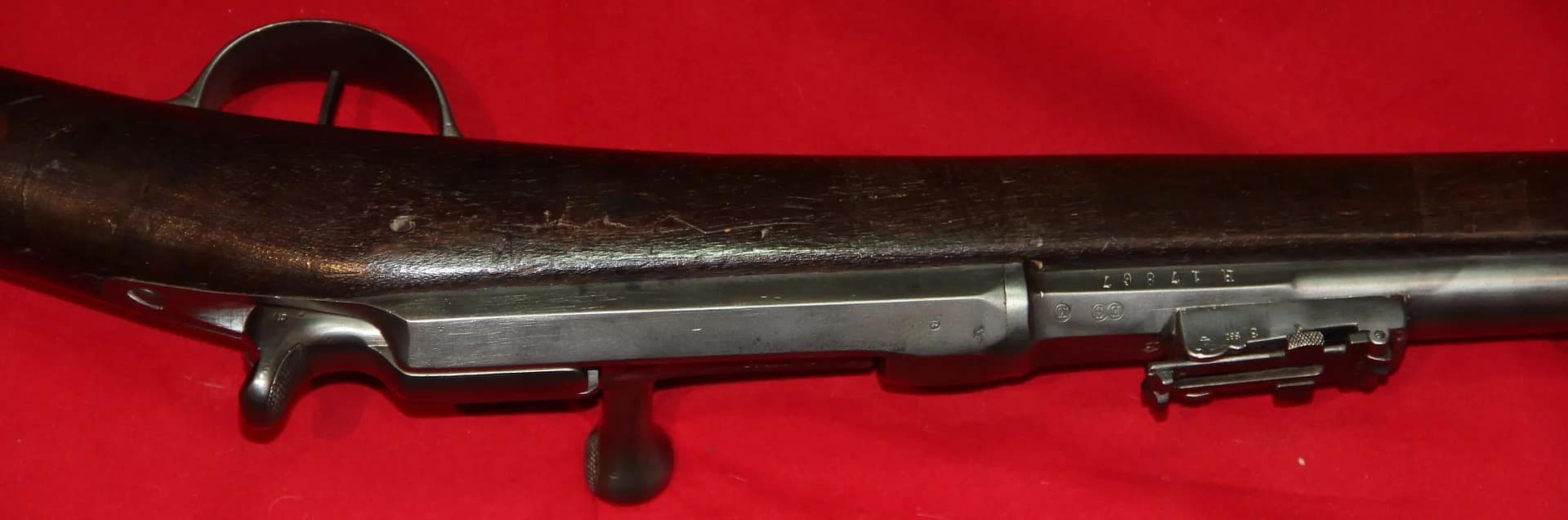
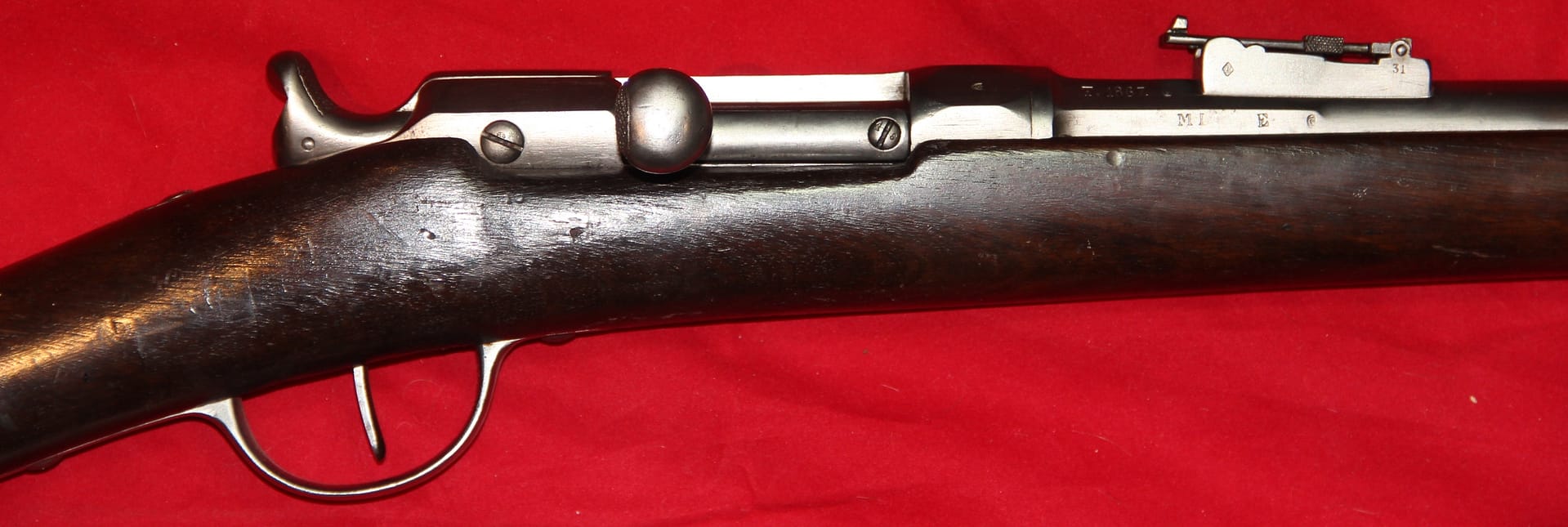
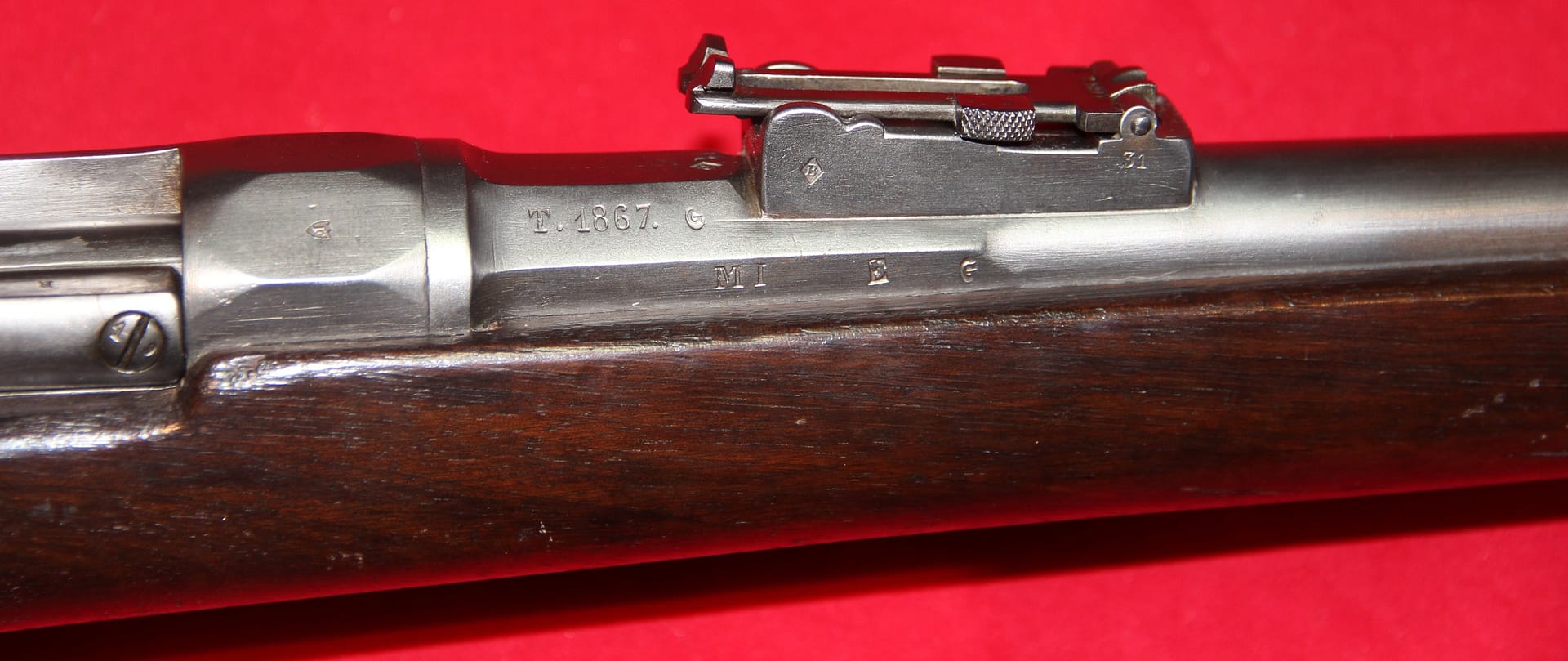
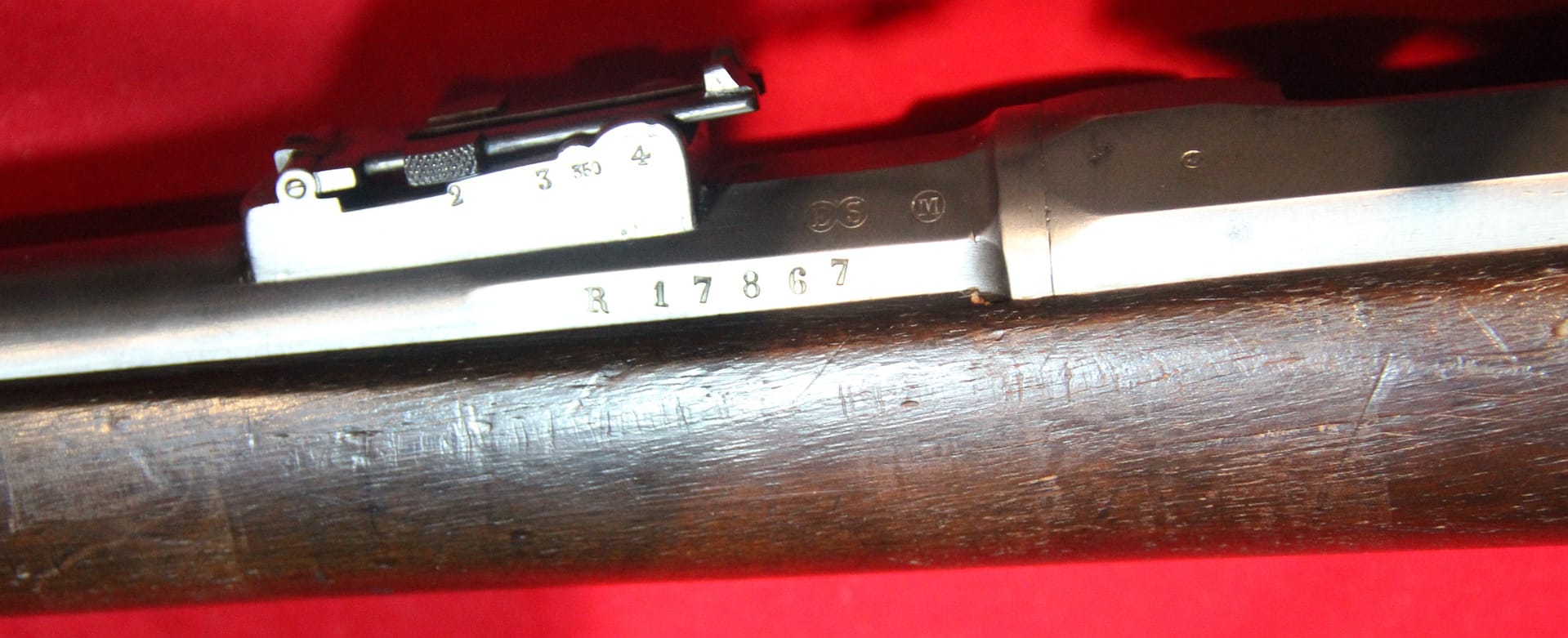
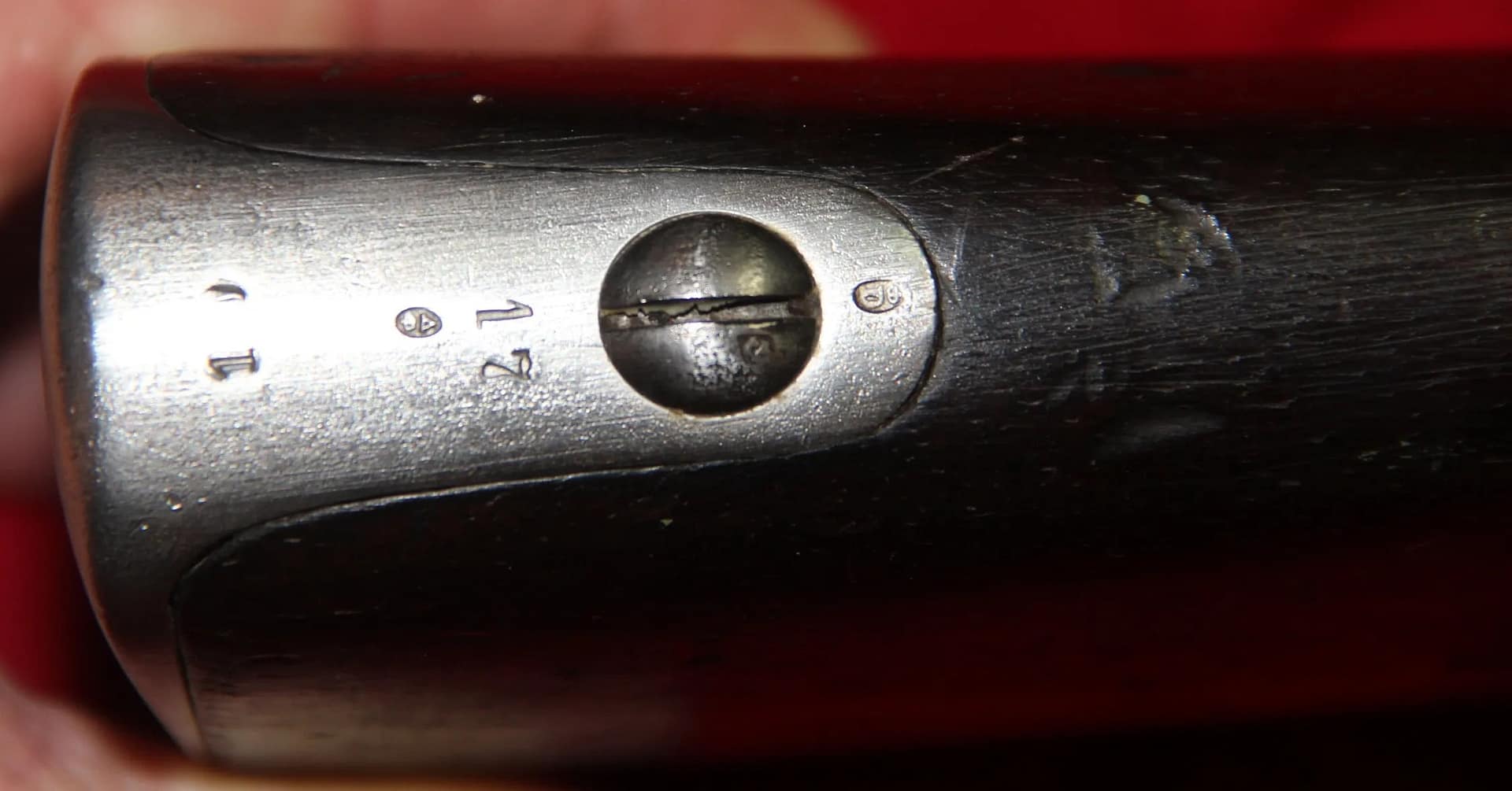
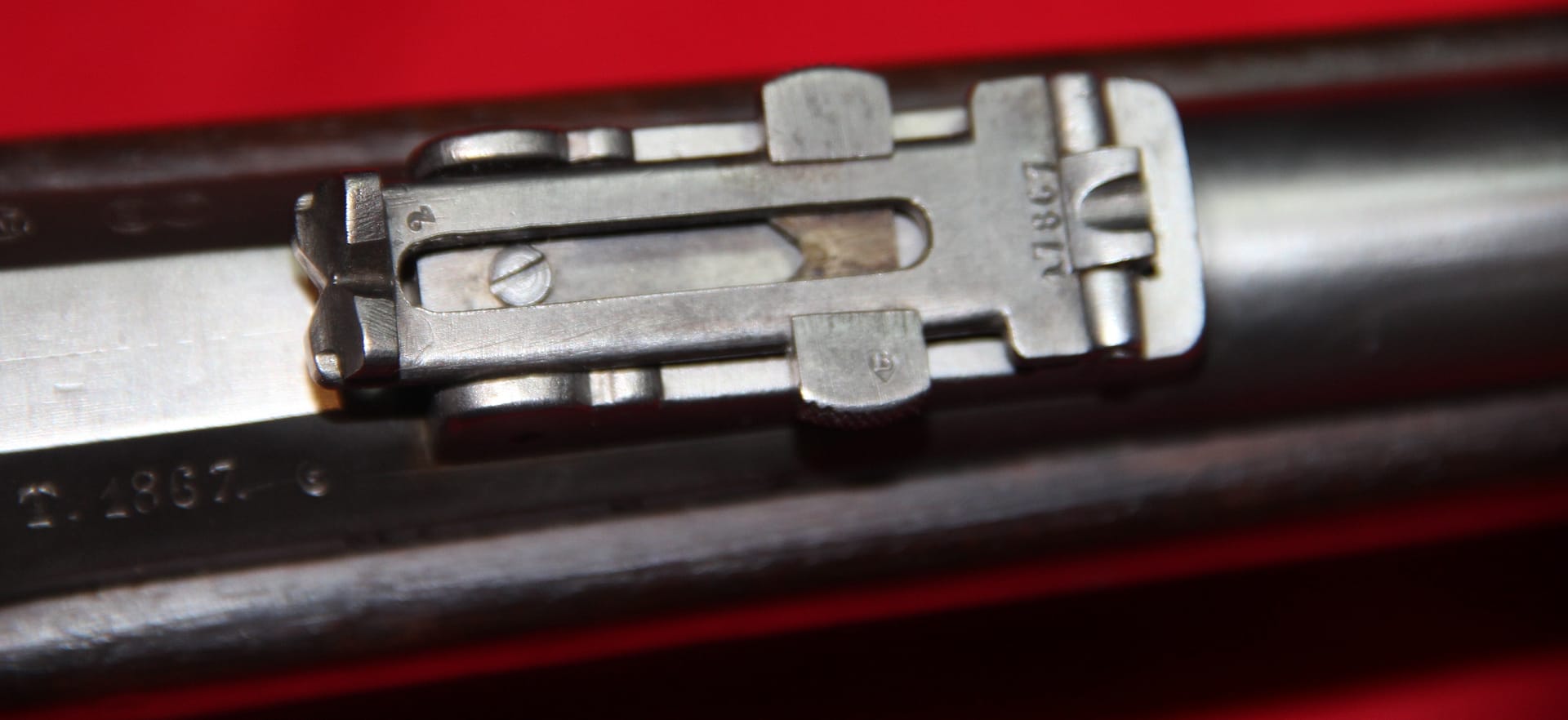
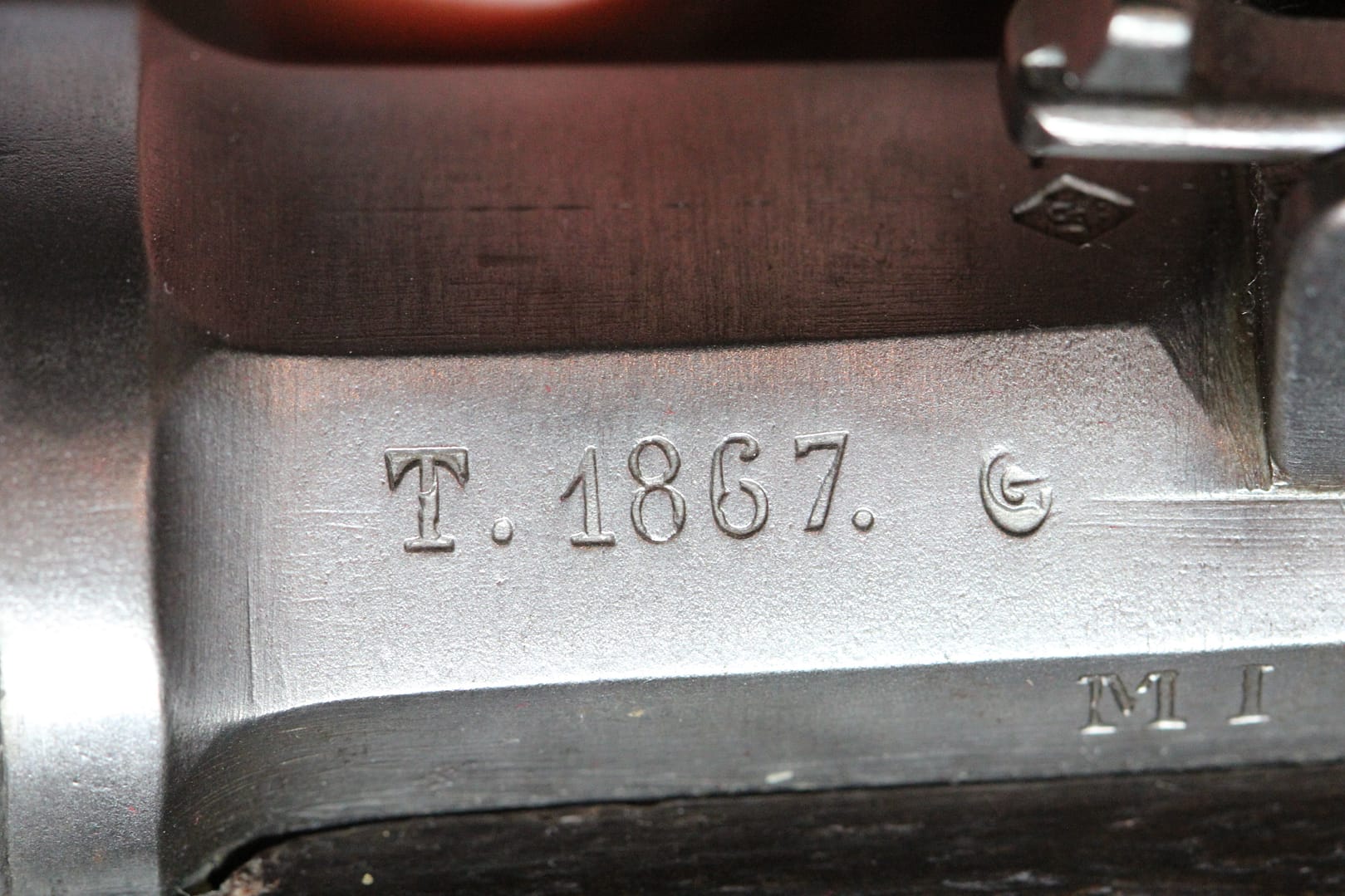
French Model 1866 Chassepot needle-rifle. Near mint example, later production. From my personal collection.
The French Model 1866 Chassepot rifle was a bolt-action, paper-cartridge breechloader firing an 11mm round at high velocity. With excellent accuracy and range, it outperformed the Prussian Dreyse in almost every ballistic category. However, fragile cartridges and gas-leakage remained issues. At battles such as Wissembourg and Gravelotte, the Chassepot inflicted severe casualties at long distances, shaping early engagements of the Franco-Prussian War. It remained in service until replaced by the metallic-cartridge Gras rifle in 1874.
Weapon data
Caliber: 11.43mm (0.45″)
Cartridge: 386 grain projectile over 86 grains of black powder. Self-contained combustible paper cartridge, Primer in base of cartridge.
Action: Bolt action with compressible rubber obturator behind bolt head, compresses for sealing breech.
Rifling: Concentric 4-groove, right hand twist, 1 turn in 550mm
Muzzle velocity: 435 metres per second
Maximum effective range (volley fire): 600 metres
Length: 1300mm
Barrel length: 825mm
Weight: 4.1KG
Sights: ramp leaf sight graduated from 200 to 1200 metres in 100 metre increments


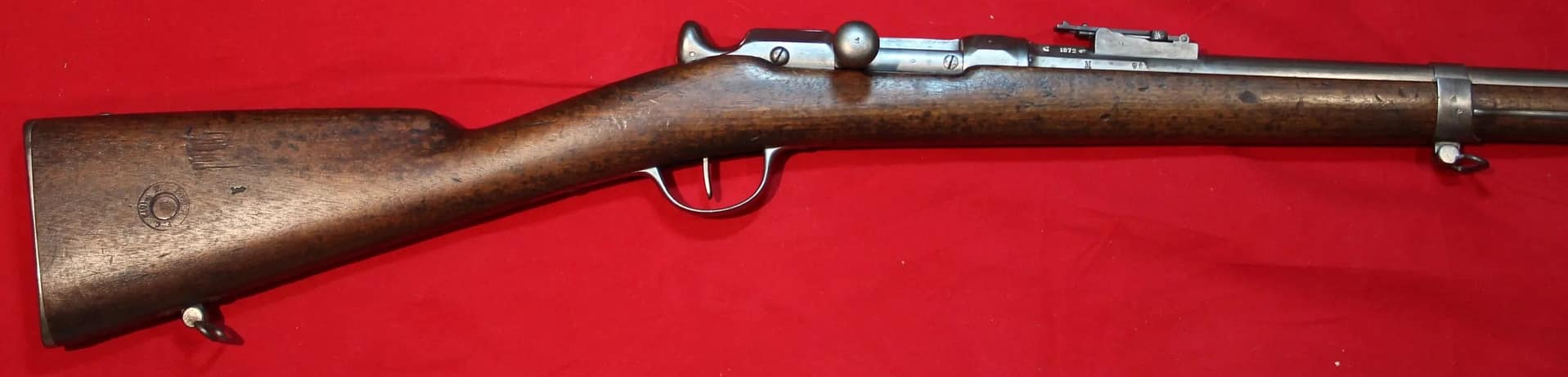
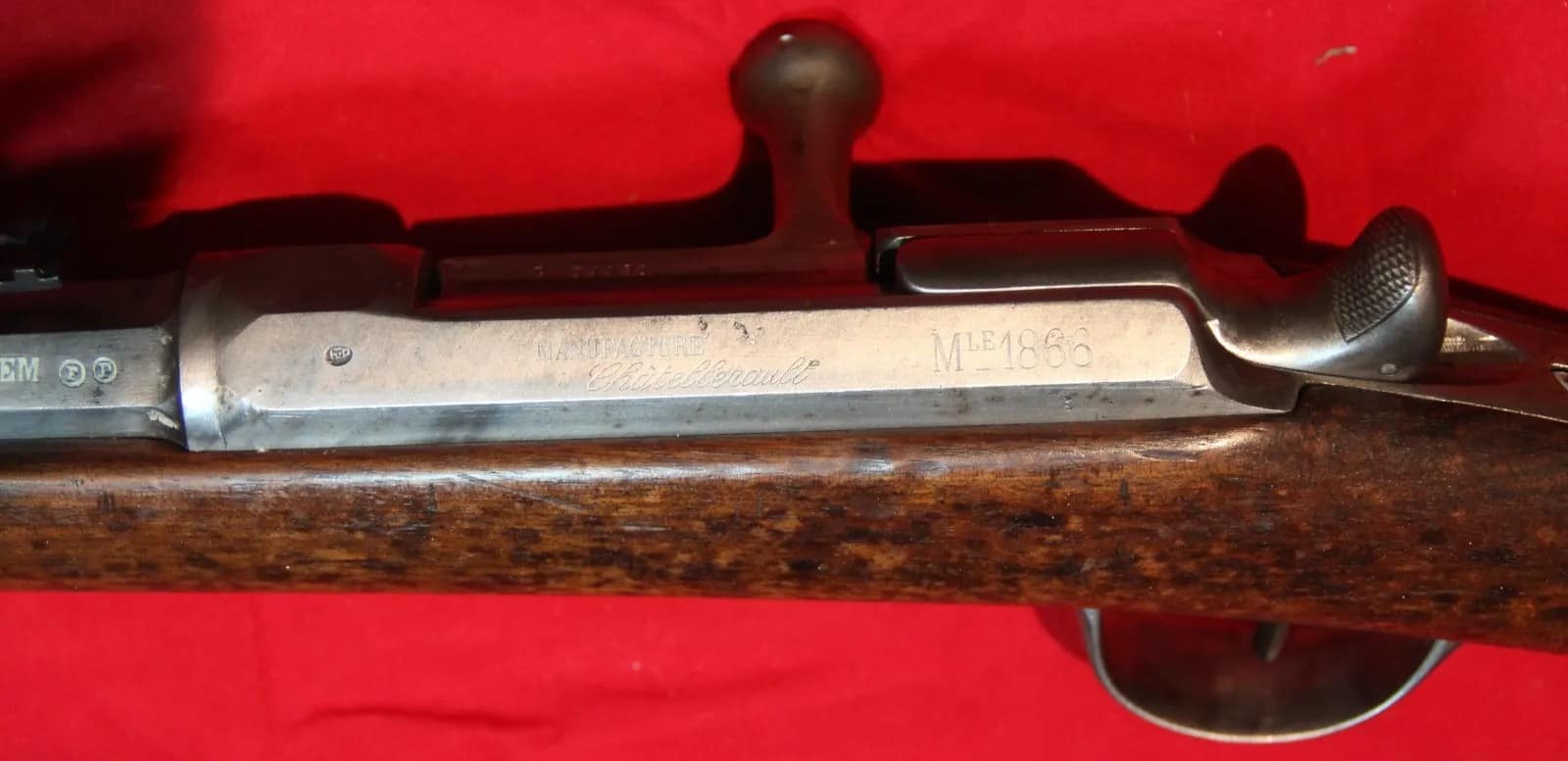
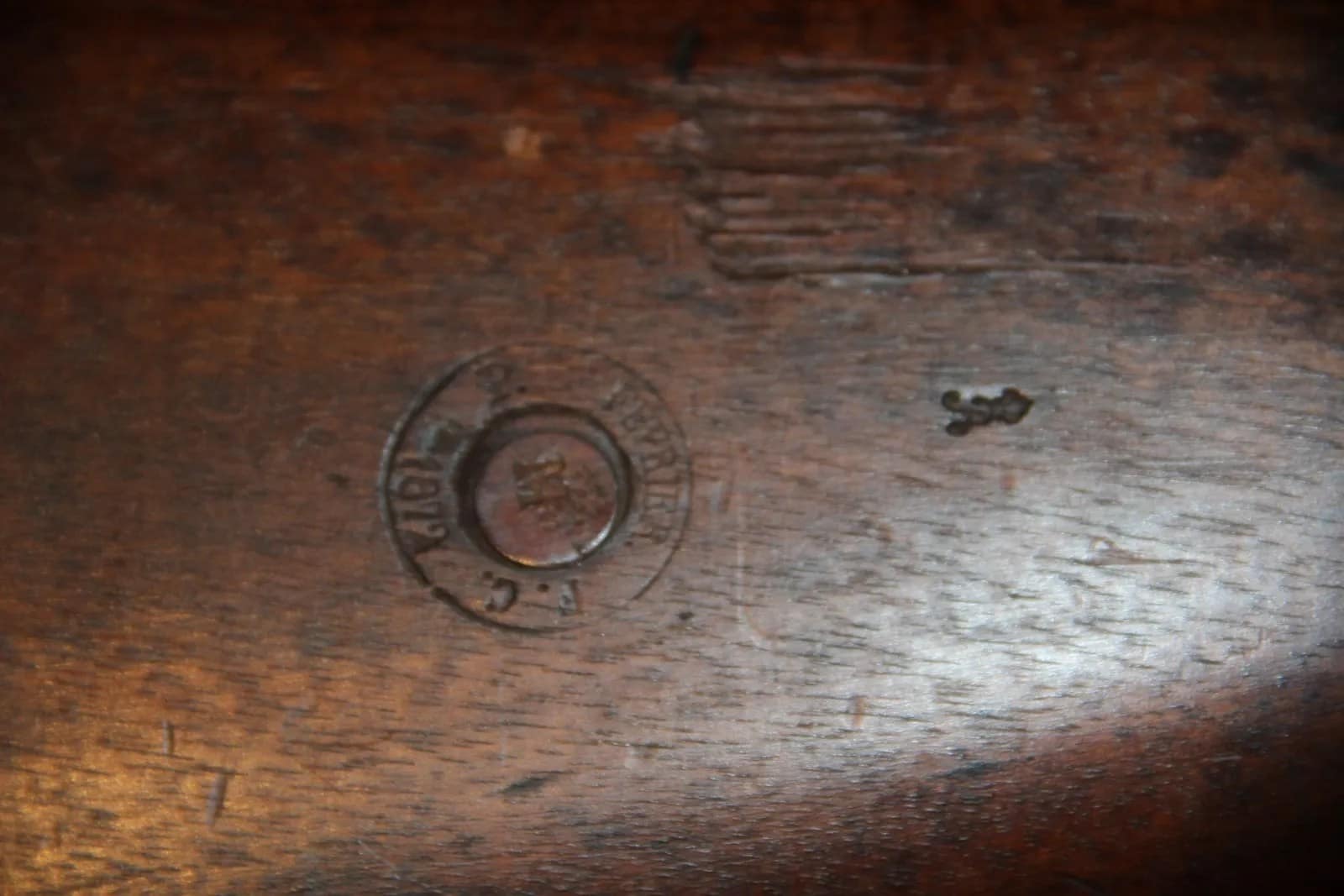
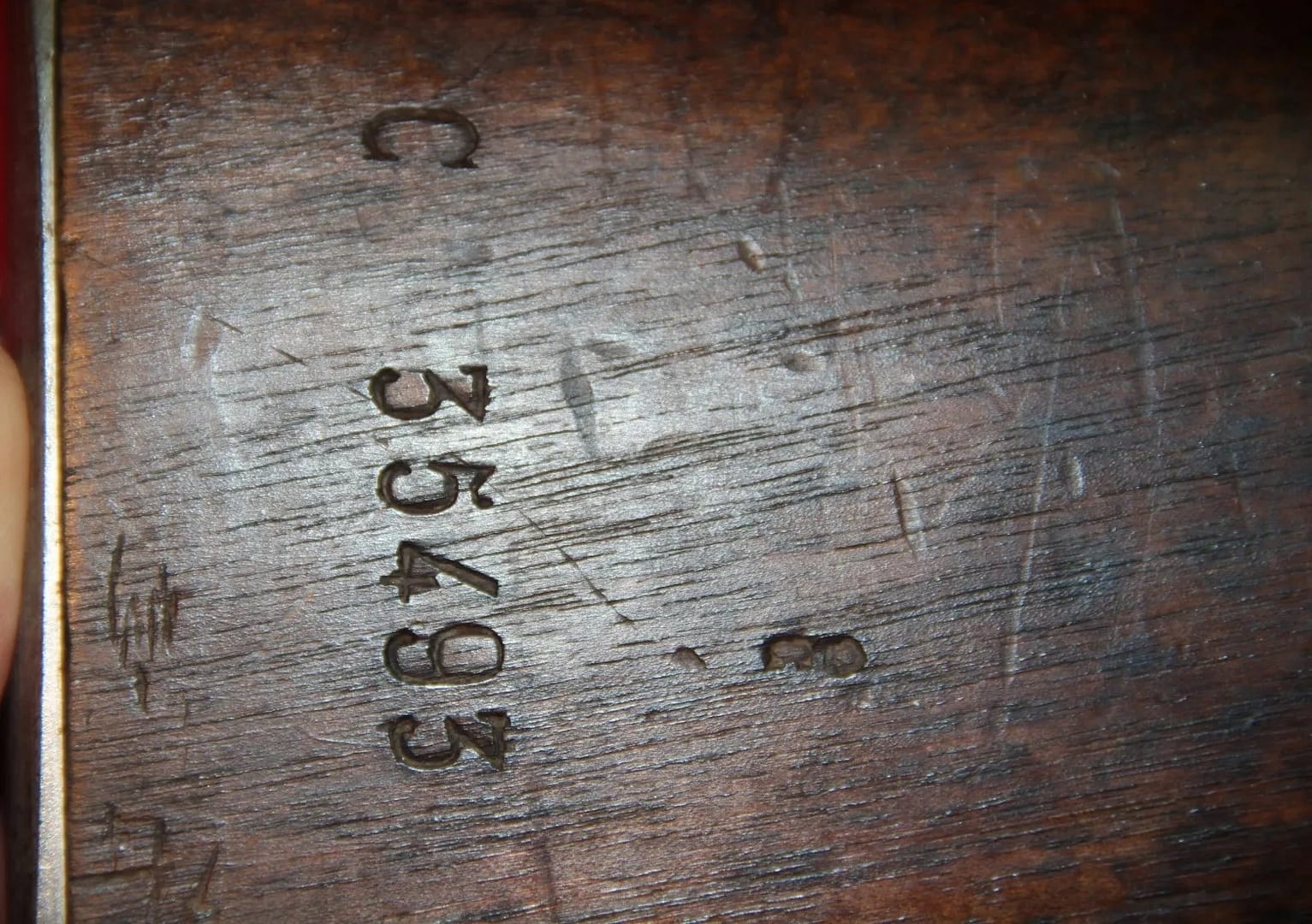
French Model 1853/67 Tabatiere Snider-action breechloader. From my personal collection
The French Tabatière rifle was a conversion of the 1853 percussion musket, retrofitted with a hinged “snuffbox” (tabatière) breech system to accept a metallic cartridge. Intended as an economical stopgap until modern breechloaders became widely available, it equipped National Guard and second-line troops during the 1870 campaign. While rugged and simple, it lacked the range, velocity, and firepower of the Chassepot. The Tabatière illustrates France’s rapid transition from muzzle-loaders to cartridge rifles during the 1860s.
Weapon data
Caliber: 18x35mmR
Cartridge: 18x35mmR, self-contained cartridge constructed similarly to a shotgun shell, with a copper base with either a brass or paper tube for the body. 555 grain conical projectile with 70 grains of black powdergrain
Action: Snider type hinged breech block.
Rifling: Concentric 4-groove, right hand twist, 1 turn in 550mm
Muzzle velocity: ~300 metres per second
Maximum effective range (volley fire): 600 metres
Length: 1422mm
Barrel length: 958mm
Weight: 4.45KG
Sights:Rear sight is a sliding ramp, graduated to 1000 metres
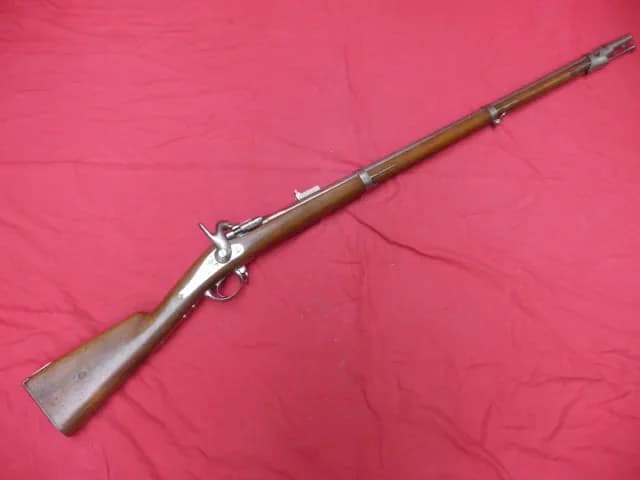
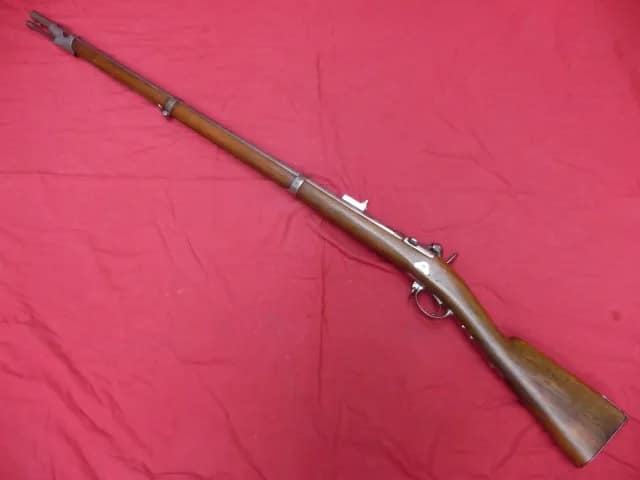
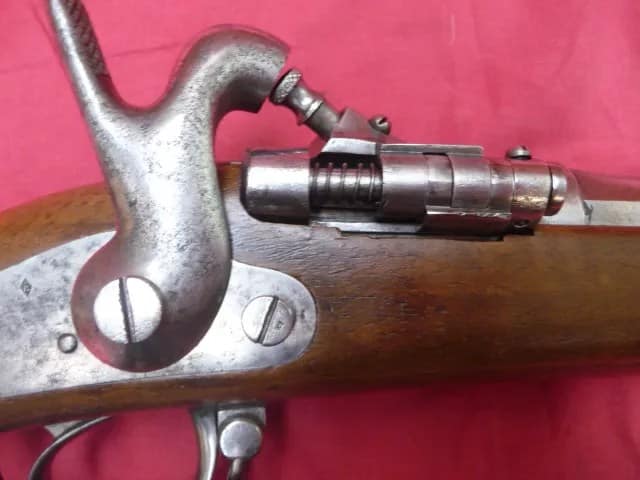
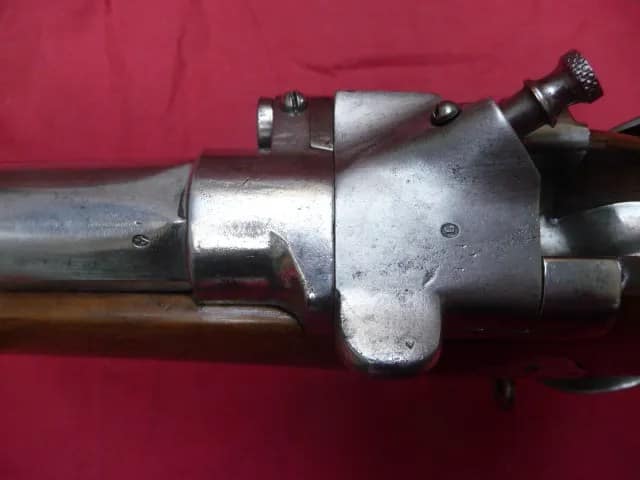
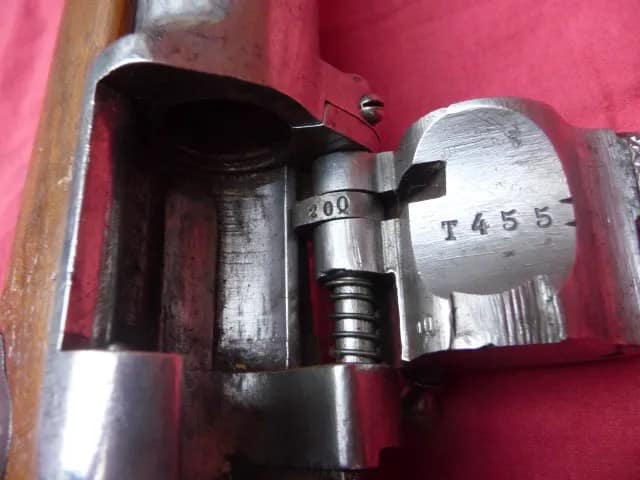
French Model 1866 Chassepot Cavalry Carbine (Nickel Fittings, Browned Barrel). From my personal collection.
The Chassepot Model 1866 cavalry carbine was a shortened variant of the French Mle 1866 bolt-action needle-fire rifle, chambered in 11 mm. Manufactured at state arsenals including Châtellerault, Saint-Étienne, and Tulle, it used a paper cartridge ignited by a long firing needle. Cavalry carbines were distinguished by nickel-plated brass fittings and a browned barrel to reduce glare and improve corrosion resistance in mounted service. Issued to French cavalry during the Franco-Prussian War (1870–71), the weapon combined the high velocity and flat trajectory of the Chassepot system with a more compact form suited to mounted troops.
Weapon data
Caliber: 11.43mm (0.45″)
Cartridge: 386 grain projectile over 86 grains of black powder. Self-contained combustible paper cartridge, Primer in base of cartridge.
Action: Bolt action with compressible rubber obturator behind bolt head, compresses for sealing breech.
Rifling: Concentric 4-groove, right hand twist, 1 turn in 550mm
Muzzle velocity: 435 metres per second
Maximum effective range (volley fire): 600 metres
Length: 1167mm
Barrel length: 680mm
Weight: 4.1KG
Sights: ramp leaf sight graduated from 200 to 1200 metres in 100 metre increments
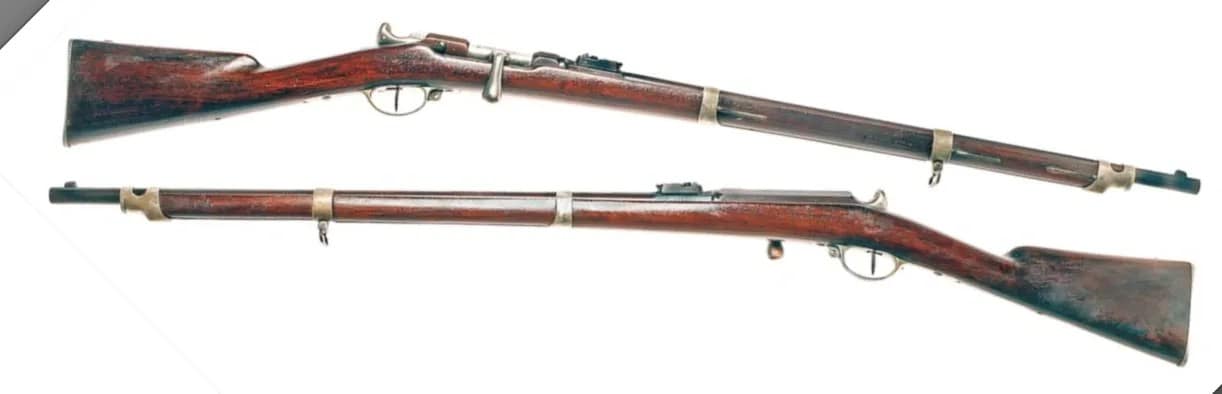
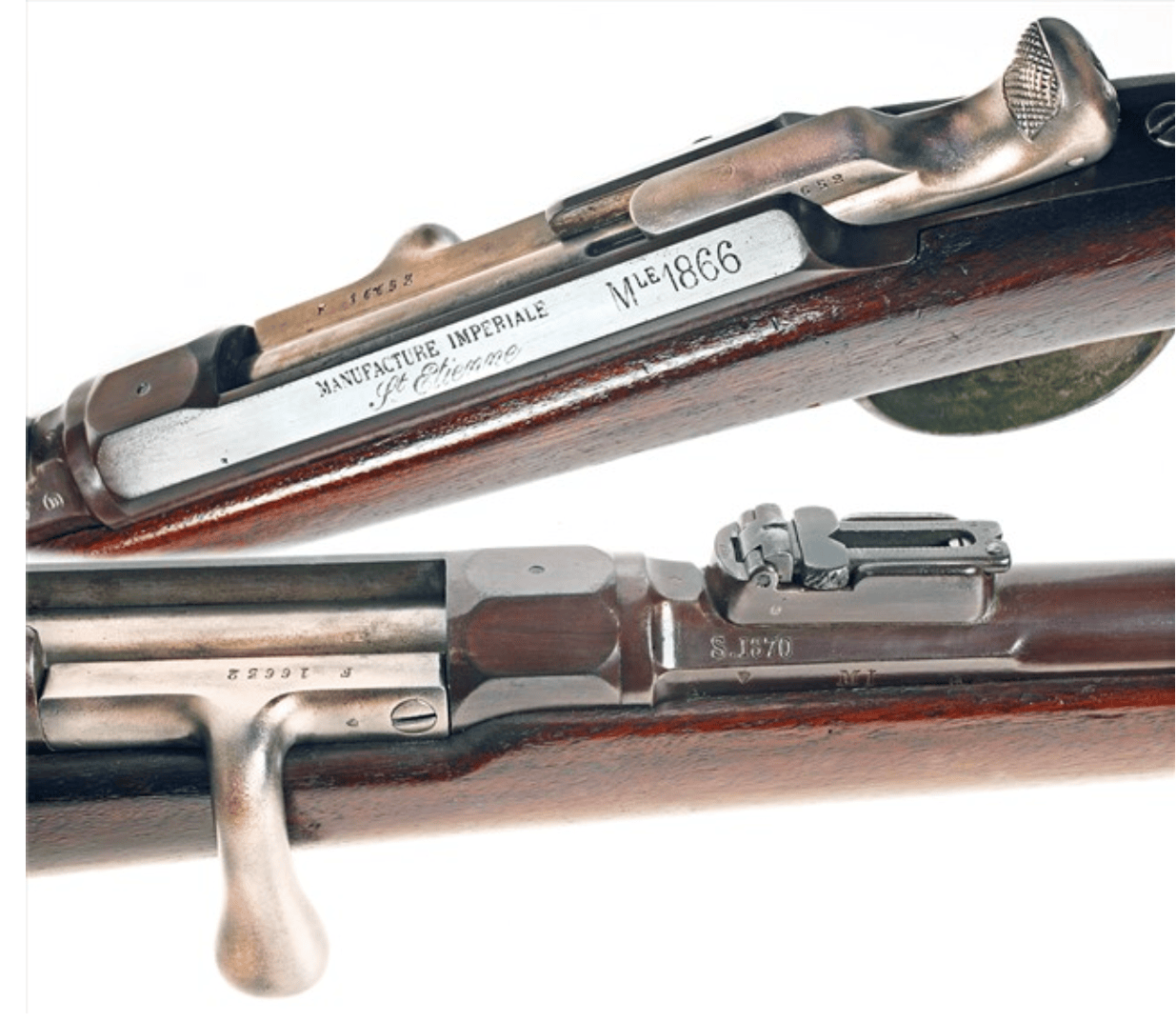
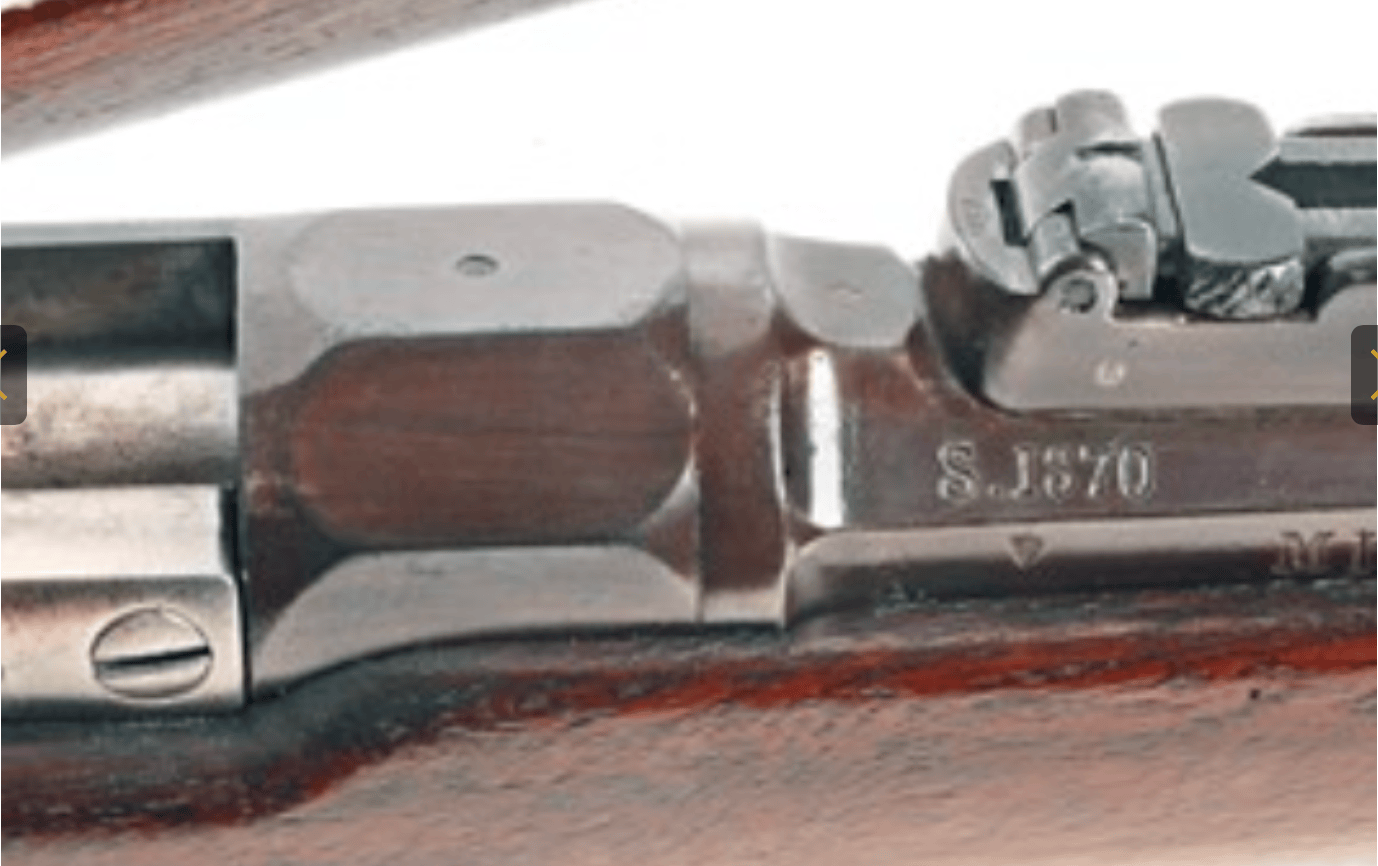
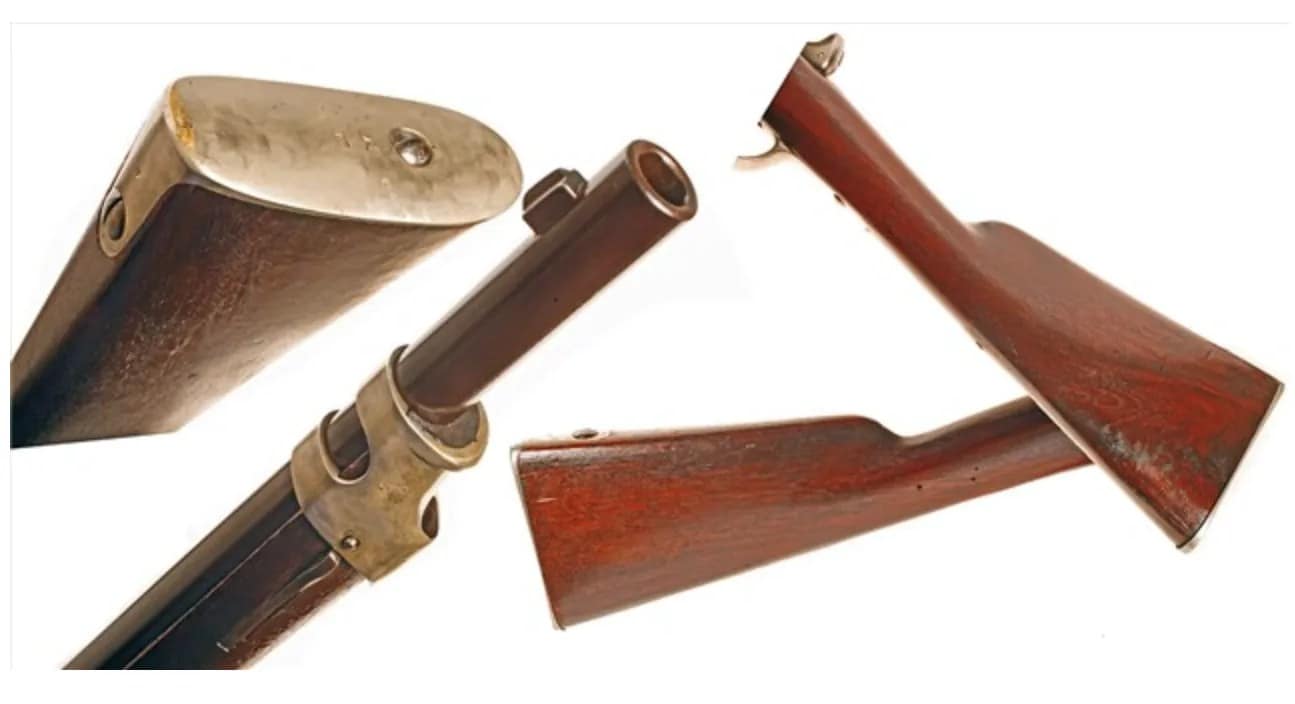
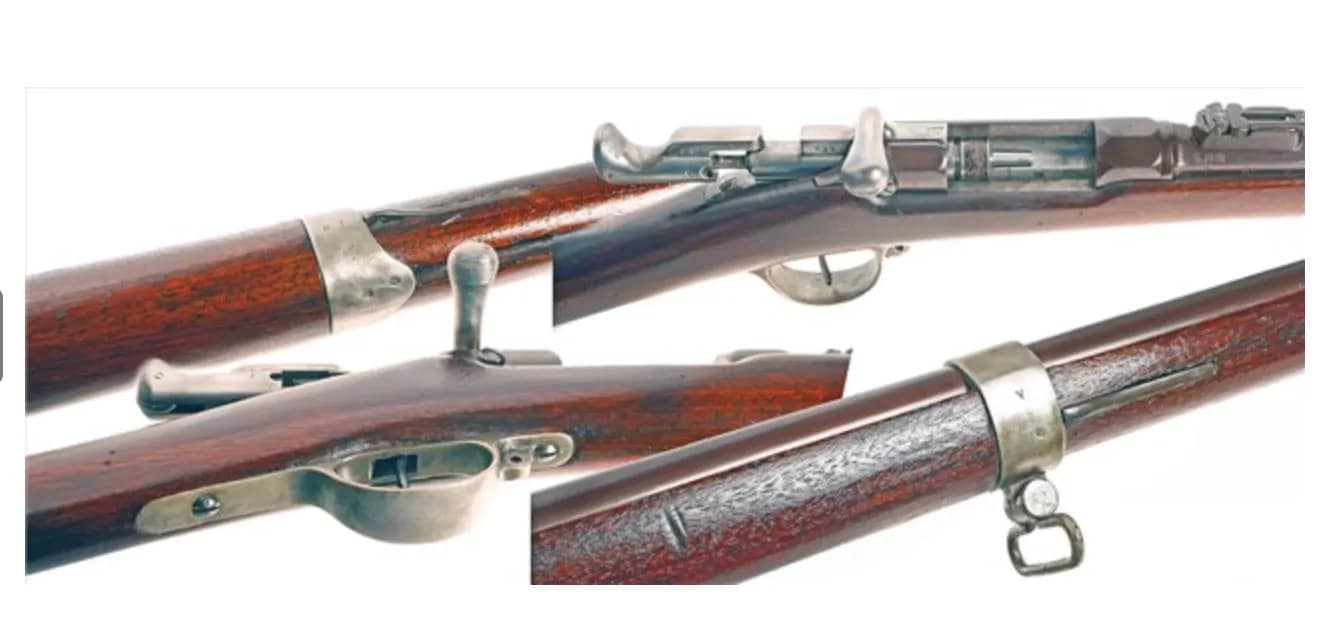
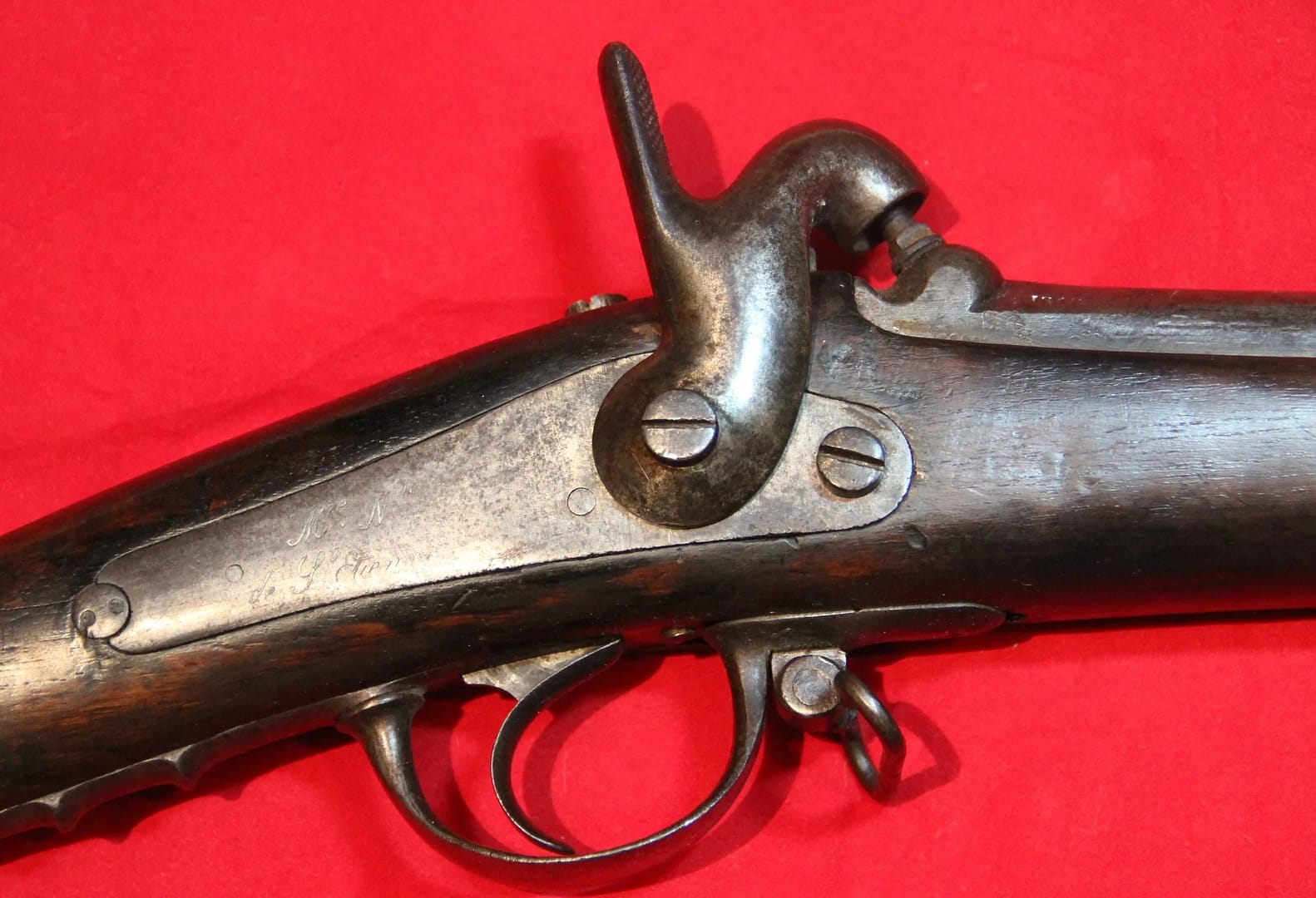
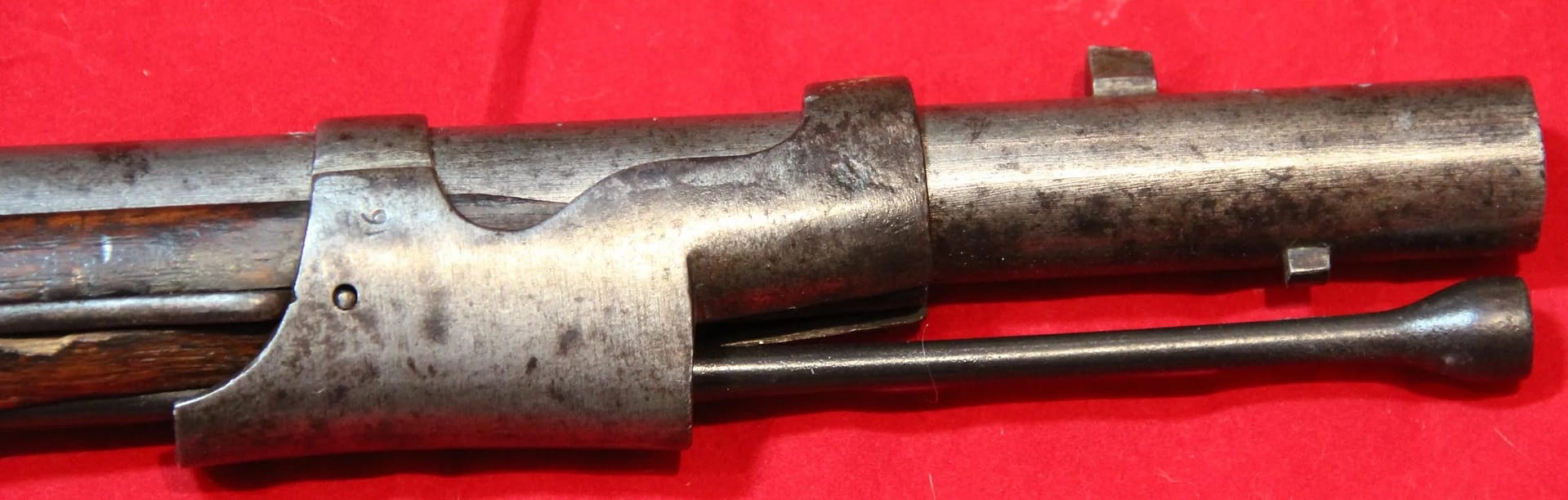
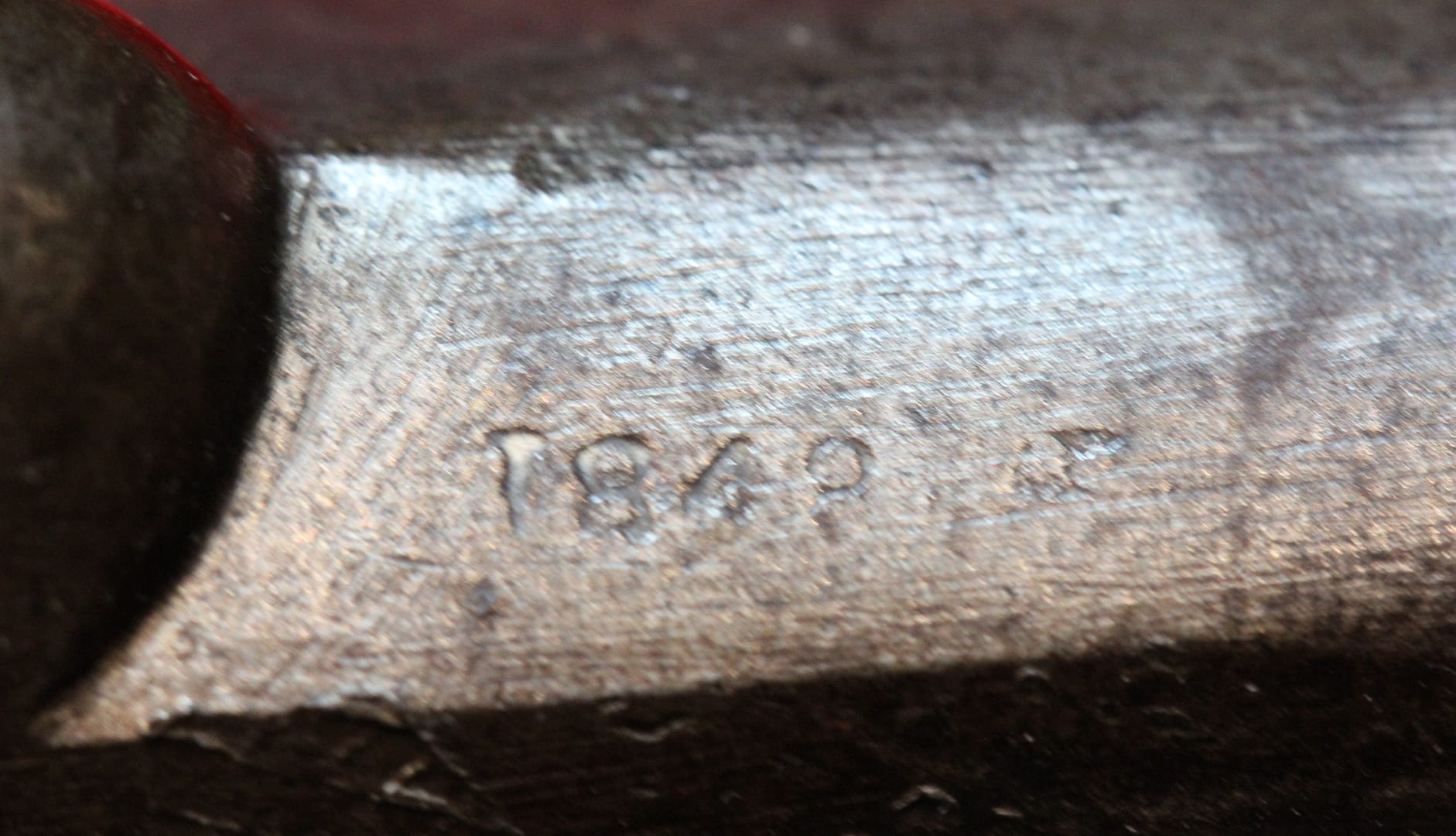
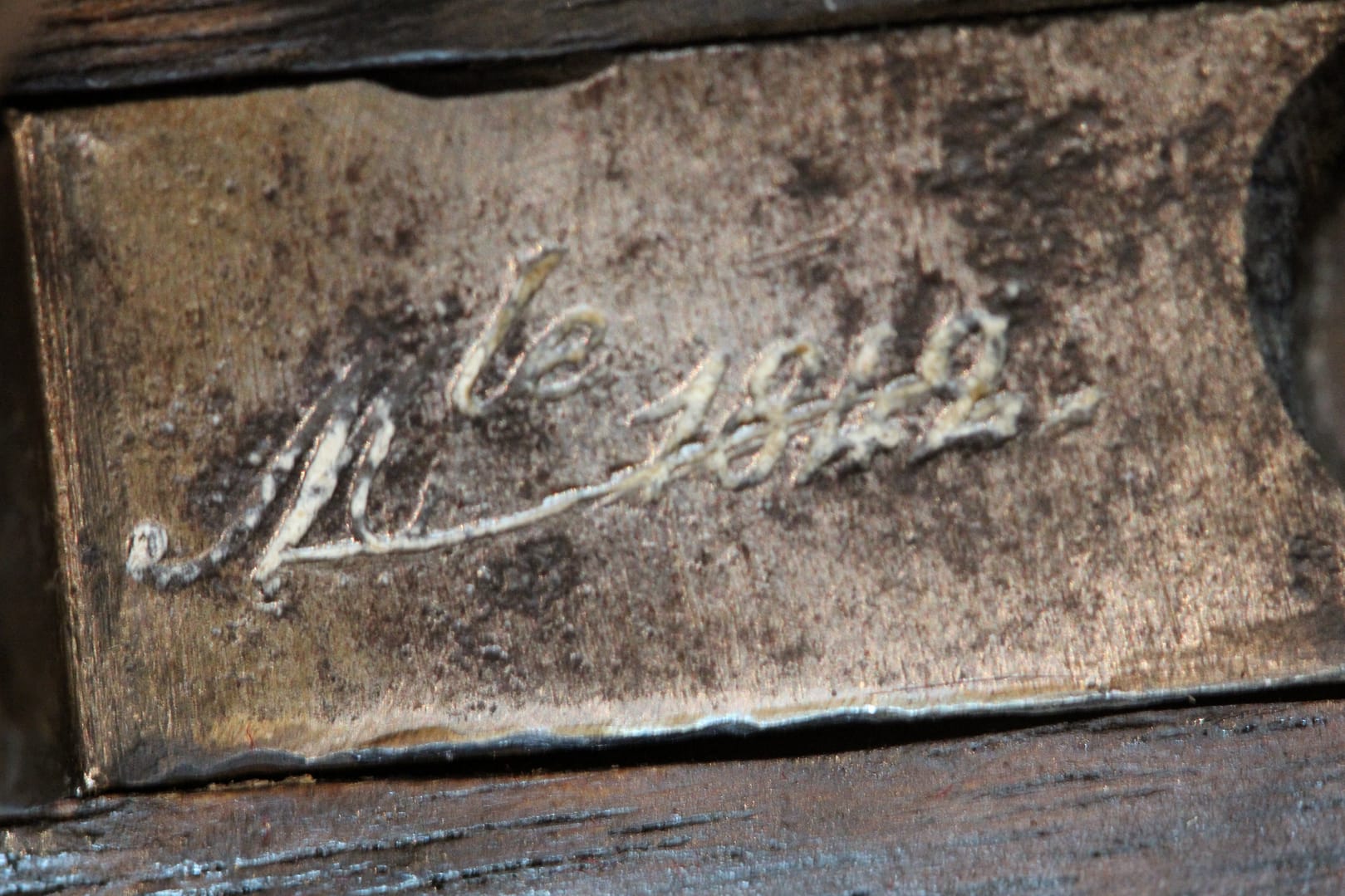
French Model 1842 Dragoon Rifled Percussion Musket
The French Model 1842 Dragoon musket was a percussion muzzle-loading firearm originally produced as a smoothbore of approximately 18 mm (.71 calibre) and later rifled to fire a conical Minié-type projectile. Manufactured at French state arsenals including Châtellerault, Saint-Étienne, and Tulle, it represented an important transitional weapon in the evolution of French small arms. Intended for mounted troops but also issued more broadly, rifled examples saw service during mid-19th-century conflicts and remained in use into the early years of the Franco-Prussian War (1870–71), particularly with reserve and second-line units as more modern breech-loaders entered service.
Weapon data
Caliber: .69″
Cartridge: .69″ Minie Ball, externally primed. 600-grain projectivle over 60-grains of black powder.
Action: Muzzle loading, percussion lock, separately primed
Rifling: Concentric 4-groove, right hand twist.
Muzzle velocity: 270 metres per second
Maximum effective range (volley fire): 400 metres
Length: 49″ (1244mm)
Barrel length: 33.5″ (850mm)
Weight: 4.1KG
Sights: fixed rear sight


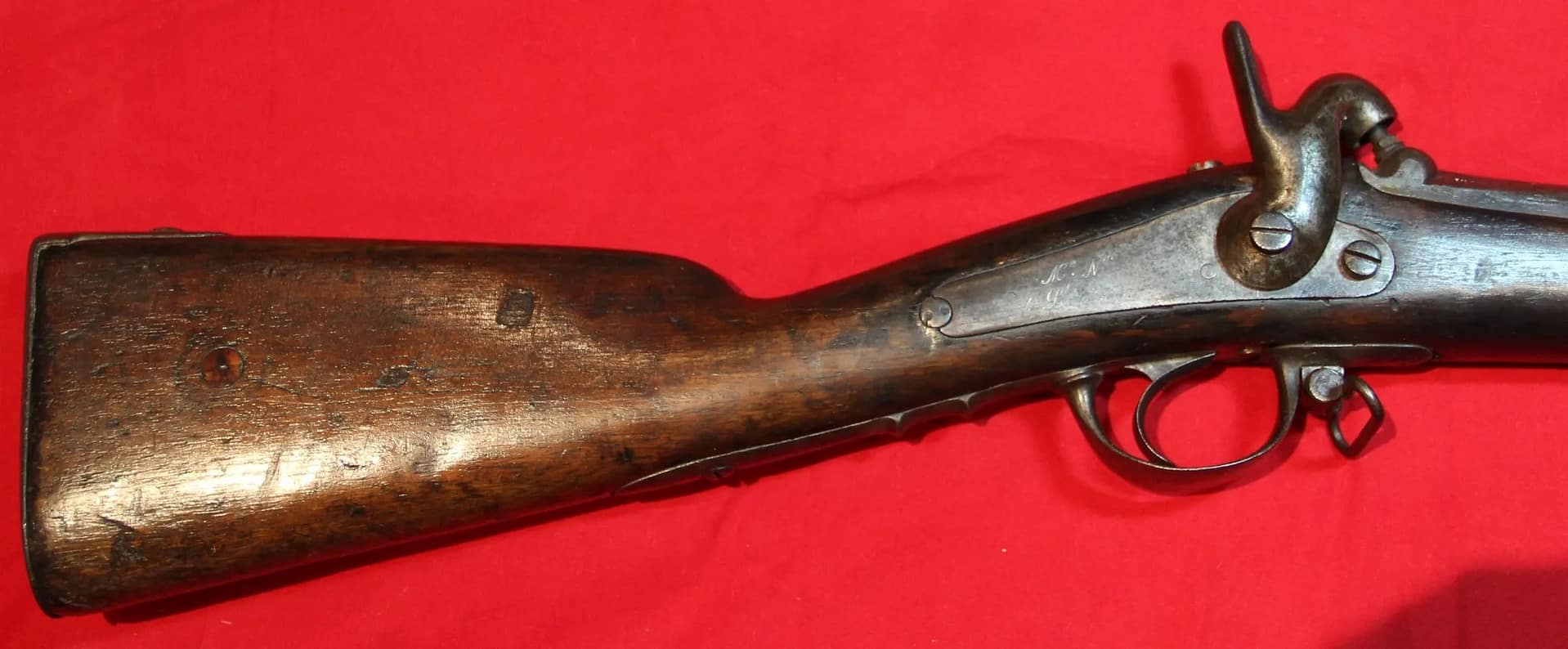
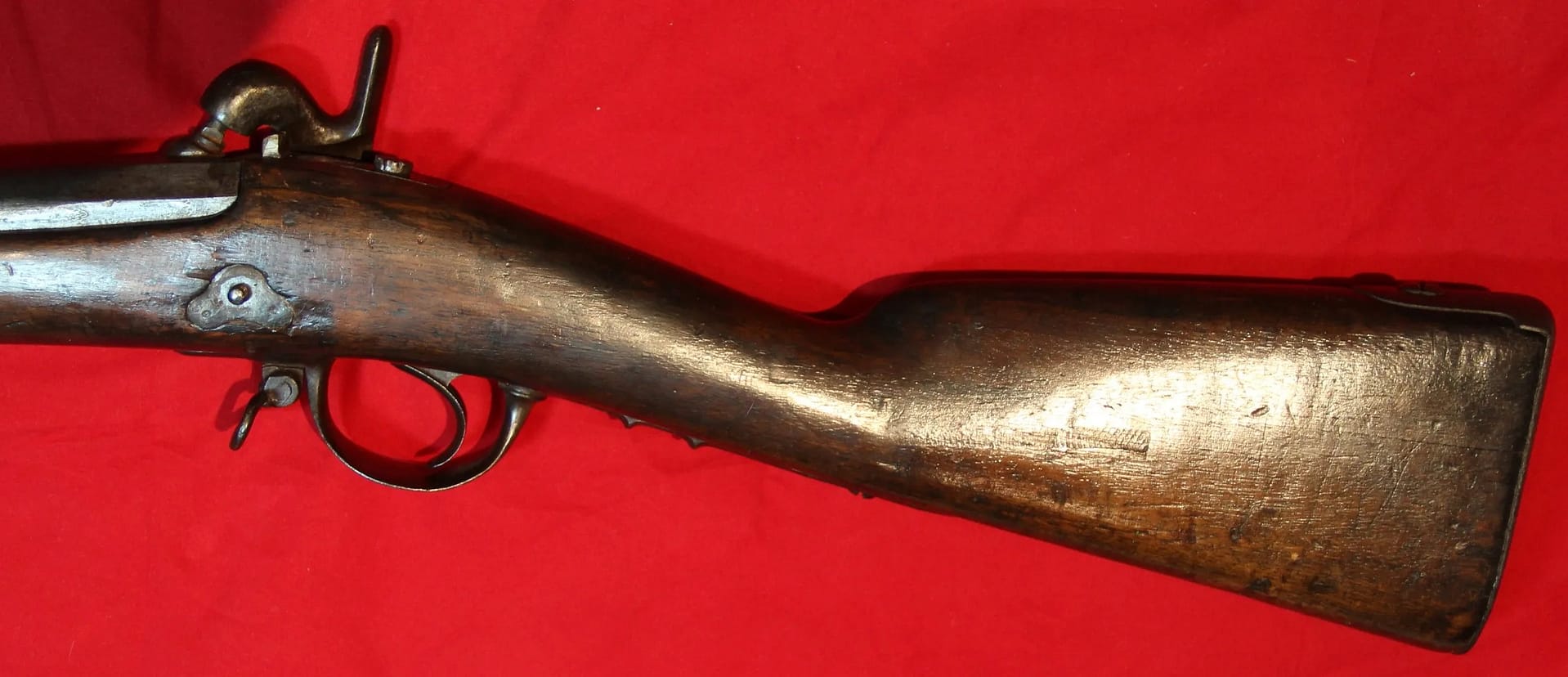
American Civil War Surplus Weapons in French Service (1870–71)
Following the collapse of the Imperial Army in 1870, the French Third Republic purchased large quantities of surplus American Civil War weapons to arm newly raised forces and the National Guard. These included Spencer repeating rifles and carbines, Sharps carbines, Remington rolling block rifles, and various percussion rifle-muskets of .58 and .577 calibre. While generally issued to second-line units rather than frontline Chassepot formations, these arms played an important role in rapidly equipping Republican forces during the emergency mobilisation, though ammunition supply and lack of standardisation limited their operational effectiveness.
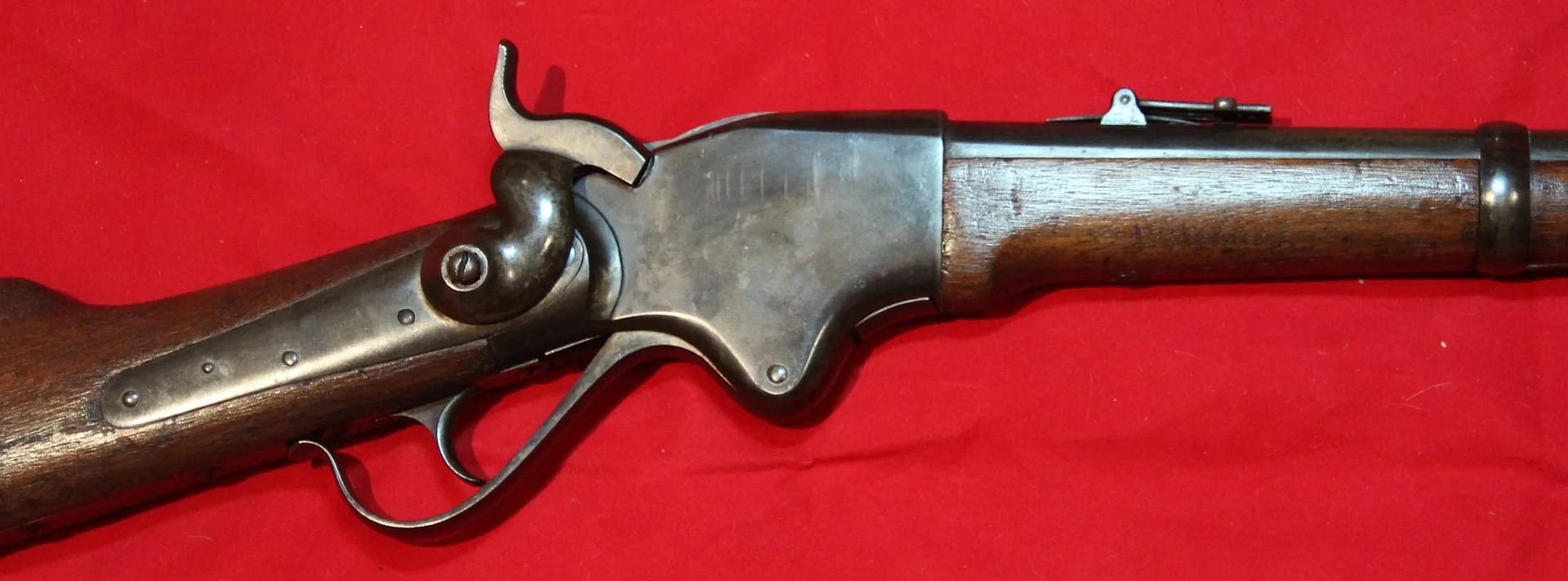
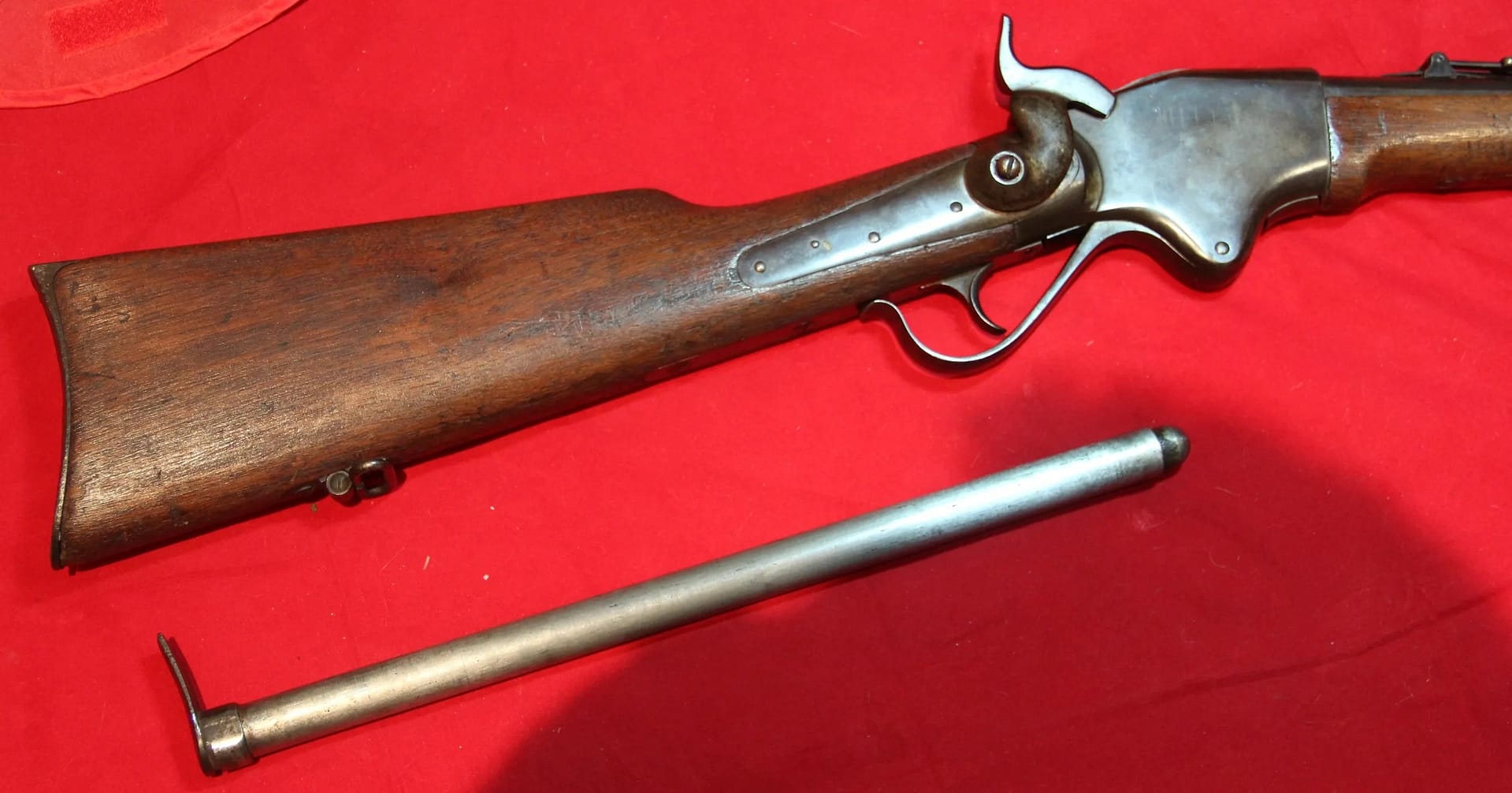
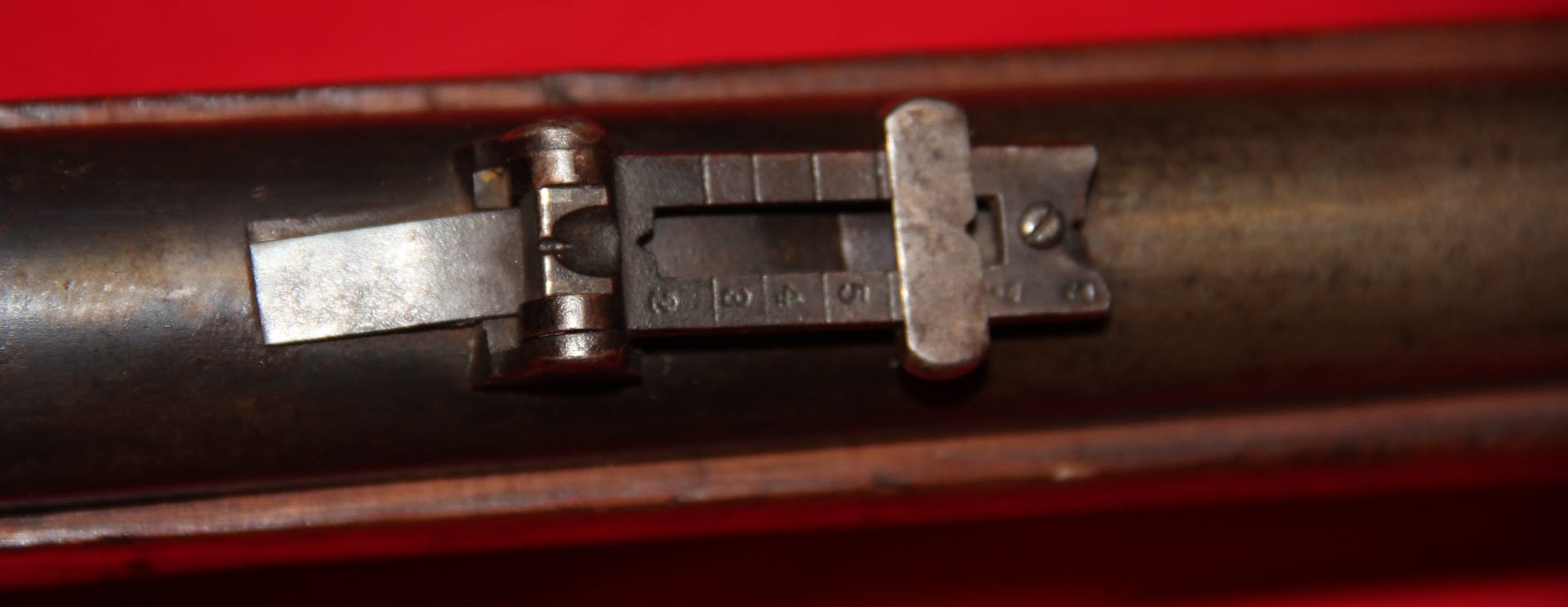
Model 1860 Spencer Army Rifle, from my personal collection.
After the destruction of teh French Regular Army at Sedan and Metz, French arms procurers scoured the world for arms to equip the newly forming Republican armies. The United States was awash with weaposn frm teh recently ended Civil War and was only too happy to sell to France.
The Spencer Model 1860 was a revolutionary lever-action, seven-shot repeating rifle firing a 0.56″ calibre metallic rimfire cartridge. Its magazine, located in the buttstock, allowed rapid, sustained fire far superior to contemporary muzzle-loaders. Adopted by Union cavalry and specialised infantry units, the Spencer proved decisive at battles such as Hoover’s Gap and Nashville. Robust, reliable, and simple to operate, it represented the technological leap that helped reshape late-war U.S. small-arms doctrine.
Weapon data
Caliber: .52″
Cartridge: .56-56 Spencer Rimfire. Self contained metallic cartidge with a 360-grain conical lead projectile over 45grains of black powder.
Action: 7-shot lever action repeating rifle with a tubular magazine in the butt and a spring loaded follower.
Rifling: Concentric 6-groove, right hand twist
Muzzle velocity: 284-315 metres per second
Maximum effective range (volley fire): 500 metres
Length: 47″ (1200mm)
Barrel length: 30″ (760mm)
Weight: 4.8KG
Sights: ramp leaf sight graduated from 200 to 1200 metres in 100 metre increments




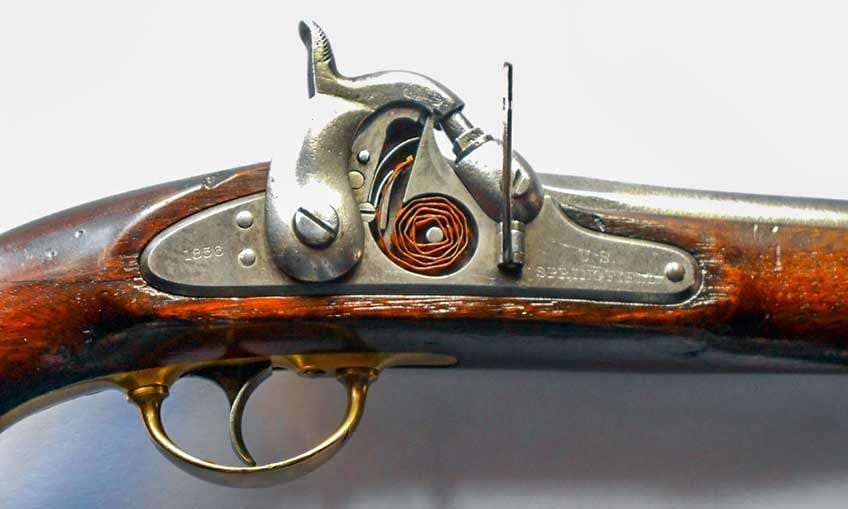
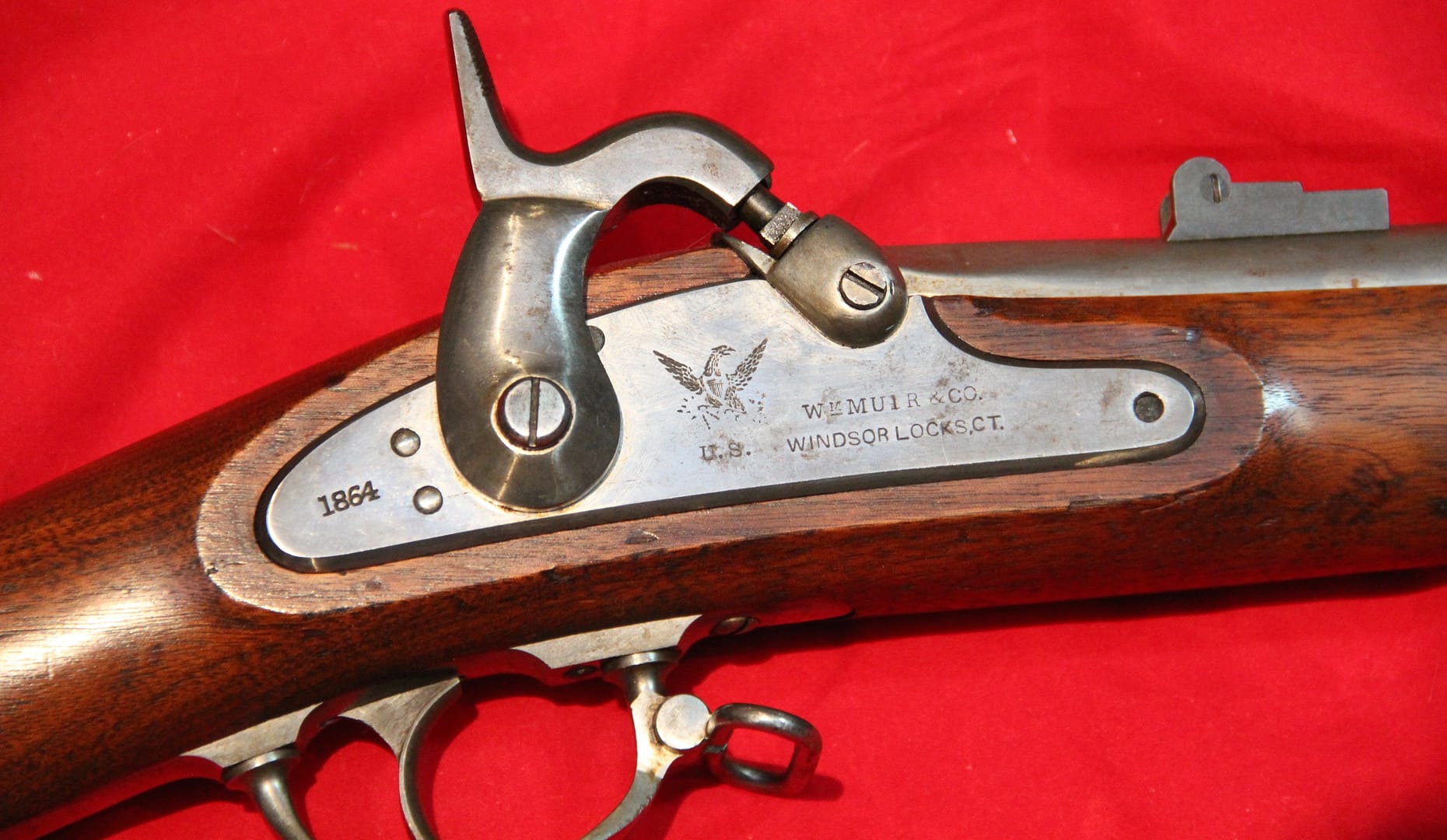
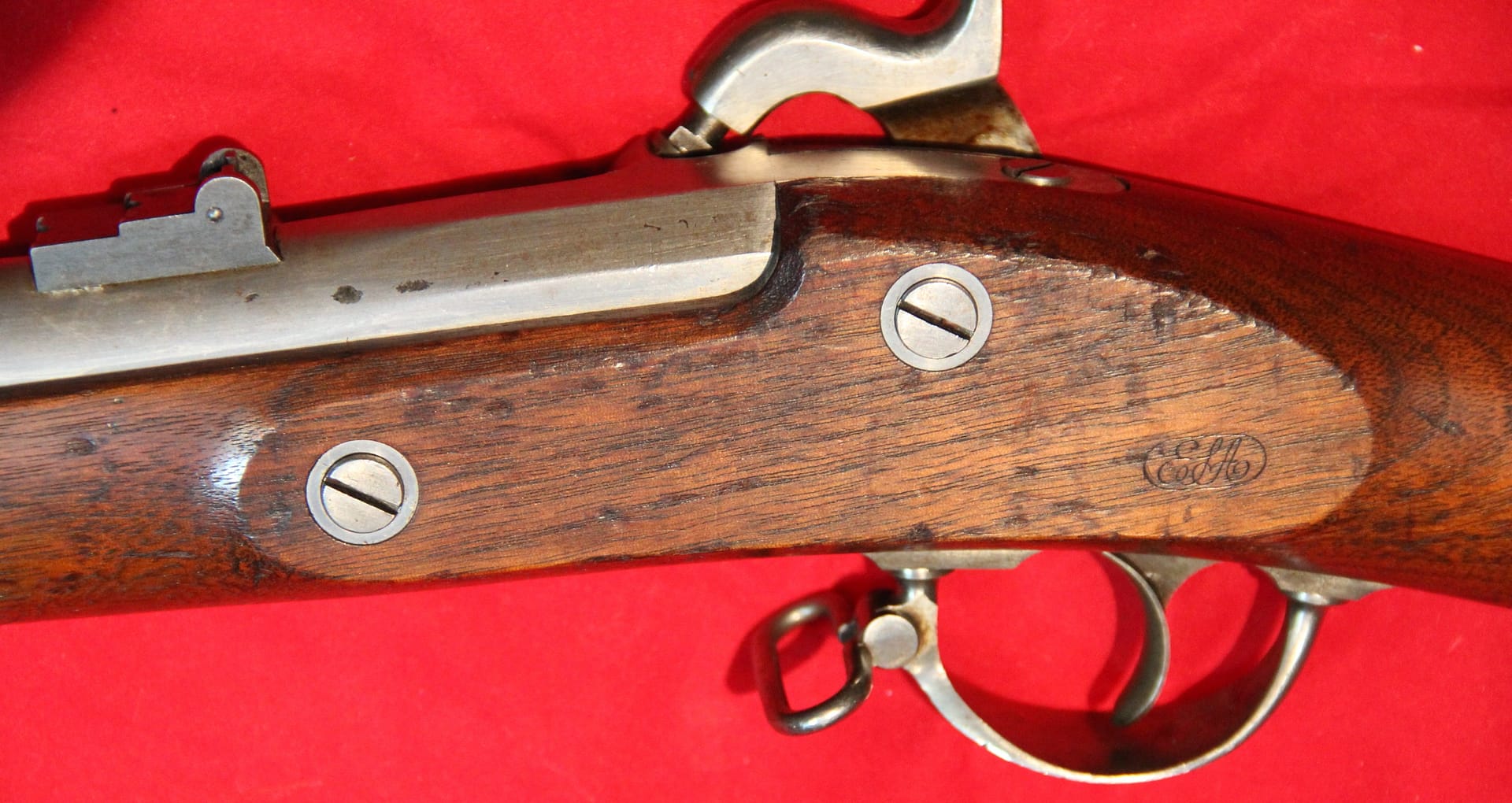
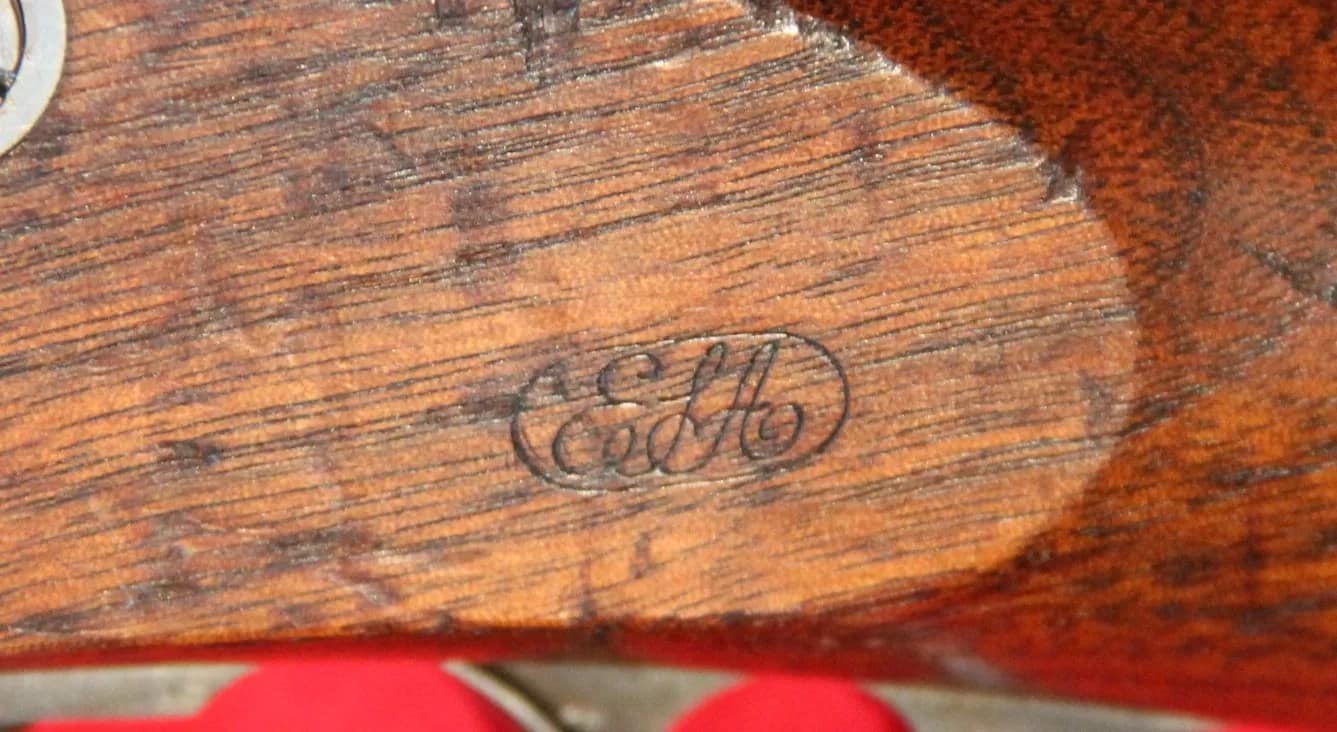
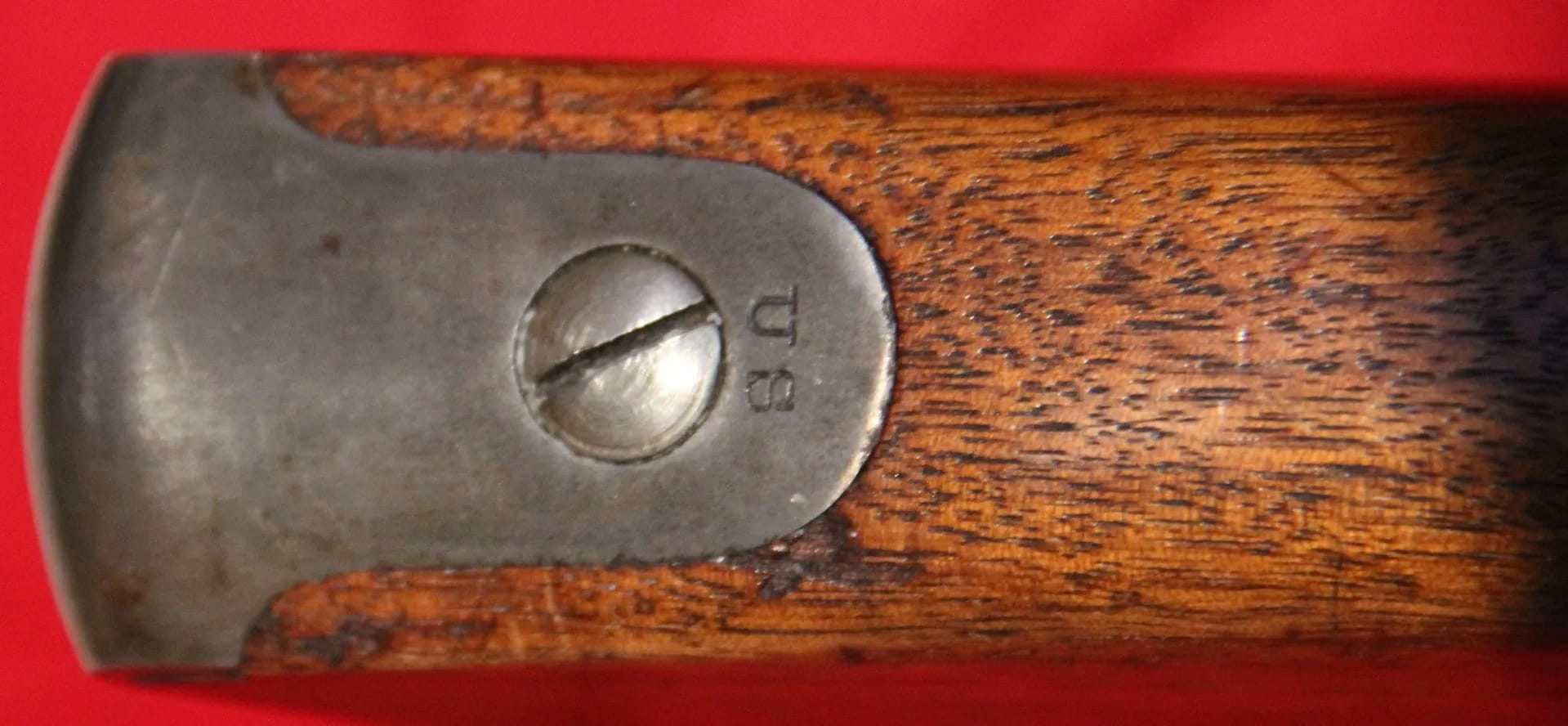
Model 1861 Rifle-Musket, Springfield Pattern, W. Muir contract, from my personal collection.
This M1861 rifle-musket was produced under contract by William Muir & Co. of Windsor Locks, Connecticut, to meet the Union’s massive wartime demand. Muir produced approximately 30,000 Model 1861 rifle-muskets. A .58-calibre percussion arm with improved rear sight and strengthened barrel bands, it represented the standard infantry weapon of the Union Army in the war’s later years.
The Model 1861 is distinctive because it retains the curved hammer designed for the Model 1855 rifle-musket to fit over the Maynard tape primer box (as shown at left with the cover in the open position). The Model 1861 eliminated the Maynard tape primer but retained the hammer shape. The Model 1861 also included a ‘clean-out screw’ on the primer bolster that could be removed to allow cleaning of the primer flash hole. The improved Model 1863 Rifle-Musket reverted to a more conventional S-shaped hammer, and did away with the clean-out screw.
Weapon data
Caliber: .58″
Cartridge: .58″ Minie Ball, externally primed. 525-grain projectivle over 60-grains of black powder.
Action: Muzzle loading, percussion lock, separately primed
Rifling: Concentric 3-groove, right hand twist. One twist in 72″
Muzzle velocity: 300-430 metres per second
Maximum effective range (volley fire): 500 metres
Length: 56″ (1400mm)
Barrel length: 40″ (1000mm)
Weight: 4.1KG
Sights: folding leaf rear sight


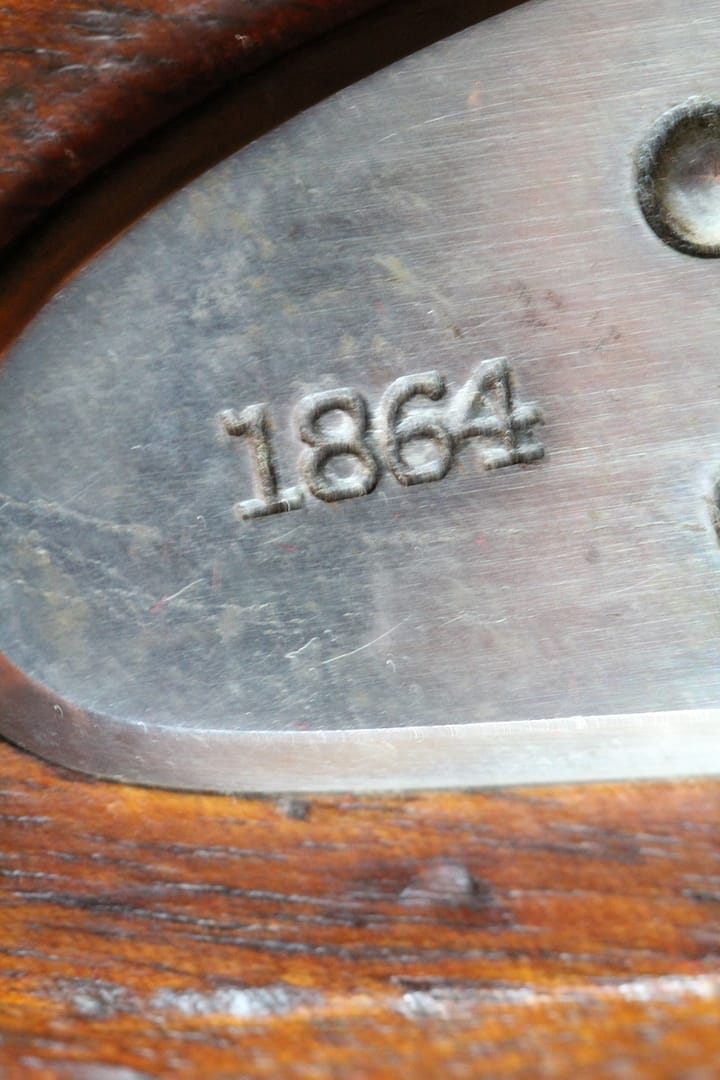
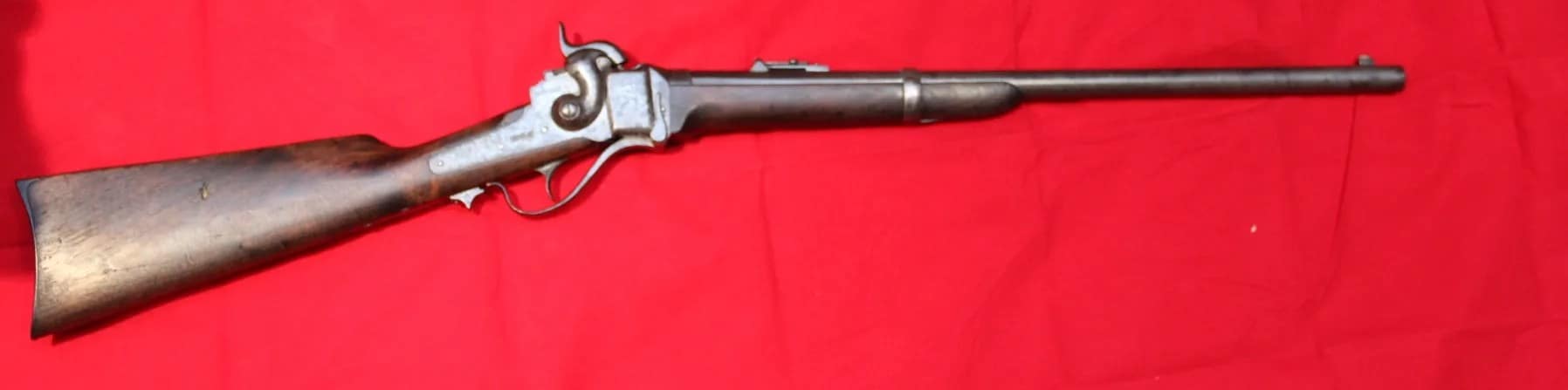
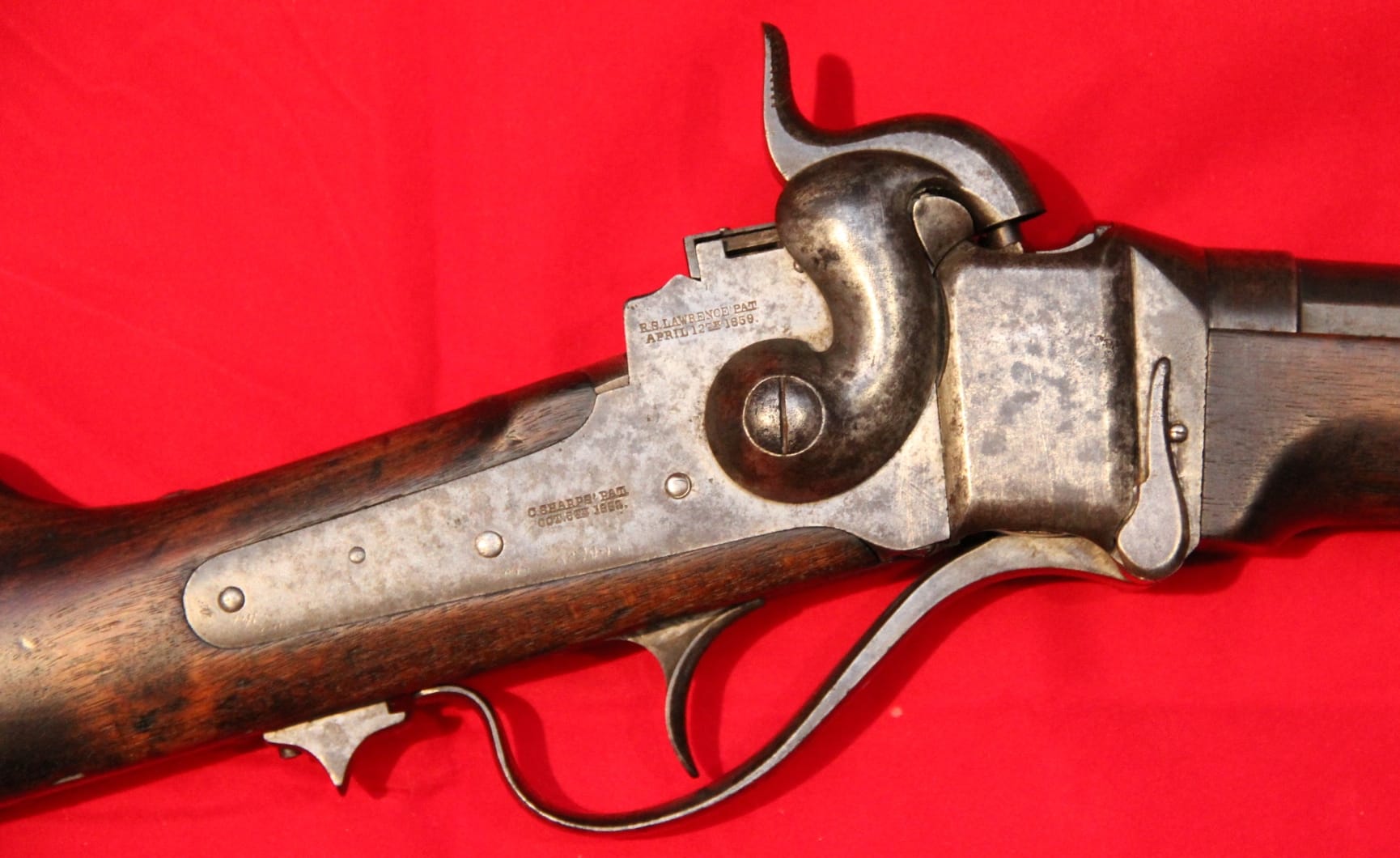
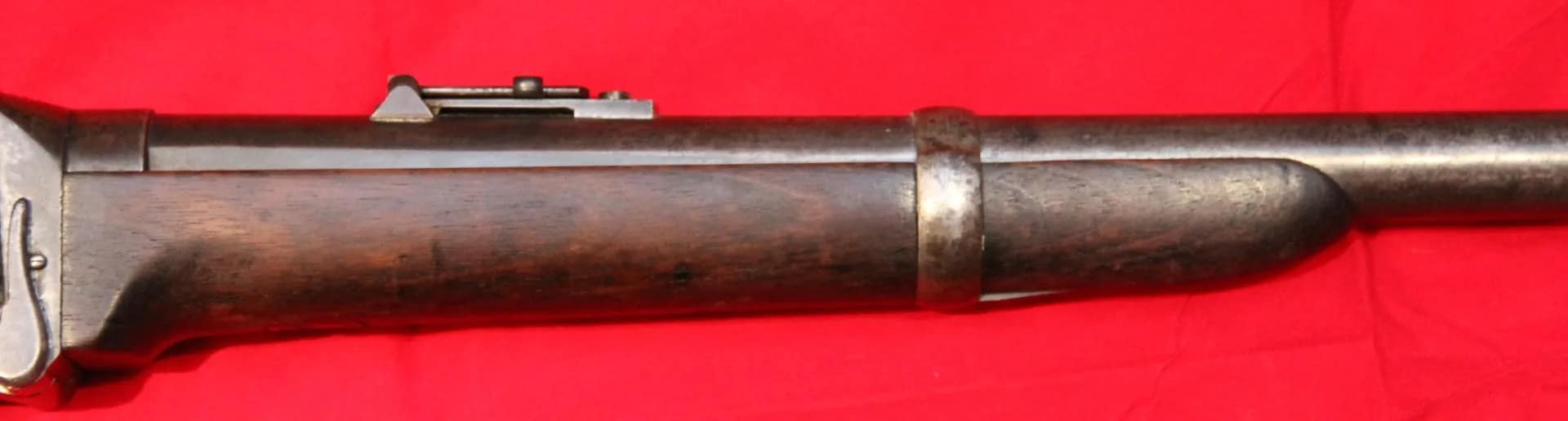
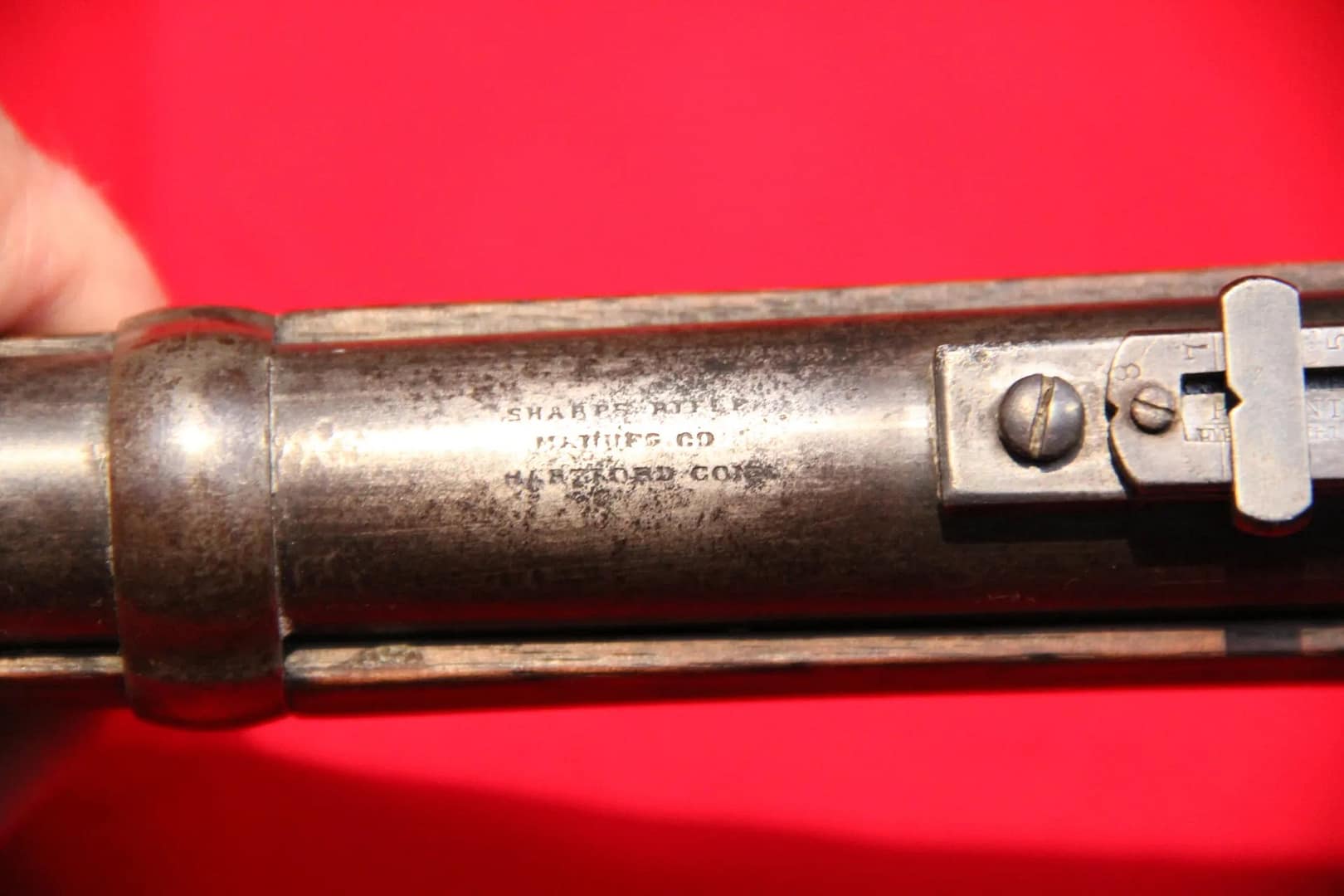
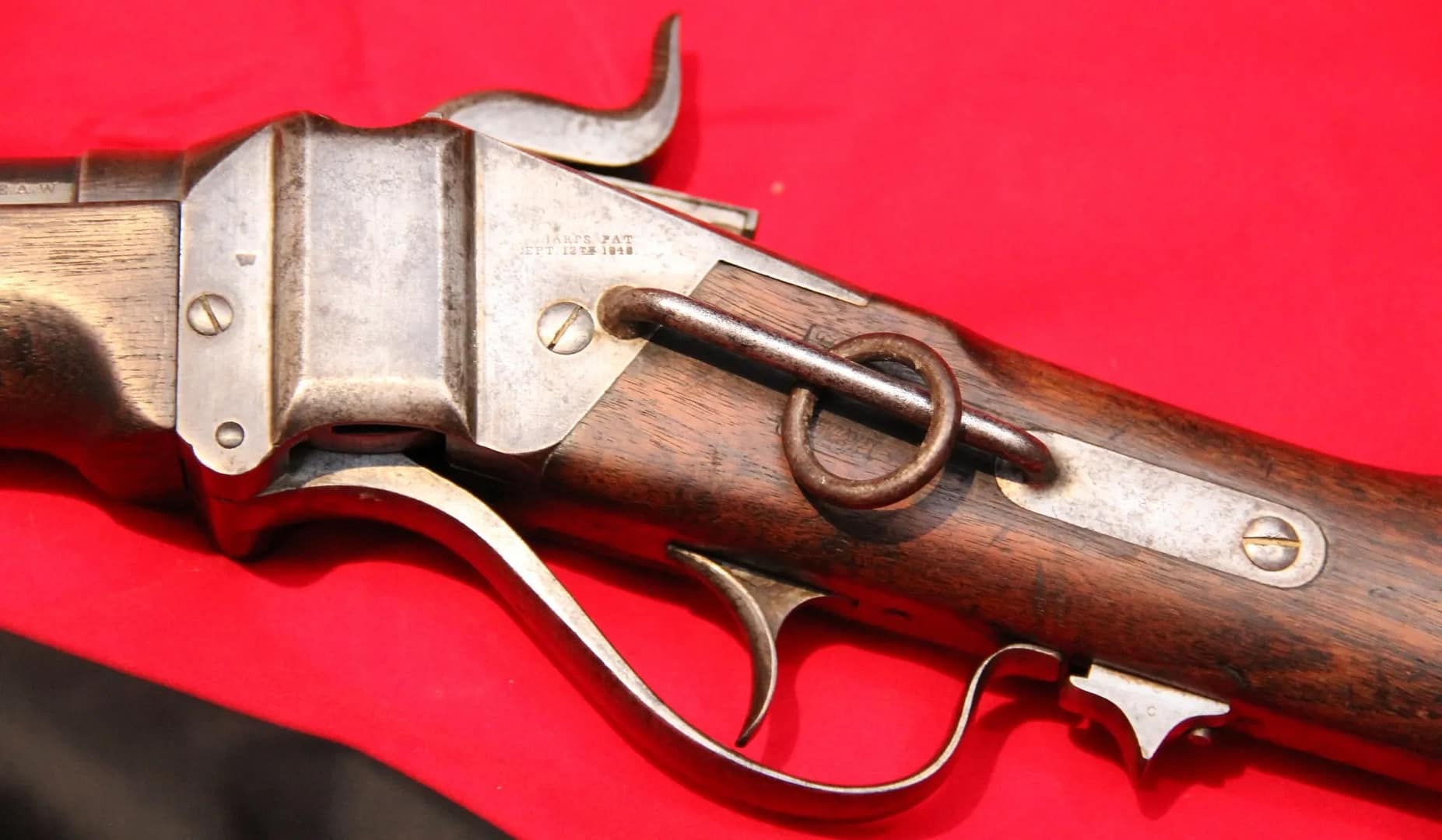
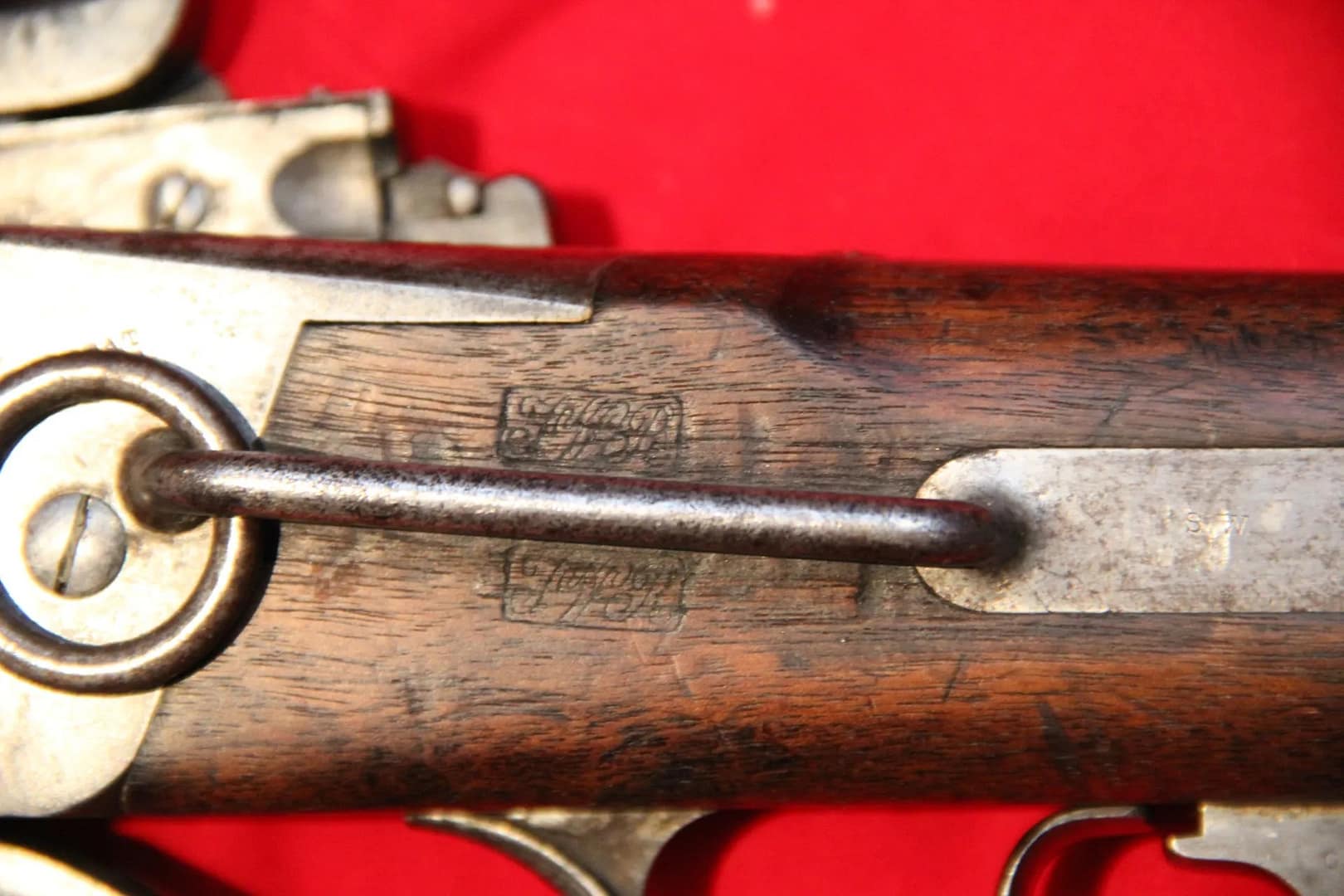
Sharps New Model 1863 Cavalry Carbine, from my personal collection.
The Sharps New Model 1863 was a single-shot, breech-loading percussion carbine chambered in .52 calibre, manufactured by the Sharps Rifle Manufacturing Company of Hartford, Connecticut. Designed for mounted troops, it used a falling-block action with a linen or paper cartridge ignited by a percussion cap. Widely issued to Union cavalry during the American Civil War, it was valued for its reliability, rapid rate of fire, and accuracy compared to muzzle-loading carbines. The weapon saw extensive service in cavalry engagements, scouting operations, and raids, becoming one of the most effective and respected carbines of the conflict.
Weapon data
Caliber: .52″
Cartridge: .52″ Linen or paper cartridge, externally primed. 450-grain projectivle over 60 grains of black powder.
Action: Single shot lever activated falling block with separate priming
Rifling: Concentric 6-groove, right hand twistst
Muzzle velocity: 370 metres per second
Maximum effective range (volley fire): 500 metres
Length: 39.125″ (994mm)
Barrel length: 22″ (760mm)
Weight: 4.8KG
Sights: sliding leaf rear sight
Headgear and uniforms of the Franco-Prussian War
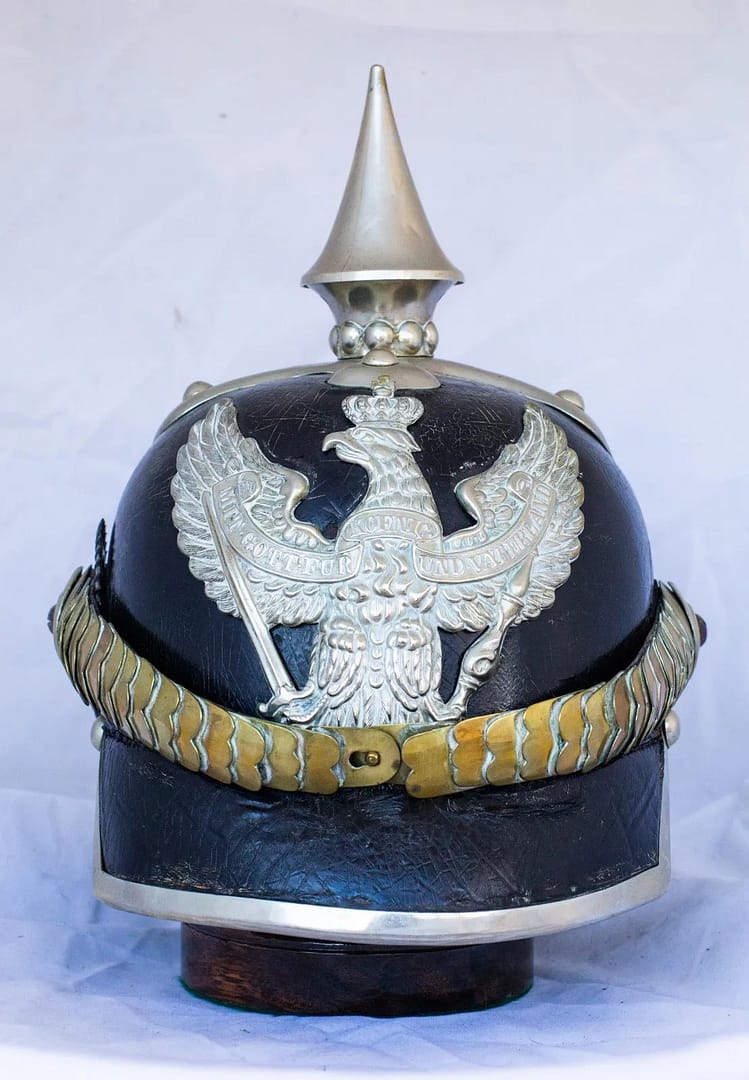
M1860 Dragoner pickelhaube. From my personal collection.
The M1860 Dragoner Pickelhaube was issued to Prussian dragoon regiments during the mid-nineteenth century and reflects the evolution of cavalry headgear in the post-Napoleonic era. Constructed of boiled leather with silvered brass fittings and a prominent spike, it combined limited protective function with regimental distinction. The helmet bore the Prussian eagle plate and appropriate state cockades, identifying branch and allegiance. Worn during the wars of German unification, including 1866 and 1870–71, the M1860 pattern illustrates the transition from traditional cavalry shakos to the spiked helmet that became synonymous with the Imperial German Army.
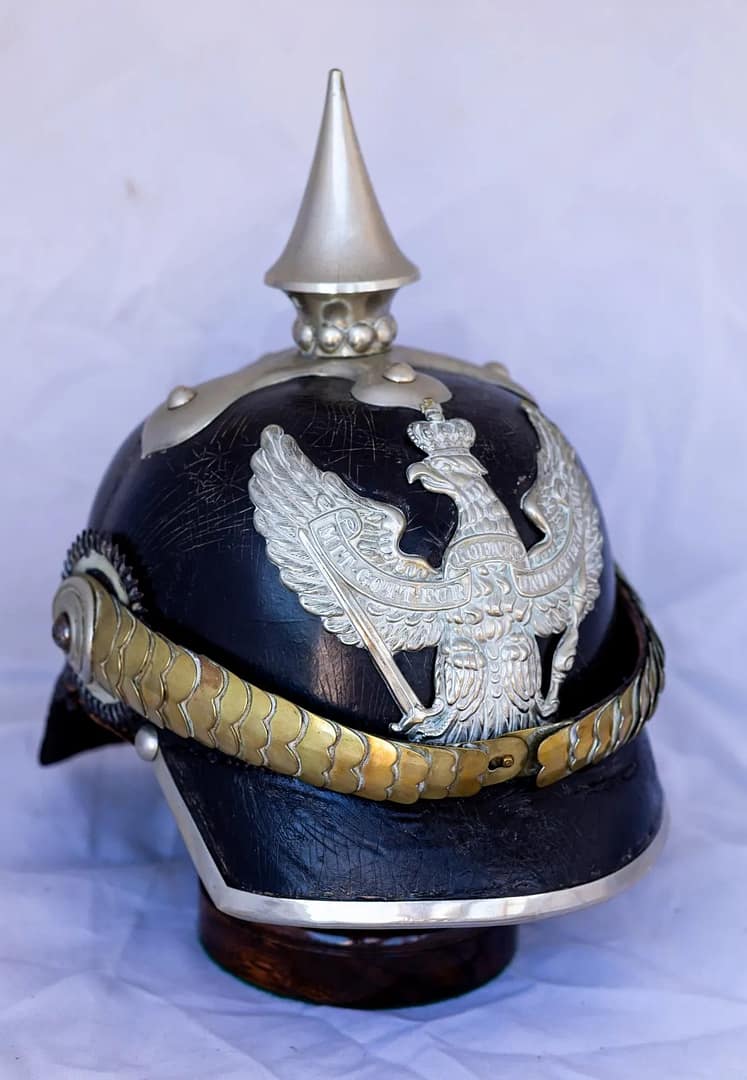
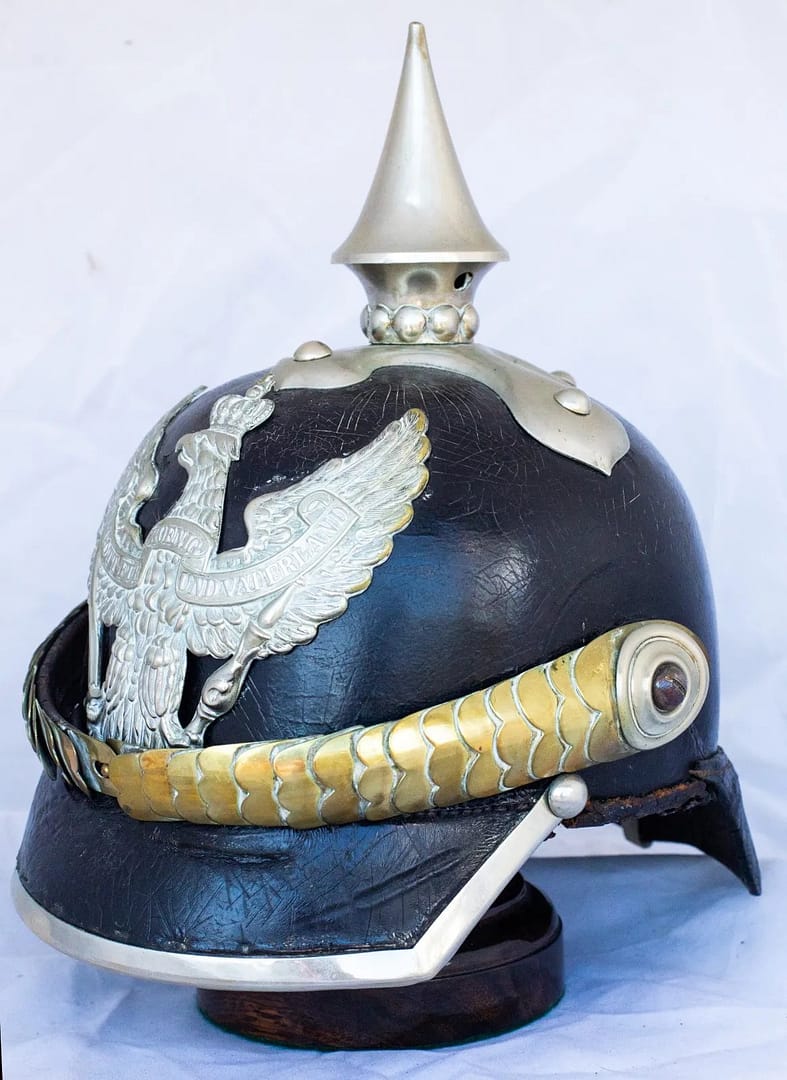
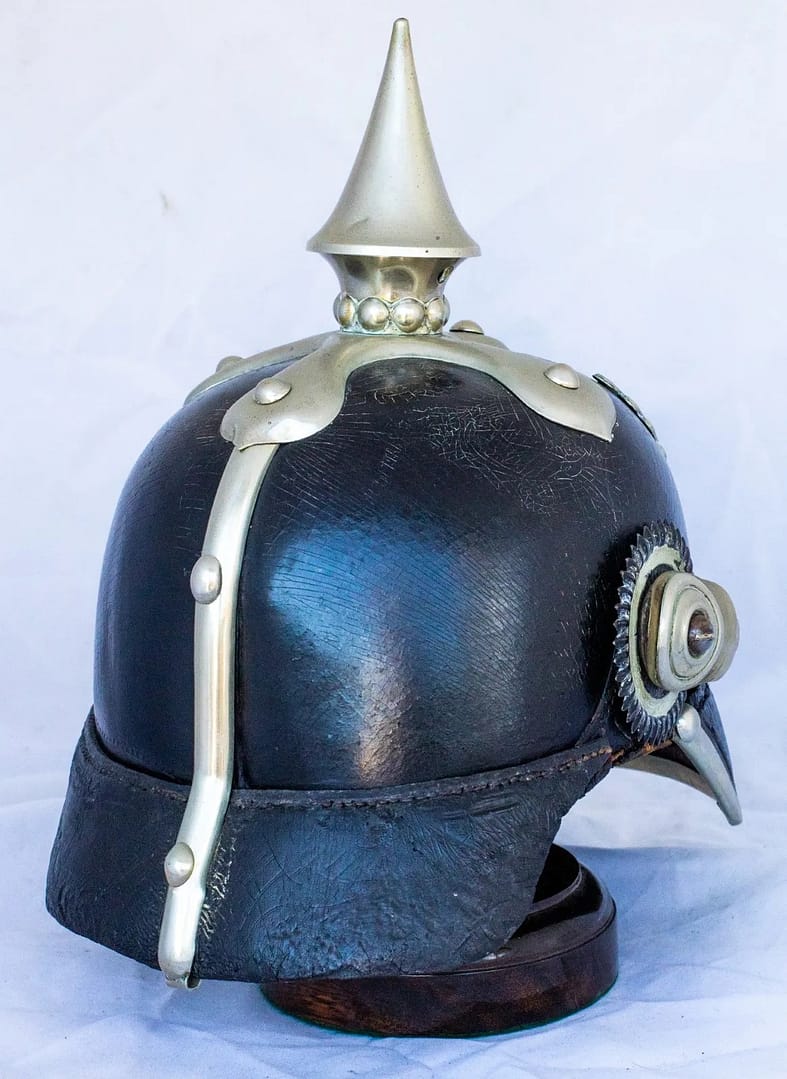
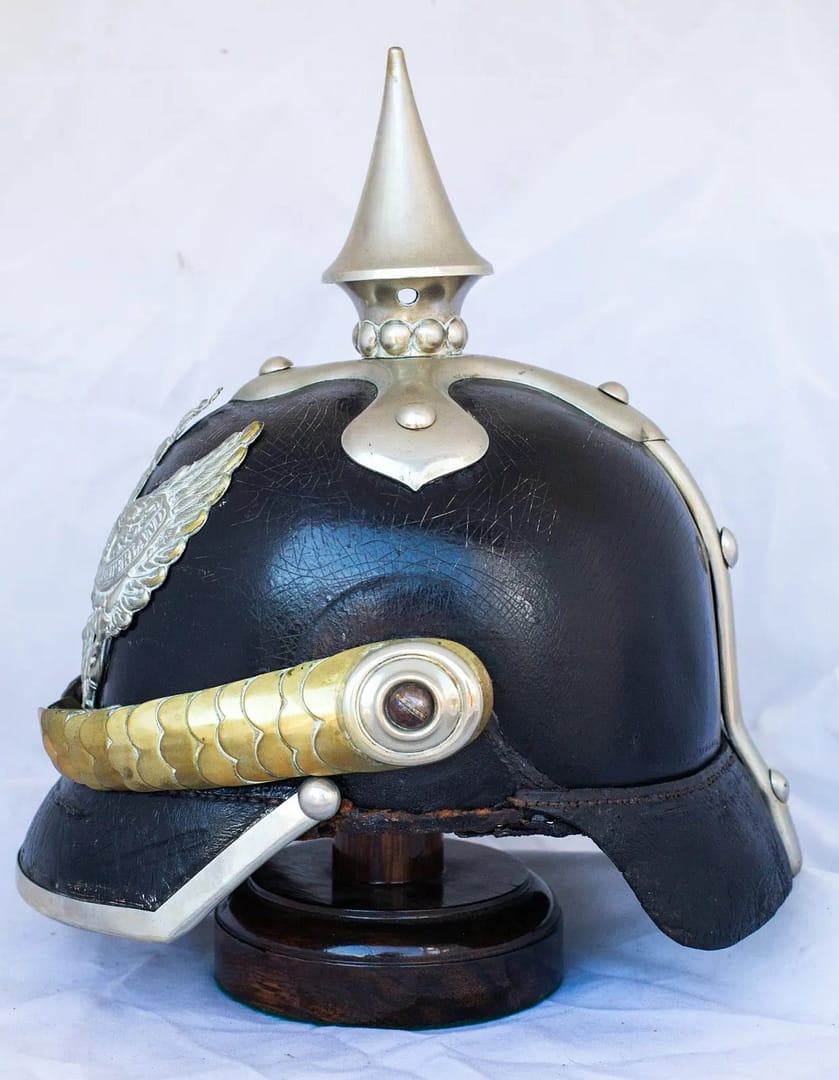
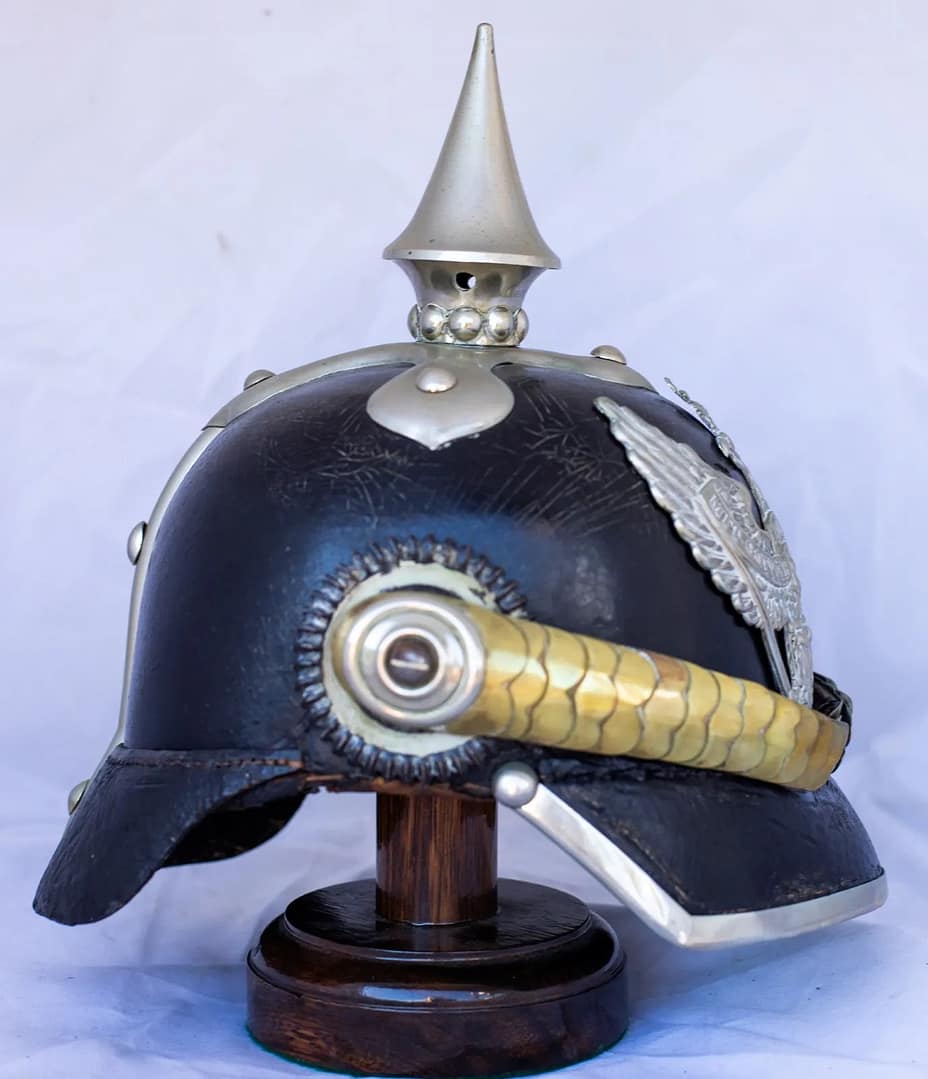
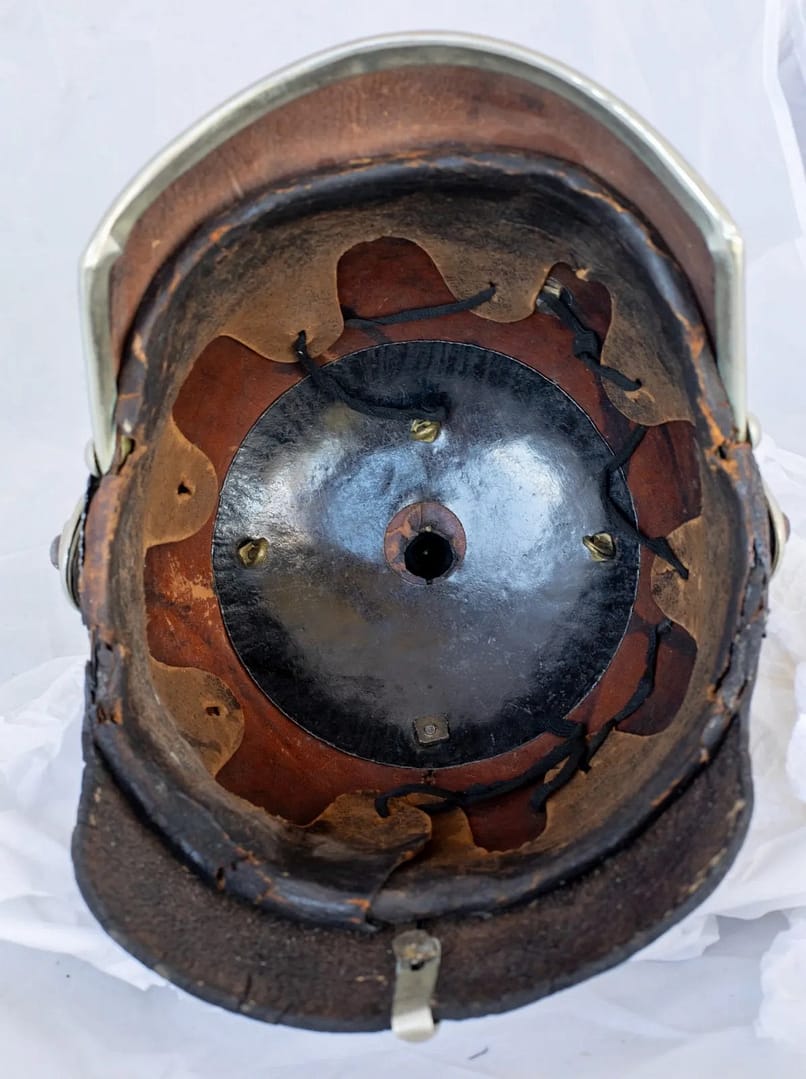
Bavarian, Saxon and Prussian helmets of the Franco-Prussian War. From my personal collection.
The Prussian pickelhaube was a hardened leather helmet with a brass spike and front plate displaying the Prussian eagle. Models of 1867 and 1871 standardised fittings across the North German Confederation and later the Empire. Worn by infantry, artillery, and support branches, the pickelhaube became a symbol of Prussian military discipline and state power. Though elegant and distinctive, it offered limited ballistic protection and was eventually replaced by the steel stahlhelm during the First World War.
The Bavarian Raupenhelm (“caterpillar helmet”) was a leather infantry helmet with a distinctive black wool crest running from front to rear. Used by line infantry and light infantry units until the late 1860s, it reflected South German uniform traditions that pre-dated Prussian influence. The helmet offered minimal protection but strong visual identity, particularly during the 1866 and early 1870 campaigns. After Bavarian integration into the German Empire, the Raupenhelm was gradually replaced by the Prussian-style pickelhaube.


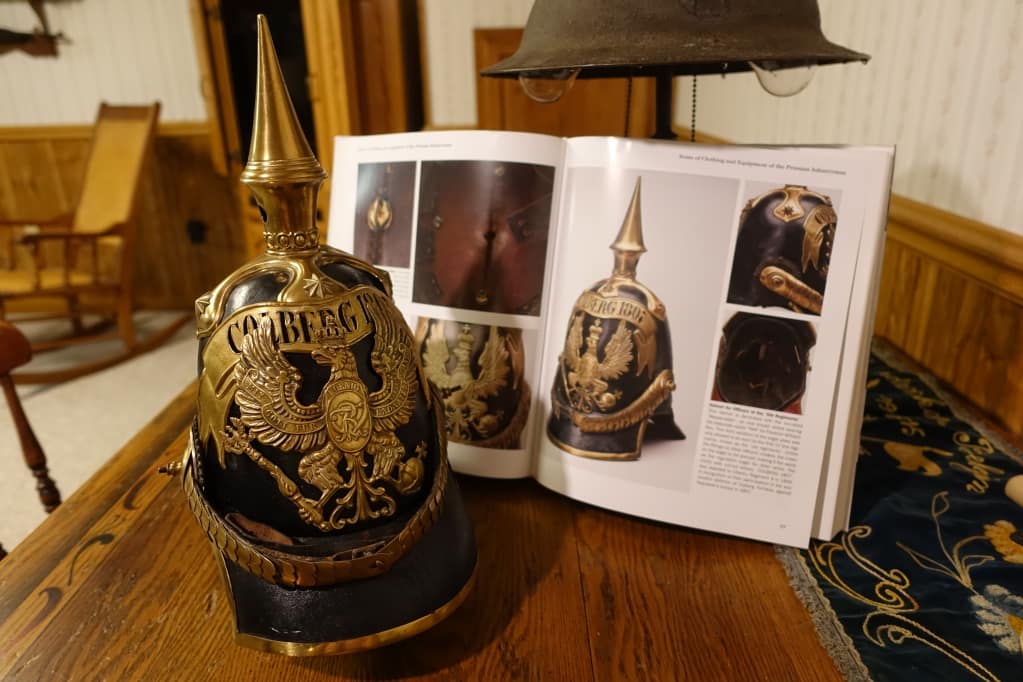
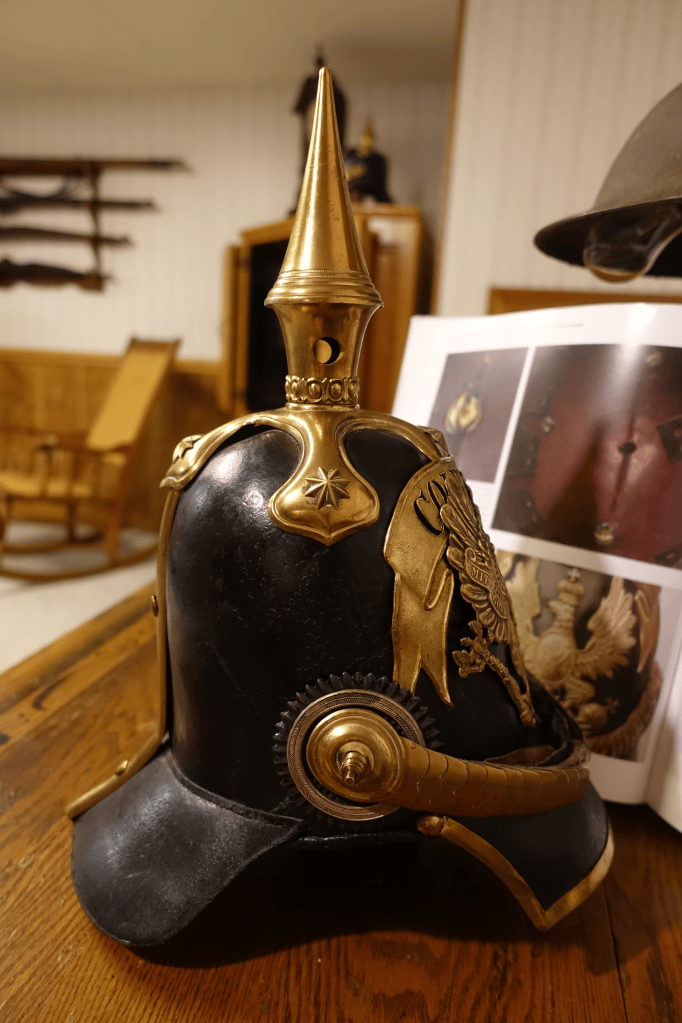
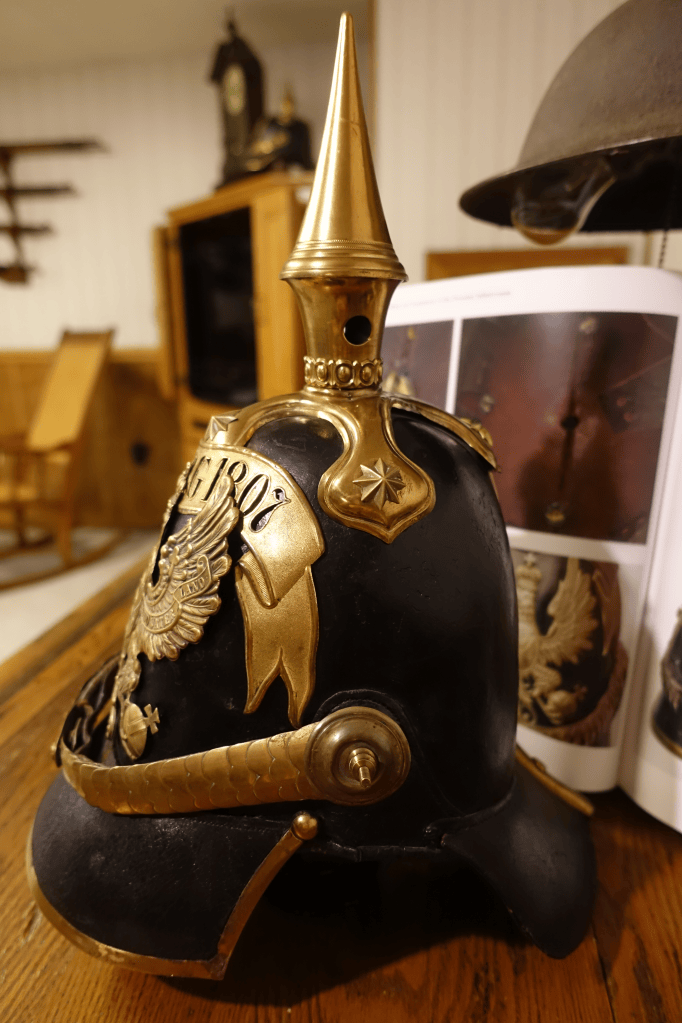
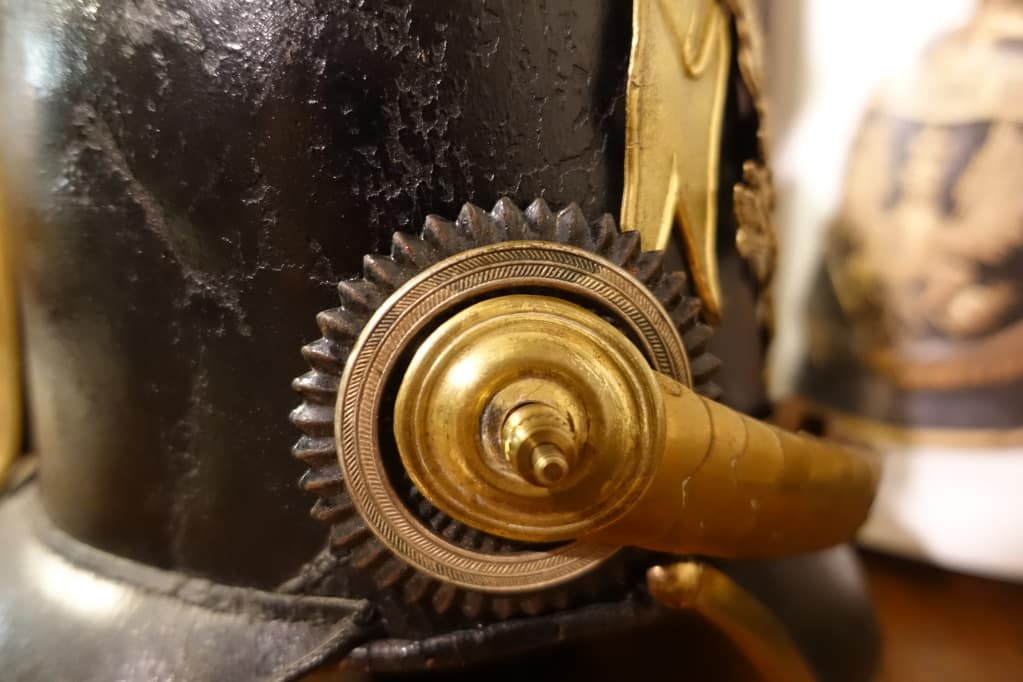
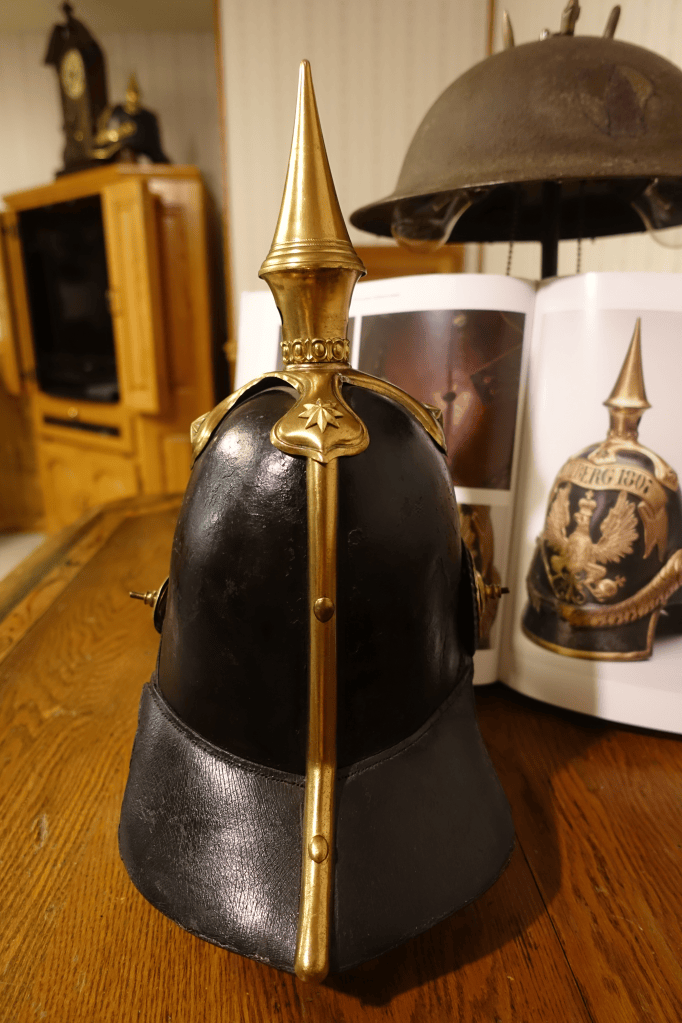
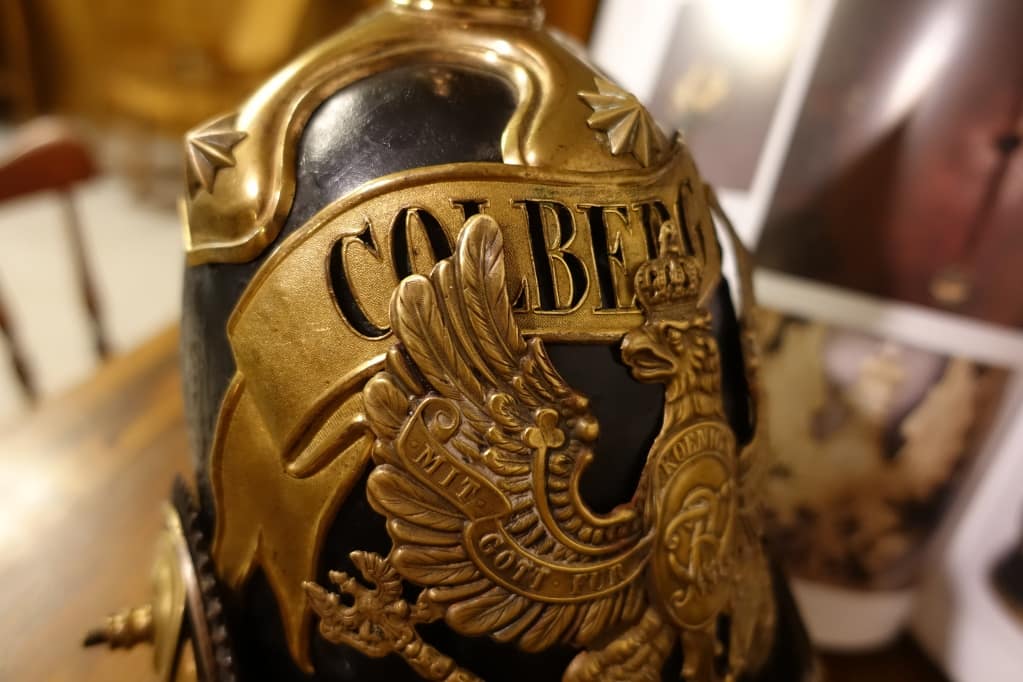
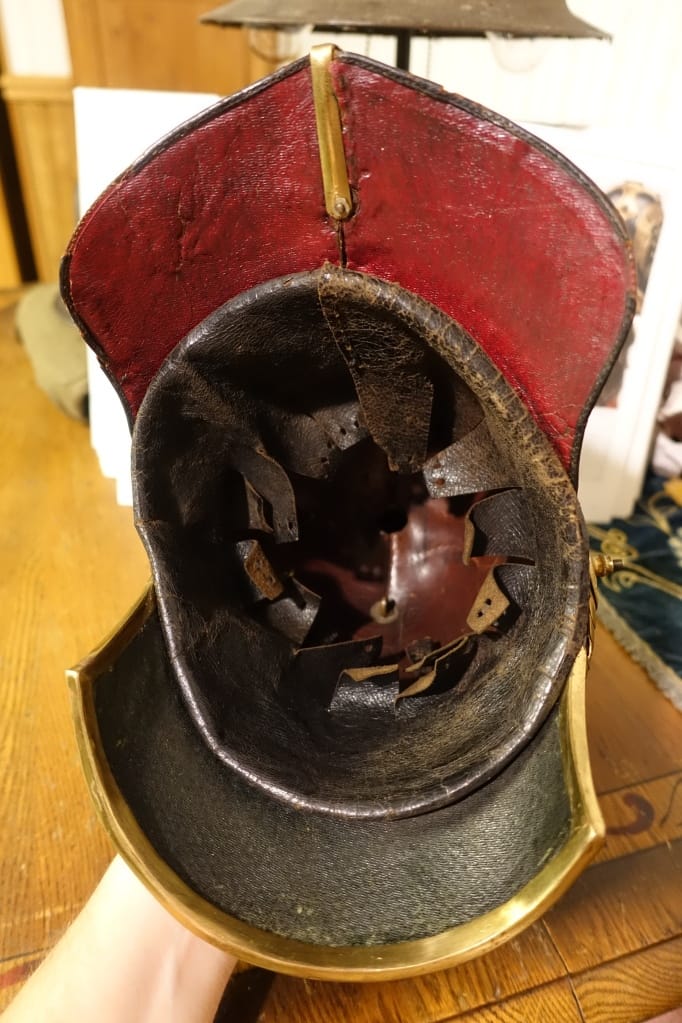
Model 1842 Officer’s Pickelhaube, Grenadier Regiment No. 9 ‘Colberg 1807’ bandeau. 1st Schleswig War and Danish War period.
This officer’s pickelhaube belonged to Infanterie-Regiment Nr. 9 “Colberg 1807”, a Prussian line regiment honoured for its defence of Kolberg during the Napoleonic Wars. Officer helmets featured finer leather, taller spikes, gilded fittings, and higher-quality eagles than enlisted versions. The regiment fought in both the 1866 and 1870–71 campaigns, and its officer headdress reflects the prestige, tradition, and conservative styling of the Prussian officer corps in the late 19th century.
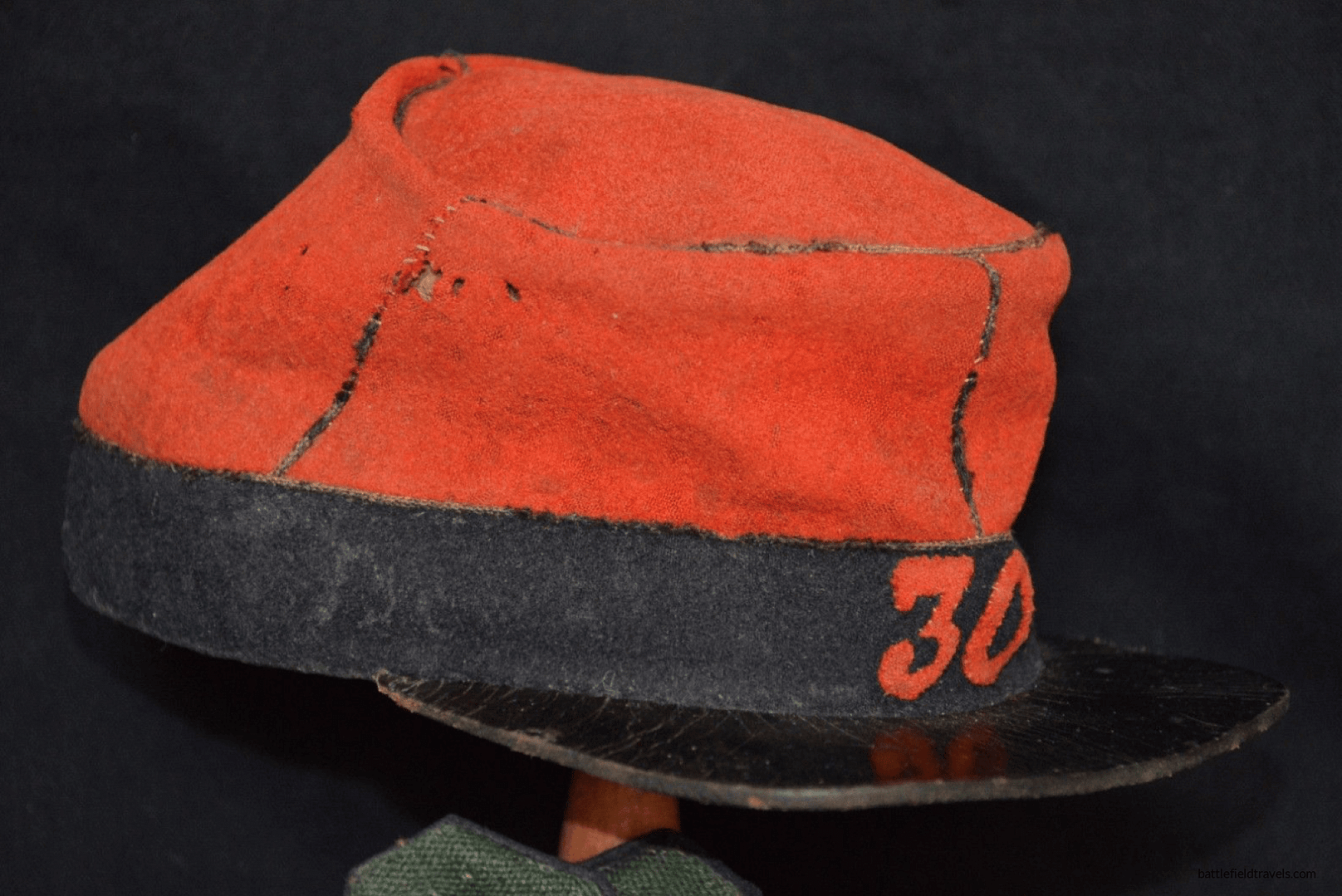
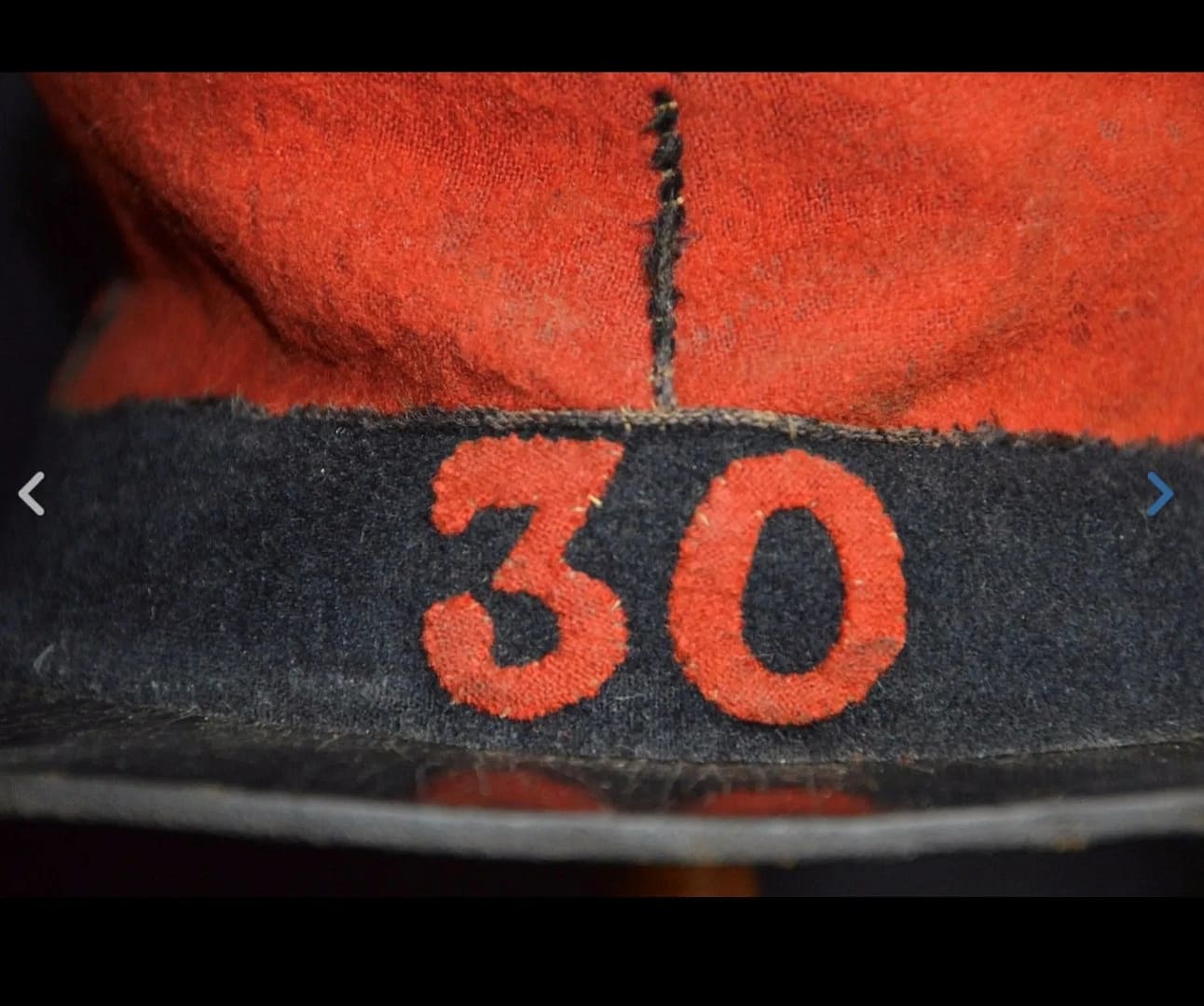
Rare French Model 1867 Enlisted Kepi, 30th Infantry Regiment. From my personal collection.
The Model 1867 kepi was the standard enlisted headdress of the French infantry during the late Second Empire. Constructed from dark blue wool with red piping and a red crown, it was worn by line infantry such as the 30e Régiment d’Infanterie during the Franco-Prussian War. Lightweight and comfortable, the kepi offered little protection but strong unit identity. Its distinctive silhouette became one of the most recognisable symbols of French military dress in the 1860s and 1870s.
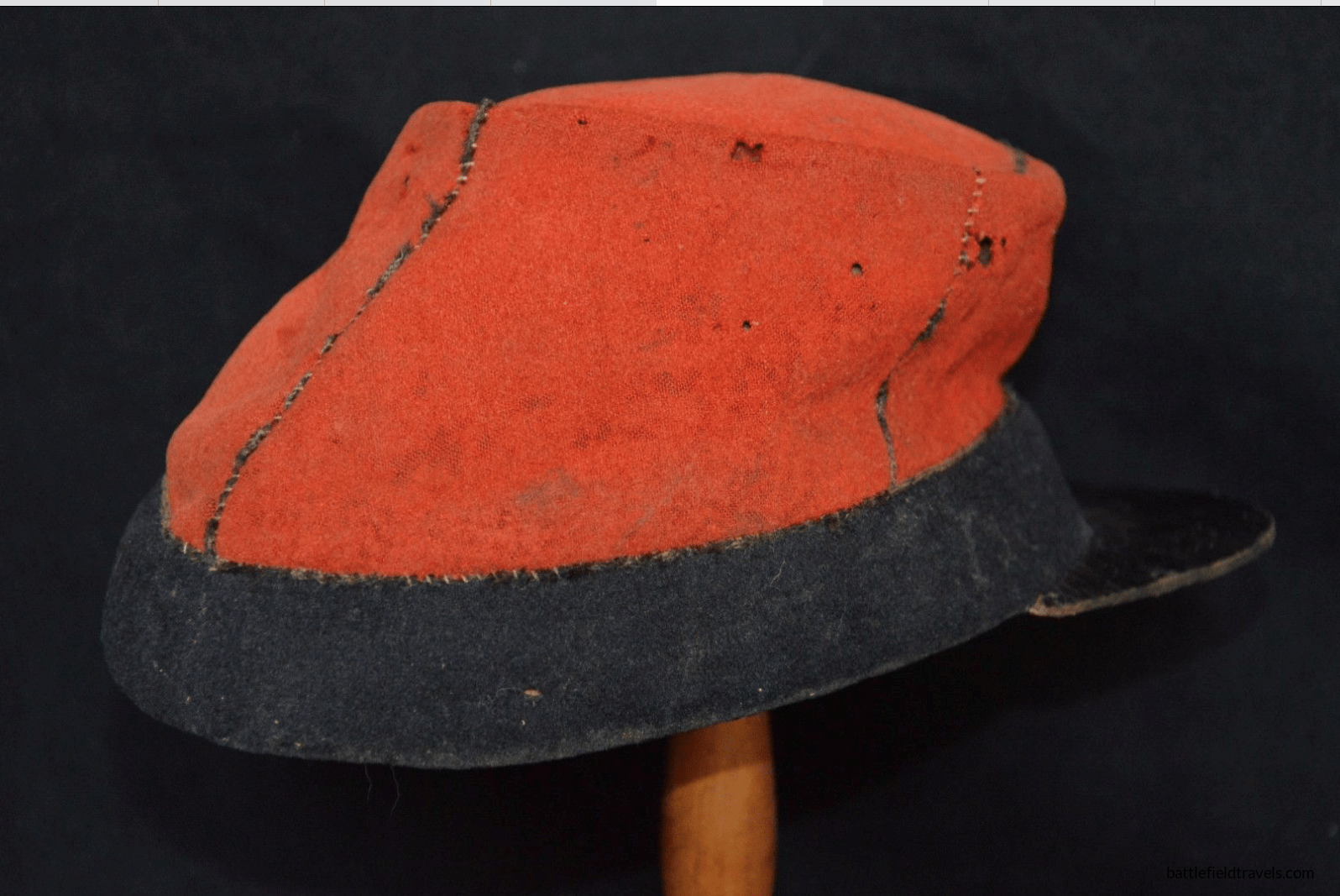
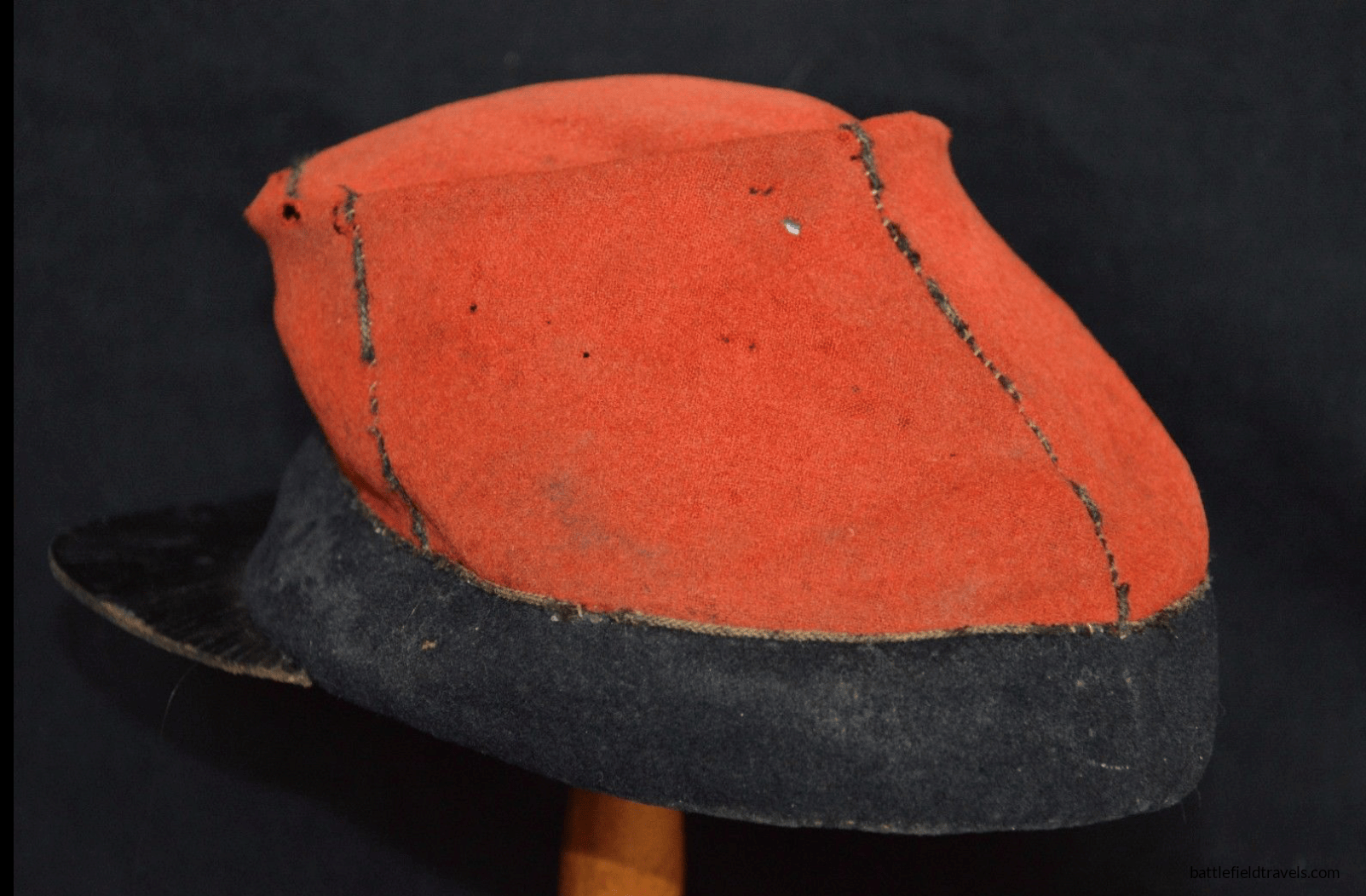
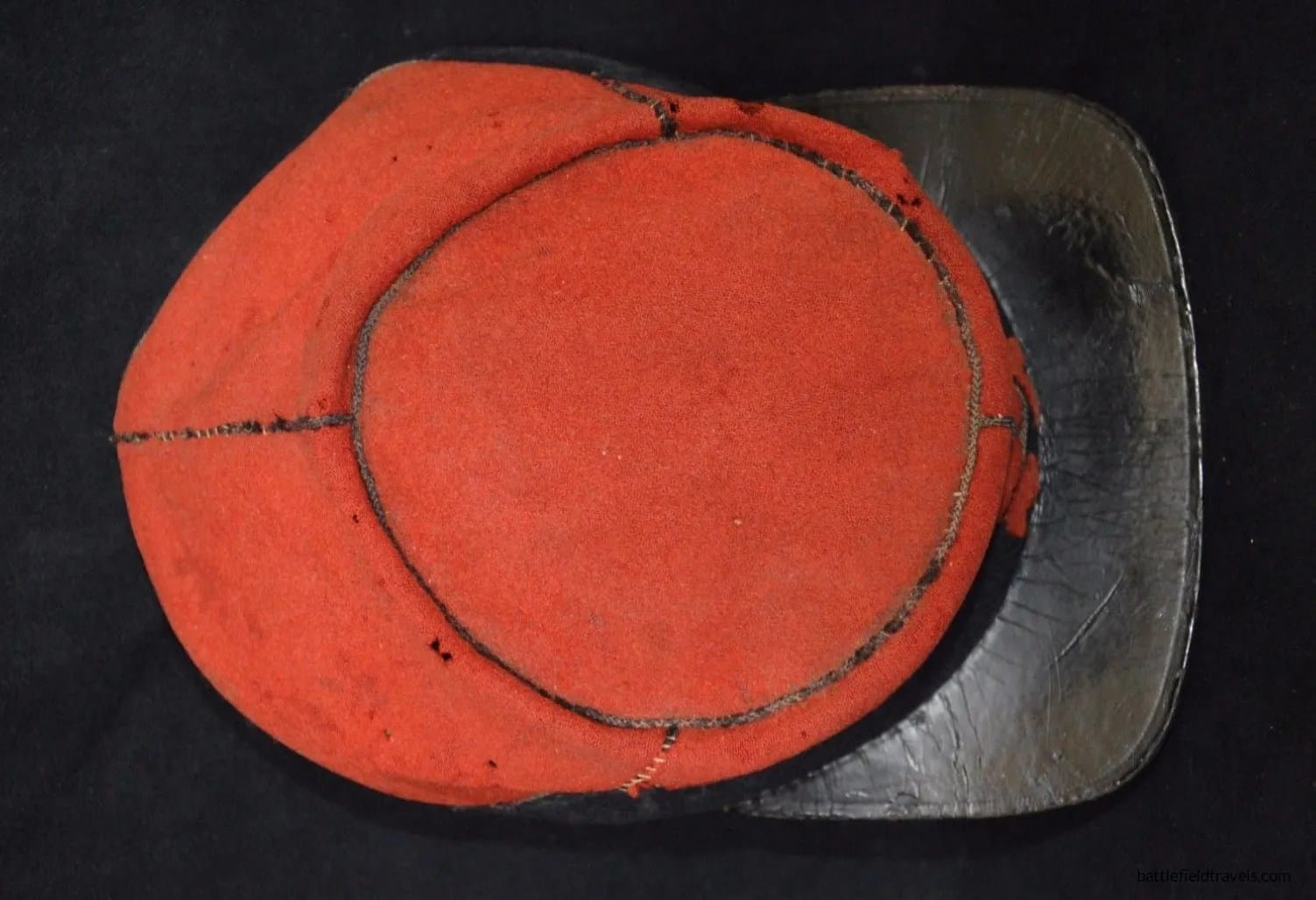
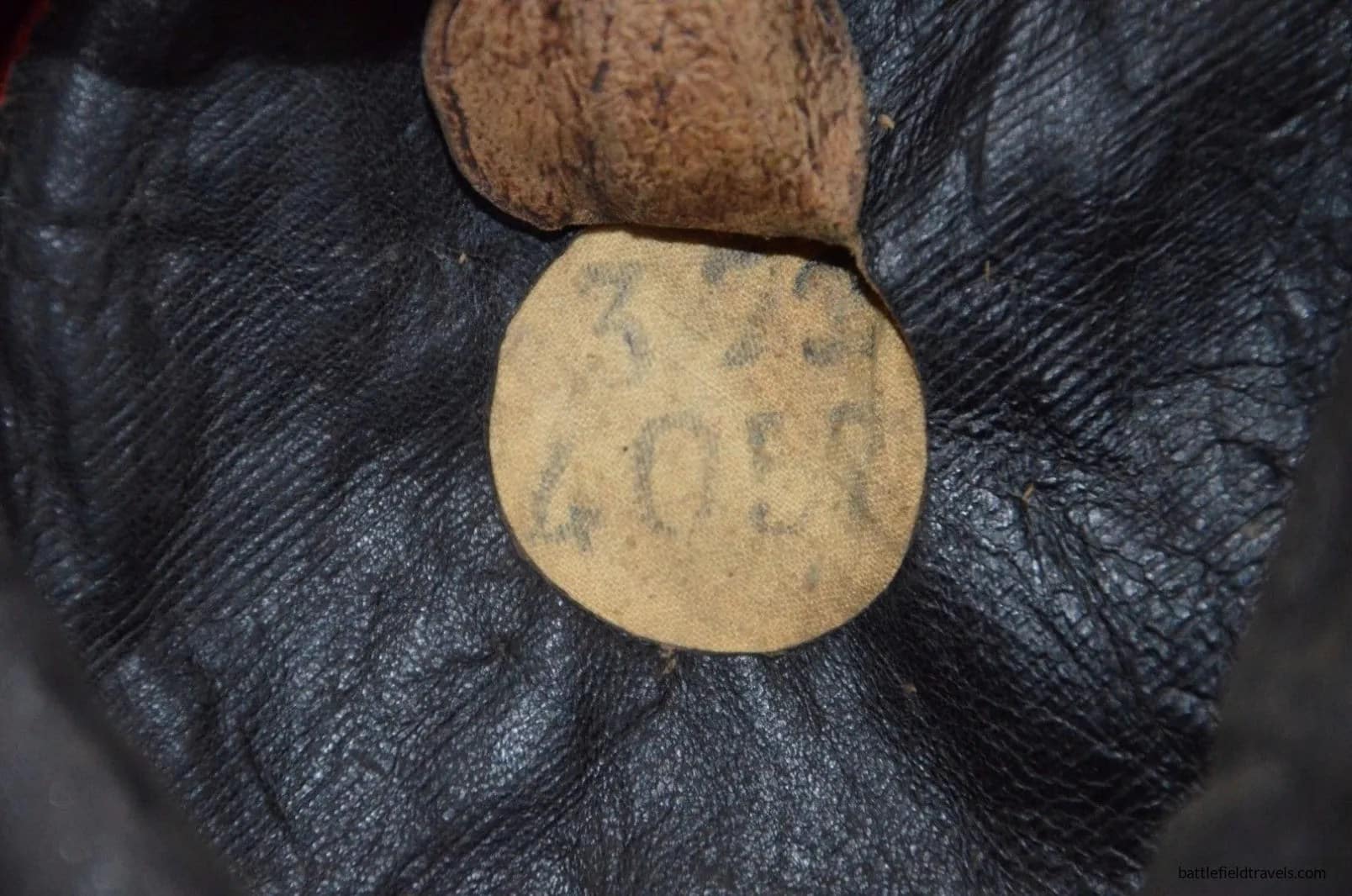
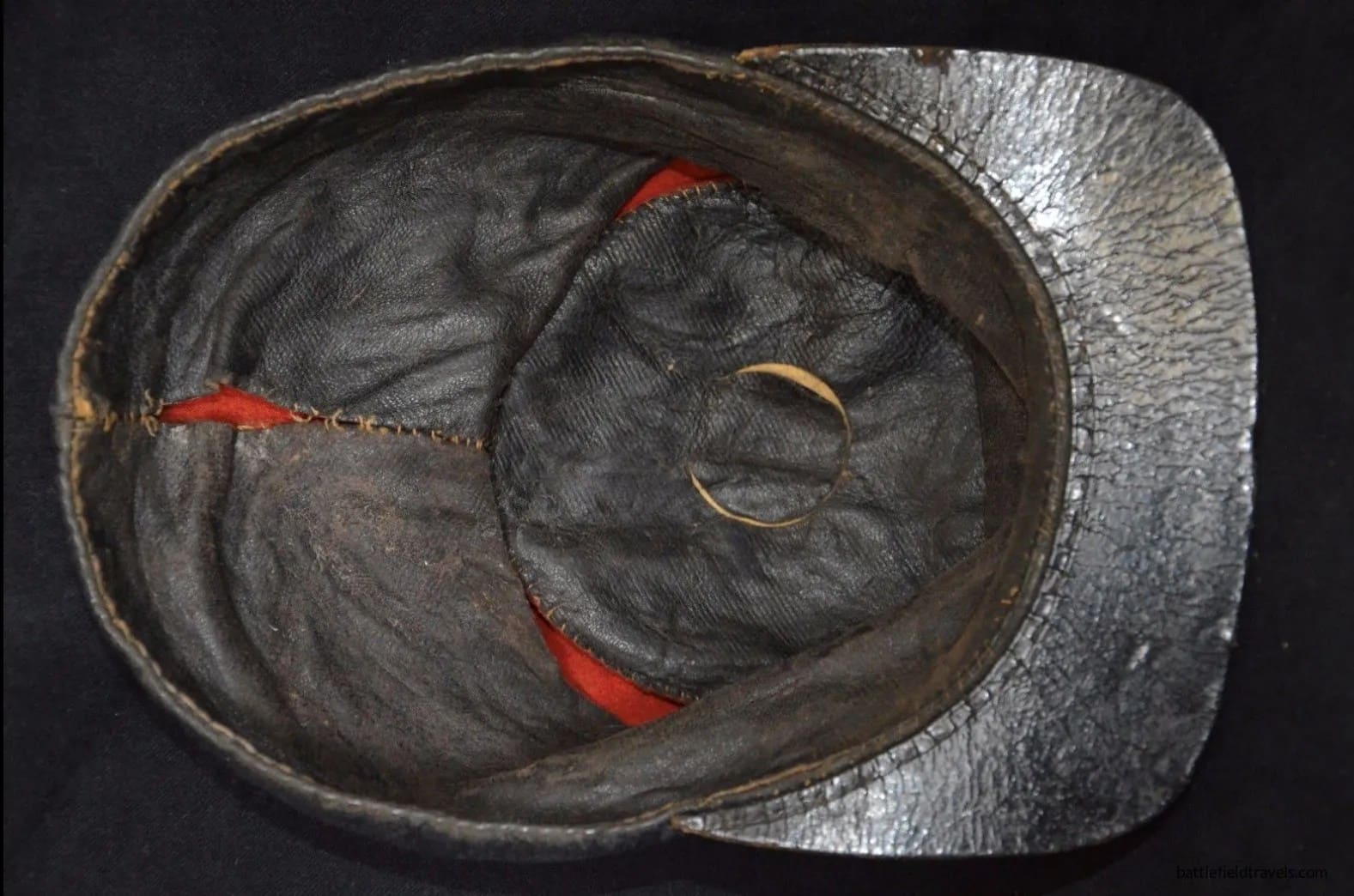
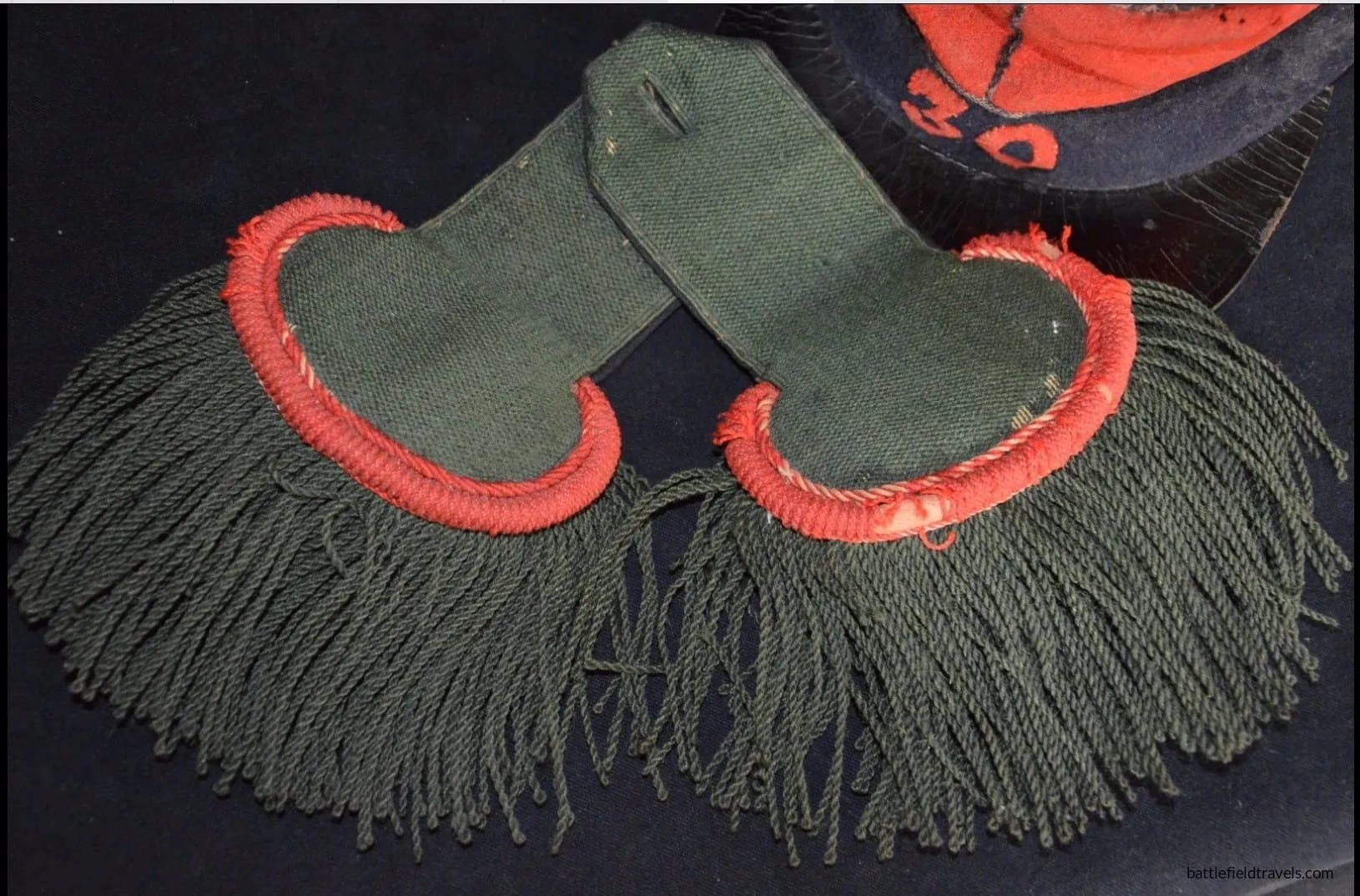
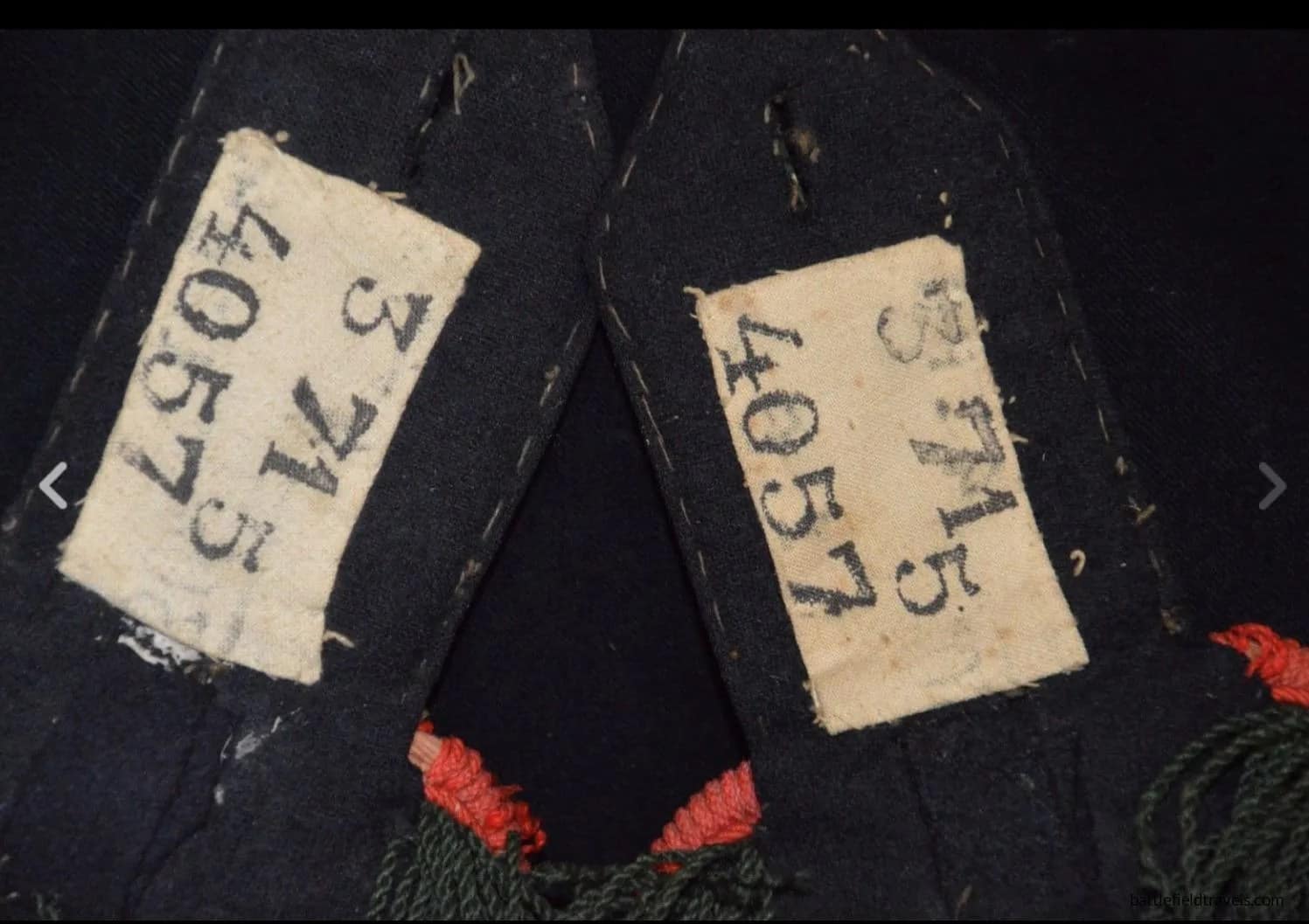
1860 Garde Mobile Kepi. From my personal collection.
The Garde Mobile kepi was issued to France’s reserve and militia forces during the 1860s, as Napoleon III sought to expand manpower without enlarging the professional army. Typically made from lower-quality materials and bearing branch-specific numbers or badges, these kepis were worn during the desperate mobilisation of 1870–71. The Garde Mobile fought in numerous engagements around Paris and in provincial defence, making this kepi an emblem of France’s emergency wartime expansion and the shortcomings of its reserve system.


Found this useful? Buy me a coffee — it helps fund future battlefield research


Authored by Mick Prictor, a retired military officer with 40 years’ service, and a military historian specialising in terrain-focused analysis of tactics, doctrine, and command decision-making in land warfare. His work draws on extensive battlefield fieldwork—more than 280 sites worldwide—and one of the world’s largest private collections of historic military arms, uniforms, and equipment. About me
📚 Further Reading
This weapons and equipment page nests within the broader analytical framework explored in the Research Hub, where operational methods, operating environments, armies, commanders, and weapons are examined across conflicts and eras. The links below connect related studies across the wider body of battlefield analysis on the BattlefieldTravels site.
⚔️ Explore all battle studies from the Franco-Prussian War 1870–1871
🏛️Explore the full museum of weapons and equipment
🗞️ For updates on new battlefield studies and research insights, you can subscribe to the Newsletter.
Franco-Prussian War weapons FAQ
The principal infantry rifles were the French Chassepot Model 1866 and the Prussian Dreyse needle-gun, both breech-loading bolt-action weapons using paper cartridges. The Bavarian contingent used M58/67 Podewils, a breech-loading conversion of the M58 rifle musket. Bavarian Jagers used the M69 Werder ‘Blitz Gewehr’. French second line troops and Republican armies used a mix of Chassepot, M53/67 Tabatiere, older muzzle loaders and many types of American and other surplus weapons.
Yes. The Chassepot had significantly greater range and velocity, allowing French infantry to engage effectively at longer distances, although this advantage was offset by German artillery superiority.
Prussian forces used steel breech-loading Krupp guns, which offered faster firing, greater reliability, and longer range than many French artillery pieces.
The Reffye mitrailleuse was an early rapid-fire weapon capable of firing multiple rounds quickly and is often considered a precursor to the machine gun. The mitrailleuse was fitted with 25 barrels and fired a powerful 13mm round. Reloading was achieved by inserting fresh 25-round pre-loaded plates.
Yes. Some second-line and reserve units still used muzzle-loading weapons. or breech-loading conversions of older weapons such as Tabatière conversions and earlier rifle-muskets.
The war marked a major transition toward modern industrial warfare, combining breech-loading rifles, steel artillery, and early rapid-fire weapons.
The artefacts illustrate the technological transition of the late 19th century and the contrasting strengths of French infantry weapons and German artillery systems.
Subscribe to Battlefield Travels and receive a free E-Book Battlefield Guide
Unlock expert battlefield analysis, campaign reconstructions, and historical insights drawn from firsthand exploration and primary sources.
🗺️ You’ll receive:
🎖️ Exclusive historical insights you won’t find elsewhere
📘 A free eBook: 10 Tips for Exploring Historic Battlefields
📰 New battlefield studies straight to your inbox as they are published

⚔️ Go deeper — Members get exclusive access to the Deep Research Collection, Field Notes, and monthly Research Dispatches. Try membership free for 7 days, cancel anytime. From $9/month.