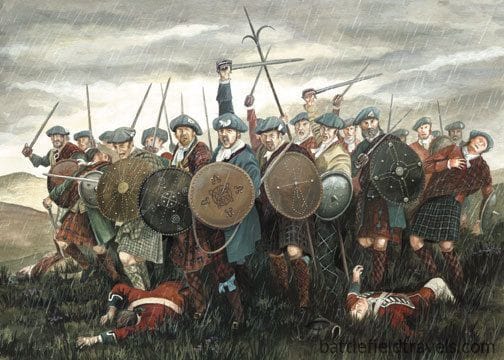
Reconstructing Jacobite Rising battlefields through terrain analysis, primary sources and on-site research

Walking the battlefields of the Jacobite Rising (1745-1746)
The Jacobite Rising of 1745–46 was a fast-moving campaign fought across the Highlands, Lowlands and central belt of Scotland, culminating in the last pitched battle on British soil. Led by Charles Edward Stuart ‘Bonnie Prince Charlie’, the Jacobite army moved rapidly through some of the most challenging terrain in the British Isles — mountain passes, narrow glens, heather moors, boggy flats and the defensive perimeters of major towns and fortresses.
Terrain repeatedly shaped the campaign’s outcomes. At Glenfinnan, the raising of the Jacobite standard occurred at the head of a strategic glen that controlled movement across the West Highlands. The victory at Prestonpans unfolded on a small, compartmentalised coastal plain where the Jacobites exploited local tracks and marsh edges to launch a surprise flank attack. And at Culloden Moor — a bleak, uneven plateau studded with walls, drainage lines and gorse patches — the Jacobite charge was blunted by ground that favoured disciplined musketry, artillery, cohesive line formations, and a new bayonet drill designed to defeat the highland charge.
This landing page brings together battlefield studies from the 1745–46 Rising, combining modern field reconnaissance, period maps, eyewitness accounts and terrain analysis. By walking the ground at Prestonpans, Culloden, Edinburgh and Glenfinnan, these studies reveal not just what happened, but why commanders made the decisions they did, and how landscape, weather and movement corridors shaped each phase of the campaign.
Together, they provide a clear, evidence-based perspective on one of the most dramatic and consequential uprisings in British history.
Battle Studies in the Jacobite Rising
Below are all current BattlefieldTravels studies for the Jacobite Rising, covering key battles, campaign phases and associated sites. New studies are added as further battlefields are walked and analysed.
-
⚔️ Battle of Culloden, Scotland,
16 April 1746
The Battle of Culloden, fought on 16 April 1746, was the final and decisive confrontation of the Jacobite Rising of 1745. The rebellion was the last serious attempt by the Jacobites to restore the Stuart monarchy to the British throne. Led by Charles Edward Stuart ‘Bonnie Prince Charlie’, the Jacobite forces aimed to overthrow the…
-
⚔️ Battle of Prestonpans, Scotland,
21 September 1745
Bonnie Prince Charlie landed at Glenfinnan, Scotland in July 1745, aiming to reclaim the British throne for his father, James Francis Edward Stuart. Gathering support from the Highland clans, he advanced towards Edinburgh, capturing the city on 17 September. British General Sir John Cope, who had been gathering government forces in response to the Jacobite…


Tactical Innovations
Over thousands of years of warfare, armies have sought ways to gain advantage on the battlefield. Sometimes the solution was a new weapon. Sometimes it was a radical new method. Often it was a combination of both. From the disciplined ranks of the Greek phalanx to pike-and-shot warfare to the interlocking machine-gun fire plans of the twentieth century, tactical innovations have repeatedly reshaped how battles are fought.
-
💡The Culloden Bayonet Drill: How Cumberland’s army broke the Highland charge

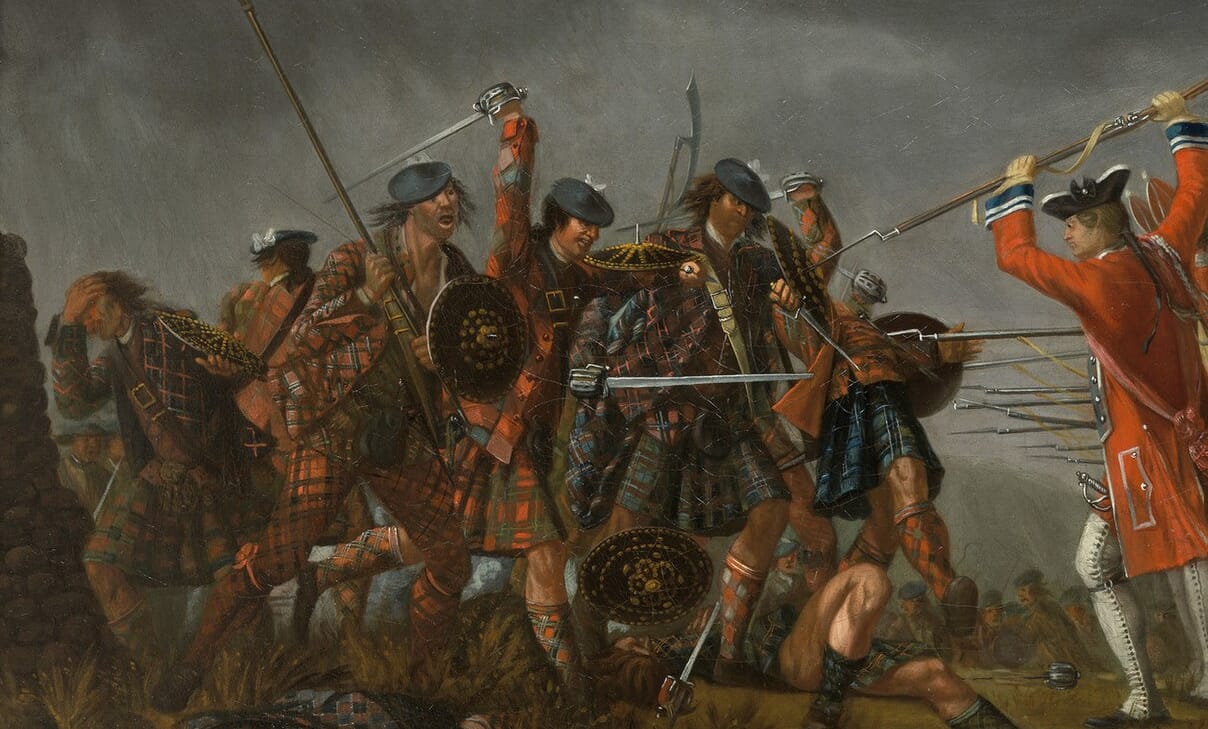
How a minor change to the government army’s bayonet drill defeated the Highlander’s battle tactics— and why the critics who dismissed it were asking the wrong question. The weight of evidence establishes beyond reasonable doubt that Cumberland’s army trained in and used a new bayonet drill at Culloden, and that the drill was directed personally…

Authored by Mick Prictor, a retired military officer with 40 years’ service, and a military historian specialising in terrain-focused analysis of tactics, doctrine, and command decision-making in land warfare. His work draws on extensive battlefield fieldwork—more than 280 sites worldwide—and one of the world’s largest private collections of historic military arms, uniforms, and equipment. About me
⚔️ Go deeper — Members get exclusive access to the Deep Research Collection, Field Notes, and monthly Research Dispatches. Try membership free for 7 days, cancel anytime. From $9/month.
Explore Related Themes
Armies: Jacobite Army • British Army • French Army
Commanders: Bonnie Prince Charlie • Duke of Cumberland
Methods: Highland Charge • Envelopment
Environments: Forest Warfare • Mountain Warfare
Further Study: Jacobite Rising Reading List
Prestonpans and Culloden are currently published, with studies of Edinburgh and Glenfinnan available as site analyses or future additions.
Each is based on terrain analysis, period maps and on-site fieldwork to explain how ground and movement shaped the campaign.
Yes. Prestonpans, Culloden, Edinburgh and Glenfinnan are all accessible and retain key terrain features visible to visitors.
Yes. The studies place each battle and site within the wider operational movements across Scotland and into northern England.
Subscribe to Battlefield Travels and receive a free E-Book Battlefield Guide
Unlock expert battlefield analysis, campaign reconstructions, and historical insights drawn from firsthand exploration and primary sources.
🗺️ You’ll receive:
🎖️ Exclusive historical insights you won’t find elsewhere
📘 A free eBook: 10 Tips for Exploring Historic Battlefields
📰 New battlefield studies straight to your inbox as they are published

⚔️ Go deeper — Members get exclusive access to the Deep Research Collection, Field Notes, and monthly Research Dispatches. Try membership free for 7 days, cancel anytime. From $9/month.