Skip to content
Home » Potzdam

Potzdam

Selected works on the War of the Spanish Succession
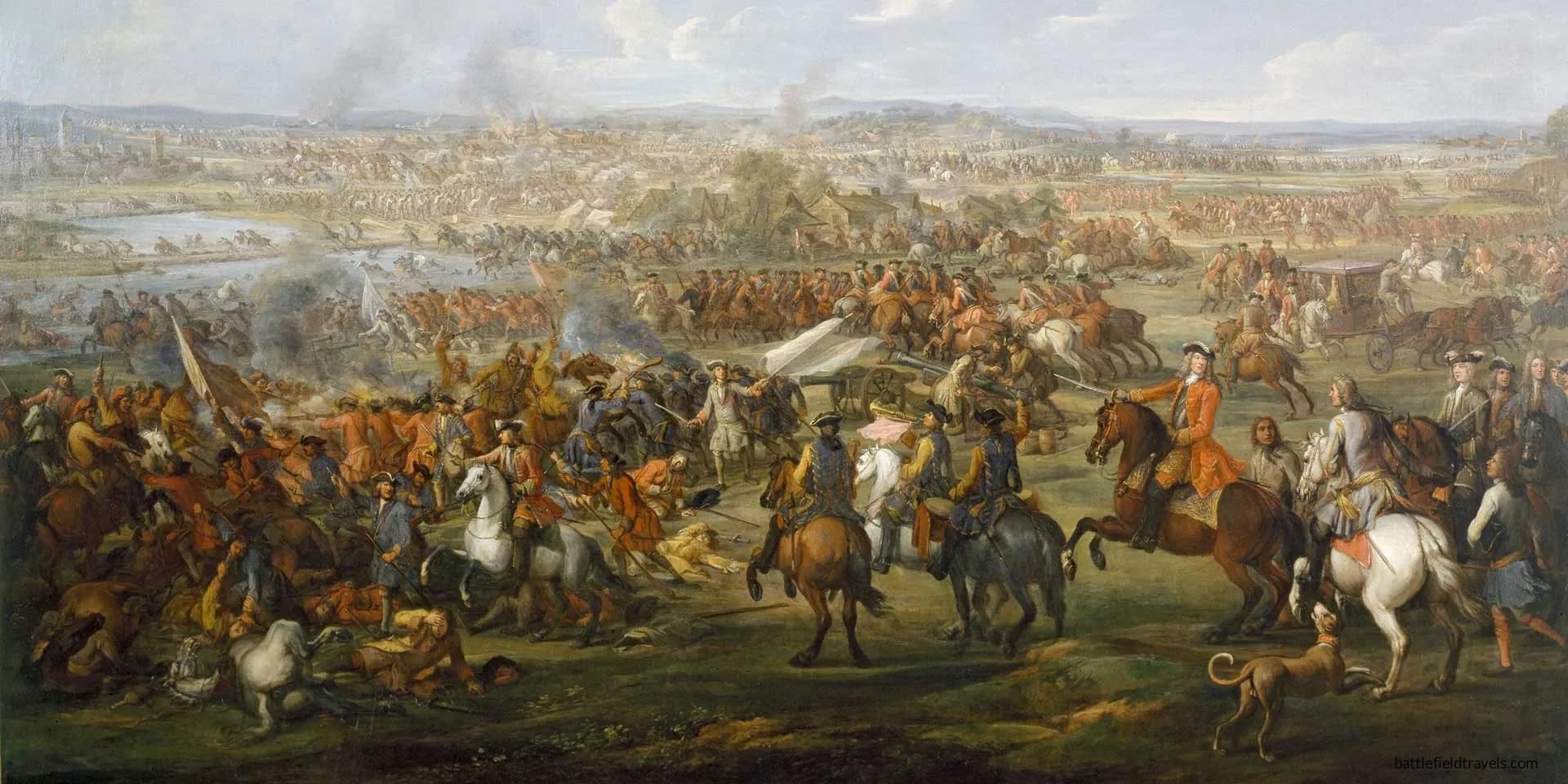
The Battle of Blenheim, 1704. Painting by John Wootton, circa 1743.
The Battle of Blenheim, 1704. Painting by John Wootton, circa 1743

Overview of the War of the Spanish Succession

The War of the Spanish Succession was one of the defining conflicts of early modern Europe, fought over the inheritance of the Spanish Empire following the death of Charles II in 1700.

At its core, the war was a struggle over the balance of power. The possibility that the Bourbon monarchy might unite France and Spain under a single dynasty posed a strategic threat to the rest of Europe. In response, a Grand Alliance—led by Britain, the Dutch Republic, and the Holy Roman Empire—formed to resist French expansion.

The war’s decisive campaigns were fought in the Low Countries, where Allied armies under John Churchill, 1st Duke of Marlborough, and Prince Eugene of Savoy confronted French forces in a series of highly mobile, tactically complex operations.

War of the Spanish Succession literature

Early writing on the war was dominated by grand narrative and biography, most notably the monumental account of John Churchill, 1st Duke of Marlborough, produced by Winston Churchill. These works emphasised leadership, character, and sweeping campaign narratives, presenting the war through the lens of great commanders and decisive battles. While rich in detail and narrative power, they often reflected the perspectives and assumptions of their time, placing less emphasis on structural factors such as coalition dynamics or operational constraints.

Later 20th-century scholarship began to place the conflict within a broader strategic and political context, examining the war as part of the longer struggle for the European balance of power. Historians increasingly focused on the interaction between diplomacy, finance, and military operations, moving beyond purely battlefield-driven accounts. This shift also brought greater attention to the complexity of coalition warfare, where Allied success depended not only on battlefield performance but on the coordination of multinational forces with differing priorities and capabilities.

Underexplored aspects

Despite these developments, the War of the Spanish Succession remains comparatively under-explored in one key respect: the interaction between terrain, perception, and decision-making at the point of contact. Many accounts describe what happened on the battlefield, but fewer examine how commanders read the ground, identify opportunities, and translate those observations into action under pressure.


Reading

The reference collection below includes the key books and references I have used in preparing for and undertaking battlefield studies all over the world.

War of the Spanish Succession in Europe

Marlborough: His Life And Times (Vol. 3)
In the first volume of this ambitious and stunningly written biography, Sir Winston S. Churchill discusses the early career and stratospheric rise of his illustrious, seventeenth century ancestor. John Churchill, the Duke of Marlborough, may have been eclipsed in history by his more well-known descendant, but in his time, Marlborough was considered one of England’s foremost military and political leaders. This first installment pays particular attention to personal details of Marlborough’s life, and the important role several women played in his success—including his sister, his wife, the Duchess of Cleveland, and Queen Anne herself.
War of the Spanish Succession: A History from Beginning to End (History of Spain)
The War of the Spanish Succession, which occurred between 1701 and 1714, was fought over who would succeed the childless King Charles II to the throne of Spain. During the early modern era, European countries were almost constantly at war, vying for land, resources, power, and wealth. The succession of the Spanish throne—and everything that came with it—had much of all of those things up for grabs; therefore all of Europe had much to gain, or lose, from the new Spanish ruler. By the end of the war, conflict in Europe was hardly over, but a new, dominant power had emerged.
The War of the Spanish Succession 1701–1714
The War of the Spanish Succession, fought between 1701 and 1714 to decide who should inherit the Spanish throne, was a conflict on an unprecedented scale, stretching across most of western Europe, the high seas and the Americas. Yet this major subject is not well known and is little understood. That is why the publication of James Falkner’s absorbing new study is so timely and important. In a clear and perceptive narrative he describes and analyses the complex political manoeuvres and a series of military campaigns which also involved the threat posed by Ottoman Turks in the east and Sweden and Russia in the north. Fighting took place not just in Europe but in the Americas and Canada, and on the high seas.
Sale
Queen Anne’s War: The Second Contest for North America, 1702–1713
Told from the halls of power in North America and Europe, and through the eyes of the men and women who found themselves embroiled in this brutal realignment of colonial interests, Queen Anne’s War recreates the world of early North American expansion at the ground level, providing riveting accounts of the battles across settlements and wilderness as well as the motives, conditions, triumphs, and failures of the Europeans and their respective Native American allies. Based on extensive primary source research and command of English, French, and Spanish sources, the narrative not only describes the economic and geopolitical ramifications of the war that reshaped North America, but intriguingly reveals the sense of independence emerging in the colonies, from Puritan New England to plantation South Carolina, at the close of the war.
Marlborough’s Campaigns & Battles: In the Netherlands, Germany & France during the War of Spanish Succession, 1702-11
First making its appearance, more or less unofficially, in support of the Dutch in their heroic efforts to free themselves from the Spanish yoke, Great Britain had then aided France in her conflict with Spain and had been finally drawn into the long and deadly struggle waged by William III. to protect the United Provinces from the aggression of Louis XIV. This was the stage upon which the great Duke of Marlborough led his army from victory to victory during the hard-fought campaigns of the War of the Spanish Succession. The names of those battles, – Blenheim, Ramillies, Oudenarde and Malplaquet -contested during this period, became iconic and adorn the flags of famous regiments. They made a national hero of the commander of those soldiers and cemented his reputation as one of the most accomplished generals in his nation’s history. Maycock’s readable and excellent work, written from an academic military perspective is enhanced by Belloc’s brilliant analysis of Blenheim taken from his ‘Battles’ series.

Marlborough’s War Machine 1702-1711
Blenheim, Ramilles , Oudenarde, Malplaquet – much has been written about the brilliant victories of the Duke of Marlborough’s Anglo-Dutch army over the armies of Louis XIV of France during the War of the Spanish Succession. Less attention has been focused on the men and the military organization that made these achievements possible – the soldiers, the commanders, the army structure and administration, the logistics, engineering, weapons and finance. That is why James Falkner’s penetrating account of the composition and operation of Marlborough’s army is of such value. His clear analysis gives a fascinating insight into Marlborough’s war machine and into the conduct of war in Europe 300 years ago.
Blenheim 1704: The Duke of Marlborough’s masterpiece (Campaign, 141)
Osprey’s study of the Blenheim campaign, Britiain’s defining battle of the War of the Spanish Succession (1701–1714). Combining one of history’s most audacious strategic manoeuvres with perhaps the greatest military victory ever won by a British commander, the Blenheim campaign is rightly considered the pinnacle of the career of John Churchill, Duke of Marlborough. On 13 August 1704, Marlborough and Prince Eugene of Savoy faced a Franco-Bavarian army threatening to knock Austria out of the War of the Spanish Succession. In a hard-fought battle Marlborough won a resounding victory, capturing Marshal Tallard and over 14,000 men. In this book John Tincey describes how Marlborough’s victory crushed his enemies, shattered the myth of French invincibility and laid the foundations for two centuries of British world dominance.


Frequently asked questions

Why is the War of the Spanish Succession less studied than later conflicts?

The war sits between more heavily studied periods, such as the wars of Louis XIV and the Napoleonic Wars, and lacks the national narratives that drive interest in later conflicts. As a result, it has attracted fewer popular histories, even though it was a major European war involving coalition warfare, global theatres, and significant battlefield developments.

What are the main themes in the literature on the war?

The literature has evolved from early biographical and narrative accounts—focused on commanders such as Marlborough—to broader studies of strategy, diplomacy, and coalition warfare. More recent work examines operational coordination, command structures, and the limits of control in early modern armies, although detailed analysis of terrain and battlefield perception remains limited.

What gaps still exist in the historiography of the war?

While campaign narratives and strategic studies are well covered, there is less emphasis on how battles were experienced and interpreted at ground level. In particular, the interaction between terrain, decision-making, and real-time command judgement is often underdeveloped, leaving scope for further battlefield-focused analysis.

Subscribe to Battlefield Travels and receive a free E-Book Battlefield Guide

Unlock expert battlefield analysis, campaign reconstructions, and historical insights drawn from firsthand exploration and primary sources.

🗺️ You’ll receive:

🎖️ Exclusive historical insights you won’t find elsewhere

📘 A free eBook: 10 Tips for Exploring Historic Battlefields

📰 New battlefield studies straight to your inbox as they are published


Reconstructing the War of the Spanish Succession battlefields through terrain analysis, primary sources and on-site research

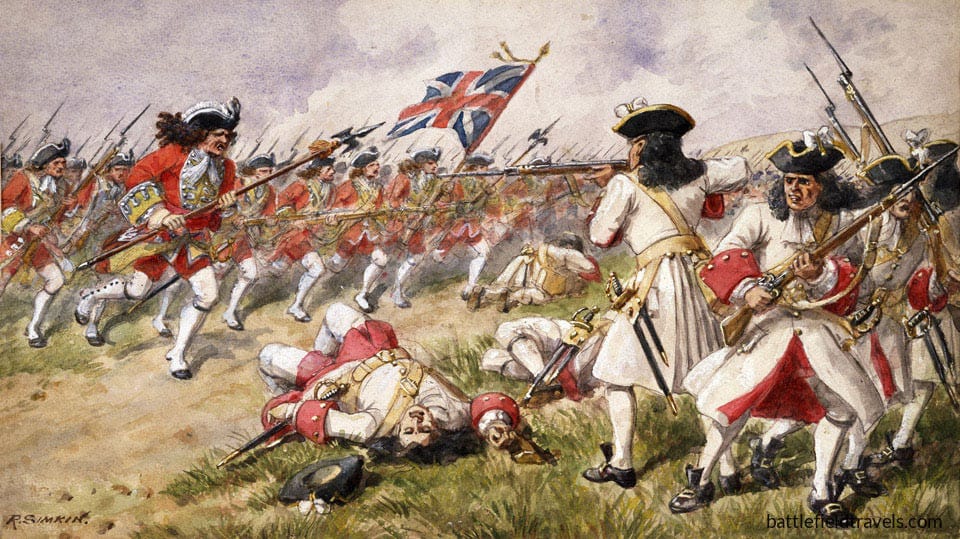
16th-Foot-at-the-Battle-of-Ramillies-by-Richard-Simkin
16th Foot at the Battle of Ramillies (1706) by Richard Simkin

Walking the battlefields of the War of the Spanish Succession, 1701–1714

Origins: Dynastic crisis and the balance of power

The War of the Spanish Succession emerged from one of the most consequential succession crises in European history. The death of the childless Spanish king Charles II in 1700 triggered a struggle over the inheritance of the vast Spanish Empire, which extended across Europe and the Americas.

At stake was not simply who would wear the Spanish crown, but whether the Bourbon monarchy of France could unite the resources of both kingdoms under a single dynasty. Such an outcome threatened to overturn the European balance of power.

In response, a Grand Alliance formed—led by Britain, the Dutch Republic, and the Holy Roman Empire—to resist French expansion and prevent strategic domination of Western Europe.

Western Europe: The Decisive Theatre

The war’s decisive campaigning unfolded in the Low Countries, where French forces confronted Allied armies under commanders such as the Duke of Marlborough and Prince Eugene of Savoy.

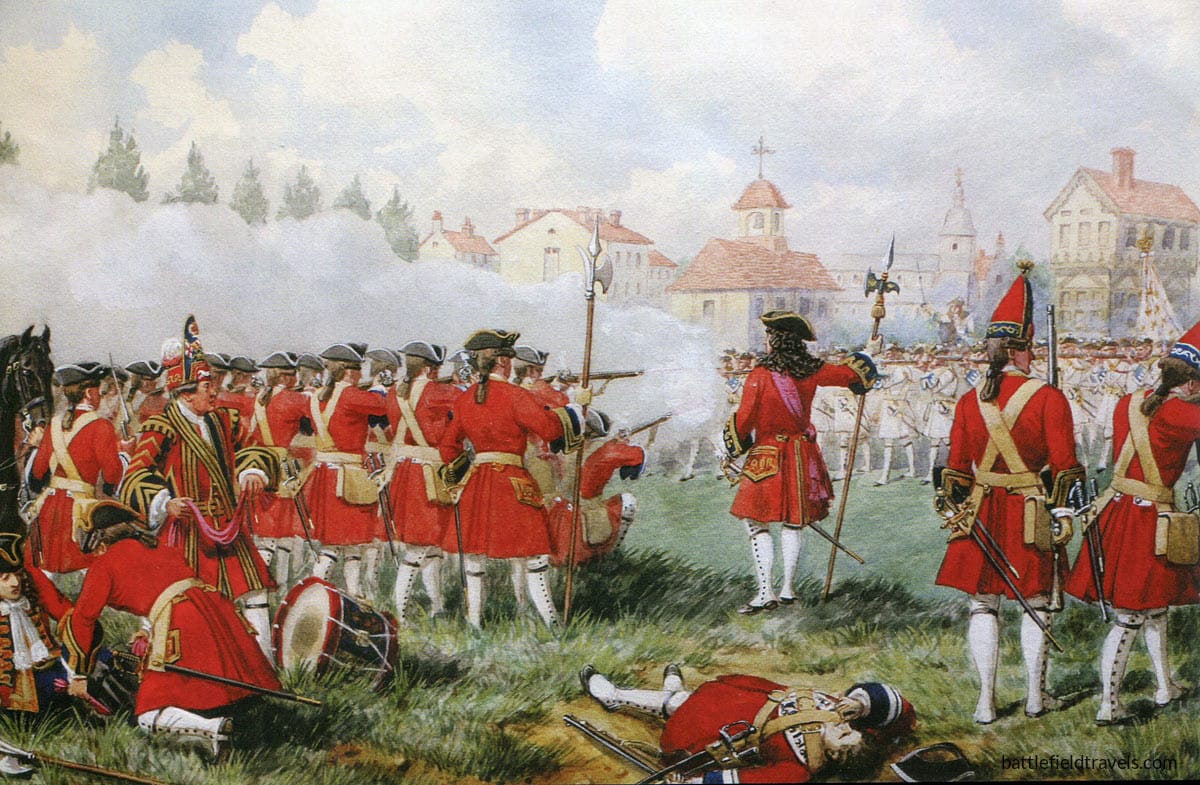
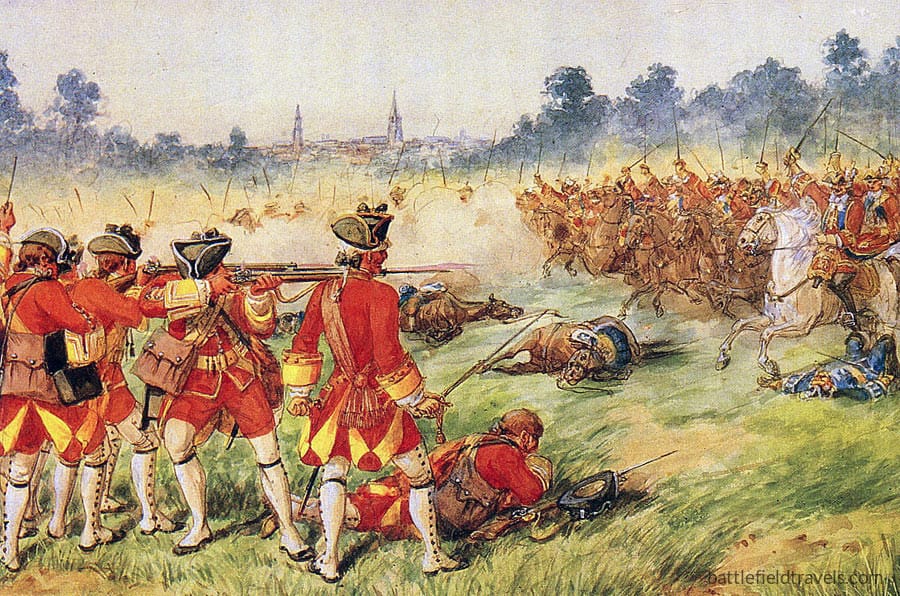
At Ramillies, Marlborough exploited terrain and timing to unhinge the French line. At Oudenaarde, rapid manoeuvre and aggressive engagement disrupted French deployment before it could stabilise. Malplaquet, by contrast, demonstrated the deadly resilience of prepared defensive positions, where Allied victory came at enormous cost.

Coalition Warfare

Allied armies combined British, Dutch, Austrian, and German contingents, each with differing priorities, command structures, and operational constraints. The ability of commanders such as Marlborough to coordinate these forces, to align movement, timing, and intent, was as decisive as battlefield execution.

French command, by contrast, often struggled with rigidity, slower decision cycles, and an inability to adapt once engaged.

A Global War

Although the principal campaigns took place in Europe, the conflict extended far beyond it. Fighting spread to Spain and the Mediterranean, the German states, Italy, and North America, where it formed part of Queen Anne’s War. This wider struggle reflected the increasingly global nature of European power competition in the early 18th Century.


War of the Spanish Succession – Field Notes

Short-form observations, terrain insights, and working interpretations from the field. Some posts require access.


  • 📝🔒 Field Note: Battle of Ramillies, Belgium, 23 May 1706

    📝🔒 Field Note: Battle of Ramillies, Belgium, 23 May 1706

    November 2025, Ramillies, Belgium. I am exploring the battlefield of Ramillies. Here on 23 May 1706, an Allied Army under John Churchill, the Duke of Marlborough, defeated a French army under Marshall Villeroi. The ground here is open, gently rolling country, cut by small streams and defined by long field boundaries—terrain that enables movement and…

    Read the full Field Note…..


FAQ – War of the Spanish Succession

What was the War of the Spanish Succession?

The War of the Spanish Succession (1701–1714) was a major European conflict triggered by a dispute over who would inherit the Spanish Empire after the death of Charles II. It became a wider struggle over the balance of power, with France supporting a Bourbon claimant and a Grand Alliance of Britain, the Dutch Republic, and the Holy Roman Empire opposing French expansion.

Why was the War of the Spanish Succession important?

The war reshaped the balance of power in Europe and prevented the unification of the French and Spanish crowns. It also marked the rise of Britain as a major military and financial power, and demonstrated the growing importance of coalition warfare, operational coordination, and battlefield decision-making.

Which battles defined the War of the Spanish Succession?

Key battles include Ramillies (1706), Oudenaarde (1708), and Malplaquet (1709), fought primarily in the Low Countries. These engagements highlight the interaction between terrain, timing, and command decisions, and are among the most studied battles of early 18th-century warfare.

Who were the main commanders in the war?

The most prominent Allied commanders were the Duke of Marlborough and Prince Eugene of Savoy, who coordinated multinational forces across multiple campaigns. French armies were led by commanders such as Marshal Villars and the Duke of Vendôme, whose performance varied depending on terrain, timing, and strategic context.

Where were the main campaigns fought?

The principal theatre was the Low Countries (modern Belgium), but fighting also took place in Spain, Italy, the German states, and overseas. In North America, the conflict formed part of Queen Anne’s War, reflecting the global nature of early 18th-century rivalry.


Subscribe to Battlefield Travels and receive a free E-Book Battlefield Guide

Unlock expert battlefield analysis, campaign reconstructions, and historical insights drawn from firsthand exploration and primary sources.

🗺️ You’ll receive:

🎖️ Exclusive historical insights you won’t find elsewhere

📘 A free eBook: 10 Tips for Exploring Historic Battlefields

📰 New battlefield studies straight to your inbox as they are published


Prussian grenadiers fighting in the burning village of Chotusitz, by Gunther Dorn

⚔️🔒Battle of Chotusitz, Bohemia,
17 May 1742

The Battle of Chotusitz (17 May 1742) was Frederick the Great’s hardest-won early victory — a chaotic, bloody battle that secured Silesia but exposed deep weaknesses in Prussian command and coordination. Frederick’s maintenance of a fresh reserve to be committed at the decisive moment was a lesson that stayed with him as a commander.

Reconstructing War of the Austrian Succession battlefields through terrain analysis, primary sources and on-site research

Prussian grenadiers advance during the Battle of Hohenfriedburg. 4th June 1745, War of the Austrian Succession

Walking the battlefields of the War of the Austrian Succession 1740-1748

Origins: The Pragmatic Sanction of 1713

The War of the Austrian Succession was a major European conflict triggered by the death of Emperor Charles VI in 1740 and the contested inheritance of the Habsburg monarchy. At its heart lay the Pragmatic Sanction of 1713, a legal settlement intended to guarantee the succession of Charles’s daughter, Maria Theresa, and preserve the unity of the Habsburg lands. Although widely recognised in principle, the Pragmatic Sanction collapsed in practice once Austria appeared diplomatically isolated and militarily vulnerable.

What followed was not simply a dynastic dispute but a struggle over territory, influence, and the balance of power in Europe. France, Bavaria, Spain, and Prussia challenged Habsburg authority, while Britain and the Dutch Republic intervened to prevent French dominance. Fighting spread rapidly across Central Europe, the Low Countries, Italy, and beyond, drawing in nearly every major European power.

Central Europe: The First Silesian War

The most consequential early intervention came from Prussia, led by its young king, Frederick II. In late 1740, Frederick invaded Silesia, exploiting Austria’s weakness and initiating the First Silesian War. Battles such as Mollwitz (1741) revealed both the strengths and limitations of the Prussian army: highly disciplined infantry and effective firepower, but fragile cavalry and inexperienced command. At Chotusitz (1742), Frederick again defeated Austrian forces, forcing Maria Theresa to concede Silesia in order to fight on other fronts.

These campaigns marked Prussia’s emergence as a great power. During the Second Silesian War, Frederick refined his methods, achieving a decisive victory at Hohenfriedberg (1745) that secured Prussia’s hold over Silesia and demonstrated the growing effectiveness of Prussian operational tempo, fire discipline, and battlefield coordination.

Western Europe: battle for the Austrian Netherlands

While Austria fought for survival in Central Europe, the war’s western theatre developed into a major struggle in the Austrian Netherlands. Here, French armies confronted an Anglo-Allied coalition of British, Dutch, Austrian, and Hanoverian troops. The Battle of Fontenoy (1745) became the conflict’s most famous engagement. Despite a formidable Allied infantry advance, French forces—well-positioned and reinforced at the critical moment—halted and broke the attack. Fontenoy illustrated both the power and the limits of linear infantry tactics, and remains one of the defining battles of 18th-century warfare.

North America and India: War of Jenkins’ Ear

The conflict also formed part of a wider imperial struggle. From 1739, Britain and Spain were already fighting the War of Jenkins’ Ear, a maritime and colonial war driven by trade disputes and imperial rivalry in the Americas. When Britain and France entered the Austrian Succession conflict, these colonial hostilities merged into a broader global war, extending fighting to the Caribbean, North America, and India


War of the Austrian Succession – battle studies

Below are all current BattlefieldTravels studies for the Seven Years War, covering key battles, campaign phases and associated sites. New studies are added as further battlefields are walked and analysed.

  • ⚔️🔒Battle of Chotusitz, Bohemia,
    17 May 1742

    ⚔️🔒Battle of Chotusitz, Bohemia, 17 May 1742

    The Battle of Chotusitz (17 May 1742) was Frederick the Great’s hardest-won early victory — a chaotic, bloody battle that secured Silesia but exposed deep weaknesses in Prussian command and coordination. Frederick’s maintenance of a fresh reserve to be committed at the decisive moment was a lesson that stayed with him as a commander.

    Read the full battle study


  • ⚔️ Battle of Fontenoy, Belgium,
    11 May 1745

    ⚔️ Battle of Fontenoy, Belgium, 11 May 1745

    The Battle of Fontenoy, fought on 11 May 1745, was a major battle during the War of the Austrian Succession. A French army of ~50,000 under Marshal Maurice de Saxe against a coalition force of ~50,000 British, Dutch, Hanoverian, and Austrian troops led by the Duke of Cumberland. The result was a decisive French victory!.

    Read the full battle study


  • ⚔️ Battle of Culloden, Scotland,
    16 April 1746

    ⚔️ Battle of Culloden, Scotland, 16 April 1746

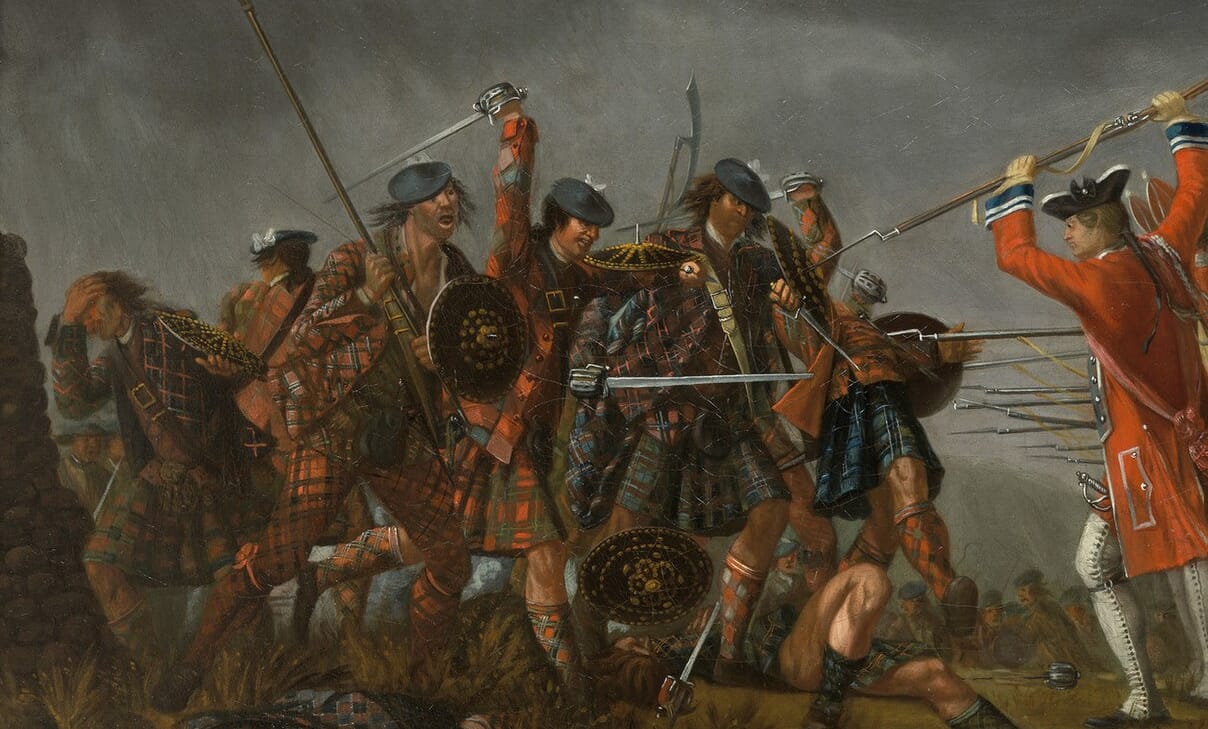
    The Battle of Culloden, fought on 16 April 1746, was the final and decisive confrontation of the Jacobite Rising of 1745. The rebellion was the last serious attempt by the Jacobites to restore the Stuart monarchy to the British throne. Led by Charles Edward Stuart ‘Bonnie Prince Charlie’, the Jacobite forces aimed to overthrow the…

    Read the full battle study


  • ⚔️ Battle of Prestonpans, Scotland,
    21 September 1745

    ⚔️ Battle of Prestonpans, Scotland, 21 September 1745

    Bonnie Prince Charlie landed at Glenfinnan, Scotland in July 1745, aiming to reclaim the British throne for his father, James Francis Edward Stuart. Gathering support from the Highland clans, he advanced towards Edinburgh, capturing the city on 17 September. British General Sir John Cope, who had been gathering government forces in response to the Jacobite…

    Read the full battle study


Tactical Innovations

Over thousands of years of warfare, armies have sought ways to gain advantage on the battlefield. Sometimes the solution was a new weapon. Sometimes it was a radical new method. Often it was a combination of both. From the disciplined ranks of the Greek phalanx to pike-and-shot warfare to the interlocking machine-gun fire plans of the twentieth century, tactical innovations have repeatedly reshaped how battles are fought.


What caused the War of the Austrian Succession?

The war was triggered by the death of Emperor Charles VI in 1740 and the challenge to his daughter Maria Theresa’s right to inherit the Habsburg lands under the Pragmatic Sanction. Several European powers accepted the settlement in theory but rejected it in practice once Austria appeared weak.

What was the Pragmatic Sanction and why did it fail?

The Pragmatic Sanction of 1713 was a legal agreement intended to ensure the indivisibility of the Habsburg territories and allow female succession. It failed because rival powers prioritised territorial gain and strategic advantage over diplomatic commitments when the opportunity arose.

Why was Frederick the Great so important in this war?

Frederick II of Prussia exploited Austria’s vulnerability by invading Silesia in 1740, triggering the Silesian Wars within the wider conflict. His victories at battles such as Mollwitz, Chotusitz, and Hohenfriedberg secured Silesia and established Prussia as a major European power.

Why is the Battle of Fontenoy so significant?

Fontenoy (1745) was the most famous battle of the war’s western theatre, where a French army defeated a powerful Anglo-Allied force in the Austrian Netherlands. It demonstrated the strengths and limits of linear infantry tactics and highlighted the decisive role of reserves, terrain, and artillery.

How is the War of the Austrian Succession connected to the War of Jenkins’ Ear?

The War of Jenkins’ Ear (1739–1748) began as a colonial and maritime conflict between Britain and Spain. When Britain and France entered the War of the Austrian Succession, these struggles merged, turning a European dynastic war into a broader global conflict.


Subscribe to Battlefield Travels and receive a free E-Book Battlefield Guide

Unlock expert battlefield analysis, campaign reconstructions, and historical insights drawn from firsthand exploration and primary sources.

🗺️ You’ll receive:

🎖️ Exclusive historical insights you won’t find elsewhere

📘 A free eBook: 10 Tips for Exploring Historic Battlefields

📰 New battlefield studies straight to your inbox as they are published


Reconstructing Seven Years War (French and Indian War) battlefields through terrain analysis, primary sources and on-site research

Seven Years War. Battle of Minden, 1 August 1759, 25th Regiment of Foot
EXPLORE: BATTLES | WEAPONS | READING | QUIZ

Walking the battlefields of the Seven Years War

The Seven Years War (1756–1763) was the first truly global conflict—fought simultaneously in Europe, North America, the Caribbean, India and West Africa. No earlier war saw so many armies manoeuvring across such diverse theatres, from the forests and lakes of North America to the sugar islands of the Caribbean and the open plains of central Europe. Although sparked by dynastic tensions, it became a struggle for continental dominance, imperial expansion and control of global trade routes.

Global theatres of the Seven Years War

In Europe, Frederick the Great fought for Prussia’s survival against an encircling coalition of Austria, France, Russia, Sweden and the Reichsarmee. Here, in Silesia and Bohemia, the war unfolded across villages, vineyards, low ridgelines and river valleys—terrain that became the proving ground for mid-18th century manoeuvre warfare. BattlefieldTravels focuses particularly on this theatre, walking the ground at places such as Lobositz, Chotusitz, Kolín, Leuthen, Hohenfriedberg and others, combining period maps, contemporary accounts and modern GIS tools to understand how these battles were fought and why they unfolded as they did.

But the Seven Years War was far more than a European struggle. In North America, British, French and Indigenous forces clashed at Fort Necessity, Monongahela, Lake George, Fort William Henry, Ticonderoga, Bushy Run, Oswego, Louisbourg and dozens of frontier positions. I have walked and studied many of these sites, examining how dense forests, waterways, ravines and fortifications shaped tactics and outcomes. These studies explore how European armies adapted (or failed to adapt) to irregular terrain, indigenous fighting methods and long-distance campaigning.

In the Caribbean, sieges and amphibious operations turned fortified harbours such as Fort San Carlos and Fort Charlotte into strategic prizes, while naval and land actions in West Africa formed part of the same contest for maritime supremacy.

Methodology for battlefield analysis

Rather than treating the Seven Years War as a sequence of victories and defeats, the BattlefieldTravels methodology is to examine how organisation, command culture, weapons, doctrine, logistics and terrain interacted across very different environments. Each battlefield study blends on-site photography, annotated maps, 3D terrain visualisations and a wide range of primary and secondary sources, providing not just a narrative of each action but a clear understanding of why events unfolded the way they did.


🏛️Weapons & Equipment: Seven Years’ War

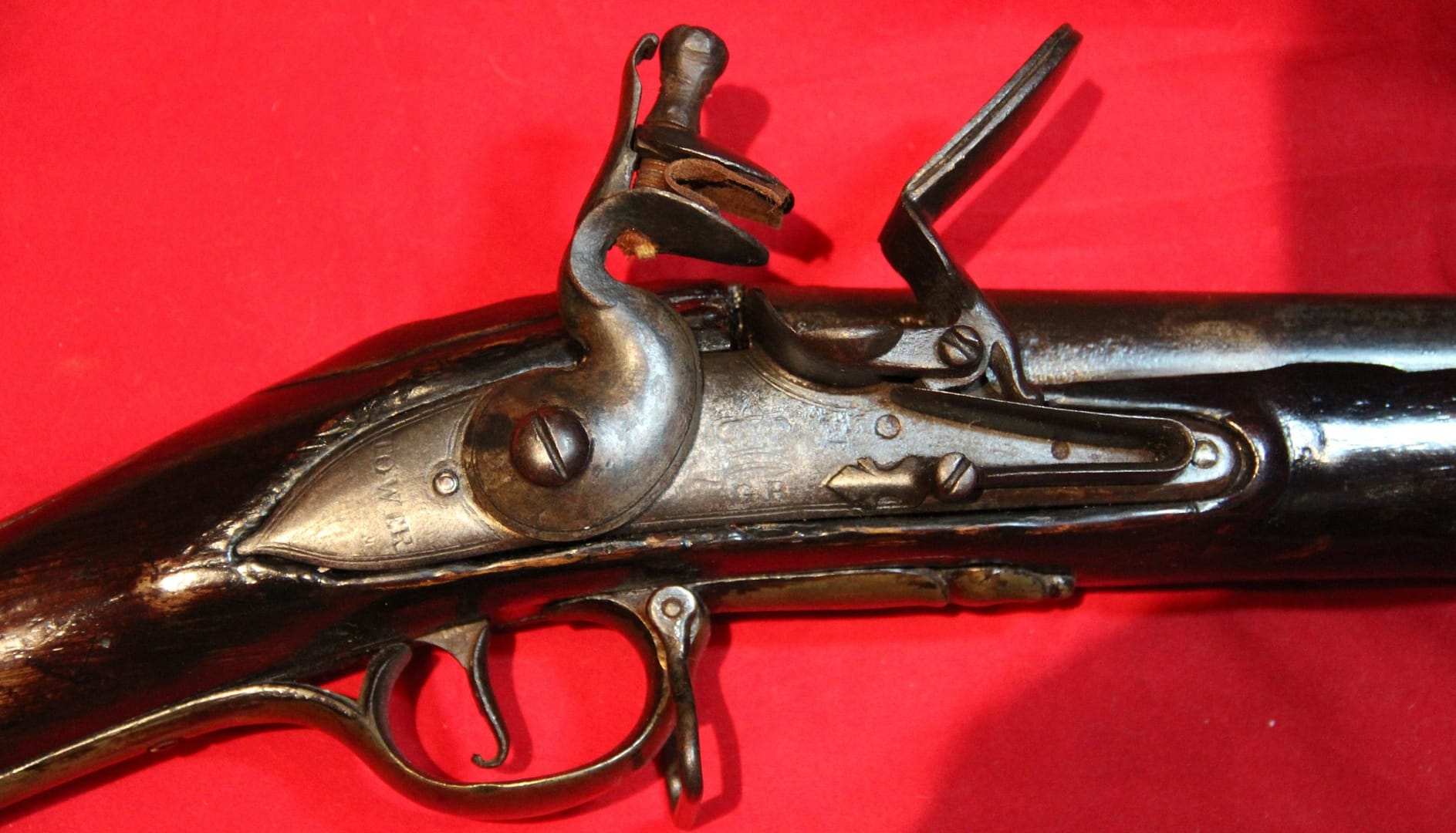
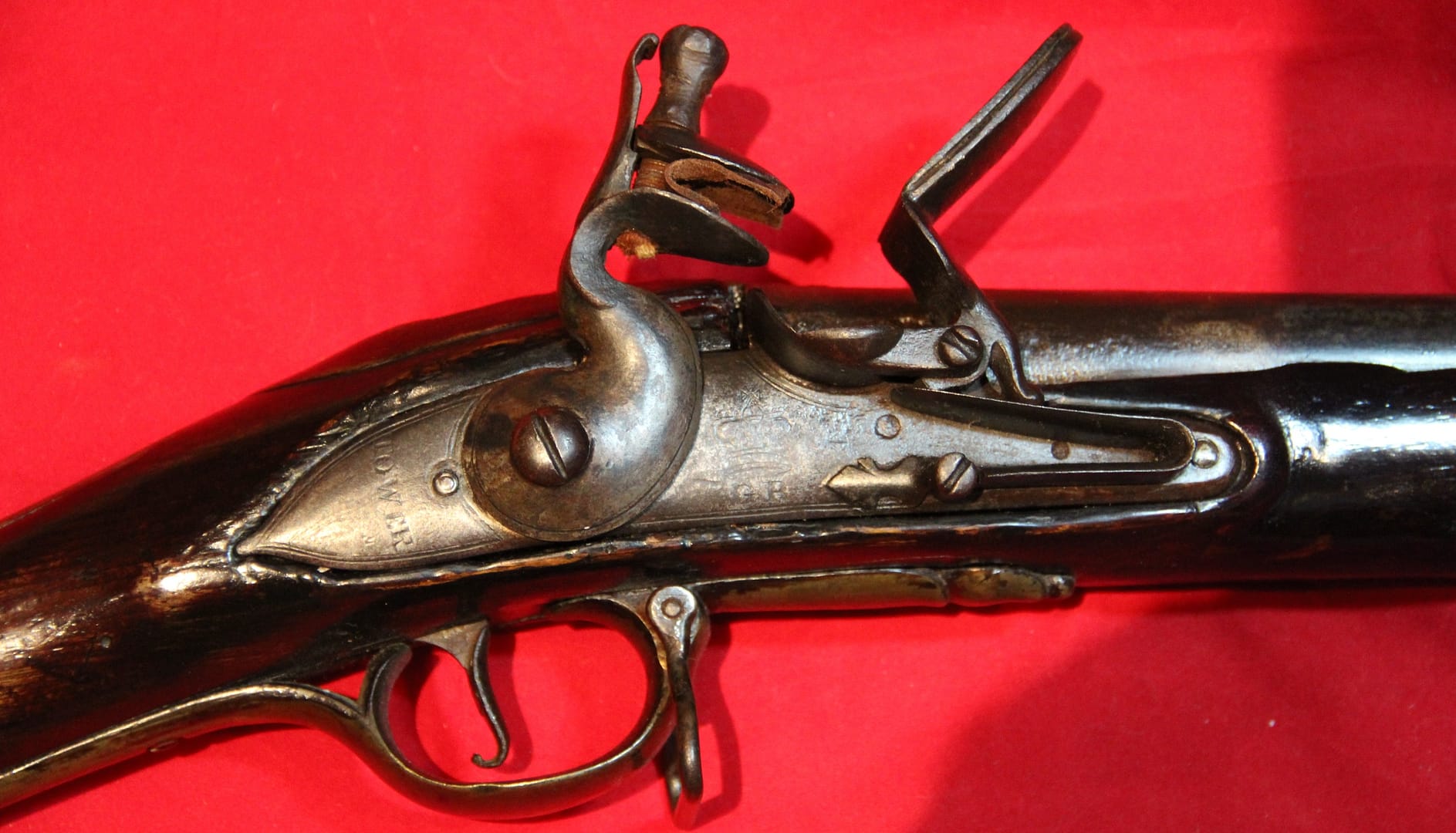
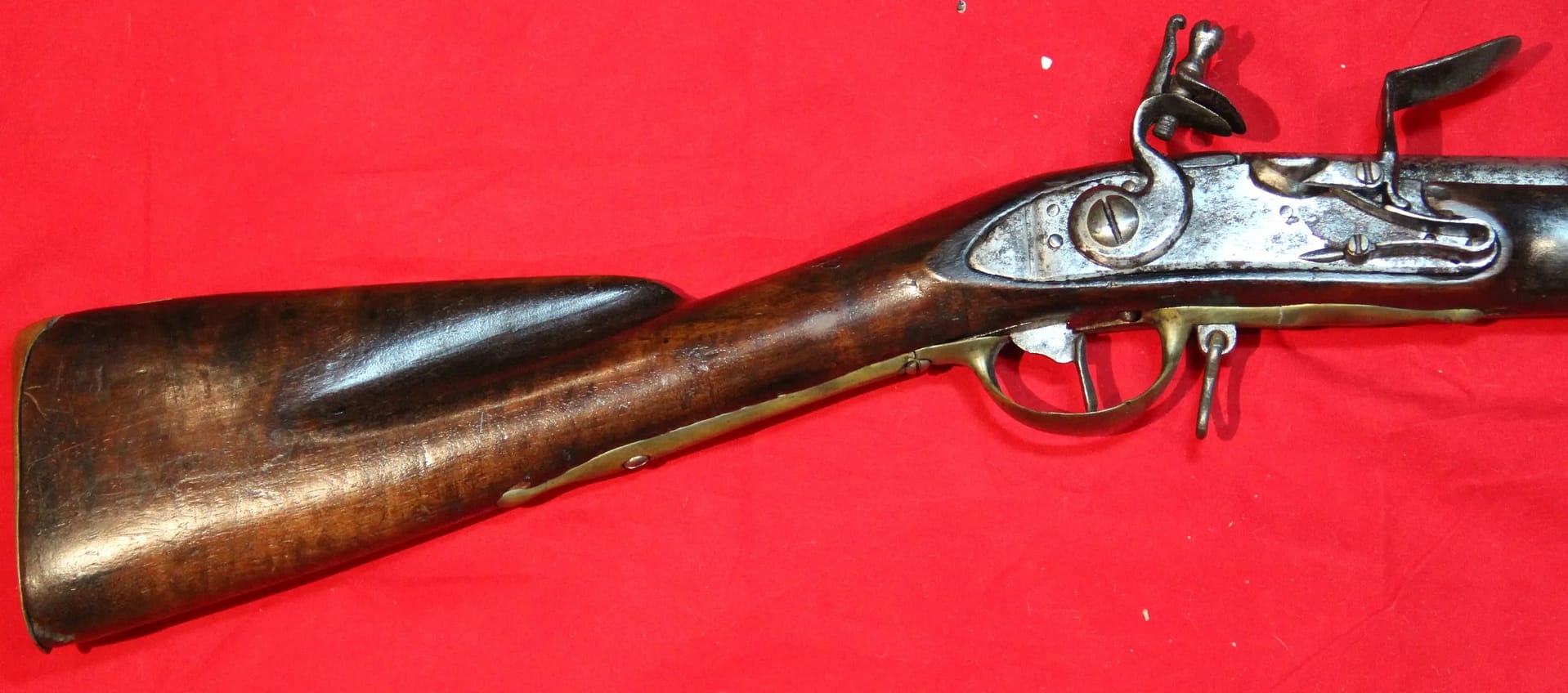
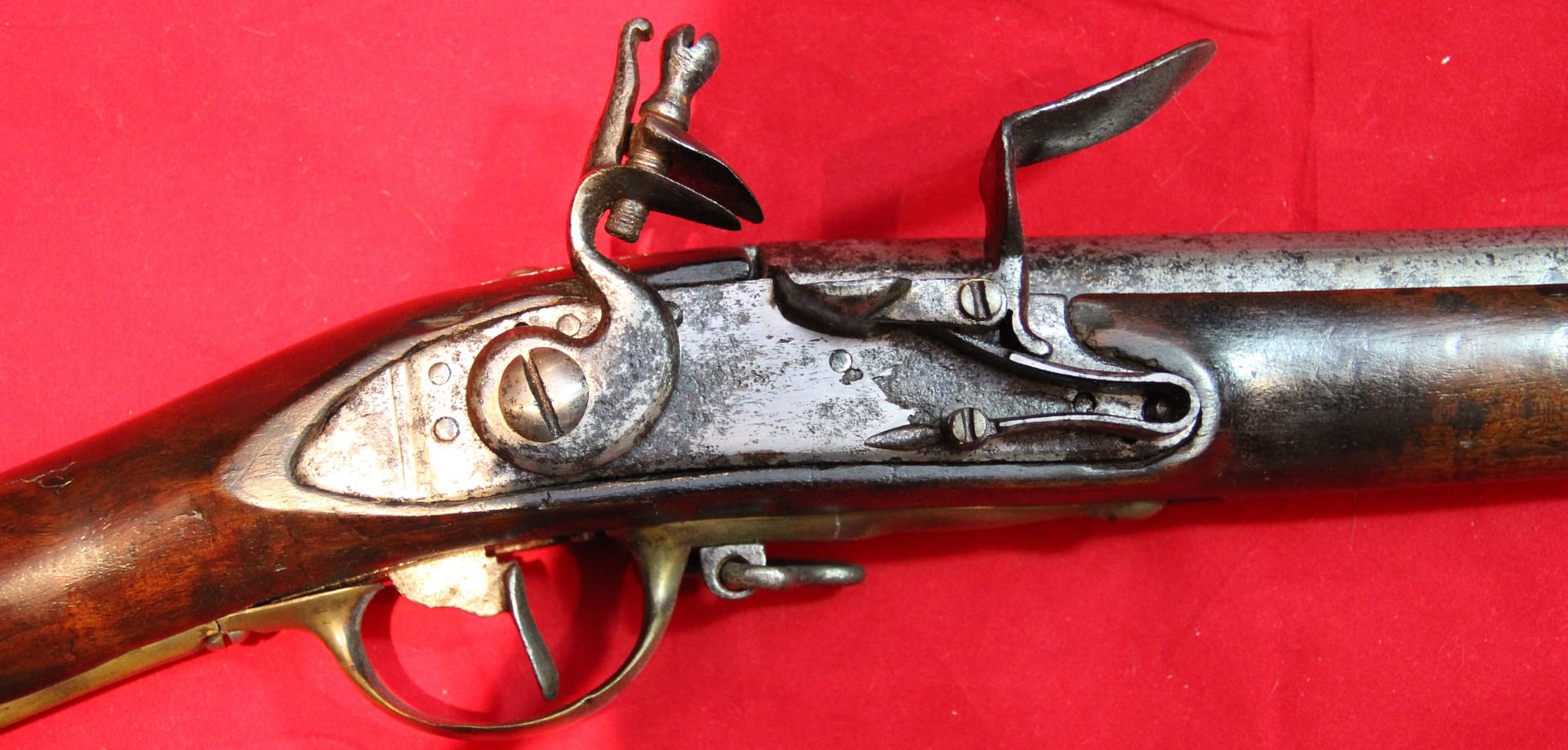
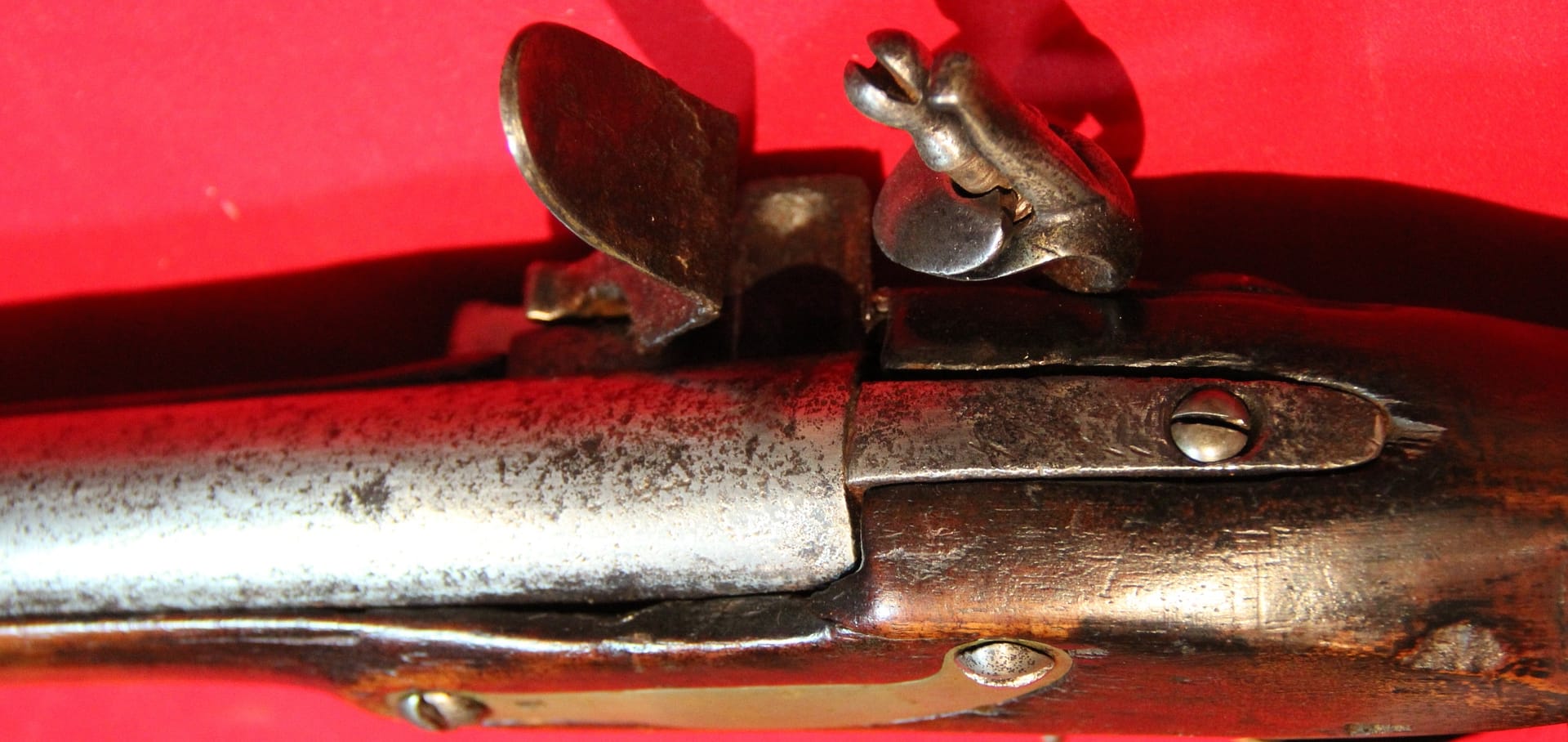
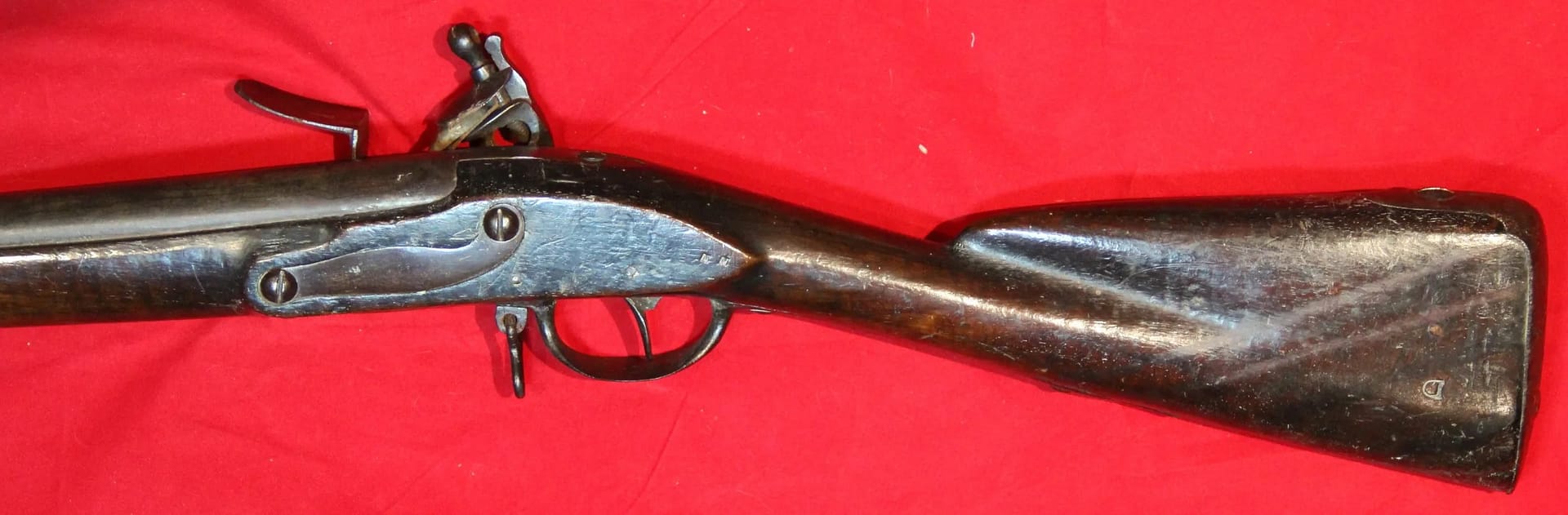
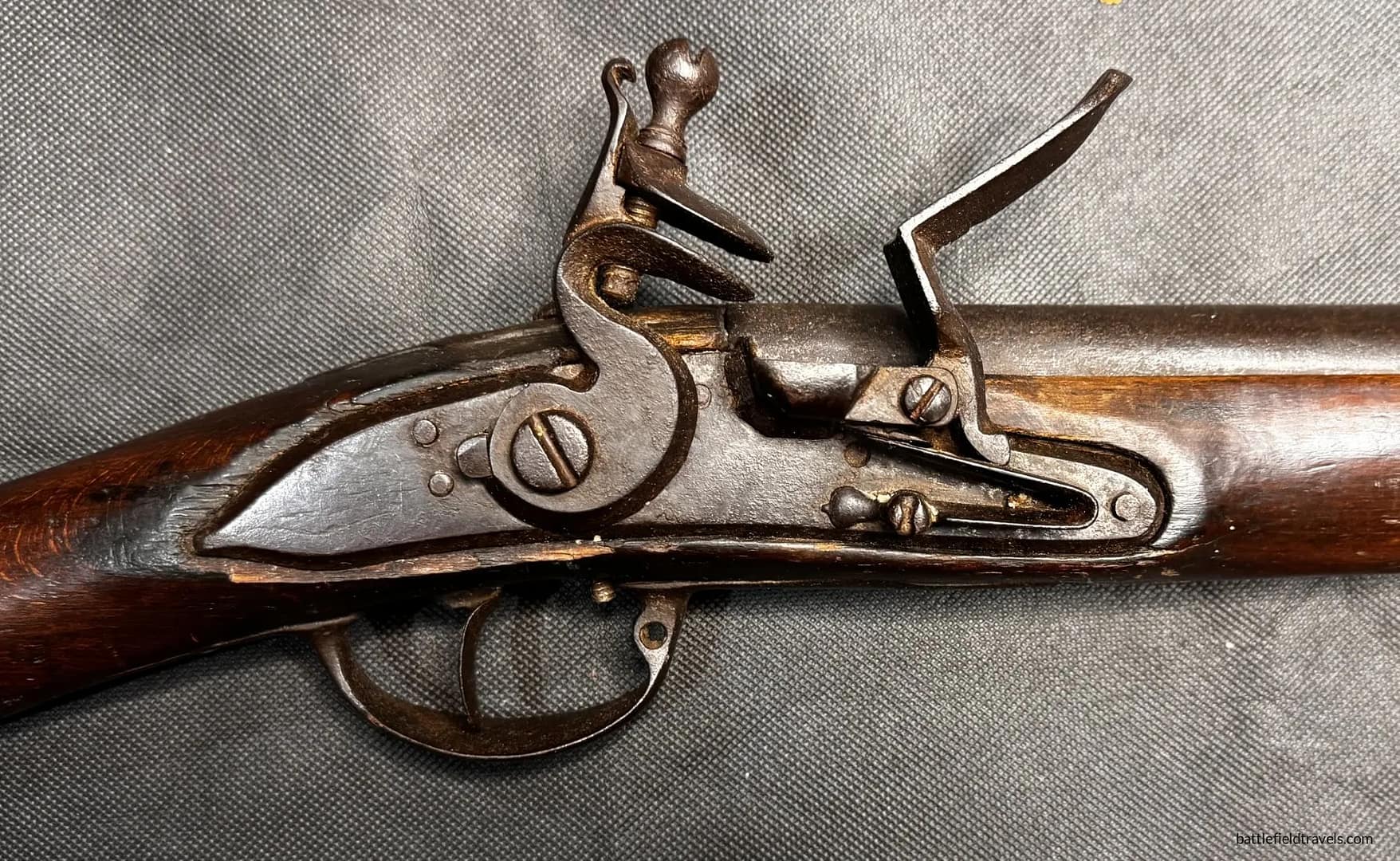
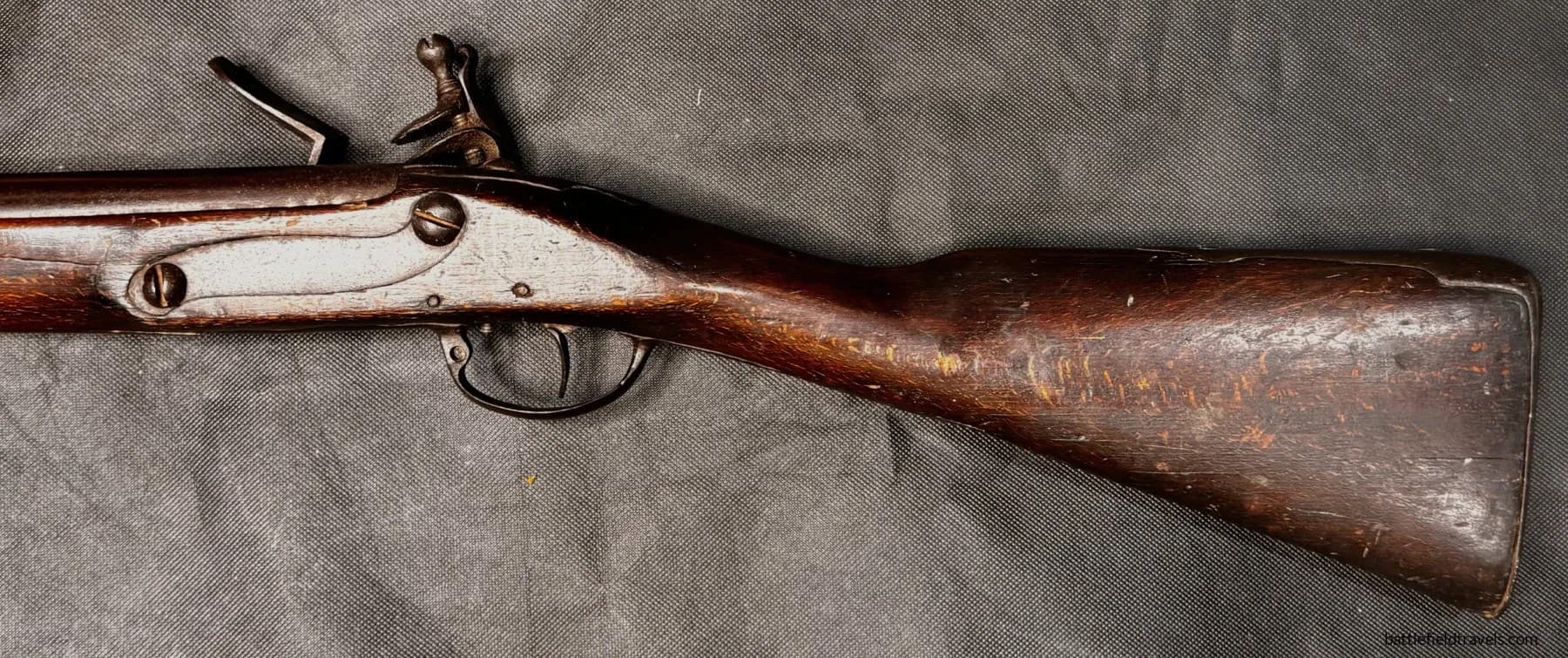
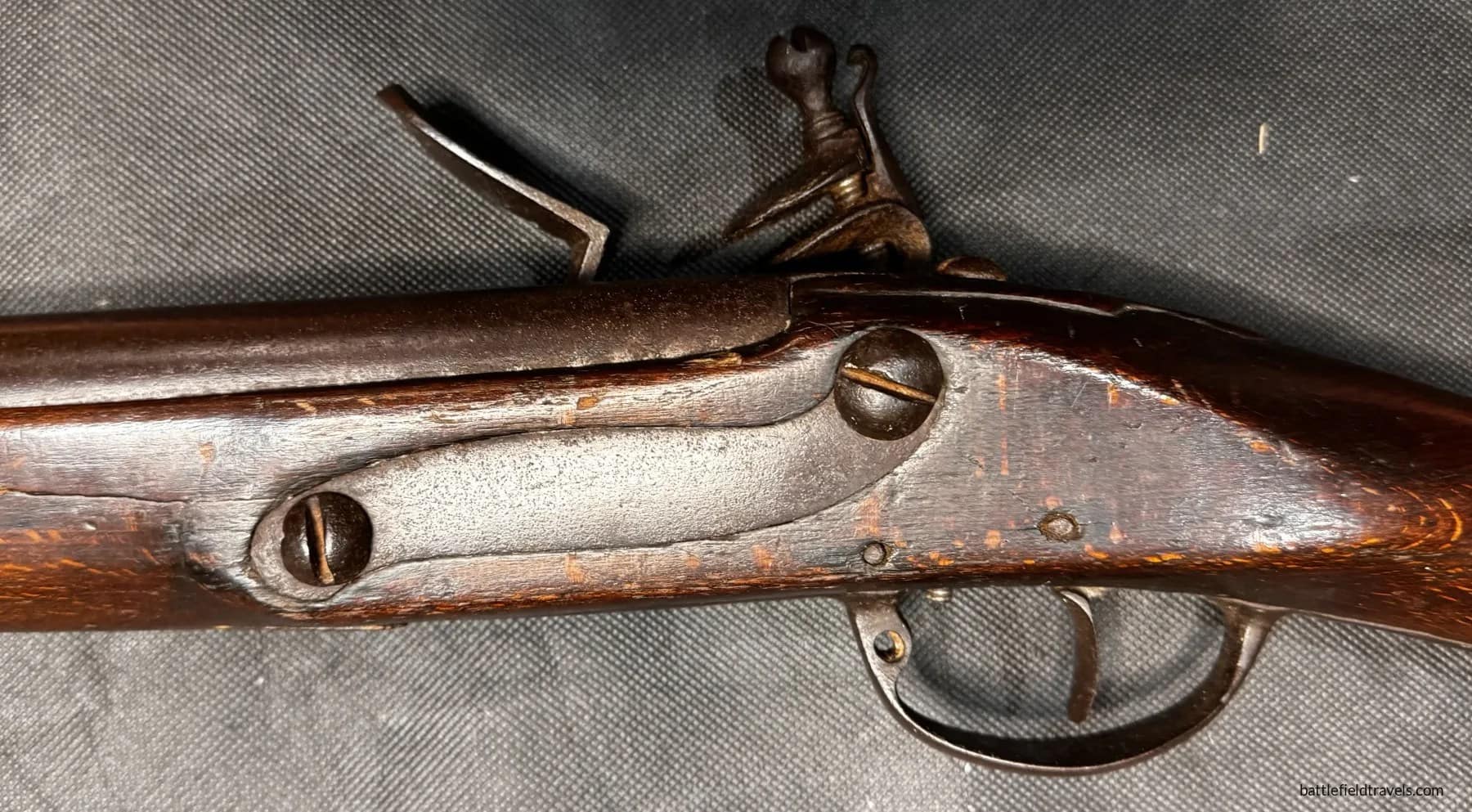
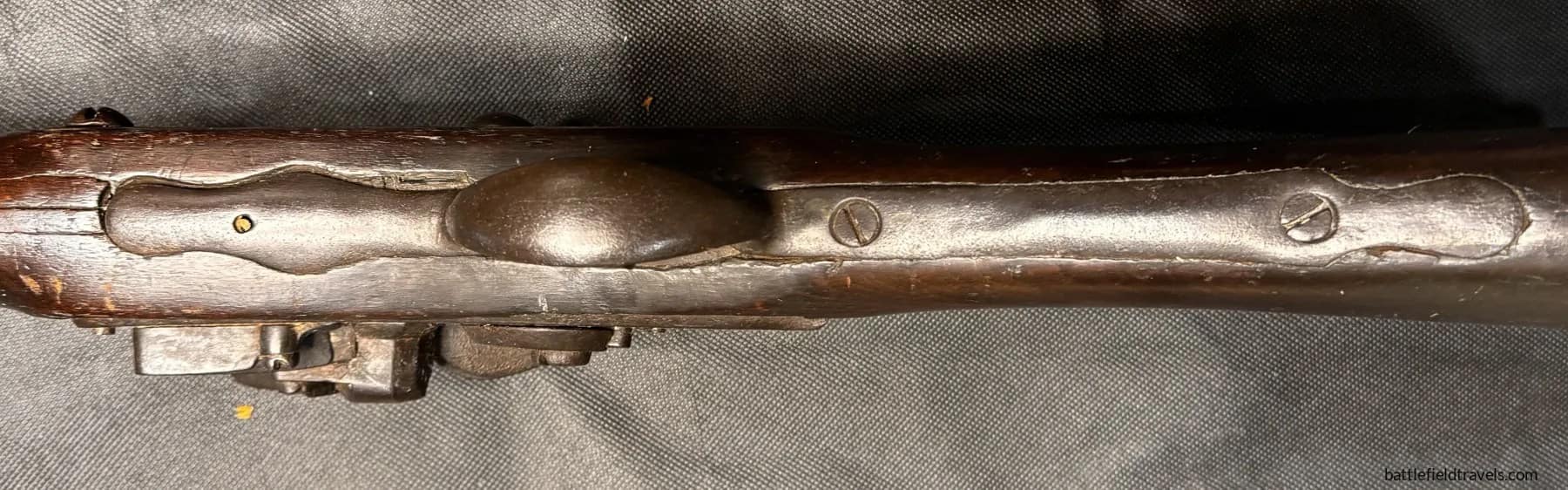
Prussian Model 1740 'Potzdam Magaz' flintlock musket from my personal collection. Marked 'FR' (Fredericus Rex) on the escutcheon plate. A Prussian soldier may have well carried this musket at Leuthen.
Prussian Model 1740 ‘POTZDAM MAGAZ’ flintlock musket from my personal collection.

Explore original weapons and equipment from the Seven Years’ War (French and Indian War), drawn from my personal collection. Muskets, pistols, swords, bayonets and military equipment from Prussia, Austria, Britain, France, America, the Netherlands and Russia — personally handled, photographed and examined by me.


Best Books on the Seven Years War

A curated reading list covering the Seven Years’ War across its European, North American and South Asian theatres. Explore campaign histories, battlefield studies, biographies, primary accounts and contemporary military writings used in the research behind Battlefield Travels.


❓Seven Years’ War (French & Indian War) Quiz

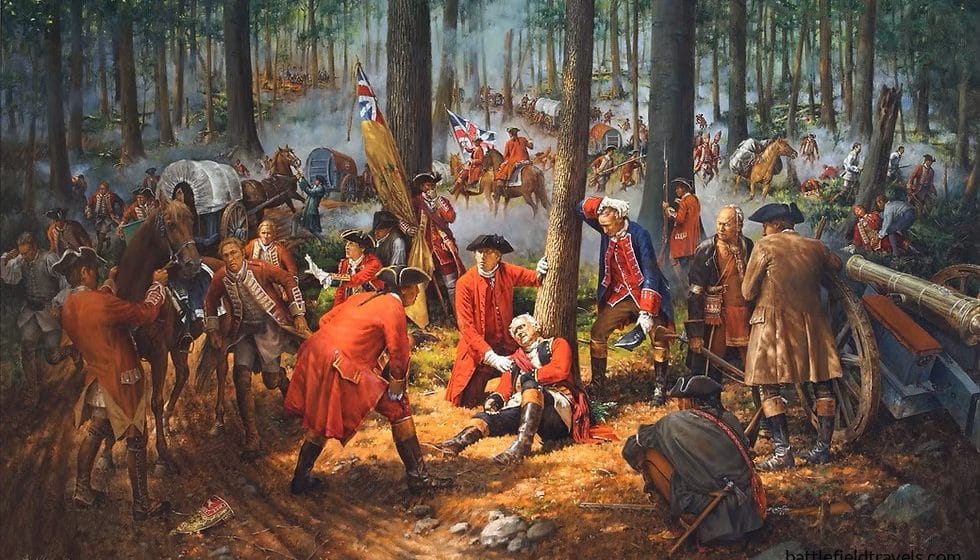
Battle of the Monongahela

Forty questions spanning the Seven Years’ War and French and Indian War — from Frederick the Great and the struggle for Silesia to Quebec, India, Havana and Manila. Test yourself, challenge your students, or use it as a classroom resource.


Battles: Seven Years War (French and Indian War)

Below are all current BattlefieldTravels studies for the Seven Years War, covering key battles, campaign phases and associated sites. New studies are added as further battlefields are walked and analysed.

  • ⚔️ Battle of Bushy Run, Pennsylvania,
    05-06 August 1763

    ⚔️ Battle of Bushy Run, Pennsylvania, 05-06 August 1763

    The Battle of Bushy Run, fought on August 5-6, 1763, was a major engagement during Pontiac’s War, a widespread Native American uprising against British postwar policies in the Great Lakes region following the French and Indian War. The war was named after Pontiac, an Ottawa chief who led a coalition of tribes dissatisfied with British…

    Read the full battle study…


  • ⚔️ Siege of Fort William Henry, New York,
    3-9 August 1757

    ⚔️ Siege of Fort William Henry, New York, 3-9 August 1757

    Fort William Henry would probably be an obscure footnote in the history of the Seven Years War, except for two events. The first was the massacre of British prisoners at the hands of French-allied indian forces. The second event was the publishing in 1826 of a novel by American author James Fennimore Cooper – ‘The…

    Read the full battle study…


  • ⚔️ Battle of Leuthen, Silesia (Poland),
    5 December 1757

    ⚔️ Battle of Leuthen, Silesia (Poland), 5  December 1757

    The Battle of Leuthen, 5 December 1757, is one of the great battles of history, students of military history would consider it somewhat of a pilgrimage to visit this site. After defeating a Fench/Imperial Army of almost twice its size at the Battle of Rossbach a month earlier, Frederick’s Army had marched 275km in 12…

    Read the full battle study…


  • ⚔️ Fortress of San Carlos,
    Havana, Cuba,
    1763-1774

    ⚔️ Fortress of San Carlos, Havana, Cuba,1763-1774

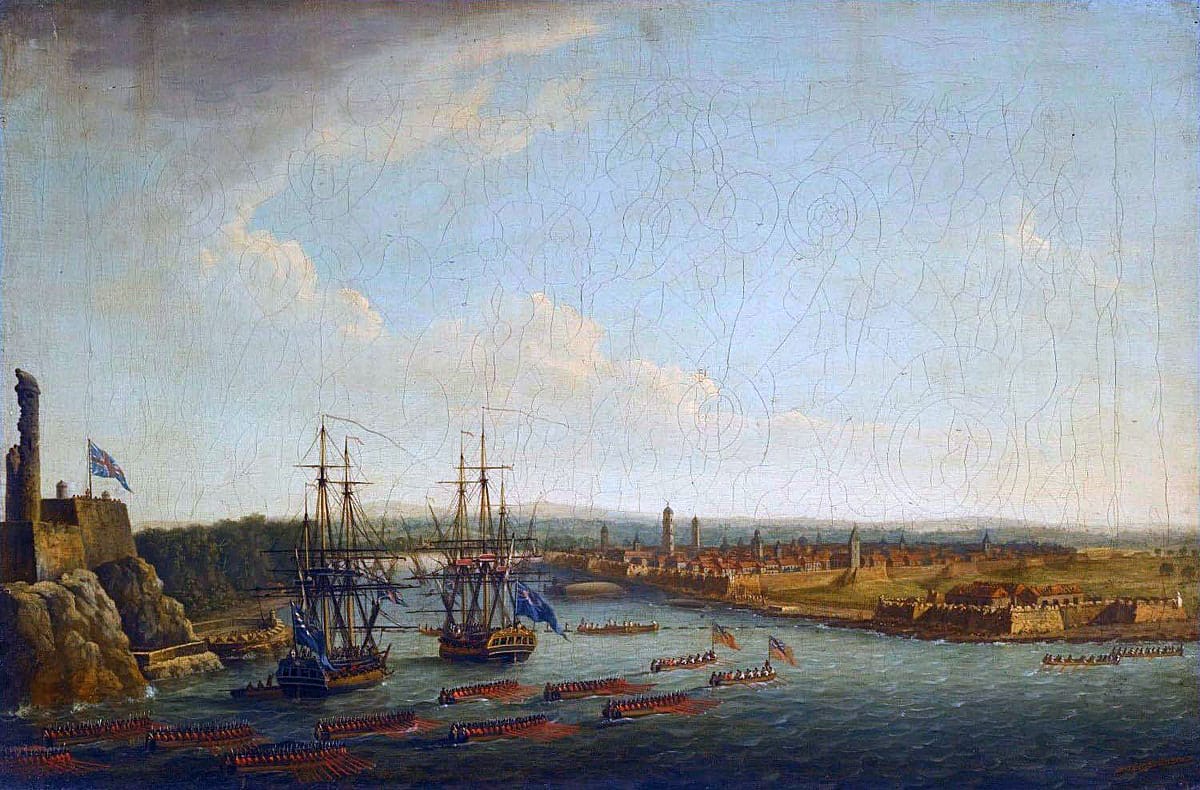
    La Cabaña: Spain’s Response to the Capture of Havana! Built after the British capture of Havana in 1762, the Fortress of San Carlos de la Cabaña (1763–1774) was Spain’s answer to securing the Caribbean. The massive Vauban-style bastion complex dominated Havana harbour, served as a prison and execution ground in later centuries, and today remains…

    Read the full battle study…


What makes these Seven Years War battlefield studies different?

These studies combine terrain analysis, historical mapping, primary sources, and on-site research to reconstruct how commanders saw the ground and why battles unfolded as they did.

Which Seven Years War battlefields are covered?

Key studies include Lobositz, Chotusitz, Leuthen and the wider campaigns across Silesia, Bohemia, North America, the Caribbean, and Northern Europe.

Do these studies focus only on Prussia and Austria?

No. While Central Europe is a major focus, the accompanying research includes battlefields in North America, the Caribbean and other global theatres of the war.

How does terrain analysis help understand Seven Years War battles?

Terrain analysis clarifies lines of sight, avenues of approach, dead ground, and deployment options—revealing why armies chose specific tactics, formations and timings.


Subscribe to Battlefield Travels and receive a free E-Book Battlefield Guide

Unlock expert battlefield analysis, campaign reconstructions, and historical insights drawn from firsthand exploration and primary sources.

🗺️ You’ll receive:

🎖️ Exclusive historical insights you won’t find elsewhere

📘 A free eBook: 10 Tips for Exploring Historic Battlefields

📰 New battlefield studies straight to your inbox as they are published


Selected works on the War of the Austrian Succession

Charge of the Irish 'Wild Geese' Brigade at Fontenoy.
Charge of the Irish ‘Wild Geese’ Brigade at Fontenoy.

Overview of the War of the Austrian Succession

The War of the Austrian Succession (1740–1748) was a major European conflict that erupted following the death of Emperor Charles VI and the contested succession of his daughter, Maria Theresa of Austria. Nearly every major European power became involved, with fighting spreading across central Europe, Italy, the Low Countries, and overseas colonies.

The war pitted Austria and Britain against France, Prussia, Spain, and their allies in a struggle for influence and territory. Among the most significant campaigns was the rise of Frederick the Great, whose invasion of Silesia launched Prussia onto the European stage. Key battles such as Mollwitz (1741), Chotusitz (1742), Dettingen (1743), Fontenoy (1745), showcased evolving 18th-century tactics, with disciplined infantry lines, powerful artillery, and the growing use of cavalry manoeuvre.

For battlefield historians, the War of the Austrian Succession offers a window into the changing face of warfare between the dynastic wars of the 17th century and the global conflicts of the later 18th. The uniforms, weapons, and equipment from this period — muskets with socket bayonets, artillery pieces, and the distinctive dress of French, Austrian, Prussian, British, and other German regiments — reflect both tradition and transition.



Reading

The reference collection below includes the key books and references I have used in preparing for and undertaking battlefield studies all over the world.

War of the Austrian Succession in Europe

The War of the Austrian Succession
Reed S. Browning explores the often-changing war aims of the major belligerents-Austria, France, Great Britain, Prussia, Piedmont-Sardinia, and Spain-and links diplomatic and military events to the political and social context from which they arose.
Sale
The Battle of Fontenoy 1745: Saxe against Cumberland in the War of the Austrian Succession
The Battle of Fontenoy marked a turning point in the War of the Austrian Succession, yet it has rarely been analyzed in depth and the Europe-wide conflict in which it played a part is little understood. James Falkner, in this perceptive and original account, puts the record straight by describing the fighting in graphic detail and setting it in the context of the sequence of wars that determined the shape of Europe during the eighteenth century. Great Britain with her Austrian and Dutch allies fought to ensure that Maria Theresa of Austria should be able to take the throne of the Holy Roman Empire. Ranged against her interests was the might of Louis XV’s France, which strove to weaken Austria by promoting a Bavarian aspirant to the Imperial throne. On 11 May 1745 at Fontenoy in the Austrian Netherlands the two sides met in a ferocious day-long struggle that changed course of the war. James Falkner’s narrative gives a fascinating insight into the Battle of Fontenoy itself and more widely into the nature of warfare in Europe 250 years ago.
The military life of Frederick the Great
For tactical and strategic ingenuity, for daring and ruthless determination and the capacity to inspire troops, Frederick the Great was without equal. In this detailed life of Old Fritz, Christopher Duffy, who has written widely on the army of Frederick and on the armies of his adversaries, Austria and Russia, has produced a definitive account of his military genius.

War of the Austrian Succession beyond the continent

Culloden Moor 1746: The death of the Jacobite cause (Campaign, 106)
Osprey’s study of the most important battle of the Jacobite Risings (1688-1746). The final demise of Jacobitism amid the slaughter of the Highland clans on a cold and damp Culloden Moor in April 1746 is undoubtedly one of the most famous battles in British military history. It has also been, until recently, one of the least understood from both a military and political perspective. In this modern and highly detailed account, this book combines a thorough understanding of 18th century tactics, an intimate knowledge of the battlefield itself and a scandalously underused archive of contemporary material from both sides to provide a detailed, accurate and dramatic account of this controversial battle.
The ’45: Bonnie Prince Charlie: Bonnie Prince Charlie and the Untold Story of the Jacobite Rising
Could the Stuart dynasty have been restored to the throne in 1745? Written by the world’s greatest authority on 18th century warfare, this fast-paced and exciting narrative will completely revise popular opinion about “Bonnie Prince” Charlie, the Duke of Cumberland (“the Butcher”), and the other major players in this historical drama. Christopher Duffy’s original research, from all available archives, reveals evidence of a wider plot against the Hanoverians and more support for the risings in Scotland, than had been suspected before. Filled with numerous maps and a comprehensive guide to the key sites, it provides an eye-opening perspective.
The Battle of Prestonpans 1745
This is the first history of the Jacobite battle fought on September 21, 1745 between the forces of the Hanoverian regime and Prince Charles Edward Stuart, better known as “Bonnie Prince Charles.” Lieutenant-General Sir John Cope, the leader of the English army, has been ridiculed, in song and in history books, for losing the Battle of Prestonpans€”the first major battle of the 1745 Jacobite Rising. His defeat led to the invasion of England, in which the Jacobites almost drove King George II from the throne. But was Cope really to blame? The Jacobite Risings occurred after Parliament ousted King James Stuart in 1688 and installed a new dynasty. Stuart loyalists, many of them based in Scotland, took up arms repeatedly in futile attempts to restore James’ descendants. The 1745 Rising, led by Bonnie Prince Charlie, was the last. Martin Margulies traces Scottish history up to “the ’45”, describes the sharply contrasting weapons and tactics of the opposing armies, and follows
The War of Jenkins’ Ear: The Forgotten Struggle for North and South America: 1739-1742
Filled with unforgettable characters and maritime adventure, the incredible story of a forgotten war that shaped the fate of the United States—and the entire Western Hemisphere. In the early 18th century, the British and Spanish Empires were fighting for economic supremacy in the Americas. Tensions between the two powers were high, and wars blossomed like violent flowers for nearly a hundred years, from the War of Spanish Succession (sometimes known as Queen Anne’s War in the Americas), culminating in the War of Jenkins’ Ear. This war would lay the groundwork for the French and Indian War and, eventually, the War of the American Revolution. The War of Jenkins’ Ear was a world war in the truest sense, engaging the major European powers on battlefields ranging from Europe to the Americas to the Asian subcontinent.


FAQ – War of the Austrian Succession

Q: How were the books in this Austrian Succession reading list selected?

A: This list is curated based on long-term research into the War of the Austrian Succession, prioritising works that provide clear analysis of strategy, tactics, command decision-making, and terrain. Selections include both classic historical treatments and specialised studies that illuminate key battles, campaigns, and doctrinal developments of the period.

Q: Is this list a complete bibliography of all books on the Austrian Succession?

A: No. This list is intended as a recommended starting point for readers and researchers rather than an exhaustive bibliography. It focuses on works that are most relevant to understanding the conflict’s operational and battlefield dimensions. Additional specialised or peripheral titles may not be included.

Subscribe to Battlefield Travels and receive a free E-Book Battlefield Guide

Unlock expert battlefield analysis, campaign reconstructions, and historical insights drawn from firsthand exploration and primary sources.

🗺️ You’ll receive:

🎖️ Exclusive historical insights you won’t find elsewhere

📘 A free eBook: 10 Tips for Exploring Historic Battlefields

📰 New battlefield studies straight to your inbox as they are published


1756 1st Model Brown Bess 27th Regt
Long Land (1st Model) Pattern 1756 Brown Bess

Overview of the Seven Years War

The Seven Years’ War (1756–1763) was the first truly global conflict of the modern era, fought simultaneously in Europe, North America, the Caribbean, West Africa, and India. Sometimes described as the “first world war,” it pitted Britain and Prussia against France, Austria, Russia, and Spain, with alliances shifting as the struggle spread across continents.

In Europe, the war was defined by Frederick the Great’s campaigns, where the Prussian army fought for survival against numerically superior enemies. Battles such as Chotusitz (1742), Rossbach (1757), Leuthen (1757), and Kunersdorf (1759) demonstrated the discipline, firepower, and tactical innovation that established Prussia as a major power. Britain, meanwhile, waged its own global war at sea and in the colonies, fighting against France in Canada, the Caribbean, and India, including the Battle of Bushy Run (1763) and the Siege of Fort William Henry (1757).

The conflict reshaped the balance of power. Britain emerged as the dominant naval and colonial empire, while Prussia secured its position as a leading European military state. Just as importantly, the war represents the maturity of the 18th-century military system, characterised by professional standing armies, linear tactics, and increasingly standardised weapons and equipment.

Weapons technology

From a technology perspective, the Seven Years’ War represents the mature phase of the smoothbore flintlock era. Armies entered the conflict equipped largely with weapons little changed from earlier wars: smoothbore muskets such as the Brown Bess, socket bayonets, and muzzle-loading artillery formed the backbone of all major armies. Linear tactics, close-order drill, and controlled volleys defined battlefield combat.

By the end of the war, however, most combatants were adapting their weapons and equipment in response to operational experience. British forces shortened the barrels of their muskets after fighting in the forests of North America, improving handling and mobility. Artillery became increasingly important, forming a significantly larger proportion of field forces in 1763 than in 1756. Across Europe, reforms such as those associated with Prince Joseph Wenzel of Liechtenstein in the Austrian artillery arm reflected growing recognition of the decisive role of firepower and mobility.

The uniforms, muskets, artillery, and equipment of this period illustrate both the peak of the linear warfare system and the beginnings of change that would shape later eighteenth-century armies. Studying these artefacts provides insight into how soldiers were equipped, organised, and supplied during one of the defining conflicts of the eighteenth century.

Explore the Seven Years’ War: [Battle Studies] · [Weapons & Equipment] · [Recommended Reading] · [Quiz]

All artefacts shown are from my personal collection and photographed firsthand.


British Weapons of the Seven Years War


Pattern 1756 Long Land Musket, marked to the 27th Regiment, Enniskillen Fusiliers. From my personal collection.

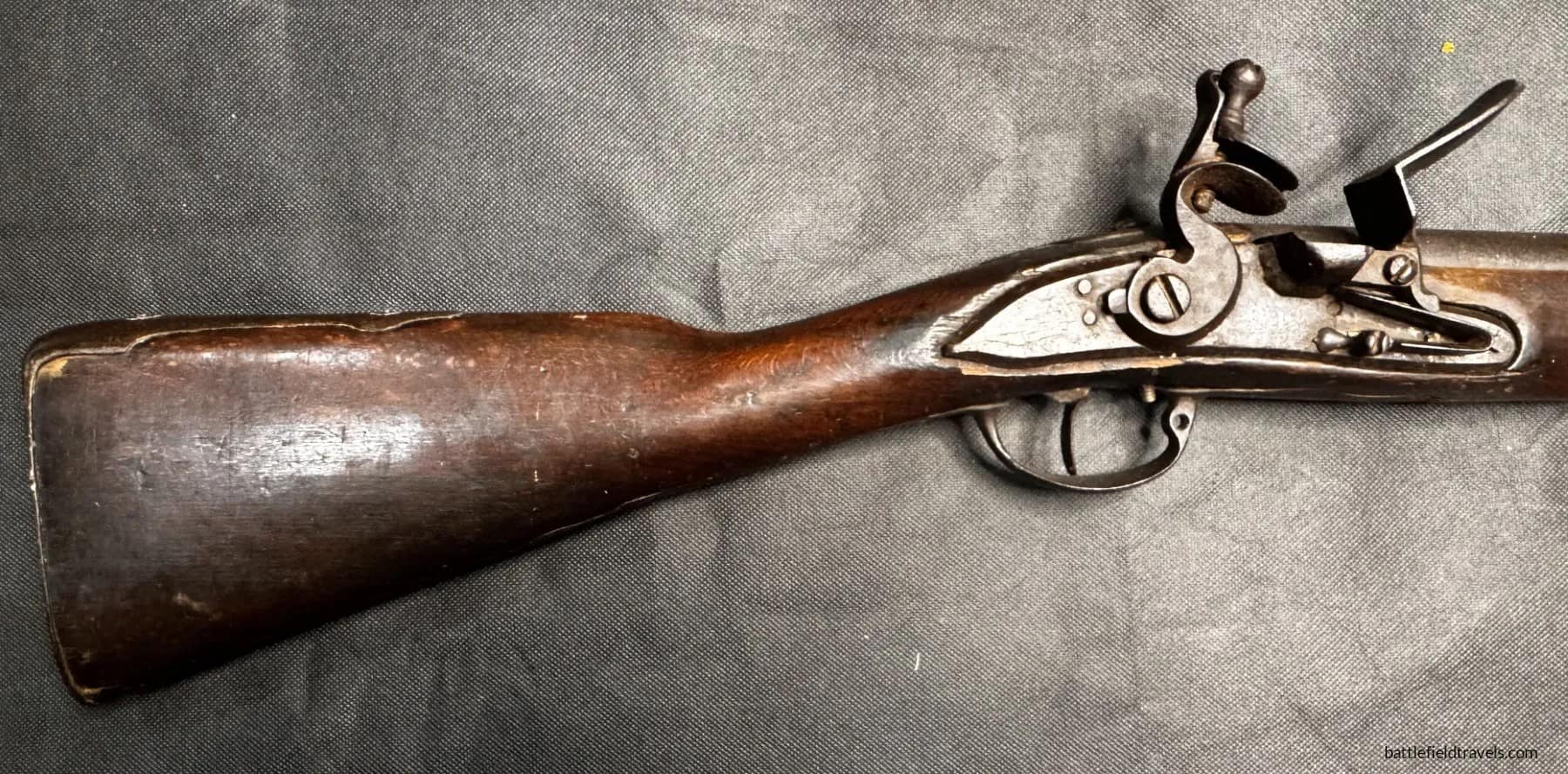
This Pattern 1756 Long Land musket, marked to the 27th Regiment of Foot (Enniskillen Fusiliers), represents the British Army’s primary infantry weapon during the mid-Seven Years War period. A .75-calibre flintlock with a 46-inch barrel, it incorporated improvements to lock strength, furniture, and bayonet fit over the earlier Pattern 1742. The 27th Foot served extensively in North America—including Louisbourg, Ticonderoga, and Quebec—making marked examples extremely scarce. Regimental branding reflects the period practice of unit-level property control on arms issued for overseas campaigning.


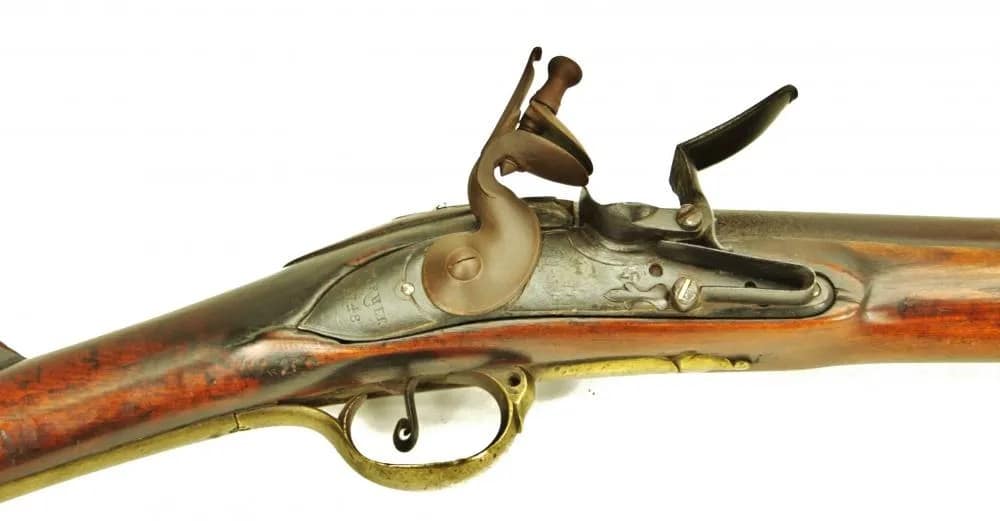
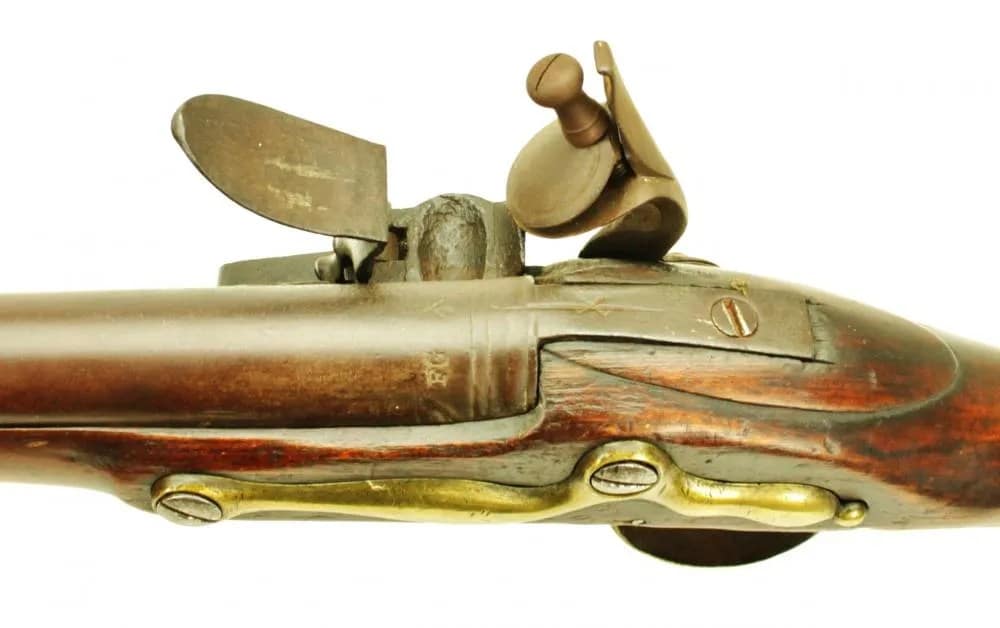
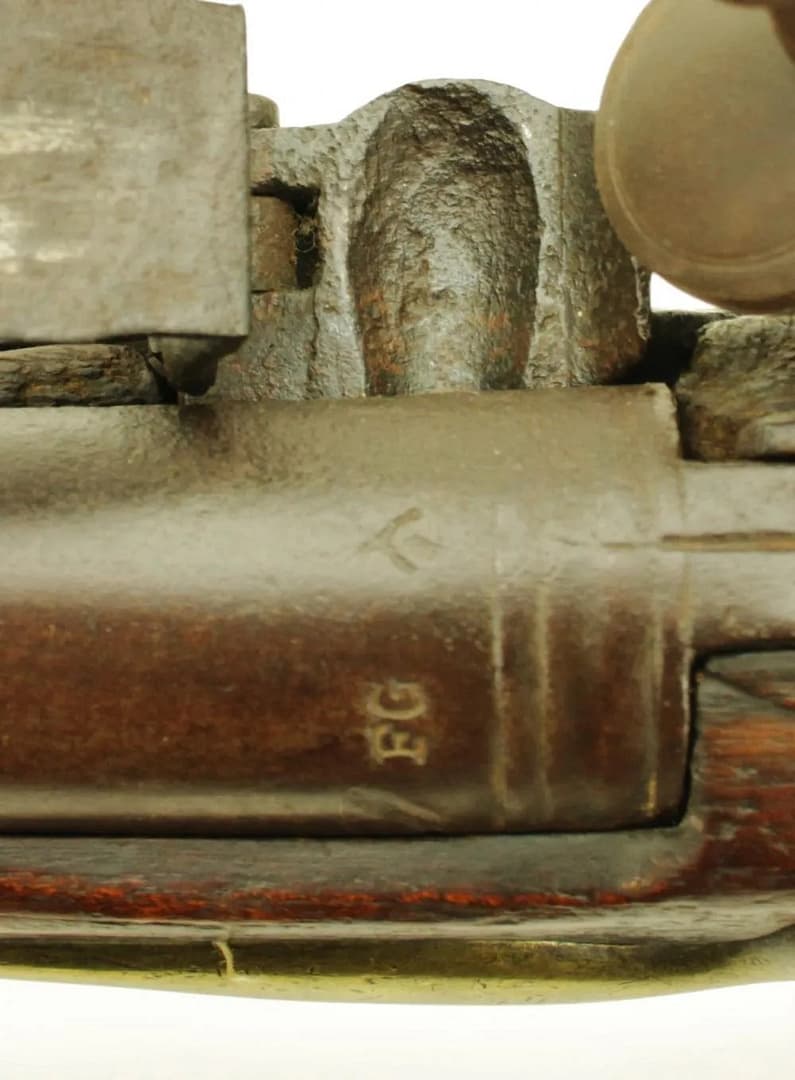
English Long Land Pattern Musket, Pattern 1742, marked Farmer 1748. Probably restocked in beech wood. From my personal collection.

This Pattern 1742 Long Land musket, maker-marked Farmer 1748, represents the principal British infantry firearm of the mid-18th century. A .75-calibre flintlock with a 46-inch barrel, it provided reliable volley fire during the War of Austrian Succession and early Seven Years’ War. Many surviving examples were restocked post-service; this musket shows a later beechwood stock, replacing the original walnut. The Pattern 1742 formed the backbone of British line infantry armament before the evolution of the 1756 and 1769 Brown Bess patterns.


English Model 1756 Long Land Pattern pistol. TOWER. From my personal collection.

The Model 1756 Long Land Pattern pistol was the standard British cavalry and infantry officer’s pistol of the mid-18th century. Marked TOWER, indicating manufacture or assembly at the Tower of London, it featured a large-bore flintlock mechanism, brass furniture, and full walnut stock. Designed for close-range mounted combat, it saw service during the Seven Years War and early American campaigns. Its robust construction made it reliable under field conditions.


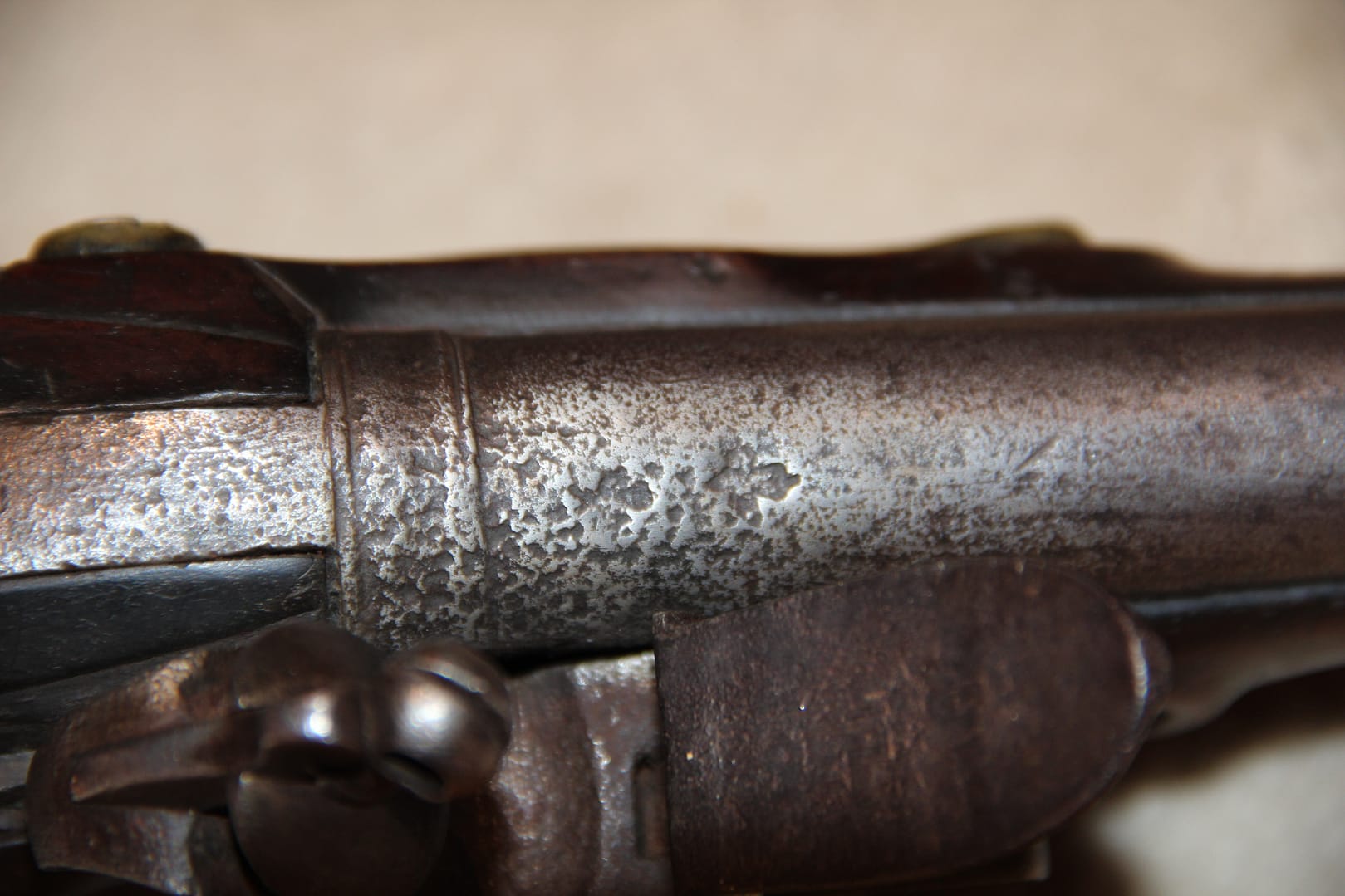
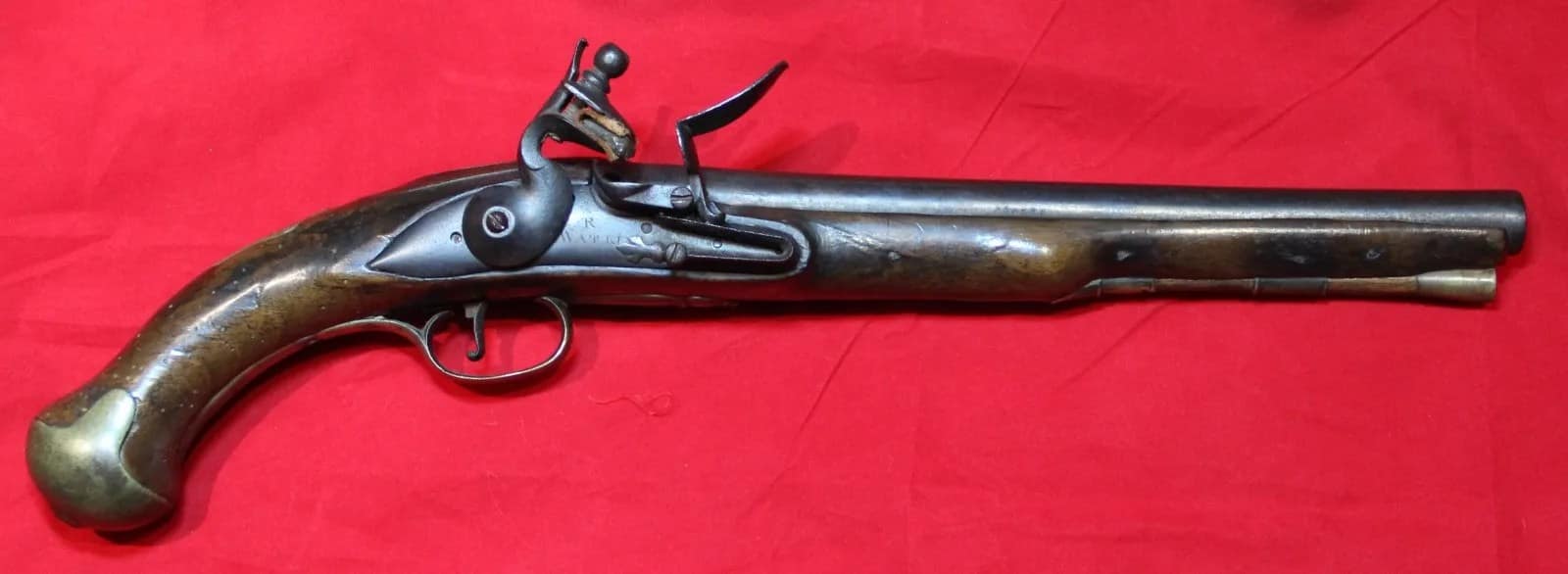
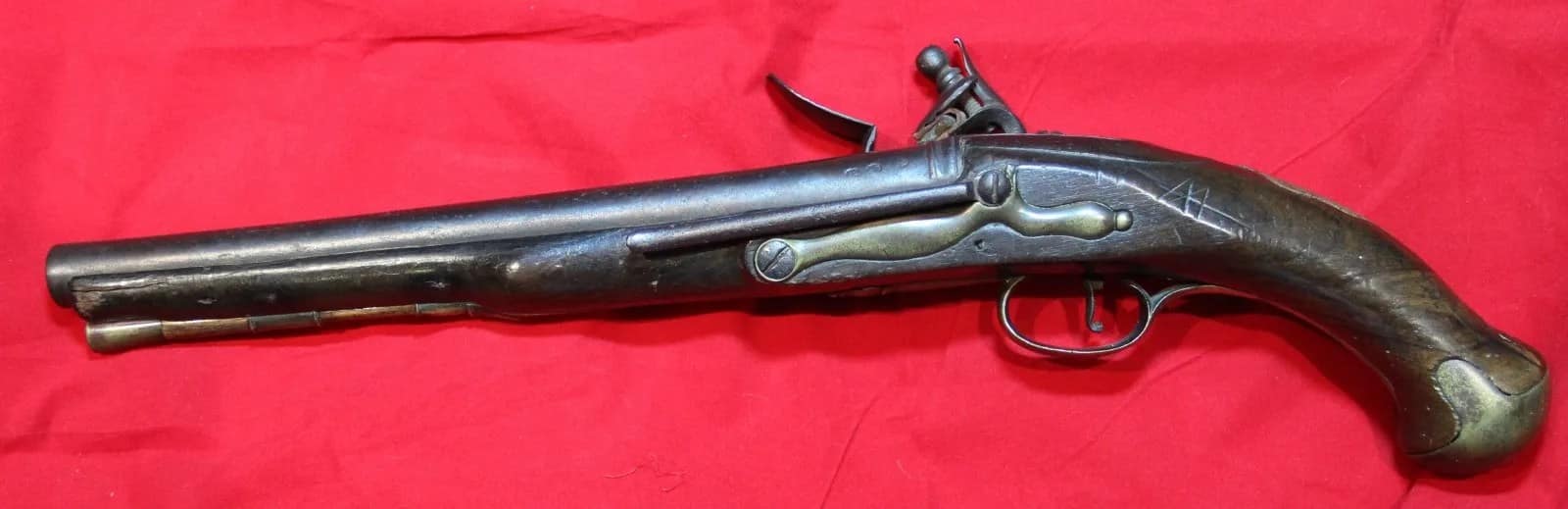
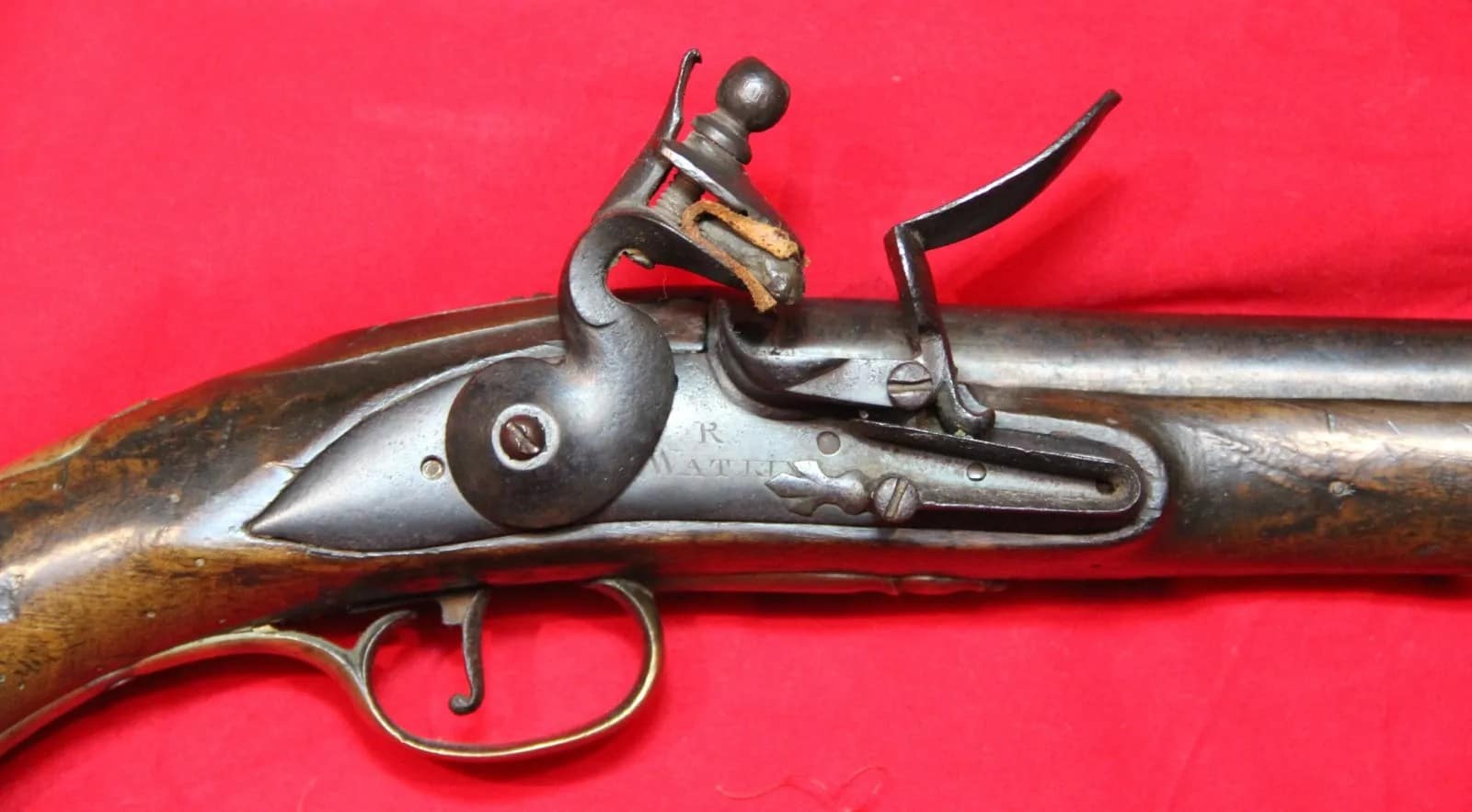
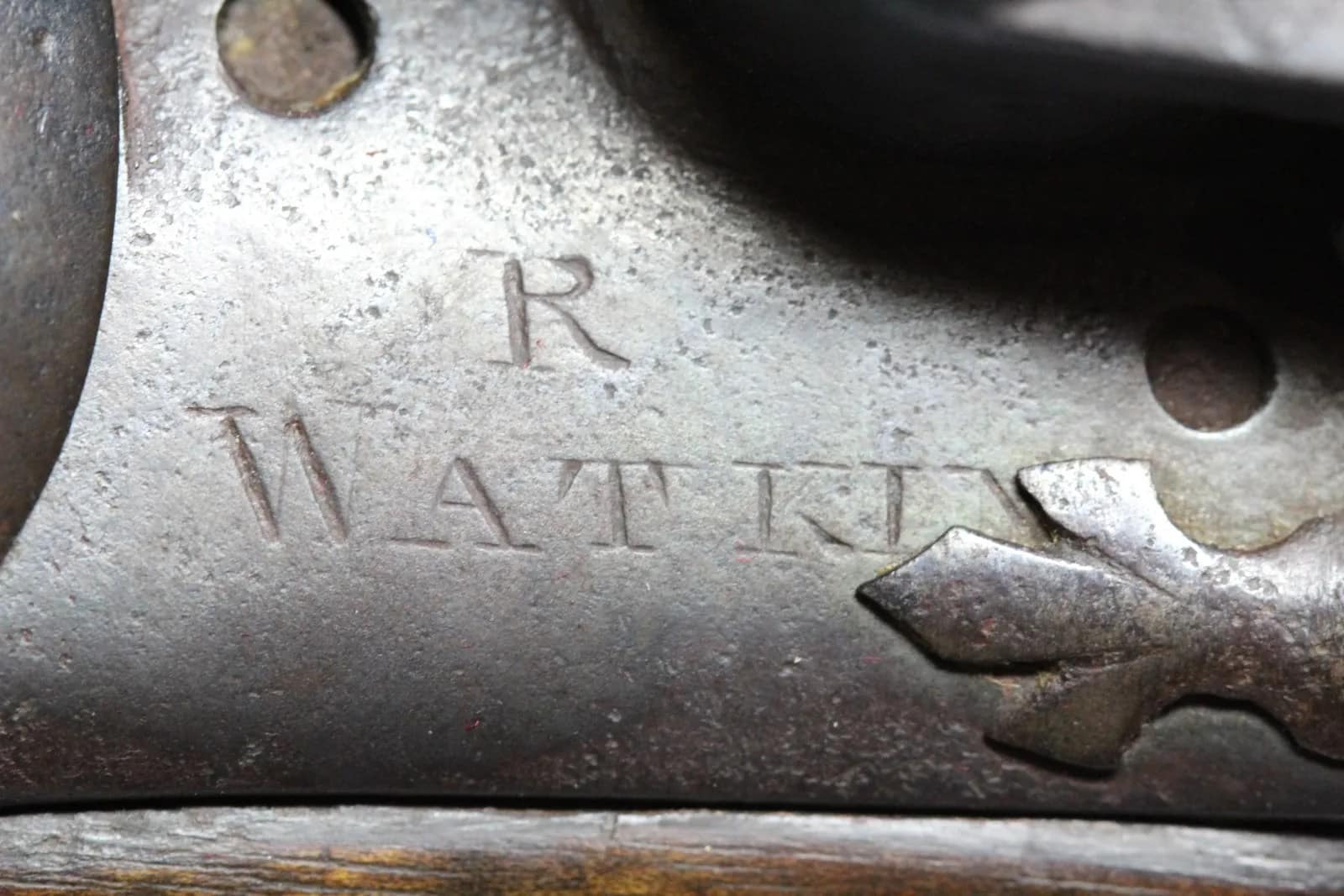
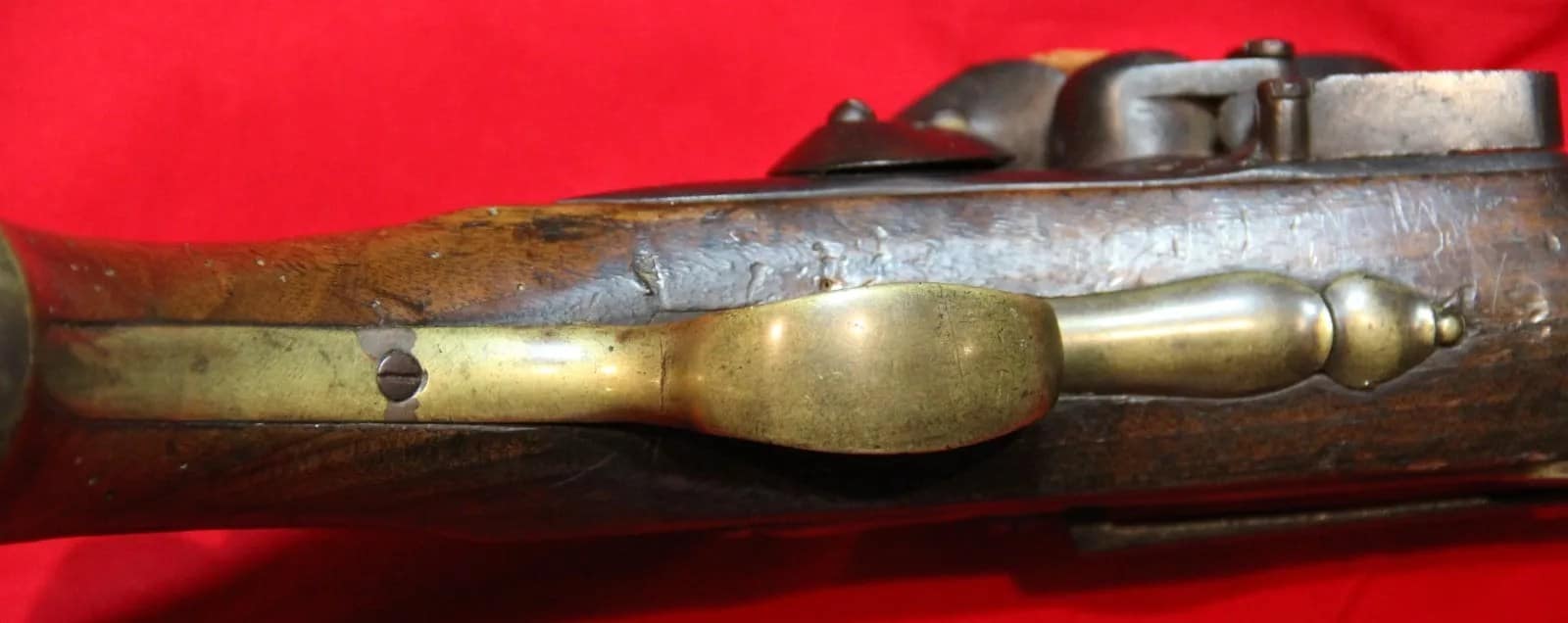
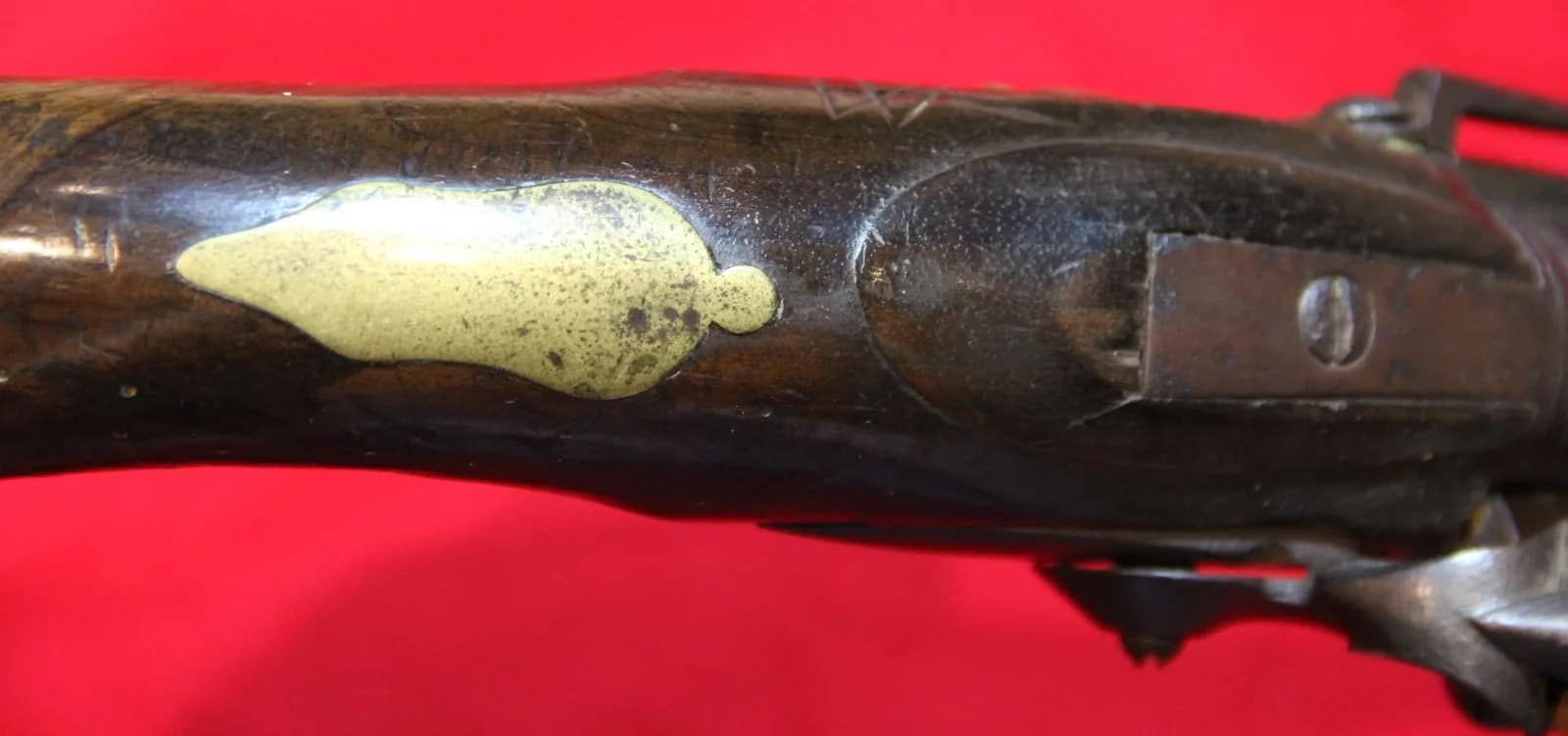
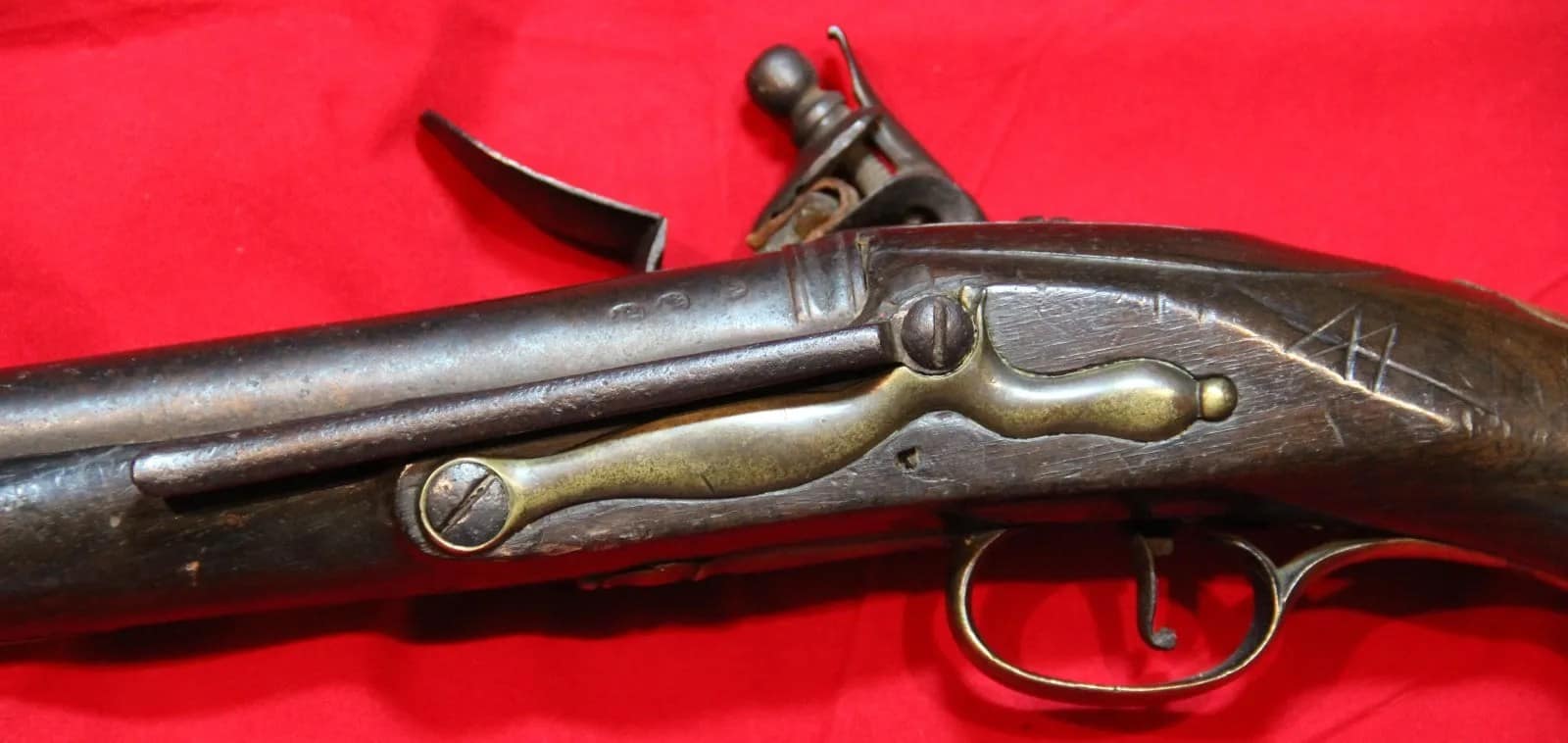
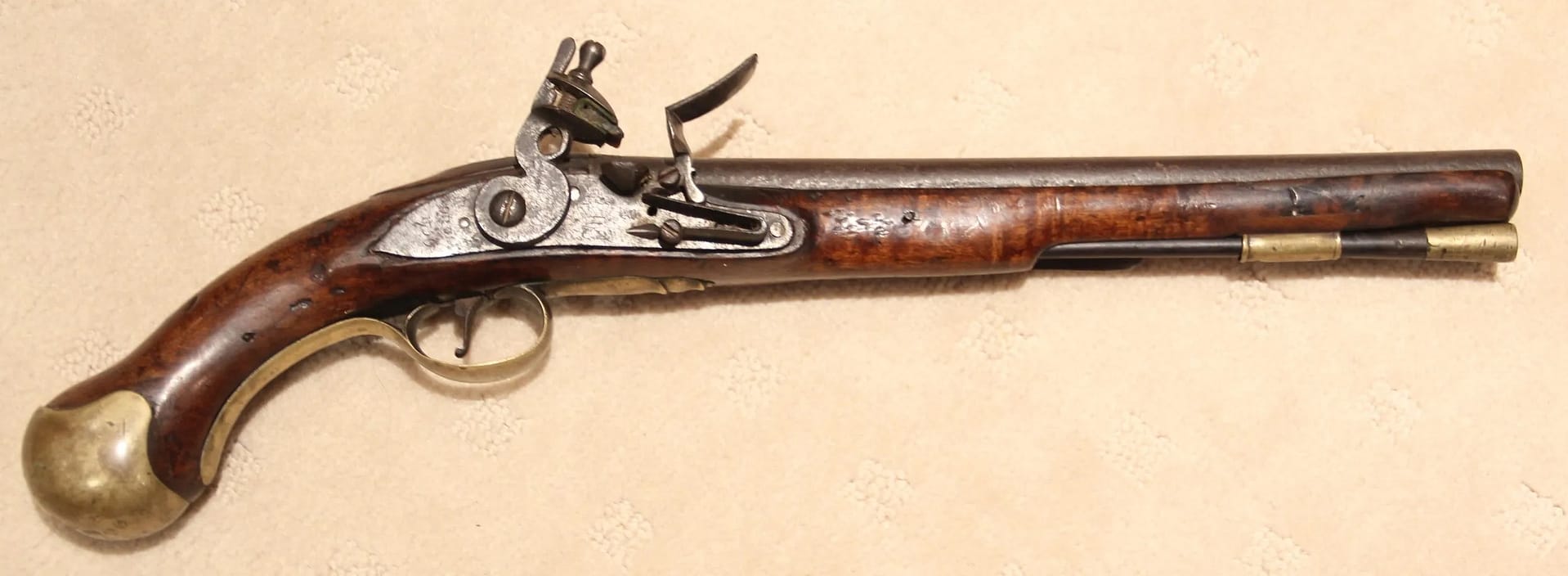
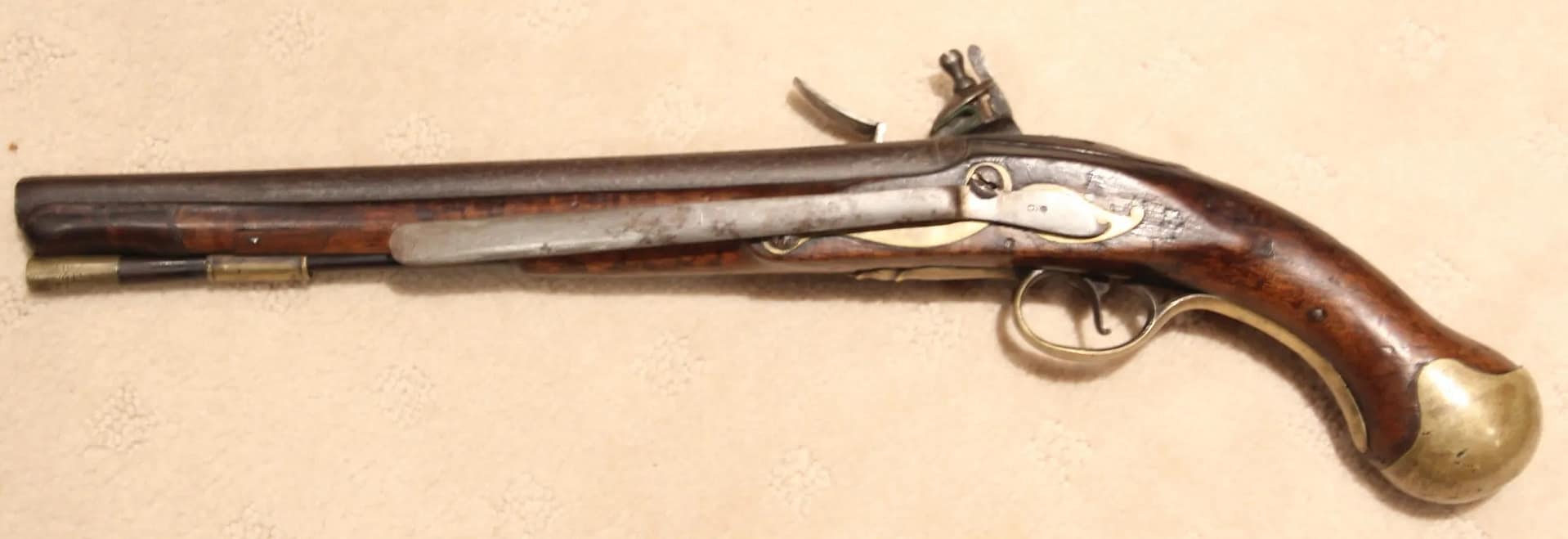
Land Pattern Pistol by Robert Watkin, c.1745. From my personal collection.

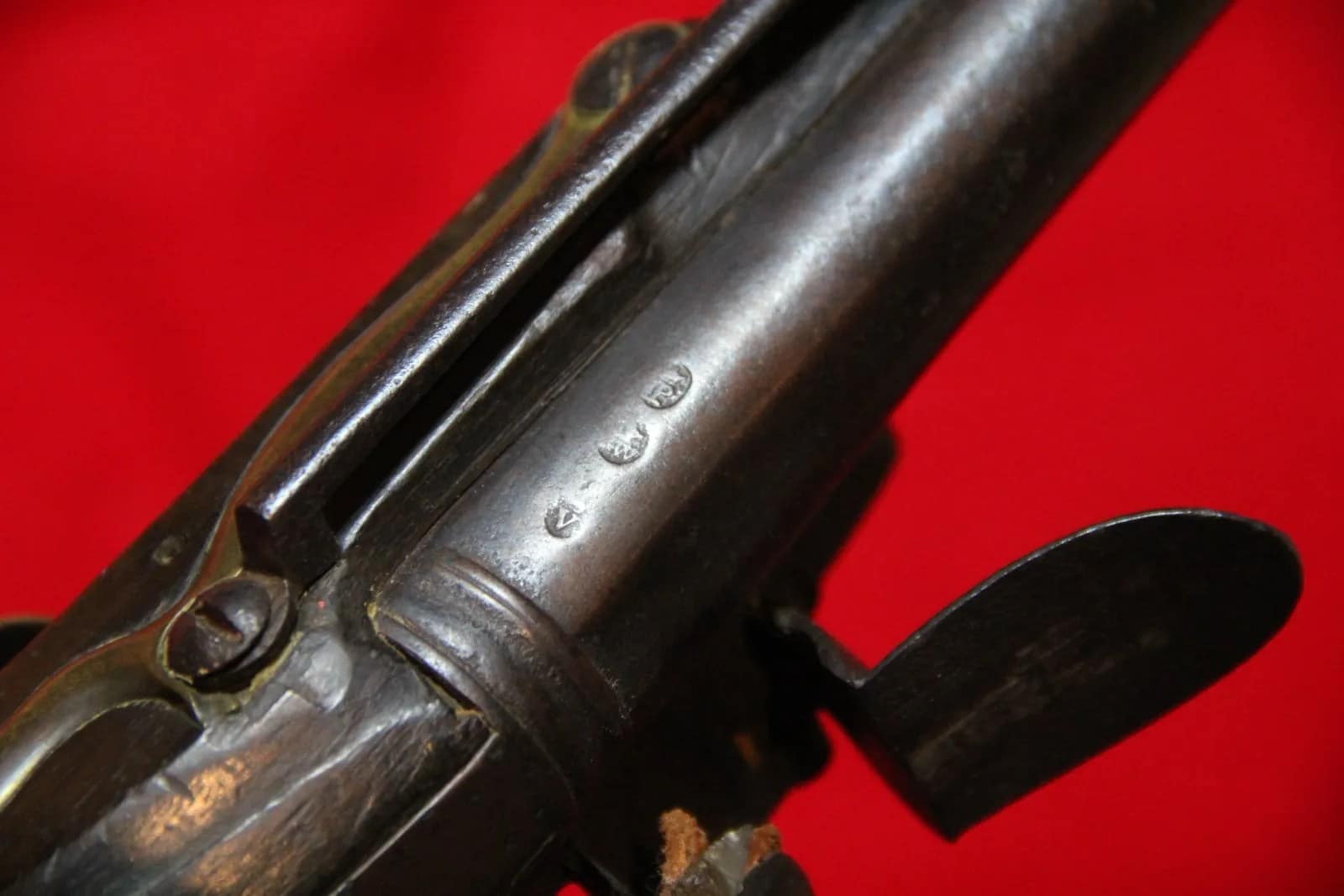
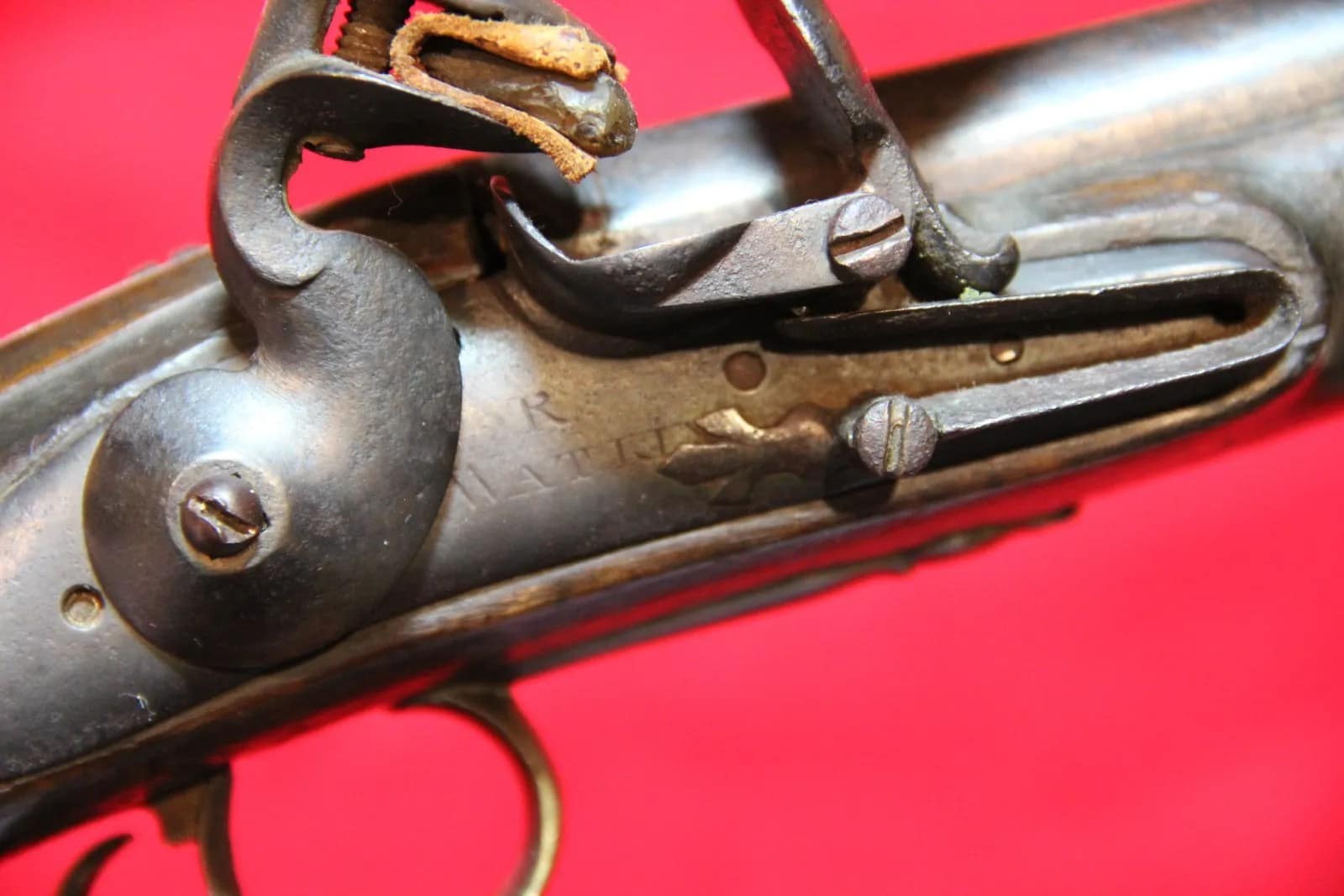
This flintlock Land Pattern pistol, made by London gunmaker Robert Watkin around 1745, is associated with the rapid mobilisation of British forces during the Jacobite Rising of 1745. Pistols of this type were produced for cavalry and volunteer units, including the Yorkshire Blues, a regiment raised from loyalist cavalry to defend northern England against the advancing Jacobite army. Typically of large calibre with brass furniture and a robust lock, Land Pattern pistols were designed for mounted service and close combat. This example reflects both the emergency expansion of government forces and the growing standardisation of British military small arms in the mid-18th century.


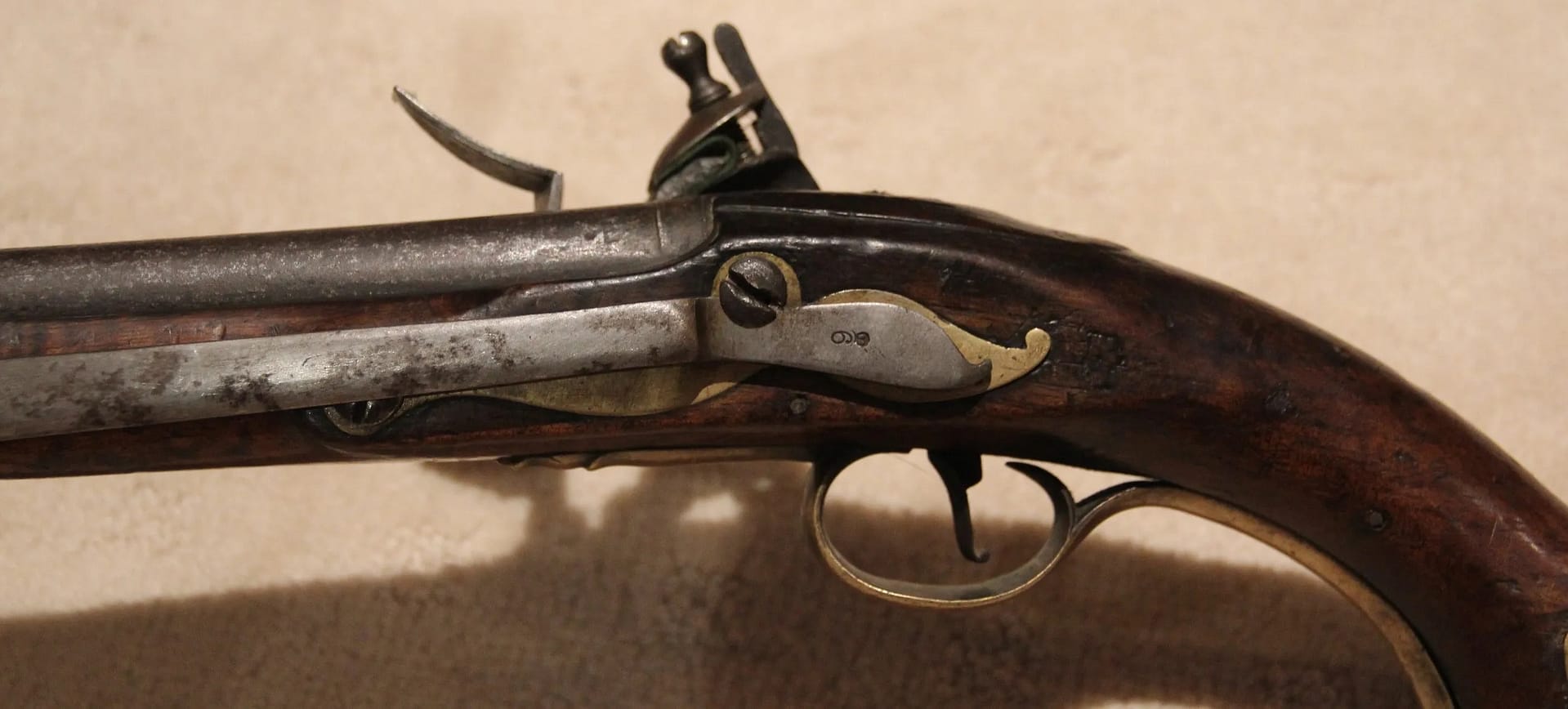
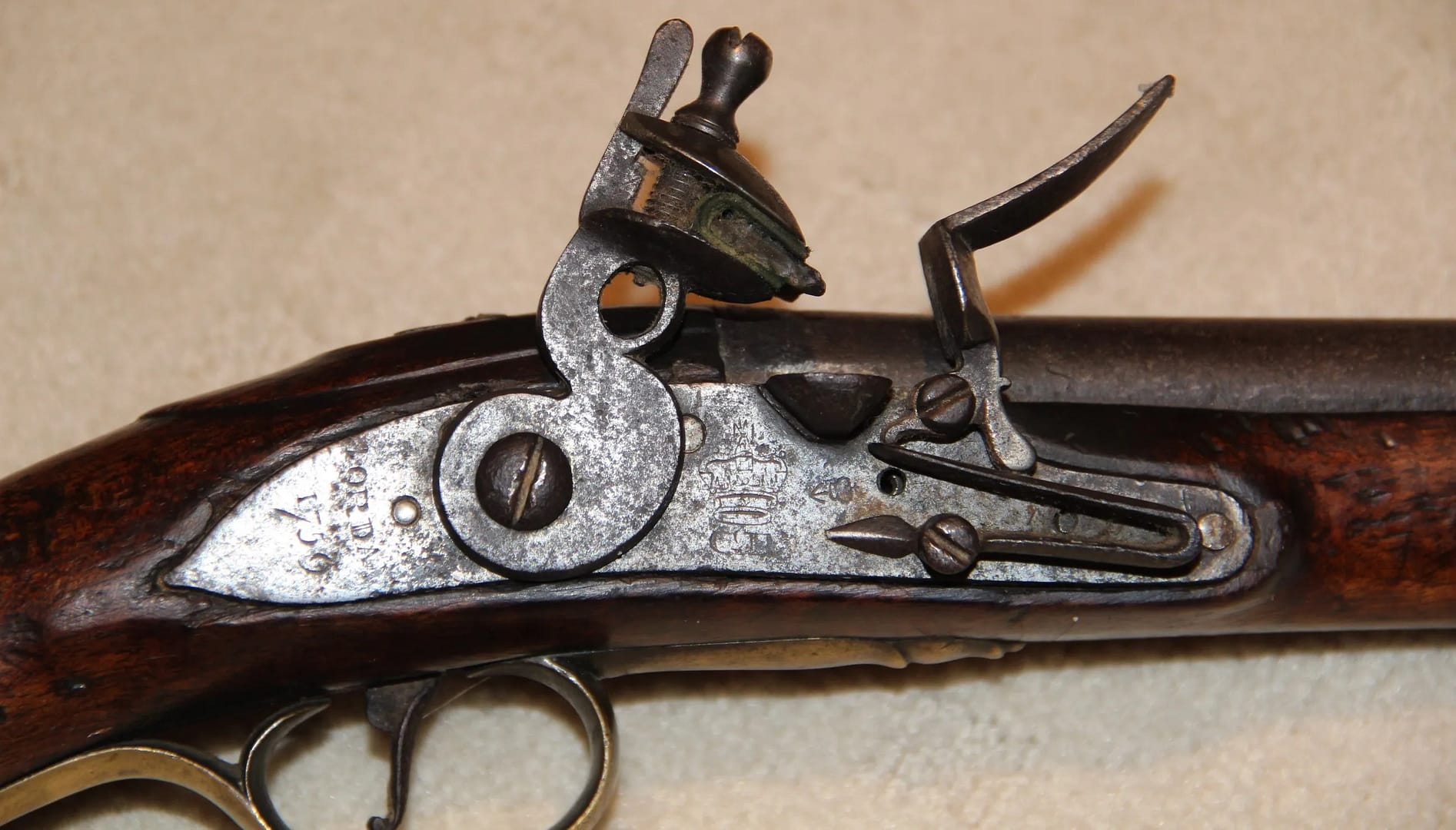
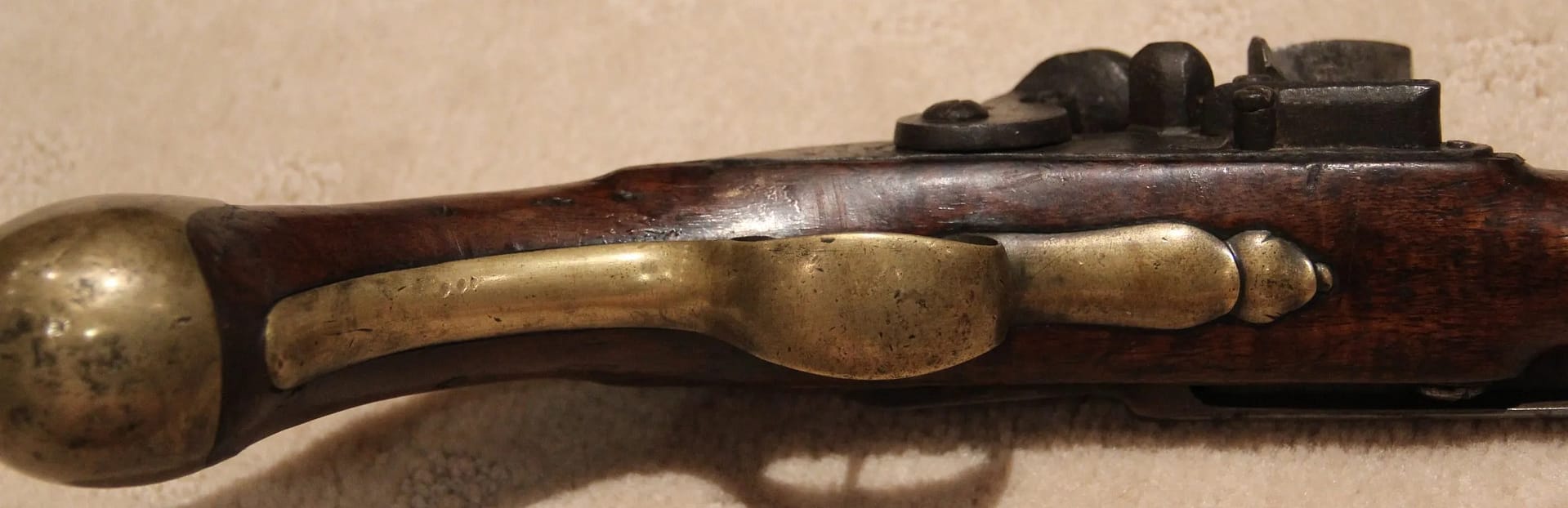
English Pattern 1718 Sea Service Pistol (Manufactured by Jordan, 1759). From my personal collection.

This flintlock Sea Service pistol, produced in 1759 by the contractor Jordan, is an example of the Pattern 1718 design widely issued to the Royal Navy during the mid-18th century. Typically of large calibre and built for durability, these pistols featured robust brass furniture and a simple, sturdy lock suited to the harsh maritime environment. Sea Service pistols were carried aboard warships for close-quarters fighting, boarding actions, and by naval landing parties ashore. Pistols of this type saw service during the global conflicts of the period, including the Seven Years’ War, reflecting the practical demands of naval warfare.


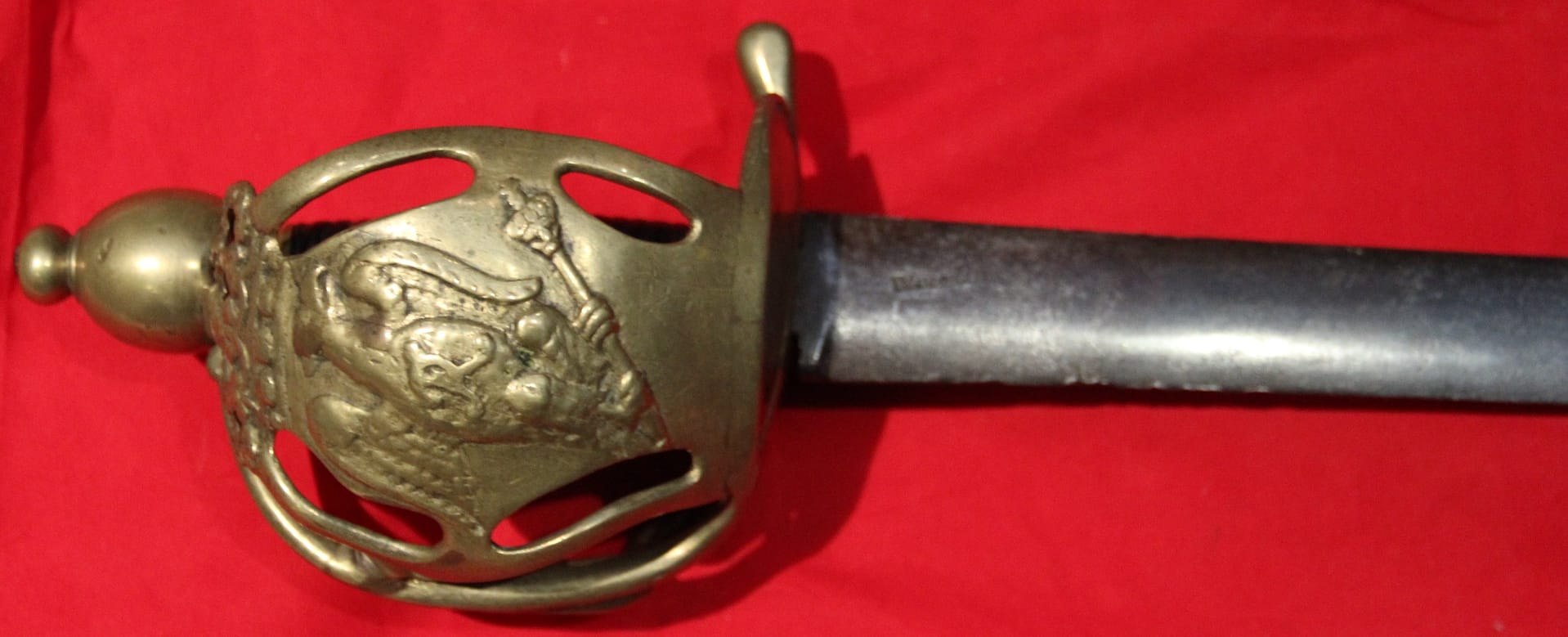
English Basket Hilt Heavy Cavalry Troopers Sword circa 1750. From my personal collection.

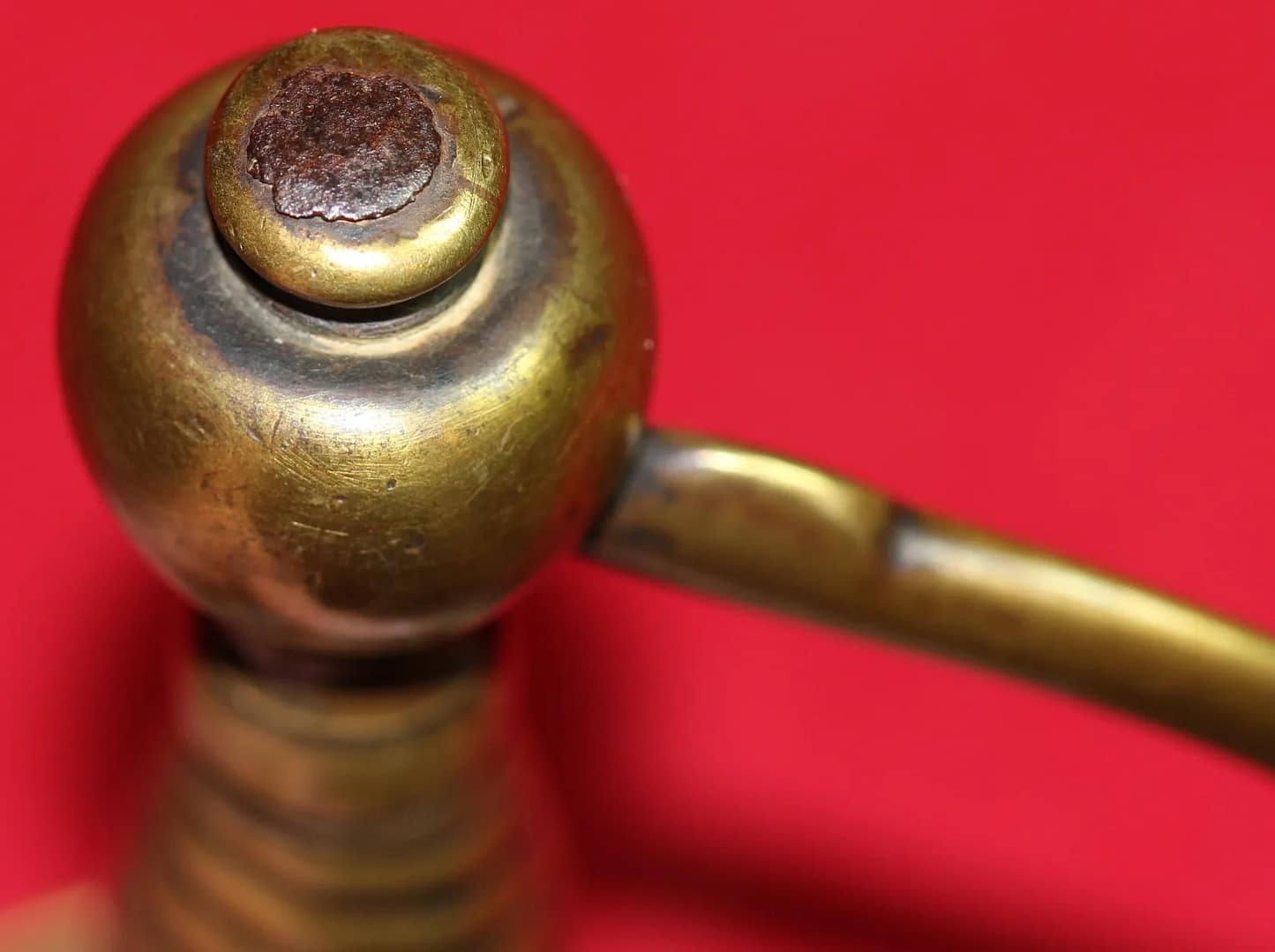
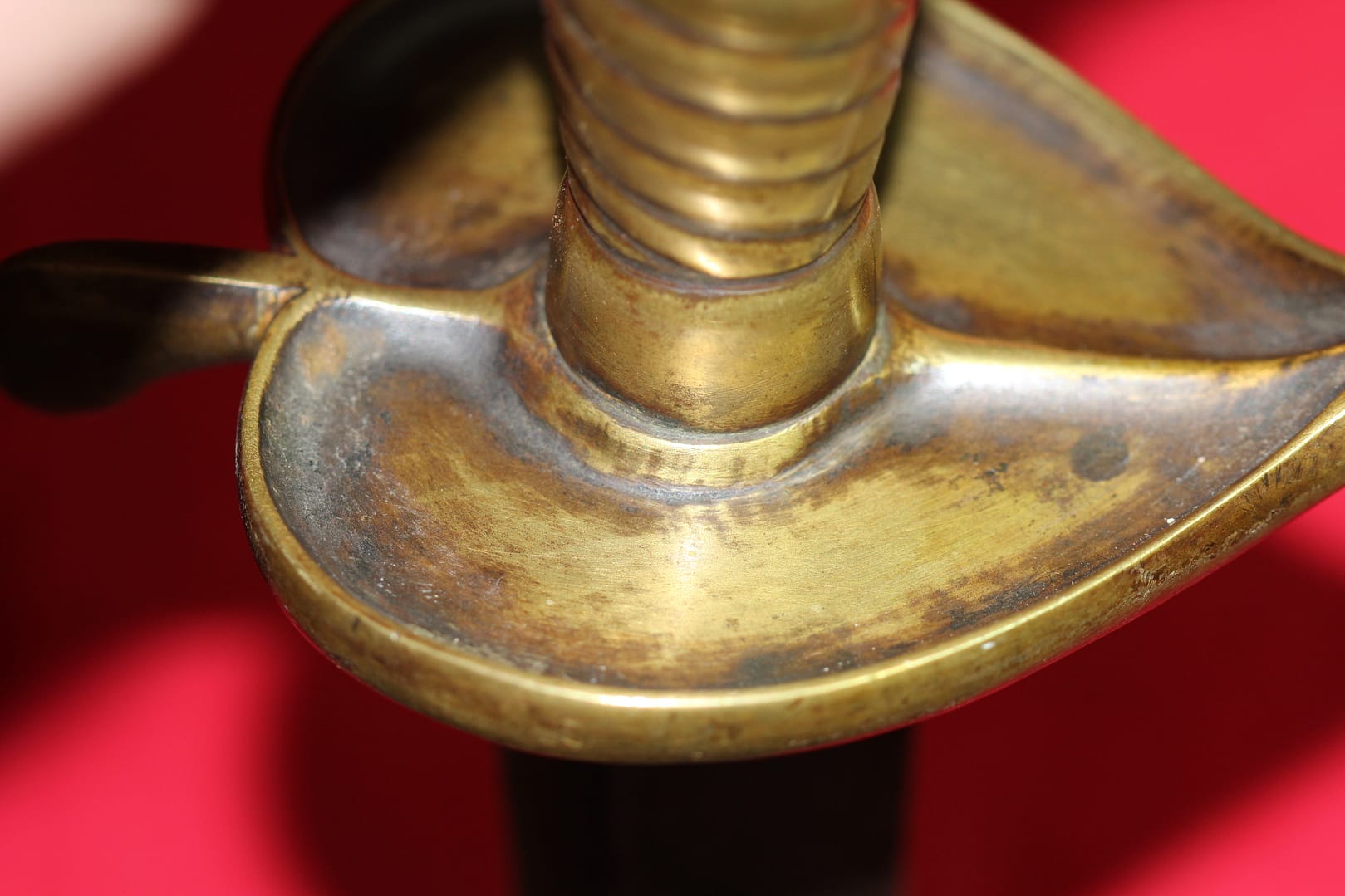
This basket-hilt broadsword, circa 1750, was typical of British heavy cavalry issued weapons before the introduction of more standardised 1780s patterns. Featuring a broad, straight blade optimised for powerful cutting blows, it was paired with an iron basket hilt providing substantial hand protection. Carried by dragoon and horse regiments, the sword reflects mid-18th-century British cavalry doctrine which emphasised close-quarter shock action. Its form continues the long tradition of Scottish and English basket-hilted military swords. Dish shaped hilt 3/4 basket with wide central knucklebow and three curved branches. Ovoid pommel. Described in George Neumann Swords and Blades 253.S English Horseman Sabre circa 1750. 32 inch blade. 38 inch overall. Grip covered in fishskin and brass twist wire. From my personal collection.


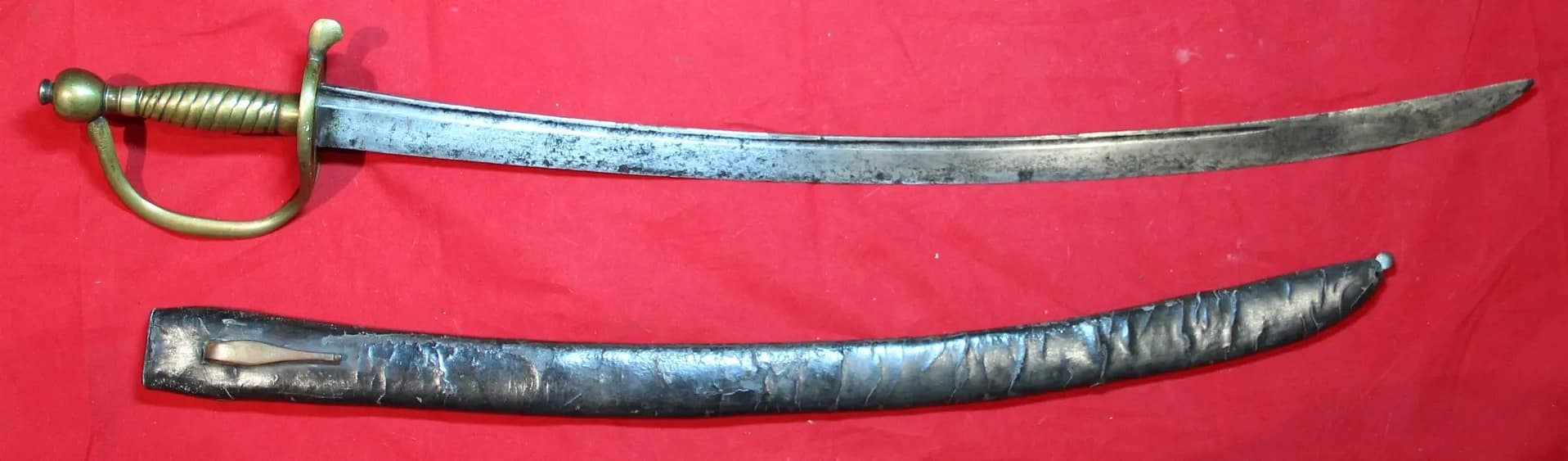
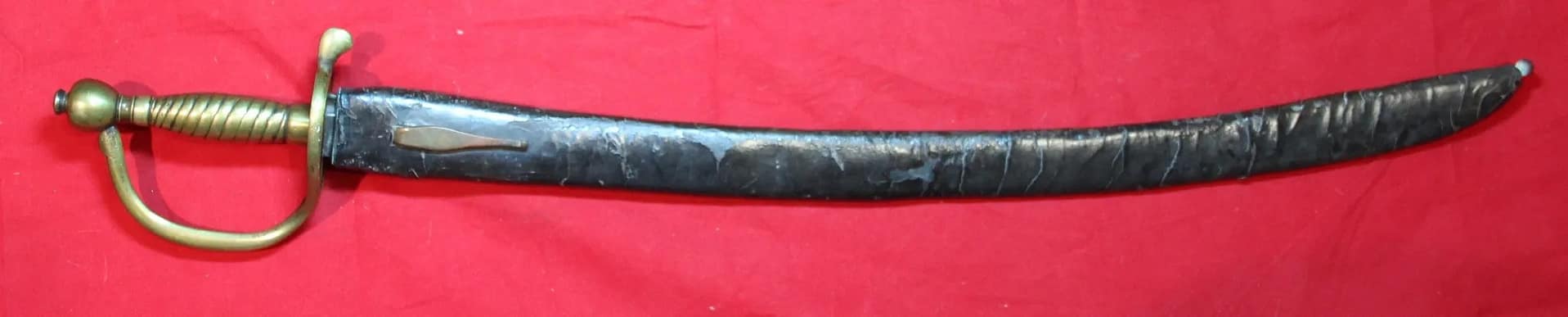
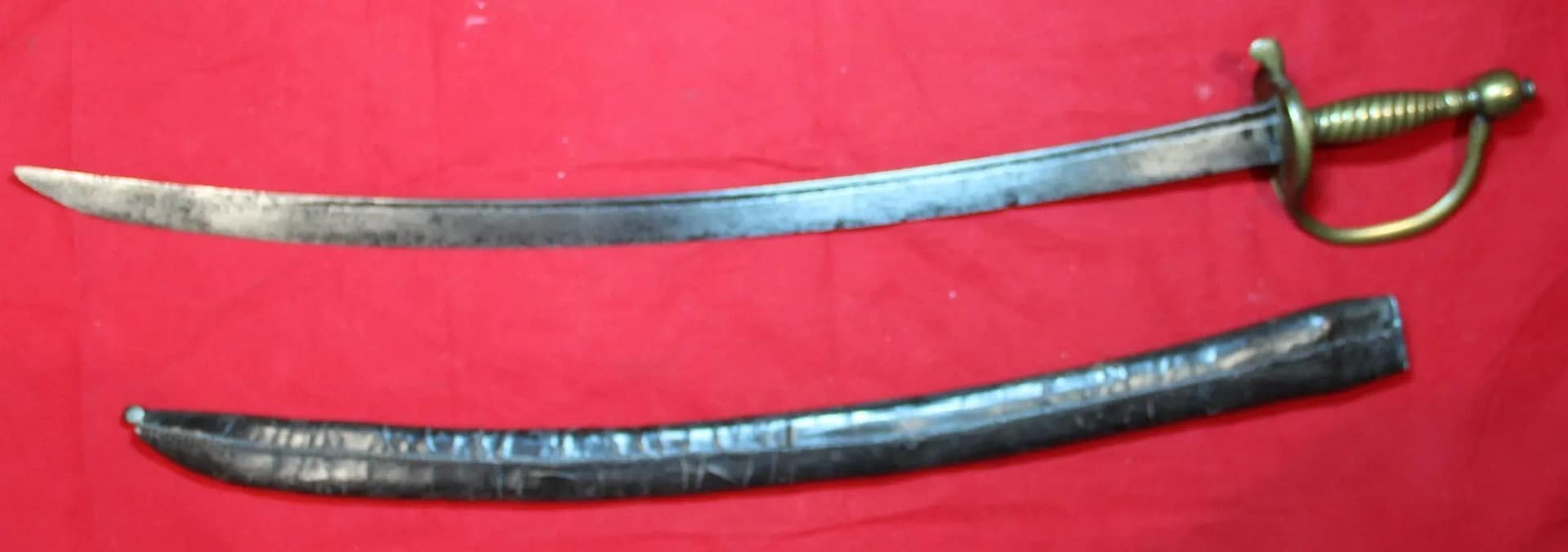
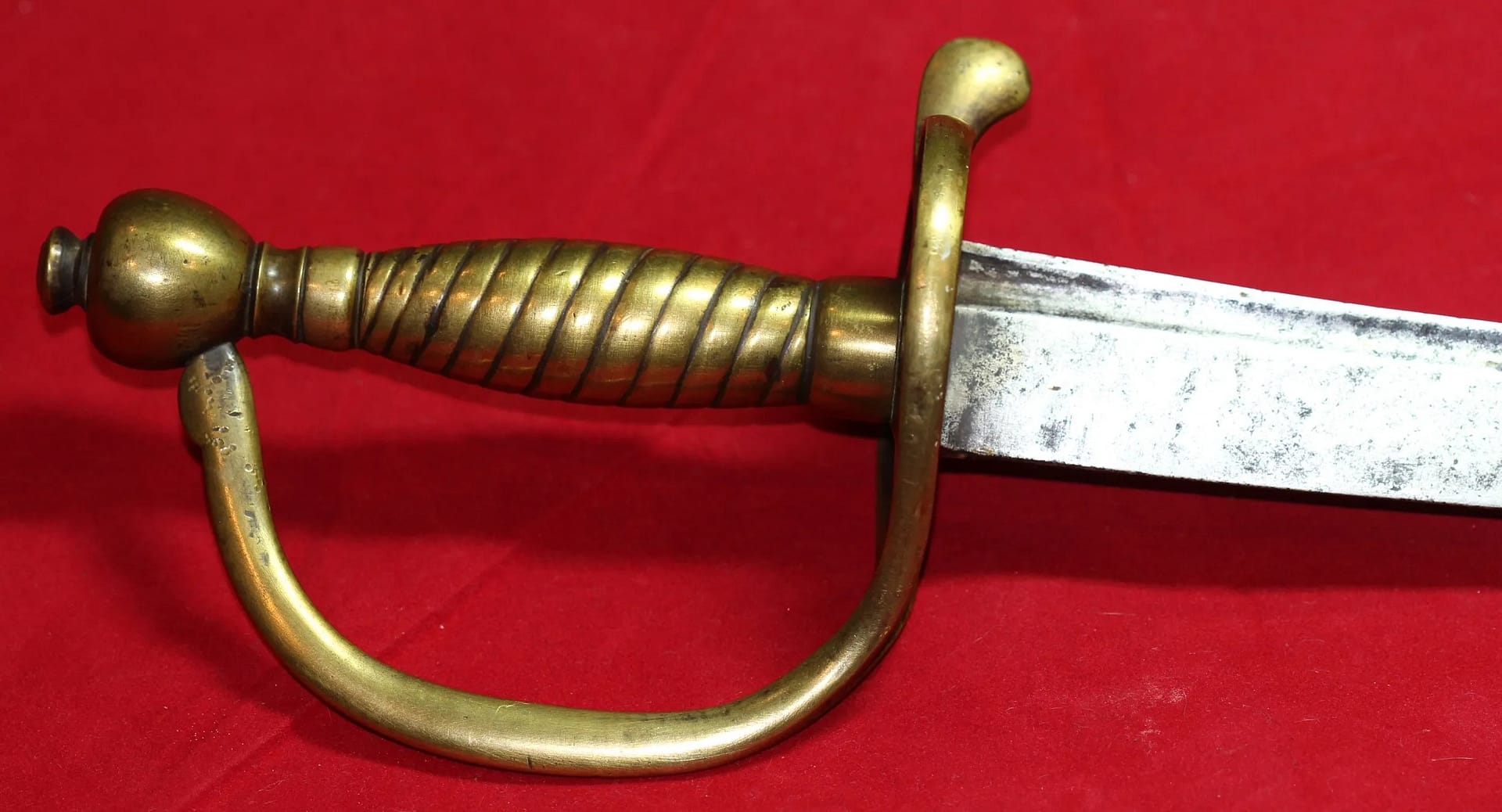
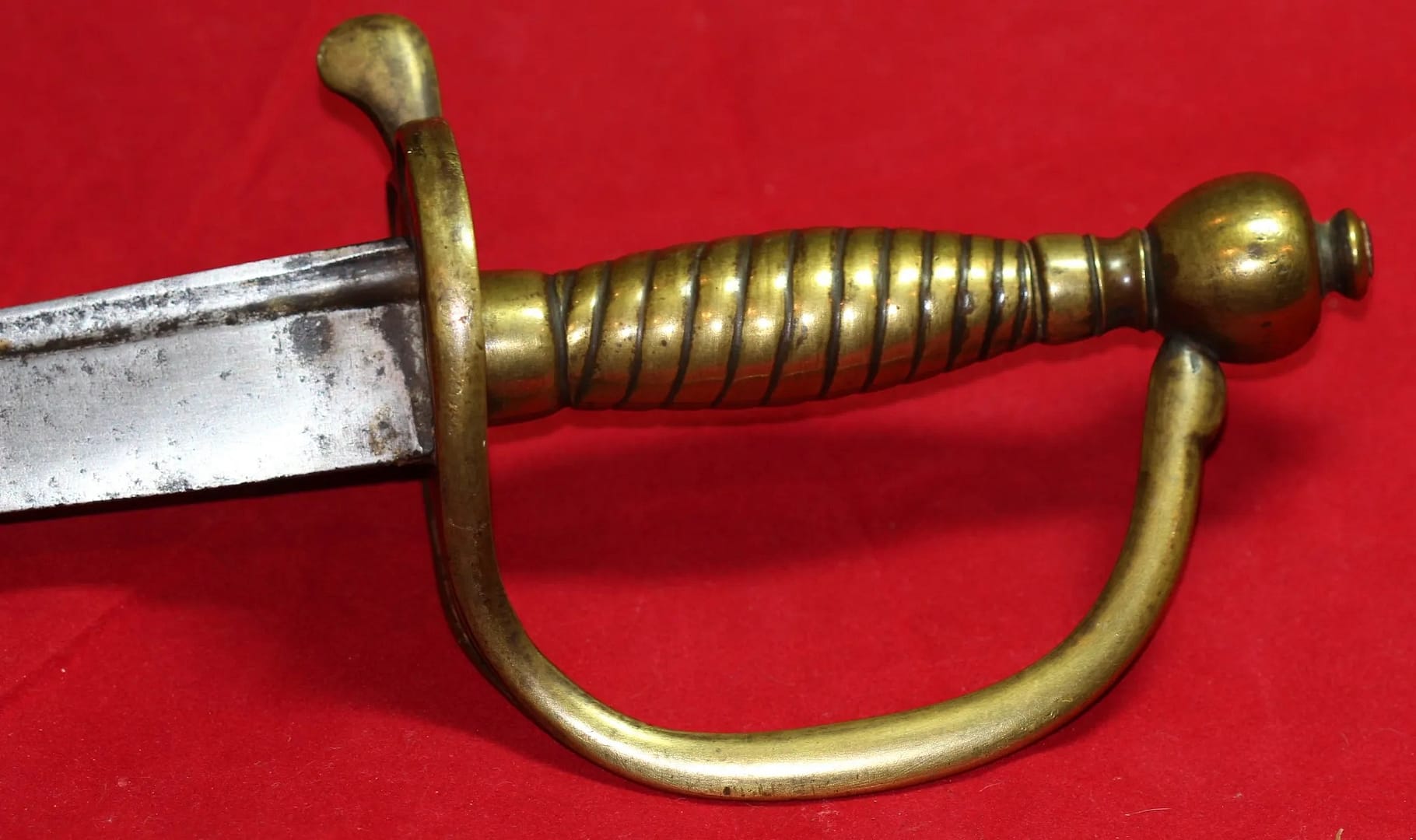
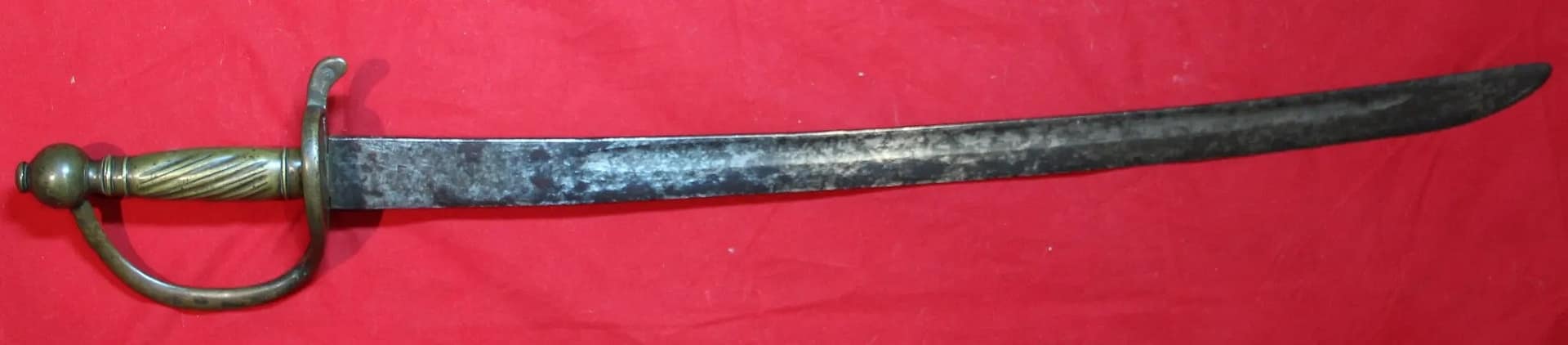
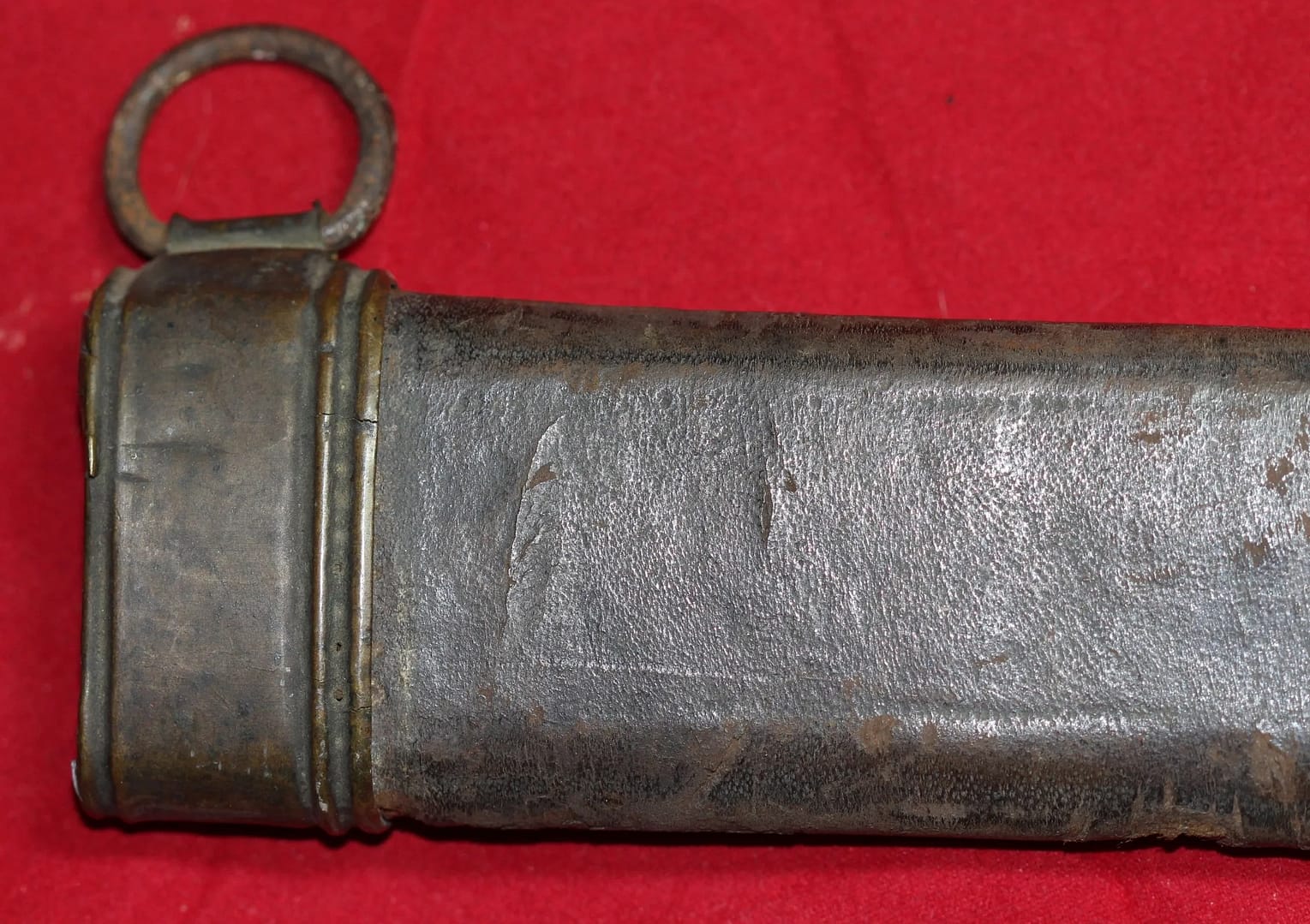
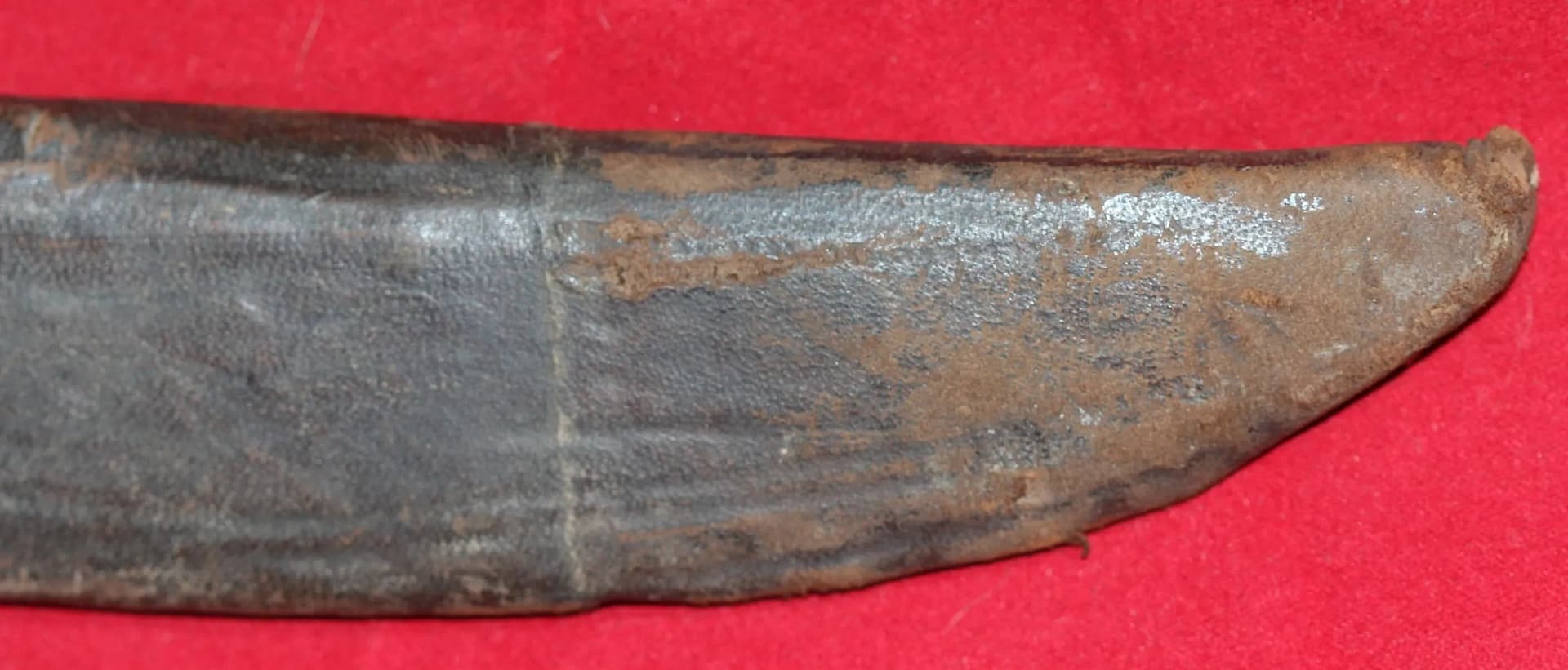
English Pattern 1742 Infantry Hanger. From my personal collection.

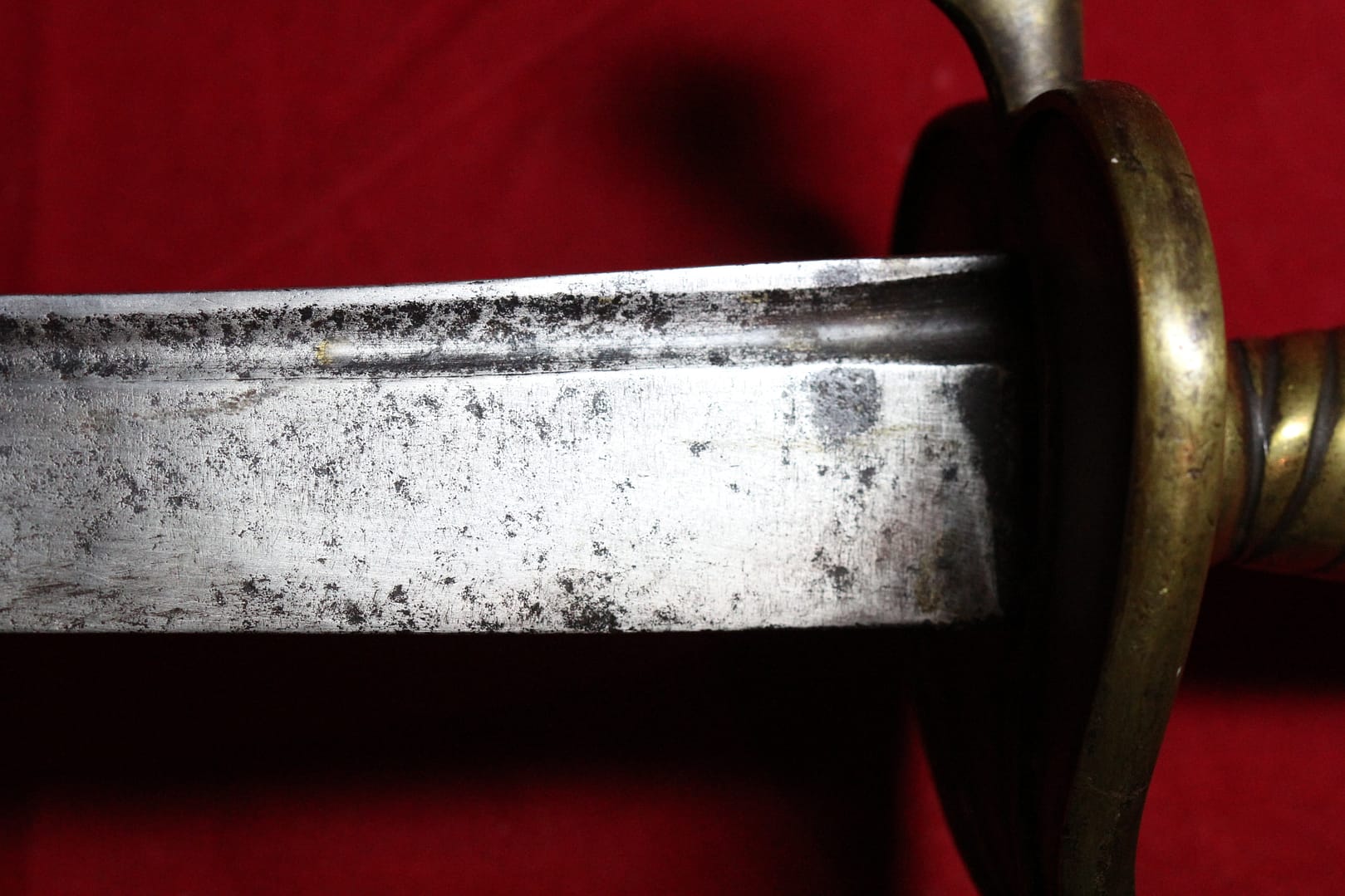
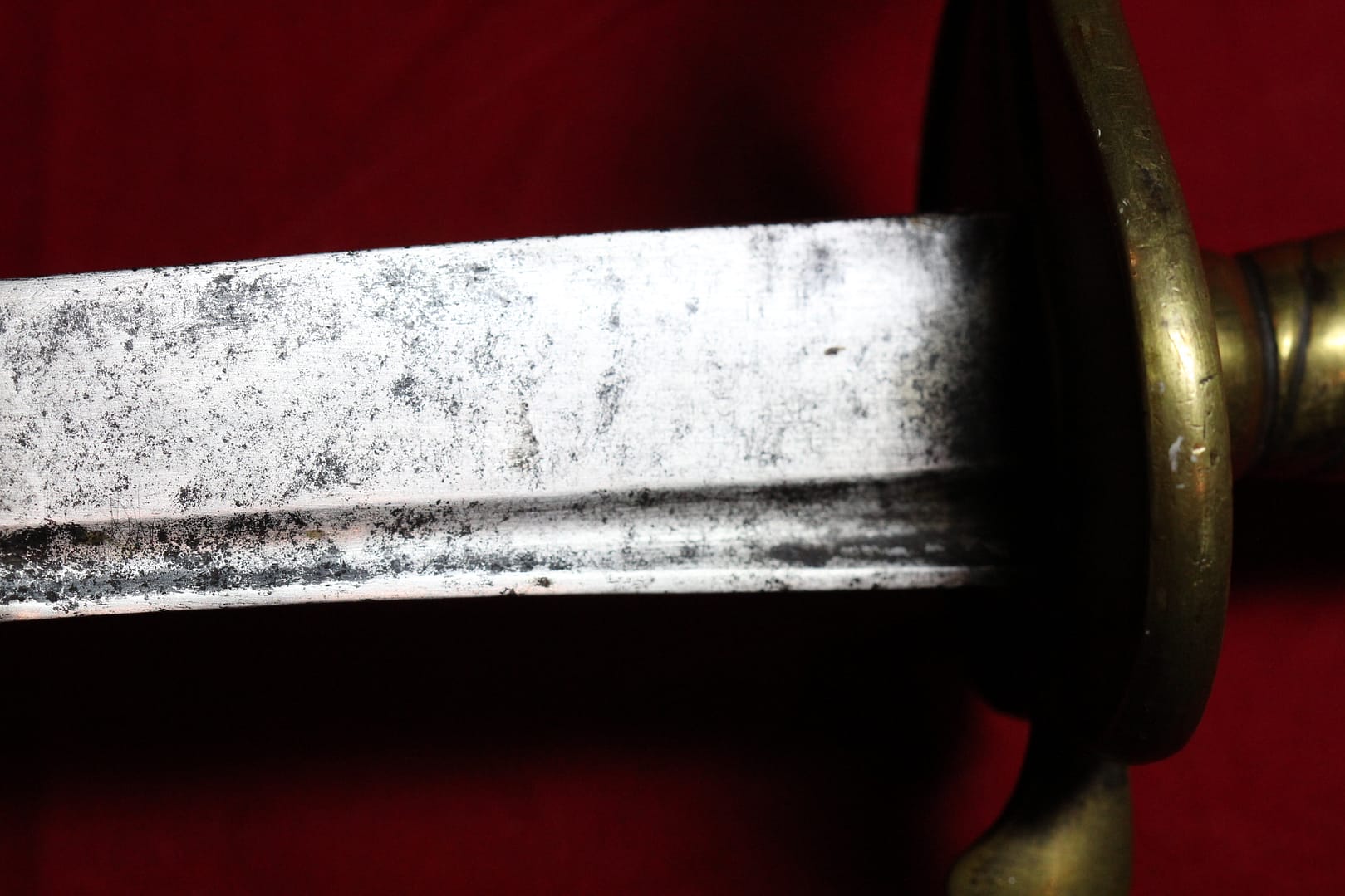
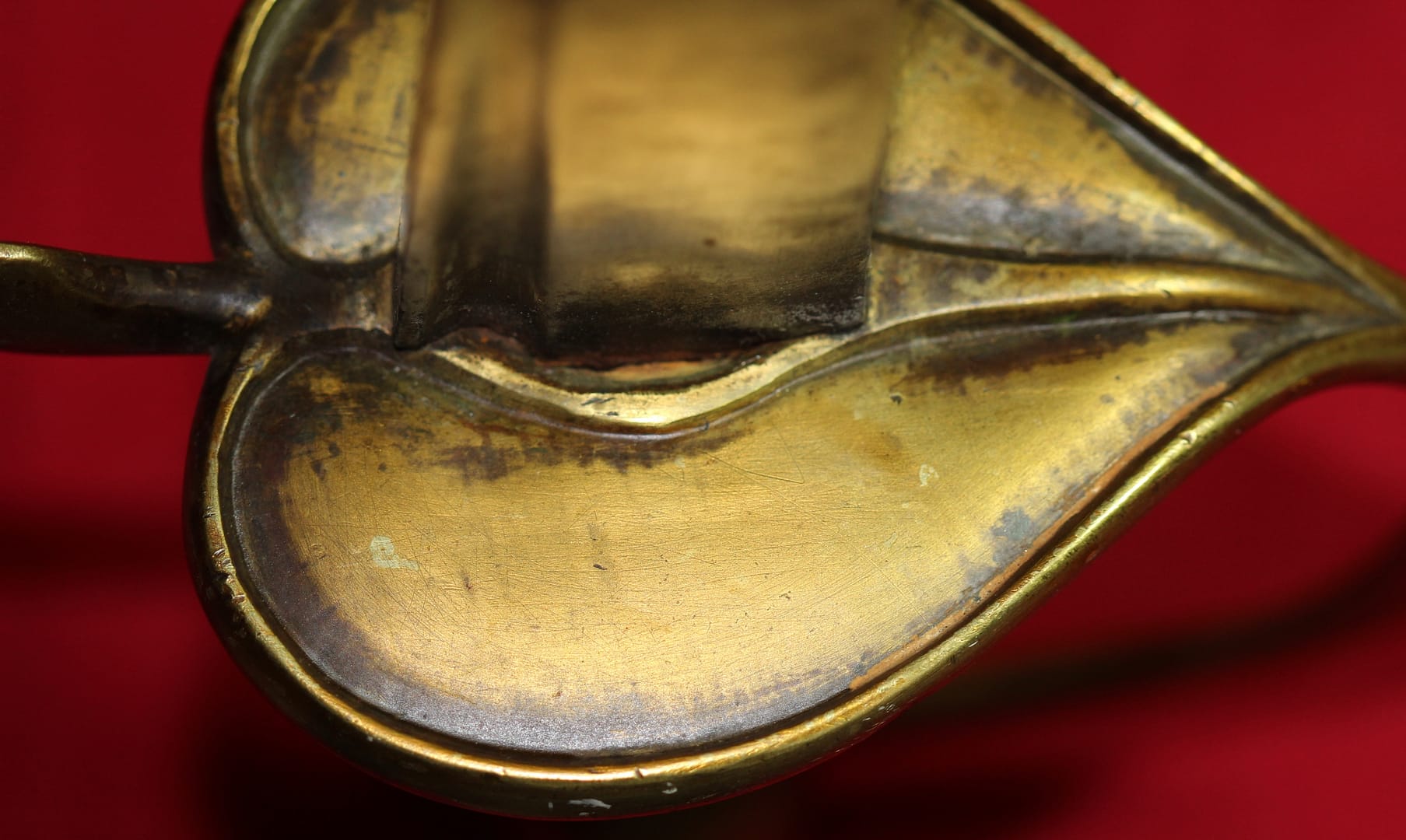
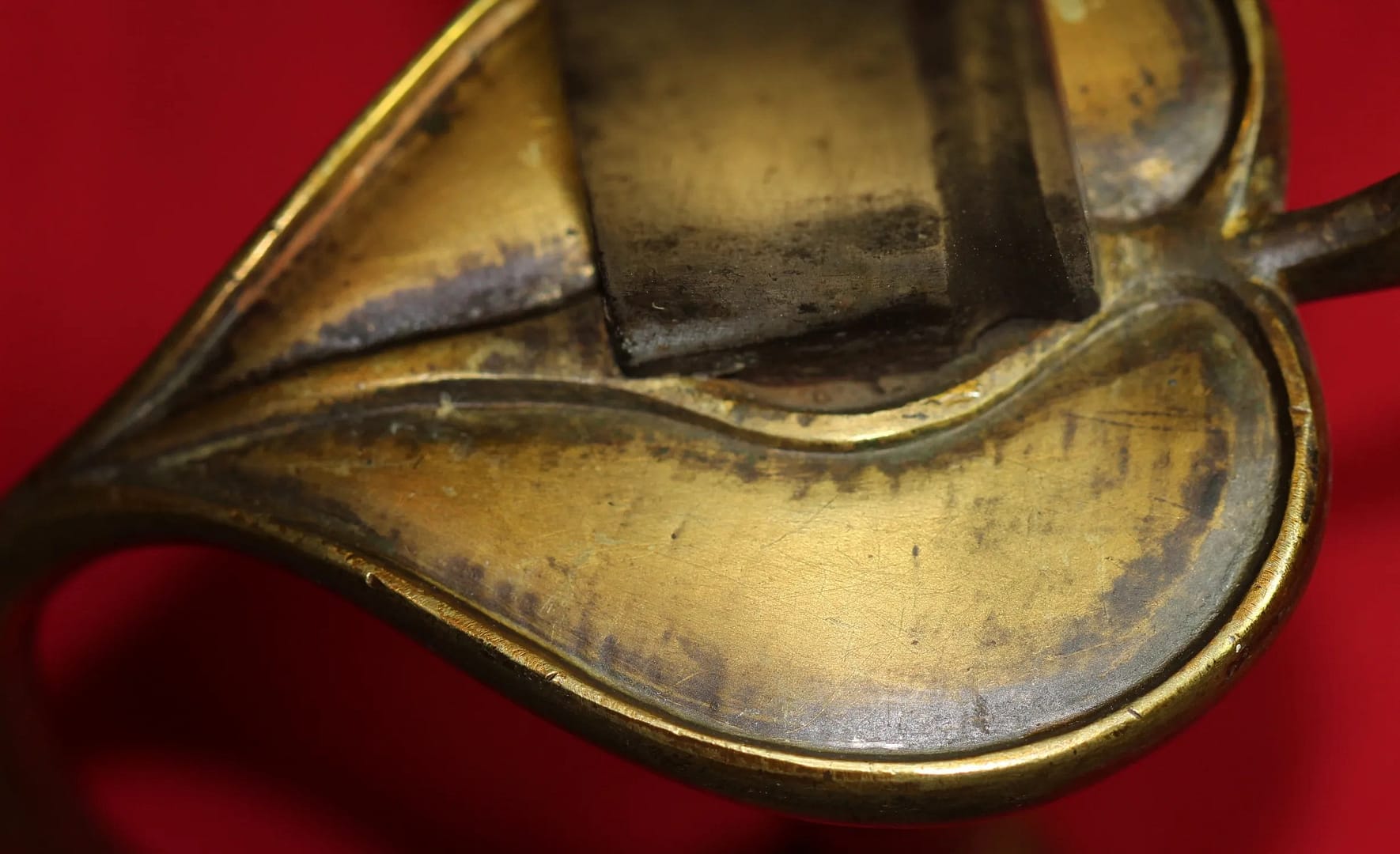
The Pattern 1742 infantry hanger was a short sabre issued to British grenadiers, sergeants, and some line infantry during the mid-18th century. Featuring a curved blade, brass guard, and simple knucklebow, it served as a secondary close-combat weapon complementing the musket and bayonet. Although increasingly superseded by bayonet fighting, hangers remained in service through the Seven Years War. The Pattern 1742 is one of the last widely issued infantry swords in British service.


Prussian Weapons of the Seven Years War


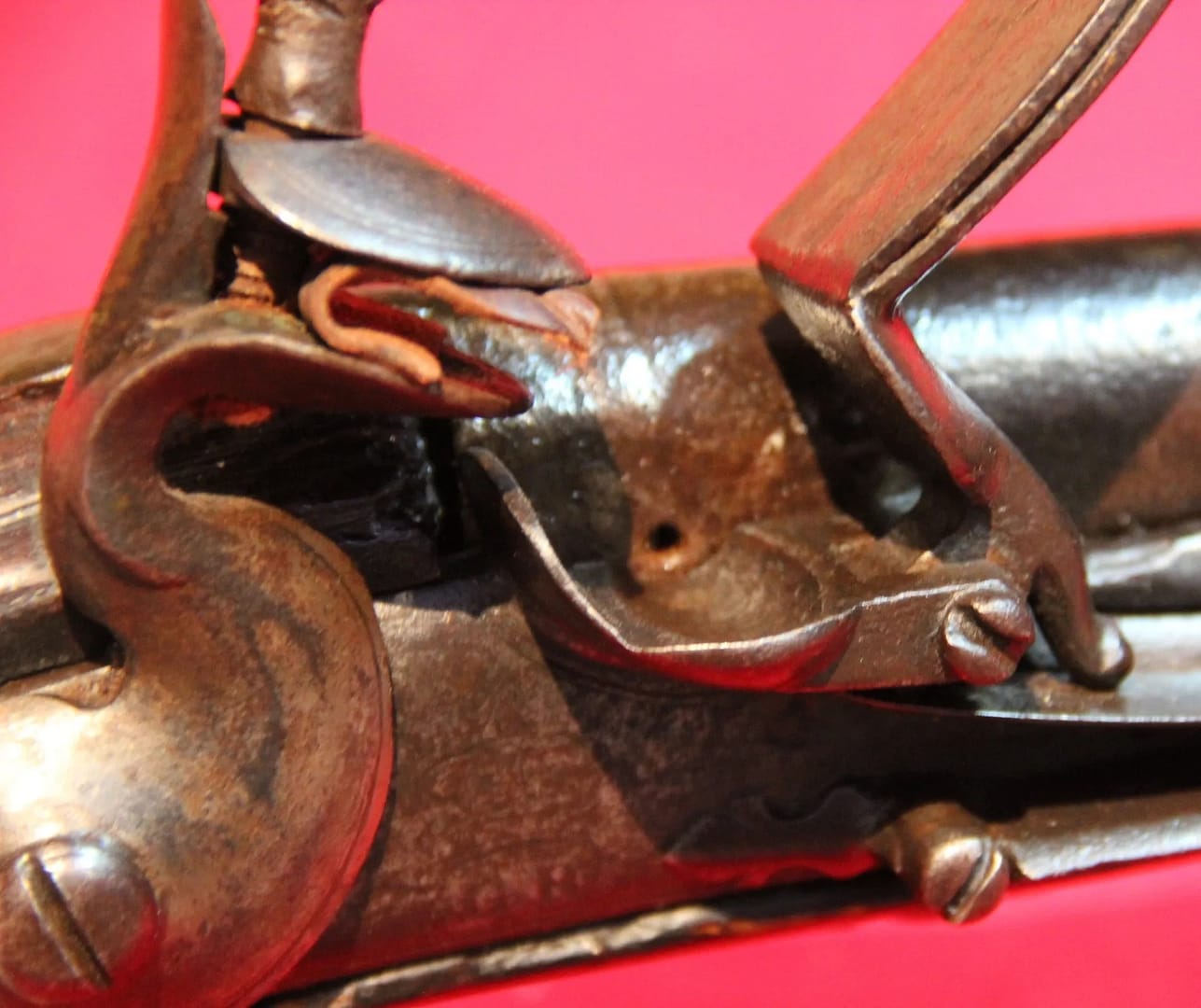
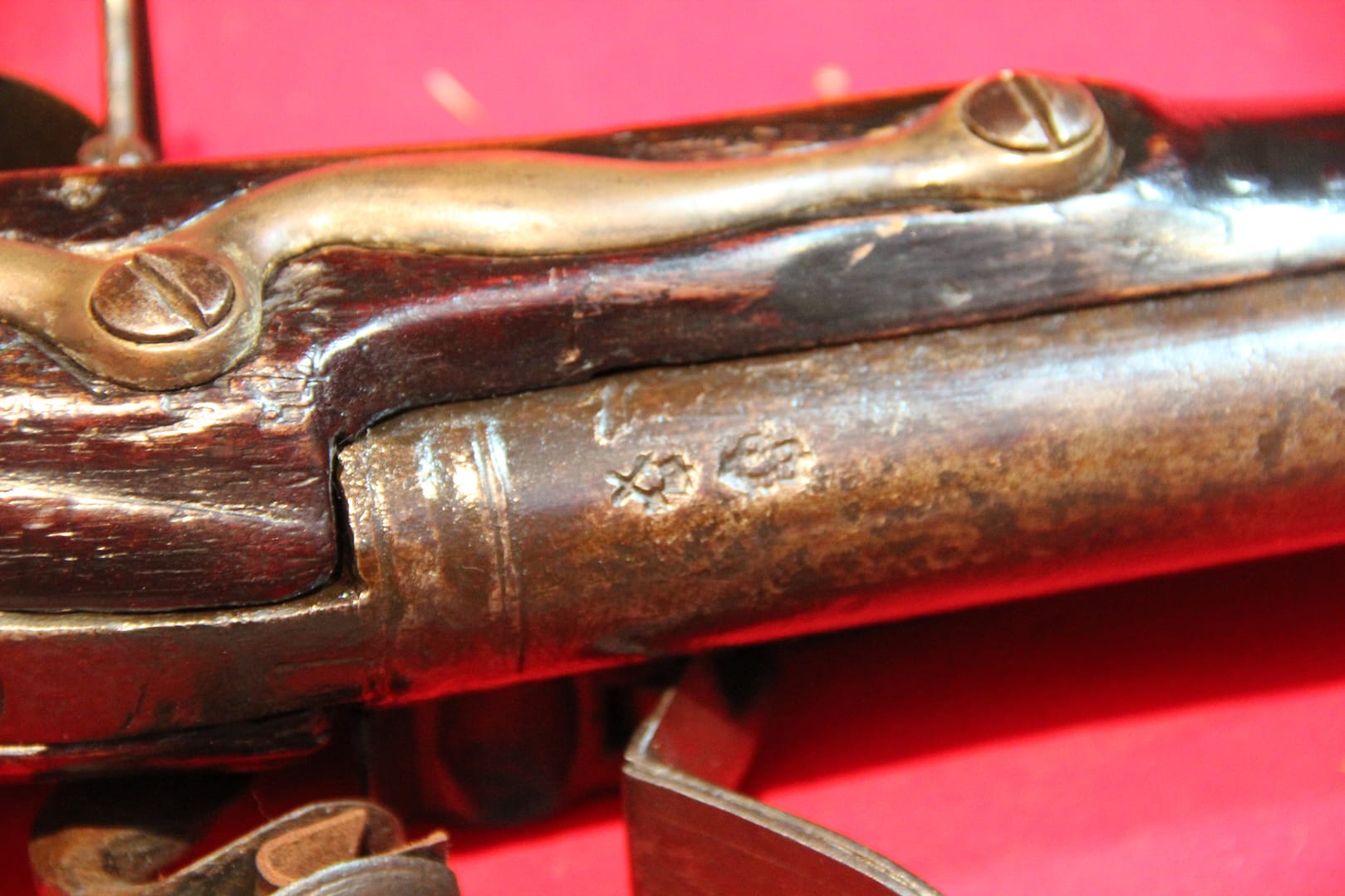
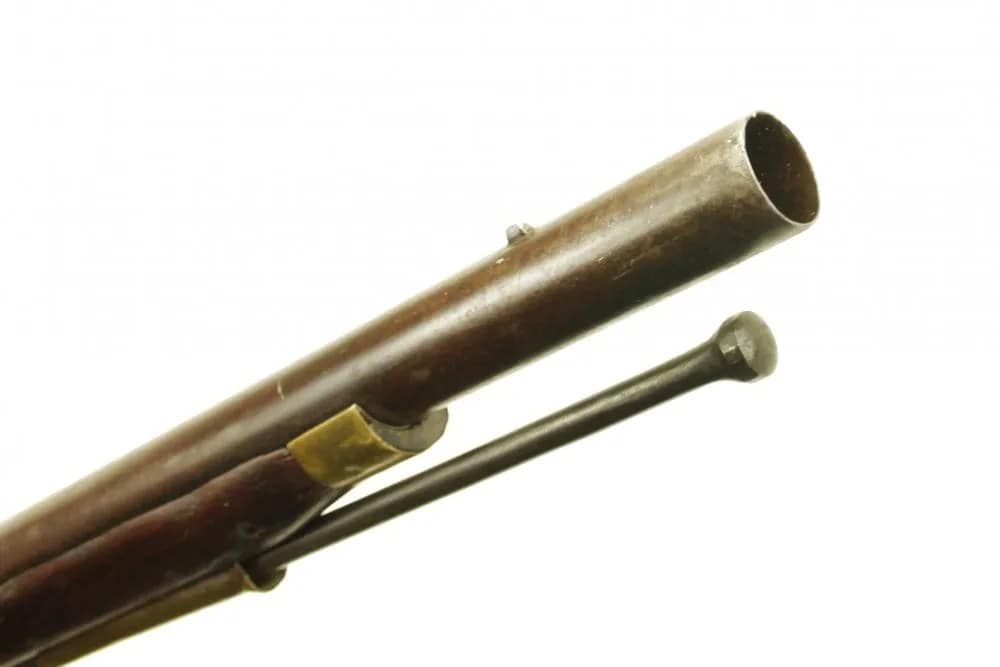
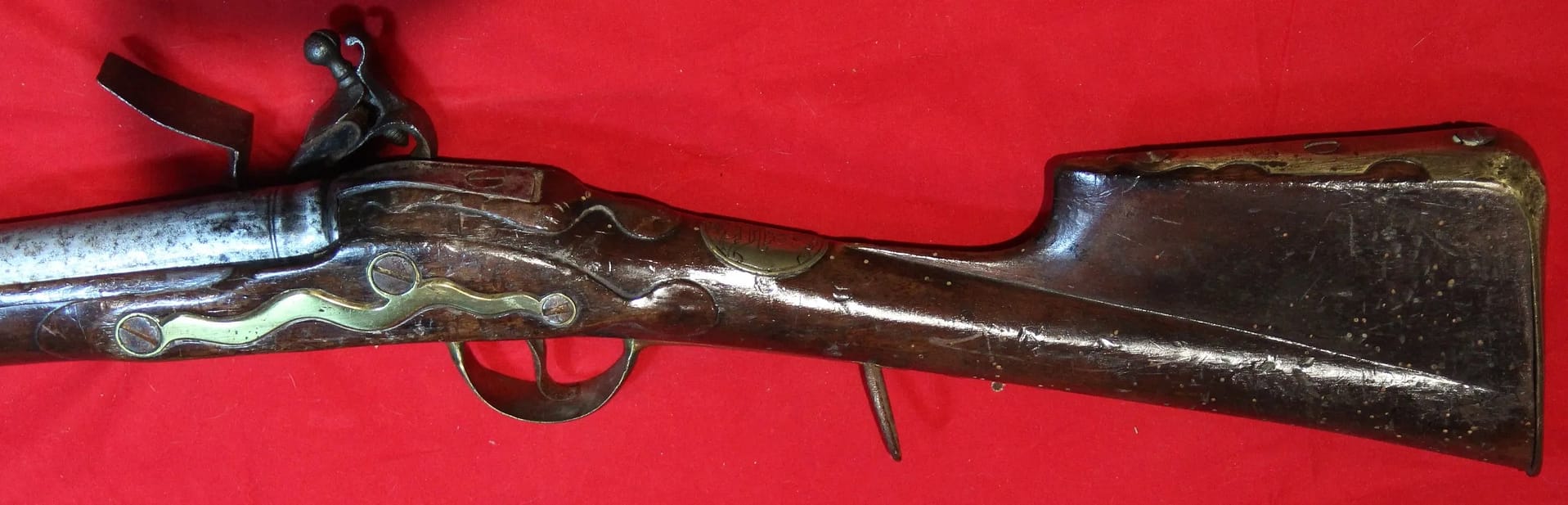
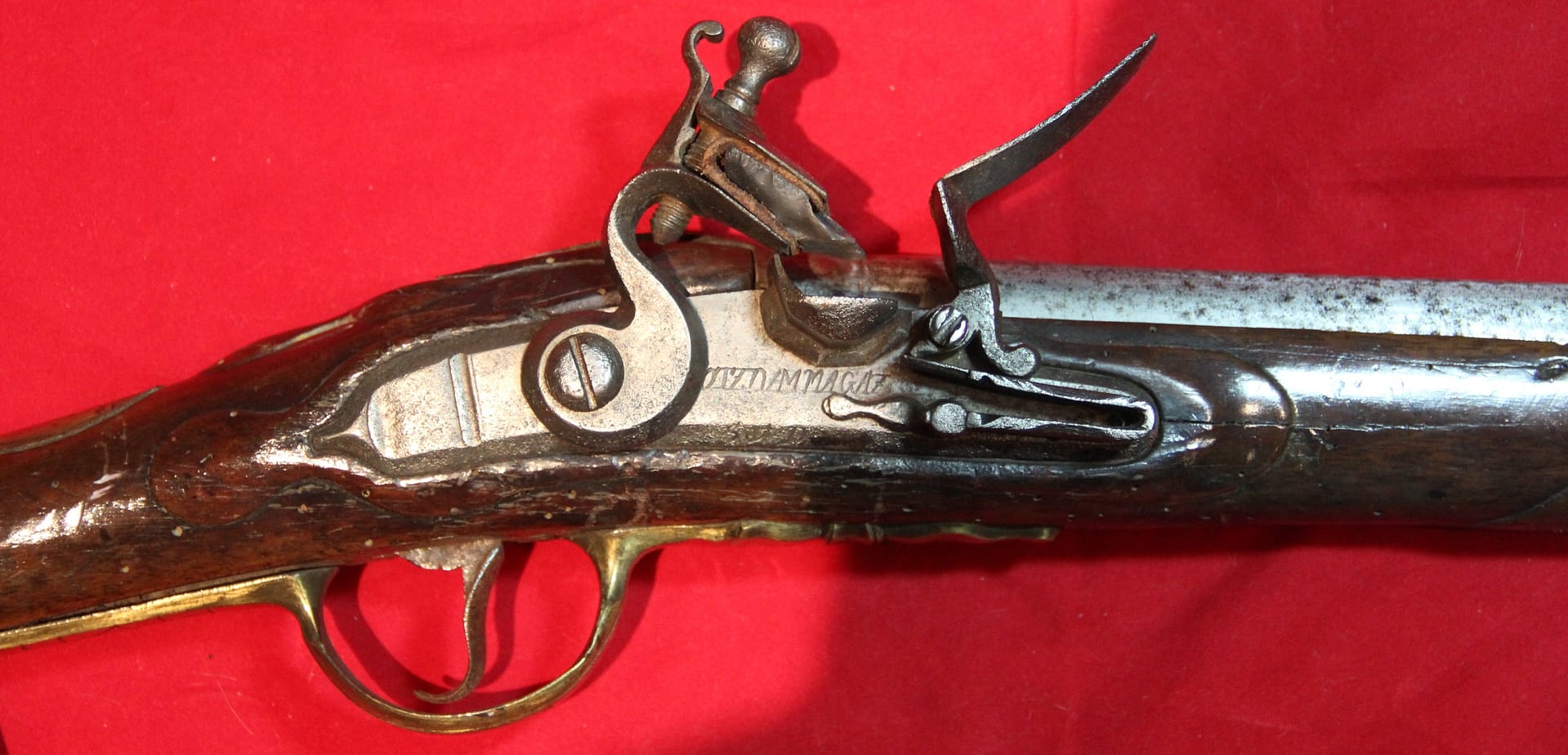
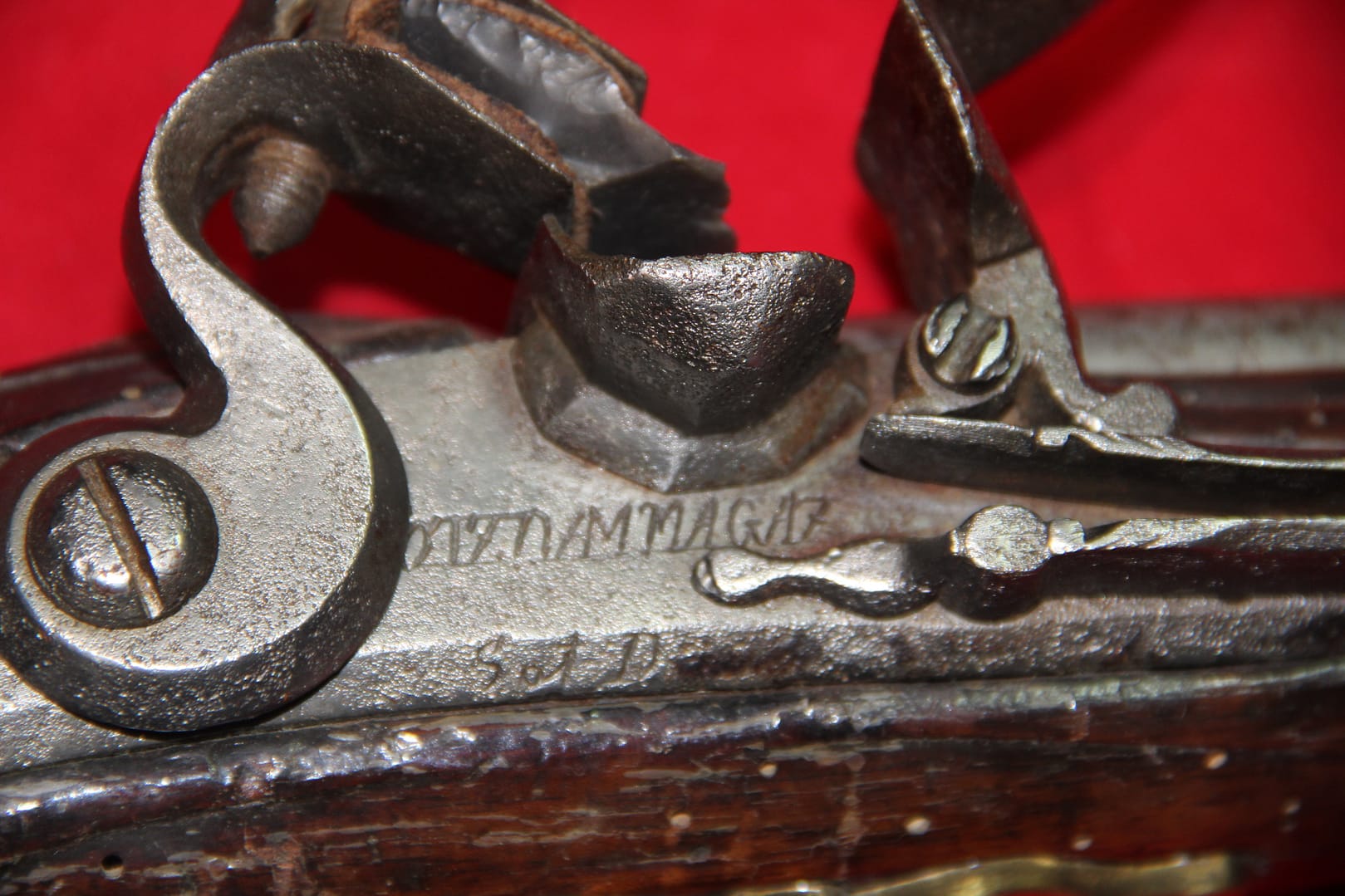
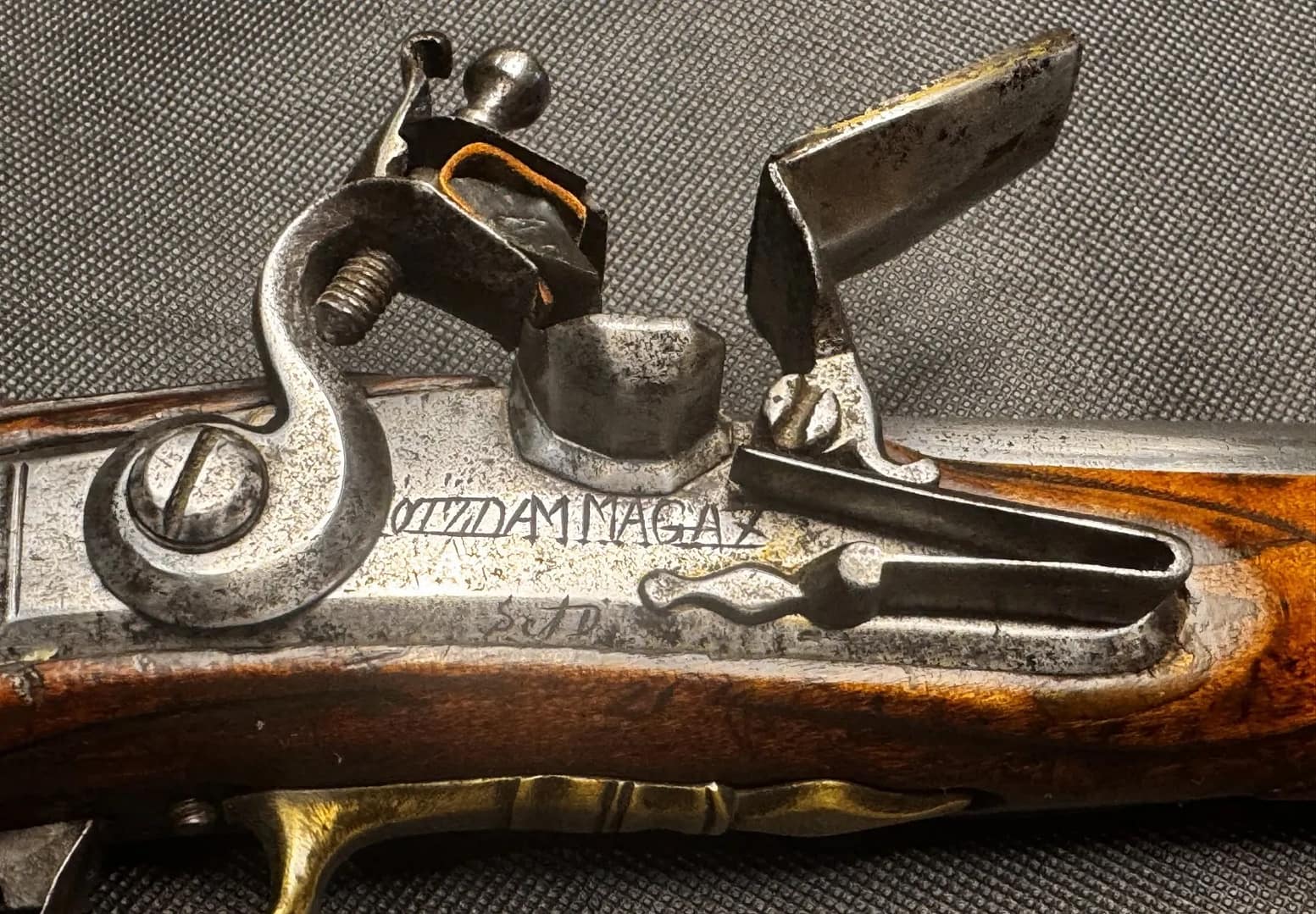
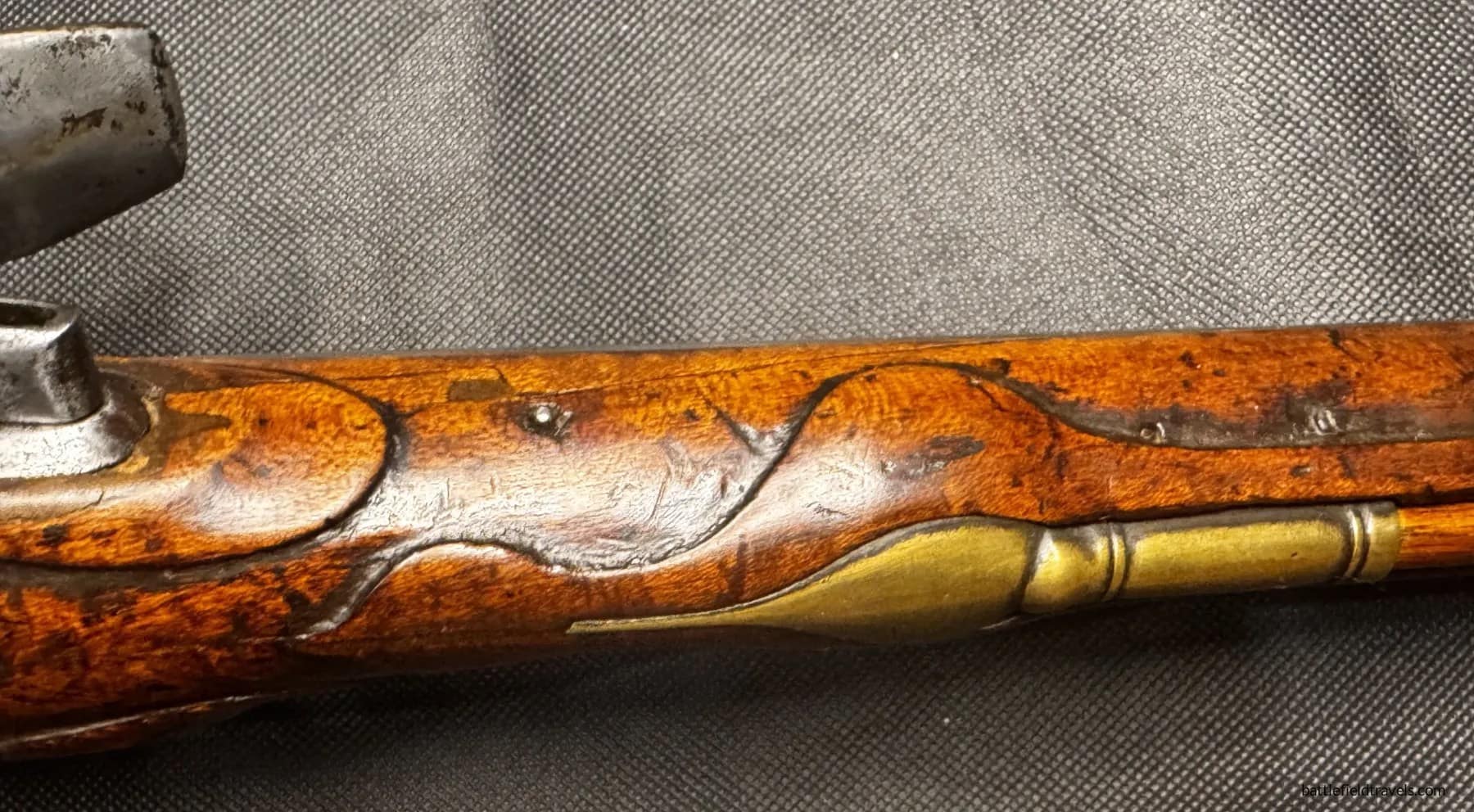
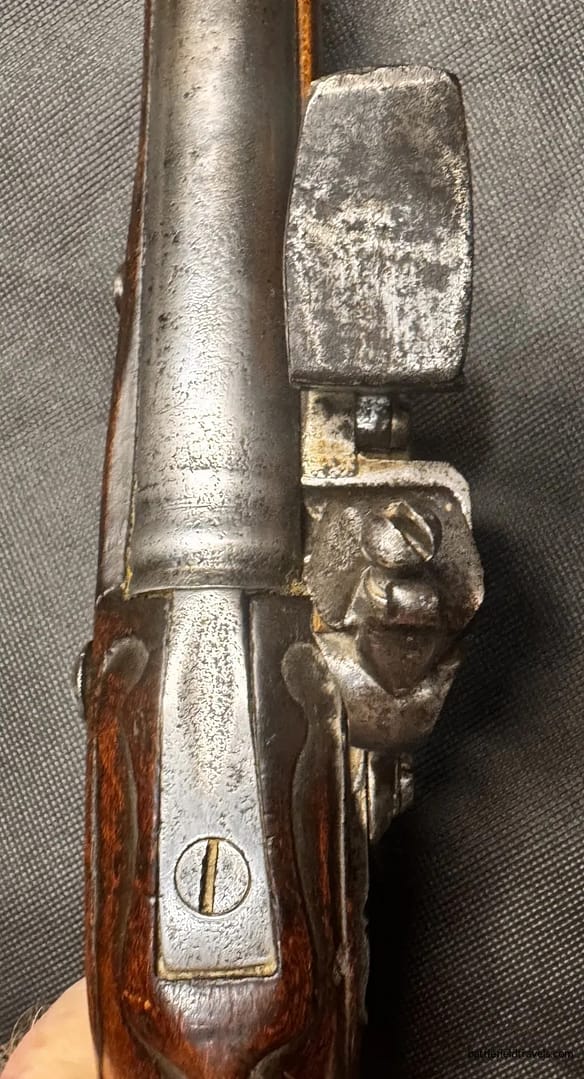
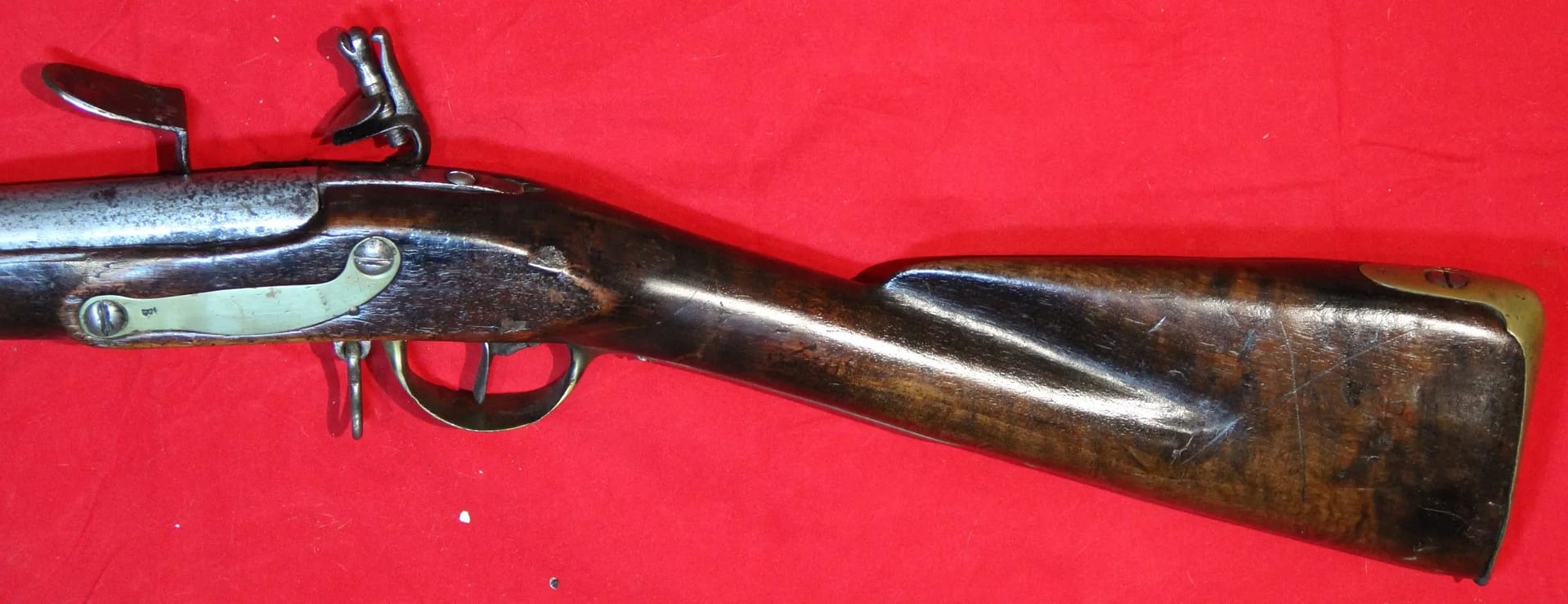
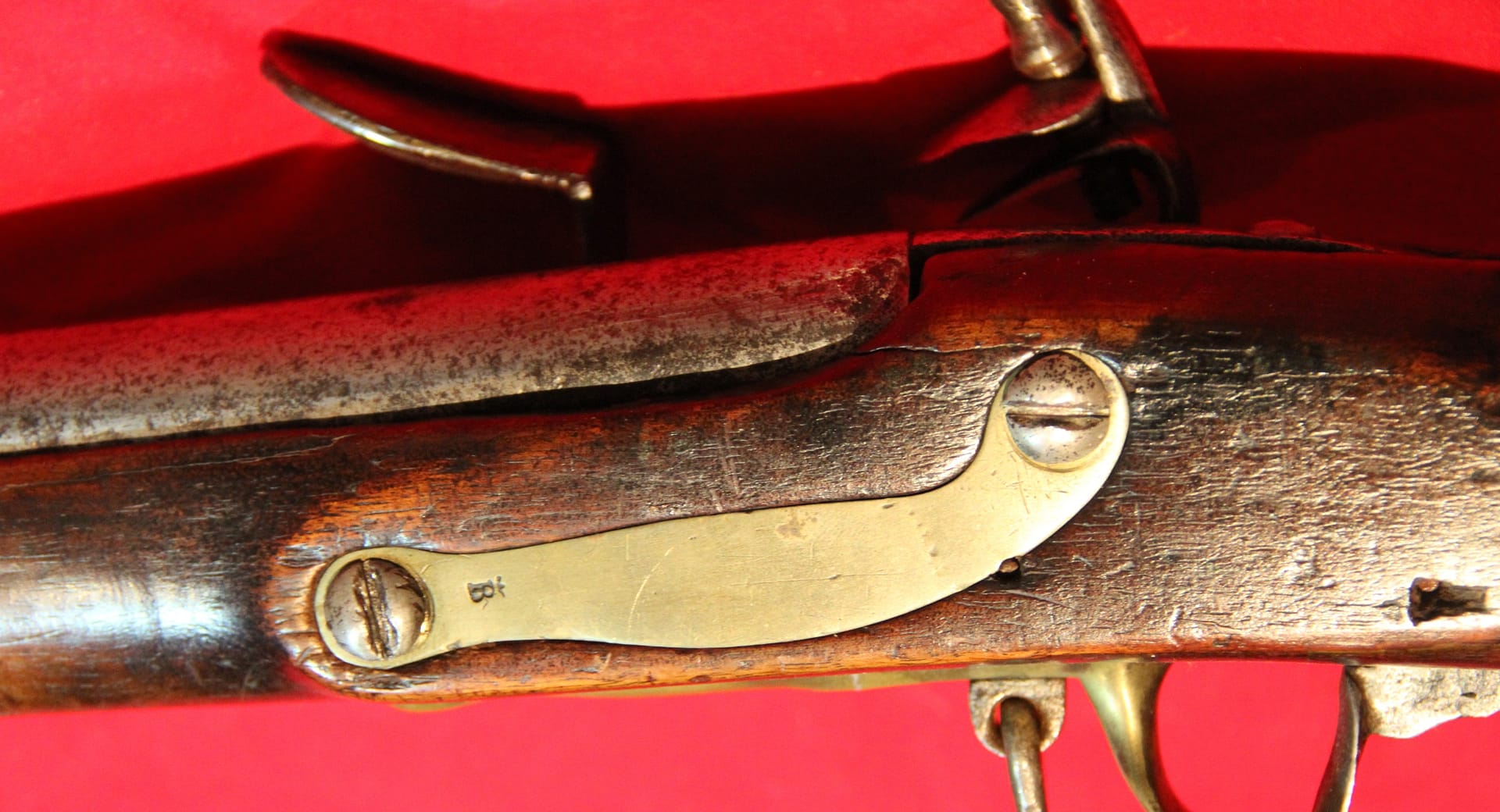
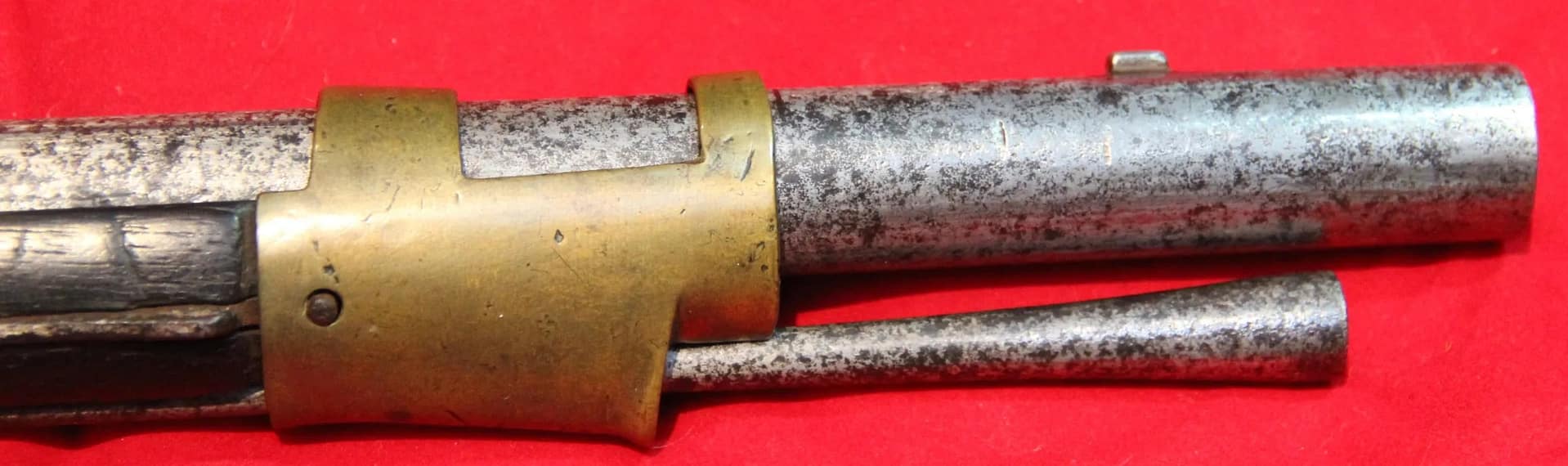
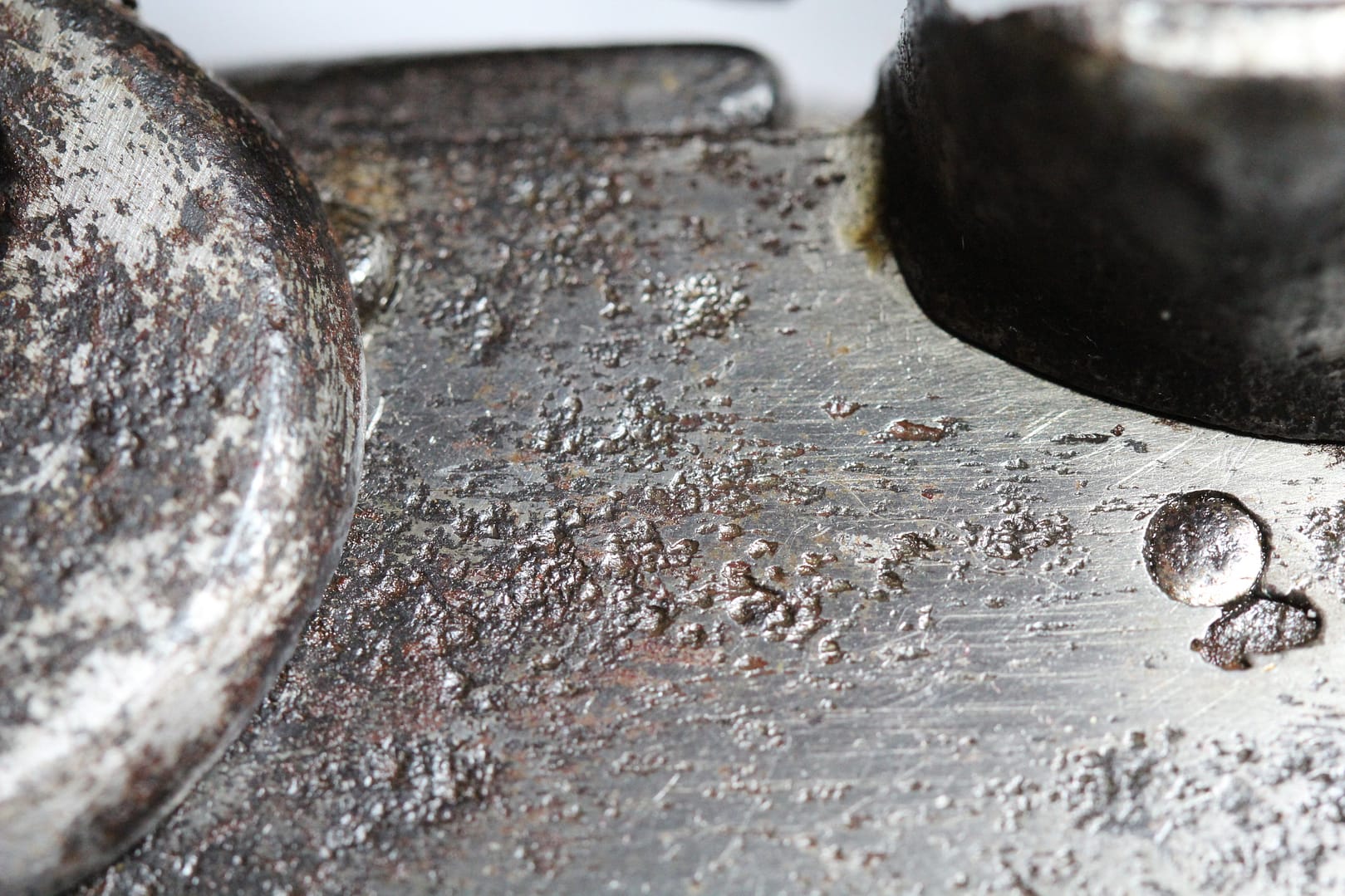
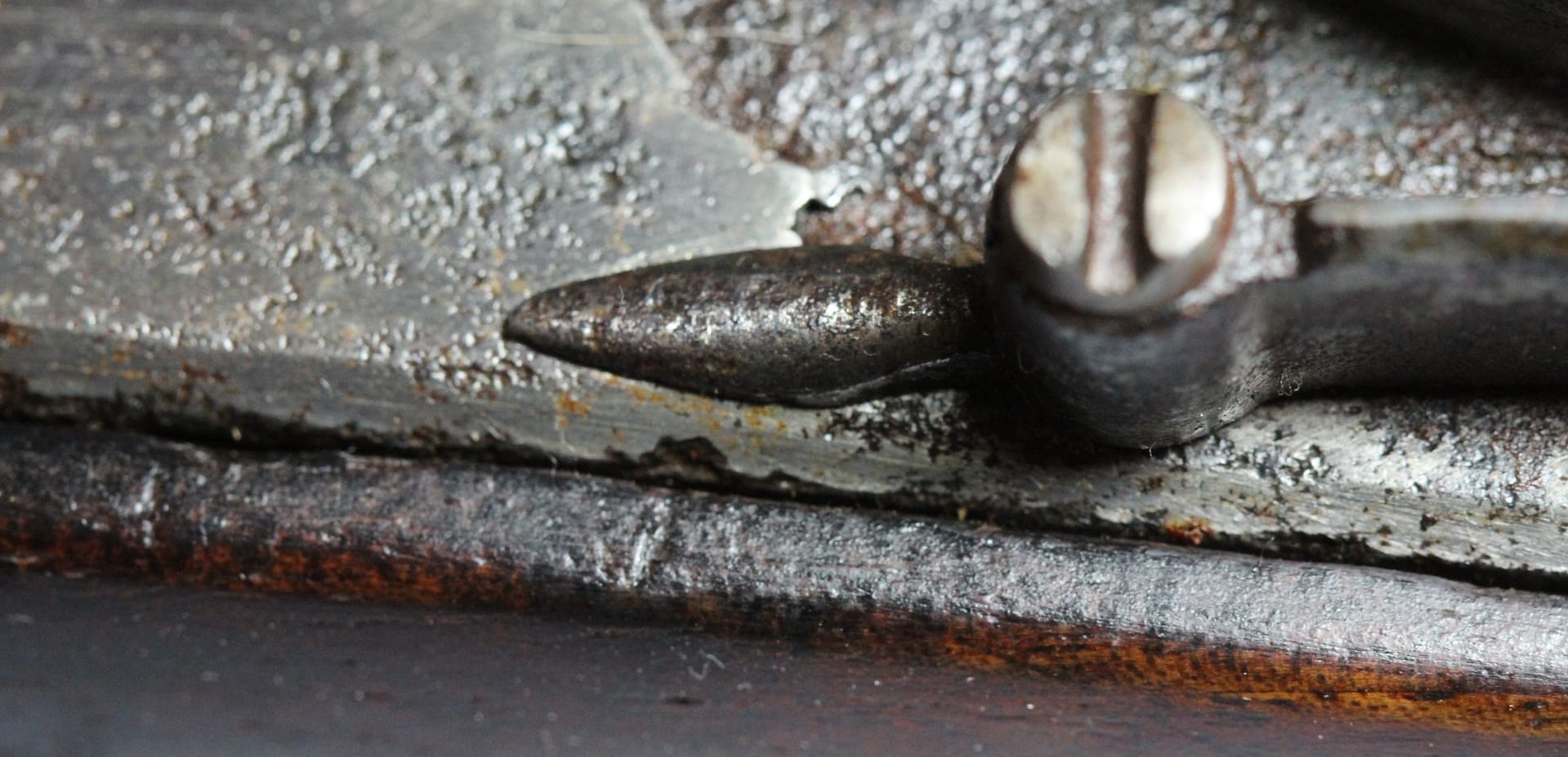
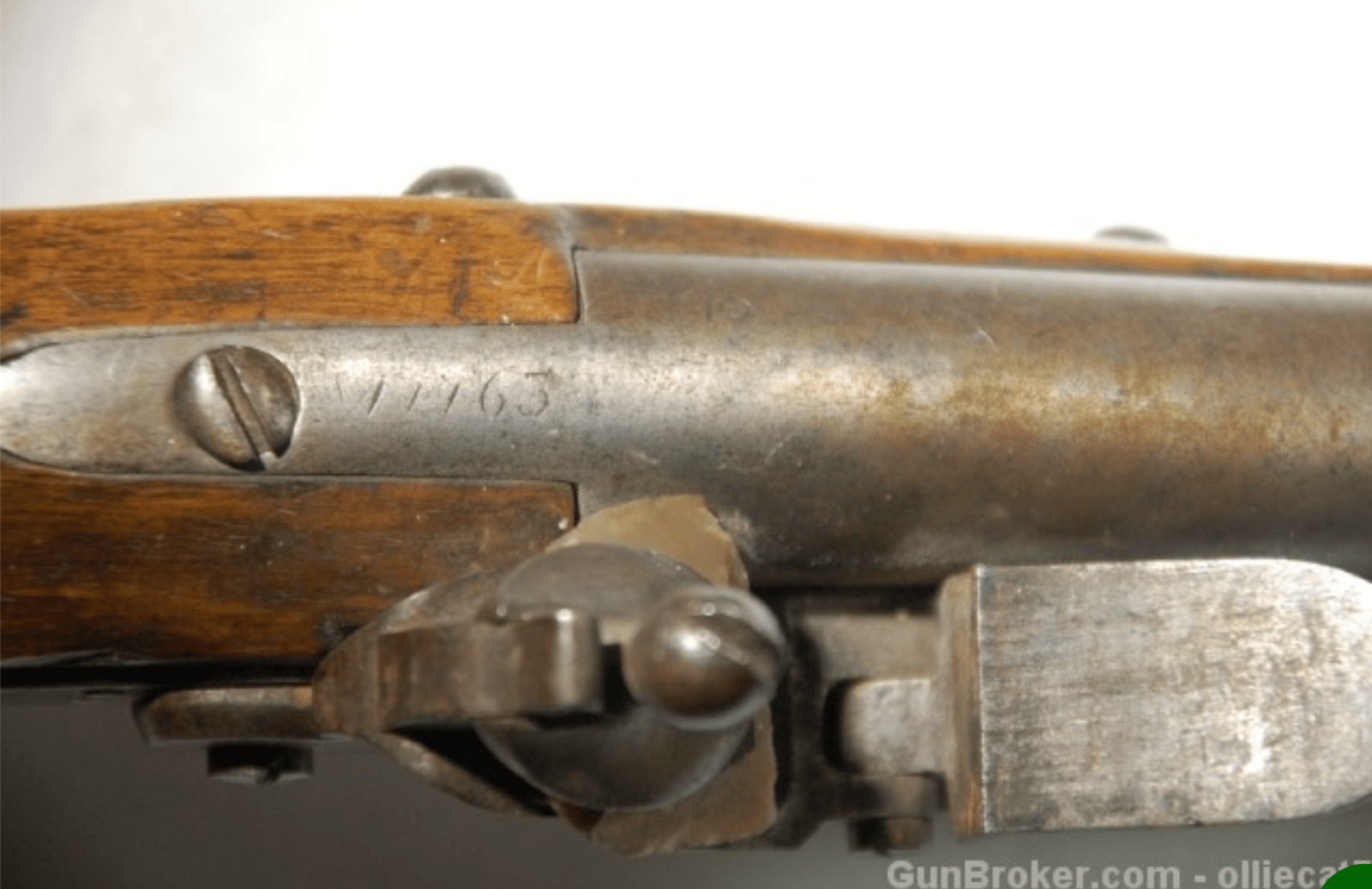
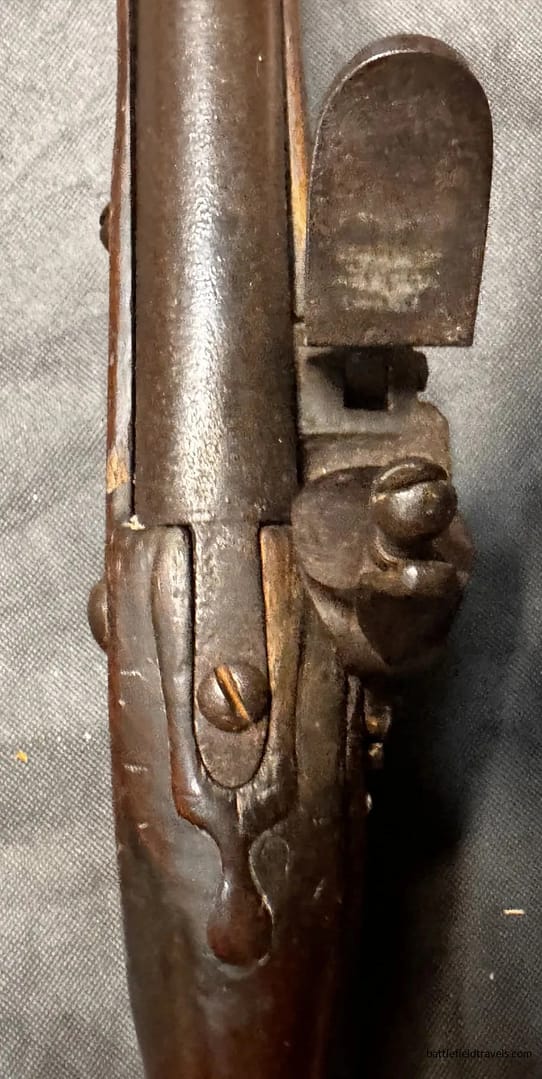
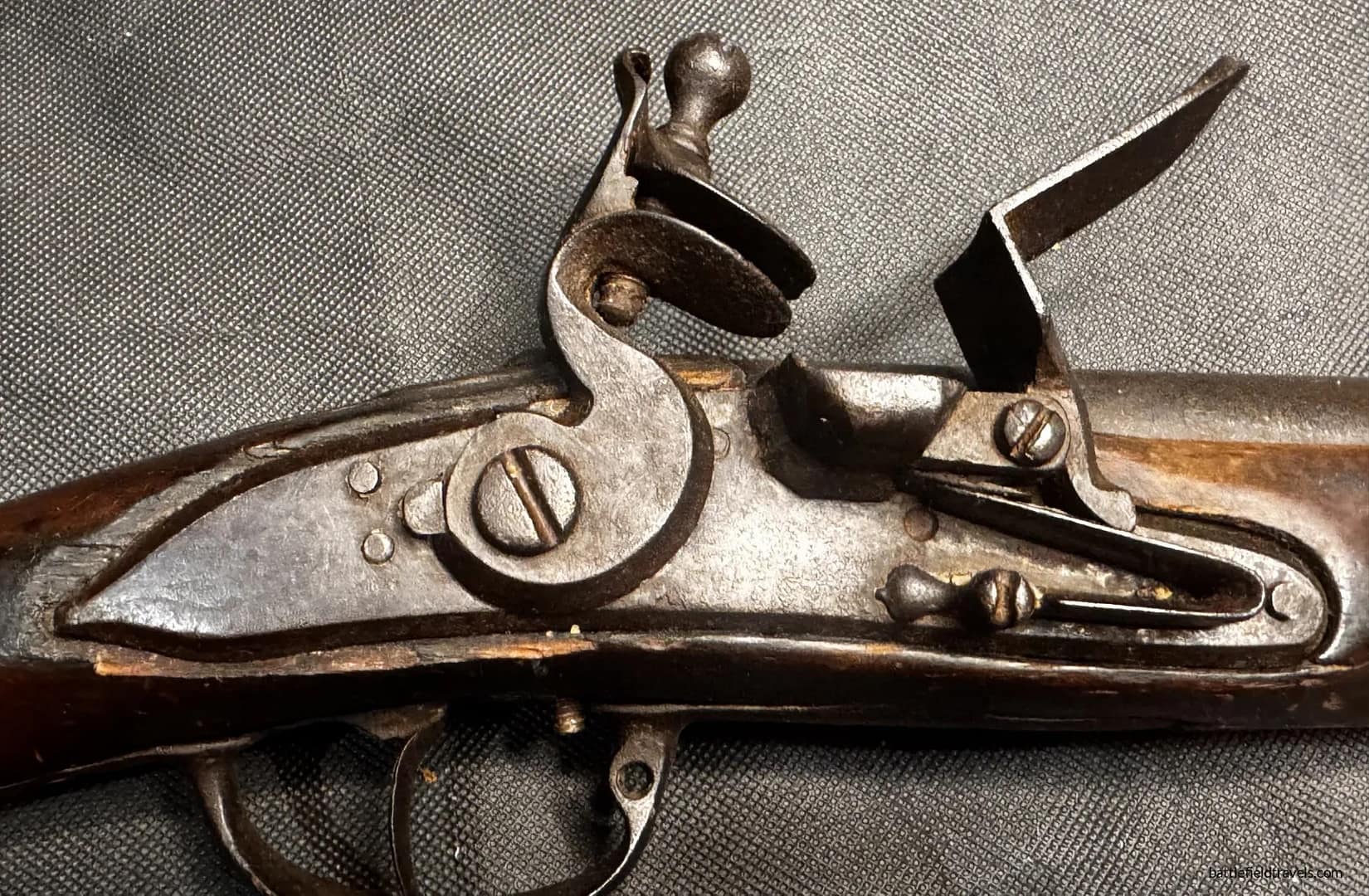
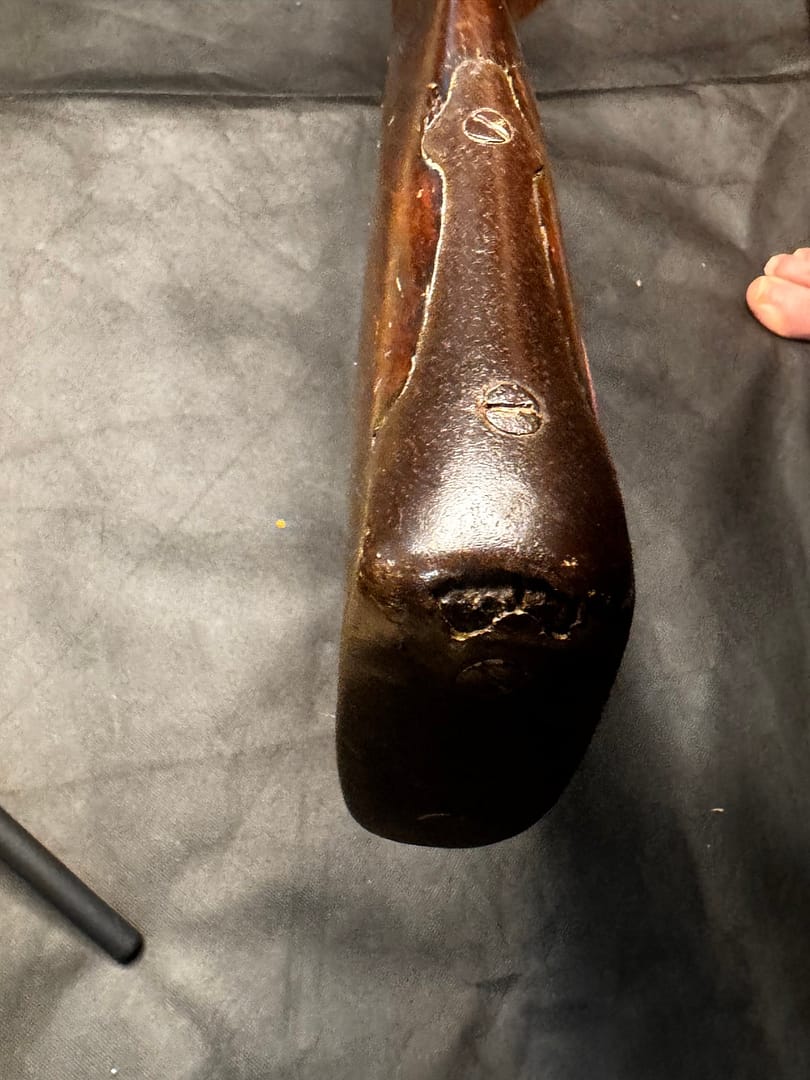
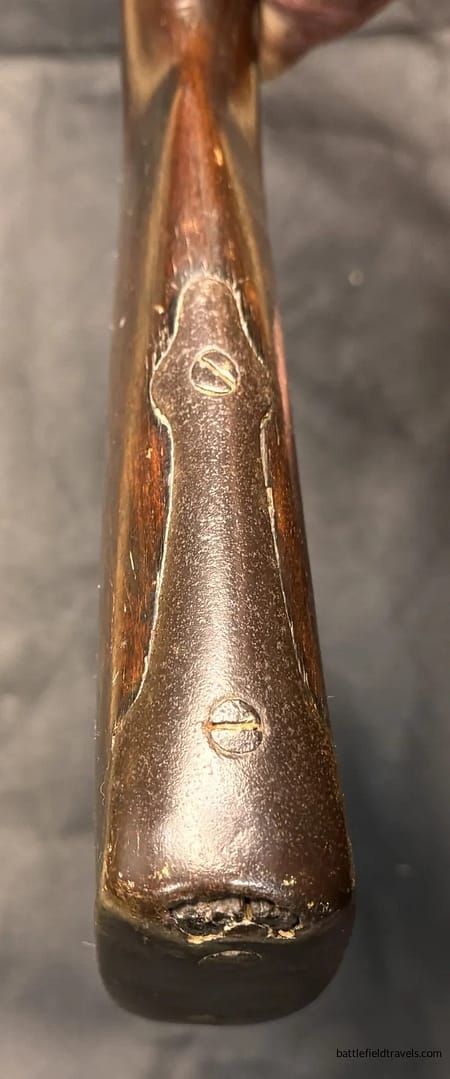
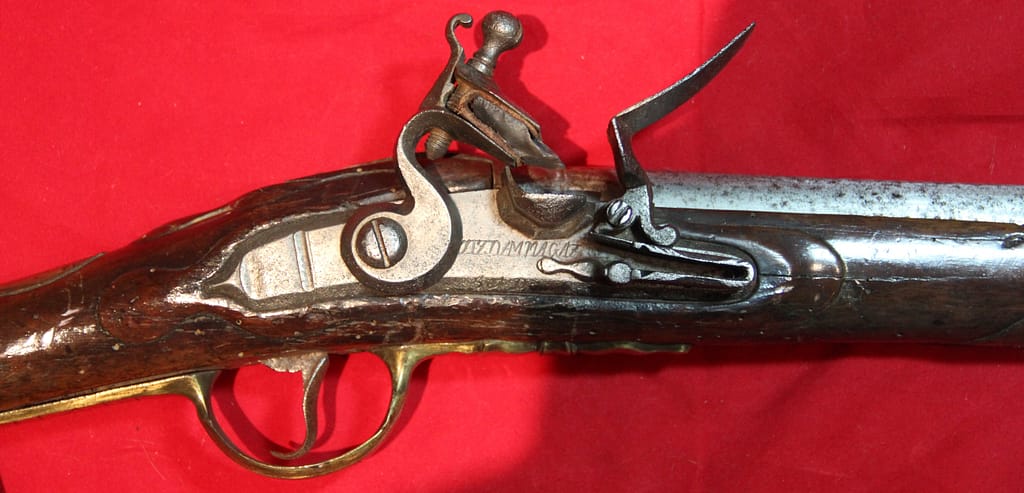
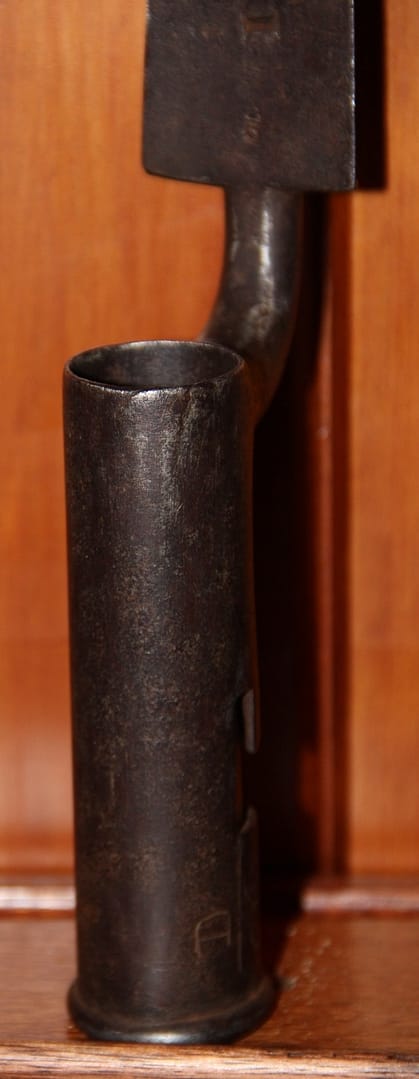
Prussian Model 1740 Musket, marked POTZDAM MAGAZ, inspected by S&D (initials of Splittgerber and Daum, the inspectors at the Royal Arsenal). From my personal collection.

The Prussian Model 1740 musket was a .72–.73 calibre flintlock produced at the Potsdam Arsenal, marked POTZDAM MAGAZ. The “S&D” inspection stamp denotes Splittgerber and Daum, the principal inspectors responsible for Frederick the Great’s early-war small-arms programme. Lighter and handier than earlier Prussian models, the 1740 musket equipped line infantry during the campaigns of the War of Austrian Succession and the early Seven Years’ War. Known for its robust lock and crisp trigger, it was the hallmark weapon of Frederick’s disciplined infantry battalions.


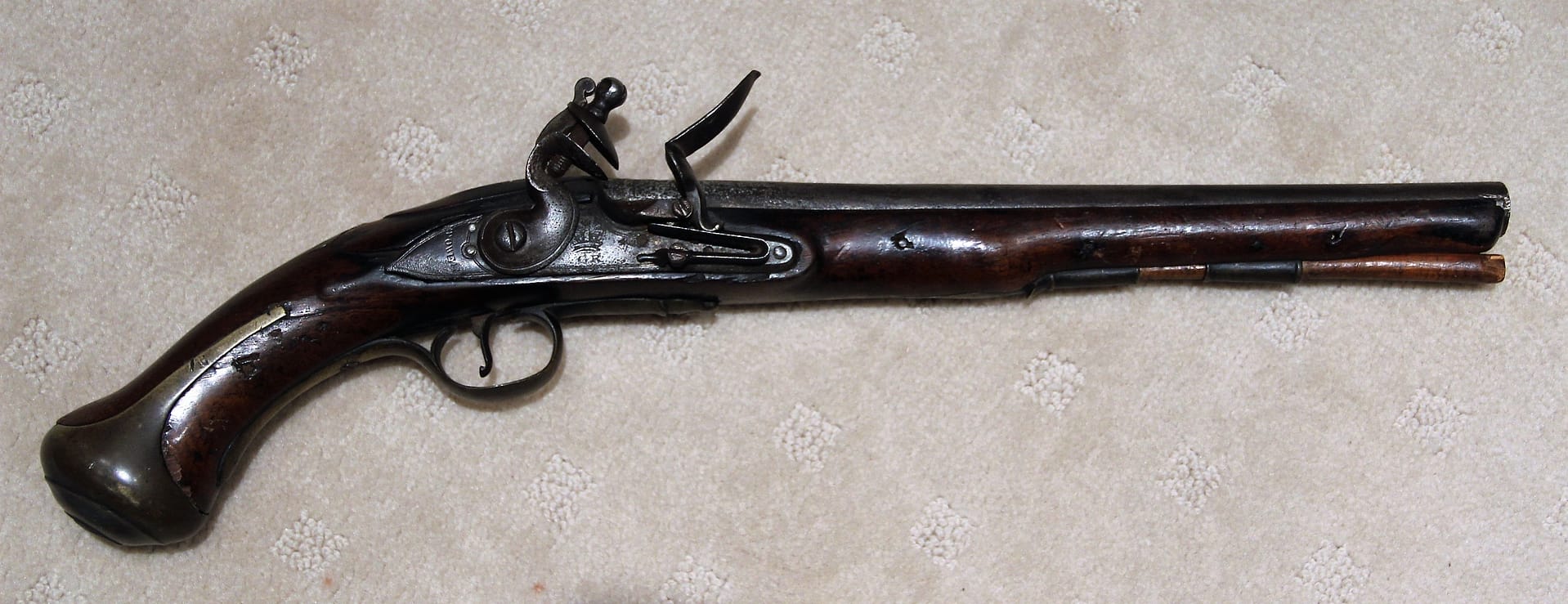
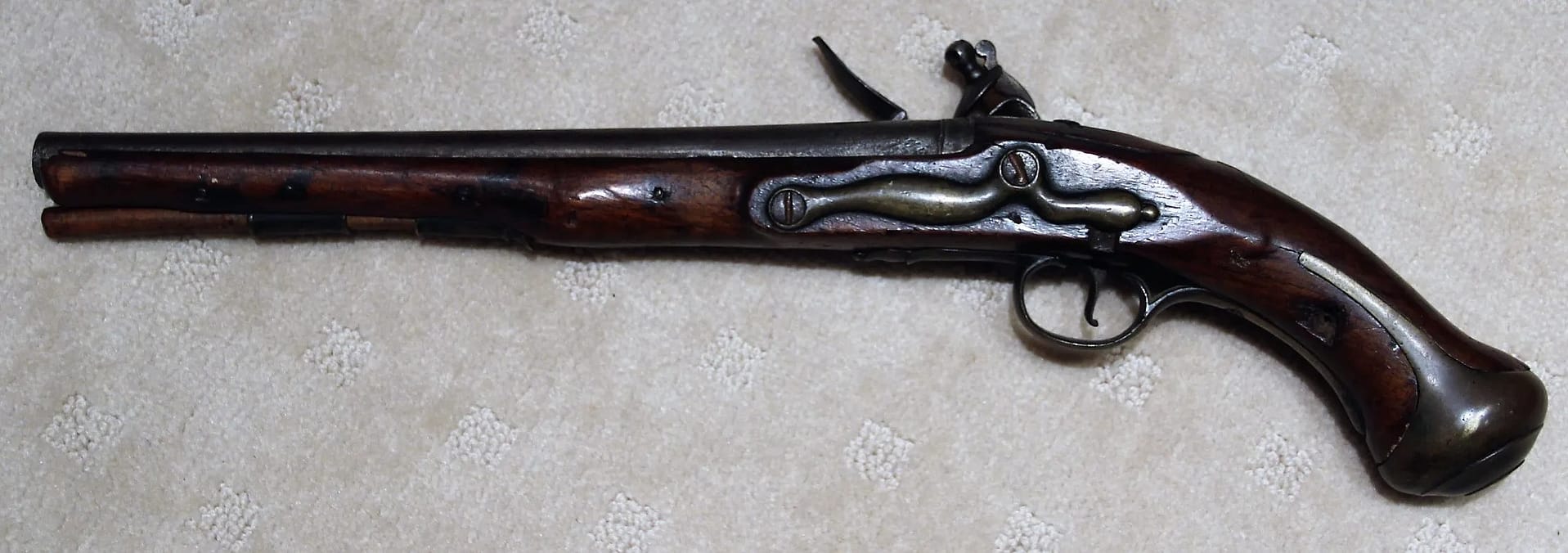
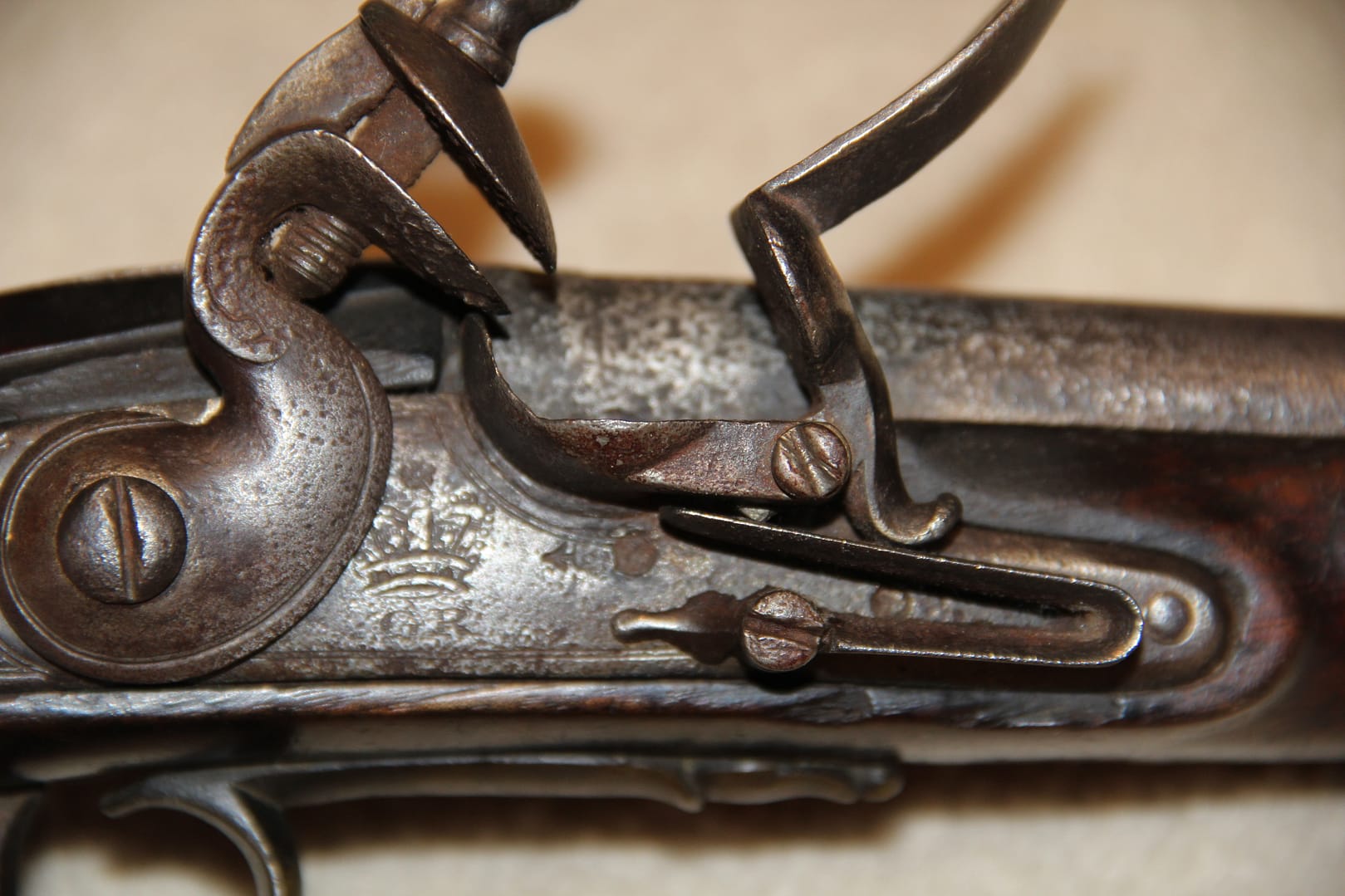
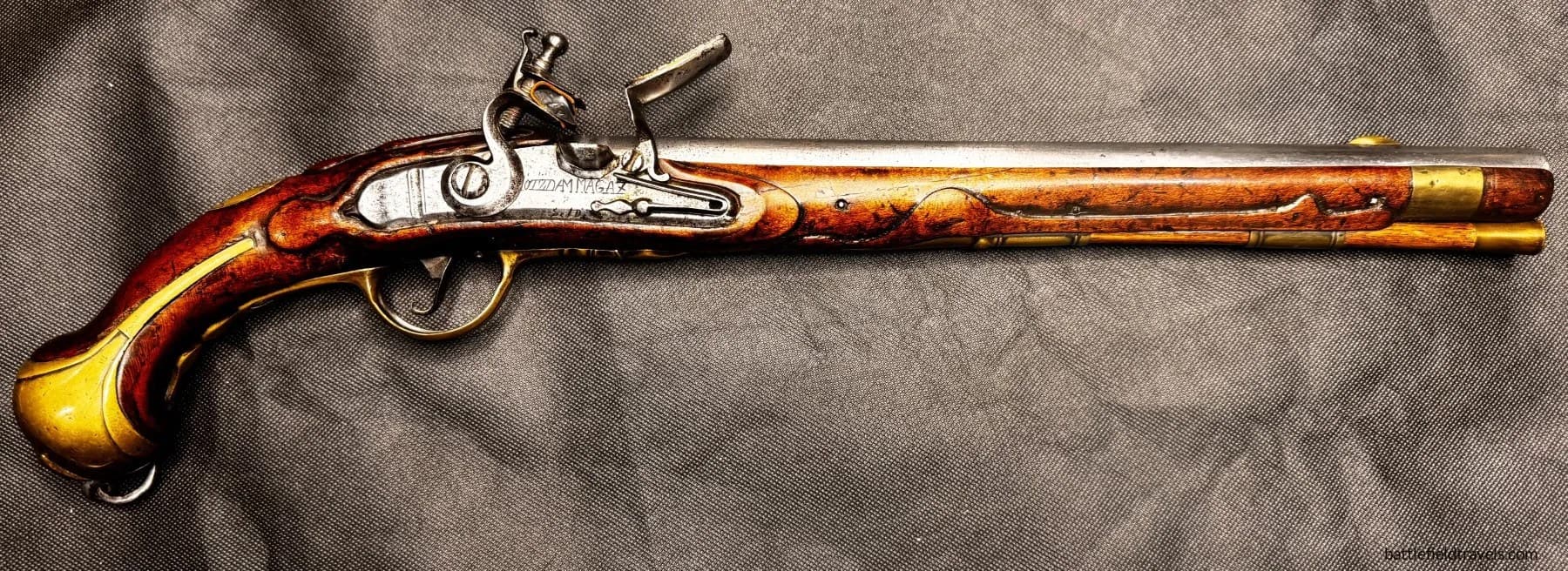
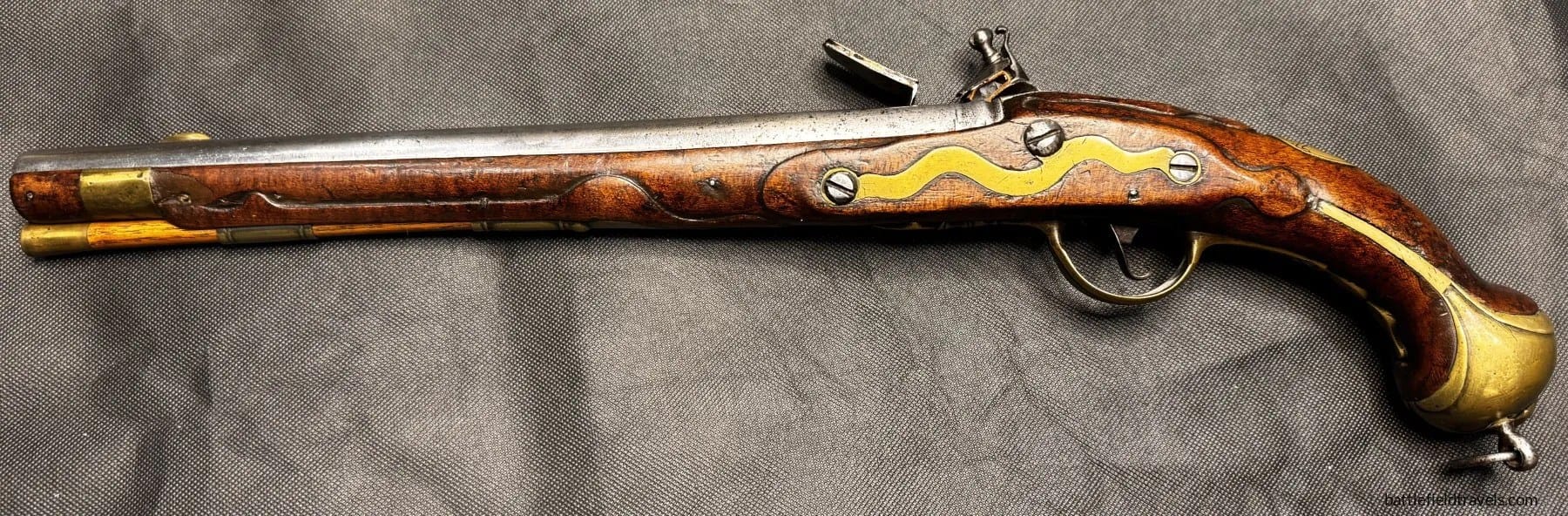
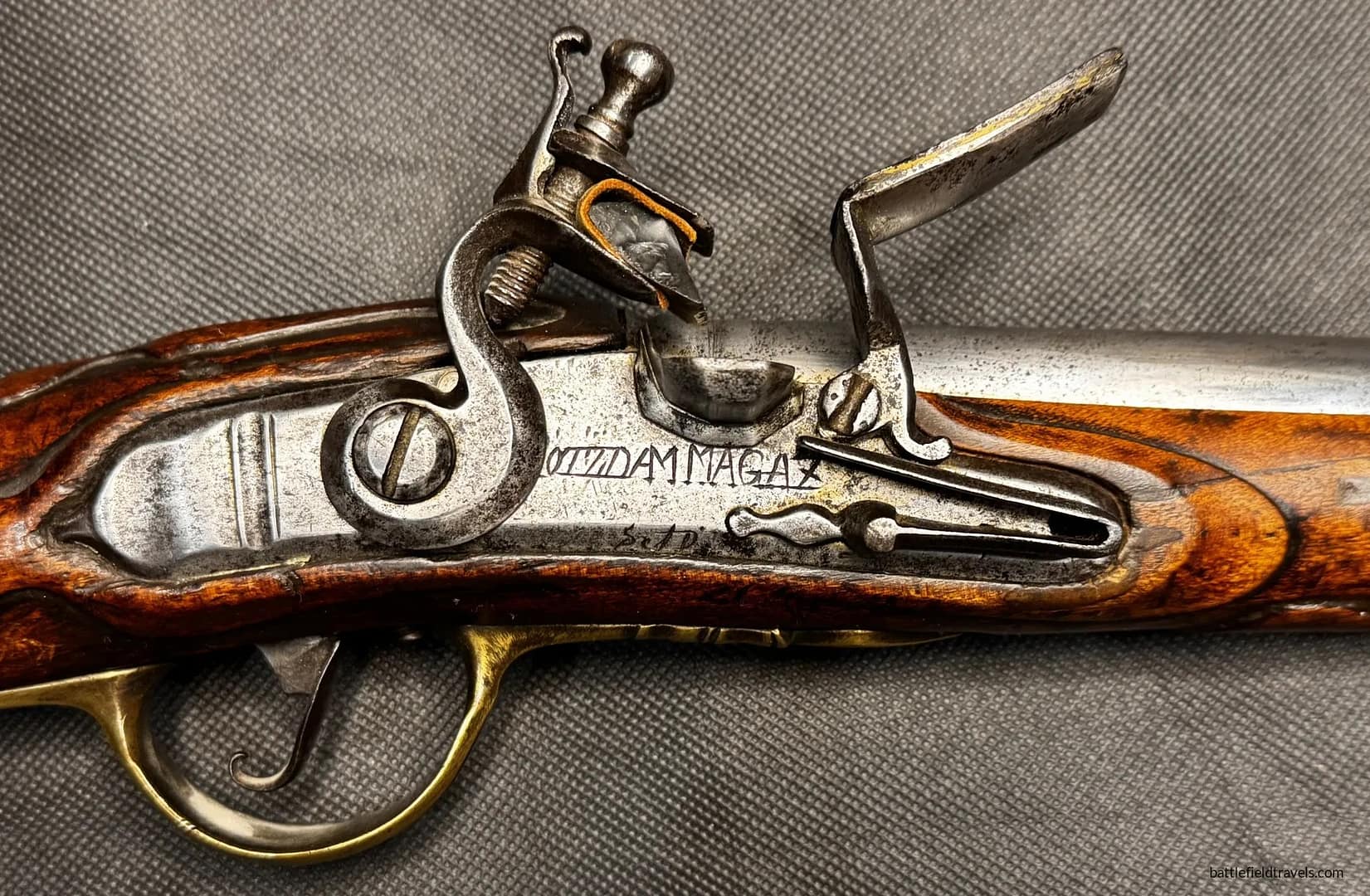
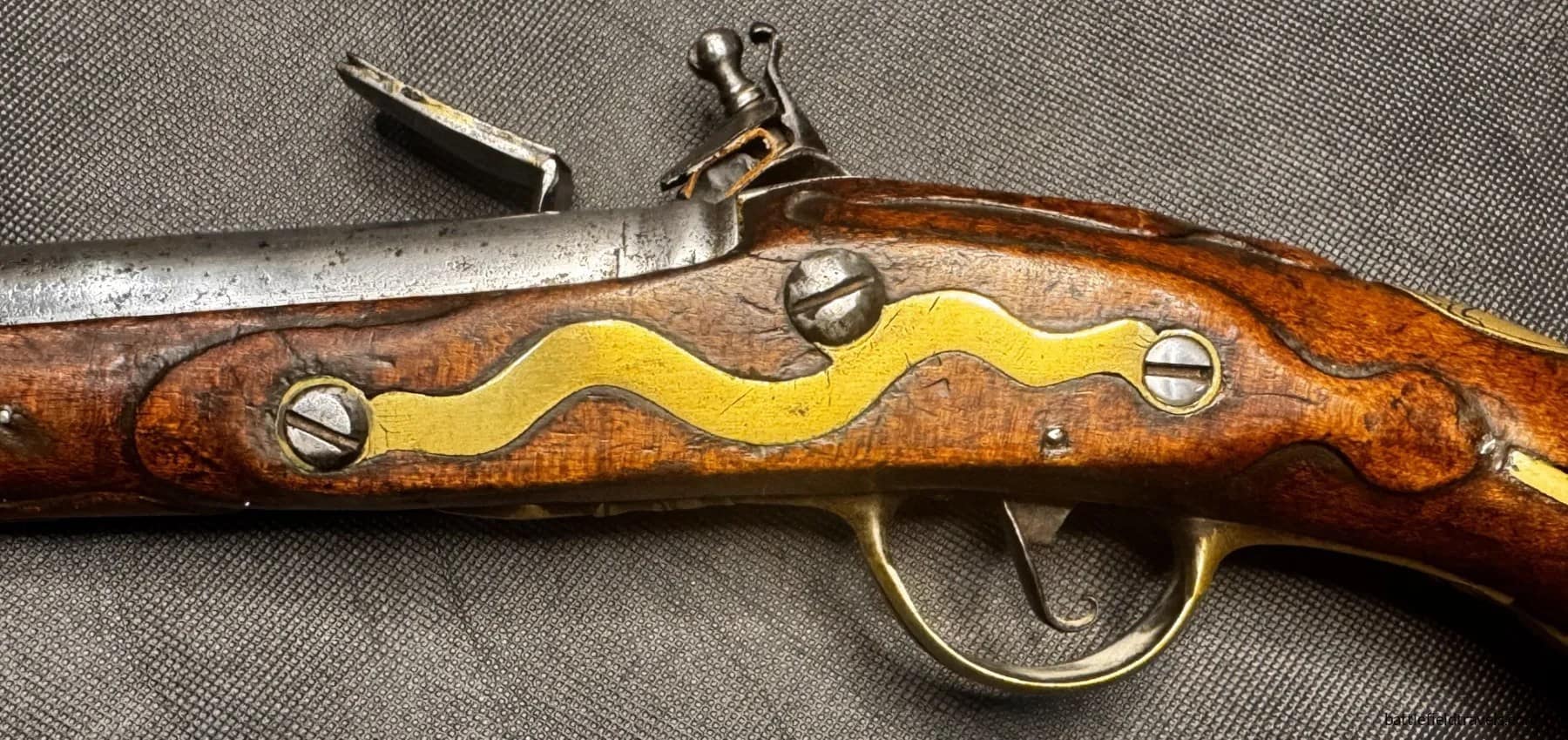
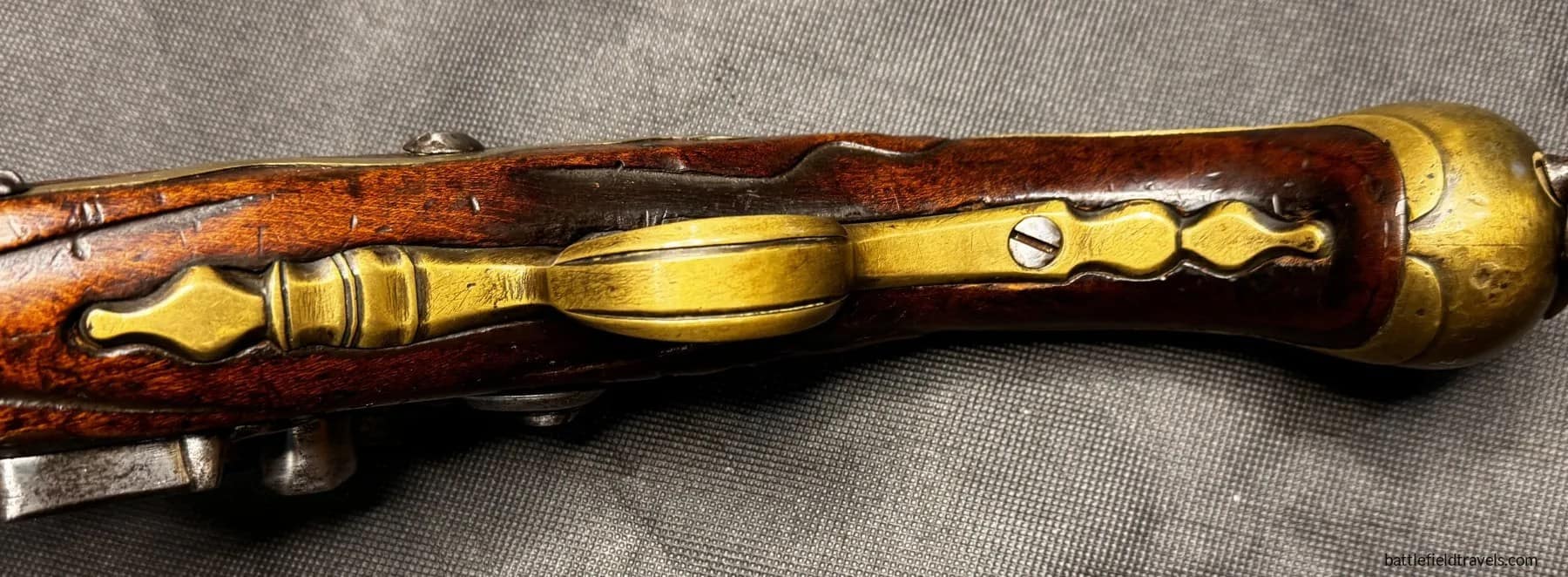
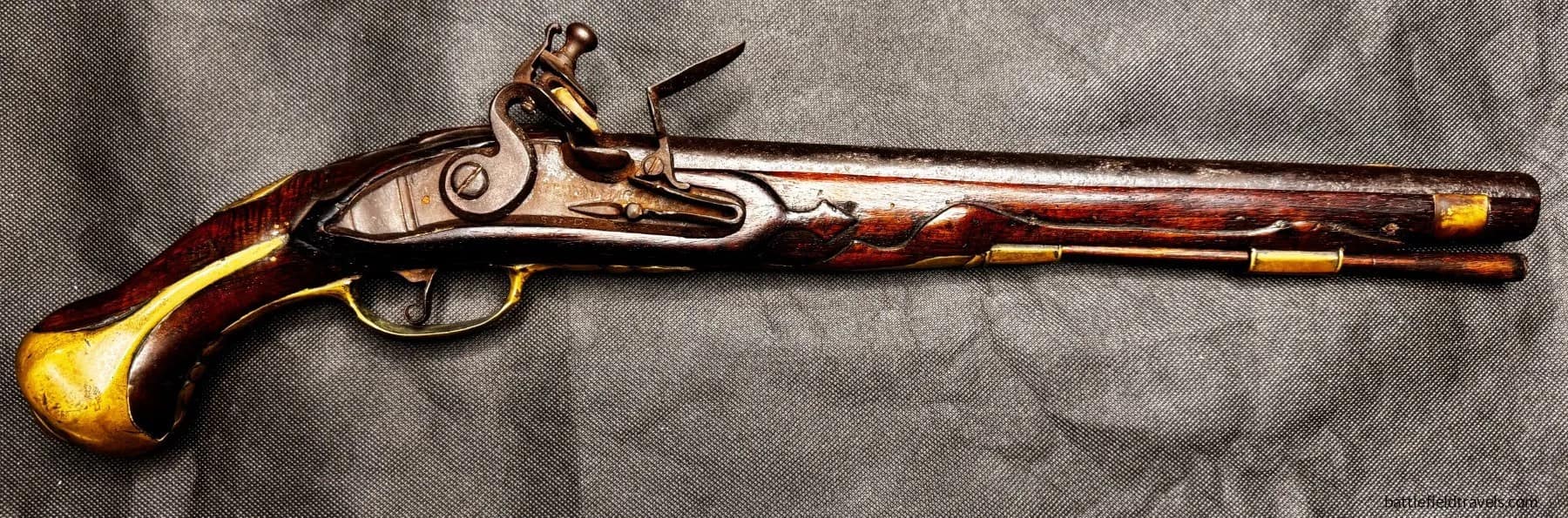
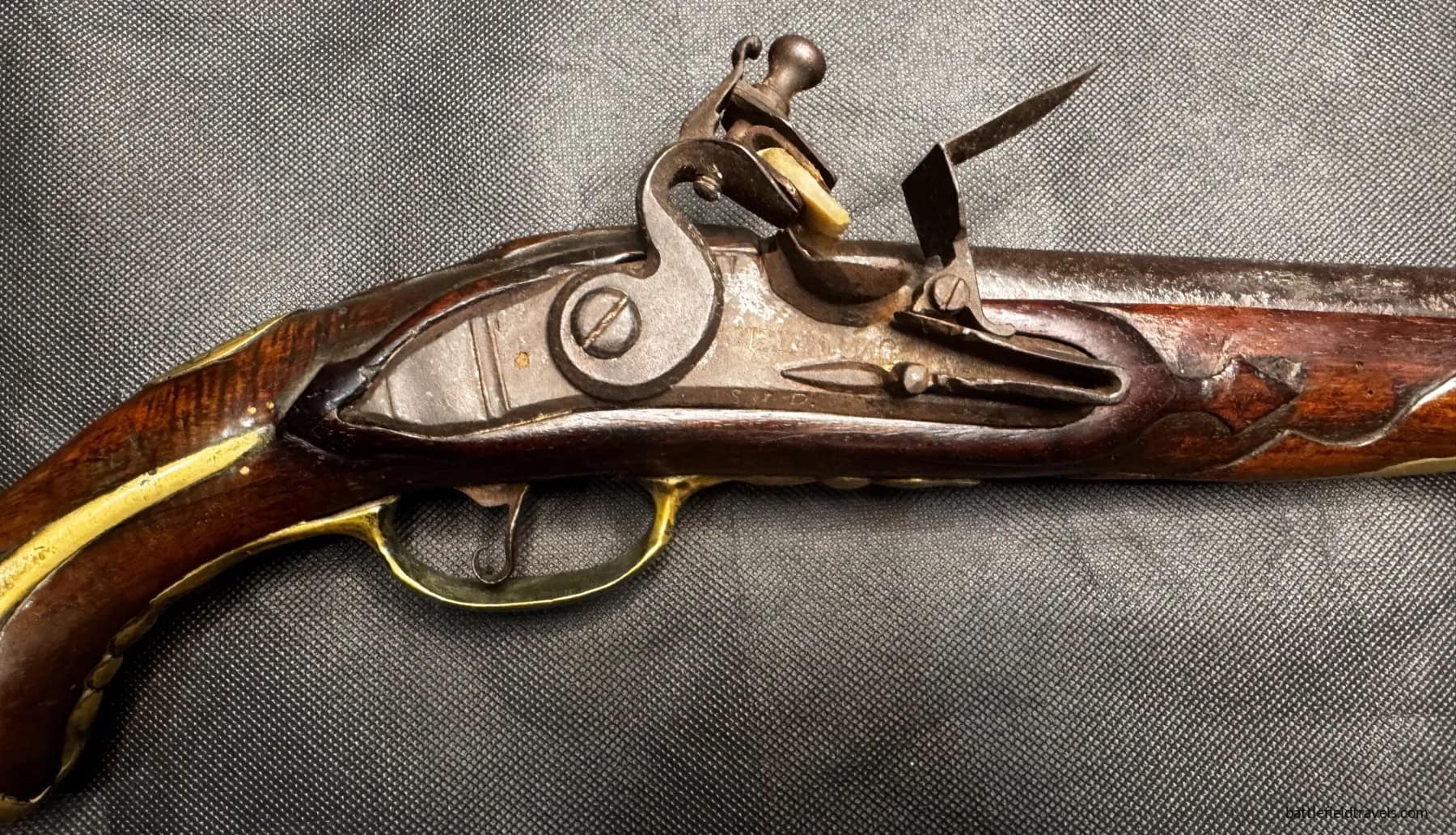
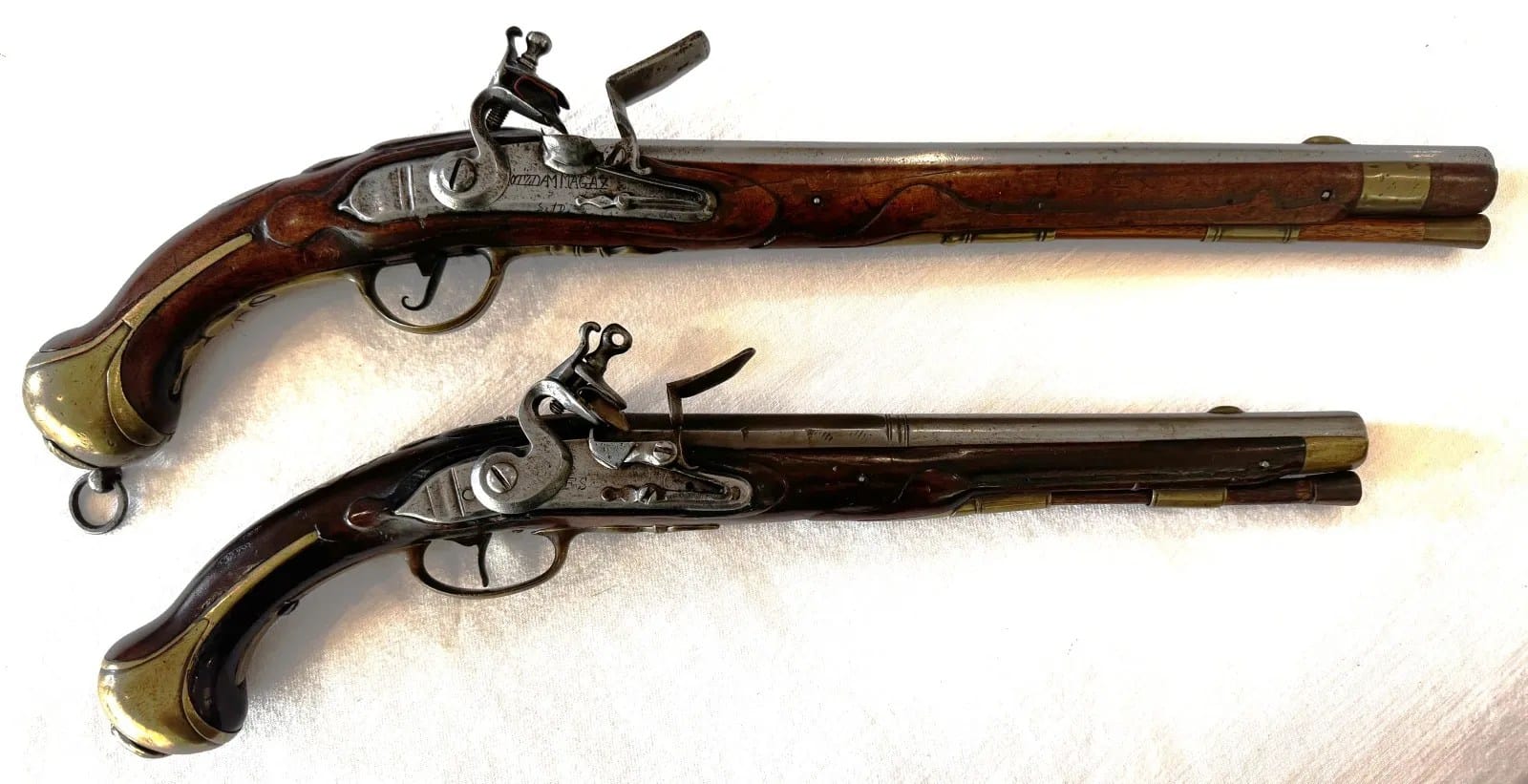
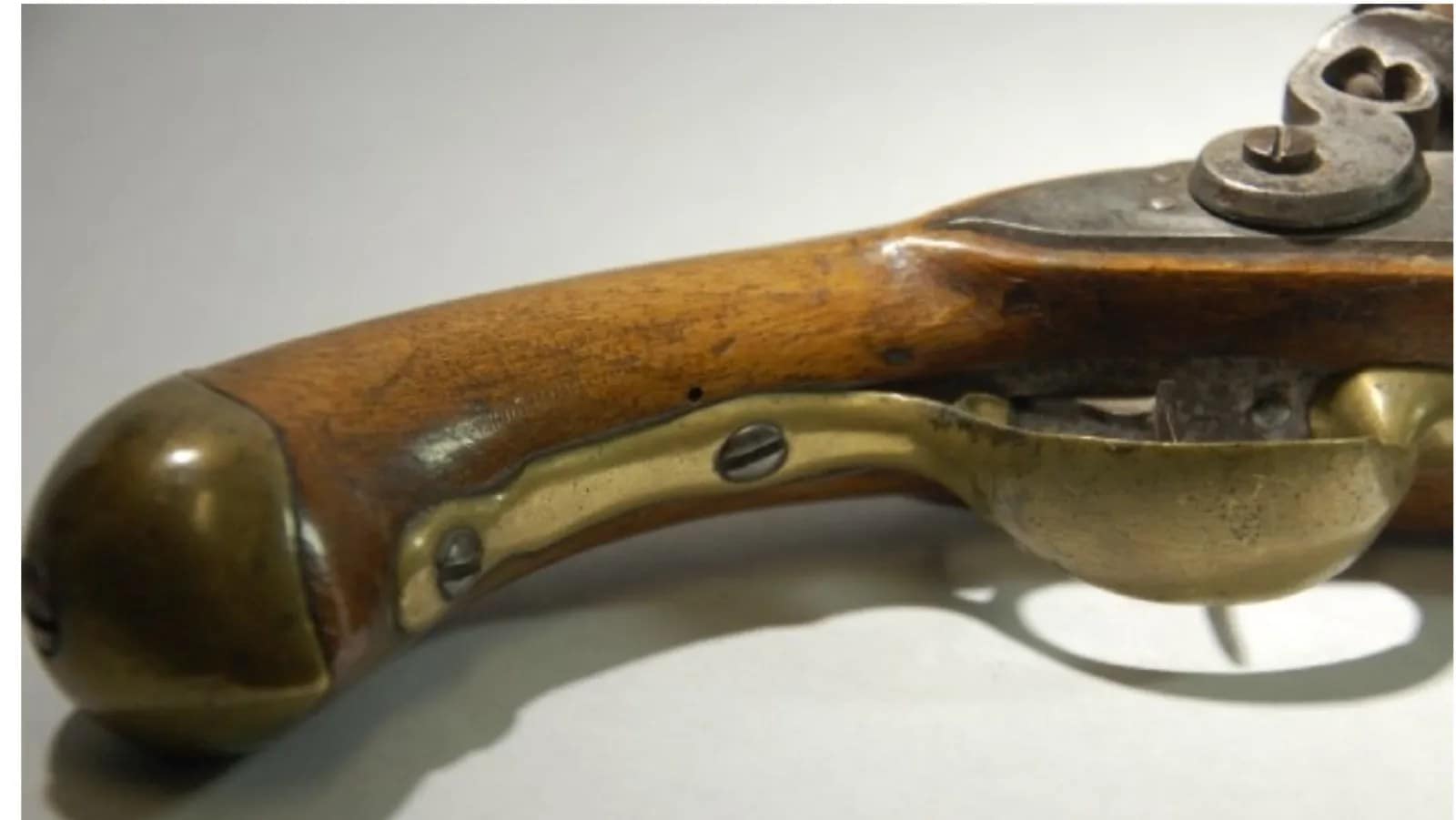
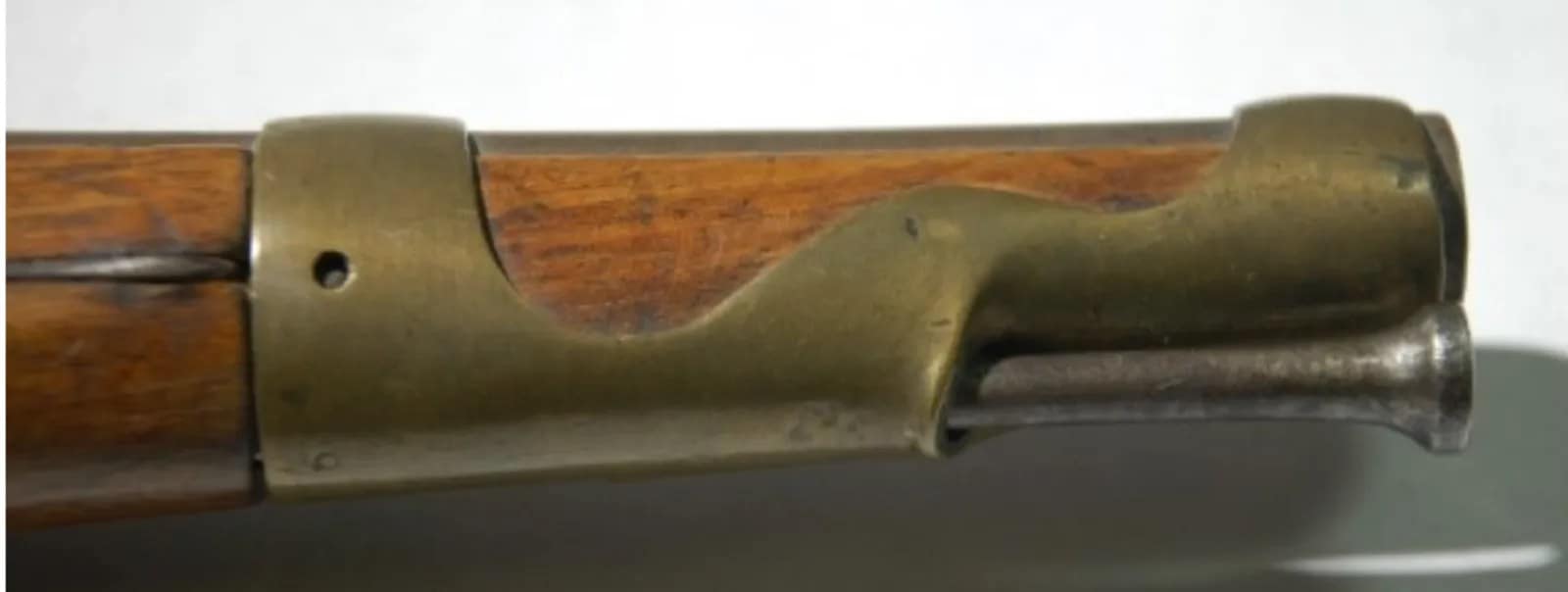
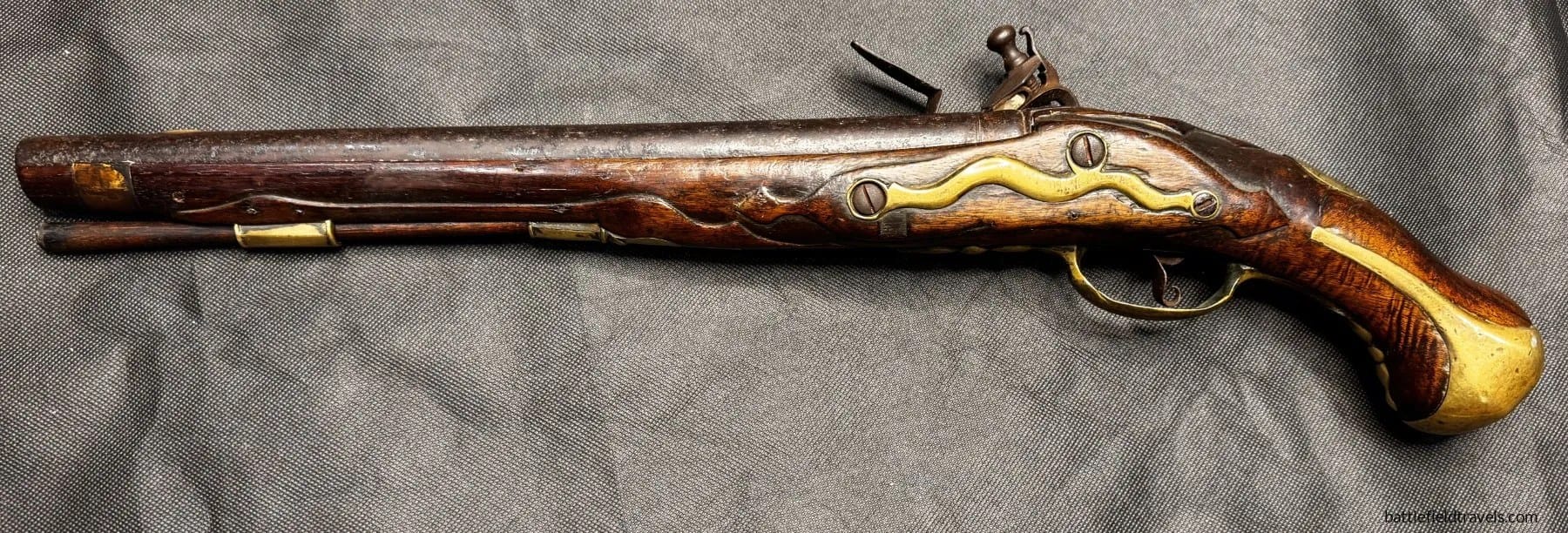
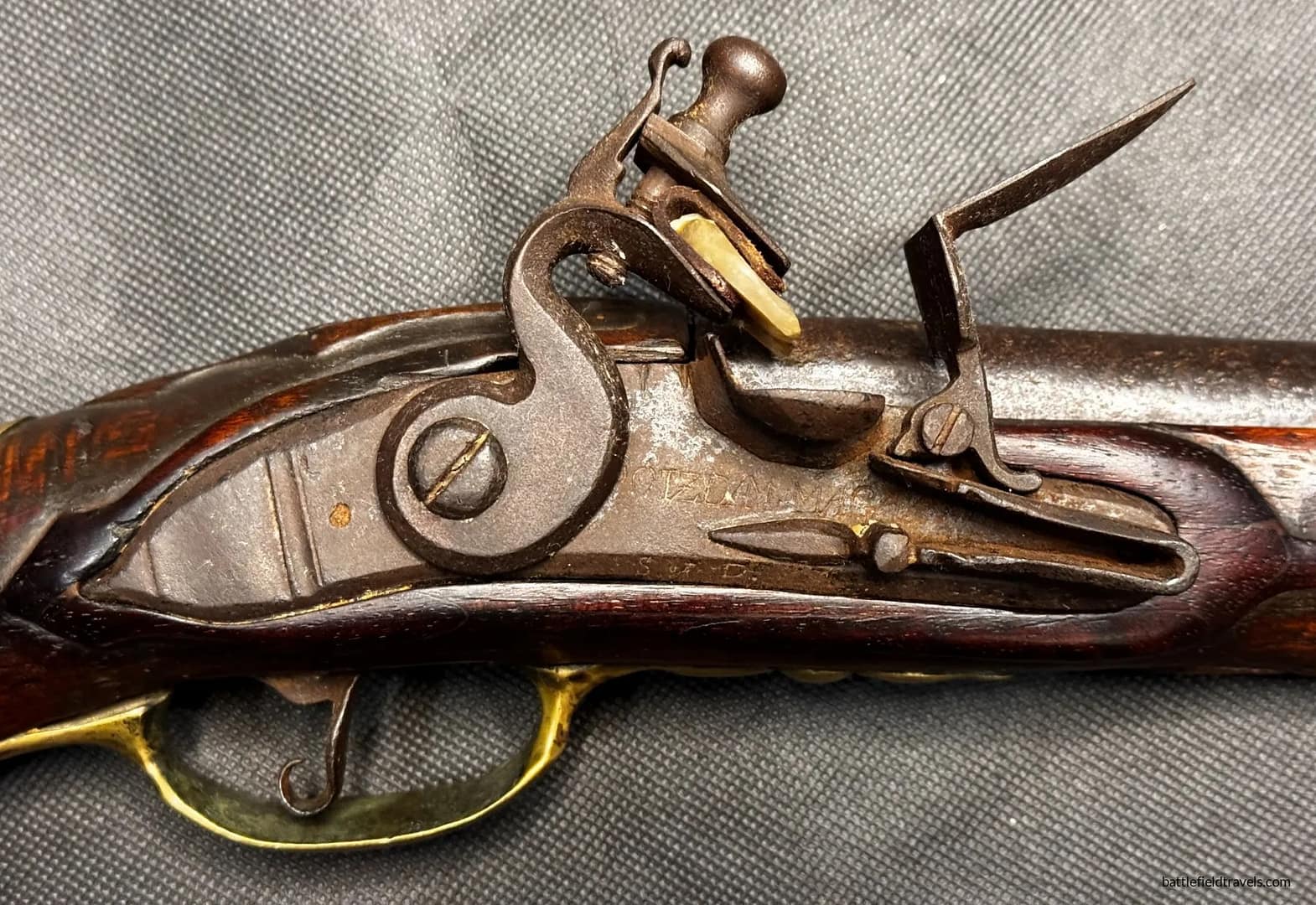
Prussian Model 1742 Hussar Pistol. POTZDAM MAGAZ. From my personal collection.

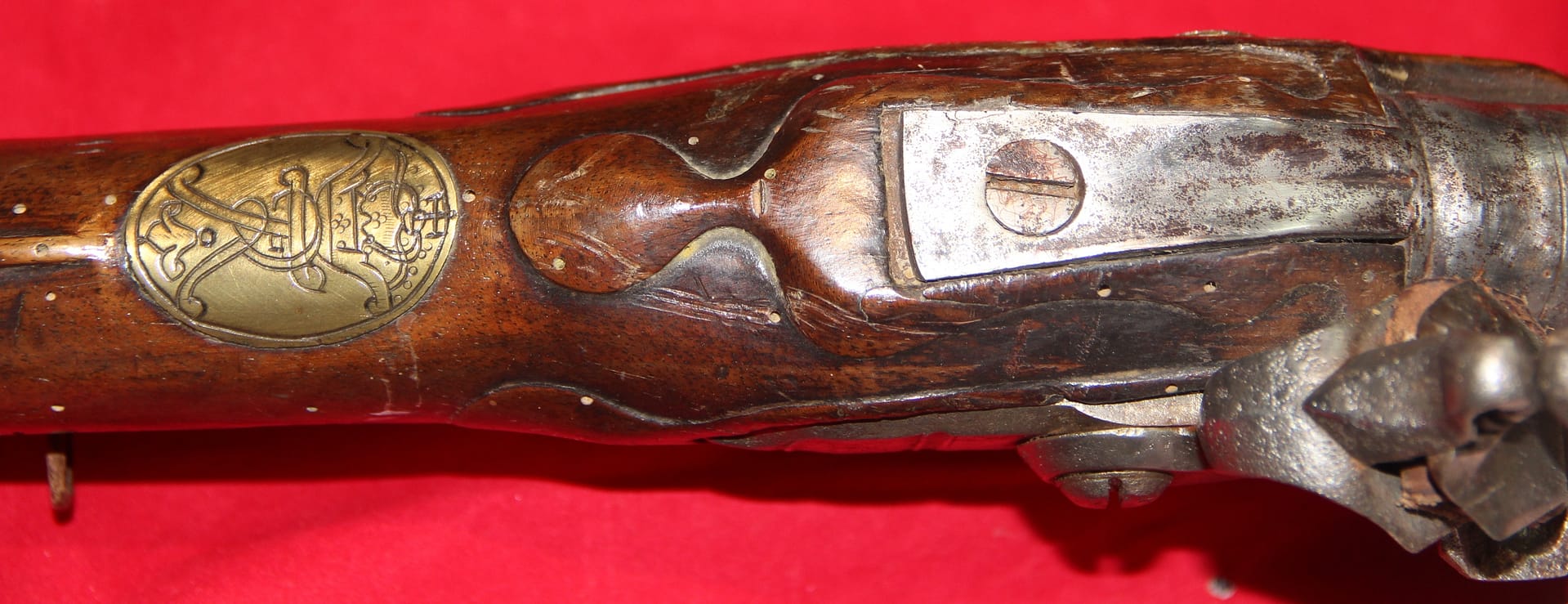
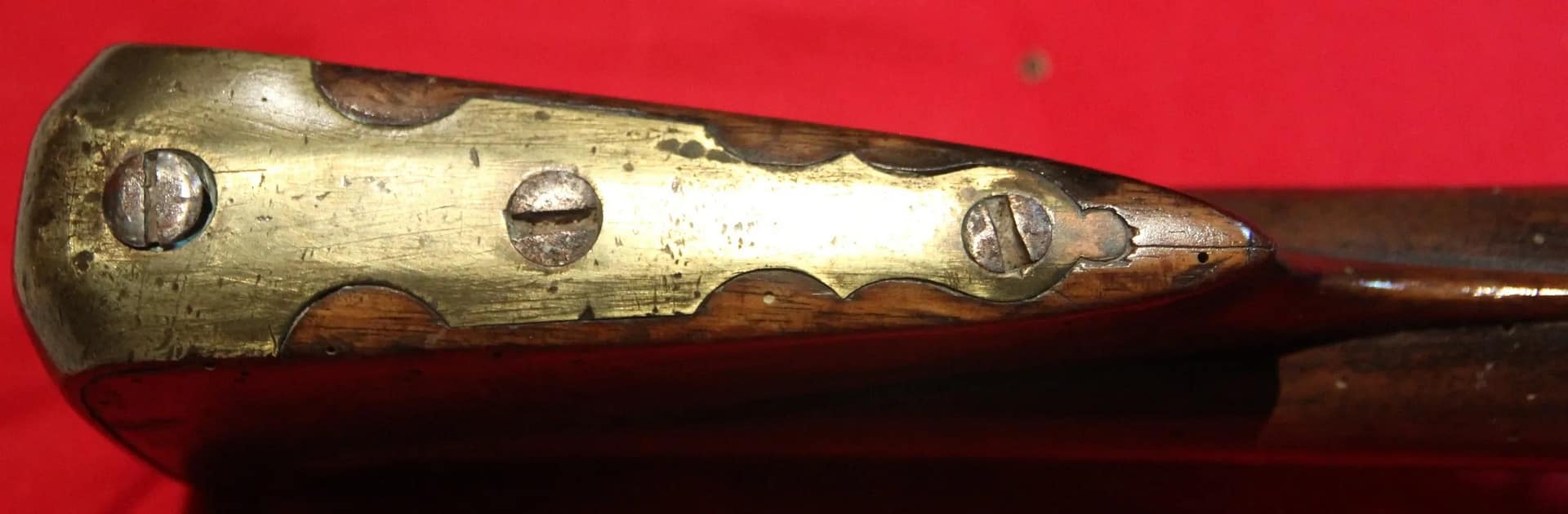
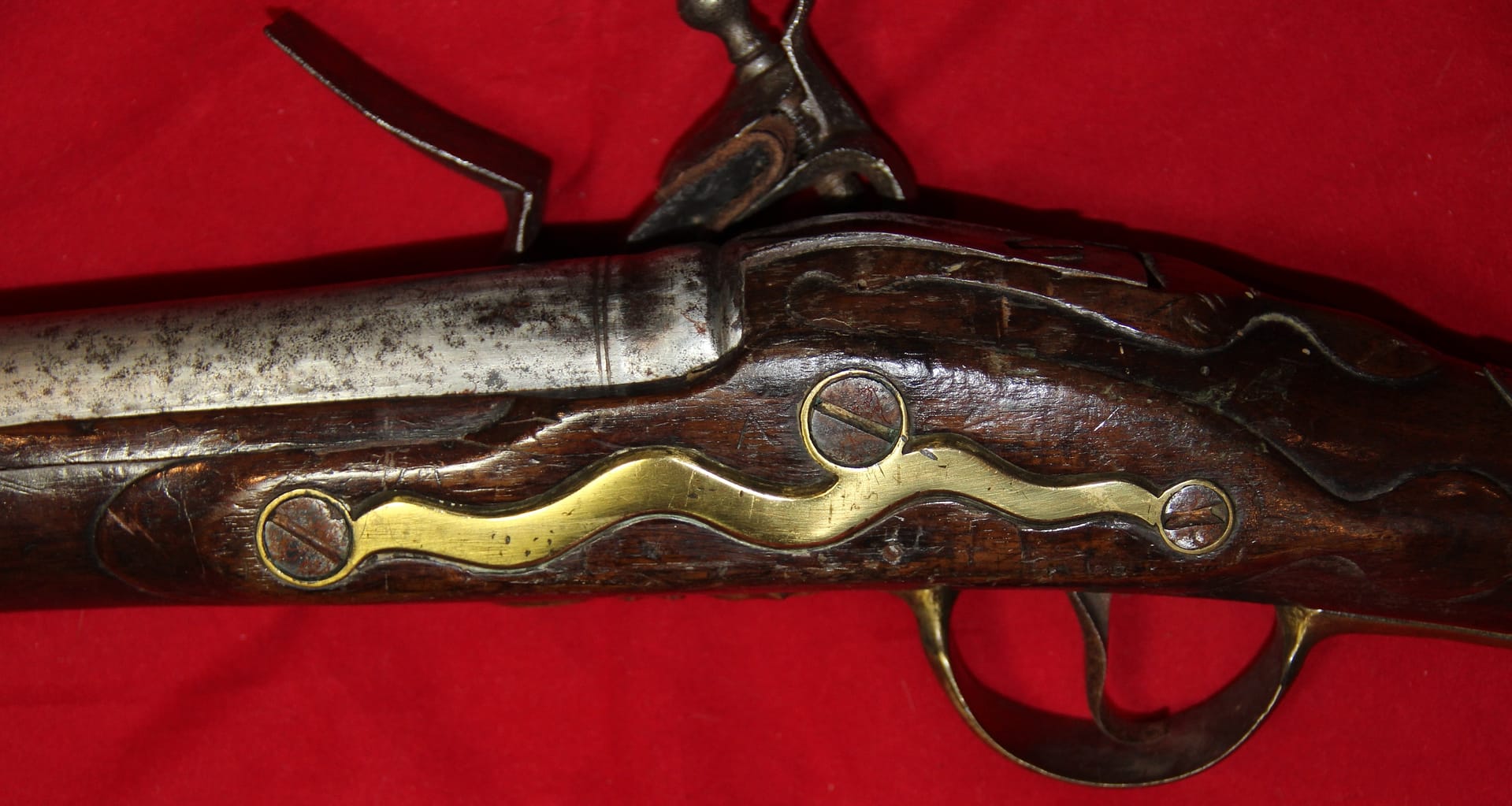
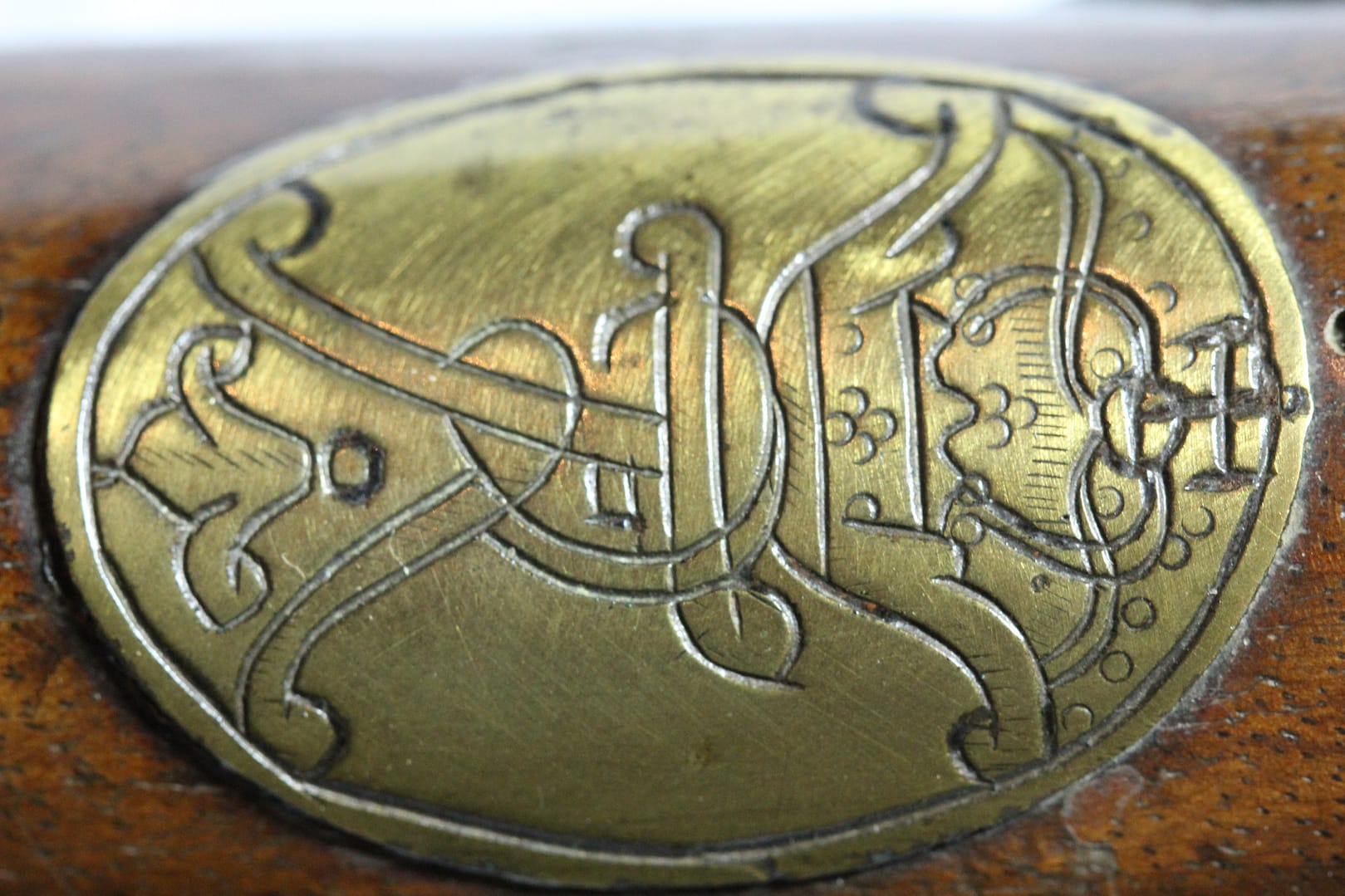
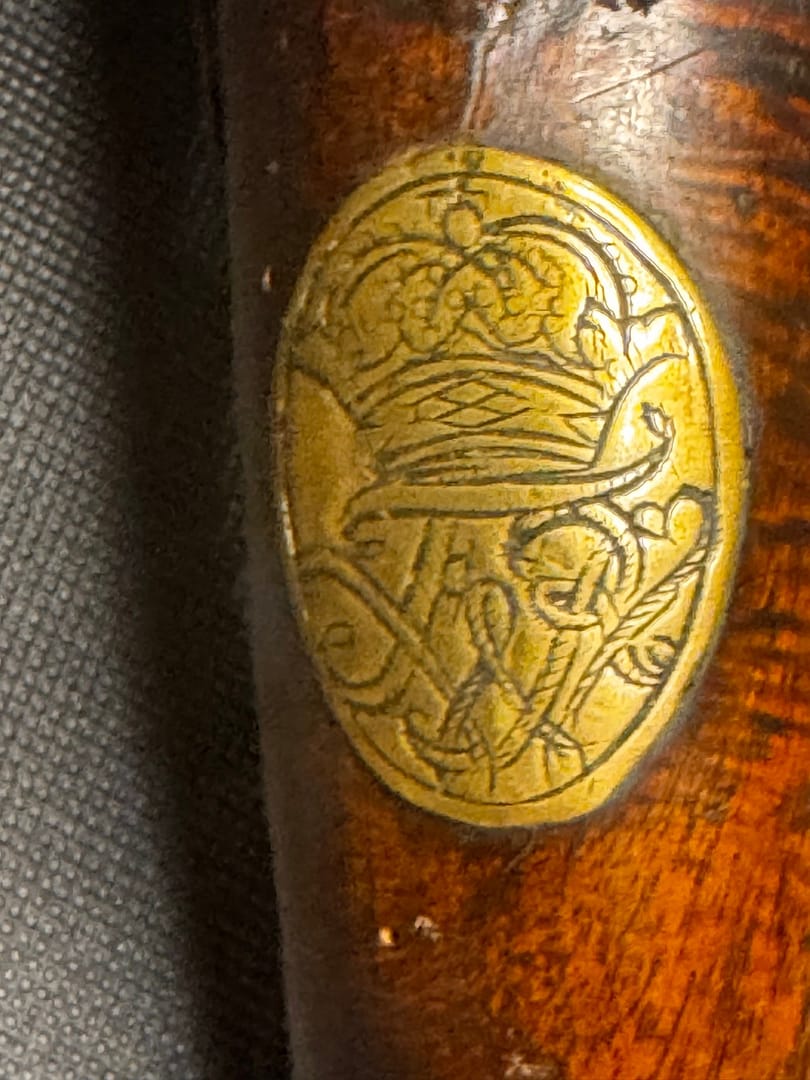
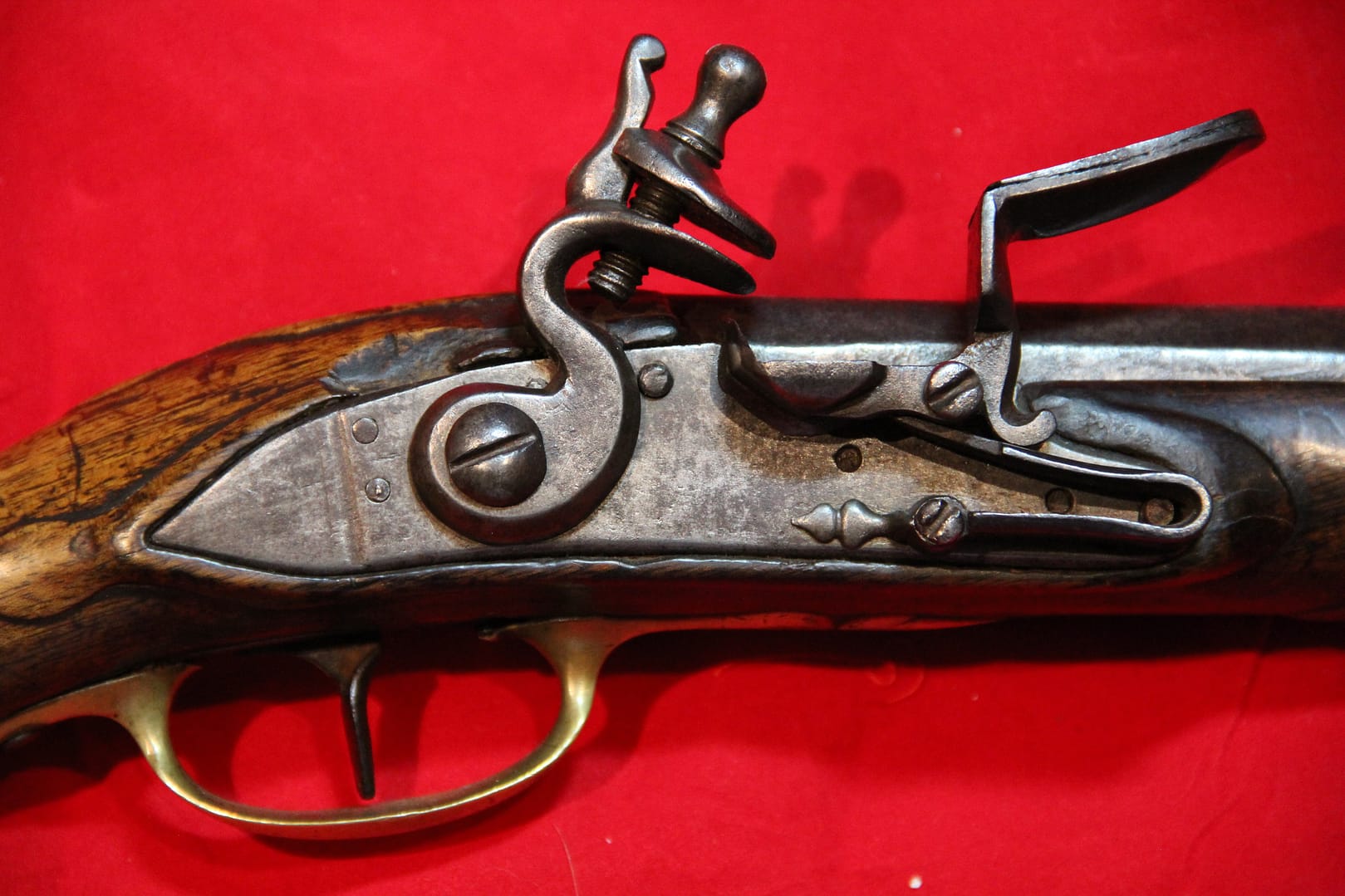
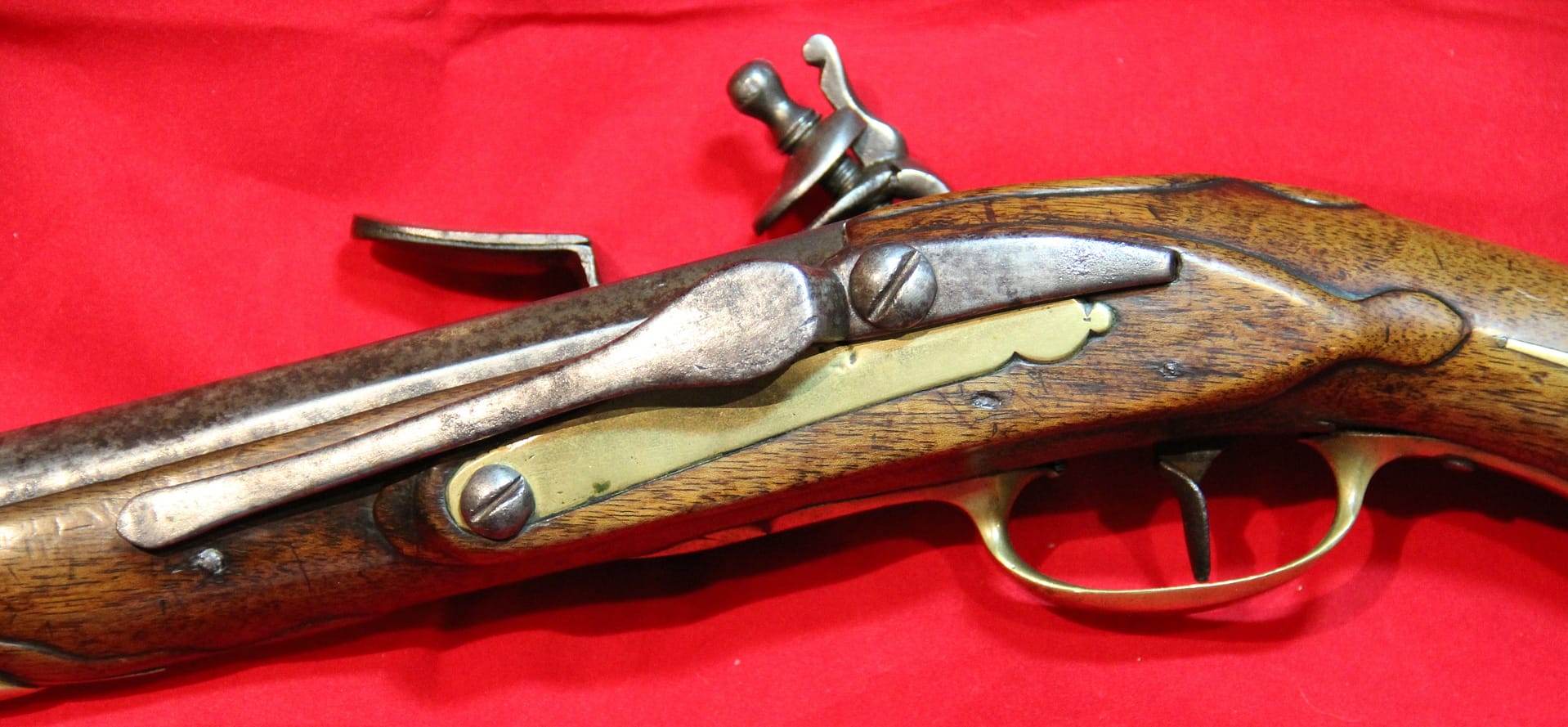
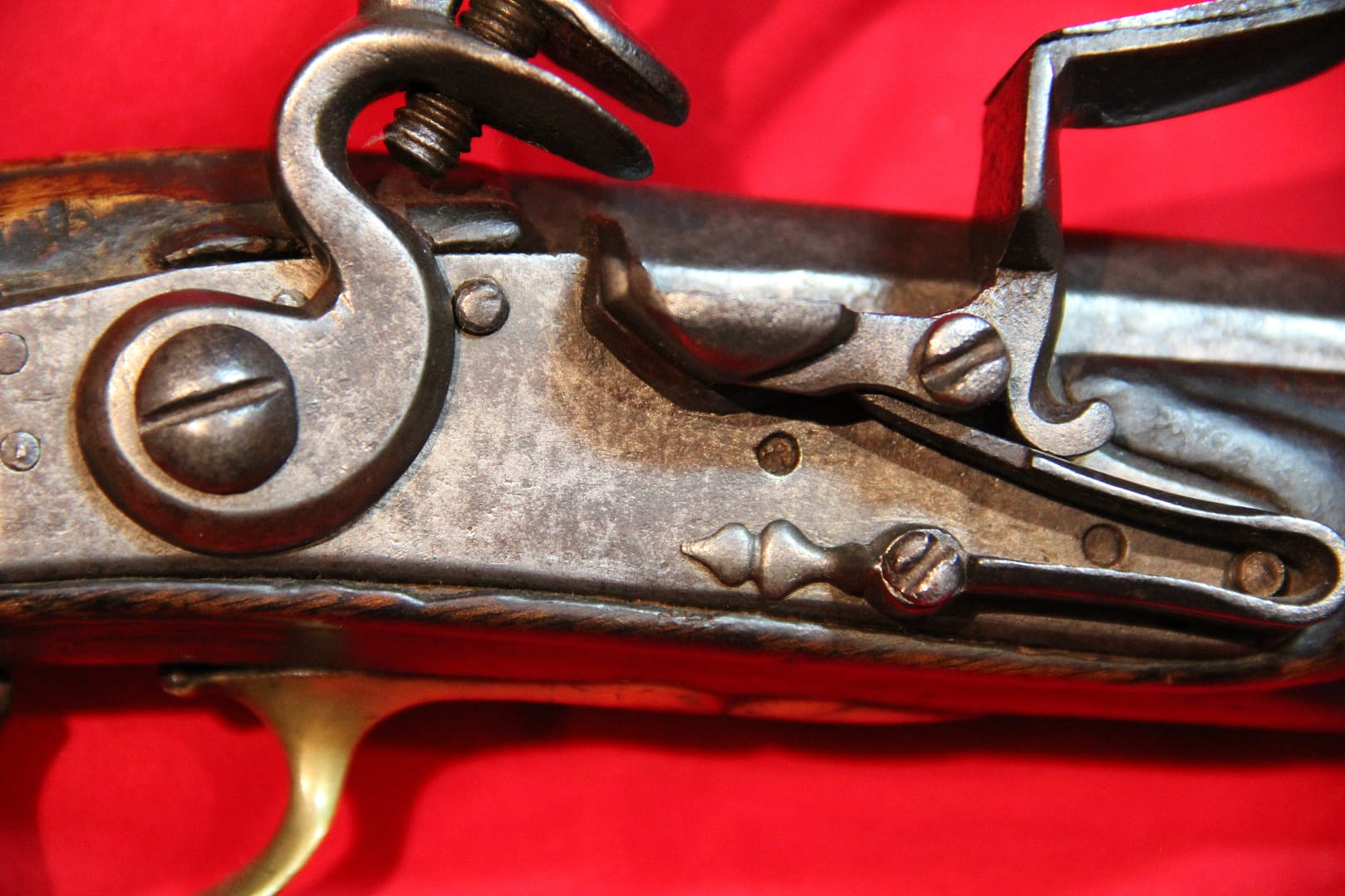
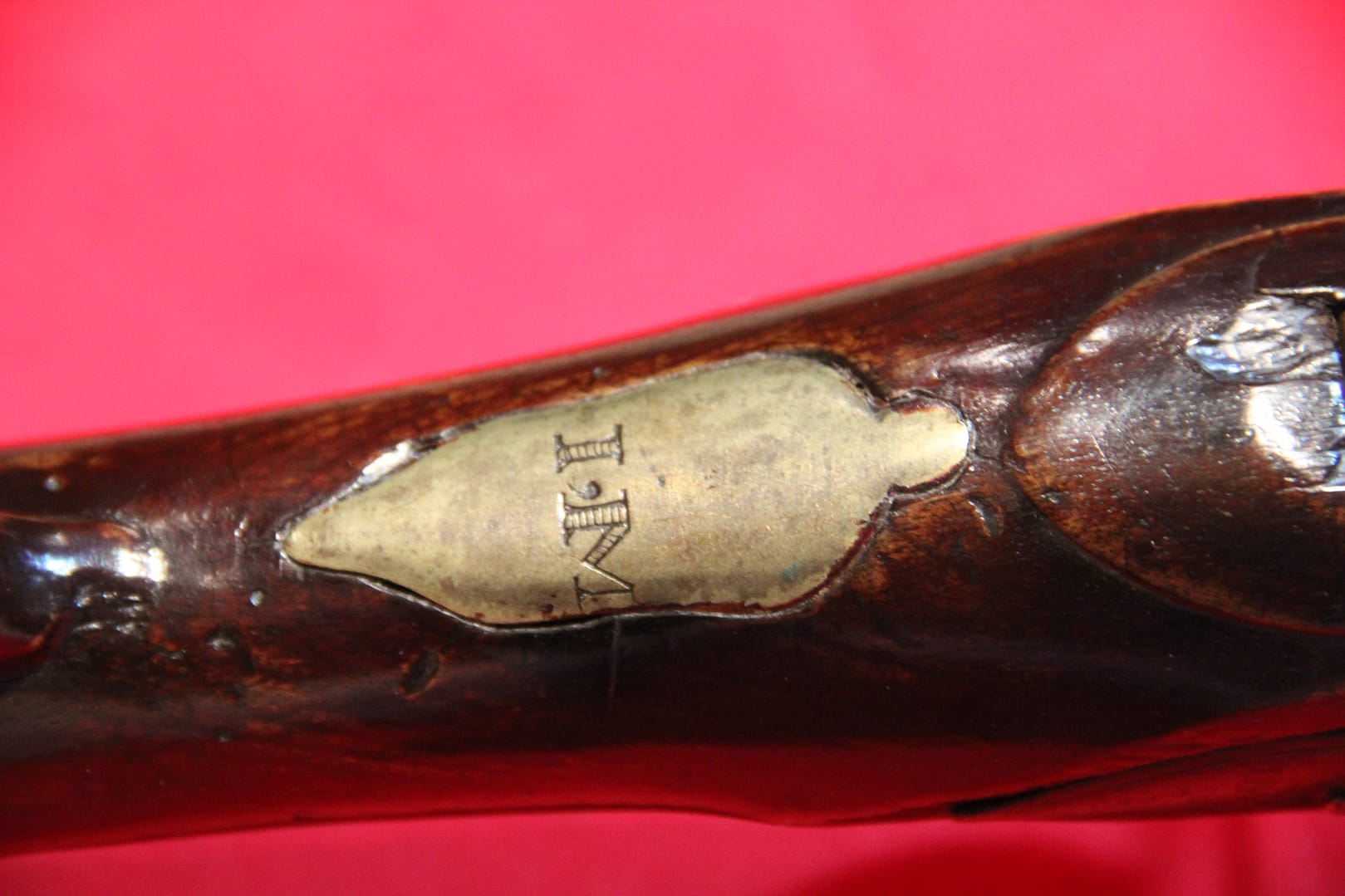
The Prussian Model 1742 Hussar pistol was issued to light cavalry regiments raised during Frederick the Great’s reforms. The escutcheon plate is engaved ‘FR’ for Fridericus Rex. Manufactured at the Potsdam Arsenal and stamped POTZDAM MAGAZ, it featured a large-bore flintlock mechanism, brass furniture, and a sturdy full-stock suitable for mounted use. Carried in saddle holsters, these pistols complemented the curved sabres used in shock charges and skirmish actions. They saw action in Silesia, Bohemia, and Saxony, reflecting Prussia’s increasing reliance on aggressive hussar tactics in the 1740s–1750s.


Prussian Model 1731 Hussar Pistol. POTZDAM MAGAZ. From my personal collection.

The Prussian Model 1731 Hussar pistol was issued to light cavalry regiments raised during Frederick William I’s (Frederick the Great’s father) reign. The escutcheon plate is engaved ‘FWR’ for Fridericus Wilhelmus Rex. Manufactured at the Potsdam Arsenal and engraved POTZDAM MAGAZ, it featured a large-bore flintlock mechanism, brass furniture, and a sturdy full-stock suitable for mounted use. Carried in saddle holsters, these pistols complemented the curved sabres used in shock charges and skirmish actions. They saw action in Silesia, Bohemia, and Saxony, reflecting Prussia’s increasing reliance on aggressive hussar tactics in the 1740s–1750s.


Prussian Model 1742 Officer’s Pistol. From my personal collection.

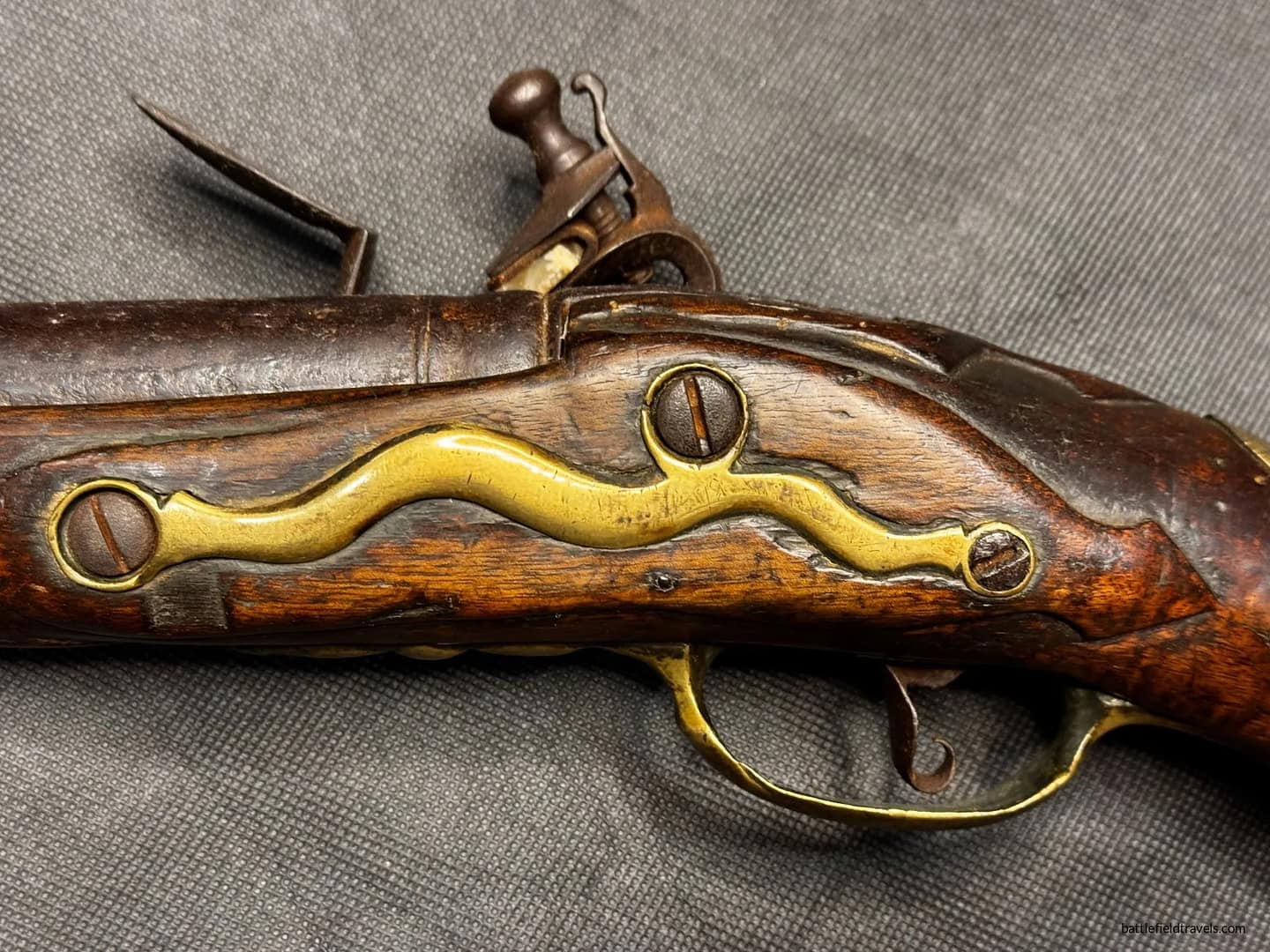
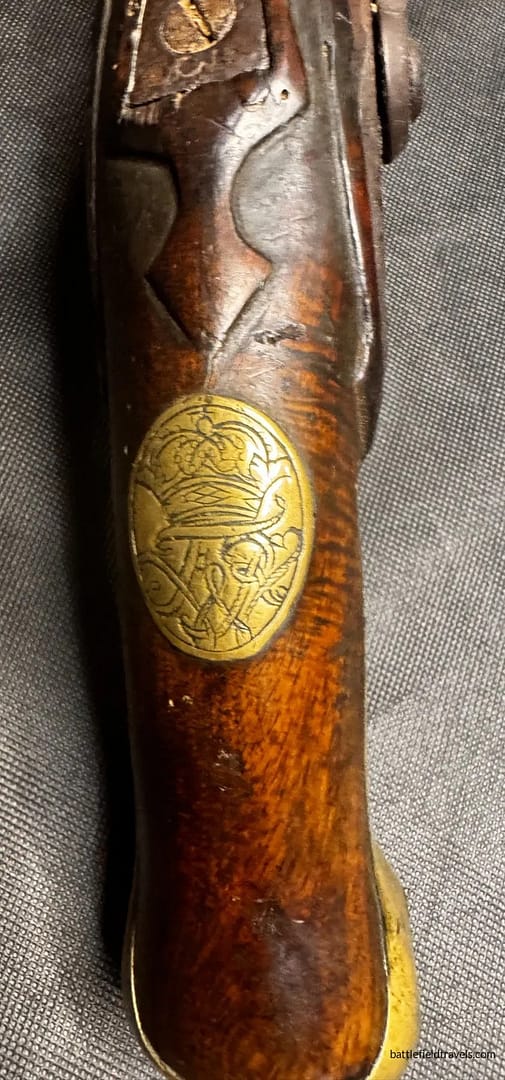
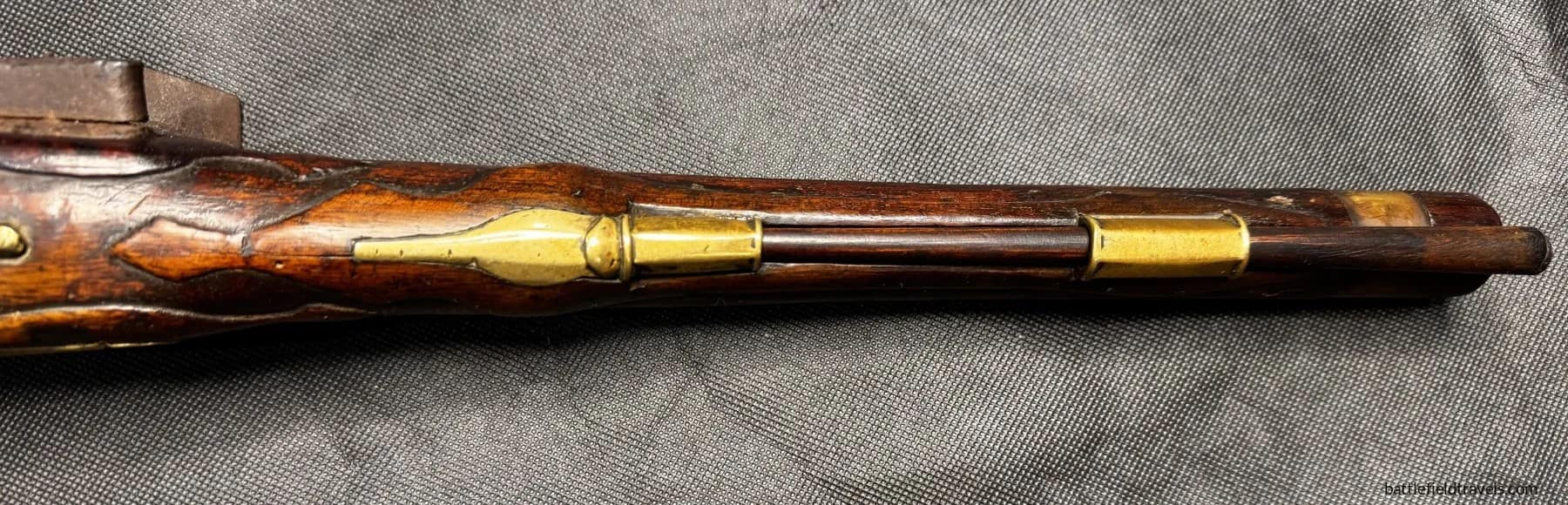
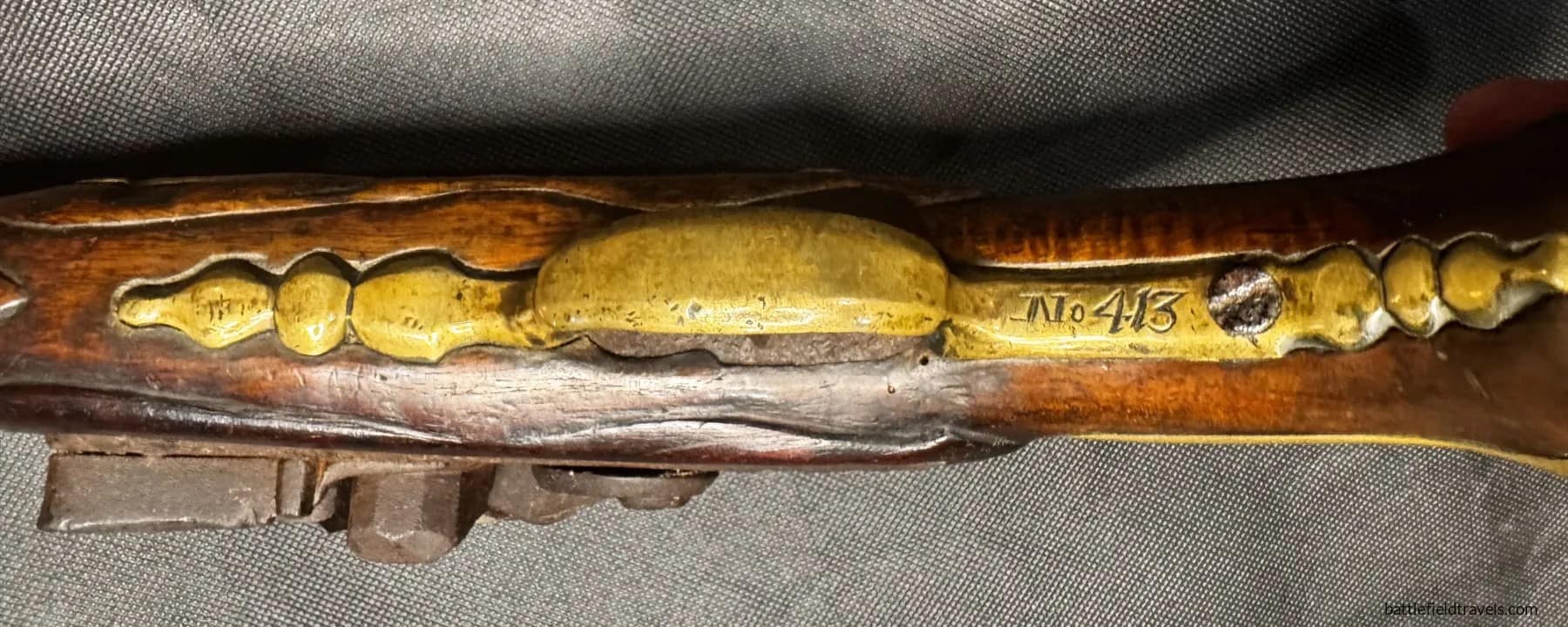
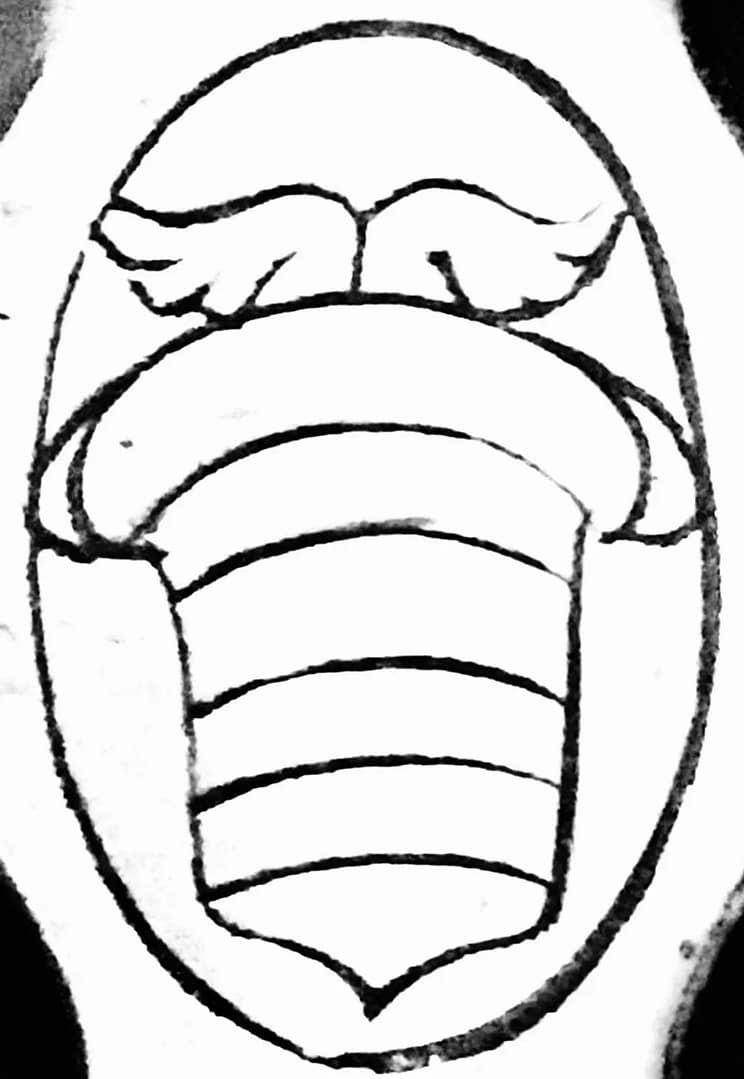
The Prussian officer’s pistol follows the design cues from the Model 1742 Hussar pistol but it is about 2/3 the size, and more finely made. It would have been a privately made pistol for an officer in Frederick the Great’s army. The escutcheon plate is engaved with a symbol that may represent the principality or family. . Lockplate is stamped AFS, it featured a smaller-bore flintlock mechanism, brass furniture, and a sturdy full-stock suitable for mounted use. Carried in saddle holsters, these pistols complemented the curved sabres used in shock charges and skirmish actions. They saw action in Silesia, Bohemia, and Saxony, reflecting Prussia’s increasing reliance on aggressive hussar tactics in the 1740s–1750s.


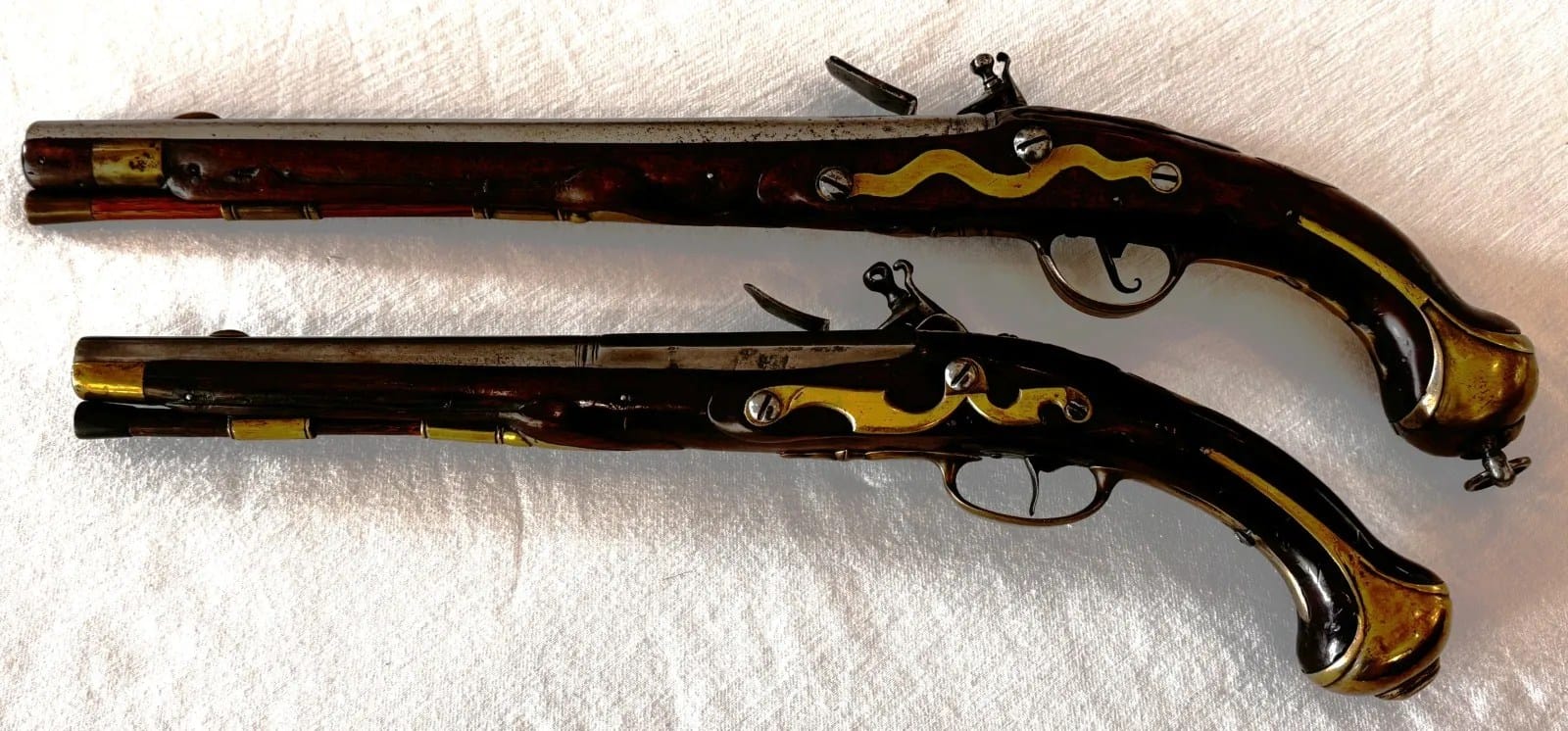
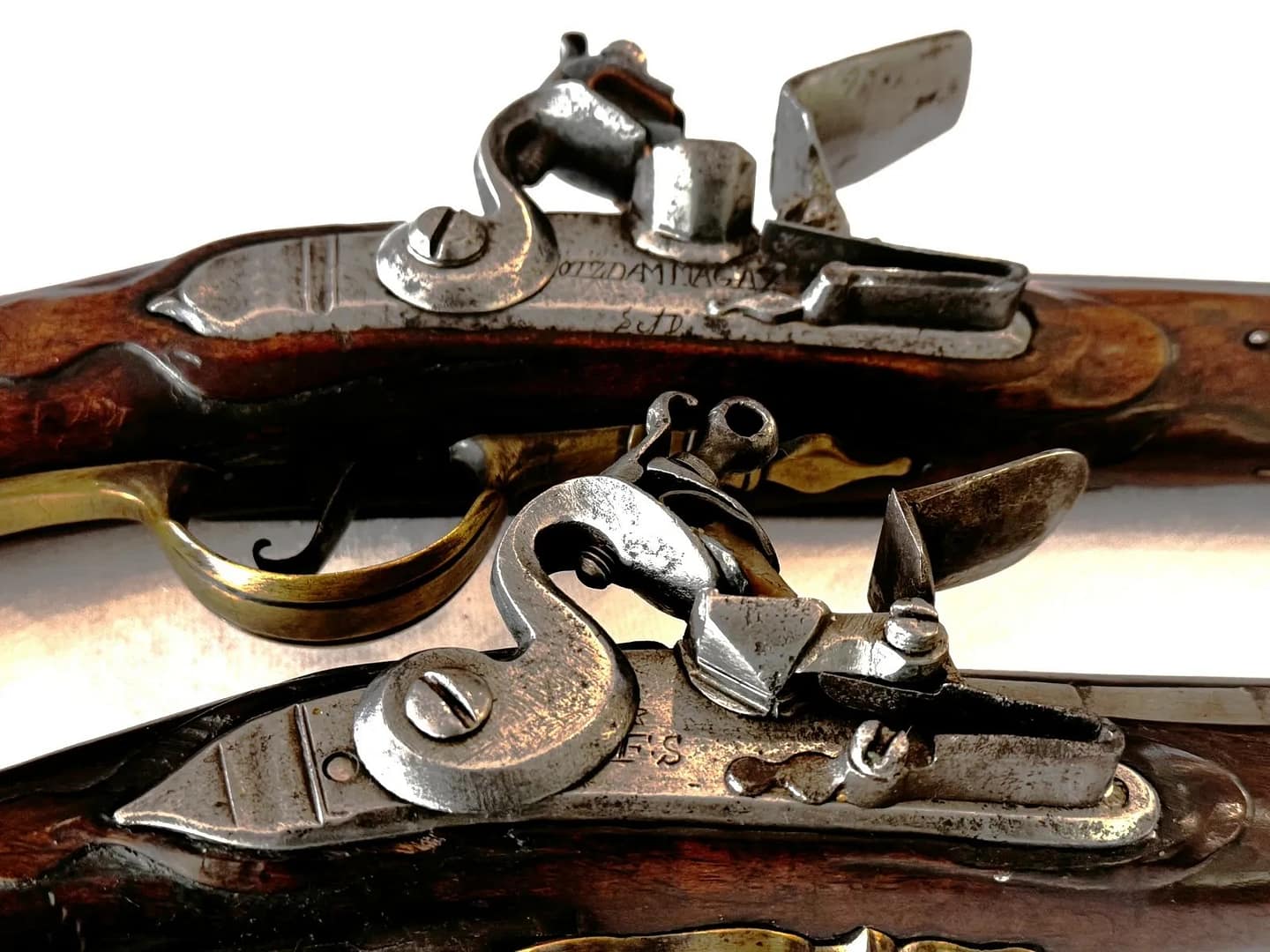
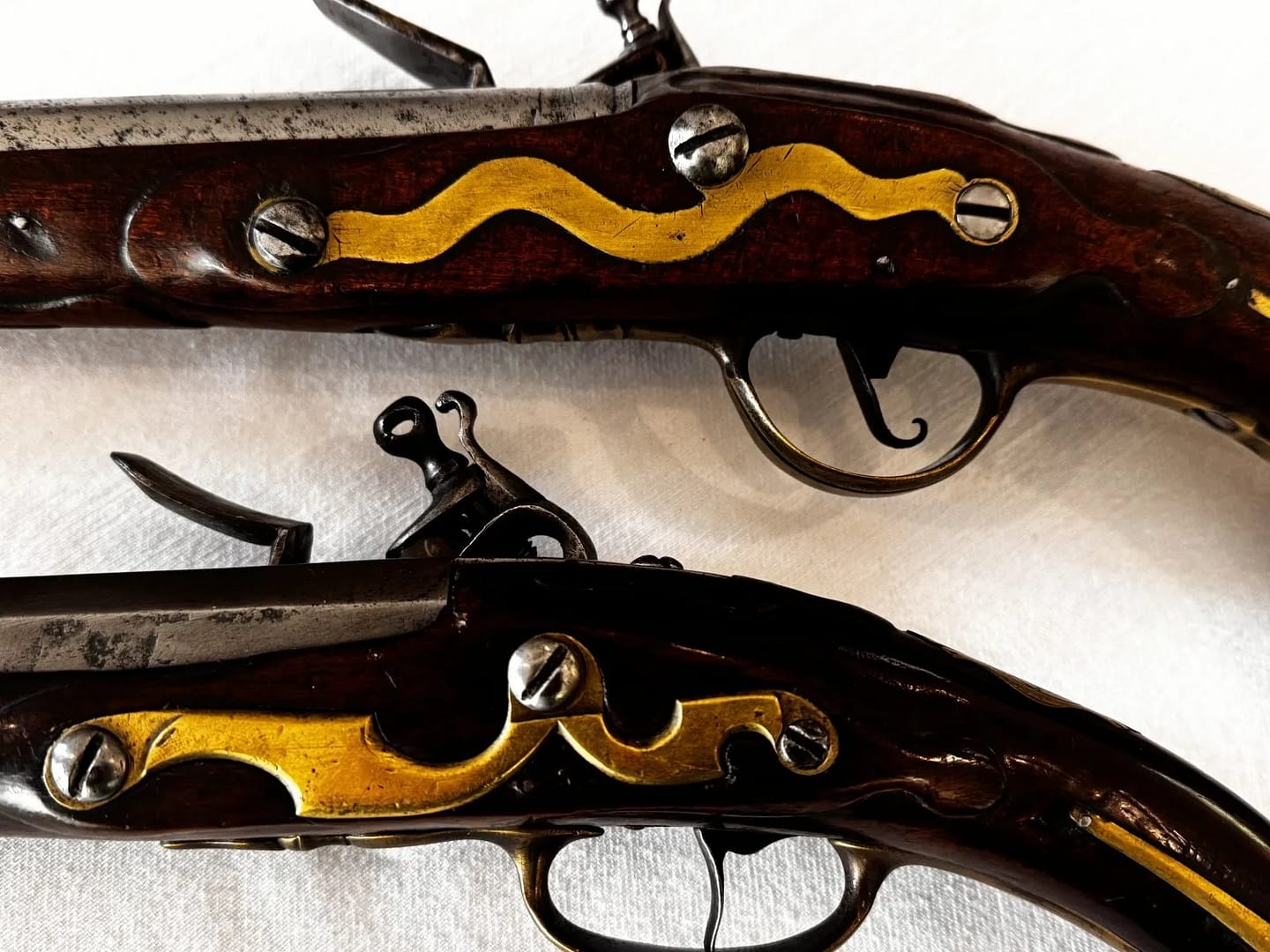
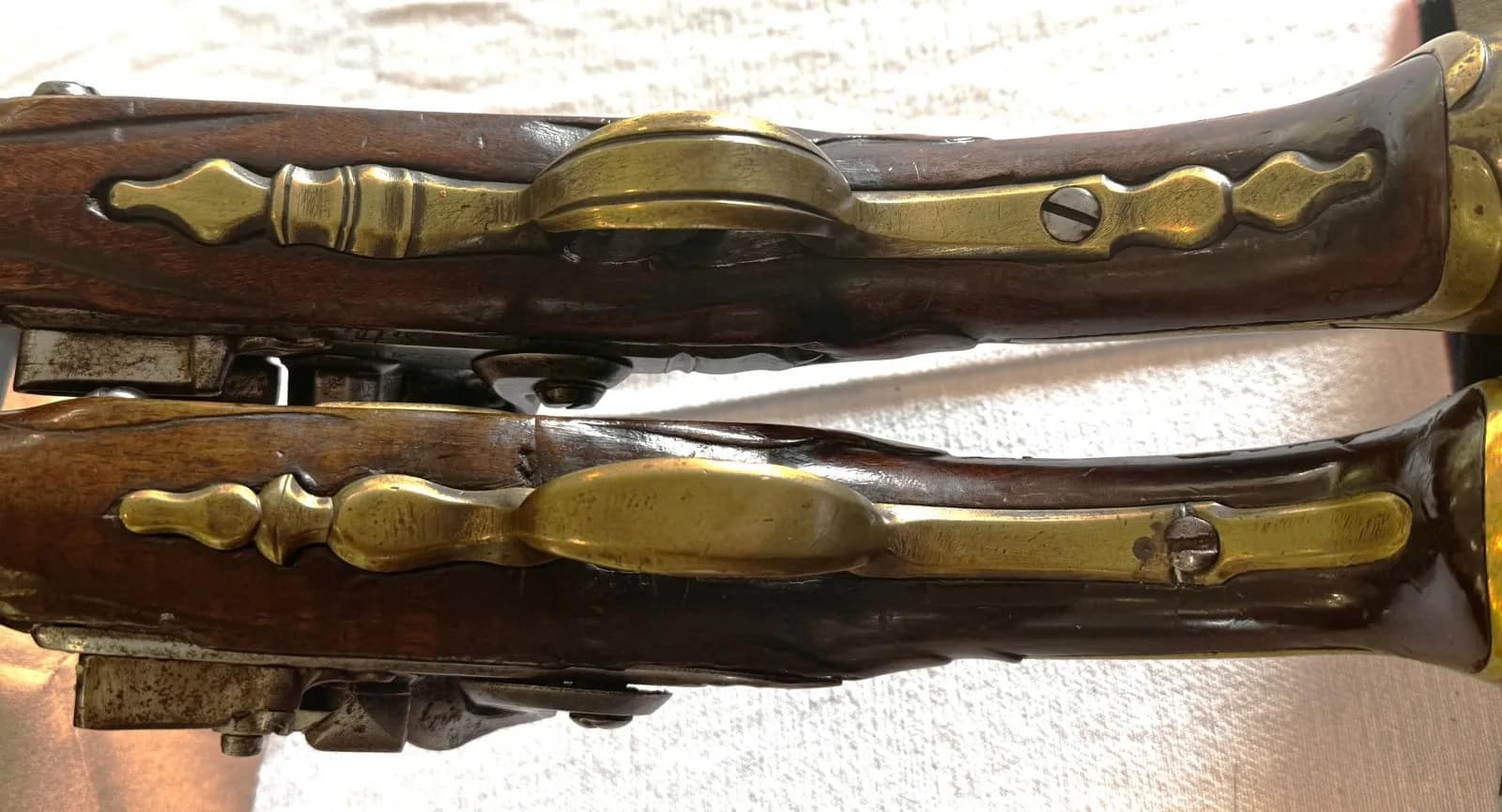
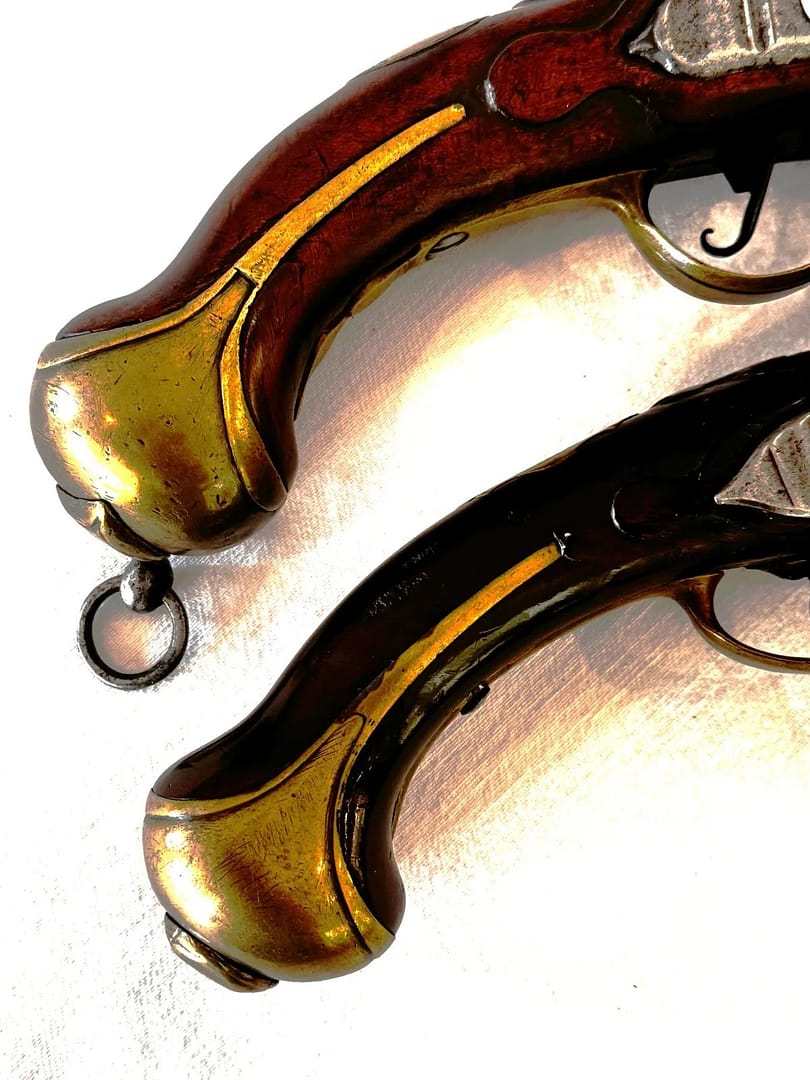
Comparison of the arsenal-issued enlisted soldier’s Prussian Model 1742 Hussar Pistol versus a privately purchased officer’s pistol in the same style. From my personal collection.

This is a comparison of the two pistols displayed immediately above. The Prussian Model 1742 is a well known pattern that served Frederick’s army for more than 47 years prior to being superseded by the very similar-looking Model 1789 (See the Napoleonic weapons page). The escutcheon plate is engaved ‘FR’ for Fridericus Rex. The pistol was manufactured at the Potsdam Arsenal and the lockplate is engraved POTZDAM MAGAZ.

The officer’s pistol follows the design cues—lockplate style, buttcap, decorative stock carving, hammer and frizzen shape, 3-screw sideplate—from the Model 1742 Hussar pistol but it is about 2/3 the size, and more finely made. It would have been a privately made pistol for an officer in Frederick the Great’s army. The escutcheon plate is engaved with a symbol that may represent the principality or family. Lockplate is marked with a star over the initials ‘AFS’. The escutcheon plate is marked with some sort of heraldry symbol that may represent a Princely state, a family symbol, or, less likely, a regimental symbol. What is it? A beehive with wings? A bee? a sheaf of wheat? an updies down hat? If you have any suggestions, please drop me a line or add a comment below.


French Weapons of the Seven Years War


French Model 1754 Marine Musket.

Manufactured circa 1763. Pattern 1754 lockplate and pattern 1763 furniture and stock. Probably one of thousands of guns made in the transition between 1754 and 1763 models in an effort to use ordinance components. Possibly a rebuilt weapon during the Revolution, as broken weapons were reassembled from components. Brass furniture indicates marine use. This musket was found in an attic in Scituate, Massachusetts, about 100 years after the war. Scituate was the site of a garrison of 300 French Marines during the Revolutionary War. The Smithsonian Instituite restored the gun in the 1990s. From my personal collection.


French Model 1766 flintlock musket. From my personal collection.

Although this particular pattern did not see service in the Seven Years War, the French Model 1766 musket was refinement of the earlier 1746, 1754 and 1763 muskets, featuring strengthened furniture, improved lock geometry, and a more robust barrel band arrangement. A .69-calibre weapon with a reputation for reliability, it armed French infantry during the later Seven Years War and formed the basis of weapons supplied to American Continental forces. Its mechanical simplicity and standardisation influenced U.S. musket production well into the early 19th century.


Massive French Fortress Musket, circa 1750. From my personal collection.

This exceptionally large French fortress musket, circa 1750, was designed for static defence and anti-artillery sniping from ramparts. With a bore of approximately 0.80 calibre and an oversized barrel, it fired heavy projectiles intended to disable artillery crews or harass siege works at long range. The stock is signed “Maqueline”, and the lockplate is a pre-1717 unbridled form, indicating production by a private armourer supplying fortress garrisons. Such heavy wall guns were too unwieldy for field use but were valued for accuracy and destructive power in garrison warfare.


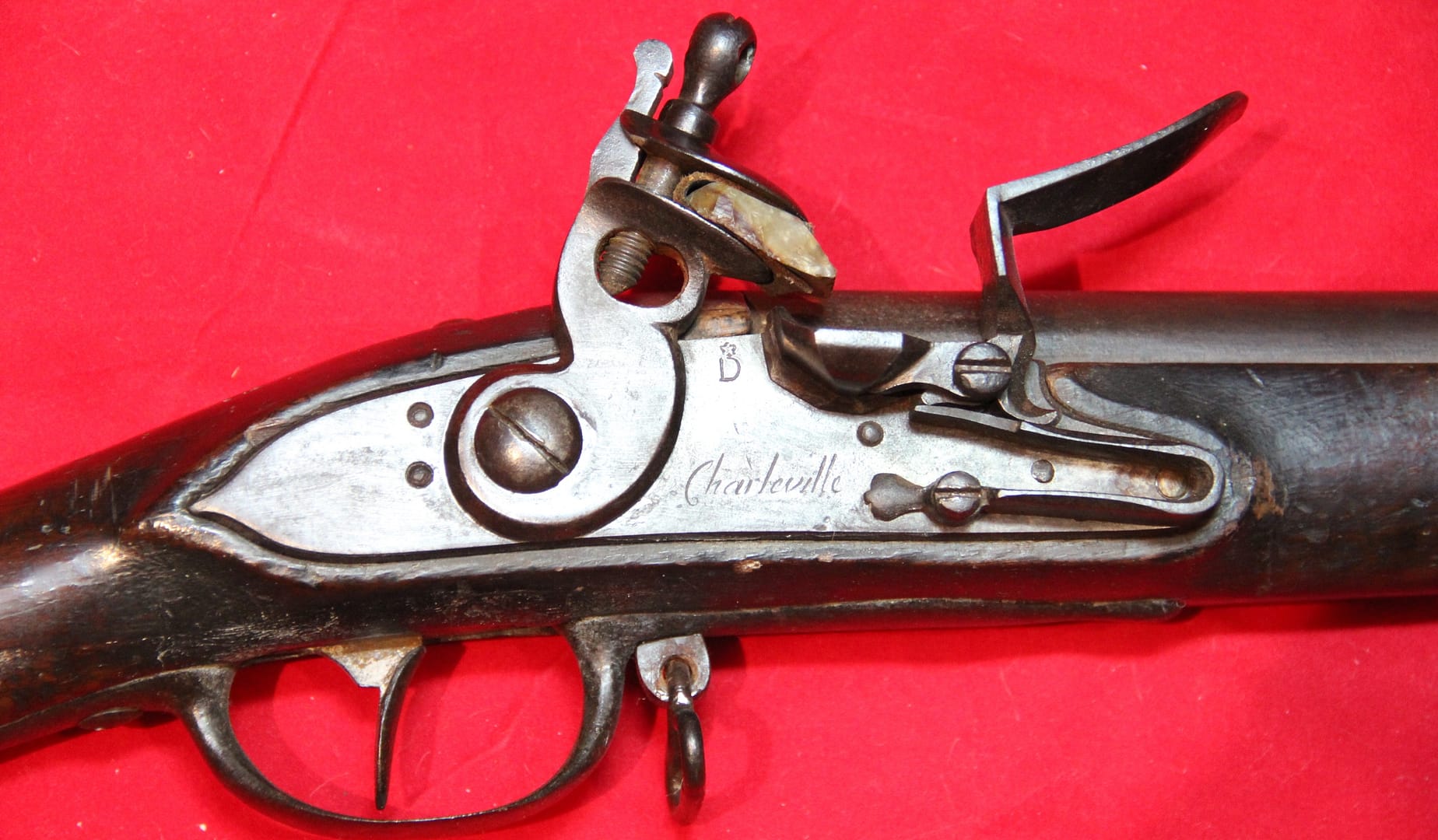
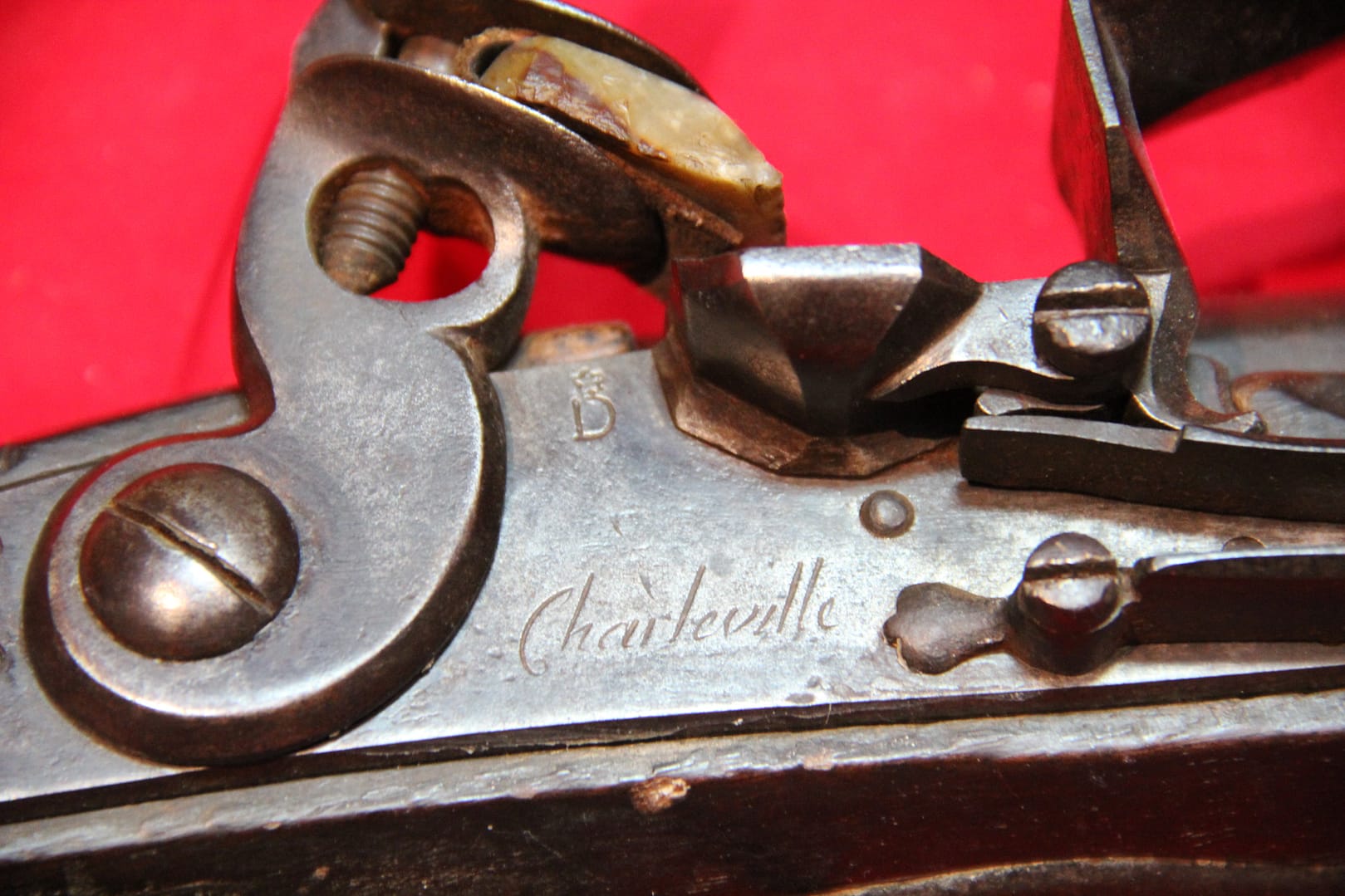
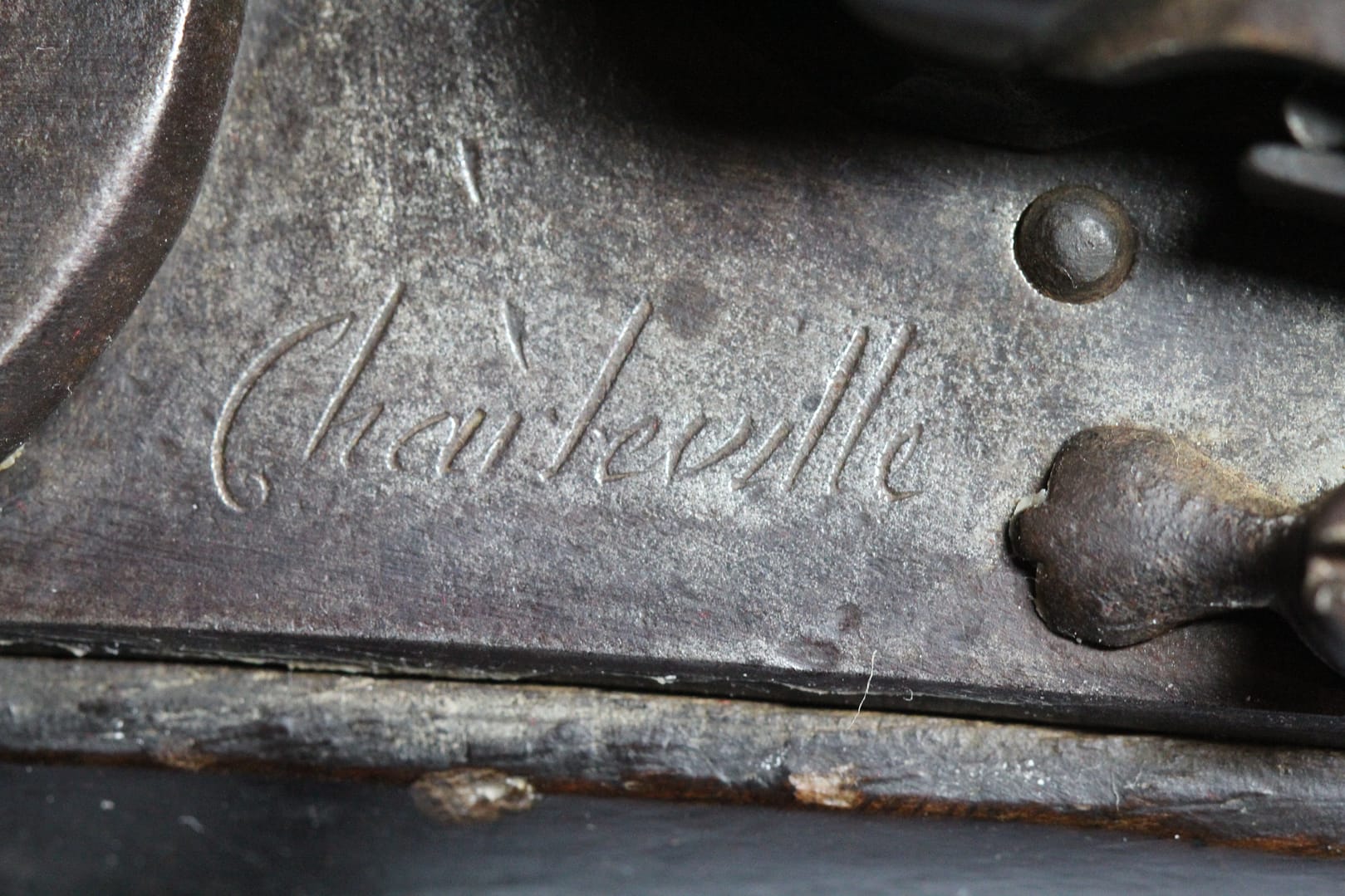
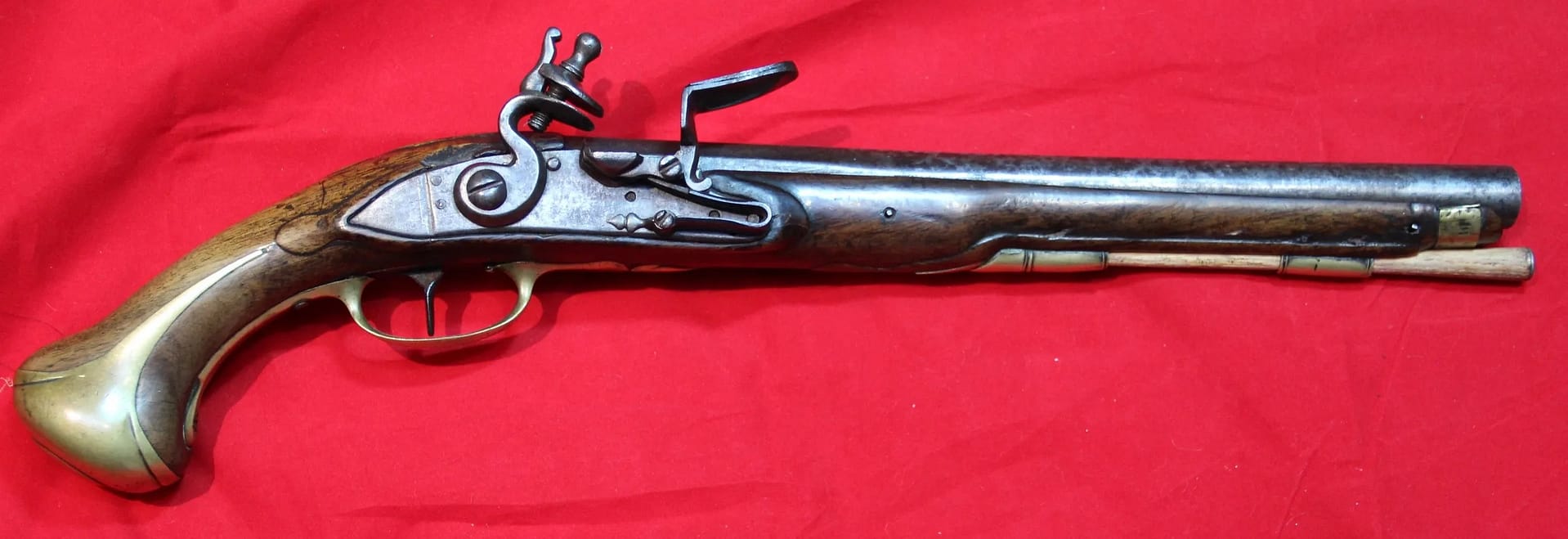
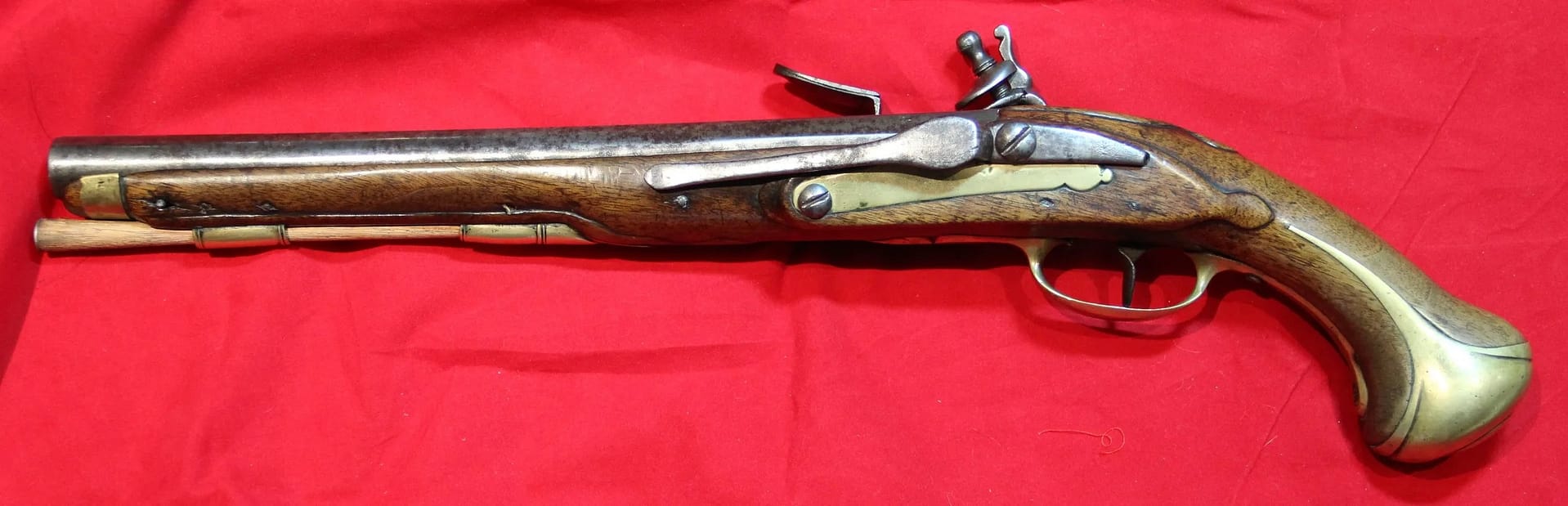
French Model 1733 Cavalry Pistol, the first standard handgun to be adopted by the French military. Jean Fournier, Charleville. From my personal collection.

The French Model 1733 cavalry pistol was the first fully standardised handgun adopted by the French Army. A large-bore flintlock with brass mounts and a robust lockplate, it was carried by heavy cavalry, dragoons, and mounted officers. This example is marked Jean Fournier, Charleville, one of the principal armourers of the royal manufactory. The 1733 pistol introduced production uniformity later seen in the Charleville musket series and became a widely copied pattern across Europe during the mid-18th century.


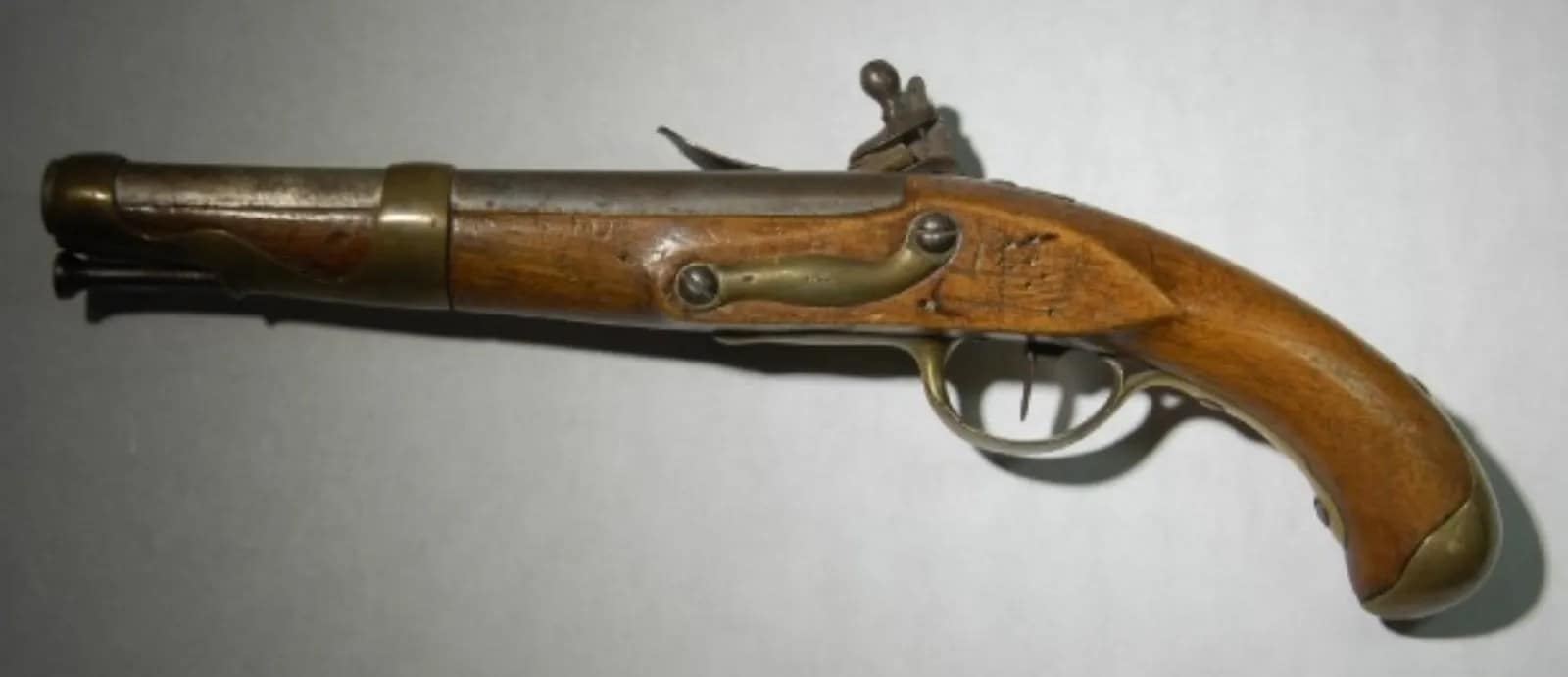
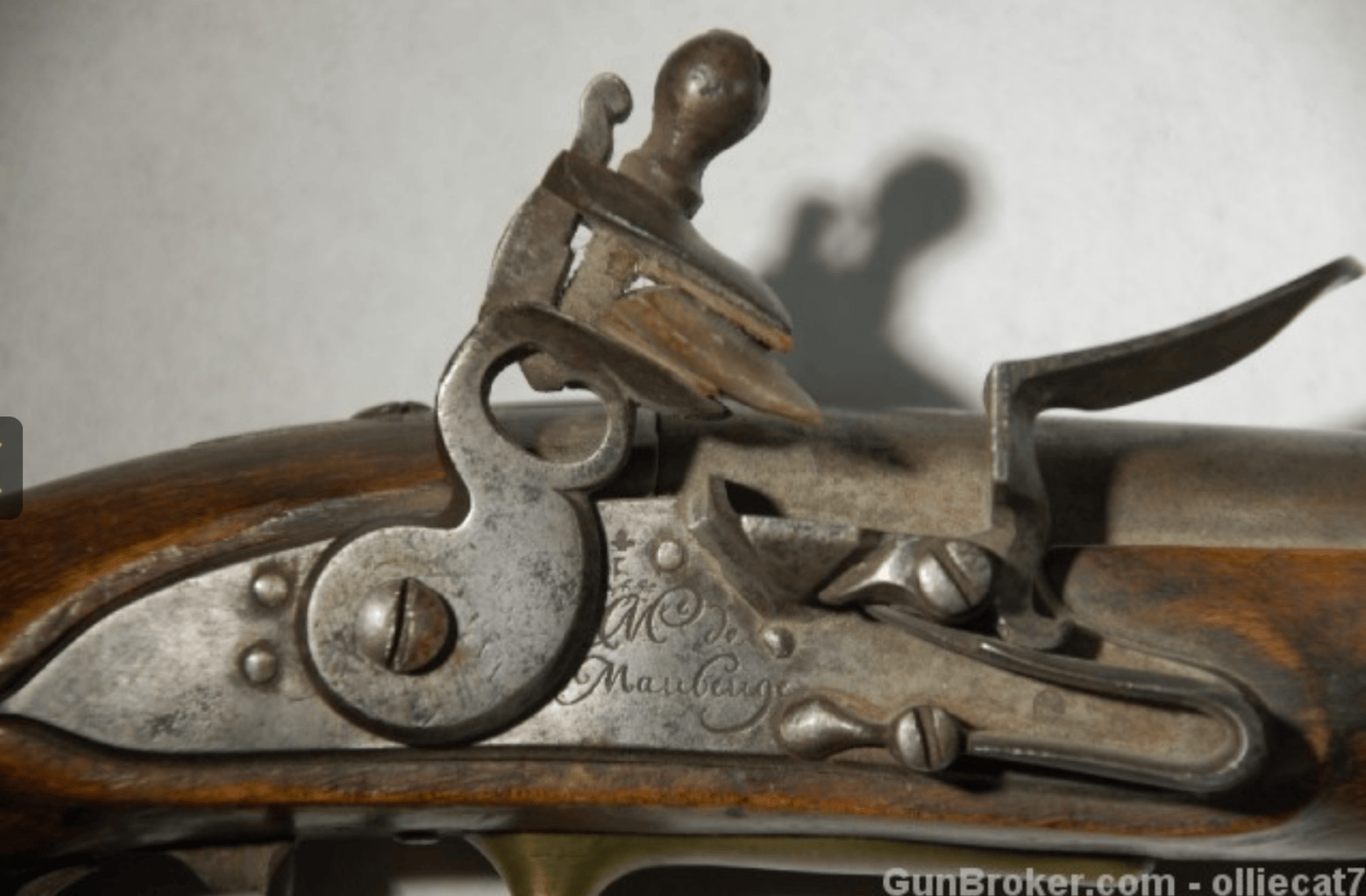
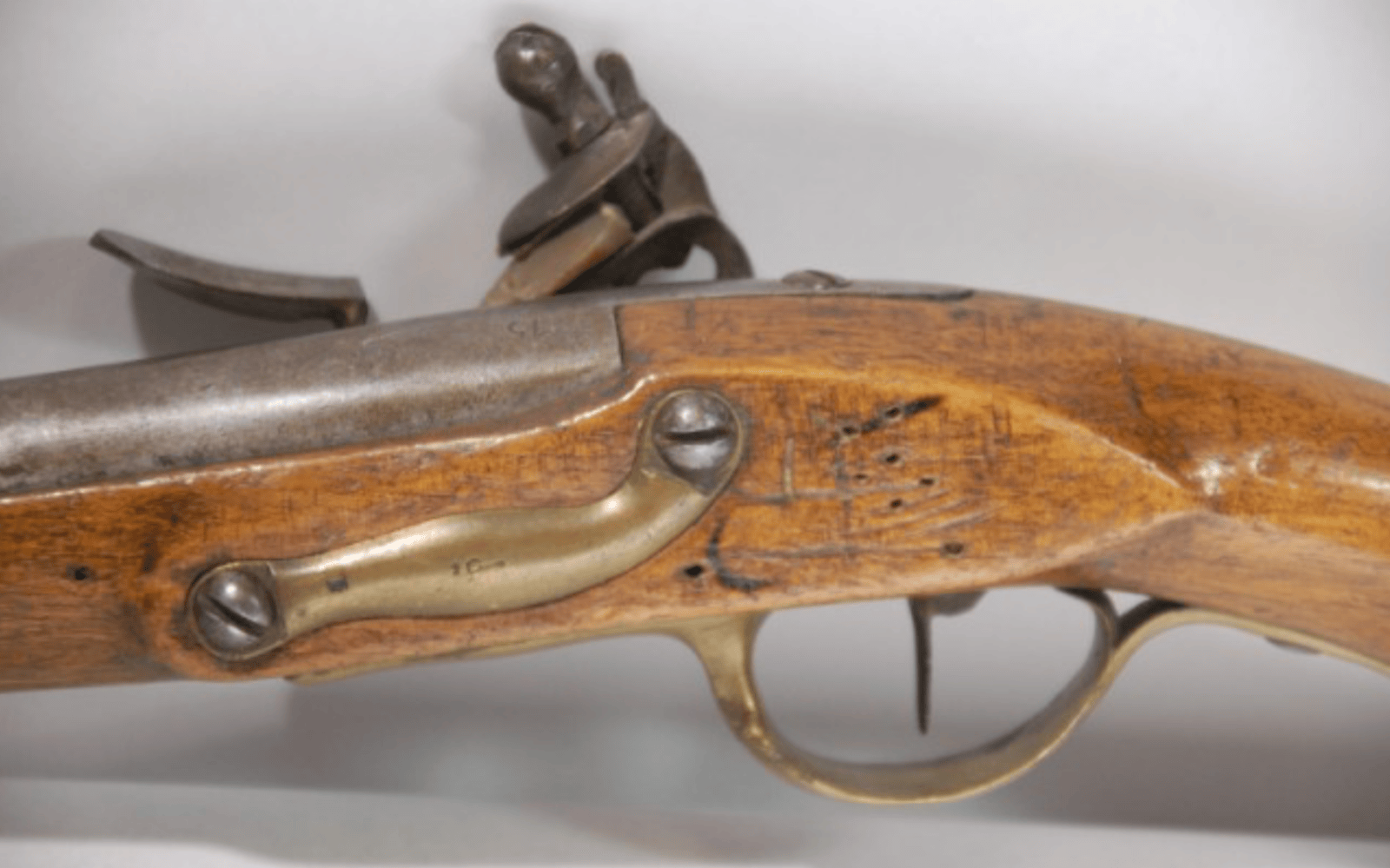
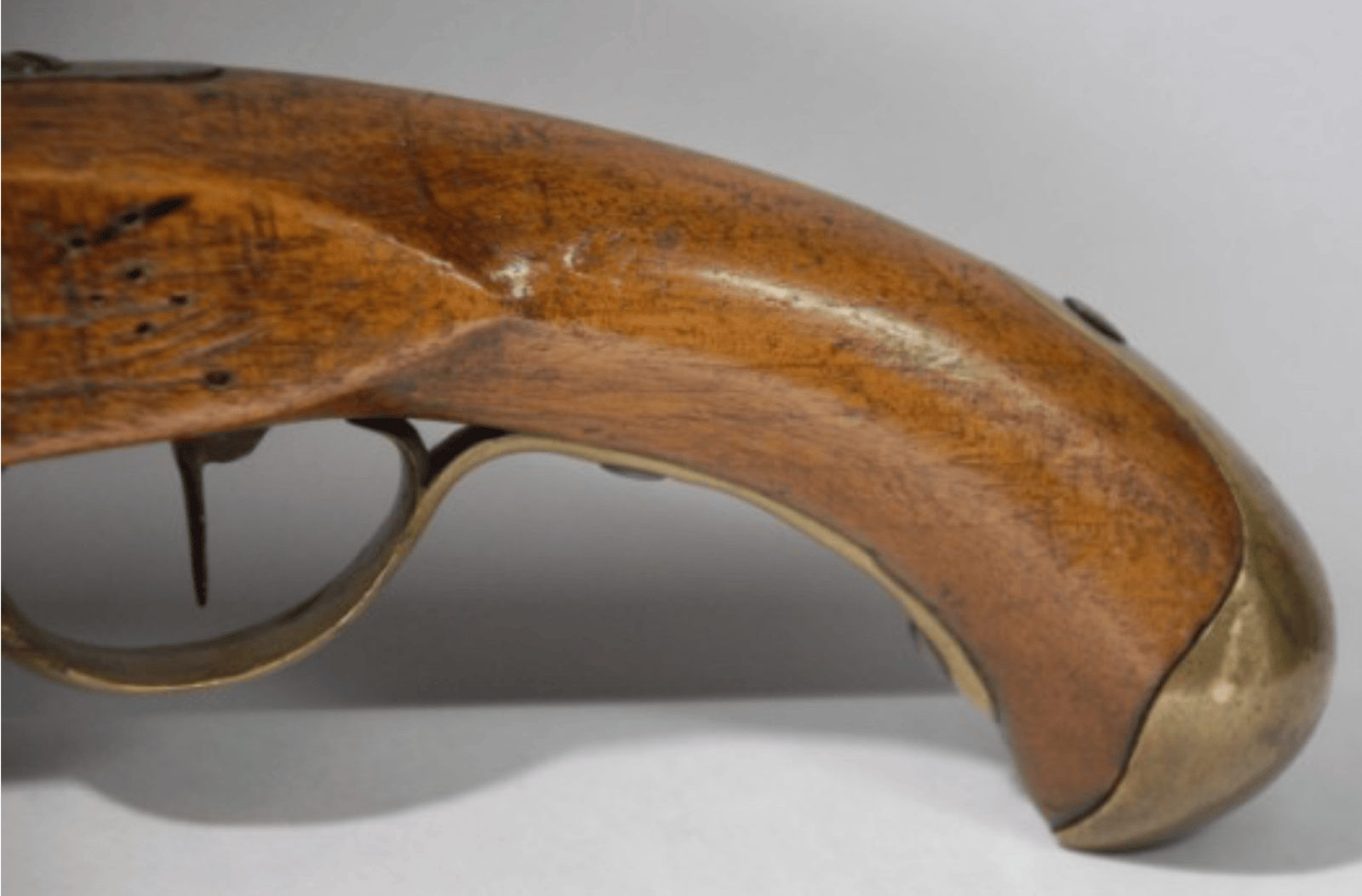
French Model 1763 Flintlock Pistol. Manufactured at the Maubeuge Royal Armoury. From my personal collection.

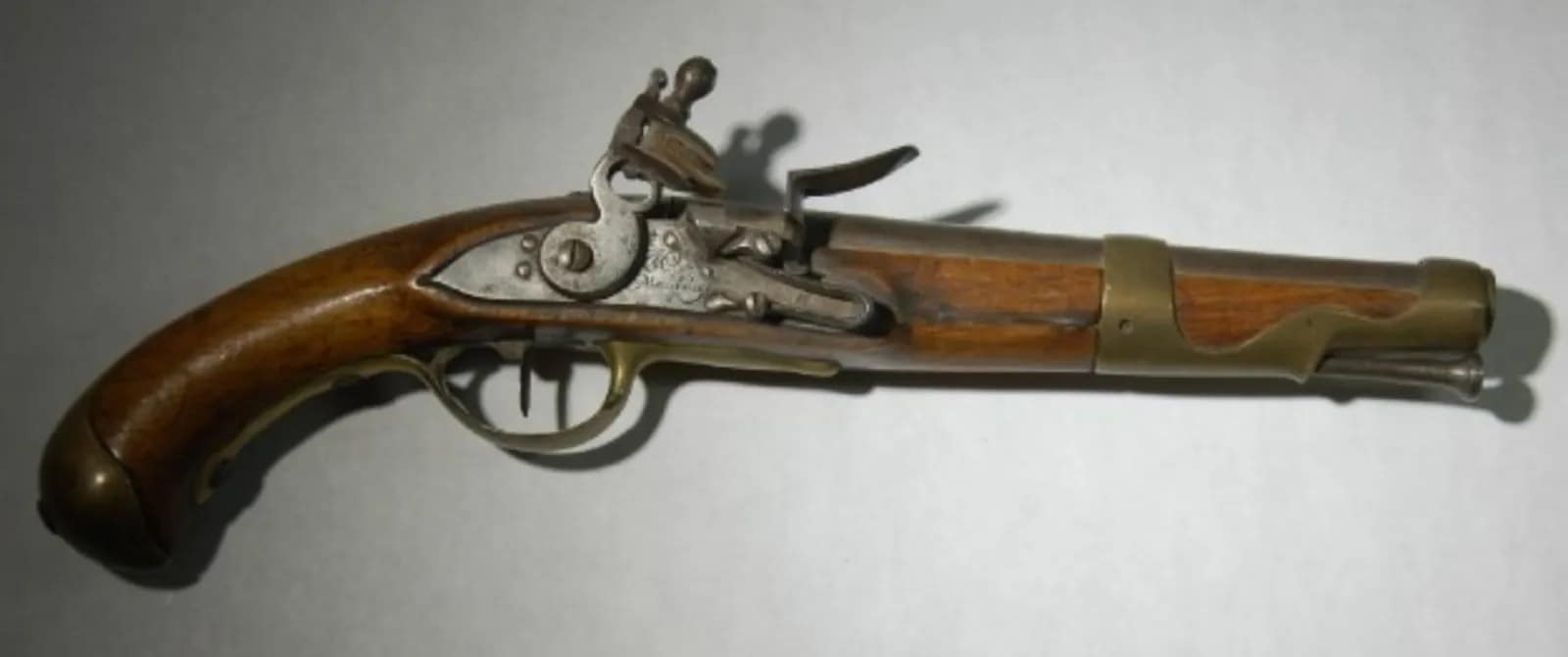
The French Model 1763 flintlock pistol was introduced to equip cavalry and mounted troops of the Royal French Army at the end of the Seven Years’ War. Manufactured at the Maubeuge Royal Armoury, it was a single-shot, smoothbore pistol of approximately .69 calibre with brass furniture and steel ramrod. Designed for close-range mounted combat, it complemented sabre use during shock action. Lockplates were marked with the royal cypher and manufactory stamp, identifying origin and inspection. The Model 1763 reflects early efforts at standardisation within the Ancien Régime military system and remained in service through the American War of Independence.


Austrian Weapons of the Seven Years War


Model 1754 Austrian musket. From my personal collection.

The Austrian Model 1754 musket was the Habsburg Army’s standard .70-calibre infantry weapon during the War of Austrian Succession and the early Seven Years War. Built at Vienna and regional armouries, it featured a robust lock, wooden ramrod, and long barrel optimised for line-volley fire. Although heavier than contemporary Prussian muskets, it was durable and capable of sustained battlefield use. The M1754 armed the bulk of Austrian infantry battalions in Bohemia, Silesia, and Saxony.


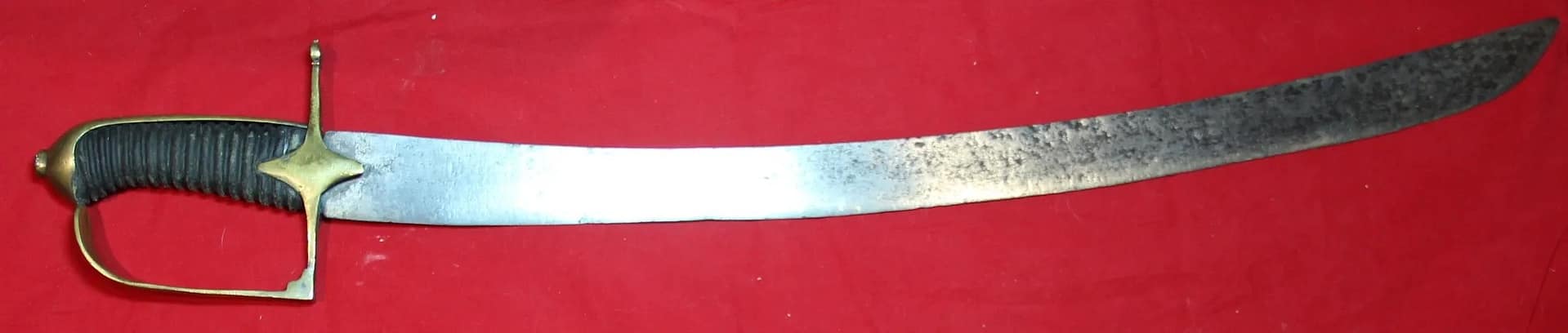
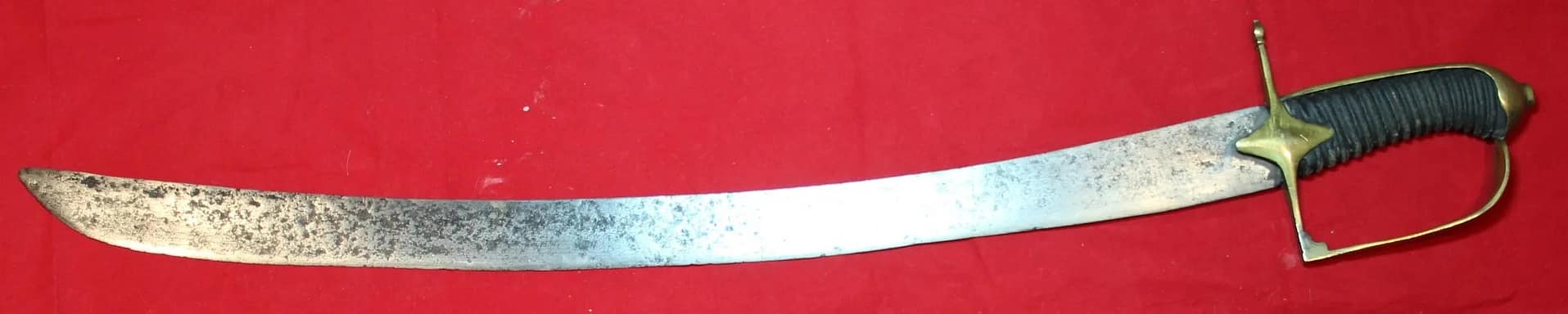
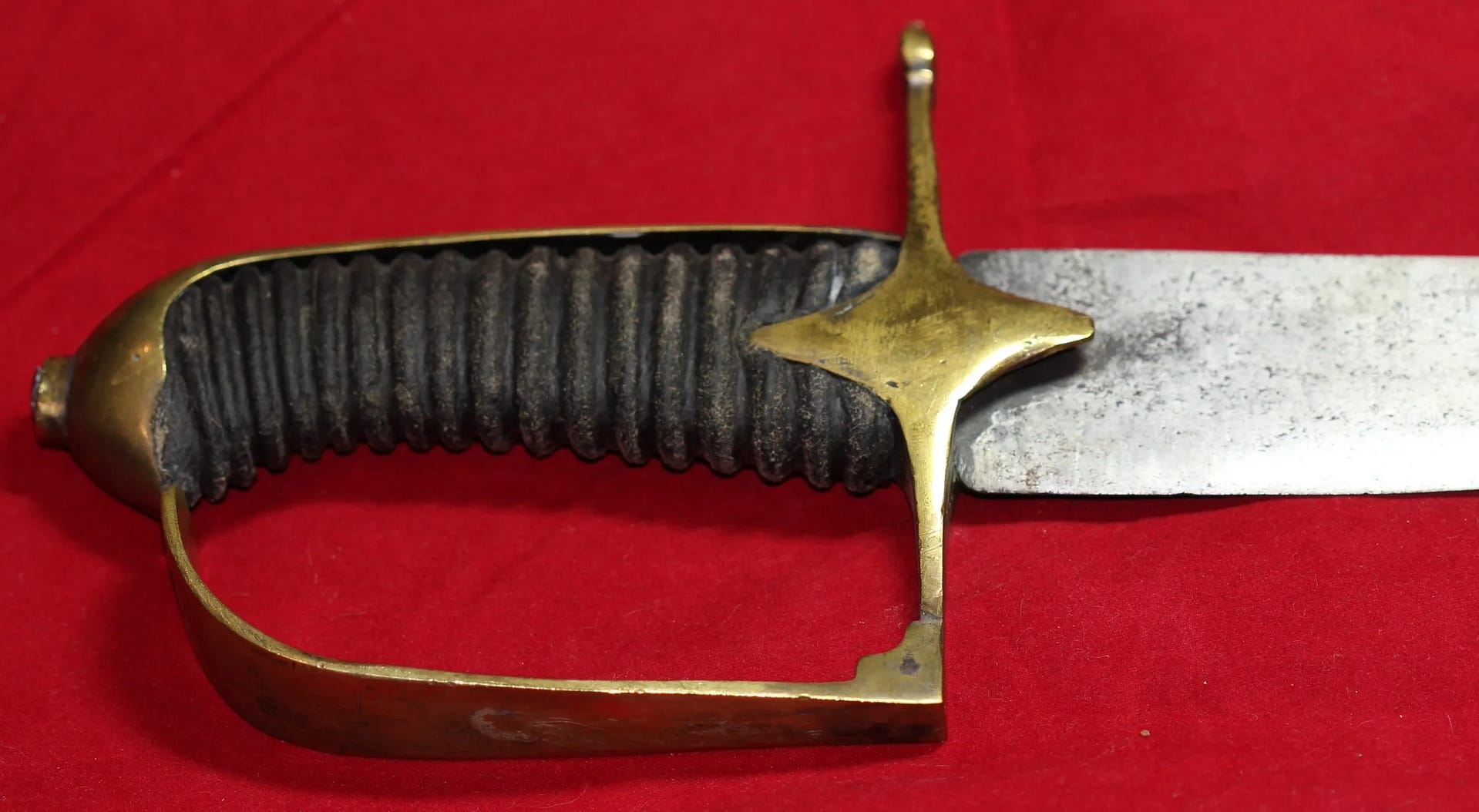
Circa 1760 Austrian Infantry hanger. From my personal collection.

The Austrian infantry hanger of circa 1760 was issued to grenadiers and chosen men during the Seven Years War. Featuring a broad, slightly curved blade and brass hilt with simple knucklebow, it was intended for close-in fighting where long muskets were unwieldy. Austrian hangers followed Germanic military design traditions and complemented the M1754 musket. Though increasingly ceremonial by the late 18th century, they remained practical weapons during the Silesian and Bohemian campaigns.


Russian Weapons of the Seven Years War


Circa 1760 Russian infantry hanger. From my personal collection.

This mid-18th-century Russian infantry hanger features a curved blade and brass hilt in the style used by Elizabethan and early Catherine-era regiments. Carried by NCOs, grenadiers, and line infantry, hangers supplemented muskets during close combat and were used extensively in the Seven Years War against Prussia. Their design reflects Central and Eastern European influences, including Polish sabre traditions and earlier Russian shashka forms.


Seven Years War weapons FAQ

What weapons were most commonly used in the Seven Years’ War?

The war was fought primarily with smoothbore flintlock muskets such as the Pattern 1742 and 1756 British Brown Bess, French Model 1746, 1754, 1763 Charleville patterns, and Prussian Mod 1740 infantry muskets. These were supported by socket bayonets, muzzle-loading artillery, and cavalry swords. The basic infantry weapons were broadly similar across European armies.

Why are smoothbore muskets important in understanding the war?

Smoothbore flintlock muskets defined how battles were fought, shaping linear tactics, close-order formations, and controlled volleys. Their limited range and accuracy made discipline, drill, and coordinated firepower essential to battlefield success.

Did weapons change during the Seven Years’ War?

Yes. Although armies began the war with established flintlock systems, operational experience led to improvements. British forces shortened musket barrels after fighting in North America, while artillery and logistical reforms reflected the increasing importance of firepower and mobility.

How important was artillery in the Seven Years’ War?

Artillery played a growing role throughout the conflict. By 1763, guns formed a larger proportion of field armies than at the start of the war, reflecting improvements in organisation, mobility, and battlefield integration.

What role did Prince Liechtenstein play in military reforms?

After observing the superior Prussian artillery at Chotusitz and other battles, Prince Joseph Wenzel of Liechtenstein was instrumental in developing Austrian artillery reforms that emphasised standardisation, mobility, and improved organisation, influencing artillery practice across Europe.

Were rifles used during the Seven Years’ War?

Rifles were used in limited numbers, primarily by specialist light infantry units and frontier troops, particularly in North America. However, the vast majority of soldiers were equipped with smoothbore muskets.

How did the Seven Years’ War influence later military development?

The war represents the mature phase of linear warfare and demonstrated the importance of professional standing armies, disciplined firepower, and artillery coordination. Lessons learned influenced military reforms in the late eighteenth century.

What does this collection show about the war?

The artefacts illustrate how soldiers were equipped and supplied during the conflict and highlight the dominance of the flintlock system alongside the growing importance of artillery and logistical organisation.


Subscribe to Battlefield Travels and receive a free E-Book Battlefield Guide

Unlock expert battlefield analysis, campaign reconstructions, and historical insights drawn from firsthand exploration and primary sources.

🗺️ You’ll receive:

🎖️ Exclusive historical insights you won’t find elsewhere

📘 A free eBook: 10 Tips for Exploring Historic Battlefields

📰 New battlefield studies straight to your inbox as they are published


IMG 5409

⚔️ Battle of Leuthen, Silesia (Poland),
5 December 1757

The Battle of Leuthen, 5 December 1757, is one of the great battles of history, students of military history would consider it somewhat of a pilgrimage to visit this site. After defeating a Fench/Imperial Army of almost twice its size at the Battle of Rossbach a month earlier, Frederick’s Army had marched 275km in 12 days to confront the Austrian Army in Silesia. Frederick’s 33,000 troops faced Prince Charles of Lorraine and his 65,000 Austrian troops near the village of Leuthen.

Selected works on the Seven Years War and the campaigns of Frederick the Great

Battle of Leuthen, Prussian Grenadiers assault on the Churchyard

Overview of the Seven Years War

The Seven Years War (1756–1763) was the first truly global conflict of the modern era, fought simultaneously in Europe, North America, the Caribbean, West Africa, and India. Sometimes described as the “world’s first world war,” it pitted Britain and Prussia against France, Austria, Russia, and Spain, with alliances shifting as the fighting spread across continents.

In Europe, the war was marked by Frederick the Great’s campaigns, where the Prussian army fought desperately for survival against numerically superior enemies. Battles such as Lobositz (1756), Rossbach (1757), Leuthen (1757), and Kunersdorf (1759) highlighted the discipline and tactical innovation that made Prussia a major power. Britain, meanwhile, waged its own global war at sea and in the colonies, fighting against France in Canada, the Caribbean, and India, including the Battle of Bushy Run (1763) and the Siege of Fort William Henry (1757).

The Seven Years’ War re-shaped the balance of power. Britain emerged as the dominant naval and colonial empire, while Prussia cemented its role as a central European power. The uniforms, muskets, artillery, and equipment of this period reflect the professionalisation of 18th-century armies, from Prussian grenadiers to French musketeers and British redcoats.

Explore the Seven Years’ War: [Battle Studies] · [Weapons & Equipment] · [Recommended Reading] · [Quiz]


Reading

The reference collection below includes the key books and references I have used in preparing for and undertaking battlefield studies all over the world.

The Seven Years War in North America

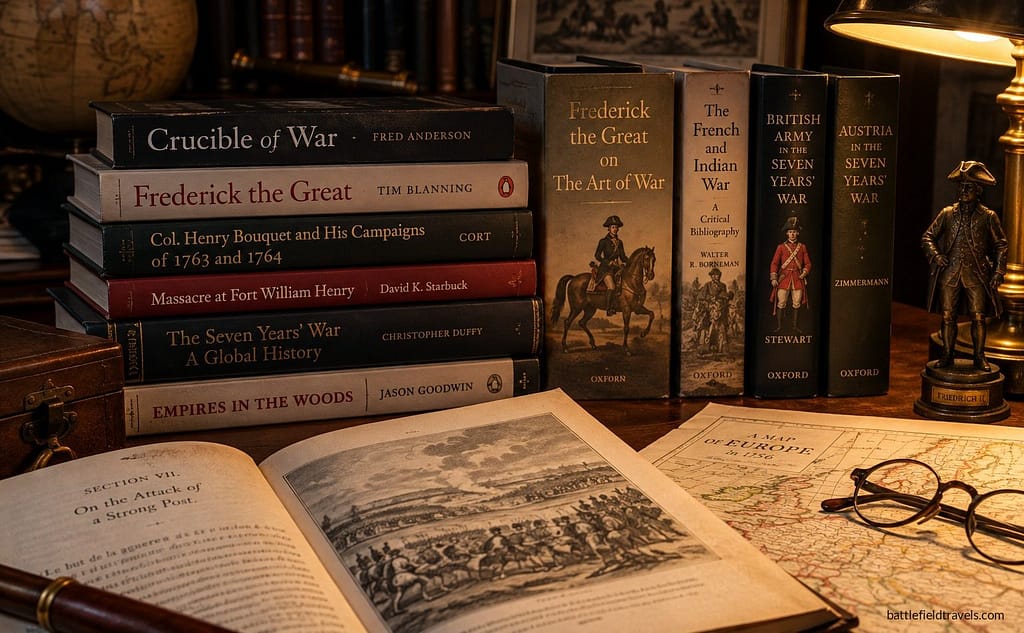
Crucible of War: The Seven Years’ War and the Fate of Empire in British North America, 1754-1766
In this engrossing narrative of the great military conflagration of the mid-eighteenth century, Fred Anderson transports us into the maelstrom of international rivalries. With the Seven Years’ War, Great Britain decisively eliminated French power north of the Caribbean — and in the process destroyed an American diplomatic system in which Native Americans had long played a central, balancing role — permanently changing the political and cultural landscape of North America. Anderson skillfully reveals the clash of inherited perceptions the war created when it gave thousands of American colonists their first experience of real Englishmen and introduced them to the British cultural and class system. We see colonists who assumed that they were partners in the empire encountering British officers who regarded them as subordinates and who treated them accordingly. This laid the groundwork in shared experience for a common view of the world, of the empire, and of the men who had once been their masters. Thus, Anderson shows, the war taught George Washington and other provincials profound emotional lessons, as well as giving them practical instruction in how to be soldiers.
A Journal Kept During the Siege of Fort William Henry, August 1757: With Additional Illustrations Pertaining to the Siege
This is a short monograph, only 3200 words, which speaks about the seige of Fort William Henry and the subsequent massacre of the defenders and camp followers after their surrender.
Massacre at Fort William Henry
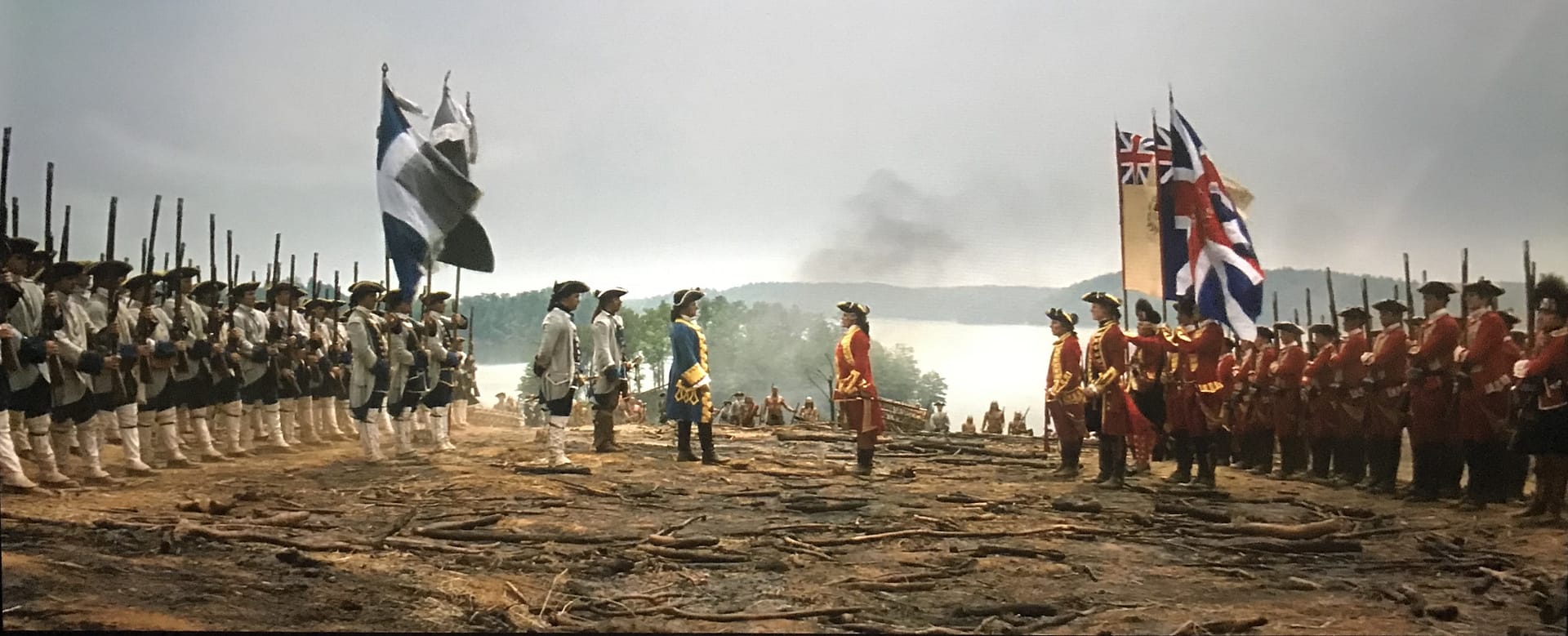
Fort William Henry, located at the south end of Lake George in New York, was the northern-most outpost of British soldiers in the interior of colonial America. This small frontier fort was extemely vulnerable to attack from French and Native American forces. In early August 1757, under the leadership of the Marquis de Montcalm, French forces attacked the fort, and forced a British surrender. Indians attacked retreating British troops on their way to nearby Fort Edward. This attack, known as the “massacre, ” was both memorialized and distorted in James Fenimore Cooper’s The Last of the Mohicans. David R. Starbuck, drawing upon his archeological findings at the site of the fort, offers an engaging and sobering corrective to myths generated by popular depictions of this brutal conflict. Set against a visual backdrop of over 80 historical and contemporary views of the site and its artifacts, he interprets the remains of the tools and weapons of the Native Americans who first settled the region as well as subsequent French and British invaders. Like a modern-day forensic detective, Starbuck sets fact against fiction to expose what really happened prior to, during, and after this most infamous colonial battle.
Fort William Henry 1755–57: A battle, two sieges and bloody massacre (Campaign, 260)
This book details the French and Indian War massacre by Iroquois of British and colonial troops in the Hudson River Valley that was fictionalized in The Last of the Mohicans. After the British garrison of Fort William Henry in the colony of New York surrendered to the besieging army of the French commander the Marquis de Montcalm in August 1757, it appeared that this particular episode of the French and Indian War was over. The spirited defence by Lt. Col. Munro of the 35th Regiment secured the British and Colonial troops the full honours of war, allowing them to march away with colours flying. What happened next became the most infamous incident of the war – the ‘massacre’ of Fort William Henry. As the garrison prepared to march for Fort Edward a flood of enraged Native Americans swept over the column, unleashing an unstoppable tide of slaughter. The incident forms an integral part of James Fenimore Cooper’s classic novel The Last of the Mohicans. It is this version, later dramatically reconstructed in the film versions of the story, that has coloured our view of the incident to this day. But what really happened?
Never Come to Peace Again: Pontiac’s Uprising and the Fate of the British Empire in North America (Volume 7) (Campaigns and Commanders Series)
Prior to the American Revolution, the Ohio River Valley was a cauldron of competing interests: Indian, colonial, and imperial. The conflict known as Pontiac’s Uprising, which lasted from 1763 until 1766, erupted out of this volatile atmosphere. Never Come to Peace Again, the first complete account of Pontiac’s Uprising to appear in nearly fifty years, is a richly detailed account of the causes, conduct, and consequences of events that proved pivotal in American colonial history. When the Seven Years’ War ended in 1760, French forts across the wilderness passed into British possession. Recognizing that they were just exchanging one master for another, Native tribes of the Ohio valley were angered by this development. Led by an Ottawa chief named Pontiac, a confederation of tribes, including the Delaware, Seneca, Chippewa, Miami, Potawatomie, and Huron, rose up against the British. Ultimately unsuccessful, the prolonged and widespread rebellion nevertheless took a heavy toll on British forces.
Colonel Henry Bouquet and his campaigns of 1763 and 1764

The author delves into the events leading up to Bouquet’s decisive victory at Bushy Run, examining his tactics, leadership qualities, and diplomatic efforts. Beyond the historical narrative, the book explores the moral dilemmas and ethical considerations that shaped Bouquet’s actions, providing a nuanced understanding of his role in the conflict. Ultimately, this book illuminates the profound impact Bouquet had on the expansion of the British Empire in North America and offers insights into the enduring legacy of his military campaigns.

Cort, Reverend Cyrus (1883). Colonel Henry Bouquet and his campaigns of 1763 and 1764, Steinmen and Hentsel, Lancaster, PA. Accessed online 5 April 2025


Frederick the Great

Sale
Frederick The Great On The Art Of War
Frederick the Great (1712-1786), King of Prussia, initiated the Seven Years’ War in 1756; outfought the formidable French, Russian, and Austrian armies aligned against him; and established Prussia as a major power, thereby decisively influencing the next two centuries of European history. He was also a brilliant military thinker whose observations arose from extensive battlefield experience.This volume presents a balanced selection from Frederick’s writings on strategy, tactics, and mobility; the problems of logistics and a two-front war; the combined use of infantry, cavalry, and artillery; the history of the Prussian army; the critical battles of the Seven Years’ War; generalship as an art; and much more. A majority of this material is translated here for the first time in English and available nowhere else. The result is an invaluable glimpse into the inner thoughts of a military genius.
The Wars of Frederick the Great
Dr Showalter has written a gem of a book, examining the armies and warfare of the period, and the ways that social, economic and philosophical factors impacted them. This book is full of details, well-documented, and yet reads almost conversationally. This book belongs on the shelf of any 18-19th century military enthusiast. Highly recommended!
The military life of Frederick the Great
For tactical and strategic ingenuity, for daring and ruthless determination and the capacity to inspire troops, Frederick the Great was without equal. In this detailed life of Old Fritz, Christopher Duffy, who has written widely on the army of Frederick and on the armies of his adversaries, Austria and Russia, has produced a definitive account of his military genius.
Sale
Rossbach and Leuthen 1757: Prussia’s Eagle Resurgent (Campaign, 113)
Osprey’s examination of Prussia’s feats during the Seven Years’ War (1756-1763). By the autumn of 1757 Frederick the Great was beset by enemies on all sides. The French had invaded the territory of his Anglo-Hanoverian allies, a Franco-Imperial army was threatening Saxony, an Austrian army 110,000-strong had marched into Silesia and even the ponderous Russians had moved against him. Then within a month Frederick transformed his fortunes. At Rossbach on 5 November he smashed the Franco-Imperial army in barely 11/2 hours. Force-marching to Silesia he won perhaps his greatest victory exactly a month later, crushing the Austrian Army at Leuthen. The Emperor Napoleon considered Frederick’s lightning campaign ‘a masterpiece of manoeuvre and resolution’.


FAQ – Seven Years War Reading Room

How were the books in this Seven Years’ War reading list selected?

This reading list is curated to prioritise works that examine the Seven Years’ War through operational analysis, command decision-making, terrain, logistics, and doctrine. Emphasis is placed on studies grounded in primary sources that explain how armies manoeuvred and fought across very different theatres.

Does this reading list focus only on European campaigns?

No. While European operations are central, the list also includes works addressing colonial and maritime theatres, recognising that the Seven Years’ War was a global conflict in which terrain, distance, and logistics shaped outcomes as much as battlefield action.

How important was terrain in the Seven Years’ War?

Terrain was often decisive. Villages, ridgelines, rivers, forests, and road networks shaped deployment, manoeuvre, and fire. Commanders such as Frederick the Great and others repeatedly exploited micro-terrain to offset numerical inferiority or impose tactical disadvantage on their opponents.

Are these books suitable for readers new to the Seven Years’ War?

The list includes a mix of accessible overviews and more specialised operational studies. Readers new to the war may wish to begin with general histories before progressing to detailed campaign or battle analyses.

Is this intended to be a complete bibliography of the Seven Years’ War?

No. This is a selective reading list intended to guide serious study rather than provide exhaustive coverage. Additional works may be added as scholarship and research perspectives continue to develop.


Subscribe to Battlefield Travels and receive a free E-Book Battlefield Guide

Unlock expert battlefield analysis, campaign reconstructions, and historical insights drawn from firsthand exploration and primary sources.

🗺️ You’ll receive:

🎖️ Exclusive historical insights you won’t find elsewhere

📘 A free eBook: 10 Tips for Exploring Historic Battlefields

📰 New battlefield studies straight to your inbox as they are published


1740-Prussian-musket-e
Model 1740 Prussian flintlock musket, used by Prussian troops during the War of the Austrian Succession

War of the Austrian Succession overview

The War of the Austrian Succession (1740–1748) was a major European conflict triggered by the death of Emperor Charles VI and the contested succession of his daughter, Maria Theresa. Nearly every major European power became involved, with fighting across central Europe, Italy, the Low Countries, and overseas colonies.

Austria and Britain faced France, Prussia, Spain, and their allies in a struggle for influence and territory. The conflict marked the emergence of Prussia as a European power following Frederick the Great’s invasion of Silesia, while campaigns across Europe demonstrated the effectiveness of disciplined standing armies and formal battlefield manoeuvre. Battles such as Mollwitz (1741), Chotusitz (1742), Dettingen (1743), and Fontenoy (1745), illustrate the growing sophistication of mid-18th-century warfare.

Weapons technology

From a military perspective, the war represents the consolidation of the smoothbore flintlock system that defined eighteenth-century combat. Armies fought with flintlock muskets fitted with socket bayonets, supported by muzzle-loading artillery and cavalry operating within carefully controlled battlefield formations. Linear tactics, drill, and coordinated volleys formed the foundation of battlefield effectiveness.

At the same time, the conflict reflects the increasing professionalisation of European armies and the growing importance of artillery and logistical organisation. Artillery develolpment was perhaps the most important shift in the War of the Austrian Succession. At the beginning of the war, the artillery arms of the major powers were tiny by comparison with infantry and cavalry. Artillery calibres lacked standardisation, and most guns were immobile on the battlefield. By the end of the war, all the major powers had massively expanded their artillery arms and the standardisation of calibres and roles was well underway.

The weapons, uniforms, and equipment of the period illustrate an established military system that would reach its full maturity during the Seven Years’ War a decade later. Studying these artefacts provides insight into how armies were organised, equipped, and sustained during Maria Theresa’s struggle to secure her throne.

👉 For historical context and battlefield studies, see → War of the Austrian Succession Conflict Page

All artefacts shown are from my personal collection and photographed firsthand.


British Weapons of the War of the Austrian Succession


English Long Land Pattern Musket, Pattern 1742, marked Farmer 1748. Probably restocked in beech wood. From my personal collection.

This Pattern 1742 Long Land musket, maker-marked Farmer 1748, represents the principal British infantry firearm of the mid-18th century. A .75-calibre flintlock with a 46-inch barrel, it provided reliable volley fire during the War of Austrian Succession and early Seven Years’ War. Many surviving examples were restocked post-service; this musket shows a later beechwood stock, replacing the original walnut. The Pattern 1742 formed the backbone of British line infantry armament before the evolution of the 1756 and 1769 Brown Bess patterns.


Pattern 1756 Long Land Musket, marked to the 27th Regiment, Enniskillen Fusiliers. From my personal collection.

Althoiugh the Pattern 1756 was introduced after the War of the Austrian Succession, the ‘Brown Bess’ was an evolved weapon that underwent minor modifications and upgrades over more than 80 years. This Pattern 1756 Long Land musket, marked to the 27th Regiment of Foot (Enniskillen Fusiliers), represents the British Army’s primary infantry weapon during the mid-Seven Years War period. A .75-calibre flintlock with a 46-inch barrel, it incorporated improvements to lock strength, furniture, and bayonet fit over the earlier Pattern 1742. The 27th Foot served extensively in North America—including Louisbourg, Ticonderoga, and Quebec—making marked examples extremely scarce. Regimental branding reflects the period practice of unit-level property control on arms issued for overseas campaigning.


Land Pattern Pistol by Robert Watkin, c.1745. From my personal collection.

This flintlock Land Pattern pistol, made by London gunmaker Robert Watkin around 1745, is associated with the rapid mobilisation of British forces during the Jacobite Rising of 1745. Pistols of this type were produced for cavalry and volunteer units, including the Yorkshire Blues, a regiment raised from loyalist cavalry to defend northern England against the advancing Jacobite army. Typically of large calibre with brass furniture and a robust lock, Land Pattern pistols were designed for mounted service and close combat. This example reflects both the emergency expansion of government forces and the growing standardisation of British military small arms in the mid-18th century.


English bayonets for the Long Land Pattern Brown Bess. From my personal collection.

hese socket bayonets, designed for the Long Land Pattern Brown Bess, were essential components of British infantry doctrine. Typically 17 inches in blade length with a triangular section for rigidity, they locked onto the musket via a mortised socket and locking ring. Bayonet charges remained a central tactic of British line infantry, and the reliability of these Pattern 1740s–1750s bayonets contributed to the effectiveness of British battalions in European and colonial warfare. Their simple, durable construction made them one of the era’s most recognisable infantry weapons.


Prussian Weapons of the War of the Austrian Succession


Prussian Model 1740 Musket, marked POTZDAM MAGAZ, inspected by S&D (initials of Splittgerber and Daum, the inspectors at the Royal Arsenal). From my personal collection.

The Prussian Model 1740 musket was a .72–.73 calibre flintlock produced at the Potsdam Arsenal, marked POTZDAM MAGAZ. The “S&D” inspection stamp denotes Splittgerber and Daum, the principal inspectors responsible for Frederick the Great’s early-war small-arms programme. Lighter and handier than earlier Prussian models, the 1740 musket equipped line infantry during the campaigns of the War of Austrian Succession and the early Seven Years’ War. Known for its robust lock and crisp trigger, it was the hallmark weapon of Frederick’s disciplined infantry battalions.


Prussian Model 1731 Hussar Pistol. POTZDAM MAGAZ. From my personal collection.

The Prussian Model 1731 Hussar pistol was issued to light cavalry regiments raised during Frederick William I’s (Frederick the Great’s father) reign. The escutcheon plate is engaved ‘FWR’ for Fridericus Wilhelmus Rex. Manufactured at the Potsdam Arsenal and stamped POTZDAM MAGAZ, it featured a large-bore flintlock mechanism, brass furniture, and a sturdy full-stock suitable for mounted use. Carried in saddle holsters, these pistols complemented the curved sabres used in shock charges and skirmish actions. They saw action in Silesia, Bohemia, and Saxony, reflecting Prussia’s increasing reliance on aggressive hussar tactics in the 1740s–1750s.


Prussian Model 1742 Hussar Pistol. POTZDAM MAGAZ. From my personal collection.

The Prussian Model 1742 Hussar pistol was issued to light cavalry regiments raised during Frederick the Great’s reforms. The escutcheon plate is engaved ‘FR’ for Fridericus Rex. Manufactured at the Potsdam Arsenal and stamped POTZDAM MAGAZ, it featured a large-bore flintlock mechanism, brass furniture, and a sturdy full-stock suitable for mounted use. Carried in saddle holsters, these pistols complemented the curved sabres used in shock charges and skirmish actions. They saw action in Silesia, Bohemia, and Saxony, reflecting Prussia’s increasing reliance on aggressive hussar tactics in the 1740s–1750s.

Prussian Model 1742 Officer’s Pistol. From my personal collection.

The Prussian officer’s pistol follows the design cues from the Model 1742 Hussar pistol but it is about 2/3 the size, and more finely made. It would have been a privately made pistol for an officer in Frederick the Great’s army. The escutcheon plate is engaved with a symbol that may represent the principality or family. . Lockplate is stamped AFS, it featured a smaller-bore flintlock mechanism, brass furniture, and a sturdy full-stock suitable for mounted use. Carried in saddle holsters, these pistols complemented the curved sabres used in shock charges and skirmish actions. They saw action in Silesia, Bohemia, and Saxony, reflecting Prussia’s increasing reliance on aggressive hussar tactics in the 1740s–1750s.


Prussian Model 1732 Kurassier sword. From my personal collection.

The Model 1732 Kürassier sword was the standard heavy-cavalry weapon of Frederick the Great’s cuirassier regiments. Featuring a straight, broad blade optimised for thrusting and a brass basket hilt, embossed with the Prussian eagle and marked ‘FR’ (Fridiricus Rex), it was designed for shock action against enemy cavalry and infantry formations. The M1732 was widely used during the Silesian Wars and remained in service into the Seven Years’ War. Its austere, functional design reflects Prussia’s emphasis on disciplined, armoured cavalry charges as a decisive battlefield arm.


French Weapons of the War of the Austrian Succession


Massive French Fortress Musket, circa 1750. From my personal collection.

This exceptionally large French fortress musket, circa 1750, was designed for static defence and anti-artillery sniping from ramparts. With a bore of approximately 0.80 calibre and an oversized barrel, it fired heavy projectiles intended to disable artillery crews or harass siege works at long range. The stock is signed “Maqueline”, and the lockplate is a pre-1717 unbridled form, indicating production by a private armourer supplying fortress garrisons. Such heavy wall guns were too unwieldy for field use but were valued for accuracy and destructive power in garrison warfare.


French Model 1733 Cavalry Pistol, the first standard handgun to be adopted by the French military. Jean Fournier, Charleville. From my personal collection.

The French Model 1733 cavalry pistol was the first fully standardised handgun adopted by the French Army. A large-bore flintlock with brass mounts and a robust lockplate, it was carried by heavy cavalry, dragoons, and mounted officers. This example is marked Jean Fournier, Charleville, one of the principal armourers of the royal manufactory. The 1733 pistol introduced production uniformity later seen in the Charleville musket series and became a widely copied pattern across Europe during the mid-18th century.


War of the Austrian Succession Weapons FAQ

What weapons were most commonly used in the War of the Austrian Succession?

Armies were primarily equipped with smoothbore flintlock muskets fitted with socket bayonets, supported by muzzle-loading artillery and cavalry armed with swords and pistols. These weapons formed the standard equipment of European armies during the mid-18th century.

How were flintlock muskets used in battle?

Flintlock muskets were employed in close-order linear formations where disciplined volleys delivered massed firepower. Their relatively limited accuracy made drill, coordination, and controlled firing essential to battlefield effectiveness.

What role did artillery play in the war?

Artillery was an increasingly important component of field armies, providing both battlefield fire support and siege capabilities. Improvements in organisation and deployment reflected the growing importance of artillery in eighteenth-century warfare.

How did Frederick the Great influence tactics during this war?

Frederick’s Prussian Army introduced numerous innovations. Firstly, the Prussian system of conscription by region was the most efficient in Europe. Secondly, the Prussian Army refined close order drill that other armies tried to emulate. This allowed Prussian battle formations to manoeuvre under fire. Thirdly, Prussian musket drills were drilled to the point of pefection so that a Prussian soldier could load and fire 4-5 times per minute compared with two times per minute in other armies. Later Prussian innovations like the reversible iron ramrod and the conical flash hole were designed to shave milliseconds off reloead time.

How did cavalry operate during the War of the Austrian Succession?

Cavalry played a key role in reconnaissance, battlefield manoeuvre, and shock action, typically armed with swords, pistols, and carbines depending on the unit type.

Were rifles used during the War of the Austrian Succession?

Rifles existed but were used only in limited numbers by specialist troops. The vast majority of soldiers carried smoothbore muskets.

What calibre were muskets during the War of the Austrian Succession?

Most infantry muskets were large-calibre smoothbores, typically between .69 and .75 calibre, firing a round ball designed for rapid loading rather than precision.


Subscribe to Battlefield Travels and receive a free E-Book Battlefield Guide

Unlock expert battlefield analysis, campaign reconstructions, and historical insights drawn from firsthand exploration and primary sources.

🗺️ You’ll receive:

🎖️ Exclusive historical insights you won’t find elsewhere

📘 A free eBook: 10 Tips for Exploring Historic Battlefields

📰 New battlefield studies straight to your inbox as they are published