Reconstructing War of the Austrian Succession battlefields through terrain analysis, primary sources and on-site research

Walking the battlefields of the War of the Austrian Succession 1740-1748
Origins: The Pragmatic Sanction of 1713
The War of the Austrian Succession was a major European conflict triggered by the death of Emperor Charles VI in 1740 and the contested inheritance of the Habsburg monarchy. At its heart lay the Pragmatic Sanction of 1713, a legal settlement intended to guarantee the succession of Charles’s daughter, Maria Theresa, and preserve the unity of the Habsburg lands. Although widely recognised in principle, the Pragmatic Sanction collapsed in practice once Austria appeared diplomatically isolated and militarily vulnerable.
What followed was not simply a dynastic dispute but a struggle over territory, influence, and the balance of power in Europe. France, Bavaria, Spain, and Prussia challenged Habsburg authority, while Britain and the Dutch Republic intervened to prevent French dominance. Fighting spread rapidly across Central Europe, the Low Countries, Italy, and beyond, drawing in nearly every major European power.
Central Europe: The First Silesian War
The most consequential early intervention came from Prussia, led by its young king, Frederick II. In late 1740, Frederick invaded Silesia, exploiting Austria’s weakness and initiating the First Silesian War. Battles such as Mollwitz (1741) revealed both the strengths and limitations of the Prussian army: highly disciplined infantry and effective firepower, but fragile cavalry and inexperienced command. At Chotusitz (1742), Frederick again defeated Austrian forces, forcing Maria Theresa to concede Silesia in order to fight on other fronts.
These campaigns marked Prussia’s emergence as a great power. During the Second Silesian War, Frederick refined his methods, achieving a decisive victory at Hohenfriedberg (1745) that secured Prussia’s hold over Silesia and demonstrated the growing effectiveness of Prussian operational tempo, fire discipline, and battlefield coordination.
Western Europe: battle for the Austrian Netherlands
While Austria fought for survival in Central Europe, the war’s western theatre developed into a major struggle in the Austrian Netherlands. Here, French armies confronted an Anglo-Allied coalition of British, Dutch, Austrian, and Hanoverian troops. The Battle of Fontenoy (1745) became the conflict’s most famous engagement. Despite a formidable Allied infantry advance, French forces—well-positioned and reinforced at the critical moment—halted and broke the attack. Fontenoy illustrated both the power and the limits of linear infantry tactics, and remains one of the defining battles of 18th-century warfare.
North America and India: War of Jenkins’ Ear
The conflict also formed part of a wider imperial struggle. From 1739, Britain and Spain were already fighting the War of Jenkins’ Ear, a maritime and colonial war driven by trade disputes and imperial rivalry in the Americas. When Britain and France entered the Austrian Succession conflict, these colonial hostilities merged into a broader global war, extending fighting to the Caribbean, North America, and India
War of the Austrian Succession – battle studies
Below are all current BattlefieldTravels studies for the Seven Years War, covering key battles, campaign phases and associated sites. New studies are added as further battlefields are walked and analysed.
-
⚔️🔒Battle of Chotusitz, Bohemia,
17 May 1742
The Battle of Chotusitz (17 May 1742) was Frederick the Great’s hardest-won early victory — a chaotic, bloody battle that secured Silesia but exposed deep weaknesses in Prussian command and coordination. Frederick’s maintenance of a fresh reserve to be committed at the decisive moment was a lesson that stayed with him as a commander.
-
⚔️ Battle of Fontenoy, Belgium,
11 May 1745
The Battle of Fontenoy, fought on 11 May 1745, was a major battle during the War of the Austrian Succession. A French army of ~50,000 under Marshal Maurice de Saxe against a coalition force of ~50,000 British, Dutch, Hanoverian, and Austrian troops led by the Duke of Cumberland. The result was a decisive French victory!.
-
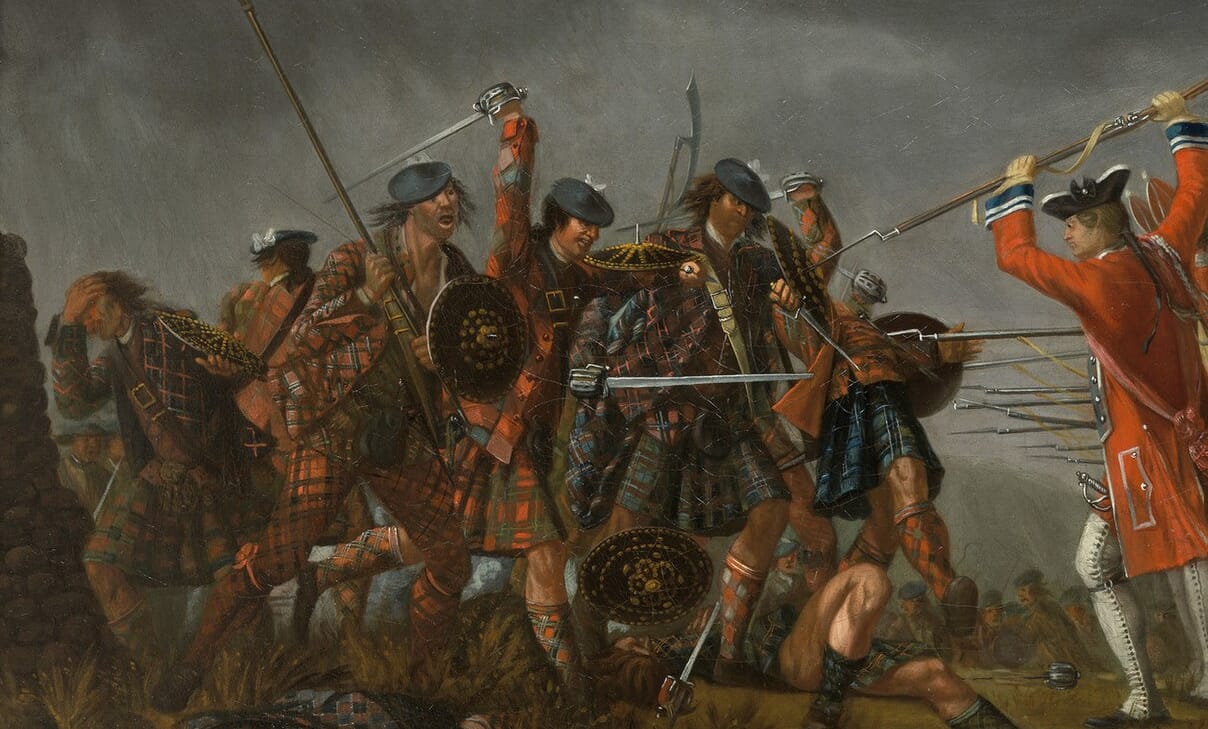
⚔️ Battle of Culloden, Scotland,
16 April 1746
The Battle of Culloden, fought on 16 April 1746, was the final and decisive confrontation of the Jacobite Rising of 1745. The rebellion was the last serious attempt by the Jacobites to restore the Stuart monarchy to the British throne. Led by Charles Edward Stuart ‘Bonnie Prince Charlie’, the Jacobite forces aimed to overthrow the…
-
⚔️ Battle of Prestonpans, Scotland,
21 September 1745
Bonnie Prince Charlie landed at Glenfinnan, Scotland in July 1745, aiming to reclaim the British throne for his father, James Francis Edward Stuart. Gathering support from the Highland clans, he advanced towards Edinburgh, capturing the city on 17 September. British General Sir John Cope, who had been gathering government forces in response to the Jacobite…


Tactical Innovations
Over thousands of years of warfare, armies have sought ways to gain advantage on the battlefield. Sometimes the solution was a new weapon. Sometimes it was a radical new method. Often it was a combination of both. From the disciplined ranks of the Greek phalanx to pike-and-shot warfare to the interlocking machine-gun fire plans of the twentieth century, tactical innovations have repeatedly reshaped how battles are fought.
-
💡The Culloden Bayonet Drill: How Cumberland’s army broke the Highland charge

How a minor change to the government army’s bayonet drill defeated the Highlander’s battle tactics— and why the critics who dismissed it were asking the wrong question. The weight of evidence establishes beyond reasonable doubt that Cumberland’s army trained in and used a new bayonet drill at Culloden, and that the drill was directed personally…

Authored by Mick Prictor, a retired military officer with 40 years’ service, and a military historian specialising in terrain-focused analysis of tactics, doctrine, and command decision-making in land warfare. His work draws on extensive battlefield fieldwork—more than 280 sites worldwide—and one of the world’s largest private collections of historic military arms, uniforms, and equipment. About me
⚔️ Go deeper — Members get exclusive access to the Deep Research Collection, Field Notes, and monthly Research Dispatches. Try membership free for 7 days, cancel anytime. From $9/month.
Explore Related Themes
Armies: Prussian Army • Austrian Army • French Army • British Army
Commanders: Frederick the Great • Duke of Cumberland • Maurice de Saxe
Methods: Oblique Order • Envelopment
Environments: Forest Warfare
Further Study: War of the Austrian Succession Reading List
The war was triggered by the death of Emperor Charles VI in 1740 and the challenge to his daughter Maria Theresa’s right to inherit the Habsburg lands under the Pragmatic Sanction. Several European powers accepted the settlement in theory but rejected it in practice once Austria appeared weak.
The Pragmatic Sanction of 1713 was a legal agreement intended to ensure the indivisibility of the Habsburg territories and allow female succession. It failed because rival powers prioritised territorial gain and strategic advantage over diplomatic commitments when the opportunity arose.
Frederick II of Prussia exploited Austria’s vulnerability by invading Silesia in 1740, triggering the Silesian Wars within the wider conflict. His victories at battles such as Mollwitz, Chotusitz, and Hohenfriedberg secured Silesia and established Prussia as a major European power.
Fontenoy (1745) was the most famous battle of the war’s western theatre, where a French army defeated a powerful Anglo-Allied force in the Austrian Netherlands. It demonstrated the strengths and limits of linear infantry tactics and highlighted the decisive role of reserves, terrain, and artillery.
The War of Jenkins’ Ear (1739–1748) began as a colonial and maritime conflict between Britain and Spain. When Britain and France entered the War of the Austrian Succession, these struggles merged, turning a European dynastic war into a broader global conflict.
Subscribe to Battlefield Travels and receive a free E-Book Battlefield Guide
Unlock expert battlefield analysis, campaign reconstructions, and historical insights drawn from firsthand exploration and primary sources.
🗺️ You’ll receive:
🎖️ Exclusive historical insights you won’t find elsewhere
📘 A free eBook: 10 Tips for Exploring Historic Battlefields
📰 New battlefield studies straight to your inbox as they are published

⚔️ Go deeper — Members get exclusive access to the Deep Research Collection, Field Notes, and monthly Research Dispatches. Try membership free for 7 days, cancel anytime. From $9/month.