Skip to content
Home » Reading-Guide

Reading-Guide

Selected works on the Austro-Prussian War
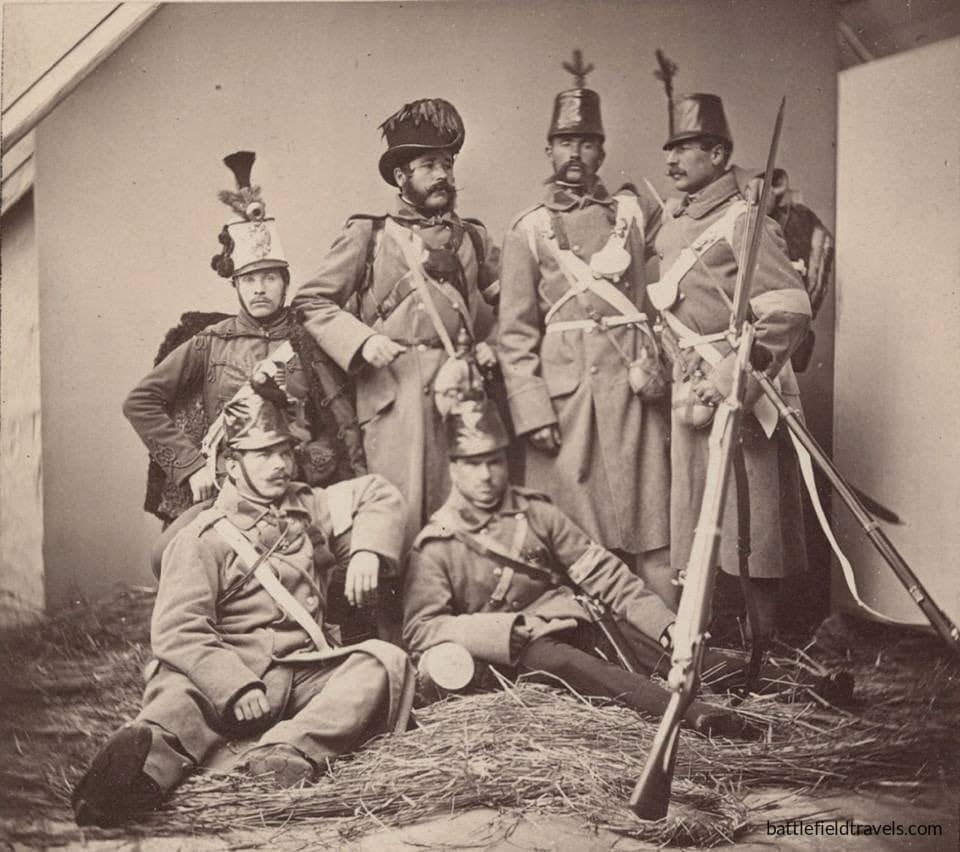
Austrian troops before the battle of Königgrätz. Five infantrymen of the line, one jager (wearing the Tyrolean jager hat), and one hussar (wearing the pelise). Their Model 1854 Lorenz rifle-muskets are stacked beside them.

Overview of the Austro-Prussian War

The Austro-Prussian War of 1866 — known in Germany as the Deutscher Krieg (German War) and in much of the English-speaking world as the Seven Weeks War — was one of the most consequential and least-studied conflicts of the nineteenth century. In seven weeks of campaigning, Prussia shattered Austria’s position as the dominant German-speaking power, expelled her from the German Confederation, and laid the foundations for the unified German Empire proclaimed five years later. The war’s brevity disguised its revolutionary significance: it was the first major conflict in which breech-loading rifles were used at scale by a major European army, and the first systematic test of what would become known as Auftragstaktik — Prussian mission command doctrine.

Chief of the Prussian General Staff since 1857, Helmuth von Moltke the Elder had transformed that institution into the most professional military planning body in the world. His campaign design concentrated three separate Prussian armies — the Elbe Army, First Army, and Second Army — converging on Bohemia through mountain passes that the Austrians had believed would delay any Prussian advance long enough to allow them to concentrate. Moltke’s railways delivered his forces faster than Austrian calculations had allowed. By the time Feldzeugmeister Ludwig von Benedek, commanding the Austrian Army of the North, recognised the scale of what was approaching, his options had already narrowed to a defensive battle at Königgrätz or a fighting withdrawal that his army’s condition made impossible.

Outcomes of the war

The political consequences were immediate and lasting. The Peace of Prague expelled Austria from German affairs permanently, dissolved the German Confederation, and allowed Prussia to annex Hanover, Nassau, Hesse-Kassel, and Frankfurt. The North German Confederation that followed was Prussia’s instrument, and its constitution was the template for the German Empire of 1871. Austria, reoriented away from Germany, reached the Ausgleich compromise with Hungary in 1867 to create the Austro-Hungarian dual monarchy. The war’s shadow fell across European politics for the next half-century.

The Literature

The Austro-Prussian War has attracted less English-language scholarship than either the Napoleonic Wars or the Franco-Prussian War of 1870, which is unfortunate given its significance. The core literature divides between operational histories, biographical studies, and the narrower but increasingly rich literature on weapons and tactical doctrine.

Geoffrey Wawro’s The Austro-Prussian War: Austria’s War with Prussia and Italy in 1866 (Cambridge University Press, 1996) remains the essential starting point for any serious study. Wawro draws extensively on Austrian and Prussian archival sources and is particularly strong on the institutional failures of the Austrian army — the logistics, the command culture, the tactical doctrine — that made defeat inevitable before the first shot was fired. His treatment of the Italian front, often neglected in English-language accounts, is unusually thorough.

Quintin Barry’s Road to Königgrätz: Helmuth von Moltke and the Austro-Prussian War 1866 (Helion, 2010) provides the clearest single-volume operational narrative in English. Barry’s approach is methodical rather than analytical — he is at his best tracing the movements of corps and divisions across the Bohemian theatre — and the book serves well as a campaign companion for anyone visiting the battlefields.

Gordon Craig’s The Battle of Königgrätz (Lippincott, 1964), though now sixty years old, has never been surpassed as a single-battle study. Craig writes with unusual clarity about both the operational context and the human experience of the fighting, and his analysis of why the Austrian command system failed under pressure remains sharp.


Reading

The reference collection below includes the key books and references I have used in preparing for and undertaking Franco-Prussian War battlefield studies.

Austro-Prussian War

Sale
The Austro-Prussian War: Austria’s War with Prussia and Italy in 1866
Geoffrey Wawro describes Prussia’s successful invasion of Habsburg Bohemia, and the wretched collapse of the Austrian army in July 1866. Blending military and social history, he describes the panic that overtook Austria’s regiments in each clash with the Prussians. He reveals the blundering of the Austrian commandant who fumbled away key strategic advantages and ultimately lost a war–crucial to the fortunes of the Habsburg Monarchy–that most European pundits had predicted they would win.
The Road to Königgrätz: Helmuth von Moltke and the Austro-Prussian War 1866
This book follows Moltke’s part in the course of the campaign at the end of which his name had become a household word. It traces his rise to the position of Chief of the General Staff, against the background of the political situation of Prussia in the middle of the 19th Century, and the way in which he developed the functions of the General Staff. Moltke’s contribution to the allied campaign of Prussia and Austria against Denmark in 1864 was an important part of his own development, before the inevitable war between the successful allies in 1866. As the book shows, for that war Moltke prepared his plans in the minutest detail. The triumphant success of his strategy in Bohemia was supplemented by the boldness of his campaign in western Germany, in which a small Prussian army overcame a huge numerical disadvantage. By the end of the Seven Weeks’ War Moltke had made Prussia the strongest military power in Europe. The Campaign of 1866 in Bohemia is covered in great detail, including the most extensive coverage of the Battle of Königgrätz yet published in English.
Sale
The Battle of Königgrätz: Prussia’s Victory over Austria, 1866
The battle for the city of Königgrätz—now called Hradec Králové, located in the Czech Republic—was the largest of its time, with nearly half a million troops involved. It was also the first battle where the outcome was directly determined by the availability of new technologies, including the railroad, telegraph, cast steel rifled cannon, and breech-loading rifle. It also marked a lesson in the fallacy of dependence on technology at the expense of sound strategy. In this full account, distinguished historian Gordon A. Craig discusses the state of political affairs surrounding the battle, the personalities involved, the weaponry, and the tactics in order to recreate the battlefield in all its complexity.
Railroads and Rifles: Soldiers, Technology, and the Unification of Germany
Railroads and Rifles is a lucid and deeply researched account of the interaction of three key factors in the unification of Germany – the growth of the railways and their relationship with war, and the development of the breech-loading rifle and Krupp’s rifled cannon. When this book first appeared almost forty years ago, a gulf had developed between the study of war making in its operational contexts, and war’s wider aspects. Social, economic, cultural, political issues were the themes of a “new military history” that at times excluded combat as a matter of principle. Railroads and Rifles was intended to reassert the synergies between war at its sharp end and war as it impacted the societies that armed forces reflected and represented. The ideas it introduces, the questions it raises, remain vital in a new century.
Sale
The Battle for the Swiepwald: Austria’s Fatal Blunder at Koniggratz, The Climactic Battle of the Austro-Prussian War, 3 July 1866 (From Musket to Maxim 1815-1914)
The battle of Königgrätz was the largest battle ever fought in western Europe until 1914 and its political consequences were no less epic – the demise of Austria as a European Great Power, the loss of her historic pre-eminence among the German nations, and the final, incontestable rise of Prussia. Whether Austria could have prevailed at Königgrätz on 3 July 1866 and salvaged her Great Power status is debatable, what is not, is the part the struggle for the Swiepwald played in her ultimate defeat. The insubordination of two Austrian Corps Commanders, and the decision to engage in their epic struggle for control of the Swiepwald forest, would leave 12,000 men dead or wounded within its shattered environs, and the Austrian right flank wide open to the Crown Prince of Prussia’s advancing Second Army. This meticulous translation of Heidrich’s brilliant monograph takes us through the fighting, hour by hour and foot by bloody foot, in a narrative unsurpassed for detail or accuracy.
The Austro-Prussian War in Bohemia, 1866: Otherwise Known as The Seven Weeks’ War or Needle-Gun War
Useful and reliable primer that was designed for use of Staff College students sitting exams in 1908, and as such gives a clear analytical account of this mid-19th century conflict. The Seven Weeks’ War was the first war between two major continental powers in seven years, and used many of the same technologies as the American Civil War. The Prussian Army used von Dreyse’s breech-loading needle gun, which could be rapidly loaded while the soldier was seeking cover on the ground, whereas the Austrian muzzleloading rifles could only be loaded slowly, and generally from a standing position. Superior Prussian organisation and élan decided the battle against Austrian numerical superiority, the victory was near total, with Austrian battle deaths nearly seven times the Prussian figure.


FAQ – Austro-Prussian War (1866) Reading Room

How were the books in this Austro-Prussian War reading list selected?

This reading list is curated to prioritise works that examine the war through operational analysis, command decision-making, terrain, doctrine, and mobilisation. Emphasis is placed on studies grounded in primary sources that explain how the opposing armies planned, manoeuvred, and fought in practice.

Does this reading list focus only on major battles such as Koniggratz?

While major engagements are represented, the list also includes works that address manoeuvre, rail-based mobilisation, staff planning, and the cumulative effects of terrain and logistics on operations across the campaign.

How important was terrain in the Austro-Prussian War?

Terrain played a significant role in shaping movement, deployment, and combat. Rivers, ridgelines, villages, and road networks influenced both tactical engagements and operational tempo, often interacting closely with emerging artillery and infantry firepower.

Are these books suitable for readers new to the Austro-Prussian War?

I recommend starting with Geoffrey Wawro’s book. The list includes a mix of accessible overviews and more specialised operational studies. Readers new to the conflict may wish to begin with the general histories before progressing to detailed analyses of specific battles or command systems.

Is this intended to be a complete bibliography of the Austro-Prussian War?

No. This is a selective reading list intended to guide serious study rather than provide exhaustive coverage. Additional works may be added as scholarship and archival research continue to evolve.


Subscribe to Battlefield Travels and receive a free E-Book Battlefield Guide

Unlock expert battlefield analysis, campaign reconstructions, and historical insights drawn from firsthand exploration and primary sources.

🗺️ You’ll receive:

🎖️ Exclusive historical insights you won’t find elsewhere

📘 A free eBook: 10 Tips for Exploring Historic Battlefields

📰 New battlefield studies straight to your inbox as they are published


Selected works on the War of the Spanish Succession

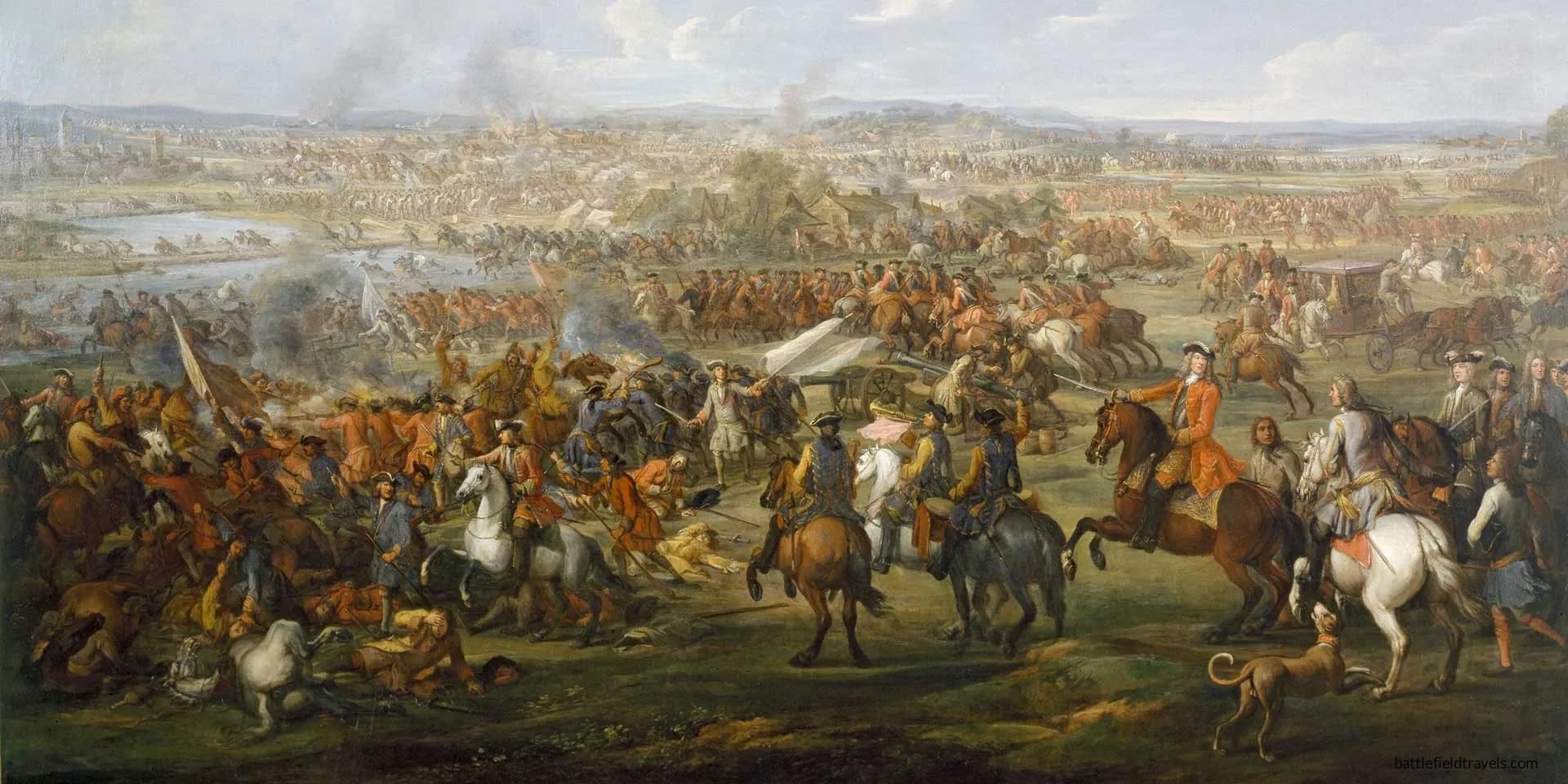
The Battle of Blenheim, 1704. Painting by John Wootton, circa 1743.
The Battle of Blenheim, 1704. Painting by John Wootton, circa 1743

Overview of the War of the Spanish Succession

The War of the Spanish Succession was one of the defining conflicts of early modern Europe, fought over the inheritance of the Spanish Empire following the death of Charles II in 1700.

At its core, the war was a struggle over the balance of power. The possibility that the Bourbon monarchy might unite France and Spain under a single dynasty posed a strategic threat to the rest of Europe. In response, a Grand Alliance—led by Britain, the Dutch Republic, and the Holy Roman Empire—formed to resist French expansion.

The war’s decisive campaigns were fought in the Low Countries, where Allied armies under John Churchill, 1st Duke of Marlborough, and Prince Eugene of Savoy confronted French forces in a series of highly mobile, tactically complex operations.

War of the Spanish Succession literature

Early writing on the war was dominated by grand narrative and biography, most notably the monumental account of John Churchill, 1st Duke of Marlborough, produced by Winston Churchill. These works emphasised leadership, character, and sweeping campaign narratives, presenting the war through the lens of great commanders and decisive battles. While rich in detail and narrative power, they often reflected the perspectives and assumptions of their time, placing less emphasis on structural factors such as coalition dynamics or operational constraints.

Later 20th-century scholarship began to place the conflict within a broader strategic and political context, examining the war as part of the longer struggle for the European balance of power. Historians increasingly focused on the interaction between diplomacy, finance, and military operations, moving beyond purely battlefield-driven accounts. This shift also brought greater attention to the complexity of coalition warfare, where Allied success depended not only on battlefield performance but on the coordination of multinational forces with differing priorities and capabilities.

Underexplored aspects

Despite these developments, the War of the Spanish Succession remains comparatively under-explored in one key respect: the interaction between terrain, perception, and decision-making at the point of contact. Many accounts describe what happened on the battlefield, but fewer examine how commanders read the ground, identify opportunities, and translate those observations into action under pressure.


Reading

The reference collection below includes the key books and references I have used in preparing for and undertaking battlefield studies all over the world.

War of the Spanish Succession in Europe

Marlborough: His Life And Times (Vol. 3)
In the first volume of this ambitious and stunningly written biography, Sir Winston S. Churchill discusses the early career and stratospheric rise of his illustrious, seventeenth century ancestor. John Churchill, the Duke of Marlborough, may have been eclipsed in history by his more well-known descendant, but in his time, Marlborough was considered one of England’s foremost military and political leaders. This first installment pays particular attention to personal details of Marlborough’s life, and the important role several women played in his success—including his sister, his wife, the Duchess of Cleveland, and Queen Anne herself.
War of the Spanish Succession: A History from Beginning to End (History of Spain)
The War of the Spanish Succession, which occurred between 1701 and 1714, was fought over who would succeed the childless King Charles II to the throne of Spain. During the early modern era, European countries were almost constantly at war, vying for land, resources, power, and wealth. The succession of the Spanish throne—and everything that came with it—had much of all of those things up for grabs; therefore all of Europe had much to gain, or lose, from the new Spanish ruler. By the end of the war, conflict in Europe was hardly over, but a new, dominant power had emerged.
The War of the Spanish Succession 1701–1714
The War of the Spanish Succession, fought between 1701 and 1714 to decide who should inherit the Spanish throne, was a conflict on an unprecedented scale, stretching across most of western Europe, the high seas and the Americas. Yet this major subject is not well known and is little understood. That is why the publication of James Falkner’s absorbing new study is so timely and important. In a clear and perceptive narrative he describes and analyses the complex political manoeuvres and a series of military campaigns which also involved the threat posed by Ottoman Turks in the east and Sweden and Russia in the north. Fighting took place not just in Europe but in the Americas and Canada, and on the high seas.
Sale
Queen Anne’s War: The Second Contest for North America, 1702–1713
Told from the halls of power in North America and Europe, and through the eyes of the men and women who found themselves embroiled in this brutal realignment of colonial interests, Queen Anne’s War recreates the world of early North American expansion at the ground level, providing riveting accounts of the battles across settlements and wilderness as well as the motives, conditions, triumphs, and failures of the Europeans and their respective Native American allies. Based on extensive primary source research and command of English, French, and Spanish sources, the narrative not only describes the economic and geopolitical ramifications of the war that reshaped North America, but intriguingly reveals the sense of independence emerging in the colonies, from Puritan New England to plantation South Carolina, at the close of the war.
Marlborough’s Campaigns & Battles: In the Netherlands, Germany & France during the War of Spanish Succession, 1702-11
First making its appearance, more or less unofficially, in support of the Dutch in their heroic efforts to free themselves from the Spanish yoke, Great Britain had then aided France in her conflict with Spain and had been finally drawn into the long and deadly struggle waged by William III. to protect the United Provinces from the aggression of Louis XIV. This was the stage upon which the great Duke of Marlborough led his army from victory to victory during the hard-fought campaigns of the War of the Spanish Succession. The names of those battles, – Blenheim, Ramillies, Oudenarde and Malplaquet -contested during this period, became iconic and adorn the flags of famous regiments. They made a national hero of the commander of those soldiers and cemented his reputation as one of the most accomplished generals in his nation’s history. Maycock’s readable and excellent work, written from an academic military perspective is enhanced by Belloc’s brilliant analysis of Blenheim taken from his ‘Battles’ series.

Marlborough’s War Machine 1702-1711
Blenheim, Ramilles , Oudenarde, Malplaquet – much has been written about the brilliant victories of the Duke of Marlborough’s Anglo-Dutch army over the armies of Louis XIV of France during the War of the Spanish Succession. Less attention has been focused on the men and the military organization that made these achievements possible – the soldiers, the commanders, the army structure and administration, the logistics, engineering, weapons and finance. That is why James Falkner’s penetrating account of the composition and operation of Marlborough’s army is of such value. His clear analysis gives a fascinating insight into Marlborough’s war machine and into the conduct of war in Europe 300 years ago.
Blenheim 1704: The Duke of Marlborough’s masterpiece (Campaign, 141)
Osprey’s study of the Blenheim campaign, Britiain’s defining battle of the War of the Spanish Succession (1701–1714). Combining one of history’s most audacious strategic manoeuvres with perhaps the greatest military victory ever won by a British commander, the Blenheim campaign is rightly considered the pinnacle of the career of John Churchill, Duke of Marlborough. On 13 August 1704, Marlborough and Prince Eugene of Savoy faced a Franco-Bavarian army threatening to knock Austria out of the War of the Spanish Succession. In a hard-fought battle Marlborough won a resounding victory, capturing Marshal Tallard and over 14,000 men. In this book John Tincey describes how Marlborough’s victory crushed his enemies, shattered the myth of French invincibility and laid the foundations for two centuries of British world dominance.


Frequently asked questions

Why is the War of the Spanish Succession less studied than later conflicts?

The war sits between more heavily studied periods, such as the wars of Louis XIV and the Napoleonic Wars, and lacks the national narratives that drive interest in later conflicts. As a result, it has attracted fewer popular histories, even though it was a major European war involving coalition warfare, global theatres, and significant battlefield developments.

What are the main themes in the literature on the war?

The literature has evolved from early biographical and narrative accounts—focused on commanders such as Marlborough—to broader studies of strategy, diplomacy, and coalition warfare. More recent work examines operational coordination, command structures, and the limits of control in early modern armies, although detailed analysis of terrain and battlefield perception remains limited.

What gaps still exist in the historiography of the war?

While campaign narratives and strategic studies are well covered, there is less emphasis on how battles were experienced and interpreted at ground level. In particular, the interaction between terrain, decision-making, and real-time command judgement is often underdeveloped, leaving scope for further battlefield-focused analysis.

Subscribe to Battlefield Travels and receive a free E-Book Battlefield Guide

Unlock expert battlefield analysis, campaign reconstructions, and historical insights drawn from firsthand exploration and primary sources.

🗺️ You’ll receive:

🎖️ Exclusive historical insights you won’t find elsewhere

📘 A free eBook: 10 Tips for Exploring Historic Battlefields

📰 New battlefield studies straight to your inbox as they are published


Selected works on the Napoleonic Wars

Battle of Waterloo, 18 June 1815 - the assault on La Haye Sainte @Knotel
Battle of Waterloo, 18 June 1815 – the assault on La Haye Sainte @Knotel

Overview of the Napoleonic Wars

The Napoleonic Wars (1803–1815) were the culmination of the upheaval unleashed by the French Revolution, pitting Napoleonic France against successive coalitions of European powers including Britain, Austria, Prussia, and Russia. Fought across a vast geographical arc—from the Iberian Peninsula to Central Europe, and from the Baltic to the plains of Russia—the wars combined mass conscription, sweeping manoeuvre, and increasingly sophisticated operational art.

Napoleon’s campaigns demonstrated the power of concentration, speed, and decisive battle, while his opponents gradually adapted, developing the coalition structures, logistics, and operational methods needed to defeat him.

Literary coverage

The literature of the Napoleonic Wars reflects both the scale of the conflict and the enduring fascination with its personalities and campaigns. Early accounts were often memoir-driven, written by participants such as officers and soldiers who sought to explain or justify their actions. These remain valuable for their immediacy and insight into command decisions, though they require careful reading.

Nineteenth- and early-twentieth-century historians then began to construct more formal campaign narratives, often focused on Napoleon himself, sometimes at the expense of his opponents. More recent scholarship has considerably broadened the perspective, examining coalition strategy, logistics, national military systems, and the experiences of ordinary soldiers. There is now a strong tradition of detailed operational and tactical studies, supported by maps, orders of battle, and increasingly critical use of primary sources.

An indirect outcome of the Napoleonic Wars was a sustained period of reflection on the nature and conduct of war itself. The scale, tempo, and political character of the conflict forced soldiers and statesmen to reconsider how wars were fought, organised, and understood. This gave rise to a parallel intellectual tradition, most notably in the works of Carl von Clausewitz and Baron Antoine Jomini, who sought to distil the lessons of the period into enduring principles. At the same time, reformers such as Scharnhorst and Gneisenau translated battlefield experience into institutional change, reshaping military organisation, education, and command systems. Together, these thinkers and practitioners ensured that the legacy of the Napoleonic Wars extended well beyond the battlefield, influencing military thought and practice throughout the nineteenth century and beyond.

The works in this reading list reflect that range—from classic memoirs and campaign histories to modern analytical studies. Together, they provide multiple lenses on the same campaigns: the decisions made at headquarters, the movement of armies across Europe, and the realities of combat on the ground


Reading

The reference collection below includes the key books and references I have used in preparing for and undertaking studies of the battlefields of the Napoleonic Wars

Napoleonic Wars

Sale
The Campaigns of Napoleon
The Campaigns of Napoleon is a masterful analysis and insightful critique of Napoleon’s art of war as he himself developed and perfected it in the major military campaigns of his career.
Sale
Napoleon: A Biography
This acclaimed biography of one history’s great figures—called “monumental” (Library Journal), “brilliant” (Times, London) and “a rounded and persuasive portrait” (New York Times)—is now available in a new edition. Napoleon Bonaparte’s character and achievements have always divided critics and commentators. In this compelling biography, Frank McLynn has drawn on exhaustive research and the most recent scholarship to throw a brilliant light on this most paradoxical of men—as military leader, lover, and emperor.
End of the Old Order: Napoleon and Europe, 1801–1805 (v)
The End of the Old Order is the first volume in a new and comprehensive four-volume study of Napoleon and Europe. Each volume in the series will surprise readers with a dramatically different tapestry of early nineteenth-century personalities and events and will revise fundamentally our ages-old understanding of the wars that created modern Europe.
An Illustrated Encyclopedia: Uniforms of the Napoleonic Wars: An unrivalled reference to the insignia, appearance and experience of the fighting men of the period (Military Uniforms)
The book’s main focus is the soldiers who fought the historic battles of the day, and the uniforms they wore. It was in this age of war that military uniforms flourished, with an astonishing array of flamboyance, colour and intricate detail. The cut and colour of uniforms were used for identification from afar by the generals directing battles from strategic viewpoints, but at this point in time were also given an extraordinary level of detail in facings, laces and buttons, which carried never-ending intricate differences to denote regiment, rank or division. With over 550 specially commissioned and expert colour artworks, each regiment is vividly portrayed here in all their glory. All the major nations involved in the conflict, France, Britain, Austria, Prussia and Russia, are covered in detail, and there is a section on the uniforms and contributions of the smaller forces, including those from America, Spain, Italy and Saxony

Waterloo

Sale
Waterloo: The History of Four Days, Three Armies, and Three Battles
From the New York Times bestselling author and master of martial fiction comes the definitive, illustrated history of one of the greatest battles ever fought—a riveting nonfiction chronicle published to commemorate the 200th anniversary of Napoleon’s last stand. On June 18, 1815 the armies of France, Britain and Prussia descended upon a quiet valley south of Brussels. In the previous three days, the French army had beaten the Prussians at Ligny and fought the British to a standstill at Quatre-Bras. The Allies were in retreat. The little village north of where they turned to fight the French army was called Waterloo. The blood-soaked battle to which it gave its name would become a landmark in European history. In his first work of nonfiction, Bernard Cornwell combines his storytelling skills with a meticulously researched history to give a riveting chronicle of every dramatic moment, from Napoleon’s daring escape from Elba to the smoke and gore of the three battlefields and their aftermath.
Sale
The Face of Battle: A Study of Agincourt, Waterloo, and the Somme
The Face of Battle is military history from the battlefield: a look at the direct experience of individuals at the “point of maximum danger.” Without the myth-making elements of rhetoric and xenophobia, and breaking away from the stylized format of battle descriptions, John Keegan has written what is probably the definitive model for military historians. And in his scrupulous reassessment of three battles representative of three different time periods, he manages to convey what the experience of combat meant for the participants, whether they were facing the arrow cloud at the battle of Agincourt, the musket balls at Waterloo, or the steel rain of the Somme.
Sale
Waterloo: June 18, 1815: The Battle for Modern Europe (Making History, 1)
With precision and elegance, Andrew Roberts lucidly sets the political, strategic, and historical scene before offering a breathtaking account of each successive stage of the battle. He also draws on a recently discovered document from 1854 that casts new light on just how the battle was lost. It is a confession from a French officer that helps to explain why the French cavalry charged when it did — unsupported by infantry or artillery, and headlong at well-defended British squares. It shows that accident rather than design may have led to the debacle that lost Napoleon the battle, the campaign, and the war. Authoritative and engrossing, Waterloo is a brilliant portrait of a legendary turning point in modern history, after which the balance of world power, the legend of Napoleon, and the art of war were never the same.

Austerlitz

Sale
Austerlitz 1805: The fate of empires (Campaign, 101)
This all-new volume chronicles the events that climaxed on the field of Austerlitz in one of the most famous battles of the Napoleonic Wars (1799-1815). Not only was it the first campaign that Napoleon waged as Emperor of France, but also the first great test for his Grande Armée. The Emperor himself regarded it as his greatest victory and it undoubtedly won him a mastery of Europe that would remain unbroken for almost a decade. Most accounts of the campaign have until now been based almost exclusively on French sources, but following extensive research in the Austrian archives Ian Castle is now able to provide a far more balanced account of Austerlitz. On June 18, 1815 the armies of France, Britain and Prussia descended upon a quiet valley south of Brussels. In the previous three days, the French army had beaten the Prussians at Ligny and fought the British to a standstill at Quatre-Bras. The Allies were in retreat. The little village north of where they turned to fight the French army was called Waterloo. The blood-soaked battle to which it gave its name would become a landmark in European history. In his first work of nonfiction, Bernard Cornwell combines his storytelling skills with a meticulously researched history to give a riveting chronicle of every dramatic moment, from Napoleon’s daring escape from Elba to the smoke and gore of the three battlefields and their aftermath.
Sale
1805 Austerlitz: Napoleon and the Destruction of the Third Coalition
Sometimes called The Battle of Three Emperors, Napoleon’s victory against the combined forces of Russia and Austria brought a decisive end to The War of the Third Coalition. The magnitude of the French achievement against a larger army was met by sheer amazement and delirium in Paris, where just days earlier the nation had been teetering on the brink of financial collapse. In 1805: Austerlitz, historian Robert Goetz demonstrates how Napoleon and his Grande Armée of 1805 defeated a formidable professional army that had fought the French armies on equal terms five years earlier. Goetz analyses the planning of the opposing forces and details the course of the battle hour by hour, describing the fierce see-saw battle around Sokolnitz, the epic struggle for the Pratzen Heights, the dramatic engagement between the legendary Lannes and Bagration in the north, and the widely misunderstood clash of Napoleon’s Imperial Guard and Alexander’s Imperial Leib-Guard. Goetz’s detailed and balanced assessment of the battle exposes many myths that have been perpetuated and even embellished in other accounts.
Sale
Napoleon’s Greatest Triumph: The Battle of Austerlitz
IN AUGUST 1805, Napoleon abandoned his plans for the invasion of Britain and diverted his army to the Danube Valley to confront Austrian and Russian forces in a bid for control of central Europe. The campaign culminated with the Battle of Austerlitz, regarded by many as Napoleon’s greatest triumph, whose far-reaching effects paved the way for French hegemony on the Continent for the next decade. In this concise volume, acclaimed military historian Gregory Fremont-Barnes uses detailed profiles to explore the leaders, tactics and weaponry of the clashing French, Austrian and Russian forces.
Napoleon and Austerlitz: The Glory Years 1805-1807 (Armies of the Napoleonic Wars Research Series)
A highly detailed combat study of Napoleon’s 1805 Ulm-Austerlitz campaigns, this book is based on exhaustive use of French archival research. Sweeping battle narrative, coupled with new, detailed maps and orders of battle make Napoleon and Austerlitz a must.

Invasion of Russia

Sale
With Napoleon in Russia: General Armand De Caulaincourt, Duke of Vicenza (Dover Military History, Weapons, Armor)
Born into a noble family with a strong military tradition, Armand de Caulaincourt had been Napoleon’s Ambassador to Russia; Minister for Foreign Affairs; political advisor; and during the disastrous Russian campaign, his personal aide. In this unique document—the first English translation of the original French manuscript—the French statesman presents a comprehensive picture of the supreme crisis of Napoleon’s career, with graphic accounts of the French army’s advance into Russia, the occupation of Moscow, and the horrors of retreat. “By far the most important addition to Napoleonic documentation published in modern times.”—The London Times
Sale
The Battle of Borodino: Napoleon Against Kutuzov (Campaign Chronicles)
On 7 September 1812 at Borodino, 75 miles west of Moscow, the armies of the Russian and French empires clashed in one of the climactic battles of the Napoleonic Wars. This horrific – and controversial – contest has fascinated historians ever since. The survival of the Russian army after Borodino was a key factor in Napoleon’s eventual defeat and the utter destruction of the French army of 1812. In this thought-provoking new study, Napoleonic historian Alexander Mikaberidze reconsiders the 1812 campaign and retells the terrible story of the Borodino battle as it was seen from the Russian point of view. His original and painstakingly researched investigation of this critical episode in Napoleon’s invasion of Russia provides the reader with a fresh perspective on the battle and a broader understanding of the underlying reasons for the eventual Russian triumph.
Sale
In the Legions of Napoleon: The Memoirs of a Polish Officer in Spain and Russia 1808-1813 (Napoleonic Library)
From 1808 to 1812 he was caught up in Napoleon’s attempt to subjugate Spain, fighting in battles, sieges – including the siege of Saragossa – and hunting and being hunted by merciless bands of guerrillas. In 1812 his unit took part in the crossing of the Niemen and the epic retreat from Moscow. In his extraordinary memoirs Brandt describes in great detail the actions in which he fought, the type of officers and men with whim he served, and the grueling campaigns in which they participated. He also gives fascinating insight into the minds of his comrades and superiors. This book is a must for every Napoleonic historian, enthusiast, and anyone who likes a good story of high adventure.

Peninsula War

Peninsular War: A New History by Charles Esdaile (2003-10-28)
“Drawing on first-hand accounts of the conflict, Esdaile paints an indelible picture of the cruelties of Napoleonic warfare. His vigorous writing, comprehensive analysis and even-handed judgments make this an indispensable treatment of one of the watersheds of European history.” —Publishers Weekly At the end of the eighteenth century, Spain remained one of the world’s most powerful empires. Thanks to a long period of enlightened absolutism, Portugal, too, was prosperous. But by 1808, everything had changed. Portugal was under occupation and ravaged by famine, disease, economic problems and political instability. Spain had imploded and worse was to come. For the next six years, the Iberian Peninsula, for three centuries a byword for religious and military aggression, became itself the helpless victim of others, suffering perhaps over a million deaths while troops from all over Europe tore it to pieces.
Wellington in the Peninsula 1808-1814 (Napoleonic Library)
The author of Wellington at Waterloo delivers an in-depth history of the military commander’s tactics and strategy in the Peninsular War. After gaining strategic and tactical experience in Colonial India, Arthur Wellesley went to battle against French forces in the Peninsular War. With his decisive victories there, he ascended to the peerage of the United Kingdom as the 1st Duke of Wellington. Inthis volume, historian Jac Weller delivers a complete account of Wellington’s career on the Iberian Peninsula, covering all the battles in which he took part. Talavera, The battles of Busaco, Salamanca and Vitoria are among the famous conflicts Weller brings to life in the lively chronicle, combining meticulous research with extensive visits to the historic battlefields.

Italian Campaign

Sale
Napoleon’s 1796 Italian Campaign
Carl von Clausewitz (1780–1831) is best known for his masterpiece of military theory On War, yet that work formed only the first three of ten volumes of his published writings. The others, historical analyses of the wars that roiled Europe from 1789 through 1815, informed and shaped Clausewitz’s military thought, so they offer invaluable insight into his dialectical, often difficult theoretical masterwork. Among these historical works, perhaps the most important is Napoleon’s 1796 Italian Campaign, which covers a crucial period in the French Revolutionary Wars. During this campaign the young, largely unknown Corsican, in his first command, led the French Army to triumph over the superior forces of the Austrian and Sardinian Armies.
Marengo 1800: Napoleon’s day of fate (Campaign, 70)
Osprey’s study of the campaign at Marengo in 1800 during the Napoleonic Wars (1799-1815). Having returned from Egypt and seized power as First Consul, Napoleon led the Army of the Reserve against the Austrian Army besieging Genoa. After a period of skirmishing and manoeuvring, Melas, the Austrian commander, launched a surprise attack on the morning of 14 June. The attack initially drove the French back to Marengo village and, despite committing the Consular Guard, by 3pm the French were retreating. Believing he had won, the wounded Melas left the field to his Chief-of-Staff, Zach. The timely arrival of Desaix’s Division led by Kellerman’s cavalry and the 9e Légère threw the Austrians into confusion, turned the battle in Napoleon’s favour, thus securing his position as First Consul. It could have been very different.
Sale
Napoleon’s Campaigns in Italy (Men-at-Arms Book 257)
The French Revolution had resulted in major changes in the military system, conscription created a national army and new tactics and initiatives allowed an officer of such promise as Napoleon to rise quickly through the ranks. By 1796 he was the general commanding the French in Italy and at the conclusion of fourteen months campaigning he was the decisive military personality of his age. Philip Haythornthwaite examines Napoleon’s campaigns in Italy, and the uniforms of his soldiers are illustrated in eight colour plates by Richard Hook.

War Theorists inspired by Napoleon

War theory - Clausewitz

On War by Carl von Clausewitz 

Clausewitz’s unfinished masterpiece remains the cornerstone of modern strategic thought. Drawing on his experience in the Napoleonic Wars, Clausewitz explored the nature of war as a political instrument, shaped by uncertainty, friction, moral forces, and the reciprocal interaction between opposing wills. Far from a simple manual, On War is a philosophical examination of how war is used as an instrument of policy and why wars unfold as they do.

Clausewitz underpins almost every aspect of BattlefieldTravels methodology: analysing command friction on RC4, the fog of war at Spion Kop, moral forces at Patay, or decisive engagement dynamics at Leuthen. His emphasis on war as a continuation of policy aligns directly with your strategic-context sections, while his insights on uncertainty inform your terrain-based interpretations of decision-making.

War theory - Jomini

The Art of War by Baron de Antoine Henri Jomini

Baron Antoine-Henri Jomini was the most influential military theorist of the 19th century, shaping the education, operational thinking, and campaign planning of an entire generation of commanders. Drawing on his service under both Napoleon and Tsar Alexander I, Jomini sought to distil the “science” of warfare into clear, prescriptive rules. Summary of the Art of War outlines his central ideas: lines of operation, bases, decisive points, interior lines, the importance of concentration, and the strategic offensive supported by tactical defensive advantage. Jomini wrote with the confidence of someone convinced that warfare followed predictable, almost geometric principles.

His ideas dominated the West Point curriculum throughout the 19th century, ensuring that American Civil War commanders — Grant, Lee, McClellan, Sherman, Jackson, Longstreet — absorbed a Jominian worldview. Concepts such as selecting a decisive point, operating on interior lines, and ensuring concentration at the critical moment permeate their campaigns, for better or worse.

Beyond the United States, Jomini shaped the strategic thought of Prussia, Austria, Russia, France, and even influenced early Meiji Japan. His belief that victory flowed from the correct application of universal principles made him particularly attractive to states seeking to systematise professional military education.


📚 Further Reading

This battle study nests within the broader analytical framework explored in the Research Hub, where operational methods, operating environments, armies, commanders, and weapons are examined across conflicts and eras. The links below connect related studies across the wider body of battlefield analysis on the BattlefieldTravels site.

⚔️ Explore all battle studies from the Revolutionary and Napoleonic Wars (1792-1815)

🏛️Explore the museum of Napoleonic Wars weapons and equipment

The book list for this conflict includes the finest campaign studies, memoirs, and operational analyses available on the Indochina War, in both French and English, selected specifically to complement this battlefield study.

📚French Revolutionary Wars and Napoleonic Wars – Recommended Reading

🗞️ For updates on new battlefield studies and research insights, you can subscribe to the Newsletter.


FAQ – Napoleonic Wars Reading Room

What are the best starting points for studying the Napoleonic Wars?

A good starting point is a clear campaign overview or general history that explains the sequence of wars and major turning points. From there, readers can move into more detailed studies of specific campaigns such as Austerlitz, the Peninsular War, or the 1812 invasion of Russia.

Are memoirs from the Napoleonic Wars reliable?

Memoirs are invaluable for their immediacy and insight into battlefield experience and command decisions. However, many were written years later and can reflect personal bias or selective memory. They are best read alongside modern analytical works and other primary sources.

Do these books focus only on Napoleon?

No. While Napoleon is central, modern scholarship places increasing emphasis on his opponents, coalition warfare, and the broader systems that sustained the conflict. This includes the roles of Wellington, Blücher, and the Austrian and Russian armies.

How important is terrain in understanding these campaigns?

Terrain is critical. Many of the decisive moments in the Napoleonic Wars—deployment, manoeuvre, and the timing of attacks—are shaped by ground features that are not always obvious on maps. Studying terrain alongside the narrative provides a much deeper understanding of how battles were fought and won.


Subscribe to Battlefield Travels and receive a free E-Book Battlefield Guide

Unlock expert battlefield analysis, campaign reconstructions, and historical insights drawn from firsthand exploration and primary sources.

🗺️ You’ll receive:

🎖️ Exclusive historical insights you won’t find elsewhere

📘 A free eBook: 10 Tips for Exploring Historic Battlefields

📰 New battlefield studies straight to your inbox as they are published

Reconstructing War of 1812 battlefields through terrain analysis, primary sources and on-site research

The Canadian Voltigeurs engaging US forces during the battle of Chateauguay, 26 October 1813.

Walking the battlefields of the War of 1812

Origins of the war

The War of 1812 (1812–1815) was a complex, multi-theatre conflict fought between the United States, the British Empire, Canadian militia forces and Indigenous nations whose alliances and strategic decisions shaped the course of the war. Often overshadowed by the Napoleonic Wars happening simultaneously in Europe, the War of 1812 unfolded across thousands of kilometres of forests, lakes, rivers and coastal regions in North America, where geography, small armies and rapid movements produced intensely contested campaigns.

Theatres of war

Along the Canadian–American frontier, the war opened with U.S. invasions aimed at securing Upper and Lower Canada. Early actions at Detroit, Queenston Heights and York highlighted the importance of river crossings, militia mobilisation and the decisive role played by Indigenous warriors under leaders such as Tecumseh. As the conflict intensified, battles around the Niagara Peninsula — including Stoney Creek, Chippawa, Lundy’s Lane and Fort Erie — developed into hard-fought engagements where both sides struggled for control of key roads, ridges and fortified positions. An 1813 American advance on Montreal was blunted at the battles of Chateauguay and Crysler’s Farm.

To the west, fighting spread across the Great Lakes and the vast interior regions between Lake Erie and the Mississippi River. Control of the lakes became a strategic priority, leading to major naval actions such as the Battle of Lake Erie, where American victory reshaped the theatre and enabled the recapture of Detroit and the pursuit of British and Indigenous forces into the Thames Valley.

On the Atlantic seaboard, the war took a different form. British naval supremacy allowed raids along the coast, culminating in the 1814 assault on Washington, including the burning of public buildings. Yet American forces successfully defended key positions such as Baltimore, where the stand at Fort McHenry inspired the Star-Spangled Banner.

Final battles

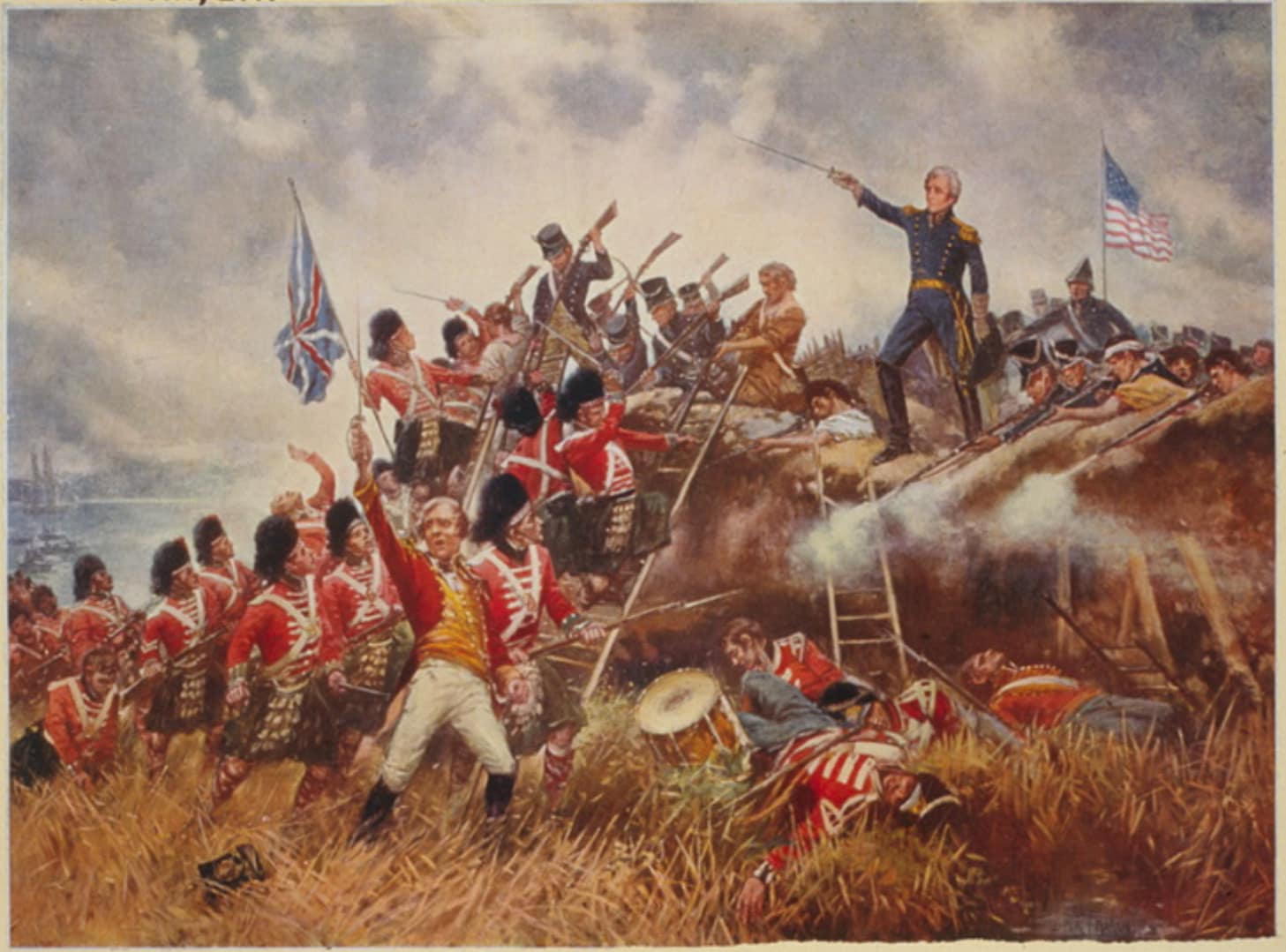
The war’s final major action occurred far to the south at New Orleans, where Andrew Jackson’s mixed force of regulars, militia, free men of colour and frontiersmen repelled a seasoned British army in one of the conflict’s most dramatic battles — fought after the peace treaty had already been signed.

This collection of battlefield studies examines these diverse campaigns through period maps, contemporary accounts and on-site exploration, revealing how geography, logistics, alliances and leadership shaped the war’s shifting fortunes.


Battle Studies in the War of 1812

Below are all current BattlefieldTravels studies for the War of 1812, covering key battles, campaign phases and associated sites. New studies are added as further battlefields are walked and analysed.


What major theatres are covered in the War of 1812 collection?

The page covers the Canadian–American frontier, Great Lakes naval campaigns, Atlantic coastal raids and southern battles such as New Orleans.

Which battles are included or planned?

Studies include New Orleans, with future coverage planned for Detroit, Queenston Heights, Lundy’s Lane, Fort Erie, Lake Erie, Baltimore and other key engagements.

Why was the War of 1812 significant?

It shaped national identities in the United States and Canada, influenced Indigenous sovereignty, and marked the final Anglo-American conflict before lasting peace.

How did terrain influence the War of 1812?

Dense forests, rivers, ridgelines and lakes dictated movement, supply and defensive positions, making local knowledge and naval control crucial.

Are these battlefields still visitable today?

Many sites — including Queenston Heights, Fort Erie, Baltimore and New Orleans — retain key features and are preserved as national parks or historic sites.


Subscribe to Battlefield Travels and receive a free E-Book Battlefield Guide

Unlock expert battlefield analysis, campaign reconstructions, and historical insights drawn from firsthand exploration and primary sources.

🗺️ You’ll receive:

🎖️ Exclusive historical insights you won’t find elsewhere

📘 A free eBook: 10 Tips for Exploring Historic Battlefields

📰 New battlefield studies straight to your inbox as they are published


Selected works on the War of the League of Cambrai

War of the League of Cambrai

Overview of the War of the League of Cambrai

The War of the League of Cambrai (1508–1516) was a dynastic conflict at the height of the Italian Wars, pitting major European powers against one another for dominance in northern Italy. Initially, Pope Julius II forged the League of Cambrai—a rare alignment of France, the Papacy, the Holy Roman Empire, and Spain—to break the Republic of Venice’s influence on the mainland. Early French successes, notably at Agnadello (1509), forced Venice from much of Lombardy, but the alliance soon unravelled as Julius II redirected his policy toward resisting French expansion. The result was a sequence of realignments, from the Holy League against France to subsequent Franco-Imperial and Franco-English hostilities, each phase marked by rapid campaigns, sieges, and battles such as Ravenna (1512) and Marignano (1515), and the Battle of Flodden (1513). By the end of the war, France under Francis I had regained a dominant position in northern Italy, but no power achieved lasting supremacy. The conflict exemplified the diplomacy, manoeuvre, and military innovation characteristic of the early 16th century.


Reading

The reference collection below includes the key books and references I have used in preparing for and undertaking studies of battlefields of the War of the League of Cambrai.

The War of the League of Cambrai

Sale
Fatal Rivalry: Flodden, 1513: Henry VIII and James IV and the Decisive Battle for Renaissance Britain
In Fatal Rivalry, George Goodwin, the best-selling author of Fatal Colours, captures the vibrant Renaissance splendor of the royal courts of England and Scotland, with their unprecedented wealth, innovation, and artistic expression. He shows how the wily Henry VII, far from the miser king of tradition, spent vast sums to secure his throne and elevate the monarchy to a new standard of magnificence among the courts of Europe. He demonstrates how James IV competed with the elder Henry, even claiming that Arthurian legend supported a separate Scottish identity. Such rivalry served as a substitute for war―until Henry VIII’s belligerence forced the real thing. As England and Scotland scheme toward their biggest-ever battle, Goodwin deploys a fascinating and treacherous cast of characters: maneuvering ministers, cynical foreign allies, conspiring cardinals, and contrasting queens in Katherine of Aragon and Margaret Tudor. Finally, at Flodden on September 9, 1513, King James seems poised for the crushing victory that will confirm him as Scotland’s greatest king and―if an old military foe proves unable to stop him―put all of Britain in his grasp. Five hundred years after this decisive battle, Fatal Rivalry combines original sources and modern scholarship to re-create the royal drama, the military might, and the world in transition that created this bitter conflict. 8 pages of color; 8 pages black-and-white illustrations
Flodden 1513: Scotland’s greatest defeat (Campaign, 168)
Osprey’s examination of the Battle of Flodden, in which the Scottish and English armies clashed on 9 September 1513. The Scots were superior in terms of artillery and well-trained in the new Renaissance tactics, whereas the English deployed more traditional methods. Historically, this battle is well-known as the last in which the longbow played a role and the first in which artillery had a considerable effect. Recognized as the greatest Scottish defeat in history, it resulted in the death of Scotland’s king. It plunged the country into mourning and extinguished Scotland’s threat to Henry VIII’s reign for the next three decades. This book examines battle, the different tactics of the opposing armies and the personalities of the commanders.


Subscribe to Battlefield Travels and receive a free E-Book Battlefield Guide

Unlock expert battlefield analysis, campaign reconstructions, and historical insights drawn from firsthand exploration and primary sources.

🗺️ You’ll receive:

🎖️ Exclusive historical insights you won’t find elsewhere

📘 A free eBook: 10 Tips for Exploring Historic Battlefields

📰 New battlefield studies straight to your inbox as they are published


Selected works on the Thirty Years War

Thirty Years War - The Battle of Rocroi, 19 May 1643. Scene from the 2006 movie 'Alatriste'
Thirty Years War – The Battle of Rocroi, 19 May 1643. Scene from the 2006 movie ‘Alatriste’

Understanding Europe’s defining early-modern conflict through its historians

The Thirty Years’ War has attracted some of the richest and most contested scholarship in early-modern military history. Because the conflict spans religion, politics, dynastic ambition, state formation, and military revolution, no single narrative can fully capture its complexity. Instead, historians have approached the war through multiple lenses — confessional conflict, geopolitical rivalry, fiscal-military pressures, and the evolution of tactics and command — creating a diverse literature that rewards careful reading.

Modern understanding of the war owes much to the work of historians such as Geoffrey Parker, Peter Wilson, C. V. Wedgwood, and Günther Franz. Wedgwood’s The Thirty Years War remains a highly readable classic, notable for its narrative sweep and human focus. Parker’s contributions, especially on the “military revolution” thesis, explore how gunpowder, fortifications, logistics and state capacity shaped the conflict’s campaigns. Peter Wilson’s Europe’s Tragedy stands today as the most comprehensive single-volume study, synthesising political, social, and operational perspectives across the entire war.

Specialist works deepen this picture. Studies of Gustavus Adolphus and the Swedish army—by scholars such as Michael Roberts and William Guthrie—highlight reforms in drill, firepower, linear tactics, and combined arms. Others focus on the Imperial and Catholic League systems, exploring how commanders like Tilly and Wallenstein balanced recruitment, finance, and manoeuvre in a fragmented political landscape. Research into the socioeconomic impact of the war, including depopulation, famine and the burdens of billeting, has reshaped understanding of how early-modern armies operated and endured.

For readers exploring the battles themselves, the Thirty Years’ War offers fertile ground for comparing doctrine, organisation and the influence of terrain—from the wooded ridges at Lützen to the fortified towns of the Rhineland and the open manoeuvre spaces of northern Germany. The literature gathered here provides both entry points and advanced studies, helping readers engage with one of Europe’s most transformative and devastating conflicts.


Reading

The reference collection below includes the key books and references I have used in preparing for and undertaking studies of battlefields of the Thirty Years War.

The Thirty Years War

The Thirty Years War 1st (first) edition Text Only
A deadly continental struggle, the Thirty Years War devastated seventeenth-century Europe, killing nearly a quarter of all Germans and laying waste to towns and countryside alike. Peter Wilson offers the first new history in a generation of a horrifying conflict that transformed the map of the modern world.When defiant Bohemians tossed the Habsburg emperor’s envoys from the castle windows in Prague in 1618, the Holy Roman Empire struck back with a vengeance. Bohemia was ravaged by mercenary troops in the first battle of a conflagration that would engulf Europe from Spain to Sweden. The sweeping narrative encompasses dramatic events and unforgettable individuals—the sack of Magdeburg; the Dutch revolt; the Swedish militant king Gustavus Adolphus; the imperial generals, opportunistic Wallenstein and pious Tilly; and crafty diplomat Cardinal Richelieu. In a major reassessment, Wilson argues that religion was not the catalyst, but one element in a lethal stew of political, social, and dynastic forces that fed the conflict.By war’s end a recognizably modern Europe had been created, but at what price? The Thirty Years War condemned the Germans to two centuries of internal division and international impotence and became a benchmark of brutality for centuries. As late as the 1960s, Germans placed it ahead of both world wars and the Black Death as their country’s greatest disaster.An understanding of the Thirty Years War is essential to comprehending modern European history. Wilson’s masterful book will stand as the definitive account of this epic conflict.
Sale
Gustavus v Wallenstein: Military Revolution, Rivalry and Tragedy in the Thirty Years War
The conflict, personal rivalry and contrast in personality, generalship and command, between the two iconic commanders in the Thirty Years War, King Gustavus Adolphus of Sweden for the Protestant powers, and Albrecht von Wallenstein, Duke of Friedland. More than just commanders at the tactical level they were statesmen, military organizers and strategists on a continental scale. Both commanders represented the 17th-century ‘military revolution in action’. The writing is vivid, graphic and detailed, without overloading, and readers can feel ‘involved’ in the action, from strategic planning to battlefield tactics, and even the melee. Both generals are titanic figures come, and their respective deaths – Gustavus heroically in battle and Wallenstein, murdered with the Emperor’s compliance – were dramatic highpoints in the long war. This is no hagiography, and the author analyses the contrasting reputations of two of the greatest military figures in modern history and analyses mistakes as well their triumphs.
Rocroi 1643 (Men and Battles)
Fought on 19 May 1643 between the French army of the Duc d’Enghien and the Spanish army under Francisco de Melo, Rocroi is probably one of the most controversial battles in the long period of conflict between the kingdoms of France and Spain. The numerous sources, be they official accounts, memoirs, or correspondence, most often contradict each other. The principal controversy of this battle, far from being anecdotal, concerns the French right flank, placed under the direct command of Louis II de Bourbon, the Duc d’Enghien. The version generally accepted by historians of French sources affirms that the cavalry of Gassion overthrew and quickly pushed back the first Spanish companies, eventually defeating them. However, Spanish sources, defended by historians beyond the Pyrenees, contend that the cavalry of the Duc d’Albuquerque, opposing that of Gassion and Enghien, broke through the squadrons and two infantry regiments of the French advanced guard on two occasions! Thus, there exist today two battles of Rocroi: the one found in Spanish works and the one found in numerous French works.


Frequently asked questions

What are the best introductory books on the Thirty Years’ War?

Excellent entry points include C. V. Wedgwood’s classic The Thirty Years War and Peter Wilson’s comprehensive Europe’s Tragedy. Both provide broad context, clear campaigning narratives and strong overviews of the political and religious dynamics.

Which modern historians offer the most authoritative analysis?

Which modern historians offer the most authoritative analysis?

Why do historians disagree about the causes of the Thirty Years’ War?

Interpretations differ because the war intersects religion, dynastic rivalry, territorial ambition and the balance of power in early-modern Europe. Historians place varying emphasis on these factors, resulting in differing explanations for why the conflict escalated and endured.

How did Gustavus Adolphus influence military development?

Gustavus Adolphus introduced reforms in drill, firepower, linear tactics and combined arms that gave Sweden temporary battlefield superiority. Historians debate the extent of his innovations, but most agree that his approach accelerated changes in early-modern warfare.

How reliable are contemporary sources for studying the Thirty Years’ War?

Many contemporary accounts are partisan or limited in scope. Modern historians cross-reference chronicles with administrative records, correspondence, archaeological evidence and logistical data to produce more accurate interpretations of campaigns and command decisions.


Subscribe to Battlefield Travels and receive a free E-Book Battlefield Guide

Unlock expert battlefield analysis, campaign reconstructions, and historical insights drawn from firsthand exploration and primary sources.

🗺️ You’ll receive:

🎖️ Exclusive historical insights you won’t find elsewhere

📘 A free eBook: 10 Tips for Exploring Historic Battlefields

📰 New battlefield studies straight to your inbox as they are published


Selected works on the Spanish Conquest of the New World

The Spanish Conquest of the New World - The Famous Thirteen by Juan Lepiani 1536
The Spanish Conquest of the New World – The Famous Thirteen by Juan Lepiani 1536

Overview of the Spanish Conquest of the New World

The Spanish Conquest of the New World was one of history’s most rapid and transformative military campaigns. Following Columbus’s first voyage in 1492, successive expeditions under conquistadors such as Hernán Cortés and Francisco Pizarro extended Spanish authority across the Caribbean, Mexico, and South America. Driven by a fusion of royal ambition, personal enrichment, and religious zeal, the conquistadors combined Renaissance military organisation, seafaring skill, and firearms with indigenous alliances and ruthless opportunism.

In 1519, Cortés landed in Mexico with fewer than six hundred men, forging a coalition of discontented tribes to overthrow the Aztec Empire at Tenochtitlán by 1521. Pizarro’s capture of the Inca ruler Atahualpa at Cajamarca in 1532 and his defeat of Manco Inca’s rebellion repeated the pattern on an even grander scale. Steel weapons, horses, and cannon provided tactical advantage, but disease, political division, and calculated diplomacy were equally decisive.

By the 1570s, Spanish rule extended from northern Mexico to Chile, supported by a colonial bureaucracy and missionary infrastructure. The conquests redefined global power, transferring vast wealth to Europe and initiating centuries of demographic and cultural change. Yet they also generated enduring debate over the morality of empire and the destruction of indigenous civilisations. The Spanish Conquest remains a study in audacity, logistics, and asymmetric warfare at the dawn of the modern world.


Reading

The reference collection below includes the key books and references I have used in preparing for and undertaking studies of battlefields in the New World.

The Inca Empire

The Inca Empire: An Enthralling Overview of the Incas, Their Civilization in Ancient Peru, and the Spanish Conquest (Mesoamerica)
For the Incas, death didn’t exist; it simply took the dead to a different plane of life. So, the mummies of their emperors were treated as people; they were given food and drink and even visited each other ceremoniously. They also owned country estates, which generated enough profits to keep them in the style to which they were accustomed. This might sound like a curiosity, but this form of ancestor worship was central to the Inca culture and to the history of the Inca Empire, which stretched from Ecuador and Colombia in the north to Chile in the south. Everyone has seen pictures of one of the Incas’ greatest achievements: the mountain-top wonder of Machu Picchu. But Inca history has always been told by the Spanish colonizers who conquered them since the Inca had no formal writing. Now, archaeology is giving us more information on how the Inca really lived, helping us differentiate real history from myth and propaganda. In this book, you will discover how the Inca created an expansive empire in just a century and why that civilization crumbled so fast once the Spanish arrived. You’ll also discover the following: How the Inca civilization developed out of a number of preceding cultures in the Andes and Peruvian coast; How quickly the Incas were able to expand and why they needed to; How the empire was administered and how runners were able to take messages from one end of it to the other with remarkable speed; The amazing Inca infrastructure program, which included building roads through mountain ranges and across raging rivers; Why Inca cuisine included tasty guinea pigs and llama jerky; Why there were never more than a few thousand actual Inca in the Inca Empire; The religion and beliefs of the Inca and how they developed over time to support the empire’s mission; How just a couple of hundred Spanish adventurers managed to conquer and subdue the Inca Empire; How much Inca culture is left in Peru and Bolivia today; And so much more! Scroll up and click the “add to cart” button to learn more about the fascinating Inca Empire!
Sale
Lost City of the Incas (Phoenix Press)
A special illustrated edition of Hiram Bingham’s classic work captures all the magnificence and mystery of the amazing archeological sites he uncovered. Early in the 20th century, Bingham ventured into the wild and then unknown country of the Eastern Peruvian Andes–and in 1911 came upon the fabulous Inca city that made him famous: Machu Picchu. In the space of one short season he went on to discover two more lost cities, including Vitcos, where the last Incan Emperor was assassinated.
Sale
The Last Days of the Incas
In 1532, the fifty-four-year-old Spanish conquistador Francisco Pizarro led a force of 167 men, including his four brothers, to the shores of Peru. Unbeknownst to the Spaniards, the Inca rulers of Peru had just fought a bloody civil war in which the emperor Atahualpa had defeated his brother Huascar. Pizarro and his men soon clashed with Atahualpa and a huge force of Inca warriors at the Battle of Cajamarca. Despite being outnumbered by more than two hundred to one, the Spaniards prevailed—due largely to their horses, their steel armor and swords, and their tactic of surprise. They captured and imprisoned Atahualpa. Although the Inca emperor paid an enormous ransom in gold, the Spaniards executed him anyway. The following year, the Spaniards seized the Inca capital of Cuzco, completing their conquest of the largest native empire the New World has ever known. Peru was now a Spanish colony, and the conquistadors were wealthy beyond their wildest dreams.

The Aztec Empire

The Mayans


FAQ – Spanish Conquest of the New World

How were the books in this Spanish Conquest of the New World reading list selected?

This reading list is curated to prioritise works that examine the Spanish conquests through primary sources, operational realities, and decision-making under unfamiliar conditions. Emphasis is placed on studies that address terrain, logistics, indigenous political structures, weapons, and command relationships, rather than purely triumphalist or legend-driven narratives.

Does this reading list focus only on famous figures such as Cortés and Pizarro?

While key commanders inevitably feature, the list also includes works that explore broader Spanish expeditionary methods, indigenous responses, coalition warfare, and the structural factors—terrain, disease, logistics, and local alliances—that shaped outcomes beyond individual leadership.

How important was terrain to the Spanish conquests?

Terrain was a decisive factor. Dense jungles, mountain passes, causeways, lakeside cities, and river systems shaped movement, communication, and combat. Many Spanish successes and failures can only be understood by examining how commanders interpreted and exploited unfamiliar terrain, often with indigenous guides and allies.

Are these books suitable for readers new to the subject?

The list includes a mix of accessible overviews and more specialised academic studies. Readers new to the topic may wish to begin with the general works before moving on to campaign- or region-specific titles.

Is this intended to be a complete bibliography of the Spanish conquests?

No. This is a selective reading list intended to guide serious study rather than provide exhaustive coverage. Additional works may be added as research perspectives evolve and new scholarship emerges.


Subscribe to Battlefield Travels and receive a free E-Book Battlefield Guide

Unlock expert battlefield analysis, campaign reconstructions, and historical insights drawn from firsthand exploration and primary sources.

🗺️ You’ll receive:

🎖️ Exclusive historical insights you won’t find elsewhere

📘 A free eBook: 10 Tips for Exploring Historic Battlefields

📰 New battlefield studies straight to your inbox as they are published


Selected works on Medieval Warfare

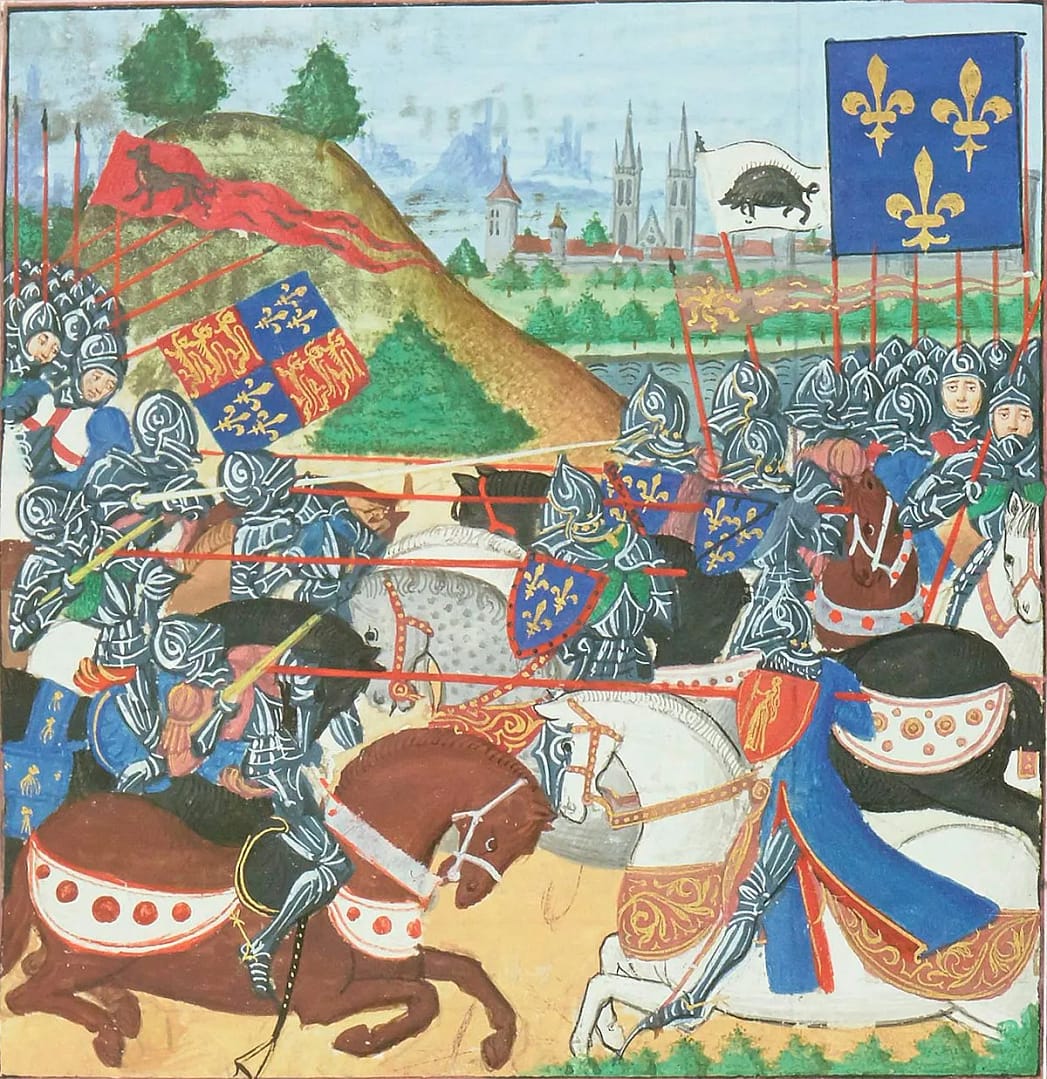
Medieval warfare - English and French forces clash at Patay, 18 June 1429.
Medieval warfare – English and French forces clash at Patay, 18 June 1429.

Understanding a thousand years of conflict through the historians who shaped the field

The study of medieval warfare spans more than a millennium of military, social and technological change, and its literature reflects the diversity and complexity of that evolution. Rather than a single historical arc, scholars have approached the medieval conflicts through multiple lenses: feudal obligation, chivalric culture, technological innovation, religious motivation, and the gradual emergence of centralised states. The result is a rich body of work that helps modern readers move beyond stereotypes of knights and castles to understand how and why medieval armies actually fought.

Much of the foundational scholarship centres on the structure of feudal military service, the development of the knightly class, and the shifting balance between cavalry, infantry and missile troops. Authors such as R. C. Smail, Hans Delbrück, and Charles Oman helped frame early academic debates, analysing the limitations of feudal levies and the tactical patterns visible from Hastings to the Crusades. More recent historians — including John France, Matthew Bennett, Christopher Gravett and David Nicolle — have brought sharper focus to campaign logistics, siegecraft, and the influence of terrain on medieval operations.

For the later Middle Ages, works by Jonathan Sumption, Anne Curry, Bertrand Schnerb, and Kelly DeVries offer detailed examinations of the Hundred Years’ War, exploring everything from longbow tactics at Crécy and Agincourt to the political and social factors behind shifting battlefield fortunes. Their studies also show how professionalism, paid armies and gunpowder warfare began to eclipse older feudal structures. On the eastern frontiers, the military histories of the Byzantine Empire and the Mongol conquests — illuminated by scholars such as John Haldon and Timothy May — reveal very different tactical systems and strategic cultures.

Together, these authors present a layered picture of medieval warfare: a world where faith, feudalism, technology, and emerging state power shaped how campaigns were fought and remembered. The Reading Room selections gathered here provide entry points into that vast scholarship, helping readers understand not just the battles themselves, but the historians and interpretations that define our modern understanding of the medieval battlefield.


Reading

The reference collection below includes the key books and references I have used in preparing for and undertaking studies of medieval battlefields.


Hundred Years War

Agincourt: The King; the Campaign; the Battle
In this landmark study of Agincourt, prize-winning author Juliet Barker draws upon a huge range of sources, published and unpublished, English and French, to give a compelling account of a battle upon which so many legends have been built. But she also looks behind the action on the field to paint a portrait of the age. A mad king, murderous dukes, scheming bishops, knightly heroes, surgeons, heralds, spies and pirates- the story of Agincourt has them all.
Sale
1415 Agincourt: A New History
a night fell in Picardy on Thursday 24 October 1415, Henry V and his English troops, worn down by their long march in search of a crossing of the Somme, can only have dreamt that the battle of the next day would be remembered as one of the most momentous victories ever won. Six hundred years down the line, the battle of Agincourt still rings through the centuries. In this stupendous victory English and Welsh archers who formed the bulk of Henry’s army prevailed against large numbers of French men-at-arms and cavalry. This startling and revisionist history recreates the campaign and battle from the perspectives of the English. Acclaimed as one of the best battle accounts ever published, Anne Curry has updated her classic work in honour of the 600th anniversary of Agincourt.
Personal Recollections Of Joan Of Arc – Volume 2: By Mark Twain – Illustrated
Personal Recollections of Joan of Arc, by the Sieur Louis de Conte is an 1896 novel by Mark Twain that recounts the life of Joan of Arc. It is Twain’s last completed novel, published when he was 61 years old.The novel is presented as a translation of memoirs by Louis de Conte, a fictionalized version of Joan of Arc’s page, Louis de Contes. The novel is divided into 3 sections according to Joan of Arc’s development: a youth in Domrémy, a commander of the army of Charles VII of France, and a defendant at trial in Rouen.Originally, the novel was published as a serialization in Harper’s Magazine beginning in April 1895. Twain, aware of his reputation as a comic, asked that each installment appear anonymously so that readers will treat the piece seriously. Regardless, his authorship soon became known, and the book edition published by Harper and Brothers in May 1896 credited Mark Twain.
French Armies of the Hundred Years War : 1328-1429 (Men-At-Arms Series, 337)
The fourteenth and fifteenth centuries were a time of great upheaval for medieval France. In 1328 the Capetian line came to an end. This was the trigger for the Hundred Years War (1337-1453) as successive English kings attempted to uphold their claim to the French throne. Catastrophic defeats at Crécy and Poitiers shook the French kingdom to its core. A period of respite followed under Bertrand du Guesclin, but an even more devastating assault was to follow, under the warrior-king par excellence Henry V, and the French disintegration continued until 1429. This book details how the French began a recovery, partly triggered by the young visionary Joan of Arc, that would end with them as the major European military power.
Orleans 1429: France Turns the Tide (Praeger Illustrated Military History)
In 1415 King Henry V of England invaded France and won an overwhelming victory at the Battle of Agincourt. Following his victory, the English conquered a large part of northern France, and by 1429 were besieging the city of Orleans. In this darkest hour, France’s fortunes were transformed by the inspirational leadership of a young woman, Jeanne d’Arc (Joan of Arc). Within four months the French had broken the siege and won a great victory at the battle of Patay over the previously invincible English.

The Crusades

The Crusades: The Authoritative History of the War for the Holy Land
A one-volume history of the Crusades to the Holy Land – telling this fascinating and bloody story from both Christian and Muslim perspectives for the first time.
Saladin
Saladin remains one of the most iconic figures of his age. As the man who united the Arabs and saved Islam from Christian crusaders in the 12th century, he is the Islamic world’s preeminent hero. Ruthless in defence of his faith, brilliant in leadership, he also possessed qualities that won admiration from his Christian foes. He knew the limits of violence, showing such tolerance and generosity that many Europeans, appalled at the brutality of their own people, saw him as the exemplar of their own knightly ideals. But Saladin is far more than a historical hero. Builder, literary patron and theologian, he is a man for all times, and a symbol of hope for an Arab world once again divided. Centuries after his death, in cities from Damascus to Cairo and beyond, to the Arabian Peninsula and the Gulf, Saladin continues to be an immensely potent symbol of religious and military resistance to the West. He is central to Arab memories, sensibilities and the ideal of a unified Islamic state.
God’s War: A New History of the Crusades
God’s War offers a sweeping new vision of one of history’s most astounding events: the Crusades. From 1096 to 1500, European Christians fought to recreate the Middle East, Muslim Spain, and the pagan Baltic in the image of their God. The Crusades are perhaps both the most familiar and most misunderstood phenomena of the medieval world, and here Christopher Tyerman seeks to recreate, from the ground up, the centuries of violence committed as an act of religious devotion. The result is a stunning reinterpretation of the Crusades, revealed as both bloody political acts and a manifestation of a growing Christian communal identity. Tyerman uncovers a system of belief bound by aggression, paranoia, and wishful thinking, and a culture founded on war as an expression of worship, social discipline, and Christian charity.


Frequently asked questions

What are the best introductory books on medieval warfare?

Excellent entry points include works by Matthew Bennett, John France, and Christopher Gravett. These authors provide clear explanations of feudal military structures, tactical systems, and the evolution of arms and armour, making them ideal for readers new to the subject.

How reliable are medieval sources for studying warfare?

Medieval sources vary widely in reliability. Chronicles often blend fact, interpretation, and political messaging. Archaeology, manuscript illustrations, administrative records, and modern battlefield analysis help historians validate or challenge these accounts. Most modern scholarship cross-references multiple types of evidence.

Why do historians disagree about medieval tactics and troop effectiveness?

Surviving records are fragmentary, and chroniclers rarely offer precise tactical detail. As a result, historians must interpret formations, weapon effects, and battlefield behaviour from limited evidence. This creates space for differing models of how knights, archers, infantry and crossbowmen actually fought.

What role did technology play in changing medieval warfare?

Technological changes such as the stirrup, improved armour, the crossbow, the longbow, and early gunpowder weapons reshaped battlefield roles over time. Historians debate their relative impact, but most agree that combined-arms tactics and increasingly professional forces emerged from these innovations.

How do modern historians study medieval battles?

Today’s researchers combine traditional textual analysis with archaeology, GIS mapping, landscape study, experimental archaeology, and comparative tactical modelling. This interdisciplinary approach has transformed our understanding of battles such as Hastings, Crécy, and Agincourt.


Subscribe to Battlefield Travels and receive a free E-Book Battlefield Guide

Unlock expert battlefield analysis, campaign reconstructions, and historical insights drawn from firsthand exploration and primary sources.

🗺️ You’ll receive:

🎖️ Exclusive historical insights you won’t find elsewhere

📘 A free eBook: 10 Tips for Exploring Historic Battlefields

📰 New battlefield studies straight to your inbox as they are published


Selected works on the War of the Austrian Succession

Charge of the Irish 'Wild Geese' Brigade at Fontenoy.
Charge of the Irish ‘Wild Geese’ Brigade at Fontenoy.

Overview of the War of the Austrian Succession

The War of the Austrian Succession (1740–1748) was a major European conflict that erupted following the death of Emperor Charles VI and the contested succession of his daughter, Maria Theresa of Austria. Nearly every major European power became involved, with fighting spreading across central Europe, Italy, the Low Countries, and overseas colonies.

The war pitted Austria and Britain against France, Prussia, Spain, and their allies in a struggle for influence and territory. Among the most significant campaigns was the rise of Frederick the Great, whose invasion of Silesia launched Prussia onto the European stage. Key battles such as Mollwitz (1741), Chotusitz (1742), Dettingen (1743), Fontenoy (1745), showcased evolving 18th-century tactics, with disciplined infantry lines, powerful artillery, and the growing use of cavalry manoeuvre.

For battlefield historians, the War of the Austrian Succession offers a window into the changing face of warfare between the dynastic wars of the 17th century and the global conflicts of the later 18th. The uniforms, weapons, and equipment from this period — muskets with socket bayonets, artillery pieces, and the distinctive dress of French, Austrian, Prussian, British, and other German regiments — reflect both tradition and transition.


Reading

The reference collection below includes the key books and references I have used in preparing for and undertaking battlefield studies all over the world.

War of the Austrian Succession in Europe

The War of the Austrian Succession
Reed S. Browning explores the often-changing war aims of the major belligerents-Austria, France, Great Britain, Prussia, Piedmont-Sardinia, and Spain-and links diplomatic and military events to the political and social context from which they arose.
Sale
The Battle of Fontenoy 1745: Saxe against Cumberland in the War of the Austrian Succession
The Battle of Fontenoy marked a turning point in the War of the Austrian Succession, yet it has rarely been analyzed in depth and the Europe-wide conflict in which it played a part is little understood. James Falkner, in this perceptive and original account, puts the record straight by describing the fighting in graphic detail and setting it in the context of the sequence of wars that determined the shape of Europe during the eighteenth century. Great Britain with her Austrian and Dutch allies fought to ensure that Maria Theresa of Austria should be able to take the throne of the Holy Roman Empire. Ranged against her interests was the might of Louis XV’s France, which strove to weaken Austria by promoting a Bavarian aspirant to the Imperial throne. On 11 May 1745 at Fontenoy in the Austrian Netherlands the two sides met in a ferocious day-long struggle that changed course of the war. James Falkner’s narrative gives a fascinating insight into the Battle of Fontenoy itself and more widely into the nature of warfare in Europe 250 years ago.
The military life of Frederick the Great
For tactical and strategic ingenuity, for daring and ruthless determination and the capacity to inspire troops, Frederick the Great was without equal. In this detailed life of Old Fritz, Christopher Duffy, who has written widely on the army of Frederick and on the armies of his adversaries, Austria and Russia, has produced a definitive account of his military genius.

War of the Austrian Succession beyond the continent

Culloden Moor 1746: The death of the Jacobite cause (Campaign, 106)
Osprey’s study of the most important battle of the Jacobite Risings (1688-1746). The final demise of Jacobitism amid the slaughter of the Highland clans on a cold and damp Culloden Moor in April 1746 is undoubtedly one of the most famous battles in British military history. It has also been, until recently, one of the least understood from both a military and political perspective. In this modern and highly detailed account, this book combines a thorough understanding of 18th century tactics, an intimate knowledge of the battlefield itself and a scandalously underused archive of contemporary material from both sides to provide a detailed, accurate and dramatic account of this controversial battle.
The ’45: Bonnie Prince Charlie: Bonnie Prince Charlie and the Untold Story of the Jacobite Rising
Could the Stuart dynasty have been restored to the throne in 1745? Written by the world’s greatest authority on 18th century warfare, this fast-paced and exciting narrative will completely revise popular opinion about “Bonnie Prince” Charlie, the Duke of Cumberland (“the Butcher”), and the other major players in this historical drama. Christopher Duffy’s original research, from all available archives, reveals evidence of a wider plot against the Hanoverians and more support for the risings in Scotland, than had been suspected before. Filled with numerous maps and a comprehensive guide to the key sites, it provides an eye-opening perspective.
The Battle of Prestonpans 1745
This is the first history of the Jacobite battle fought on September 21, 1745 between the forces of the Hanoverian regime and Prince Charles Edward Stuart, better known as “Bonnie Prince Charles.” Lieutenant-General Sir John Cope, the leader of the English army, has been ridiculed, in song and in history books, for losing the Battle of Prestonpans€”the first major battle of the 1745 Jacobite Rising. His defeat led to the invasion of England, in which the Jacobites almost drove King George II from the throne. But was Cope really to blame? The Jacobite Risings occurred after Parliament ousted King James Stuart in 1688 and installed a new dynasty. Stuart loyalists, many of them based in Scotland, took up arms repeatedly in futile attempts to restore James’ descendants. The 1745 Rising, led by Bonnie Prince Charlie, was the last. Martin Margulies traces Scottish history up to “the ’45”, describes the sharply contrasting weapons and tactics of the opposing armies, and follows
The War of Jenkins’ Ear: The Forgotten Struggle for North and South America: 1739-1742
Filled with unforgettable characters and maritime adventure, the incredible story of a forgotten war that shaped the fate of the United States—and the entire Western Hemisphere. In the early 18th century, the British and Spanish Empires were fighting for economic supremacy in the Americas. Tensions between the two powers were high, and wars blossomed like violent flowers for nearly a hundred years, from the War of Spanish Succession (sometimes known as Queen Anne’s War in the Americas), culminating in the War of Jenkins’ Ear. This war would lay the groundwork for the French and Indian War and, eventually, the War of the American Revolution. The War of Jenkins’ Ear was a world war in the truest sense, engaging the major European powers on battlefields ranging from Europe to the Americas to the Asian subcontinent.


FAQ – War of the Austrian Succession

Q: How were the books in this Austrian Succession reading list selected?

A: This list is curated based on long-term research into the War of the Austrian Succession, prioritising works that provide clear analysis of strategy, tactics, command decision-making, and terrain. Selections include both classic historical treatments and specialised studies that illuminate key battles, campaigns, and doctrinal developments of the period.

Q: Is this list a complete bibliography of all books on the Austrian Succession?

A: No. This list is intended as a recommended starting point for readers and researchers rather than an exhaustive bibliography. It focuses on works that are most relevant to understanding the conflict’s operational and battlefield dimensions. Additional specialised or peripheral titles may not be included.

Subscribe to Battlefield Travels and receive a free E-Book Battlefield Guide

Unlock expert battlefield analysis, campaign reconstructions, and historical insights drawn from firsthand exploration and primary sources.

🗺️ You’ll receive:

🎖️ Exclusive historical insights you won’t find elsewhere

📘 A free eBook: 10 Tips for Exploring Historic Battlefields

📰 New battlefield studies straight to your inbox as they are published


Selected works on the Korean War

Korean War - US Marines of the 1st Marine Division withdraw near the Chosin Reservoir, December 1950
Korean War – US Marines of the 1st Marine Division withdraw near the Chosin Reservoir, December 1950

Overview of the Korean War

The Korean War (1950–1953) was the first major conflict of the Cold War and one of the most complex campaigns of the 20th century. Fought by a multinational United Nations coalition, led by the United States, with major contributions from the UK, Australia, Canada, Turkey, and others, against North Korean and Chinese forces, the war combined an opening phase of sweeping manoeuvre and rapidly changing fortunes, followed by a brutal but largely static phase of positional warfare. Korea’s mountains, narrow valleys, and harsh winters deeply influenced operations, including logistics and armour employment, to infantry tactics and air support.

From the Pusan Perimeter to the Inchon landing, from the Chosin Reservoir to the battles along the 38th Parallel, the conflict shifted rapidly between mobile warfare and protracted positional fighting. It also marked the first large-scale use of jet aircraft, integrated air-ground operations, and coalition command structures under modern conditions. The negotiations at Panmunjom dragged out for nearly two years while the fighting went on, and the war ended only with an agreement to an armistice.

This Reading Room section brings together the most authoritative books on the war’s strategy, operations, and individuals — from high-level decision-making in Washington, Beijing, and Moscow, to the experience of soldiers on the ground.


Reading

The reference collection below includes the key books and references I have used in preparing for and undertaking Korean War battlefield studies.

Korean War

The Korean War by Max Hastings

It was the first war we could not win. At no other time since World War II have two superpowers met in battle. Now Max Hastings, preeminent military historian, takes us back to the bloody, bitter, struggle to restore South Korean independence after the Communist invasion of June 1950. Using personal accounts from interviews with more than 200 vets – including the Chinese – Hasting follows real officers and soldiers through the battles. He brilliantly captures the Cold War crisis at home – the strategies and politics of Truman, Acheson, Marshall, MacArthur, Ridgeway, and Bradley – and shows what we should have learned in the war that was the prelude to Vietnam

The Korean War by Matthew B. Ridgway

In December 1950 General Matthew B. Ridgway replaced General Walton Walker as commander of the Eighth Army, and in April 1951 he succeeded Douglas MacArthur as supreme commander of the United Nations forces in Korea and supreme commander of the United States Far East Command. In this spirited book, General Ridgway describes how he took a dispirited army and rebuilt it in a few short months, leading it into battle against the Chinese and North Korean forces, forcing them back over the 38th parallel and ”victory.” It is a book that takes a close look at MacArthur, his failings and brilliance, and a hard look at the idea of limited war. Infused with a humane leader’s appreciation for the ordinary fighting soldier, Ridgway’s history also teaches important lessons about Vietnam and any future conflict. Above all, he emphasizes: We should not involve ourselves in escalating warfare without a specific and attainable goal.

China’s Road to the Korean War by Jian Chen

This is one of the few books in the Reading Room that I don’t own. It will be fascinating to hear the perspectives from the CHinese side.

Through the use of recently released Chinese documents, conversations with People’s Republic of China scholars, and in-depth interviews with people who were present at key decision-making meetings, this book aims to discover China and the USSR’s roles in the outbreak of the Korean conflict.

The Battle of Kapyong: 3rd Battalion, the Royal Australian Regiment, Korea 23-24 April 1951
by Bob Breen

On the night of 22 April 1951, Chinese forces launched a major offensive against United Nations forces defending the South Korean capital, Seoul, and positions further east. Next morning the 27th British Commonwealth Brigade (including the 3rd Battalion, Royal Australian Regiment) was ordered to the valley of the Kapyong River about 60 kilometres north-east of Seoul, where South Korean forces were being driven back.

During a night of fierce fighting and throughout the daylight hours of 24 April the Australians and a Canadian battalion, supported by a New Zealand artillery regiment, stalled the Chinese advance before eventually withdrawing after dark. At a cost of 32 men killed, 59 wounded and three missing (taken prisoner), the Australians had helped hold up the Chinese 60th Division and inflicted heavy casualties which totalled more than 500 killed alone. For their contribution to this action, 3 RAR was awarded a US Presidential Citation.


FAQ – Korean War Reading Room

How were the books in this Korean War reading list selected?

This reading list is curated to prioritise works that examine the Korean War through operational analysis, command decision-making, terrain, and logistics. Preference is given to studies grounded in primary sources and campaign-level or tactical analysis rather than purely political or diplomatic histories.

Does this reading list focus only on major campaigns such as Inchon or the Chosin Reservoir?

While major campaigns are represented, the list also includes works that address less well-known actions, prolonged positional fighting, and the day-to-day realities of warfare in Korea’s mountainous and climatically severe terrain.

How important was terrain in the Korean War?

Terrain was a central factor. Korea’s rugged mountains, narrow valleys, river crossings, and limited road networks constrained movement, shaped logistics, and heavily influenced command decisions at every level, often overriding technological advantages.

Are these books suitable for readers new to the Korean War?

The list includes both accessible overviews and more specialised studies. Readers new to the conflict may wish to begin with the general histories before moving on to campaign- or unit-level analyses.

Is this intended to be a complete bibliography of the Korean War?

No. This is a selective reading list intended to guide serious study rather than provide exhaustive coverage. Additional works may be added as research interests and available scholarship evolve.


Subscribe to Battlefield Travels and receive a free E-Book Battlefield Guide

Unlock expert battlefield analysis, campaign reconstructions, and historical insights drawn from firsthand exploration and primary sources.

🗺️ You’ll receive:

🎖️ Exclusive historical insights you won’t find elsewhere

📘 A free eBook: 10 Tips for Exploring Historic Battlefields

📰 New battlefield studies straight to your inbox as they are published