Selected books on the campaigns, battlefields, armies and military history of the English Civil Wars

Overview of the English Civil Wars
The English Civil Wars were among the most consequential military and political conflicts in British history. Between 1642 and 1651, Royalist and Parliamentarian armies fought a series of campaigns that culminated in the execution of Charles I, the establishment of the Commonwealth and the decisive defeat of Charles II at Worcester.
Although commonly described as the English Civil War, these conflicts formed part of a wider series of interconnected wars across England, Scotland and Ireland, involving competing political, religious and constitutional interests.
Militarily, the period saw the widespread use of pike-and-musket infantry, cavalry armed with swords and firearms, siege artillery and increasingly sophisticated methods of organising and supplying armies. The creation of the New Model Army in 1645 was a particularly important development.
The battlefields themselves present a remarkable variety of military problems. At Edgehill, Marston Moor and Naseby, commanders manoeuvred substantial armies across open and enclosed agricultural landscapes. Elsewhere, fortified towns, rivers, bridges, hedgerows and difficult terrain constrained movement and influenced tactical decisions. The Battle of Worcester in September 1651 provides an excellent example of how control of river crossings, defensive positions and the ability to transfer forces between separated sectors could determine the outcome of an engagement.
The literature on the English Civil Wars is extensive, ranging from broad political histories to detailed campaign studies, specialist works on military organisation, and contemporary accounts written by participants. The following reading list focuses particularly on works useful for understanding how the armies fought, how commanders made decisions, and how terrain, weapons, tactics and military organisation influenced battlefield outcomes.
Explore the English Civil Wars: [Battle Studies] · [Weapons & Equipment] · [Recommended Reading] · [Quiz]
Reading
The reference collection below includes the key books and references I have used in preparing for and undertaking battlefield studies all over the world.
The English Civil Wars


The Civil Wars: A Military History of England, Scotland, and Ireland, 1638–1660
A substantial collaborative history that places the English campaigns in the wider context of the wars across the three kingdoms. Separate contributions examine operations in England, Scotland and Ireland, naval warfare, fortifications, logistics and the civilian experience. Particularly useful for readers interested in the broader operational and strategic dimensions of the conflict.


Battles and Armies of the English Civil War


Authored by Mick Prictor, a retired military officer with 40 years’ service, and a military historian specialising in terrain-focused analysis of tactics, doctrine, and command decision-making in land warfare. His work draws on extensive battlefield fieldwork—more than 280 sites worldwide—and one of the world’s largest private collections of historic military arms, uniforms, and equipment. About me
FAQ – English Civil War Reading Room
Peter Gaunt’s The English Civil War: A Military History provides an accessible but substantial military overview. Blair Worden’s The English Civil Wars, 1640–1660 is also a useful shorter introduction to the broader political and historical context.
Wanklyn and Jones’s military history, Woolrych’s study of the battles, and Newman’s atlas provide complementary perspectives on campaigns, operations and battlefield geography. Specialist studies such as Malcolm Atkin’s work on Worcester allow individual engagements to be examined in greater depth.
David Blackmore’s study of arms and armour, the Osprey volumes on infantry and cavalry, and Ian Gentles’s work on the New Model Army are useful starting points. Contemporary military manuals such as John Cruso’s cavalry instructions provide further insight into seventeenth-century military practice.
Yes. Memoirs, correspondence, official dispatches, military manuals and contemporary histories provide extensive evidence. However, many were written from strongly partisan perspectives and should be compared critically with other sources.
Yes. Although the English campaigns are the principal focus, the wars across England, Scotland and Ireland were interconnected. Several recommended works examine their wider military and political relationships.
No. This is a selective collection prioritising works useful for military history, battlefield analysis, command decisions, terrain, weapons and tactics. Additional titles may be added as the Battlefield Travels research programme develops.
Subscribe to Battlefield Travels and receive a free E-Book Battlefield Guide
Unlock expert battlefield analysis, campaign reconstructions, and historical insights drawn from firsthand exploration and primary sources.
🗺️ You’ll receive:
🎖️ Exclusive historical insights you won’t find elsewhere
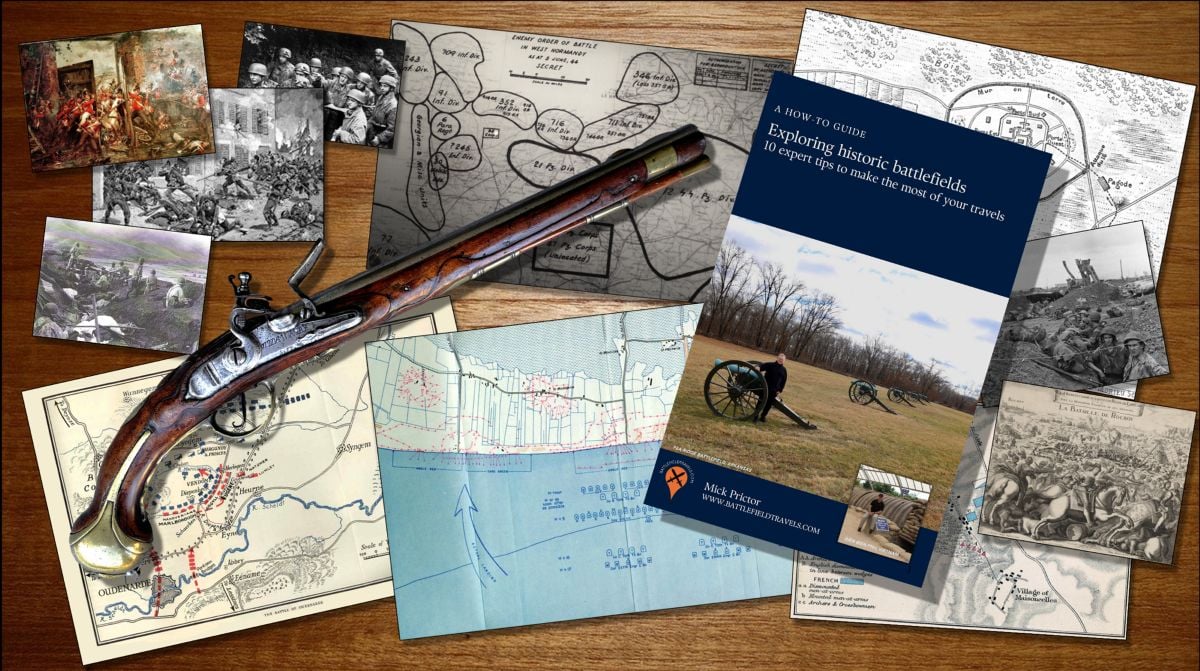
📘 A free eBook: 10 Tips for Exploring Historic Battlefields
📰 New battlefield studies straight to your inbox as they are published
⚔️ Go deeper — Members get exclusive access to the Deep Research Collection, Field Notes, and monthly Research Dispatches. Try membership free for 7 days, cancel anytime. From $9/month.
