Skip to content
Home » Sher Ali Khan

Sher Ali Khan

Reconstructing Anglo-Afghan War battlefields through terrain analysis, primary sources and on-site research
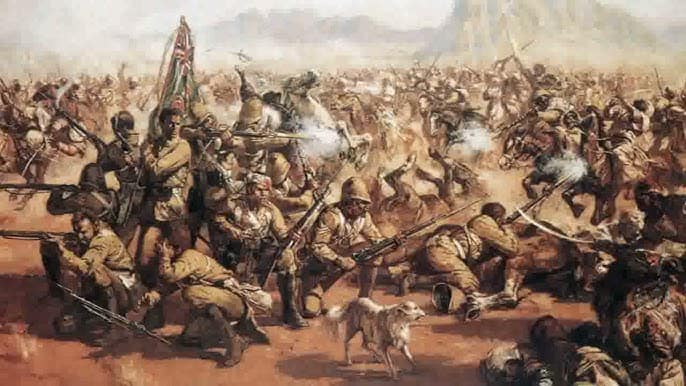
2nd Anglo-Afghan War. Battle of Maiwand, 27 July 1880.

Walking the battlefields of the Anglo-Afghan Wars

The three Anglo-Afghan Wars were fought across some of the most rugged, isolated and tactically unforgiving landscapes encountered by any 19th-century army. Across eighty years and three major conflicts, British, Indian and Afghan forces clashed in mountain passes, river valleys, desert fringes and the maze-like approaches to fortified cities such as Kabul, Kandahar and Ghazni. These wars were shaped not only by imperial strategy and shifting Afghan politics, but also by the terrain itself — a landscape of high ridgelines, chokepoints, long supply lines, and settlements that favoured ambush, manoeuvre warfare, and determined local resistance.

The First Anglo-Afghan War (1839–1842) opened with a British advance through the Bolan and Khojak passes and the occupation of Kabul, but the tenuous hold on the capital collapsed amid political unrest, tribal mobilisation and winter privation. The catastrophic 1842 retreat from Kabul, fought along the narrow defiles of the Khord Kabul and the snow-covered passes leading to Gandamak, became one of the most infamous disasters in British military history. Small rearguard actions, ambushes and the destruction of the column reveal how terrain and local alliances could swiftly overturn imperial expectations.

The Second Anglo-Afghan War (1878–1880) featured a series of rapid marches and sharp battles as British and Indian forces sought to secure the Khyber, Kurram, and Kandahar regions. Engagements at Charasiab, just south of Kabul, and the dramatic relief of Kandahar in 1880 demonstrated the decisive interplay of high ground, fortified villages, and the logistics required to move large forces across arid plains and broken mountain country. The 1879 Siege of Kabul revealed how Afghan irregulars and tribal fighters could exploit the city’s ridges, walls and urban sprawl to threaten even well-entrenched garrisons.

The Third Anglo-Afghan War (1919), a brief but intense border conflict, reflected a transformed strategic environment — airpower, modern rifles and rapid communication — but the same geographic realities of the frontier zone remained decisive.

This collection of battlefield studies explores these campaigns using period maps, eyewitness accounts, Afghan sources where available and on-ground reconnaissance, explaining how leadership, local alliances and Afghanistan’s formidable terrain shaped the outcomes of these wars.


Battle Studies in the Anglo-Afghan Wars

Below are all current BattlefieldTravels studies for the Anglo-Afghan Wars, covering key battles, campaign phases and associated sites. New studies are added as further battlefields are walked and analysed.

  • ⚔️ Battle of Kabul, Afghanistan,
    11-24 December 1879

    ⚔️ Battle of Kabul, Afghanistan, 11-24 December 1879

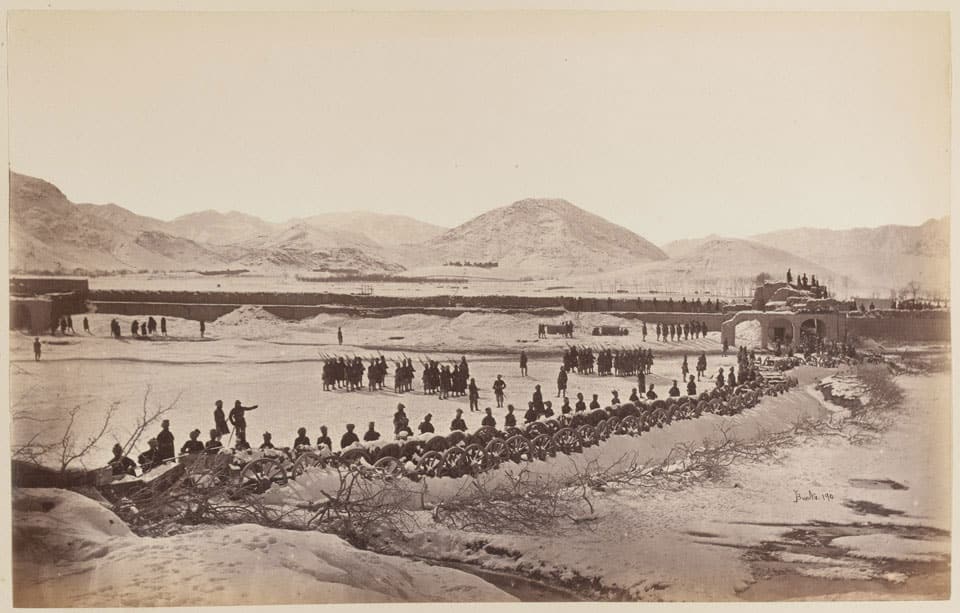
    The Second Anglo-Afghan War of 1878-1880, was part of the ‘Great Game’ between Great Britain and Russia as both sought greater influence and to undermine the other in Central and South Asia. In 1878, Russia sent a diplomatic mission to the court of Sher Ali Khan, the Amir of Afghanistan. The British mission was refused…
    Read the full battle study…


Frequently asked questions

Which periods of the Anglo-Afghan Wars are covered?

The landing page spans all three major conflicts — 1839–42, 1878–80 and 1919 — highlighting key battles and campaigns across Afghanistan.

What battlefields are included or planned?

Published studies include the 1879 Siege of Kabul, with forthcoming articles on the 1842 retreat from Kabul, the battle of Charasiab, Kandahar and other major engagements.

Why were the Anglo-Afghan Wars so difficult for invading armies?

Afghanistan’s mountains, narrow defiles, dispersed settlements and long supply routes favoured ambushes, rapid concentration of local forces and defensive stands on dominating high ground.

How does terrain influence your battlefield studies?

Each study combines historical sources, period maps and on-site reconnaissance to understand how movement corridors, ridge systems, valley floors and fortified positions shaped battlefield decisions.

Q: Can the major sites of the wars still be visited today?
A: Afghanistan is a dangerous place, and I do not recommend travelling there. Many locations — including the passes around Kabul, the approaches to Kandahar and key positions at Charasiab — retain recognisable terrain features, though accessibility varies by region and current conditions.


Subscribe to Battlefield Travels and receive a free E-Book Battlefield Guide

Unlock expert battlefield analysis, campaign reconstructions, and historical insights drawn from firsthand exploration and primary sources.

🗺️ You’ll receive:

🎖️ Exclusive historical insights you won’t find elsewhere

📘 A free eBook: 10 Tips for Exploring Historic Battlefields

📰 New battlefield studies straight to your inbox as they are published


Sher Pur 1879

⚔️ Battle of Kabul, Afghanistan,
11-24 December 1879

The Second Anglo-Afghan War of 1878-1880, was part of the ‘Great Game’ between Great Britain and Russia as both sought greater influence and to undermine the other in Central and South Asia. In 1878, Russia sent a diplomatic mission to the court of Sher Ali Khan, the Amir of Afghanistan. The British mission was refused entry into Afghanistan. Fearing that the Russians had gained an advantage, the British used this as justification to invade Afghanistan, ostensibly to secure India’s northwest frontier.

Selected works on the Anglo-Afghan Wars

1st Anglo-Afghan War. The Last Stand at Gandamak, William Barnes Wollen

Overview of the Anglo-Afghan Wars

The three Anglo-Afghan Wars (1839–1842, 1878–1880, and 1919) were among the most consequential campaigns of the British Empire’s long struggle to secure India’s north-western frontier. These conflicts brought British and Indian Army forces into direct confrontation with Afghan tribal, royal, and regional factions, each war shaped by shifting geopolitics, the “Great Game” with Russia, and Afghanistan’s fiercely independent military culture. The campaigns produced some of the most dramatic episodes in imperial military history — from the disastrous retreat from Kabul in 1842, the Battle of Kabul in 1879, Roberts’ celebrated advance to Kandahar in 1880, and the air-age clash of 1919 that ended British influence in Afghan affairs.

This Reading Room section brings together essential works on all three wars, organised into focused sub-sections for each conflict. These books provide the political, operational, and tactical context needed to understand frontier warfare, mountain campaigning, and the enduring strategic importance of Afghanistan.


Reading

The reference collection below includes the key books and references I have used in preparing for and undertaking studies of the Anglo-Afghan War battlefields.


1st Anglo-Afghan War 1839-42

Return of a King: The Battle for Afghanistan, 1839-42 by William Dalrymple

In 1839, nearly 20,000 British troops poured through the mountain passes into Afghanistan and installed the exiled Shah Shuja on the throne as their puppet. But after little more than two years, the Afghans exploded into rebellion. The British were forced to retreat—and were then ambushed in the mountains by simply-equipped Afghan tribesmen. Just one British man made it through. But Dalrymple takes us beyond the story of this colonial humiliation and illuminates the key connections between then and now. Shah Shuja and President Hamid Karzai share the same tribal heritage; the Shah’s principal opponents were the Ghilzai tribe, who today make up the bulk of the Taliban’s foot soldiers. Dalrymple explains the byzantine complexity of Afghanistan’s age-old tribal rivalries, their stranglehold on politics, and how they ensnared both the British of the nineteenth century and NATO forces today. Rich with newly discovered primary sources, this stunning narrative is the definitive account of the first battle for Afghanistan.

Retreat from Kabul: The First Anglo-Afghan War, 1839-1842 by George Bruce

Afghanistan, 1839. The British East India Company dominated the Indian subcontinent, yet they were not secure in their position. Holding unjustified fears that Russia threatened India’s north-western border, the Company decided to make a pre-emptive strike and ensure that this menace would be stopped by a strong pro-British Afghanistan.

Thousands of British and Indian troops invaded this mountainous land to intervene in a succession dispute between emir Dost Mahommed Khan and former emir Shah Shuja-ool-Mulk. After capturing Kabul they placed the cruel, but pro-British Shah Shuja upon the throne once again, and supported him with an overwhelming military presence. However, the proud and ruthless warriors of Afghanistan were unwilling to submit themselves to British control and within three years they had risen up against their oppressors in one of the bloodiest revolts in history.

2nd Anglo-Afghan War 1878-80

The Road to Kabul: The Second Afghan War 1878-1881
Forty years after the disastrous First Afghan War, the British found themselves invading Afghanistan again to remove Russian influence and install a government friendly to the British Empire. The war was to last two and half years, cost the lives of thousands of British and Indian soldiers as well as countless thousands of Afghans, and came close to bankrupting the Indian Government. Illustrated with contemporary photographs and based on first-hand official documents as well as unpublished private accounts, diarie,s and privately-printed memoirs, this is the first full-scale treatment of the war for more than 75 years.
The Second Afghan War, 1878-80: Official Account – Scholar’s Choice Edition
This work has been selected by scholars as being culturally important, and is part of the knowledge base of civilization as we know it. This work was reproduced from the original artifact, and remains as true to the original work as possible. Therefore, you will see the original copyright references, library stamps (as most of these works have been housed in our most important libraries around the world), and other notations in the work. This work is in the public domain in the United States of America, and possibly other nations. Within the United States, you may freely copy and distribute this work, as no entity (individual or corporate) has a copyright on the body of the work. As a reproduction of a historical artifact, this work may contain missing or blurred pages, poor pictures, errant marks, etc. Scholars believe, and we concur, that this work is important enough to be preserved, reproduced, and made generally available to the public. We appreciate your support of the preservation process, and thank you for being an important part of keeping this knowledge alive and relevant.

3rd Anglo-Afghan War 1919

Afghanistan: Preparing for the Bolshevik Incursion into Afghanistan and Attack on India, 1919-20

In 1919, Afghanistan invaded British India and precipitated the short Third Anglo-Afghan War. Although this Anglo-Afghan War was more limited than the first two, it drove defeated Afghanistan toward Revolutionary Russia. The Kingdom of Afghanistan worried about Britain’s intentions and so Afghanistan became the first country to recognize the new Bolshevik government. Relations improved to the point that In May 1921, the Kingdom of Afghanistan signed a treaty of friendship with the Soviet Union. The British perceived the recognition and the treaty as a threat to British India. There were fears that Britain would invade Afghanistan and the Workers and Peasants Red Army (RKKA) began preparations to aid Afghanistan. Britain was still actively aiding the holdout elements of the White Army in the Russian civil war. The Soviet Union needed to finish their civil war and prepare to deal with Britain and the Soviet southern border. The most decisive way was to invade British India through Afghanistan. The second way was to prepare to counterattack a British invasion. The Soviets put their best regional scholar, General Andrei Snesarev, on the job. Snesarev’s lectures in 1919 and 1920 were part of this preparation. 


FAQ – Anglo-Afghan Wars (1839-1919) Reading Room

How were the books in this Anglo-Afghan Wars reading list selected?

This reading list is curated to prioritise works that examine the conflict through military operations, command decision-making, terrain, logistics, and adaptation. Emphasis is placed on studies grounded in primary sources and operational analysis rather than purely diplomatic or imperial narratives.

Does this reading list focus only on major battles such as Maiwand?

While key engagements are represented, the list also includes works that address column warfare, garrison operations, lines of communication, and the cumulative effects of terrain and local resistance on British and Indian forces.

How important was terrain in the Anglo-Afghan Wars?

he list includes a mix of accessible overviews and more specialised studies. Readers new to the conflict may wish to begin with the general histories before progressing to campaign- or unit-level analyses.

Are these books suitable for readers new to the Anglo-Afghan Wars?

The list includes a mix of accessible overviews and more specialised studies. Readers new to the conflict may wish to begin with the general histories before progressing to campaign- or unit-level analyses.

Is this intended to be a complete bibliography of the Anglo-Afghan Wars?

No. This is a selective reading list intended to guide serious study rather than provide exhaustive coverage. Additional works may be added as research interests and available scholarship evolve.


Subscribe to Battlefield Travels and receive a free E-Book Battlefield Guide

Unlock expert battlefield analysis, campaign reconstructions, and historical insights drawn from firsthand exploration and primary sources.

🗺️ You’ll receive:

🎖️ Exclusive historical insights you won’t find elsewhere

📘 A free eBook: 10 Tips for Exploring Historic Battlefields

📰 New battlefield studies straight to your inbox as they are published
