Reconstructing Winter War battles through terrain analysis, primary sources and on-site research
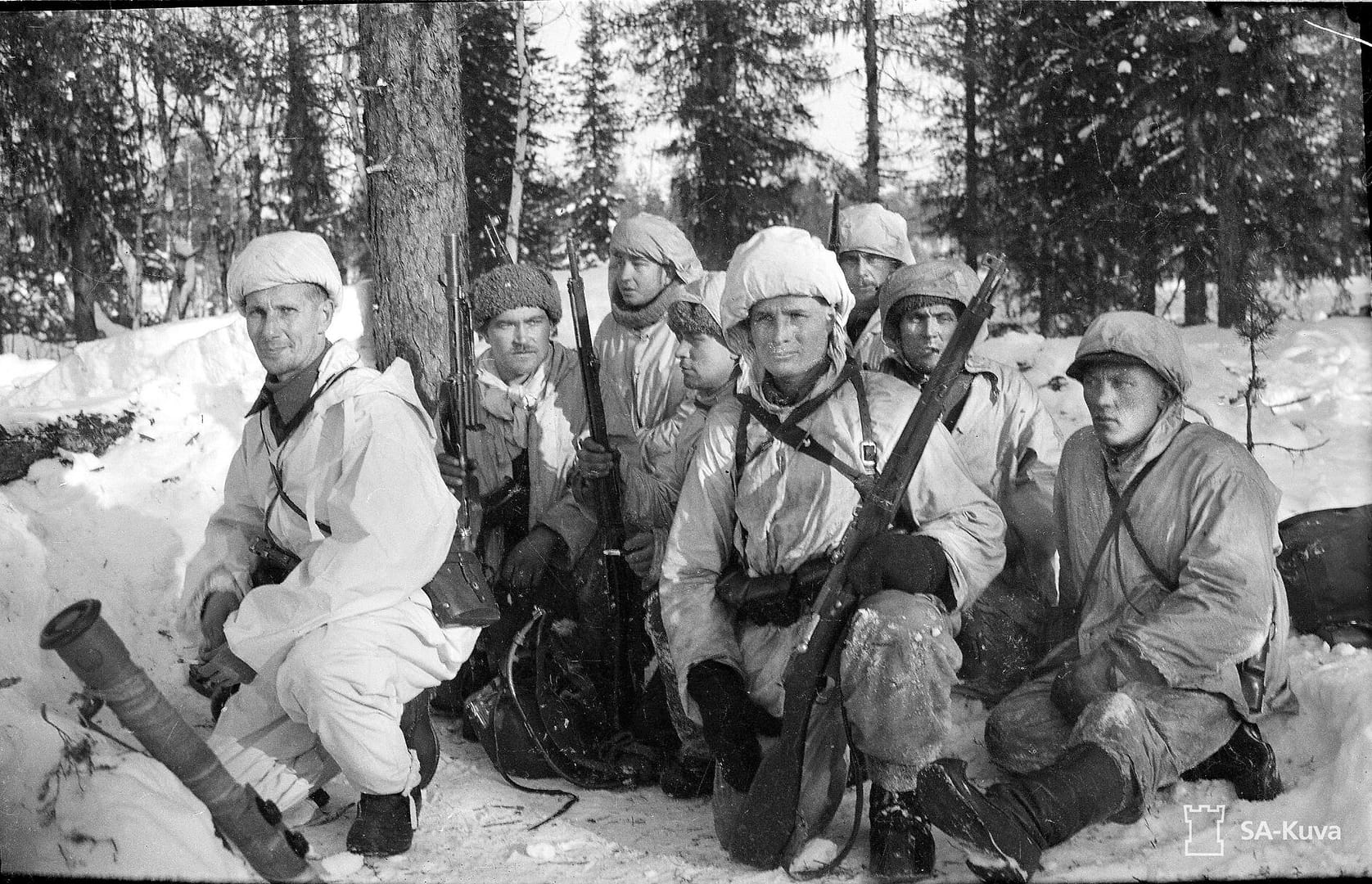
Walking the battlefields of the Winter War (1939-1940)
The Winter War between Finland and the Soviet Union (30 November 1939 – 13 March 1940) was fought in one of the most demanding environments of the modern era. Temperatures plunged to –40°C, daylight hours were short, and the terrain consisted of deep forests, frozen lakes, narrow roads and sparsely settled wilderness. This landscape shaped every aspect of the fighting, from movement and supply to the tactical choices available to both armies.
The Soviet Red Army sought a rapid breakthrough toward Helsinki, expecting Finnish resistance to collapse quickly. Instead, they encountered a well-prepared system of field fortifications on the Karelian Isthmus — the Mannerheim Line — and a Finnish Army whose intimate knowledge of the terrain made every forest, lake and ridgeline a defensive asset. The Finnish use of camouflage, skis, dispersed formations and hit-and-run tactics neutralised much of the Red Army’s numerical and material superiority.
In the north and central sectors, battles were shaped by the extreme isolation of the road networks. The Soviet 163rd and 44th Divisions advancing toward Oulu were drawn into the forests and destroyed at Suomussalmi and along the Raate Road, where Finnish forces turned the terrain itself into a weapon. Narrow roads became chokepoints; forests masked movement; frozen lakes provided firing positions; and Soviet columns were trapped, fragmented and destroyed in a series of encirclement battles known as motti tactics.
On the Karelian front, Soviet assaults eventually broke through the Mannerheim Line in February 1940, but only after weeks of grinding, attritional fighting that demonstrated the resilience of Finnish defences and the evolving Soviet ability to coordinate armour, artillery and infantry under harsh conditions.
The Winter War is remembered today for the courage and adaptability of the Finnish Army, the catastrophic early failings of the Red Army, and the way terrain, climate and small-unit mastery defined the course of an entire campaign. This collection of battlefield studies examines these engagements through a ground-truth lens — using maps, period photographs and boots-on-the-ground reconnaissance to show how and why key battles unfolded as they did.
Battle Studies in the Winter War
Below are all current BattlefieldTravels studies for the Winter War, covering key battles, campaign phases and associated sites. New studies are added as further battlefields are walked and analysed.
-
⚔️ Battle of Suomussalmi / Raate Road, Finland,
30 Nov 1939 – 8 Jan 1940
When Stalin’s Red Army invaded Finland on 30 November 1939, the two main thrusts were in the south around Lake Ladoga and the Mannerheim Line, and in central Finland focussed on Suomussalmi. In central Finland, the Russian 163rd Rifle Division and an independent tank brigade crossed the border at Juntusranta, and the 44th (Ukrainian) Rifle…

Tactical Innovations
Over thousands of years of warfare, armies have sought ways to gain advantage on the battlefield. Sometimes the solution was a new weapon. Sometimes it was a radical new method. Often it was a combination of both. From the disciplined ranks of the Greek phalanx to pike-and-shot warfare to the interlocking machine-gun fire plans of the twentieth century, tactical innovations have repeatedly reshaped how battles are fought.
-
💡 Tactical Innovations: Machine Gun Theory

This article explains how machine guns are employed on the battlefield, including the key concepts of cone of fire, beaten zone, grazing fire, enfilade fire, and mutually supporting machine-gun positions. The article forms part of the Tactical Innovations in Warfare series.


Authored by Mick Prictor, a retired military officer with 40 years’ service, and a military historian specialising in terrain-focused analysis of tactics, doctrine, and command decision-making in land warfare. His work draws on extensive battlefield fieldwork—more than 280 sites worldwide—and one of the world’s largest private collections of historic military arms, uniforms, and equipment. About me
⚔️ Go deeper — Members get exclusive access to the Deep Research Collection, Field Notes, and monthly Research Dispatches. Try membership free for 7 days, cancel anytime. From $9/month.
Explore Related Themes
Armies: Finnish Army • Red Army
Cmmanders: Carl Mannerheim • Josef Stalin
Methods: Mechanised Warfare • Encounter Battle • Ambush
Environments: Forest Warfare • Mountain Warfare • Arctic/Winter Warfare
Further Study: Winter War Reading List
Deep forests, frozen lakes, extreme cold and limited roads created a uniquely demanding battlefield that shaped tactics and outcomes.
Finnish troops used skis, camouflage and terrain mastery to isolate and destroy Soviet columns trapped on narrow forest roads.
Yes. Future studies may include the Mannerheim Line, Summa, Kollaa and Lake Ladoga operations.
Subscribe to Battlefield Travels and receive a free E-Book Battlefield Guide
Unlock expert battlefield analysis, campaign reconstructions, and historical insights drawn from firsthand exploration and primary sources.
🗺️ You’ll receive:
🎖️ Exclusive historical insights you won’t find elsewhere
📘 A free eBook: 10 Tips for Exploring Historic Battlefields
📰 New battlefield studies straight to your inbox as they are published

⚔️ Go deeper — Members get exclusive access to the Deep Research Collection, Field Notes, and monthly Research Dispatches. Try membership free for 7 days, cancel anytime. From $9/month.




