Skip to content
Home » Son Tay Prison

Son Tay Prison

Firsthand battlefield analysis of Vietnam War campaigns and battles

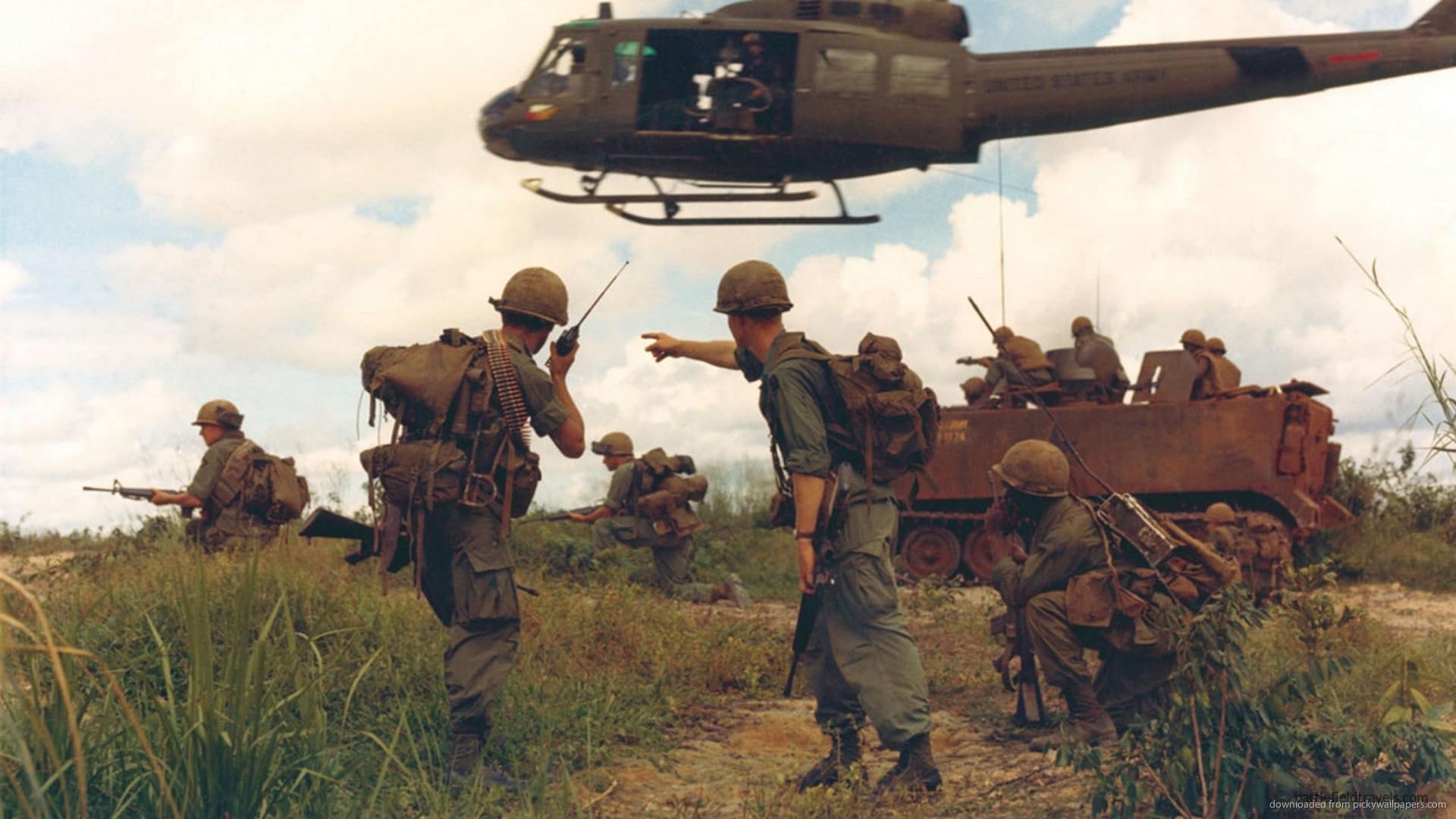
Vietnam War. American soldiers are dropped off by U.S.Army UH-1B 'Huey' helicopters to join South Vietnamese ground troops in an attack on a Viet Cong camp 18 miles north of Tay Ninh, March 1965.
Vietnam War. American soldiers are dropped off by U.S.Army UH-1B ‘Huey’ helicopters to join South Vietnamese ground troops in an attack on a Viet Cong camp 18 miles north of Tay Ninh, March 1965.

Walking the battlefields of the Vietnam War (1955-1975)

The Vietnam War (1955–1975) began as an effort to stabilise South Vietnam in the aftermath of the French Indochina War and the French withdrawal in 1955. The war escalated through the early advisory years, the deployment of major U.S. combat forces in 1965, the nationwide crises of 1968, and the gradual handover to South Vietnamese forces during the ‘Vietnamisation’ period from 1969 onwards. The war concluded with the final North Vietnamese offensives in 1975. Throughout, conventional battles, counter-insurgency operations, and strategic bombing campaigns intersected in a conflict defined by shifting strategies, multinational involvement, and competing political visions for Southeast Asia.

Escalation 1960-1968

In the early 1960s, the war centred on a Viet Cong insurgency in the south, and the struggle for control of rural provinces. By mid-1965, U.S. ground forces directly entered the fighting, leading to large-scale engagements such as LZ X-Ray in the Ia Drang Valley — the first major meeting of American and North Vietnamese regular forces. Over the next three years, the conflict expanded across the Central Highlands and the demilitarised zone, including the hard-fought battles of Dak To, Hill 875, and the bloody assaults on Khe Sanh.

The Tet Offensive of 1968 marked a turning point: a coordinated nationwide attack that included the brutal urban fighting at Hue, reshaping U.S. public opinion despite being a tactical failure for North Vietnam. In the south, Australian and New Zealand forces conducted counter-insurgency operations across Phuoc Tuy province, exemplified by the intense battle of Long Tan in 1966. Special operations units also played a critical role, culminating in missions such as the Son Tay Raid — an audacious 1970 attempt to rescue American POWs deep inside North Vietnam.

Vietnamisation 1969-1975

From 1969 onward, the war shifted again as U.S. forces gradually drew down and the Army of the Republic of Vietnam (ARVN) assumed greater responsibility. Despite local successes, ARVN struggled to counter major offensives such as the Easter Offensive (1972). In 1975, with American support no longer forthcoming, a rapid conventional campaign by the People’s Army of Vietnam overran South Vietnam, culminating in the fall of Saigon.

This collection of Vietnam War battlefield studies explores these campaigns through a clear, historically grounded lens — drawing on contemporary accounts, operational records, period mapping and on-site field exploration to explain not only what occurred during the conflict, but how key battles shaped its course.


Vietnam War Battlefield Studies

In-depth battlefield analyses based on terrain, primary sources, and on-the-ground exploration.


Vietnam War Field Notes

Short-form observations, terrain insights, and working interpretations from the field. Some posts require access.


What makes these Vietnam War battlefield studies unique?

Each study uses a blend of operational history, eyewitness accounts and on-ground field reconnaissance to explain how key battles shaped the wider course of the Vietnam War.

Which Vietnam War battles are included or planned?

Published studies include the Son Tay Raid, with Hue, Long Tan, and major Central Highlands battles such as LZ X-Ray, Dak To, Hill 875, Hamburger Hill, Khe Sanh and Mang Yang Pass in development.

Does this page cover the major phases of the war?

Yes. The narrative spans the advisory period, escalation, Tet Offensive, Vietnamisation, and the final North Vietnamese offensives that concluded the war in 1975.

How were different nations involved in the Vietnam War?

Alongside U.S. and South Vietnamese forces, the war included contributions from Australia, New Zealand, South Korea, Thailand and special operations units, each operating in distinct tactical and geographic contexts.

Are these battlefields still accessible today?

Many key sites — including Hue, Long Tan, Khe Sanh and locations across the Central Highlands — remain accessible and retain important historical features.


Subscribe to Battlefield Travels and receive a free E-Book Battlefield Guide

Unlock expert battlefield analysis, campaign reconstructions, and historical insights drawn from firsthand exploration and primary sources.

🗺️ You’ll receive:

🎖️ Exclusive historical insights you won’t find elsewhere

📘 A free eBook: 10 Tips for Exploring Historic Battlefields

📰 New battlefield studies straight to your inbox as they are published


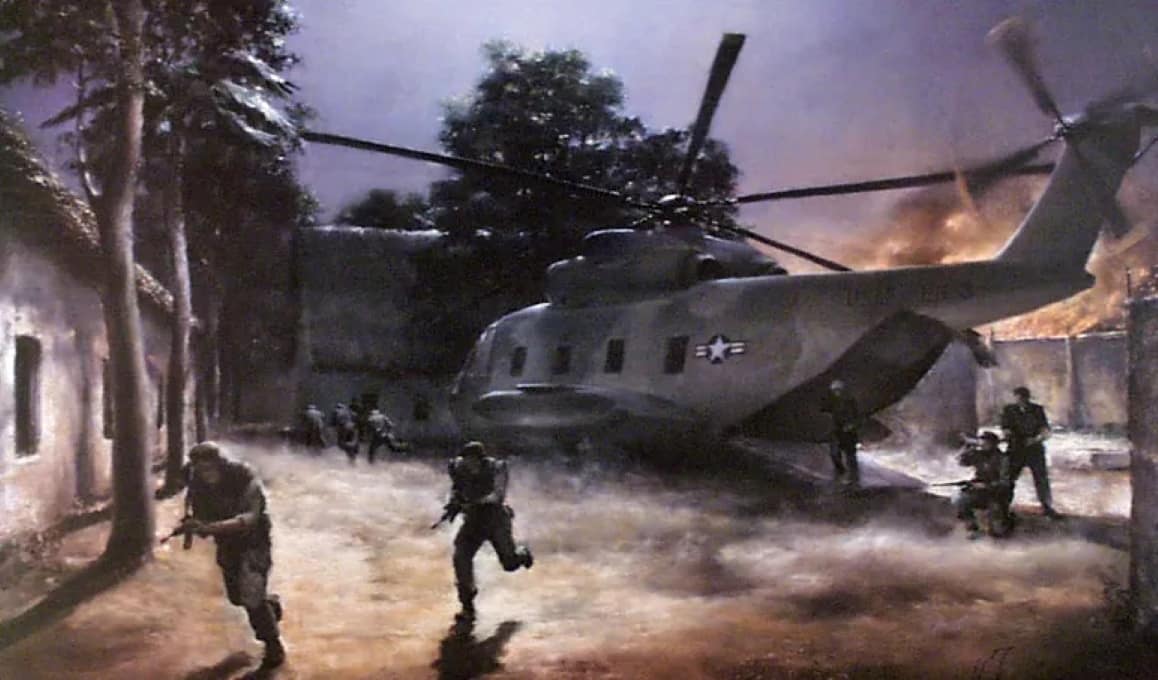
"The Raid, Blueboy Element,” by Mikhail Nikiporenko. Banana-1 crash landed in the compound. Captain Dick Meadows uses the bullhorn to announce the rescue to potential American prisoners.

⚔️🔒The Son Tay Raid, North Vietnam,
21 November 1970

Operation KINGPIN, the Son Tay Raid, on the night of 20/21 November 1970, was a meticulously planned U.S. military operation to rescue American prisoners of war (POWs) from the Son Tay prison North Vietnam. It was one of the most audacious operations in military history. The operation involved a joint force of U.S. Army Special Forces and Air Force personnel. Despite the operation’s almost flawless execution, it failed to achieve its primary objective, as the POWs had been relocated to other sites.

Selected works on the Vietnam War

Vietnam War- US troops in an airmobile assault.

Overview of the Vietnam War

The Vietnam War was one of the longest and most divisive conflicts of the twentieth century. Rooted in the decolonisation of Indochina and the Cold War struggle between communism and the West, it pitted the communist Democratic Republic of Vietnam (North Vietnam) and its southern insurgent allies, the Viet Cong, against the Republic of Vietnam and the United States.

Following the 1954 Geneva Accords, Vietnam remained divided at the 17th Parallel. A communist insurgency began in the South, supported from Hanoi. U.S. involvement escalated from advisers in the early 1960s to full combat operations after the Gulf of Tonkin incident in 1964. Despite massive air and ground campaigns, the war’s asymmetrical nature and the North’s political resolve frustrated conventional superiority. Key operations — Rolling Thunder, the Tet Offensive, and the Easter Offensive — demonstrated the widening gap between battlefield reality and political expectation. A brilliant rescue operation by US special forces at Son Tay Prison in 1970 ended in disappointment as the prisoners had been moved.

By the early 1970s, Vietnamisation and U.S. withdrawals shifted the burden to South Vietnamese forces. The 1973 Paris Peace Accords ended direct American combat involvement, but fighting continued until Saigon’s fall in April 1975.

The war’s legacy was immense: over three million dead, vast environmental damage, and profound political consequences. Militarily, it forced major reassessments of counter-insurgency, air power, and civil-military relations. Strategically, it marked the limits of Cold War intervention and reshaped Western military doctrine for a generation.


Reading

The reference collection below includes the key books and references I have used in preparing for and undertaking Vietnam War battlefield studies.

Vietnam War

The Raid: The Son Tay Prison Rescue Mission
Minutes after 2 A.M. on November 21, 1970, more than one hundred U.S. war planes shattered the dark calm of the skies over Hanoi. Their mission: rescue sixty-one American POWs from Son Tay prison. Less than thirty minutes later, the raid was over, but no Americans had been rescued. The prisoners had been moved from Son Tay four and a half months earlier and that wasn’t all. Part of the raiding force landed at the wrong compound, a “school” bristling with enemy soldiers, but the soldiers weren’t Vietnamese . . . Replete with fascinating insights into the workings of high-level intelligence and military command, The Raid is Benjamin Schemmer’s unvarnished account of the courageous mission that was quickly labeled an intelligence failure by Congress and a Pentagon blunder by the world press. Determined to ferret out the truth, Schemmer uncovers one of the CIA’s most carefully guarded secrets. From the planning and live-fire rehearsals to the explosive reactions of the Joint Chiefs of Staff watching the drama unfold to the aftermath as the White House and Pentagon struggled for damage control, Schemmer tackles the tough questions.
Sale
Who Will Go: Into the Son Tay POW Camp
THE SON TAY RAID RANKS AS ONE OF THE MOST DARING MISSIONS IN SPECIAL OPS HISTORY. Hear from the men of the Raid in their own words, moving and personal. The gripping (and often humorous) narrative follows the youngest Raider, Terry Buckler, through Special Forces training and the suspense-filled preparation for the Raid alongside some of the greatest legends in Special Operations history. The Son Tay Raid was a SUCCESS. This heart-lifting book will challenge historians to reconsider the mission taught in military schools around the world. And it will draw any reader in with personal stories of what was seen, heard, and felt by 40 of the Raiders, POWs, and participants supporting the Raid.
Sale
Son Tay 1970: The Operation Ivory Coast POW rescue mission (Raid, 60)
A superbly illustrated account of one of the key milestones in the development of modern US Special Operations Forces, the hugely complex POW rescue at Son Tay. On November 21, 1970, a meticulously prepared force of US Special Forces in HH-53 helicopters, supported by more than a hundred combat aircraft, raided the POW camp at Son Tay, North Vietnam, just 23 miles west of Hanoi, seeking 61 American prisoners. Having trained for months in secret, and utilizing the best troops and air crews possible, the raiders executed the mission flawlessly. No Americans were killed and only two aircraft were downed, with the raiders killing several dozen North Vietnamese. It was the epitome of joint commando operations and regarded as an unheralded success. Except, the prisoners were missing. The raiders had come up empty handed.


FAQ – Vietnam War Reading Room

How were the books in this Vietnam War reading list selected?

This reading list is curated to prioritise works that examine the Vietnam War through operational analysis, command decision-making, terrain, doctrine, and adaptation. Emphasis is placed on studies grounded in primary sources and firsthand accounts that illuminate how the war was actually fought on the ground.

Does this reading list focus only on American forces?

No. While U.S. forces feature prominently, the list also includes works that address French experience, American allies experience, South Vietnamese forces, the Viet Minh and Viet Cong, and North Vietnamese Army operations. Understanding the war requires examining how different forces interpreted and exploited the same terrain in different ways.

How important was terrain in the Vietnam War?

Terrain was fundamental. Jungles, mountains, river systems, rice paddies, and limited road networks shaped movement, logistics, concealment, and command decisions at every level. Many operational successes and failures cannot be understood without close attention to micro-terrain and local geography.

Are these books suitable for readers new to the Vietnam War?

The list includes a mix of accessible overviews and more specialised operational and unit-level studies. Readers new to the subject may wish to begin with broader histories before moving on to campaign- or battle-focused works.

Is this intended to be a complete bibliography of the Vietnam War?

No. This is a selective reading list intended to guide serious study rather than provide exhaustive coverage. Additional works may be added as research priorities evolve and new material becomes available.


Subscribe to Battlefield Travels and receive a free E-Book Battlefield Guide

Unlock expert battlefield analysis, campaign reconstructions, and historical insights drawn from firsthand exploration and primary sources.

🗺️ You’ll receive:

🎖️ Exclusive historical insights you won’t find elsewhere

📘 A free eBook: 10 Tips for Exploring Historic Battlefields

📰 New battlefield studies straight to your inbox as they are published