Skip to content
Home » Spanish Army

Spanish Army

This tag brings together engagements involving Spanish forces, from the age of empire to modern colonial and European conflicts. Including the Conquistadors

Reconstructing Thirty Years War battlefields through terrain analysis, primary sources and on-site research

Thirty Years War, 1618-1648. Armies on the march in Italy

Walking the battlefields of the Thirty Years War (1618-1648)

The Thirty Years War was one of the most destructive conflicts in European history, fought across the fragmented political and religious landscape of the Holy Roman Empire. From the rolling plains of Bohemia to the wooded hills of Saxony and the fortified towns of the Rhineland, each theatre imposed its own demands on the armies that marched through it. The war evolved from a local Bohemian revolt into a vast continental struggle involving Imperial, Spanish, Swedish, French, Dutch and numerous German princely armies.

Early campaigns such as the Battle of White Mountain revealed the importance of dominating high ground, road networks and approaches to fortified cities. As the conflict widened, Swedish reforms under Gustavus Adolphus brought new emphasis on mobile firepower, coordinated infantry–cavalry action and efficient battlefield deployment — innovations tested on landscapes like the fields of Breitenfeld and the fog-shrouded approaches to Lützen.

Fortified cities, river crossings and key road junctions became strategic prizes in a war where supply demands and a devastated countryside constrained movement. Armies often manoeuvred for weeks to force or avoid battle. When engagements did occur, they were shaped by hedgerows, marshes, villages and subtle contours that still remain visible on the ground today.

The Battle of Rocroi (1643) — the anchor study for this collection — marked a turning point late in the conflict. Fought at the edges of the war’s timeline, Rocroi exemplified the maturing of early modern line tactics, the resilience of tercios under pressure, and the decisive impact of disciplined cavalry action on open rolling terrain.

This battlefield collection explores how terrain, logistics, fortifications and early modern doctrine interacted across three decades of conflict — revealing how the landscape shaped some of Europe’s most consequential battles.


Battle Studies in the Thirty Years War

Below are all current BattlefieldTravels studies for the Thirty Years War, covering key battles, campaign phases and associated sites. New studies are added as further battlefields are walked and analysed.

  • ⚔️ Battle of Rocroi, France,
    19 May 1643

    ⚔️ Battle of Rocroi, France, 19 May 1643

    Next stop in our battlefield explorations was the incredible 16th-Century bastion fortress of Rocroi. Here, in May 1643, two of the superpowers of the 17th century – Spain and France – clashed in the plain south of the fortress. The battle marked the end of the dominance of the Spanish ‘Tercio’ tactics that had dominated…
    Read the full battle study


Tactical Innovations

Over thousands of years of warfare, armies have sought ways to gain advantage on the battlefield. Sometimes the solution was a new weapon. Sometimes it was a radical new method. Often it was a combination of both. From the disciplined ranks of the Greek phalanx to pike-and-shot warfare to the interlocking machine-gun fire plans of the twentieth century, tactical innovations have repeatedly reshaped how battles are fought.


  • 💡 Tactical Innovations: Pike and Shot Warfare

    💡 Tactical Innovations: Pike and Shot Warfare

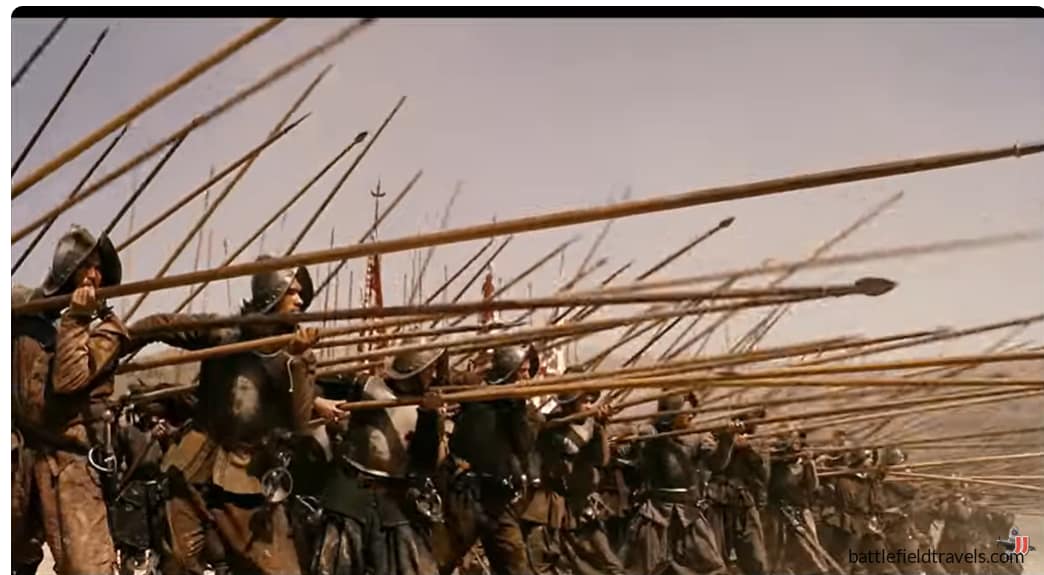
    The widespread adoption of firearms by European armies created a new tactical dilemma. The previously invulnerable pike formations were now extremely vulnerable to gunpowder weapons, while the musketeers remained vulnerable to enemy cavalry. What was needed was a combined-arms system in which the relative advantages of the musket, pike, cavalry, and artillery could cover each…
    Read the full Field Note….


Why was terrain so important in the Thirty Years War?

Armies were limited by supply lines and road networks, and battles often hinged on control of villages, hills, marshes and river crossings.

Why begin with Rocroi?

Rocroi is a major battle from the war’s final phase and demonstrates mature early modern tactics and terrain-driven manoeuvre.

Will more Thirty Years War studies be added?

Yes. Future studies may include Lützen, Breitenfeld, Nördlingen and White Mountain.


Subscribe to Battlefield Travels and receive a free E-Book Battlefield Guide

Unlock expert battlefield analysis, campaign reconstructions, and historical insights drawn from firsthand exploration and primary sources.

🗺️ You’ll receive:

🎖️ Exclusive historical insights you won’t find elsewhere

📘 A free eBook: 10 Tips for Exploring Historic Battlefields

📰 New battlefield studies straight to your inbox as they are published


Selected works on the Thirty Years War

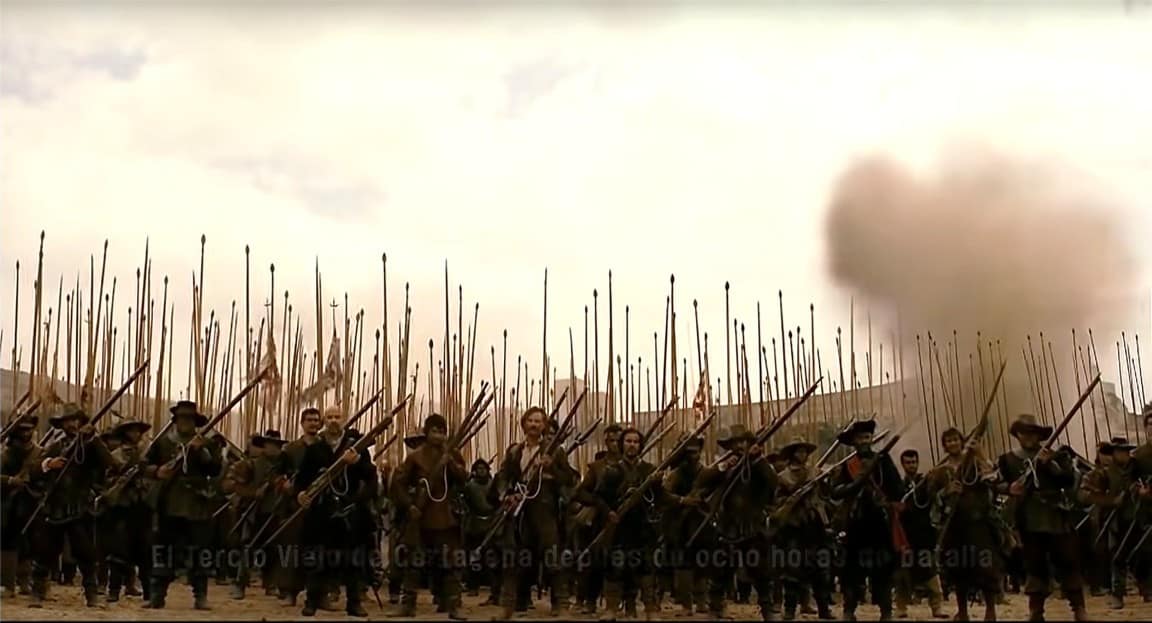
Thirty Years War - The Battle of Rocroi, 19 May 1643. Scene from the 2006 movie 'Alatriste'
Thirty Years War – The Battle of Rocroi, 19 May 1643. Scene from the 2006 movie ‘Alatriste’

Understanding Europe’s defining early-modern conflict through its historians

The Thirty Years’ War has attracted some of the richest and most contested scholarship in early-modern military history. Because the conflict spans religion, politics, dynastic ambition, state formation, and military revolution, no single narrative can fully capture its complexity. Instead, historians have approached the war through multiple lenses — confessional conflict, geopolitical rivalry, fiscal-military pressures, and the evolution of tactics and command — creating a diverse literature that rewards careful reading.

Modern understanding of the war owes much to the work of historians such as Geoffrey Parker, Peter Wilson, C. V. Wedgwood, and Günther Franz. Wedgwood’s The Thirty Years War remains a highly readable classic, notable for its narrative sweep and human focus. Parker’s contributions, especially on the “military revolution” thesis, explore how gunpowder, fortifications, logistics and state capacity shaped the conflict’s campaigns. Peter Wilson’s Europe’s Tragedy stands today as the most comprehensive single-volume study, synthesising political, social, and operational perspectives across the entire war.

Specialist works deepen this picture. Studies of Gustavus Adolphus and the Swedish army—by scholars such as Michael Roberts and William Guthrie—highlight reforms in drill, firepower, linear tactics, and combined arms. Others focus on the Imperial and Catholic League systems, exploring how commanders like Tilly and Wallenstein balanced recruitment, finance, and manoeuvre in a fragmented political landscape. Research into the socioeconomic impact of the war, including depopulation, famine and the burdens of billeting, has reshaped understanding of how early-modern armies operated and endured.

For readers exploring the battles themselves, the Thirty Years’ War offers fertile ground for comparing doctrine, organisation and the influence of terrain—from the wooded ridges at Lützen to the fortified towns of the Rhineland and the open manoeuvre spaces of northern Germany. The literature gathered here provides both entry points and advanced studies, helping readers engage with one of Europe’s most transformative and devastating conflicts.


Reading

The reference collection below includes the key books and references I have used in preparing for and undertaking studies of battlefields of the Thirty Years War.

The Thirty Years War

The Thirty Years War 1st (first) edition Text Only
A deadly continental struggle, the Thirty Years War devastated seventeenth-century Europe, killing nearly a quarter of all Germans and laying waste to towns and countryside alike. Peter Wilson offers the first new history in a generation of a horrifying conflict that transformed the map of the modern world.When defiant Bohemians tossed the Habsburg emperor’s envoys from the castle windows in Prague in 1618, the Holy Roman Empire struck back with a vengeance. Bohemia was ravaged by mercenary troops in the first battle of a conflagration that would engulf Europe from Spain to Sweden. The sweeping narrative encompasses dramatic events and unforgettable individuals—the sack of Magdeburg; the Dutch revolt; the Swedish militant king Gustavus Adolphus; the imperial generals, opportunistic Wallenstein and pious Tilly; and crafty diplomat Cardinal Richelieu. In a major reassessment, Wilson argues that religion was not the catalyst, but one element in a lethal stew of political, social, and dynastic forces that fed the conflict.By war’s end a recognizably modern Europe had been created, but at what price? The Thirty Years War condemned the Germans to two centuries of internal division and international impotence and became a benchmark of brutality for centuries. As late as the 1960s, Germans placed it ahead of both world wars and the Black Death as their country’s greatest disaster.An understanding of the Thirty Years War is essential to comprehending modern European history. Wilson’s masterful book will stand as the definitive account of this epic conflict.
Sale
Gustavus v Wallenstein: Military Revolution, Rivalry and Tragedy in the Thirty Years War
The conflict, personal rivalry and contrast in personality, generalship and command, between the two iconic commanders in the Thirty Years War, King Gustavus Adolphus of Sweden for the Protestant powers, and Albrecht von Wallenstein, Duke of Friedland. More than just commanders at the tactical level they were statesmen, military organizers and strategists on a continental scale. Both commanders represented the 17th-century ‘military revolution in action’. The writing is vivid, graphic and detailed, without overloading, and readers can feel ‘involved’ in the action, from strategic planning to battlefield tactics, and even the melee. Both generals are titanic figures come, and their respective deaths – Gustavus heroically in battle and Wallenstein, murdered with the Emperor’s compliance – were dramatic highpoints in the long war. This is no hagiography, and the author analyses the contrasting reputations of two of the greatest military figures in modern history and analyses mistakes as well their triumphs.
Rocroi 1643 (Men and Battles)
Fought on 19 May 1643 between the French army of the Duc d’Enghien and the Spanish army under Francisco de Melo, Rocroi is probably one of the most controversial battles in the long period of conflict between the kingdoms of France and Spain. The numerous sources, be they official accounts, memoirs, or correspondence, most often contradict each other. The principal controversy of this battle, far from being anecdotal, concerns the French right flank, placed under the direct command of Louis II de Bourbon, the Duc d’Enghien. The version generally accepted by historians of French sources affirms that the cavalry of Gassion overthrew and quickly pushed back the first Spanish companies, eventually defeating them. However, Spanish sources, defended by historians beyond the Pyrenees, contend that the cavalry of the Duc d’Albuquerque, opposing that of Gassion and Enghien, broke through the squadrons and two infantry regiments of the French advanced guard on two occasions! Thus, there exist today two battles of Rocroi: the one found in Spanish works and the one found in numerous French works.


Frequently asked questions

What are the best introductory books on the Thirty Years’ War?

Excellent entry points include C. V. Wedgwood’s classic The Thirty Years War and Peter Wilson’s comprehensive Europe’s Tragedy. Both provide broad context, clear campaigning narratives and strong overviews of the political and religious dynamics.

Which modern historians offer the most authoritative analysis?

Which modern historians offer the most authoritative analysis?

Why do historians disagree about the causes of the Thirty Years’ War?

Interpretations differ because the war intersects religion, dynastic rivalry, territorial ambition and the balance of power in early-modern Europe. Historians place varying emphasis on these factors, resulting in differing explanations for why the conflict escalated and endured.

How did Gustavus Adolphus influence military development?

Gustavus Adolphus introduced reforms in drill, firepower, linear tactics and combined arms that gave Sweden temporary battlefield superiority. Historians debate the extent of his innovations, but most agree that his approach accelerated changes in early-modern warfare.

How reliable are contemporary sources for studying the Thirty Years’ War?

Many contemporary accounts are partisan or limited in scope. Modern historians cross-reference chronicles with administrative records, correspondence, archaeological evidence and logistical data to produce more accurate interpretations of campaigns and command decisions.


Subscribe to Battlefield Travels and receive a free E-Book Battlefield Guide

Unlock expert battlefield analysis, campaign reconstructions, and historical insights drawn from firsthand exploration and primary sources.

🗺️ You’ll receive:

🎖️ Exclusive historical insights you won’t find elsewhere

📘 A free eBook: 10 Tips for Exploring Historic Battlefields

📰 New battlefield studies straight to your inbox as they are published


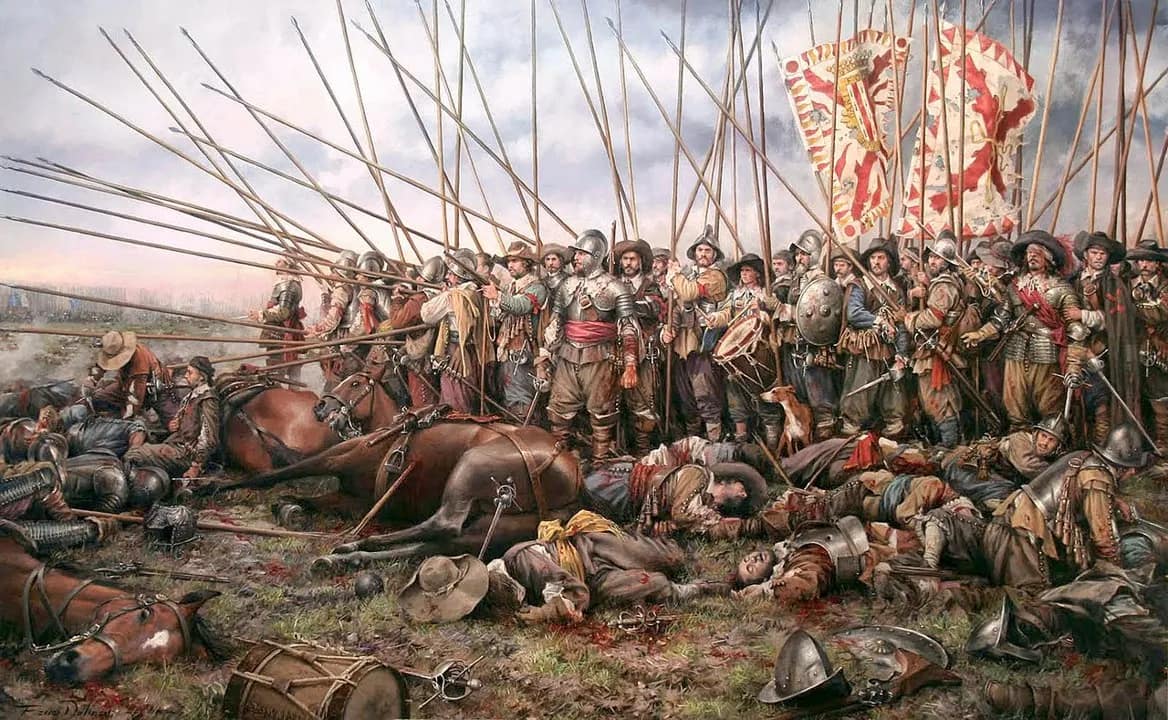
Rocroi, the last Tercio, by Augusto Ferrer-Dalmau

⚔️ Battle of Rocroi, France,
19 May 1643

Next stop in our battlefield explorations was the incredible 16th-Century bastion fortress of Rocroi. Here, in May 1643, two of the superpowers of the 17th century – Spain and France – clashed in the plain south of the fortress. The battle marked the end of the dominance of the Spanish ‘Tercio’ tactics that had dominated European warfare for the previous 100 years.

British troops crossing the harbour entrance to occupy the city of Havana after its capture in August 1762 during the Seven Years War picture by Dominic Serres

⚔️ Fortress of San Carlos,
Havana, Cuba,
1763-1774

La Cabaña: Spain’s Response to the Capture of Havana! Built after the British capture of Havana in 1762, the Fortress of San Carlos de la Cabaña (1763–1774) was Spain’s answer to securing the Caribbean. The massive Vauban-style bastion complex dominated Havana harbour, served as a prison and execution ground in later centuries, and today remains […]