Skip to content
Home » Springfield Musket

Springfield Musket

The Springfield Model 1861 and 1863 muskets equipped Union forces during the American Civil War. Their accuracy and reliability made them decisive in both massed volleys and aimed fire.

Selected works on the Napoleonic Wars

Battle of Waterloo, 18 June 1815 - the assault on La Haye Sainte @Knotel
Battle of Waterloo, 18 June 1815 – the assault on La Haye Sainte @Knotel

Overview of the Napoleonic Wars

The Napoleonic Wars (1803–1815) were the culmination of the upheaval unleashed by the French Revolution, pitting Napoleonic France against successive coalitions of European powers including Britain, Austria, Prussia, and Russia. Fought across a vast geographical arc—from the Iberian Peninsula to Central Europe, and from the Baltic to the plains of Russia—the wars combined mass conscription, sweeping manoeuvre, and increasingly sophisticated operational art.

Napoleon’s campaigns demonstrated the power of concentration, speed, and decisive battle, while his opponents gradually adapted, developing the coalition structures, logistics, and operational methods needed to defeat him.

Literary coverage

The literature of the Napoleonic Wars reflects both the scale of the conflict and the enduring fascination with its personalities and campaigns. Early accounts were often memoir-driven, written by participants such as officers and soldiers who sought to explain or justify their actions. These remain valuable for their immediacy and insight into command decisions, though they require careful reading.

Nineteenth- and early-twentieth-century historians then began to construct more formal campaign narratives, often focused on Napoleon himself, sometimes at the expense of his opponents. More recent scholarship has considerably broadened the perspective, examining coalition strategy, logistics, national military systems, and the experiences of ordinary soldiers. There is now a strong tradition of detailed operational and tactical studies, supported by maps, orders of battle, and increasingly critical use of primary sources.

An indirect outcome of the Napoleonic Wars was a sustained period of reflection on the nature and conduct of war itself. The scale, tempo, and political character of the conflict forced soldiers and statesmen to reconsider how wars were fought, organised, and understood. This gave rise to a parallel intellectual tradition, most notably in the works of Carl von Clausewitz and Baron Antoine Jomini, who sought to distil the lessons of the period into enduring principles. At the same time, reformers such as Scharnhorst and Gneisenau translated battlefield experience into institutional change, reshaping military organisation, education, and command systems. Together, these thinkers and practitioners ensured that the legacy of the Napoleonic Wars extended well beyond the battlefield, influencing military thought and practice throughout the nineteenth century and beyond.

The works in this reading list reflect that range—from classic memoirs and campaign histories to modern analytical studies. Together, they provide multiple lenses on the same campaigns: the decisions made at headquarters, the movement of armies across Europe, and the realities of combat on the ground


Reading

The reference collection below includes the key books and references I have used in preparing for and undertaking studies of the battlefields of the Napoleonic Wars

Napoleonic Wars

Sale
The Campaigns of Napoleon
The Campaigns of Napoleon is a masterful analysis and insightful critique of Napoleon’s art of war as he himself developed and perfected it in the major military campaigns of his career.
Sale
Napoleon: A Biography
This acclaimed biography of one history’s great figures—called “monumental” (Library Journal), “brilliant” (Times, London) and “a rounded and persuasive portrait” (New York Times)—is now available in a new edition. Napoleon Bonaparte’s character and achievements have always divided critics and commentators. In this compelling biography, Frank McLynn has drawn on exhaustive research and the most recent scholarship to throw a brilliant light on this most paradoxical of men—as military leader, lover, and emperor.
End of the Old Order: Napoleon and Europe, 1801–1805 (v)
The End of the Old Order is the first volume in a new and comprehensive four-volume study of Napoleon and Europe. Each volume in the series will surprise readers with a dramatically different tapestry of early nineteenth-century personalities and events and will revise fundamentally our ages-old understanding of the wars that created modern Europe.
An Illustrated Encyclopedia: Uniforms of the Napoleonic Wars: An unrivalled reference to the insignia, appearance and experience of the fighting men of the period (Military Uniforms)
The book’s main focus is the soldiers who fought the historic battles of the day, and the uniforms they wore. It was in this age of war that military uniforms flourished, with an astonishing array of flamboyance, colour and intricate detail. The cut and colour of uniforms were used for identification from afar by the generals directing battles from strategic viewpoints, but at this point in time were also given an extraordinary level of detail in facings, laces and buttons, which carried never-ending intricate differences to denote regiment, rank or division. With over 550 specially commissioned and expert colour artworks, each regiment is vividly portrayed here in all their glory. All the major nations involved in the conflict, France, Britain, Austria, Prussia and Russia, are covered in detail, and there is a section on the uniforms and contributions of the smaller forces, including those from America, Spain, Italy and Saxony

Waterloo

Sale
Waterloo: The History of Four Days, Three Armies, and Three Battles
From the New York Times bestselling author and master of martial fiction comes the definitive, illustrated history of one of the greatest battles ever fought—a riveting nonfiction chronicle published to commemorate the 200th anniversary of Napoleon’s last stand. On June 18, 1815 the armies of France, Britain and Prussia descended upon a quiet valley south of Brussels. In the previous three days, the French army had beaten the Prussians at Ligny and fought the British to a standstill at Quatre-Bras. The Allies were in retreat. The little village north of where they turned to fight the French army was called Waterloo. The blood-soaked battle to which it gave its name would become a landmark in European history. In his first work of nonfiction, Bernard Cornwell combines his storytelling skills with a meticulously researched history to give a riveting chronicle of every dramatic moment, from Napoleon’s daring escape from Elba to the smoke and gore of the three battlefields and their aftermath.
Sale
The Face of Battle: A Study of Agincourt, Waterloo, and the Somme
The Face of Battle is military history from the battlefield: a look at the direct experience of individuals at the “point of maximum danger.” Without the myth-making elements of rhetoric and xenophobia, and breaking away from the stylized format of battle descriptions, John Keegan has written what is probably the definitive model for military historians. And in his scrupulous reassessment of three battles representative of three different time periods, he manages to convey what the experience of combat meant for the participants, whether they were facing the arrow cloud at the battle of Agincourt, the musket balls at Waterloo, or the steel rain of the Somme.
Sale
Waterloo: June 18, 1815: The Battle for Modern Europe (Making History, 1)
With precision and elegance, Andrew Roberts lucidly sets the political, strategic, and historical scene before offering a breathtaking account of each successive stage of the battle. He also draws on a recently discovered document from 1854 that casts new light on just how the battle was lost. It is a confession from a French officer that helps to explain why the French cavalry charged when it did — unsupported by infantry or artillery, and headlong at well-defended British squares. It shows that accident rather than design may have led to the debacle that lost Napoleon the battle, the campaign, and the war. Authoritative and engrossing, Waterloo is a brilliant portrait of a legendary turning point in modern history, after which the balance of world power, the legend of Napoleon, and the art of war were never the same.

Austerlitz

Sale
Austerlitz 1805: The fate of empires (Campaign, 101)
This all-new volume chronicles the events that climaxed on the field of Austerlitz in one of the most famous battles of the Napoleonic Wars (1799-1815). Not only was it the first campaign that Napoleon waged as Emperor of France, but also the first great test for his Grande Armée. The Emperor himself regarded it as his greatest victory and it undoubtedly won him a mastery of Europe that would remain unbroken for almost a decade. Most accounts of the campaign have until now been based almost exclusively on French sources, but following extensive research in the Austrian archives Ian Castle is now able to provide a far more balanced account of Austerlitz. On June 18, 1815 the armies of France, Britain and Prussia descended upon a quiet valley south of Brussels. In the previous three days, the French army had beaten the Prussians at Ligny and fought the British to a standstill at Quatre-Bras. The Allies were in retreat. The little village north of where they turned to fight the French army was called Waterloo. The blood-soaked battle to which it gave its name would become a landmark in European history. In his first work of nonfiction, Bernard Cornwell combines his storytelling skills with a meticulously researched history to give a riveting chronicle of every dramatic moment, from Napoleon’s daring escape from Elba to the smoke and gore of the three battlefields and their aftermath.
Sale
1805 Austerlitz: Napoleon and the Destruction of the Third Coalition
Sometimes called The Battle of Three Emperors, Napoleon’s victory against the combined forces of Russia and Austria brought a decisive end to The War of the Third Coalition. The magnitude of the French achievement against a larger army was met by sheer amazement and delirium in Paris, where just days earlier the nation had been teetering on the brink of financial collapse. In 1805: Austerlitz, historian Robert Goetz demonstrates how Napoleon and his Grande Armée of 1805 defeated a formidable professional army that had fought the French armies on equal terms five years earlier. Goetz analyses the planning of the opposing forces and details the course of the battle hour by hour, describing the fierce see-saw battle around Sokolnitz, the epic struggle for the Pratzen Heights, the dramatic engagement between the legendary Lannes and Bagration in the north, and the widely misunderstood clash of Napoleon’s Imperial Guard and Alexander’s Imperial Leib-Guard. Goetz’s detailed and balanced assessment of the battle exposes many myths that have been perpetuated and even embellished in other accounts.
Sale
Napoleon’s Greatest Triumph: The Battle of Austerlitz
IN AUGUST 1805, Napoleon abandoned his plans for the invasion of Britain and diverted his army to the Danube Valley to confront Austrian and Russian forces in a bid for control of central Europe. The campaign culminated with the Battle of Austerlitz, regarded by many as Napoleon’s greatest triumph, whose far-reaching effects paved the way for French hegemony on the Continent for the next decade. In this concise volume, acclaimed military historian Gregory Fremont-Barnes uses detailed profiles to explore the leaders, tactics and weaponry of the clashing French, Austrian and Russian forces.
Napoleon and Austerlitz: The Glory Years 1805-1807 (Armies of the Napoleonic Wars Research Series)
A highly detailed combat study of Napoleon’s 1805 Ulm-Austerlitz campaigns, this book is based on exhaustive use of French archival research. Sweeping battle narrative, coupled with new, detailed maps and orders of battle make Napoleon and Austerlitz a must.

Invasion of Russia

Sale
With Napoleon in Russia: General Armand De Caulaincourt, Duke of Vicenza (Dover Military History, Weapons, Armor)
Born into a noble family with a strong military tradition, Armand de Caulaincourt had been Napoleon’s Ambassador to Russia; Minister for Foreign Affairs; political advisor; and during the disastrous Russian campaign, his personal aide. In this unique document—the first English translation of the original French manuscript—the French statesman presents a comprehensive picture of the supreme crisis of Napoleon’s career, with graphic accounts of the French army’s advance into Russia, the occupation of Moscow, and the horrors of retreat. “By far the most important addition to Napoleonic documentation published in modern times.”—The London Times
Sale
The Battle of Borodino: Napoleon Against Kutuzov (Campaign Chronicles)
On 7 September 1812 at Borodino, 75 miles west of Moscow, the armies of the Russian and French empires clashed in one of the climactic battles of the Napoleonic Wars. This horrific – and controversial – contest has fascinated historians ever since. The survival of the Russian army after Borodino was a key factor in Napoleon’s eventual defeat and the utter destruction of the French army of 1812. In this thought-provoking new study, Napoleonic historian Alexander Mikaberidze reconsiders the 1812 campaign and retells the terrible story of the Borodino battle as it was seen from the Russian point of view. His original and painstakingly researched investigation of this critical episode in Napoleon’s invasion of Russia provides the reader with a fresh perspective on the battle and a broader understanding of the underlying reasons for the eventual Russian triumph.
Sale
In the Legions of Napoleon: The Memoirs of a Polish Officer in Spain and Russia 1808-1813 (Napoleonic Library)
From 1808 to 1812 he was caught up in Napoleon’s attempt to subjugate Spain, fighting in battles, sieges – including the siege of Saragossa – and hunting and being hunted by merciless bands of guerrillas. In 1812 his unit took part in the crossing of the Niemen and the epic retreat from Moscow. In his extraordinary memoirs Brandt describes in great detail the actions in which he fought, the type of officers and men with whim he served, and the grueling campaigns in which they participated. He also gives fascinating insight into the minds of his comrades and superiors. This book is a must for every Napoleonic historian, enthusiast, and anyone who likes a good story of high adventure.

Peninsula War

Peninsular War: A New History by Charles Esdaile (2003-10-28)
“Drawing on first-hand accounts of the conflict, Esdaile paints an indelible picture of the cruelties of Napoleonic warfare. His vigorous writing, comprehensive analysis and even-handed judgments make this an indispensable treatment of one of the watersheds of European history.” —Publishers Weekly At the end of the eighteenth century, Spain remained one of the world’s most powerful empires. Thanks to a long period of enlightened absolutism, Portugal, too, was prosperous. But by 1808, everything had changed. Portugal was under occupation and ravaged by famine, disease, economic problems and political instability. Spain had imploded and worse was to come. For the next six years, the Iberian Peninsula, for three centuries a byword for religious and military aggression, became itself the helpless victim of others, suffering perhaps over a million deaths while troops from all over Europe tore it to pieces.
Wellington in the Peninsula 1808-1814 (Napoleonic Library)
The author of Wellington at Waterloo delivers an in-depth history of the military commander’s tactics and strategy in the Peninsular War. After gaining strategic and tactical experience in Colonial India, Arthur Wellesley went to battle against French forces in the Peninsular War. With his decisive victories there, he ascended to the peerage of the United Kingdom as the 1st Duke of Wellington. Inthis volume, historian Jac Weller delivers a complete account of Wellington’s career on the Iberian Peninsula, covering all the battles in which he took part. Talavera, The battles of Busaco, Salamanca and Vitoria are among the famous conflicts Weller brings to life in the lively chronicle, combining meticulous research with extensive visits to the historic battlefields.

Italian Campaign

Sale
Napoleon’s 1796 Italian Campaign
Carl von Clausewitz (1780–1831) is best known for his masterpiece of military theory On War, yet that work formed only the first three of ten volumes of his published writings. The others, historical analyses of the wars that roiled Europe from 1789 through 1815, informed and shaped Clausewitz’s military thought, so they offer invaluable insight into his dialectical, often difficult theoretical masterwork. Among these historical works, perhaps the most important is Napoleon’s 1796 Italian Campaign, which covers a crucial period in the French Revolutionary Wars. During this campaign the young, largely unknown Corsican, in his first command, led the French Army to triumph over the superior forces of the Austrian and Sardinian Armies.
Marengo 1800: Napoleon’s day of fate (Campaign, 70)
Osprey’s study of the campaign at Marengo in 1800 during the Napoleonic Wars (1799-1815). Having returned from Egypt and seized power as First Consul, Napoleon led the Army of the Reserve against the Austrian Army besieging Genoa. After a period of skirmishing and manoeuvring, Melas, the Austrian commander, launched a surprise attack on the morning of 14 June. The attack initially drove the French back to Marengo village and, despite committing the Consular Guard, by 3pm the French were retreating. Believing he had won, the wounded Melas left the field to his Chief-of-Staff, Zach. The timely arrival of Desaix’s Division led by Kellerman’s cavalry and the 9e Légère threw the Austrians into confusion, turned the battle in Napoleon’s favour, thus securing his position as First Consul. It could have been very different.
Sale
Napoleon’s Campaigns in Italy (Men-at-Arms Book 257)
The French Revolution had resulted in major changes in the military system, conscription created a national army and new tactics and initiatives allowed an officer of such promise as Napoleon to rise quickly through the ranks. By 1796 he was the general commanding the French in Italy and at the conclusion of fourteen months campaigning he was the decisive military personality of his age. Philip Haythornthwaite examines Napoleon’s campaigns in Italy, and the uniforms of his soldiers are illustrated in eight colour plates by Richard Hook.

War Theorists inspired by Napoleon

War theory - Clausewitz

On War by Carl von Clausewitz 

Clausewitz’s unfinished masterpiece remains the cornerstone of modern strategic thought. Drawing on his experience in the Napoleonic Wars, Clausewitz explored the nature of war as a political instrument, shaped by uncertainty, friction, moral forces, and the reciprocal interaction between opposing wills. Far from a simple manual, On War is a philosophical examination of how war is used as an instrument of policy and why wars unfold as they do.

Clausewitz underpins almost every aspect of BattlefieldTravels methodology: analysing command friction on RC4, the fog of war at Spion Kop, moral forces at Patay, or decisive engagement dynamics at Leuthen. His emphasis on war as a continuation of policy aligns directly with your strategic-context sections, while his insights on uncertainty inform your terrain-based interpretations of decision-making.

War theory - Jomini

The Art of War by Baron de Antoine Henri Jomini

Baron Antoine-Henri Jomini was the most influential military theorist of the 19th century, shaping the education, operational thinking, and campaign planning of an entire generation of commanders. Drawing on his service under both Napoleon and Tsar Alexander I, Jomini sought to distil the “science” of warfare into clear, prescriptive rules. Summary of the Art of War outlines his central ideas: lines of operation, bases, decisive points, interior lines, the importance of concentration, and the strategic offensive supported by tactical defensive advantage. Jomini wrote with the confidence of someone convinced that warfare followed predictable, almost geometric principles.

His ideas dominated the West Point curriculum throughout the 19th century, ensuring that American Civil War commanders — Grant, Lee, McClellan, Sherman, Jackson, Longstreet — absorbed a Jominian worldview. Concepts such as selecting a decisive point, operating on interior lines, and ensuring concentration at the critical moment permeate their campaigns, for better or worse.

Beyond the United States, Jomini shaped the strategic thought of Prussia, Austria, Russia, France, and even influenced early Meiji Japan. His belief that victory flowed from the correct application of universal principles made him particularly attractive to states seeking to systematise professional military education.


📚 Further Reading

This battle study nests within the broader analytical framework explored in the Research Hub, where operational methods, operating environments, armies, commanders, and weapons are examined across conflicts and eras. The links below connect related studies across the wider body of battlefield analysis on the BattlefieldTravels site.

⚔️ Explore all battle studies from the Revolutionary and Napoleonic Wars (1792-1815)

🏛️Explore the museum of Napoleonic Wars weapons and equipment

The book list for this conflict includes the finest campaign studies, memoirs, and operational analyses available on the Indochina War, in both French and English, selected specifically to complement this battlefield study.

📚French Revolutionary Wars and Napoleonic Wars – Recommended Reading

🗞️ For updates on new battlefield studies and research insights, you can subscribe to the Newsletter.


FAQ – Napoleonic Wars Reading Room

What are the best starting points for studying the Napoleonic Wars?

A good starting point is a clear campaign overview or general history that explains the sequence of wars and major turning points. From there, readers can move into more detailed studies of specific campaigns such as Austerlitz, the Peninsular War, or the 1812 invasion of Russia.

Are memoirs from the Napoleonic Wars reliable?

Memoirs are invaluable for their immediacy and insight into battlefield experience and command decisions. However, many were written years later and can reflect personal bias or selective memory. They are best read alongside modern analytical works and other primary sources.

Do these books focus only on Napoleon?

No. While Napoleon is central, modern scholarship places increasing emphasis on his opponents, coalition warfare, and the broader systems that sustained the conflict. This includes the roles of Wellington, Blücher, and the Austrian and Russian armies.

How important is terrain in understanding these campaigns?

Terrain is critical. Many of the decisive moments in the Napoleonic Wars—deployment, manoeuvre, and the timing of attacks—are shaped by ground features that are not always obvious on maps. Studying terrain alongside the narrative provides a much deeper understanding of how battles were fought and won.


Subscribe to Battlefield Travels and receive a free E-Book Battlefield Guide

Unlock expert battlefield analysis, campaign reconstructions, and historical insights drawn from firsthand exploration and primary sources.

🗺️ You’ll receive:

🎖️ Exclusive historical insights you won’t find elsewhere

📘 A free eBook: 10 Tips for Exploring Historic Battlefields

📰 New battlefield studies straight to your inbox as they are published

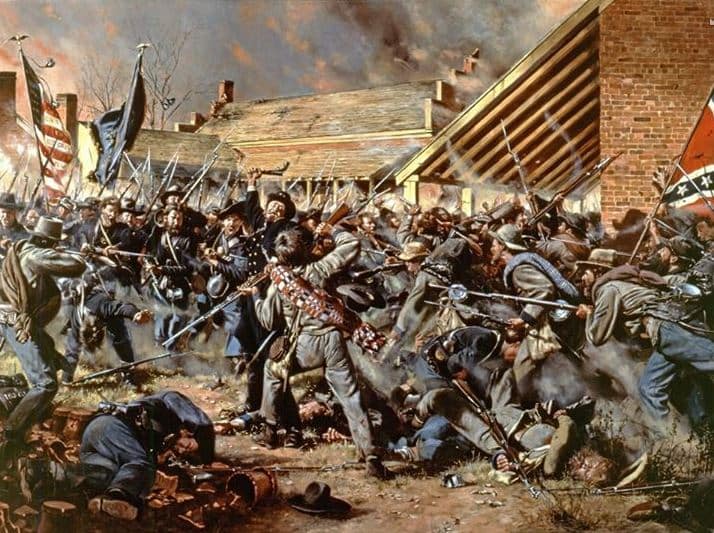
Opdycke's Tigers at Franklin, by Don Troiani

⚔️ Battle of Franklin, Tennessee,
30 November 1864

On the evening of 30 November 1864, Gen. John Bell Hood hurled his Army of Tennessee against entrenched Union forces at Franklin, Tennessee. Five hours of brutal fighting cost the Confederacy thousands of casualties and some of its finest generals. This battlefield study examines the strategy, terrain, and leadership decisions that made Franklin a decisive prelude to the Battle of Nashville.

Reconstructing War of 1812 battlefields through terrain analysis, primary sources and on-site research

The Canadian Voltigeurs engaging US forces during the battle of Chateauguay, 26 October 1813.

Walking the battlefields of the War of 1812

Origins of the war

The War of 1812 (1812–1815) was a complex, multi-theatre conflict fought between the United States, the British Empire, Canadian militia forces and Indigenous nations whose alliances and strategic decisions shaped the course of the war. Often overshadowed by the Napoleonic Wars happening simultaneously in Europe, the War of 1812 unfolded across thousands of kilometres of forests, lakes, rivers and coastal regions in North America, where geography, small armies and rapid movements produced intensely contested campaigns.

Theatres of war

Along the Canadian–American frontier, the war opened with U.S. invasions aimed at securing Upper and Lower Canada. Early actions at Detroit, Queenston Heights and York highlighted the importance of river crossings, militia mobilisation and the decisive role played by Indigenous warriors under leaders such as Tecumseh. As the conflict intensified, battles around the Niagara Peninsula — including Stoney Creek, Chippawa, Lundy’s Lane and Fort Erie — developed into hard-fought engagements where both sides struggled for control of key roads, ridges and fortified positions. An 1813 American advance on Montreal was blunted at the battles of Chateauguay and Crysler’s Farm.

To the west, fighting spread across the Great Lakes and the vast interior regions between Lake Erie and the Mississippi River. Control of the lakes became a strategic priority, leading to major naval actions such as the Battle of Lake Erie, where American victory reshaped the theatre and enabled the recapture of Detroit and the pursuit of British and Indigenous forces into the Thames Valley.

On the Atlantic seaboard, the war took a different form. British naval supremacy allowed raids along the coast, culminating in the 1814 assault on Washington, including the burning of public buildings. Yet American forces successfully defended key positions such as Baltimore, where the stand at Fort McHenry inspired the Star-Spangled Banner.

Final battles

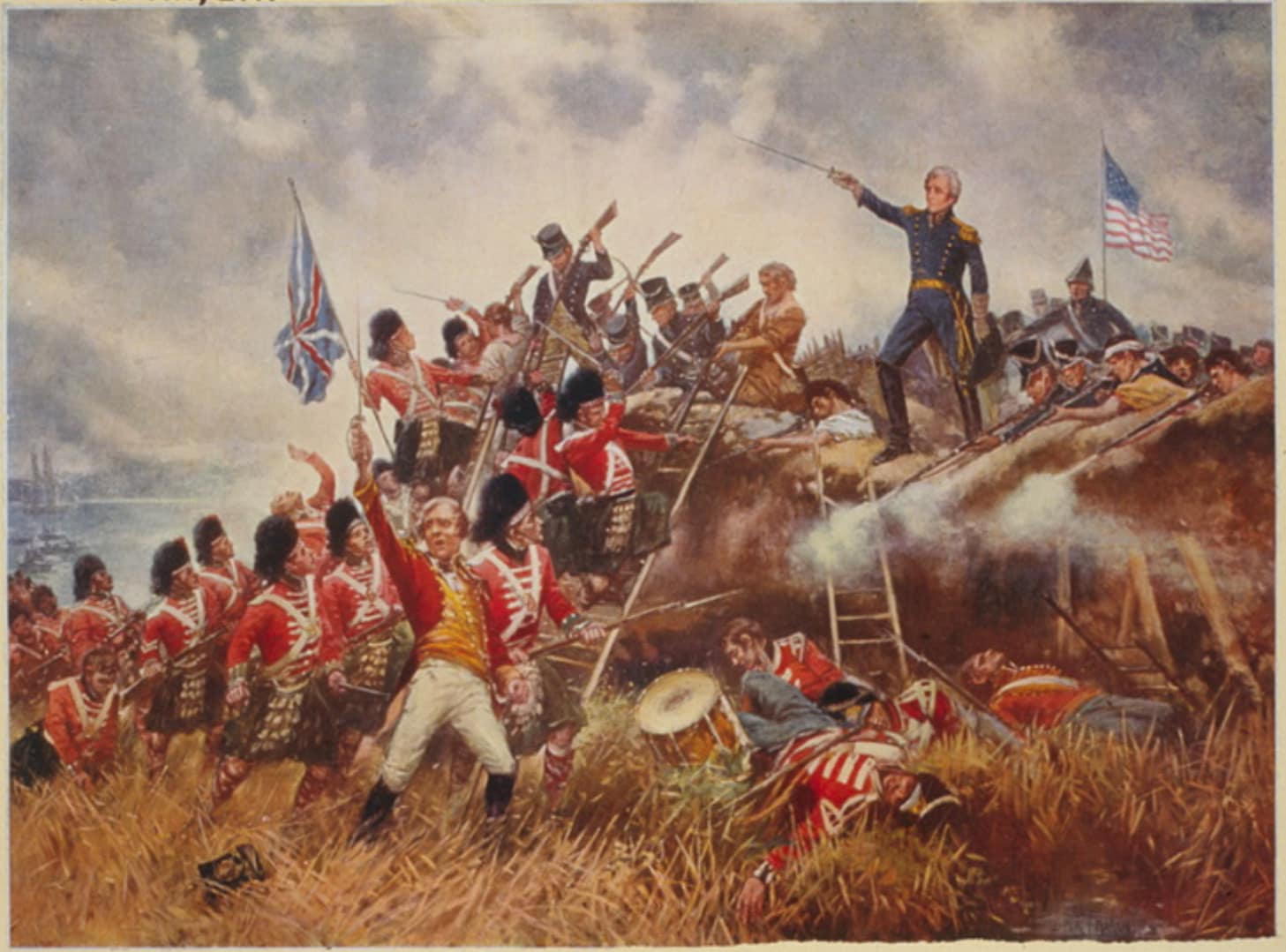
The war’s final major action occurred far to the south at New Orleans, where Andrew Jackson’s mixed force of regulars, militia, free men of colour and frontiersmen repelled a seasoned British army in one of the conflict’s most dramatic battles — fought after the peace treaty had already been signed.

This collection of battlefield studies examines these diverse campaigns through period maps, contemporary accounts and on-site exploration, revealing how geography, logistics, alliances and leadership shaped the war’s shifting fortunes.


Battle Studies in the War of 1812

Below are all current BattlefieldTravels studies for the War of 1812, covering key battles, campaign phases and associated sites. New studies are added as further battlefields are walked and analysed.


What major theatres are covered in the War of 1812 collection?

The page covers the Canadian–American frontier, Great Lakes naval campaigns, Atlantic coastal raids and southern battles such as New Orleans.

Which battles are included or planned?

Studies include New Orleans, with future coverage planned for Detroit, Queenston Heights, Lundy’s Lane, Fort Erie, Lake Erie, Baltimore and other key engagements.

Why was the War of 1812 significant?

It shaped national identities in the United States and Canada, influenced Indigenous sovereignty, and marked the final Anglo-American conflict before lasting peace.

How did terrain influence the War of 1812?

Dense forests, rivers, ridgelines and lakes dictated movement, supply and defensive positions, making local knowledge and naval control crucial.

Are these battlefields still visitable today?

Many sites — including Queenston Heights, Fort Erie, Baltimore and New Orleans — retain key features and are preserved as national parks or historic sites.


Subscribe to Battlefield Travels and receive a free E-Book Battlefield Guide

Unlock expert battlefield analysis, campaign reconstructions, and historical insights drawn from firsthand exploration and primary sources.

🗺️ You’ll receive:

🎖️ Exclusive historical insights you won’t find elsewhere

📘 A free eBook: 10 Tips for Exploring Historic Battlefields

📰 New battlefield studies straight to your inbox as they are published


Reconstructing American Civil War battlefields through terrain analysis, primary sources and on-site research

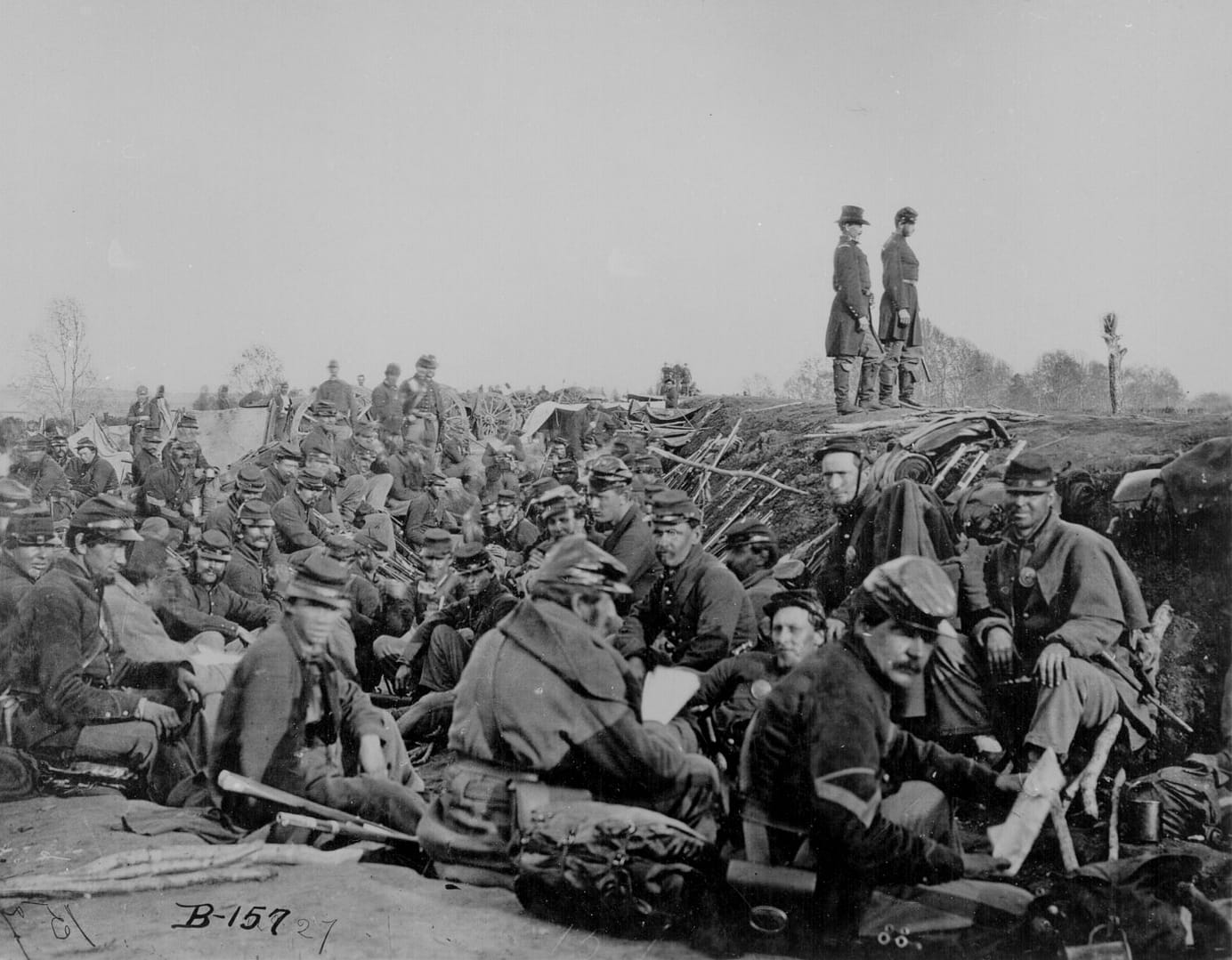
Union troops of General John Sedgwick’s corps, early 1863.

Walking the battlefields of the American Civil War (1861-1865)

Origins of the war

The American Civil War (1861–1865) was a continental-scale conflict fought across an extraordinary range of landscapes — rolling farmland, dense forests, mountain passes, river valleys, coastal fortifications, swamps, rail hubs and vast open plains. Shaped at the highest levels by questions of slavery, union, strategy and industrial capacity, the war was ultimately decided on the ground: by infantry regiments advancing through choke points in the Wilderness, artillery massed on commanding heights like Cemetery Ridge and Missionary Ridge, and commanders making decisions amid dust, smoke, noise and often limited visibility.

The theatres

No two theatres were alike:

  • In the Eastern Theatre, armies manoeuvred across a compact corridor between the capitals at Washington and Richmond, fighting along ridges, rivers and road networks that constrained movement and amplified the importance of terrain — from the stone walls of Fredericksburg and the bold manoeuvres of Chancellorsville to the tangled undergrowth of the Wilderness.
  • In the Western Theatre, vast distances, river systems and rail junctions shaped operations from Shiloh to Vicksburg, Chattanooga, Franklin and Atlanta. The great manoeuvre campaigns of Grant and Sherman unfolded across broken ridgelines, mountain gaps and deep river crossings that dictated tempo, supply, and the ability to concentrate force.
  • In the Trans-Mississippi, from the early battles at Wilson’s Creek and Pea Ridge, on the plains of Arkansas to the bayous of Louisiana, terrain and climate dictated a very different style of warfare, marked by dispersed forces, irregular operations and complex logistics.

This collection of battlefield studies approaches the war through a modern, terrain-focused lens. Each article integrates period maps, contemporary sketches, first-hand accounts, geological features, environmental constraints and detailed on-site reconnaissance. By walking the ground — from the open ridges of Gettysburg to the sunken lanes of Antietam, the steep slopes of Lookout Mountain, the ravines of Chickamauga and the trenches of Petersburg — these studies illuminate the relationships between landscape, doctrine, weapons, command culture, and tactical outcomes.

Methodology

The methodology applied across these studies examines the match between terrain and manoeuvre, visibility and fields of fire, the use of cover and obstacles, command-and-control limitations, and the role of railroads, rivers, fords, ferries and urban terrain. Whether your interest lies in the intense attrition battles of the East, the sweeping operational campaigns of the West, or the lesser-known engagements across the far reaches of the conflict, these battlefield studies offer clear, ground-truth insights into how and why the Civil War unfolded as it did.

I have walked the ground on more than fifty Civil War battlefields. New studies will appear here as they are completed and published.


American Civil War Battlefield Studies

In-depth battlefield analyses based on terrain, primary sources, and on-the-ground exploration.


  • ⚔️ Battle of Franklin, Tennessee,
    30 November 1864

    ⚔️ Battle of Franklin, Tennessee, 30 November 1864

    On the evening of 30 November 1864, Gen. John Bell Hood hurled his Army of Tennessee against entrenched Union forces at Franklin, Tennessee. Five hours of brutal fighting cost the Confederacy thousands of casualties and some of its finest generals. This battlefield study examines the strategy, terrain, and leadership decisions that made Franklin a decisive…

    Read the full Battlefield Study…


  • ⚔️ Battle of Pea Ridge, Arkansas,
    7-8 March 1862

    ⚔️ Battle of Pea Ridge, Arkansas, 7-8 March 1862

    The Battle of Pea Ridge, fought from 7-8 March 1862 in northwestern Arkansas, was a pivotal engagement in the American Civil War. This battle was crucial for control of Missouri and the Trans-Mississippi theater. Brigadier-General Samuel R. Curtis led the Union Army of the Southwest into Arkansas after pushing Confederate forces out of Missouri. In…

    Read the full Battlefield Study…


  • ⚔️ Battle of Wilsons Creek, Missouri,
    10 August 1861

    ⚔️ Battle of Wilsons Creek, Missouri, 10 August 1861

    The Battle of Wilson’s Creek, Missouri, on 10 August 1861, was the second major battle of the American Civil War (after 1st Bull Run) and the first major battle west of the Mississippi. After a decade of conflict between pro-slavery and anti-slavery factions along the Kansas-Missouri border, there was already a long history of enmity,…

    Read the full Battlefield Study…


  • ⚔️ Battle of Chancellorsville, Virginia,
    27 April – 6 May 1863

    ⚔️ Battle of Chancellorsville, Virginia,  27 April – 6 May 1863

    After the disastrous Battle of Fredericksburg in December 1862, President Lincoln replaced General Ambrose Burnside with General ‘Fighting’ Joe Hooker. Hooker’s army of about 134,000 Federal troops on the north side of the Rappahannock River faced about 60,000 Confederate troops under General Robert E. Lee on the south side. Hooker’s plan was bold. In response,…

    Read the full Battlefield Study…


American Civil War Field Notes

Short-form observations, terrain insights, and working interpretations from the field. Some posts require access.


What makes these American Civil War studies different?

Each study uses terrain analysis, period maps and on-site research to show how ground, movement and command decisions shaped the battle.

Does this collection focus only on the Eastern Theatre?

It includes major Eastern and Western battles and can expand as new studies — such as Gettysburg, Antietam or Shiloh — are added.

Can I visit these Civil War battlefields today?

Yes. Many key sites, including Gettysburg, Antietam and Shiloh, are preserved as national parks with extensive interpretation.

Do the articles include maps and detailed sources?

Each study integrates period cartography, historical sources and field reconnaissance to provide clear, evidence-based terrain insight.


Subscribe to Battlefield Travels and receive a free E-Book Battlefield Guide

Unlock expert battlefield analysis, campaign reconstructions, and historical insights drawn from firsthand exploration and primary sources.

🗺️ You’ll receive:

🎖️ Exclusive historical insights you won’t find elsewhere

📘 A free eBook: 10 Tips for Exploring Historic Battlefields

📰 New battlefield studies straight to your inbox as they are published


download

⚔️ Battle of New Orleans, Louisiana,
08 January 1815

The Battle of New Orleans was a brief but memorable encounter between American regular and volunteer forces under Andrew Jackson, and a regular British force under General Pakenham. What the combatants didn’t know was that the peace treaty to end the war had been signed prior to the battle.

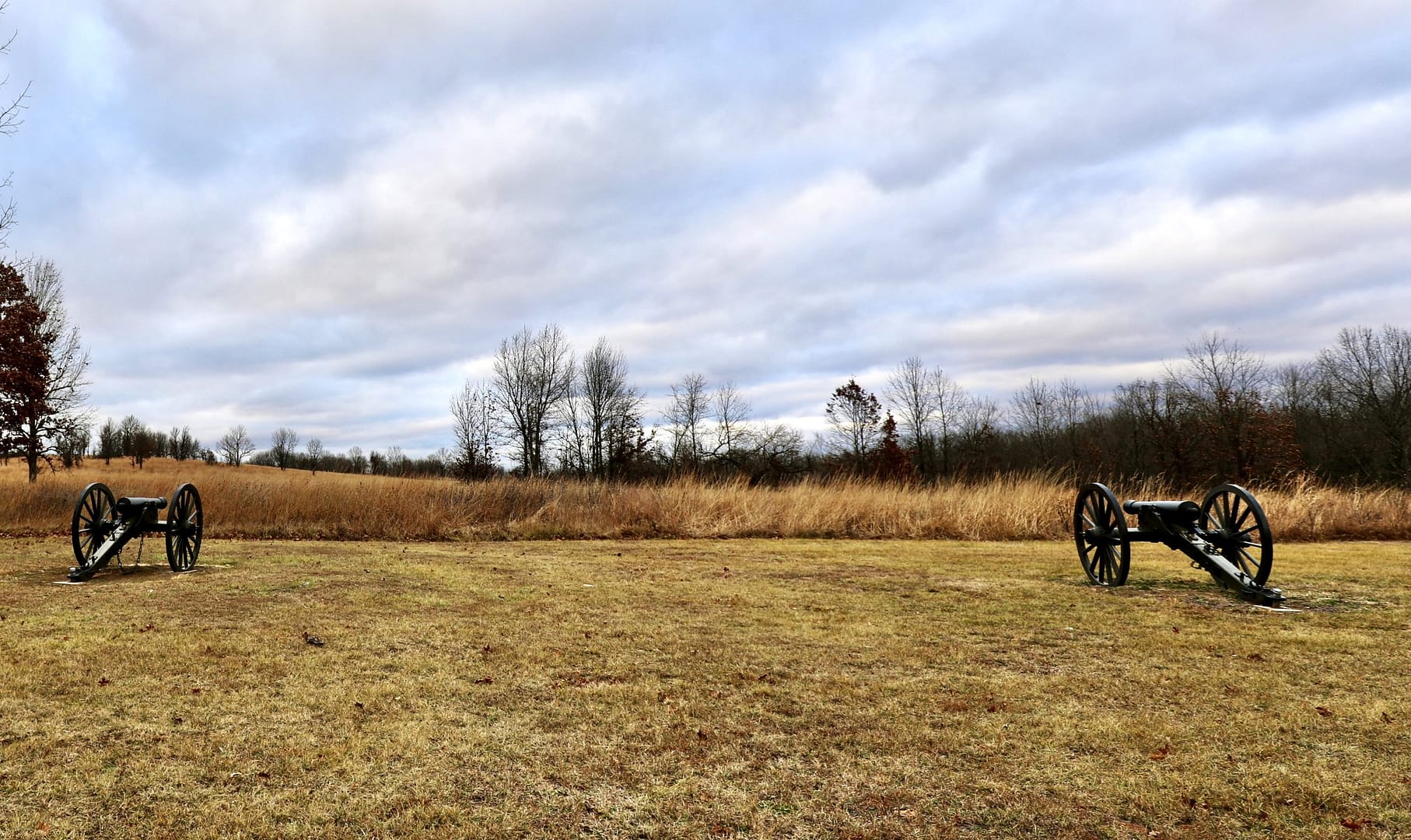
Battle of Pea Ridge, Arkansas, 7-8 March 1862. Union battery at Leetown.

⚔️ Battle of Pea Ridge, Arkansas,
7-8 March 1862

The Battle of Pea Ridge, fought from 7-8 March 1862 in northwestern Arkansas, was a pivotal engagement in the American Civil War. This battle was crucial for control of Missouri and the Trans-Mississippi theater. Brigadier-General Samuel R. Curtis led the Union Army of the Southwest into Arkansas after pushing Confederate forces out of Missouri. In response, Confederate Major General Earl Van Dorn devised an ambitious plan to strike Curtis’ army from the rear, severing its supply lines and potentially reclaiming Missouri for the Confederacy. This maneuver led to the Battle of Pea Ridge, one of the most significant battles west of the Mississippi River.

Battle of Wilsons Creek, 10 August 1861

⚔️ Battle of Wilsons Creek, Missouri,
10 August 1861

The Battle of Wilson’s Creek, Missouri, on 10 August 1861, was the second major battle of the American Civil War (after 1st Bull Run) and the first major battle west of the Mississippi. After a decade of conflict between pro-slavery and anti-slavery factions along the Kansas-Missouri border, there was already a long history of enmity, conflict and atrocity in this theater.
In August 1861, a small Union army of about 5,400 troops under Brigadier General Nathaniel Lyon was actively campaigning to keep Missouri from going over to the Confederacy. A mixed Confederate force of about 12,500 troops under Major General Sterling Price was looking for him. They met at Wilson’s Creek, near Springfield Missouri, on 10 August 1861.

Chancellorsville 2

⚔️ Battle of Chancellorsville, Virginia,
27 April – 6 May 1863

After the disastrous Battle of Fredericksburg in December 1862, President Lincoln replaced General Ambrose Burnside with General ‘Fighting’ Joe Hooker. Hooker’s army of about 134,000 Federal troops on the north side of the Rappahannock River faced about 60,000 Confederate troops under General Robert E. Lee on the south side. Hooker’s plan was bold. In response, Robert E. Lee, made some of the boldest decisions in military history, and achieved his greatest victory.