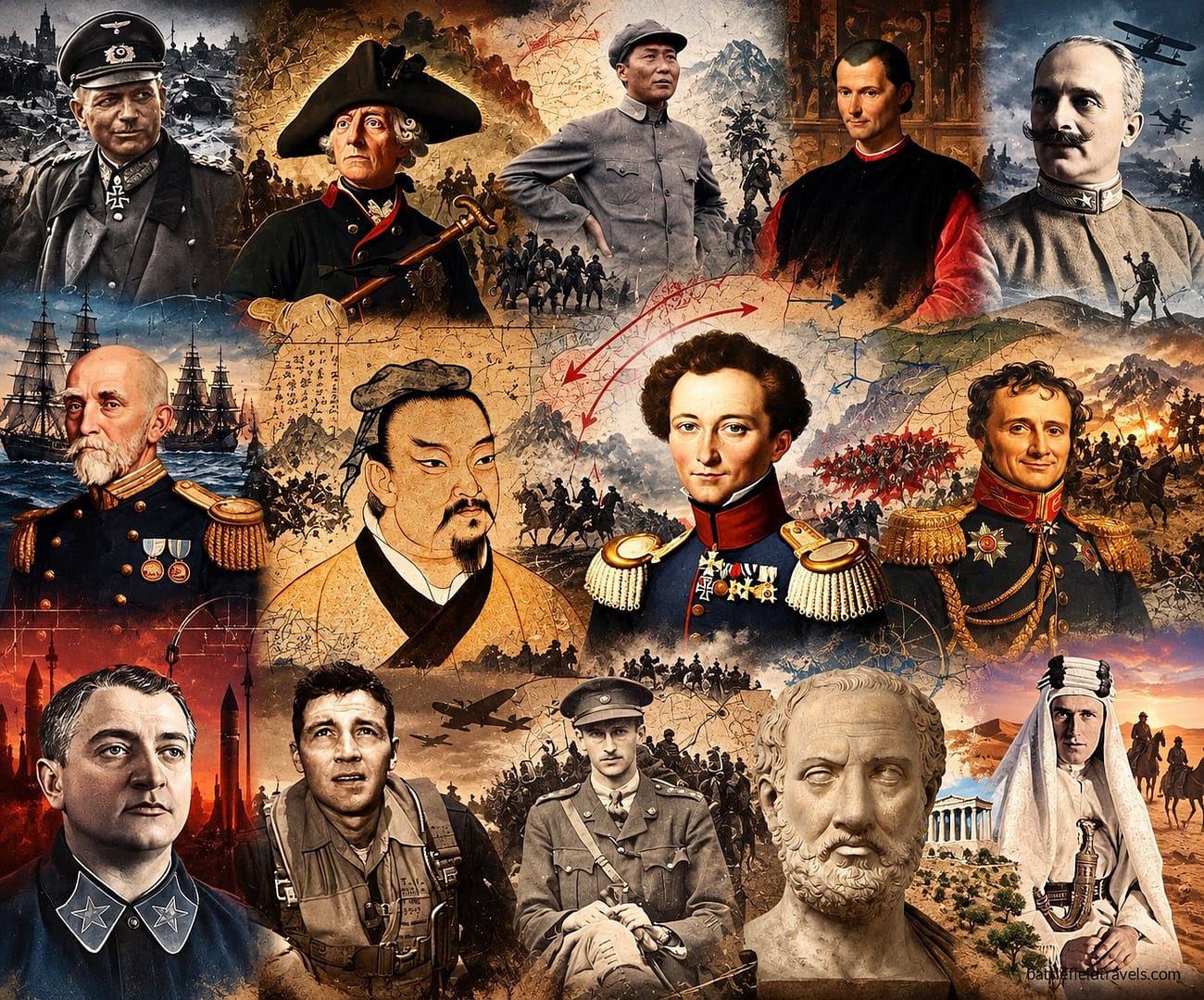
For more than two thousand years, soldiers, commanders and theorists have wrestled with the nature of war — how armies should fight, how commanders make decisions, and how technology, politics and society reshape the battlefield. Test your knowledge with 20 questions on theorists and innovators from the ancient world to the modern era.
Think you know your military history?
Put your knowledge to the test with BattlefieldTravels’ military history quizzes — challenging questions drawn from the battles, commanders, armies and terrain explored across this site.
Test Your Military History Knowledge
BattlefieldTravels military history quizzes cover battles, commanders, armies, weapons, strategy and battlefield terrain across more than 2,000 years of warfare.
Back in the day when I was a young infantry soldier, I would routinely create quizzes for the other guys when we had some downtime in the jungle. Decades later, many of those same questions have found their way into this BattlefieldTravels quiz page!
These are not simple trivia quizzes. Questions draw on the research behind the battle studies, fieldwork and military history explored across the site. Many answers also link directly to the relevant BattlefieldTravels article, so the quizzes are another way to explore the research behind the questions.
Each attempt draws a random selection of questions from a much larger bank, with both the questions and answers shuffled. More than 500 questions are already in the collection, with more being added.
Score 60% to pass — and expect a challenge.
Military History Quizzes
❓Military Thinkers, Theorists & Innovators Quiz. Test your knowledge!
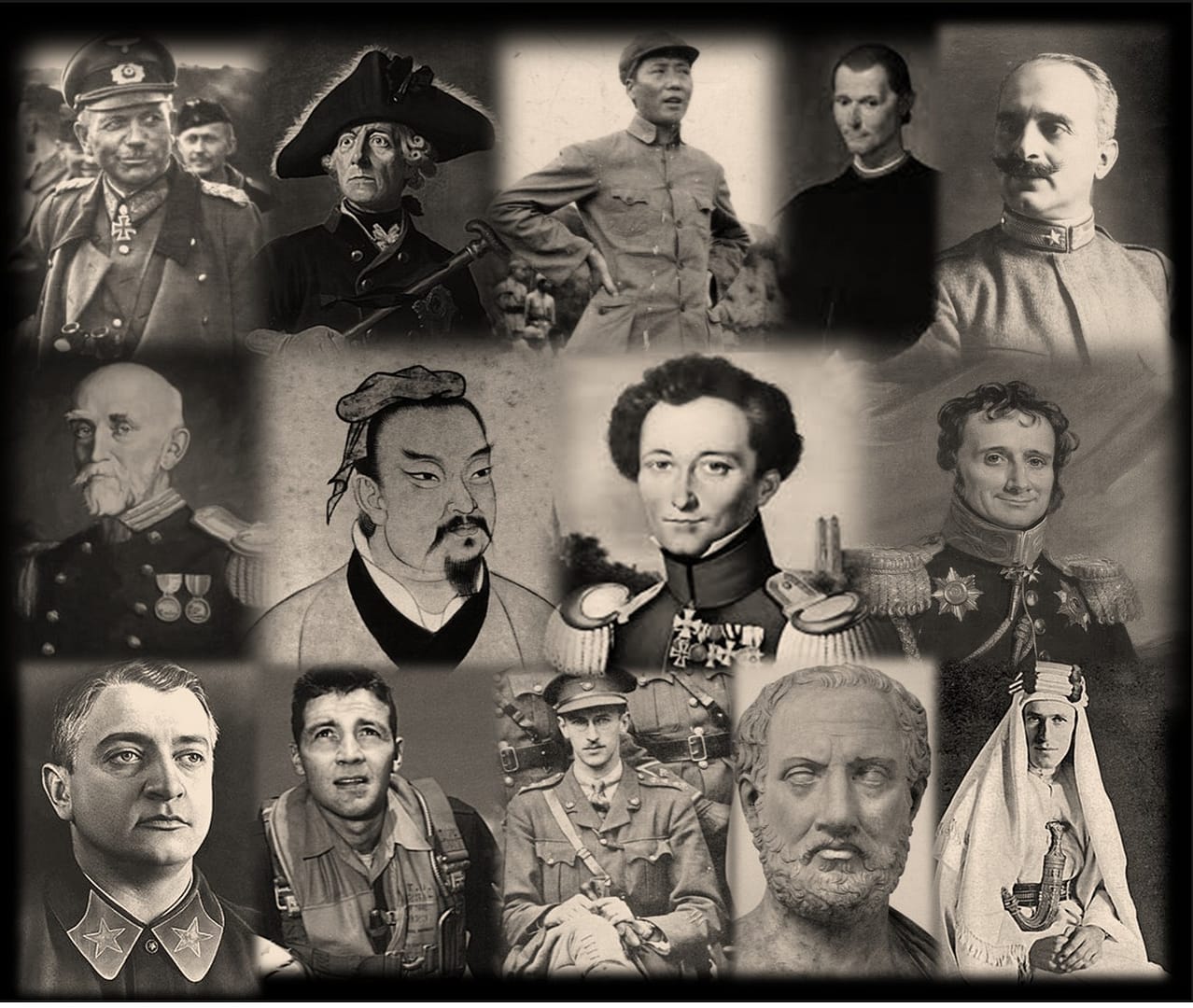
Every student of military history knows Clausewitz and Sun Tzu, but how deep does your knowledge really go? For thousands of years, soldiers and theorists have wrestled with the nature of war — how armies should fight, and how technology, politics and society reshape the battlefield.
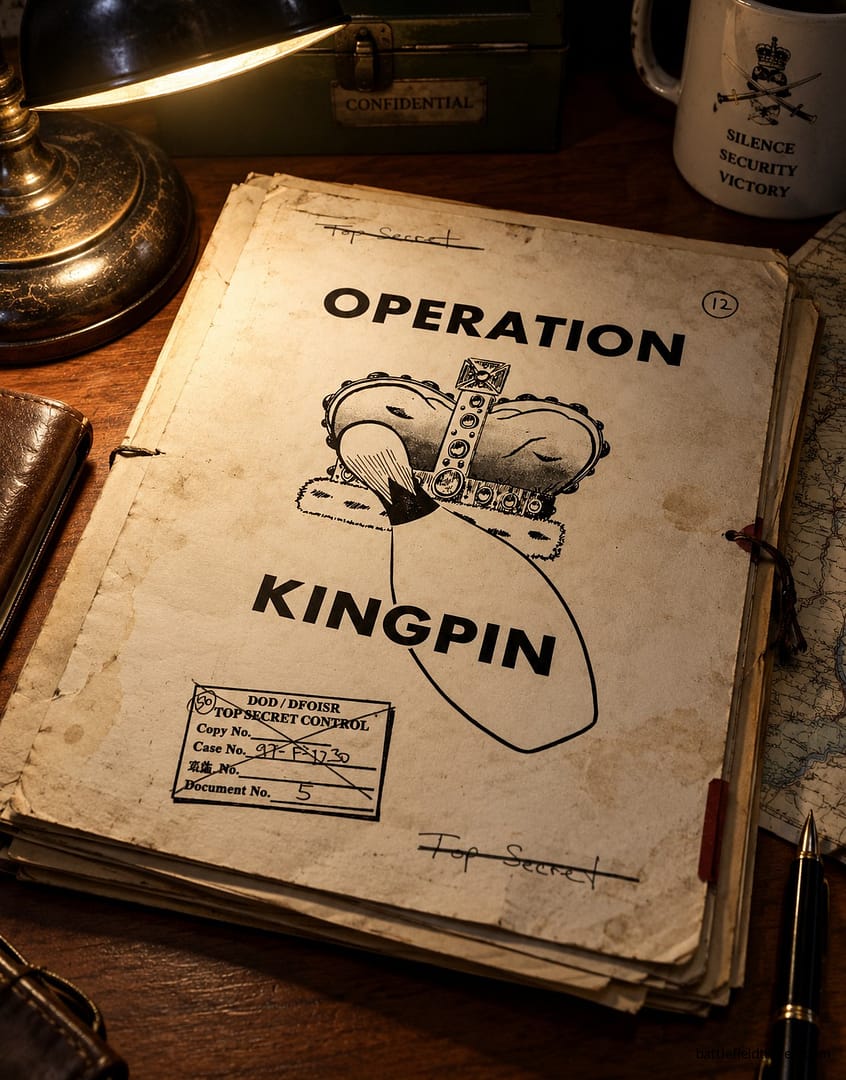
❓Test Your Knowledge of Military Operation Codenames
From OVERLORD and BAGRATION to JAYWICK, and GOTHIC SERPENT, military history is filled with memorable, and sometimes mysterious, operational codenames. Test your knowledge with 20 questions, spanning conflicts around the world.
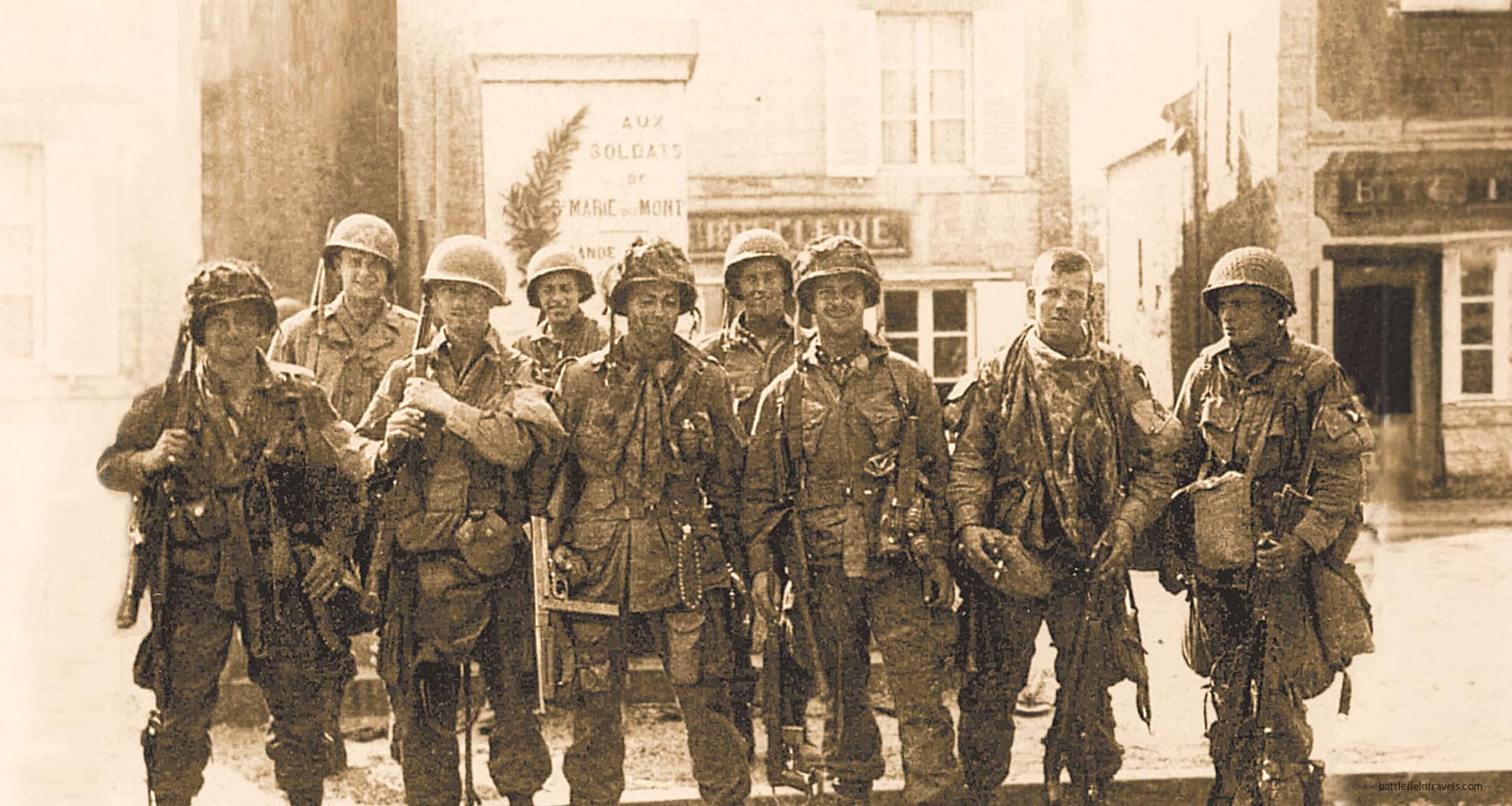
❓Easy Company Quiz. Test your ‘Band of Brothers’ knowledge!
Easy Company, 506th Parachute Infantry Regiment, fought from Normandy to the Netherlands, Bastogne and the final advance into Germany and Austria. Test your knowledge with 20 questions covering the men, battles, commanders and campaigns of the real Easy Company.
The Guadalcanal Campaign centred on the airfield. The Japanese started building it in May 1942, the Americans seized it in August, and the Japanese spent six months trying to take it back. Test your knowledge with 20 questions covering the naval and land battles of the campaign?
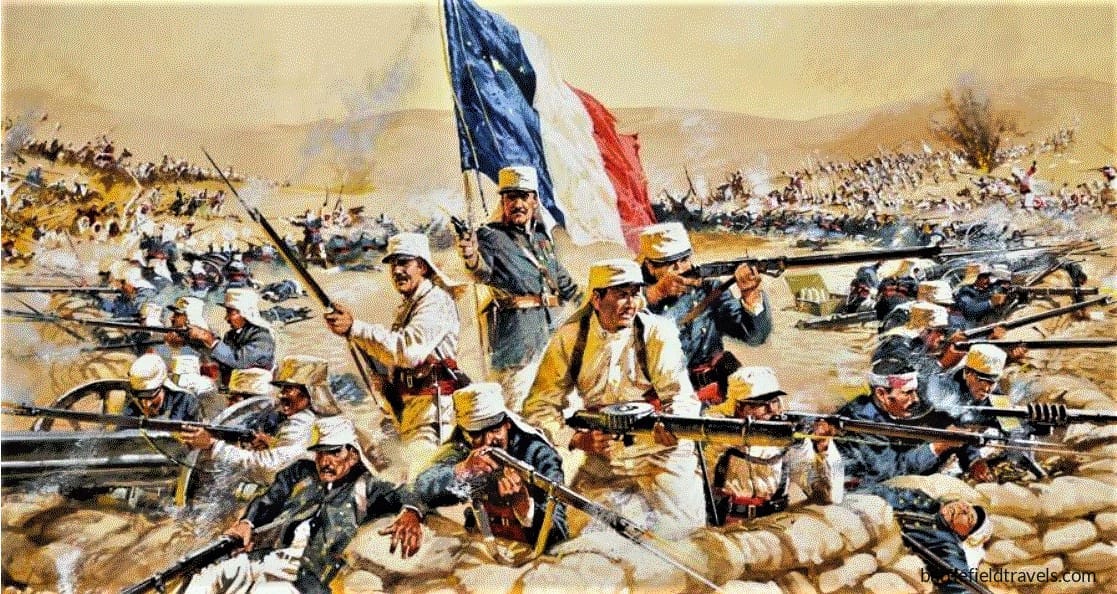
❓French Foreign Legion Quiz: Test your knowledge of Legion history!
For almost 200 years, the Legion has fought in campaigns from Algeria and Mexico to Madagascar, Indochina and France itself. Test your knowledge with 20 questions, spanning the history of the Legion from its founding in 1831 to the modern era.
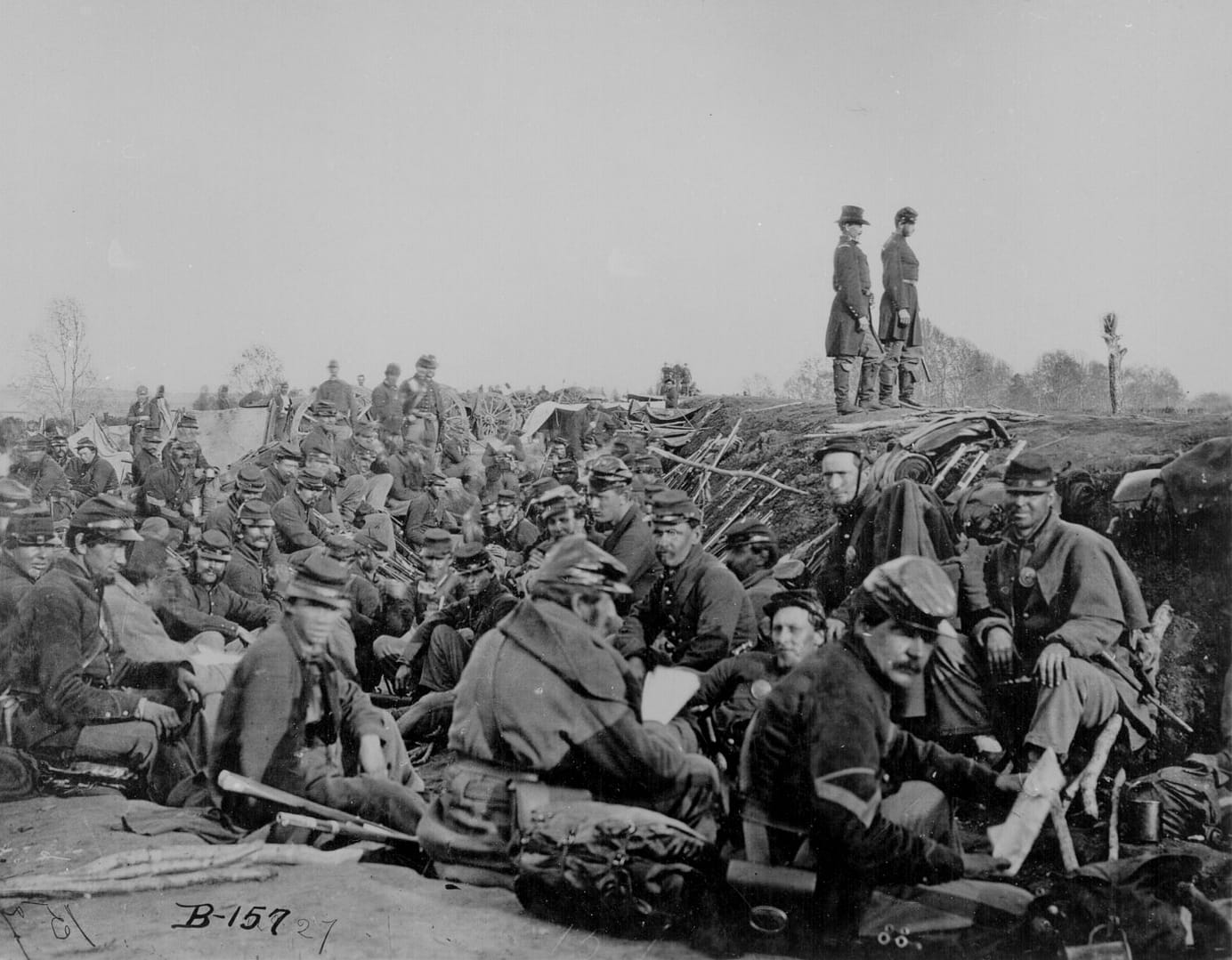
The American Civil War divided the nation, and killed more Americans than any other war in history. Test your knowledge with 20 questions drawn from a bank of 96, spanning all theatres of the war, leaders, battles, and weapons.
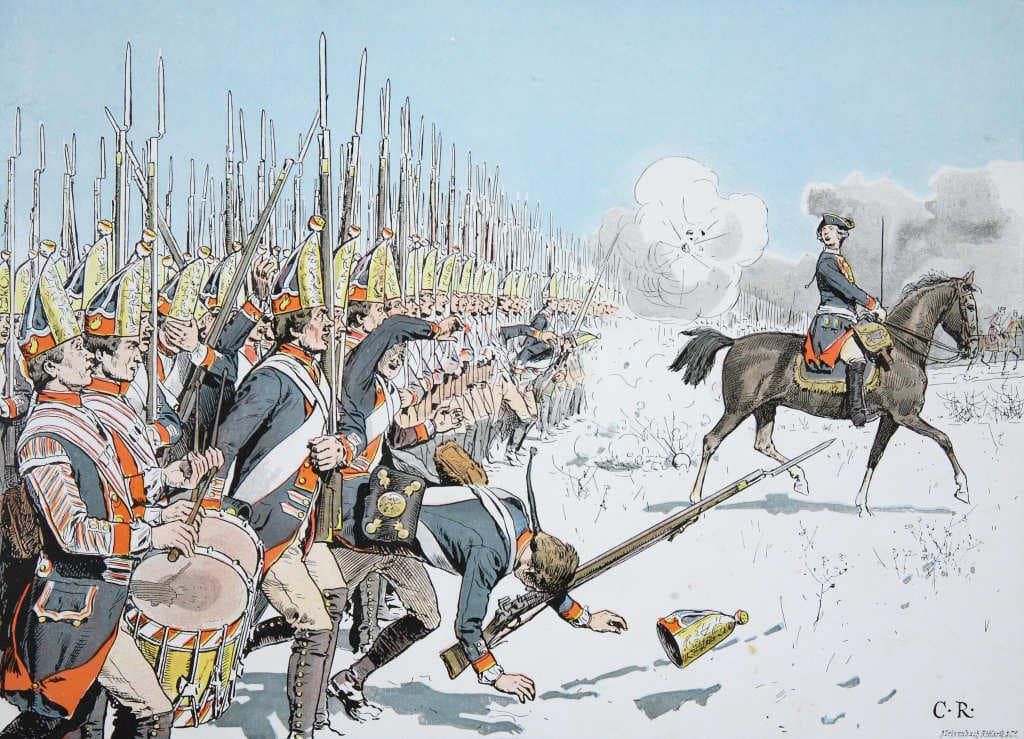
Forty questions spanning the Seven Years’ War and French and Indian War — from Frederick the Great and the struggle for Silesia to Quebec, India, Havana and Manila. Test yourself, challenge your students, or use it as a classroom resource.
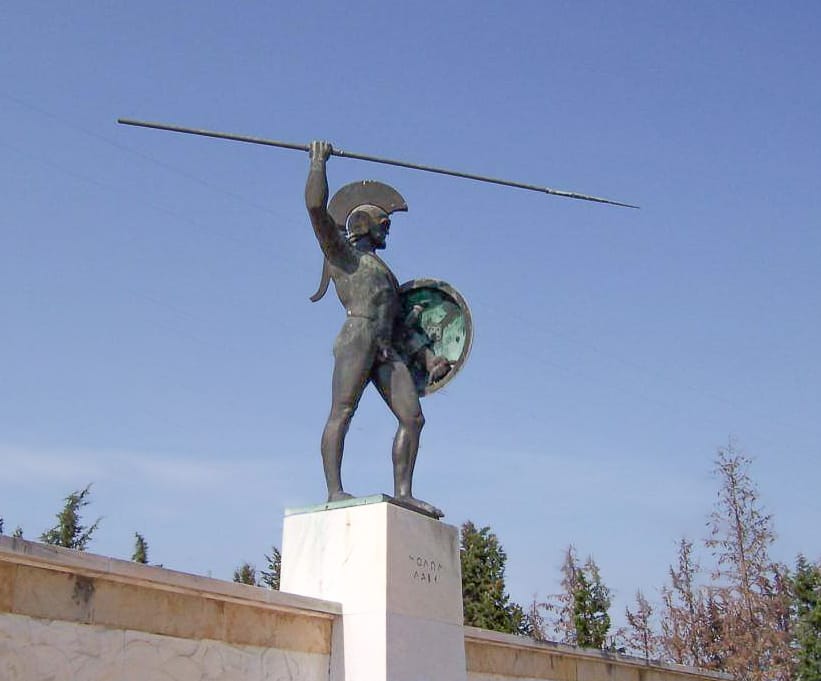
20 questions testing your knowledge of Leonidas, Xerxes, the Greek and Persian forces, commanders, terrain and the three-day battle. Score 60% to pass — but expect a challenge!
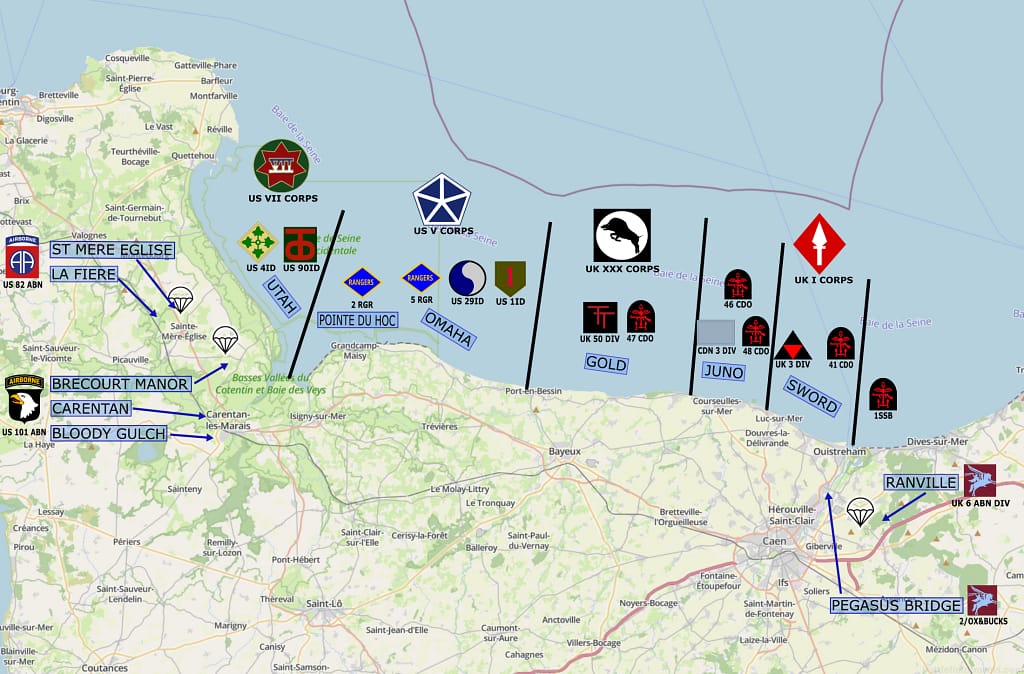
❓D-Day Quiz: Test your knowledge of the D-Day landings
20 questions testing your knowledge of the D-Day landings including the US and British airborne operations, and all five invasion beaches. Score 60% to pass — but expect a challenge!
Enjoyed the challenge? Stay connected with BattlefieldTravels for new battlefield studies, field research and more military history quizzes.
Subscribe to Battlefield Travels and receive a free E-Book Battlefield Guide
Unlock expert battlefield analysis, campaign reconstructions, and historical insights drawn from firsthand exploration and primary sources.
🗺️ You’ll receive:
🎖️ Exclusive historical insights you won’t find elsewhere
📘 A free eBook: 10 Tips for Exploring Historic Battlefields
📰 New battlefield studies straight to your inbox as they are published
Claim Your Free Battlefield Travel Guide
Get your free e-book, exclusive tips, and updates on new battlefield studies.
Thank you!
You have successfully joined our subscriber list.
⚔️ Go deeper — Members get exclusive access to the Deep Research Collection, Field Notes, and monthly Research Dispatches. Try membership free for 7 days, cancel anytime. From $9/month.
Selected works from classic and modern strategists
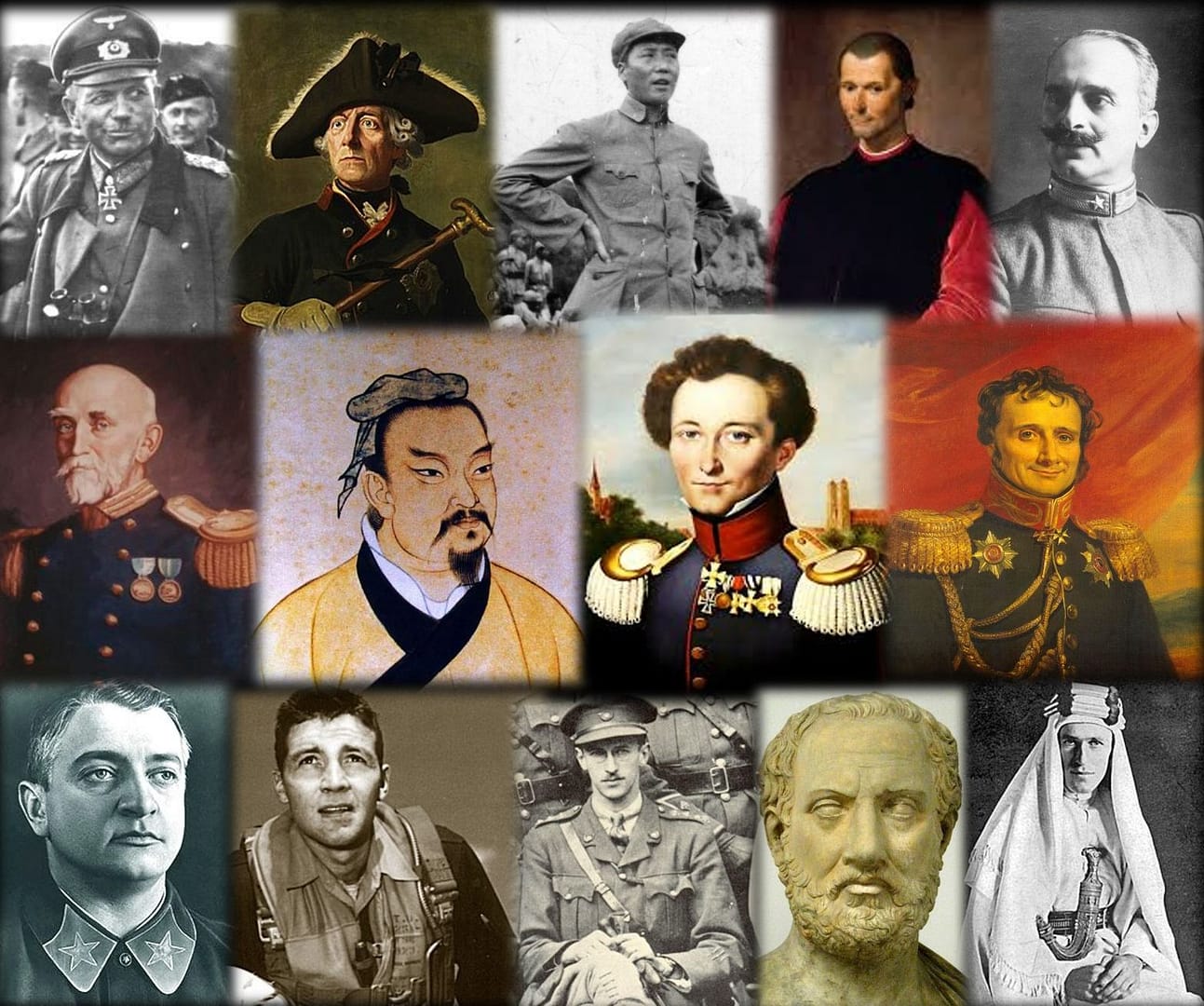
Classic war theorists and strategists – Top Row: Guderian, Frederick, Mao Zedong, Machiavelli, Douhet. Middle Row: Mahan, Sun Tzu, Clausewitz, Jomini. Bottom Row: Tukachevskii, Boyd, Liddell-Hart, Thucydides, T.E. Lawrence
War Theory, Strategy, and Concepts
Understanding battles and campaigns requires more than just describing tactics, troop movements or cataloguing orders of battle. The studies on BattlefieldTravels emphasise how terrain, doctrine, command culture, technology, and strategic intent interact to shape outcomes.
This page gathers the core works of strategic thought that underpin that analytical approach. These books explore why commanders choose certain courses of action, how armies adapt (or fail to adapt), and how states pursue political objectives through military means.
Together, they offer the conceptual framework that supports every battlefield study on this site, from Frederick the Great’s mastery of manoeuvre to the operational crises of Route Coloniale 4, and from Teutoburg Forest’s ambush dynamics to the doctrinal failures at Isandlwana and Chancellorsville.
Jomini’s writings, for example, exerted a powerful influence on nineteenth-century professional military education and provide important context for understanding the operational thinking of American Civil War commanders such as Grant, Lee, McClellan, Sherman and Jackson. In the twentieth century, theorists including J.F.C. Fuller explored the possibilities created by mechanisation, while Heinz Guderian developed ideas about concentrated armoured forces, radio communications and combined-arms operations in Achtung—Panzer!. In the Soviet Union, Mikhail Tukhachevskii and other Red Army theorists developed concepts of operations in depth that contributed to the evolution of Deep Battle and later Soviet operational art.
Use these works not just as reading material, but as tools: lenses through which to interpret decisions, understand miscalculations, and evaluate battles on the ground.
Start with the books below. Explore the thinkers and theories that shaped the conduct of war, then come back to examine how those ideas were translated into battlefield practice — or put your knowledge to the test
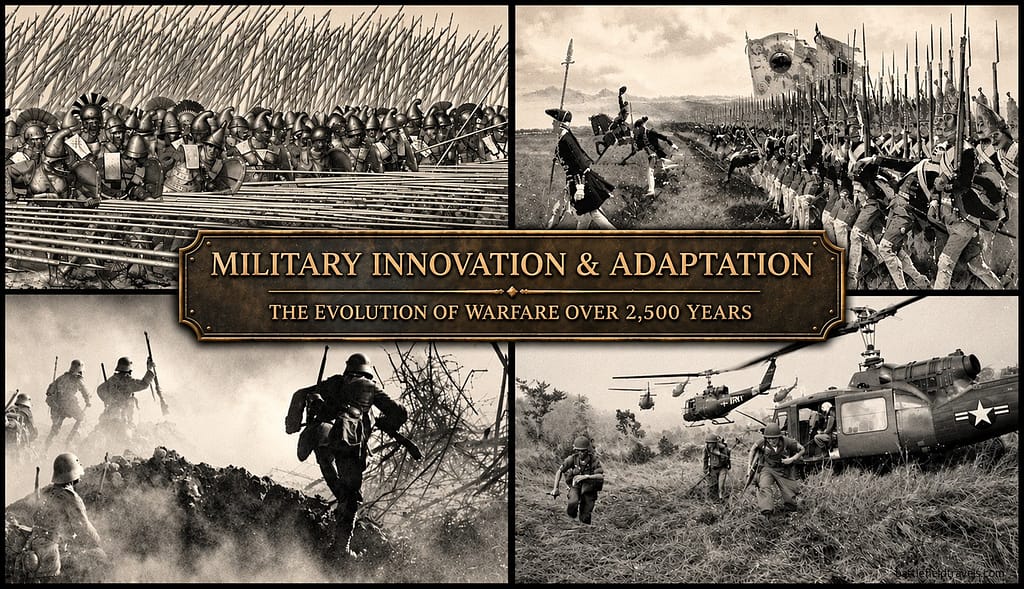
💡 Military Innovation & Adaptation Hub
Throughout history, armies have faced the same fundamental challenge: how to defeat an enemy who is trying to do exactly the same thing to them. Weapons change, technology evolves, but the fundamental problems of the battlefield remain remarkably consistent.
Sixty questions spanning more than two thousand years of military thought — from Vegetius and Ardant du Picq, to Mahan, Douhet, Boyd, and nuclear deterrence. Test your knowledge of the thinkers, theories and strategic ideas that influenced how commanders understood, planned and conducted warfare.
The reference collection below includes the key books and references on war theory and strategy I have used in preparing for and undertaking studies of conflicts and campaigns. Many of the older references have passed beyond their copyright (generally 95 years), so are available free via various sources.
Internet Archive – Public-domain editions of Clausewitz, Jomini, and Machiavelli.
Project Gutenberg – English translations of Sun Tzu, Thucydides, and early theorists.
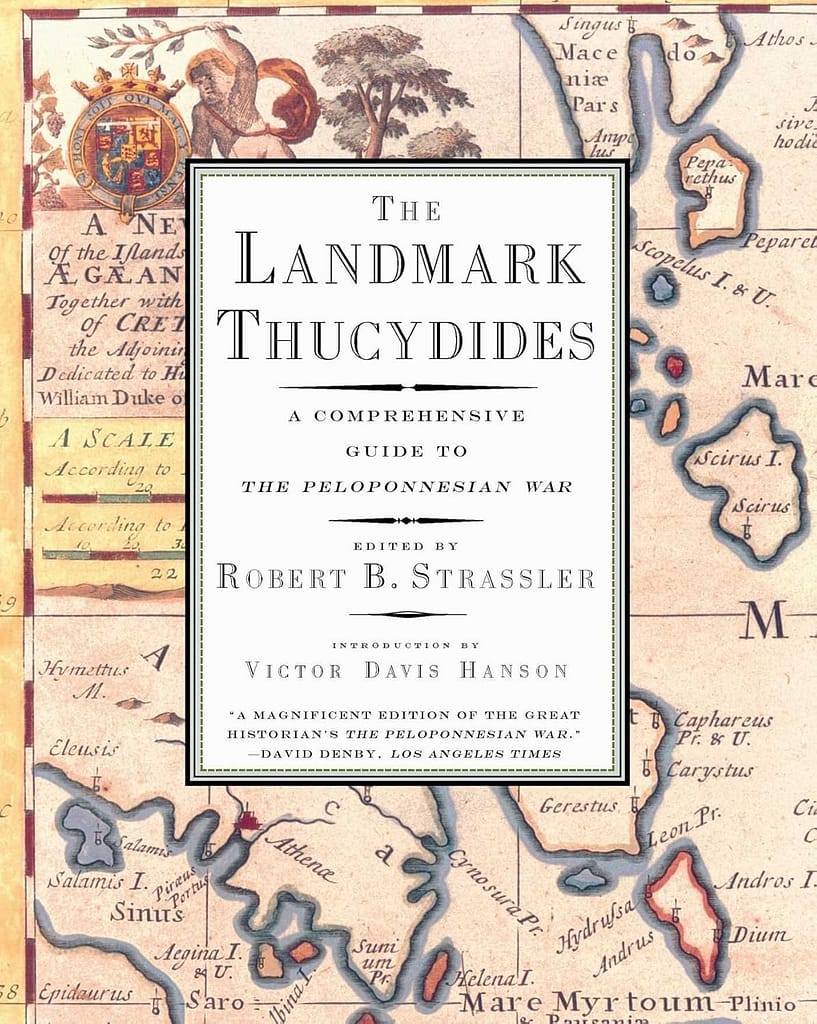
Thucydides’ monumental account of the Peloponnesian War (432BC – 404BC) remains the earliest rigorous analysis of power politics, strategic motivation, leadership failure, and the psychology of conflict. His narrative combines eyewitness detail with a reflective, almost clinical examination of why states go to war and how fear, honour, and interest shape their choices. The famous speeches — Melian Dialogue, Pericles’ Funeral Oration, the Mytilene Debate — reveal how democracies and autocracies rationalise war and grapple with strategic necessity.
Written around 2,500 years ago, The Art of War remains a concise and timeless treatise on deception, intelligence, adaptability, and using an enemy’s weaknesses against them. Sun Tzu focuses on achieving victory with minimal cost, often through indirect approaches, surprise, and careful preparation. Though brief, the work remains widely read across military, political, and business spheres.
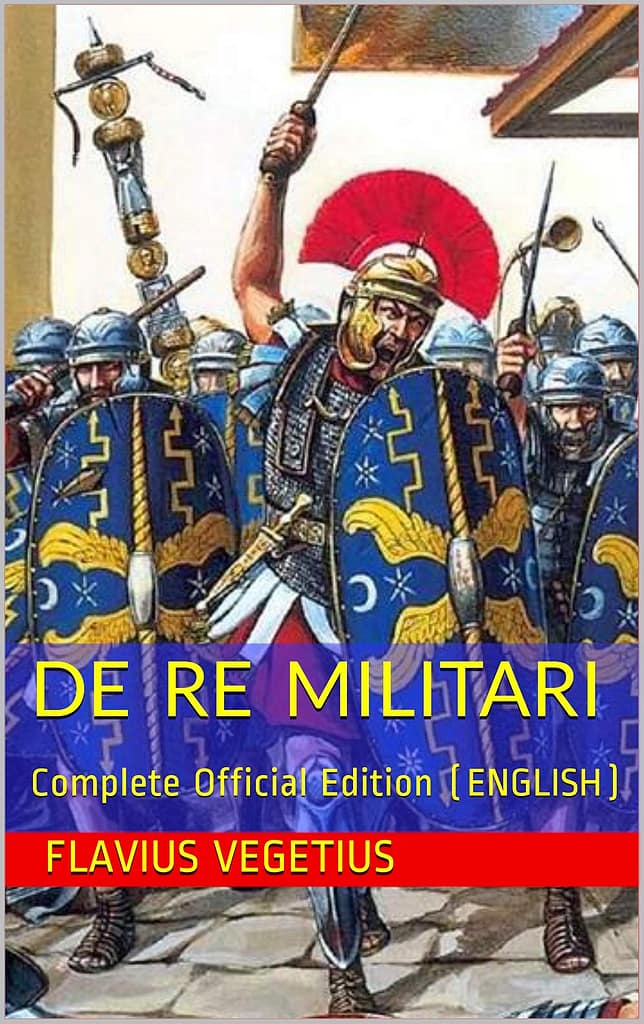
De Re Militari by Vegetius explains how the Romans organized their armies, battles, sieges, and war strategies. De Re Militari is essential to understand European strategy and war due to the fact that, besides describing the military might of Rome in practical terms, it was also used by generals and rulers in the next centuries and the Middle Ages to organize European armies, conduct sieges, reinforce castles, train soldiers, and conquer enemy nations.
Machiavelli’s lesser-known military treatise complements The Prince with a practical examination of armies, discipline, leadership, logistics, and civic virtue. Drawing heavily on Roman precedent, he argues that the character of an army reflects the character of its state, and that citizen militias — disciplined, patriotic, cohesive — provide the firmest foundation for military strength.
Baron Antoine-Henri Jomini was the most influential military theorist of the 19th century, shaping the education, operational thinking, and campaign planning of an entire generation of commanders. Drawing on his service under both Napoleon and Tsar Alexander I, Jomini sought to distil the “science” of warfare into clear, prescriptive rules. Summary of the Art of War outlines his central ideas: lines of operation, bases, decisive points, interior lines, the importance of concentration, and the strategic offensive supported by tactical defensive advantage. Jomini wrote with the confidence of someone convinced that warfare followed predictable, almost geometric principles.
Clausewitz’s unfinished masterpiece remains the cornerstone of modern strategic thought. Drawing on his experience in the Napoleonic Wars, Clausewitz explored the nature of war as a political instrument, shaped by uncertainty, friction, moral forces, and the reciprocal interaction between opposing wills. Far from a simple manual, On War is a philosophical examination of how war is used as an instrument of policy and why wars unfold as they do.
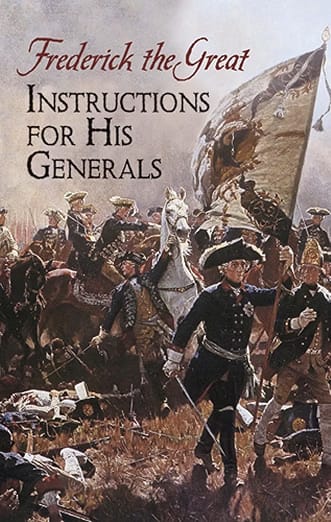
“War is not an affair of chance,” Frederick asserted, adding that “a great deal of knowledge, study, and meditation is necessary to conduct it well.” In this book, he presents the fundamentals of warfare, discussing such timeless considerations as leadership qualities, the value of surprise, and ways to conquer an enemy who possesses superior forces.
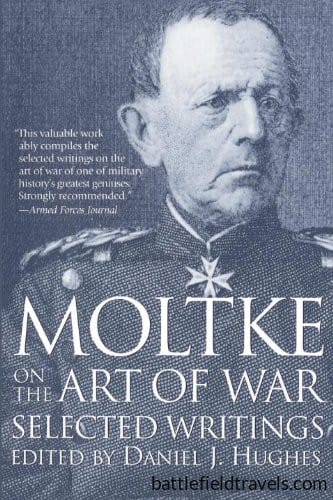
Field Marshal Helmuth Graf von Moltke is best known for his direction of the German/Prussian campaigns against Austria in 1866 and France in 1870-71, yet it was during his service as chief of the General Staff that he laid the foundation for the German way of war which would continue through 1945.
Mahan argued that maritime power — fleets, commerce, naval bases, and sea lines of communication — is the determining factor in national strength. His book reshaped global policy, influencing Britain, Japan, Germany, and the United States.While focused on naval strategy, Mahan’s themes of logistics, projection, and communications have direct application to my battle studies, especially where a sea campaign projects seamlessly into a land campaign as in the D-Day landings in 1944, and other expeditionary and amphibious operations.
Douhet was the first major theorist to argue that airpower could win wars independently by striking directly at an enemy’s population, infrastructure, and morale. He viewed the bomber as an unstoppable strategic weapon that would render surface warfare secondary. While many of his predictions proved exaggerated, his book spurred decades of strategic bombing doctrine and continues to influence airpower theory today.
After first-hand experience of the ‘direct approach’ on the western front in WW1, Basil Liddell Hart believed there must be a better strategy than pitting your own strength against an enemy’s strength. He found his answers in history. He argued that the most successful commanders — from Epaminondas to T.E. Lawrence — used an indirect approach that sought to dislocate rather than destroy the enemy. His sweeping historical survey highlights psychological, operational, and logistical dimensions often overlooked by traditional military historians.
Strategy in the Missile Age first reviews the development of modern military strategy to World War II, giving the reader a reference point for the radical rethinking that follows, as Dr. Brodie considers the problems of the Strategic Air Command, of civil defense, of limited war, of counterforce or pre-emptive strategies, of city-busting, of missile bases in Europe, and so on. The book, unlike so many on modern military affairs, does not present a program or defend a policy, nor is it a brief for any one of the armed services. It is a balanced analysis of the requirements of strength for the 1960’s, including especially the military posture necessary to prevent war.
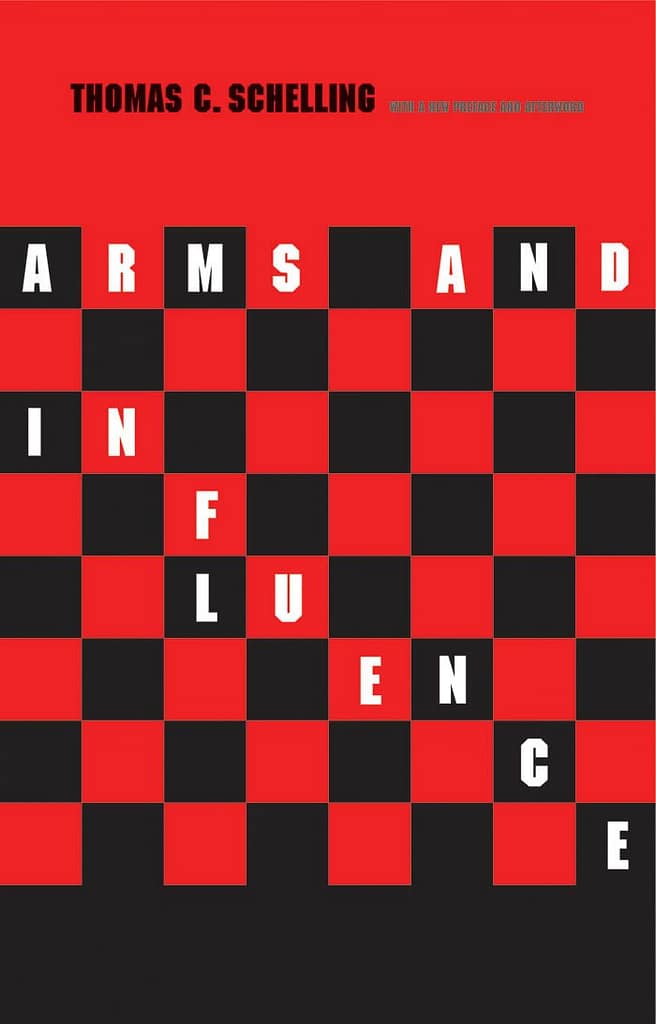
Traditionally, Americans have viewed war as an alternative to diplomacy, and military strategy as the science of victory. Today, however, in our world of nuclear weapons, military power is not so much exercised as threatened. It is,Mr. Schelling says, bargaining power, and the exploitation of this power, for good or evil, to preserve peace or to threaten war, is diplomacy—the diplomacy of violence. He sees the steps taken by the U.S. during the Berlin and Cuban crises as not merely preparations for engagement, but as signals to an enemy, with reports from the adversary’s own military intelligence as our most important diplomatic communications.
We studied this at Army War College – and the clinical discussion of global annihiliation is deeply disturbing.
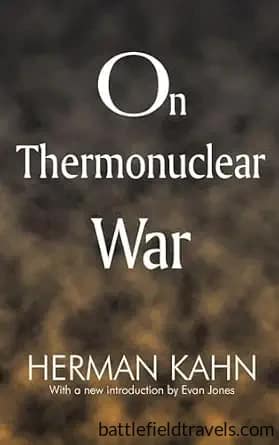
On Thermonuclear War was controversial when originally published and remains so today. It is iconoclastic, crosses disciplinary boundaries, and finally it is calm and compellingly reasonable. The book was widely read on both sides of the Iron Curtain. As a result, both sides were better able to avoid disaster during the Cold War. Kahn’s stated purpose in writing this book was simply: “avoiding disaster and buying time, without specifying the use of this time.” By the late 1950s, with both sides H-bomb-armed, reason and time were in short supply.
John Boyd served as a fighter pilot and instructor during the Korean War, and it was in the cockpit that he first developed his uncompromising views on what a true air-combat fighter should be – fast, agile, minimalist, and able to seize initiative in a constantly shifting environment. From this experience, he distilled a model of decision-making that became the foundation of his strategic legacy: the OODA Loop (Observe–Orient–Decide–Act).
Van Creveld examines the evolution of command systems from ancient times to the late 20th century, analysing how information, uncertainty, logistics, and organisational culture constrain or empower commanders. A landmark study in command-and-control theory.
Van Creveld’s insights into the ever increasing demand for information and the ever increasing size of teh headquarters needed to process the information, with all the internal friction that creates, is deeply insightful.
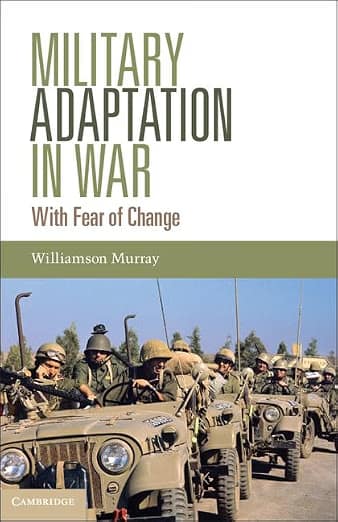
Military Adaptation in War addresses one of the most persistent, yet rarely examined, problems that military organizations confront: namely, the problem of how to adapt under the trying, terrifying conditions of war. This work builds on the volume that Professor Williamson Murray edited with Allan Millett on military innovation (a quite different problem, though similar in some respects).
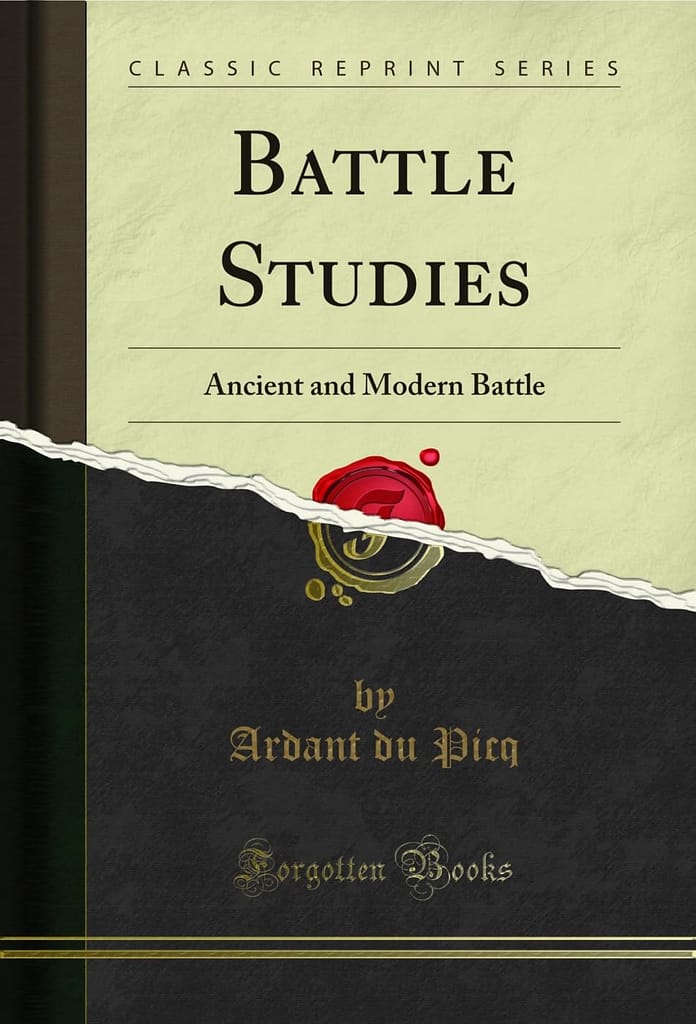
Universal truths of war endure: the human element shapes victory as powerfully as any instrument of battle. In this classic study, Ardant du Picq argues that timeless courage, endurance, and judgment drive outcomes on every field of battle, from antiquity to modern frontlines. This edition makes his penetrating insights accessible to today’s reader, linking past lessons to the realities of warfare across eras.
Fuller was one of the earliest proponents of armoured warfare, arguing that mechanisation would reorder the entire battlefield: tempo, shock, mobility, and operational reach. The Foundations on the Science of War articulates his effort to give warfare a systematic, almost scientific framework. His ideas heavily influenced pre-WW2 armoured theorists on both sides of the Atlantic — and were studied closely in Germany.
After observing the systemic paralysis suffered by the Austro-Hungarian Army during the 1916 Brusilov Offensive, Mikhail Tukhachevskii, along with Triandafillov and Isserson, developed the Soviet doctrine of Deep Battle and Deep Operations, arguing that modern war required simultaneous penetration across the tactical, operational, and strategic depths of an enemy defensive system. His ideas emphasised massive mechanised formations, break-in forces, break-through forces, exploitation forces, air-mechanised forces, tempo, operational shock, and the destruction of an enemy’s system rather than its frontline.
Guderian synthesised the ideas of Fuller, Liddell Hart, and early German mechanisation experiments into a clear argument for armoured concentration, radio-enabled command, and combined arms manoeuvre. Achtung Panzer! outlines the conceptual roots of German Blitzkrieg successes and reflects Guderian’s operational experience and doctrinal evangelism.
Mao’s military writings codified the principles of protracted revolutionary warfare: the integration of political and military struggle, the use of the population as a strategic base, and the idea that guerrilla forces can evolve into conventional armies once conditions allow. His doctrine shaped insurgencies worldwide and remains influential in both military and political science.
Roger Trinquier undertook three tours in Indochina, progressively developing his ideas for defeating a communist inspired insurgency. In his third tour in 1951-53. he led a Groupement de Commandos Mixtes Aéroportés (GCMA) , operating behind enemy lines with locally recruited commandos. He later served multiple tours in Algeria and assumed command of the legendary 3rd Colonial Parachute Regiment when Marcel Bigeard was recalled to France. After leaving the French Army, Trinquer was hired by Moise Tshombe in 1961 during Katanga’s attempted succession from the Congo.
This volume in the Praeger Security International (PSI) series Classics of the Counterinsurgency Era defines the laws of insurgency and outlines the strategy and tactics to combat such threats. Drawn from the observations of a French officer, David Galula, who witnessed guerrilla warfare on three continents, the book remains relevant today as American policymakers, military analysts, and members of the public look to the counterinsurgency era of the 1960s for lessons to apply to the current situation in Iraq and Afghanistan.
My Staff College colleague David Kilcullen analyses modern insurgencies through the lens of anthropology, terrain, culture, and political dynamics. He argues that insurgencies often emerge not from grand anti-Western ideology but from local grievances and accidental alignments. His work blends field experience in Iraq, Afghanistan, Southeast Asia, and Africa into a coherent theory of modern irregular warfare.
S. L. A. “Slam” Marshall was a veteran of World War I and a combat historian during World War II. He stunned the military and civilian world in 1947 by announcing that, in an average infantry company, no more than one in four soldiers actually fired their weapons while in contact with the enemy. His contention was based on interviews he conducted immediately after combat in both the European and Pacific theatres of World War II. Marshall’s work led to fundamental changes in the way armies trained for war, even down to the type of targetry used for range practices. By the time of the Vietnam War, the new training methods had changed the experience of battle.
John Keegan’s groundbreaking portrayal of the common soldier in the heat of battle is a masterpiece that explores the physical, psychological and experiential aspects of warfare. The Face of Battle is military history from the battlefield: a look at the direct experience of individuals at the “point of maximum danger.” Without the myth-making elements of rhetoric and xenophobia, and breaking away from the stylised format of battle descriptions, John Keegan has written what is probably the definitive model for military historians.
Through interviews, historical accounts, and numerous years of research, Richard Holmes examines the behaviour of men in battle through the course of war. In this compelling attempt to explain the nature of war, the experience of a soldier during the days of battle is revealed. Acts of War takes readers through a soldier’s experience from beginning to end—starting with the tribulations of basic training to the terror and exhaustion of battle.
The essays in this volume analyse war, its strategic characteristics, and its political and social functions over the past five centuries. The diversity of its themes and the broad perspectives applied to them make the book a work of general history as much as a history of the theory and practice of war from the Renaissance to the present. Makers of Modern Strategy from Machiavelli to the Nuclear Age takes its title from an earlier collection of essays that became a classic of historical scholarship.
The wars since 9/11, both in Iraq and Afghanistan, have generated frustration and an increasing sense of failure in the West. Much of the blame has been attributed to poor strategy. In both the United States and the United Kingdom, public enquiries and defence think tanks have detected a lack of consistent direction, of effective communication, and of governmental coordination. In this important book, Sir Hew Strachan, one of the world’s leading military historians, reveals how these failures resulted from a fundamental misreading and misapplication of strategy itself.
The range of Freedman’s narrative is extraordinary, moving from the surprisingly advanced strategy practiced in primate groups, to the opposing strategies of Achilles and Odysseus in The Iliad, the strategic advice of Sun Tzu and Machiavelli, the great military innovations of Baron Henri de Jomini and Carl von Clausewitz, the grounding of revolutionary strategy in class struggles by Marx, the insights into corporate strategy found in Peter Drucker and Alfred Sloan, and the contributions of the leading social scientists working on strategy today.
Why do we try to use military force to solve our political problems? And why, when our forces win the military battles, does this still fail to solve those problems? It is because the force lacks utility. From Iraq to the Balkans, and from Afghanistan to Chechnya, over the past fifteen years, there has been a steady stream of military interventions that have not delivered on their promise for peace, or even political resolution. The Utility of Force explains this anomaly at the heart of our current international system.
Found this useful? Buy me a coffee — it helps fund future battlefield research
Authored by Mick Prictor, a retired military officer with 40 years’ service, and a military historian specialising in terrain-focused analysis of tactics, doctrine, and command decision-making in land warfare. His work draws on extensive battlefield fieldwork—more than 280 sites worldwide—and one of the world’s largest private collections of historic military arms, uniforms, and equipment. About me
FAQ – War theory, strategy, and concepts Reading Room
What is the focus of the War Theory and Strategy section?
This section presents foundational and modern works that explain how military thinkers have understood and conducted war, from Sun Tzu and Clausewitz to Liddell Hart, Keegan, and contemporary theorists.
How does this material relate to the battlefield studies?
These texts provide the theoretical framework for interpreting command decisions, doctrine, and operational culture across the campaigns analysed on this site. They supply the “why” behind battlefield outcomes.
Can I purchase or access the listed books online?
Yes. Most titles are linked through Amazon and other digital libraries such as Project Gutenberg and Internet Archive. As an Amazon Associate, this site earns from qualifying purchases at no extra cost to readers.
Subscribe to Battlefield Travels and receive a free E-Book Battlefield Guide
Unlock expert battlefield analysis, campaign reconstructions, and historical insights drawn from firsthand exploration and primary sources.
🗺️ You’ll receive:
🎖️ Exclusive historical insights you won’t find elsewhere
📘 A free eBook: 10 Tips for Exploring Historic Battlefields
📰 New battlefield studies straight to your inbox as they are published
Claim Your Free Battlefield Travel Guide
Get your free e-book, exclusive tips, and updates on new battlefield studies.
Thank you!
You have successfully joined our subscriber list.
⚔️ Go deeper — Members get exclusive access to the Deep Research Collection, Field Notes, and monthly Research Dispatches. Try membership free for 7 days, cancel anytime. From $9/month.