For more than two thousand years, soldiers, commanders and theorists have wrestled with the nature of war — how armies should fight, how commanders make decisions, and how technology, politics and society reshape the battlefield. Test your knowledge with 20 questions on theorists and innovators from the ancient world to the modern era.
How armies solved battlefield problems — from the Greek phalanx to modern combined arms
Over thousands of years of warfare, armies have sought ways to gain advantage on the battlefield. Sometimes the solution was a new weapon. Sometimes it was a radical new method. Often it was a combination of both. From the disciplined ranks of the Greek phalanx to pike-and-shot warfare to the interlockingmachine-gun fire plans of the twentieth century, tactical innovations have repeatedly reshaped how battles are fought.
This research hub explores the ideas behind those innovations and how they worked on the ground.
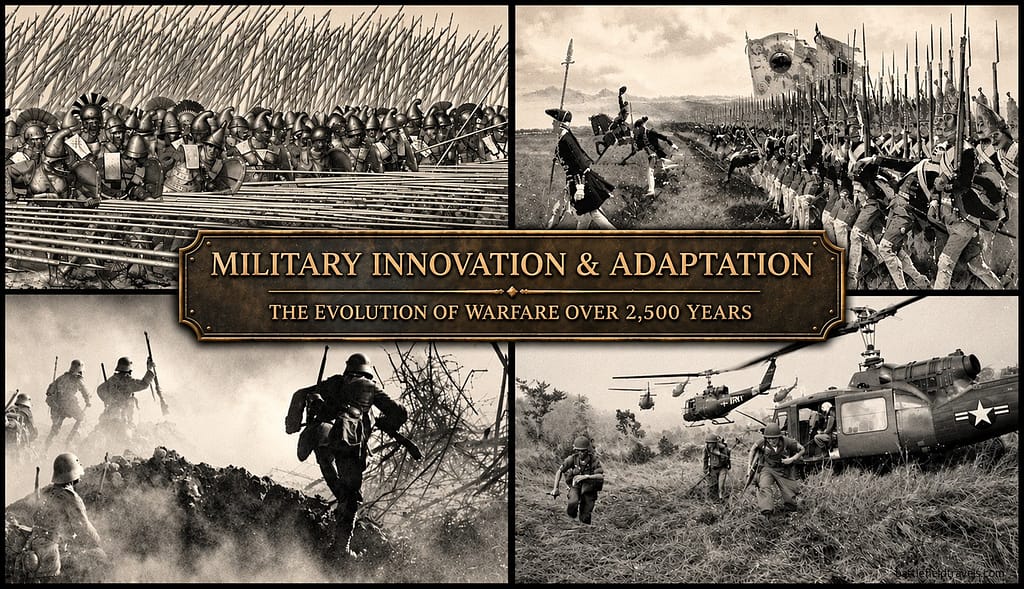
Tactical innovations in warfare. Clockwise from top left: the Greek Phalanx, eighteenth-century linear firepower tactics, Vietnam War helicopter-borne airmobile operations, First World War German infiltration tactics,
How have armies adapted the way they fight as weapons, technology, enemies and battlefield conditions changed?
Throughout history, armies have faced the same fundamental challenge: how to defeat an enemy trying to do exactly the same thing to them. Weapons change, technology evolves and armies adopt new equipment, but many of the fundamental problems of the battlefield remain remarkably consistent. How do you break a defensive line? How do you bring the enemy under effective fire while preserving your own force? How do you concentrate combat power at the decisive point?
The answers have involved far more than new weapons. Armies have changed their formations, organisation, doctrine, command systems and methods of manoeuvre. Sometimes the result was genuine innovation; sometimes an existing idea was adapted to new circumstances. Successful innovations provoked countermeasures, while apparently revolutionary ideas sometimes rediscovered principles soldiers had encountered centuries earlier.
At the heart of this process is the interaction between weapons, troops, doctrine, command and terrain. A new weapon can create possibilities, doctrine determines how it is employed, command systems influence how quickly forces can respond, and terrain determines where those ideas succeed or fail. The enemy, meanwhile, is also adapting!
This hub explores that continuing process of innovation, adaptation, counter-adaptation and rediscovery through the battles in which those ideas were tested. Some links lead to dedicated studies of particular innovations; others use Battlefield Travels battle studies as case studies showing military concepts in practice.
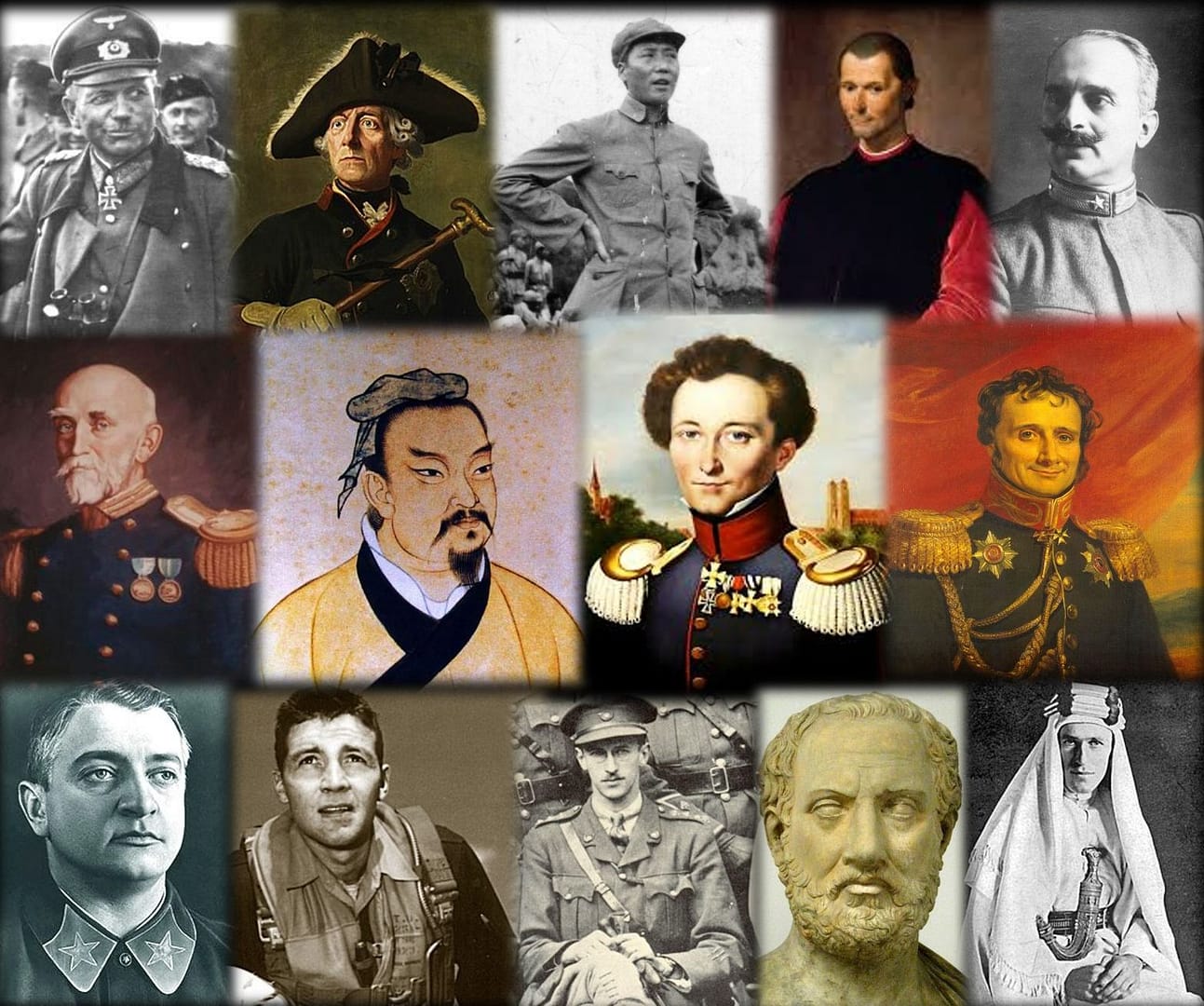
Start with the innovations and adaptations below. If you want to know more, come back here and explore the best books on war theory and strategy. If you are confident in your knowledge, take the Military Thinkers, Theorists and Innovators Quiz
📚Reading: War Theory & Strategy
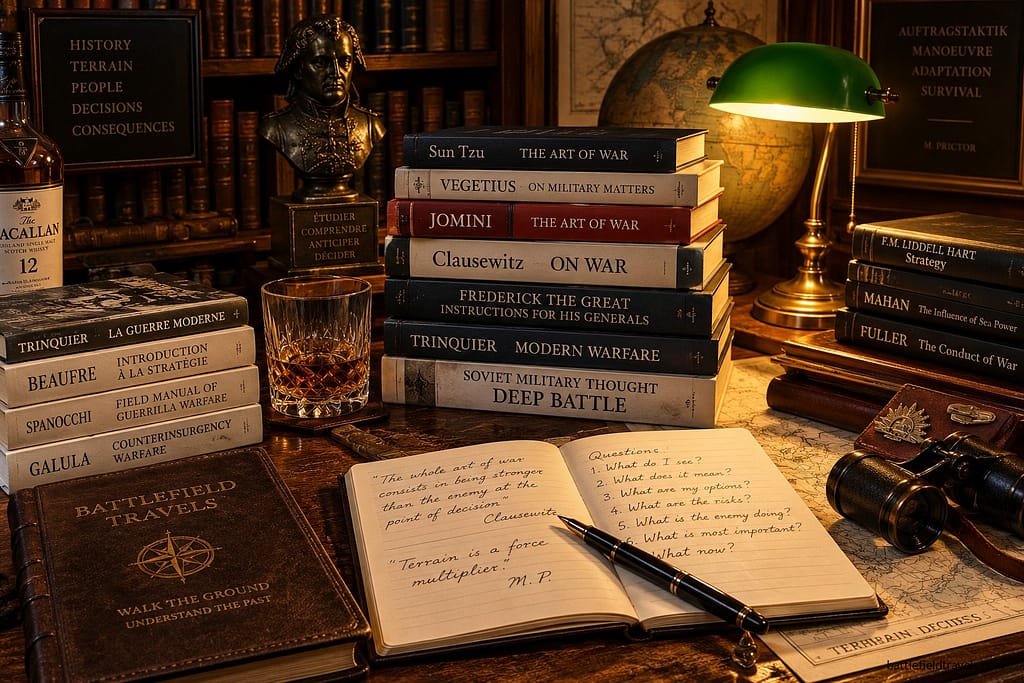
A curated reading collection exploring how soldiers, commanders and theorists have understood the nature and conduct of war. From Sun Tzu, Frederick the Great, Jomini and Clausewitz to modern theories of manoeuvre, air power, counterinsurgency and Deep Battle, explore the books and ideas that shaped military thought across more than two millennia.
Sixty questions spanning more than two thousand years of military thought — from Vegetius and Ardant du Picq, to Mahan, Douhet, Liddell Hart, Boyd, and nuclear deterrence. Test your knowledge of the thinkers, theories and strategic ideas that influenced how commanders understood, planned and conducted warfare.
The studies below trace more than 2,500 years of military innovation and adaptation, showing how armies responded to changing weapons, enemies, terrain and battlefield conditions. Many are explored through battlefield case studies on Battlefield Travels.
Ancient Warfare Innovations
The first organised armies and how they sought to overcome battlefield problems. Examples:
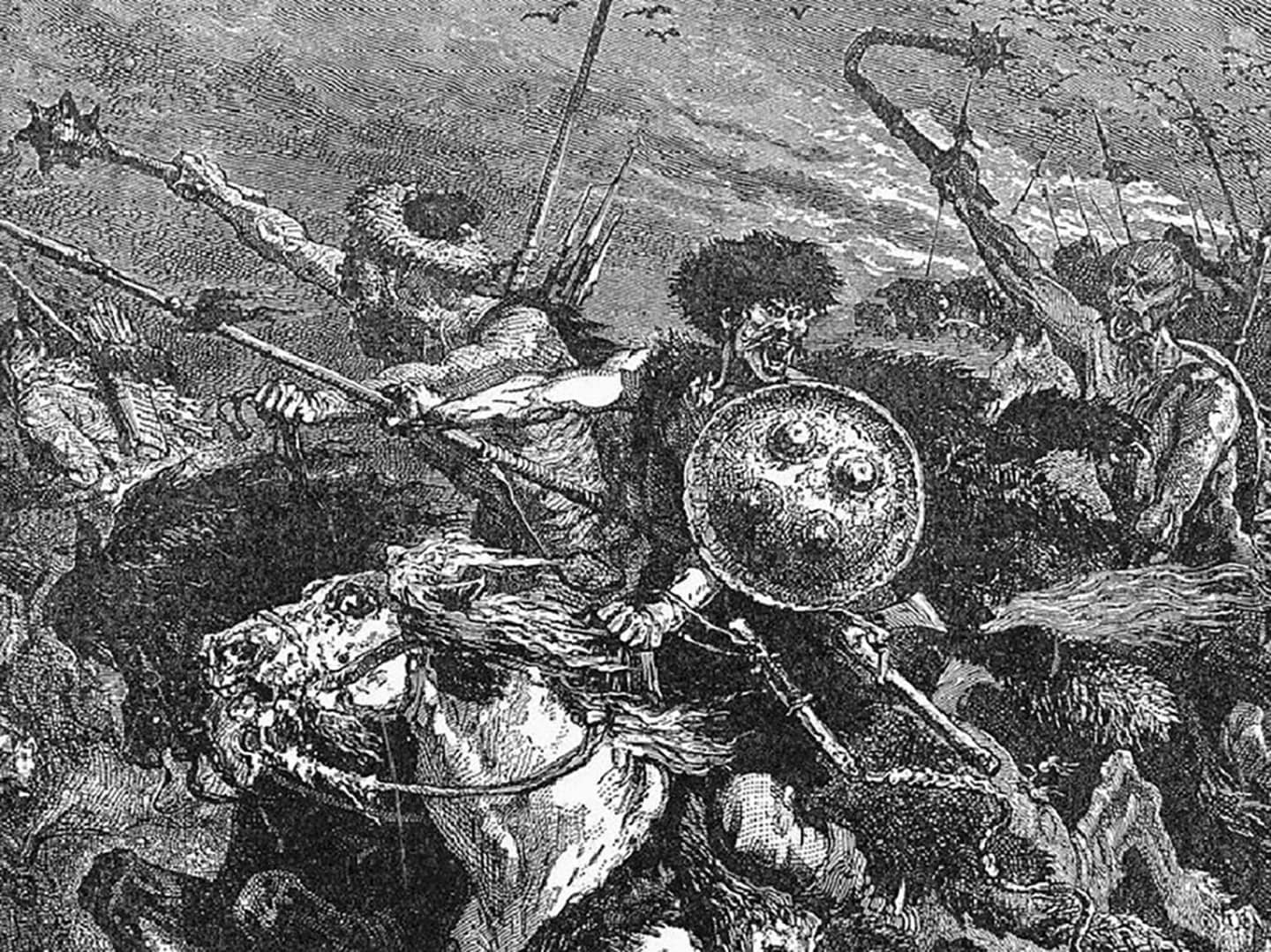
💡 Tactical Innovations: Steppe Swarming Tactics
The Huns drew on mobile warfare traditions of the Eurasian steppe, using mounted forces to attack an enemy from multiple directions rather than relying on rigid battle lines. Horse archers could approach, loose missiles and withdraw before heavier troops could respond. At the Catalaunian Plains in 451, however, Attila faced a coalition able to force his heterogeneous army into a set-piece battle. Read more.
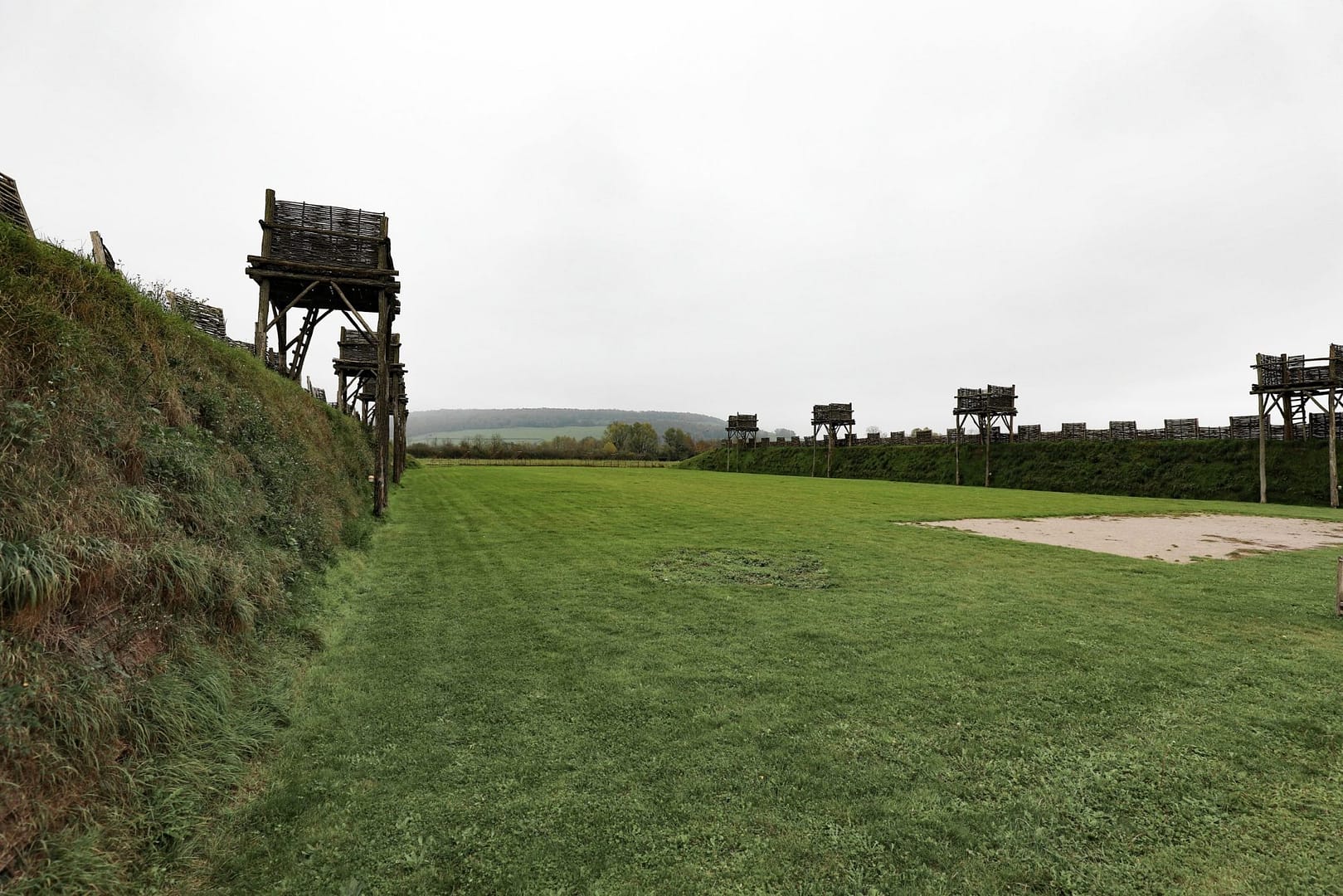
Circumvallation and contravallation allowed a besieging army to defend simultaneously against forces inside a fortified position and an enemy relief force approaching from outside. At Alesia in 52 BC, Julius Caesar constructed an inward-facing line of fortifications to contain Vercingetorix and the besieged Gallic army, surrounded by a second, outward-facing defensive system against the approaching relief army. Read more.
Greek phalanx
Roman manipular system
Roman legionary cohort tactics
Parthian horse archery tactics
Medieval Warfare Innovations
The shift toward feudal armies and missile-dominated battlefields. Examples:
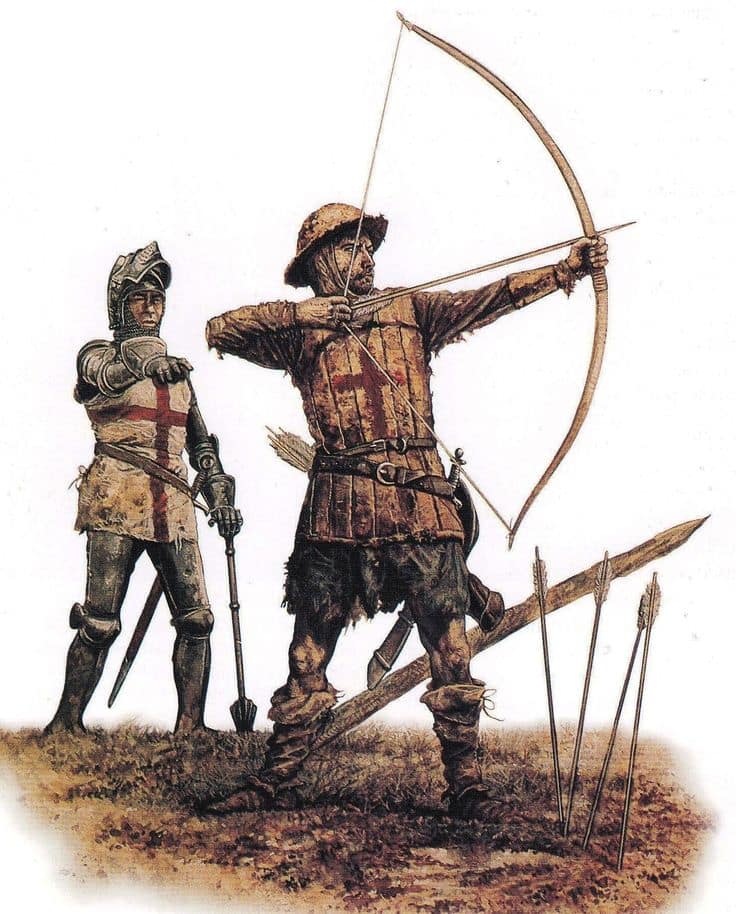
💡 Tactical Innovations: English Longbow Tactics
The English longbow combined a long-range missile weapon with carefully prepared defensive positions to disrupt and channel attacking forces before they reached the English line. At battles such as Crecy in 1346 and Agincourt in 1415, massed archers deployed behind stakes and exploited constricted, muddy terrain, directing sustained volleys against advancing French men-at-arms. Read more..
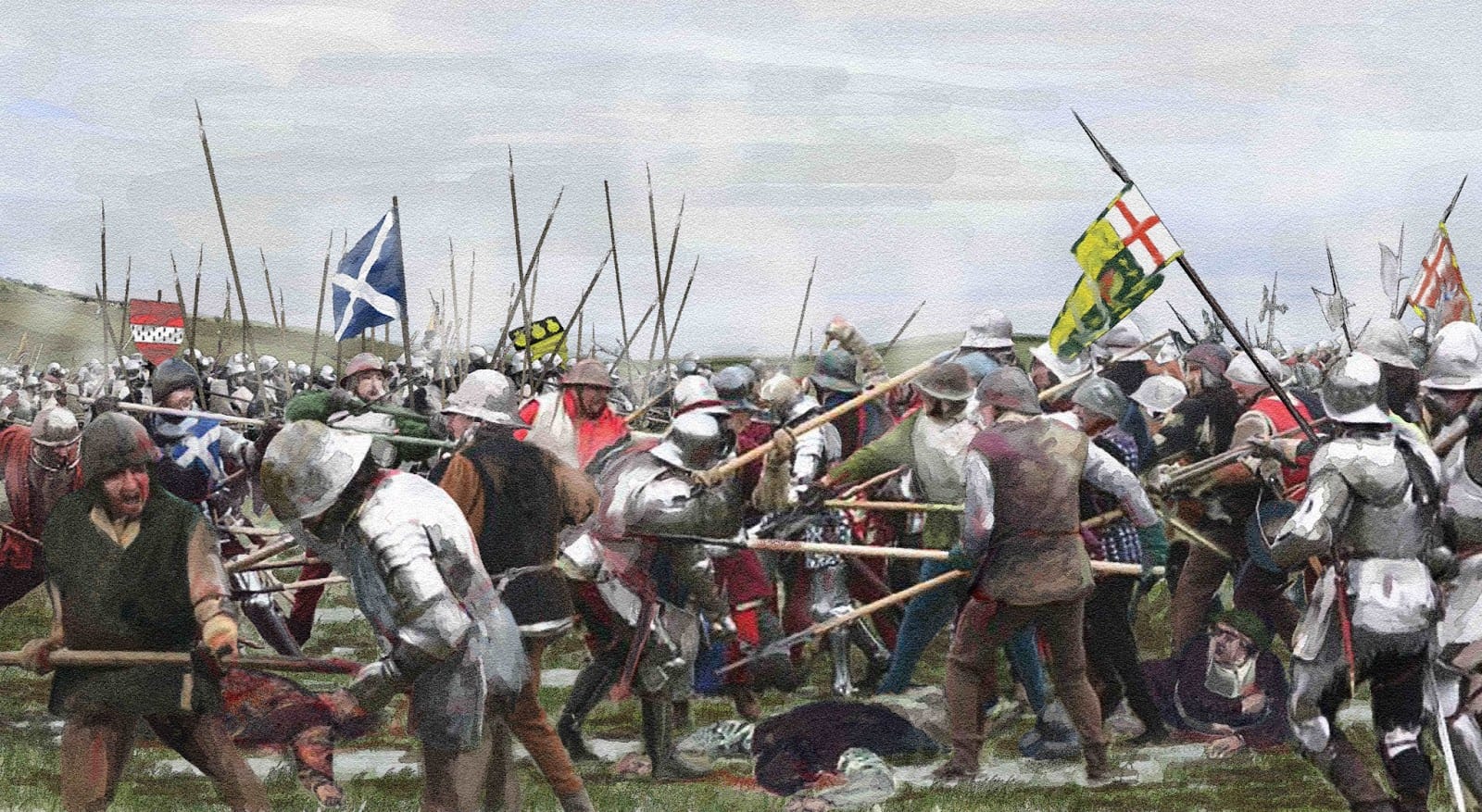
The Scottish schiltron massed infantry armed with long spears or pikes into dense formations capable of resisting cavalry and fighting in close combat. By Flodden in 1513, the Scots tried to use their schiltrons offensively, attacking the English army rather than receiving an attack. Broken, muddy ground disrupted the Scottish formations, while English troops with shorter bills proved more effective as the fighting closed. Read more.
Future articles
Mounted knight shock tactics
Hussite wagons
Early infantry resurgence
Pike and Shot Warfare (c.1500–1700) Innovations
The reemergence of heavy infantry as the dominant battlefield system. Examples:
💡 Tactical Innovations: Pike and Shot Warfare
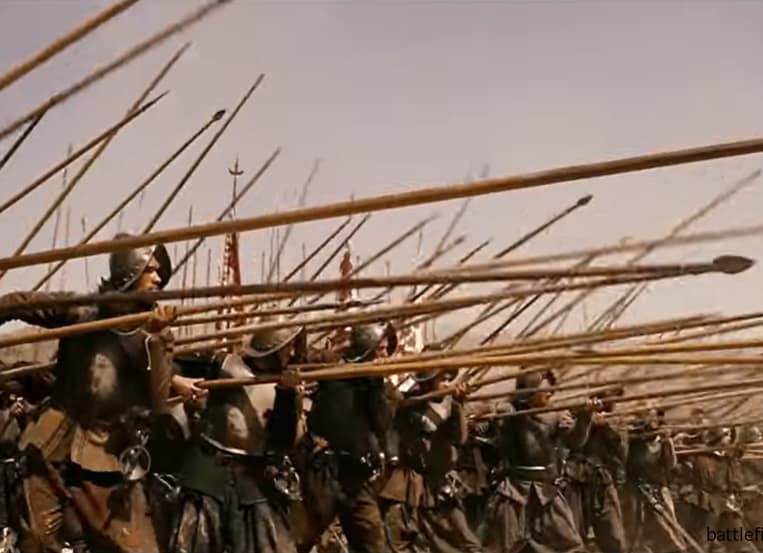
The widespread adoption of firearms by European armies created a new tactical dilemma. The solution that emerged was the pike and shot system — a pragmatic, battle-tested marriage of the ancient pike and the relatively new gunpowder weapon. It combined the defensive solidity of a forest of steel points with the offensive potential of massed musket fire. Read more..
💡 Tactical Innovations: Spanish Tercio
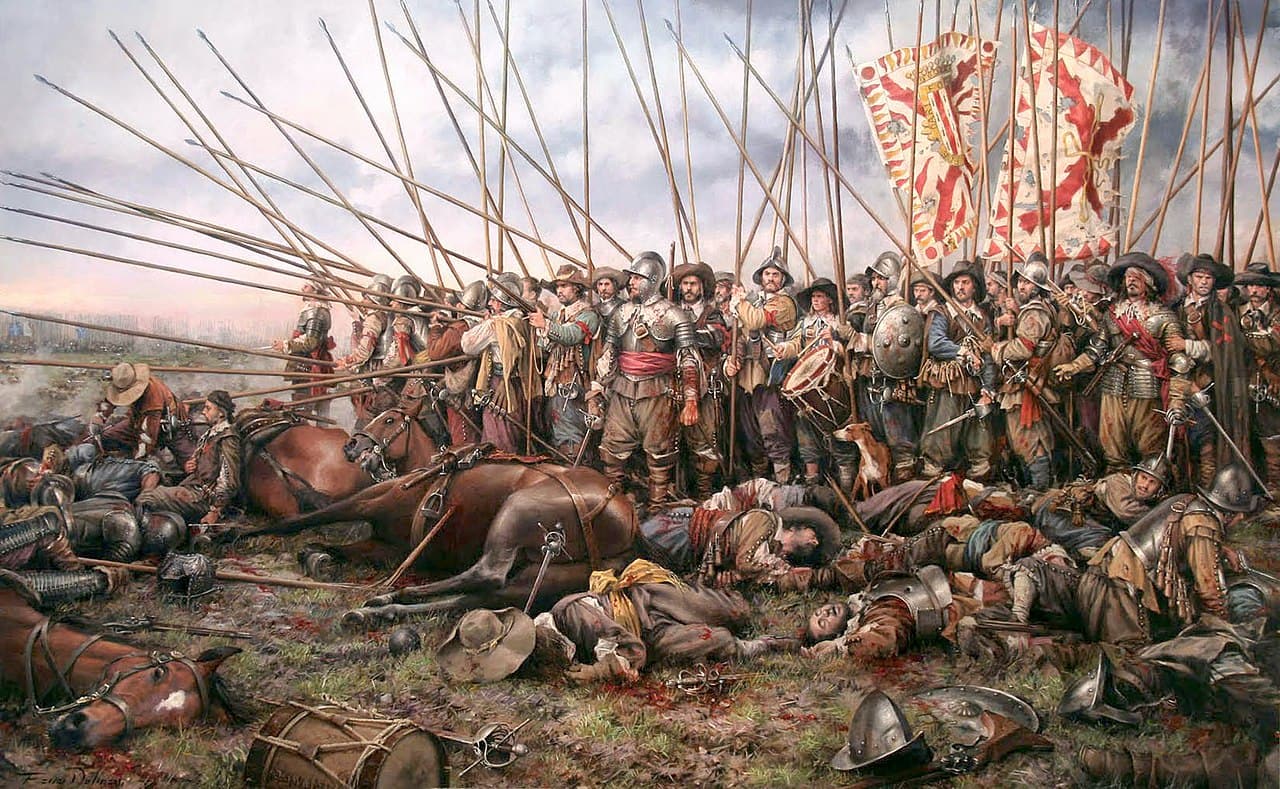
The Spanish tercio dominated European battlefields for more than a century, combining dense formations of pikemen with arquebusiers and musketeers to produce a formation capable of both firepower and close defence. At the Battle of Rocroi in 1643, veteran Spanish infantry repelled French attacks. Their defeat by the French army symbolised the eclipse of the tercio and the rise of linear tactics. Read more.
💡 Tactical Innovations: Naval Raiding
Naval raiding used speed, surprise and concentrated force to attack enemy shipping, ports or coastal installations without seeking to control the surrounding waters or territory. At Carlisle Bay, Barbados, in 1665, a Dutch squadron under Michiel de Ruyter attempted to penetrate the defended anchorage and attack English shipping during the Second Anglo-Dutch War. Read more.
Future articles
Gustavus Adolphus linear formations
Dutch infantry drill reforms
Cavalry caracole vs shock charge
Linear Warfare (c.1700–1815) Innovations
The era of disciplined firepower and formal battlefield geometry. Examples:
💡Tactical Innovation: The Highland Charge
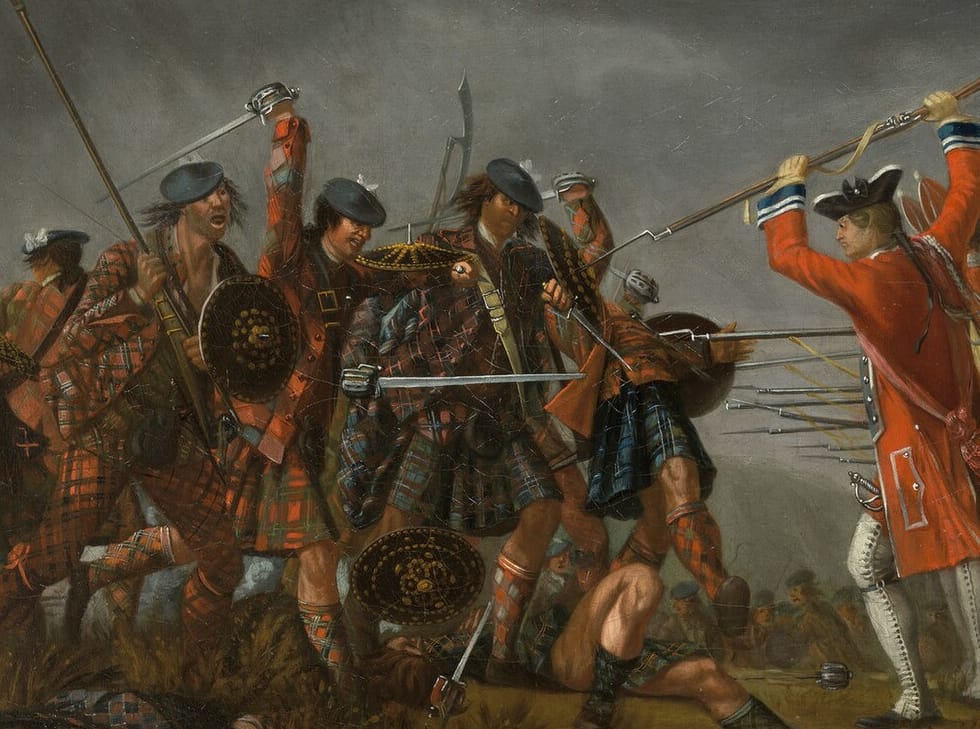
The Highland charge combined rapid movement, close-range fire and an aggressive rush, seeking to close with an enemy before musket volleys could break the attack. At Prestonpans in 1745, the Jacobite Army overwhelmed the government line in a highland charge, demonstrating the shock effect achieved when terrain, surprise and momentum favoured the attackers. Read more.
💡The Culloden Bayonet Drill: How Cumberland’s army broke the Highland charge
By the time of Culloden, Charles Edward Stuart’s Jacobite army had seized Edinburgh, defeated John Cope’s army at Prestonpans, invaded England, and inflicted another defeat at Falkirk Muir. The Highland charge was problematic for the British government Army. Read more.
💡Tactical Innovations: The Oblique Order
Frederick the Great’s oblique order sought to concentrate overwhelming strength against one part of an enemy line while refusing or delaying engagement elsewhere. At Leuthen in 1757, Frederick concealed his movement behind the terrain, massed his army against the Austrian left flank and attacked at an angle before the Austrians could adequately redeploy. Read more.
💡Tactical Innovations: Integration of Militia and Regular Forces
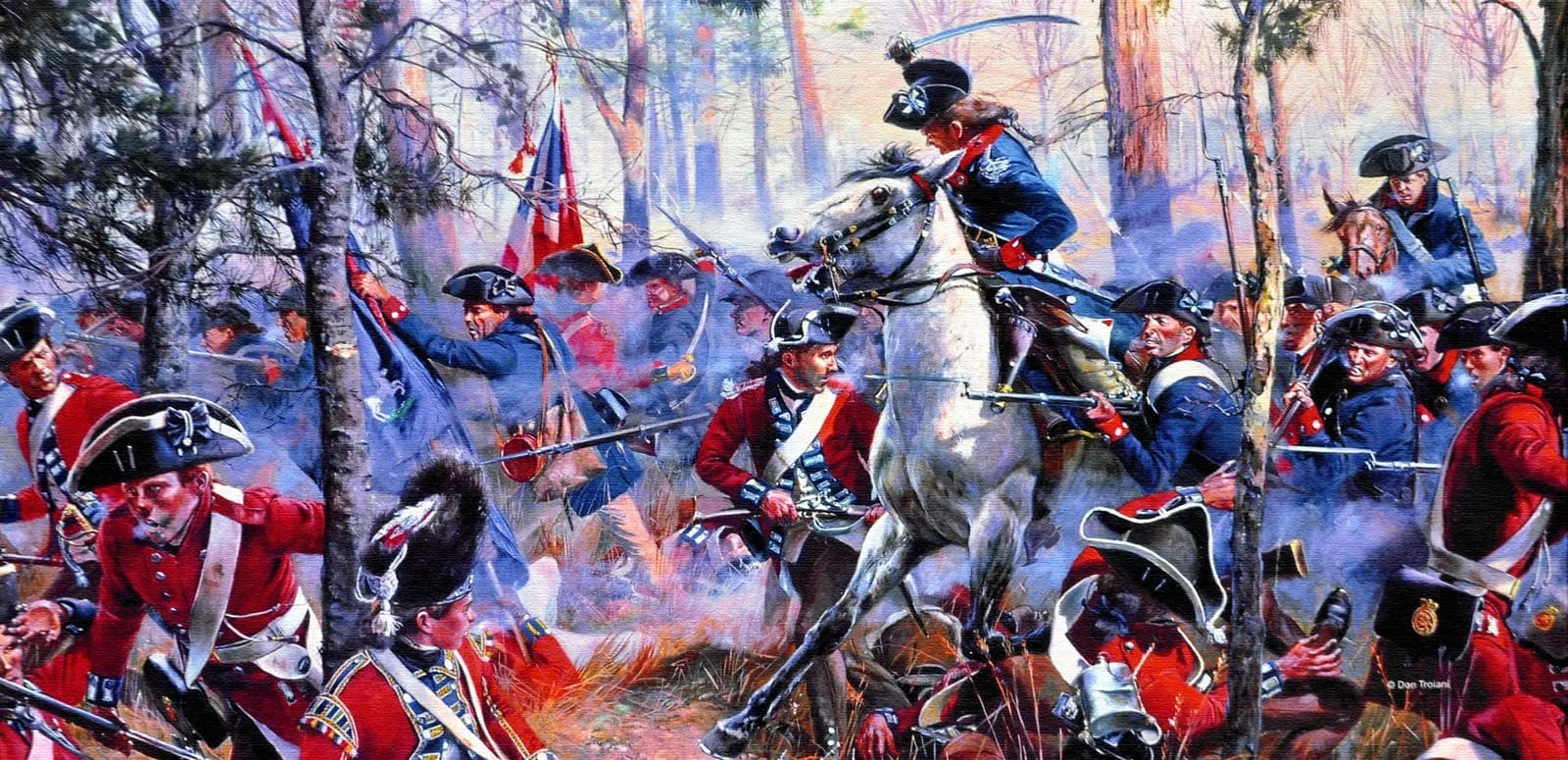
Effective commanders could exploit the different capabilities of militia and regular troops rather than expecting them to fight in the same way. At Cowpens in 1781, Daniel Morgan arranged his force in successive lines, assigning militia limited tasks before allowing them to withdraw behind more experienced Continental troops. Read more.
Future articles
Platoon firing
Column vs Line
Artillery Integration
Industrial Warfare (c.1815–1914) Innovations
Weapon lethality fundamentally changes the battlefield. Dense formations give way to dispersal and field fortifications. Examples:
💡Precision Manufacturing → Springfield Armory
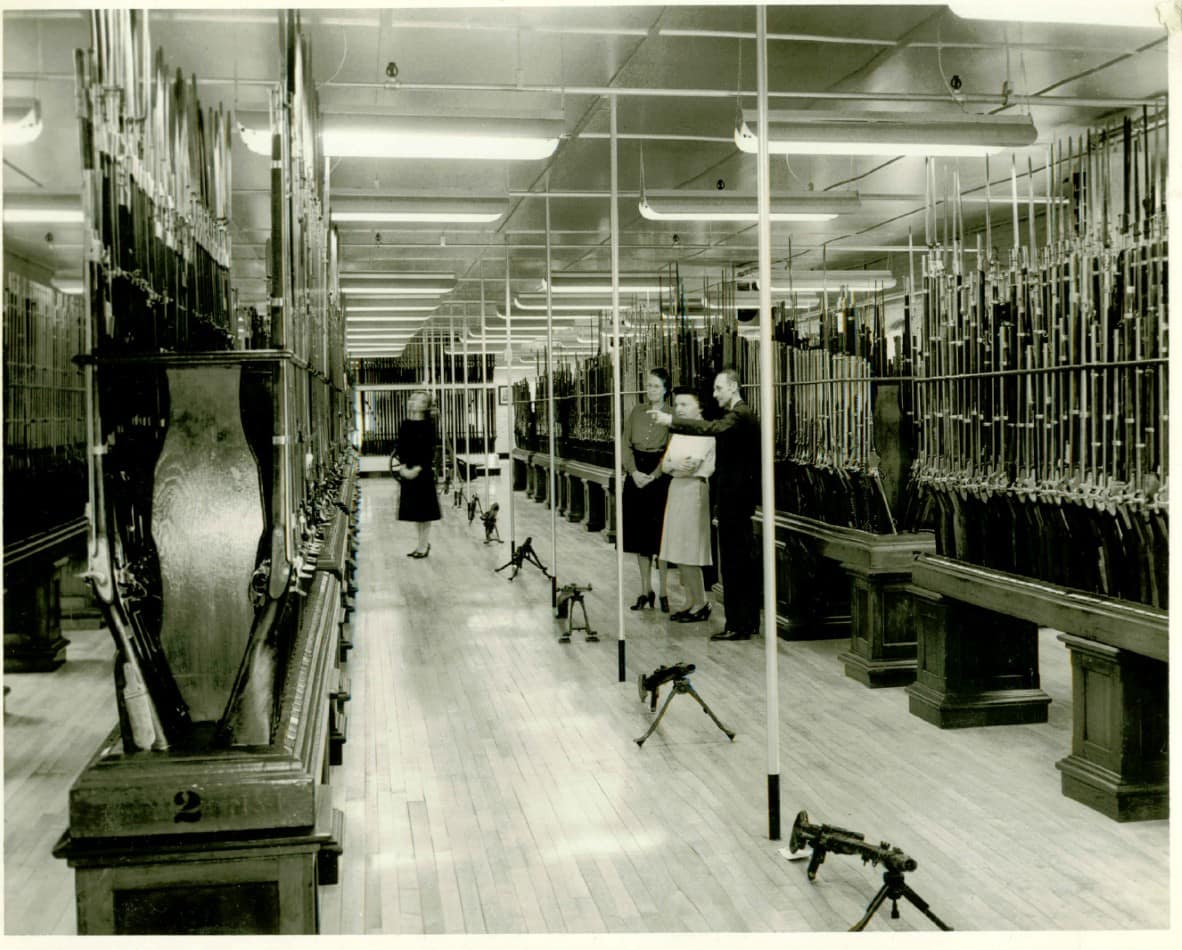
Precision manufacturing and interchangeable parts transformed military production by allowing weapons to be assembled from standardised components rather than being fitted by skilled craftsmen. At Springfield Armory, sophisticated machine tools, gauges and production methods established the American system of manufacture, allowing firearms to be produced in large numbers. Read more.
💡1866: Königgrätz, the Dreyse Needle-Gun and the Dawn of Mission Command
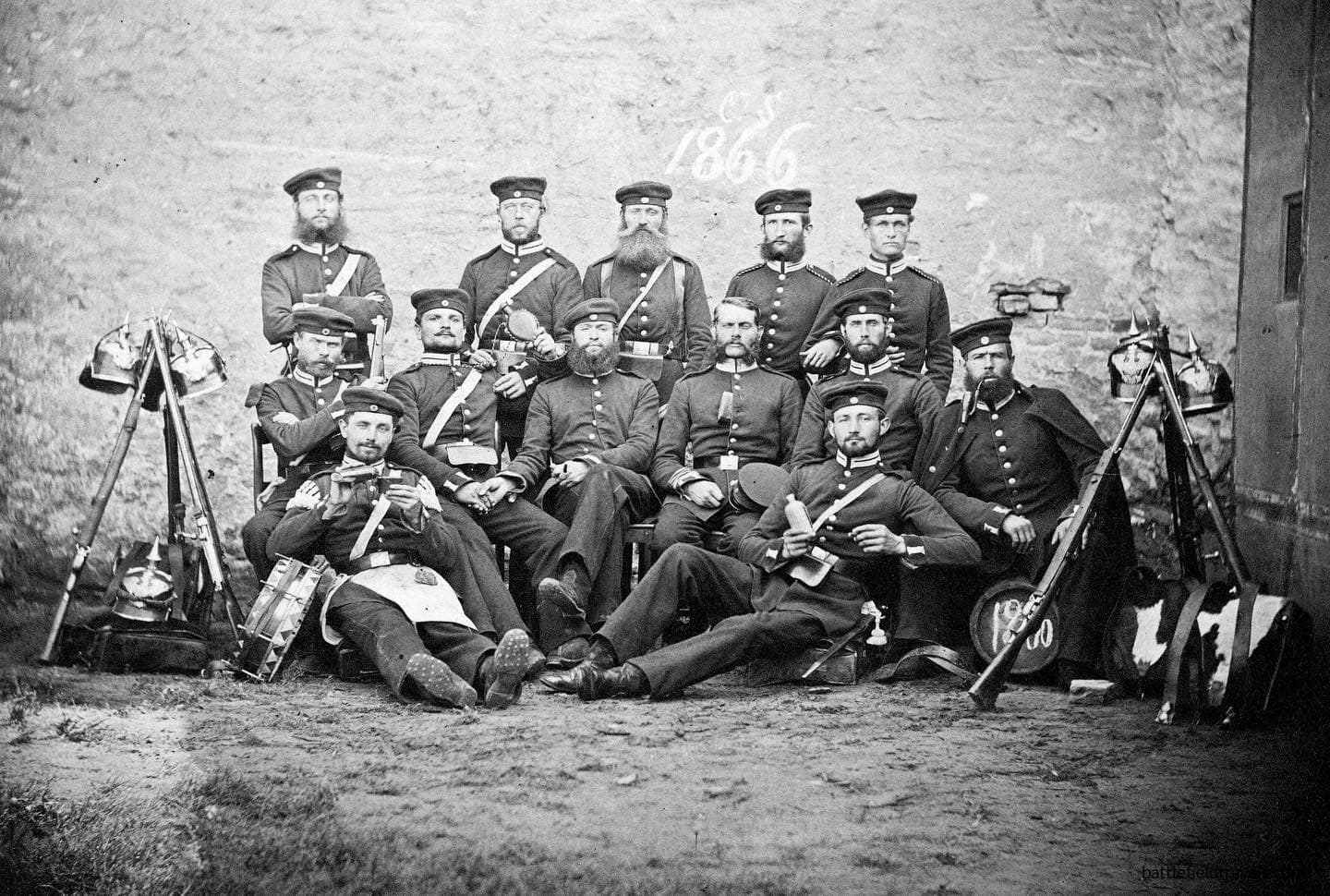
Many reasons have been offered for the catastrophic Austrian defeat at Koniggratz. At the strategic level, Prussia’s superior mobilisation plans allowed it to rapidly deploy its field armies. At the tactical level, the answer lies in two inseparable factors: a weapons revolution and a command philosophy revolution. Read more..
💡Tactical Innovations: Plains Indian Warfare
Plains Indian warfare emphasised mobility, individual initiative and rapid concentration, with mounted warriors able to disperse, manoeuvre and attack from multiple directions without relying on centralised battlefield control. At the Little Bighorn in 1876, Lakota, Northern Cheyenne and Arapaho warriors concentrated superior numbers against isolated elements the 7th Cavalry. Read more.
💡Tactical Innovations: Zulu Horns of the Buffalo
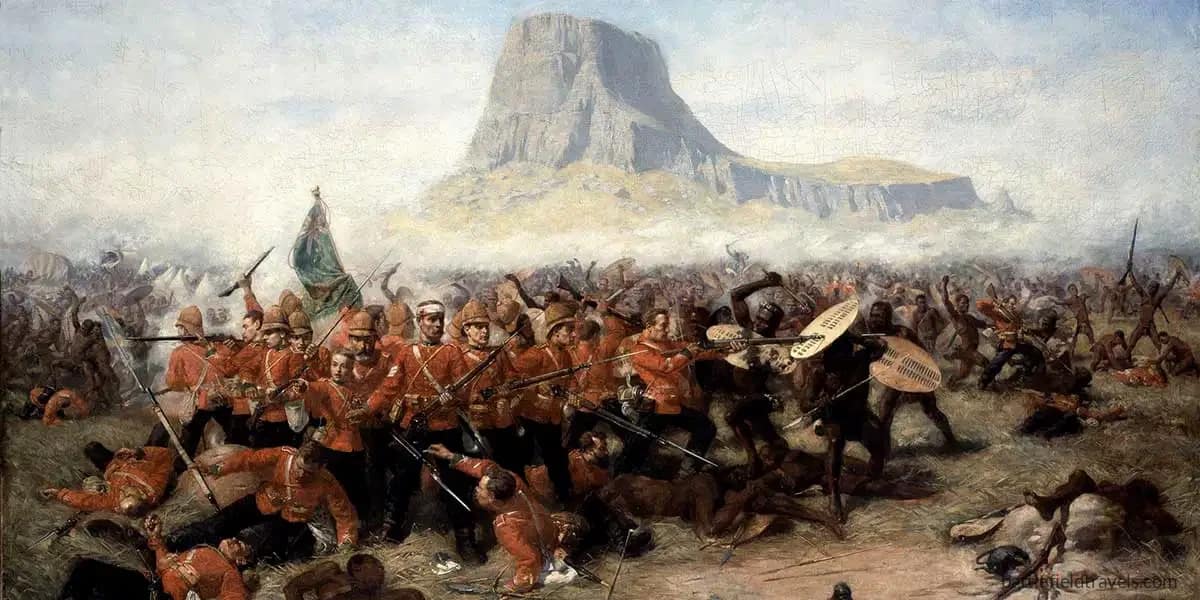
The Zulu “Horns of the Buffalo” organised an attacking force into a central chest that fixed and overwhelmed the enemy, two horns that swept around the flanks, and a reserve or loins held back to exploit a breakthrough. At Isandlwana in 1879, the system allowed the Zulu army to envelop and destroy much of the dispersed British force, combining rapid movement with coordinated attacks across a broad front. Read more.
💡Tactical Innovations: Armoured Train Operations
Armoured trains combined railway mobility with protection and firepower, allowing forces to patrol, reinforce positions and conduct reconnaissance along rail networks. During the Chieveley armoured train ambush in 1899, a British train carrying Winston Churchill was derailed by Boer forces, exposing the fundamental weakness of the concept: its mobility depended entirely upon an intact, predictable railway line. Read more.
Future articles
Rifled musket tactics
Infantry Square as a counter to cavalry
Irregular Warfare and Skirmish Tactics, which influenced colonial armies.
Industrialised Mass Warfare (1914–1945) Innovations
Machines, automation, and mass are the new problems to be overcome. Examples:
💡 Tactical Innovations: Machine Gun Theory
When machine guns were introduced on the battlefield, they were viewed as an improved form of infantry rifle fire. British strategist Major-General J.F.C. Fuller called the machine gun the ‘concentrated essence of infantry’’. However, a more revolutionary interpretation soon emerged, with the concepts of cone of fire, beaten zone, grazing fire, enfilade fire, and mutually supporting positions. Read more.
💡 Tactical Innovations: Bite and Hold Tactics
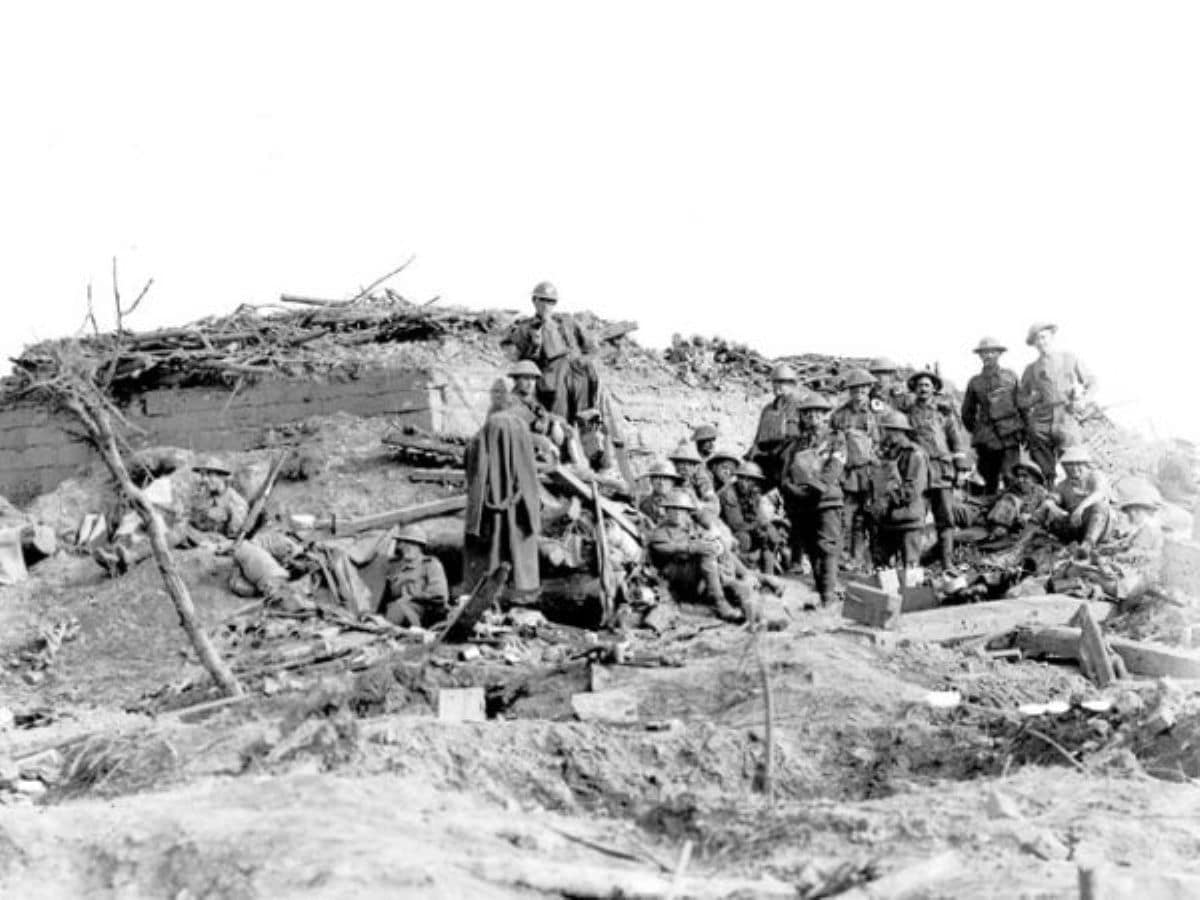
Bite-and-hold tactics replaced ambitious attempts at deep breakthrough with carefully controlled advances. Attacking infantry seized objectives limited by depth—the bite—then rapidly consolidated behind protective artillery barrages to defeat the expected counterattack—the hold. At Polygon Wood in September 1917, Australian and British forces employed this method to capture successive objectives while avoiding outrunning their artillery. Read more.
💡 Tactical Innovations: Amphibious Assault
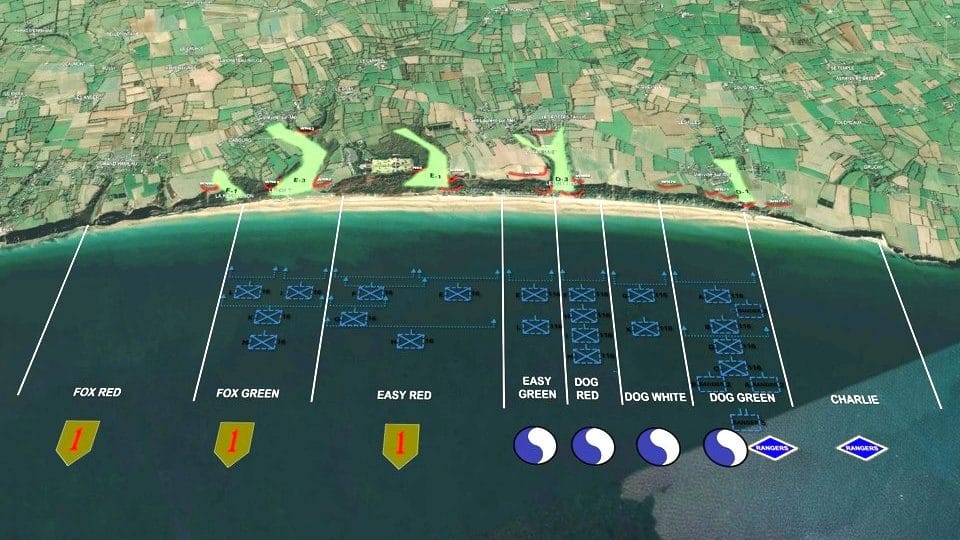
Amphibious assault combines naval, air and land forces to project combat power from the sea onto a defended coastline, requiring the coordinated movement of troops, fire support, engineers and supplies from ship to shore. At Omaha Beach on D-Day, strong German defences, difficult terrain and disrupted landing waves forced small groups of infantry and engineers to improvise routes through the beach defences. Read more.
💡 Tactical Innovations: Airborne Operations
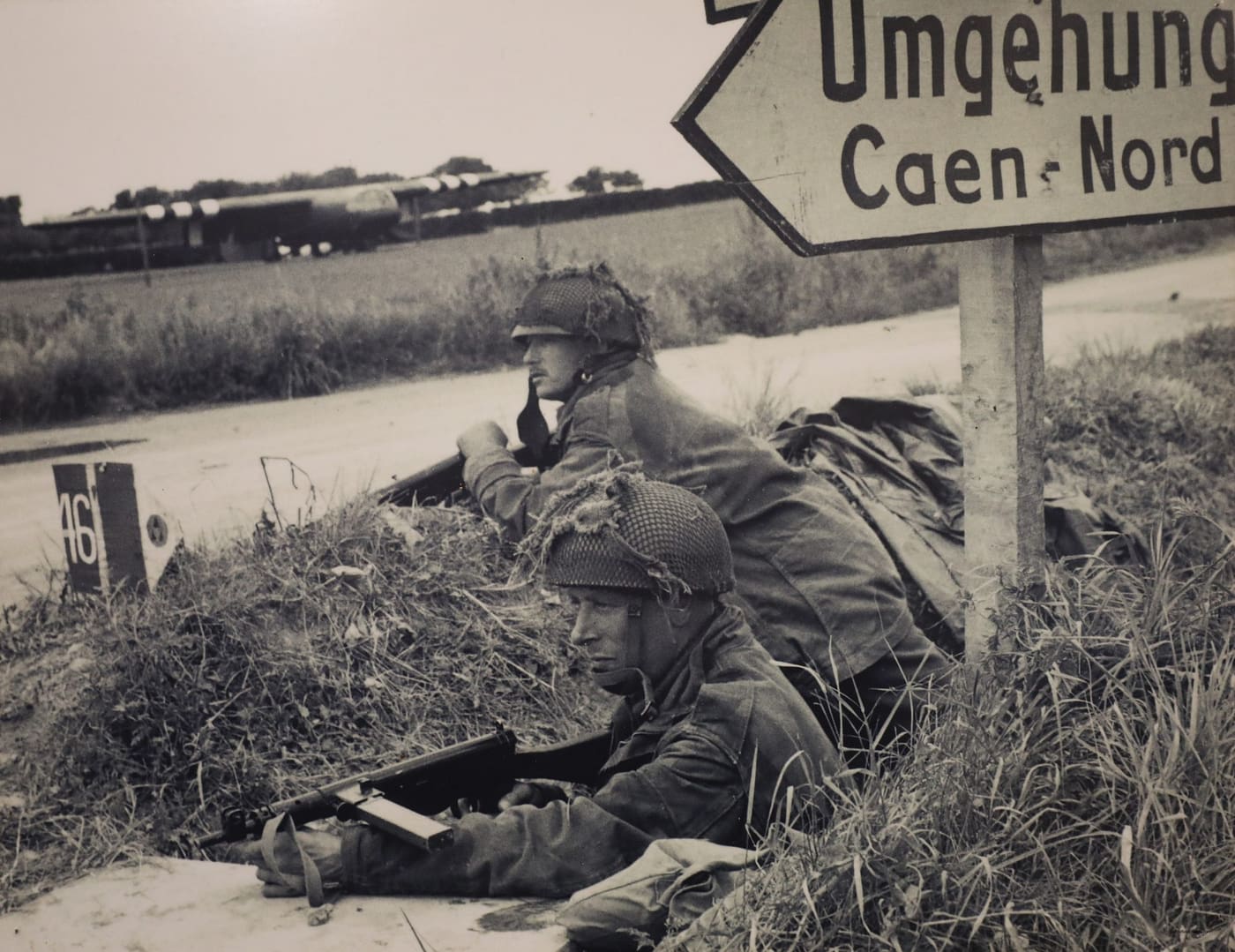
Airborne operations use parachute and glider-borne forces to seize key objectives beyond an enemy’s front line, exploiting surprise and mobility to disrupt defences. During the British airborne landings around Ranville on D-Day, troops of the 6th Airborne Division were scattered across the battlefield but assembled to seize bridges, villages and key terrain on the eastern flank of the Normandy invasion. Read more.
💡 Tactical Innovations: Coup de Main
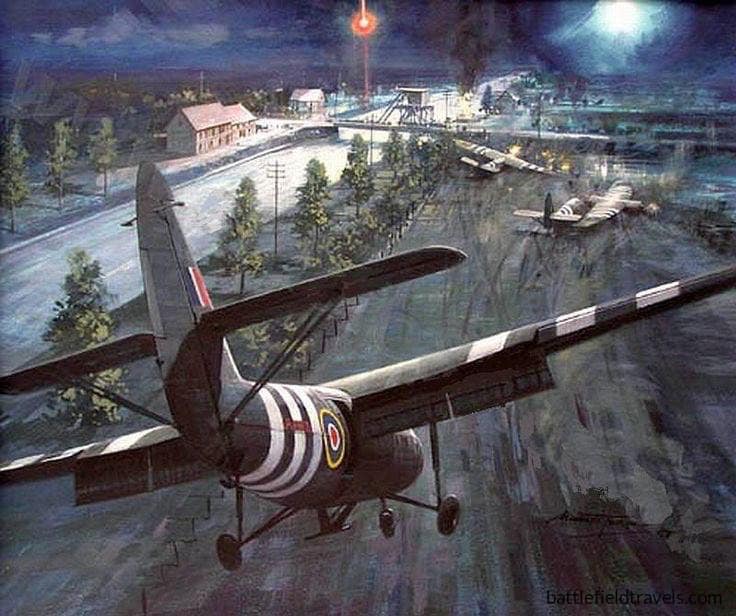
A coup de main is a sudden, concentrated attack intended to seize a critical objective through surprise, speed and decisive action before the enemy can organise an effective response. At Pegasus Bridge on D-Day, British glider troops landed within metres of the bridges over the Caen Canal and Orne River, rapidly overwhelmed the German defenders and secured the crossings before they could be destroyed. Read more.
💡 Tactical Innovations: Clandestine Operations
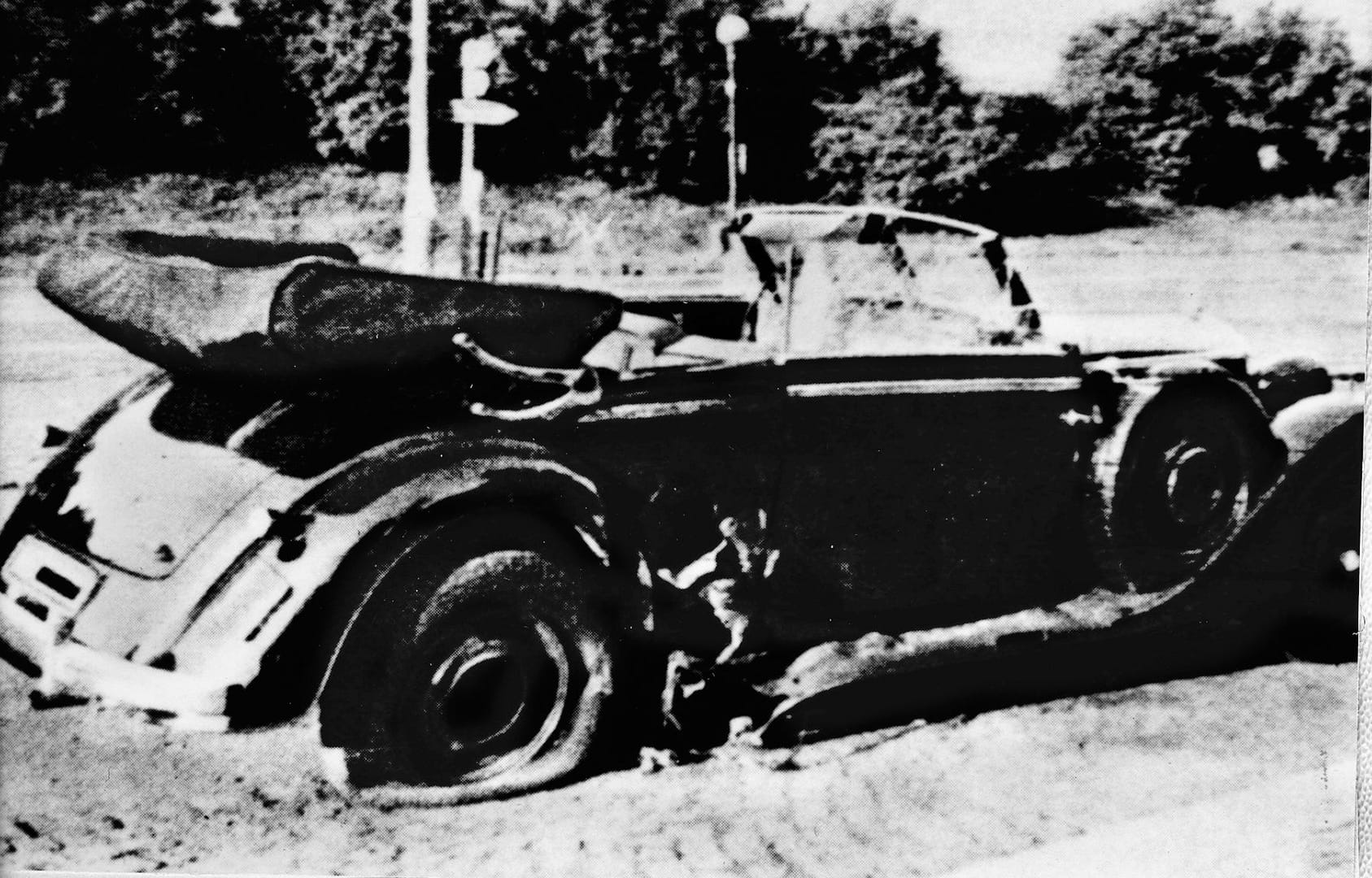
Resistance movements combined clandestine intelligence, sabotage and assassination to challenge occupying forces while avoiding conventional battle against a superior enemy. Operation Anthropoid, the 1942 Czechoslovak operation to assassinate Reinhard Heydrich, relied on agents working with local resistance networks for shelter, intelligence, communications and movement. Read more.
Future articles
Creeping Barrage
Box Barrage
Stormtrooper Infiltration Tactics
Arditi tactics
Soviet Deep Battle Theory (in draft)
Modern Warfare (1945–Present) Innovations
Includes post-colonial, Cold Warand modern conflicts. Examples:
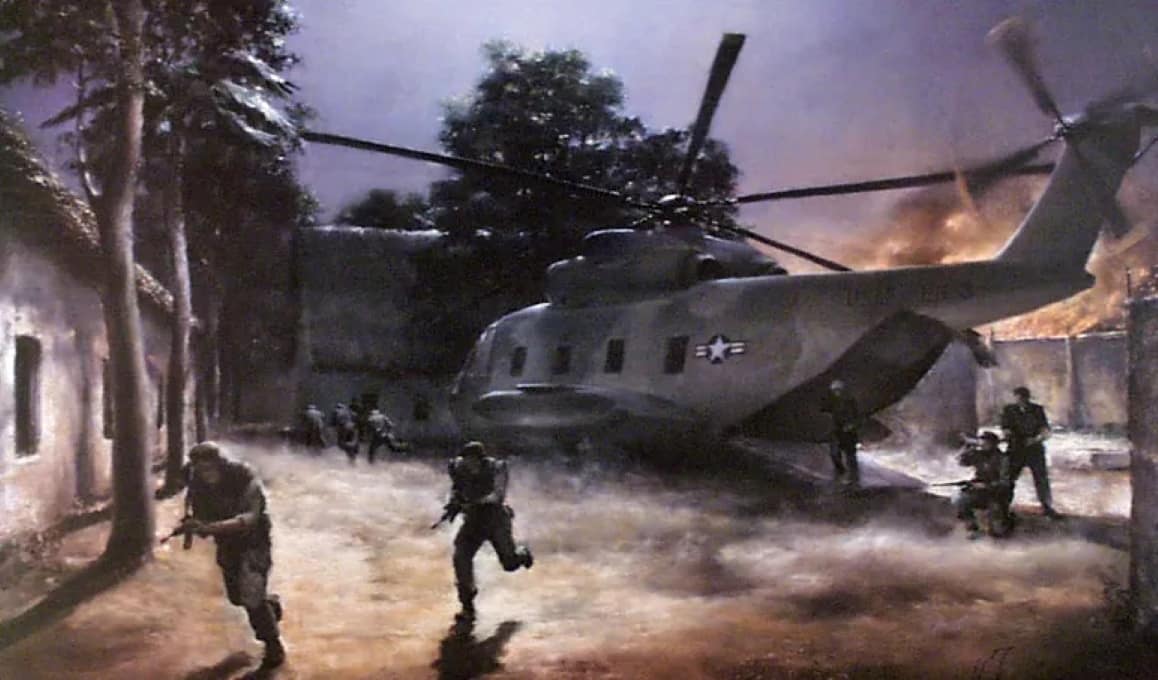
💡 Tactical Innovations: Vertical Envelopment
Vertical envelopment uses airborne or heliborne forces to bypass enemy ground defences and seize objectives deep in the rear, disrupting enemey command and control while other forces advance to link up with them. During Operation LÉA in 1947, French paratroopers dropped directly onto Bắc Kạn in an ambitious attempt to capture the Việt Minh leadership, while ground and riverine columns converged on the Việt Bắc. Read more.
💡 Tactical Innovations: Special Operations Raid
A special operations raid uses a small, highly trained force to penetrate enemy territory, strike a specific objective and withdraw before the enemy can organise an effective response. During the Sơn Tây prison camp raid in 1970, a joint US force flew deep into North Vietnam to rescue American prisoners of war, combining detailed intelligence, extensive rehearsal, specialised aviation and a precisely coordinated ground assault. Read more.
💡 Tactical Innovations: Lessons from the Russo-Ukrainian War (Guest Post)
The war in Ukraine has generated a vast body of real-time observation on modern combat, particularly at the tactical level. This guest article by my colleague David McCammon examines key tactical developments in Ukraine, focusing on how modern forces are applying, adapting, and, in some cases, rediscovering principles that have shaped warfare for centuries. Read more..
Future articles
Manoeuvre Warfare Doctrine
Helicopter Air Assault (in draft)
Rhodesian Fire Force (in draft)
Russian Battalion Tactical Group
Modern Combined Arms
Insurgency and Counterinsurgency Tactics
🪶Guest contributions to the Military Innovation & Adaptation Page
Battlefield Travels welcomes occasional guest contributions examining significant military innovations, adaptations and battlefield concepts. Contributions should explain the military problem being addressed, how the innovation or adaptation worked in practice, and where possible demonstrate it through historical battlefield examples.
All guest posts will be fully attributed to the author and free to all readers.
Found this useful? Buy me a coffee — it helps fund future battlefield research
Authored by Mick Prictor, a retired military officer with 40 years’ service, and a military historian specialising in terrain-focused analysis of tactics, doctrine, and command decision-making in land warfare. His work draws on extensive battlefield fieldwork—more than 280 sites worldwide—and one of the world’s largest private collections of historic military arms, uniforms, and equipment. About me
A tactical innovation is a new method of fighting that changes how soldiers employ weapons, manoeuvre, or battlefield organisation to gain an advantage over an opponent. Tactical innovations often emerge when commanders find new ways to combine weapons, terrain, and doctrine to solve specific battlefield problems.
How do tactical innovations change warfare?
Tactical innovations can reshape the battlefield by altering how armies apply firepower, movement, and coordination. Some innovations develop gradually through experience, while others appear suddenly when new technology or a new idea allows armies to fight in ways that were previously impossible.
Are tactical innovations always linked to new weapons?
No. Some tactical innovations are enabled by new weapons, such as the machine gun or the breech-loading rifle. Others result from new methods of organisation or leadership, such as the Roman manipular system or the German use of infiltration tactics during the First World War.
Why did some armies adopt innovations faster than others?
Armies that encouraged experimentation, decentralised command, and battlefield initiative often adapted faster than those bound by rigid doctrine. Military culture, leadership, and battlefield experience all influenced how quickly new ideas were adopted.
Why does terrain matter in tactical innovation?
Terrain determines how weapons and manoeuvre can be used on the battlefield. A tactical system that works well on open ground may fail in broken or wooded terrain. Many innovations in warfare emerged from commanders learning how to exploit terrain features such as ridgelines, slopes, and dead ground.
Subscribe to Battlefield Travels and receive a free E-Book Battlefield Guide
Unlock expert battlefield analysis, campaign reconstructions, and historical insights drawn from firsthand exploration and primary sources.
🗺️ You’ll receive:
🎖️ Exclusive historical insights you won’t find elsewhere
📘 A free eBook: 10 Tips for Exploring Historic Battlefields
📰 New battlefield studies straight to your inbox as they are published
Claim Your Free Battlefield Travel Guide
Get your free e-book, exclusive tips, and updates on new battlefield studies.
Thank you!
You have successfully joined our subscriber list.
⚔️ Go deeper — Members get exclusive access to the Deep Research Collection, Field Notes, and monthly Research Dispatches. Try membership free for 7 days, cancel anytime. From $9/month.

 Ancient Warfare Innovations
 The shift toward feudal armies and missile-dominated battlefields. Examples:
 Pike and Shot Warfare (c.1500–1700) Innovations

 Linear Warfare (c.1700–1815) Innovations


 Industrial Warfare (c.1815–1914) Innovations


 Industrialised Mass Warfare (1914–1945) Innovations

 Modern Warfare (1945–Present) Innovations