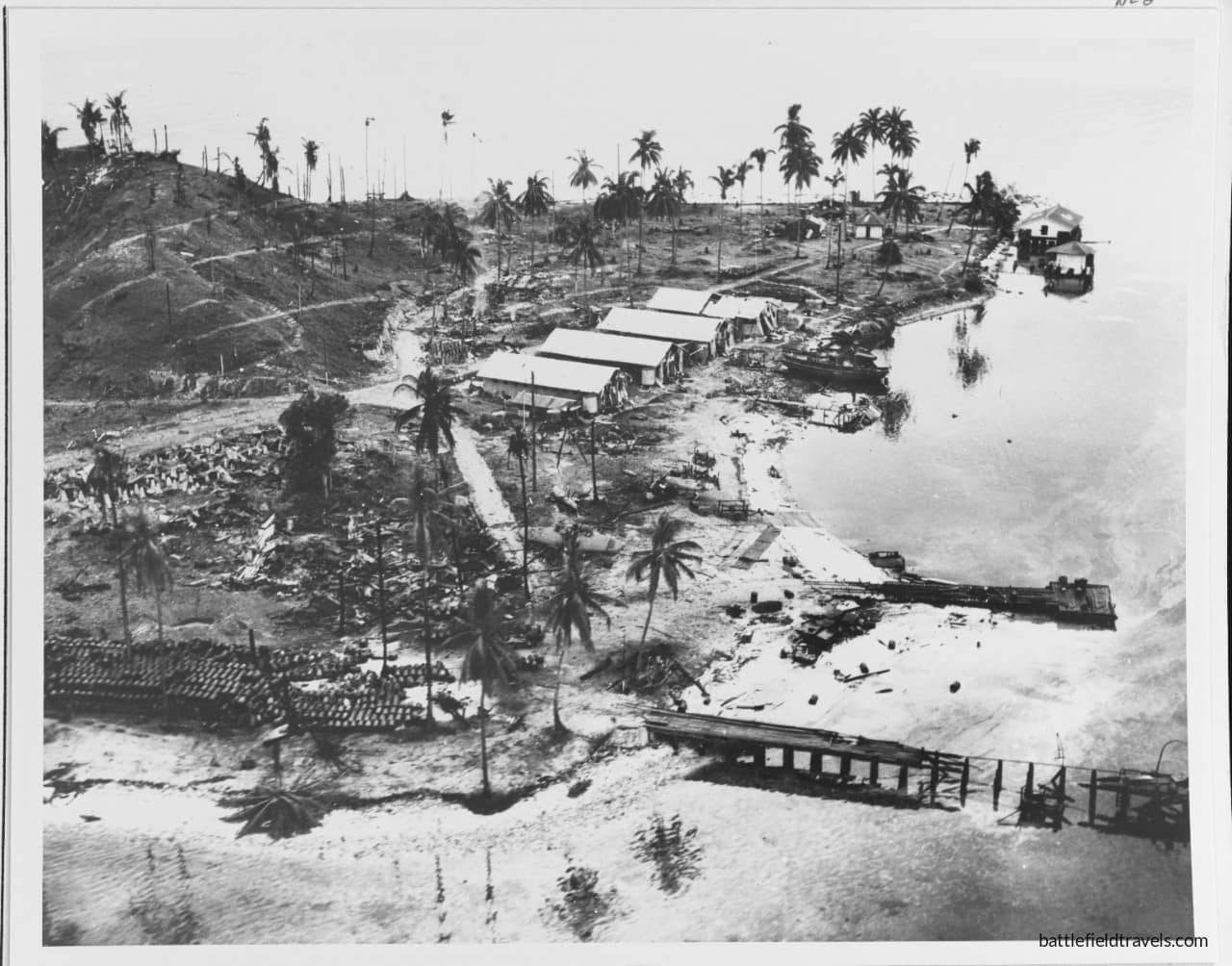
The Guadalcanal Campaign centred on the control of Lunga Point, the only area flat enough to host a major operational airfield. The Japanese started building an airfield, the Americans seized it from them in August 1942, and the Japanese spent six months trying to take it back, at enormous cost to both sides. But how much do you really know about the Guadalcanal Campaign?
Reconstructing the entire Guadalcanal Campaign through terrain analysis, primary sources and on-site fieldwork
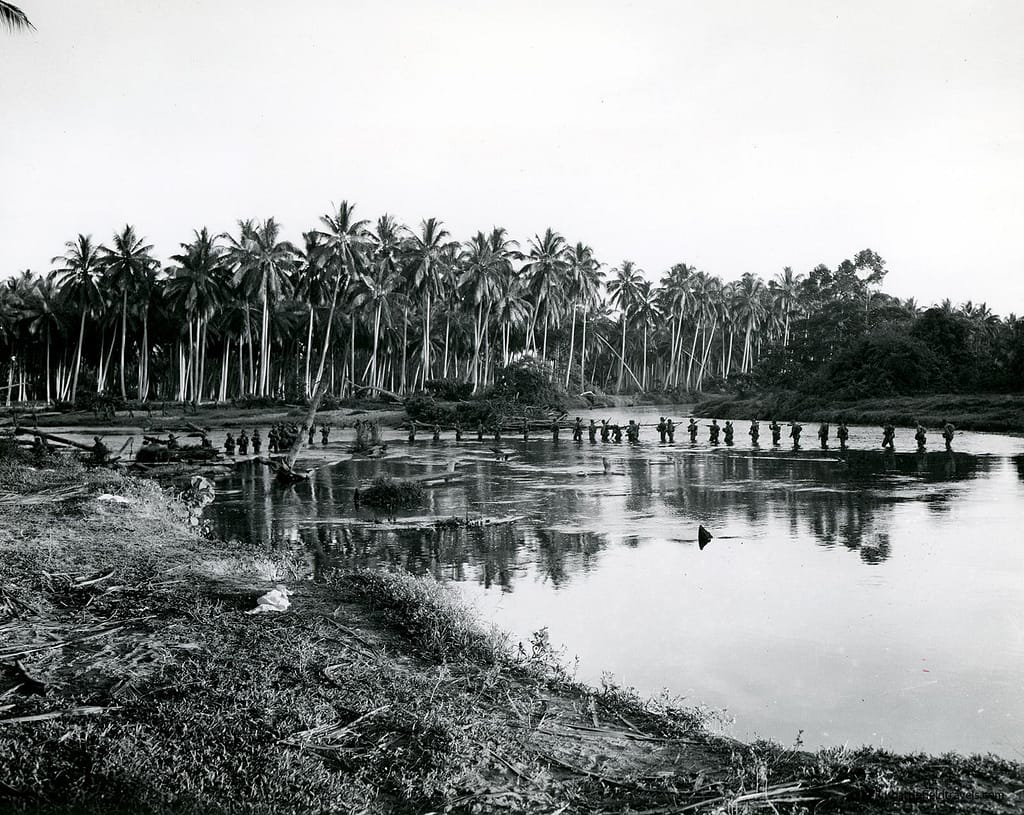
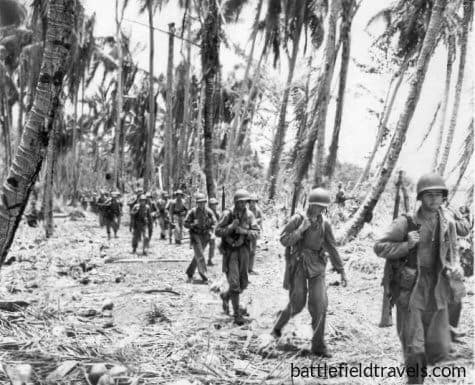
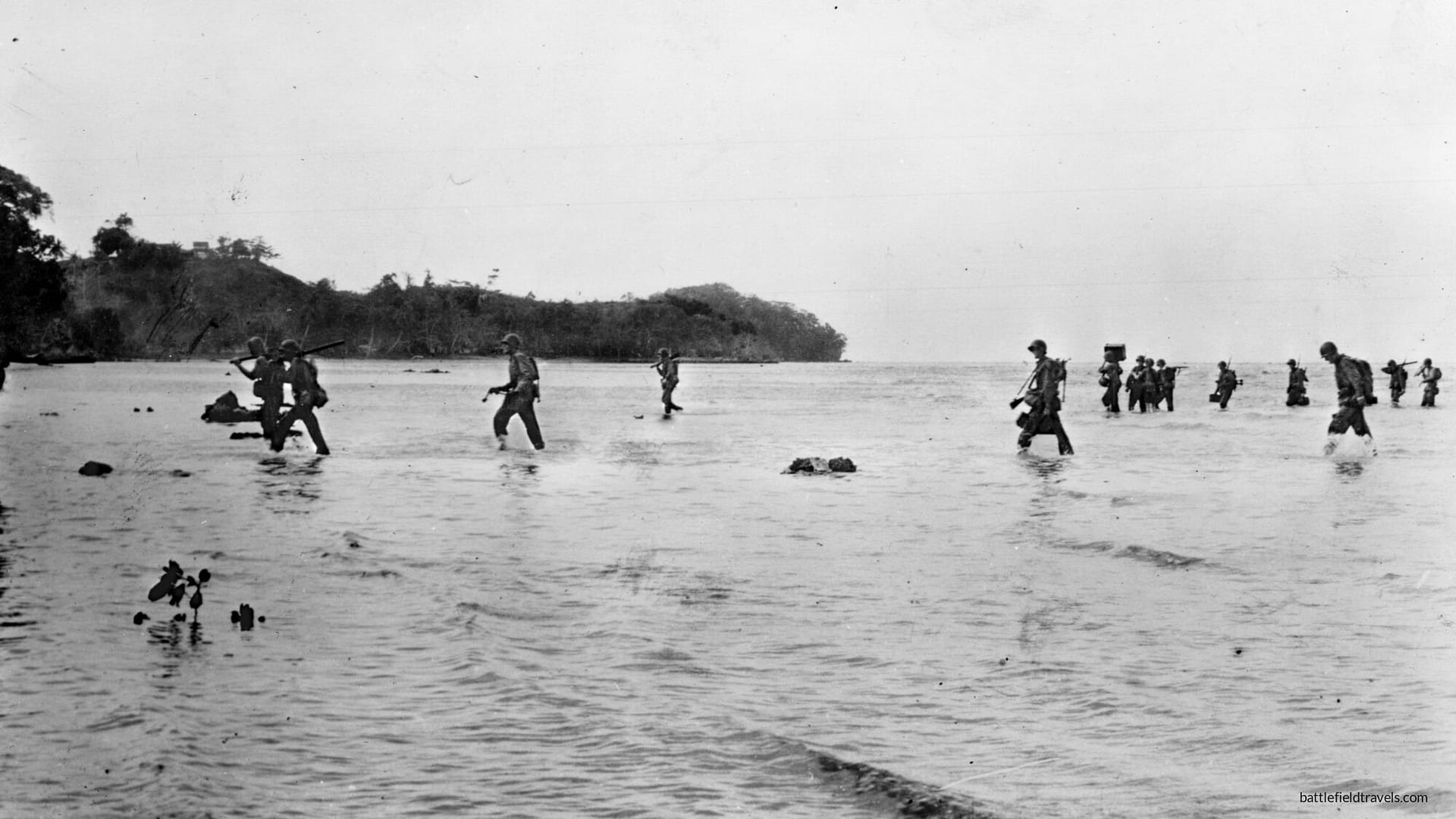
A patrol from 1/1 Marines crossing the Lunga River, Guadalcanal, circa Sep 1942
🗺️ Guadalcanal Campaign, 7 August 1942 – 9 February 1943 ⚔️ Conflict:World War Two – Pacific War 🪖 Major Allied forces:US 1st Marine Division, Americal Division, 25th Infantry Division and XIV Corps 🪖 Major Japanese forces:17th Army; 2nd Division and 38th Division ⭐ Principal Allied commanders:Alexander Vandegrift; Alexander Patch ⭐ Principal Japanese commanders:Harukichi Hyakutake; Kiyotake Kawaguchi 🎯 Strategic objective:Henderson Field and control of Guadalcanal 📌 Outcome:Allied victory; Japanese evacuation of Guadalcanal and consolidation of the Allied strategic initiative in the South Pacific.
🧭🥾 Walking the battlefields of the Guadalcanal Campaign
Guadalcanal makes sense when you get off the road and into the jungle. I have spent days walking these battlefields: following the upper reaches of the Matanikau, climbing the ridges south of Henderson Field, trekking through jungle and fighting positions, and standing on ground where visibility is down to a few metres. Places that appear close together on a map can be separated by steep ridges, deep ravines, tangled vegetation and streams that channel movement in unexpected directions.
That experience changed the way I understood the campaign. Guadalcanal is usually told as a sequence of famous battles such as Tenaru, Edson’s Ridge, the Matanikau, Henderson Field, and Mount Austen, plus an epic contest at sea and in the air. On the ground, however, those battles are connected by terrain. Henderson Field was the objective, but the ridges, rivers, jungle tracks, coastal corridors and patches of open ground around it shaped how both armies tried to attack and defend it.
This campaign study brings those pieces together. It follows the struggle from the first American landings in August 1942 through six months of fighting to the Japanese evacuation in February 1943, linking the wider campaign to the individual battlefields I have explored on the ground.
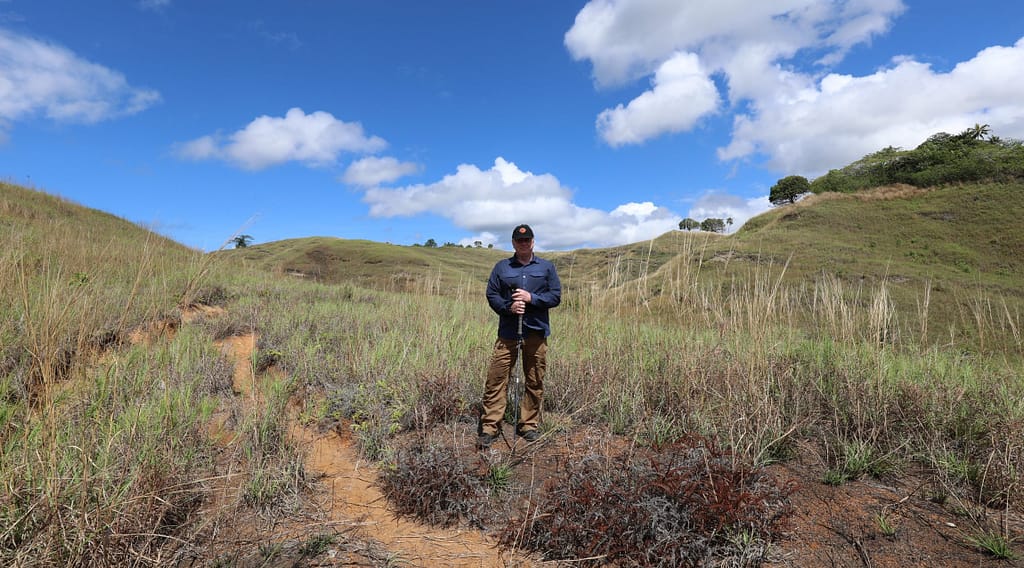
Galloping Horse Ridge, Guadalcanal. This was the site of a January 1943 battle involving the 27th Infantry Regiment ‘Wolfhounds’. The battle was featured in James Jones’ novel ‘The Thin Red Line’ and two movies based on the book (1954, 1998).
Guadalcanal, 1942–43: Campaign Overview
7 Aug 1942 – The Initial Landings
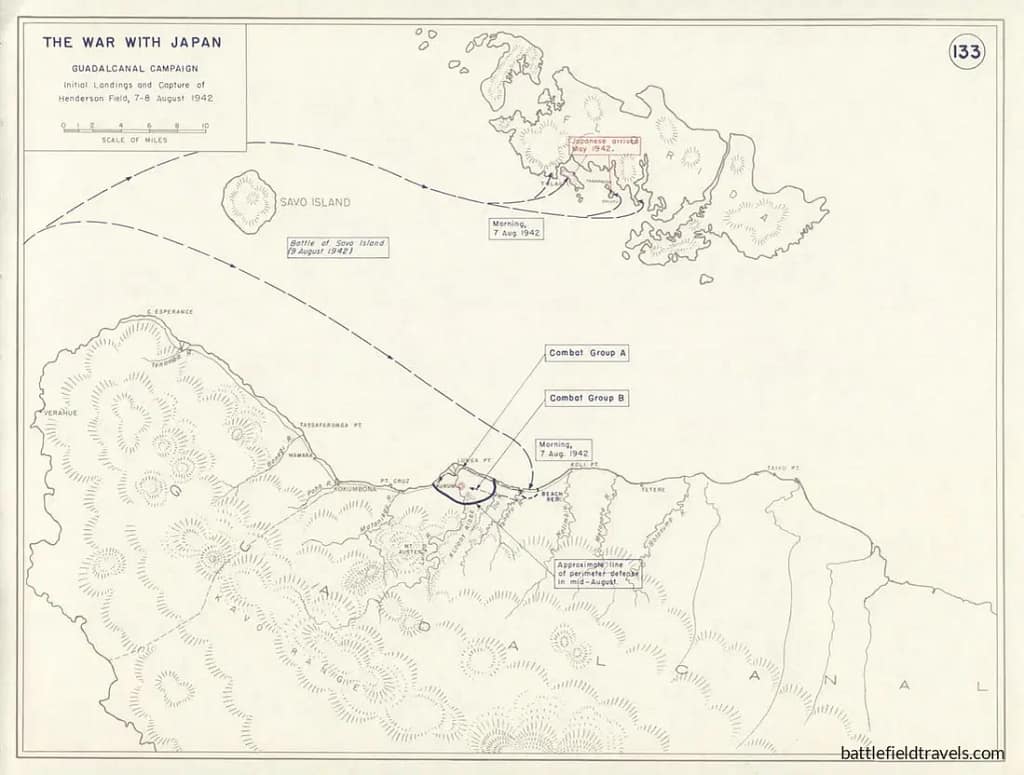
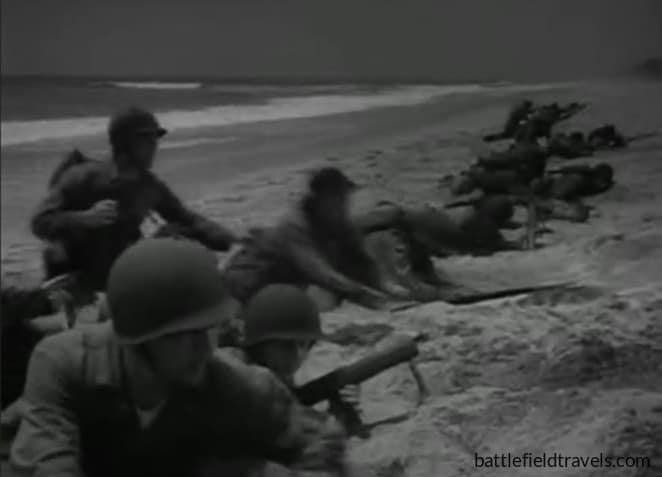
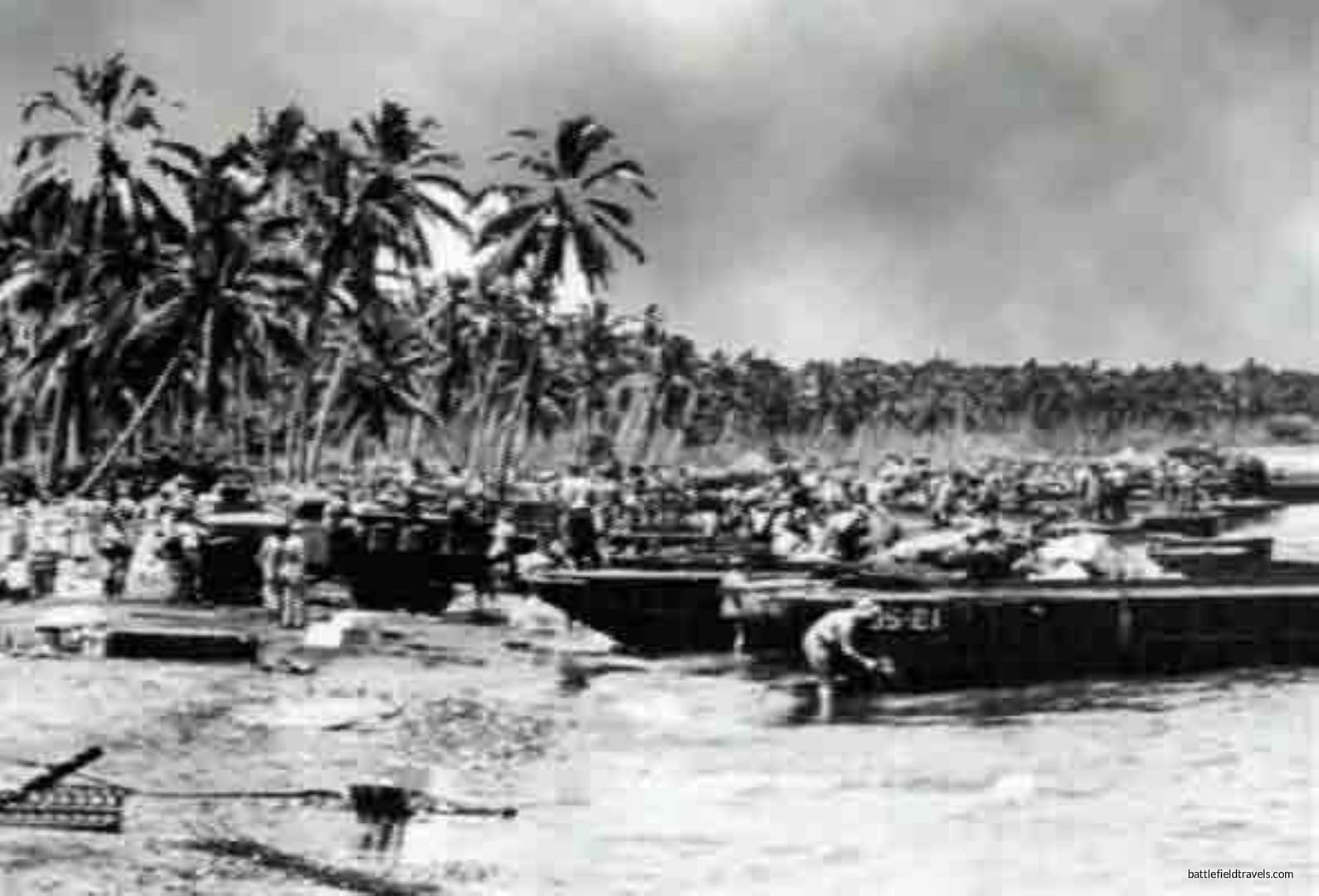
The Guadalcanal Campaign commenced on 7 August 1942, when US Marines landed across the southern Solomon Islands in the first major Allied offensive against Japan in the Pacific. The main landing on Guadalcanal came ashore at Beach Red, east of Lunga Point, while separate forces assaulted the heavily contested positions onTulagi, Gavutu and Tanambogo. On Guadalcanal, the Marines advanced rapidly towards the unfinished Japanese airfield at Lunga Point. Its capture gave the Americans a foothold of enormous strategic importance, but also committed them to defending an exposed perimeter at the end of a tenuous supply line.
8–9 Aug 1942 – The Japanese Response
The Japanese response to the American lodgement was swift. On the night of 8/9 August 1942, Vice Admiral Mikawa sailed a powerful cruiser force down the Solomon Islands ‘Slot’, surprising the Allied naval screening forces and inflicting one of the worst defeats in US Navy history. To protect the carriers and remaining fleet combatants, the Navy temporarily withdrew from Guadalcanal, leaving the leaving the waters around Guadalcanal temporarily exposed to Japanese naval dominance.
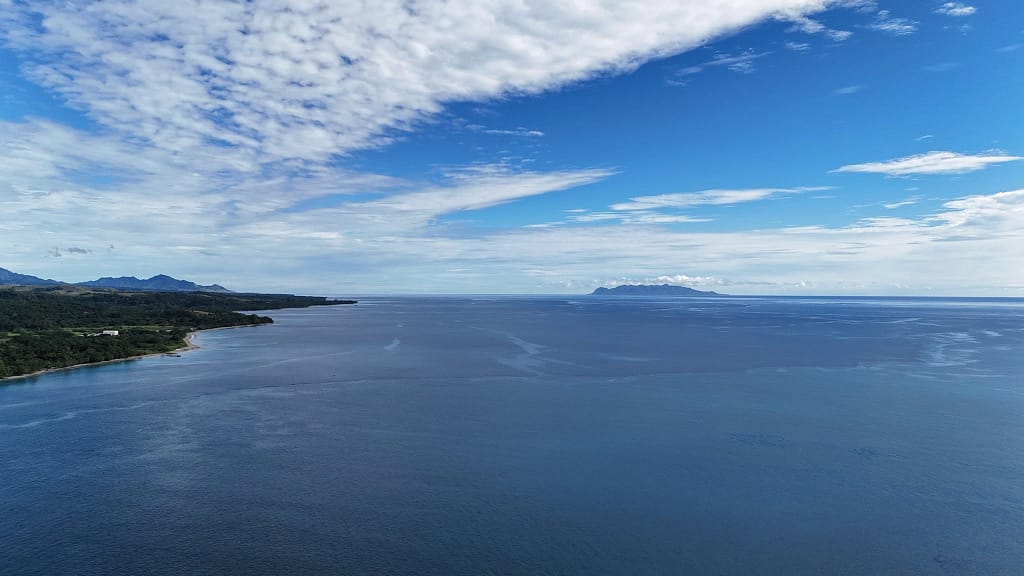
Aerial view from Kokumbona looking towards Savo Island and Iron Bottom Sound. In that blue sea between here and Savo Island, the US Navy suffered one of its worst defeats in history, including the loss of the Australian heavy cruiser HMAS Canberra.
Aug–Sep 1942 – The First Japanese Counteroffensives
Renamed Henderson Field, the airfield became the centre of the struggle for Guadalcanal. The Japanese initially underestimated the strength of the American landing and attempted to eliminate the beachhead with forces committed piecemeal. Colonel Kiyonao Ichiki’s detachment attacked across the Ilu River–Alligator Creek position on 21 August in the Battle of the Tenaru and was virtually destroyed. At the same time, the Marines began probing westward towards the Matanikau River. The disastrous Goettge Patrol and the First Battle of the Matanikau demonstrated that the campaign would extend well beyond the immediate defence of Henderson Field.
During September the contest widened. Japanese reinforcements moved down the Solomon Islands chain via fast destroyer transports, the system the Allies came to call the ‘Tokyo Express’, while the Americans struggled to strengthen and supply the perimeter. Major General Kiyotake Kawaguchi assembled a much larger force for a coordinated attack on Henderson Field. A Marine raid on the Japanese base at Tasimboko on 8 September disrupted the Japanese preparations, while Colonel Merritt Edson recognised the vulnerability of the ridge running south towards the airfield and concentrated his Raiders and Paramarines there. On 12–14 September, Kawaguchi’s troops repeatedly attacked what became known as Edson’s Ridge or Bloody Ridge. The failure of that offensive preserved Henderson Field and inflicted another serious defeat on the Japanese, but it did not end their attempts to recapture the island.
Bloody Ridge from Hill No. 1 looking north towards airfield. Thayer Soule Collection, Archives Branch, Marine Corps History Division
Sep–Oct 1942 – The Matanikau and Henderson Field
The Americans, attempting to exploit the Japanese defeat on Bloody Ridge, attacked westward in what became known as the Second Battle of the Matanikau over 23-27 September 1942. The bold American plan unravelled in the face of a skillful Japanese defence. The battle concluded with a desperate evacuation from ‘Little Dunkirk’ to prevent an American battalion from being surrounded and destroyed.
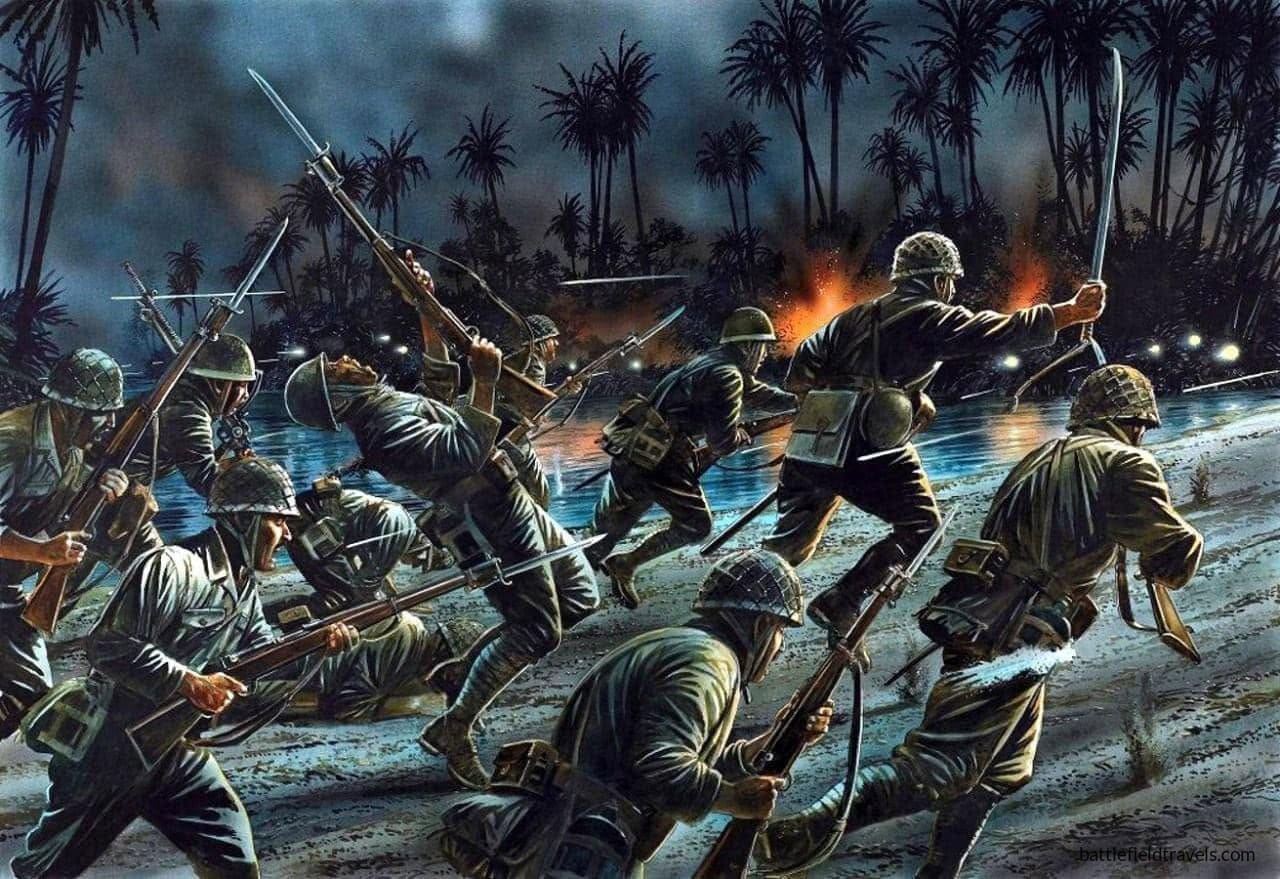
The Third Battle of the Matanikau in early October destroyed several Japanese units, and convinced the Japanese that the coastal approach to Lunga was no longer viable. In late October, the Japanese mounted their largest effort of the campaign against Henderson Field. While Japanese naval and air forces contested the waters and skies around Guadalcanal, Lieutenant General Harukichi Hyakutake’s 17th Army attempted to converge on the American perimeter from three directions. The resulting battles included renewed fighting along the Matanikau, an attack against the Marine positions around the airfield, and a desperate American defence of the southern perimeter during the Battle for Henderson Field.
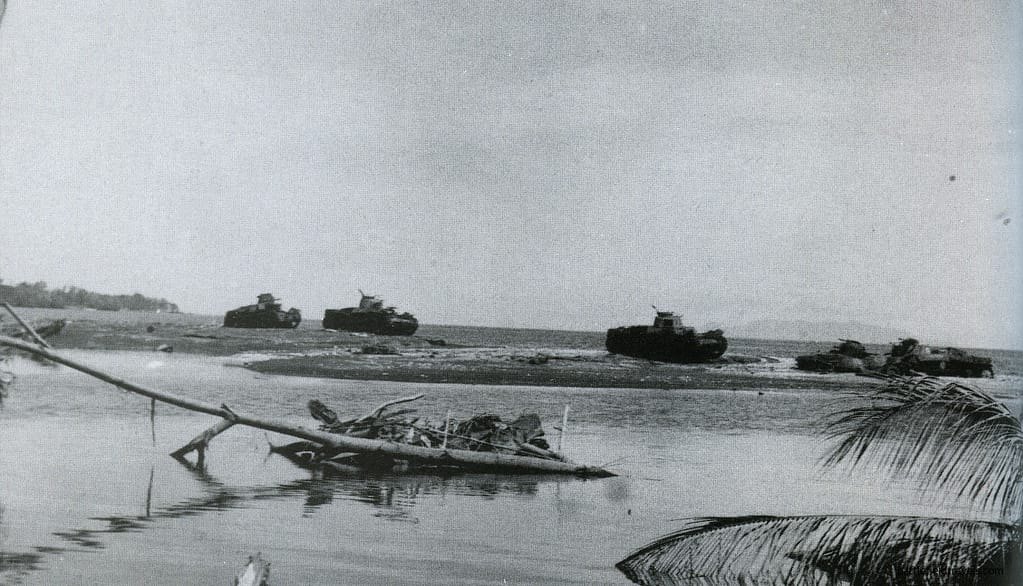
Sumiyoshi’s tanks destroyed on the Matanikau sandbar
Nov 1942 – The Push Towards Kokumbona
By November, Guadalcanal had become a campaign of attrition fought simultaneously on land, at sea and in the air. Japanese attempts to reinforce and resupply the island increasingly depended upon high-speed destroyer runs down “The Slot”, while American aircraft operating from Henderson Field threatened slower transports.
A fourth American offensive on the Matanikau front severely disrupted the Japanese foothold around Point Cruz, and additional Japanese landings at Koli Point forced the Americans to temporarily pause the offensive to deal with the new threat in the east. The naval battles of Guadalcanal in November frustrated Japan’s attempt to deliver another major reinforcement to the island and marked a decisive shift in the campaign.
A fifth American offensive west of the Matanikau further eroded the Japanese positions, while the failure of the November reinforcement effort effectively forced Japan onto the strategic defensive on Guadalcanal. Japanese troops ashore were increasingly isolated, short of food and weakened by disease, while American forces continued to grow.
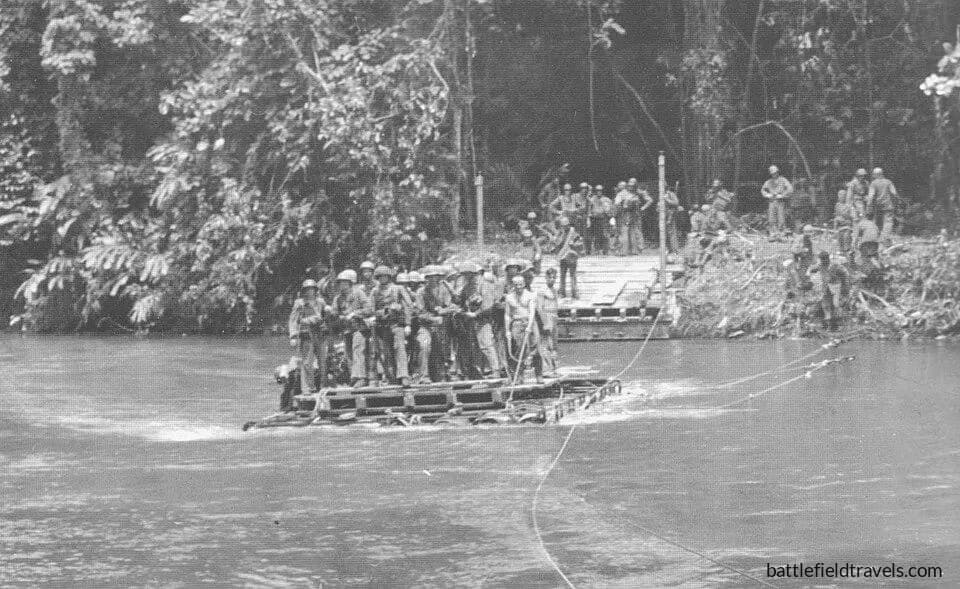
Marines cross the Matanikau River on a raft during the November offensives
Dec 1942–Jan 1943 – Clearing the Inland Flank
As the Americans prepared for a final advance to clear Cape Esperance, the Japanese positions on Mount Austen remained a threat to the inland flank. A US Army advance against Mount Austen in mid-December led to a bitter six-week fight around the powerful ‘Gifu’ defensive position. While the Gifu fight was going on, other US Army units cleared Sea Horse Ridge and Galloping Horse Ridge in mid-January 1943. The latter was memorialsied in James Jones’ novel The Thin Red Line and two films based on the book.
Jan – Feb 1943 – the final American offensive
With the inland flank secure, the Americans shifted from defending Henderson Field to systematically reducing the remaining Japanese positions. Fighting extended westward through the hills and ridges beyond the Matanikau as Army and Marine units commenced a final offensive towards Kokumbona and Cape Esperance. Recognising that Guadalcanal could no longer be recovered at acceptable cost, the Japanese decided to evacuate their surviving forces. Operation KE removed more than 10,000 troops during January and February 1943, and on 9 February American commanders declared Guadalcanal secured.
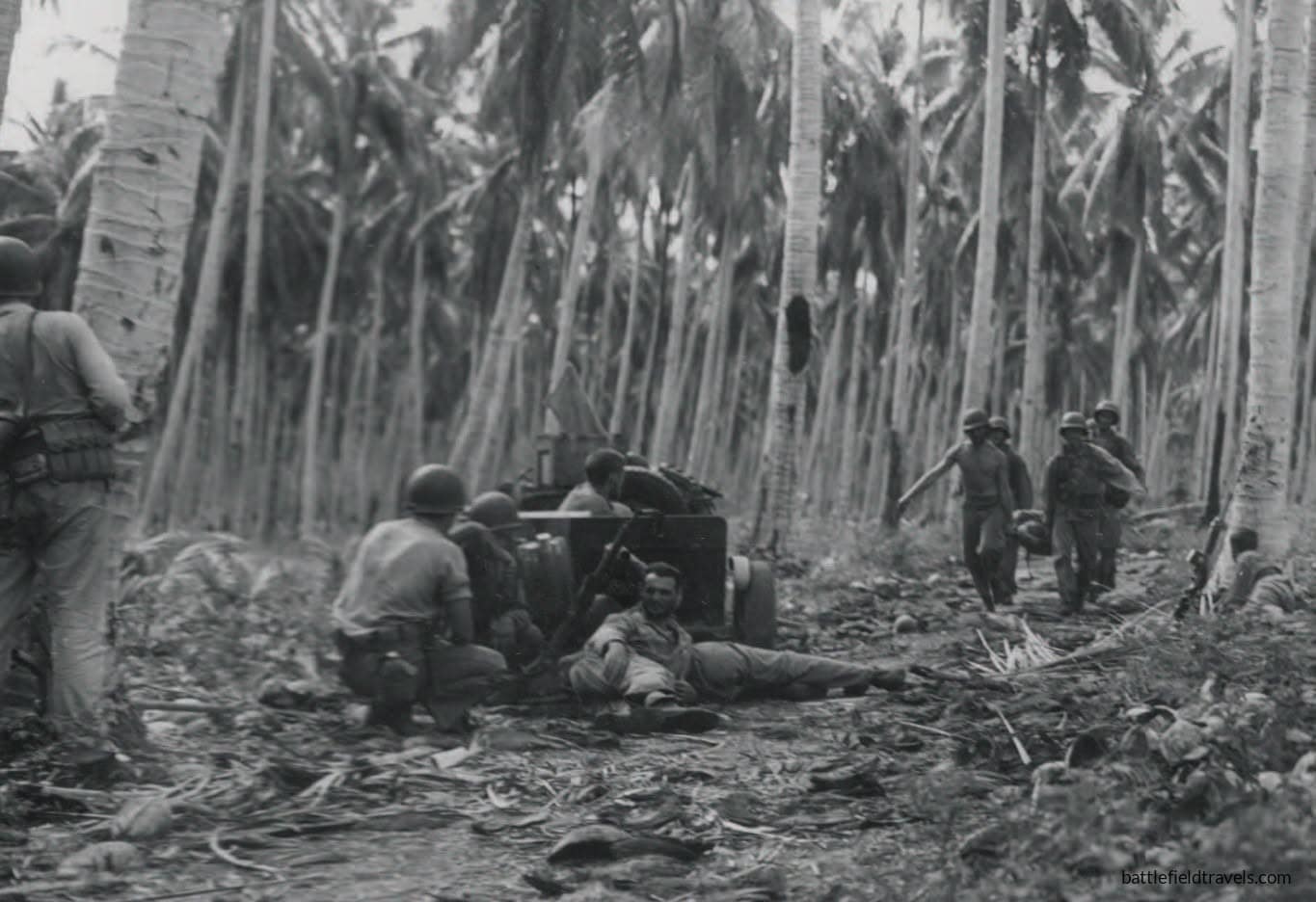
6th Marines evacuate a wounded man under fire, late Jan 1943 near the Poha River.
Conclusion
The six-month campaign had begun as an Allied offensive to seize positions in the southern Solomons, including the Japanese airfield under construction on Guadalcanal, and deny Japan bases threatening the communications route between the United States and Australia. It developed into a sustained contest for control of the southern Solomons in which terrain, logistics, air power and naval access were inseparable. Guadalcanal also provides an unusually rich series of battlefield studies: from small patrol actions and company positions to regimental attacks, divisional operations and the wider struggle to sustain forces across the Pacific.
Further Guadalcanal battle studies will be posted here as they are completed.
🏛️Weapons & Equipment: World War Two
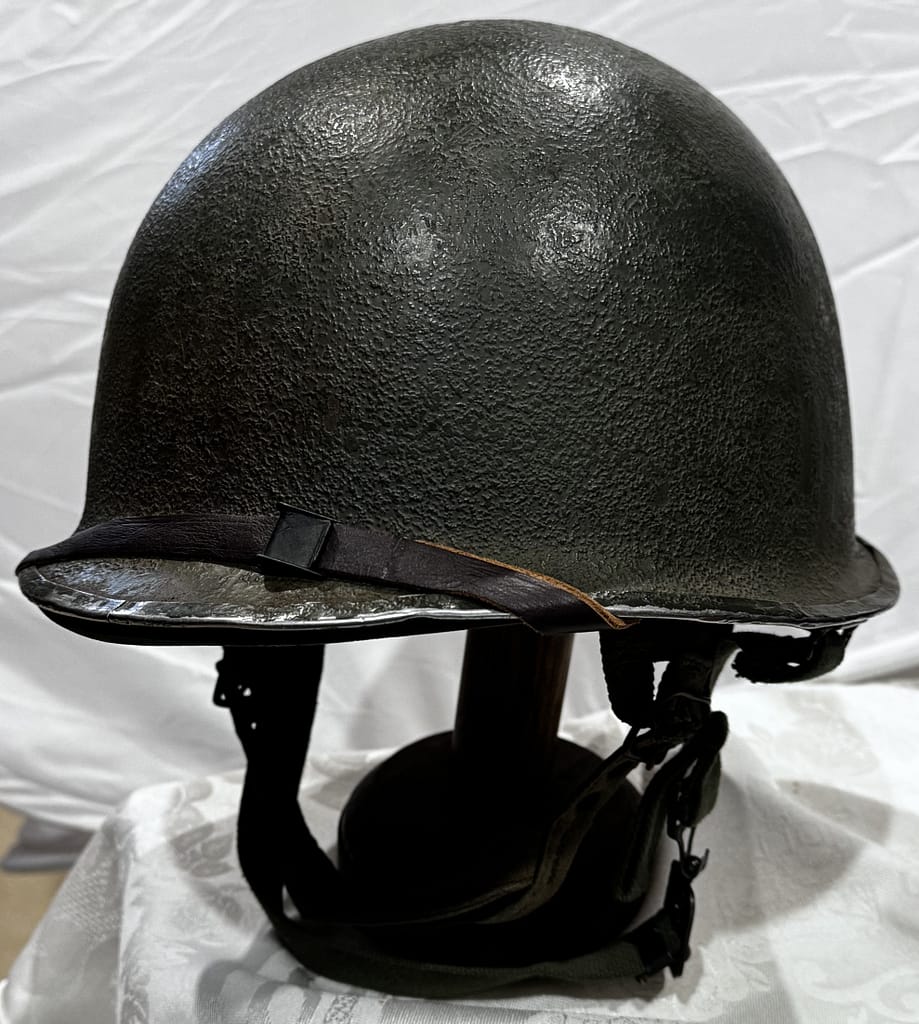
Explore original weapons and equipment from the Second World War, drawn from my personal collection.
Uniforms, helmets, headgear, weapons, equipment from Australia, Britain, United States, Soviet Union, Germany, Japan, Italy, Romania, — personally handled, photographed and examined by me.
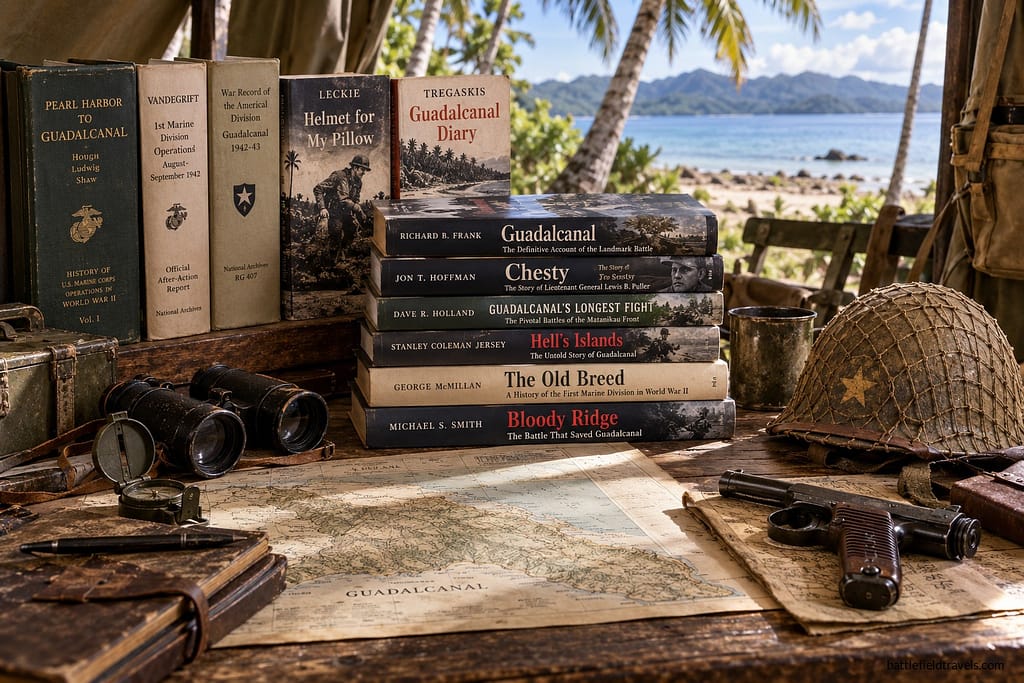
A curated reading list covering the Second World War across all theatres. Explore campaign histories, battlefield studies, biographies, primary accounts and contemporary military writings used in the research behind Battlefield Travels. The list will continue to grow as I publish new studies and draw upon new resources.
20 questions generated out of a bank of 100. Testing your knowledge of the Guadalcanal Campaign land and naval campaigns from beginning to end. Score 60% to pass — but expect a challenge!
August 2026, west of Point Cruz, Guadalcanal. I am walking the section of coast known to history as ‘Little Dunkirk’. Here, on 27 September 1942, the 1st Battalion 7th Marines was evacuated under fire by the US Navy and Coast Guard during the 2nd Battle of the Matanikau. This was the only significant American defeat…
August 2026, Edson’s Ridge, south of Henderson Field, Guadalcanal. I am exploring the sites of the 12-14 September 1942 Japanese attack against the Lunga perimeter. The long north-south ridgeline here became known as ‘Edson’s Ridge’ or ‘Bloody Ridge’ after the battle. The Japanese called it ‘The Centipede’. This is one of the best-preserved battle sites…
August 2026, Ilu River (Alligator Creek). I am exploring the site of the 21 August 1942 Japanese attack against the Marines on the Lunga perimeter. The Japanese ‘Ichiki Detachment’ was a battalion-sized force from the 28th Infantry Regiment, led by the Regimental Commander, Colonel Kiyonao Ichiki. Facing them across the Ilu River was the 2nd…
Matanikau Village site, August 2026. I am exploring the site of the First Battle of the Matanikau, 18-19 August 1942. The battle was the first major battle west of the Matanikau and bears many similarities with the other five or six battles (depending on how you count them) on the Matanikau that would follow, each…
August 2026, at the mouth of the Matanikau River. I am exploring the sites associated with the ill-fated ‘Goettge Patrol’ of 12-13 August 1942. The action happened over a very small area on the beachline west of the Matanikau, near the old village of Matanikau, now overrun by urban sprawl. In 1942 the jungle extended…
Gavutu & Tanambogo Islands, 8 August 2026. I am exploring the site of some of the most bitter fighting of the entire Guadalcanal Campaign, and it happened right here over 7-9 August 1942, While the landings at Beach Red on the big island of Guadalcanal had gone ahead unopposed, the landings at Tulagi and Gavutu…
Tulagi Island, 8 August 2026. I crossed Iron Bottom Sound from Honiara to Tulagi by a dawn high-speed ferry. The trip was roughly two hours long. The date of my battlefield visit also coincided with the official 84th anniversary commemoration of the battle. The commemorative service was held on Blue Beach and was attended by…
August 2026, Beach Red, Guadalcanal, I am walking the ground at Beach Red, site of the 1st Marine Division landings on 7 August 1942. Compared to many other WW2 sites on the island, Beach Red is little changed since 1942. The beach is about four kilometres east of Henderson Field and curves from the Tenaru…
Authored by Mick Prictor, a retired military officer with 40 years’ service, and a military historian specialising in terrain-focused analysis of tactics, doctrine, and command decision-making in land warfare. His work draws on extensive battlefield fieldwork—more than 280 sites worldwide—and one of the world’s largest private collections of historic military arms, uniforms, and equipment. About me
⚔️ Go deeper — Members get exclusive access to the Deep Research Collection, Field Notes, and monthly Research Dispatches. Try membership free for 7 days, cancel anytime. From $9/month.
The Guadalcanal Campaign was the first major Allied offensive against Japan in the Pacific War. Beginning on 7 August 1942, the campaign prevented Japan from completing and using an airfield on Guadalcanal that threatened Allied communications between the United States and Australia. The six-month struggle also forced Japan into an expensive contest of attrition on land, at sea and in the air, before Japanese forces evacuated the island in February 1943.
Who won the Battle of Guadalcanal?
The Allies won the Guadalcanal Campaign. US Marines landed on Guadalcanal and neighbouring islands on 7 August 1942 and captured the unfinished Japanese airfield, later named Henderson Field. Japan repeatedly attempted to retake the airfield and reinforce its troops, but suffered heavy losses in a series of land, naval and air battles. Japan eventually evacuated its surviving troops during Operation KE, and Guadalcanal was declared secured on 9 February 1943.
How long did the Guadalcanal Campaign last?
The Guadalcanal Campaign lasted just over six months, from the American landings on 7 August 1942 until 9 February 1943. Major fighting included the battles of the Tenaru, Edson’s Ridge, the Matanikau and Henderson Field, as well as fighting around Mount Austen, the Gifu, Sea Horse and Galloping Horse. The campaign also included several major naval battles in the waters surrounding Guadalcanal.
Why was Henderson Field so important at Guadalcanal?
Henderson Field was crucial because control of the airfield allowed American aircraft to operate from Guadalcanal and threaten Japanese ships attempting to reinforce and resupply troops on the island. The Japanese therefore made the recapture of Henderson Field a central objective of their operations. Much of the ground campaign was shaped by the rivers, ridges and jungle approaches surrounding the American perimeter around the airfield.
What were the major battles of the Guadalcanal Campaign?
Major ground actions included the initial fighting on Tulagi, Gavutu and Tanambogo, the Battle of the Tenaru, Edson’s Ridge, five major actions along the Matanikau front, the Battle for Henderson Field, Koli Point, Mount Austen and the battles for the Gifu, Sea Horse and Galloping Horse. The campaign also involved major naval engagements including Savo Island, Cape Esperance and the Naval Battle of Guadalcanal, alongside an almost continuous air campaign over the island.
Subscribe to Battlefield Travels and receive a free E-Book Battlefield Guide
Unlock expert battlefield analysis, campaign reconstructions, and historical insights drawn from firsthand exploration and primary sources.
🗺️ You’ll receive:
🎖️ Exclusive historical insights you won’t find elsewhere
📘 A free eBook: 10 Tips for Exploring Historic Battlefields
📰 New battlefield studies straight to your inbox as they are published
Claim Your Free Battlefield Travel Guide
Get your free e-book, exclusive tips, and updates on new battlefield studies.
Thank you!
You have successfully joined our subscriber list.
⚔️ Go deeper — Members get exclusive access to the Deep Research Collection, Field Notes, and monthly Research Dispatches. Try membership free for 7 days, cancel anytime. From $9/month.
August 2026, west of Point Cruz, Guadalcanal. I am walking the section of coast known to history as ‘Little Dunkirk’. Here, on 27 September 1942, the 1st Battalion 7th Marines was evacuated under fire by the US Navy and Coast Guard during the 2nd Battle of the Matanikau. This was the only significant American defeat on land during the six-month Guadalcanal Campaign.
August 2026, Edson’s Ridge, south of Henderson Field, Guadalcanal. I am exploring the sites of the 12-14 September 1942 Japanese attack against the Lunga perimeter. The long north-south ridgeline here became known as ‘Edson’s Ridge’ or ‘Bloody Ridge’ after the battle. The Japanese called it ‘The Centipede’. This is one of the best-preserved battle sites on Guadalcanal.
August 2026, Ilu River (Alligator Creek). I am exploring the site of the 21 August 1942 Japanese attack against the Marines on the Lunga perimeter. The Japanese ‘Ichiki Detachment’ was a battalion-sized force from the 28th Infantry Regiment, led by the Regimental Commander, Colonel Kiyonao Ichiki. Facing them across the Ilu River was the 2nd Battalion, 1st Marines
and 1st Battalion, 1st Marines
Matanikau Village site, August 2026. I am exploring the site of the First Battle of the Matanikau, 18-19 August 1942. The battle was the first major battle west of the Matanikau and bears many similarities with the other five or six battles (depending on how you count them) on the Matanikau that would follow, each progressively larger and more costly than the previous battles.
August 2026, at the mouth of the Matanikau River. I am exploring the sites associated with the ill-fated ‘Goettge Patrol’ of 12-13 August 1942. The action happened over a very small area on the beachline west of the Matanikau, near the old village of Matanikau, now overrun by urban sprawl. In 1942 the jungle extended all the way to the beach.
Tulagi Island, 8 August 2026. I crossed Iron Bottom Sound from Honiara to Tulagi by a dawn high-speed ferry. The trip was roughly two hours long. The date of my battlefield visit also coincided with the official 84th anniversary commemoration of the battle. The commemorative service was held on Blue Beach and was attended by Solomon Islands officials, the United States Chargé d’Affaires, veterans, and local community members.
August 2026, Beach Red, Guadalcanal, I am walking the ground at Beach Red, site of the 1st Marine Division landings on 7 August 1942. Compared to many other WW2 sites on the island, Beach Red is little changed since 1942. The beach is about four kilometres east of Henderson Field and curves from the Tenaru River Delta in the west to Koli Point in the east.
Reconstructing Korean War battlefields through terrain analysis, primary sources and on-site research
Walking the battlefields of the Korean War (1950-1953)
The Korean War was one of the most consequential conflicts of the 20th century. Fought across the Korean Peninsula between United Nations forces, the Democratic People’s Republic of Korea, and later the Chinese People’s Volunteer Army, the war combined periods of bold manoeuvre with brutal positional warfare in terrain that often favoured the defender.
1950: Dramatic opening moves
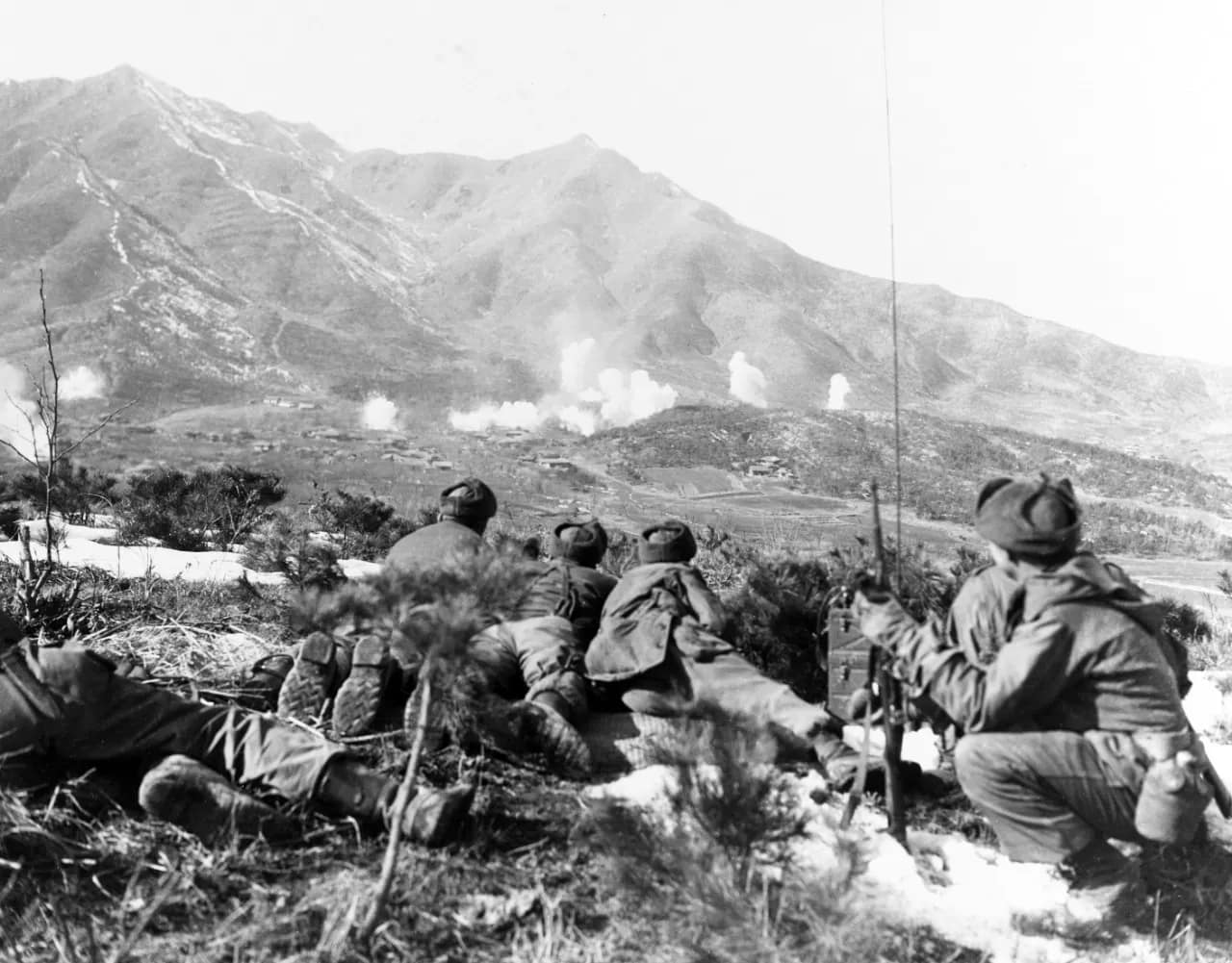
The war opened in June 1950 with the North Korean invasion, sweeping southwards and forcing South Korean and UN forces into the Pusan Perimeter, a defensive line anchored on ridges and river lines aroun dteh southern city of Pusan. General MacArthur’s daring Inchon landings shifted the strategic balance, allowing Allied forces to retake Seoul and push north towards the Yalu River. Massive intervention by Chinese forces transformed the war again, forcing UN units into a fighting withdrawal through snow-covered mountains, narrow valleys and harsh winter conditions.
1951-53: Positional warfare
By 1951, the conflict settled into a series of attritional battles along successive defensive belts — the Kansas Line, the Jamestown Line and the approaches to the Iron Triangle. Some of the war’s most famous engagements, such as Heartbreak Ridge, Bloody Ridge, Chipyong-ni, The Hook and Hill 266, were fought for control of high points, spurs and ridgelines that offered observation, artillery dominance and control of movement corridors.
Fighting in Korea was defined by the terrain’s harsh realities. Steep slopes, knife-edged ridges and narrow valleys restricted mechanised movement and required infantry-centric tactics. Weather extremes — from humid summers to −30°C winters — added another layer of difficulty. Every position, from isolated outposts to fortified ridgeline complexes, depended on logistics, engineering, and the ability to hold or seize ground under punishing conditions.
Armistice negotiations
Armistice negotiations commenced on 10 July 1951 in the North Korean town of Kaesong. In October 1951, the talks moved to the nearby village of Panmunjom, which remains the site of formal North Korea-South Korea interactions. An armistice ending hostilities was signed on 27 July 1953, although the war has never officially ended.
Methodology
This collection of battlefield studies examines the Korean War through a terrain-focused lens, combining period maps, unit narratives, aerial photography and on-site reconnaissance. The aim is not only to recount what happened across these battlefields, but to explain why each engagement unfolded the way it did, shaped by terrain, weather, doctrine and the decisions of commanders on both sides.
Battle Studies in the Korean War
Below are all current BattlefieldTravels studies for the Korean War, covering key battles, campaign phases and associated sites. New studies are added as further battlefields are walked and analysed.
The Panmunjom negotiations ultimately led to the signing of the Korean Armistice Agreement on 27 July 1953. The agreement effectively ended the hostilities and established the DMZ, but it was not a peace treaty. Consequently, North and South Korea technically remain at war, as no formal peace treaty has been signed.
Over thousands of years of warfare, armies have sought ways to gain advantage on the battlefield. Sometimes the solution was a new weapon. Sometimes it was a radical new method. Often it was a combination of both. From the disciplined ranks of the Greek phalanx to pike-and-shot warfare to the interlocking machine-gun fire plans of the twentieth century, tactical innovations have repeatedly reshaped how battles are fought.
This article explains how machine guns are employed on the battlefield, including the key concepts of cone of fire, beaten zone, grazing fire, enfilade fire, and mutually supporting machine-gun positions. The article forms part of the Tactical Innovations in Warfare series.
Authored by Mick Prictor, a retired military officer with 40 years’ service, and a military historian specialising in terrain-focused analysis of tactics, doctrine, and command decision-making in land warfare. His work draws on extensive battlefield fieldwork—more than 280 sites worldwide—and one of the world’s largest private collections of historic military arms, uniforms, and equipment. About me
⚔️ Go deeper — Members get exclusive access to the Deep Research Collection, Field Notes, and monthly Research Dispatches. Try membership free for 7 days, cancel anytime. From $9/month.
Which phases of the Korean War are covered in this collection?
The landing page spans the North Korean invasion, the UN counteroffensive, Chinese intervention, and the static battles of 1951–53 along the central and western fronts.
Which battles are included or planned?
The collection includes Joint Security Area Panmunjom, and will expand to include Kapyong, Heartbreak Ridge, Chipyong-ni, Bloody Ridge, The Hook, the Pusan Perimeter and other major engagements.
Why is terrain so important in Korean War analysis?
Korea’s rugged mountains and steep ridges dominated manoeuvre, supply and defensive operations, making high ground and narrow corridors decisive in nearly every battle.
Did the Korean War involve trench warfare?
Yes. After 1951, the front stabilised, producing fortified lines, trench systems, outposts and repeated assaults reminiscent of WW1 but shaped by modern firepower.
Are these battlefield areas still accessible today?
Many ridgelines, memorials and preserved outposts along the DMZ and former frontlines are visitable, though some fall within restricted or heavily monitored areas.
Subscribe to Battlefield Travels and receive a free E-Book Battlefield Guide
Unlock expert battlefield analysis, campaign reconstructions, and historical insights drawn from firsthand exploration and primary sources.
🗺️ You’ll receive:
🎖️ Exclusive historical insights you won’t find elsewhere
📘 A free eBook: 10 Tips for Exploring Historic Battlefields
📰 New battlefield studies straight to your inbox as they are published
Claim Your Free Battlefield Travel Guide
Get your free e-book, exclusive tips, and updates on new battlefield studies.
Thank you!
You have successfully joined our subscriber list.
⚔️ Go deeper — Members get exclusive access to the Deep Research Collection, Field Notes, and monthly Research Dispatches. Try membership free for 7 days, cancel anytime. From $9/month.