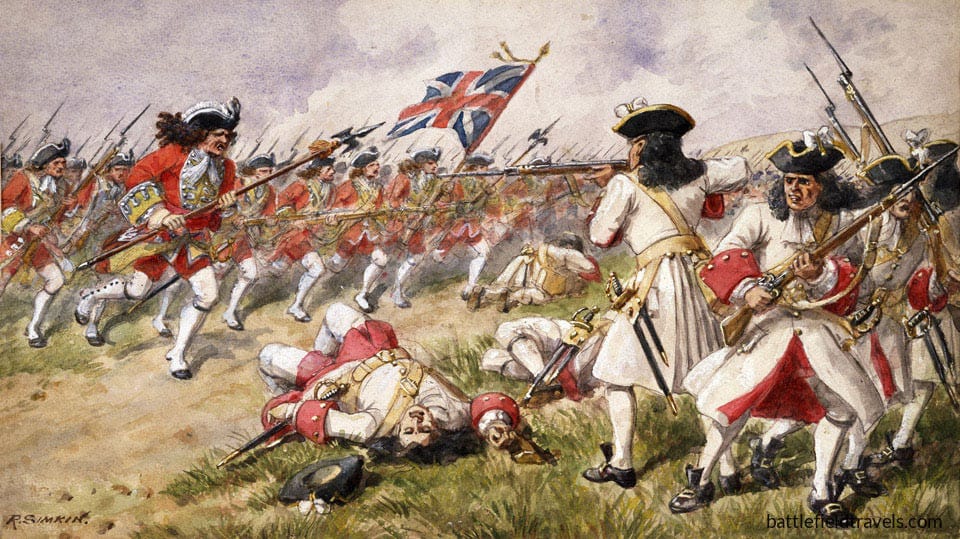
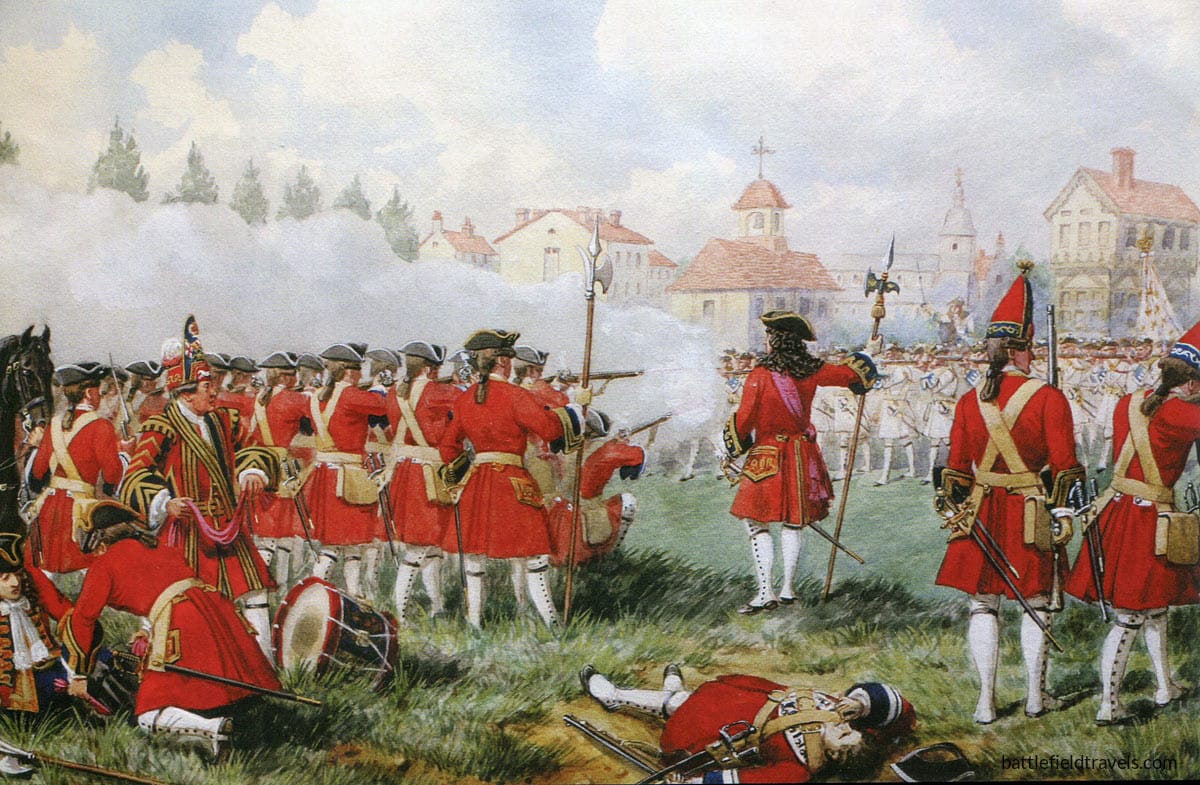
Selected works on the War of the Spanish Succession
Overview of the War of the Spanish Succession
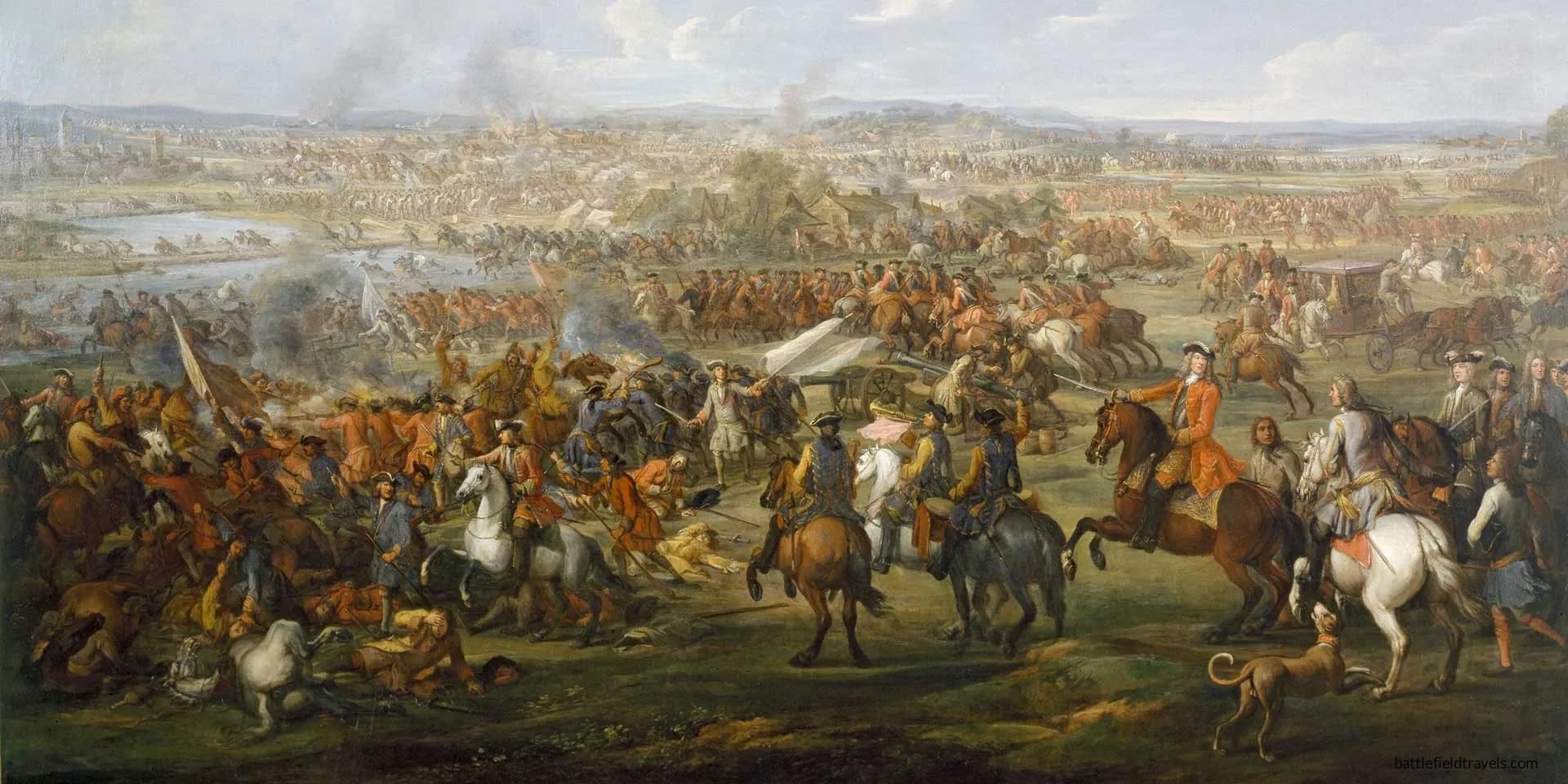
The War of the Spanish Succession was one of the defining conflicts of early modern Europe, fought over the inheritance of the Spanish Empire following the death of Charles II in 1700.
At its core, the war was a struggle over the balance of power. The possibility that the Bourbon monarchy might unite France and Spain under a single dynasty posed a strategic threat to the rest of Europe. In response, a Grand Alliance—led by Britain, the Dutch Republic, and the Holy Roman Empire—formed to resist French expansion.
The war’s decisive campaigns were fought in the Low Countries, where Allied armies under John Churchill, 1st Duke of Marlborough, and Prince Eugene of Savoy confronted French forces in a series of highly mobile, tactically complex operations.
War of the Spanish Succession literature
Early writing on the war was dominated by grand narrative and biography, most notably the monumental account of John Churchill, 1st Duke of Marlborough, produced by Winston Churchill. These works emphasised leadership, character, and sweeping campaign narratives, presenting the war through the lens of great commanders and decisive battles. While rich in detail and narrative power, they often reflected the perspectives and assumptions of their time, placing less emphasis on structural factors such as coalition dynamics or operational constraints.
Later 20th-century scholarship began to place the conflict within a broader strategic and political context, examining the war as part of the longer struggle for the European balance of power. Historians increasingly focused on the interaction between diplomacy, finance, and military operations, moving beyond purely battlefield-driven accounts. This shift also brought greater attention to the complexity of coalition warfare, where Allied success depended not only on battlefield performance but on the coordination of multinational forces with differing priorities and capabilities.
Underexplored aspects
Despite these developments, the War of the Spanish Succession remains comparatively under-explored in one key respect: the interaction between terrain, perception, and decision-making at the point of contact. Many accounts describe what happened on the battlefield, but fewer examine how commanders read the ground, identify opportunities, and translate those observations into action under pressure.
The Amazon links on the Reading Room pages are powered by AAWP

Reading
The reference collection below includes the key books and references I have used in preparing for and undertaking battlefield studies all over the world.
War of the Spanish Succession in Europe


Authored by Mick Prictor, a retired military officer with 40 years’ service, and a military historian specialising in terrain-focused analysis of tactics, doctrine, and command decision-making in land warfare. His work draws on extensive battlefield fieldwork—more than 280 sites worldwide—and one of the world’s largest private collections of historic military arms, uniforms, and equipment. About me
Frequently asked questions
The war sits between more heavily studied periods, such as the wars of Louis XIV and the Napoleonic Wars, and lacks the national narratives that drive interest in later conflicts. As a result, it has attracted fewer popular histories, even though it was a major European war involving coalition warfare, global theatres, and significant battlefield developments.
The literature has evolved from early biographical and narrative accounts—focused on commanders such as Marlborough—to broader studies of strategy, diplomacy, and coalition warfare. More recent work examines operational coordination, command structures, and the limits of control in early modern armies, although detailed analysis of terrain and battlefield perception remains limited.
While campaign narratives and strategic studies are well covered, there is less emphasis on how battles were experienced and interpreted at ground level. In particular, the interaction between terrain, decision-making, and real-time command judgement is often underdeveloped, leaving scope for further battlefield-focused analysis.
Subscribe to Battlefield Travels and receive a free E-Book Battlefield Guide
Unlock expert battlefield analysis, campaign reconstructions, and historical insights drawn from firsthand exploration and primary sources.
🗺️ You’ll receive:
🎖️ Exclusive historical insights you won’t find elsewhere
📘 A free eBook: 10 Tips for Exploring Historic Battlefields
📰 New battlefield studies straight to your inbox as they are published

⚔️ Go deeper — Members get exclusive access to the Deep Research Collection, Field Notes, and monthly Research Dispatches. Try membership free for 7 days, cancel anytime. From $9/month.