The Foreign Legion’s Camerone in Tonkin!
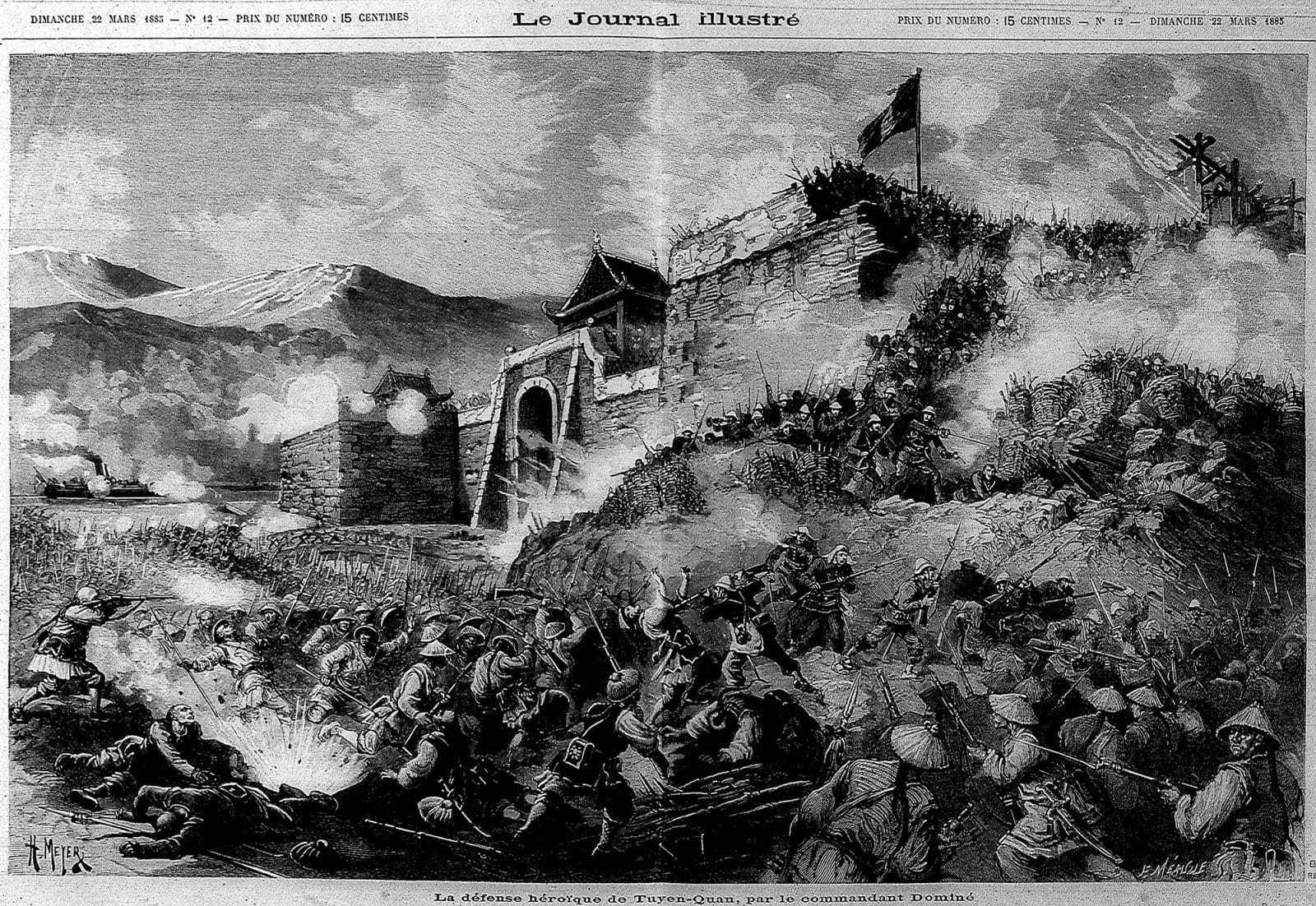
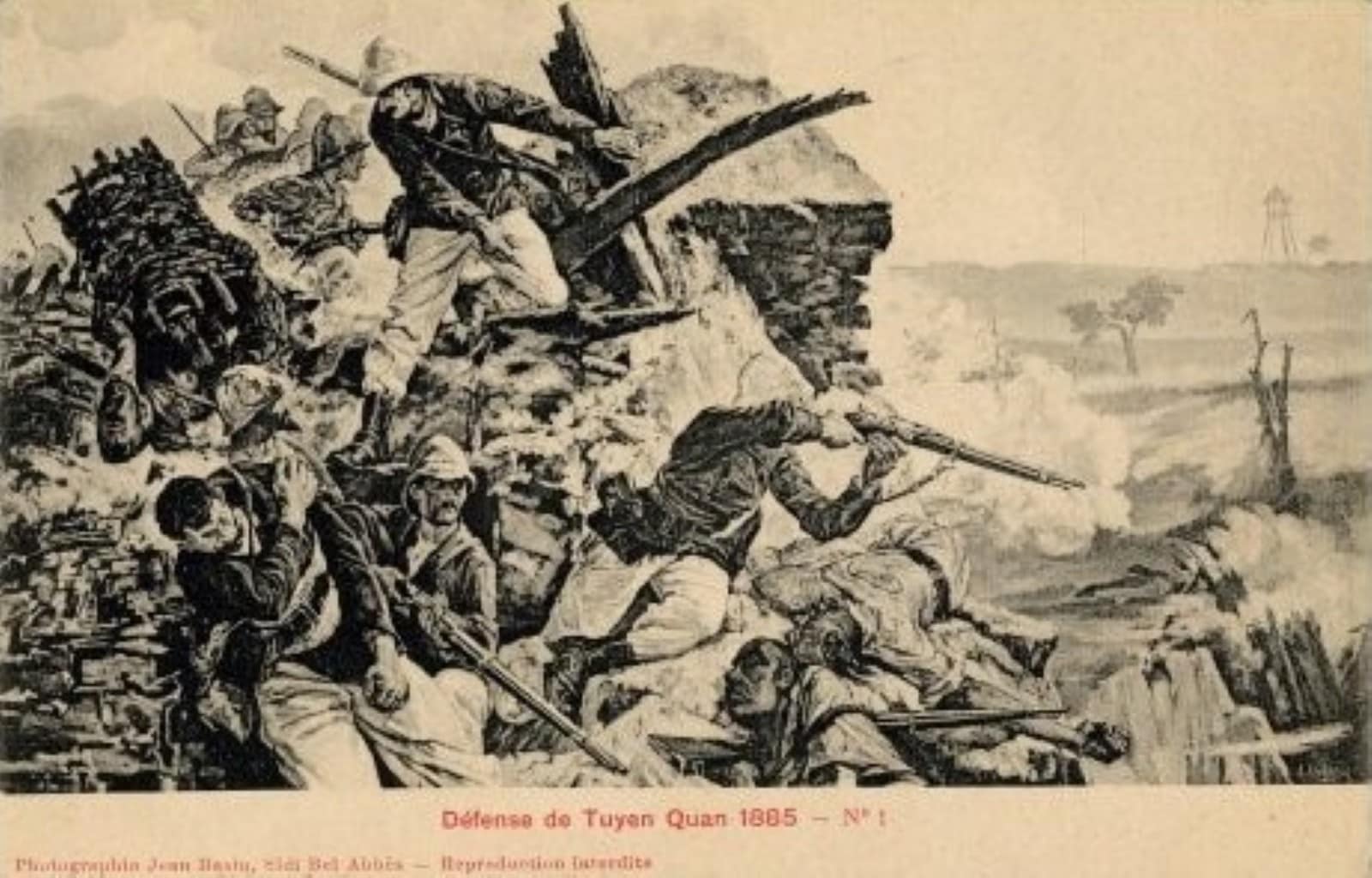
The Siege of Tuyên Quang (Tuyen Quang) is one of the most famous battles in Foreign Legion history. From 24 November 1884 to 3 March 1885, ~630 French and Tonkinese defenders held the citadel of Tuyen Quang against a force of 15,000 Chinese and Black Flag Army troops. Their endurance, and Colonel Giovanninelli’s epic 300km relief march, made the siege one of the Foreign Legion’s most legendary battles.
“Au Tonkin, la Légion immortelle.“
(In Tonkin, the immortal Legion)
“À Tuyên Quang illustra notre drapeau.”
(At Tuyên Quang, it [the Legion] glorified our flag)
— First verse from the Foreign Legion’s marching song, Le Boudin
Key facts
You may also be interested in these firsthand battlefield studies covering the Tonkin Campaign and Sino-French War: Tonkin Campaign / Sino-French War (1883-86) ♦ Sơn Tây Campaign (1883) ♦ Bắc Lệ Ambush (1884) ♦ Siege of Tuyên Quang (1884-85) ♦ Battle of Hòa Mộc (1885)
Google Earth map – location of Tuyên Quang
🧭🥾 Walking the Battlefield of Tuyên Quang
I visited the Tuyên Quang battlefield in April 2025. I was equipped with unit histories, copies of original orders, maps and sketches, firsthand and secondary accounts of the battle, and my own digital GIS overlays to pull it all together. Tuyên Quang has undergone significant changes since 1885, but the footprint of the old 300-metre-by-300-metre citadel is unmistakable in the modern road system. The steep-sided hill, ‘Le Grand Mamelon‘, that housed the old citadel pagoda remains. Portions of the wall on all sides are still visible and have been incorporated into modern structures. The roads that bisected the citadel are now the city’s main thoroughfares. The old western gate of the citadel is now in the middle of a roundabout (traffic circle). The southern gate is also partially intact and forms another quasi-roundabout that traffic must pass. The dominating terrain along the Clear (Lo) River is unmistakable, as evident in my ‘Then and Now’ image.
It was a great privilege to visit this remote battlefield, part of French Foreign Legion folklore!


For those who prefer to listen, this article is also available as a 78-minute podcast
Tip: If Podbean overlay appears after pausing, click the × in the top-right corner to return to the player controls.
Table of Contents
- Strategic Context – The Sino-French War, 1884–1885
- Opposing forces at the Siege of Tuyên Quang
- Occupation and fortification (mid–1884)
- Encirclement and opening moves (October-November 1884)
- 🔒Sustainment efforts on the river (Dec 1884–Jan 1885)
- 🔒The Siege of Tuyên Quang begins in earnest (January 1885)
- 🔒Probing and sniping (1 – 12 February 1885)
- 🔒The siege reaches a crisis point (12-28 February 1885)
- 🔒Giovanninelli’s Relief March (16 February – 1 March 1885)
- 🔒The Battle of Hòa Mộc (2–3 March 1885)
- 🔒Relief of Tuyên Quang (3–4 March 1885)
- 🔒Outcomes of the Tuyen Quang siege
- 🔒The Tuyên Quang battlefield today
- 🔒Le Boudin, march song of the Legion!
- 🔒Additional images of Tuyên Quang
- 🔒📚 Notes and References
- 🔒Sources and Further Reading
- 📚 Further Reading
- 🧭 Battlefield Travel Guide: Tuyên Quang (Siege, Nov 1884 – Mar 1885)
- FAQ: Siege of Tuyen Quang (Nov 1884-Mar 1885)
Strategic Context – The Sino-French War, 1884–1885
Origins of the conflict
By the mid-19th century, France had entered the wider imperial contest for influence in Asia. French missionaries had been active in Cochinchina (southern Vietnam) since the 18th century, and their presence provided both a pretext and a foothold for later intervention. Following a brief campaign in 1862, France annexed several southern provinces to form the colony of Cochinchina. Further north, Annam and Tonkin remained nominally under the Nguyễn dynasty but were subject to Chinese suzerainty — a political arrangement that France increasingly sought to overturn.
Garnier’s 1873 expedition to Tonkin
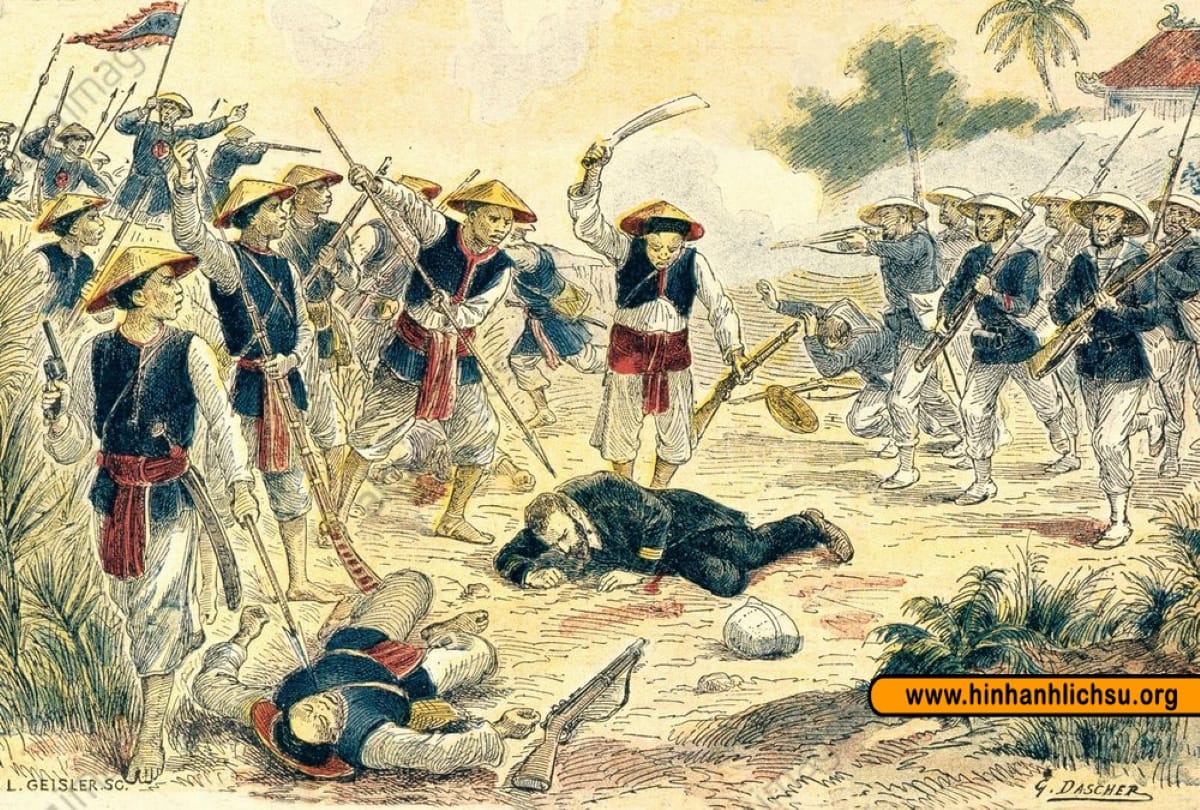
In 1873, Lieutenant Francis Garnier led a small, unauthorised expedition up the Red River and briefly seized Hanoi. His success alarmed both the Vietnamese court and the Chinese authorities, who regarded Tonkin as part of their sphere of influence. Garnier was killed on 21 December 1873 in action against the Chinese-supported Black Flag Army near Thủ Lệ. The French withdrew under diplomatic pressure, and a temporary settlement restored the pre-existing order.
Riviere’s 1881-1883 campaigns
A decade later, Captain Henri Rivière arrived in Hanoi with instructions to protect French interests but soon exceeded them. Acting on his own initiative, he bombarded and captured the Imperial Citadel on 25 April 1882, forcing local officials to submit. The Vietnamese emperor appealed once more to Liu Yongfu’s Black Flag Army, while the Chinese government covertly reinforced Tonkin with regular troops from Yunnan and Guangxi.
Rivière pressed on regardless, capturing Nam Định and Gia Cúc in March 1883. On 19 May, his column was ambushed and destroyed by the Black Flags at Cầu Giấy (Paper Bridge). Rivière’s death turned local tensions into open war.

The Sơn Tây Campaign, December 1883
Rivière’s loss provoked a decisive response from Paris. Admiral Amédée Courbet took command of the reinforced Tonkin Expeditionary Corps and attacked the heavily fortified town of Sơn Tây, defended by a combined force of Chinese, Black Flag, and Annamite troops. After fierce fighting in December 1883, Courbet captured the citadel, dealing a severe blow to both Chinese prestige and the Black Flags’ combat power.
With operations shifting from the coast to the interior, command passed from Courbet to General Charles-Théodore Millot. French victories at Bắc Ninh, Hưng Hóa, and Thái Nguyên secured control of the Red River Delta and pushed Chinese forces north toward the frontier. On 1 June 1884, a composite column — including a battalion of the Foreign Legion — occupied Tuyên Quang, a small post on the Clear River about 140 km northwest of Hanoi.
The Tientsin Accord and the Bắc Lệ Ambush
China’s field armies had been defeated in Tonkin, and the Black Flag Army was in retreat. Seeking to avoid a wider war, both sides concluded the Tientsin Accord on 11 May 1884, under which China recognised the French protectorate over Annam and Tonkin in exchange for the withdrawal of all Chinese forces, and a new commercial treaty.
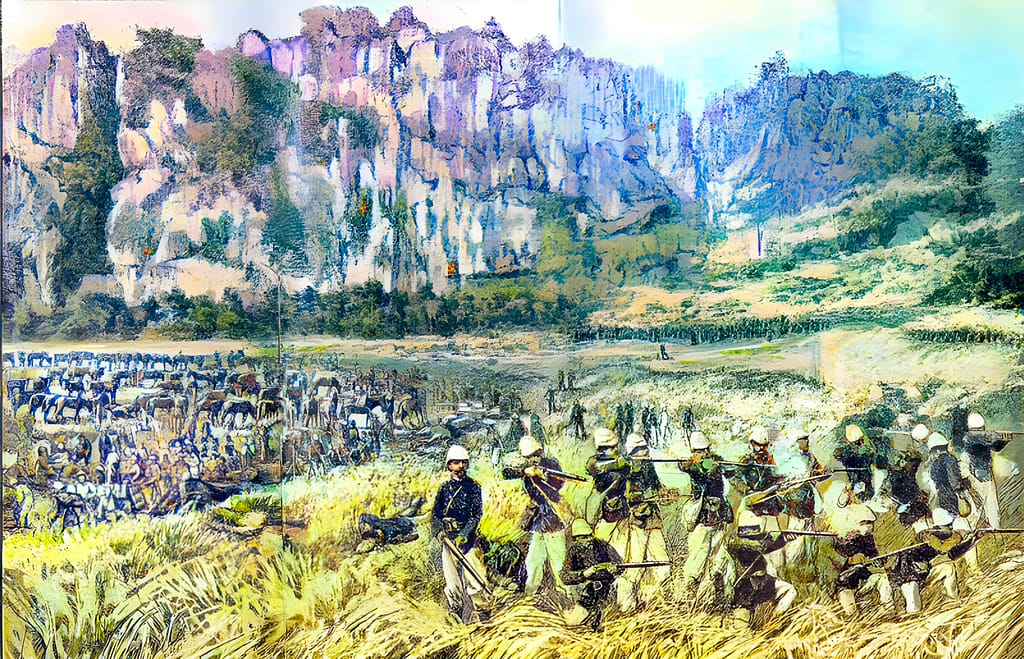
In June, a French column under Lieutenant-Colonel Alphonse Dugenne advanced north from Hanoi toward Lạng Sơn to occupy the frontier posts as agreed. Near Bắc Lệ, Dugenne’s force was ambushed by Chinese regulars who had not yet withdrawn. The French executed an orderly fighting retreat, but the Bắc Lệ Ambush shattered the diplomatic accord and triggered the Sino-French War.
Towards the Siege of Tuyên Quang
As hostilities spread across Tonkin, the Chinese provinces of Guangxi and Yunnan, and the island of Formosa (Taiwan), the French sought to hold their remote forward posts along the Clear River (Sông Lô). These garrisons formed a thin shield protecting the Red River Delta from incursions by Yunnanese regulars and remnants of Liu Yongfu’s Black Flag forces.
Among them, Tuyên Quang was the most exposed — an isolated citadel defended by a few hundred Legionnaires, Tonkinese Tirailleurs, and artillerymen. Its commander, Chef de Bataillon Marc-Edmond Dominé, resolved to hold the post whatever the cost.1Dick de Lonlay (Émile Bayard), La Légion au Tonkin: Siège de Tuyên Quang, (Paris: E. Plon, Nourrit et Cie, 1886), pp. 9–12
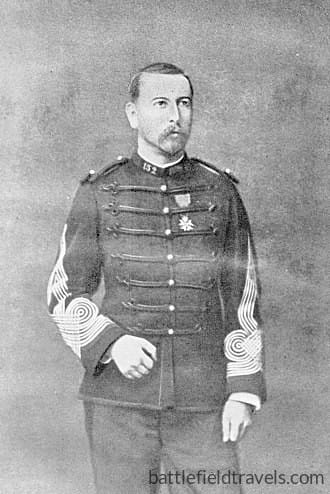
A graduate of Saint-Cyr (1868), Dominé had served with distinction in Algeria and the Franco-Prussian War. He was twice wounded — at Aïn-Chaïr in April 1870 and again at Orléans later that year. In late 1883, he deployed to Tonkin with the 2nd Battalion d’Afrique, bringing with him the professionalism and resolve that would soon define the defence of Tuyên Quang.
Opposing forces at the Siege of Tuyên Quang
 The French Garrison
 The French Garrison
When the siege began in late 1884, the citadel of Tuyên Quang was held by a garrison of approximately 630 men:
- Two companies (Captains Cattelin and Moulinay) of the 1st Foreign Legion Battalion — about 390 Legionnaires
- 162 Tonkinese riflemen (Captain Dia), local troops raised and trained under French officers,
- a detachment of marine artillery with two 4-pounder mountain guns, two 50mm guns and two Hotchkiss 37mm revolving cannons.
- A small number of engineers (SGT Bobillot) and support personnel completed the complement.2de Lonlay, Siège de Tuyên Quang, pp. 10–12.
- The Farcy-type gunboats Revolver and the Mitrailleuse, armed with a heavy 14-pounder cannon in the bow, and a Hotchkiss 37mm revolving cannon on the upper deck. These powerful gunboats played a critical role in protecting the Clear River flank of Tuyen Quang citadel.
- The commandant was Marc-Edmond Dominé, an officer of the marine infantry who had seen extensive service in North Africa, the Franco-Prussian War and Indochina. Calm, methodical, and respected for his composure under pressure, Dominé embodied the professional ethos of France’s colonial corps. His challenge was formidable: to defend a dilapidated Annamite citadel against overwhelming numbers, with supplies limited to what convoys and gunboats could bring through.3Douglas Porch, The French Foreign Legion: A Complete History of the Legendary Fighting Force (New York: Harper & Row, 1991), p. 213.
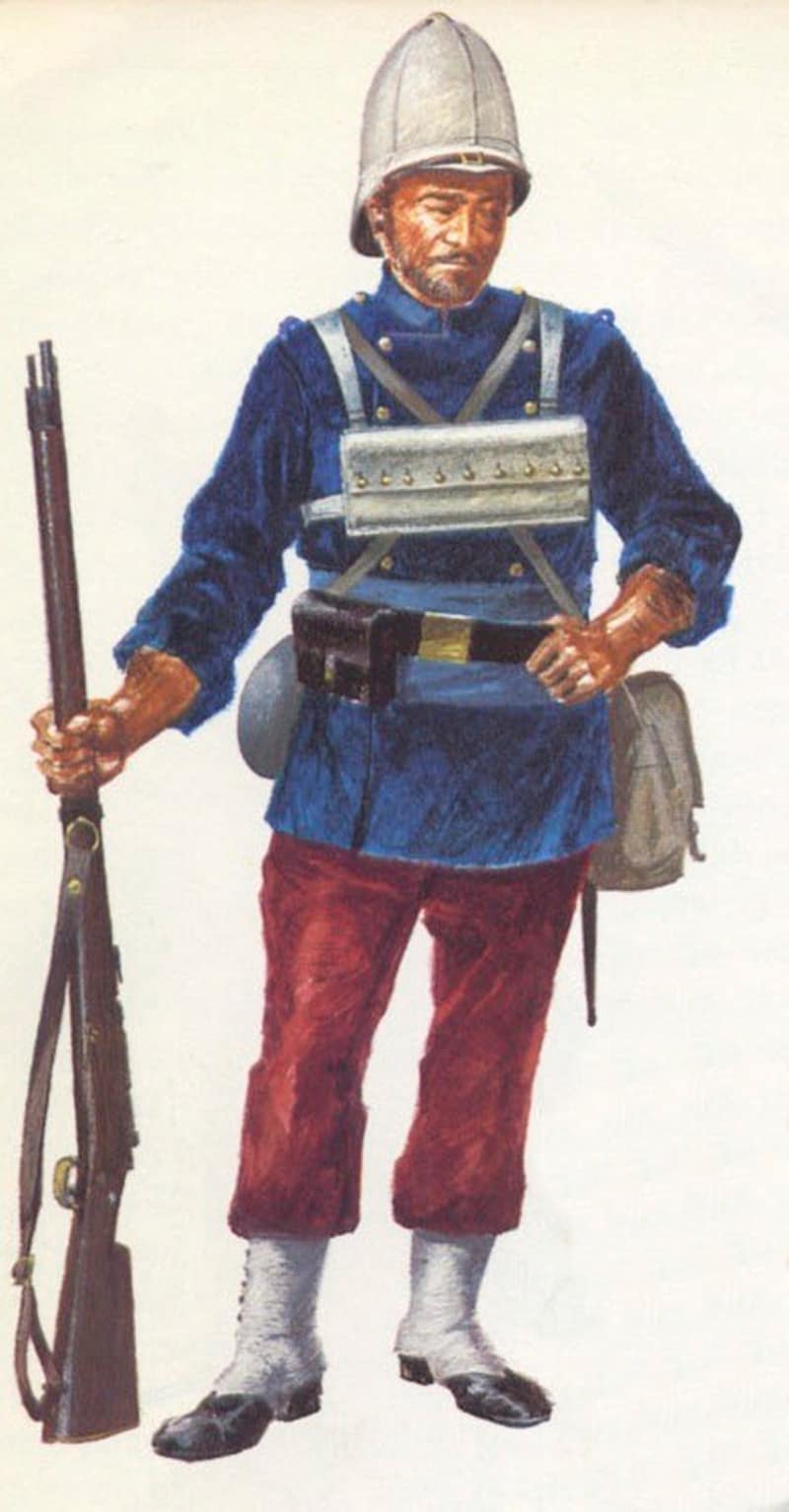
The garrison’s strength lay not in its walls but in its discipline. The Legionnaires were veteran campaigners, accustomed to hardship, well-drilled in fire discipline, and renowned for steadiness under pressure.
The Tonkinese riflemen, though sometimes disparaged by French officers, would prove equally tenacious in the coming siege, standing their ground in trenches and blockhouses despite privation. The artillery detachment had only light pieces, sufficient to sweep the approaches but not to silence enemy batteries; their ammunition had to be conserved with the utmost care.4de Lonlay, Siège de Tuyên Quang. pp. 30–33.
Morale was sustained by routine and by the presence of Chaplain Father Boisset, whose tireless pastoral work became legendary. Supplies were always short, and disease a constant threat, but the garrison carried itself with a quiet determination. Their greatest weakness was isolation: once the besiegers closed in, Tuyên Quang could only survive if relieved in time.
 The Besiegers – Black Flag Army and Chinese Yunnan Army

 The Besiegers – Black Flag Army and Chinese Yunnan Army
Opposing the French defenders was a 10-15,000 man combined force of Liu Yongfu’s Black Flag Army and regular Chinese troops from Yunnan. The Black Flags were experienced irregulars, seasoned in the hills of Tonkin, armed with a mixture of rifles, muskets, and jingals (heavy wall-guns). They excelled at ambush, trench warfare, and siege tactics. The Yunnan regulars, drawn from the provincial army, provided artillery and engineering capabilities. Together, they constituted the largest enemy concentration yet assembled against an isolated French post.
Liu Yongfu himself was a figure of notoriety, a former Taiping rebel turned mercenary warlord. Under his leadership, the Black Flags had long resisted foreign encroachment in Tonkin, sometimes cooperating with Vietnamese mandarins, sometimes with the Qing authorities. The Yunnanese, by contrast, brought structure and discipline: their officers directed the construction of parallels, batteries, and mining operations in the style of formal siegecraft.5Stephen R. Platt, Imperial Twilight: The Opium War and the End of China’s Last Golden Age (London: Atlantic Books, 2018), p. 430.
The besiegers’ artillery included heavy guns dragged laboriously from the frontier. They established a network of trenches and stockades around the post, gradually tightening the noose. Their numbers allowed them to rotate troops, maintain constant bombardment, and launch repeated assaults.
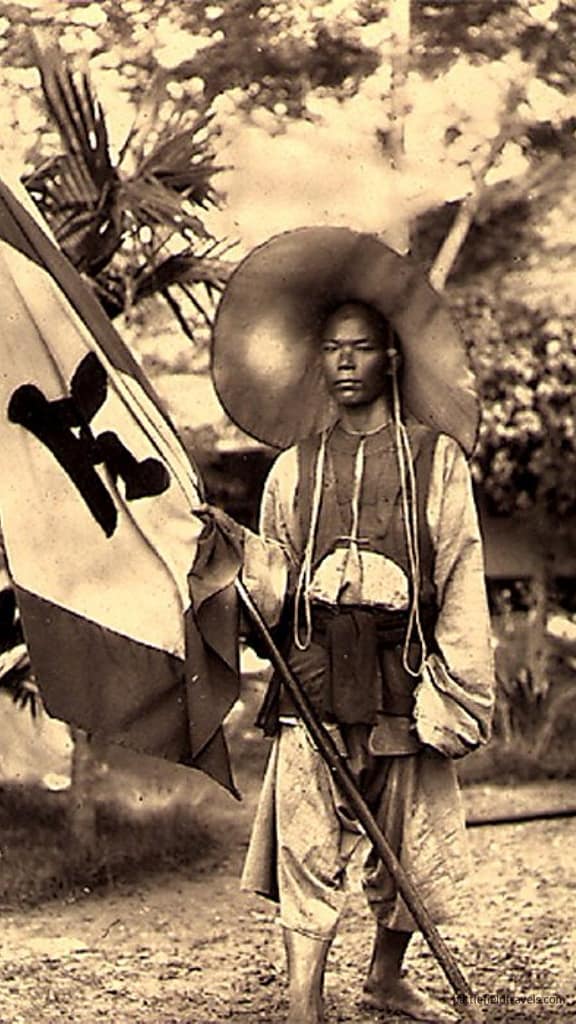
Yet weaknesses were evident. Coordination between Black Flag irregulars and Yunnan regulars was imperfect, with rivalries and suspicion limiting efficiency. Their tactical doctrine, honed in the Taiping War, relied on massed assault, often against well-prepared defences where French fire discipline inflicted disproportionate casualties. Siege logistics were also complex: the besiegers had to sustain thousands of men in rugged country with limited local resources, straining their ability to maintain the siege.6Porch, The French Foreign Legion, p. 217.
Balance of Forces
On the eve of the siege, the imbalance seemed stark: ~630 French troops in a dilapidated fort against a host twenty times their number. But the disparity was not as absolute as the figures suggest. The defenders had cohesion, professional leadership, and the advantage of fortifications, however modest. The besiegers had the weight of numbers and artillery, but lacked the training to decisively exploit their superiority.
Occupation and fortification (mid–1884)
The Citadel of Tuyên Quang
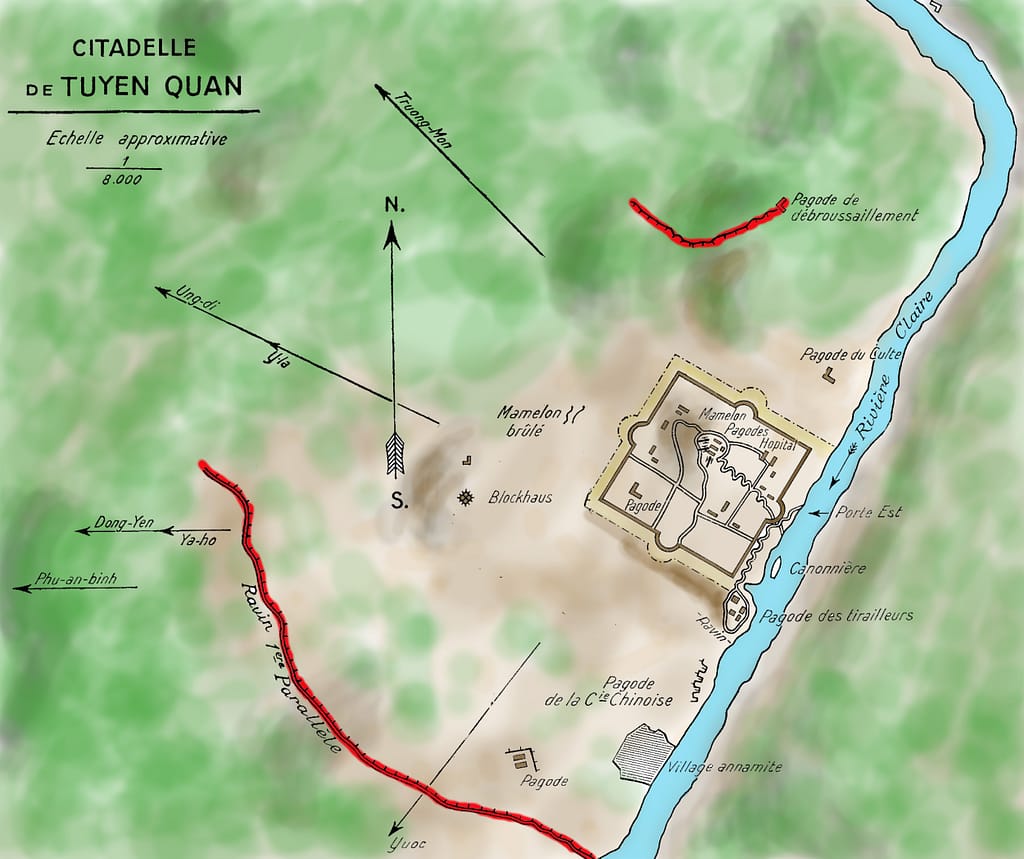
The citadel of Tuyên Quang, into which the French settled during mid-1884, was no fortress in the European sense. It was an old Annamite enclosure of earth and decayed brick, an irregular square measuring some three hundred metres on each side. Its ramparts were low, the parapets crumbling, and its corner towers more ruin than bastion. Around it stretched a shallow ditch, half-filled with silt, crossed in places by bamboo bridges. In the centre of each of the four walls, a fortified gatehouse projected outwards to control access to the citadel.
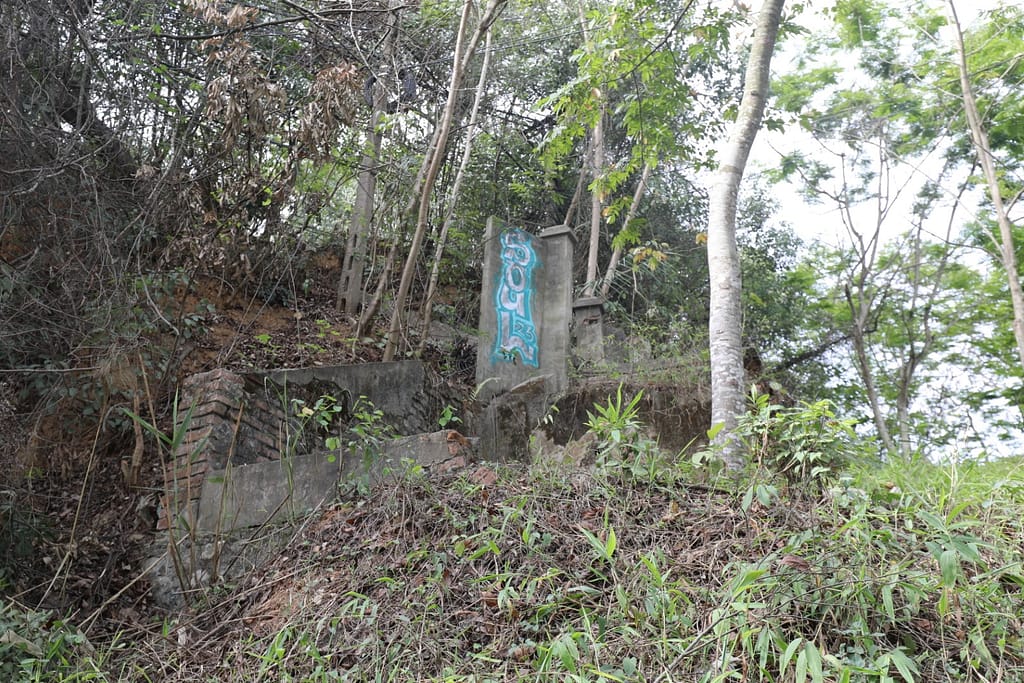
Beyond the walls lay an Annamite village, a cluster of huts, and the local pagoda, which dominated the site.7de Lonlay, Siège de Tuyên Quang, p. 17. Inside the northern sector of the enclosure was a steep-sided hill, Le Grand Mamelon, about 40 metres high with a fortified keep on the crest. Most of the land around was flat, so this hill dominated the area with observation out to five kilometres. Commandant Dominé based his headquarters on this peak, plus some artillery pieces and artillery observers.

Hardening the defences
When Chef de Bataillon Marc-Edmond Dominé took command, his first concern was to adapt these archaic works to modern defence. Legionnaires and Tonkinese riflemen were set to labour, strengthening parapets with fascines and sandbags, raising blockhouses to sweep the walls, and mounting the artillery to cover the approaches. Within weeks, the place, though still humble, had the order of a French post on campaign. Supplies were organised, sectors of the wall assigned, wells dug, and the pagoda converted to an infirmary and storehouse.8Ibid., p. 27.
Encirclement and opening moves (October-November 1884)
Enemy concentration and first contacts (early–mid Oct 1884)
From early October 1884, Liu Yongfu’s Black Flag Army re-appeared before Tuyên Quang, reinforced by regulars of the Chinese Yunnan Army. By the first week, an estimated ~4,000 Chinese had surrounded the post, establishing camps on the surrounding heights and the right bank of the Clear River. Between 13 Oct – 16 Nov 1884, the besiegers executed twenty-four attacks and forceful probes, all repulsed by controlled fire from the citadel and outworks. The Chinese were probing the defences and testing French firepower. These actions marked the transition from harassment to an organised investment directed by Chinese regulars.
Gunboat action at Yuoc Pass (~15 November 1884)
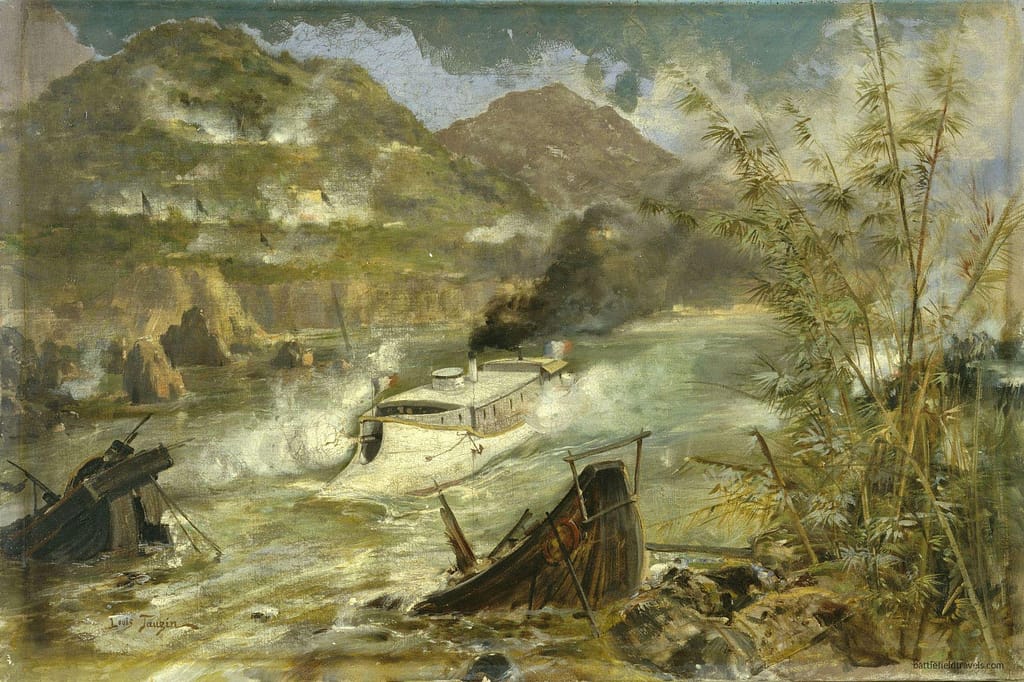
To secure the river line of communication, gunboat Revolver attempted to force the Yuoc Pass, a narrow, steep-sided defile ~10 km south of the post. The Chinese had sunk junks to create a dam, emplaced a four-gun battery on the left bank, and covered the right bank with multiple trench lines and hidden forts. As Revolver rammed the junk barrier to break the dam, the Chinese opened fire at point- blank range. 13 out of the 15 crew members were killed or wounded. Ensign Testu de Balaincourt, grievously wounded, remained at the helm for more than five hours to guide the boat to safety. Delonlay notes this as the first serious engagement on the Clear River, so vital to keeping the post supplied.9Ibid., pp. 6–7.
Temporary relief by Duchesne’s column (16–19 Nov 1884)
With pressure mounting, Lt-Col Duchesne embarked a relief detachment (Foreign Legion and Marine Infantry) from Hồng Hóa on 16 November 1884 and advanced by junks up the Clear River. The troops landed at Hòa Mộc, about eight kilometres south of Tuyen Quang, on 18 November, bivouacking close to Chinese defensive positions. On 19 November, Duchesne struck first, defeating Black Flag and Imperial detachments and pursuing them into the forested hills. That night, around 22:00, Duchesne‘s column entered the citadel and resupplied the garrison. This sharp offensive momentarily dispersed the nearest enemy groupings and restored supplies before the relief force withdrew.
Return of the besiegers and formal investment (23–26 Nov 1884)
Duchesne’s column departed Tuyên Quang on 23 November 1884. The besiegers immediately reoccupied their former positions and resumed the approach works. On 24 November 1884, the post was formally declared in a state of siege. Delonlay’s chapter break at this point (“The Investment”) confirms the transition to a systematic siege: trench parallels, covered ways, and batteries began to creep toward the enceinte.10de Lonlay, p. 20.
Dominé refused to remain passive. He ordered sorties to disrupt enemy preparations. A patrol was sent on 24 November to break up the Chinese junk barrier at Yuoc Pass, but was only partially successful. Another patrol on 26 November was sent to the villages of Yla and Tuong-Mou to ensure the rice harvest made it to the citadel, and was not left to the Black Flags.11Ibid., p. 20.
Garrison posture and supply baseline (late Nov 1884)
Delonlay lists the garrison, ammunition scales, and stores immediately after the declaration, fixing the logistical baseline as the enemy closed. The two Legion companies (eight officers, 390 men), Tonkinese Tirailleurs (two officers, 162 men), marine artillery (one officer, 31 men), and small engineer/medical/admin detachments formed the fighting strength within the enclosure; Revolver and Mitrailleuse on the river flank remained crucial for sustainment when water levels and enemy obstacles permitted. These figures and scales anchor subsequent December–January actions (convoys, sorties, rationing) against a documented starting point.
On 27 November, Commander Dominé received notice from the downstream French outpost at Phu-Doan that 10,000 Black Flags were at Thuan-Quan, 2,000 Black Flags were in Phu-an-Binh, and 1,000 were in the vicinity of Phu-Doan.12Ibid., p. 21.
👉 Continue reading — this article is part of the BattlefieldTravels Deep Research Collection. The full 13,750 word analysis draws on eyewitness accounts of the 1885 Siege of Tuyên Quang and the Battle of Hoa Moc, GIS terrain analysis, and firsthand fieldwork on the battlefields of Tuyên Quang. Primary source examination, tactical conclusions, and notes & references that exist nowhere else in English. Try membership free for 7 days.
📚 Further Reading
This battle study nests within the broader analytical framework explored in the Research Hub, where operational methods, operating environments, armies, commanders, and weapons are examined across conflicts and eras. The links below connect related studies across the wider body of battlefield analysis on the BattlefieldTravels site.
⚔️ Explore all battle studies from the Tonkin Campaign 1883-1886
⚔️ Explore all battle studies involving the French Foreign Legion
🏛️Explore the museum of French colonial war historic artefacts
🗞️ For updates on new battlefield studies and research insights, you can subscribe to the Newsletter.
You may also like
 ⚔️🔒Ambush at Bắc Lệ, Tonkin,
23-24 June 1884
 ⚔️🔒Son Tay Campaign, Tonkin,
11-17 December 1883
 ⚔️ 1883–1886 Tonkin Campaign/ Sino-French War, Battle Studies
 🏛️ French Colonial Wars (1830–1940 ) Weapons and Equipment
 ⚔️🔒Battle of Hòa Mộc, Tonkin, 2-3 March 1885
 ⚔️ French Foreign Legion Campaigns, Battles, and Legacy
🧭 Battlefield Travel Guide: Tuyên Quang (Siege, Nov 1884 – Mar 1885)
- Location: Tuyên Quang City, Tuyên Quang Province, northern Vietnam — on the Clear (Lo) River.
- Coordinates (central riverfront): 21.82° N, 105.21° E
Getting There
- ~165 km northwest of Hanoi via QL2; 3–4 hrs by road depending on traffic.
- Street parking near riverfront; hotel/café carparks common along the embankment.
Site Orientation
- Clear (Lo) River: primary supply line during the siege; walk the embankment to visualise gunboat approach routes and convoy ambush arcs.
- Former citadel enceinte: urban build-over; use period overlays to place ramparts, ditch and blockhouses (approx. 300 m per side, square). Remnants of the fort walls remain.
- Dominant ridgelines (NW/NE): likely besieger battery sites; control approaches and observation onto the post.
Museums & Visitor Centres
- Tuyên Quang Provincial Museum (Bảo tàng Tuyên Quang): regional history; limited siege-specific displays but useful for local context.
On-Site Experience
- No formal siege trail; rely on overlays from period plans (e.g., Lonlay, 1886) plus modern mapping.
- Riverfront promenade: best sightlines along convoy bends; gauge ranges to firing points on the opposite bank.
- Walk the city grid over the enceinte to understand defensive sectors held by Legion and Tonkinese riflemen.
- Short climbs to ridges to assess arcs and likely battery positions onto the post.
Nearby Points of Interest
- Up/downstream bridges and river crossings — choke points and probable ambush sites.
- Pagoda/infirmary locations linked in sources to Father Boisset (modern structures now present).
Practical Tips
- Urban development obscures the enceinte, but river geometry still governs lines of sight and fire.
- Carry a simple citadel overlay and trench-progress sketch to plot Chinese parallels and battery sites.
- Late-afternoon light improves contrast for reading ground and defensive sectors.
FAQ: Siege of Tuyen Quang (Nov 1884-Mar 1885)
The siege took place from November 1884 to March 1885 during the Sino-French War, when a French and Tonkinese garrison of about 630 men held the citadel of Tuyên Quang against 15,000 Chinese and Black Flag troops.
Chef de Bataillon Marc-Edmond Dominé commanded the post, leading two companies of the 1st Foreign Legion Battalion, Tonkinese riflemen, and a detachment of marine artillery.
The old Annamite fort was strengthened with sandbagged parapets, blockhouses, and light guns covering the approaches. Defence relied on discipline and steady rifle fire rather than heavy fortifications.
The attackers were a combined force of Liu Yongfu’s Black Flag Army and Yunnan regulars of the Qing Army, using siege trenches, bamboo abatis, and heavy artillery brought from the frontier.
After three months of bombardment and repeated assaults, Colonel Giovanninelli’s relief column fought its way through at Hòa Mộc on 2 March 1885 and reached the citadel two days later, forcing the enemy to withdraw.
The defenders lost about 33 killed and 76 wounded. The French relief force lost another 76 killed and 408 wounded at the Battle of Hoa Moc. Chinese and Black Flag losses numbered several thousand during the siege and at Hòa Mộc.
The siege became a symbol of Legion endurance, celebrated in Le Boudin and compared to Camerone for its demonstration of discipline and honour under siege.
Modern Tuyên Quang City has overgrown the original site, but the line of the Clear (Lo) River and local topography still mark the ground once defended. Remnants of the old citadel remain. The provincial museum and river embankment provide orientation for visitors.
Subscribe to Battlefield Travels and receive a free E-Book Battlefield Guide
Unlock expert battlefield analysis, campaign reconstructions, and historical insights drawn from firsthand exploration and primary sources.
🗺️ You’ll receive:
🎖️ Exclusive historical insights you won’t find elsewhere
📘 A free eBook: 10 Tips for Exploring Historic Battlefields
📰 New battlefield studies straight to your inbox as they are published

⚔️ Go deeper — Members get exclusive access to the Deep Research Collection, Field Notes, and monthly Research Dispatches. Try membership free for 7 days, cancel anytime. From $9/month.
Bravo, Mick! A real tour de force. Tuyên Quang only merits a few pages in Erwan Bergot’s (admittedly short) book of the FFL, and even then only in the context of it being the destination for some French POWs after the fall of Điện Biên Phủ. The chapter titled Tuyên Quang begins with the story of Cao Bằng, slides into the events of 1953-54, and the siege of Tuyên Quang is then retold by one of the POWs to his fellow prisoners. You’ve really filled the gaps and so much more here. Bergot mentions a French memorial (a pillar) that had been erected in 1927 by Major Maire in honour of the garrison and Sergeant Bobillot, which the POWs vow to protect, despite it being the site where their captors established the latrines. I guess it’s gone the way of so many others.
Thanks Tony, took a while to pull that together, but it is now officially the longest battlefield study on the website at 15,000 words. Not covered at all in English, but the French were great observers and great recorders of what they saw, so I was able to pull together several first hand French accounts of the siege, Giovanninelli’s relief march, and the Battle of Hoa Moc.
I built the battle graphics using original period diagrams and using photoshop to remove all the white background, leaving only the black sketch lines. Then I was able to shade the layers underneath to build coloured graphics.
Mick
I just realized that I photographed the display cabinet containing the Tuyên Quang pagoda bell (labelled Madagascar and Indochina) when I was at Les Invalides a couple of weeks ago, and didn’t know its significance.
Just means you have to go back again Tony! Next time I go to Les Invalides I will look for the pagoda bell. I also want to see the Tricolour from Phu Tong Hoa at the Legion museum in Aubagne.
Apropos of the Hotchkiss gun, it was always a source of amusement for me and my fellow (western) Japanese speakers that the Japanese word for a stapler was hochikisu (the phonetic rendering of Hotchkiss), and I occasionally idly wondered whether they were related. Jim Breen, the Australian eminence grise of lexicography and Japanese studies did go down that rabbit hole. https://www.edrdg.org/~jwb/mondir/hotchkiss.html
Store that one away for the next trivia competition! I do find the Hotchkiss gun fascinating. Looks like a Gatling, but completely different functioning. The garrison had two of them at Tuyen Quang, and the Farcy boats had one on the upper deck. They would have wreaked havoc on troops in the open!
Douglas Boyd prefaced his book on the Foreign Legion with a wonderful quote by Captain Borelli referring to his legionnaires who died at Tuyên Quang.
Sans honneur? Ah, passons. Et sans foi? Qu’est-ce à dire ?
Que fallait-il de plus et qu’aurait-on voulu ?
N’avez-vous pas tenu, tenu jusqu’au martyre,
la parole donnée et le marché conclu ?
They say that you’re without honour or faith,
But what more could they have asked?
Did you not fulfil unto death
the sworn duty with which you were tasked?
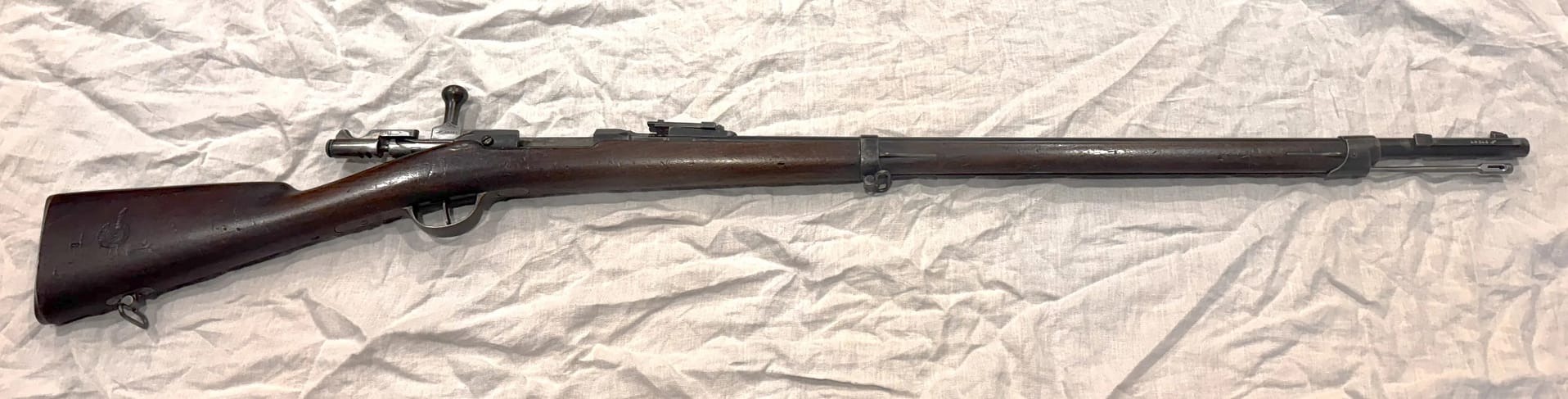
Captain Borelli of the Legion is mentioned many times in contemporary accounts. He was a crack shot with the Gras – he took out several Chinese at very long ranges, 500m+