War of the Austrian Succession overview
The War of the Austrian Succession (1740–1748) was a major European conflict triggered by the death of Emperor Charles VI and the contested succession of his daughter, Maria Theresa. Nearly every major European power became involved, with fighting across central Europe, Italy, the Low Countries, and overseas colonies.
Austria and Britain faced France, Prussia, Spain, and their allies in a struggle for influence and territory. The conflict marked the emergence of Prussia as a European power following Frederick the Great’s invasion of Silesia, while campaigns across Europe demonstrated the effectiveness of disciplined standing armies and formal battlefield manoeuvre. Battles such as Mollwitz (1741), Chotusitz (1742), Dettingen (1743), and Fontenoy (1745), illustrate the growing sophistication of mid-18th-century warfare.
Weapons technology
From a military perspective, the war represents the consolidation of the smoothbore flintlock system that defined eighteenth-century combat. Armies fought with flintlock muskets fitted with socket bayonets, supported by muzzle-loading artillery and cavalry operating within carefully controlled battlefield formations. Linear tactics, drill, and coordinated volleys formed the foundation of battlefield effectiveness.
At the same time, the conflict reflects the increasing professionalisation of European armies and the growing importance of artillery and logistical organisation. Artillery develolpment was perhaps the most important shift in the War of the Austrian Succession. At the beginning of the war, the artillery arms of the major powers were tiny by comparison with infantry and cavalry. Artillery calibres lacked standardisation, and most guns were immobile on the battlefield. By the end of the war, all the major powers had massively expanded their artillery arms and the standardisation of calibres and roles was well underway.
The weapons, uniforms, and equipment of the period illustrate an established military system that would reach its full maturity during the Seven Years’ War a decade later. Studying these artefacts provides insight into how armies were organised, equipped, and sustained during Maria Theresa’s struggle to secure her throne.
👉 For historical context and battlefield studies, see → War of the Austrian Succession Conflict Page
All artefacts shown are from my personal collection and photographed firsthand.
Related Battle Studies, Museum Pieces & Reading Resources


British Weapons of the War of the Austrian Succession
English Long Land Pattern Musket, Pattern 1742, marked Farmer 1748. Probably restocked in beech wood. From my personal collection.
This Pattern 1742 Long Land musket, maker-marked Farmer 1748, represents the principal British infantry firearm of the mid-18th century. A .75-calibre flintlock with a 46-inch barrel, it provided reliable volley fire during the War of Austrian Succession and early Seven Years’ War. Many surviving examples were restocked post-service; this musket shows a later beechwood stock, replacing the original walnut. The Pattern 1742 formed the backbone of British line infantry armament before the evolution of the 1756 and 1769 Brown Bess patterns.

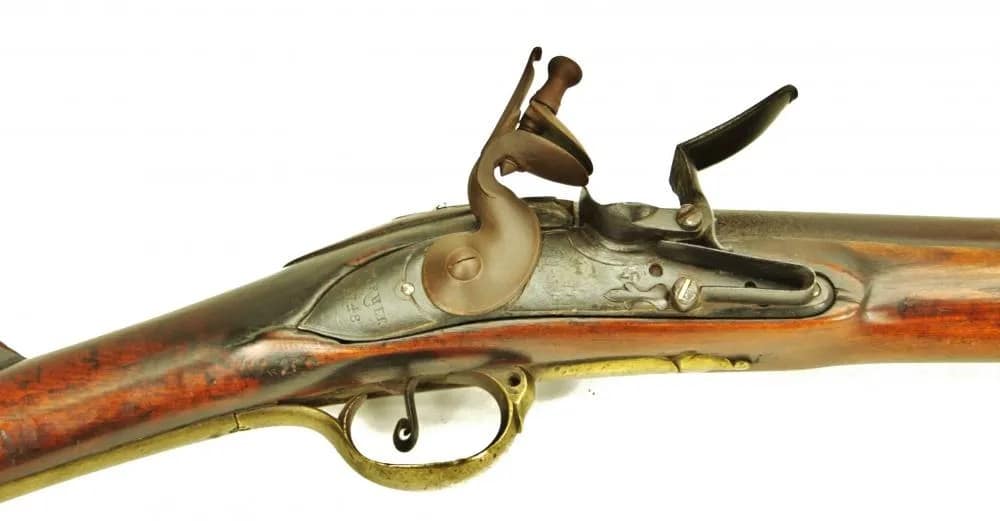
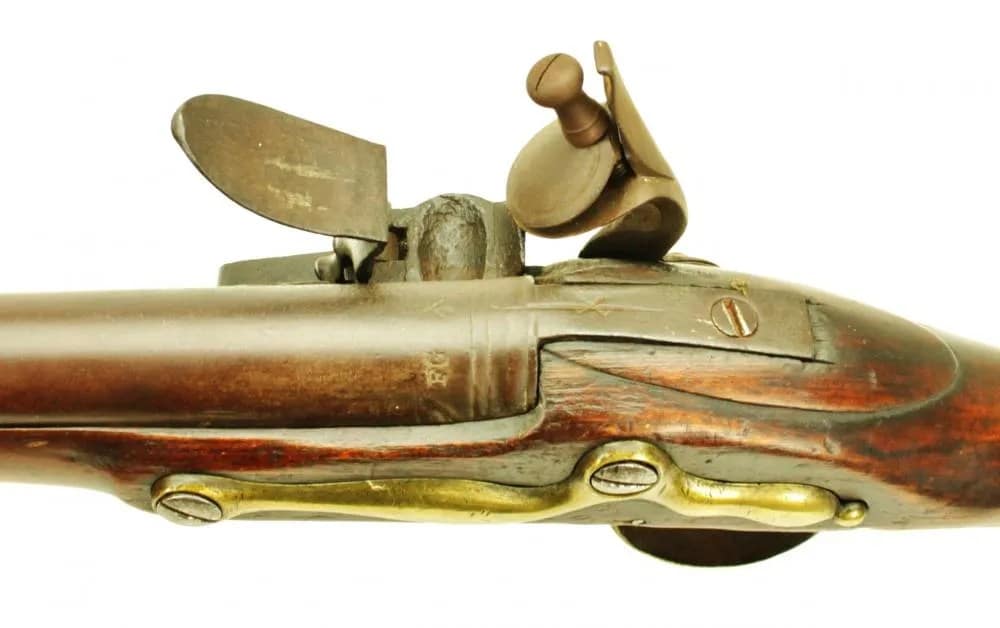
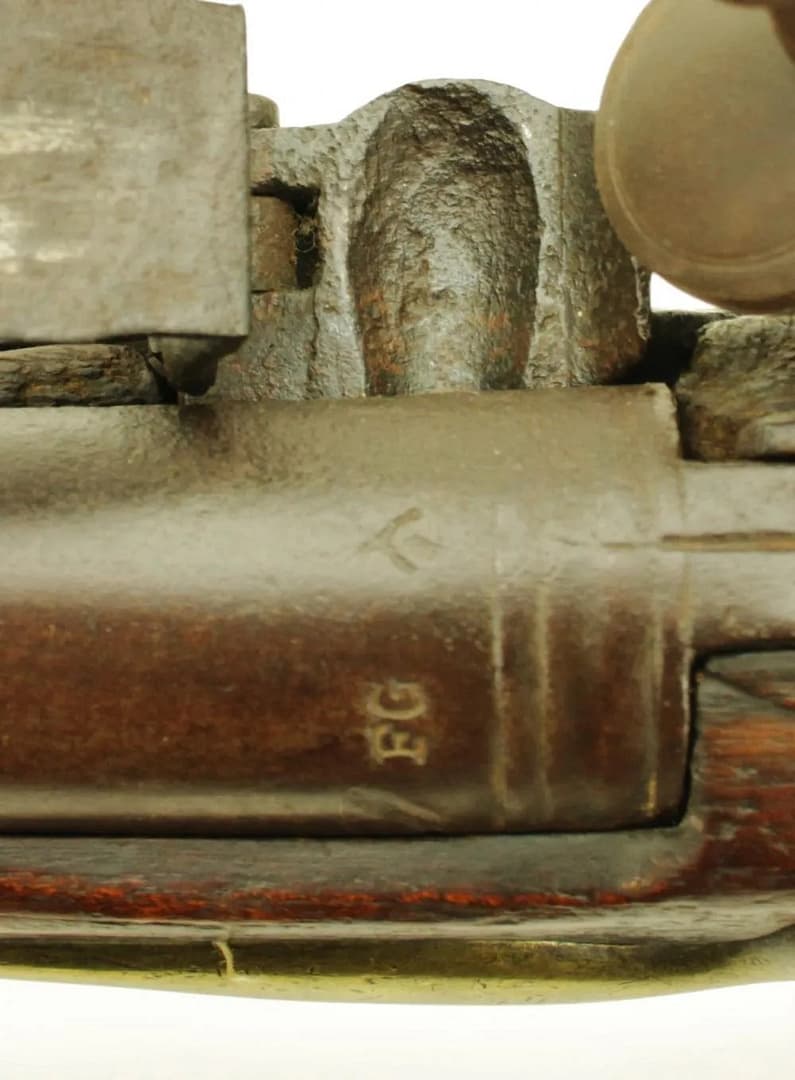
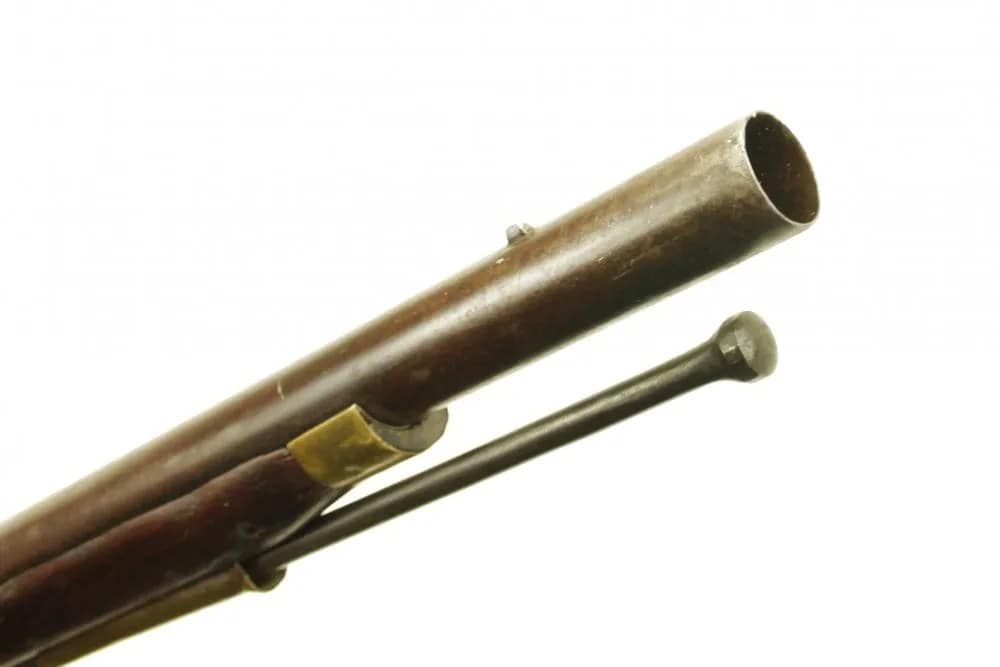
Pattern 1756 Long Land Musket, marked to the 27th Regiment, Enniskillen Fusiliers. From my personal collection.
Althoiugh the Pattern 1756 was introduced after the War of the Austrian Succession, the ‘Brown Bess’ was an evolved weapon that underwent minor modifications and upgrades over more than 80 years. This Pattern 1756 Long Land musket, marked to the 27th Regiment of Foot (Enniskillen Fusiliers), represents the British Army’s primary infantry weapon during the mid-Seven Years War period. A .75-calibre flintlock with a 46-inch barrel, it incorporated improvements to lock strength, furniture, and bayonet fit over the earlier Pattern 1742. The 27th Foot served extensively in North America—including Louisbourg, Ticonderoga, and Quebec—making marked examples extremely scarce. Regimental branding reflects the period practice of unit-level property control on arms issued for overseas campaigning.


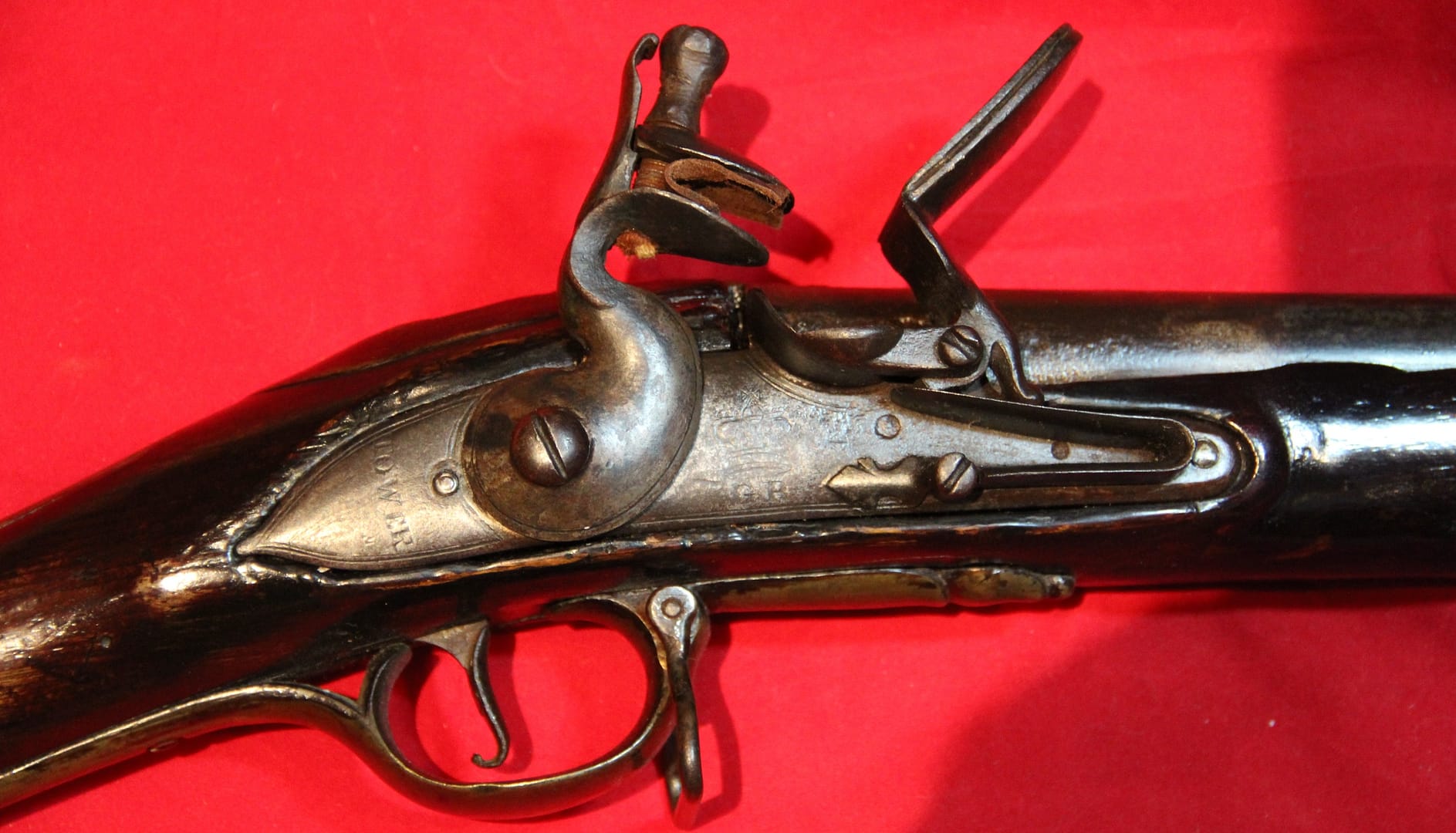
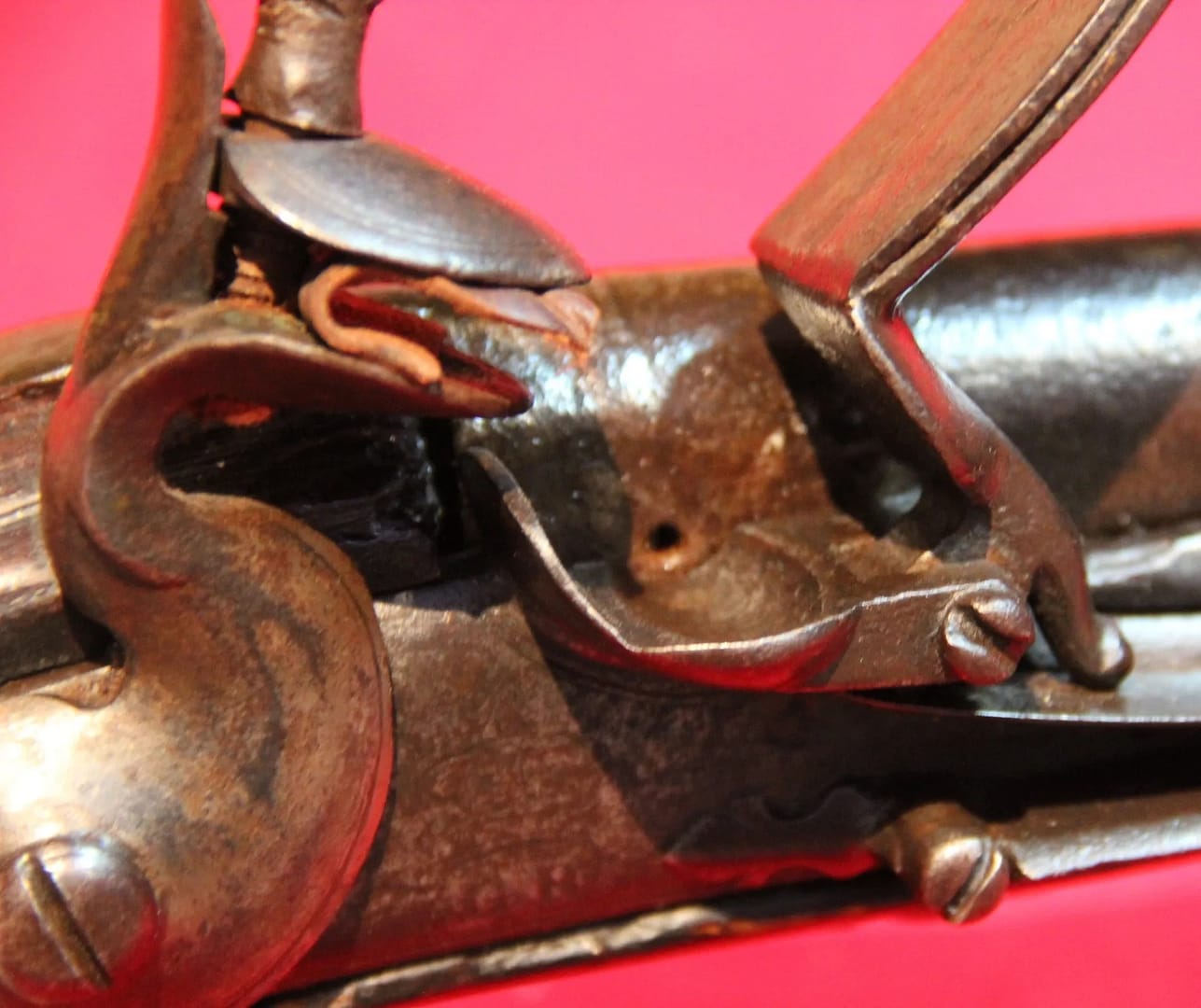
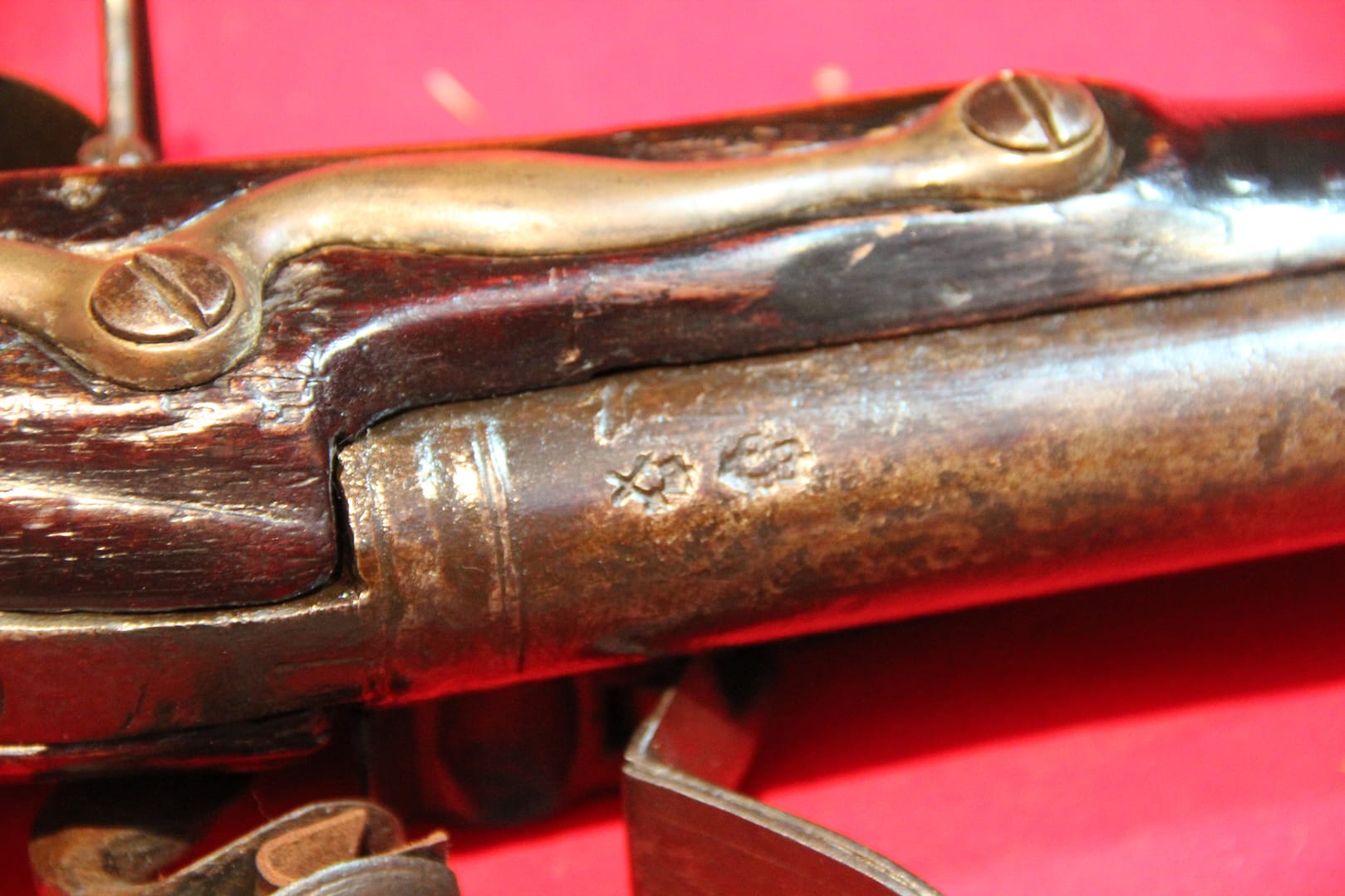
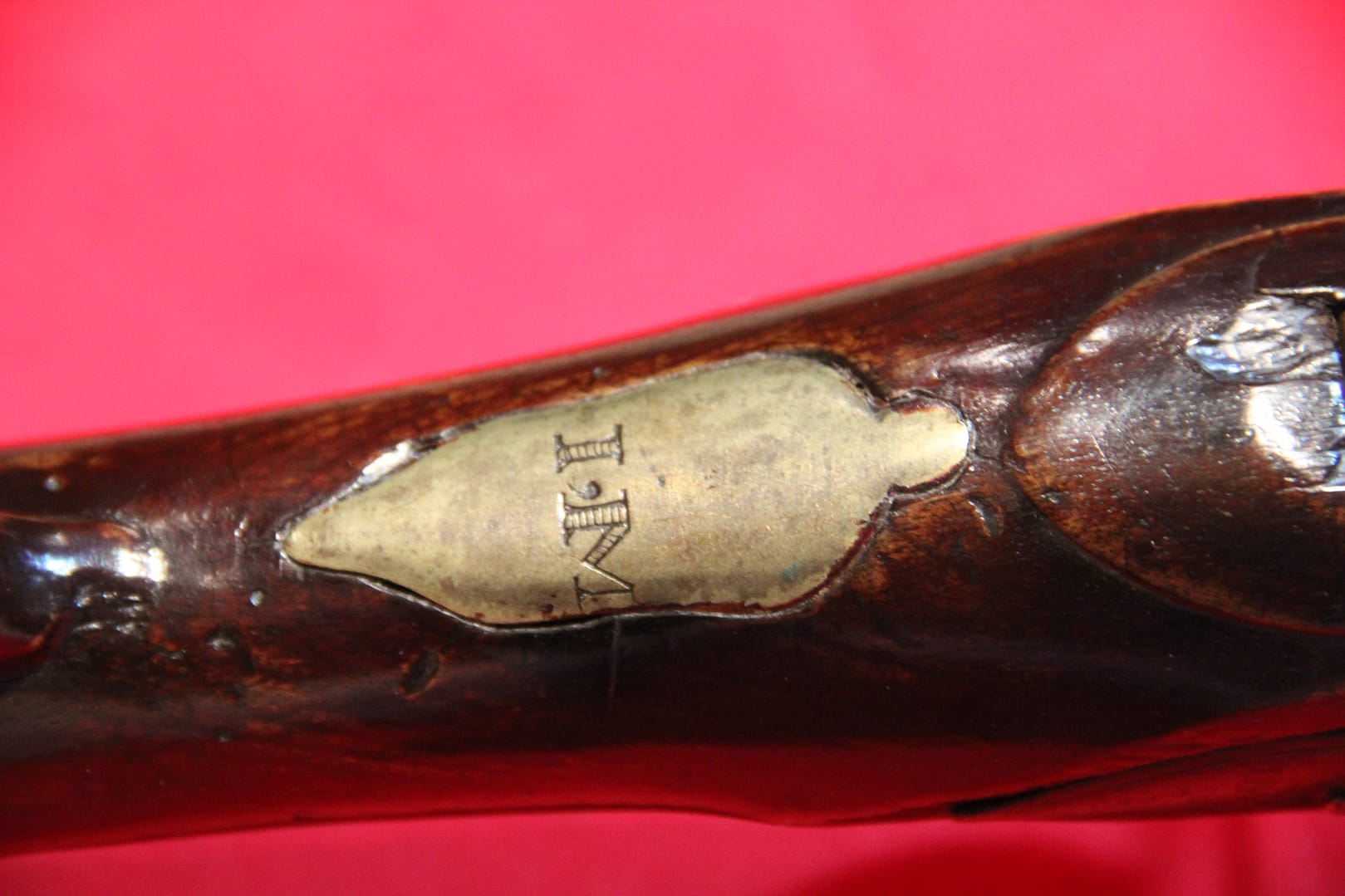
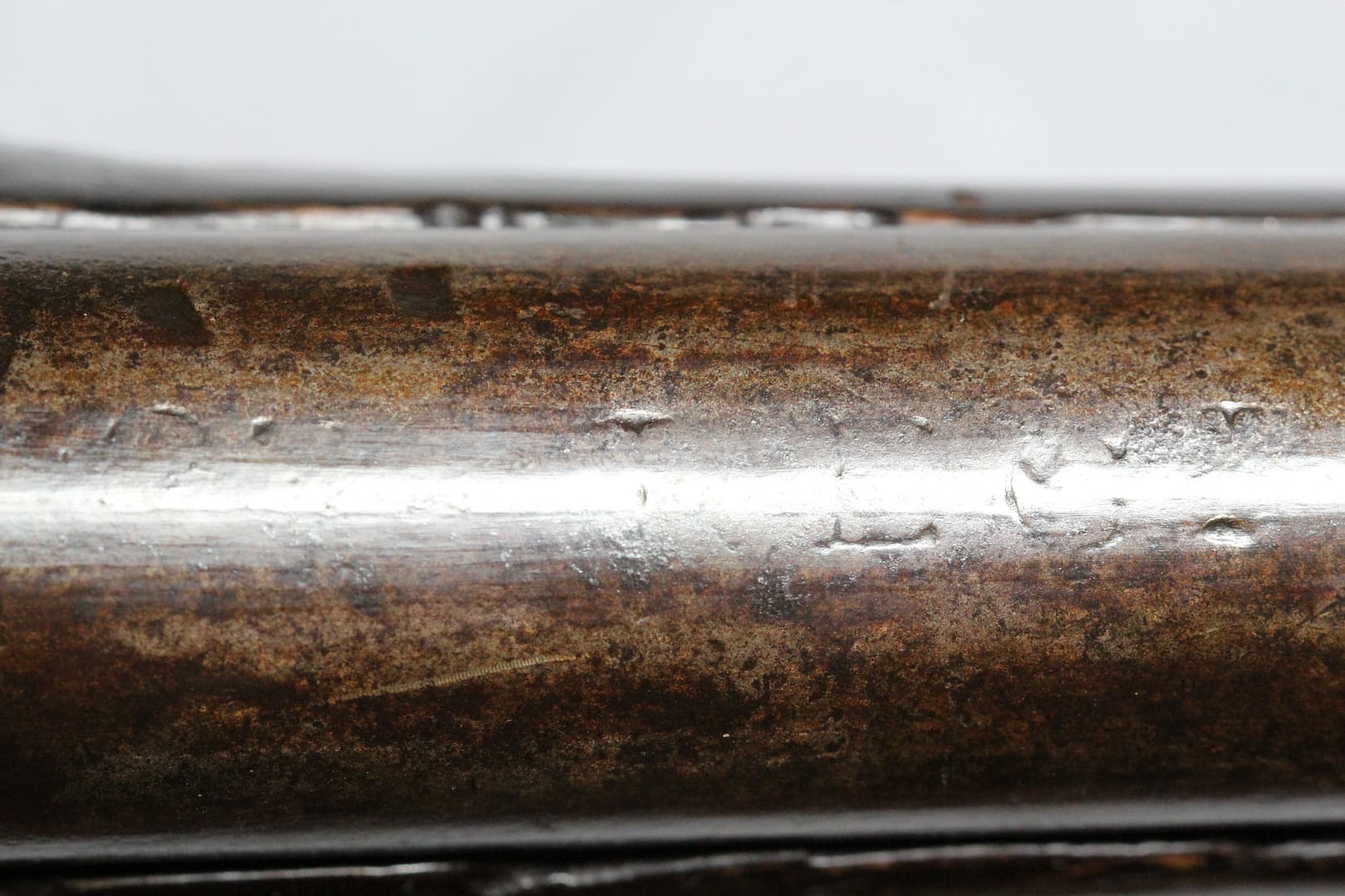
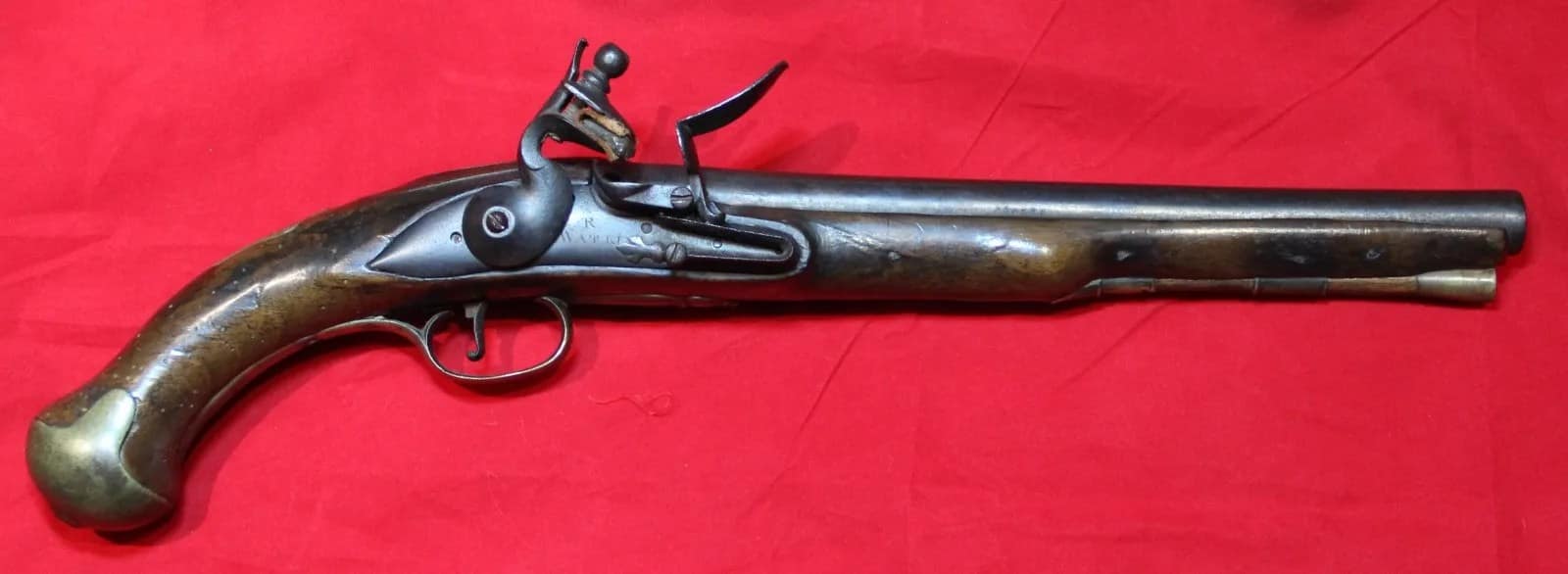
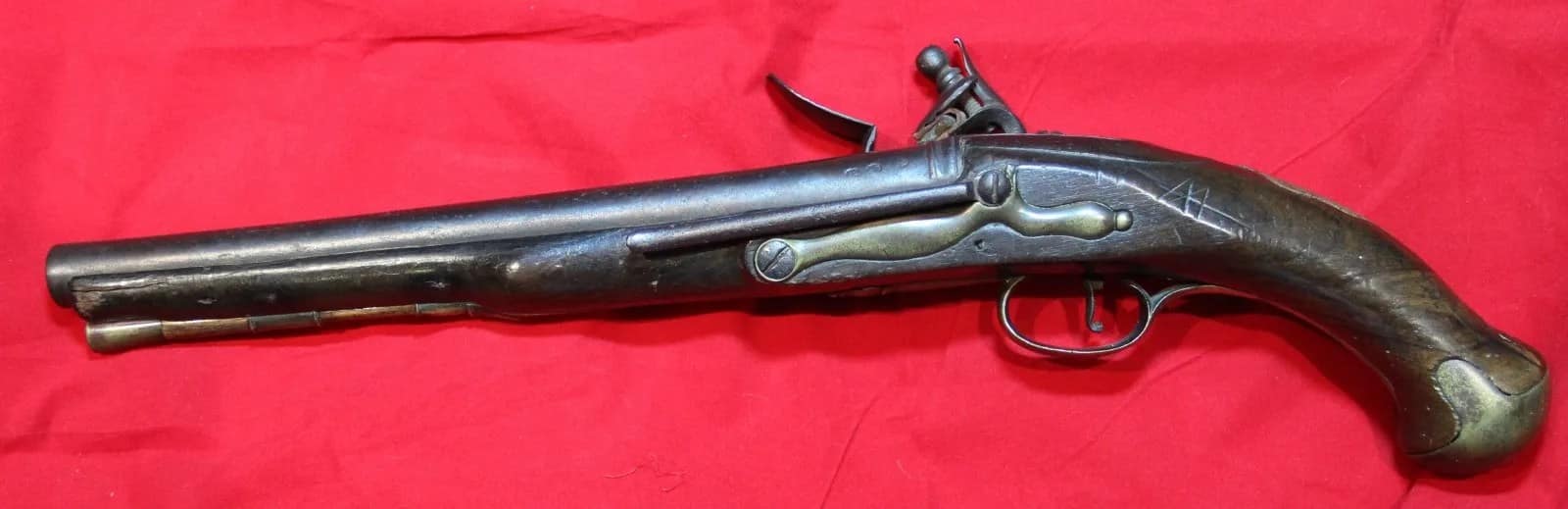
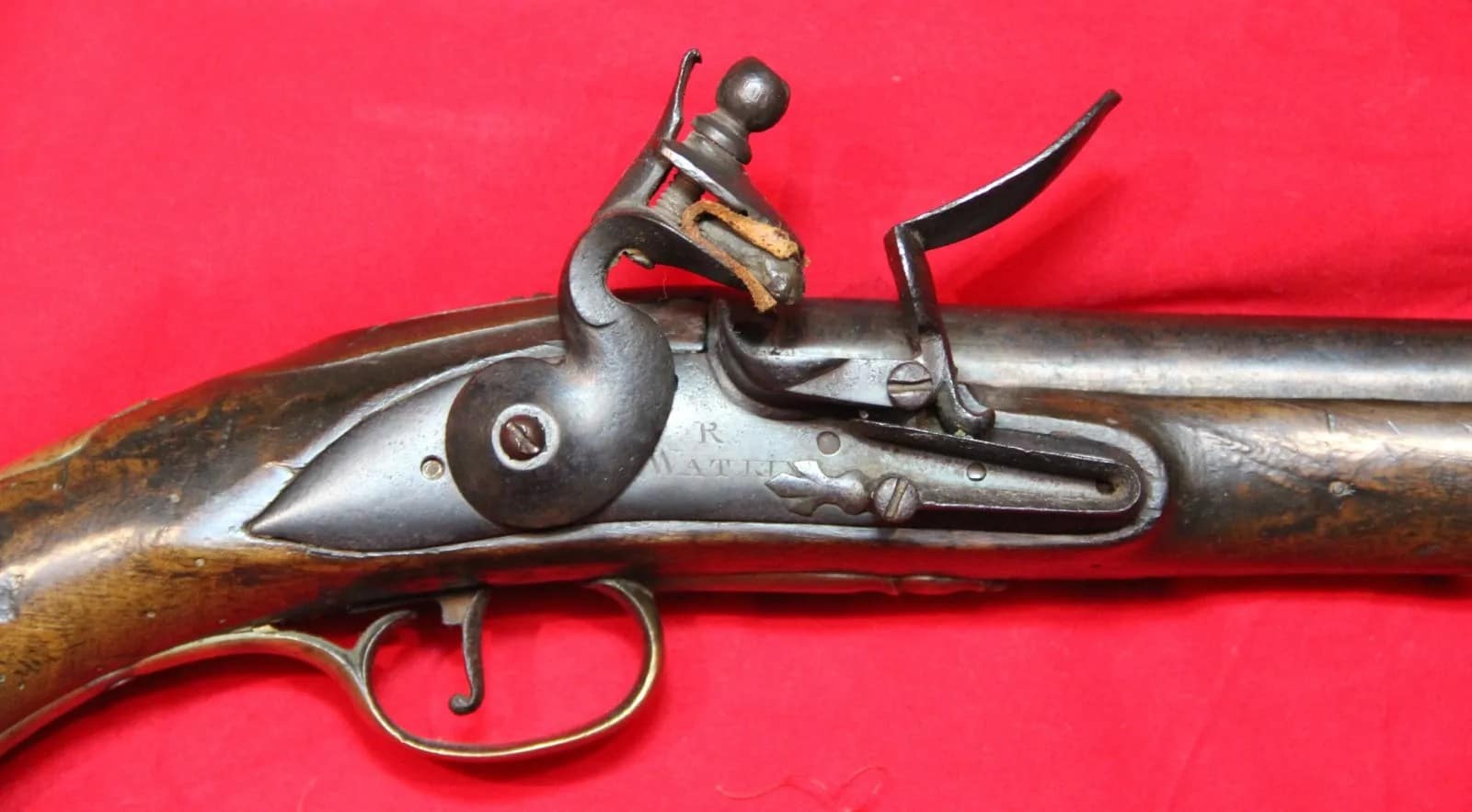
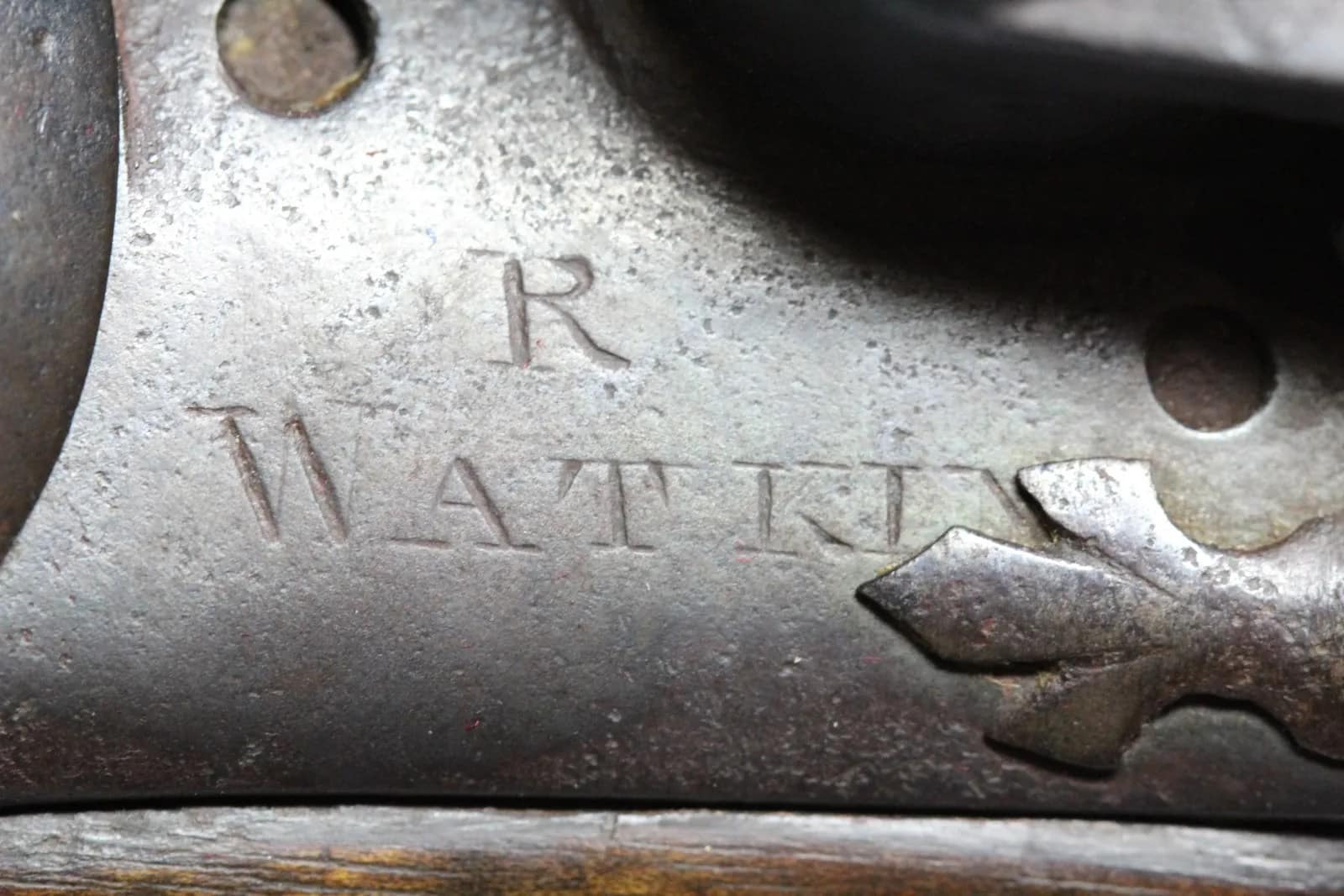
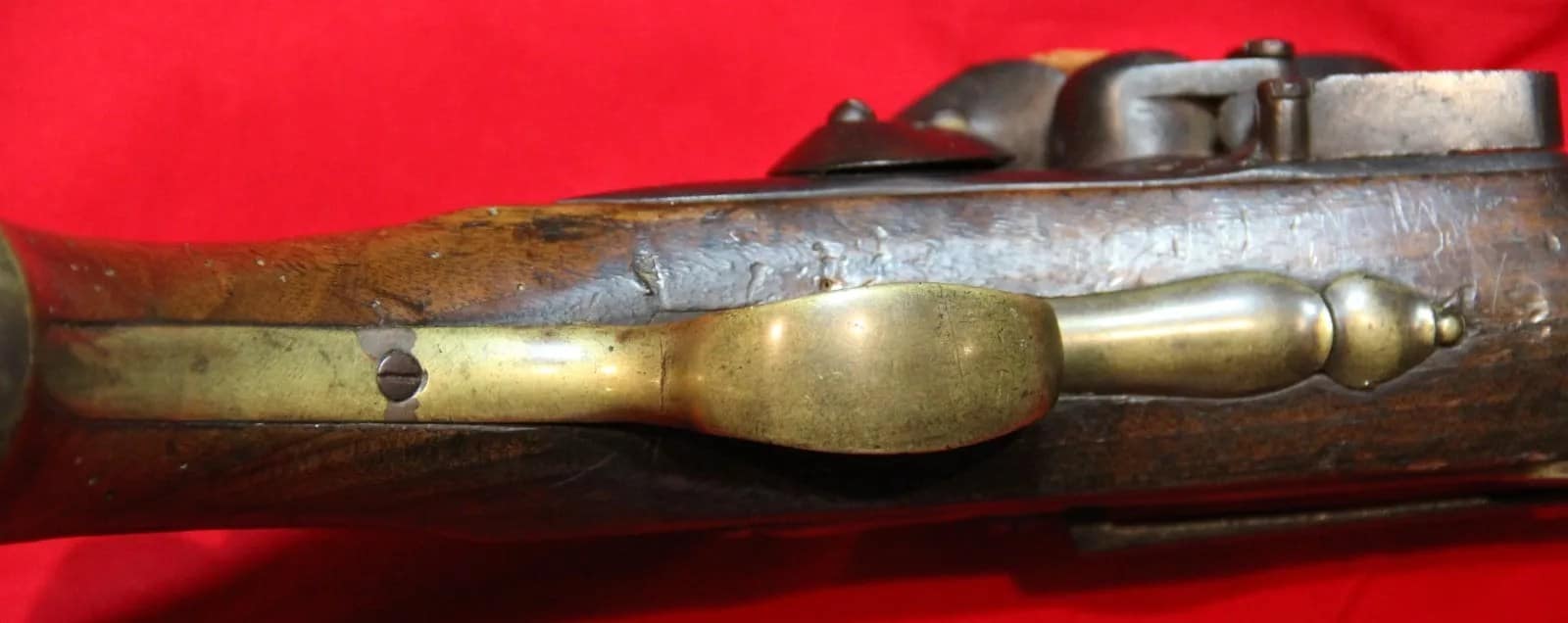
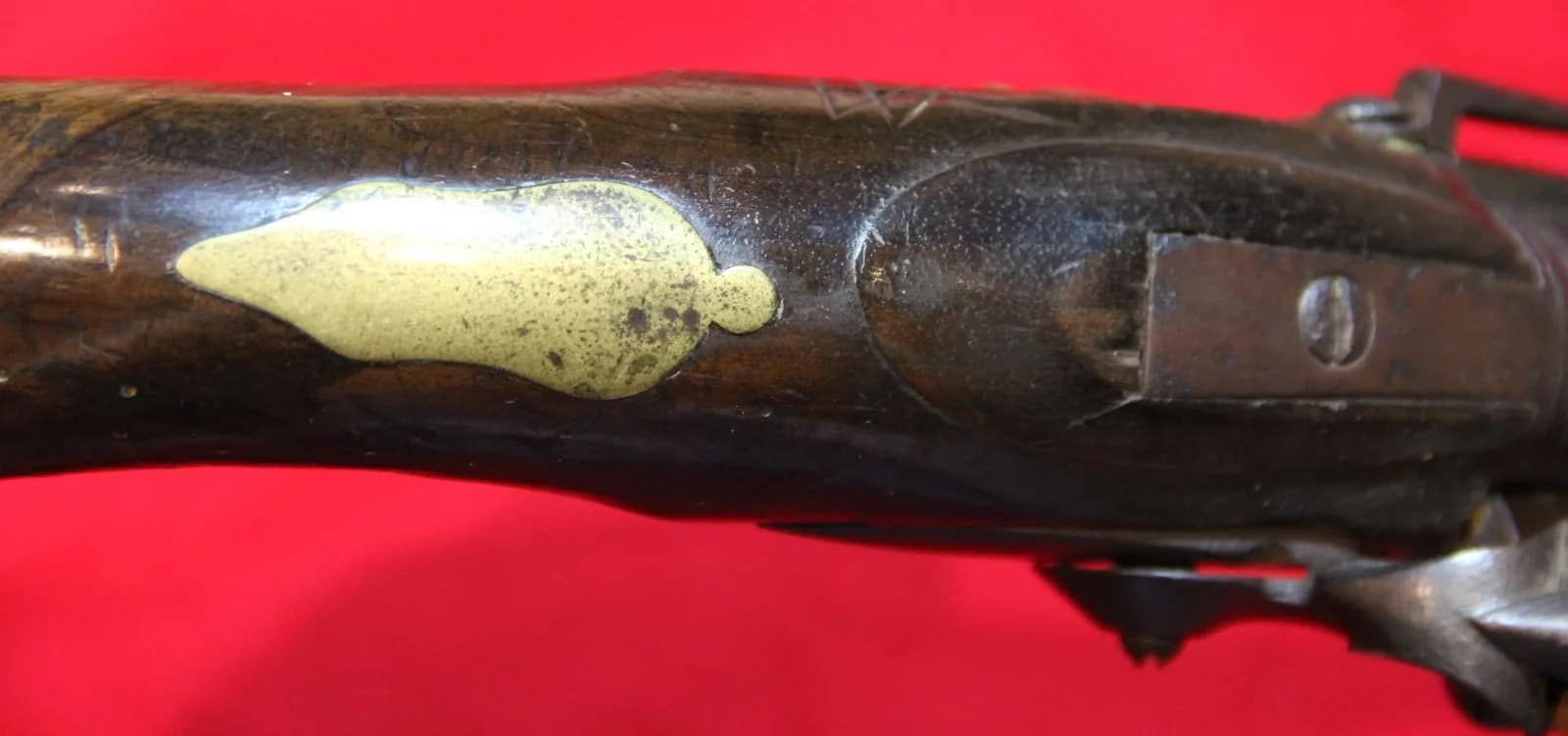
Land Pattern Pistol by Robert Watkin, c.1745. From my personal collection.
This flintlock Land Pattern pistol, made by London gunmaker Robert Watkin around 1745, is associated with the rapid mobilisation of British forces during the Jacobite Rising of 1745. Pistols of this type were produced for cavalry and volunteer units, including the Yorkshire Blues, a regiment raised from loyalist cavalry to defend northern England against the advancing Jacobite army. Typically of large calibre with brass furniture and a robust lock, Land Pattern pistols were designed for mounted service and close combat. This example reflects both the emergency expansion of government forces and the growing standardisation of British military small arms in the mid-18th century.
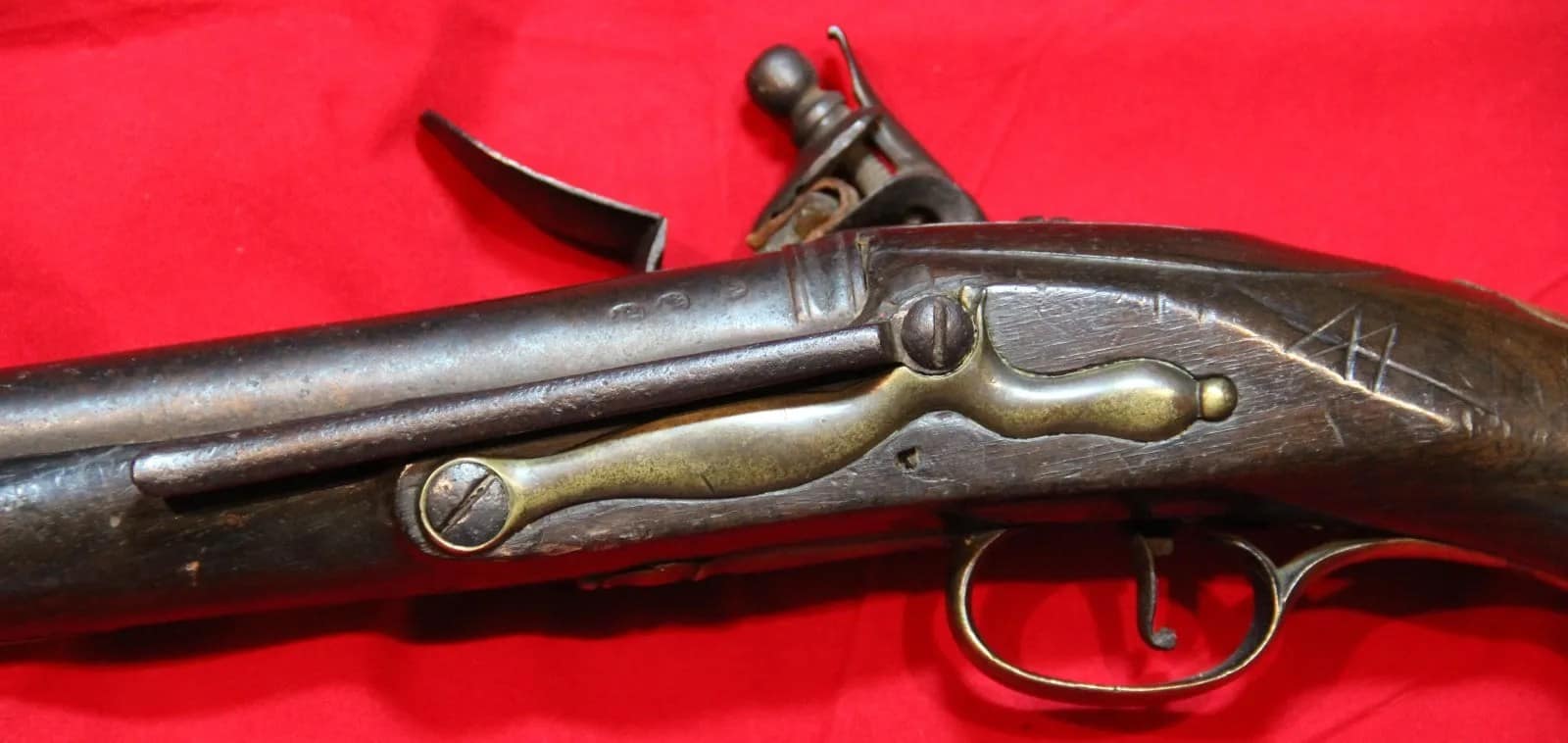
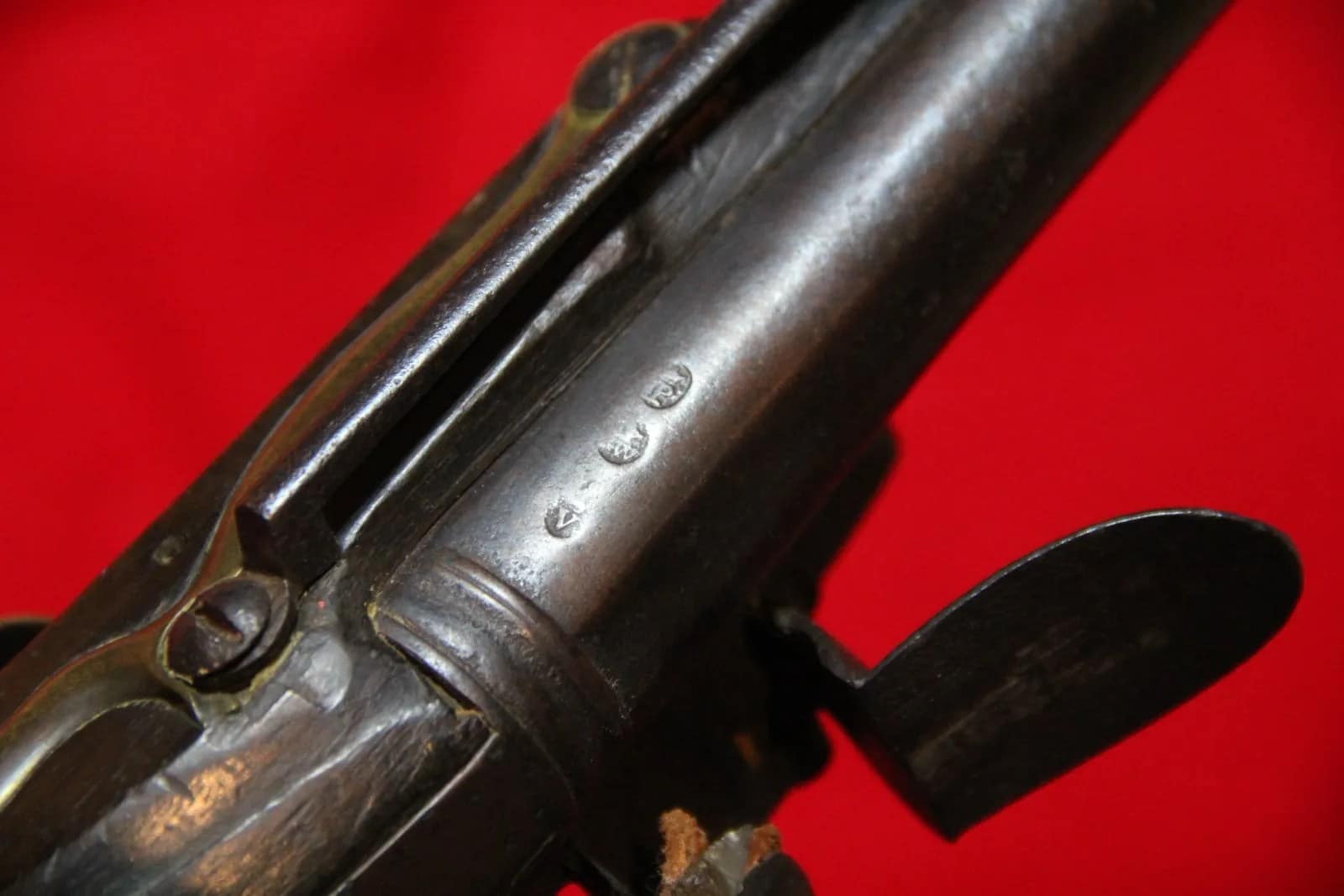
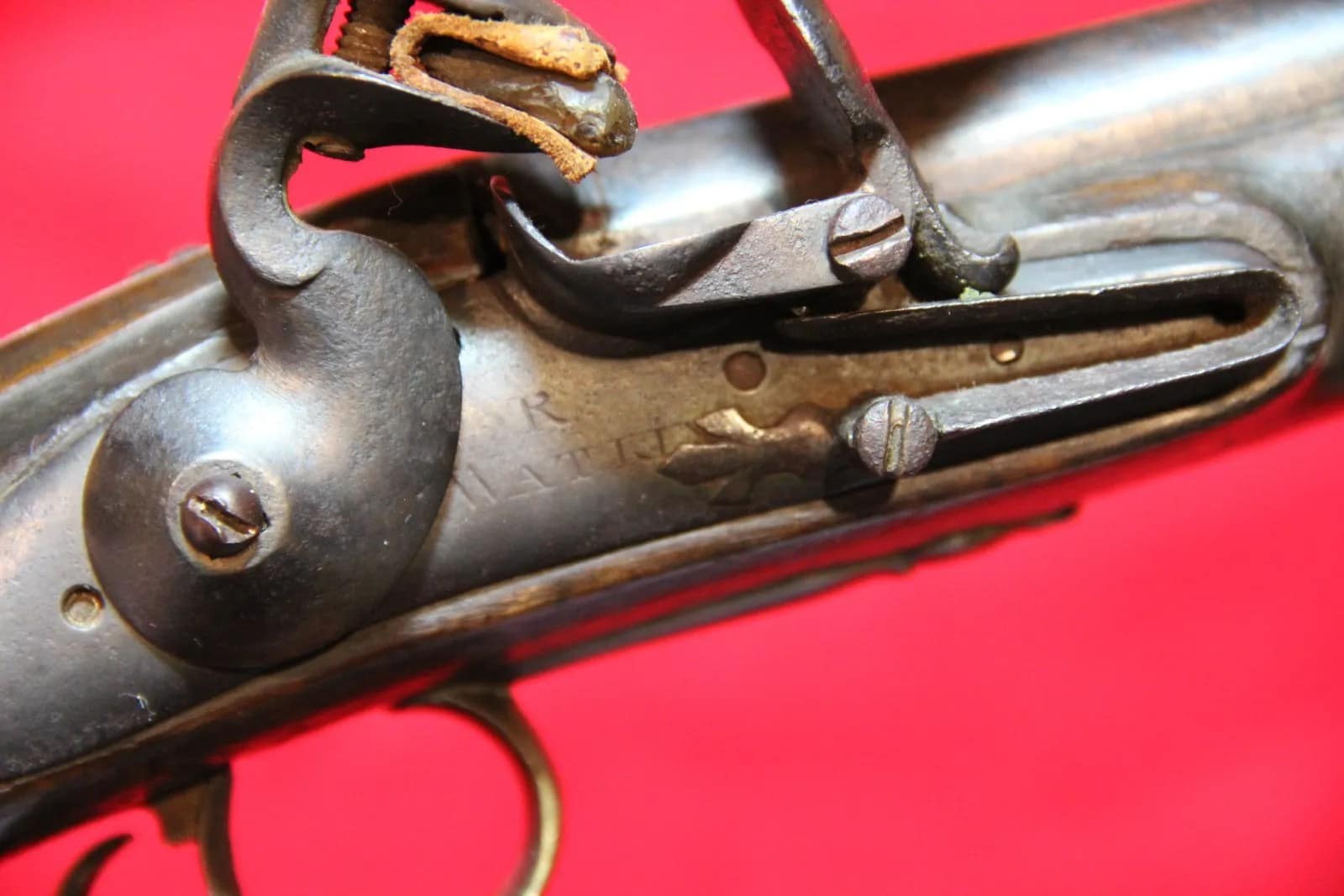
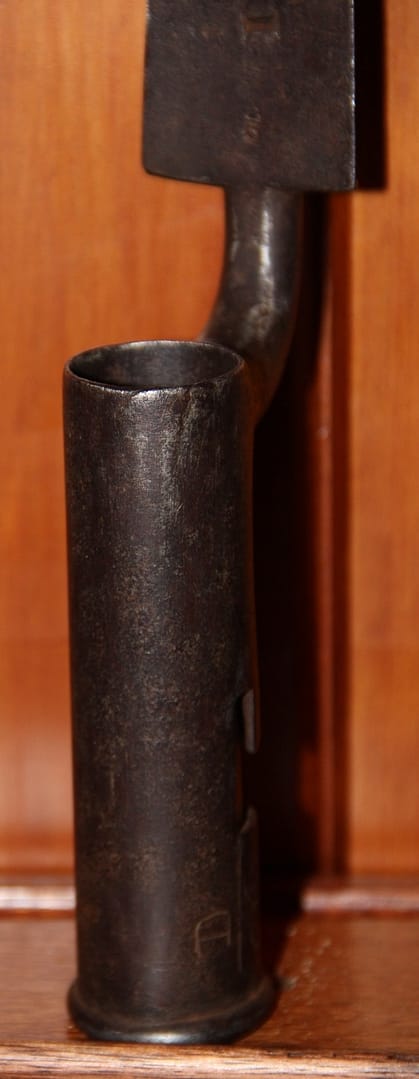
English bayonets for the Long Land Pattern Brown Bess. From my personal collection.
hese socket bayonets, designed for the Long Land Pattern Brown Bess, were essential components of British infantry doctrine. Typically 17 inches in blade length with a triangular section for rigidity, they locked onto the musket via a mortised socket and locking ring. Bayonet charges remained a central tactic of British line infantry, and the reliability of these Pattern 1740s–1750s bayonets contributed to the effectiveness of British battalions in European and colonial warfare. Their simple, durable construction made them one of the era’s most recognisable infantry weapons.




🧭 From Weapons to Battlefield Use
This page shows weapons and equipment of the War of the Austrian Succession. All items are from my personal collection.
But what images and data don’t show is how these weapons were actually used on the ground—how weapon characteristics, tactics, innovation, terrain, and movement shaped their effectiveness in battle.
👉 That layer—how firepower, tactics, and terrain interact in real engagements—is explored in:
⚔️Battlefield Studies ◊ 💡Tactical Innovations ◊ 📝Field Notes
Prussian Weapons of the War of the Austrian Succession
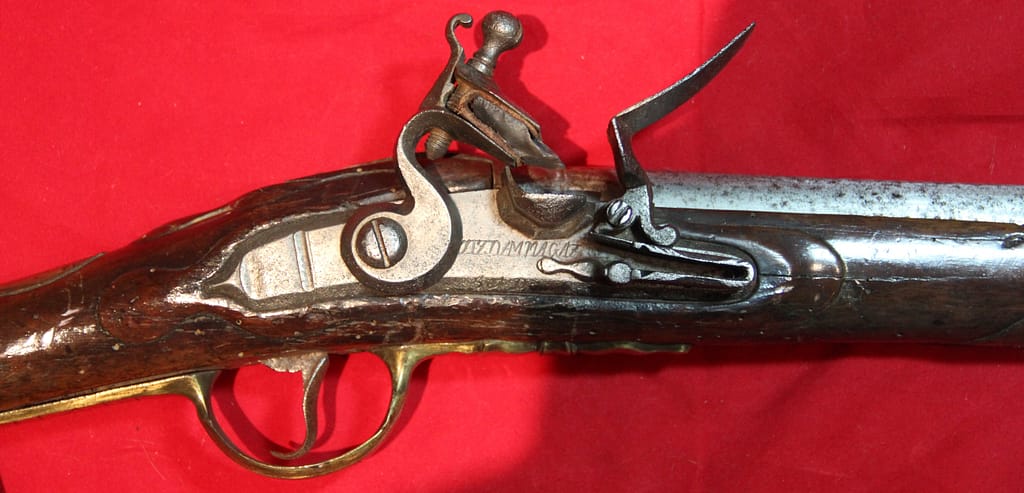
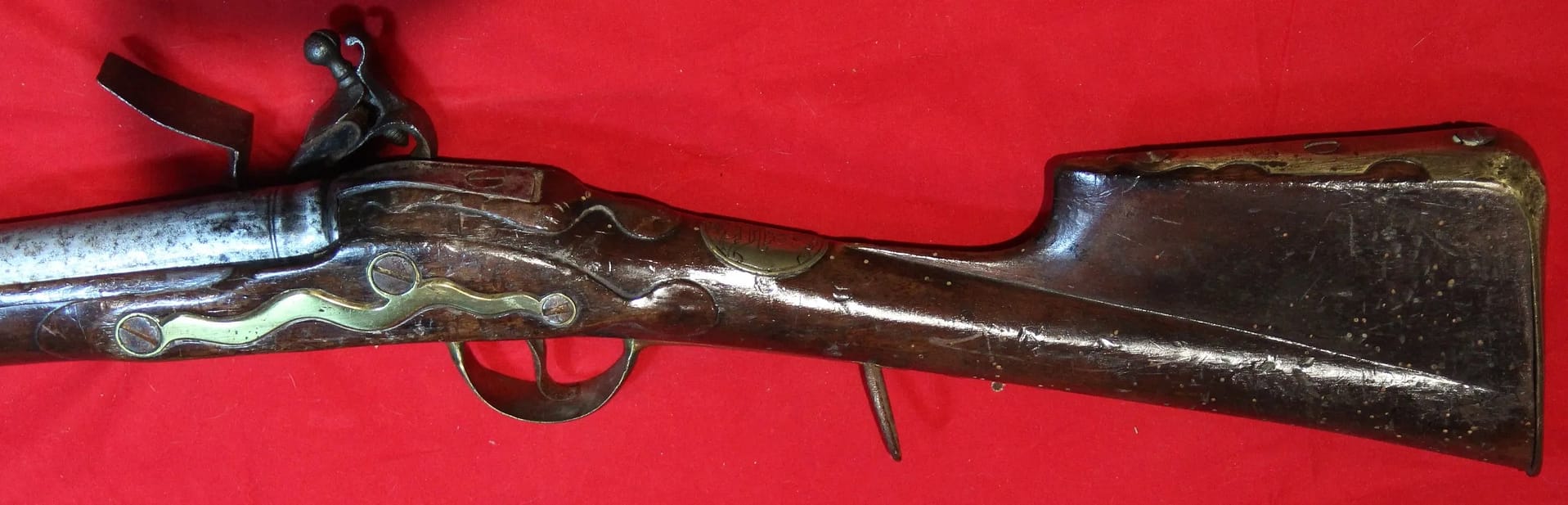
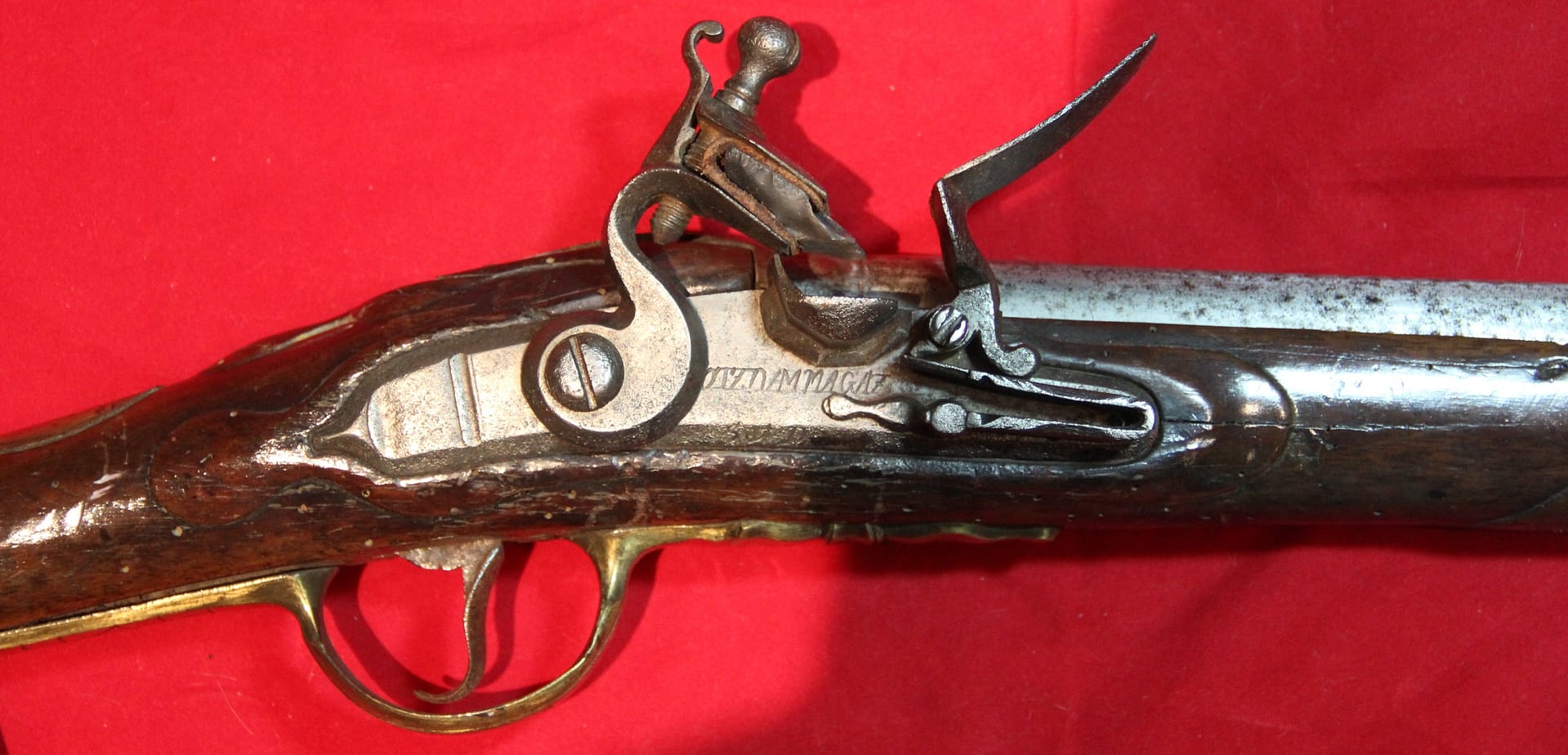
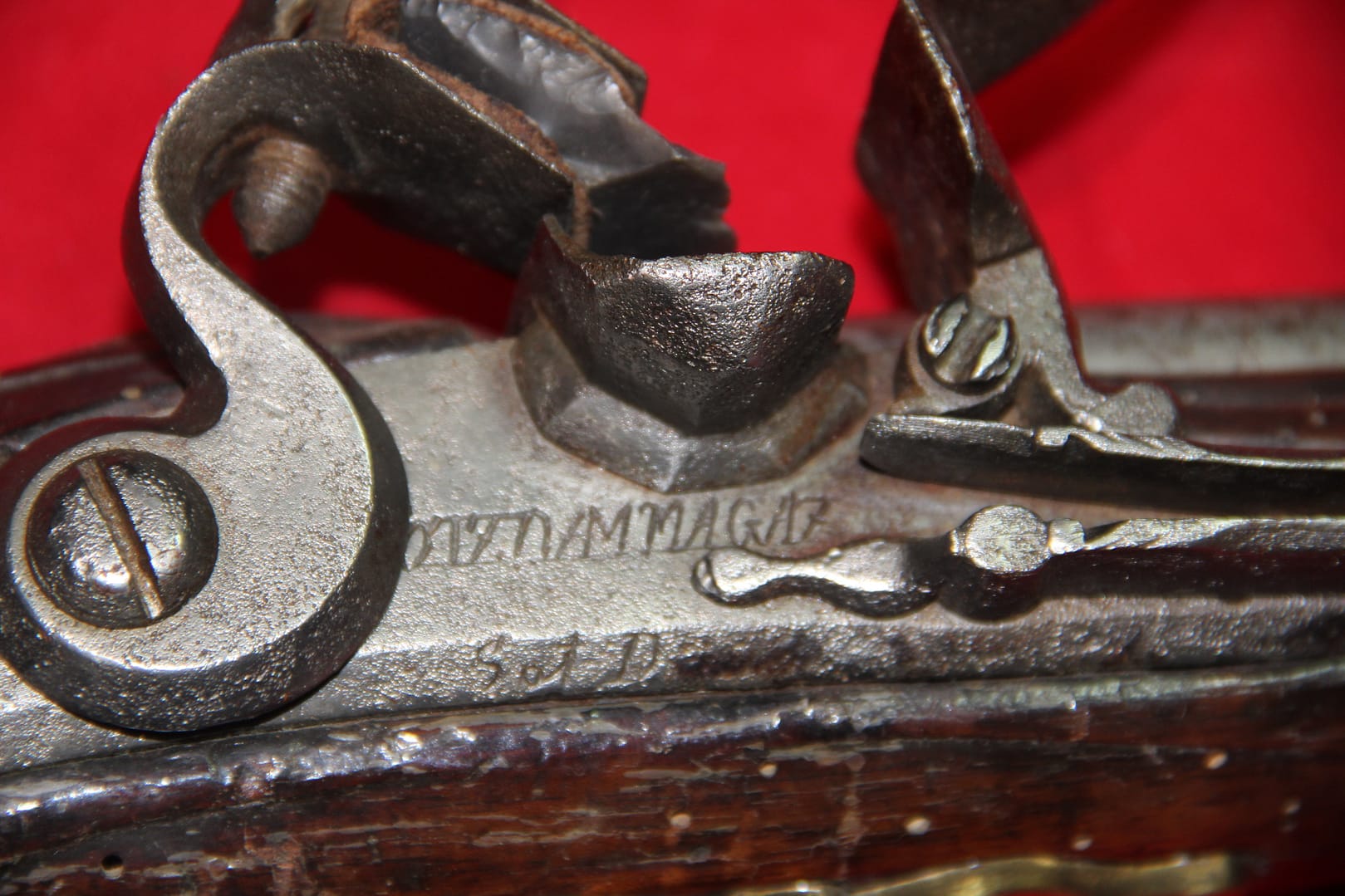
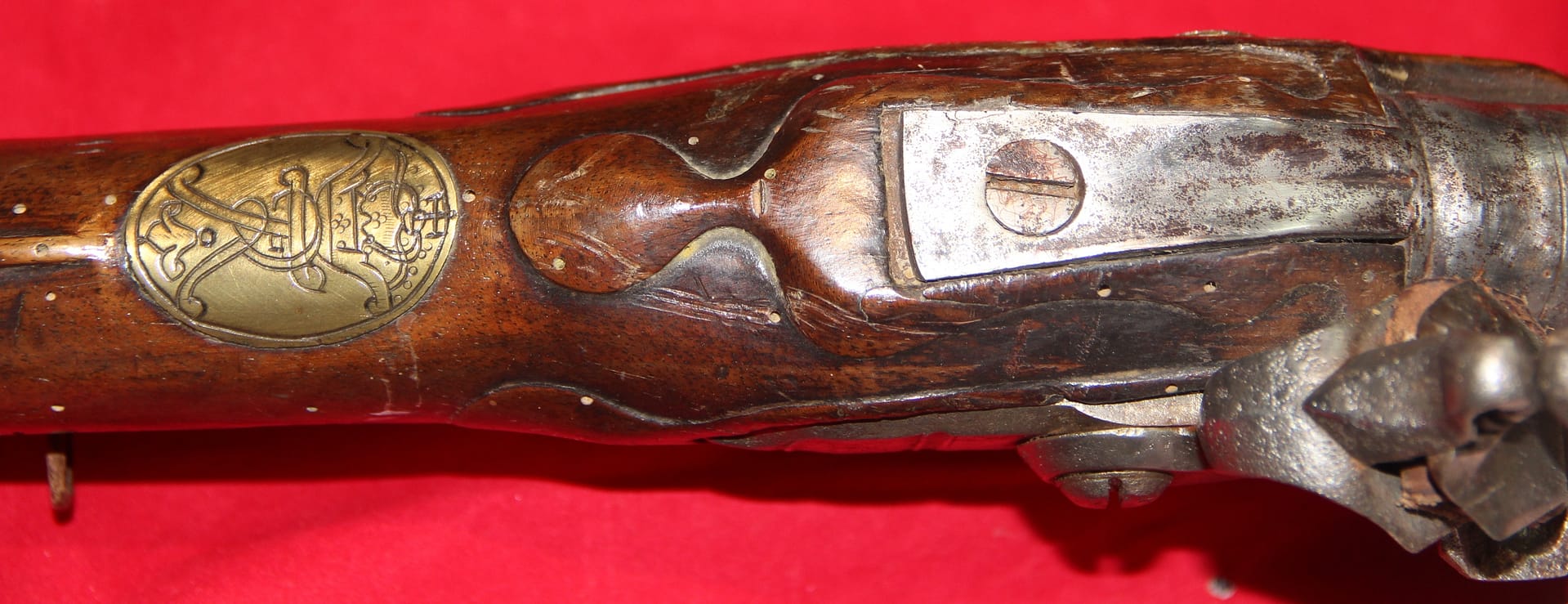
Prussian Model 1740 Musket, marked POTZDAM MAGAZ, inspected by S&D (initials of Splittgerber and Daum, the inspectors at the Royal Arsenal). From my personal collection.
The Prussian Model 1740 musket was a .72–.73 calibre flintlock produced at the Potsdam Arsenal, marked POTZDAM MAGAZ. The “S&D” inspection stamp denotes Splittgerber and Daum, the principal inspectors responsible for Frederick the Great’s early-war small-arms programme. Lighter and handier than earlier Prussian models, the 1740 musket equipped line infantry during the campaigns of the War of Austrian Succession and the early Seven Years’ War. Known for its robust lock and crisp trigger, it was the hallmark weapon of Frederick’s disciplined infantry battalions.

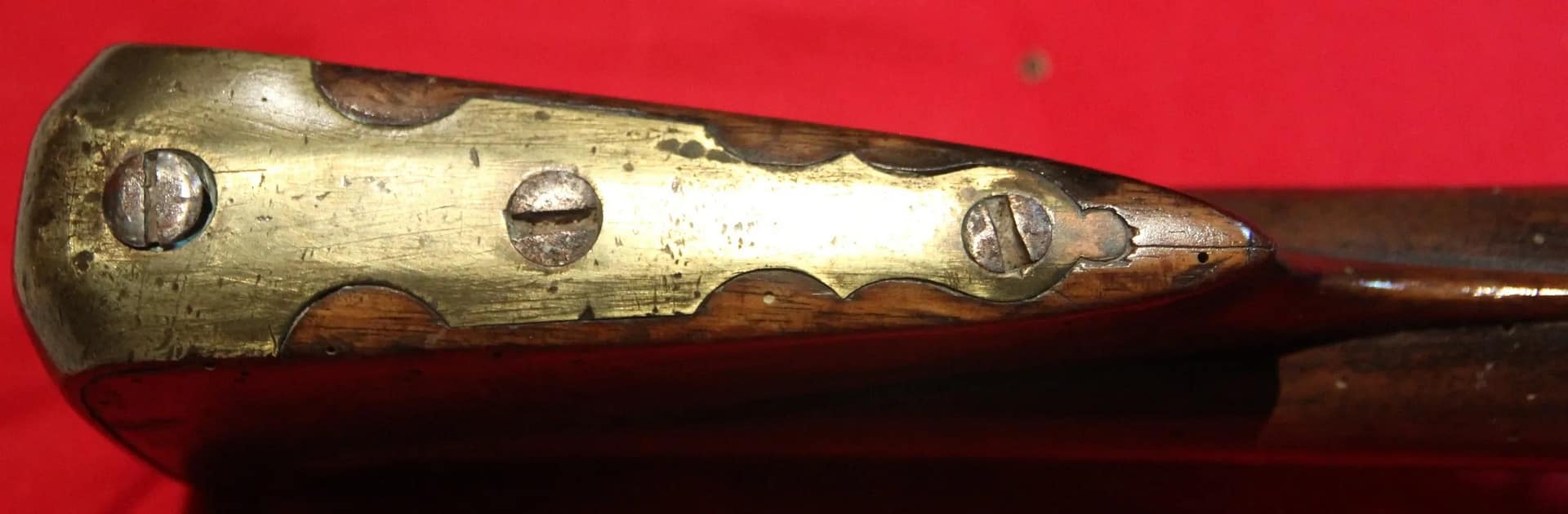
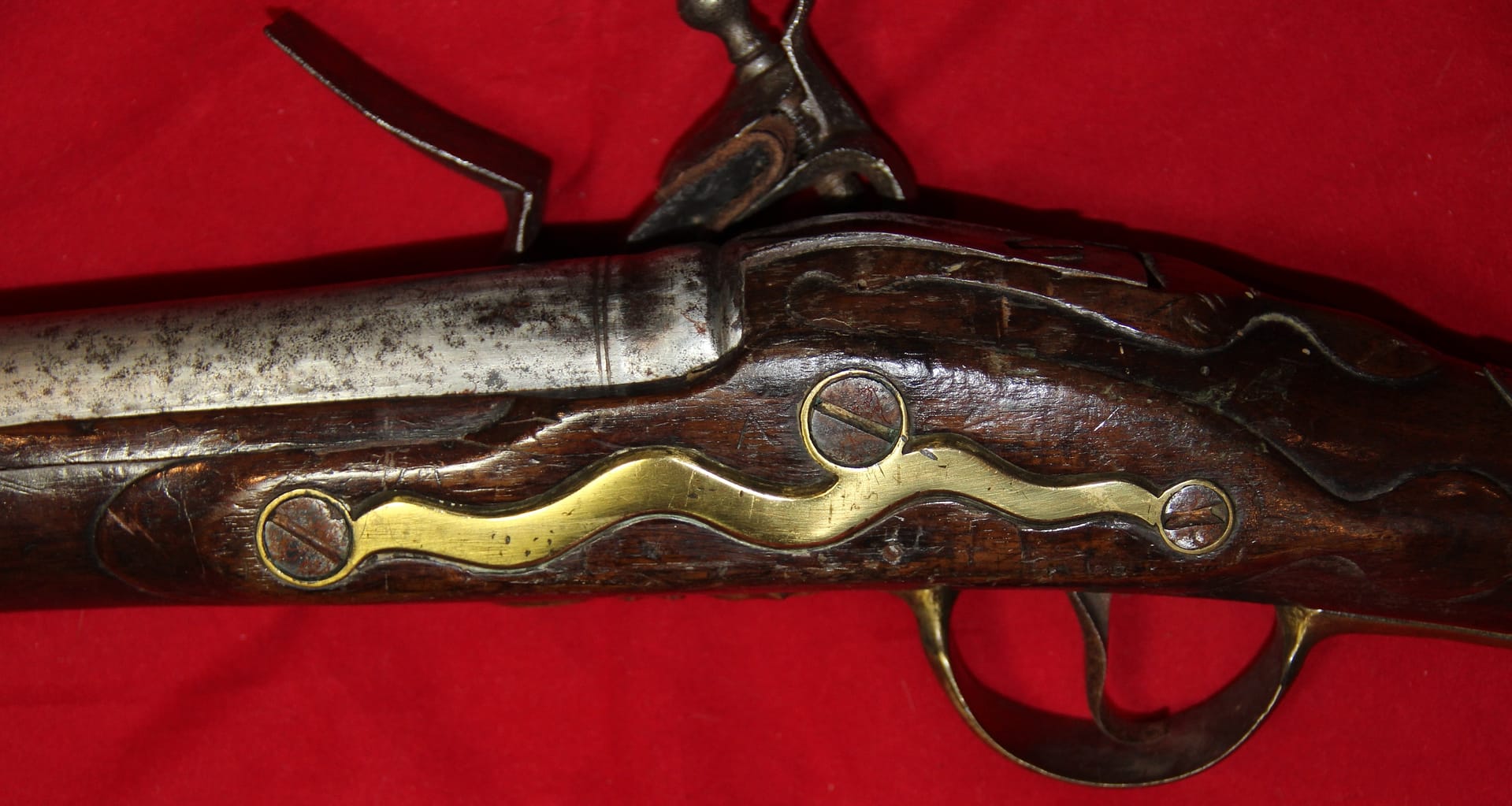
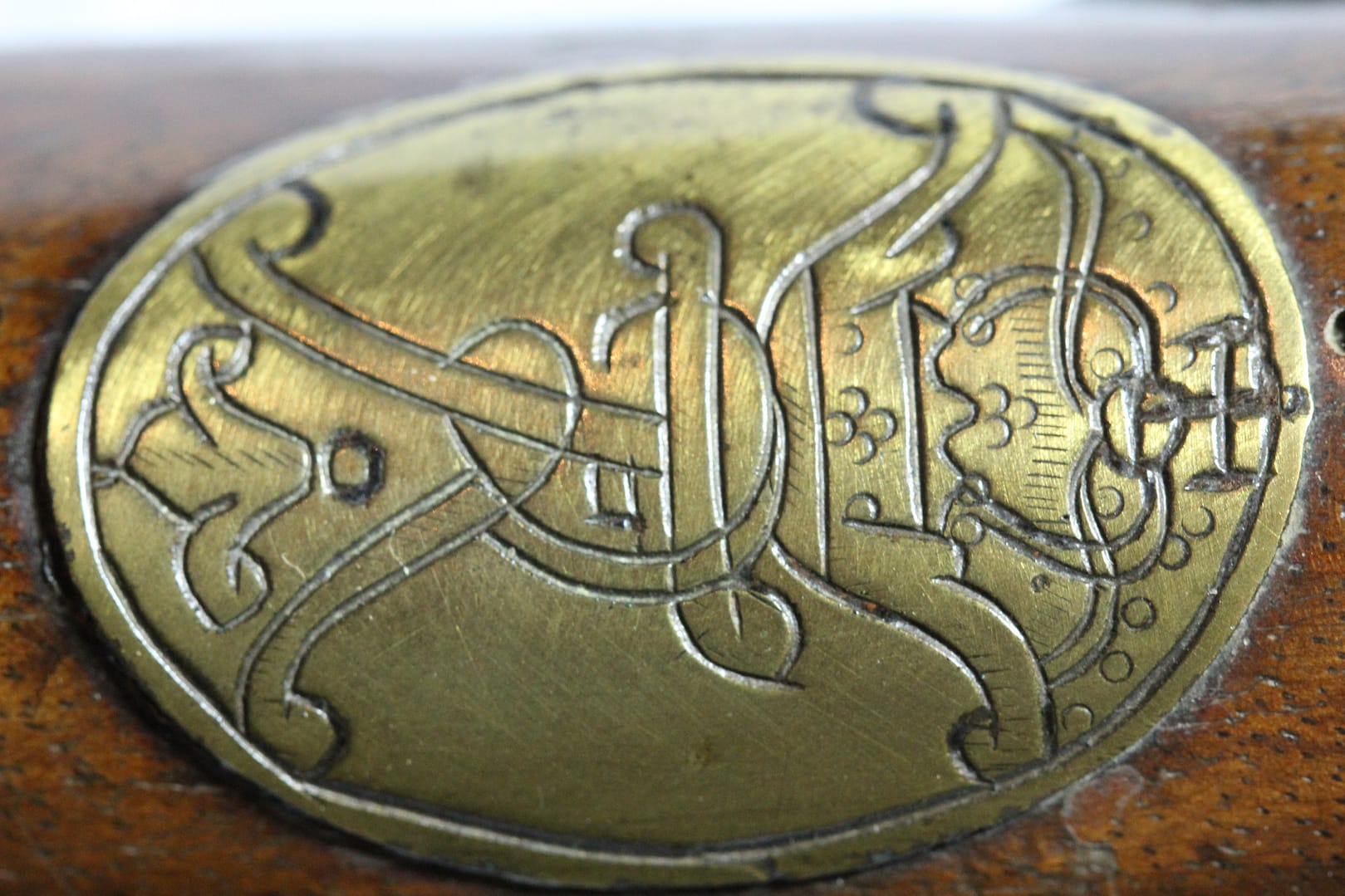
Prussian Model 1731 Hussar Pistol. POTZDAM MAGAZ. From my personal collection.
The Prussian Model 1731 Hussar pistol was issued to light cavalry regiments raised during Frederick William I’s (Frederick the Great’s father) reign. The escutcheon plate is engaved ‘FWR’ for Fridericus Wilhelmus Rex. Manufactured at the Potsdam Arsenal and stamped POTZDAM MAGAZ, it featured a large-bore flintlock mechanism, brass furniture, and a sturdy full-stock suitable for mounted use. Carried in saddle holsters, these pistols complemented the curved sabres used in shock charges and skirmish actions. They saw action in Silesia, Bohemia, and Saxony, reflecting Prussia’s increasing reliance on aggressive hussar tactics in the 1740s–1750s.
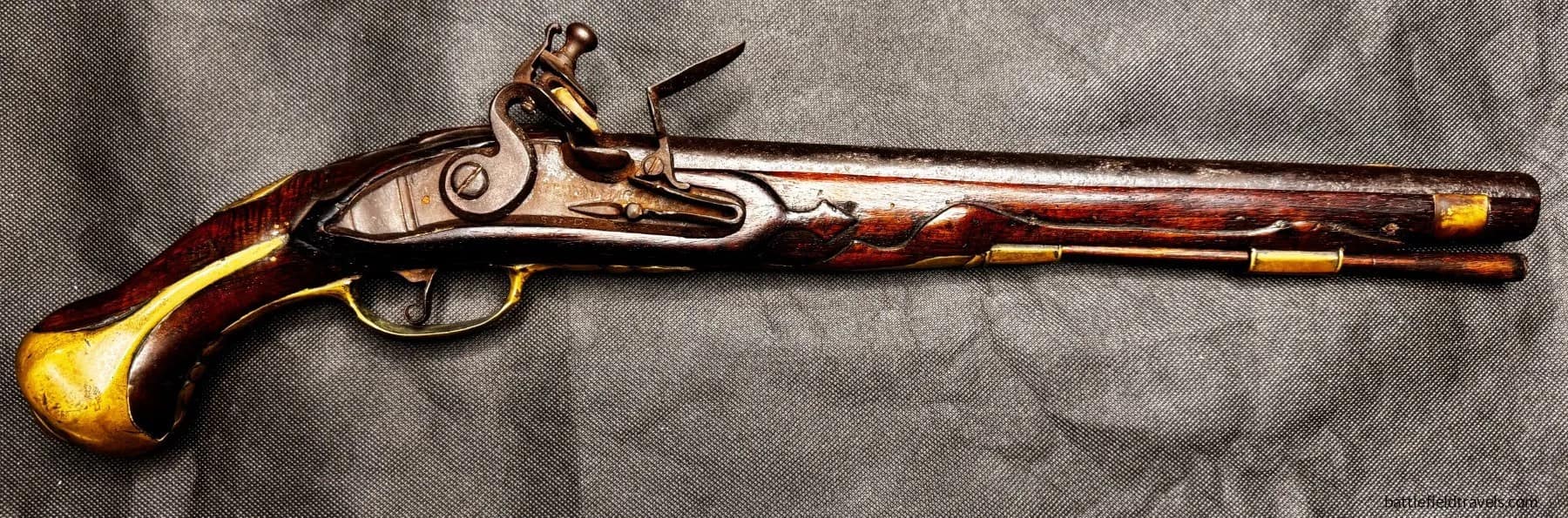
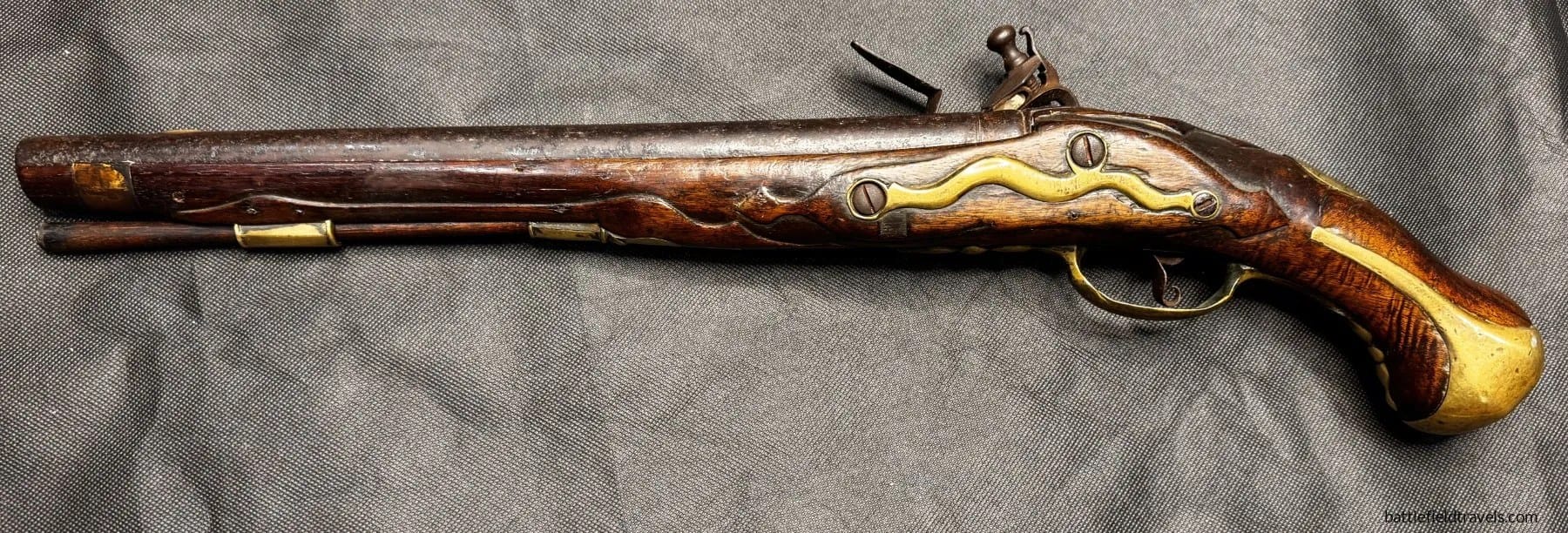
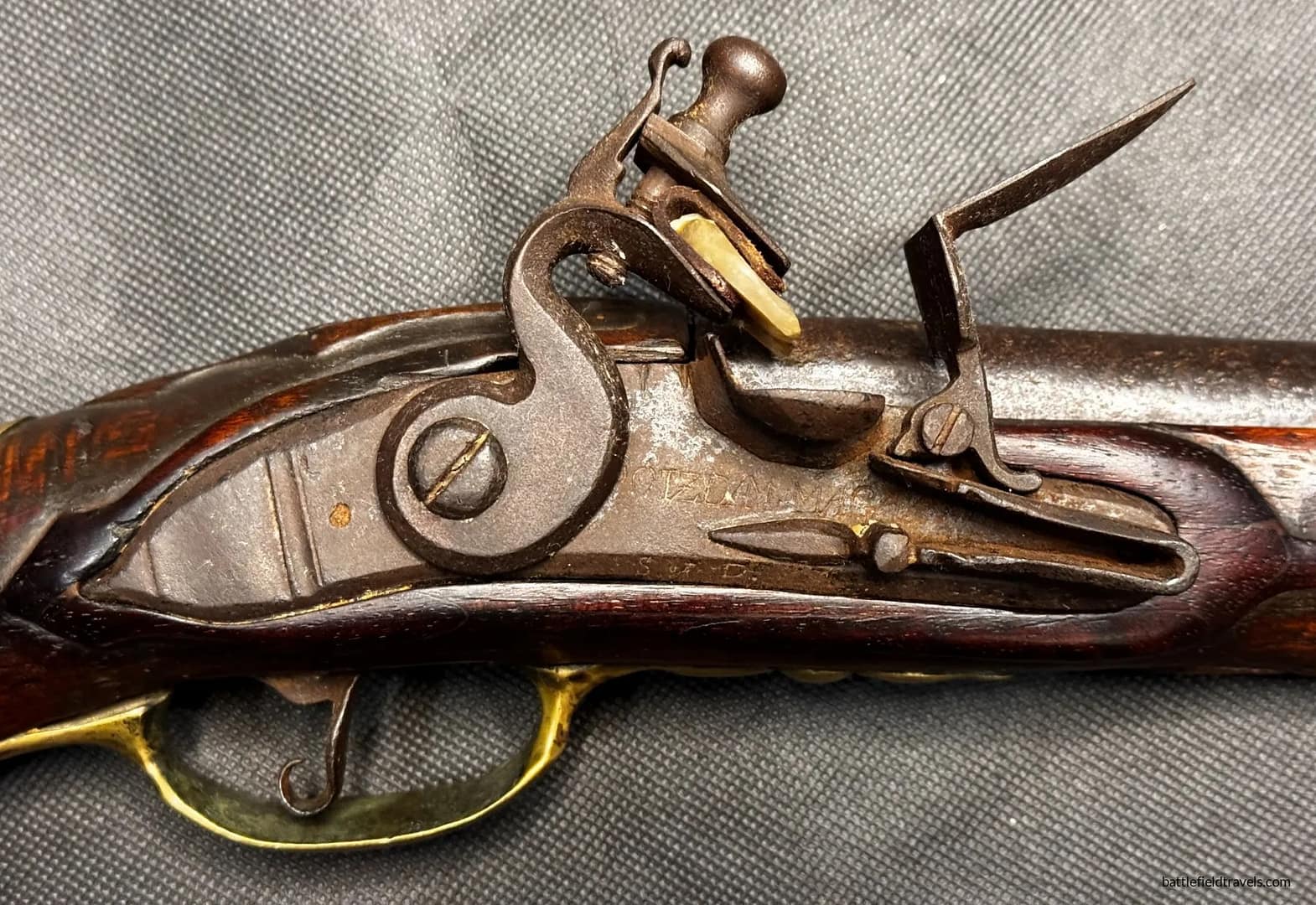
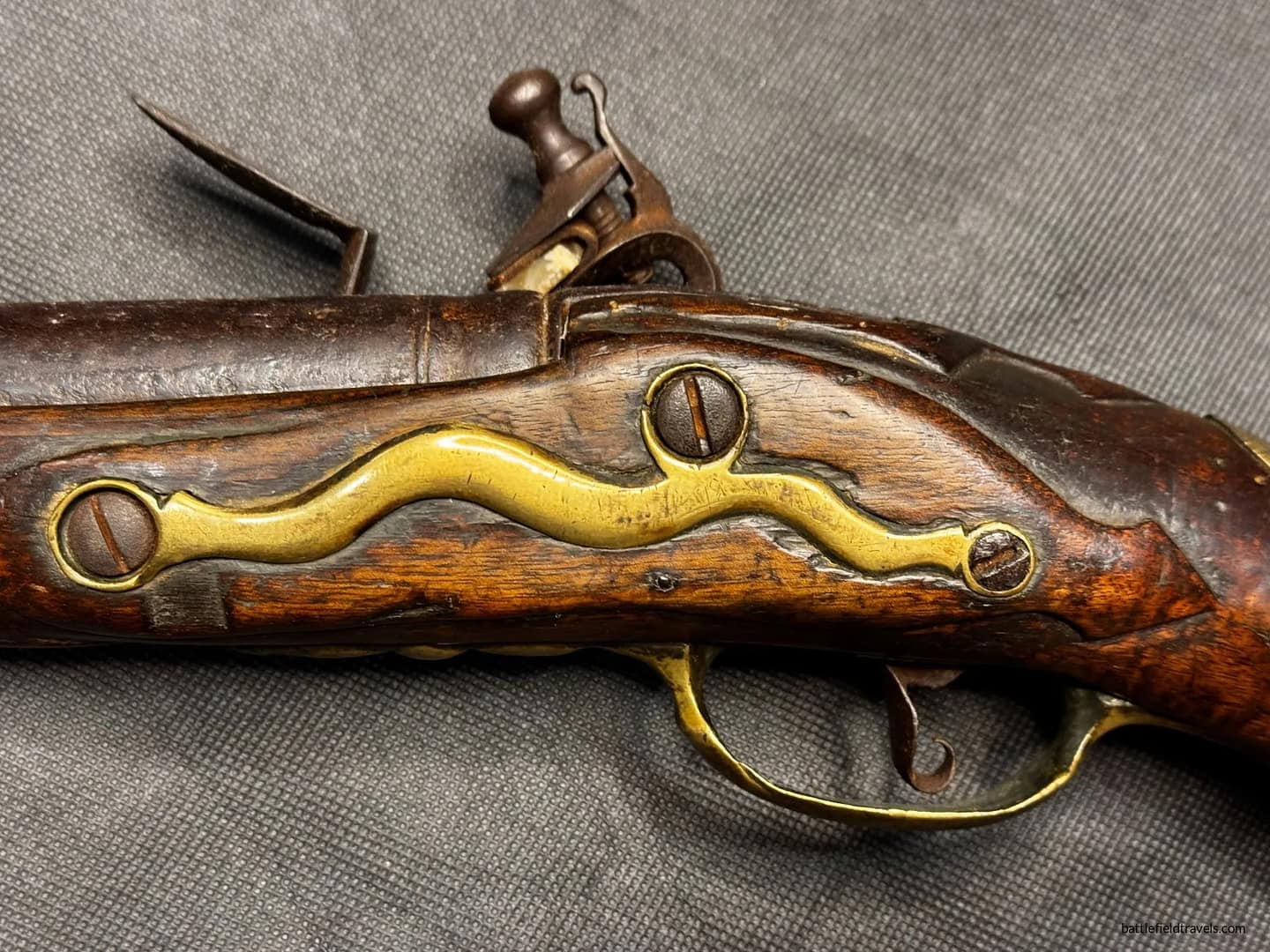
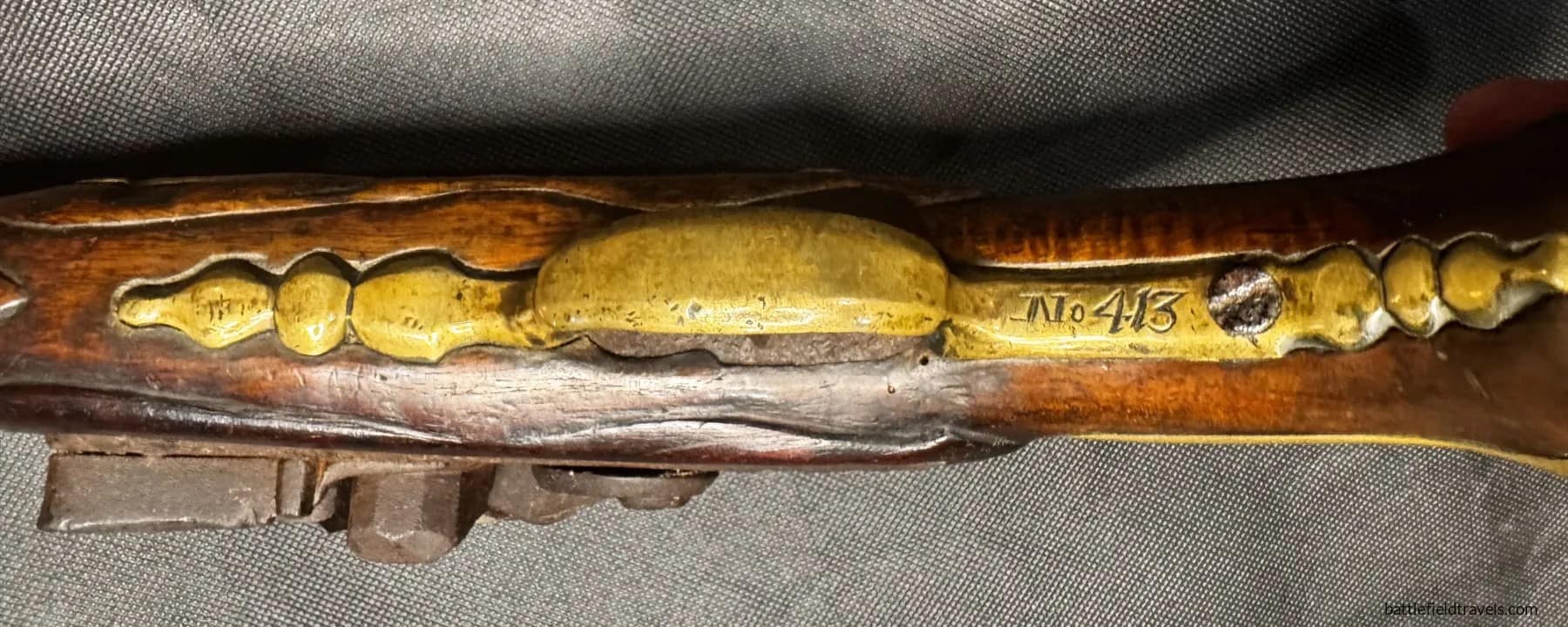
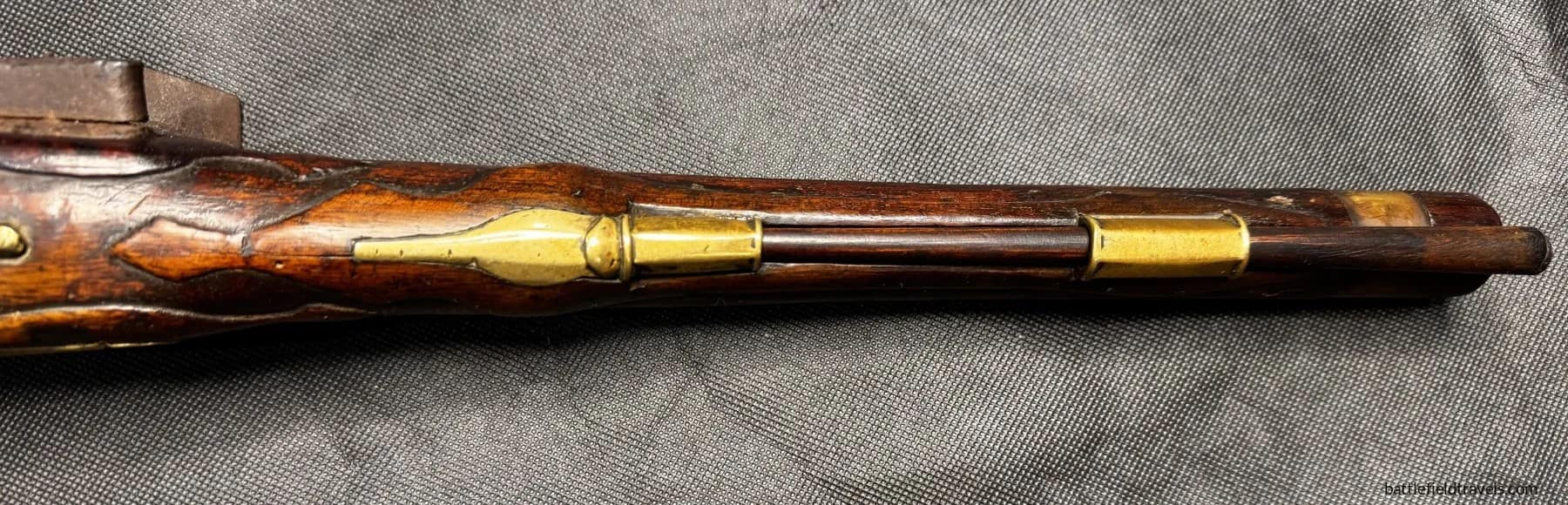
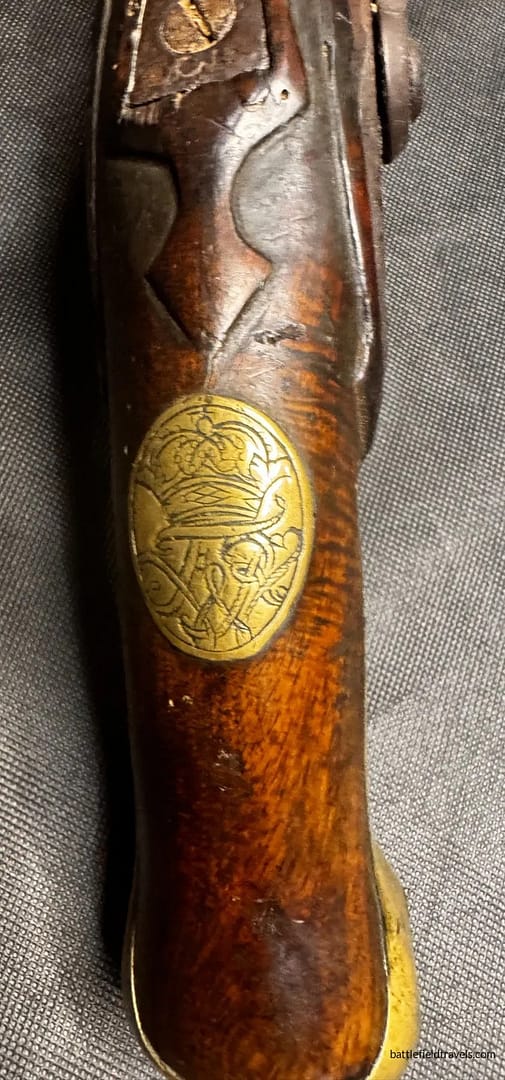
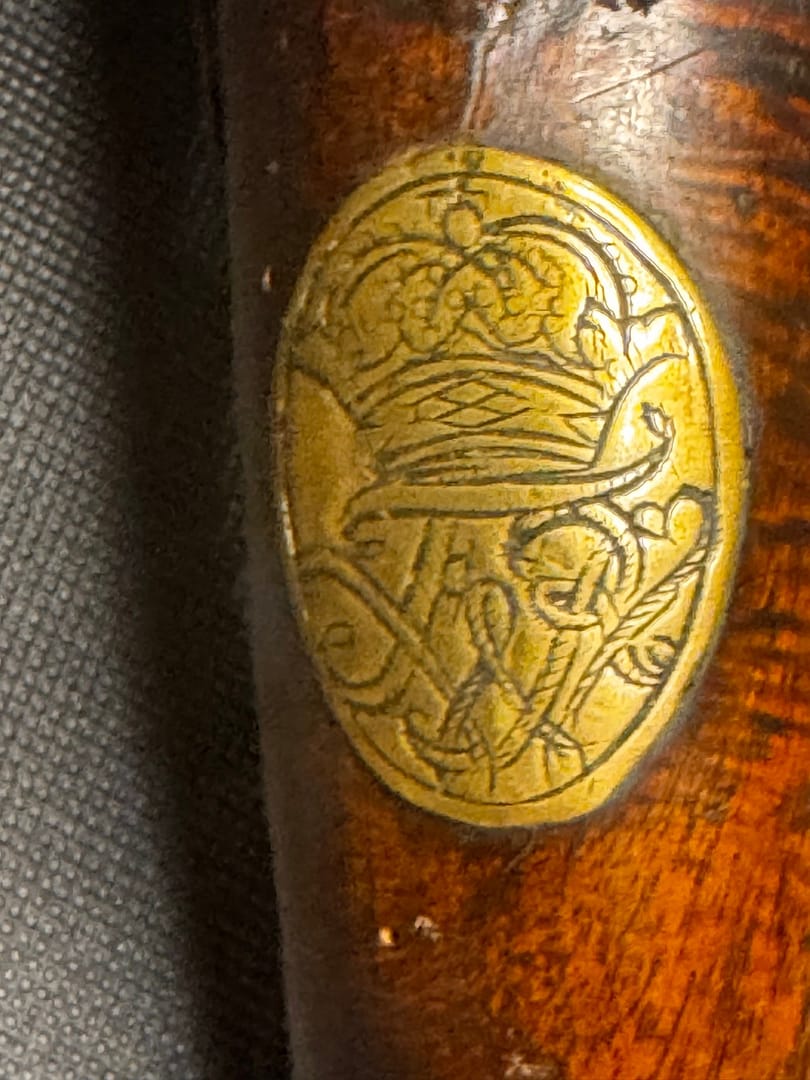
Prussian Model 1742 Hussar Pistol. POTZDAM MAGAZ. From my personal collection.
The Prussian Model 1742 Hussar pistol was issued to light cavalry regiments raised during Frederick the Great’s reforms. The escutcheon plate is engaved ‘FR’ for Fridericus Rex. Manufactured at the Potsdam Arsenal and stamped POTZDAM MAGAZ, it featured a large-bore flintlock mechanism, brass furniture, and a sturdy full-stock suitable for mounted use. Carried in saddle holsters, these pistols complemented the curved sabres used in shock charges and skirmish actions. They saw action in Silesia, Bohemia, and Saxony, reflecting Prussia’s increasing reliance on aggressive hussar tactics in the 1740s–1750s.
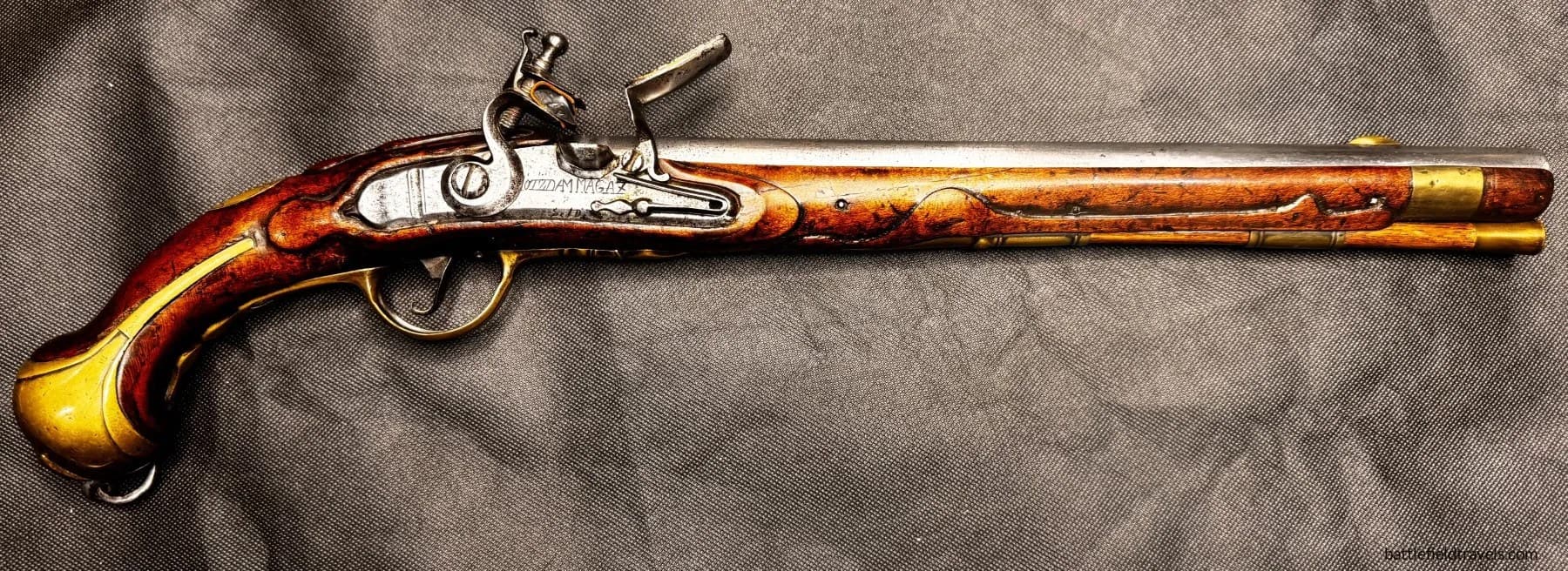
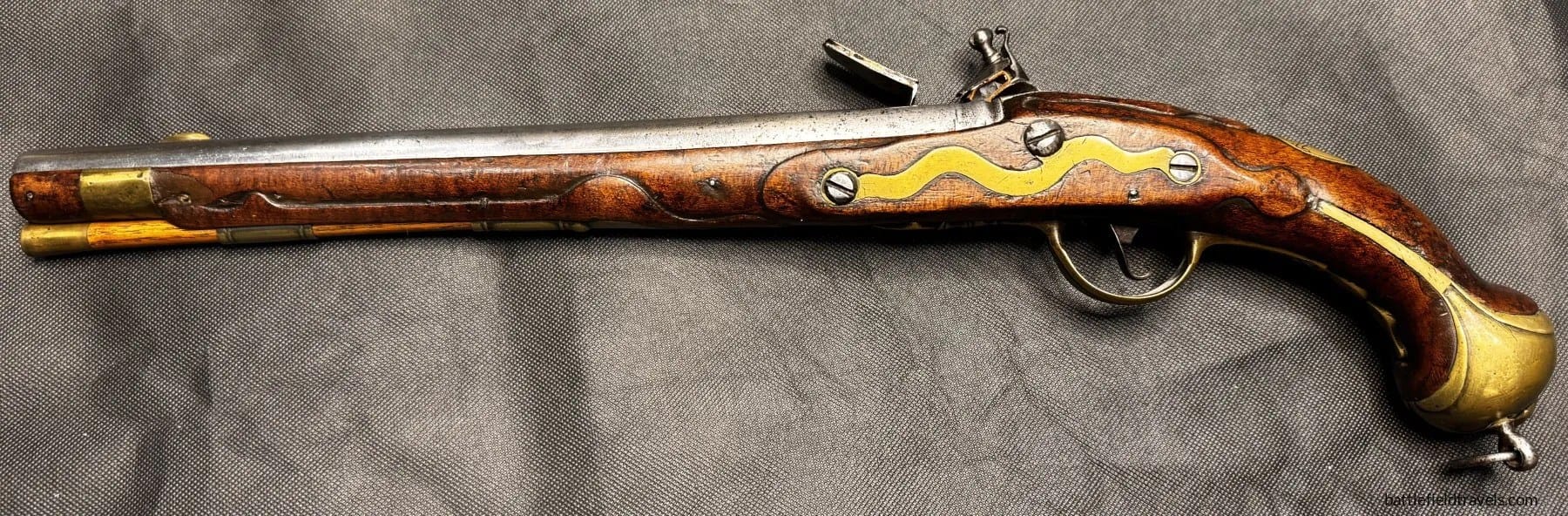
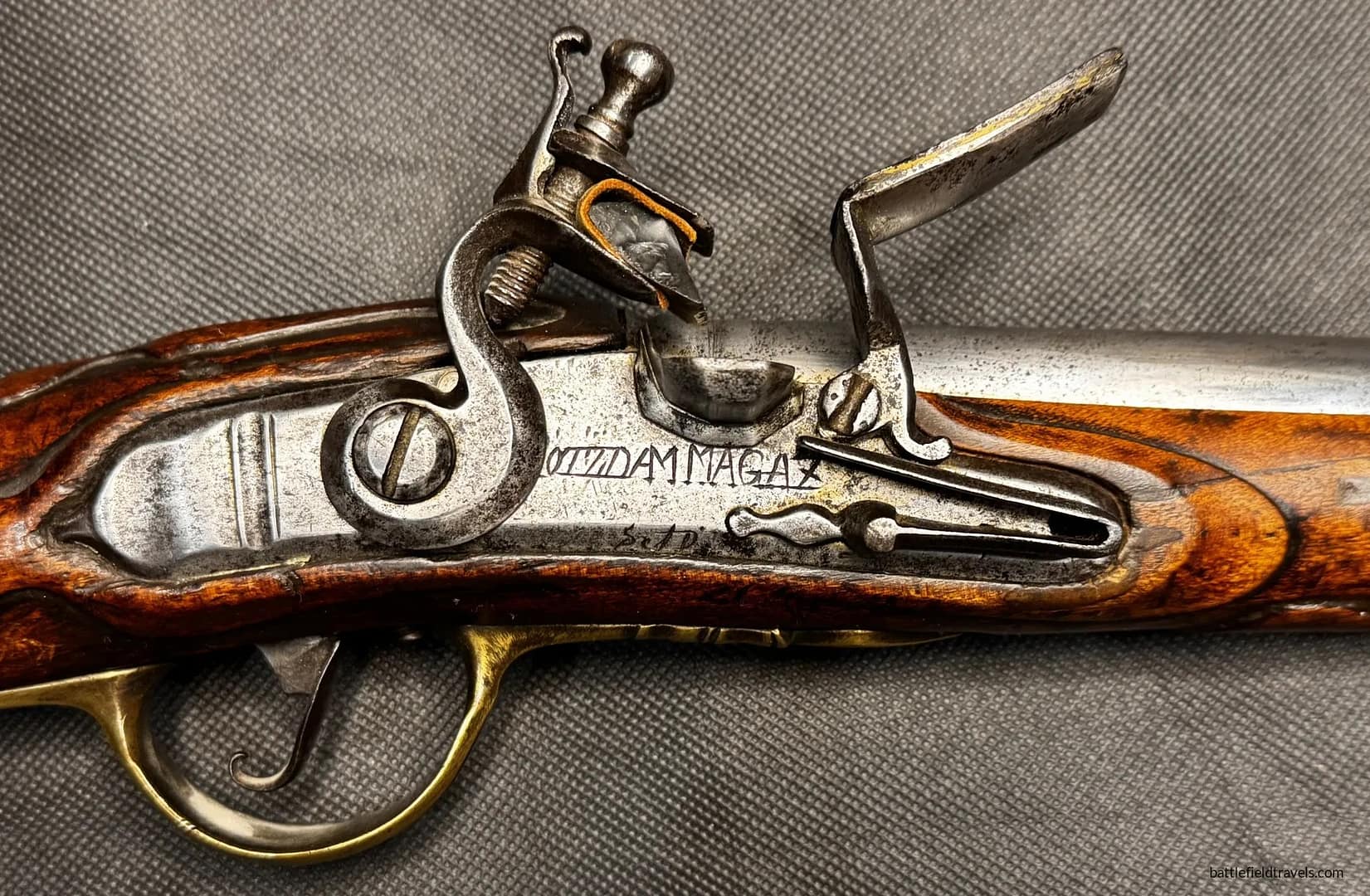
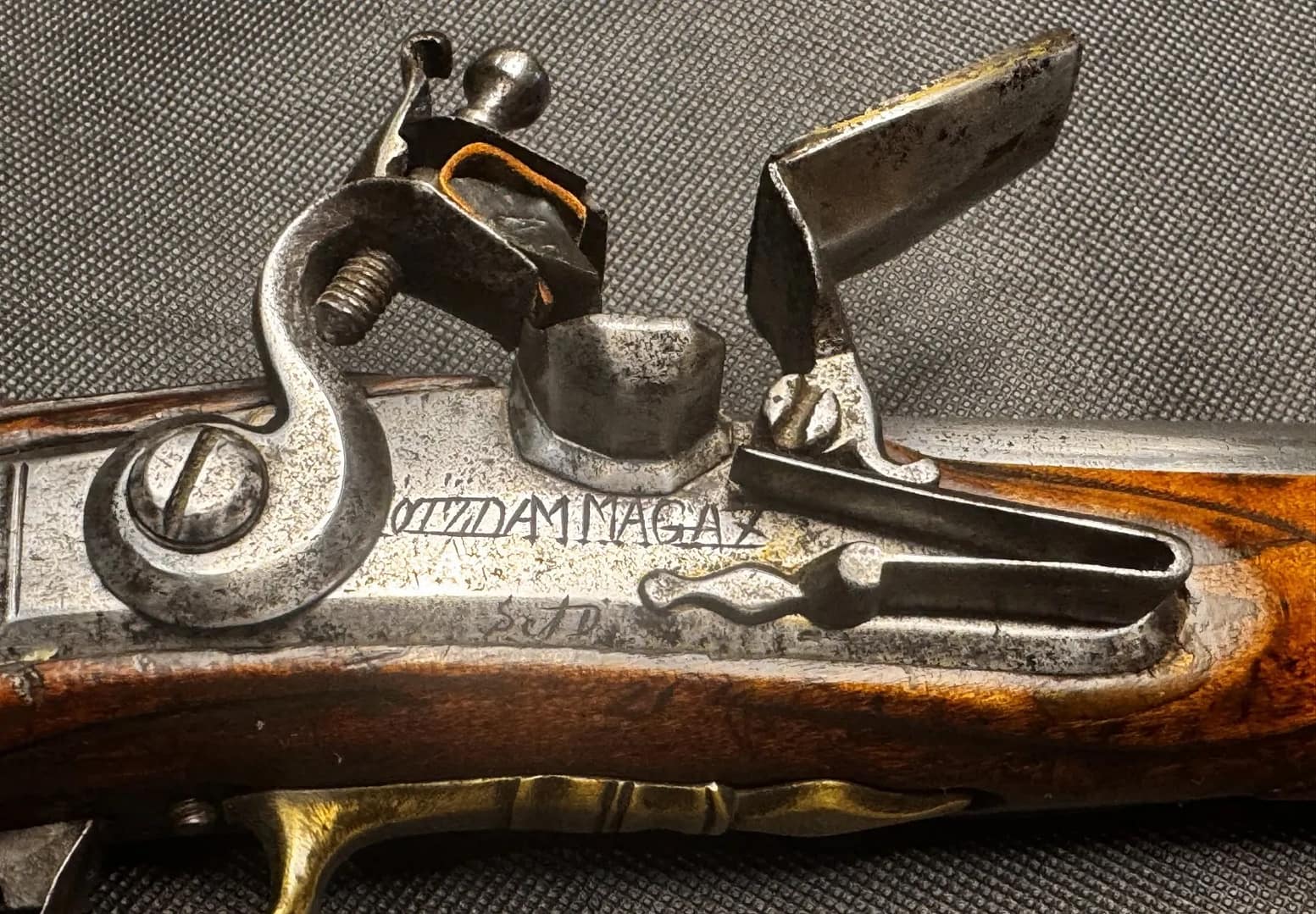
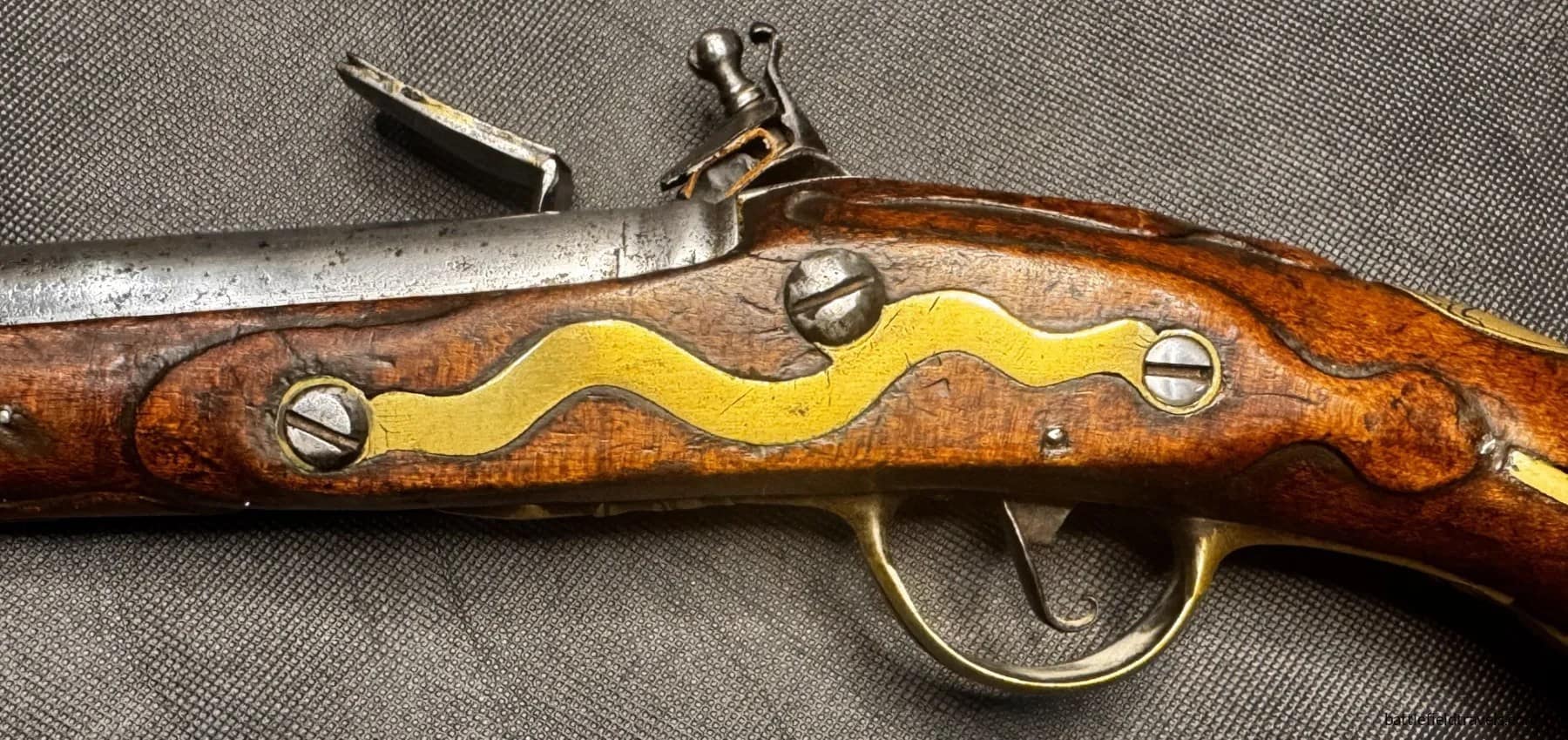
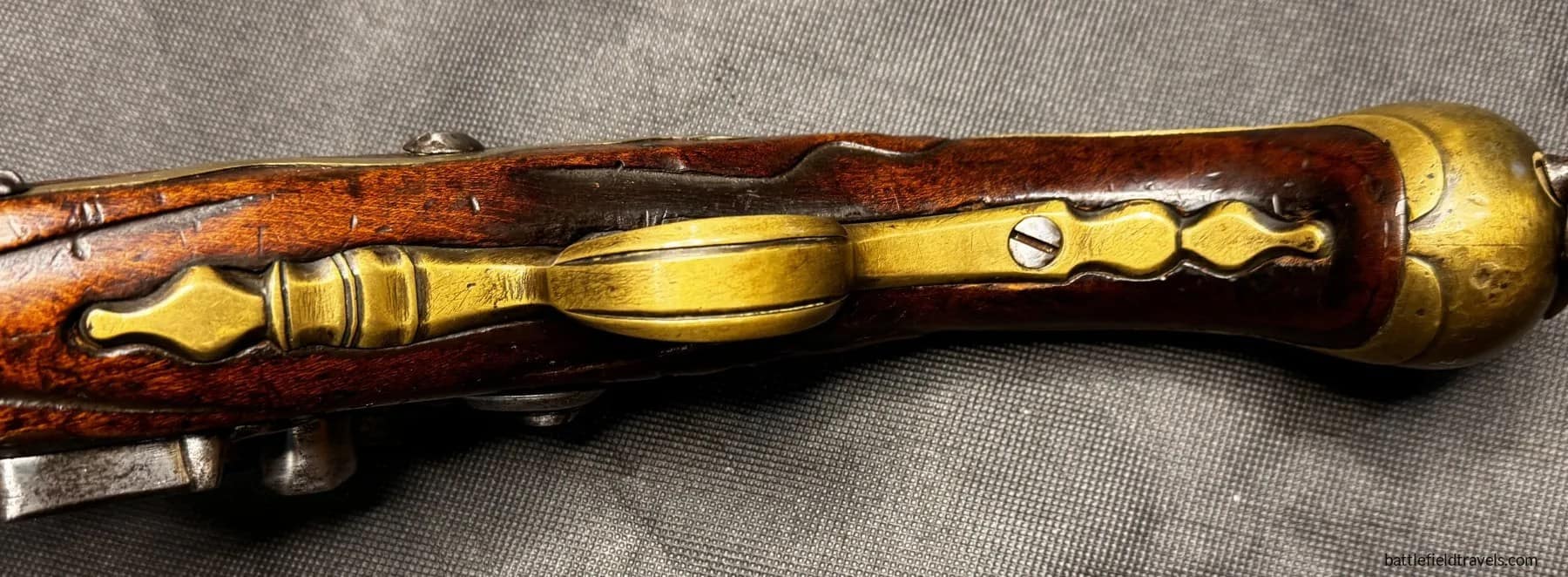
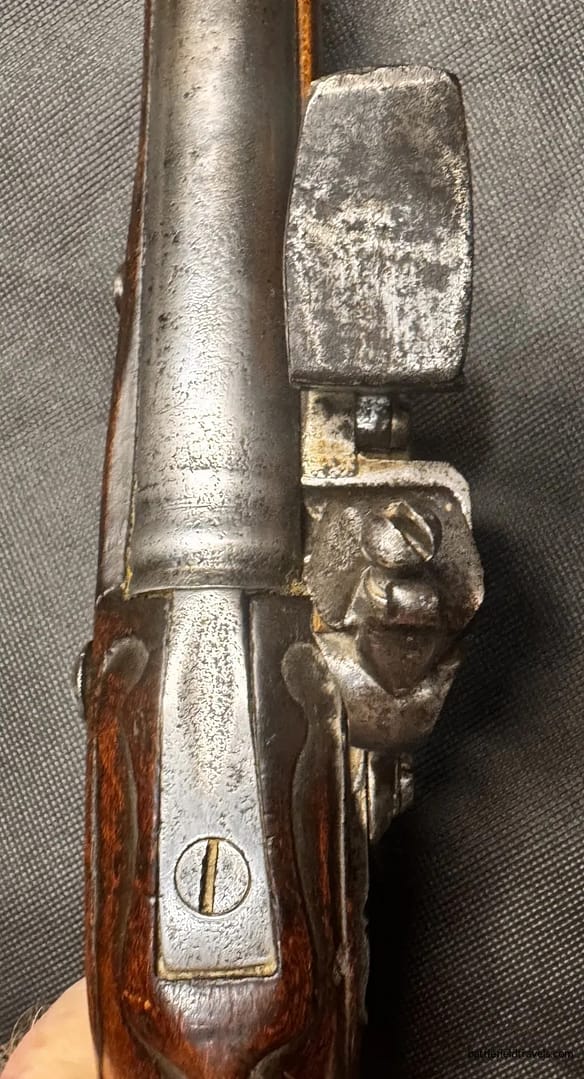
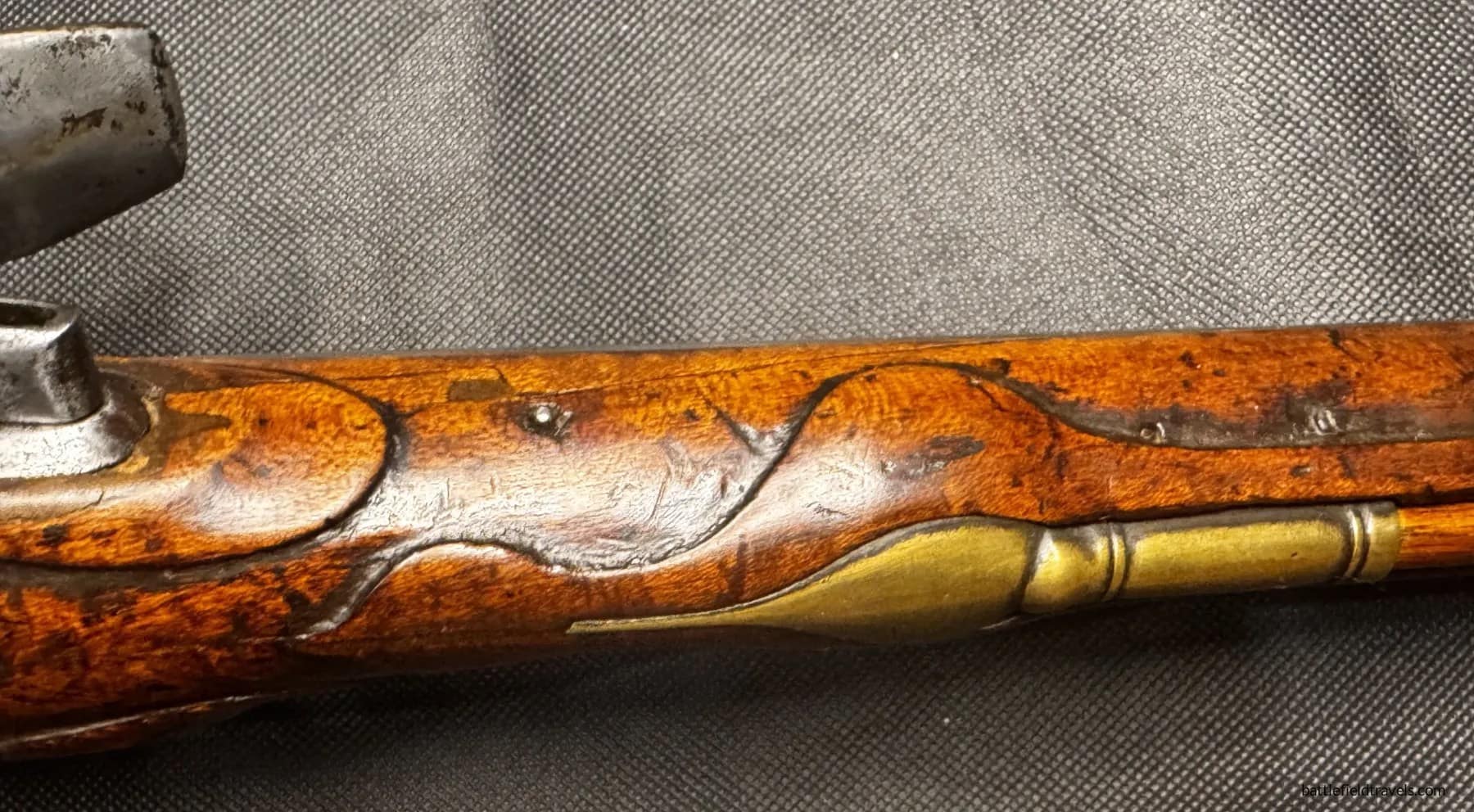
Prussian Model 1742 Officer’s Pistol. From my personal collection.
The Prussian officer’s pistol follows the design cues from the Model 1742 Hussar pistol but it is about 2/3 the size, and more finely made. It would have been a privately made pistol for an officer in Frederick the Great’s army. The escutcheon plate is engaved with a symbol that may represent the principality or family. . Lockplate is stamped AFS, it featured a smaller-bore flintlock mechanism, brass furniture, and a sturdy full-stock suitable for mounted use. Carried in saddle holsters, these pistols complemented the curved sabres used in shock charges and skirmish actions. They saw action in Silesia, Bohemia, and Saxony, reflecting Prussia’s increasing reliance on aggressive hussar tactics in the 1740s–1750s.


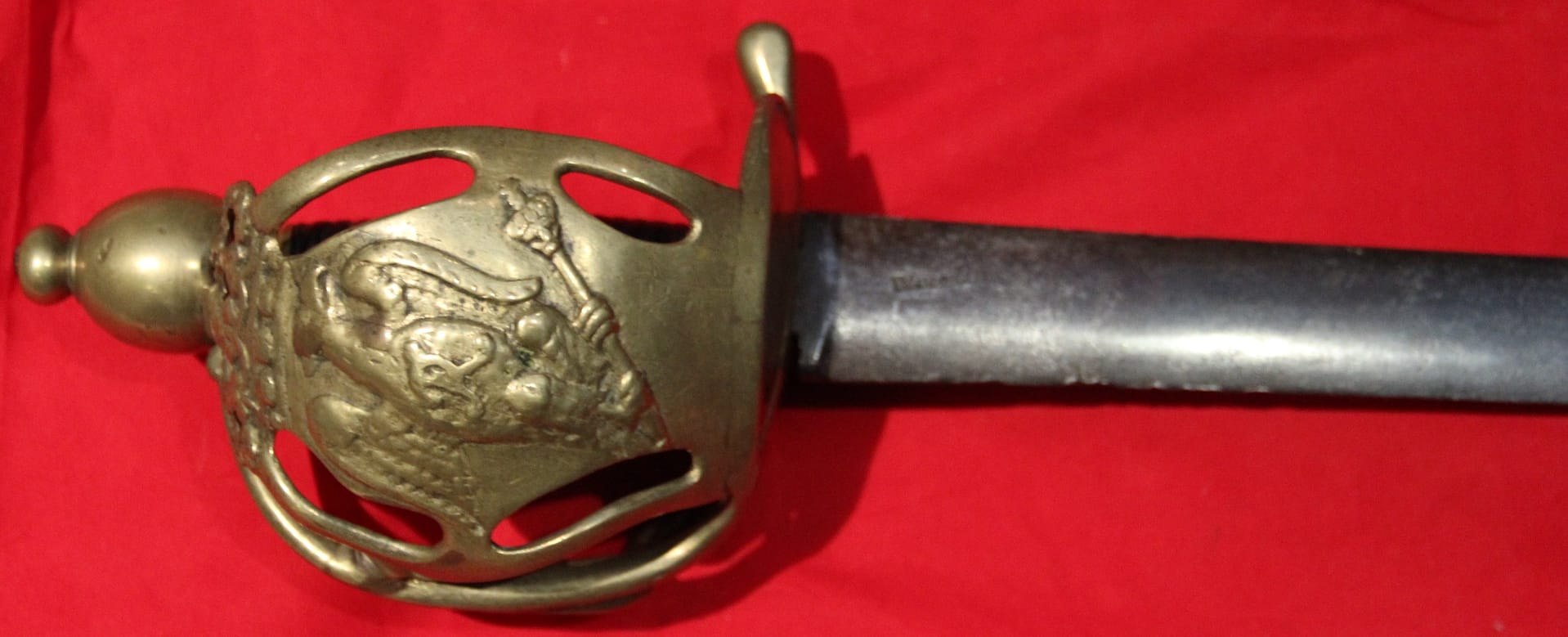
Prussian Model 1732 Kurassier sword. From my personal collection.
The Model 1732 Kürassier sword was the standard heavy-cavalry weapon of Frederick the Great’s cuirassier regiments. Featuring a straight, broad blade optimised for thrusting and a brass basket hilt, embossed with the Prussian eagle and marked ‘FR’ (Fridiricus Rex), it was designed for shock action against enemy cavalry and infantry formations. The M1732 was widely used during the Silesian Wars and remained in service into the Seven Years’ War. Its austere, functional design reflects Prussia’s emphasis on disciplined, armoured cavalry charges as a decisive battlefield arm.



French Weapons of the War of the Austrian Succession
Massive French Fortress Musket, circa 1750. From my personal collection.
This exceptionally large French fortress musket, circa 1750, was designed for static defence and anti-artillery sniping from ramparts. With a bore of approximately 0.80 calibre and an oversized barrel, it fired heavy projectiles intended to disable artillery crews or harass siege works at long range. The stock is signed “Maqueline”, and the lockplate is a pre-1717 unbridled form, indicating production by a private armourer supplying fortress garrisons. Such heavy wall guns were too unwieldy for field use but were valued for accuracy and destructive power in garrison warfare.


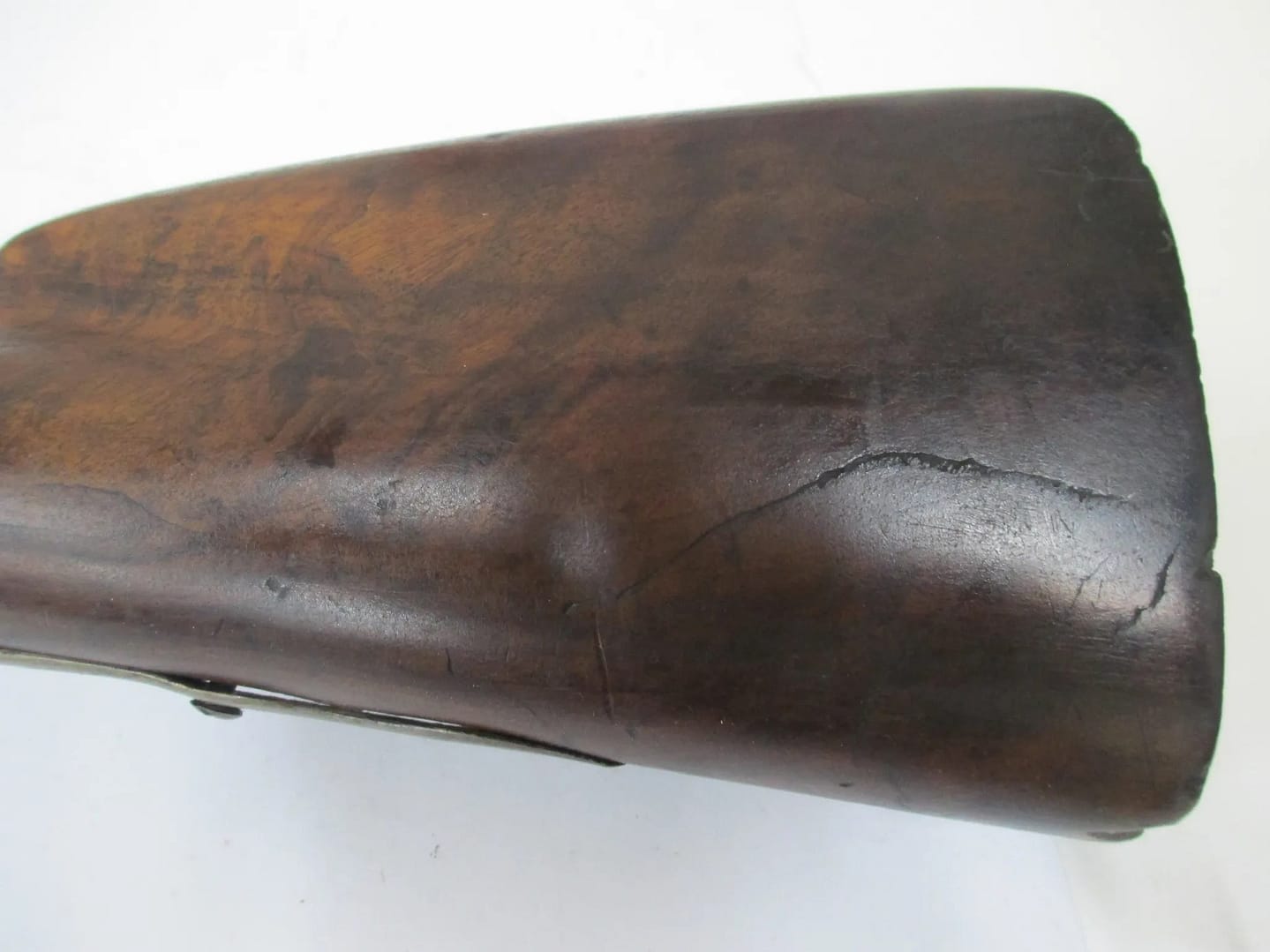

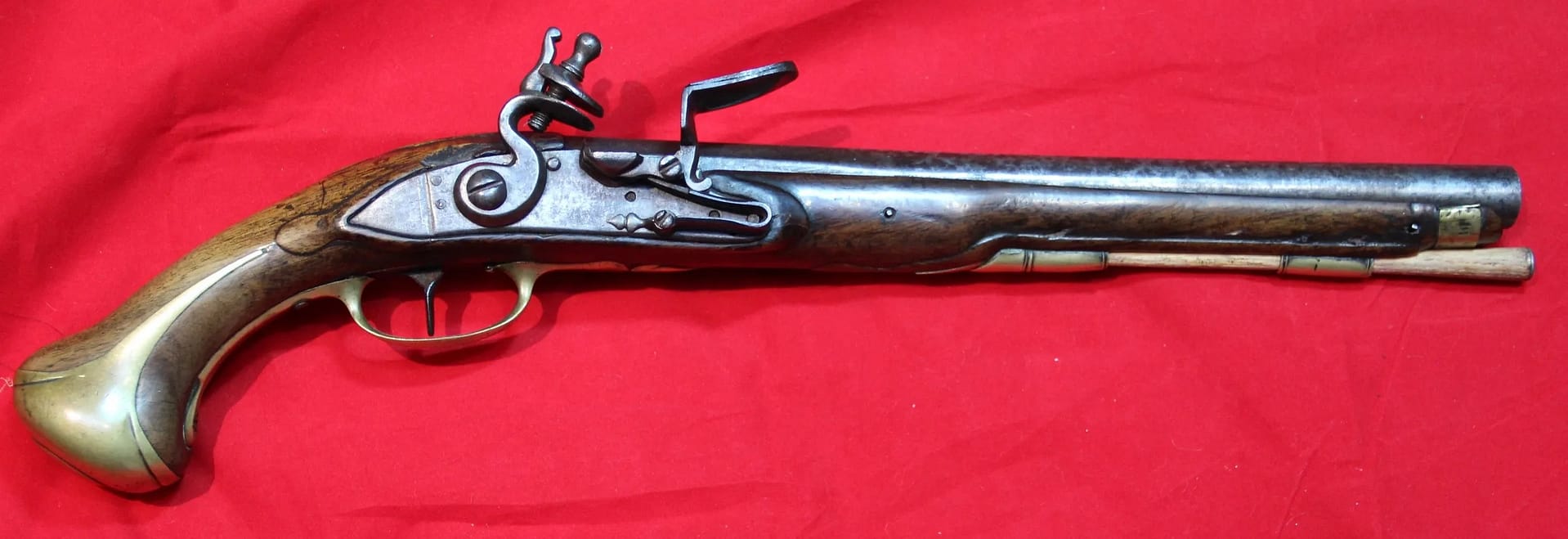
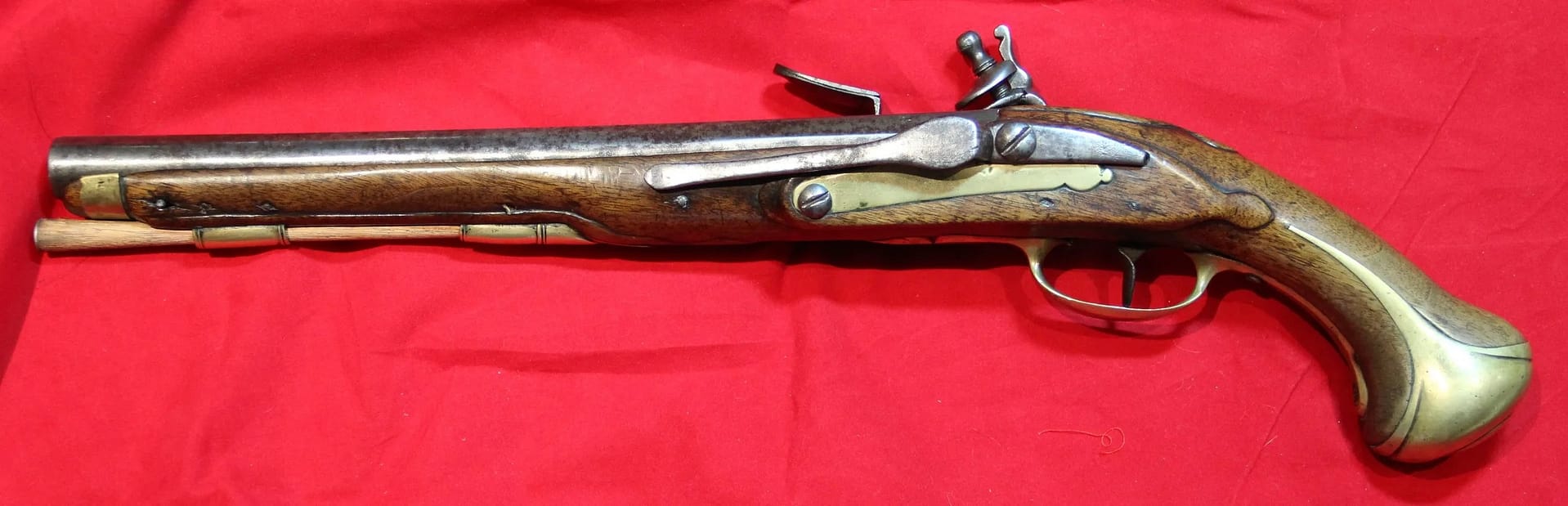
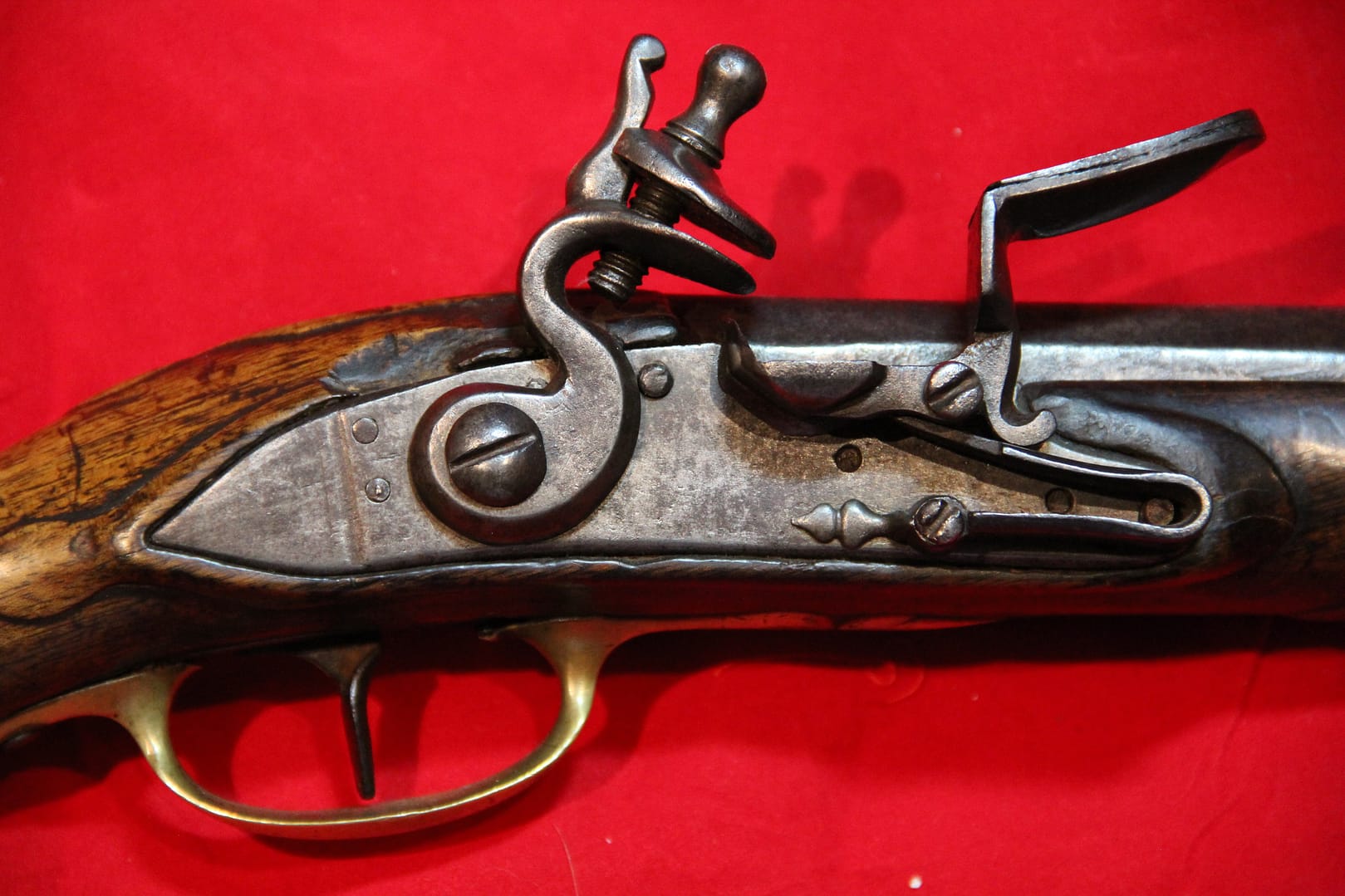
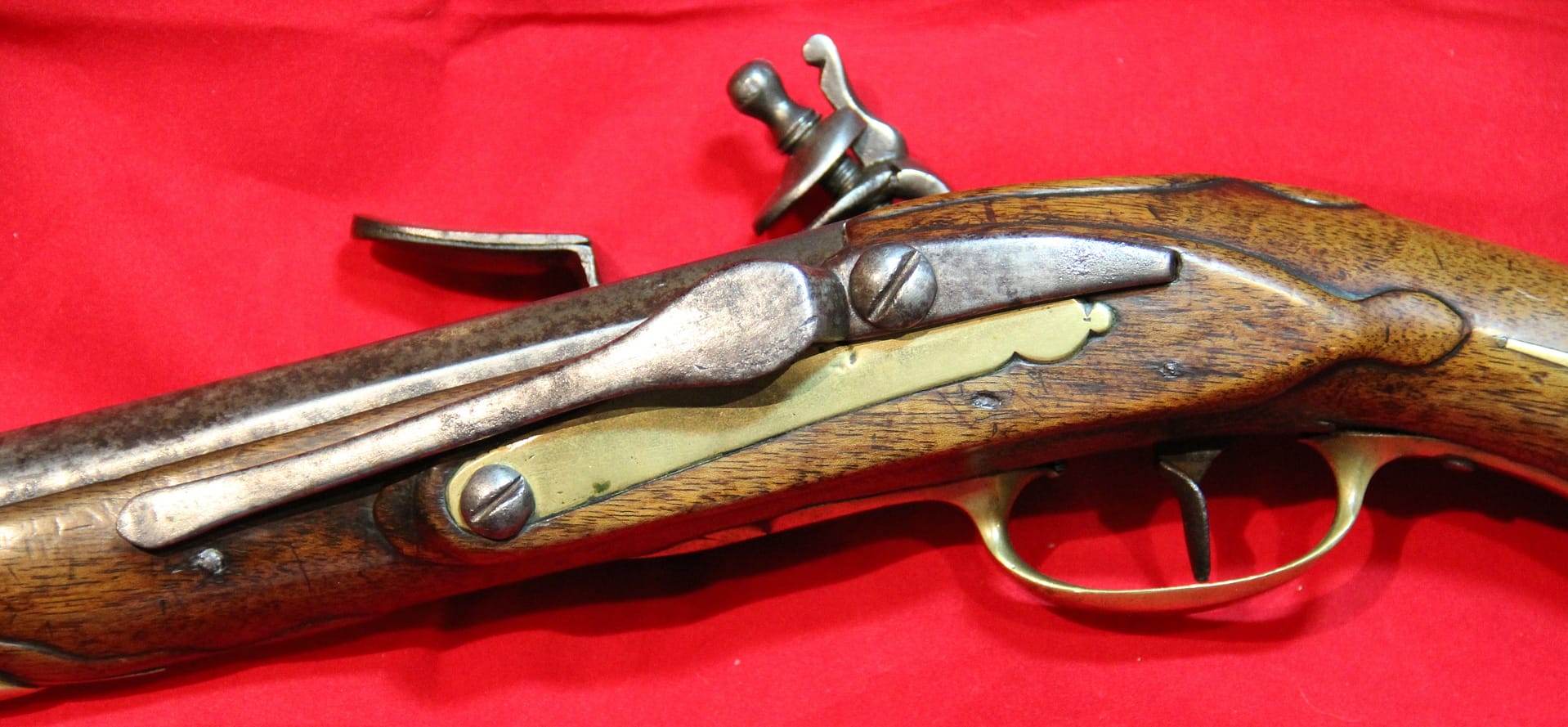
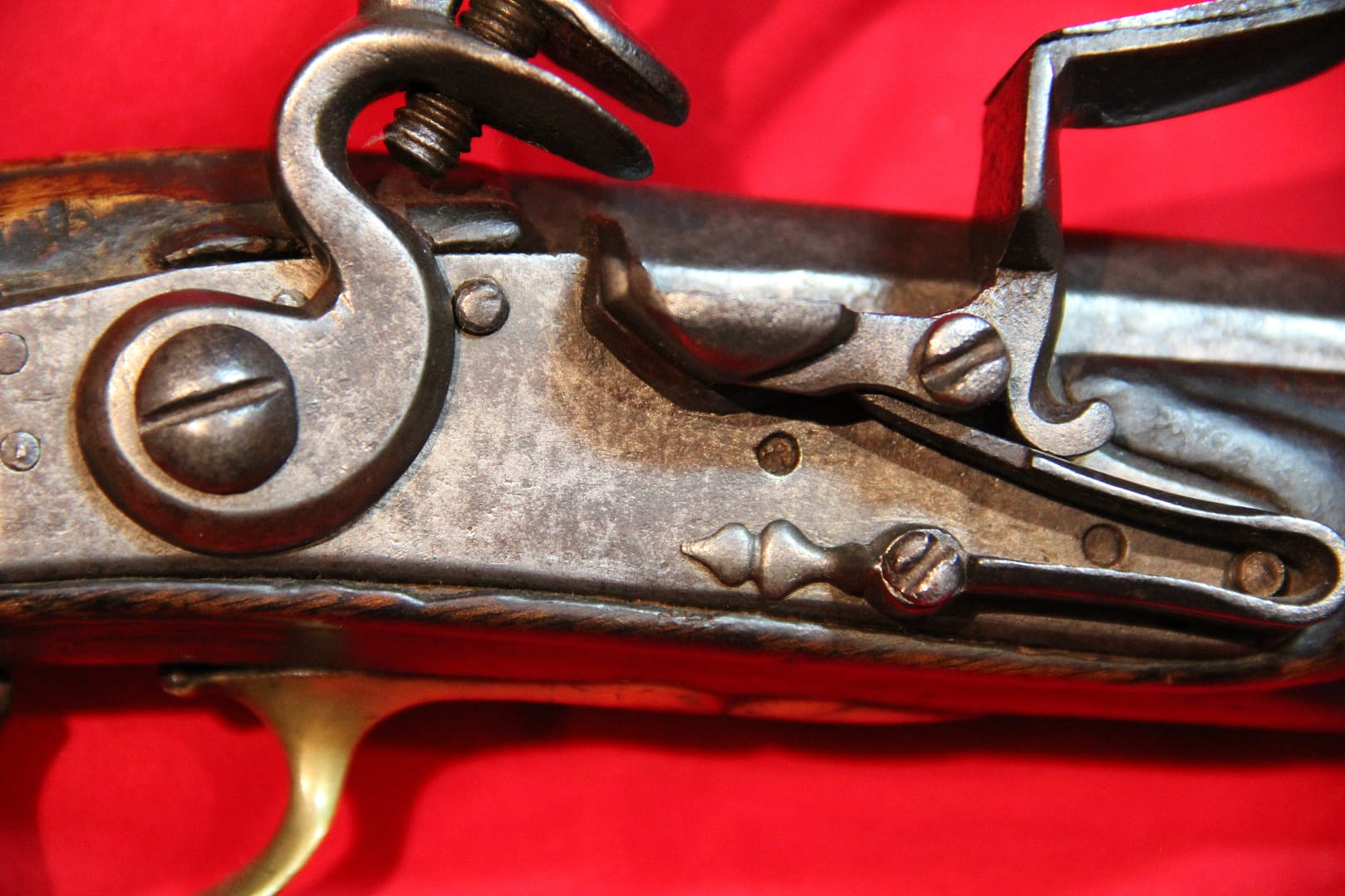
French Model 1733 Cavalry Pistol, the first standard handgun to be adopted by the French military. Jean Fournier, Charleville. From my personal collection.
The French Model 1733 cavalry pistol was the first fully standardised handgun adopted by the French Army. A large-bore flintlock with brass mounts and a robust lockplate, it was carried by heavy cavalry, dragoons, and mounted officers. This example is marked Jean Fournier, Charleville, one of the principal armourers of the royal manufactory. The 1733 pistol introduced production uniformity later seen in the Charleville musket series and became a widely copied pattern across Europe during the mid-18th century.
Found this useful? Buy me a coffee — it helps fund future battlefield research


Authored by Mick Prictor, a retired military officer with 40 years’ service, and a military historian specialising in terrain-focused analysis of tactics, doctrine, and command decision-making in land warfare. His work draws on extensive battlefield fieldwork—more than 280 sites worldwide—and one of the world’s largest private collections of historic military arms, uniforms, and equipment. About me
War of the Austrian Succession Weapons FAQ
Armies were primarily equipped with smoothbore flintlock muskets fitted with socket bayonets, supported by muzzle-loading artillery and cavalry armed with swords and pistols. These weapons formed the standard equipment of European armies during the mid-18th century.
Flintlock muskets were employed in close-order linear formations where disciplined volleys delivered massed firepower. Their relatively limited accuracy made drill, coordination, and controlled firing essential to battlefield effectiveness.
Artillery was an increasingly important component of field armies, providing both battlefield fire support and siege capabilities. Improvements in organisation and deployment reflected the growing importance of artillery in eighteenth-century warfare.
Frederick’s Prussian Army introduced numerous innovations. Firstly, the Prussian system of conscription by region was the most efficient in Europe. Secondly, the Prussian Army refined close order drill that other armies tried to emulate. This allowed Prussian battle formations to manoeuvre under fire. Thirdly, Prussian musket drills were drilled to the point of pefection so that a Prussian soldier could load and fire 4-5 times per minute compared with two times per minute in other armies. Later Prussian innovations like the reversible iron ramrod and the conical flash hole were designed to shave milliseconds off reloead time.
Cavalry played a key role in reconnaissance, battlefield manoeuvre, and shock action, typically armed with swords, pistols, and carbines depending on the unit type.
Rifles existed but were used only in limited numbers by specialist troops. The vast majority of soldiers carried smoothbore muskets.
Most infantry muskets were large-calibre smoothbores, typically between .69 and .75 calibre, firing a round ball designed for rapid loading rather than precision.
Subscribe to Battlefield Travels and receive a free E-Book Battlefield Guide
Unlock expert battlefield analysis, campaign reconstructions, and historical insights drawn from firsthand exploration and primary sources.
🗺️ You’ll receive:
🎖️ Exclusive historical insights you won’t find elsewhere
📘 A free eBook: 10 Tips for Exploring Historic Battlefields
📰 New battlefield studies straight to your inbox as they are published

⚔️ Go deeper — Members get exclusive access to the Deep Research Collection, Field Notes, and monthly Research Dispatches. Try membership free for 7 days, cancel anytime. From $9/month.