Overview of the American Civil War
The American Civil War (1861–1865) was the defining conflict of nineteenth-century North America, fought between the Union and the seceded Confederate states. Rooted in disputes over states’ rights, slavery, and federal authority, it evolved into a vast industrial war that reshaped the United States politically, socially, and militarily.
Early battles such as Bull Run, Wilson’s Creek, and Pea Ridge revealed both the scale of mobilisation required and the intensity of the conflict. Campaigns across Virginia, Tennessee, and the Mississippi Valley combined manoeuvre with increasingly costly attrition, while the Union gradually leveraged its advantages in manpower and industry. Union disasters at Fredericksburg and Chancellorsville demonstrated how bold leadership and an eye for terrain still mattered. Key turning points at Antietam, Gettysburg, and Vicksburg halted Confederate offensives and secured Union control of the Mississippi. By 1864–65, coordinated Union offensives under Grant and Sherman brought the war to its conclusion with the surrender at Appomattox in April 1865.
Weapons, technology, and battlefield adaptation
Armies entered the war equipped largely with muzzle-loading rifle muskets like the Springfield and Enfield, and initial tactics still reflected linear battlefield doctrine inherited from earlier conflicts. Very quickly, however, the realities of rifled firepower forced adaptation. Combat increasingly shifted toward open-order fighting, extensive skirmishing, and the widespread use of field fortifications and entrenched defensive positions.
At the same time, the enormous demand for arms unleashed a remarkable period of innovation. Nowhere was this more evident than in the proliferation of cavalry carbines, with dozens of competing designs—Sharps, Burnside, Spencer, Merrill, Smith, Maynard, Gallagher, and others—each often requiring proprietary ammunition systems that made for a supply nightmare. This outburst of creativity reflects both the industrial capacity of the Union and the experimental nature of wartime production.
Artillery also evolved rapidly, with rifled guns such as the Parrott and Ordnance rifles increasing range and accuracy, while logistical systems, rail transport, and telegraph communications transformed operational coordination. Together, these developments illustrate the transition from mid-nineteenth-century warfare toward the industrialised battlefield that would define later conflicts.
The weapons, equipment, and artefacts of the American Civil War reveal a military system in rapid transition, where technological innovation, industrial capacity, and battlefield adaptation combined to reshape how wars were fought.
Explore the American Civil War:
[Battle Studies] · [Weapons & Equipment] · [Recommended Reading] · [Quiz]
All artefacts shown are from my personal collection and photographed firsthand.
Related Battle Studies, Museum Pieces & Reading Resources


American Civil War Long Guns
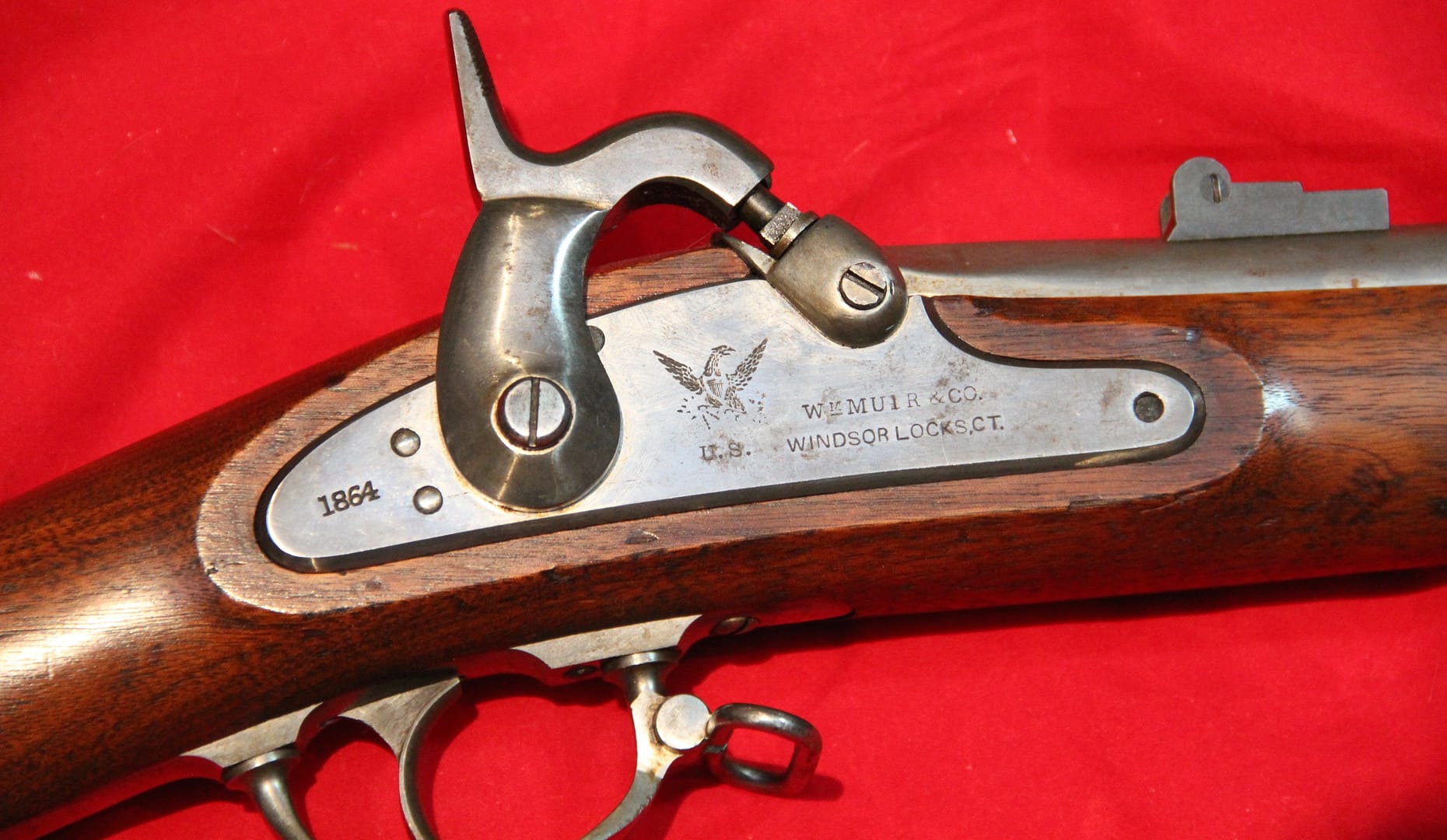
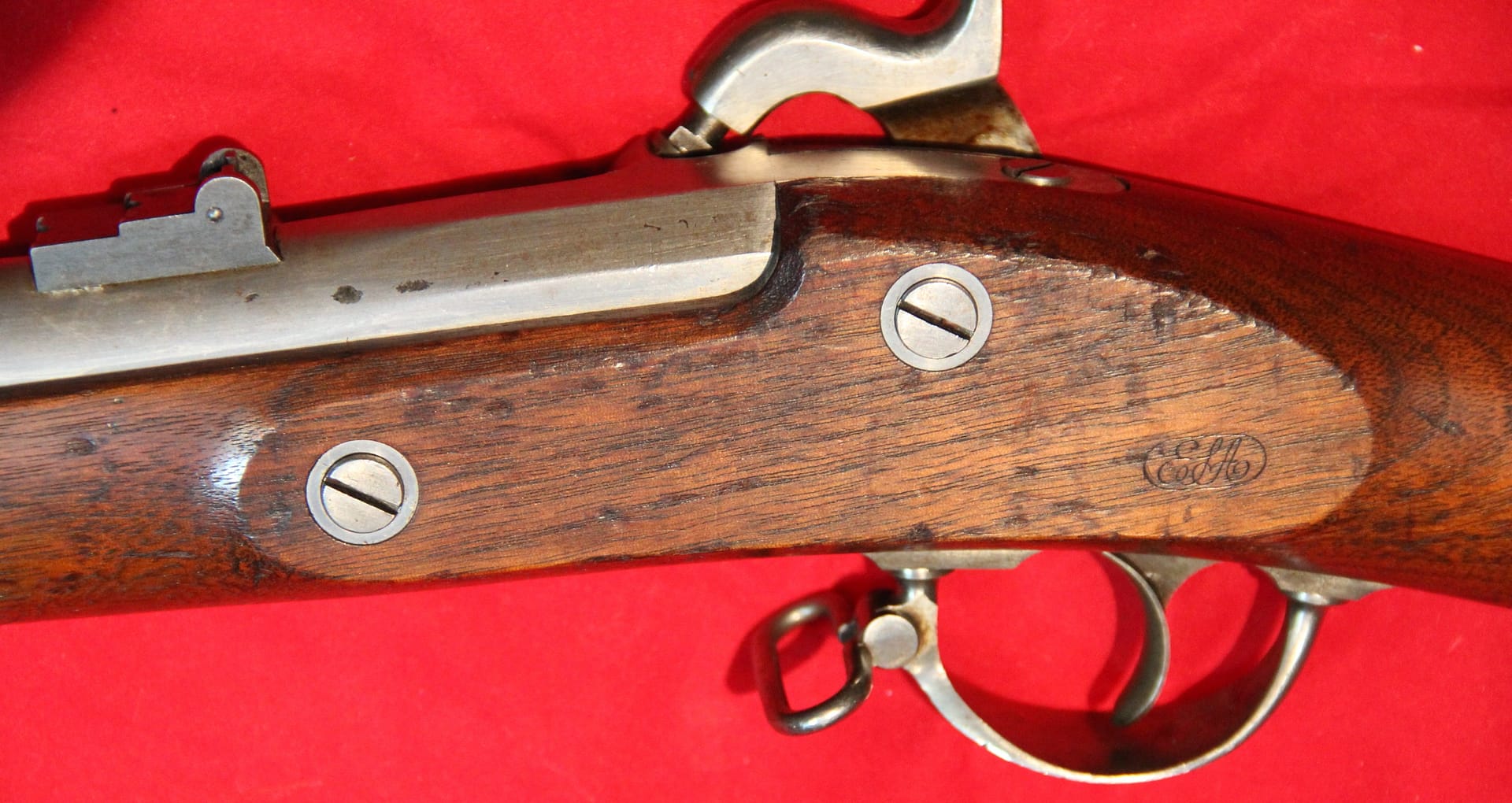
Model 1861 Rifle-Musket, W. Muir contract, from my personal collection.
This M1863 rifle-musket was produced under contract by William Muir & Co. of Windsor Locks, Connecticut, to meet the Union’s massive wartime demand. Muir produced approximately 30,000 Model 1861 rifle-muskets. A .58-calibre percussion arm with improved rear sight and strengthened barrel bands, it represented the standard infantry weapon of the Union Army in the war’s later years.
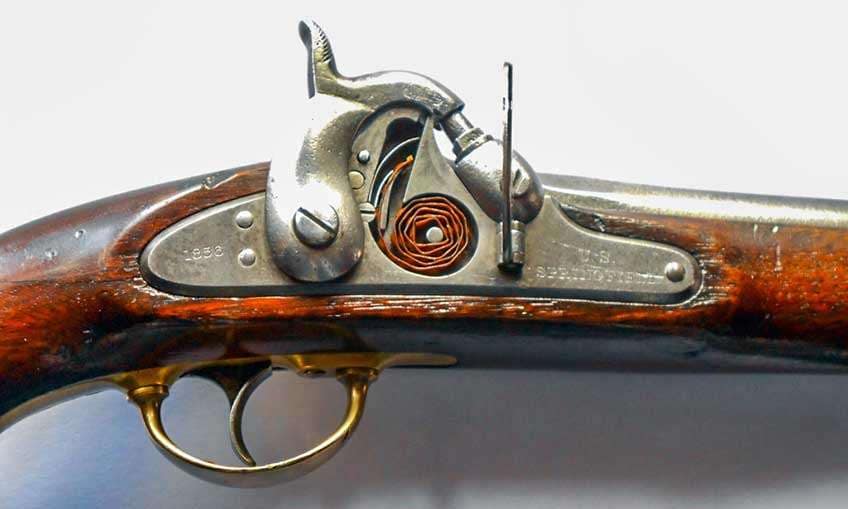
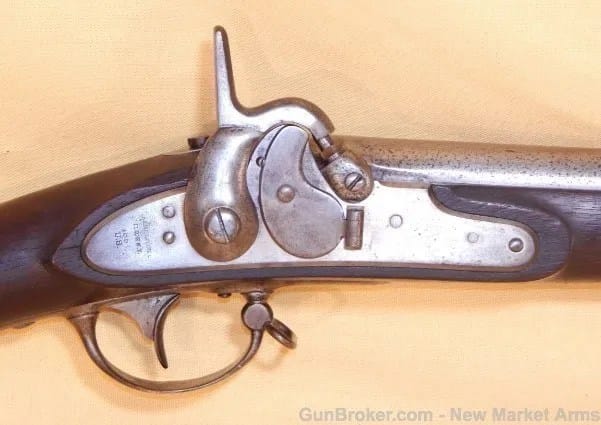
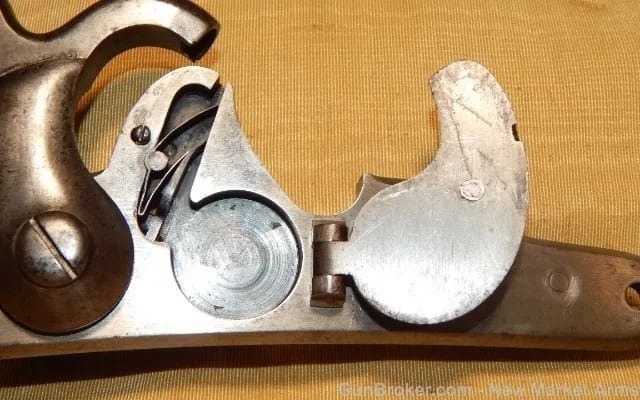
The Model 1861 is distinctive because it retains the curved hammer designed for the Model 1855 rifle-musket to fit over the Maynard tape primer box (as shown at left). The Model 1861 eliminated the Maynard tape primer but retained the hammer shape. The Model 1861 also included a ‘clean-out screw’ on the primer bolster that could be removed to allow cleaning of the primer flash hole. The Model 1863 reverted to a more conventional S-shaped hammer, and did away with the clean-out screw.


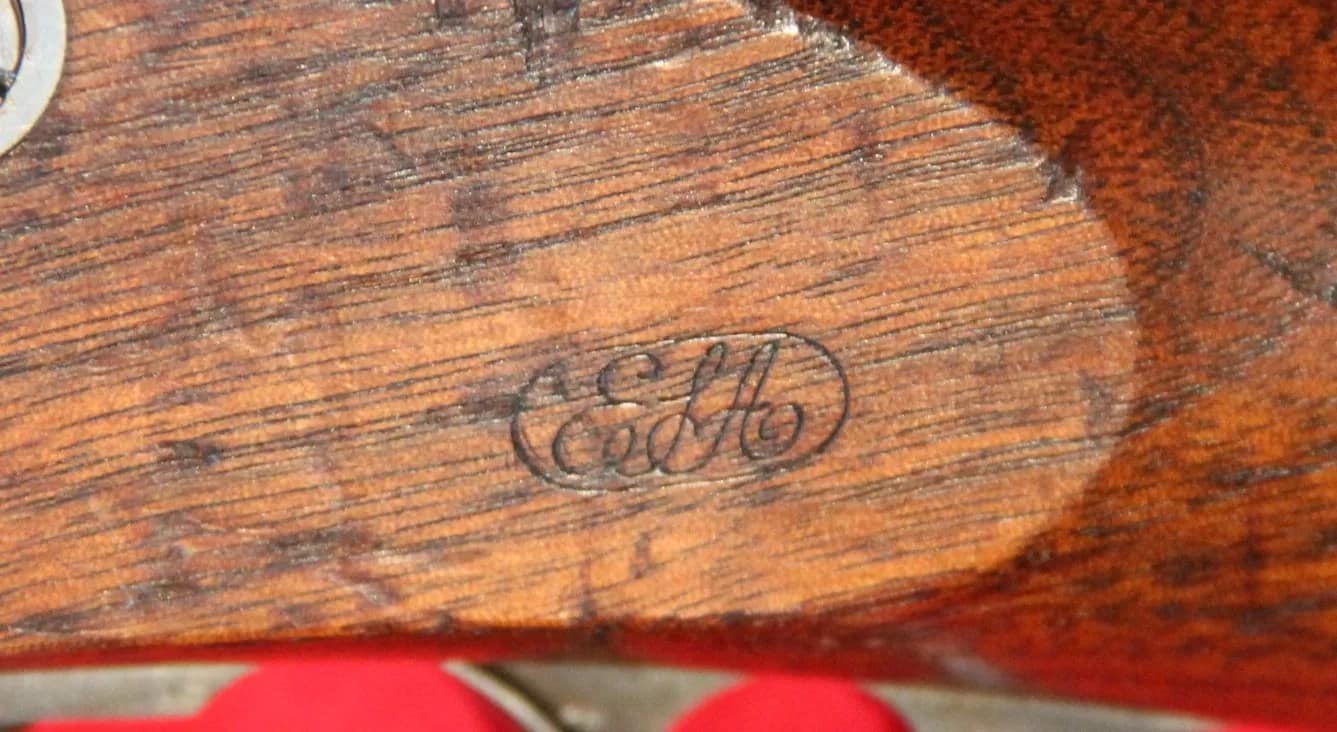
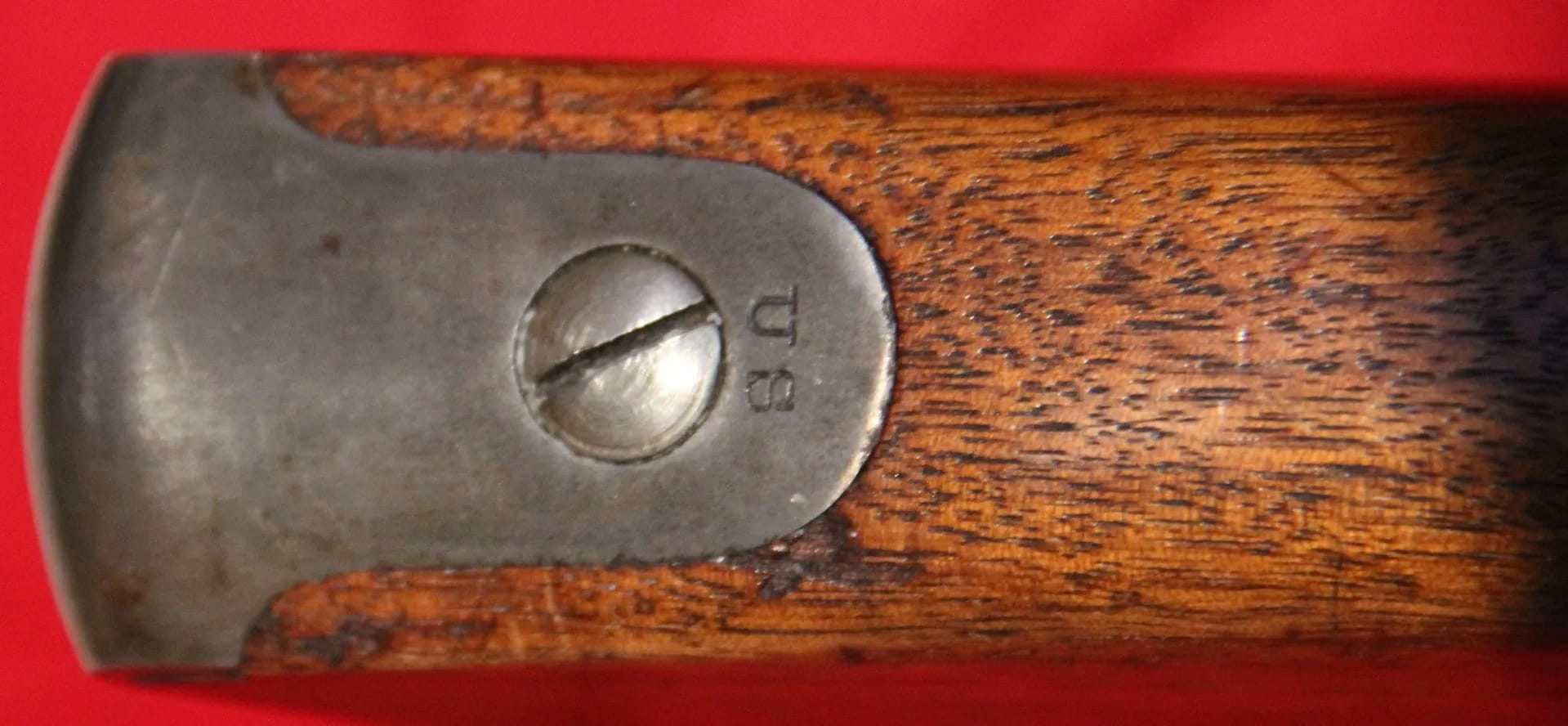
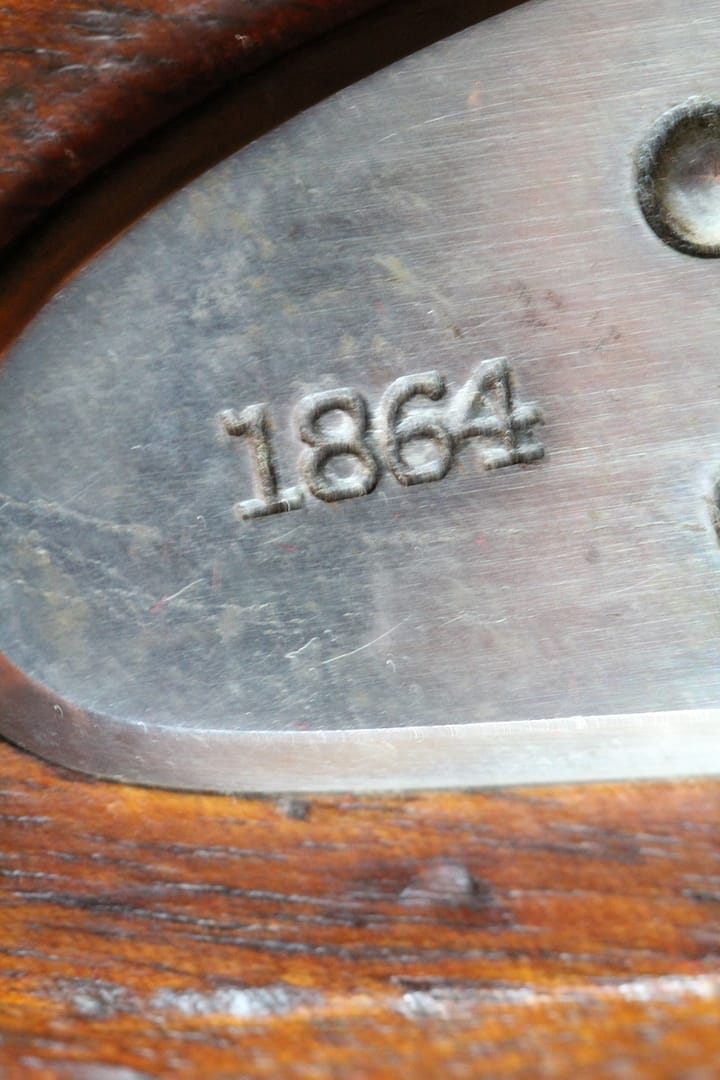
Confederate 1861 Richmond Type II Rifle-Musket, from my personal collection.
The 1861 Richmond Type II Rifle-Musket was produced at the Confederate Richmond Armory using machinery captured from the U.S. Armory at Harpers Ferry in 1861. A .58-calibre percussion arm based on the U.S. Model 1861, it featured a distinctive humped lockplate leftover from the original M1855 Maynard tape system, and simplified furniture. Type II rifles incorporated local manufacturing variations due to wartime shortages. Issued widely to Army of Northern Virginia infantry, the Richmond rifle-musket was one of the Confederacy’s most important domestically produced long arms.


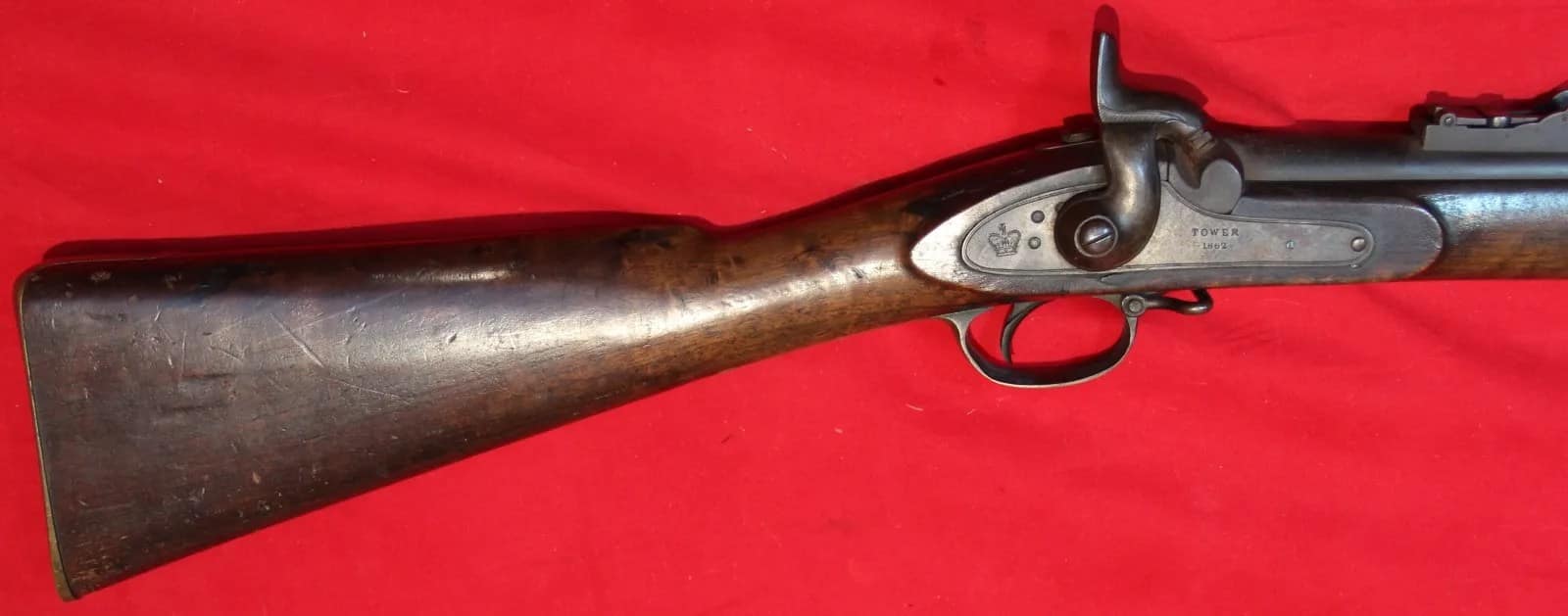
Pattern 1853 Enfield Rifle-Musket, from my personal collection.
The Pattern 1853 Enfield was a muzzle-loading percussion rifle-musket of .577 calibre, manufactured at the Royal Small Arms Factory, Enfield, and by numerous British contractors. It fired a conical Minié-type bullet and featured rifled grooves that greatly improved accuracy over earlier smoothbore muskets. Widely exported, it became one of the most important infantry weapons of the mid-19th century and saw extensive service with both Union and Confederate forces during the American Civil War, as well as in British imperial campaigns. The Enfield was valued for its accuracy, reliability, and effective range compared to earlier infantry arms.


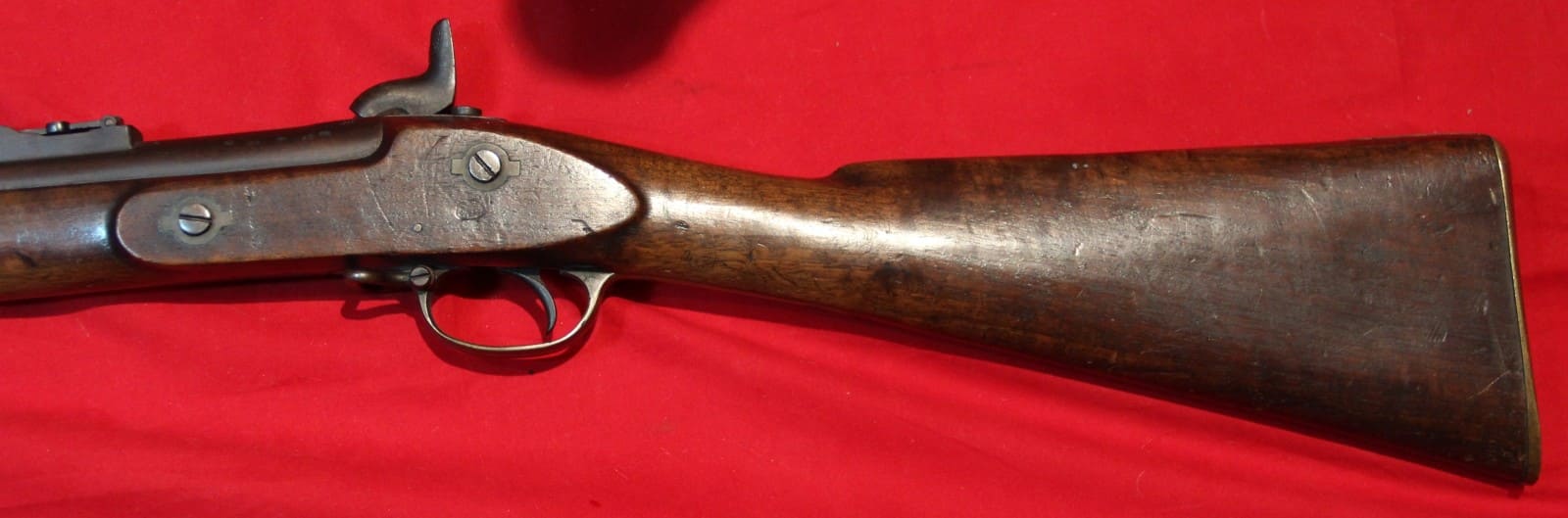
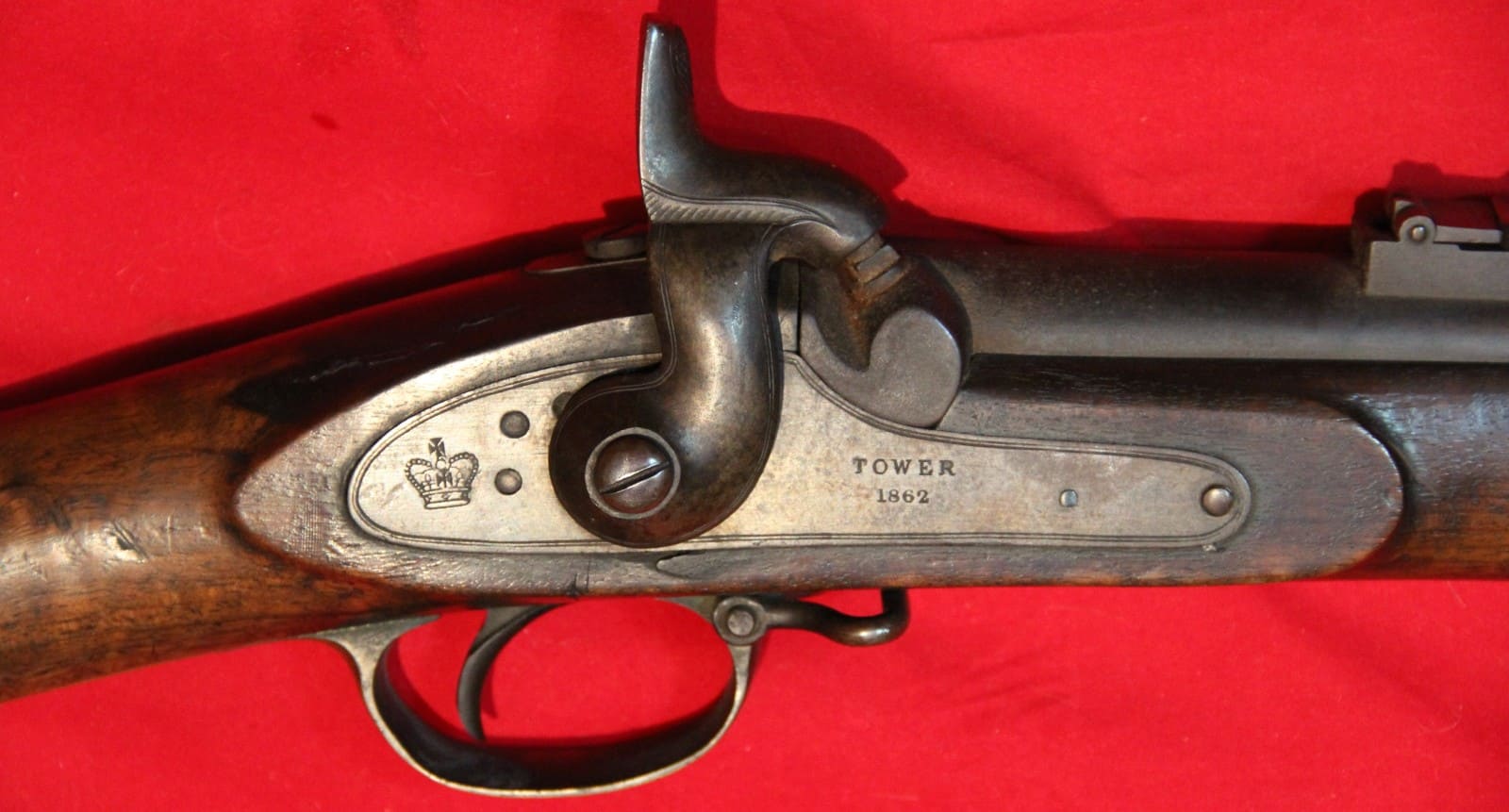
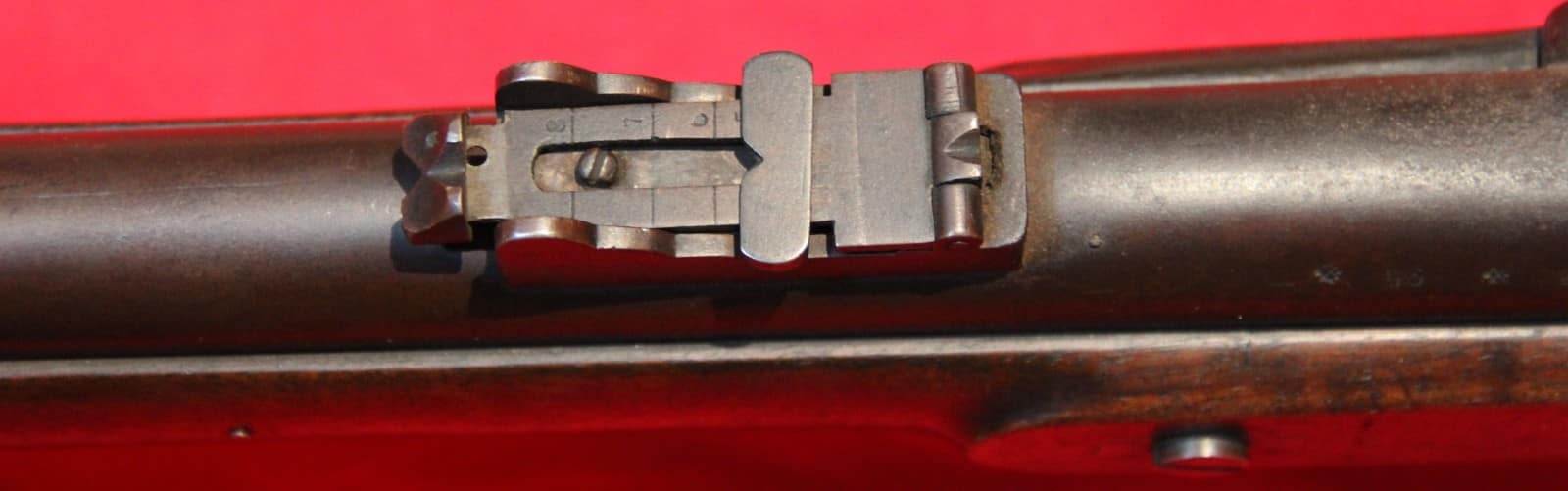
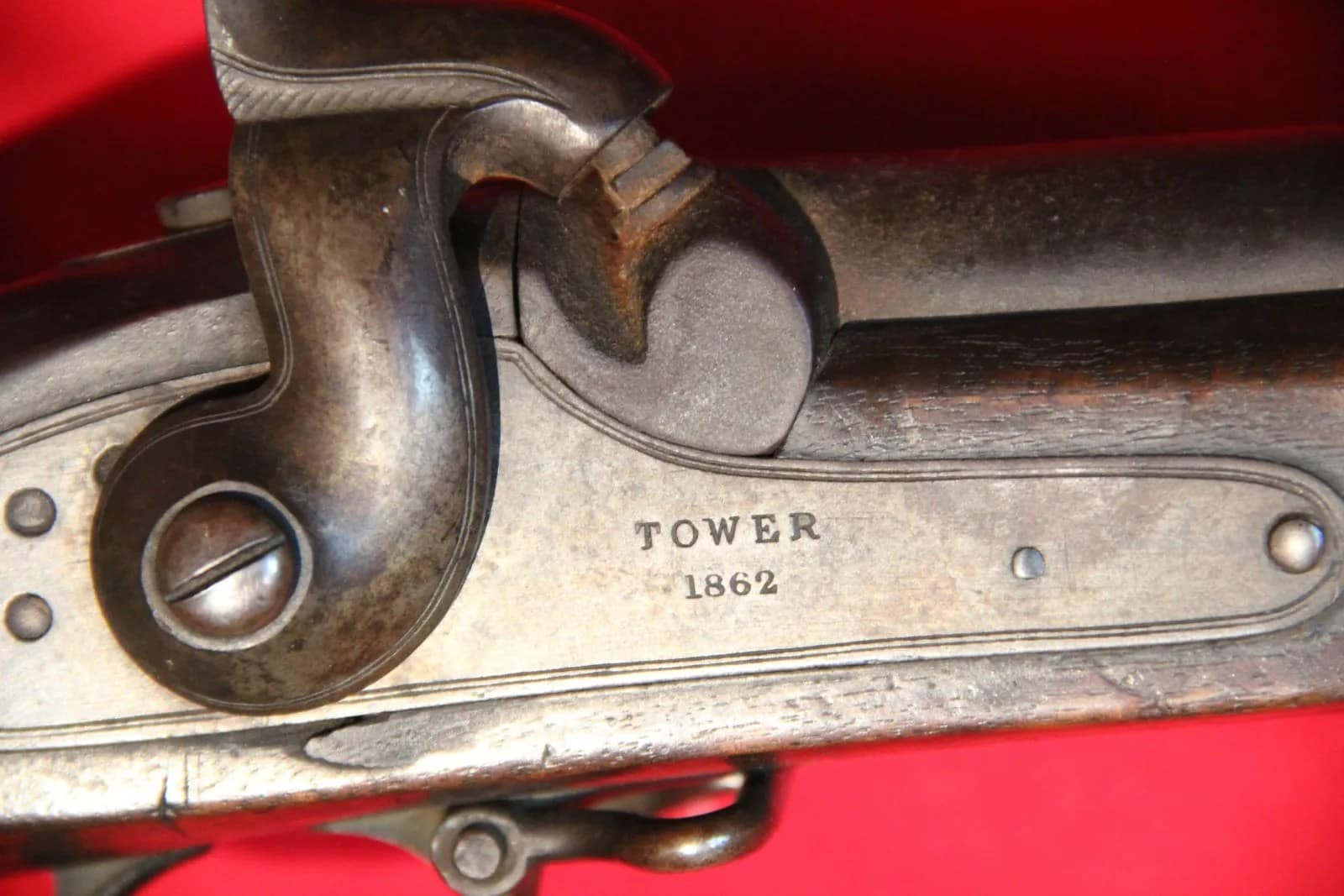
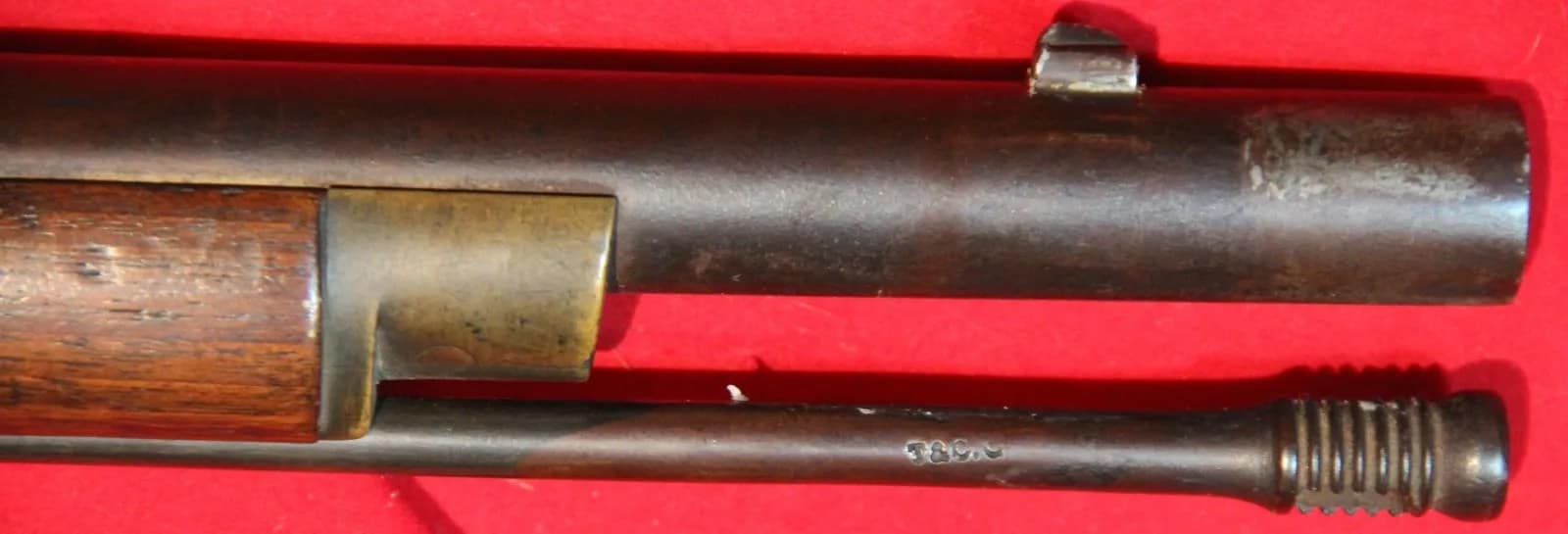
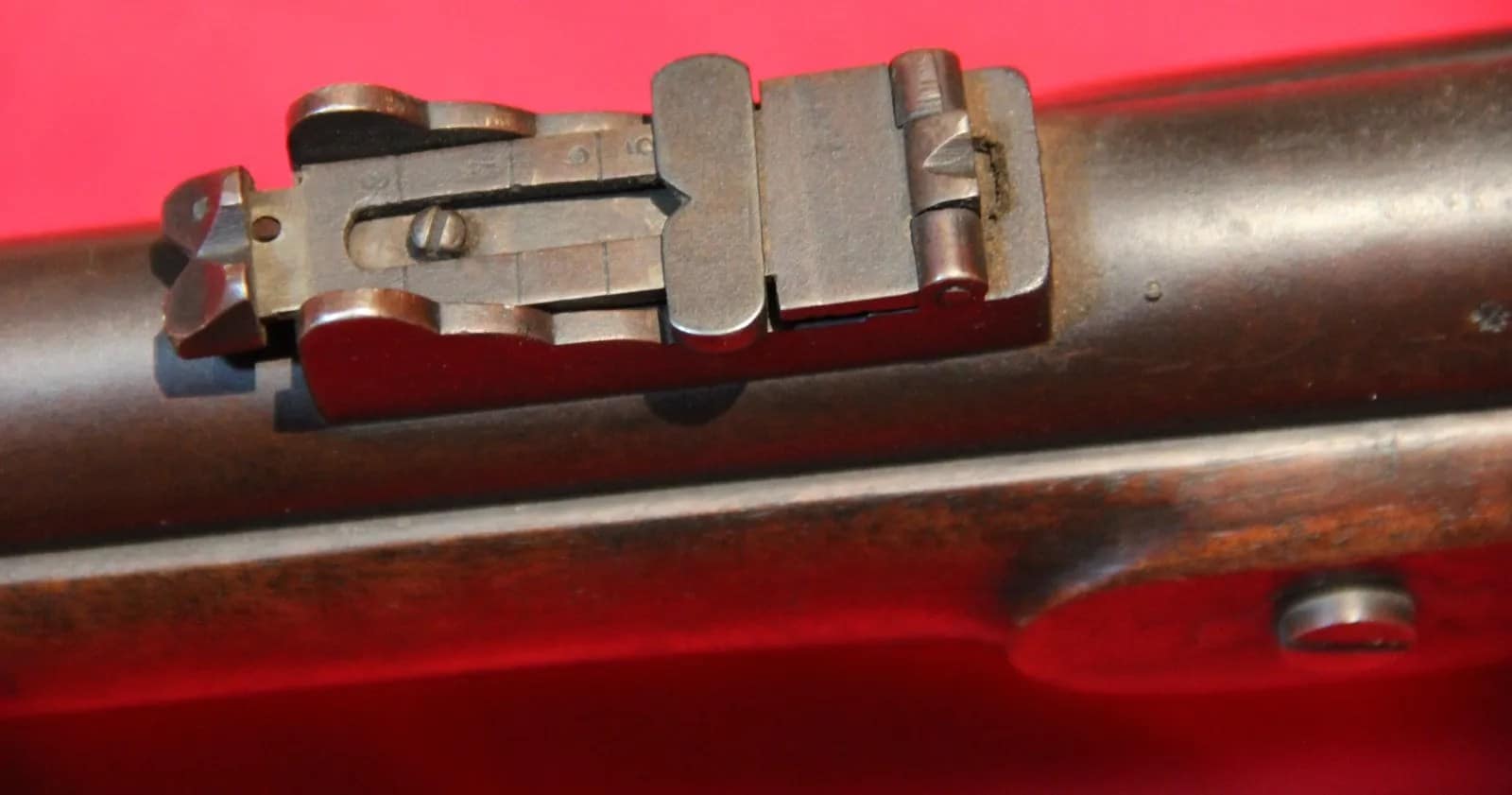
Prussian Model 1809/39 Infantry Musket (Flintlock Converted to Percussion), from my personal collection.
This Prussian Model 1809 musket, originally a flintlock, was manufactured at Danzig Armoury in 1828, and converted to percussion ignition in the 1839 modification programme to extend the service life of existing stocks. It was a smoothbore .71 calibre (≈18 mm) muzzle-loading musket firing a round ball or buck-and-ball charge. Widely issued to Landwehr and reserve units, it saw extensive use in the Western Theatre during the 1870–71 Franco-Prussian War. By this period it was generally unpopular, being heavy, slow to load, and markedly inferior in range and accuracy to modern breech-loaders.


Austrian Model 1854 ‘Lorenz’ Percussion Musket, 0.54″ caliber. From my personal collection.
The Austrian Model 1854 Lorenz was a .54-calibre percussion rifle-musket widely issued during the 1866 Austro-Prussian War and sold in large numbers to US arms dealers on both sides. Built with a distinctive lockplate and nosecap, it offered good accuracy but variable quality due to decentralised production. The Lorenz was Austria’s principal infantry weapon during the Austro-Prussian War, where the Prussian Dreyse needle rifle outclassed its slower-loading and rifled-musket design. Large numbers were later sold abroad, including to both Union and Confederate forces in the American Civil War.


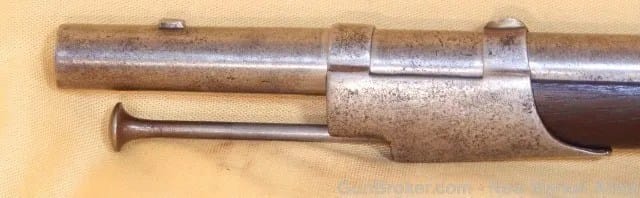
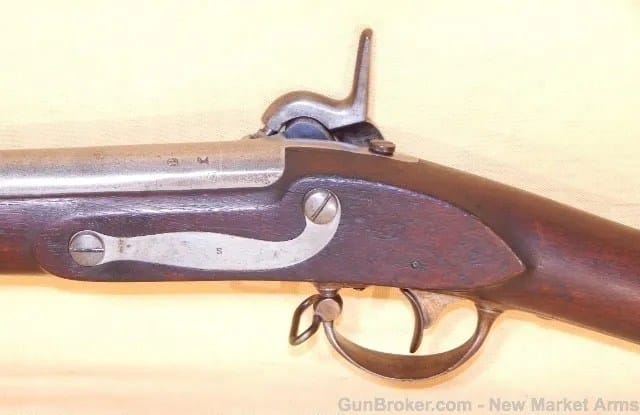
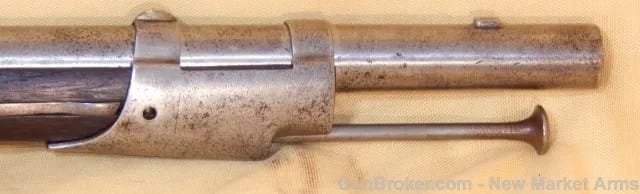
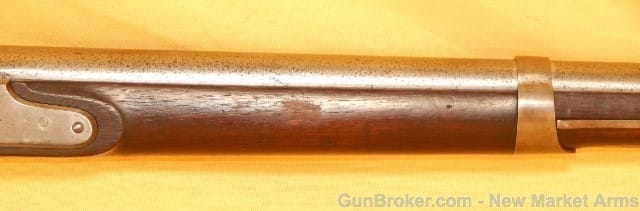
Remington Model 1857, Conversion from Model 1816, with Maynard Tape Primer, from my personal collection.
Originally manufactured as a flintlock Model 1816 musket, this arm was later converted to percussion ignition and fitted with the Maynard tape primer system under contract to E. Remington & Sons. Retaining a .69 calibre rifled barrel, it fired a 0.69 calibre minie ball. The tape primer, intended to provide automatic priming, proved fragile in service and was often supplemented with standard percussion caps. These converted muskets were issued in limited numbers in the years leading up to the American Civil War, representing a transitional step between flintlock muskets and purpose-built percussion arms.


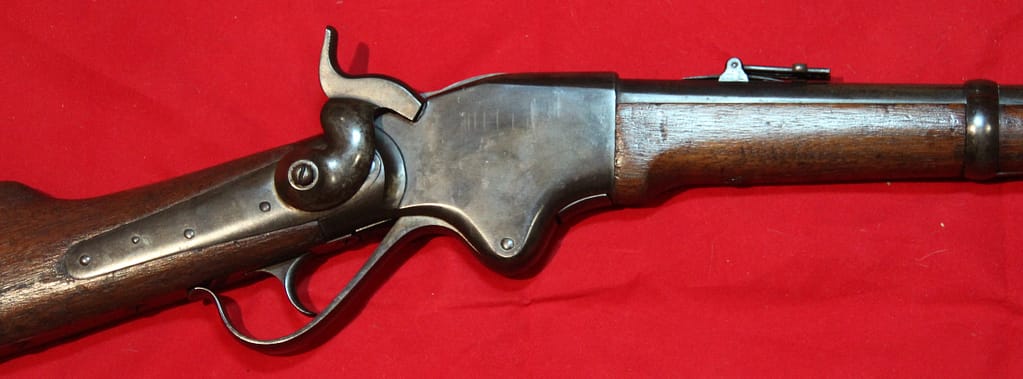
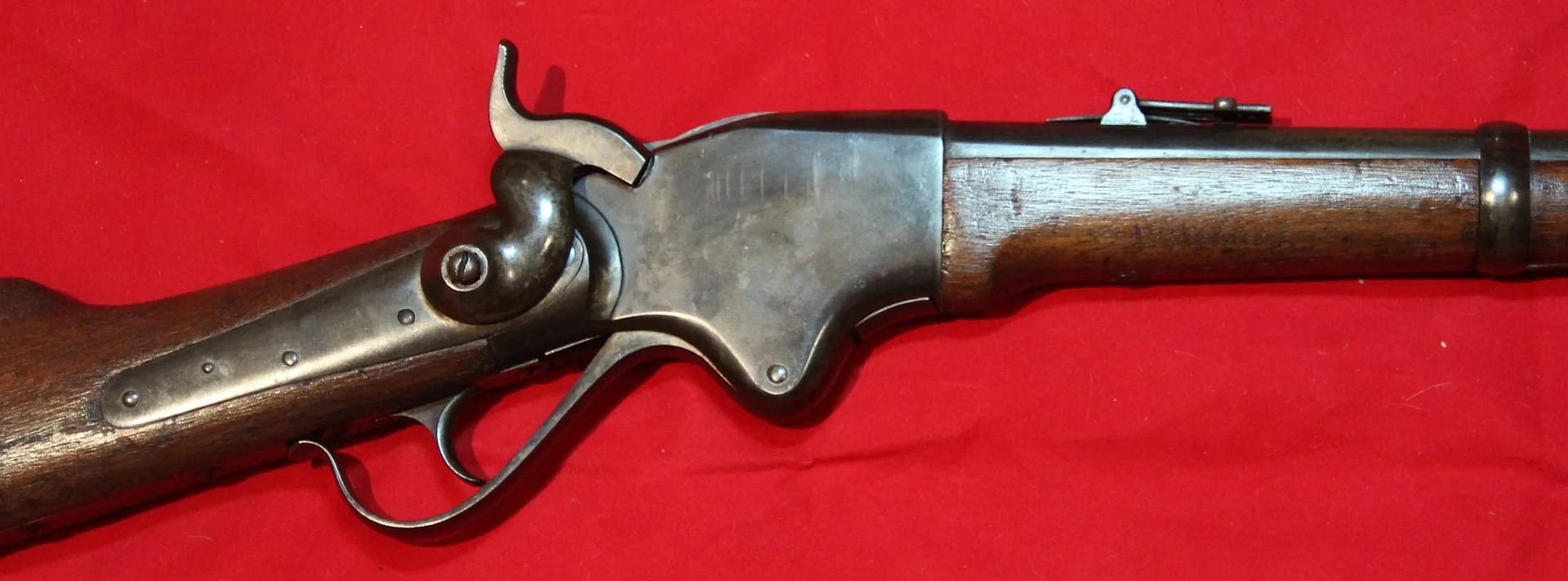
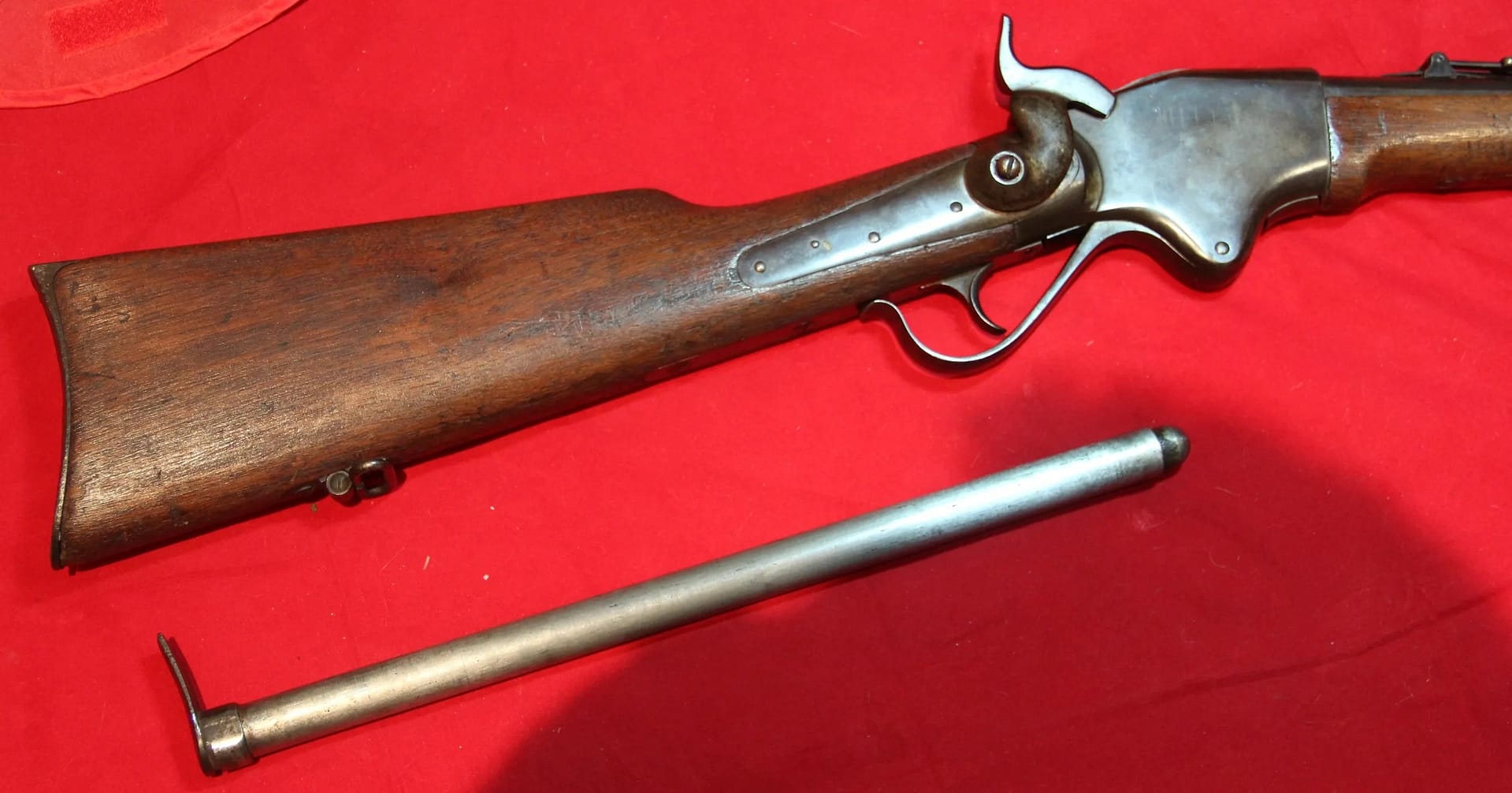
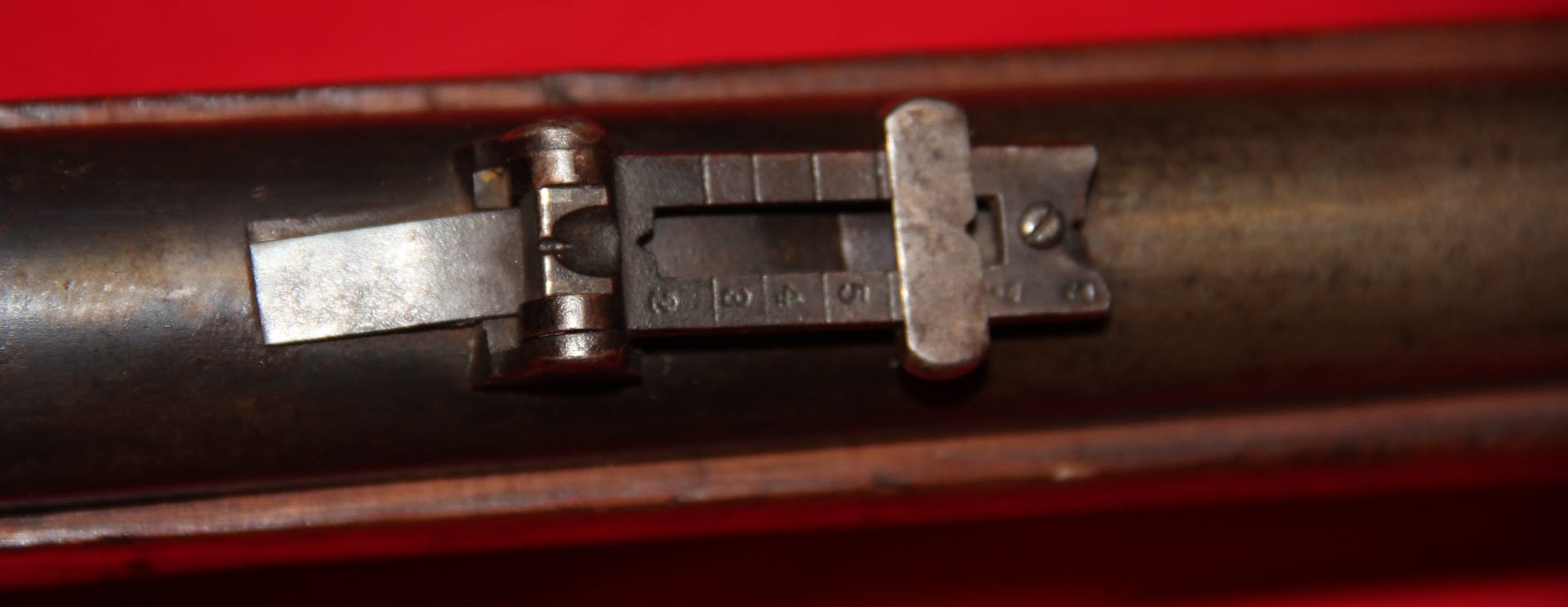
Model 1860 Spencer Army Rifle, from my personal collection.
The Spencer Model 1860 was a revolutionary lever-action, seven-shot repeating rifle firing a 0.56″ calibre metallic rimfire cartridge. Its magazine, located in the buttstock, allowed rapid, sustained fire far superior to contemporary muzzle-loaders. Adopted by Union cavalry and specialised infantry units, the Spencer proved decisive at battles such as Hoover’s Gap and Nashville. Robust, reliable, and simple to operate, it represented the technological leap that helped reshape late-war U.S. small-arms doctrine.




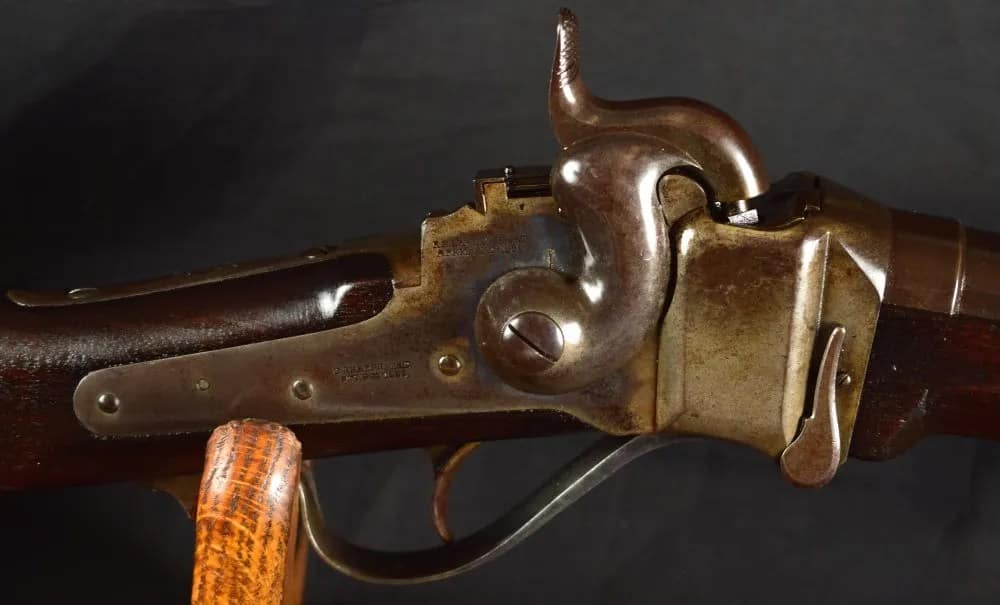
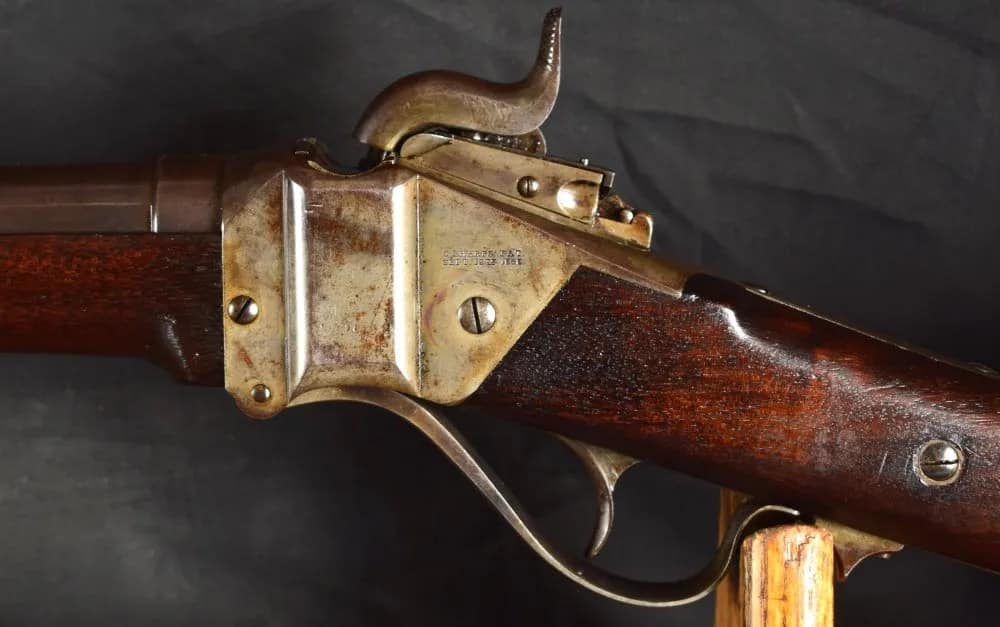
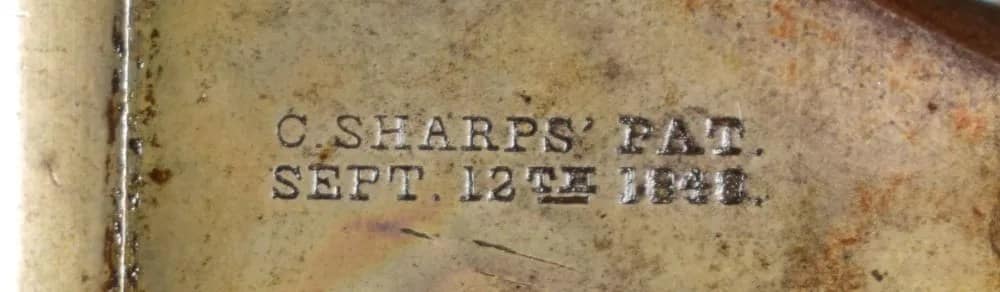
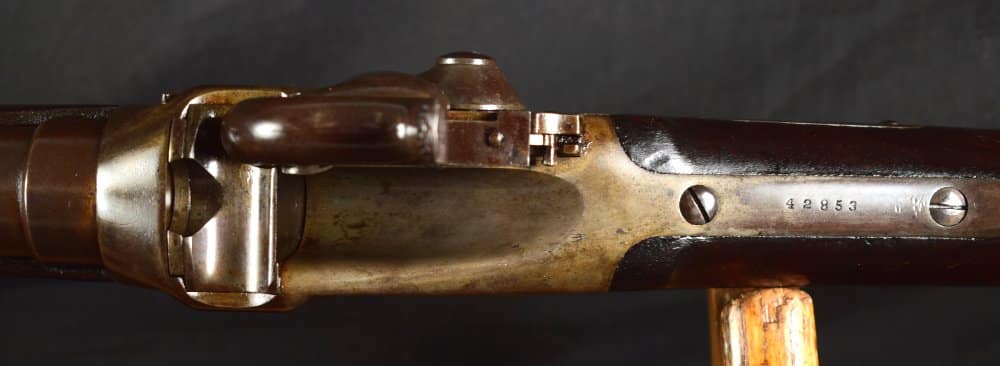
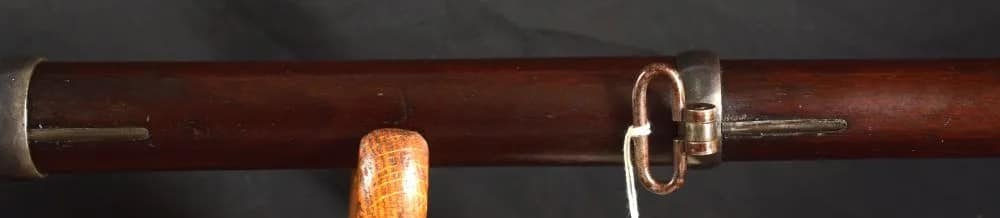
Sharps New Model 1859 3-band Rifle, from my personal collection.
The Sharps New Model 1859 was a falling-block breechloader prized for its accuracy, speed, and robust construction. The two-band rifle variant was issued to marksmen and specialised infantry, including early sharpshooter units. Firing linen or paper cartridges ignited by a pellet primer system, it delivered high rates of fire and precision at extended ranges. Sharps rifles saw extensive service in the Army of the Potomac and during Western campaigns.


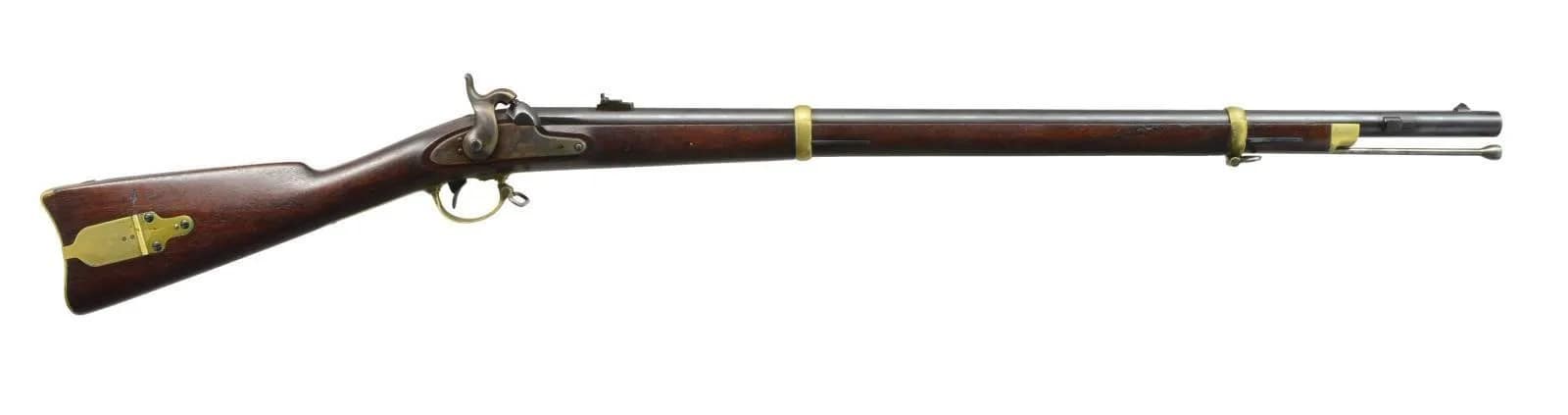
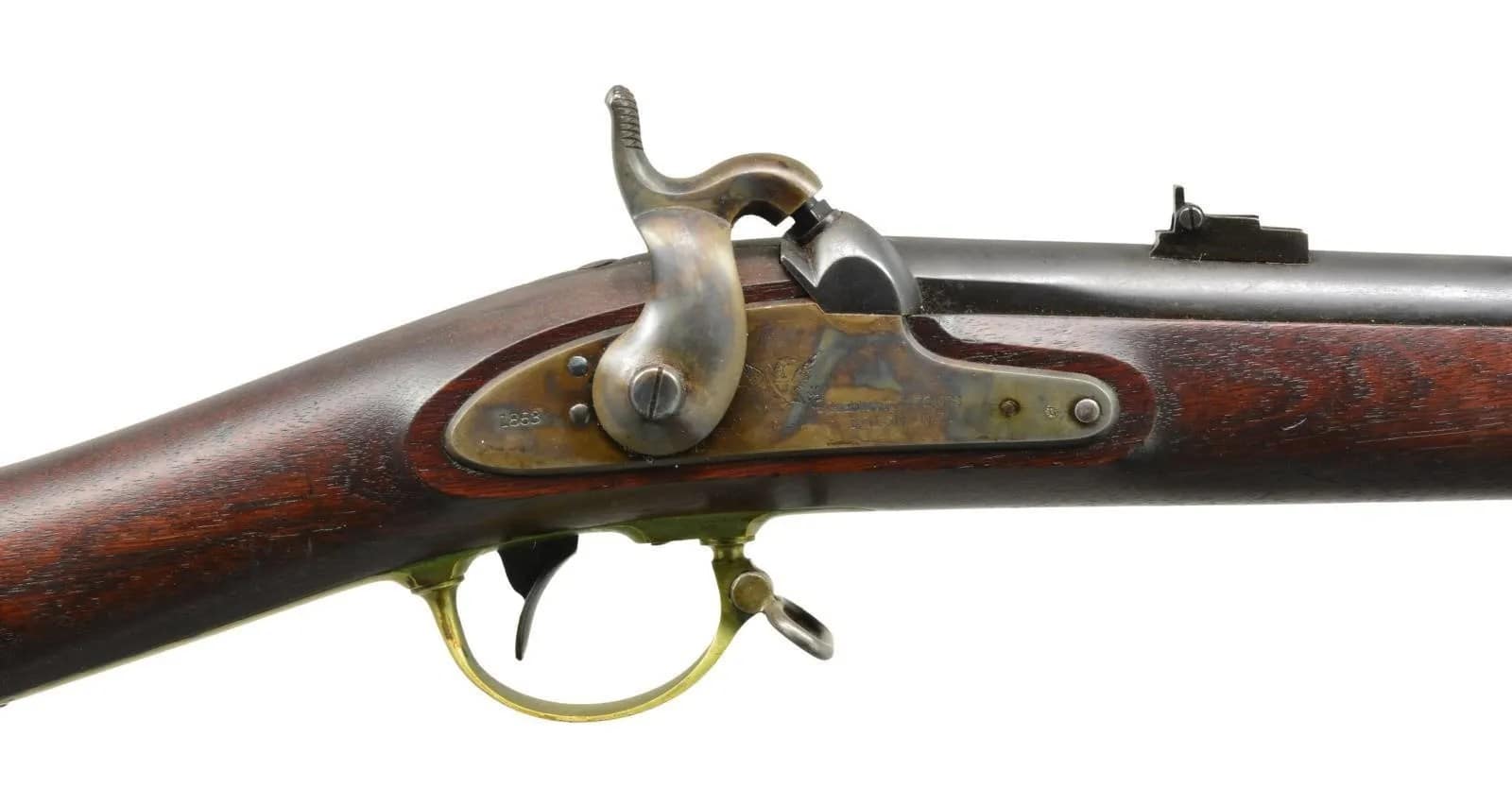
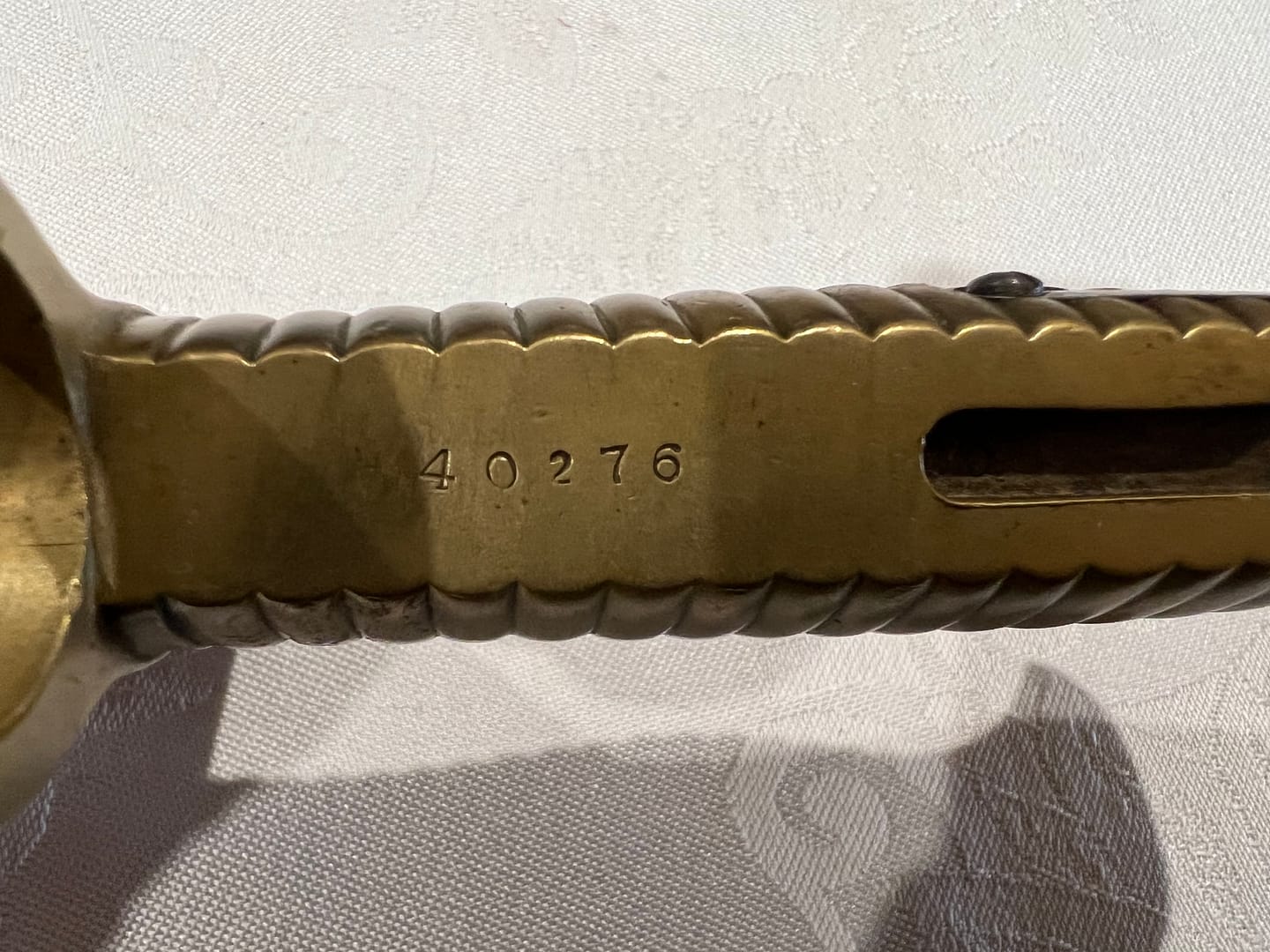
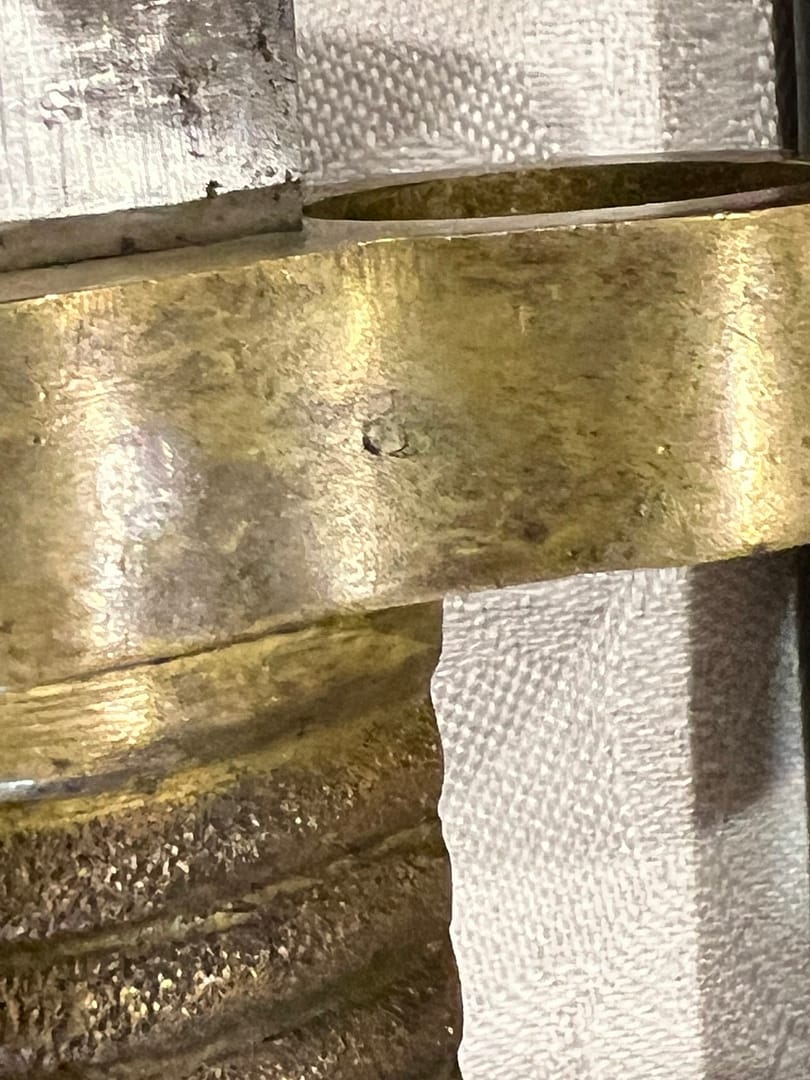
Remington Model 1863 “Zouave” Rifle & bayonet, from my personal collection.
The Remington Model 1863 rifle was a muzzle-loading percussion infantry rifle of .58 calibre, manufactured by E. Remington & Sons under U.S. government contract. Based on earlier U.S. rifle patterns, it featured a heavy barrel and was intended for issue to specialised units. Although well made and accurate, large numbers saw little or no field service as more standardised rifle-muskets such as the Springfield Model 1861 met most wartime needs. As a result, many examples survive today in excellent or unissued condition, having remained in storage rather than being widely issued during the war. This example is in unissued condition, retaing case colour on the lockplate and near 100% bluing on the barrel.

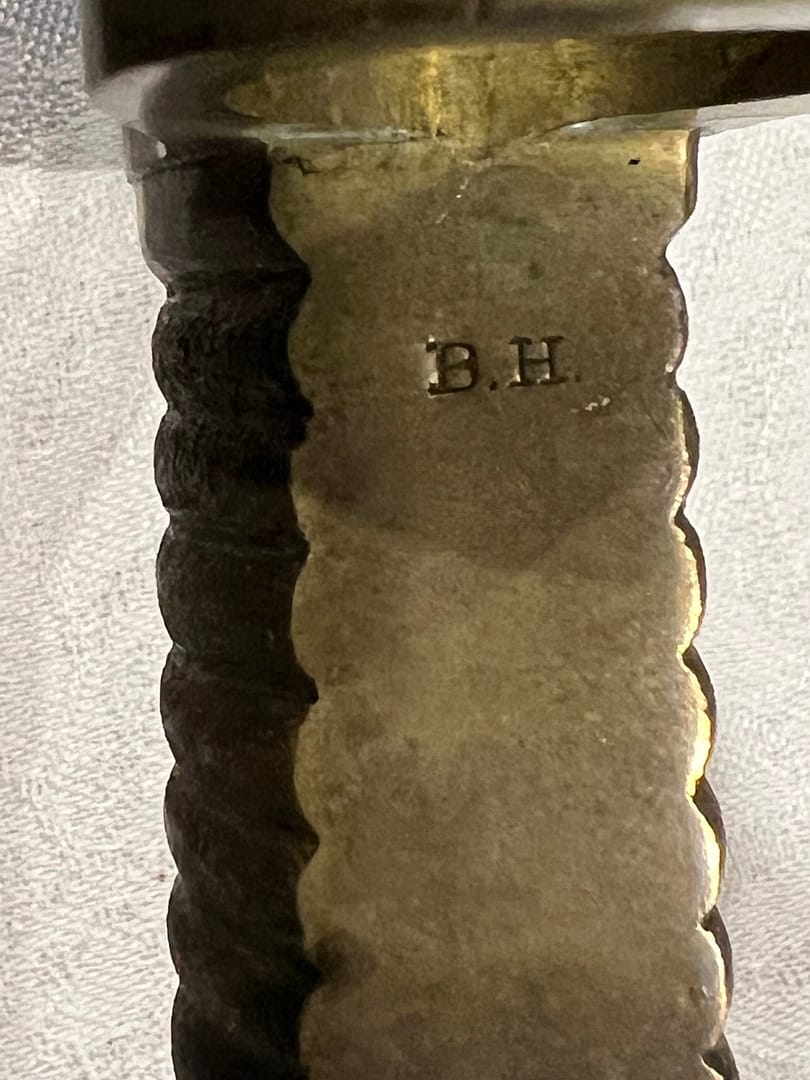
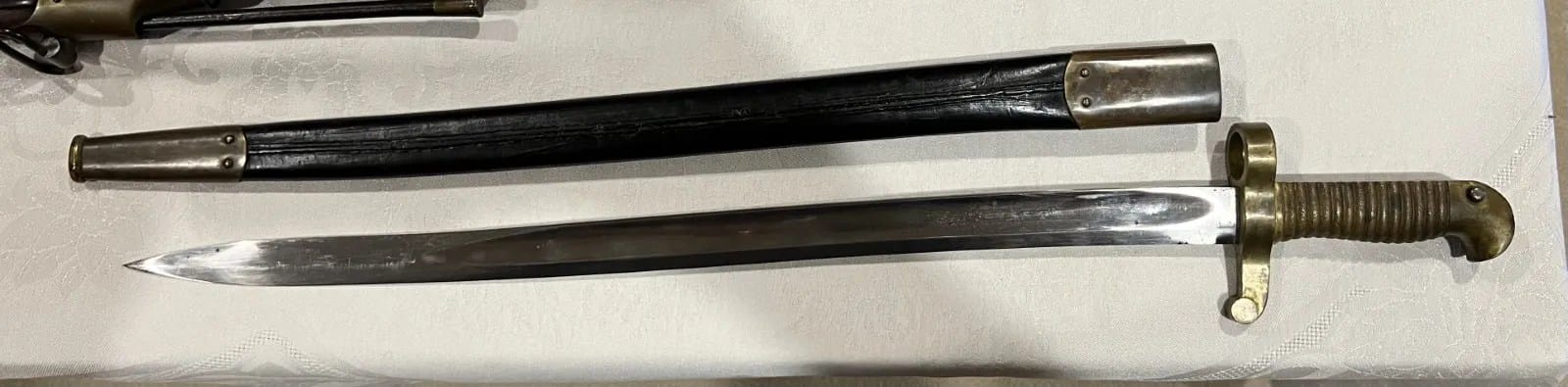
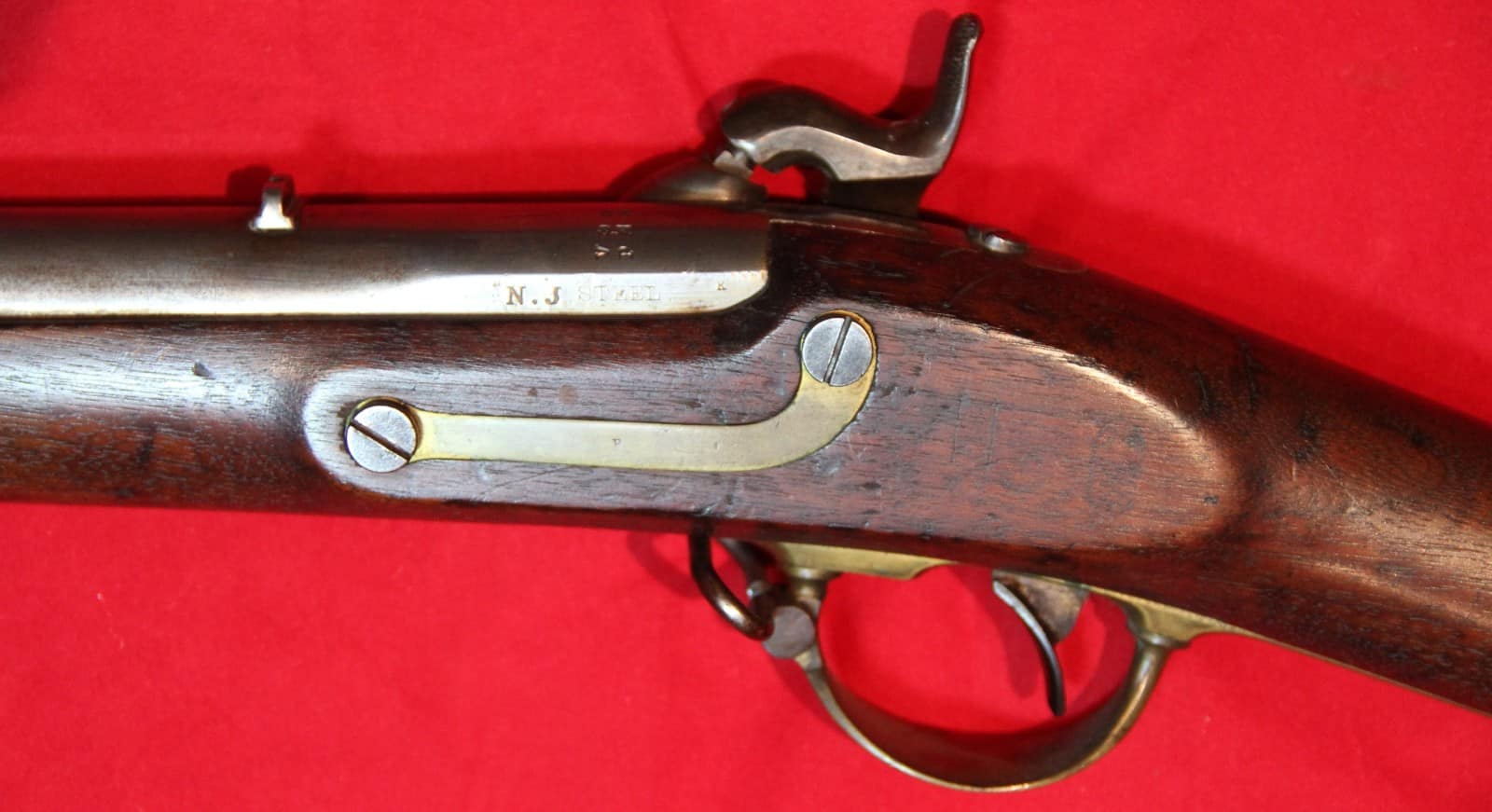
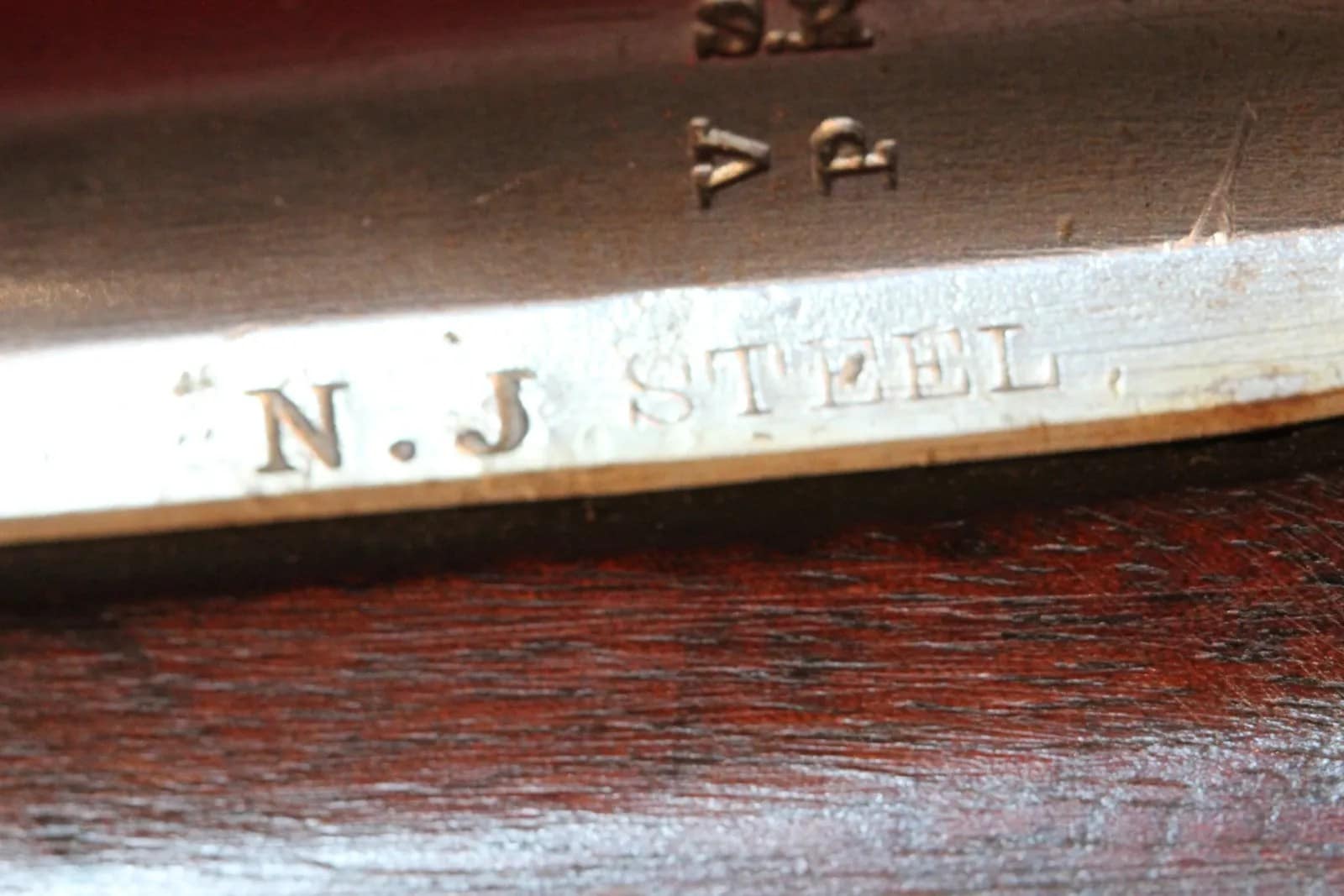
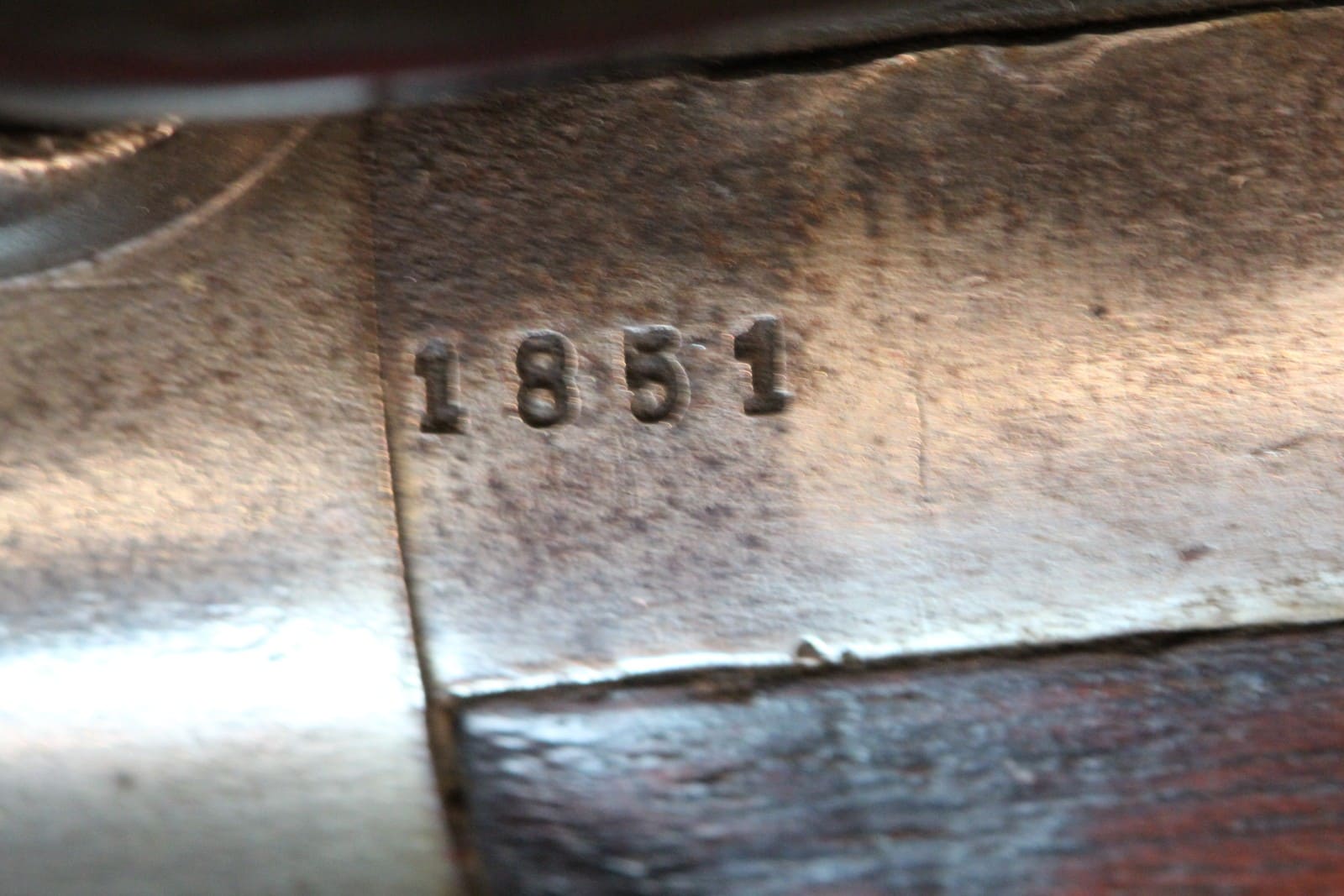
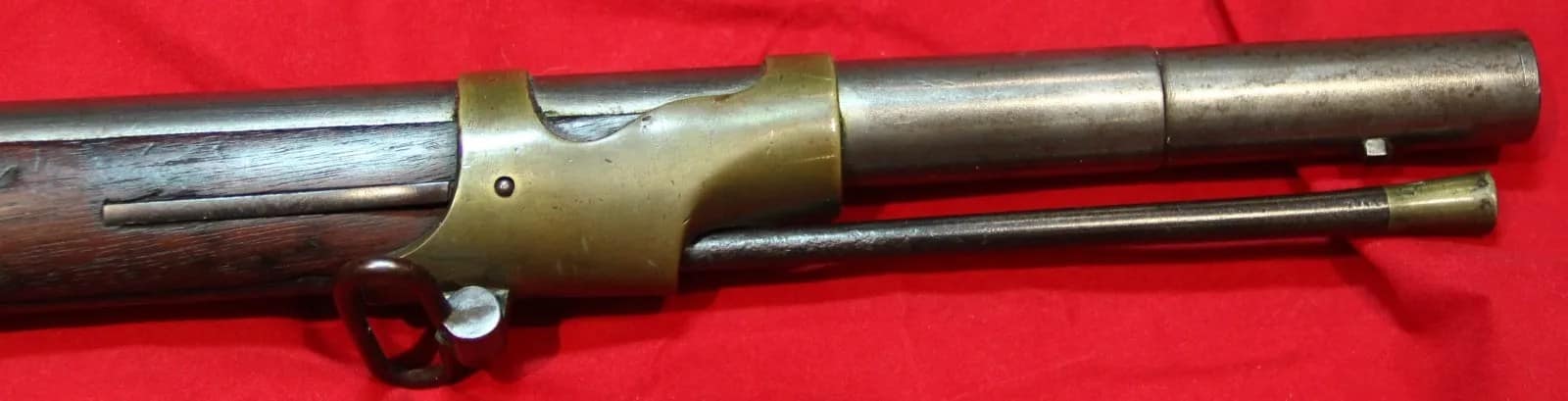
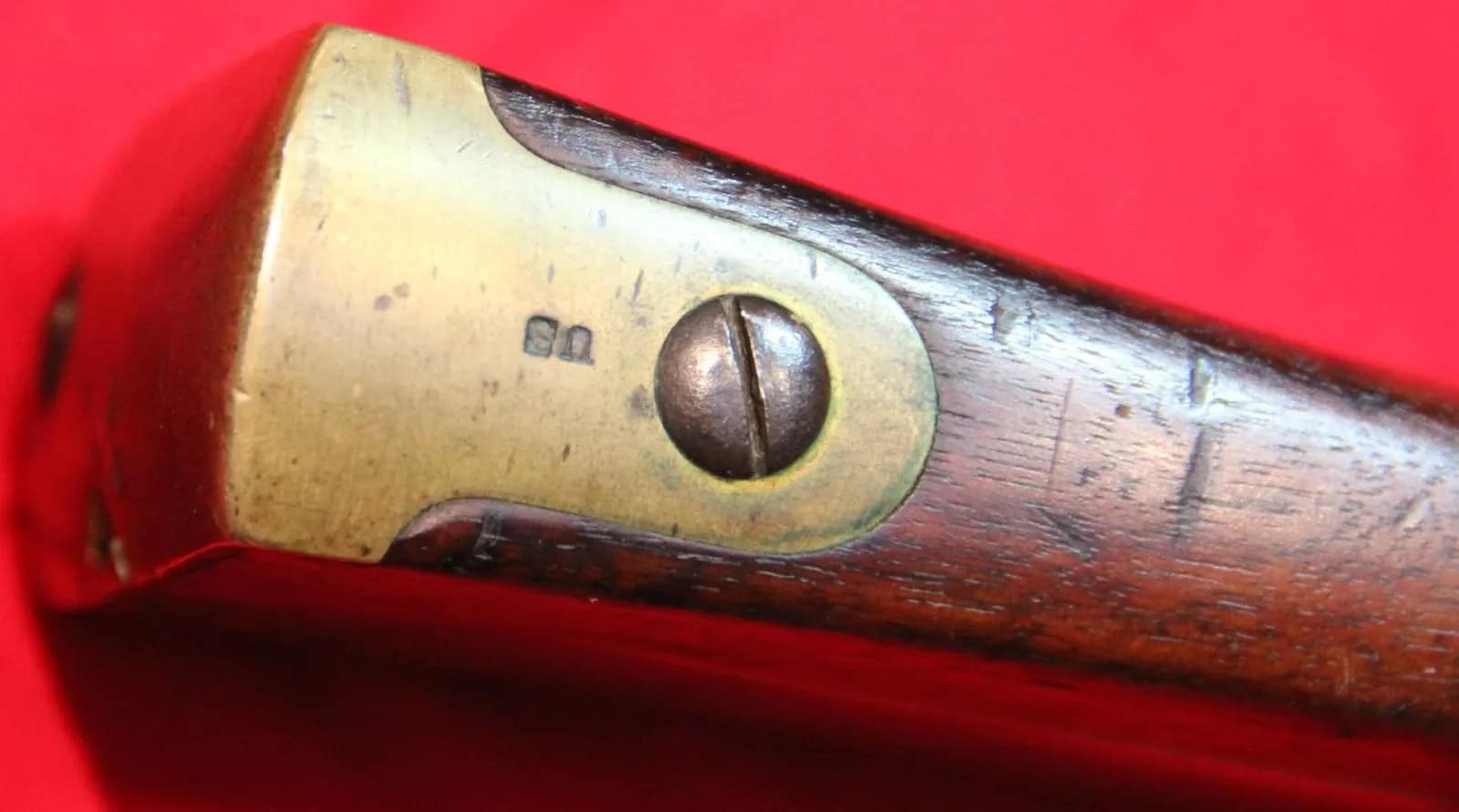
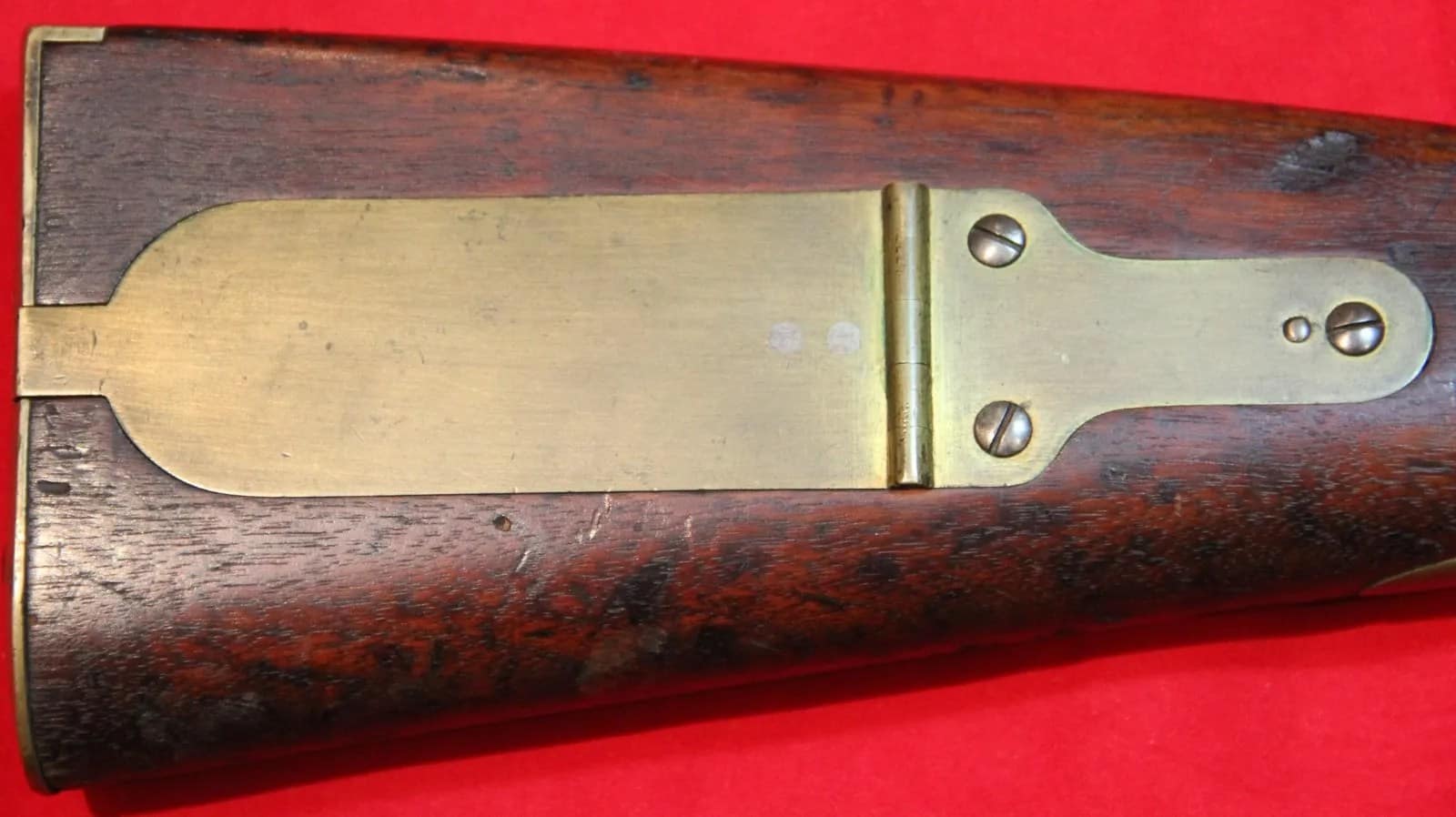
U.S. Model 1841 “Mississippi” Rifle, New Jersey contract. From my personal collection.
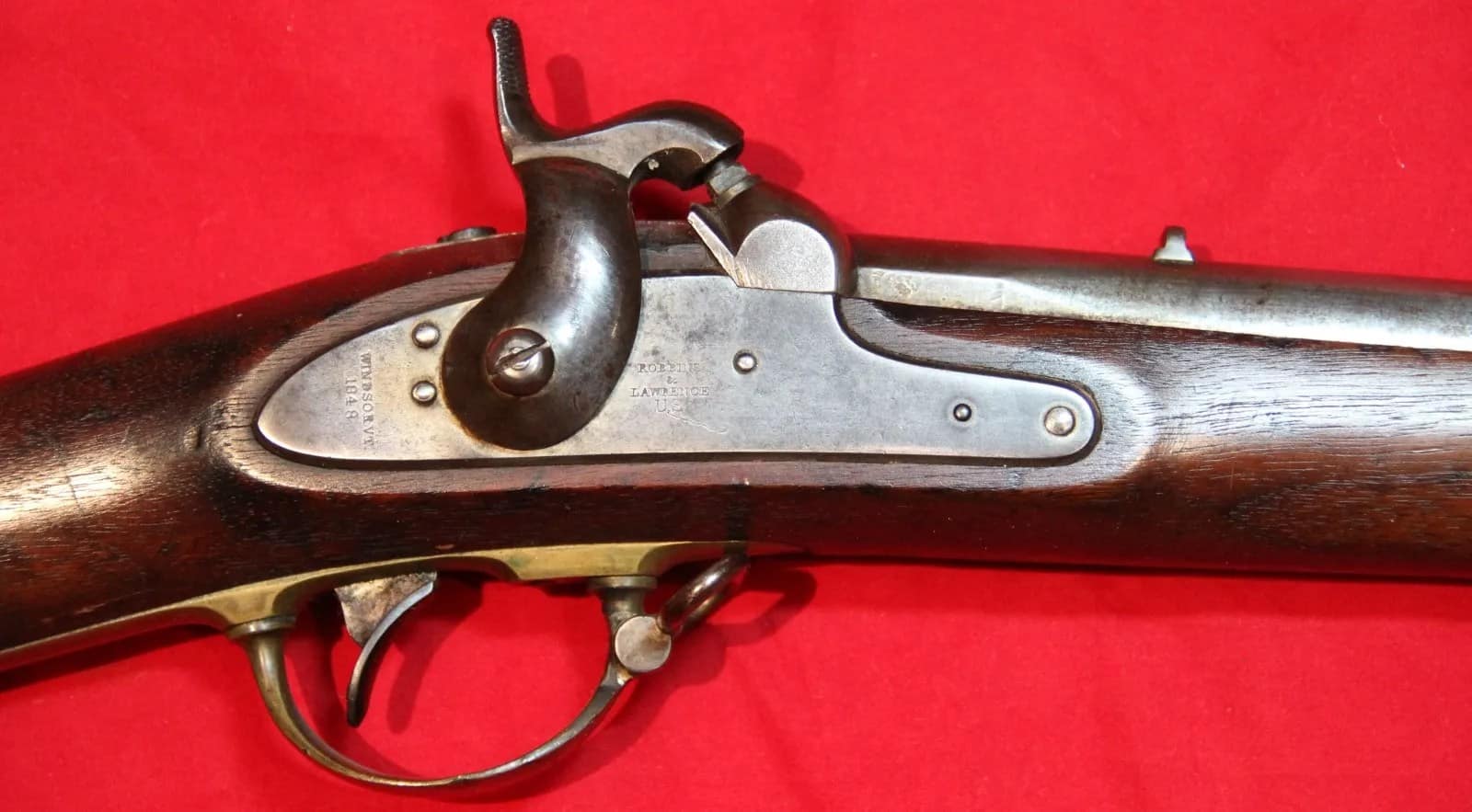
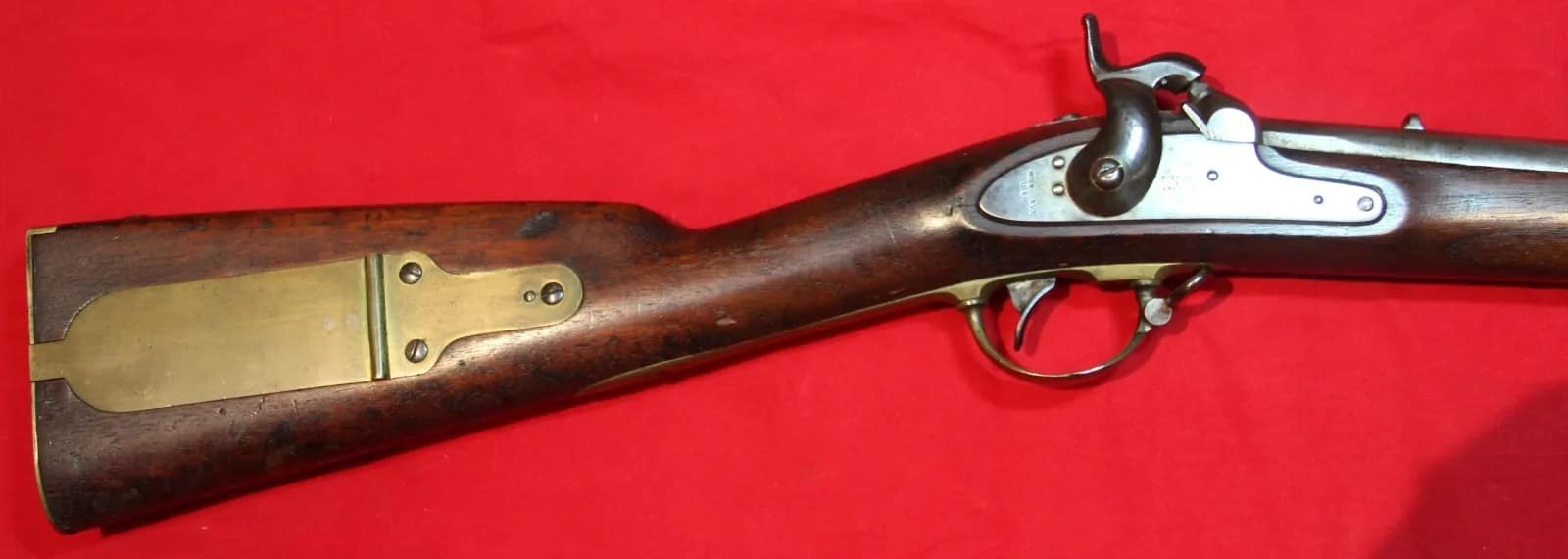
The U.S. Model 1841 rifle was a percussion muzzle-loading infantry rifle originally produced in .54 calibre, manufactured at Harpers Ferry and by several contractors. It fired a patched round ball or later a conical projectile after many examples were reamed to .58 calibre during the American Civil War. Known as the “Mississippi Rifle” after its association with Jefferson Davis’ regiment in the Mexican–American War, it was valued for its accuracy and robust construction. Many remained in service during the Civil War, particularly with volunteer and second-line units, reflecting the widespread use of earlier rifle patterns alongside more modern arms. The New Jersey contract Model 1841 rifles had their barrels turned down to accept bayonets for the Bavarian Model 1842 Musket with integrated frontsight, which New Jersey had acquired in large numbers – very hard to find now!


🧭 From Weapons to Battlefield Use
This page shows weapons and equipment of the American Civil War. All items are from my personal collection.
But what images and data don’t show is how these weapons were actually used on the ground—how weapon characteristics, tactics, innovation, terrain, and movement shaped their effectiveness in battle.
👉 That layer—how firepower, tactics, and terrain interact in real engagements—is explored in:
⚔️Battlefield Studies ◊ 💡Tactical Innovations ◊ 📝Field Notes
American Civil War Carbines
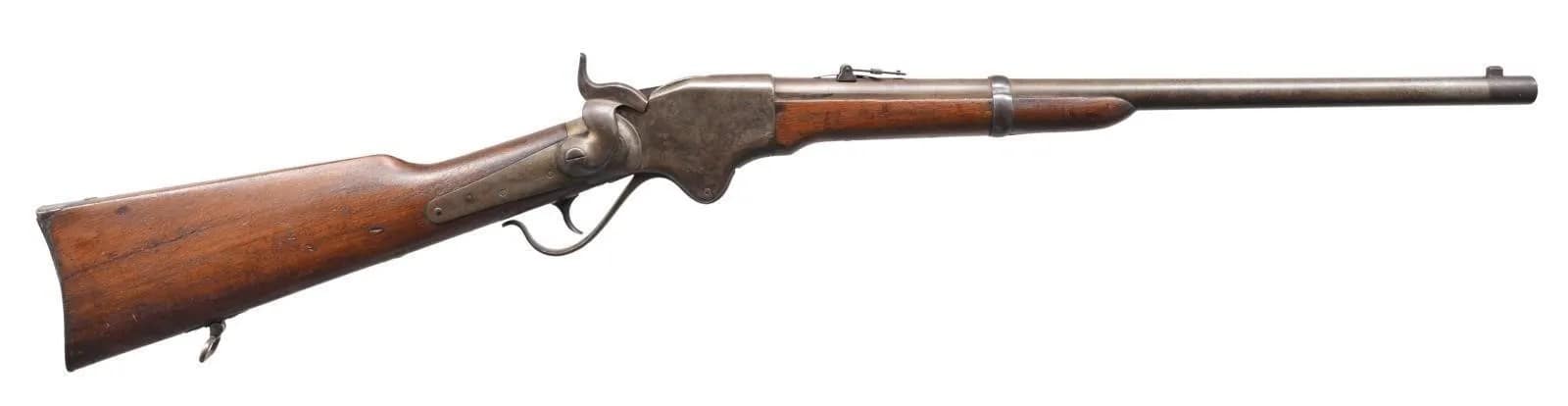
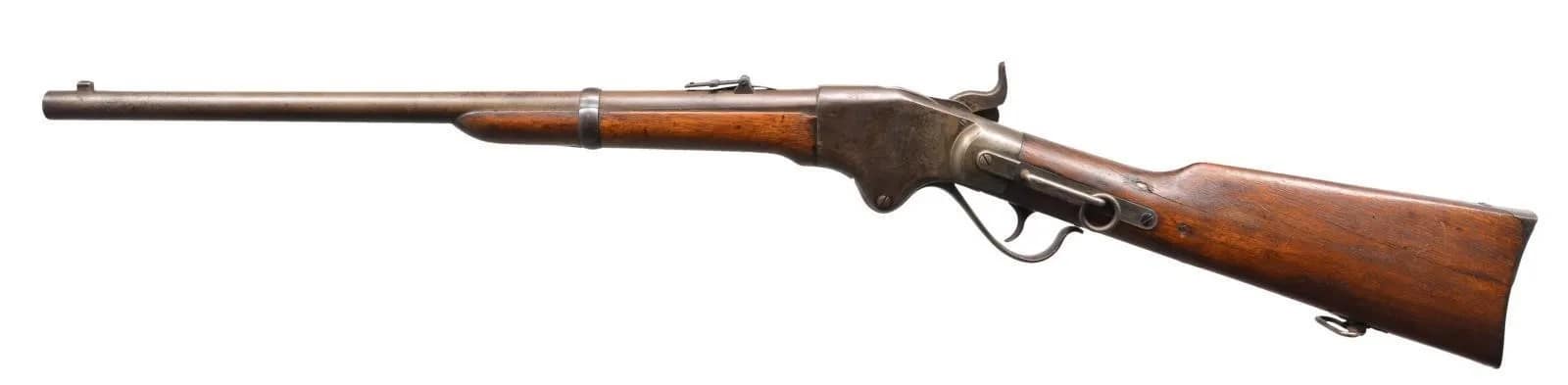
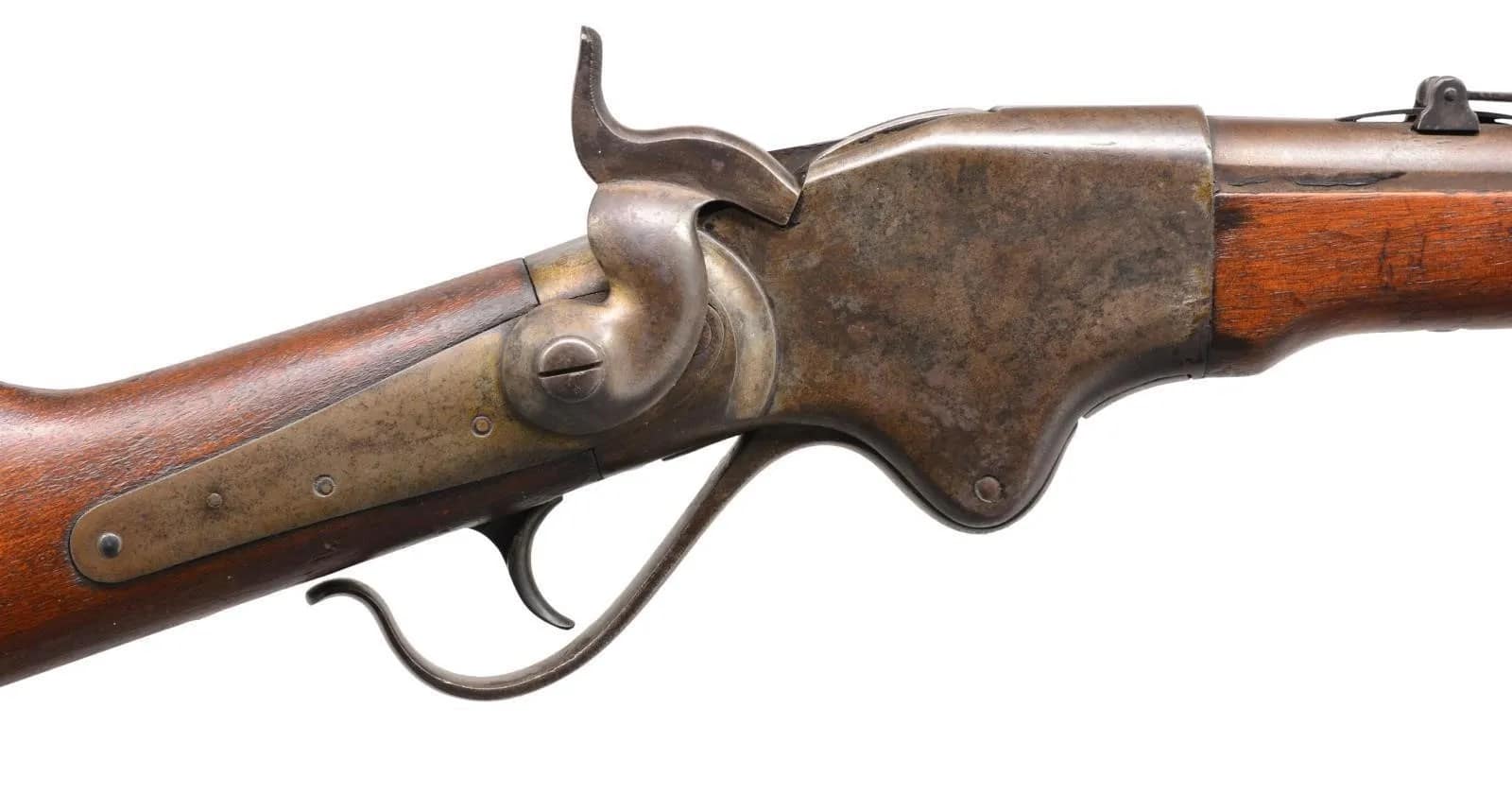
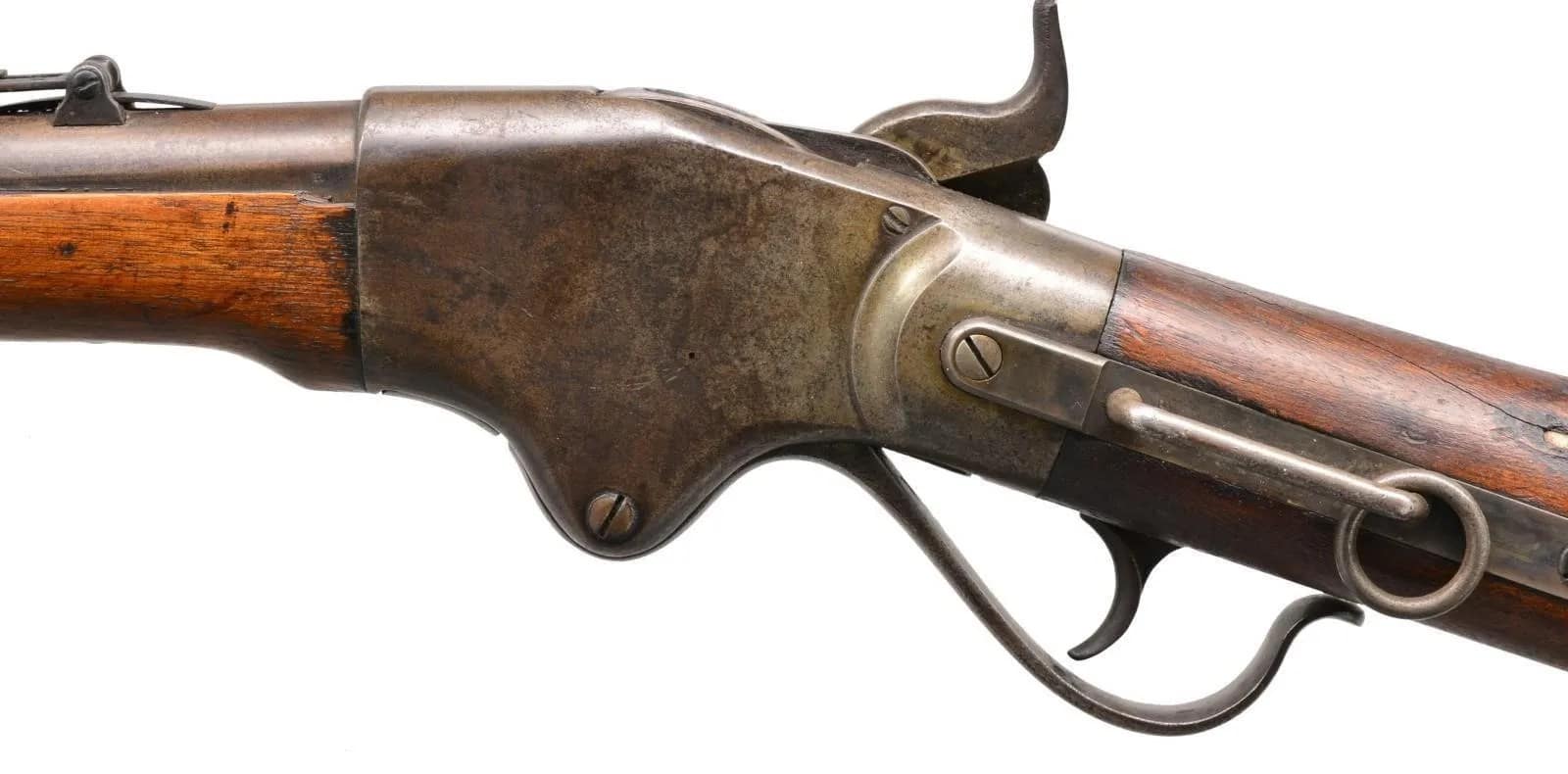
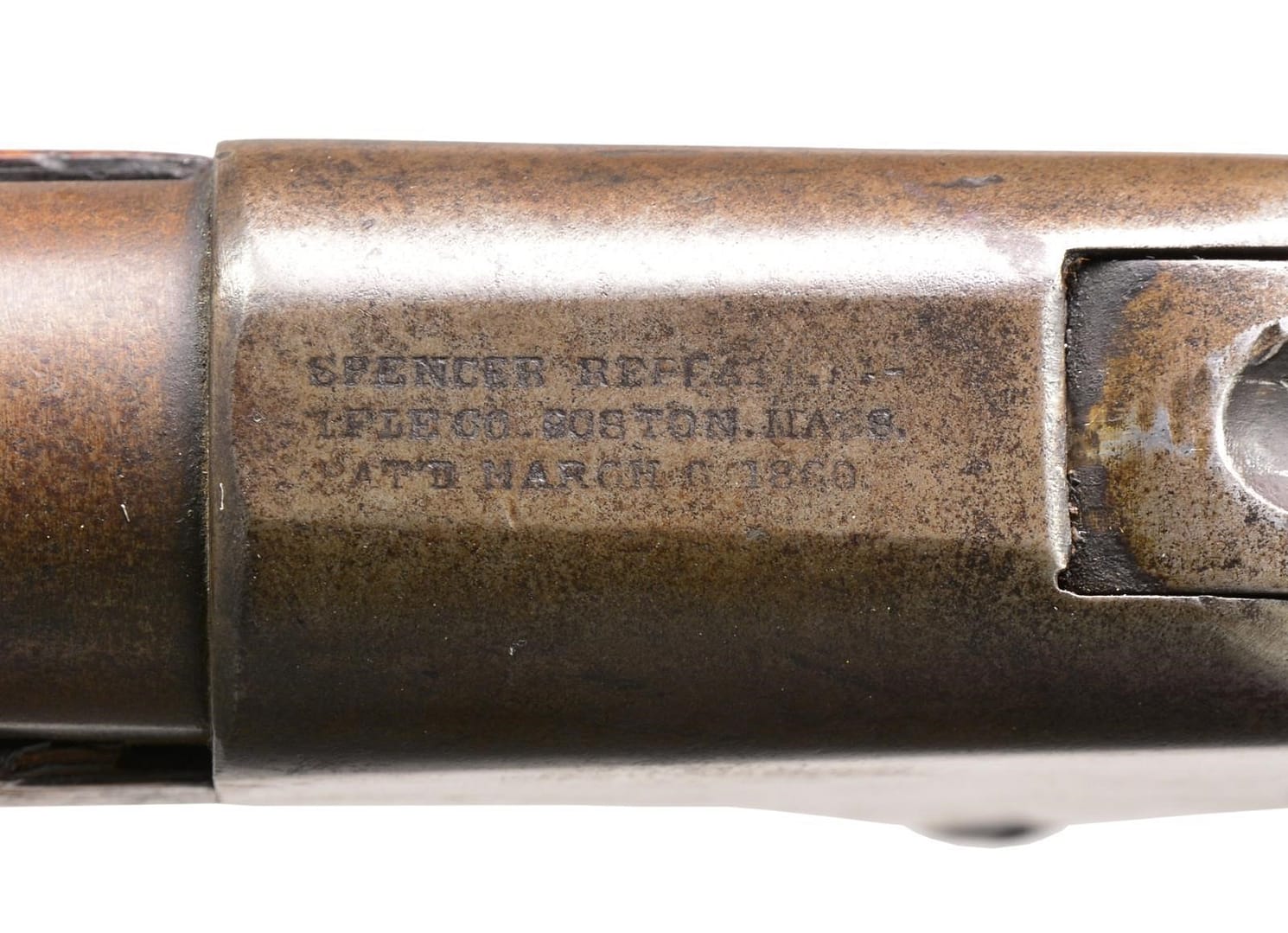
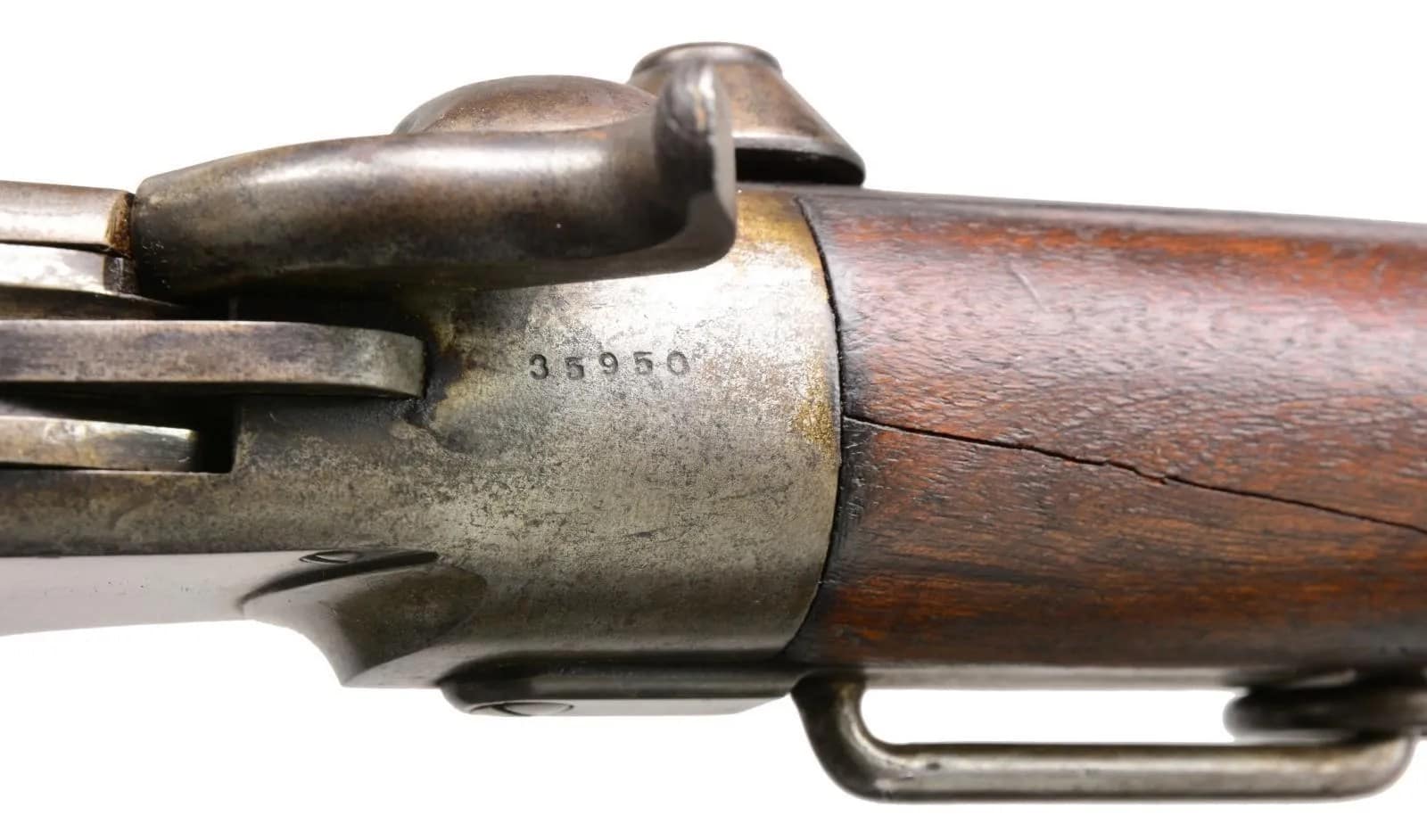
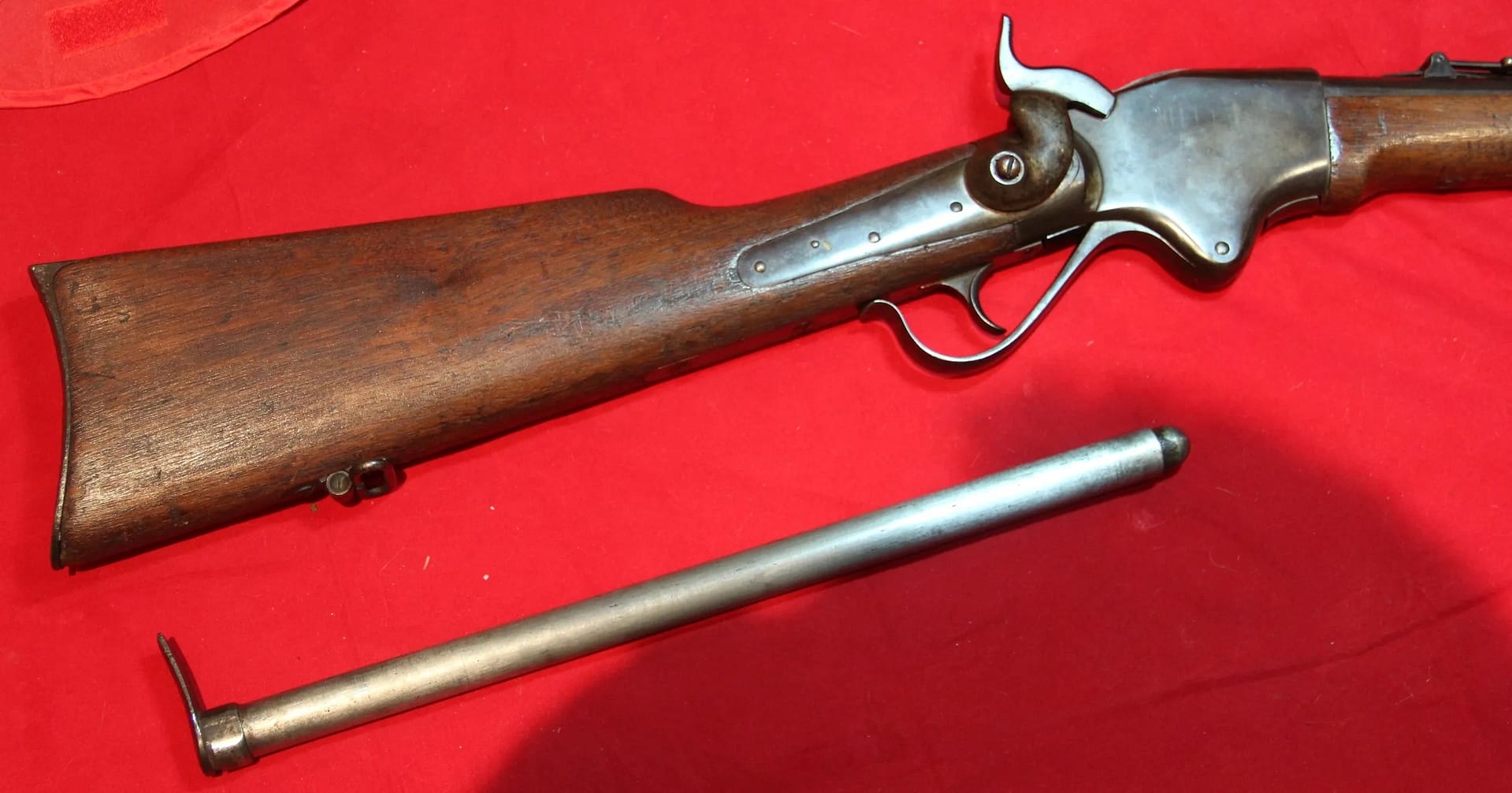
Model 1860 Spencer 7-shot Civil War Cavalry Carbine, from my personal collection.
The Spencer Model 1860 cavalry carbine was a lever-action, 7-shot repeating firearm chambered in .56-56 rimfire. Designed by Christopher Spencer, it offered Union cavalry an unprecedented rate of fire compared with muzzle-loading carbines. Cartridges were fed from a tubular magazine housed in the buttstock, allowing mounted troopers to deliver rapid, sustained volleys during charges or skirmishes. The Spencer saw extensive service with Federal cavalry from 1863 onward and played a decisive role in late-war mobile operations.
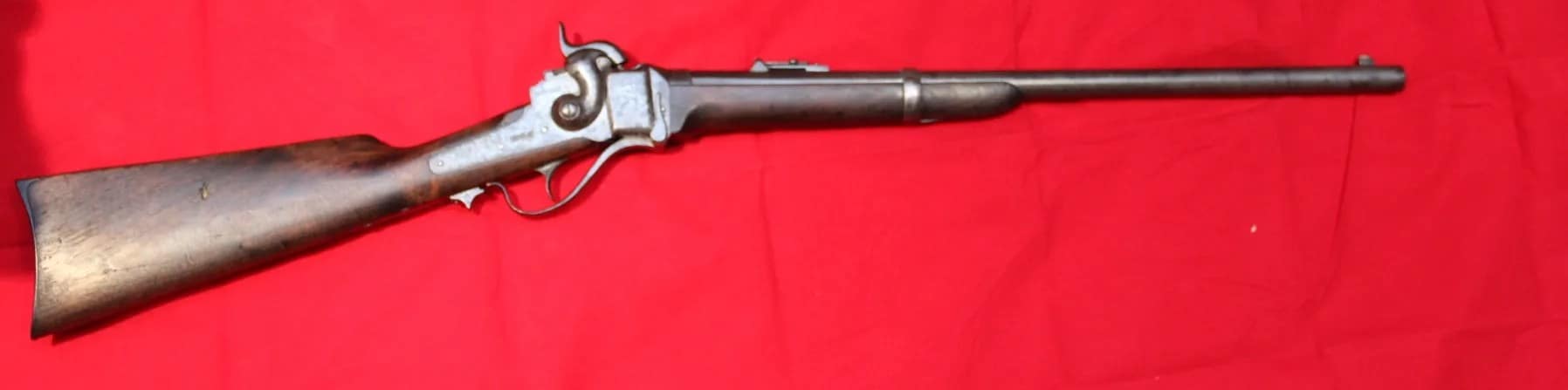
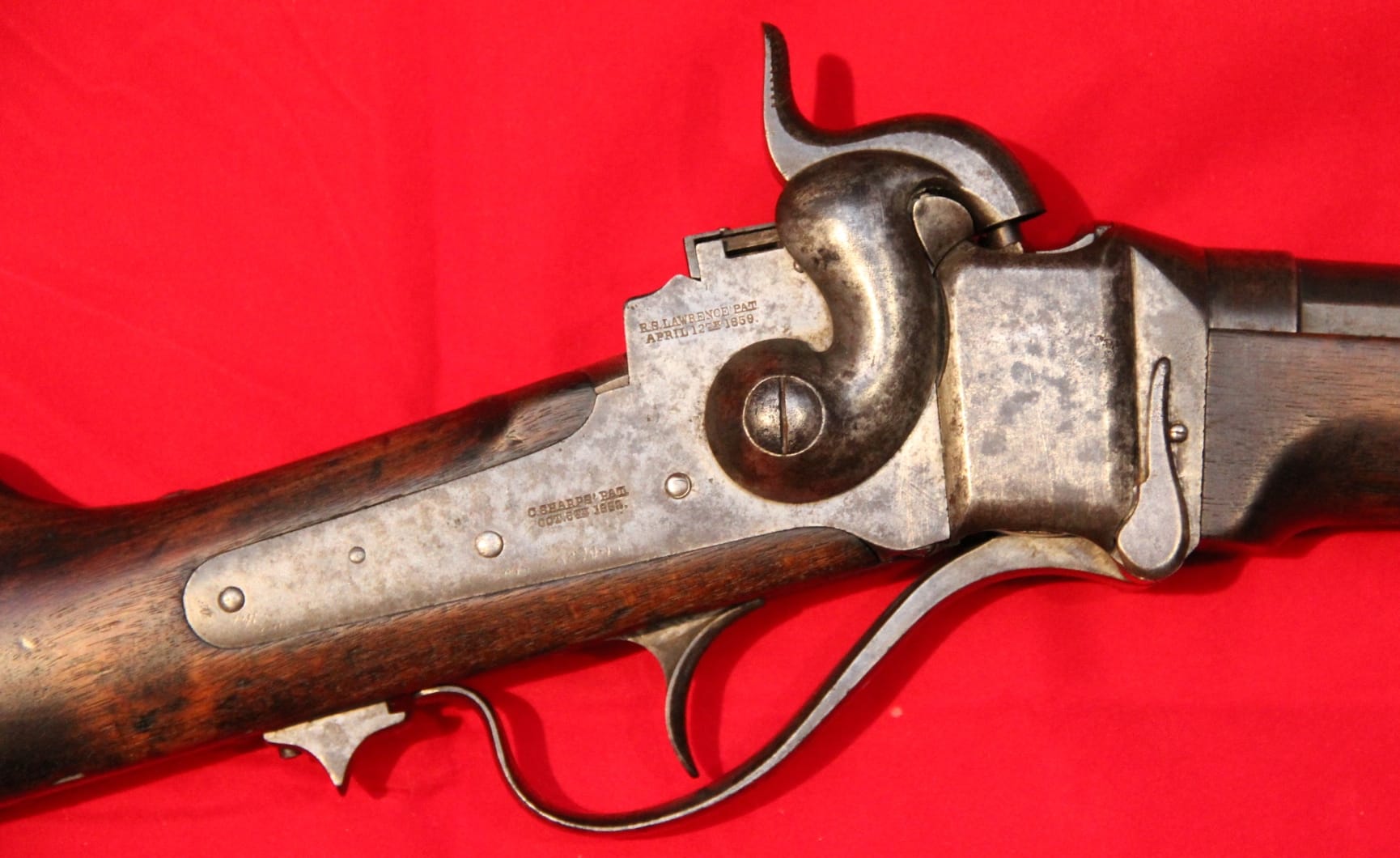
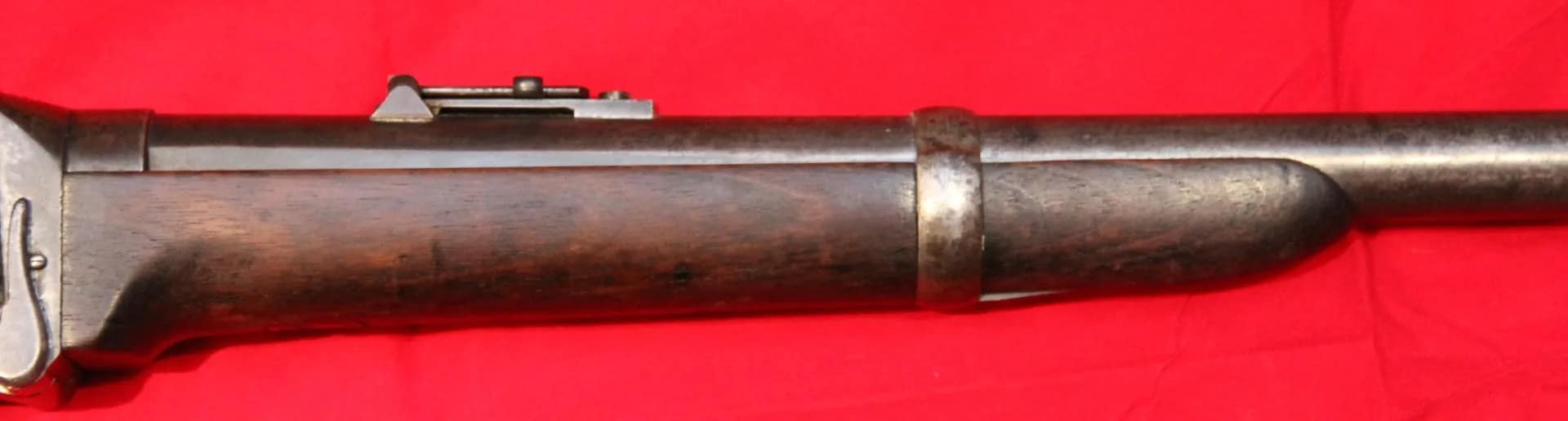
Sharps New Model 1863 Cavalry Carbine, from my personal collection.
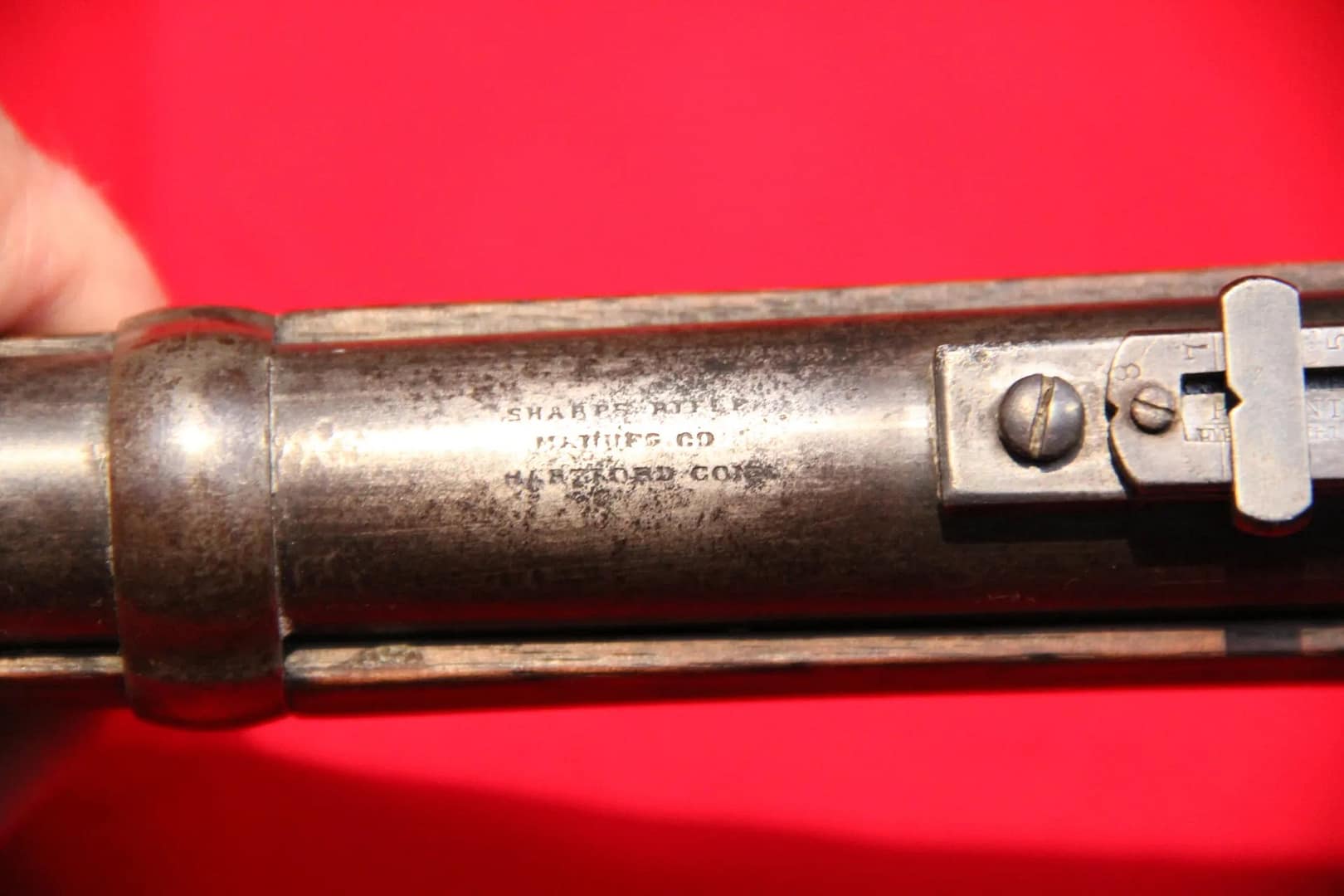
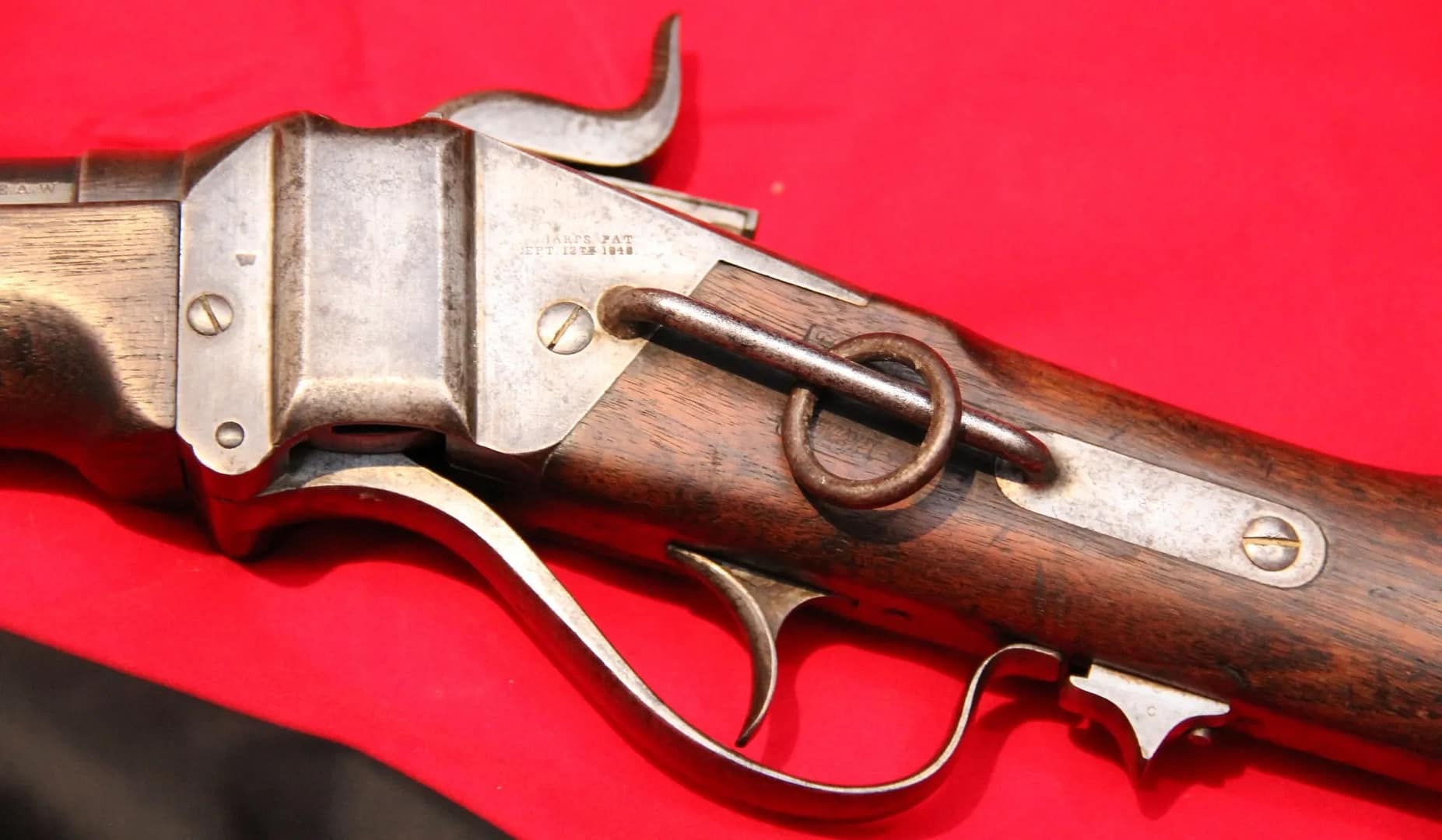
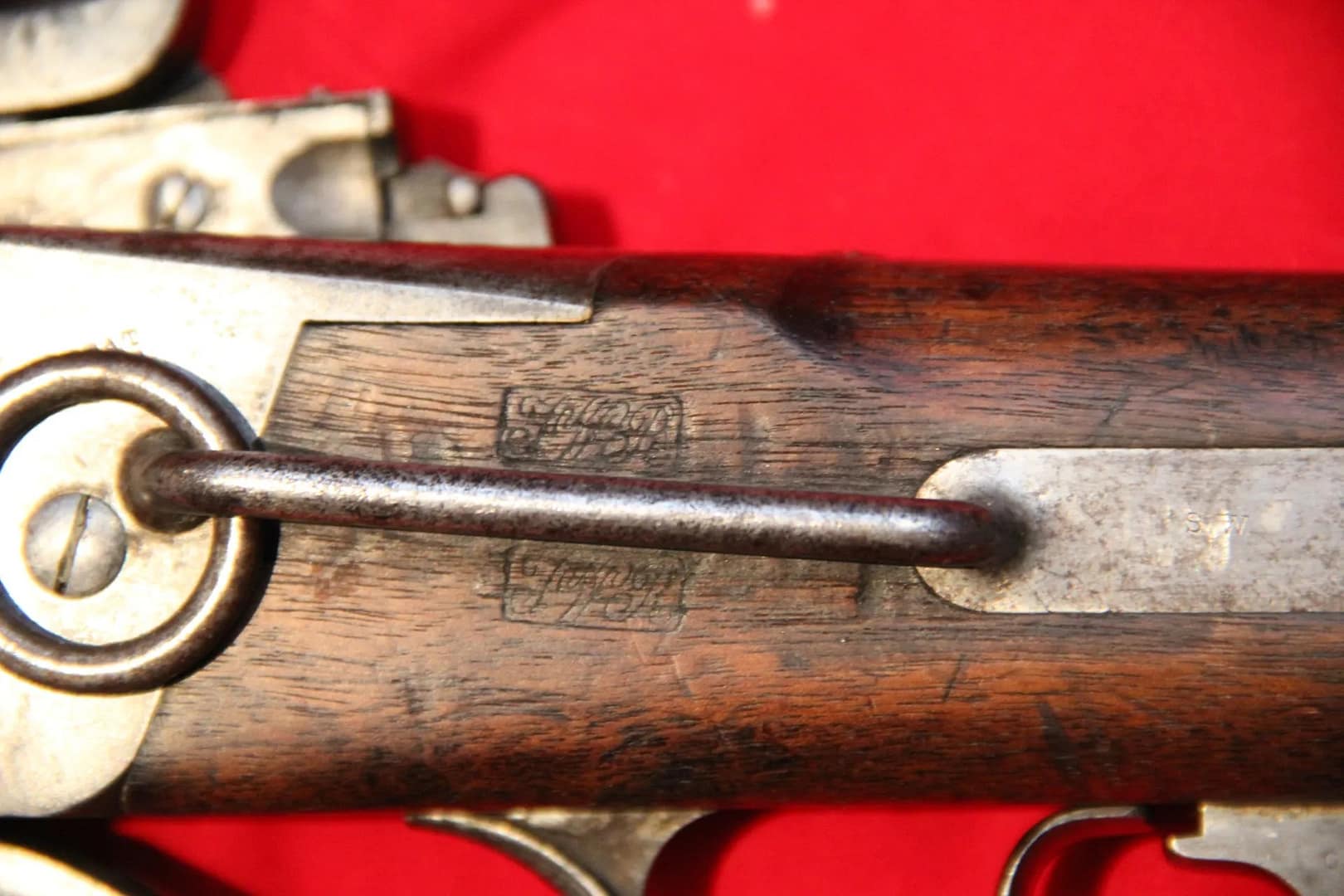
The Sharps New Model 1863 was a single-shot, breech-loading percussion carbine chambered in .52 calibre, manufactured by the Sharps Rifle Manufacturing Company of Hartford, Connecticut. Designed for mounted troops, it used a falling-block action with a linen or paper cartridge ignited by a percussion cap. Widely issued to Union cavalry during the American Civil War, it was valued for its reliability, rapid rate of fire, and accuracy compared to muzzle-loading carbines. The weapon saw extensive service in cavalry engagements, scouting operations, and raids, becoming one of the most effective and respected carbines of the conflict.
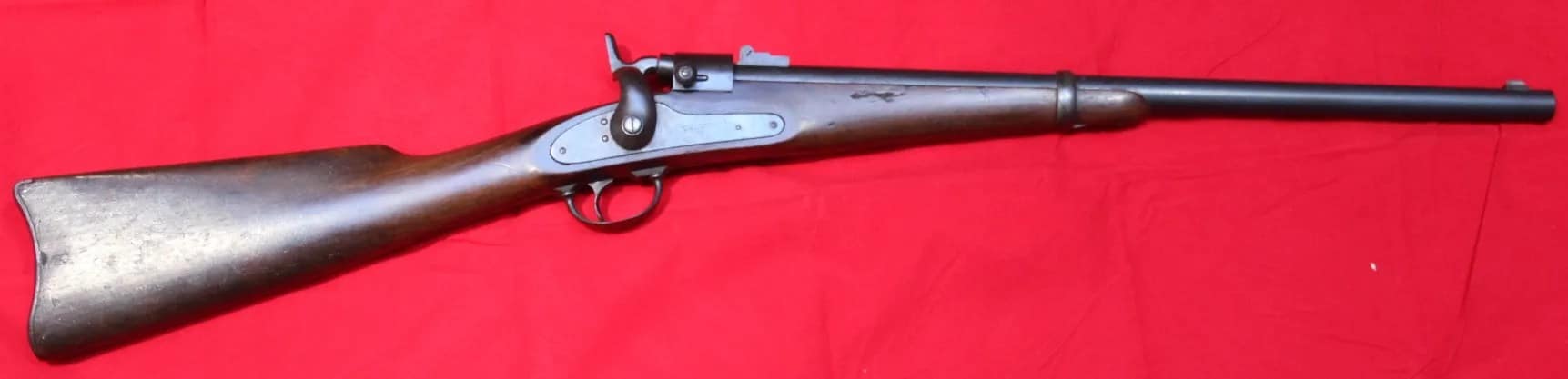
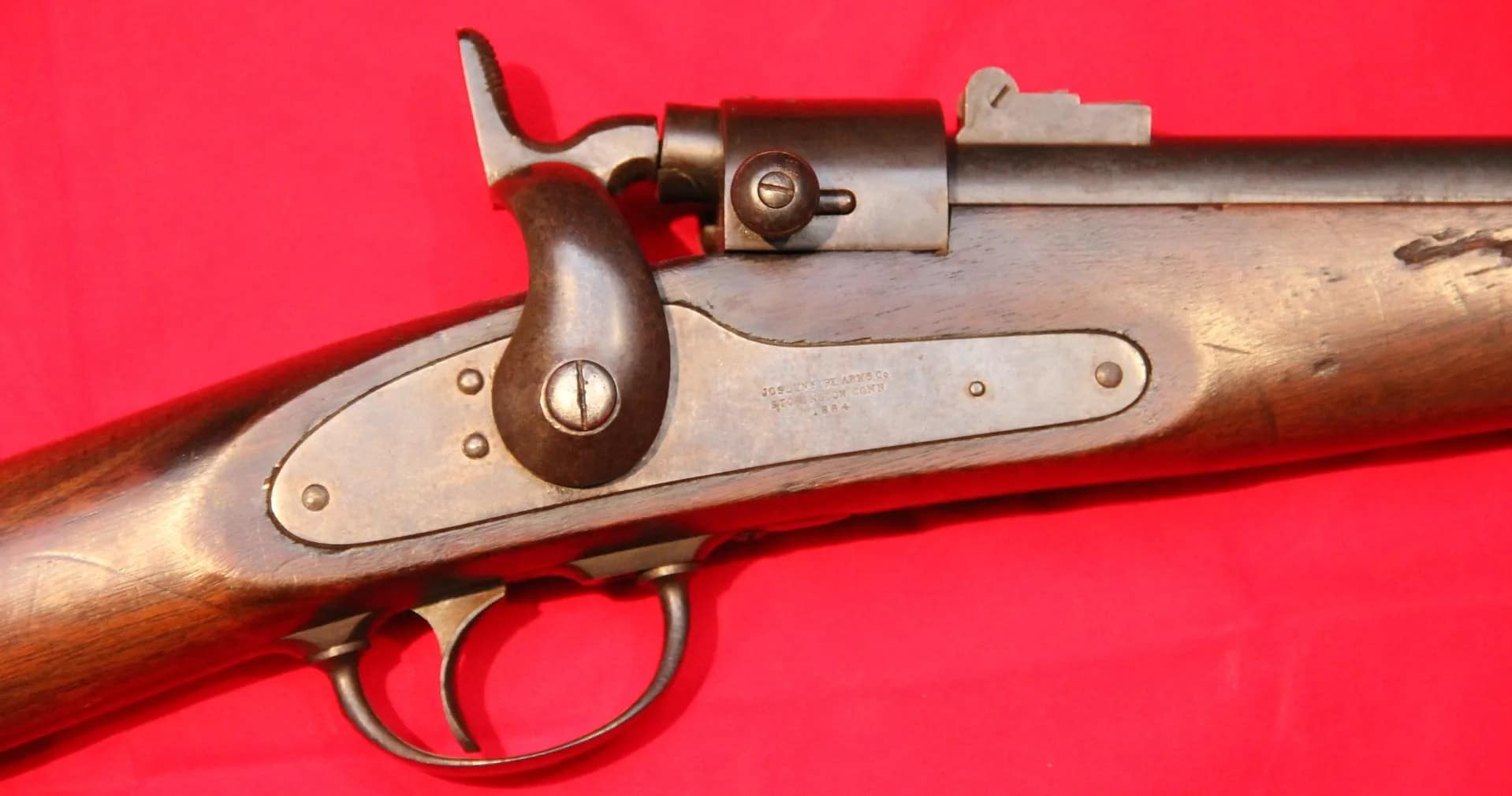
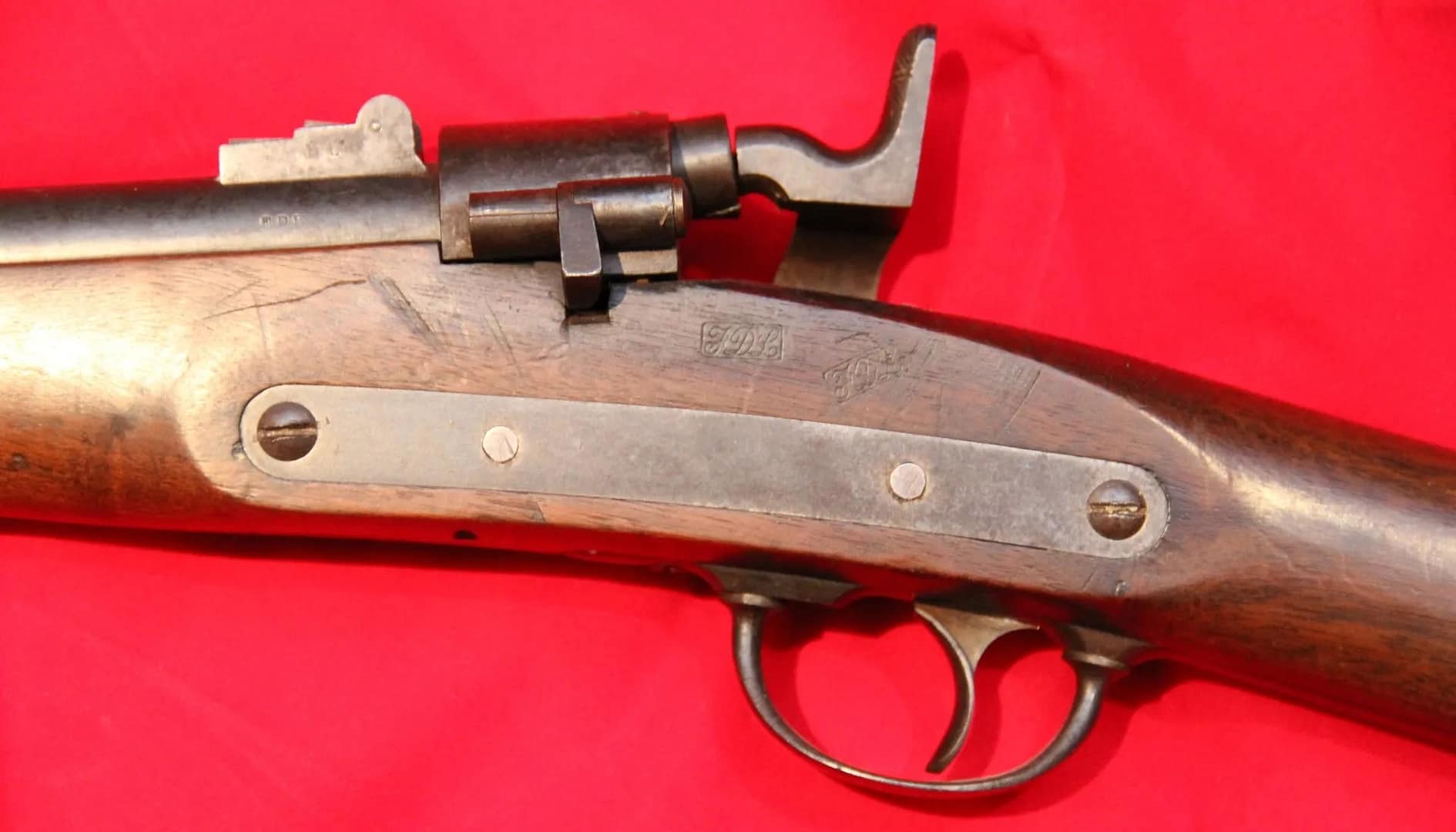
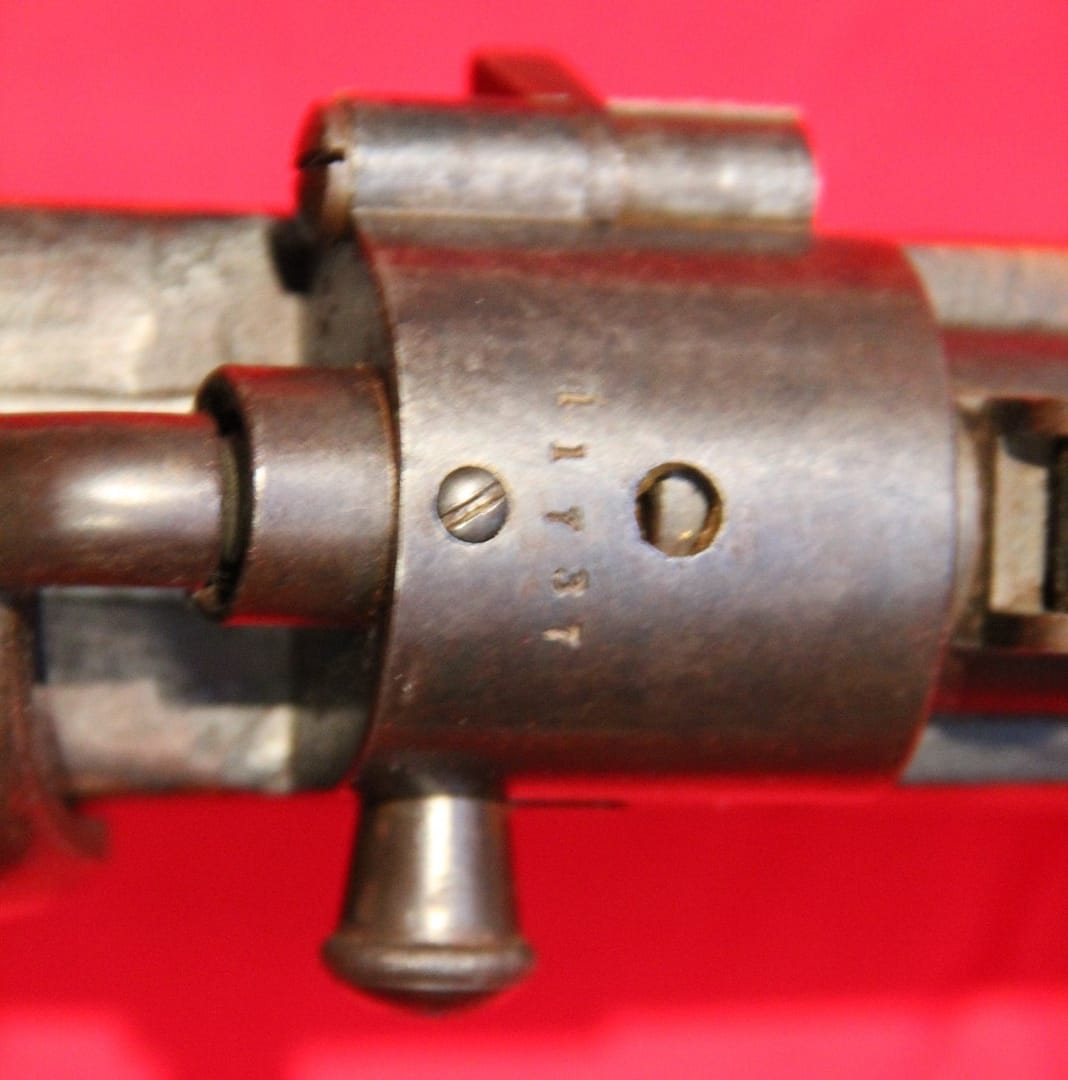
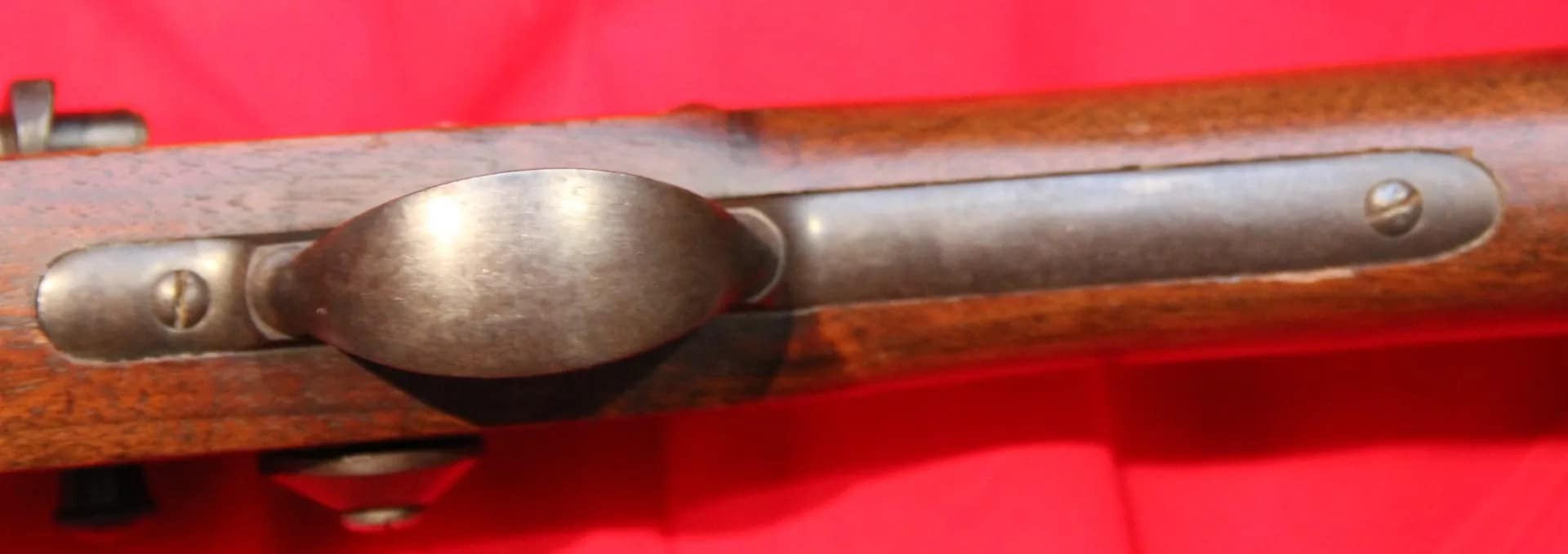
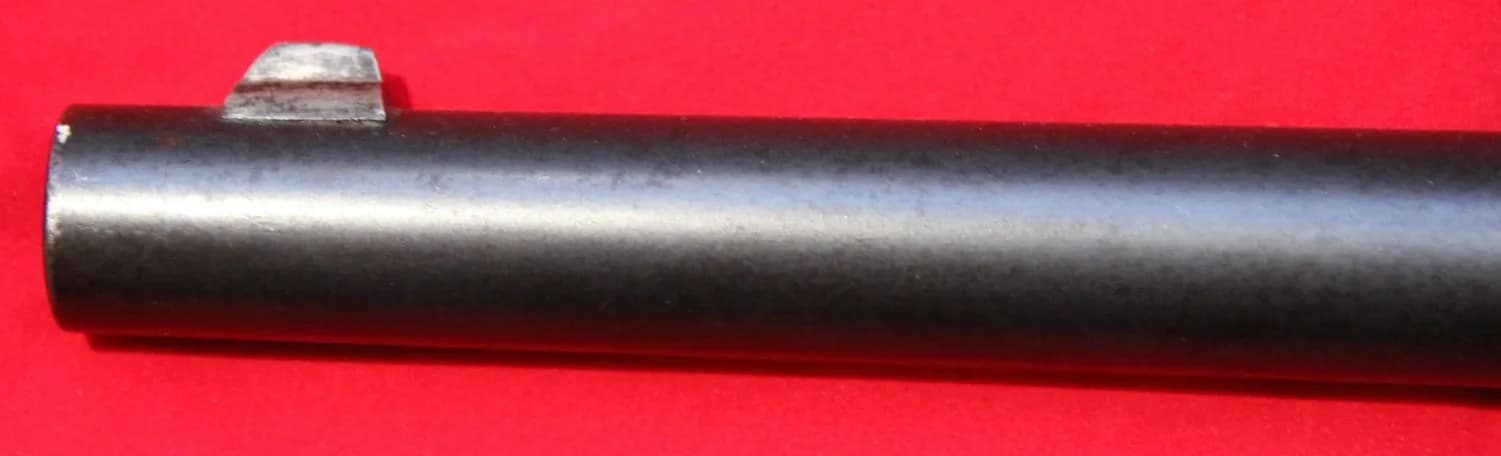
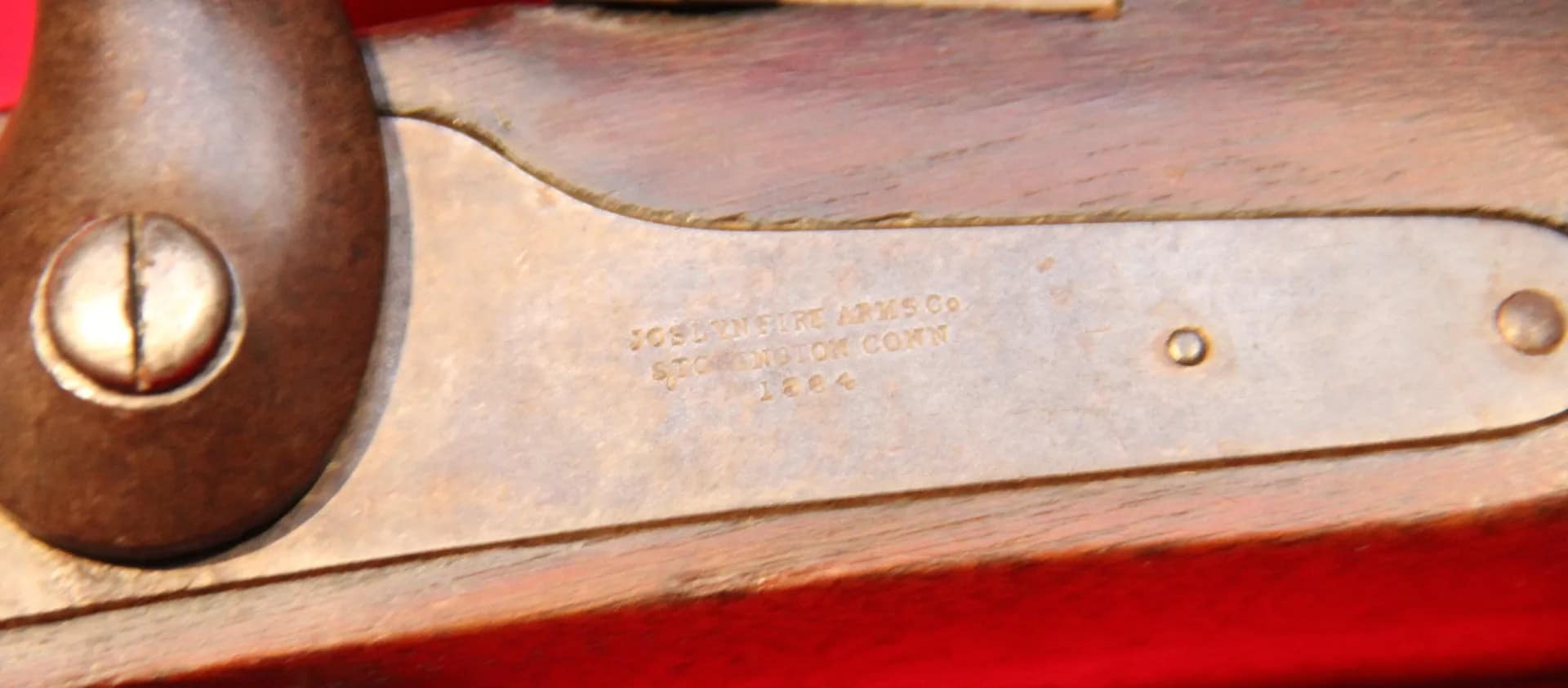
Joslyn Model 1864 Cavalry Carbine, from my personal collection.
The Joslyn Model 1864 carbine was a single-shot breech-loading cavalry firearm chambered in .52 calibre, manufactured by Benjamin Franklin Joslyn. An improvement over earlier Joslyn designs, it featured a stronger breech mechanism and used metallic rimfire cartridges, reflecting the rapid evolution of small-arms technology during the American Civil War. Issued primarily to Union cavalry units, it offered improved rate of fire and ease of loading compared to muzzle-loading carbines. Although produced in smaller numbers than more famous designs such as the Sharps or Spencer, the Joslyn represents the diverse range of experimental and transitional weapons fielded during the war.
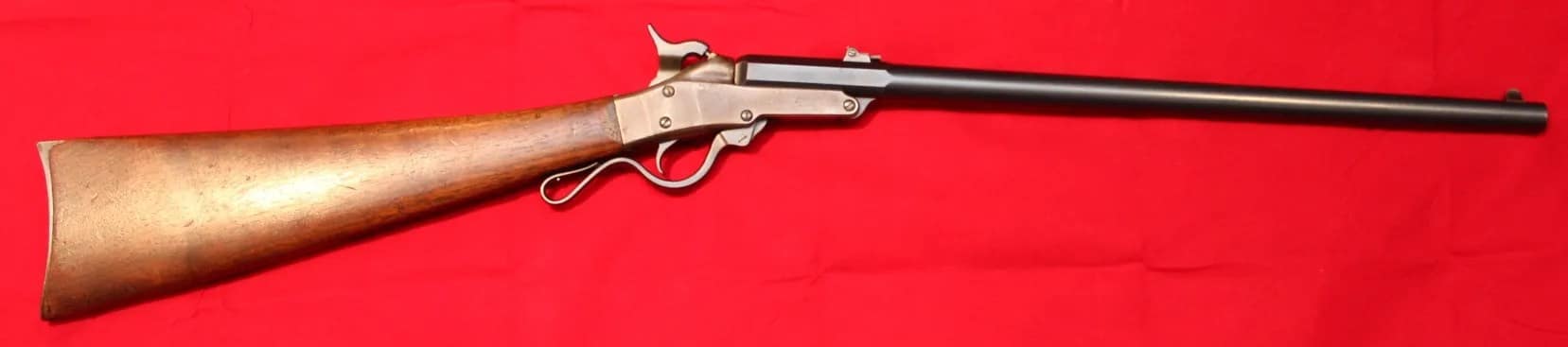
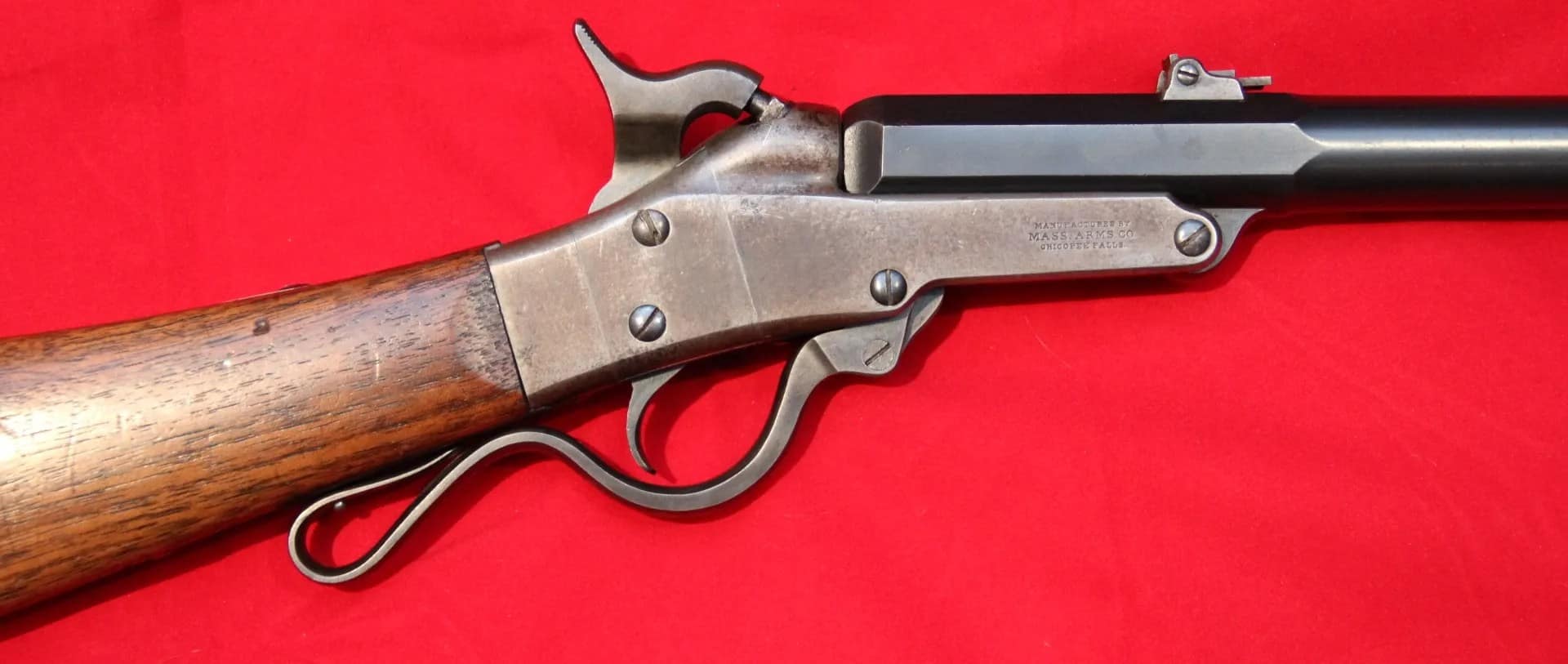
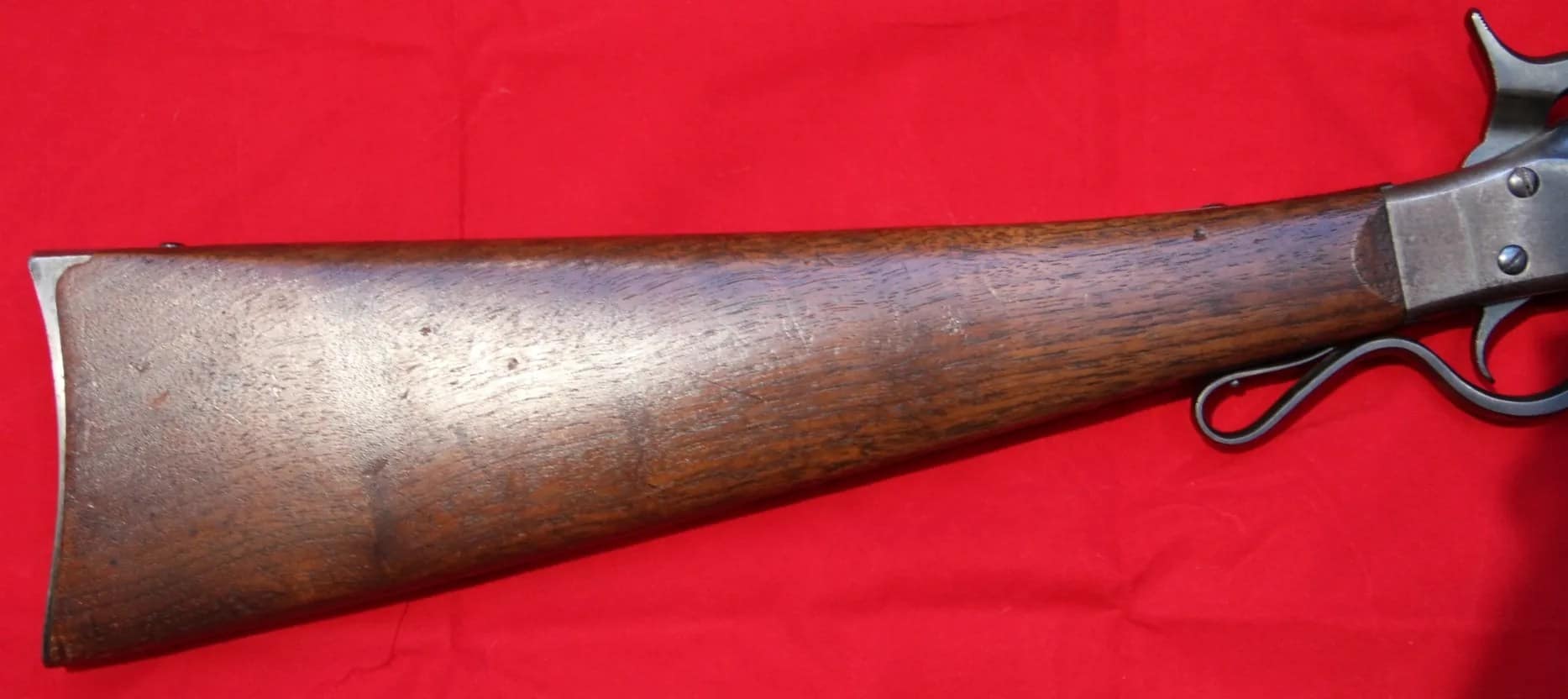
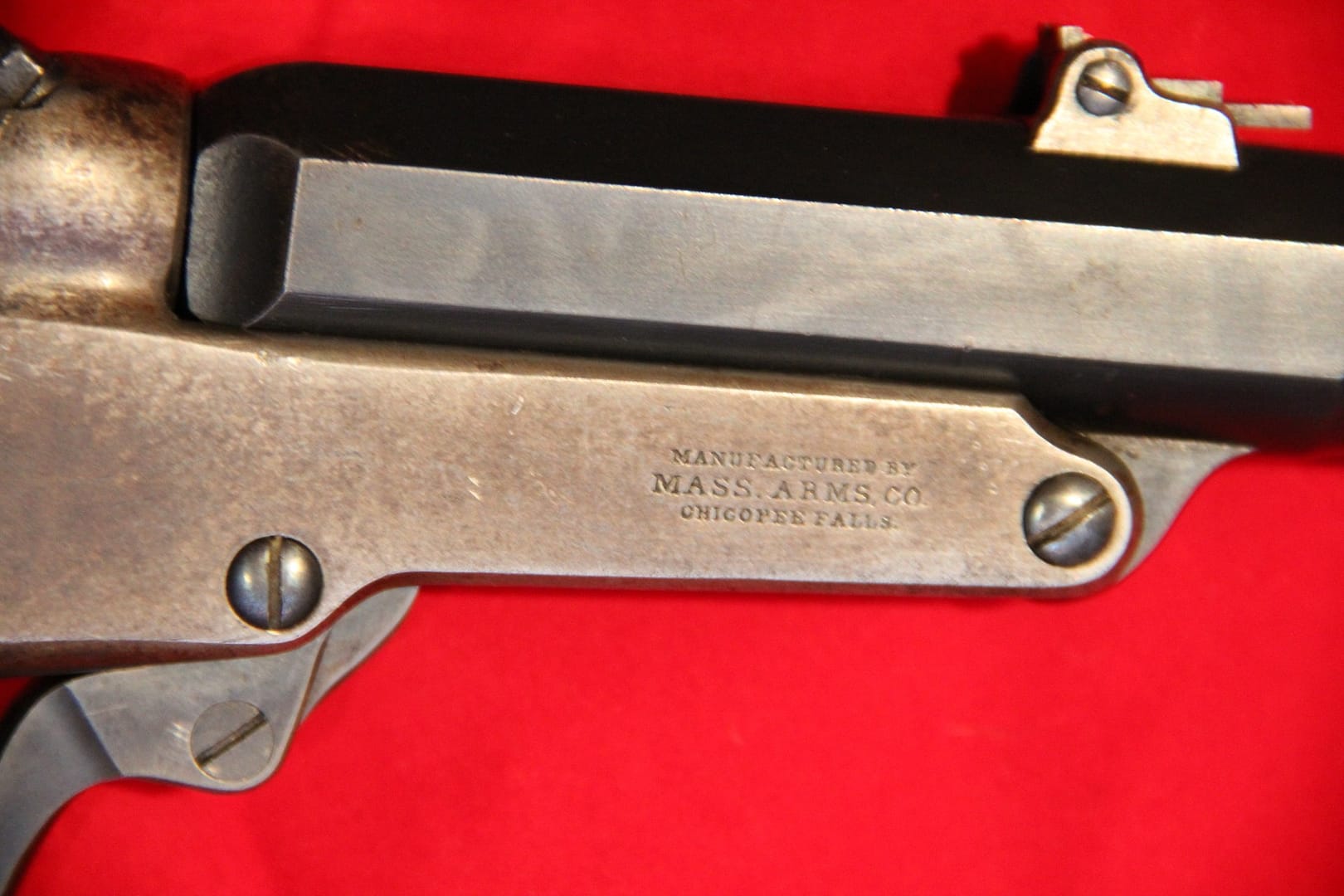
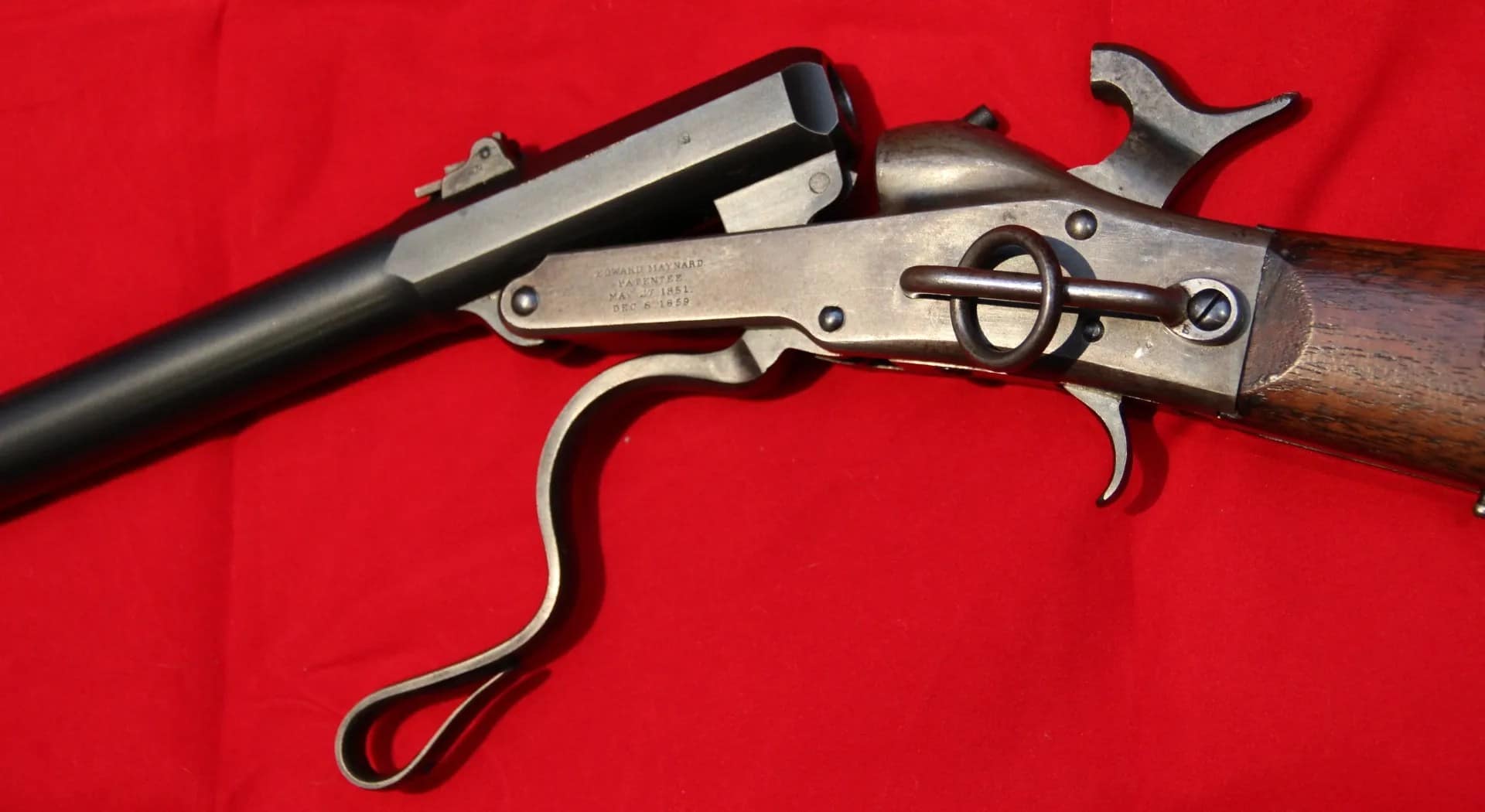
2nd Model Maynard Carbine, from my personal collection.
The Maynard Second Model was a single-shot, breech-loading percussion carbine designed by American dentist and inventor Dr Edward Maynard and manufactured primarily by the Massachusetts Arms Company. It used a distinctive metallic cartridge with an external percussion cap ignition system and was typically chambered in .50 calibre (various Maynard proprietary cartridges). Issued mainly to Union cavalry during the American Civil War, it was valued for its accuracy, low recoil, and ability to be reloaded without a ramrod, though it lacked the rapid fire of repeating carbines.
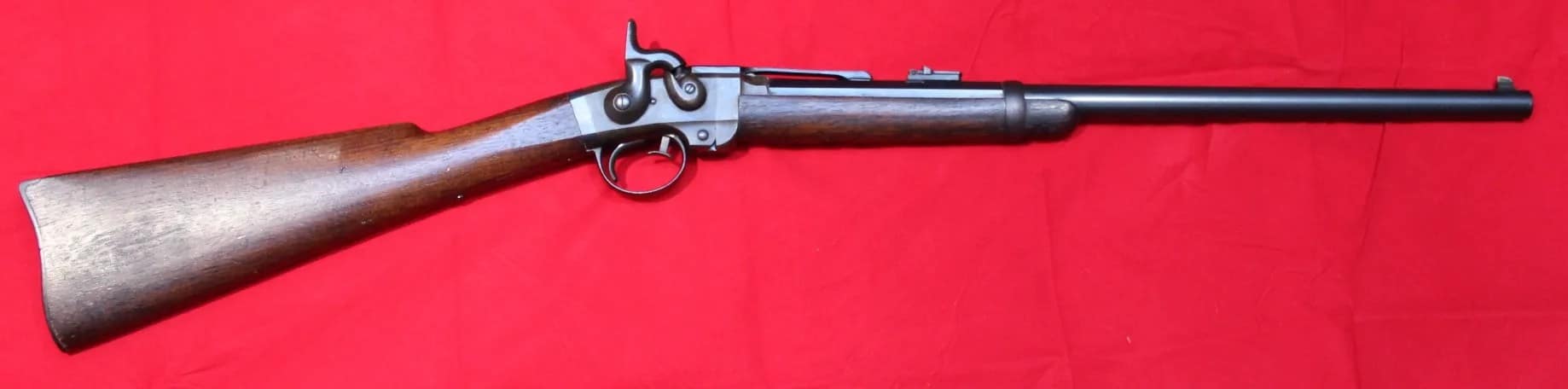
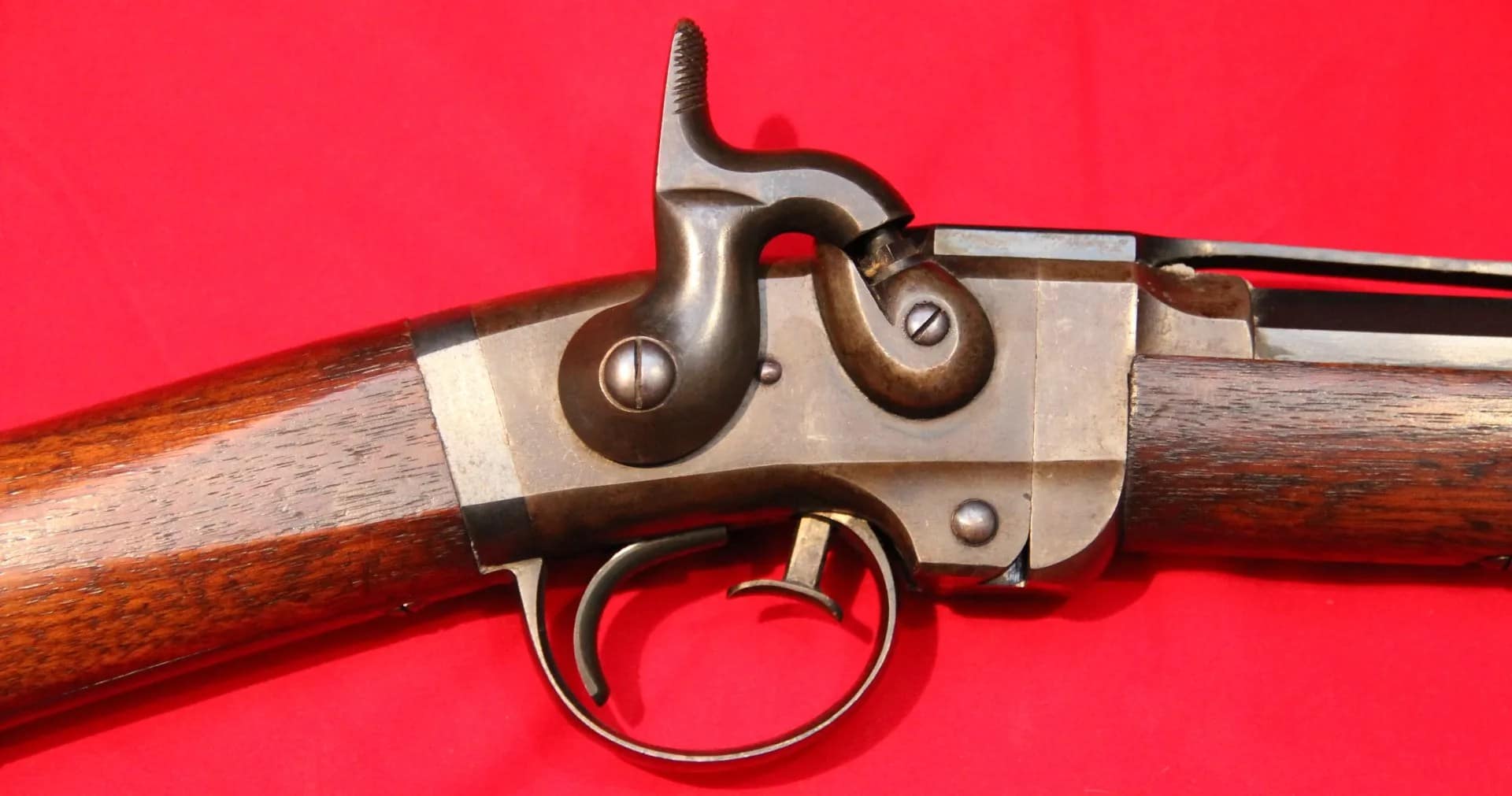
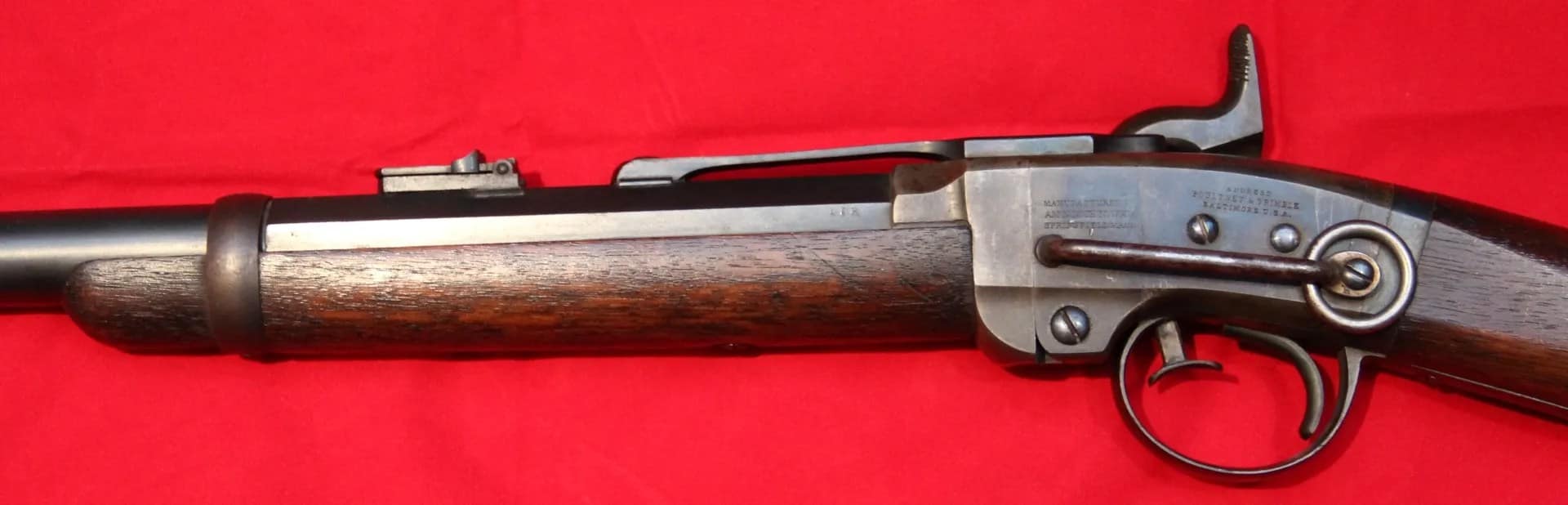
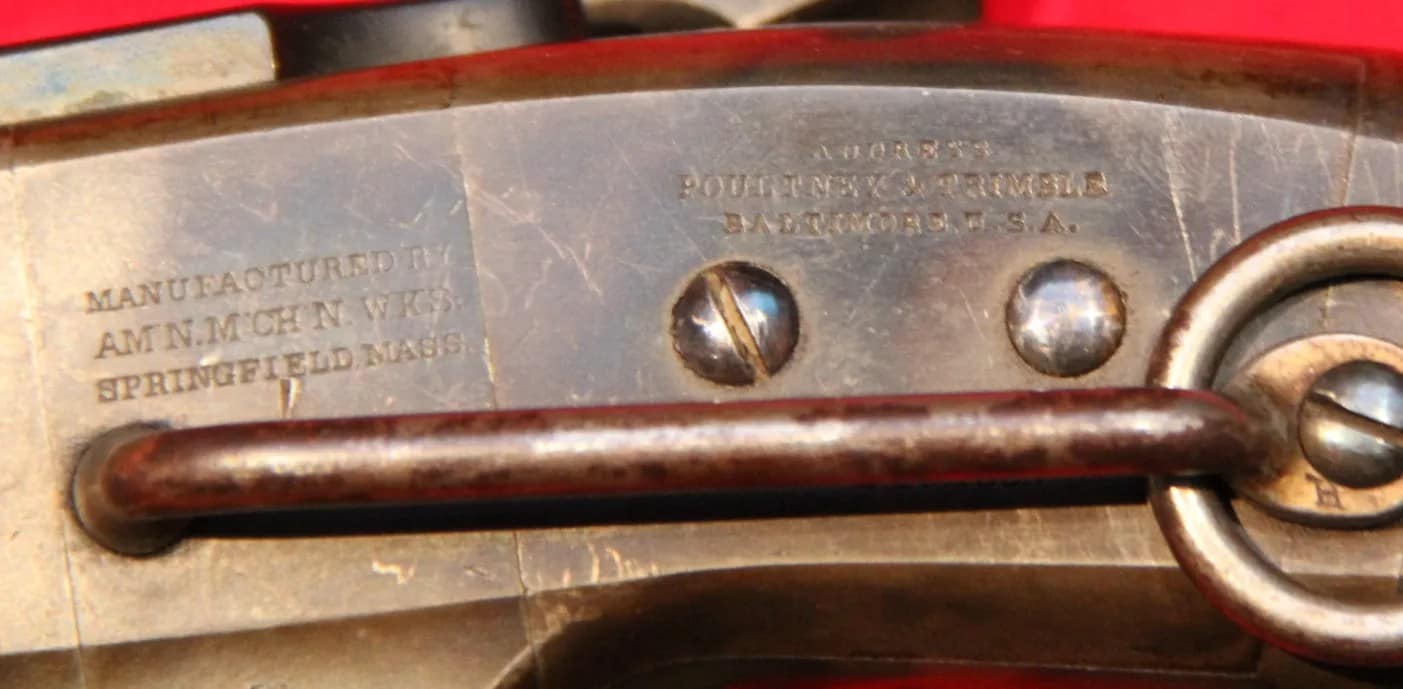
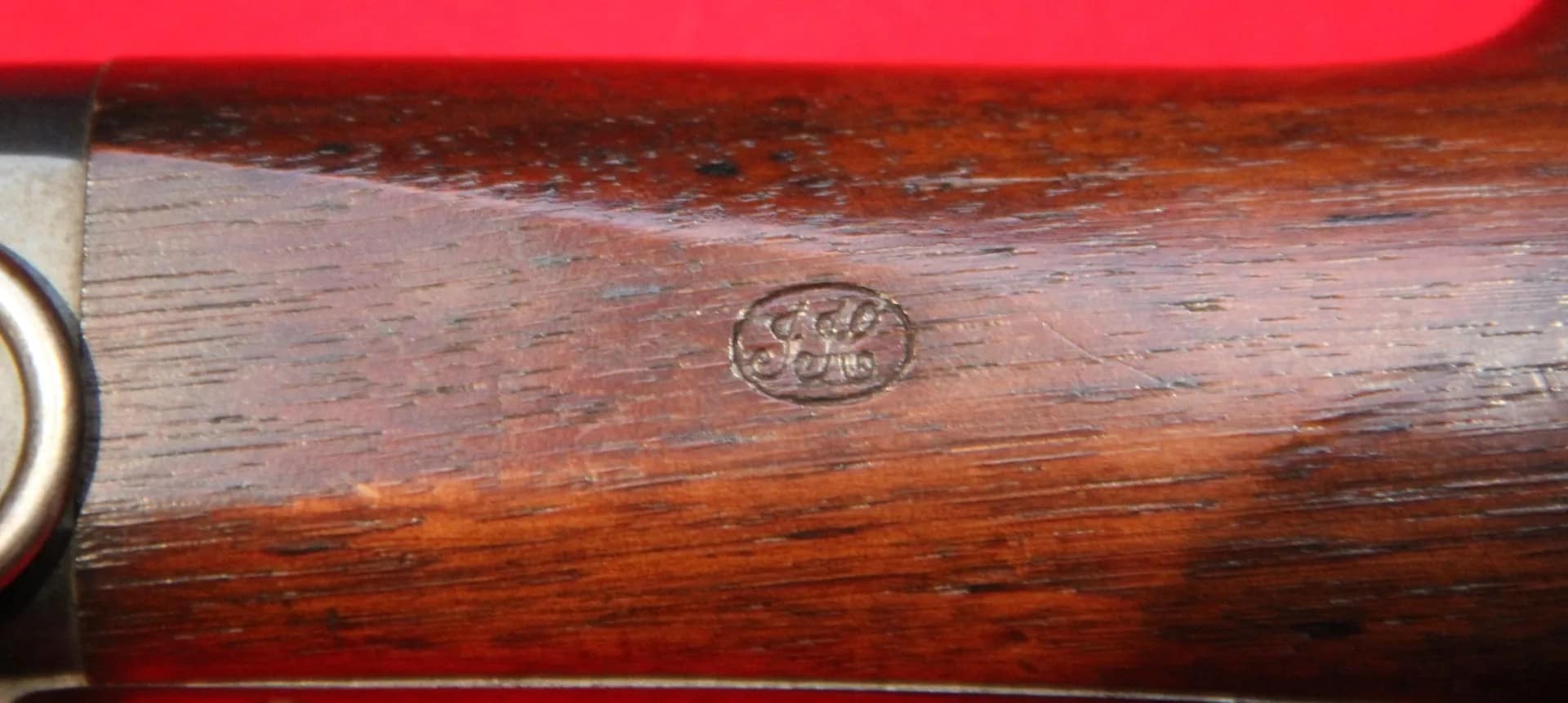
Smith Carbine (Model 1857), from my personal collection.
The Smith Carbine was a single-shot, breech-loading percussion carbine designed by Gilbert Smith and manufactured by several contractors, most notably the Massachusetts Arms Company and American Machine Works. It fired a proprietary .50 calibre rubber or gutta-percha cartridge ignited by a percussion cap. Widely issued to Union cavalry during the American Civil War, it was appreciated for its reliability, relatively good gas seal, and ease of loading compared to muzzle-loaders. The carbine saw extensive service in mounted operations throughout the conflict, particularly in the Eastern Theater.
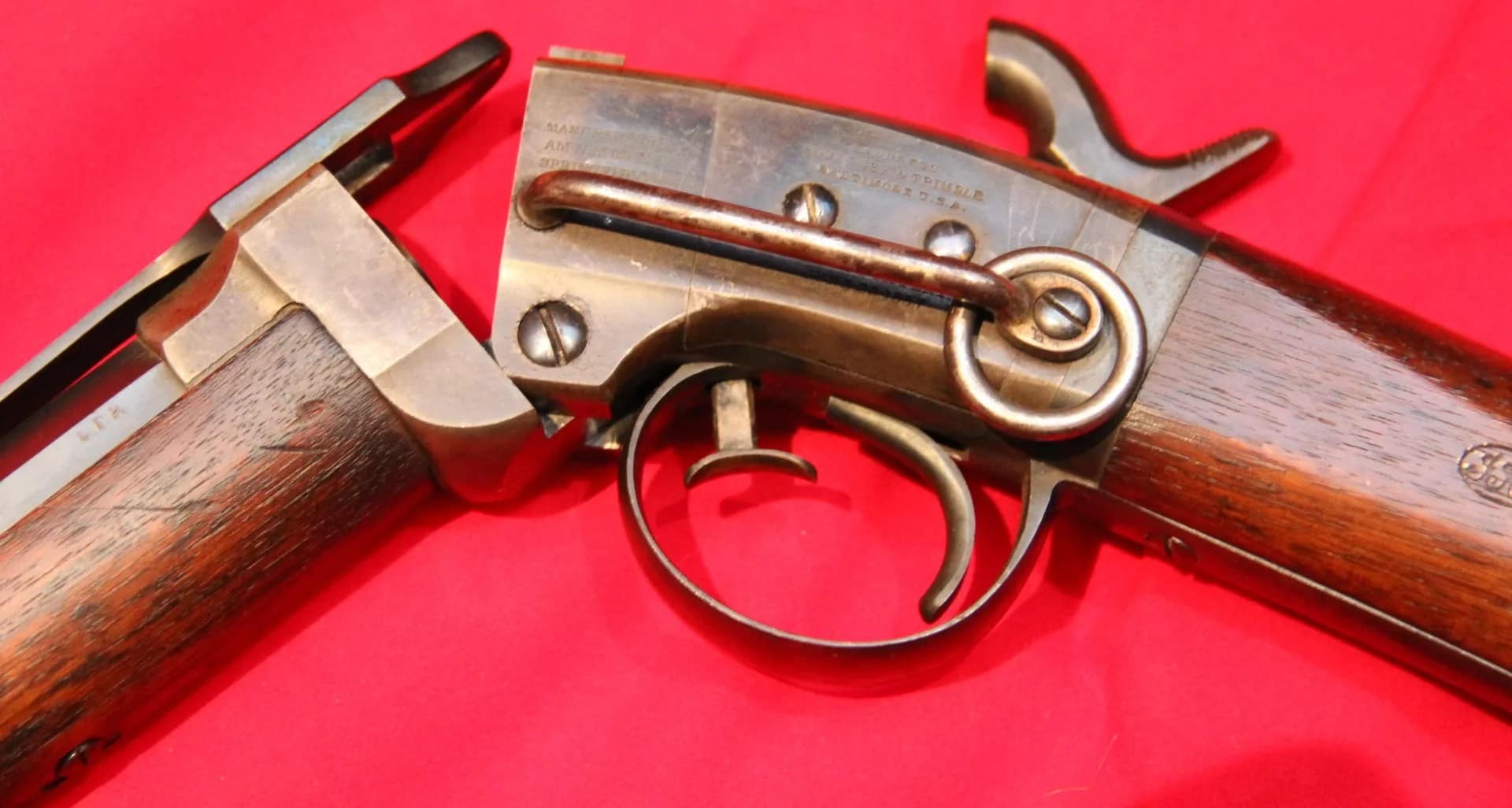
2nd Model Burnside Carbine, from my personal collection.
The Burnside carbine was a breech-loading cavalry weapon firing a unique, tapered brass cartridge. The Second Model introduced refinements to the breech mechanism and improved reliability. The breechblock on the Second Model is one-piece and when open requires the firer to insert the cartridge deep inside the receiver. Issued primarily to Union cavalry regiments, it allowed faster loading from horseback than muzzle-loading carbines. Although eventually overshadowed by the Spencer, the Burnside remained widely used in the Eastern and Western campaigns, demonstrating the rapid transition toward metallic-cartridge arms during the war.
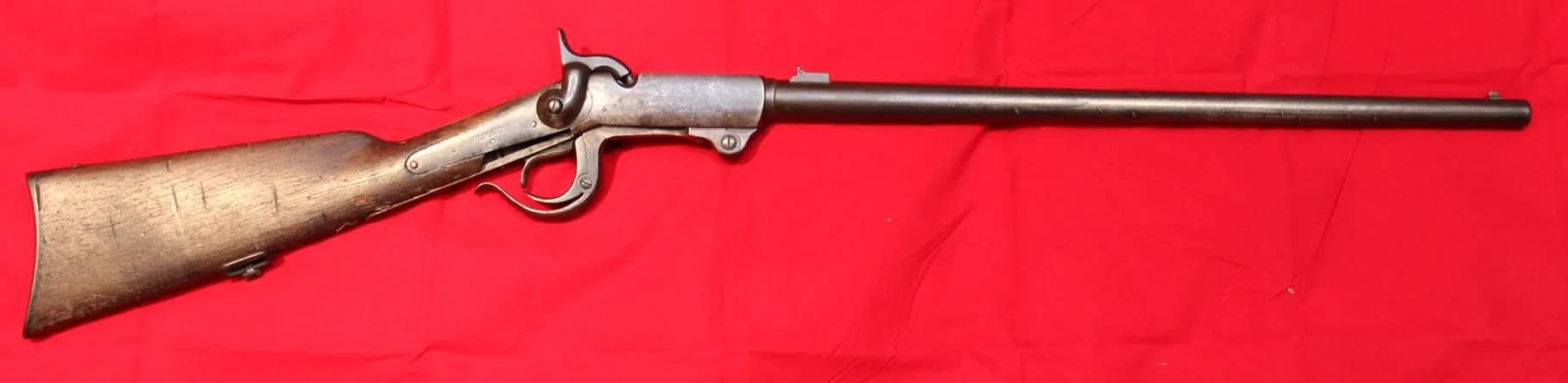
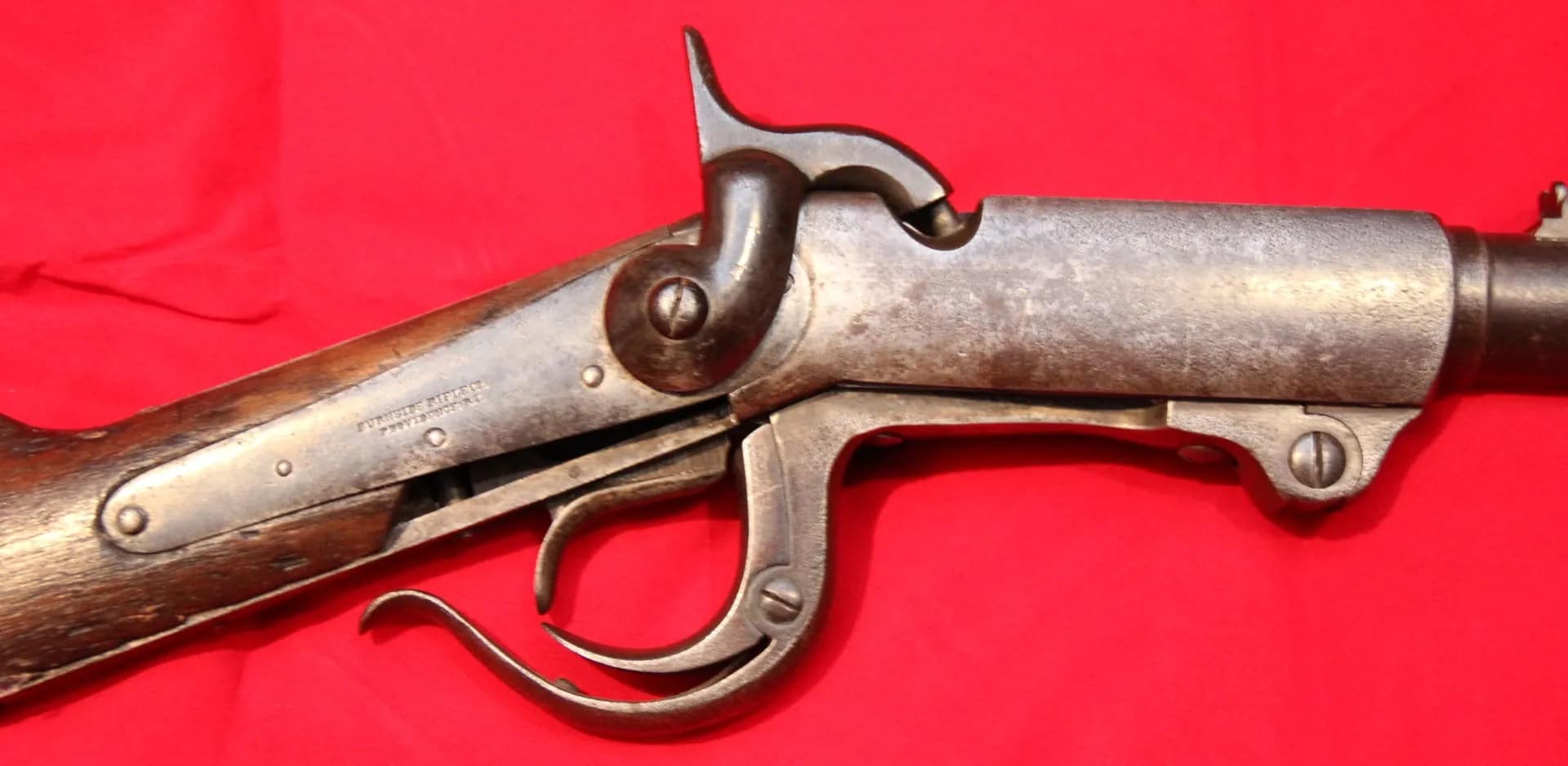
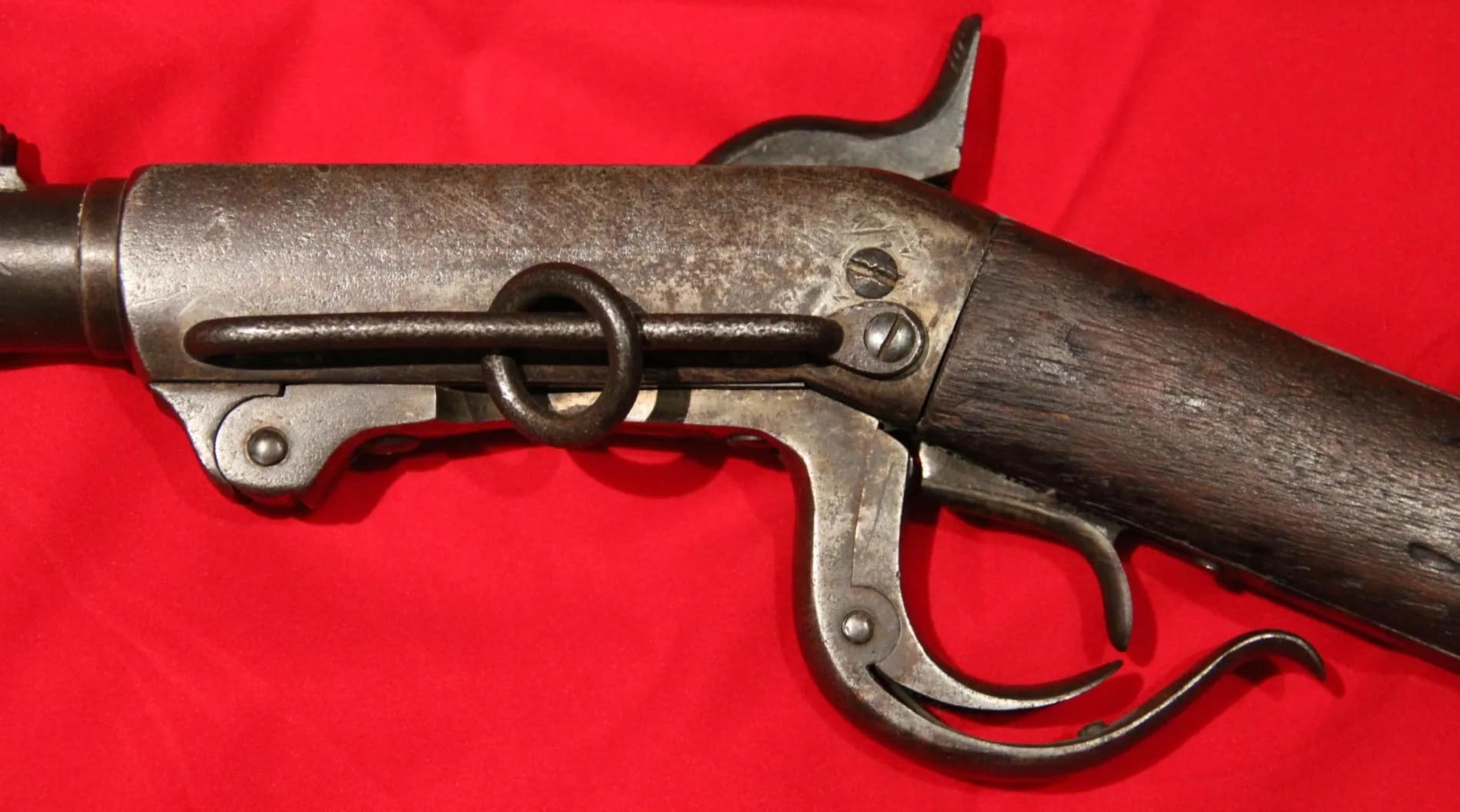
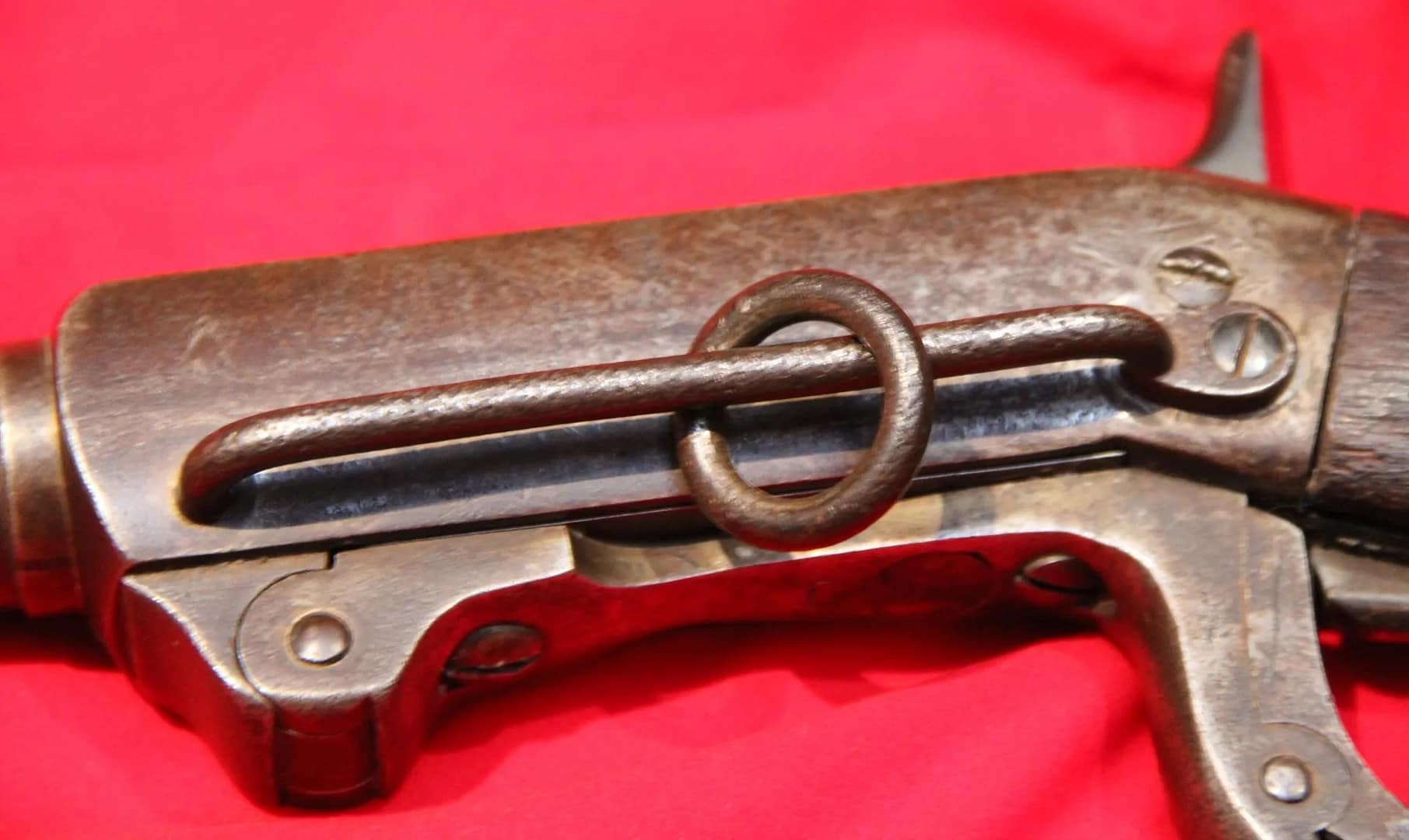
Burnside Carbine, Fifth Model, from my personal collection.
The Burnside Fifth Model was a single-shot, breech-loading percussion carbine chambered in .54 calibre, manufactured by the Burnside Rifle Company. It fired a distinctive brass cone-shaped metallic cartridge ignited by a percussion cap. The breechblock on the Fifth Model is hinged in two pieces, providing easier access for loading, plus a small screw on the right side of the receiver helps to guide the breech-block rotation. Widely issued to Union cavalry during the American Civil War, the Burnside was valued for its good gas seal and robust construction, though extraction of spent cases could be difficult. The Fifth Model was the most numerous and mechanically reliable of the Burnside carbines produced during the war.
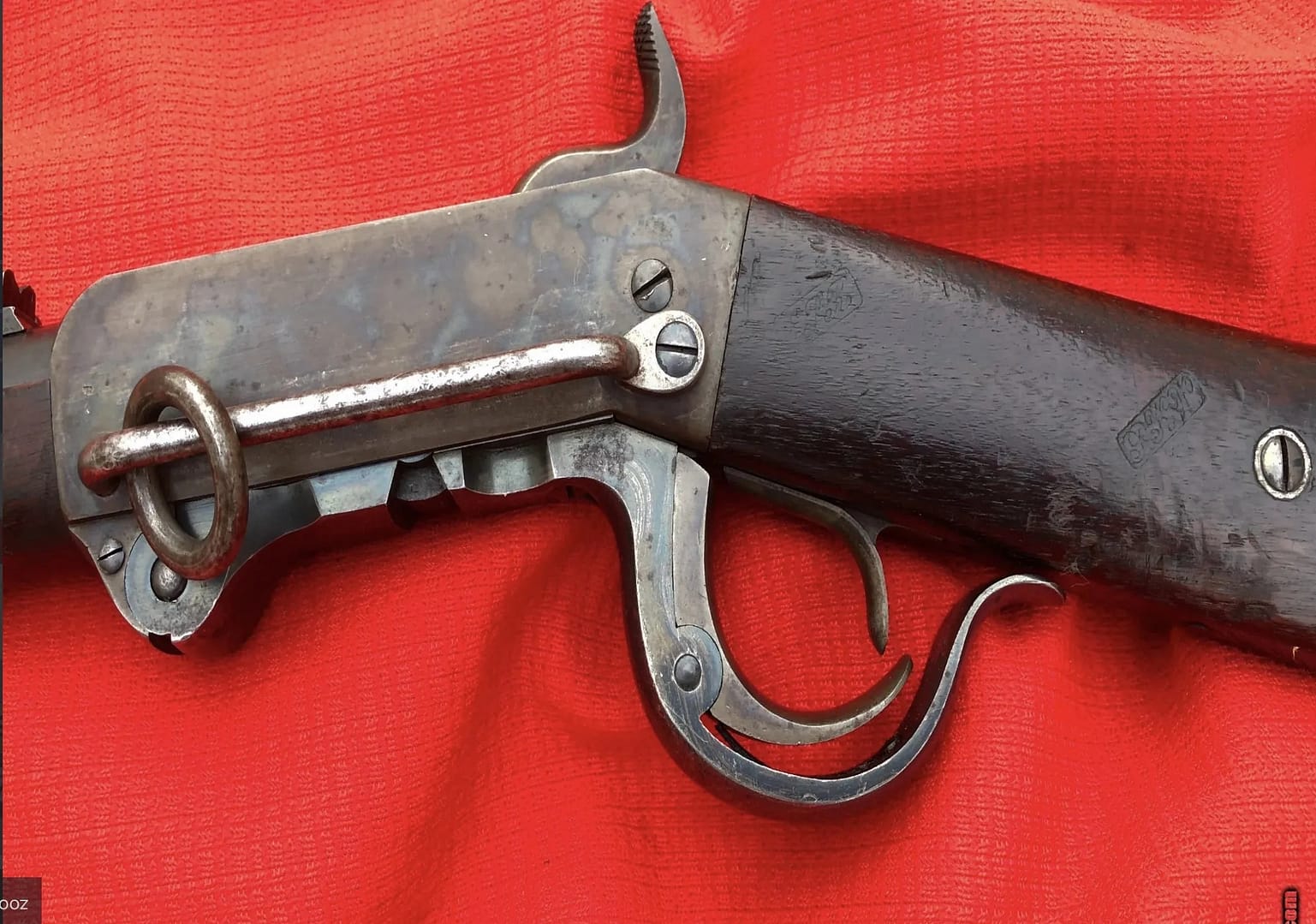
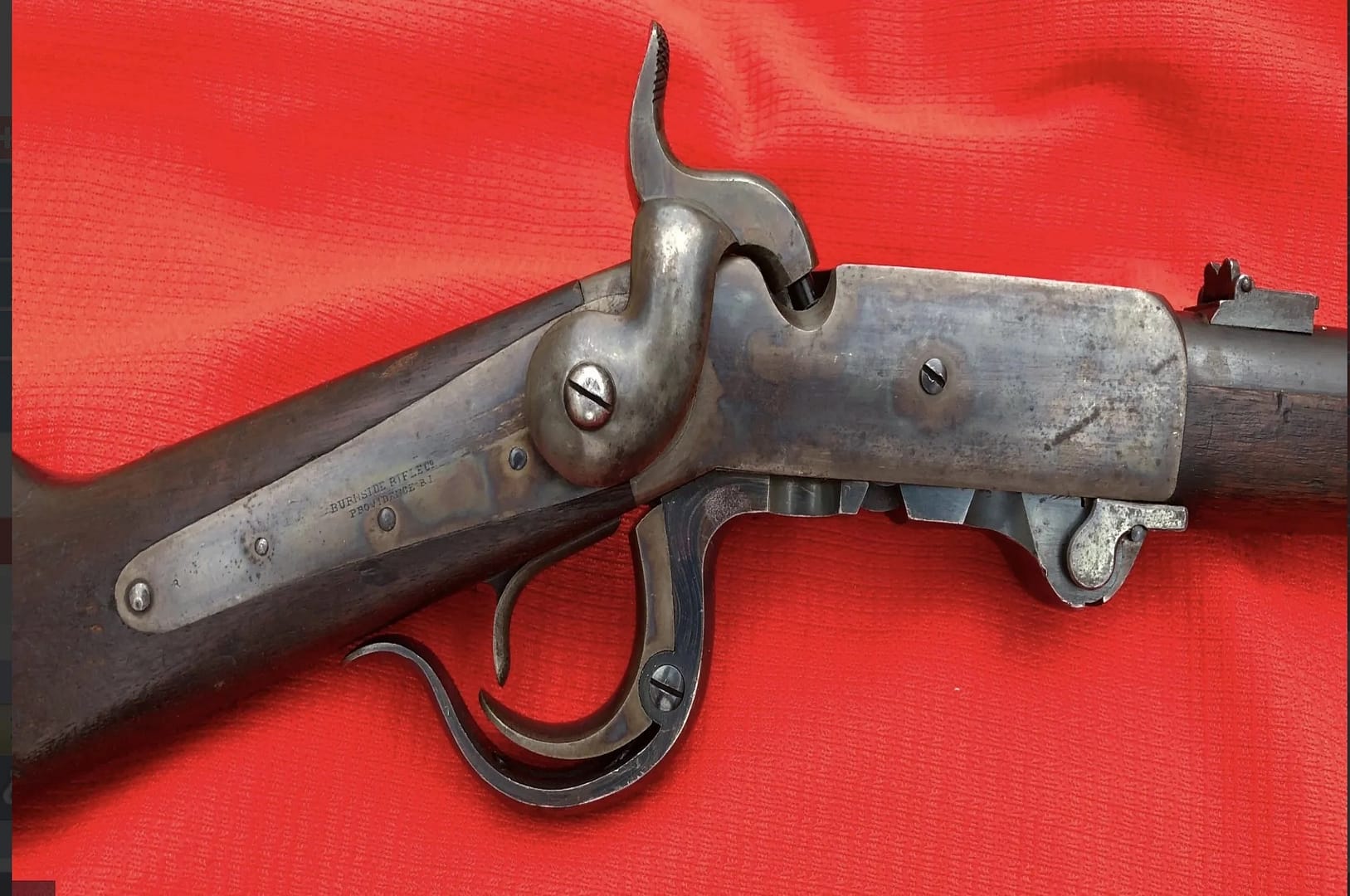
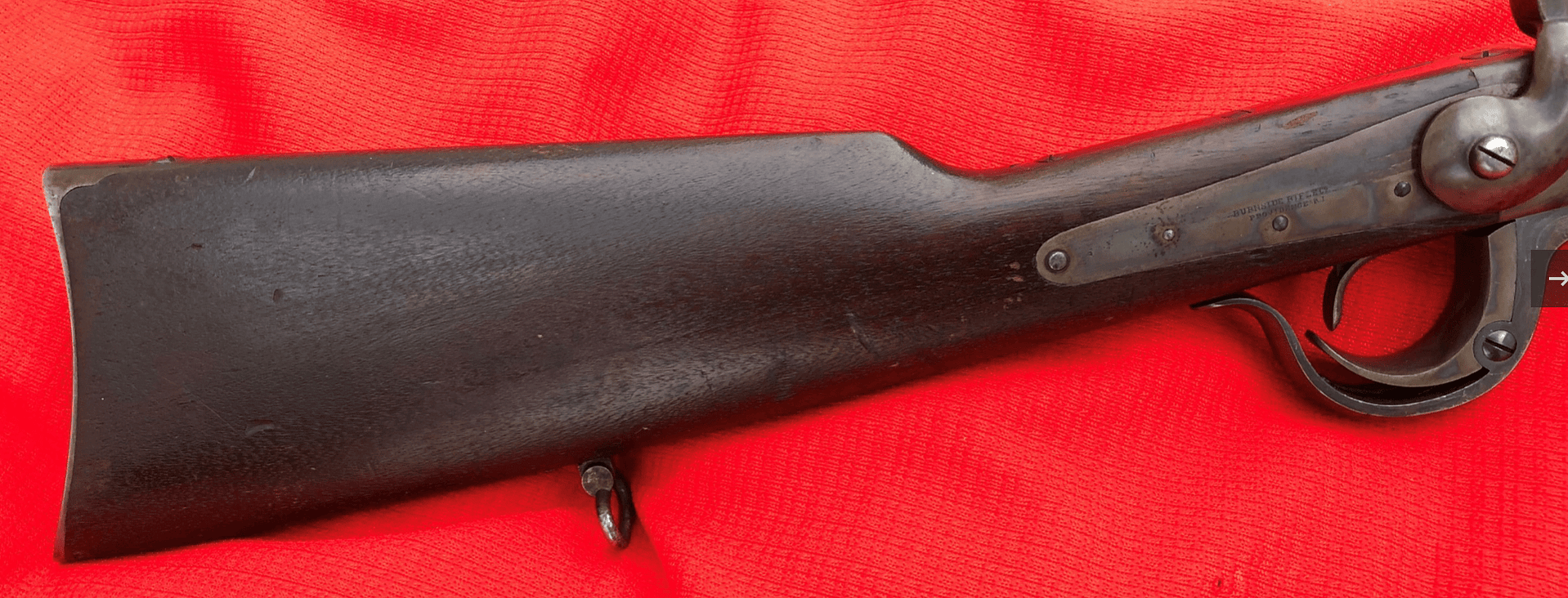
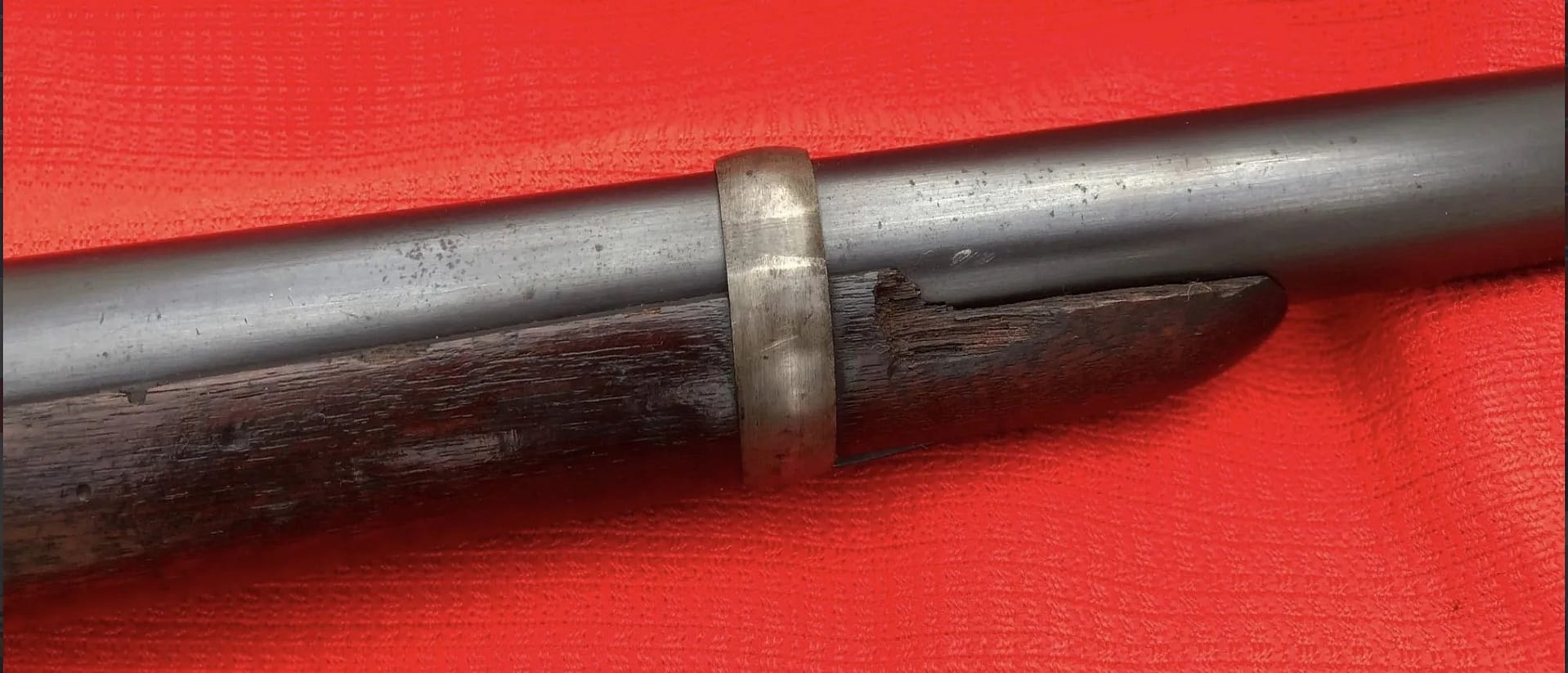
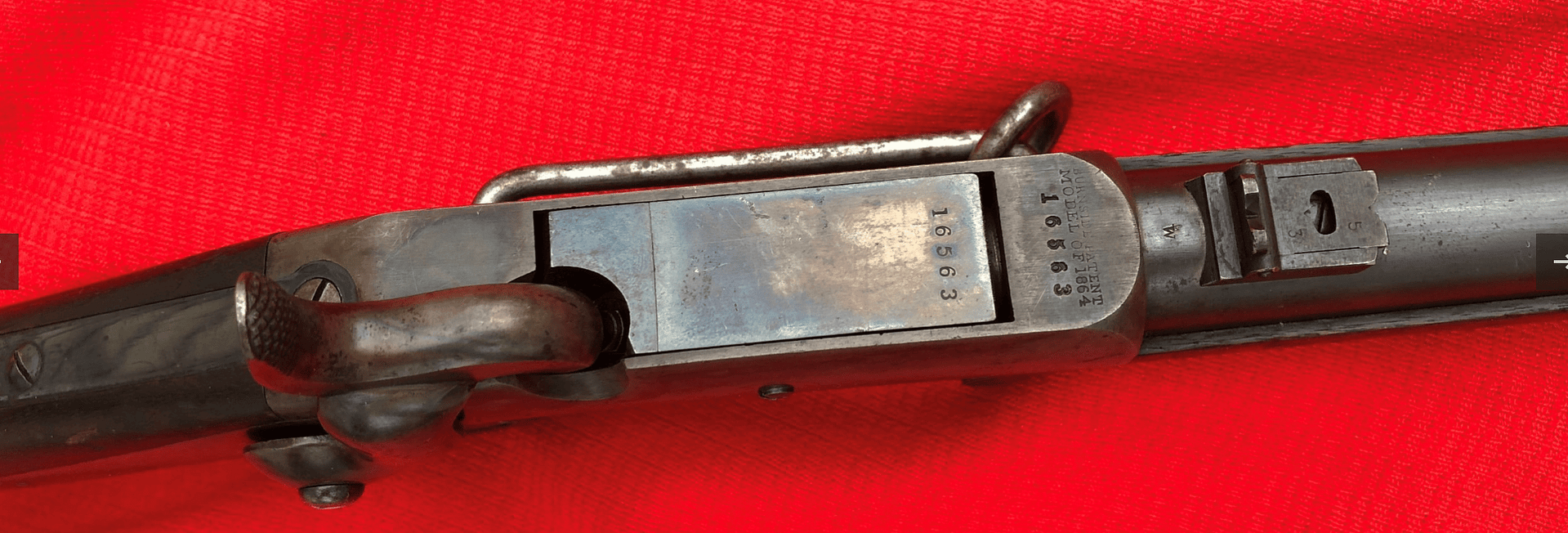
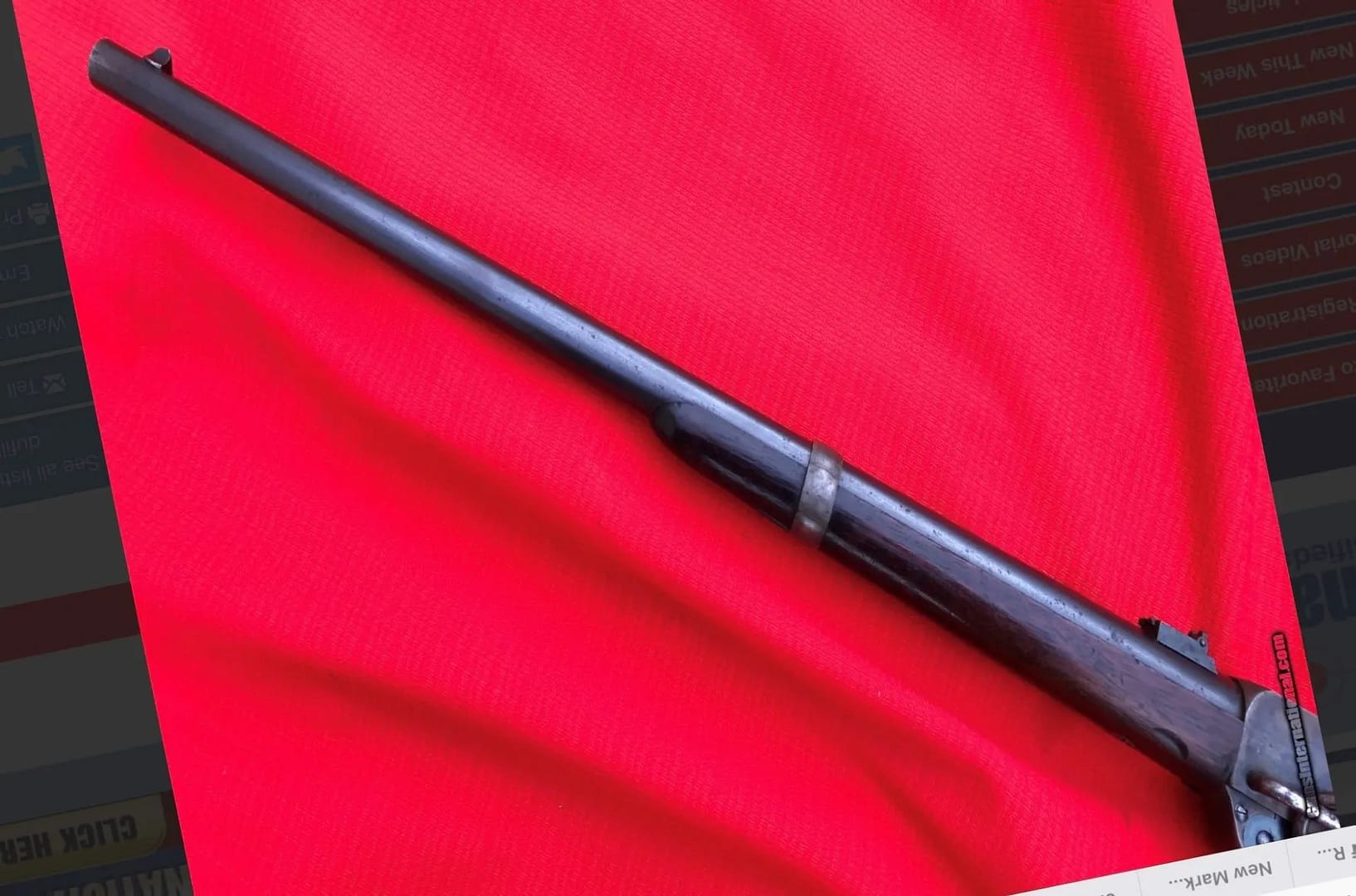
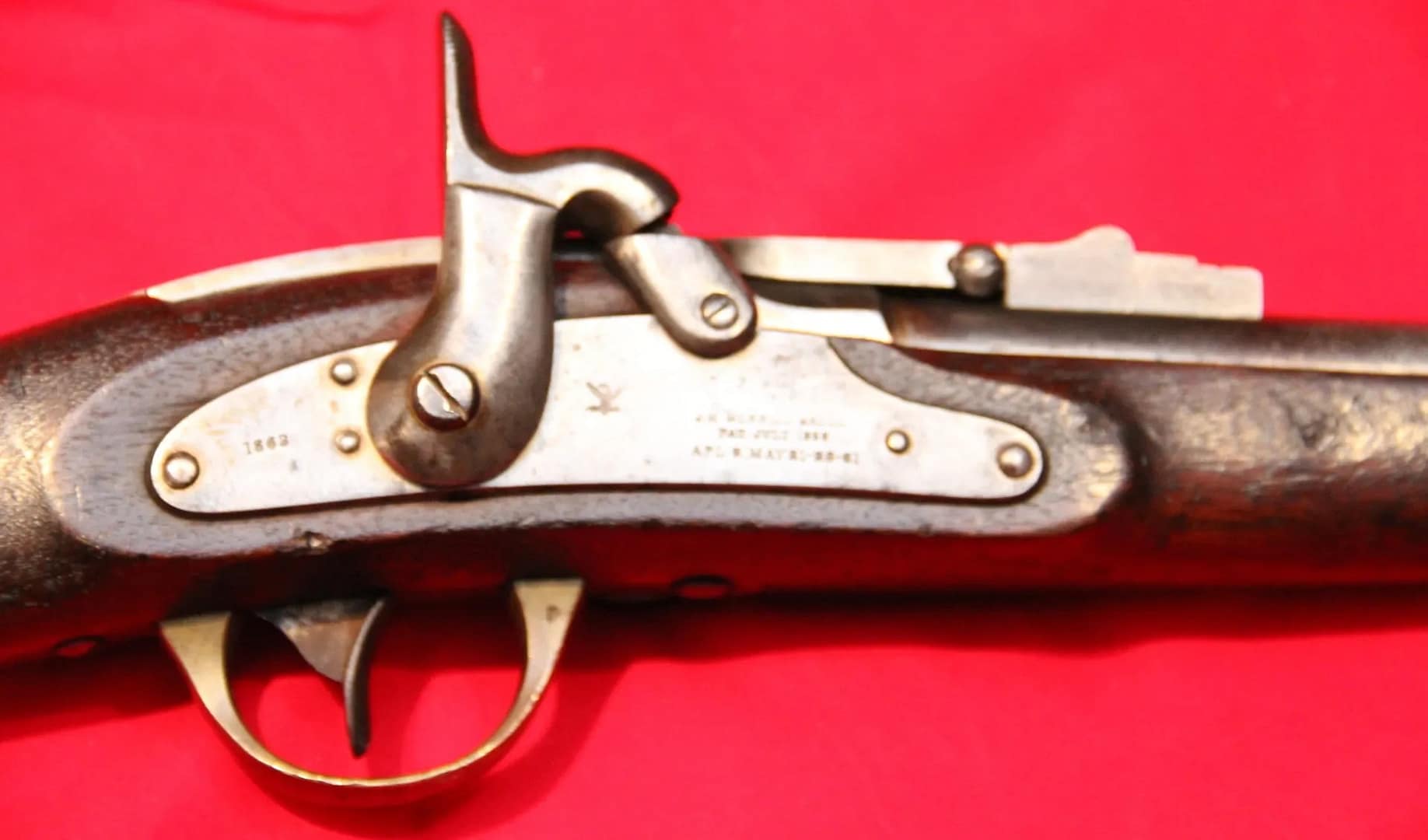
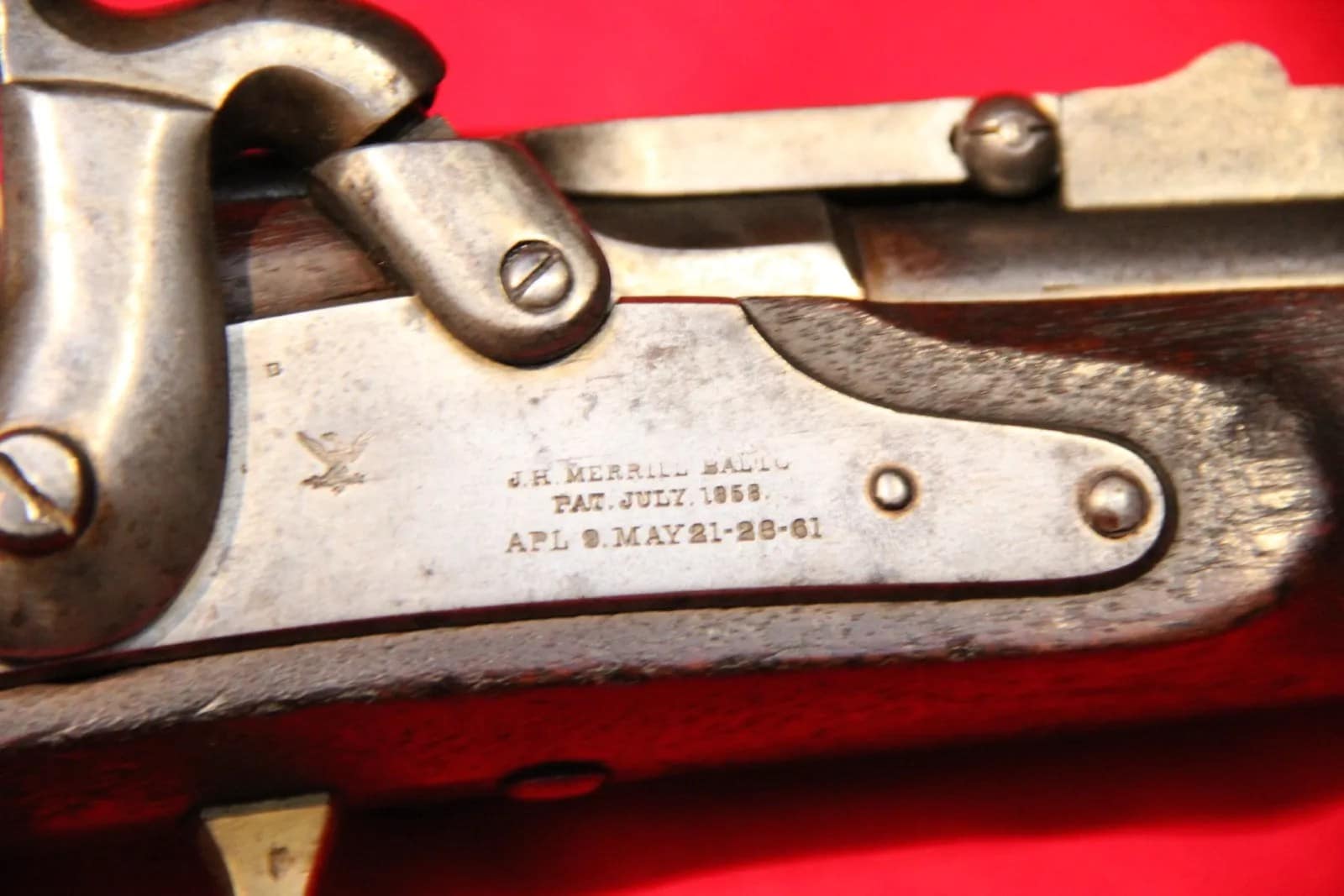
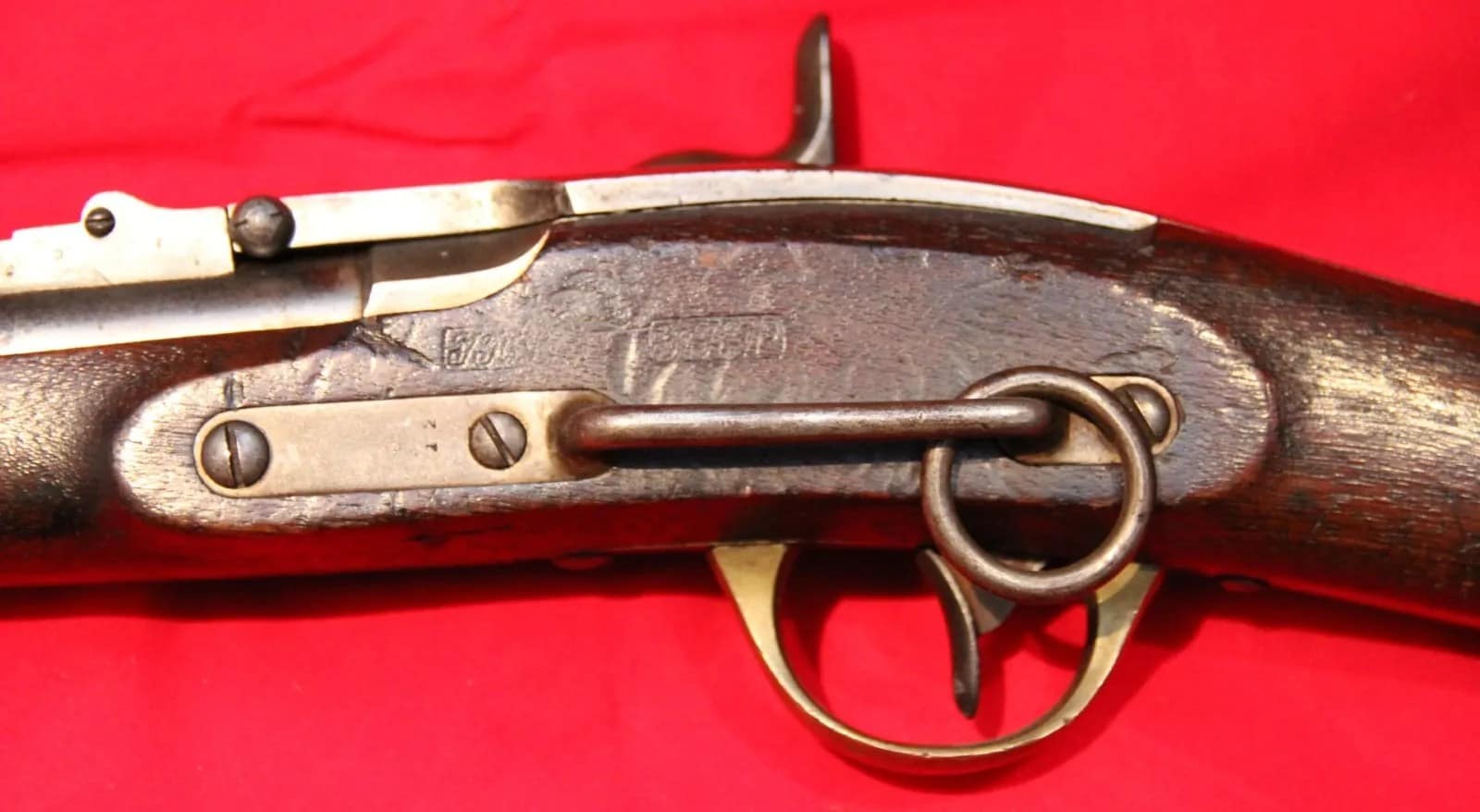
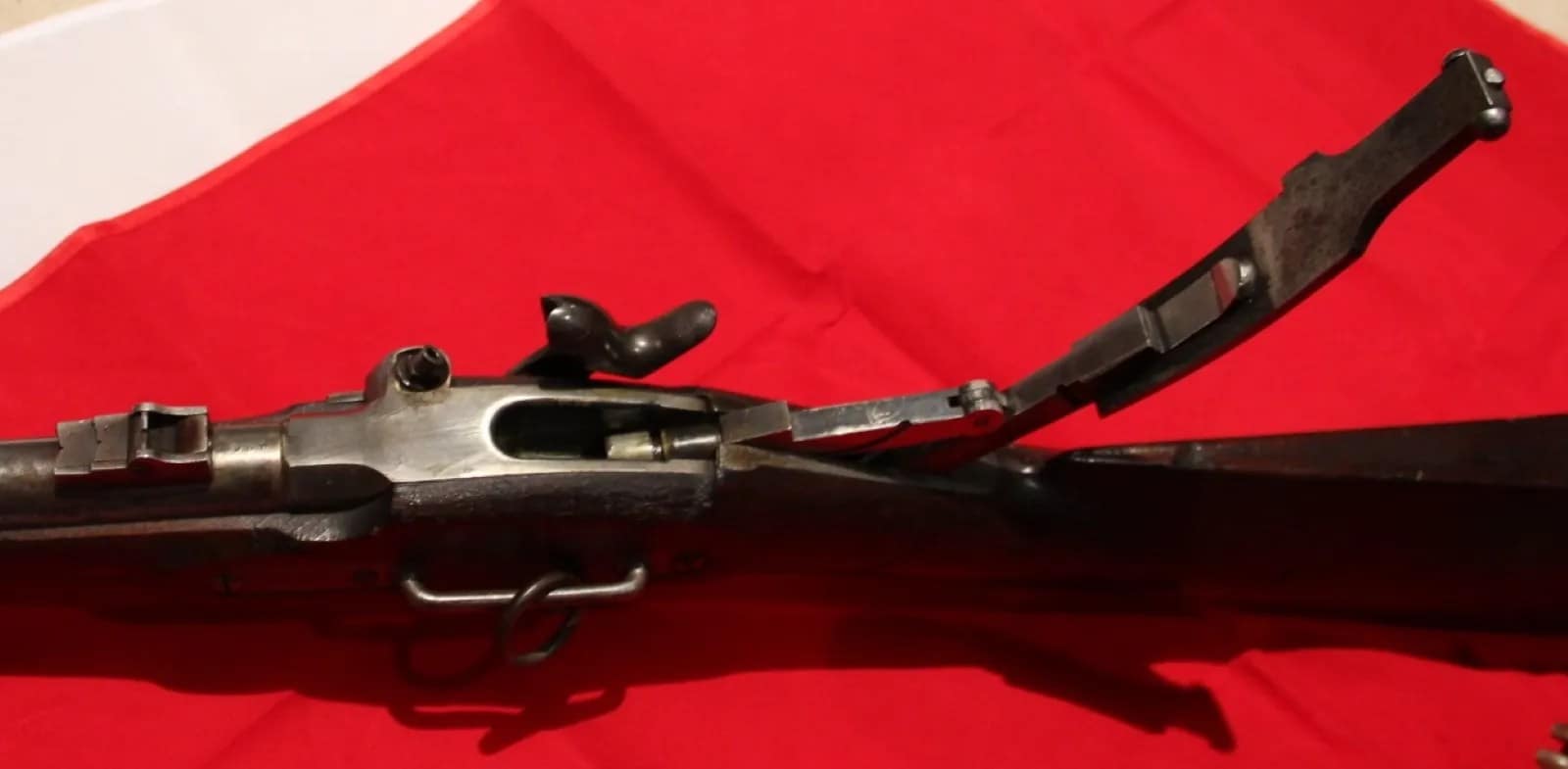
Merrill Carbine (Second Model, c.1858), from my personal collection.
The Merrill Carbine was a single-shot, breech-loading percussion carbine designed by James H. Merrill and manufactured by the Merrill Firearms Company of Baltimore. Typically chambered in .54 calibre, it used a paper or linen cartridge ignited by a percussion cap. Issued primarily to Union cavalry during the American Civil War, it was valued for its solid construction and reasonable accuracy, though the breech mechanism could be prone to gas leakage if not well maintained. The Merrill saw service in mounted operations, particularly in the Eastern Theater, before being gradually supplanted by more advanced designs.
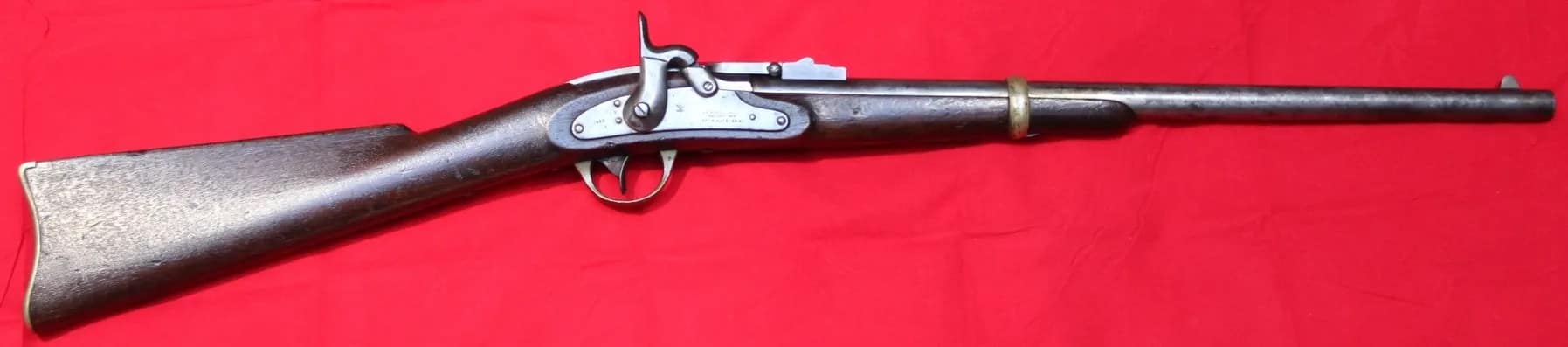
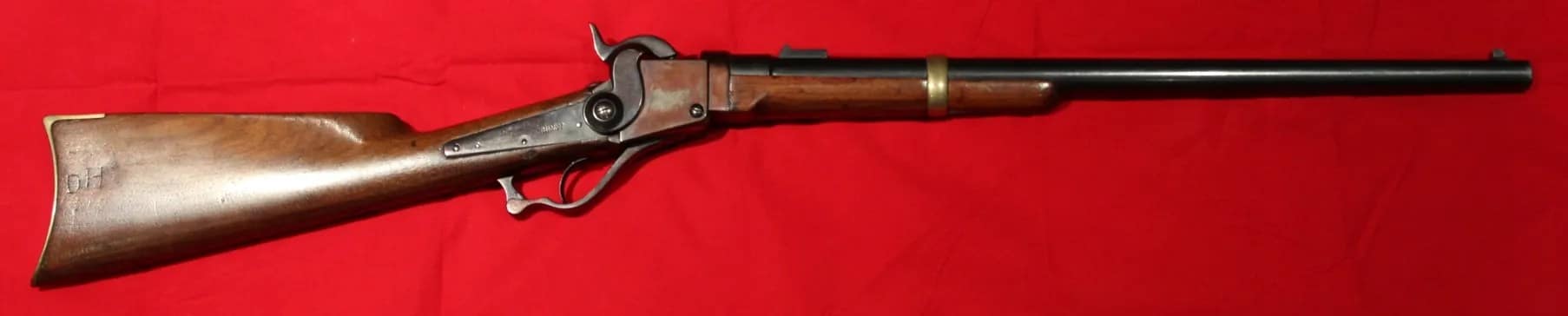
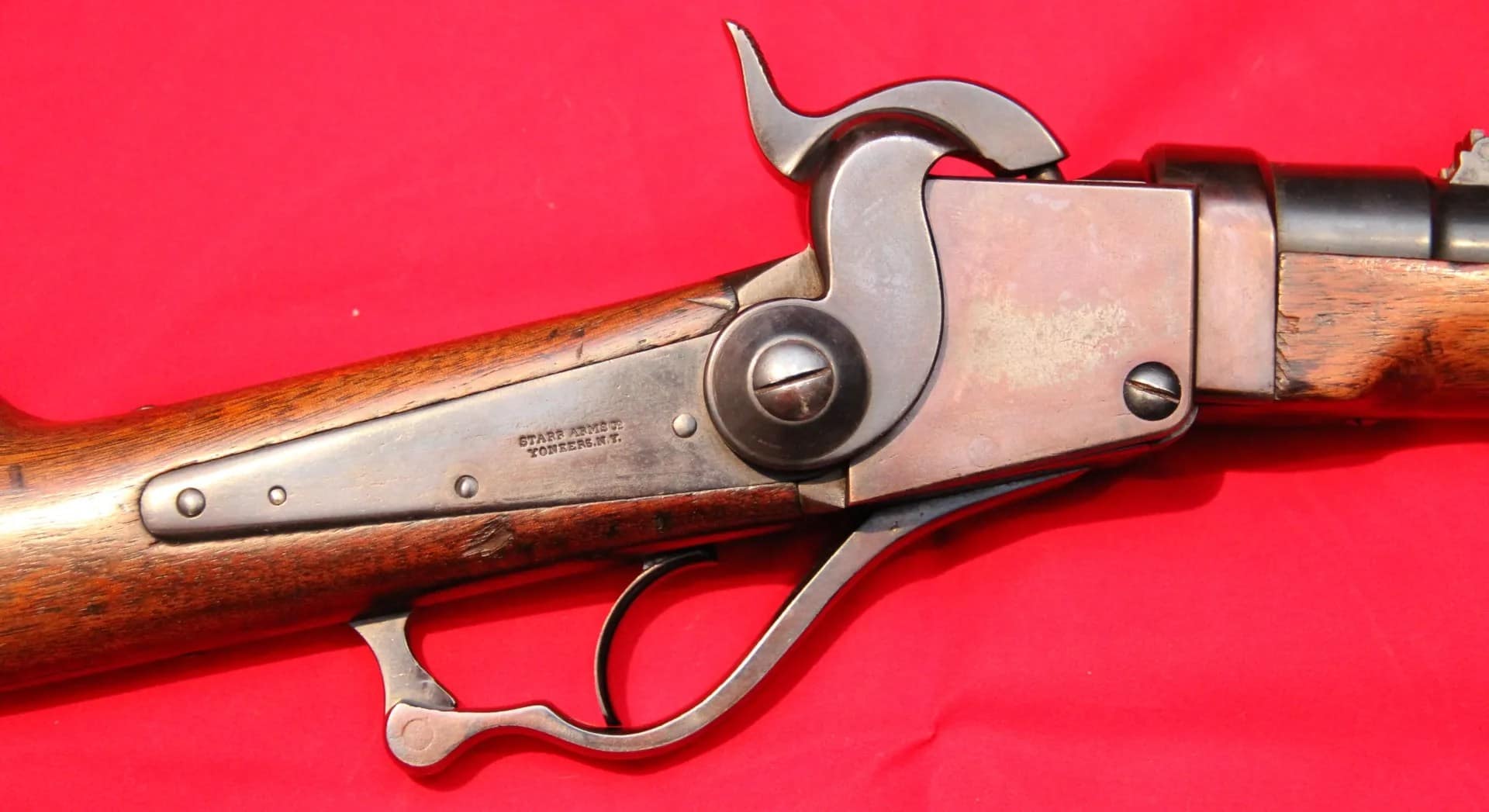
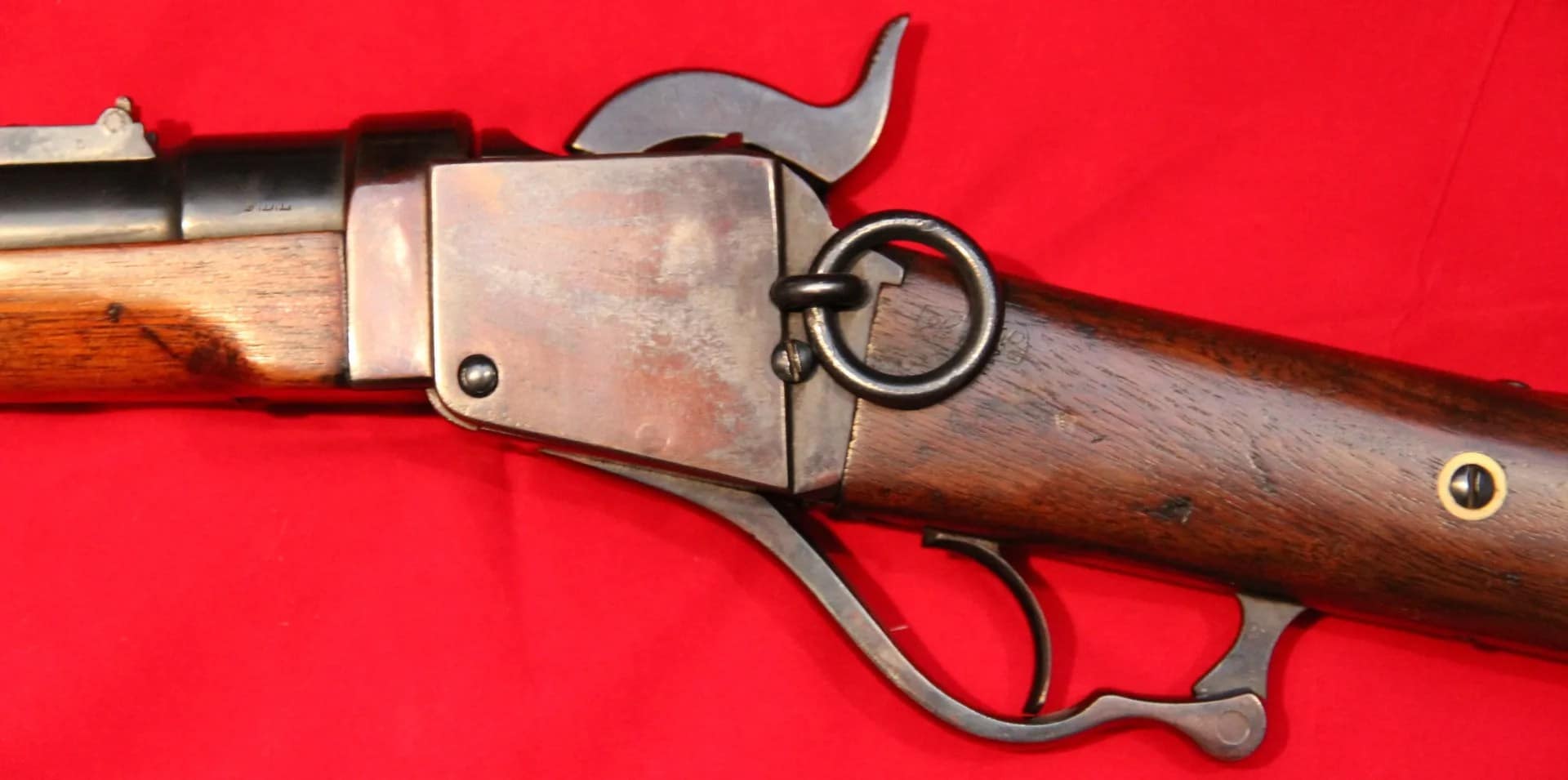
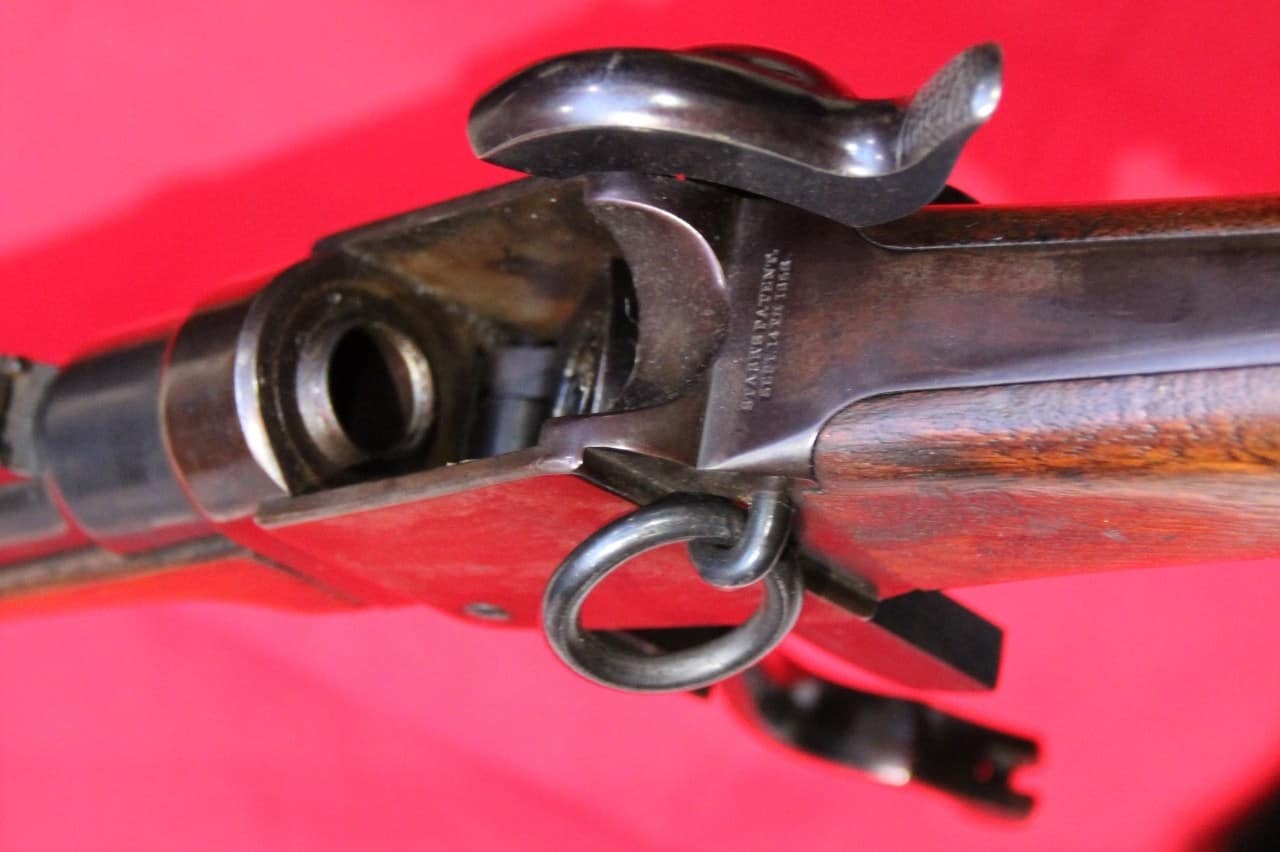
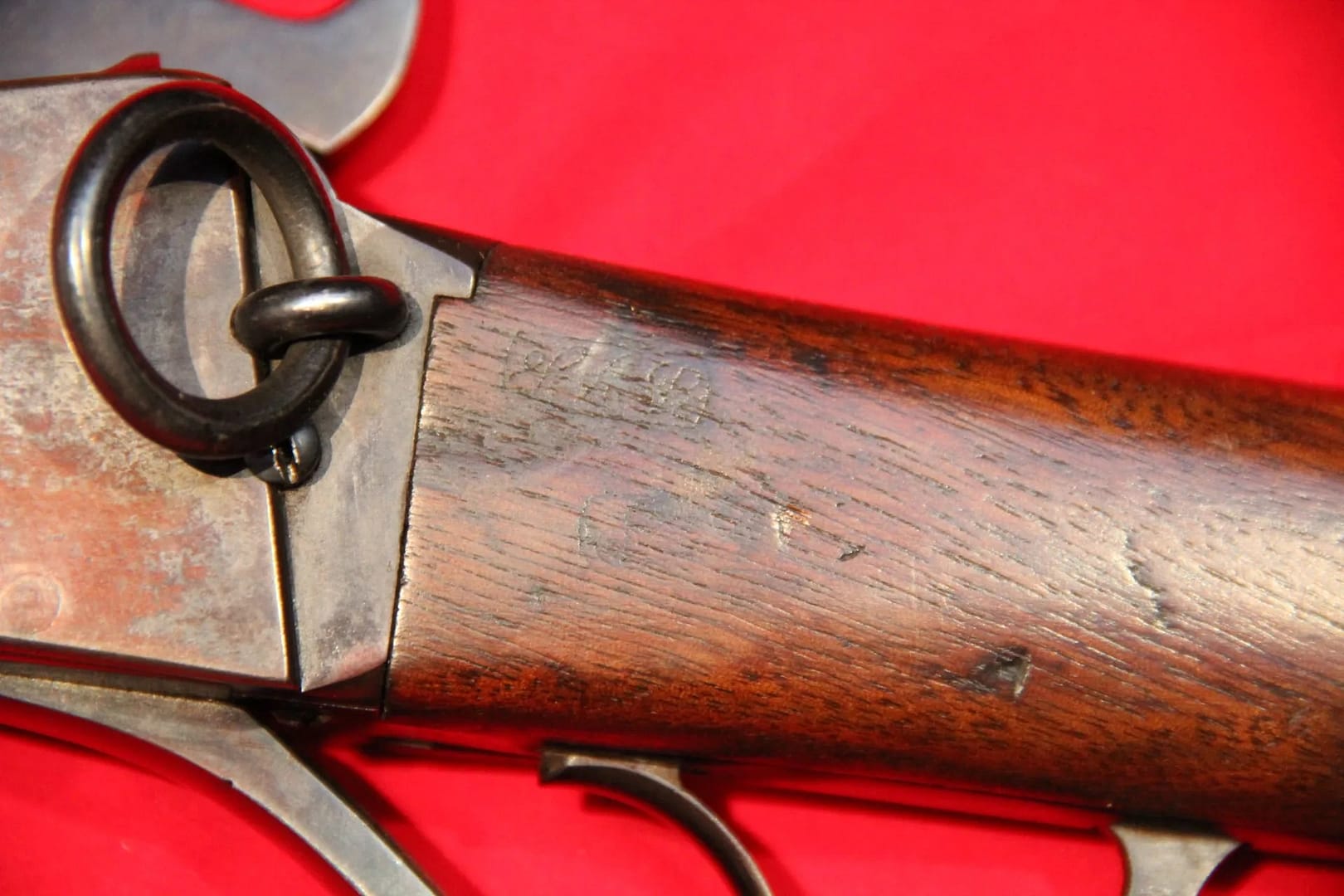
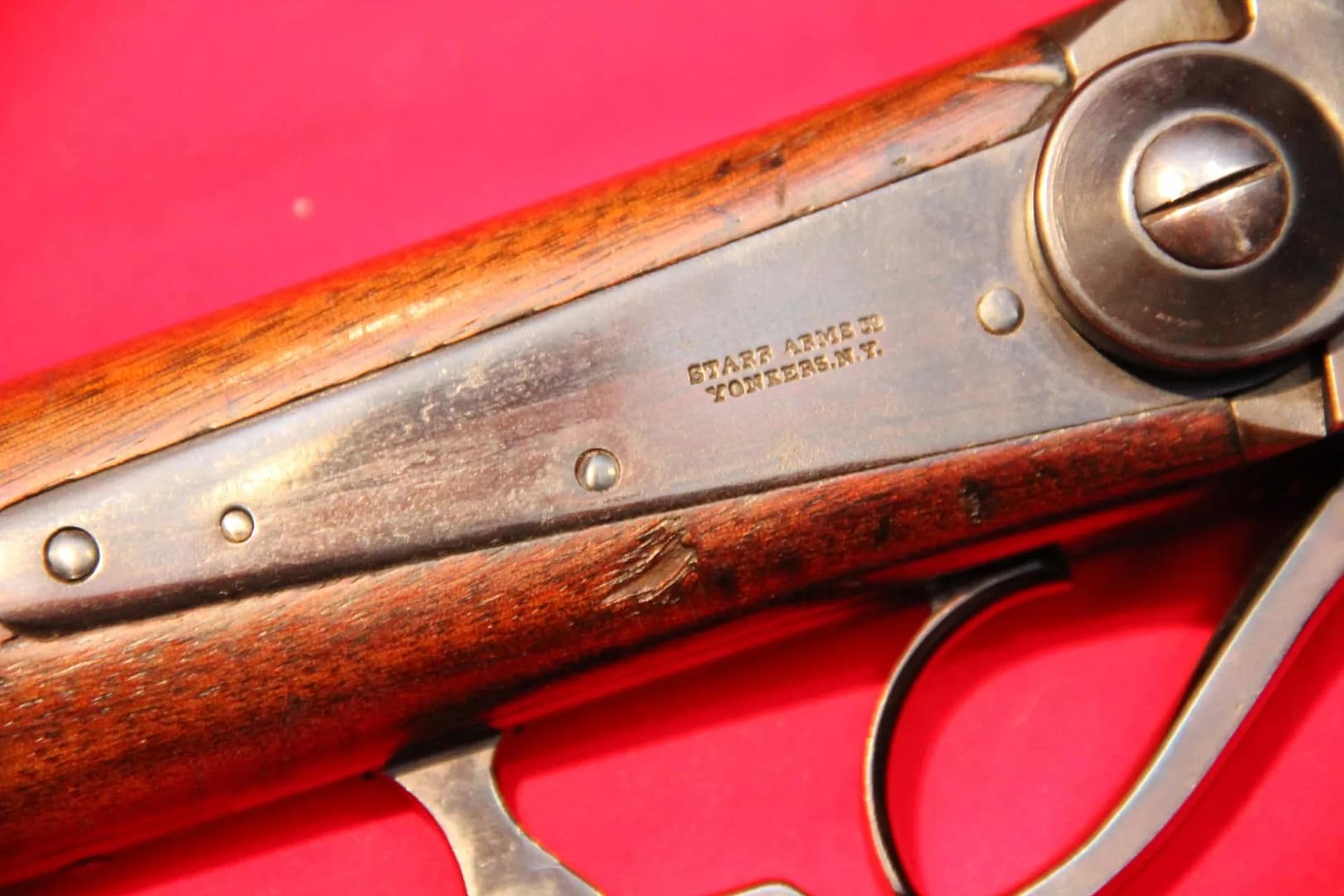
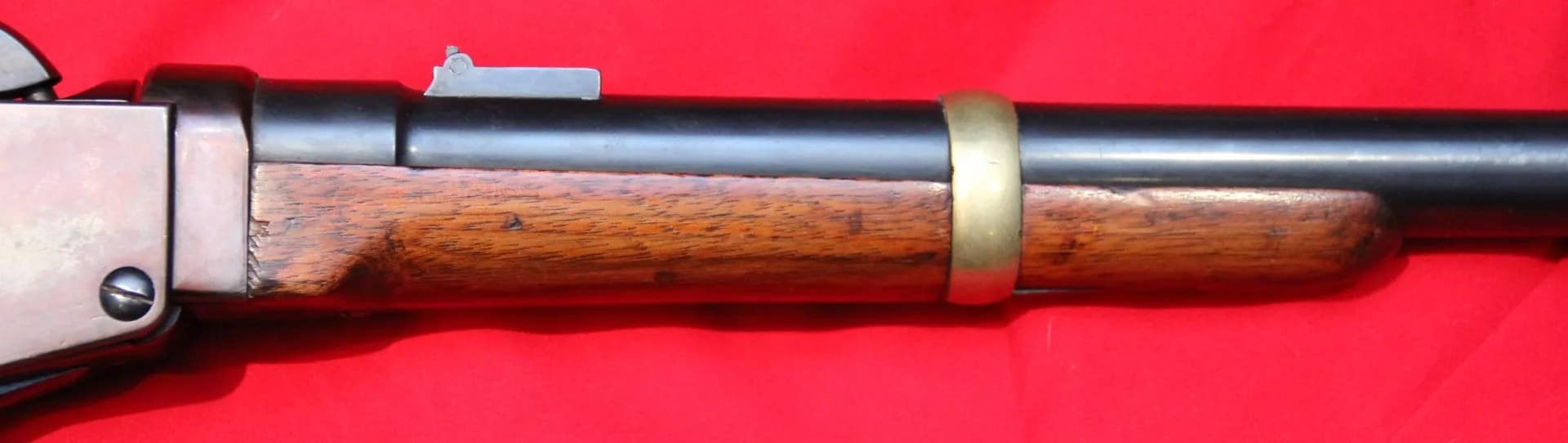
1858 Starr Carbine, from my personal collection.
The Starr Model 1858 Carbine was a percussion breechloading firearm produced in the United States during the American Civil War era. Manufactured by the Starr Arms Company, it featured a robust falling-block action designed to improve rate of fire compared to traditional muzzle-loaders. Starr carbines were issued primarily to Union cavalry units, where reliability and rapid loading on horseback were critical. Although later overshadowed by more advanced breechloaders, the Starr represented an important transitional step in military small-arms development. Its design reflects the rapid technological evolution of mid-19th-century warfare and the growing emphasis on mobility and sustained firepower in mounted operations.

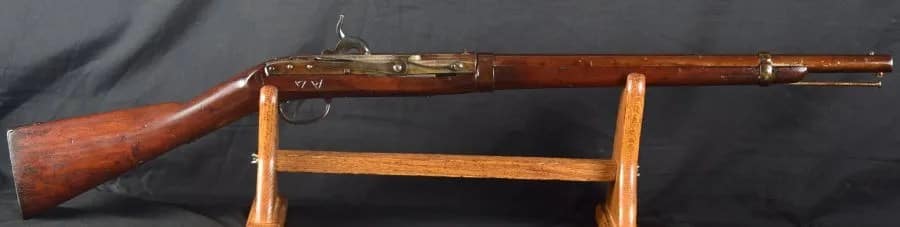
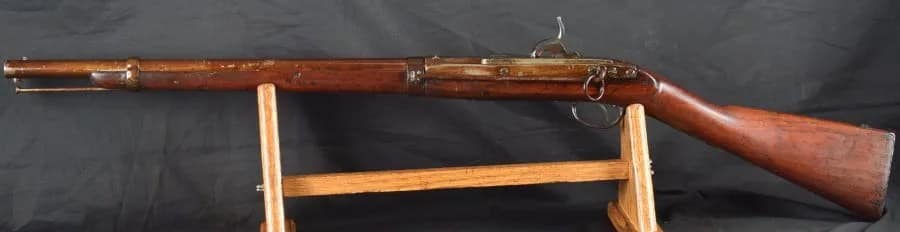
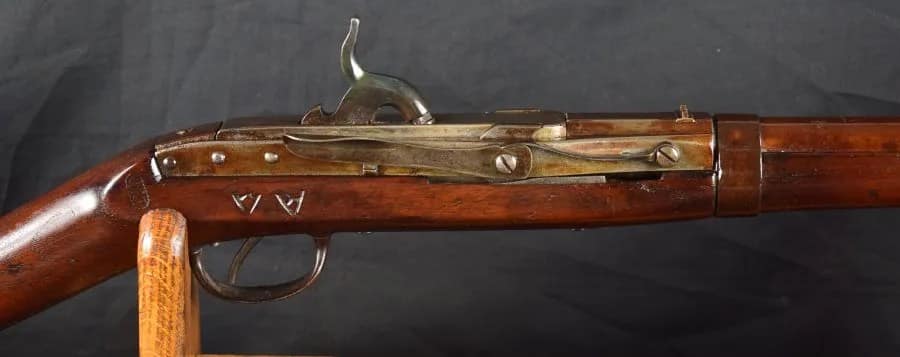
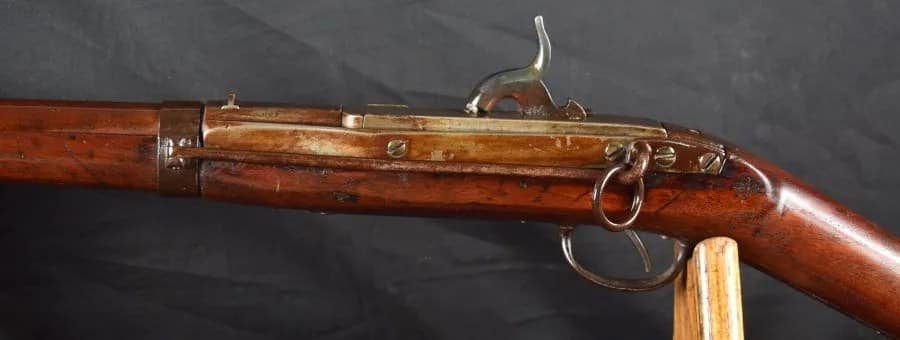
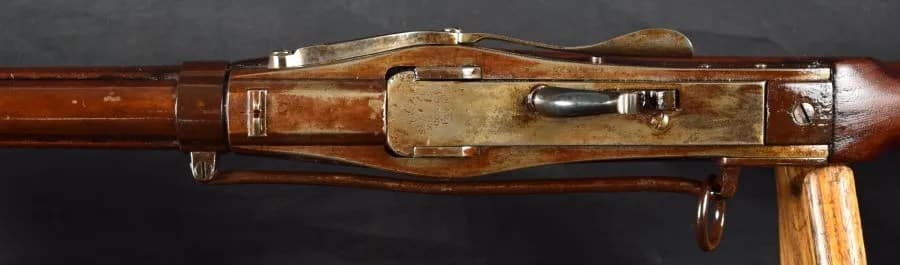
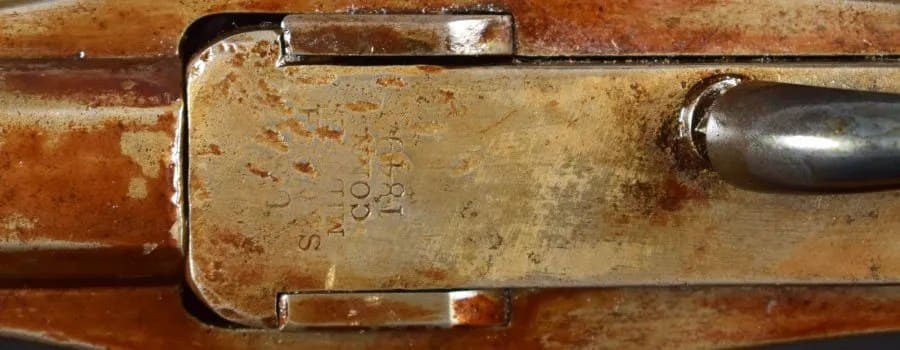
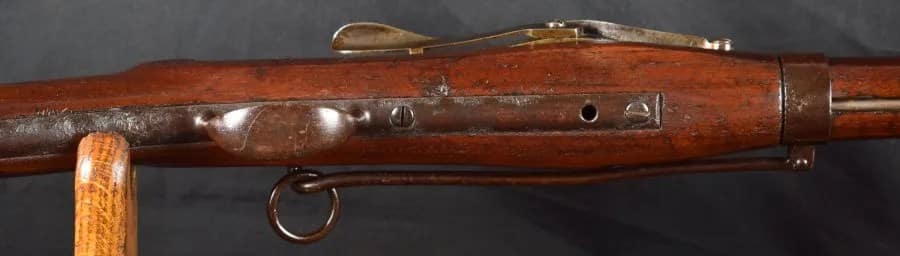
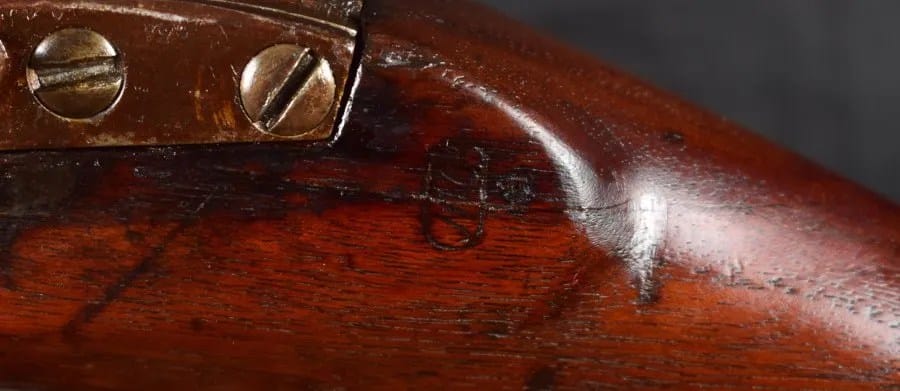
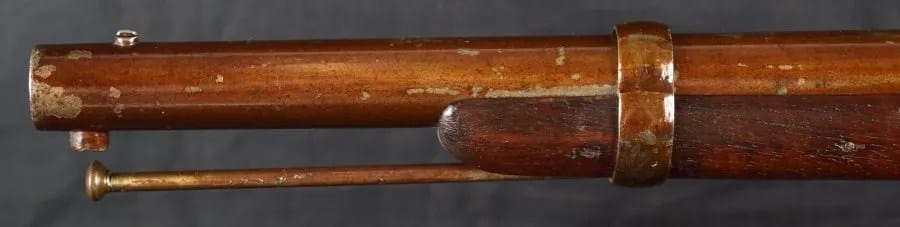
M1843 Hall Rifled Percussion Carbine, from my personal collection.
Rifled Hall Model 1843 Carbine. Dated 1849. .58 rifled bore. 80% original brown. Traces of case color on breach block. The address on the breech block has bumps and dings on it. At the begining of the civil war a number of these carbines were sitting in a US arsenal in New York. They were considered obsolete and for this reason had not been issued. They were purchased from the arsenal for $3.50 a piece. They were immediately resold, prior to taking legal title back to US forces for $22 a piece. This was all under the direction of General John Fremont, before shipping to Fremont, the carbines were were rifled to .58 cal. Most of that work was done by well known WW Marston. Fremont was eventually relieved of his command and this “Hall Carbine Affair” was part of the reason he was let go. These were carried by the 2nd and 9th Illinois. Dated 1849
American Civil War Handguns
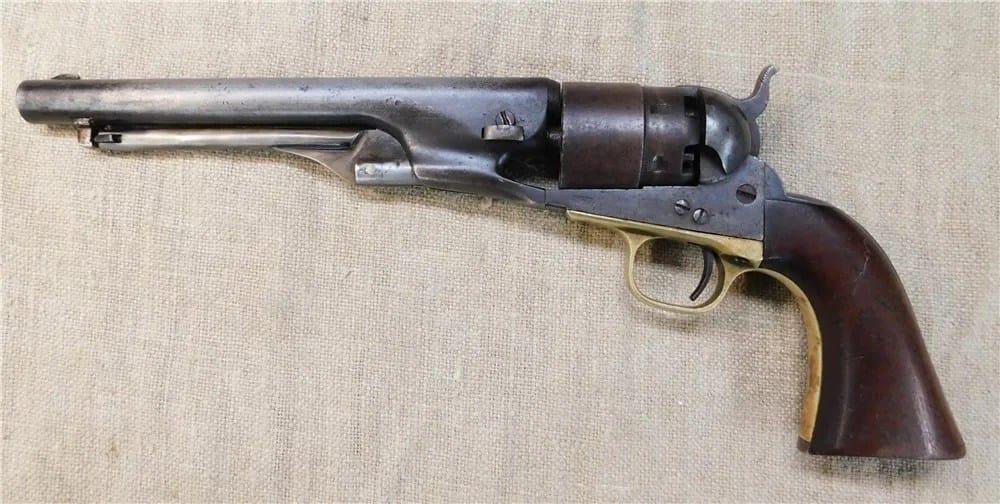
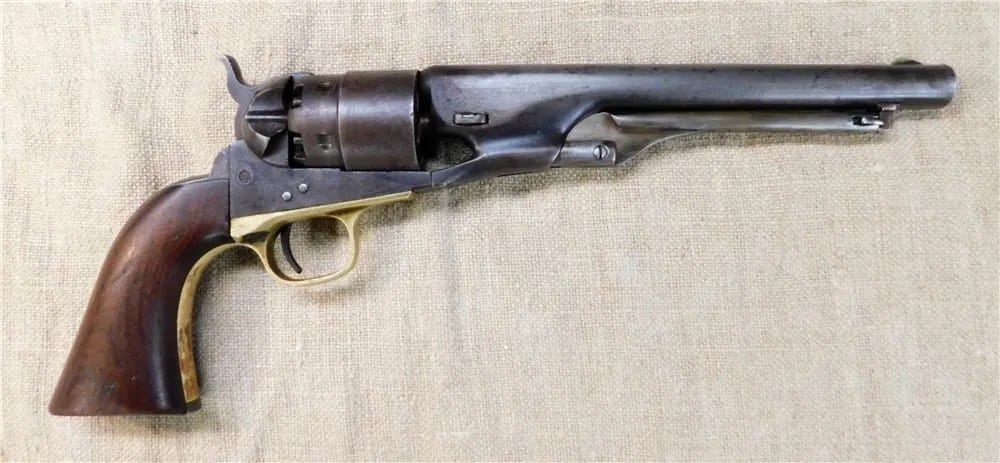
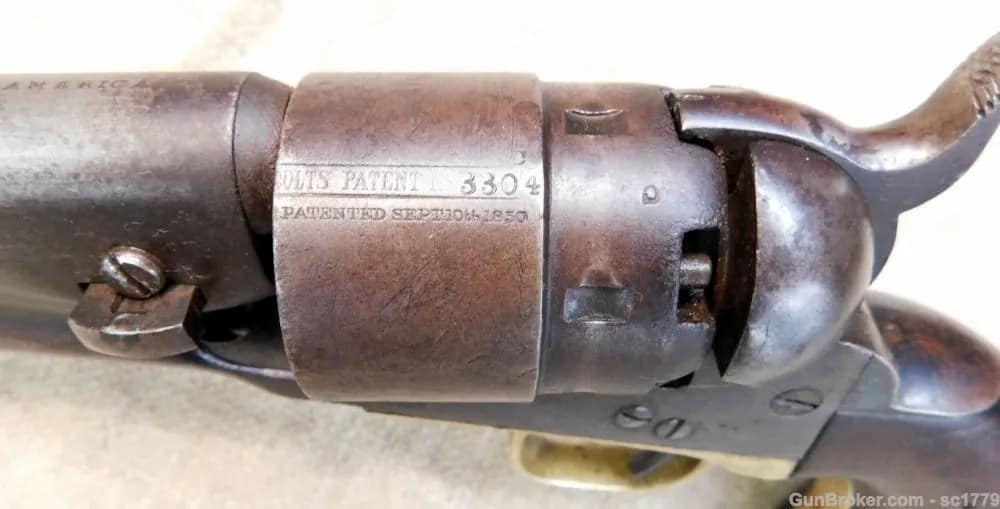
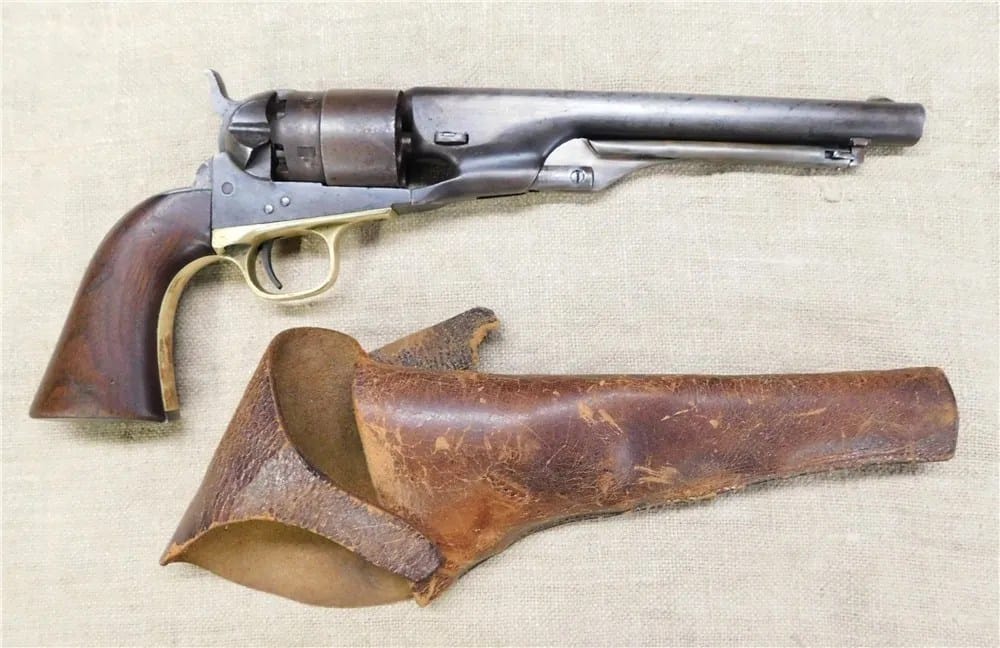
Model 1860 Colt Army revolver, .44″ caliber, from my personal collection.
The Colt Model 1860 Army revolver was the principal sidearm of Union cavalry and officers. A .44-calibre percussion revolver with streamlined contours and improved balance, it offered accuracy, high reliability, and battlefield durability. Issued to mounted formations and carried privately by infantry officers, the Colt Army saw widespread use from 1861 to 1865 in both Eastern and Western theatres. Its combination of power and handling made it one of the most iconic handguns of the war.
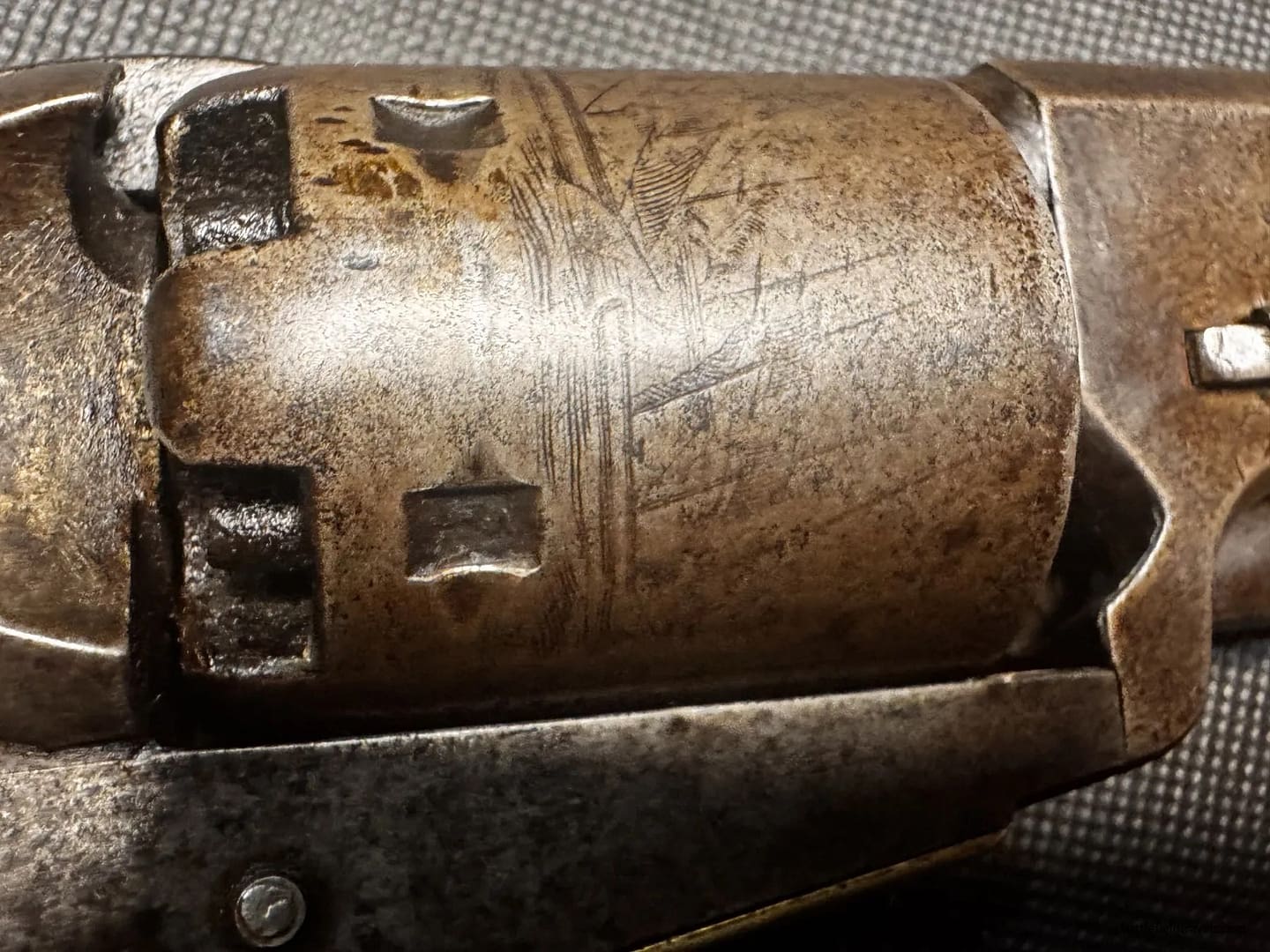
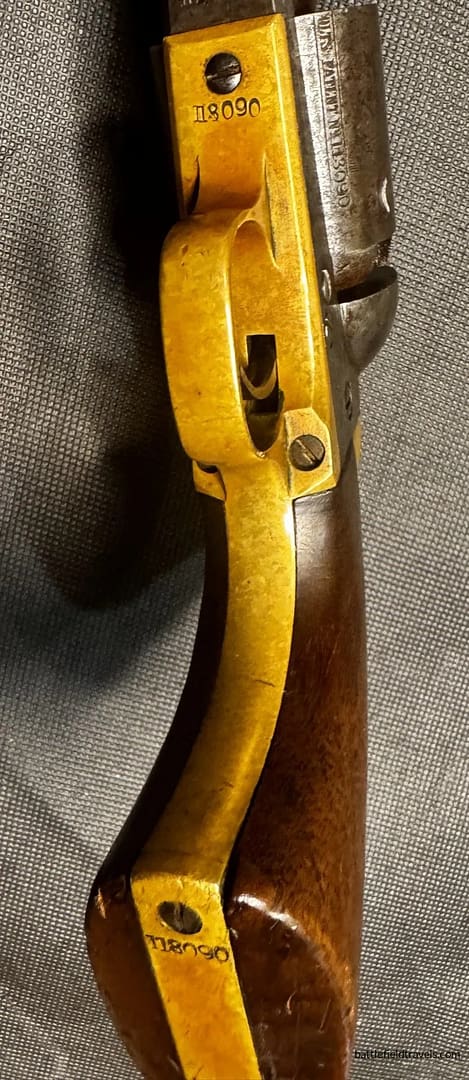
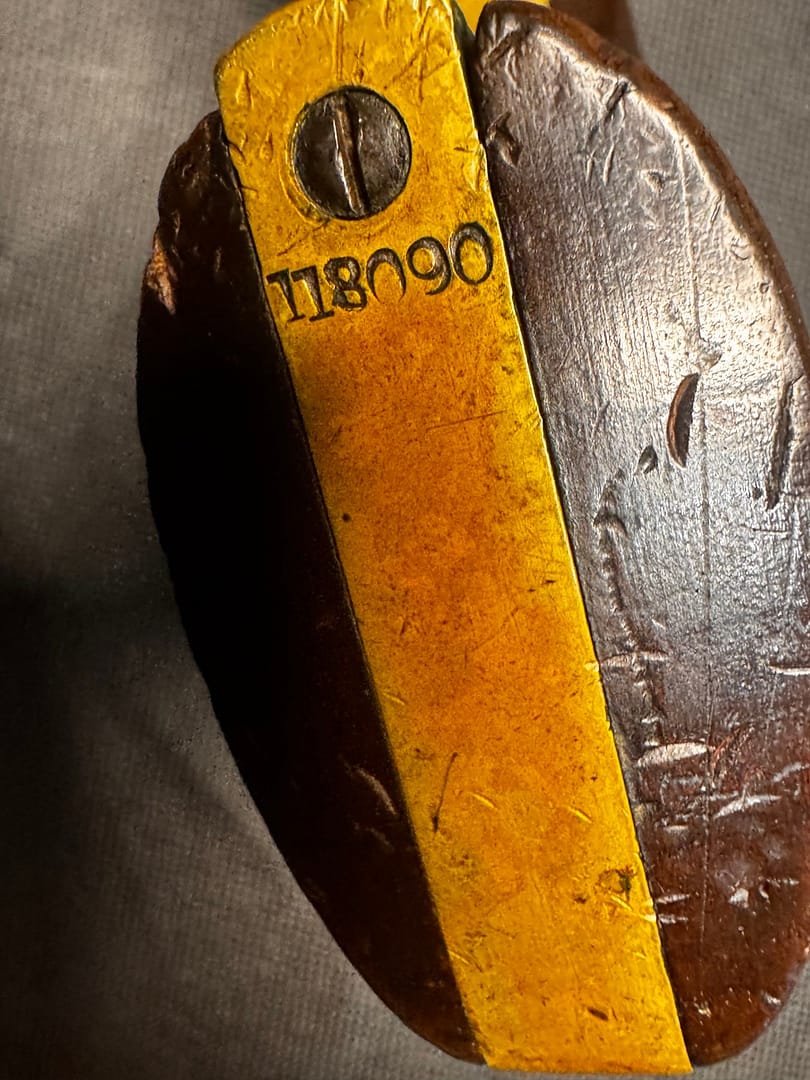
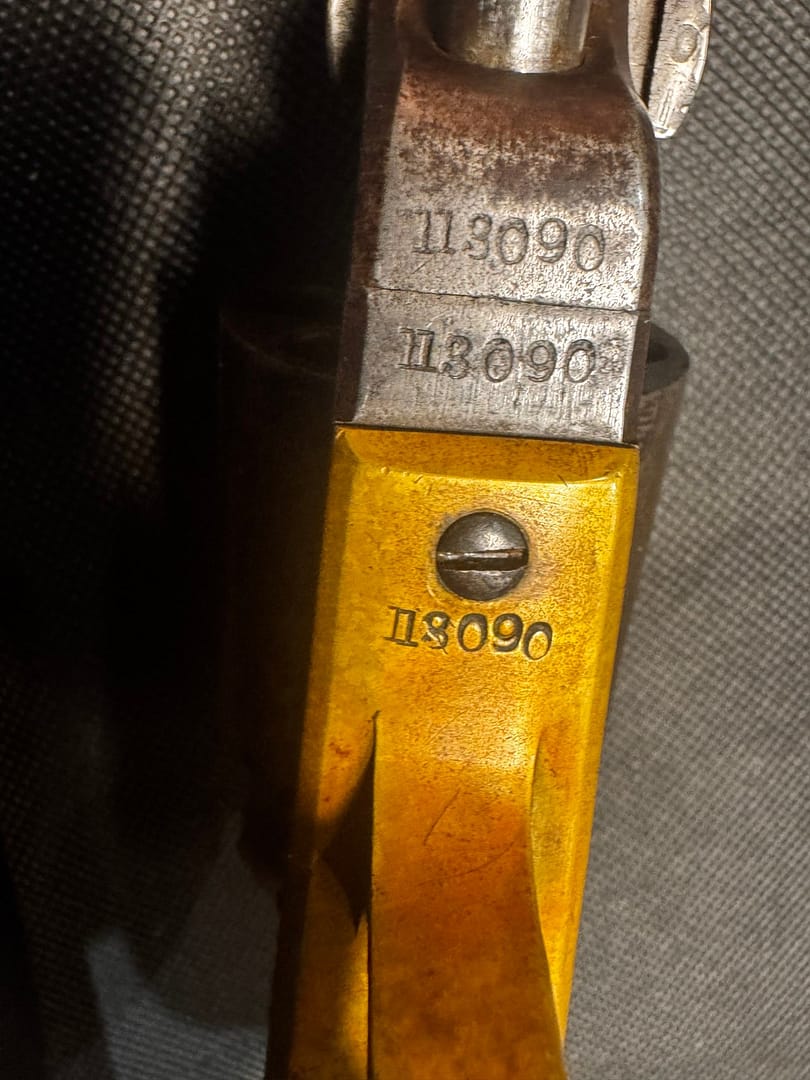
Model 1851 Colt Navy revolver .36″ caliber. From my personal collection.
The Colt Model 1851 Navy was a .36-calibre percussion revolver and one of the most iconic handguns of the mid-19th century. Featuring an octagonal barrel, six-shot cylinder engraved with the Texas Navy battle scene, and excellent balance, it became the preferred sidearm of many officers and naval personnel. Widely used by both Union and Confederate forces, the 1851 Navy gained a reputation for accuracy, reliability, and handling, remaining in service long after the war.
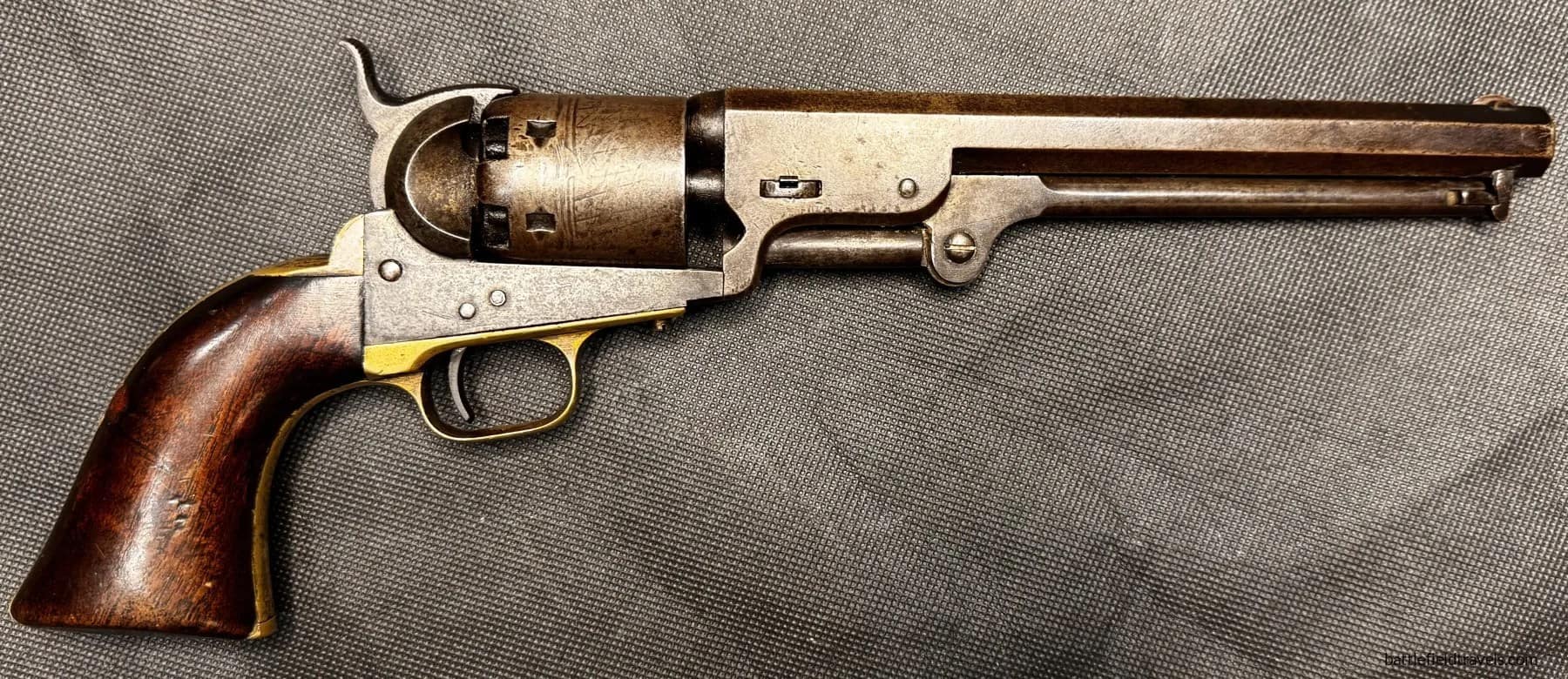
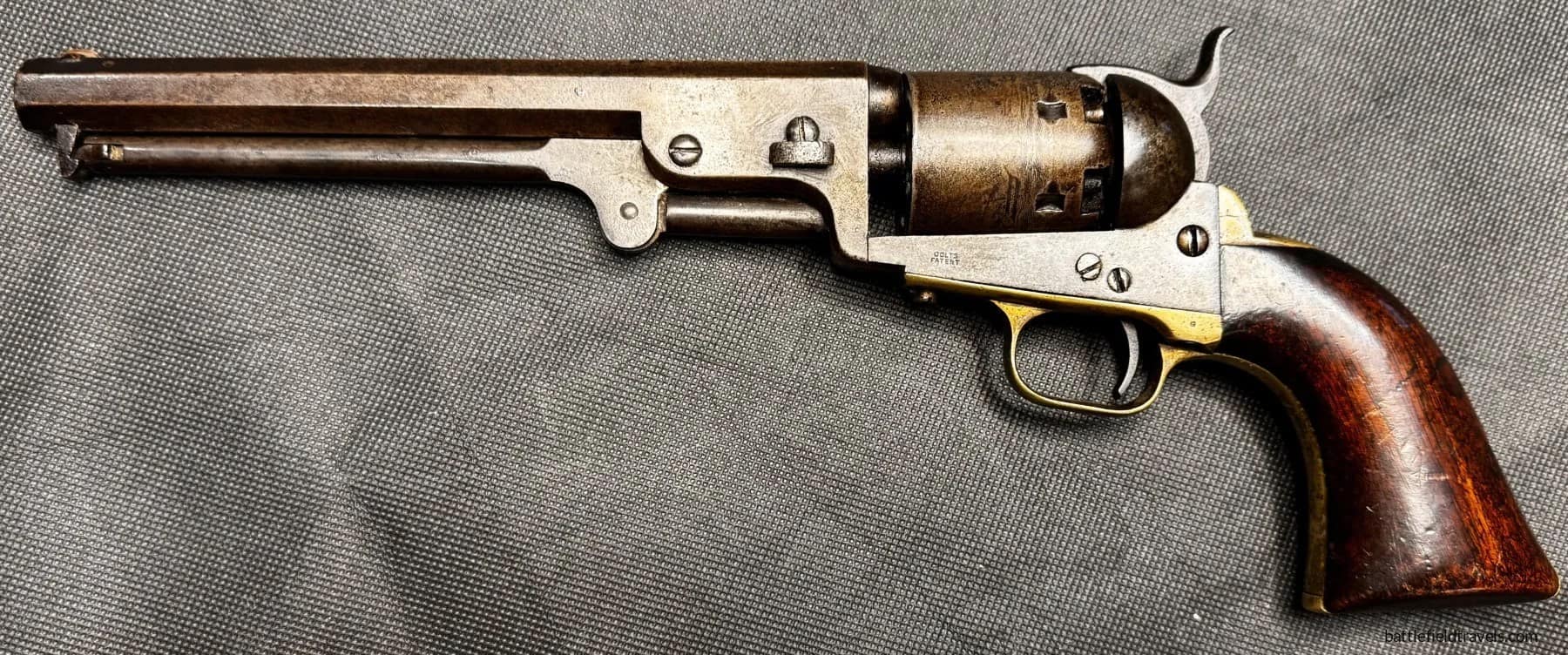
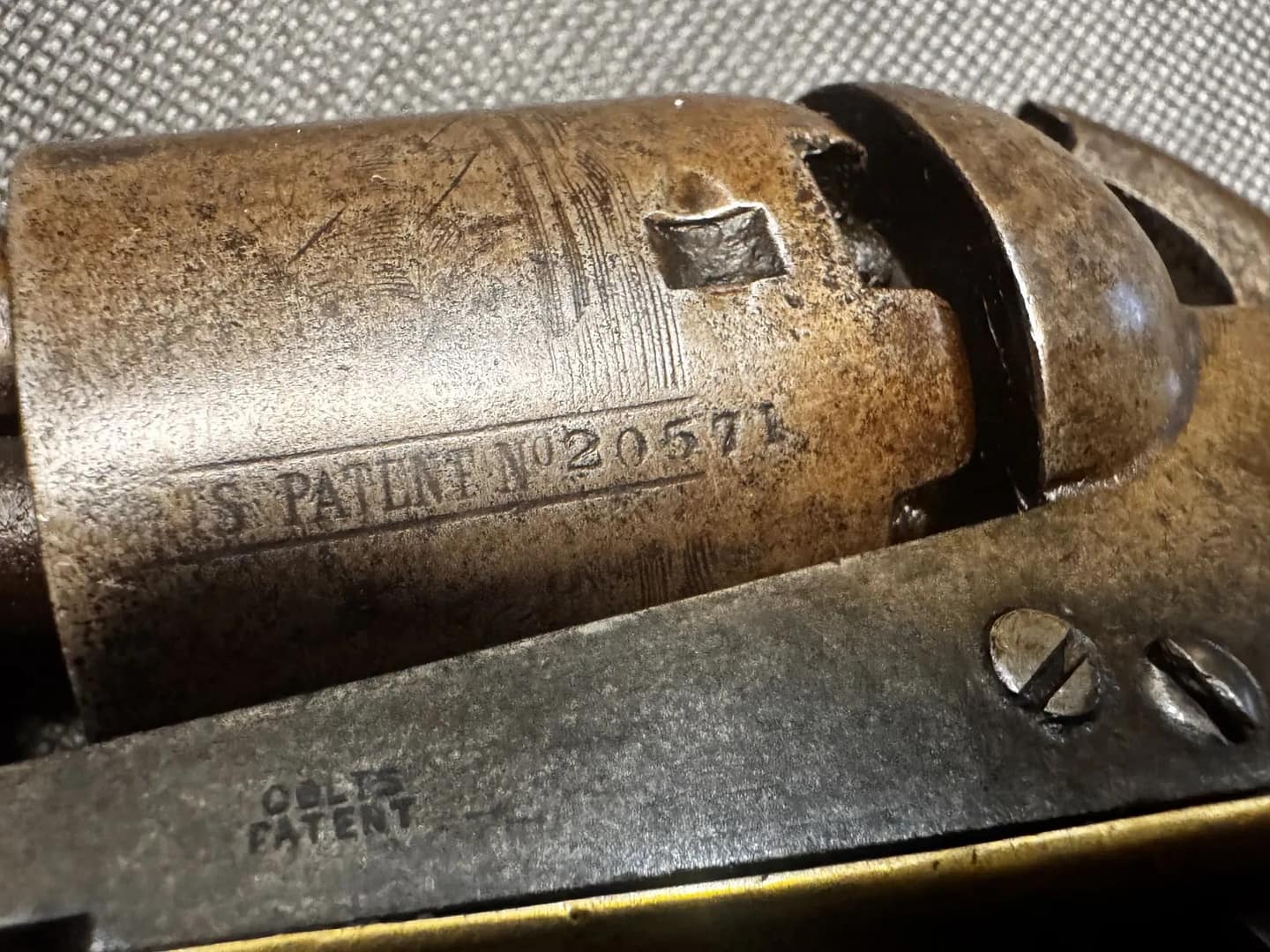
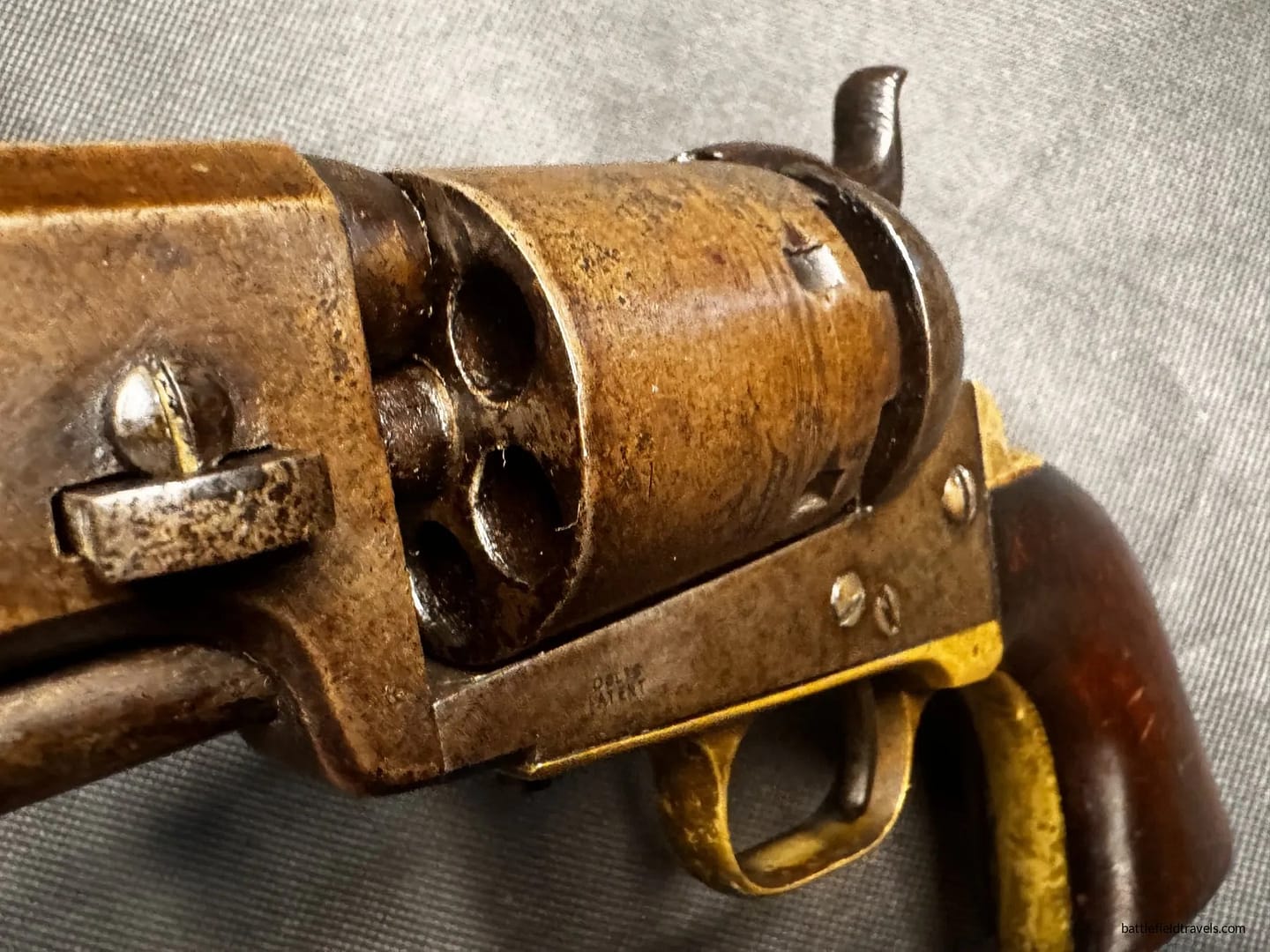
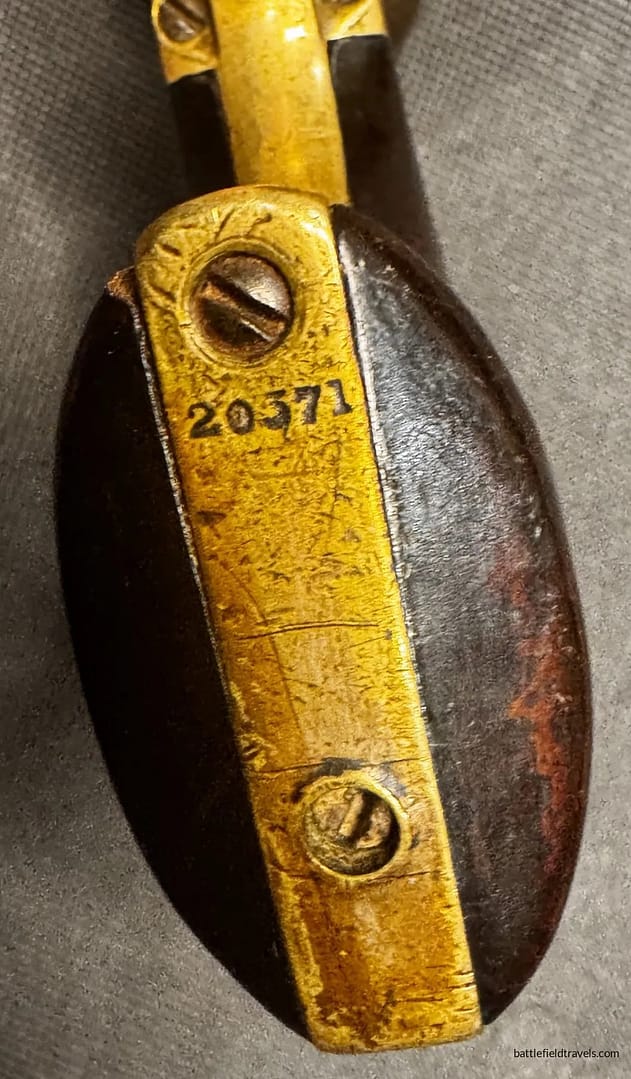
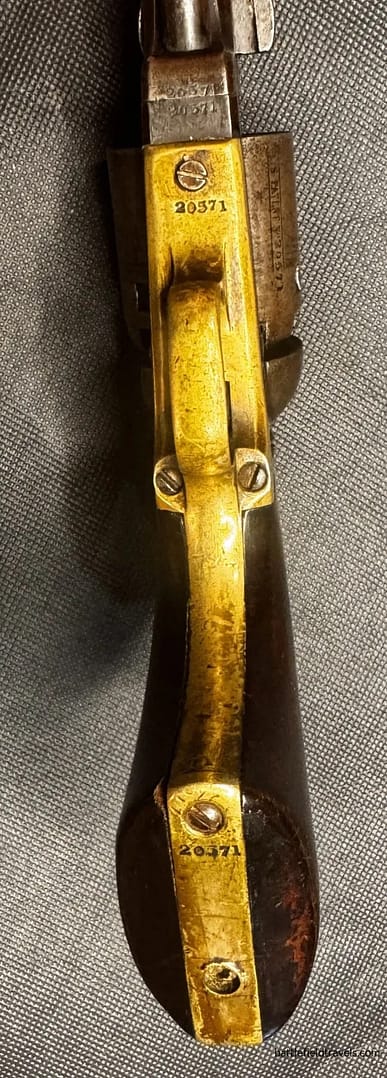
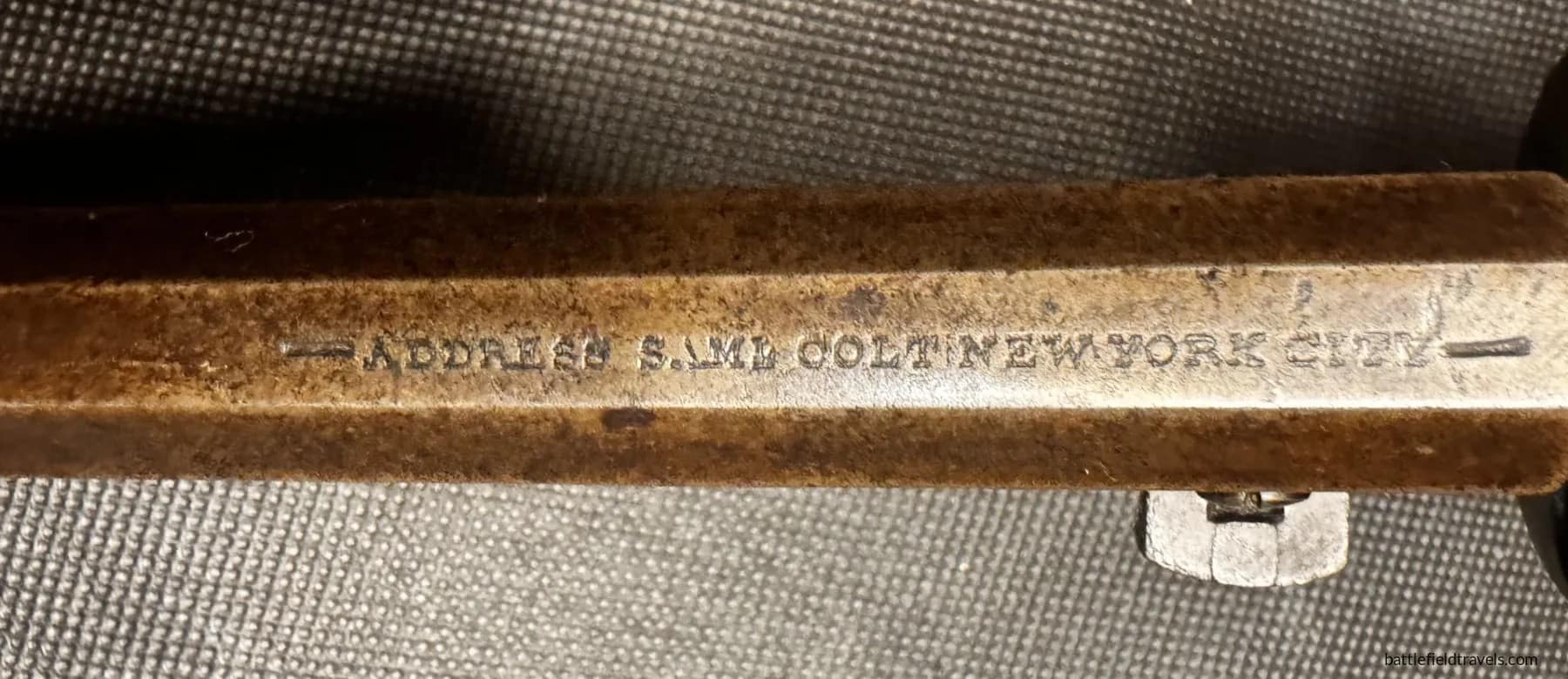
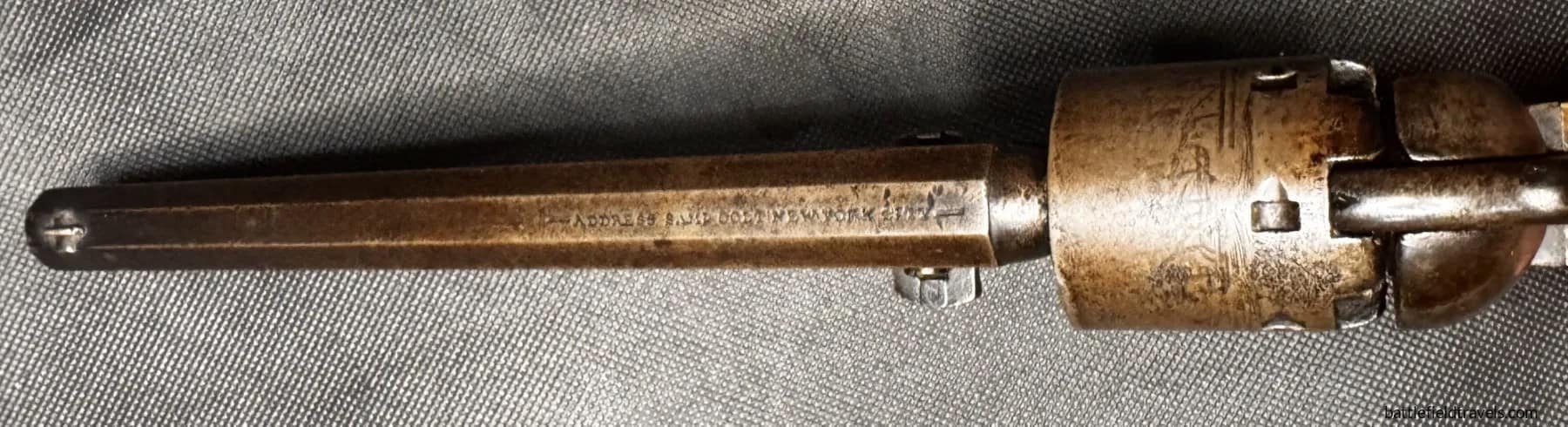
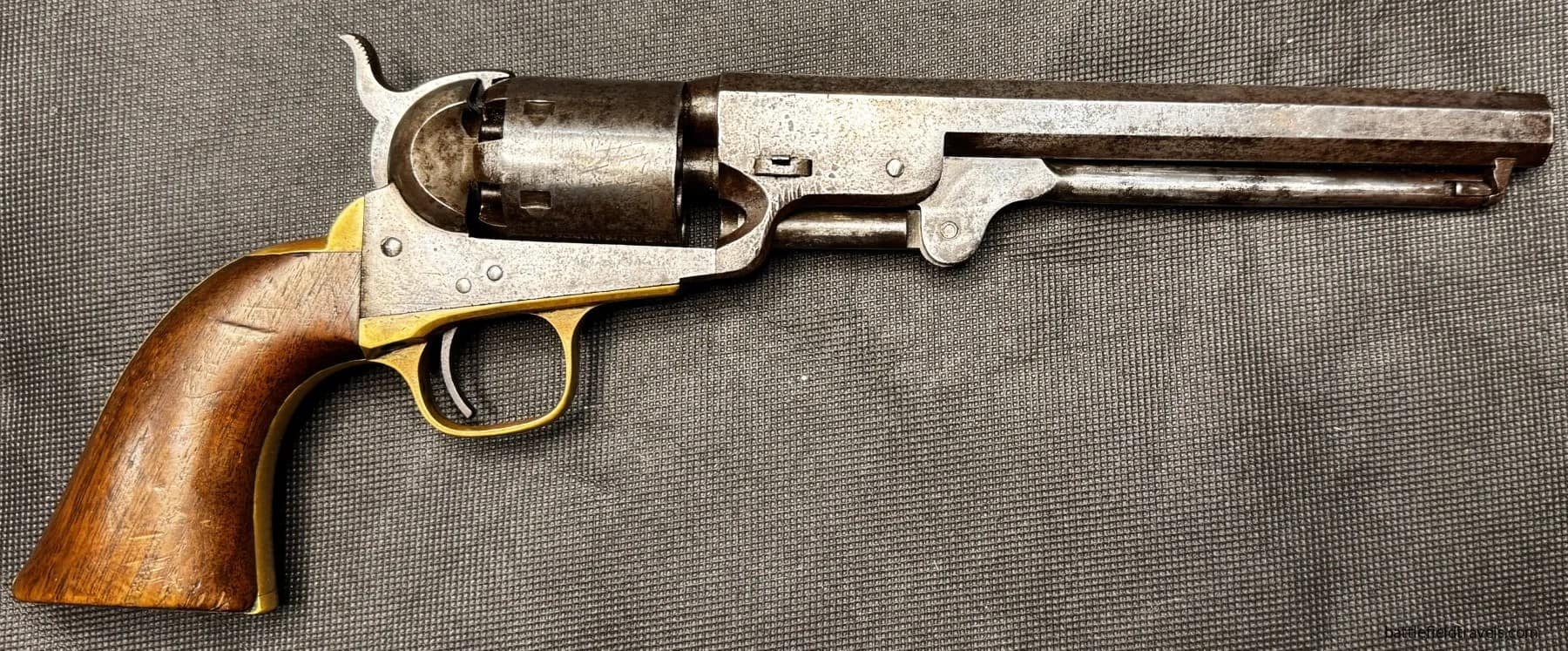
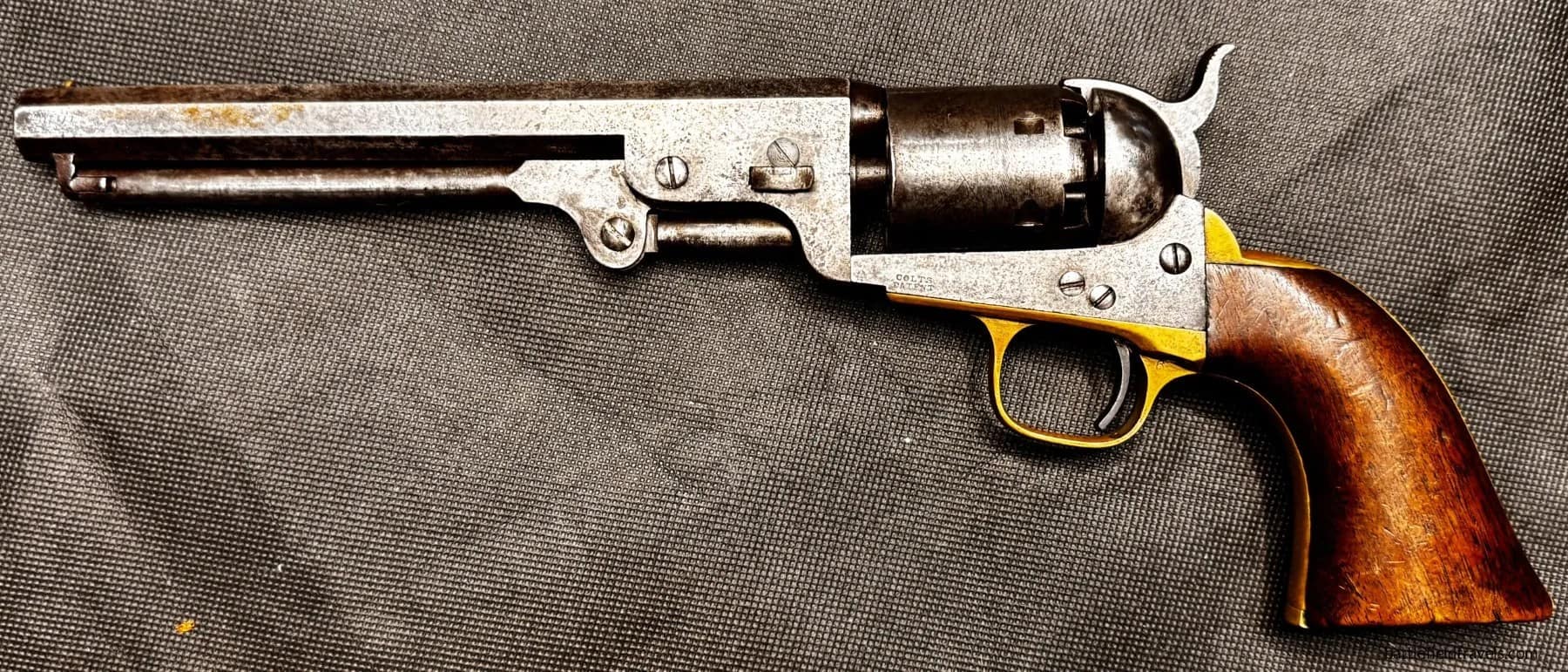
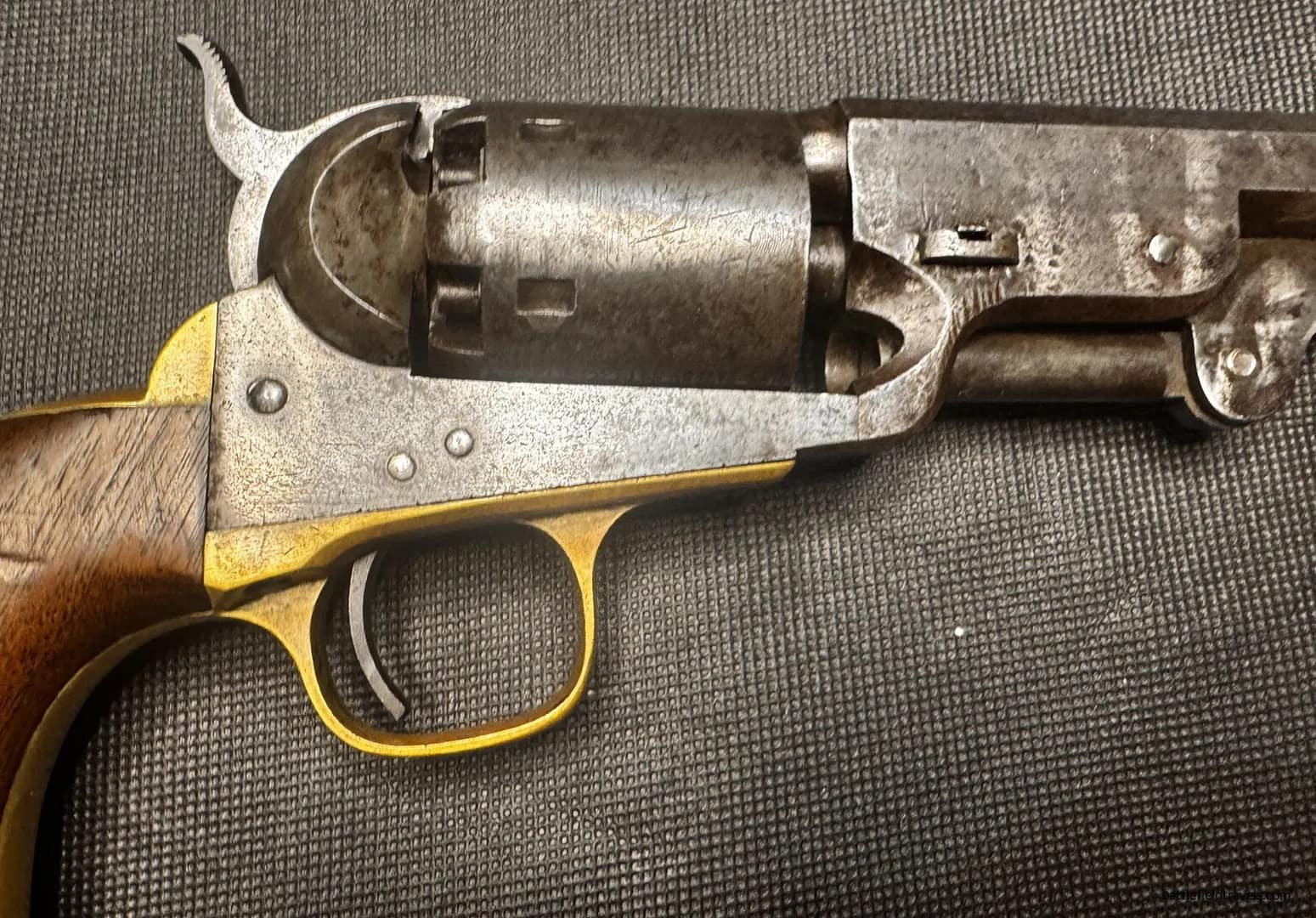
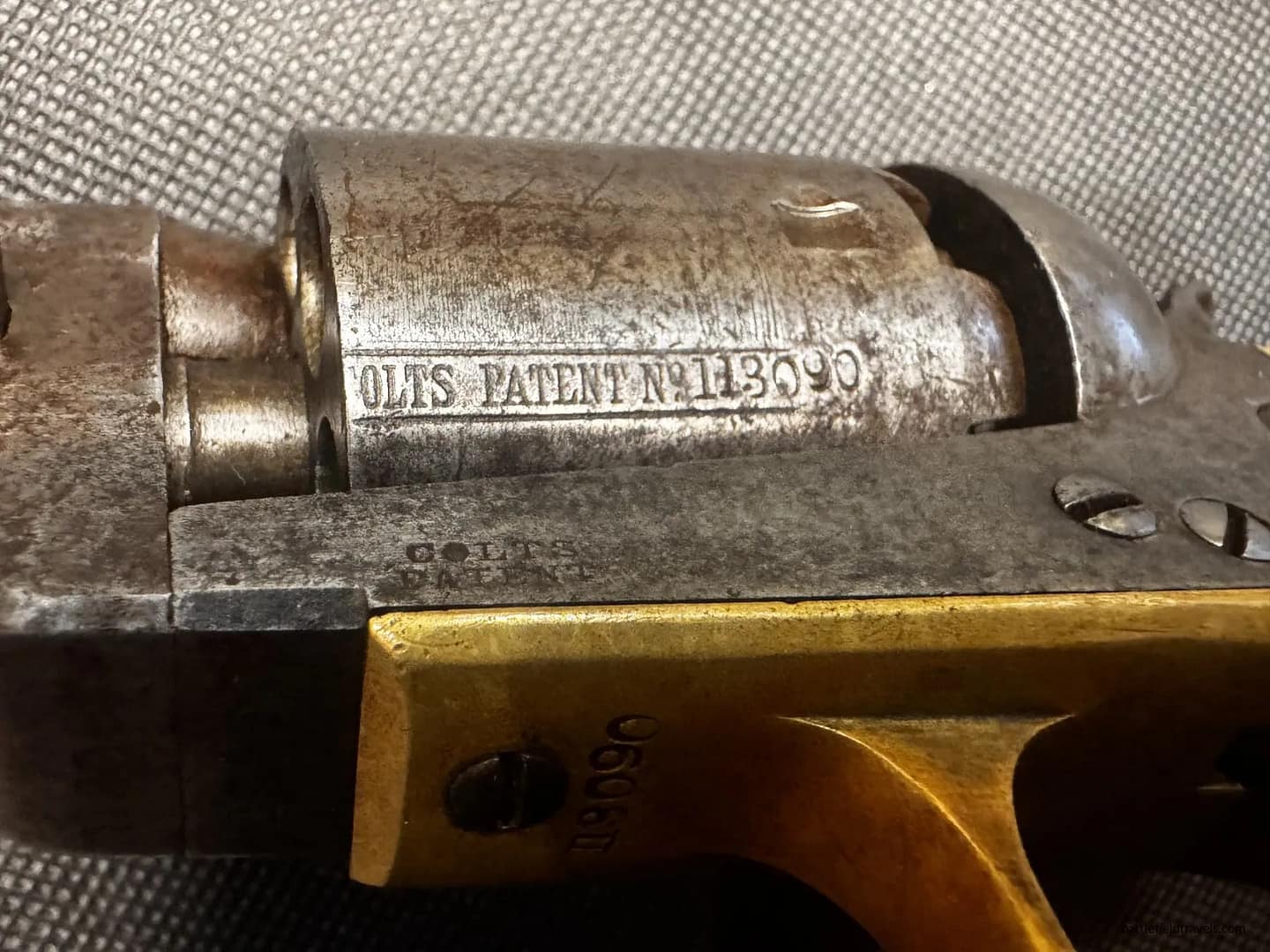
Model 1851 Colt Navy revolver .36″ caliber. From my personal collection.
The Colt Model 1851 Navy was a .36-calibre percussion revolver and one of the most iconic handguns of the mid-19th century. Featuring an octagonal barrel, six-shot cylinder engraved with the Texas Navy battle scene, and excellent balance, it became the preferred sidearm of many officers and naval personnel. Widely used by both Union and Confederate forces, the 1851 Navy gained a reputation for accuracy, reliability, and handling, remaining in service long after the war.
American Civil War Equipment
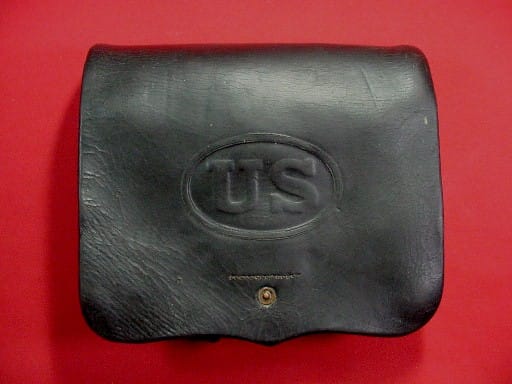
Civil War Union Ammunition Pouch, from my personal collection.
This leather U.S.-marked ammunition pouch held paper cartridges and percussion caps for Union rifle-musket infantry. Constructed from blackened bridle leather with a stamped “US” oval and internal tin inserts, it was worn on the cartridge box sling across the chest. The pouch protected ammunition from damage and moisture and was a core component of the Federal infantry soldier’s accoutrements throughout the war. Its design followed long-standing U.S. Ordnance Department patterns dating back to the 1840s.
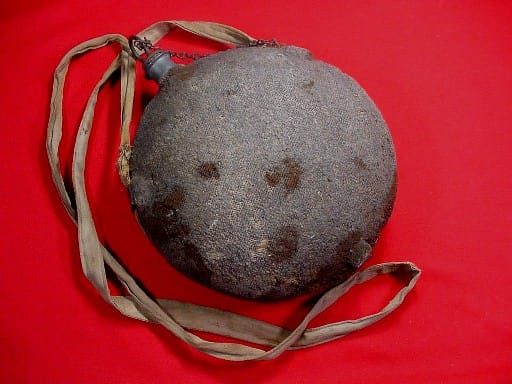
Civil War Union Water Bottle, from my personal collection.
This Union water bottle, commonly called a “bull’s-eye” or “smoothside” canteen, features the typical blue wool cloth cover issued to Federal infantry. Carried on a cotton or leather sling, the tinned-iron canteen provided essential hydration during long marches and battlefield operations. Its simple, durable construction made it one of the most widely produced items of Union equipment. The blue wool cover offered minimal insulation and reflected standard Federal quartermaster issue.
Found this useful? Buy me a coffee — it helps fund future battlefield research


Authored by Mick Prictor, a retired military officer with 40 years’ service, and a military historian specialising in terrain-focused analysis of tactics, doctrine, and command decision-making in land warfare. His work draws on extensive battlefield fieldwork—more than 280 sites worldwide—and one of the world’s largest private collections of historic military arms, uniforms, and equipment. About me
American Civil War Weapons FAQ
Most infantry entered the war armed with muzzle-loading rifle muskets such as the Springfield Model 1861 and imported Enfield Pattern 1853. These weapons reflected tactics inherited from earlier linear warfare traditions.
As the war progressed, increased demand and technological innovation led to the widespread use of breech-loading carbines, repeating rifles, improved artillery, and more specialised equipment, reflecting rapid industrial development.
The enormous wartime demand for mounted troops encouraged manufacturers to produce a wide range of designs, including Sharps, Burnside, Spencer, Smith, Maynard, Merrill, Gallagher, and Joslyn carbines, often using proprietary ammunition systems. Inventors used influence with local politicians, State Governors, and even President Licoln himself in the case of Christopher Spencer!
Yes. Weapons such as the 7-shot Spencer repeating rifle and carbine provided a significant increase in firepower, particularly for Union cavalry and some infantry units, although most soldiers still used single-shot weapons. Later in the war, certain units were equipped with the 16-shot Henry repeating rifle.
The widespread use of rifled muskets increased range and lethality, contributing to the shift toward skirmishing tactics, field fortifications, and entrenched defensive positions rather than traditional linear assaults.
The Union possessed greater industrial capacity and manufacturing infrastructure, allowing it to produce large quantities of arms and ammunition and adopt new technologies more quickly.
Confederate forces used a mixture of captured weapons, imported arms such as Enfield rifle muskets, and domestically produced firearms, often resulting in greater logistical challenges.
The conflict marked the transition from traditional muzzle-loading systems toward breech-loading, repeating, and industrially produced weapons, foreshadowing modern warfare.
Most rifle muskets were .58″ calibre, although calibres ranged from .44″ to .71″. while cavalry carbines commonly ranged between .50″ and .56″ calibre depending on the design.
Subscribe to Battlefield Travels and receive a free E-Book Battlefield Guide
Unlock expert battlefield analysis, campaign reconstructions, and historical insights drawn from firsthand exploration and primary sources.
🗺️ You’ll receive:
🎖️ Exclusive historical insights you won’t find elsewhere
📘 A free eBook: 10 Tips for Exploring Historic Battlefields
📰 New battlefield studies straight to your inbox as they are published

⚔️ Go deeper — Members get exclusive access to the Deep Research Collection, Field Notes, and monthly Research Dispatches. Try membership free for 7 days, cancel anytime. From $9/month.