Overview of the Austro-Prussian War
The Austro-Prussian War of 1866 was a short but decisive conflict that reshaped the political and military balance of Central Europe. Prussia, guided by Otto von Bismarck and supported by Italy, sought to exclude Austria from German affairs and establish dominance among the German states. The campaign highlighted profound differences in organisation, command systems, and military technology that would influence warfare across Europe.
Operations unfolded rapidly in Bohemia, where Helmuth von Moltke’s Prussian armies manoeuvred on converging axes to defeat Austrian and Saxon forces in a series of engagements culminating in the decisive Battle of Königgrätz (Sadowa) on 3 July 1866. A secondary theatre developed on the Austro-Italian frontier, where Austrian forces achieved tactical success but could not alter the strategic outcome. The peace settlement removed Austria from the German Confederation and paved the way for Prussian leadership and eventual German unification.
Weapons and Military Technology
The war is often remembered as a demonstration of the growing impact of industrial-era military systems. Prussian infantry were equipped with the Dreyse needle-gun, a bolt-action breech-loader that allowed soldiers to fire more rapidly and reload while prone, encouraging new tactical approaches and increasing battlefield firepower. Austrian infantry, armed largely with muzzle-loading Model 1854 Lorenz rifle-muskets, retained strong offensive doctrine but faced challenges against higher rates of fire. My tactical innovations article covers this clash: The needle-gun revolution: Breech-loaders, Auftragstaktik, and the demise of the Storm Column
Artillery also reflected a period of transition. Both sides fielded rifled guns, but improvements in organisation, command coordination, and logistics proved as important as technical differences. The conflict demonstrated how mobilisation systems, railways, staff planning, and modern small arms together could deliver decisive operational results.
The artefacts below illustrate the weapons and equipment carried by soldiers on both sides during this pivotal campaign, from needle-fire rifles to percussion arms and cavalry equipment. All items are part of my personal collection and photographed firsthand.
👉 For historical context and battlefield studies, see → Austro-Prussian War Conflict Page
Related Battle Studies, Museum Pieces & Reading Resources
 🏛️ Anglo-Zulu War (1879) Weapons and Equipment
 🏛️ American Revolutionary War (1775–1783) Weapons and Equipment
 🏛️ American Civil War (1861–1865) Weapons and Equipment
 🏛️ Seven Years War (1756-1763 ) Weapons and Equipment
 🏛️ Second Anglo-Afghan War (1879) Weapons and Equipment
 🏛️ America’s Old West (1840s–1912) Weapons and Equipment
Prussian Weapons of the Austro-Prussian War
Model 1841 Dreyse Zundnadelgewher, needle-ignition rifle, 15.4mm caliber. From my personal collection.
The Model 1841 Dreyse needle rifle was the first successful bolt-action breechloader adopted by a major European army. Its paper cartridge and simple breech-loading mechanism allowed soldiers to load and fire while prone, dramatically increasing battlefield survivability.
In the hands of a trained soldier, the Dreyse coculd be fired ~five times per minute, even from behind cover, or lying or kneeling. By comparison, a typical muzzle-loading rifle-musket could be fired ~twice per minute, and teh firer had to be standing.
Although gas leakage reduced muzzle velocity and the needle required frequent replacement, its high rate of fire and ease of use provided a decisive advantage at Königgrätz in 1866. The Dreyse transformed Prussian infantry tactics and reshaped European small-arms development for decades.
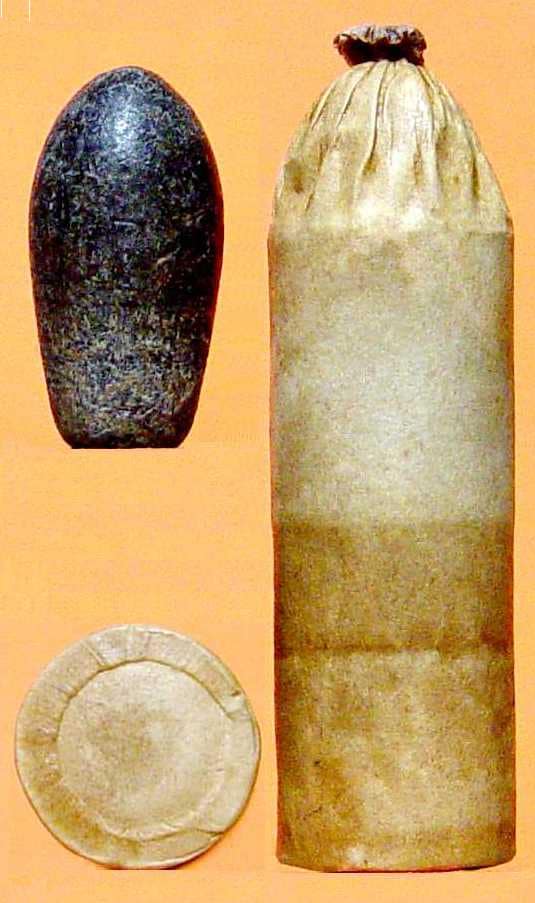
Weapon data
Caliber: 15.4mm
Cartridge: M1847 – 478 grain ovoid lead projectile in a papier-mache sabot with embedded primer, 75 grains of black powder, wrapped in a paper cartridge.
Action: Simple bolt action, locked by camming action against breech. Camming seals bolt face against conical breech
Rifling: Concentric 4-groove, .78mm deep and 6mm wide, right hand twist
Muzzle velocity: 295 metres per second
Maximum effective range (volley fire): 600 metres
Length: 1425mm
Barrel length: 907mm
Weight: 4.975KG
Sights: Visier 1847, Combined block and two leaf sight with battle sight for 200 metres, small leaf for 300 metres, and large leaf for 500 metres


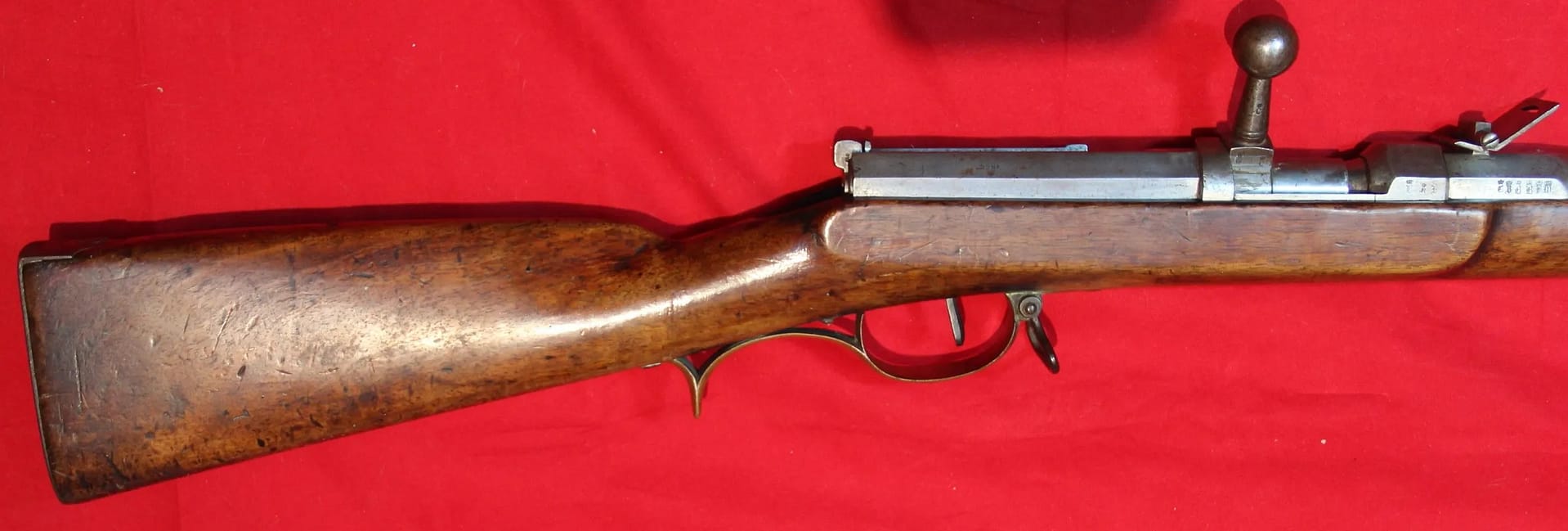
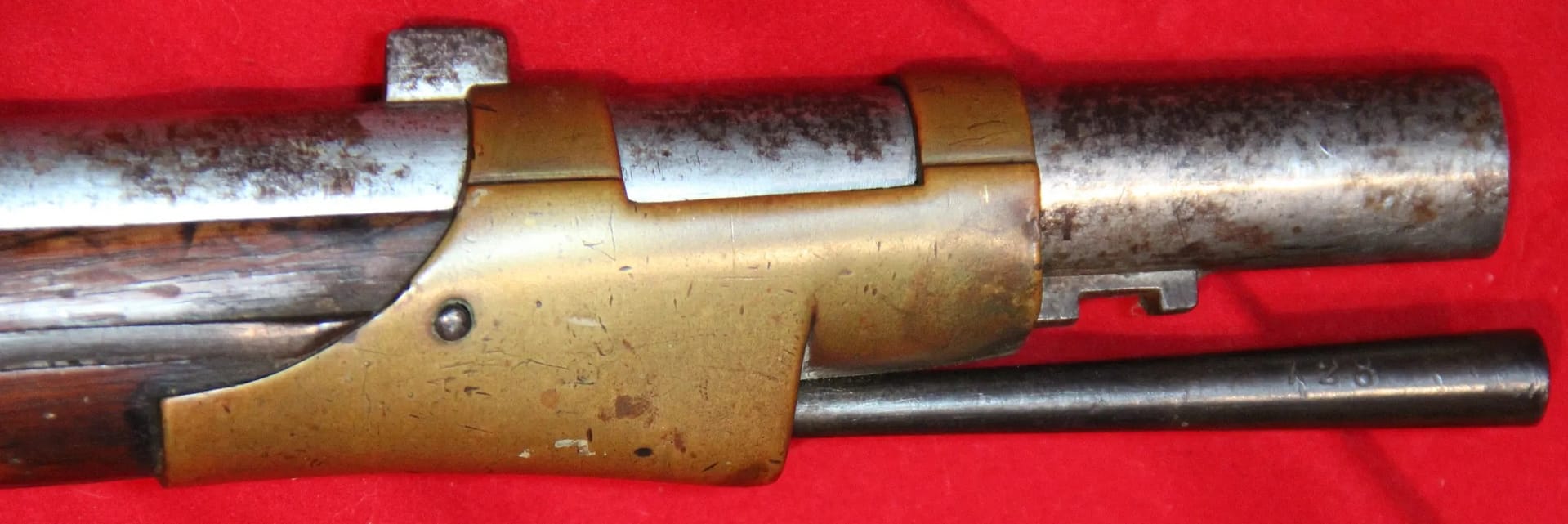
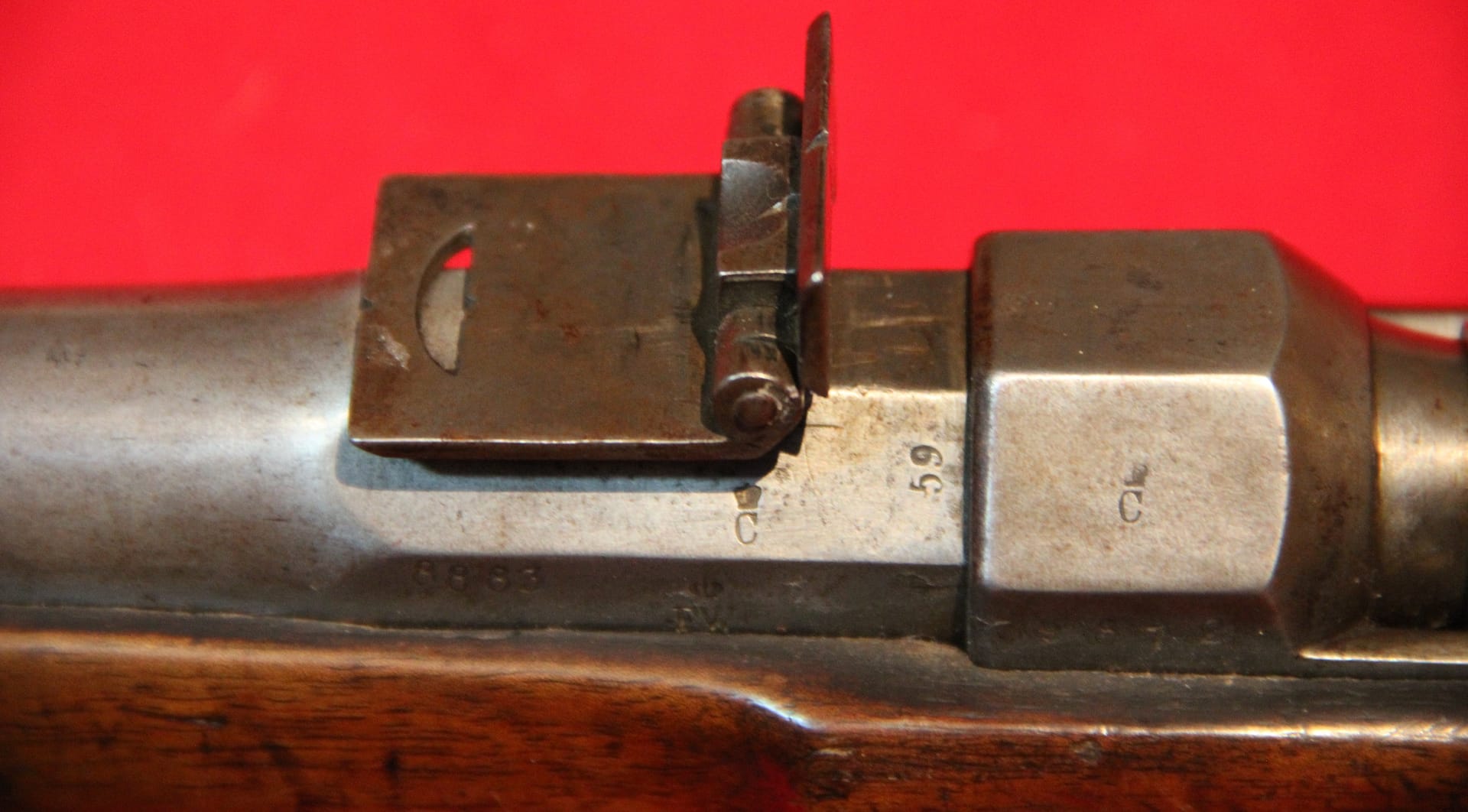
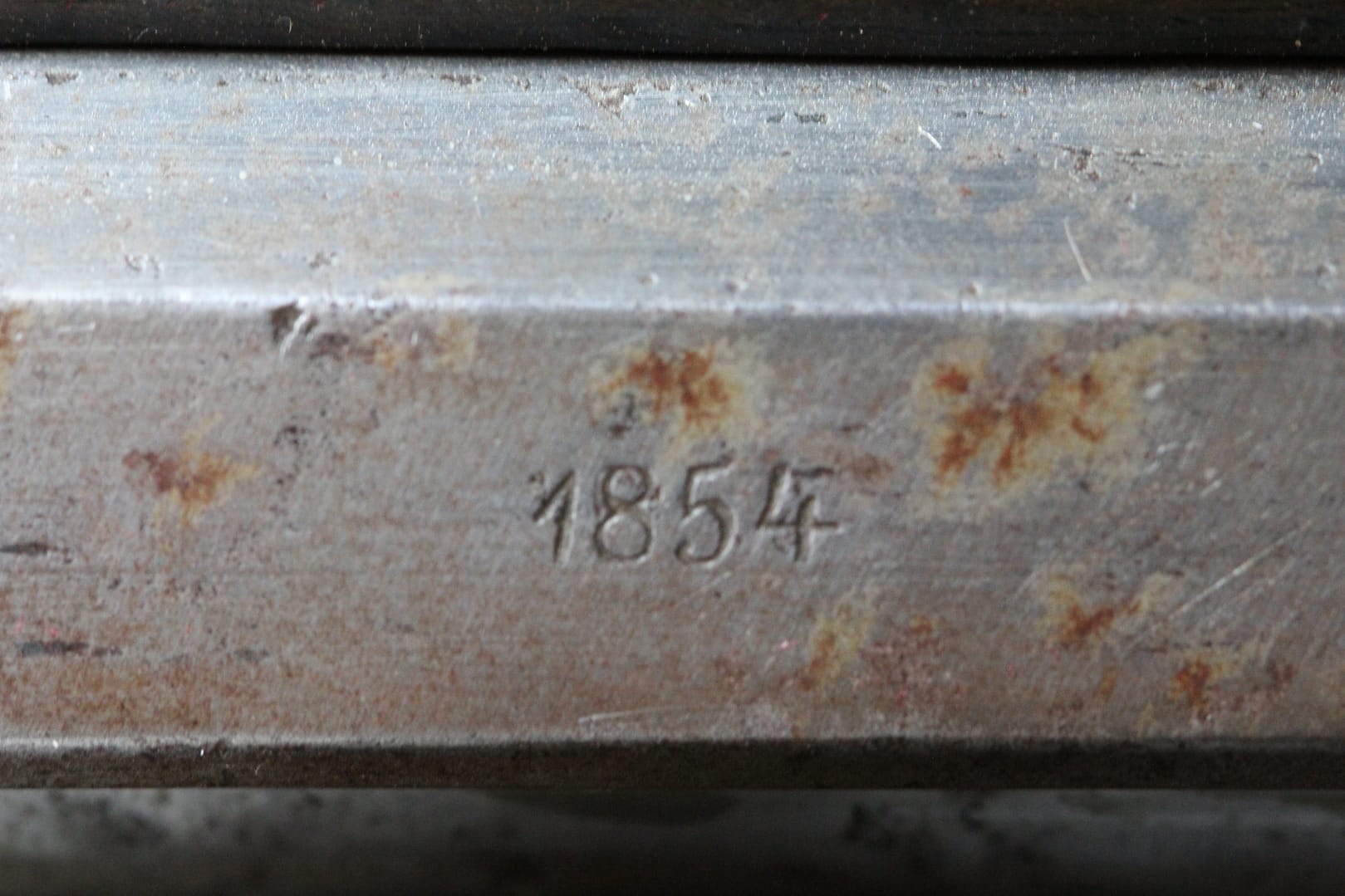
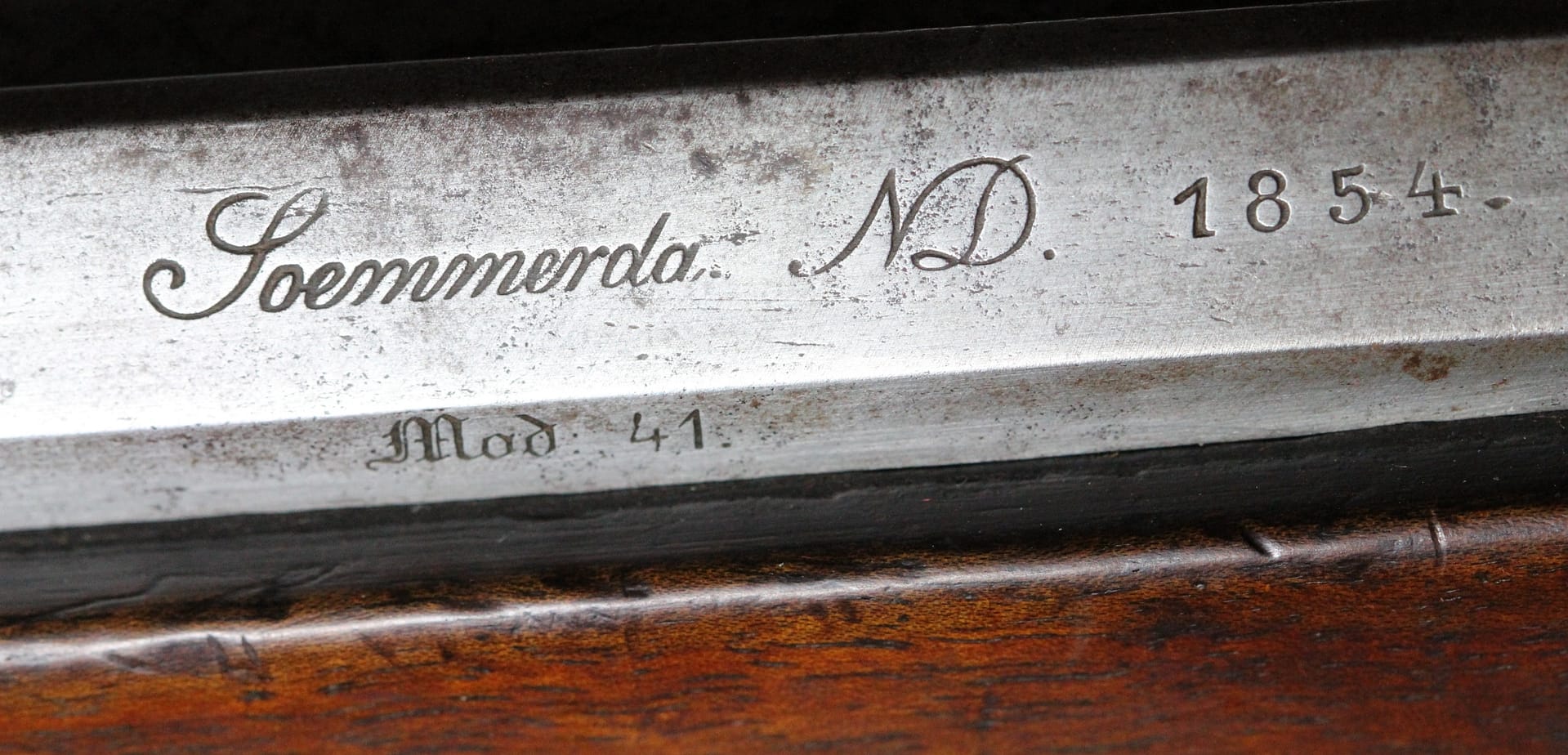
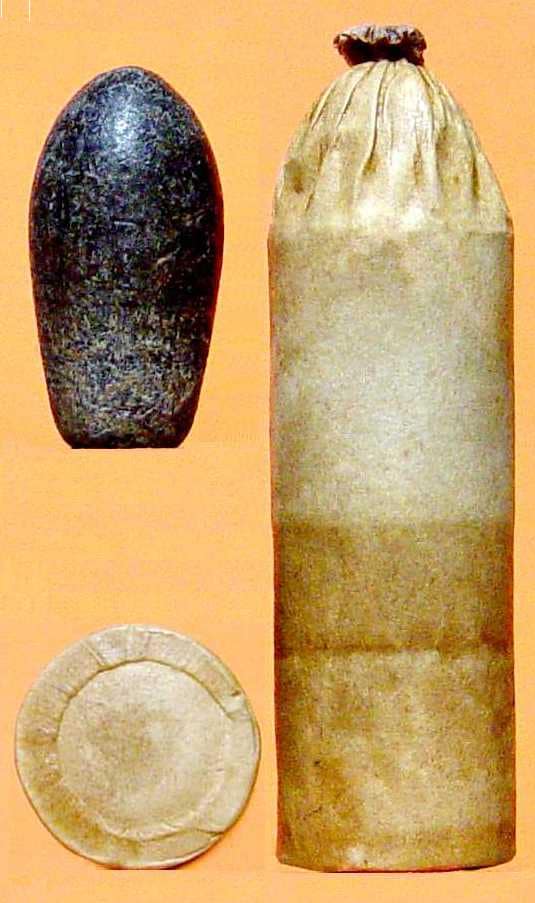
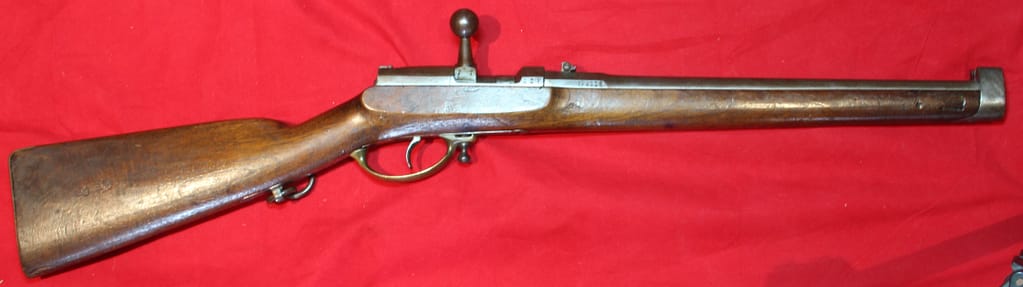
Prussian Model 1857 Dreyse Husarenkarabiner Needle Carbine. From my personal collection.
The Model 1857 Husarenkarabiner was a short, light breech loading carbine issued to Prussian hussar regiments. Designed for mounted use, it featured a compact barrel, simple rear sight, and sturdy stock suitable for cavalry service. Though effective at close range, the carbine had limited accuracy and rate of fire compared with infantry rifles. During the 1866 campaign, cavalry armed with the 1857 carbine relied on mobility and reconnaissance rather than firepower, supplementing the needle-rifle infantry that delivered Prussia’s decisive battlefield advantage.
Weapon data
Caliber: 15.4mm
Cartridge: Karabiner Patrone – 478 grain ovoid lead projectile in a papier-mache sabot with embedded primer, 55 grains of black powder, wrapped in a paper cartridge.
Action: Simple bolt action, locked by camming action against breech. Camming seals conical bolt face against breech
Rifling: Concentric 4-groove, .78mm deep and 6mm wide, right hand twist
Muzzle velocity: 225 metres per second
Maximum effective range (volley fire): ~400 metres
Length: 805mm
Barrel length: 382mm
Weight: 2.875KG
Sights: Two leaf position rear sight with battle sight for 200 metres, small leaf for 300 metres
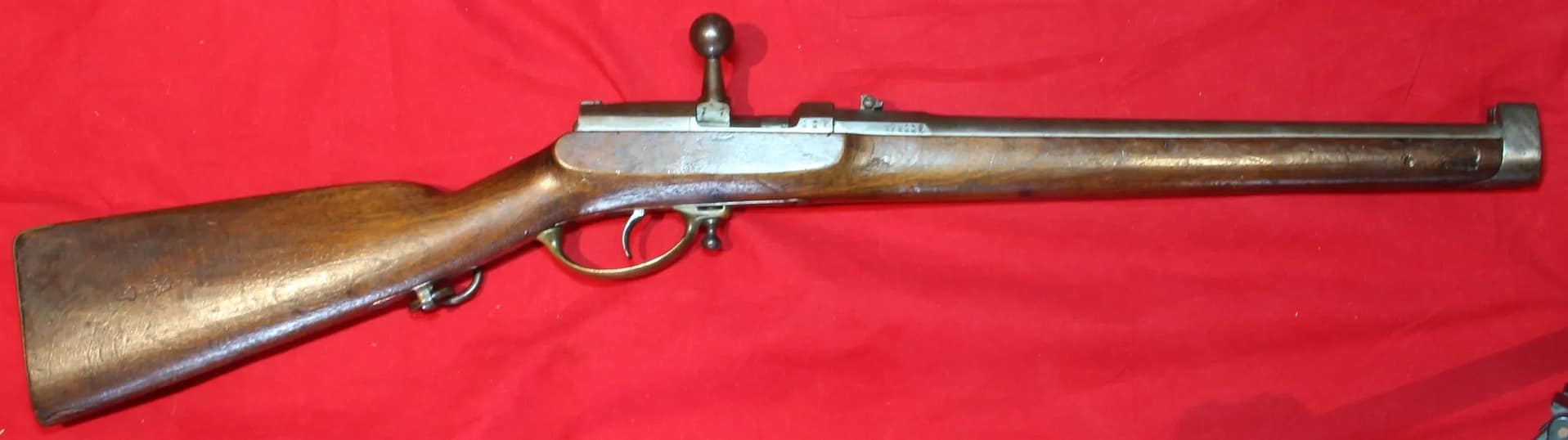
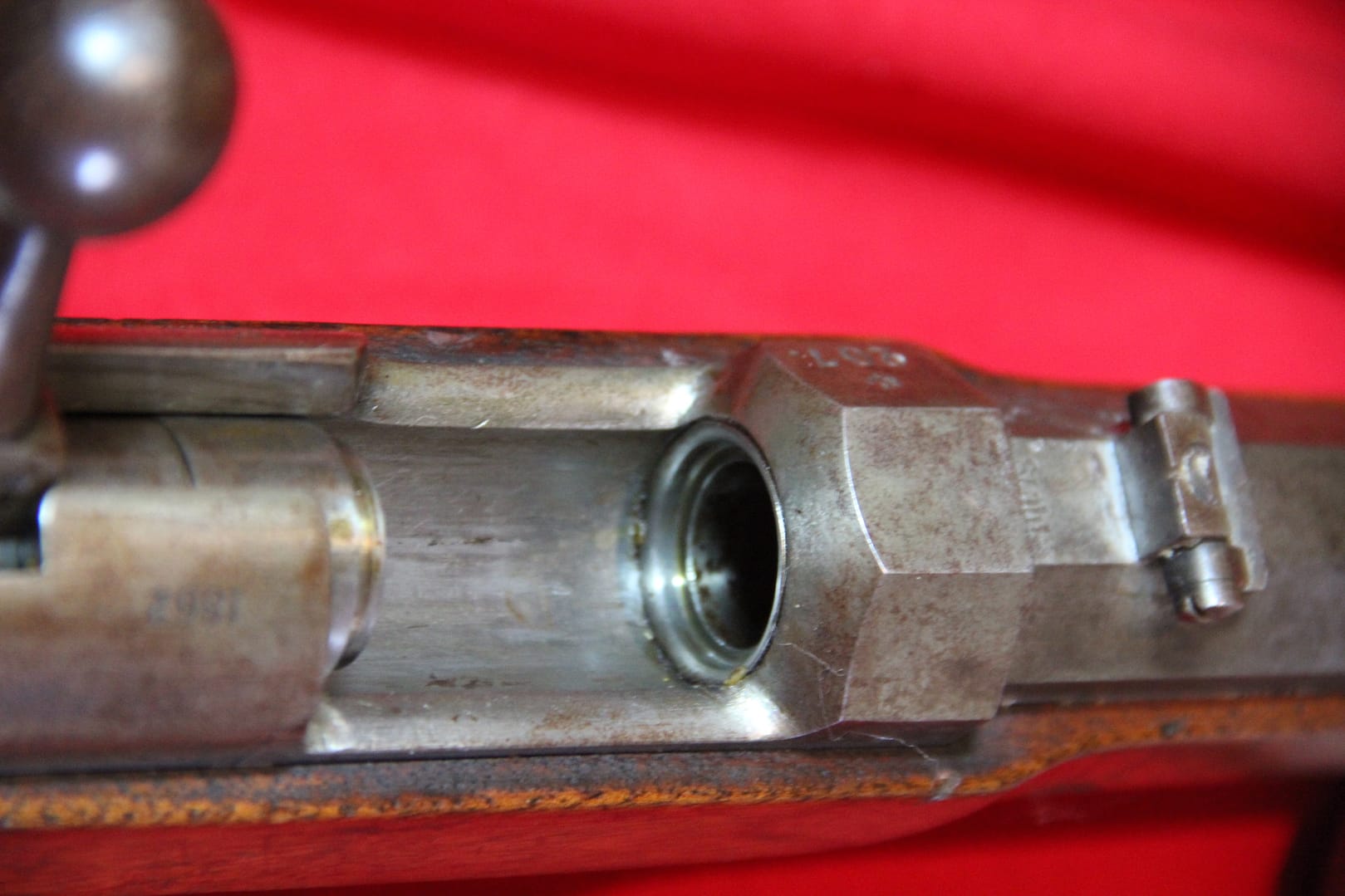
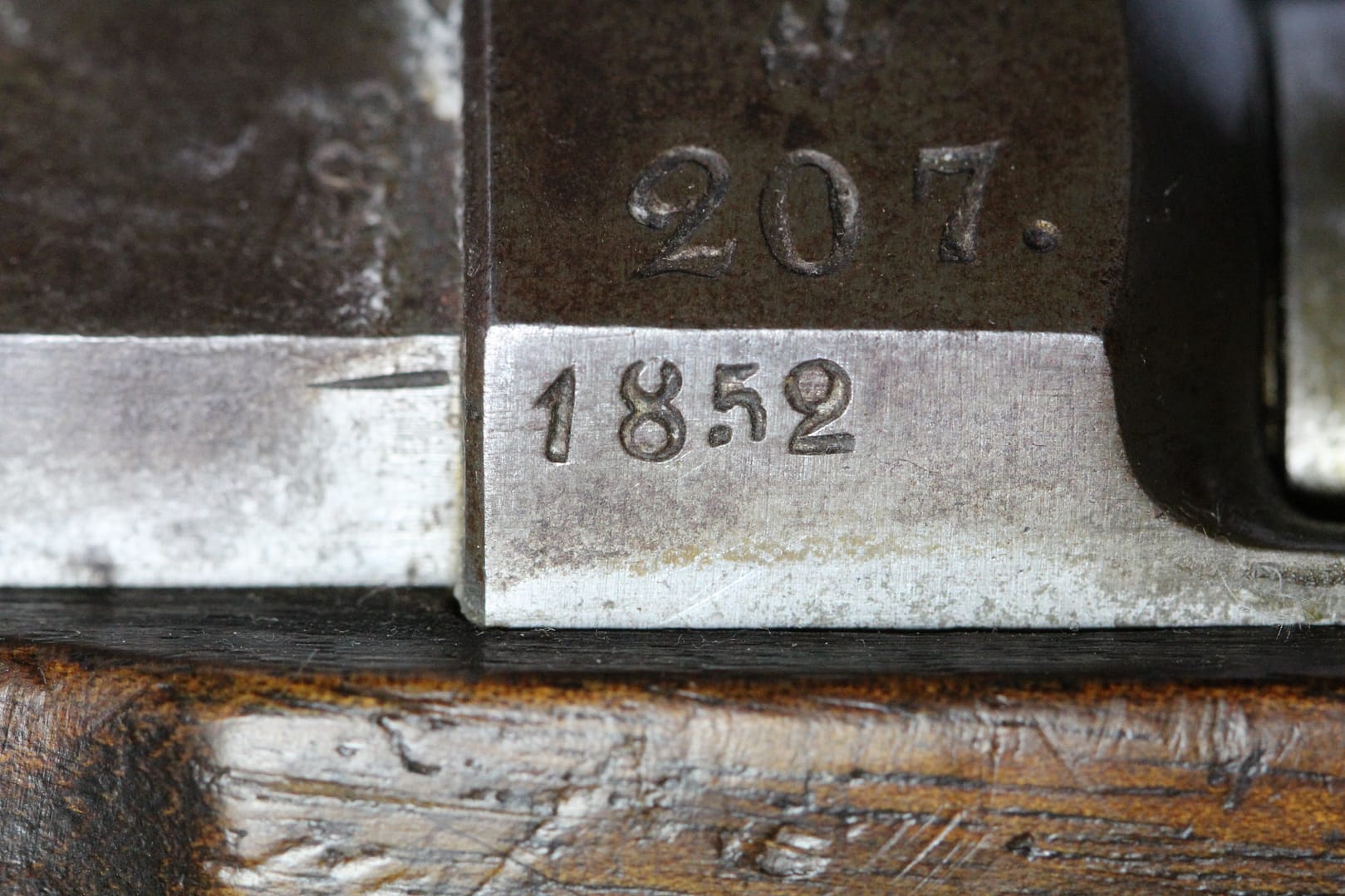
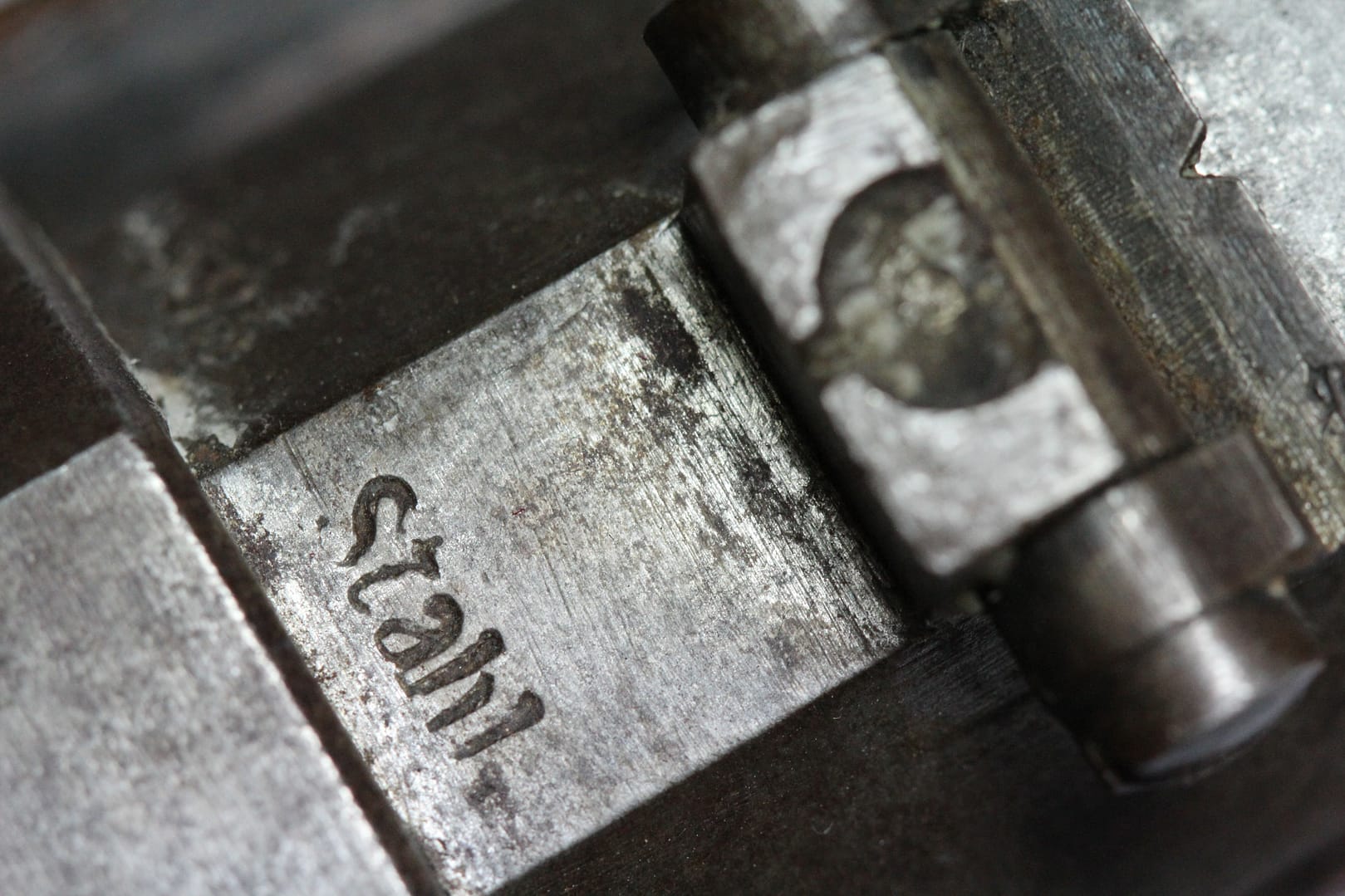
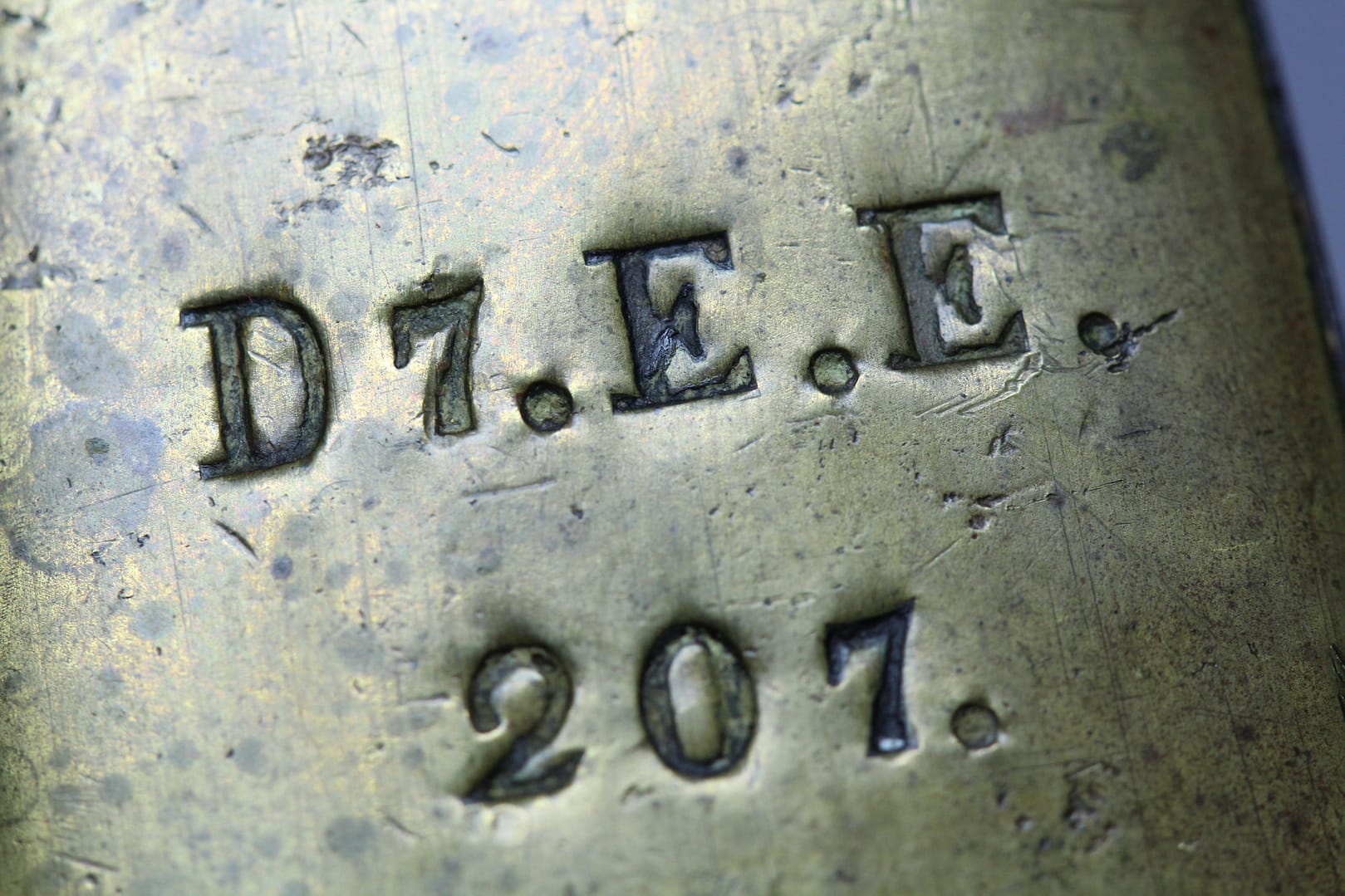
Prussian Dreyse Model 1860 Zündnadel Füsiliergewehr (Needle-Fire Rifle). From my personal collection.
The Dreyse Model 1860 Füsilier rifle was a bolt-action needle-fire infantry arm chambered in approximately 15.4 mm, manufactured at Prussian state arsenals including Spandau. It fired a paper cartridge ignited by a long firing needle striking an internal primer within the cartridge. Intended for fusilier and line infantry units, the rifle represented a refinement of earlier Dreyse patterns, with improved fittings and handling. Widely issued to Prussian forces, it saw extensive service during the Austro-Prussian War (1866) and the Franco-Prussian War (1870–71), contributing to the tactical advantages of Prussian infantry firepower in this period.
Weapon data
Caliber: 15.4mm
Cartridge: M1855 – 478 grain ovoid lead projectile in a papier-mache sabot with embedded primer, 75 grains of black powder, wrapped in a paper cartridge.
Action: Simple bolt action, locked by camming action against breech. Camming seals bolt face against conical breech
Rifling: Concentric 4-groove, .78mm deep and 6mm wide, right hand twist
Muzzle velocity: 295 metres per second
Maximum effective range (volley fire): 600 metres
Length: 1300mm
Barrel length: 785mm
Weight: 4.975KG
Sights: Combined block and two leaf sight with battle sight for 350 metres, small leaf for 450 metres, and large leaf for 800 metres


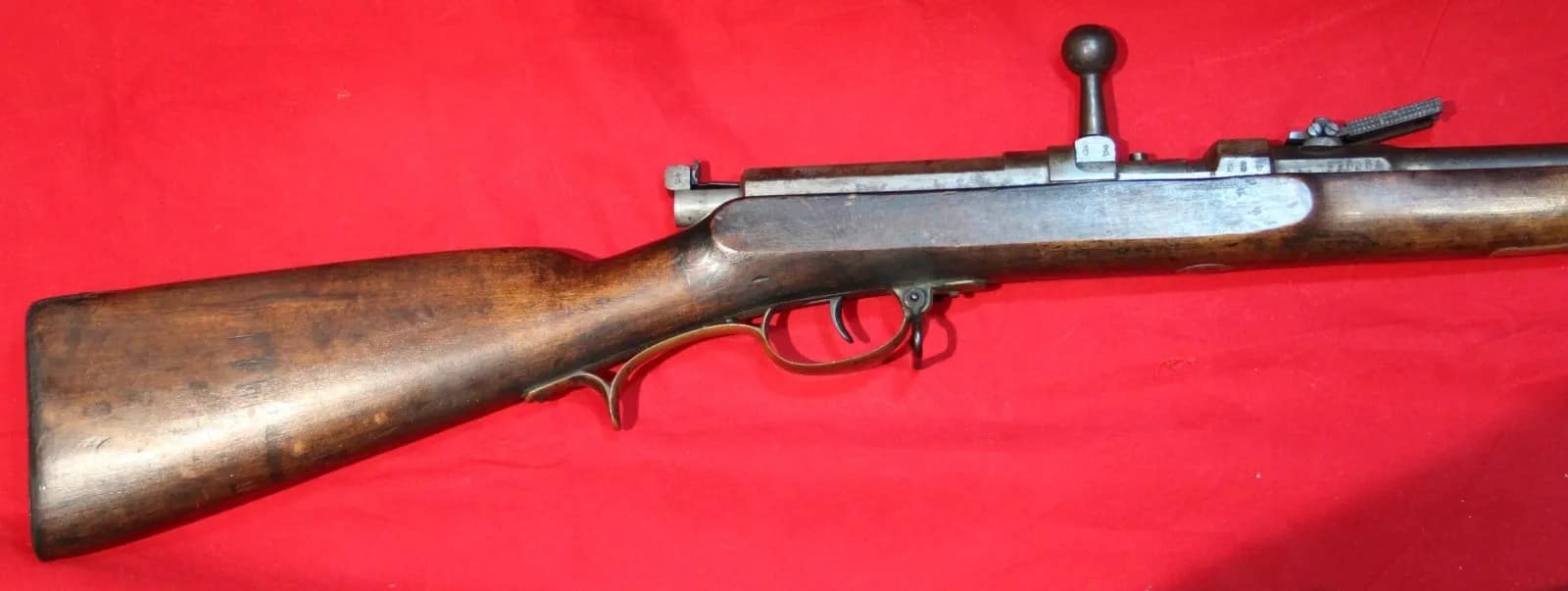
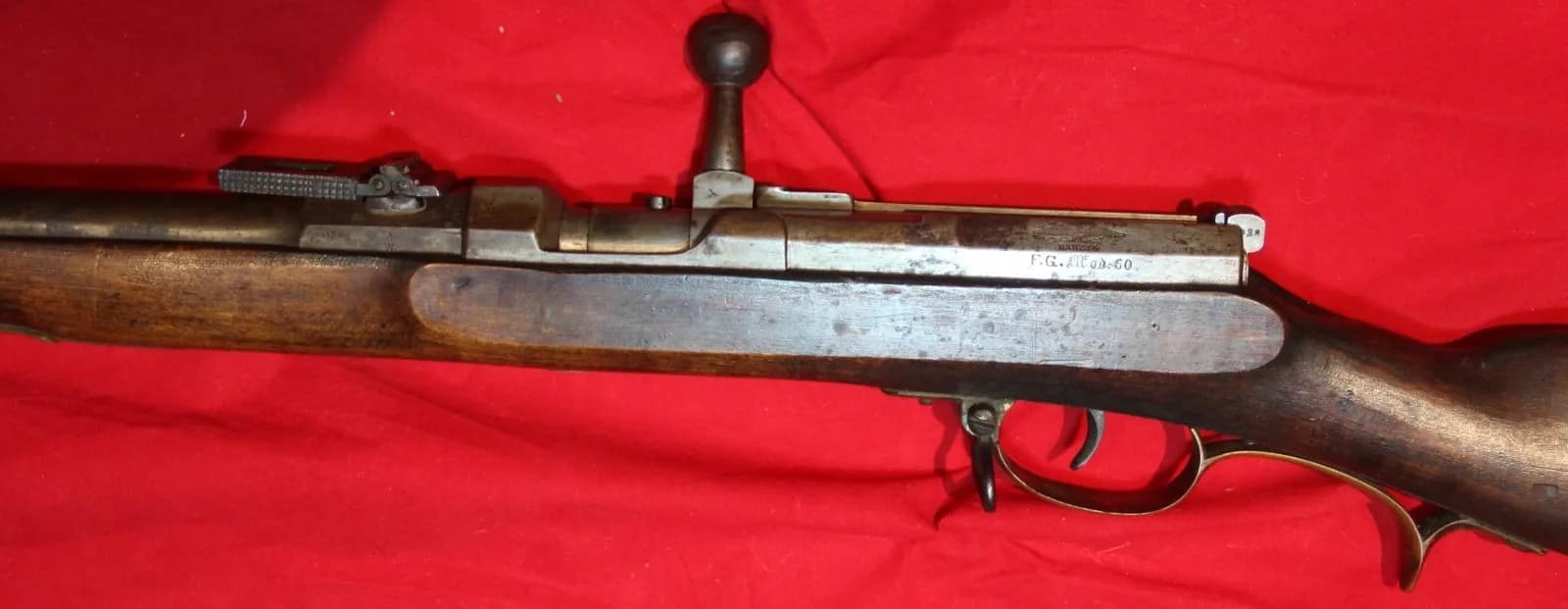
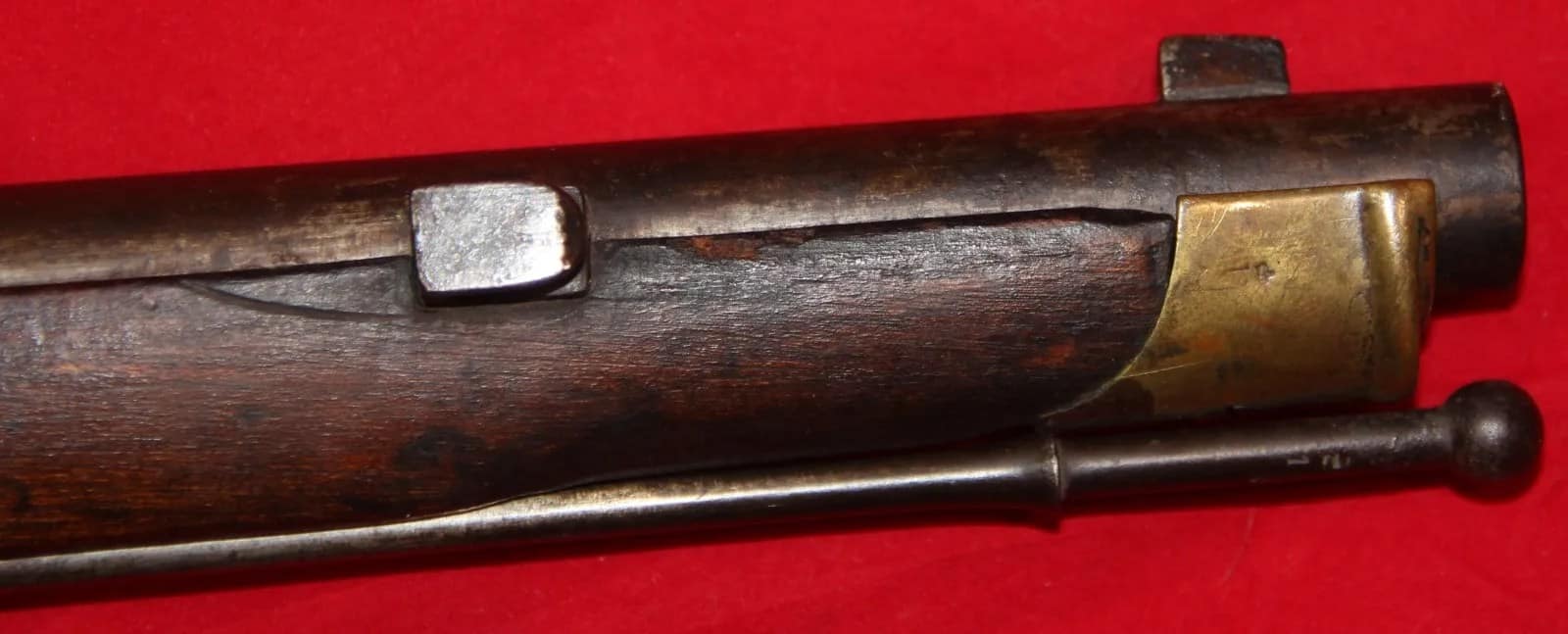
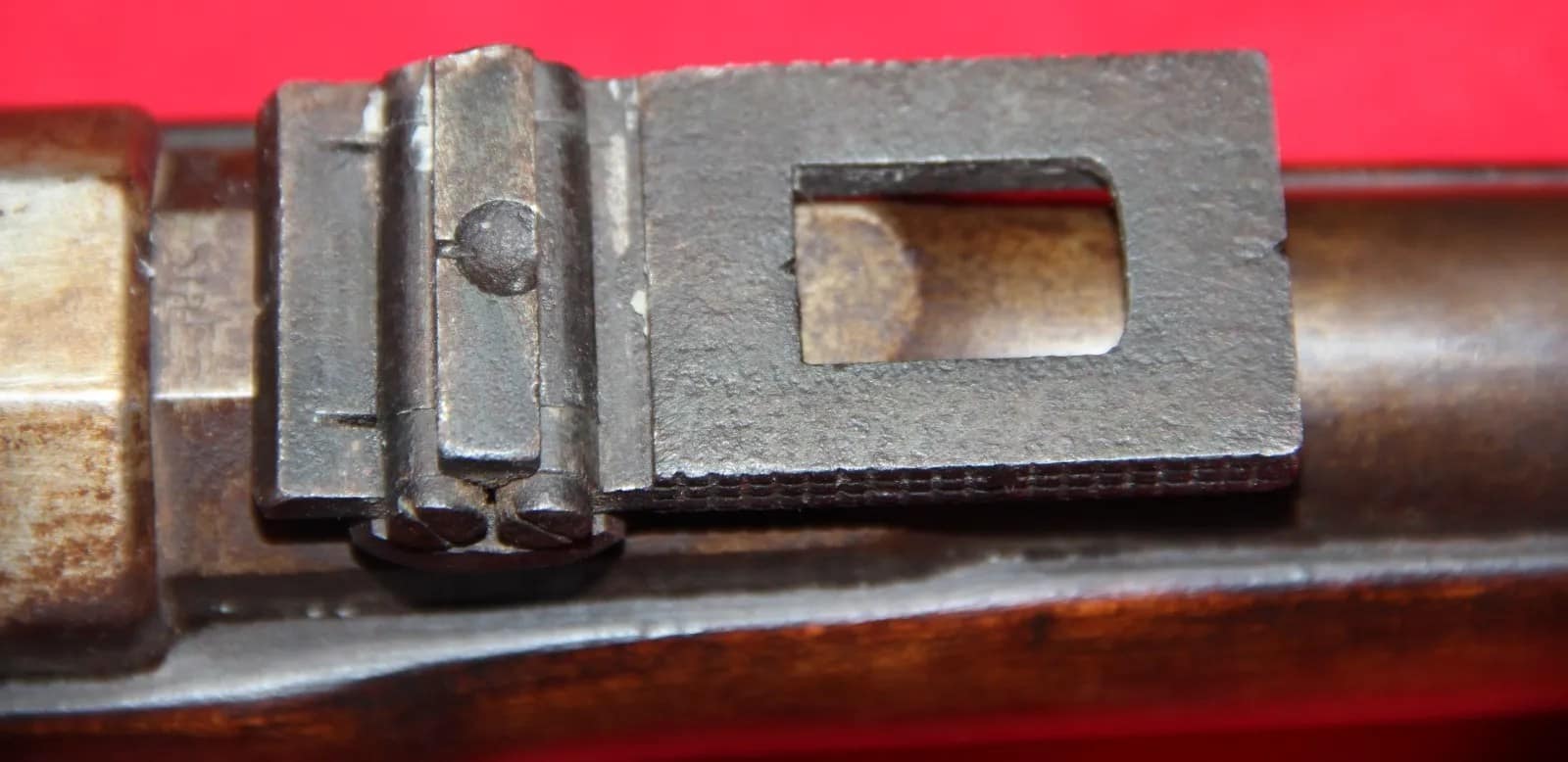
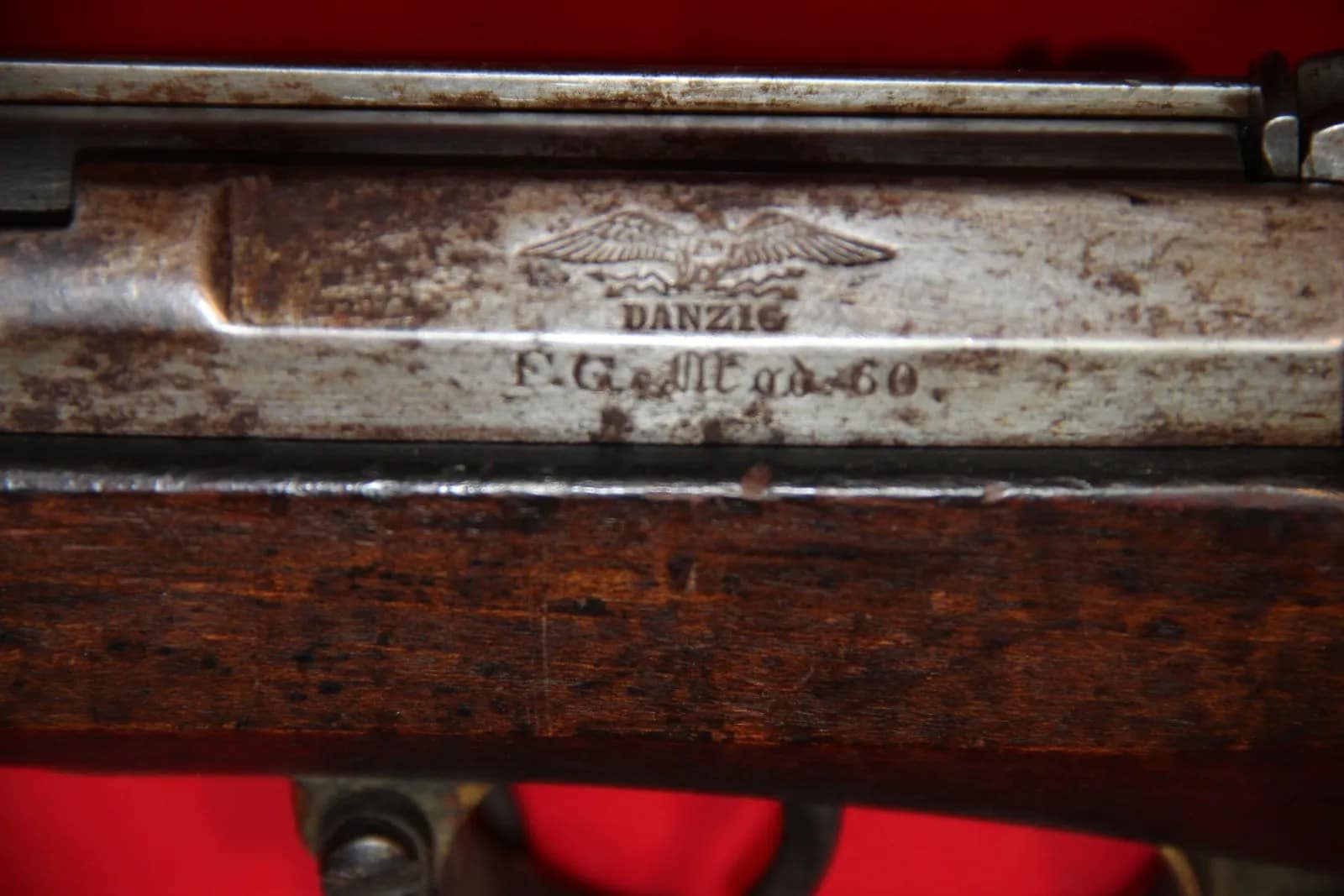
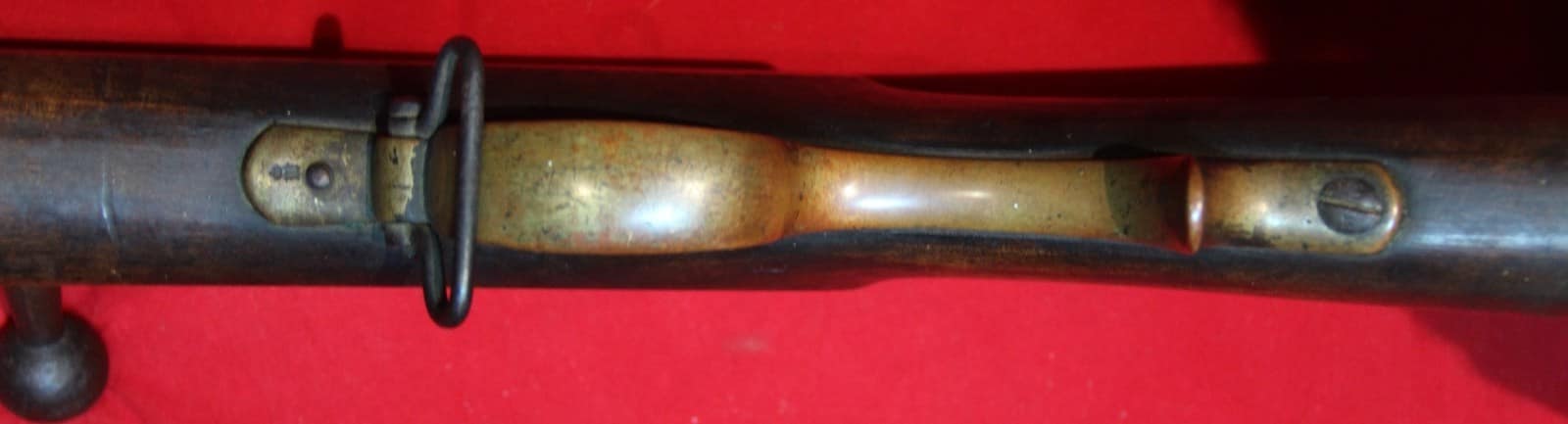
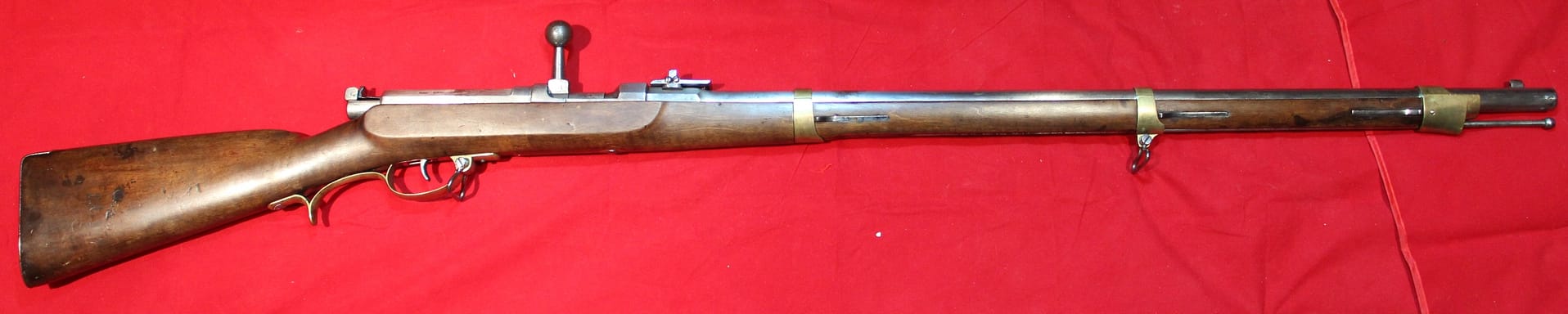
Model 1862 Dreyse Zundnadelgewehr (Needle-Ignition Rifle). From my personal collection.
The Prussian Model 1862 Dreyse Zundnadelgewehr was an improved variant of the original 1841 Dreyse needle rifle, featuring a strengthened bolt, modified lockwork, and refinements to the paper cartridge system. It offered marginally better gas sealing and durability but retained the needle-ignition principle. Issued widely during the Austro-Prussian and Franco-Prussian Wars, it remained in service until replaced by the M1871 Mauser. Despite its limitations in muzzle velocity and gas leakage, the M1862’s high rate of fire continued to influence Prussian infantry tactics.
Weapon data
Caliber: 15.4mm
Cartridge: M1855 – 478 grain ovoid lead projectile in a papier-mache sabot with embedded primer, 75 grains of black powder, wrapped in a paper cartridge.
Action: Simple bolt action, locked by camming action against breech. Camming seals bolt face against conical breech
Rifling: Concentric 4-groove, .78mm deep and 6mm wide, right hand twist, 1 turn in 732mm
Muzzle velocity: 295 metres per second
Maximum effective range (volley fire): 600 metres
Length: 1360mm
Barrel length: 841mm
Weight: 4.75KG
Sights: Combined block and two leaf sight with battle sight for 350 metres, small leaf for 450 metres, and large leaf for 800 metres

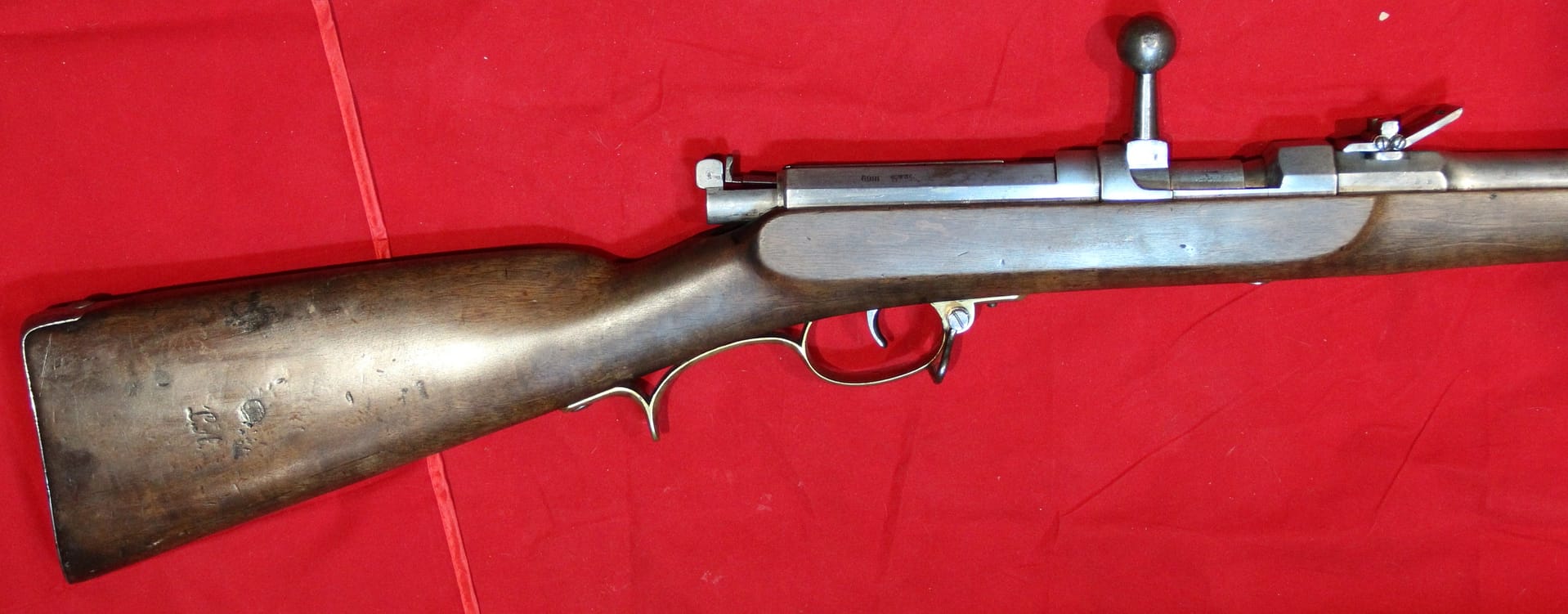
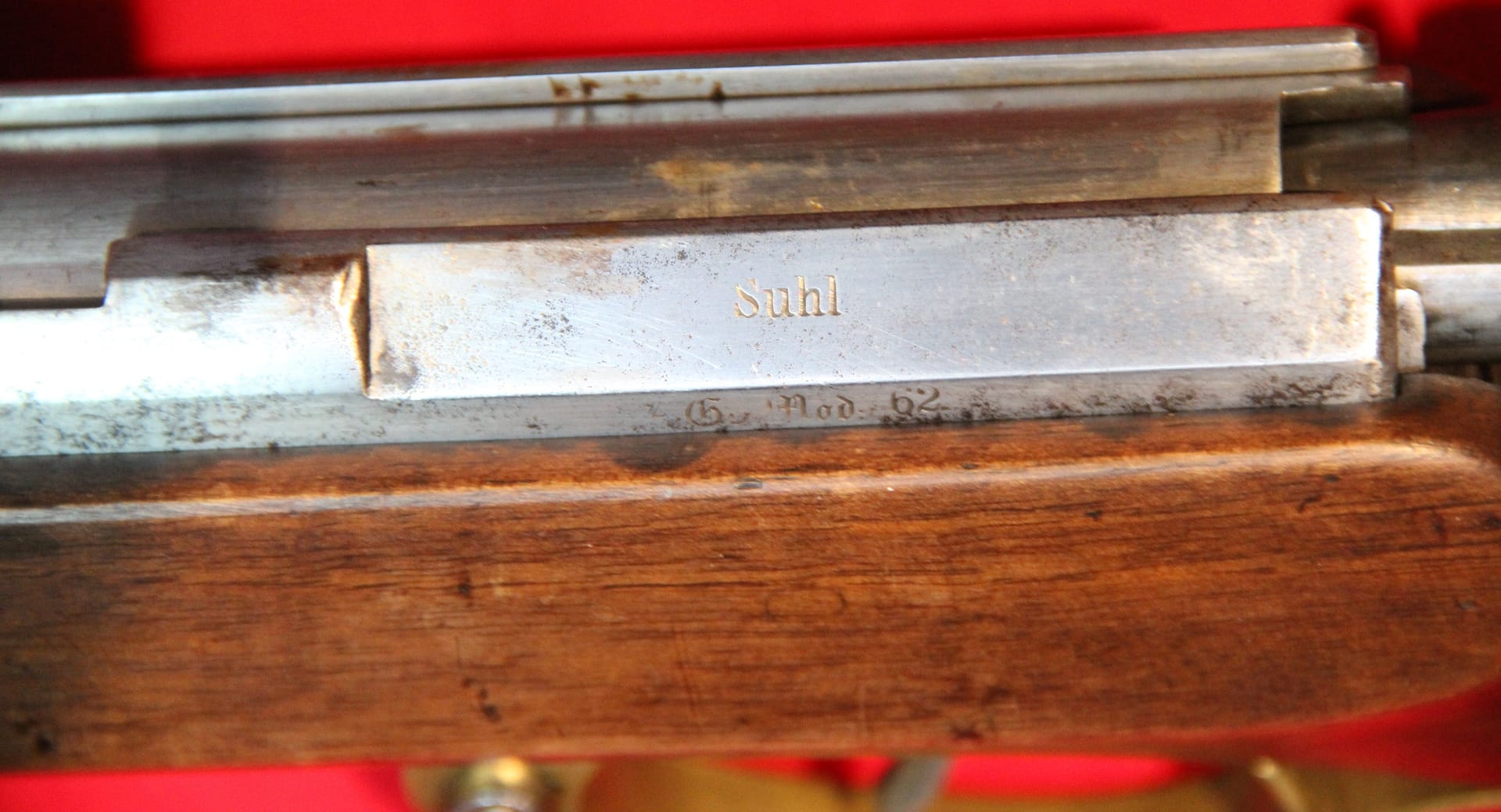
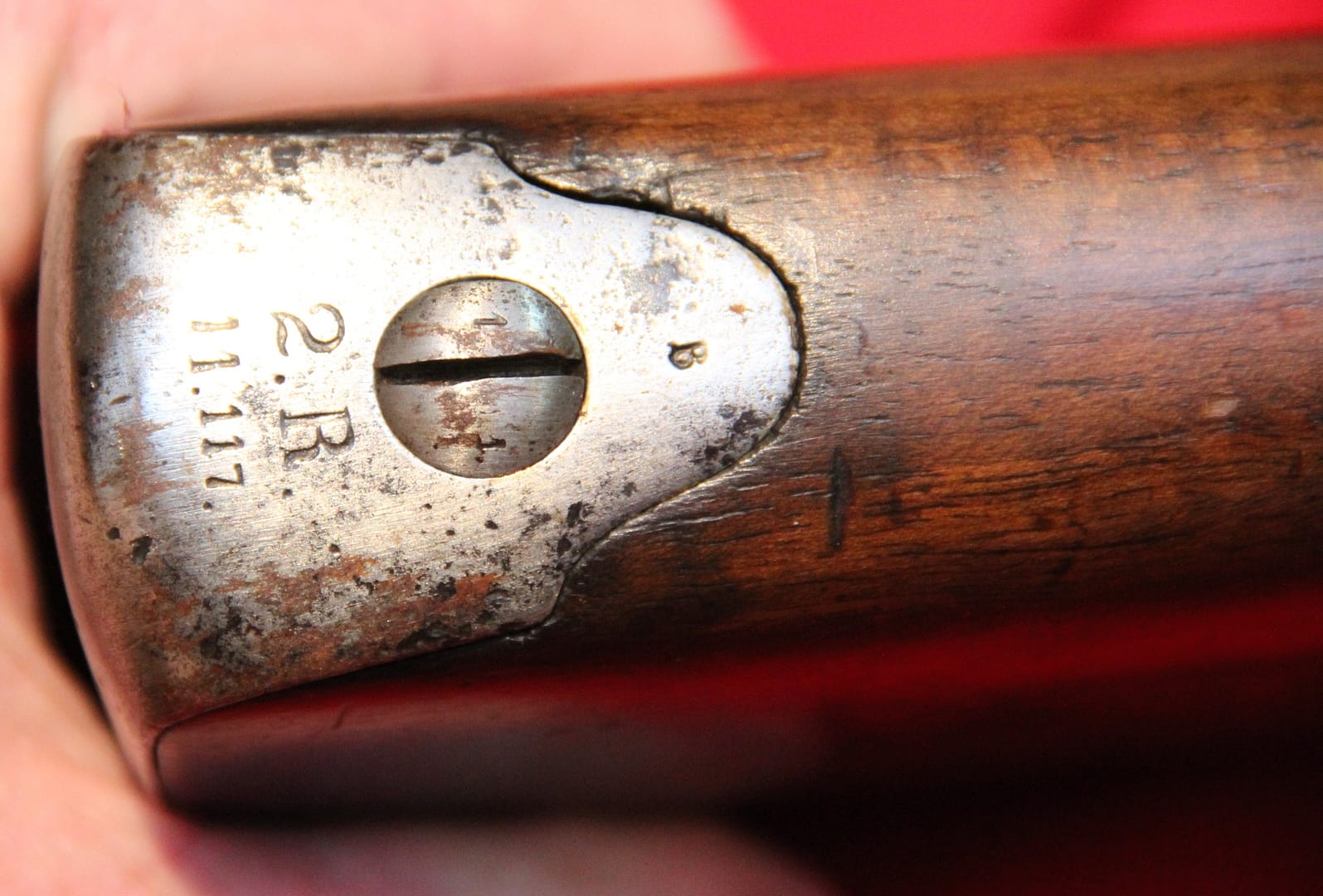
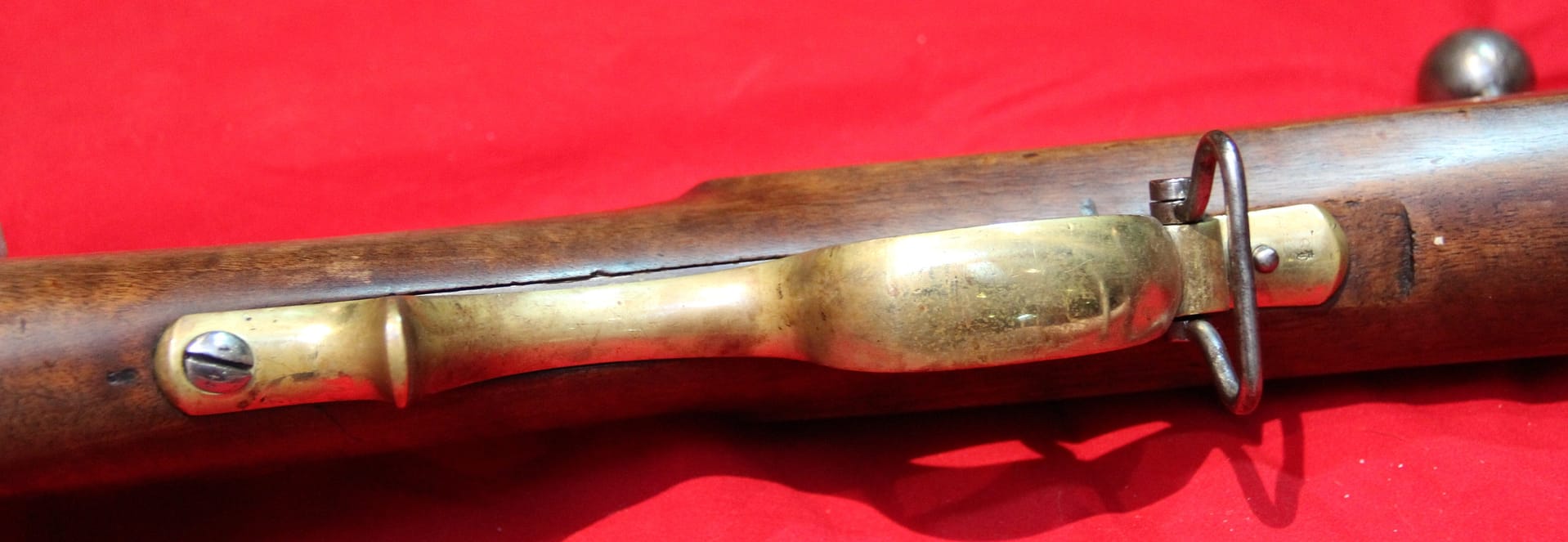
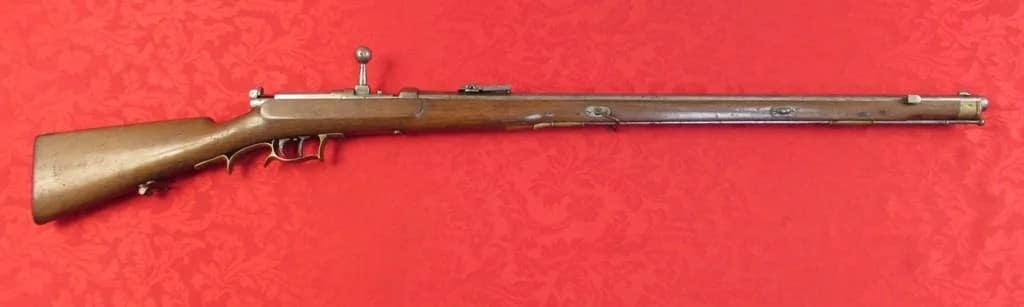
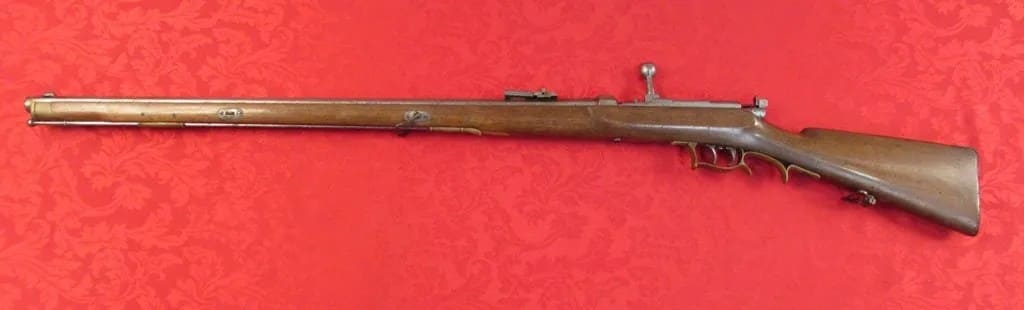
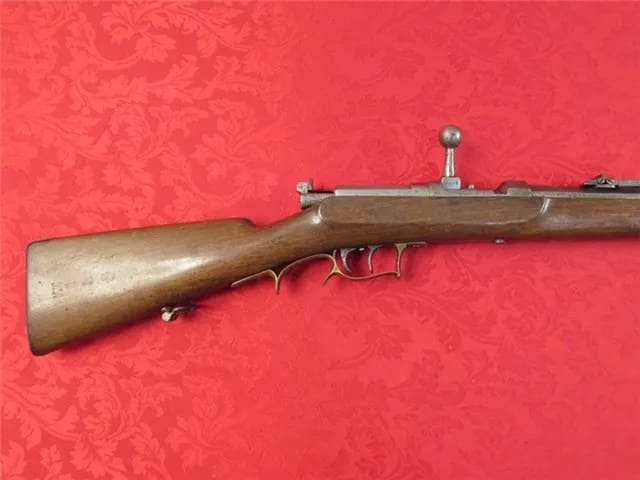
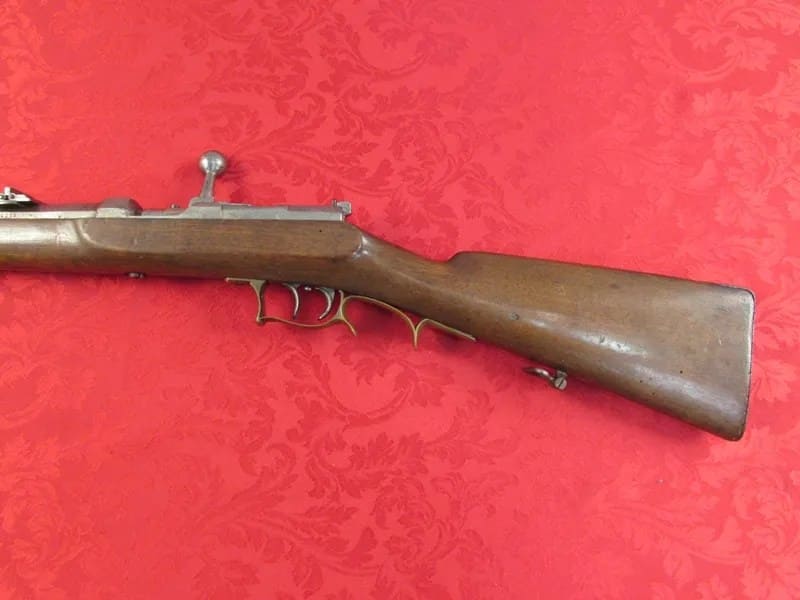
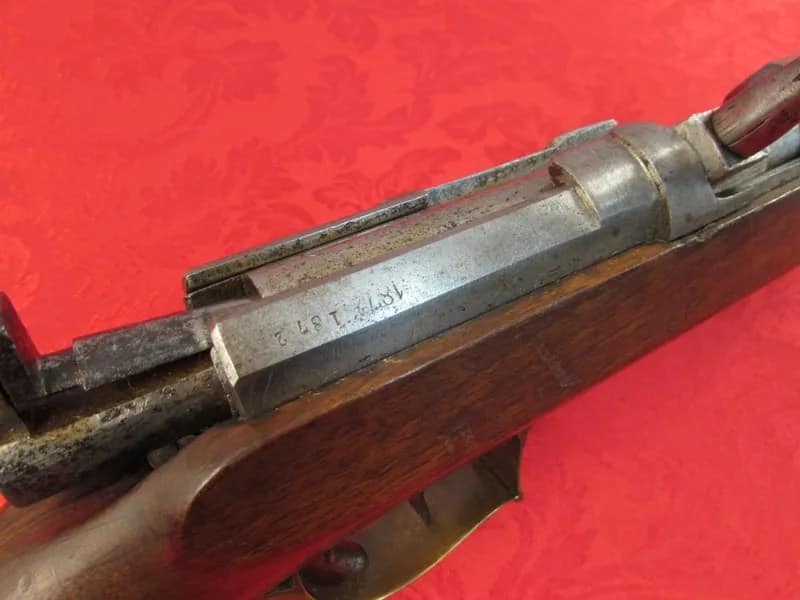
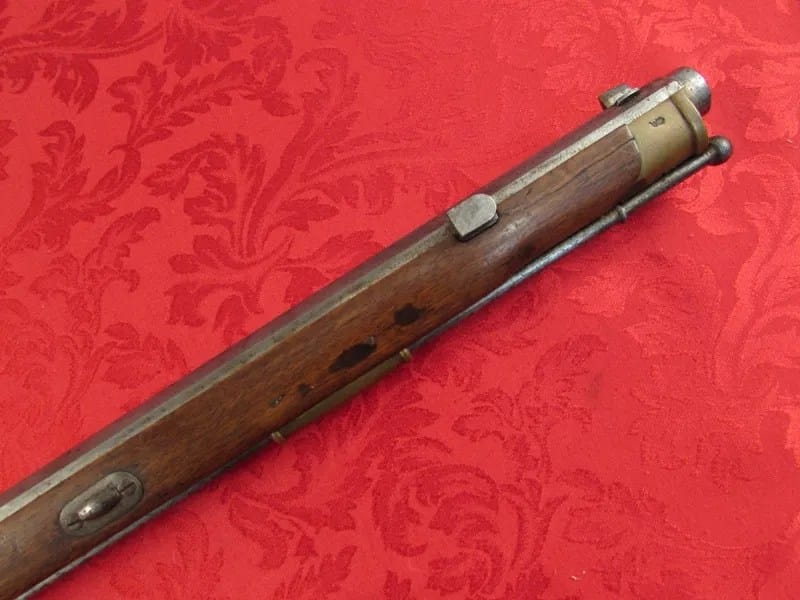
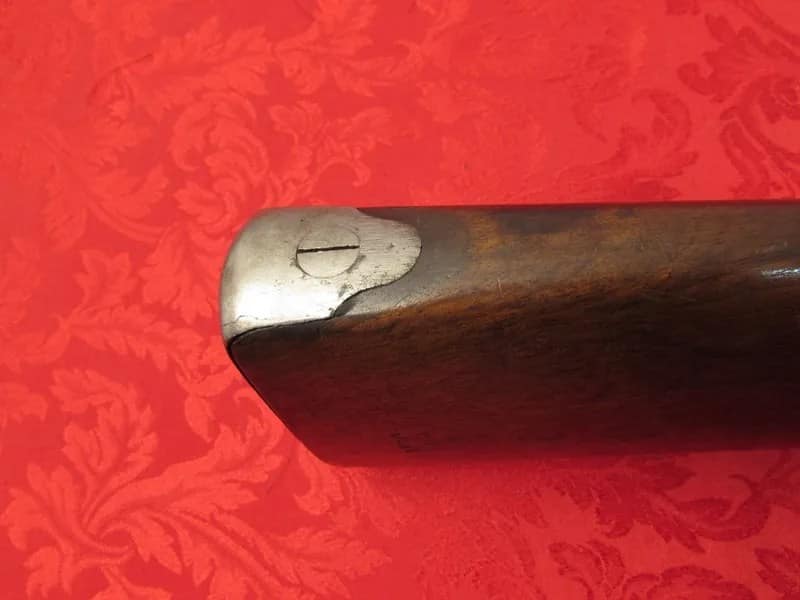
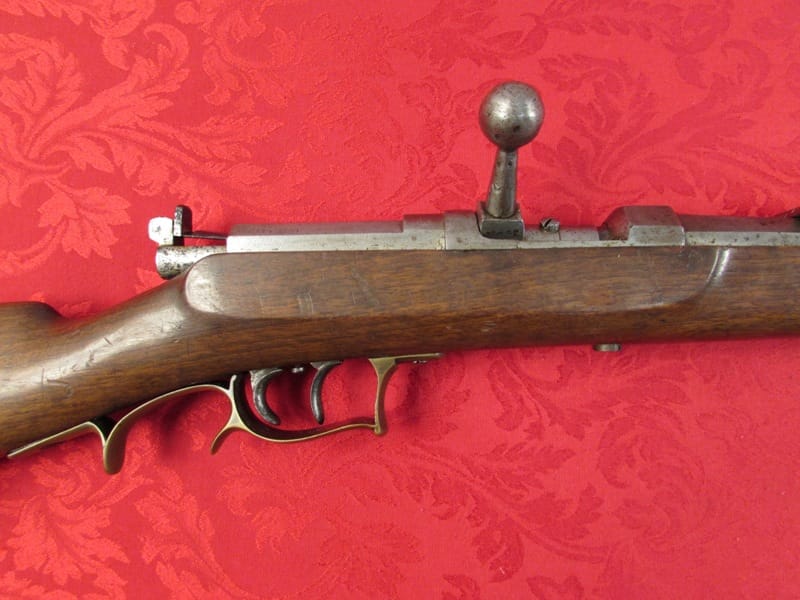
Prussian Dreyse Model 1865 Zündnadel-Jägerbüchse (Needle-Fire Rifle). Beck transformation. From my personal collection.
The Dreyse Model 1865 Jägerbüchse was a bolt-action needle-fire rifle chambered in approximately 15.4 mm, manufactured at Prussian state arsenals including Spandau. Designed as a specialist rifle for Jäger and light infantry units, it fired a paper cartridge ignited by a long firing needle striking an internal primer. It was fitted with a double-set trigger for fine shooting. Compared to earlier Dreyse infantry rifles, it featured refinements in construction and handling suited to skirmishing troops. Issued in limited numbers, it saw service during the Austro-Prussian War (1866) and the Franco-Prussian War (1870–71), representing the evolution of Prussian needle-fire technology prior to the adoption of metallic cartridge rifles.
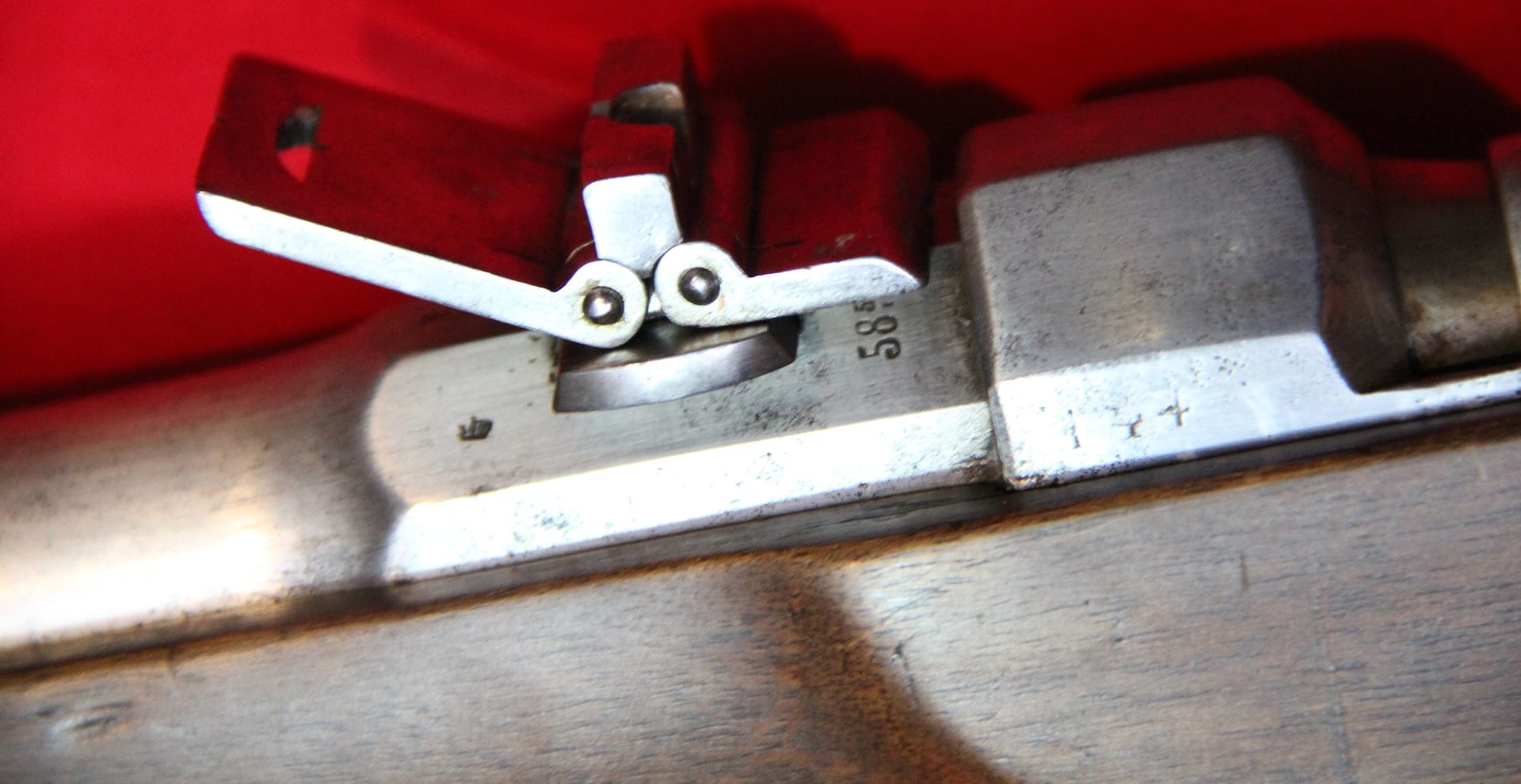
After observing the development of the French Chassepot with its small bore and flat trajectory, the Prussians commenced a modification program to improve the Dreyse performance. Commencing in May 1870, using a system designed by Ludwig Beck, Dreyse rifles were modified with a more tightly sealed bolt head, and an improved rear sight. The new bolt head and a lighter projectile increased muzzle velocity from 295 to 340 metres per second, still well short of the Chassepot’s 435 metres per second.
This Dreyse Model 1865 Zündnadel-Jägerbüchse is fitted with the Beck improvement.
Weapon data
Caliber: 15.4mm
Cartridge:
– M1855 – 478 grain ovoid lead projectile in a papier-mache sabot with embedded primer, 75 grains of black powder, wrapped in a paper cartridge.
– Beck Patrone – 325 grain ovoid lead projectile in a papier-mache sabot with embedded primer, 75 grains of black powder, wrapped in a paper cartridge.
Action: Simple bolt action, locked by camming action against breech. Camming seals bolt face against conical breech
Rifling: Concentric 4-groove, .78mm deep and 6mm wide, right hand twist, 1 turn in 732mm
Muzzle velocity: 340 metres per second
Maximum effective range (volley fire): 600 metres
Length: 1230mm
Barrel length: 768mm
Weight: 4.375KG
Sights:
– (original M1865): Combined block and four leaf sight with battle sight for 300 metres and leaves for 400, 500, 600, 700, and 800/900 metres
– (Beck transformation): Combined block and two leaf sight with battle sight for 200 metres , small leaf for 300 metres, large sliding leaf graduated to 1200 metres.
🧭 From Weapons to Battlefield Use
This page shows weapons and equipment of the Austro-Prussian War. All items are from my personal collection.
But what images and data don’t show is how these weapons were actually used on the ground—how weapon characteristics, tactics, innovation, terrain, and movement shaped their effectiveness in battle.
👉 That layer—how firepower, tactics, and terrain interact in real engagements—is explored in:
⚔️Battlefield Studies ◊ 💡Tactical Innovations ◊ 📝Field Notes
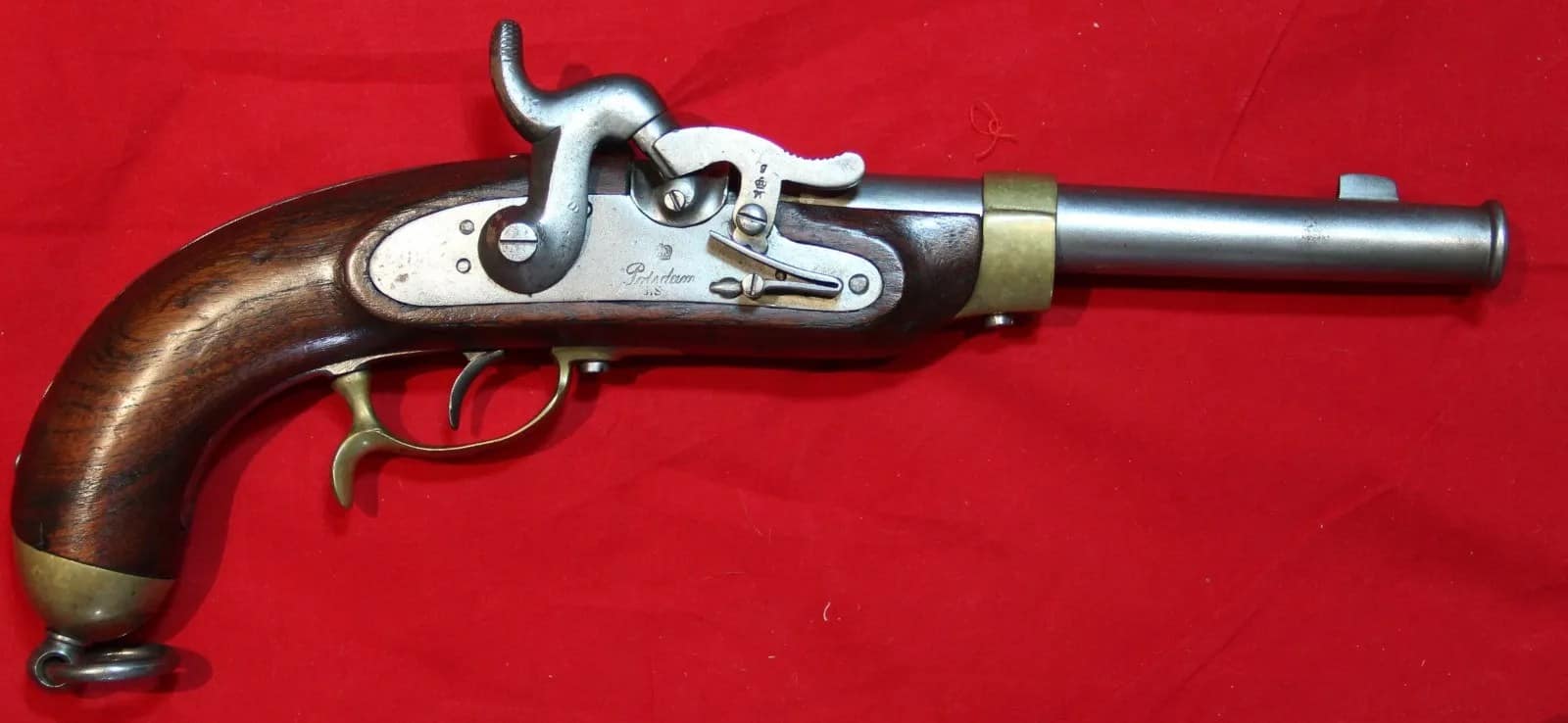
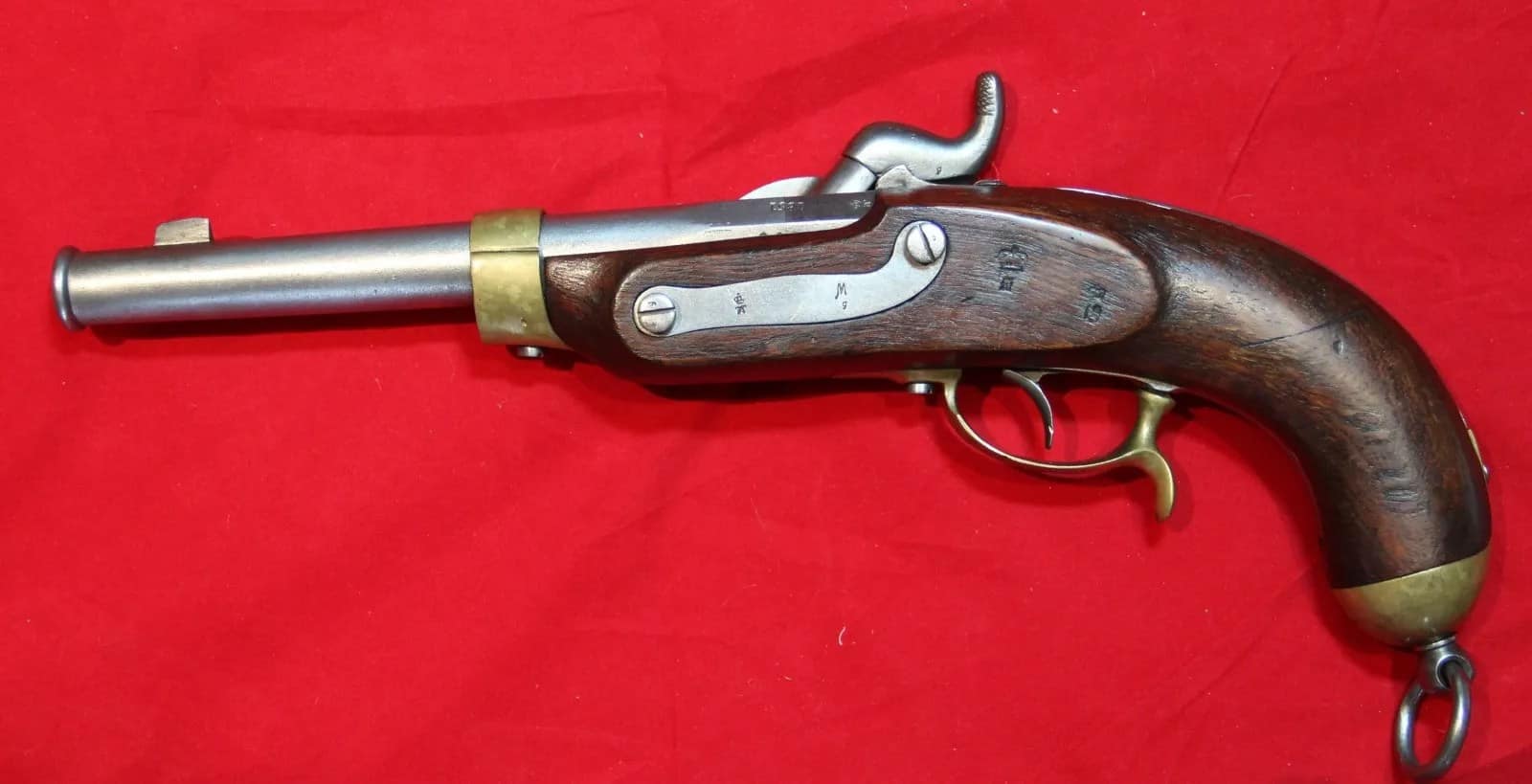
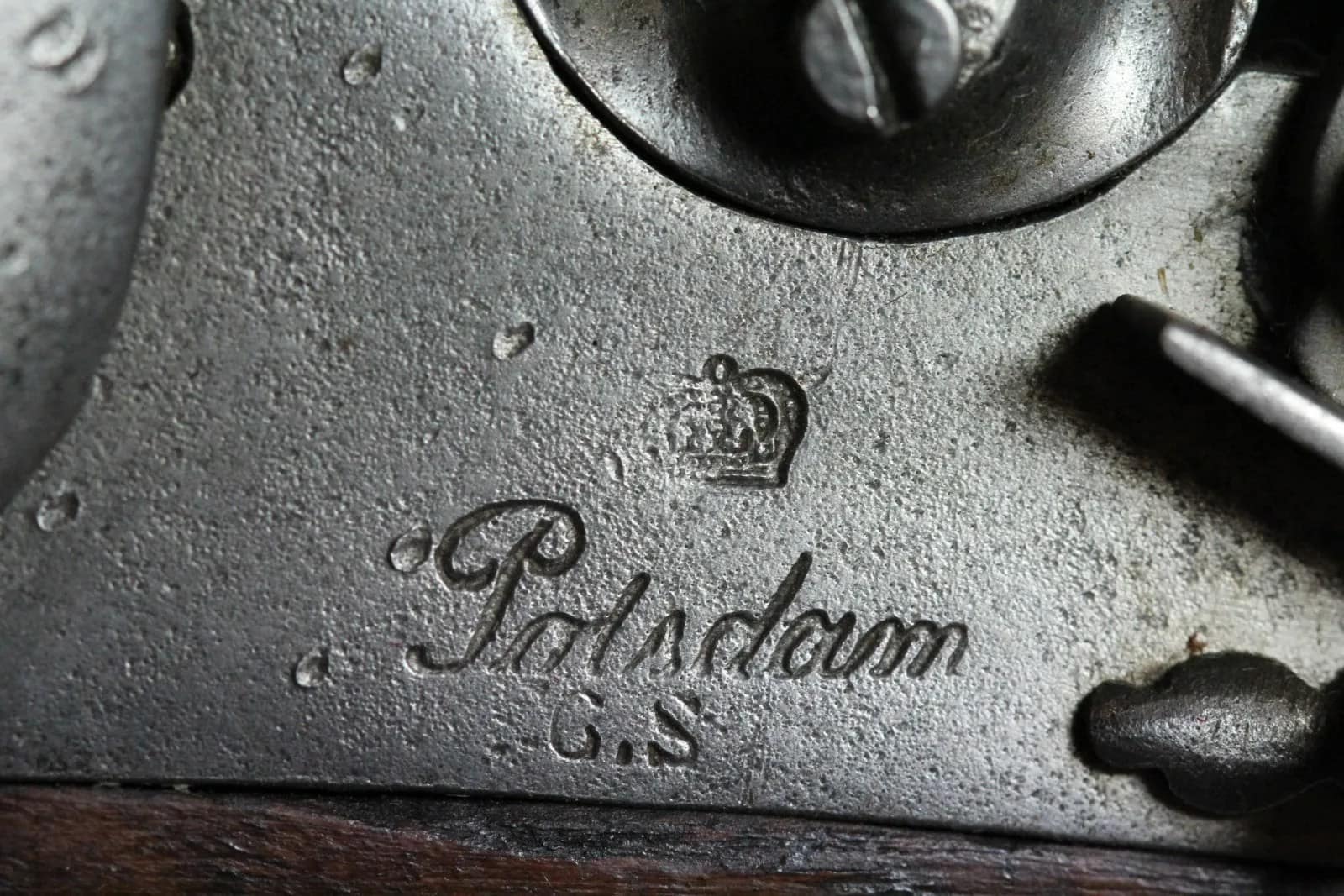
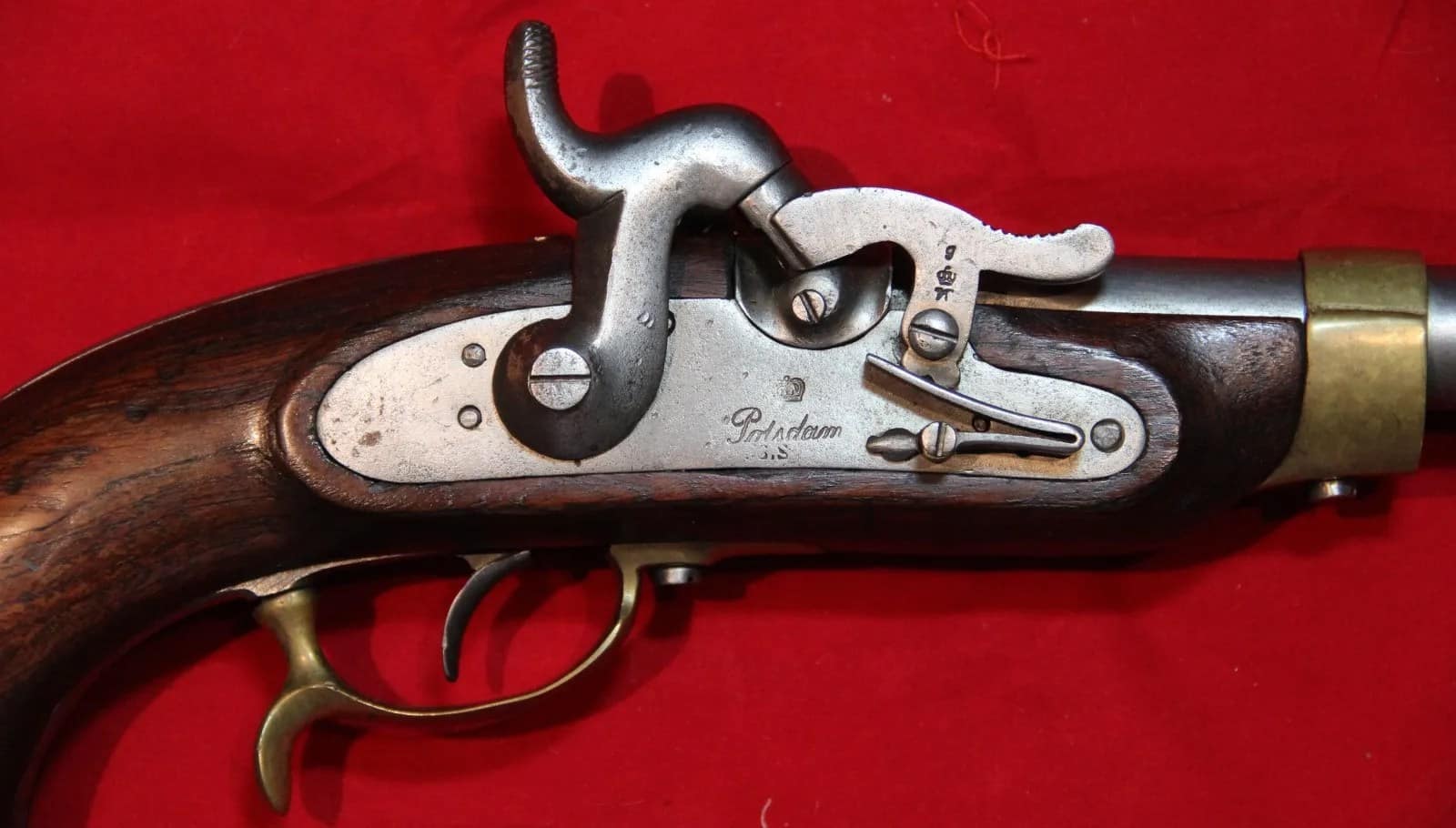
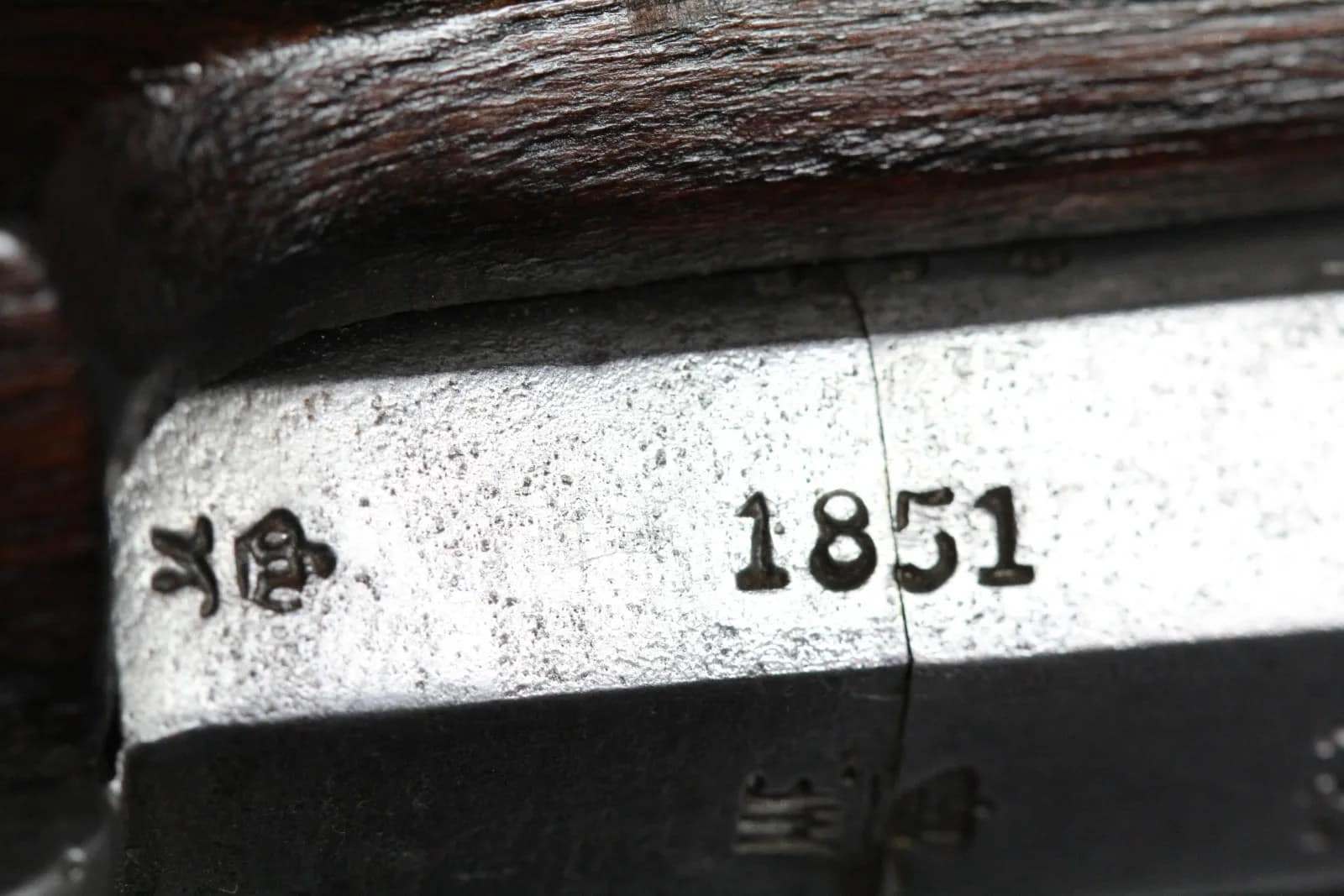
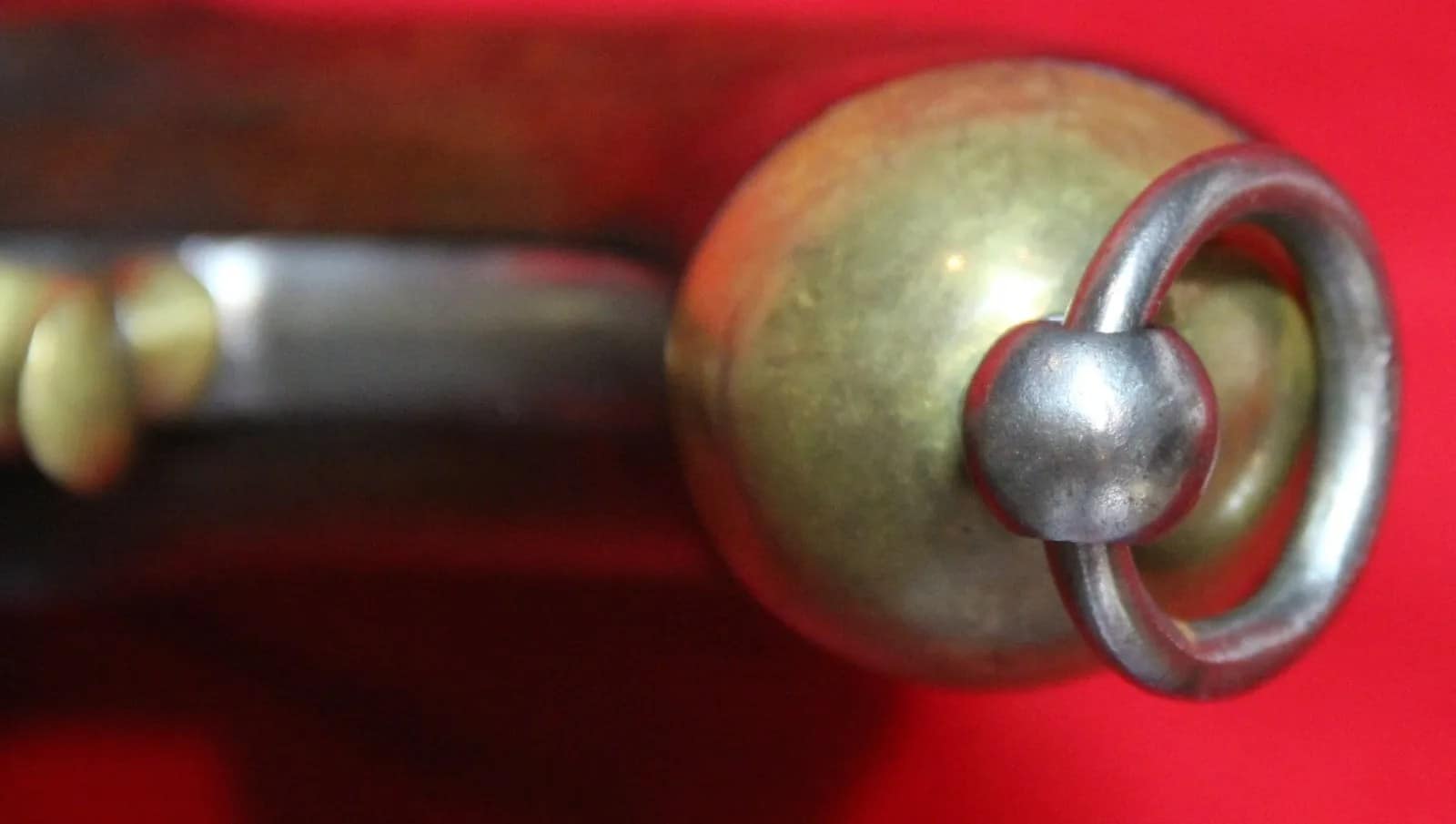
Prussian Model 1850 Cavalry Pistol. From my personal collection.
The Prussian Model 1851 cavalry pistol was a single-shot, percussion muzzle-loading sidearm of approximately 15mm calibre, manufactured at state arsenals including Potsdam and Spandau. Designed for mounted troops, it fired a round ball and represented the standard cavalry pistol of the mid-19th century before the widespread adoption of revolvers. Issued to Prussian cavalry units, it saw service during the Austro-Prussian War (1866) and the Franco-Prussian War (1870–71), though by this period it was increasingly considered obsolete compared to more modern repeating handguns.
Weapon data
Caliber: 15mm
Cartridge: .69″ ball projectile.
Action: Muzzle loading, percussion lock, separately primed
Rifling: Smoothbore.
Muzzle velocity: ~120 metres per second
Maximum effective range (volley fire): 100 metres
Length: 15″ (375mm)
Barrel length: 8.75″ (220mm)
Weight: 2KG
Sights: fixed front sight
Austrian Weapons of the Austro-Prussian War
Austrian Model 1854 ‘Lorenz’ Percussion Musket, 0.54″ caliber. From my personal collection.
The Austrian Model 1854 Lorenz was a .54-calibre percussion rifle-musket widely issued during the 1859 and 1866 campaigns. Built with a distinctive lockplate and robust stock furniture, it offered good accuracy but variable quality due to decentralised production. The Lorenz was Austria’s principal infantry weapon during the Austro-Prussian War, where the Prussian Dreyse needle rifle outclassed its slower-loading and rifled-musket design. Large numbers were later sold abroad, including to both Union and Confederate forces in the American Civil War.


⚔️ Go deeper — Members get exclusive access to the Deep Research Collection, Field Notes, and monthly Research Dispatches. Try membership free for 7 days, cancel anytime. From $9/month.
Austro-Prussian War Headgear
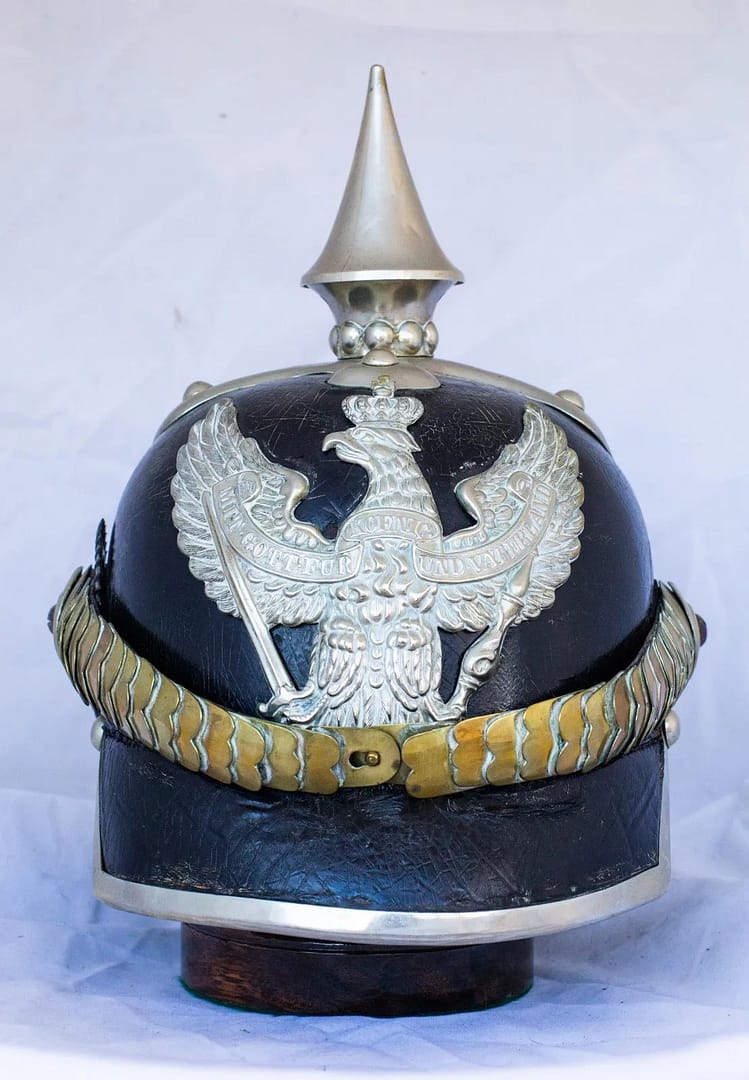
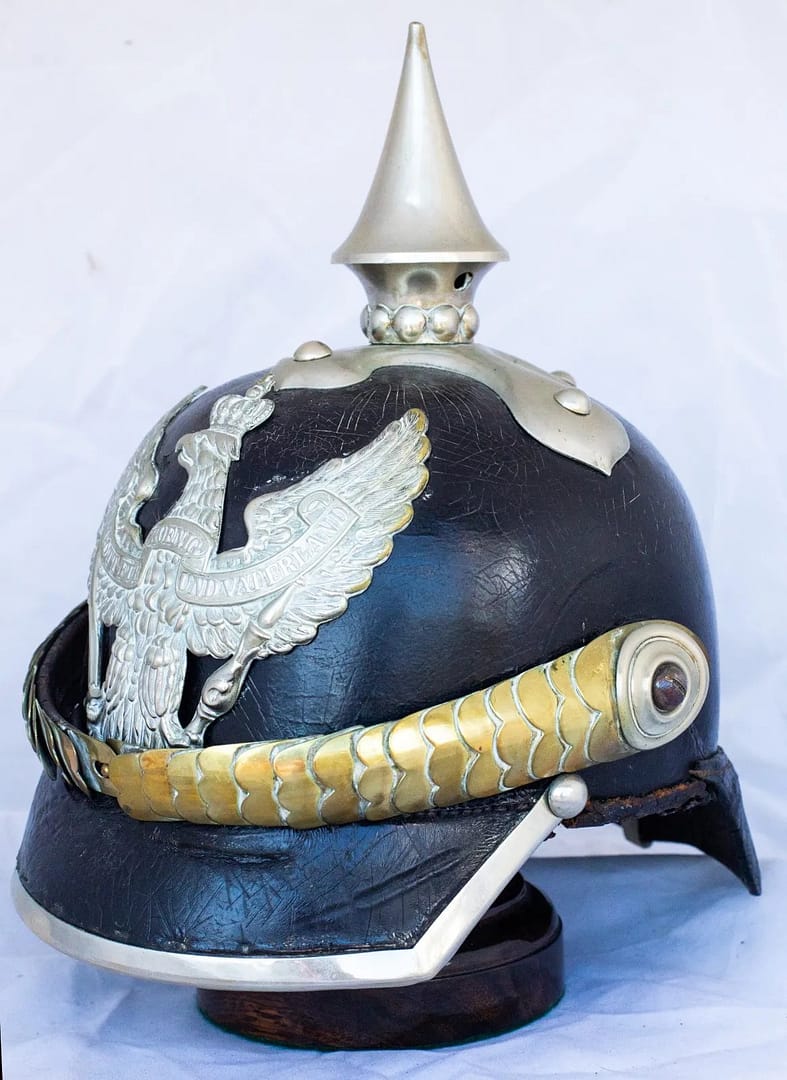
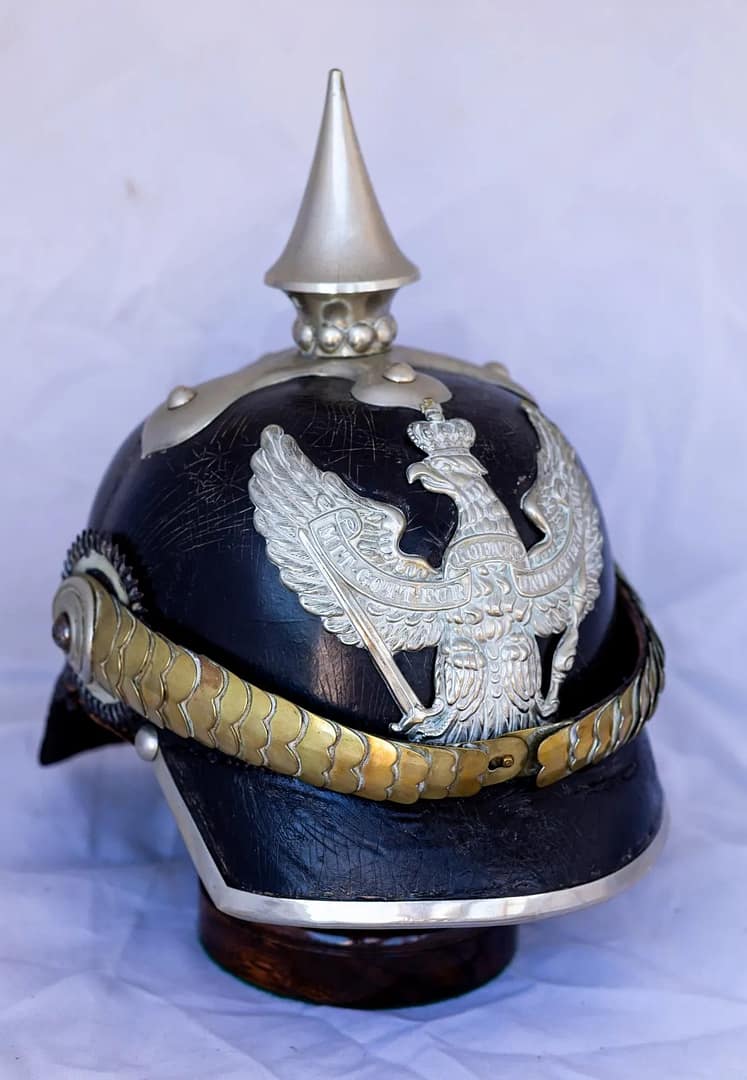
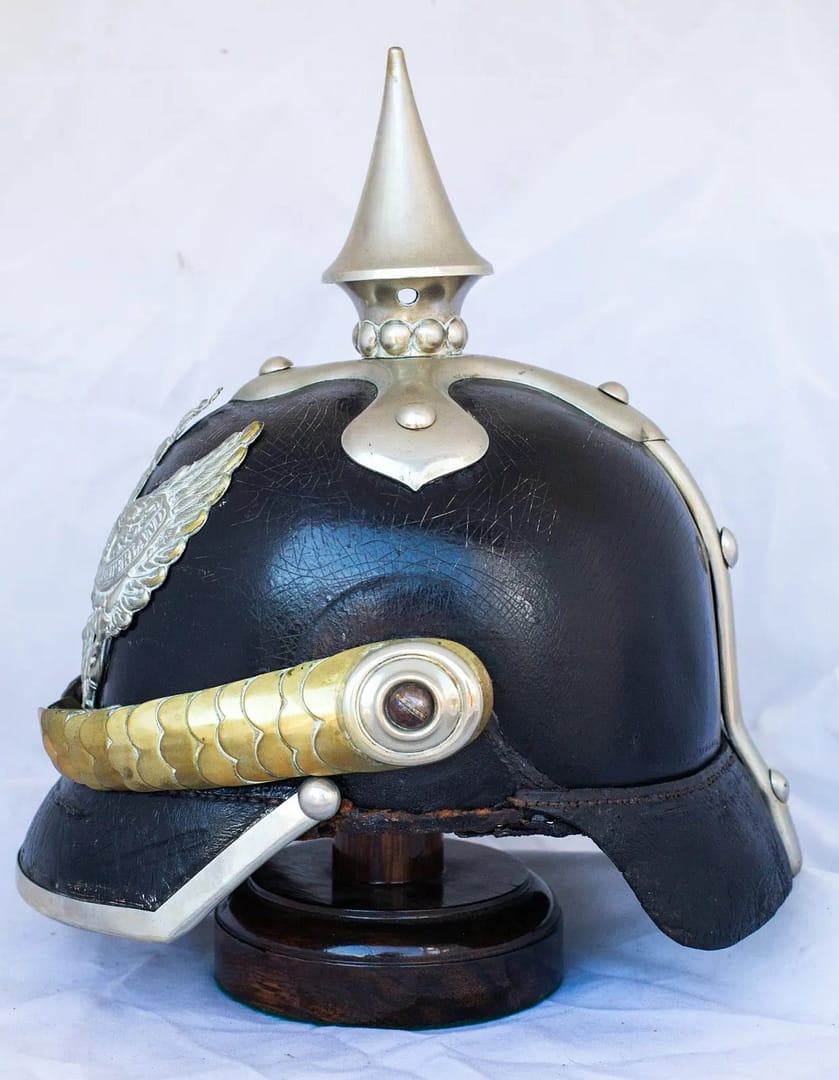
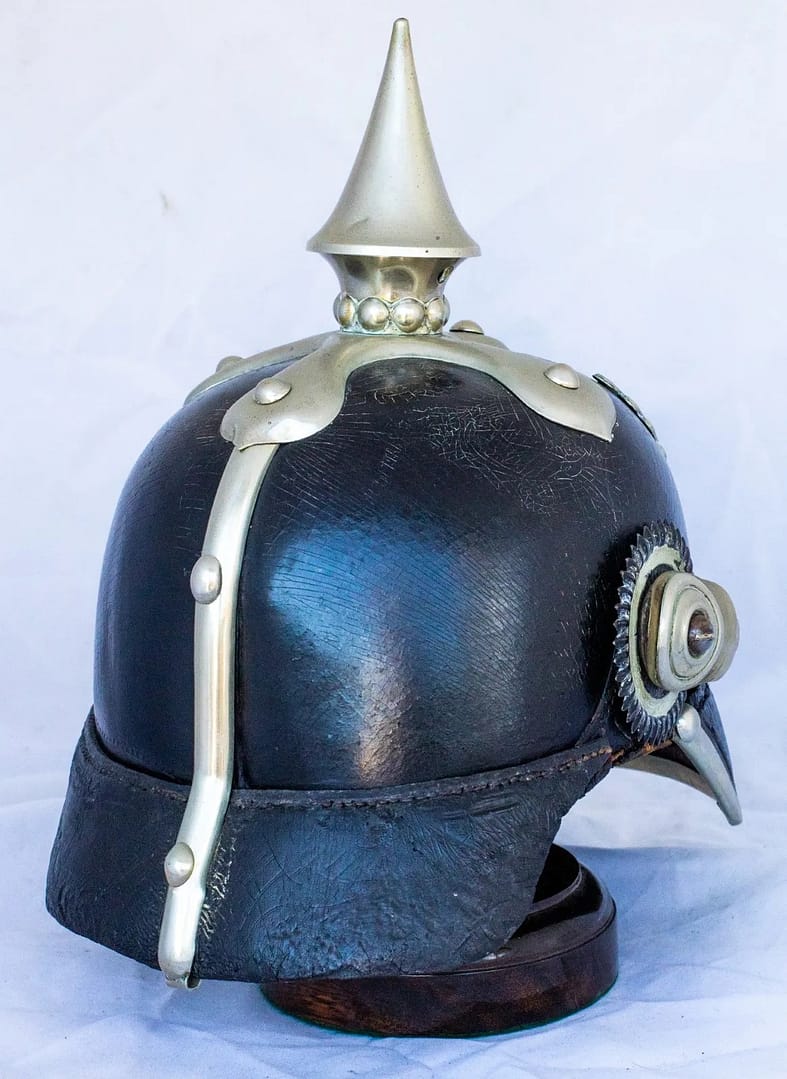
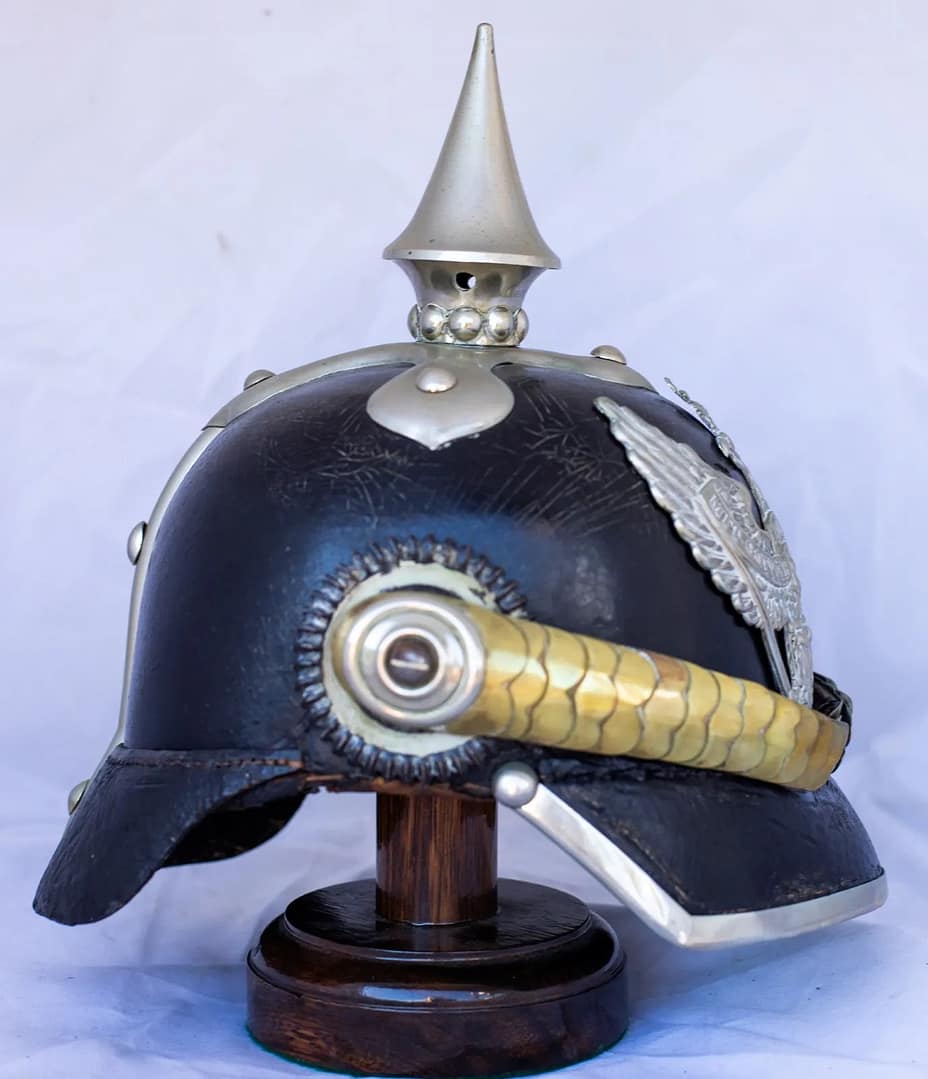
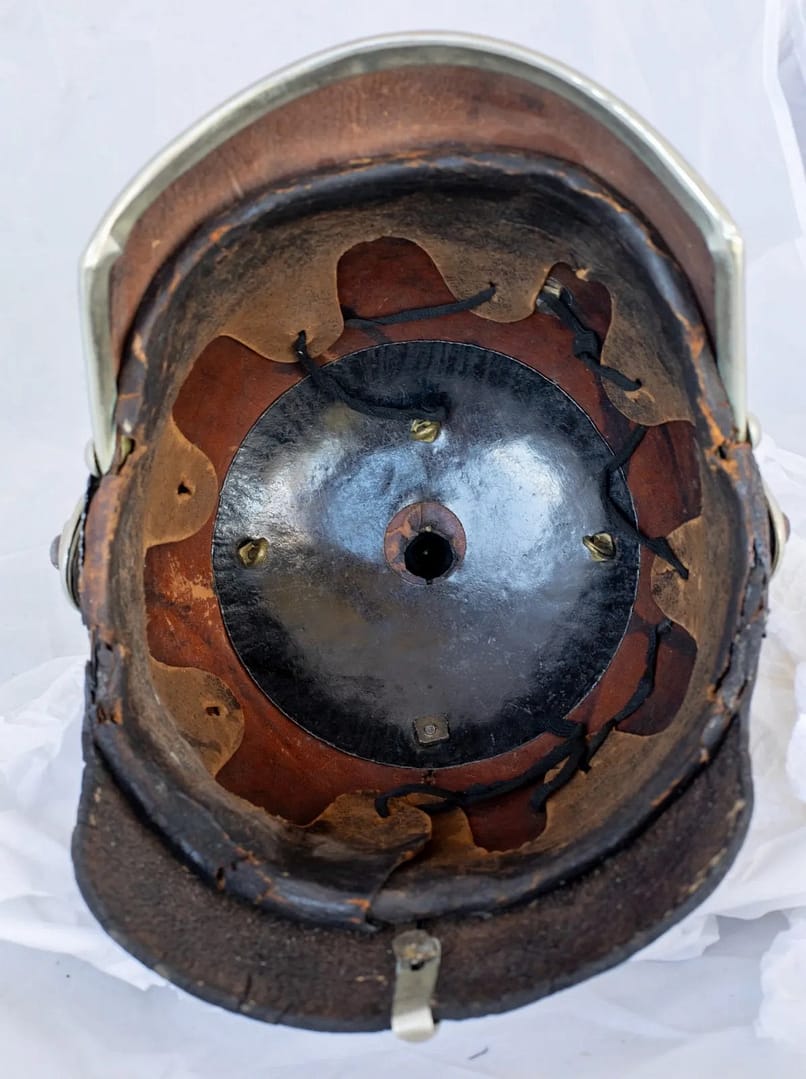
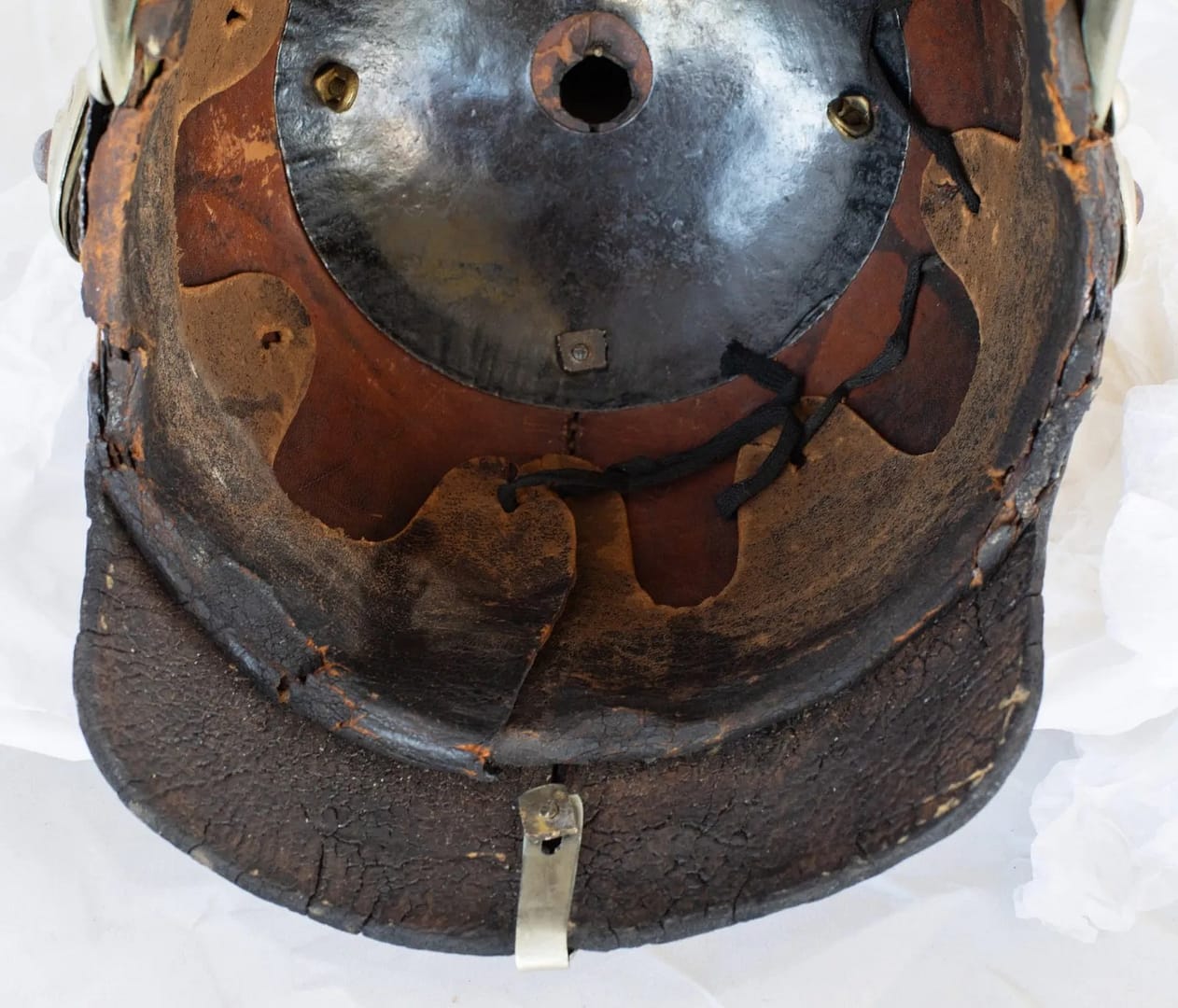
M1860 Dragoner pickelhaube. From my personal collection.
The M1860 Dragoner Pickelhaube was issued to Prussian dragoon regiments during the mid-nineteenth century and reflects the evolution of cavalry headgear in the post-Napoleonic era. Constructed of boiled leather with silvered brass fittings and a prominent spike, it combined limited protective function with regimental distinction. The helmet bore the Prussian eagle plate and appropriate state cockades, identifying branch and allegiance. Worn during the wars of German unification, including 1866 and 1870–71, the M1860 pattern illustrates the transition from traditional cavalry shakos to the spiked helmet that became synonymous with the Imperial German Army.
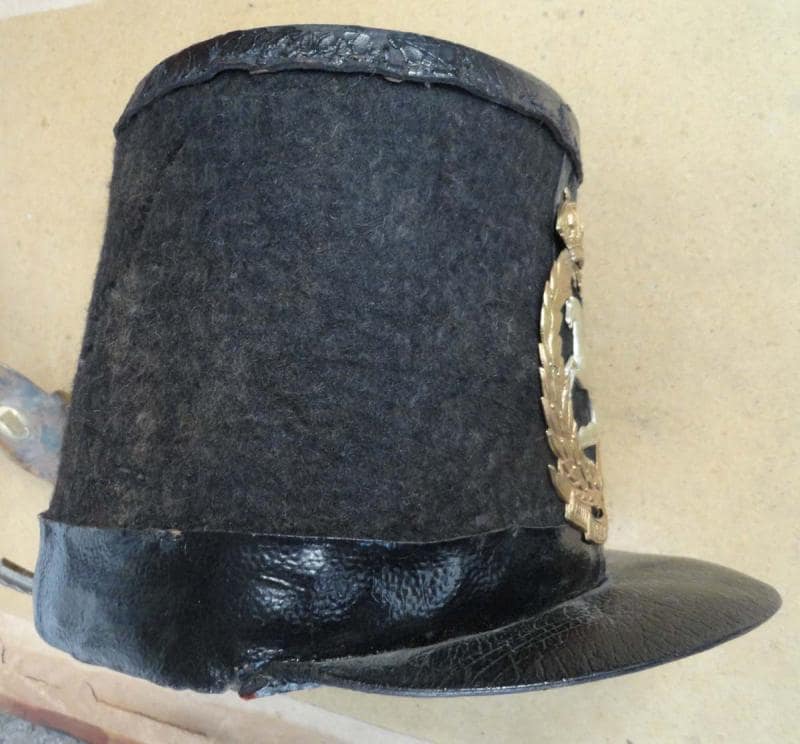
M1860 Hanoverian Tschako. White horse of Hanover. Langensalza.
The Model 1860 Hanoverian tschako was a tall, leather-covered infantry shako bearing the distinctive white horse of Hanover, a symbol derived from the House of Welf. The helmet’s lacquered finish, front plate, and coloured cockade reflected mid-19th-century German military fashion. Worn by Hanoverian troops during the Austro-Prussian War, it was part of the last field uniform of the kingdom before its annexation by Prussia following the 1866 campaign and the defeat at Langensalza.
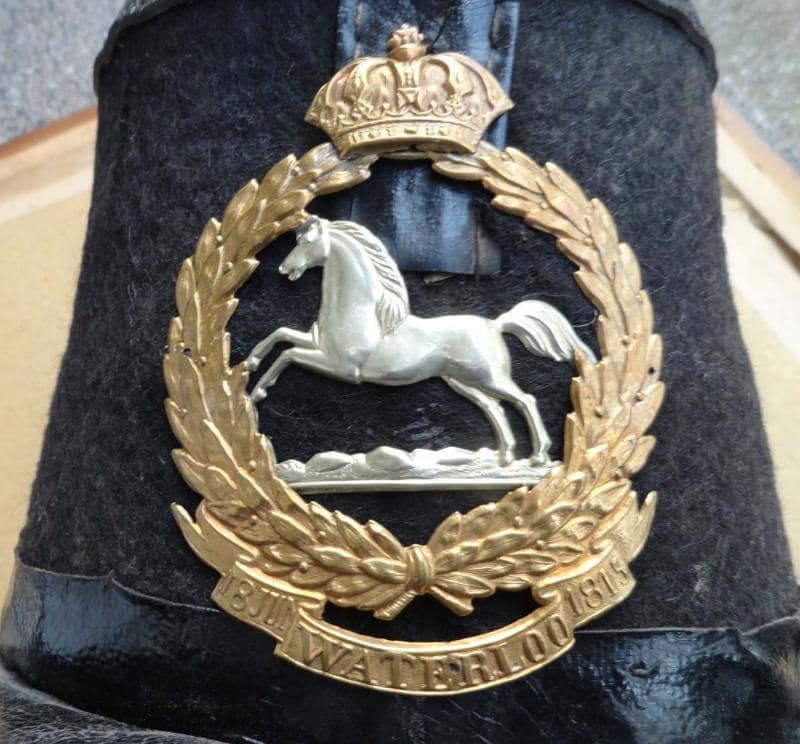
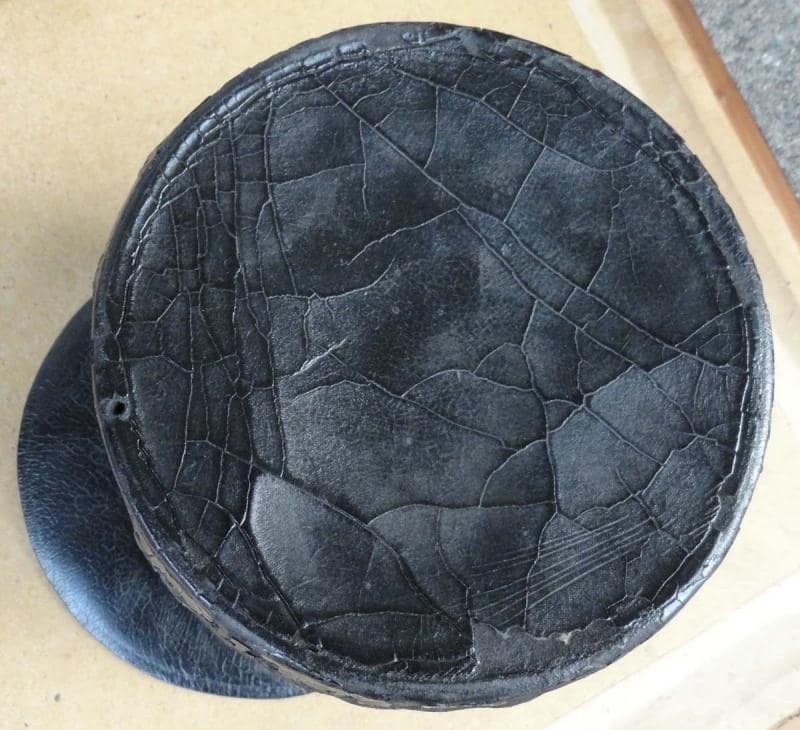
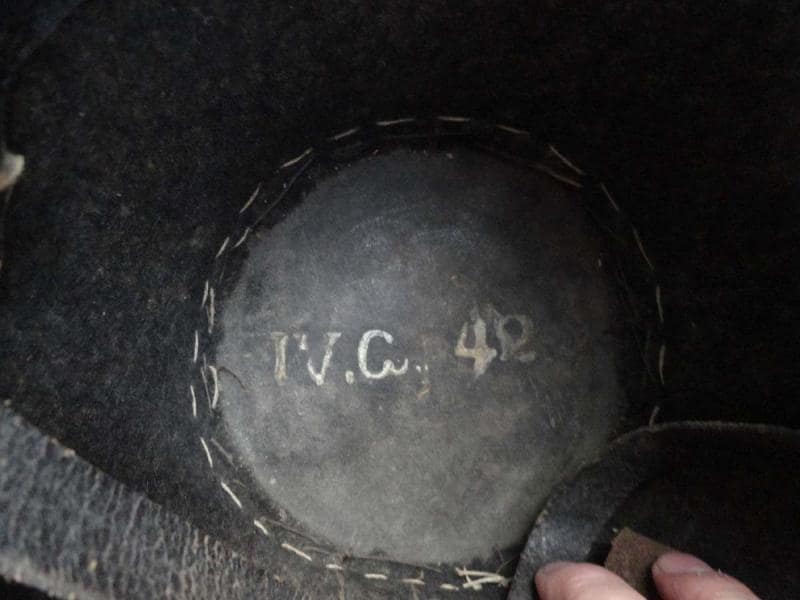
Bavarian, Saxon and Prussian helmets of the Franco-Prussian War. From my personal collection.
The Prussian pickelhaube was a hardened leather helmet with a brass spike and front plate displaying the Prussian eagle. Worn by infantry, artillery, and support branches, the pickelhaube became a symbol of Prussian military discipline and state power. Though elegant and distinctive, it offered limited ballistic protection and was eventually replaced by the steel stahlhelm during the First World War.
The Bavarian Raupenhelm (“caterpillar helmet”) was a leather infantry helmet with a distinctive black wool crest running from front to rear. Used by line infantry and light infantry units until the late 1860s, it reflected South German uniform traditions that pre-dated Prussian influence. The helmet offered minimal protection but strong visual identity, particularly during the 1866 and early 1870 campaigns. After Bavarian integration into the German Empire, the Raupenhelm was gradually replaced by the Prussian-style pickelhaube.


Accoutrements
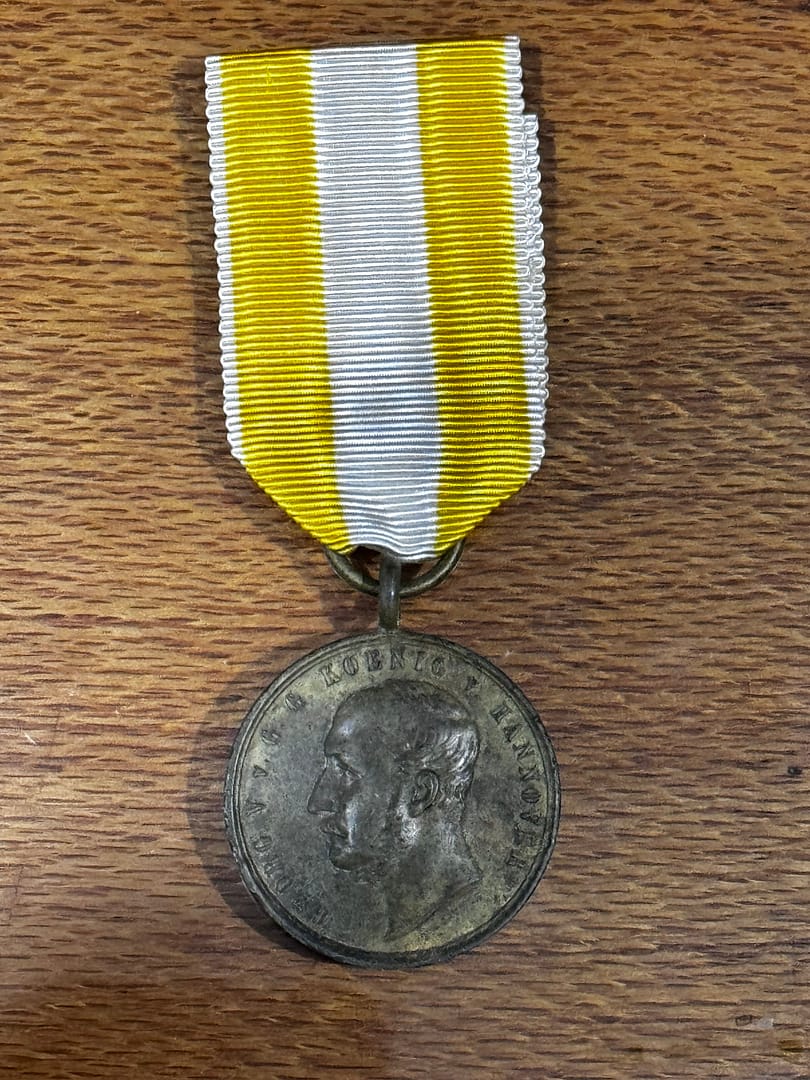
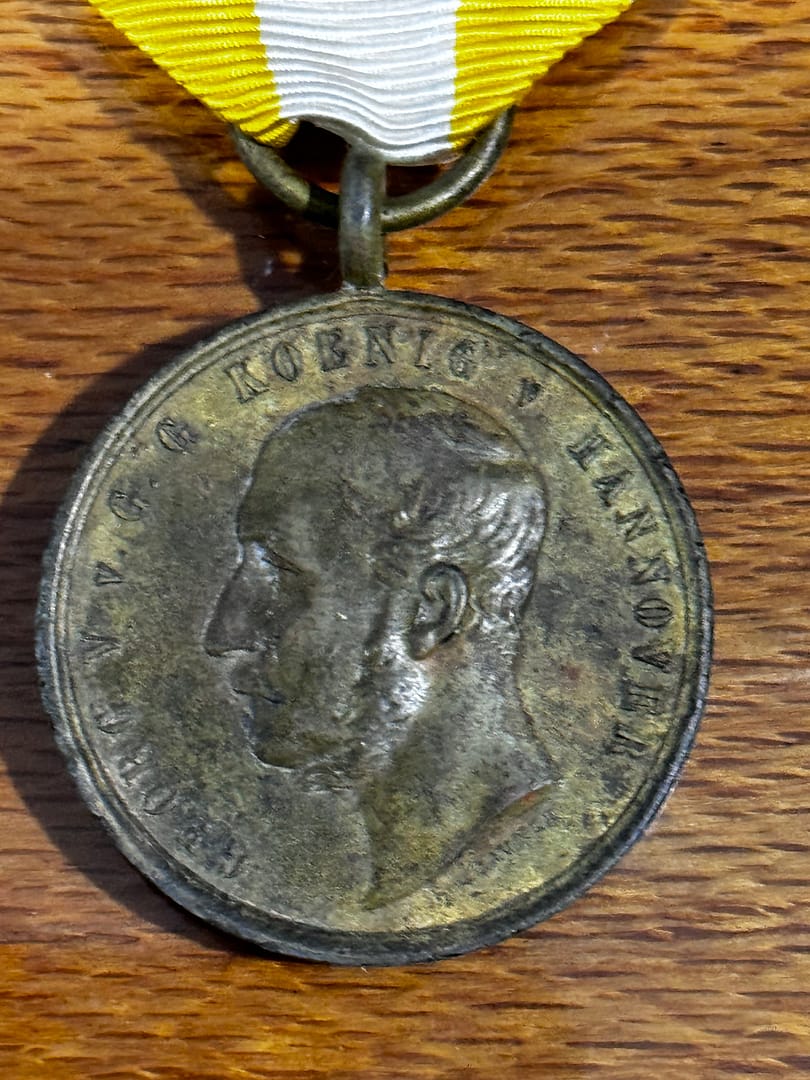
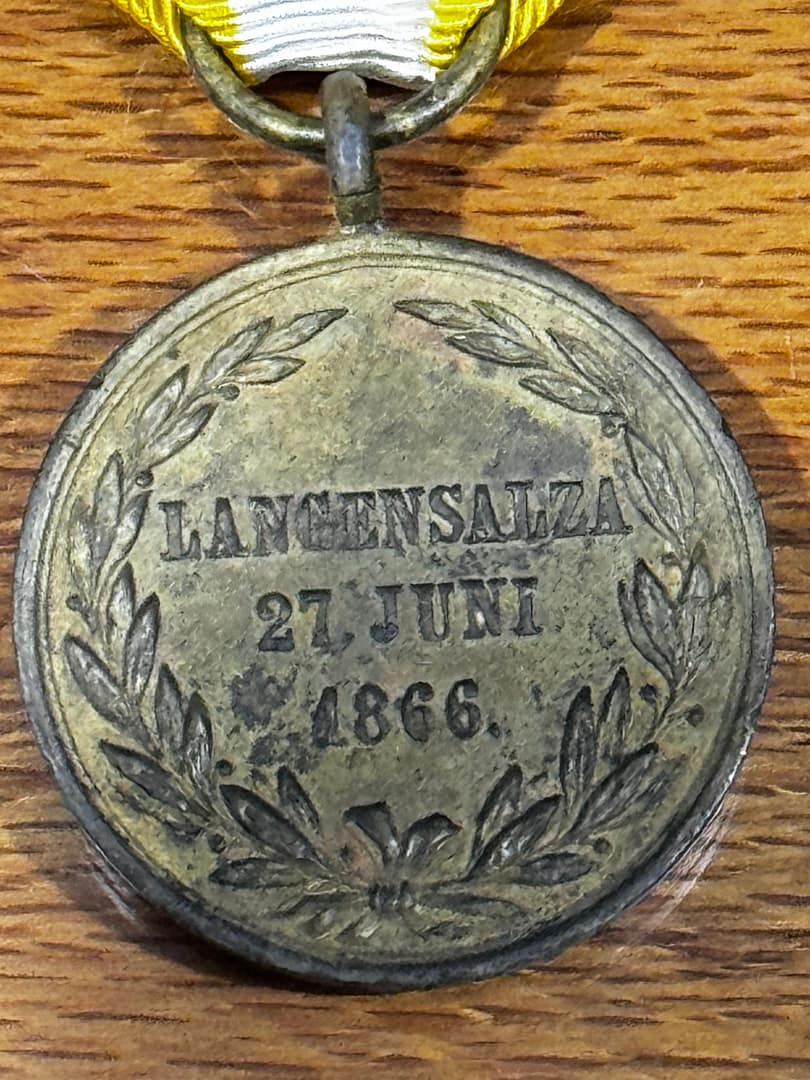
Hanoverian Medal for Battle of Langensalza
Struck to commemorate Hanover’s stand against Prussia on 27 June 1866, the Langensalza Medal was awarded to officers and men who fought in the battle. The silver and bronze versions bore the crowned portrait of King George V on the obverse and an inscription honouring loyal service on the reverse. Although Hanover won a tactical victory at Langensalza, the army was forced to surrender shortly afterwards due to encirclement. The medal became a poignant symbol of the kingdom’s final independent campaign and later served as a regimental remembrance item.
Found this useful? Buy me a coffee — it helps fund future battlefield research


Authored by Mick Prictor, a retired military officer with 40 years’ service, and a military historian specialising in terrain-focused analysis of tactics, doctrine, and command decision-making in land warfare. His work draws on extensive battlefield fieldwork—more than 280 sites worldwide—and one of the world’s largest private collections of historic military arms, uniforms, and equipment. About me
The war was fought during a transitional period in military technology. Prussian infantry were equipped with the Dreyse needle-gun, a bolt-action breech-loading rifle, while Austrian infantry primarily carried the Lorenz muzzle-loading rifle-musket. Both sides also fielded rifled artillery and cavalry armed with carbines, sabres, and pistols typical of mid-nineteenth-century European armies.
The Dreyse needle-gun allowed Prussian soldiers to fire more rapidly than muzzle-loading rifles and to reload while lying down. This increased battlefield firepower and encouraged more flexible infantry tactics. Its effectiveness was particularly evident at the Battle of Königgrätz, where Prussian infantry fire contributed significantly to the outcome.
The Lorenz rifle was accurate and well-made but was slower to load because it was a muzzle-loader. And it had to be loaded standing up. Austrian doctrine emphasised aggressive attack and shock action, but higher rates of Prussian fire made such advances costly. The difference illustrates how tactics and doctrine can matter as much as technology.
Artillery was an important component of both armies. Rifled guns provided improved range and accuracy compared to earlier smoothbores. Prussian success reflected not only technical capability but also effective coordination, command, and concentration of fire at decisive points.
Yes. Cavalry was used for reconnaissance, screening, and exploitation. While less decisive than in earlier wars, mounted troops remained essential for operational mobility and battlefield communication. Cavalry units were typically equipped with sabres, pistols, and carbines.
The Battle of Königgrätz (Sadowa) on 3 July 1866 saw Prussian armies defeat the main Austrian field force through coordinated manoeuvre and superior operational planning. Up to that point, the Battle of Königgrätz was teh largest battle in history, with more than 250,000 soldiers engaged, almost twice as many as at Gettysburg three years earlier. The battle effectively ended Austrian resistance and confirmed Prussian dominance within the German states.
Technology played a major role, particularly the Dreyse rifle and improved mobilisation systems, but organisation, command structure, and operational planning were equally important. The war showed how modern warfare depended on the integration of technology with effective leadership.
All artefacts shown are from my personal collection and photographed firsthand. They represent original weapons and equipment used by soldiers during the Austro-Prussian War.
Subscribe to Battlefield Travels and receive a free E-Book Battlefield Guide
Unlock expert battlefield analysis, campaign reconstructions, and historical insights drawn from firsthand exploration and primary sources.
🗺️ You’ll receive:
🎖️ Exclusive historical insights you won’t find elsewhere
📘 A free eBook: 10 Tips for Exploring Historic Battlefields
📰 New battlefield studies straight to your inbox as they are published

⚔️ Go deeper — Members get exclusive access to the Deep Research Collection, Field Notes, and monthly Research Dispatches. Try membership free for 7 days, cancel anytime. From $9/month.