My WW1 collection is enormous – hundreds of uniforms, headgear items, combat equipment. Here are just a few pieces.
👉 Explore the companion collection: Central Powers →
The First World War traumatised the nations of Europe – they were never the same again. The armies of 1918 looked very different from those that mobilised in 1914. Brightly coloured uniform items like the French madder red trousers and the Austro-Hungarian pike-grey uniforms gave way to drab greys, khakis and greens that provided at least some camouflage on the deadly battlefield. Napoleonic holdovers like the French curaissier uniforms of 1914 were gone. The soft and often decorative forms headgear that all armies used in 1914 was replaced by protective steel helmets, starting the French Adrian helmet in 1915, and culminating in the silica-nickel-steel German Model 1916/17/18 helmets.
While the basic infantry rifle that most countries remained unchanged throughout the war, the crew-served and heavy weapons saw significant advancement and vastly expanded scale of issue. The Lewis Gun, Browning Automatic Rifle, Madsen Light Machine Gun, and MG08/15 all provided the infantry with mobile firepower that could move with them in the advance. Grenades became a dominant weapon system in trench fighting and bifurcated into ‘defensive’ grenades (large shrapnel with wide lethal zone) and ‘offensive’ grenades (mode explosive and lighter shrapnel). Gas warfare developed rapidly from 1915 onwards, and so did the individual gasmask that every soldier carried.
Trench warfare created new demands for equipment such as lightweight entrenching tools, trench fighting knives and improvised maces . The trench periscope allowed soldiers to view across no-mans land without exposing themselves to enemy fire, and the next logical development was periscope rifle mounts for firing from below cover.
The enormous wartime production of weapons and equipment ensured that First World War matériel remained in widespread service during the Russian Civil War and in numerous inter-war conflicts worldwide.
This selection of WW1 uniforms, weapons and equipment showcases original items from my personal collection.
Related Battle Studies, Museum Pieces & Reading Resources


Weapons and equipment of the Allied Powers. All from my personal collection.
AUSTRALIA
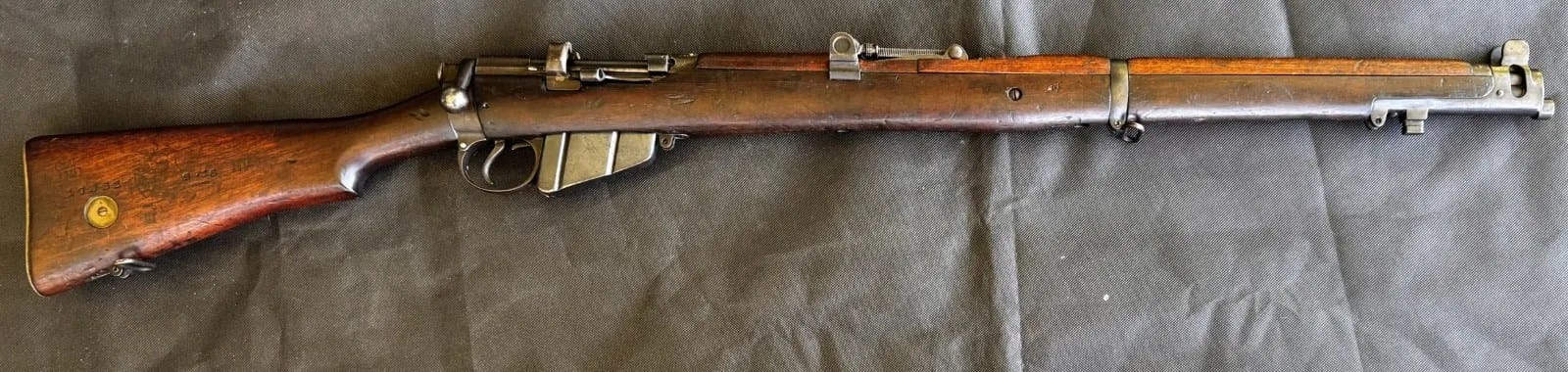
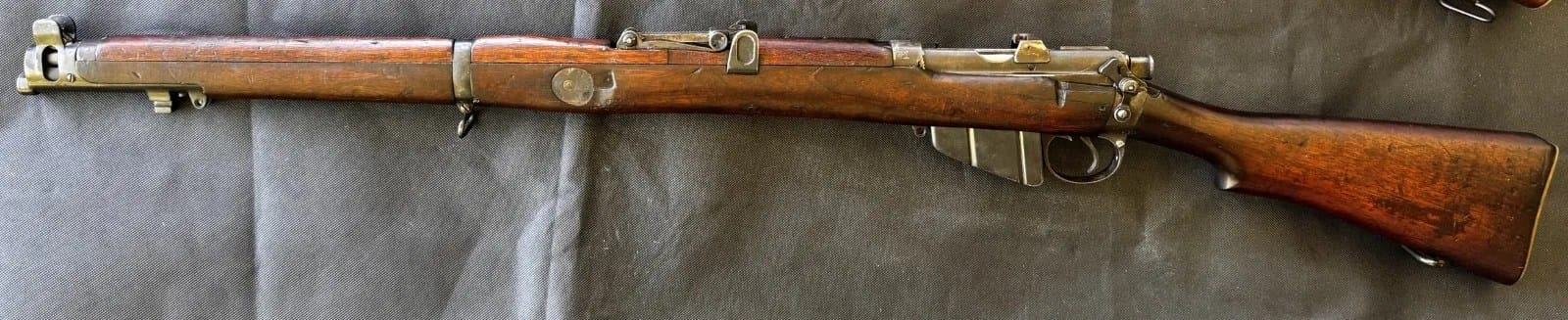
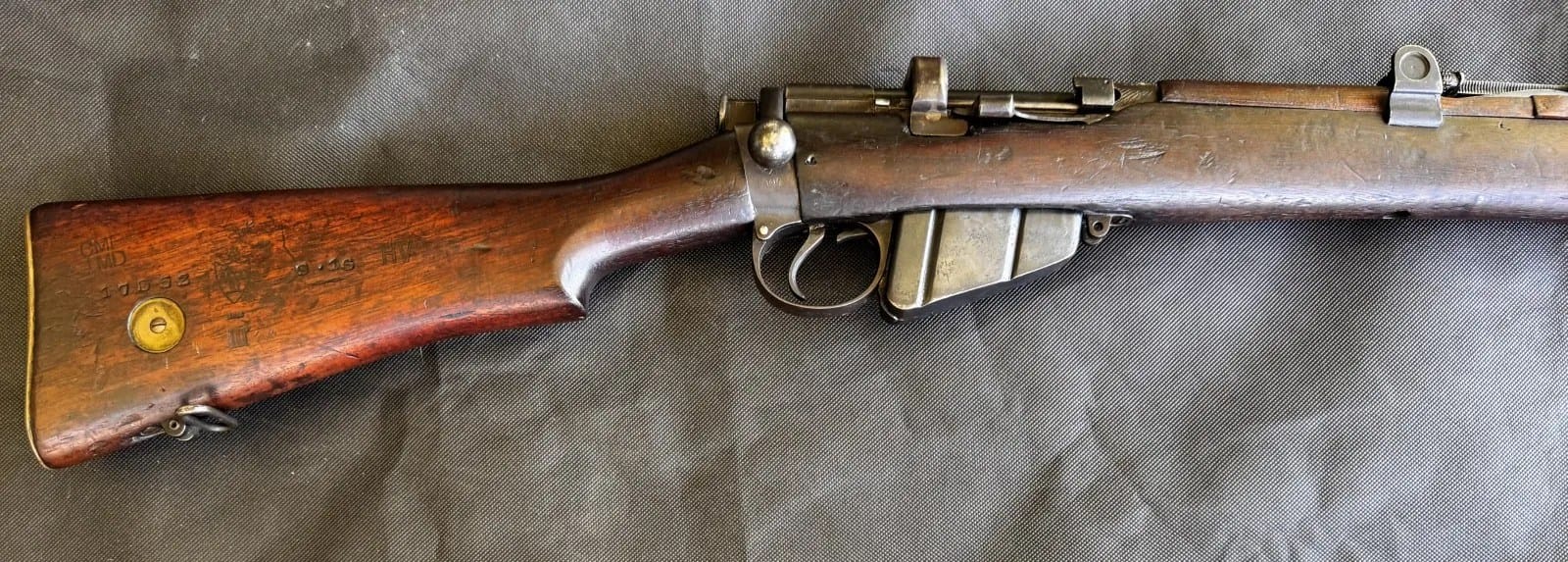
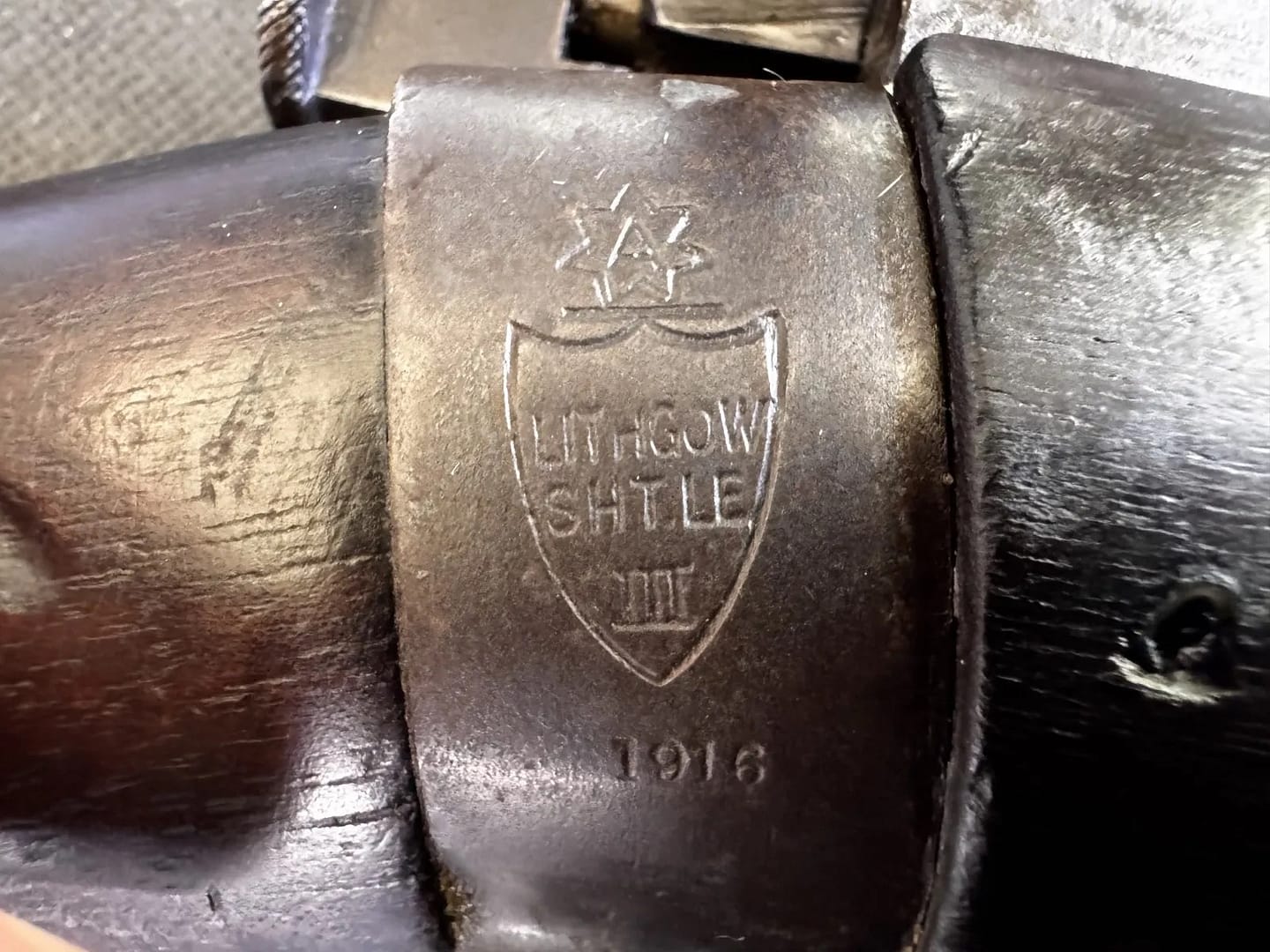
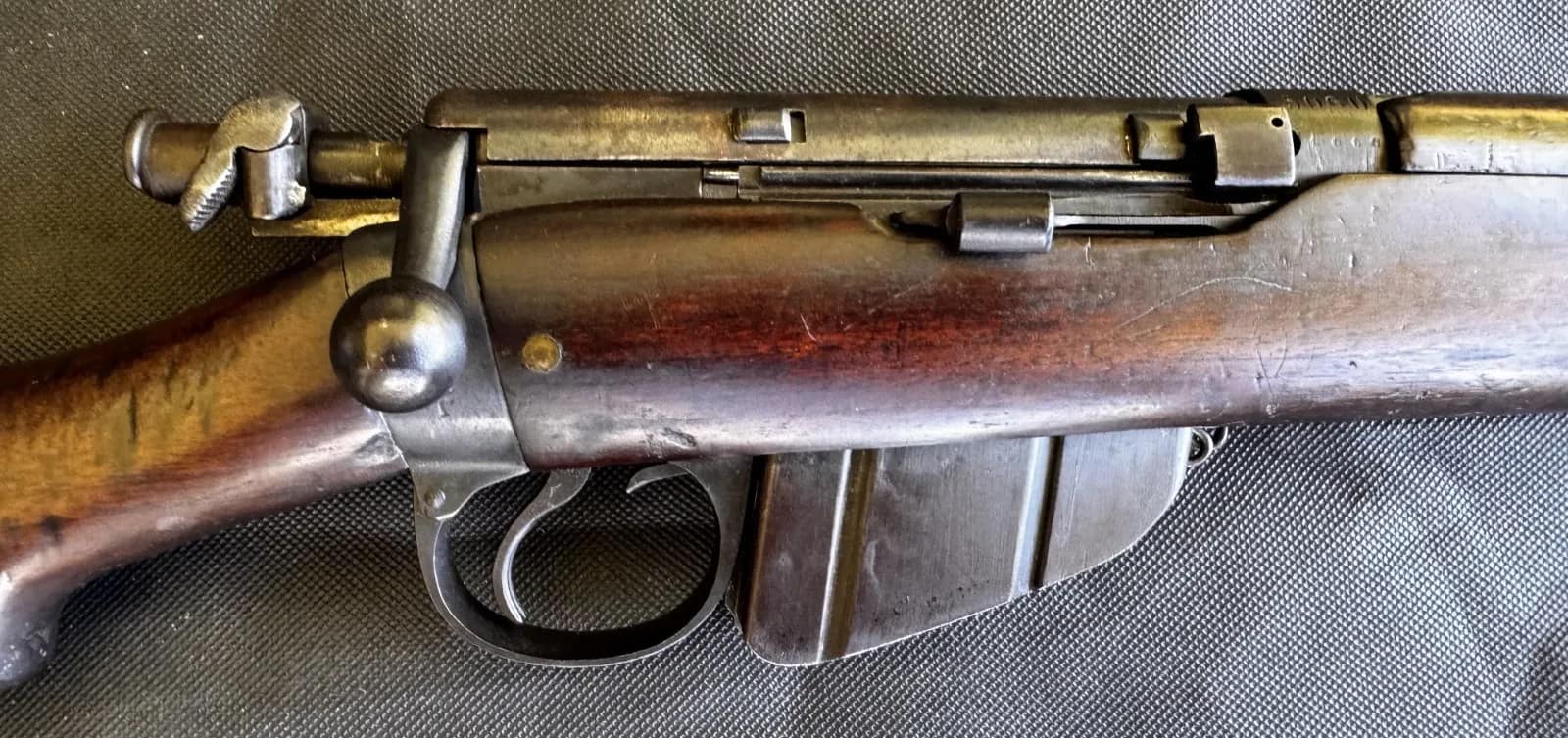
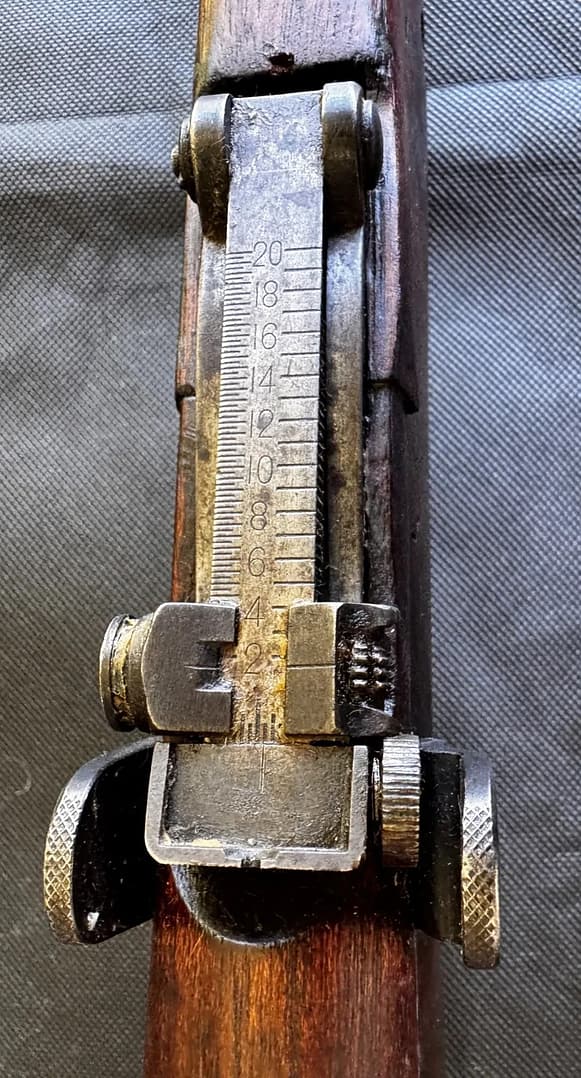
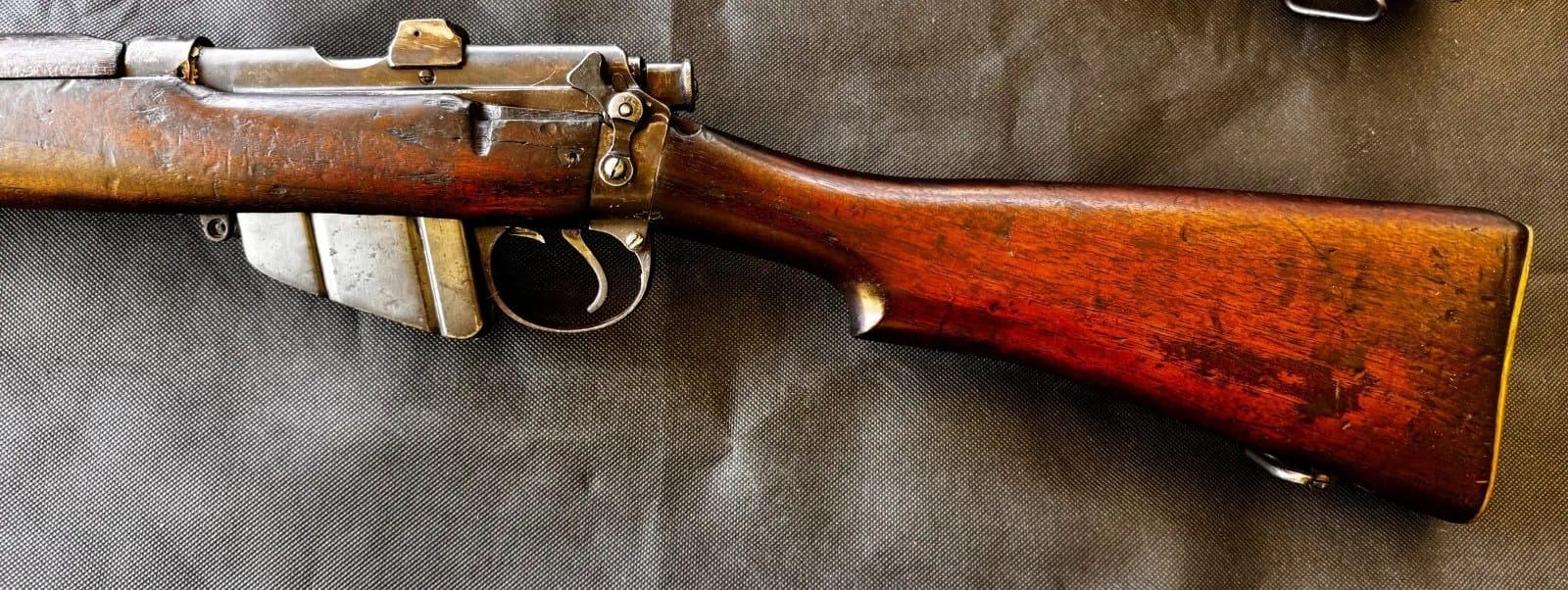
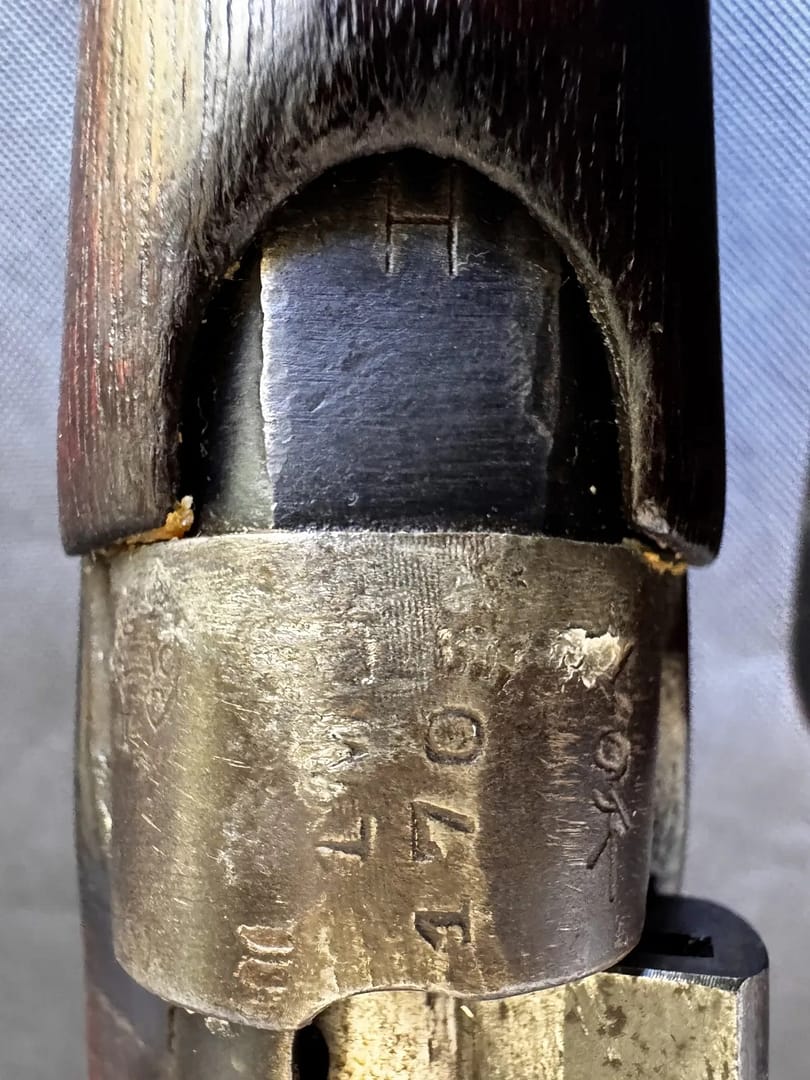
WW1 Australian Rifle No.1 Mk III, Lee-Enfield. Lithgow Small Arms Factory 1916
The Rifle No.1 Mk III Short Magazine Lee-Enfield was the standard service rifle of Australian forces during the First World War, with rifles produced at the Lithgow Small Arms Factory from 1912 onward. Chambered in .303 British, it combined a smooth bolt action with a ten-round magazine, enabling rapid, accurate fire. Rifles dated 1916 equipped Australian troops on the Western Front and in the Middle East, becoming iconic to the AIF.
WW1 Australian Imperial Force, Lieutenant Colonel E.J. Parks Group
1918-dated slouch hat, full-size medals, miniature medals, ribbon bars, hip flask, photos, 2 x Mentioned in Dispatches. From my personal collection.
Parks medal group is 8 x medals:
• Distinguished Service Order
• Military Cross
• 1914-15 Star
• British War Medal
• Victory Medal (with Mentioned in Dispatches oakleaf)
• War Medal 1939-45
• Australian Service Medal 1939-45
• Citizens Military Forces Efficiency Decoration


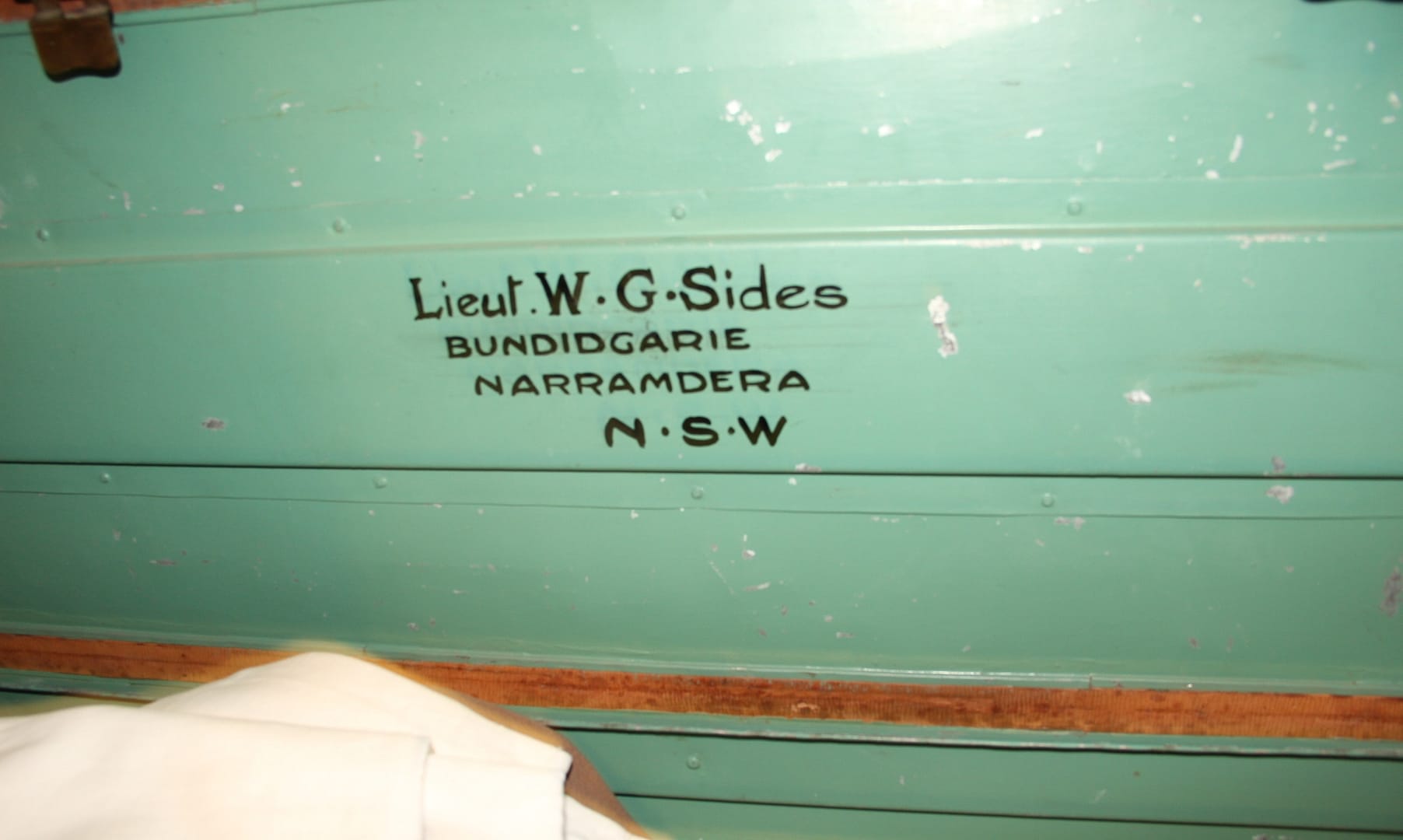
WW1 Australian uniform, peaked cap, trunk, and doctrine publications, Lieutenant W. G. Sides, 4th Pioneer Battalion. From my personal collection.
This First World War Australian uniform group to Lieutenant W. G. Sides of the 4th Pioneer Battalion includes a service tunic, peaked cap, trunk, and contemporary doctrine publications. Pioneer battalions combined infantry and engineering roles, supporting front-line operations with light engineering, construction, and field works. Named groupings such as this provide valuable insight into the equipment, training, and professional development of Australian officers serving on the Western Front.




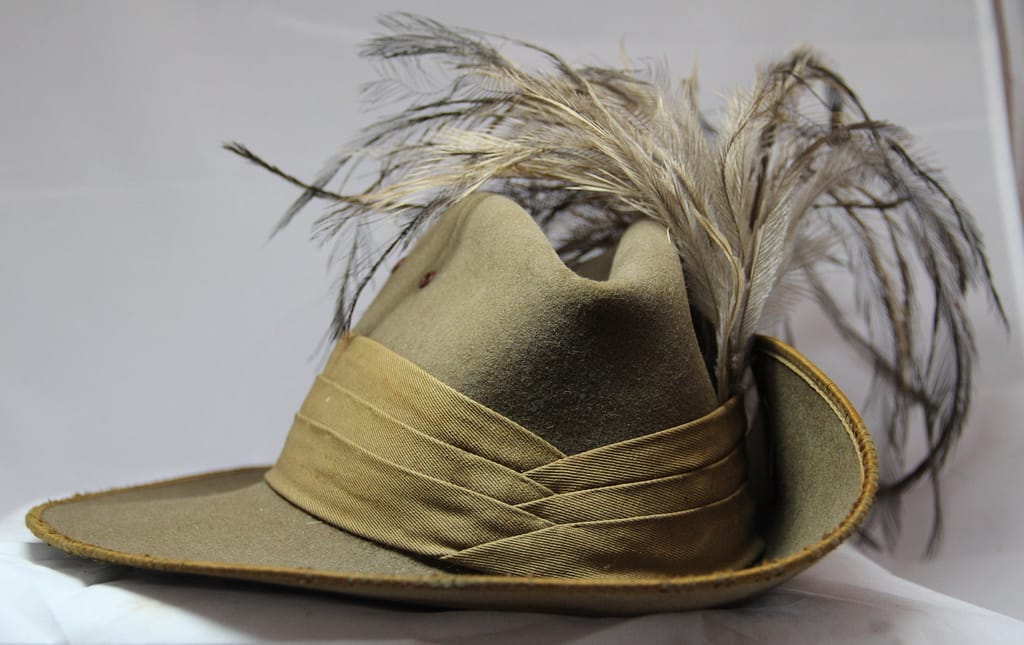
WW1 Australian Slouch Hat, 3rd Light Horse Regiment, Denton Hats 1917. From my personal collection
This Australian First World War slouch hat, manufactured by Denton Hat Mills in 1917 and attributed to the 3rd Light Horse Regiment, reflects the distinctive mounted troops of the Australian Imperial Force. The emu feather plume, a traditional feature of Light Horse headdress, symbolised regimental pride and identity. Manufacturer markings highlight wartime production, while the hat illustrates the unique appearance and heritage of Australia’s mounted units during the Middle Eastern campaigns.


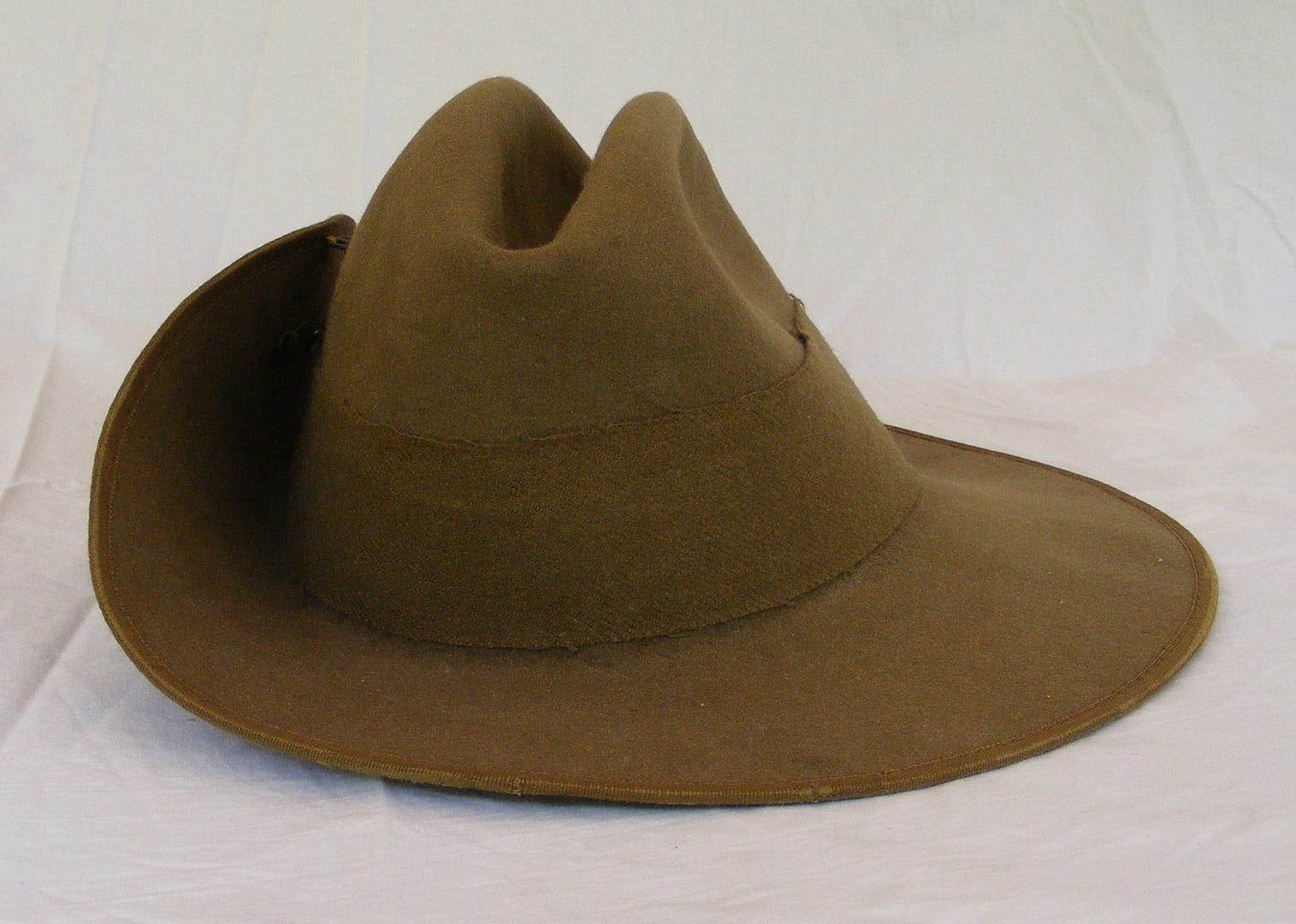
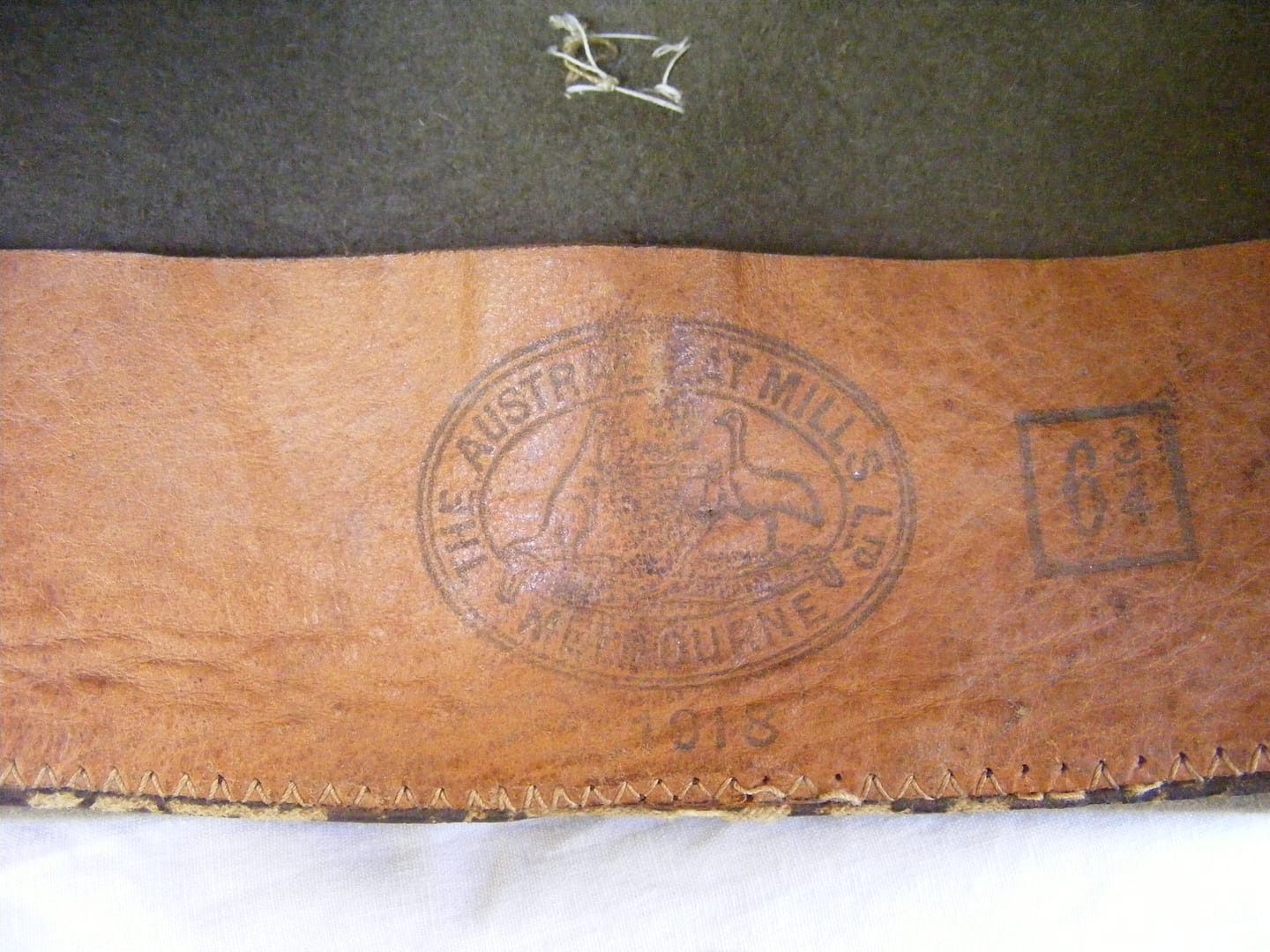
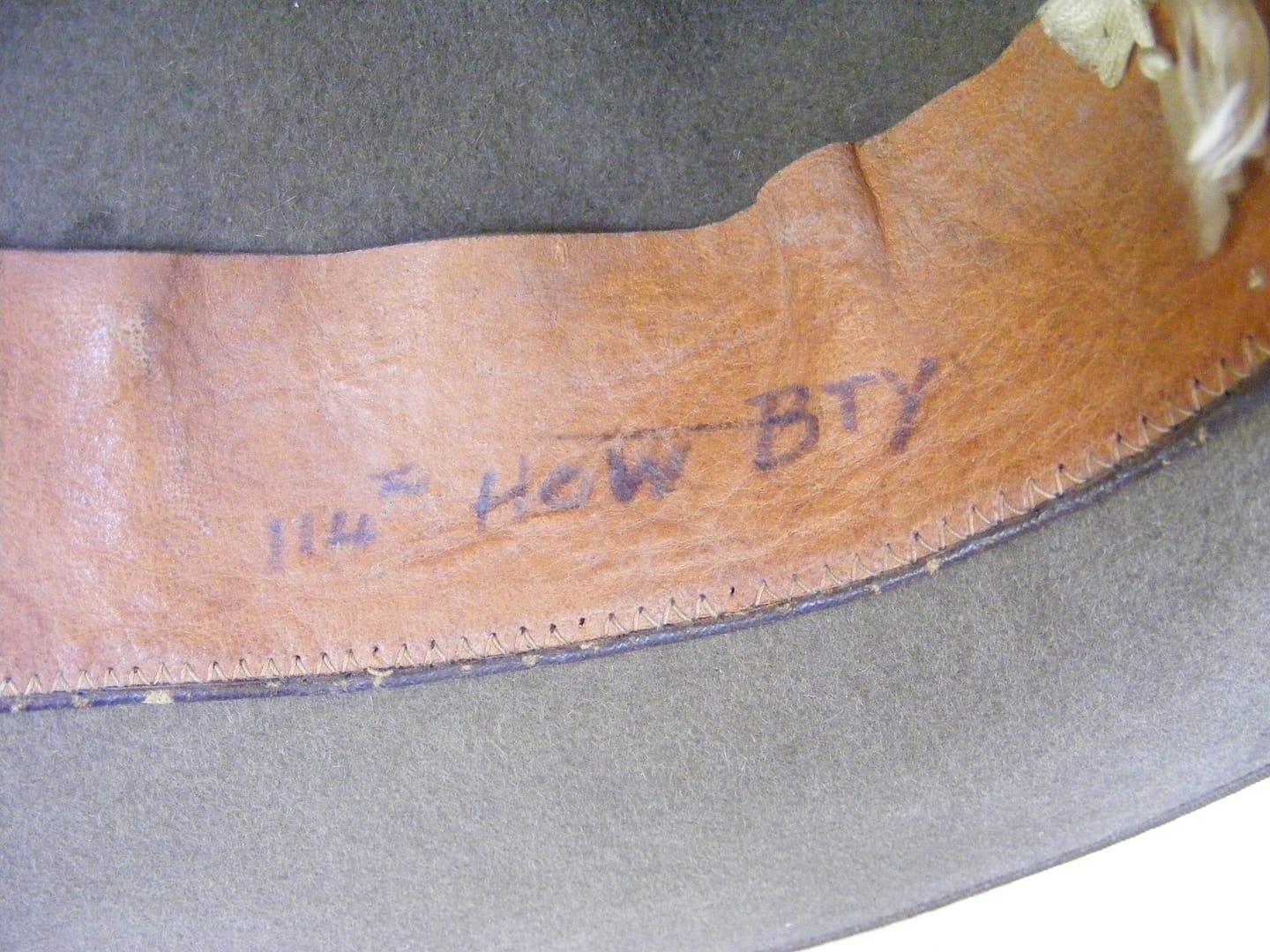
WW1 Australian Slouch Hat, 114th Howitzer Battery, Austral Hat Mills 1918. From my personal collection
This Australian First World War slouch hat, manufactured by Austral Hat Mills in 1918 and attributed to the 114th Howitzer Battery, reflects the standard field headdress worn by Australian artillery units. The slouch hat combined practicality with strong national identity, while manufacturer markings illustrate domestic wartime production. Association with an artillery battery highlights the importance of supporting arms within the Australian Imperial Force during the final campaigns.
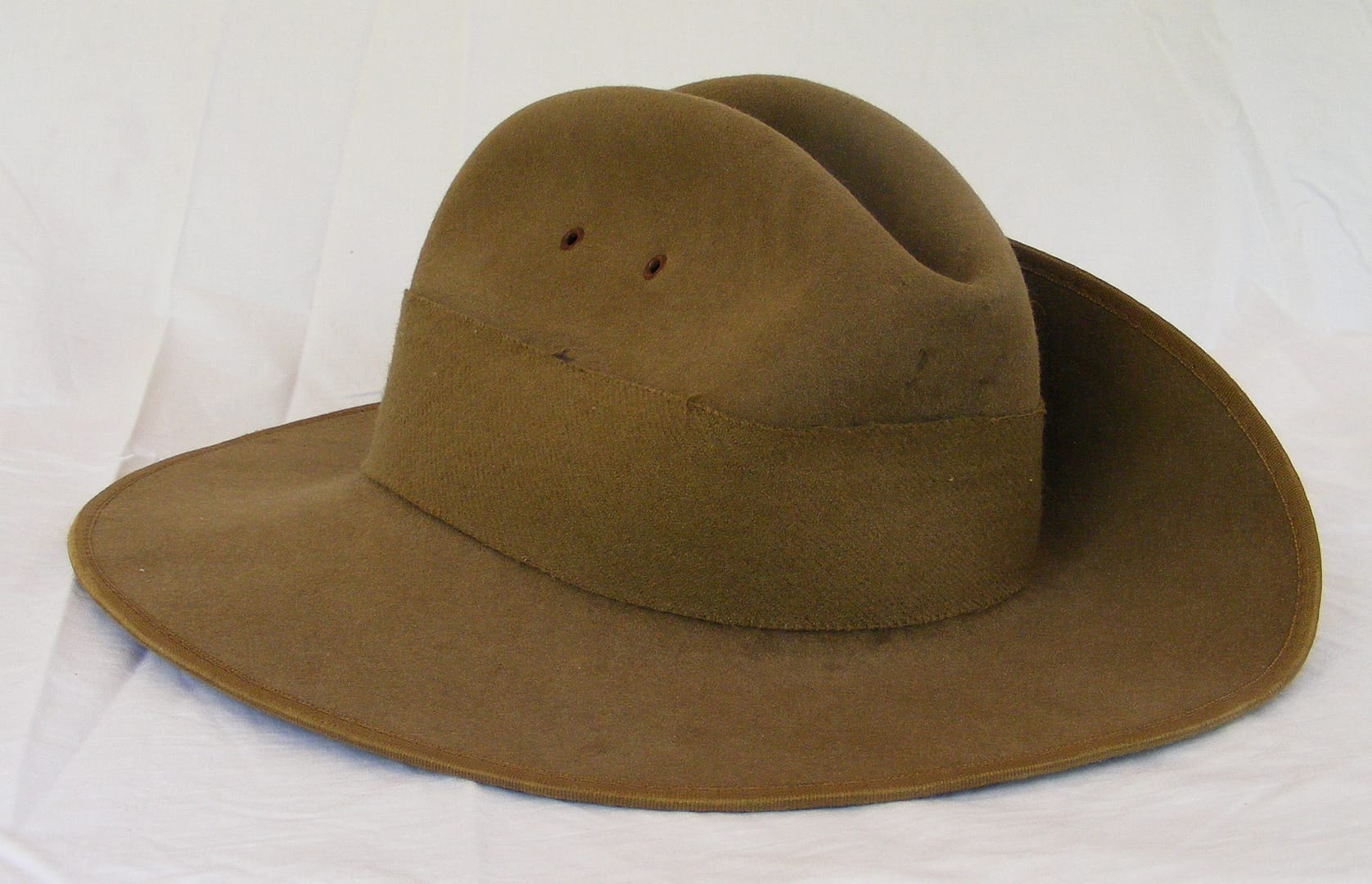
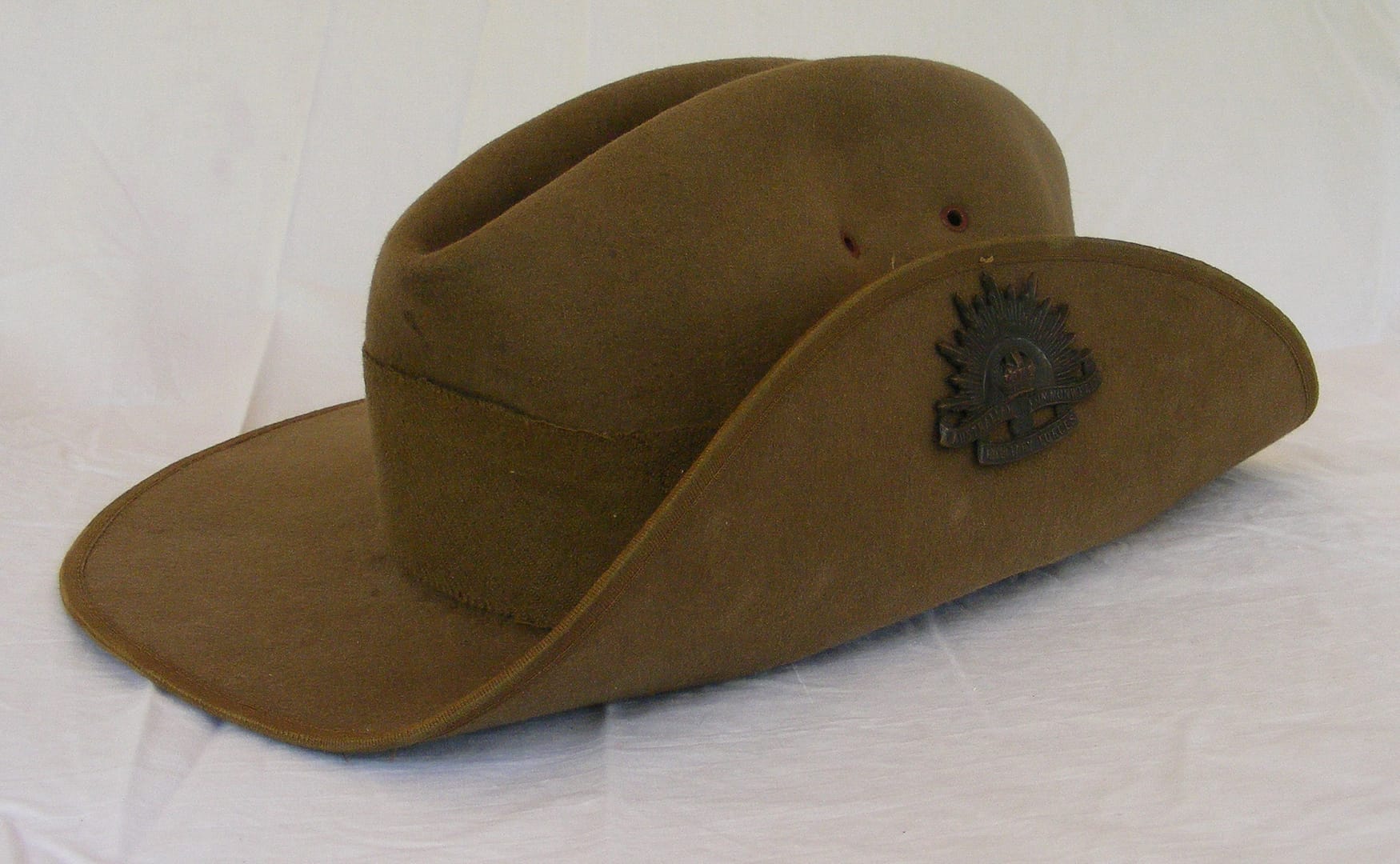
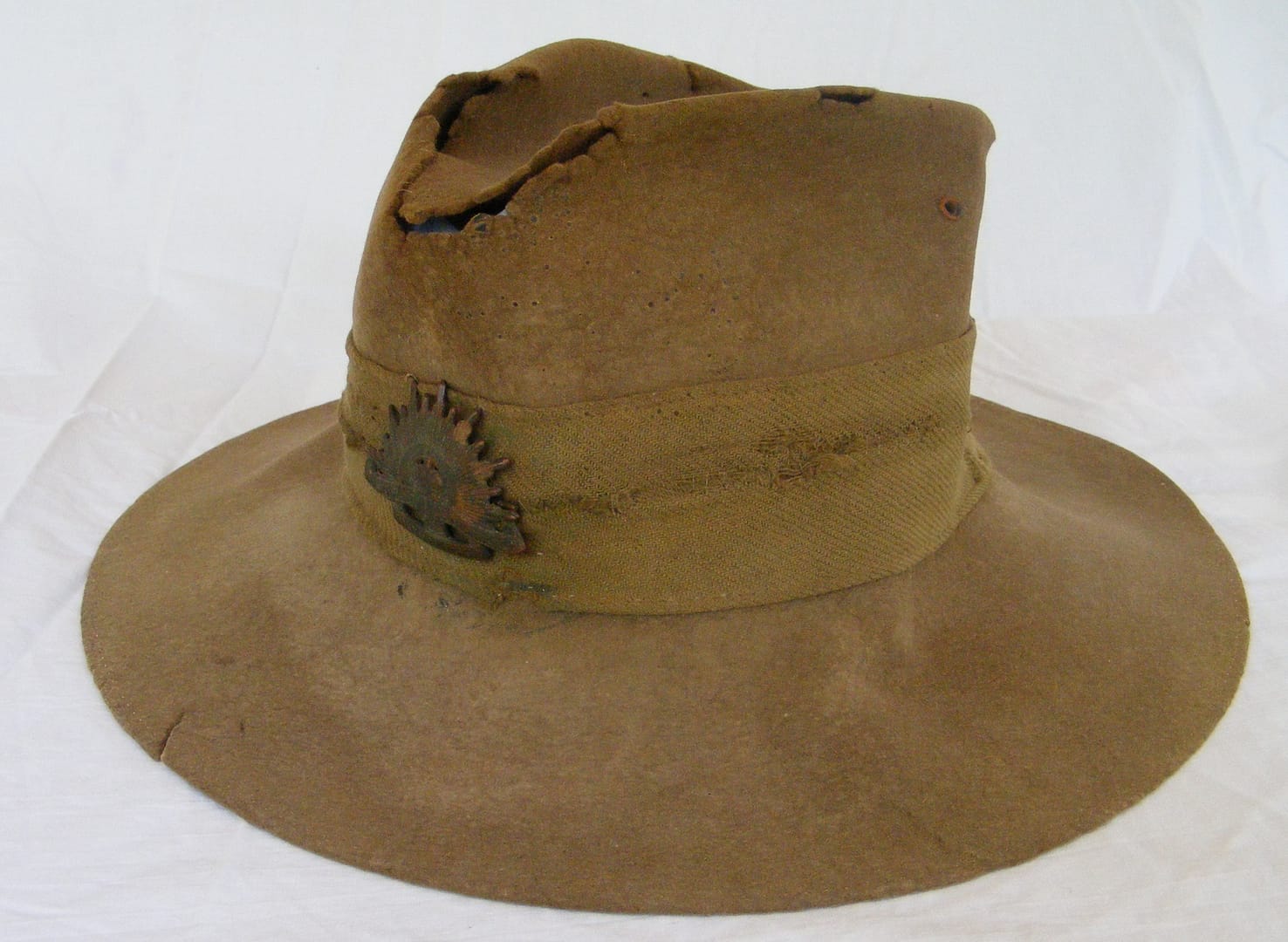
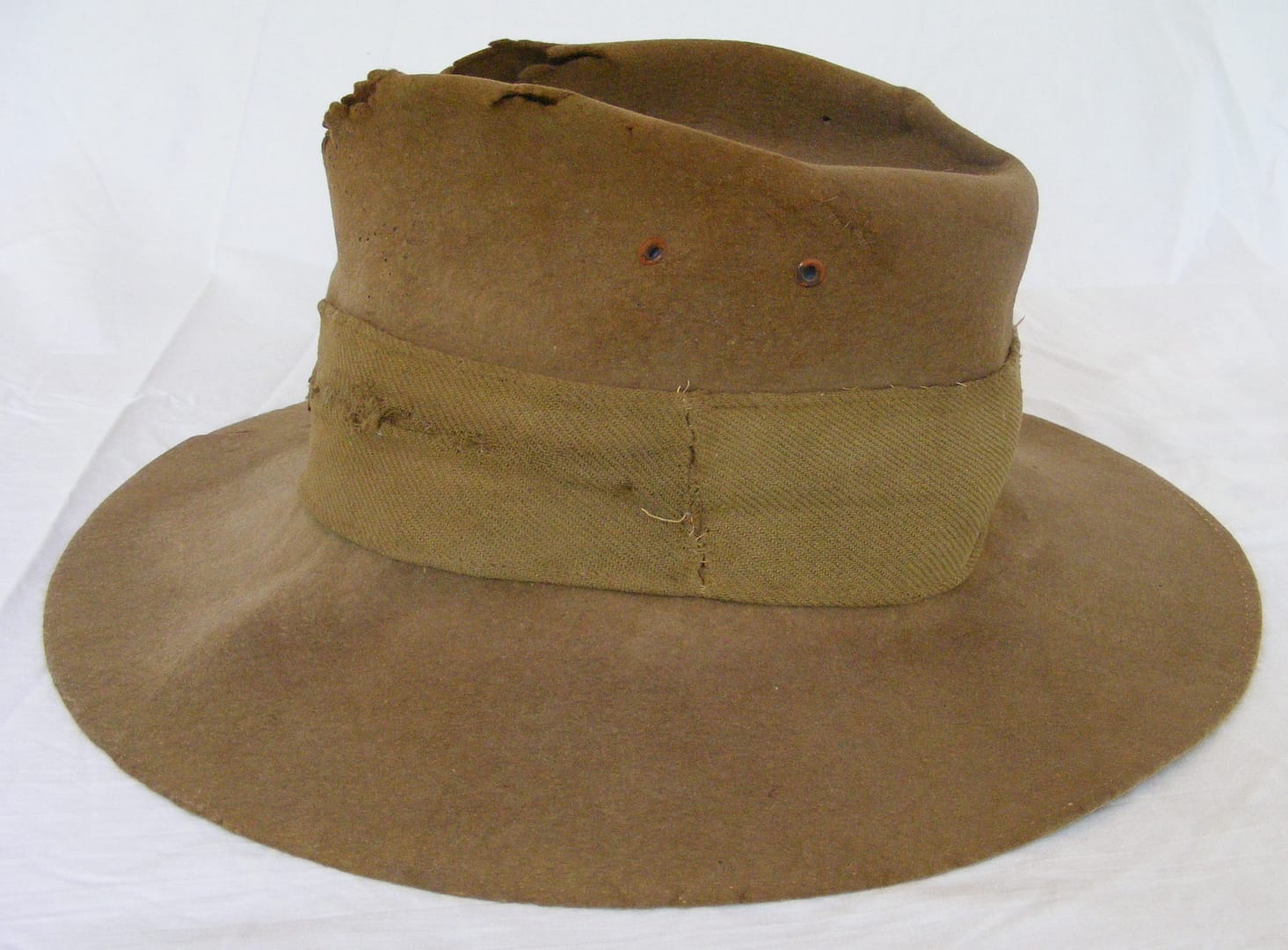
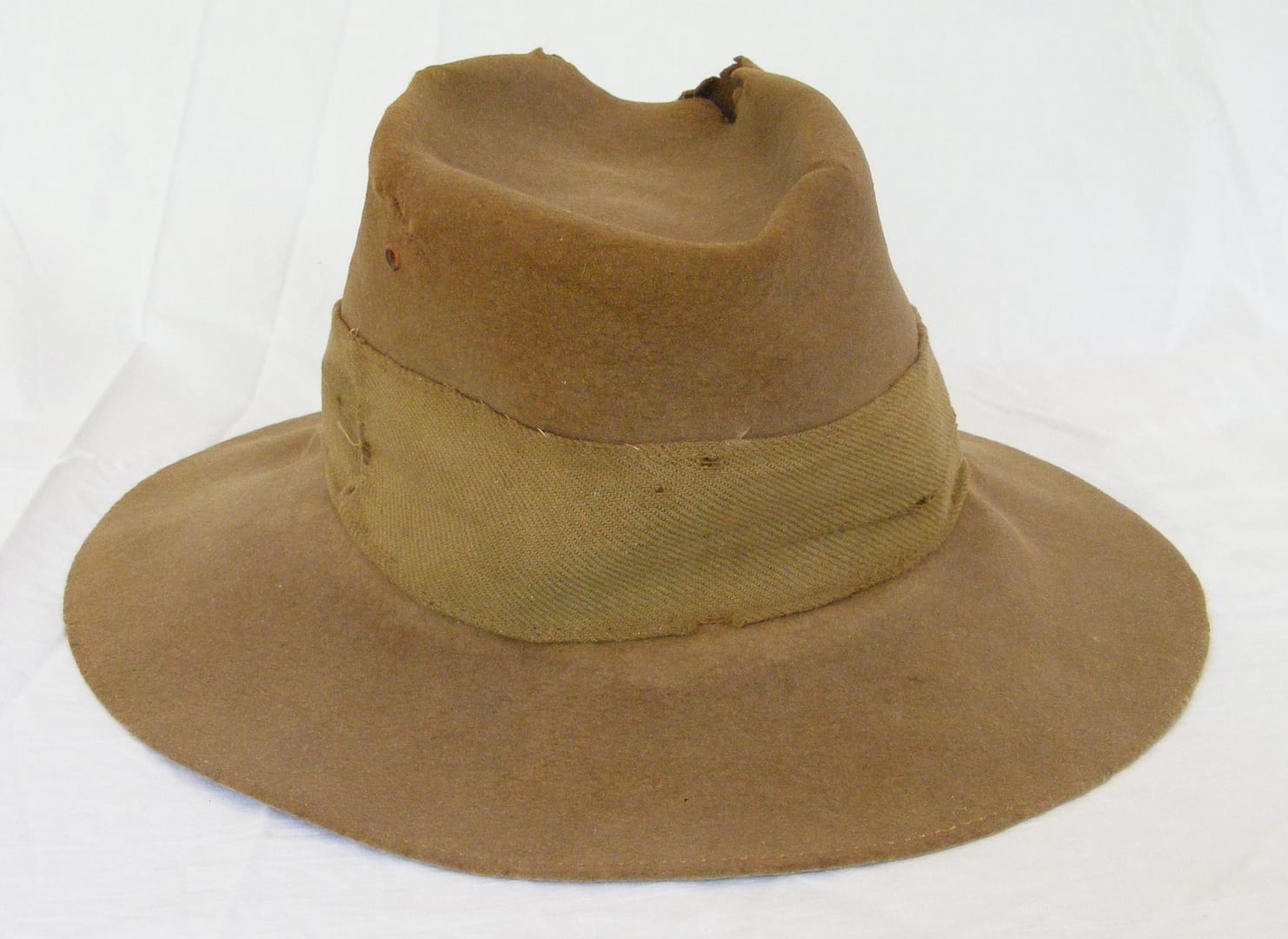
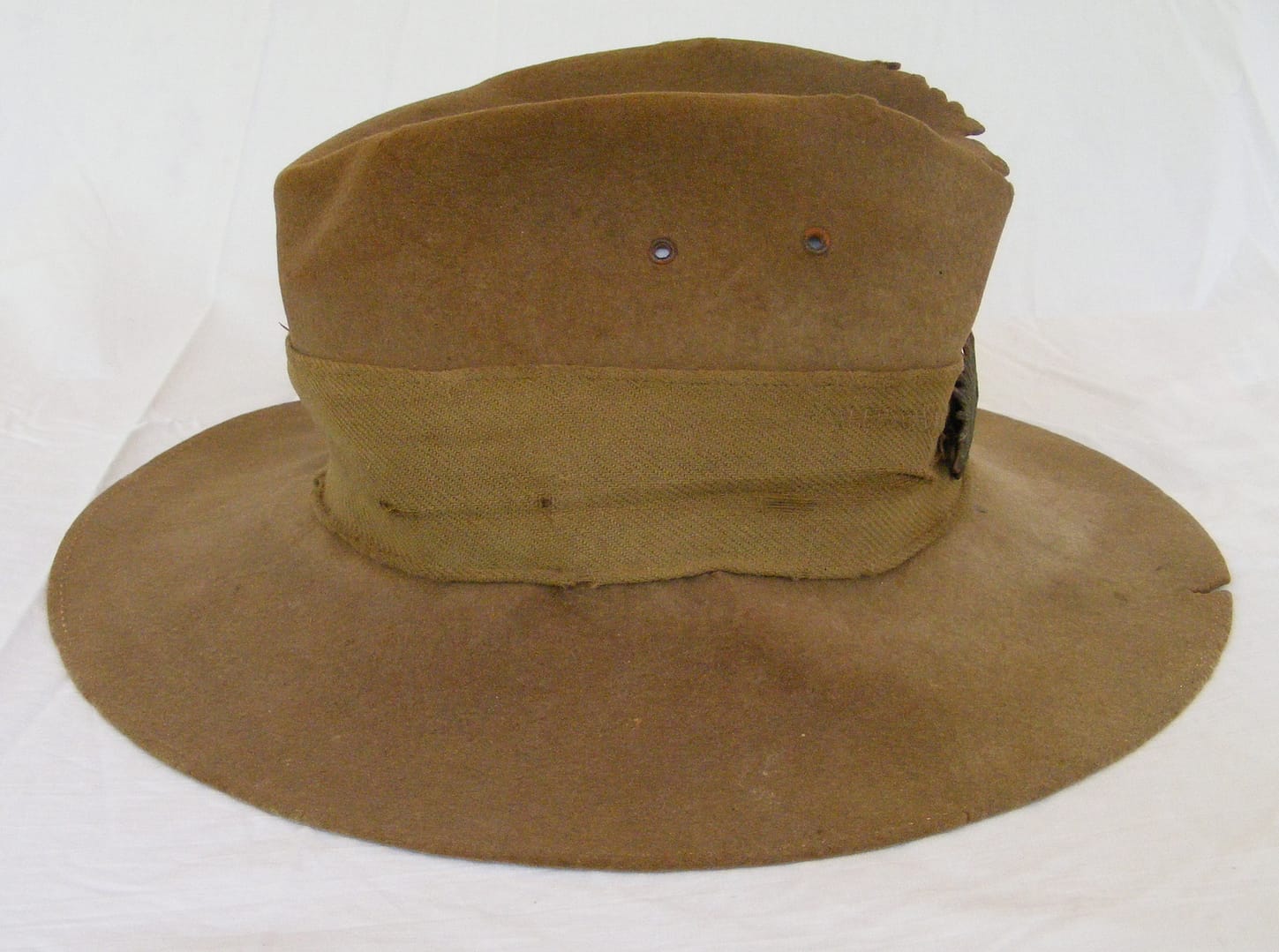
WW1 Australian Slouch Hat, , 3rd Division AIF
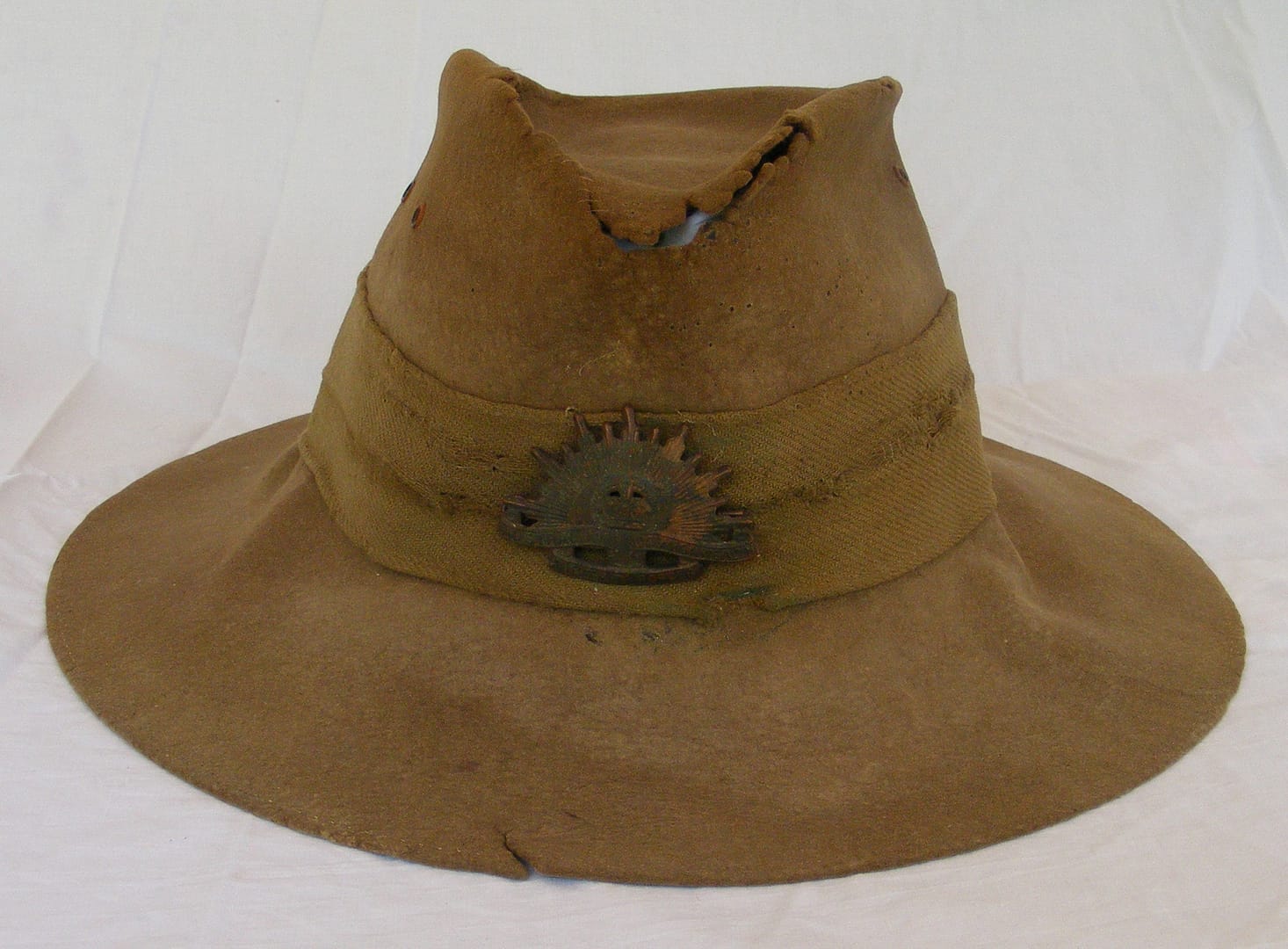
This worn and battered Australian First World War slouch hat is attributed to the 3rd Division, Australian Imperial Force. Unlike other AIF formations, the 3rd Division commonly wore the brim flat, with the Rising Sun badge positioned on the front of the puggaree rather than on the turned-up side. The battered condition reflects prolonged field service and illustrates both the individuality of Australian units and the practical realities of trench warfare on the Western Front.
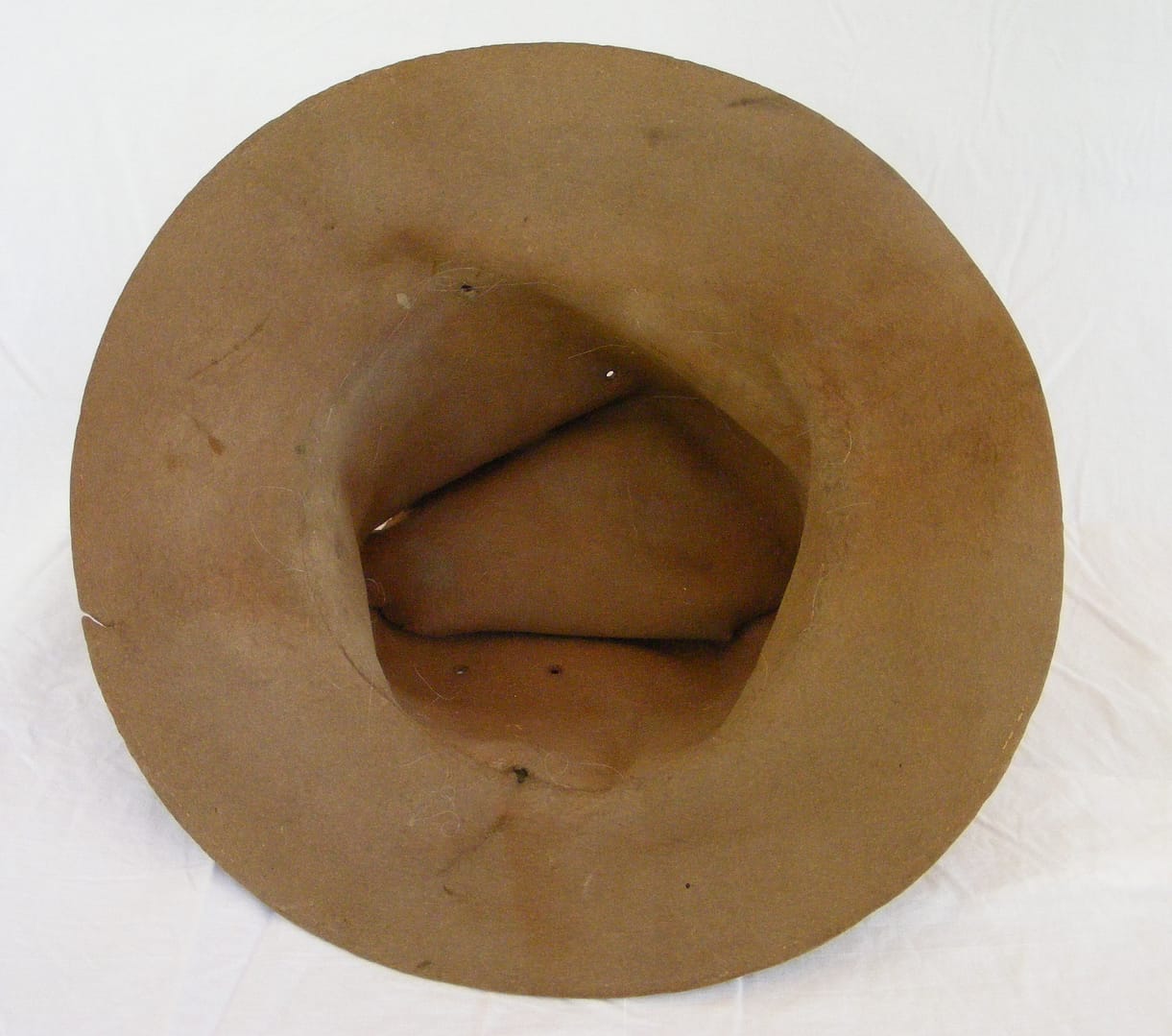
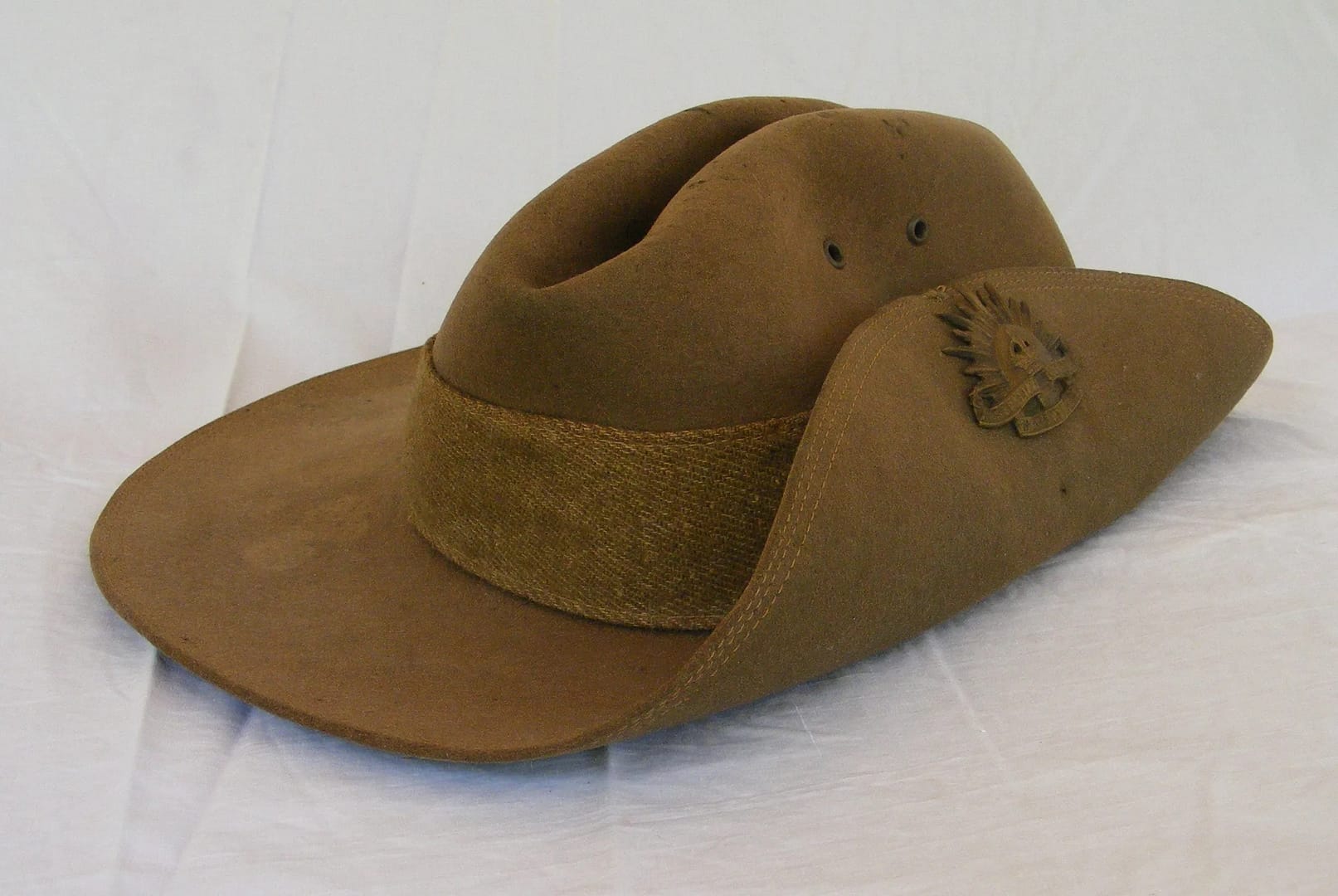
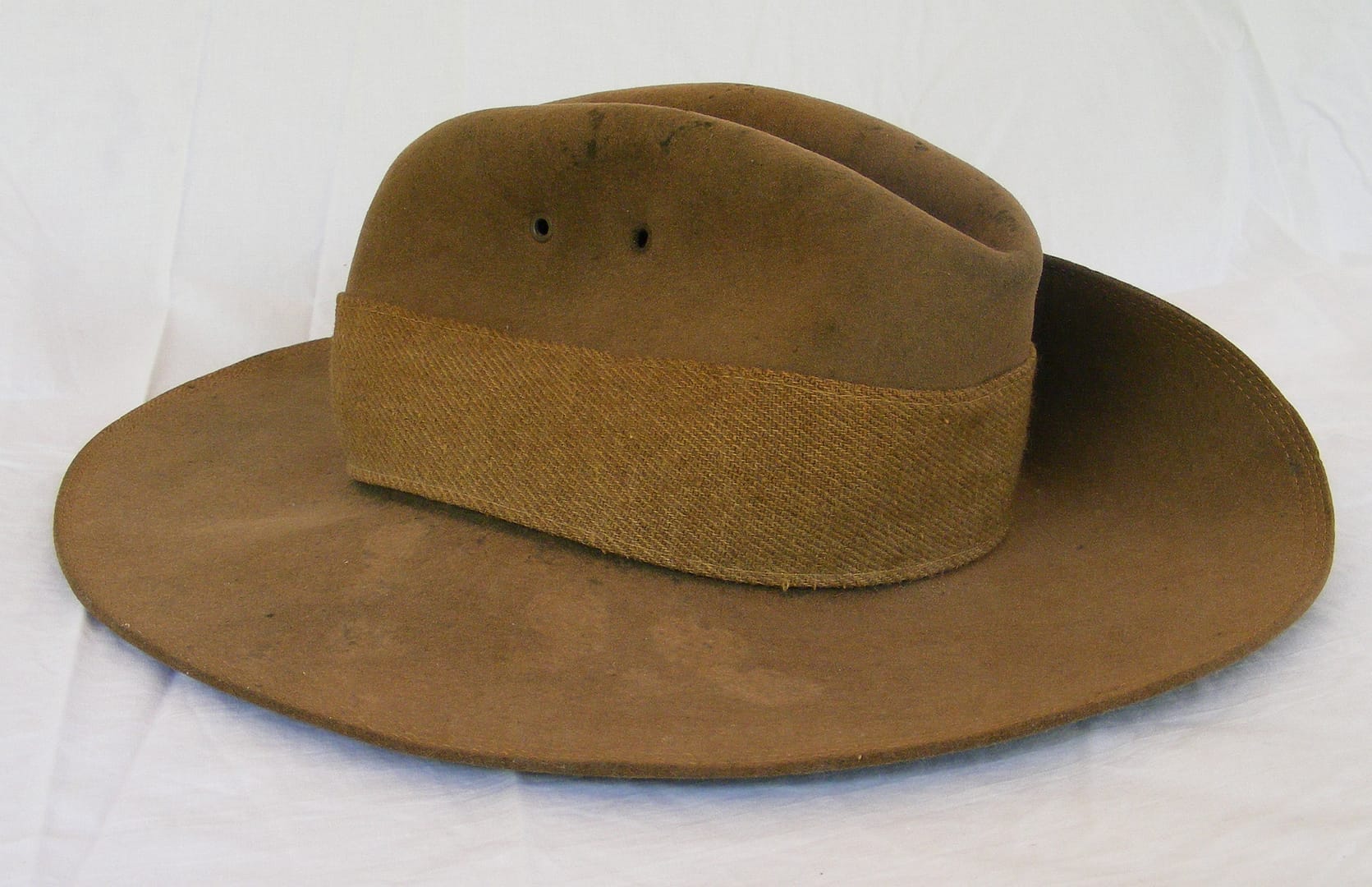
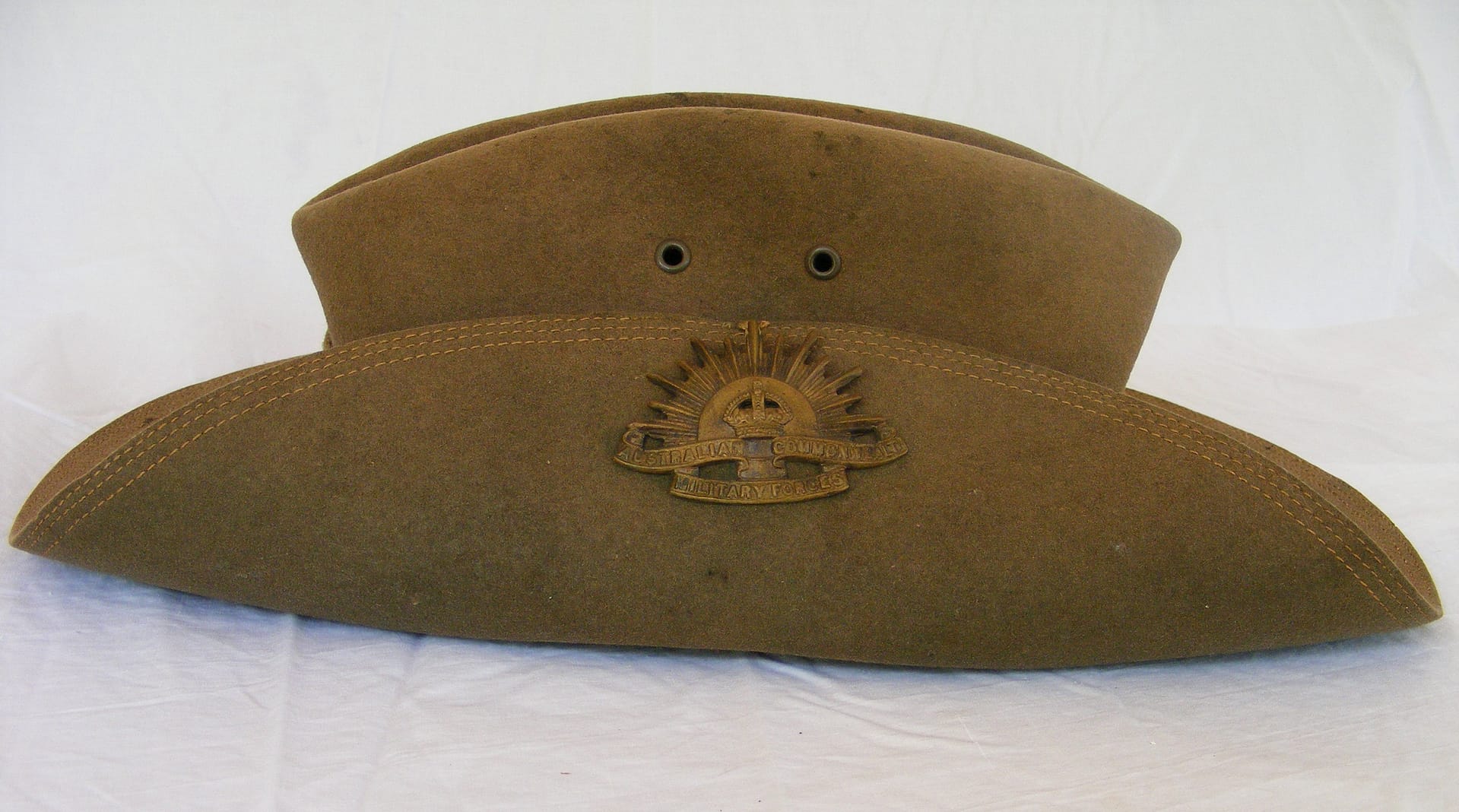
WW1 Australian Slouch Hat, UK manufactured, stitched edge
This Australian First World War slouch hat, manufactured in the United Kingdom and featuring a stitched edge, represents one of the most recognisable items of Australian military dress. Widely worn by Australian Imperial Force soldiers, the felt hat provided practical protection from sun and weather while maintaining strong national identity. UK production reflects the global industrial effort supporting Dominion forces during the war and the logistical networks that equipped troops serving overseas.
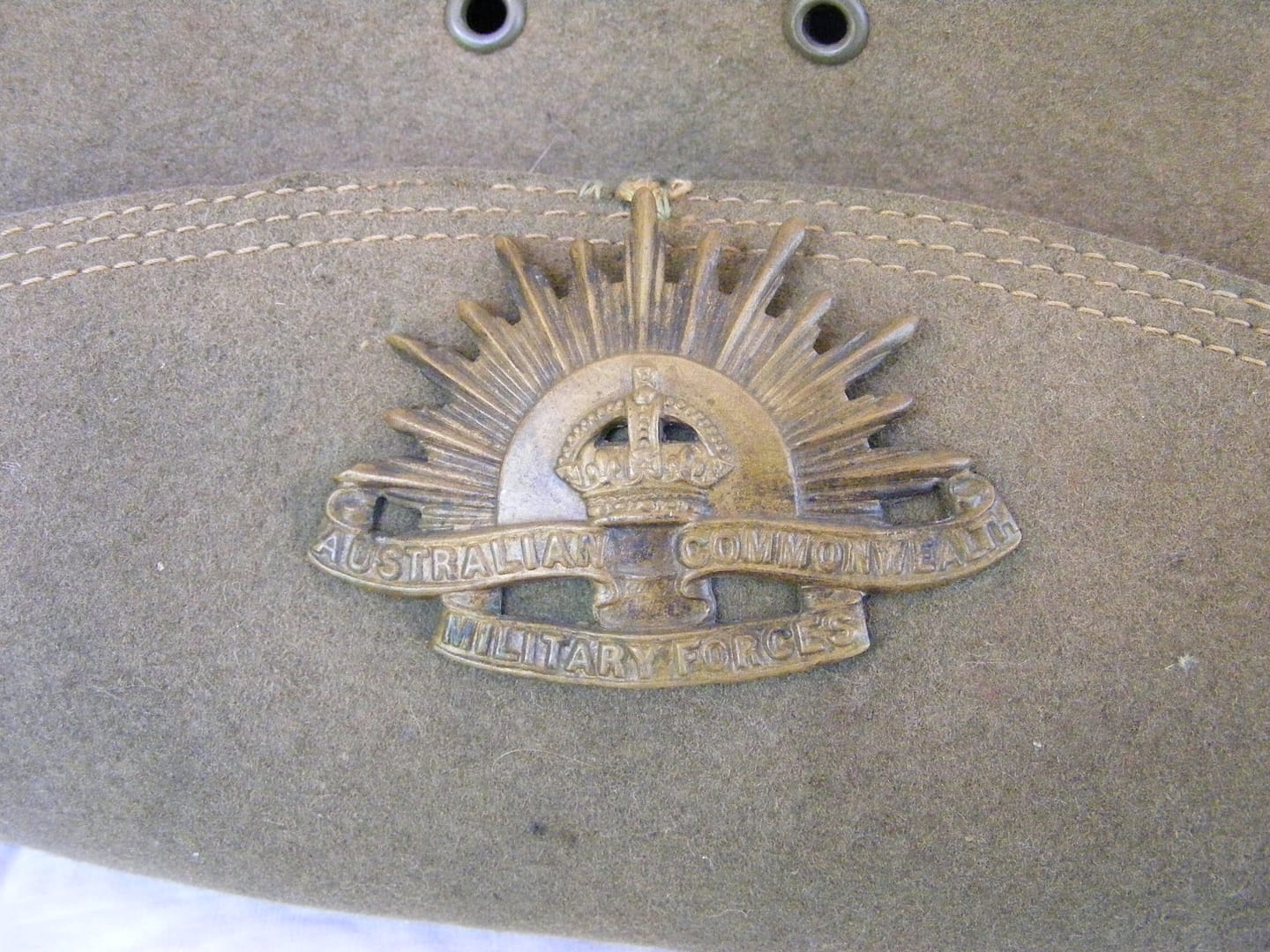
WW1 Australian/British Brodie Helmet Mark 2, 1916, rolled edge. From my personal collection.
The British Brodie Helmet Mark 2 was introduced in 1916 as an improvement over the earlest raw edged helmets. The Brodie provided protection from the growing threat of shell fragments and shrapnel on the Western Front. Designed by John L. Brodie, it featured a shallow steel bowl with a wide brim to provide overhead protection in trench warfare. The Brodie helmet also drew design cues from medieval English helmets of a similar appearance. Widely issued to British and Commonwealth forces, the Brodie became one of the most recognisable symbols of the First World War.


WW1 Australian tunic. Patched to Australian Corps. Dated 1917. From my personal collection.
This distinctive Australian First World War service tunic, dated 1917 and patched to the Australian Corps, reflects the characteristic pea-green wool uniform worn by Australian Imperial Force soldiers on the Western Front. Designed for durability and practicality in trench conditions, the tunic illustrates the evolution of field dress during industrial warfare. Formation patches highlight the emergence of corps-level organisation within the Australian forces during the later stages of the war.


WW1 Australian AIF tunic. Mint, possibly unissued condition. Dated 1918. From my personal collection.
This distinctive Australian First World War service tunic, dated 1918 and is a slightly more khako tone than typical pea-green wool uniform worn by Australian Imperial Force soldiers on the Western Front. Designed for durability and practicality in trench conditions, the tunic illustrates the evolution of field dress during industrial warfare.


WW1 Australian uniform 4th Light Horse Regiment. Lieutenant Albert Ernest Christie. From my personal collection.
This tropical pattern WW1 Australian officer’s uniform belonged to Lieutenant Albert Ernest Christie. He served in the 13th Light Horse Regiment (Australian Corps Cavalry) during WW1 and then served in the 4th Light Horse Regiment during teh inter-war militia period.


WW1 Australian uniform 4th Light Horse Regiment. Lieutenant Albert Ernest Christie. From my personal collection.
This WW1 Australian officer’s service dress tunic belonged to Lieutenant Albert Ernest Christie. He served in the 13th Light Horse Regiment (Australian Corps Cavalry) during WW1 and then served in the 4th Light Horse Regiment during the inter-war militia period.


WW1 Australian Pattern 1908 web equipment set – all components ME & Co or Mills, WW1 dated.
This Australian-issued Pattern 1908 web equipment set represents the standard load-carrying system used by Australian Imperial Force soldiers during the First World War. Manufactured by Mills Equipment Company (ME & Co), the set includes the interconnected webbing components designed to distribute ammunition, tools, and personal equipment evenly across the body, improving mobility and endurance on campaign. The 1908 pattern reflected lessons learned from earlier conflicts and became one of the most influential webbing systems of the twentieth century. Complete, wartime-dated sets are increasingly scarce and illustrate the practical realities of infantry service on campaign.


Rare WW1 Australian Pattern 1908/15 leather equipment set.
This exceptionally rare complete set of Australian Pattern 1908/15 leather equipment represents an early attempt to utilise local leather manufacturing expertise to provide a durable load-carrying system for Australian forces during the First World War. Produced in limited numbers, the leather pattern was soon superseded by webbing equipment, which proved lighter, more practical, and better suited to modern warfare conditions. Surviving complete sets are scarce due to hard service and replacement in the field. The equipment illustrates the transitional nature of military load carriage in the early twentieth century and the rapid adaptation of armies as operational experience highlighted the advantages of webbing systems over traditional leather gear.


NEW ZEALAND
WW1 New Zealand Army ‘Lemon Squeezer’ Campaign Hat, Canterbury Regiment, from my personal collection
This First World War New Zealand Army “Lemon Squeezer” campaign hat is attributed to the Canterbury Regiment and represents one of the most distinctive items of New Zealand military dress. Originally developed for mounted troops, the high-peaked felt hat became closely associated with New Zealand forces serving overseas. Its unique shape and regimental pugaree reflect strong unit identity and the adaptation of practical field dress to varied operational environments.

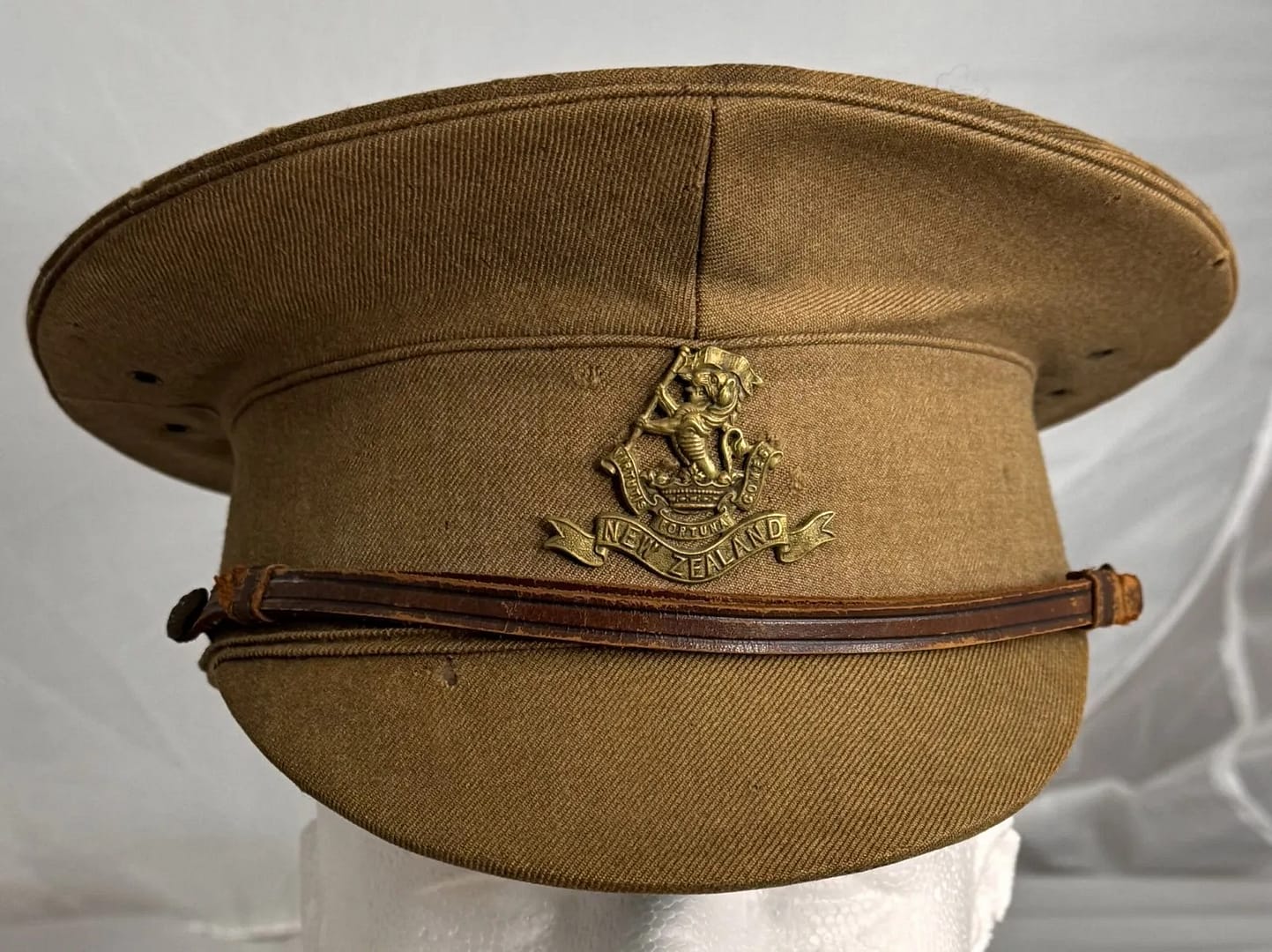
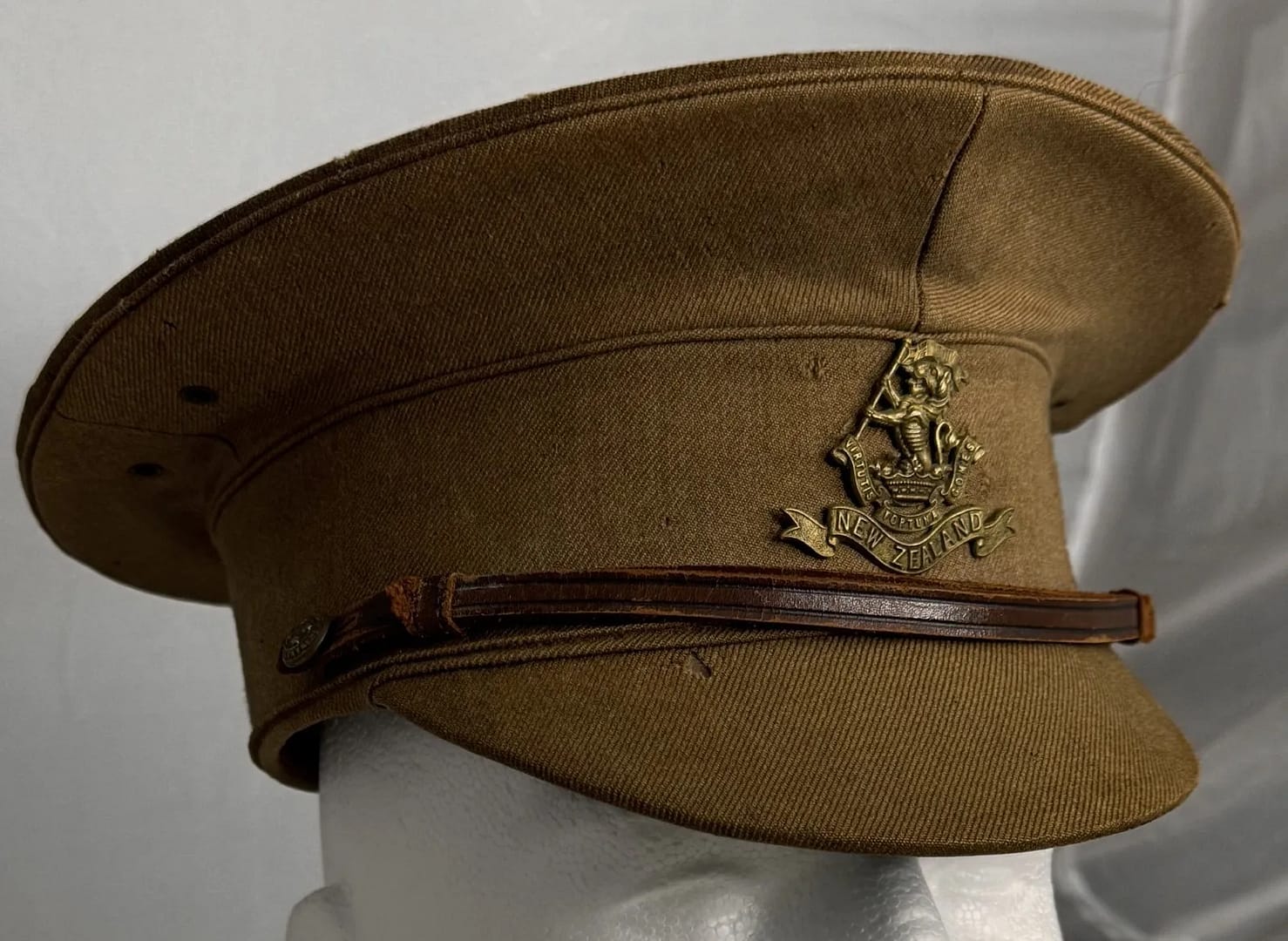
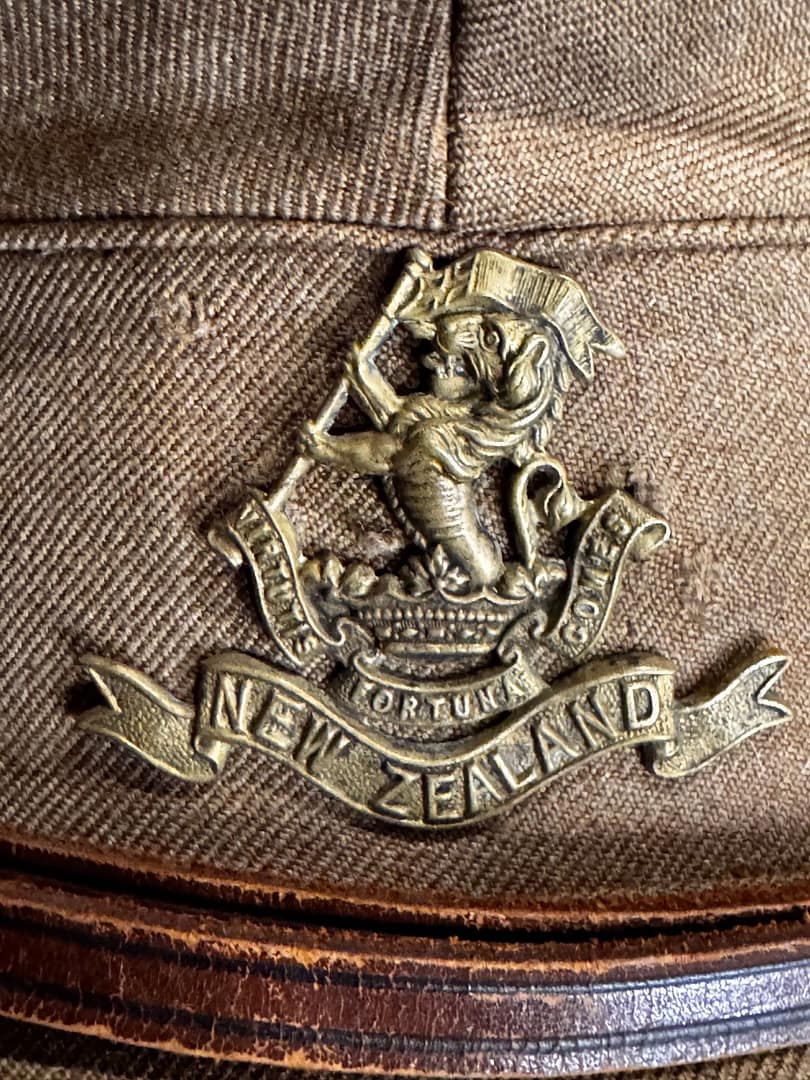
WW1 New Zealand Army Pattern 1902 peaked cap. Wellington Regiment. From from my personal collection
This New Zealand Army Pattern 1902 peaked cap belonged to a soldier in the Wellington Regiment, one of the major formations raised for service during the First World War. The cap reflects the British-influenced uniform styles adopted by Dominion forces, adapted for service both at home and overseas. The Wellington Regiment served with distinction at Gallipoli in 1915, and on the Western Front from 1916-1918.
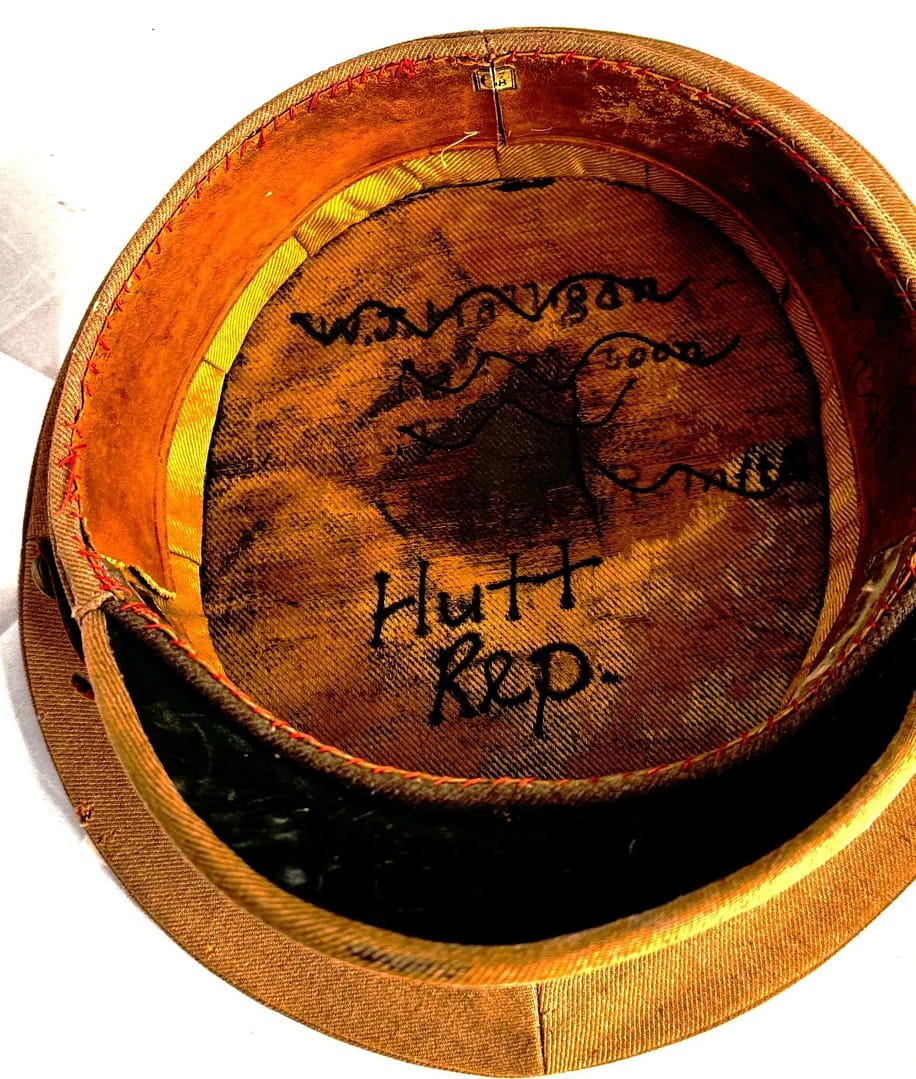
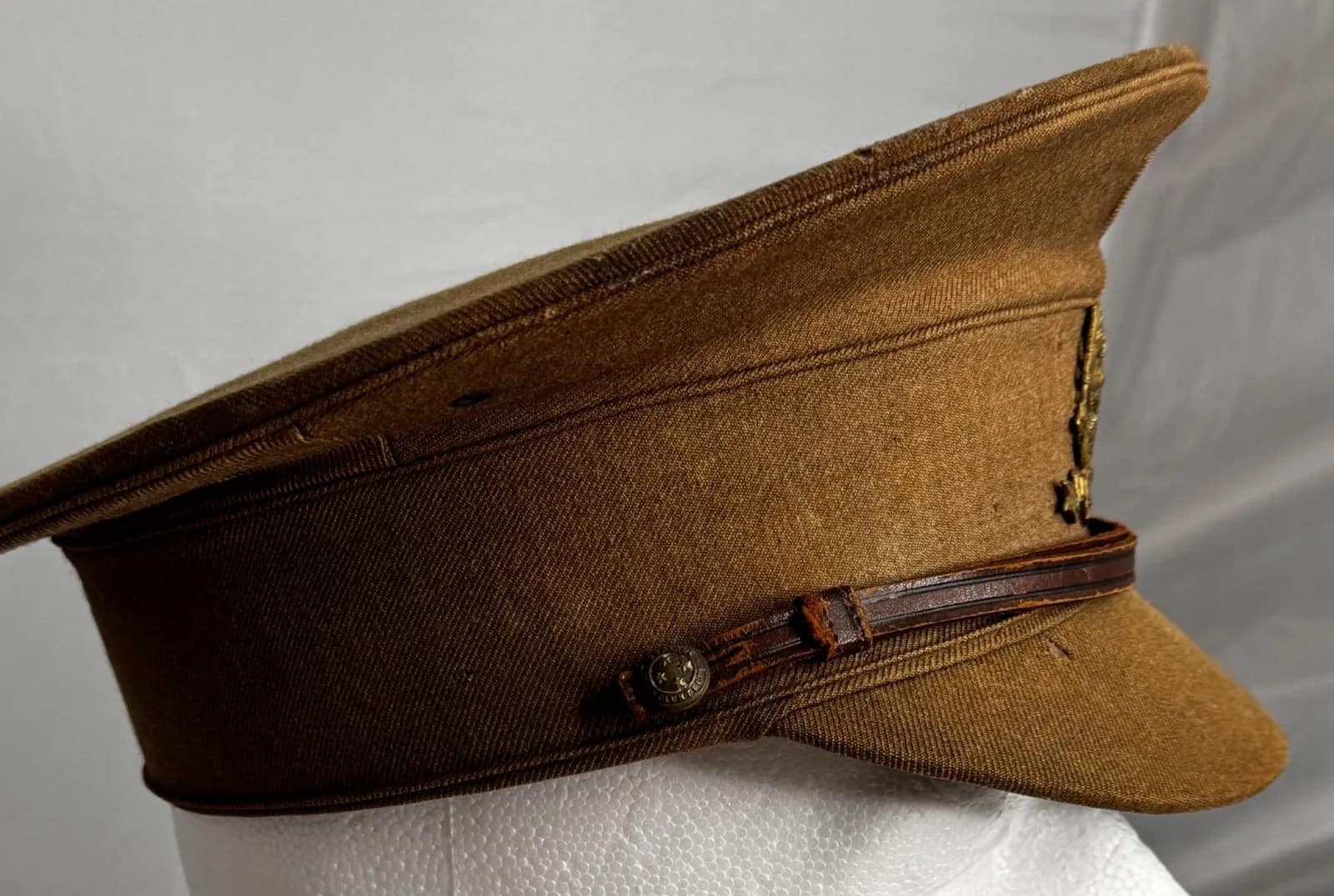
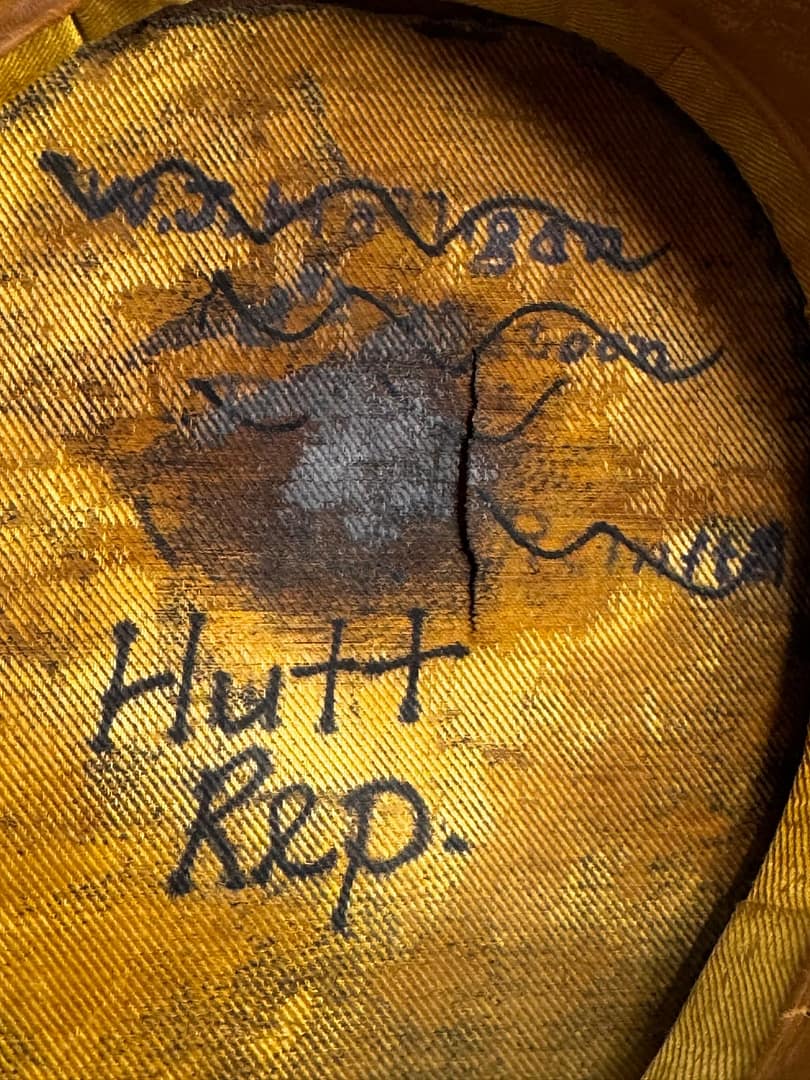
Extremely rare WW1 NZ P1902 tunic, SGT Hannah, New Zealand Rifle Brigade. From my personal collection.
This extremely rare New Zealand Pattern 1902 tunic is attributed to Sergeant Hannah of the New Zealand Rifle Brigade, New Zealand Expeditionary Force. Based on British service dress patterns, the tunic reflects the uniforms worn by New Zealand troops during the First World War, particularly on the Western Front. Surviving named examples are uncommon and illustrate the contribution of New Zealand forces to the wider Imperial war effort.


🧭 From Weapons to Battlefield Use
This page shows weapons and equipment of the First World War . All items are from my personal collection.
But what images and data don’t show is how these weapons were actually used on the ground—how weapon characteristics, tactics, innovation, terrain, and movement shaped their effectiveness in battle.
👉 That layer—how firepower, tactics, and terrain interact in real engagements—is explored in:
⚔️Battlefield Studies ◊ 💡Tactical Innovations ◊ 📝Field Notes
GREAT BRITAIN
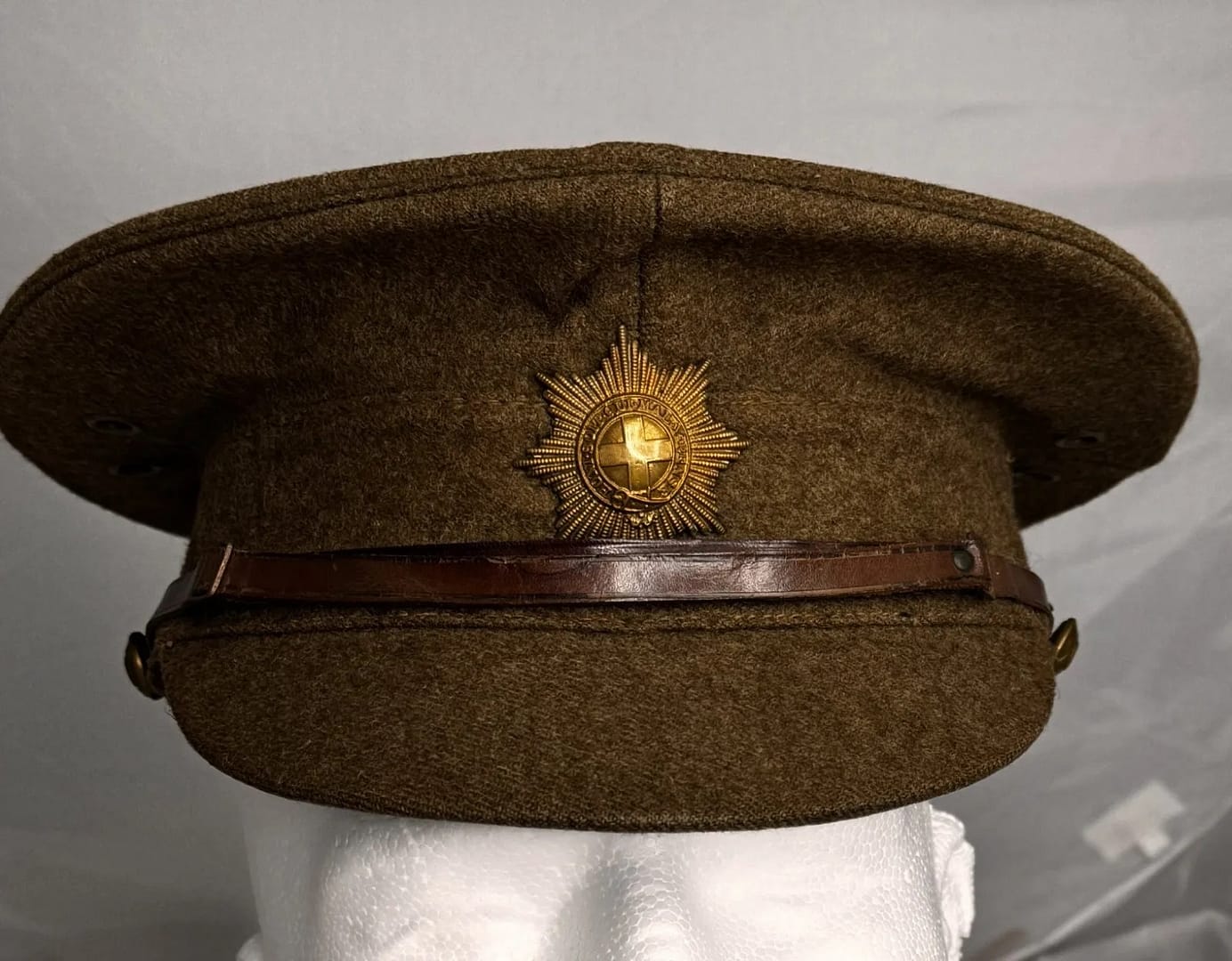
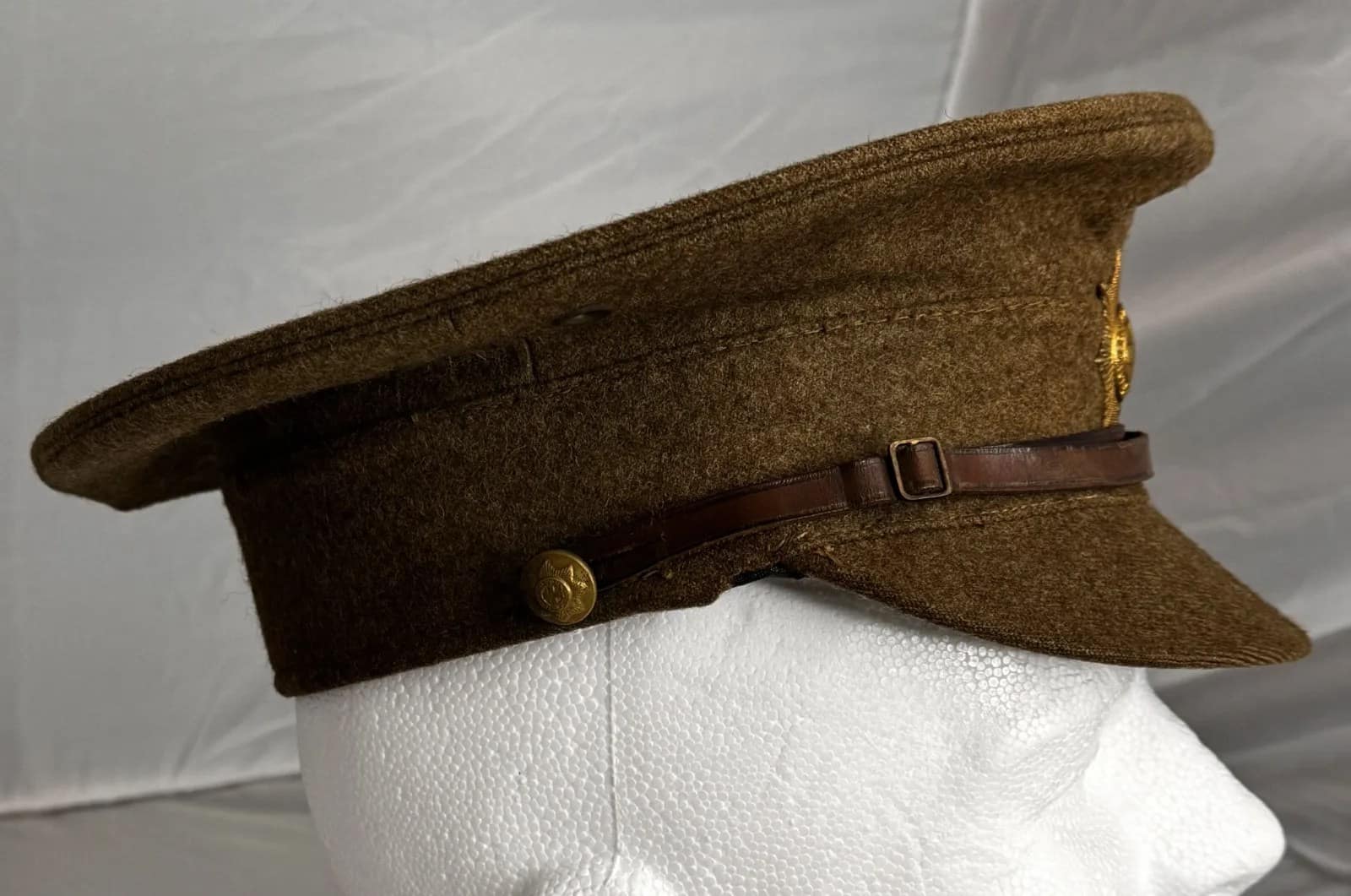
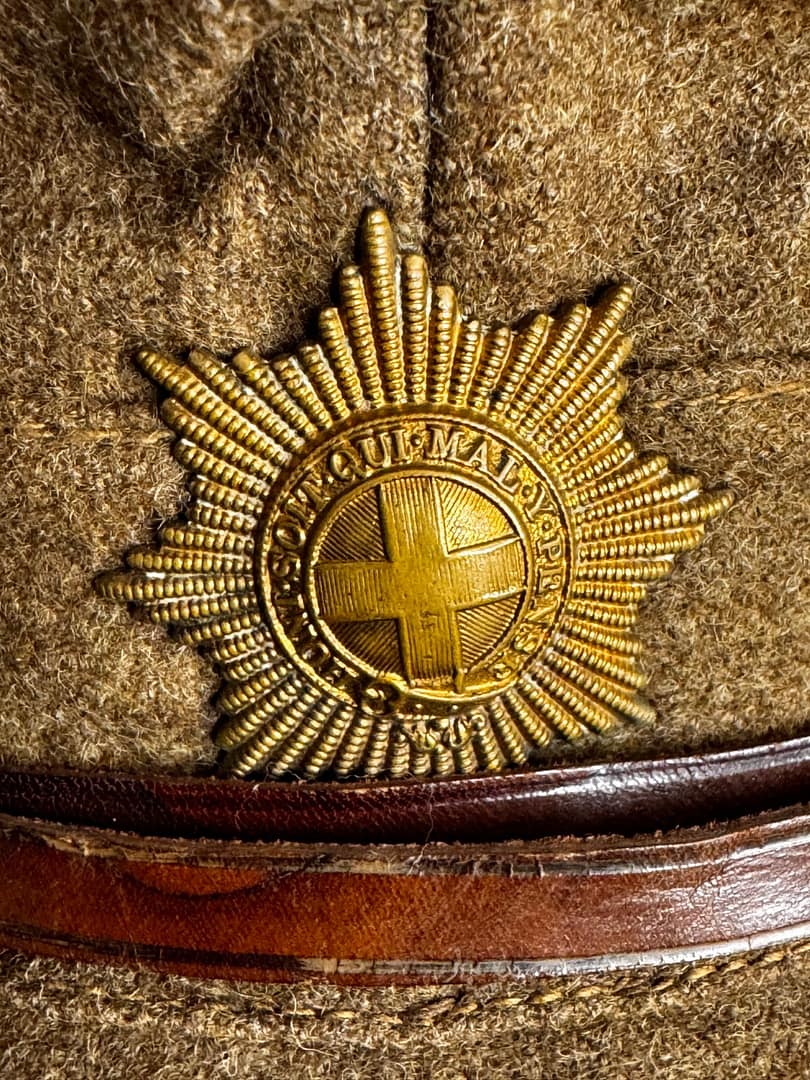
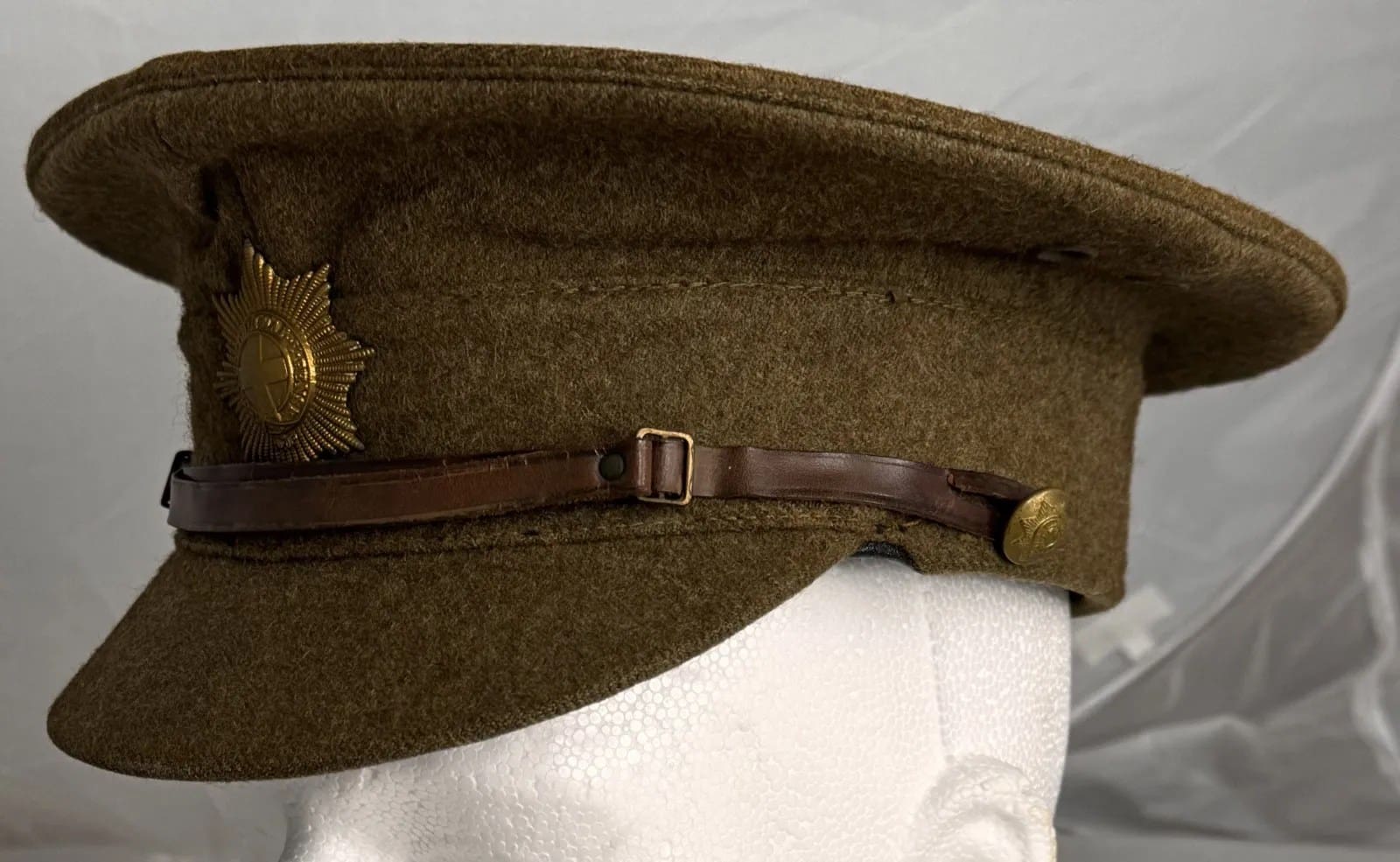
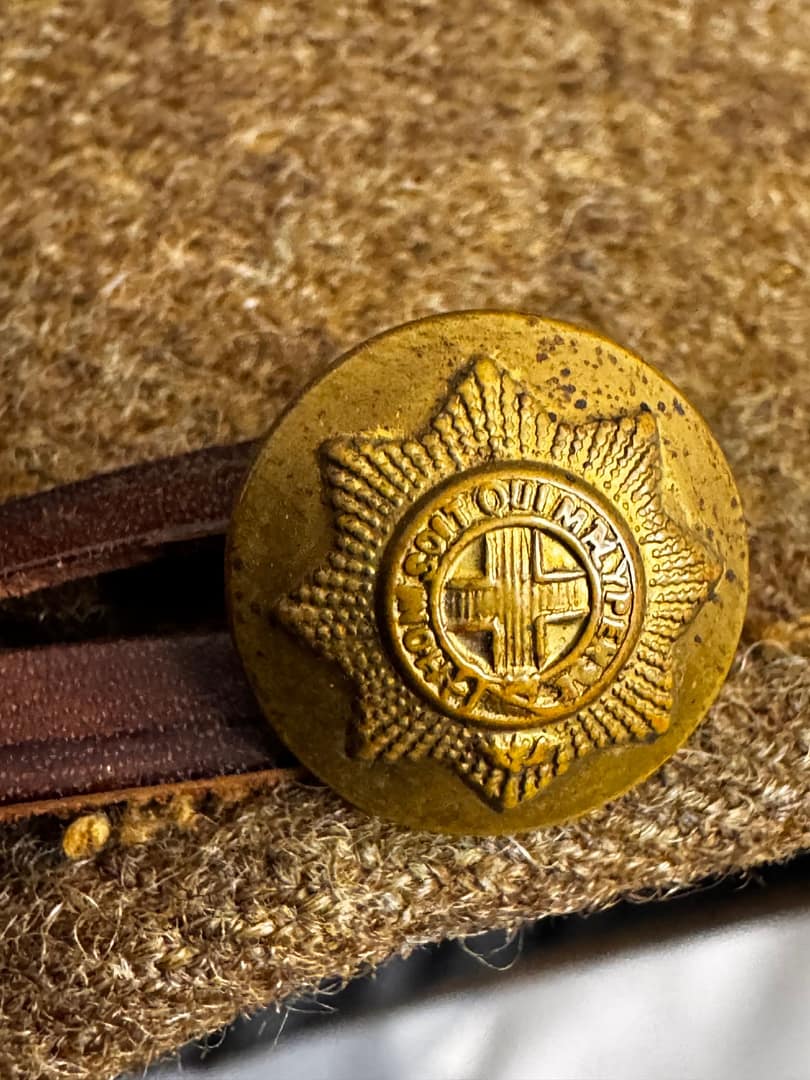
WW1 British Pattern 1902 peaked cap, Coldstream Guards. From my personal collection.
The British Pattern 1902 peaked cap was introduced as part of the khaki service dress adopted by the British Army in the early twentieth century. This example, worn by a member of the Coldstream Guards, reflects the transition from colourful Victorian uniforms to more practical field dress suited to modern warfare. The Coldstream Guards served on the Western Front from 1914, and caps of this pattern were worn on active service.
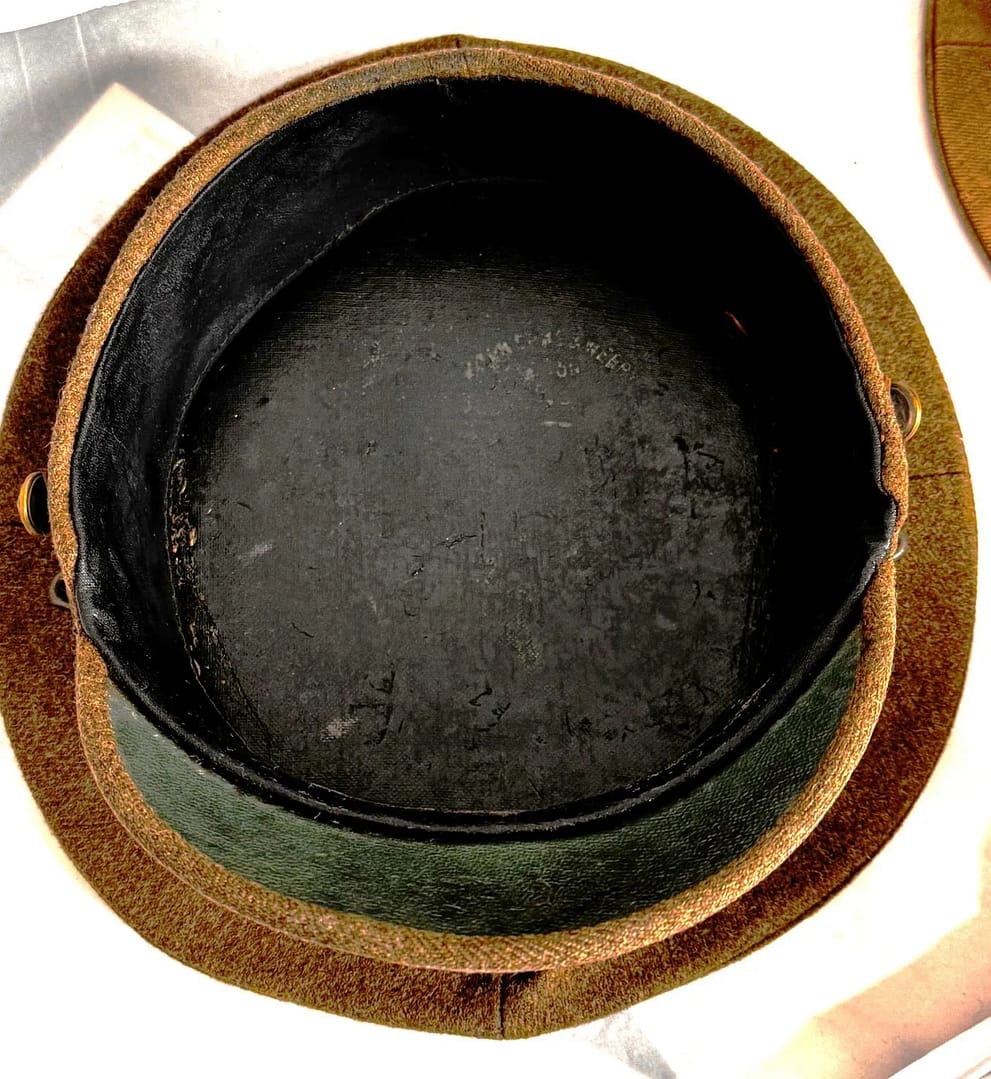
WW1 British Pattern 1902 tunic, Coldstream Guards. From my personal collection.
This British Pattern 1902 tunic, worn by a corporal of the Coldstream Guards, represents the standard service dress introduced for the British Army in the early twentieth century and widely worn during the First World War. Designed for practicality and field service, the khaki wool tunic replaced earlier scarlet uniforms for campaign use. Rank insignia and regimental distinctions reflect the traditions of one of the British Army’s oldest infantry regiments.


WW1 British Brodie Helmet Mark 1, 1915, raw edge. From my personal collection.
The British Brodie Helmet Mark I was introduced in 1915 as a response to the growing threat of shell fragments and shrapnel on the Western Front. Designed by John L. Brodie, it featured a shallow steel bowl with a wide brim to provide overhead protection in trench warfare. Early examples, such as this raw edge helmet, reflect the initial production methods before later refinements. Widely issued to British and Commonwealth forces, the Brodie became one of the most recognisable symbols of the First World War.


WW1 British Private Purchase Orilux Flashlight in Leather Case. From my personal collection.
This British private purchase Orilux flashlight illustrates the growing use of portable electric lighting during the First World War. Often carried by officers, engineers, and troops in specialist roles, such lamps were used for map reading, signalling, and trench work in low-light conditions. Housed in a protective leather case, the Orilux reflects the increasing importance of small technological aids that supported command, communication, and daily life on the battlefield.


CANADA
Rare WW1 Canadian P1905 Enlisted Peaked Cap and five-button tunic, 27th Battalion (City of Winnipeg). From my personal collection.
This rare Canadian Pattern 1905 enlisted peaked cap and five-button tunic are attributed to the 27th Battalion (City of Winnipeg), Canadian Expeditionary Force. Reflecting early-war Canadian service dress derived from pre-war militia uniforms, the set illustrates the appearance of Canadian soldiers during mobilisation and initial training. Such matched examples are scarce and highlight the strong regimental identity of Canadian units raised for overseas service during the First World War.


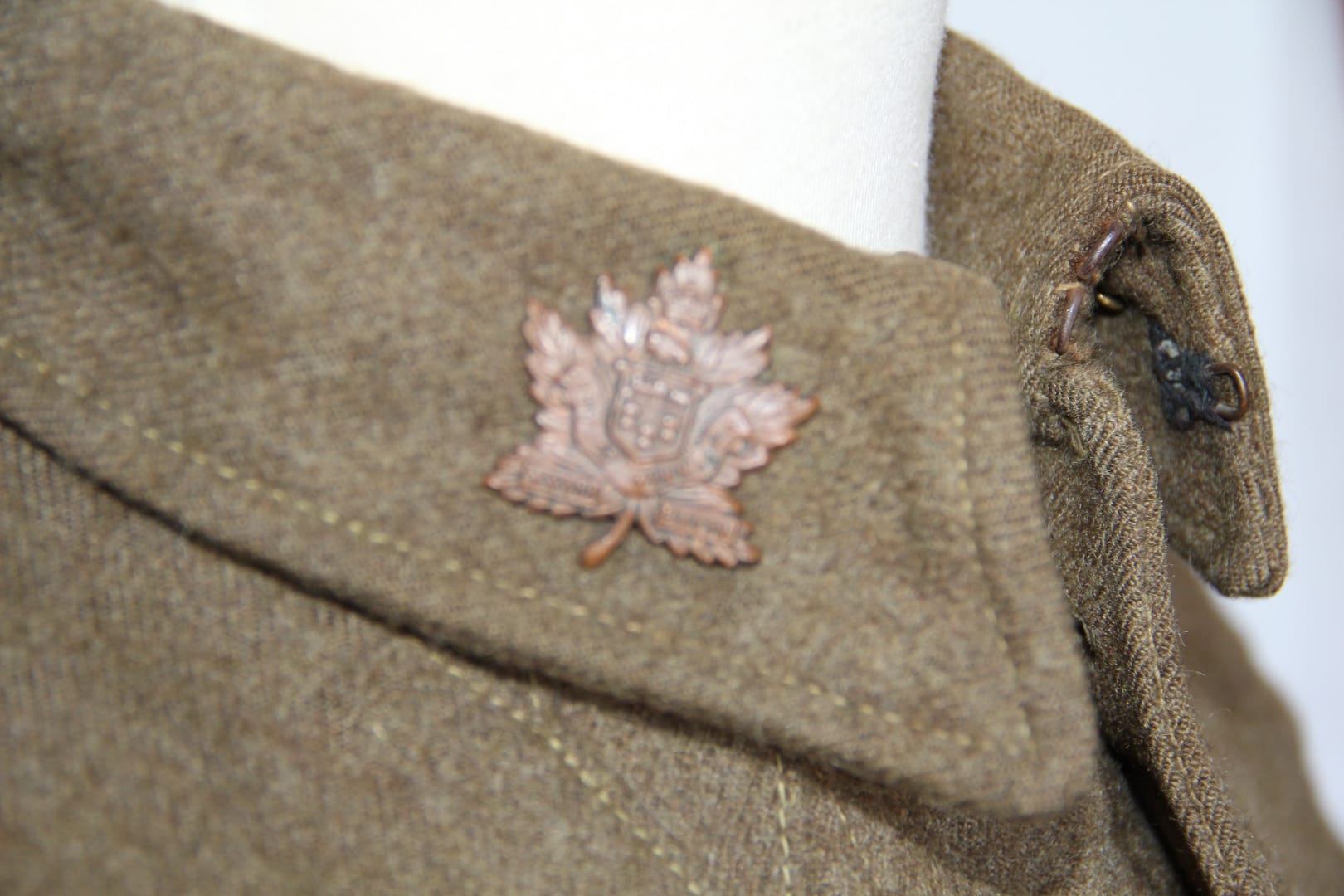


WW1 Canadian P1902 five-button tunic, 8th Battalion ‘Little Devils’. From my personal collection.
This Canadian Pattern 1902 five-button tunic is associated with the 8th Battalion (Winnipeg Rifles), known as the “Little Devils,” one of the earliest Canadian Expeditionary Force units to deploy overseas in the First World War. Derived from pre-war militia service dress, the tunic reflects the uniforms worn during the mobilisation period before wartime standardisation took hold. Surviving examples with clear battalion association are uncommon and illustrate the identity of early Canadian formations.


Extremely rare Canadian Pattern 1903 7-Button tunic, 25th Battalion (Nova Scotia Rifles), CEF
This extremely rare Canadian Pattern 1903 seven-button tunic is attributed to the 25th Battalion (Nova Scotia Rifles) of the Canadian Expeditionary Force. Representing early-war dress derived from pre-war militia patterns, the tunic reflects the transition from traditional uniforms to more practical service dress during the First World War. Surviving examples are scarce, particularly with battalion association, and it illustrates the identity and organisation of Canadian units mobilised for overseas service.


Canadian P1915 Greatcoat
This Canadian Pattern 1915 greatcoat, manufactured by contractor W. Heller of Montreal and dated 1915, reflects the heavy wool outer garments issued to Canadian Expeditionary Force soldiers during the First World War. Designed for warmth and durability in harsh conditions, the greatcoat was an essential item of field dress in the trenches of the Western Front. Contractor markings illustrate the mobilisation of Canadian industry to support wartime production and equip a rapidly expanding army.


Rare Canadian P1914 leather equipment
This rare set of Canadian Pattern 1914 leather equipment represents the early-war load-carrying system issued to Canadian Expeditionary Force troops. Produced before the widespread adoption of webbing, the leather equipment reflects pre-war British Empire doctrine emphasising traditional materials and craftsmanship. Quickly superseded by more practical woven web equipment better suited to trench conditions, surviving examples are uncommon. This set illustrates the rapid evolution of infantry equipment during the First World War as armies adapted to industrialised warfare and the realities of trench fighting.


FRANCE
WW1 French Model 1877 Greatcoat, 44th Bataillon de Chasseurs à Pied. From my personal collection.
This French Model 1877 greatcoat, attributed to the 44th Bataillon de Chasseurs à Pied, represents the dark blue wool outer garments worn by French infantry during the early stages of the First World War. Featuring distinctive jonquil yellow “44” regimental collar patches, the coat reflects pre-war uniform traditions before the widespread adoption of horizon blue. Such garments illustrate both regimental identity and the rapid evolution of French field dress during the conflict.


WW1 French officers uniform, Captain of the 43rd Infantry Regiment From my personal collection.
This French Model 1877 greatcoat, attributed to the 44th Bataillon de Chasseurs à Pied, represents the dark blue wool outer garments worn by French infantry during the early stages of the First World War. Featuring distinctive jonquil yellow “44” regimental collar patches, the coat reflects pre-war uniform traditions before the widespread adoption of horizon blue. Such garments illustrate both regimental identity and the rapid evolution of French field dress during the conflict.


French WW Model 1915 Adrian Helmet, Colonial Troops. From my personal collection.
French WW Model 1915 Adrian Helmet, Colonial Troops front badge. Complete with liner and chinstrap.
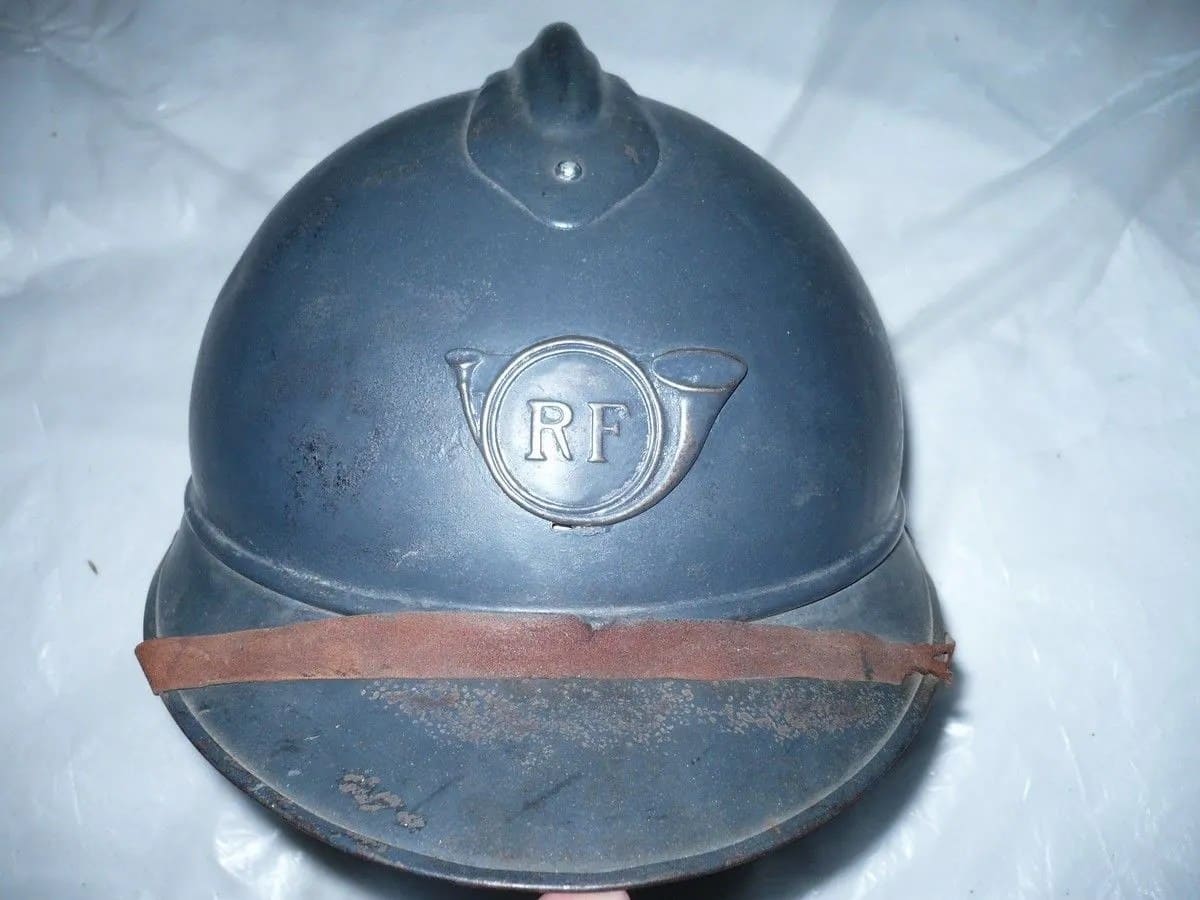
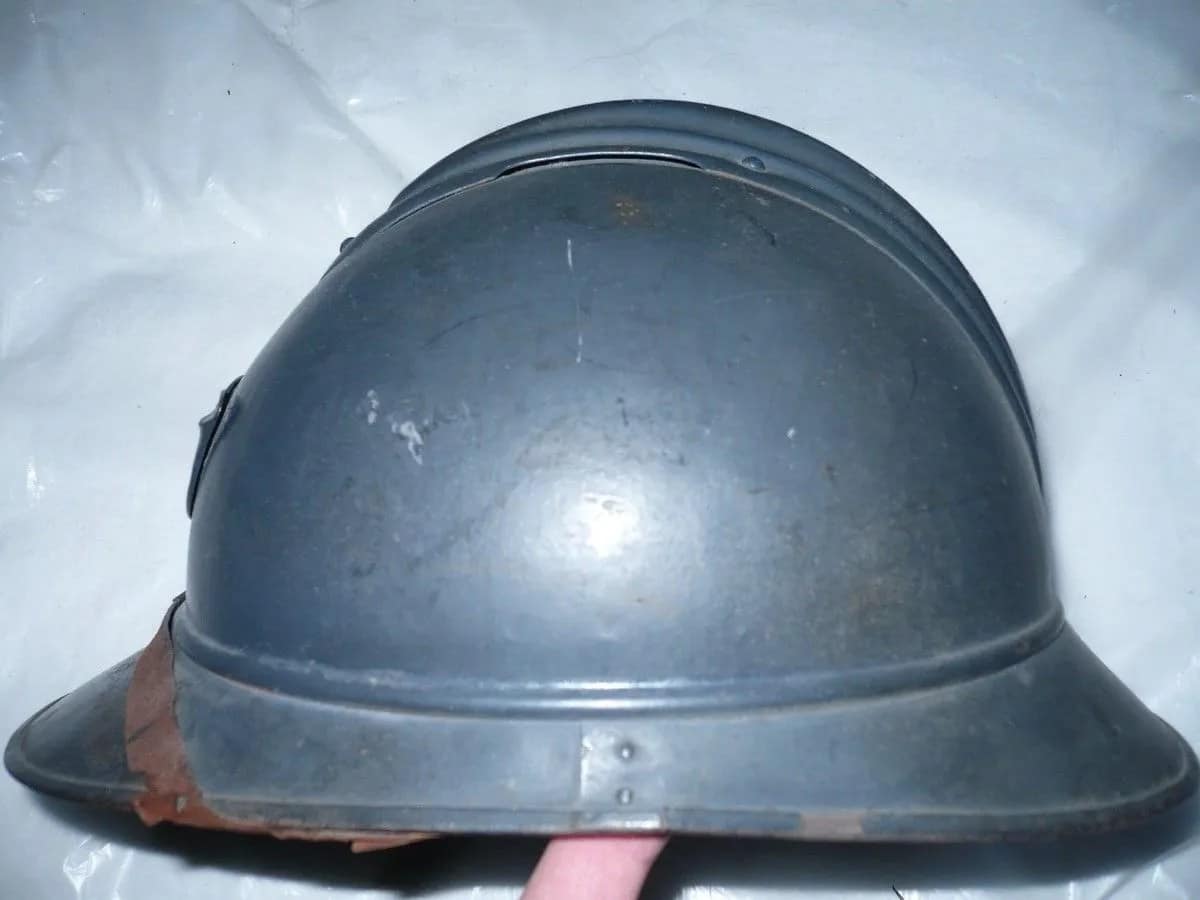
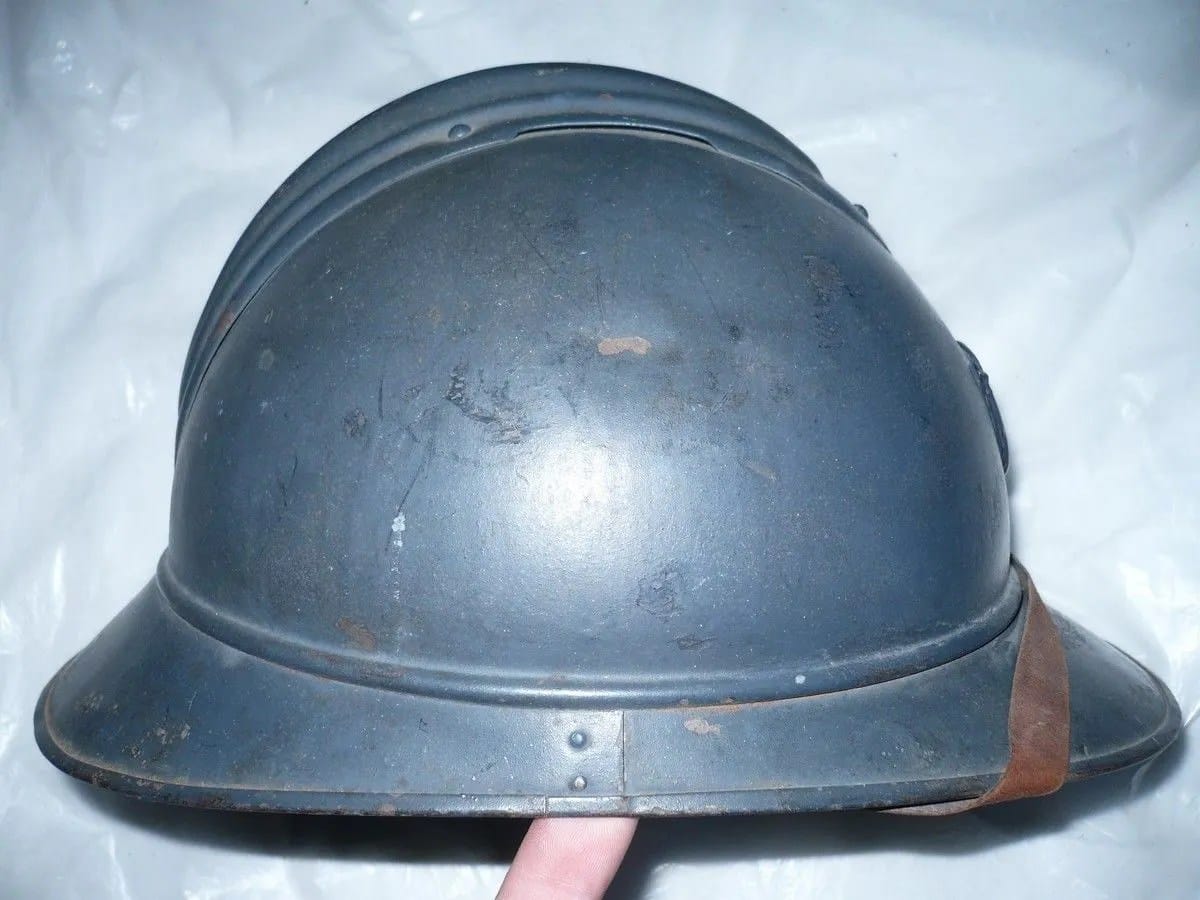
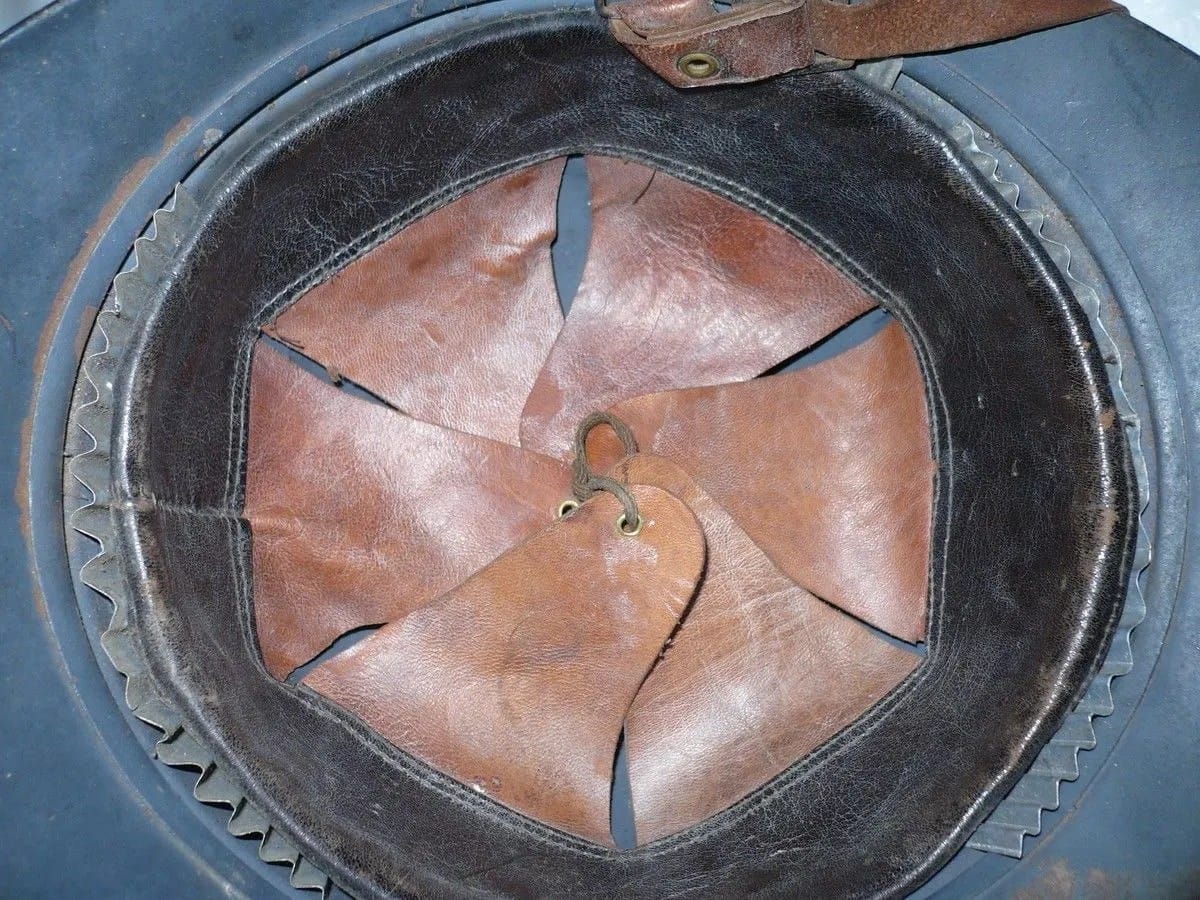
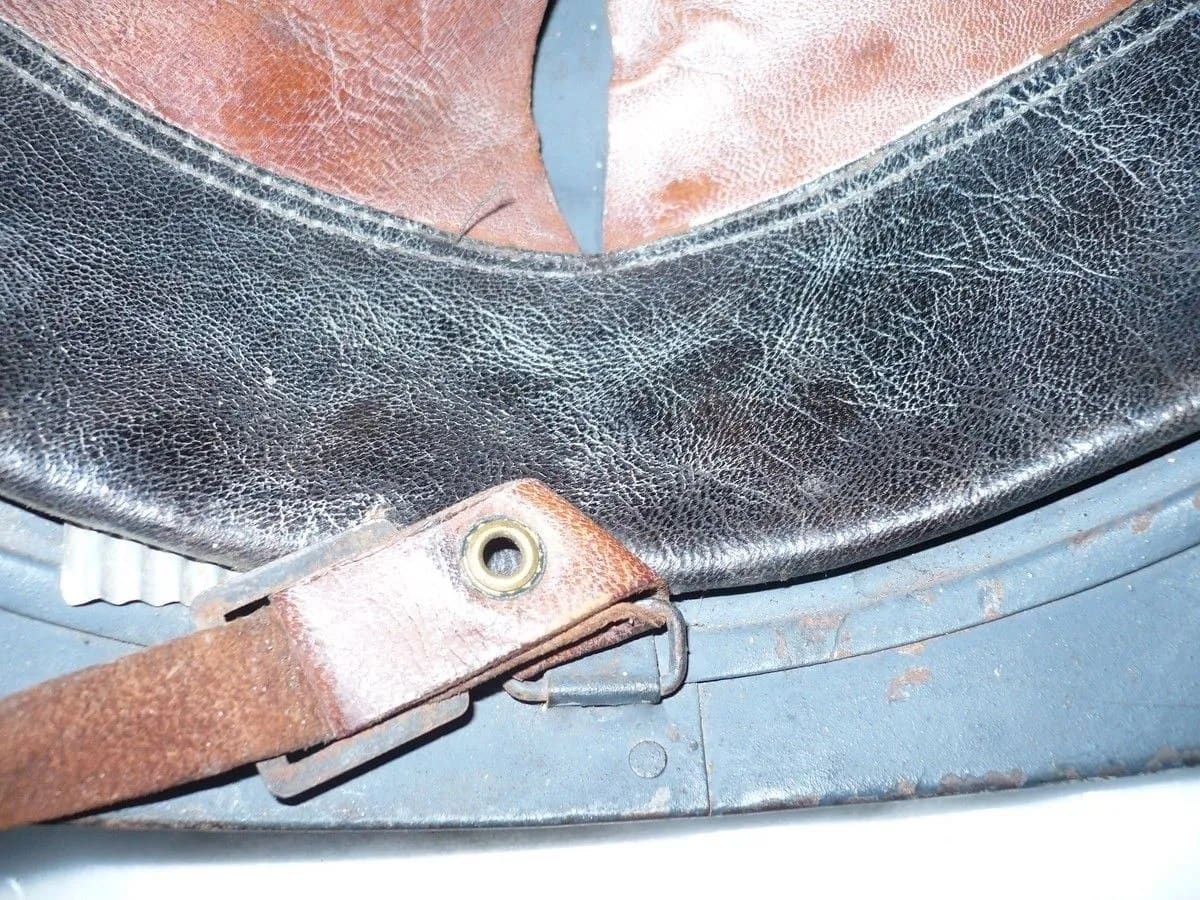
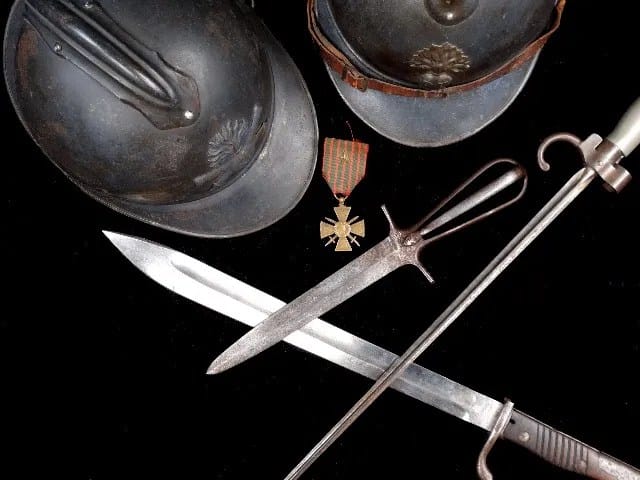
WW1 French M1915 Adrian pattern helmets.
This group of French Model 1915 Adrian helmets illustrates the widespread adoption of steel head protection by the French Army during the First World War. Represented here clockwise from top left are examples for Infantry, Infantry with veteran plaque, Chasseurs, North African troops, Marines, and the Foreign Legion. Branch insignia highlight unit identity, while the Adrian helmet symbolises the adaptation of armies to the realities of industrialised warfare and battlefield fragmentation hazards.


WW1 French Kepis.
This collection of French First World War képis illustrates the diversity of pre-war and early-war French military headgear across branches and ranks. Shown clockwise from top left are examples from the 5th Bataillon d’Infanterie Légère d’Afrique, 1st Regiment Chasseurs, 156th Infantry Regiment NCO, Infantry Captain, Marine Infantry, Infantry Lieutenant, 7th Artillery Regiment, 2nd Chasseurs officer, Major of the 135th Infantry Regiment, and an enlisted soldier of the 133rd Infantry Regiment. These kepis reflect strong regimental identity before the widespread adoption of steel helmets.


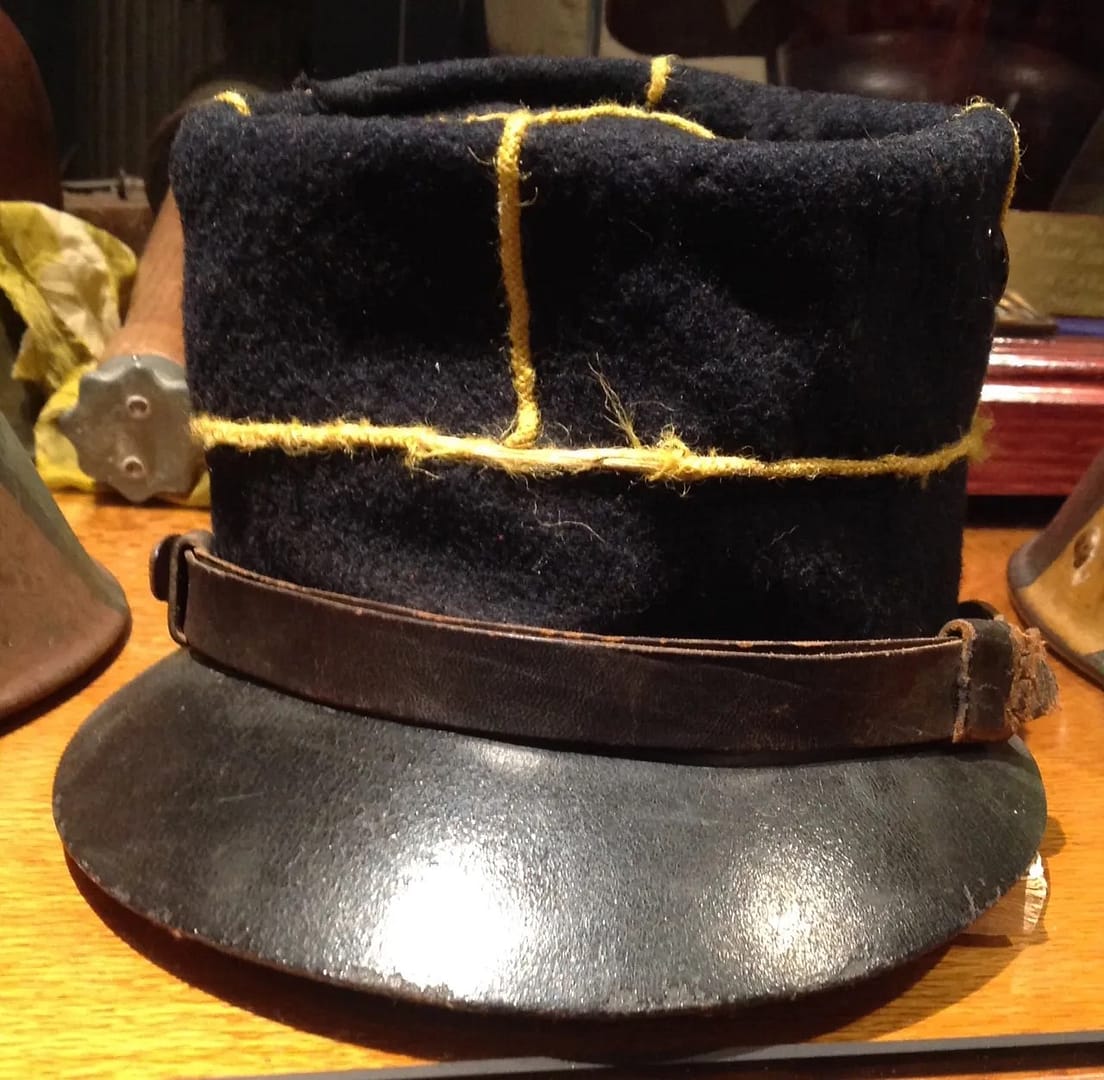
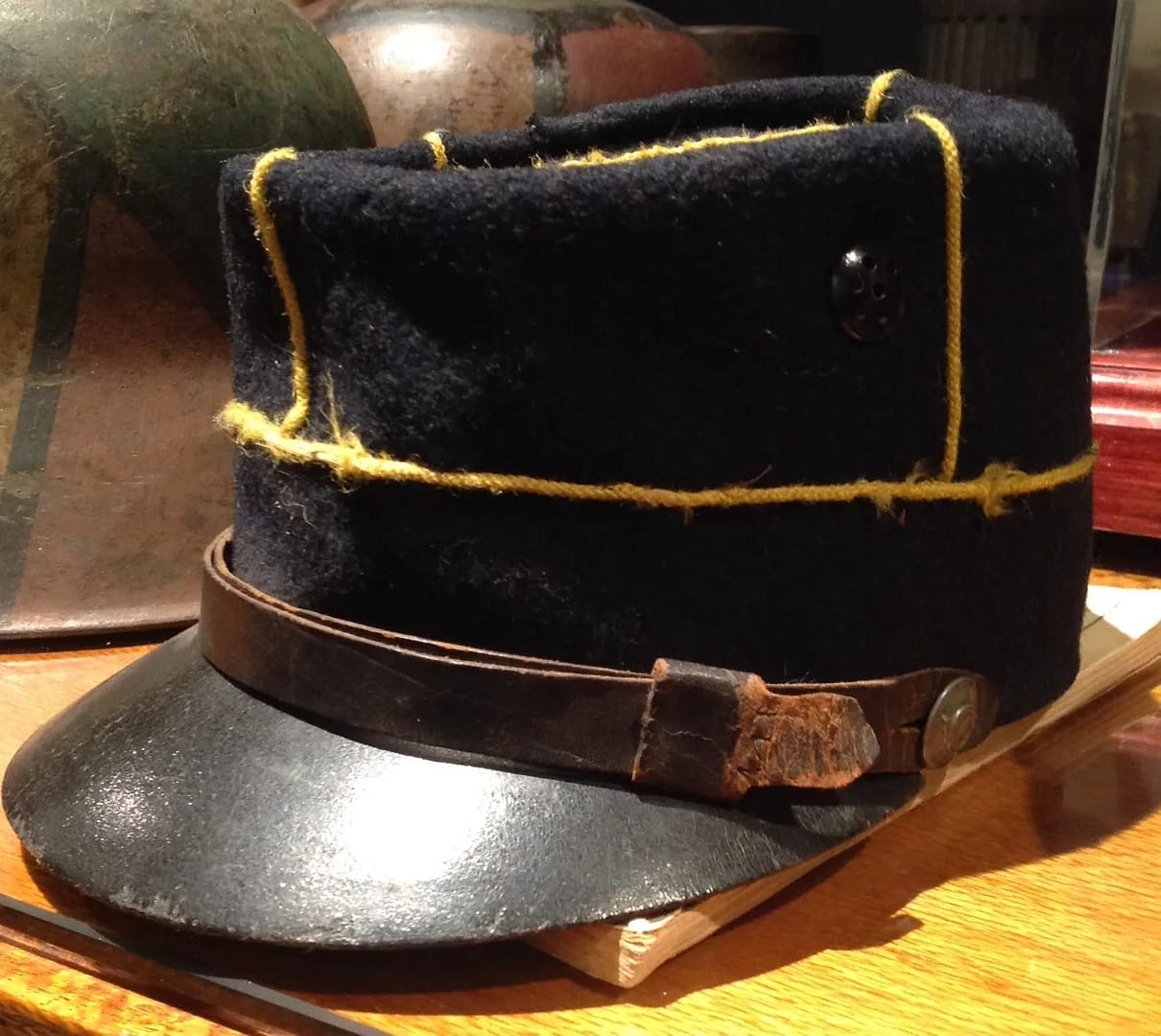
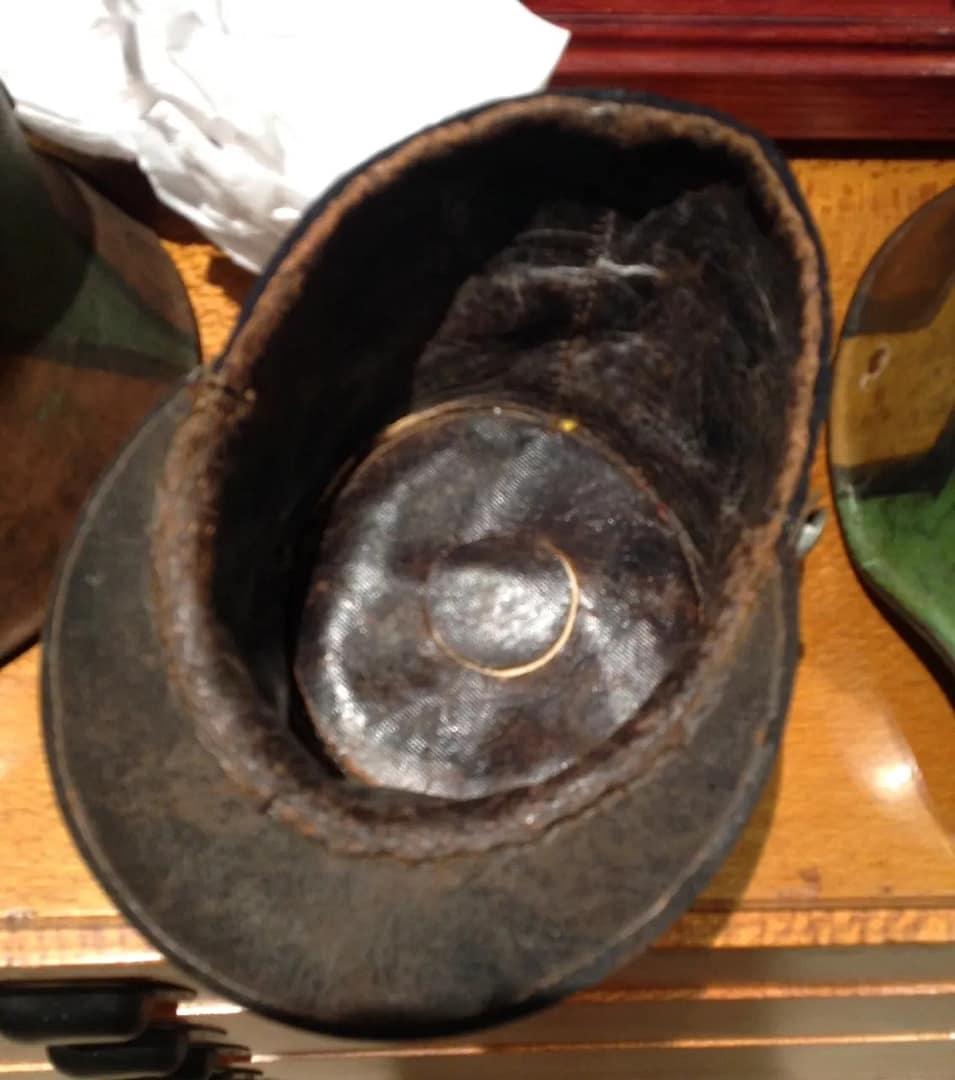
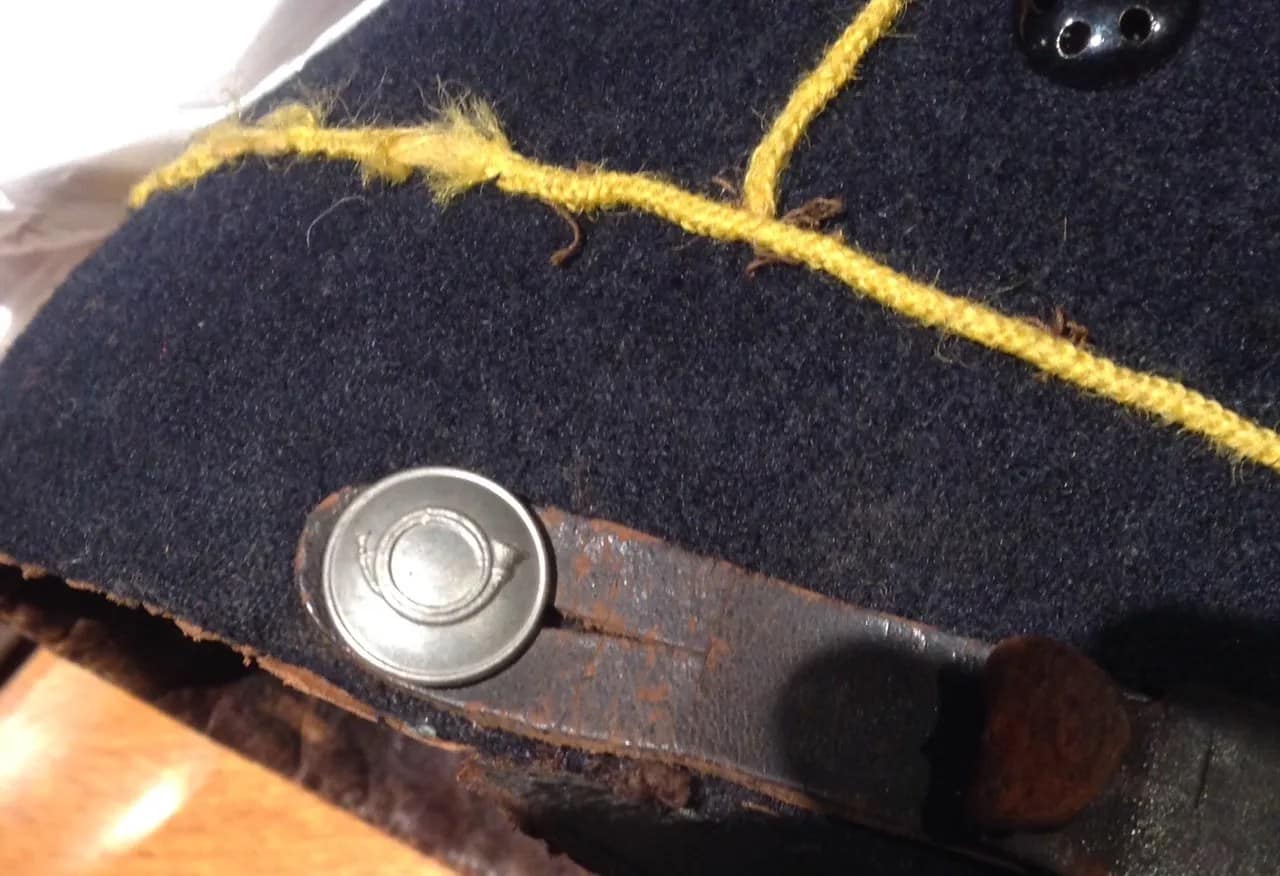
WW1 French M1884 Chasseur à Pied kepi – dark blue with Jonquil (Daffodil yellow) piping . From my personal collection.
This French First World War képi is for one of the 78 battalions (31 active, 31 reserve, 7 territorial alpine battalions and 9 marching battalions) active during the war. Each infantry division was supposed to consist of at least one Chasseur battalion (BCP or BACP). The Foot Chasseurs were elite light infantry regiments trained for skirmishing, infiltration tactics, and special assault tactics.
WW1 French M1897 Chasseur à Pied tunic – dark blue with Jonquil Chasseur bugles. From my personal collection.
This French pre-war Model 1897 dark blue tunic is attributed to a Chasseur à Pied Regimen Chasseur regiments wore their facings in ‘jonquil’ (daffodil) yellow. By 1915 the colourful pre-war uniforms were being replaced by teh new Model 1915 Horizon Bleu uniform.


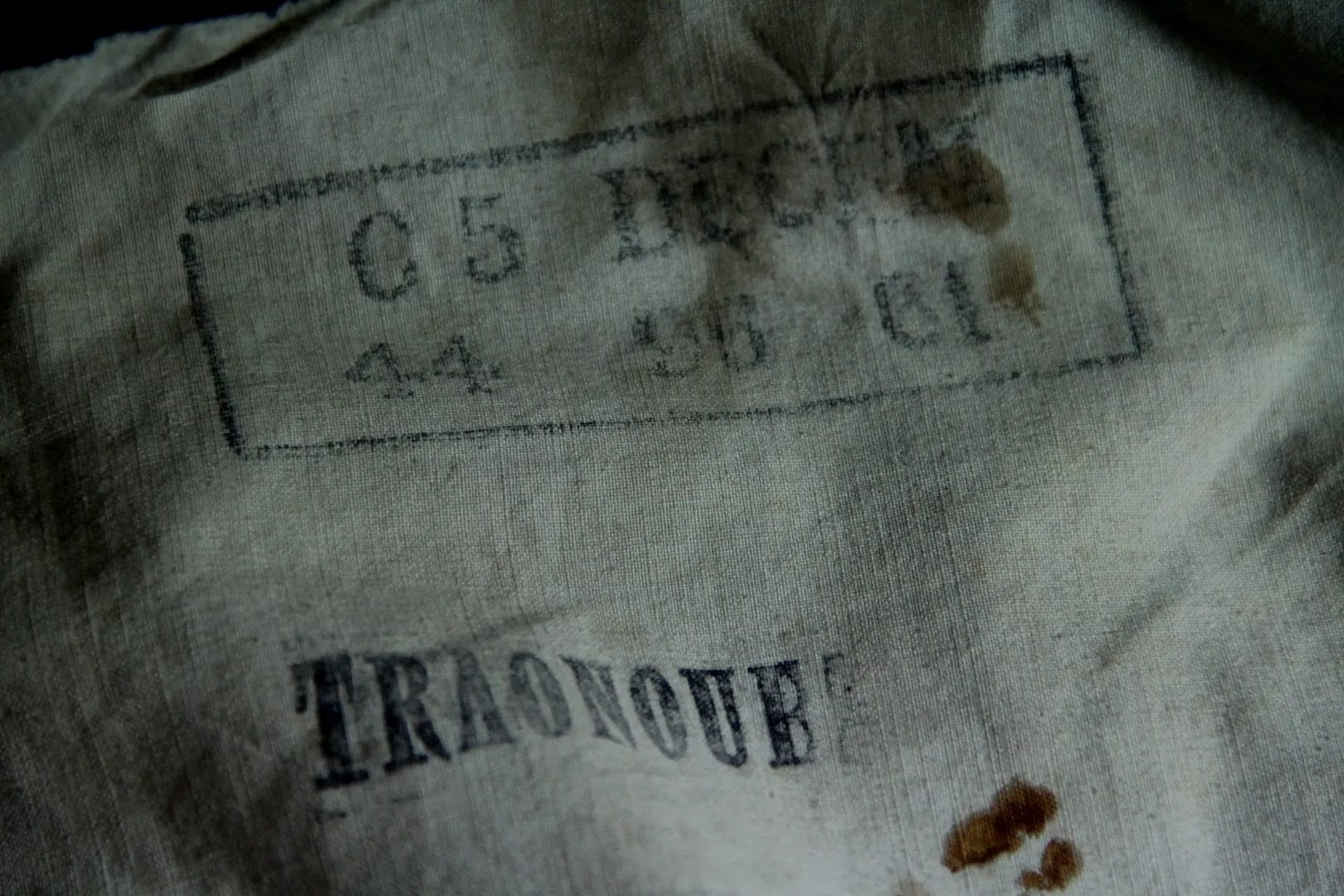


WW1 French Model 1915 Horizon Bleu tunic, 8th Chasseur Regiment. From my personal collection.
This French Model 1915 horizon bleu tunic is attributed to the 8th Regiment de Chasseurs and represents the standard field uniform adopted by the French Army during the First World War. Introduced to replace earlier dark blue and red uniforms, horizon blue reflected lessons learned about concealment on modern battlefields. The tunic illustrates the adaptation of French military dress to industrialised warfare while retaining distinctive branch identity.


Model 1886 Lebel Bayonet “Rosalie” with Bronze Grip, Scabbard and Frog. From my personal collection.
The Model 1886 Lebel bayonet, popularly known as “Rosalie,” was introduced with the French Lebel rifle and became one of the most recognisable bayonets of the late nineteenth and early twentieth centuries. Featuring a distinctive 52cm (20 inch) cruciform spike blade and cast bronze grip, it was designed primarily for thrusting and durability in infantry combat. Manufactured at French state arsenals including Châtellerault, it remained standard issue through the First World War. This example includes its steel scabbard and leather frog, illustrating the complete field configuration carried by French soldiers.


Model 1886 Lebel bayonet ‘Rosalie’ with alloy grip, Scabbard. From my personal collection.
The Model 1886 Lebel bayonet, popularly known as “Rosalie,” was introduced with the French Lebel rifle and became one of the most recognisable bayonets of the late nineteenth and early twentieth centuries. Featuring a distinctive 52cm (20 inch) cruciform spike blade and cast bronze grip, it was designed primarily for thrusting and durability in infantry combat. Manufactured at French state arsenals including Châtellerault, it remained standard issue through the First World War. This example includes its steel scabbard and leather frog, illustrating the complete field configuration carried by French soldiers.


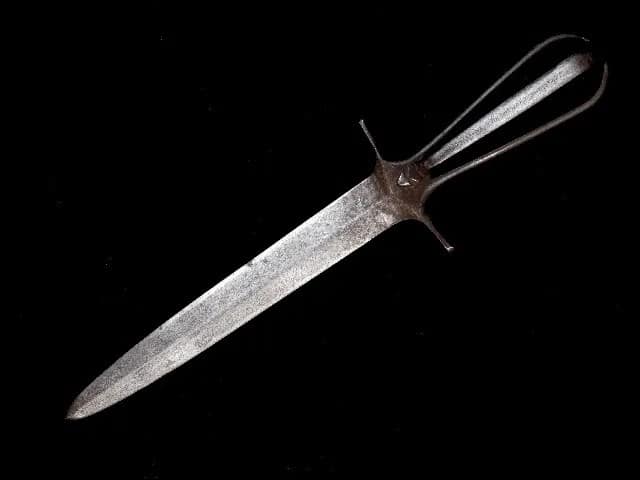
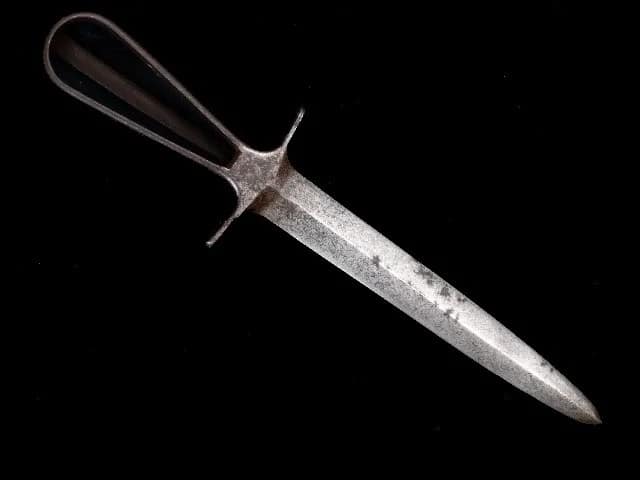
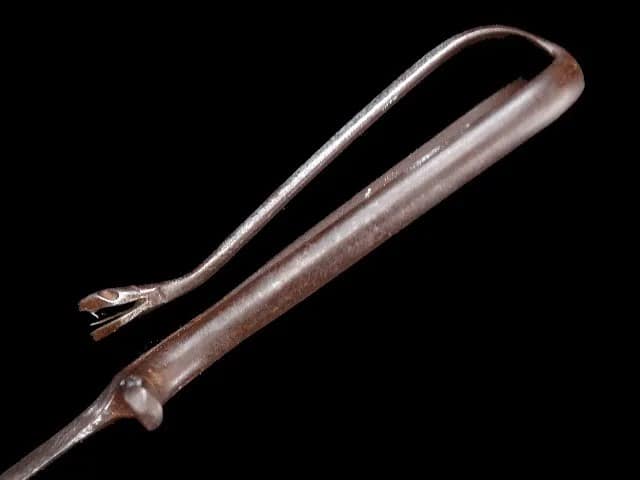
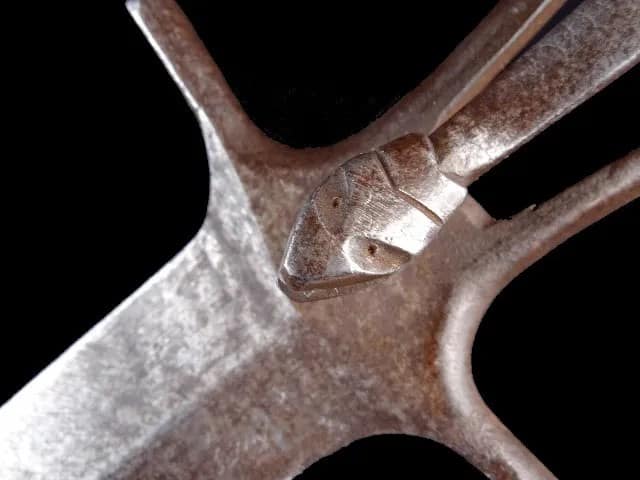
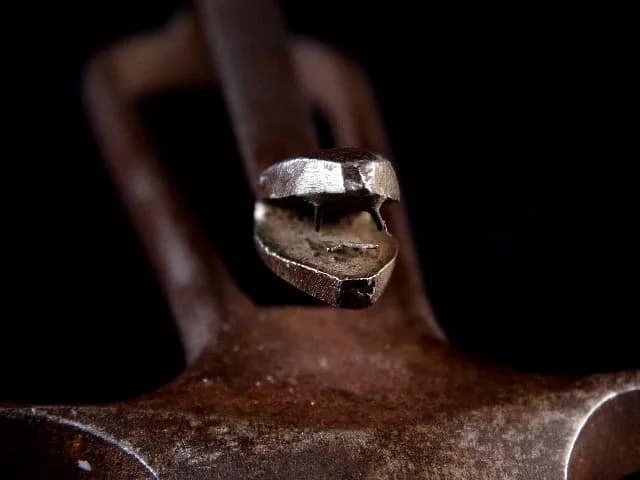
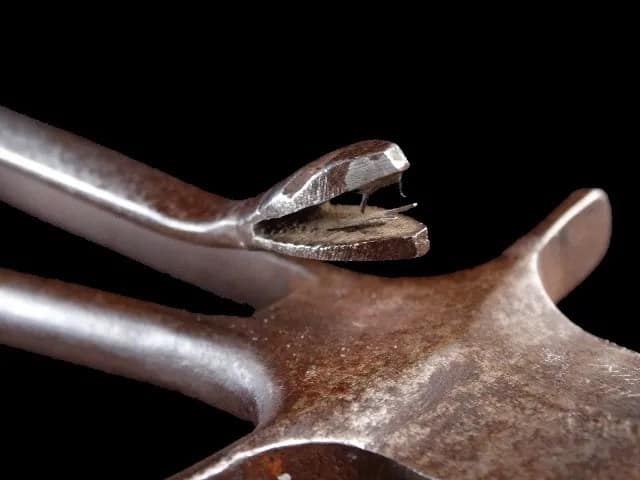
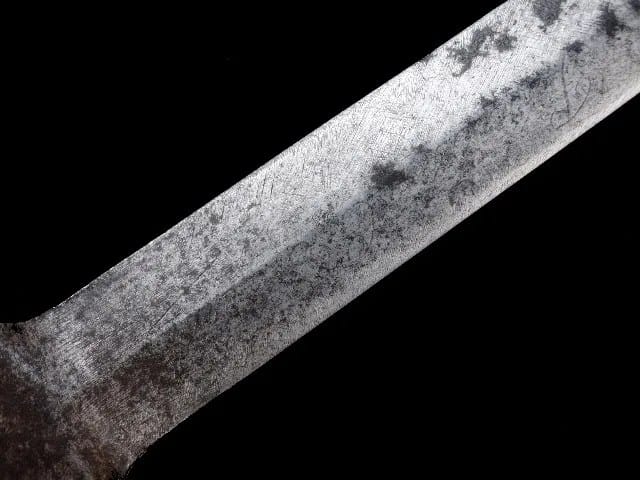
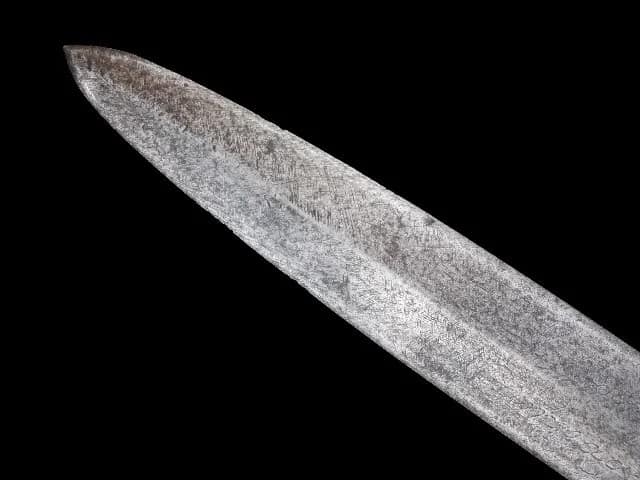
WW1 French “Nettoyeur de Tranchée” (Trench Cleaner) Knife. From my personal collection.
The French “Nettoyeur de Tranchée” knife was a specialised fighting knife associated with trench raiding and close combat during the First World War. Designed as a compact stabbing weapon, it reflects the brutal, intimate nature of fighting in confined trench systems. Such knives were issued or privately acquired by assault troops and raiding parties, symbolising the shift toward specialised equipment for hand-to-hand combat on the Western Front.
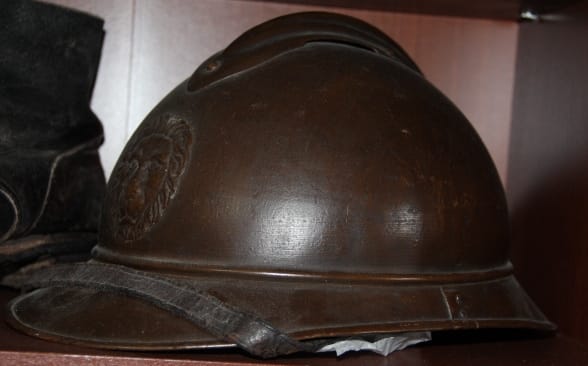
BELGIUM
WW1 Belgian Adrian helmet, Lion of Flanders
This Belgian First World War Adrian helmet features the distinctive Lion of Flanders badge, representing Belgian forces fighting to defend their homeland following the German invasion of 1914. Based on the French Model 1915 design, the helmet provided protection against shell fragments and became a symbol of modern battlefield equipment. The Lion emblem reflects national identity and the determination of Belgian troops throughout the war.
UNITED STATES OF AMERICA
WW1 US Army ‘Montana Peak’ campaign Hats – artillery, infantry, signals
This group of United States Army First World War “Montana Peak” campaign hats represents the distinctive high-crowned felt hats worn by American soldiers early in the conflict. Examples shown include artillery, infantry, and signals variants, distinguished by branch insignia. The campaign hat reflected pre-war field dress traditions before the widespread adoption of steel helmets for front-line service, illustrating both branch identity and the transition to modern battlefield equipment.


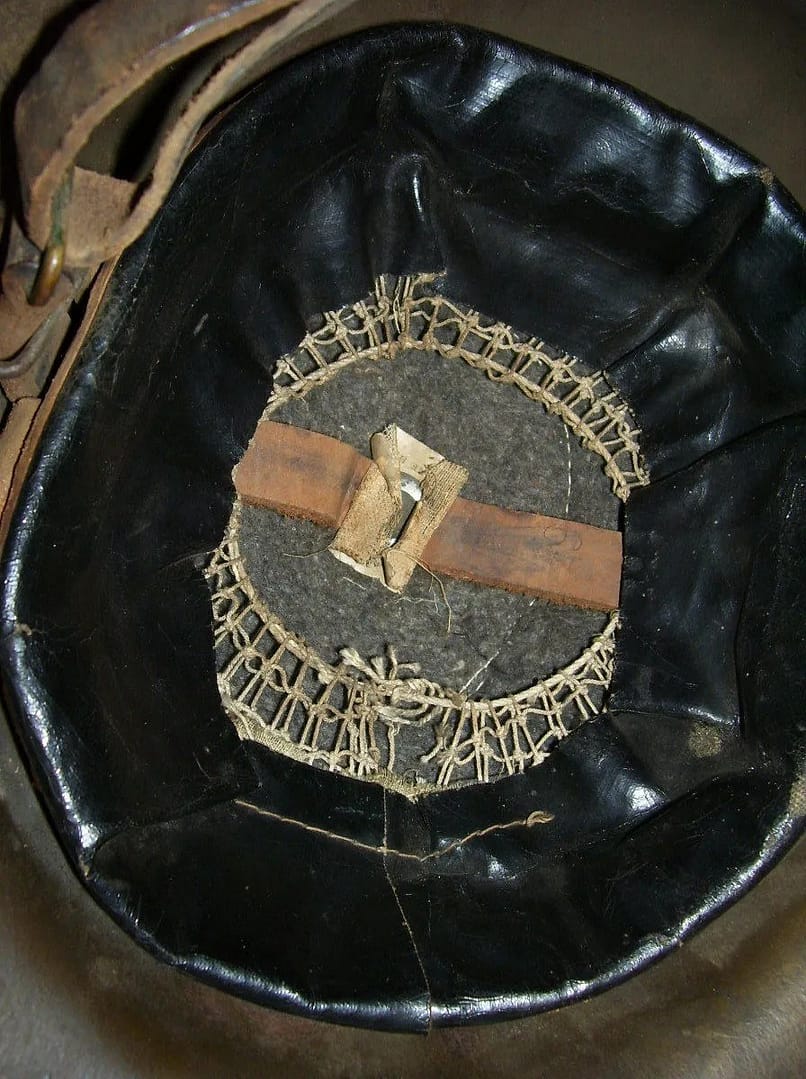
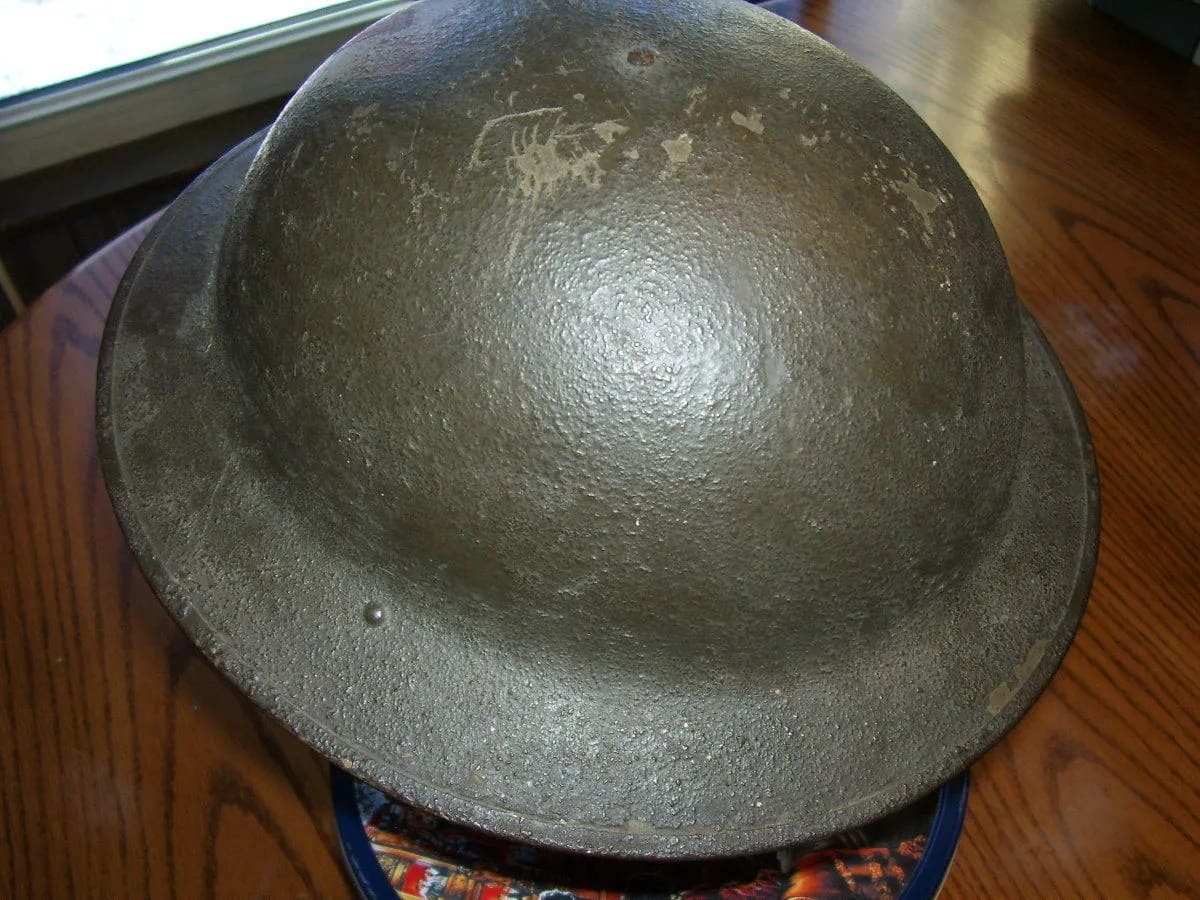
WW1 United States M1917 Brodie Helmet, 1st Infantry Division. From my personal collection
This United States Army Model 1917 Brodie pattern helmet is a US produced version of the British British Brodie helmet that equipped American forces through to the early years of WW2. American units generally did not paint divisional insignia on their helmets during the war. These were generally painted by the troops post conflict, or on the boats on the way home.
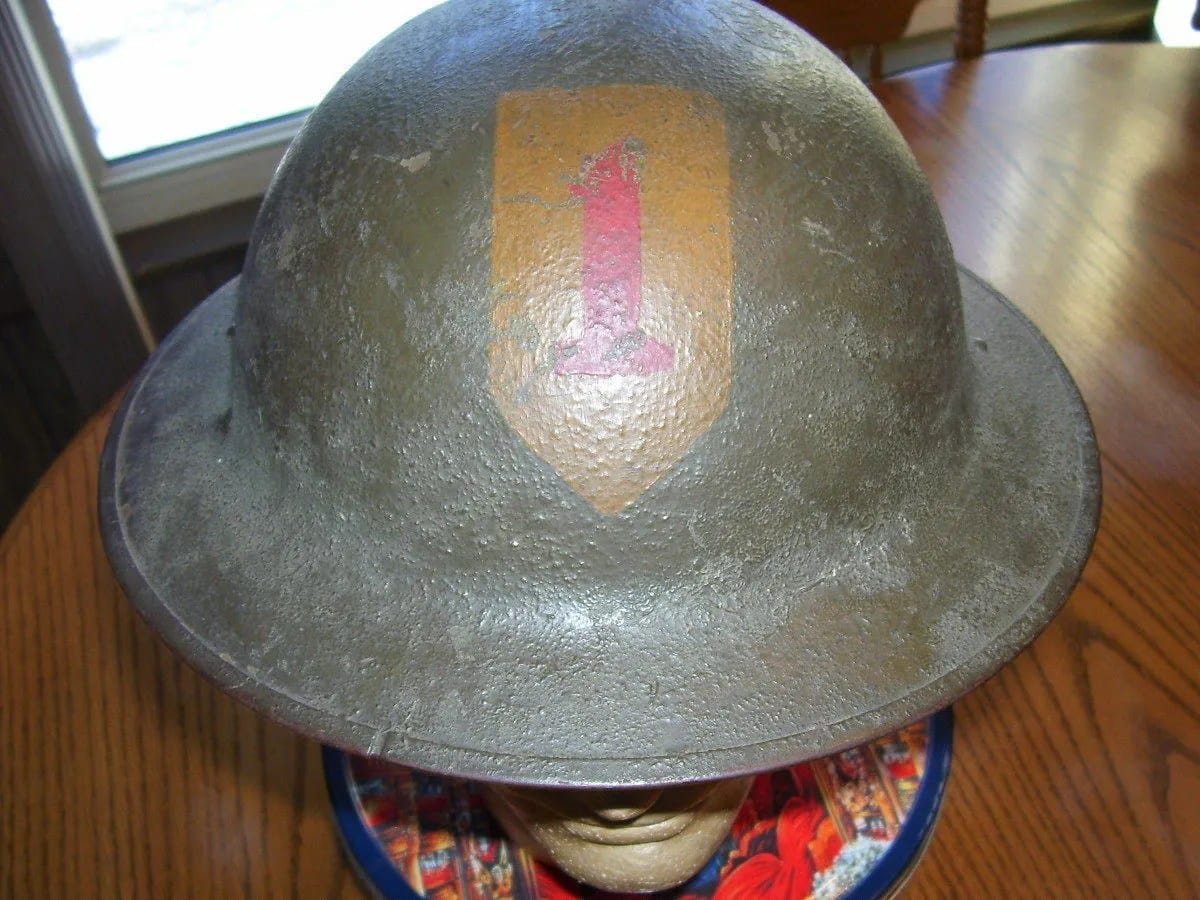
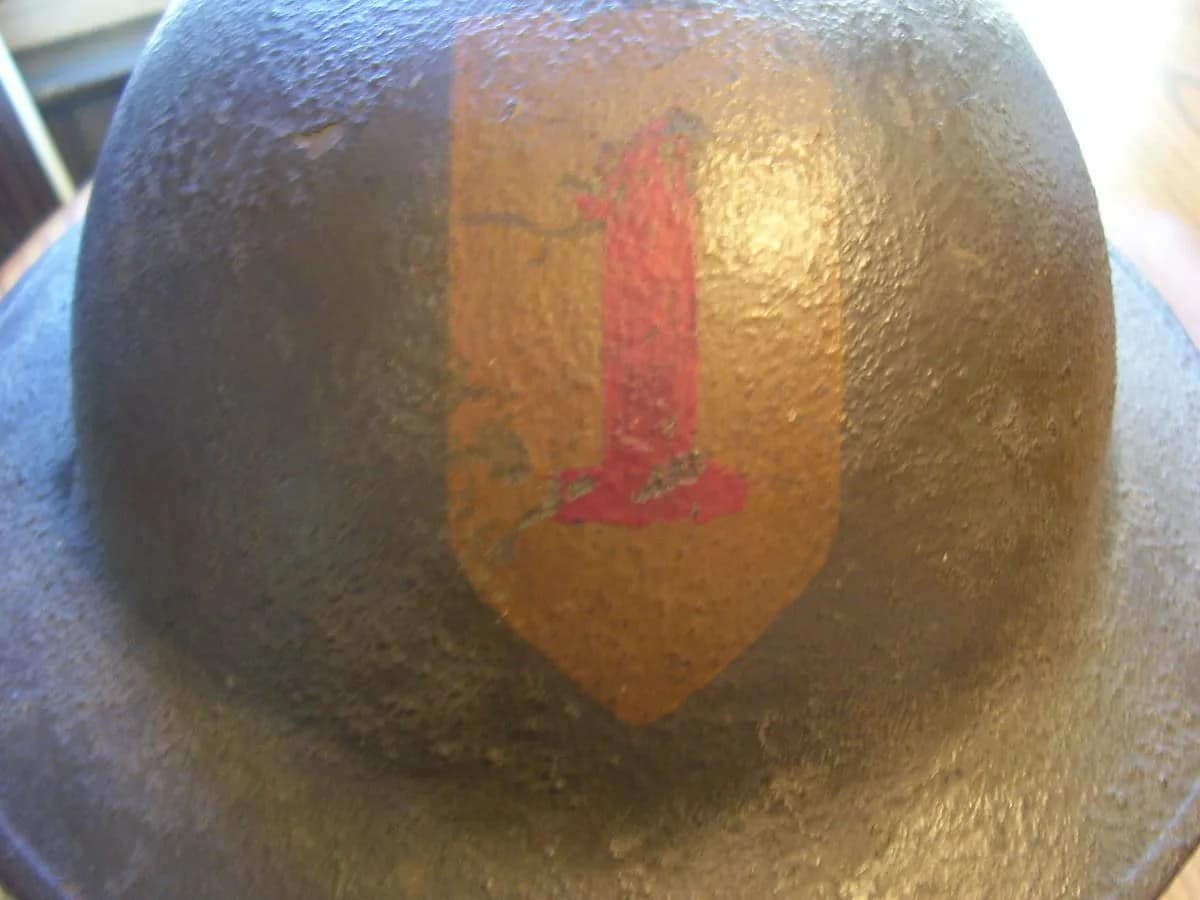
WW1 US Army M1917 Brodie Pattern Helmets -with Divisional Insignia
This group of United States Army Model 1917 helmets features painted divisional insignia reflecting unit identity during the First World War. Represented are the 1st Infantry Division, 6th Infantry Division, 33rd Infantry Division, 82nd “All American” Division, a U.S. Marine example from the 1st Battalion, 6th Marine Regiment (2nd Division), and the 339th Infantry Regiment, North Russia. The British-derived helmet symbolises the adoption of steel protection and the growing importance of divisional identity in modern warfare.


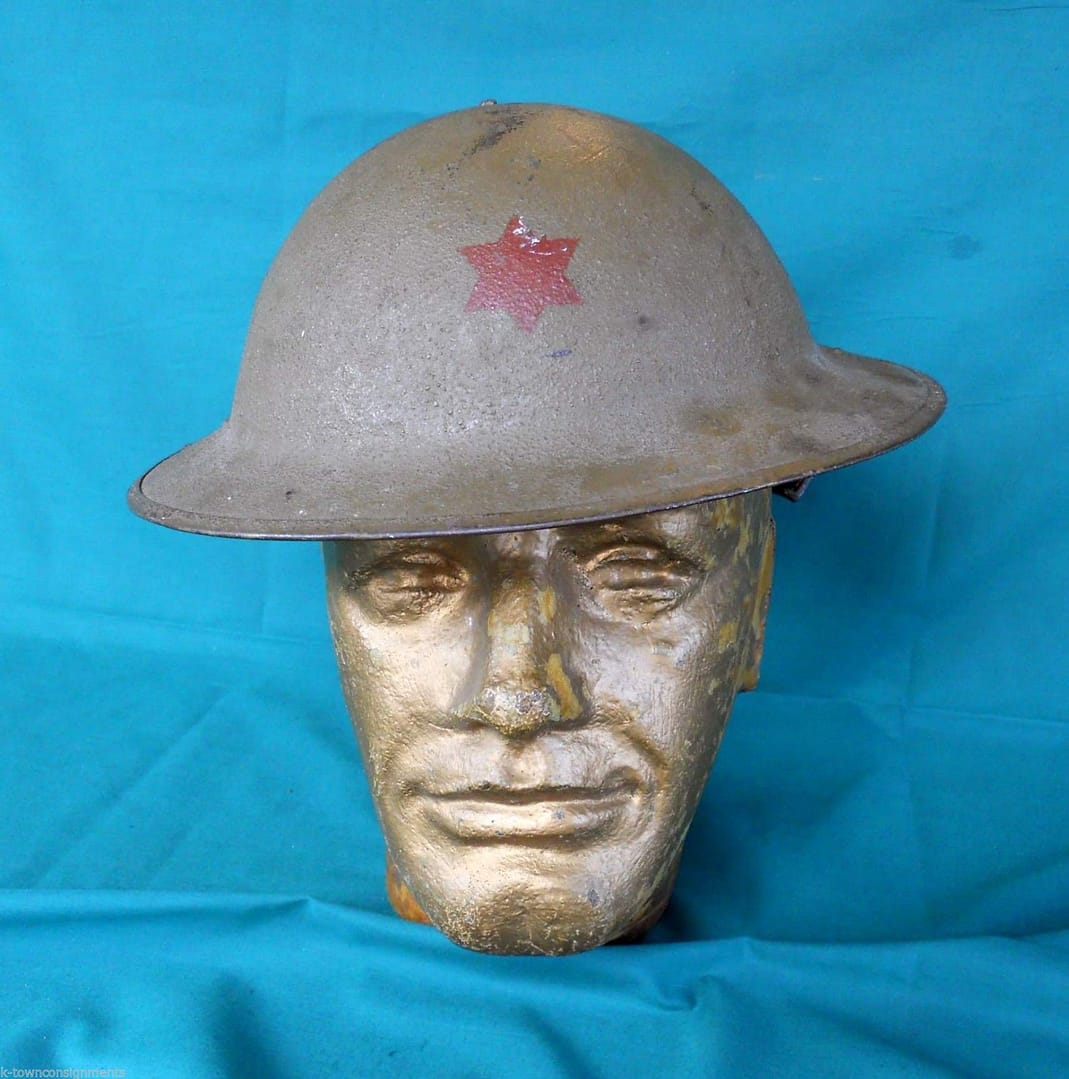
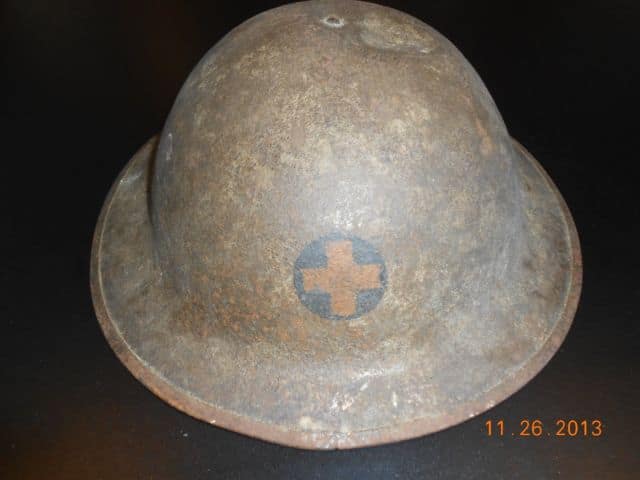


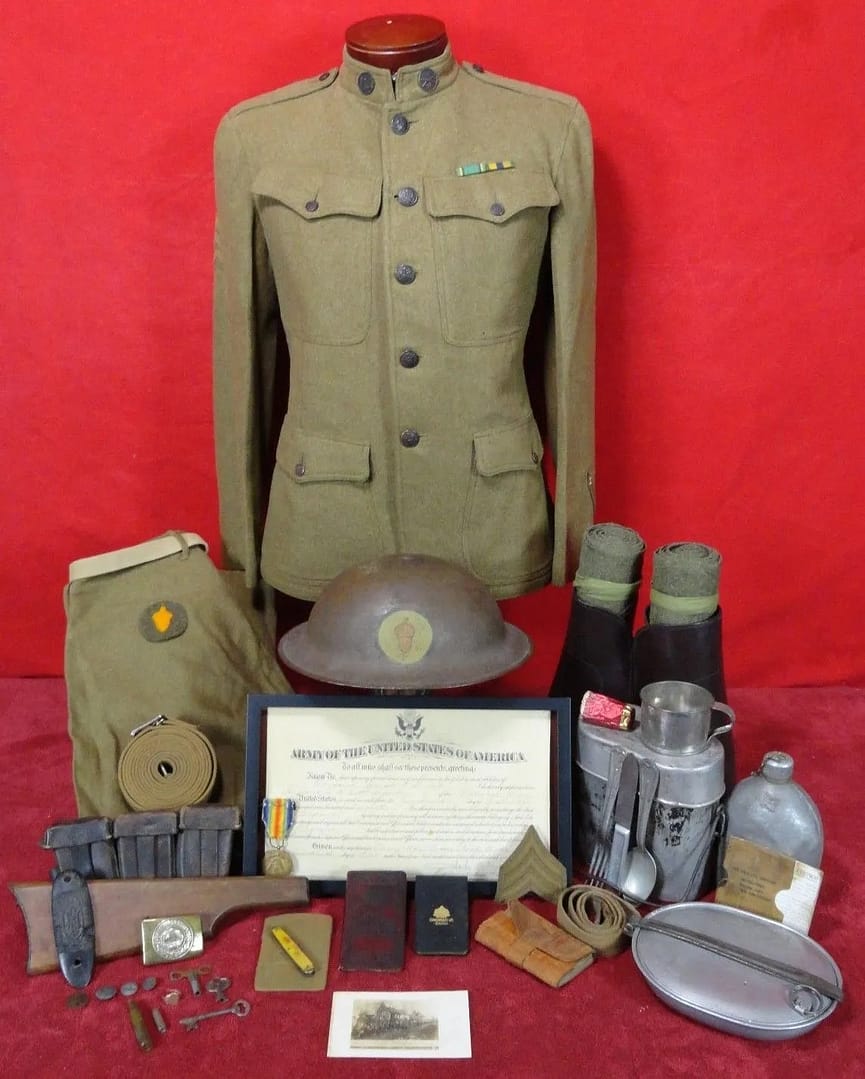
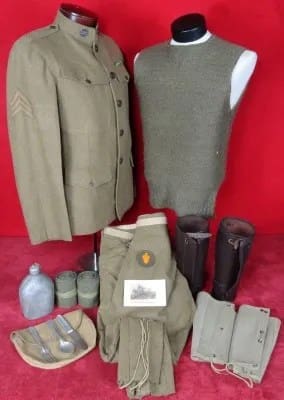
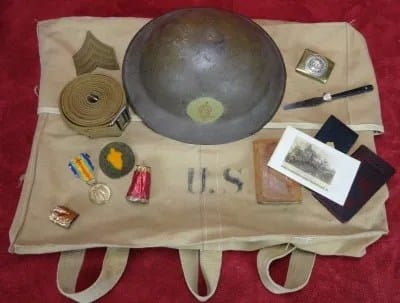
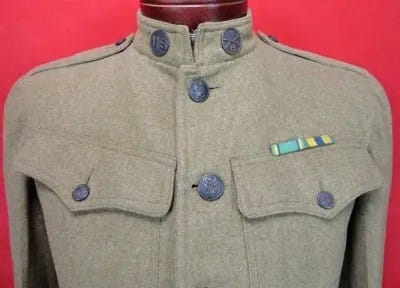
WW1 US Army grouping: 87th Infantry Division, Private Joseph Dufek
Grouping attributed to Private Joseph Dufek, 87th Infantry DIvision. INcldues P1917 tunic, M1917 helmet, extra tunic, under garments, puttees, wool vest, mess tins, kit bag, belt, leather gaiters, photos, paybook, Victory Medal, certificates, and many souvenirs from service in France.
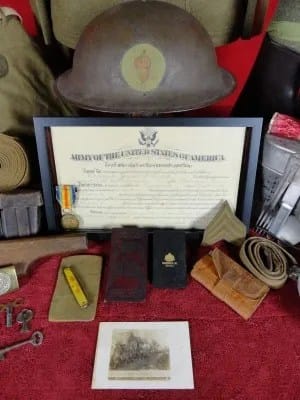
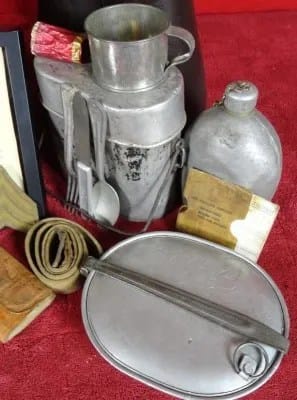
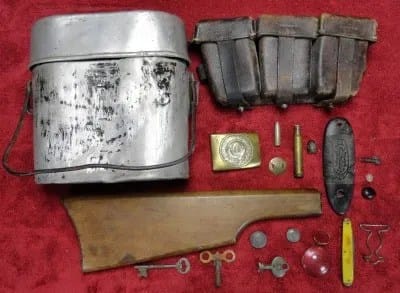
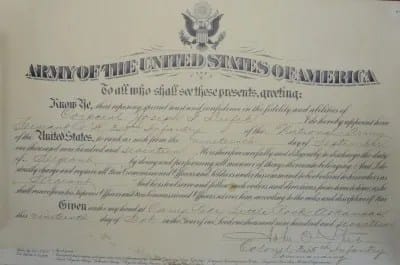
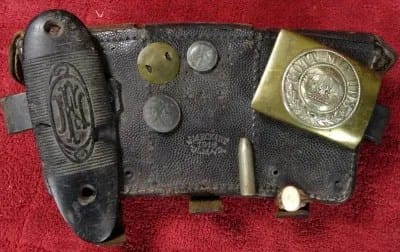
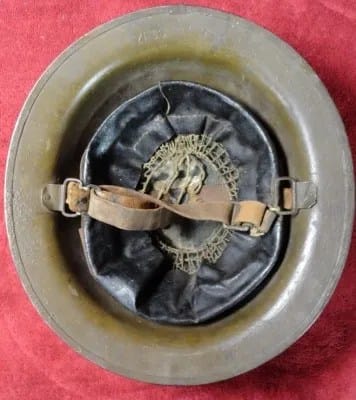
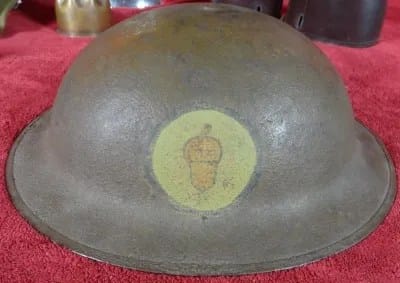
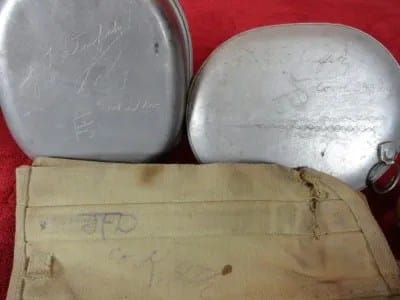
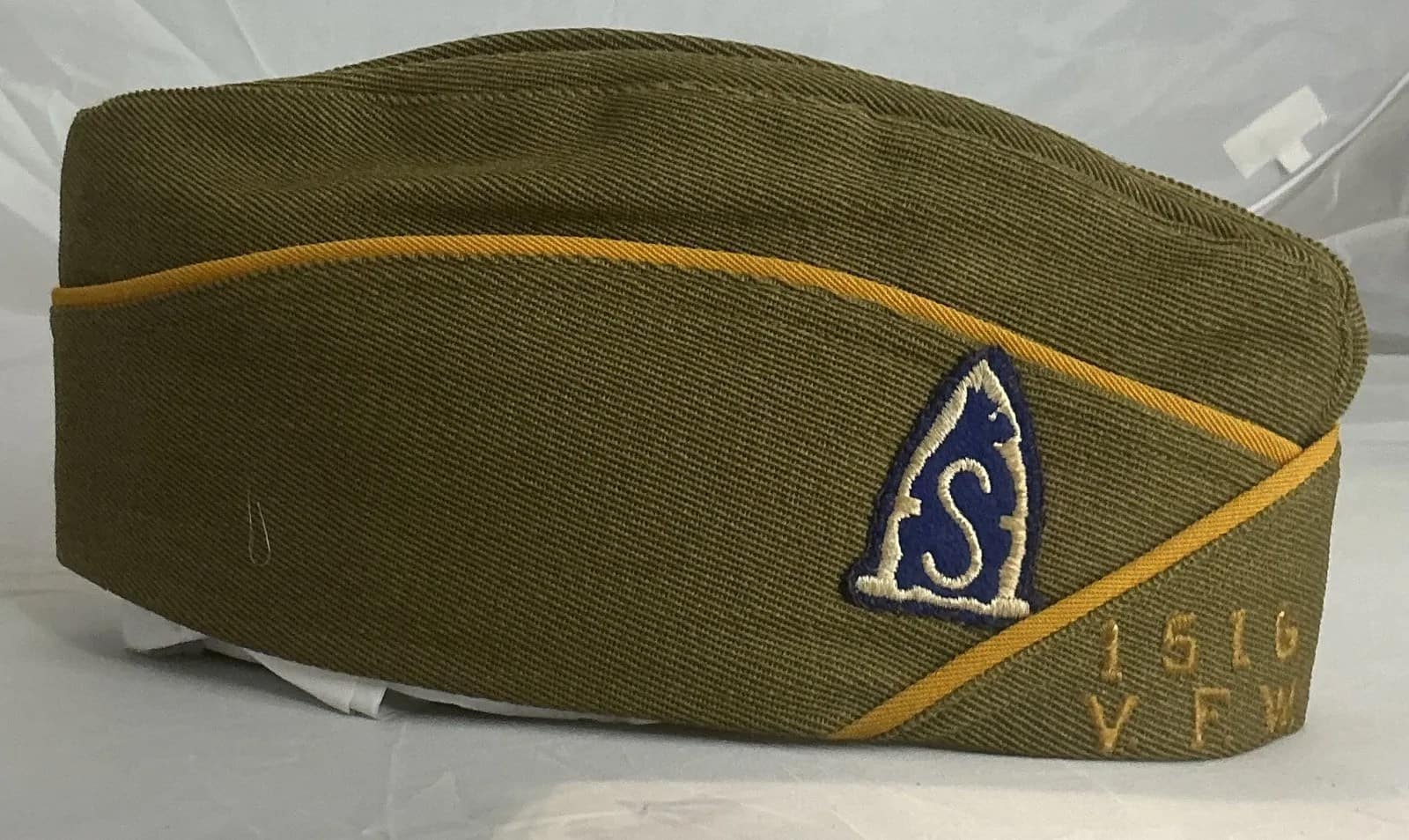
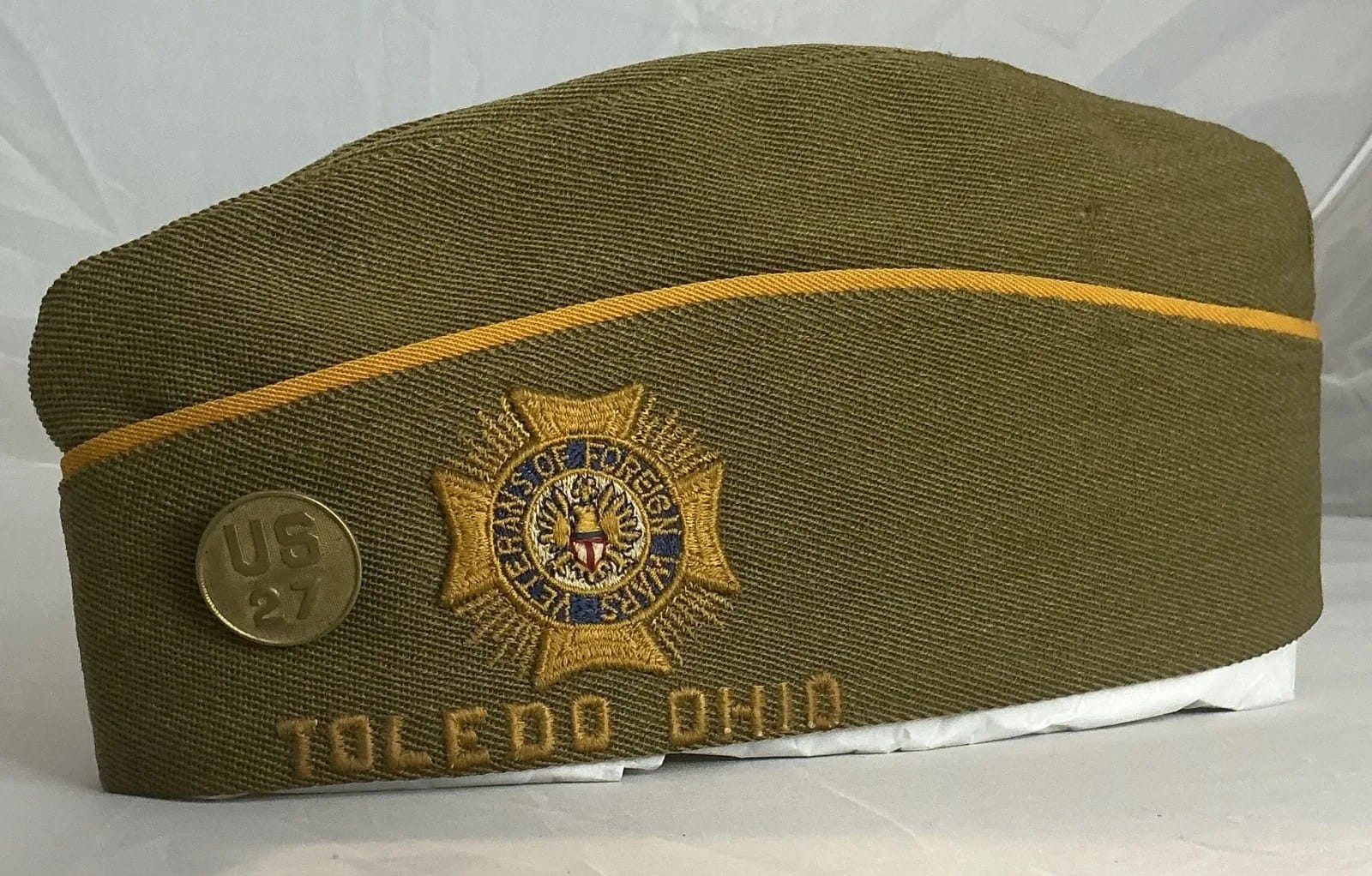
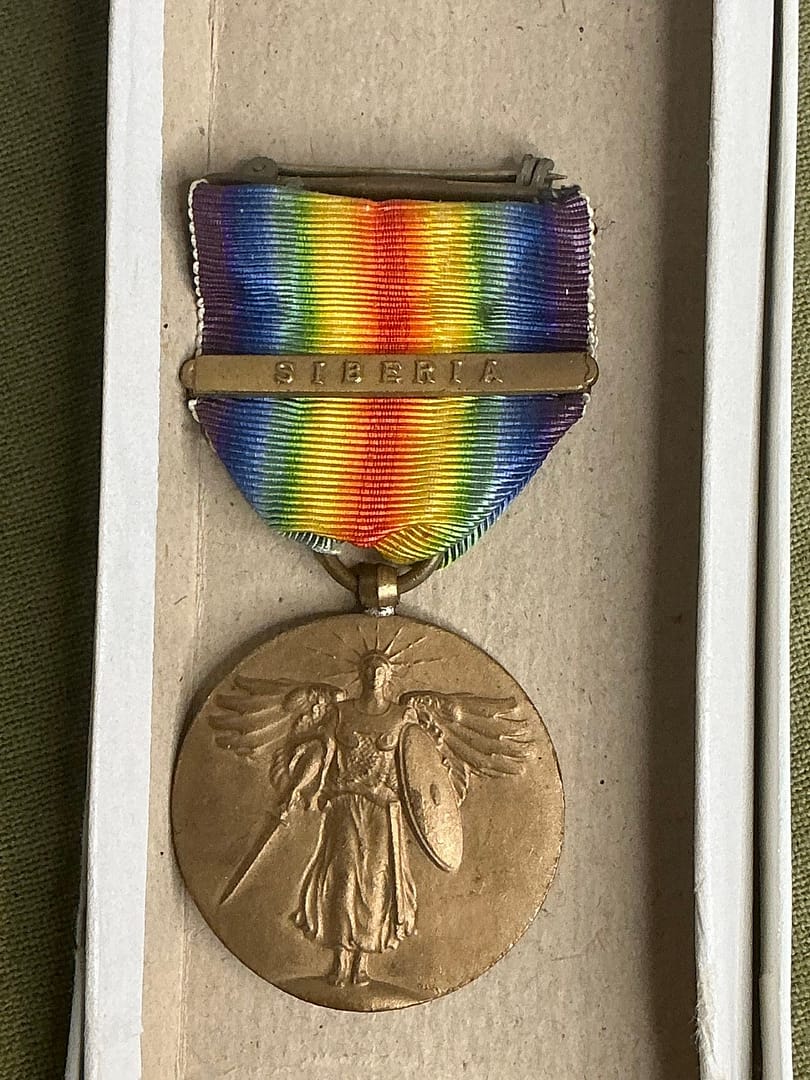
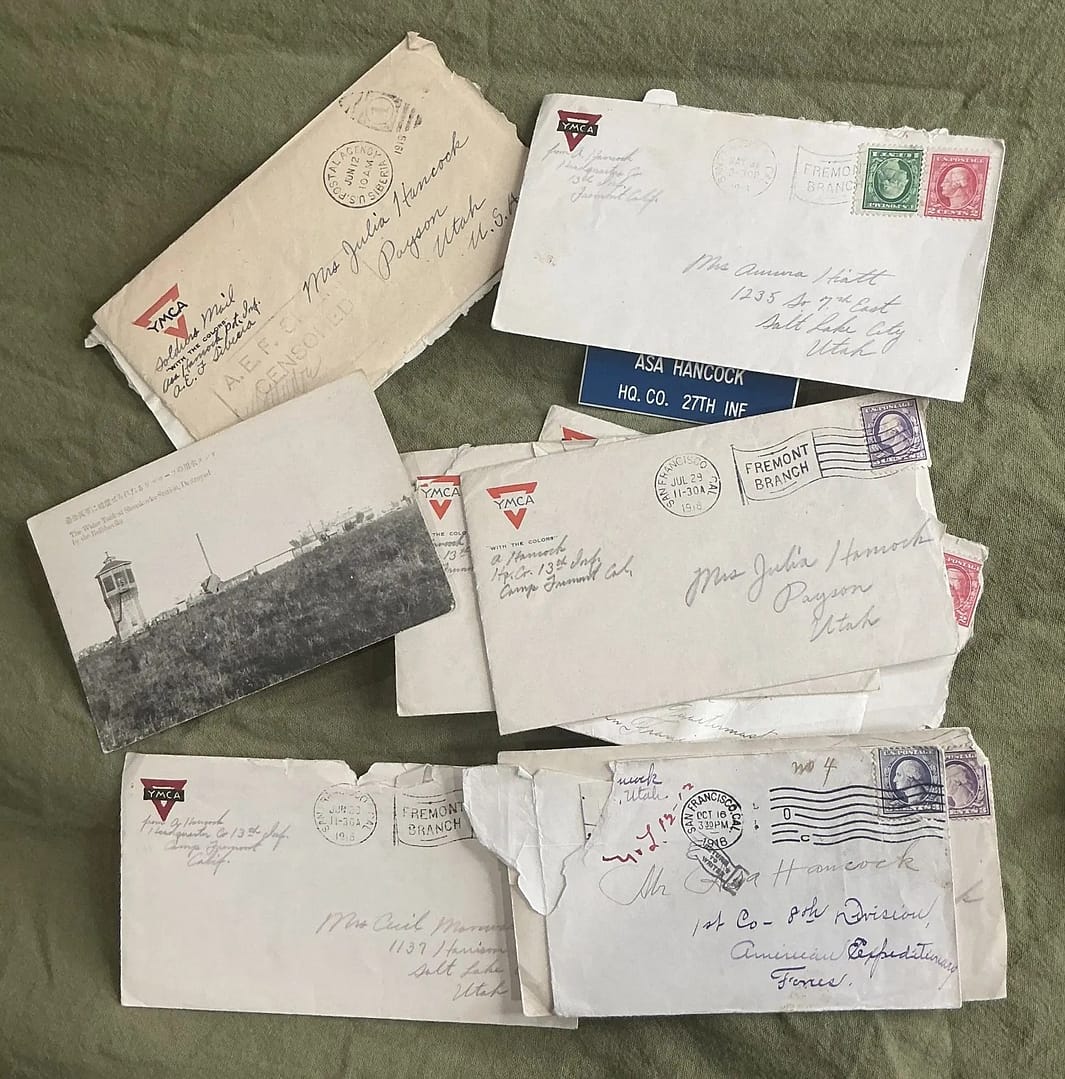
Russian Civil War American Expeditionary Force – Siberia Intervention, 27th Infantry Regiment grouping. From my personal collection.
A uniform grouping from an American soldier of the 27th Infantry Regiment ‘Wolfhounds’, who served with the American Expeditionary Force – Siberia Intervention. The grouping comprises:
– a US M1917 tunic with the Polar Bear ‘S’ patch for the SIberia intervention force;
– plain olive drab wool garrison cap
– Veterans of Foreign Wars (VFW) garrison cap 1516 Toledo Ohio Chapter with the SIberia Expedition patch
– Victory Medal with clasp ‘Siberia’



WW1 US Pattern 1917 infantry tunic, 339th Infantry Regiment, American North Russia Expeditionary Force. From my personal collection.
This United States Pattern 1917 infantry tunic is attributed to the 339th Infantry Regiment, part of the American North Russia Expeditionary Force deployed to Archangel in 1918–1919. Known as the “Polar Bears,” the regiment was sent as part of Allied intervention in the Russian Civil War to safeguard war materiel, support anti-Bolshevik forces, and maintain an Eastern Front presence following Russia’s withdrawal from the First World War. The tunic represents the standard service dress worn by American soldiers during this little-known campaign, reflecting both the global reach of the conflict and the challenging conditions faced by U.S. troops operating in the Arctic environment.


WW1 United States Marine Corps P1912 forest green tunic and trousers – 1st Battalion, 5th Marine Regiment, 2nd Infantry Division.
This United States Marine Corps P1912 forest green service uniform represents the distinctive appearance of Marines who served with the 5th Marine Regiment, part of the 2nd Division, on the Western Front during the First World War. The dark green wool tunic and trousers reflected Marine Corps traditions and set them apart visually from U.S. Army units. Marines of the 5th Regiment fought in some of the most intense actions of the American Expeditionary Forces, including Belleau Wood and Soissons. This uniform illustrates the identity, pride, and combat service of one of the most renowned American formations of the war.


IMPERIAL RUSSIA
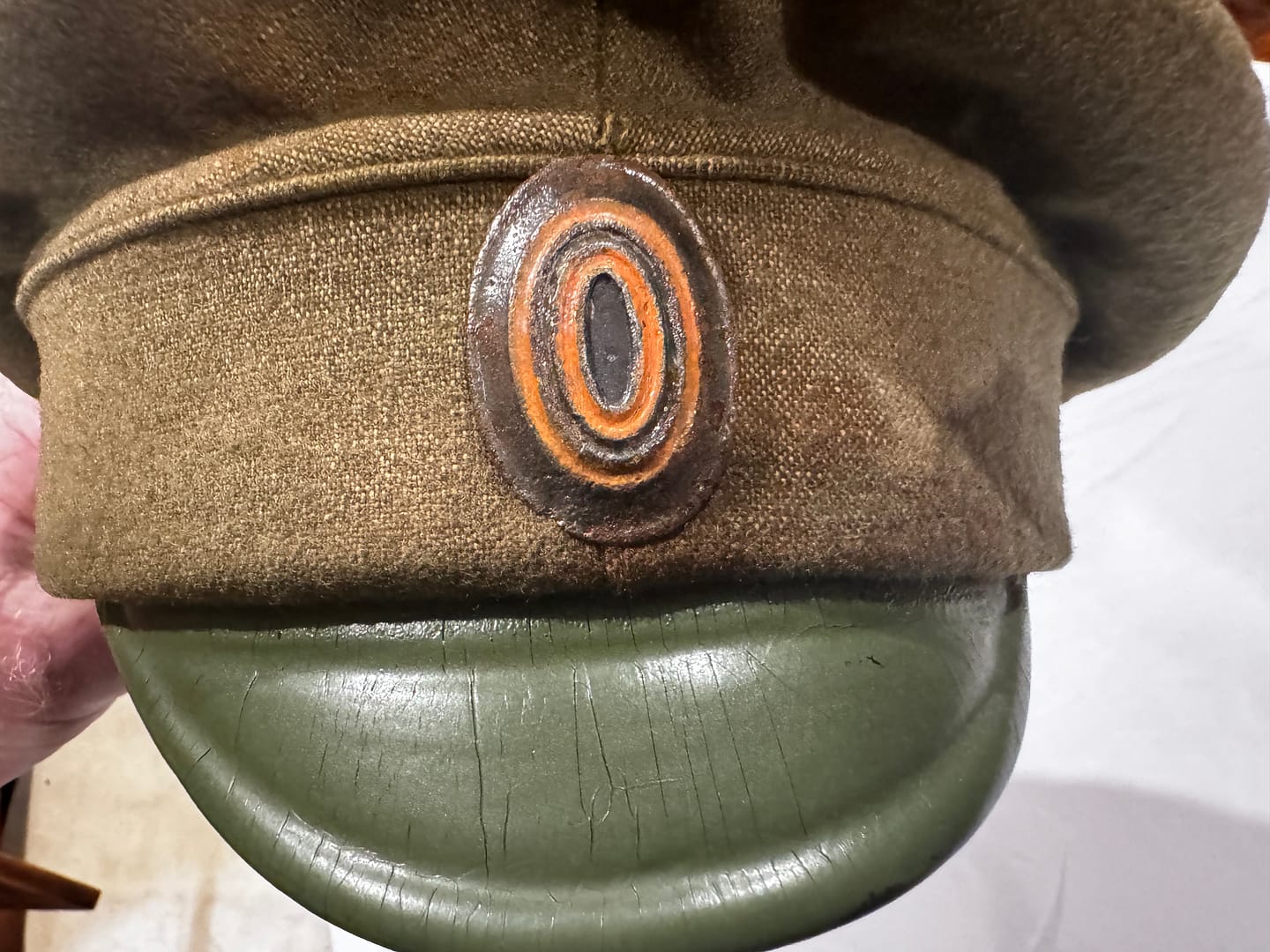
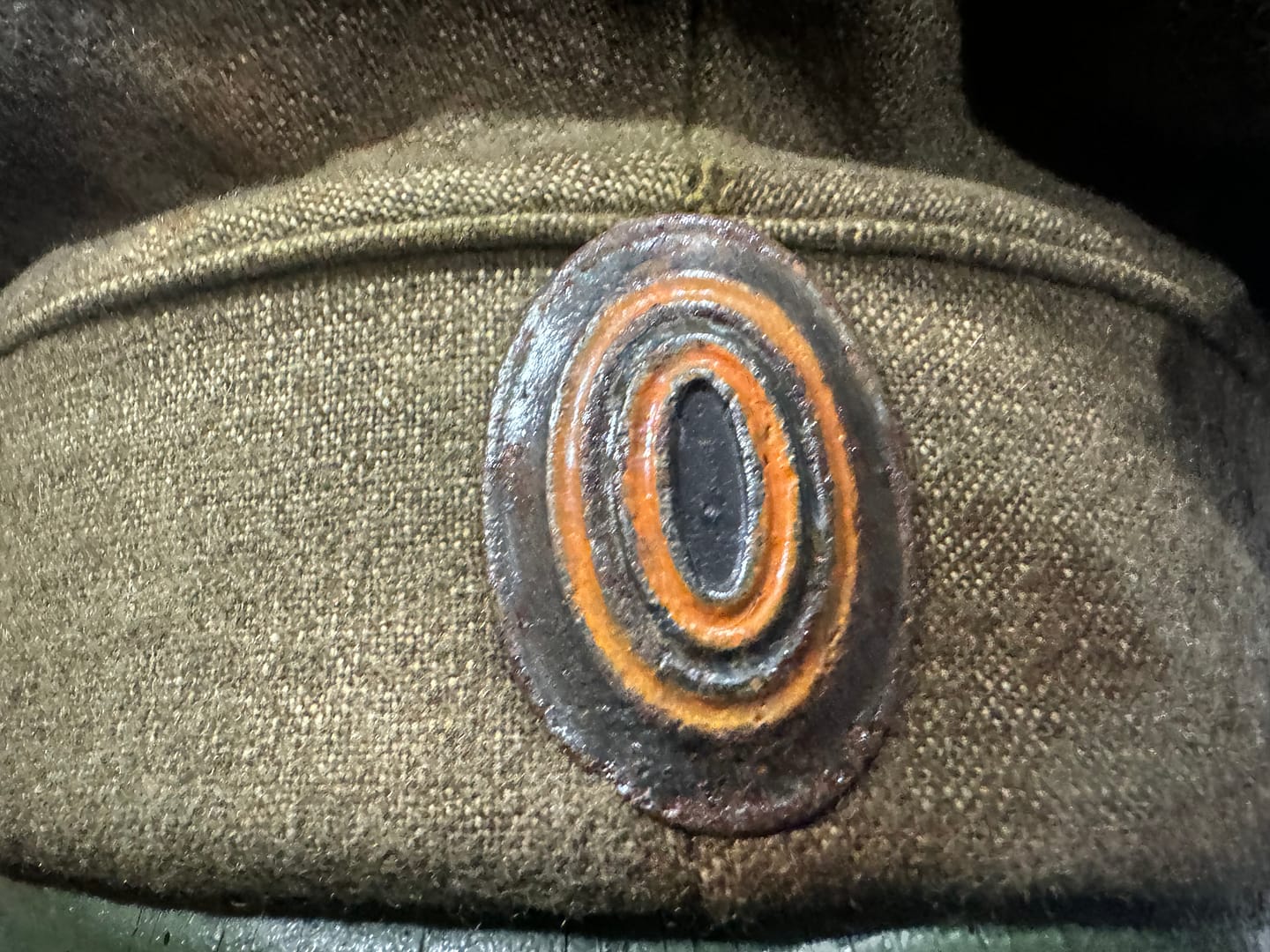
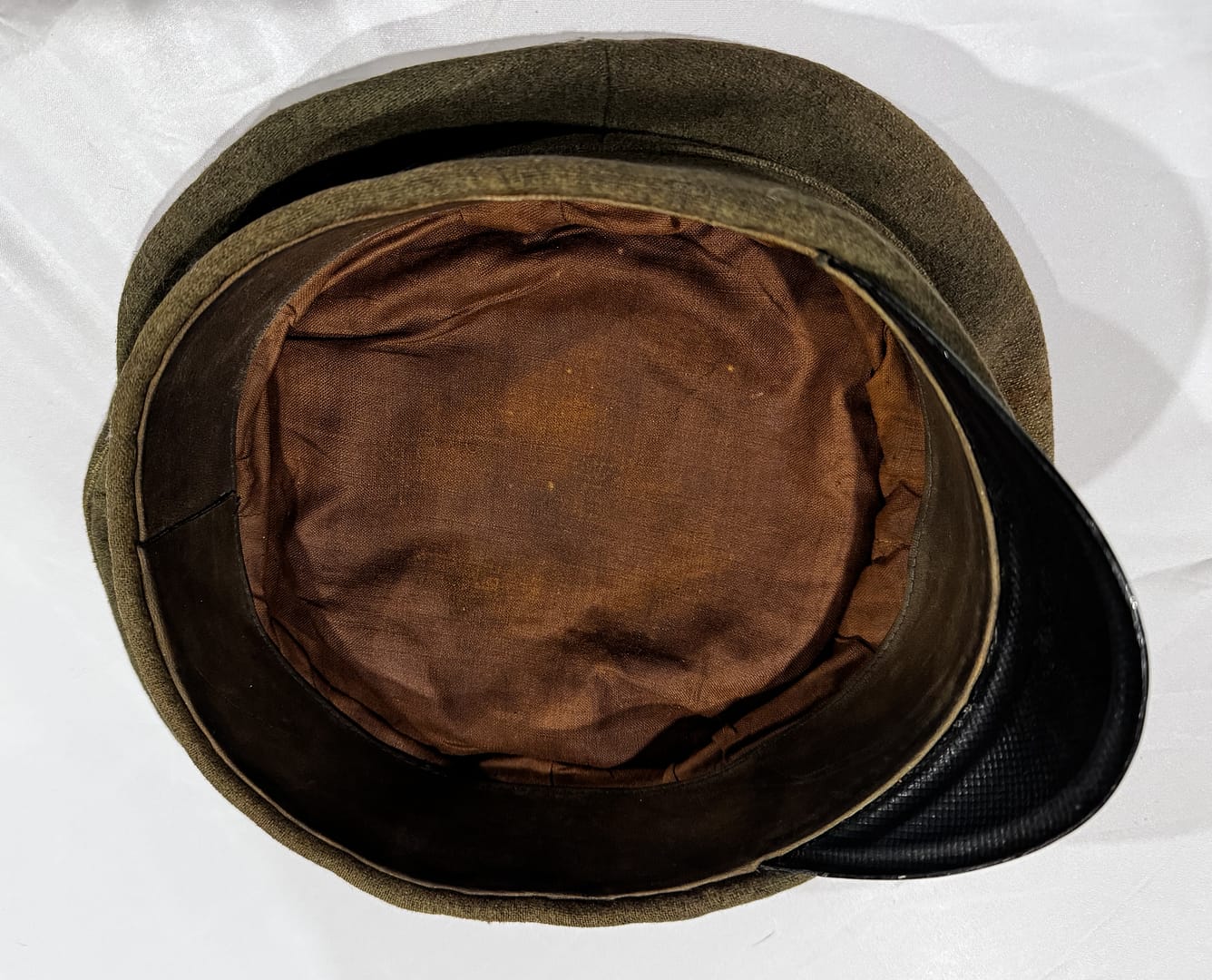
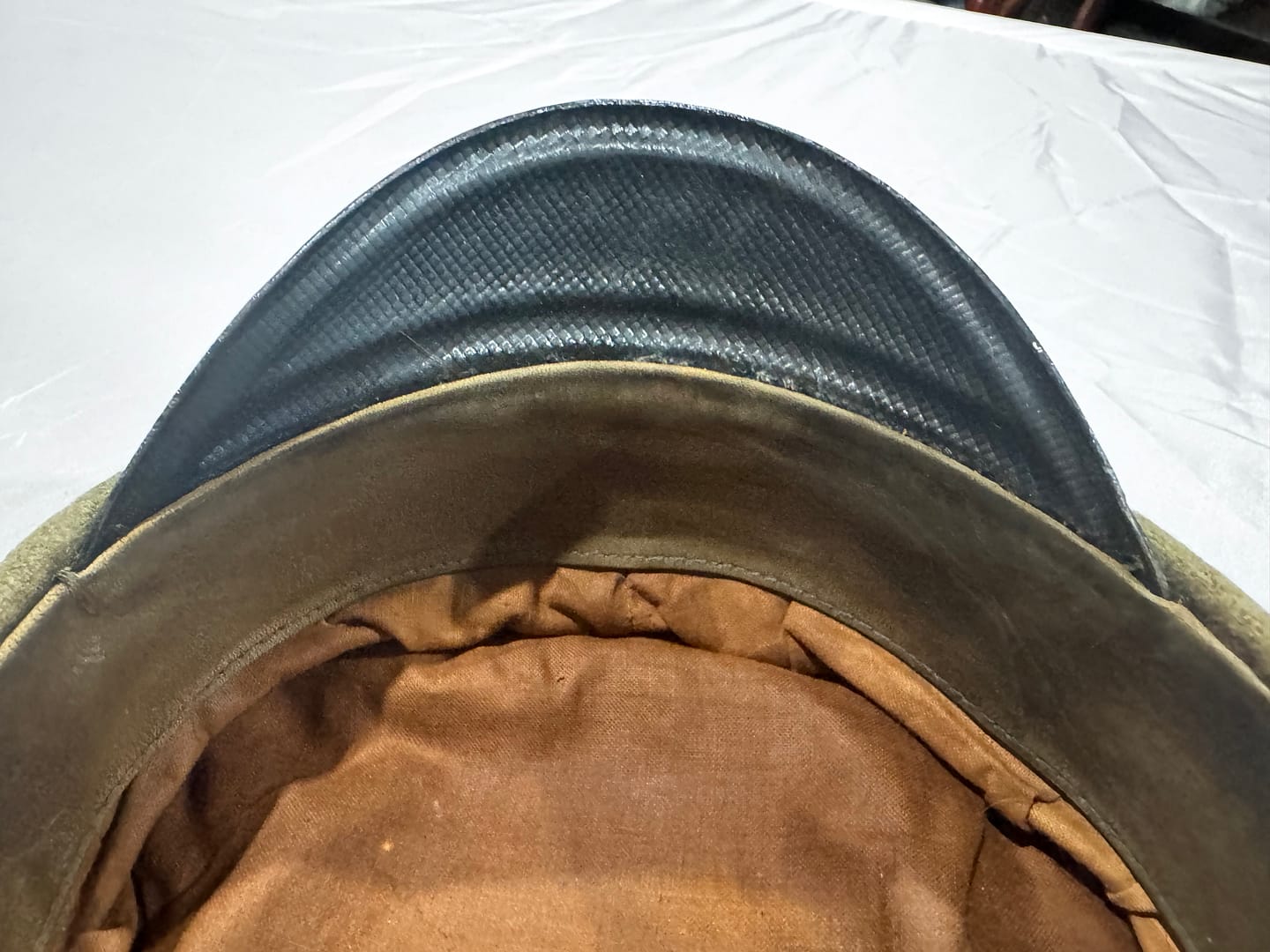
WW1 Imperial Russian M1907 field cap, from my personal collection
This Imperial Russian Model 1907 field cap represents the standard headgear worn by Russian soldiers during the First World War. Featuring the distinctive orange and black cockade badge symbolising imperial authority and a green painted visor, the cap reflects the traditional field dress of the Tsarist army. Such caps were widely worn across the vast Eastern Front and illustrate the identity and uniform traditions of Imperial Russian forces during the final years of the empire.

WW1 Imperial Russian Model 1897 wool Gymnastiorka tunic, 88th Artillery Regiment. From my personal collection.
This Imperial Russian Model 1897 wool gymnastiorka tunic is attributed to the 88th Artillery Regiment and represents the simple, practical field dress worn by Russian soldiers during the First World War. Characterised by its pullover design and stand collar, the gymnastiorka reflected the utilitarian approach of the Tsarist army. Such tunics were widely worn across the Eastern Front and illustrate both the scale of Russian mobilisation and the distinctive appearance of Imperial forces during the conflict.


WW1 Imperial Russian summer-weight medic tunic, from my personal collection
This Imperial Russian summer-weight medic tunic represents the lighter field dress worn by medical personnel of the Tsarist army during the First World War. Constructed from lighter material suited to warmer conditions, such tunics reflect the practical adaptations required for service across the diverse climates of the Eastern Front. Medical uniforms illustrate the essential role of battlefield medicine and the support services that sustained large armies during industrialised warfare.


ITALY
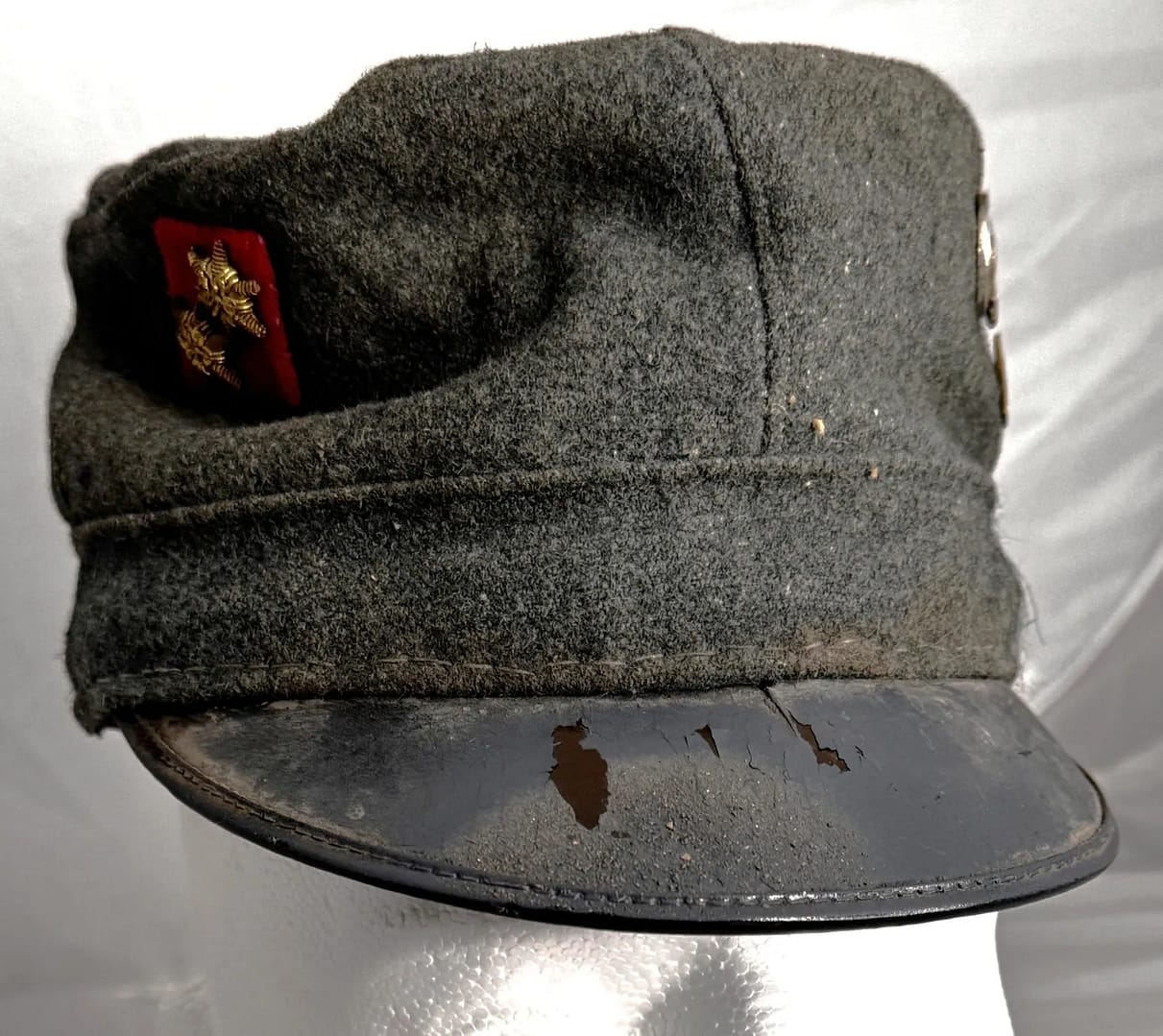
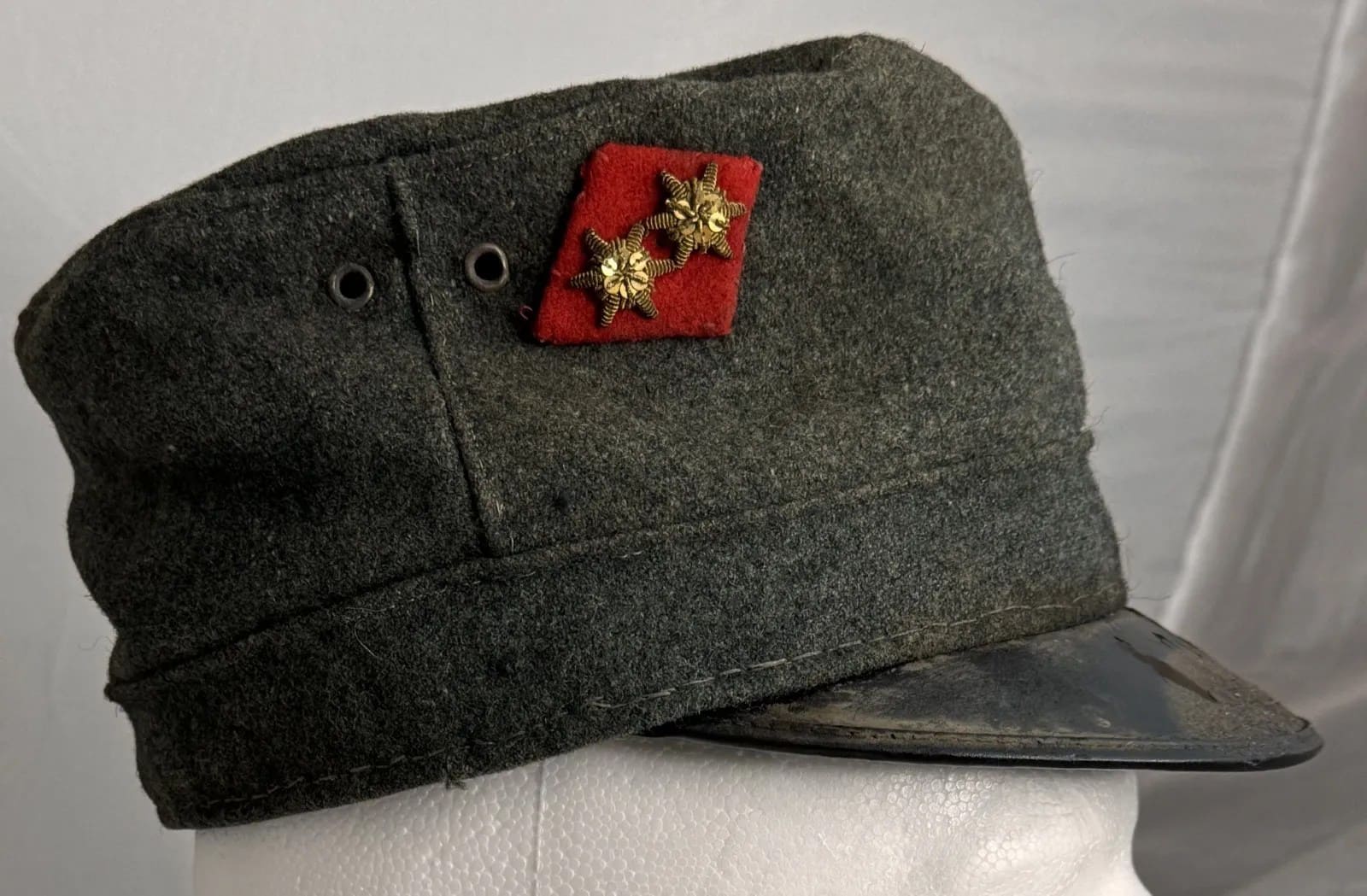
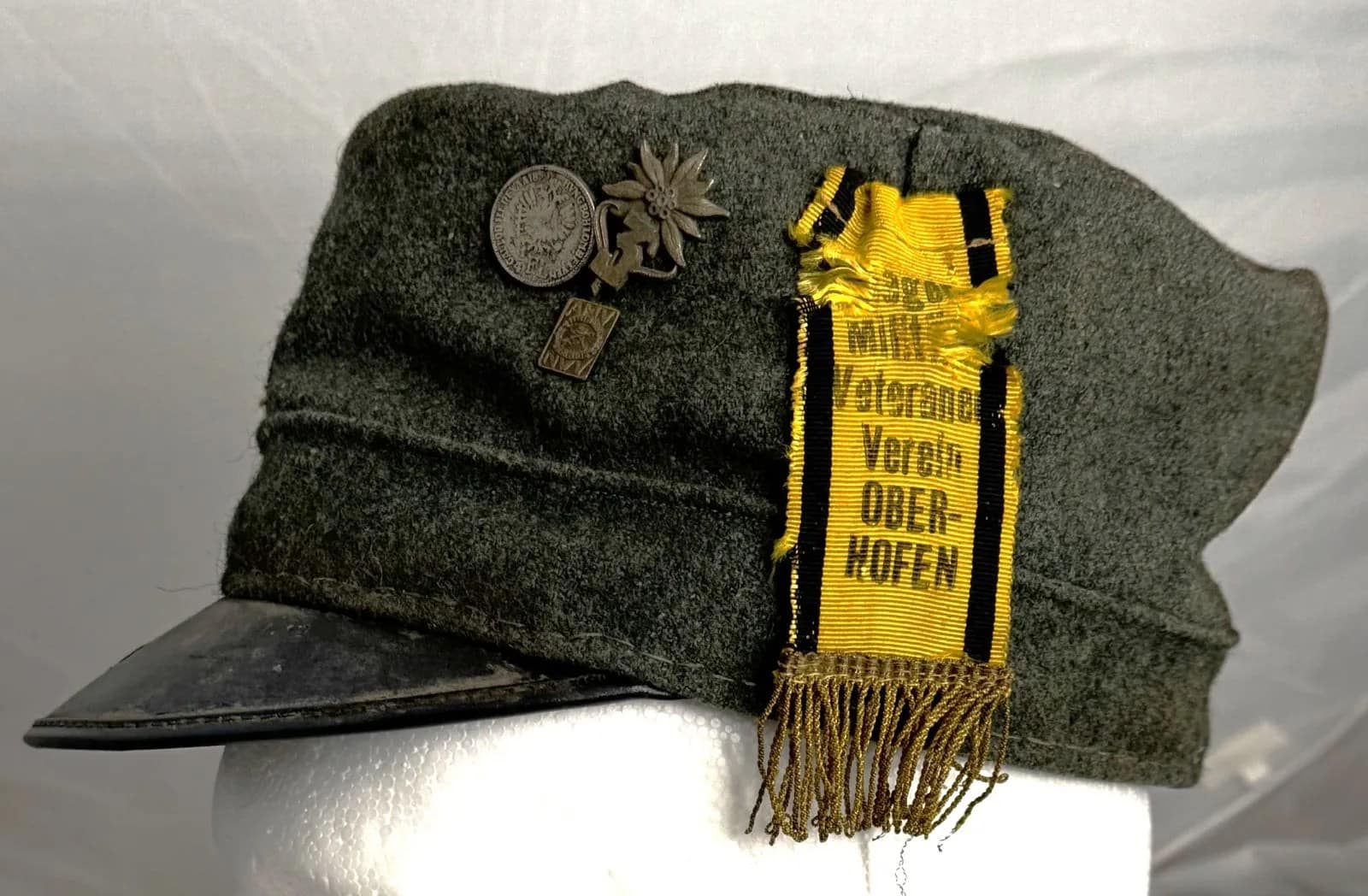
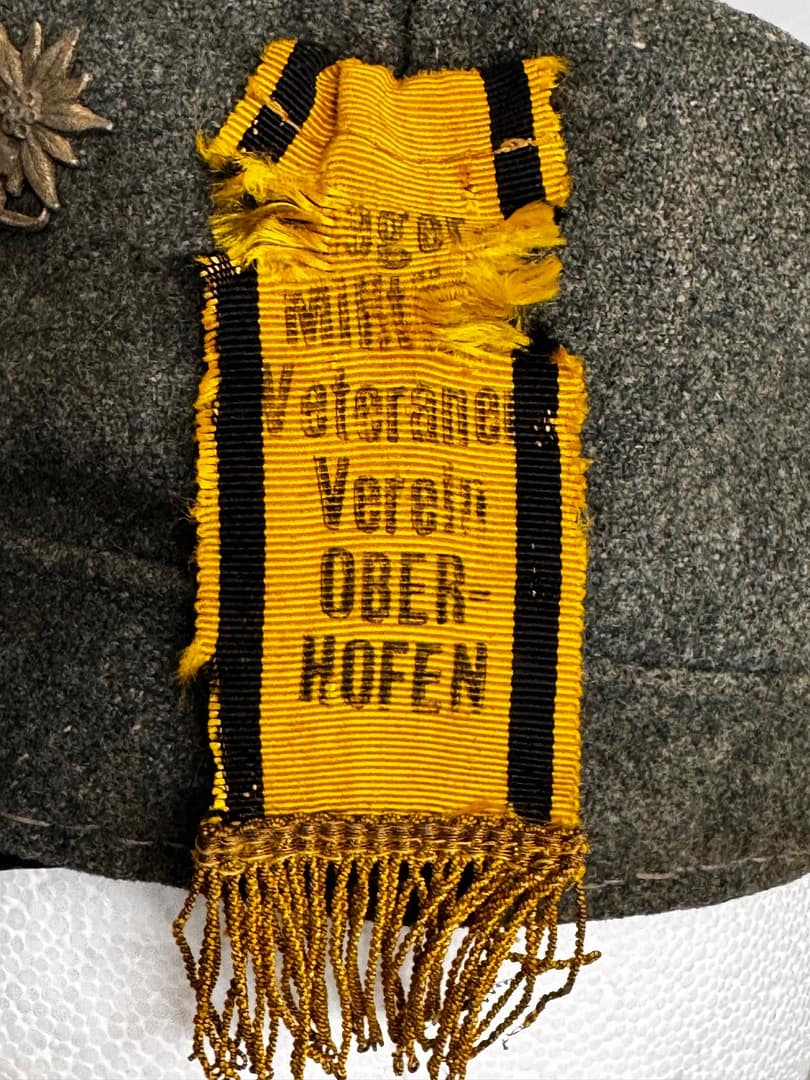
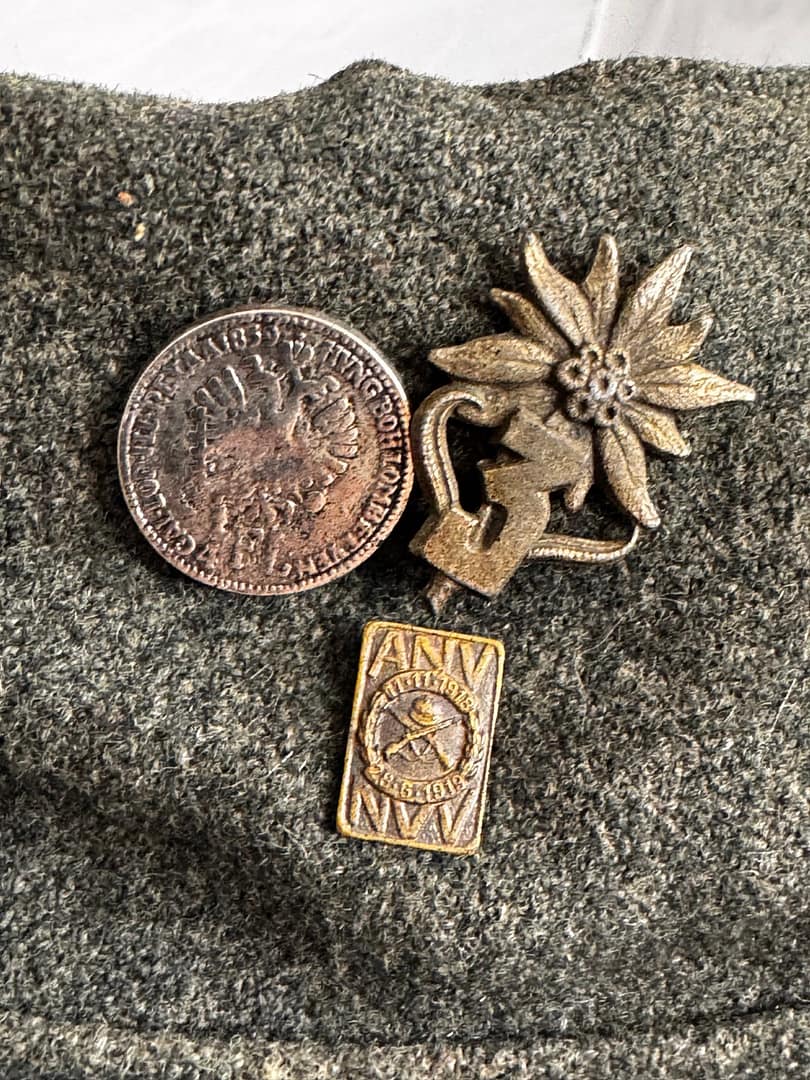
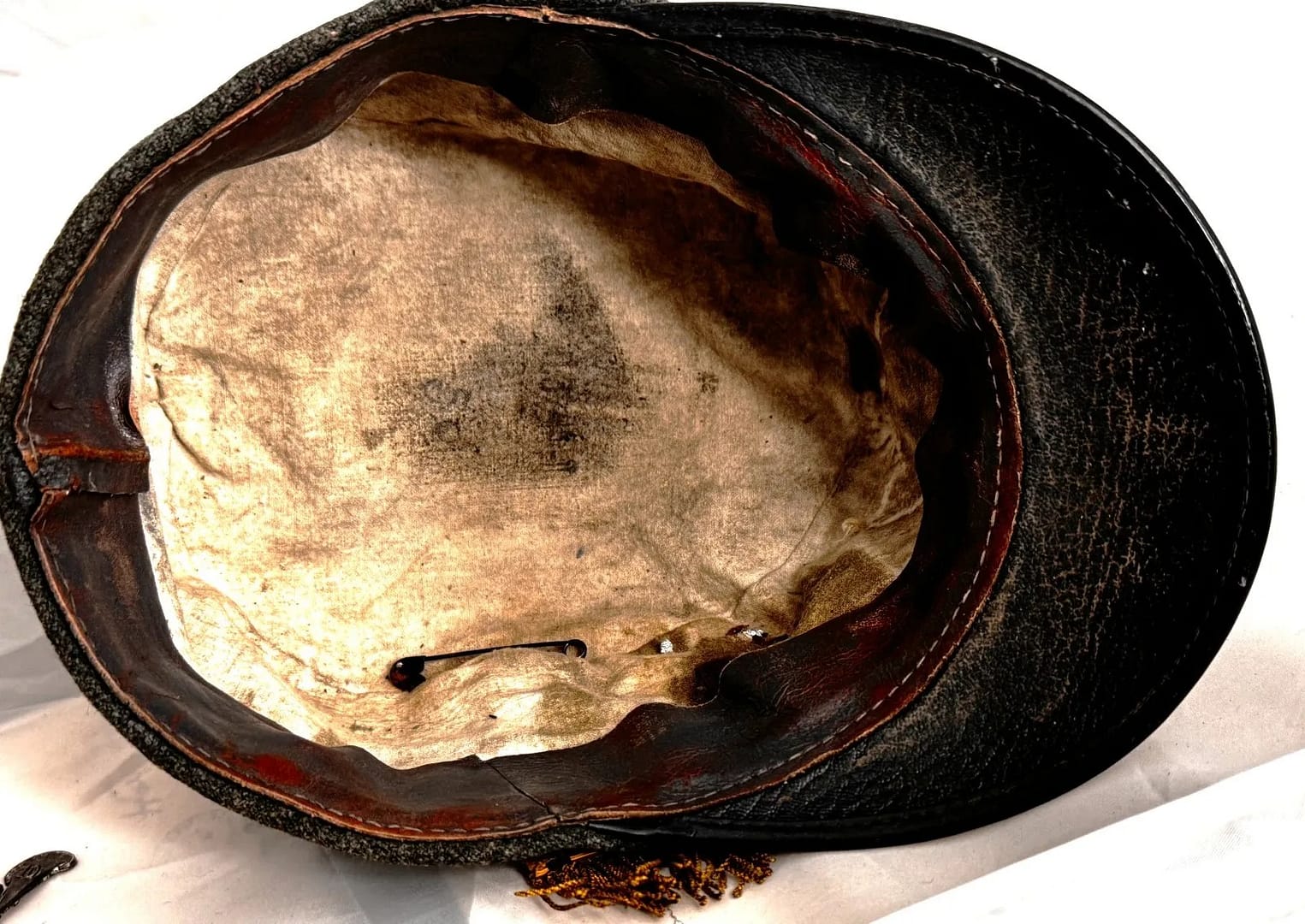
WW1 Italian Model 1909 Grigio Verde Cap with Austrian Veteran Badges
This Italian Model 1909 cap, in distinctive grigio verde cloth, reflects the field uniform adopted by the Italian Army during the First World War. This example was taken as a battlefield trophy by an Austro-Hungarian soldier and later decorated with Austrian veteran badges, illustrating the personal and symbolic practices that often followed the war. Such items provide insight not only into military dress but also into the ways soldiers preserved souvenirs and commemorated their service after the conflict.
Italian First World War Alpini Cappello with black raven feather
This Italian First World War Alpini cappello, complete with its distinctive feather, represents the iconic headgear of Italy’s elite mountain troops. The felt hat, worn with a feather denoting unit or rank, symbolised the identity and traditions of the Alpini, who fought in some of the most challenging alpine terrain of the war. The cappello reflects the specialised equipment and strong esprit de corps of troops operating in the high mountains along the Italian Front.

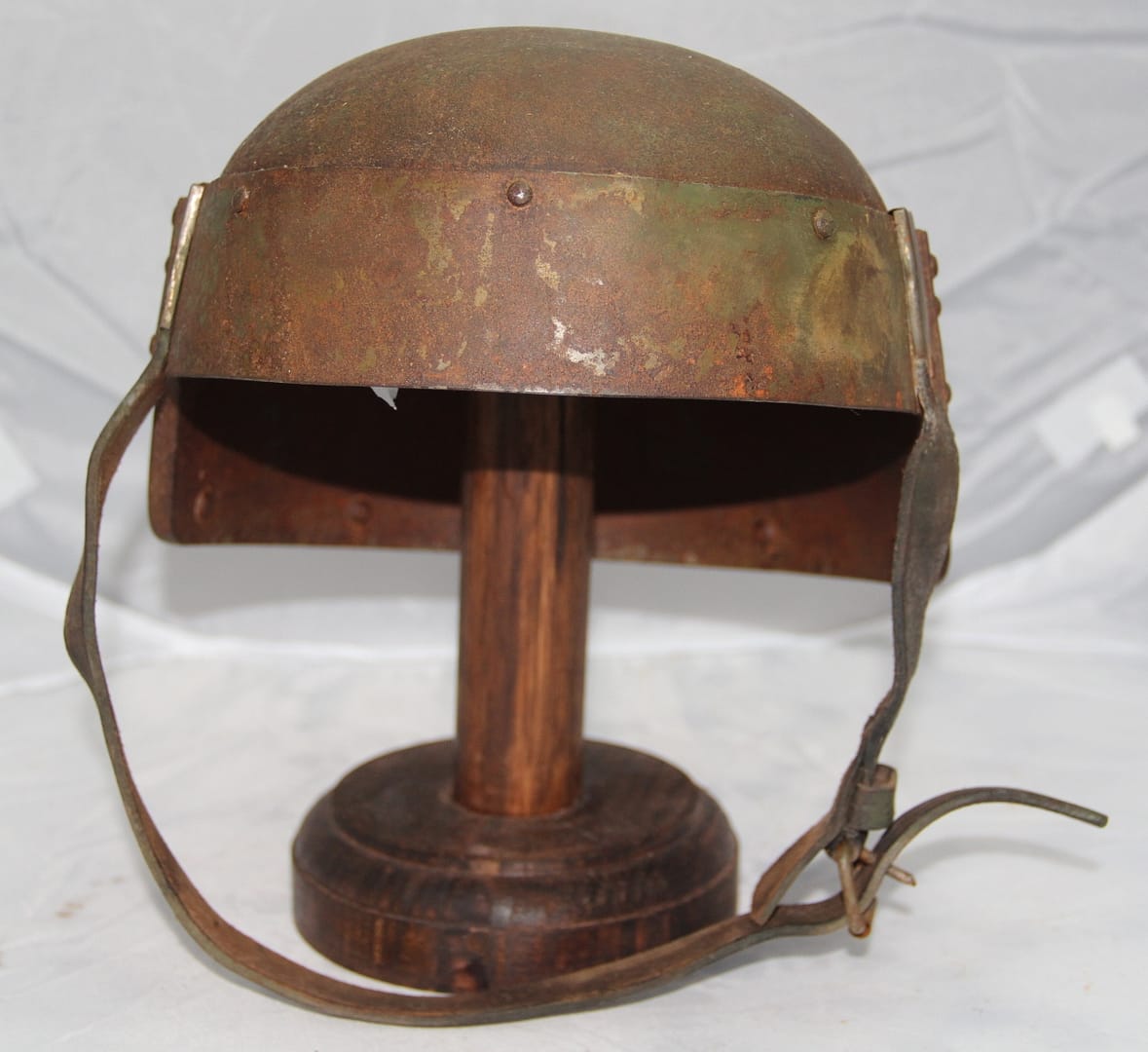
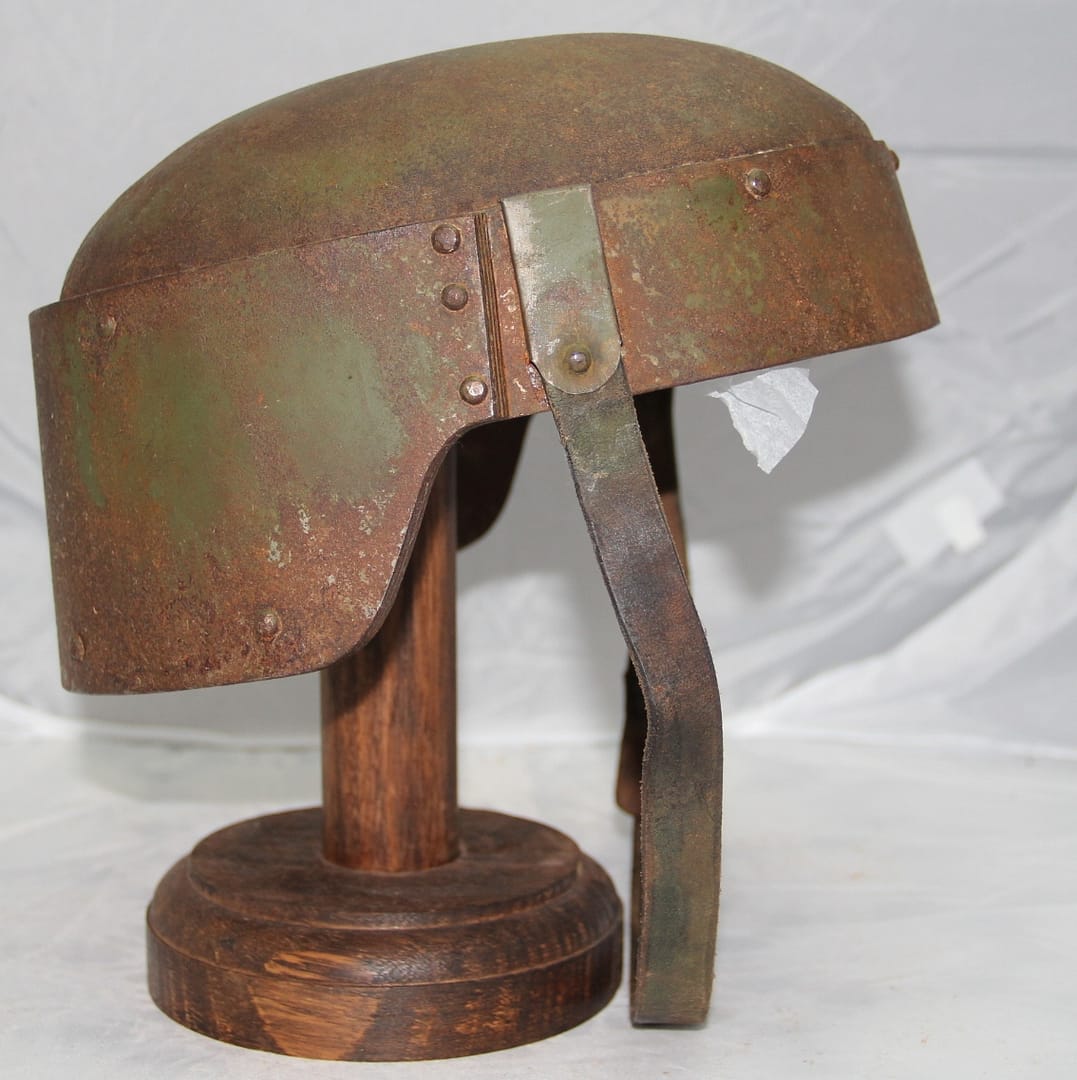
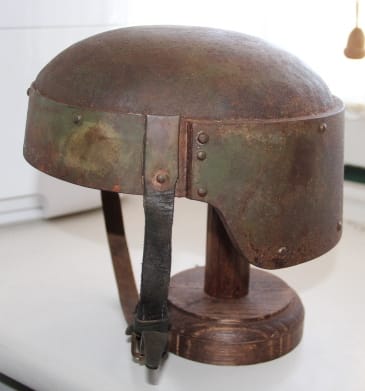
WW1 Italian Pioneer (engineer) helmet with night-vision device for tunnelling
This Italian Model 1915 Adrian helmet is a pioneer (engineer) variant finished in distinctive grigio-verde paint and notable for its one-piece manufacture. Equipped with a simple tunnelling “night-vision” device — a candle holder — the helmet reflects the specialised role of Italian engineer troops engaged in trench construction, mining, and underground warfare along the Italian Front. Such adaptations illustrate the improvisation and technical demands of industrialised warfare in mountainous and fortified environments.

WW1 Italian M1909 cotton summer tunic, red/black collar. Brigada Brescia 19th and 20th Infantry Regiments. From my personal collection
This Italian Model 1909 Grigio-Verde ((Grey-Green) enlisted man’s summer weight tunic is attributed to Brigada Brescia 19th and 20th Infantry Regiments with distinctive red anc black collar tabs. The tunic reflects the traditions and distinctive identity of Italian Army units with their relatively modern appearance by comparison with many other European armies of the period.


WW1 Italian Model 1909 officer’s tunic for a Bersaglieri Lieutenant. From my personal collection.
This Italian Model 1909 officer’s tunic is attributed to a lieutenant of the Bersaglieri and features the distinctive magenta regimental collar tabs associated with Italy’s elite light infantry. Designed as pre-war service dress and worn during the early stages of the First World War, the tunic reflects the traditions and distinctive identity of Bersaglieri units. It illustrates both officer field dress and the continuity of Italian uniform styles during the transition to modern warfare.


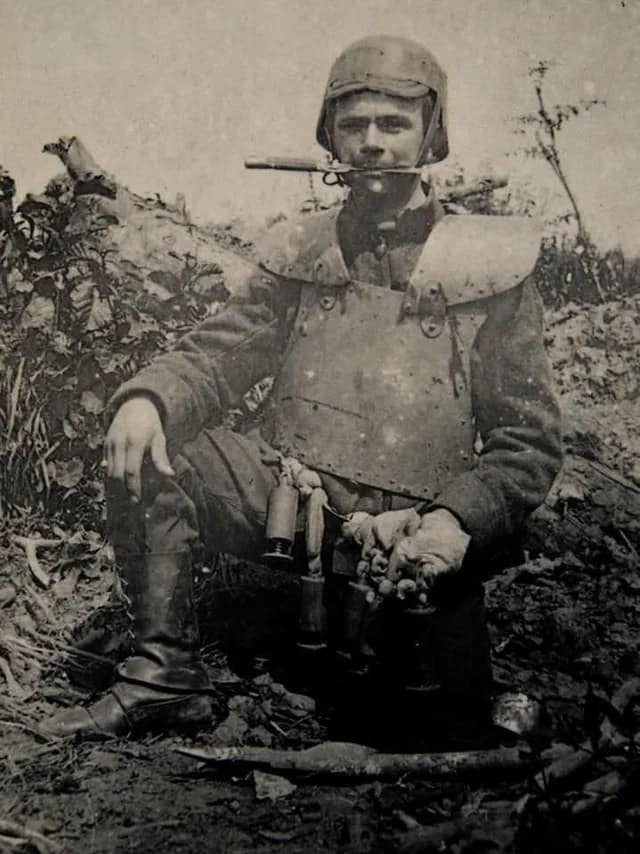
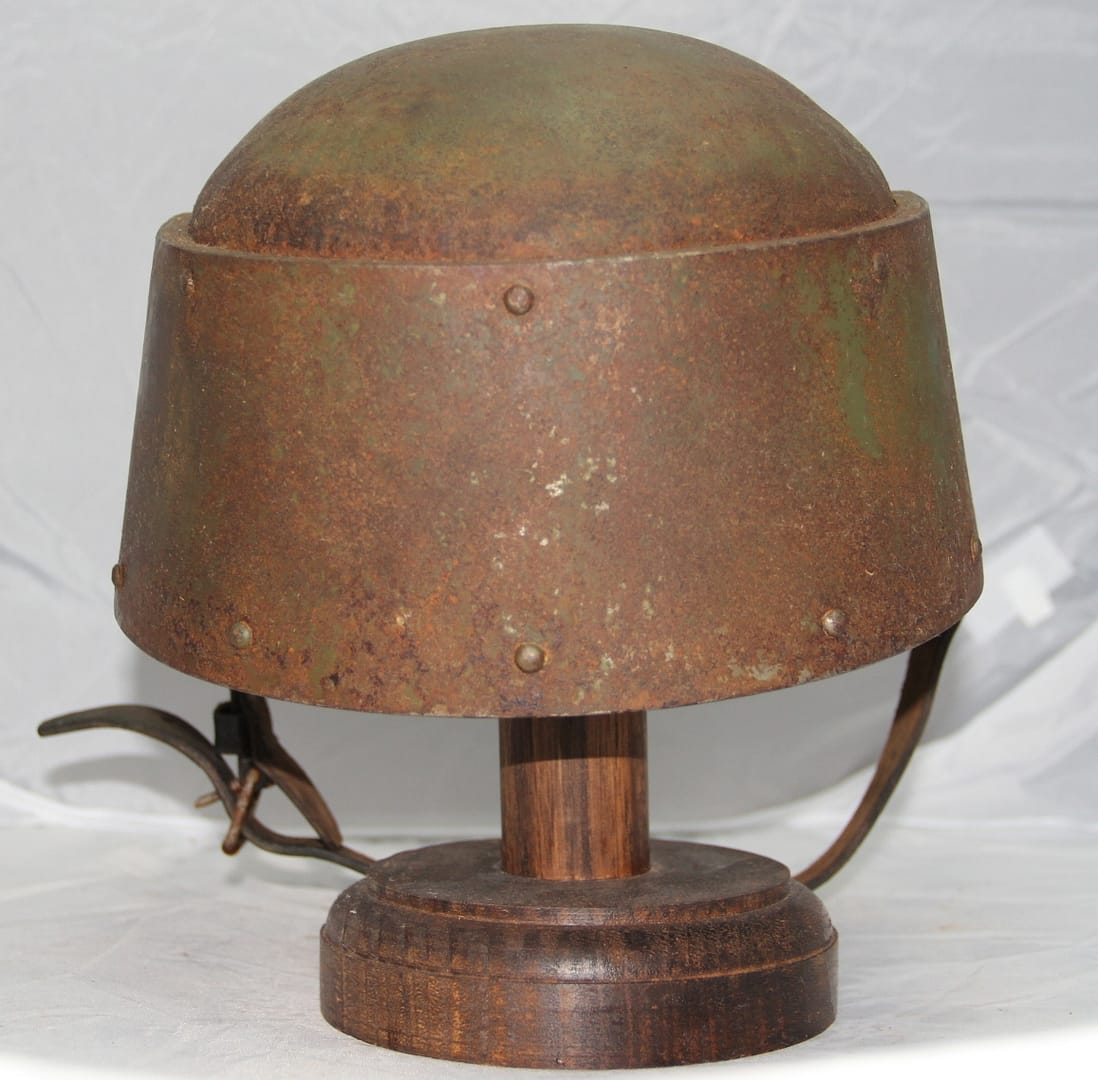
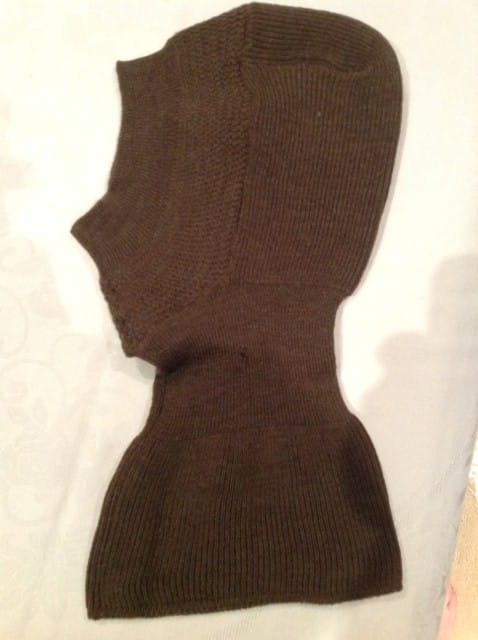
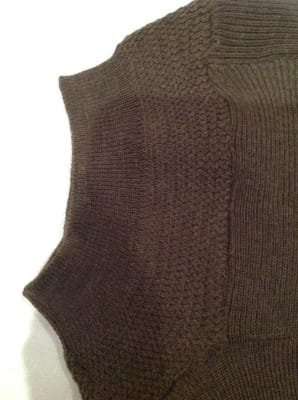
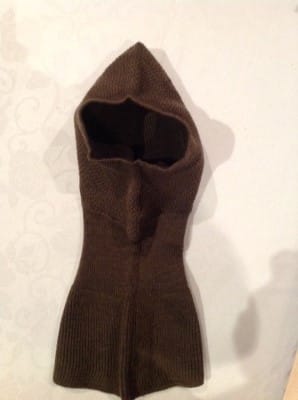
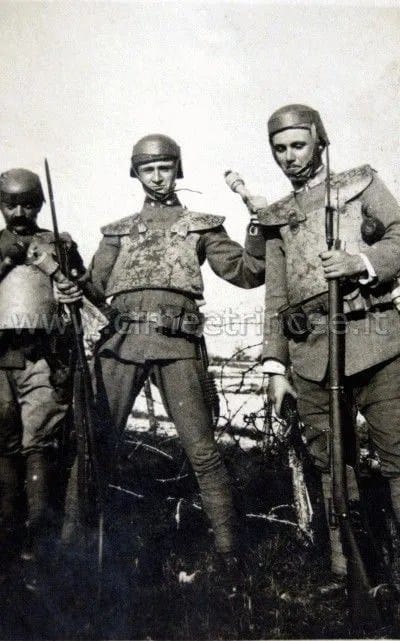
WW1 Italian ‘Arditi’ (the daring ones) assault helmet and Arditi balaclava (worn under the helmet), from my personal collection
This Italian First World War Arditi assault helmet and accompanying balaclava represent the specialised equipment of Italy’s elite shock troops, known as the “Arditi” — the daring ones. Developed for close-quarters assault operations, the helmet offered improved protection while the balaclava provided warmth and comfort under combat conditions. The set reflects the emergence of dedicated assault units late in the war and illustrates the evolution of equipment designed for trench raids and shock tactics on the Italian Front.
ROMANIAN
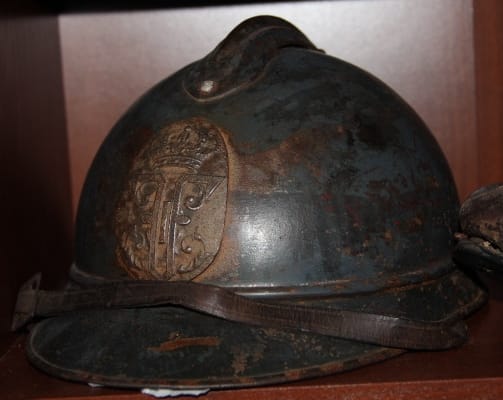
WW1 Romanian Adrian Helmet
This Romanian First World War Adrian helmet features the distinctive “Double F” frontplate for King Ferdinand I, representing the Romanian Army during its participation in the conflict from 1916. Based on the French Model 1915 design, the helmet provided protection against shell fragments and reflected the influence of Allied equipment on Romanian forces. The frontplate symbolises national identity and the modernisation of Romania’s army during the First World War.
JAPAN
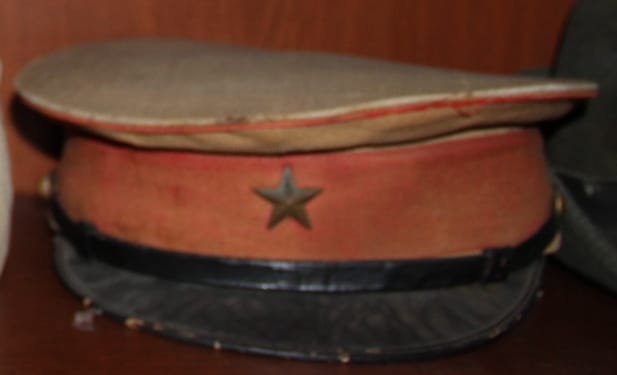
WW1 Japanese P1912 field cap
This Japanese Pattern 1912 field cap represents the standard headgear worn by soldiers of the Imperial Japanese Army during the early twentieth century, including the First World War period. Characterised by its simple, practical design, the cap reflects Japan’s modernised military following its late nineteenth-century reforms. Such field caps illustrate the appearance of Japanese forces during overseas operations and the broader adoption of contemporary military uniform styles.
SERBIA
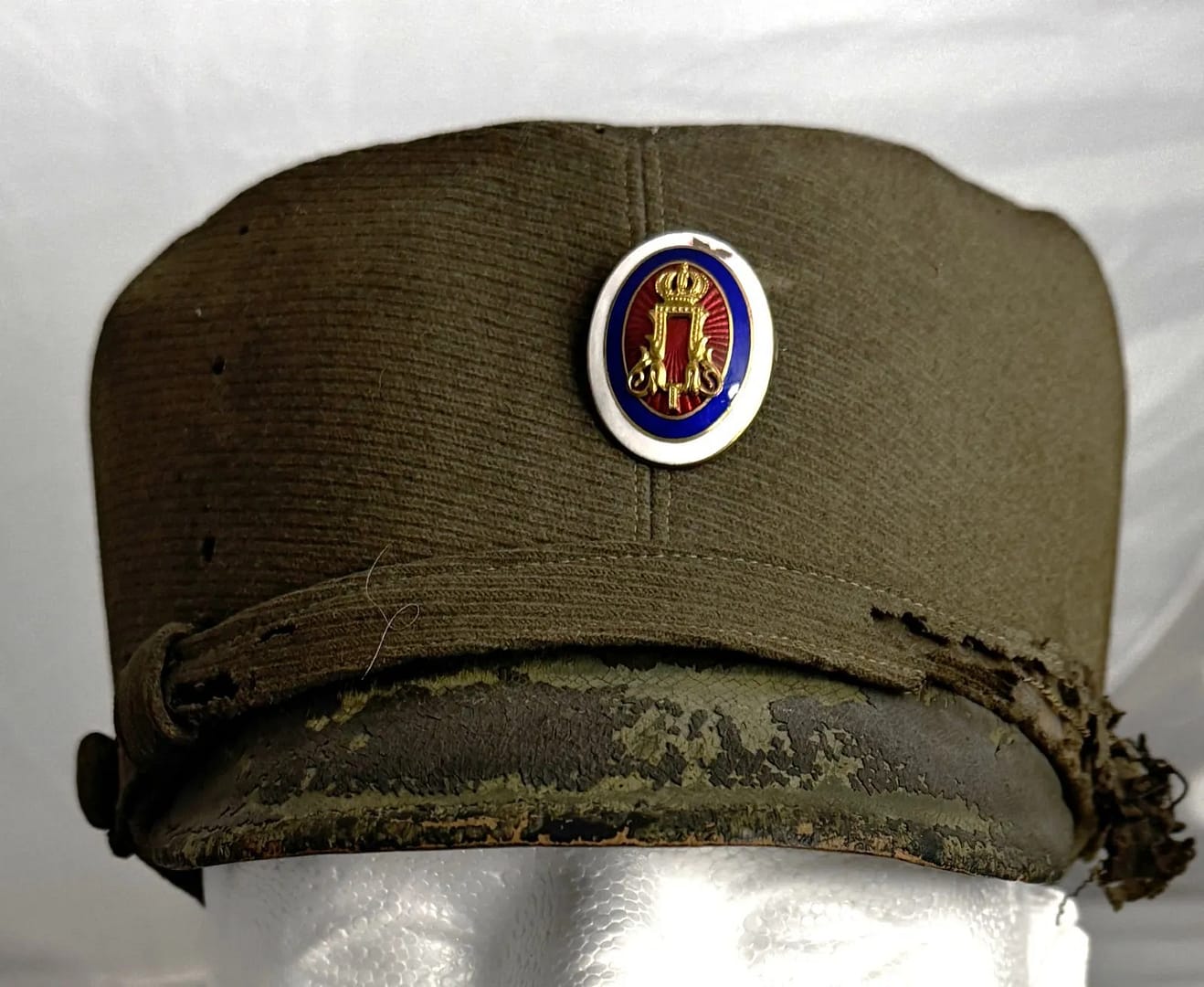
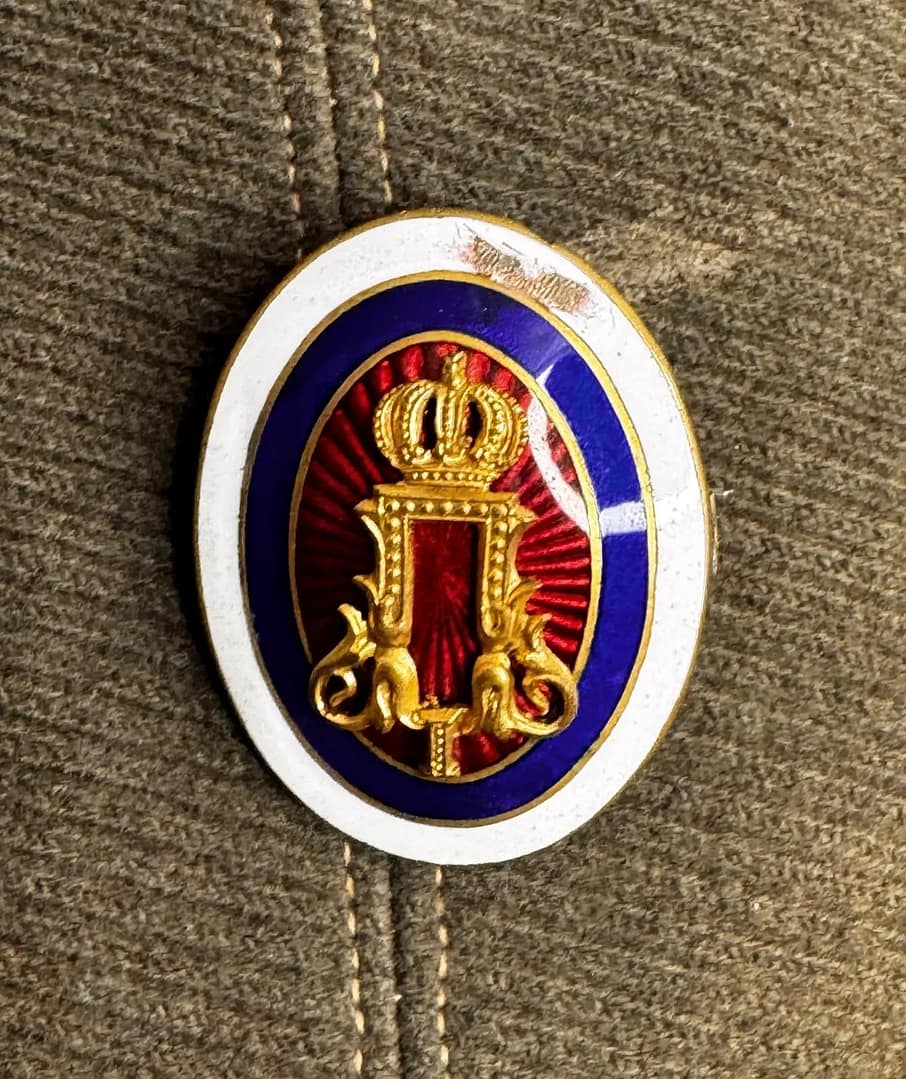
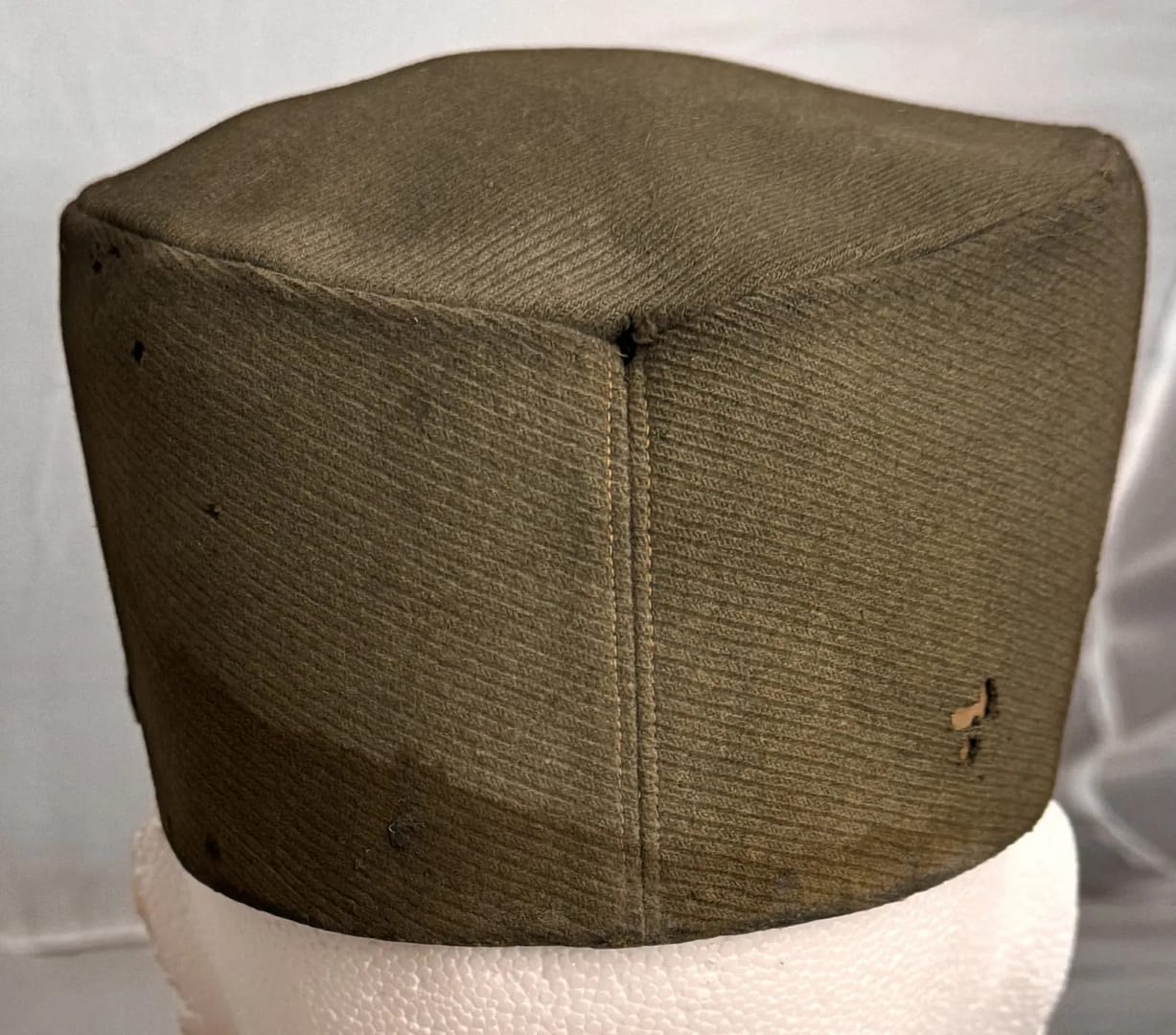
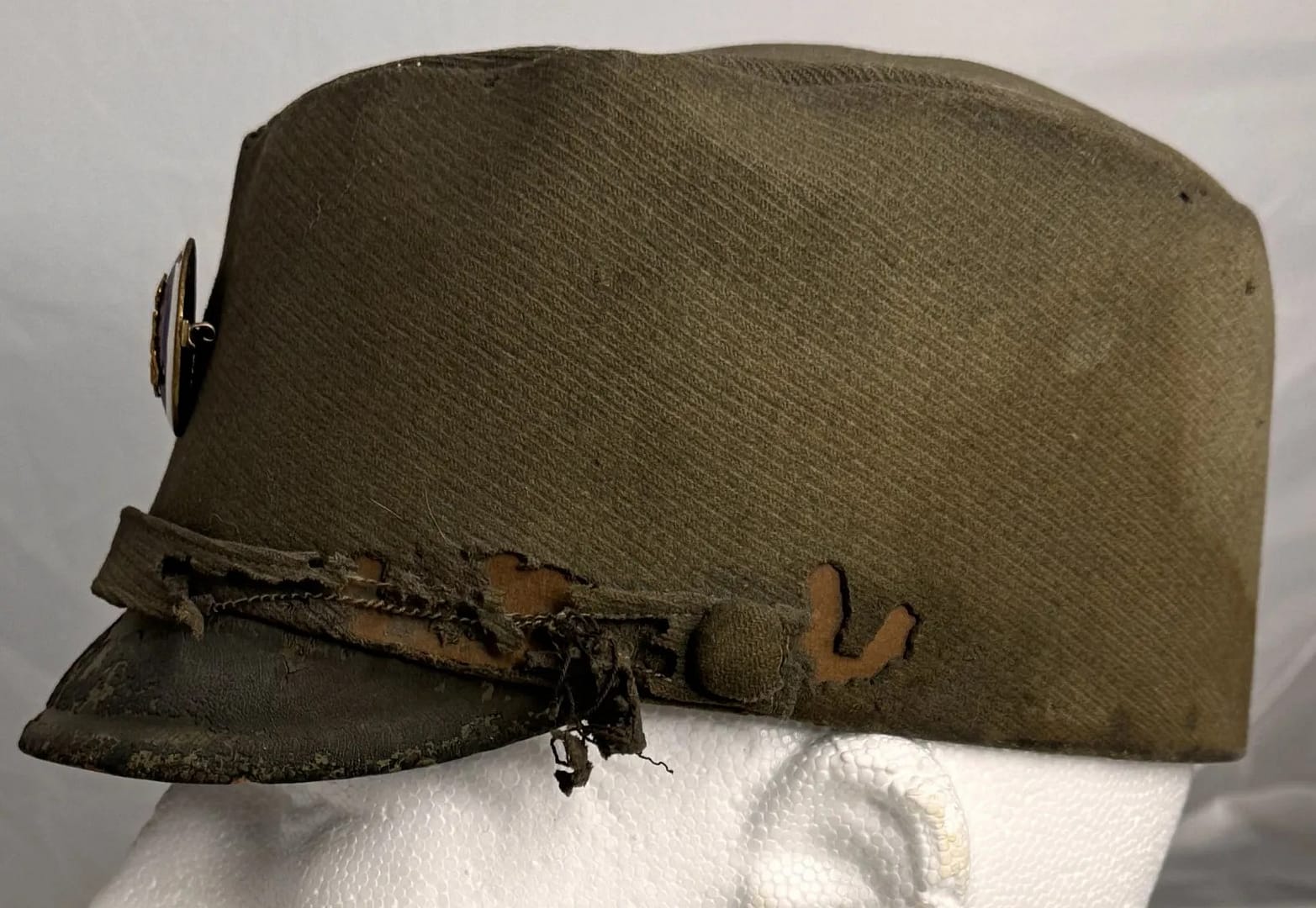
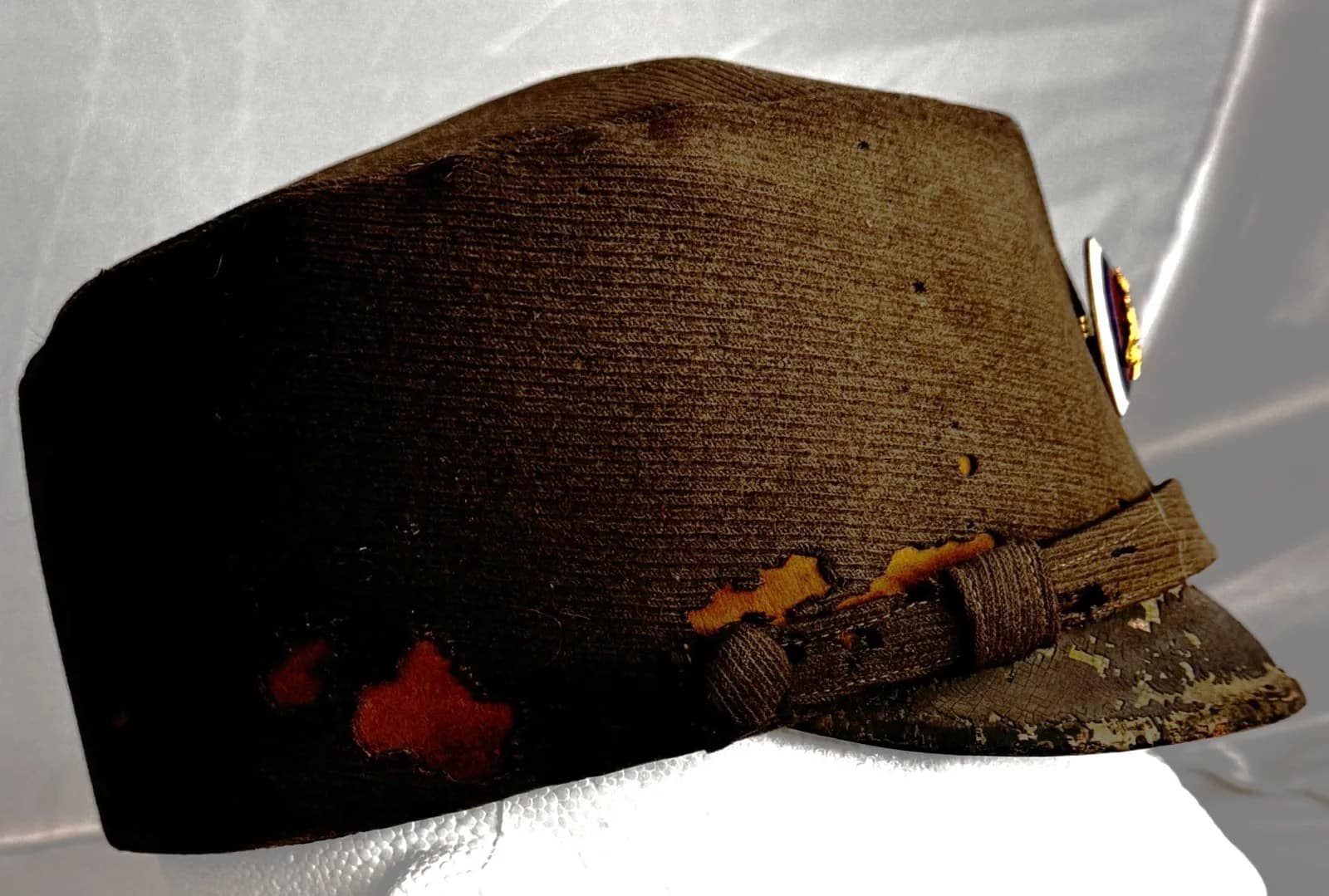
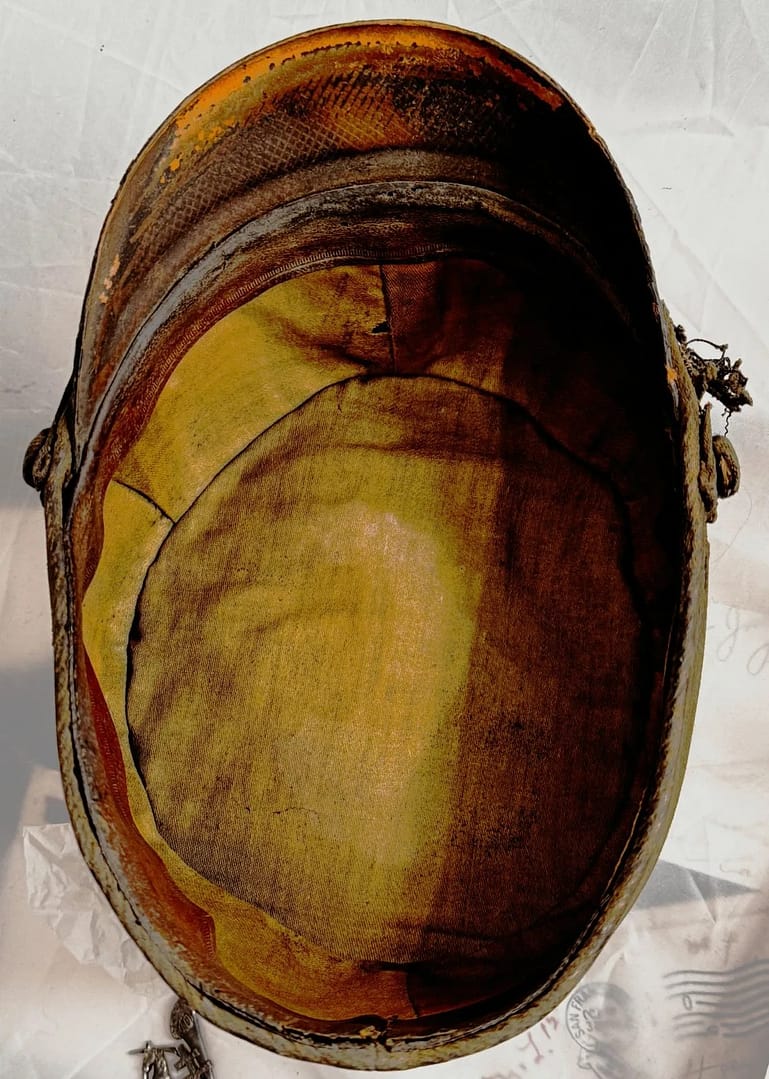
WW1 Serbian officer’s peaked cap
This Serbian First World War officer’s peaked cap, featuring a distinctive dipped crown, represents the field dress worn by officers of the Serbian Army during one of the conflict’s most hard-fought campaigns. The cap reflects national uniform traditions and the appearance of Serbian forces during operations against Austro-Hungarian, German, and Bulgarian armies.
CZECH LEGIONS
WW1 Czech Legion Western Front 1915 Adrian helmets
These First World War Adrian helmets, worn by soldiers of the Czech Legion on the Western Front, feature distinctive Czech lion frontplates symbolising national identity and the struggle for independence. Based on the French Model 1915 design, the helmets provided protection against shell fragments and reflected the integration of Czech volunteer forces within Allied armies. Such helmets illustrate both the emergence of Czech national military symbols and the diverse composition of forces fighting on the Western Front.


WW1 Czech Legion in Italy peaked cap
Almost certainly a replica. This First World War peaked cap, finished in Italian grigio verde, is attributed to the Czech Legion serving on the Italian Front. The cap reflects the integration of Czech volunteer units within Allied forces and the adoption of Italian uniform styles during operations against Austro-Hungarian forces. Such items illustrate both the evolving identity of the Czech Legion and the multinational character of the First World War.
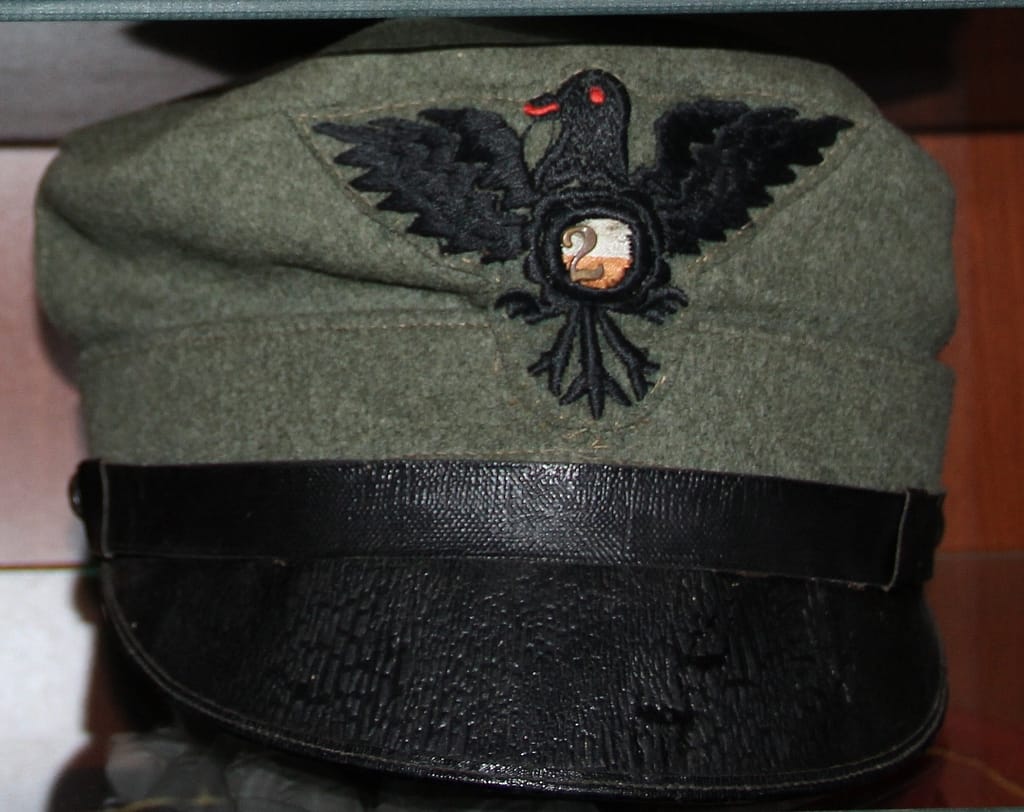
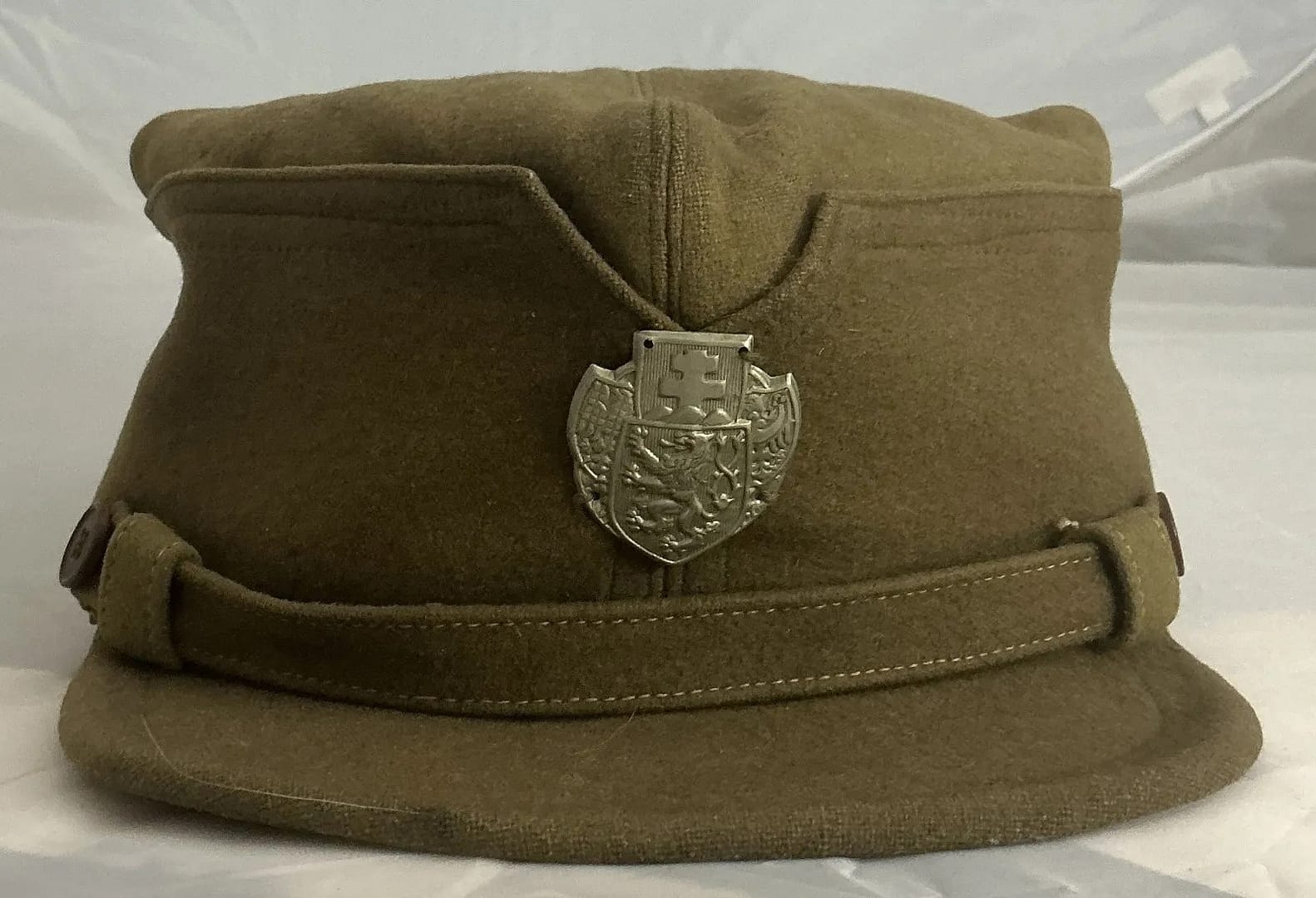
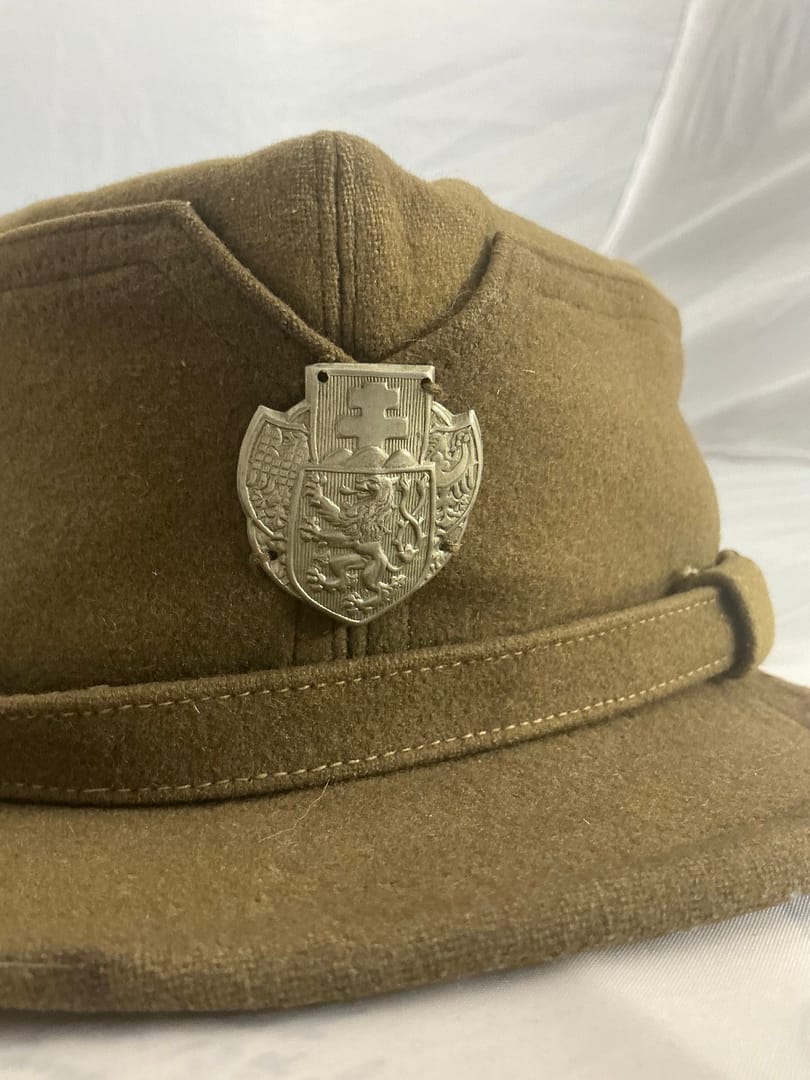
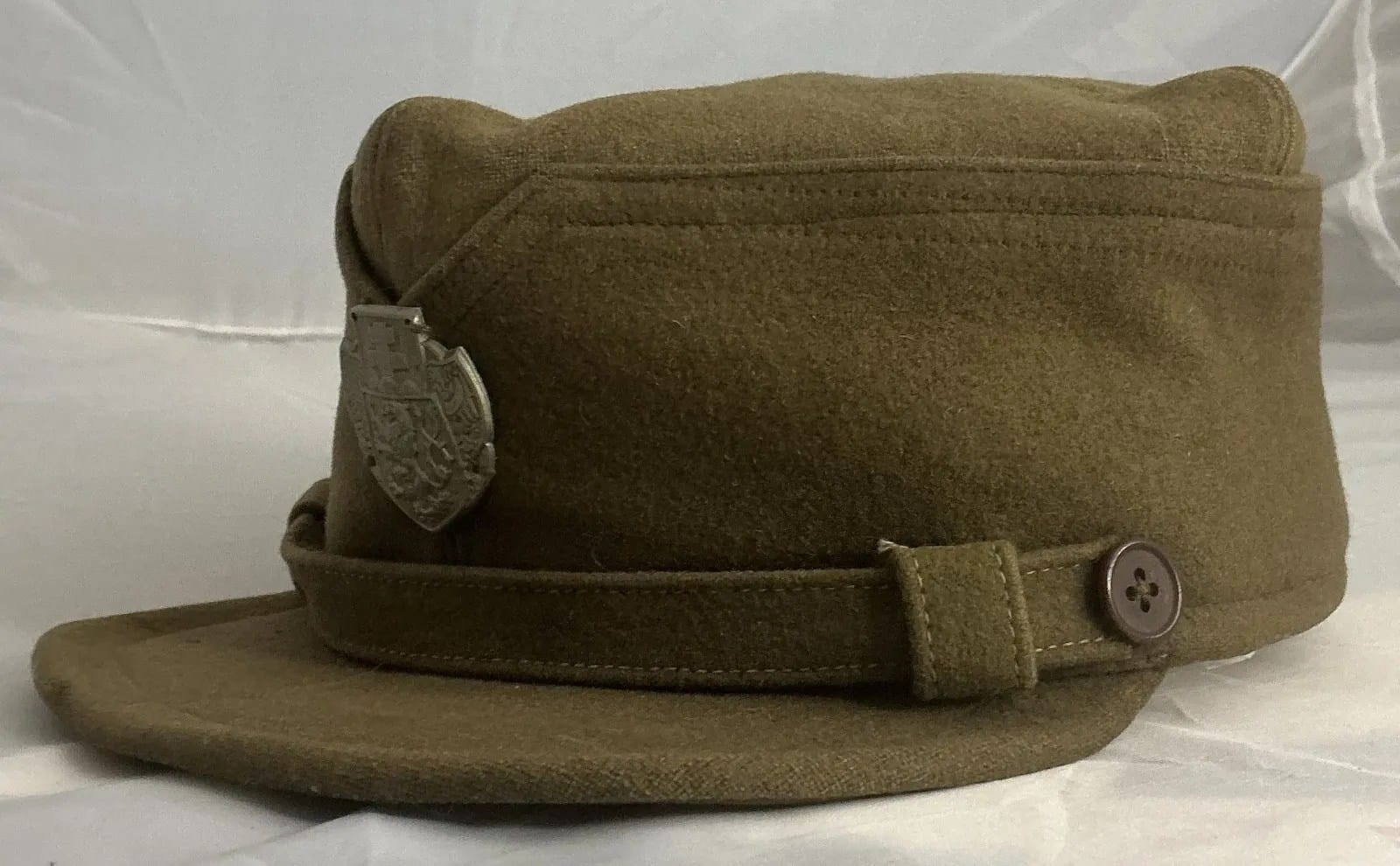
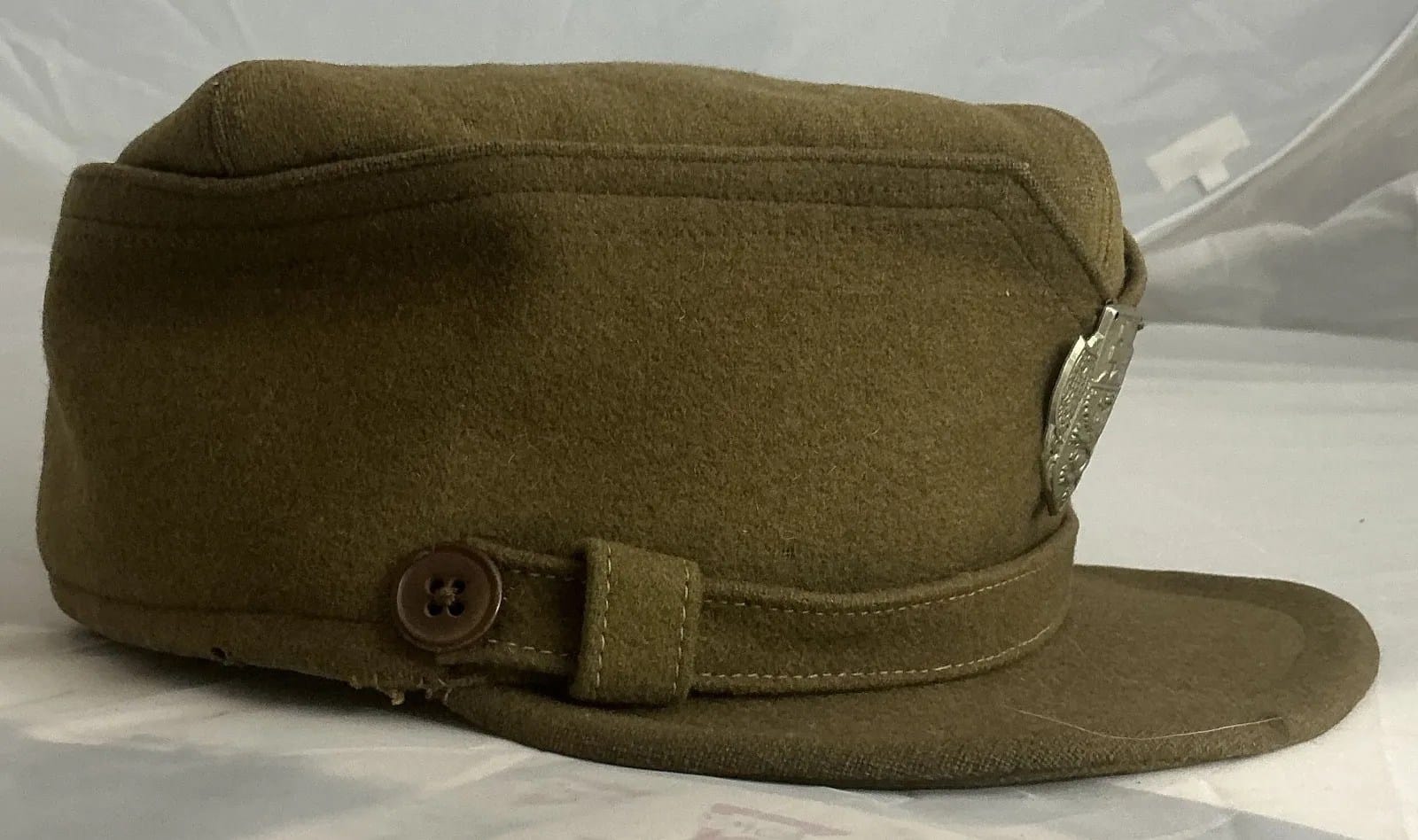
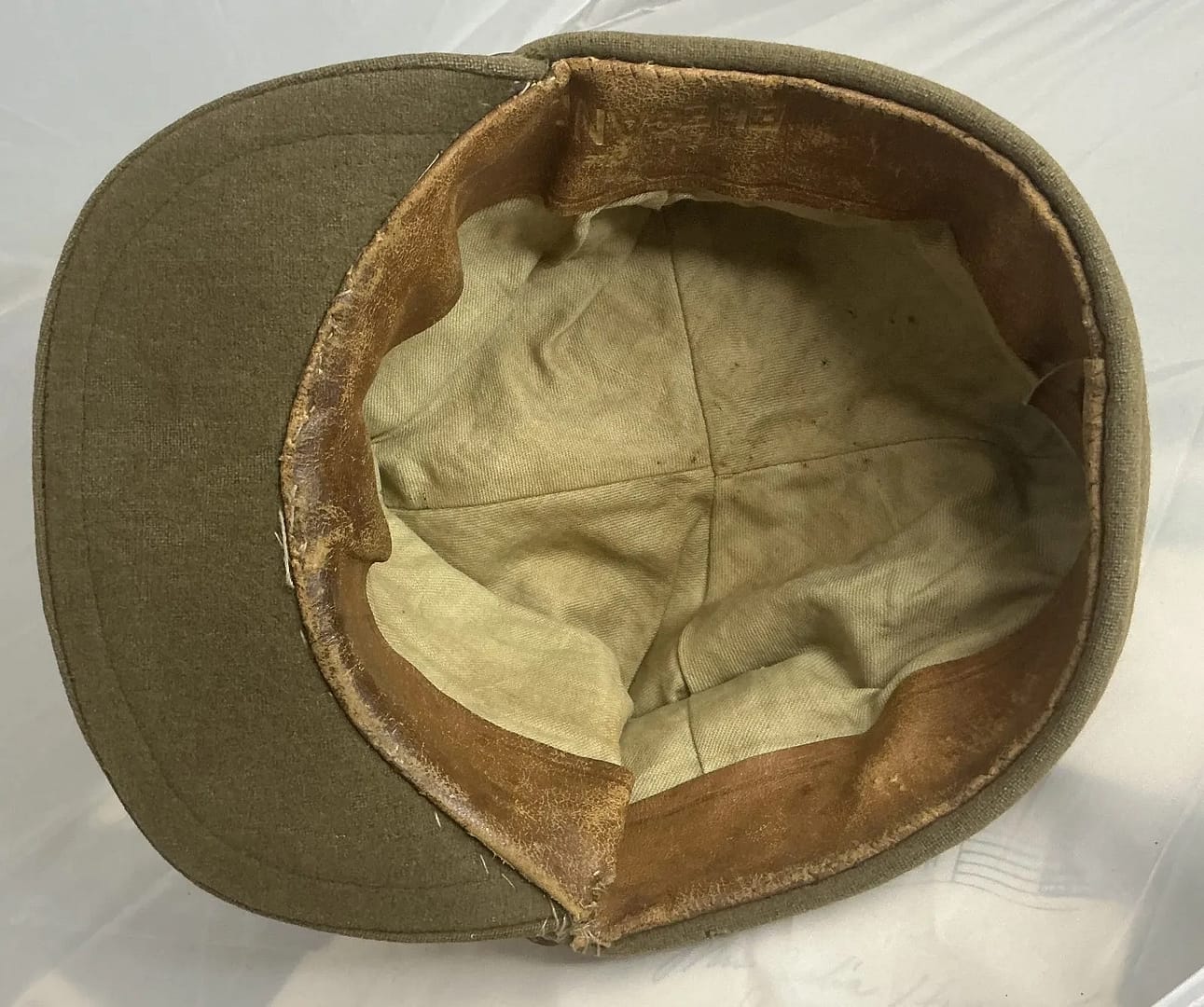
WW1 / Russian Civil War Czechoslovak legion peaked soft cap, from my personal collection.
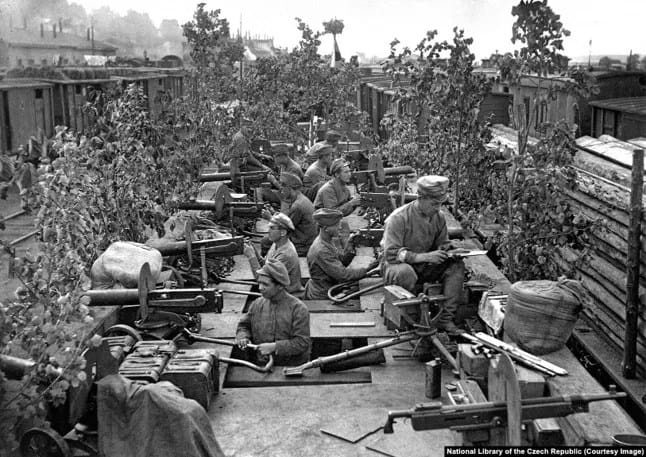
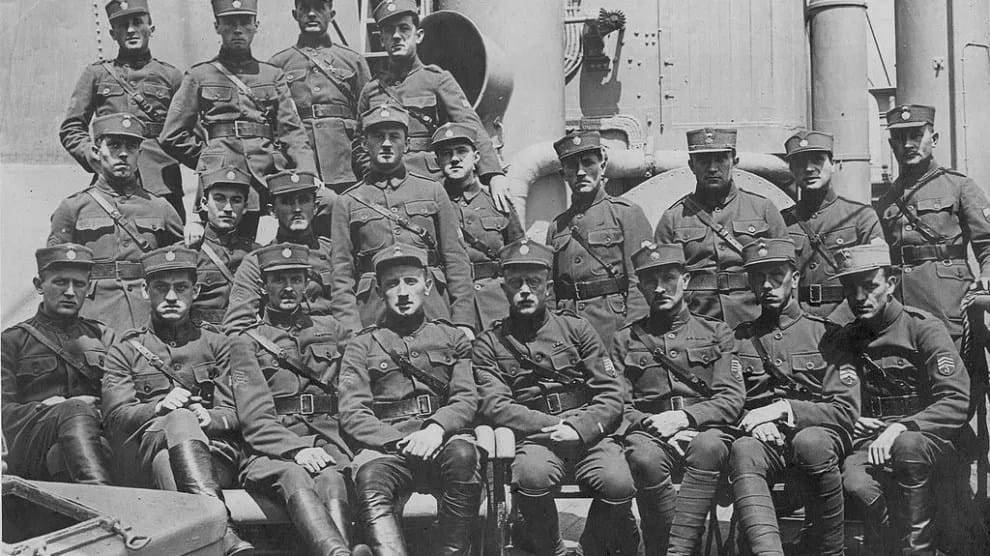
The Czechoslovak Legion was originally comprised of Czech and Slovak volunteer units raised for service in the Imperial Russian Army during the early part of WW1. By 1917, the Czech Legion was recruitiung dirctly from Czech and Slovak prisoners of war from the Austro-Hungarian Army. When Bolshevik Russia made a separate peace with Germany, the Allies wanted to
1. Protect the massive quantities of stores thay had shipped to Russia,
2. Assist the 40,000 man Czechoslovak Legion out of Russia via Vladivostok and move it to the Western Front. These were effectively the original aims of the Allied Intervention in Russia in 1918.
The Czech Legion cap, often a soft field cap with national cockade, was worn by Czechoslovak volunteers fighting to secure independence from Austria-Hungary. Stranded along the Trans-Siberian Railway in 1918, the Legion seized control of key towns and vast stretches of the line, shaping the strategic geography of the Civil War. Their disciplined operations, including actions at Kazan, Irkutsk, and along the Volga, allowed them to influence White movements and eventually secure evacuation via Vladivostok. The cap represents one of the most remarkable volunteer forces of the conflict.
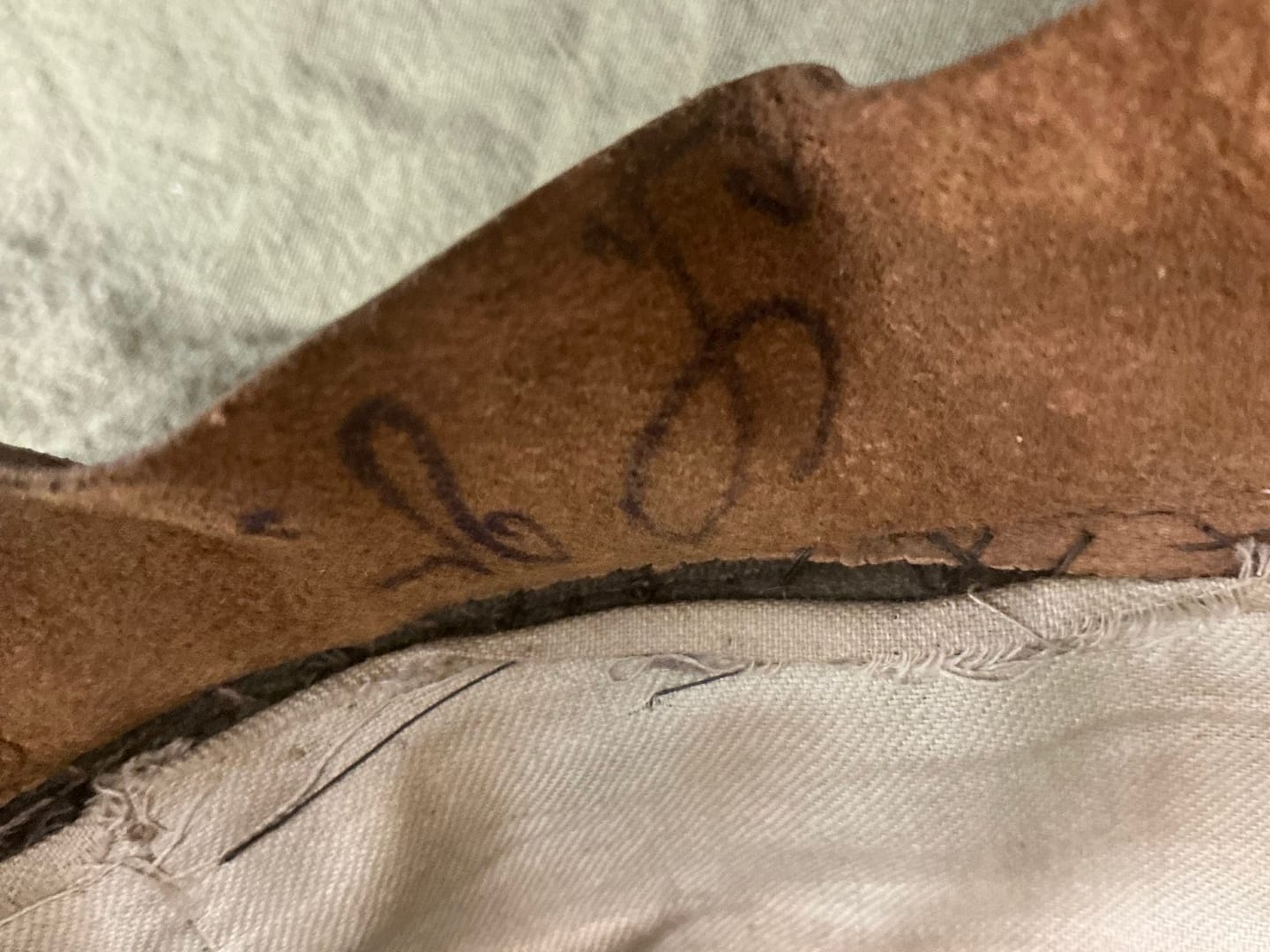
POLISH LEGION
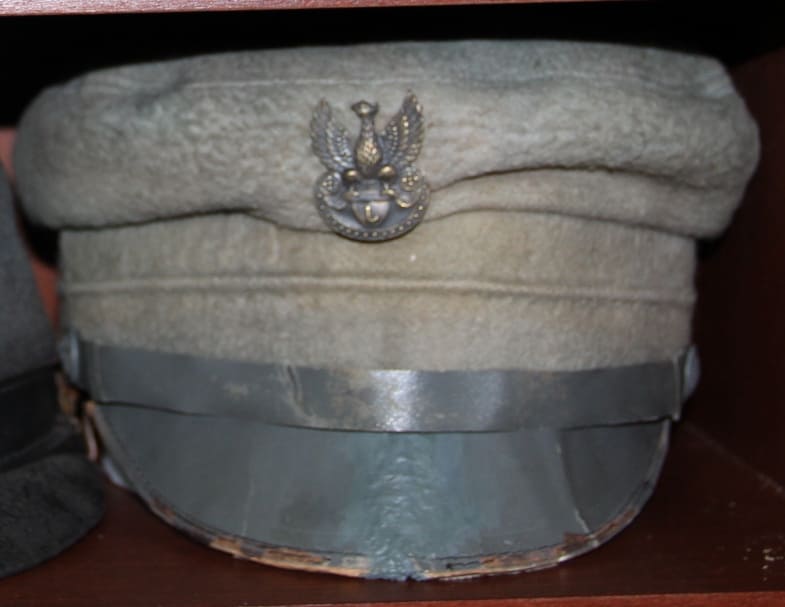
WW1 Polish ‘Maciejowka’ peaked cap, Pilsudski’s Legion in Austro-Hungarian Army
This Polish “Maciejówka” peaked cap is associated with Piłsudski’s Legions serving within the Austro-Hungarian Army during the First World War. Characterised by its soft crown and distinctive shape, the cap became a symbol of Polish national identity and the struggle for independence. Worn by volunteers fighting on the Eastern Front, it reflects the emergence of Polish national military traditions during the collapse of the imperial order in Europe.
Found this useful? Buy me a coffee — it helps fund future battlefield research


Authored by Mick Prictor, a retired military officer with 40 years’ service, and a military historian specialising in terrain-focused analysis of tactics, doctrine, and command decision-making in land warfare. His work draws on extensive battlefield fieldwork—more than 280 sites worldwide—and one of the world’s largest private collections of historic military arms, uniforms, and equipment. About me
World War One weapons and equipment FAQ
Infantry soldiers were primarily armed with bolt-action rifles such as the Lee-Enfield, Mauser, Mosin-Nagant, and Lebel. These were supported by machine guns, grenades, and bayonets. Artillery was the dominant weapon of the war, while new technologies such as tanks, aircraft, and chemical weapons transformed the battlefield.
Artillery caused the majority of battlefield casualties and shaped operations across all fronts. Heavy guns, field artillery, and howitzers were used for bombardment, counter-battery fire, and defensive barrages. The scale of artillery firepower reflected the industrial nature of the conflict and the importance of fire support in trench warfare.
Machine guns such as the German MG08 and British Vickers provided sustained automatic fire and made frontal assaults extremely costly. Machine guns were sited to employ enfliade (along teh long axis of the target) grazing fire (close to teh ground so any human in the beaten zone will be hit) from a defilade position (covered from view and fire). Machine guns could also be fired from predictive tables, much like artillery is fired.
Steel helmets were adopted to protect soldiers from shell fragments and debris, which became major causes of injury in trench warfare. Designs such as the French Adrian, British Brodie, and German Stahlhelm reflected different national approaches to battlefield protection.
Uniforms evolved rapidly as armies adapted to modern warfare. Bright pre-war uniforms were replaced by more practical field dress in subdued colours such as khaki, feldgrau, and horizon blue. Uniforms reflected both national traditions and the need for concealment on the battlefield.
Soldiers’ equipment evolved to meet the demands of trench warfare, including the introduction of steel helmets, improved webbing systems, gas masks, and specialised tools. These changes reflect the adaptation of armies to industrialised, high-intensity conflict.
All artefacts shown are from my personal collection and photographed firsthand. They represent original weapons and equipment used by soldiers during the First World War.
Subscribe to Battlefield Travels and receive a free E-Book Battlefield Guide
Unlock expert battlefield analysis, campaign reconstructions, and historical insights drawn from firsthand exploration and primary sources.
🗺️ You’ll receive:
🎖️ Exclusive historical insights you won’t find elsewhere
📘 A free eBook: 10 Tips for Exploring Historic Battlefields
📰 New battlefield studies straight to your inbox as they are published

⚔️ Go deeper — Members get exclusive access to the Deep Research Collection, Field Notes, and monthly Research Dispatches. Try membership free for 7 days, cancel anytime. From $9/month.