
The Second World War was the largest and most destructive conflict in human history, fought across every continent and ocean between the Axis and Allied powers. It began with Germany’s invasion of Poland on 1 September 1939 and the subsequent declarations of war by Britain and France. Within two years, Axis forces under Hitler, Mussolini, and Imperial Japan had overrun most of Europe, North Africa, and large parts of East Asia.
German blitzkrieg operations brought rapid victories in 1940–41, but the failure to defeat Britain and the invasion of the Soviet Union in June 1941 fatally overstretched the Reich. Japan’s attack on Pearl Harbor in December 1941 drew the United States into a global alliance with Britain, the Soviet Union, and China. From 1942 onwards, the tide turned: the Soviet victory at Stalingrad, Allied success in North Africa, and the destruction of Japanese carrier power at Midway marked the beginning of Axis decline.
Allied strategy combined industrial mobilisation, air and sea control, and coordinated offensives on multiple fronts. Italy collapsed in 1943, France was liberated following the D-Day landings in June 1944, and Germany surrendered unconditionally in May 1945. The Pacific war ended after the atomic bombings of Hiroshima and Nagasaki and Japan’s capitulation in August.
The war claimed over 60 million lives, redrew national borders, and ushered in the nuclear age and the bipolar world order of the Cold War. Its military, political, and moral consequences continue to shape international relations today.
Related Battle Studies, Museum Pieces & Reading Resources


AUSTRALIAN
WW2 Australian Mk II Brodie Helmet, from my personal collection.
The Australian Mark II Brodie helmet was produced domestically from 1940 and issued widely to 2nd AIF units in the Middle East, Pacific, and home defence forces. Based on the British Mk II pattern, it featured Australian-manufactured steel, a leather liner, and khaki sand-textured paint. The helmet provided limited ballistic protection but was effective against shrapnel and overhead fragmentation. It became an iconic part of Australian uniform imagery in campaigns from Tobruk to Kokoda and Balikpapan.


WW2 Australian wool tunic, from my personal collection.
Early war Australian unforms closely resembled the WW1 woolen uniforms. Troops deployed to teh MIddle East and the Pacific Theatre received more practical cotton uniforms in desert beige or jungle green. Militia units and home defence units continued to wear the old style woolen uniforms.
7 Div Arty miniature patches, large Ordnance Corps patches. Ribbon Bar – BWM, Victory Medal. Tunic dated 1941. This Australian-pattern wool service tunic was worn by personnel of the 7th Division Artillery, 2nd AIF. Constructed from heavy khaki serge and fitted with brass Rising Sun insignia, it reflects early-war Middle East tailoring before tropical dress became standard. The 7th Division Artillery supported operations in Syria–Lebanon, Milne Bay, Buna, Shaggy Ridge, and Balikpapan. The tunic represents the transitional uniform period between traditional British-style battledress and the lighter garments adopted in the Pacific.


UNITED STATES
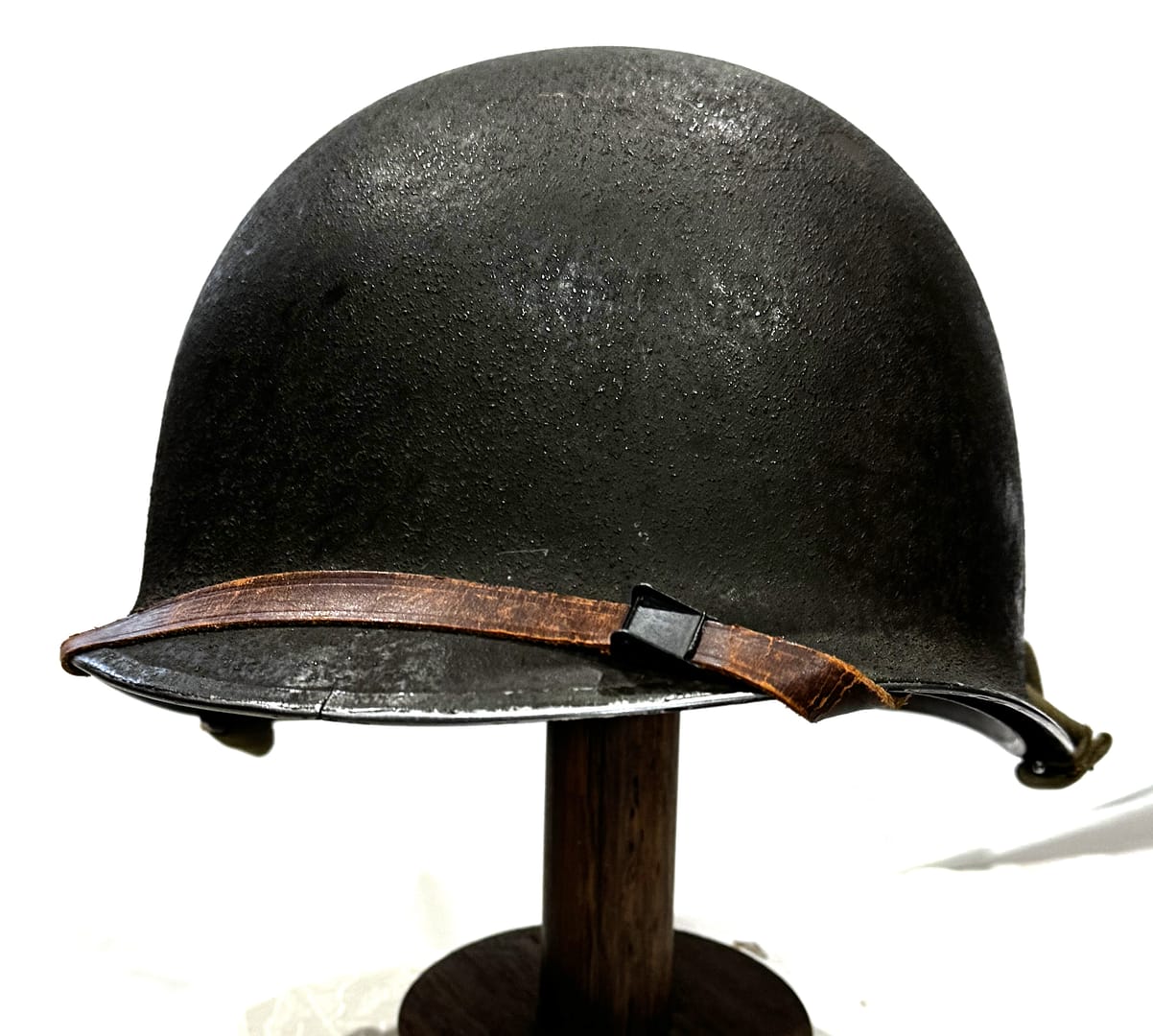
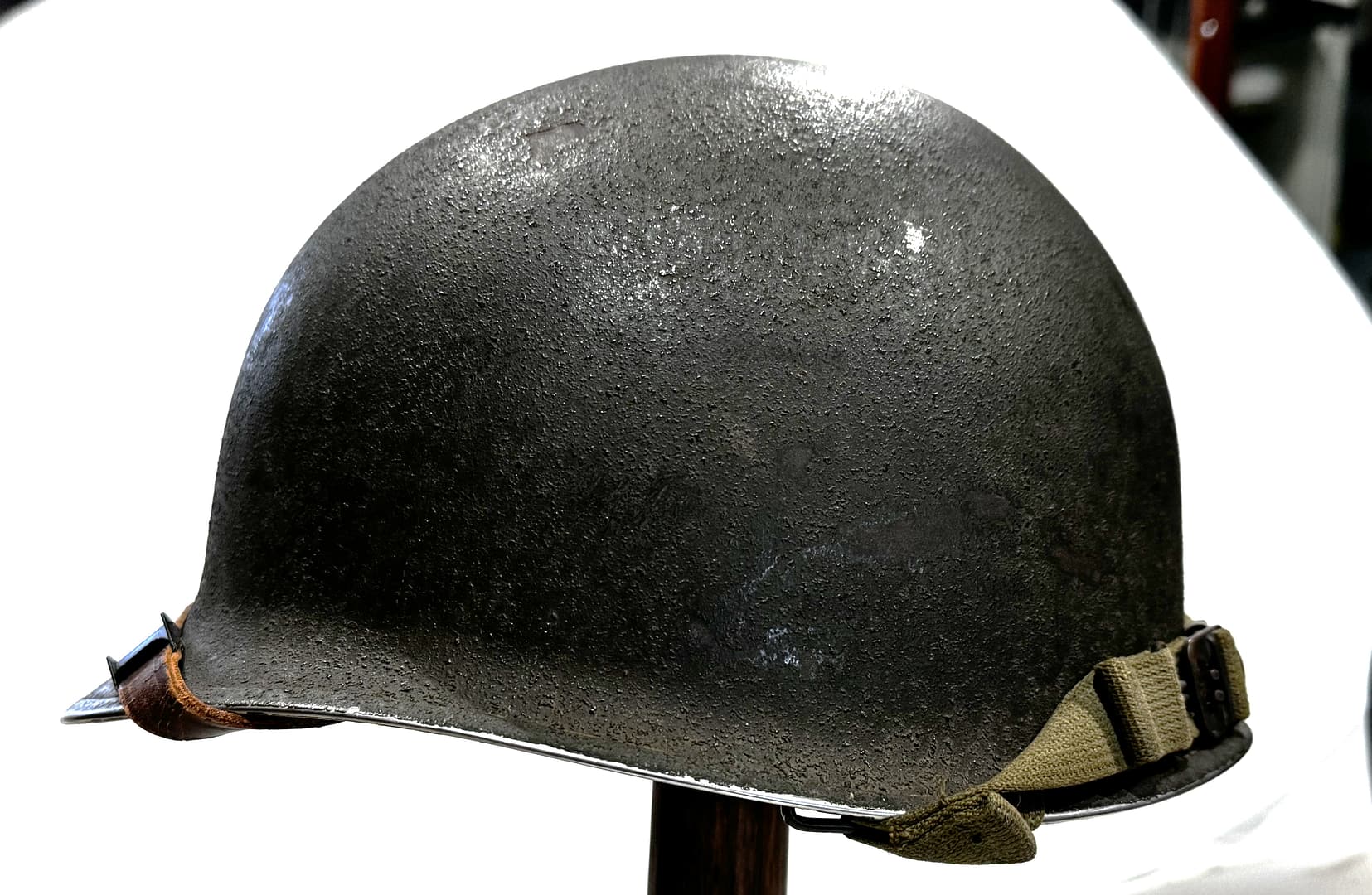
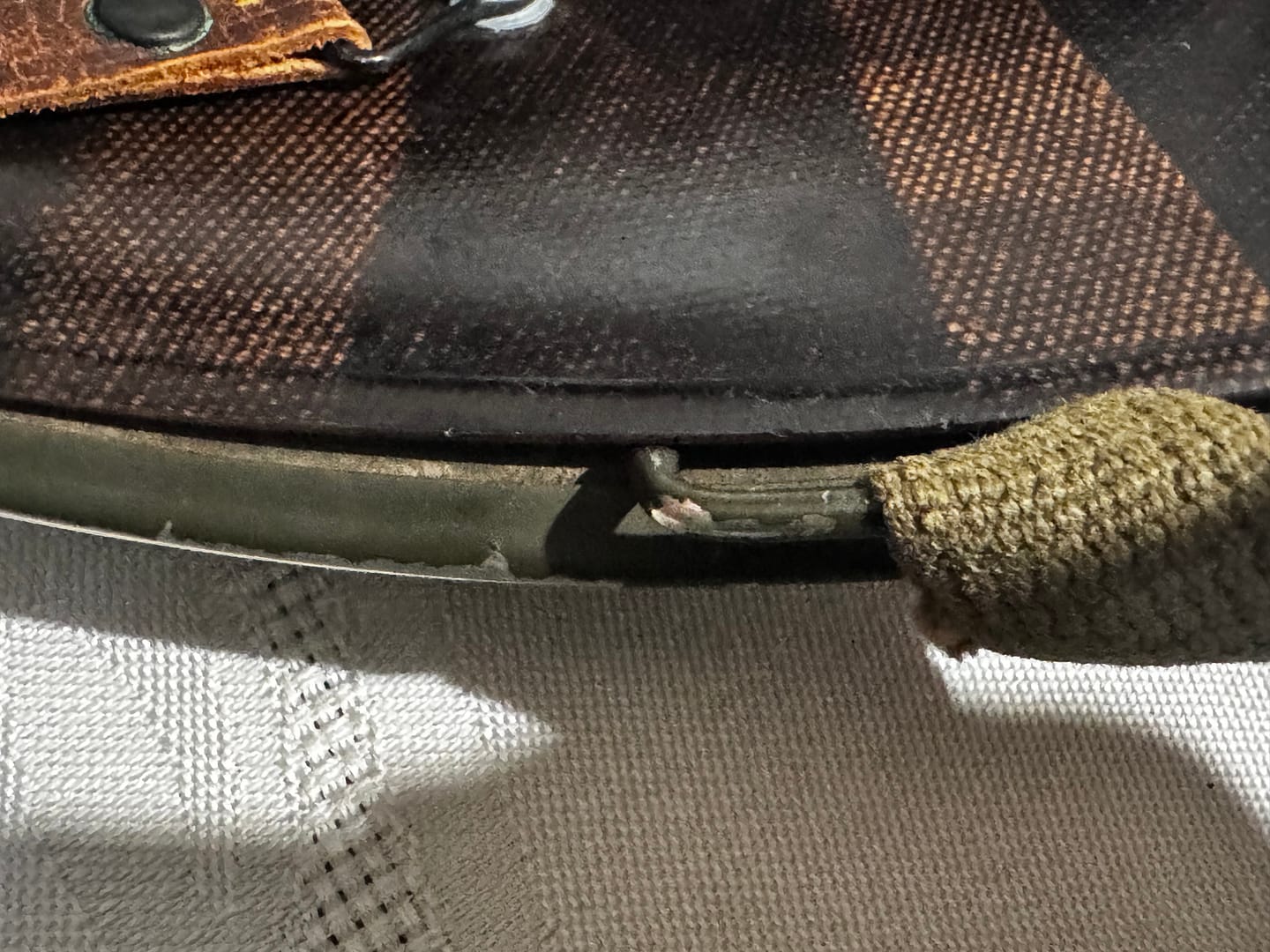
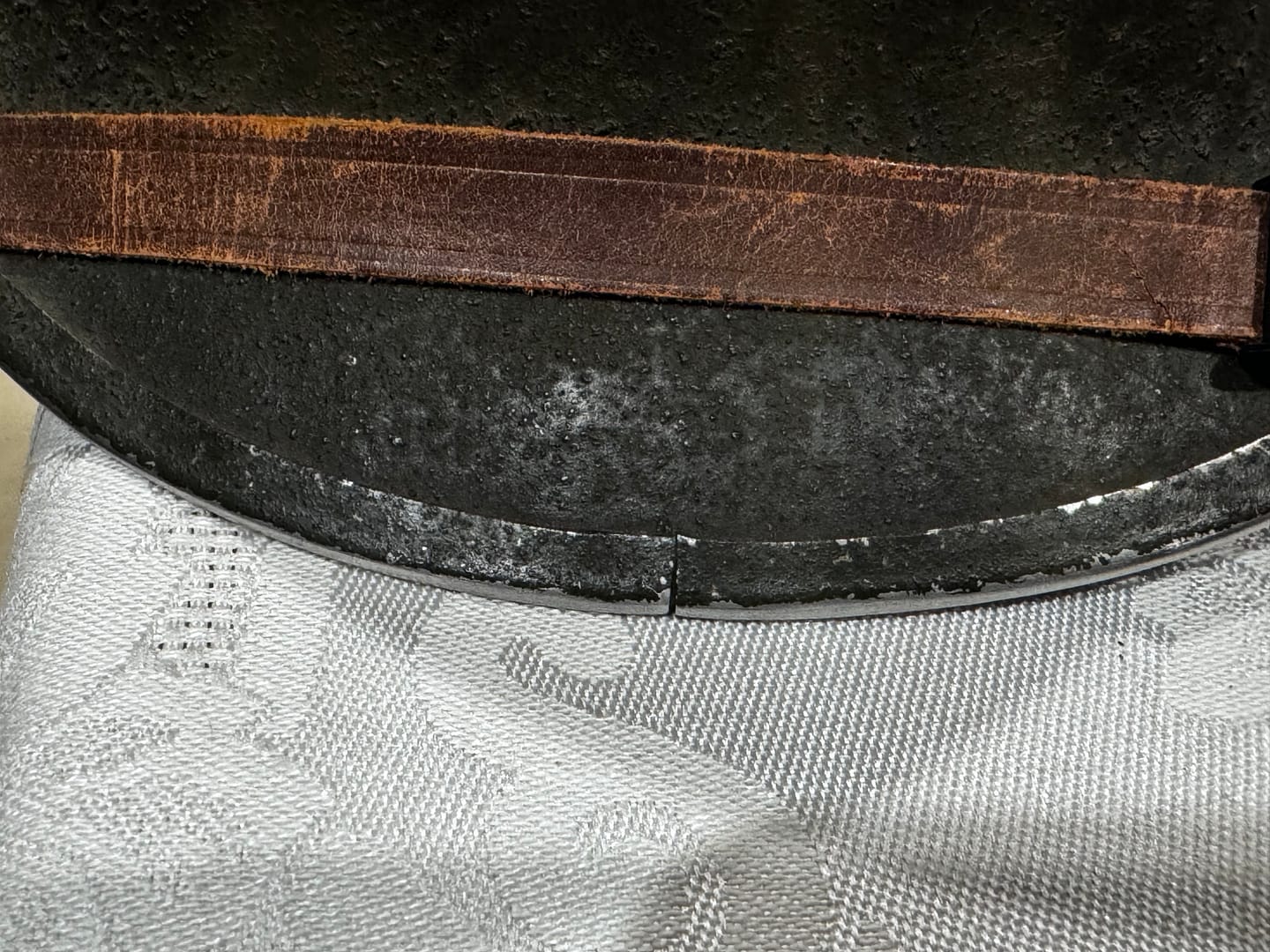
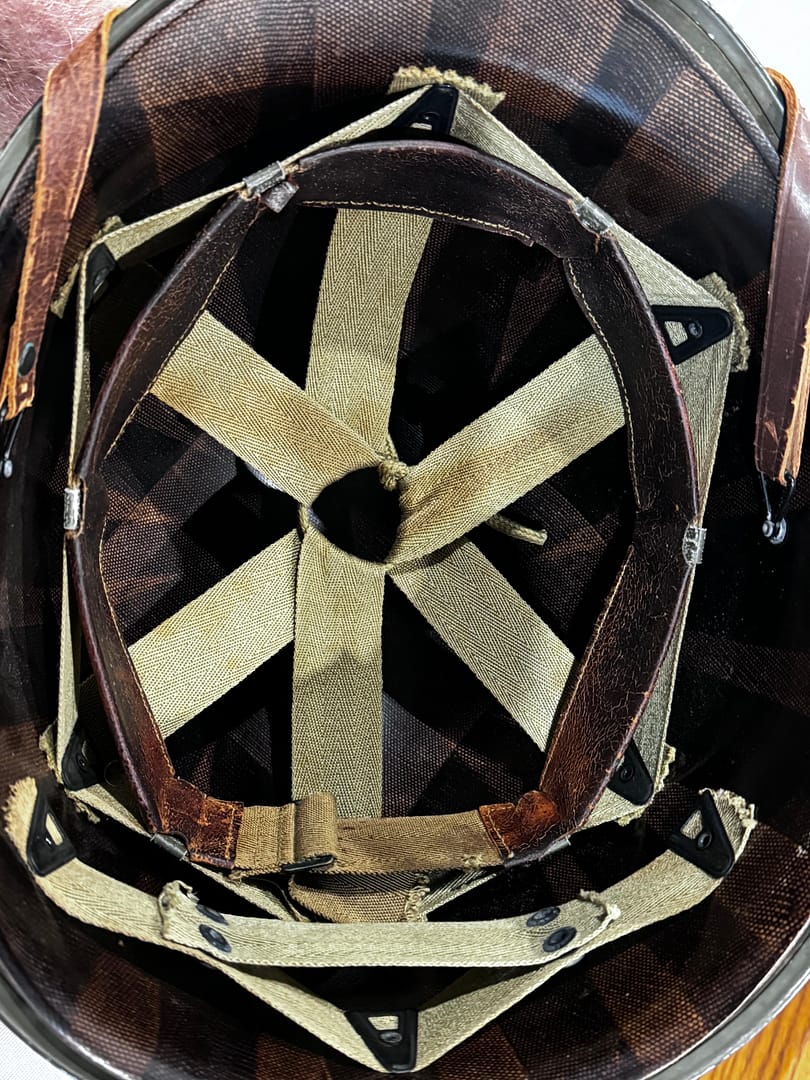
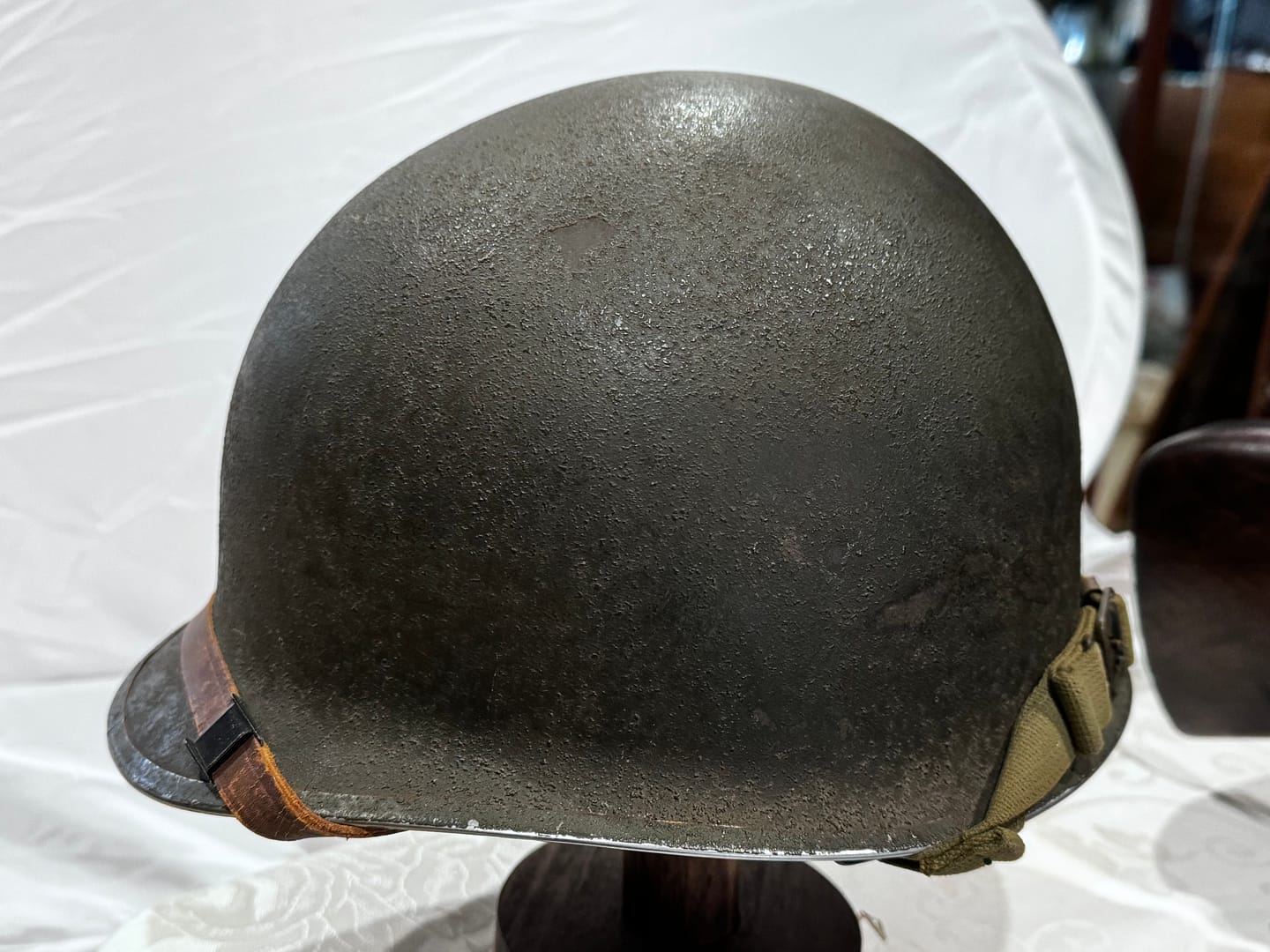
US M1 combat helmet, front seam, fixed bail ~1942, from my personal collection.
This early-war M1 helmet features a front-seam stainless steel rim and fixed chinstrap bails, characteristics of 1941–1943 production. Paired with a high-pressure fibre liner, the M1 offered enhanced ballistic protection compared with earlier U.S. patterns and became the archetypal American helmet of the Second World War. Fixed-bail models saw service in North Africa, Italy, Normandy, and the Pacific, and surviving examples are strongly associated with the first wave of U.S. amphibious and airborne operations.
BRITISH
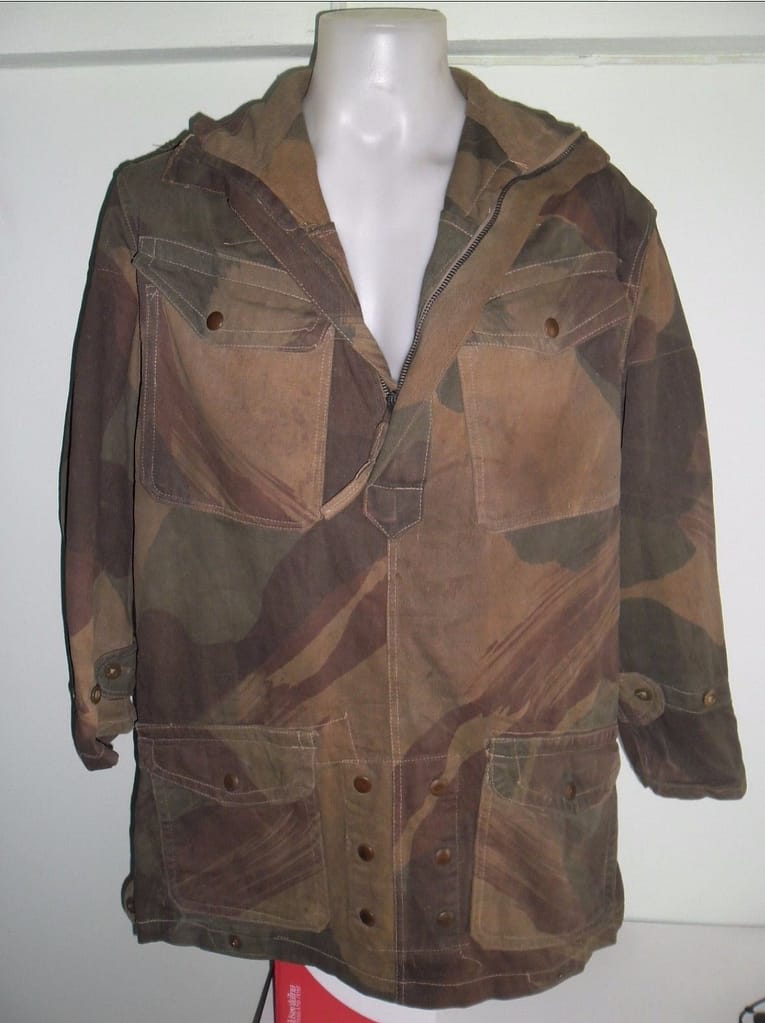
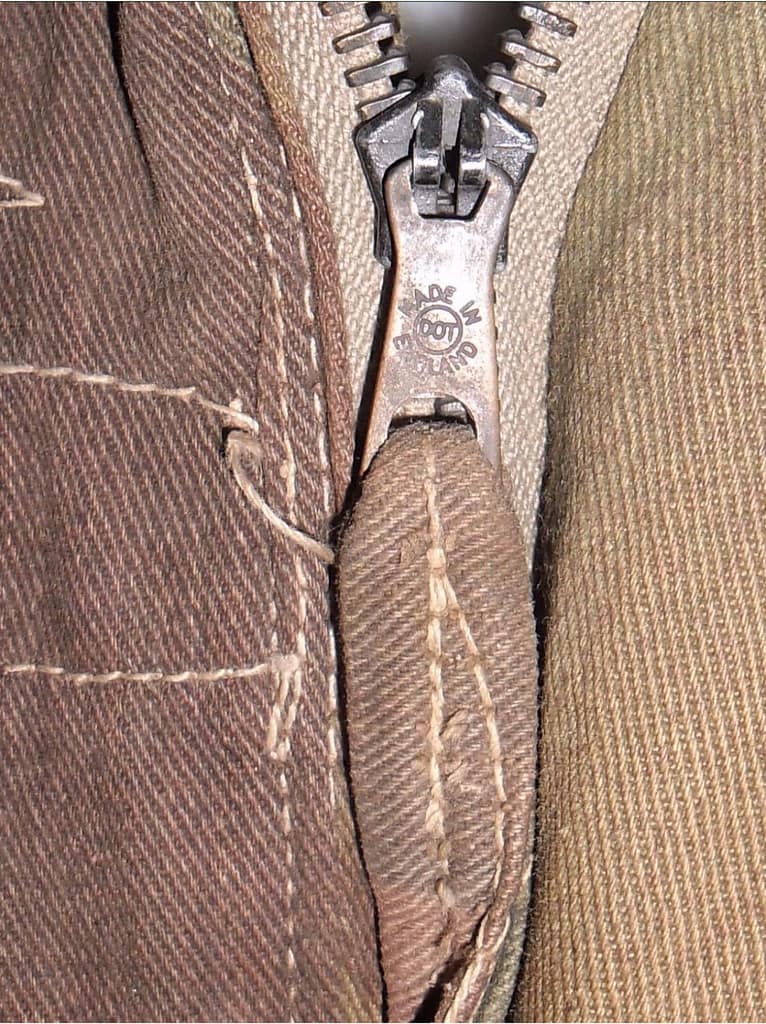
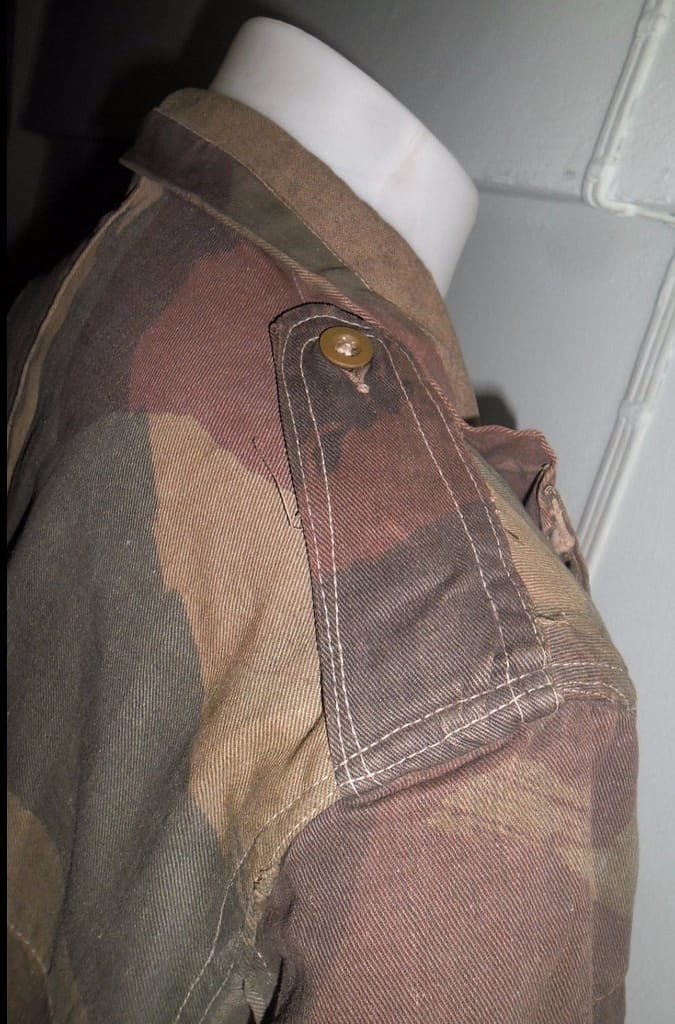
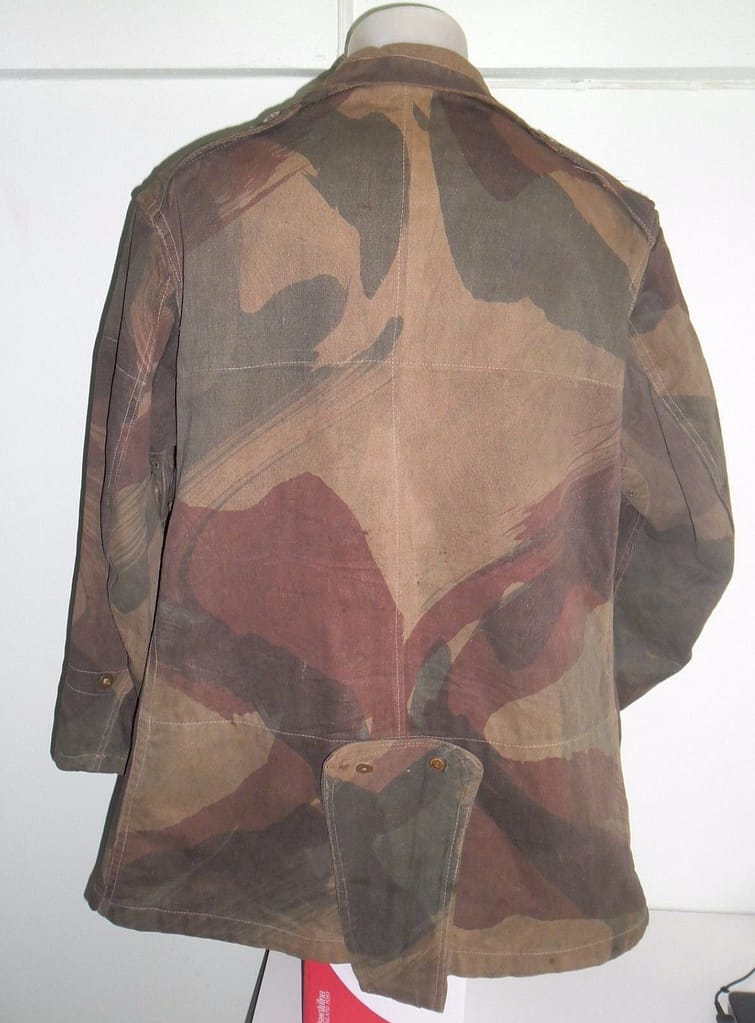
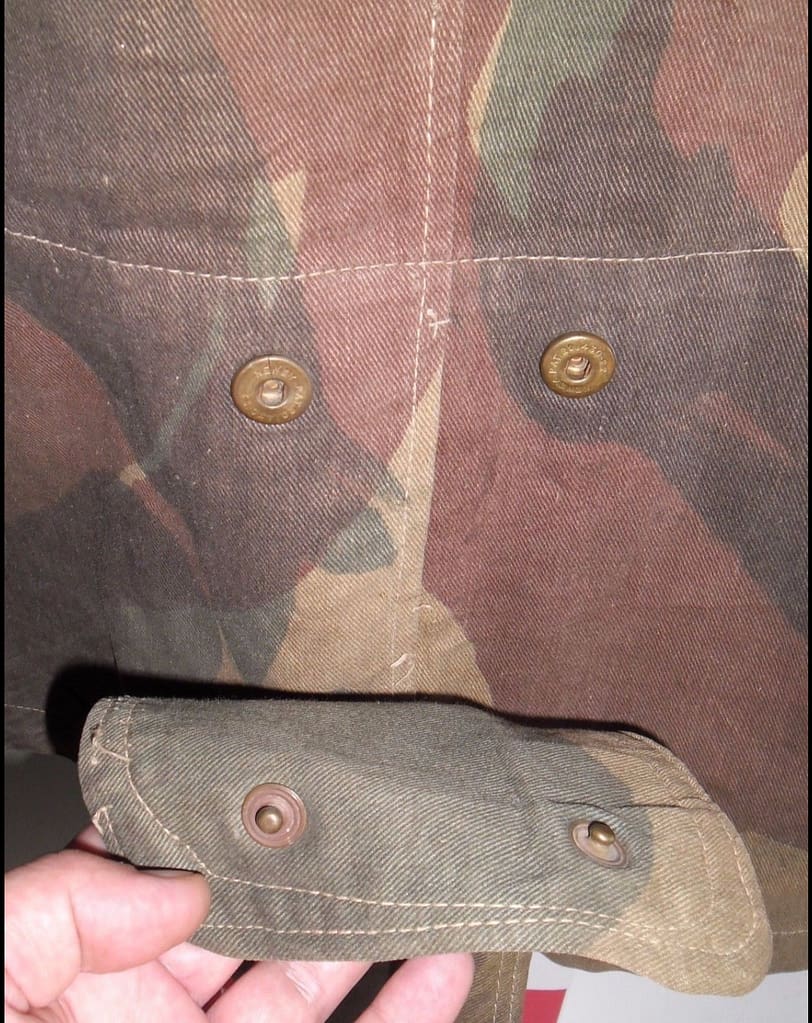
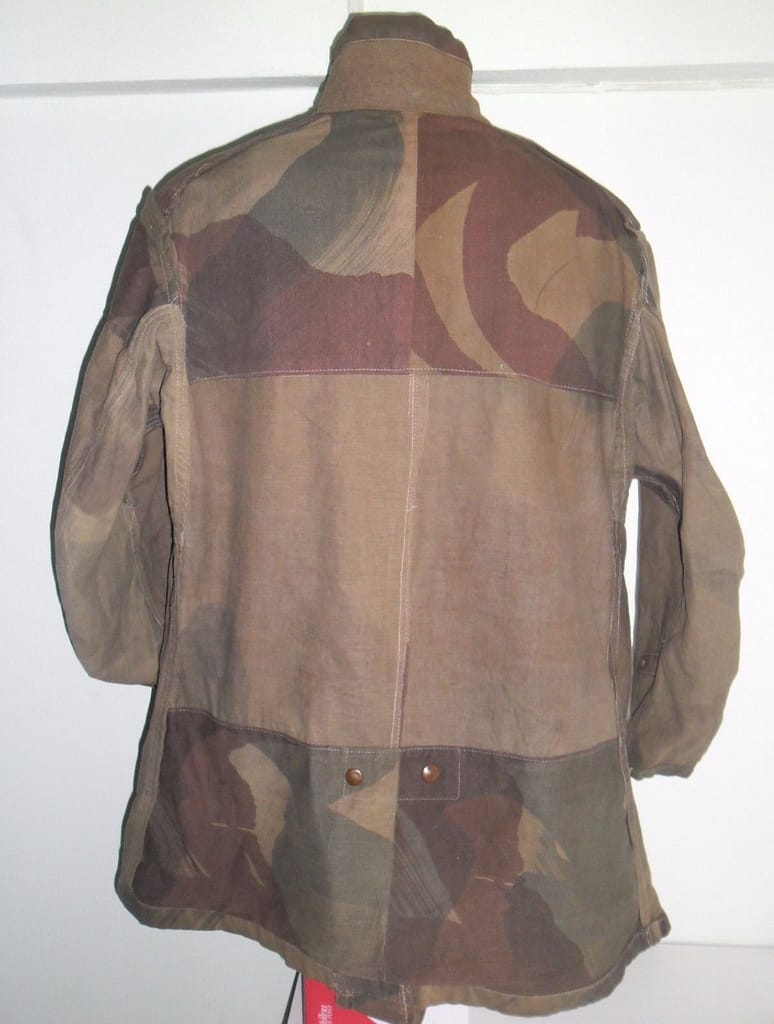
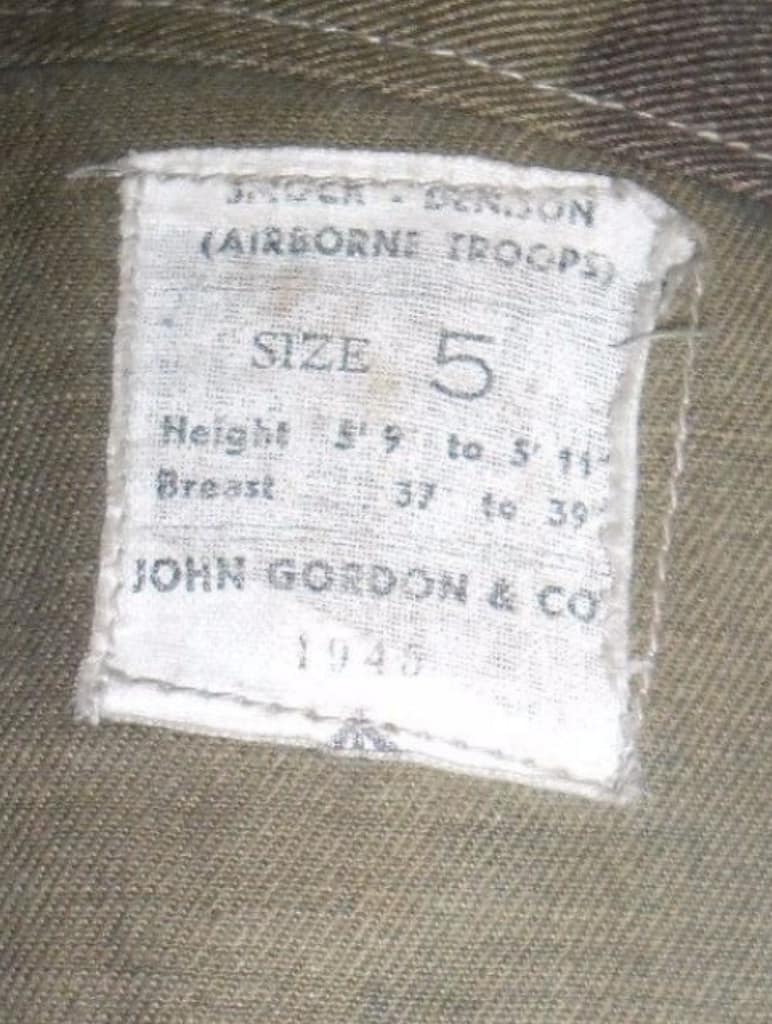
WW2 British Paratrooper ‘Denison Smock’, from my personal collection.
The Denison smock was introduced in 1942 for British airborne troops, including the 1st and 6th Airborne Divisions and the SAS. Constructed from heavy cotton with a distinctive hand-painted camouflage pattern, it was designed for parachute drops and close-quarter fighting. The smock’s beaver-tail crotch flap prevented the garment ballooning during descent. Worn at Bruneval, Sicily, Arnhem, and the Rhine crossings, the Denison remains one of the most recognisable garments of British airborne forces.
SOVIET UNION
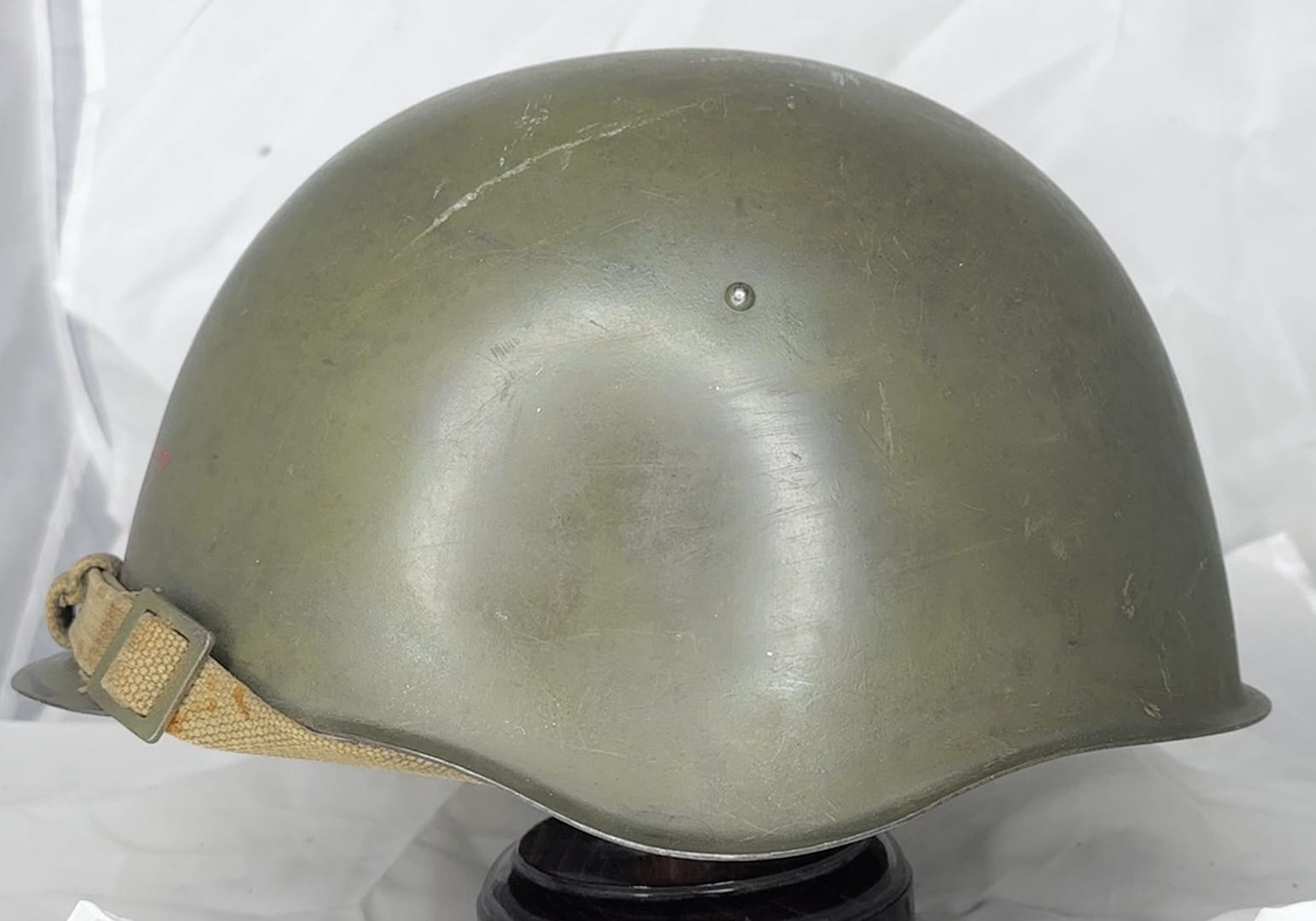
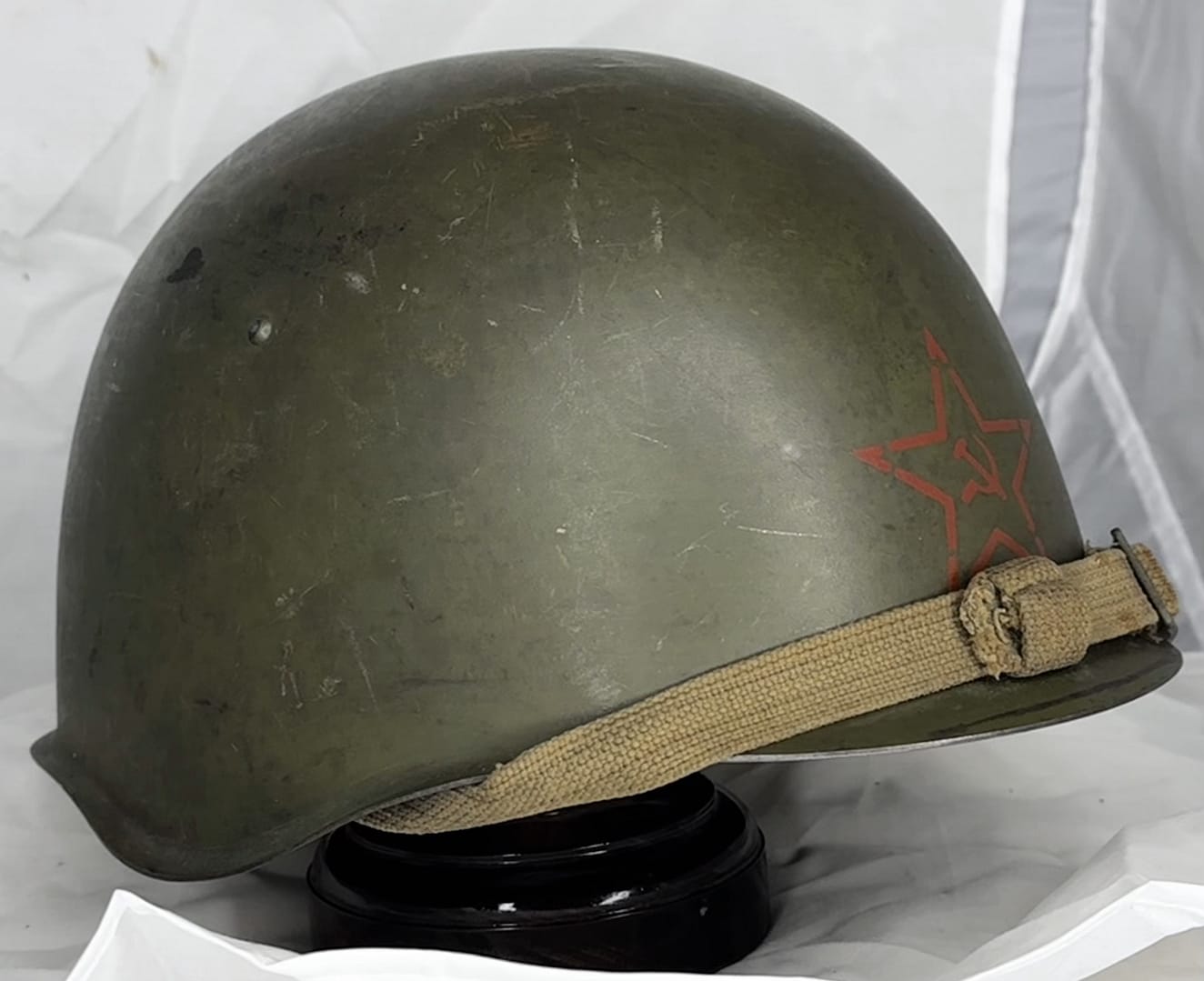
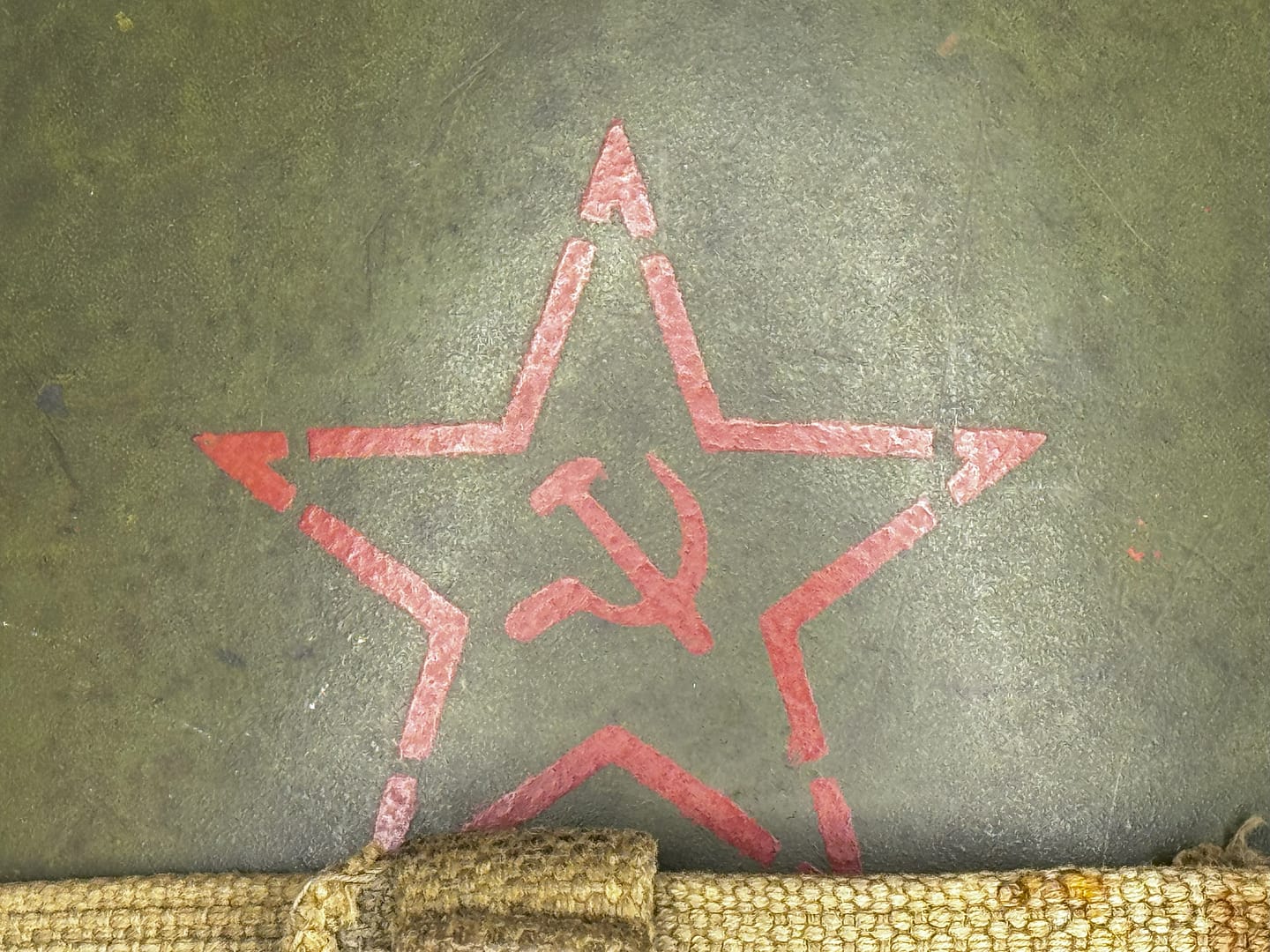
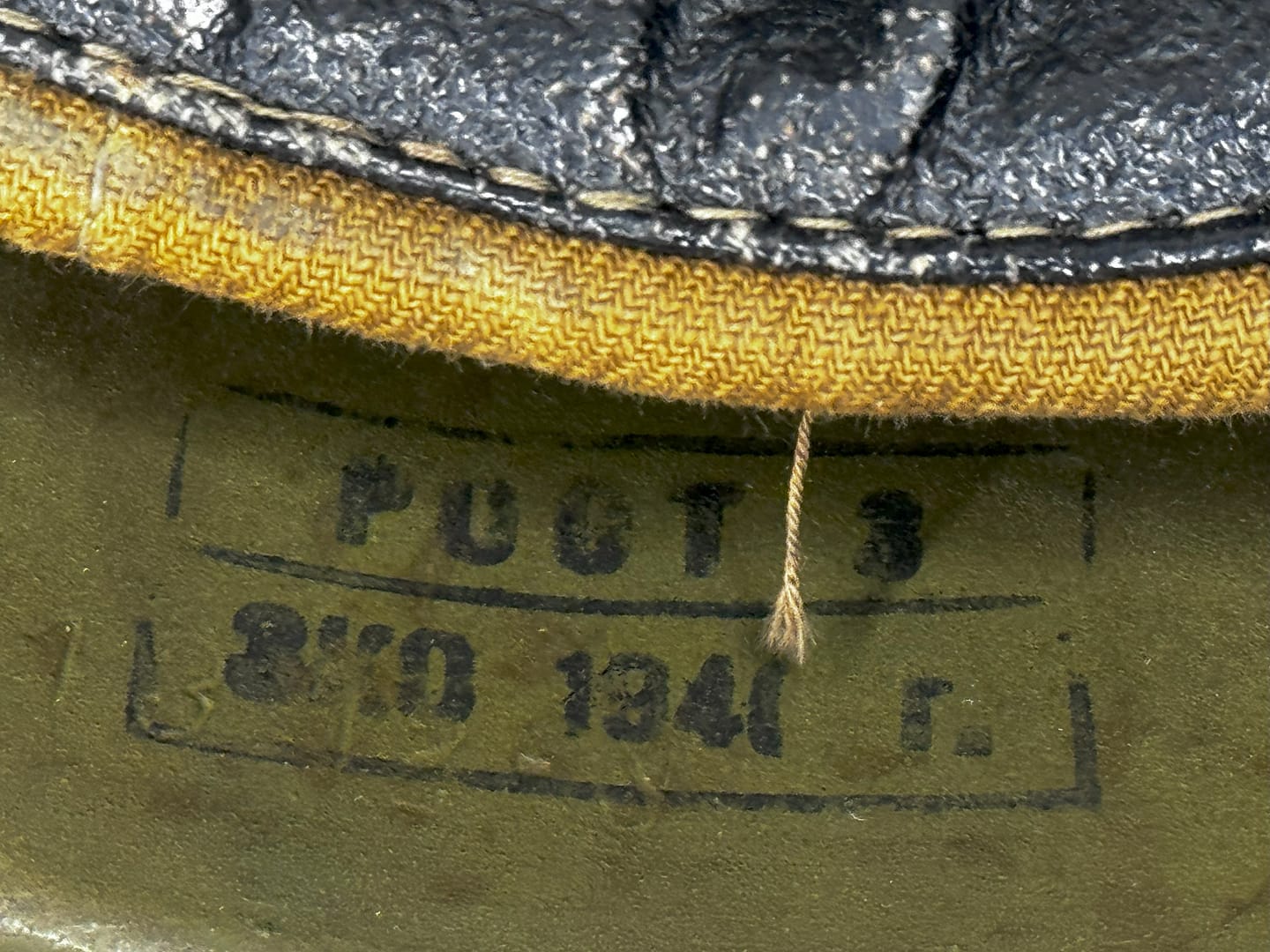
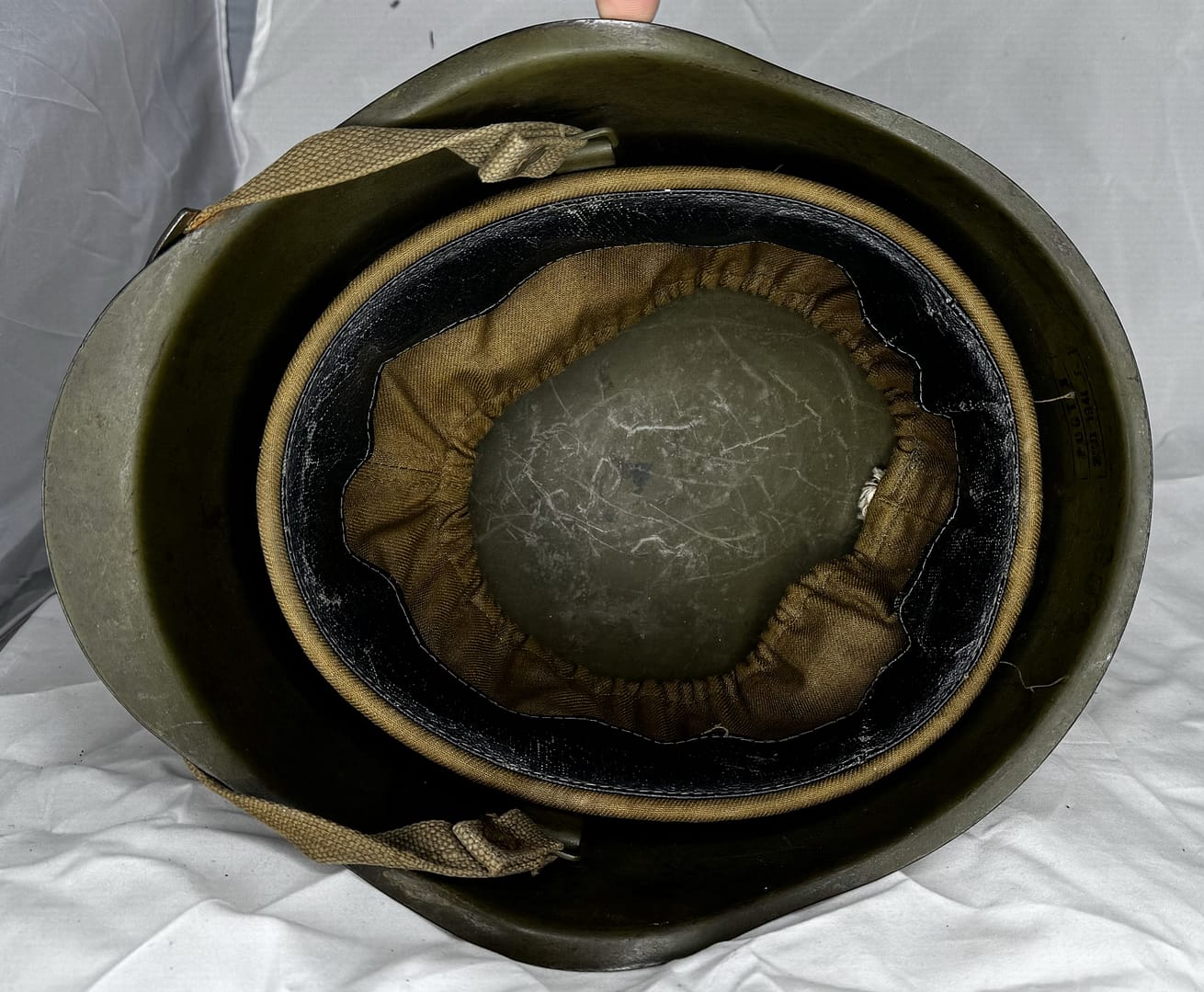
Red Army M1939 helmet, ЗKO 1941 ‘Zavod Krasny Octyabr’ (Red October) factory, Stalingrad, 1941, from my personal collection.
This Soviet M1939 steel helmet was manufactured in 1941 by the ZKO — Zavod Krasny Oktyabr (Red October) plant at Stalingrad. The SSh-39 featured an improved shell profile over earlier designs and a three-pad liner suspended by cloth straps. Produced under wartime pressure and often showing coarse finishing, it equipped Red Army infantry in the early defence battles of 1941–42. Helmets from Stalingrad factories are especially significant due to the city’s later destruction during the 1942–43 campaign.

Soviet Red Army M1941 Summer Weight cotton Gymnastiorka, from my personal collection.
The M1941 gymnastiorka was the standard summer field blouse of the Red Army during the first half of the war. Made from lightweight khaki cotton with stand collar and shoulder boards (added after 1943), it was worn on all fronts from Leningrad to the Caucasus. Its simple pullover design reflected Soviet priorities: rapid production, minimal tailoring, and suitability for mass mobilisation. The M1941 blouse became one of the most recognisable garments of wartime Soviet infantry.


JAPANESE
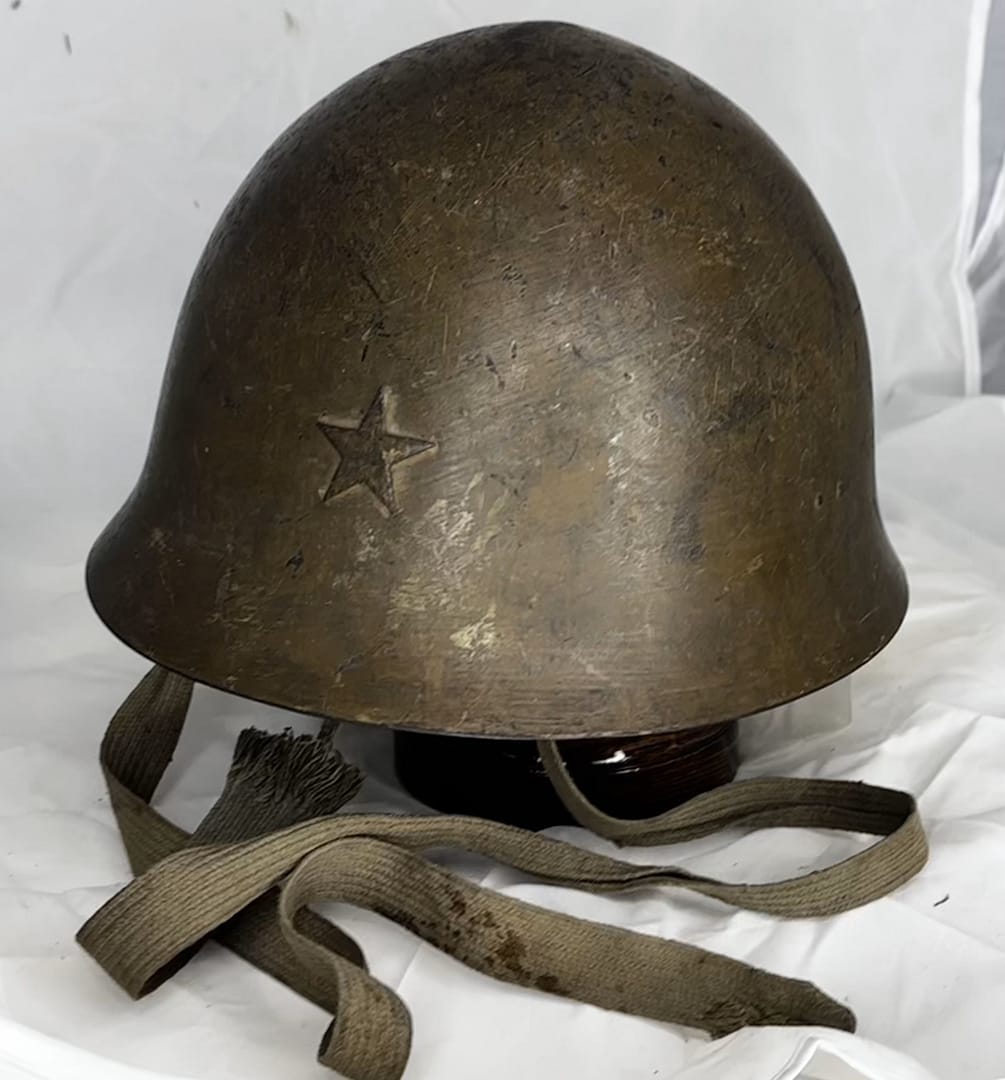
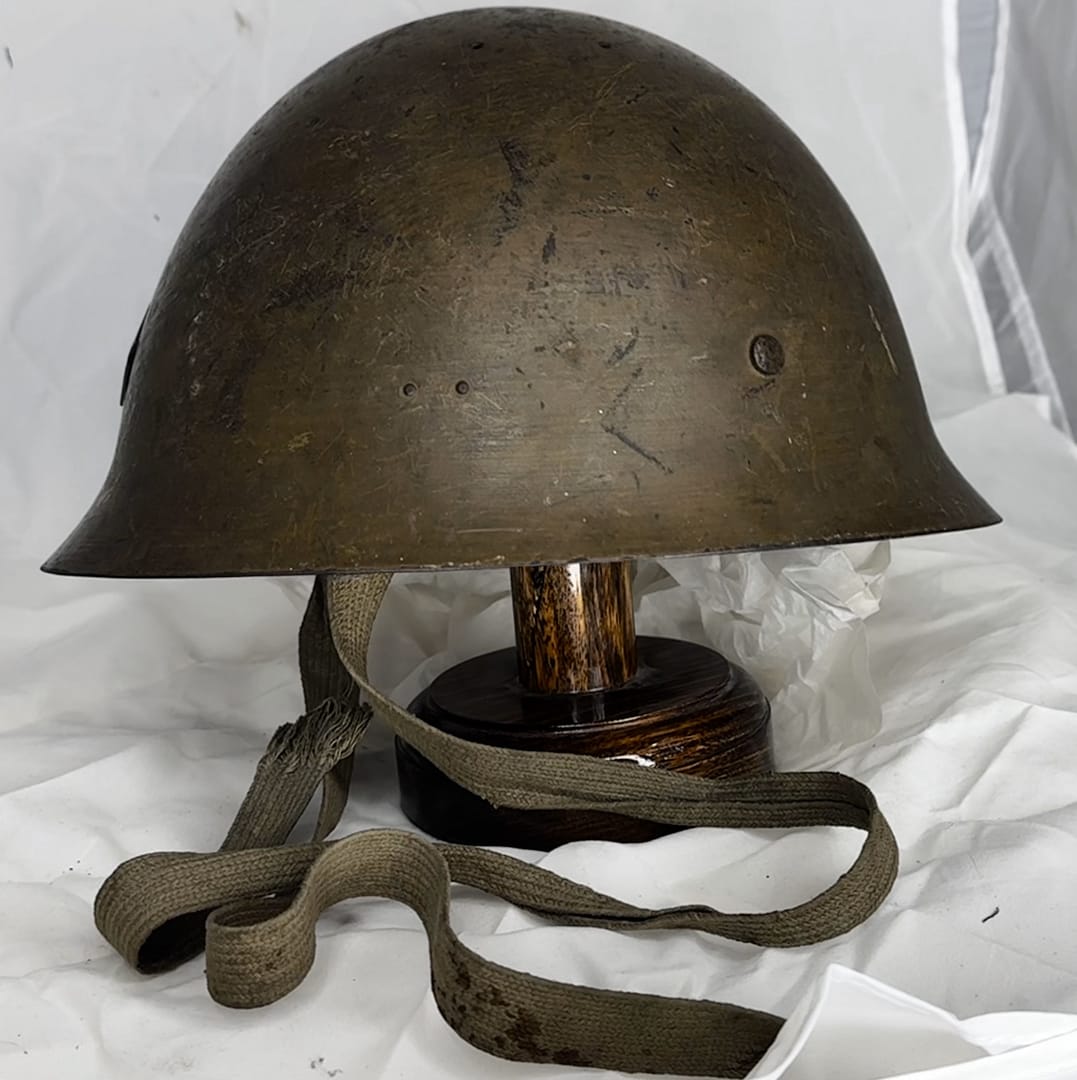
Imperial Japanese Army Type 90 helmet, from my personal collection.
The Type 90 helmet was standard issue for Imperial Japanese Army troops from 1930 to 1945. Formed from pressed steel with a three-pad cloth liner, it offered limited protection but was lightweight and easily produced. Its simple riveted construction and tan-brown finish made it distinct from Western helmets. The Type 90 saw widespread use in China, Malaya, New Guinea, Burma, and the Central Pacific, and is closely associated with Japanese infantry operations throughout the war.
Imperial Japanese Army Model 1930 wool enlisted service tunic. Possibly unissued, from my personal collection.
The Model 1930 tunic was the standard enlisted uniform of the Imperial Japanese Army at the outbreak of the Second World War. Made from olive-brown wool with standing collar, five-button front, and cloth branch insignia, it reflected traditional IJA tailoring before the adoption of tropical garments. Issued in China, Malaya, and New Guinea, the tunic performed poorly in jungle climates but remained in service due to production constraints.


Japanese battle flag, from my personal collection.
Captured at Kia Rivu 12 July 1945, by Australian soldiers of 7 Platoon, A Company, 2nd/7th Battalion Second AIF. This silk Japanese battle flag captured at Kia Rivu by Australian troops of the 2/7th Battalion, 2nd AIF, during operations in the Pacific theatre. Personalised battle flags were often carried by Japanese soldiers as talismans, bearing good-luck messages from family or comrades. Their capture was uncommon due to Japanese battlefield doctrine. This example illustrates the cultural and symbolic significance attached to regimental and personal standards within the Imperial Japanese Army. The flag is marked with the names of all the members of the platoon – deciphered on the image below.


🧭 From Weapons to Battlefield Use
This page shows weapons and equipment of the Second World War. All items are from my personal collection.
But what images and data don’t show is how these weapons were actually used on the ground—how weapon characteristics, tactics, innovation, terrain, and movement shaped their effectiveness in battle.
👉 That layer—how firepower, tactics, and terrain interact in real engagements—is explored in:
⚔️Battlefield Studies ◊ 💡Tactical Innovations ◊ 📝Field Notes
GERMAN
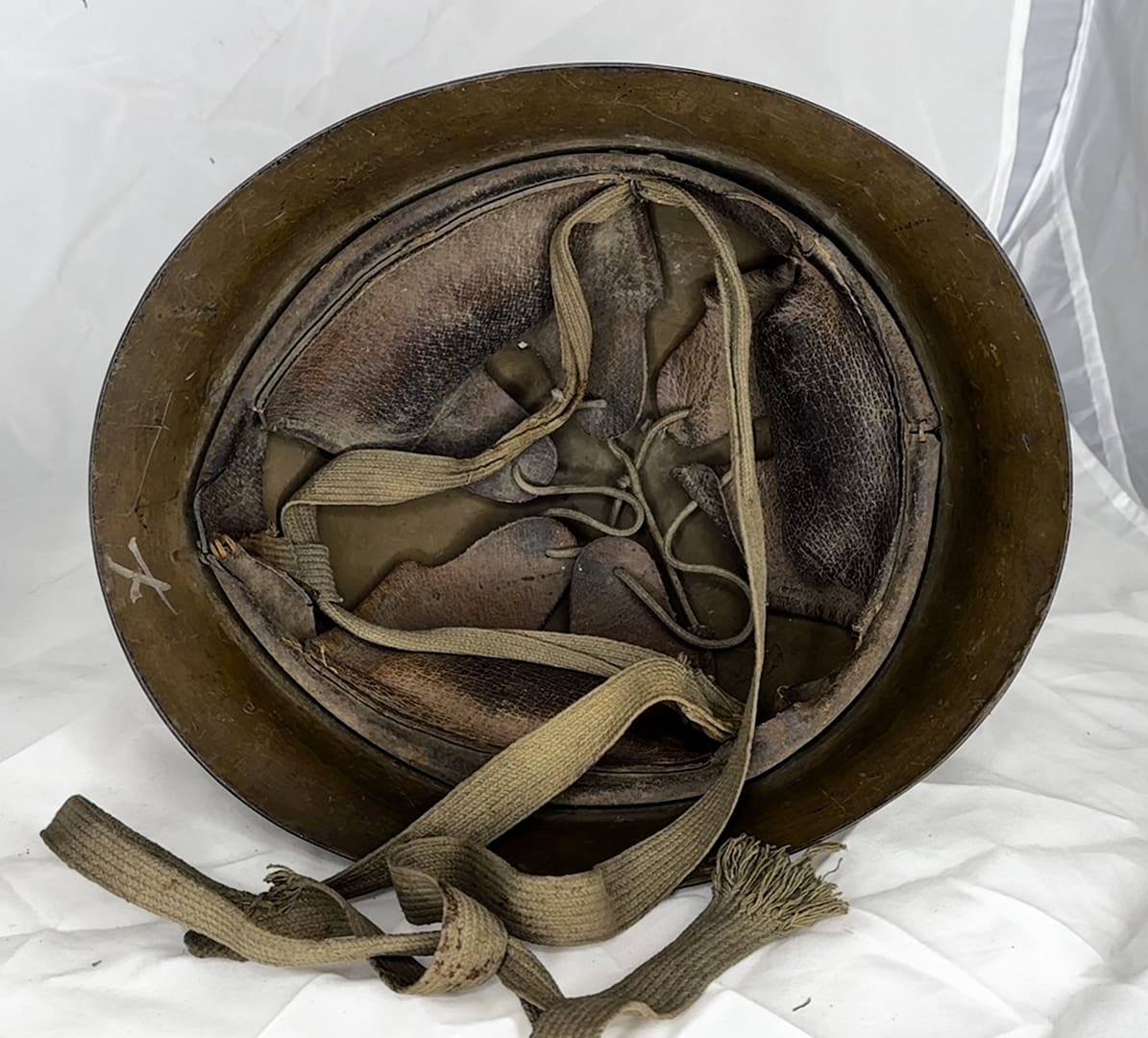
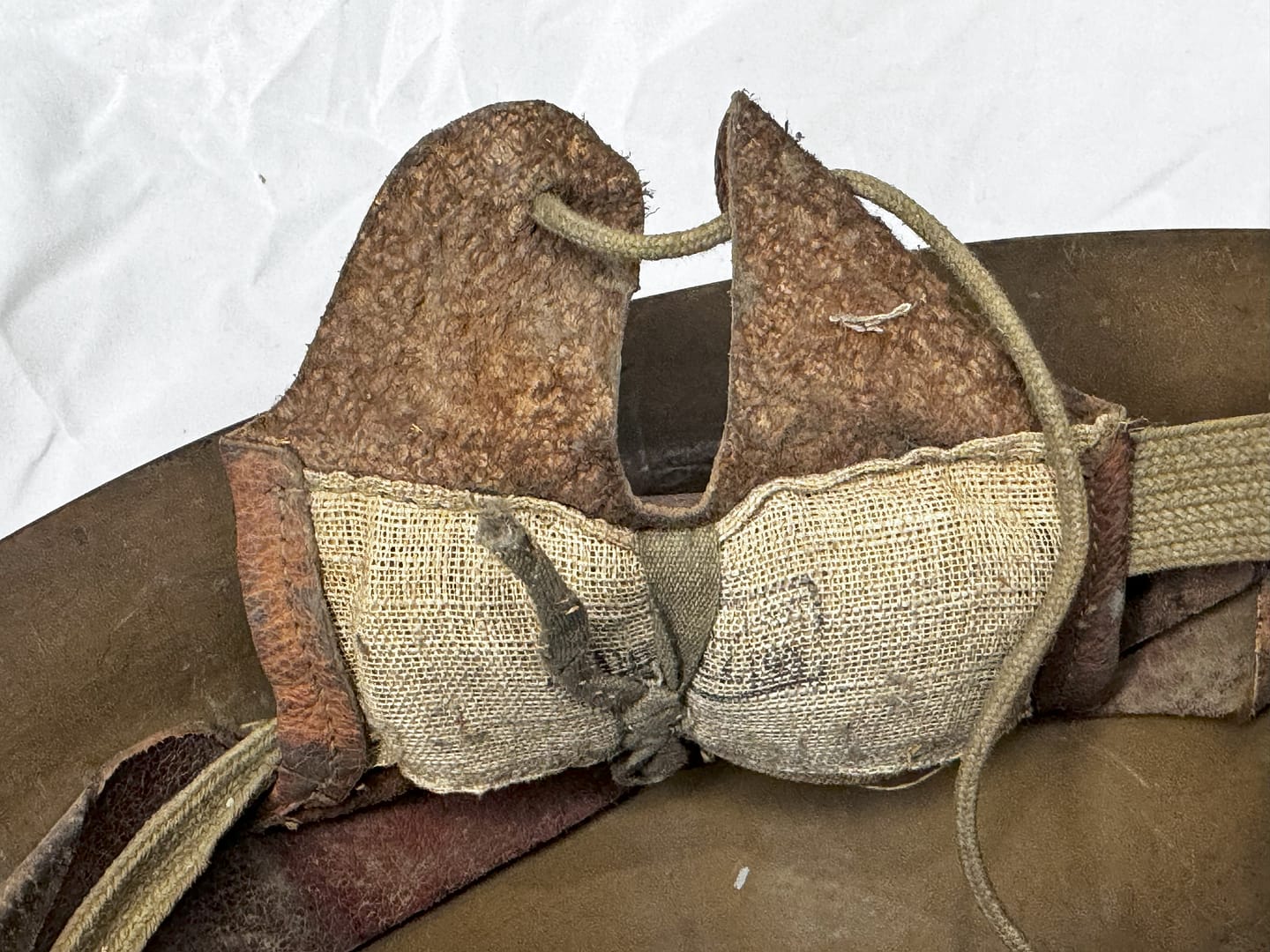
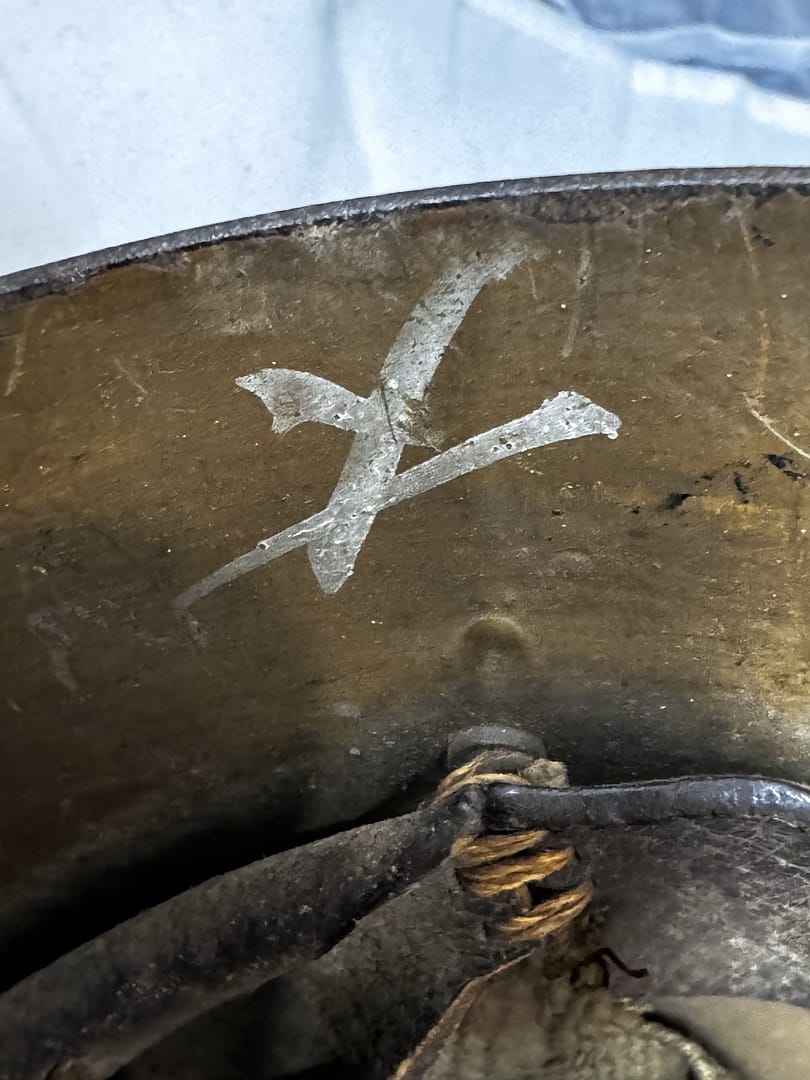
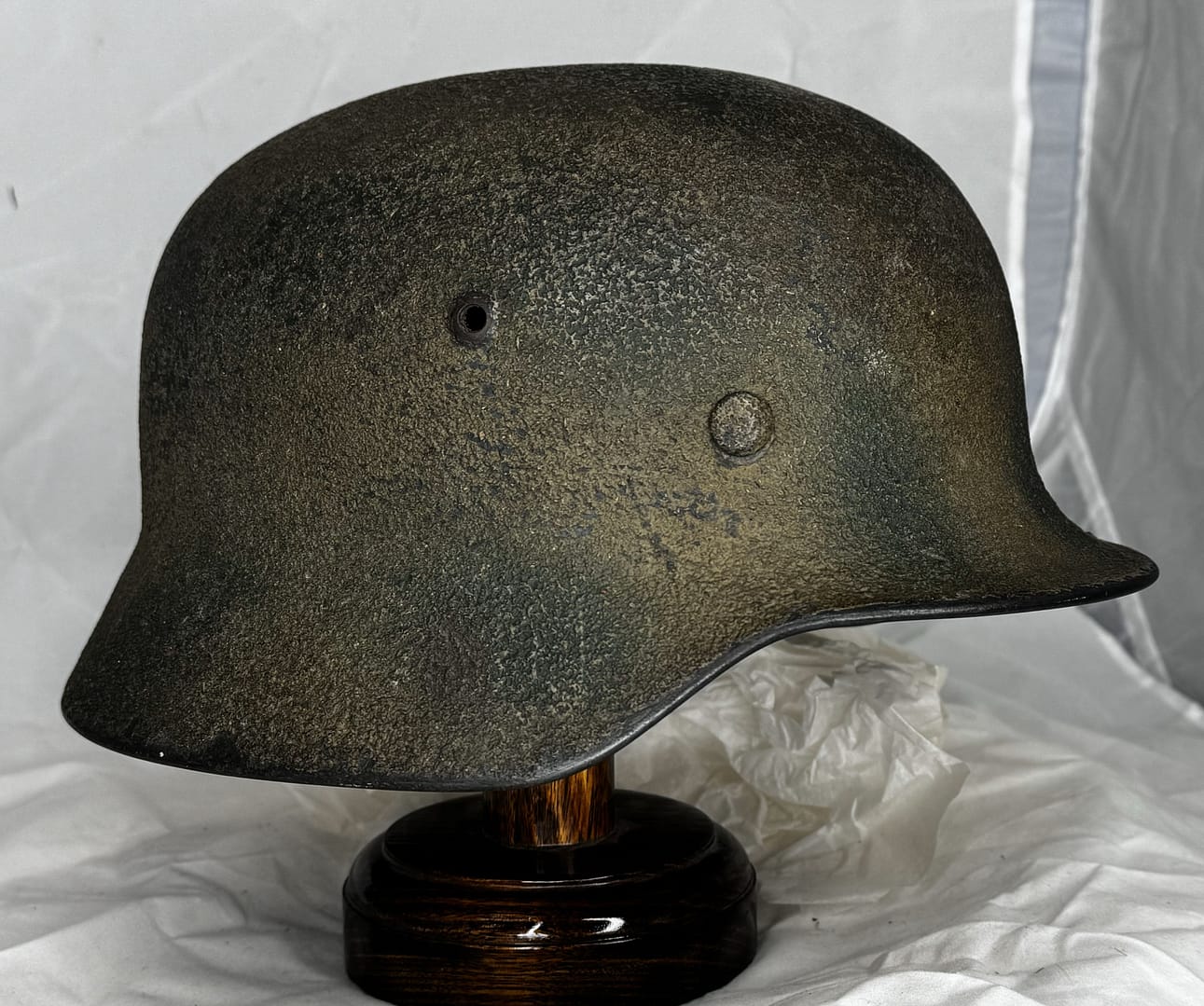
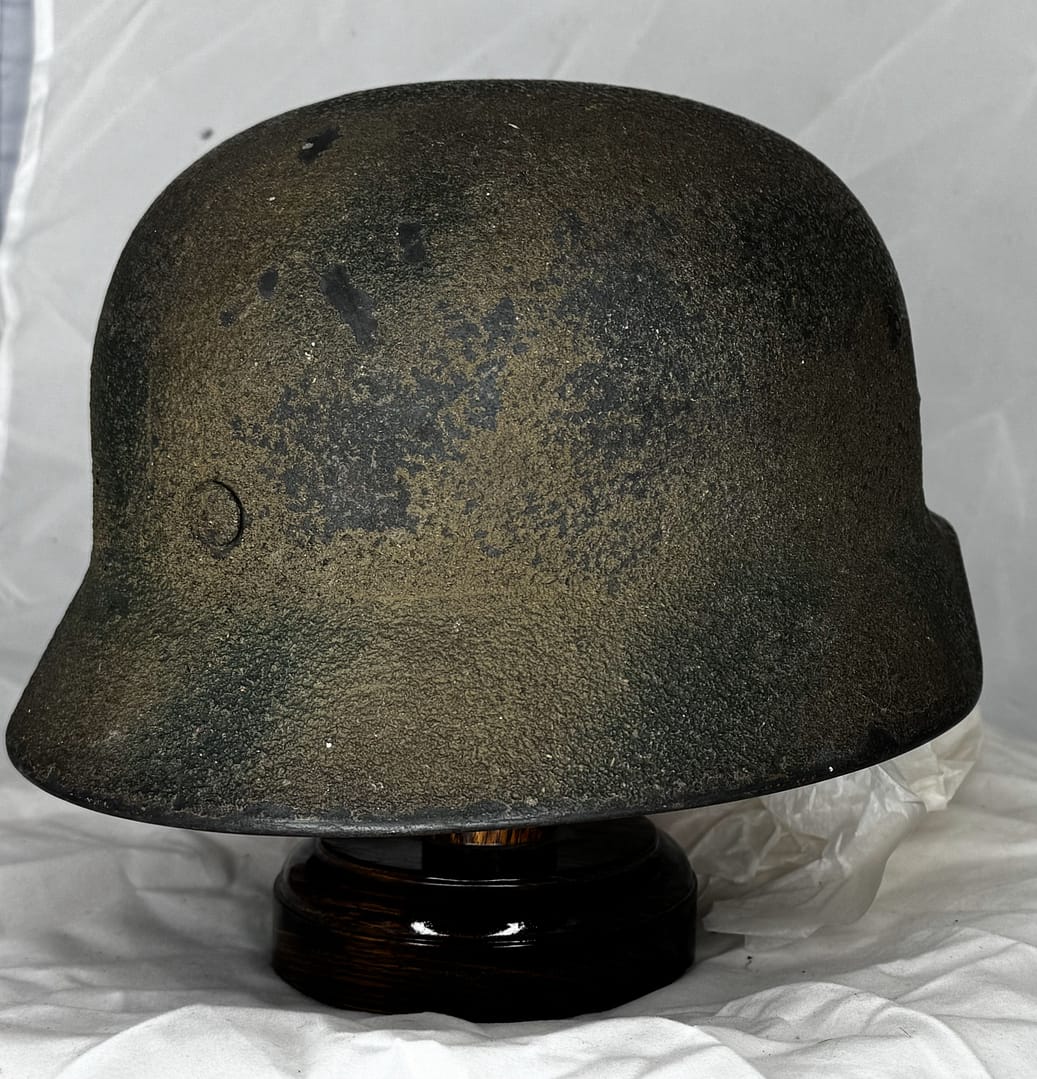
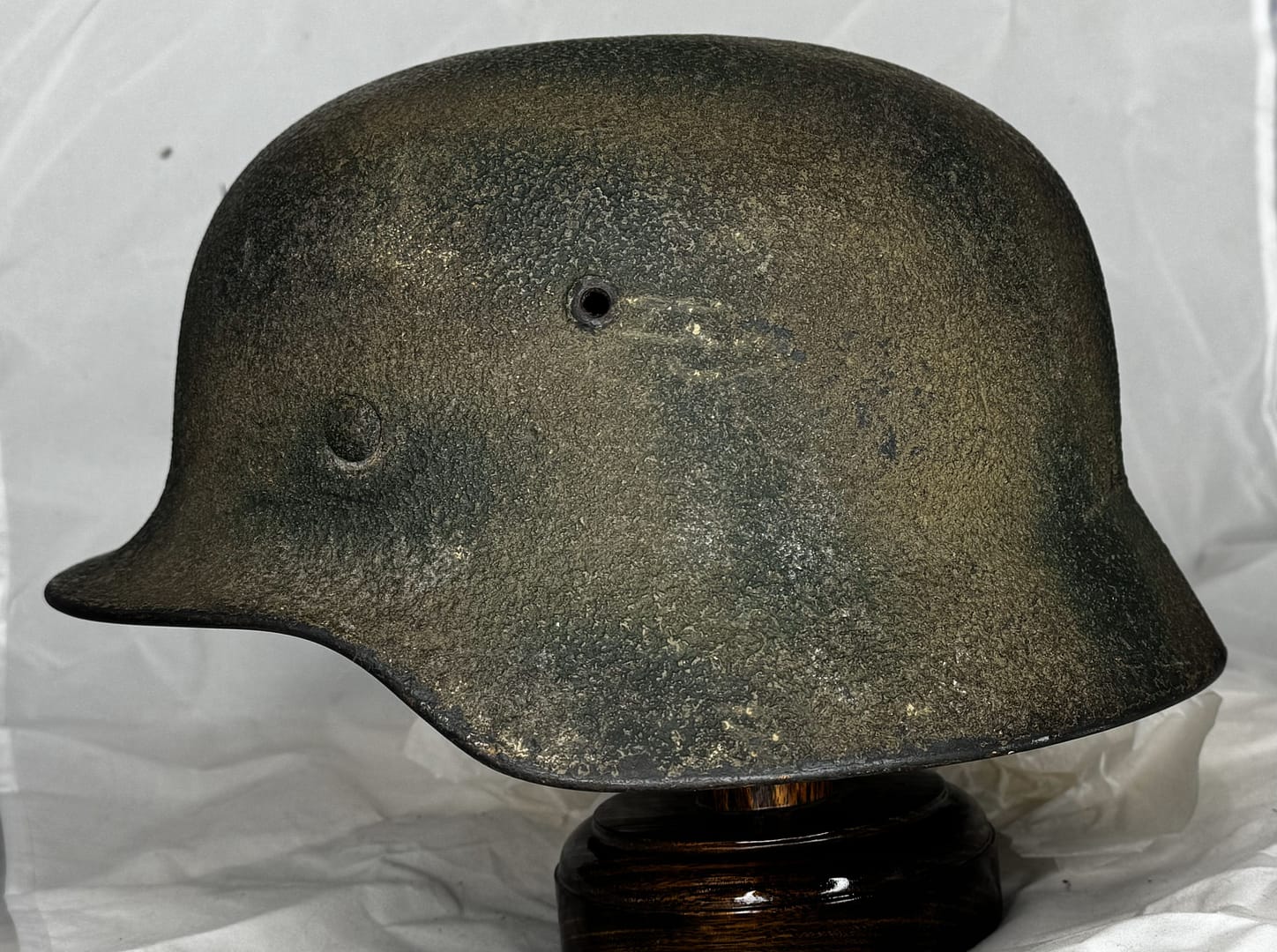
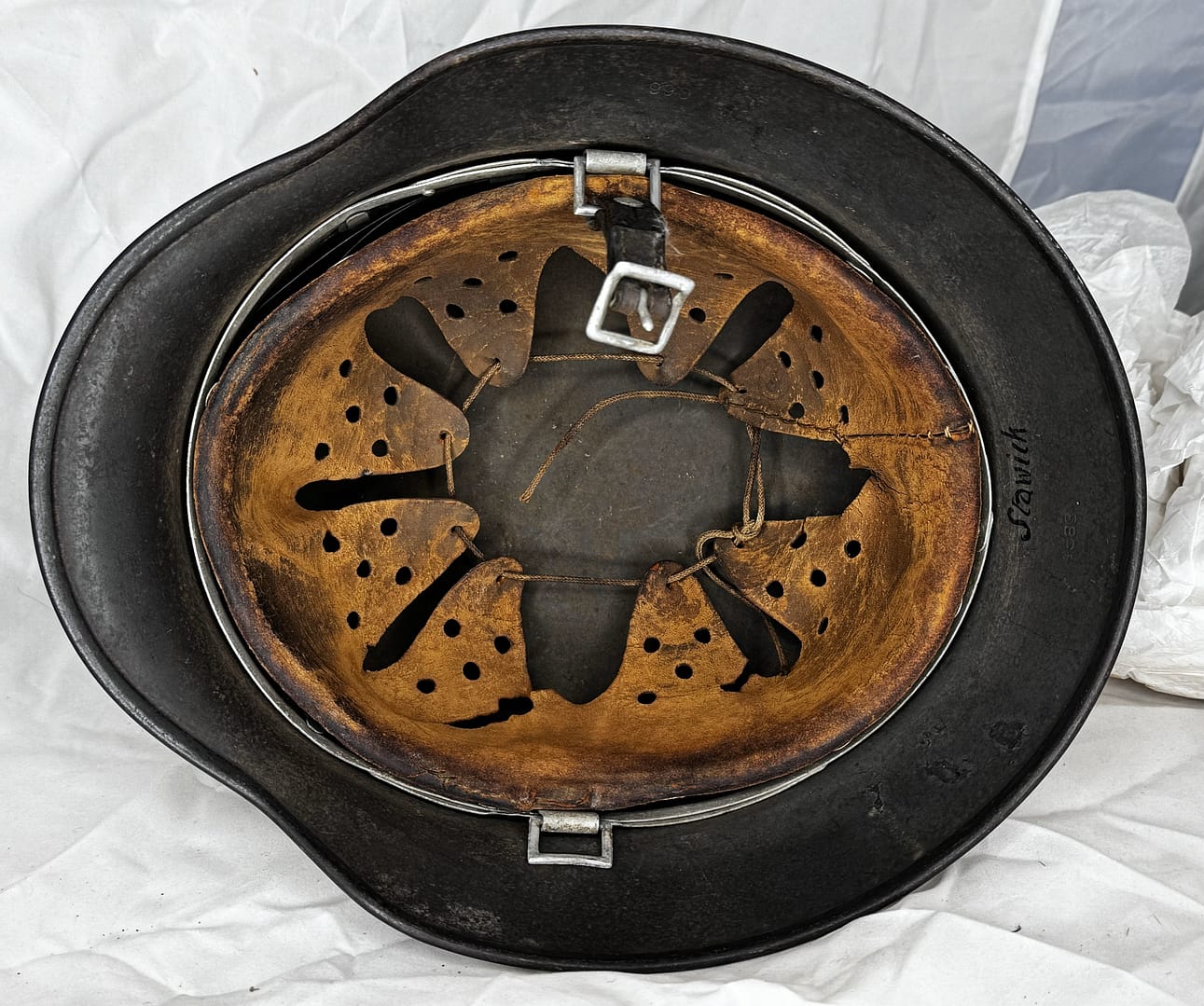
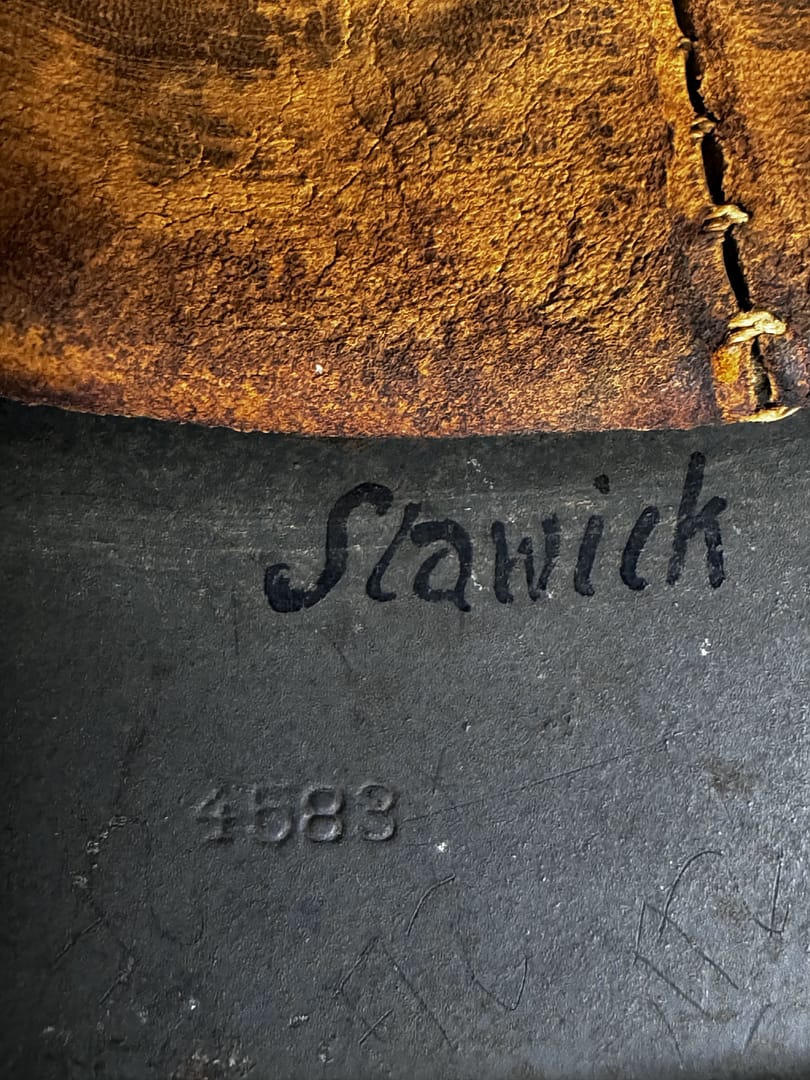
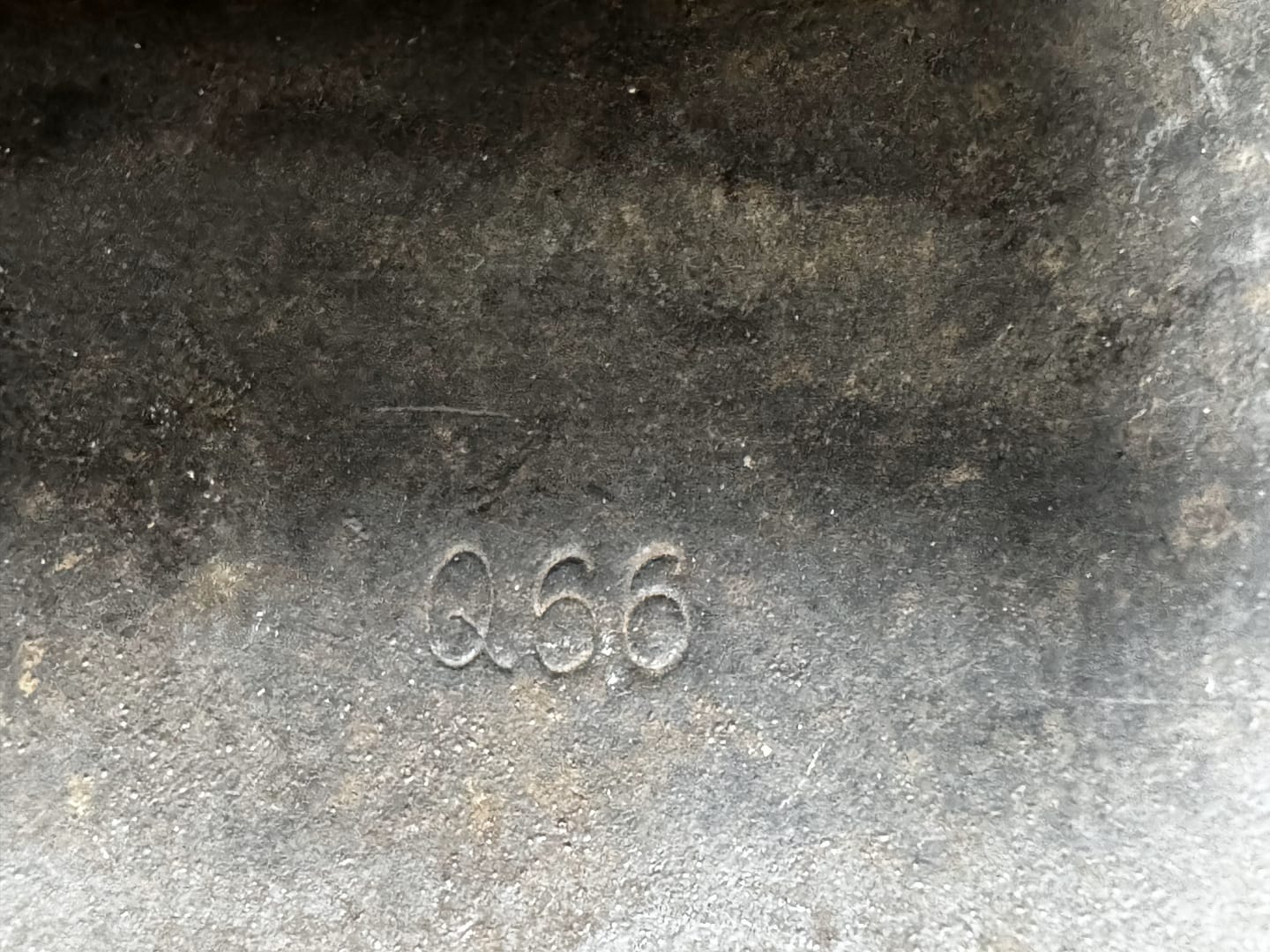
WW2 German M40 woodchip/sawdust ‘Normandy Camouflage’ helmet, Q66, from my personal collection.
This M40 helmet features a hand-applied “woodchip” camouflage pattern typical of German units operating in Normandy in 1944. Using sand, sawdust, or cork granules mixed into paint, the finish provided textured camouflage suited to hedgerow terrain. The M40 shell incorporated stamped ventilation holes and improved manufacturing over earlier models. Field-applied camouflage like this was common among infantry and assault gun crews during the fighting in France.

WW2 German Tropical Pattern Afrika Korps uniform for a Hauptmann (Captain)
This German tropical service uniform reflects the adaptation of the Wehrmacht to the harsh desert conditions of North Africa during the Second World War. Designed for hot climates, the lightweight cotton construction replaced the heavier wool field-grey uniforms used in Europe, improving comfort and practicality in extreme heat. This example bears the insignia of a Hauptmann (Captain), indicating a company-level command role within the Deutsches Afrikakorps. Tropical uniforms quickly developed a faded, worn appearance due to sun and sand exposure, becoming closely associated with desert campaigning. The uniform illustrates both environmental adaptation and the operational demands of mobile warfare in North Africa.


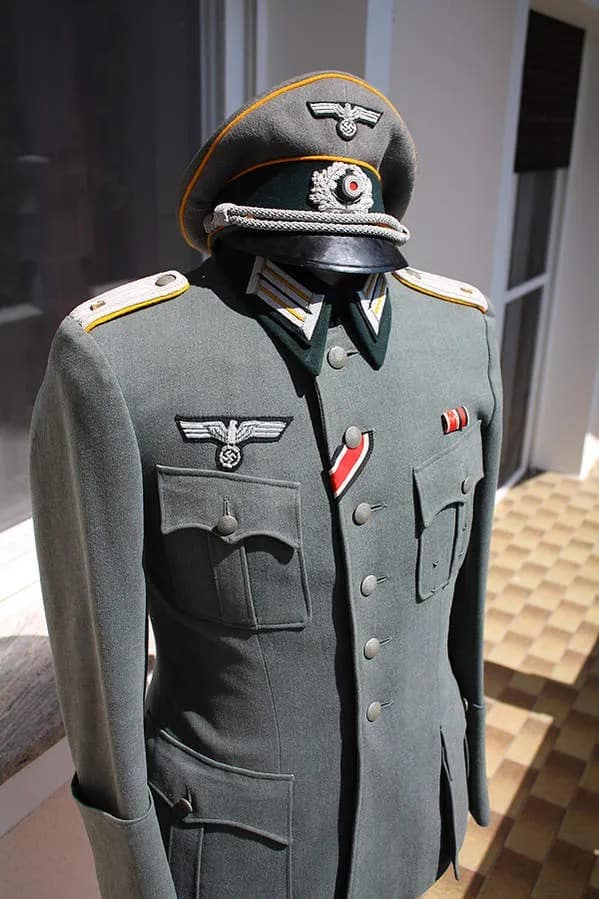
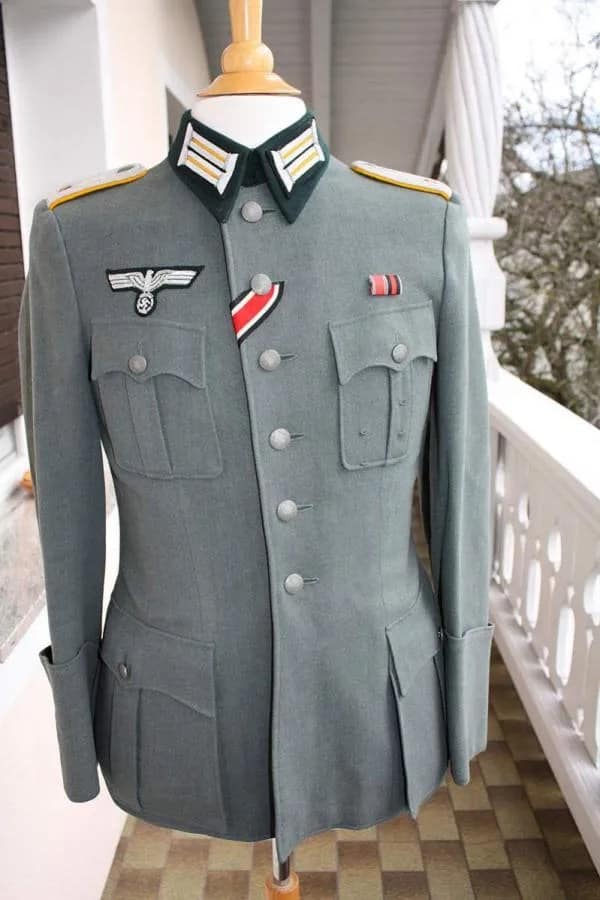
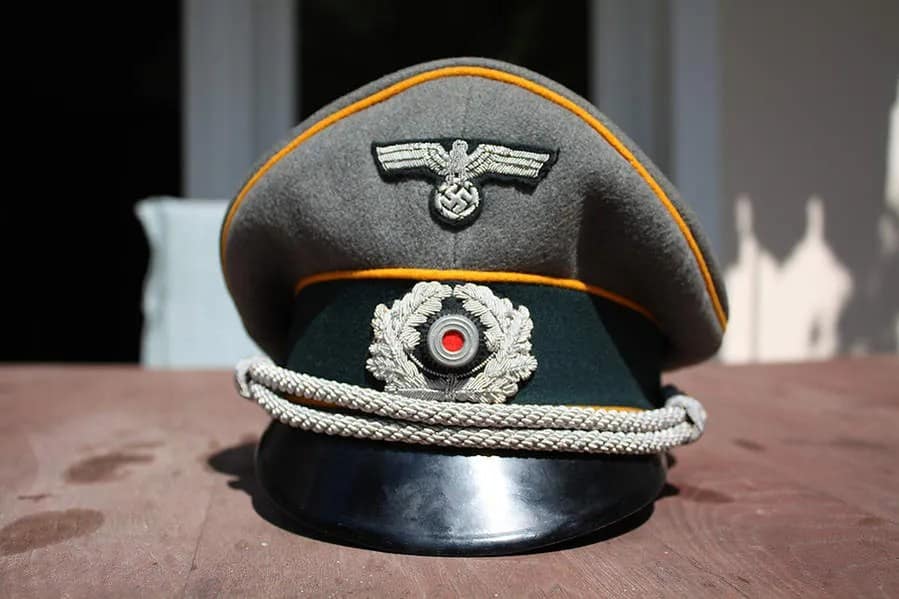
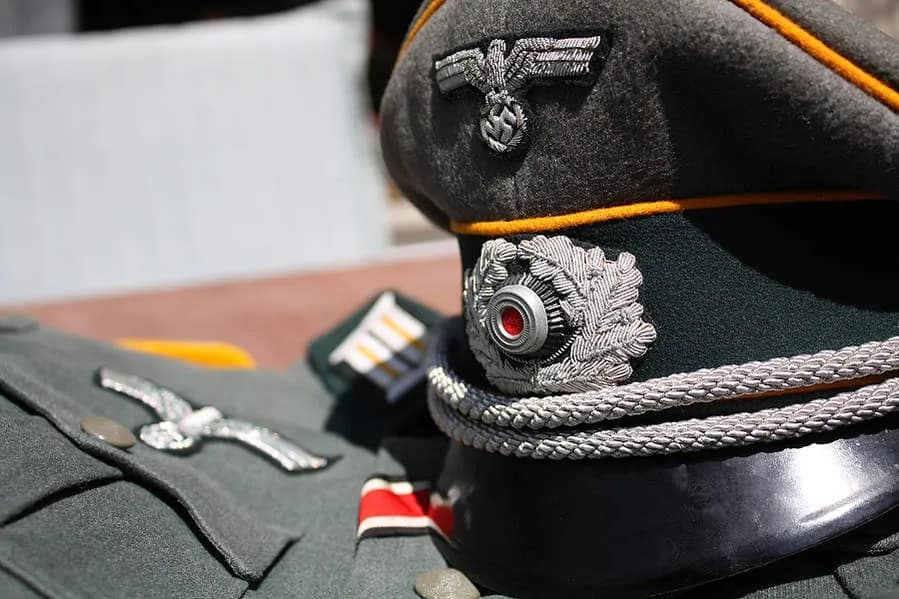
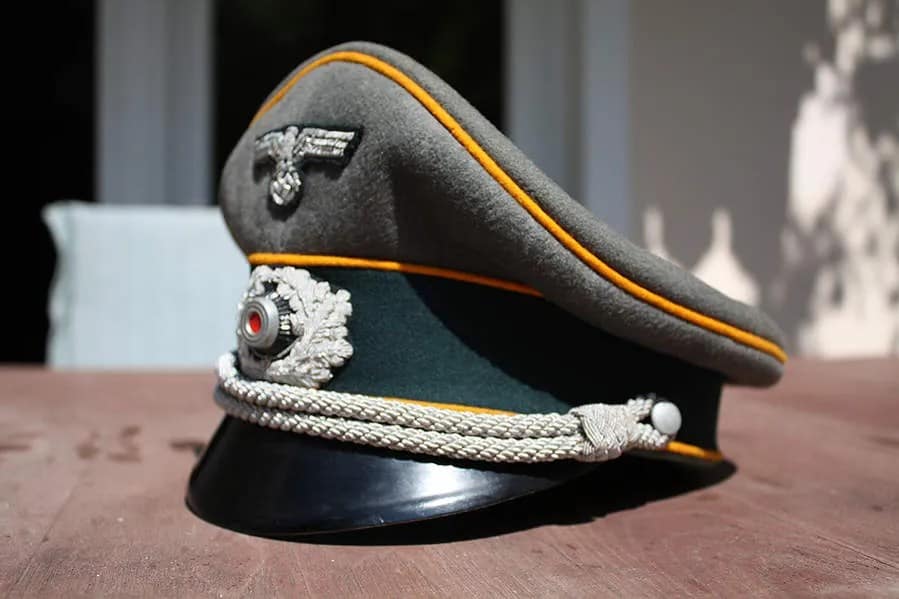
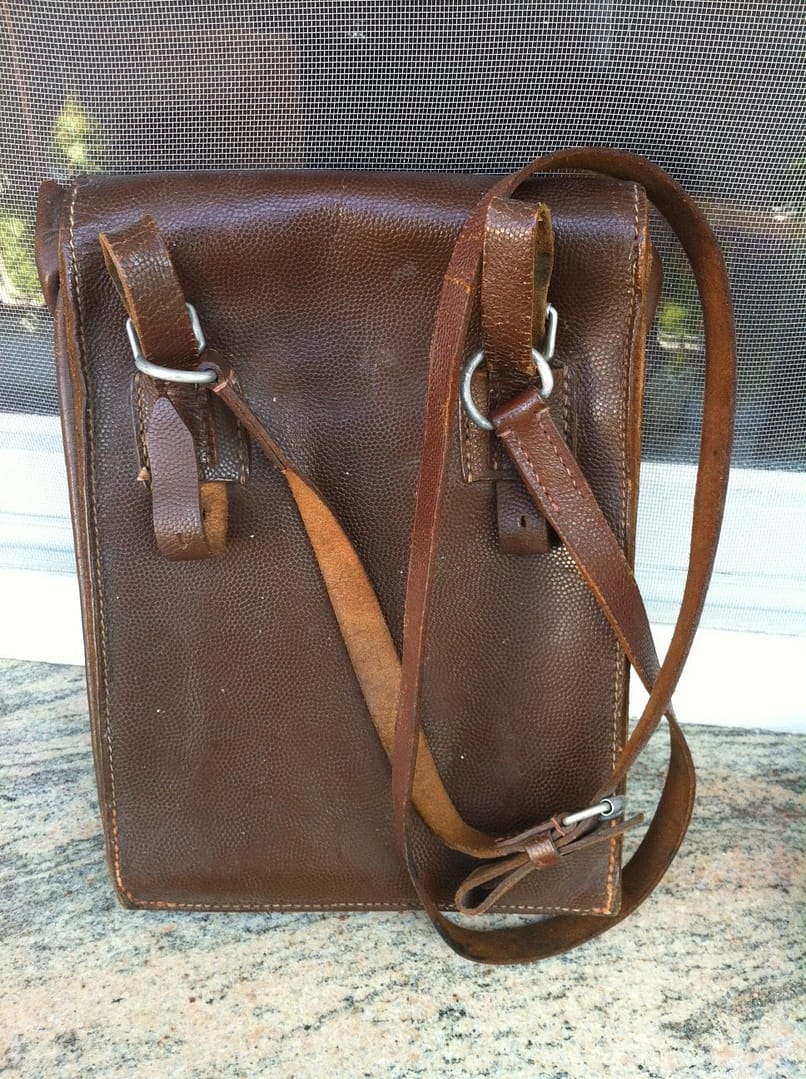
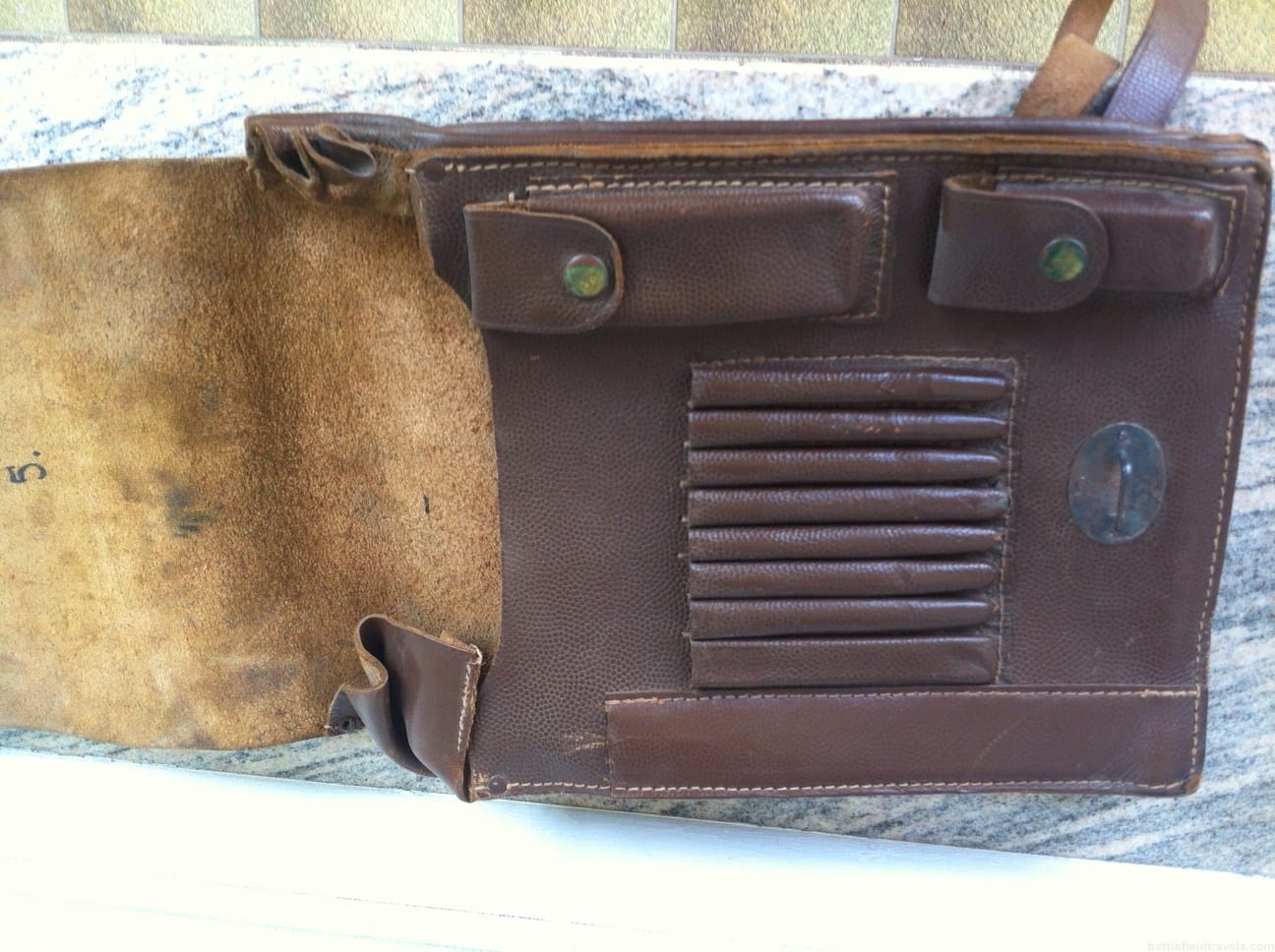
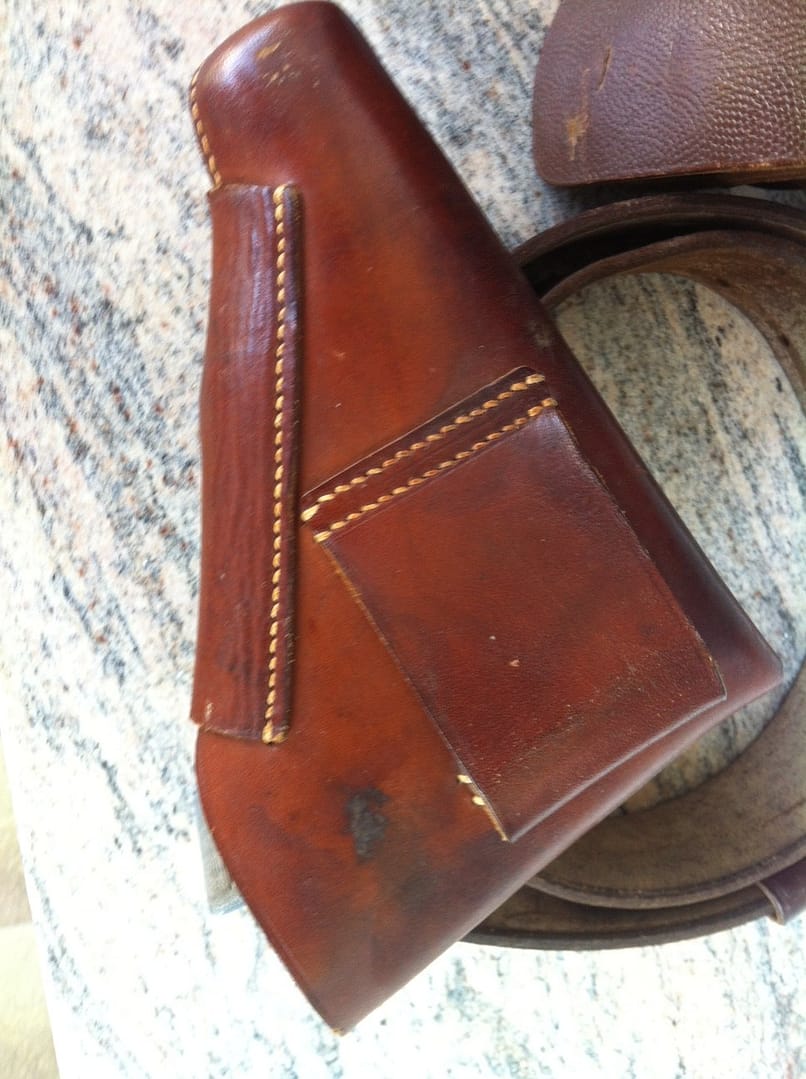
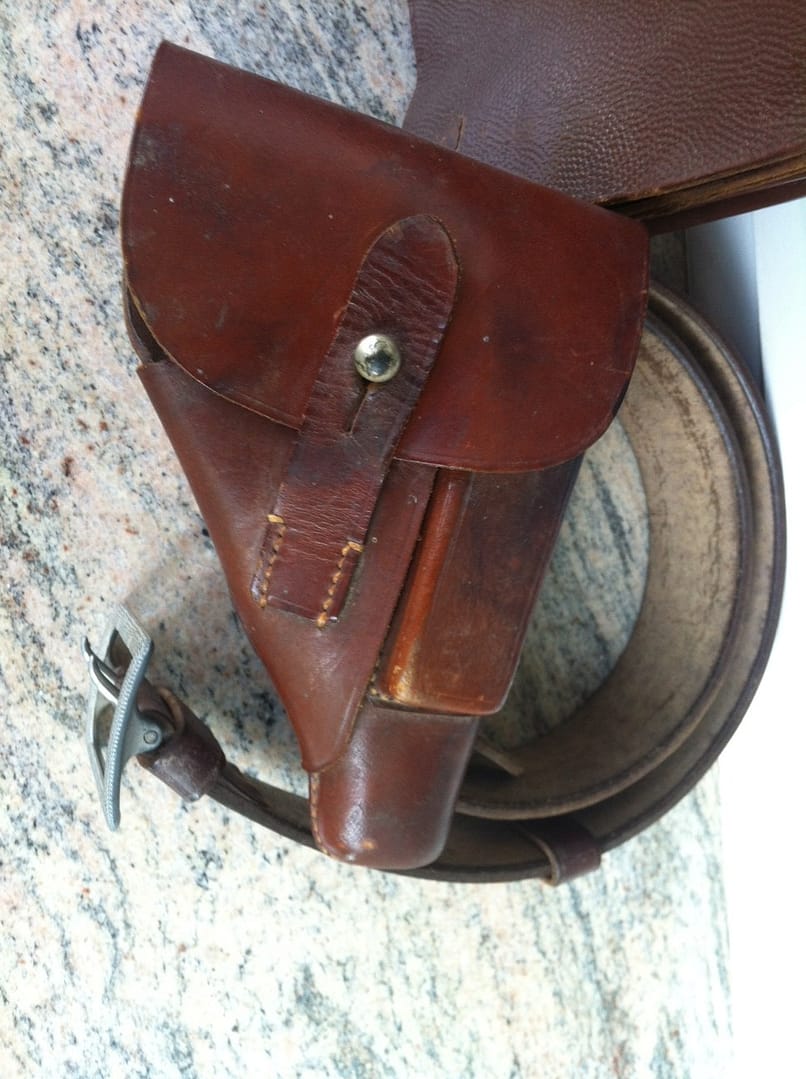
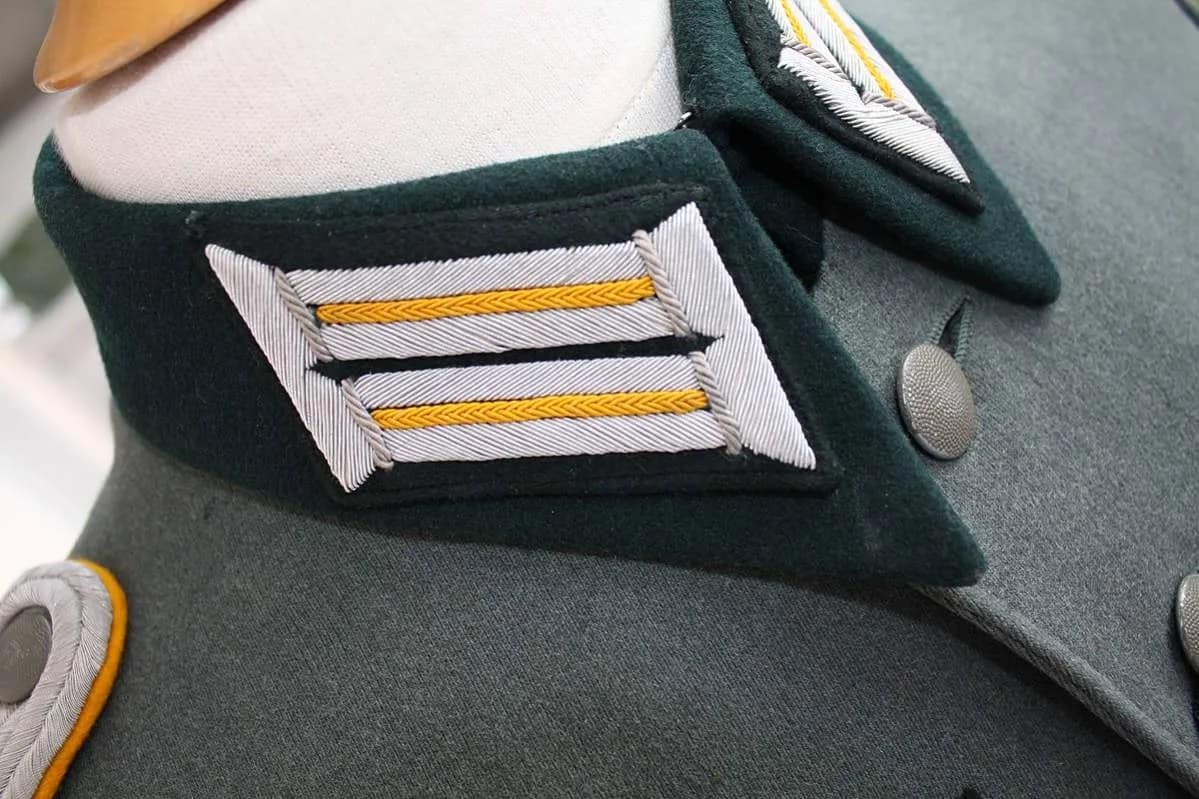
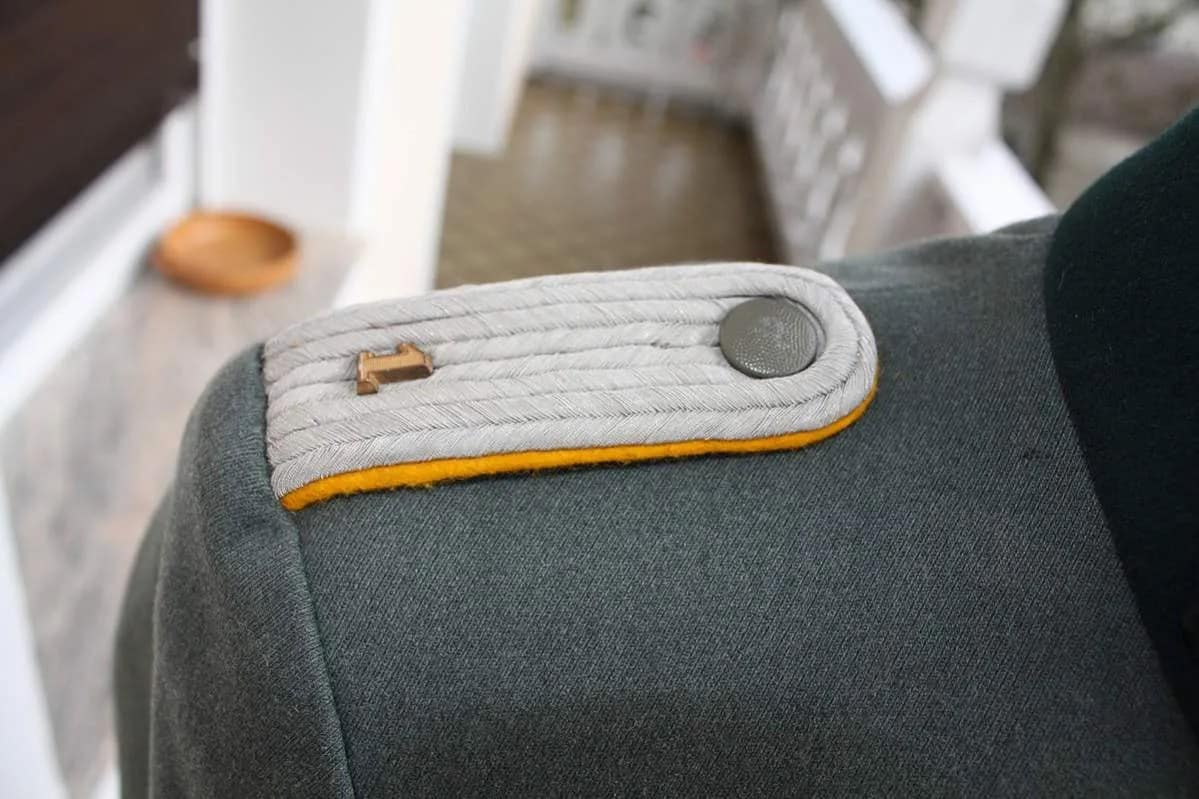
WW2 German Wehrmacht officer group – Lieutenant of the 1st Cavalry Regiment. From my personal collection.
This rare grouping belonged to a Wehrmacht lieutenant serving with the 1st Cavalry Regiment, a formation that combined traditional mounted heritage with increasing motorisation during the early years of the Second World War. The set includes a privately tailored officer’s tunic, officer’s peaked cap, map case, and a holster for a Walther PPK pistol, reflecting both the personal equipment and professional status of a junior officer. Such groupings provide valuable insight into the material culture of German cavalry units and the practical realities of command at troop and squadron level during a period of rapid operational change.
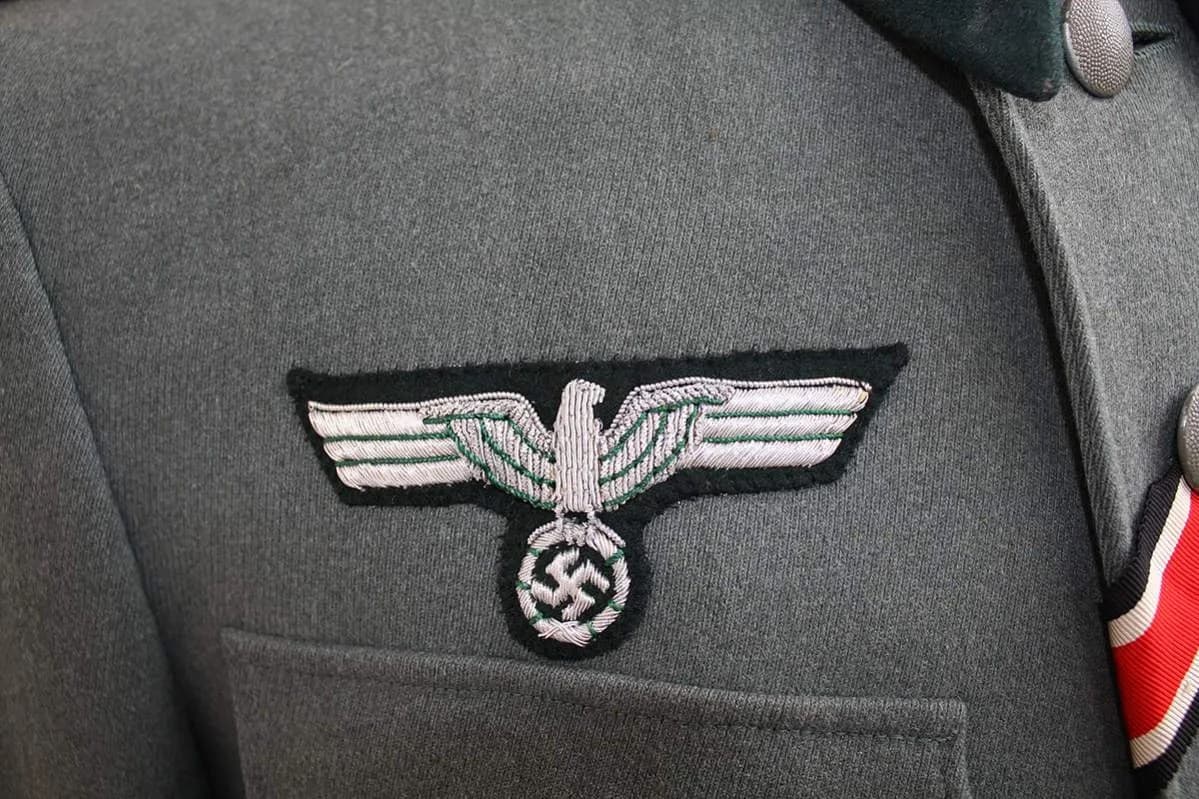
WW2 German M 1936 Feldbluse for an NCO
The pre-war pattern M1936 Feldbluse was the standard field uniform of German soldiers during the early campaigns of the Second World War. Introduced in 1936, it featured a high-quality wool construction in field-grey with dark green collar facings, pleated pockets, and a tailored cut reflecting the pre-war emphasis on smart appearance and durability. This example shows the distinctive insignia of a non-commissioned officer, indicating rank and leadership role within the unit. As the war progressed, material shortages led to simplified patterns, making early M1936 tunics increasingly scarce. The garment illustrates both the professionalism of the early-war German Army and the gradual transition to wartime economy.


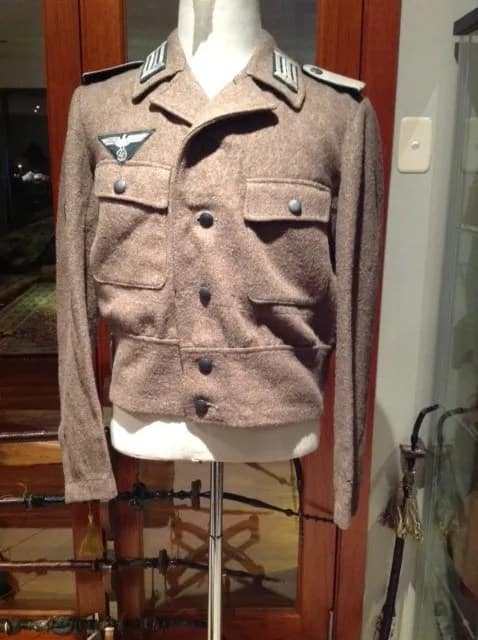
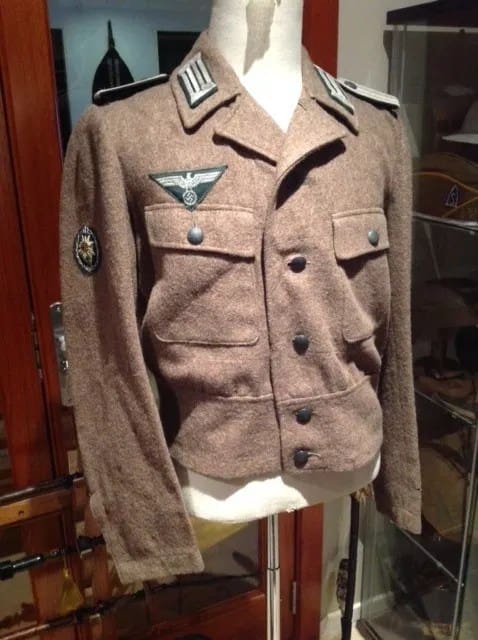
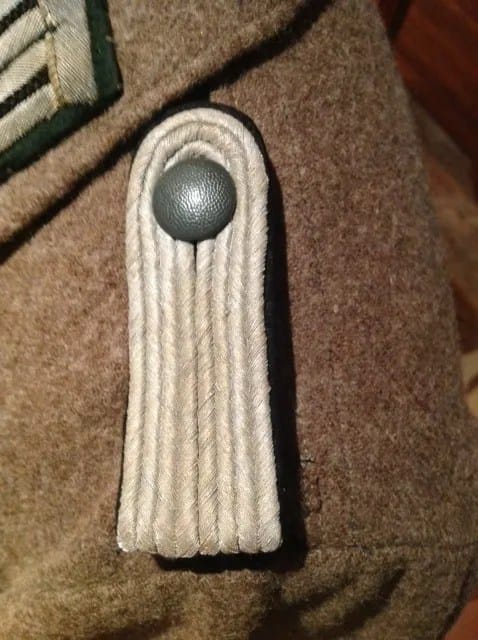
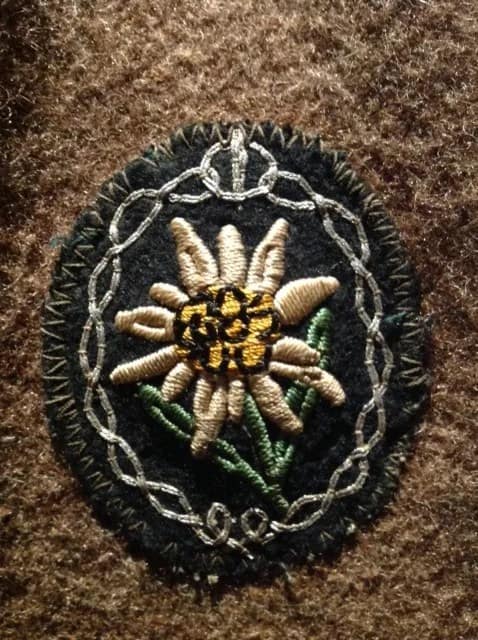
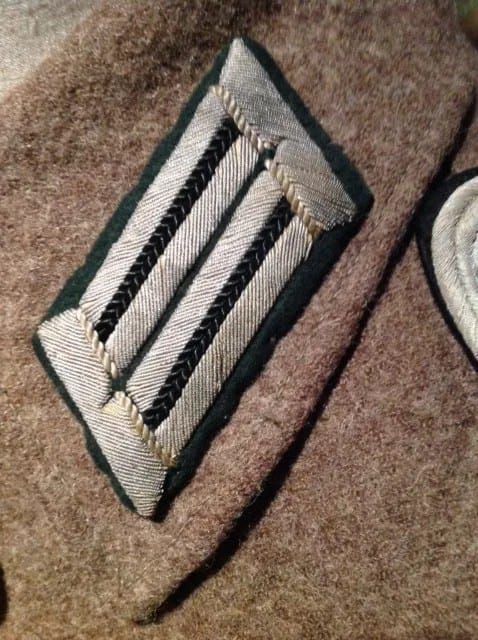
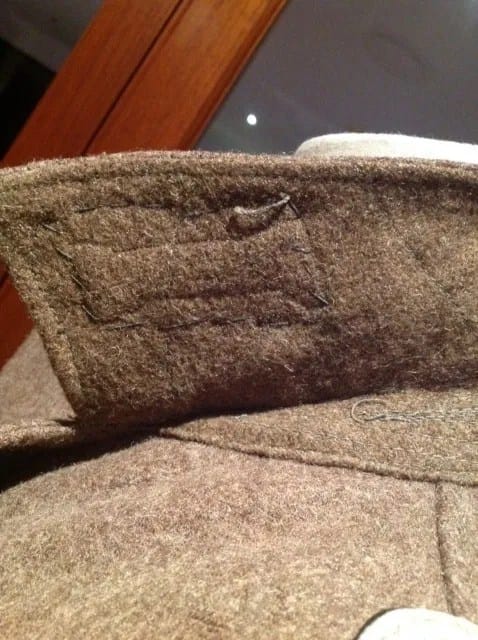
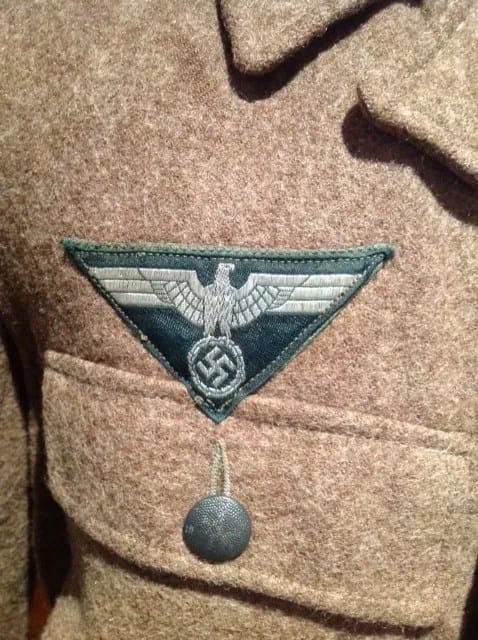
WW2 German Field Blouse Model 1944 for an Alpine Pioneer Leutnant
In late 1944, in order to cut down on tailoring and production costs, the Wehrmacht introduced the M44 pattern uniform. Similar in appearance to the British Battledress or the related US “Ike” jacket, the M44 was unlike any other German pattern uniform, and the first major deviation in uniform design since 1936. The tunic skirt was shortened to waist length, an internal belt was added, and the tunic could be worn with an open or closed collar. The color was the new “Feldgrau 44”, a drab greenish-brown. This M44 Feldbluse shows teh black piping of teh Pioneers, and teh Edelweiss sleeve badge of teh Alpine troops.
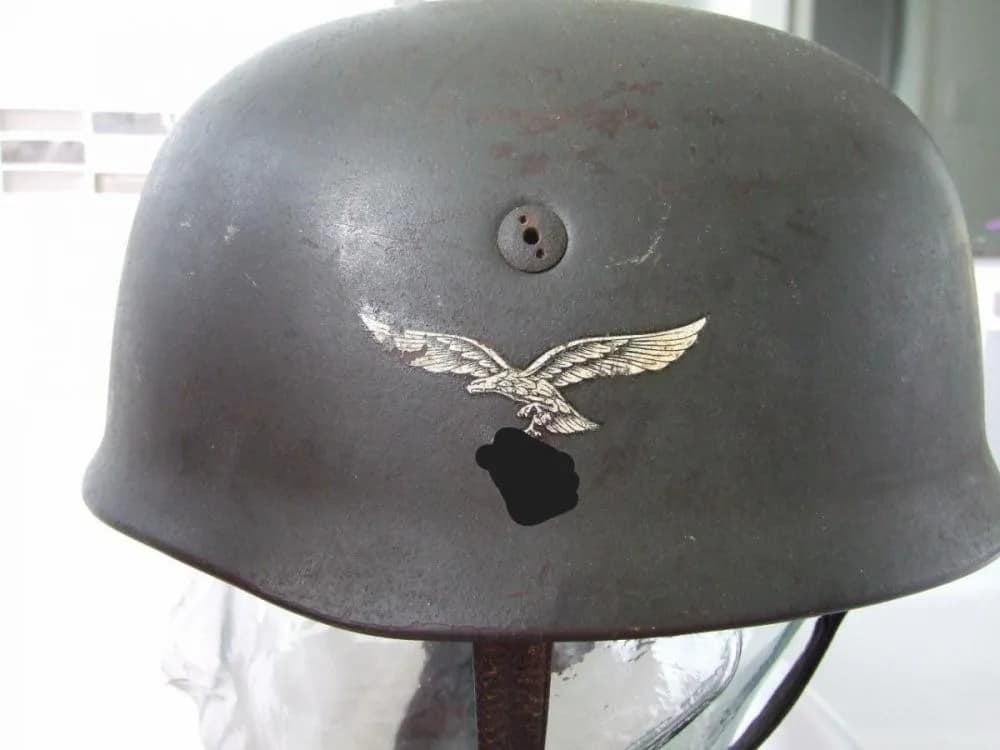
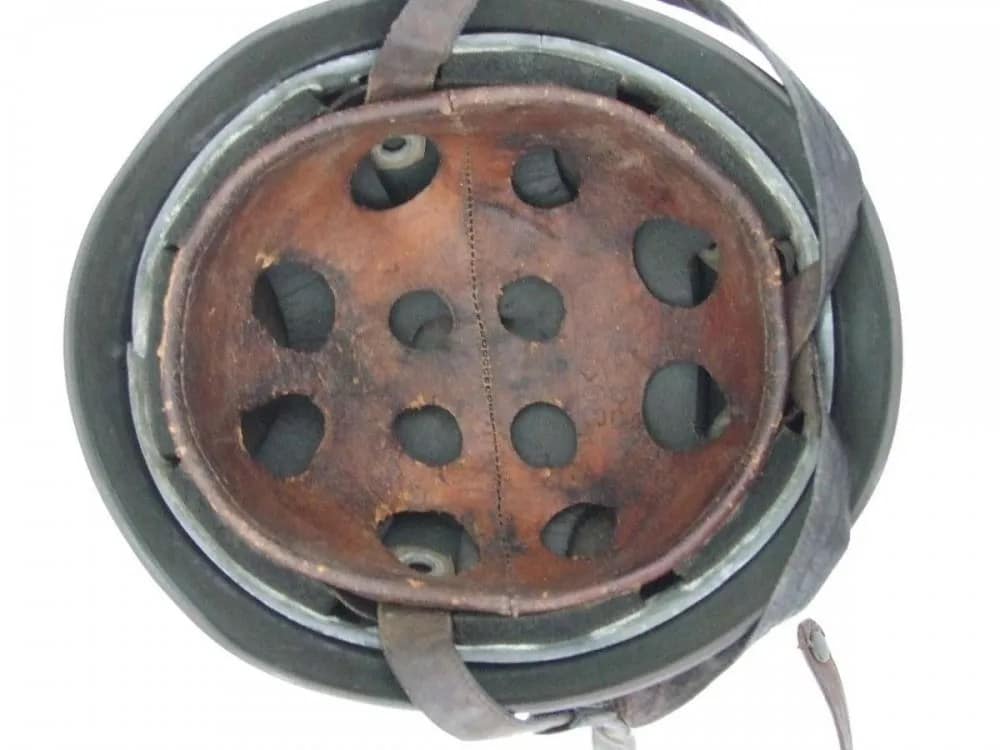
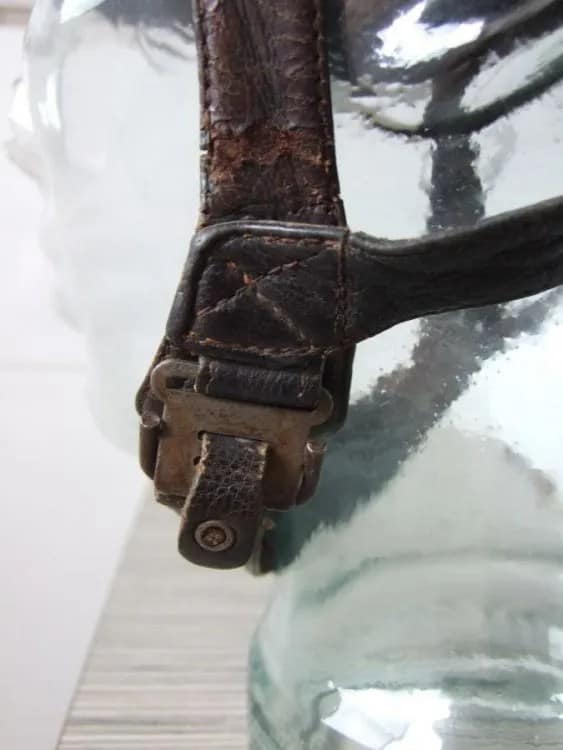
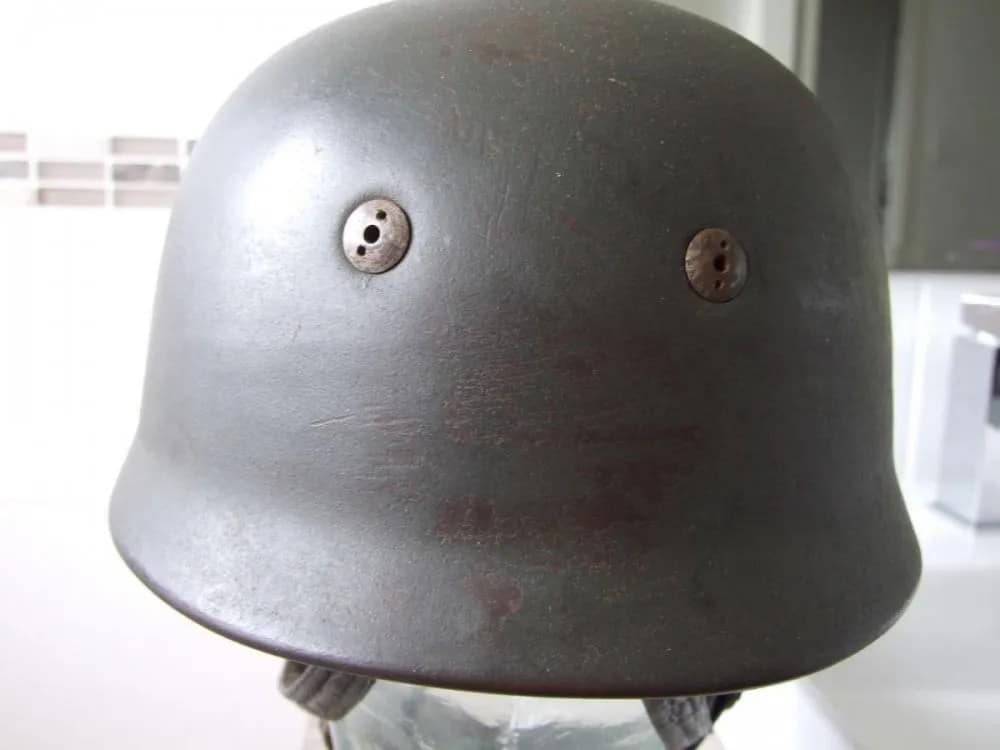
WW2 Luftwaffe M1938 Fallschirmjager (Paratrooper) Helmet, from my personal collection.
The M1938 Fallschirmjäger helmet was specially designed for German airborne forces, featuring a deeper, cut-down shell, rubber pad, leather liner, and four-bolt liner system to reduce injury during parachute descent. Late-war patterns used simplified paint finishes and wartime liners. Worn in Crete, North Africa, Italy, Normandy, and the Ardennes, the M38 is among the most distinctive helmets of the war, reflecting the elite and highly specialised nature of German airborne operations.
WW2 Luftwaffe M1942 Fallschirmjager Camouflage Paratrooper Smock, Sumpfmuster 43 Water pattern camouflage, from my personal collection.
The M1942 Fallschirmjäger jump smock, nicknamed Knochensack (“bone sack”), was redesigned for combat operations and issued in the Sumpfmuster 43 “marsh pattern” camouflage. Constructed from strong cotton twill with zip closures, it allowed greater freedom of movement and concealed equipment during descent. This pattern saw extensive use in Italy, Normandy, and defensive actions in 1944–45, and is closely tied to late-war German airborne engagements.
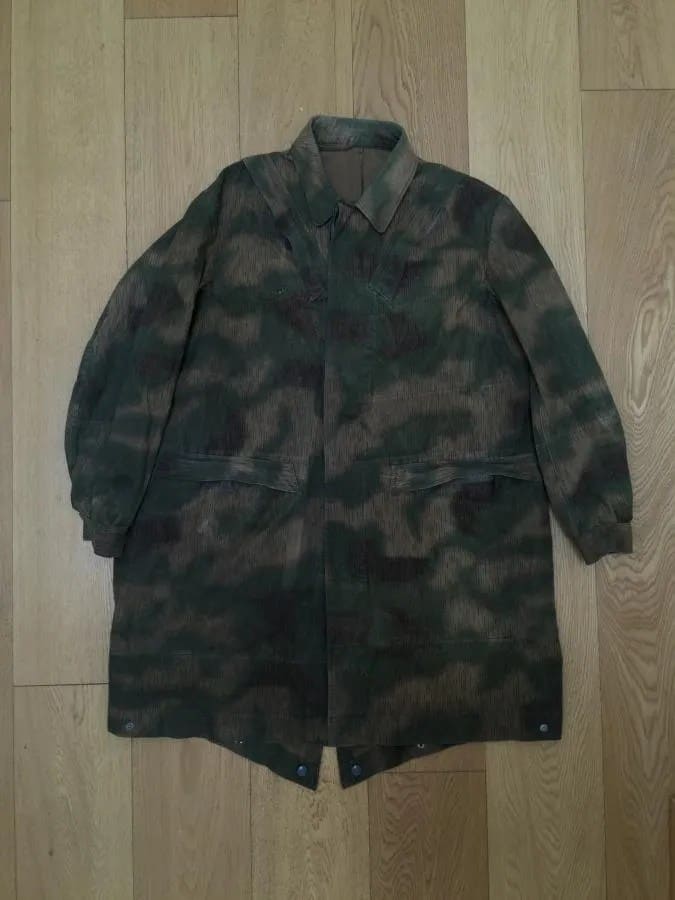
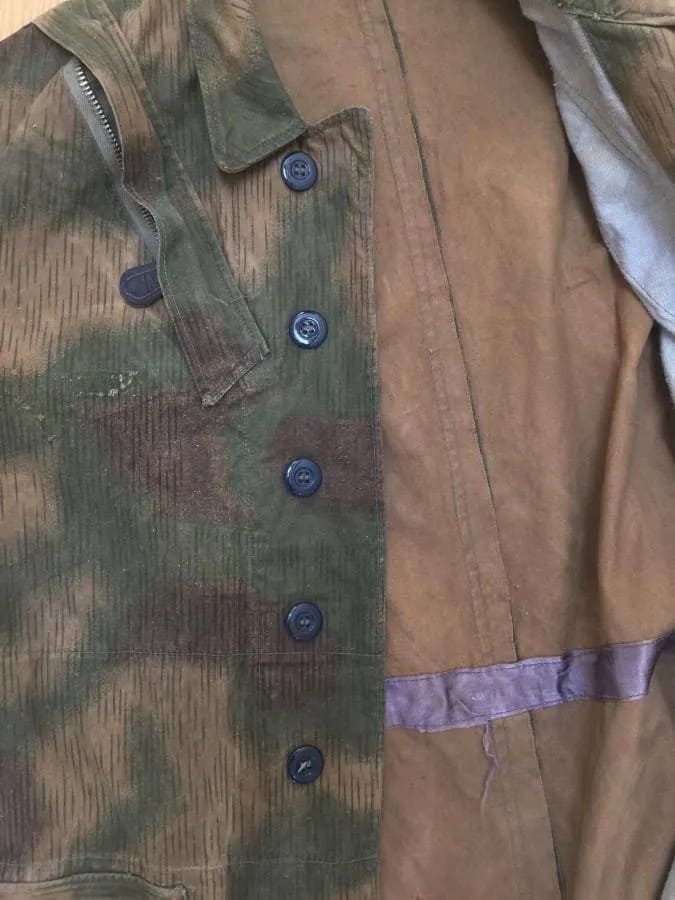
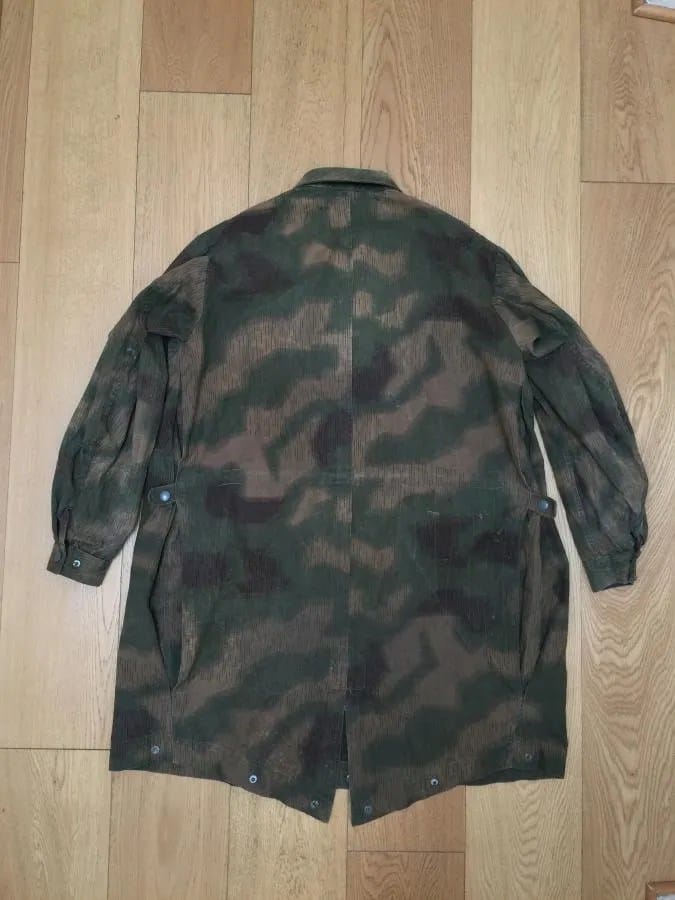
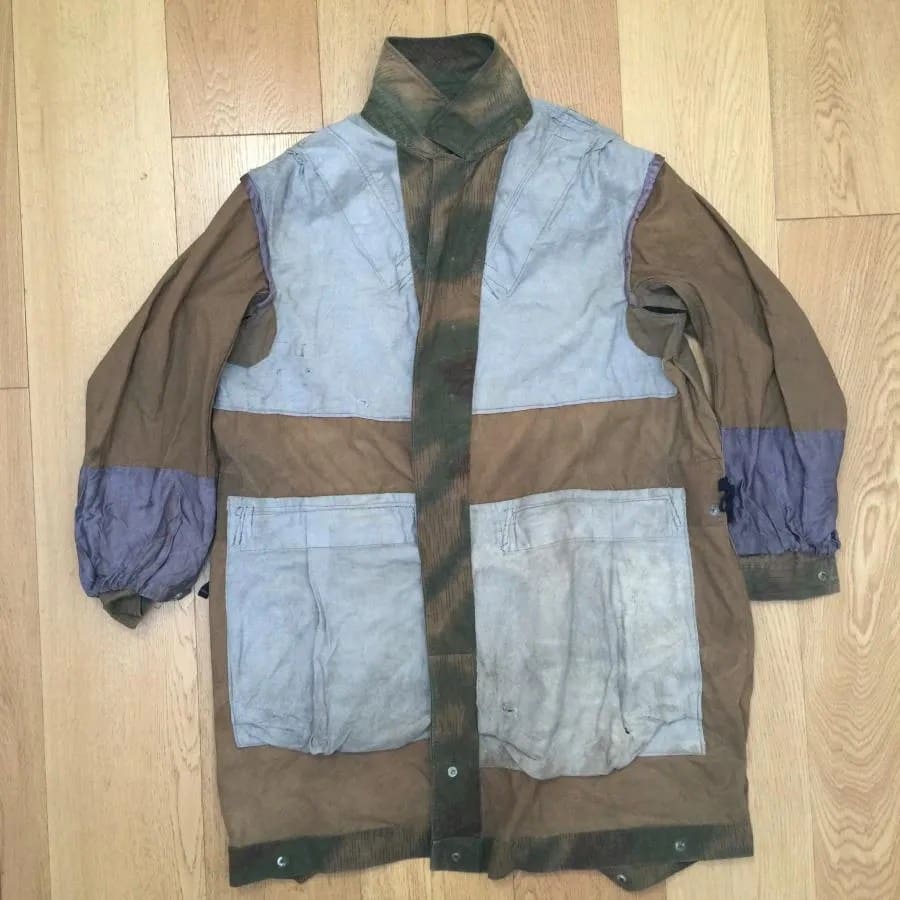
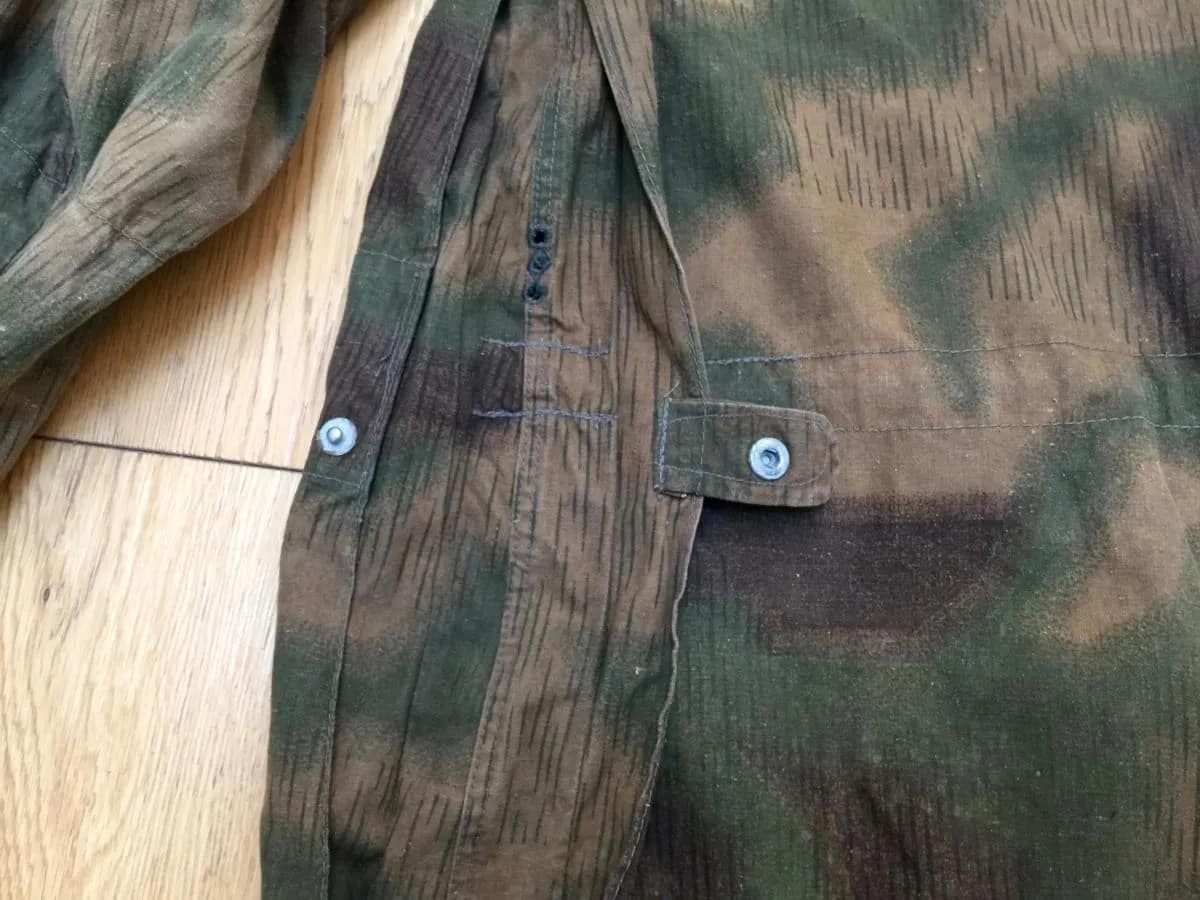
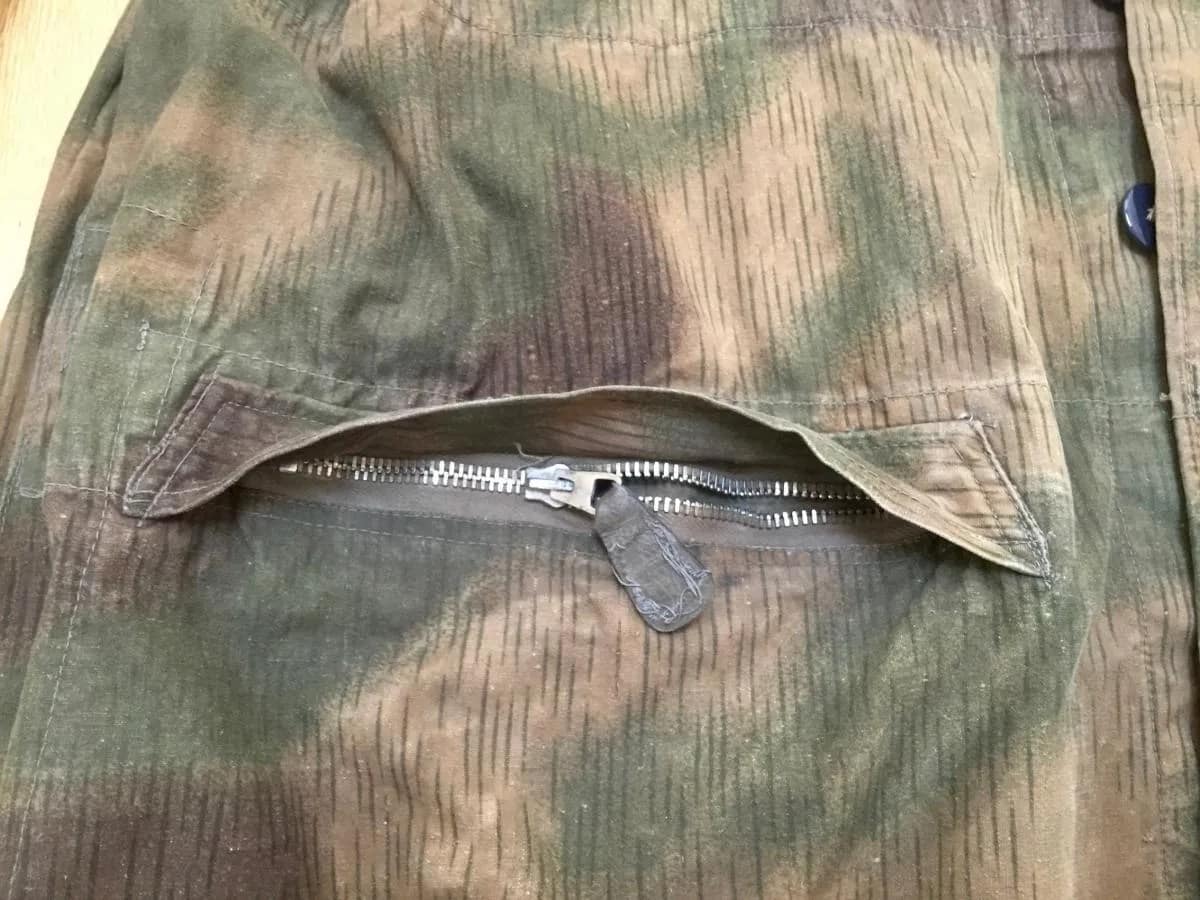
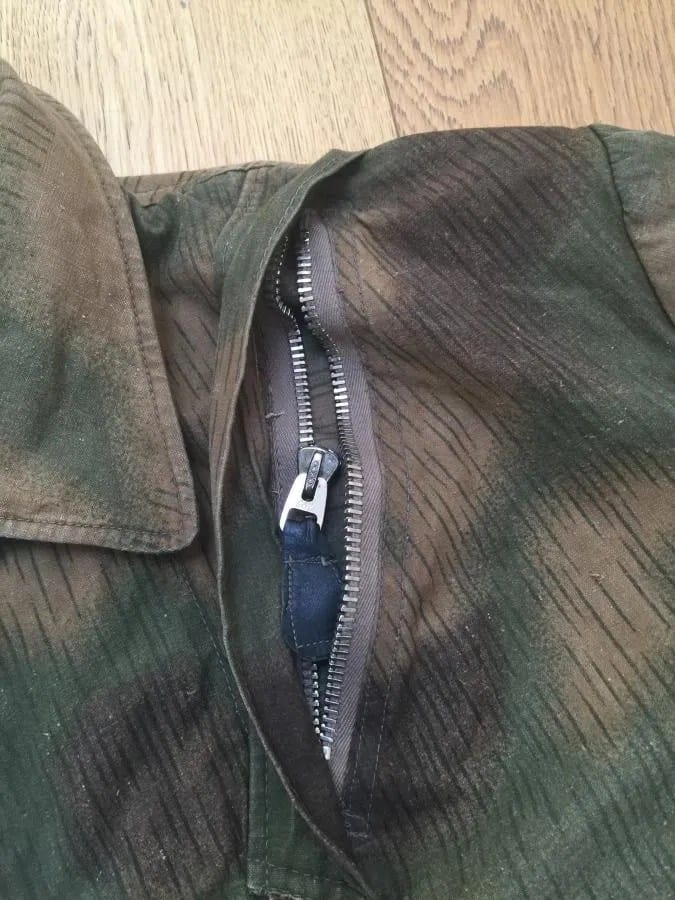
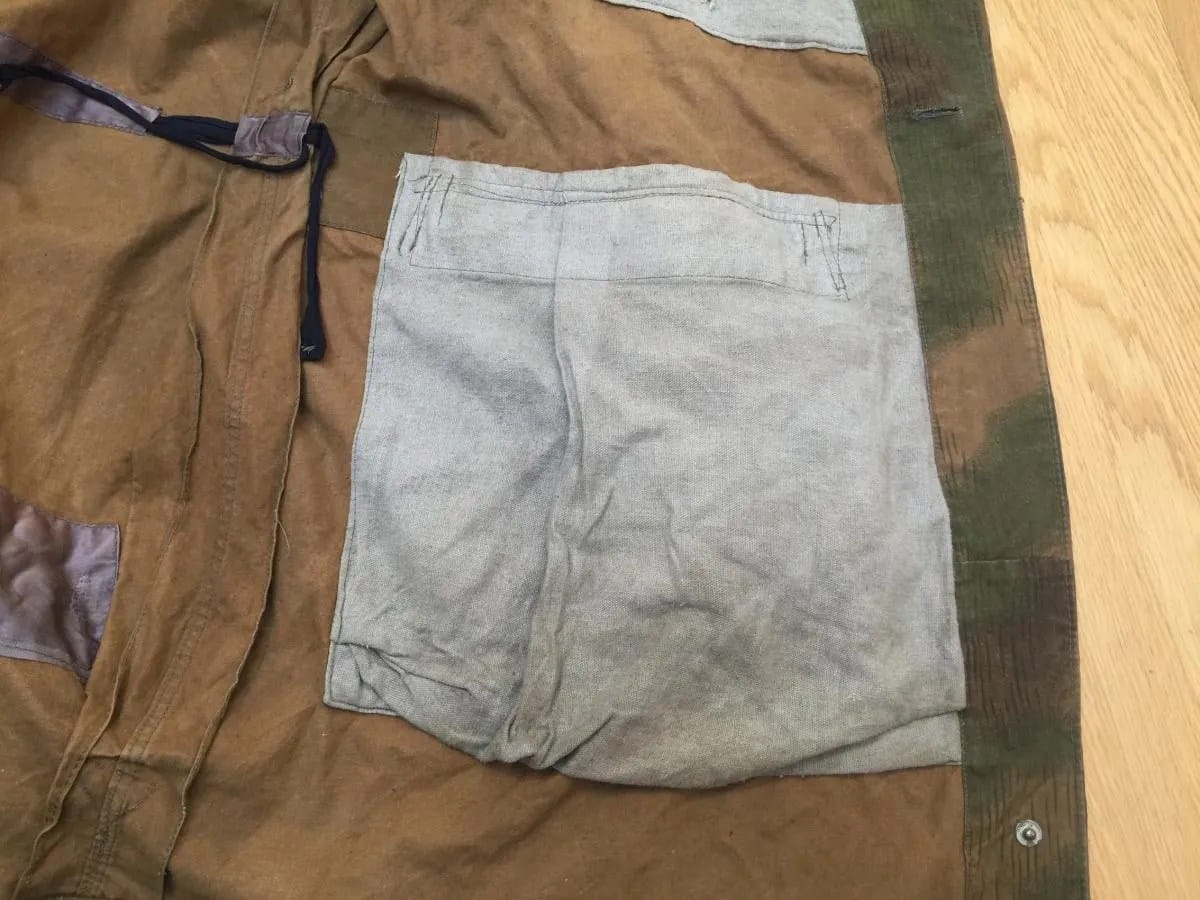
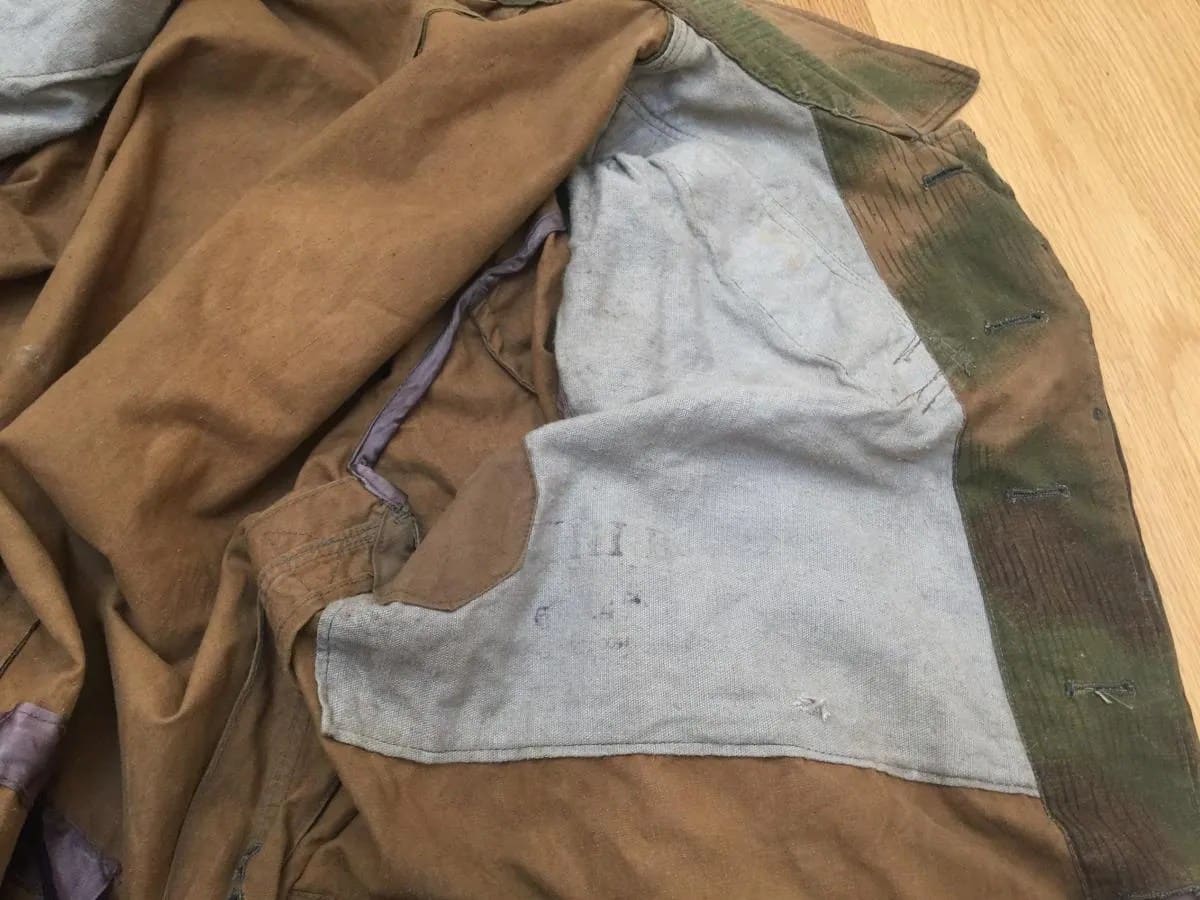
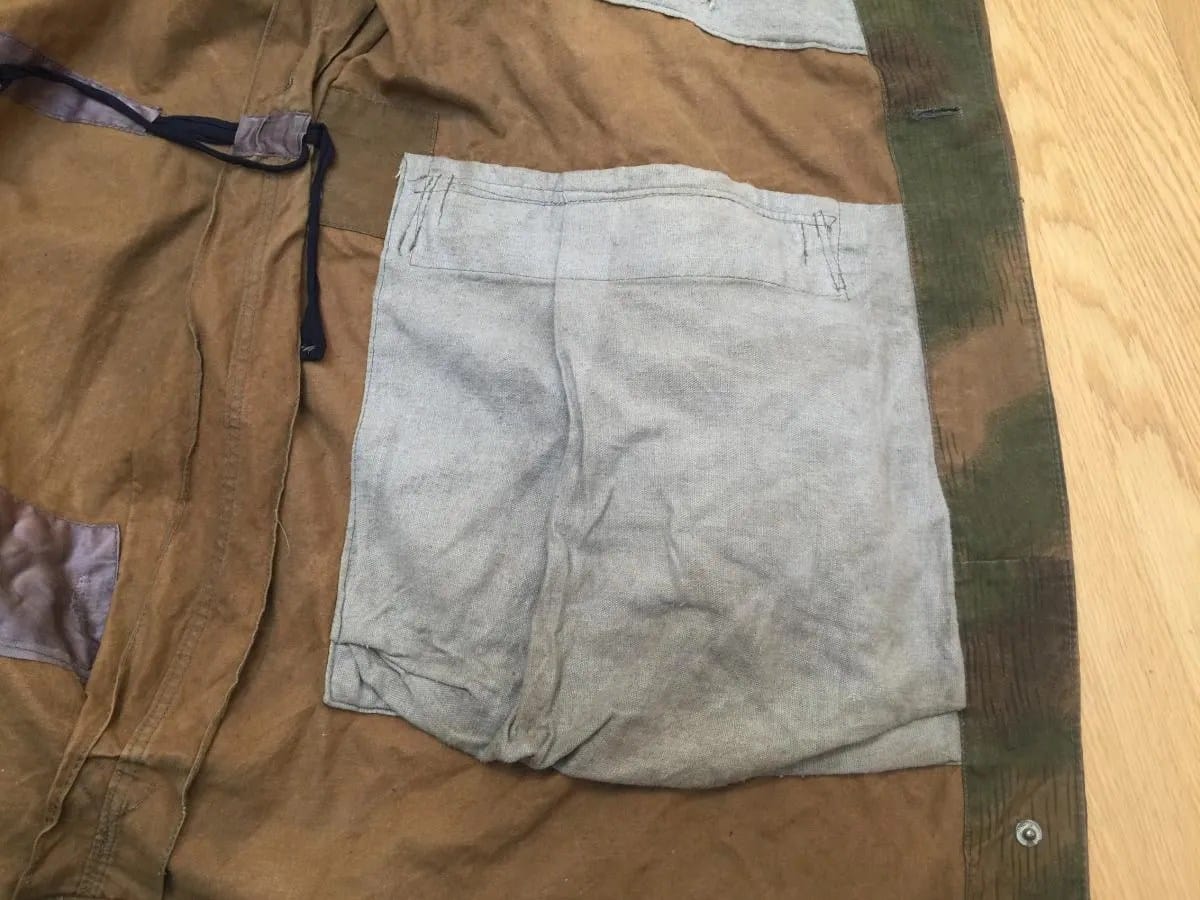
WW2 German Wehrmacht complete Reversible Splittertarn / Snow pattern camouflage uniform – parks, padded trousers, hood, mitts. From my personal collection.
This complete reversible camouflage set — parka, trousers, hood, and mittens — features the standard Splittertarn A/B patterns used by German infantry from 1943. Intended for winter and transitional conditions, the parka system provided insulation and concealment, replacing earlier zeltbahn improvisations. It was widely used on the Eastern Front and in late-war defensive operations. The reversible design allowed rapid adaptation between woodland and snow-covered terrain.


ITALIAN
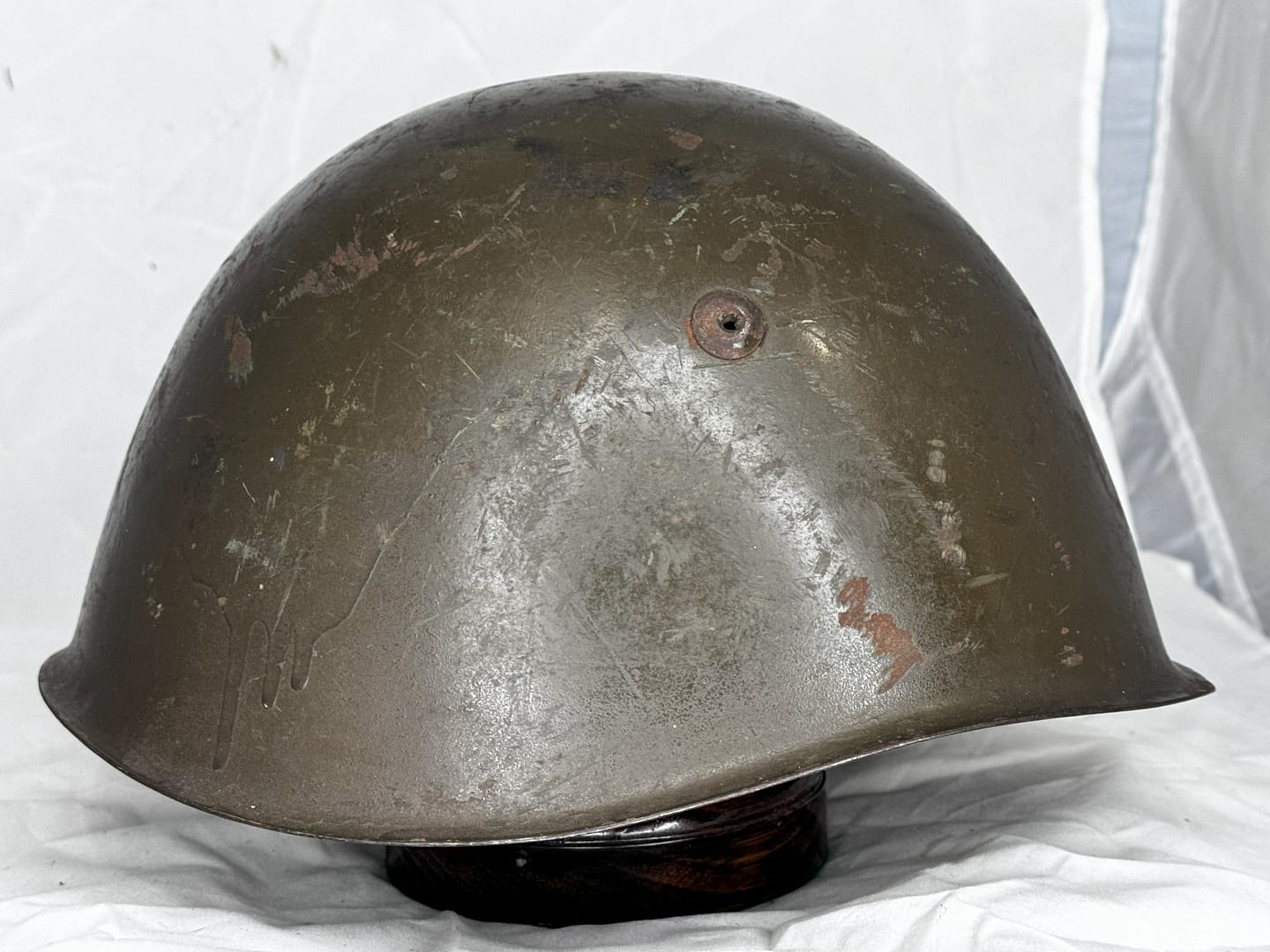
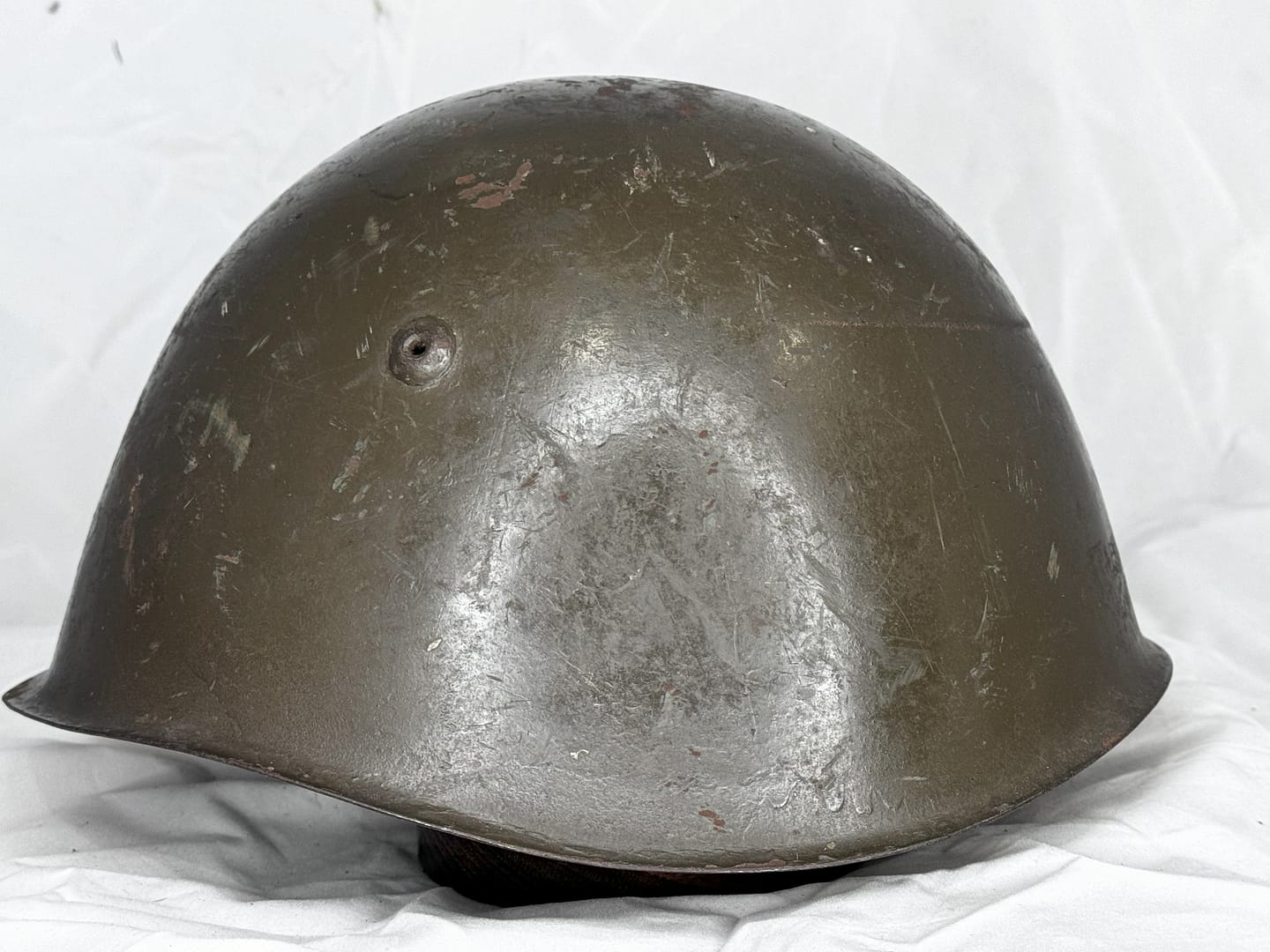
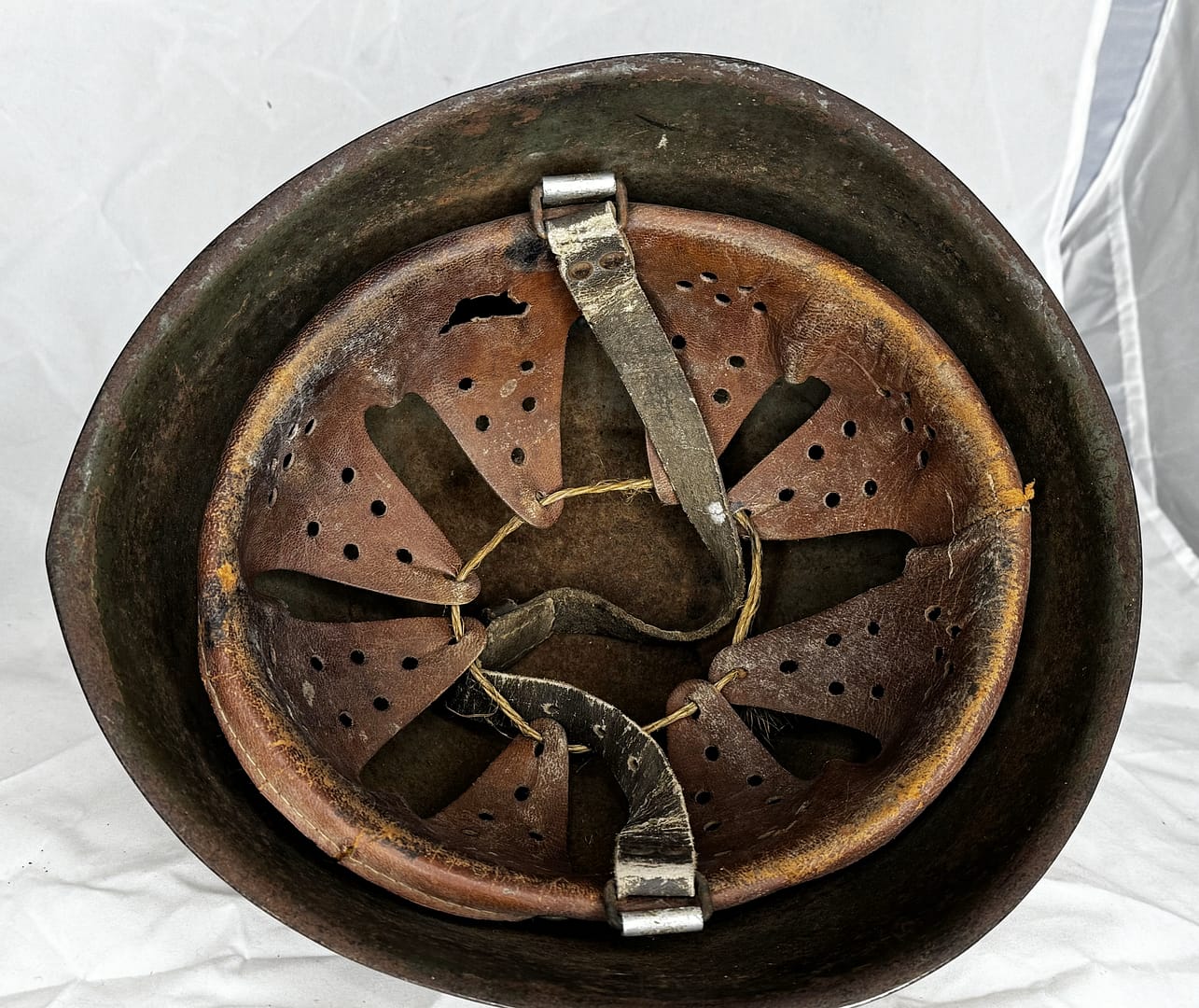
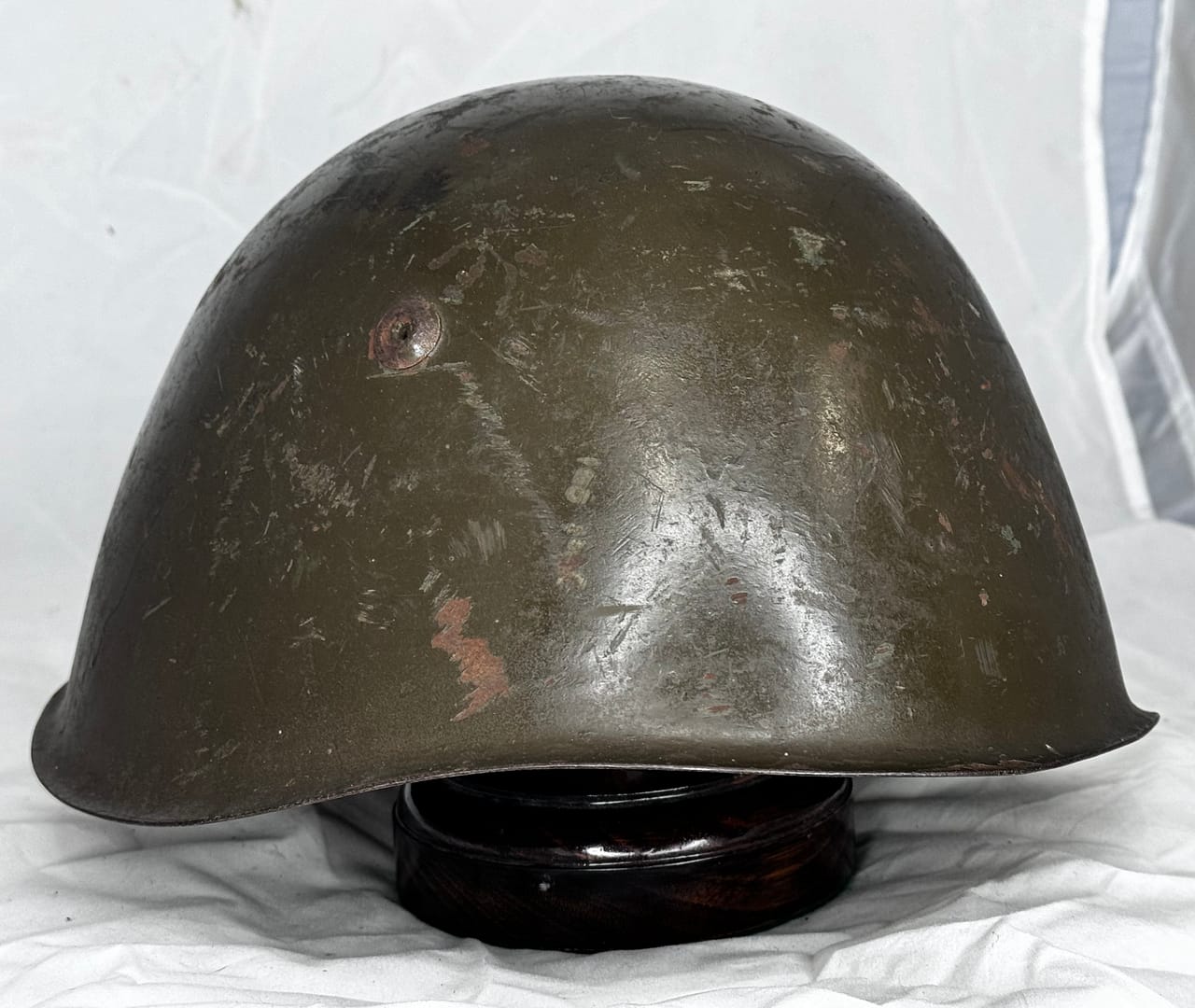
WW2 Italian M33 Combat Helmet, from my personal collection.
Introduced in 1933, the Italian M33 helmet was a modern, lightweight steel helmet with an improved liner and eight-pad suspension. Used across North Africa, East Africa, the Balkans, and Italy, it offered better protection and comfort than many pre-war designs. After the 1943 armistice, both Royalist and RSI forces continued to use the M33, making it one of the longest-serving helmets of the war.
ROMANIAN
WW2 Romanian M39 Camouflaged Combat Helmet, from my personal collection.
The Romanian M39 helmet was produced in Germany for the Romanian Army and based closely on the Dutch M1926 shell. This example features wartime camouflage paint and a German M31 leather liner, reflecting close Axis cooperation. M39 helmets were worn in the Wehrmacht-supported campaigns on the Eastern Front, including actions in Odessa, the Don Bend, and Stalingrad. The M39 represents Romania’s primary combat helmet during its period as an Axis co-belligerent.


Found this useful? Buy me a coffee — it helps fund future battlefield research


Authored by Mick Prictor, a retired military officer with 40 years’ service, and a military historian specialising in terrain-focused analysis of tactics, doctrine, and command decision-making in land warfare. His work draws on extensive battlefield fieldwork—more than 280 sites worldwide—and one of the world’s largest private collections of historic military arms, uniforms, and equipment. About me
Subscribe to Battlefield Travels and receive a free E-Book Battlefield Guide
Unlock expert battlefield analysis, campaign reconstructions, and historical insights drawn from firsthand exploration and primary sources.
🗺️ You’ll receive:
🎖️ Exclusive historical insights you won’t find elsewhere
📘 A free eBook: 10 Tips for Exploring Historic Battlefields
📰 New battlefield studies straight to your inbox as they are published

⚔️ Go deeper — Members get exclusive access to the Deep Research Collection, Field Notes, and monthly Research Dispatches. Try membership free for 7 days, cancel anytime. From $9/month.