The French Indochina War was a protracted colonial conflict fought between France’s Far Eastern Expeditionary Corps and the Viet Minh, the nationalist-communist movement founded by Ho Chi Minh. Emerging from the vacuum left by Japan’s 1945 surrender, the struggle combined France’s attempt to reassert control over Tonkin, Annam, Cochinchina, Laos, and Cambodia with the Viet Minh’s drive for independence.
Hostilities opened in December 1946 with the bombardment of Haiphong and the Battle of Hanoi. Over the next eight years, the French conducted a series of campaigns along the Red and Mekong river valleys, relying on mobile groupings, airborne raids, and fortified base systems to offset the enemy’s growing strength. Despite tactical superiority, France faced mounting difficulties: extended supply lines, political fatigue at home, and the Viet Minh’s mastery of jungle terrain and protracted warfare.
General Vo Nguyen Giap transformed his forces from guerrilla bands into organised divisions supported by a Chinese rear base after 1949. The French attempted to eliminate the Viet Minh stronghold with Operation LEA in 1947. The Viet Minh’s first coordinated attack against a fortified post was at Phu Tong Hoa in July 1948. The Viet Minh inflicted a major defeat on the French forces along Route Coloniale 4 in October 1950. French “hedgehog” defences such as Na San and Dien Bien Phu aimed to draw the Viet Minh into set-piece battles, but Giap’s artillery and logistics proved decisive. The siege and fall of Dien Bien Phu in May 1954 destroyed France’s field army in Tonkin and forced a negotiated withdrawal.
The Geneva Accords ended French rule and partitioned Vietnam at the seventeenth parallel, setting conditions for the later American war. The conflict marked the end of France’s colonial empire in Asia and the emergence of modern revolutionary warfare.
Related Battle Studies, Museum Pieces & Reading Resources


Indochina War Headgear
French paratrooper MC1 helmet, Indo-China War. From my personal collection
The MC1 airborne helmet was standard issue for French paratroopers in Indochina from the late 1940s. Developed from U.S. M1 airborne patterns, it featured reinforced chinstraps, a padded liner, and a compact profile suited to parachute operations. Many helmets carried hand-painted insignia, including the distinctive ailes françaises (French para wings) on the front. Worn by 1er BPC, 2e BEP, 1er RCP, and colonial paras, the MC1 saw service in operations on the De Lattre Line, the Tonkin Delta, Route Coloniale 4, and Điện Biên Phủ.
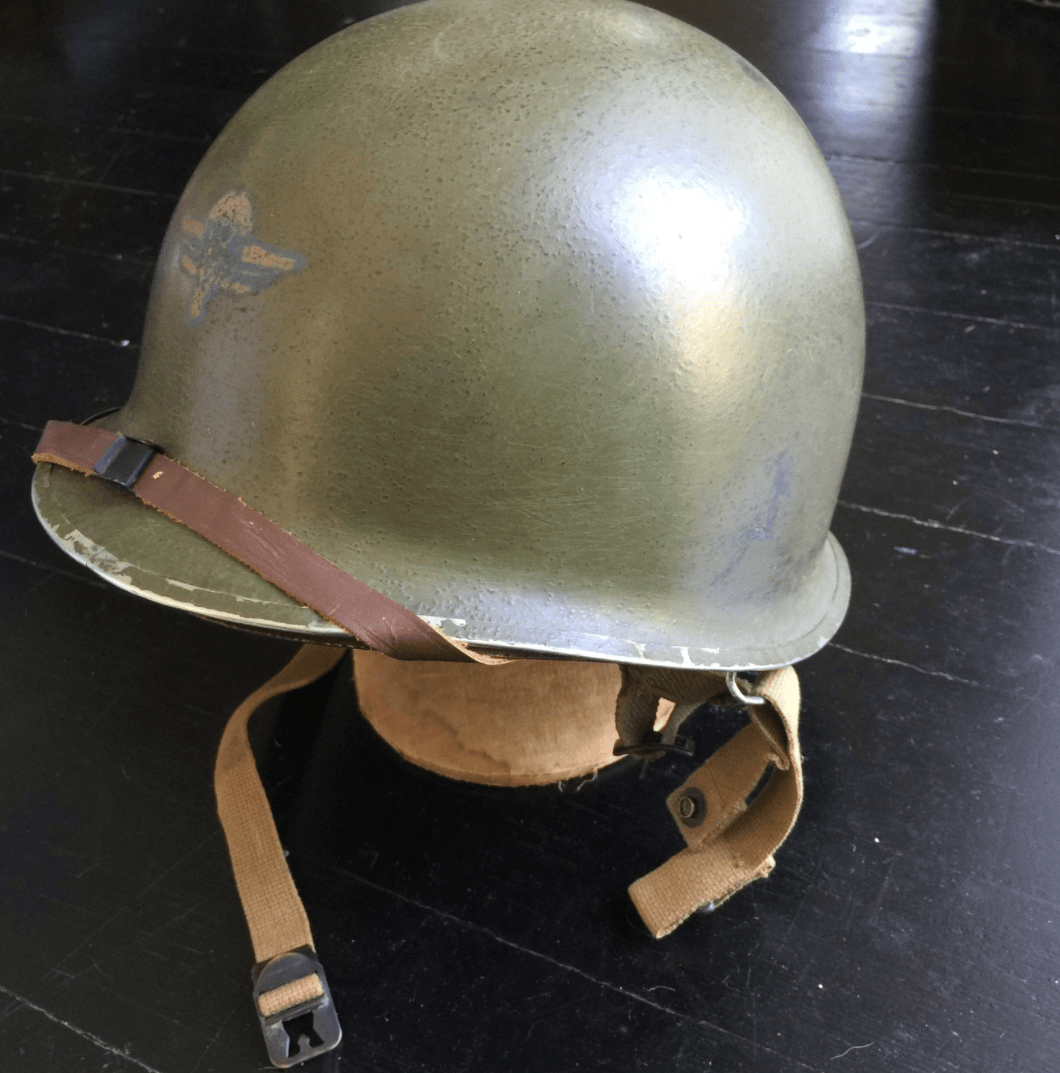
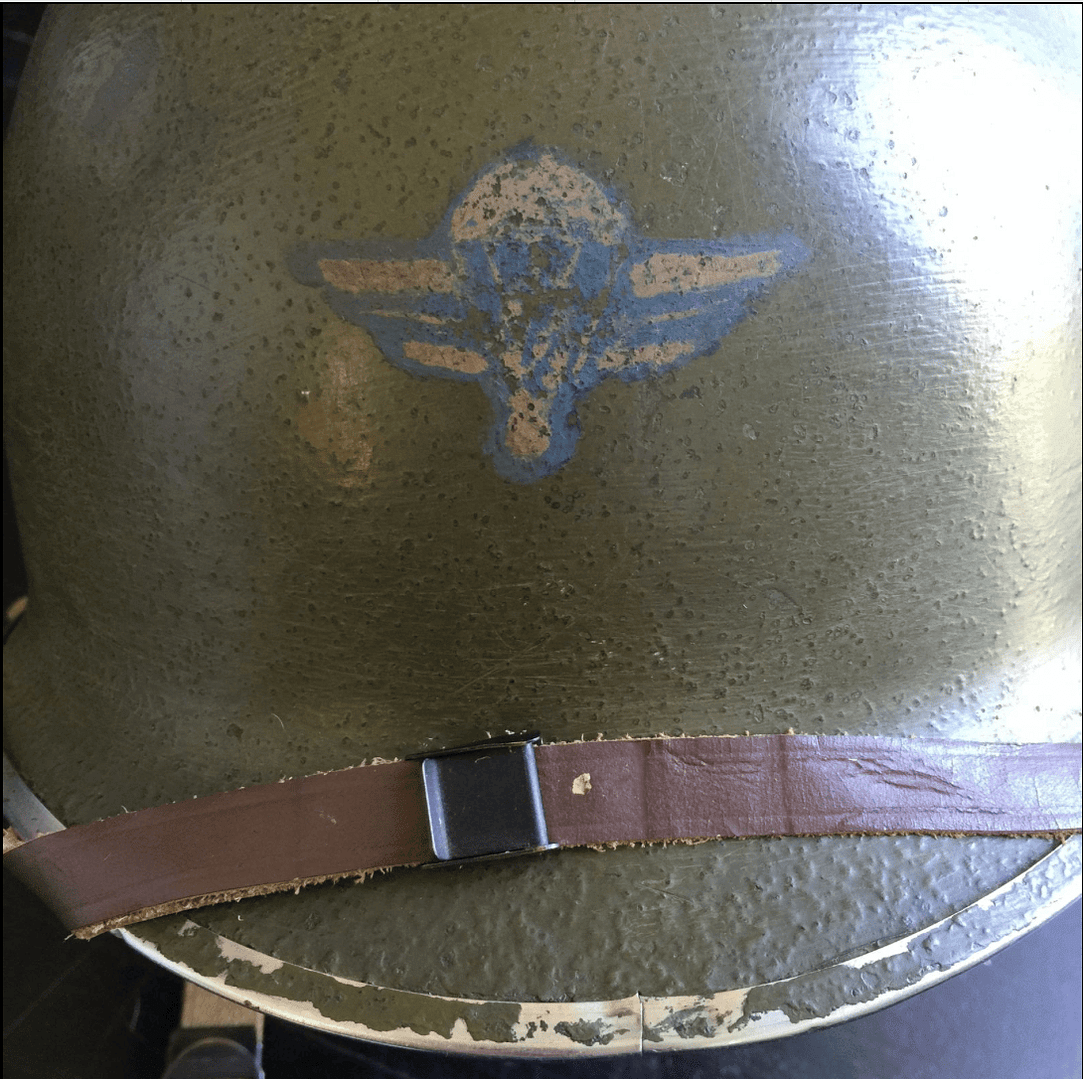
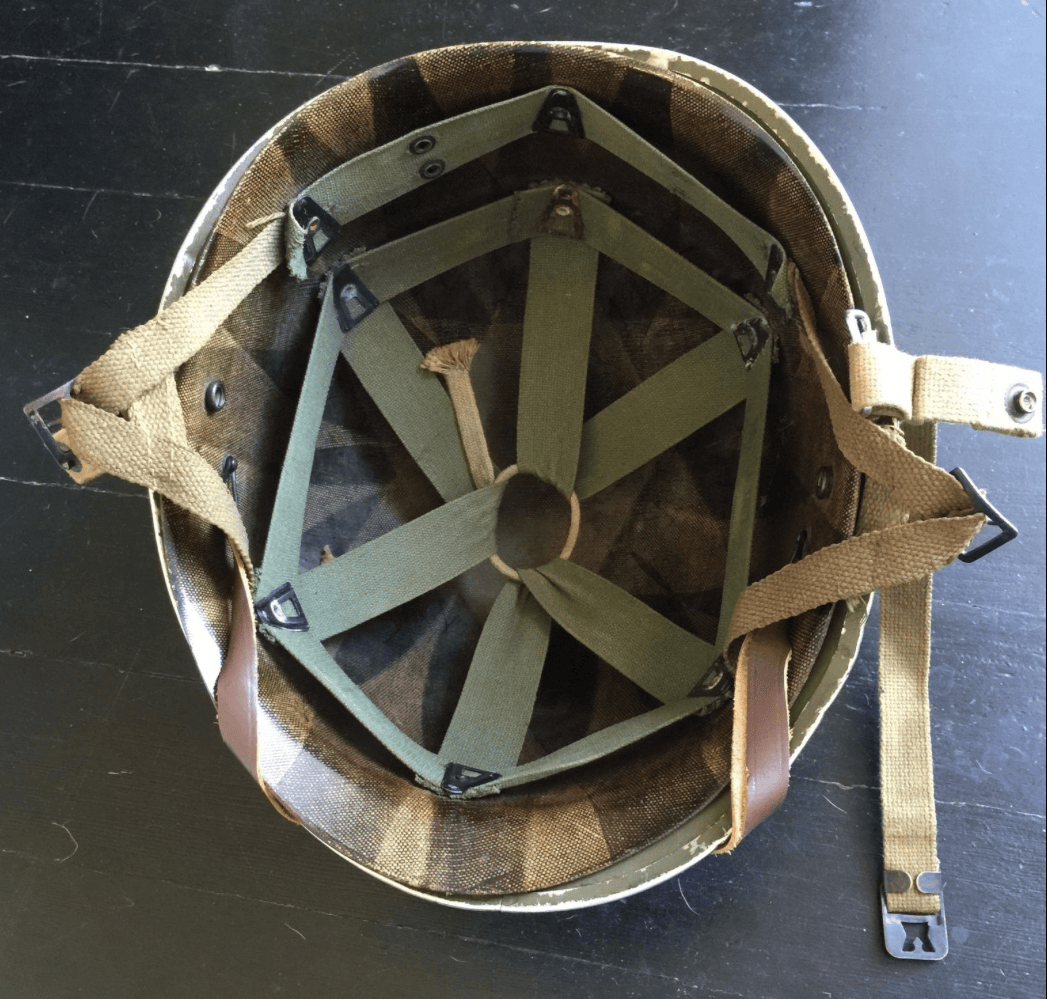
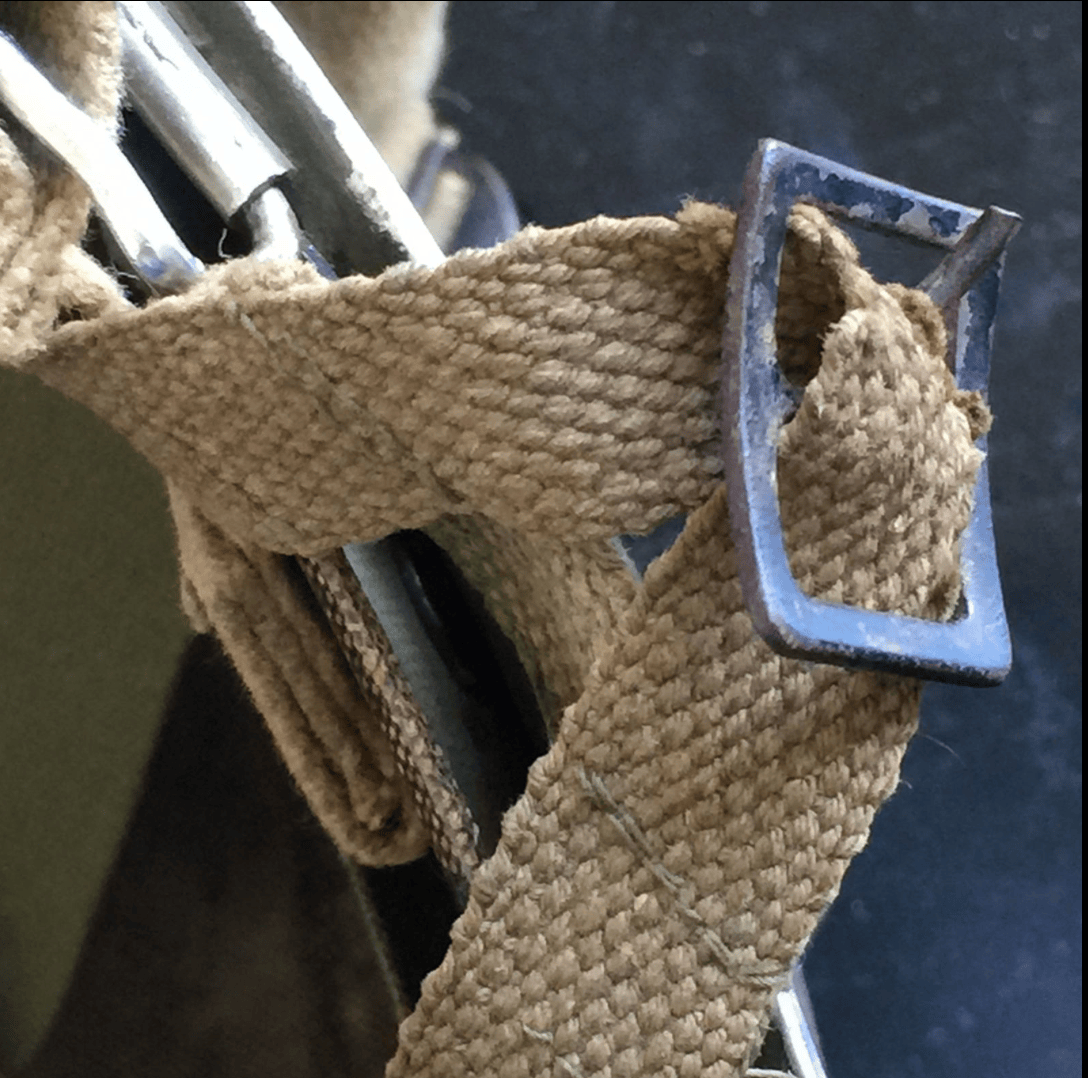
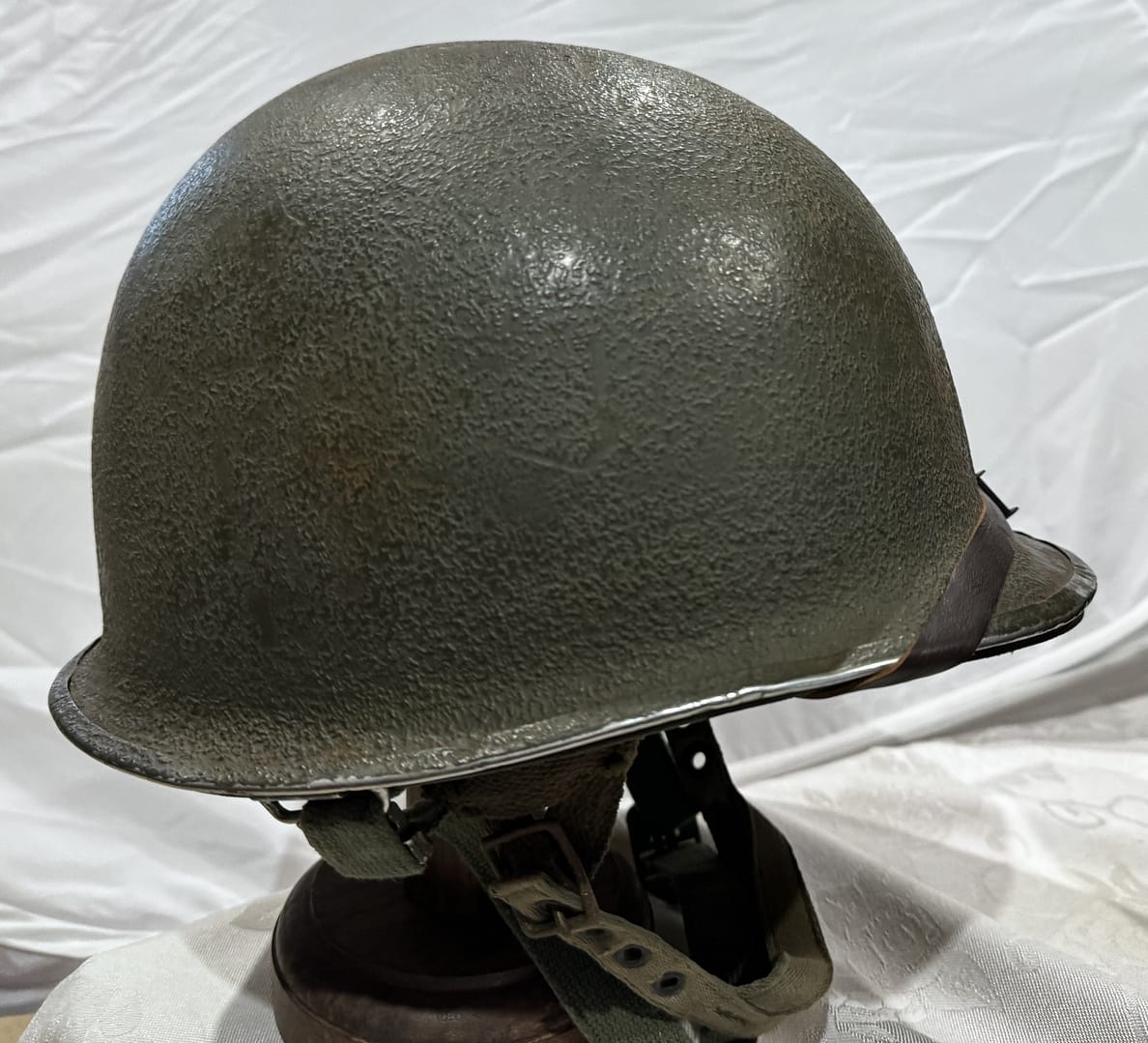
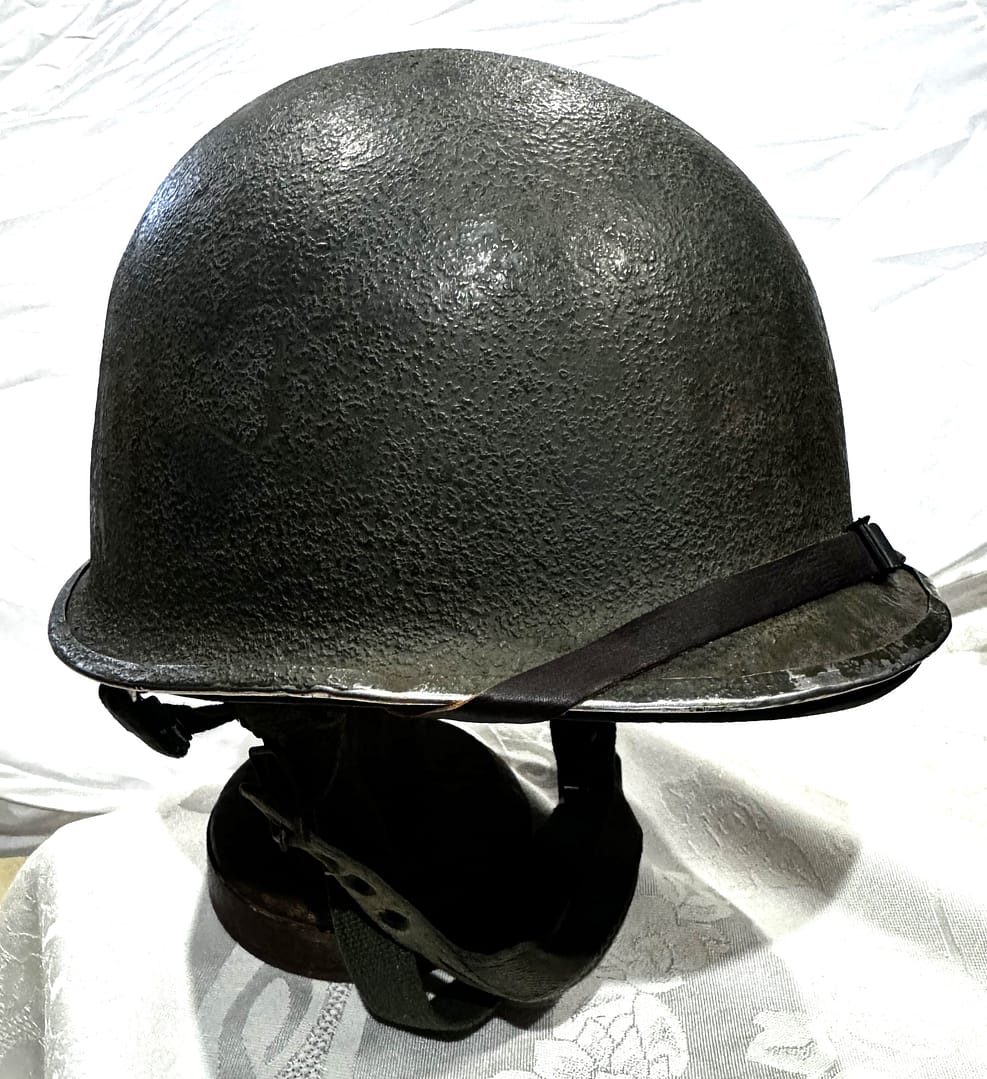
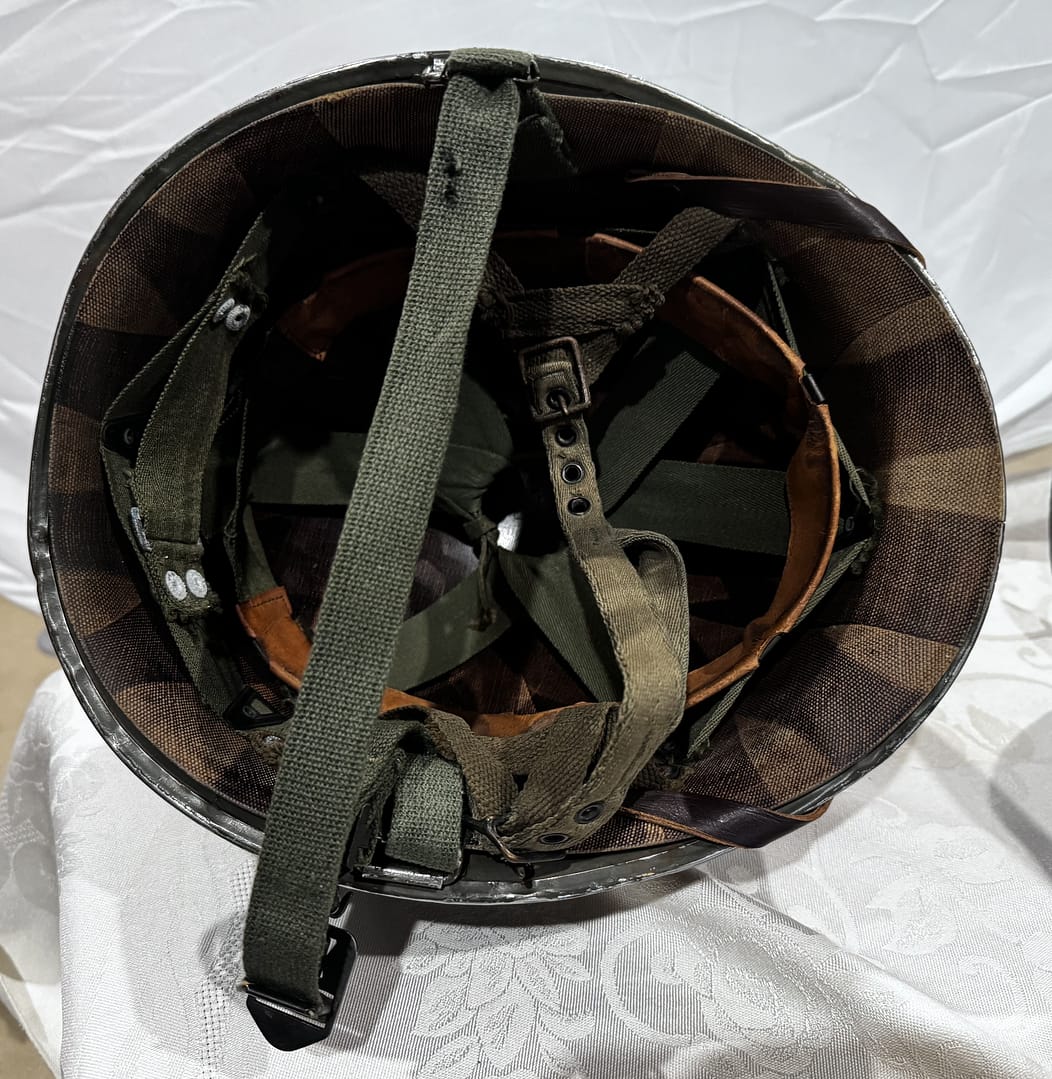
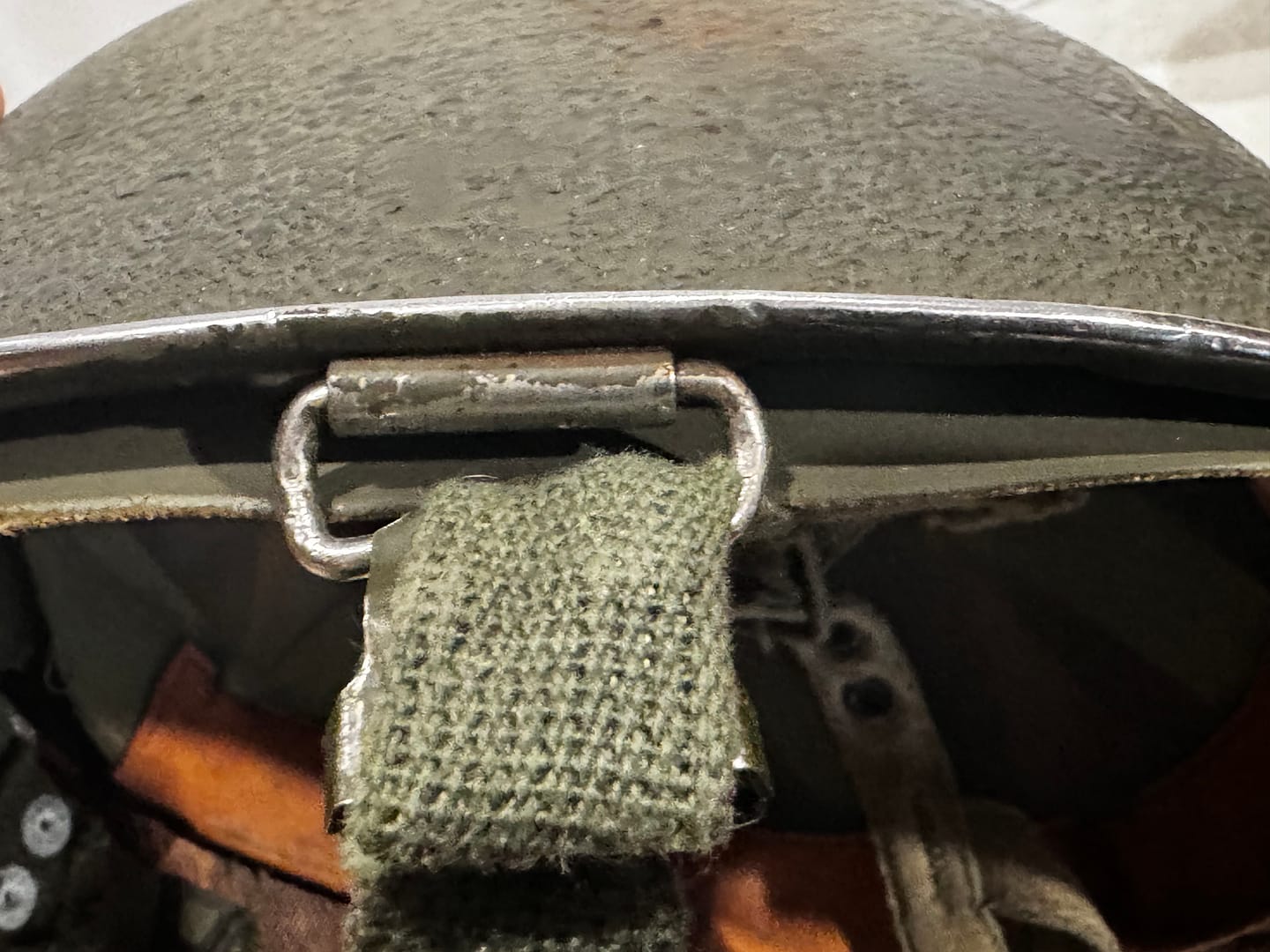
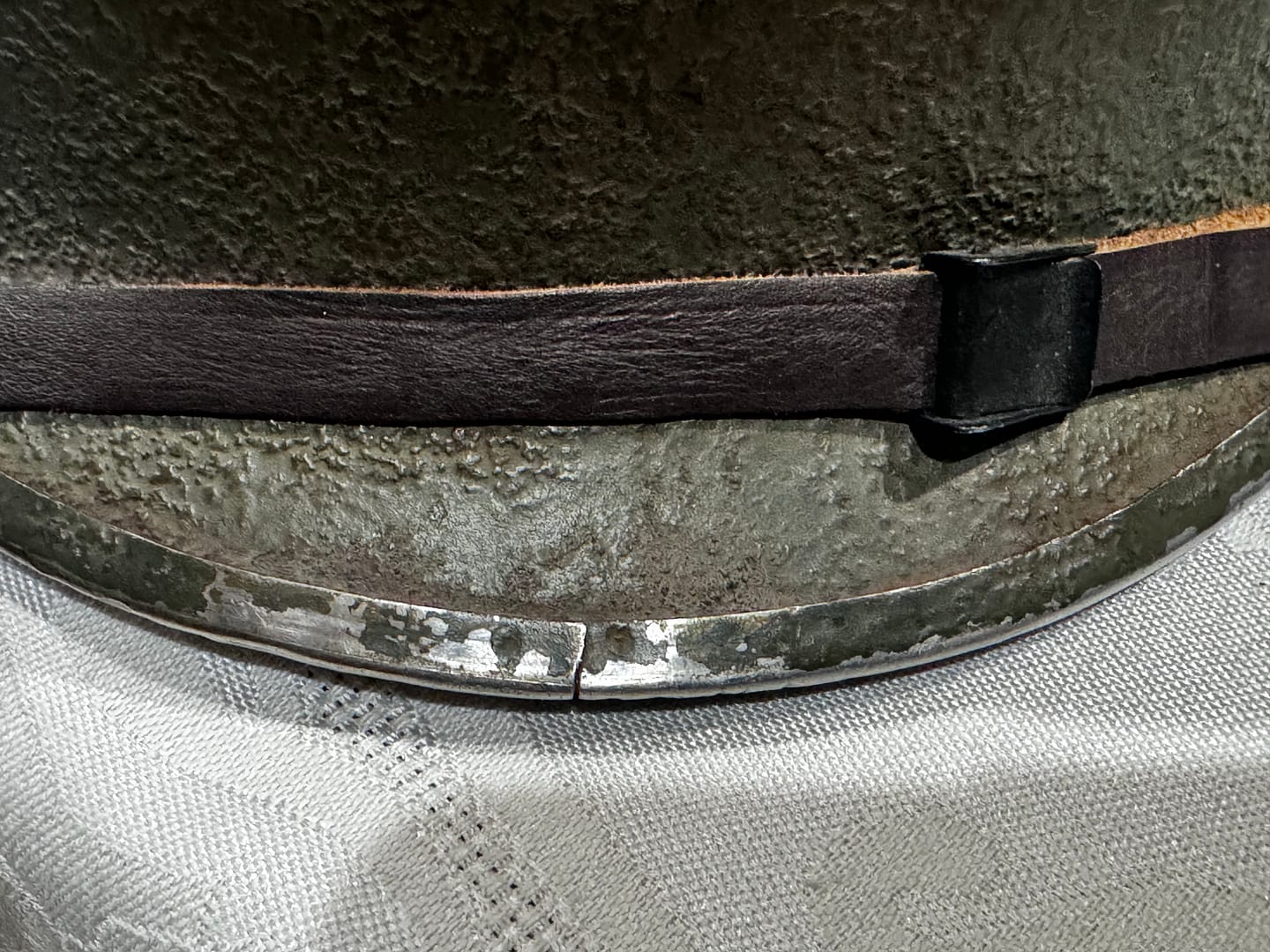
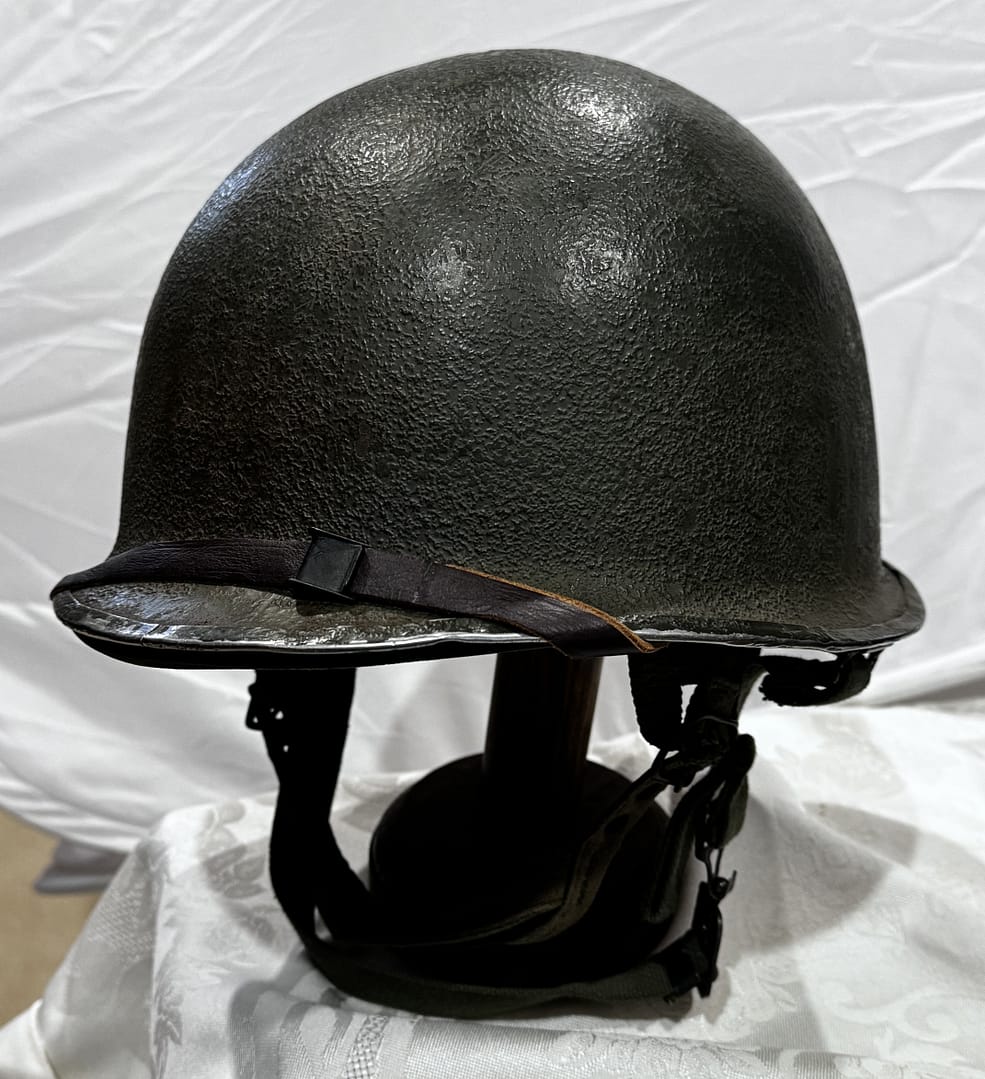
US MC1 Paratrooper Helmet. Front seam, Swivel Bail. Late WW2, Korea, Indochina. From my personal collection.
This airborne-pattern M1 helmet features the early front-seam rim and later swivel-bail chinstrap loops adopted from 1943. Used by U.S. airborne and specialist infantry units during the Korean War, the helmet provided improved ballistic protection and a stable platform for winter covers, camouflage nets, and cold-weather liners. It was worn in operations from the Naktong Bulge to the Chosin Reservoir and throughout the fluid manoeuvre phase of 1950–51, remaining a standard U.S. helmet well into the 1960s.
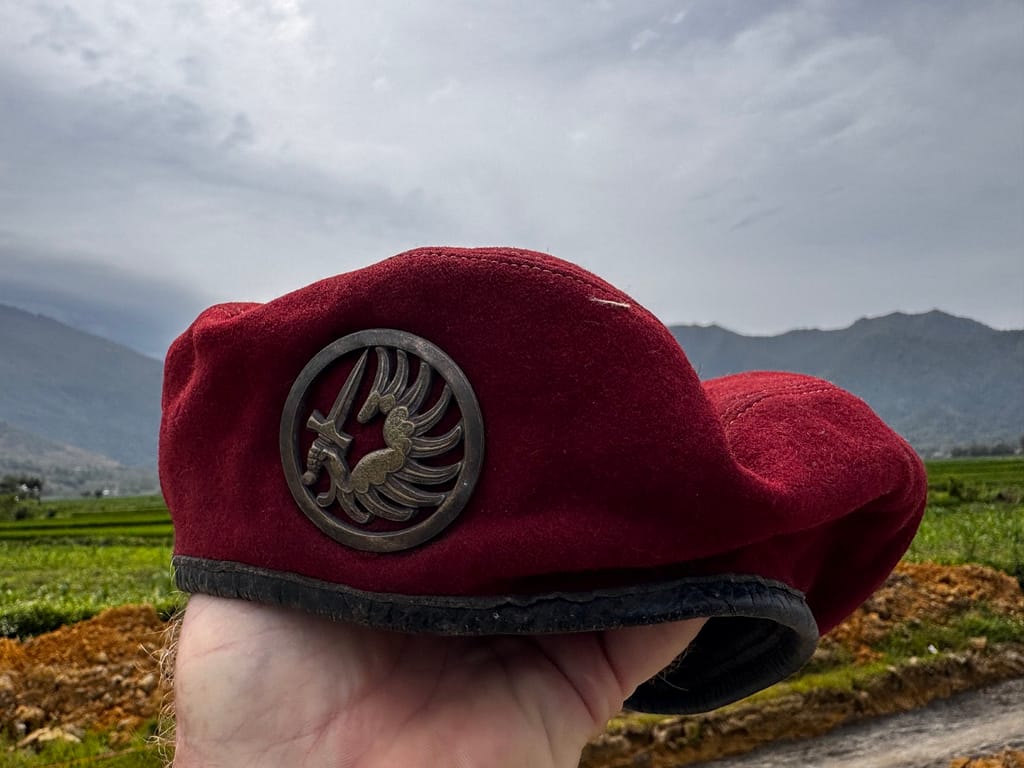
French Colonial Paratrooper Beret, Indochina War. From my personal collection.
This three-piece construction beret was typical of French colonial paratroopers in Indochina, including the 6th BPC. Made from high-quality felt and shaped into a tight airborne profile, it carried a metal para badge. The three-panel design allowed superior shaping compared with standard berets. Widely worn in Tonkin, Laos, and Annam, it became a symbol of elite airborne units operating in some of the most demanding terrain of the war.
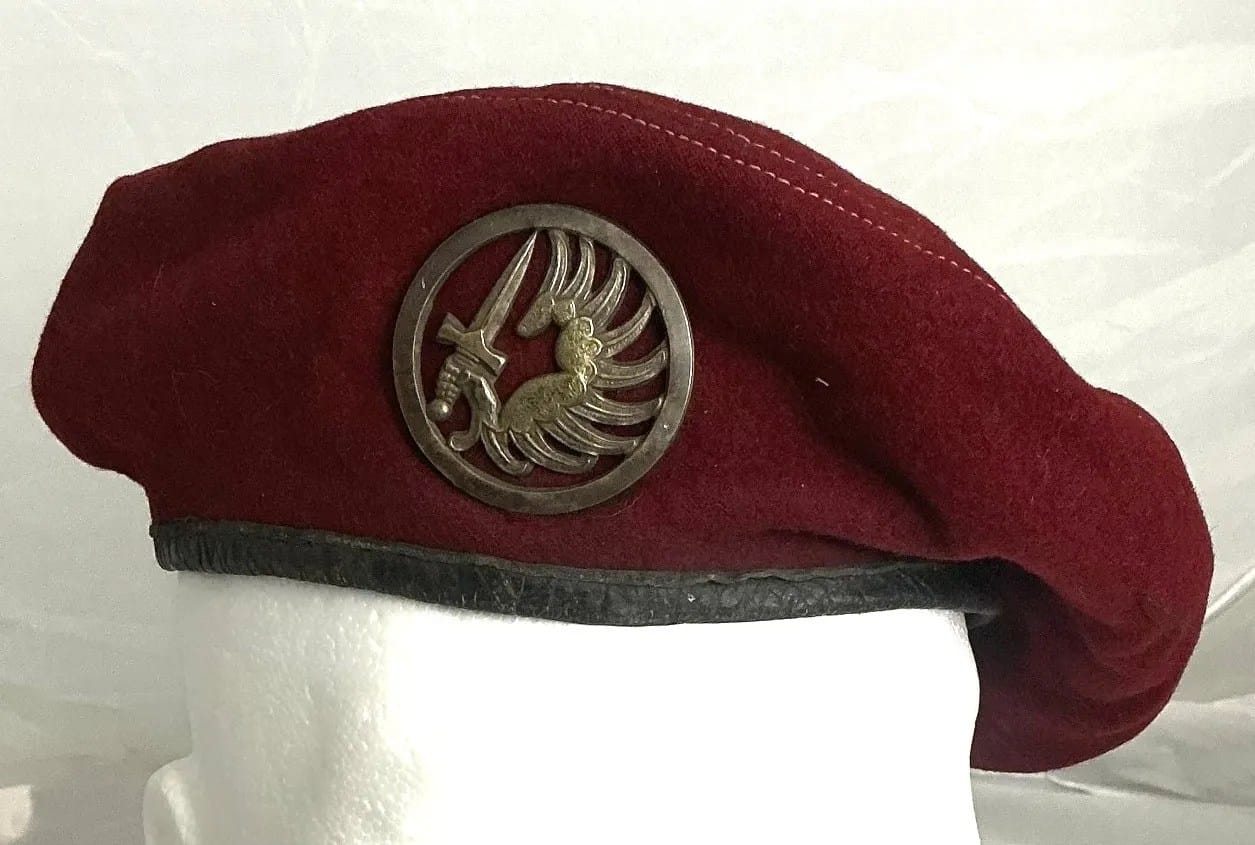
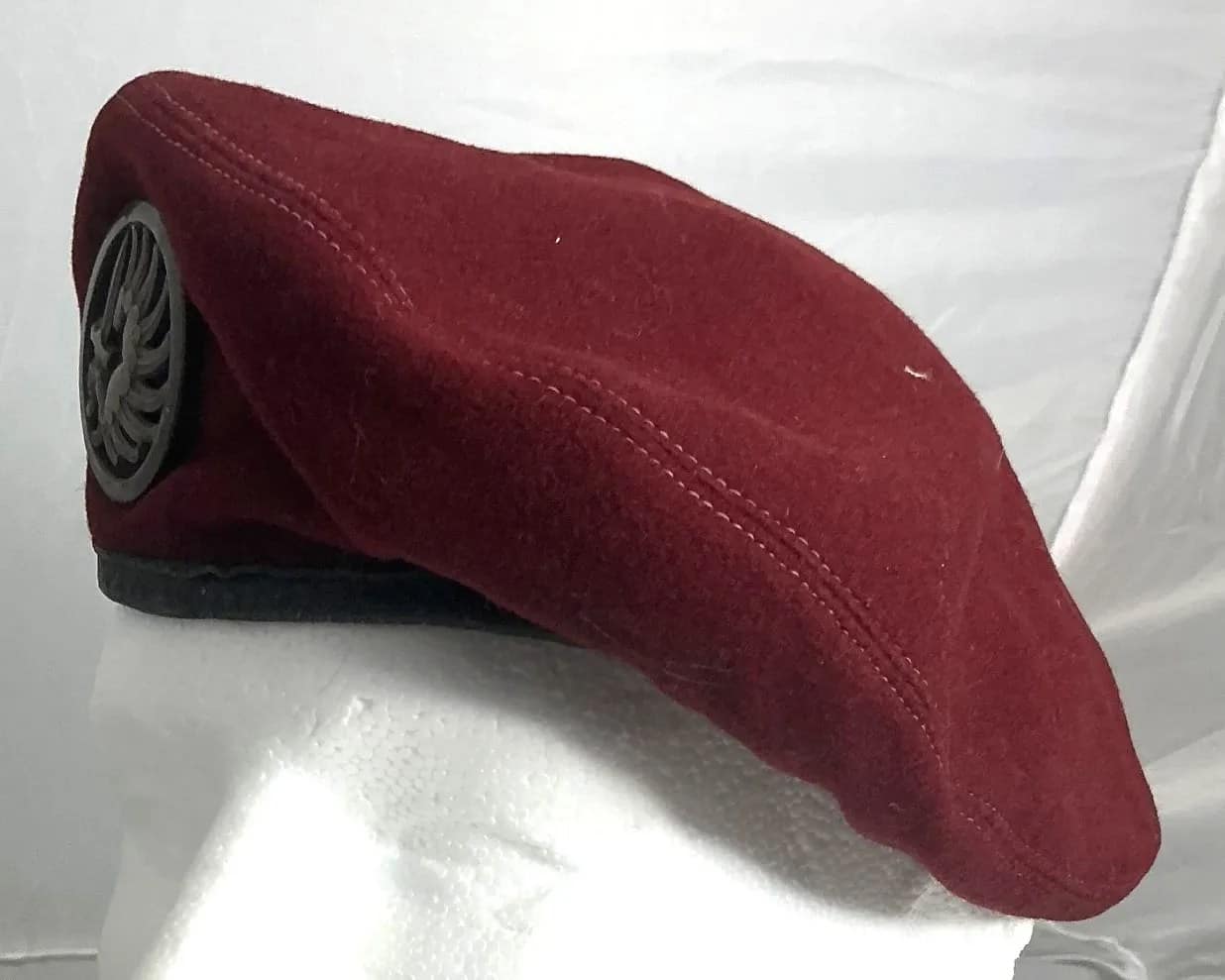
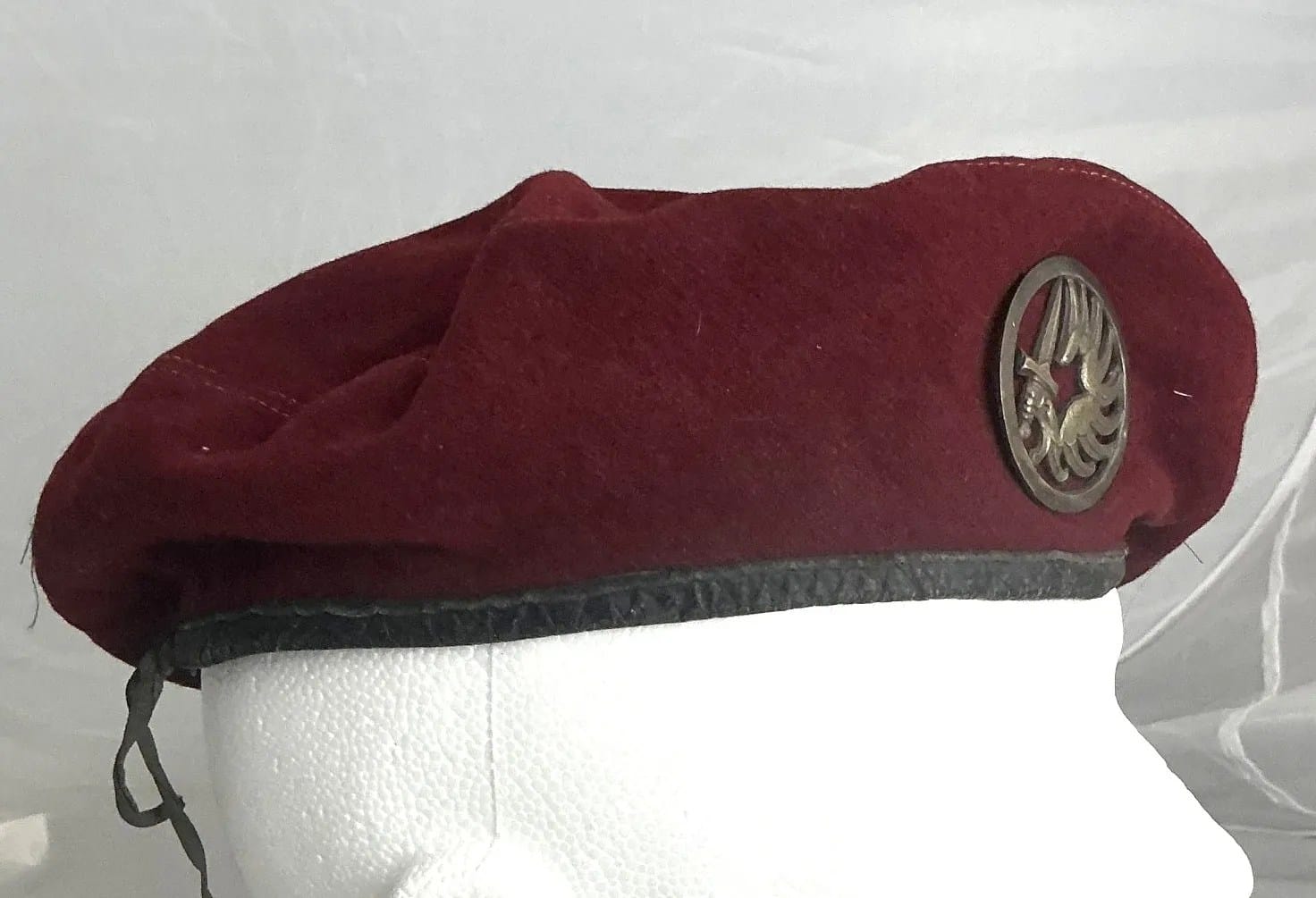
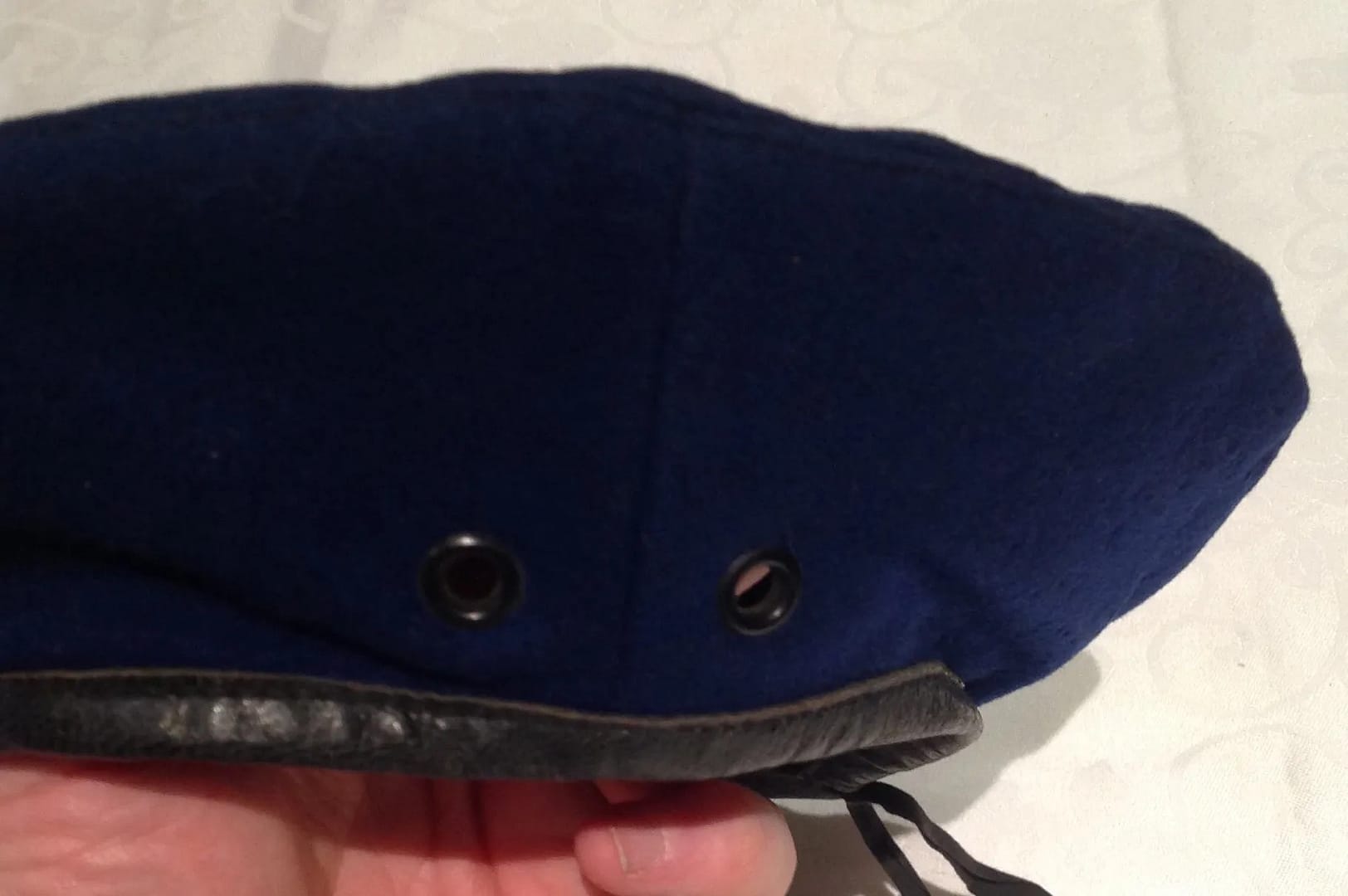
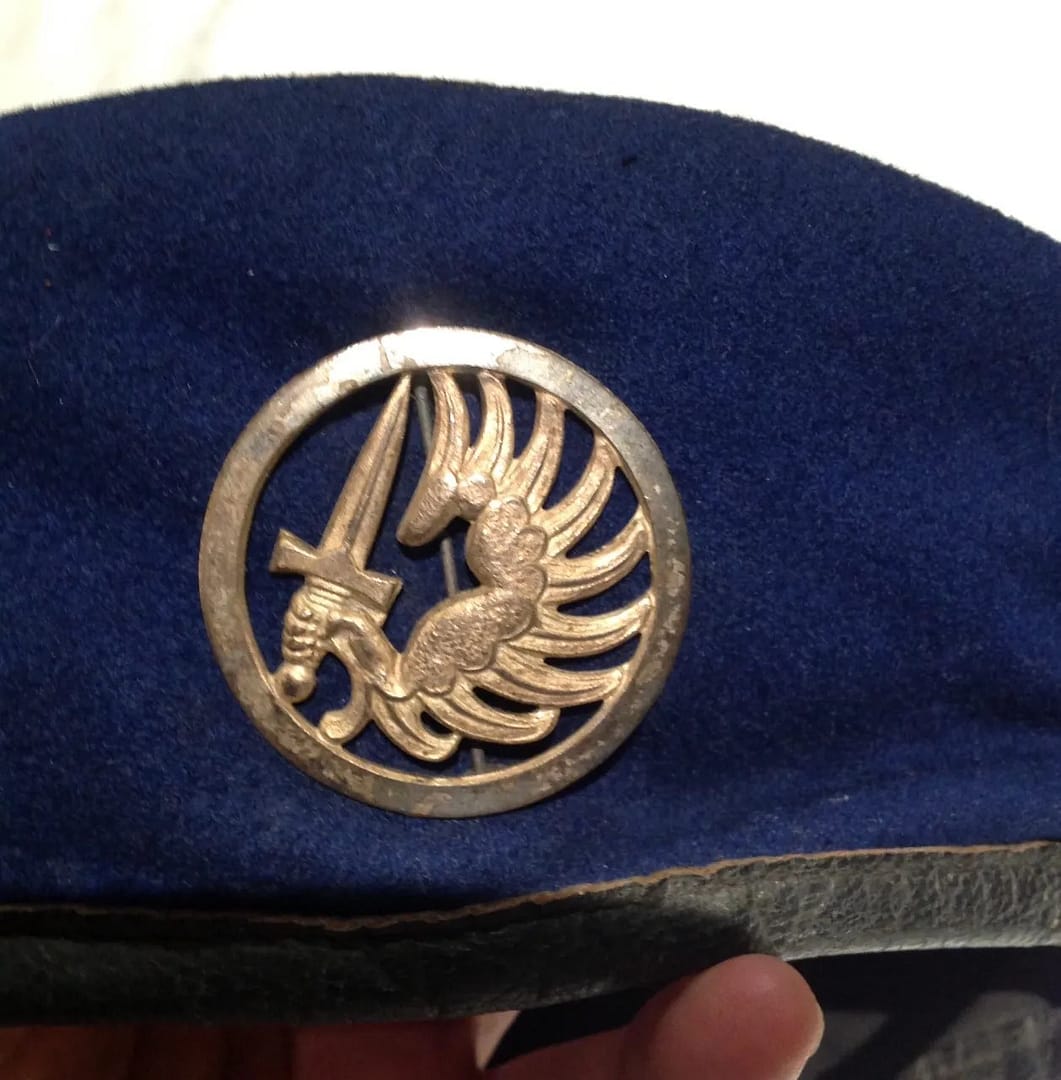
French Metropolitan Paratrooper Beret, Indochina War. From my personal collection.
This three-piece construction beret was typical of French metropolitan paratroopers in Indochina, including the Shock Parachute battalions. Made from high-quality felt and shaped into a tight airborne profile, it often carried a metal para badge or unit insignia. The three-panel design allowed superior shaping compared with standard berets. Widely worn in Tonkin, Laos, and Annam, it became a symbol of elite airborne units operating in some of the most demanding terrain of the war.
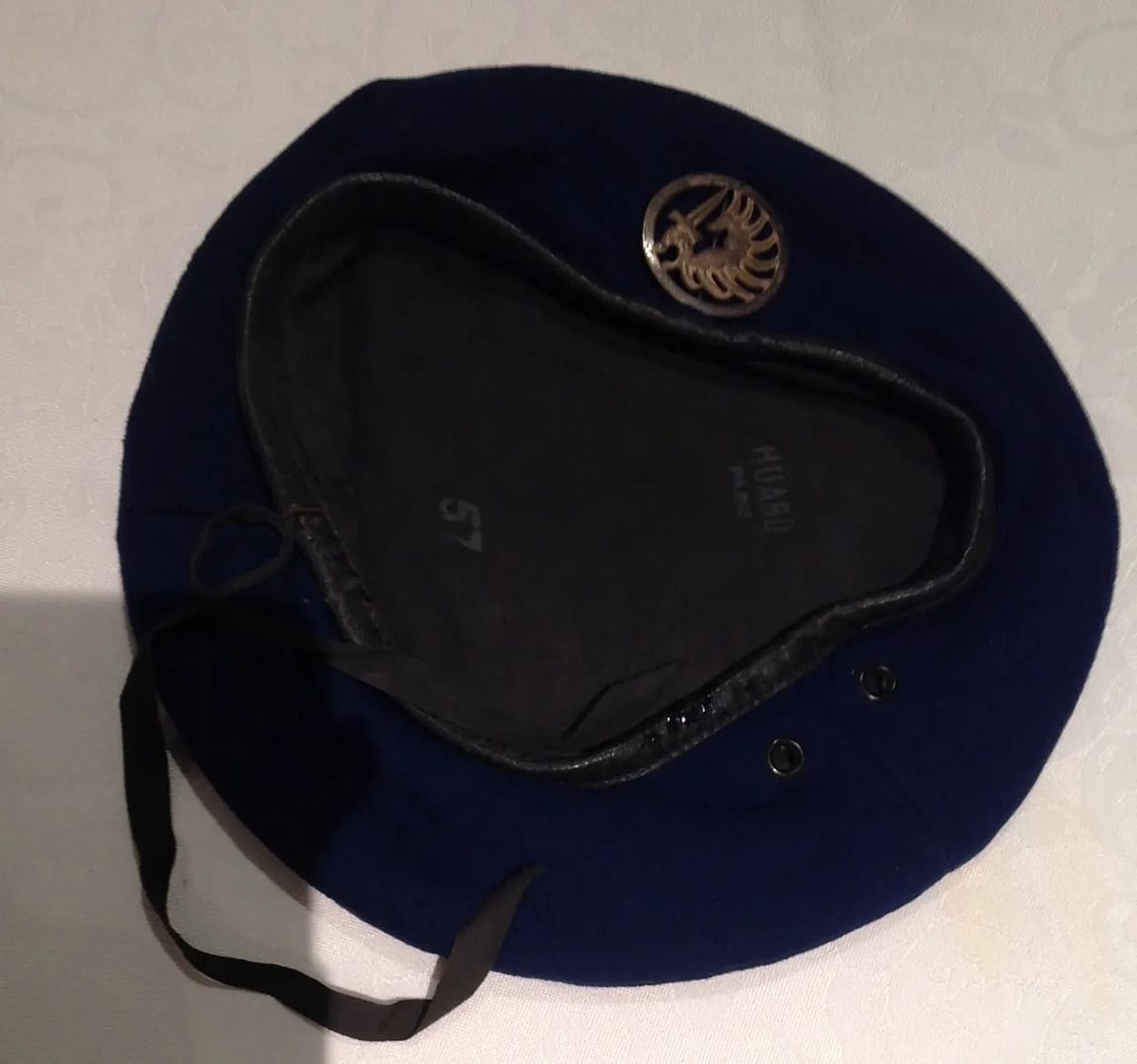
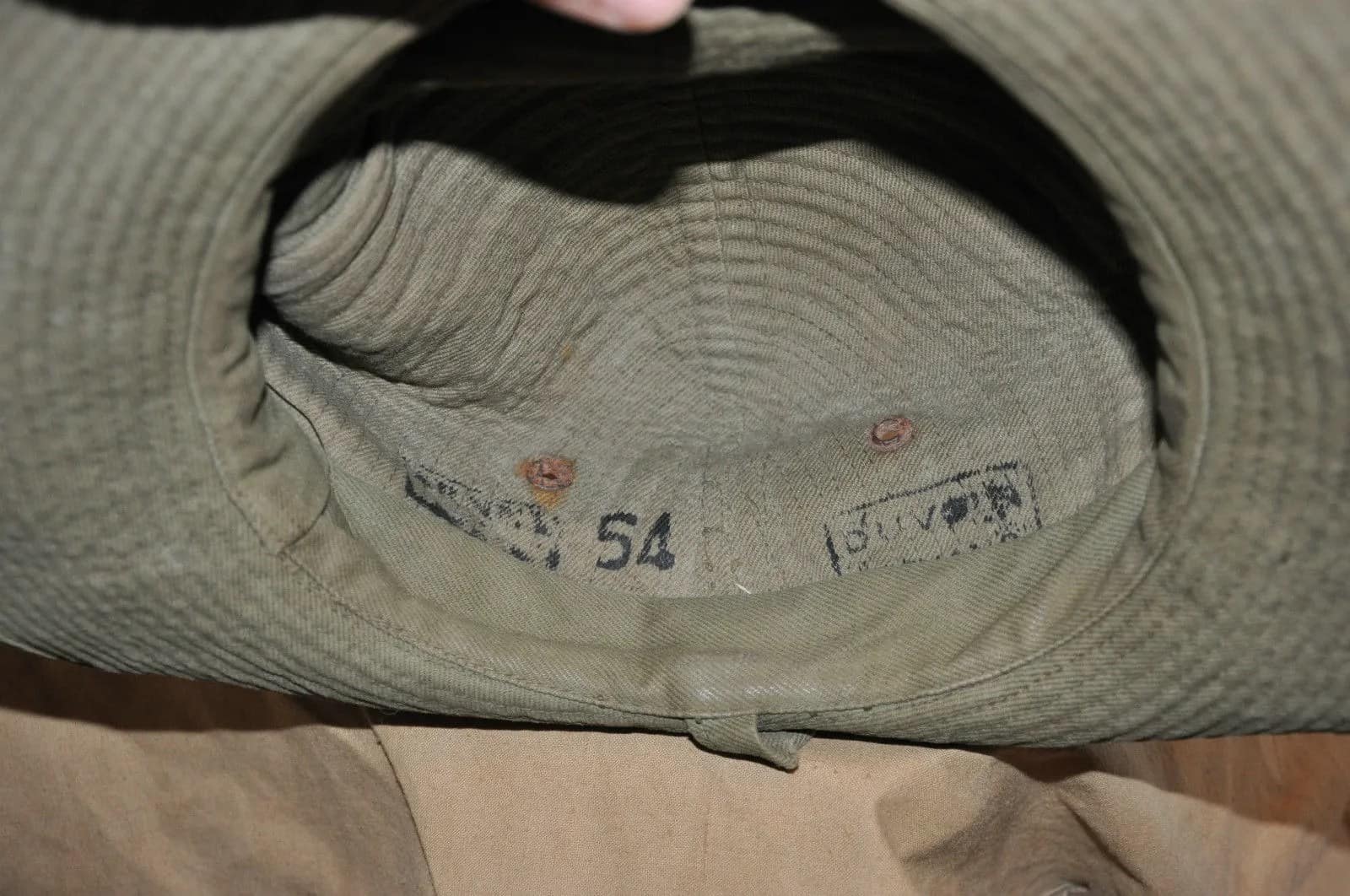
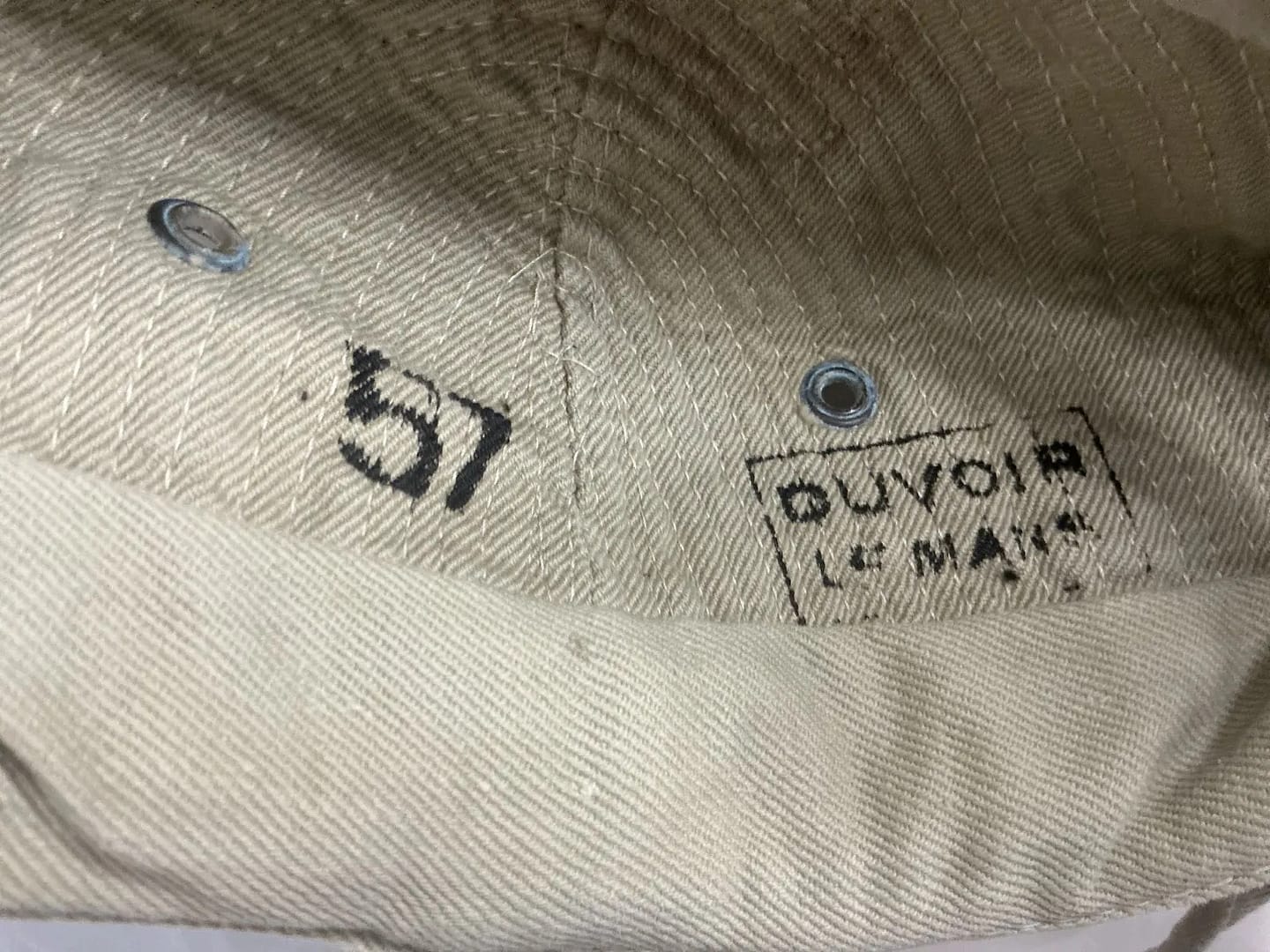
Chapeau Brousse M49. From my personal collection.
The M49 chapeau brousse was the standard French tropical field hat in Indochina. Made from lightweight cotton with a stiffened brim, it provided sun protection and limited rain deflection in jungle and high-humidity environments. The hat was favoured by paratroopers, Foreign Legion units, and colonial infantry operating along the De Lattre Line, the Red River Delta, and routes into the Việt Bắc. Its practical design made it the signature headgear of French forces throughout the First Indochina War.
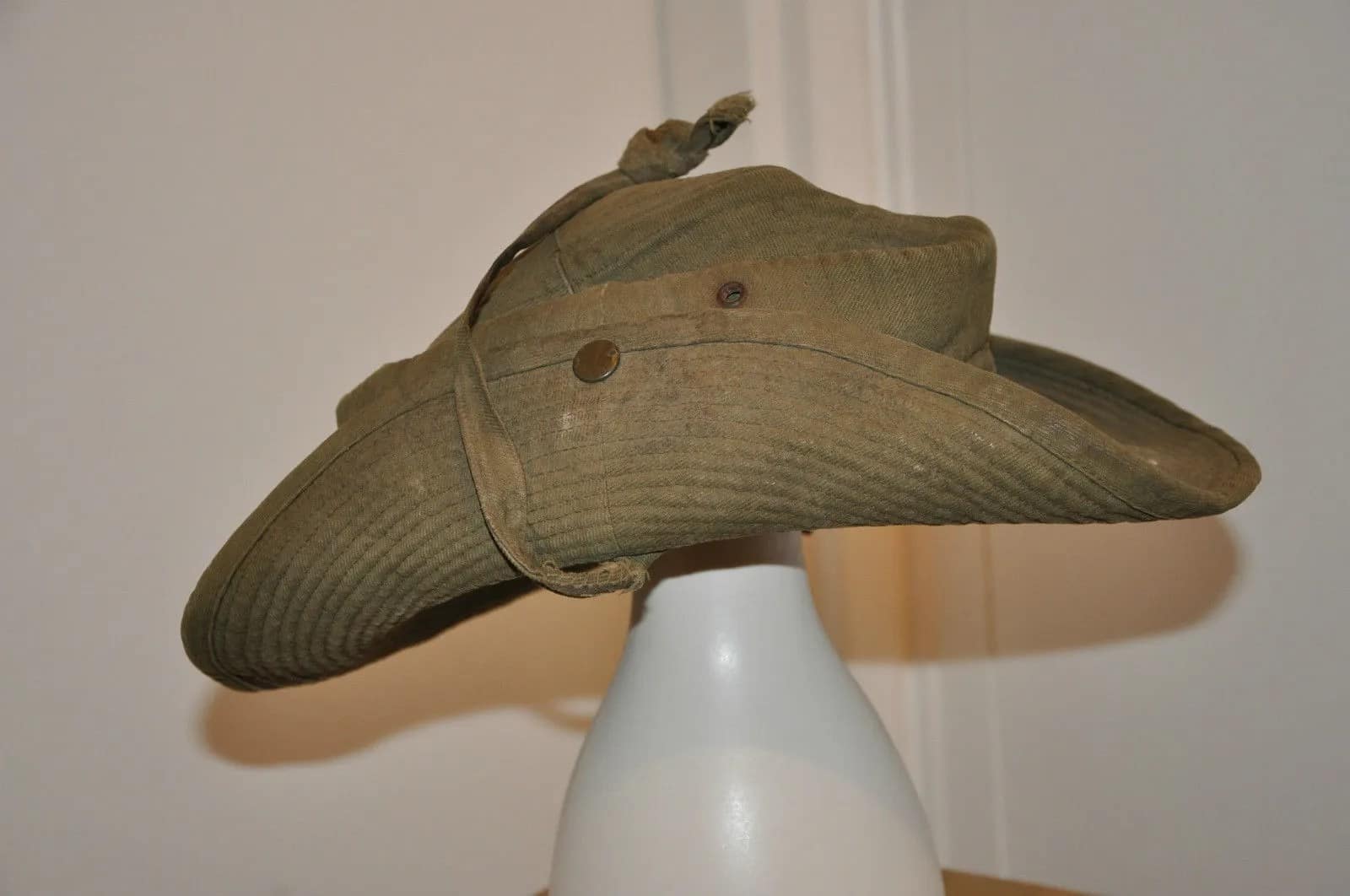
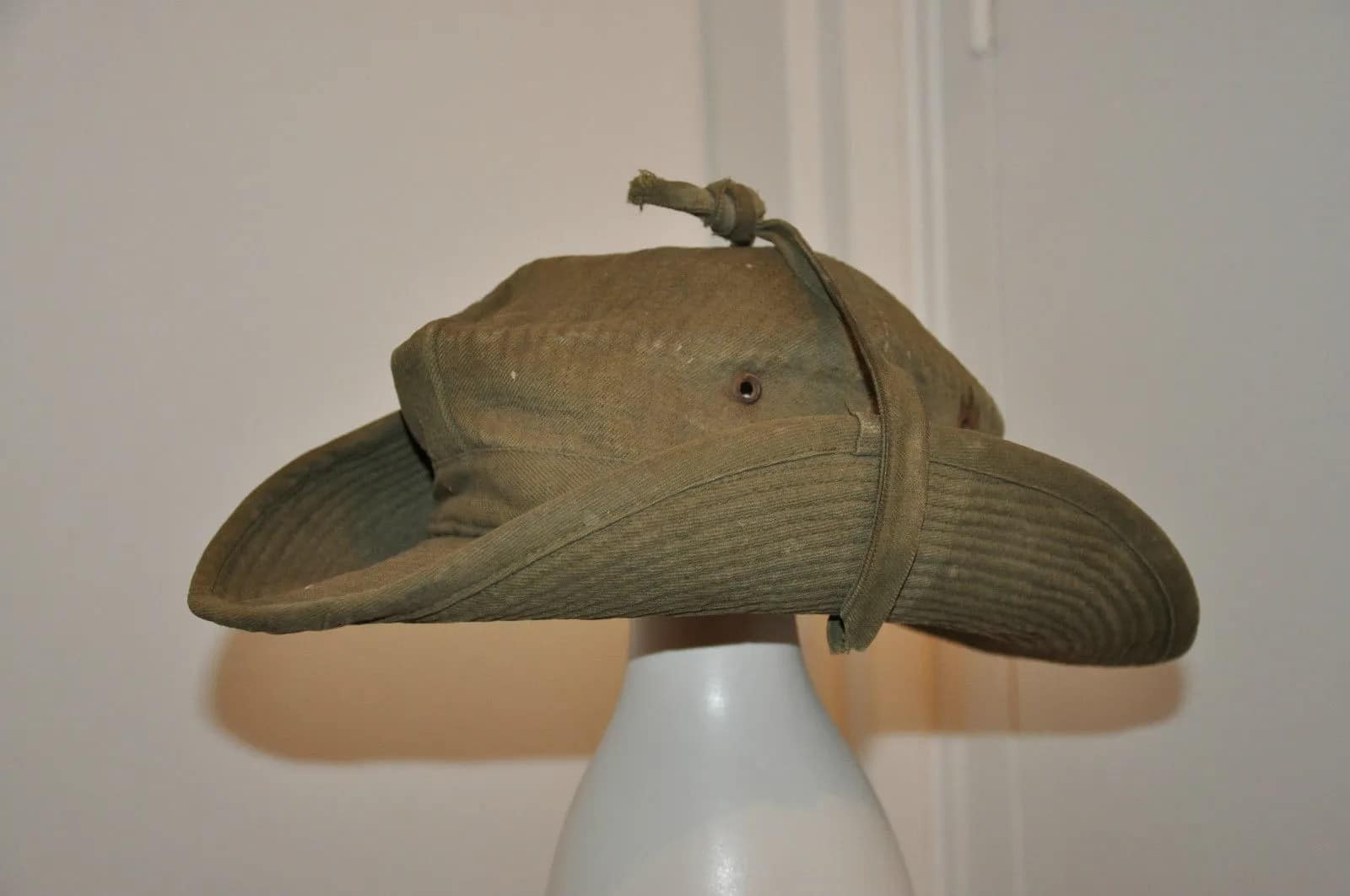
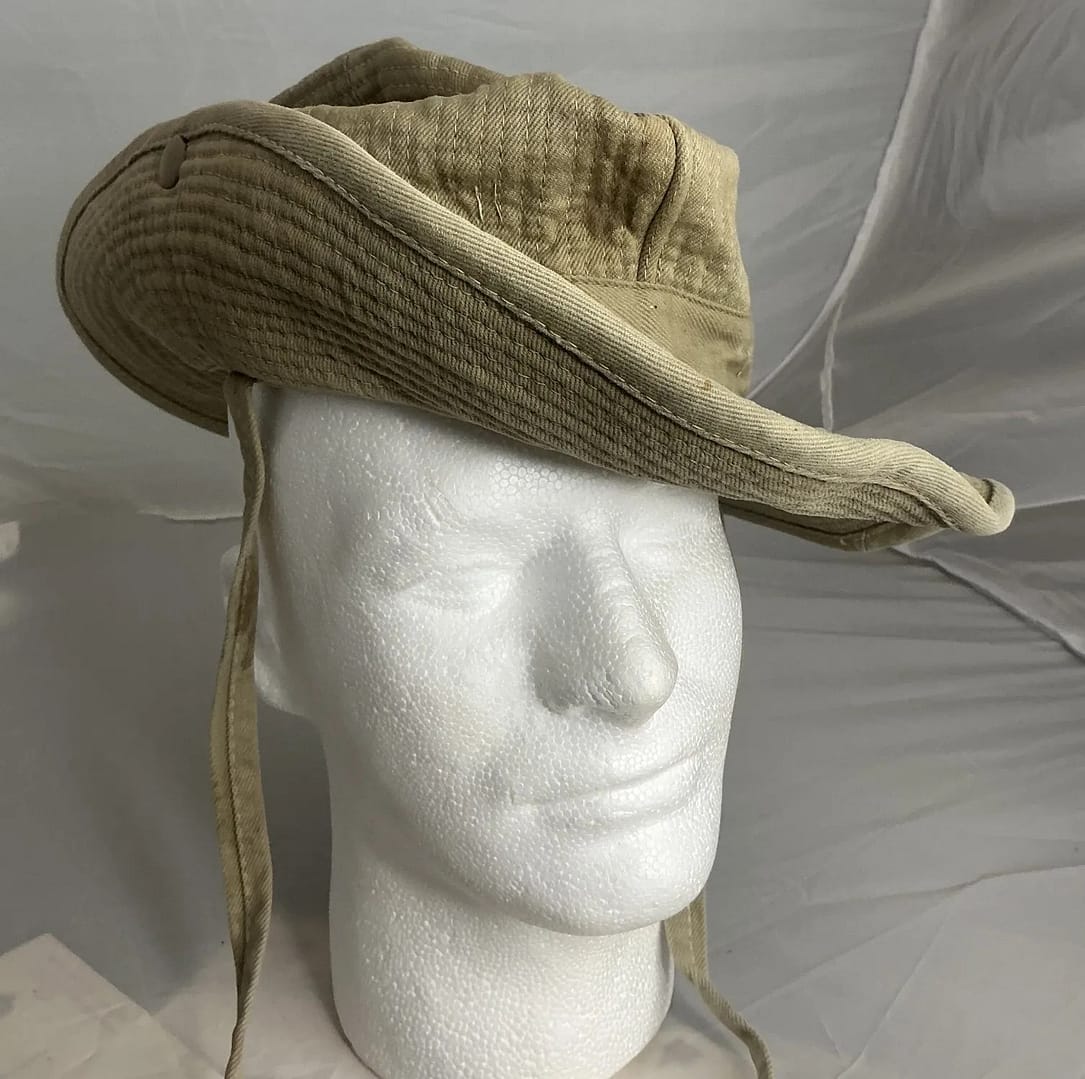
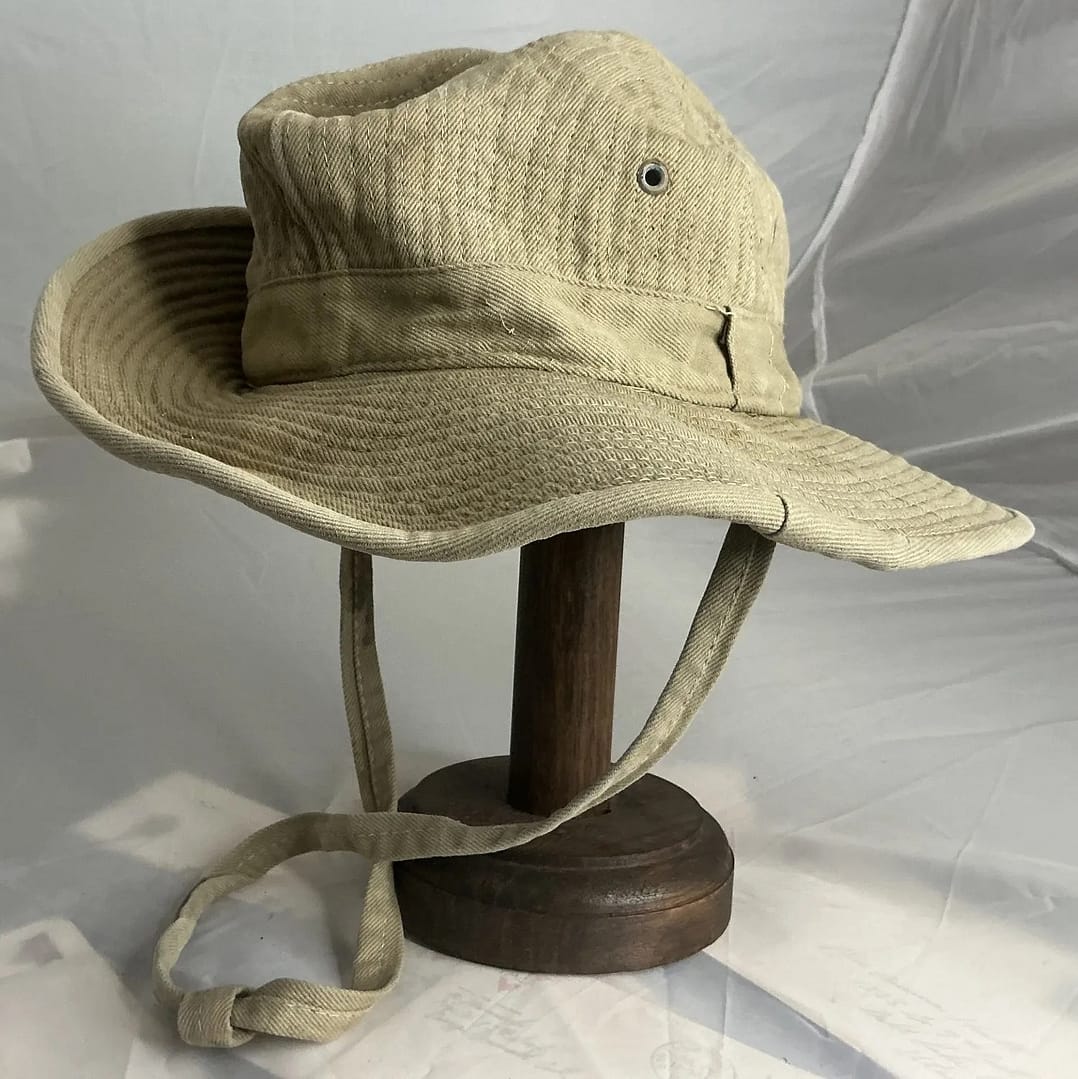
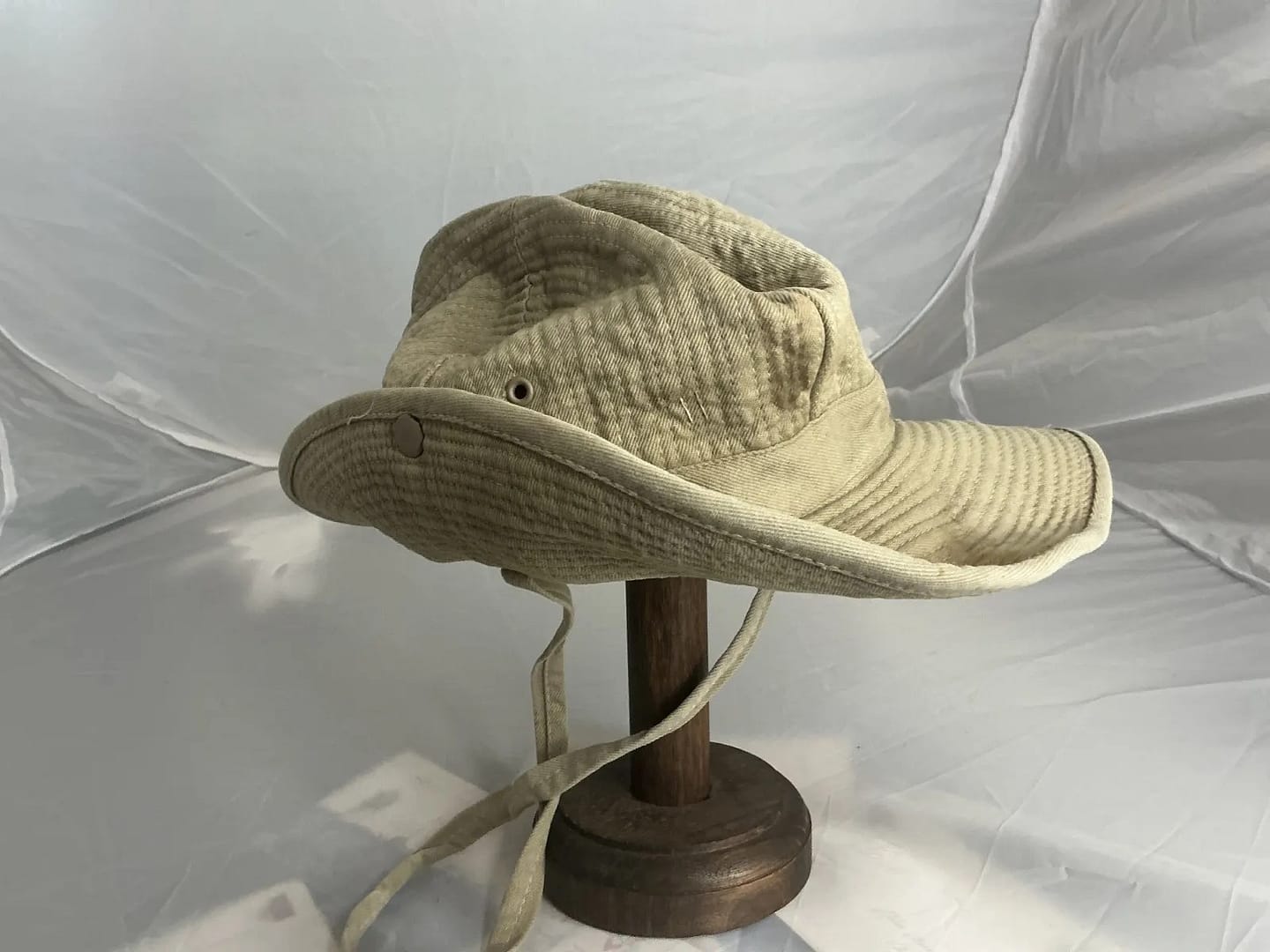
Chapeau Brousse M49. From my personal collection.
The M49 chapeau brousse was the standard French tropical field hat in Indochina. Made from lightweight cotton with a stiffened brim, it provided sun protection and limited rain deflection in jungle and high-humidity environments. The hat was favoured by paratroopers, Foreign Legion units, and colonial infantry operating along the De Lattre Line, the Red River Delta, and routes into the Việt Bắc. Its practical design made it the signature headgear of French forces throughout the First Indochina War.
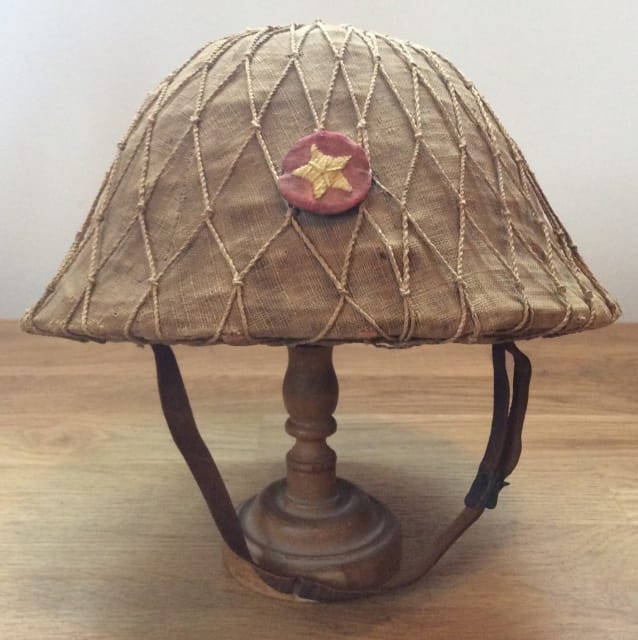
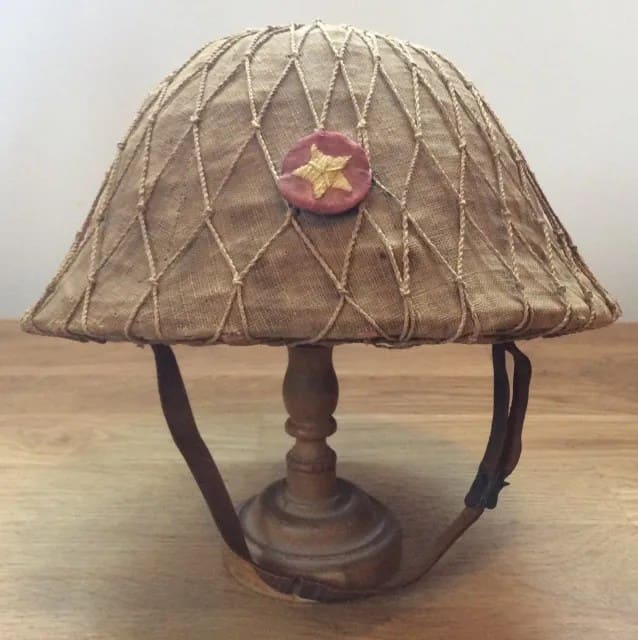
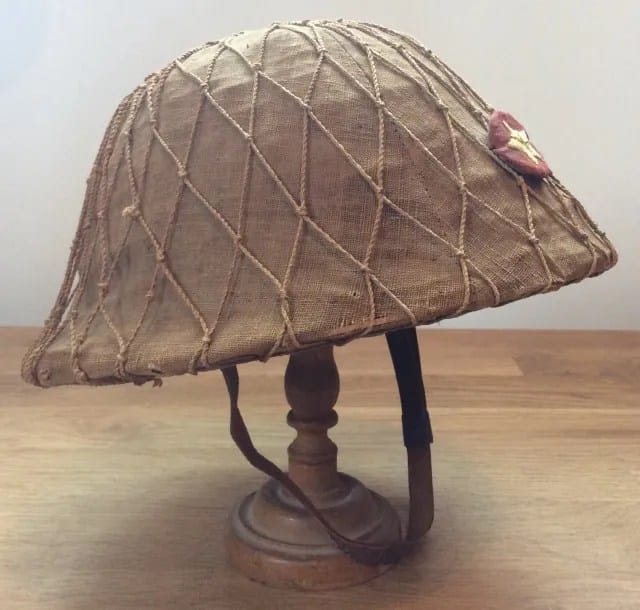
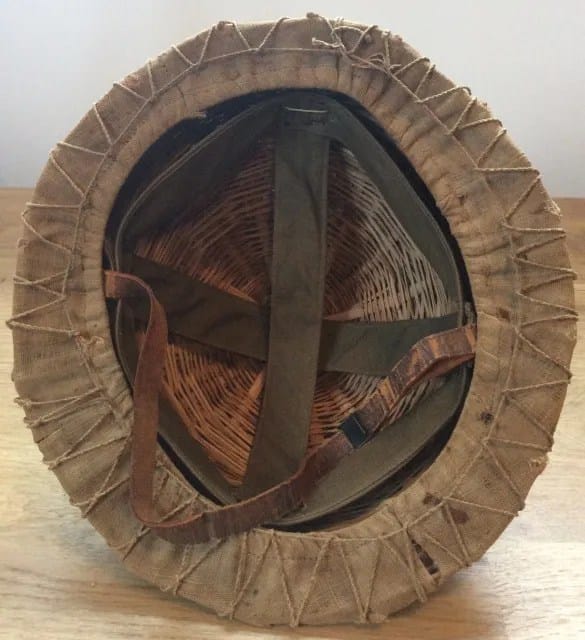
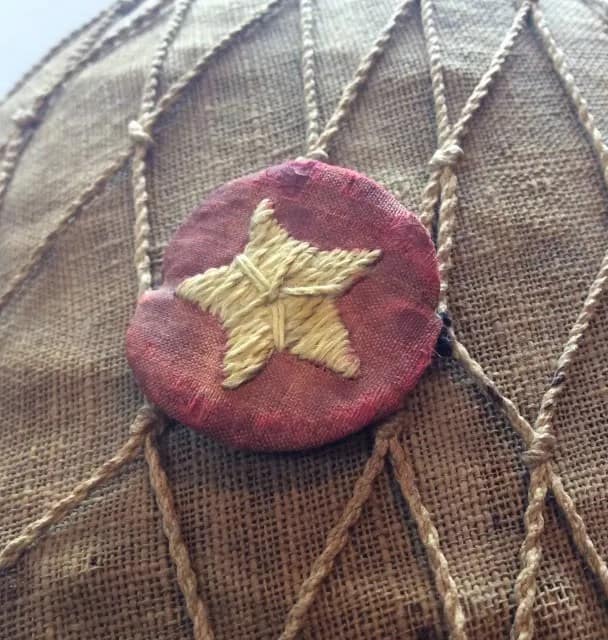
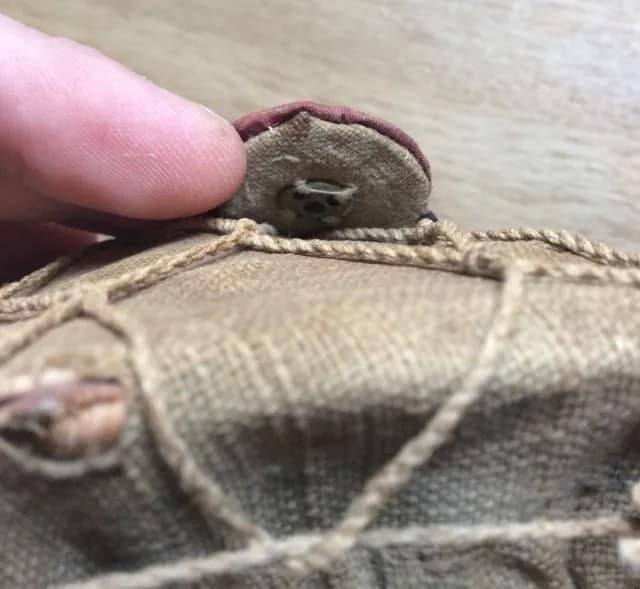
Viet Minh cloth-covered reed pith helmet, Indochina War. From my personal collection
This Viet Minh helmet, constructed from interwoven plant fibre, covered with cloth, and wearing a cloth star reflects the resourcefulness and material scarcity of the early war period. Lightweight, inexpensive, and locally produced, reed helmets provided minimal protection but offered camouflage and sunshade for troops operating along RC4, the Việt Bắc, and the Red River Delta. Their simple design made them suitable for mass mobilisation forces, guerrilla units, and regional formations during the protracted war against French expeditionary forces.
🧭 From Weapons to Battlefield Use
This page shows weapons and equipment of the Indochina War. All items are from my personal collection.
But what images and data don’t show is how these weapons were actually used on the ground—how weapon characteristics, tactics, innovation, terrain, and movement shaped their effectiveness in battle.
👉 That layer—how firepower, tactics, and terrain interact in real engagements—is explored in:
⚔️Battlefield Studies ◊ 💡Tactical Innovations ◊ 📝Field Notes
Indochina War Uniforms
French TAP 47 (Troupes Aéroportées = Paratrooper) smock, Indo-China War. From my personal collection.
The TAP 47 (Troupes Aéroportées 1947) smock was the first purpose-designed French airborne combat garment developed after the Second World War. Made from tough herringbone twill with large cargo pockets and reinforced seams, it was intended for parachute operations and close-quarter fighting in Indochina. The smock was worn by elite units such as the 1er BPC, 2e BEP, and 1er RCP during operations from the De Lattre Line to the Central Highlands. It formed the basis for later TAP 47/56 and TAP 50 camouflage developments.
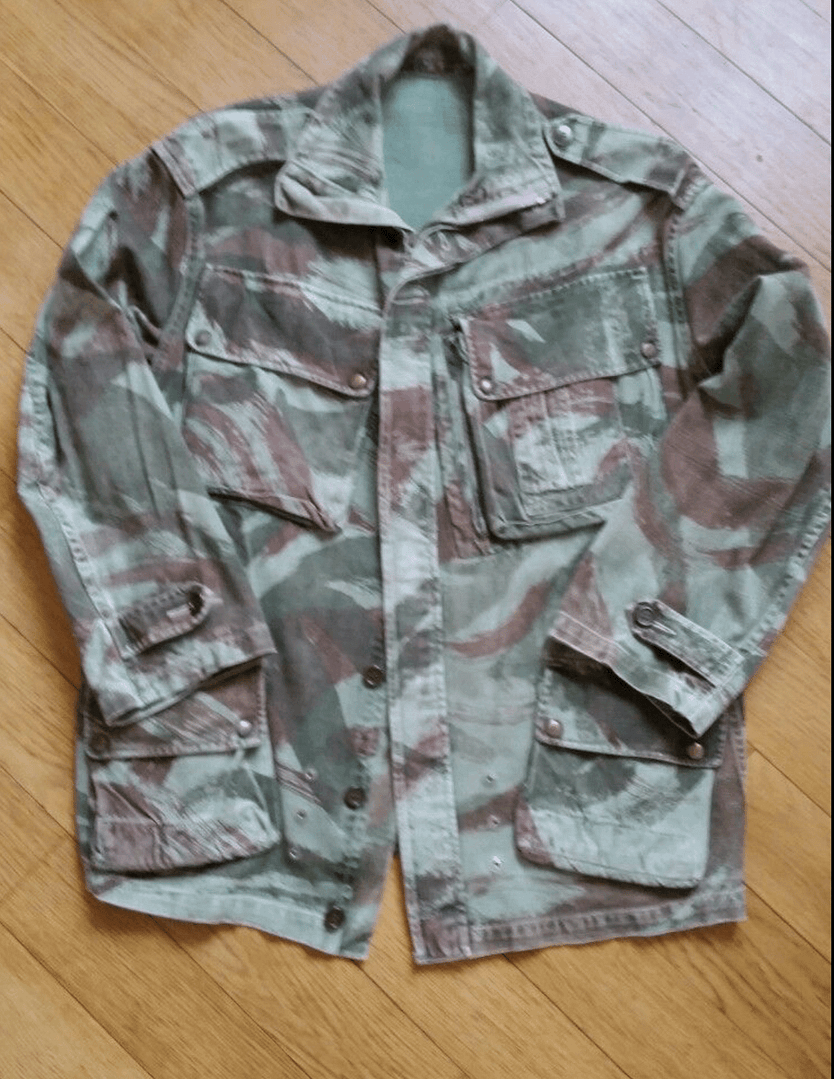
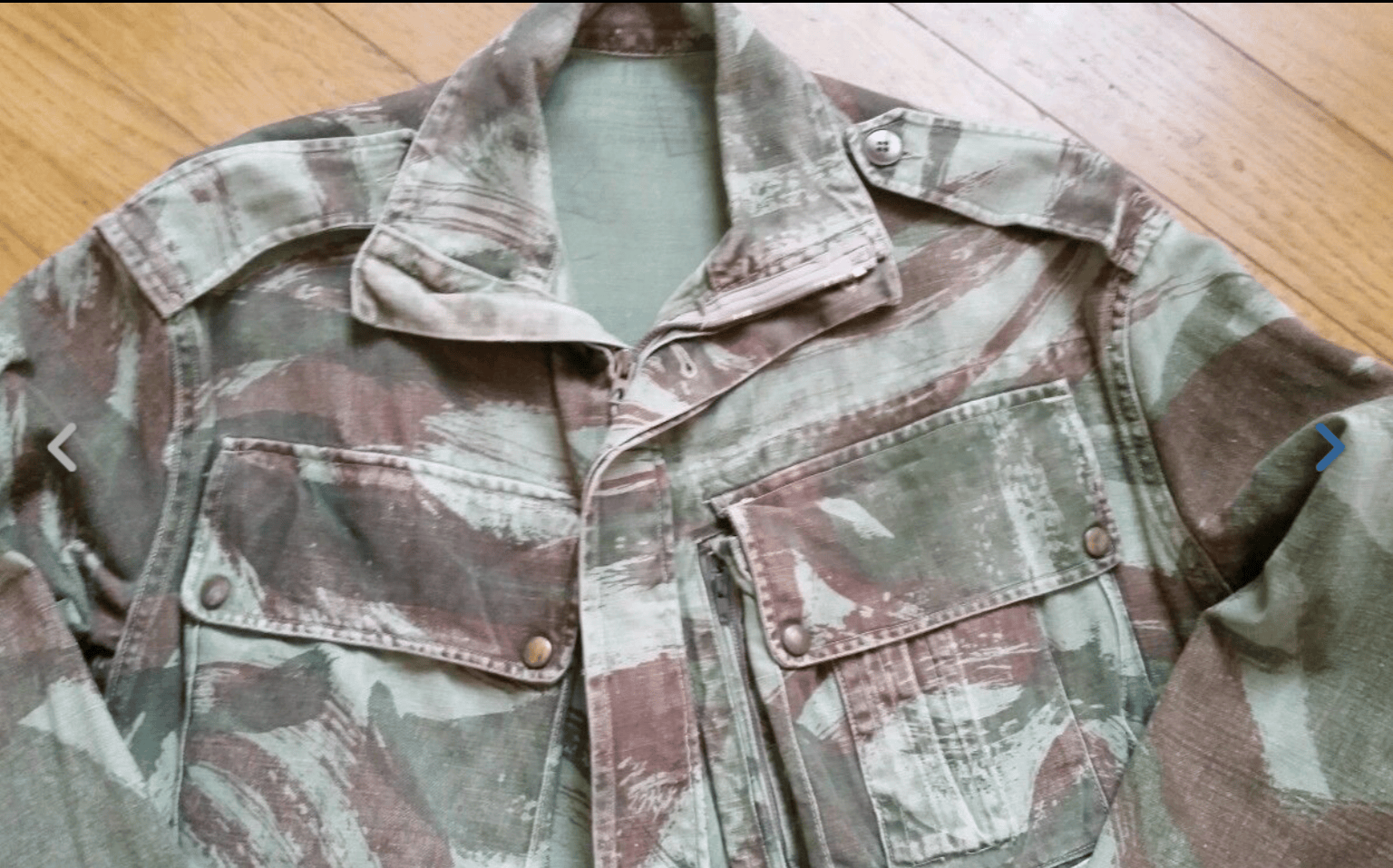
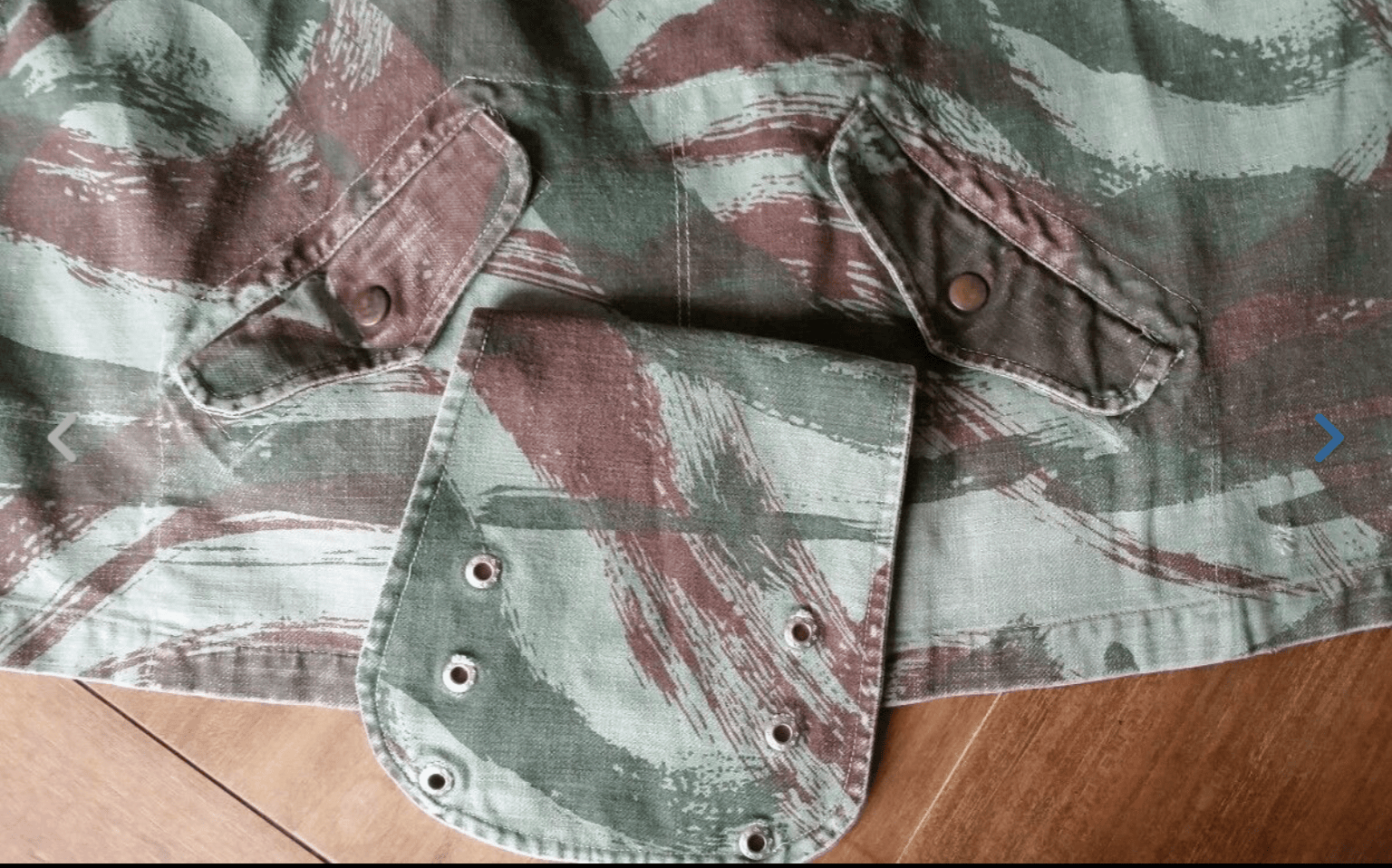
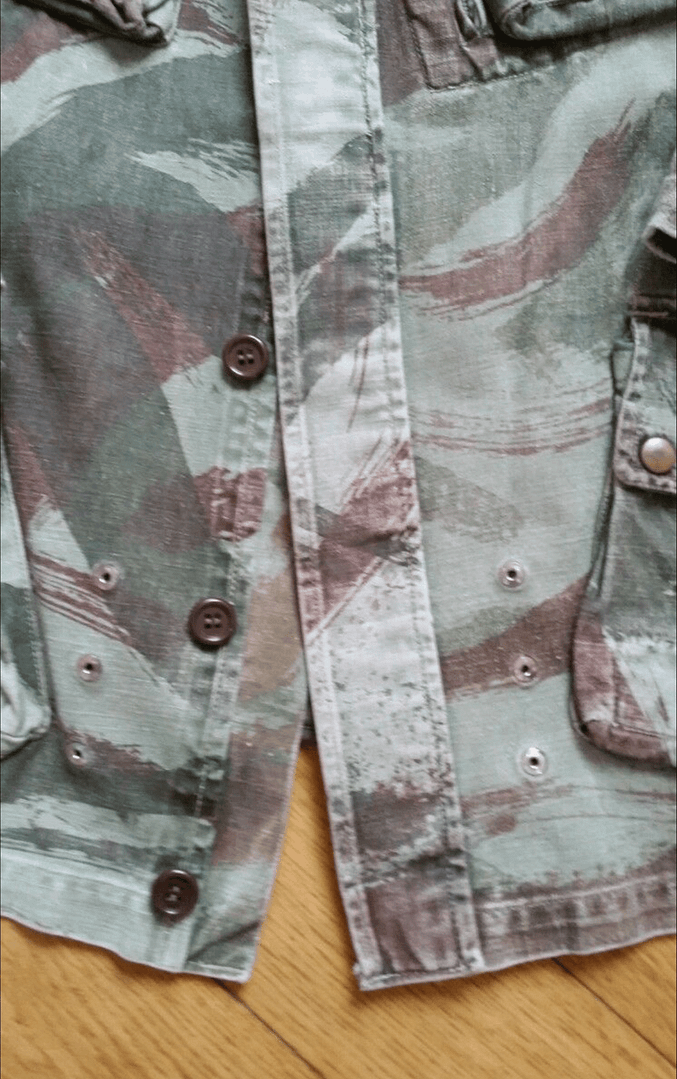
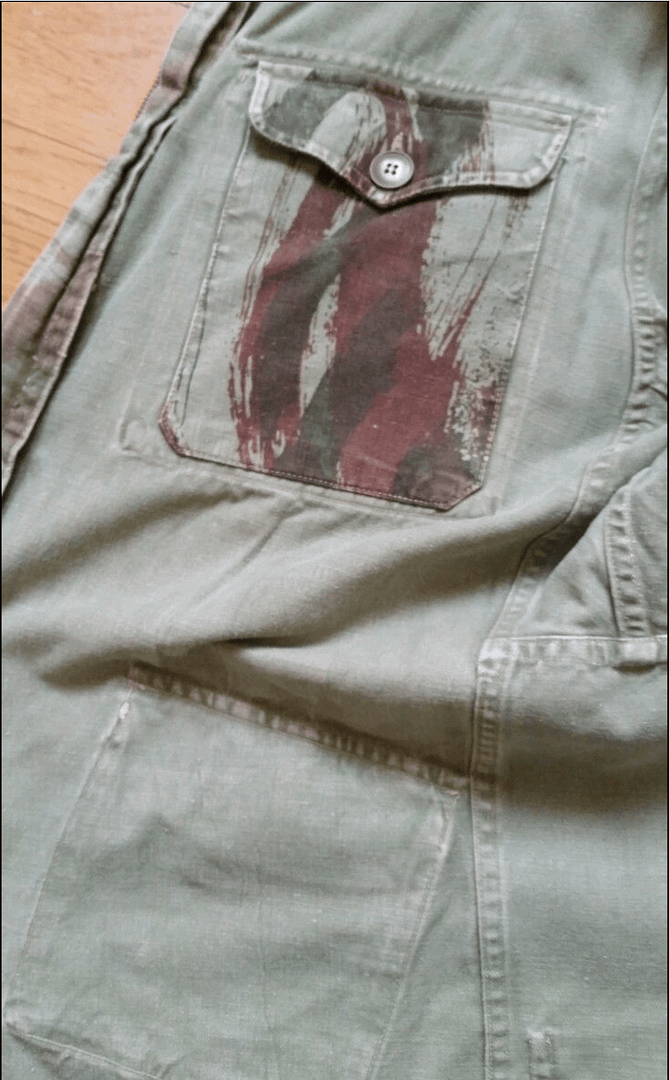
French TAP 47/51 (Troupes Aéroportées = Paratrooper) smock, Indo-China War. From my personal collection.
Indochina TAP 47/51 Green partrooper smock, a purpose-designed French airborne combat garment developed after the Second World War. Made from tough herringbone twill with large cargo pockets and reinforced seams, it was intended for parachute operations and close-quarter fighting in Indochina. The smock was worn by elite units such as the 1er BPC, 2e BEP, and 1er RCP during operations from the De Lattre Line to the Central Highlands. It formed the basis for later TAP 47/56 and TAP 50 camouflage developments.


French TAP 47/53 (Troupes Aéroportées = Paratrooper) smock, Indo-China War. From my personal collection.
The TAP 47/53 (Troupes Aéroportées 1947, modified for 1953) smock was an evolved version of the earlier TAP 47, 47/51, and 47/52. Each version incorporated improvements based on experience. The TAP 47/53 was the last version to see service Indochina. Made from tough herringbone twill with large cargo pockets and reinforced seams, it was intended for parachute operations and close-quarter fighting in Indochina. The smock was worn by elite units such as the 1er BPC, 2e BEP, and 1er RCP during operations from the De Lattre Line to the Central Highlands. It formed the basis for later TAP 47/56 and TAP 50 camouflage developments.


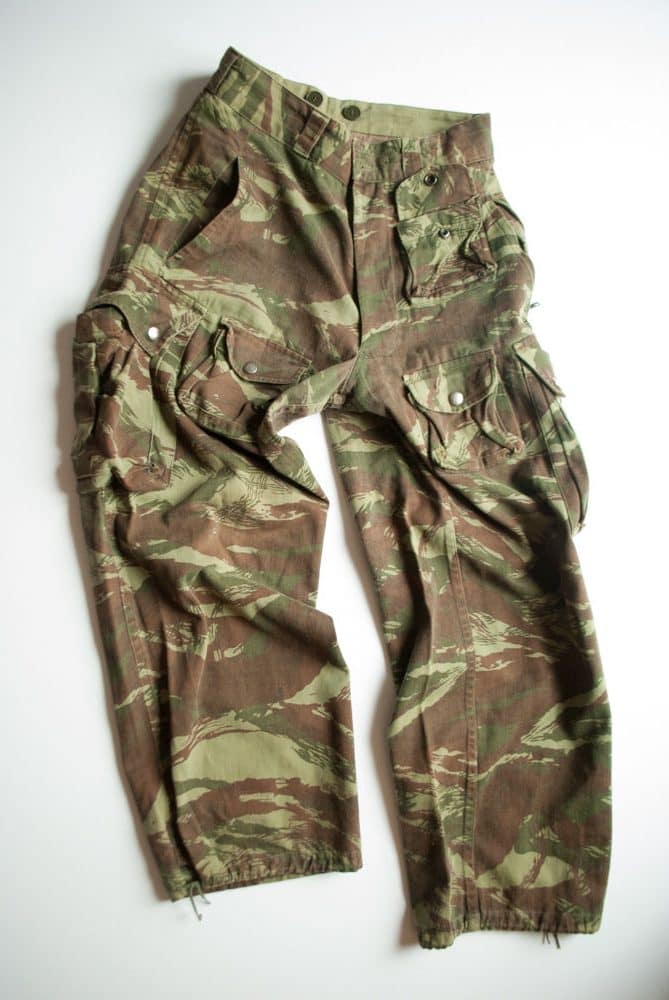
French TAP 47/52 (Troupes Aéroportées = Paratrooper) trousers, Indo-China War. From my personal collection.
The TAP 47/52 trousers were an improved airborne pattern issued to French paratroopers in Indochina from the early 1950s. Constructed from durable herringbone twill, they featured reinforced knees, adjustable ankle tabs, and large cargo pockets designed for parachute operations and field mobility. Paired with the TAP 47/52 jacket or earlier TAP 47 smock, these trousers were widely worn by the 1er BPC, 2e BEP, 1er RCP, and colonial para units during operations in Tonkin, Annam, and Laos.
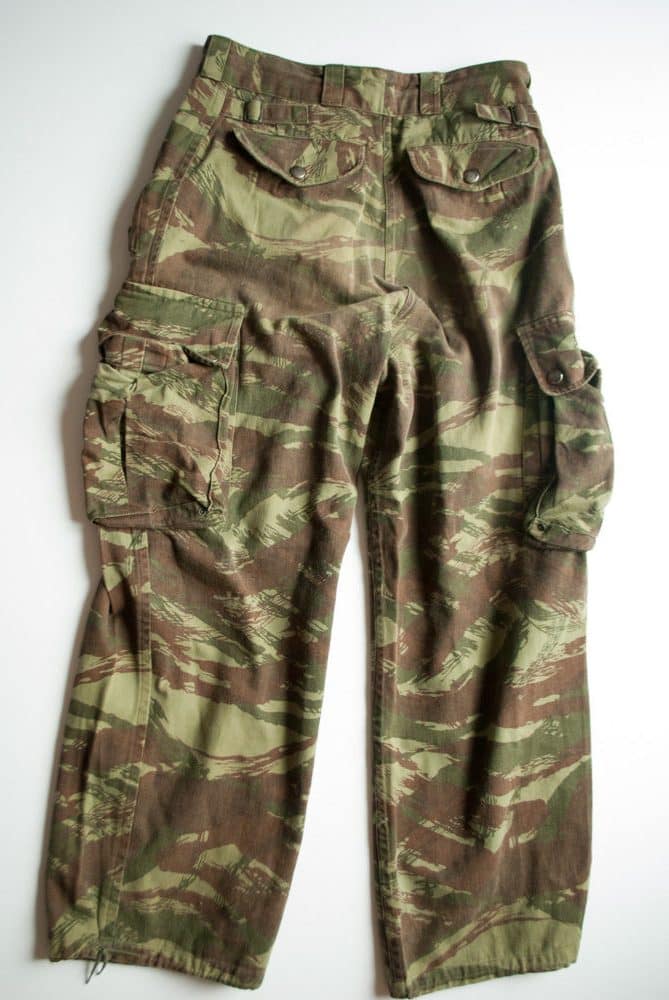
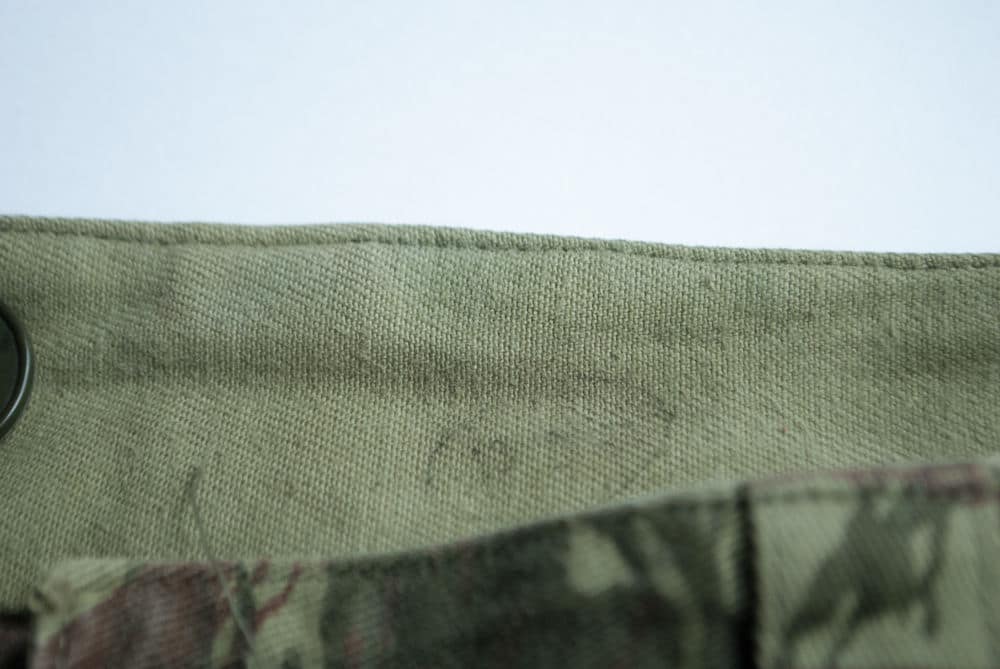
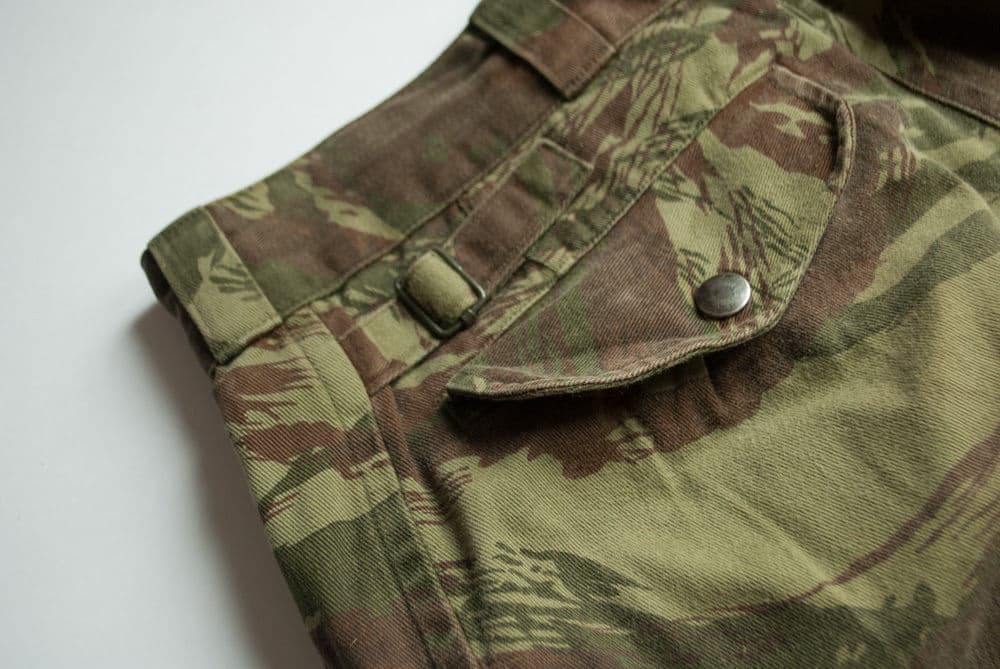
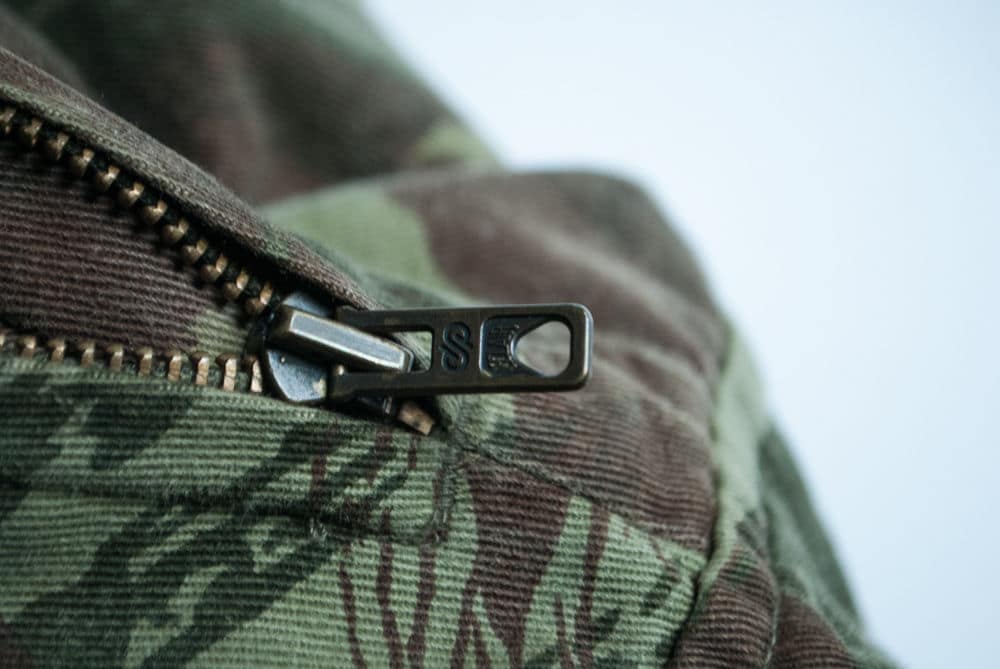
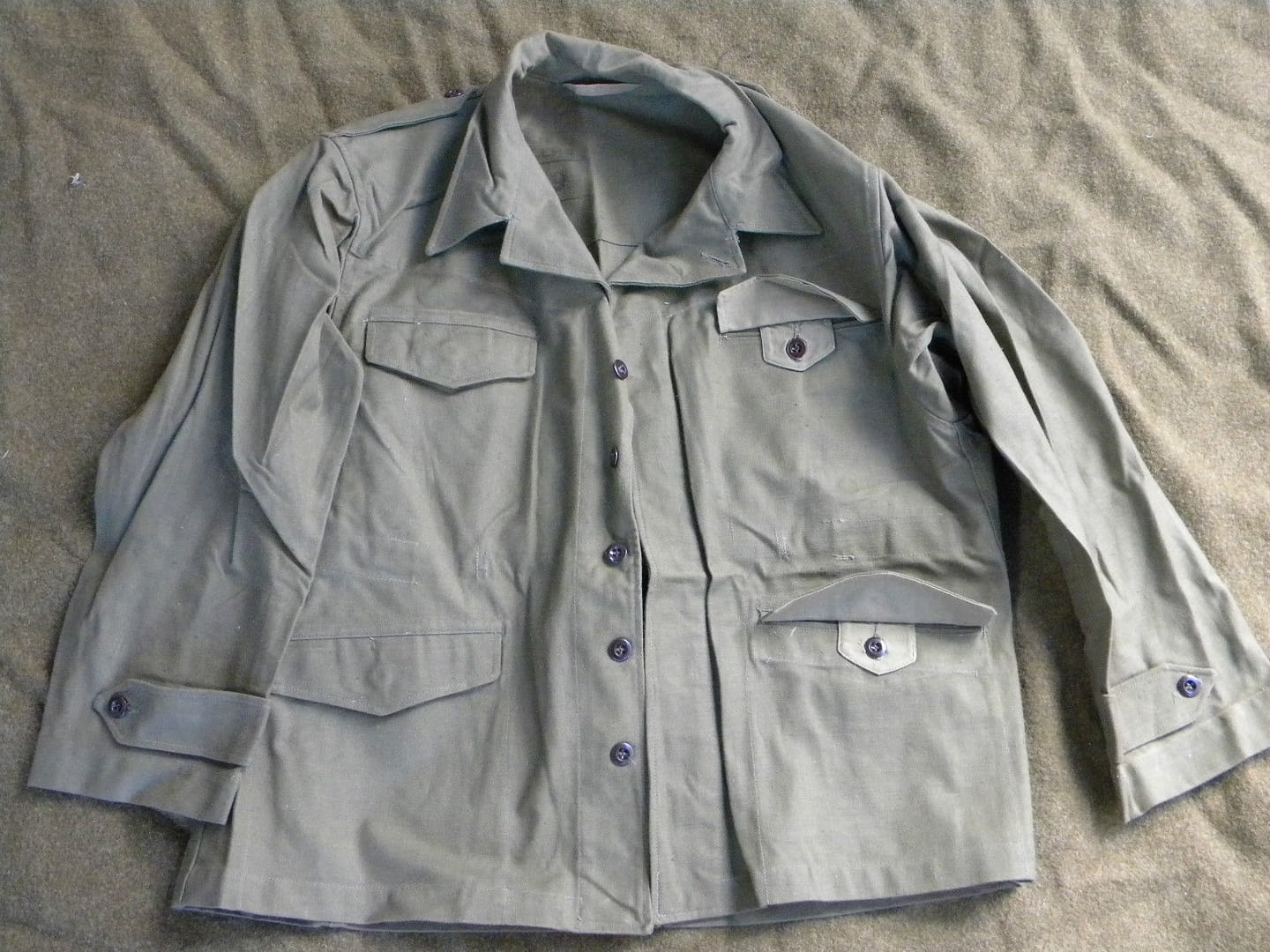
French TTA 47 (Tenue Toutes Armes Modèle 1947) Green jacket for ground troops, Indo-China War. From my personal collection.
The TTA 47 (Tenue Toutes Armes Modèle 1947) was the most widely issued French uniform in the Indochina and Algerian Wars. It was based on the US M1943 design and was intended for troops from all branches, with TTA being an abbreviation for toutes armes (all arms).

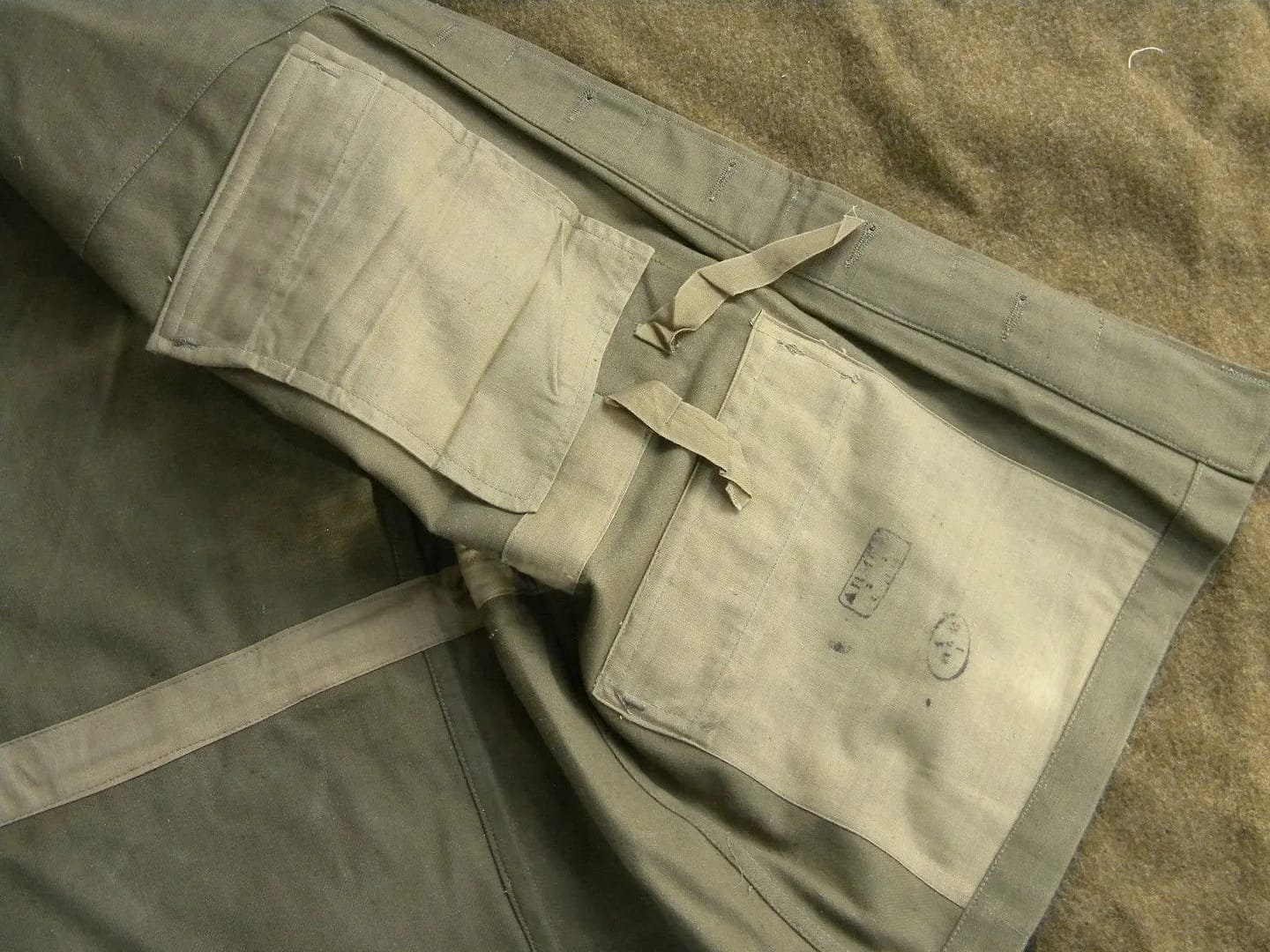
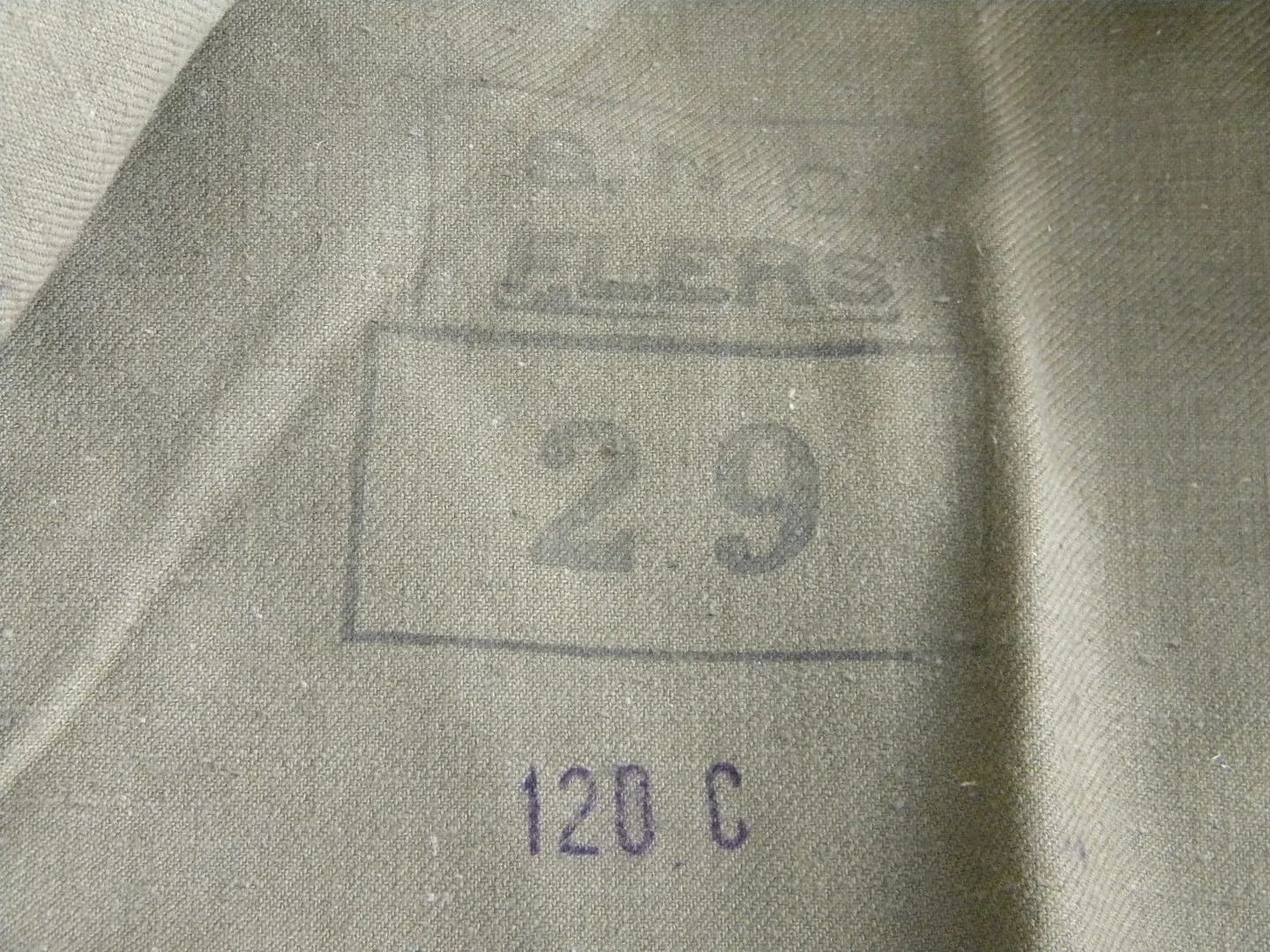
French TTA 47 (Tenue Toutes Armes Modèle 1947) Green trousers for ground troops, Indo-China War. From my personal collection.
The TTA 47 (Tenue Toutes Armes Modèle 1947) was the most widely issued French uniform in the Indochina and Algerian Wars. It was based on the US M1943 design and was intended for troops from all branches, with TTA being an abbreviation for toutes armes (all arms).


WW2 British Paratrooper ‘Denison Smock’, commonly worn by French paratroopers in Indochina. From my personal collection.
The Denison smock was introduced in 1942 for British airborne troops, including the 1st and 6th Airborne Divisions and the SAS. Constructed from heavy cotton with a distinctive hand-painted camouflage pattern, it was designed for parachute drops and close-quarter fighting. The smock’s beaver-tail crotch flap prevented the garment ballooning during descent. Worn at Bruneval, Sicily, Arnhem, and the Rhine crossings, the Denison remains one of the most recognisable garments of British airborne forces.


Indochina War Accoutrements
Group of five French medals to a soldier of the Colonial troops (now called Marines) or the Foreign Legion:
This medal group belonged to a soldier of the Colonial Troops (Troupes Coloniales, later Troupes de Marine) or the French Foreign Legion, reflecting extensive overseas service across three major conflicts.
It comprises:
- Médaille Militaire. France’s premier NCO gallantry and long-service decoration, awarded for exceptional conduct in combat.
- WW2 Commemorative Medal (1939–1945). With clasps France and Libération, recognising wartime service during the liberation campaigns.
- Colonial Medal — “Extrême-Orient” Bar. Awarded for service in the Far East, including early post-war deployments in Indochina.
- Indochina War Commemorative Medal (1945–1954). Issued to personnel who served in the First Indochina War, including Tonkin, Annam, Cochinchina, Laos, and Cambodia.
- North Africa Commemorative Medal (1954–1962). A rare small-type issue with three clasps — Algérie, Tunisie, Maroc — marking operational service across all three North African theatres.
Together, this group represents an exceptional service record spanning WW2, Indochina, and the entire early phase of the decolonisation wars.


Indochina War Documents
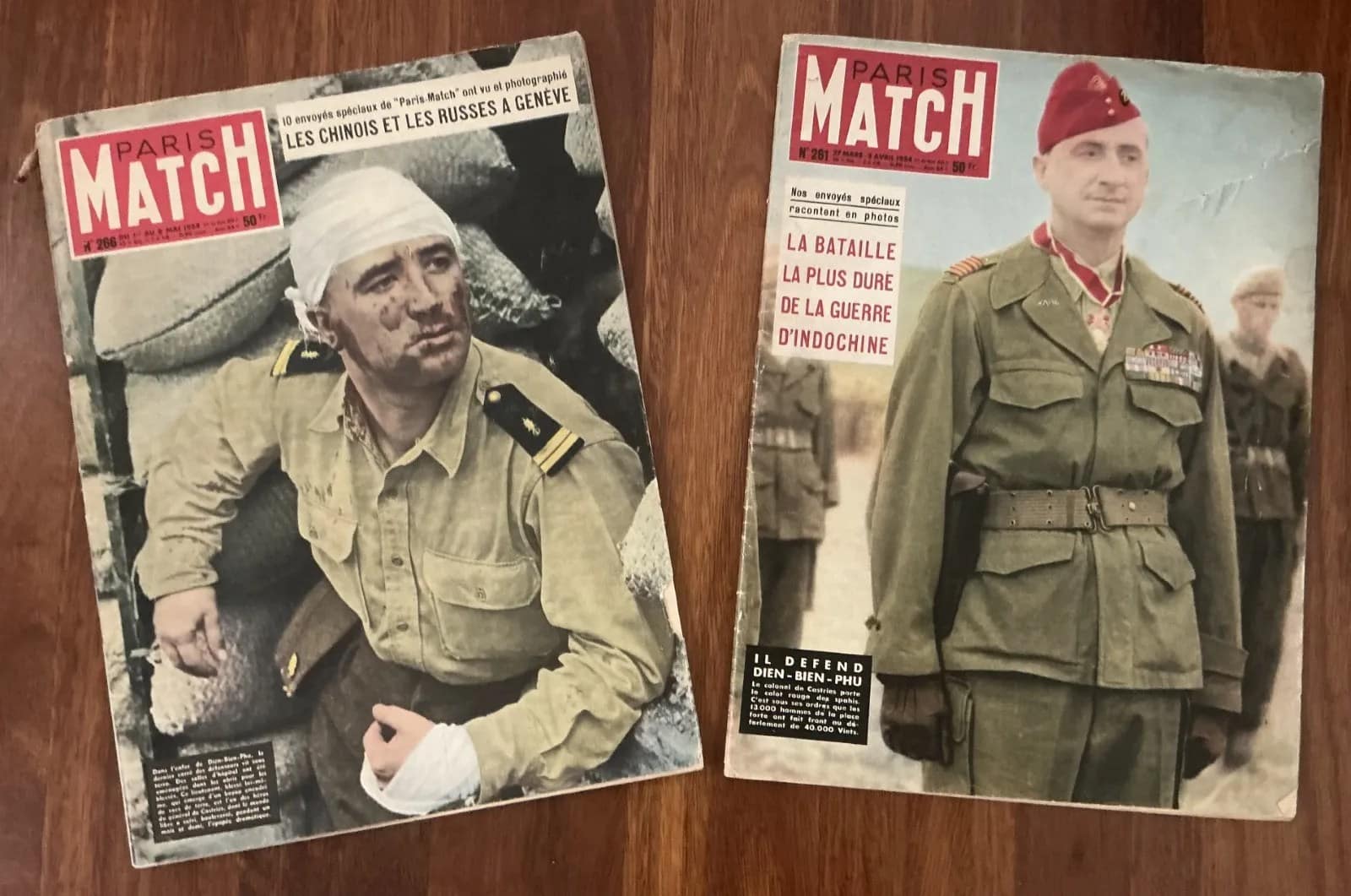
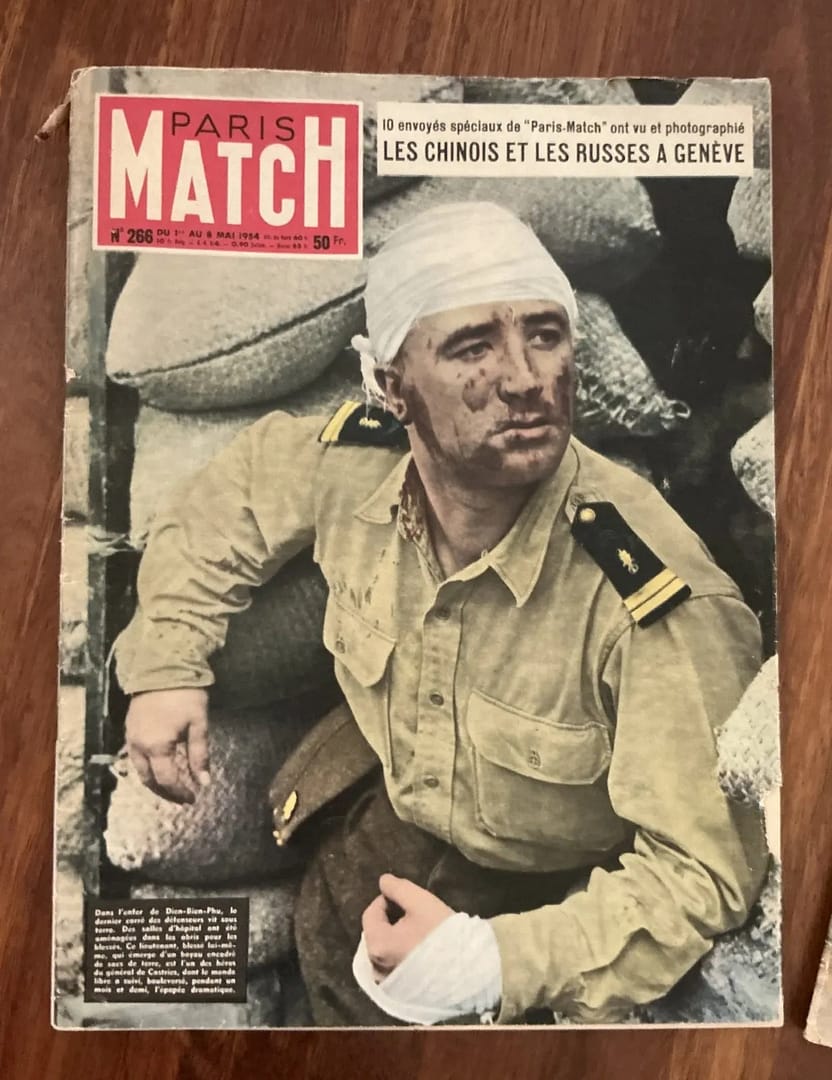
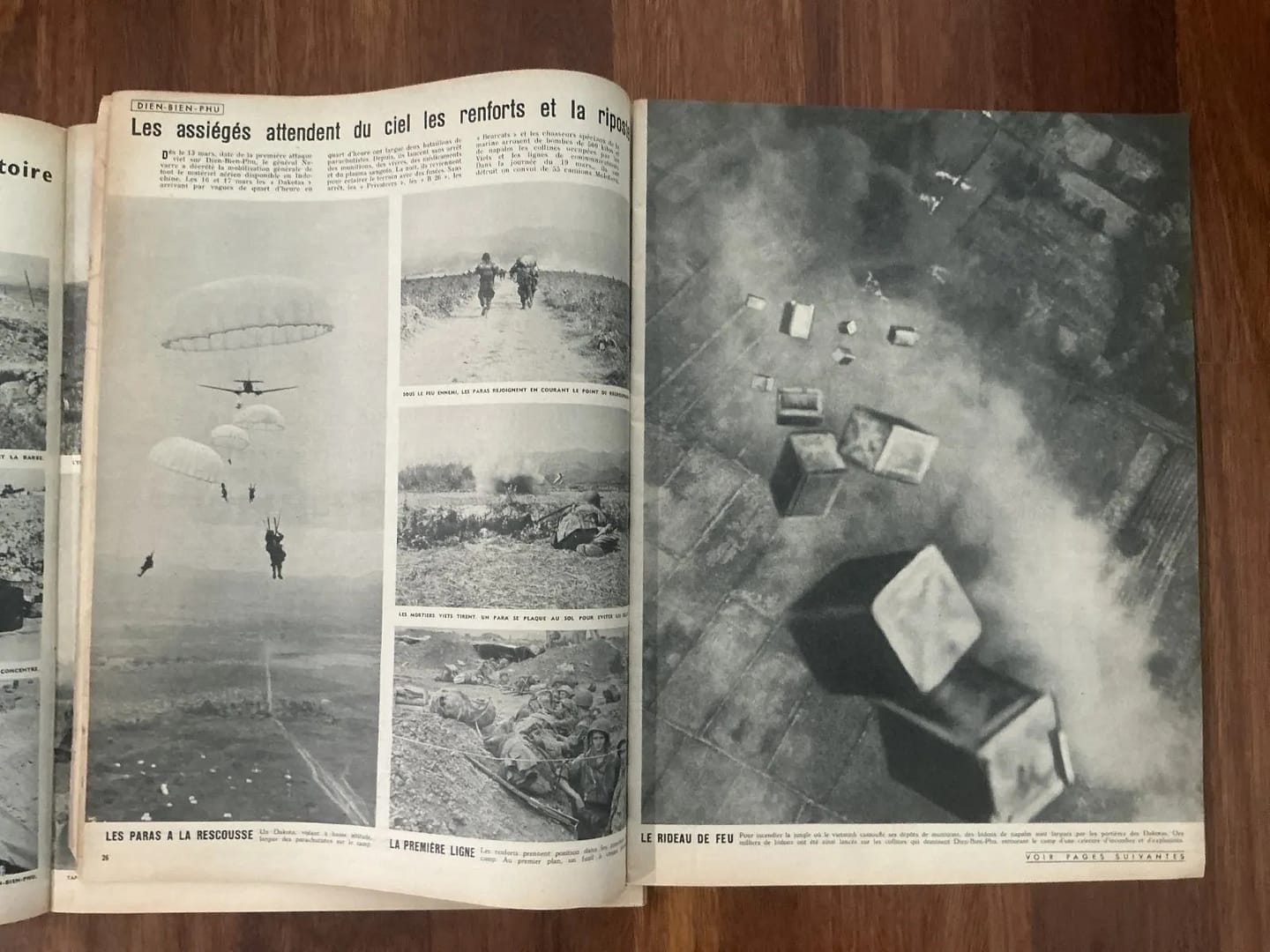
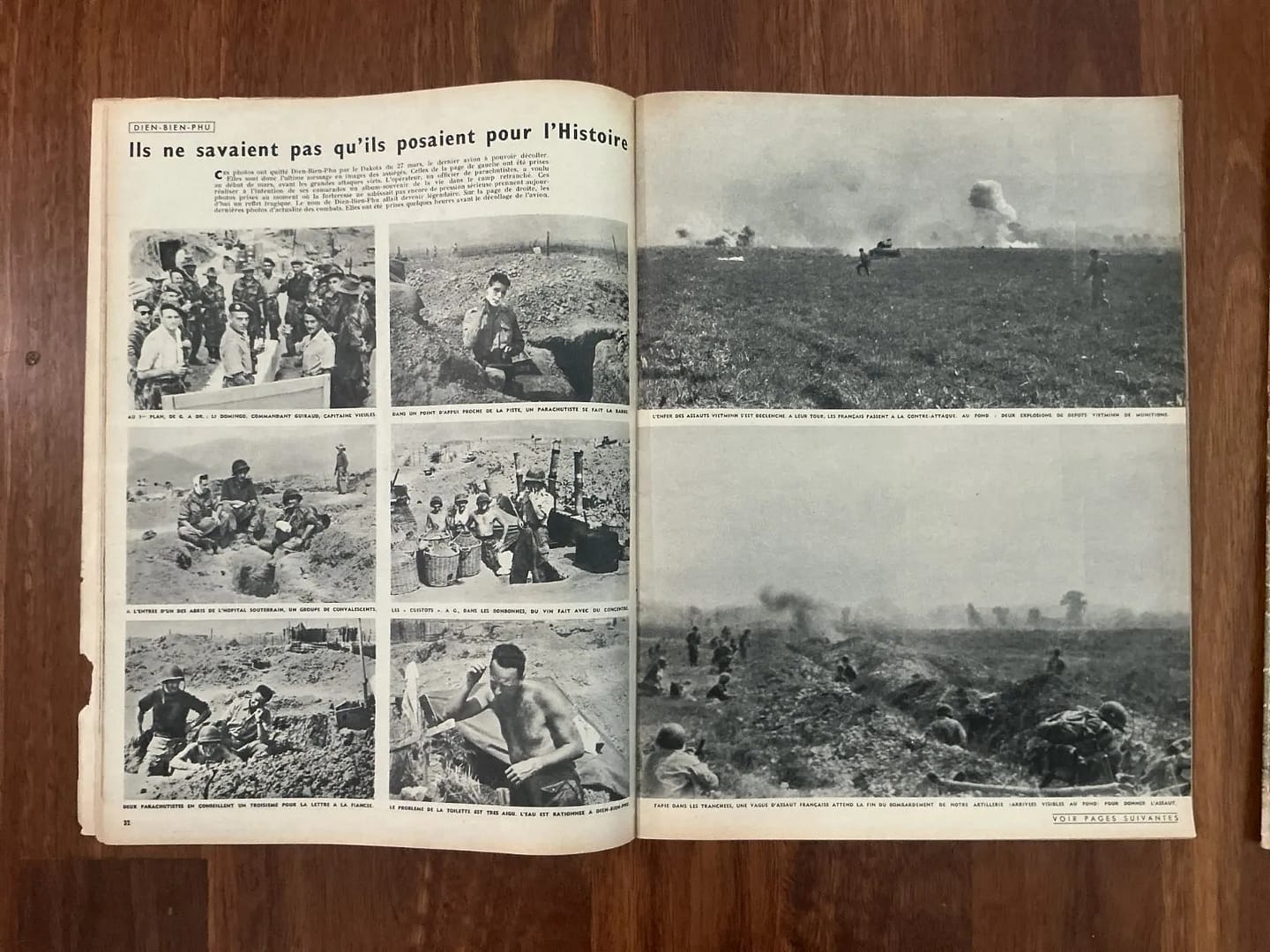
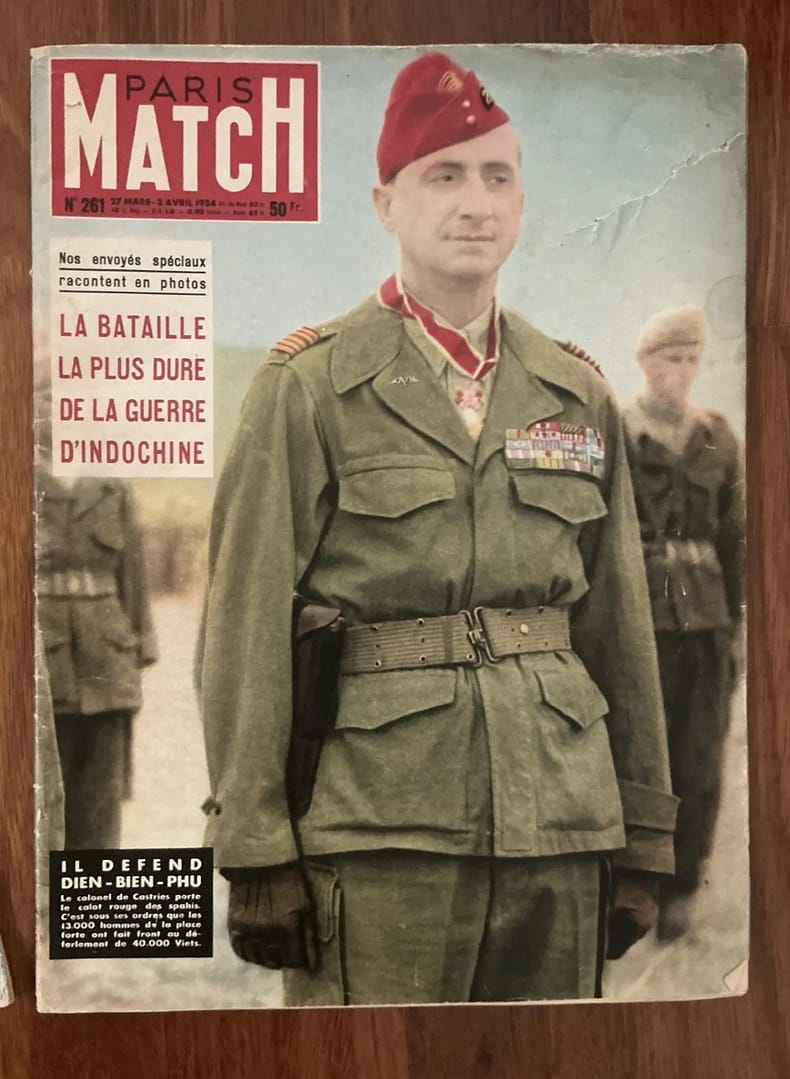
Paris Match Magazines, March 1954 and May 1954 – covering Dien Bien Phu. From my personal collection.
Paris Match is a French-language weekly magazine that features a mix of news and pop culture. It covers major national and international news along with celebrity lifestyle features and photo reporting. Paris Match has been considered “one of the world’s best outlets for photojournalism”. In early 1954, Paris Match was covering the French military operation in the aéro-terrestre base of Dien Bien Phu in northwest Tonkin. The March 1954 issue is quite upbeat about the prospects, while the May 1954 edition is a far more pessimistic coverage.
Found this useful? Buy me a coffee — it helps fund future battlefield research


Authored by Mick Prictor, a retired military officer with 40 years’ service, and a military historian specialising in terrain-focused analysis of tactics, doctrine, and command decision-making in land warfare. His work draws on extensive battlefield fieldwork—more than 280 sites worldwide—and one of the world’s largest private collections of historic military arms, uniforms, and equipment. About me
FAQ: Indochina War weapons and equipment
The French Indochina War (1946–1954) was a protracted conflict between France’s Far Eastern Expeditionary Corps and the Viet Minh nationalist movement led by Ho Chi Minh. Fighting began in December 1946 and ended with the French defeat at Điện Biên Phủ and the Geneva Accords in 1954.
The war marked the transition from colonial warfare to modern revolutionary and insurgent conflict. It demonstrated the growing effectiveness of protracted warfare, the importance of logistics and political legitimacy, and the decisive influence of terrain and operational mobility.
Both sides used a wide mix of equipment, reflecting global supply networks and wartime leftovers. French units often fielded a combination of French, American, British, and captured German weapons, illustrating the logistical complexity of the conflict.
Operations in jungle, mountains, and river valleys demanded lightweight, adaptable equipment and emphasised mobility. The environment shaped everything from uniforms and load carriage to weapons selection and tactical methods.
Early Viet Minh forces relied on captured weapons, improvised equipment, and limited foreign support from China before gradually developing more organised supply systems and heavier weapons as the war progressed.
Material culture reveals the practical realities of fighting a long, complex war — including adaptation, resource constraints, and the interaction between technology, terrain, and tactics — themes that continue to appear in modern conflicts.
Subscribe to Battlefield Travels and receive a free E-Book Battlefield Guide
Unlock expert battlefield analysis, campaign reconstructions, and historical insights drawn from firsthand exploration and primary sources.
🗺️ You’ll receive:
🎖️ Exclusive historical insights you won’t find elsewhere
📘 A free eBook: 10 Tips for Exploring Historic Battlefields
📰 New battlefield studies straight to your inbox as they are published

⚔️ Go deeper — Members get exclusive access to the Deep Research Collection, Field Notes, and monthly Research Dispatches. Try membership free for 7 days, cancel anytime. From $9/month.