Overview of the Vietnam War
The Vietnam War (1955–1975) was a protracted conflict that pitted the communist forces of North Vietnam and the Viet Cong against South Vietnam and its principal ally, the United States. Emerging from the unresolved political divisions following the First Indochina War, the conflict intensified in the early 1960s as the insurgency grew and North Vietnam increased support to southern guerrilla networks. The U.S. committed major combat units in 1965, initiating a large-scale air and ground campaign across South Vietnam, Laos, and Cambodia.
The war was characterised by dispersed infantry combat, complex jungle terrain, extensive use of helicopters, and a heavy reliance on artillery, air mobility, and strategic bombing. Major operations—Ia Drang, Cedar Falls, Junction City, Tet 1968, Hamburger Hill, and Lam Son 719—demonstrated the tactical capability of U.S., Australian, South Vietnamese, and allied forces, but failed to achieve decisive strategic effects.
The Son Tay Raid in November 1970 was a daring attempt to rescue American prisoners being held deep inside North Vietnam. The raid was a textbook example of bold, joint special operation mission. Ultimately the prisoners had been removed, but that takes nothing away from the audacity and professional of the planners and executors!
Australia’s 1st Australian Task Force fought a separate counter-insurgency campaign in Phuoc Tuy Province, while South Vietnamese units carried the main burden after U.S. withdrawal under Vietnamisation. The fall of Saigon in April 1975 ended the conflict and unified Vietnam under communist control. The war had lasting regional, political, and social consequences and remains one of the defining conflicts of the Cold War.
You may also like these battlefield studies


Headgear and uniforms
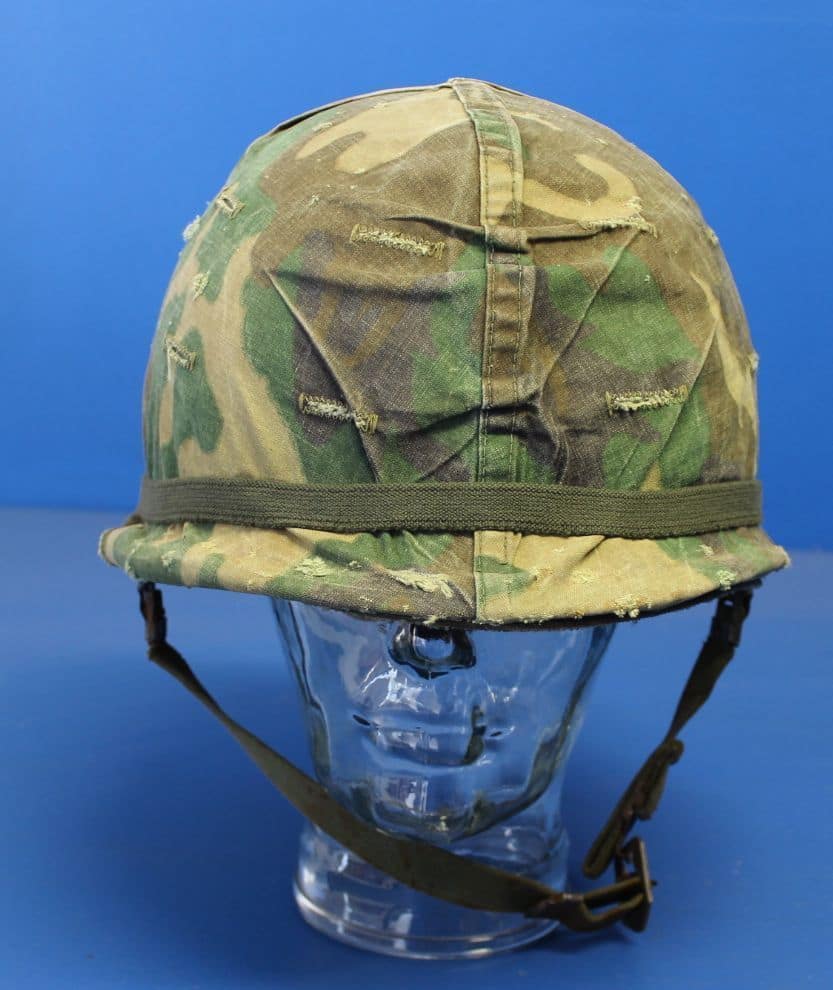
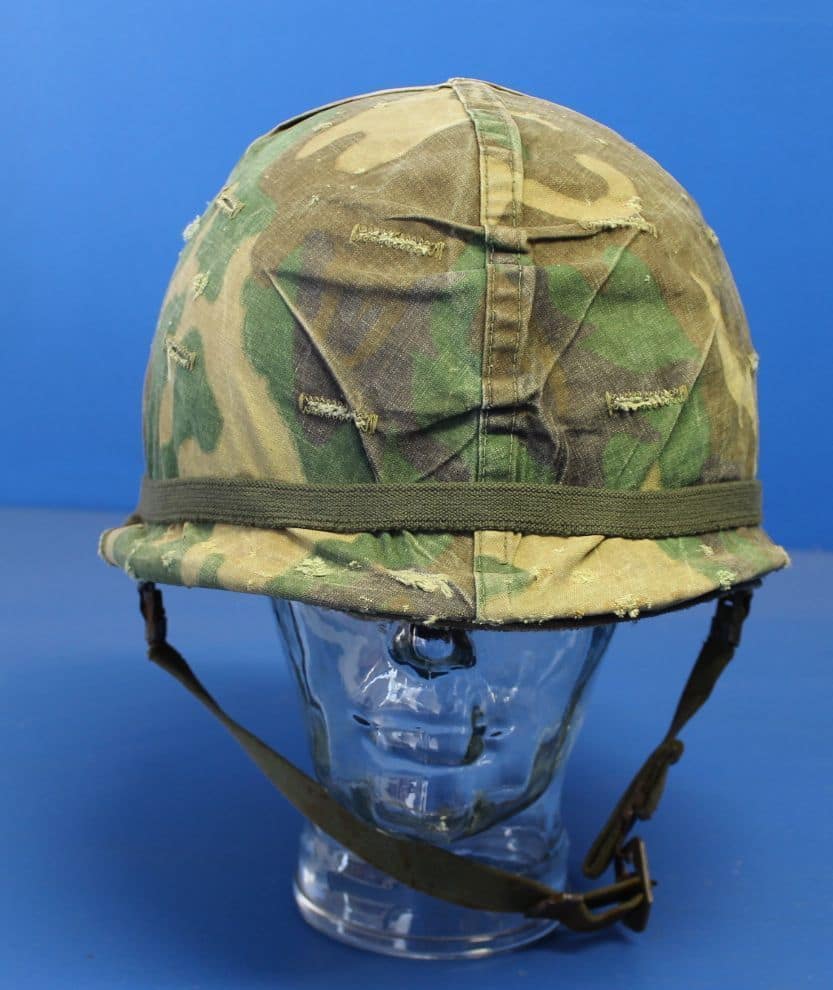
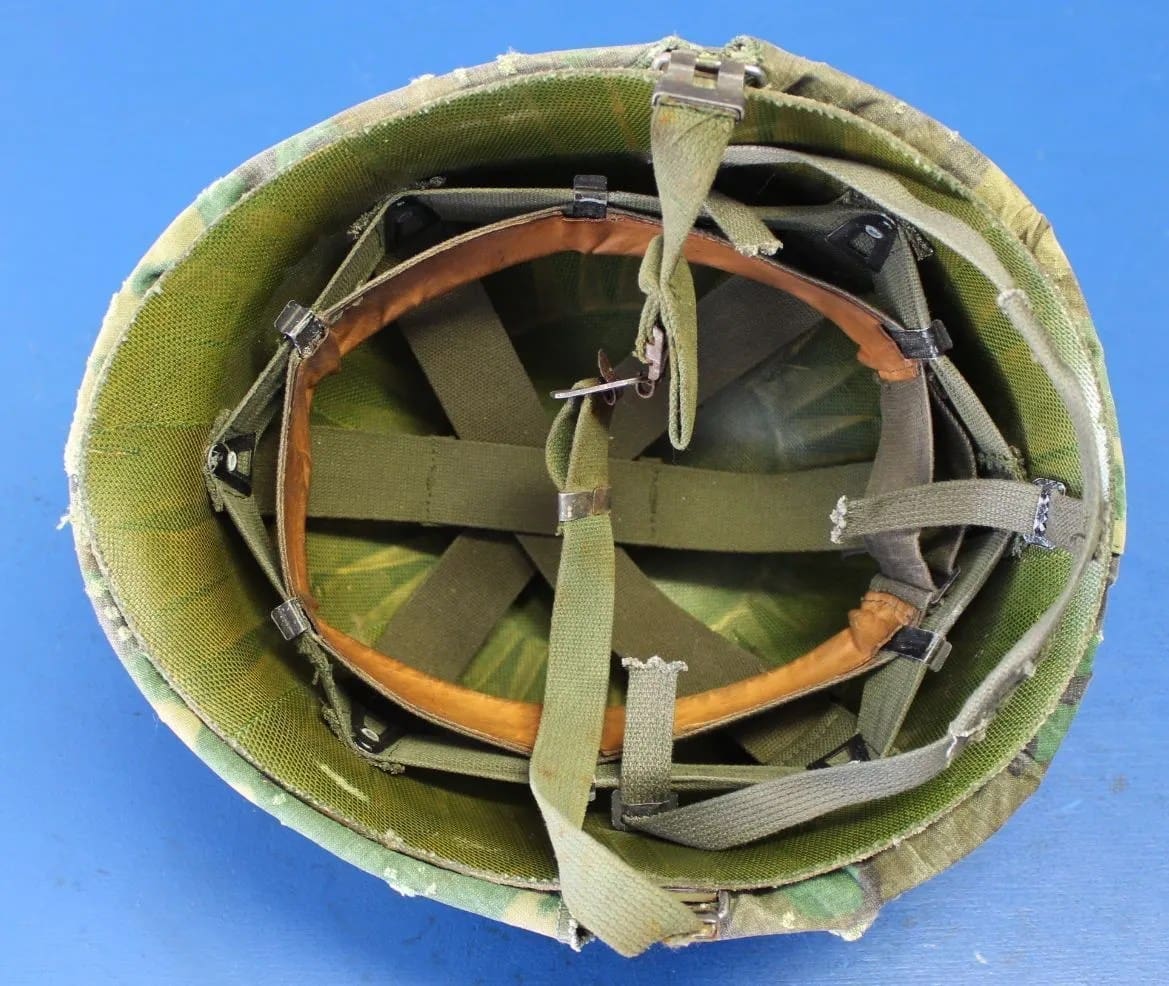
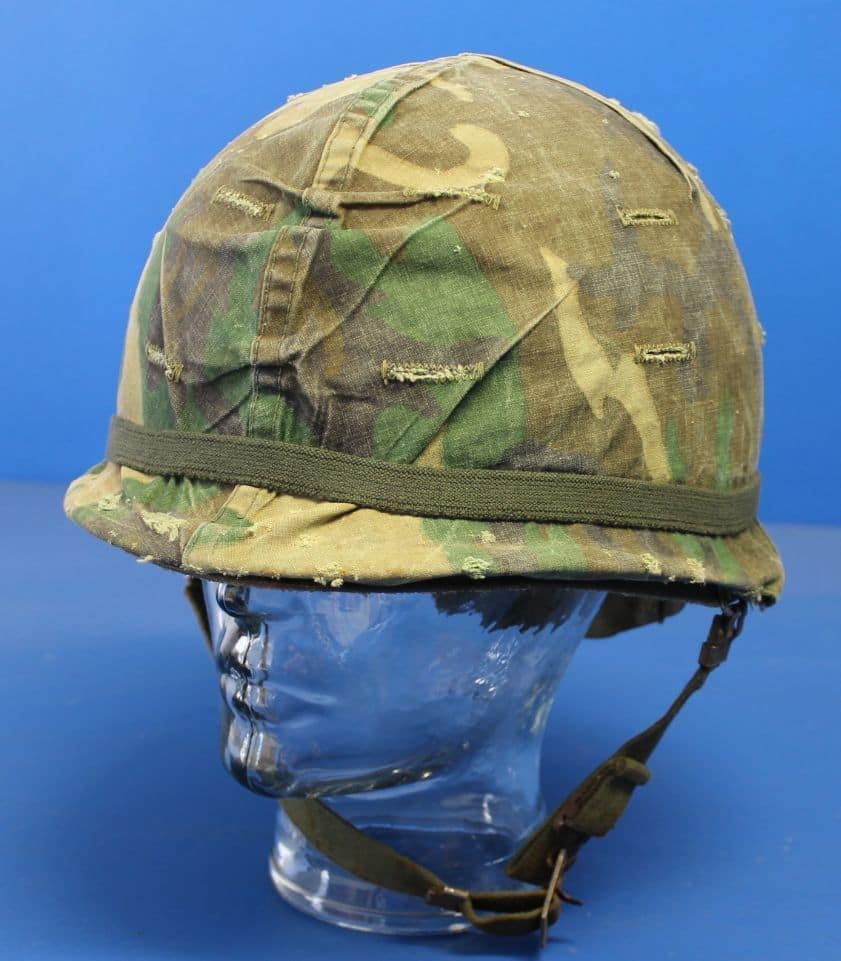
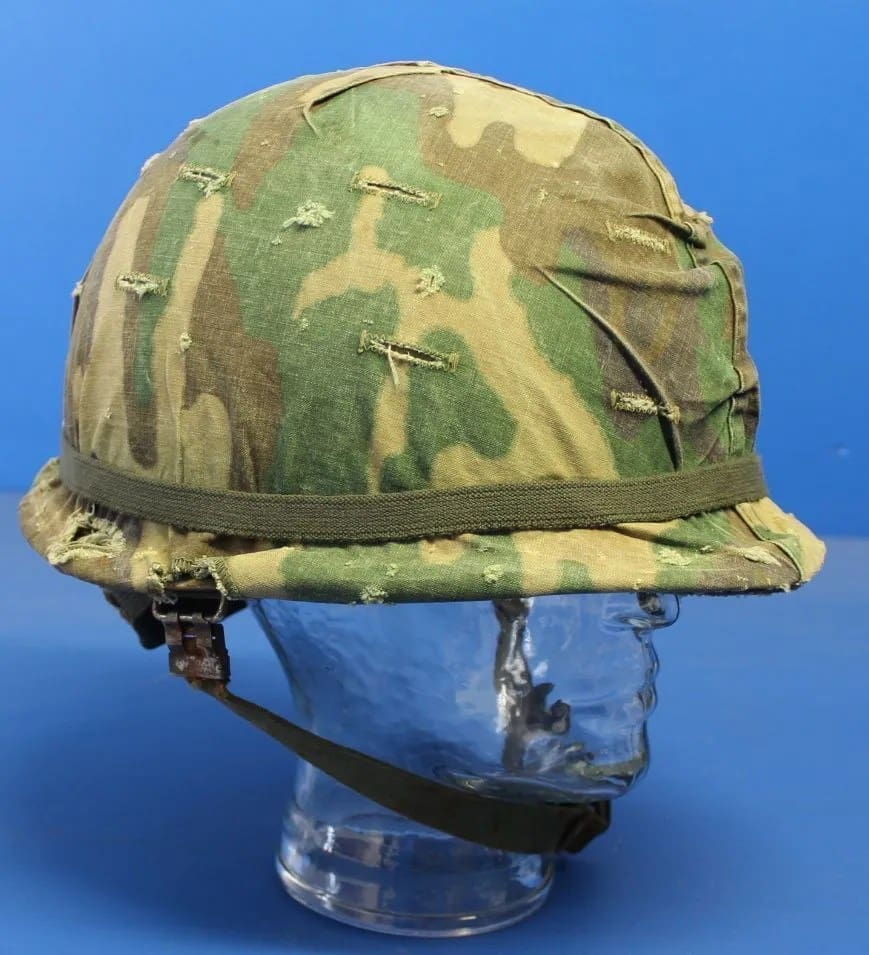
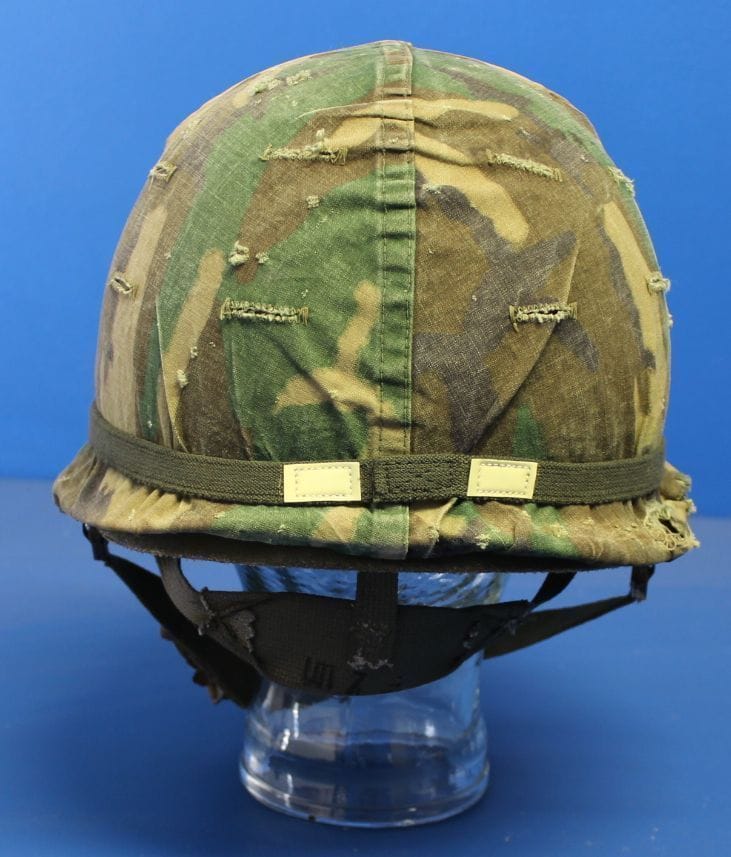
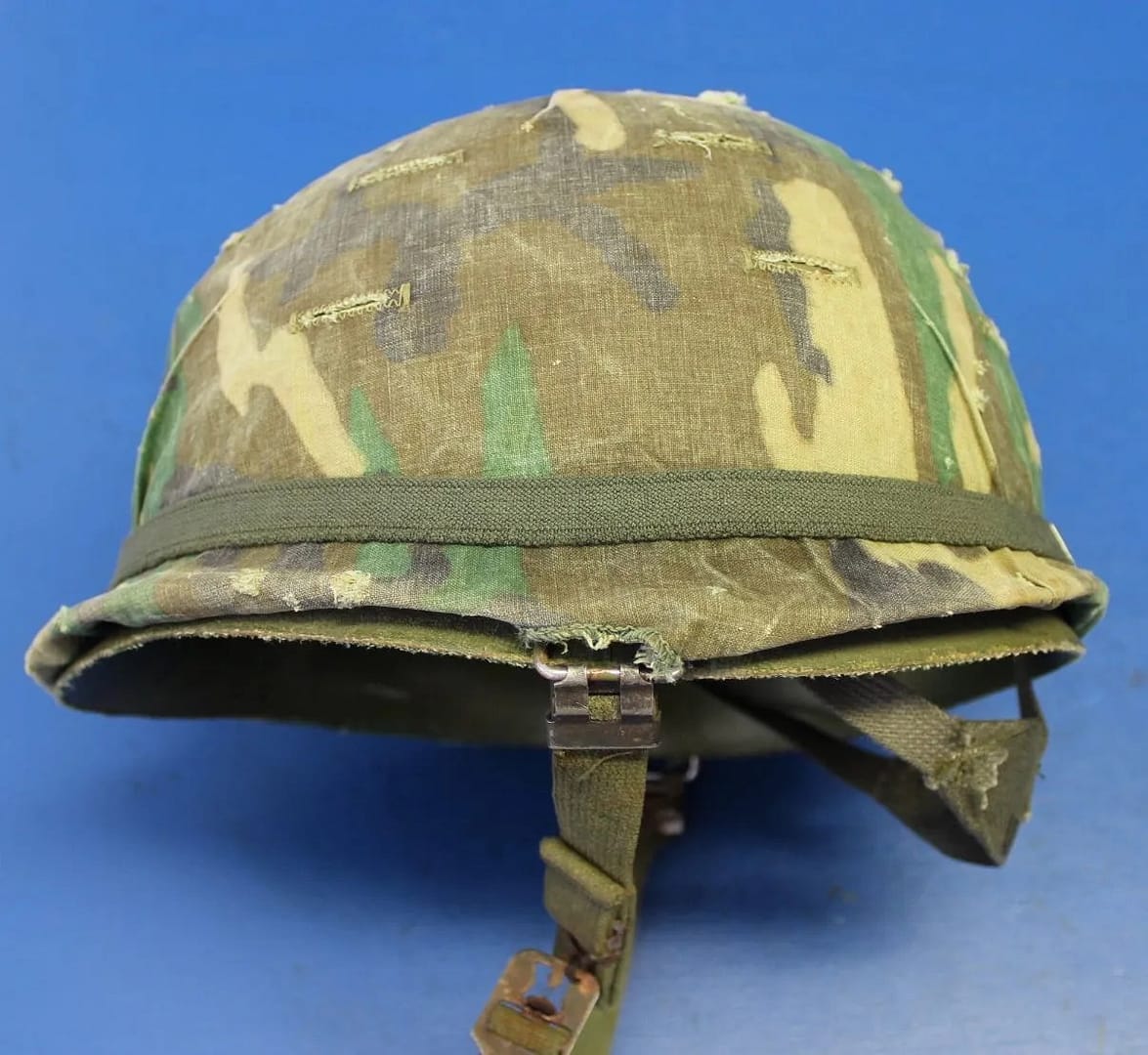
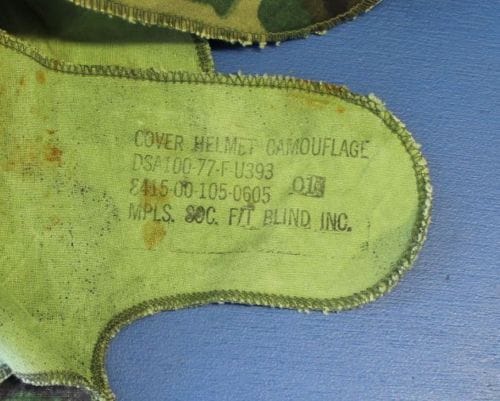
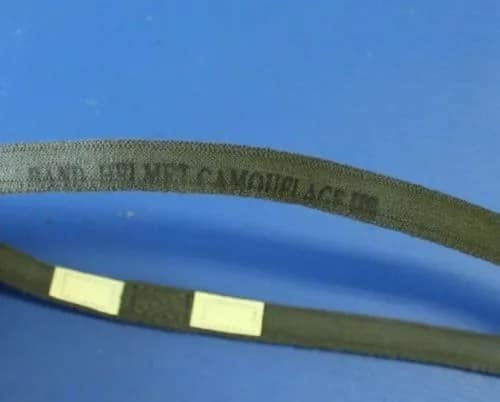
US M1 helmet with ERDL (Engineer Research & Development Laboratories) camouflage cover
This M1 helmet features the ERDL (Engineer Research & Development Laboratories) camouflage pattern introduced in the late 1960s for jungle operations. Printed in green-dominant and brown-dominant variants, ERDL provided improved concealment over earlier Mitchell covers and became standard for reconnaissance units, Marines, and specialised infantry. The helmet retains the steel shell and fibre liner of the long-serving M1 pattern, widely used in Vietnam for dismounted patrols, air-mobile operations, and defensive positions. ERDL covers became closely associated with late-war U.S. combat imagery.
🧭 From Weapons to Battlefield Use
This page shows weapons and equipment of the Vietnam War. All items are from my personal collection.
But what images and data don’t show is how these weapons were actually used on the ground—how weapon characteristics, tactics, innovation, terrain, and movement shaped their effectiveness in battle.
👉 That layer—how firepower, tactics, and terrain interact in real engagements—is explored in:
⚔️Battlefield Studies ◊ 💡Tactical Innovations ◊ 📝Field Notes
Australian Army Slouch Hat ‘Fayrefield 1967’
This Australian slouch hat, manufactured by Fayrefield in 1967, represents the standard headdress of the Australian Army during the Vietnam War. Constructed from khaki fur felt with a wool or seven-fold puggaree and Rising Sun badge, it was worn for general duties, parade, and non-combat tasks. Although helmets or bush hats were used on operations, the slouch hat remained the symbol of Australian presence in Vietnam, worn by soldiers of 1 ATF at Nui Dat, Vung Tau, and during rotation ceremonies, civic actions, and R&R periods.

Found this useful? Buy me a coffee — it helps fund future battlefield research


Authored by Mick Prictor, a retired military officer with 40 years’ service, and a military historian specialising in terrain-focused analysis of tactics, doctrine, and command decision-making in land warfare. His work draws on extensive battlefield fieldwork—more than 280 sites worldwide—and one of the world’s largest private collections of historic military arms, uniforms, and equipment. About me
Subscribe to Battlefield Travels and receive a free E-Book Battlefield Guide
Unlock expert battlefield analysis, campaign reconstructions, and historical insights drawn from firsthand exploration and primary sources.
🗺️ You’ll receive:
🎖️ Exclusive historical insights you won’t find elsewhere
📘 A free eBook: 10 Tips for Exploring Historic Battlefields
📰 New battlefield studies straight to your inbox as they are published

⚔️ Go deeper — Members get exclusive access to the Deep Research Collection, Field Notes, and monthly Research Dispatches. Try membership free for 7 days, cancel anytime. From $9/month.