Ancient and Medieval warfare
Ancient and medieval warfare spans more than two millennia of military development, from the rise of organised armies in the Bronze Age to the emergence of professional forces and fortified states in the late Middle Ages. Conflict in this period was shaped by geography, social structures, and technological constraints, with armies built around infantry levies, elite warrior classes, and, gradually, the increasing use of cavalry.
In the ancient world, forces such as the Greek hoplite phalanx at Thermopylae, the disciplined Roman legions, and the Persian and Macedonian combined-arms systems demonstrated the effectiveness of disciplined formations supported by missile troops and specialist contingents. Siege warfare, logistics, and control of trade routes were central to imperial expansion across the Mediterranean, Near East, and Asia.
The medieval period saw the rise of armoured knights, fortified castles, and feudal military obligations, but also the persistence of professional infantry traditions in regions such as Byzantium, Islamicate states, and East Asia. From Hastings to the Crusades and from the Mongol conquests to the Hundred Years War, warfare became increasingly sophisticated, with improvements in armour, crossbows, early gunpowder weapons, and battlefield command.
Across both eras, combat remained defined by close-quarter fighting, rigid social hierarchies, and the capacity of states or rulers to mobilise manpower and resources in pursuit of strategic aims.
Related Battle Studies, Museum Pieces & Reading Resources


Roman military clasps, from my collection
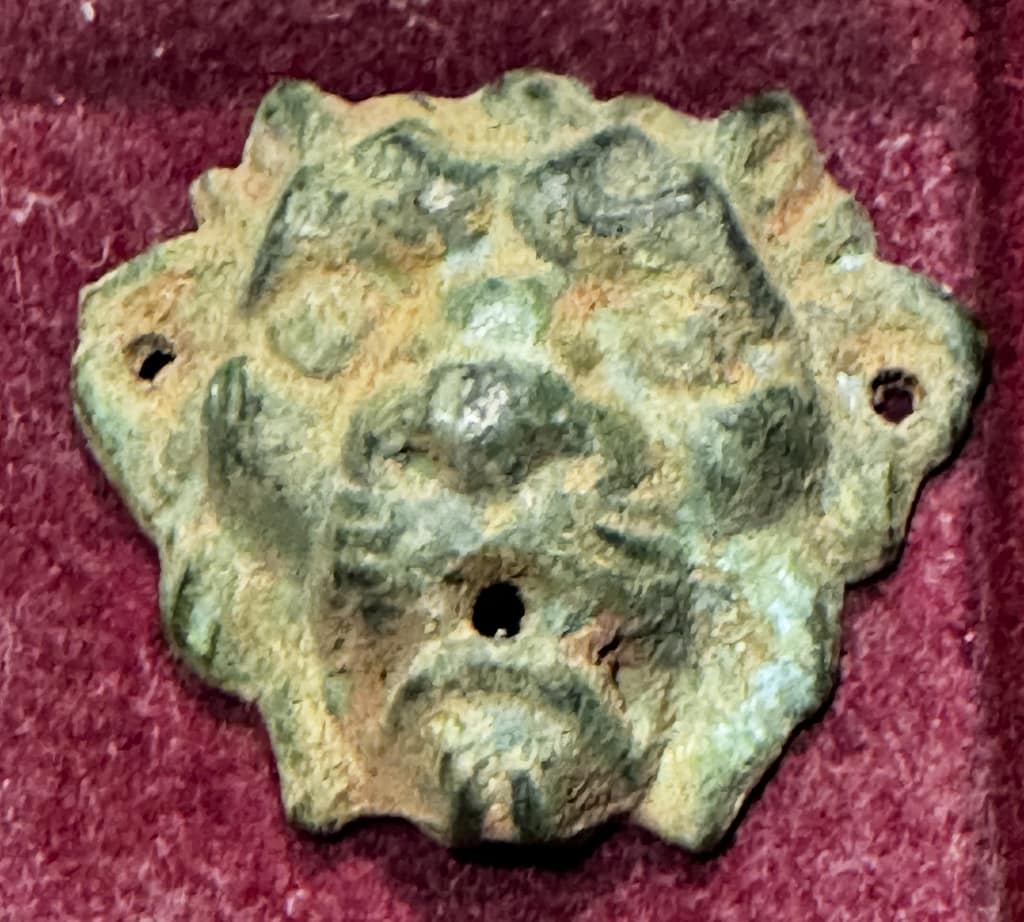
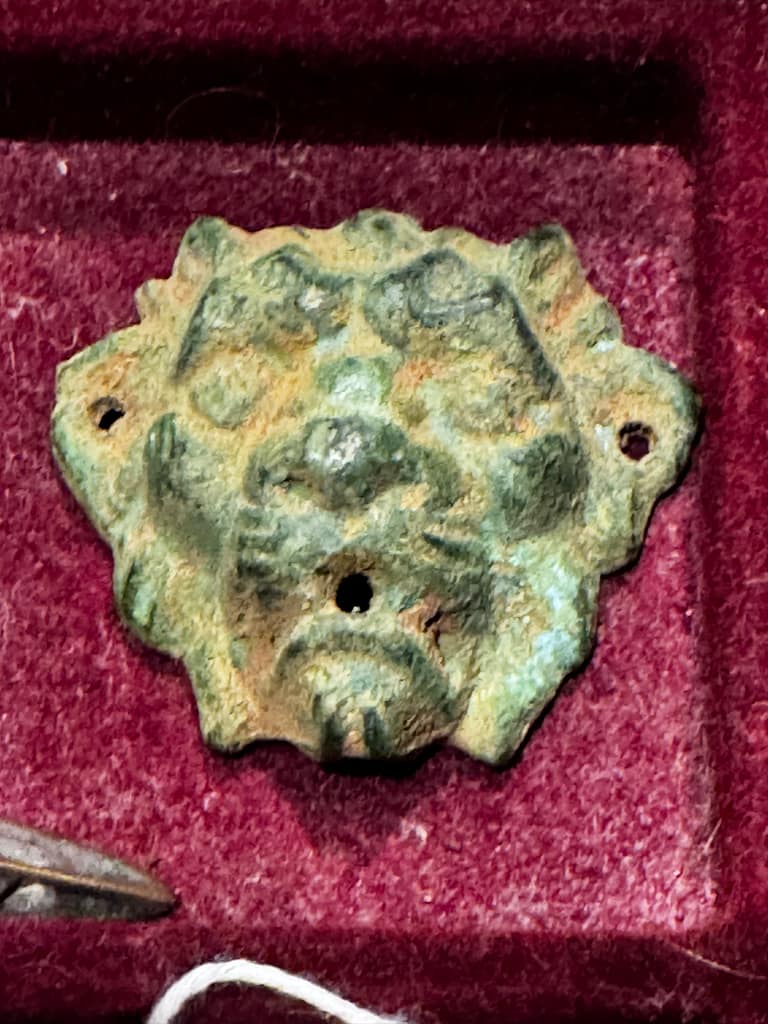
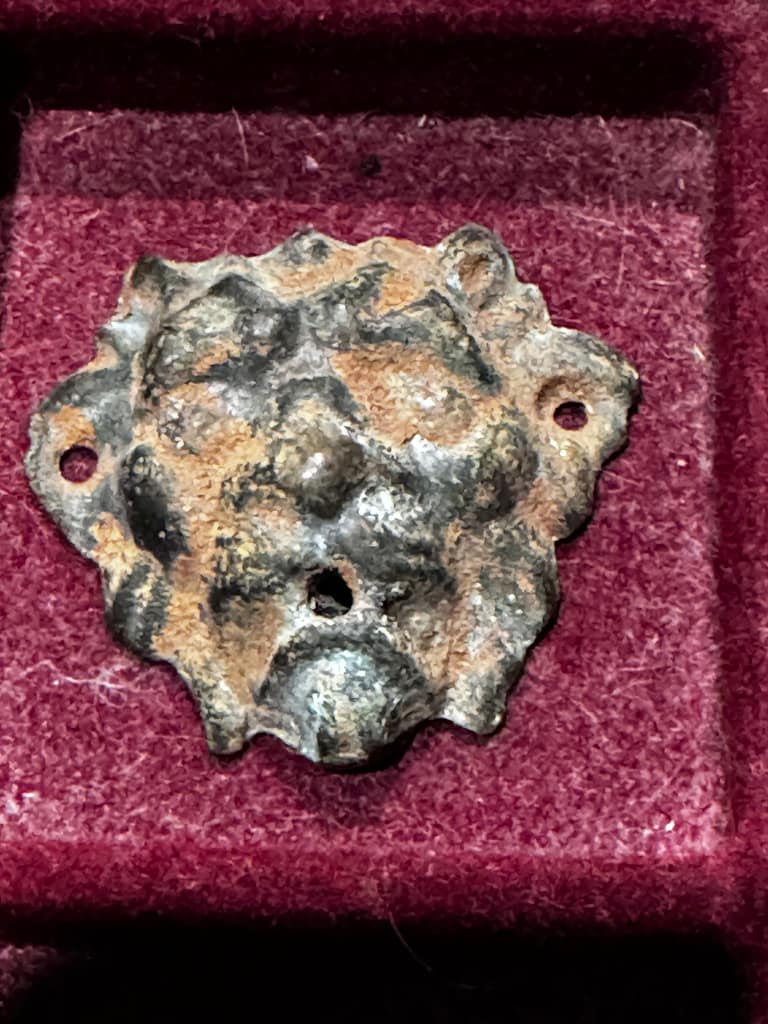
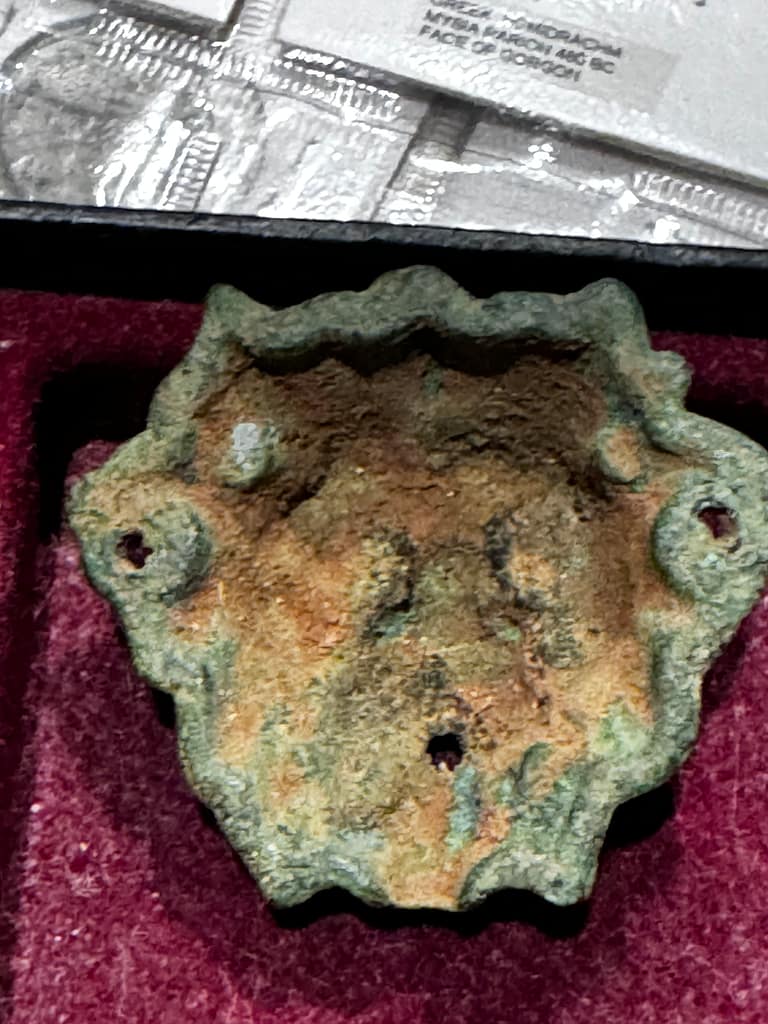
This cast bronze lion-head clasp was used as a fastening element on Roman military harness, belts, or parade equipment. The lion motif symbolised strength, authority, and imperial power, and was commonly employed in cavalry fittings and officer kit during the 1st–3rd centuries AD. Such clasps often secured baltea straps, cloak fastenings, or decorative harness sets worn in both field and ceremonial contexts. The detailed modelling reflects the high level of craftsmanship typical of Roman military metalwork.
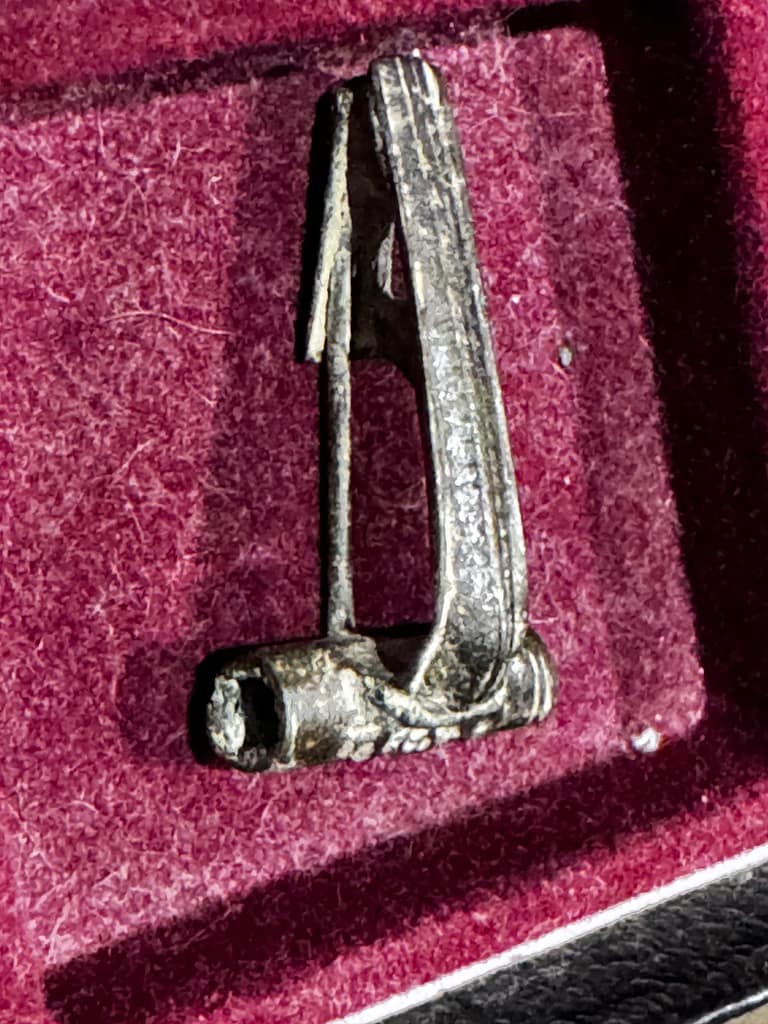
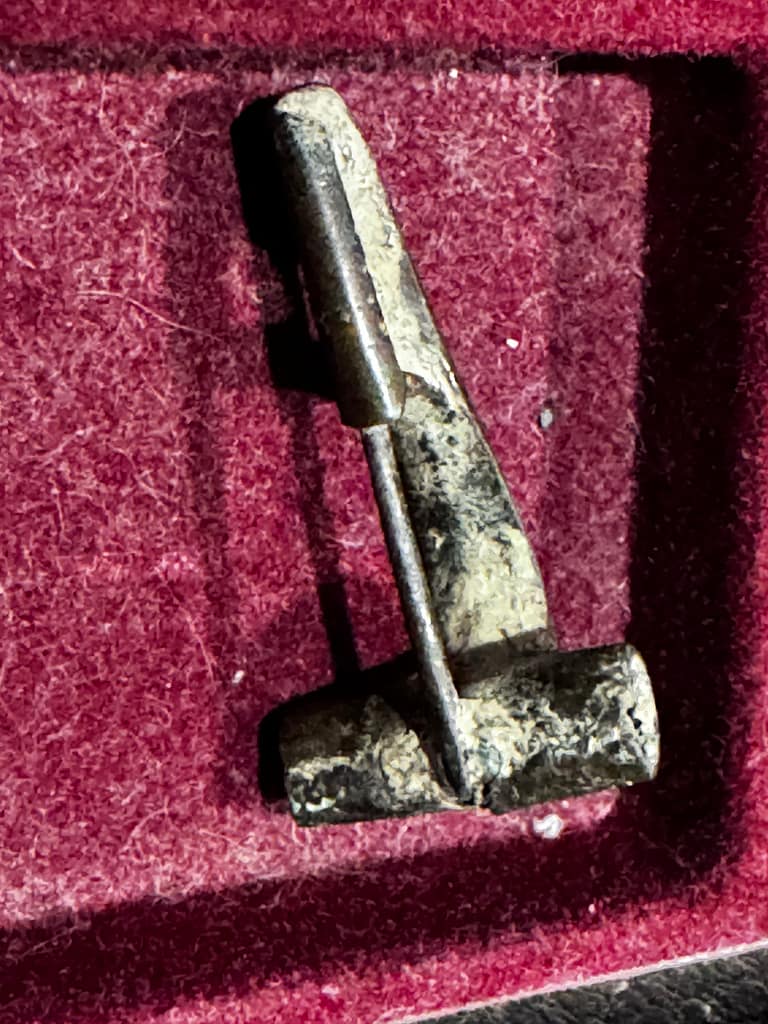
Roman crossbow brooch, from my collection
The crossbow brooch was a distinctive fastener used by Roman soldiers and officials during the late Empire (3rd–5th centuries AD). Featuring a transverse bar, arched bow, and flared foot, it secured the heavy woollen cloaks worn on campaign and in garrison. Larger, more ornate types were associated with officers and senior administrative ranks. Cast from bronze or brass, the crossbow brooch is one of the most recognisable items of late Roman military dress.
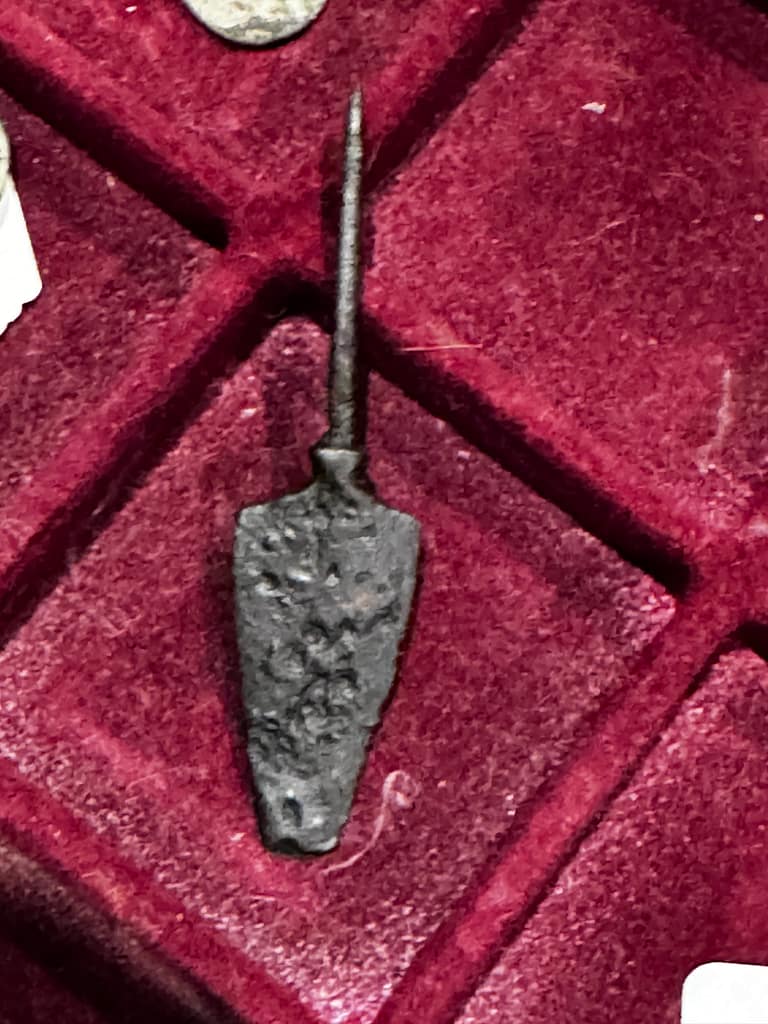
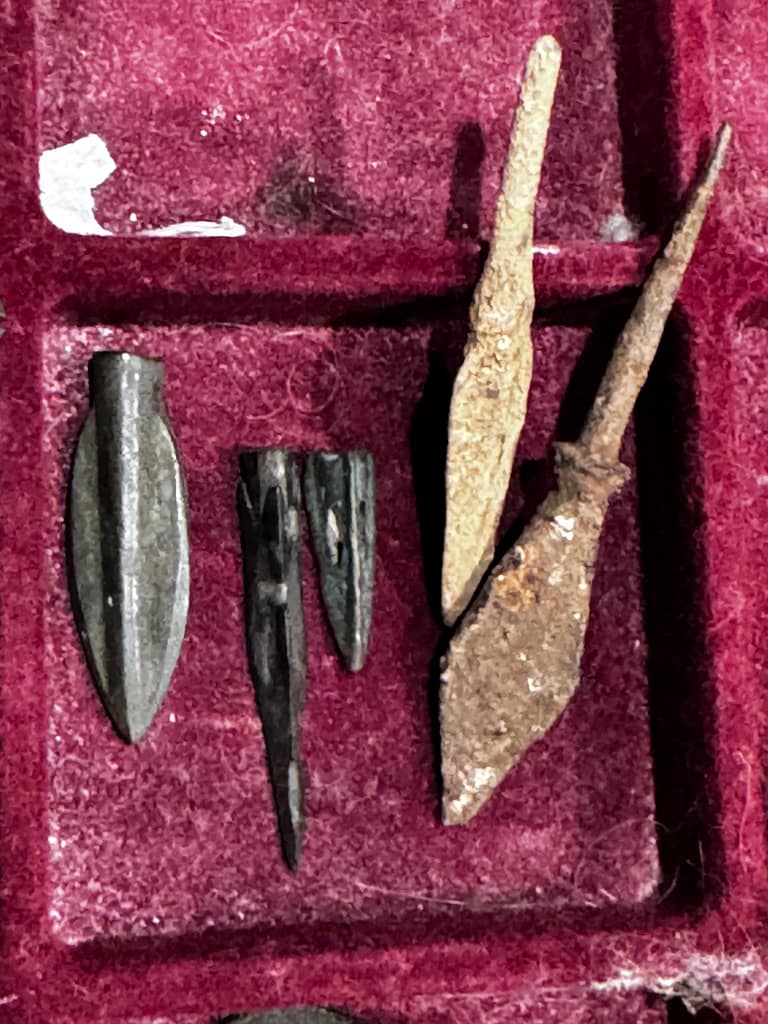
Roman/Barbarian arrow heads, discovered in Dacia, from my collection
These iron arrowheads were recovered from the province of Dacia, where Roman legions clashed with local Dacian and later Gothic and Sarmatian forces. The group includes both Roman socketed points and “barbarian” tanged types, reflecting the mixed tactical environment of the region. Dacia saw sustained frontier warfare from the Dacian Wars of Trajan (AD 101–106) through the 3rd-century crises. Such arrowheads illustrate the variety of missile weapons used in steppe-influenced and Romanised formations along the Danubian frontier.
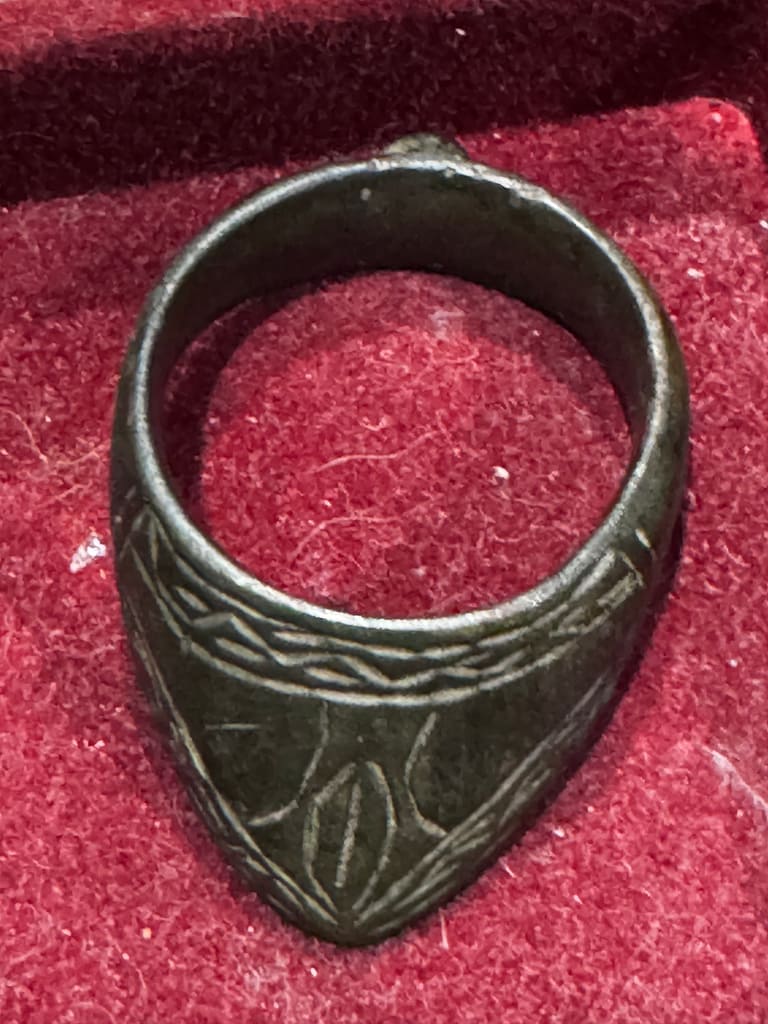
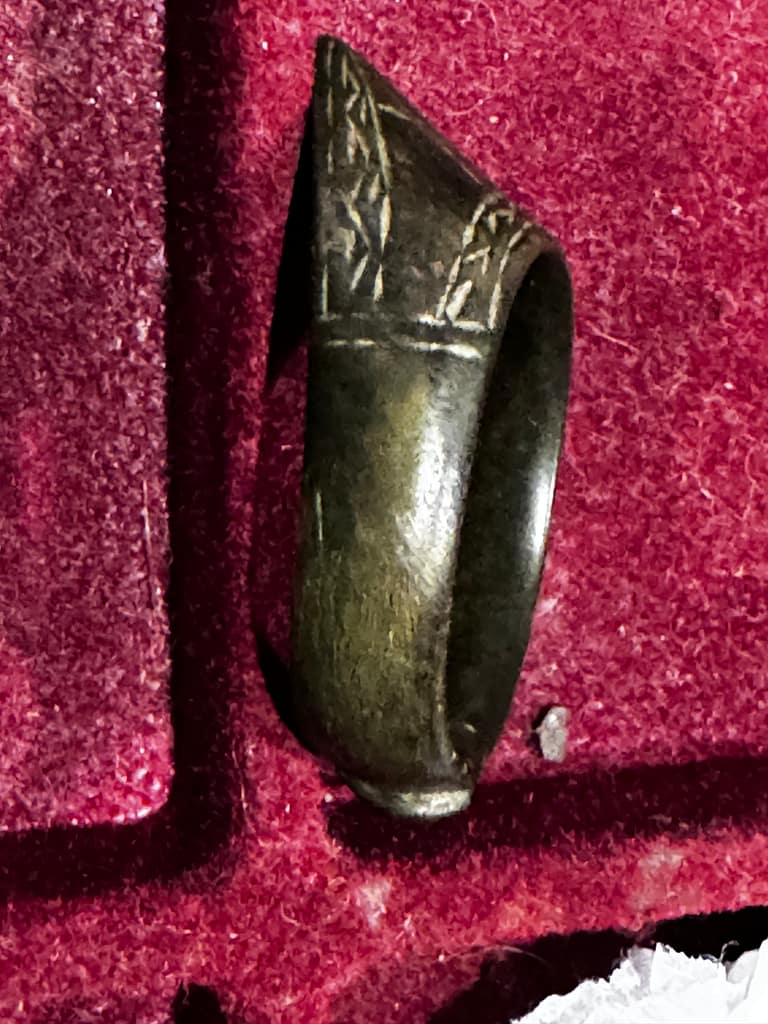
Roman/Barbarian archer’s thumb ring, from my collection
This stone or bone thumb ring was used by archers employing the “thumb draw,” a technique common among steppe and eastern auxiliaries serving Rome. The design protected the thumb when releasing the bowstring, allowing greater power and accuracy. Similar rings are found in Sarmatian, Dacian, and eastern Roman contexts from the 1st–4th centuries AD. Its presence in the Danubian region reflects the integration of steppe archery traditions into Roman auxiliary forces and frontier warfare.
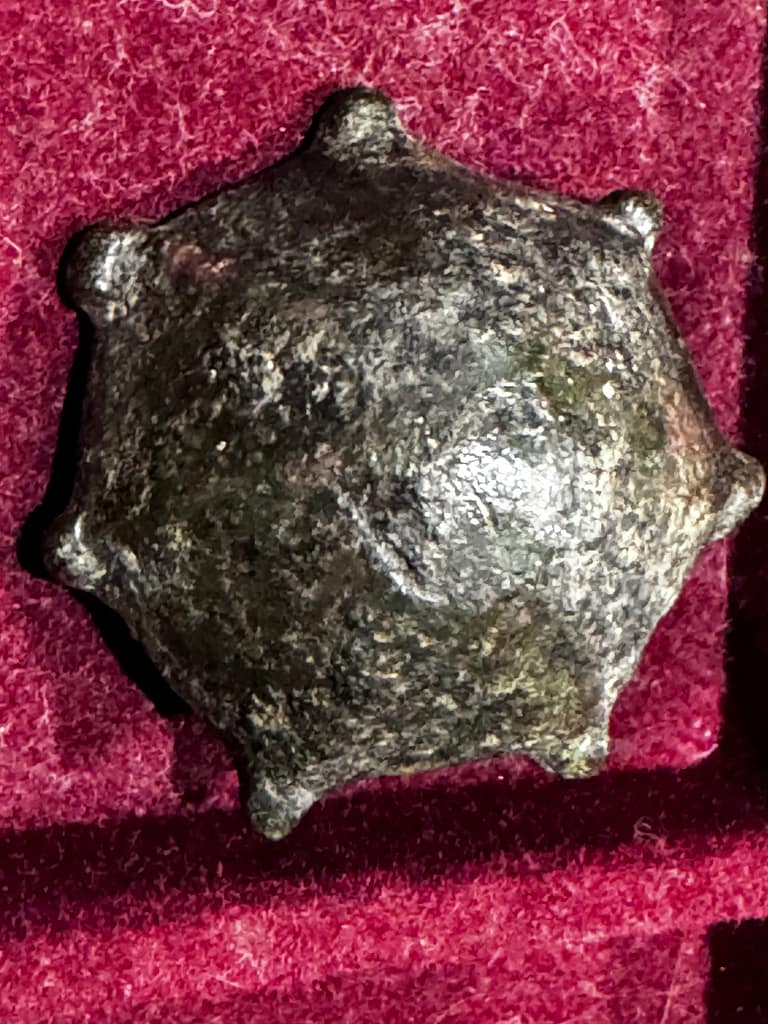
Roman sword pommel, from my collection
This bronze pommel fragment once capped the grip of a Roman sword, likely a spatha used by cavalry or late infantry units. Pommels balanced the blade and secured the tang, and their form can indicate period and unit type. This example’s simple, rounded design corresponds to common 2nd–4th-century patterns found across frontier provinces. As a surviving component of a weapon rarely preserved complete, it illustrates the construction methods and martial equipment of Rome’s professional fighting forces.
Found this useful? Buy me a coffee — it helps fund future battlefield research


Authored by Mick Prictor, a retired military officer with 40 years’ service, and a military historian specialising in terrain-focused analysis of tactics, doctrine, and command decision-making in land warfare. His work draws on extensive battlefield fieldwork—more than 280 sites worldwide—and one of the world’s largest private collections of historic military arms, uniforms, and equipment. About me
Subscribe to Battlefield Travels and receive a free E-Book Battlefield Guide
Unlock expert battlefield analysis, campaign reconstructions, and historical insights drawn from firsthand exploration and primary sources.
🗺️ You’ll receive:
🎖️ Exclusive historical insights you won’t find elsewhere
📘 A free eBook: 10 Tips for Exploring Historic Battlefields
📰 New battlefield studies straight to your inbox as they are published

⚔️ Go deeper — Members get exclusive access to the Deep Research Collection, Field Notes, and monthly Research Dispatches. Try membership free for 7 days, cancel anytime. From $9/month.